Remember this video? While flawed, it made a decent effort at highlighting the hypocrisy of the Korean media, which by dint of a lack of criticism can be said to generally condone relationships between Korean men and foreign women (like that of Lee Min-ho and Jessica Gomes above, from this commercial for “2X” beer), but which on the other hand often explicitly portrays Western men as sexual predators and the Korean women that enter into relationships with them as either naive and in need of protection, or alternatively as cold and calculating, providing sexual services in return for English lessons and/or, eventually, foreign citizenship.
Well, the creator “Steroidmaximus” has created a new video, and with it he has clearly taken into account some of the (justifiable) criticisms of the first, while still retaining its positives:
Most importantly, he has also created a Korean version:
What do you think? As I type this I’ve yet to have my first cup of coffee, and in all seriousness have my daughter on my lap drawing trains and asking me to help, so my own analysis will have to wait until later this afternoon I’m afraid. But I would like to look at it much more closely than I did the first video, so I’ll come back and update this post later accordingly.
Update: Charles, K-man and Seamus have already done most of my work for me! If I might add things to the discussion that people haven’t already then:
– Like Charles said, I would remove most the American back-story, particularly the part about Neo-Nazis from 0:20-0:45. While I naturally don’t consider myself a racist, I and 99% of other foreigners in Korea have probably never even seen a Neo-Nazi, let alone confronted one, so this comes across as very contrived, and strains the video’s credibility, particularly given that it’s in the introduction. There were other, shorter and more believable ways to get the message across that the vast majority of foreigners in Korea do not support racism.
– Somewhere at about the 1:00 to 1:10 mark, I would have written something along the lines of “Just like Koreans would [work and have an adventure abroad rather than work in a cubicle] if they could.” Its absence is not critical of course, and in fact you could well argue that that specifically would be superfluous, but still, it’s the first of numerous cases of careless wording and sloppy editing (eg: putting “but” before “After their marriage…” at 3:00), the cumulative effect of which is to seriously detract from the overall message.
– Still laughing at the scene from Daespo Naughty Girls (다세포소녀) at 2:00…soooo true!
– It would have been better to have placed the 5:50 Gangnam club picture with an almost-naked Korean hostess entertaining a Korean man before beginning the shots with Westerners and their similar debauchery at 3:13 instead, which would better highlighted their similarities and the implied fact that, unlike the latter, all Korean men are not portrayed as sexual predators etc. because of the actions of a few. This message is lost a little by jumping straight from an ad and a photoshoot for a men’s magazine featuring Korean men and Caucasian women instead.
– And finally, from 3:27 I found the narrative really gets lost and the message somewhat repetitive personally. In particular, the “certain incongruities:” that Jerry and Ji-eun noticed from 5:09 are, well, a bit incongruous, because I don’t think the fact that the Korean media demonizes Western male English teachers as sexual deviants and molesters has been adequately demonstrated previously. So even if the titles of the (overused) untranslated Korean articles – which untranslated are of little use in the English version anyway – then things like “sexual abuse of disabled woman” at 5:37 seem a bit out of place.
But still, a much better second attempt, and I too look forward to further videos from Steroidmaximus, and not just on this issue either.
In Korea, it is accepted practice for men to relentlessly pursue the objects of their heart’s desire, sometimes for many years, and despite if said objects clearly, repeatedly, and vehemently express their disinterest.
Far from being viewed as stalking however, it is generally viewed as both a sweet and noble sign of one’s love and dedication. There’s even a proverb specifically for this: “열번찍어 안넘이 가는 나무 없다,” which roughly translates as “There is no tree that can withstand being chopped 10 times.” (Image source, right.)
It’s not that I can’t see those sweet and noble elements, nor how many Korean women would surely exploit the practice, in a playing hard to get fashion (some more Korean that comes to mind is “희망고문하다,” literally to “hope-torture [someone],” or to repeatedly string someone along and then break their heart). But I think that the consensus of most Westerners is that if the woman says she’s not interested…then she’s not interested, and hence that the man’s behavior after being told is stalking, regardless of how sweet or noble his intentions. Unfortunately, in a society that already accepts women being physically dragged into nightclubs, then foreign or Korean, women can probably expect little sympathy when dealing a stalker.
This probably won’t be the first or last time you’ll read about this subject: navigating different expectations when it comes to dating are an integral part of the expat experience, and with my limited dating experience then I can’t add much that hasn’t already had gallons of virtual ink spilt on it. Two useful things I can do though: first, mentioning that of all the guides to navigating those dating minefields out there, that this one by Michael Hurt at Scribblings of the Metropolitician is by far the best, and with many things that informs even my marriage of 6 years; and second, and which was frankly the real inspiration for this post, that over at Sociological Images there is a post that discusses the fact that:
Various journalists and scholars have pointed out over the years that movies and TV shows often portray as romantic behavior that is fairly indistinguishable from stalking.
And then a video created by Jonathan McIntosh of Rebellious Pixels, who:
…edited together scenes from Buffy the Vampire Slayer with scenes of Edward Cullen from the movie Twilight to show how behavior that is depicted as protective and romantic in the film (and book) could also be seen as disturbing
For more, see the original post here. Not that I think that the humorous stalking in, say, There’s Something About Mary had much of an effect on my own opinions of it, nor that seeing it in pop-culture somehow renders real-life examples in any country okay, but still: the next time we feel a sense of righteousness and indignation about hearing Korean examples, it is certainly worth pondering the mixed messages that Western pop-culture provides.
Apologies for the light posting and not responding to comments and emails, but my 50-hour weeks are having their toll. Fortunately, this is the last one, and as I type this I’ve just finished a long post that will be up by tomorrow.
Until then, let me quickly mention this post over at The Marmot’s Hole about a short video cum picture-documentary on the hypocrisy of the Korean media’s stereotypes of Western men as sexual predators and – to the extent that they’re portrayed at all – very negative and sexist images of the Korean women who enter into relationships with them, but at the same time readily (and increasingly) presenting images of Korean men with Western (read: Caucasian) women, albeit with the latter also usually portrayed in an similarly sexist and degrading fashion. To which I present as Exhibit A actor Kang Ji-Hwan’s (강지환) latest photoshoot for Esquire Korea above, which you can see more of here, and as Exhibit B this Somang Cosmetics advertisement below (source) with Ahn Jung-hwan (안정환) from 2003 that it instantly reminded me of, which I discuss a little here. Naturally, I’d be the last person to be offended by women in bikinis in particular, but still, there are alternatives to depicting Korean male-Caucasian female relationships with the latter as something other than mere trophy girlfriends. Yet I can only think of a handful of examples.
But being an understandably large and ongoing concern of the (overwhelmingly male-dominated) Korean blogosphere (see the links at the end of this post), then normally I choose to blog about other aspects of gender-relationships in Korea, but a) I confess that with this post I was *cough* glad to finally find an excuse to post the Esquire pictures sans lengthy analysis, and b) as the creator of the video took a dozen or so images from this blog to make it, then other readers may well find it interesting just for that reason. All the same, I link to the video rather than providing it here myself, as I’m more interested in the issues it raises rather than the video per se. But if you are, then you can certainly depend on a lively discussion of it at The Marmot’s Hole.
With all due respect to the creator of the video though, I would agree with critics there that: to a large extent it is preaching to the choir; it has a confusing message; the reference to the Virginia Tech massacre was completely unnecessary; and, above all, it needs to have Korean subtitles if it has to have any effect at all on most Koreans. But still, a picture does say a thousand words, and despite those handicaps it will probably get much more attention from them then this English-language blog has. Hmmm…
Update: A second, much better video has been made. See here for my post and many comments on it.
An otherwise innocuous, quick slice of Korean life…but which inadvertently prompted some soul-searching and a minor epiphany about Korean society on my part. Please bear with me!
If you’re reading this blog in Korea, then by virtue of its inane “We Live in OZ” catchphrase you’ve probably more aware of LG Telecom’s “OZ Generation” advertising campaign than most. But you may not have heard of its online virtual first person “date” with model and actress Lee Yeon-hee (이연희) that was launched about two weeks ago, and which deserves kudos for being the first of its kind in Korea (indeed, this post was originally intended to be #16 in my “Creative Korean Advertising” series). As Coolsmurf explains at allkpophere:
Users get to have a complete, enjoyable date with Lee Yeon Hee by completing 6 stages with varying difficulties, but all of which can be solved by using the LG mobile phone and your trusty keyboard. You get to hold the hands of Yeon Hee as you dash away from the crowd, ride a bus with her, have a meal, celebrate her birthday, etc.
And as of Saturday, 200,000 people had participated since it was released 10 days earlier, with 20,000 visitors daily. Unfortunately, and all too typically for Korea, the main site requires your national ID number to participate (I didn’t check if my “foreign” one worked or not sorry), but strangely this alternate entry site (in the screenshot below) doesn’t, which will hopefully give K-pop fans outside of Korea a chance to participate.
I confess, I did it myself for a little while: it’s like a surreal bubblegum version of Doom 3, with eye-candy as the target rather than demons. And my 3 year-old daughter sitting on my lap found it hilarious when I crashed into people and potholes while running to meet Yeon-hee in “Mission 1” (hint, use the cursors), but neither of us were sufficiently motivated to figure out how to rouse her after she fell asleep on the bus in Mission 2 though I’m afraid (but get on the bus using the mouse this time). Not for a fifth time at least…
But what epiphany about Korean society did this prompt on my part? Other than being reminded, say, of the penetration and pervasiveness of mobile phones into all elements of Korean life that is?
Well, consider the rather childish and platonic way the couple interacts on the “date” itself, replete with numerous uses of the word Oppa (오빠): to Western eyes it makes it appear more reminiscent of the sorts of dates we had – or perhaps, our parents liked to think we had? – back in our early teens, and certainly nothing like what most Western adults would consider worth showing up for. Lest you feel like that’s an exaggeration though, then by all means examine it for yourselves, but I’m sure that most people at all familiar with unmarried Koreans need no such assurances.
In the original version of this post, this prompted a lot of speculation on my part as to whether the date game was in fact primarily targeted towards teenagers, but that was misguided: as Charles points out in his comment that made me realize that, I myself went on “dates” like that with a 25 year-old Korean woman before I met my future wife, and although I haven’t dated in the 9 years since – and so by no means claim to be an expert on Korean dating culture – I’m confident that a sizable proportion of 20-something Koreans do have indeed have platonic dates like this. After all, the various cultural, social, and economic factors that lay behind the plethora of blind-dating systems in Korea certainly do still exist, although as Michael Hurt in this excellent practical guide to the cultural pitfalls of dating Korean women points out, the move from single-sex to mixed schooling is beginning to change those (see the KoreanClass101 Bloghere also).
Lest I give the wrong impression though, I’m not against such dates per se. And while it’s true that I don’t personally consider dating without the ultimate aim of a sexual relationship as dating at all, that’s isn’t quite the same as thinking that, say, any woman that doesn’t sometimes put out on the first date (or guy that doesn’t want that) is a prude! And that so many Koreans go on such dates is – however patronizing it may sound – a very nice and endearing aspect of Korean society.
However, it is but one version of Korean dating culture. And yet while Koreans as a whole are certainly more sexually reserved than your generic Westerners, I doubt that any readers need convincing of the fact that over 50% of Koreans have sexual experiences before marriage. Yet- and herein lies the (belated) beginning of my epiphany – why is it only the platonic version of dating that is still overwhelmingly presented in the Korean media? And particularly when depictions of so many other aspects of sexuality in the Korean media are becoming increasingly bolder and more liberal over time?
True, if you take issue with my description of the way dating is depicted in the Korean media, then I have no data to back that up: indeed, I don’t watch Korean dramas precisely because on the rare occasions I’ve naively wanted to spend more than 5 minutes with my wife on the sofa while she’s watching one, then I’ve soon been forced to leave the room at sheer disgust and incredulity with the surreal, Disneyland version of Korean life presented on the TV screen. Still, as commentators on this lengthy post on that subject pointed out, there are more realistic and palatable dramas out there if you’re prepared to look for them.
Also, granted: the ways dating and premarital sex are depicted in the Korean media are in many respects quite separate to, say, the censorship issues that I’ve been following closely in my weekly(ish) “Korean Gender Reader” posts. But still, rather than censorship being akin to some inexorable fact of nature (i.e. Korea is a conservative country…what else does one expect?), the numerous forward and backward steps in Korea just this year has provided me with a healthy reminder that what is considered suitable for Korean viewers is in reality a very mutable concept (and don’t get me started on Japanese censorship issues). Which begs the question of who is doing the defining, and why.
This brought to mind the following lesson I learned from An Introduction to Japanese Society by Yoshio Sugimoto (and easily the first book you should ever read on the subject):
Japanese culture, like the cultures of other complex societies, comprises a multitude of subcultures. Some are dominant, powerful, and controlling, and form core subcultures in given dimensions. Examples are the management subculture in the occupational dimension, the large corporation subculture in the firm size dimension, the male subculture in the gender dimension, and the Tokyo subculture in the regional dimension. Other subcultures are more subordinate, subservient, or marginal, and may be called the peripheral subcultures. Some examples are the part-time worker subculture, the small business subculture, the female subculture, and the rural subculture.
Core subcultures have ideological capital to define the normative framework of society. Even though the lifetime employment and the company-first dogma associated with the large corporation subculture apply to less than a quarter of the workforce, that part of the population has provided a role model which all workers are expected to follow, putting their companies ahead of their individual interests…. (p. 12).
Yes, Japan, supposedly the land of the faceless salaryman…is anything but. And yes, the subject of salarymen may seem a little out of place at first glance, but I’m sure you’re seeing the connections already. Continuing in the same vein (although as a quick aside, it’s interesting to consider why Japan is so well-known for the salaryman system, when if fact it’s only Korea that ever had them as a majority of workers):
Dominating in the upper echelons of society, core subcultural groups are able to control the educational curriculum, influence the mass media, and prevail in the areas of publishing and publicity. They outshine their peripheral counterparts in establishing their modes of life and expectations in the national domain and presenting their subcultures as the national culture. The samurai spirit, the kamikaze vigor, and the soul of the Yamato race, which some male groups may have as part of the dominant subculture of men, are promoted as presenting Japan’s national culture….
More generally, the slanted views of Japan’s totality tend to reproduce because writers, readers, and editors of publications on the general characteristics of Japanese society belong to the core subcultural sphere. Sharing their subcultural base, they conceptualize and hypothesize in a similar way, confirm their portrayal of Japan between themselves, and rarely seek outside confirmation….(pp. 12-13).
As another aside, this last point highlights how Koreans are in many senses shooting themselves in the foot by alienating and demonizing a whole generation of English teachers in Korea (see here, here, and here):
Core subcultural groups overshadow those on the periphery in inter-cultural transactions too. Foreign visitors to Japan, who shape the images of Japan in their own countries, interact more intensely with core subcultural groups than with peripheral ones. In cultural exchange programs, Japanese who have houses, good salaries, and university educations predominate among the host families, language trainers, and introducers of Japanese culture…(p. 13)
(Update: See here for some quick recent examples of how different the Japanese are to the way they’re normally represented in the foreign media)
No, I’m not suggesting that there is a big conspiracy to keep premarital sex off Korean screens. Nor am I suggesting that the above is all that original or profound, and certainly my ultimate epiphany – merely to extend the above lesson to depictions of Korean dating and premarital sex in the Korean media also – is much less so.
But the point that I want you to take away from all this is that at the very least it provides an interesting and useful alternate framework with which to analyze the topic in future. For instance, the completely ineffectual Youth Protection Committee’s (of the Ministry for Health, Welfare and Family Affairs) recent banning of music group TVXQ’s latest songs from being played on TV and the radio because of “lewd content” and the need to “protect teenagers” (see #2 here), may be most explicable in terms of corporatist motivations, or in other words be the result of the Ministry’s struggle for relevance and definition under the hostile Lee Myung-bak Administration, which originally planned to disband the former Ministry of Gender Equality and Family altogether (now a separate Ministry of Gender Equality exists: see #4 here), and despite the compromise being opposed by all ministries involved. No, I’m not saying that that is the case necessarily, just that it’s a possibility that needs to be considered.
And on that note, I’d better end this post, which has admittedly somewhat evolved from its ostensible original topic. Which reminds me, presumably other male and female members of the “OZ Generation” in the advertisements will have similar dates set up for them, and it’ll be interesting seeing the different conventions for the former’s behavior and writing about that a later date. And probably this topic will be in IMAD (아이엠 애드) also (Korea’s only magazine devoted to online advertising), and I’ll make sure to buy it and translate the corresponding article also. In the meantime, I’m curious as to if this virtual date has already been done overseas, so if any readers know of foreign examples then please pass them on.
Of course, a society’s accepted norms of sexuality are always in flux, and popular culture both reflections of and a huge catalyst for that. But while you and I will undoubtedly be able to name individual dramas, movies, novels, and so on that have been deeply influential in that regard (yes, Sex and the City was the first thing that came my mind too), it is probably much harder to think of a recent period which had many in rapid succession, fundamentally and forever changing a society as a result. But according to So-hee Lee, who wrote ‘The Concept of Female Sexuality in Korean Popular Culture’ (pp. 141-164) in Under Construction: The Gendering of Modernity, Class and Consumption in the Republic of Korea (ed. by Laruel Kendell, 2002) and the must-read text for Korean gender studies, this is precisely what occurred in Korea in the mid-1990s.
Which is not to say that equivalent periods in Western, English-speaking societies don’t exist: it’s just that with having spent most of my adult life in Korea, then none really spring to mind, although I am interested in learning about any that readers can think of. And there are certainly many instances of Western-Korean cultural transmission too, with Friends and (again) Sex and the City in particular arguably having surprising impacts on Korean consumerism and gender relations here despite – nay, because of – the much more sexually repressed and sexist context in which they were received. But these earlier works Lee discusses were definitely home-grown, and:
…should be considered not only as illustrations of contemporary concerns but also as generating social discourse on female sexuality….each publication and each media screening provoked intense discussions throughout Korea (p. 142).
But although this post is ostensibly about popular culture, even some of my friends in academia that specialize in it admit that the three novels, three films, two dramas, and one play Lee discusses would probably be too dated for them to enjoy watching, let alone worth going to the time and trouble to find. Moreover, my own aim in looking at this subject is primarily to demonstrate that on the eve of the Asian Financial Crisis of 1997-98, Korean women were already very open to challenging sexual stereotypes and their ideals of men, and that this partially explains their alacrity in doing so afterward, as I’ll be arguing in this conference presentation I’ll be giving in Daejeon in August (but which has evolved a lot since I first submitted that abstract many months ago: see here for my latest, hopefully much more nuanced thoughts on the subject, and to which I owe a great deal of credit to commenters on this blog). Hence, with apologies to culture buffs, this post is much more about those “intense discussions” than in the cultural works themselves.
(Source: Unknown)
Naturally enough, Lee starts with the context in which these cultural works were received, recalling her embarrassment and confusion when she attended some English literature lectures at Cambridge University in the mid-1980s:
My topic was “Women Characters in Victorian Novels”. During the lectures and seminars, I was acutely embarrassed by what I heard. Why was everyone talking about sexuality, masculinity, and femininity?…
In those days, Koreans did not have exact counterpart terms for “sex”, “sexuality”, “sexual intercourse”, and “gender”. I was very confused as I struggled to determine the appropriate meanings. In Korean, one very general term “seong” (성) could be used for these four concepts, its particular meaning dependent on the speaking and listening context….
It’s actually a little more complicated than that, “성” really being the chinese character that means “nature” and “life” as well as “sex”, but that probably adds to rather than detracts from her point.
….Korean society in the mid-1980s did not find it necessary to make sharp distinctions between these concepts. At the annual Korean Women’s Studies Association Conference in 1989, the issue of sex language was raised and discussed. More recently, the Korean counterpart of the term “sexual intercourse” (성교) has gained wide usage, accompanied by the frequent use of the a Korean counterpart for the term “sexual violence” (성폭행)….Sexual violence has now become a recognized issue in need of a discourse.
Korean concepts of sexuality have changed profoundly since the Democratic Revolution of 1987….In 1995, the most popular topics among university students were sexuality, sexual identity, and other sexual subjects. There are many reasons for this…In Korea, there is still no broad popular social discourse on female sexuality outside of marriage.
Which changed a great deal as a result of the 2002 World Cup, as I wrote here, but I’m getting ahead of myself. All of the above I originally typed from the book when I wrote this post about the (literal) Korean language of sex and sexuality, and in which based on my own largely unsuccessful attempts to find Korean-language internet sources on such issues as “sexist advertisements” and “sexual discrimination,” I argued that the change Lee noted was more apparent then real, and that Korean gender studies as an academic discipline clearly somewhat lagged its Western counterparts. Ironically however, that may well add to rather than detract from her arguments for the explosive impacts of the movies and so on that she discusses, for they would have been all the more exceptional and unprecedented at the time.
On top of that, something that can be said with some certainty was how exceptional Korean women (then) in their late-20s and early-30s were in themselves, as they were really the first ever Korean generation to have grown up going to school en masse, alongside their brothers, and while doing so to have learned as an abstract, academic concept the notions of democracy, liberty, and equality. Indeed, Lee is by no means the only author to note Korean military regimes’ curious desire for at least the trappings of democratic legitimacy through (tightly-controlled) elections, and a reflection of this in the education system, replete with references to Thomas Jefferson, the Magna Carta, the French Revolution, and so on. But, this meant that in the 1990s:
Looking at their mother’s lives, Korean women in their early thirties believed that their marriages would be different. Because the Korean standard of living and patterns of material life changed very quickly, they believed that Korean ways of thinking had been transformed with the same speed. This is where their tragedy begins….[this] generation experiences an enormous conflict between the real and the ideal. During sixteen years of schooling, they have learned that equality is an important democratic value, but nowhere have they been taught that women experience the institution of marriage as a condition of inequality. Many married women of this generation have [thus] experienced a process of self-awakening….(p. 144)
And another way in which that process is a novel one is because women of their mothers’ and grandmothers’ generation:
…would have had an entirely different concept of female sexuality. [They] accepted the sexual double-standard as a women’s fate and put their sexual energy into rearing children, identifying themselves as asexual, strong mother figures. [But] Korean women [of this] generation give priority to their identities as sexual beings, struggling to conceptualize a sense of individual selfhood while the mystified ideology of mothering and family obligation, which has repressed Korean women for so long, collapses. (p. 145)
The novel Go Alone Like the Rhinoceros’s Horn (also know as Go Alone Like Musso’s Horn) (무소의 뿔처럼 혼자서 가라, 1993) by Gong Ji-Yeong (공지영) , produced as a play that performed for several months in 1994, and released as a film in 1995 (both adaptations were successful), is about the lives of three married women friends, all 31, and all of whom deal with that process in different ways. Another is the widely-read novel Marriage (결혼) by Kim Su-hyeon (김수현) in 1993, which was made into an even more successful television drama the following year, and about the marriages of three sisters (aged 25, 32, and 34) and their different perceptions of the institution based on their different ages, and indeed it is in Lee’s discussion of it that I first came across the quote that I’ve used repeatedly in this blog:
Generation is an important attribute of identity in Korea, like race in the United States. (p. 146)
But in this section of the chapter I think Lee disproportionately blames Korean husbands seeing their wives as asexual, unattractive ajumma (아주마) for their sexless marriages (and finding their own sexual relief with mistresses and prostitutes and so on), whereas in reality just as many Korean women share widely-held stereotypes and expectations of rarely having sex after getting married or having children, even in 2009 (I am not exaggerating: see here).
Probably by coincidence, at about the time that these were making waves, the new term “Missy” (미시) was invented, which when Lee wrote (it’s not so common these days) was used widely as:
…an expression of the strong desire of young Korean wives in their late twenties for an alternative way of life. The term was first used…in the marketing advertisement of a grand department store in Seoul. As soon as it came out, it was adopted widely to indicate a particular kind of housewife, a married woman who still looks like a single woman. Even the copywriter was surprised at the speed with which this term took on social meaning and evoked specific images of women and femininity. “Missy” rapidly permeated the Korean language once the advertising industry recognized the consumerist implications of this target age group’s flamboyant desires (pp. 149-150).
I think Lee ascribes too much importance to the Missy concept, as both Cho Haejoang in the same book that Lee writes in, and Dennis Hart in this book on Korean consumerism, have written about a steady series of (mostly negative) terms invented in the 1980s and 1990s for different kinds of women that “Missy” is just one example of, culminating in this crass one used today and which in hindsight make Koreans’ recent predilection for naming women’s body-parts and shapes after letters of the alphabet a little more explicable (but still absurd). I also think she exaggerates its novelty, as the Korean advertising industry, buttressed as it was by Neo-Confucianism and associations of the development of a consumer industry with national security (see this series), had developed a profound and intimate relationship with Korean housewives well before 1994. But, regardless, I’m sure you can already see how well the Missy concept meshed with the provocative novels and films I’ve described. Moreover:
The essential condition of being a Missy is a preoccupation with being looked at….Film, as a visual medium, has provided the best representation of this kind of social desire, not confined to material possessions but inclusive of an active and blatant sexuality. While [some characters] in Go Alone Like the Rhinoceros’s Horn and…Marriage decide to have lovers in reaction to their husbands’ relationships with mistresses, the Missy jumps into affairs to satisfy her own needs and desires (p. 150).
And another fundamental condition of being a Missy is having a professional job, yet another reason why women being the first to be fired a few years later during the Asian Financial Crisis would have had a big psychological and cultural impact.
The film Mommy Has a Lover (also known as Mom Has a New Boyfriend) (엄마에게 애인에 생겼어요, 1995), was about two Missys, and was exceptional in doing away with the previous film conventions of portraying women as reluctant and ashamed when they intentionally or unintentionally had a lover outside of marriage, nor of having a woman somehow punished for her “fall”. At its first screening, reactions were divided along gender lines, men complaining about the ending because it seemed to glorify wives having affairs, whereas no women expressed any complaints. Probably a more influential work involving the development of a late twenty-something’s sexual identity though (and not about a Missy per se, but in a similar vein), was the novel of the same year called The Pornography in my Mind (내마음의포르노), by then only 26 years-old Kim Byeol-ah (김별아), and whom:
…bravely deals with a previously forbidden theme. The novel rebels against the sexual double-standard, insisting on the existence of female sexual desire in contemporary Korea, where adultery is still illegal (p. 143).
Hence:
This novel [played] an important part in an emergent sexual politics by bringing the forbidden theme of sexuality into the public sphere via television talk shows and other media events. However, this public discussion has been confined to the experiences of married women (p. 151).
And which paved the way for the even more provocative and controversial drama The Lover (애인) and the film The Adventures of Miss Park (박봉곤 가출 사건), both of which came out in September the following year. In particular, the drama’s depiction of an extramarital love story between two highly successful professionals in their mid-30s hit Korean society like a bombshell, primarily because television tends to be conservative because of its wide audience of course, but also because both the ages of the characters meant that the drama had to confront the all-important issue of familial duties and roles. Indeed, by October it reached 36.3% of television viewers, and it:
…even was discussed in the National Assembly because of the social implications of its theme, a challenging portrayal of a married woman’s sexuality. This response reveals how powerful the television is in subverting the traditional ideology of female sexuality (p. 154).
An important point for me to remember, although I would have liked to have also learned more about the contents of that discussion in the National Assembly! There is, however, also a third possibility for its success that Lee does not really mention, and that is that in many senses both characters ostensibly had perfect and desirable lives, with no apparent reason to have affairs, and yet they did anyway: it must have been quite confounding to many, and which may also play a role in “many married men in their 40s and 50s [calling] the broadcasting company to protest this drama, demanding ‘What is it trying to say?’ (p. 155).”
Rather then getting into details here, for a very thorough examination at The Lover see this lengthy presentation by Kim Sumi entitled “Popular Feminism and the Hegemonic Practice of Mass Media: A study of two South Korean TV dramas, Lovers [The Lover] and The Woman Next Door,” which was presented at the annual meeting of the International Communication Association in New York in May this year, and in passing let me note a point not unimportant to my presentation, which is that like in Mommy Has a Lover, the man that the lead female character has an affair with “has a soft, gentle, and sweet personality, reflecting the new masculinity of 1990s Korea” (p. 155). Meanwhile, Lee sees the drama as having:
…accomplished a great deal in bringing into public discourse the issue of a middle-aged wife’s sexuality. Until recently [which is 2002 at the latest, but I think she’s actually writing in early 1998 – James], the wife’s subjective sexuality has been elided by the web of obligations spun by the husband’s family or by the terms of a wife’s subordination to her husband, as in [one character’s] case in Go Alone like the Rhinoceros’s Horn. However, in the mid-1990s, as the wife’s subjective sexuality emerged through the weakening of Korean familism, a sympathetic rapport between a man and a woman became more important than the functional element of role obligations between a husband and wife, or of a father and mother to their children (pp. 155-156).
Coming out at the same time as The Lover, on the surface The Adventures of Mrs. Park is an average romantic comedy, albeit a very successful one, but Lee notes that unlike the convention of most films in the genre, this one ends with a women running away from a domineering husband, achieving her dream of becoming a singer, and finally entering into a happy second marriage, “thus subverting a traditional morality that expects the runaway wife to come back home to restore everyone’s happiness and family security (p. 156).”
(Source: Unknown)
As such, Lee notes the film director was concerned about how a conservative audience might respond to the uncommon story and its unexpected ending, and in many ways the movie presents a guerrilla attempt to sneak a serious social message into Korean cinema by presenting it as comedy. In the poster above for instance, it appears that the female character is in possession of two men simultaneously, and what’s more she is bursting into laughter while her soon to be ex-husband and the detective he hires to find her (who falls in love with her instead) stare fiercely at each other, whereas in reality women less wealthy than the Missys described earlier (and the characters in Mommy Has a Lover and The Lover) tended to be (and still are) very economically dependent on their husbands and therefore very submissive to them, and hence that is how they tended to be portrayed in previous Korean movies. Moreover, the happy ending made possible by the comedy genre here implicitly highlighted the grim reality that such an act would entail for most women in that position…and which probably explains much of its success, for it articulated their feelings.
And that marks the end of the works that Lee looks at. By way of conclusion, let me mention just two things that she mentions in her final section of the chapter, entitled “Prospects for the Social Concept of Sexuality in Twenty-First Century Korea”. First:
Looking at Korean culture with a certain detachment, I can imagine that the years 1995 and 1996 will be remembered as a critical period for the emergence of a social discourse on sexuality, particularly female sexuality (p. 160). The year 1995 was particularly remarkable in that housewives began, on their own initiative, to speak in public about wives’ subjective sexuality (p. 160).
Although the book this chapter is in was published in 2002, I strongly suspect that Lee actually wrote this in late-1997 at the latest, as only 2 out of 50 or so references are from sources later than 1996, and she writes in the next paragraph that “even with the economic downturn since November 1997, this tide is still in motion.” Unfortunately, when the true extent of Korea’s economic crisis became apparent just a few months later, and in particular its profoundly gendered nature (women, particularly married women, were overwhelmingly targeted for layoffs, under the explicit presumption that they would be provided for by their husbands or fathers), then this “tide” was to proved to be at best a mere ripple against new economic realities.
On the other hand, she proved to be remarkably prescient with the following:
…while this discussion of the changing process of female sexuality in the popular culture from 1993 to 1996 gives the impression that Korean women now are marching to demand their sexual subjectivity, in reality, most Korean women are marching only as the passive consumers of the sorts of cultural products described previously, not as their active cultural producers. When women are able to intervene in the process of cultural production as subjective consumers with a feminist point of view, the Korean concept of female sexuality can be transformed more rapidly than before (p. 159, my emphasis).
And as I explain here in great detail, such an opportunity was provided by the 2002 World Cup, and Korean women more than took advantage of it. That will be the focus of a follow-up post, hopefully to be written well before the conference!
Update) For those of you fluent in Korean, this short essay also discusses some of the movies mentioned here, and adds many more from the 2000s that in the same vein)
(Update, 2 March 2016: Thanks for the link in today’s Guardian, but this Korea Times article of mine is a little out of date. I recommend this 2013 Busan Haps article instead.)
In Saturday’s Korea Times. As always, here’s the original version:
…Everyone knows the strong Korean custom of adult children living with their parents until marriage. Yet a report released earlier this year revealed that one-person households now account for a fifth of all households in Seoul.
This is lower than national figures for most other developed countries, the Seoul Development Institute report notes, and the number for Korea as a whole is likely to be lower still. But the rise puts Seoul on par with Australia, and the rate is predicted to grow to a quarter of all households by 2030.
How to interpret this? Does it signal that the Korean custom of staying in the family home until marriage is under threat?
That is unlikely. The figure includes single professionals, jobless youth, those separated from their spouses, divorcees, and senior citizens, with growth in every category. It does not imply a sudden glut of young Koreans leaving home.
While Korea has experienced many periods of great labor mobility in its recent history, particularly of young, single, working-class women moving to work in factories in cities in the 1960s and 1970s, there is definitely no tradition of young middle-class Korean university students leaving home to share private accommodation with fellow students, and there are still strong taboos against openly cohabiting with partners.
At the same time, young Westerners are adjusting their expectations for living arrangements, as the combination of rising university fees, stingier government allowances, and prospect of paying back student loans leads them to defer leaving home until graduating and/or getting their first job. This delay is often both parents’ and children’s least preferred option, but it is a trend likely to continue given the bleak job market for graduates worldwide.
This points to important economic reasons for the differences, and indeed there are big financial hurdles to overcome to live independently in Korea. For instance, at the moment Korean students cannot get student loans without their parents acting as guarantors (although the Ministry of Education, Science and Technology is working to change this). Nor do the vast majority of universities accept credit cards for payment of fees. In practice though, the combination of extremely high “key money” deposits required by landlords and the low wages afforded by part-time jobs favored by students are keeping even the most rebellious of youths at home until graduating and getting their first job. And then, he or she faces a dearth of rentals of appropriate size.
But familiarity breeds acceptance, and while cultural factors are still important, in practice they are often overstated, as for all the purported differences in how Koreans and Westerners view and value family life, many would behave in a similar fashion in similar circumstances.
For instance, with a child’s school being such an important consideration for entrance into a preferred university, and seniority-based promotion systems locking an employee into a specific company, then if a man is transferred to a different city it is very logical for his wife and children to remain in the family home rather than the children leaving the good school and/or him starting at a much lower wage and position in another company.
Also, as legions of unhappy mothers driving home every Sunday night can attest, Koreans generally don’t like to give their children to relatives to look after during the week, but with childcare facilities being so inadequate, working parents usually have little choice.
Certainly there are some arrangements that Westerners would almost unanimously reject, such as sending one’s family overseas for years for the sake of the children’s education, but Koreans’ living arrangements do not mean that they are as cold, calculating, or dogmatic as they may at first appear. For instance, while they are not openly discussed, ubiquitous love hotels point to unmarried Koreans having romantic relationships much like Westerners, and as the spate of recent celebrity pregnancies can attest, engaged couples are usually given a great deal of freedom.
Moreover, Korean’s living arrangements may well become more liberal in the future.
A long-running debate within sociology rages over whether capitalism forces very different societies to “converge” and become more similar to each other over time or not, and as one of the only non-Western developed societies, Korea is an important element in that debate.
And as reported by the Economist in March, a decade ago Andrew Oswald of the University of Warwick observed that countries with high rates of home ownership have higher rates of unemployment: with few rental options, he argued, young people living with their parents find it harder to move out and get work, or are stuck in local jobs for which they are ill-suited, and earning less than they could.
Perhaps given the dire state of today’s economy, such imperatives will force such a change in Korea? (End)
With apologies to long-term readers, for naturally my articles for the KT will tend to be about subjects that I’ve already covered and know well (source right: Korea Times).
As they’re for a newspaper rather than a blog though, then I’m being forced to make the subjects much more newsworthy, contemporary, and concise than in their original rambling manifestations here, which (presumably) can’t help but have positive effects on my writing style in the blog as a whole. At the very least then, my planned next blog post will be much shorter than it would have been had I posted it just a few months ago(!), but never fear, for I am still a geek, and so it will still be an in-depth one on an original subject (update: sorry, it’ll be next week, but I’m not sure what day now).
For anyone new to the blog and wanting to learn more about any of the issues raised in the article though, then please try the following links:
The Seoul Development Institute’s Report (in Korean), which I analyze in more detail here.
The Ministry of Education, Science and Technology’s recent moves to allow students to get student loans without their parents as guarantors.
The effect of the current economic recession on Korean students’ student loan plans and employment prospects after graduation (here and here)
The sociological debate over whether Japanese (and Korean) society is being forced to become more Western as a consequence of its deeper capitalist development, in two long posts here and here.
Update) The SDI’s report also mentioned that 51% of those people living alone in Seoul lived in the districts along subway line No. 2, a very small area relative to the vast conurbation that is the second most populous city in the world! It’s definitely no coincidence then, that those districts are dense with cafes, restaurants and retail shops, in total offering 21% of all the part-time jobs in Seoul.
Most of those pay 4000 won an hour, that article reports; the minimum wage is 3500.
Update 2) Here’s a graphic representation of the “single belt” around subway line No. 2, from p.15 of the SDI report.
Sorry for the delay, but my article for the Korea Times — my big news — is finally in today’s paper. The subject is loosely how Korea’s reputation as a conservative country is very outdated, that advertisements are a good reflection of its rapidly changing sexual mores, and that…well, there wasn’t too much else to say in the 800 word limit really. Nothing new in there for regular readers then, but the editor has hinted that the better the response it gets, the more likely I will get my own regular column, so *cough* please do go on to read it regardless.
One minor complaint with the KT’s editing is having all my italics replaced by quotation marks in it — they’re not quite the same — and I don’t find the choice of title particularly eye-catching either. But on the other hand, not a word was changed from the original, which is probably quite rare.
Seriously though, I won’t put my foot in my mouth again by giving a specific date for future articles, but naturally I’ll let you all know as soon as they’re up.
The poster, by the way, is for the 2004 Movie S-Diary (에스다이어리), which was considered pretty raunchy when it came it out, but would be very tame by today’s standards. Just like I mention in the article, things change very quickly in Korea, and at the risk of sounding like I’m merely ingratiating myself with new Korean readers, that is one of the fascinating things about the place. It’s good to remind oneself every now and then.
Update 1) Before I forget, I should give full credit to Sonagi for my point in the second last paragraph of the article, about revealing images of women being sexist by virtue of the sheer weight of them, and the same tired women-sexually submissive/men-dominant roles portrayed in most of them. I didn’t fully appreciate it at the time, but realize now that she had a point.
Update 2)Actually, I’ve just noticed that in the very first line(!) of my article the word “that” was removed from “…that such an impression can easily be forgiven”, ruining that sentence and hardly giving a great first impression of the remainder of the article either. Sigh. I don’t think I’ll read it again, lest I find any more editing mistakes…
If you’ve been following my recent discussions on why Koreans generally live at home until marriage, then you’ll have noticed that one gap in those were the ubiquitous love-hotels (러브호텔) that were the obvious corollary of that arrangement, and which would probably have been more interesting topics than demographic data on Korean household types and student loans too. In my defense though, I already covered premarital sex and cohabitation and their relation to Korean capitalism (yes, really) in lengthy posts back in 2007, and besides which love hotels are not only or probably even primarily used by young unmarried couples. The numbers of hotels that are in the middle of the countryside for instance, relatively devoid of that age group, and accessible only after quite some driving, testify to the fact that they are also host to just as many adulterous trysts in practice.
But that the latter occurs doesn’t mean that grown children, parents and even grandparents all under one roof can’t both be faithful to their partners and spouses and still chafe at the lack of space and privacy, and so need to get away for a few hours occasionally. Which is why although I might still balk at opening one next to an elementary school myself, I’m all for love hotels, and see no reason to pretend that both the need and the demand don’t both exist in droves. Hence I’m very interested in reading about the development of both in Ed Jacob’s new book Love Hotels: An Inside Look at Japan’s Sexual Playgrounds, which editor-in-chief James provides a quick review of over at the ironically-titled Japan Probe blog. History-cum-practical guide, I’d be surprised if the general course of events described in the book wasn’t closely paralleled in Korea too, albeit perhaps with a gap of ten to fifteen years as it reached the same level of economic development.
Unfortunately there the similarities probably end, for in a social environment where women are so concerned about their virginal reputation that they rely on men for contraception (lest a proactive attitude reveal their experience), and in which one of the largest prostitution industries in the world exists and is openly advertised despite periodic crackdowns and extensive legislation banning it (see here also) too, then in Korea love hotels and what occurs in them are like dogs loudly mating in the corner of the garden: an inescapable but otherwise seedy, unspoken part of life that is preferably hidden away from polite society.
In other words, the polar opposite of their hygienic and matter-of-fact Japanese counterparts. The hotels that is, not the dogs.
But having said that, it’s (naturally) been many years since I’ve visited a hotel myself, my daughters and meager family budget preventing much traveling these days. So, in lieu of more fieldwork on my part, I’d be interested to hear if Korean love hotels are really still as bad as my experience of them in before I was married, when I used to stay in them with my then-girlfriend now-wife while traveling all over Korea. Sigh…
Ready for a quick quiz? Name three of your high school teachers. Now. No, don’t think, just say the first names which come into your head.
Finished? Okay, assuming you had one, I’m going to wager at least one of them was a particularly attractive member of the opposite sex. And what’s more, that your memories of him or her are much more vivid than those of the others too. Or am I just projecting?
Being in my thirties myself, then most of my teachers are nothing but a complete blur, and only for a select few can I still remember both faces and names. But my memories of one particular female teacher? Sigh. I’ll wisely restrain myself here, but I could wax lyrical about both her and what I learned in her classes, and the contrast between the quality and quantity of those memories and those of the male teachers I remembered — also excellent teachers, and of majors I later took up at university too — is simply too great to pass off as being due to other, asexual factors. But jokes about blood being diverted from the brain aside, what impact did that have on my learning?
According to this study in Thursday’s Korea Times, in fact it may well have hindered it. As author Thomas Dee demonstrates, based on test scores and self-reported perceptions by teachers and 25,000 eighth-grade students, simply having a teacher of the opposite sex harms a student’s academic progress, attractive or otherwise. In brief:
…having a female teacher instead of a male teacher raised the achievement of girls and lowered that of boys in science, social studies and English. Looked at the other way, when a man led the class, boys did better and girls did worse.
The study found switching up teachers actually could narrow achievement gaps between boys and girls, but one gender would gain at the expense of the other. Dee also contends that gender influences attitudes. For example, with a female teacher, boys were more likely to be seen as disruptive. Girls were less likely to be considered inattentive or disorderly.
In a class taught by a man, girls were more likely to say the subject was not useful for their future. They were less likely to look forward to the class or to ask questions. Dee said he isolated a teacher’s gender as an influence by accounting for several other factors that could affect student performance…
For the record, as there was no variable for a teacher’s attractiveness in the study then the jury remains out on the role of particularly attractive teachers, and Dee is also careful to point out that he is not advocating single-sex schooling, largely just passing on the correlations he noticed without really speculating as to the reasons. To buttress his point that “in a class taught by a man, girls were more likely to say that the subject was not useful for their future” though, I recommend reading this recent study from The Economist, which found the decidedly non-PC result that both men and women were prepared to take considerable cuts in pay at a first job provided that their boss was a man (although of course it wasn’t presented like that to test subjects!). But for some of the (naturally) many criticisms of Dee’s study then please read the article itself, and unfortunately those will have to do too, a suspicious absence of the article at the Korea Times website leading to me finding out that the article is in fact three years old, and so that link (to USA Today) above is the only one I could find that isn’t now dead. My misguided faith in the KT’s reliability as a timely and current news source aside, the subject does still have a certain timeless quality about it, and got me thinking about how the same dynamics operate for adult learners, my just so happening to be writing about marrying a former student of mine at about the same time as I first read that too. Surely they would be even stronger, given that students are more sexually experienced, and can and *cough* do sometimes consummate their relationships with their teachers?
Discussing the same subject here in 2007, Gord Sellar writes:
My first year in Korea, my roommate, a guy who spoke Korean pretty well, advised me that I needed to find a female teacher. Not a sleeping dictionary, mind you — his point was that the teacher didn’t need to be a girlfriend. All that was necessary was that I find an attractive female teacher, because having an attractive instructor of the opposite sex brings out approval-seeking behavior, and in the context of language study, if increased mastery of the language triggers praise from the teacher (as it should), then an autocatalytic cycle will be launched: you’ll study hard because your teacher will praise you, and that will make you study even harder.
And having an attractive female Korean teacher myself for over a year, then I can personally vouch for the effects of this, even though I was engaged at the beginning of that period and married towards the end, and didn’t for a moment seriously entertain that there was any chance of us getting together even if we’d both been single. My mind did tend to wander, however, when her back was turned, and which I was inordinately pleased that year to discover sometimes happened with me and my own female (adult) students, one of them naively both passing on her and her classmates’ Cyworld addresses one day and assuming that my Korean was much worse than it was (source, right: akstn88님의블로그).
Fond memories of reading descriptions of my (then) firm, apparently delicious-looking buttocks aside though, you don’t need your wife to be an ex-recruiter to be aware of the blatant racial, sexual and ageist-discrimination that occurs within the ESL industry here, and young college graduates are definitely not only chosen for their relative naivety and willingness to accept bad conditions. Nor — with the proviso that I acknowledge that I’m indirectly justifying discrimination here, but will continue for the sake of argument — can university deans and institute owners be entirely blamed for what the majority of students (or their parents) seem to want, and I’ve personally been on the wrong end of that many times, most notoriously at a place at which students and management blatantly favored the short, shuffling Asterix-like figure among us four foreign teachers, simply on the basis that he drank with his students almost every night. That he: looked closer to fifty than his actual age of thirty-five; often came to class in the same clothes he’d slept in; was regularly to be found passed out on a dirty couch in the hallway next to the staffroom, where he’d be mistaken by students as a homeless guy who’d wandered in for the warmth; and that his lesson prep consisted of grabbing whatever random piece of paper with ten questions about some subject was closest to hand, hastily scribbled years ago in five minutes…all this could not dim his alcohol-fueled stardom. To put it mildly, it was just a tad demotivating to us other teachers to have our teaching ability, qualifications, experience, and hard work constantly thrown in our faces, and so no foreign teachers (but for Asterix) ever ended up renewing their contracts there.
But let’s return to my great buttocks, or more specifically the motivations of the Korean women that I’d wager make up at least 70% of adult language students, or at least of those with the ability and/or inclination to join native speaker’s classes. Speaking about Japanese women specifically, but with observations that could just as readily be applied here, Keiron Bailey notes in Marketing the eikaiwa wonderland: ideology, akogare, and gender alterity in English conversation school advertising in Japan (Environment and Planning D: Society and Space 2006, volume 24, pages 105-130) that:
…there has been a rapid growth in the private English conversation school (eikaiwa) industry in Japan since the 1970s. Inside these eikaiwa, the participants are predominantly women and, in terms of skill and enthusiasm, these women are better students than their male counterparts. Younger women are pursuing English-language learning for three major reasons. The first reason is to enhance their career prospects, either by working for one of the increasing number of foreign-owned companies in Japan, or by moving to an English-speaking country. This trend has been augmented by economic geographies of internationalization that involve a reconfiguration of the Japanese labor market and that have created a demand for more workers with English-language-skills and, simultaneously, by the continuing recalcitrance of domestic social, cultural, and economic institutions to change in ways that reflect the desires of these younger women. The second purpose is to engage in travel, either for vacation purposes or for ryugaku. The third motivation is to actualize what Kelsky calls ”eroticized discourses of new selfhood” by realizing romantic and/or sexual desires with Western males. (pp.105-6, my emphasis)
Before going on, as you can probably see where this is headed, I should point that I am not for a moment suggesting that any more than a very, very small minority of Korean women learning English are there merely for the sake of hooking up with their foreign male teachers. I have to admit though, that I am certainly guilty of suggesting things like that in my first few years in Korea, although in my defense (and I’m sure many male readers can relate) it was very easy and natural to do so given my, well, immediate and much greater dating successes among women here than back in New Zealand. But there is definitely something to the stereotype, my wife and Korean female friends — most of whom were former students of mine — confirming that many Korean women (and indeed some of them too) do indeed ask about the attractiveness and dating availability of the male teachers, and to point out that those aren’t usually their primary concerns about a male teacher doesn’t mean they’re completely irrelevant.
How might this be exploited by the ESL industry? Well in Japan, to return to Bailey’s journal article:
In this paper I examine the visual promotions of a range of eikaiwa. Through a semiological analysis I argue that these schools seek to create a social space, or a destination, that is designed to appeal to this younger generation of Japanese women with professional, relationship, marriage, or studying abroad aspirations. I argue that the eikaiwa market the activity of English conversation as an eroticized, consumptive practice. Through a complex and heterodoxical engagement with a set of gendered ideological formations, the eikaiwa seek to invoke desire, or yearning (akogare), on the part of these female consumers. They do so by embedding this activity into a logonomic system in which the visual pairing of Japanese women with white males invokes a set of social and professional properties that are radically differentiated from a hegemonic array of gender-stratifying ideologies. This metonymy relies on the properties of the white male signifier being defined in relation to a historical gendered Occidentalist imaginary as an ”agent of women’s professional, romantic and sexual liberation”. However, simultaneously, the symbolic power of the coupling of white male signifiers with Japanese women relies on compliance with a pervasive and highly heteronormative ideology of complementary incompetence.
This logonomic system is supported by an array of nonvisual aspects including the gendered meaning ascribed to English-language use in modern Japan, in which its user is positioned as cosmopolitan, mobile, and desirable. At the same time, the female agency depicted by the eikaiwa articulates with a growing consciousness of female consumer agency, manifested in domestic Japanese product and services advertising and in other social and cultural formations. This trend valorizes and celebrates female erotic subjectivity and positions the white male as an object of consumption for sophisticated, cosmopolitan female consumers. The eikaiwa promotions seek to recruit female clients by actualizing and deepening their akogare through the medium of English-language instruction and use and an associated symbology. (p. 106, my emphases)
Don’t be put off by the postmodernist jargon: I don’t like it either, but while a little heavy in places, the article is still readable (albeit for article in academic journals that is!), and overall a fascinating look at this particular aspect of the Japanese ESL industry. Unfortunately whatever link I downloaded if for free from months ago has since disappeared though, so please just email me if you’d like a copy.
But why do I quote that article, apart from it being interesting in its own right? Well, I do admit this post has considerably evolved in the telling, and so after making the jump from a study about the effects of a teacher’s gender on children (my only originally intended topic) to what effects both that and their attractiveness might have on adults, then looking at that article was a logical next step. But now having presented the gist of it, what to make of it?
Upon reflection then, for me it has served to highlight the stark differences between the two countries, for despite the same sexual dynamics also operating in the ESL industry here as I’ve demonstrated, with all the mania about maintaining pure “bloodlines,” and hence still grudging public tolerance rather than acceptance (let alone condoning) of foreign male – Korean female sexual relationships and marriages, then you simply won’t find any Korean advertisements like the above, anywhere. Ever. Like I explain and give examples of in a post on a related topic here, there’d likely to be a public outcry. My own personal lesson from writing this post then? A cynical reaffirmation of this pervasive xenophobic streak, and a telling visual sign of it. Or not, as the case happens to be!
But this is probably not news to readers familiar with Korea; perhaps more so to Japan-based readers, who thought they could make the same claims about interracial relationships there? Regardless, apologies if you were expecting more of an examination of the practical role the sex of a teacher plays in the internal dynamics of the ESL classroom here. But never fear, for that earlier post of Gord’s I linked to provides an excellent examination of that, and so one which I wisely decided not to try and improve on!
Let me take that break this weekend by posing a couple of questions to readers for a change: if you have a Korean partner, but aren’t married, do you live with him or her? And if so, do his or her parents know about the arrangement? Or is it a secret, which is what I expect most of you to say?
I say that because it’s been nine years now since my then girlfriend moved in with me back in Jinju, and I remember how for the next four years until our marriage she was determined to keep it a secret from her parents, who still think she lived in a “one-room” (원룸) with her younger sister all that time. Fortunately, they and most of her relatives were farmers who lived an hour’s bus-ride out of town, so it was only on the very rare occasion when we were out together that her spotting one in the distance had me hurriedly climbing over walls and up trees to get out of sight. Literally and figuratively then, Koreans’ conservative attitudes to cohabitation was the first cultural difference I really grappled with, and truthfully it was what ultimately inspired to me to start this blog too, my bristling years ago at most Koreans’ blanket assertions that conveniently ill-defined—yet somehow also timeless and unchanging—”Korean culture” was responsible for them, and my wanting to dig deeper.
In reality though, it doesn’t take half an hour up a tree dwelling on the subject to demonstrate that extremely high security deposits demanded of tenants, combined with absurdly low wages provided by part-time jobs, would make living away from home next to impossible for most young people. Change either economic disincentive though, then despite cultural prohibitions, in my experience many young Koreans can, will, and do leave the stifling confines of their homes the instant they’re given the opportunity.
Those young Koreans that can’t live away from home though, must reconcile themselves to the fact, and so by their mid to late-20s — when they do have the means to leave — I find that (as a psychological coping mechanism?) they can ironically often end up being among the stoutest of defenders of living with their parents instead. Hearing it from men specifically though, I don’t need to invoke that notion, for there is plenty of truth to the stereotype that they have all the comforts of having their housework done for them and with none of the restrictions applied to their sisters; hell, in their case I’d probably stay at home too. But a defense of the arrangement from the latter? Of the curfews often applied on them, and parents’ expectations that after working hard studying and/or pursuing their careers during the day, that they still should have to do a load of housework once they arrive home at 11pm? That will never cease to amaze me, and if I know that a Korean woman has the means to leave home but still tolerates such living arrangements, then in all seriousness we could never be friends: I’ve just had too many experiences of feeling like I’m talking to a 27 year-old teenager, and/or of wanting to grab her and shake some sense into her, demanding that she stop moaning to me about her mother and take some control of her life.
(Update: I should probably add that I find it just as difficult to be friends with men living at home too though, my respect also not extending to anyone who expects to go through their entire life with their mothers and then their wives doing all their housework for them!)
To be fair though, the “That’s Korean culture” mantra is a useful device with which to silence know-it-all foreigners, often happy to provide Koreans with their profound insights into Korean society after *cough* less than two weeks in the country, and as an immigrant to both countries I’m familiar with similar responses in Australia and New Zealand too (I’m sure it’s a universal tendency really). And while most Koreans outside of sociology departments naturally haven’t spent all that much time thinking — up a tree or otherwise — about why adult Koreans tend to live with their parents, it has to be said that when the subject came up in conversation (as it had a tendency to do so with me), that actually they did usually agree with my arguments that economics had quite a bit to do with it.
People thinking I’m right because I’ve paid more attention to the subject than them isn’t quite as satisfying as having the evidence to prove I’m right however(!), so although I put that specific topic on the backburner long ago, my ears still always prick up at any mention of related statistical data, although as I discovered recently, there’s much less of that than you might think. Hence I got quite excited when I came across this in today’s Korea Herald:
One-person homes rise to 20%
By Kim So-hyun (sophie@heraldm.com)
One-person households accounted for a fifth of all households in Seoul, according to a report released yesterday by a city-funded research institute (source, right: Jude Lee; CC BY 2.0).
Some 675,000, or 20.4 percent of the total households in the capital, were people living alone, according to the Seoul Development Institute.
The SDI categorized those who live alone into four groups of professional singles, jobless youth, people who got divorced or had separated families, and senior citizens aged 65 or more.
“The percentage of one-person households is expected to reach 25 percent by 2030,” said Byun Mi-ree, an SDI research fellow who wrote the report.
She noted that the city needs to come up with matching policies such as supplying a wide variety of small homes, creating more jobs for unemployed youth, helping unstable singles rebuild families and assisting senior citizens in poverty.
The number of white-collar, professional singles has constantly increased since the mid-1990s along with the changing views of marriage, social accomplishment and individualism, according to the report.
Others increased as well with the tight job market, the aging society and the rising number of children leaving home with their mothers to study abroad.
Forty-five percent of the one-person households earned less than a million won per month. Seventy-six percent made less than 2 million won per month.
More than half of the people who live alone had blue-collar jobs such as sales service (26 percent) or manual labor (10 percent).
Fifty-one percent said they mostly used the mass transportation systems and lived along the subway line No. 2.
Yes, I expected a breakdown of the numbers of those “four groups of professional singles, jobless youth, people who got divorced or had separated families, and senior citizens aged 65 or more” too, and have to wonder what the point of one-person households as a unit of analysis is, given how disparate the make-up and needs of each of those groups mentioned above are. At first I was very curious that there was no mention of middle-aged “lonely goose fathers” (외기러기) too, who live and work in different cities during the week and then return home to their families on the weekend, but then I realized that the concentration of wealth and educational opportunities in Seoul would mean that when those fathers that were already living there were, say, transferred to a branch office, it was logical for the family to remain behind. I couldn’t imagine a family not following a father’s new job in or transfer to Seoul though, so although many Seoulites will indeed be lonely geese fathers, while they’re actually there they wouldn’t count as one-person households (but see here for some information on their numbers that I did find).
So, I checked out the Korean report from the Seoul Development Institute itself , and although it’s quite comprehensive, unfortunately that doesn’t have any figures either! I’ll keep an eye out for them any new reports from the SDI though, which I’m glad that the Korea Herald made me aware of, but in the meantime…then I guess I should provide an apology for not providing an actual answer to the question I pose in the post title. But if you did want to know then I’d genuinely be surprised if you weren’t also interested in the above report too, so *ahem* please forgive the slight subterfuge on my part? And regardless, please do pass on your own experiences of cohabiting in Korea, for my own opinions on the issue, first forged up a tree over nine years now, may well be in some serious need of updating!
As the message boards of numerous expat forums will attest, Koreans simply don’t wear deodorant, except for a few young urban sophisticates in the summer. What’s more, it’s likely almost all of those young urban sophisticates are women, as there have been no deodorant commercials aimed at Korean men yet (although Nivea did start using men alongside women for in-store promotions from 2007).
But why on Earth not? While I disagree with most prevailing explanations for the origins of Korea’s own, distinct brand of metrosexuality, that doesn’t mean that in the last decade or so there hasn’t been an explosive growth in sales of men’s skincare, cosmetic and grooming products to accompany that. It seems strange that Korean men prepared to spend the money and time on, say, wearing “masculine” sunblock for ten months of the year, wouldn’t also be concerned about how they smelled.
Explanations of why both sexes don’t wear deodorant usually focus on their (allegedly) sweating less than the average Westerner and the different kinds of foods that they eat. But personally, I give much more credence to the notion that — to the extent that most Koreans had even heard of the stuff until very recently — it was considered a luxury that few could afford, Korean consumerism in general still being trapped in the mentality of four decades ago. Back then, basic items were scarce, food barely adequate and lacking in quality or variety, and domestic monopolies and the restrictions on the imports of consumer meant that the customer was expected to be grateful for whatever he or she was given, as evidenced today by, for example: the gifting of soap, spam, cooking oil and/or shampoo (examples) on the two biggest holidays of Chuseok (추석) and Seollal (설날); a cuisine culture that — frankly — seems to consist of little more than throwing everything available together and then smothering the combination with salt, sugar or spicy pepper paste; and the often appalling customer service that still prevails in 2008 respectively.
Only slightly tongue-in-cheek, one could also argue that with virtually no-one wearing it and everyone used to the bad smell of each other to the extent that they don’t notice it, then the very minimal benefits of an individual wearing it mirror, say, the economics of my recently purchasing a videocall-capable phone: initially very expensive to myself, completely useless if others don’t have one also, but with increasing benefits to me as others do buy and use them (i.e. I can both talk to more and more people and services will probably become cheaper). Similarly, in the case of expensive Korean deodorant, as the number of users increased then Korean noses would become more and more sensitive to distinguishing between those who did and didn’t use it, and then later to lower prices and people having positive associations with and assumptions about the former group (source, left: cjswoxodwk).
Seemingly regardless of that background however, while it is true that early deodorant commercials featured – in a quintessentially Korean fashion – having a motherly figure explaining the benefits to respectfully attentive and nodding young Korean women (but which unfortunately predate the YouTube era), and that the first commercial below from just two years ago seemed to emphasize friendship more than anything else, commercials aimed at women are increasing in quantity and sophistication every summer, most like these two here and here (I can’t seem to embed them unfortunately) emphasizing deodorant’s supposed benefits in attracting the opposite sex just like their Western counterparts. Moreover, while for various reasons I personally hate any dubbed commercials, you don’t have to speak Korean to understand that the woman in the the second video opens with “What part of my body do you like the best? My legs? My ass? Or my hands?”, which, to put it mildly, you don’t otherwise hear all too often on Korean daytime television. Any wonder that it’s still the most popular deodorant commercial in Korea a year later?
But still, why aren’t deodorants marketed to men here? Actually there isa very detailed report on the Korean deodorant market available on the internet which may have the answer, and I’m quite happy to receive donations towards the US$753(!) required to purchase it and to pass on its conclusions when I do. But in the meantime, via this article on perfume science from the Economist magazine I’ve found, if perhaps not a perfect solution to the conundrum, then at least pointers towards further investigation. Here’s the gist of it, with my emphases throughout:
THE very word “perfume” has feminine overtones to many male ears. Men can be sold “deodorant” and possibly “aftershave”, but the idea of all those dinky little bottles with their fussy paraphernalia is too much for the sensitive male ego. Yet no industry can afford to neglect half its potential market, and perfume-makers are ever keen to crack the shell of male reticence. Now they may know how to do so.
Craig Roberts of the University of Liverpool and his colleagues-working with a team from Unilever’s research laboratory at nearby Port Sunlight-have been investigating the problem. They already knew that appropriate scents can improve the mood of those who wear them. What they discovered, though, as they will describe in a forthcoming edition of the International Journal of Cosmetic Science, is that when a man changes his natural body odor it can alter his self-confidence to such an extent that it also changes how attractive women find him.
Half of Dr Roberts’s volunteers were given an aerosol spray containing a commercial formulation of fragrance and antimicrobial agents. The other half were given a spray identical in appearance but lacking active ingredients. The study was arranged so that the researchers did not know who had received the scent and who the dummy. Each participant obviously knew what he was spraying on himself, since he could smell it. But since no one was told the true purpose of the experiment, those who got the dummy did not realize they were being matched against people with a properly smelly aerosol.
Over the course of several days, Dr Roberts’s team conducted a battery of psychological tests on both groups of volunteers. They found that those who had been given the commercial fragrance showed an increase in self-confidence. Not that surprising, perhaps. What was surprising was that their self-confidence improved to such an extent that women who could watch them but not smell them noticed. The women in question were shown short, silent videos of the volunteers. They deemed the men wearing the deodorant more attractive. They were, however, unable to distinguish between the groups when shown only still photographs of the men, suggesting it was the men’s movement and bearing, rather than their physical appearance, that was making the difference.
For Unilever and other manufacturers of men’s scent, this is an important discovery. The firm’s marketing of its main product in this area, a deodorant called Lynx, plays up the so-called “Lynx Effect” – which is supposed to make men irresistibly attractive to women. Dr Roberts’s experiment, however, suggests that the advertised “Born chicka wah wah” of the product may have nothing to do with a woman’s appreciation of the smell, and everything to do with its psychological effect on the man wearing it.
The rest of the article focuses on the scientific theories of smell and attractiveness, not uninteresting in themselves, and I highly recommend you read the full article, especially the comments. Finally, a quick excerpt from the conclusion:
There are many useful inferences that might be drawn from this research. One would be that a woman’s choice of perfume will resist the vagaries of fashion. This may explain why most innovation in the industry involves changes in packaging and marketing, producing all that fussy paraphernalia, rather than changing what is in the bottle.
In hindsight of course, all quite obvious: I’m sure that we can all appreciate how, say, going through the process of our “date preparation routine” — showering listening to your favorite music, wearing more expensive clothes than usual, and finally putting on your expensive perfume/cologne/deodorant strictly reserved for special occasions, and so on – was a very important factor in getting into the mood for it, even though in hindsight showering immediately beforehand would have washed off natural pheromones crucial for the date’s success.
Hence my dismal record.
Also, while the reasons were unknown until know, manufacturers have undoubtedly long been aware of the effects of the phenomenon, but if not then the basic mechanics of capitalism alone — the inevitable saturation of markets and the rates of profit to fall — would constantly compel them to rebrand and repackage their products, the latest manifestations of which seem to be a decidely “Arctic” theme of absolutely any cosmetic marketed towards Western men.
But what does this tell us about the absence of such commercials in Korea?
For a time, I was planning to look at the origins of Korean metrosexuality for my MA thesis (summary here), put wisely rejected that topic after necessarily watching hundreds of Korean cosmetics commercials aimed at men. Only now though, can I see that a surprising common theme of them is the almost complete absence of women in them. Or to be more precise, with exceptions such as the notorious, multi-layered one with Ahn Jung-hwan (안정환) from 2003 above (video, alas, unavailable), of the relatively few times women are featured in them most of the time they are not at all there to demonstrate the product’s alleged effects on women. Rather, generally they are effectively mere props in narratives very much focused on the men themselves.
Some examples, with and without women, starting with…yes, that one with Ahn and Kim Jae-won (김재원) that unfortunately utterly defined Korean masculinity to a generation of expats in 2002, (update: while I’m at it, I’ve added a parody by some Seoul students also) then with Ahn again and Hyun-bin (현빈) in 2006, unfortunately cutting prematurely his distinctive gesture and facial expression at the end:
Now two more commercials, both with Hyun-bin and from 2006, and the second with Kim Hye-su (김혜수). While they appear at first glance to feature women lusting after Hyun, in fact both commercials are actually for women’s cosmetics:
And finally, a exception from late 2007 with Jung Il-woo (정일우) that proves the rule: that wearing cosmetics=more hot sex with lots of women was not a theme of Korean commercials until — to the extent that there are international standards — very late in the development of metrosexuality compared to other countries:
Why is this significant? Well, because when I wondered in a previous post about why so few commercials for women’s cosmetics featured men — naively thinking attracting them was the sole reason women ever used them — I was very surprised and much impressed by Gomushin Girl’s answer (my emphasis):
…I think the main reason for male absence is the convention of putting the product itself in the ad. While some advertisements focus primarily on the made-up faces, most want to show the packaging and look of the product itself, be it lipstick, mascara, or what have you. This means that a lot of advertisements focus on the process of application, or the period just after the makeup has been put on. This process of being made up is strongly associated with the private sphere, and thus excludes men. Men are present when the results (fully made up and dressed) are there, and so can be part and parcel of clothing and other advertisements, but a make up advertisement needs to feature a woman in a private space, preparing herself for going into the public sphere. If the man were there, it would be subverting the purposes of her putting the makeup on in the first place.
And from which I now take away the conclusion that, very generally speaking, Korean cosmetic commercials for men are much closer to those of Korean (and Western) women’s cosmetics than they are of those of the “wear this and women will want to rape you” style that overwhelmingly dominate the equivalent ones Western men.
Why? We can speculate on any number of reasons. But whatever is ultimately responsible, I would argue that the difference shows that:
Korean cosmetic companies were never in the driving seat behind the rise of metrosexuality in Korea over the last decade or so (which is not to say that they ever were in Western metrosexuality either)
And that the development of Korean metrosexuality at least was always driven by and for women, and thus the manifestations of it in consumer culture have been heavily influenced by preexisting narratives in previously exclusively women-focused industries. Or in other words, it’s like cosmetic companies didn’t realize that they were actually supposed to be advertising to men now.
Both of which buttress(ed) my hypothesis in my thesisproposal…
Lest that sound a little abstract though, let me conclude by stressing that, just like you’d expect, Korean men always have and always will strive for appearances and modes of behavior that are most likely to get them laid. My thesis proposal was really just about some of the possible reasons why thee, well, requirements of Korean women for them to have a greater chance to do so changed in Korea in the late-1990s.
As for why those didn’t include wearing deodorant? Well, given that women didn’t themselves, then there was hardly the demand by them that men did. And I strongly suspect that it will be at least 10 years before a tipping point of deodorant-wearing Korean women is reached and it is seen as standard, after which men will increasingly be expected to wear it too,.
In the meantime, I’ll continue to have my parents send batches of cheap roll-ons from home every few months. But if you’re a single male in Korea? Then it sounds like it can’t harm to pamper yourself!
Just some quick good news that my presentation proposal “Backlash: The Role of the Asian Financial Crisis in the Feminization of Korean Ideals of Male Beauty”has been accepted for the sixth International Convention of Asia Scholars (ICAS) conference at Chungnam National University in Daejeon in August next year. I understand if you won’t be penciling anything in your 2009 diary quite yet though, so I’ll make sure to post a reminder closer to the date—it would be nice to meet any readers while I’m there, and to receive feedback.
In the meantime, here’s the abstract, based on this (5100 word!) post from earlier in the year:
In the mid-1990s, the dominant images of men in Korean popular culture were of strong, masculine figures that protected and provided for women, mirroring the male breadwinner ethos that underlay Korea’s then prevalent salaryman system and which, by dint of being much larger and more integral to the Korean economy than the Japanese one with which it is most often associated, had a correspondingly larger hold on the Korean psyche. Despite this, in accounting for the complete switch of dominant images of men to effeminate, youthful “kkotminam” in just a few short years after the Asian Financial Crisis of 1997-98, what limited literature exists on evolving Korean sexuality and gender roles in the last decade seems to exhibit a curious blind spot as to possible economic and employment-related factors, instead attributing it to, variously, a rising general “pan-Asian soft masculinity”, the import of Western notions of metrosexuality, and particularly of Japanese ones of “bishōnen”.
In this paper, I begin by acknowledging the validity of these factors but argue that the dominance of Japan in East Asian cultural studies has led scholars to overemphasize the latter, in turn ascribing too much agency to Korean women in their late-teens and early-twenties that were the primary recipients of such Japanese cultural products as “yaoi” fan-fiction. This is anachronistic, as public displays and discussions of female sexuality and ideals of male beauty were in reality very much proscribed in Korea for unmarried women before the 2002 World Cup, the locus of which was primarily married women instead. Indeed, as I will next discuss, in the mid-1990s there was an sudden and intense public discourse on both generated by increasingly radical depictions of married women’s sex lives in books and films, partially reflecting the coming of the age of the first generation of Korean women to receive democratic notions of gender and family life through their schooling but then encountering the reality of Korean patriarchy in their marriages, and partially also the concomitant liberation represented by increased numbers of Korean women entering the workforce: small, but growing, and symbolically significant in that they vindicated decades of the relegation of feminist concerns to the wider aims of the democratization movement as a whole, with the understanding that they would be addressed upon its success.
It is in these contexts that the Asian Financial Crisis struck Korea, and married women in particular would be the first to be laid-off as part of restructuring efforts, with the explicit justification that they would be supported by their husbands. Rather than retaining and reaffirming breadwinner ideals of male beauty as encouraged however, in the final part of this paper I demonstrate how images of men in Korean popular culture were suddenly dominated by kkotminam and such indirect criticisms of salarymen as were permitted under prevailing public opinion. This was a natural reaction to circumstances, and I conclude that explanations for the shift that do not consequently take the role of the crisis as a catalyst into account are inadequate.
In hindsight, my overall argument about the increasing popularity of feminine ideals of Korean male beauty—that it at least partially stemmed from a sense of backlash and anger by Korean married women at their mass lay-offs and so forth—could possibly have been made a little clearer in that last paragraph, but then I was only just shy of the 500 word limit, and I’m not sure that I could have fitted everything necessary in otherwise. But it did the job! :D
Western journalists don’t often write about sex in South Korea. But when they do, they just love to mention how “conservative” it is. As if sexuality wasn’t really the immense concept it is. And, as if Korea, just like the journalists’ own societies, couldn’t actually be progressive in some aspects of it despite being conservative in others.
It frankly annoys then, that the advertising of contraception here does fit the stereotypes. As does what it reveals about attitudes towards its users, especially if they’re women.
The first frustration is that contraceptive commercials were banned from television until as late as January 2006. What’s more, it wouldn’t be until July 2013 that condoms actually graced Korean screens. This was especially ironic considering exceptions had already been made for the sake of HIV/AIDS prevention campaigns that played in October 2004.
The delay is interesting, and deserves further investigation; possibly, some de-facto restrictions against condom commercials remained. Either way, contraceptive pill manufacturers at least soon took advantage of the lifting of the ban, starting with this commercial by Mercilon four months later, and now nobody bats an eye seeing the pill on television or at the cinema. (Opening image source: The Hankyoreh.)
Originally, the first half of this post was devoted to that commercial, as public statements by the actress, 22 year-old SNU student Kim So-mi (김소미), appeared to indicate a false ignorance of the pill, as well as making sure to distance herself from the sexually-active women the commercial was aimed at:
하지만 정작 김씨는 광고를 찍으면서 피임약에 대해 처음으로 알게 됐다고 털어놨다
However, Kim said that she only learned about the pill for the first time while shooting the commercial.
피임약 광고로 자신의 얼굴이 알려지더라도 이중적 시각으로 자신을 보지 말기를 당부하는 것도 잊지 않았다. 어디까지나 광고모델일 뿐이라는 것이다.
Even if her face was known from the pill ad, she did not forget to ask her not to see herself in a double perspective. It’s just an advertising model.
Being slut-shamed by from someone actually endorsing contraceptives will always feel bizarre. Yet it spoke to my own anecdotal experience that all too many Korean women feigned ignorance of contraception for the sake of their reputations, the corollary of which was not insisting on condom use and relying wholly on their male partners to “take care of things.” Which, to many readers of the original post, sounded even more bizarre and outrageous than Kim So-mi did, not least because they were hearing it from a non-Korean man rather than from a Korean woman. But later I would confirm those uncomfortabletruthsthroughnumerousKoreansources.
In hindsight however, her statements may be open to interpretation, and only came from one source. Add that the commercial itself is unfortunately no longer available (alas, I didn’t know how to save videos in 2008) then I didn’t need to think twice about removing that commentary, and consequently the comments (sorry). But the second half of the post was my summary of this survey on “condom-related behaviors and attitudes among Korean youths”, at the time one of the most rigorous and recent available (albeit based on data collected in 2003), and as the PDF is again no longer publicly available then I’m happy to keep that summary below for the benefit of readers.
Here goes (with only a little editing of the original post):
27% of men 7.8% of women had sex before the age of 18
“Contrary to the reported Korean situation, there are no significant gender differences in the rate of premarital sex and age at first intercourse compared to that in many other liberal, developed societies.”
“Compared to other [developed] societies, although there are fewer sexually experienced youths under 18 in Korea, there has nevertheless been an increase in premarital sex and a substantial lowering of the age at first sexual intercourse….the rate for females has risen more rapidly than that for males.”
For an excellent discussion of public attitudes to teenage sexuality in the 1990s that provide a backdrop to those results, I highly recommend reading this post at Gusts of Popular Feeling, and it’s clear that little has changed over a decade later. Moreover, it’s just a thought, but in the almost complete absence of any information or adults talking to them about sex (although I admit there have been some improvements since this post was first written), then I invite readers to speculate about just whom exactly might be providing young Koreans with most of their sexual role models instead:
In December 2005, there had been 3,829 cumulative reported cases of HIV/AIDS, of which males accounted for 90.7%. Of the new HIV infections among Korean women in 2004, all were attributed to heterosexual contact.
By August this year, the total had risen to 5717, with almost exactly the same proportions of men to women. The survey notes that with such relatively low numbers, if women “were able to ensure that their partners use condoms consistently and properly, [then] HIV/AIDS would be prevented effectively.” They’re not, as we shall see, but on the positive side it should be noted that the majority of Koreans no longer see HIV/AIDS as a mere foreign, gay disease that doesn’t affect them.
According to previous research, mostly conducted in the five years before this survey, “the percentage of consistent condom use among young people as well as in the general population was relatively lower than in other countries. It was found that only 18.6% of never married, sexually active young people aged 18-29 used condoms consistently…[and]…the reported condom use at first sexual intercourse was 18.7% for men and 13.4% for women. The reported condom use of high school students was much lower at 10%.”
Personally, I’m surprised that that last figure was even as high as 10%, given that vending machines in public toilets and from older friends would be about the only place high school students would obtain them. But of greater note already, albeit not a hugely significant statistical difference in this particular case, is the I think counter-intuitive finding (to Westerners) that more men than women reported using condoms the first time they had sex. Indeed, this disparity continued afterwards:
“More men (17.3%) than women (13.6%) reported having consistent condom use with a steady partner…for other partner types, consistent condom use was less reported by women than by men. For experience with condoms, more men than women reported having used condoms.”
Why? Partially it is because Korean men are much more sexually active:
50.4% of the single 19-30 year-old subjects reported having had sexual intercourse, but this disguises huge differences between men and women (67.3% and 30% respectively).
“Men reported a higher proportion of sexual experiences with two or more multiple partners during the previous 12 months than women did (57.2% vs 41.0%).”
“Single men were four times more likely to be [sexually] experienced than women.”
“According to a recent study, the median age at first sexual intercourse for Korean men (21.0 years) was three years lower than that for Korean women, even though men marry, on average, later than women do….This difference may be interpreted as an indication that young men have sex with prostitutes or older experienced women. About 13% of young men age 20-29 reported that their sexual partners were prostitutes.”
And this in turn led to them being much more confident and knowledgeable about using them than Korean women:
“Men were more likely to agree somewhat or completely that condoms protected against HIV and other STDs.”
“Compared with women…men reported a higher level of self-efficacy in condom use when they were drunken.”
But this is of course only half the story, and somewhat of a chicken (sperm?) before the egg one at that. For if you haven’t guessed already, the survey concludes that:
…these gender differences in sexual initiation and experience can be explained by strong, gender-based, double standards and values in the traditional culture. Single women in Korea are still expected to be passive and virgins at marriage. Although Korean women’s level of education and participation in the labor force has rapidly risen (albeit the latter still at the lowest levels in the OECD – James), the imposed attitudes on their expected social roles have not dramatically changed yet. Korean society still places emphasis on women’s virginity at marriage and women are supposed to be initiated into sex by their husbands.
And thus:
Premarital sex may be a more serious concern to women because of their vulnerability….young sexually experienced females reported that they had been pressured by their boyfriends or other men to have sex as a proof of their love and been forced not to use a condom at first intercourse.
Which makes Durex’s depiction on the right of its…er…penetration of the Korean market in August this year (source, right:The Korea Times) not a particularly accurate reflection of current Korean sexual mores, and unfortunately the women in it are less likely to be supposed role models as chosen simply because every public event in Korea requires scantily-clad females known as “narrator models.” More seriously though, the survey clears up a great deal of almost instinctive confusion I and I think many readers would have had recently over newspaper headlines such as “Women Inactive in Preventing Unwanted Pregnancy,” and “Korean Women Say Birth Control is Men’s Responsibility“, although I must confess that I never expected to be so, well…true, especially as my female Korean friends have all stated that they have to contend with Korean men often refusing to wear condoms, which unfortunately probably says much more about my choice of Korean female friends than it does of Korean men and women as a whole.
But I’m not merely covering all my bases when I say that it’s not all doom and gloom for Korean men and (especially) women, for I have seen teenage sex education centers, for instance, pop up around Busan since I first moved here, and, just like so many other Korean issues on which Koreans only appear to be unanimous and monolithic in their opinions to non-Korean speakers, the notion that contraception is solely a man’s responsibility is hardly a universally accepted and uncontested notion among young Koreans especially, as this blog post (for one) demonstrates (again, let me know if you’d like a translation). Moreover, and to put this post and myself to bed, while I may occasionally sound like a broken record when I point out this next (but someone has to), I think I’ve more than adequately demonstrated that increasingly sexual images of women in commercials and advertisements in recent years can and are having an effect on these double-standards also. Combined with knowledge that the English-language media and books on Korea especially tend to have a considerable lag behind trends in Korea then, it’s going to be very interesting to see the results of any similar survey in the future. Watch this space.
Korean women taking responsibility for contraception…only in the movies?
Back to 2014 now, if you’re after more recent surveys, there are many more translated and discussed in the “contraception“, “sexual relationships“, and “teenage sexuality” categories here (all of which come under the voluminous “Korean sexuality” one), but probably the most recent is this one conducted in 2012. Unfortunately though, no mention is made of its methodology, so the results must be taken with a grain of salt. But if any readers would like to help me rectify that by going through the original 260- page Korean report with me, I’d be very grateful!
If you reside in South Korea, you can donate via wire transfer: Turnbull James Edward (Kookmin Bank/국민은행, 563401-01-214324)
Back in July, I wrote a lengthy post* on the reasons behind and implications for Korean society of the high numbers of “weekend couples” (주말부부) and “lonely geese fathers” (외기러기) here, the latter generally referring to fathers who remain in Korea to work while their families live overseas for the sake of the children’s eduction. Back then, no statistics on the numbers of either seemed to be available, so I speculated that the combination of both meant that a total of perhaps one in fifteen to one in ten Korean teenagers lived in a different city to their father most of the time (source, left: James Kim; CC BY-SA 2.0).
But it turns out that perhaps I underestimated that number: according to this recent survey of single women, effectively teenagers in this particular sense, for Koreans tend to live at home until marriage (although this is more for economic rather than the cultural reasons usually cited: see here and here), as many as one in eight Korean families have “at least one immediate family member living apart from the rest”. True, on the one hand that figure will include also university students living away from home, but then they are not common as I explain in those two posts linked to above, and on the other it wouldn’t contain the “international” lonely goose fathers I mention above either, so ultimately I’d wager that 90% or more of those one in eight immediate family members referred to would indeed be fathers working in different cities during the week.
There are some other interesting points made in that survey, but as it doesn’t mention the numbers and methodology (par for the course for most Korean newspapers unfortunately), then I’d take them with a grain of salt. But I think that the figures for geese families would be pretty consistent whatever the sample size.
(Taking too close a look at the frogs in the well? Source: FARK)
For those of you that don’t already know, yours truly was briefly mentioned in an article on how Koreans handle criticism by foreigners by Bart Schaneman in The Korea Herald on Monday. It resulted in a lot of hits on the day, and even some offers of being paid to write from some other sources, so all in all pretty good for something that I originally declined to respond to. Citing his space restrictions, I thought that replies of mine to Bart’s email questions would be reduced to mere one-liners, but obviously I relented, and to his credit he did manage to get a lot of information into the article. You can see a full PDF of that here; in this post I’ll just clarify and expand upon some of the points in my own short contribution to it:
…We’re not that different
New Zealander James Turnbull runs The Grand Narrative. He calls it “An irreverent look at social issues.” Much of his work deals with Korean advertising and media as well as social commentary. In his eighth year in Korea, Turnbull teaches English in Busan.
“I find the notion that only Koreans are ‘permitted’ to speak about Korean problems simply absurd,” he said. “That isn’t to say that all foreigners’ opinions on them are equally valid, but if the roles were reversed then I’d be quite happy to hear the opinions of, say, a Korean person who had spent some time in New Zealand and who made an active effort to study and know New Zealand society and learn the language. In fact, probably more so than someone who was merely born there.
(I should really give credit to Gomushin Girl for at least the inspiration for that last point).
One thing I would add to that, albeit too egotistical sounding for me to have offered to Bart, is that I think that I’d probably be more likely to feel that way more than most New Zealanders themselves, or indeed the natives of any country. As a teenager I moved around a lot, at one point going to six different high schools in three countries in three years(!), and while it was a difficult and much resented experience at the time, it did at least mean that as an adult I’ve tended to be a bit more objective about a country’s good points and bad points than the natives. The flip side of that, though, is that to a greater or lesser extent I’ve always felt like an outsider in all of the four countries I’ve lived in, which goes some way towards explaining my newfound sympathies for the experiences and opinions of Koreans living there.
But neither that ability, nor the fact that I’ve been here for eight years automatically makes my opinions on things Korean more accurate or helpful than a newbie’s; actually, they’re just as likely to be simply more cynical and jaded instead. My point in the article then, admittedly not very subtle, is that the right to have one’s opinions about Korea to be taken seriously has to be earned, regardless of whether you’re a newbie, old-timer, or even Korean yourself. It’s true that that process takes a little more work in Korea than in many countries, but still, I wasn’t lying when I said the next:
“The majority of netizens aside, I’ve actually found a significant number of Koreans to feel much the same way about the opinions of non-Koreans.
The following though, really does suffer from lack of the example I gave to justify it, but once you read my expanded version of that below then you’ll understand why Bart left it out.
“Another advantage to using and considering Korean-language sources as much as possible is that it makes you realize how much you may stereotype and generalize Koreans yourself without being aware of it.
I wrote that because a few years ago, I realized that I was very guilty of both myself. Not despite me being a Korea studies geek; actually, probably precisely because of it.
The occasion was listening to the radio on the bus home one night in 2005. Frustrated with never getting any Korean listening or conversation practice, and being unable to find a Korean drama to watch that I didn’t find nauseating and/or wholly unrealistic, I spent my commuting time those days listening to the traffic channel on my small hand-held radio (94.9FM in Busan). Not an obvious first choice, no, but there was minimal music, and it did have a lot of interviews and talkback callers whose conservations I could usually at least get the gist of. That day, a woman from the Ministry of Health and Welfare was on, and she was explaining the numbers of HIV positive and AIDS cases in Korea and how they contracted the disease.
Naturally my ears pricked up at that, because, as we all know, not only do all Koreans think that both are “foreign diseases”, but they also believe that there are absolutely no Korean homosexuals. So how on Earth were she and the interviewer going to work around those?
In short, they didn’t. She calmly and patiently explained the number of cases contracted from drug users, mother to foetus transmission, homosexual partners, heterosexual partners, homosexual prostitutes….and so on, in a matter-of-fact manner that indicated that there was nothing exceptional or noteworthy about the subject. Neither did the interviewer nor later callers question the figures nor get into any racist hysterics about “foreign gay contamination of Korean blood” either. What the hell was going on? It was just as sedate as any similar discussion in any Western country.
And then I realized that in fact I’d only ever read that Koreans thought like that, and I’d never actually asked a single Korean about homosexual Koreans and/or AIDs myself. That may sound strange, but then I saw no reason not to believe the books, and I can think of more appropriate free-talking topics for conversation classes.
Why did the books say that then? Well, because undoubtedly a majority of Koreans once did once think like that once, and, as this recent case of teenage prostitution illustrates, some still do, but despite that clearly most Koreans had long since moved on from whatever book on that particular aspect of Korean society I’d read was published. Hence my next and final point, and kudos to Bart for also retaining my (indirect) criticism of the very paper the article was printed in:
“Without any Korean ability, foreigners are usually forced to rely on either the limited English language media or books for the bulk of their information, and both have problems: the former for often presenting a rose-tinted version of Korea to the world, and the latter for being quickly out of date in a country as rapidly changing as Korea.”
It sounds obvious, but it took me five years to realize that, like I said probably because I’m more of a Korea studies geek/bookworm than most. But I’m glad I did, and on the plus side – although my Western and Korean friends will scoff at this – it has made me a bit more humble and circumspect in my comments and criticisms about Koreans and Koreans ever since.
Update: Anyone further interested in the numbers of HIV and AIDS cases in South Korea, please see here and here
You can’t blame overseas reporters for just calling them metrosexuals: kkotminam (꽃미남), literally “flower beauty man,” sounds a little strange even in Korean, let alone English.
Done too often though, it’s easy to lose sight of the differences. Combined with scholarship that (over)emphasizes the trend’s roots in popular yaoi manga from Japan, one can easily be forgiven for thinking that Korean men are doing no more than imitating what they see overseas.
This needs rectifying. Not least, because when men suddenly adopt some new fashion en masse, it’s invariably with the specific purpose of getting laid. But what was so special about the 2002 World Cup that made Korean women demand hitherto “effeminate” clothing, personal-grooming, and behaviors from them, if they wanted any hope of doing so?
To answer, you need to consider what happened in the 5 years preceding it, which was a tumultuous period for Korean society. Especially for Korean women, something which tends to get ignored in most accounts of events.
In brief, once democratization began in the late-1980s, women were finally rewarded with the drafting, implementation, and — yes — even enforcement of a wealth of sexual equality legislation, after years of having such concerns ignored or deferred by the military authorities and democracy movement respectively. Also, the female workforce participation rate slowly but surely increased, despite the predominance of the salaryman system and the attendant male-breadwinner ideology. In more ways than one, women could feel justified that their patience was being rewarded.
Then the Asian Financial Crisis of 1997-8 struck. Not only was “expensive” sexual equality legislation indefinitely postponed, but the government-business “solution” was to disproportionately lay off women, the logic being that young single ones, largely living with their parents, would be provided for by their fathers, whereas married women (and their children) would be provided for by their husbands. More advanced in their careers, and thus more expensive, the latter would be particularly targeted, to the extent that many would do their utmost to keep their marriages a secret from their employers, a theme subsequently explored in many dramas.
Lest anyone feel that this overview is a wild generalization, note that, tellingly, president Lee Myung-bak would repeat the same solution in the next financial crisis in 2008, although by that stage there was more of a pure financial logic: by having the most irregular workers in the OECD, which women would form the vast majority of. Back in 1998 though, and coming so soon after supposedly liberating and empowering democratization, which actually only really, qualitatively, began upon the administration of the first civilian president Kim Young-sam (김영삼) from 1993, then I’m going to take a wild guess that women were, in short, pissed off.
And with that prickly conclusion in mind is precisely how one should view the following music video by the Korean girl-group SES, made in 2002:
About which Matt at Gusts of Popular Feeling gives the following insightful commentary, starting with:
Taken at face value, the SES video seems to be about getting revenge on some boorish (white) men and humiliating them, but I think there are other ways to look at this video than just as a representation of Korean anti-Americanism. A very simple question would be: How many working women in Korea interact with foreign bosses, foreign colleagues, or foreign customers? I would imagine that the vast majority of working women never have to deal with foreigners in the workplace. So, for working Korean women…who would the sexist or rude bosses, colleagues, or customers really be?
And a little later:
…could this be seen as a “liberating” narrative of women standing up to boorish, disrespectful men in positions of power over them and humiliating them or otherwise getting revenge on them and asserting their power. In this case, the use of foreign actors to portray these men acts as the spoonful of sugar which makes the medicine go down because images of Korean men being humiliated would never be approved.
Whatever the answer, what’s clear is that, especially in 2002, on TV, Korean men could never have been treated like this, unless it was done with a lot of humor (and probably not even then). It needs to be asked, of course, why it would be acceptable to portray foreign men the way they are in this video, but not Korean men.
Lest you feel that Matt exaggerates the restrictions on how Korean men could be — and still can be — portrayed in popular culture, see here for a wealth of further examples. Yet, despite those, there were other ways women could express their anger. And a lot more besides.
While I should always resist the temptation to generalize my own experiences to the rest of Korea, it is still remarkable just in its own right that, in one of my first ever classes here in 2000, some of my female students mentioned that they were regularly chastised by middle-aged women on the street for — wait for it — wearing short sleeves. For just 2 years later, it would be a point of patriotic pride for them to wear a crop-top made out of the previously sacred national flag during the 2002 World Cup, and very much encouraged by their elders. As Hyun-Mee Kim (see the footnotes) puts it:
Stripping the Korean national flag of its heavy solemnity and nationalism, [women] brought change with their white, red, blue, and black sports bras, scarves, tank tops, and skirts. And the young Korean women who had been the target of criticism by the media every summer for their “excessive spending” and “oversexed outfits” were praised as original and attractive fashion leaders at the soccer scenes (Hyun-mee Kim: 228-229)
To clarify, I am not (yet) making a connection between this and previous events: merely pointing out the speed of the change. But, how to explain that pace? What on earth did soccer — of all things — have to do with the way women chose to dress?
Perceptive readers may already be thinking that all the skin was publicly encouraged to show support of the Korean soccer players, not the first time women’s bodies and sexuality have quite literally been used in service of the South Korean state (see Sex Among Allies by Katharine Moon, or my own series on gender and militarism). And, indeed, the media did soon describe it as such.
But Hyun-mee Kim notes that Korean women were already on the streets wearing sexier and/or more comfortable clothing that summer, well before public perceptions caught up with and condoned the new standards of dress that they had created. Moreover, and crucially, they were also simultaneously publicly discussing, idolizing and objectifying the Korean players and their bodies in ways that would have been previously thought of as shocking. And, as one does not salivate over a guy’s pecs simply by government decree (please correct me if I’m wrong), then it’s difficult to deny that both were definitely initiated by and for women.
Also, that much more was going on than simply women showing more skin, questioning public standards of decency, or talking more about men that they found attractive. Indeed, the process had already begun in popular culture in the mid-1990s.
Writing in 2002, So-hee Lee mentions that in 1995, “the most popular topics among university students were sexuality, sexual identity, and other sexual subjects” but that in 2002 “there is still no broad popular social discourse on female sexuality outside of marriage”. Partially that was because the term barely existed in Korea then as explained, but primarily it was because – for all the stereotypes of married Korean women or ajumma (아주마) having gender but not sex – precisely they that were at the forefront of a veritable sexual revolution in Korea beginning in the mid-1990s. As she explains, many Korean women novelists confessed that it was in marriage that they had begun to recognize their repression as women for the very first time”, and this was because:
Looking at their mother’s lives, Korean women in their early thirties believed that their marriages would be different. Because the Korean standard of living and patterns of Korean life changed very quickly, they believed that Korean ways of thinking had been transformed with the same speed. This is where their tragedy begins. As [a character in a mid-1990s novel discussed] says, “mothers teach daughters to live differently from themselves but teach sons to live like their fathers”….During sixteen years of schooling, they had learned that equality is an important democratic value, but nowhere had they been taught that women experience the institution of marriage as a condition of inequality. Many married women of this generation have [thus] experienced a process of self-awakening…(Lee: 144)
Lee’s chapter is about a succession of novels, movies and TV dramas that suddenly appeared between 1993-1996 which, with their blunt depictions of Korean women’s sexual desires, sexual repression, sexual frustrations within marriage, direct challenges to sexual double standards and so forth, were direct challenges to those stereotypes and provoked intense discussions throughout Korea. Unfortunately, a detailed discussion of them will have to wait for another post (update: and here that is!), but it can be said here that Lee concludes from her study of them that:
Looking back at Korean culture with a certain detachment [in 2002], I can imagine that the years 1995 and 1996 will be remembered as a critical period for the emergence of social discourse on sexuality, especially female sexuality. The year 1995 was particularly remarkable in that housewives began, on their own initiative, to speak in public about wives’ subjective sexuality (Lee: 160).
And that, in a comparison with the US in the 1970s:
My reading of the concept of female sexuality in Korean popular culture might suggest that Korean society is now at a stage of development comparable to America in the 1970s, when every kind of women’s issue appeared in realistic novel form….If this parallel holds, then what kind of story is unfolding in twenty-first-century Korea? Is it not difficult to image that a viable revolution against sexual repression might take place? (158)
With even greater benefit of hindsight, I’m not all that sure that the mid-1990s are remembered quite like that in 2008, and Lee did acknowledge that her discussion possibly:
…gives the impression that Korean women now are marching to demand their sexual subjectivity, in reality, most Korean women are marching only as the passive consumers of the sorts of cultural products described previously, not as their active cultural producers (159).
But quite presciently, she continues:
When women are able to intervene in the process of cultural production as subjective consumers with a feminist point of view, the Korean concept of female sexuality can be transformed more rapidly than before (159, my emphasis).
And of course, just like the 2008 Olympics that are coming in up in 3 weeks time, the World Cup is no longer merely or even primarily a competition for victory between nations, but is a prominent global cultural product. Part of that cultural product is the bodies of the the players themselves, and Korean women in 2002 definitely fundamentally changed the ways in which they “consumed” those.
The Rise of Kkotminam: A backlash against salarymen?
The first change they made was in confirming the dominance of feminized ideals of male beauty that had first begun evolving in the mid-1990s. Consider this description of the previous ideals:
The streets of Seoul are now filled with girlish women. Some look fragile, as if calling for protection. Women of this generation say that want to be protected rather than to protect. Young girls who used to favor gentle “mama’s boys” now turn their backs on them. They are anxious to fall in love with “tough guys” who look strong and even violent, like Choi Min-su and Lee Cheong-jae, who played tough gangsters in the explosively popular 1995 television drama Sand Clock (모레시계). Besides having a “tough guy” as a boyfriend, the women of this emerging generation want a pet. A pretty and coquettish girl, with a tiny, cute dog, beside a tough guy is part of this emergent new image. (Cho Haejoang: 182)
Although the book that was from was published in 2002, by the reference to the television drama and by the focus of other chapters I get the impression she is really writing about the mid to late-1990s. Later in the chapter, she mentions how the country as a whole reverted to a justifying male breadwinner mentality under the banner of “Let’s protect the our fathers who have lost their vitality” or “Let’s restore the authority of the family head” as a result of the IMF Crisis as I’ve discussed, and presumably the natural result would have been that those “tough guy” preferences of Korean women would have been reinforced, or at least the protective elements of them. But in fact, quite the opposite occurred. For instance, by 2000 there was:
…a new type of male emerging albeit in a small number of music videos. It is a de-gendered image of men which is a contrast to the macho image. Male groups such as Y2K, H.O.T., ITYM, and Shinhwa, whose fans are mostly teenage girls, portray this image. They wear make-up and a lot of jewelry and ornaments – which are all considered feminine – and take of their shirts to show off their bodies. This indicates that the male body is also sexually objectified as the female body….The style of the video is similar to that used to show female [bodies] with extreme close-ups to fill the screen with a face, and medium range or full body shots for dances. Although there is a risk of overstating the phenomenon, this image could be interpreted as a signal indicating the possibility of breaking the binary boundaries of men and women that have been formed in a patriarchal culture (Hoon-soon Kim: 207)
And this is corroborated by the fact, as early as the mid-1990s, there were already distinctly feminine advertisements for cosmetics aimed at men. These following ones are all from the Somang Cosmetics website (update: they’ve since been taken down), but I can’t imagine that those of other cosmetics companies would have been significantly different.
1998, with Kim Sung-woo (김승우):
1999, when soccer player Ahn Jung-hwan (안정한) must have signed a modeling contract with them:
And then of course the notorious television advertisement for “Color Lotion” from 2002, featuring Kim Jae-won (김재원) on the left:
Regardless of what women made of that particular homoerotic advertisement, the establishment of distinctly feminine ideals of male attractiveness were at least partially sealed by Ahn Jung-Hwan’s success in the World Cup, when Somang Cosmetics must have thought that all its Christmases had come at once:
Although the Earth must surely have shifted as Korean women collectively put their hands to their chests and sighed as Ahn Jung-hwan kissed his wedding ring every time he scored a goal, I’m not for an instant placing the blame(!) for what came to be known as the “Flower Men” (꽃미남) phenomenon solely on his shoulders. Where does it come from then?
Of course there is some international basis for it. While Taiwan, for instance, both survived the IMF Crisis relatively unscathed and didn’t host the World Cup, much the same phenomenon still happened there:
Josephine Ho (2001: 63-86), a feminist from Taiwan, points out that most of the recent idols of teenage girls are no longer buff and tough men but rather “feminine men” who evoke a sense of sympathy, saying that there is a “clear contrast between teenage girls of enormous strength and their idols of somewhat weak image.” This illustrates that women in their teens are breaking away from the typical framework of heterosexual romance in which women long for me who will devote themselves to, and take care of them, and have started to express their sexuality in an active manner. The preference for men with the capability and personality of the breadwinner as the “most attractive” is being undermined. (Hyun-Mee Kim: 235)
I don’t know enough about modern Taiwanese society to judge the accuracy of that, but I have no reason to doubt that it’s true. But I have many problems with international comparisons.
Firstly, because they mean that the Western notion of “metrosexuality” invariably comes to dominate discussions, years of repetitive comparisons between An Jung-hwan and David Beckham in the Korean English-language media (and, by extension, by foreign observers too) ultimately seeming to absolve Korean women of any ability to determine their own tastes in men. And just like it does to be told personally that my liking any Korean women at all is mere “yellow fever”, it must surely rankle Korean women to be told that them liking say any Korean idol is no different to, say, a British teenage girl liking a member of Westlife.
On top of that, for all their new assertiveness, there were still definite limits on how far women’s new freedoms could go, and they did not extend to publicly praising and/or objectifying non-Korean men. Obviously that’s a crucial point, but as this post approaches (ahem) 4500 words I realize that a discussion of that would be better placed in Part Three; meanwhile, accounting for changes by a simple importation of foreign ideals of male attractiveness portrays Korean women as, well, mindless, uncritical, and passive consumers and again as Part Three will more fully reveal, this was anything but the case.
As the title suggests, I pose a more proactive explanation, and herein (finally) lies the revelation that has so preoccupied me for the past two weeks. First, consider this statement:
When gender discrimination in public areas such as the labor market and politics is still powerfully all pervasive, Korean women often feel helpless in thinking that change won’t come easily. Their sense of devastation leads to displays of resistance and subversiveness in “private areas such as sexuality. Sexuality and intimacy lend themselves to being viewed as the only arena where the women can affect a measure of change through their will or emotions. In this respect, Korean women’s rapid sexual subjectification demonstrates, on the one hand, the power to transform and, on the other, a collective sense of powerlessness (Hyun-Mee Kim: 240).
The first things that came to mind when I read that were the scene in either La Femme Nikita or Point of No Return (I can’t remember which) when, after receiving her training to become an assassin, the main character is placed in a sort of finishing school where her female tutor reveals the existence of “this power” that women have over men. After that was a line from some sex and/or relationship advice book that I read once, which said that women should not consider sex as something to be given to or withheld from partners as a form of reward and punishment.
Yes, considering the virtual gender apartheid that exists in Korea, then an alleged asexuality of ajummas as a form of resistance to patriarchy was one of the first things that came to mind too. But then the next thing was that, maybe, just maybe, flower men became their new ideal of male attractiveness as a act of at least subconscious resistance to the men that had denied them of the opportunity for children and careers that they’d (finally) come to expect? That still maintained that women didn’t even have sexual feelings, but at the same time taking advantage of one of the biggest prostitution industries in Asia? That had the gall, after doing all that, to expect Korean women to continue to hold breadwinners like them on a pedestal? Like I said, they were pissed off, andKorean men that came up with the aforementioned slogans were surely naive to think that things could have gone on simply as before.
Of course, I acknowledge that it will be much more complicated than that in reality. Like I said, I haven’t looked at the 1990s in any great detail here, but in addition to the sexually radical new books, movies and dramas that came out in 1993-96 that Cho Haejeong discusses, there’s a whole host of developments like the “Missy” phenomenon beginning in 1994 and the “Samonim” (사모님) one before that: in other words, things weren’t quite as simplistic as how I’ve depicted them. I haven’t paid enough attention to generational differences either, even though Hyun-mee Kim quite correctly claims that they are as strong markers of identity in Korea as race is in the US, so much so that most chapters in the books used here us them as their base units of analysis, and increasingly books on Korean politics are too.
As I type this, I realize that no description is complete without those, and so they’ll require an unplanned additional post before I talk about the 2002 World Cup proper in now Part Four (or Five)…which is not to imply that this post hasn’t considerably evolved and mutated itself since I first began writing on this, now somewhat amorphous subject.
Another thing I realize is that until recently I’ve been so enamored of my associations of Korea with futurism (see here and especially here for instance) that I’ve mistakenly disdained studying the 1990s previously, feeling that as I looked further and further back in time in Korea then the people become more conservative and unlikeable, the clothes and hairstyles more bizarre, the women less attractive, and the country as a whole much less modern…and so on. That’s not unreasonable given Korea’s breakneck speed of development, but considering that I arrived in Korea as long ago as 2000, and that I first went to university in 1994, then in hindsight my disinterest has been very strange. After all, to understand me, you’d have to understand New Zealand in my formative years as an adult, and indeed just on the bus home yesterday I listened to a Korea Society Podcast on president Lee Myung-bak’s first 100 days in office, in which one panelist argued that the experience of the IMF crisis defines Koreans of my generation. All obvious certainly, but I’ve got some catching up to do.
Regardless of all that though, I think my notion of flower men becoming popular because of a backlash is a definitely a valid one, and I think original too; certainly no-one that I’ve read recently makes a link like that. At the very least, it needs further exploring.
Only having just begun examining the 1990s myself then, I can’t confirm or disprove Gord Sellar’s suggestion that cross-fertilization from some elements of Japanese popular culture may also have played a role in the rising appeal of flower men, and while my gut instinct tells me that it was mostly home grown and that that would only have had a marginal role at best, I still highly recommend his post just for its discussion of the ways in which the phenomenon has evolved and be sustained since 2002 alone. Given that I end my discussion on them in 2002 (for now), then our two posts nicely compliment each other on that score.
Ho, Josephine, “From ‘Spice Girls’ to ‘compensated dating’: sexualization of Taiwanese teenage girls,” Yonsei Women’s Journal, 7, (2001), pp. 63-86.
Hoon-Soon Kim, “Korean Music Videos, Postmodernism, and Gender Politics” in Feminist Cultural Politics in Korea, ed. by Jung-Hwa Oh, 2005, p. 207 pp. 195-227.
Hyun-Mee Kim, “Feminization of the 2002 World Cup and Women’s Fandom” in Feminist Cultural Politics in Korea, ed. by Jung-Hwa Oh, 2005, pp. 228-243.
So-hee Lee, “Female Sexuality in Popular Culture” in Under Construction: The Gendering of Modernity, Class, and Consumption in the Republic of Korea, edited by Laurel Kendall, pp. 141-164.

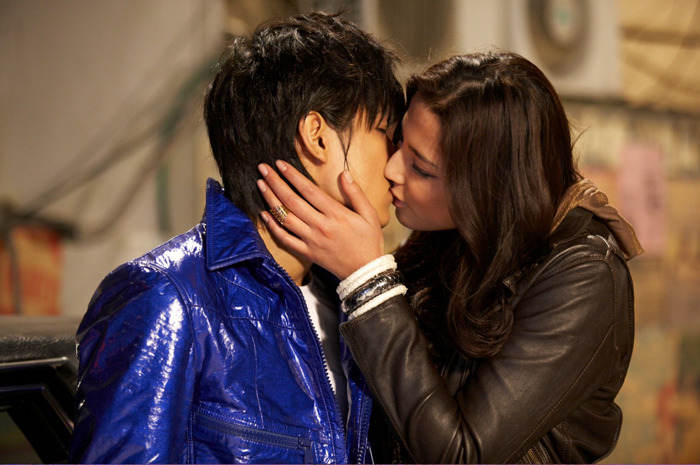
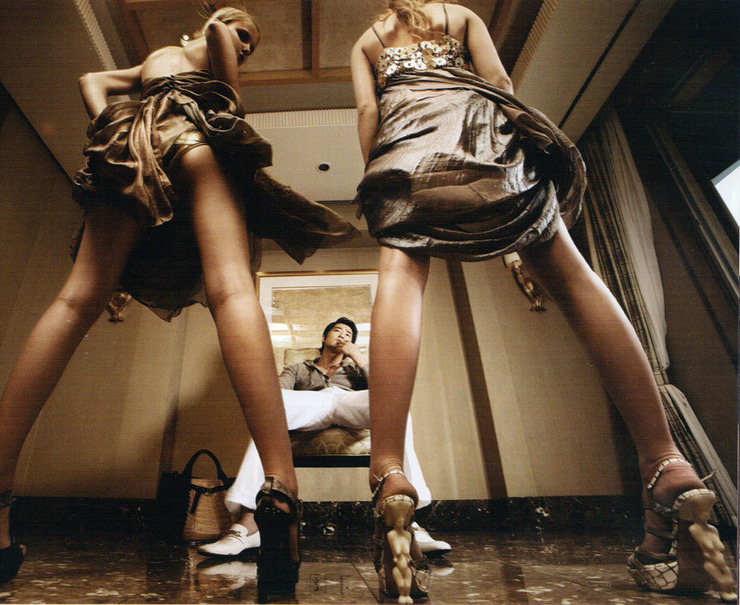


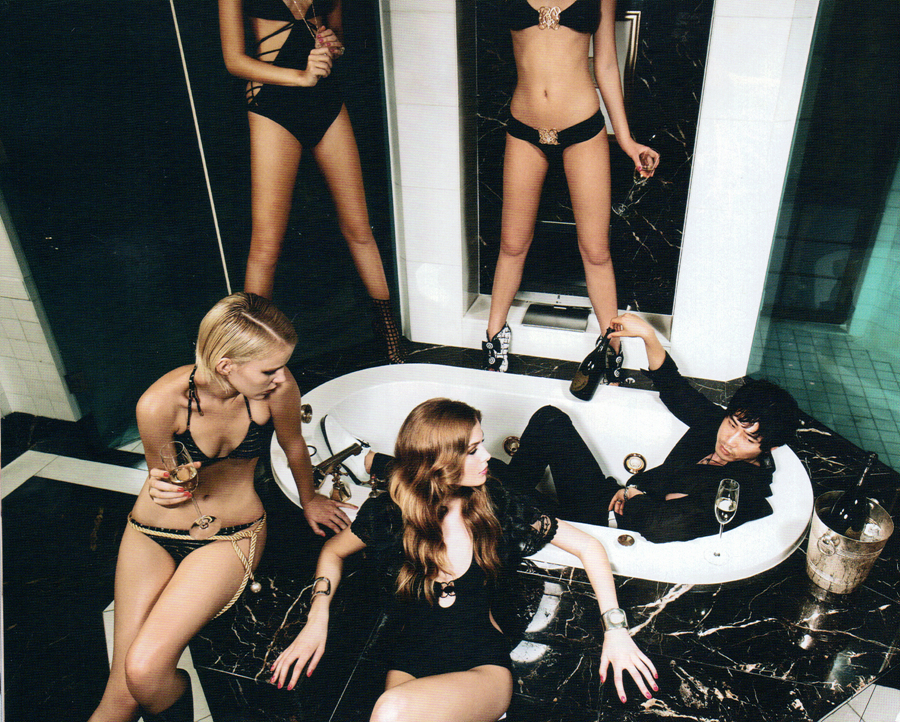
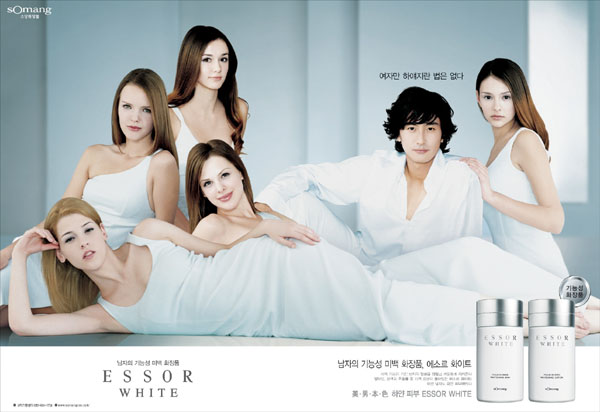





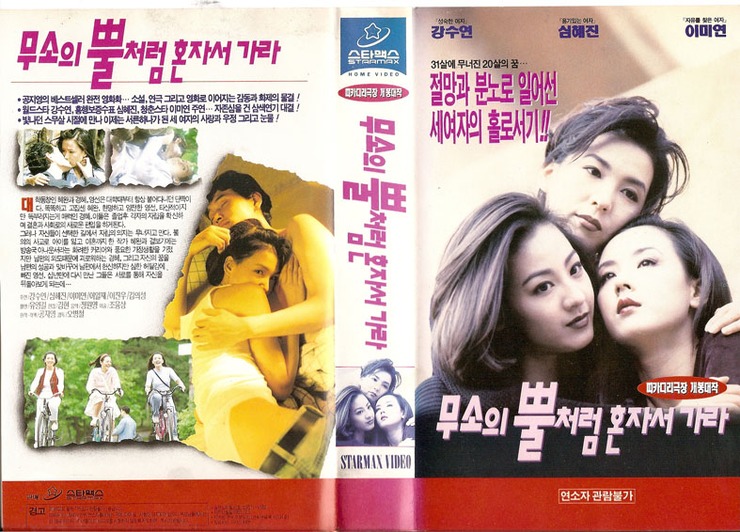



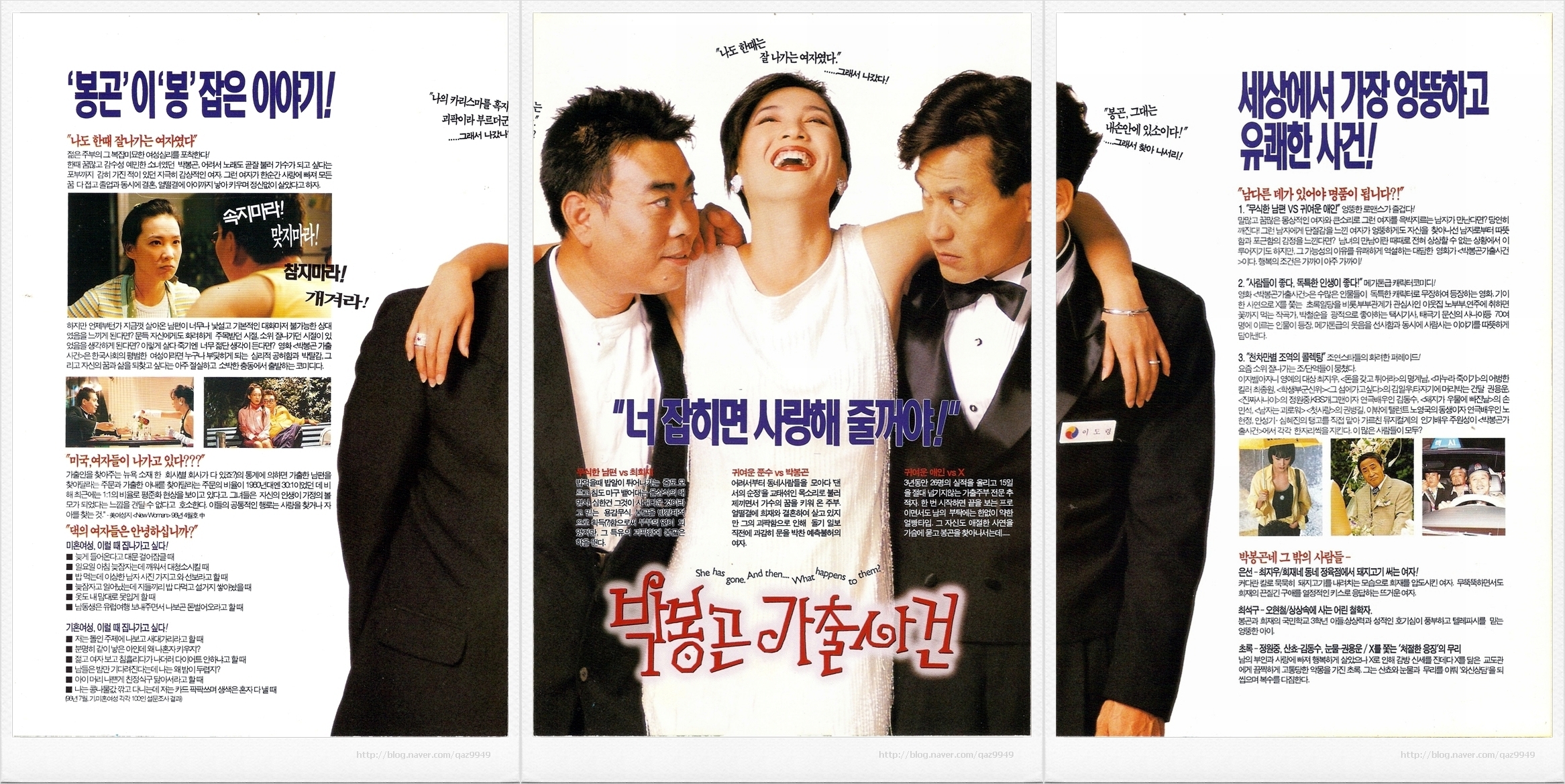

 Perhaps given the dire state of today’s economy, such imperatives will force such a change in Korea? (End)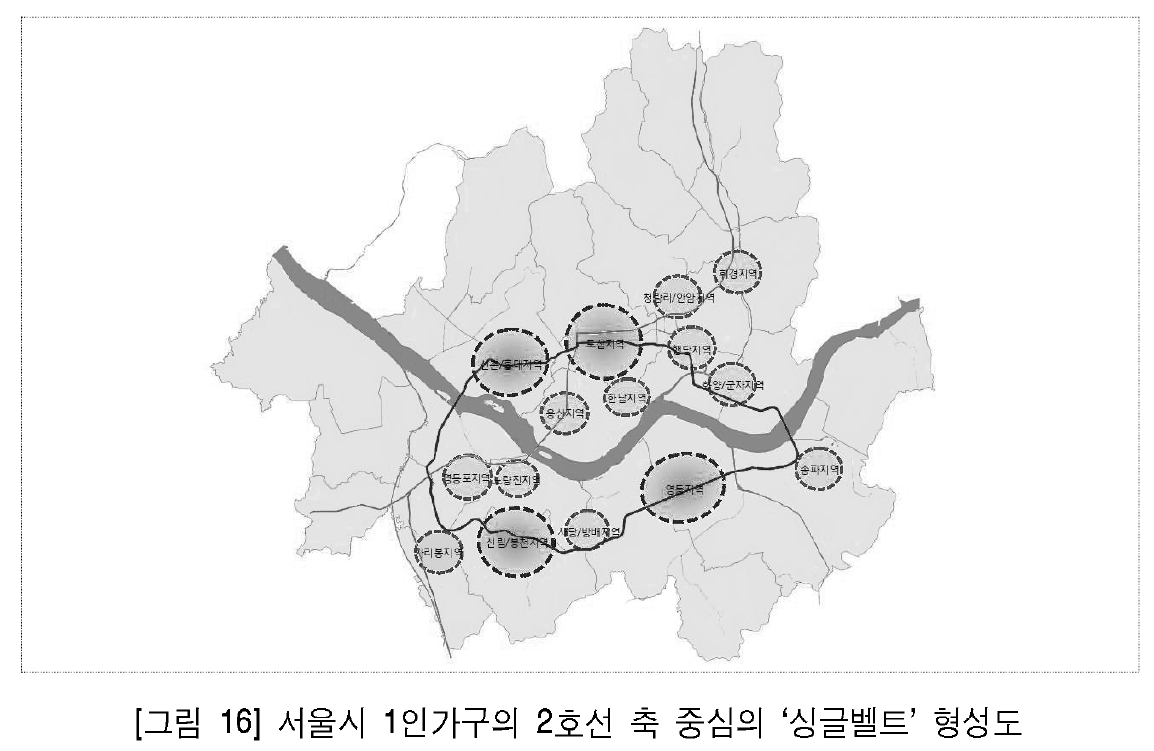
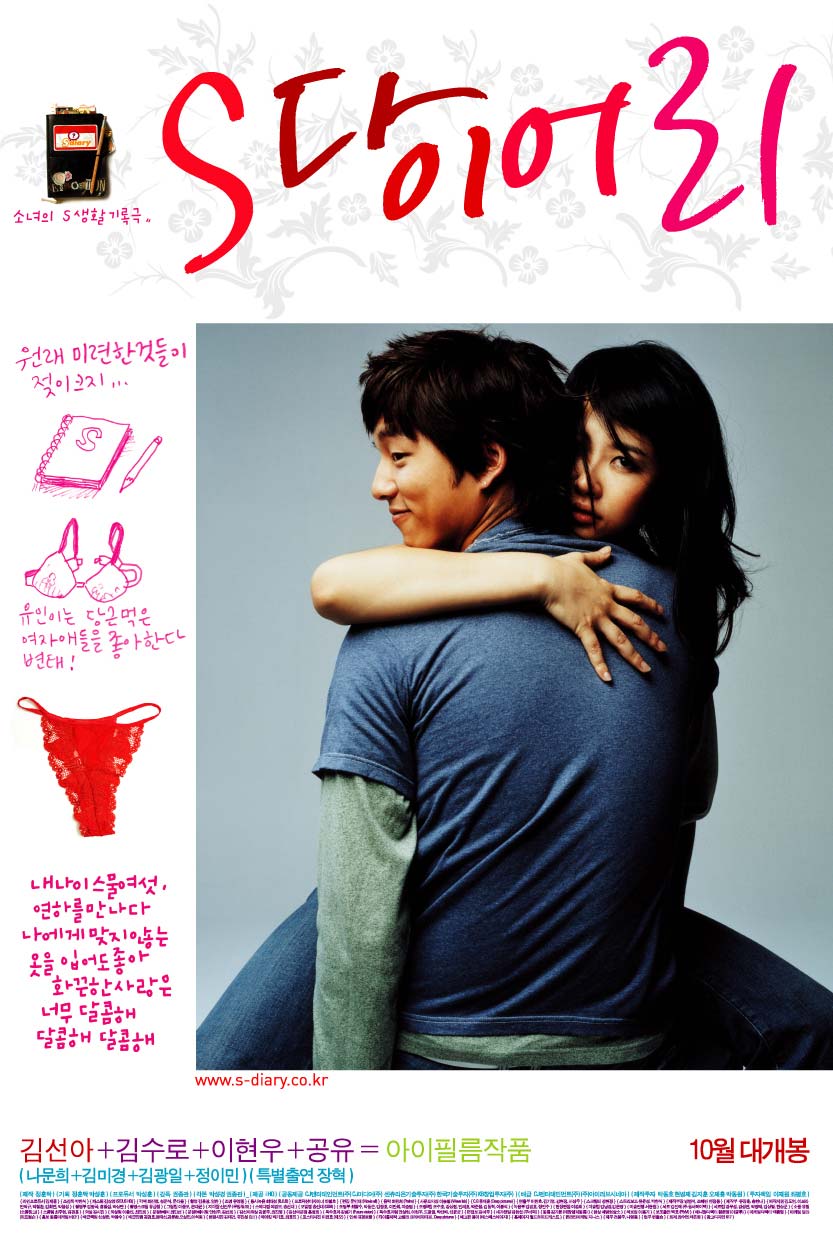

 , which editor-in-chief James provides a quick review of over at the ironically-titled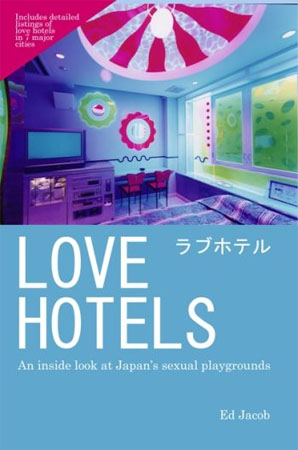


 And having an attractive female Korean teacher myself for over a year, then I can personally vouch for the effects of this, even though I was engaged at the beginning of that period and married towards the end, and didn’t for a moment seriously entertain that there was any chance of us getting together even if we’d both been single. My mind did tend to wander, however, when her back was turned, and which I was inordinately pleased that year to discover sometimes happened with me and my own female (adult) students, one of them naively both passing on her and her classmates’ Cyworld addresses one day and assuming that my Korean was much worse than it was (source, right:




 (Source:
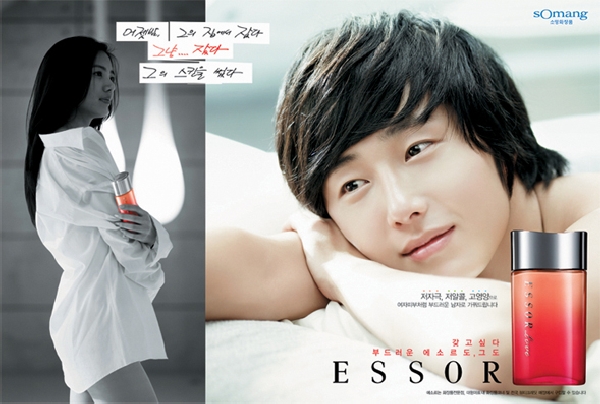 (
( (Updated, January 2014)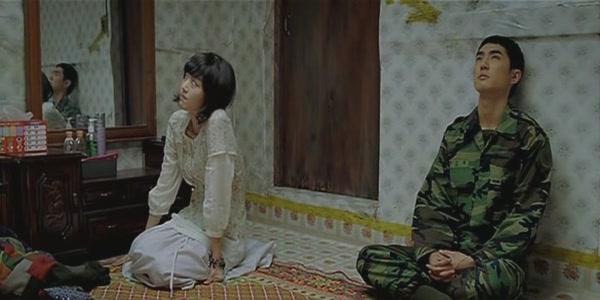



 Korean women taking responsibility for contraception…only in the movies?

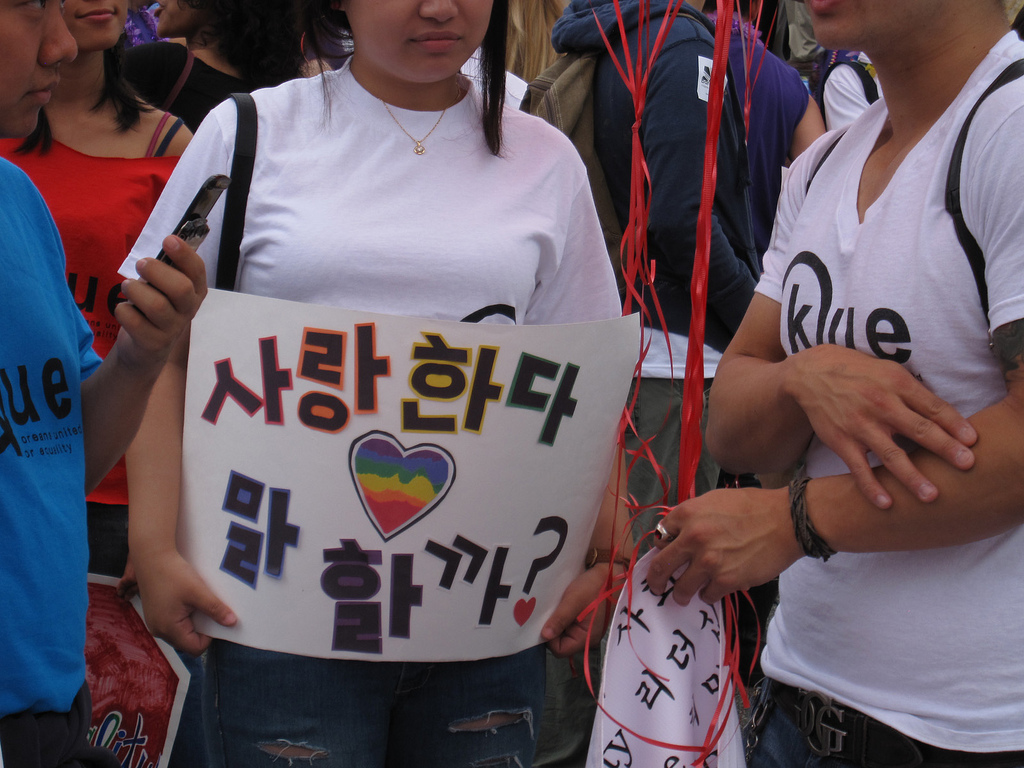


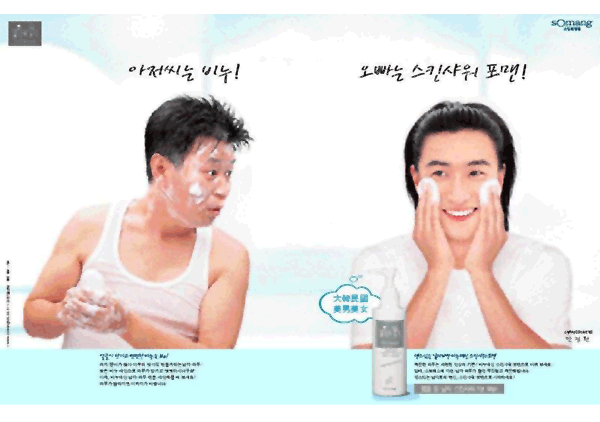


 The Grand Narrative
