Highly commended for being the first Korean drama to feature a gay couple (see #3 here), many viewers have been disappointed and angered at the decision to literally mute a key scene in response to a complaint by the church in which it was filmed. Let alone the actors themselves.
2) Korean military’s ban on gays ruled unconstitutional by the National Human Rights Commission (NHCR)
A welcome contrast to the above news on the surface, in Korea homosexual men are usually merely judged “psychologically unfit” to serve. Homosexual acts that occur between enlisted soldiers nevertheless however, are punishable by up to 1 year in jail, and indeed 3 male soldiers were convicted of it in the years 2004-2007 (out of 176 cases).
Unfortunately however, the Korean military already has a long history of simply ignoring NHCR rulings, and ROK Dropalso notes that “gays in Korea do not have the political connections, media backing, and the money of the gay groups in the US.” Moreover, as I explain in detail here, 15.8% of Korea’s new 250,000 conscripts each year already experience sexual violence, so I too expect virtually no changes to come as a result of this ruling.
3) Celebrity couple targeted by crazed anti-fans
Within hours of the announcement that singer Kim Jung-hyun (김종현) and actress Shin Se-kyeong (신세경) were dating:
• And Jung-hyun’s management company SM Entertainment cut off all contact between his group Shinee (샤이니) and the public (source, right)
While excessive, by itself this case doesn’t seem particularly noteworthy compared to most celebrity news. Place it in the context of numerous prior victims of Korea’s “anti-fans” however, the most recent and well-known of whom would probably be singer Tablo (타블로), then suddenly it seems much less like the irrelevant rantings of broken-hearted teenagers, and more a fundamental part of Korea’s wider netizen culture, with very real – and often tragic – effects on people’s lives.
To prevent broken-hearted teenagers growing up to become netizens though, surely it would help if they were actually punished for trashing their classrooms, not simply forgiven because they were so angry with Shin Se-kyeong?
Hell, it’s no wonder most Korean celebrities go to such elaborate lengths as these to hide their relationships.
4) Awwww
A romantic story? Or, more cynically, a simple reflection of the fact that many Koreans seem to get married very quickly after first meeting?
5) HIV-positive 19 year-old prostitute arrested for having sex with 20 men
Possibly a high-school student, reportedly she did actually suggest using condoms, but her clients refused to wear them.
Would such acquiesce be typical for most Korean prostitutes however? It’s difficult to tell: in general, sexually-active Korean women are similarly reluctant to insist on using contraception, but I would have assumed that prostitutes had less qualms about losing their virginal reputations.
Much more interesting though, how on Earth did the police that found her learn about her HIV status? And more worrying, that one third of her classmates would similarly consider exchanging money for sex.
6) Foreign prostitutes no longer required to have AIDS tests to get a visa, but English teachers still do
In fairness though, the E-6 visa category is a real mess, and by no means are all the “entertainers” that come to Korea under it are prostitutes, as well explained by Benjamin Wagner (who filed a complaint about the tests last year).
7) “Dad? I don’t know why I need him”
It sounds like a gross generalization, but I have heard from numerous personal and written sources that Korean children (and adults) are much closer to their mothers than their fathers. Kim Seong-kon, a professor of English at Seoul National University, explains why here.
Well of course I hear I you say, but in practice it’s often difficult to find exact numbers. And so, before the financial crisis at least:
…an estimated 30 percent of Korean women aged 20 to 50, or some 2.4 million women, had surgical or nonsurgical cosmetic procedures [in 2008], with many having more than one procedure.
Note that the 30% figure is for women that received procedures just in 2008, and so the figure for all women who have received procedures is likely to be far higher. See here for more information and counter-arguments that the US is far more deserving of the title; and while we’re on the subject, also see here and here for composites made of female celebrities’ faces from various countries.
9) Ethics teacher fired for sexually harassing his students
Unfortunately, not only is he unlikely to be charged with anything, but commenters point out that his record will be wiped clean and he will be able to teach again in 5 years.
Much of the blame for that lack of punishment can be placed on the Korean Teachers’ and Education Workers’ Union, which apparently believes that verbal abuse is far more heinous.
10) No Sex Please, We’re Korean
Apparently “other than an alarming amount of rape, their is very little sex in Korean fiction.” And this is a big issue for translators and the popularization of Korean fiction overseas too, as even when it is there it is mentioned it is hardly explicit, and “and this means that translations from Korean will not seem ‘natural’ to western readers who expect bodices to be heaving and trousers (and panties) to be dropping.”
Apologies for all the largely negative stories this week folks: please send me in positive ones if you have them!^^
Update: with thanks to London Korean Links, this was nice to see the instant after typing that last line:
No, I don’t really. But, after eating Special K (스페셜K) for years thinking that it was low-fat, only to just discover that it actually has more fat than regular cornflakes, then it’s high time to call Kellogg’s out on the appalling photoshopping of her that’s been greeting me every morning.
See how she compares in real life to the Barbie dolls above:
Don’t get me wrong though: while she could certainly do with a bit more sun, I still find her attractive (and just love her expression at the top-left!). Yet, lacking even a hint of an hourglass figure, why on Earth was she chosen to be the model for a product purporting to give you one? Because of Korean advertising’s over-reliance on star appeal perhaps?
Alas, more likely it’s because Korean consumers aren’t actually all that concerned with photoshopping. For not only do they regularly have it done on their own resume photos for instance, but there are even products on the market claiming to give women an “X-line” too, despite the inconvenient fact that it is physically impossible for a human to ever possess such a body shape:
Of course, photoshopping of print advertisements is hardly new, let alone confined to Korea. What is new however, is that whether through technical improvements and/or decreases in costs, photoshop-like manipulation is increasingly common in commercials too. And this is far more insidious.
Why? Well first, consider Amore Pacific’s commercial for its V=B Program for instance, in which it is difficult to tell if the model’s X-line at 0:23 is the result of digital manipulation, or simply clever lighting, camera angles, and/or the model’s pose. Even after repeated viewings too, which your average consumer isn’t likely to do:
In contrast, lacking real-life photos of the model in the first commercial to compare and contrast at one’s leisure, then it would be much easier to be deceived into thinking that – God forbid – an X-line was actually real, and hence something to aspire to.
Likewise, that Lee Soo-kyeong had an hourglass waist because of eating Special K:
Granted, that example from March is only borderline (see here for a closer look {source}). But if you also take this example from August though, shot at same time those photos of her on the beach above were, then like me you may find yourself both amazed and appalled that it’s actually the same person:
How did it make you feel? And have you ever come across any other examples like that yourself, either in Korea or overseas? If so, then please pass them on!
(For more posts in the Korean Photoshop Disasters series, see here)
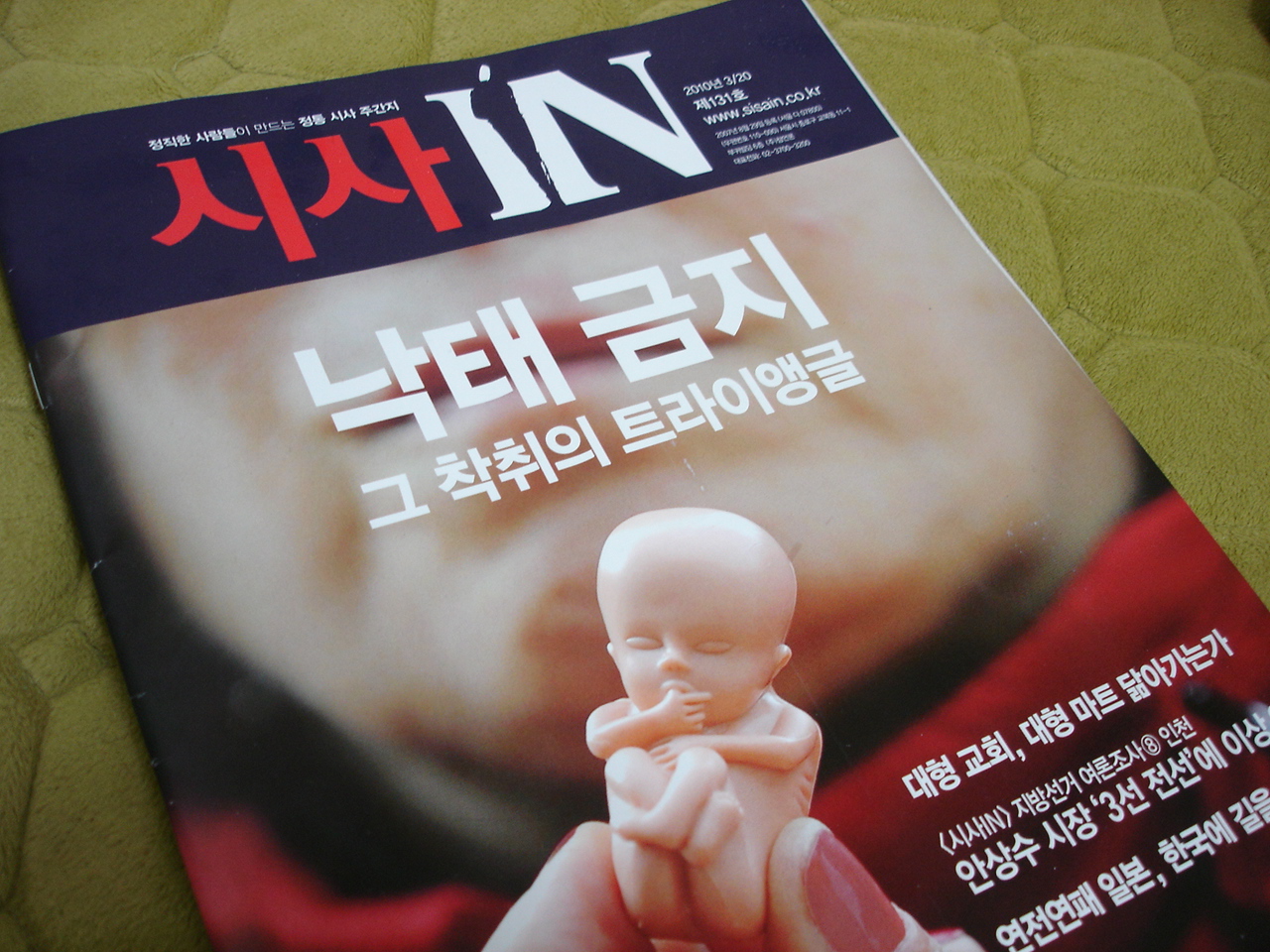
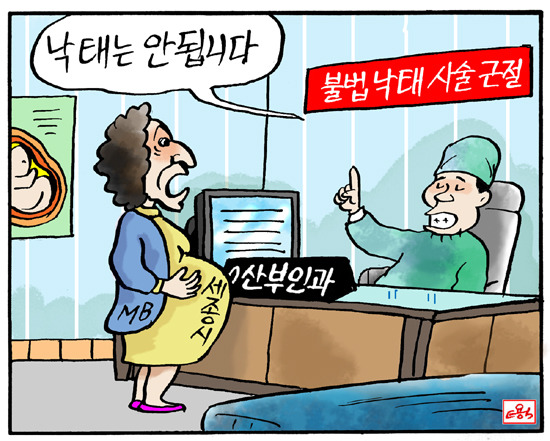
Lee Myung-bakmay be able to avoid the issue of abortion in the remaining years of his presidency, but this successor certainly won’t. Like Lindsay Lohan says, some stories do indeed keep on growing.
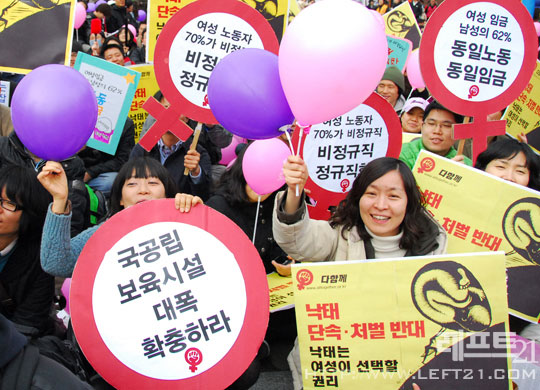
Not so much because Koreans feel strongly about abortion itself though. Rather, because this is the same president that immediately tried to abolish the (then) Ministry of Gender Equality for instance, despite campaign promises not to. And also, because a year later, he encouraged targeting women for mass layoffs as a solution to the financial crisis. Criminalizing abortion simply in order to increase the birthrate rate then, is really part and parcel of a wider mentality that is fundamentally failing to get to grips with women’s entrenched inequality here. And perhaps could come be the symbol and/or catalyst for later volatile protests about any number of related issues, much like those in 2008 were never really simply about imported beef.
Until then, following on from this earlier post about a video that alerted me to the fact that doctors were getting (suspended) sentences for performing abortions, I’ve translated the following article to give you more information about those. And in the process, I’ve confirmed commenter Matt of Gusts of Popular Feeling’spoint about it that no doctor mentioned actually had to spend any time in jail.
However, as you’ll see, the article does not appear to say that the manager of the gynecology clinic in Suwon also got a suspended sentence, which would presumably mean that in fact he or she at least did go to jail. Which seems just a little unfair and confusing, so if anyone with better Korean skills can please clarify, then that would be much appreciated!^^ (source, right)
“잇따른 ‘낙태죄’ 실형선고부당해” “Continued Sentences for ‘Abortion Crimes’ are Unjust”
<임신․출산 결정권을 위한 네트워크>규탄성명 발표 / A Public Denouncement by The Network for Pregnancy & Birth Decision Rights (NPBDR)
최근 들어 인공임신중절을 시술한 의사에게 실형이 선고되는 사례가 잇따르자 이에 대한 비판의 목소리가 커지고 있다. 이례적인 처벌 강화가 인공임신중절 시술의 위축을 가져와 여성들의 안전과 건강을 위협할 것이라는 우려에서다.
Recently, criticism has been growing of the numbers of doctors receiving sentences for performing abortions. There is a great deal of worry and anxiety that singling out abortion laws for enforcement will reduce the number of abortions and be dangerous for women’s safety and health.
‘임신중절’ 시술 의사에게 실형판결 잇따라 / Doctors are continually being sentenced for performing abortions
지난 9월 3일 울산지방법원은 인공임신중절을 시술한 의사에게 1심에서 징역 6월에 집행유예 1년, 자격정지 1년을 선고했다. 이에 앞서 지난 8월 수원지방법원은 역시 인공임신중절 시술 혐의로 고발된 산부인과 의사와 사무장에게 각각 징역 1년에 집행유예 2년, 징역 2년 6월의 실형을 선고했다.
On the 3rd of September, in the first session of a case at Ulsan District Court, a doctor who performed an abortion was given a 6-month jail sentence suspended for 1 year (i.e. no jail), and was stripped of their doctor’s license for 1 year. And in August at Suwon District Court, a gynecologist who was suspected of performing an abortion and the gynecology clinic manager were given a 1 year sentence suspended for 2 years and a 2 year, 6 month jail sentence respectively.
이는 그동안 인공임신중절에 대한 기소 건수 자체가 적었고, 기소되더라도 선고유예에 그치는 경우가 대부분이었던 것과 비교해 이례적이라는 평가다. (source, right)
Even though the number of cases of doctors that have received sentences for performing abortions is small, and most have received suspended sentences, compared with those the above cases are quite exceptional.
올해 2월 프로라이프의사회가 인공임신중절 시술을 한 의료기관 3곳을 고발했을 때에도 사무장이 구속 기소된 한 곳을 제외하고 각각 벌금 200만원에 약식기소, 무혐의 처리를 받았을 뿐이다.
In February, a pro-life doctor’s association filed suits against 3 clinics where abortions were being performed, but in all but one the managers simply to had to pay fines of 2 million won each in out of court settlements.
또 한 지난 5월에는 부산지방법원에서 임신 7주의 여성에게 인공임신중절을 시술한 혐의로 기소된 의사에 대해서도 선고유예판결을 내렸다. 당시 재판관은 “낙태에 대한 처벌과 관련해 공권력의 처벌의지가 상대적으로 미약했던”사실에 비춰 “의사에 대한 처벌은 형평성에 어긋난다”고 선고유예의 이유를 밝혔다.
In May, at Busan District Court, a doctor who was suspected of performing an abortion on a woman who was 7 weeks pregnant received a suspended sentence. In that case, the judge said in his or her judgment that “the government’s will for punishing abortion-related crimes is relatively weak”, and that the reason for the suspended sentence in that case was that “the [prescribed] punishment ran counter to notions of social equity”.
의사에게 징역형을 선고한 울산지방법원의 김정민 재판관이 “태아의 생명은 사람의 생명과 마찬가지로 형법이 보호하고자 하는 매우 중요한 법익”이라며 “형법의 비추에 피고인의 범행은 그 죄질이 가볍다고 볼 수 없”다고 선고 이유를 밝힌 것과 대조적이다.
In complete contrast, Kim Jeong-min, the judge who gave the jail sentence to the manager in Ulsan, said the reason was that “a fetus’s life is exactly the same a person’s life, and deserves the full benefit and protection of the law”, and hence “the defendant’s crime could not be punished lightly”.
“징역형 선고, 중절수술 위축시킬 것” “With Sentences, the Number of Abortions Will Go Down”
특히 9월 울산지방법원의 판결은 임신 10주의 ‘초기낙태’와 ‘10대여성의 낙태’에 대해 징역형을 선고한 것이어서 판결이 던진 파장이 심상치 않다. ‘의학적으로 시술이 안전한’ 12주 미만의 인공임신중절은 이미 많은 국가에서 합법화되어 있으며, 10대 임신의 경우에도 현실적으로 양육의 어려움이 있어 사실상 임신중절 허용사유로 용인되어 왔기 때문이다.
In particular, the September case in Ulsan has generated a lot of controversy because the doctor’s sentence was for an abortion performed on a teenage girl who was 10 weeks pregnant. After all, not only is abortion in the first trimester completely safe and legal in many countries, but the general consensus is that such young girls have special difficulties in raising a child.
이 판결에 대해 <임신․출산 결정권을 위한 네트워크>는 29일 “여성의 결정권을 원천적으로 부정하는” 판결이라며 규탄성명을 내고, 항소심에 적극 대응할 것을 천명하고 나섰다. 임신․출산 결정권을 위한 네트워크는 인공임신중절을 범죄화하는 움직임에 대응하기 위해 결성된 단체로서, 여성·노동·진보 단체들과 진보신당, 민주노동당이 함께 참여하고 있다.
< 임신․출산 결정권을 위한 네트워크>는 잇따른 “징역형 선고가 선례가 돼 올해 2~3월처럼 낙태 수술이 위축돼 낙태 수술비가 치솟고, 낙태를 필요로 하는 여성들이 심각한 어려움에 처하게 될 것”이라고 심각한 우려를 표했다.
On the 29th of September, the NPBDR denounced that judgment as “fundamentally denying women’s rights” and that the group would actively appeal it. The NPBDR is an organization that was established to fight against the criminalization of abortion in conjunction with women’s groups, worker’s groups, progressive groups and the New Progressive and Democratic Labor Party. In addition, the NPBDR expressed serious worry about the “continuing cases of sentencing for abortions, which like those cases in February and March set precedents, and were accompanied by decreases in the numbers of abortions and a sudden rise in their expenses, which became a serious concern for women seeking abortions.”
실제로 올해 2월 프로라이프 의사회의 산부인과 고발 후, 산부인과의 임신중절 시술 기피로 인해 고통을 호소하는 상담전화가 여성단체에 빗발쳤다. 시술비용이 치솟았고, 비싼 수술비와 처벌에 대한 두려움 때문에 ‘원정낙태’를 알아보는 여성들까지 나타났었다.
After a pro-life doctor’s group filed suit against gynecologists in February, the reality was that they started avoiding providing abortion services, leading to a torrent of pleads for help from women to women’s groups’ hotlines. Because of the sudden increase in their expenses, and the fear of being punished, many women are now considering getting abortions overseas.
‘임신중절 허용’ 법 개정 움직임에 역행 Such Judgments Work Against Abortion Law Reform
< 임신․출산 결정권을 위한 네트워크>는 특히 “여성운동이 여성의 요청에 의한 낙태를 허용하라는 목소리를 높이고 있고, 한나라당 홍일표 의원, 산부인과의사회, 법무부 형사법개정특별심의위원회 등도 제한적이나마 낙태를 허용하는 방향의 법 개정을 주장”하고 있는 상황에서 이런 판결이 나온 것에 대해 깊은 유감을 나타냈다.
The NPBDR, deeply saddened by the above cases, says “women’s movements and women in general are raising their voices high in their demands for legalizing abortion, and have the support of National Assemblyman Hong Il-pyeo of the ruling Grand National Party, gynecologists’ groups, and the Special Committee for the Reform of Criminal Law under the Ministry of Justice, and so on, that, although they only have limited political power, are also insisting on the legalization of abortion.”
“낙태가 불법화된 나라들이 합법화된 나라들보다 낙태율이 오히려 더 높”은 것에서도 드러나듯, “처벌이 결코 낙태를 줄일 수 없다”는 사실에 대해 이미 국제사회뿐만 아니라 우리나라에서도 공감대가 확산되고 있는 시점에서 시대착오적인 판결이라는 것이다. 현재 국제사회에서는 유엔 여성차별철폐협약(CEDAW)에 근거해 인공임신중절한 여성을 처벌하는 ‘낙태죄’ 폐지를 각국에 권고하고 있다.
Also, “compared to countries where abortion is legal, in fact abortion rates are higher in countries that have criminalized it,” and this means that “criminalizing abortions can never bring abortion rates down,” a fact that at this point in time not just international society, but Koreans also agree on, and so find the above judgments an anachronism. Presently, on the basis of the Convention on the U.N. Elimination of All Forms of Discrimination Against Women (CEDAW), international society is recommending each country to abolish laws defining abortion as a crime and not punishing women who have abortions. (source, right)
< 임신․출산 결정권을 위한 네트워크>는 “출산은 여성의 삶 전체에 지대한 영향”을 미치고 “출산에 뒤따르는 책임을 감당할 당사자도 여성”이라는 점을 환기시키며 “자신의 삶에 대해 신중하게 고민하고 낙태를 결정한 여성을 범죄자 취급해서는 안 된다”고 못 박았다. 또한 앞으로 있을 항소심에 대한 구체적 대응을 준비 중에 있다고 덧붙였다.
Finally, the NPBDR wants to remind everyone that “giving birth is the single most influential thing in a woman’s whole life,” and is accompanied by a great deal of anxiety about how and if she will be able to cope with her new role as a mother. The group firmly insisted that “accordingly women who have agonized over this and come to the final decision to have an abortion should not be treated like criminals,” and added that they were making strenuous efforts to prepare to fight for their appeal against the Suwon judgment (end).
And on that note, apologies for not finding any information about the woman fined for simply planning an abortion, as mentioned in the earlier post, and I’ll keep looking. But in the meantime, I was very happy to read about the palpable resistance to Lee Myung-bak’s anti-abortion drive that is already emerging!
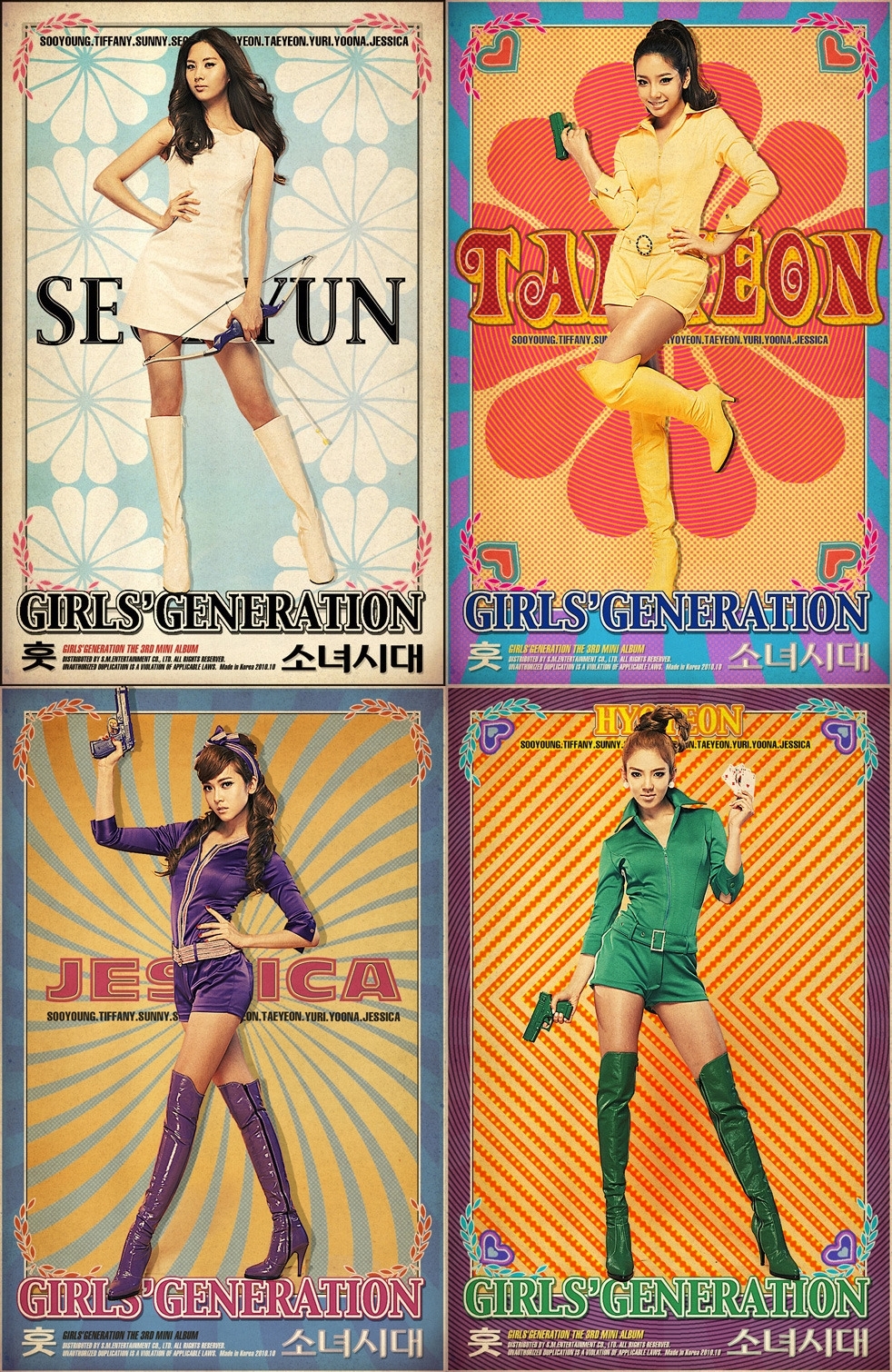
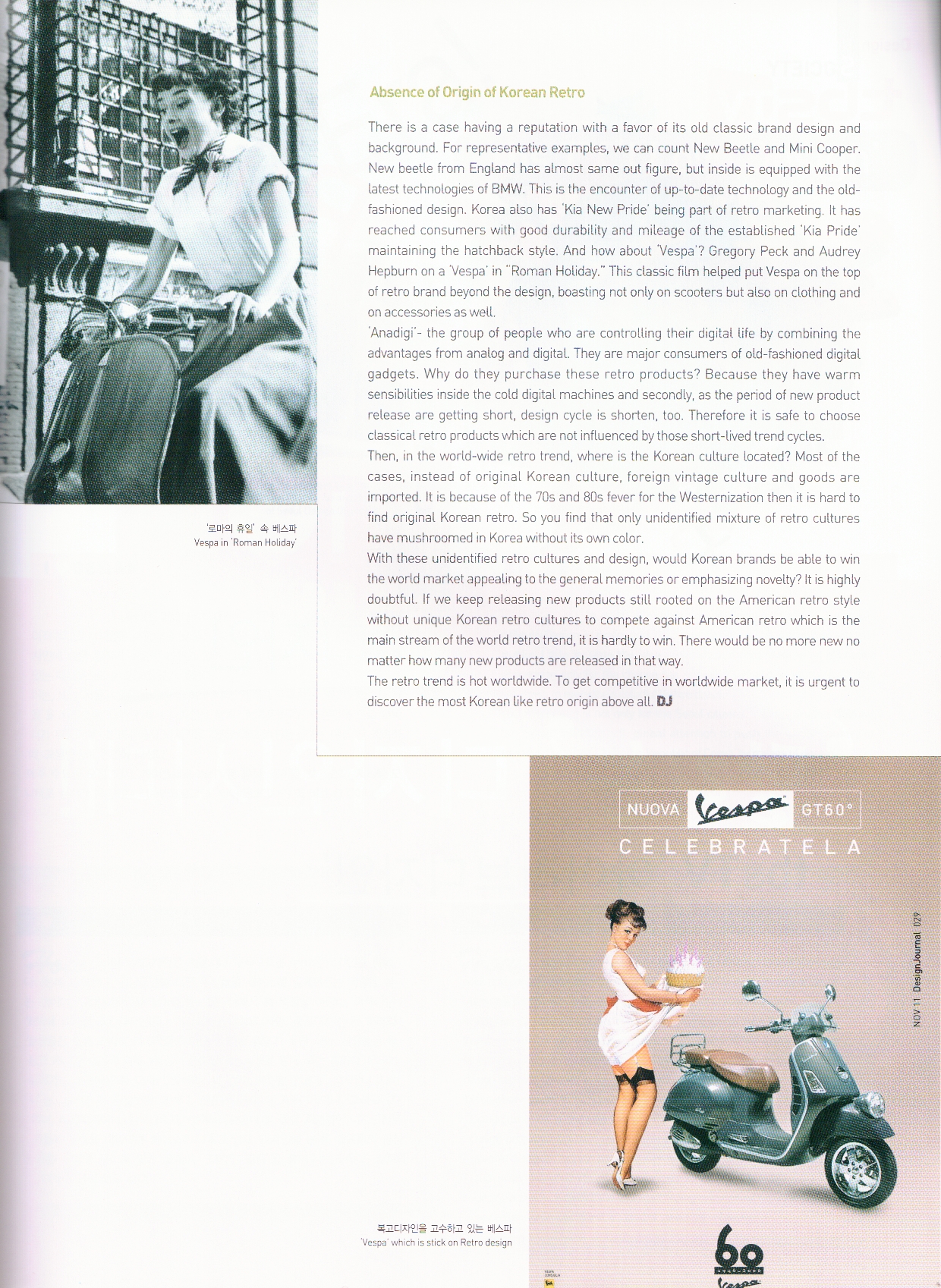
Despite everything I’ve said about Girls’ Generation (소녀시대) over the years, I’m really liking this retro look for their new mini-album Hoot (훗), to be released later this week. Heck, along with Eccentric Yoruba, I’m even liking the title track too, whereas I needed to hear DJ Areia’s trance remix before I could even begin to listen to Oh! (오!).
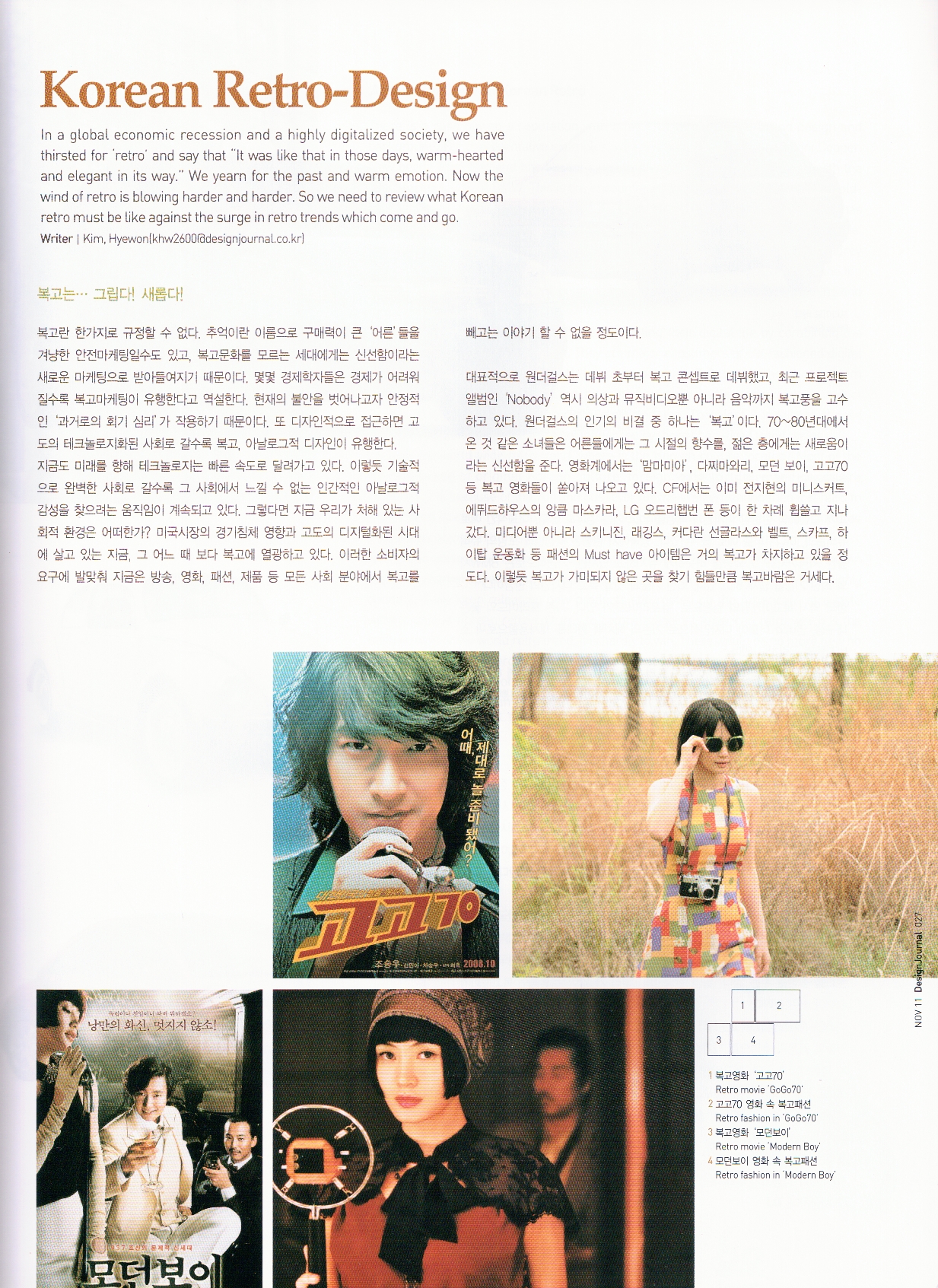
But I’ve actually liked Korean retro itself for a long time now, and the posters reminded me of a brief article on that from the November 2008 edition of Design Journal (디자인저널), which I thought readers may also be interested in. And in the magazine itself of course, which — although its English could be much improved as you’ll soon see — is very rare in that it has both English and Korean versions of each article, helping to open up an entire creative side of Korean life that would normally be relatively inaccessible to expats.
Alas, unfortunately I’ve just learned that there were no more issues published after July 2009. But I do hope you still enjoy the article though, and if so then you may also like the So Much Pileup blog that I subscribe to, which has examples of retro graphic design from around the world. Personally, I was hooked on it as soon as I read the following about the logotype on the right:
The way that A and the S form together as one. It’s like they’re having an incredibly intimate moment that I happened to stumble upon. Where as the r-a ligature seems a little forced. That lowercase a will undoubtedly wake up feeling used and perhaps will regret the whole experience.
And in that same spirit of turning what was once considered dull and ordinary into something fun and sexy, let me leave you with all the great examples of Korean retro mentioned below:
Any other aficionados out there?^^
Update: More retro-themed pictures of Girls’ Generation are available here:
Update 2, July 2012:Here’s a post on the “fashion police” of the 1970s who would check women’s skirt lengths, which emerged in the discussion in the comments.
After a long hiatus, I’ve finally found a way to continue this series despite my much greater workload (and other commitments) this semester: simply bookmarking stories as soon as they arise, then passing them on the moment I have 10 of them. And in particular, by making sure to dispense with the usual lengthy analysis.
Alas, 1500 words later, I’m still trying to figure out what happened to that last exactly. But in the meantime, here are the stories in the order that I came across them at least, albeit with one exception for the most eye-catching one…
1) Like GirlFriday of Dramabeans said of the above poster for Pretty Romance (쩨쩨한 로맨스), what’s wrong with equal implied-nakedness?
2) South Korean military developing separate uniforms for female soldiers
Was anybody else surprised to learn that there weren’t already female uniforms in use? In 2010?
In the Defense Ministry’s defense though (no pun intended), there are actually only 6000 female soldiers out of a total of 655,000 in the armed forces, so the delay is somewhat understandable.
Which begs the question of why female soldiers in the US have also had to wait then, considering there’s over 160,000 of them!
3) 33 year-old female teacher has sexual relationship with 15 year-old student
In particular, note that while the teacher was fired from her job, she will not actually be charged with anything, as this case has – once and for all – conclusively demonstrated that the age of consent in South Korea is 13, one of the lowest in the world. And if this case has a silver lining, it is that it will at least lead to greater awareness and discussion of that, particularly in the context of a great deal of concern already having been raised about the alleged prostitution of and overly sexual performances of underageentertainers.
Unfortunately however, currently Korea is also in the grip of what is effectively an internet witch-hunt against her, which – however deserved one may feel it is – is not without its problematic elements.
4) Korea’s birthrate is the 3rd lowest in the world
Update: There are many reasons why Korea’s birthrate is so low of course, but if Mike in Busan’s recent experiences are anything to go by, then the effect of the appalling service provided by some maternity hospitals may also play a large role in that.
For the record, those hospitals my 2 daughters were born at were both fine, although I was rather surprised that the one my first daughter was born at – also a maternity hospital – didn’t have incubators with their own oxygen supply, which meant my 2nd (very premature) daughter had to be born at a general hospital instead. It was not a fun ride in the ambulance going between them at 3am while carrying a sleepy 2 year-old, let alone for my wife.
Granted, this news sounds a little strange at first, and the young girls themselves look somewhat less than thrilled about it. But I think this idea deserves some definite respect:
Young girls who started menstruation early cut a big rice cake with representatives of medical doctor’s organizations at a convention to announce foundation of “Menses Day” (초경의 날) by the Korean Association of Obstetricians and Gynecologists (KAOG; 대한산부인과의사회) at the Lotte Hotel in Seoul, Oct. 20.
KAOG said that it adopted Oct. 20 as Menses Day to promote the importance of menstruation as a natural part of development, and to improve social awareness.
Alas, perhaps it is unfortunate that this being promoted by KAOG and not by, say, the Ministry of Gender Equality and Family Affairs (여성가족부/MOGEF), which might have indicated that the government is also more sympathetic to addressing the urgent need for sex education here. But of course I have nothing against KAOG itself(!), and I’m happy to report that it is pro-choice too, and not to be confused with the Korean Gynecological Physicians’ Association (GYNOB; 진오비) that supports the Lee Myung-bak Administration’s criminalizing of abortion.
As for Menses Day itself, if it takes off then it may have very positive effects in the long term. For even in the UK, teenagers generally feel that masturbation is natural for boys, but shameful, wrong, and dirty for girls, and my own experience suggests that, if anything, those perceptions are much stronger in Korea. Teach girls that their bodies are in fact something to be celebrated rather than be embarrassed of though, then they’re much more likely to have satisfying sex lives in the future (unlike all too many married Korean women, who effectively have no sex lives).
6) Challenging stereotypes of oversexed foreign women
Charged with negatively impacting Koreans’ perceptions of all foreign women because of their promiscuity, Korean “dating bloggers” and many others have (rightly) responded angrily to accusations. But spread over many posts, blogs, and hundreds of comments though, the ensuing discussion is a little difficult to follow, so I highly recommend reading I’m no Picasso‘spost for an excellent summary of the issues raised, and her own rebuttal.
As I have long noted, it is simply crazy to educate women to such world-high standards, only then to fire them and/or make it virtually impossible to work after either turning 30, getting married, or (especially) having children. And indeed, Korea remains the only country in the OECD where the more highly educated a woman is, actually the less likely she is to be employed.
If Korean companies won’t hire them however, then eventually more and more foreign companies will, as recently noted by the Harvard Business School and The Economist.
Update:The Idiot’s Collective also has a post about this.
8) No, morons, a love hotel is not a brothel
A self-explanatory post from Brian in Jeollanam-do, on articles in foreign newspapers over the accommodation provided for the first Korean Grand Prix. Like he says:
Because of my affinity for love motels, I’m sensitive to what’s unsurprisingly a lazy post that gets it wrong—and looks quick to jump on the “news of the weird” theme that runs through so much international news out of Asia in western sources—starting with the photograph that accompanied it.
…the civil service remains one of the few institutions after the Asian Financial Crisis of 1997 which still provides “jobs for life”, unlike the rest of the Korean economy which now has the highest number of irregular workers in the OECD. Consequently, the various exams are extremely competitive, and indeed one of my own sisters-in-law spent over 4 years studying for hers before finally qualifying…for a series of grueling interviews, which many applicants still fail (including a friend of mine), but fortunately she made it through those as well.
Why this is a gender issue is because despite the difficulties, at least it is entirely meritocratic, and as such it has a disproportionate number of female applicants…
Regardless of the exam, the various ministries involved in its administration are legally required to inform the public well in advance of the number of jobs that will ultimately be available for successful applicants. But with one exception: the Teacher Certification Examination (TCE). So, not only was it devastating news for those taking the integrated social studies and the integrated science version yesterday to discover that there were actually no jobs available, thereby rendering years of study (for most of them) essentially meaningless, but only being told 4 weeks ago greatly compounded that blow.
Not content to meekly write-off the last 4 years of her life because of bureaucratic indifference however, 28 year-old applicant Cha Young-ran decided to do something about it. As reported in Global Voices, she single-handedly protested in front of the Ministry of Education building, and within 30 minutes was whisked inside to discuss her problem with officials, who brought the TCE in line with all other examination bodies that are legally required to give 6 months notice a few days later. As Global Voices says:
Cha’s request for change was a demand that anyone with a social conscience could have made. However, Cha was the one who actually took action and with a zest of fresh ideas, a rare change was made in one of the most rigidly bureaucratic areas of Korean life.
Yes, those really did happen in the last couple of months.
Perhaps it was naive of me to be so shocked and surprised however? After all, according to the Korea Herald, “about 30 [doctors] have been brought to the court over the past 5 years, mostly resulting in probation or fines”, so presumably this latest case technically isn’t the first time a Korean doctor has been incarcerated for performing an abortion (for 1 year, with probation for 2 years). And then the Lee Myung-bak Administration did signal it would begin enforcing Korea’s long-ignored abortion laws over a year ago too, in a vain and wholly misguided effort to increase the record-low birthrate, so prosecutions had to emerge sooner or later.
Still, I’d be surprised if this wasn’t the first time a pregnant woman has been fined for just planning an abortion, and according to the law she could even face having her baby in jail herself if she tries again. And the fact that she was charged as a result of her husband informing the police? It sounds positively Dickensian.
Seriously, is he physically confining her to their home as I type this? Is she still allowed to divorce him, or has she been stripped of that right too?
My second surprise was that, yet again, I didn’t actually learn of this important news via any English-language media, but rather via the following humble-looking video passed on to me by a Facebook friend, who in turn found it via her friend Heejung Paik of Gwangju Womenlink (광주여성민우회). Simply a very brief overview of Korean’s draconian abortion laws in the global context rather than a discussion of the cases themselves though, I’ve just translated those parts relevant to Korea below:
From 0:21-0:39:
2010년 3월, 멕시코 165명의 여성 낙태로 수감중
멕시코 구아나후아토주 여성, 최대 35년형 낙태로 선고
2010년 9월, 한국의사 낙태시술로 징역 1년 선고
In March of 2010, in Mexico 165 women were incarcerated for having abortions.
One of those women, in the state of Guanajuato, got the maximum sentence of 35 years.
In September of 2010, a Korean doctor was sentenced to 1 year in jail for performing an abortion.
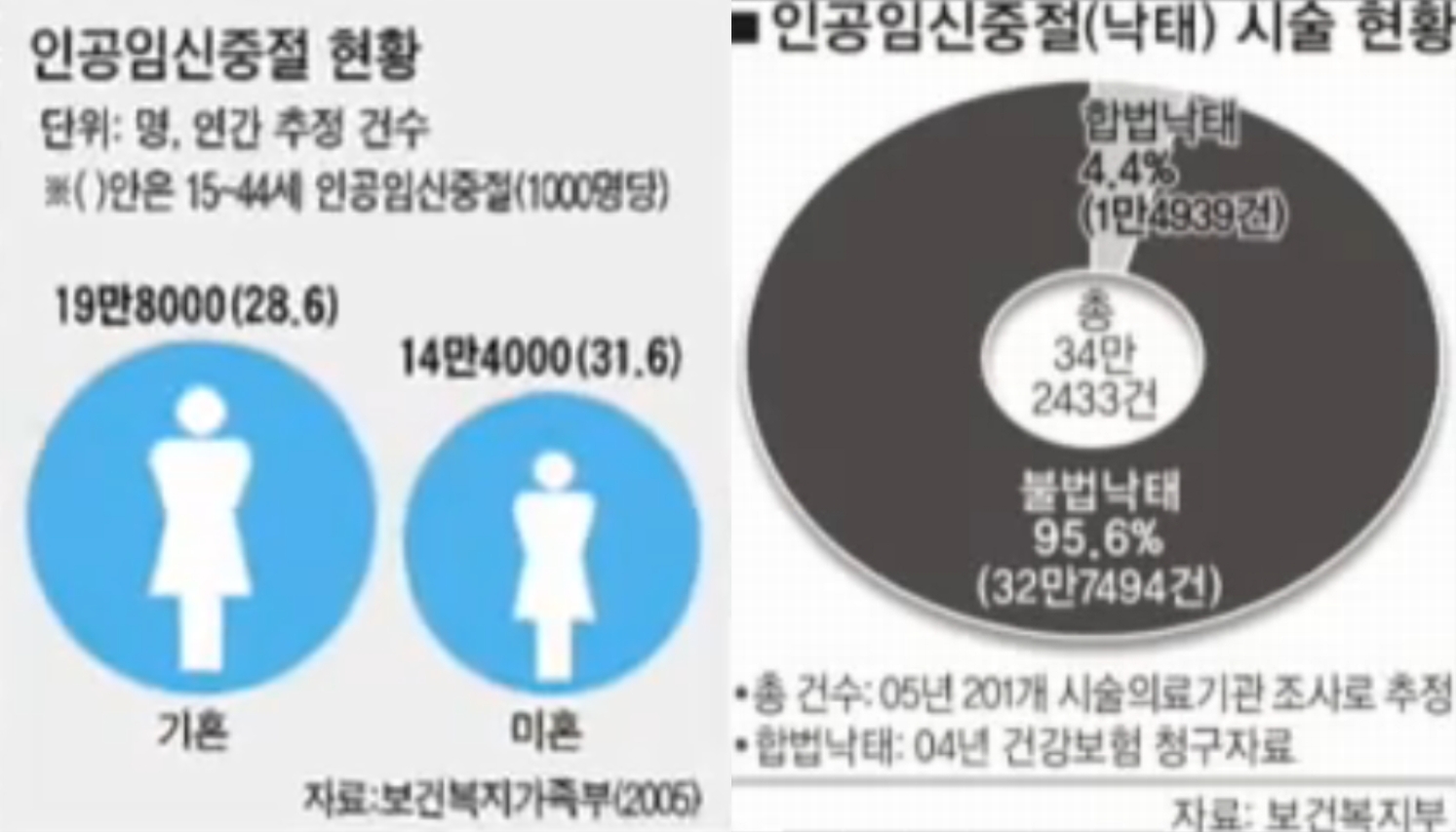
Next, two visuals from 1:04-1:20 (apologies for the poor quality):
On the left:
Estimated number of abortions performed annually (in brackets, the number of 15-44 year-old women out of 1000 that had abortions)
Married: 198,000 (28.6/1000)
Unmarried: 144,000 (31.6/1000)
Source: Ministry of Welfare and Family Affairs (2005; now defunct)
On the right:
Out of 342,433 abortions, 4.4% (or 14,939) were legal, and 95.6% (or 327,494) were illegal.
Estimation based on 2005 survey of 201 abortion clinics, and 2004 health insurance records of legal abortions.
Source: Ministry of Social Welfare
From 1:50-1:58:
유교적인 조선시대에서조차 낙태한 여성이 처벌받은 기록이 없다
Even in the Confucian Joseon Dynasty there is no record of any punishment for abortion
강간, 근친 상간 또는 임부의 건강 보호를 이유로만 낙태가 가능한 나라 (멕시코, 브라질, 수단, 대한민국 등 17개국)
한국보다 낮은 등급의 국가는 전체의 약 27%에 불과하며,
이란, 아프가니스탄, 리비아 등의 국가가 속해있다.
현재 OECD 국가 20개 중 한국보다 낙태시술이 어려운 나라는 단 2개국뿐이다.
There are 17 countries that allow abortion only in the case of rape, incest and if the health of mother is threatened (Mexico, Brazil, Sudan, South Korea, and so on)
Altogether, only 27% of countries provide less abortion rights than Korea, including Iran, Afghanistan, and Libya.
At present, out of the 20 countries in the OECD, there are only 2 in which it is more difficult to obtain an abortion than Korea.
Finally, from 3:09-3:16:
2010년 10월, 한국에서는 낙태를 한 여성이 남편의 고발로 검찰에 기소되어 벌금형을 선고 받았다.
In October 2010, a Korean woman was fined after her husband informed the police of her intention to have an abortion.
And on that note, apologies for not providing details about the cases myself in this post, but as I finishing typing this at 1:30am (albeit with a final edit over a coffee 9 hours later) then my translations of Korean articles on those will have to wait until later this weekend sometime next week I’m afraid. Hence the “newsflash” in the title!
Until then though, is anyone aware of any English-language articles on them that I may have missed? And how do you personally feel about the news?
Despite its title, this is simply a classic rendition of the way young women typically behave in Korean dramas.
The flip-side of the aegyo (애교) phenomenon, that behavior is precisely why I don’t watch them too, and have a real concern about the effects on my 2 daughters as they grow up seeing it every time they turn on the TV.
But don’t get me wrong: the video’s hilarious, and thanks very much to @Mentalpoo for passing it on!^^
Once again, Korea has gotten the lowest score of all high-income countries in a recent survey of gender-equality worldwide. And, at 104th out of 131 countries surveyed, it was bested by numerous much poorer countries at that.
Given that record, then it’s very easy to focus on Korea’s shortcomings when talking about gender issues. But that can mean that we can easily miss the positive developments that are occurring though, and sometimes right in front of our very noses.
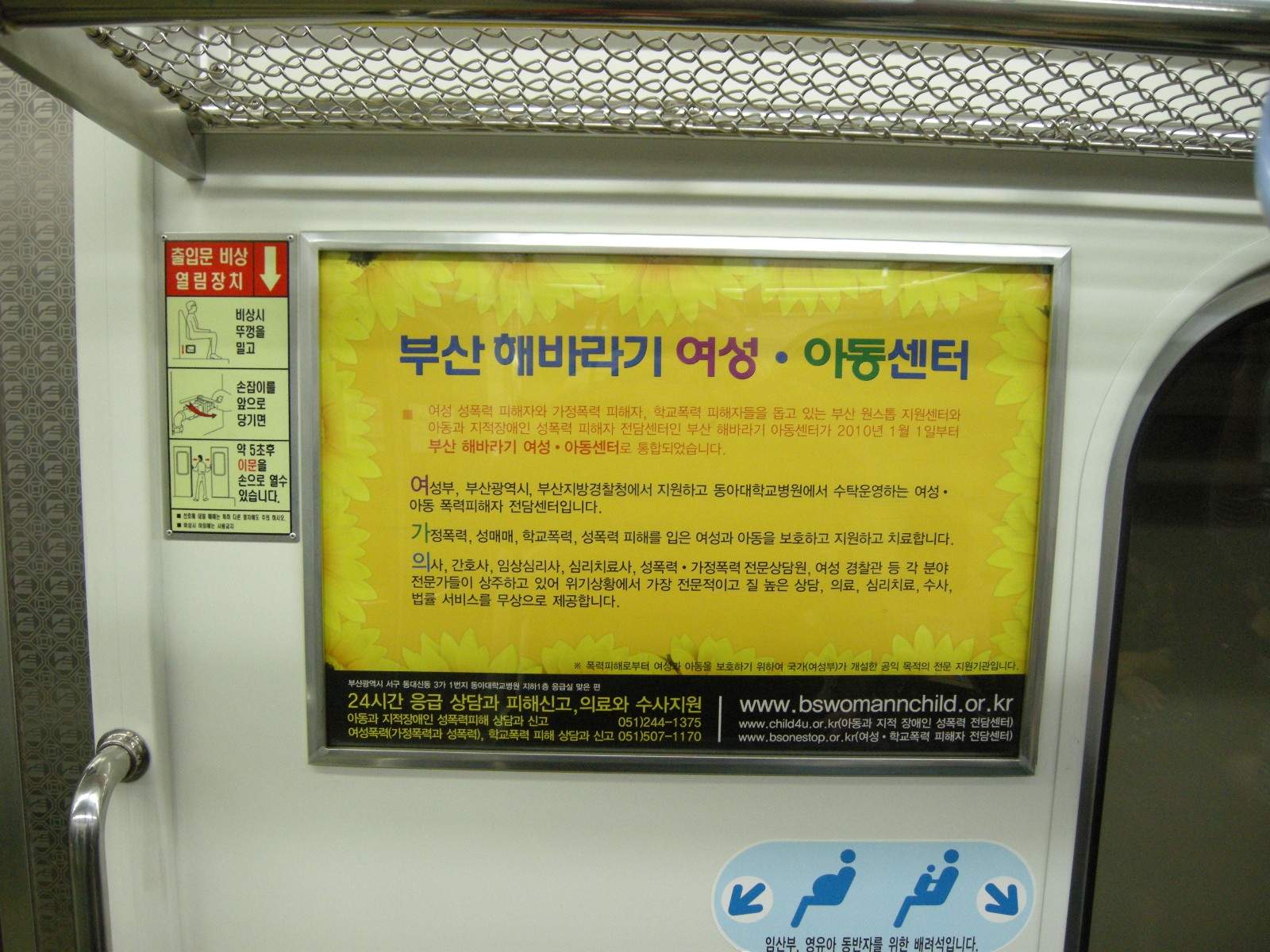
Take what this humble-looking subway ad for instance, and what it ultimately represents. First, a translation:
부산 해바라기 여성 • 아동센터
Busan Sunflower Women & Children’s Center
여성 성폭력 피해자와 가정폭력 피해자, 학교폭력 피해자들을 돕고 있는 부산 원스톱 지원센터와 아동과 지적장애인 성폭력 피해자 전담센터인 부산 해바라기 아동센터가 2010년 1월 1일부터 부산 해바라기 여성 • 아동센터로 통합되었습니다.
From January 1, the Busan One-Stop Support Center, which helps female victims of sexual abuse, victims of family abuse, and victims of physical abuse at schools, and the Busan Sunflower Children’s Center, which helps children and mentally handicapped victims of sexual abuse, have joined together and become the Busan Sunflower Women & Children’s Center.
여성부, 부산광역시, 부산지방경찰청에서 지원하고 동아대학교병원에서 수탁운영하는 여성 • 아동 폭력피해자 전담센터입니다.
With support from the Ministry of Gender Equality, the Busan Metropolitan City Council, and the Busan Metropolitan Police Agency, Dong-a University Hospital has been given the responsibility of operating the center, which provides consultations for female and child victims of abuse.
가족폭력, 성매매, 학교폭력, 성폭력 피해를 입은 여성과 아동을 보호하고 지원하고 치료합니다.
Women and children who are the victims of family violence, sex trafficking, school violence, and sexual abuse can receive protection and treatment at the center.
의사, 간호사, 임상심리사, 심리치료사, 성폭력 • 가정폭력 전문상담원, 여성 경찰관 등 각 분야 전문가들이 상주하고 있어 위기상황에서 가장 전문적이고 질 높은 상담, 의료, 심리치료, 수사, 법률 서비스를 무상으로 제공합니다.
Experts in many fields such as doctors, nurses, clinical psychologists, psychological therapists, family and sexual violence consultants, and female police officers and so on will be permanently stationed at the center, and when you are in a crisis you can receive the best professional and highest quality consultations, medical treatment, psychological counseling, legal advice, and assistance with launching criminal investigations. All these services are provided free of charge. (end)
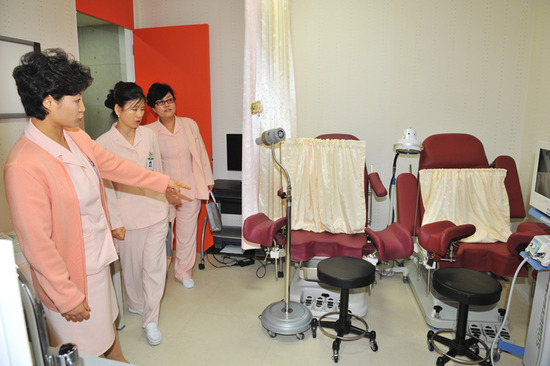
In my experience, usually the amalgamation of two government institutions in any country is in response to cost-cutting. Fortunately however, there’s a great deal of indirect evidence to suggest that that isn’t the case here.
First, note that the ad is actually quite dated, mentioning that the amalgamation was effective from January the 1st for instance (although the center didn’t officially open until February the 9th), and in particular that the Ministry of Gender Equality has a supporting role in it, whereas the Ministry actually reconverted back to the Ministry of Gender Equality and Family Affairs (여성가족부/MOGEF) back in March. Presumably then, the ad has already been posted on Busan subway trains once before, probably late last year or early this one.
Why suddenly post the same ones again in late September then? What has changed to prompt that?
As Matt at Gusts of Popular Feeling has well-documented, what has changed is the public perception that there has been a sudden and dramatic increase in the numbers of sex crimes against children, whereas in fact they have remained steady (but appallingly high) for years:
There is not a “recent series” of such sexual crimes – this is always happening. It’s just that the media has decided – as it does whenever a particular case angers people – to highlight these cases, which would usually either not be covered or covered by perhaps only one or two media outlets, and which are now linked together in articles in order to point to a great problem that exists. To be sure, there have been several laws passed since the murder of Lee Yu-ri in March (and the Yeongdeungpo case in June), and it’s great that the issue has finally gotten enough attention to get things moving (see here for a brief history of the slow pace of change since 2006). I’m not entirely sure that the solutions being offered are always the best ideas, however, and public fury (and worry) whipped up by this media coverage may be putting pressure on politicians to act first and think later.
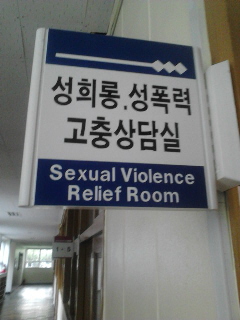
And see past Korean Gender Reader posts for more details of those and other sexual crimes. By coincidence, one of the most notorious of those – the murder of Lee Yu-ri – also occurred in Busan, and several of my coworkers here have reported seeing rooms like that on the right pop up in Busan public schools they teach at in the months since, although unfortunately they have no information on the quality of their staffing or how often they are utilized. Have any readers also noticed them, in Busan or elsewhere?
(Note that the English translation on it may be a little misleading though: a better one would be “Consultation Room [for] Mental Anguish [caused by] Sexual Harassment or Sexual Violence”)
Regardless, the point is that given the current climate then it would be wise for the government to highlight all it is doing to prevent sexual violence, let alone to continue or even increase funding to women and children’s centers. And however cynical and reactionary the motives, this is to be applauded.
Granted, the amalgamation was decided and instituted well before the public outcry over the supposed recent spate of sexual crimes against children. But that doesn’t necessarily imply it was the result of a reduction of funding: although it may receive little if any funding from MOGEF for instance, I find it significant that the Ministry’s assumption of old responsibilities came with a big increase in staff and 4 times larger budget (albeit from a base of 0.03% of the government total), so when the plans for the change were announced late last year there was already a political climate conducive to more funding for feminist causes. Signs of a change of heart from President Lee Myung-bak also perhaps, who originally promised to abolish it before his election, only to back down and merely considerably downsize it in response to protests afterwards?
Alas, quite the opposite: in fact, he is using MOGEF to raise the dire birth rate by – wait for it – criminalizing abortion, as I explain in detail here. But to play devils’ advocate however, perhaps this blinds us to some of the positives that it has achieved?
One is its survey of teenage entertainers in August, which – among other things – revealed that many were pressured by their managers to wear revealing costumes, and which ultimately resulted in the National Assembly’s setting up of a committee (albeit under a different ministry) to further investigate MOGEF’s findings. And which after hearing evidence from entertainment company CEOs has just laid down new regulations for the treatment of minors in the entertainment industry (see here and here also for more background).
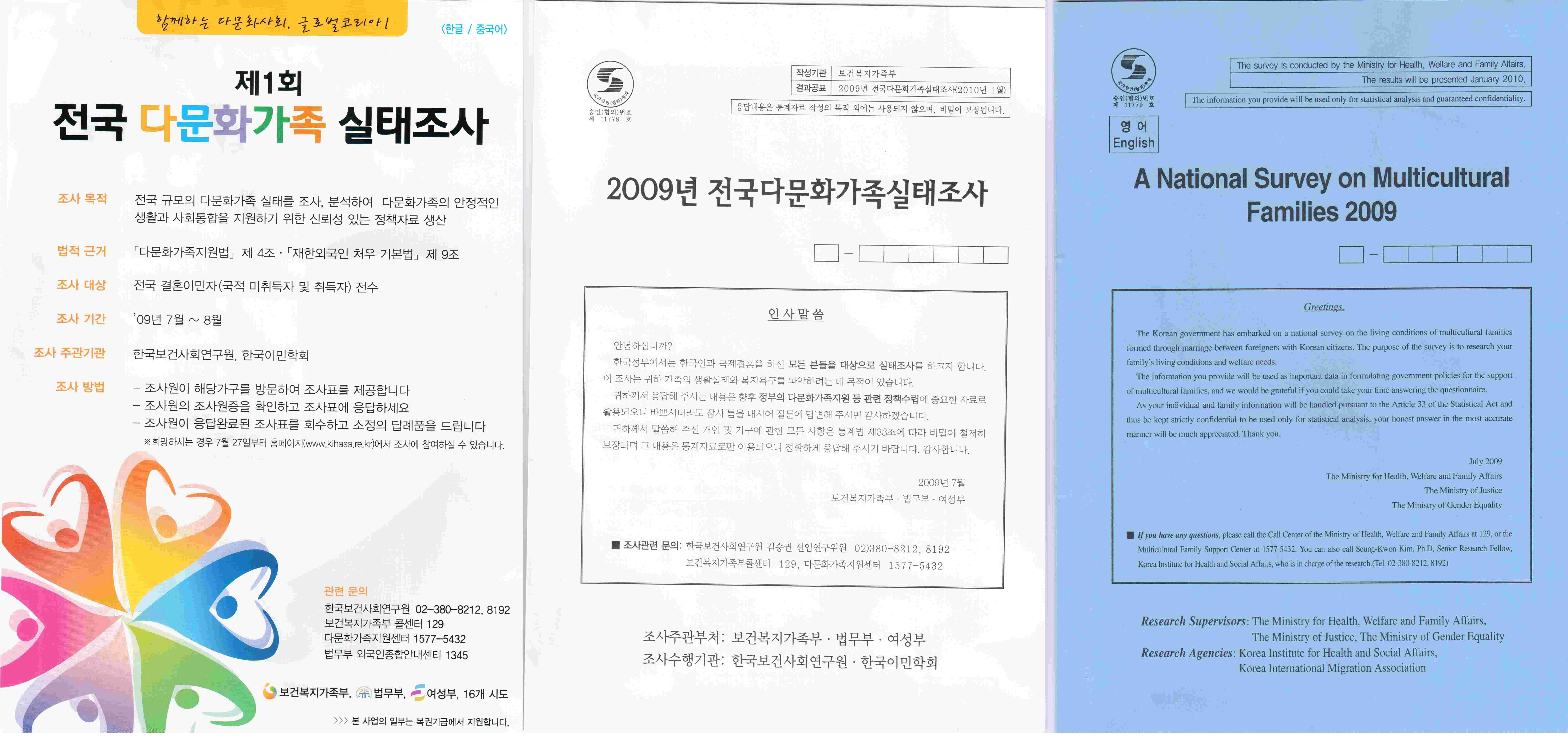
And finally, take the recent video produced by MOGEF below, which encourages people to pay more attention to the needs of immigrant women. Granted, it’s just a video, and again it may be just be in response to the recent murder of a Vietnamese bride by her husband after only 8 days in the country (see #13 here), but then it’s not like such efforts started only recently. One thing that instantly comes to mind for instance, is the above survey that was sent to all foreign spouses in Korea in August last year (see #3 here), in an attempt to better find out their specific needs.
Vodpod videos no longer available.
Any other positives readers can think of, however minor, then please pass them on!^^
Update: As per request, here is what the voiceover in the video is saying (and I’ve put the additional text in brackets as it came up):
이주여성들을 힘들게 하는건 (부부갈등 상담 8, 452건)
The things that make it difficult for migrant women… (8, 452 consultations for married couples having difficulties)
어려운 한국어와 (가정폭력 상담 4205 건 [2009년 이주여성 긴급지원센터 상담통계)
…are difficult Korean… (4205 consultations over family violence/abuse [2009 Statistics from Migrant Urgent Help & Consultation Centers])
낯선 환경, 다른 문화
…the strange environment, the different culture…
그리고 우리의 무관심입니다. (국제결혼 이주여성 16만여명)
…and our indifference. (lit. international marriage migrant women 160,000 women [James: just in 2009?])
이주여성들에게 작은 관심은 큰 힘이 됩니다.
Just a little help and support helps migrant women a great deal (same in the text)
이주여성들의 힘이 되어주세요.
Please be strong and supportive to them.
이캠폐인은 여성가족부와 복권위원회가 함께 합니다. (이주여성긴급지원센터, 1577-1336)
This campaign is brought to you by MOGEF and The Lottery Commission. (Migrant Women’s Urgent Help & Consultation Centers: 1577-1366)
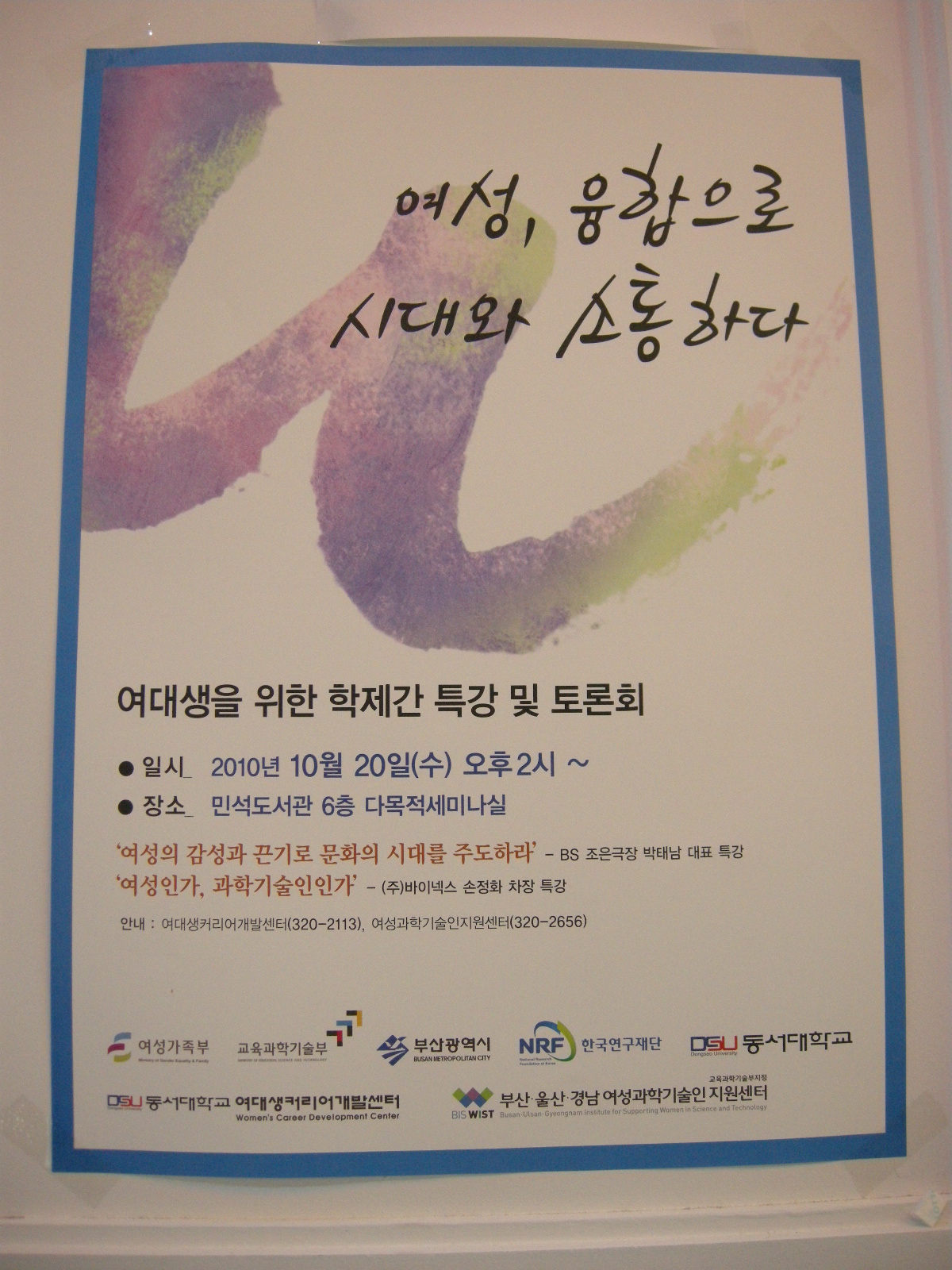
And by coincidence, something else positive that MOGEF has some role in: a seminar about women’s career development at my university tomorrow (stalkers, take note of which one). Things like this seem to go on there at least once a month or so.
Maybe this has something to do with that, which I only just noticed today:
Please let me know if anyone would like a translation of the first poster. Meanwhile, do any other Korea-based readers have anything similar at their own universities?
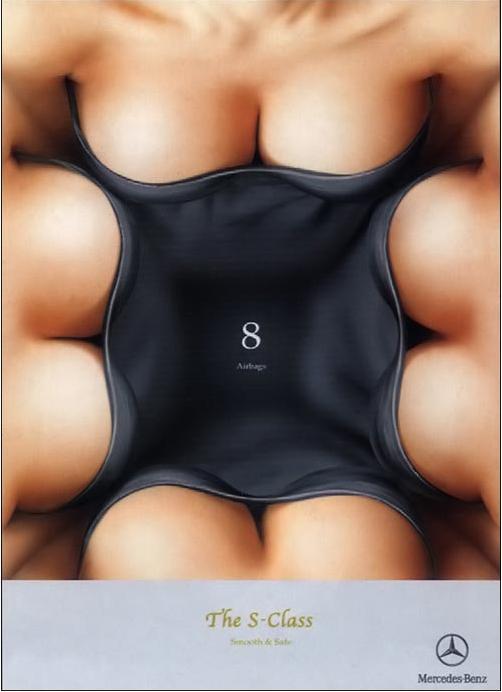
What would be your reaction if this flashed on your TV screen?
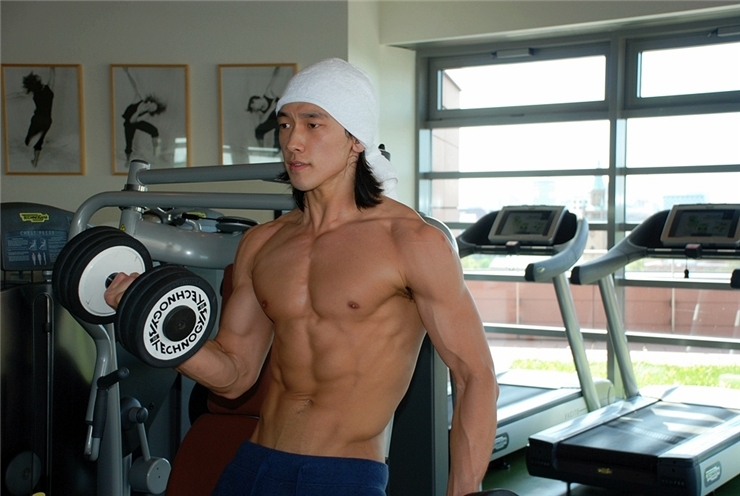
Mine was that hard abs aren’t the best analogy for airbags. But my mistake: they’re not supposed to be. Rather, Hyundai needed something to signify the number of airbags as the voiceover went through various specs of the car.
If you found that objectification distasteful however, then consider the following from Renault/Samsung in 2008 below also:
Which uses the same analogy, but is clearly quite a contrast to BMW’s puerile effort. Nevertheless, some commenters on an earlier post (update: since deleted sorry!) did still have some issues with it, whereas nobody on this blog at least has had any with all of the men’s 6-packs that suddenly started appearing in Korean commercials from last year.
But I’m sure you’re already well-aware of that double-standard, so the purpose of this post is not just to draw your attention to it. Nor to simply pass on that juxtaposition of advertisements, however interesting. In combination with a recent development in the Korean media though, what that juxtaposition did serve to do was make me realize both the rapid mainstreaming and dogmatic nature of that double-standard here, and which is a combination that I think is pretty unique to Korea too.
Let me explain.
Actually, the first I already have: consider how popular the new buzzword “chocolate abs” (초콜릿복근) is in the Korean media now as a result of all the recent ads featuring them for instance (see here, here, here, #8 here, and this new one below for examples and/or discussion), whereas it didn’t even make a list of buzzwords at the end of last year.
Against that sudden popularity however, you could argue that they’ve actually already been around for a long time in music videos. As Hoon-Soon Kim explains of some from 2000 in “Korean Music Videos, Postmodernism, and Gender Politics” in Jung-Hwa Oh (ed.), Feminist Cultural Politics in Korea (2005) for instance, albeit with more of a focus on the emergence of the “Flower Men” or kkotminam (꽃미남) phenomenon than male objectification per se:
…we see that there is a new type of male image emerging albeit in a small number of music videos. It is a de-gendered image of men which is a contrast to the macho image. Male groups such as Y2K, H.O.T., ITYM, and Sinwha, whose fans are mostly teenage girls, portray this image. They wear make-up and a lot of jewelry and ornaments – which are all considered feminine – and take off their shirts to show off their bodies. This indicates that the male body is also sexually objectified as the female body….The style of the video is similar to that used to show female images with extreme close-ups to fill the screen with a face, and medium-range or full body shots for dances. Although there is a risk of overstating the phenomenon, this image could be interpreted as a signal indicating the possibility of breaking the binary boundaries of men and women that have been formed in a patriarchal culture. (p. 207)
And yet just like in ads, the amount of male objectification in music videos—or to be specific, ab exposure—does also seem to have picked up markedly in the past year or so. Like Multi explained back in March:
…in the past month the internet has been flooded with pictures of Korean celebrities and their abs (as well as some other shots that are not entirely SFW – you’re over 18 you can check them out here, and here). Our favorite controversial band 2PM just did an extensive photoshoot and were topless for most of it (parts 1, 2, 3, 4). Lee Joon of the new boy group MBLAQ flashes his abs a whole lot, because the king of ab-flashing, and Korean superstar extraordinaire, Rain, who happens to be his boss, tells him to because the fans like it, (yup, we sure do ;) and everyone wants to get pictures of them (exhibit A, B, C, among countless others). Then there’s these guys, this guy and this guy, and like 50 others. And then countless polls as to whose abs are better.
To be precise, Rain told Lee Joon that taking off his shirt has far more effect on his audiences than his dancing. And as “the king of ab-flashing”, then of course he could have been talking about himself instead (actually, I thought he was originally), so I can hardly fault him for showing off his own abs so frequently in his own music videos and performances. But rarely in harmony with his song’s lyrics and/or even his choreography however, and so for me personally he more epitomizes just how cynical and commercially-driven the trend has become, with obvious parallels to more familiar ones for female performers. Check out from 2:55 here for instance:
And my critique of the trend as “commercially-driven” is no mere cliche, because whereas it’s mostly young girl-groups that have sprung up in the past year or so (see here for a handy chart), likewise Korean male singers have to adapt to the Korean music industry’s overwhelming reliance on musicians’ product endorsements, appearances on variety shows, and casting in dramas to make profits (as opposed to actually selling music). This encourages their agencies to make them stand out and differentiate themselves from each other by coming up ever more sexual lyrics and/or performances and music videos: namely, more abs from the guys, let alone feigned fellatio, feigned sex on beds, or even virtual rapes of audience members on stage during performances.
Allkpop argues that it’s consumers that are driving this trend however, and that this explains the imbalance between new girl and boy groups:
It looks like girl groups don’t seem to have as high of a failure rate as boy groups or solo singers. These new girl groups have already been gaining so much attention. The reason why you can rely on girl groups to bring in the income is because there’s always teenage boys and ahjusshi (old men) fans to trust. They can also go perform at various events which always require a pay day. Supposedly, Secret gets paid around $8000 per event performance while a group like 4minute gets paid around $12,000 per event.
And yet while that is not incorrect per se, Multi goes on to explain in her post that it is largely female fan club members in their 30s and 40s that are driving this trend, not unlike how I’ve demonstrated that the same demographic (and often exactly the same women) were the driving force behind the full emergence of the kkotminam phenomenon back around the time of the 2002 World Cup. Hence I’d argue that the imbalance is more the result of top-down imperatives then, with many similarities to the American media ideal of female sexuality getting progressively younger over the last 3 decades…and for the same profit-driven motives.
But I digress: for more on that, see a forthcoming Part 2 of my “Reading the Lolita Effect in South Korea” series, which I’ll link to here once it’s up (update: and here it is!). In the meantime, hopefully by this stage you can see why celebrities so dominate advertising here, and which is already an industry not exactly averse to perpetuating celebrities’ agencies’ inherent needs to use sex to sell. Moreover, whereas it’s true that the content of ads worldwide does tend to lag behind social trends, as even just the title of Kwangok Kim and Dennis Lowry’s journal article “Television Commercials as a Lagging Social Indicator: Gender Role Stereotypes in Korean Television Advertising” in Sex Roles, Vol. 53, Nos. 11/12 December 2005 suggests, once they do start appearing in ads then that wider exposure (no pun intended) can have a profound effect in mainstreaming them:
According to cultivation theory, the media play an important role in creating distorted views. This theory suggests that exposure to media content creates a worldview, or a consistent image of social behavior, norms, values, and structures, based on the stable view of society provided by the media. In other words, cultivation theory posits that consistent images and portrayals construct a specific portrait of reality, and as viewers see more and more images, they gradually come to cultivate or adopt attitudes and expectations about the world that coincide with the images they see. Although this model has typically been employed to explain the impact of of television violence, it also has been applied successfully to the cultivation of attitudes towards gender roles. (p. 902, references removed)
Although television viewers often claim that commercials do not affect them in negative ways, repeated images in television advertising may already have created a “mainstreaming effect,” as suggested by cultivation theory. Television has the power to cultivate people to have the same views of the world, for example, stereotypical views of gender roles in our society. In other words, the mainstreaming effect reduces cultural and political differences among television viewers. Studies have shown that heavy television viewing may influence children’s perceptions of behaviors and psychological characteristics associated with gender…and [one other] found that heavy viewers of television commercials among the elderly were more likely than light viewers to perceive characters (e.g., the elderly) in commercials as realistic (i.e., mainstreaming effect). It may not be advertisers’ full responsibility to reflect statistically accurate images of society. However, the burden of responsibility is on the advertisers when they fail to reflect the rapid changes in such stereotypes in our society. (p. 908, references removed)
But still, how exactly does simple exposure to those ads necessarily result in us adopting the attitudes and worldviews contained therein, as if by osmosis or something?
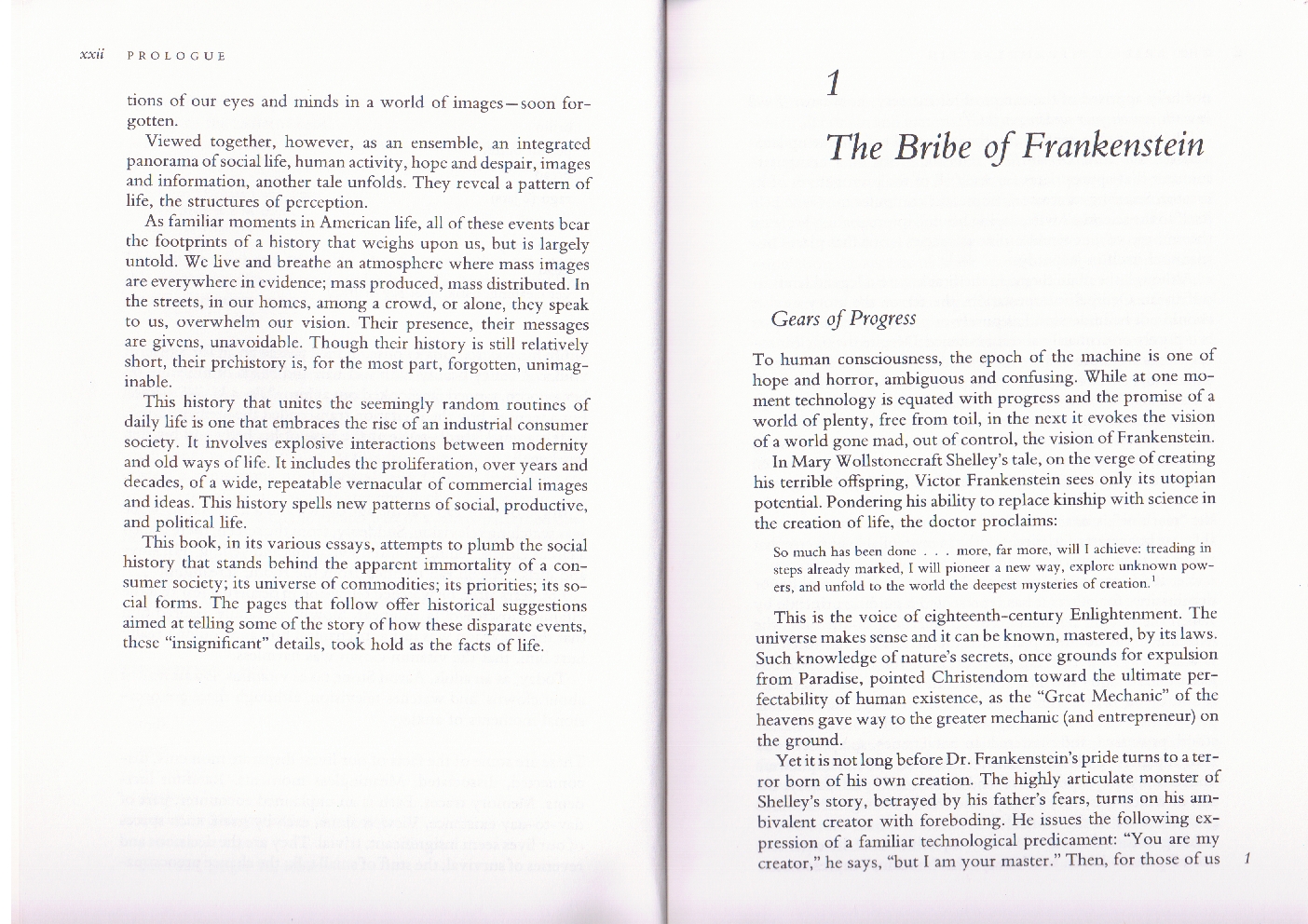
Well first, consider their sheer number: “In the United States alone, the average person may be exposed to 500 and 1000 commercial messages a day”, according to p.34 of Essentials of Contemporary Advertising by William Arens and David Schaefer (2007). And like Stuart and Elizabeth Ewen explain in their prologue to Channels of Desire: Mass Images and the Shaping of American Consciousness (1992), it’s amazing how subtly, profoundly, and almost entirely unconsciously this daily barrage affects us. Quite a charming narrative, which no-one can fail to be more interested in advertising after reading, I’ve scanned it for you below:
But regardless of whatever is ultimately responsible for the timing and/or mainstreaming of men exposing their abs in the Korean media, I’m sure we can all agree that they are now here to stay (and there was much rejoicing). And in a sense, this was indirectlyconfirmed by SBS recently when it decided to ban female performers from exposing their navels and/or abs on its popular Inkigayo (인기가요) show, whereas male performers remain free to rip off their own shirts: the “recent development in the Korean media” that I referred to in the introduction.
Why is that ban more significant than the plethora of others however? And why is it not exceptional, but in fact genuinely reflects deeply ambivalent and dogmatic societal attitudes to—for want of a better term—women’s top halves? Alas, it was my original intention to jump straight into that second part here, but with this post already at 2000 words (and well overdue), then I’ll wisely defer those 1500 extra ones to a separate post later in the week.
Until then, a request, lest anyone feel I’ve been too critical of Rain here: does anybody know the name of a recent music video that features 2 young male singers vying for the affections of a woman, taking off their tops repeatedly (perhaps 10 times) and walking around half-naked for most of the video as they sing…before finally noticing that the woman has taken advantage of their distracted state by stealing their jeep?
Please do pass it on if you do, as I feel it actually much better epitomizes just “how cynical and commercially-driven the [ab-exposure] trend has become” than Rain does, and which even heterosexual women and gay men that see it will probably agree is a little excessive, let alone extremely lame. Moreover, while I don’t claim to have suddenly seen the light as a result, and can now completely empathize with women’s feelings about their own pervasive objectification in the media…I do think the eye-rolling, sense-of-exasperation, and literal gagging I experienced is at least a start towards doing so!^^
Update: With thanks to Katarina, the video is I was Able to Eat Well by 2AM’s Changmin & 8eight’s Lee Hyun:
Clearly, I exaggerated it in my memory. But understandably, as with them so so eager to shed their clothes together in the garage parking lot from roughly 0:59 for instance (for the sake of showing off their abs), that segment at least seriously resembles a gay porn video.
Probably actually objectifying the woman even more than the men though, then I take it all back: Rain’s performances do best epitomize the ab craze!
(For more posts in the Korean Sociological Images series, see here)
Apologies for the slow posting recently, but I have a good excuse: at the invitation of Hyewon Kayla Cha, vice-president of the Korean Student’s Association, I’ll be giving a guest lecture on Korean gender issues at Wellesley College in Boston on Friday November 12th, and I’ve been organizing tickets!
It will be a very whirlwind trip unfortunately (Korean time I leave Thursday afternoon, and arrive back on Sunday evening), but I’m really looking forward to it, and it would be great to meet any US-based readers if you’re in the neighborhood.
Apologies in advance for my being a little distracted if we do meet though, as I haven’t actually been to the US since, well… 1987!^^
More details closer to the event.
Hyewon Kayla ChaHyewon Kayla Cha
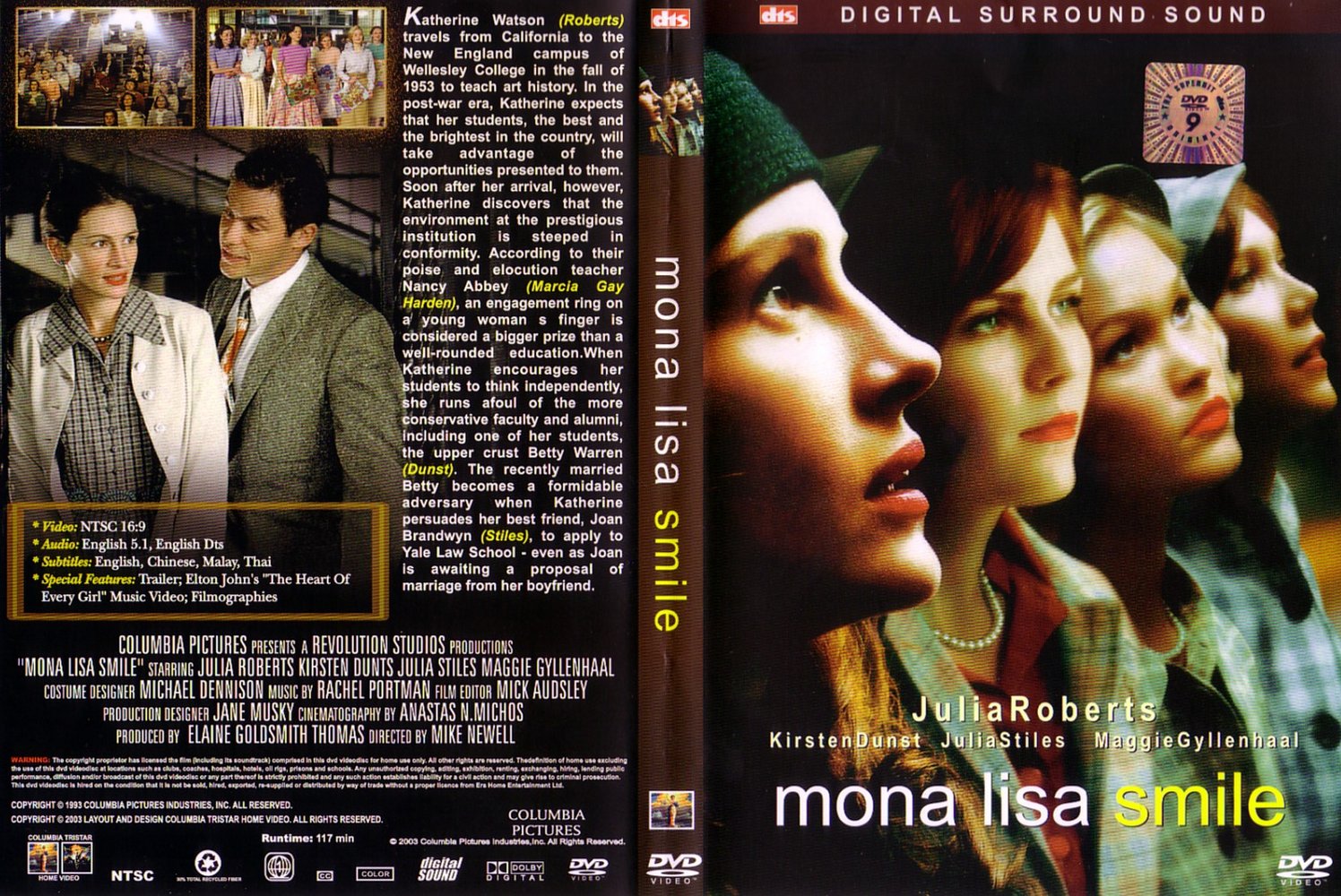
p.s. Yes, Wellesley College is where Mona Lisa Smile was filmed in 2003.
p.p.s Can anyone recommend a way to book tickets from Korea for the flights from JFK to Logan International Airport? All done thanks!

 ( Source )
 3) Celebrity couple targeted by crazed anti-fans
 ( Source )
 ( Source )




























 The Grand Narrative


