For readers’ sakes, wisely I’ve tended to avoid discussing my tastes in women’s body types on this blog. And don’t worry: I’m not going to start now.
But probably I’m deluding myself in thinking that they’re not already obvious from the images I use. Also, surely my occasional posts about hourglass figures are a dead giveaway. After all, why else would I argue that they’re universally-attractive, if not to feel smug about my own preferences?
Seriously though, while I do think there is solid evidence for that universal attraction, I’m always open to debating it, and would be the first to admit that such evidence is often misrepresented in the media. In turn, when it lacks any caveats and qualifications, at the very least it doesn’t challenge the public’s preexisting beliefs about body types. Say, those held by people in the fashion and clothing industries particularly, whose usual fashion advice for women with different body types is:
…”almost always aimed at getting women’s bodies, whatever shape they might be, to conform with the [ideal (skinny) hourglass figure]. The advice video below, sent in by Tara C. and aimed at women with “pear-shaped” bodies, does exactly this:
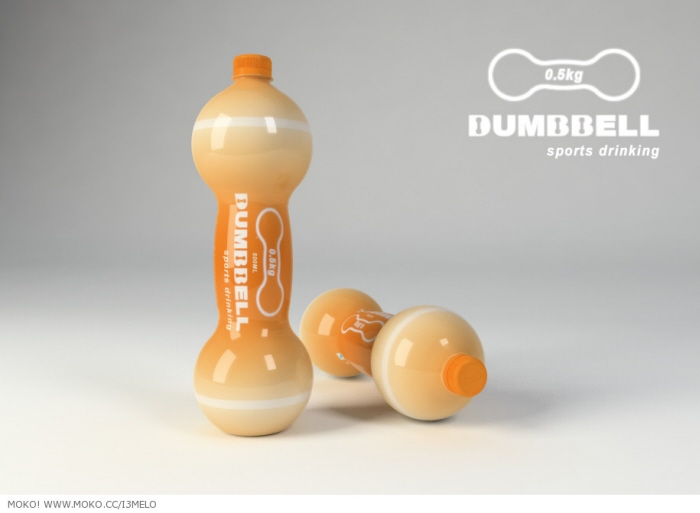
See Sociological Images for excerpts and commentary. And indeed, one additional way in which women are subtly(?) reminded that the hourglass figure is an ideal to be conformed to, is by altering the shape of the bottles of drinks aimed at them:
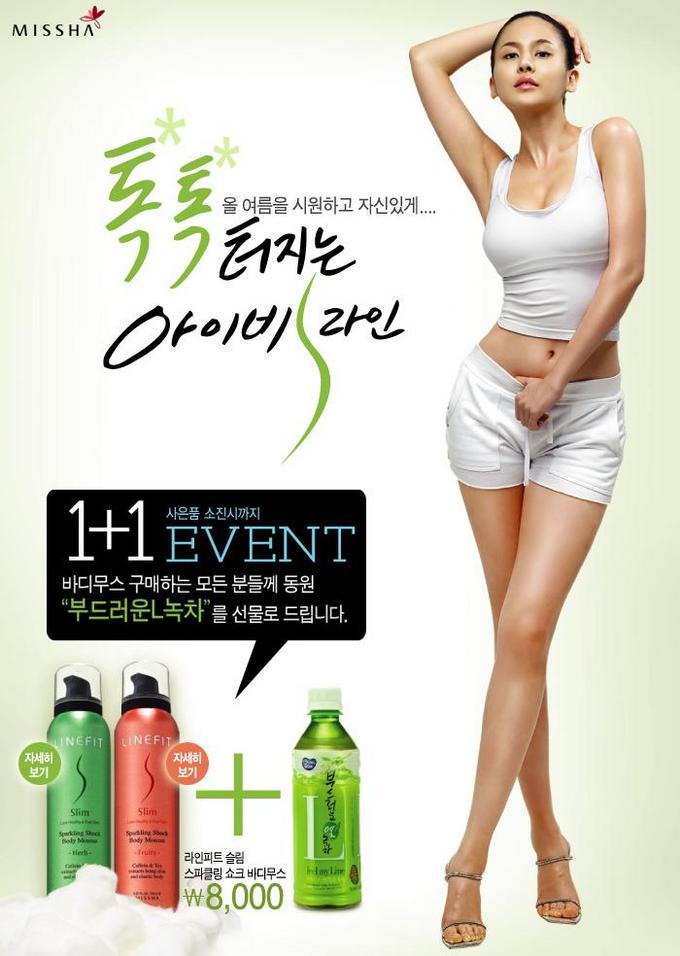
You’d think I would have noticed years ago, but then I’m afraid I don’t buy them. As for not noticing it in their advertisements however, I confess that possibly I was simply too fixated on the accompanying models’ navels to ever pay attention.
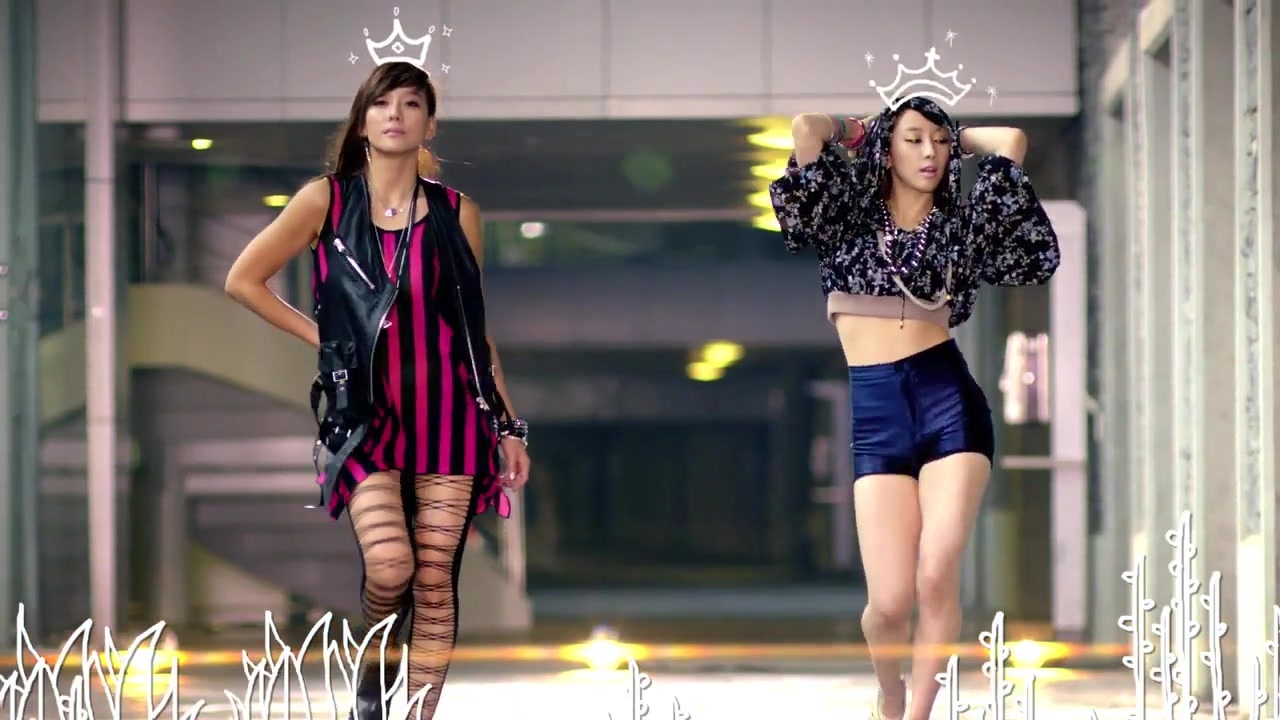
Apologies if that makes me sound crass. But unlike with Shin-se kyung (신세경) above, for some reason it genuinely took the less exposed example of f(x)’s Victoria (빅토리아) below for me to see the hourglass packaging for the first time:
Yet once I did, then suddenly I realized that you saw it on a lot of drinks aimed at women, whether explicitly “diet” ones or otherwise. In addition to the “G2” and the grape juice for instance, to the right of Victoria there’s the “Black Bean Thera Tea” endorsed by Lee Hyori (이효리) in the opening image (discussed in detail here). Then below those: “Matcho”, “I’m Bori”, and finally “Today’s Tea”, discussed way back in Korean Sociological Image #2.
And I could certainly go on. But on the other hand, I don’t want to exaggerate the extent of the trend either.
For starters, by no means are all or even most drinks aimed at women hourglass-shaped, and indeed in this image of the drinks section of what looks like a small supermarket, actually only those aimed at children have anything that even remotely resembles an hourglass shape. Also, there is possibly just as strong or even stronger a trend to make women’s drink bottles skinny rather than any specific shape, as explained here. Finally, making bottles more masculine-shaped may make them quite impractical to hold,* whereas hourglass shapes lend themselves to it.
Given the context of how deeply gendered drink marketing is though, then I’m not entirely convinced that practical considerations provide sufficient explanation for the gender imbalance in those drinks that do have “body shaped” bottles. It seems entirely possible, for instance, to add the contours of a six-pack to drink bottles aimed at men. Yet even in the unlikely event that readers have actually come across that(?), or something like it, it would still be the exception that proves the rule.
But whatever the reasons, and whether it’s a skinny or hourglass bottle (or, indeed, a skinny hourglass bottle!), it’s definitely yet another way in which advertisers try to subtly influence our body type ideals.
Something to bear in mind next time you find yourself in the drinks section!
*It’s only tangentially related, but you may find it interesting. Back when I was doing freshman calculus (yes, I was an astronomy major before I switched to East Asian Studies), once we looked at the the problem of what shape of Coke can would use the least amount of aluminum for the greatest volume of Coke contained, which – if I remember correctly – turned out to be a can the same diameter as its height. As the lecturer explained though, cans the shape of toilet rolls don’t exactly look cool, let alone fit in the hand well!
Update: Gotta love this alternative design by Chinese designer Le Jin!
It was just in 2008, for instance, that singer Ivy (아이비) was vilified in the media for the heinous crime of having sex with her boyfriend, so by those standards the Ministry’s comments were not particularly outlandish. And while Ivy did eventually rehabilitate her reputation, unfortunately Korean society is still far from accepting women being so sexually “open and impulsive”, let alone so blatantly so as to have a child out of wedlock.
Whatever the date though, when even the organization charged with helping unwed mothers once stigmatized them, then you can imagine how badly they fare in society today.
Despite that, abortion opponents seem to have quite a sanguine image of what it’s like to raise a child as a single mother. Which is what prompted this anonymous Korean woman, who kindly recently wrote on TGN about how and why she got an abortion, to post a link to thisimomNews article outlining how the reality is anything but. With thanks to Marilyn for translating it, here it is in full:
(Update – To my shock and disappointment, the Ministry’s appalling definition was actually on its website until as recently as May 2010)
‘동성애자’ 다음으로 차별 받는 집단 ‘미혼모 / Unwed Mothers Most Discriminated Group after Homosexuals
인식 개선 선행…정부지원 확대 /[With] improvement in perception as precedent. . . expansion of government aid
Image Caption: 최근 정치권을 중심으로 ‘미혼모’ 지원방안이 활발히 이루어지고 있다. 지난 3일 서울 여의도 국회에서는 ‘미혼모 지원정책 개선방안’ 포럼이 개최됐다 /Currently, political methods for supporting unwed mothers are actively becoming reality. On Aug. 3, at the National Assembly in Yeouido, Seoul, an “Unwed Mothers Support Measures Improvement” forum was held.
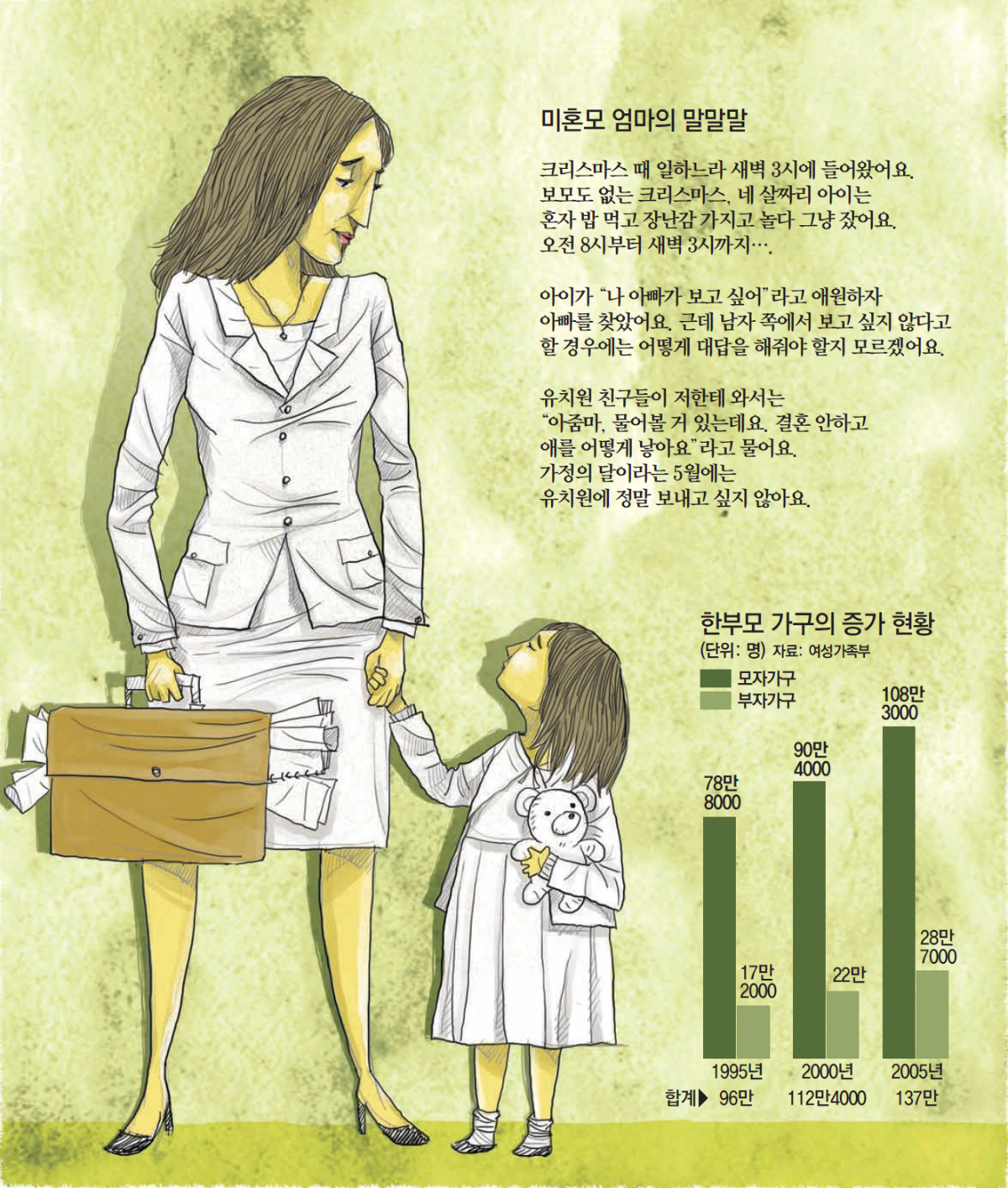
‘학력이 대체로 낮고, 불안정한 직업에 종사한다. 자취나 하숙을 하고, 성에 대한 가치관이 개방적이고 충동적이다. 사회경제적 상태가 낮고 부모와 떨어져 사는 사람’이라고 과거 보건복지부가 운영하는 웹사이트 건강길라잡이는 미혼모에 대한 정의를 이렇게 내렸다.
“Usually low levels of education, with an unstable job. Lives by herself or in a boarding house, has open and impulsive sexual values. A person whose socioeconomic situation is low, and who lives apart from her parents,” is how a website health guide operated by the past Ministry of Health and Welfare defined unwed mothers.
이처럼 사회의 부정적인 시선 탓에 미혼모에 대한 관심과 지원은 일부 사회복지시설을 제외하곤 전무후무한 것이 사실이었다.
Because of society’s negative views like these, it was true that, as for interest in and support for unwed mothers, a few social welfare facilities were the first and seemed like they would be the last.
특히, 1990년대 이후 정부와 시민단체 등의 노력으로 조손가정, 다문화 가정, 한부모 가정 등은 상당부분 인식개선이 이루어 졌으나 미혼모 가족만은 사회의 편견 속에 여전히 ‘눈총’의 대상이 되고 있다.
In particular, through the efforts of the government and civic organizations since the 1990s, perception of grandparent-grandchild families, multicultural families, and single-parent families has improved; among society’s prejudices, only unwed-mother families continue to be the target of stares.
때문에 형편이 좋지 않아 자립이 힘든 미혼모들은 자연히 입양을 생각하거나 권유받게 되고, 우리사회도 ‘낳아 기르는 쪽’ 보다는 입양을 암묵적으로 유도했다.
Because of that, unwed mothers, whose circumstances are not good and so have difficulty supporting themselves, think of adoption of their own accord or are induced to adopt, and our society also implicitly supports the “have and raise side” less than it does adoption.
사정이 이렇다 보니 지난해 우리나라의 해외입양아는 미혼모의 자녀가 90%를 차지한 것으로 나타났다. 그러나 최근 이들에 대한 지원방안이 정치권과 시민단체, 기업 등을 중심으로 활발하게 논의되면서 미혼모 가족에 대한 관심이 일고 있다.
Because of this situation, last year it emerged that 90% of internationally adopted children from our country were the children of unwed mothers. However, as ways to support them are currently being actively discussed in political circles, civic organizations, and businesses, interest in unwed-mother families is rising.
Image Caption: 던킨도너츠는 미혼모 정소향(21세) 씨를 정규사원으로 채용하면서 미혼모 채용에 적극 나서기로 했다 /By hiring unwed mother Jeong So-Hyang (21) as a permanent employee, Dunkin Donuts is actively taking a stand for the hiring of unwed mothers.
미혼모 인식 개선이 우선 / Improvement of perception of unwed mothers the priority
미혼모에게 가장 필요한 부분은 부정적인 사회의 시선이 관심과 보호의 시선으로 바뀌어야 하는 것이라고 전문가들은 지적했다.
Experts indicate that the most important thing unwed mothers must do is change negative societal views into feelings of interest and protection.
실제 지난 2009년 한국미혼모지원네트워크와 한국여성정책연구원이 실시한 ‘미혼모ㆍ부에 대한 한국인의 태도와 인식’ 설문조사에 따르면 미혼모는 동성애자 다음으로 가장 많은 차별을 경험한 집단으로 조사됐다.
In fact, according to the survey “Koreans’ attitudes toward and perception of unwed mothers and fathers,” carried out in 2009 by the Korean Unwed Mothers Support Network and the Korean Women’s Development Institute, unwed mothers were found to be the group that experienced the most prejudice, after homosexuals.
또한 설문에 참가한 2,000명 중 60% 이상이 미혼모에 대해 ‘판단력과 책임감이 부족한 사람’이라고 답변했다.
Also, of the 2,000 people who participated in the survey, over 60% answered that unwed mothers “are people who lack judgment and a sense of responsibility.”
김혜영 한국여성정책연구원 연구위원은 “미혼모의 경우 일종의 일탈자로 낙인 받고 있다”며 “미혼 부모에 대한 과감한 지원정책이 필요하다”고 지적했다.
Kim Hye-young, a senior researcher at the Korean Women’s Development Institute, said, “An unwed mother is branded as a kind of deviant. We need bold support policies for unwed parents.”
이영호 서울시 한부모가족지원센터장도 “우리사회는 다양한 가족이 있고 모든 가족은 행복할 권리가 있다”면서 “그러나 우리 사회에서 미혼모가 아기를 키우면서 자랑스럽게 또는 당당하게 양육의 경험을 공유하고 그 안에서 성장할 수 있을까란 의문이 들때가 많다”고 아쉬움을 드러냈다.
Lee Young-ho, head of the Seoul City Single Parent Family Support Center, also showed frustration: “There are diverse families in our society, and all families have a right to be happy. However, there are many times when I question whether unwed mothers, while raising their children, can proudly or confidently share their child-rearing experiences and develop in that [kind of environment], in our society.”
이에 최근 여성단체와 미혼모 보호 시설은 미혼모 인신 개선 사업을 적 극 펼치고 있다.
Accordingly, women’s organizations and unwed-mother shelters are currently actively engaging in a project to improve the perception of unwed mothers.
지난달 28일 서울시한부모가족지원센터와 20여 곳의 미혼모관련 단체들은 ‘미혼모지원단체협의체’를 발족하고 미혼모 인식 개선을 위한 다양한 논의를 시작했다.
On July 28, the Seoul City Single Parent Family Support Center and about twenty organizations for unwed mothers started the ‘Unwed Mother Support Organization Council” and began a variety of discussions designed to improve the perception of unwed mothers.
그 첫 번째 사업으로 사람들에게 부정적 이미지가 강했던 ‘미혼모’를 공모를 통해 ‘두리모’로 대체하기로 했다. 두리모란 ‘둥근’이라는 뜻과 둘이라는 숫자를 의미하는 방언 ‘둘레’가 조합된 것이다.
For their first project, they agreed through a public contest to replace “unwed mother”, which had a strong negative image, with “doo-ree mother.” “Doo-ree mother” combines the meaning “round” [doong-geun] with the regional dialect word dool-leh, which means “two people.”
정치권ㆍ기업, 미혼모 자립위해 노력 / Efforts by political groups, business for unwed mothers’ independence [ability to support themselves]
정치권에선 ‘미혼모 자립’을 위해 관련법을 정비하고, 토론회를 통해 다양한 의견을 청취하고 있다. 기업들도 미혼모를 우선 채용하는 등 이들의 자립을 위해 힘을 쏟고 있다.
Political groups are modifying laws in order for ‘independence for unwed mothers,’ and through panels, they are listening to diverse opinions. Through actions like prioritizing hiring unwed mothers, businesses are also devoting themselves to the cause of their independence.
특히 민주당 최영희 의원(국회 여성가족위원회)은 미혼모에 대한 지원을 확대하는 내용을 담은 ‘입양촉진 및 절차에 관한 특례법 전부개정안’ 등 관련법을 최근 국회에 제출하는 등 법 만들기에 앞장서고 있다.
Democratic Party Assemblywoman Choi Young-hee (National Assembly Gender Equality and Family Committee), in particular, is leading the way in making laws, some of which are currently submitted to the National Assembly, like “Overall Revision Bill for the Special Act Relating to Promotion and Procedure of Adoption,” the contents of which expand support for unwed mothers.
또한 지난 3일에는 한국미혼모가족협회·한국여성정책연구원와 공동주최로 ‘미혼모 지원정책 개선방안’ 포럼을 개최했다.
Also, on June 3, the Korean Unwed Mother Families Association and the Korean Womens Development Institute co-hosted the “Unwed Mothers Support-Policy Improvement Measures” forum.
이날 최 의원은 “해외입양의 90%가 미혼모의 자녀라는 점은 우리 사회의 아픈 현실을 반영하는 것”이라며 “직접 양육하기를 원하는 미혼모가 늘어나고 있는 만큼 양육비 지원을 현실화 하고 지역사회에서 안정적인 생활을 할 수 있도록 정부의 적극적인 지원이 시급하다”고 지적했다.
On that day, Assemblywoman Choi said, “That 90% of international adoption is the children of unwed mothers reflects our society’s painful reality. As the number of unwed mothers who want to raise their children themselves rises, the government’s active support is urgently needed to actualize aid for child-raising expenses for a stable life in a community.”
한편 이날 포럼에서 김혜영 한국여성정책연구원 박사는 ‘양육미혼모의 자립기반실태와 지원방안’에 대한 연구결과를 발표했다.
Also at this forum, Dr. Kim Hye-young, researcher at the Korean Women’s Development Institute, revealed the results of a study on the “Current State of Groundwork for Independence of and Ways to Support Unwed Mothers Raising Children.”
김 연구원은 “60%가 넘는 미혼모가 양육비와 교육비의 문제로 어려움을 겪고 있고, 80%이상은 월세와 같은 불안정적인 주거생활을 하는 것으로 나타났다”면서 “안정적인 자립기반 구축을 위해 미혼모 가족에 대한 조기 개입의 필요성과 함께 지원의 폭을 보다 확대할 필요가 있다”고 주장했다.
Dr. Kim said, “It showed that over 60% of unwed mothers are struggling because of the costs of child-rearing and education, and more than 80% live in unstable housing situations like [those requiring] monthly rent. In order to build stable foundations for independence, early intervention for unwed-mother families, together with an expansion of the range of support, is necessary.” (Source, right)
또 목경화 한국미혼모가족협회 대표도 “우리나라의 미혼모정책은 시설에만 초점이 맞춰져 있어 시설에서 벗어나 자립을 하려는 미혼모들은 빈곤 상황을 쉽게 개선하지 못하는 실정이다”고 지적했다.
Furthermore, Mok Gyeong-hwa, a representative from the Korean Unwed Mothers and Families Association, pointed out, “Policies regarding unwed mothers in our country only focus on facilities, so unwed mothers who want to break free from facilities and live independently can’t easily improve their state of poverty.”
최 의원은 이날 논의된 내용을 바탕으로 ‘한부모가족지원법 개정안’과 ‘국민기초생활보장법 개정안’을 제출할 예정이다.
Assemblywoman Choi will present the “Single-Parent Family Support Law Amendment” and “National Basic Living Security Law Amendment” based on the discussions of that day.
기업들도 미혼모 자립을 위해 적극적으로 나서고 있다. 던킨도너츠와 배스킨라빈스를 운영하는 비알코리아는 미혼모 시설인 사회복지법인 동방사회복지회와 함께 미혼모 고용지원 협약을 체결하고, 던킨도너츠 매장에서 파트타임으로 근무하던 미혼모 정소향(21세) 씨를 정식 사원을 채용했다
Businesses are also actively taking a stand for the independence of unwed mothers. BR Korea, which operates Dunkin Donuts and Baskin Robbins, together with the Eastern Social Welfare Society, a welfare corporation that is an unwed mother [support] facility, signed the Unwed Mothers Employment Support Agreement and recruited unwed mother Jeong So-hyang (21), who had been a part-time employee at a Dunkin Donuts shop, as a permanent employee.
1) Oh! Boy (오! 보이) Audition Reality Show Premieres
Does anybody else have misgivings about such a show being explicitly aimed at teens? And that its first two episodes featured high school students? After all, despite the feminine name, the “Lolita Effect” can certainly apply to boys too. Recall my summary of it from last December:
[The Lolita Effect] is the natural consequence of various industries’ (fashion, cosmetics, cosmetic surgery, diet-related, food, and so on) need to build, expand, and maintain markets for their products, which obviously they would do best by – with their symbiotic relationship with the media through advertising – creating the impression that one’s appearance and/or ability to perform for the male gaze is the most important criteria that one should be judged on. And the younger that girls learn that lesson and consume their products, the better.
Just replace “male gaze” with, say, “opposite sex’s gaze”, then I think Oh! Boy serves as a great example of “the younger that boys learn that lesson”.
2) Sexism in the Korean Literary Establishment?
Granted, it was published back in 1996, and Korean Modern Literature in Translation’scharge comes with many qualifications. But still: it’s just remarkable that less than 1 in 1o of the writers in Who’s Who in Korean Literature were women.
3) Pognae Baby Carriers Rock!
As Geek in Heels explains:
Baby carriers are big in Asia. This is especially the case in urban areas where there is limited space and the majority of the population choose to take public transportation rather than drive.
And where there is demand, there is supply. A great variety of quality supply, I might add.
The Pognae is one such baby carrier. Made in, and popularized in Korea, the Pognae is currently one of the most popular soft structured baby carriers in Asia and Europe.
Read the rest there. If pognae are not to your liking though, then consider modernized Korean podaegi (포대기) instead, discussed in the second half of this post.
Semi-related, see here and here for two Korea Herald articles on what single Korean men and women want from dating these days.
5) Everything You Ever Wanted to Know about Becoming a Stewardess in Korea
It’s easy to criticize an industry that – in Korea at least – so needlessly stresses age and appearance, and to consider the young women that aspire to it as hopelessly vain and naive. However, despite these stereotypes, not only do the limited options available to Korean women (see #6 below) arguably make stewardessing a rational, adventurous, and even quite rebellious career choice, but Korean airlines even require university degrees from applicants too (and some cabin crew actually have Ph.Ds!).
See the Korea Heraldhere for more information. Guaranteed, you’ll be much more sympathetic to Korean stewardesses (and hopefuls) after reading it!
6) Should Korean Firms Have Quotas for Women?
Full disclosure: I’ve been a firm advocate of these ever since I wrote an undergraduate essay on the subject back in *cough* 1996. But still, I do think Shin Dong-youb, management professor at Yonsei School of Business, makes a good case for them here. Certainly his opponent Kim Joon-gi, a professor at Yonsei Law School, lacks all credibility when he fails to mention how alleged gains in female employment through “informal government prodding” of companies, for instance, would prevent the same government encouraging the mass-firing of women again when it felt it was expedient, like it did in 1997 and 2008.
Having said that, one point Shin makes is that women are necessary to bring “feminine values”, such as “openness, diversity, sensitivity, emotional intelligence, nurturing, cooperation, horizontal community spirit, and innovation advantage” to the creative 21st Century economy. Not only do I find that notion repetitive and tiresome, but I’d question whether those are particularly “feminine” values at all, and would argue that the gender stereotypes they are based on not just flawed but actually positively unhelpful in getting women into the workplace. In particular, however modern-sounding, his argument sounds suspiciously like the logic that was used to justify giving women the vote in New Zealand in 1893(!), which, while successful (and the first in the world at that), was actually very much a backward step for New Zealand women, ossifying the Feminist movement there for at least the next 4 decades.
7) “The more feminine you look, the more children you want. Wait, what?”
Not strictly about Korea sorry, but long-term readers will recognize the above image from my post “Sex and the Red-Blooded Woman“, about how the redder a women’s cheeks, the sexier. Which is still quite a valid conclusion from the study discussed there, but for this post at I09 though, instead the image was used to illustrate a:
…study published in the latest issue of Hormones and Behavior, [that] concluded that women’s facial features and estrogen levels correlate with their self-reported desire to have children — where higher estradiol concentrations and more “feminine” facial features both correspond with higher maternal tendencies (i.e. wanting more kids, sooner).
As Io9 correctly points out however:
Of course, the findings of the paper are what they are: correlations. Correlation, as most of us know, does not imply causation. That said, correlative results do have a nasty habit of turning into soundbites…”The more feminine you look, the more children you want,” for example.
In the interest of cutting these types of soundbites off at the pass, Scientific American bloggers Scicurious and Kate Clancy have taken the liberty of engaging in a little pre-emptive debunkery.
8) The Constitutional Court Rules on the Vandom Case
Which if you’ve never heard of before, was Andrea Vandom’s petition to find mandatory in-country HIV tests for non-Korean non-citizens on E-2 visas unconstitutional. For more background, see the list of articles mentioned at the start of Matt’s usual thoroughly-researched post at Gusts of Popular Feeling.
Unfortunately, the petition was ultimately rejected. But, as Matt explains, some positive things did still emerge from the ruling.
9) Illict Sex in North Korea
As explained at Clever Turtles, there are a few things that should be kept in mind whenever reading stories “from” North Korea:
Pretty much all news comes through a few anti-North Korean activists who cultivate communication channels with dissidents inside North Korea and refugees who have recently run the border. Several of them have religious motivations and ties with the South Korean evangelical community, who remain the most actively interested audience for news from North Korea. This is transparently obvious in this article.
That said, it is an interesting window into the daily lives of the people of North Korea, and a reminder that they are no more or less than human.
For more commentary, and the article itself (“about how North Korea is becoming a pit of sexual decadence), see here.
10) Sex-trafficking Awareness Ads a Little too Graphic
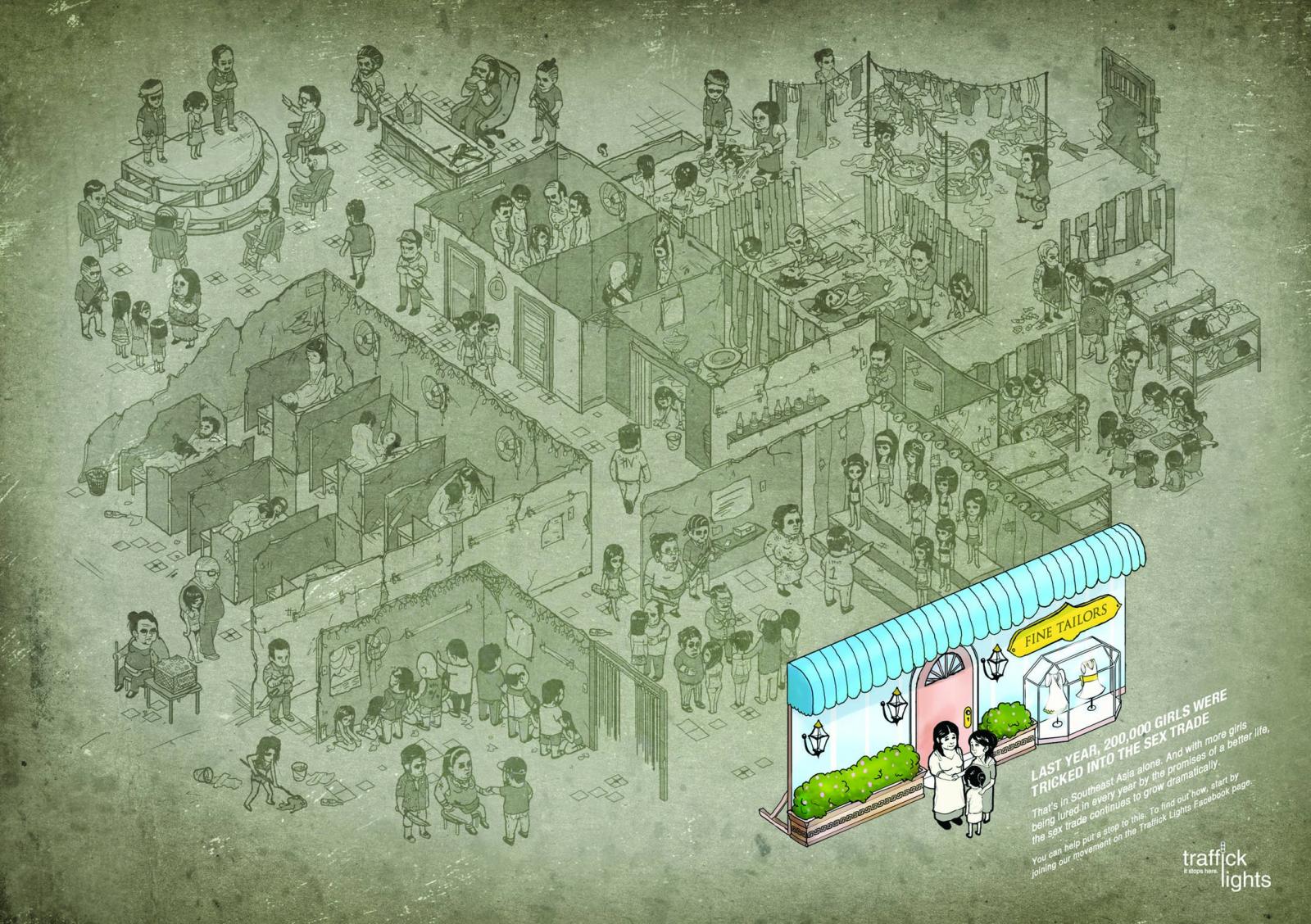
Again not technically Korean sorry, but from Singapore, and definitely NSFW if viewed at full size. But in light of the fact that 1 in 4 sex-trafficking victims in the US are Korean (see #3 here), and this recent horrific Australian case involving Koreans, then certainly such shocking ads couldn’t do any harm to the anti-trafficking cause here:
아, 짱나! Why’d you always choose songs with such bloody strange lyrics?!!
While I’m very grateful to my long-suffering wife for her help, somebody had to redeem this song’s reputation among English speakers. For it definitely deserves praise for its empowering lyrics, especially when people may be put off from hearing the song at all through reviews like this, this, and this that don’t even consider them. Or translations like these that don’t give enough thought to resolving their ambiguity.
Yet who can blame those writers? With an official title of One More Chance (나 좀 봐줘), and lyrics that sometimes mention a guy, then it’s only natural to assume it’s basically about one more chance with that guy. In which case, SM Entertainment has done Dana & Sunday (다나 & 선데) a great disservice, for that English title doesn’t just dilute the song’s message, but positively subverts it.
If I’m going to argue that other people allowed their preconceptions to color their judgement of a song though, then first let me disclose my own, which I gained through readers’ emails like this one:
There seems to be 2 camps about the lyrics: It’s either stupid or the lyrics are quite ingenious. Is this a girl-anthem lite or is it a true empowerment song?
What I can only pick out is: “Amazon” “Adam & Eve” “Soju” “Bridget Jones” From the translations I have already read, there seems to be more metaphors than the usual k-pop songs.
And then from Jessica in the comments section to a post on underlying messages in girl-group songs:
…SM Ent just brought back one of their older K-pop groups, originally a 4 piece harmony group called The Grace as a duo.
I’m showing you this because the lyrics were written by SM Ent’s inhouse songwriter, Kenzie. Unlike her lyrics for Oh!’, though, the lyrics in this song seem pretty different and a bit strange compared to your average K-Pop single. I think they would be pretty interesting to dissect because at the moment I kind of feel like it could be a female-empowerment song, but the lyrics just don’t make any sense to me, even when translated! (Could be a bad translation? I don’t know..)
It’s not perfect in the translation department (“give me one more chance, my strength’s coming out” is pretty loosely translated, ha!), but the lyrics are pretty explicitly meant to be empowering. They complain about the emphasis on being pretty and acting feminine. I thought the bit about how she didn’t like to drink soju because it made her face look big (for those of you not in Korea, having a “small face” is a mark of beauty) and she’d prefer the (ungentrified, rural, masculine) unfiltered rice wine – which comes in a bigger cup. The lyrics also reject certain standards of masculine beauty, saying that they’re fine with guys with big heads (in this case, it’s NOT figurative and saying he’s full of himself but literally that his head is big and therefore unattractive) – albeit partially because it makes her look smaller by comparison! So yeah, it’s pretty straight up critique of Korea’s beauty culture and cult of femininity.
That said, what’s really problematic for me is that the video images don’t do anything to reinforce the girl power message. I mean, it’s a pretty lame video – there’s absolutely nothing to it beyond having them dressed up and dancing – but it also plays right into the mainstream image of women in Kpop. You could put in totally different lyrics about how they’re waiting for their 오빠 to come and rescue them and it’d work fine.
Indeed! It’s a shame. These are probably the only lyrics I’ve seen from a girl group outside of 2NE1 and (perhaps) 4Minute that are empowering, it’s just a shame that the music video is so conflicting. I think they should’ve atleast dressed them differently. I feel that this song would’ve been betetr suited to labelmate, f(x). I’d hardly say that the group is empowering, but you have unconventional (well, by typical Korean standards, I guess) beauties like Amber that could atleast give the lyrics *some* sort of meaning.
I’m more interested in the songwriters views over Dana and Sunday’s, though, who I’m guessing had no input with regards to the lyrics in this song. I have to wonder what Kenzie’s views really are; it seems she’s trying to raise the issues women have to deal with in Korean society, and yet she seems to have no problem writing songs such as Oh! for SNSD. If only I could have a discussion with this woman. haha
I’d still say it’s a step forward though, and it feels less like a contrived marketing ploy to me than say BoA’s ‘Girls On Top’, and I do commend Kenzie for not going down the typical lyrical route as seen in most ‘female empowerment’ pop songs and making some sort of statement, even if the words are lost on the poor video.
Only after reading those, I confess, did I really investigate who Dana and Sunday were (those threereviewsabove remain excellent introductions to them btw, and of course there’s also their Wikipedia page), and then get stuck into the video:
And in the interests of full disclosure, One More Chance happened to be the first song I’ve ever translated that I needed my wife’s ID to get the lyrics from Naver for, as it turned out that it had been banned for public broadcast for the heinous crime of mentioning alcohol, which you can read more about here or here (and more about increasing opposition to such inane censorship here, here, or here). Not that I seriously think that that biased me of course, although I did realize later that the song would make little sense without the alcohol in it.
But at the very least, I was clearly expecting a message of female empowerment in the lyrics, and – surprise, surprise – got one. Albeit only after giving up on it in frustration late last night, then realizing in the light of day that that narrative was the only way to resolve its many ambiguities. Was I just projecting though, reaching for a solution? Please judge for yourselves if the following explanations objectively justify that conclusion then, and why I ultimately think the song should actually be called Hear Me instead!
Update – With my eternal gratitude, reader Seamus Walsh has spent a great deal of time in the comments analyzing the lyrics himself, including noting many minor and some major mistakes with my translation. Starting here, please make sure to read those also!
아담의 갈비뼈를 뺐다고? 진짜 빼야 될 사람 난데
내 허리 통뼈 이대론 안 돼 웃지 마라 진짜 진지하다고
소주는 싫어 잔이 작아 얼굴 더 커 보이잖아
막걸리 가자 잔도 크고 양도 많아 내 스타일이야
오늘 끝까지 한번 달린다 Let’s Go
It’s said Adam’s rib was pulled out? Really, I’m the person who needs things taken out.
I can’t endure my big-boned waist as it is. Don’t laugh, I said I’m serious.
I hate soju, its little shot glass makes my face look bigger
Let’s go drink makkoli, its glass is big and holds a lot, that’s my style
Tonight, let’s run until the end, Let’s go
In line 2, “뼈” by itself means “bone”, and “통” means…well, it has 8 entries in my dictionary. But “통뼈” together is a euphemism meaning “big-boned” (e.g. “난 통뼈야!).
In line 4, I think there’s an unspoken “in order to drink” between “makkoli” and “let’s go” (e.g. “막걸리 먹으로 가자”), but my wife says that adding saying “[a drink]” with just “가자” is also common slang for emphasizing how much you really want to have that particular drink (not that our explanations are mutually exclusive of course).
Finally, in line 5 I think “tonight” makes much more sense than “오늘/today” for most non-alcoholics.
Next, there’s the (sort-of) chorus:
아마조네스 시대엔 내가 왕인데
남자가 언제부터 우릴 먹여 살렸니?
나! 나 좀! 놔줘! 먹여 살렸니
나! 나 좀! 놔줘! 먹여 살렸니
지금이 최고로 마른 건데 살쪘대
오늘만 마셔 낼부터 다이어트 쭉쭉 간다
나! 나 좀! 봐줘! 아 쭉쭉 간다
나! 나 좀! 봐줘! 아 기운 없어
In the Age of the Amazons, I am the queen
From when have men supported us?
Me! Please me! Let me go! When have men supported us…
Me! Please me! Let me go! When have men supported us…
I’m the thinnest right now, but people say I’ve become fat
I’ll only drink today, from tomorrow I’ll diet properly
Me! Please me! Pay attention to me! Ah…I’ll do it properly
Me! Please me! Pay attention to me! Ah…I have no energy
The first two lines are simple enough here, but the third and fourth are very vague and frustrating. Partially, that’s because I didn’t know “놓다” could mean “release” (I usually use it as “put”), but after that who or what are the “먹여 사렸니” referring to exactly? Other translators think the whole line means “Let me go, I can feed myself”, which is certainly logical, but then there’s not only no indication of the object and subject like I said, but the verb is in the past tense too. So, my wife thinks they’re actually just repeating line 2 really, but which is too long itself to repeat all of it.
In line 6, “쭉” will always be difficult to forget for me personally because the term “쭉쭉빵빵” was the precursor to “S-line”, although here it means “utterly/completely/entirely” rather than “a straight line [tall]”. Meanwhile, the “간다” means it’s something that’s going to happen in the future, as explained in depth in my discussion of T-Ara’s Like the First Time.
Finally, in lines 7 and 8, again other translators give – all together – “나 좀 봐줘” as “give me one more chance”, and sure enough, that’s the English name of the song too (although I don’t know who came up with that). But I’m going to have to dissent, as not only is “chance” not mentioned whatsoever (although I acknowledge there’s a [slim] possibility that it’s unspoken) but a verb plus ‘줘” means “please [do the verb] for me”, and so in this case “봐줘” would be “please look at me”, or indeed “please pay attention to me”. And this is corroborated by in the video when Dana says it again at 2:10 (see below), as she both looks at the viewer the entire time and is stared at intensely by Sunday, albeit only partially because Sunday does exactly the same when she says “Let me go” too, as in the fourth picture up.
However, if there was a (conjugated) verb before the “봐줘”, like, say, “해봐줘”, then that would be quite different, as the “봐” stops being “see” but becomes part of the form “[verb] + [try to do the verb]” (e.g. “해봐” means “try to do it”). But as you can see, there’s nothing.
Whether it’s “give me one more chance” or “pay attention to me” though, saying “Ah [as in “sigh”]…I have no strength” straight afterwards is still a bit of a contradiction.
(Author’s screencapture)
브리짓존스는 짝을 만났지
내가 걔보다 뭐가 못해?
선배들 얘기, 솔직히 반대
‘눈을 낮춰야 남자가 보여?’ 흥!
좋은 녀석이 있어 머리가 좀 사실 많이 크지
그 옆에 서면 내 얼굴 진짜 작아 보이더라구
그것 땜에 만난다는 건 아냐, 진짜
아담이 이브, 만난 정돈 아니고
죽도록 걔한테 목매는 나도 아닌데
나! 나 좀! 봐줘! 자꾸 생각나
나! 나 좀! 봐줘! 자꾸 생각나
Bridget Jones met her other half, right?
What can’t I do compared to her?
My seniors’ stories, honestly I disagree
Do I have to lower my standards to meet men? Hmmpth!
I have a boyfriend, actually his head is quite big
People say that next to him my face looks small
That’s not the real reason I met him
We not close like Adam and Eve were
I’m never going to be so in love with a guy
Me! Please me! Pay attention to me! This consumes me
Me! Please me! Pay attention to me! This consumes me
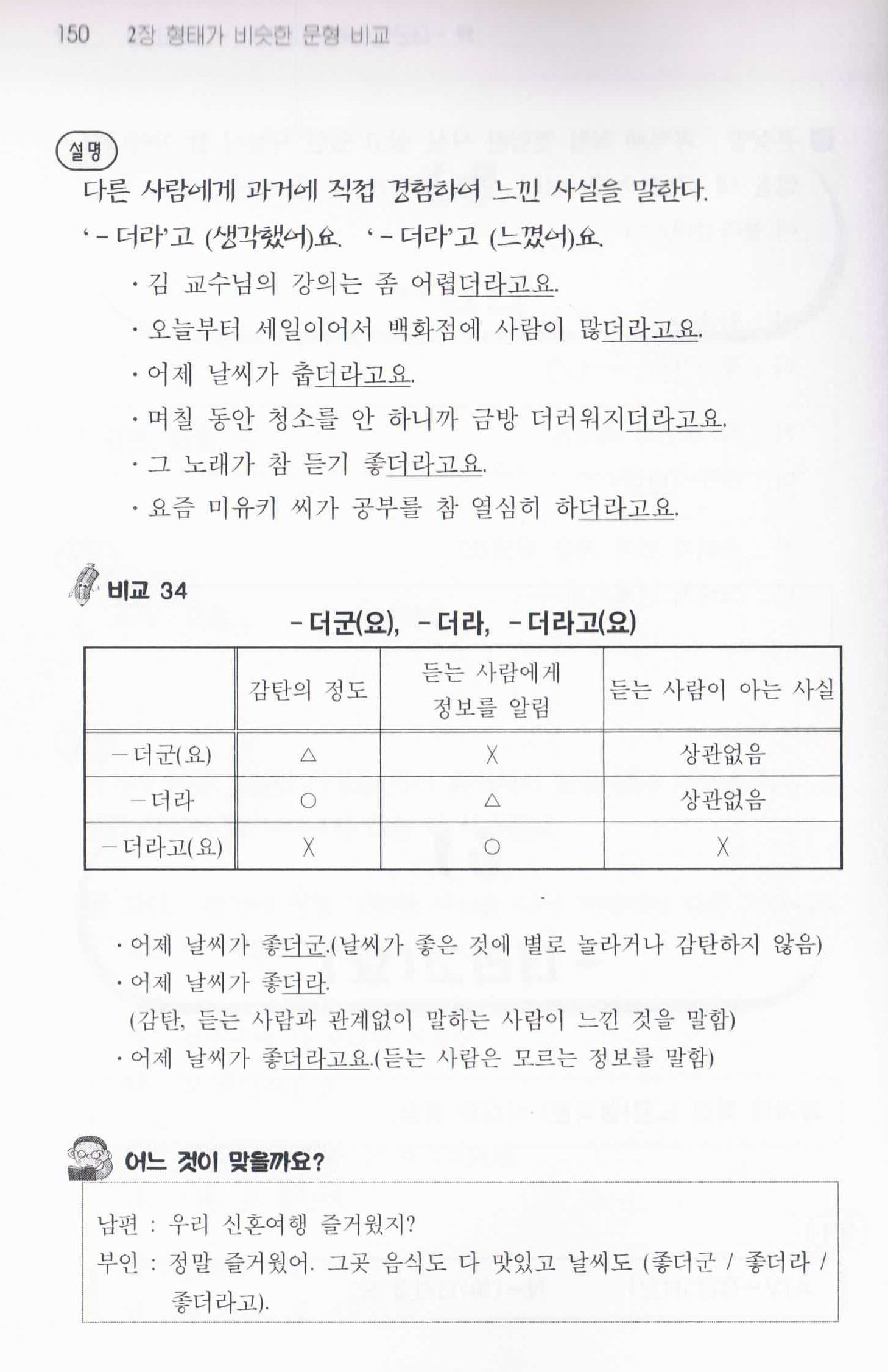
Easy enough to translate, but frustratingly vague towards the end. First, the “걔” in line 2 means “그” or “that”, in this case Bridget Jones, mentioned in line 1. Then in line 6, “더라구” is slang for “더라도”, which I scanned an explanation of (from p. 150 of 100 Korean Grammar Patterns/한국어 문형 표현 100) for you below (basically, it’s used for emphasis when you’ve telling someone about something you’ve directly experienced, but the listener hasn’t).
In lines 10 and 11 though, we’ve already established that the first part means “pay attention to me”, but the while the “자꾸 생각나” easily translates to (literally) “frequently think” or “unceasingly think”, what is the singer thinking about exactly? Late last night, my wife and I thought it was about the guy mentioned earlier, but (again) that’s a contradiction. If the next verse was about a guy though, as it certainly appears at first glance, then it could retroactively be about him though, but…well, we’ll get to that.
For now then, if we just take for the sake of argument that it isn’t about a guy, then it must be about the issue of people saying she just chose to date him because he made her face look smaller, or the wider issue of paying attention to her, letting her do her own thing. In which case, as that is the main theme of the song, then I think my own rendition of it as “this consumes me” is quite eloquent(!), even if I do only say so myself.
Of course, the lyricist may be just have been having an off-day too…
Show me! Show me! 어쩜 좋니
토크는 안 끝나고 우린 더욱 아쉽고
이 밤을 불태워버릴 우리만의 100분 토론
나! 나 좀! 놔줘! Yo! 100분 토론
나! 나 좀! 놔줘! 100분 토론
난 먹고 자고 울고 웃고 사랑하고
다 저울질하고 때로는 미워하고
오 매일 매일 난 큰 꿈을 꾸고 있는데
이 놈의 통 큰 갈비뼈를 빼서라도 날아갈 거라고!
Show me, show me, how
We got more to say, it’s sad that we have to stop
Our 100 minutes of talking will burn this night
Me! Please me! Let me go! Yo! 100 minutes of talking
Me! Please me! Let me go! 100 minutes of talking
I want to eat, sleep, cry, laugh, and love
I hate having to weigh everything up
Oh! Every day I dream a big dream
Even if I have to take out this big rib of mine, I will fly!
Ironically for all the time spent on the translations of previous verses, I didn’t really see have any problems of note in translating that. And by coincidence, it’s here that the fundamental message of the song becomes clear too.
Just a few lines ago, the singer was talking about her (literally) big-headed boyfriend, so it’s only natural to assume that she is still talking about him in this verse. But just think back to the situation: she opened the song talking to her (probably female) friend, she suggested that they go get a drink together…and until there’s anything to suggest otherwise, then she’s still talking to that friend here. So no, she isn’t sad about having limited time to talk to her boyfriend, and she certainly doesn’t want “one more chance” to be with him.
Indeed, only when you remove that assumed longing for a guy from the song, does it finally begin to make some sort of sense.
Unfortunately, the last verse below has (to my mind) a throwaway line about love which potentially confuses it, but again only if you have the preconceived notion that the song is about love between a man and a woman. Love her friend listening to her though, platonically or otherwise, and there’s nothing to be confused about.
아마조네스 시대엔 내가 왕인데
남자가 언제부터 우릴 먹여 살렸니?
나! 나 좀! 놔줘! 먹여 살렸니
나! 나 좀! 놔줘! 먹여 살렸니
아담이 이브, 만난 정돈 아니고
죽도록 걔한테 목매는 나도 아닌데
왜 자꾸 자꾸 네가 생각나니 이상해
들어봐 온 가슴이 그렇게 말해 이게 사랑이래 I got you baby
나! 나 좀! 봐줘! 자, 기운 내서
나! 나 좀! 봐줘! 가는 거야
나! 나 좀! 봐줘! 자, 기운 내서
나! 나 좀! 봐줘! 자, 가는 거야
In the Age of the Amazons, I am the queen
From when have men supported us?
Me! Please me! Let me go! When have men supported us…
Me! Please me! Let me go! When have men supported us…
We’re not close like Adam and Eve were
I’m never going to be so in love with a guy
Why am I so consumed like this? It’s strange
Try listening to me, my whole heart is saying this is love, I got you baby
Me! Please me! Pay attention to me! Cheer up!
Me! Please me! Pay attention to me! I’m going to go
Me! Please me! Pay attention to me! Cheer up!
Me! Please me! Pay attention to me! I’m going to go
And on that note, “Pay attention to me!” doesn’t roll of the tongue very easily, so I hereby retroactively change all instances of that to “Hear me!” instead, and submit that as a new song title!
What do you think? Am I simply projecting my own narrative onto the song, or am I onto something? As always, I defer to readers’ greater knowledge of the group and/or Korean abilities. Perhaps especially the latter in this case, as my epiphany about how much the song has been misinterpreted is so dependent on my alternate translation of just a few lines. On the other hand, from what I’ve read they’ve been known for grrrl-power from the outset, so surely the burden of proof is more on those who claim that this is such an uncharacteristic romantic love-song?
Update – Again, and especially if you’ve read this far, please make sure to read Seamus’s comments also!
(For more Korean song translations, please see here)
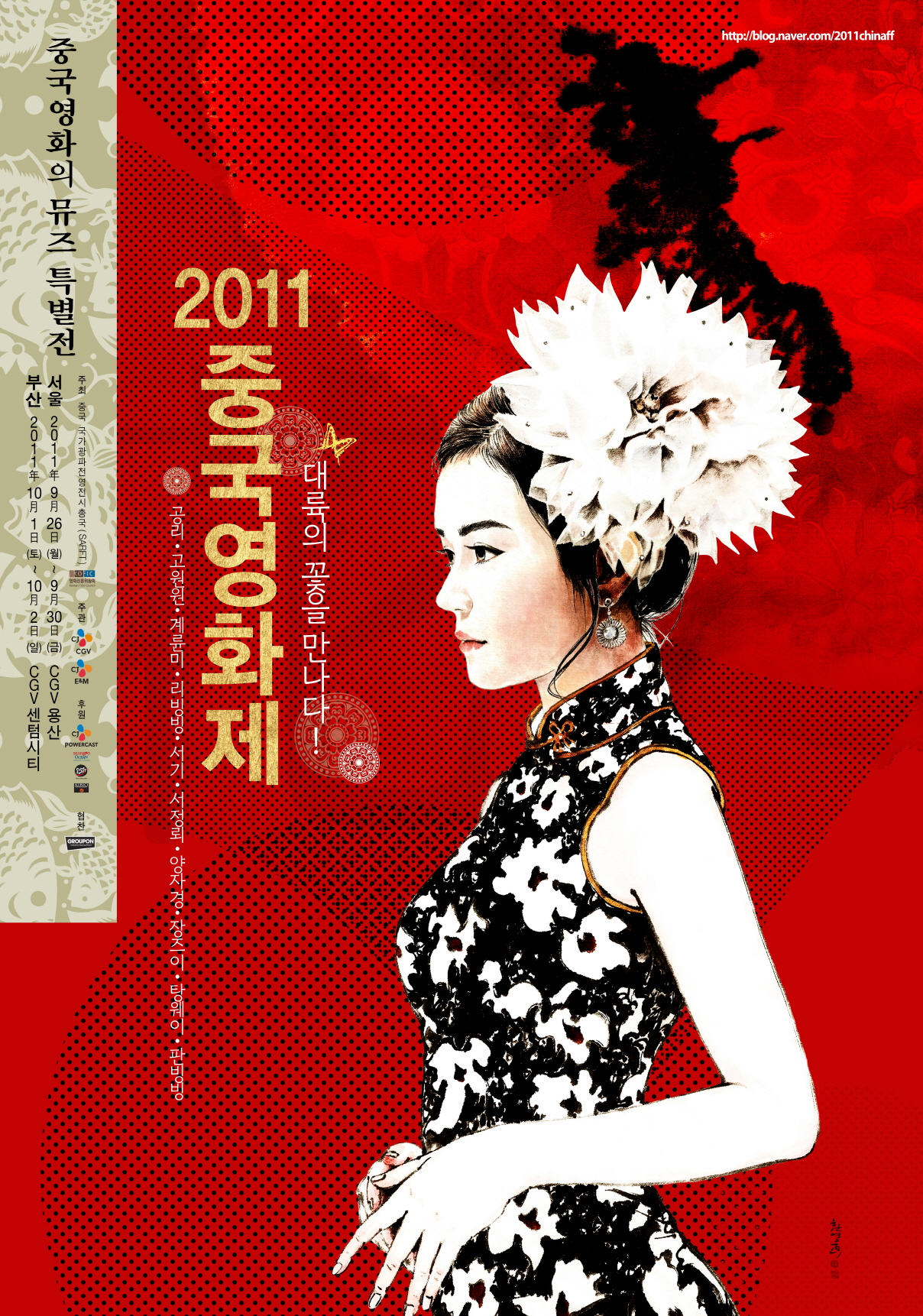
Actually, the brief 2011 Chinese Film Festival itself finished nearly two weeks ago sorry. But I’m much more concerned with the poster, one of the best I’ve ever seen.
I’d really like to know who designed it, but unfortunately all I can make of that name in the bottom-right corner is “환영” – not the last syllable, and searches of my various guesses have come to naught, Indeed, it actually might not be a name at all, as “환영” by itself means both “illusion” and “welcome”.
Can anybody can make out the full name, and/or clarify? Any help would be much appreciated!^^
Update – With thanks to Paul Carver for passing the links on, the illustrator’s name is 윤환영 (I guess the last syllable was actually a sort of symbol or signature?), and an interview of him and more of his works can be seen here and here respectively.
“Speed”, as the New York Timesrecently intoned, is an “obsession” of Koreans. It’s a cliche, like most labels the foreign media applies to them, but it’s one of the few I’d generally agree with.
Another is that they’re hardworking. While they don’t work quite as many hours as foreign observers tend to think, nobody can deny that they’re always prepared to roll their sleeves up when the boss demands it.
Perhaps then, their boss should consider reviving the 1980s custom of having employees doing traditional national gymnastics together (googminchaejo; 국민체조) before the start of work? For when it comes to losing weight by themselves, Koreans’ obsession with speed easily trumps the resolve they have when they’re on the job.
In short, Korea is simply bursting at the seams with ads promising quick fixes.
To be fair though, I haven’t lived outside of Korea for 11 years, so I can’t reliably claim there’s any more of them here than in, say, the US. The one study I’m aware of that did compare diet ads in both countries however, found that US ones tended to promote more active ways of losing weight, whereas Korean ones tended to promote the idea that if one simply ate, drank, applied, or even sat on the advertised product or service, then that perfect body was simply guaranteed.
That isn’t mere hyperbole. Technically neither foods nor medicines, dieting-related products are a little-regulated, legal gray area in Korea, essentially allowing manufacturers to pretty much make up any claims about them that they like.
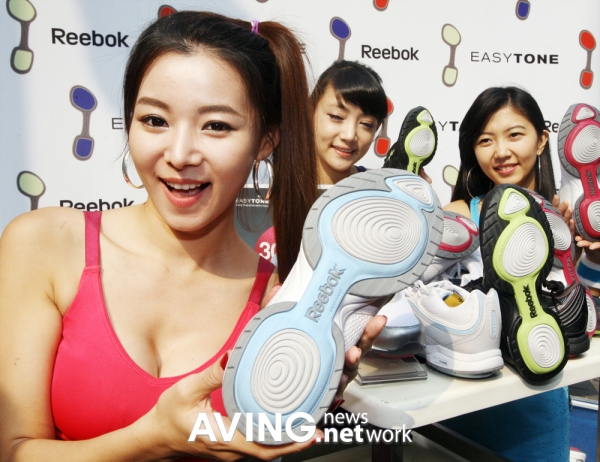
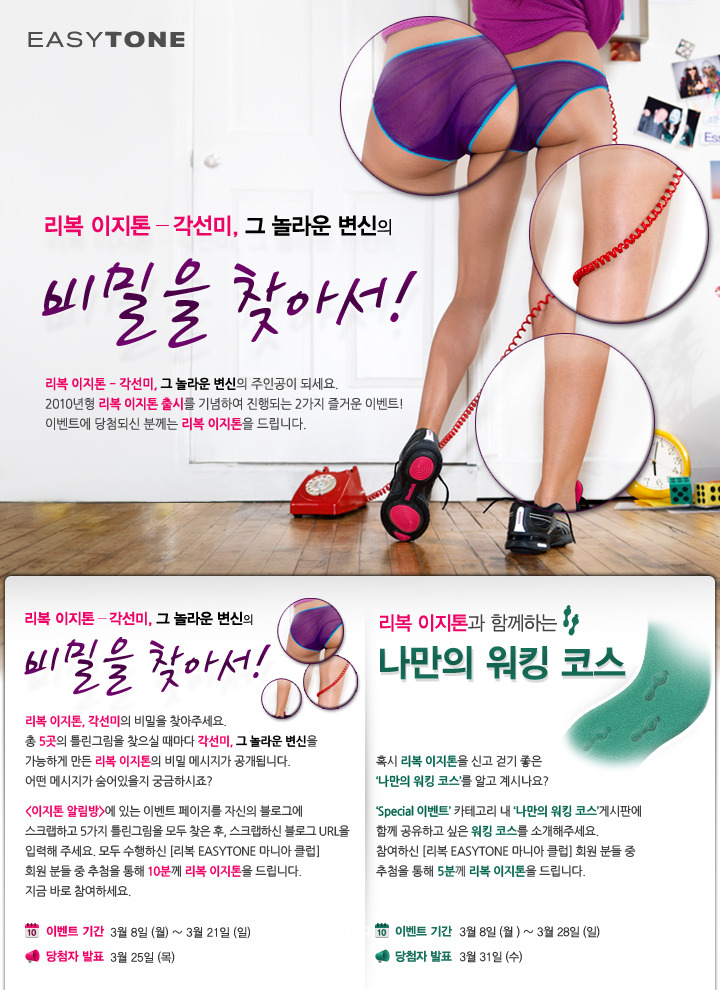
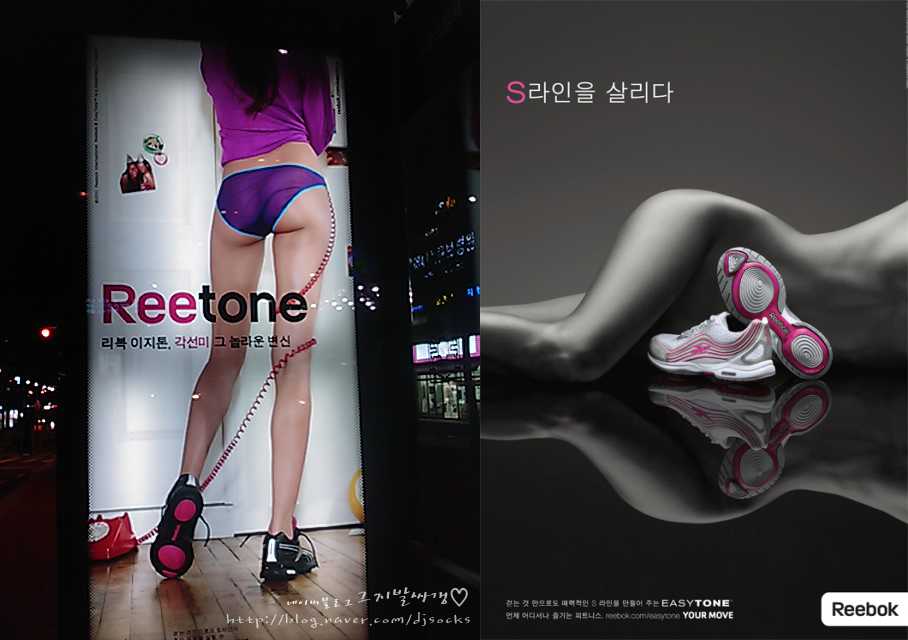
It is no wonder then, that Koreans consume them in droves. And I can empathize: once a former gym addict concerned with bulking up, ironically now I have a good 10kg to lose. But with two children, I lack the time, energy, and enthusiasm I had for exercising in my twenties. If only I could just drink something like “Fat-Down” instead, or even this beer (well, actually I have started drinking that). Or sit in this special seat all day. Or use this when I shower. Or, indeed, wear shoes that automatically toned my fat ass just by my walking to and from the subway station each day…
Alas, the online Reebok store lists only 5 male versions to 47 female ones, and they’re all a little pricey for me. Perhaps, just like Coke Zero (which has replaced Pepsi in my Black Russians) was so named because men associate the word “diet” with women too much, the disparity is because Reebok felt that men would ultimately reject the idea. And who can blame them? For as just those examples above (and especiallytheseones) demonstrate, all aimed at women, to say that US advertisements tend to promote active methods of losing weight, Koreans passive ones, is a little simplistic. Instead, it would be much more accurate to say that in both countries, it’s the active methods that get promoted to men, the passive ones to women.
Despite half the population not buying them though, toning shoes are the fastest growing shoe market in Korea at the moment, with ReeTones alone making up half of Reebok’s total sales.
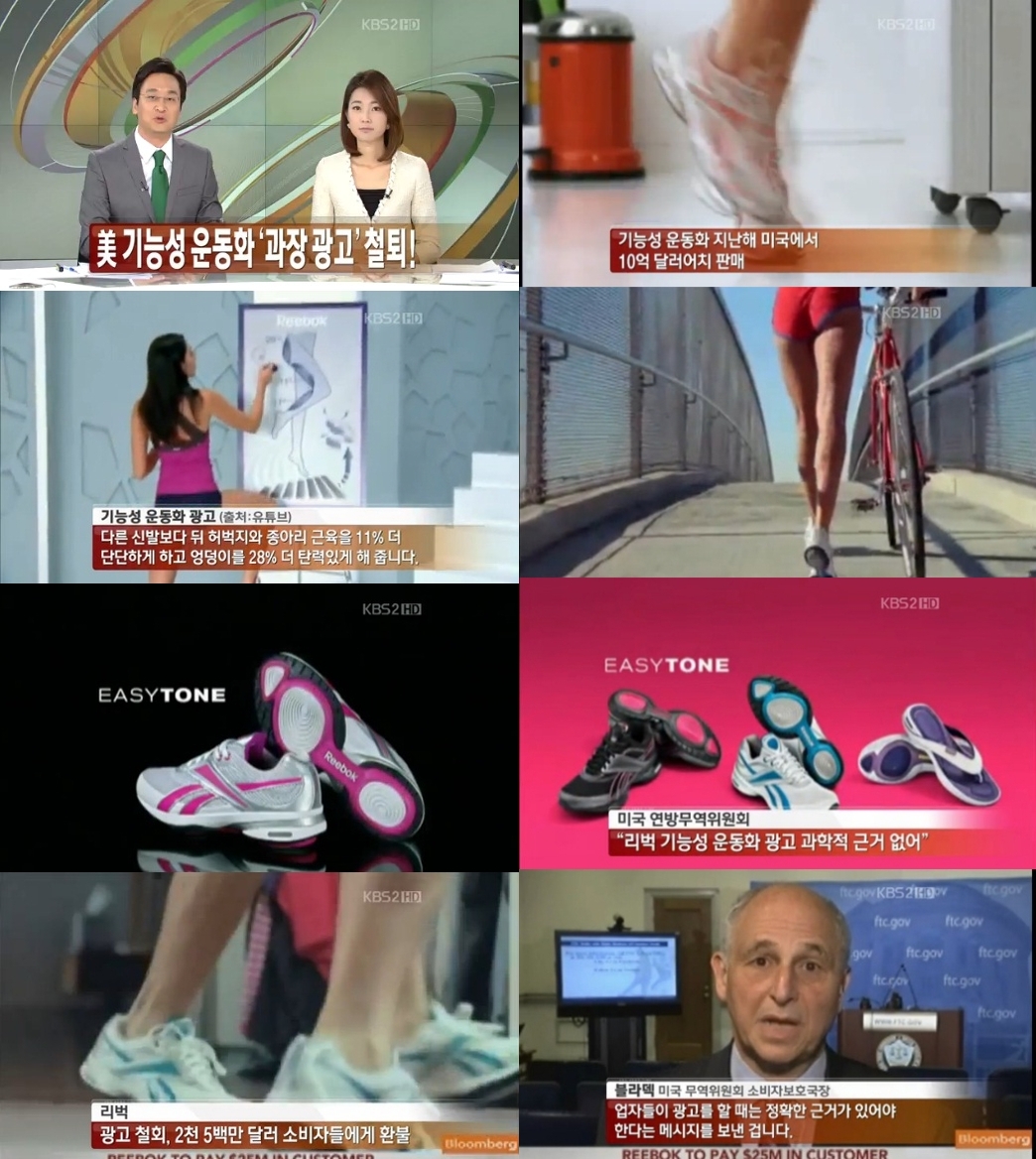
It was with great interest then, that I recently read that the US Federal Trade Commission (FTC) had ordered Reebok to refund 25 million dollars to (gullible) US purchasers of its EasyTone (이지톤) sneakers, finding that its notorious assvertising claims were nothing more than hot air. Would Reebok Korea also be providing refunds? What about other Korean companies offering similar products? Would this be a wake-up call for Korean consumers? What do they think about the news? Read on to find out.
First, from Money Today (머니토다에), taking up from when it starts talking about the effect on Korea:
우리나라에서도 리복은 지난 5월 이지톤 토닝화의 몸매 보정 효과를 대대적으로 홍보하며 판매에 들어갔다. 때문에 업계에서는 공정거래위원회가 어떤 조치를 취할지 주목하고 있다.
In Korea too, there has been an immense marketing drive for EasyTone shoes since May, so the industry has taken a great deal of interest in what measures the FTC would enact.
국내시장에서는 리복 뿐 아니라 뉴발란스, 르까프, 스케쳐스, 휠라, 머렐 등에서 몸매 보정기능을 강조한 토닝화를 시판중이며 시장도 매년 급성장 중이다. 업계 추산에 따르면 국내 신발시장의 전체 규모는 약 4조원. 그중 워킹화와 토닝화 시장 규모는 연간 6000억~7000억원, 브랜드만 총 20여 개다. 매년 40~50%대의 폭발적인 성장세를 보이고 있다.
In the domestic market, it is not just Reebok that sells toning shoes, but also New Balance, Sketchers, Fila, and Merrel, and this market is rapidly growing. According to industry estimates, the size of the entire Korean shoe market is 4 trillion won (US$3.37 billion), of which walking shoes and toning shoes make up 6-7 billion won. More than 20 brands sell them, and each year the market for them has seen explosive growth of 40-50%.
업계 관계자는 “걷기열풍과 함께 워킹화와 토닝화 수요가 2~3년 전부터 급격히 증가하기 시작했다”며 “최근 들어 기능성 운동화는 브랜드별 전체 신발 매출의 70% 이상을 차지할 정도로 잘 나간다”라고 말했다. 그는 이어 “그간 업체들의 광고가 국내 소비자들의 구매의욕을 자극해왔기 때문에 이번 미국 공정위의 조치는 국내시장에도 상당한 영향을 미칠 것”이라고 내다봤다.
An industry insider said “With the new walking craze, the demand for walking and toning shoes started dramatically increasing from 2 to 3 years ago”, and that “these days, sales of ‘functional shoes’ make up over 70% of the total sales of those companies that sell them”. Accordingly, “because [Korean] shoe advertisements [likewise] stimulate Korean consumers’ desire to purchase them, the FTC’s decision is expected to have a considerable effect [on the Korean market]”.
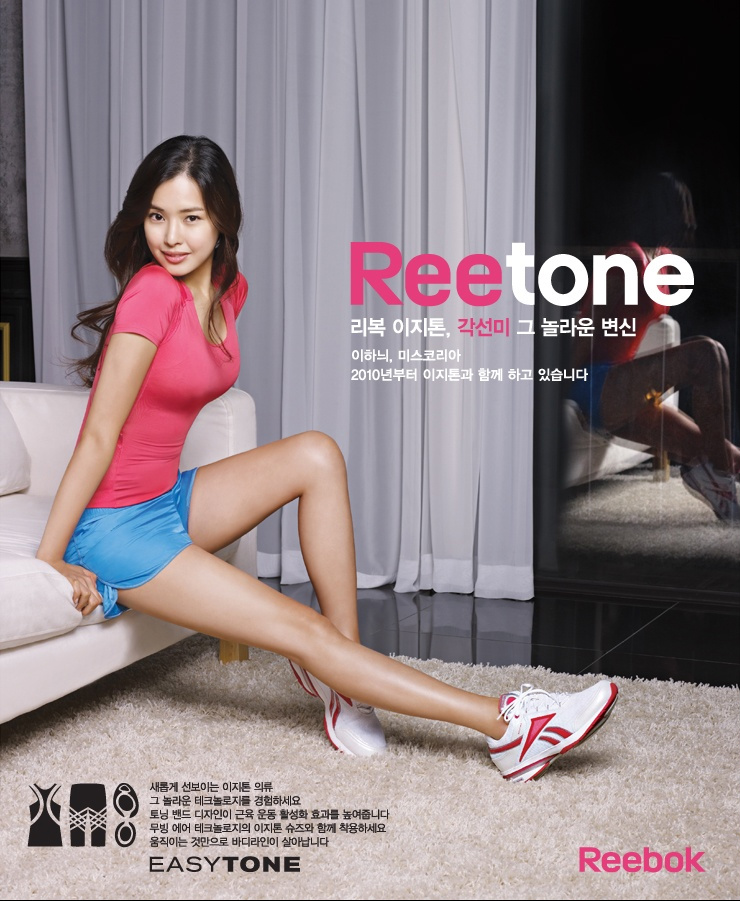
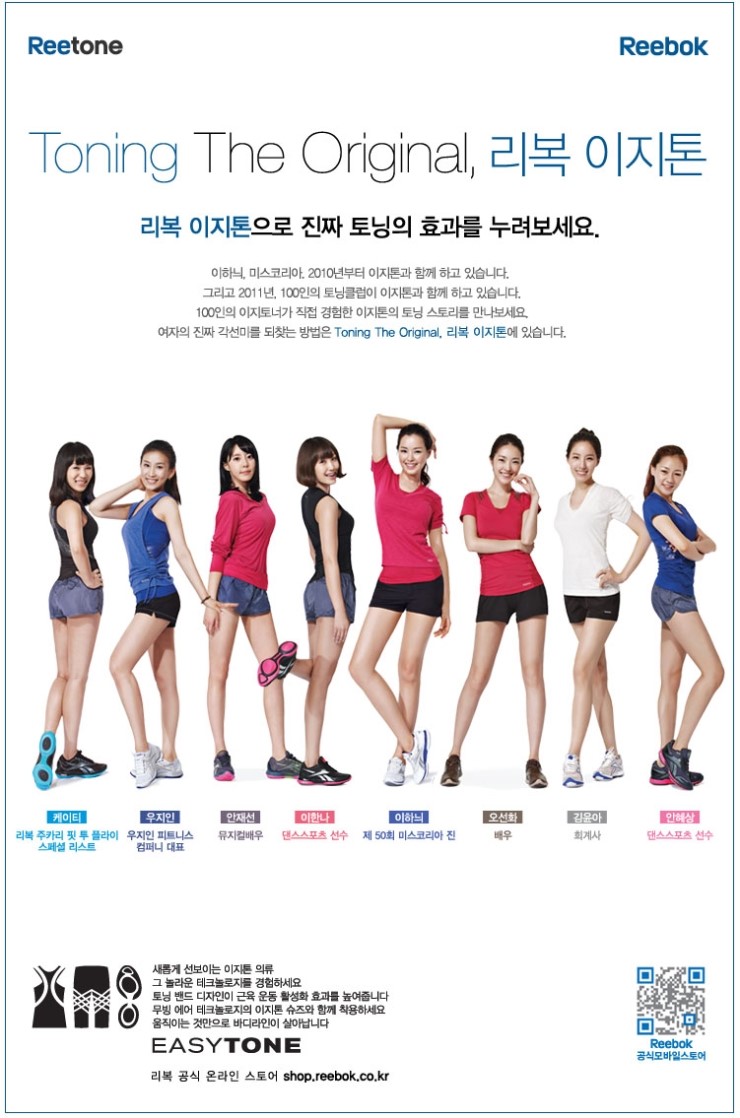
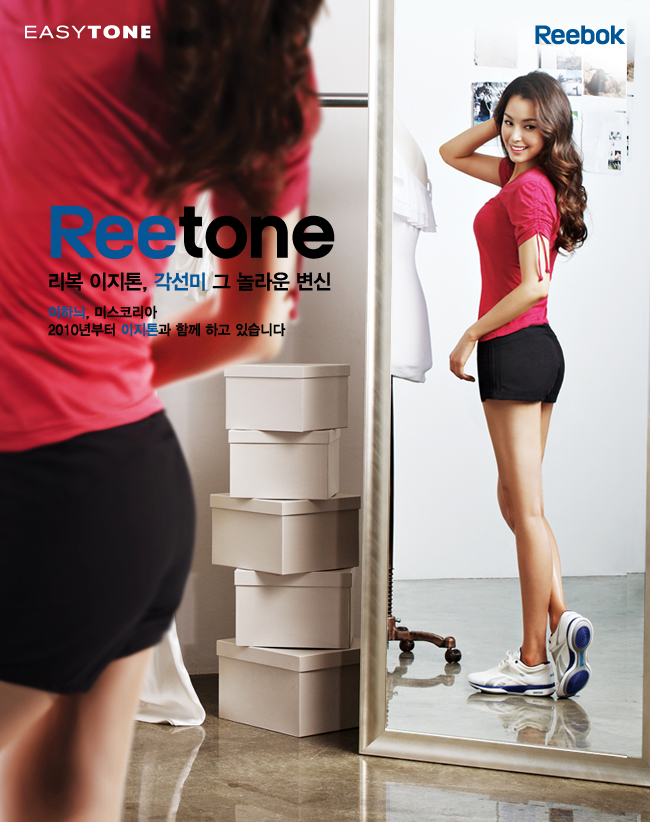
리복 코리아는 미국에서 문제가 된 광고를 그대로 가져와 쓰지는 않았으나 토닝화의 몸매 보정 효과를 홍보해왔기 때문에 국내 광고도 논란이 일 것으로 예상된다. 리복 코리아는 미스코리아 출신 이하늬씨를 광고모델로 기용하고 “움직이는 것만으로 바디라인이 살아납니다”라는 홍보문구를 내걸며 몸매 보정 효과를 강조해왔다.
While the problematic US advertisements were not used in Korea, as the marketing here has likewise emphasized the toning effects of the shoes, Reebok Korea is expected to come under a lot of criticism. [Specifically], Rebook Korea hired former Miss Korea (2006) Lee Ha-nui to emphasize their [claimed] toning effects, using the catchphrase “Just by moving, you’ll get a bodyline”.
(James – I’m not so sure that the US advertisements weren’t used in Korea. Not only were untranslated versions widely available on the Korean internet from the outset, but many – like the example below – were indeed translated [albeit not literally: “S-line” isn’t English], including the notorious one of a [faceless] women’s breasts griping about all the attention her newly toned buttocks were getting)
국내에서는 2~3년 전부터 걷기 열풍이 불면서 리복, 프로스펙스, 뉴발란스, 르까프, 휠라 등이 기능성 신발을 내놨다. 이 시장은 2005년 500억원에서 지난해 6000억원(삼성경제연구소 추정치)으로 5년 만에 10배 이상 커졌다. 이 가운데 대표적인 기능성 신발이 토닝화다. 토닝화는 올들어 워킹화와 러닝화에 밀리기는 했지만 기능화 시장의 성장을 주도했다.
As a walking craze has developed over the last 2-3 years, a number of companies have started producing functional shoes, including Reebok, Prospecs, New Balance, LeCaf, and Fila. According to estimates by the Samsung Economic Research Institute (SERI), the market has grown from 50 billion won in 2005 to 600 billion won in 2010, more than a ten-fold increase in only 5 years.
Of these functional shoes, toning shoes are representative [most popular?], their sales still trailing those of walking and running shoes but leading the growth of the functional shoe market.
국내 한 백화점에서 12만9000~16만9000원에 팔리고 있는 리복 이지톤 시리즈는 지난해 리복 매출의 50%를 차지했다. 리복의 과장광고가 미국 당국의 제재를 받았다는 사실이 알려진 뒤 온라인상에서는 “미국에서 허위광고로 거액을 물게 됐다는데 국내에서는 환불을 해주지 않느냐”는 소비자들의 주문이 이어지고 있다. 리복 코리아 측은 국내 광고 중단이나 환불에 대한 공식 입장을 내놓지 않은 채 “아직 내부적으로 대응방안을 논의하는 중”이라고만 밝혔다. 미국의 유명한 기능화인 스케쳐스도 FTC 조사를 받고 있는 것으로 알려졌다.
In Korean department stores, EasyTone sell for between 129,000 and 169,000 won, and last year made up 50% of Reebok’s total sales. Online, Korean consumers have been asking “In America, Reebok had to pay back a lot of money for its false advertising. Will we receive refunds too?”. But as of yet, Reebok Korea has made no official announcement as to whether its Korean advertisements will be suspended, other than to say “We are still formulating a plan on how to deal with this domestically”.
[Meanwhile], in the US the FTC is also investigating the famous functional shoe manufacturer Sketchers.
스케쳐스 국내 판매업체인 LS네트웍스 관계자는 “미국 스케쳐스에 대한 FTC 조사는 아직 진행 중인 것으로 알고 있다”며 “올해부터 본사 차원에서 토닝화보다는 워킹·러닝 겸용화를 주력 상품으로 밀고 있다”고 말했다.
Sketchers are sold in Korea via LS Networks. A person in the industry said they were aware of the FTC investigation, and that “from last year, Sketchers head office has focused its efforts more on combination walking and running shoes than on toning shoes”.
리복은 지금 한국에서도 몸매 보정 효과를 스타를 앞세워 홍보하며 판매에 들어갔기 때문에 공정거래위원회가 소비자 보호를 위해서 미국처럼 어떤 조치를 취할 지 궁금해지네요. 지금 엄청 잘 팔리고 있잖아요.
Because of exaggerated advertisements, Rebook has had to refund 30 billion won in Korean money, and suspend such advertisements for them. Look at the CBS report below [available on the blog], LOL. The expensive price of the shoes was unnecessary. Um…
In Korea too, because Reebok has used stars to wax lyrical about the toning effects of the shoes, I wonder what measures will be taken here. They’ve been selling unbelievably well these days.
사실 리복 뿐인가요?
벌써 여러 브랜드에서 난리가 났죠. 이런 토닝화는 뉴 밸런스 및 스케처스, 아식스,프로스펙스 등 많은 업체에서 생산되고 있으며 켤레당 좀 비싼 편에 속하죠.
Is it just Reebok? No, already many brands are involved in the boom, like New Balance, Sketcher, Asics, Prospecs, and so on. All of their toning shoes are really expensive too, yes?
미국에서 는 FTC 발표에 대해서 뉴 밸런스는 아무 말도 없었고 논평 요청에 응하지 않았지만 스케처스는 지난 8월 미 증권관리위원회(SEC)에 대한 보고에서 FTC가 ‘쉐이크 업’ 등 자사 토닝화 광고를 조사하고 있다고 밝 혔다네요.
과학적 기능이 아주 조금 들어갔다가 뻥튀기고 되어 나온 걸까요?
저도 스케쳐스 이전 버젼이 있는 데요. 꽤 편하거든요. 어떤 효과가 있는 지는 아직도 못느끼고 있지만 ㅎㅎ :)
암튼 과대 광고로 돈 벌 생각만 한 기업주들은 이번에 제대로 사과하셔야 할 듯하네요. 소비자들도 너무 믿으면 안될 것 같아요.
In America, New Balance made no statement about the FTC’s decision, but Sketchers said that toning shoe advertisements were [already?] under investigation in the August report of the Securities and Exchange Commission (SEC), in a shake-up of the industry.
Have the scientific functions of the shoes been completely exaggerated?
I have an old version of Sketchers toning shoes. They’re actually really comfortable. [Although] I haven’t noticed any benefit from them yet… LOL :)
Anyway, if companies make exaggerated claims in ads, only thinking about making money, then they should properly apologize. And consumers shouldn’t be so gullible.
일단 돈 조금 더 벌려다가 기업 이미지 나빠지고 고객들에게 미움 받고 돈도 돌려줘야 할 판이 되어 버렸네요.
토닝화 중에서 리복이랑 아식스가 제일 이쁘던데,,,,,음…..그게 과학의 값이 아니라 스타 광고와 디자인 값이었나봐요. 일반 운동화와 별 차이가 없다면 가격을 더 내려야 할 듯…한국 리복은 여전히 광고하고 온라인 샵 할인판매 하던데요?
By the way, I heard a civil suit is in progress [in America?]. In Korea too, there will be many people planning to do the same…um…
For starters, the shoe companies were making a little more money, but are now getting a bad image and receiving a lot of hatred from consumers, so they have to pay the consumers back.
Out of toning shoes, I think Reebok’s and Asics’ are the prettiest…um…but I guess the high prices were not for anything scientific in them, but their star ads and their design. If there’s no difference with normal exercise shoes though, then their price should be lowered. How on Earth can Reebok Korea still have ads for them and sell them on their online shop?
앞으로~~~~
한국은 어찌 처리 하려나?? 궁금해집니다.
아식스스포츠, 리복, 나이키, 뉴발란스, 푸마, 프로스펙스, 르까프, 스케쳐스 등등 너무 많은 브랜드의 기능화들,,,,
소비자에게 양심을 지키고 있을 지 기대됩니다.
From now on…
What will happen in Korea? I’m curious.
Asics, Reebok, Nike, New Balance, Puma, Prospecs, LeCaf, Sketchers…there’s so many brands selling functional shoes…I look forward to them keeping their conscience towards consumers
환불 보상 TIP: 현재 리복 코리아는 말이 없지만 리복 본사 사이트에 가셔서 구입한 영수증 등의 자료를 영어로 문서화해서
구입을 증명할 경우 보상 받을 수 있다고 합니다. *^_^* 아래 동영상 < sbs 5분 경제 >맨 마지막부분에서 언급합니다.
동영상 03분 50초 정도 맞추세요.
“일단 우리 소비자들도 리복 본사 홈페이지에 들어가면, 인터넷을 통해서 환불 접수를 할 수 있습니다.
다만 영어로 구매를 증명해야하고, 또 번거로운 절차를 밟아야 하는데, 리복 코리아측.
소비자들의 궁금증에 대해서 제품을 판매할 때처럼 적극적으로 책임있는 답변 내놔야 하겠습니다.”
Here’s a tip for getting a refund: at the moment, Reebok Korea hasn’t said anything about it, but if you go the main [English] Reebok site, and convert your proof of purchase documents into English, then you can receive one. *^_^* See the “SBS 5 Minute Economy” news video here [like the last one, stubbornly resisting embedding or recording sorry!] at about 3:50 for more information. As it says:
“First, Korean consumers have to go to the English Reebok site [James – or via the FTC itself here]. From there, they can apply to receive a refund. However, this is a troubling and annoying procedure, as it has to be done entirely in English.
Producers that so aggressively sold such shoes, should be equally proactive and aggressive in fulfilling their responsibilities to consumers”. (end)
As I type this a week after the news first broke, unfortunately both the Korean media and consumers seem relatively aloof, with only a handful of stories about it, and fewer still going beyond simply stating the facts of the US case: those 3 above cover pretty much everything I’ve been able to find about the impact on Korea. While that was disheartening, I do think the FTC’s shake-up of the industry means toning shoes’ days are numbered. And that if manufacturers continue to pretend US rulings didn’t occur, then ultimately Korean consumers will express their displeasure with their wallets.
On the other hand, I also find the blogger’s (and SBS news reporters’) sentiments a little naive: with 2/3rds of EasyTones sold outside of the US (and I’d wager a good many of those in Korea), as explained in The Consumeristhere and here, then, ironically, Reebok may be just as concerned about the Korean government’s reaction as it was the FTC’s. In which case, it’s no wonder that Reebok Korea hasn’t even acknowledged the FTC ruling, and I certainly don’t expect them to do even that unless Korean consumers force them!
What do you think will happen next? Anybody have EasyTone shoes (hey, we’ve all bought stupid things!), or know somebody that does?
Update: As I’ve learned from this comments thread, satire and irony is much more common in Korean popular culture than I gave it credit for. However, they’re also definitely used and expressed in very different ways by Koreans and Westerners, as this comment there makes clear.
Update 2: Consider this quick observation about sarcasm too.
To put it mildly, Koreans don’t often use satire and irony in their popular culture. And when non-Koreans do? Hell, that can even getthemdeported.
Which explains many of the Korean reactions to the video above, at first sight part of a US-made documentary dismissing Korean claims of cultural theft by foreigners. But actually, it’s one of a series of commercials by the Korean company Mr Pizza (미스터피자). Not only hilarious in their own right, I’m struggling to think of any similar Korean send-ups of real-life examples of excessive, often downright looney Korean nationalism. Or at least by as prominent a source as Jeong Woo-hyeon (정우현), chairman of the company since 1989.
Granted, some things Koreans are proud of only appear absurd in translation. But then there are cases like this completely serious claim that Christmas trees the world over are Korean, for instance, and that consequently the world owes Korea royalties. Live in Korea, and one hears of similar things every other week, let alone faces a daily deluge of related advertisements and government and NGO campaigns.
Indeed, many of these are referenced and joked about in the commercial, which is part of what makes it so funny. For starters, take the man at the beginning holding a placard saying “도둑” (thief): no big deal to most foreign observers, it encourages a double-take by those who expected it to say “독도” (Dokdo) instead. A little later, many of the images on the college dropout’s computer and on his walls are well-known on the Korean internet (especially that map). And so on.
As of yet though, unfortunately the campaign doesn’t seem to have been picked up by the Korean media. While I expect it will be eventually (as I type this, a duplicate YouTube video has nearly 100,000 views, and many more comments), it has to be said that, expats aside, it will have the most appeal to Korea’s more cosmopolitan consumers, who are more likely to think out of the box. But that’s a good start, and indeed one of them is busy emailing her friends about it in the next room, many of whom are overcoming their instinctive defensiveness and ultimately enjoying it just as much she did!^^
(Many thanks to dogdyedblack, both for passing on the video and his astute observations.)
Girls’ Generation justifiably gets a lot of flak for the underlying messages about gender roles and body image they present in their songs, not least from myself. So much so, that sometimes it’s easy to forget what consummate performers they are, and how important their level of training has been in distinguishing them from their Japanese counterparts. Hell, if SM Entertainment deems them fit to act like actual women too, as is widely expected with the imminent release of their third album? Then I may finally be able to admit how much I like them, albeit pretending it’s only recently and begrudgingly.
Ironically though, perhaps they were actually at their best when they were first about to debut. As askbask explains, at Frank Kogan’s music blog:
“This is the most impressive dance performance I’ve ever seen from a girl group. It almost beggars belief. The stuff around the 3 minute mark is just scary…. Helps that it’s all lip-synced — it’s noticeably less sharp on regular performances — and that the camera is fixed so we get the amazing sync work and units moving around the stage. I don’t expect them to ever match this level again because it was their debut track and they exclusively practiced this choreography for such a long time”.
It’s certainly a video that deserves to be much better known, and kudos to askbask for finding it. See what you think:
Here are some better quality live performances found via the “features related” sidebar on its Youtube page, albeit without the OMG effect that comes with the fixed camera angle:
Don’t get me wrong: I don’t have stars in my eyes, and it says a lot about the nature of the K-pop assembly-line that better performances don’t necessarily come with performers’ greater experience. But the products it can create are no less impressive for all that!
According to a survey by the Ministry of Health and Welfare late last year. While that figure may well be true, it’s simply astounding that the Chosun Ilbo’s brief report doesn’t mention the huge role the criminalization of abortion undoubtedly played in that, instead quoting unnamed experts that attribute the drop simply to “a change in the social perception of abortion, the wide range of contraception available, and a rise in planned pregnancies”.
2) Less than 1 in 4 elementary school teachers are male
Anybody know how this figure compares internationally?
3) South Koreans account for 1 in 4 sex-trafficking victims in the US
To the best of my knowledge, sex-trafficking victims in a developed country usually come from much poorer ones. Why then, in the case of the US, are there more from South Korea than anywhere else? See this excellent report in the Washington Times by Youngbee Dale for an explanation, who argues that it needs to be understood in the context of Korea’s loosely-regulated credit-card mania and the limited financial opportunities available for women here.
4) Reebok forced to refund over $25,000,000 to gullible Easytone buyers
Strictly speaking, not (yet) Korean news. But as you can see from the assvertisements above, they’re also sold here, so it’ll be interesting to see what the Korean reaction to this order by the US Federal Trade Commission will be.
Hopefully a wake-up call, as it has been empirically proven that Korea has far more ads promoting passive methods of losing weight than active ones, such as this one that encourages women to literally sit on their asses all day…
5) Women 3 times more likely to be sexually-assaulted in Korea than in the US (Continued)
Some recent reports demonstrating the attitudes that underpin that surprising discovery, as discussed in last week’sKorean Gender Reader:
– First, the Korea Heraldreported that the number of reported rapes has surged 33% in the last 3 years. This is bad enough in itself (although it may be positive, reflecting a greater willingness to report them), but unfortunately ended its first paragraph with the line “though the country moves toward harsher punishment for the crime, a report showed Monday”, which rings somewhat hollow upon hearing about the following from Asian Correspondent:
On Wednesday the ninth criminal division of the Seoul High Court (Judge Choi Sang-yeol presiding) sentenced 20-year-old Mr. B and three other young men, all convicted of sexually assaulting 12-year-old middle school student A over a period of hours, to three years in prison and four years of probation. This is a lesser punishment than that imposed by the trial court, which sentenced them to six years in prison and ten years of offender registry.
The judge wrote in the opinion that “viewing the situation as a whole there is no evidence that the victim lacked the ability to resist… The trial court misunderstood the facts”. The opinion continued that “as Mr. B and the others acknowledged their crime, regret their error, have reached an agreement with the victim, and do not want to be punished, and as the defendants are young and this was their first crime, having no prior offenses rising to the level of a fine or higher, so we find this to be an appropriate sentence”.
– Next, also at Asian Correspondent, is the news that students that sexually abuse disabled students receive minimal punishment, in contrast to abusers of non-disabled victims. Partially, this is because disabled students are often unable to provide accounts of what happened, but it is also because many parents of disabled students, thankful that their children are in a mainstream school at all, do not want to rock the boat.
(For related news, also see #10)
– Finally, for those who weren’t already aware, spousal rape still isn’t a crime in Korea, with the Seoul High Court only ruling that it can be prosecuted at all just this week (a similar case in Busan 2 years ago was dismissed when the defendant committed suicide; see my post on that here). While this development is very good news then, which you can read more about at the Korea Joongang Dailyhere, if editorials like this one at the Korea Times are any indication (“rape” in inverted commas??) then unfortunately public and media attitudes have a long way to go before following suit.
6) New Zealand “goose mothers” network to avoid loneliness, depression
Not counting those who leave the family nest through marriage, as many as 1 in 8 Korean families have at least one immediate family member living away from home. The vast majority are men, either forced to live in a different city because of work, or remaining in the same city while their wives move their families to Seoul to try and take advantage of the educational opportunities there. While many are effectively forced to do so, others do so voluntarily, and in either case there are naturally large knock-on effects on their perceptions of “normal” family life and marriage, as I discuss in depth here and here. Either way, most hate it, particularly those wives and families who live overseas, while their husbands and fathers – known as “lonely geese” (외기러기) continue to support them by working in Korea.
I confess, I haven’t given them much thought since writing those earlier posts 3 years ago, but I was still (naively) surprised to learn that technology isn’t really making the separation any easier for such families, as this report from Stuff makes clear.
(Also see those earlier posts for information about “weekend couples” {주말부부}, to whom many of the same conclusions apply)
(Source: Busan Focus, 08.09.2011, p.22)
7) Korea is world’s largest male skincare market
This will probably come as no surprise to most readers! But bear in mind that Korea isn’t exactly the most populous country in the world, which makes its 18% of global sales all the more impressive.
8) Korea to put more women on front-line
See the AFP for the details. In sum, the Defense Ministry said 6,957 women currently serve in the army, navy, air force and Marine corps, but the total was expected to reach 11,500 by 2020.
This compares to figure of 6000 women out of a total of 655,000 soldiers in the armed forces given by the Ministry last October, when it announced that it was going to produces uniforms specifically for women for the first time.
9) “Women to lead S. Korea’s foreign policy in 10 years’ time”
Which is great news. But as Subject Object Verb explains, unfortunately they’ll actually be “leading” by being diplomats’ wives and playing golf…
10) The Crucible (도가니/Dogani) surpasses 1 million viewers at box office
…is adopted from the bestselling book of the same name by Gong Ji-young, one of the most prominent and respected female writers in Korea. The book is about serial rapes of students by the headmaster and other adults in a school for the hearing-impaired in Gwangju, a city about 180 miles southwest of Seoul. The crimes went on for five years.
It’s a short article, with much that is already familiar to regular readers. But thanks to Grace Duggan of Bust Magazine for asking for my contribution, and I especially liked her insightful point about the artificial dichotomy the term imposes on young women. Indeed, if you extend it to behavior also, then that dichotomy pretty much describes the way they’re presented by the entire Korean media really:
Sexualizing young women for having childlike features sets off all kinds of alarms, regardless of whether or not they are over 18. The “bagel girl” label does more than infantilize women. It compartmentalizes them by applying two irreconcilable ideals: looking like a baby and a full-grown woman at the same time.
Read here for the rest, and here and here for some wider context. Also, here is my post about the “X-line” referred to in the article.
On a positive note, I was happy to read that actor and model Shin Se-kyung (신세경) at least rejects the term. But I’m not entirely convinced: just that single picture above, for instance, shows that she’s quite comfortable presenting herself as innocent-yet-sexy when it suits her. I’m unfamiliar with her career beyond noticing her numerous commercials and magazine photoshoots in passing though, so if people that do know her find that she’s, say, deliberately shedding her childlike image as she ages, then I’d be happy to change my mind!
Way back when the internet was just for emails, getting on a plane was pretty much the only way to immerse yourself in another country’s pop-culture. But there were instant insights to be gained if you did.
Take the first Korean music videos I saw. Certainly, they were confusing at first: the hairstyles and clothing were downright bizarre, and I couldn’t understand a word of the language. But seeing the same dance moves, facial expressions, and hand gestures on Korean singers as those back home? I suddenly gained a profound sense of how manufactured pop music was in both countries, which I’d never been able to get from my hapless media studies lecturer.
And that was in May 2000. Fast forward to 2011, and it’s great having 24/7 access to K-pop, wherever you are in the world. But what would it be like encountering the K-pop assembly-line for the first time today?
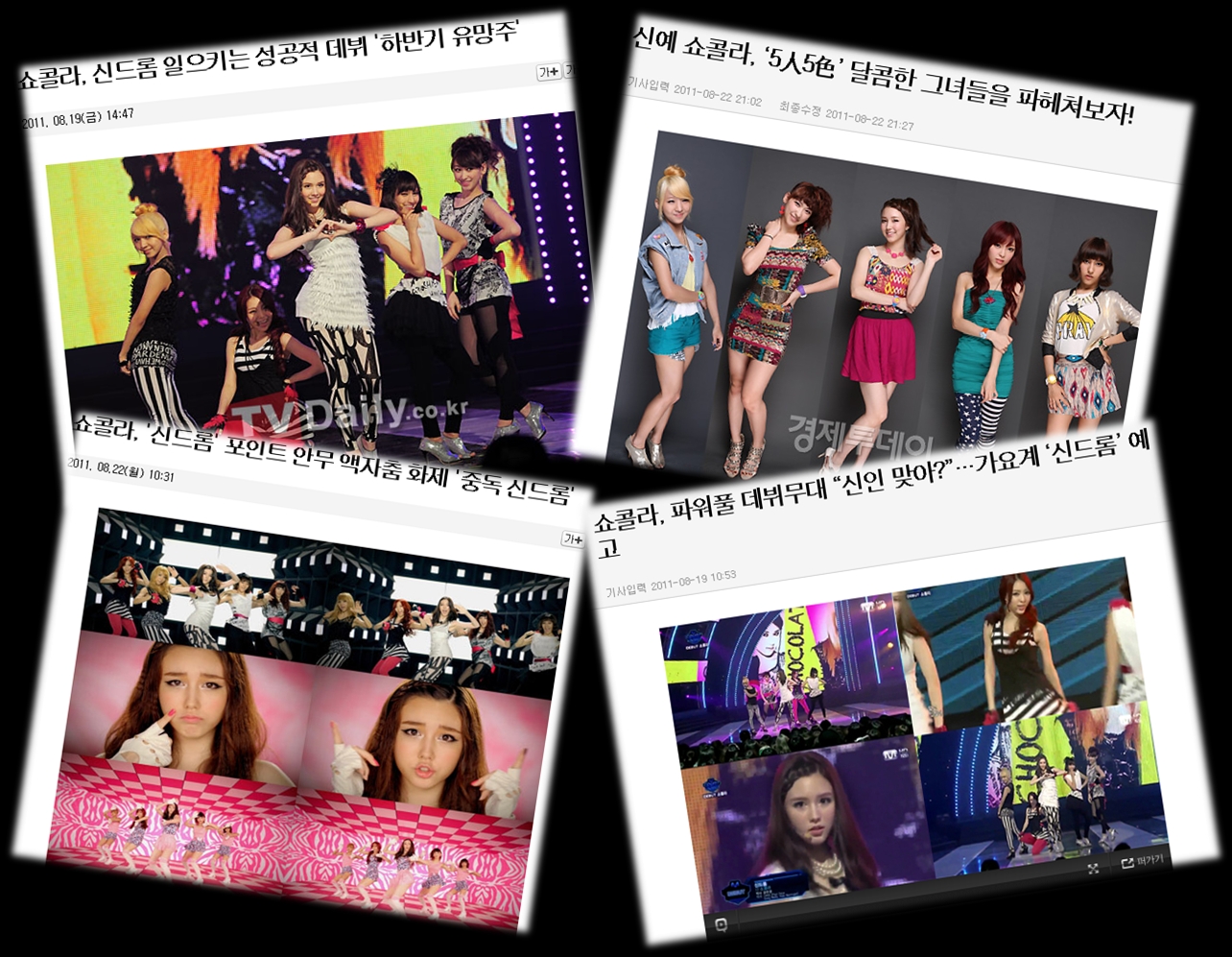
Enter Chocolat’s (쇼콜라) music video for Syndrome (신드롬), offering similar quick insights into Korean girl-groups specifically, in this case through seeing girls doing things you normally only see women do. In particular, cutesy aegyo is bad enough coming from a 21 year-old singer, but simply surreal when you see it done by a 14 year-old.
Yes, surreal, not merely awkward and inexperienced. Essentially, you’re watching a child pretending to be an adult pretending to be a child.
Likewise, de rigueur sexy wistful stares at the viewer, hinting at hidden pain and heartbreak, while walking aimlessly in moodily-lit rooms? Receiving one from someone not yet old enough to date, only seems to highlight the pretentiousness of the device all the more. So much so, that I’m not sure I won’t be able to simply laugh at the next one I see now, unless it’s coming from a genuinely worldly-wise diva like, say, Uhm Jung-hwa (엄정화).
Oops: Juliane (줄리앤) above, is actually 18, albeit—if you’ll indulge someone twice her age—still far too young to pull the look off. But that’s not her fault, and I’m sure her and other members will improve with experience. Call it an occupational hazard of teenage groups: No More Perfume on You (향수뿌리지마) by Teen Top (틴탑), for instance, relies on a similar suspension of disbelief, as we’re supposed to pretend that all the boys are playas in a nightclub, despite none being old enough to even get in one:
Rather than dwelling on how teenage girls dancing in tight clothes made me think of teenage boys though, let’s wisely turn to the issue of Chocolat’s marketing instead. First, some quick context.
One inevitable development then, is the increasing sexualization of K-pop, as I discuss in the Korea Heraldhere. Another, much more recent one, is explicitly using what’s known in advertising as a “unique selling point” (USP), such as the Swing Girls (스윙걸즈) highlighting the fact that all members have D-cup breasts, or the Piggy Dolls (피기돌스) that they are—or rather were—much heavier than most other female stars.
(Update – Megan at Seoulbeats explores this more in her post about the very similar—and increasingly tiresome—use of “concepts”)
As for Chocolat, their own USP is that 3 members are biracial, with Korean mothers and US Caucasian fathers. Not the first Korean group with biracial or foreign members by any means, but certainly the first to emphasize it so (although as an aside, it would be interesting to see how SM Entertainment handled the issue of Kim Isak’s {김이삭} mixed race back in 2002).
Whereas the media hypersexualization of children is pretty much accepted—if not admitted—in Korean society, and the media hypersexualization of white women is all but de rigeur now, I think the idea that the media sexualization of biracially white/Korean children might not turn out to be as profitable an enterprise in Korea.
The band seems to be getting a pretty negative reception online, and it’s not hard to see why: the particular anxieties regarding race in Korea that the group’s promoters are trying to exploit—ambiguities of race, and the permissible exoticism of the non-Korean female—take on a life of their own when there is not a Korean male in the picture to “own” her (and, likewise, to “pwn” her).
Put that mixed race woman in a group of Korean women, without a man in the mix, and I think you might find what I’ve seen in reality: she gets ostracized, because she is the one who’s enviably different. And then, if you take a few of them and put them together, make them dominate a group, and let media out where they could remotely be understood (or misunderstood, or willfully misunderstood even) as looking down on Korean girls, and…
Well, I don’t know what will happen. But I expect a lot of negative press, a lot of anti-fans. Korean girls are not going to like this very much. What remains to be seen is whether the appeal to middle-aged men is going to be enough to outweigh that narrowing of audience.
(Update—Related, also see Hello Korea!’s discussion of SuperStarK’s judges recently hesitating to approve a Caucasian entrant, as they anticipated “that the Korean people would be reluctant to let him win over a Korean”)
With the benefit of an extra month’s hindsight though, I’m going to wager that they will actually become popular, for several reasons.
First, because they have not just one USP but two: their race and their youth. Two of the three biracial members, Tia (티아) and Melanie (멜라니), are only 14 (the other biracial member is 18 year-old Juliane, mentioned earlier). From the perspective of management agency Paramount Music, this makes great sense both in the long-term and the short term.
In the long-term, because the younger a girl-group member becomes popular, the greater the range of consumers she can appeal to: ergo, both teens and young children andthe uncle/ajoshhi fans. And she will have a much longer shelf-life so to speak.
This is the heart of “The Lolita Effect”, and why performers—especially female performers—are becoming younger worldwide, not just in Korea.
In the short term, while Girl Story (걸스토리) and GP Basic (지피 베이직) have even younger members, both groups seem to have quickly dropped off the radar, leaving – correct me if I’m wrong – Chocolat with the youngest girls currently active in K-pop. This presents a great opportunity for Paramount Music to gain notoriety for them by pushing the Korean public’s toleration of the hypersexualization of Tia and Melanie to the limit.
Call me projecting my own narratives onto K-pop, but, sure enough, Tia at least has already been in a romantic couple photoshoot with 27 year-old actor Ji Hyun-woo (지현우), even before Chocolat officially debuted. You could argue that that was simply one small part of their overall marketing strategy rather than presaging a focus on sexualization per se, but my money’s still on them following the footsteps of So-hee (안소희) of the Wondergirls (원더걸스); Sulli (최설리) of f(x) (에프엑스; see here also); HyunA (김현아) of 4Minute (포미닛); arguably Suzy (배수지) of Miss A (미쓰에이); just about all of Girls’ Generation; and so on. As like Gord Sellar has said elsewhere, it’s not sex itself that sells, but more sexuality and sexual relationships only just on the fringe of public acceptance:
…we westerners also have a lot of weirdness in our entertainment media floating around that grey area of the age of consent. We’re profoundly uncomfortable with — and at the same time fascinated by — the period where sexuality begins to form in the mind of people, and the moment at which that sexuality becomes permissible. Straight-laced objectionability is, in fact, the greatest determinant in whether you’ll see a sex scene between two characters in a film. This is why we so rarely see plain, slightly overweight forty-year-olds having marital sex in a film. Doubtless, there must be some plain-looking middle-aged married couples out there who have passionate, enviable sex lives, but you’ll never see that in more than a few films, because it’s the most permissible sex on the planet. It’s when sex becomes imaginably objectionable—transgressive—that it becomes worthy of depiction…
Second, USPs aside, another thing in Chocolat’s favor is how they’re already behaving like better established girl-groups, already dieting and claiming that they haven’t had any cosmetic surgery(!). But more seriously, it also didn’t take long for Tia at least to secure a cosmetics endorsement deal, according to Paramount Music precisely because of her exoticism (albeit hardly an objective source).
Next, you might reasonably expect me to also present the photoshoot with Ji Hyun-woo as an example of a Korean male “owning her”, but honestly I’m not sure what Gord is driving at there, and invite him to elaborate either in the comments or on his own blog. I will grant though, that while it’s difficult to generalize, I do get the impression that the more Caucasian women you see in Korean-produced ads, the more they’re depicted with a Korean romantic male interest, as is also the case for music videos (see two examples below). Not that there’s anything wrong with that of course (although it would be nice if the opposite were also true), and I’d be grateful if any readers could fill me in on how they fare in dramas and movies.
Also, it’s certainly true that, sometimes, Korean girl-groups’ music videos have a completely unnecessary, often distracting and confusing male presence. To my mind, the most notorious example would be Because of You (너 때문에) by After School (애프터스쿨; discussed here), which inexplicably features a male in it despite clearly being about a lesbian relationship between two of the members (although technically the lyrics leave the gender{s} open):
Finally, it’s only indirectly related, but it’s one of the first things I thought of when I read Gord’s take on Chocolat (so what the hell): while the “policing” of women in K-pop is constantly in flux, with many backward steps, generally I’d say its slowly but surely liberalizing over time. In particular, whereas S.E.S (에스이에스) was forced to make Caucasian rather than Korean men the target of their wrath for their music video for U back in 2002, lest Korean men be offended (see here and here), now Korean men are fair game, with Miss A’s music videos in particular coming to mind.
Moreover, the debut of a girl group focused on its biracial members provides a great opportunity to do away with convention.
It’s such a pity then, that the music video for Syndrome has such a cookie-cutter feel about it instead, although that is of course what you’d expect from something so representative of the genre. For an analysis, see Quynh’s breakdown of it at Seoulbeats, while I’ll finally—belatedly—provide a translation of the lyrics for the remainder of this post:
Oh yeah~
그 얼굴 닳아질라 널 자꾸 보게 돼 baby baby
너 귀가 따가울라 여기저기서 니 얘기뿐야
Woo~그 hair, fashion 모든 게 it style 닮고 싶은 hot style
Boo 떠오른 new icon uh huh
Oh yeah~
Your face is fading, but I want to see it often
Your ears are burning, everyone is talking about only you
Woo~ that hair, fashion everything it style, a hot style I want to resemble
Boo a rising icon uh huh
Mercifully after a such a long discussion, Syndrome is probably the shortest, most repetitive song I’ve ever translated. Unfortunately though, just like the music video lacks any story, so too do the lyrics too seem disjointed and thrown together, chosen more for their sound than their meaning. Add an excessive amount of English nonsense, even by K-pop standards, then I’m going to forgo discussing my translation on this occasion, although I’d be quite happy to in the comments if people have alternative translations and/or think I’ve made a mistake.
Next, there’s the chorus:
빠 빠 빠 빠 빠져 버린 걸 헤 헤 헤 헤 헤어날 수 없게
너땜에 앓고 있잖아 모두 다 la la la la like me
폐 폐 폐 폐 폐인이 된걸 너 너 너 너에게 중독돼
이순간 Shake me up Fill me up Heal me again
I’ve so fa- fa- fa- fa- fallen for you, I can’t escape
I’m suffering because of you, everything la la la la like me
You’ve cr- cr- cr- cr- crippled me, I’m addicted to you you you
This moment, shake me up, fill me up, heal me again
널 새겨 놓은 my eye eye eye eye 멋진 그 목소리 in my headset
어떡해 미쳤나봐 낮이나 밤이나 니 생각뿐야
Woo 그 ment, motion 모든 게 issue 폭풍눈물 tissue
Boo 빛나는 new idol uh huh
You’re engraved into my eye eye eye eye, your cool voice in my headset
What am I supposed to do, I only think about you every day and night
Woo, that ment, motion everything issue, storm tears tissue
Boo, shiny new idol, uh huh
빠빠빠빠빠져버린걸헤헤헤헤헤어날수없게
너땜에앓고있잖아모두다 la la la la like me
폐폐폐폐폐인이된걸너너너너에게중독돼
이순간 Shake me up Fill me up Heal me again
I’ve so fa- fa- fa- fa- fallen for you, I can’t escape
I’m suffering because of you, everything la la la la like me
You’ve cr- cr- cr- cr- crippled me, I’m addicted to you you you
This moment, shake me up, fill me up, heal me again
내가 어쩌다 이렇게 됐나 몰라 몰라 몰라 몰라
내겐너무먼별같은걸
내맘을알아줘 baby 맘을알아줘 baby You never break break my heart
날잊지말아줘 baby 잊지말아줘 baby la la la la like me
내맘을알아줘 baby 맘을알아줘 baby You never break break my heart
이순간 Shake me up Fill me up Heal me again
How did I become like this, I don’t know I don’t know I don’t know I don’t know
To me, you’re like an unreachable star
Please know my heart baby, please know my heart baby, you never break break my heart
Please don’t forget me baby, please don’t forget me baby, la la la la like me
Please know my heart baby, please know my heart baby, you never break break my heart
This moment, shake me up, fill me up, heal me again
빠 빠 빠 빠 빠져 버린 걸 헤 헤 헤 헤 헤어날 수 없게
너땜에 앓고 있잖아 모두 다 la la la la like me
폐 폐 폐 폐 폐인이 된걸 너 너 너 너에게 중독돼
이순간 Shake me up Fill me up Heal me again
Never break break my hearta
I’ve so fa- fa- fa- fa- fallen for you, I can’t escape
I’m suffering because of you, everything la la la la like me
You’ve cr- cr- cr- cr- crippled me, I’m addicted to you you you
This moment, shake me up, fill me up, heal me again
Never break break my hearta
Make sure you see ellieAsia‘s short video (“Chocolat Scares Me”) for her rendition of the way Tia says that last line—it’s hilarious.
And on that note, apologies for the long delay with this post: blame an editing job at work that took much longer than expected, and then a cold from the lack of sleep. Also, no vote for next week’s song this time sorry, as One More Chance (나 좀 봐줘) by Dana & Sunday (다나&선데이), sub-unit of The Grace (천상지희 더 그레이스), came a very very close second to Syndrome when votes closed on Friday at 5pm (or were supposed to close sorry – PollDaddy doesn’t seem to be working very well):
The “Reading the Lolita Effect in South Korea” series:
I warn you: while entertaining, this article is just sensationalist tabloid trash really. Which is precisely why so many Koreans read it back in July, and now you can too!^^
‘하룻밤‘ 후기에인증샷까지… 막가는대학생性문화
As far as a confirmation shot after “one night”… university students’ sex culture is out of control
하룻밤 성관계 맺고 “홈런쳤다” 글 올려 / Have a one-night stand and post “hit a home run”
여성을 외모 따라 엘프·휴먼·오크…게임 캐릭터에 비유 / Women described as game characters – elf, human, orc – according to their bodies
만남에서 잠자리까지…온·오프라인 강좌도 / From first meeting to bed . . . on- and off-line courses
사생활존중안중에없는기형적대인관계우려 /Concern about abnormal personal relationships in which respect for privacy is ignored
일부 대학생들의 성(性)문화가 ‘막장’으로 치닫고 있다. 이성과의 성관계 장면을 인터넷에 올리고, 거액을 주고 성관계 맺는 법을 가르쳐주는 학원에 다니는가 하면, 스마트폰을 이용해 하룻밤 파트너를 찾아다니고 있다. 최근 문제가 된 고려대 의대생들의 동기 여학생 성추행 사건도 이 같은 ‘막장 성문화’의 한 단면을 보여준 셈이다.
The sexual culture of some university students is headed for extremes. Some post sex videos on the Internet and pay a fortune to go to academies that teach how to get sex, while others use their smartphones to look around for one-night partners. The current problem of the Korea University medical students’ sexual molestation of a female classmate also shows an aspect of this same “extreme sexual culture.”
성관계후기남기고인증샷까지 / As far as posting a confirmation shot post-sex
지난 8일 대학생 회원이 대부분인 인터넷 포털사이트의 한 카페. ‘블루’라는 아이디를 가진 회원은 “두 번째 부킹에서 만난 이날의 홈런녀는 K대 법학과 2학년. 간단히 술 마시고 모텔에 갔습니다. 집에 데려다 준 후 전화번호 삭제”라는 글을 올렸다. 글 아래에는 여학생이 벗어놓은 것으로 보이는 속옷 사진이 첨부되어 있었다. 홈런녀의 ‘홈런’은 성관계를 의미하는 은어. 이 회원이 남긴 글은 ‘홈런 후기’, 속옷 사진은 ‘홈런 인증’에 해당한다고 한다.
July 8th, on an Internet portal site’s cafe whose members are mostly university students. A member with the ID “Blue” posted, “Today’s home run girl, the second I met though booking [process, found in some clubs, in which waitstaff drag women over to meet male patrons], is a second-year law student at K University. We briefly drank alcohol and then went to a motel. Erased her number after taking her home.” At the bottom of the post there is an attached picture of undergarments that look like a female student took them off. The “home run” in “home run girl” is slang for sex. They say the post that this member left represents “post-home run”, and the underwear picture is “home run confirmation.”
이 카페의 다른 글에는 이성과 어떻게 만났는지, 모텔에 갈 때까지의 과정, 상대 여성의 나이와 신체 사이즈는 물론 학교·전공까지 상세히 적혀 있었다. 사실성을 부각시키기 위해 글의 말미에는 사진이 붙어 있다. ‘인증샷’이라고도 하는 이 사진 중에는 성관계 후 자고 있는 이성의 모습은 물론 가슴, 성기, 얼굴 등이 그대로 노출되어 있는 것도 있다. 심지어 ‘구장 입장권'(모텔 신용카드 영수증)을 첨부하는 회원도 있다. 이런 ‘인증샷’ 아래에는 “대박이다” “부러워요” “저도 가르쳐주세요” 등 수백개의 댓글이 달린다. 글을 남긴 회원은 부러움을 받는 동시에 이들 세계의 ‘영웅’이 되는 것이다. 이들 카페에는 전혀 알지 못하는 회원들끼리 나이트클럽으로 ‘사냥’을 떠나자는 글도 쉽게 찾아볼 수 있다.
In other posts in this cafe, there is of course how they met the other person, the process leading to the motel, and the female partner’s age and size, and also as far as school and major are written in detail. To highlight the reality, pictures are attached to the end of the post. Among these pictures, also called “confirmation shots,” there are of course the woman’s post-sex sleeping form, and also their breasts, genitals, and faces as they may be exposed. There are members who even attach the “stadium ticket” (motel credit card receipt). Below these “confirmation shots” there are hundreds of replies like, “Awesome,” “I envy you,” and, “Teach me too.” The member who posted this is being envied, and he is becoming the “hero” of these people’s world at the same time. In their cafe, it is also easy to find posts in which members who don’t know each other at all invite each other to go “hunting” in a nightclub.
서울의 한 사립대 경영학과 4학년인 최모(26)씨는 “친구들과 일주일에 한 번 정도 ‘원나잇’을 즐기기 위해 클럽에 간다”며 “누가 홈런을 많이 치는지 경쟁을 하고 카페에 글도 남긴다”고 했다.
A Mr. Choi (26), fourth-year business management student at a private university in Seoul, said, “About once a week I go to clubs with my friends to enjoy a one-night stand. We compete to see who can hit the most home runs, and leave posts in cafes.”
다른 포털사이트에서도 유사한 카페를 쉽게 찾을 수 있다. 인기 카페는 회원이 5만명을 넘는다. 글 내용에 ‘계절학기’ ‘수강신청’ ‘취업’이라는 단어가 자주 등장, 대학생 회원이 대부분이라는 사실을 알 수 있다. 남성 회원이 많지만 일부 카페는 여성만 회원으로 받고 있으며, 여성이 올린 ‘인증샷’과 ‘후기’도 가끔씩 찾아볼 수 있다.
It is easy to find similar cafes on other portal sites. Popular cafes have more than 5,000 members. At the frequent appearance of phrases like “vacation school”, “course registration”, and “getting a job,” one can know that most of the members are university students. There are many male members, but some cafes accept only women as members, and “confirmation shots” and “post-[home run]” uploaded by women can sometimes be found.
이런 카페들은 대부분 2008년 이후 개설됐으며 최근 회원이 급속히 늘어나고 있다. 한 인기 카페의 경우 글과 사진의 절반이 올해 올라온 것이었다. 특히 카페의 글에는 은어가 많아 기성세대들이 이해하기가 어려울 정도. 처음 보는 이성과 전화번호를 교환했을 경우엔 ‘#-close’, 키스를 했다면 ‘k-close’ 라고 칭하고, 성관계를 했을 경우 ‘F-close’ 라고 표시한다. ‘홈런’과 달리 성관계를 하지 못하고 돈만 쓰고 나왔을 경우엔 ‘내상’이라는 용어를 쓴다.
Most of these kinds of cafes have been opened since 2008, and these days the number of members is rapidly rising. In one popular cafe’s case, half of the posts and pictures were posted this year. In cafe posts, especially, there is so much slang in the posts that the older generation will find them hard to understand. Exchanging phone numbers with the other person is “#-close”, kissing is termed “k-close”, and sex is indicated by “F-close.” In contrast to “home run”, when they don’t have sex and leave after just spending money, the term “nae-sahng” is used [Marilyn – language exchange partner thinks this may be the opposite of 외상 (wae-sahng) which means to buy something on credit; so basically it would be paying for something now but not getting it].
상대 여성을 지칭한 용어도 노골적이다. 얼굴과 몸매가 뛰어난 여성은 ‘엘프(요정이란 의미)’, 평범한 여성은 ‘휴먼(사람이란 의미)’, 외모가 떨어지는 여성을 ‘오크(괴물이란 뜻)’로 표현하는 식이다. 인터넷 게임에 등장하는 캐릭터 이름으로 이성관계를 게임에 비유하고 있는 것. 지난해 대학을 졸업한 회사원 정모(29)씨는 “후배들과 모이면 무슨 얘기를 하는지 알아들을 수가 없다”며 “같은 20대인데도 세대 차이가 느껴진다”고 했다.
There terms used for the female partner are also frank. In their style of expression, women with outstanding faces and bodies are “elves”, average women are “humans”, and women with below-average appearances are “orcs.” This is comparing relationships with the opposite sex to a game, through names of characters from Internet games. A Mr. Jeong (29), who graduated from university last year, said, “When I get together with my juniors [younger people from the same school], I can’t understand what they’re saying. Even though we’re all in our 20s, I feel a generational gap.”
스마트폰, 막장성문화부채질/ Smartphones, fanning the flames of extreme sexual culture
최근 보급되고 있는 스마트폰은 막장 성문화의 주요 도구로 이용되고 있다. 스마트폰의 보급률과 인터넷 카페 게시물의 증가 시기가 일치하고, 선정적 게시물도 최근 집중적으로 늘어나고 있는 것. 스마트폰을 가지고 있는 대학생의 수는 지난 1월 기준으로 50%를 돌파했다. 스마트폰에는 고화질의 카메라 기능이 있을 뿐 아니라 인터넷 기능까지 있어 손쉽게 사진을 찍고 글을 올릴 수 있는 것이다.
Smartphones, popular these days, are being used as the main tools of extreme sexual culture. The distribution rate of smart phones coincides with the age of rising numbers of Internet cafe posts, and suggestive posts, especially, are currently rising. The number of university students who have smart phones has risen 50% since January. Smartphones have not just a high-definition camera, but also Internet access, so one can easily take a photo and make a post.
여기에 이성과의 즉석 만남을 가능하게 해 준 애플리케이션이 등장하면서 스마트폰은 일회성 성문화를 더욱 부추기고 있다. 인터넷 카페 등에는 ‘하데로 홈런친 이야기’ ‘1㎞ 홈런 인증’ 등의 글을 쉽게 찾을 수 있다. 하데(하이데어)와 1㎞는 즉석 만남을 주선하는 스마트폰의 애플리케이션이다. 이용자가 100만명이나 되는 이런 애플리케이션은 반경 1㎞ 안에 있는 가입자들의 목록을 보여주고, 전혀 모르는 불특정 다수의 사람들이 쪽지를 교환할 수 있는 프로그램이다. 대학생 김모(26)씨는 “여자들에게 만나자는 쪽지를 쭉 돌리다 보면 한두 명 답이 온다”면서 “만나는 과정이 쉬울수록 그날 밤을 같이 보낼 확률도 높다”고 했다. 이런 애플리케이션의 보급으로 소셜네트워크서비스(SNS) 시대의 연애, 즉 소셜데이팅(Social Dating)이란 용어가 탄생했지만 건전한 교제보다는 ‘하룻밤 교제’에 사용되는 사례도 적지 않은 것이다.
Moreover, with the appearance of apps that make possible impromptu meetings with members of the opposite sex, smartphones are further encouraging one-off sexual culture. In sites like Internet cafes, it is easy to find posts like, “story of a home run through Ha-deh” and “1km home run confirmation.” Ha-deh (ha-ee-dey-uh [hi there]) and 1km are smartphone applications that arrange impromptu meetings. Apps like this, which have 1 million users, are programs that show a list of members within a radius of one kilometer and allow random, unknown people to exchange messages. University student Mr. Kim (26), said, “If I keep sending out messages to girls saying, ‘Let’s meet,’ I get answers from one or two people. The easier it is to meet, the higher the chance that we will spend that night together.” Through the popularity of this kind of app, dating in the era of social network service (SNS), or “Social Dating” was born, but there are fewer instances of it being used for healthy relationships than for “one-night relationships.”
성관계가르치는학원도/ Academies that teach sex
비뚤어진 성문화는 새 직업도 만들어냈다. 할리우드 영화 ‘미스터 히치(Mr. Hichi)’와 우리나라 영화 ‘시라노 연애조작단’에 나오는 이른바 연애 컨설턴트다. 연애 컨설턴트는 연애를 못하거나 짝사랑에 잠 못 이루는 남녀를 구제해 주는 직업으로 1980년대 미국에서 처음 시작된 것으로 알려져 있다.
Warped sexual culture has also generated new jobs. They are so-called dating consultants, like in the Hollywood movie Hitch and the Korean movie Cyrano Agency. Dating consultants, beginning in the United States in the 1980s, are known as jobs for saving men or women who are bad at dating or can’t fulfill their one-sided love.
그러나 우리나라에선 연애 컨설턴트의 역할이 변질돼 길거리와 클럽에서 이성을 유혹하는 법, 단 한 번의 만남으로 성관계를 갖는 방법 등을 가르치고 있다.
However, dating consultants’ role in Korea is degenerate and involves teaching methods like ways to seduce the opposite sex on the street or in a club, and how to get from the first meeting to sex in just one shot.
‘픽업 아티스트’라고도 불리는 이들은 남성 전용 인터넷 카페에서 주로 활동한다. 자칭 ‘연애 고수’ ‘작업의 달인’들이 픽업 아티스트이다. 이들은 주로 대학생 회원들을 상대로 돈을 받고 ‘비법’을 가르친다. 통상 온라인 수강료는 30만원, 오프라인 수강료는 150만원쯤 한다. 단과반과 종합반으로 나뉠 뿐 아니라 1박 2일 동안 집중 교육을 받는 ‘부트캠프(신병훈련소)’까지 있다. 길거리에서 여성을 유혹하는 ‘헌팅이론’, 나이트클럽에서 이성을 유혹하는 ‘클럽이론’, 즉석 만남에서 잠자리까지 이르는 방법을 가르치는 ‘홈런이론’ 등 학과목도 다양하다. 픽업 아티스트 A씨는 “20대 초반 대학생들이 주요 수강생”이라며 “말하는 법부터 (전화)번호 따는 법, 홈런치는 법까지 다 가르쳐준다”고 했다. 그는 또 “직접 제작한 교재를 사용하는데, 강의를 듣고 나면 인생이 180도 바뀔 것”이라고 주장했다.
These people, also known as “pickup artists,” are mainly active on men’s Internet cafes. The self-styled “dating masters” and “come-on experts” are pickup artists. They mainly receive money from and teach the “secret method” to university students. Usually, tuition for online is 300,000 won and for offline is about 1.5 million won. They are not just split up into specialized courses and comprehensive courses, but there are even two-day/one-night “boot camps” for intensive instruction. There is a variety of subjects, like “hunting theory”, which is how to seduce a woman on the street, “club theory”, for how to seduce the opposite sex in a night club, and “home run theory”, which teaches how to get from a first meeting to bed [in one shot]. Pickup artist “A” said, “Students are mainly university students in their early 20s. I teach everything from how to speak, to how to get a (phone) number, to how to hit a home run.” He also claimed, “I use teaching materials that I made myself; after attending my lecture your life will turn around 180 degrees.”
전문가들은 막장 성문화에 대해 대인관계의 왜곡은 물론 사생활 침해 등 우리 사회에 많은 부작용을 가져올 수 있다고 경고한다. 서강대 사회학과 전상진 교수는 “즉흥성에 의존한 인간관계가 젊은이들 사이에서 이뤄지고 있다”며 “깊숙한 관계가 되기 위해선 인간관계의 친밀도가 필요한데 젊은이들 사이에선 인터넷 기술 등의 발달로 인스턴트 섹스의 갈망이 커지고 있다”고 했다. 전 교수는 또 “인증샷 등을 볼 때 개인의 사생활을 지켜줘야 한다는 생각도 느슨해지고 있다. 기형적이고 불구 상태의 대인관계가 사회에 만연할까 우려스러울 정도”라고 했다.
Experts warn that extreme sexual culture could have side effects like distortion of personal relationships and of course violation of private life. Sogang University sociology professor Jeon Sang Jin said, “Relationships that depend on off-handednss are happening between young people. For a deep relationship, a level of [emotional] closeness is necessary, but between young people, with the development of things like Internet technology, the desire for instant sex is growing.” Professor Jeon added, “When we see things like confirmation shots, our belief that personal privacy must be protected loosens. I wonder if personal relationships’ abnormal and deformed state will spread in society, to an alarming level.”
Writers: Seok Nam-jun (namjun@chosun.com); interns Seo Sang-hee (4th year Chung-ang University student) and Kim Hyeon-gyeong (4th year Ehwa Women’s University student)
Update, September 2014:This recent Groove magazine article on abortion is a must-read.
Update, August 2014:Please note that this post is nearly three years old, and that the author left Korea before it was written. I’m happy to pass on the name and address of the specific clinic she used, but unfortunately it may no longer be there, or may no longer be performing abortions.
Instead, I recommend listening to this May 2014 interview of another woman who had an abortion here, and contacting the producers of that podcast if you’d like any more information.
Thanks again to this university student for taking the time to write about her recent experience. Naturally, she’d like to remain anonymous, but she’d be happy to answer any questions readers may have in the comments (provided they’re not too intrusive):
……For me it started when I didn’t get my period. I was a bit worried as two weeks ago, during intercourse, my boyfriend’s condom slipped and so we had to change in the middle to a new one. Anyways, the pregnancy test kit came out with two visible lines. I was surprised and was stunned for about two minutes. Then, reality hit me: I didn’t cry, I immediately called my boyfriend, and we talked about this together, which I think was, for me, a better way to relax and calm down than crying.
We accessed the situation and decided to get an abortion, as we were both university students and thus didn’t have any ability to support ourselves. For me, having a baby in Korea meant that any chances of you getting a professional job was over, and I just couldn’t face that, not only because of my dreams but also because of the huge demands that my parents bore to put me in college. Even if we had the baby, I reasoned, we wouldn’t be able to raise him/her in a high-quality environment, as both of us would probably be working at low paid jobs w/ long hours just to support our family. We began to search up abortion clinics in our area and was lucky to find one with ease.
However, due to the government regulating abortions with more severity, we were worried about the price of an abortion. We searched up and found that (I was 4 weeks pregnant, or 2 weeks past from the initial fertilization) about 3 yrs ago, before the minister of health had said that stupid comment about abortion and fertility rates, it was about 400,000 won for women who were 4 weeks pregnant like me. But, more current searches showed that it could now be anywhere from 1 to 2 million won – basically it depends on what the hospital says, as there is no set price, and with the new regulations doctors can lose their license if it’s proved that they’ve done it more than 3 times. We were very stressed over this issue, as prices tend to skyrocket with each passing week (source, right).
Anyways, we entered the clinic, and I got an ultrasound. The doctor said that the fetus at that stage was too small, and that I should visit the next week. I was initially skeptical as I wasn’t sure if the doctor was telling the truth or if she wanted me to pay a bit more, but I had no choice, and did as the doctor told me. The following week I re-visited the clinic but this time a different doctor checked the fetus. And what she said made me upset. Basically, she told me that I shouldn’t have such a loose lifestyle, that I should care more about contraception, why I had waited so long before coming to visit, and so on and so forth. But I had no choice, since if I go to a different clinic I have to pay for the ultrasound again. After that dismal lecture, I went to discuss the pay and other things with another person (I don’t know what her job is exactly-maybe some sort of consultant?). The pay was 800,000 won, which was a relief. The consultant explained everything: how I shouldn’t eat anything 6 hrs before the operation, how I might not be able to have a baby ever again, how much it costs, what the aftereffects were, how I needed my boyfriend (who’s a bit older than I was) to act as a guardian and so I needed him to come with me on the day of the operation, and so forth.
During the next day, we desperately raised some money; I was worried as well not because of the money but because of the guilt. I tried to assuage my feelings – after all, a 5 week old baby doesn’t have its cerebrum developed yet; it doesn’t have feelings – but it was a bit hard. But in the end, the day came, and I went to the clinic, signed everything (the abortion was to be called a missed abortion, and since it’s outlawed I can’t demand any sort of papers from them), paid (in cash), and got ready for the operation. When I went into the operation room, it frightened me. There was this bed, and there was a little metal bowl right under it-that’s when it hit me the most that something that could potentially grow into a being with feelings would be erased forever, never to appear again, and it made me quite sad, but I had no choice – I couldn’t back out. They strapped me onto the bed, and I was knocked out. The next thing I remember is being back in the little ward (it’s very small-about the size of a small elevator, and is for one person only) with my boyfriend right next to me; apparently I had just cried, hugged the nurse and said “sorry” and “thank you”, and then had thrown up. After about 30 minutes of lying down and talking with my boyfriend, the dizziness subsided, the cramp in my stomach had went away, and I walked out of the ward. The lady at the counter said that I had to re-visit about 2 days from now, and then every 3~4 days to check up for the next two weeks (the price was all included in the initial payment) and gave me some medicine.
Overall, it was not that much of a traumatic experience, but I won’t ever be able to forget the little bowl. It saddens me even now (end).
See here and here for two more accounts of getting an abortion, in Seoul and Busan respectively, and here for more context on the criminalization of abortion in Korea in recent years (or, technically, the sudden enforcement of existing laws, after being ignored for 60 years).
Update: See here for a thoughtful response to this post by Roboseyo.
Update 2: And here for another by Angry K-pop Fan. Just to clarify something mentioned in both though, while my wife, for instance, was once unfortunate enough to come across a very judgmental pharmacist when buying the pill, that was over a decade ago. Indeed, as Gomushin Girl and many other commenters here have pointed out, that is extremely rare these days (especially in the cities), and regardless they did (and do) still sell it nevertheless, unlike some US pharmacists that refuse to for religious reasons.
(Slightly risque, slightly awkward, and very badly photoshopped poster for upcoming movie You’re My Pet. See Dramabeans and Seoulbeats for more details)
1) Women 3 times more likely to be sexually-assaulted in Korea than in the US?
From The Washington Times, as part of an article on plans to revive women-only subway cars in Seoul:
In South Korea, women are more often victims of sexual assault than their counterparts in the United States. Reports from the Ministry of Gender and Family show that in 2008, the latest year data were available, 5.1 of every 1,000 adult women in South Korea were the victims of rape or attempted rape.
In the U.S. in 2007, also the most recent year data were available, that number is 1.8 per 1,000 females.
While that’s just one source, and needs to consider possible different definitions of “sexual assault” and methods of data collection used, it is at least based on official statistics. If the comparison holds true, then this news shatters widely-held perceptions that Korea is much the safer country in this regard.
Meanwhile, see the comments here for an extensive earlier discussion on merits and demerits of women-only subway cars; #2 here for more on increasing sexual assault rates in Seoul; here for more on new groups of “sheriffs” set up to patrol Seoul subways; here for more on a new smartphone app that makes it very quick and easy to alert police when being harassed (and has already been successfully used); here for which Seoul subway station has seen the most sexual assaults; and finally here for some context, on how bad groping is in Korea.
Update –The Hankyoreh is also reporting high sexual harassment rates for irregular workers.
2) Teens involved in 1 in 10 cases of prostitution
Being such a short report from Yonhap though, let me quote it in full here:
Minors have accounted for one out of 10 prostitution cases, police said Tuesday, prompting calls for proper measures to discipline and protect youth.
According to the data collected by the National Police Agency, 1,184 adolescents aged 13-19 were caught for buying or selling sex in the first seven months of this year, accounting for 9.7 percent of the total of 12,212 offenders.
3) How to hit on an Asian girl How not to harass an Asian-American woman
…at Sweet.Sour.Satire [to] highlight the specific kinds of comments Asian American women often face from strangers and even acquaintances. These experiences, both on the street and on dates, represent the intersection of generic sexism and the stereotype of the submissive, hyper-feminized Asian woman, plus…
What…can one do, when one is fast approaching 30 with no sign of improvement in one’s skin?
Turns out, one spends money. Korean women use time and money to get their skin to be better than it really is, and I was rather taken aback by the sheer amount of products and propaganda that bombards me from all angles.
Advertising is pervasive, especially in such a wired country, to the point that I have a hard time remembering that when I was back home, I wasn’t too perturbed about my skin’s condition. Here in Korea, there are commercials, billboards, and constant reminders that YOUR SKIN IS NOT GOOD ENOUGH.
(Also on the subject of recommendations, the British F-WordBlog has a list of good feminist podcasts available here, albeit none of which are Korea or even Asia-related sorry)
5) Getting an abortion in Seoul: a foreigner’s story
See here for some very detailed and useful information, with contact details for a friendly, non-judgmental, English-speaking abortion-provider in Seoul (via: Hot Yellow Fellows).
Thanks very much to John Power of The Korea Herald for passing this one on to me, who pointed out that unlike The Hankyoreh article above (and I’d add most others), this article at least mentioned the important fact that the lack of women in top management positions in turn means that women do not aspire to them. In short, things are not entirely companies’ fault.
7) Yet another K-pop idol has a dramatic weight loss
Seoulbeats discusses Ji-young of Kara’s recent weight loss in the context of the extraordinary pressures on Korean female stars to be (dangerously) skinny.
Also, see Allkpop for a rare (male) vocalist who spurns cosmetic surgery despite his eyes being the butt of many jokes; The Marmot’s Hole on how people that once bought brand items to fit in the crowd are now buying them to stand out instead; and Sociological Images on how most cosmetic surgery patients in the US undergo procedures because they felt ugly or strange, but which I don’t think is quite as important a consideration for Koreans as aiding in job interviews etc. is (for reasons like these).
8) On being a female teacher in the Korean English classroom
From bitter personal experience, there are many factors that render an ESL career in Korea ultimately unfulfilling, unrewarding, and frustrating. But unlike female teachers, at least I don’t have to be constantly cute and/or use aegyo to gain some respect from students, if indeed “respect” is the right term for it!
9) A round-up of stuff from the rest of Northeast Asia:
10) Sticking it to the Ministry of Gender Equality and Family (MOGEF)
The Ministry does do a lot of good work on very limited resources (only 0.12% of the government total), but in addition to criminalizing abortion in order to increase the birth rate, at the moment it’s best known in Korea for banning pop songs every other week for being “harmful to youth”, but usually for completely inane, contradictory, and arbitrary reasons (and in one recent case, 3 years after the song had been released!). Very much speaking for their entire generation then, Phantom, a new project trio under Brand New Music, has released a stunning medley arrangement of songs banned by MOGEF in response:
Members Hanhae, Sanchez, and Kiggen (HybRefine) delivered a song titled “19 Song (Love Songs That Teens Cannot Listen To)”, which contains lyrics by popular banned songs like TVXQ‘s “Mirotic“, DJ DOC‘s “I’m This Kind of Person“, Vibe’s “I’m Always Drinking“, GD&TOP‘s “Knock Out” and “Don’t Go Home“, 10cm‘s “Americano“, and 2PM‘s “Hands Up“.
At the end, they rewrote the lyrics of “Americano” to say, “Elementary, junior high, and high school students, don’t listen to this!” To further emphasize their jab at the MOGEF, the staff brought in students with their eyes and ears covered for the video.
Finally, apologies in advance, but work commitments mean that next week’s song translation may have to go up on Tuesday or Wednesday rather than Monday. Sorry!
Sure, the copy may not be the best. But, vaguely reminding me of Noddy characters from my childhood, I just loved the – ahem – little workers in this recent ad for DongjuCollege in Busan. My daughters too, who are busy gluing them onto paper and drawing houses and cars around them as I type this!^^
As any father can confirm, parenting is a grueling business. So much so, that it makes our testosterone levelsdrop like a stone for instance, a rather ironic outcome for the ultimate proof of ones’ virility. Also, not only do we gain weight by being too tired to exercise or eat properly after the birth, as you’d expect, but actually we gain weight even before it too, all the better to prepare for the rigors of carrying our offspring on our backs for the next few years.
Granted, that latter research actually comes from a few monkey species, rather than men per se. And reported weight gain in men may be due to a change of lifestyle rather than expectant fathers being biologically wired for it. But still, with serious concerns about future back problems from having to carrying my daughters in my right arm so much over the last few years (they cried if I put them in the left), then my money’s on it applying to humans too.
Why then, are our daily lives still saturated with images of onlywomen caring after children while traveling on public transport and in public spaces?
In hindsight, this is just bizarre. Surely I’m not just projecting when I say that, as the stronger, taller, and faster parent, it usually makes much more sense for me to keep an eye on my hyperactive kids as they try to run literally everywhere, while my wife watches over our bags? And whereas I’m increasingly struggling to carry them as they get older, she’s already just about reached her limits with our five year-old (in more ways then one!).
Which makes these humble pictures such a breath of fresh air. They may not look like much, especially at their low resolution here (my wife is still figuring out her new smartphone – sorry), but they are actually the first example of an image of a male rather than a female caregiver that I’ve ever seen in a subway – well, anywhere – in Korea. Taken in Daegu on my recent trip there, based on my impromptu survey over 2 weekends then I’d say a good 30-40% of signs for escalators had men rather than women (and in malls etc. also).
Can any Daegu-based readers confirm my estimate? Have any other readers seen any more with elsewhere in Korea? Either way, kudos to the Daegu Council and/or subway company for making an effort to ensure a mix of genders, and – to any readers not yet convinced – please see here for more on why this is genuinely such a big deal.
(For more posts in the Korean Sociological Images Series, see here)
Unlike From Noona With Love, the more K-pop idols I listen to, the more I find that can’t actually sing(!). But still, we can definitely agree on the abilities of Lim Jeong-hee (임정희), and I’m really glad I found out about her via Noona’s post.
As the lyrics reveal, I’m a Golden Lady is a short but sweet grrrl power piece, about a woman splitting up with her boyfriend and kicking him out of her apartment. Yet while the music video does follow this narrative at first, then I think undermines it by singer G.NA (지나) all too readily accepting comedian Park Hwi-soon (박휘순) back whenever he brings her gifts later, even if she does literally beat him up immediately afterwards for trying to kiss her, hug her, or stroke her hair. Indeed, as that affection would surely be natural for a reconciled couple that used to share a bed, then, however comic, G.NA appears not so much empowered as a bit of a user.
But with such a beautiful voice, especially those nasal twangs in the chorus (see about 1:14 for instance), then I’ll more than forgive Jeong-hee for the MV. Liking her voice so much though, then you’d think I would have realized sooner that it’s not actually her that does the rap section from 2:29 to 2:49, but rather another (much more famous) Korean singer. See if you guess who, before all is revealed down the page…
Update – Also check out this version with an orchestra, to hear Jeong-hee’s voice away from the recording studio:
너 없이 어떻게 살아가냐고 바보 같은 질문 말아
나는 알아 너 같은 남자는 널려 있단걸
너 같은 남자가 아니더라도 전화 한 통에 달려올
그런 남자 나만 기다리는 남자는 많아
벌써 그 사람의 자동차 소리가 들려
이젠 내 집에서 좀 나가주겠니
아예 없던것처럼
Stop asking stupid questions, like how can I live without you
I know so many men like you
No matter how much they’d be like you, with just one phone call I’d have so many men chasing after me, only waiting for me
Just focusing on those few things which I personally had difficulty with, although I’d be quite happy to explain anything more if anyone requests (and grateful to readers for pointing out any mistakes), the first is the “~날려 있다” in line 2. With no relationship with the numerous meanings of the verb “날리다”, and not being in any grammar books of mine, I would never have guessed that it meant “lots of [something]” without the help of my wife.
Other than that, the only other thing I briefly struggled with was the verb ending “~겠니” in line 6, which means “aren’t you going to [verb] for me?”. I’d forgotten that – ahem – I’d already covered that in my translation of After School’s Ah! last June.
Next, it’s the chorus:
Hey I’m a golden lady 구차하게 왜 이래
내 내 내 내가 말로 해야만 알겠니
Hey I’m a golden lady 불쌍한 My baby
빼 빼 빼 이젠 발을 빼줘야 할 때야
야~ 이 집도 내가 산 거야 이 차도 내가 산거야
난 이런 여자 야~ 날 위해 살아온거야 그래서 소중한거야
Hey I’m a golden lady, why are you begging like this?
I, I, I…can you only understand if I have to say it?
Hey, I’m a golden lady, my poor, pitiful baby
Go, go, go…Hey, it’s time for you to step out for me
I bought this house too, and this car
Hey, I’m that kind of woman, I have been living for myself, so they’re valuable to me
In lines 1 and 3, both “구차하다” and “불쌍하다” translate as “poor, pitiful, wretched, humiliating” (and so on) according to my dictionary, but my wife says that it’s only the former that more means humiliating and pathetic, and the latter used for someone or thing you should feel sorry for.
열쇠는 놓고가 항상 놔두던 현관 입구 바구니에
안보이게 괜히 숨겨 갈 생각 하지 말고
니 옷은 챙겨줘 남기지 말고 내가 선물한 옷들도
그냥 줄게 남김 없이 싹 다 가지고 가줘
걸리적 거리니까 옆으로 비켜주겠니
이젠 현관에서 퇴장해 주겠니
아예 없던것처럼
Put your keys in the basket in the porch that you always put keys in
Don’t even think about hiding them
Take your clothes, even the ones I bought for you
I don’t want anything to remain, just take everything
You’re in the way, move!
Now, leave from the porch
As if you were never here
In line 5, “걸리적 거리다” is sort of slang for “you’re in way”, again courtesy of my wife.
Next, there’s a short version of the chorus, then the rap section. If you’re reading as you listen, scroll down very slowly if you want to guess who’s singing it before reaching the end:
Hey I’m a golden lady 구차하게 왜 이래
내 내 내 내가 말로 해야만 알겠니
Hey I’m a golden lady 불쌍한 My baby
빼 빼 빼 이젠 발을 빼줘야 할 때야
Hey I’m a golden lady, why are you begging like this?
I, I, I…can you only understand if I have to say it?
Hey, I’m a golden lady, my poor, pitiful baby
Go, go, go…Hey, it’s time for you to step out for me
불쌍한척 애교 좀 떨지마
지루한 너의 유먼 이젠 내겐 철 지난
옷과 같애 몇번을 또 말해야만
알아 듣고 내 앞에서 꺼지겠어? 이젠 안돼
나지막히 얘기할 때 나를 떠나줘
마지막이 아름답게 말을 말아 더
지긋지긋한 너의 어리광
차비라도 달라고 나 참 어이가 없어 Good bye
Don’t do that pretending-to-be-poor aegyo
Your tedious humor is now like last season’s clothes
Do I have to tell you time and time again?
Figure it out…will you get the hell away from in front of me? No more!
Now I’m telling you in a serious voice to leave me
To not ruin this end, say no more
I’m tired of your childishness
You’re even asking for a bus fare? I’ve had it with you! Goodbye!
With apologies to Korean learners, I didn’t have any troubles at all with that section, although I’m sure I’ll come to rue those words as soon as better speakers than I get their teeth stuck into it!
As for the source of the rap, if you’d guessed HyunA (현아) of 4Minute (포미닛) then I’m impressed, as I had no idea until halfway through writing this post, when I stumbled across it by accident on some Kpop site…then belatedly noticed it mentioned in the title of the YouTube video I was originally using.
After that, it’s the full version of the chorus again, and already that’s the entire song. Like I said, short and sweet:
Hey I’m a golden lady 구차하게 왜 이래
내 내 내 내가 말로 해야만 알겠니
Hey I’m a golden lady 불쌍한 My baby
빼 빼 빼 이젠 발을 빼줘야 할 때야
야~ 이 집도 내가 산 거야 이 차도 내가 산거야
난 이런 여자 야~ 날 위해 살아온거야 그래서 소중한거야
Hey I’m a golden lady, why are you begging like this?
I, I, I…can you only understand if I have to say it?
Hey, I’m a golden lady, my poor, pitiful baby
Go, go, go…Hey, it’s time for you to step out for me
I bought this house too, and this car
Hey, I’m that kind of woman, I have been living for myself, so they’re valuable to me
Originally, I aimed to do much more background research on Jeong-hee before posting here (one of many resolutions made over my short blogging break), in her case checking out her other music videos to see if any more of her music features similar grrrl power themes. But as just this one example illustrates, music videos can often give a very misleading impression of a song’s lyrics, so unfortunately that project is going to require many more time-consuming translations, rather than a lazy afternoon spent in front of Youtube. Until those are completed then, I’ll happily defer to readers’ greater knowledge of her (and/or recommendations on which of her other songs to start with), and will begin posting readers’ requests for other songs that I’ve been working on. Rather than putting some readers off in advance by choosing next week’s one myself though, please let me know which of those you’d like instead!^^
Update, 5pm Friday – Unfortunately, PollDaddy doesn’t give you a 5-day option for closing your poll (the closest is a week), but now is when I really need to start working on your selection for it to be ready for Monday. Thanks for you votes then, and Syndrome by Chocolat it is!
(For more Korean song translations, please see here)
As this post goes up, I’ll be at Gimhae Airport picking up my father, then taking him and the rest of the family to the Daegu 2011 IAAF World Championships this weekend and next. We’d like to stay there for the entire nine days (he will!), but unfortunately next week we have to move apartments on Wednesday, and then I start teaching again the next day. Needless to say, I’ll be too busy to write again until he leaves on the 7th of September.
Until then, please feel free to raise and discuss anything sociological, gender, advertising, K-pop, and/or athletics-related here, and sorry for not being able to complete any song translations this month. But I do have five that I’ve been working on, which I’ll put up as soon as I’m back!
Update, September 7th: I won’t bore you with the details, but I’m afraid my “comeback” with have to be pushed back to Monday the 12th. Sorry!
I’m no prude. I think that children are – and have a right to be – sexual beings. However, there is a difference between sexuality (feeling sexual) and sexualization (being seen as sexy). I (and many other like-minded feminists) believe that girls should be sexual; but, sexualization (and its concomitant focus on appearance instead of desire) is bad because it denies girls’ sexual subjectivity in favor of sexual objectification.
2) International AIDS conference in Busan this weekend
See Busan Haps or the conference website for more details. Unfortunately though, it’s not really aimed at the public (it’s much too late to register, and was prohibitively expensive anyway).
Meanwhile, to any foreign readers that may be under the understandable but false impression that the Korean public doesn’t believe that AIDS exists here, let me point you to this eye-opening experience I had about that back in 2005 (scroll down to just before the “Lesbos” picture).
3) More babies!
– Congratulations to Roboseyo and Wifeoseyo, who are having a Miniseyo in October.
– Congratulations again to Shotgun Korea, who had Desmond William Wolfie Kim on August 18.
– And finally belated congratulations to Going Places, having a baby in November.
– Over at Busan Haps, Roy Early ponders how to keep strangers from constantly touching his children. I can’t say that I’ve had that problem myself, but we are both tired of our children constantly being given candy, which non-parents may be amazed to learn just how many Koreans seem to always have on their person.
(Source. It is just me, or does A-ran’s {아란} face on the far left seem very badly photoshopped?)
4) Please objectify us! Pleeease……
Hey, I’ve always maintained that it’s largely the current glut of girl-groups that is driving their increasing sexualization. So, to play Devil’s Advocate, Swing Girls (스윙걸즈) differentiating themselves on the basis of all members having D-cup breasts(!) are really just being explicit about something that other girl-groups have already been doing for years.
And boy-bands too of course. Two weeks ago for instance, Lee Joon (이준) of MBLAQ (엠블랙) helpfully reminded us of what’s really needed for a guy to succeed in K-pop these days:
Update:Angry K-pop Fan provides a more comprehensive analysis of the Swing Girl’s branding plans here.
5) Does Jung Ryo-won (정려원) have anorexia, or are netizens overreacting?
I’d be one of those netizens I guess, mentioning those anorexia speculations back in March and May 2009 (see #3 here), and adding that I wasn’t personally convinced by her explanation that she lost the weight for a movie role. While I do sympathize with her frustration with netizens though, I’m afraid that 2 years later I’m similarly unconvinced by her new explanation that she’s one of those voracious eaters that never seems to put on weight, especially as I used to be one myself (albeit 20 years ago!).
6) Singles eclipse nuclear families in Seoul
It’s a slightly inaccurate headline – two parents and any number of children constitutes a nuclear family, not just two – but it’s certainly true that more and more people are living alone: 24.4% in Seoul according to the JoongAng Daily, and 23.9% nationally according to Real Time Korea. These are only slightly below rates for Western developed countries, as this graph from 2006 indicates (I have more detailed statistics in my bookcase, but most are over a decade old sorry!).
See here for more background, and here for more on the industries that were already springing up to cater to the increasing numbers of singles way back in 2009. (The latter also happened to have that handy graph on the right)
7) Korean students with make-up
Under fear of being sued by parents, at least one teacher is no longer enforcing school rules that require them to wash it off (via: Yahae!)
8) Taiwanese woman sexually assaulted in Hahoe Folk Village
See the details at Asian Correspondent here. Also in Taiwan-related news, Gender Across Bordersreports that a mass same-sex wedding is planned there later this month.
9) Korea not ready for a group like Chocolat (쇼콜라)?
An interesting angle on them from Gord Sellar:
…Whereas the media hypersexualization of children is pretty much accepted — if not admitted — in Korean society, and the media hypersexualization of white women is all but de rigeur now, I think the idea that the media sexualization of biracially white/Korean children might not turn out to be as profitable an enterprise in Korea.
The band seems to be getting a pretty negative reception online, and it’s not hard to see why: the particular anxieties regarding race in Korea that the group’s promoters are trying to exploit — ambiguities of race, and the permissible exoticism of the non-Korean female — take on a life of their own when there is not a Korean male in the picture to “own” her (and, likewise, to “pwn” her)…
See here for the full post, and here (and possibly here) for my own on the issues Gord alludes to with that last sentence. Also, Angry K-pop Fan makes some interesting comparisons between Chocolat and pan-Asian band Blush.
10) 16 year-old Suzy (수지) of Miss A (미쓰에이) endorses French Lolita Lempicka perfume
A friend of mine, a close watcher of K-pop, believes that manager JYP has tended to make Suzy wear more conservative costumes and do slightly less risque dances than her adult co-members of Miss A, nor made her the focus of the group, all quite unlike what he did for So-hee of the Wondergirls when she was a minor (a practice replicated by other entertainment companies, such as: SM Entertainment with Sulli of f(x); Cube Entertainment with HyunA of 4Minute; and indeed Paramount Music of {at least} Tia of Chocolat in #8 above). With this loaded endorsement however, that may all be about to change, as indeed a similar one (“Lolita Sexy”) early last year arguably symbolized a great deal about his past and future marketing of the Wondergirls.

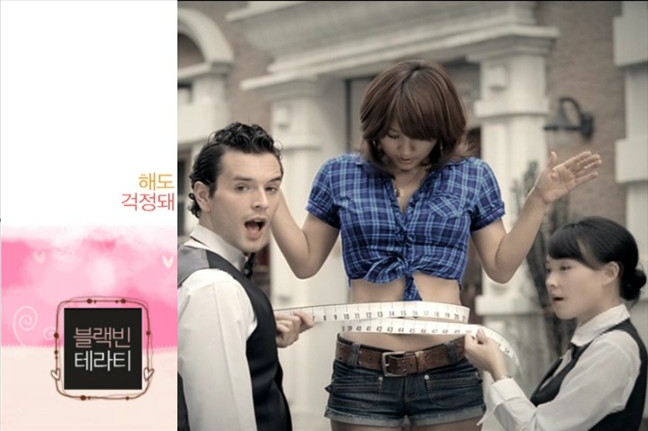 (Source)
 (Source)
 (Sources: left, right)
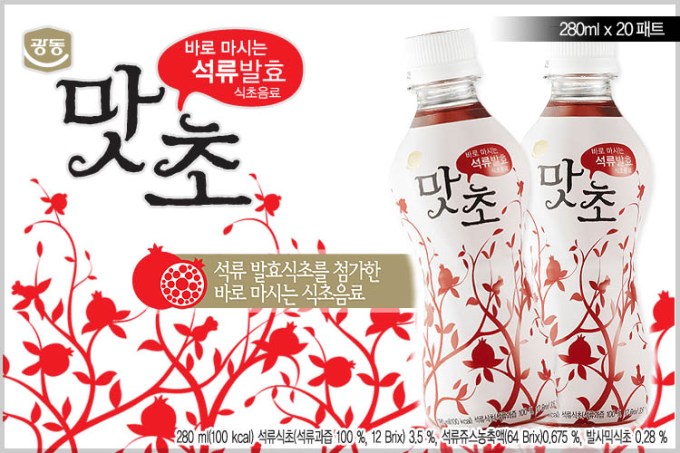 (Source)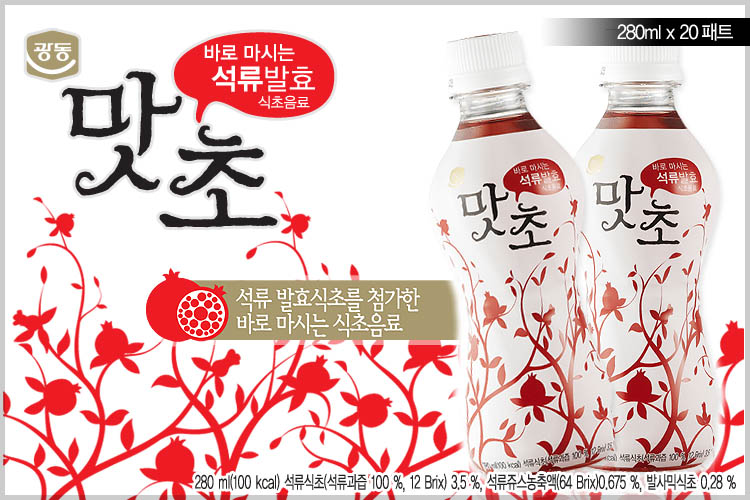
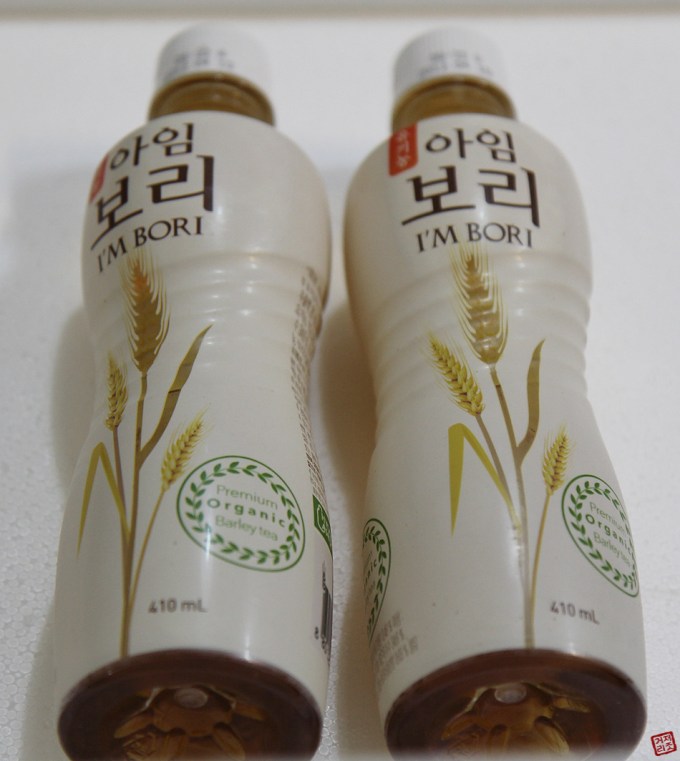 (Source)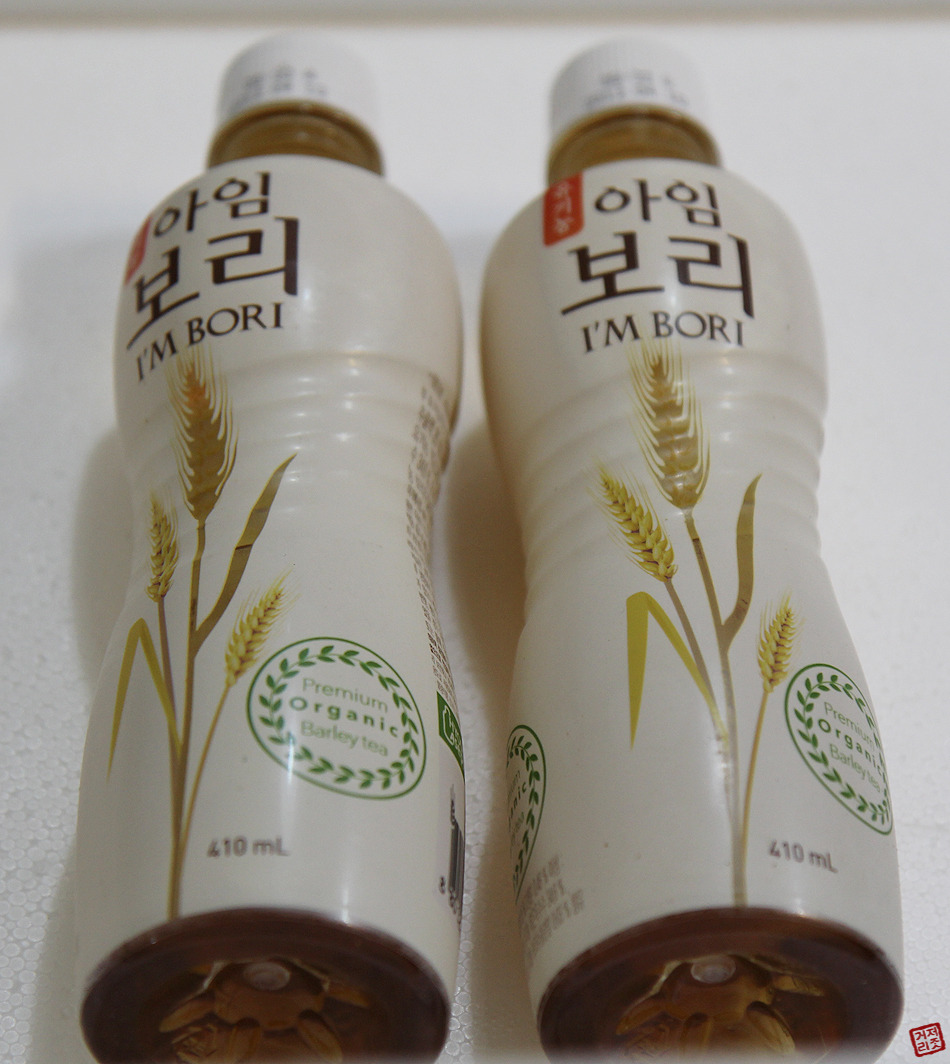
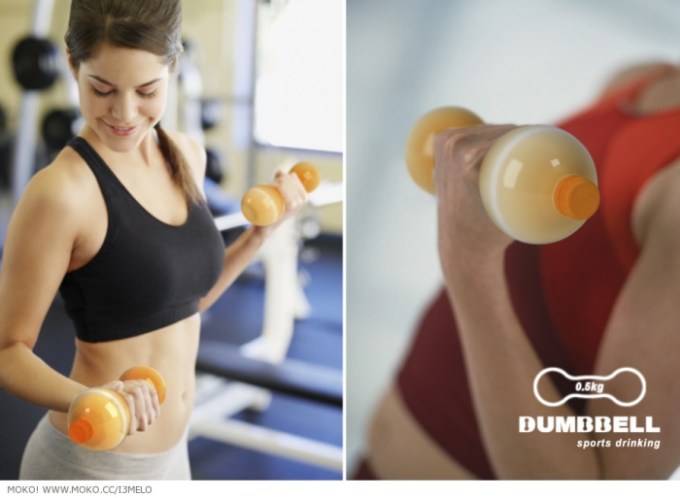 (Source)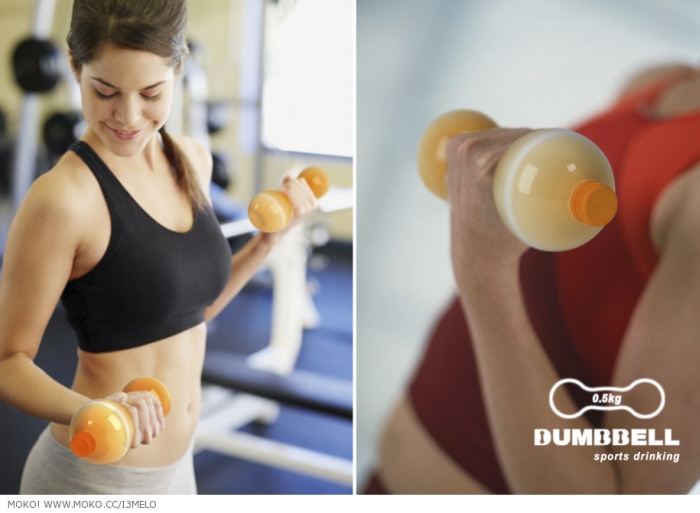
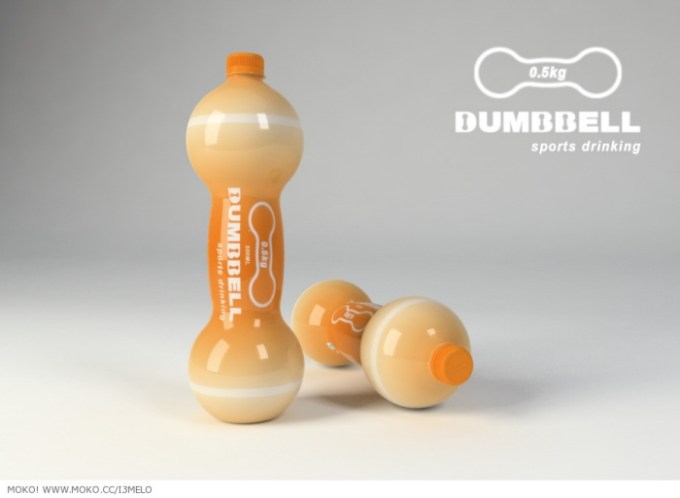 (Source)