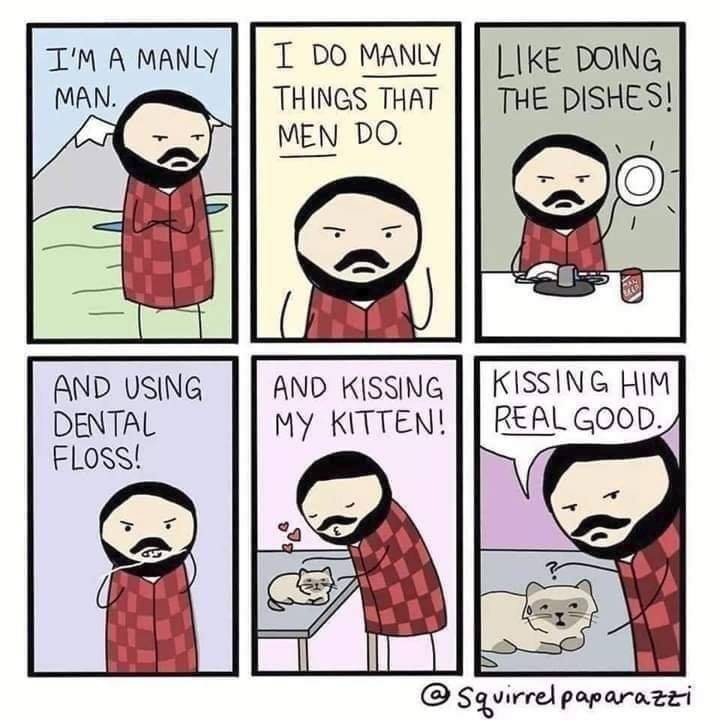
Do We See Someone as a Man or Woman Before We See Them as a Person?

Knowingly or unknowingly, how do you think you react differently to people depending on their sex?
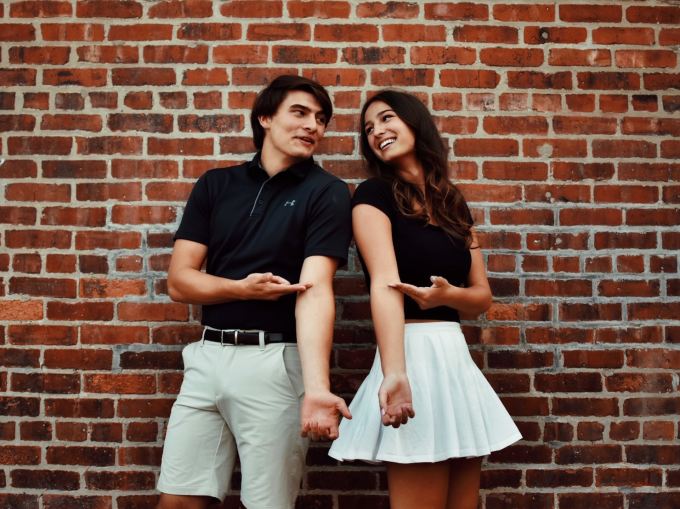
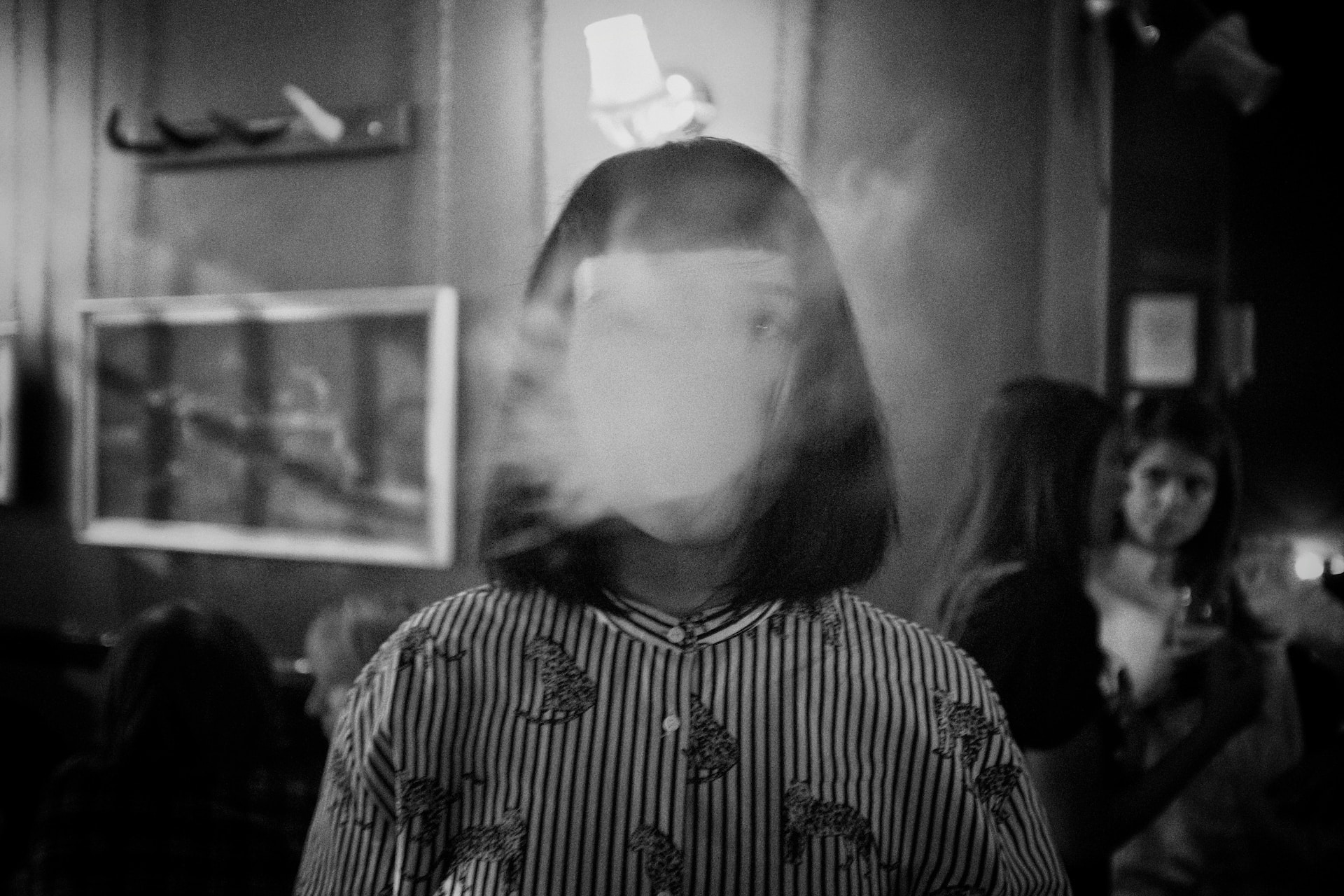
Estimated reading time: 5 minutes. Photo by leah hetteberg on Unsplash.

“When you’re communicating with someone, but don’t know if they’re a man or woman, you feel a little guarded. You can’t help it. Until you can resolve their identity, your conversation is stilted and awkward, because you just can’t be yourself. ”

Or something like that—I can’t remember when and where I read it, but it resonated with my experience of chatrooms in the early days of the internet, or phone calls before Caller ID. Over the next decade, as realistic-sounding, AI-based chatbots become increasingly common in customer service roles, along with all their inherent gender biases and stereotypes, I expect younger generations will also experience the same moments of confusion and hesitation I did.
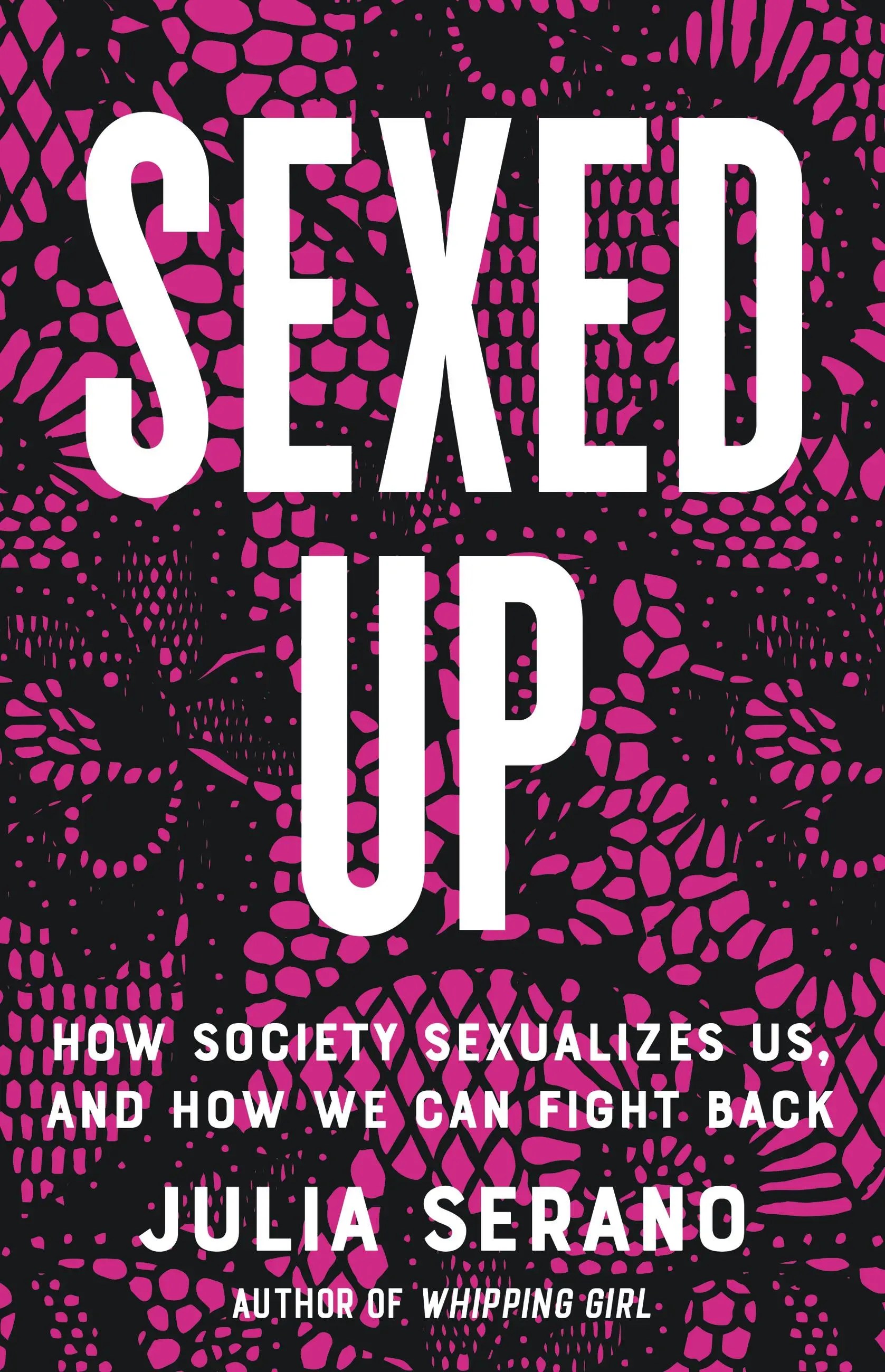
Or will they? Is it just me that sees sex first, and reacts to that? Do moments of ambiguity mean I actually behave and talk fundamentally differently around men and women, once their identity is resolved? I’ve often wondered. So, I was interested recently when I was listening to a New Books Network interview of Julia Serano, a transsexual woman, about her, well, new book, Sexed Up: How Society Sexualizes Us and How We Can Fight Back (2022), and learned that it was her experience that people reacted to their perception of her sex before anything else. Listen from 15:40 to see how, or read below:

“When I was about to begin my [male to female] transition, I really didn’t know what personally to expect, other than I figured there’d be this period of time where I’d be in, like, a gender limbo, when people wouldn’t be able to figure out if I was a boy or girl. And I had a couple of instances like that, but much to my surprise, almost always people would make the determination that I was male or female [for themselves]. It’s just that their determinations often differed from other people in the exact same room. So I describe a lot of anecdotes I had, including…having a conversation, for instance, where someone who knew me as male before I transitioned and wasn’t aware that I was transitioning, introduced me to…another man, who—he was very flirty with me. And I could tell, because of what I was going through at the time, that he was reading me as female, but, like, my friend didn’t pick up on that…because from my friend’s perspective, we all obviously knew that we were [just] three guys talking together. And there’d be a lot of situations like that where people would read me as one way or the other, and they’d really believe whatever their initial determination was, that’s what they believed and that’s how they viewed me, and it was really hard a lot of times to convince people in the other direction.”

“….The conclusion I came out of [those experiences], is that first and foremost, we don’t really see people—we see men and women. And that’s kind of how we’re socialized to see the world, and becomes really unconscious…and, you know, the fact that we automatically categorize people as male or female, obviously this has implications for trans people, and for non-binary people—it creates a lot of obstacles in our lives. But more generally, if we categorize people [like this], it really shapes a lot of the assumptions that we place on people, and it results in us filtering out other aspects of their person…like once I transitioned, there were aspects of my person that people couldn’t really see any more, that they used to react to.”

The title of the book, not to mention its description, is actually a little misleading—the book is no prudish, anti-sex tirade. Instead, it’s more her observations and thoughts about sexualization, objectifiction, sex and gender roles, socialization, pornography, and so on based on her experiences before and after transitioning. In other words, fascinating, and more than enough to decide I couldn’t wait for a paperback version to come out.

As for my own answers to the various questions I’ve raised? Actually I completely disagree with Serano that we’re socialized to see people’s sexes first. Women, in particular, who didn’t immediately register someone as a man, and weren’t more wary of the potential danger a man represented, were more likely to be a victim of violence, and less likely to pass on their genes. Also, with the exception of asexuals, our well-documented, subconscious reactions to other’s heights, signs of youth, indicators of wealth, and other attractiveness criteria demonstrate that most people can’t help but immediately consider others as potential mates or rivals, even if we don’t consciously frame them as such.

Or, very, very consciously once suddenly becoming single again, at a frequency that surprises even myself…
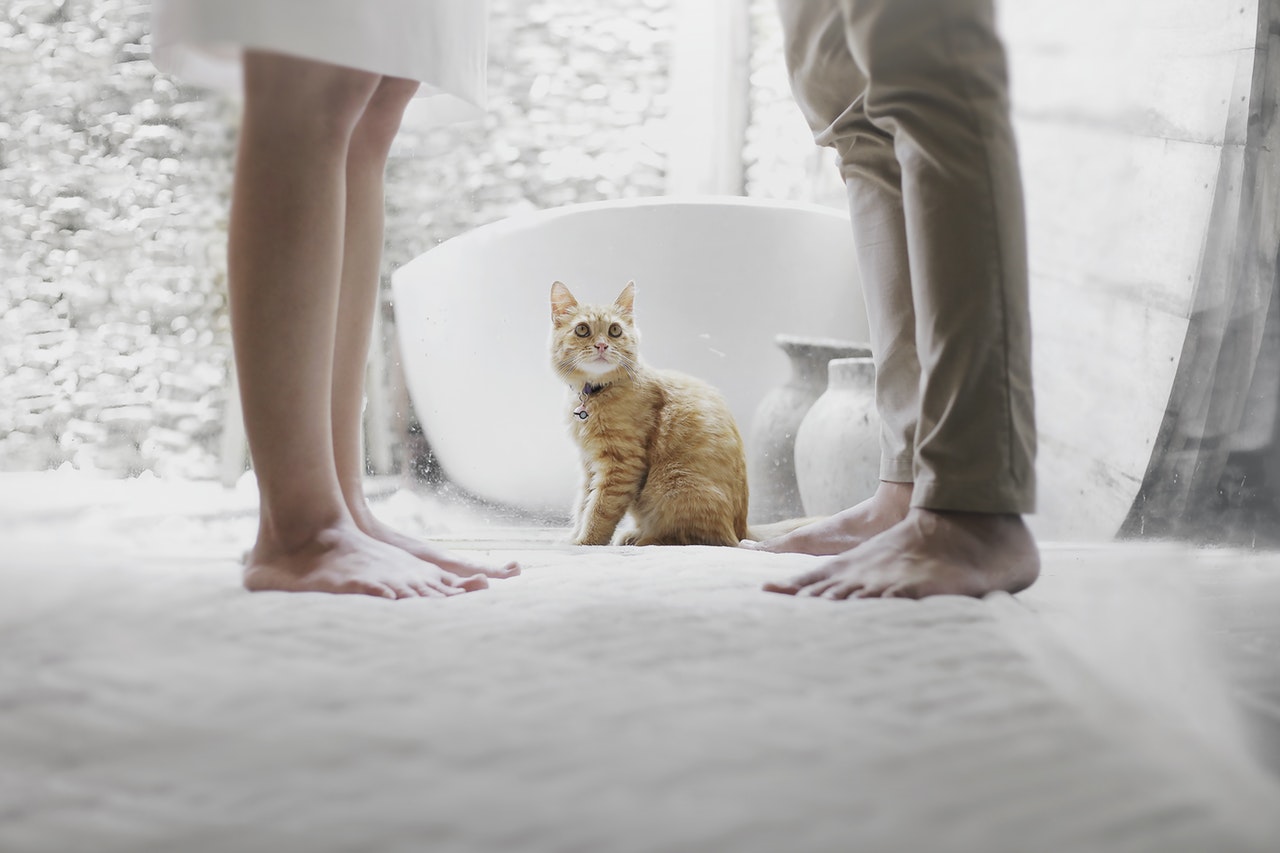
Photo by Tomas Robertson on Unsplash.

But I stress that to acknowledge these gut reactions, usually so short-lived to even notice them, doesn’t mean they aren’t easily overcome. Nor should they ever provide excuses for boorish behavior. For instance, I’m acutely aware that many men dominate women’s personal spaces, whether through being unaware or through deliberately taking advantage of their male privilege to do so. So, when I’m around women, I constantly try to check myself from manspreading, and so on. Also, befriending mostly women for most of my adult life, because of reasons, I’ve often questioned if I talked and behaved differently around them, and if there were subjects that I wouldn’t broach with them that I would with men, and vice-versa?

Recently starting to make more male friends again because I suddenly have a social life now, I’m leaning towards that I actually treat everyone pretty much the same. Which is to say I don’t actually have ‘friends’ so much as “like-minded folks [that] fill very specific needs,” at varying levels of closeness, with whom their sex is only one of many factors influencing how I behave around them and what we talk about. And which in my experience is much less important than nationality—at least amongst Westerners.

So, although I haven’t met any yet, I don’t think I would feel compelled to ‘assign’ any openly genderfluid or non-binary people at all. And, to those I am fortunate to meet, I can only apologize in advance for not lacking the restraint to want to immediately ask you all these questions too. Including the most important one:

Was it necessary for Jane Austen to avoid conversations between men in her novels? Well??

Recommended Related Books:

Related Posts:

If you reside in South Korea, you can donate via wire transfer: Turnbull James Edward (Kookmin Bank/국민은행, 563401-01-214324)
Local Rights Center Only Makes *Recommendations* to Companies that Discriminate; Highlights South Korea’s Urgent Need for Comprehensive Anti-Discrimination Law

Estimated reading time: 4 minutes. Source: MART PRODUCTION from Pexels

Korea, notoriously, lacks a national, all-embracing, intersectional anti-discrimination law. Ten attempts have been made to pass one since 2007, all failing largely due to the political power of conservative religious groups, opposed to the inclusion of protections for LGBTQ individuals; an 11th is currently in limbo due to the imminent presidential election. Adding insult to injury, racial, ethnic and sexual minorities also lack protection in the constitution, which only prohibits discrimination on the basis of sex, religion, and social status, and so haven’t been covered by the various laws prohibiting those specific forms of discrimination enacted since.

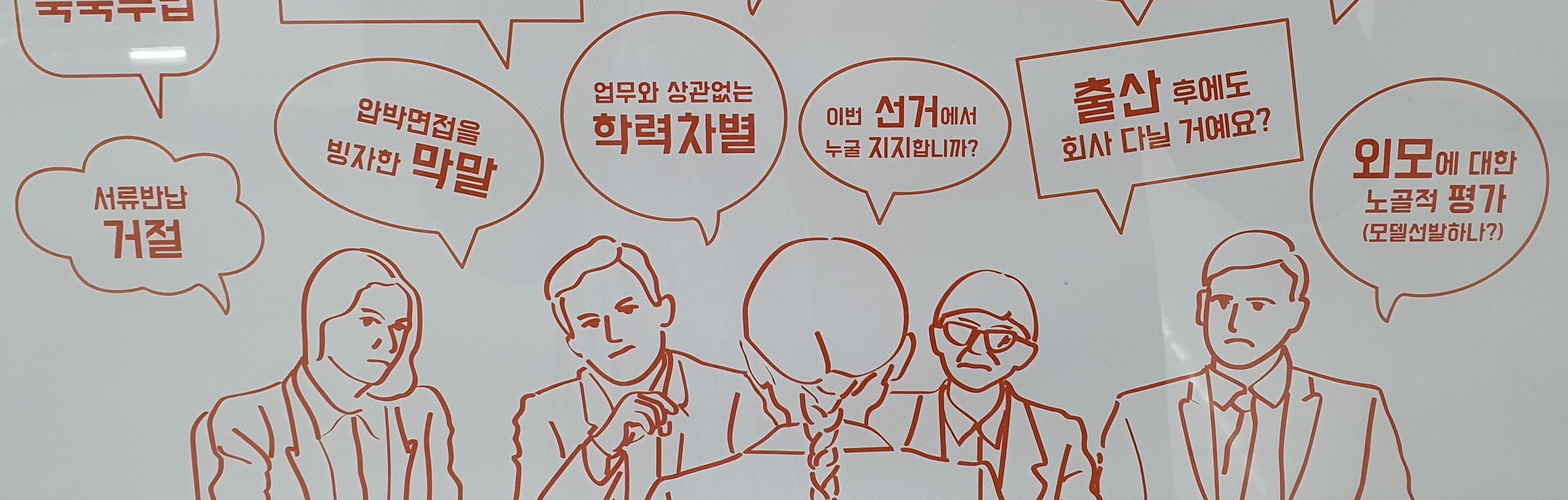
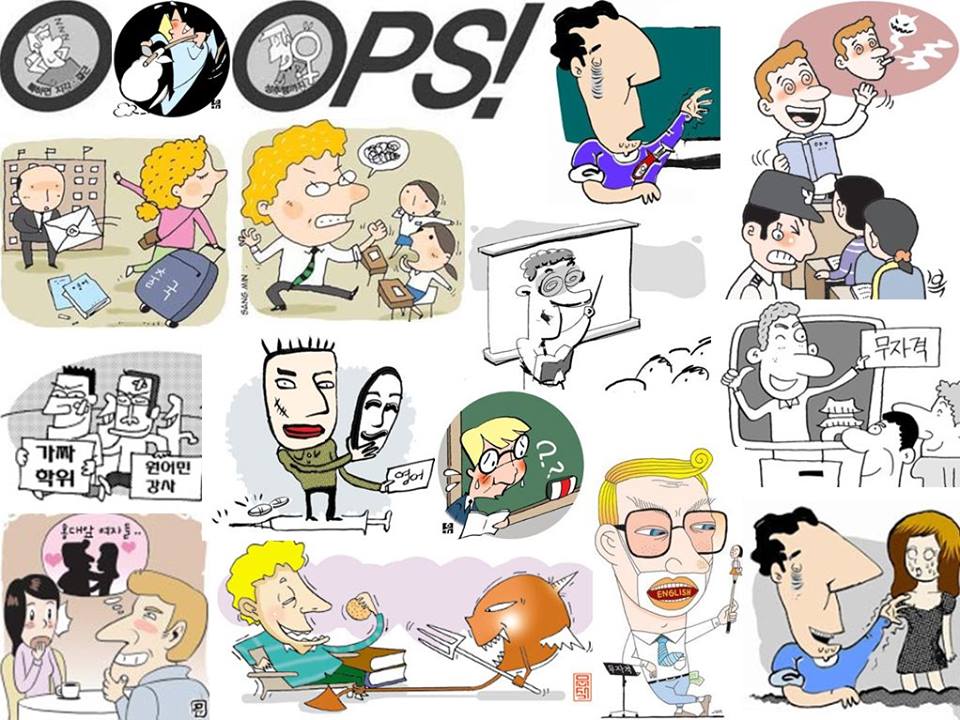
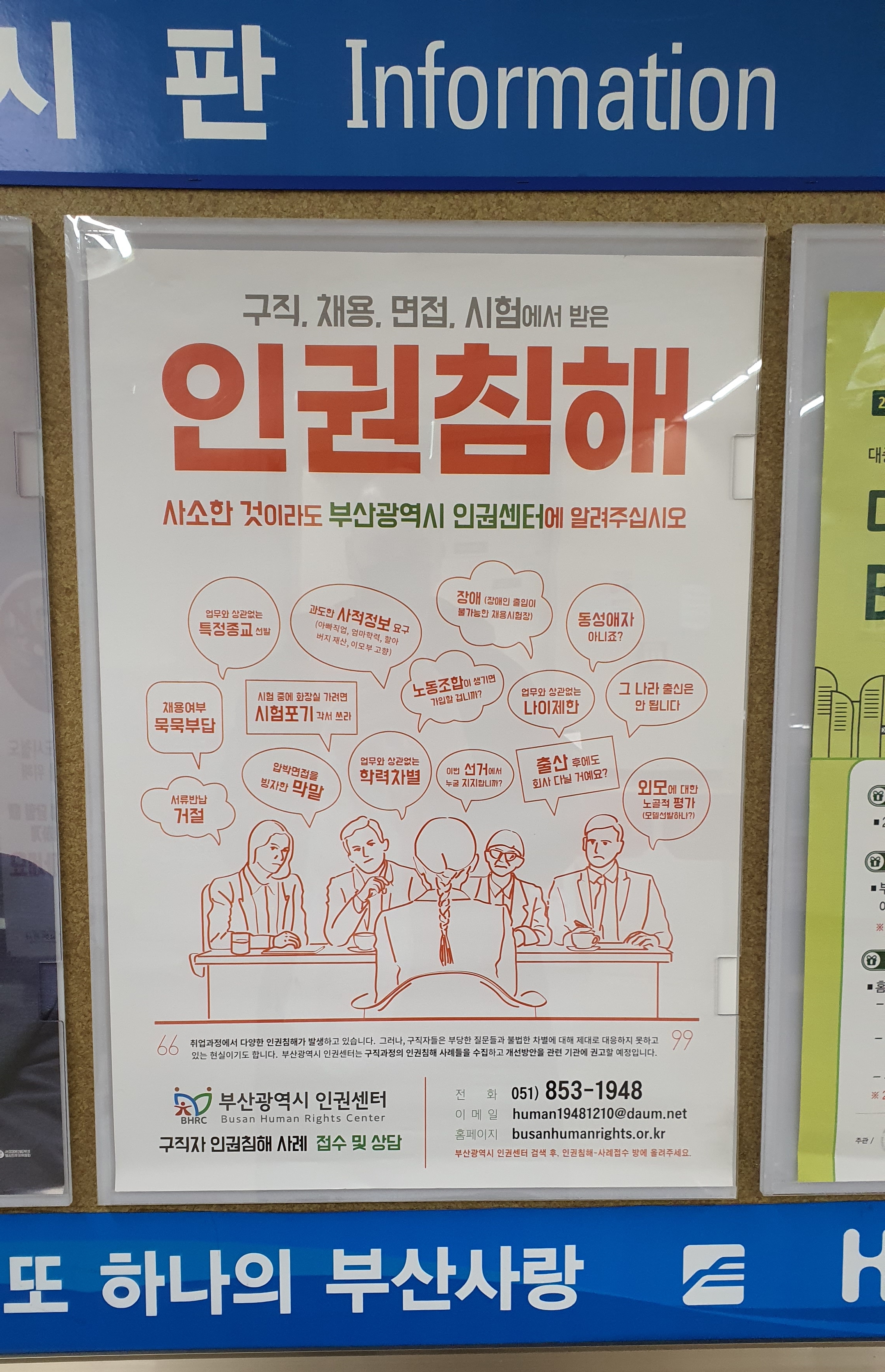
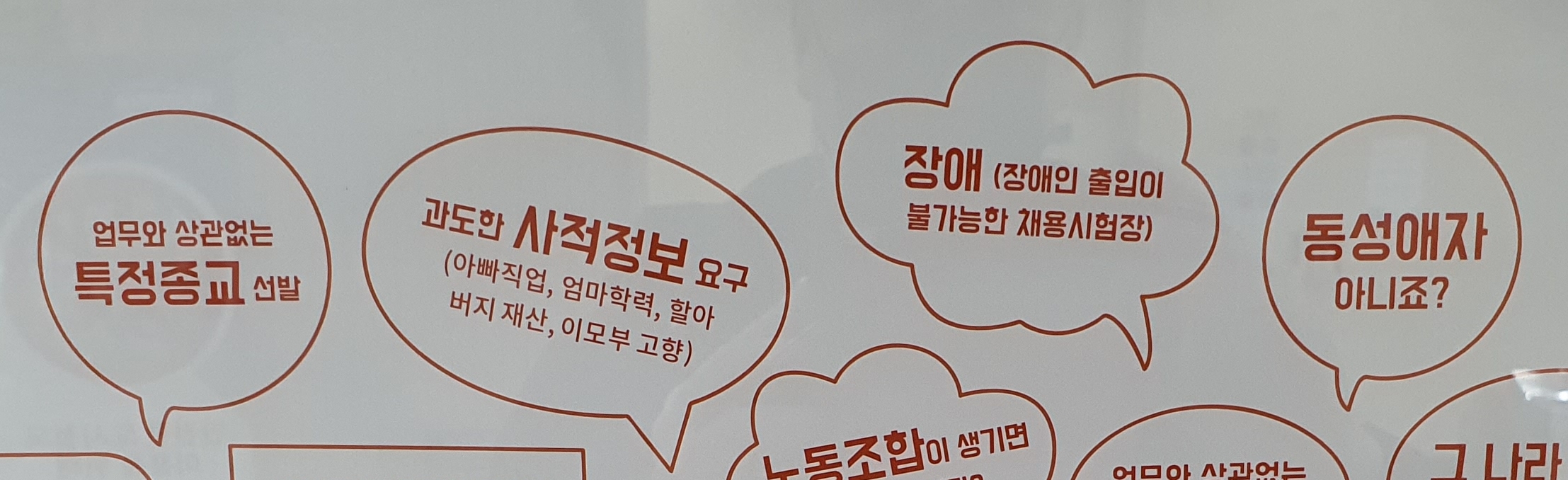
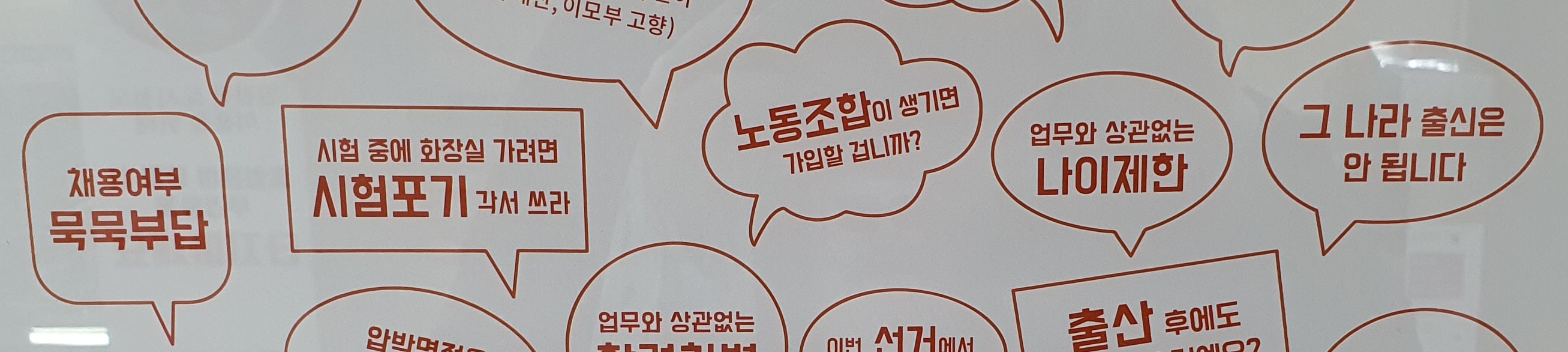
It’s in this context that I present my translation of the following subway poster for the Busan Human Rights Center for your interest, and their suggestions of typical cases of discrimination and human rights violations. Most, of course, would be depressingly familiar occurrences in any country. But others, much more commonplace in Korea then elsewhere. In particular, Korea’s pervasive hierarchy and elitism is evident in unnecessary questions about which university you went to, as well as absurd enquiries about your parents’ and grandparents’ backgrounds. So too, when blatant discrimination against women remains rampant despite protections, when photographs are required on resumes, and when society remains obsessed with (female) body weight and appearance, can Korean women especially continue to expect hiring decisions based on their appearance.

Most notably and depressingly of all however, the Busan Human Rights Center only makes recommendations to offending companies and institutions, not prosecuting them or assisting you in doing so. In fairness, I stress I only know of the Center through its website; prosecution may never have been its intended purpose, which other institutions and services may exist to fulfill, and doesn’t diminish its potential role in education, awareness, and/or the value of gentle pressure and public shaming it can bring to bear on offenders. Still, it also instantly brings to mind the well-known National Human Rights Commission of Korea, launched to much fanfare 10 years ago but rendered toothless since.

My translation, starting from the top:

구직, 채용, 면접, 시험에서 받은 If these ever happen to you while looking for a job, being recruited, during an interview, or while in an exam or test…

인권침해 Human Rights Violations

사소한 것이라도 부산광역시 인권센터에 알려주십시오 No matter how trivial or small it seems, please inform the Busan Human Rights Center

Row by row:

업무와 상관없는 특정종교 선발 Choosing candidates based on religion, with no relation to the job

과도한 사적정보 요구 (아빠직업, 엄마 직업, 할아버지 재산, 이모부 고향) Excessive demands for personal information (e.g., parents’ jobs, size of grandfather’s estate, uncle’s hometown)

장애 (장애인 출입이 불가능한 채용시험장) Disability (Recruitment Test Center has no disabled access)

동성애자 아니죠? You’re gay, aren’t you?

채용여부 묵묵부답 Left hanging about your recruitment status

시험 주에 화장실 가려면 시험포기 각서 쓰라 Having to sign an agreement that you fail a test if you need to leave for a bathroom break

노동조합이 생기면 가입할 겁니까? If there was a union, would you join it?

업무와 상관없는 나이제한 Age restrictions that have nothing to do with the job

나라 출신은 안 됩니다 You’re not from X country

서류반납 거절 Refusal to return documents

압박면접을 빙자한 막말 Unnecessary blunt remarks and rudeness for the sake of a pressure interview

업무와 상관없는 학력차별 Choosing candidates based on educational background, with no relation to the job

이번 선거에서 누굴 지지합니까? Who are you voting for in the election?

출산 후에도 회사 다닐 거예요? Are you going to continue working after giving birth?

외모에 대한 노골적 평가 (모델선발하나?) Blatantly evaluating you based on your appearance (Are you choosing a model?)

Finally:

취업과정에서 다양한 인권침해가 발생하고 있습니다. 그러나, 구직자들은 부당한 질문들과 불법한 차별에 대해 제대로 대응하자 못하고 있는 현실이기도 합니다. 부산광역시 인권센터는 구직과정의 인권침해 사례들을 수집하고 개선방안을 관련 기관에 권고할 예정입니다.

Various human rights violations [can] occur in the employment process. However, the reality is that job seekers are not always well equipped to properly respond to unfair questions and cases of illegal discrimination. The Busan Human Rights Center will collect such cases and recommend improvement measures to related organizations. (End.)

Have you or anyone you know experienced any of these yourself in Korea? Please let me know in the comments.

Update:

A Facebook friend asked for clarification about what exactly my issue with the Busan Human Rights Center was, given that even the National Human Rights Commission of Korea can only make recommendations, as is the case with most national human rights institutes worldwide. Here’s my response:
 
My issue is that if I was a victim of discrimination in New Zealand say, and encountered a poster for a similar institution, I would fully expect its stress to be on my potential to prosecute, that the center would be geared around my doing so (even if all it could really do was offer lawyers’ contact details), and that possibly even the center itself would be able to advocate for me if I was financially disadvantaged.
 
That said, I admit have no knowledge or experience of the legal system there, or in Korea. Possibly, my assumptions about rights centers in Western countries are hopelessly naive. But either way, whatever the country, if the best I could hope for from working with one was a sternly worded email to my former employer, then I’m not sure I would bother.
 
I do still mention in the post the valuable roles such centers can have, even if they don’t/can’t prosecute offenders themselves. But whether human rights centers in Korea can’t help with prosecuting because that was never their purpose, and/or whether it’s because many forms of discrimination aren’t even illegal, then either way the poster served to highlight the latter to me, and why I post it for others. I assume too, that if a comprehensive anti-discrimination *was* passed, then human rights centers would be given the remit and resources to take bolder measures against infractions when notified by the public.
 
(#95 in the Korean Sociological Images series)

Related Posts:

If you reside in South Korea, you can donate via wire transfer: Turnbull James Edward (Kookmin Bank/국민은행, 563401-01-214324)
February Book Club Meeting: “Love in the Big City” by Sang Young Park, Thursday 24th 7:00pm

Estimated reading time: 3 minutes.

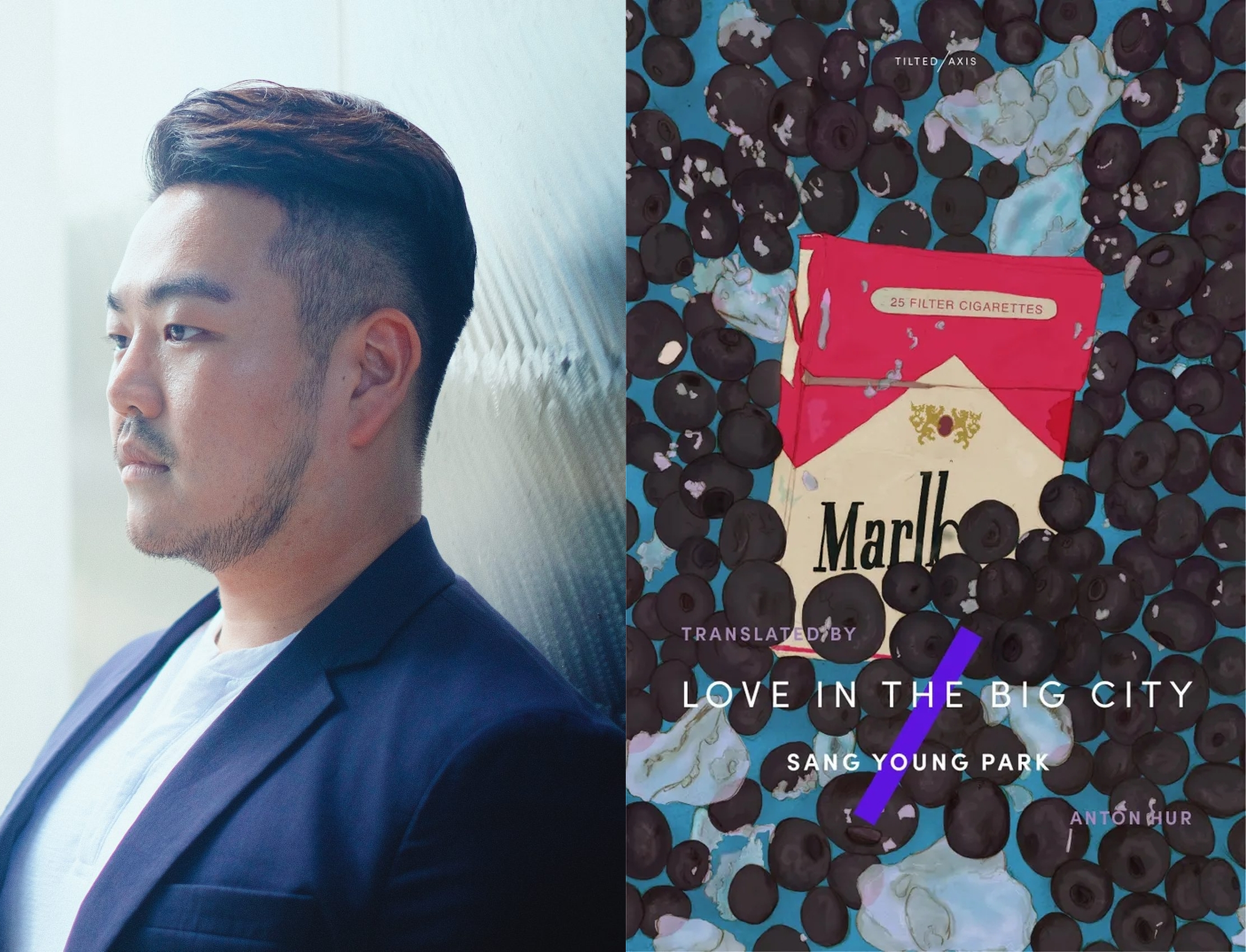
Hello everyone! For February’s book club meeting on Zoom, we’re reading Love in the Big City by Sang Young Park (2021), translated into English by Anton Hur and recently released in paperback. As described by publisher Grove Atlantic in the US (published by Tilted Axis Press in the UK):

Love in the Big City is the English-language debut of Sang Young Park, one of Korea’s most exciting young writers. A runaway bestseller, the novel hit the top five lists of all the major bookstores and went into nine printings. Both award-winning for its unique literary voice and perspective, and particularly resonant with young readers, it has been a phenomenon in Korea and is poised to capture a worldwide readership.

Love in the Big City is an energetic, joyful, and moving novel that depicts both the glittering nighttime world of Seoul and the bleary-eyed morning-after. Young is a cynical yet fun-loving Korean student who pinballs from home to class to the beds of recent Tinder matches. He and Jaehee, his female best friend and roommate, frequent nearby bars where they push away their anxieties about their love lives, families, and money with rounds of soju and ice-cold Marlboro Reds that they keep in their freezer. Yet over time, even Jaehee leaves Young to settle down, leaving him alone to care for his ailing mother and to find companionship in his relationships with a series of men, including one whose handsomeness is matched by his coldness, and another who might end up being the great love of his life.

A brilliantly written novel filled with powerful sensory descriptions and both humor and emotion, Love in the Big City is an exploration of millennial loneliness as well as the joys of queer life, that should appeal to readers of Sayaka Murata, Han Kang, and Cho Nam-Joo.

For glowing reviews. see Asymptote, Electric Literature, NPR, The New York Times, and you may also be interested in an interview of Park by Hur at Words without Borders, as well as Hurs’ reflections at Literary Hub on translating a bestselling queer Korean novel as a gay Korean man. Alternatively, if videos are more your thing, then check out an author talk at The Korea Society, a conversation between Park and Alexander Chee and an interview of Park by Hur at LTI Korea, and, of course, Books and Bao’s excellent quick review below:

For purchasing the book, try Aladin in Korea (hardback), or publishers Grove Atlantic (US) and Tilted Axis Press (UK).

If you’re interested in attending, please contact me via email, or leave a comment below (only I will be able to see your email address), and I will contact you a week or so before the event. To keep the meetings small and informal, and to help me ensure they’re as safe a space as possible, there’s a limit of 12 participants including myself, so please get in touch early to ensure your place (and give you time to order and read the book!).

See you on Zoom!

If you reside in South Korea, you can donate via wire transfer: Turnbull James Edward (Kookmin Bank/국민은행, 563401-01-214324)

Finding the Queer Female Gaze, and What it Says About Anda’s Touch (COMING MAY 4)

It’s a dirty job, publicly shaming yourself into finally writing about a subject that you’re passionate about and have been working on for years. But someone has to do it!

Estimated reading time: 2 minutes. Source: YouTube.

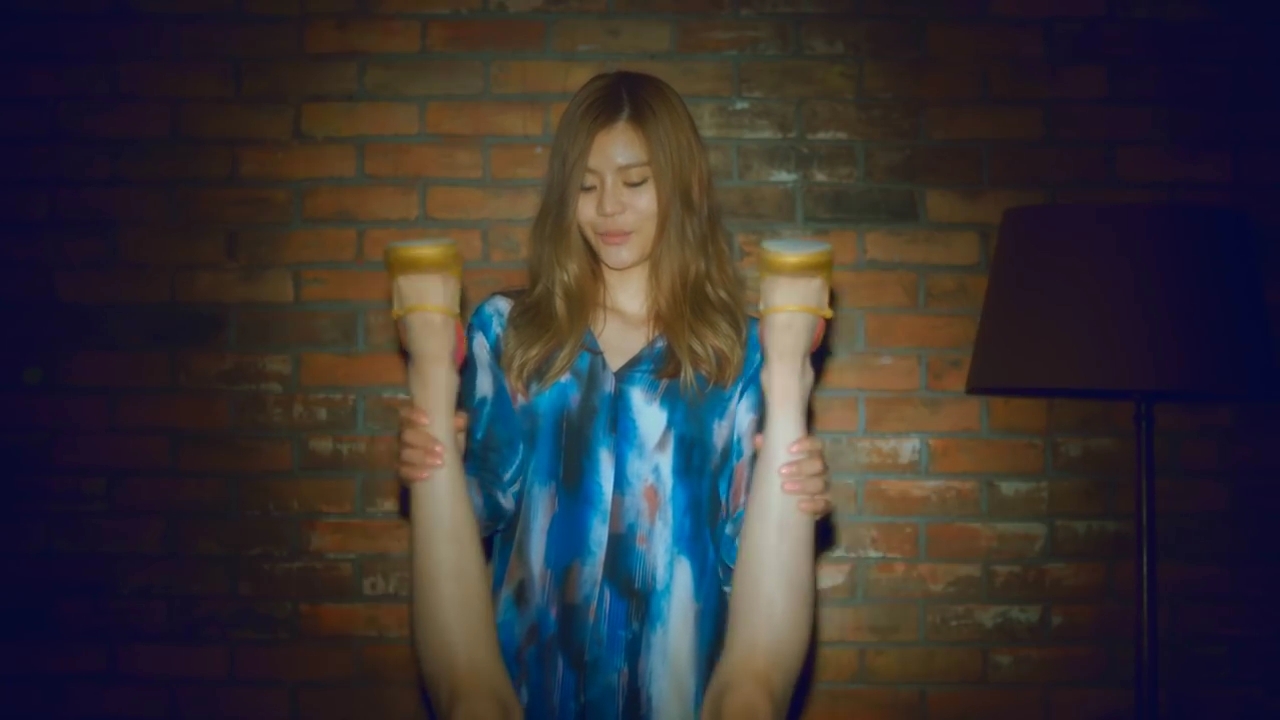
The MV for Touch by Anda, released in 2015, is as queer and objectifying as they come. Naturally, I fell in love at first sight, and just had to review it.

I’m not a woman though—neither a lesbian, a heterosexual, nor any other on the glorious spectrum. So, before I got started, I needed to hit the books. But no sweat, I reasoned. The concept of the male gaze has been around since 1975. It’s well-known enough that no-one who’s already woke has to explain it to another. Surely over forty years later, I thought, there would be just as extensive a literature on what women want? With helpful lists of clear criteria to guide even the most hapless of cishet male reviewers?

You can already guess the answers. But, absorbing what was out there proved addictive. And, as some of you may recall, I did eventually feel that I had enough of a handle on it to write a review.

Only to delete it in consternation as I realized the queer female gaze was a much broader, much more contentious subject than I’d first imagined. In fact, one requiring an epic series to do it justice. Humbled, I resolved to keep researching and gathering all the information that would be necessary, not putting pen to paper again until I was absolutely certain I’d covered all my bases. I duly created a second “Anda + Queer Female Gaze” folder on my Firefox toolbar, and set to work.

That was over two years ago.

That folder now has three hundred bookmarks in it, with thirty more bookmarks added today in the wake of the recent release of Portrait of a Lady on Fire.

All of a sudden, adding to that morass finally made me realize what a fool I’ve been. All this time, the effortless collecting and reading of articles has been an albatross around my neck, providing an easy out from the harder work of actually writing.

And, if I wasn’t going to start just as soon as I had that epiphany, then when? And if making such a public commitment wasn’t motivation enough to actually see it through too, then what would be?

Source: YouTube.

I admit, a strange post. But if it gets the job done. I also felt it would be more helpful to explain than just ghosting you until the 27th, chosen for when I’ll hopefully no longer be teaching from home.

Thank you very much for indulging me then, and I’ll be back here soon. And please stay safe!

(p.s. If you can’t wait, you can still catch me on Twitter or Facebook!)

Update 1, Monday, April 27: All completed, but it needs some ruthless editing after a good night’s sleep, so I’ve postponed publication until Wednesday. Sorry for the slight delay!

Update 2, Wednesday, April 29: Arrrgh! Sorry *again*, but real life has intervened in the form of sudden urgent editing projects from my boss, and my post still needs a *lot* more work than I thought it did on Monday.

TBH, I think it’s going to be controversial—I really want to challenge people’s assumptions about the male & female gazes—so I really want to make sure I get it right. Let me just call it for *next* Mon then, with my promise to do my best to make it worth the wait. Thanks!

If you reside in South Korea, you can donate via wire transfer: Turnbull James Edward (Kookmin Bank/국민은행, 563401-01-214324)
한국인이세요? 한국인이랑 데이트 해봤어요? 이 연구가를 도와주세요!

Estimated reading time: 2 minutes. Image source: Hutomo Abrianto @Pexels (CC0).

도와주세요! (2탄)

Grand Narrative 독자분들께,

안녕하세요! 제 이름은 Edward Glayzer입니다. 저는 미시간주립대학교 인류학과의 박사과정생이고, Grand Narrative의 오래된 독자이기도 합니다. James Turnbull씨는 제가 서울에 와서 한국의 성불평등에 대한 학위논문 연구를 시작할 때부터 많은 도움을 주셨고, 또한 저번과 같이 이번에도 연구대상자 모집을 공고할 수 있게 해주셨습니다. James Turnbull씨께, 그리고 제 첫 설문에 참여해주셨던 모든 분들께 진심으로 감사하다는 말씀 전하고 싶습니다.

제 연구는 한국 사회의 성불평등에 관한 광범위한 주제들을 더 잘 이해하기 위한 것이며, 이를 위해 한국인들의 데이트와 결혼 의식에서 일어나는 물질적 교환을 살펴봅니다. 제 연구는 또한 남성과 여성의 소득 불평등이 어떻게 상품 소비를 통한 친밀함의 표현에 영향을 미치는지를 다룹니다. 해당 연구는 전에 공고했던 연구의 후속 연구이며, 그 전 연구에서는 다루지 않았던 면들도 다루고 있지만 여전히 연구의 중심은 위와 같습니다. 이 연구의 유일한 참여조건은 “다른 한국인과 데이트를 해본 대한민국 국적의 성인”입니다. 이 조건만 충족하신다면 성적 정체성이나 성적 지향성 등 다른 특징과 관계 없이 모두 환영합니다.

독자 여러분의 의향이나 내주실 수 있는 시간에 따라 두 가지 참여방법이 있습니다. 이 중 하나 혹은 둘 다 자원해주신다면 매우 감사할 것입니다.

하나는 약 15분정도가 걸리는 간단한 온라인 설문을 해주시는 것입니다. 서베이의 링크는 다음과 같으며, 첫 설문을 참여하셨던 분이나 안 하셨던 분 모두 하실 수 있습니다: https://msu.co1.qualtrics.com/jfe/form/SV_bC46GYBqqZK8g3r

두 번째 방법은 전자 메일 또는 카카오를 통해 인터뷰를 요청하는 것입니다. 인터뷰는 한국어 또는 영어로 진행할 수 있으며 약 1 시간이 소요됩니다. 나는 당신의 시간 동안 음료와 간식을 제공 할 것이다!

eglayzer@gmail.com
Kakao ID: eglayzer

Are you Korean? Have you been dating a Korean? Please help this researcher! (2nd survey)

Update: Please note that Eddie is only seeking native Koreans (and gyopos) fluent in Korean for his research. This English translation is just for your interest, and the hope that you’ll pass on his request to your Korean friends and partners. Thanks!

Hello Grand Narrative readers!

My name is Edward Glayzer. I am a Ph.D. student in the Department of Anthropology at Michigan State University and an long time reader of the Grand Narrative. Since moving to Seoul to begin my dissertation research on Korean gender inequality, James Turnbull has been extremely helpful and kind enough to post this call for research subjects. I would like to thank James Turnbull and all those who participated in my first study.

My research aims to better understand the wide range of topics related to gender inequality in Korean society. For this purpose, I look at material exchanges that take place in Korean dating and marriage ceremonies. My research also deals with how income inequality in men and women affects the expression of intimacy through commodity consumption. This study is a follow-up study of the research that was announced before, and it covers the aspects that were not covered in the previous research. The only requirement for participation in this study is to be an adult of Korean nationality and have spent time dating other Koreans. If you meet these conditions, you are welcome, regardless of other characteristics, such as gender or sexual orientation.

There are two ways of participating, depending on your intentions and the amount of time you can give. I would be very grateful if you volunteered for one or both of these.

One is a simple online questionnaire that takes about 15 minutes. The survey link is as follows, and you may participate even if you also participated in the first questionnaire:
https://msu.co1.qualtrics.com/jfe/form/SV_bC46GYBqqZK8g3r

The second way to participate is to contact my via email or Kakao for an interview. Interviews can be done in either Korean or English and take about an hour. I will provide drinks and snacks for your time!

eglayzer@gmail.com
Kakao ID: eglayzer

Edward Glayzer M.A.
Doctoral Candidate
Michigan State University
Department of Anthropology

If you reside in South Korea, you can donate via wire transfer: Turnbull James Edward (Kookmin Bank/국민은행, 563401-01-214324)
Busan Drag Prom This Saturday!

2015 Busan Drag PromSee the Facebook event page or community page for the details (English and Korean). All proceeds to go to ISHAP, an amazing human rights group who provide anonymous and free HIV, AIDS and STI testing; and Queer in PNU, Busan’s first university founded LGBT human rights group, who strive to make the city a safer and brighter place for at-risk gay youth.

I’ll be there again, and mingling. So please make sure to say hi! ;)

벅찬년 and Slut-Bitches: Feminization as a Slur in the Korean Gay Community

s(Source: Zeeto)

Like a lot of people, I don’t feel particularly comfortable being labelled. Once a label is stuck on you, separating it from your identity is like trying to scrape a price sticker from the bottom of a shoe — it takes ages and you can never seem to get rid of the damn thing entirely.

‘Feminist’ is one label I happen to like, partly because I chose to bear it…

(Gemma Varnom, The F Word)

Oh, but I do so love the label-makers. I love their audacity in insinuating that vaginas should be called ‘Y-lines’. I revel in their mysterious ability to see a women’s profile in that of a phone’s. I’m astounded at how they keep coming up with labels centered around critiquing women’s spending habits, but never around men’s. I relish discovering who has the chutzpah to homogenize the hobbies, spending habits, work ethics, and hopes and dreams of millions of women through their labeling of them, despite no more basis than the women’s shared academic and career success, ages, and/or income levels. I’m intrigued by how they come to possess the status and social capital to be taken seriously by marketers and the media.

I love the The Kimchi Queen too, for its excellent reporting on Korean LGBT issues, which is why I don’t cover them as much as I’d like to here sorry (I have to prioritize!). When The Kimchi Queen recently discussed the ‘벅찬년/bokchannyeon‘ label used in the gay community though, and linked to “an article that looks at the appropriateness of gays to use this word among themselves from the perspective of a female”, I took advantage of the opportunity to combine both interests.

But first, its definition. In itself, ‘벅차다/bokchada’ just means ‘too much’, as in ‘beyond one’s capacity’ and/or ‘overflowing’. As part of the slang-word discussed here though, The Kimichi Queen explains that:

According to the Korean gay dictionary, 벅차다 is used to describe gays who have many personal connections in the gay community. The first time I heard it, it was combined with 년 (bitch) to form 벅찬년…

[벅차다]…isn’t used really as a compliment. Rather, as the boundary between friendship and love can be ambiguous there are often worries about someone cheating on their lover. A 벅찬년 would often break up with a boyfriend soon after they started dating.

And now my translation of the article, from 너 나 우리 ‘랑’ — 동성애자인권연대 Web_Zine:

‘벅찬 년’, ‘보갈 년’에 대한 어느 레즈비언의 소고 / A Lesbian’s Thoughts on Using ‘bokchanyeon‘ and ‘Slut-bitch’

조나단(동성애자인권연대 웹진기획팀) / Jonathan [Yes, I’m a little confused by the male name too — James] (Gay Human Rights Association Webzine Team)

1 April 2014

모든 게이가 그런 것은 아니지만, 내가 만난 많은 게이들은 스스로를 여성화시켜 지칭한다. 트랜스가 아닌 시스젠더 게이임에도 섹스 포지션에 관계없이 자신뿐 아니라 친밀한 상대방을 ‘벅찬 년’, ‘웃기는 년’, ‘보갈 년’이라고 부른다. 그럴 때마다 시스젠더 레즈비언으로서 많은 생각이 들었다. 그 말을 들었을 때, 어떤 태도를 취해야 하는지, 그 말들은 언어 사용에 있어서 정치적으로 올바르지 않은 경우에 해당하는지 구분이 되지 않았다. 어떻게 바라봐야 할 지 정리가 되지 않은 상태에서 불쾌하거나 당혹스러운 경우도 있었고 함께 깔깔거리며 웃을 때도 있었다. 그러면서도 답답했던 것 같다. 그래서 여성의 날을 맞아 준비한 특집호에서 게이들의 대화에서 흔히 들을 수 있는 여성화자적 언어 사용에 대해 생각을 정리해 보고자 한다. 내가 들어본 적 있는 언어 사용에 한해서 말이다.

Not all gays are like this, but many I have met describe themselves as feminized. Despite being cisgender and not transgender, and despite being bottoms or tops, they call their partners ‘bokchannyeon‘, funny-bitch’, and ‘slut-bitch’. As a cisgender lesbian, I got to thinking a lot whenever I heard these terms. I wondered if it was really okay to use them or not, and what my attitude towards them should be. Until I’d decided, I either felt uncomfortable and upset, or I just laughed them off. But still, I felt a little frustrated and uneasy. So, in celebration of Women’s Day, for this special feature I’m going to talk about this common, [derogatory] use of feminized terms in conversations between gays.

대부분의 경우, 게이들의 여성화자적 언어사용은 자기 희화화의 성격을 띤다. 자기 희화화란 자신의 외모나 성격, 또는 자신이 겪은 사건이 의도적으로 우스꽝스럽게 묘사되거나 풍자되도록 만드는 것이다. 풍자는 다른 것에 빗대어 비웃으면서 폭로하고 공격하는 것인데, 왜 게이들은 자신들을 여성에 빗대어 표현하게 된 것일까?

In most cases, gays’ use of feminized words is to make fun of themselves. It involves making fun of one’s body, one’s personality, and/or an incident one went through, and exaggerating it to make it seem more ridiculous and funny. This is satire: mocking or attacking something by comparing it with something else. But why do gays choose to compare themselves with [heterosexual] women?

흔히 듣는 가설은 사회적으로 남성보다 낮은 지위에 있는 여성과 게이 자신의 지위를 동질화 시켜 생각하기 때문이라는 것이다. 그렇다면 애교처럼 들리는 여러 종류의 ‘~년’은 물론이거니와 성매매 여성을 낮게 보고 이르는 말인 ‘갈보’에서 변화된 ‘보갈년’의 사용은 그렇게 ‘퀴어(Queer)’가 동성애자 자신을 지칭하게 된 것 같은 역사를 품고 있을 수도 있다. 퀴어(Queer)는 ‘이상한, 괴상한’을 의미하는 단어로, 이성애자들이 동성애자를 얕잡아보며 부르는 말이었다. 그러나 ‘정상적 기준’에 의문을 제기하며 우리 자신을 이상한 사람, 퀴어라고 적극적으로 수용한 것이다. 게이들의 이야기를 듣다 보면, 자신이 ‘여자’같다며 놀림을 받았다는 말을 자주 들을 수 있다. 그런 배경을 놓고 보면, 어쩌면 비슷한 맥락의 역사적 배경을 가지고 있다고 볼 수도 있겠다.

An often-heard explanation is that, in a patriarchal, heteronormative society, gays think of themselves as having the same inferior rank or status as heterosexual women. In this sense, not just several kinds of ‘bitch’ terms, albeit which can be cute sometimes (like when referring to the use of aegyo), but also the use of ‘slut-bitch’ (which came from ‘galbo‘, which means female prostitute) are used derogatively to describe something that deviates from the male, heterosexual ideal, just like ‘queer’, which means ‘strange’ and ‘weird’, has been historically used to refer to gays and lesbians. [Yet it is also true that] gays and lesbians have questioned that ideal by embracing the word. Also, many gays can recount being teased by being called women. Considering that background, such [positive, challenging] attitudes might also play a role in their use of bokchannyeon.

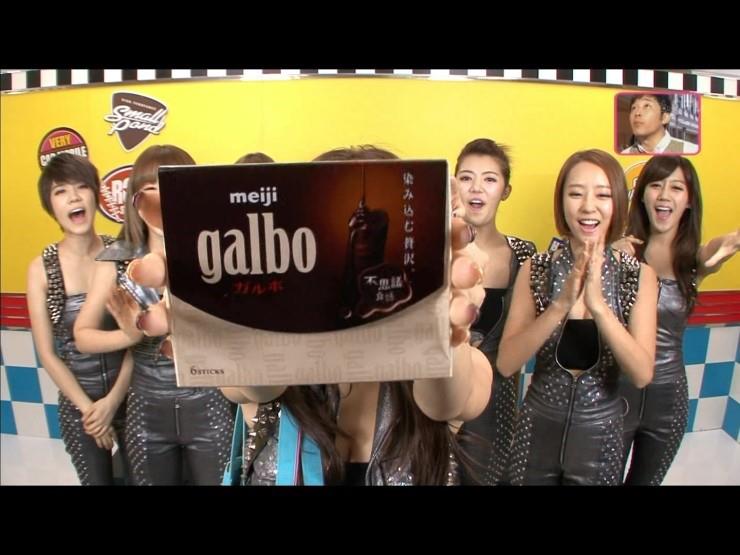
Rainbow japan galbo (Rainbow endorses Meiji Seika’s Galbo’ chocolate in Japan. Source: Hstereo)

그럼에도 불구하고 왜, 순간적으로 불쾌감이 들었을까? 두 가지 이유를 생각해보았다. 첫째는 남성이 발화했기 때문이다. 게이라도 남성으로서 교육받고 자연스럽게 남성으로서의 지위를 누려온 사람들이 여성비하적인 언어를 발화한 것이다. 둘째로 우스꽝스럽게 여겨지는 지위에 나 자신이 놓이고 싶지 않았기 때문이다. 희화화되어 유머를 위해 빗대어지는 대상이 내 정체성에 해당되는 것이 불쾌했기 때문이다. 비장애인 이성애자 사이에서 서로를 농담처럼 ‘호모’나 ‘애자’라고 부른다고 할 때, 동성애자들과 장애인이 불쾌감을 느끼듯이 말이다. 하지만, 불쾌감으로만 끝나지 않고 답답했던 것은 실제로 그들이 여성만큼이나 차별받고 있음을 알기 때문이다. 그리고 커뮤니티 문화에 정치적 잣대를 들이대는 것이 소위 먹물이 들어, 옳고 그름의 문제로만 현상을 바라보려고 하기 때문인가 싶어 망설여졌기 때문이다.

Despite that, why do I immediately feel bad whenever I hear the word? For two reasons I guess. First, because it originated with men. Although they are gay, they still grew up as men and enjoyed male privilege, and it’s in this context that they use such a misogynistic term. Second, because it puts me in an uncomfortable position, as the humor derives from disparaging a part of my identity [i.e., disparaging women]. Between non-disabled heterosexuals, when they call each other ‘homo’ or ‘aeja’ [a degrogatory term for disabled people], homosexuals and disabled people feel uncomfortable; I feel the same way about bokchannyeon and so on.

I don’t feel frustrated just because of these words; I also get frustrated because I know that gays get discriminated against just as much as women. But from what I know about the gay community in Korea, if I raise this with gay men I worry that they would misinterpret me, thinking that I see using the words as just a black and white issue.

글이 마무리로 향하고 있는데도, 역시 어떻게 결론을 내어야 할 지 조심스럽다. 되도록 사용을 자제하는 것을 부탁하는 것으로 마무리 지어야 할 지, 그럴 자격이 있는 것인지도 잘 모르겠다. 웅에게 같은 기획으로 글을 의뢰했는데, 웅의 결론이 궁금할 뿐이다. 화두는 던져놓고 무책임하게 마무리하는 것 같지만, 평소 같은 생각을 한 적이 있는 분이라면 댓글로 의견을 들어보고 싶다.

Now that I’m nearly finished, I’m hesitant about making a conclusion. I’m not sure if I have to ask gay men to stop using that term, and/or if I’m even in a position to ask them. So, I’ve asked Woong to also write about this, and I wonder what his conclusion will be. I’m going to finish here then, by just having raised the topic. Please let me know what you think in the comments (end).

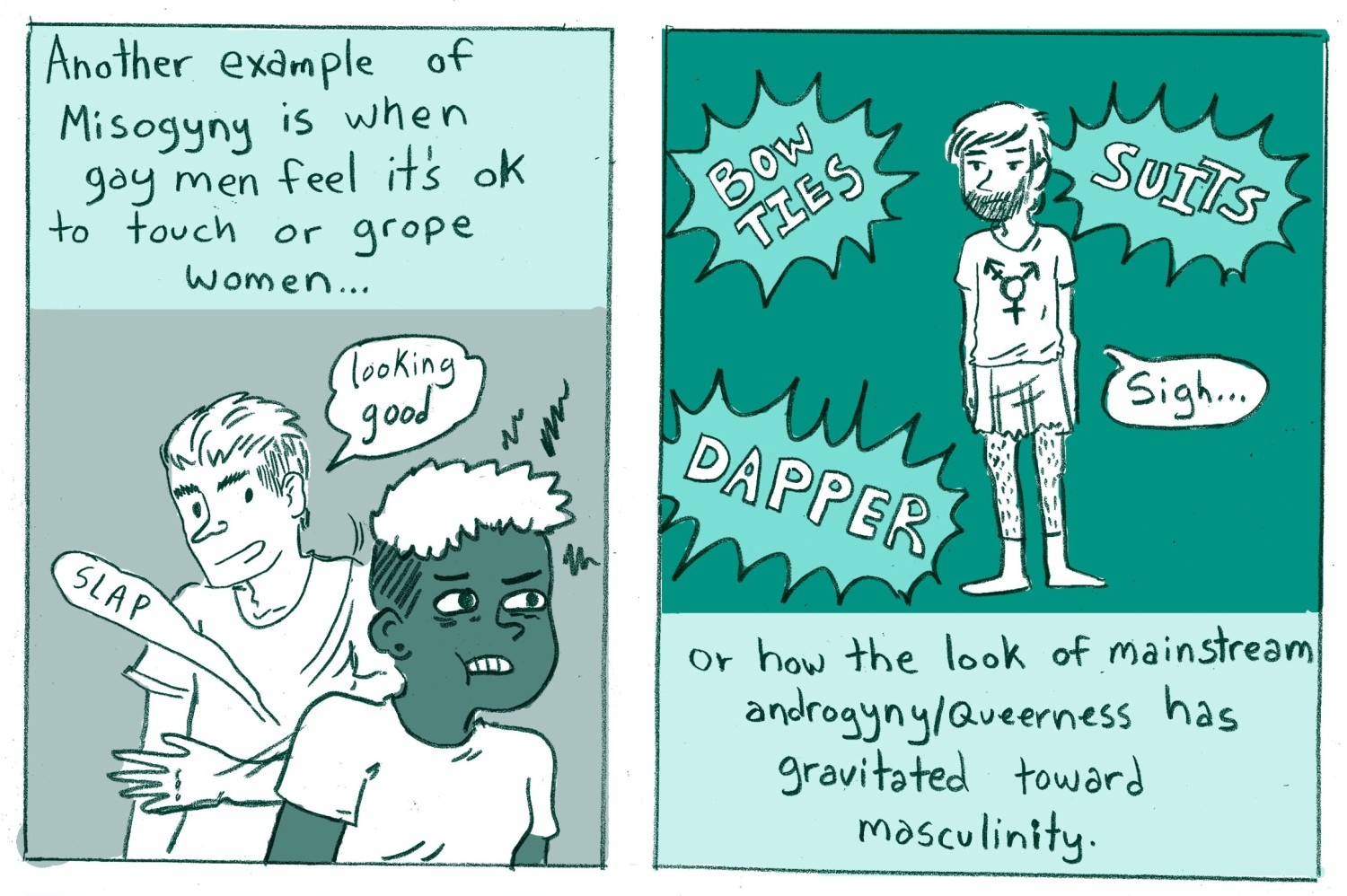
How Misogyny Shows Up in the Queer Community(Source: Everyday Feminism)

And she did indeed get a few brief comments; if people would like me to translate those, and/or Woong’s (much longer) article, please let me know. Either way, apologies as always for any mistakes in the translations, and thanks in advance for any corrections. Also, please note that, beyond the article I’ve translated, I have personal no knowledge of the terms described and how often and/or why they’re used in the Korean gay community (or not), so I’d very much appreciate being educated about the subject. Are things like in the “How Misogyny Shows Up in the Queer Community” cartoon that the above panel is from, posted just last week on Everyday Feminism? Or would that be an exaggeration? Thanks!

(Update) A friend on Facebook responded:

“I’ve also noted quite a bit of misogyny among gay male and mtf transgender message boards and anonymous forums made for Korean-speakers. I thought that might be what this blog post would be about, but this is more about language use. (That overt hatred towards straight cis-gender women was kind of fascinating, if depressing to observe >_< ) It’s been a while since I looked at those websites, but as best as I can recall such sentiments consisted of things like:

  • jealousy towards straight women for being able to express romantic interest towards or openly flirt with desirable males
  • annoyance at straight women for demanding attentions and considerations they (straight women) would expect from straight men
  • a great deal of annoyance towards a certain sector of straight women for romanticizing/straight-washing/sexualizing gay relationships for their own purposes
  • annoyance at straight women for conceptualizing gay men as accessories (blame sex and the city :P) and ignoring those who aren’t fabulous or good looking
  • annoyance and even anger at cis-women for having what they (mtf transgenders) do not

Of course, this is all filtered through my interpretations of the motivating forces behind the disparagement of and anger towards women expressed in thise forums.”

She admits though, that:

“I have some doubts as to how relevant my observations are…Like, at best they’re indications that gay men are not immune to the social cues/examples they are presented with in male-spaces of society at large. Cuz that’s what a lot of biased language really is, isn’t it? You are provided with some pre-made, mass-manufactured molds, and you get used to throwing everything that fits into that mold and in turn strenghthening your belief in it. Ish?”

Announcements: A Rare Film About LGBT Asian-Americans, Bras for a Cause, and a Survey on Street Harassment in Korea

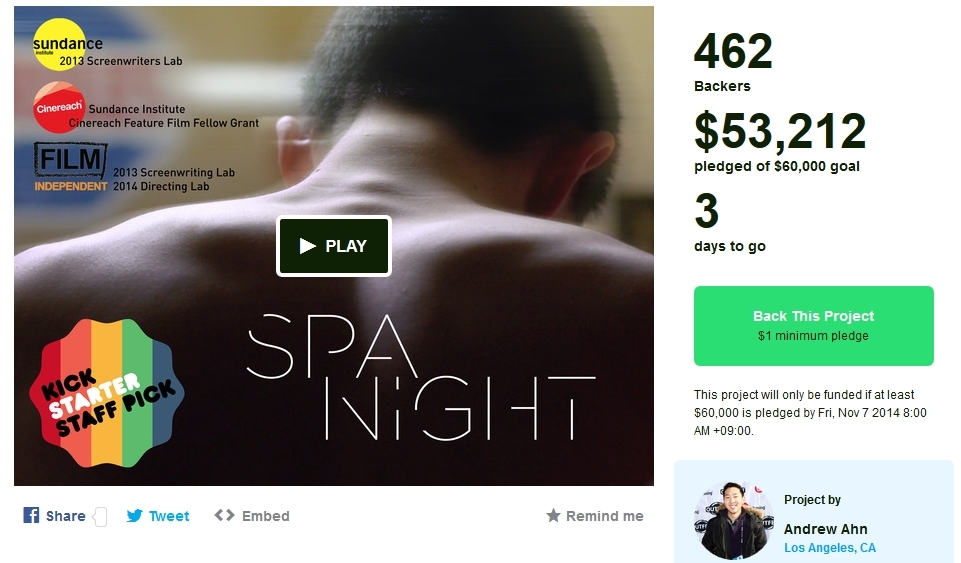
Spa Night(Source: Kickstarter)

Some worthy causes which would really benefit from just a little of your time or money this week:

Spa Night – A Korean-American Film about Coming Out

From the Kickstarter Page (my emphasis):

WHY THIS FILM IS IMPORTANT

I have always associated Korean spas with my childhood, my family, and my Korean identity. As a kid, I would go to the spa with my dad. It was a cultural ritual; we would clean ourselves.

A few years ago, I discovered that Korean spas in Los Angeles are used as a space for underground gay sex. As a gay Korean-American man, this discovery felt strange, thrilling, and very wrong! It’s very easy for me to separate my identities. I can either be Korean or gay. But here is this place where I have to deal with my identities at the same time. I’m forced to be whole.

I knew immediately that a Korean spa would be the perfect setting for a film about a gay Korean-American identity. There aren’t enough films out there about Asian-Americans, let alone LGBTQ Asian-Americans. It’s important to me that I share this story so that people understand that we exist and that our community holds a diversity of people, voices, and experiences.

If this sounds like something you’d like to support, please do so soon: as I post this on Tuesday morning Korean time, unfortunately it’s still $7000 short of its $60,000 goal, with only 3 days left to go. See Kickstarter for further information, or the Facebook page.

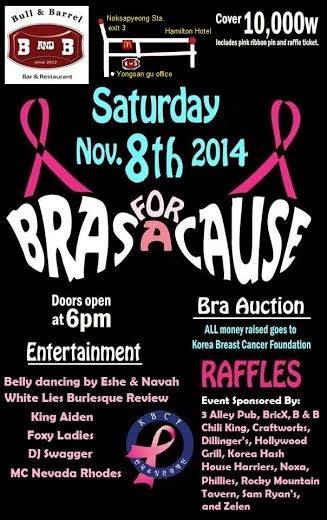
Bras for a Cause 2014Bras For a Cause

From the Facebook Event Page:

Bras for a Cause (Seoul) is a fun event in November that raises money for the Korea Breast Cancer Foundation while promoting breast cancer awareness. According to the KBCF, breast cancer is the leading cause of cancer affecting Korean women.

Please contact the Korea Breast Cancer Foundation if you are aware of a breast cancer sufferer in your community who has been unable to receive surgery or treatment due to financial hardships. They offer funding for breast cancer surgery anticancer and radiation treatment after a patient undergoes evaluation. The Korea Breast Cancer Foundation is dedicated to helping encourage patients with breast cancer to continue treatment despite financial difficulties and to helping them escape the pain of breast cancer.

Survey on Street Harassment in Korea

Via Hollaback! Korea:

Have you been to Korea in the last year? Please respond to this important global survey on street (sexual, gendered, racial, homophobic) harassment. It takes about 10 minutes but contributes in a very important way to spreading awareness of this issue. Please spread widely.

Please participate in our global study of street harassment by following [this link]. We appreciate your participation!

See the links for more information, or here for my February story about Hollaback! Korea itself.

Hollaback Korea(Source: Facebook Group Page)

As always, if any readers also have any event, worthy cause, video, or just about anything else they’d like to promote, please just shoot me an email (but please add as many pictures and details as possible!) and I’ll add it in a later post.

Announcements

From Explorers and Missionaries to Vagabonds and Potential Criminals
(Source: Facebook Event Page)

Hello everyone. Just to quickly let you know about an upcoming presentation not to be missed, some worthy causes, and some Youtubers that deserve more promoting.

First up, next Saturday (the 25th), Matt VanVolkenburg will be giving a presentation in Seoul for the 10 Magazine Book Club titled “From Explorers and Missionaries to Vagabonds and Potential Criminals: Two Hundred Years of Teaching English in Korea.”

If you’re unfamiliar with the name, let me add that he’s the author of the Gusts of Popular Feeling blog…which I’m sure will have you scrambling to check out the Facebook Event Page before you even finish this sentence!

Next, via The Kimchi Queen:

99 Film‘s new queer movie “Butterfly” is being crowdfounded on GoodFunding aiming for 2 million won in donations (about 2 thousand dollars). 99 Film has used this method for other films (such as “20”) and they have been in general successful in getting their target funding goals.

About working in a (gay) host bar, see The Kimchi Queen for more (English) information, or go directly to GoodFunding for more information in Korean.

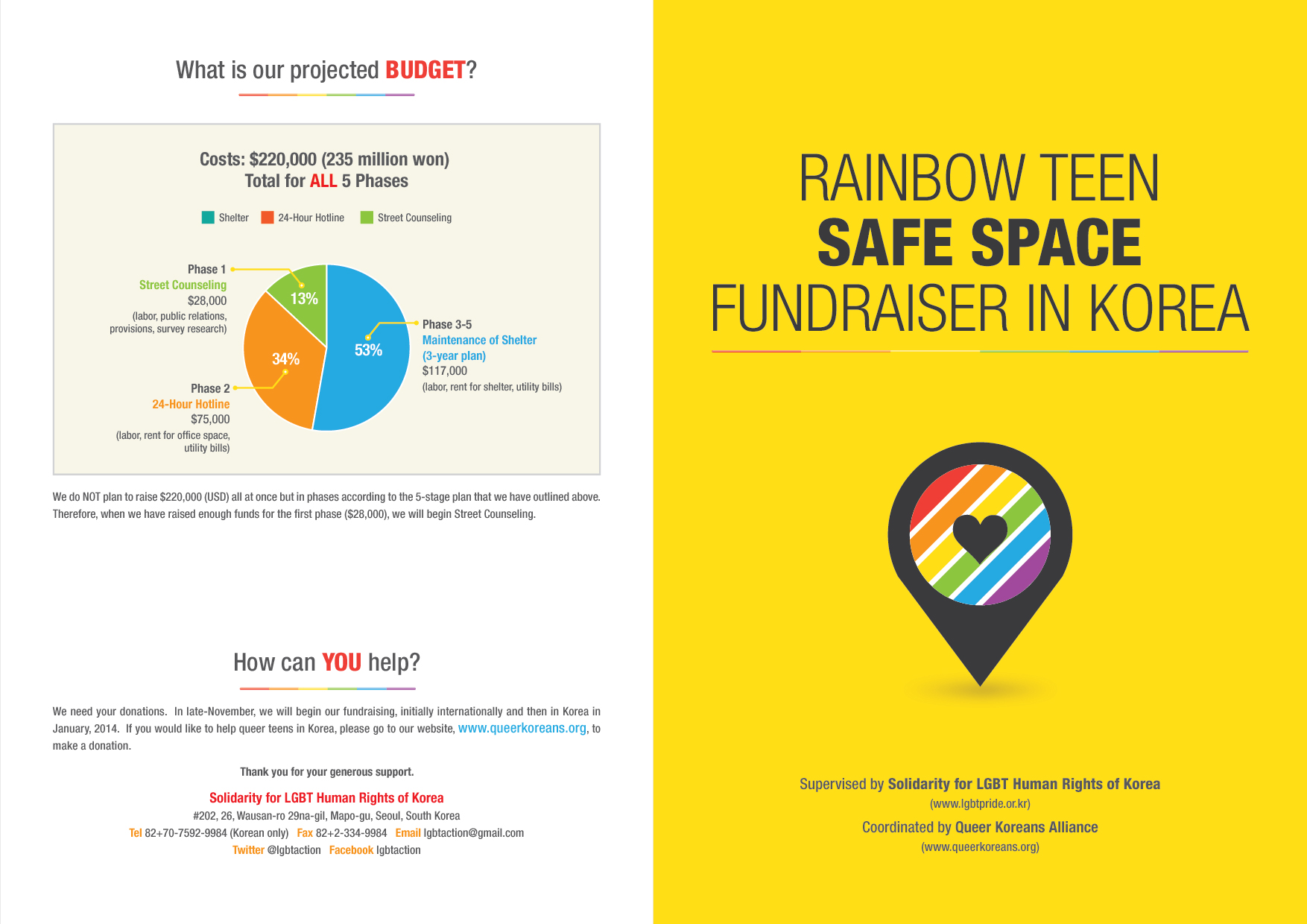
Next, via Hollaback Korea 할라백 코리아 comes Rainbow Teen Safe Spacesfourth letter to donors. It begins and ends:

Rainbow Teen Safe Space will soon be launched. The project has been focusing on fund-raising activities so far. Now it is time for a new round of dealing with organizational issues. On July 13, we had a meeting to talk about a new organizational structure for this project to be a common cause of the LGBT human rights movement. We decided to set up the secretariat and hire a full-time staff to set out the street counseling program in September. The secretariat will share the office with Solidarity for LGBT Human Rights of Korea. We are also in preparation to form an advisory committee of experts in various areas such as law, medical care, counseling and human rights…

…We haven’t reached our fundraising goal yet. For the street counseling activities to start on a solid foundation, please join our fundraising effort for Rainbow Teen Safe Space project. If you, donors’ help come together, it would be such a great strength to all of us.

See the link for much more information about its activities, the video above for a quick introduction (it’s in English), or here for its fundraising website.

Finally, I’ve been asked to promote a couple of video producers. First, a small, Daegu-based organization called Stompy Ruffers Cultural Fusion, which “takes Korean culture and blends it with American culture to create some fun and exciting products/events.” See here for more information about them, or here for a selection of their videos—including the “How to Order Food at a Korean Restaurant” one above, which I think would be better titled “But we’re speaking Korean!” after the Japanese version, and which I’m I sure all too many expats in both countries can relate to (Update: Actually, the Korean video came first sorry!).

Last but not least, from Stephanie Rosier (whom I have to thank for this post), also based in Daegu, who has been making video blogs about Korean culture:

I talk about everything you can imagine really. The blogs are an average of 20 minutes long and usually include various photographs and short videos of my adventures here. I can speak Korean at a conversational level (or Topik level 4 to be exact) so I have been able to talk to, and make friends with a wide range of Korean people, from hair dressers to grandmothers, and learn about Korea from an insider’s perspective.

See here for the blogs, or the above video for her “Spring Video Project: Asking Korean People 한국 사람한테 물어보자: 봄 동영상 계획”.

If any readers also have any event, worthy cause, video, or just about anything else they’d like to promote, please just shoot me an email (but please add as many pictures and details as possible!) and I’ll add it here or in a later post.

Upcoming Events: 7th Korea-America Student Conference, Fundraising for Seoul LGBT Teens, and Hollaback Korea Launch Party!

Korea-America Student Conference 2014

(Source)

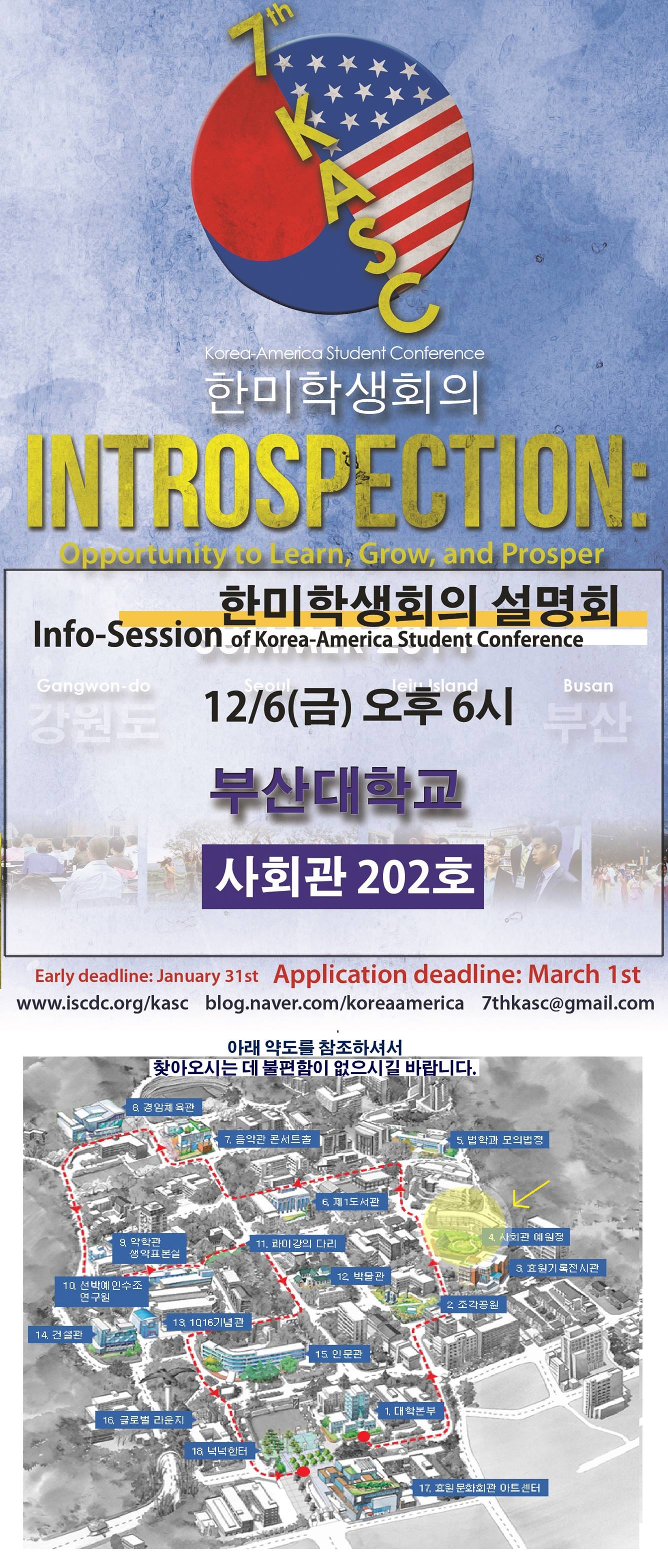
First up, for Korean speakers, this Friday there is an information session at Pusan National University about next July’s Korea-America Student Conference (sorry that I was too late to mention today’s session in Seoul). Alternatively, for those English-speakers among you who are hearing about the conference for the first time, it’s:

…a student-led, academic and cultural exchange program launched in 2008 to build closer ties between young leaders in both countries. Each year, an equal number of students from the U.S. and Korea are competitively selected to spend one summer month together, studying and analyzing Korea-U.S. relations while visiting four diverse regions in the host country. KASC alternates its host country every year, emphasizing the personal connections between two distinct cultures gathered together in one place.

And next year it will be held in Korea. See here and here for more information and application details respectively (deadline: March 1), or watch the following short video:

Update: There is also an information session at Kangwon National University on Thursday the 5th.

(Full disclosure: I gave a presentation to the 2011/4th conference participants, who were a great audience; everyone I know who’s participated raves about it; and many former participants are regular readers of and {awesome} commenters on my blog!)

Rainbow Teen Safe Space in Korea(Source)

Next, also on Friday, there is a fundraising event for the creation of a safe space for Seoul LGBT teens. As The Kimchi Queen explains:

The Rainbow Teen Safe Space is sponsored by Solidarity for Human Rights in Korea. The Open Doors Community Church is hosting this event and it is located feet from my old home. Unfortunately, I’m in San Diego. Luckily, I can donate to the organization directly and then get back to my finals.

If you’d like to donate directly to the Rainbow Teen Safe Space, you can do so on the Global Giving website. If you’d like to attend the fundraising event, head to the Open Door’s Event Facebook page.

See any of the above links for more information, or alternatively The Kimchi Queen itself for a small graphic explaining everything at a glance (apologies for the copy and paste of the post!).

Update: Here is the English promotional video for the project (again via The Kimchi Queen):

Hollaback Korea Offical Launch Party(Source)

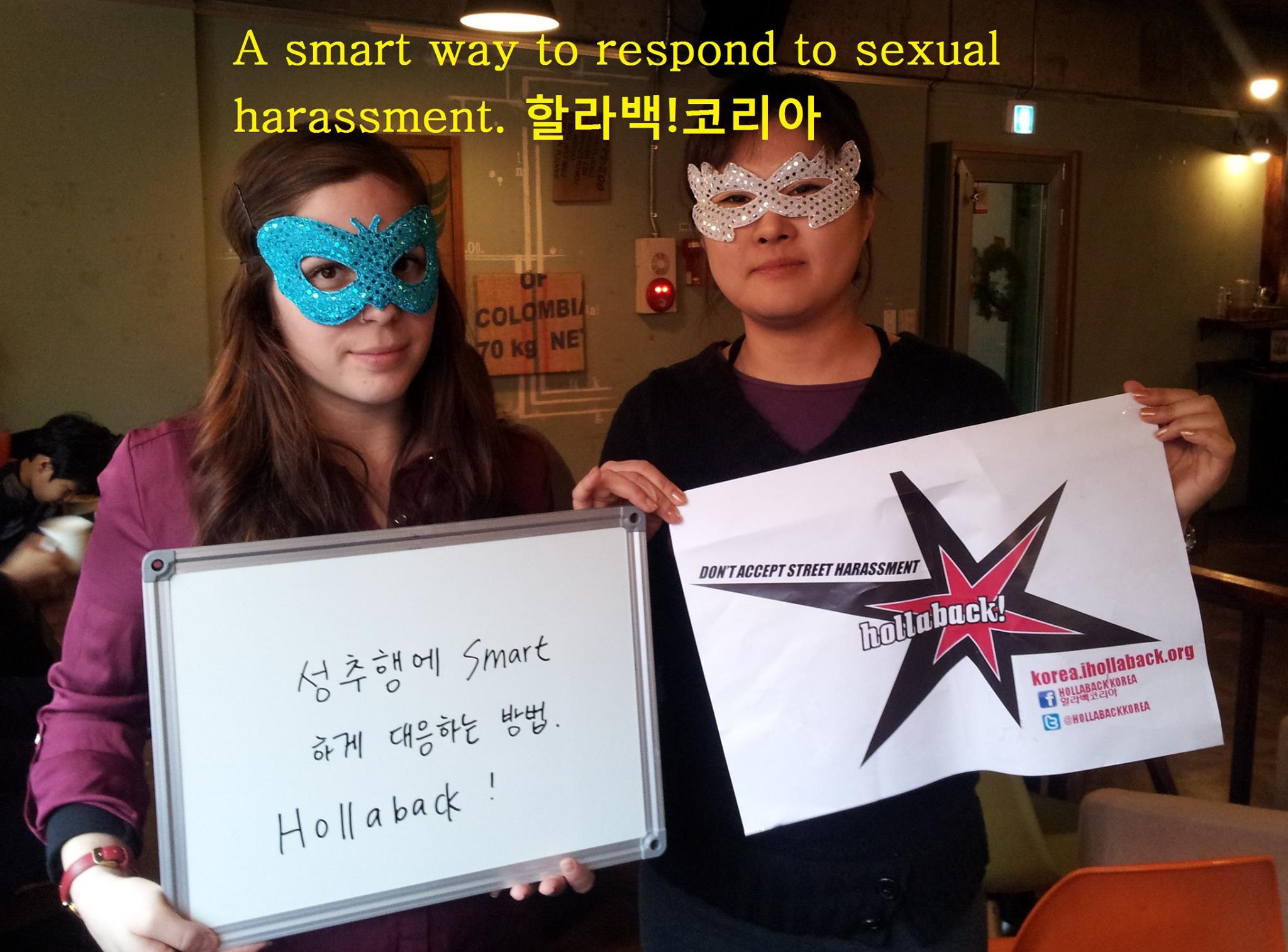
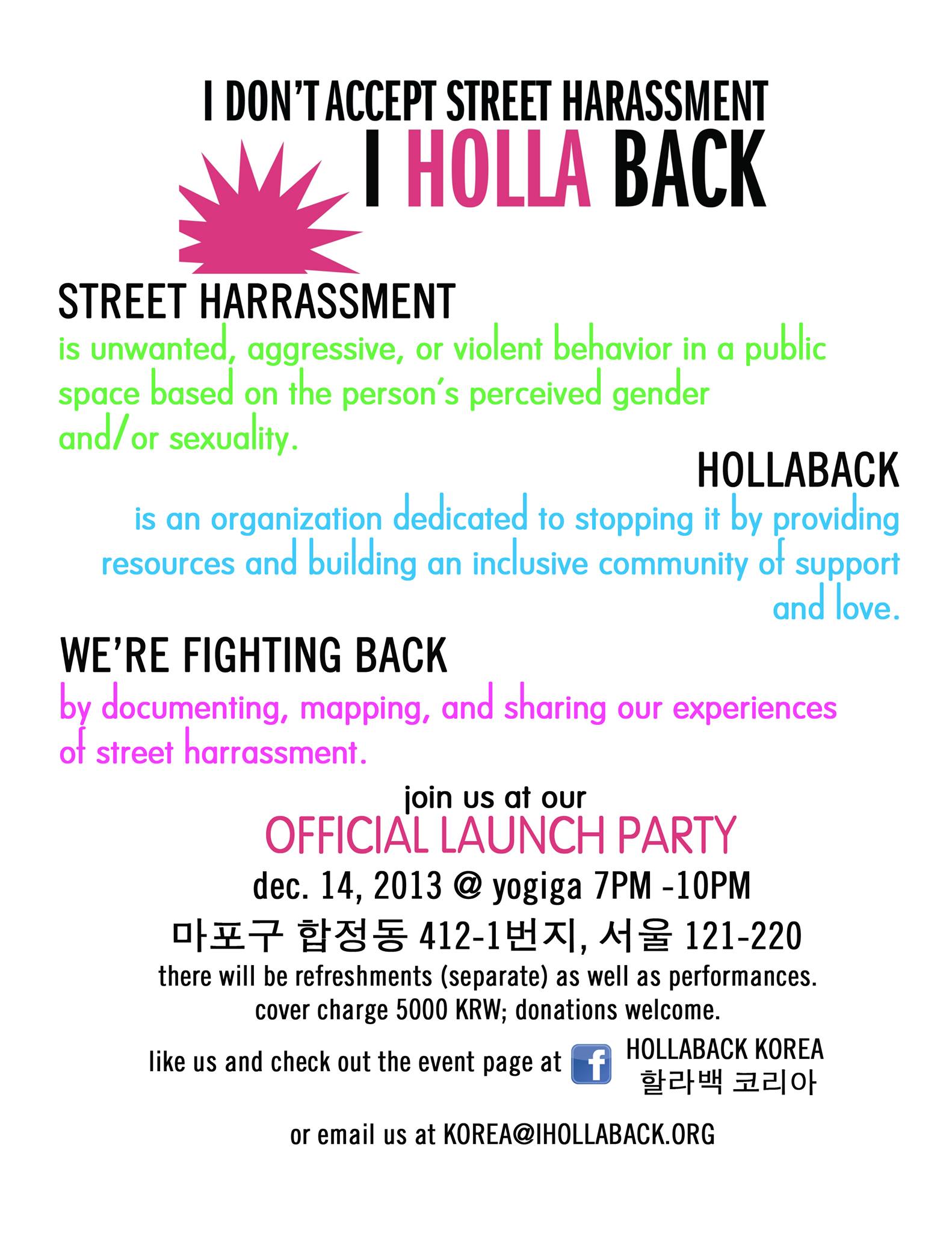
Finally, next Saturday sees the official launch of Hollaback Korea, in Mapo-gu in Seoul. See the FB event page, their FB group page, or their Twitter for further details, and make sure to check their blog also, just launched yesterday! :)

Update: Click here and here for Hollaback Korea’s press releases (PDF) in English and Korean respectively.

Reader Request: Looking for people to share stories about relationships in Korea

Couple ShoesI’ve been asked to pass on the following:

Looking for people to share stories about relationships in Korea

*********Have you fallen in love in South Korea? Battled cultural differences and other pressures to be with someone you never would have met anywhere else? Found the freedom to do things, meet people, or be someone you wouldn’t have dared to at home? Kept things going long-term and long-distance? Decided that dating in Korea is just too daunting and put that side of your life on hold while you’re here? Worn a couple shirt?

If you have a great story you’d like to share about dating, relationships and sex in Korea, I’d love to hear from you.

I’m making a documentary about how living in Korea can affect relationships, and I’d like to interview people with experiences that been delightful and difficult, wonderful and weird, sour and sweet.

It would be great to speak to partnered and single, cis- and trans-gender people, from a variety of backgrounds, and with a range of preferences and interests, including:

  • Korean people with experiences with other Korean people and people from other countries;
  • Non-Korean people with experiences with people from Korea and other countries;
  • People in monogamous and non-monogamous relationships with one or more partners;
  • People happy or unhappy not to be in a relationship;
  • People who have made their homes in Korea;
  • People who are in Korea on a temporary basis.

The film will be inclusive, non-judgemental and sex-positive, allowing the stories to act as an honest look at the unique experience of looking for, holding onto and losing companionship in Korea. To this end, and because I intend it for gallery screenings, the film probably won’t be a traditional talking-heads documentary. Instead, I’ll try to respond creatively to the themes of the stories people tell me, especially when the storytellers wish to remain anonymous. If you’re happy to appear on camera, that’s great, but if you’d like to share your story and would rather not have your face, voice or name be part of the film, I’ll find ways to accommodate those wishes.

I hope to collect stories in December and January, and am happy to travel anywhere in Korea to conduct interviews.

If you’d like to know more, or if you’re interested in taking part, please get in touch at relationshipsinkorea@gmail.com

Ben

A Queer Week in Seoul!

Gay Short Film Festival plus 11th Annual Queer (Lesbian) Culture Festival(Sources: left, right)

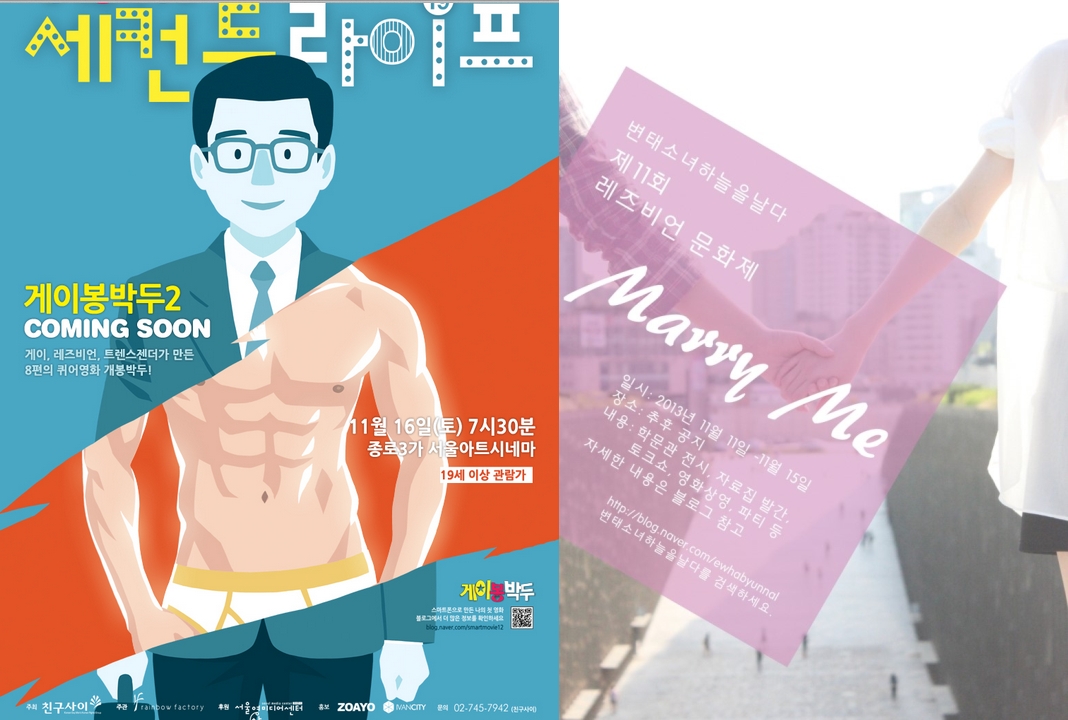
Sorry for the late notice, but this week features the both the 11th Annual Queer (Lesbian) Culture Festival and the 2nd Gay Short Film Festival, both in Seoul (I’m unsure if they’re related). See Psyched in S.Korea and The Kimchi Queen respectively for further details.

Update: The Kimchi Queen has expanded upon the information about the Queer (Lesbian) Culture Festival also.

Radio Interview on Gay Marriage Tonight, 7pm

Cyndi Lauper 2010(Source)

In a few hours I’ll be on Busan e-FM’s Let’s Talk Busan again, this time talking about gay marriage. You can listen on the radio at 90.5, online here (please note that you’ll have to download Windows Media Player 10 first), or via an archived version here later in the week.

For any readers who didn’t already know, I’m all for it, although I’m not very confident about seeing the issue on the political radar in Korea for at least another 15 years, and actual law changes not for another 15 after that. But I’ve often noted the extraordinary pace of change in Korean society too, so here’s hoping I’m proven wrong!

Have a Queer Weekend~!

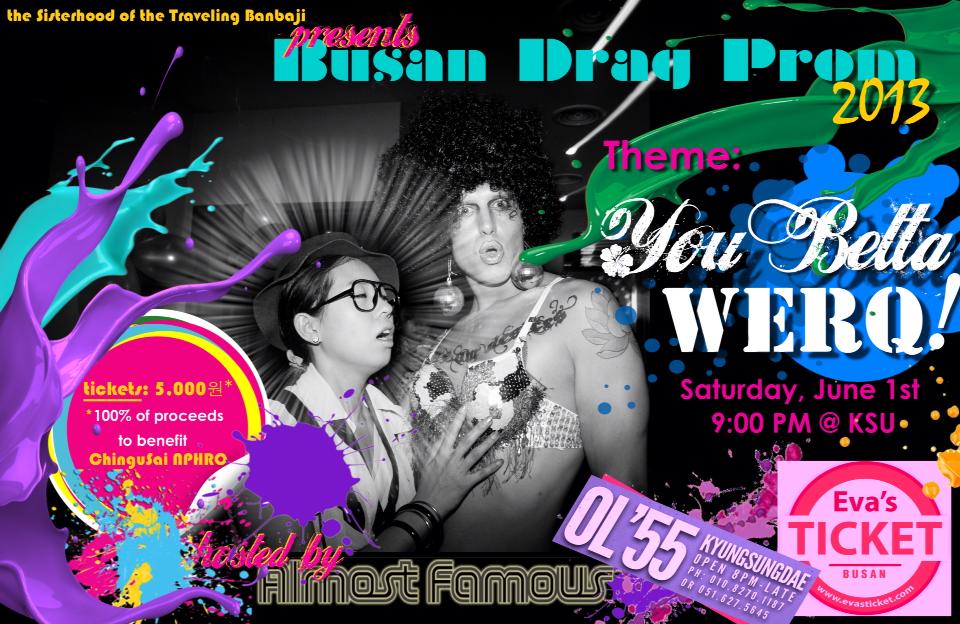
Busan Drag Prom 2013(Source)

To those of you in the south of the country, I hope to see you all at Busan’s Second Annual Drag Prom this Saturday night, which promises to be a much bigger event — at 3 locations instead of just 1! — than last year’s. (Seriously, please say hi!) Check out Busan Haps or the Facebook event page for further details, and please note that you absolutely don’t have to wear costumes to attend!

(Source)

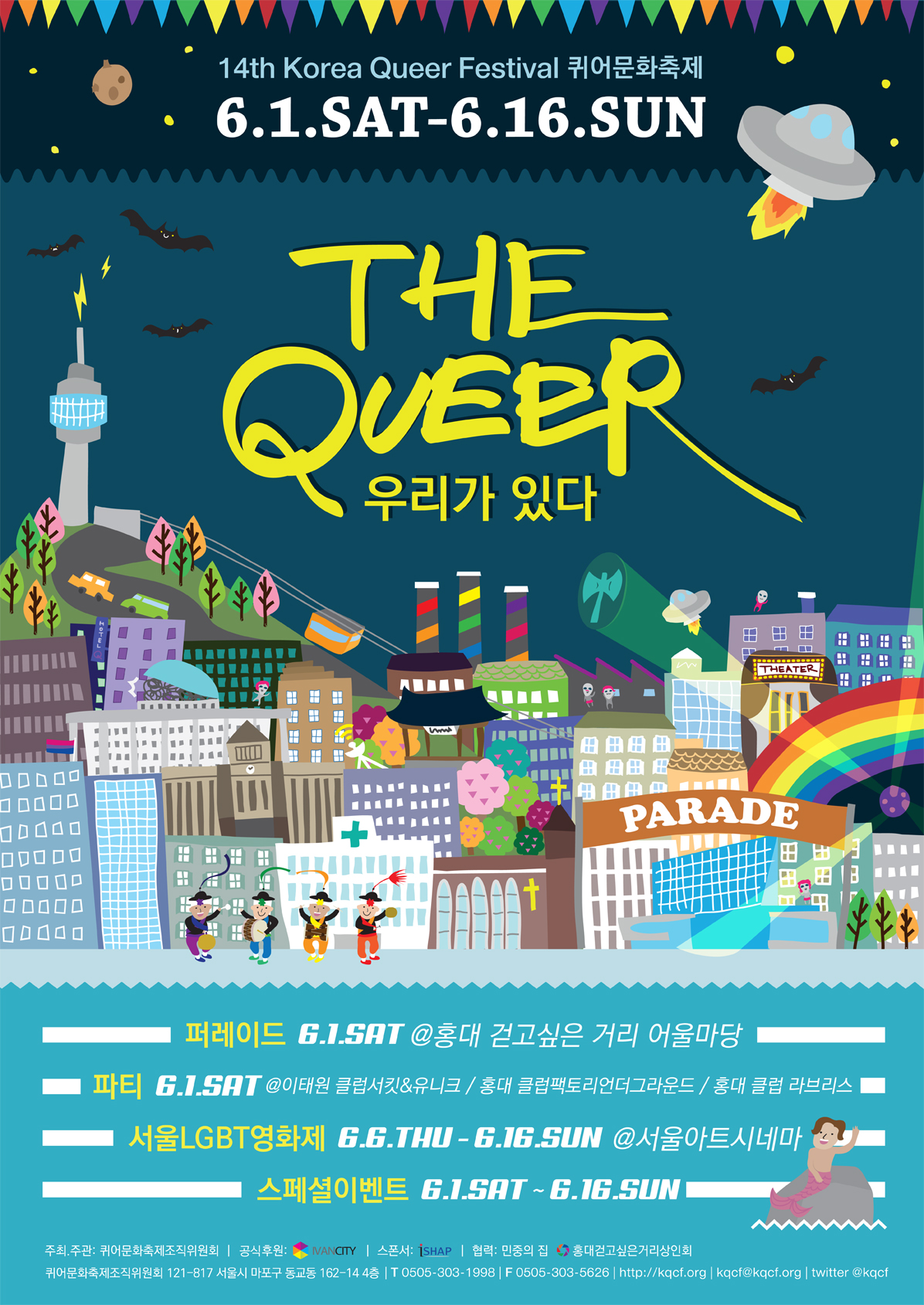
Meanwhile, for those of you up north, the 14th Korean Queer Festival also starts this weekend, with various events spread over the next 2 weeks, including a parade on Saturday and the Seoul LGBT Film Festival starting on Thursday. See 10 Magazine, the Facebook event page, or the Korean Queer Festival website for further details.

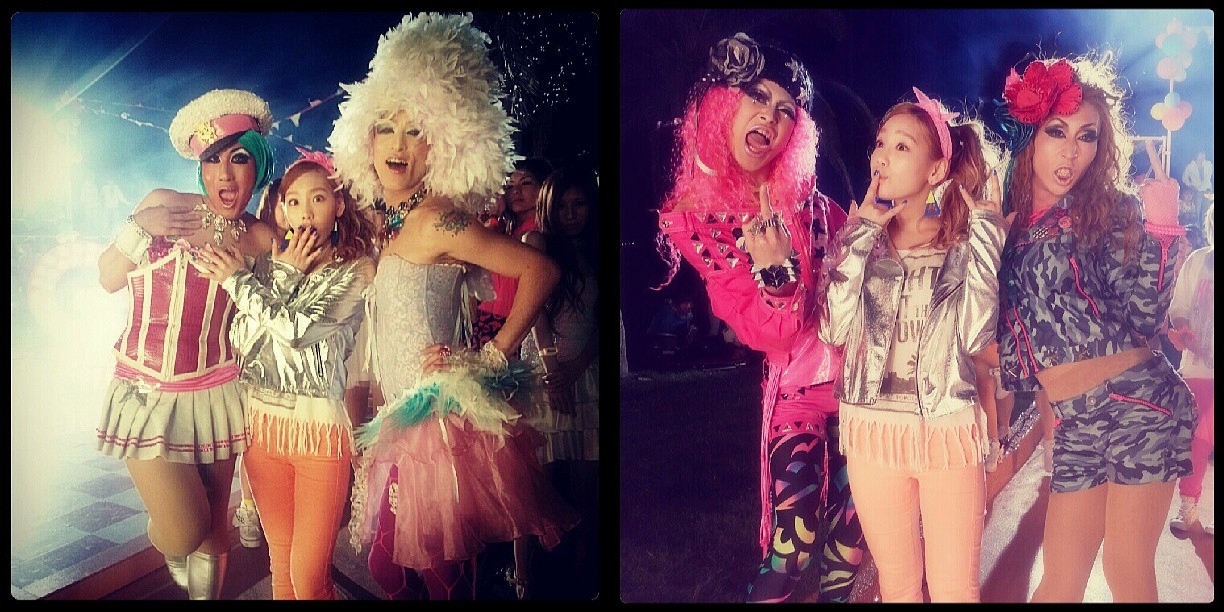
Taeyeon Drag Queens(Source)

Speaking entirely too frankly, I’d just *ahem* love to dress like this at the drag prom, especially like him/her on the far left. But, alas, I’m just too attached to my goatee to shave it off, and besides which don’t have any wigs (nor, indeed, a mini-skirt)…

Let’s Talk About 섹스, 베이비~

Kim Soo-yong's 19 Show Banner(Source)

I showed my (Korean) wife this thread. Her response:

“They think Koreans can’t talk about gay rights? How insulting. We’re more advanced than you think. Gay issues are talked about all the time on talk shows and in the media. [Those commenters] clearly do not understand Korean culture.”

(Comment at Gusts of Popular Feeling)

I would have said more “ignorant” of Korean culture, but you get the idea. And, as if to prove her point, somehow the very next thing in my browser was the new Kim Soo-yong’s 19 [R18] Show, hosted by (obviously) comedian Kim Soo-Yong and announcer Kim Min-jin, and also starring psychologist Dr. Choi Chang-ho and comedian Yun Sok-ju.

Although this particular show may not have talked about LGBT issues (yet), it hit home because it provided a second healthy reminder that Koreans are frankly talking about sex at least, despite foreign stereotypes of their extreme sexual conservatism. Indeed, there’s actually been shows like this for many years now.

Here’s the introduction to it on the Kukitv station website:

Kim Soo-yong's 19 Show(Source)

My (very quick) translation:

Men and women,

Out of feelings they share when they love each other, there’s some things they don’t understand, or they do understand but feel strange about, or they thought they understood but can be easily mistaken about.

From the first date, skinship, and sex to proposing and marriage, we need to something to clear the wish-washy, hidden, unspoken things between men and women.

For the hidden sex stories in your heart, to the secret urges of your partners whom you thought you knew well…

And fortunately for something that plays at 1:10am on weeknights, all of the 5 shows so far — and shorter segments of shows — are available on Youtube here. Here’s the full first episode to get you going:

Alas, language-wise, it’s not for the faint-hearted: the Korean subtitles are minimal, and there’s unlikely to ever be English ones available. Can anyone please recommend any similar shows that are more accessible for non-Korean speakers, and/or — seeing as they inspired this post — pass on any of those that have dealt specifically with LGBT issues? Thanks!

(Update: I should also mention the Talk on Sex podcast that I’ve been following on and off for years, but again that’s entirely in Korean).

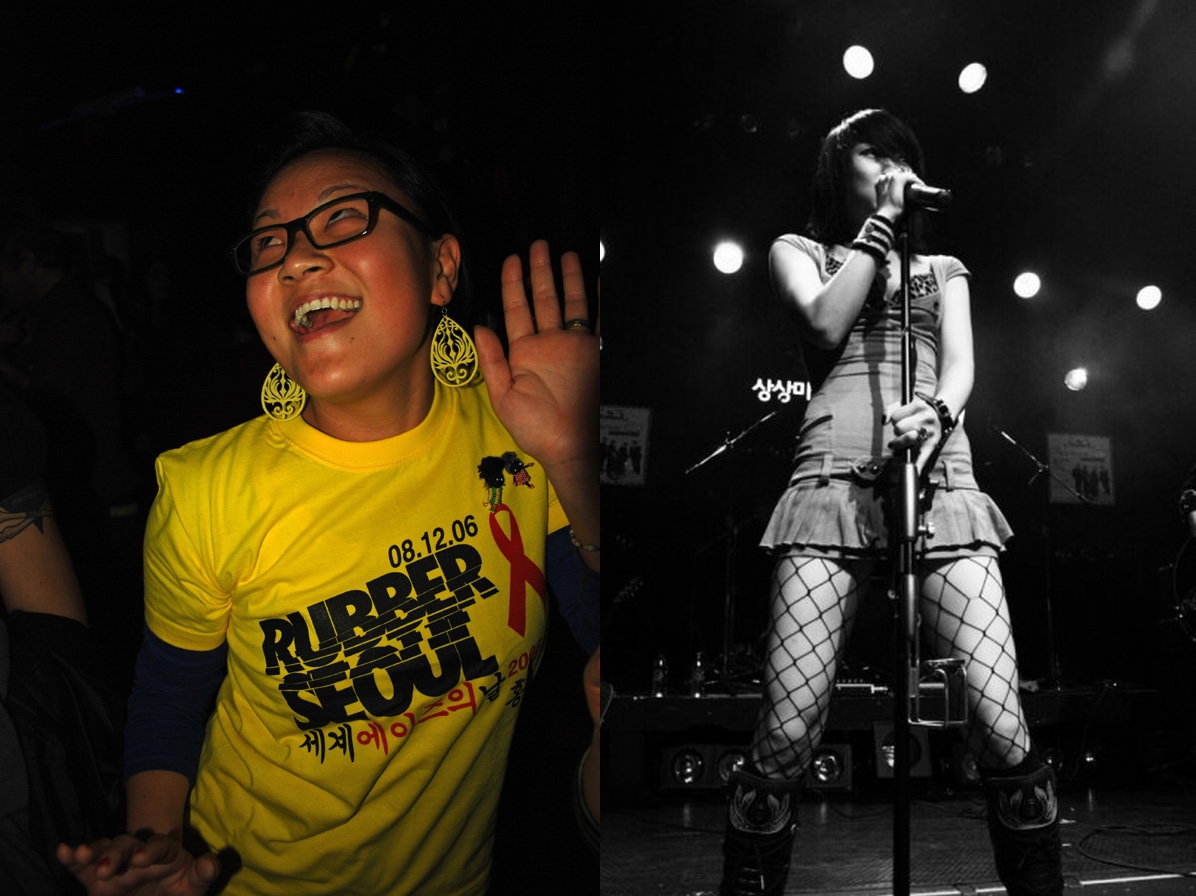
Rubber Soul 2010

( Sources: left, unknown; right, Rubber Soul 2010 )

Apologies for the late notice, and also to Roboseyo for swiping his own post on the event:

December 4 is World AIDS Day.  Starting at 9PM, in Hongdae, at Ting Tings, Club TA, Club FF and DGBD, you can attend parties at all four spots for a 15000 won cover.  All the cover fees go to Hillcrest AIDS center in South Africa.

You can learn more at the Facebook event page, or at the Rubber Soul Blog.

And don’t forget that there’s a prize for the best condom costume!^^

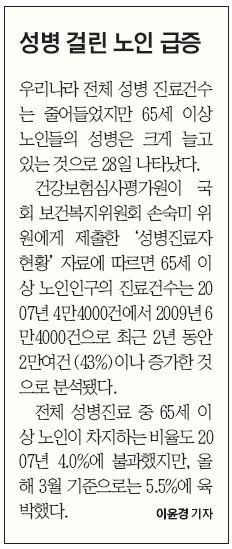
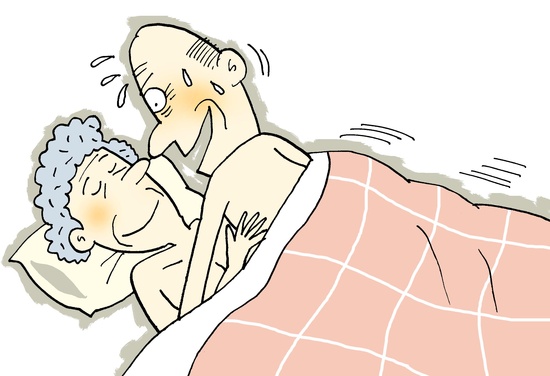
Yes, Old Korean People Have Sex Too…

( Source )

But perhaps as you’d expect, they’re generally not using protection. A quick report from The Daily Focus on Wednesday:

Number of STD Cases Among Old People Rising

While the national total number of STD cases has dropped overall, the numbers of people aged 65 and over contracting STDs has risen sharply, it emerged on the 28th.

The Health Insurance Review and Assessment Service presented its “Current Situation Regarded STD Treatment Recipients” report to Assemblywoman Son Sook-mee of the National Assembly Health Welfare Committee, according to the data of which the number of cases of people aged 65 and older receiving treatment for STDs was 44,000 in 2007 and 64,000 in 2009, a rise of 43% in just 2 years.

In 2007, people 65 years and older accounted for 4.0% of all cases of people treated for STDs, but this has risen to 5.5% as of March this year.

Little information to go on unfortunately, but Seoul residents may be interested in placing that into the context of the prostitution culture around Jongmyo Park in Jongno, which caters to the thousands of male retirees that spend their days there. From story #13 in a “Korean Gender Reader” post from March last year:

Prostitution Answers Sexual Needs of Senior Citizens?

The first time I visited in Jongmyo Park in Seoul in 2000, naturally I remarked on the hundreds of mostly male retirees there to my friend visiting from Japan, who rightly pointed out that they “didn’t particularly have much to do nor anywhere in particular to do it,” so why not play Korean chess all day there? In hindsight though, many would much rather be doing something else, and it’s almost surprising that it took so long for prostitutes to encroach on this captive and – let’s call a spade a spade – somewhat desperate market.

Here, the Korea Times reports on the ensuing problems of unsafe sex, the sale of fake Viagra and “men’s stamina” products, and the general increasing seediness of the area. You can also read discussions about it at ROK Drop and The Marmot’s Hole.

One surprising omission in the Korea Times article though, was the fact that the area between Jongmyo and Tapgol Park is also “packed full with gay bars and hotels catering to gay clients”, as noted by regular commenter Gomushin Girl.  Still it does end with the pertinent point that:

…the social atmosphere of viewing senior citizen’s sexual desire as a nasty matter has worsened the situation. “Sexual desire is a desire not only shared among young people but also old people. But our society is sill stuck in the obsolete Confucian-based perception that labels desire as an undesirable state, playing a major hurdle in setting a sound sexual culture for the aged,” said Prof. Lim Choon-sik at Hannam University’s social welfare department.

( Source )

And accordingly, probably the most notable if not the only “recent” Korean film to depict the sexuality of the aged – Too Young to Die (죽어도 좋아; 2002) – was heavily censored. As noted at KoreanFilm.org:

The filmic career of this independent digital feature about an elderly couple in love has followed an unusual arc. It began at the pinnacle of respectability, being selected to screen in the Critics’ Week section at the 2002 Cannes International Film Festival. After receiving a number of very positive reviews, it went on to be selected for the Toronto International Film Festival’s showcase of Korean cinema, and then received a special grant from the government-supported Korean Film Commission to help finance the film’s transfer to 35mm film for a release in Korea. Then, alas, the film was submitted to the nation’s Media Ratings Board, where it was judged unfit for public viewing and banned from release in ordinary theaters.

Too Young To Die is based on the true story of Park Chi-gyu and Lee Soon-ye, a man and woman in their early seventies who met, fell in love, and then rediscovered sex. The couple, who play themselves in the movie, seem little different from a couple in their twenties. They tease each other, fret about their hair, take snapshots of themselves, argue over trifles, and leap into bed with unabashed frequency. Indeed, watching them forces you to rethink all your stereotypes of what it is to be old.

In particular, as Gomushin Girl mentioned in the context of the excessive censorship of women’s sexuality in general:

…the key scene of fellatio was darkened and shortened significantly before it could be released. I would suggest that it was not just the fact that the couple was elderly that made the sex scenes so controversial, but the gusto and relish that the woman took in the acts.

Which raises the question of if there have been any other depictions of aged sexuality in Korean popular culture in the past 8 years (positive or otherwise), as perhaps that experience put directors off? If you know of any, then please let know, but regardless I’d wager that we’re likely to see more soon; after all, with Korea rapidly becoming the most aged society in the world, then audiences (and rating boards) can only become more sympathetic to the subject over time.

In the meantime, can anyone think of any areas in other Korean cities where retirees and prostitutes regularly meet?

Share

Men Can’t Get Raped in Korea? (Updated)

( Source )

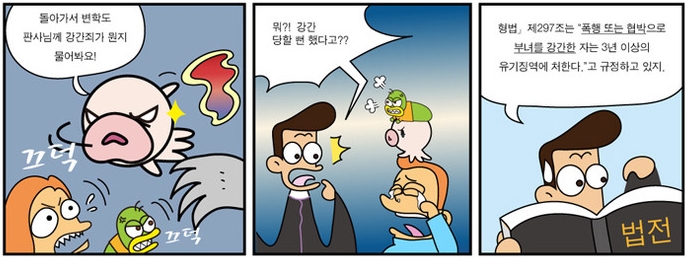
But in Korea at least, perhaps the most appropriate revenge would have been to inflict the same back on the rapists? For I’ve just been shocked to learn that legally speaking, men can’t actually be the victims of rape here.

In fairness however, Korea is by no means the only jurisdiction that strictly defines rape as non-consensual penile penetration of the vagina, so perhaps my reaction was quite naive. But still, recall that not only is spousal rape not a crime, and that the Korean Bar Association remains opposed to its criminalization, but that there is also endemic sexual violence within the military.  So it’s not like some decidedly archaic notions of sexual identity and rape don’t still exist both in theory and in practice in Korea.

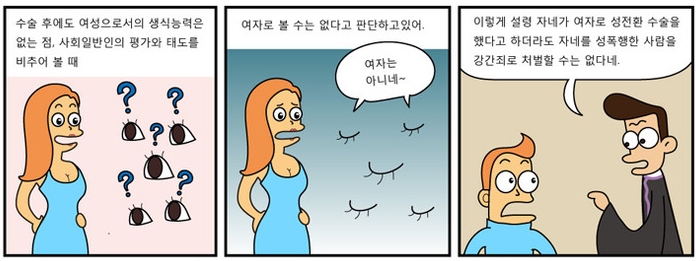
Accordingly, the fact that males can’t be raped is not so much highlighted as taken for granted in the webtoon Judge Byeon Hak-do’s Puzzling Law Questions (알쏭달쏭 변학도 판사의 법률이야기) below, instead focusing on the question of if a rapist of a male to female transsexual would be charged with rape or indecent assault instead, concluding that as the victims are not considered women in Korean society then it would be the latter. And indeed as of 2006, only 25 transsexuals had been successful (and 26 denied) in their applications to change their legal gender, easily the most famous being entertainer Harisu (하리수) and model Choi Han-bit (최한빛) below:

( Sources: T-L, T-R, B-L, B-R )

That figure was taken from “Hallyoo, Ballyhoo, and Harisu: Marketing and Representing the Transgendered in South Korea” in Complicated Currents: Media Flows, Soft Power, and East Asia (2010), which I highly recommend for those of you more interested in the current state of transgender and transexual rights in Korea (full disclosure: this blog is mentioned in it!). As for the webtoon itself, unfortunately it raises more questions than answers, and the last 2 panels in particular make little sense, and I think are supposed to be a joke. But I’m not going to write it off because of the medium (quite the opposite), and unlike the pig-ignorant, racist, and anti-Semitic comic history books that some of you may recall from 2007, the webtoon series as a whole does at least seem to be written by someone who knows the subject, probably even by a judge himself.

Below, I’ve literally translated all of it (including all the sounds!), adding notes where necessary. But as always, I welcome and appreciate any corrections:

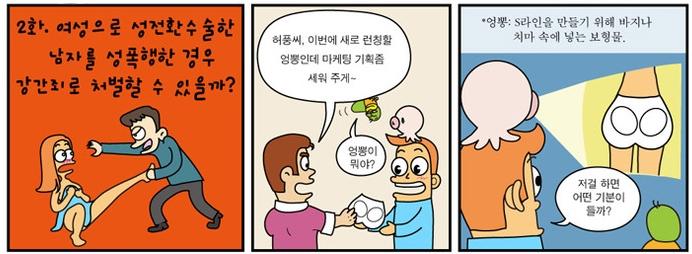
Comic #2. In the case of the rape of a man who has had a sex change operation to become a woman, does that [actually] carry the charge of rape?

Heo-poong, we are going to launch a product called “Eong-bbong”, and want you to come up with a marketing plan.

What’s an Eong-bbong?

Eong-bbong: a device to create an S-line by putting it under a skirt or pants.

How would wearing that feel?

“Eong-bbong” is actually quite a good name: it comes from a combination of the “eong” in eongdeongee (엉덩이), or bottom, and “bbong” (뽕), not unlike “boing” in English.

Meanwhile, when Heo-poong asks how wearing that would feel, he means literally or physically, not in the psychological sense of what it would be like to be a woman having her S-line ogled.

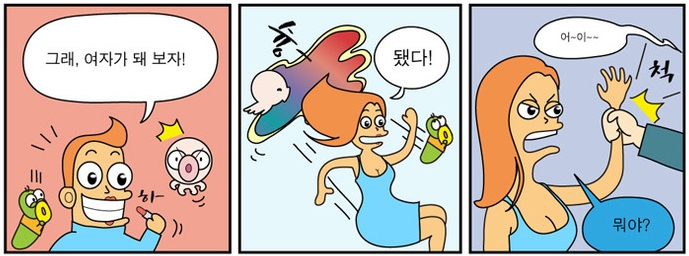
Okay then, let’s try becoming a woman!

Hee (Your guess is as good as mine)

Done/Changed!

Syoong! (a quick moving sound, in this case through a magic portal used in all the other stories)

Oh~Oh~~

Cheok! (a grabbing sound?)

What’s this?

Your bottom is so pretty…

Hweik! (used for something sudden and abrupt)

Jerk!

Yaaargh!

You bastard, you want to eat rice and beans (prison food) by raping someone?

Stop!

Beonjjok (Flash)

Go back to Judge Byeon Hag-do and try asking about what the crime of rape is!

GGudeok, ggdeok (Nod, Nod)

What? You say you almost got raped??

According to article 297 of the criminal code, a person who rapes a woman by violence or threat of violence gets a jail term of at least 3 years.

So in other words, the only people that can be raped are women?

Woman, then Syak! (quick swishing sound?)

If so, what are women?

Here in article 297, all females are referred to: adult women, teenagers and girls, married women, and unmarried women.

Who doesn’t know that?!! (lit. Where is someone that doesn’t know that?!!)

A man who dresses as a woman is only a woman on the surface. But for someone to be called [really be] a woman, they need to have the heart, mind, and body of a woman.

The Korean maum (마음) is often translated just as “mind” in English, but if you just ask Koreans where it is located then they’ll usually say the chest, let alone often use it in a “heart” sense. I don’t think there is any real distinction between them in Korean.

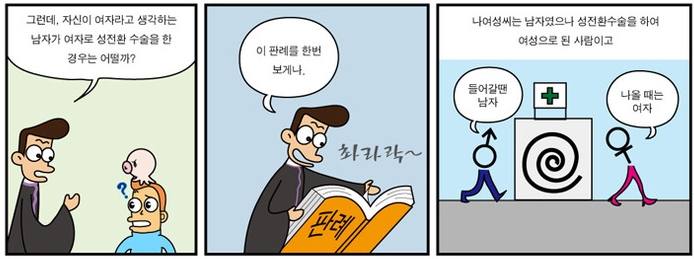
However, what about the case of a man who has had a sex change operation and thinks of himself as a woman?

Let’s have a look for any precedents.

Chwa-ra-rak~ (the sound of flicking through pages?)

If Miss “I am a woman” was a man and has a sex change operation…

When I go in I’m a man

When I come out I’m a woman

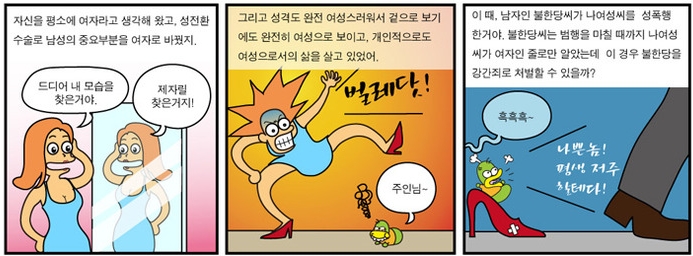
…through having her male “important parts” changed to a woman’s, she comes to think of herself as a woman.

Finally, I’ve found myself.

I’ve found where I belong!

And her personality is completely like a woman’s, and she also completely looks like a woman, and has lived as a woman…

A cockroach!

My master/mistress~

Then Mr. Evil rapes Miss “I am a woman”, all the while thinking she was born a woman, will he be charged with rape?

Sob sob sob~

You bastard! I will curse you forever!

“Mr Evil” may sound facetious, but actually boolhandang (불한당) is the usual term for a bad person, a little like the bogeyman in English (but more specifically a criminal of some sort). Meanwhile, jooinnim (주인님) is gender neutral, so I don’t know if the caterpillar(?) thinks of Heo-poong as a man or a woman sorry.

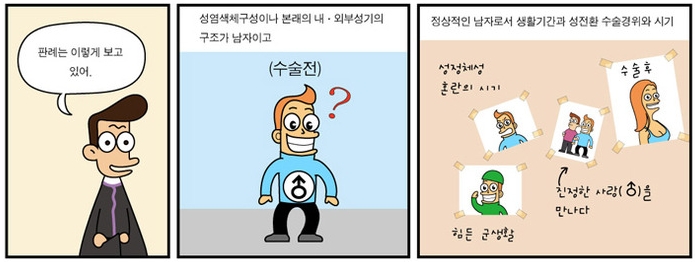
There is a precedent for this.

The sex chromosomes, internal physiology and external genitalia were all male…

(Before the operation)

He lived as normal man, but a time came when he wanted to have a sex change operation…

Feelings of confusion about if he was a man or woman.

A hard time doing his military service.

He met his true love, a man.

After the operation.

After the operation, she had no reproductive ability as a woman, so in the case of average people on the street’s assessments of and attitudes towards her…

They would decide that she couldn’t be called  a woman.

– Not a woman~

This way, even if you had had a sex change operation, someone who rapes you would not be charged with rape.

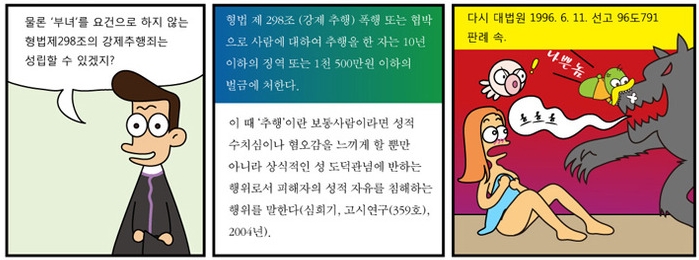
Of course, being a woman is not a prerequisite for charging the perpetrator with indecent assault under article 298 of the criminal code, yes?

According to article 298 of the criminal code (indecent assault), if someone assaults another through the threat of violence then he or she can go to jail for a maximum of 10 years or pay a maximum penalty of 15 million won.

In this case, “assault” means not just something which infringes on the victims’ sexual freedom and is in contradiction to normal sexual ethics, but also leaves them with a sense of sexual shame and disgust (Shim Hwae-gee, Official Law Studies (#359), 2004)
This was also established by the Supreme Court in their judgment on case 96.791 on June 11, 1996.

Your honor, do you think that Miss “I am a woman” is also included in the definition of woman for the charge of rape to apply?

What’s that got to do with anything? I just want to do whatever feels good~

Bbok (Bash?)

Master/Mistress, kill this bastard in self-defence!!

Sure!

Bbak! (Bash?)

That’s strange?? The contents of the Supreme Court’s judgment on case 96.791 on June 11, 1996 have been changed!!

Clearly, it was about rape, but here…

Gyaoodoong (??)

Now it’s about how far one is justified in inflicted violence in self-defense??

Save me~

Oodangtang (Thump! Stamp!)

Update: I completely forgot this article from The Korea Times, which I covered back in February last year (see#17 here):

A provincial court for the first time found a man in his 20s guilty of “raping” a transexual, Wednesday, challenging the current law that defines rape to when a man has forcible sex with a woman born a female. The victim’s legal gender still remains man.

The Busan District Court sentenced the man to three years in prison suspended for four years on charges of raping the 59-year-old transsexual. He was also ordered to participate in 120 hours of community service.

Judge Ko Jong-joo said in the ruling, “The victim has acted like woman since he was born. In 1974, when he turned 24, he underwent a gender reassignment program. He once also lived with a male partner for a decade. Given all of these, he can be seen as female.”

The judge added that although the victim was legally a man, but this did not take into account his sexual identity. “Thus, his sex in legal documents cannot be seen as his `ultimate’ gender,” he said.

The rapist invaded the victim’s home last August and raped her using a blunt weapon. The prosecution initially indicted the man on a “molestation” charge but changed it to “rape” later after considering the victim’s personal history. It sought a five-year prison term, Feb. 11.

Giving the unprecedented ruling, the judge set three criteria to define the precedent ― whether the victim had sex change surgery; how long he/she has lived with appearance of the opposite sex; and if he/she has no problems having sexual relations.

In a similar case in 1996, the Supreme Court did not acknowledge rape charge, citing the victim’s sexual chromosome identity as a male.

I wonder if that 1996 case is the one referred to in the cartoon?

judgment on case 96.791 on June 11, 1996.


Everything You’ve Ever Wanted to Know About Korean LGBT Issues…

G-Dragon Big Bang Blonde

Being at 8:30am on Sunday morning, then my presentation at the ICAS 6 Conference in Daejeon last weekend wasn’t exactly well attended, but at least I did get to meet Professor Douglas Sanders of the University of British Colombia, a noted author on human rights and LGBT issues, and as it happens also the first openly gay person to speak at the UN. He later passed on a paper he has just written on the development of LGBT issues and activism in Korea in the 1990s and 2000s, and I recommend it for the chronological overview of the subject it especially, and which I wish had been available before I read the rather denser (but also excellent) article on the subject in the Autumn 2005 Korea Journal article “Intersectionality Revealed: Sexual Politics in Post-IMF Korea” by Cho Ju-hyun. Combined, you probably couldn’t ask for a more comprehensive look at the subject, although of course please pass on any more resources if you know of them!

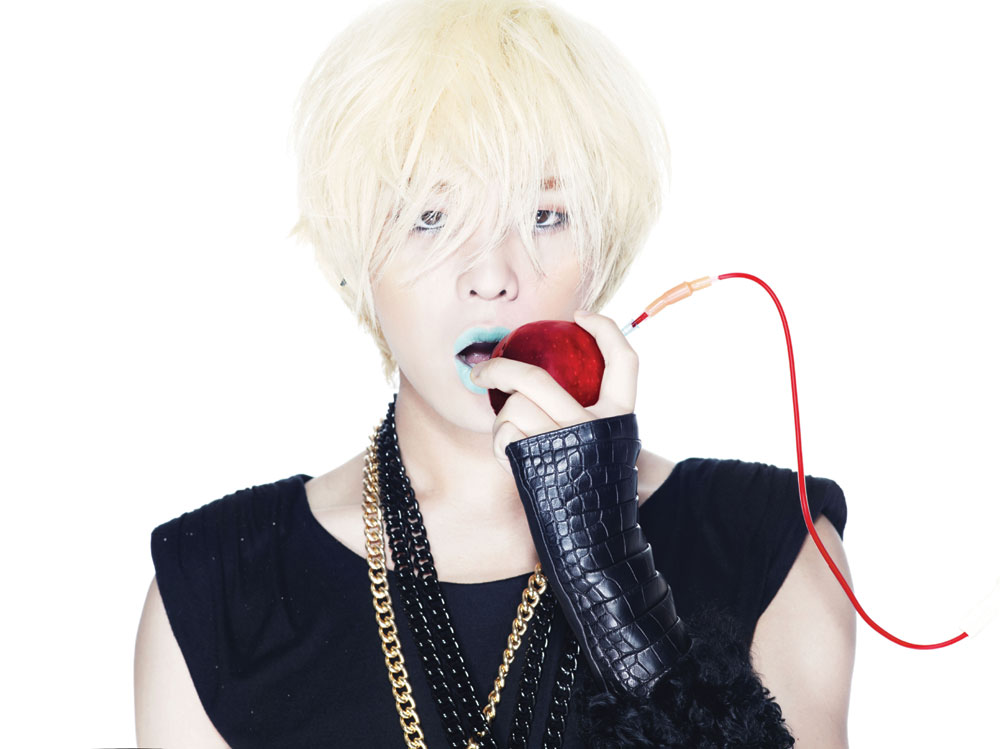
Not to imply that G-Dragon (G-드래곤) of the Korean boy-band Big Bang (빅뱅) above is anything but heterosexual by the way, but that’s certainly an interesting photo of him above (source), and which as someone growing up in the UK in the 1980s instantly reminded of noted LGBT celebrities Boy George and Julian Clary. For the story behind the photoshoot, see here.

Share

Gay Pride Festival and Parade in Seoul This Saturday

Korean Queer Parade 2009 SeoulUpdate: I may discuss it in more detail in a later post, but in the meantime a big thanks to Chris in South Korea for this post about attending the event.

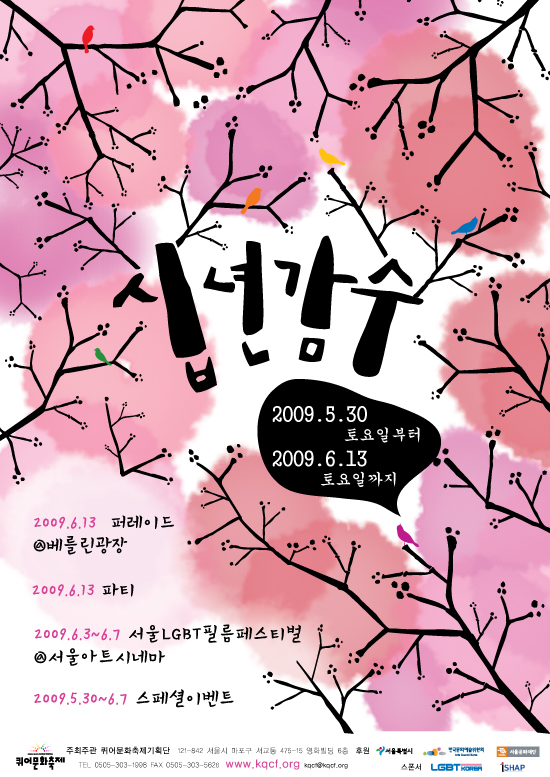
A little confused by the first ever “Stonewall Celebrations” being held in other Korean cities at the same time (see #5 here), I didn’t realize that the 10th Korea Queer Culture Festival has also been taking place in Seoul sorry, and is actually almost over. I can tell you before it’s too late though, that there will be a festival and parade this Saturday: for further details, see this English page of the festival website, or alternatively contact one of the posters in this thread at Dave’s ESL Cafe (or ask me to PM them if you’re not a member already).

Being unemployed and with two kids to support then I can’t make the trip to Seoul myself unfortunately, but I’d appreciate it if anyone can send me links to blog posts and pictures and so on afterwards.

(Poster from here, which also has a Korean timetable of events)

Share