Korean Sociological Image #76: Gendered Innocence and “The Nation’s First Love”

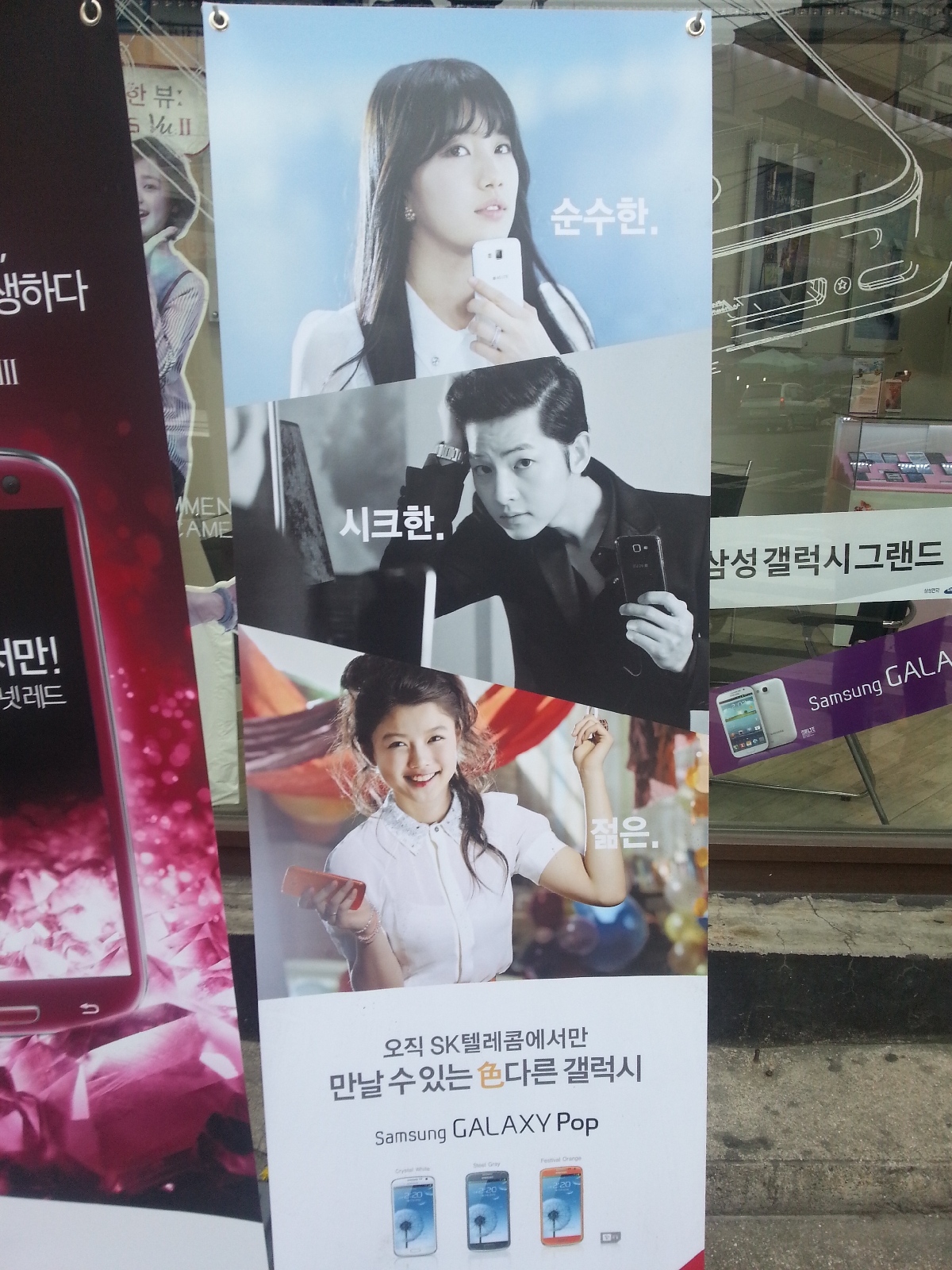
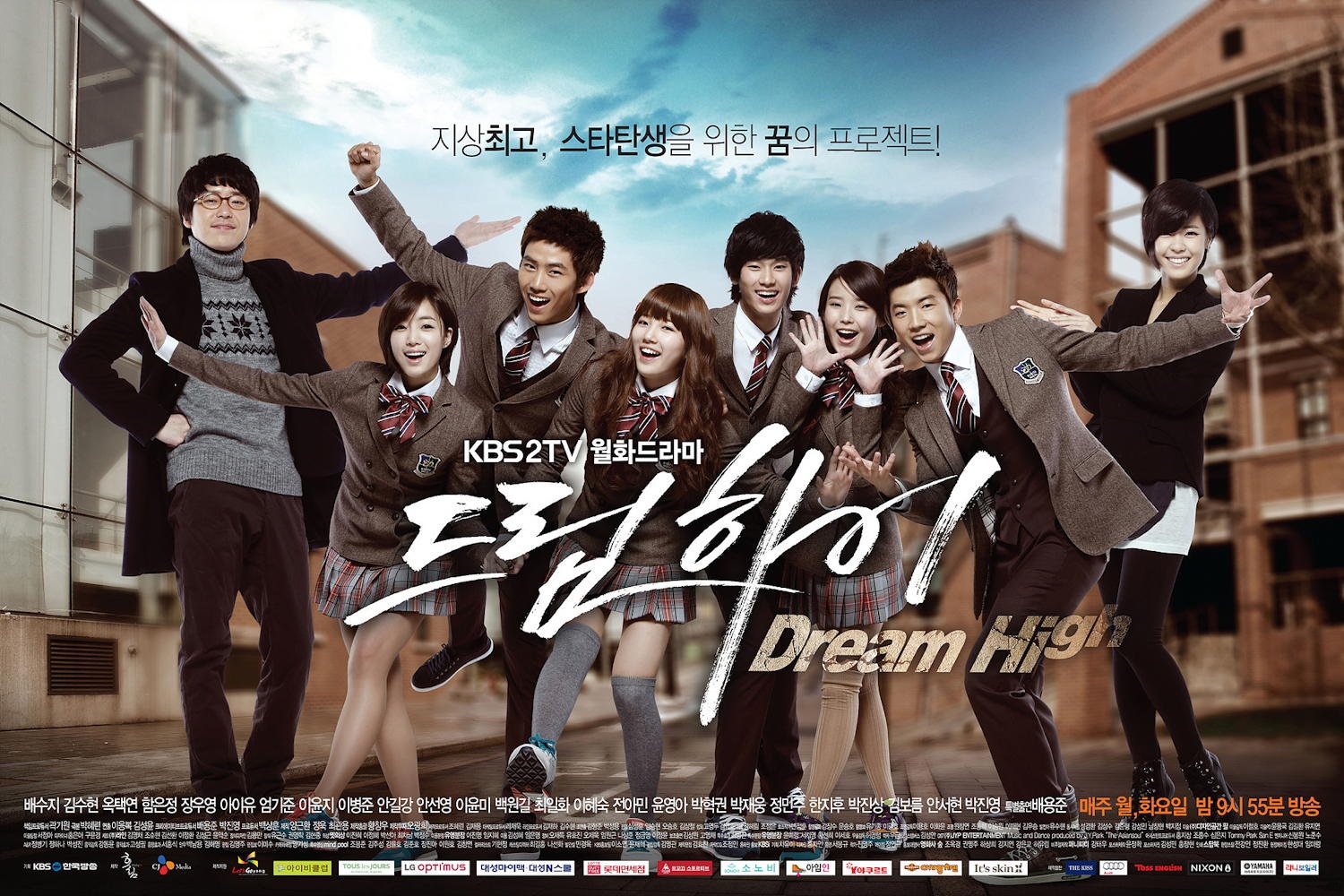
Galaxy Pop Advertisement

Three celebrities, three natural labels.

After all, Kim Yoo-jung is young. Song Joong-ki is chic, or at least compared to us mere mortals. And Suzy?

Well, she is simultaneously the baby, the designated cute member, and the “most visual member” of the girl-group Miss A, all standard archetypes for cookie-cutter K-Pop groups. So, perhaps it’s no wonder she’s become known as ‘The Nation’s First Love’ (kookmin chotsarang;국민 첫사랑).

As the bearer of that label, last year she displaced even Girls’ Generation members to become the ‘CF Queen,’ and she became a major earner for label JYP Entertainment in the process (to the extent that she’s been accused of completely overshadowing the other members of Miss A). Clearly, she’s very popular.

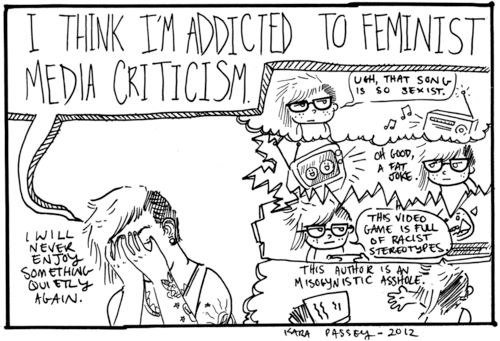
Addicted to Feminist Media CriticismWhy then, does seeing this picture of her get me so hot and bothered?

Blame the 30-minute subway rides to work as I pass it everyday. After two weeks of those, I’ve realized there are several questions raised by that label of hers, which I’d love to hear your thoughts on (source, right: Guerrilla Feminism):

1) In Korea, has a male celebrity in his late-teens (or older) ever been explicitly marketed as “innocent”?

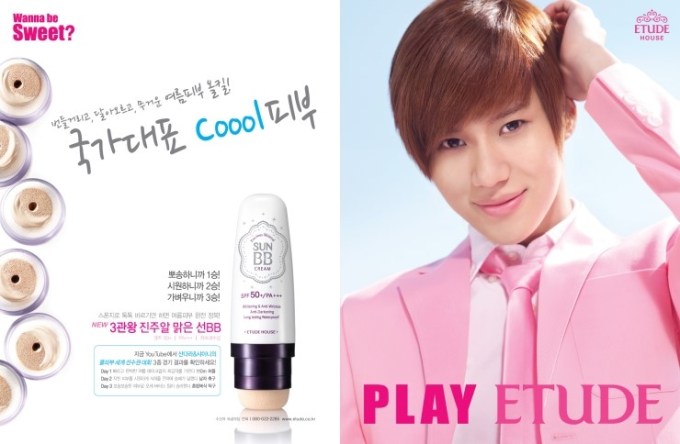
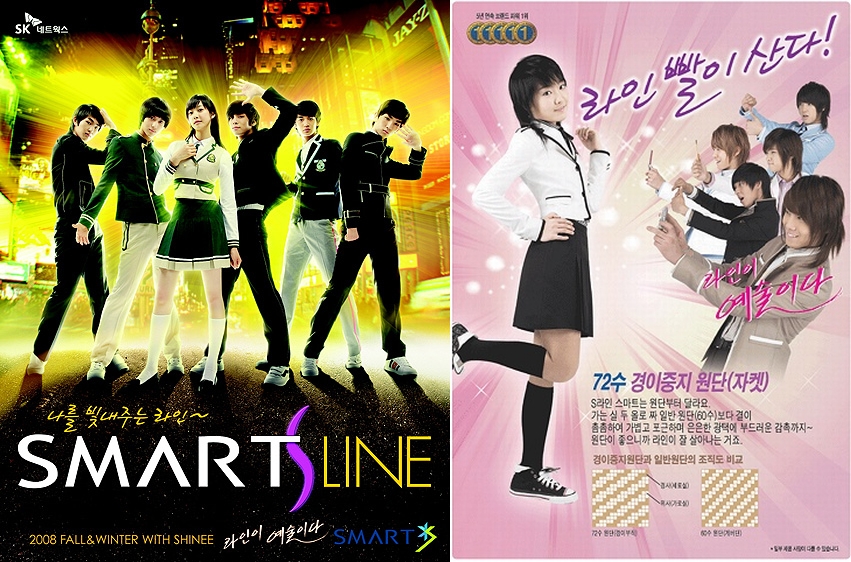
To be clear, I’m not saying that their general image can’t be innocent. For instance, as described by Bethany at Seoulbeats, this has certainly been the case for Lee Taemin (and, at 19 now, is something he’s trying to shake off):

Many K-pop fans probably also remember cutie pie Taemin debuting at the age of 15, all fresh-faced and adorable. But while he was the youngest member of SHINee, he also boasted the slickest dance moves onstage and in their music video for “Replay,” which still remains my favorite SHINee song to date. Taemin has been pegged as the cute member of SHINee since his debut days, and even though he has taken on a sexier, more mature look in “Lucifer” and more currently, “Sherlock,” noona fans still remember the days of innocent Taemin. It’s lucky that Taemin had such good hyungs who took care of him so diligently — looking at you, Key. He also graduated high school not long ago…

Taemin Etude House(Source: ningin)

And, of course, such innocent images have indeed been exploited and/or manufactured by advertisers; in Taemin’s case, by cosmetic company Etude House for one, with appropriately cutesy taglines. But explicitly identifying a young male celebrity as innocent, to the extent that there’s a “soonsoohan;순수한” next to his name like next to Suzy’s? Although I’d be happy to be proven wrong (and I do acknowledge the over-generalizations I may be making in this post), I have the strong suspicion that’s a gendered divide which advertisers and the public simply aren’t prepared to cross.

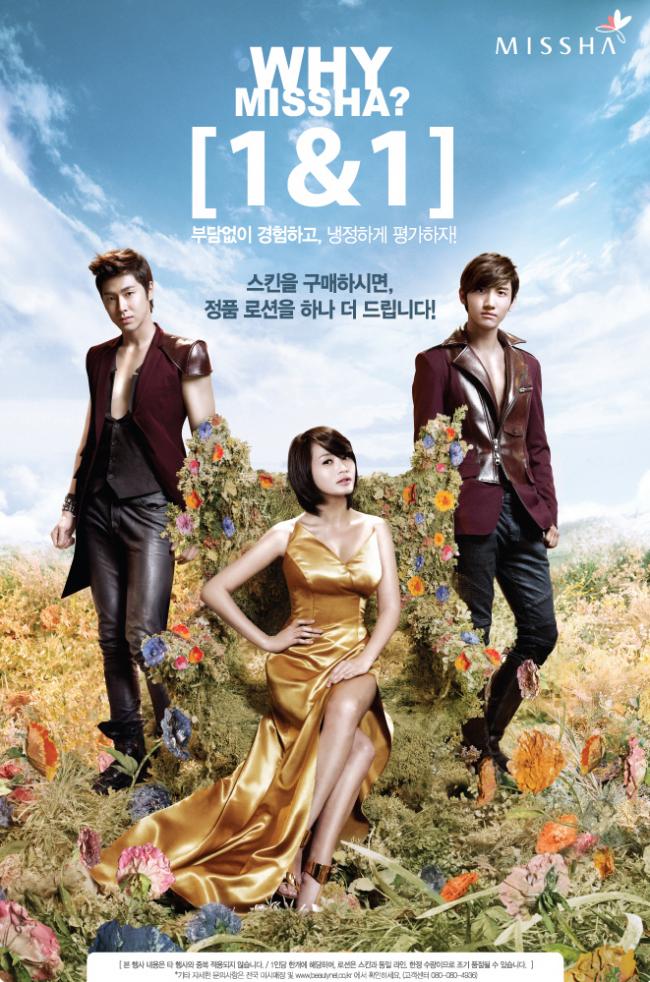
To buttress that point, consider the following thought experiment:Why Missha Kim Hye-soo TVXQ

2) Can anyone imagine the sexes reversed in the opening ad?

Alone or with other women, it goes without saying that women are indeed regularly depicted—or explicitly described—as “chic” in advertisements. Or, in any one of any number of other mature, positive terms. But mix the sexes up, and the tendency is to reaffirm gender stereotypes and roles.

Usually, this is subtle, like in the ways described in my Gender Advertisements in the Korean Context posts. In the opening ad though, it is explicit, the young and innocent females providing the binary opposite to the man’s chicness, thereby affirming his greater sophistication (for a similar example, see this vintage lego ad, ironically usually lauded for its gender neutrality). Which is fine in itself, but to see the sexes reversed is so uncommon as to be jarring, and all the more memorable for it.

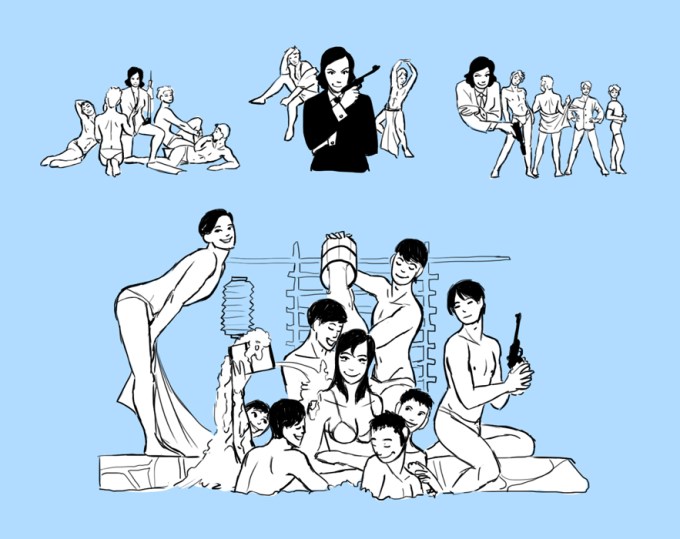
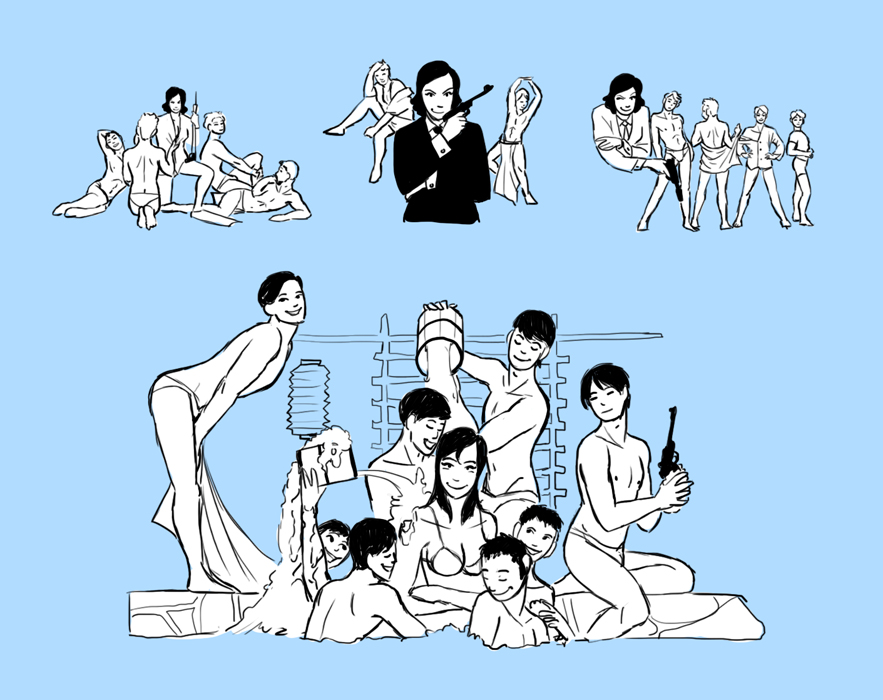
Like in this 2011 Missha advertisement for instance (source: Metro), with then 41 year-old Kim Hye-soo and—albeit not exactly innocent-looking—25 year-old Jung Yun-ho and 23 year-old Shim Changmin of TVXQ. Personally, it reminds me of “Jane Bond” a little:

Jane Bond(Source: Tumblr, Gender Role Reversals)

3) Is this gender stereotype more prevalent in Korea than elsewhere?

With the provisos that (sexual) innocence will always be treasured more in females than in males, as the latter will always have concerns about the paternity of their children; and that, as Brian in Jeollanam-do put iteverything in Korea “tries to be cute, in the same way everything in the States is “Xtreme” and too cool for school,” I’d wager this is indeed the case. Consider how:

  • Stressing the cuteness, innocence, and (supposed) asexuality of young female celebrities is the modus operandi — i.e., key to deflecting criticism — of “ajosshi fandom” and “uncle fandom.”
  • Through young, overwhelmingly female celebrities, Korean girls are heavily socialized to use infantilizing aegyo
  • Not only is there also a “The Nation’s Little Sister” out there in addition to Suzy being “The Nation’s First Love,” but: a) There are no male equivalents; and b) Technically, Suzy is actually the third first love!, with JYP, well-known for experimenting until a concept is shown to work, arguably more responding to this clear media-driven and/or public demand for one rather than deliberately over-promoting Suzy per se.

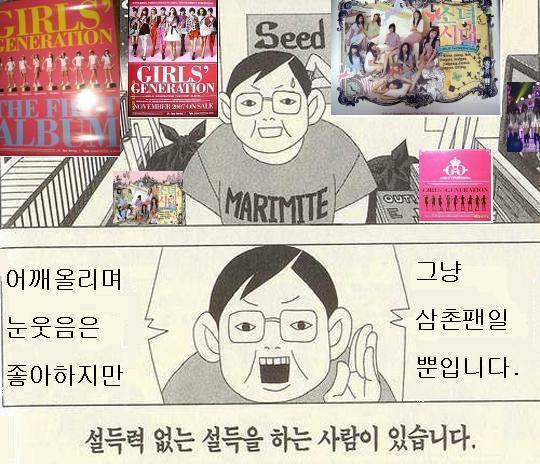
As a commenter at Netizen Buzz explains (my emphasis; source, right: 윤삼의 블로그):

Uncle Fan Girls' Generationppl always complaint that Suzy get too much spotlight, too much articles. But it’s funny that when there’re some articles/ objects about other members, nobody cares. I think it’s not Suzy’s fault to make other members become underrated. it’s just that fans ( specially K-fans) don’t love them enough. If everybody don’t love Suzy so much, she won’t be get so many CFs, drama invitations. You have to understand that they want Suzy to be in their dramas, CFs, not others. So we can’t say “Instead of using Suzy, why don’t we use Min/Jia/Fei?” And JYP can’t do nothing with it. And why ppl kept hating on her? She has to work with a murderous schedule, but she never complaint about anything. Just keep working so hard and share her money to her unnies, but still she get so many hates. You guys always think that’s not fair for others but I think that’s not fair for Suzy too.

And on that note, again I acknowledge any generalizations I may have made in this post (difficult to avoid with something ultimately based on just one ad!), and am happy to learn of exceptions. But even happier though, to learn of your own thoughts on those questions!

Update 1: An April 13 Netizen Buzz headline says “Suzy takes the lead as the star with the most CFs in 2013 with 22.”

Update 2: See KpopStarz for the November 2013 rankings of the various contenders for the title of “Korea’s Little Sister” over the last five years.

(For more posts in the Korean Sociological Image series, see here)

Korean Sociological Image #75: Gender Discrimination in Everyday Korean Language

Korean Gender Discrimination LanguageAs Noface-nameless explains:

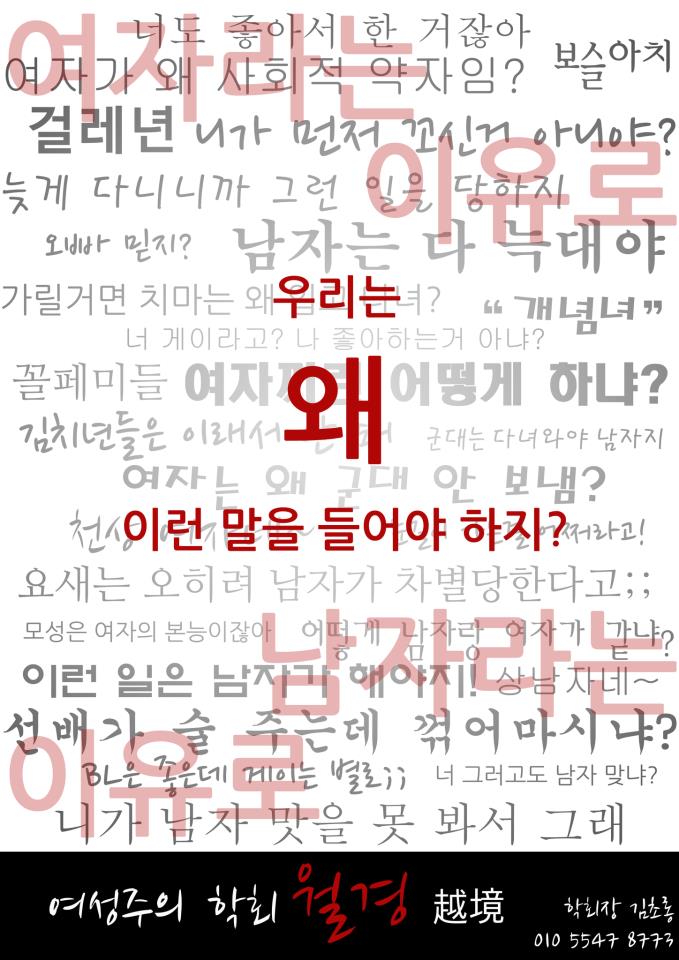
Students at Sungkyunkwan University has created this poster, among many others to point out all the gender discrimination happening with common phrases said between friends and colleagues. The centered text in red reads “WHY do we have to listen to these things” / “WHY do we have to deal with these phrases” (translation open to interpretation)

some of the background text deals with homophobia, rape culture, negative gender stereotypes and heteropatriarchy.

Every time I the conversation of feminism or conversation of gender and sexuality in Korean, it makes me feel good. Because my Korean is very limited, I love adding new words to my dictionary, especially about these things.

Just recently I learned that the Korean translation of Women’s studies is 여성학.. I havent found the equivalent translation for Women’s and Gender studies but Im leaning towards something like 성(sexuality)과 여성학 .?

still learning….

Via: Tales of Wonderlost

(For more posts in the Korean Sociological Image series, see here)

Korean Sociological Image #74: Child Sex Offender Notices

Korean Sex Offender Website(Source)

Update: With thanks to reader Lily for pointing it out, the notice I received says not to post it on the internet, so I’ve replaced it with a screenshot of the Korean sex offender registry website, www.sexoffender.go.kr. Sorry that that makes the post and comments now difficult to follow.

Received in my letter box this morning. And, presumably, every other one in the neighborhood.

I don’t have time to translate the entire thing sorry, let alone the advice and information provided on the back. But here is the information about his crime:

In October 2011, in Haeundae-gu, XX-dong, this person attempted to rape a teenage girl, but failed. On May 17 2012, he was convicted according to the “Protection of Children and Juveniles from Sexual Abuse Act,” imprisoned for 2 years and 6 months, with 4 years’ probation, given 40 hours of sex violence treatment lectures, and required to have his personal information be made available to the public for 3 years.

Apologies for the confusion — has he just been released? If not, why is this notice being provided now? — and would appreciate it if anyone could clarify.

Meanwhile, regardless of the country, how would you react if you received something similar? Has it happened to any readers before?

Also, you may be interested in comparing this wanted notice sent to all Busan households in March 2010, after the rape and murder of a 13 year-old girl.

(For more posts in the Korean Sociological Image series, see here)

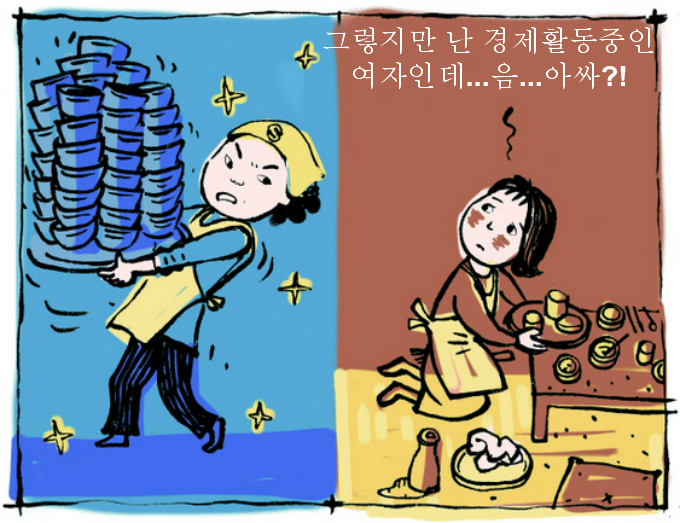
Korean Sociological Image #73: The True Numbers of Korean Working Women

(Source; edited)

If recent BBC coverage is anything to go by, marriage in South Korea is like a business. It’s also becoming a bit of an explosive topic as social mobility slows down and the traditional image of the male breadwinner becomes eroded by the increasing participation of females in the labour market. Some of the most widely publicised scandals and controversies on the Korean internet seem to have been, in some way or another, due to this intensifying gender friction.

(KoreaBANG; my emphasis)

My apologies for singling out Justin at KoreaBANG, whose post is still excellent overall. And as you’ll soon see, I often make mistakes too.

But that comment I’ve highlighted? Frankly, it just infuriated me. Because even though it’s completely wrong, I seem to hear it all the time these days.

In reality, the Korean female workforce participation rate has stagnated at one of the lowest rates in the OECD ever since 1997-98, when women were overwhelmingly targeted for layoffs during the Asian Financial Crisis. Back then, the logic was that wives would be provided for by their husbands, and 20-something daughters by their fathers. And 10 years later, in the latest crisis, to a large extent this logic was reapplied, although on this occasion there was a clearer economic – not just patriarchal – logic in that women formed the bulk of irregular workers (see here, here, and here for much more information).

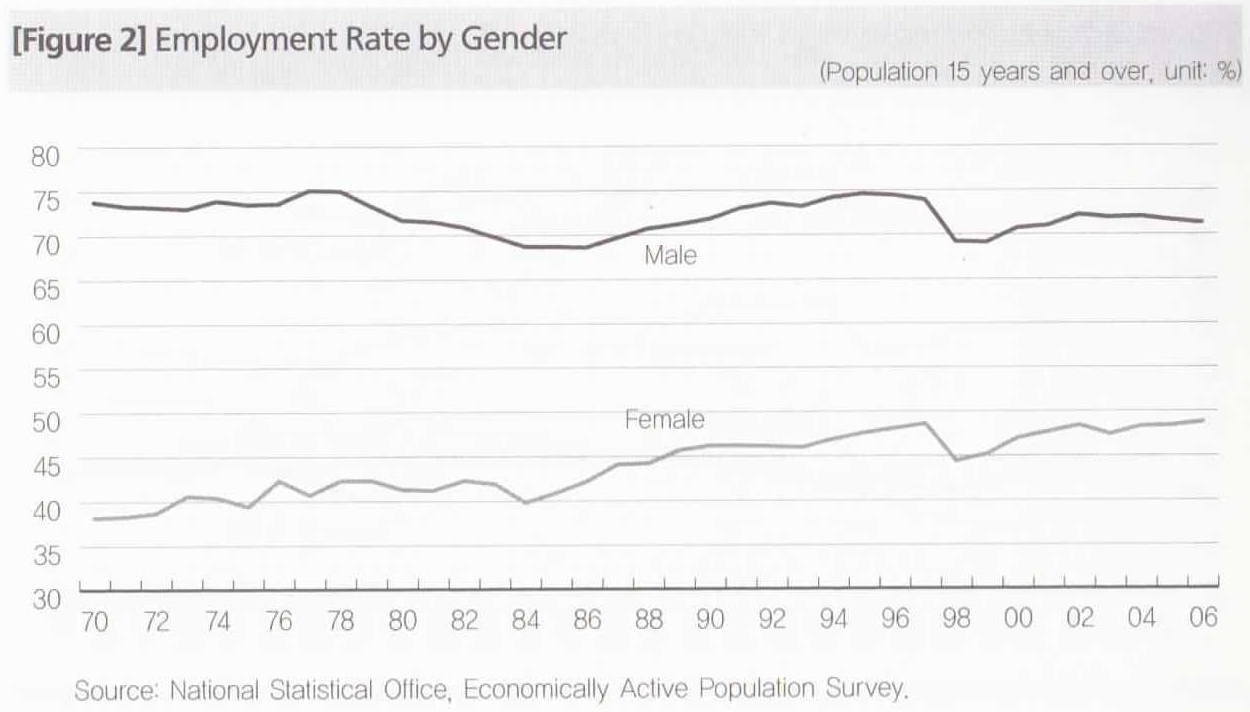
Or so I’ve often written. But naturally, it was difficult to find definitive statistics on that when I first reported on it three years ago. At that time, my most up to date source was my copy of Working Korea 2007, published by the Korea Labor & Society Institute. Here is my scan of page 19, which has a graph of the male and female workforce participation rate of 1970-2006:

In hindsight, although it does show a big drop in the female rate in 1997-98, it shows an equally large (even slightly larger?) drop in the male rate too. With my apologies, I’m very surprised I didn’t notice that earlier, and, although it does contradict most of the literature I’ve read about the Asian Financial Crisis, and is just from one source too, it still definitely bears further investigation.

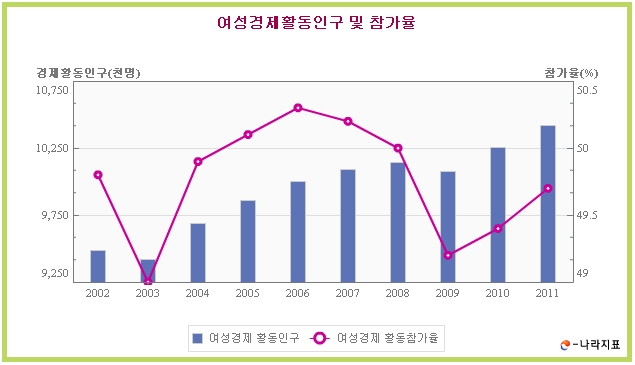
That aside, a year later I found a source going up to 2008 (it shows a fall of 50.3% to 50.0% in 2006-2008; see below also). And today, spurred by Justin’s comment, I tried looking again, and found the following at the National Statistics Office’s website:

(Source)

The blue bars represent the economically active female population, in thousands (i.e., the first figure is 10.75 million), the pink line the female workforce participation rate. Although the choice of right scale gives the false visual impression that the rate has changed a great deal, as you can see from the numbers it has remained within a narrow band of 49% to 50.5%, last year’s rate being just lower than that of 2002. Also, clearly a 0.9% drop between 2008 and 2009 isn’t quite as big as I’ve been making out, and again is something that bears further exploration.

But still, one thing is clear: the number — well, percentage — of Korean women working has little changed in the last 15 years, and remains very very low by the standards of other developed countries. So it can not be the cause of increasing gender friction.

The perception that Korean women are making significant inroads into the Korean economy though? That’s entirely possible, and indeed I highly recommend KoreaBANG for much more on that (indeed, especially the remainder of Justin’s post), as well as many posts by Gord Sellar too (source, right).

(For more posts in the Korean Sociological Image series, see here)

Korean Sociological Image #72: Girl-group performances for the military

In the commercial above, a conscripted soldier is happy that his girlfriend is coming to visit him. What really gets him and his buddies running though, in a play on the faster downloading speeds of KT’s 4G LTE network, is the arrival of a girl-group on his army base.

With 300-350,000 new conscripts annually, one of the longest conscription periods in the world, and a grisly — but improving — record of bullying and abysmal living conditions, keeping the troops entertained can safely be assumed to have long been a big concern of the South Korean military. Accordingly, televised visits by girl-groups and entertainers have become a recognizable part of Korean popular culture (although they originally performed for US soldiers). Here’s an example with actress Shin Se-Kyung (신세경), performing on an army base as part of the very popular Infinity Challenge (무한도전) show last year (episode 269, aired October 1):

For those many more conscripts not lucky enough to have pretty female celebrities come to their own base though, the blog Sorry, I was drunk provides an interesting, *very frank* insider account of what they thought of girl-groups, as well as prostitution, cheating on partners, Caucasian girlfriends, and marriage. Here’s what the author wrote about the former:

…I knew Korean guys, especially sexually deprived conscripts, liked female celebrities (duh, right?), but I didn’t know how bad that affection was. I learned that Korean conscripts in general are obsessed with K-Pop girl groups, in particular Girls’ Generation. By obsessed, I mean really obsessed. A good example of this is rapper Psy’s description of his military service.

In this show, Psy says he was made to stand guard while watching the TV so he could alert senior conscripts that Girls’ Generation was on it. While it wasn’t that extreme in my unit, it was quite normal to see guys flock to the TV whenever GG or other good looking female celebrities were on air. Every Friday and Saturday, when the major networks have those “music” shows parading group after group, entire units would stay glued to the TV. Guys would watch the same music video or performance repeatedly so they could oggle at the girls. Their bare legs exposed, sexy dancing, and terrible music (not a secret among conscripts either), it was pretty obvious there was only one reason for these “musicians” to exist. These girls are glorified strippers, covered in the thin veil of “music” so it doesn’t seem as creepy and sad as going to a strip club. For conscripts, it’s usually the only form of sexual gratification they’re allowed while on base.

See also:

(For more posts in the Korean Sociological Image series, see here)

If you reside in South Korea, you can donate via wire transfer: Turnbull James Edward (Kookmin Bank/국민은행, 563401-01-214324)

Korean Sociological Image #71: “Specs” for the perfect Korean wife or husband

(Source: Slutwalk Korea)

When I lived abroad in Korea, I spent a lot of time doing work in cafes. Probably a 100 or more during my 2 years there. As such, I eavesdropped on thousands of conversations. And nearly every one of those conversations was about two topics: complaints re studying English and complaints re losing weight.

(Patricia Park, Korean Bodega, June 15)

Maybe I’m just nostalgic for my bachelor days, but it’s conversations about “specs” (스펙) that I’ve really noticed myself. A Korean term for the criteria used to evaluate a potential spouse on, it’s also my experience that it’s almost exclusively used by women, although that may just be because there’s usually more women than men at my local Starbucks.

Either way, in February Kim Da-ye at the Korea Times argued that looking at marriage this way is a relatively new phenomenon, and that it’s “matchmaking companies that rate spouse seekers by specs [that] have fueled [such] materialism.” And, as if to bolster that point, Donga-Reuters would report on exactly the same phenomenon emerging in China after I’d already begun writing this post.

But as discussed below, matchmakers have been encouraging such pragmatism for decades, so they can hardly be described as driving that change in outlook. Rather, it’s economic factors that are responsible, as Kim later acknowledges in her article:

…today’s buzzword “Sampo” generation (삼포세대) …indicates a 30-something who has given up dating, marrying and giving birth because of the lack of financial means…

Contrast the “880,000 won generation”, which generally refers to 20-somethings. Continuing:

….What’s interesting about such preferences for the partner’s economic qualification is that they don’t come from conservative parents or rigid social structure but independent, young individuals….

….The near obsession with fine lifestyle is a contrast to the attitude of the baby boomer generation, many of whom used to say that they can start from a small rented room….

When asked why the younger generation isn’t willing make such a humble start, Lee, a single woman in her mid-30s working at a media firm, said, “Back then, amid fast economic growth, people had hoped that they would be able to climb up the social ladder and afford a bigger place in the future. Nowadays, people feel that if they start in a small room, they will be stuck there for the rest of their lives.”

The high cost of getting married naturally leads to some couples to be heavily indebted after the honeymoon ends. In addition to the Sampo generation, another phrase linked to both the economy and marriage has emerged — “honeymoon poor.”

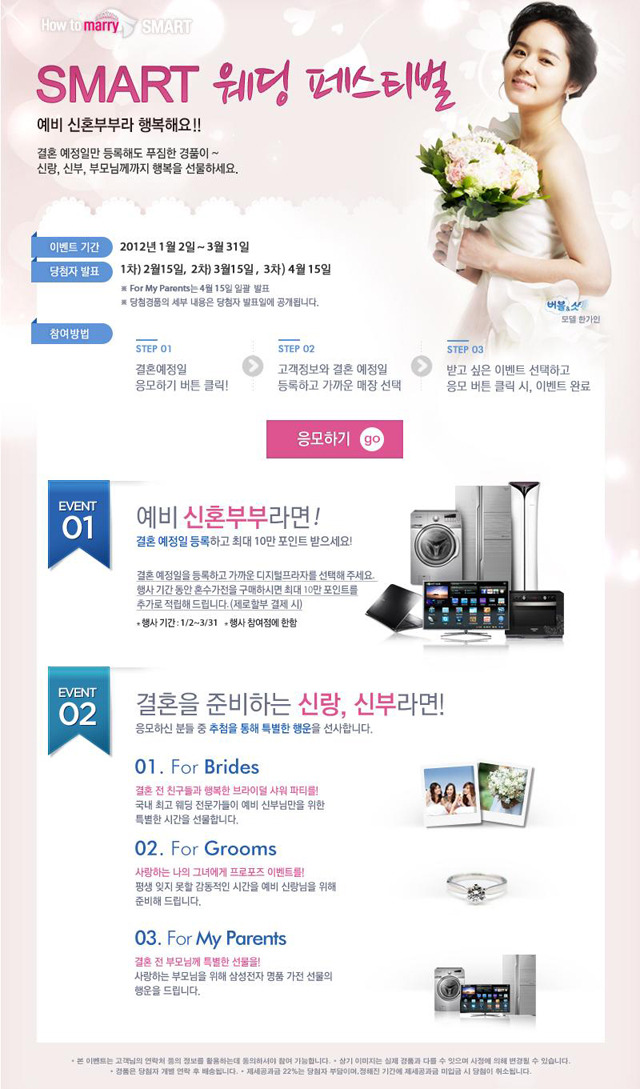
And Kim — whose article is still very informative overall — gives several examples of engaged couples’ fights over money, some of whom ultimately break up. Yet those would not be out of place in popular discourses of marriage in, for example, the 1980s, when women’s magazines were similarly promoting the virtues of arranged ones. Presumably, at the behest of their advertisers:

(Source: Google Books)

Passage Rites Made Easy [A 1982 Korean book by Ko Chonggi] describes marriage through an arranged meeting as more “rational” behavior than simply falling in love because the candidates for romance and matrimony have already been carefully scrutinized by parents and matchmakers. Korean women’s magazines also emphasize the value of prior screening in choosing a mate, suggesting by the frequency with which they address this topic that their youthful readership is by no means convinced of the merits of matchmade matrimony:

Today, with the trend towards frankness in sexual matters, talk of “arranged meetings” or “matchmade marriage” might sound excessively stale. Even so, in marriage the conditions of both sides enter into things. Matchmade marriage, where you can dispassionately investigate these considerations beforehand, has some advantages that cannot be ignored (“The Secrets of a Successful Arranged Meeting,” Yong Reidi, 3 March 1985: 347).

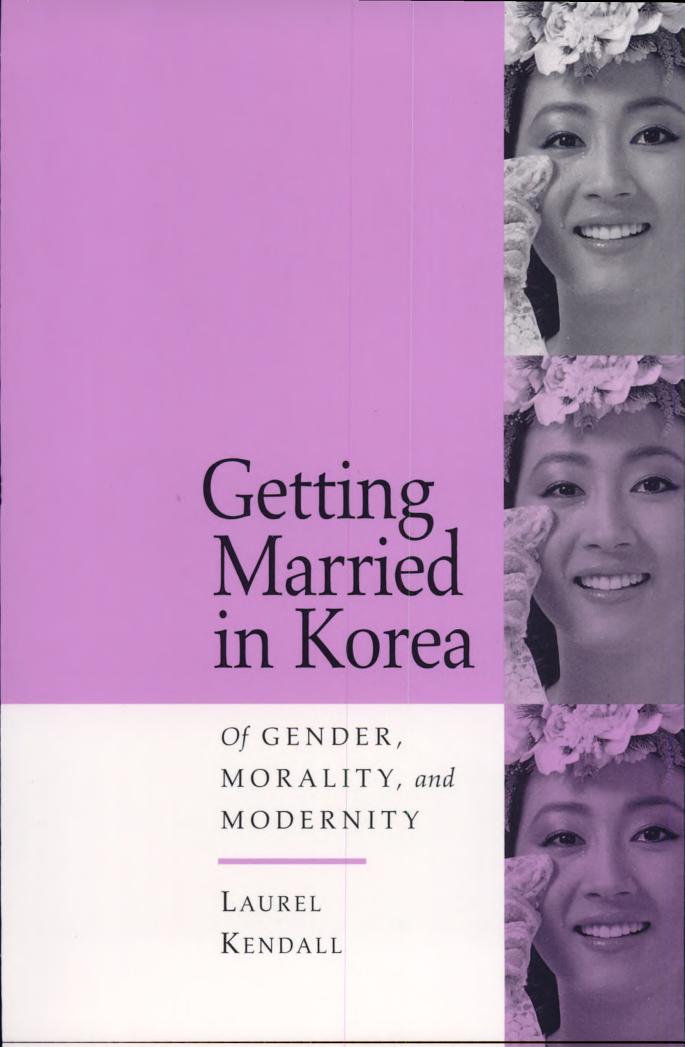
From pages 89-90 of Getting Married in Korea: Of Gender, Morality, and Modernity (1996), by Laurel Kendall, the next page sounds a little ironic 18 years later:

The evolution of Korean courtship practices provides one excellent example of how notions of progress, of an enlightened “now” versus a repressive “then”, mask the particular disadvantages for women in new forms of matrimonial negotiations, be they “matchmade” or “for love” — a mask which sometimes slips in angry conversation or social satire. Through courtship and through all of the talk about getting married, notions of ideal “man” and “woman”, “husband” and “wife”, “son-in-law” and “daughter-in-law” are constructed, reinforced, and resisted….

….In Korean popular discourse, the evils of old-fashioned matrimony, in which near-children were forced by the will of their elders to marry total strangers, have been replaced by more enlightened practices. The “old days” are still on the horizon of living memory, but are recalled as from an utterly vanished time. In confessing that he never saw his wife’s face until his wedding night, the writer Cho P’ungyon states [in 1983] with a touch of hyperbole that “Today’s young people would consider this laughable and the faint-hearted might swoon away, but in my day these procedures were considered natural.”

(Source: Korea Portal)

The difference being that in 2012, financially-strapped singles can no longer afford to be so dismissive (nor Japanese ones either). Moreover, while they’re not marrying complete strangers perhaps, many Koreans do marry people they’ve only known a few weeks, as discussed in an earlier post. Also, some mild social coercion can indeed be involved, as Gomushin Girl explained:

It’s important to differentiate between different kinds of matchmaking arrangements…lots of Koreans use services that are similar to eHarmony, It’s Just Dinner, and other similar paid and unpaid services. Just like in the US, there’s free and paid computer matching sites, and more expensive and comprehensive personalized dating services. These offer a great deal of flexibility, and allow you to reject partners at many stages of the process – the worst consequence being that the agent in charge of finding you matches will decide you’re too picky, and start sending you “lower quality” matches. You’re free to meet multiple people at once, and they’re basically meant to facilitate dating.

However, 선 (Seon) matches are pretty different. Most of the time the people proposing the arrangement are close family or friends (of your parents), and parties are expected to make up their minds pretty quickly. Delaying too long or changing your mind after the first few dates is strongly frowned upon, and may even cause major social riftts. This means that women especially are pressured to marry people before they’re comfortable with them, and even if they’re not really what they’re looking for. Seon is serious, and you’re expected to commit yourself pretty quickly.

It’s also expected to override existing social relationships. My Korean host mother once called me up to ask if I’d go down to Busan to meet a friend’s son, who was interested in a seon meeting with me. I told her I’d just started dating someone, and her response was essentially, “That’s wonderful! When can you come to Busan?”

(Source: Sinbustory)

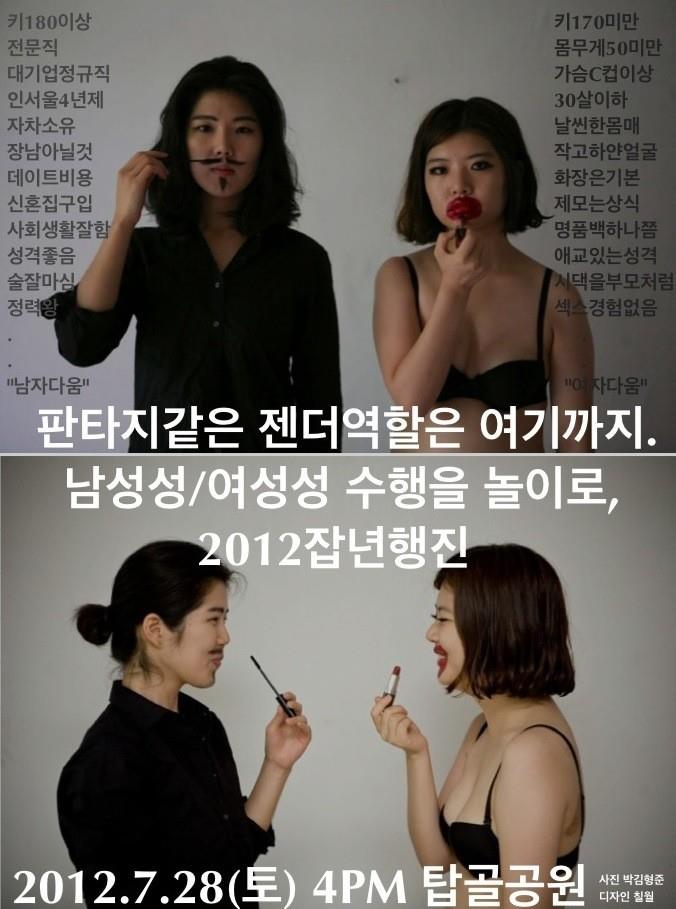
And on that note, let me leave you with a translation of the image that prompted this post, a poster for last week’s Slutwalk in Seoul. The slogan reads, roughly, “Let’s stop these fantasy gender roles now. Let’s play at being ‘masculine’ and ‘feminine’, 2012 Slutwalk Korea.” Many of the specs it mentions would be shared by people the world over, but there are also some quintessentially Korean ones:

For the “man” (literally, it says “manliness”):

  • 키180이상 Over 180cm in height
  • 전문직 A professional
  • 대기업정규직 Regular worker at a big company
  • 인서울4년제 Went to a 4-year university in Seoul
  • 자차소유 Owns a car
  • 장남아닐것 Not a first-born son
  • 데이트비용 Pays for everything on a date
  • 신혼집구입 Buys a home after marriage
  • 사회생활잘함 Good social skills
  • 성격좋음 Good personality
  • 술잘마심 A good drinker
  • 정력왕 Good sexual stamina

For the woman (“womanliness”):

  • 키170미만 Under 170cm tall
  • 몸무게50미만 Under 50 kg
  • 가슴C컵이상 A C-cup or over
  • 30살이하 30 or under
  • 날신한몸매 Thin body
  • 작고하얀얼굴 Small and white face
  • 화장은기본 Always wears make-up
  • 제모는상식 Shaves legs and underarms
  • 명품백하나쯤 Have at least one brand-name handbag
  • 애교있는성격 Have aegyo
  • 시댁을부모처럼 Treats parents-in-law like her own parents
  • 섹스경험없음 Be a virgin

Are there any others readers would add? Especially Korean ones?

(For more posts in the Korean Sociological Image series, see here)

Korean Sociological Image #70: “The Healthy Man-Meat Ham”

(Source)

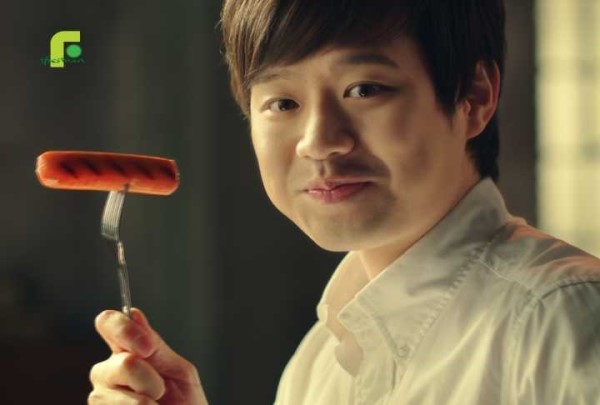
Alas, the irony here is probably unintentional: Koreans actually say “the water is good” (물이 좋다) when there’s lots of hot bodies around, not that it’s a meat market. So, if you want a real satire on that theme, go see Kara’s wonderful effort for Cob Chicken instead, back when male objectification in Korean ads was really taking off.

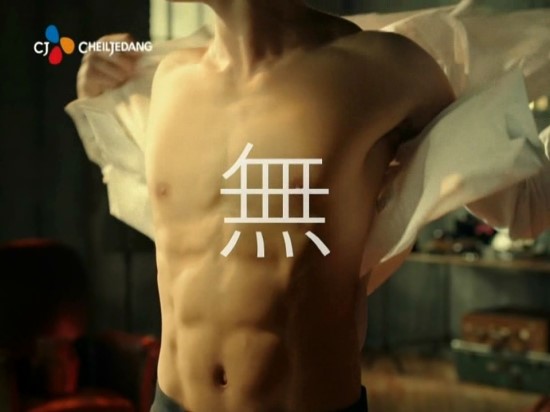
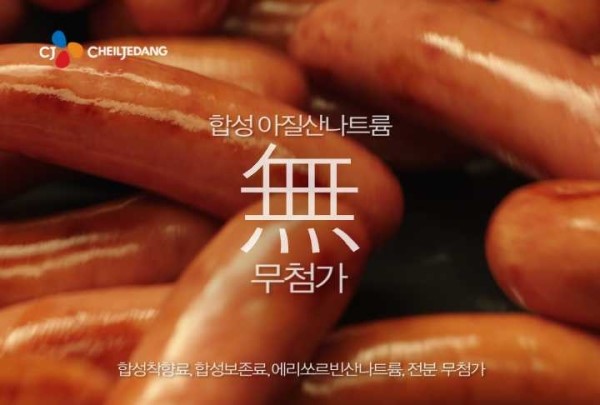
Still this commercial does make me laugh. Especially when the meat in question is miniature hot-dog sausages:

The actor is Cheon Jeong-myeong, and the company is CJ Freshian. The text reads:

사람들은 더할수록 완성된다고 믿는다 People believe that the more you add to something, the more complete it will be

하지만 더 건강한 햄은 But as for the healthy ham

빼고, 빼고, 빼고 Remove, Remove, Remove

(無) 합성아질산나트륨, 무첨가 No added sodium nitrate

(Source)

“無”, or “moo/무”,  literally means “no, not, nothing”, but here it’s also a clever pun because the Chinese/Hanja character looks like a six-pack. The usual choice though, would be “王”, or “wang/왕” , or the Korean one ““chocolate abs” (choco-lat-bok-gun/초콜릿복근) that was made popular in early-2010.

Continuing, the voiceover says:

합성착향료, 합성보존료, 에리쏘르빈산나트륨, 전분 무첨가 No added flavorings, preservatives, sodium erythorbate (an antioxidant), or flour

필요없는 것을 빼고 Remove things that are not needed

맜있게, 더 건강하게, 프리시안 더건강한 햄 Deliciously, more healthily, Freshian the healthy ham

(Source)

For comparison, see the discussion at Korean Sociological Image #35, about Lotte Chilsung’s (롯데칠성음료) 2010 commercials for “Hot 6iX” (핫식스), which featured both men’s and women’s shirts bursting open:

(For more posts in the Korean Sociological Image series, see here)

Korean Sociological Image #69: Attitudes Towards Sexual Objectification, 2004 vs. 2012

Back in 2004, I would study Korean by translating articles about Lee Hyori’s breasts. Because that was much more interesting than reading about the joys of kimchi-making in Korean textbooks.

So, I hardly romanticize that era as more innocent and chaste than today’s. Nor, by highlighting just one complaint by one women’s group from then, do I mean to imply that the Korean public was necessarily more prudish back in 2004, or that it’s necessarily more permissive today. After all, my Google News Alert for “성상품화” (sexual objectification) still provides me with fresh critiques of the recent Miss Korea Pageant every day. And who can forget the role “Bikini Girl” played in April’s congressional elections?

Having said that, things definitely have changed in 8 years:

  • Starting about 2006, ubiquitous soju ads started featuring women in revealing clothing after decades of almost exclusively using demure, virginal-looking models.
  • A little later, dominant media narratives about girl-groups, depicting middle-aged male fandom as platonic rather than sexual, provided a window for their objectification to flourish.
  • Men have also been increasingly objectified, particularly after the “chocolate abs” label was coined in 2009.
  • The number of smutty online-ads has surged, especially in the last year.
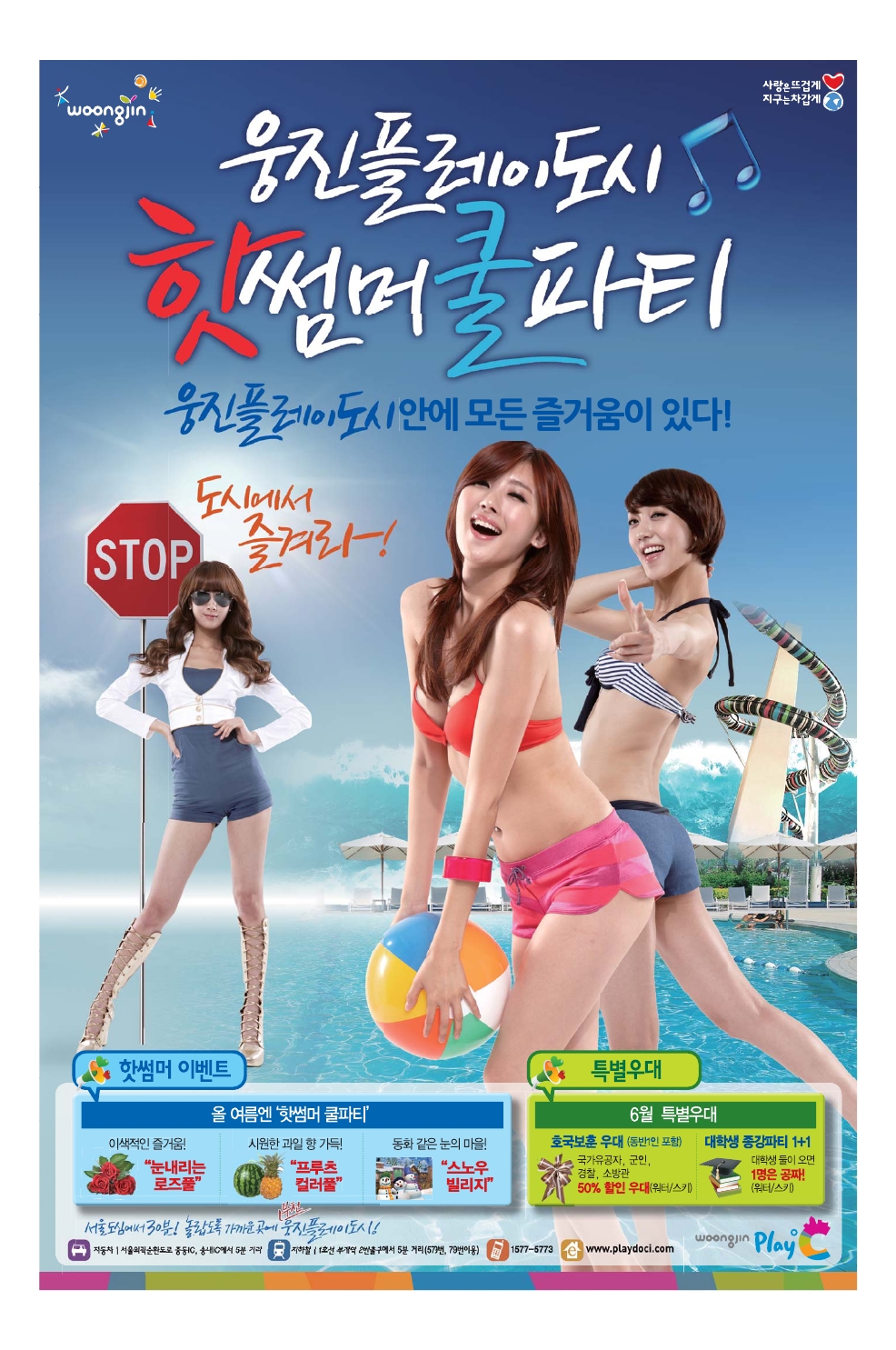
  • And last but not least, it’s difficult to find an advertisement for water-parks (also ubiquitous) that doesn’t feature a scantily-clad girl-group, with one—Ocean World—even inventing a group specifically for that purpose. (Boy bands and male models are used also, most notably by Caribbean Bay below, but my strong impression is that there’s much less of them than women)

In short, it is via the increasing objectification of (especially) girl-groups that you can see a clear McDonalidization of Korean cultural industries in recent years (see here, here, herehere, and here for more on the hows and whys). And, because of that shift, it’s difficult to imagine a complaint like this being given much attention in 2012:

전남관광 책자 두고 ‘여성상품화’ 논란 일어 / Controversy over Sexual Objectification of Women in Jeollanam-do Tourist Brochure

Oh My News, June 15 2004. By Gang Seong-gwan.

지난 6월초 전남도가 여름 관광객을 겨냥해 제작배포한 관광 홍보책자 ‘남도스케치’에 사용된 비키니 차림의 여성사진이 논란이다. 광주여성민우회는 14일 성명을 통해 “남도스케치 배포를 즉각 중단하라”고 요구하고 나섰다.

Controversy has arisen over the use of women in bikinis in the June edition of tourist brochure Namdo Sketch, a widely-distributed brochure aimed at summer tourists . In an announcement on the 14th, the Gwangju branch of Womenlink demanded that it stopped being distributed immediately.

(Source: James Turnbull)

전 남도는 ‘남도스케치’를 제작하면서 책 표지, ‘전남이 추천하는 여름 여행지 BEST’ 중 완도 명사십리 해수욕장 등 7곳을 소개하면서 비키니를 입은 여성의 사진 10여장을 게재했다. 이 책자는 겉표지까지 총 85페이지로 구성됐으며 비키니 사진은 책자 앞 부분에 게재했다. 전남도는 제작된 책자 2만여부를 터미널 등 공공장소와 전남도내 기초단체 등지에 배포를 마친 상태이며 조만간 2쇄에 들어간다는 계획이다.

이에 대해 광주여성민우회는 “여성을 성 상품화했다”면서 전남도의 공개사과는 물론 책자 배포 중단을 요구하고 나섰다.

With a cover title of “Best Recommended Tourist Sightseeing Areas in Jeollanam-do” [James – I can’t see that title myself, but unfortunately that opening photo was very small], Namdo Sketch introduces 7 tourist sights, including Wando and Myeongsashibri Beach, and uses a total of 10 pictures of women in bikinis on the front cover and in the first part of the brochure, out of 85 pages. By the end of its first printing, the Jeollanam-do Provincial Government had distributed roughly 20,000 copies to transport terminals, public places, and civic groups, and planned to make a second printing.

Gwangju Womenlink said that the brochure sexually objectified women, and demanded a public apology as a matter of course, as well as a halt on further distribution.

“여성 성 상품화 한 것, 배포 중단”…”문제제기 이해하지만, 시원한 여름을…” / “This is the sexual objectification of women, distribution must stop”…”We understand, but hey: this is summer…”

광주여성민우회는 “전남 관광홍보는 여성의 비키니만이 유일한 대안인가”라며 “공공기관에서 나온 책자인가 할 정도로 낯뜨거운 장면이 많이 실려 있어 당혹스러움과 황당함을 느낀다”고 밝혔다.

Gwangju Womenlink argued that “Are women in bikinis the only option for a tourist brochure?”, and said “We are embarrassed and perplexed that a public institution would go so far as to use such crude [James – I think this is a better translation of “낯뜨겁다” than “obscene” or “rude”] images in a tourist brochure.” (source, right)

이어 “지역에 관광객을 유치하기 위해 명소를 소개하는 것은 좋지만 관광지역의 구체적인 정보와 특색 있는 프로그램의 홍보 대신 여성의 비키니 복장을 내세워 시선을 끌어보고자 하는 공무원의 얄팍한 속셈은 용납될 수 없는 행위”라고 비판했다.

Continuing: “It is good that tourists are being attracted to this area by having places of interest introduced to them. But instead of providing concrete information and unique tourist programs, the PR simply consists of pictures of women in bikinis, designed to attract one’s attention. This is both shallow and misguided of Jeollanam-do officials, and can’t be forgiven.”

또 여성민우회는 “지역의 명소를 알려내기 위한 기본 조건은 다른 지역과 차별되는 테마를 만들어 남도만의 색다른 맛을 느끼게 하는 것이다”면서 “노력해야 할 것은 따로 있는데 엉뚱한 것으로 메꾸려는 것은 직무유기”라고 주장했다.

여성민우회는 “여성의 성 상품화를 부추기는 공공기관의 홍보책자는 결코 용납될 수 없다”면서 ‘남도스케치’의 배포중지를 요구했다.

Also, Womenlink emphasized that “What should have been done to inform tourists about places of interest was showing them how different they were to other ares and what unusual tastes, experiences, and feelings Jeollanam-do has to offer. Instead of making an effort and doing their duty though, officials offered this rubbish.”

It added that “Promoting the sexual objectification of women is never acceptable”, and so demanded an immediate halt to the distribution of the brochure.

(Sources: left, right)

이에 대해 전남도청 한 공무원은 “문제제기는 이해한다”면서도 “여성의 사진을 표지에 넣는다고 해서 이 책자가 눈길을 끌고 있는 것은 아닌 것 같다”고 말했다.

그 러나 또 다른 공무원은 “여성의 비키니 사진을 두고 상품화까지 이야기하는 것은 지나친 것 아니냐”며 “오히려 여성단체들이 그렇게 주장하면서 폄하시킨 것은 아닌지 모르겠다. 물론 어느 정도는 이해할 수 있지만 이런 사진을 많이 사용한 것도 아니지 않느냐”고 주장했다.

In response, a Jeollanam-do official said ” We understand the concerns, but it’s not because of the women in bikinis on the cover that people are drawn to the brochure.” Another emphasized that “It’s a complete exaggeration to claim that just pictures of women in bikinis is objectification. Rather, it’s women’s groups that are degrading women by doing so. And it’s not like we used many in the brochure.”

관광책자 제작 담당부서인 전남도청 관광진흥과 이명흠 과장도 “여성단체의 지적사항에 대해서 전혀 모르는 바는 아니다”면서도 “행정관청에서 발행한 책자여서 그럴텐데 여름에 맞춰서 시원한 해수욕장과 수영복을 입은 모습의 여성을 모델로 했을 뿐이다”고 말했다.

이어 이 과장은 “행정기관이 발행했다는 느낌이 들면 잘 보지 않는다. (관광객들의) 눈길을 끌 수도 있다는 생각에서 진행한 공격적인 마케팅의 일환이다”며 “너무 한쪽으로만 생각하지 말고 발상을 바꿨으면 좋겠다”고 주장했다.

(Source: Metro Seoul, 31 May 2012, p.49)

Lee Myung-hum, the head of the Tourism Promotion Office of Jeollanam-do Provincial Government that produced the brochure, said “It’s not like I don’t understand women’s groups concerns. But only swimsuits are appropriate for female models promoting cool swimming areas in the summer.” He added that “No-one ever pays attention to anything produced by a council tourism promotion office. The images were simply part of an aggressive marketing technique designed to get the attention of tourists, and shouldn’t be overanalyzed.”

한편 ‘남도스케치’ 표지모델은 전남도청 여성 공무원 중 희망자들이 참여하기도 했으며, 지난해에도 전남도는 여름 관광홍보 책자를 제작하면서 표지 등에 비키니을 입은 여성 사진을 게재한 바 있다.

The models used in the brochure included Jeollnam-do female officials [James — it says only the cover, but there were only 2 women on that], and a similar brochure was produced the previous year (end).

James — While the Jeollanam-do officials didn’t sound too sympathetic in that June 2004 article, another from the next month points out that in the second printing the bikini models were removed from the cover and 2 more pages, although some did still remain. It’s from that article that the before and after covers came from.

(For more posts in the Korean Sociological Image series, see here)

Korean Sociological Image #68: Laughing at the 1970s Fashion-Police

(Sources: left, right)

Remember when the Korean Defense Ministry said it was considering playing girl-groups’ music videos on giant TV screens along the DMZ?

The rationale, according to the official that thought of it, was that “the revealing outfits worn by the performers and their provocative dances could have a considerable impact on North Korean soldiers.”

Alas, nothing came of the idea. But the irony was palpable: in the 1970s, such revealing outfits were deemed subversive by the military government, with ruler-bearing policemen stopping women on the street to measure the length of their skirts (they would also cut men’s hair if it was too long).

This difference is humorously illustrated in Samsung’s 2007 commercial for the Anycall Miniskirt (애니콜 미니스커트), with Jun Ji-hyun (전지현):

It’s disappointing that it was set in the UK though, which never had such ‘fashion-police.’ Why not pick from the wealth of Korean video and imagery from that period? (Just look under “미니스커트 다속” for instance, literally “miniskirt control/supervision/clampdown.”)

My first thought was because the ad is already doing some subtle fashion-policing, through informing the Korean public of the new de facto rules. That would be much less subtle with authentic Korean examples though, and the ensuing social message, however refreshing, would be at odds with the cheerful tone of this one.

On the other hand, we can make allowances for creative license; perhaps the advertisers just wanted a swinging ’60s vibe. Also, it’s not like Koreans themselves aren’t afraid to poke fun at their old, ridiculous laws on miniskirt length (not least because they weren’t removed from the books until as recently as 2006), nor critique modern fashion and body-image ideals.

Still, it is yet another example of a phone literally embodying a woman. As is LG’s recent LTE wireless ad, which isn’t subtle at all:

(Source)

On the left, the black text reads “If it’s only the shape/appearance of LTE, then it isn’t available everywhere,” while on the right the pink reads “If it’s really LTE, then it’s available in every city.” The headline in the middle reads “But it’s different,” and finally the text at the bottom reads “The one and only LTE, in touch in every city nationwide. Automatic roaming in 220 countries worldwide.”

Personally, I think the execution is flawed—if the woman on the left is supposed to only have the shape and/or appearance of the real LTE (confusedly, “모양” means both), then shouldn’t both women actually look and be clothed exactly the same, with some indication that they’re different for some other reason (say, by having the women on the left scowling)?

Either way, the advertisement’s other message is that the woman on the right, with high-heels, a V-line face, impossibly-long (and uneven!) photoshopped legs, and a dress that only just covers her underwear, is quite literally the modern standard that all agasshis (young women) should adhere to. Jun Ji-hyun’s bobbies would be proud.

(For more posts in the “Korean Sociological Image” series, see here)

Korean Sociological Image #66 – Inventing Labels for Women’s Bodies

(Source)

Introduction – Objectification Done Right

This may be an old ad, but it’s just a great introduction to my Gender Advertisements in the Korean Context lecture. I’ll probably still be using it 10 years from now.

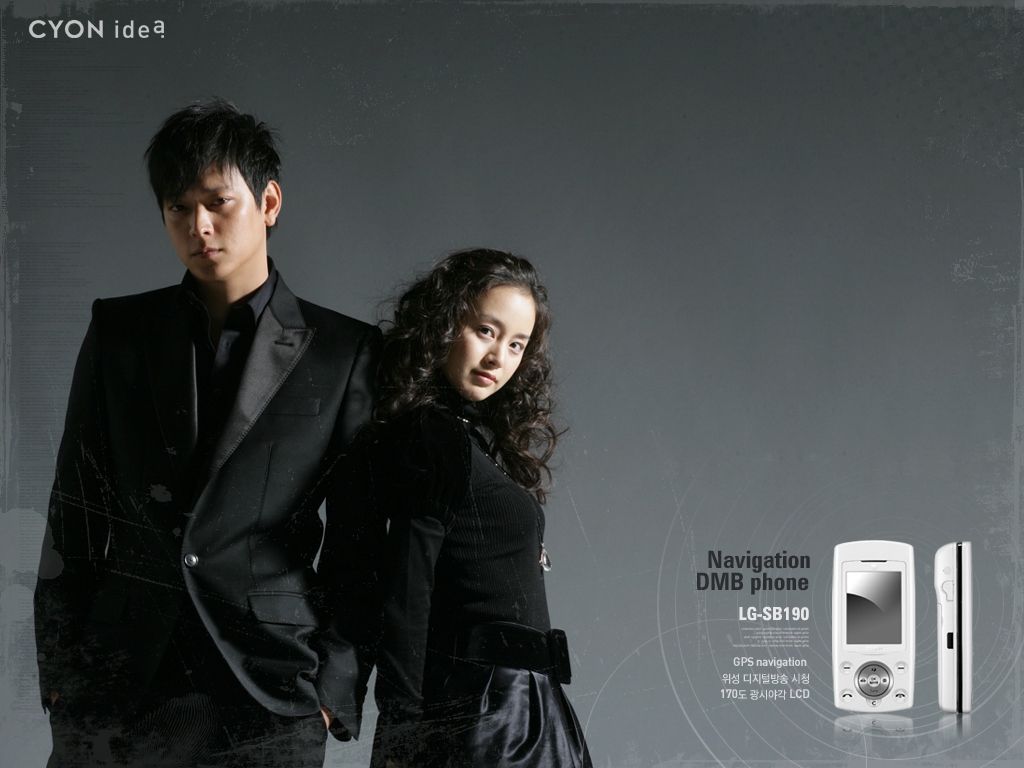
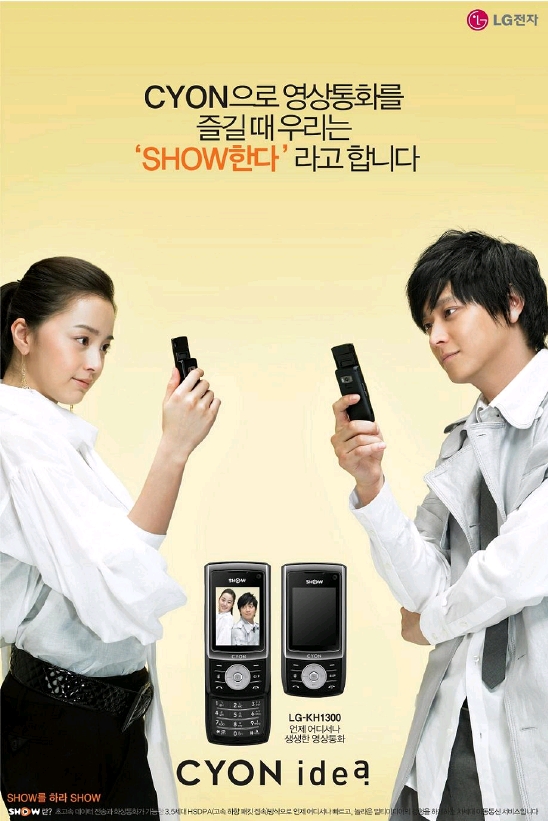
First, because it shows the value in spending a couple of extra seconds to really look at an ad. Most readers probably immediately notice the faux scratches and blotches on it, reminiscent of a phone screen overlay, but it’s easy to overlook that Kang Dong-Won (강동원) and Kim Tae-hee (김태희) themselves are also supposed to resemble the advertised phone. Once you notice that his collar resembles the reflection on the screen though, then you’ll quickly realize that his grey button represents the dial, and that her black belt buckle matches the cover of the entry port, the curve of her breasts the back of the phone at the top. It’s really quite clever.

But still: if they’re supposed to resemble the phone(s), then why weren’t models of equal heights used? Or why wasn’t the layout of the ad rearranged and/or Kim Tae-hee photoshopped to make her look as tall as Kang Dong-won? Either would have been quite easy, as this second phone ad with the two of them makes clear (source).

To explain, I raise Erving Goffman’s concept of “Relative Size”, or the fact that, if random men and women are paired off together, then in 1 in 6 cases the woman would be taller than the man, whereas in advertisements it’s as low as 1 in 200. Later, I consider the obvious rejoinder that Kang Don-won and Kim Tae-hee were primarily chosen for their celebrity status, discussing why 65% of Korean advertisements feature celebrities, whereas it’s only 10% in most other developed countries. Finally, there’s also the concept of “Licensed Withdrawal” to mention, one aspect of which is how men are often shown providing virtual shields for women.

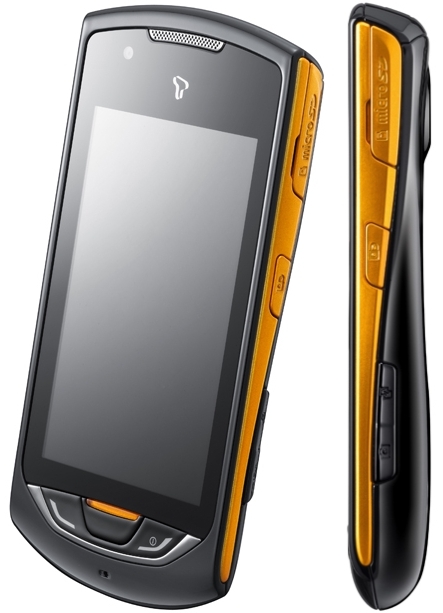
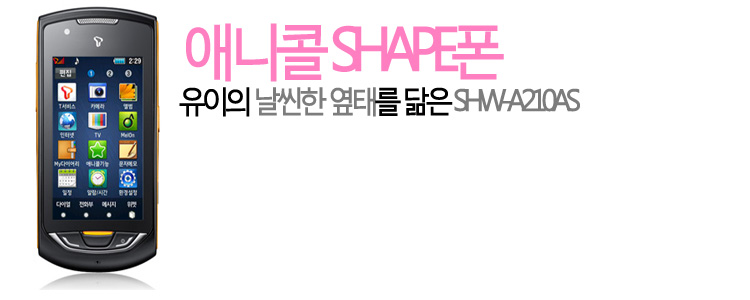
Bearing all that in mind, what does this Samsung SHW-A210S Shape Phone on the right remind you of (source), released back in November 2010? Specifically, the side, which according to Samsung is a particularly attractive feature of the model?

S-lines Will Sell Anything

What? You didn’t guess Uee (유이) of the girl-group After School (애프터스쿨)? Well, clearly that must be your own fault, as Samsung not only said it’s specifically designed to look like her profile (source), but this and this blogger agree.

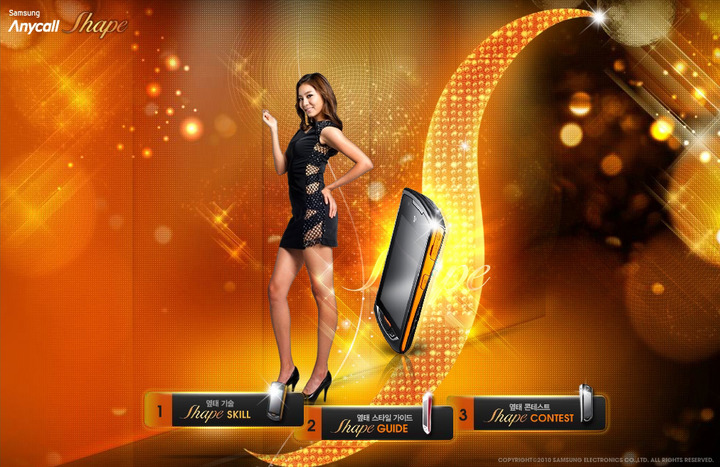
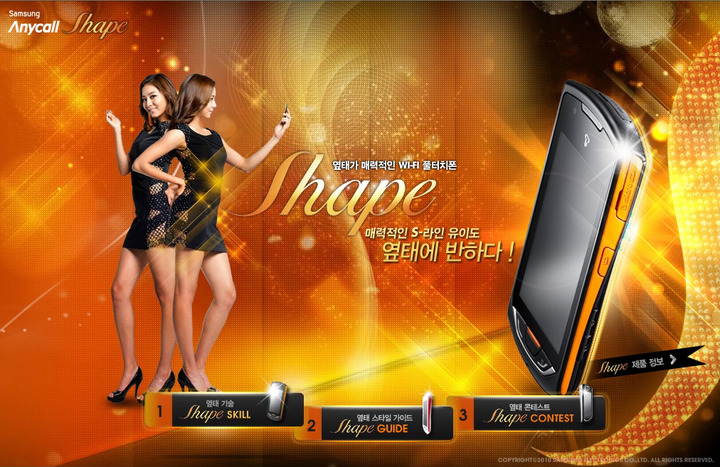
Perhaps these screenshots from the phone’s promotional website will help:

(Source)

Alas, Samsung was really just attempting to capitalize on Uee’s star power, and on men’s interest in seeing and women’s interest in having an “S-line” (again, the copy makes that explicit). Lest we forget though, that actually means a great set of tits and ass, and it’s testament to the saturation of the term in Korean advertising and popular-culture that Samsung could get away with linking it to a completely unrelated inanimate object.

But that’s not the main reason I’m highlighting the phone here – after all, it’s by no means the first time the S-line has been used to sell one. The Wondergirls (원더걸스), for instance, did so back in 2008:

Instead, what makes this advertising campaign stand out is because on the one hand, Samsung is taking advantage of one body label to sell something, but on the other it’s attempting to replace that label a new one of its own creation – the yoptae (옆태), or “profile”.

The Invention Process

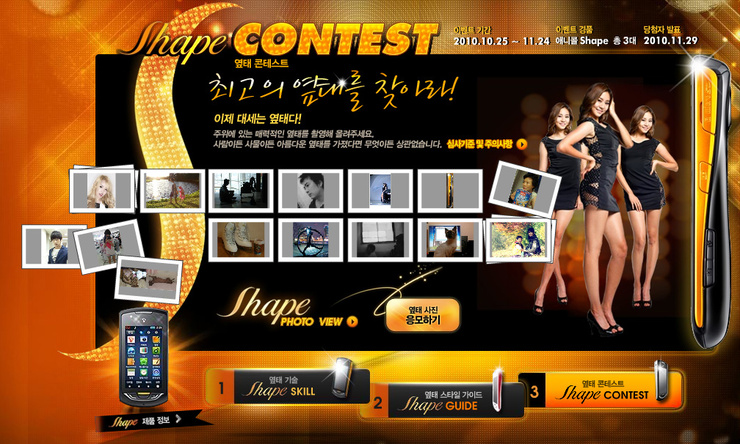
Actually, the campaign starts quite innocently, with Uee simply sketching profiles of things, finishing by announcing that it’s now “The Age of the Profile”. Later on in the campaign, visitors to the website would be encouraged to submit their own sketches and photographs in a competition:

(Source)

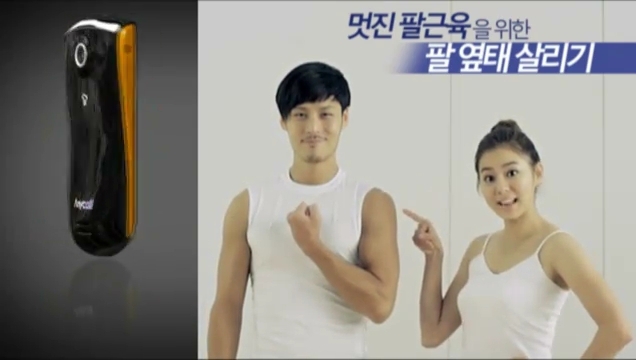
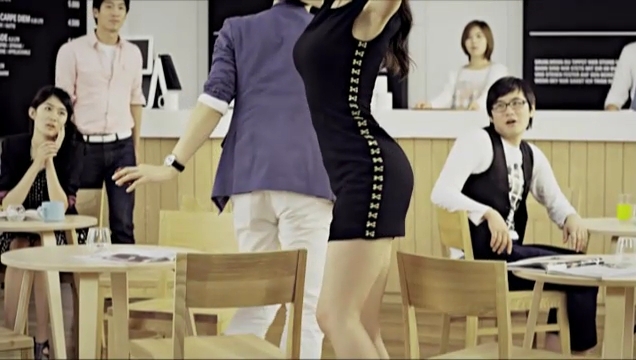
But not before viewers were show which kind of profile the campaign was really focused on. Skip ahead to 0:40 for fashion tips on how to show it off:

Next, Men’s Health cover model (source) and fledgling drama star (and friend of Rain!) Jung Sueng-kyo (정승교) is shown working on his own profile. And you’ve just got to hand it to Samsung for thinking of something that can be applied equally to men and women:

Instead of running with that equally-opportunity objectification though, we’re quickly back to women’s profiles. It’s difficult not to wonder if advertisers are just a little too used to using women’s bodies sometimes:

Context – The Profit Motive

Usually, when Korean body terms are explained to non-Korean audiences, then they’re made out as simple equivalents of English ones, the S-line and now profile substituting for the “hourglass figure” for example. But unlike that term, which I’d wager goes back to at least the infatuation with corsets in the 1800s, the S-line wasn’t even around when I came to Korea in 2000: jjookjjook-bbangbbang (쭉쭉빵빵) was used instead. Moreover, not only are so many invented these days that it’s difficult to keep track, but the pace and especially audaciousness with which this is done in Korea is nothing short of outstanding (source, below right).

(Update:  I may be mistaken about how old the hourglass term is –  Stuart and Elizabeth Ewen, for example, only mention the “Grecian Bend” in Channels of Desire: Mass Images and the Shaping of American Consciousness {1992; p. 75}. But surely it dates back to at least the 1950s?)

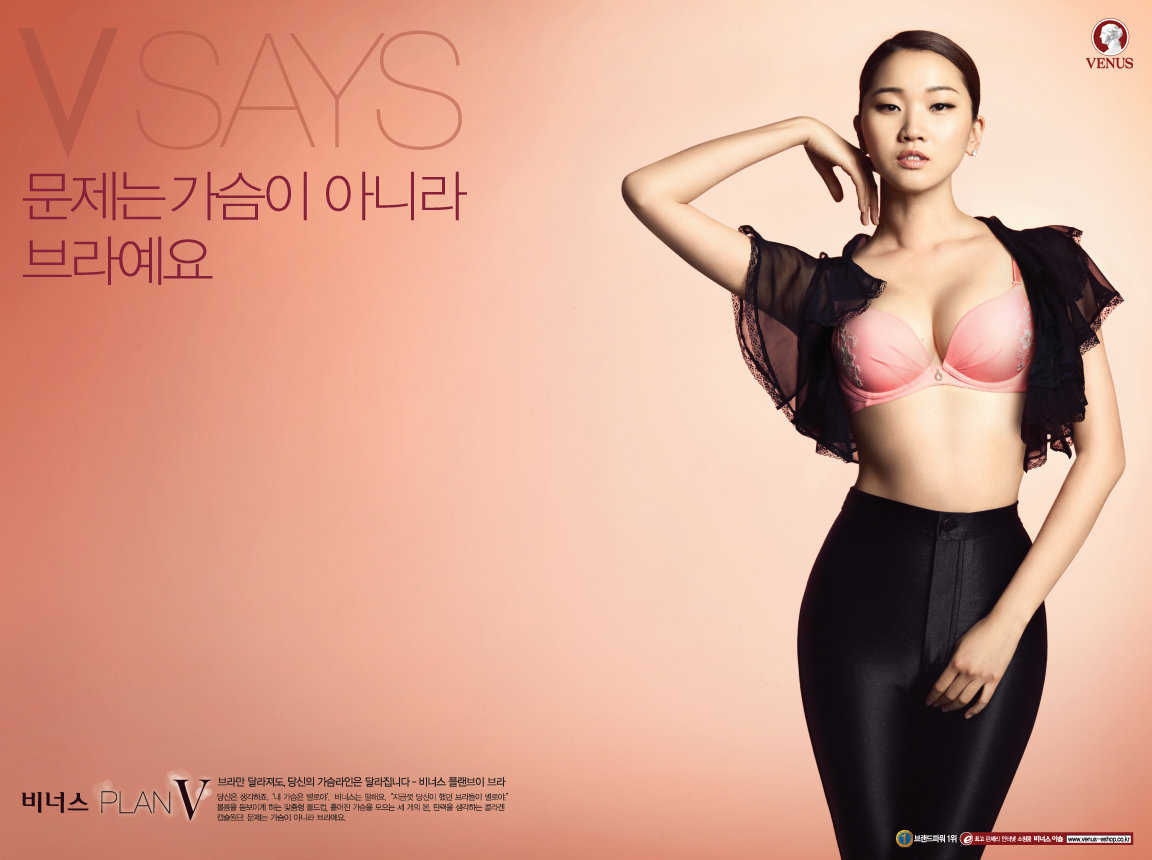
You are probably already familiar with the unbelievable example of the X-line for instance, which is literally only possible in Photoshop, but you may be surprised to also learn that companies are also constantly trying to get the public to redefine “established” terms too, lingerie company Vivian (비비안) hoping to make the V-line better known as the line between a women’s breasts rather than a triangular jaw (which Kwangdong Pharmaceutical sells – yes really –  “Corn Silk Tea” to help you obtain). On top of that, Yes’ (예스) lingerie company and W Magazine would rather have that area of a woman’s body known as a Y-line and W-line respectively…while in turn other companies still would rather have the Y-line mean a woman’s back.

And that alphabet soup is just the tip of the iceberg when it comes to that competition for buzzwords and (re)definitions that will stick with consumers. But unfortunately there’s only so much I could fit on a Powerpoint slide!

Media Promotion

Of course, the media and Korean public are well aware of this – the combined image on the left of that slide is testament to that (I added the two on the right). But in my own experience, usually the latter finds the situation more humorous than concerning (a generalization I’d be very happy – but don’t expect – to be proven wrong), while the former merely “reports” on the new body labels (and others like “Gold Misses” – more abstract perhaps, but still very much designed to get women to buy things), only very rarely criticizing the process and/or its effects. In so doing, it serves to simply promote the term, whether that’s in direct collusion with the companies or otherwise.

Take, finally, this inane example from Star News, a transcript of which (from here) I’ve translated below. If you get confused by some of the dates mentioned in it, please note it was aired in November 2011:

스타 노출의 변화, 옆태가 뜬다? The way stars show off their bodies is changing, the “profile” look is now booming

[Y-Star] 스타들의 노출이 많아지면서 섹시한 앞태는 물론이고 일명 숨 막히는 뒷태라 불리며 신체의 뒤 라인이 주목을 받고는 했었는데요 이제 노출의 키워드는 바로 옆태가 됐다고 합니다. 새로운 섹시함의 상징, 옆태에 대해 <스타뉴스>가 알아봤습니다.

While stars have been showing a lot of skin recently, and of course people’s focus is on their sexy “front figures”, and most recently on their so-called breathtaking “back figures”, now a new body-revealing keyword is emerging – the profile. A new symbol of sexiness, Star News has investigated.

드라마 <브레인>를 통해 1년6개월여 만에 컴백을 알려 화제가 된 최정원.오랜만의 제작발표회에서 모습을 드러낸 것보다 더 화제가 된 것이 있습니다. 바로 옆태가 훤히 드러나는 파격 시스루 의상인데요

A year and half since her last acting role, Choi Jung-won has recently made a comeback in the drama Brain. At a press conference about it, the topic of how she looked was much more interesting than the drama itself, as she wore a striking see-through dress that was very revealing in profile.

[현장음: 최정원] 안녕하세요 <브레인>에서 지혜 역을 맡은 최정원입니다

[Choi Jung-won]: Hello everyone, I’m Choi Jung-won, and play the role of Ji-hyae in this drama.

(Source)

이날 최정원은 이번 시즌 트렌드인 토트 무늬가 가미된 블랙 원피스에 은빛의 과감한 킬힐과 우아한 헤어스타일을 더해 한층 성숙해진 매력을 과시했는데요

On the day of the press conference, Choi Jong-won showed off this season’s trend of a black one-piece with a jigsaw-like design; silvery, bold killer-heels; and had an elegant hairstyle, all of which combined to make to make her attractiveness all the more mature.

특히 옆태가 훤히 보이는 파격 시스루 원피스는 주위 시선을 사로잡으며 집중 플레쉬 세례를 받기도 했습니다

In particular, her profile, visible through her striking one-piece dress, received a lot of attention, getting lots of camera flashes.

이 아찔한 옆태노출패션은 작년 11월, 애프터스쿨의 유이가 선보이기도 했었는데요 일명 옆태폰이라 불리는 한 휴대폰 광고에서 보일 듯 말듯 옆태라인을 노출한 미니 드레스를 입고 옆태 댄스를 선보이기도 했었습니다

This dizzy profile-revealing fashion was also shown off by After School’s Uee last November, in a dance wearing a now-you-see-it-now-you-don’t revealing mini-skirt in a commercial for the so-called “Profile Phone” (source).

그리고 월드컵 축하공연을 위해 무대에 올랐던 포미닛의 현아는 붉은 악마 티셔츠의 옆 라인을 과감하게 자른 의상으로 파격적인 노출을 해서 화제가 되기도 했죠

Also, in a public performance to congratulate soccer World Cup players, 4Minute’s Hyuna appeared on stage in a Red Devil t-shirt with the side cut away,  so revealing that it became a hot topic (see below).

지난해 유이와 현아에 이어 올해는 최정원 뿐만 아니라 많은 여배우들이 옆태를 내세운 몸매로 시선을 끌기도 했습니다

Following Uee and Hyuna last year, many actresses have drawn attention to their bodies by showing off their profiles, not just Choi Yong-won.

지난 10월 6일 개막한 부산국제영화제에서 파격적인 노출 패션으로 화제를 모았던 신인배우 오인혜.

This October the 6th, new actress Oh In-hye’s exceptionally revealing dress at the opening ceremony of the Busan International Film Festival also became a hot issue.

어깨는 물론 가슴을 거의 드러낸 오렌지 빛 드레스를 입은 그녀는 가슴라인과 등 라인을 노출한 것은 물론이고 아슬아슬하게 비춰지는 옆 라인은 보는 이들의 입을 딱 벌어지게 하기도 했습니다

Of course the orange dress showed off her shoulders, and almost completely exposed her breasts, but it was how dangerous she looked in profile [James – i.e., how close it was to also showing her nipples] that had people’s mouths agape.

그런가하면 지난 7월 14일 열렸던 부천 국제 판타스틱영화제 개막식 현장에서 가장 화제가 됐던 배우 곽지민은 앞트임, 뒤트임에 이어 옆트임까지 노출 포인트를 모두 갖춘 무한 노출 패션을 선보였는데요

(Source)

Also, at the opening ceremony of the Bucheon Fantastic Film Festival on July 14th, the hottest topic was actress Kwak Ji-min’s outfit, which, being open at the front, back, and the side, revealed almost everything.

[인터뷰: 곽지민] 반응이 그렇게 뜨겁게 될 지는 상상도 못했어요. 학교에서 특히 반응이 굉장히 뜨겁더라고요

[Kwak Ji-min]: I could never have imagined the reaction would have been so intense. It was especially heated at [the?] school. [Kwak Ji-min is 27, so I don’t know what school she’s referring to. Is she referring to a festival venue? – James]

Update: Thanks to (native Korean) Grace in the comments, who clarifies that Kwak Ji-Min is “referring to how popular that image is among schoolboys, saying that the reactions were hot from schools, i.e. the kids in school.”

드라마<내 마음이 들리니>에서 발랄한 캔디녀로 사랑을 받았던 황정음. 지난 5월 공개했던 섹시화보 제작발표회에서 언뜻 보면 평범해 보이지만 옆라인에 반전이 있는 의상을 입어 눈길을 끌었는데요 슬쩍 보이는 상체 라인이 더 아찔했다는 평가를 받았습니다

Hwang Jung-eum has received much love for her role as a vibrant and active candygirl [James – I’m told this means a young woman who’s cheerful and extroverted, especially someone who overcomes some kind of adversity] in the drama Can You Hear my Heart.  In May, at a press conference for her new sexy photobook, at a glance she appeared to be wearing ordinary clothes, but if you looked closer you saw that she was wearing eye-catching ones that showed off her profile, making you think of her upper body in a new light [James – see here for my translation of a blogger’s thoughts on how such “exposure” affects her career].

이어 지난 7월 한 패션매거진 화보를 공개한 윤은혜는 옆 라인을 살려 상의를 탈의하고 손으로 가슴부위를 감싸 안은 파격적인 포즈로 화제가 되었죠 그리고 상체 위주의 옆태 라인을 강조하던 다른 스타와는 달리 하체 옆 라인을 과시하며 아찔한 각선미를 보여 주기도 했습니다

In July, Yoon Eun-hye became a hot topic by showing off her profile in a photoshoot for a fashion magazine, undressing her upper body and embracing herself, covering her breast with her hand. Unlike other stars that emphasize the top half of their profiles, Yoon Eun-hye mostly shows off the bottom half of hers.

이렇게 과감하게 옆 라인을 노출해 제대로 된 S라인을 뽐내는 스타들이 많았는데요 새롭게 떠오른 노출의 키워드 옆태! 적정한 선을 지킨 옆태 노출로 진정한 아름다움을 뽐내길 바랍니다.

There are now many stars that have been showing off their well-made S-lines through boldly exposing their profiles like this, making “profile” the new exposure keyword! But let us hope that nobody overdoes it, only showing off sincere beauty by exposing their profiles (end).

(Source)

If you were confused by the second to last paragraph, then you weren’t the only one: as is clear from the image above (seen in the video), Yoon Eun-hye’s photoshoot was actually in October, and the other pictures can only be said to emphasize the bottom half of her profile (alas, not her bottom itself) in that her legs are physically longer than the upper half of her body. But speaking of Yoon Eun-hye, and to end on a positive note, by no means does all the above imply that Korean celebrities feel compelled to show off every new body term out there, nor – if they do decide to – that they can’t exploit them for their own ends, and/or simply to feel sexy. For much more on that, please see here!

(For all posts in the “Korean Sociological Image” series, see here)

Korean Sociological Image #65: First Commercial to Positively Feature a Korean Woman with a Non-Korean Man? (2006)

(Source: Paranzui)

Turn on a Korean TV, and you won’t be waiting long before you see a commercial with a Korean man in a relationship with a non-Korean woman. But for a long time, I was only aware of one ever produced with the opposite pairing, which I discussed back when it came out in July last year.

Since then, there has also been at least one music video produced that positively features a Korean woman with non-Korean men (not just the one man in this case!), which you read more about at Mixtapes and Liner Notes and Fanboy vs Fangirl here, here, and here. But again, there’s many many more with the opposite pairing (see here, here, and here for examples). And as far as I know, no more commercials with Korean women hitting on non-Korean men.

It turns out though, that Lee Hyori (이효리) did so back in 2006 in a commercial for Anycall, a mobile phone brand. I must have seen it a hundred times on TV that year, but only ever the fifteen second version, in which the ethnicity of the lucky gentleman at the end was unclear. I would automatically have assumed he was Korean then, but he’s actually Caucasian (with a hint of Latino?), as you can see at 0:27 in the thirty second version above.

As always, I’d be happy to be proven wrong — again(!) — with any further examples of similar pairings. But I doubt I’ll ever receive enough to challenge this clear discrepancy in the Korean media’s representations of different genders and races, which is why I raise it here.

For any readers further interested in why that discrepancy exists, please read last year’s post for more background and many more links.

Update 1) As soon as I’d packed away my netbook and was walking home, I remembered that there was indeed one more example from last year, a promotional video for the 2010 G-20 Seoul Summit. It features a Korean woman and Caucasian man having a traditional Korean wedding, just like I had (the kiss is just for show though—traditional Korean weddings are really quite sombre affairs!):

Update 2) With thanks to Dan for passing it on, here’s a recent commercial for a smartphone, apparently with screen quality so good you’ll be able to see your foreign boyfriend’s bit on the side reflected in his sunglasses:

Until I saw that, I was wondering if the “positively” in the title was a little redundant. But now it seems more apt than ever!

(For more posts in the Korean Sociological Images series, see here)

Korean Sociological Image #64: Hourglass-shaped Drink Bottles

(Source)

For readers’ sakes, wisely I’ve tended to avoid discussing my tastes in women’s body types on this blog. And don’t worry: I’m not going to start now.

But probably I’m deluding myself in thinking that they’re not already obvious from the images I use. Also, surely my occasional posts about hourglass figures are a dead giveaway. After all, why else would I argue that they’re universally-attractive, if not to feel smug about my own preferences?

Seriously though, while I do think there is solid evidence for that universal attraction, I’m always open to debating it, and would be the first to admit that such evidence is often misrepresented in the media. In turn, when it lacks any caveats and qualifications, at the very least it doesn’t challenge the public’s preexisting beliefs about body types. Say, those held by people in the fashion and clothing industries particularly, whose usual fashion advice for women with different body types is:

…”almost always aimed at getting women’s bodies, whatever shape they might be, to conform with the [ideal (skinny) hourglass figure]. The advice video below, sent in by Tara C. and aimed at women with “pear-shaped” bodies, does exactly this:

See Sociological Images for excerpts and commentary. And indeed, one additional way in which women are subtly(?) reminded that the hourglass figure is an ideal to be conformed to, is by altering the shape of the bottles of drinks aimed at them:

(Source)

You’d think I would have noticed years ago, but then I’m afraid I don’t buy them. As for not noticing it in their advertisements however, I confess that possibly I was simply too fixated on the accompanying models’ navels to ever pay attention.

Apologies if that makes me sound crass. But unlike with Shin-se kyung (신세경) above, for some reason it genuinely took the less exposed example of f(x)’s Victoria (빅토리아) below for me to see the hourglass packaging for the first time:

(Sources: left, right)

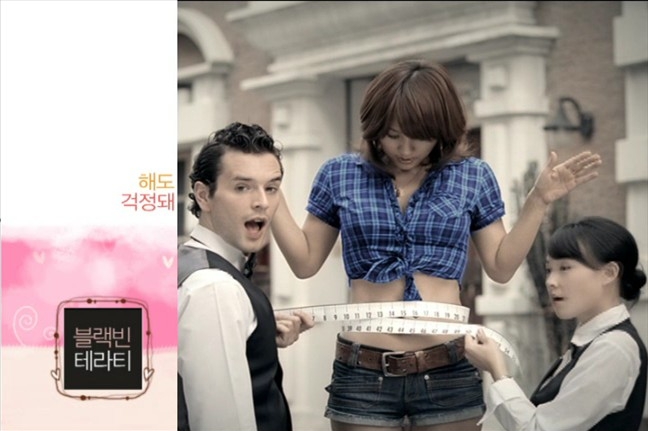
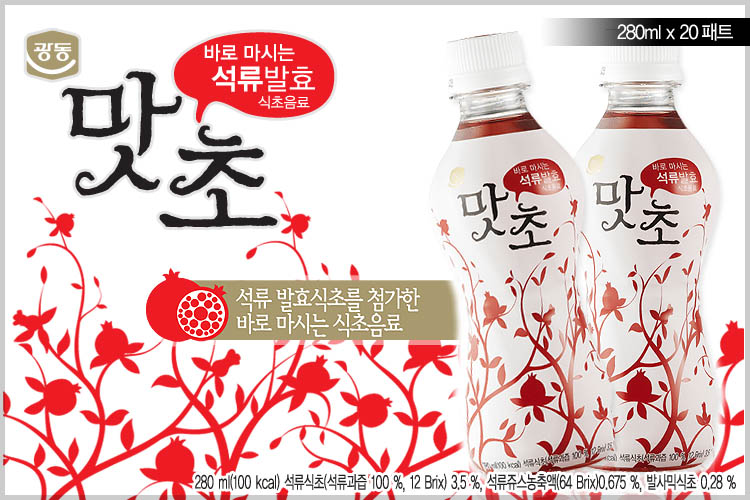
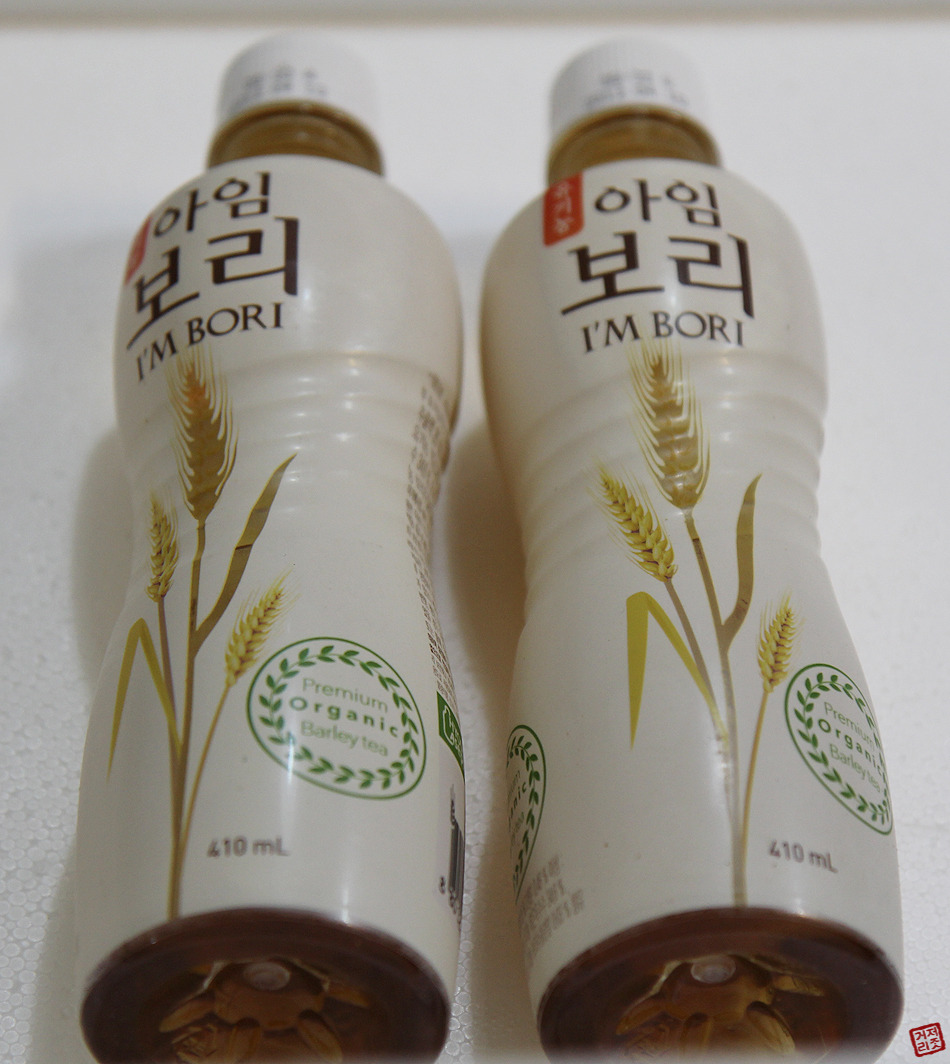
Yet once I did, then suddenly I realized that you saw it on a lot of drinks aimed at women, whether explicitly “diet” ones or otherwise. In addition to the “G2” and the grape juice for instance, to the right of Victoria there’s the “Black Bean Thera Tea” endorsed by Lee Hyori (이효리) in the opening image (discussed in detail here). Then below those: “Matcho”,  “I’m Bori”, and finally “Today’s Tea”, discussed way back in Korean Sociological Image #2.

(Source)
(Source)

And I could certainly go on. But on the other hand, I don’t want to exaggerate the extent of the trend either.

For starters, by no means are all or even most drinks aimed at women hourglass-shaped, and indeed in this image of the drinks section of what looks like a small supermarket, actually only those aimed at children have anything that even remotely resembles an hourglass shape. Also, there is possibly just as strong or even stronger a trend to make women’s drink bottles skinny rather than any specific shape, as explained here. Finally, making bottles more masculine-shaped may make them quite impractical to hold,* whereas hourglass shapes lend themselves to it.

Given the context of how deeply gendered drink marketing is though, then I’m not entirely convinced that practical considerations provide sufficient explanation for the gender imbalance in those drinks that do have “body shaped” bottles. It seems entirely possible, for instance, to add the contours of a six-pack to drink bottles aimed at men. Yet even in the unlikely event that readers have actually come across that(?), or something like it, it would still be the exception that proves the rule.

But whatever the reasons, and whether it’s a skinny or hourglass bottle (or, indeed, a skinny hourglass bottle!), it’s definitely yet another way in which advertisers try to subtly influence our body type ideals.

Something to bear in mind next time you find yourself in the drinks section!

*It’s only tangentially related, but you may find it interesting. Back when I was doing freshman calculus (yes, I was an astronomy major before I switched to East Asian Studies), once we looked at the the problem of what shape of Coke can would use the least amount of aluminum for the greatest volume of Coke contained, which – if I remember correctly – turned out to be a can the same diameter as its height. As the lecturer explained though, cans the shape of toilet rolls don’t exactly look cool, let alone fit in the hand well!

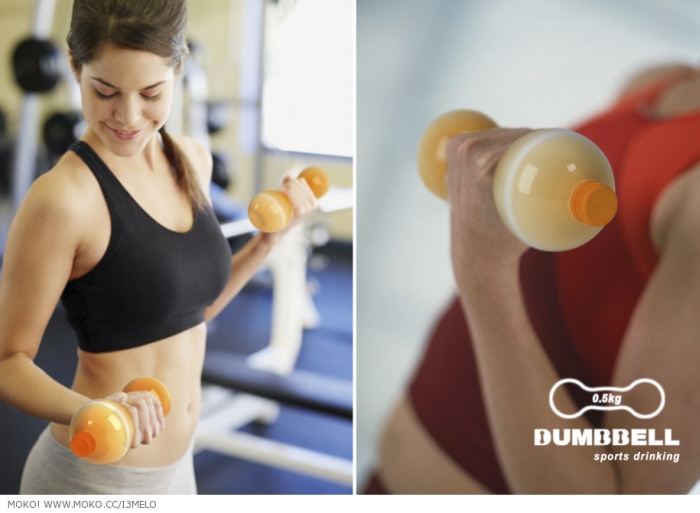
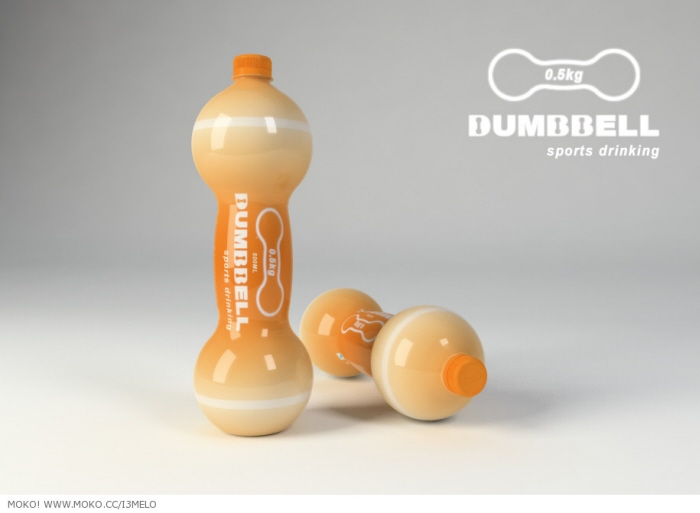
Update: Gotta love this alternative design by Chinese designer Le Jin!

(Source)
(Source)

(For more posts in the Korean Sociological Images series, see here)

Korean Sociological Image #63: Childcare No Longer Only Women’s Job!

As any father can confirm, parenting is a grueling business. So much so, that it makes our testosterone levels drop like a stone for instance, a rather ironic outcome for the ultimate proof of ones’ virility. Also, not only do we gain weight by being too tired to exercise or eat properly after the birth, as you’d expect, but actually we gain weight even before it too, all the better to prepare for the rigors of carrying our offspring on our backs for the next few years.

Granted, that latter research actually comes from a few monkey species, rather than men per se. And reported weight gain in men may be due to a change of lifestyle rather than expectant fathers being biologically wired for it. But still, with serious concerns about future back problems from having to carrying my daughters in my right arm so much over the last few years (they cried if I put them in the left), then my money’s on it applying to humans too.

Why then, are our daily lives still saturated with images of only women caring after children while traveling on public transport and in public spaces?

In hindsight, this is just bizarre. Surely I’m not just projecting when I say that, as the stronger, taller, and faster parent, it usually makes much more sense for me to keep an eye on my hyperactive kids as they try to run literally everywhere, while my wife watches over our bags? And whereas I’m increasingly struggling to carry them as they get older, she’s already just about reached her limits with our five year-old (in more ways then one!).

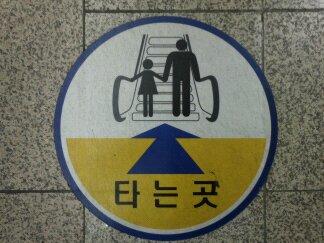
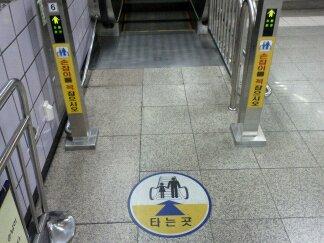
Which makes these humble pictures such a breath of fresh air. They may not look like much, especially at their low resolution here (my wife is still figuring out her new smartphone – sorry), but they are actually the first example of an image of a male rather than a female caregiver that I’ve ever seen in a subway – well, anywhere –  in Korea. Taken in Daegu on my recent trip there, based on my impromptu survey over 2 weekends then I’d say a good 30-40% of signs for escalators had men rather than women (and in malls etc. also).

Can any Daegu-based readers confirm my estimate? Have any other readers seen any more with elsewhere in Korea? Either way, kudos to the Daegu Council and/or subway company for making an effort to ensure a mix of genders, and – to any readers not yet convinced – please see here for more on why this is genuinely such a big deal.

(For more posts in the Korean Sociological Images Series, see here)

Korean Sociological Image #62: Life as a Korean Teenager

From documentary maker Kelley Katzenmeyer:

In sixty short years, South Korea went from being one of the poorest countries in Asia to having the world’s 13th largest economy. Korean students have some of the highest test scores in the world, and a higher rate of acceptance into American Ivy Leagues than any other foreign country. But Korea also leads the world in two not quite so stunning ways- the highest rate of plastic surgery per capita, and a higher suicide rate than any other developed nation.

So. What’s life like for a Korean student? In one of the most competitive societies in the world, how does one find their place? What does it take to achieve your aspirations and goals? Our documentary will take a look at the lives of five Korean teenagers on the verge of either reaching- or losing- their dreams. The film will follow the students during the most stressful time of their lives- their last year of high school. After studying for roughly sixteen hours each day, their futures boil down to one last exam. On November 10th, 2011, thousands of high school seniors will take a nine hour test that for many, will determine their economic and social status for the rest of their lives.

For my own experiences with some of the issues raised in the video, please see here. And thanks very much to Gag Halfrunt for passing the video on.

Update 1: Also of interest is “Tackling Korean Education’s Faults” at Korea Real Time.

Update 2: The documentary also has a website and a Facebook page.

(For all posts in the Korean Sociological Image series, see here)

Share

Korean Sociological Image #61: Stereotypical Gender Roles in Pororo

Source

I know, I know: trust me to nitpick about something as universally popular and adorable as Pororo. However, just like the classic How to Read Donald Duck (1972) revealed a pervasive imperialist ideology then propagated by Disney in that universally popular and adorable cartoon, so too does Pororo begin reveal some issues once you’re prepared to look past the cuteness. In this case, because of the stereotypical gender roles contained therein.

Just ask any parent in Korea, one of whom *ahem* first noticed these problems with the show *cough* over two years ago. But, with thanks to Marilyn for translating this article at Ildaro Women’s Journal, it’s always good to have a reliable Korean source, especially when one critiques something that usually only attracts glowing reports about its success overseas:

Source

“뽀롱뽀롱 뽀로로”에서 루피의 역할은? 애니메이션 속 전형적인 남녀캐릭터 설정 아쉬워

Loopy’s role in “Pororo The Little Penguin”? The set-ups of typical male and female characters in the cartoon is a shame

모 방송사의 예능 프로그램에서 강호동씨가 미션으로 곰인형 100개의 눈을 붙이는 장면이 나왔다. 담당VJ는 그에게 집에서 아이들과 잘 놀아 주냐고 질문했다. “나보다 뽀통령을 더 좋아해. 뽀통령 있으면 아빠 아는 체도 안 해.” 강호동씨의 답변에서 알 수 있듯이 지금 아이들 사이에서는 뽀로로가 최고의 인기 캐릭터이다.

On X network’s entertainer program, there was a scene in which Kang Ho-dong had a mission to attach 100 bear dolls’ eyes.  The VJ asked if he was good about playing with his children at home.  “They like President Po more than me.  If President Po is there, they don’t even acknowledge Dad.”  What we can know from Kang Ho-dong’s answer is that Pororo is the most popular character among children now.

아이들 세계를 지배하는 뽀로로의 영향력 / The influence of Pororo, who rules the world of children

<뽀롱뽀롱 뽀로로>는 2003년 (주)아이코닉스 엔터테인먼트에서 탄생하여, 교육방송 EBS를 통해 아이들에게 알려지기 시작했다. 12개월부터 미취학 아동 대상으로 방영된다. 현재는 3탄까지 제작됐으며 앞으로 4탄이 방송을 탈 날을 기다리고 있다. 1탄부터 3탄까지 전 시리즈는 세계 82개국에 수출됐으며, 특히 프랑스에서는 시청률 57.2%라는 놀라운 기록을 세웠다고 한다.

“Pororo The Little Penguin” was born at Iconix Entertainment in 2003 and began to become known among children through the educational channel EBS.  It was broadcast to a target audience of preschoolers from the age of 12 months.  Currently, the third season has been produced [aired] and the day the fourth will be aired is awaited.  The first through third series have been exported to 82 countries around the world, and are said to have set a surprising record in France, especially, of 57.2% viewership.

Source

뽀로로 캐릭터 상품으로 연간 벌어들이는 수입은 추신수 선수의 3배, 박지성 선수의 2배에 달하며, 2010년까지 누적합계 8천3백억 원에 달하는 것으로 알려졌다. 현재 소녀시대를 누르고 음반판매율 1위를 지키고 있는 것도 뽀로로이다.

The yearly income of Pororo the character as a product is three times that of [baseball] player Choo Shin-soo and reaches twice that of Park Ji-Sung, and it has become known that his accumulated earnings as of 2010 come to 830 billion Won [about $790 mil.].  The one currently defeating Girls’ Generation to remain number one in album sales is also Pororo.

어린이가 다쳐서 울 때 뽀로로 밴드를 붙여주면 울음 끝, 치아 닦기 싫어하는 아이에겐 뽀로로 치약 한 번 올려주면 반짝반짝 이를 닦는다. 이렇게 유아들의 세계를 지배하는 뽀로로의 영향력은 대단하다.

If a child who is hurt and crying is given Pororo bandage, the crying stops, and if a child who hates brushing her teeth is given Pororo toothpaste, she will brush until her teeth sparkle.  The influence of Pororo, who rules the world of small children like this, is enormous.

성역할 고정관념 드러내는 등장인물들 / Characters who reveal gender-role stereotypes

하지만 <뽀롱뽀롱 뽀로로> 애니메이션 속에선 한 가지 아쉬운 점이 발견된다. 바로 만화에 등장하는 캐릭터의 특징이다.

However, there is one way in which the animated program “Pororo The Little Penguin” is discovered to be lacking.  It is the characteristics of the characters who appear in the cartoon.

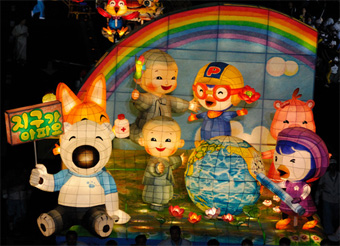
연등회에 등장한 뽀로로 캐릭터들. 뽀로로의 국민적 인기를 실감케 한다.

Caption, right: Pororo characters who appeared in the Lantern Festival.  One can feel the national popularity of Pororo.

뽀로로, 에디, 포비, 크롱은 남성캐릭터이다. 루피와 패티는 여성캐릭터이다. 주인공 뽀로로는 궁금한 걸 못 참고, 도전과 모험에 앞장서는 호기심 많은 펭귄이다. 에디는 발명가를 꿈꾸는 꼬마여우이고, 포비는 마음 넓게 항상 다른 이를 도와주는 화가를 꿈꾸는 착한 곰이다. 패티는 명랑 활달하고 운동을 좋아하는 털털한 펭귄이며, 루피는 수줍은 많고 여성스럽고 요리 솜씨가 뛰어난 비버소녀이다.

Pororo, Eddy, Poby, and Crong are male characters.  Loopy and Petty are female characters.  The main character Pororo is a penguin who can’t stand not knowing something, who leads the way into challenges and adventures, and is very curious.  Eddy is a little boy fox who dreams of being an inventor, and Poby is a friendly bear who always generously helps others and dreams of being an artist.  Patty is an easy-going penguin who is bright, outgoing, and likes exercise, and Loopy is a very shy, feminine little beaver girl with excellent cooking skills.

<뽀롱뽀롱 뽀로로> 만화에 등장하는 남성캐릭터들은 ‘꿈꾸는 이상’이 있다. 모험가, 과학자, 화가를 꿈꾸며 노력하는 모습을 보인다. 타고 난 재능도 가지고 있다. 그러나 여성캐릭터인 루피와 패티는 앞치마를 두르고 맛있는 쿠키를 구워서 친구들에게 대접하는 꿈을 꾼다. 여성캐릭터를 꼭 ‘요리’와 연결시키는 이유는 무엇일까?

The male characters have “something more that they dream of.”  They present themselves as working hard [to achieve] their dreams of being adventurers, scientists, and artists.  They also have natural gifts.  However, the female characters Loopy and Patty dream of putting on aprons and making delicious cookies to serve to their friends.  Why must female characters be connected to “cooking”?

21세기의 여자아이들은 더 이상 부엌에서 요리하고, 다소곳이 앉아 바느질하는 것을 강요받는 사회에서 자라지 않는다. 남자아이와 동등한 자격으로 공부하고, 자신의 뜻을 펼칠 수 있다고 교육 받는다. 그러나 사회에서 요구하는 현실은 여전히 만화 속에 등장하는 전형적인 여성캐릭터인 것일까? 이런 애니메이션을 보고 자란 남자아이들은 당연히 여성이 요리를 해줄 거라고 기대할 것이고, 여자아이들은 그 모습에 자신의 모습을 비추어보며 살게 될 수도 있을 것이다.

Source

21st century girls no longer grow up in a society that forces them to cook in the kitchen or sit modestly and sew.  They study on equal terms with boys and are taught to speak their minds. But is the reality that is demanded by society still the one portrayed by the typical female characters in cartoons?  Boys who grow up watching this kind of animation will naturally expect females to cook for them, and girls might grow up to reflect that image.

이런 캐릭터 설정은 어린 시절부터 성역할 고정관념을 아이들에게 심어줄 수 있다. 특히 만화 속 패티와 루피는 서로에게 질투를 느끼거나 오해를 해서 감정싸움을 만들기도 한다. 물론 실제로 아이들이 그런 감정에 빠질 수도 있다. 그러나 어린이들이 보는 프로에서 꼭 여성캐릭터 간의 감정싸움을 부각시켜 보여주면서 어릴 때부터 성별에 관한 편견을 가지게 할 필요는 없지 않을까.

The settings [of characteristics] of this kind of character can indoctrinate children into gender role stereotypes from a young age.  In the cartoon, Patty and Loopy especially feel jealous of or misunderstand each other and so start emotional battles.  Of course, in reality children can have those feelings.  However, is there really a need for programs that children watch to make them have prejudices about gender from a young age by playing up and showing emotional battles between female characters?

미취학아동들은 그나마 사회시스템 속에서 길들여지는 고정관념으로부터 비교적 자유로운 시기이다. 그런데 만화에서 뽀로로는 항상 용감하게 도전하고, 에디는 우주선을 만들고 외계인을 만날 때, 루피는 예쁜 머리핀을 자랑하고 싶어 하고, 백설공주와 같이 되길 꿈꾸며 사과를 먹어야 할까?

Pre-schoolers are at least at an age that is relatively free from the taming stereotypes of the social system.  But in the cartoon, while Pororo is always bravely challenging and Eddy makes a spaceship and meets an alien, does Loopy have to want to boast about a pretty hairpin and dream of becoming like Snow White while eating an apple?

아이들이 TV 속 뽀로로에게 열광할 때 나는 한편으로 걱정이 된다. 내 딸에게서 “엄마, 난 뽀로로 같은 용기 있는 남자와 결혼해서 맛있는 쿠키를 구울 거야.” 라는 말을 듣게 될까봐.

Part of me is worried when I see kids going crazy over TV’s Pororo.  Worried that I may hear, “Mom, I’m going to marry a brave man like Pororo and make delicious cookies!” from my daughter. (end)

Source

After revealing in my introduction that there’s more to Pororo than meets the eye, it was extremely tempting at that point to go on to discuss how what is actually a multi-million dollar industry has some curious, if superficial, parallels to some elements of K-pop. Wisely I demurred, but if you’ll indulge me here instead for a moment, then, with it being exported to over 110 countries, it is arguably just as much a part of the “second Korean Wave” as say, KARA or Girls’ Generation. Moreover, just like those groups are redoing most of their songs into Japanese for the sake of better marketability, diluting what Koichi Iwabuchi deftly calls their products’ “cultural odor” in the process, so too does the creator of Pororo refuse to incorporate more Korean elements into the cartoon, lest foreign audiences be put off. On top of that, there are even glowing accounts of Pororo’s popularity amongst overseas Koreans too, which—correct me if I’m wrong—were often considered (or at least portrayed) as important precursors to and/or agents in K-pop’s subsequent popularity amongst non-ethnic Koreans.

And having raised all those tangents, then it behooves me to also mention Pororo’s North Korean connections for anyone interested, which you can read about here and here. Also, in the interests of full disclosure, I should point out that a friend’s friend’s wife provides the voice of Harry, the humming-bird sitting on the wing above. Apologies for the ensuing lack of objectivity in the post!

(For all posts in the Korean Sociological Image series, see here)

If you reside in South Korea, you can donate via wire transfer: Turnbull James Edward (Kookmin Bank/국민은행, 563401-01-214324)

Korean Sociological Image #60: “Beautiful” Female Athletes

Noticed playing on the televisions on the KTX train, on my trip to Seoul on Wednesday.

Granted, technically it’s only one female athlete being described as a “beaut(iful) bird” (미녀새) here. And arguably that – or rather, beautiful soaring bird – is indeed an apt metaphor for any pole vaulter. Let alone Yelena Isinbayeva, “widely considered the greatest female pole-vaulter of all time”.

But still, can you imagine it actually being applied to a male pole vaulter? Or a male athlete of any sport ever, first and foremost, being described as “handsome”?

Definitely a gender binary to keep an eye on as the Daegu 2011 IAAF World Championships approach!

Update 1: Here’s a similar recent example from the US Yahoo! Sports website.

Update 2: @TheSocyCinema and @landrist discuss another example from Adidas.

(For all posts in the Korean Sociological Image series, see here)

Share

Korean Sociological Image #58: Sexulizising Caucasian Women (again)

(Source: Ads of the World)

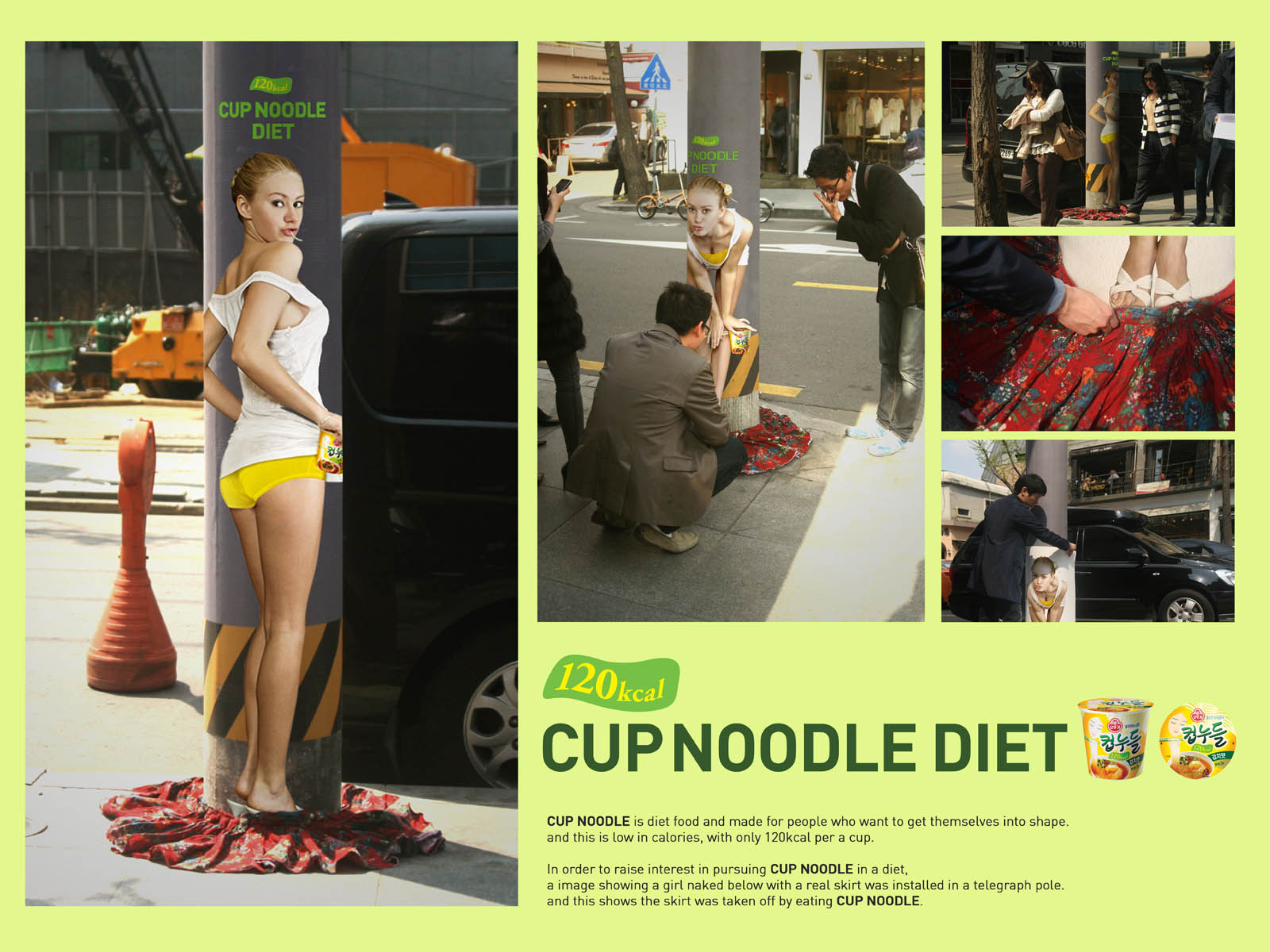
Sigh. I beg to differ on Cup Noodles being a “diet food” made for “people who want to get themselves into shape”, but it’s no great surprise that that’s how they’re being marketed in Korea.

Nor that it’s a Caucasian female model who loses her skirt either, rather than Korean model Jang Yun-ju (장윤주) who’s the one actually endorsing it:

(Source)

Both familiar themes of Korean advertising, for more on body image in Korea see especially Korean Sociological Image #57 and this follow-up, or #18, 27, and 52 for more the sexualization of Western (especially Caucasian) women in the Korean media, and here for some of the negative effects of that.

Meanwhile, of course I do realize that Korea is by no means the only country where noodles are sometimes marketed as a diet food. But the campaign is very different to what you would see in New Zealand for instance, where my sister – who found the ad here – tells me that, these days, instant noodles are increasingly being marketed to children instead. And as for the falling skirt advertisement, that “would immediately be set upon and torched by militant lesbians”!

Also, as it happens I’ve actually liked Jang Yun-ju ever since I read this, and so consider it both ironic and a pity that such an atypical Korean model agreed to be part of something that displays some of the worst habits of the Korean advertising industry. Moreover, she’s also one of the rare Korean models not ashamed of doing lingerie advertisements (although their numbers have been increasing recently), which again raises the question of what a Caucasian woman is doing, well, bending over on that lamppost instead of her.

(Source)

What do you think? Has anybody actually seen the ad themselves?

Update: I’m glad I’m not the only one that noticed that it’s male passersby that seemed to most appreciate the ad, whereas women can be seen walking by in embarrassment!

Update 2: I did miss the phallic object though…

(For all posts in the Korean Sociological Image series, see here)

Share

Korean Sociological Image #57: Perfect Upper Bodies, But “Healthy” Legs

(Update – to download the video, click here)

Normally, I’d reserve something like this for the next Korean Gender Reader. But then as a friend aptly put it, this video is “totally fucking reprehensible”, and deserves highlighting. And indeed, if it’s not removed from Youtube soon, then we’ll both be contacting ArirangWorld to complain about it.

A quick language note before you begin watching though: a mistake many Korean learners make, including myself, is to complement someone by saying “건강해 보여요”, or literally “healthy [you] look”, not realizing that “healthy” often has connotations of being fat in Korea. And as you’ll soon see, this is carried to simply absurd proportions in the video.

For further context, see Korean Sociological Image #21, on popular calf-reduction surgery.

Update 1: I wrote the following in 2 comments on the ArirangWorld YouTube channel. Or rather, I tried to, as although they registered in the comment count, they never actually appeared. Creating a new account and trying again, for some reason still only the 2nd paragraph squeaked through. Sigh.

As the author of thegrandnarrative.com, the most well-read English language source for information on Korean gender issues, almost every day I learn of the often tragic consequences of the incredibly damaging messages about health, weight, and body image that the Korean media promotes, and have very real concerns about raising my two young daughters here. Will they never exercise, because videos like “Twist in Figures” tell them that toned, healthy legs are unattractive? Will they too, like fully HALF of Korean high school girls, end up so malnourished and anemic from dieting that they are unable to give blood?

I implore ArirangWorld to remove this video immediately, and suggest that an alternative video outlining Korea’s problems in this regard, but also – crucially – demonstrating what positive steps various groups, organizations, and individuals are doing to correct these, would be a far better way of promoting Korea to the outside world.

For more on the shocking statistic about high school girls, see here. And you may also find this advertisement from 2009 interesting:

Update 2: The video has been made private. Which does mean that it can’t be watched at least, but on the other hand choosing to do that rather than simply deleting it could be construed as refusing to admit how problematic it was. Certainly ArirangWorld has yet to make any kind of formal apology for it.

If anyone would still like to see it, then I did save the video before it was made private, but unfortunately at 55MB it’s much too big to send via email. I can send it via Skype though, so please feel free to add me to your list of contacts and request it (my id is “Jtur001”).

Update 3: Although I’d wager I’m a much more pleasant middleman than most(!), you can now avoid me and download the video directly here.

Update 4: See here for the Korea Studies community’s reaction to the video.

(For all posts in the Korean Sociological Image series, see here)

Share

Korean Sociological Image #56: Start ‘Em Young! (Updated)

(Source)

Apologies for the continued slow posting folks, but I have several good excuses, one of which involves spending a lot of time in doctors’ waiting rooms. Unlike most normal people however, that’s actually something I look forward to(!), as it gives me the opportunity to peruse the hundreds of advertisements in the notoriously thick women’s magazines there.

Like Laedygyeonghyang (레이디경향; Lady Trend) for instance, which at 8200 won (US$7.32) a pop, is normally much too expensive to buy just for the sake of a few pictures. But then I saw the February edition, and was hobbling to the nearest bookstore literally as soon as my bandages were changed (the nurses had to call me back inside for my injection).

(Source)

You see, February to March being the start of the school year in Korea, then the first 30 pages or so had 6 full page advertisements for children’s schoolbags. And all of those aimed at girls stressed how attractive or pretty they would make them look, whereas all of those aimed at boys stressed how they could help them achieve their dreams, their appropriateness for rough and tumble play, and so on. Perpetuating gender stereotypes in a manner much more reminiscent of the 1960s and ’70s than something you’d expect to see in 2011, this was really quite shocking, and an indictment of how – in terms of socializing children at least – advertising has definitely regressed in recent years.

Unfortunately, the magazine was no longer available, but as you can see above I did manage to find at least the 2 K-SWISS (케이스위스) ones online later (the other 4 were from HEAD {헤드}). Paraphrasing just a little, the Korean on the girl’s ad reads “What style shall I choose today?!”, while that on the boy’s reads “Through [this bag’s] strength/firmness and lightness, achieve children’s dreams!”. Sigh.

(Source)

Update 1 – Of course, those messages were pretty obvious from just the visuals. And given that, the fact that Caucasian models were used, and that K-SWISS is an American company, then I was curious as to if this was in fact an American ad that had been used in other markets, with just the text translated. A quick check of its main website though, shows that only the Asian branches had kids’ lines, but which still leaves the possibility that they’re generic ads for the East Asian region.

Have any readers based there seen their own local versions? Or – wherever you are – any other children’s ads like these?

Update 2 – With my thanks to the staff of Dr. Lee’s Orthopaedic Clinic, I was allowed to take the magazine home to scan. While my memory had been a little faulty – the advertisements for school bags were in the first 100 pages, not 30; there were also advertorials for them later; and there were 3 advertisements from other companies that were fine –  I’d made no mistake about the HEAD ones:

The title on the left reads “Adventurous Children”, and that on the right “Romantic Children”. In the next ones they (literally) say “Imagining Children” and “Dreaming Children”, which technically speaking is fine I suppose, but then just look at what each child is imagining…

(For more posts in the Korean Sociological Images series, see here. Or, for more on the Korean women’s magazine industry specifically, please see here)

Share

Korean Sociological Image #55: School Uniform Advertisements

(Source)

Has anyone been paying close attention to teenage girls’ legs recently?

If so, then please answer a question for me, as they’re the darnedest things to find once you actually have a legitimate reason to look: until their recent break, had female school students still been required to wear skirts this winter, while their male classmates got to wear pants? Or did Korean schools show some flexibility because of the unusually cold weather?

Mostly I ask because as my eldest daughter approaches school age, it’s just one of many things to consider as my wife and I decide whether to send our daughters to a Korean school, to homeschool them, or—in our dreams—to send them to an expensive international school. But whatever we ultimately decide, it’s interesting to compare attitudes towards uniforms in the U.K. for instance, where most schools have in practice allowed girls to wear pants for a long time now. On the other hand, they’ve only legally been required to do so as recently as last year, and only then because it was judged to violate the rights of transsexual students.

Which is not to imply that those are unimportant of course. But still, it was surprising that it wasn’t arguments about sexual equality and student’s health that had more impact on legislators:

(Guardian Weekly, July 11-17 2002)

The other reason for my interest is because of what they can represent. First, to the students themselves, many of whom consider them symbols of every hardship and injustice they had to endure at school, which is why they’re going to be ripping them off in public and/or slashing them with scissors upon their graduations next week. And who can blame them?

Next, to someone more interested in gender issues and social trends, they could be seen as something that both physically prepares girls for and/or socializes them into wearing skirts simply for the sake of being fashionable later. But considering that young U.S. women for instance, who don’t wear uniforms at school, still freeze to death outside nightclubs every winter just as readily as their U.K. and Korean counterparts, then that may be making too much of it.

I’m on much firmer ground though, when I say that school uniform advertisements at least, epitomize how Korean girls are socialized to be notoriously obsessive about their appearance:

(Source: unknown)

To be precise, it’s the fact that such advertisements exist at all. For unlike in the UK, Australia, and New Zealand where I went to school, and where parents buy—and can only buy—their children’s school uniforms directly from their schools, in Korea there has actually been a free market for them since 1983. Or in other words, for any specific school there’s a range of companies competing to sell their brand of its uniforms to students, complete with their own individual stores and with sometimes marked differences in quality and price.

One obvious problem with this is that it completely works against one of the major purposes of having a school uniform in the first place, which is to minimize the visible differences between wealthy and poor students.

Another is that school uniform advertisers naturally use the same methods as clothes companies do for most any kind of clothes: buy their brand, and you will be successful both among your peers and with the opposite sex.

(Sources: left, right)

Granted, that latter hardly sounds heinous. And just like everywhere else, many Korean girls will make their uniforms as revealing as possible if they’re too conservative for their liking. Moreover, in this excellent quick guide to the school uniform industry at An Acorn in the Dog’s Food here, Paul Bailey argued in January 2009:

Another thing I noticed from the English-language sites reporting on [this] is that they all feature an advertisement of celebrities promoting a particular line of school uniforms, and this ad always features a girl group. Looking through the first few pages of image results on Naver, it looks like there might actually be more advertisements featuring boy bands — but I guess a group like the Wonder Girls or Girls’ Generation is more recognizable to the average reader. In his write-up, James mentions that it was only by accident that he learned how students buy their uniforms through these retailers instead of through their school. Never having worn a school uniform, that was also my assumption before arriving in Korea, but upon exploring my neighborhood I turned up three school uniform vendors – Ivy Club, Smart and Skoolooks – located within four blocks of my apartment. Between those vendors, one featured posters of only boy bands and the other two advertise with both male and female celebrity models. Interesting, then, to see what images have been used online.

And I’ve no reason to disagree with any of his observations. But with the benefit of hindsight from several years of writing and lecturing about advertisements since, I’ve noticed that the majority of ads featuring boy-bands from back then clearly seemed to be aimed at girls rather than boys, as in the large pink example with boy-band Shinee and an unidentified female model above. Which again, is only natural…but then the ones featuring girl groups seemed to be aimed at girls too.

Take these recent ones with girl-group f(x) for example, in which the group members are almost always the most prominent models in them, even though the ad technically is also selling boys’ uniforms (update: this ad is a good comparison):

sulli-school-uniform(Source)

Sure, in Korea’s overwhelmingly celebrity-driven advertising culture, then of course they’re going to be the most prominent things in the ads. And I also concede that some of the ads in this post are among the most blatant, deliberately chosen to make a point. But whether the models in a uniform ad are exclusively male, exclusively female, or a mix of both, there seems to be a noticeable lack of comparable ads featuring boys getting the approving looks of female admirers. And which, when you think about it, is just plain bizarre really.

As long term readers will recall though, the practice of celebrities endorsing uniforms was actually banned by the Ministry of Educational Science and Technology (MEST) 2 years ago (see #7 here), and indeed I mentioned that a rare positive step in my recent lecture in Boston. I was very surprised and embarrassed then, to find that they’d started again almost literally the day I got back, which is what ultimately prompted this post. As it turns out, not only were they actually not banned at all, school uniform companies merely being asked to stop in order to decrease the burden on consumers during the economic crisis, but my hope that someone within MEST thinking that middle-school girls had better things than their S-lines to worry about now seems particularly naive.

And on that note, let me leave you with the facts on the original decision to temporarily cease star endorsements back in 2009, courtesy of Marilyn:

(Sources: left, right)

교복 광고 속 아이돌 스타들, 이제 “교복을 벗고”

Idols stars in school uniform ads, now “take off the uniform”

새 학기가 시작되면서 강력한 호황을 누리는 의류업계가 있다. 바로 교복업계다. 마치 경쟁이라도 하듯 인기 아이돌 가수들을 광고 모델로 쓰며 학생 소비자들의 시선을 잡아 끄는 교복 광고는 그 동안 10대 팬들에겐 ‘오빠, 누나’의 브로마이드를 한 장이라도 더 받을 수 있는 통로였으며, 스타들에겐 아이돌의 이미지를 더욱 견고하게 할 수 있는 ‘꿈의 CF’였다.

As a new semester begins, there is a clothing industry that is thriving powerfully – the school uniform industry.  As school uniform ads, which, as if they were competing, grab and lead the attention of student consumers while using popular idol singers as advertising models, have been a way for teenage fans to get even one more poster of their ‘oppa, noona’, to stars they have been “dream TV commercials” that could make an idol’s image even more solid.

그러나 최근 들어 TV 광고에서 교복을 입은 아이돌 스타들의 모습을 보기가 힘들어졌다. 어느 채널을 돌려도 이젠 긴 다리로 뛰어 다니며 십대답지 않은 ‘교복 간지’를 뿜어내는 아이돌들을 찾기는 힘들다.

However, it has recently become rare to see an idol star wearing a school uniform in TV commercials.  No matter which channel you turn to, it is difficult to find an idol running around on their long legs while exuding ‘school uniform chic’ that is unlike a teenager.

(Source)

바로 지난 달 1일 교육과학기술부(이하 교과부)와 교복 업체들 간에 이뤄진 간담회 결과, 교복 업체들은 ‘가격 인하 노력 전개’, ‘디자인 변경 자제’, ‘사회공헌 활동 강화’ 등과 더불어 ‘유명 연예인을 동원한 과도한 광고 및 판촉 활동 자제’의 지침을 지킬 것을 요구 받았기 때문이다.

It is because on the first of last month [Feb. ’09], the result of the discussion between the Ministry of Educational Science and Technology (MEST) and school uniform companies was that the uniform companies were asked to follow the guidelines of ‘a price reduction effort campaign’, ‘abstention from design change’, ‘strengthening of social contribution activities’, etc., along with ‘abstention from advertisements and promotional activities that excessively employ famous entertainers.’

이에 교복업체들은 현재 자율적인 협의를 거치고 향후 ‘스타 모델 기용’을 더 이상 지속하지 않기로 결정한 상황이다. 그렇다면 교과부가 ‘스타 모델 기용’을 반대하는 권고안을 내놓은 이유는 무엇이며, 이러한 권고를 수용한 교복업체들의 ‘스타 모델’에 대한 생각은 무엇일까? 또한 이번 교복업계의 결정에 따라 아이돌 스타들의 전유물로 여겨졌던 교복 광고 시장은 어떻게 변하게 되는 것일까?
Following that, school uniform companies recently underwent an autonomous discussion and decided that, from now, ‘star model employment’ will no longer continue.  So, what is the reason that the MEST put forth a recommendation that opposes ‘star model employment’, and what might school uniform companies who accept this recommendation think about ‘star models’?  Also, how might the school uniform advertising market, once considered monopolized by idol stars, change according to this decision by the school uniform industry? (Source, right)

교과부 “빅 모델이 교복값 부추긴다.” VS. 교복업계 “1000원 미만 정도”

MEST: “Famous models drive up school uniform prices” vs. school uniform industry: “Less than 1,000 or so”

교과부를 비롯해 다수의 고객들이 교복 빅 모델 사용을 반대하는 결정적인 이유는 하나다. 스타 모델 기용으로 인해 발생하게 되는 개런티가 교복값에 그대로 반영돼 교복값 상승을 더욱 부추긴다는 것. 그러나 이러한 일반적인 생각에 대해 교복업체들은 하나같이 ‘No’라고 대답하고 있다.

There is one deciding reason that the MEST and a majority of customers oppose the use of famous models for school uniforms: a star model’s fee is directly reflected in the price of school uniforms so it contributes to their further rise. However, school uniform companies, together as one, have answered “no” to this common thought.

최근 매일경제 스타투데이와의 전화 통화에서 업계관계자들이 주장한 ‘스타모델로 인해 추가되는 교복값’은 한 벌당 300원에서 1000원 정도. 그러나 현재 국내에는 제품원가와 관련해 심의를 담당하는 기관이 없기 때문에 그 정확한 비용적 수치를 알기는 어렵다.

Recently, in a phone call with Maeil Kyungjae Star Today, industry sources claimed that the ‘school uniform price additions caused by star models’ are about ₩300 to ₩1,000 per uniform.  However, because there are currently no domestic organizations responsible for the review of the production costs of goods, it is difficult to know the exact figure.

업계 관계자들은 “다른 의류업체들이 스타들을 모델로 기용하는 것과 다를 것이 없고 또 실제로 스타 모델이 교복 가격에 미치는 영향도 미미하다”면서 “오히려 교복 가격을 1000원 정도 깎아주고 빅 모델들을 계속 쓰는 게 우리에게는 더 효과적”이라고 말한다. 브랜드 이미지를 강화하기 위해 스타 모델들을 쓰는 것 보다 더 좋은 방법을 찾기 힘들기 때문이다.

Industry sources said, “It is no different from other clothing industries using stars as models and also, actually, the influence caused by star models on school uniform prices is slight” and, “Instead, it’s more effective for us to discount the school uniform price by ₩1,000 and continue to use famous models.”  This is because it is difficult to find a better way to strengthen a brand image than using star models.

(Source)

교복의 독과점 특성 상 빅 모델은 신생업체의 중요 진입 통로

Because of monopolies in the school uniform industry, using famous models is an important way of entry for new companies

그러나 스타모델에 대한 보다 구체적인 효과와 관련해선 교복업체들마다 조금 다른 의견을 보이고 있는 것도 사실이다.

It is also true, however, that each school uniform company expresses slightly different opinions concerning the more specific effects of star models.

1995년 송혜교를 시작으로 자사 광고에 스타들을 모델로 기용한 스마트는 “회사 내부적으로 빅 모델들 때문에 특별히 큰 효과를 본다고 생각지는 않는다”는 입장을 가지고 있다. 스마트 마케팅팀의 손정주 대리는 “스타 모델 사용의 목적은 직접적인 수익 창출이라기 보다 우리 브랜드의 이미지 형성을 위한 것”이라며 “또 워낙 스타 모델들을 쓰는 것이 일반화된 교복 광고계에서 타 경쟁 브랜드와의 차별성을 두고 스타와 브랜드 간의 연상작용을 위해 하는 측면이 크다”고 말했다. 예를 들어 샤이니를 보면 스마트를 연상케 하는 이미지적 과정을 중요한 마케팅 수단의 하나로 보는 것이다.

Smart, which started using stars as models in its advertisements with Song Hye-kyo in 1995, believes that, “Within our company, we don’t believe that we see especially big results because of famous models.”  Smart marketing deputy section chief Sohn Jeong-joo said, “The goal of using star models, more than the direct creation of profit, is the development of our brand,” and added, “Also, using star models in a school uniform advertisement differentiates us from competitor brands, and the aspect of doing it for the association between the star and the brand is considerable.”  For example, the visual process of being reminded of Smart when one sees Shinee is seen as an important marketing tool.

(Source)

하지만 업계에 처음으로 발을 디디는 신생업체의 생각은 다르다. 교복업계에 진입한 지 4년여 만에 메이저 기업으로 성장한 스쿨룩스 측은 “사용하지 않는 것 보다는 훨씬 낫다”는 입장이다. 스쿨룩스의 한 관계자는 “물론 빅 모델 기용 이외에 다양한 영업, 마케팅 기법들이 혼합되면서 수익이 창출되는 것이므로 스타 모델이 수익적 성과를 결정한다고 단정지을 수는 없다”면서도 “브랜드 인지도를 높이는데 효과적인 것만큼은 사실이다”라는 의견을 밝혔다.

However, the opinion of a new business first entering in the industry is different.  The position of School Looks, which has grown into a major business in the four years since it entered the school uniform industry, is that, “It’s a lot better than not using them.”  A source from School Looks said, “Of course, because in addition to using famous models, diverse sales and marketing techniques are blended while creating profit, we can’t conclude that star models determine our revenue results,” but, “it’s a fact that it raises brand awareness enough to be effective.”

스쿨룩스는 업계에 처음 진입할 때부터 장근석, 유아인 등의 아이돌 스타들을 광고 모델로 썼고, 2007년부터 현재까지 빅뱅을 전속 모델로 쓰고 있다. 이와 관련해 스쿨룩스의 관계자는 “특히 빅뱅의 경우 대중들에게 잘 알려지지 않았던 데뷔 시절부터 써왔는데, 브랜드 이미지를 강화하려는 교복 광고주와 대중들에게 얼굴을 알려야 하는 아이돌들에게 교복 광고는 특히나 효과가 큰 윈윈전략의 하나로 통한다”고 말했다.

Since it entered the industry, School Looks has used idol stars like Jang Geun-seok and Yoo Ah-in as advertising models, and from 2007 to the present they have had the exclusive use of Big Bang as models.  A School Looks source involved with this said, “Especially in Big Bang’s case, we’ve used them as models since their debut when they weren’t well-known to the public; a school uniform ad is known as an especially effective win-win tactic for a school uniform advertiser that wants to strengthen its brand image and idols who need to make their faces known.”

(Source)

교복업체들 “국민정서 따르겠다.”

School uniforms companies “will conform to public sentiment”

그러나 결과적으로 교복 광고의 빅 모델들에 대한 국민 정서가 좋지 않고, 나라 경제가 전체적으로 악화되고 있는 상황에서 교복업체들은 교과부의 권고를 수용하고 스타 모델을 더 이상 쓰지 않는 방향으로 가닥을 잡을 예정이다. 실제로 지상파 교복 광고도 지난 달 들어 모두 중단됐으며 팬 사인회 등의 프로모션도 현재 끊겨있는 상태다.

However, in the end public opinion about famous models in school uniform ads is not good, and in a situation in which the country’s economy is worsening on the whole, school uniform companies plan to accommodate the MEST’s recommendation and move in the direction of no longer using star models.  School uniform ads have actually ceased since last month, and promotions such as autograph signing parties are currently suspended.

그렇다면 학생들을 소비 계층으로 하는 교복의 특성상 아이돌 스타들이 광고료를 대폭 낮추고 광고를 찍을 수는 없을까? 이와 관련해 소속사들 측은 “아이돌의 이미지 상 교복광고를 긍정적으로 볼 수도 있겠지만, 결과적으로 수익을 창출해내는 한 기업의 광고라는 점에서 가격붕괴를 시키면 다른 광고에서 분명히 문제가 발생할 것”이라는 의견이다. 따라서 추후 광고 방법에 관련된 구체적인 논의는 업체별로 계속될 것으로 보인다.

(Source)

So, because students are the main consumers of school uniforms can’t idol stars sharply lower their fees and shoot the commercials?  About this, star management agencies’ opinion is, “We might have a positive view of school uniform ads as far as the idol’s image goes, but in the end, if we drop our advertising appearance fees for one business that needs to make a profit, there will obviously be a problem with other advertisements.”  Thus, in the future we will continue to see detailed discussion in each company about advertisement methods.

이렇게 브랜드 교복 업체들의 주장대로 교복 한 벌에 들어가는 비용이 ‘단 몇 천원’에 불과하다 하더라도 몇 억대에 이르는 광고 모델료와 지상파 광고를 위해 지출되는 10억대에 이르는 거품이 사라질 수 있다면 서민들의 부담을 조금이라도 덜어줄 수 있다는 것만큼은 확실한 것이 아닐까? 교복광고와 관련된 권고안이 실행된 지 한 달 남짓, 시장의 자유 경쟁을 저해하고 교복 광고에만 유난히 날카로운 잣대를 들이댄다는 일부의 불평 속에서 사라질 스타 모델 교복 광고가 광고 시장과 교복 시장에 어떤 바람을 불러 일으킬 지는 더욱 두고 볼 일이다.

Even if the added cost to one uniform is ‘only a few thousand Won,’ as brand school uniform companies claim, if the advertisement model fees that reach a few hundred million and the extra billion spent on TV advertisements disappeared, isn’t it certain that would be enough to lift, in however small a way, the burden on ordinary people?  Star model school uniform advertisements will disappear as a result of complaints like facing the hindrance of free market competition and especially strict standards just for school uniform advertisements.  At over one month since the recommendations were carried out, it even more remains to be seen how this will affect the advertising market and school uniform market (end).

(Source)

So, it looks like celebrity endorsements will continue. Do you think they have an influence on what we wear later in life? Was, or is, cost ever an issue to you or your parents? Alas, not having worn one since 1993, then I’ve had a lot of catching up to while writing this article, and so would really appreciate any more recent information!^^

(For more posts in the Korean Sociological Images series, see here)