Korean Gender Reader: Redux

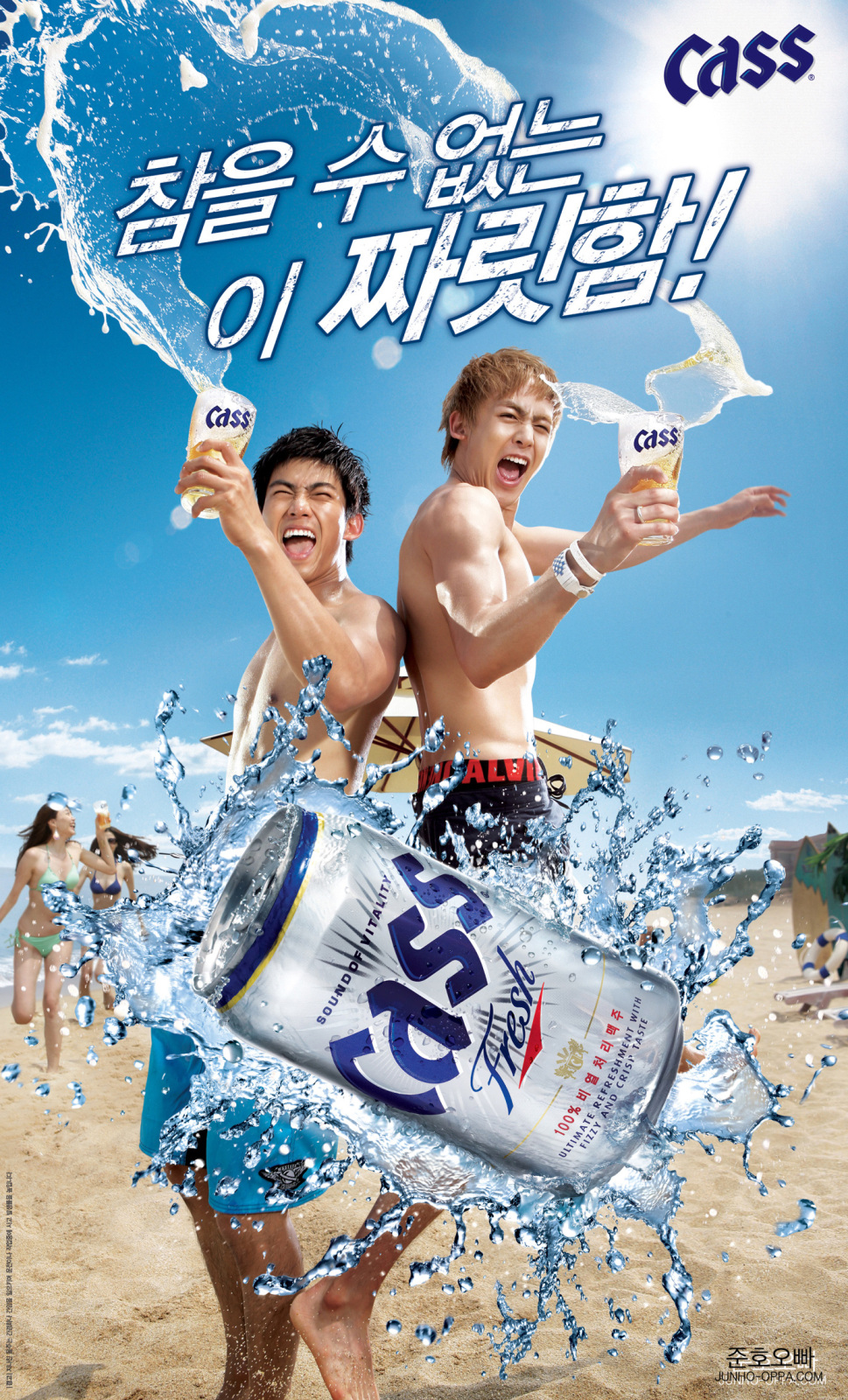
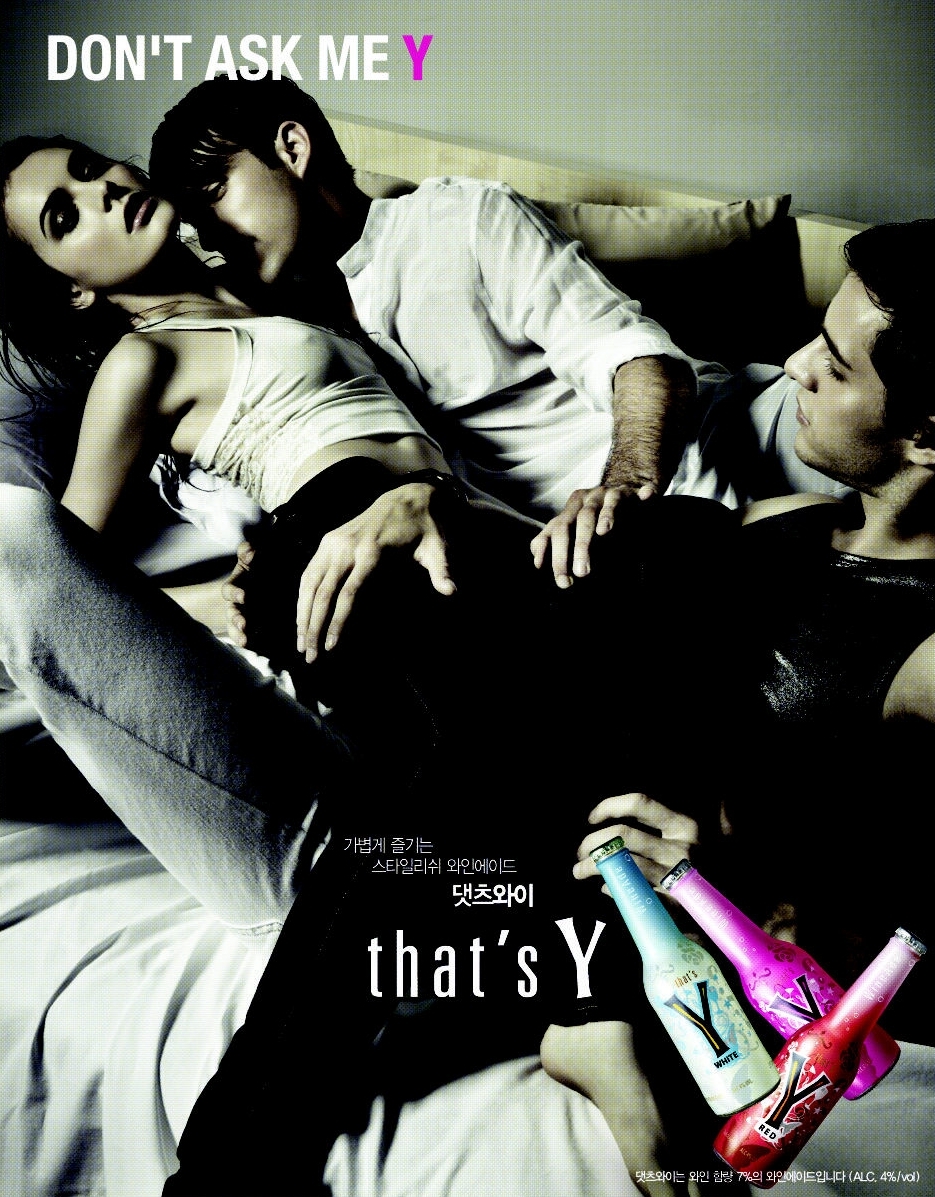
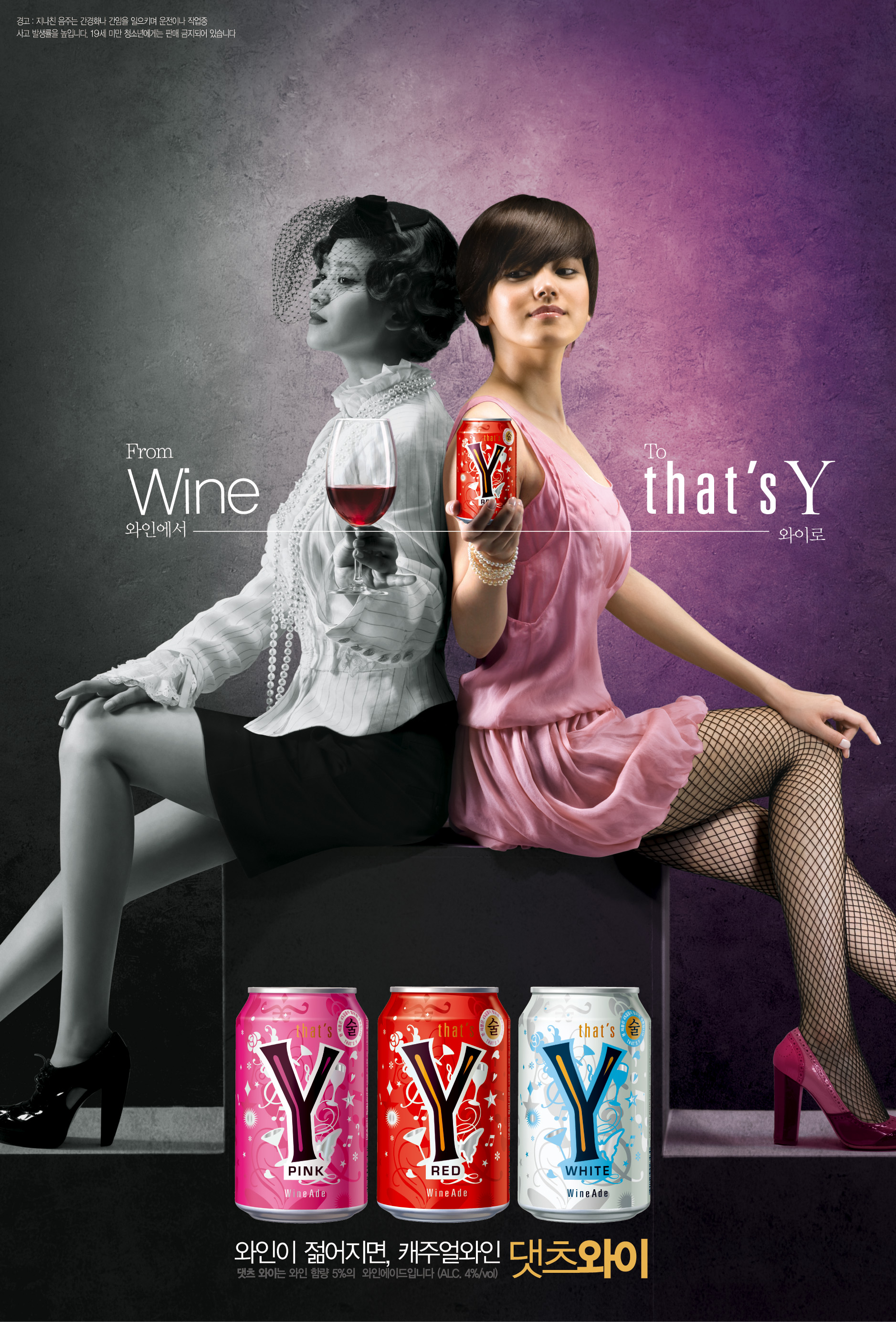
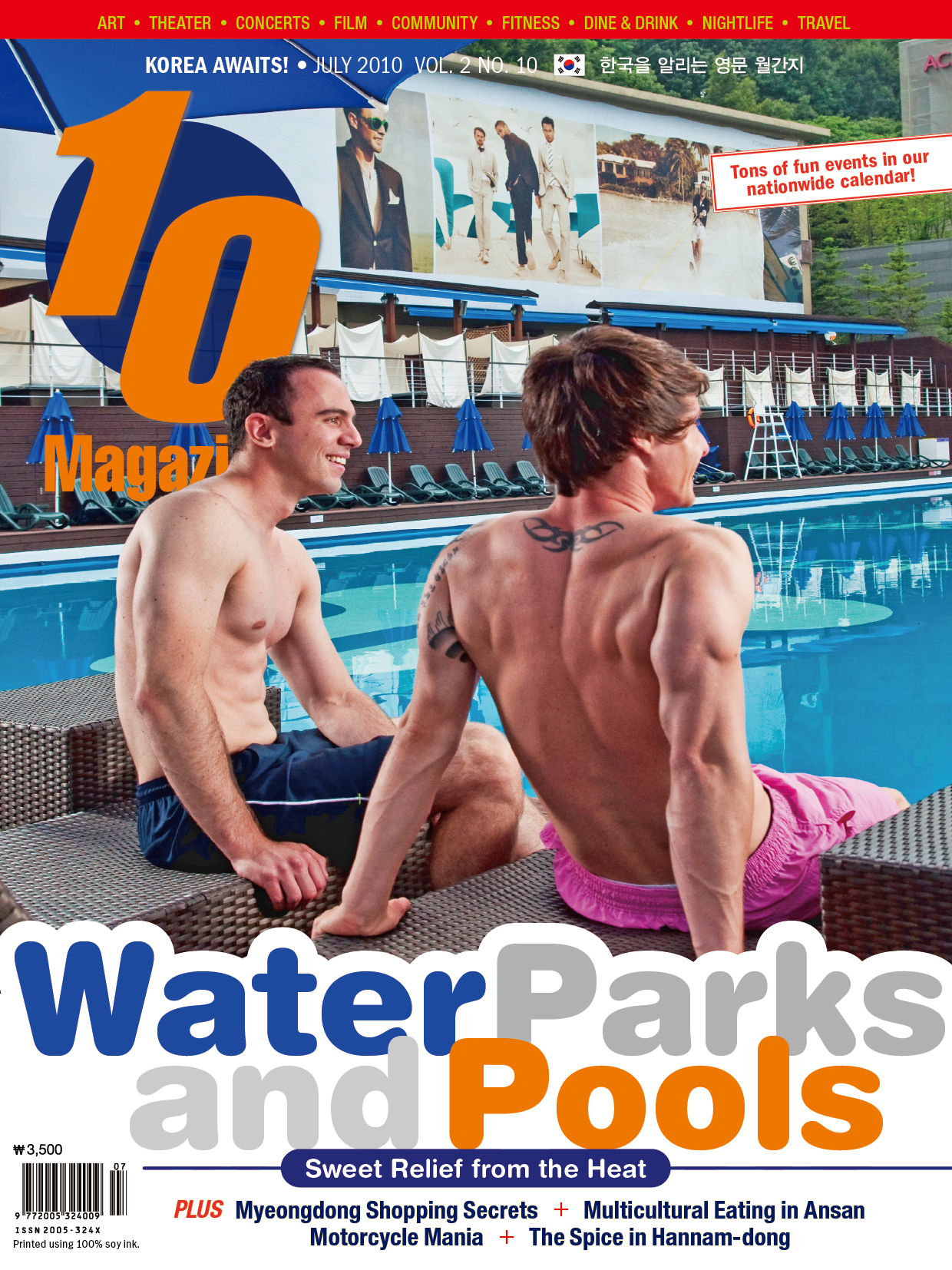
( Source: Panablu )

A quick admin note first: following the advice of a friend, I’ve decided to change the format of the Korean Gender Reader posts, as the previous commentary and information-dense one was often a little overwhelming for many readers (3000 words is not a “summary” of the week’s events!). Instead, this lighter version means more frequent and timely links for you, still leaves me the possibility of expanding upon the more interesting stories in later posts, and, probably most importantly, an extra 8+ hours a week to write!

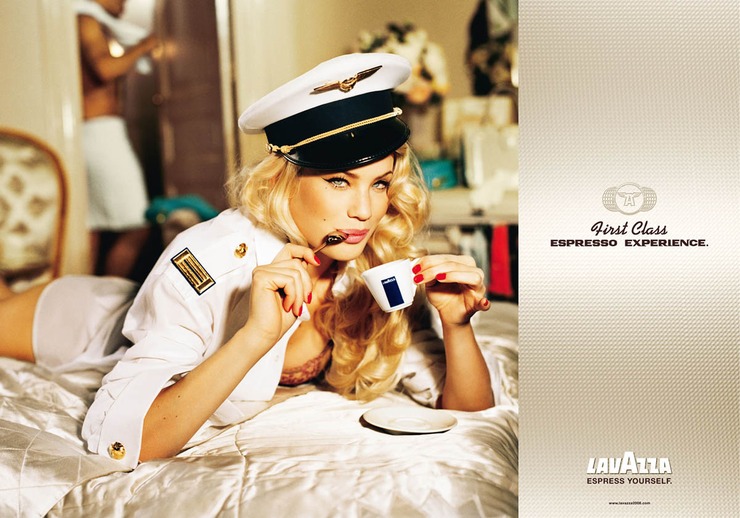
I hope you like the change, and, following the lead of commenter Tbonetylr who let me know about the above advertisement, this post’s 10 stories (my new maximum) will all be loosely related to the media and pop-culture. Another post later in the week will focus more on sexuality, although of course many stories could easily be in either.

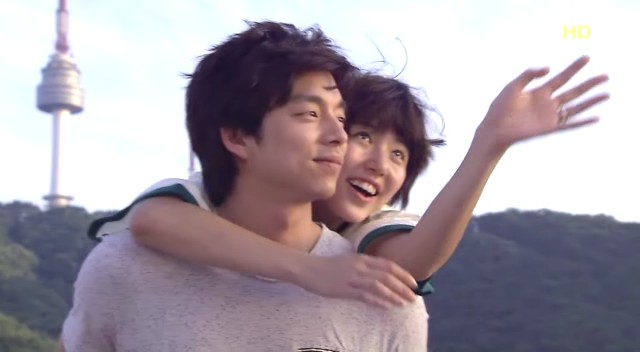
1) First up, Dramabeans discusses the recent trend of absurd age gaps in casting choices in dramas, with one drama having a “mother” only 3 years older than her “daughter” in real life! As described there:

This growing trend has some audiences doubting the believability of such casting choices, and wondering if there’s such a dearth of actresses out there. Personally, I don’t think the general trend is that crazy, given that the 30-something single girl is only lately becoming a viable option, in the last few years. Before, actresses had to go straight from twenty-something maiden to 30-something ajumma. Now there’s more of a range, and it isn’t a new thing for actors to be cast off-age.

2) At an average age of just 15 years old, GP Basic is set to debut as Korea’s youngest girlgroup. As Extra! Korea aptly puts it, “Stop the Madness“, and notes that he is not the only one concerned about their welfare.

3) Just out of curiosity, as anybody seen this new contraceptive pill commercial on TV?

Vodpod videos no longer available.

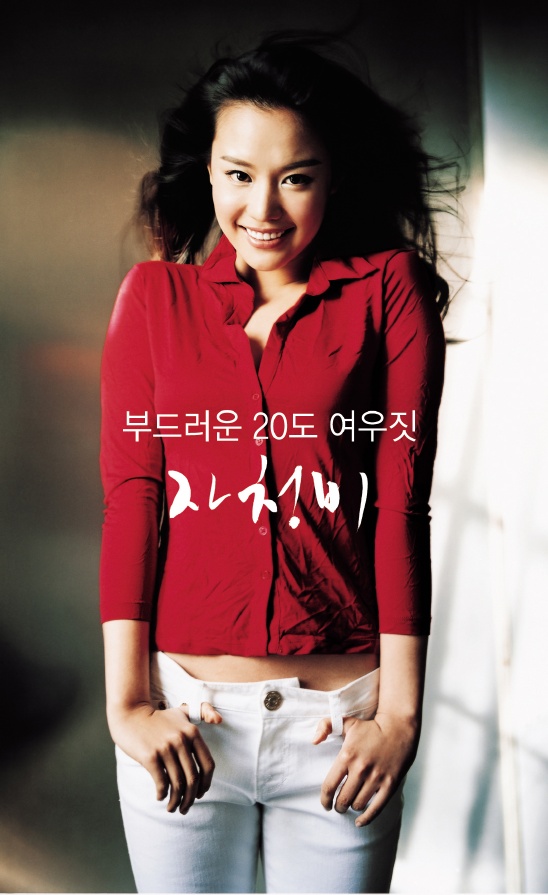
4) Shin Min-ah (신민아) happily acknowledges that her jean advertisements are heavily photoshopped. Meanwhile, in both a bizarre case and ultimate judgment, 92 netizens sued by SM Entertainment for posting up photos of Girls’ Generation (소녀시대) members’ faces superimposed onto photos of naked women will not be prosecuted, primarily because of a petition by the members themselves.

For anyone further interested, note that SM Entertainment has quite a history of suing people for any negative imagery of Girls’ Generation, even for simple cartoons.

5) Committing the grave faux pas of winning on a dating show in China, expat Benjamin Haas gets censored out of it “because foreign guys aren’t supposed to get the girl“.

6) After School’s (애프터스쿨) UEE gets criticized by netizens for her “bellyfat” again, to which unfortunately she responds with “slim” photos rather than defiance at the absurd weight standards (and required dress) for female idols.

7) In a story that sounds all too familiar, 2PM attracted a lot of criticism for the overly sexual content of their first solo concert last week. But as VixenVarla of SeoulBeats notes however, far from this being a case of Koreans being prudes and/or subject to excessive censorship, it would probably have been fine with a age rating higher than, well, 8 plus. Moreover, would anyone expect anything less from management company owner JYP anyway?

Meanwhile, see KBites for details of the latest batch of K-pop songs to indeed get banned by MBC, this time for mentioning brand names and/or websites (and see here for more on Korea’s draconian indirect advertising laws).

8) After a proposal made in the story last month, there is now the strong possibility of the first gay wedding ceremony to be depicted in a drama soon, and accordingly anti-homosexuality groups have already put out newspaper advertisements in opposition (see #12 here for more on those).

Unfortunately the cast and crew themselves are also a little divided about the possibility, but regardless the drama itself – the first to feature gay characters – remains very popular, and has just been confirmed for a 13-episode extension.

9) Christian Dior gets criticized at Jezebel for the heavily orientalist imagery of its latest advertising campaign, Shanghai Dreamers. See Ampontan also for more on its historical context.

( Source )

10) Finally, in a classic case of the pot calling the kettle black, Korean netizens have criticized a Japanese talk show for excessively focusing on the bodies of members of Korean girl group KARA (카라), currently on a big promotion drive there. Fortunately however, not everyone has joined the hypocritical, nationalist fray, some noting that “When this is done in Korea it’s ok, but when it’s done in Japan it’s wrong?” for instance.

Share

Tokyo Time-Lapse: Japan as Metaphor?

Apropos of nothing more than my mellow mood this Sunday, two time-lapse videos of Tokyo by photographer Samuel Cockedey for you to enjoy.

And see Pink Tentacle for his latest entitled Floating Point, and the video and/or landscape links there for many more like them.

But it’s both curious and a pity though, that there are so many high quality landscape time-lapse videos of Tokyo out there, whereas I can’t find a single comparable one of Seoul. Why do you think that is? After all, clearly Seoul is equally germane:

( Source: unknown )

To help you ponder the attraction of Tokyo at least, here’s some quick thoughts from an old Wired article entitled “Is Japan Still The Future?“. Written in 2001, it seems just as – even more – relevant today:

…Even in the splatter of America’s own burst bubble, Japan’s bottomless reservoir of bad news seems too dark a model for all but the most dyspeptic futurist.

But there is another Japan: Japan-as-metaphor. This is the Japan that represents hypermodernism in all its dimensions, from advanced technology to individual alienation to urbanization run amok. This stylized notion took root in the ’80s amid the country’s economic boom. It was a time when Japanese business models, money, and products seemed like irresistible forces. Neuromancer launched cyberpunk onto the streets of a future Japan “where you couldn’t see the lights of Tokyo for the glare of the television sky, not even the towering hologram logo of the Fuji Electric Company.” William Gibson’s imagined Japan was not the shiny future-perfect of yesterday’s world fairs, but instead a hard-edged tomorrow where giant conglomerates ruled and silico-, nano-, and bio- were the main denominations of value. Gibson’s message was that disruptive technology would bring with it disruptive social change. And it read like prophecy.

And on a similar theme, check out “The Future Perfect” from TIME magazine also. Meanwhile, of course please do pass on any videos of Seoul if you’re aware of them, and if all that hasn’t already made you look at Korean urban life in a new light, then let me finish by passing on bhophoto’s Korean photos which will do precisely that!

Share

Korean Photoshop Disaster #6: I like it hot, strong, and black! (Updated)

( Source )

Do men pay more attention to men’s chests than women?

As a gym addict 10-15 years ago, I read somewhere in a newspaper that they do. And with my self-confidence back then wholly tied to how much I buffed up, it certainly matched my own experience.

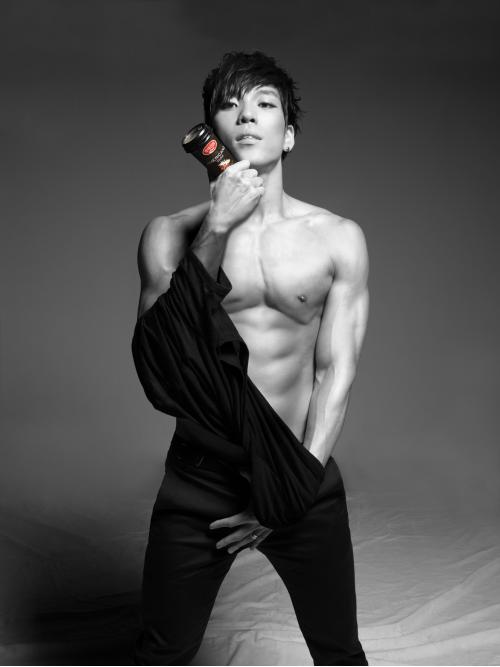
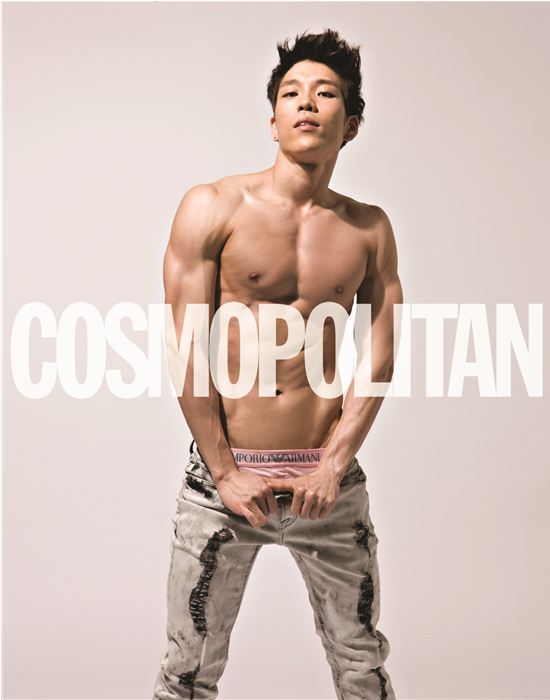
Unfortunately for the sake of objectivity though, it’s been difficult not to remember that every time I’ve seen a topless man ever since. One look at Changmim of 2AM half-naked and holding his crotch in a coffee ad then, and all I could think about was the large, firm package that used to be the weekend edition of the New Zealand Herald.

Naturally enough, most commenters at allkpop and Omona! They Didn’t focused on the one that Changmin was allegedly holding in his left hand instead, and I’m going to take a wild guess that most of those were heterosexual women. Perhaps that explains why so few noticed the appalling photoshop job on his chest?^^

Yet despite men’s greater interest in those in a competitive sense, in reality not only is bilateral symmetry a good indicator of genetic health for both sexes, and hence a heavily favored trait in mates, but even women’s own breasts become more symmetrical during the most fertile period of their menstrual cycle too. So it’s a strange oversight.

And of course for the photoshopper too, who presumably originally aimed to create some sort of languid, fluid-like effect, and I expect the mistake will be corrected before the full ad campaign for Maeil’s “Cafe Latte Americano Dutch” is launched on the 13th (source, above). But regardless, and on a more serious note now, it still has to be the first of the recent spate of Korean advertisements to objectify men that I’ve positively disliked, rather than be merely nonplussed or amused by.

For it is just as lame as it is provocative.

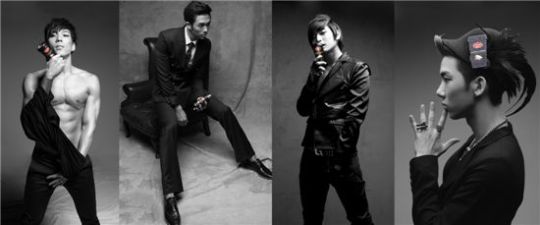
Putting aside how problematic the slogan “Find Your Black” is to English speakers, as described at allkpop the campaign’s basic concept is that various members of 2AM represent “Chic Black”, “Luxury Black”, “Tough Black”, and Changmin as “Sexy Black,” and the first major problem with the ad is also the most obvious: what does a topless idol grabbing his genitalia has to with coffee exactly?

Or indeed, with being “sexy”, and it that sense it also reduces to and perpetuates the notion that sexiness is only a matter of skin exposure, whether for men or for women. A problem which is hardly unique to the Korea media of course, but it is exaggerated here, and so unfortunately I’m wasn’t all that surprised that that was the best that the creative team could come up with.

And yet, would the same ad have actually been possible with a woman? Specifically, one with her hand placed on her crotch, a pretty blatant gesture of intent in anyone’s language?

( Source: unknown )

But why so specific? Well, if there’s one consistent theme to emerge out of writing about Korean advertisements for 3 years, that would be being witness to a long line of firsts: the first erect nipples; the first portrayal of Korean female – foreign male relationships; the first kiss; the first spoof of objectification within ads(!); the first soju ad to portray a woman as, well, really rather slutty, as opposed to decades of portraying them as virgins; and so on. And no matter how difficult it may be to believe for recent visitors to the country, in fact some of those emerged just within the last 3 weeks, let alone the last 3 years.

So, it’s natural to write as if I have almost a perverted fixation on things like crotches sometimes! And indeed, if there’s one thing to take away from Changmin’s ad, it’s the realization that however permissible grabbing one’s crotch is in passing in brief dances on talk shows and in music videos and so on in Korea, I don’t think I’ve ever seen it in a print advertisement. On women or on men, and hence netizens’ intense interest in Changmin’s ad.

But of course I may be wrong, and so as always, please pass on any earlier ads that you are aware of. But for various reasons, I really do think that an equivalent ad with a woman would have aroused far more controversy.

How about you? Let me finish by providing two related examples to help get you thinking.

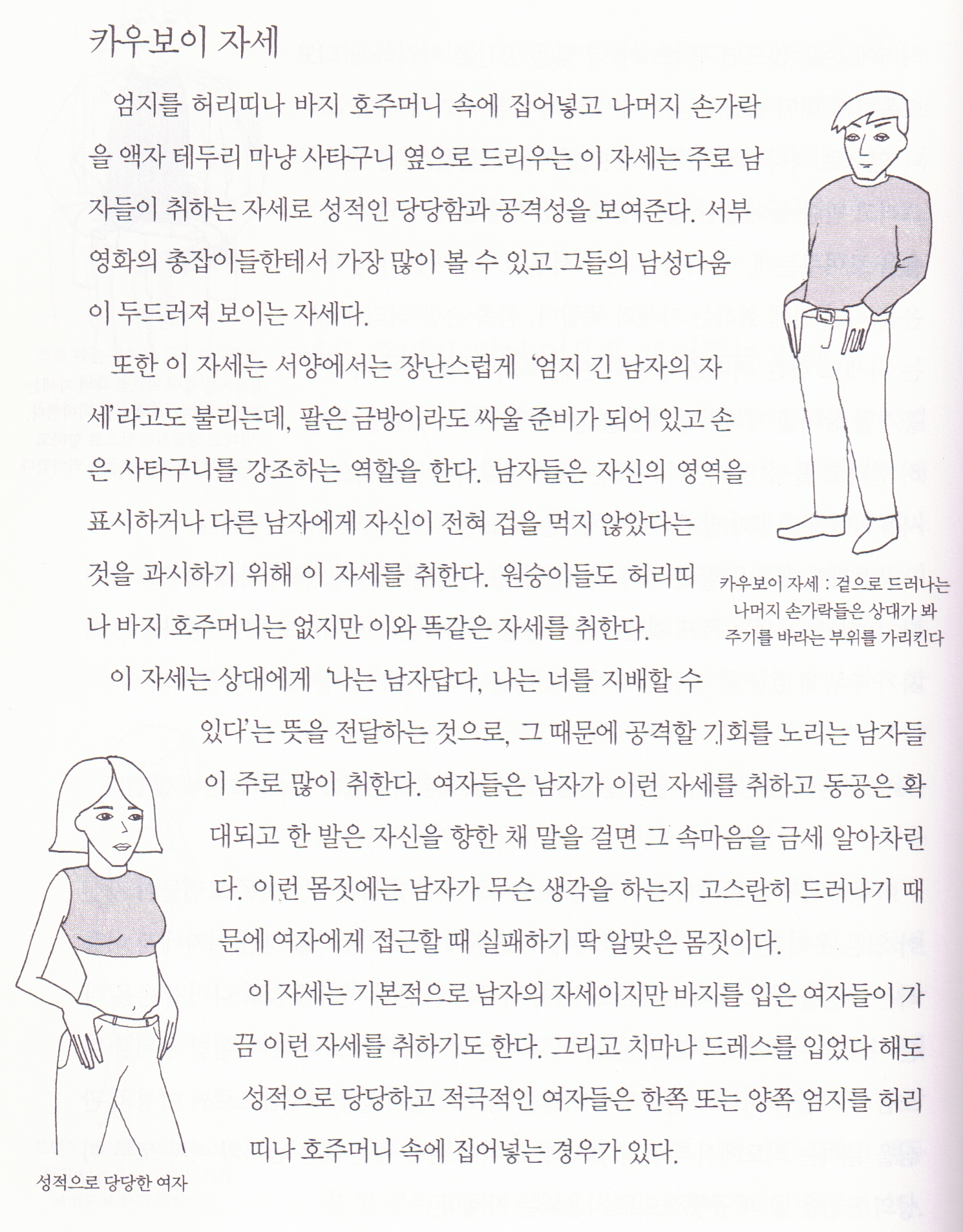
First, the the above one with Kim Ah-joong (김아중) from 2006, which at first glance is sexually-assertive enough. But as commenter “huncamunca” pointed out to me 2 years ago (in a post I ironically deleted yesterday!), it is definitely not an example of the sexually aggressive “cowboy stance” that I first interpreted it as:

…I agree that the “cowboy” thumbs in the belt loops make the picture sexual, but other elements of the stance make it sexual AND DEMURE, not aggressive. Usually, in the cowboy stance, the shoulders are relaxed and legs are slightly apart, with weight more on one foot than the other (see for example the picture of the woman on page 240 of the Pease book) [on body language]. However, Kim Ah-jung’s shoulders are raised, as if she is shrugging slightly in a demure way. Her elbows are straight and held close to her body to take up as little space as possible, which is not typical of the relaxed cowboy stance. Her legs are also tightly closed to take up as little space as possible, and they don’t look like they are about to take her toward what she wants. Her head is tilted down so she can look up demurely at the viewer. The combination of raised shoulders and lowered head is similar to the “Head Duck” in the Pease book (p. 235), which shows submissiveness. Also the wind effect makes it look as though whatever she is looking at (presumably a male viewer) is powerful enough to nearly blow her away while she marvels at him and waits for his approach. She doesn’t look like she intends to act, but rather like she hopes to be acted upon–sexual but still submissive.

Not that Changmin looks all that sexually aggressive either of course: indeed, he appears to be protecting himself more than anything else, but either way the ambiguity again points to a lack of thought behind the campaign.

Finally, a female equivalent of gratuitous objectification and/or nudity in a coffee ad provided by Italian coffee company Lavazza, also in 2006:

( Source )

Notorious for ads involving sex and/or the excessive objectification of women since at least 2005, this one was ultimately judged as discriminating against women by the Swedish Trade Ethical Council against Sexism in Advertising (ERK), and presumably forced to be withdrawn:

Sweden’s Ethical Council has a lower tolerance for the use of scantily clad women to advertise products than comparable regulatory bodies in other countries…

…ERK judged “that the woman is used as an eye catcher without any connection to the advertised products, and that it is insulting towards women”.In its defence Lavazza wrote that the 2006 calendar from which the images were taken used humour and irony to recreate a 1950s feel. The company claimed that the images depicted glamour, style and a lust for life and were in no way discriminatory.

[ERK Secretary] Jan Fager disagrees. In his opinion it is not acceptable for an advertisement for coffee to be sexy in the same way as, for example, an underwear ad. He noted that while H&M has come in for much criticism from the general public the company’s Christmas campaigns have never been found in breach of ethical standards…

…In its written judgment the ERK maintained that Lavazza had not lived up to the principle “that advertising should be formed with due regard for social responsibility”

Good for ERK, and yes, I rather like that acronym too!^^ But one wonders what they would make of Changmin?

Update – Unfortunately my English copy is in New Zealand, but see below for more on the cowboy stance, and how intimately sexual and physical aggression can be linked. From pages 236 and 237 of the Korean edition of The Definitive Book of Body Language by Alan and Barbara Pease (2006), it’s easily one of the most helpful book purchases you’ll ever make, although I did much prefer the realistic line drawings in the 1989(?) edition to the cartoon-like ones and photos of famous people in the new one:

And for comparison’s sake, here’s a less disastrously photoshopped image of Changmin:

( Source )

(For more posts in the Korean Photoshop Disasters series, see here)

Share

The Grand Narrative on Air

This time, a live phone-interview on tomorrow’s This Morning show on TBS e-FM, Busan e-FM’s sister station in Seoul. Hosted by Dr Hans Schattle, a political science professor at Yonsei University, I’ll be talking alongside Dr. Robert Kushner of Northwestern University on the overuse of diet pills in Korea, with me focused on the sociological aspects of dieting and body image in general. Catch me there from roughly 8:40am either before, together with, or after Dr. Kushner, and there’ll be an opportunity for listeners to call in also.

Meanwhile, you may find the text in this related cartoon I’ve just found amusing! For non-Korean speakers, the man is saying:

“Young woman! You seem to be fat. You should register in this diet program, yes? [Just look at this] We never exaggerate or do false advertising!”

And the woman is thinking:

“The nerve of that A-hole: he’s fatter than me! And who gets fooled by those sorts of photos these days anyway? Are people’s bodies like balloons?”

Alas, as Ill explain tomorrow, this is by no means an unlikely conversation in Korea. But at least he’s not actually lying about the advertising: as the next panel reveals, it’s two sisters in the pictures!^^

Share

Open Thread #15: BOOKGASM

Sorry everyone, but having just had 15cc of blood removed from my 2 week “swellbow” this afternoon, then I’m going to have to have to take a break from writing for a few more days. Fortunately for my sake though, my reading for August came just after I arrived home from the hospital, and I’d love to hear from any readers who have also read Japanese School Confidential, and/or Guyland as I get stuck into them this week. And The Girl With the Dragon Tattoo too of course, but comments about that would be better placed in this earlier comments thread!

But please feel free to discuss any other issues that interest you, and on that note now seems as good a time as any to mention that I’m now open to anyone guest posting on the blog also, on any Korean sociological, gender, and/or advertising-related topic, as frankly I lack the time to cover even just those I’m especially interested in these days, let alone anything else. It would be great to hear both fresh perspectives on those and/or about new topics though, so if you’re interested please either email me or leave a note in the comments!^^

Share

Korean Sociological Image #48: The Male Gaze

( Source: L-C-R. Reproduced with permission )

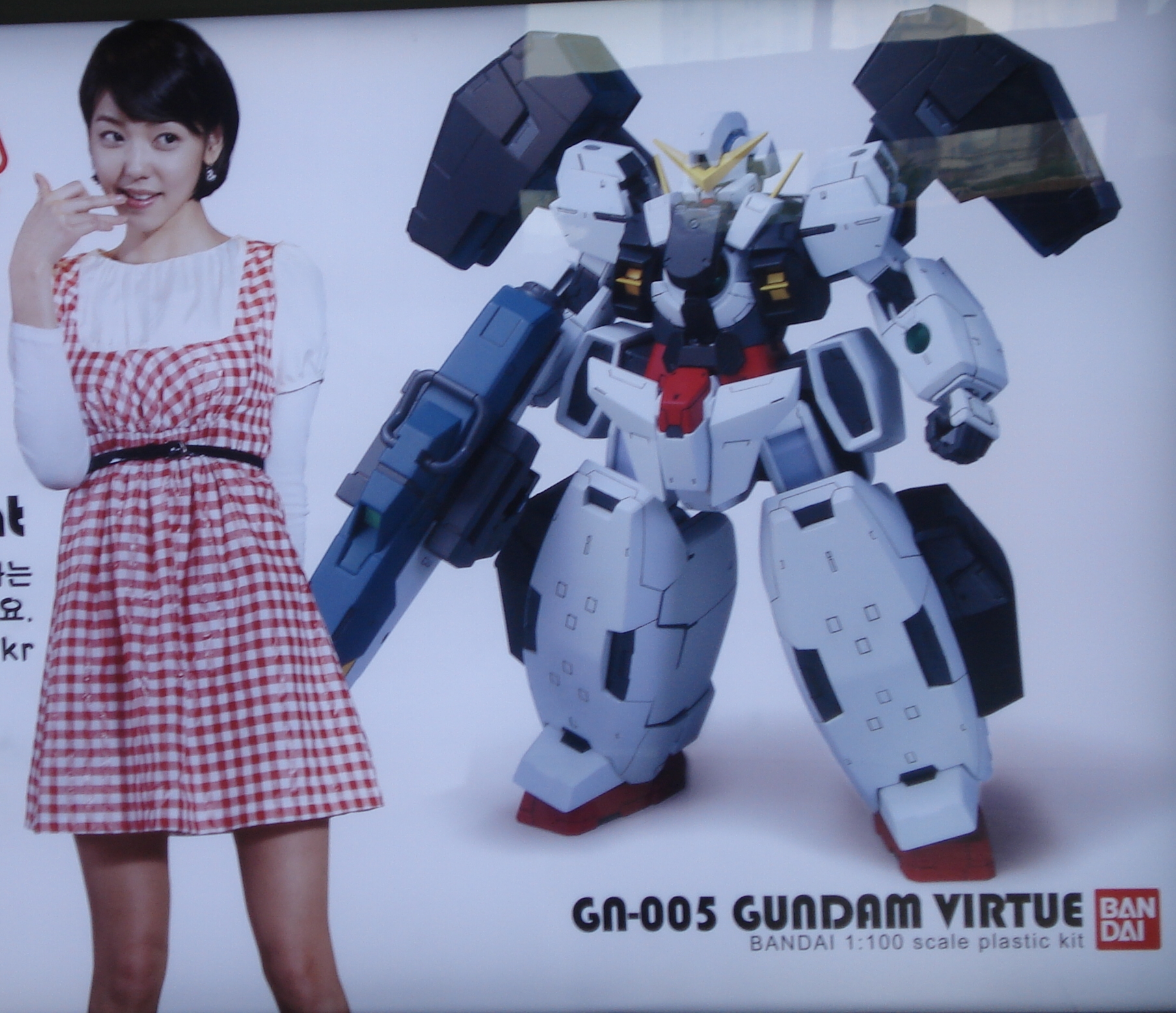
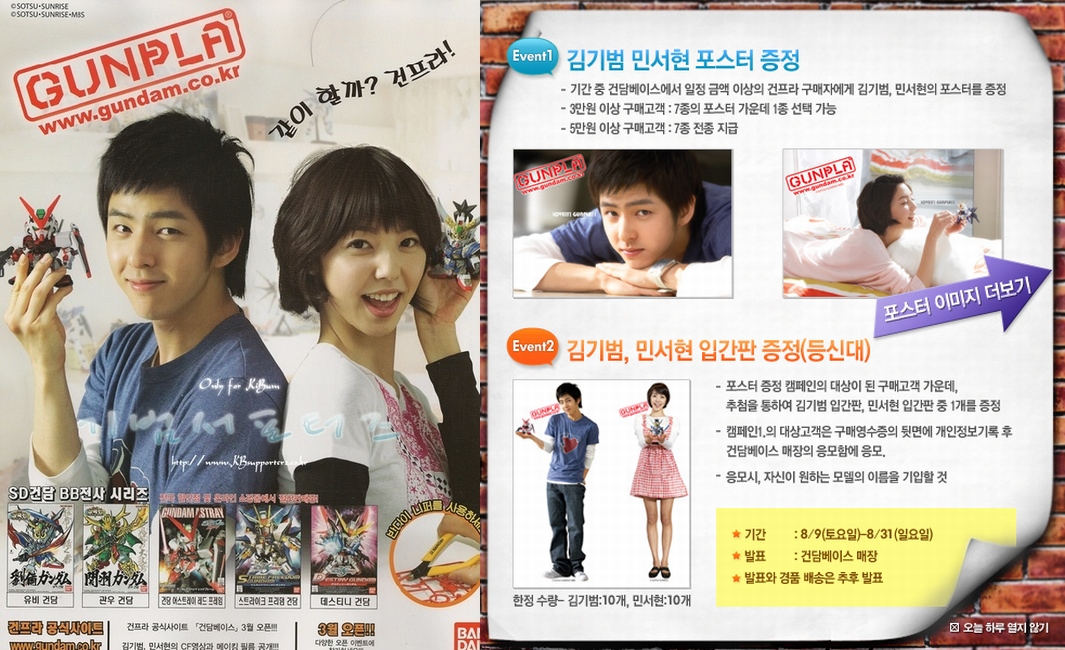
Like photographer L-C-R says, this 2008 Gundam advertisement is a prime example of a woman being portrayed as a child and/or sex object, of which she saw entirely too much of while she was in Korea.

You may be very surprised then, when you learn whom it was actually aimed at.

But first, please consider what is it exactly that so demeans drama actress Min Seo-hyeon (민서현) in it? I identify 4 or 5 things myself, which I outline in descending order of importance below:

  1. her childlike expression, combined with putting her fingers in her mouth
  2. the canting of her head
  3. her surprisingly awkward stance
  4. her passivity as she awaits the masculine-looking robot to make the next move

And after discussing those, albeit briefly because I’ve already done so in great depth in this similar post about soju advertisements, I’ll finally look at the ad in the context of the campaign as a whole. But feel free to disagree with any of those and/or suggest others, and in that vein I highly recommend asking your Korean partners, colleagues or friends their own opinions also. As if the experience of asking my wife and her friends earlier is anything to go by, then they are very likely to disagree with the first. Or indeed, that she’s being portrayed childishly at all, and – jumping ahead – not even in the following commercials either:

I’d argue that the main reason for that is the Korean cultural practice of aegyo (애교), difficult to define in English but probably somewhere between “affected sweetness” and “affected childishness“, and at least partially rooted in the prolonged transition to adulthood of experienced 20-something Koreans that are the biggest practitioners of it. For not only does the Korean education system essentially defer the joys of adolescence (but not the negatives!) until graduating from high school, but economic circumstances force them to live at home until marriage and/or deliberately put off their university graduation, and men also have their 24-28 months of compulsory military service to boot.

But I realize that since I was a student myself in the mid-1990s, more and more 20-somethings in Western countries are also postponing leaving home, and indeed to note all the above is not to argue that all Korean 20-somethings in such circumstances are childish; actually, I have intelligent, mature, and thoroughly Westernized Korean friends that have resigned themselves to them, or alternatively feel so trapped that they are literally fleeing the country to escape. Yet one thing they certainly do not do however, is aegyo, and I put it to you that in fact that is neither required for women to successfully navigate a patriarchal society, nor particularly savvy and ultimately empowering of them to do so.

( Source )
( Source: L-C-R )

Yes, “women”. As while Korean men do also do aegyo, and so as you’d expect content analysis demonstrates that men are much more likely to be portrayed childishly in advertisements in Korean magazines than US ones, and Korean men more than Western ones in the former, it is still overwhelmingly Korean women that are done so, and to a much greater extent than women of any ethnicity are in US magazines.

( Source )

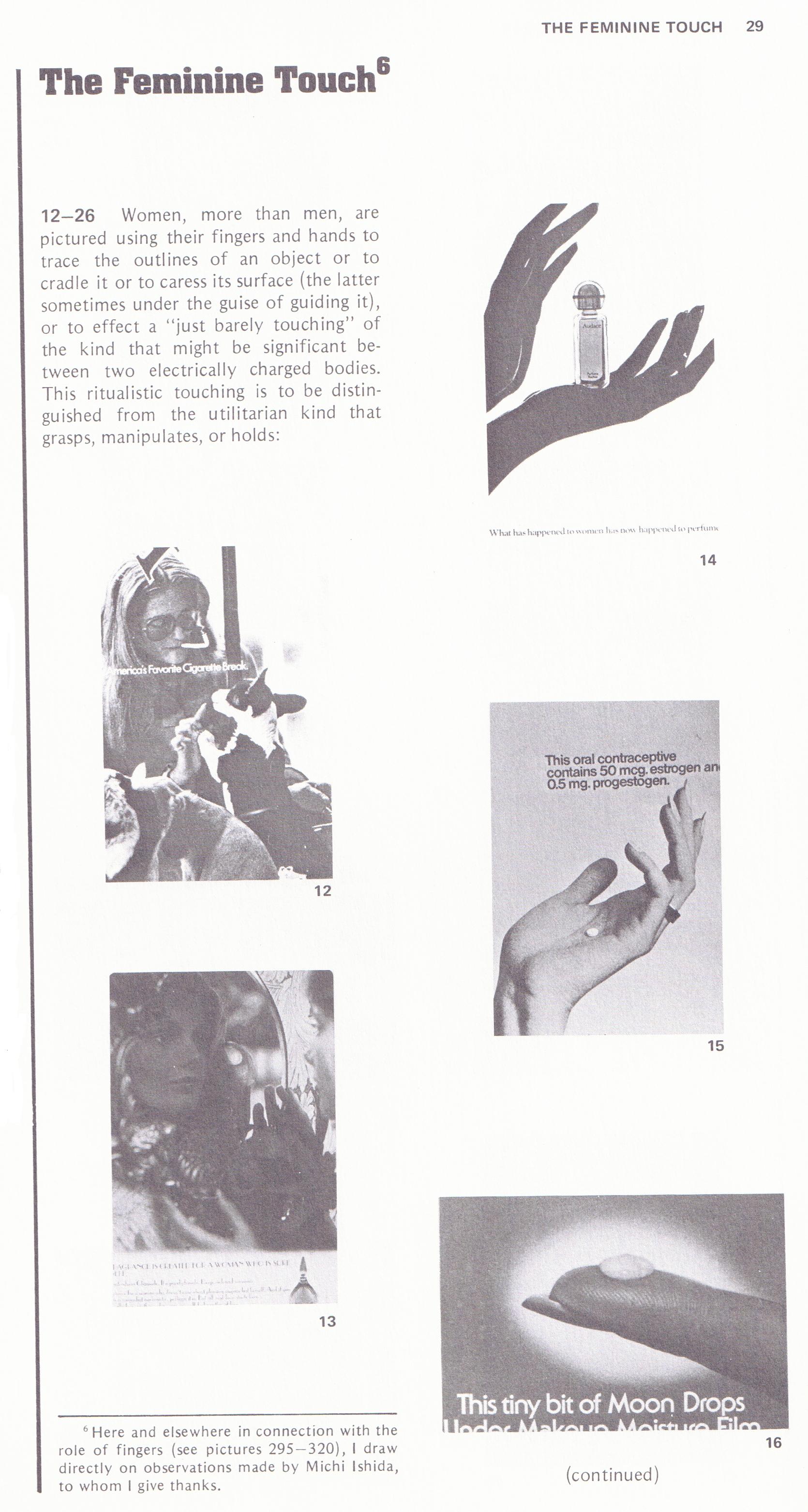
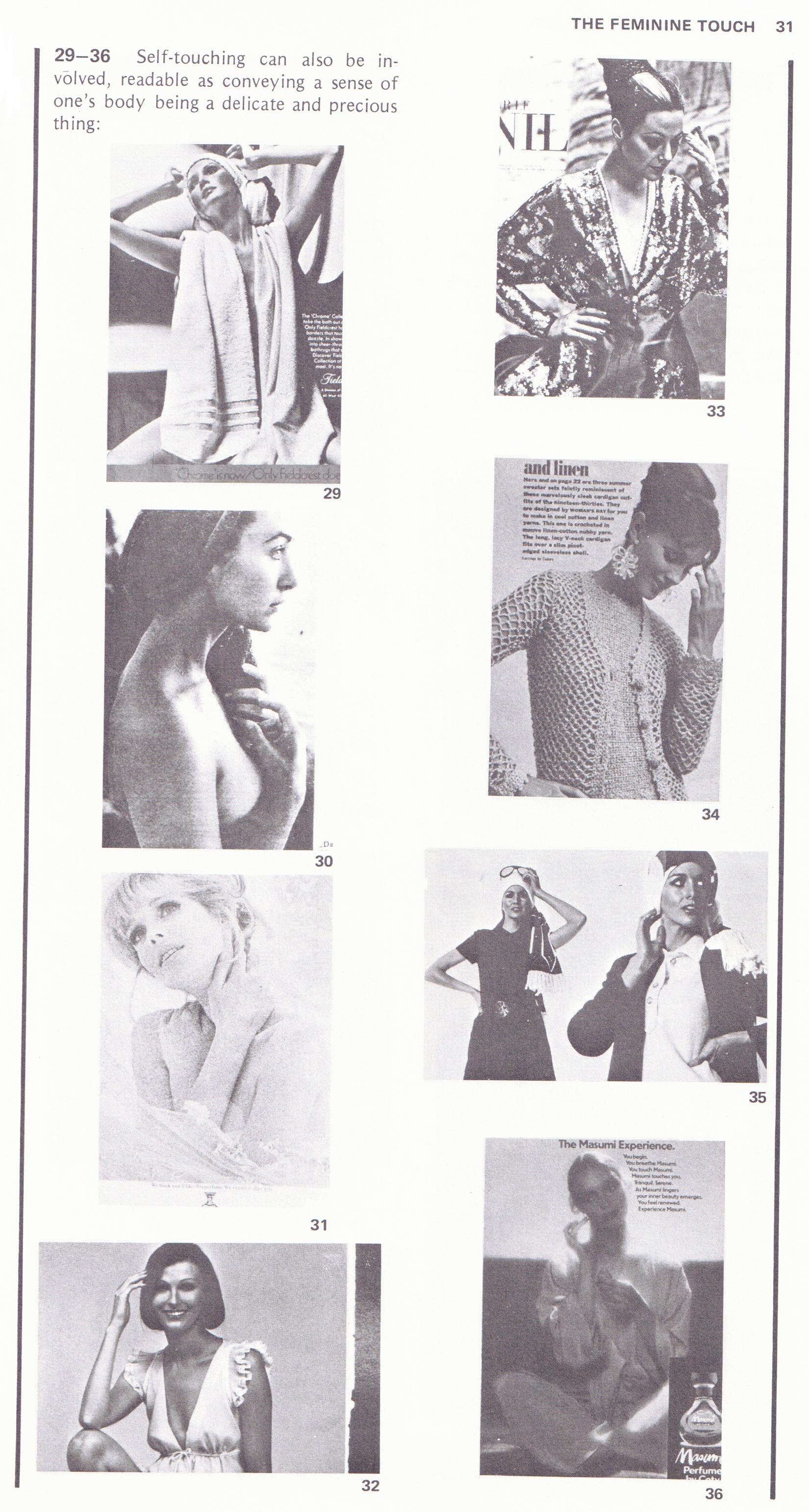
As for anyone still not seeing the childishness in Seo-hyeon’s expression however, or why it is problematic in any sense, consider what the images above tell us about just how “natural” such expressions really are on adults, and why women are more commonly portrayed with them nevertheless. And which are often accentuated of course, by putting their fingers in their mouths, and which could possibly be considered “self-touching” as defined by sociologist Erving Goffman in Gender Advertisements (1979) below:

As discussed in that earlier post on soju advertisements, both are often combined with the canting of the head, which is problematic for the reasons outlined there. I also discuss awkward stances there too, and to anyone believing that I’m about to read too much into Seo-hyeon’s, I suggest stopping here and trying it for yourself,  making sure to bend and spread your legs outward at the knees like she does in particular. For not only will you realize just how unnatural it really is, and that people only ever stand like that in advertisements (and overwhelmingly women at that), but you’ll also probably end up falling forward a little on your first attempt like I did, and will suddenly gain a very palpable sense of why exactly the advertisement does indeed present her as a sex object:

( Source: L-C-R )

In Goffman’s framework in Gender Advertisements, that “bashful knee bend” is something that women frequently, men very infrequently, are posed in a display of. And whatever else, it can be read as

…a foregoing of full effort to be prepared and on he ready in the current social situation, for the position adds a moment to any effort to fight or flee. Once again one finds a posture that seems to presuppose the goodwill of anyone in the surround who could offer harm. (p.45)

Hence passivity, as blind to whatever occurs behind her, nevertheless Seo-hyeon seems to be eagerly awaiting whatever the robot plans to do with her. And which judging by the fact that it also is standing slightly thrust forward, and has a big long gun resting behind Seo-hyeon’s buttocks, couldn’t really be any clearer. Hell, even the protrusion on its crotch is already bright red for good measure too.

( Source )

An advertising campaign clearly aimed at young men and adolescent boys then, whom I’ll safely assume are the vast majority of Gundam fans? If so, then the effort actually appears to have backfired, as the few commentators on it I’ve been able to find here, here, here, here, and here generally express both surprise and disdain at seeing Min Seo-hyun at all, the last of whom wrote the following about the advertisement above:

이 광고는 광고로서의 설득력이 전혀 없다. 그것이 염가 제작되었기 때문이 아니다. 반대로 제작비는 많이 들었을 것이다. 이름있는 사람들의 얼굴을 비추기 때문이다.(그림의 건프라 광고에 출연하는 사람이 유명한지는 잘 모르겠다.) 그러나 문제 역시 그러한 사고방식에 있다. 즉, 유명한 사람의 얼굴을 비추면 광고가 될 것이라는 사고방식에.

This advertisement has no persuasive power at all. But not because it was cheaply and poorly produced; actually, because of the famous faces in it, it looks like a lot of money was spent on it (well, actually I don’t know if they are famous or not). Rather, the problem is with using that advertising logic in the first place.

이것은 어느 정도 맞는 말이다. 유명한 사람이 어떤 상품을 소비하고 있으면 그것만으로도 상품의 질을 소비자들에게 안심시켜 줄 수 있다. 그러나 그것도 광고의 효용성 안에서 이루어져야 한다.

However you look at it, this is correct. While of course simply having famous faces in an advertisement is sufficient for most consumers, they should still be used in the ad as effectively as possible however.

이 광고의 전략은, 유명하거나 예쁜 사람과 건프라의 이미지를 교차시켜 건프라가 갖는 오타쿠 이미지의 쇄신일 것이다. 좋은 생각이다. 그러나 이러한 두 이미지가 교차점을 찾지 못하고 있다. 저 사람은 건프라를 만지작거리고 있지만 전혀 즐거워 보이지 않는다. 아마 저 사람은 자신이 들고 있는 건프라의 이름도 모를 것이다.

The advertisement’s strategy is to reform the image of a Gunpla Otaku [an obsessive fan of something – James] by combining with a famous or attractive person. This is a good idea. However, ultimately they don’t really mix. This person doesn’t look like she’s enjoying holding the model [really?] and probably doesn’t even know the name of it.

( Source )

방 또한 지나치게 깨끗하지 않은가? 건프라에 열중하면 당연히 방은 데칼 찌꺼기나 플라스틱 조각으로 너저분해져 있어야 하고, 책장에는 잡다한 건프라가 어지럽게 진열되어 있어야 한다. 채색하는 손은 알록달록 에나멜이 묻어 있어야 하고, 옷은 더러워져도 상관없는 펑퍼짐한 츄리닝이어야 하며, 얼굴은 지극히 진중한 표정을 짓고 있을 것이다. 오히려 이러한 당연한 이미지를 예쁘고, 성공적이고, 멋있는 사람들과 교차시켰으면 이 광고는 성공을 거두었을 것이다. 장동건이 한없이 고결한 태도로 NDS를 플레이했다면 NDS는 그만큼 팔리지 않았을 것이다. 오히려 소파에 퍼져 앉아 우리들이 하듯이 게임을 했기 때문에, 우리가 하는 것을 장동건도 한다는 안심을 소비자에게 줄 수 있었다.

Also, isn’t the room excessively clean? When you are absorbed in assembling a Gunpla model, of course the room should be messy with the remains of decals and leftover plastic, and various other models displayed on the bookcase. And while your hands would be stained with enamel paint and your casual clothes dirty and speckled, your face shows that you don’t care about that as you focus all your attention on assembling the model. Rather, prettier and more successful people were needed. And recall that very famous actor Jang Dong-gun didn’t similarly loftily play Nintendo DS Lite while he was advertising it in 2007; instead, he just played it normally on the sofa like the rest of us, and so it sold well.

게다가, 타겟을 통일했으면 더 설득력이 있었을 것이다. 지금 이 광고가 노리는 소비층은 누구인가? 아이? 청소년? 남자? 여자?

Hence I think the ad would have been more persuasive if it had been aimed at a wider variety of people. But to whom was it actually aimed at anyway? Children? Teenagers? Men? Women?

( Source: L-C-R. Reproduced with permission )

Sounds like a rather picky otaku to me, but he does at least finish with some good questions, which I’ll now attempt to answer by passing on what I’ve been able to find of the remainder of the campaign.

First up, the one above that was alongside the one with Min Seo-hyun. Featuring popular singer (now actor) Kim Kibum (김기범) of the boy band Super Junior (슈퍼주니어), at first glance it’s very similar. And yet:

  • the robot isn’t even facing towards him, let alone thrusting a phallic object towards his buttocks
  • Kibum’s stance is much more natural
  • rather than passively waiting for robot to initiate something, here he seems to be silently asking the observer what fun things he can do with the robot himself
  • accordingly, his expression is more mischievous than childish
( Source: L-C-R )

Crucially however, this dichotomy is not repeated in the rest of the campaign. See the following commercial which features both actors for instance (as an aside, it starts with the lines “Shall we do it? Okay”, a common innuendo in Korean advertising):

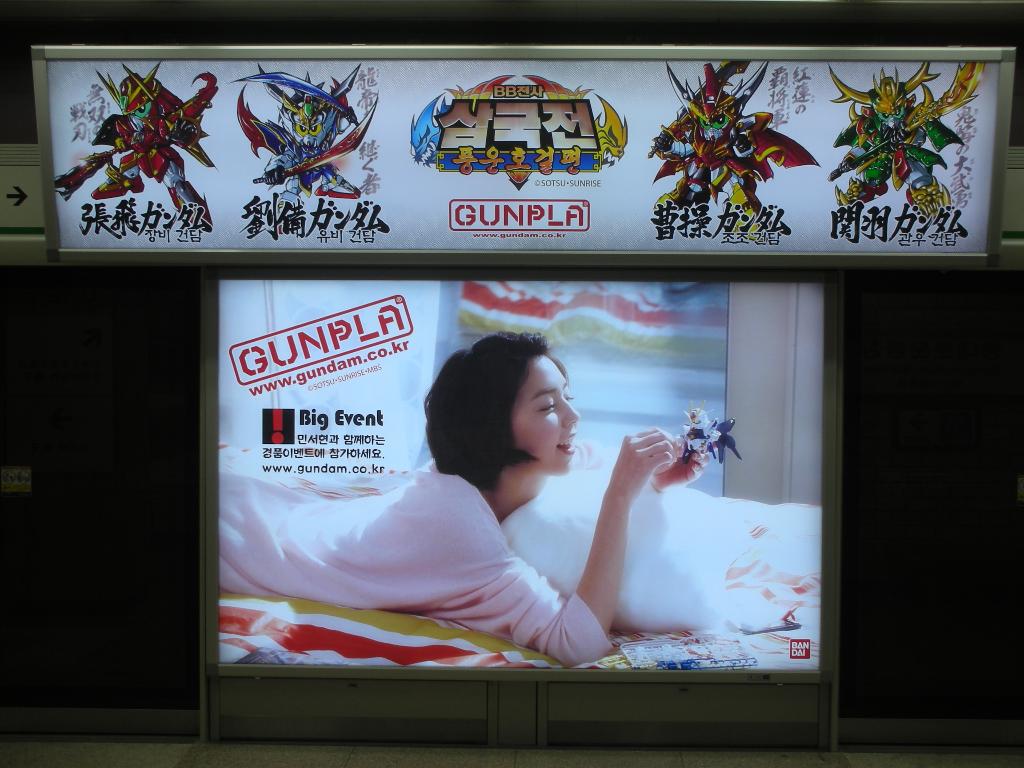
And in particular, the long version of the bedroom one, which reveals that the reason she become interested in Gundam in the first place was because boyfriend Kim Kibum bequeathed his collection to her while doing his military service, to which she now enthusiastically adds to with her own robot:

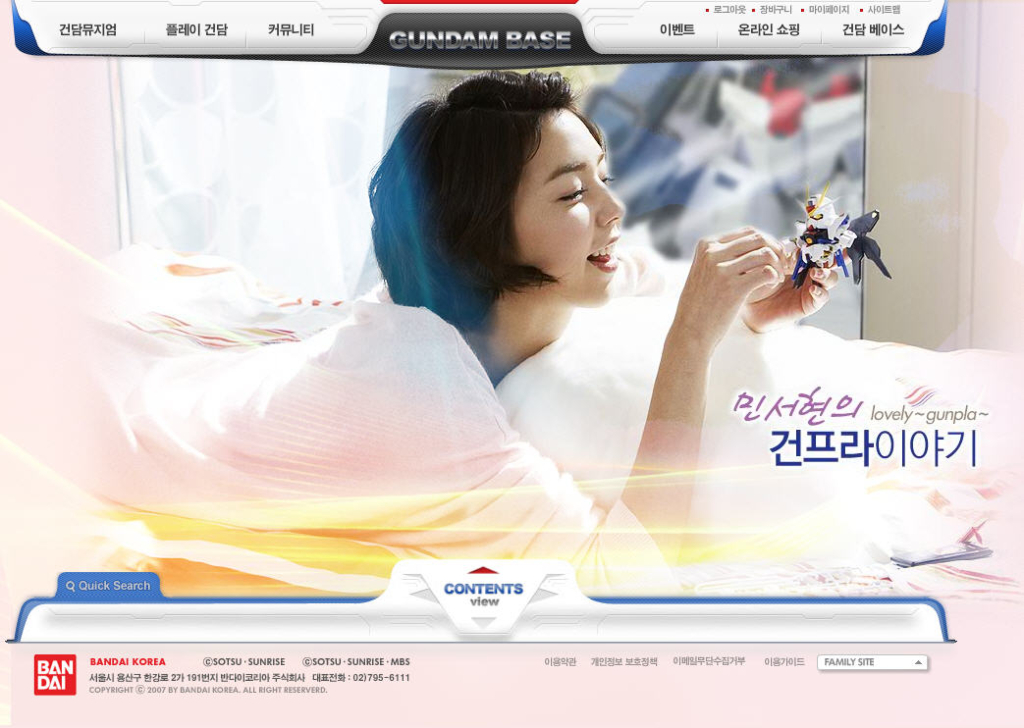
And the theme of both sexes enjoying assembling and enjoying Gundam models is corroborated by the following posters and website images:

( Source )
( Sources: left, right )

Taken as a whole, I’d argue that the only consistent theme of the campaign is that of Min Seo-hyeon becoming more and more involved in the hobby for various reasons, including by: being (sexually) tempted by the models themselves; encouraged to take it up by Kim Kibum giving her his own models; assembling models together at his suggestion; and finally becoming equally passionate and knowledgeable about it as he is. Nay, it’s not so much a theme as the exact narrative Gundam hoped would play out repeatedly in real life, and besides which the cute portrait poster of Kibum above to download from the Gundam website is sufficient evidence in itself that the campaign was aimed at teenage girls and women.

Why then, did the bedroom commercial and the opening advertisement simply suck so badly? Why on Earth did the advertising agency responsible think that having a 22 year-old woman acting like a 12 year-old would make either age group more interested in the product, let alone by suggesting that – not to put too fine a point on it – she also wanted to get fucked by it?

Of course, there could be any number of reasons. For instance, there is the cultural practice of aegyo as mentioned, which I may have underestimated, and perhaps I’m wrong in thinking that the majority of Korean women would be at least unimpressed, if not offended, by depictions of women as children. It could also be yet another demonstration of an advertising agency so used to selling products to men that it comes to regard their perceived desires and tastes as the norm, and so unwittingly applies them to women too:

( Tempted to drink soju with 16.8% alcohol now girls? )

But recall that photographer L-C-R mentioned that she saw advertisements like these everywhere in Korea, as probably you do too, which raises a third possibility: either the Korean advertising industry as a whole is dominated by men (which may in fact be true), or else it has so internalized those male norms that even women in the industry (let alone consumers) regard them as normal and appropriate for selling products to either sex.

A phenomenon by no means confined to Korea or the just the advertising industry, this is the essence of the “male gaze“, and which hopefully having provided some evidence for and/or at least piqued your interest in, I’ll wisely finish by pointing you in the direction of excellent introductions to the topic rather than going on further here. One is the examination of the ways women are portrayed in graphic novels provided by fantasy magazine, and another is the related Bechdel Test for movies:

And here’s a brief application of that to specifically Fantasy movies at Feminist SF also. But I most highly recommend the illuminating, even strangely moving 1972 documentary Ways of Seeing by then art historian John Berger, which I’ve just discovered via Sociological Images here and here. Obviously the second episode on the female nude is most pertinent here, but episode 1 is more likely to captivate you to the extent that you forget to leave your seat for the next half hour:

Here’s episode 2:

And I would include episodes 3 and 4, the latter of which is on advertising, but I haven’t watched them myself yet!^^

(For all posts in the Korean Sociological Images series, see here)

Share

The Grand Narrative On Air

( Source: Kevindooley )

With apologies for forgetting to mention them much earlier, see #56 here for my interview about blogging and Korean gender issues on Busan e-FM’s Let’s Talk Busan show back on July 11, and then here for the subsequent video webcast with Koreabridge owner and manager Jeff Lebow and fellow blogger Alexandra Karpen of Alex’s Adventures in Asia.

Unfortunately the first link doesn’t work in Firefox, and also requires installing an ActiveX control in Internet Explorer, so if you’d like to avoid all that hassle then please simply go here instead.

Please feel free to ask me any questions about or to expand upon any topic mentioned in either: unfortunately, time goes very quickly when you’re being interviewed about your favorite subjects!

Share

Creative Korean Advertising #24: Will They? Won’t They?

Apologies for the slow posting folks: last week, I developed a “swellbow” from writing at my computer for too long, and it’s made sleeping a little difficult, let alone blogging. And I could mention the heatwave and my daughter’s kindergarten closing for 2 weeks too, but you get the idea!

Hence my original intention here just to pass on the deceptively innocent advertisement above, which had me burst out laughing at its crude sexual symbolism. But in hindsight it is also noteworthy both for having a woman initiating a relationship (possibly the first of its kind?), and for being part of a creative multimedia campaign featuring tantalizing hints of various episodes in various couples’ dating lives, which you’re then encouraged to find out more about by using the electronic tags on the bottles to download the “full stories” directly to your smart phone. Take a look for yourself:

Yes, my curiosity was especially piqued by the one involving kissing too, and it’s difficult to believe now that you only began seeing that in Korean advertisements just last year.  Regardless, fortunately the full stories are also available at the company website and now Youtube, and ironically that particular one ends up being more charming than anything else:

I hope you enjoyed them, and for anyone that missed the humor in the very first advertisement, then take a closer look at o:19 specifically. Lest you feel I’m reading too much into that however, then let me draw your attention to similar examples here, here, here, and here also!^^

(For more posts in the Creative Korean Advertising series, see here)

Share

Korean Sociological Image #47: East End Girls, meet West End Boys

Yes, it had to happen eventually! A big round of applause to Nextour, for quite possibly the very first positive representation of a Korean female – Western male relationship in a Korean commercial.

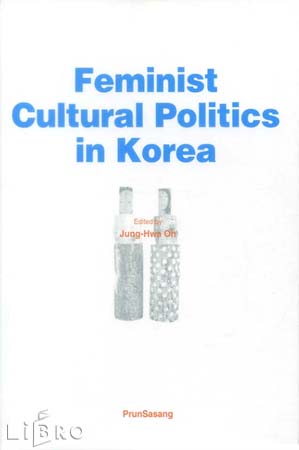
New readers shaking your heads in disbelief however, please consider reading other posts in the “interracial relationships” category, especially here, here, here, here, here, and here. And please also ponder the following quote from Hyun-Mee Kim in her chapter “Feminization of the 2002 World Cup and Women’s Fandom” in Feminist Cultural Politics in Korea, ed. by Jung-Hwa Oh, 2005, pp. 228-243 below on the then unprecedented public attention by Korean women on the bodies of the Korean players, and which gives a big clue as to why such an essentially innocuous commercial didn’t emerge back then:

…if Korean women’s enthusiasm had mostly been directed at handsome Western soccer players, such as England’s Beckham or Owen, Portugal’s Figu, Italy’s Toti or Spain’s Morientes, the situation would have been drastically different. That they zealously applauded Hiddinck, a Dutch male and the director of the Korean team, seemingly too much of a “father” for them to desire sexual union with, and the familiar handsome guys of Ahn Jeong-hwan, Kim Nam-il, and Song Jong-Guk, must have been the chief reason for positive response the Korean women fans got from the rest of the society.

In particular:

The attitude of the Korean media that looks down on Japanese women for expressing their love for Beckham and treats them as “ppansun-i”s [빤순이, or condescending slang for crazed girl fans – James], clearly shows what line the Korean women should dare not cross. This World Cup, which ended up as a worshiping of the 23 [Korean players], delineates the limitations as Korean women rose up as the subjects of their own sexual desires. This is a society in which there is still a strong belief in the sexual union of the full bloods: for the women to collectively root for Ronaldo or Morientes, there is too much at stake. It is so much easier to shout out that they want the “yellow bodies” of our own race rather than “white and black bodies”. Hence, the happy union of women’s sexual desires and new patriotism in the 2002 World Cup. (p. 239)

Naturally one commercial doesn’t mean a sexual and racial revolution of course (note that only Caucasian men were featured), but it is a start, and certainly provides a welcome contrast to the general persecution of foreign males in the Korea media in recent years, as most recently demonstrated by the fact that Anti English Spectrum’s Lee Eun-ung was uncritically allowed to present his repulsive, unsubstantiated views on foreign males on a national radio show for instance. Indeed, the lack of netizen reaction to the commercial so far hopefully demonstrates that things may have actually improved a little since 2002, and provides a healthy reminder that, just like in other countries, the Korean media is probably not a very accurate guide to public opinion in the first place.

Meanwhile, see here for the male version, albeit a slightly seedy one (caressing a ‘sandwoman’ anyone?), and young readers see here also if you didn’t understand the “East End Girls” reference!^^

Update, November 2011) Alas, it wasn’t actually the first! See here for an example from 2006 (and one more from later in 2010).

(For all posts in the Korean Sociological Images series, see here)

Korean Sociological Image #46: The Language of Exclusion (Updated)

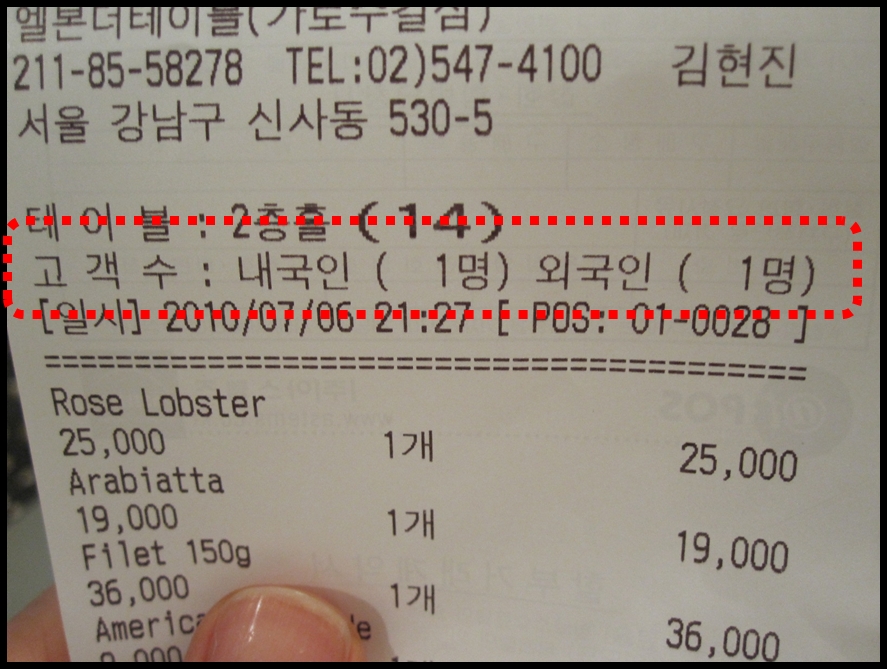
(Source: Mental Poo; reproduced with permission)

A receipt from a recent visit by blogger My Jihae to an upscale restaurant in Seoul, about which she wrote:

I’m not sure how many restaurants do this, and why this restaurant bothers to do this in the first place, but on the top of the receipt they blatantly keep track of whether the guests are locals or foreigners. They pegged me right away, I guess it’s that obvious.

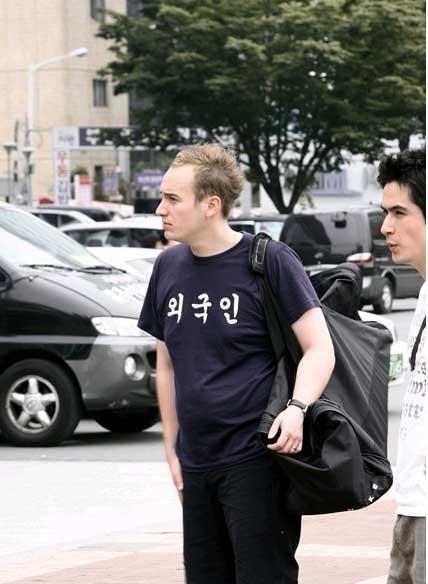
For those of you that can’t read Korean, for now let’s say that waegookin (외국인) on the right generally means a foreigner, and naegookin (내국인) on the left a Korean person. And that does indeed describe My Jihae and her dining partner respectively, although she is actually Korean-American. But why bother to note the distinction between two ethnically-identical customers at the same table?

Some commenters to her post speculate that it may have been done for taxation purposes, which I wrote would be something good to know if true, as otherwise:

…many expats (myself included) may simply chalk things like this up to Koreans typically and completely unnecessarily pointing out our foreignness, when in fact they may be nothing of the sort.

And see Occidentalism here and here for a similar case in Japan. Unfortunately however, not all perceived Korean tendencies towards exclusion are simply misunderstandings on the part of non-Koreans.

Take the “Waegookin Shock Meltdown” for instance, which describes the situation:

…where when speaking in Korean, Koreans freeze up because they have some silly preconceptions that foreigners simply ‘can’t’ speak Korean or that they just ‘shouldn’t’ speak to us in Korean – the latter which comes without the help of the government and medias insistence in the last 10 years or so that ‘globalization’ means that Koreans should all have to speak English whenever they encounter big-nosed white people.

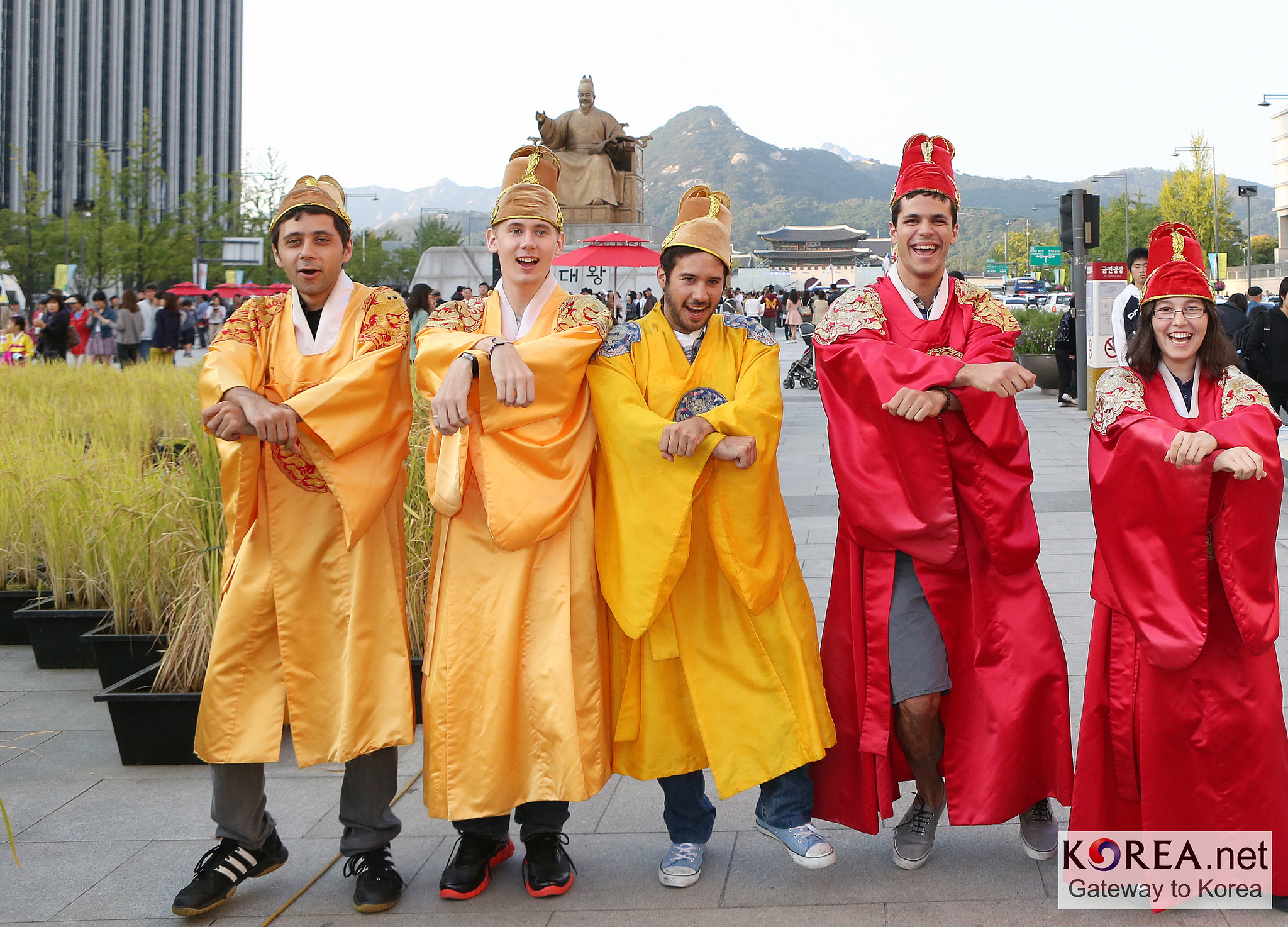
Foreigners Gangnam Style(Source: Republic of Korea; CC BY-SA 2.0)

And which personally used to get me extremely frustrated and angry while learning Korean a few years ago, although now I believe that that reaction from Koreans more often stems from simple inexperience and/or nervousness in dealing with non-Koreans. Still, whatever combination of factors are responsible in any given case, all have clear solutions, something which can not be so easily said of the ways in which Korean notions of nationalism, citizenship, and even the Korean language itself arguably inherently exclude others. Focusing on the latter in this post, I identify 2 main ways in which it does so:

First, because Koreans might take a vacation to New Zealand, say, and describe New Zealanders as waegookin while they’re there, so clearly “foreigner” doesn’t quite cut it as a translation. Perhaps “non-ethnic Korean” would be more suitable? But then what about about My Jihae back in the restaurant?

Given such confusion, then as you might expect the question of the most appropriate English term has already attracted a great deal of attention from many generations of expats, and so if you can forgive my heemanggomoon (희망고문; literally “hope-torture” or “stringing someone along”, and one of my favorite Korean words), I’ve decided that it would be unhelpful to repeat any of that here. Instead, let me refer you to this excellent post by regular commenter Seamus Walsh for the most recent and comprehensive discussion of this aspect of the language issue (but this and this post by others are also helpful), only passing on myself what I wrote in my own post on it 2 years ago:

It may not sound like much, but like I said in this forum, Korea’s (and Japan’s) bloodline-based notions of nationalism and citizenship emphasize and exaggerate the differences between natives and non-natives to an extent rarely found elsewhere in the world, and the constant reminders of these quickly become wearisome to anyone who’s spent even just a few months living here, let alone 8 years. And ironically, constantly hearing the term waegookin in our daily lives probably means that we come to adopt some of the same notions of division and distance ourselves too, and the effect snowballs.

Naturally, Seamus also covers the the second reason in that post, the fact that Koreans never say “my home”, “my wife”, “my language”, or “my country” for instance, but say “our” (우리) instead. And that I can add something useful to here, as by coincidence there was recently a lively discussion on that very topic on the email-based Korean Studies Internet Discussion List, prompted by the following question by William Pore of Pusan National University (source, right: Asadal Thought):

Dear List:

For any comparative Asian linguists, Ural Altaic linguists (?), or, maybe even Korean linguists on the list, I would like to inquire if a pronoun similar to the Korean we (i.e. ‘uri’) occurs with the same frequency/prominence in any related languages to the same degree that it does in Korean. Should we accept the assertion that I nearly always have had that the prominence of that pronoun in Korean is due to a particular Korean mindset alone?

And rather than have you scroll through the full June archive yourself, my contribution is in presenting a truncated and much(!) more readable version of the most pertinent comments instead. Starting with JMF’s reply then:

Perhaps this is not directly related, but I witnessed some very interesting aspects of “uri” while raising my daughter in Korea. Not only my daugher but all of her “pure Korean” friends as well naturally used the words “I/my” almost exclusively. I saw and heard all of them say in Korean “my house,” my school,” “my Mommy/Daddy,” etc. Of course, they were quickly corrected/reprimanded by parents and teachers until they capitulated and began to use “we/our” almost exclusively where they had once felt that “I/my” was more natural. In a word, “uri” is not somehow “organic” to Korean-ness or Korean language but rather externally injected and enforced.

Frank Rudiger, University of Vienna:

And here comes something even less directly related, yet not completely unrelated: In Russian, there is a similar way of saying “we” when actually meaning “I”, for example “me and my mother” would literally be “us with mom” (my s mamoj). In other words, this is not necessarily a purely Korean phenomenon. I guess Russian is not the only example. What about “we won” (wir haben gewonnen) meaning “our team has won” in German (at least)?

(Source: Stinkie Pinkie; CC BY 2.0)

Dr. Balazs Szalontai, Mongolia International University:

In Mongolian language, which has some interesting grammatical similarities with Korean, this practice is carried even further. One would often hear a lady utter the term “manaa nuhur” (our husband), rather than “minii nuhur” (my husband), though she supposedly does not intend to share the said individual with any additional ladies.:)

Alison Tokita, Tokyo Institute of Technology:

I know Japanese much better than I know Korean, but clearly the Korean uri has its equivalent in Japanese language and usage. The Japanese equivalent of uri has indeed been very frequent in recent decades as an aspect of Nihonjinron (theories or discourse of Japanese uniqueness), but is probably declining in the younger generation. The Japanese equivalent actually uses archaic forms of the pronoun. Some examples:

Japan is expressed as not only Nihon, but as waga kuni (our country; cf the softer watashitachi no kuni). The Japanese are not only Nihonjin, but wareware Nihonjin (we Japanese). My or our house can be wagaya (cf watashitachi no uchi).

Then there is the use of koku (country, nation): Japanese literature is koku bungaku (recently the use of Nihon bungaku is starting to replace this); Japanese history is kokushi (now changing to Nihonshi); Japanese (national) language is kokugo: what is taught to Japanese in schools is kokugo and what is taught to non-Japanese is Nihongo.

The use of our and national instead of the country name conveys a somewhat closed country, nationalistic mentality, and as Japan is becoming more internationalized this seems to be going out of favour. These are only my impressions, but others may know of research on this linguistic phenomenon.

Dr. Edward D. Rockstein:

Of course, the usage of koku [a Sino-Japanese loan word] you describe has antecedents in Chinese usages such as  guoyu national language, guoshi national history, guowen national writing system or national literature, ddeung ddeung, nado nado, deng deng.

(Source: Unknown)

And by Owen Miller, with a similar example from England that I was very surprised and happy to see as a former Geordie myself(!), and with most of my extended family still in the region:

I wouldn’t like to step to far into the territory of the linguists on this list but I really wonder whether the case can be made empirically that the pronoun we is more frequent in Korean than in other languages. While I’m sure that John Frankl is right about its enforced use (as a result of ideological norms of national and familial collectivity that probably have relatively recent *historical roots), this doesn’t mean that it isn’t used **frequently** in similar ways in other languages. *

The use of the ‘national we’ is not uncommon in the UK, although perhaps uncommon enough that it makes me wince when I hear it. For example, teaching the First Opium War last year I found myself feeling strangely uncomfortable when the students spontaneously started discussing how terrible it was that ‘we’ had done this bad thing to China.

In certain British English dialects ‘we’ is also very commonly used in the way that Ross King describes above (exclusive first-person plural pronoun) in non-national contexts. For example, the Geordie English pronoun ‘wor’, as in ‘wor lass <http://en.wiktionary.org/wiki/wor_lass>’.

It strikes me that the Korean discourse on the use of ‘uri’ is probably something of a self-reinforcing feedback loop: Encourage the use of a word in official discourse so as to strengthen national collectivity –> discover that word is used frequently –> find that this is evidence of strong national collectivity –> further encourage use of word etc etc.

Finally Jonathan:

Is there evidence of widespread vernacular use of uri prior to the twentieth century? I ask because I wonder if its use was prompted by the Japanese use of ware as in wareware Nihonjin?

And after all that, a clear message that this lingusitic feature of Korean is by no means as unique to Korean as many of us probably thought!

Thoughts?

Update 1: As several people have suggested in the comments, and Sara confirmed, the reason that upscale restaurants keep track of non-Koreans is so that they can determine which dishes are the most popular among them, and adjust their menus accordingly. Which is certainly nothing to get upset about, but then wouldn’t actually be all that helpful either, and it would make much more sense to note customers’ nationalities instead (provided staff had the ability to politely ask them).

Regardless however, certainly Koreans in the service industry do frequently unnecessarily keep track of customers which are non-Koreans. As I originally thought Brian in Jeollanam-do‘s receipt on the right was a prime example of for instance, but after reading his explanation:

In my case, I was at a Lotteria (shut up, it’s pretty good) in a Kim’s Club next to my apartment, and the “foreigner” was to help identify who the take-out order went to. Just to preempt any commenters from James’ post, no, I’m not terribly offended and it’s not the worst thing to ever happen to me. It’s just an odd default term considering the people working the counter usually just announce the order to the crowed in order to connect people with food. There’s no reason not to just announce “Bulgogi Burger set,” or whatever, unless the person assumed I wouldn’t understand the announcement. A good posibility, in spite of me having ordered in Korean.

…then I realize that it would indeed make sense to identify a foreign customer if the person taking his or her order felt that they’d be unlikely to understand their announcement. But I disagree with Brian’s first last line though (why assume that someone who can order in Korean couldn’t also understand that it’s arrived?), and which is just the sort of thing which so aggravates me about speaking Korean in this country like I explained. Hence the “외국인” was actually unnecessary then, but rather more because of the Lotteria worker’s preconceptions of non-Asian foreigners’ Korean ability (they would never do the same to a Japanese person) than anything inherent to the Korean language.

Either way, it’s good to remember that whenever one is highlighted like this, then it could be for any number of reasons, and 99% of the time the people responsible do not mean to and are probably completely unaware that they may be causing offense. Moreover, as Brian’s discussions here and here of decades-old journal articles on this subject attest to (see this one at Gypsy Scholar also), this is something one just has to get used to.

Update 2: See The View From Taiwan for a similar issue with terms there.

(For all posts in the Korean Sociological Images series, see here)

Korean Sociological Image #45: Modernizing Traditional Korean Clothes

(Source)

For all my love of Korean culture, I’ve never really understood the appeal of modern hanbok (한복).

Primarily, because of their impracticality: after performing the ancestor worship rites known as cha-ryae (차례) in mine at my parents-in-laws’ house on various Korean holidays for instance, I find it very difficult to eat the traditional breakfasts that follow with such baggy sleeves getting in the way, especially at the low tables that most Koreans use. It also has no pockets, no zipper, and can get uncomfortably hot very easily, especially during Chuseok (추석) when the weather can still be quite warm. And my wife has similar problems with hers too, adding that women also seem to find their slightly more elaborate version more uncomfortable than men do theirs.

For those reasons, I fully expected the Wikipedia article on hanbok to mention that despite popular perceptions, only the small elite known as the yangban (양반) ever really wore them historically, who were notorious for being resolutely opposed to performing anything that smacked of physical labor. Was Koreans’ pride in their “national dress” a little misplaced then, and just another invented tradition like the kilt in Scotland?

Alas, it doesn’t say, although it does seem reasonable to suppose that practical considerations were undoubtedly more important for the bulk of the population. But what the article does demonstrate though, is that the hanbok has as rich and varied a history as, say, the Western suit (it was naive of me to be surprised at that), and the frequent changes in the various forms and usages of the garment over time indicate that its role as a signifier of class, status, and occupation was much more complicated than I first thought.

Still, I can’t think of a more unflattering garment for women.

No, I’m not so uncouth as to think that women can only be attractive in clothes that are form-fitting and/or show some skin. But then from the neck down, the hanbok is almost like a burqa in that it’s impossible to tell if there’s a man or woman under it, so I certainly can’t imagine anyone ever describing as a woman as sexy in it. Beautiful, yes. Pretty, cute, charming, handsome—sure, you name it. But sexy? Judge for yourselves at Flickr, or from the hanbok sections of recent Miss Korea pageants:

Of course, possibly I’m being too harsh, and by all means feel free to disagree with me: these two bloggers here and here certainly do for instance. (Update: in turn, I disagree with this blogger’s response that being “traditional” means that the clothes shouldn’t be sexy, and that only “a non-Korean male writer” would think they could be both. I’d also point out that they were once considered everyday clothes, with many different purposes. So why should how they now “honor [one’s] tradition and culture” be the only criteria we evaluate them on?). But regardless, hopefully now at least you can understand why I did a double-take when I saw the following new designs last week:

(Source)

Unfortunately, the only information about them are in clumsily-written advertorials from the company that makes them (see here, here, here, and here), but at least they do explain a little about the logic to the new designs. Here’s my rough translation of the first of them, which incidentally also has the best quality version of the image on the left(!):

아찔한 초미니 한복 / Giddy Ultra-miniskirt Hanbok 2010-07-07 12:09

한국의 아름다움을 오롯이 담고 있는 우리의 옷, 한복. 복을 부르고 화를 쫒는다는 뜻을 담고 있는 한복은, 인생의 중요한 순간마다 반드시 갖춰 입어야 하는 우리 생활의 일부이자 소중한 문화유산이다.

The hanbok is the item of clothing that completely and harmoniously shows Korea’s beauty. It has the meaning of bringing good luck and dispelling anger, and at every important event in your life you should wear this vital part of our cultural inheritance.

한복을 아름답게 입기 위해서는 속적삼과 속치마는 물론이고 긴 치마와 저고리까지 제대로 갖춰야 하지만, 시대가 변하고 젊은 층의 안목도 새로워지면서 한복은 어느새 고리타분하고 촌스러운 옷으로 전락하는 듯 했다. 그러나 명품 한복 브랜드들을 위시해 전통한복을 계승하고 퓨전한복과 한복 드레스를 내놓으며 젊은 층은 물론이고 나아가 세계인의 시선까지 사로잡는 상품을 개발함으로서, 한복은 다시금 아름다운 우리의 옷으로 발돋움하고 있다.

In order to beautifully wear the hanbok, of course you need to the undershirt, petticoat, long skirt, and top and to properly wear them, but as times change the hanbok is become old-fashioned and rustic in young people’s eyes.  However, the hanbok is currently taking a big step in becoming all Koreans’ beautiful clothing again by the entrance on the market of a new brand which has developed a fusion style of traditional hanbok and long skirts that will appeal to everyone from the young generation to globalized people.

(Source)

한복 알리기와 보급에 주력해 온 명품 브랜드 <안근배 한복 대여> 역시 초미니 한복 드레스와 퓨전 한복 등, 차별화된 디자인과 소재 개발로 고객들의 다양한 요구를 충족시키고 있다. 최근 2010/2011 신상품 70여개를 출시한 <안근배 한복 대여>는 높은 퀄리티의 전통 한복뿐만 아니라 파격적인 초미니 한복 드레스와 퓨전 한복등을 선보이며 화제를 모으는 한편, 우리 고유의 멋을 계승하며 신세대 고객들의 입맛까지 사로잡았다는 평가를 받고 있다. 특히 <안근배 한복 대여>는 전통 한복의 아름다움은 그대로 살리면서도, 더운 여름철에 쾌적하게 한복을 입고 싶어 하는 고객의 구미에 맞는 상품을 전략적으로 출시해 눈길을 끌었다.

Angunbae Hanbok Rentals (AHR) is a company that has concentrated on supplying and letting people know about this new style of hanbok, and in addition to having one fusion type with and ultra-short miniskirt, is differentiating its designs and materials in order to satisfy the varied demands and requirements of customers. Recently, AHR has launched 70 new designs for the 2010/2011 season, and these have been attracting lots of attention not just for their high quality traditional forms but also their fusion with unconventional ultra-short miniskirts, and have been gaining a lot of praise for their coolness that satisfies customers’ modern tastes. In particular, AHR has been noticed for strategically providing customers with hanbok that, while showing off the garments’ traditional beauty, are also a comfortable choice for their summer tastes.

<안근배 한복 대여>는 초미니 한복뿐만 아니라 전통 한복과 한복 드레스 등 다양한 상품으로 인기몰이중이며, 업계 1위의 브랜드답게 전문화된 콜센터 운영과 홈페이지 운영으로 고객들을 만족시키고 있다. 특히 공식홈페이지 http://www.hanbokrent.kr에서는 7월 한 달 간 진행되는 신랑 신부 커플 한복 20% 할인 행사 안내와 다양한 신상품들을 확인할 수 있다.

AHR doesn’t just provide hanbok with ultra-short mini-skirts, but is also popular for its traditional hanbok and hanbok dresses and so on, and provides a wide variety of products to rent; as the top brand in the business, it operates a call center staffed by experts and a homepage to make sure to fully satisfy customers’ needs. And please note: any couples about to get married, visit www.hanbokrent.kr to get a 20% discount on couple hanbok and/or a variety of new products.

(Sources: left, right)

Is 300,000 won reasonable to rent the first ones? Regardless, see many more examples at the “Fusion” section of AHR’s website, and I’m all for changes to any popular item of clothing that make it more comfortable, cooler to wear in the summer, and a little sexier and more elegant too.

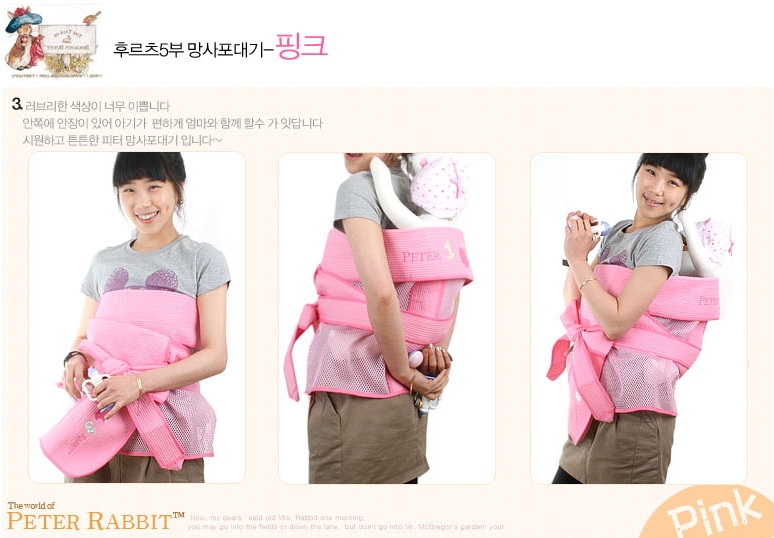
But this post wasn’t intended to be only about hanbok. In fact, the humble podaegi (포대기), or traditional Korean baby sling, may ultimately be much more interesting:

(Source)

Quite simple to put on once you get the knack, it’s very easy to see why Korean mothers would use these while working in fields, or even just the kitchen (scroll down here a little for a picture). Hell, if I had to carry a baby for hours while doing manual labor, then I’d probably choose something that comfortable and tight too, and so I wasn’t surprised to hear from my father’s Nigerian colleagues that my wife’s was just like Nigerian ones, where, naturally enough, they’re called “wrappers,” and the act of wearing one “backing.” (Thanks to reader eccentricyoruba for the terms.)

Still, note that the shoulder straps are a recent adaptation carried over from Western baby harnesses, and there weren’t many versions with them available in 2006 when my first daughter was born; wearing a version like this without them then, my wife’s back got tired quickly, and she speculates that perhaps that would have been less of a problem had she been bending over in a field in it like her mother and grandmother did (she eventually got a Western-style baby harness). Also, as you can imagine they can get extremely hot in the summer, which is why these modern mesh types are now available (and I’m sure ones with shoulder-straps are available too):

(Source)
(Source)

Clearly then, podaegi manufacturers are also quite capable of adapting their products to modern tastes. But still, one big, possibly insurmountable problem with them remains.

Men usually refuse to wear them.

(Source: unknown)

At this point, I should probably mention that I don’t wear anything to carry either of my 2 daughters myself: when Alice was born in June 2006, I was working long hours and my wife became a housewife, so it was only natural that she carry her while I carried groceries and so on; when Elizabeth was born in August 2008, my wife carried her whereas I had Alice to either walk with me, chase after, and/or only briefly carry when crossing roads. Sometimes I wish I had used a Western style baby carrier though: both daughters refuse to sleep or be carried in my left arm, often crying until I put them in my right one, and I’m sure that I now have a slightly crooked spine as a result.

Still, of course I did wear my wife’s poedagi at home sometimes, especially when she was out and I had to put them to sleep in the way that they were used to. But in public? Never, for I think I’m safe in assuming that the vast majority of Koreans consider the podaegi as inappropriate on a men as a bra, and which is why you’ll only ever see pictures of them in podaegi if they’re posed in comical situations like the above.

Western-style harnesses however, you’ll see plenty of Korean men wearing them, which leads me to a question I’d like to throw open to readers: are podaegi then, in a sense an impediment to changing people’s beliefs that childcare is only a women’s job?

Yes, of course popular perceptions of clothes and senses of appropriate fashions are constantly changing, and of course there are also a myriad of reasons completely unrelated to clothing that explain why Korea has the highest number of housewives in the OECD. But recall that throughout our daily lives,  we are in fact constantly bombarded with subtle messages that reinforce the notion that parenting is women’s job, so it doesn’t seem unreasonable to suppose that this may also have an impact.

Alternatively, look at it this way: if you were a woman expecting a baby soon, which style would you buy if you wanted your male partner to take equal responsibility for carrying the baby after it arrived?^^

Update: See FeetManSeoul (or The Marmot’s Hole) for a post about upcoming fashion shows featuring Jung Jun Hong and Lee Young Hee, the latter of whom:

…is considered the greatest living hanbok designer. And her stuff is smoking, every season. It’s one of the classiest shows of the season, consistently. She really does hanboks like they should be done — who knew hanbok style was still evolving, and evolving quite stylishly? The former, designer Jung, has a more modern take on the hanboks and always has some of the most colorful shows out there.

ung Jun Hong and Lee Young Hee, the latter of whom is considered the greatest living hanbok designer. And her stuff is smoking, every season. It’s one of the classiest shows of the season, consistently. She really does hanboks like they should be done — who knew hanbok style was still evolving, and evolving quite stylishly? The former, designer Jung, has a more modern take on the hanboks and always has some of the most colorful shows out there.

Korean Gender Reader

( Se7en, via Omona! They Didn’t )

With so many stories this week, I’ve decided to organize them by categories to make it easier to keep track.

Pop Culture

1. Social change through comedy?

Not a fan of dramas, normally I’d pay little attention to the news that yet another one is about to premiere. But I did a double-take when I read the following description of Nanun Jonsol Eeda (I am Legend; 나는전설이다) at DramaBeans:

Kim Jung-eun (김정은) plays Jeon Seol-hee (전설희) who leaves her society-wife identity behind after a divorce to front a rock band.

These photos picture her in the early part of the drama, when her character is the put-upon wife of a prestigious lawyer. Jeon Seol-hee was once the popular singer in a band when she was in high school, but over the course of her unhappy marriage, she has learned to speak quietly and act in a manner befitting her uppity in-law family.

Why my interest? Because it sounds a little like the 1996 movie The Adventures of Miss Park (박봉곤 가출 사건), which on the surface was an average romantic comedy, but actually had a radical message for its time. As So-hee Lee notes in her chapter ‘The Concept of Female Sexuality in Korean Popular Culture’ (pp. 141-164) in Under Construction: The Gendering of Modernity, Class and Consumption in the Republic of Korea (ed. by Laruel Kendell, 2002):

…unlike the convention of most films in the genre, this one ends with a women running away from a domineering husband, achieving her dream of becoming a singer, and finally entering into a happy second marriage, “thus subverting a traditional morality that expects the runaway wife to come back home to restore everyone’s happiness and family security”. (p. 156)

And as such, Lee notes the film director was concerned about how a conservative audience might respond to the uncommon story and its unexpected ending, and hence in many ways the movie was a guerrilla attempt to sneak a serious social message into Korean cinema by presenting it as comedy. Not that Nanun Jonsol Eeda necessarily will attempt to of course, but I’ll keep an eye on it. Meanwhile, see my post Women Getting on Top: Korean Sexuality in Flux in the 1990s for more examples and an analysis of “sexually subversive” popular culture from that era.

2. Common Tropes in Korean Popular Culture

Again by Dramabeans, this new and ongoing series is not just indispensable for understanding dramas, but much about Korean daily life and gender roles too.  For starters, try the posts on the meanings of adults giving each other piggyback rides, and then when and where to use jondaemal (polite language) or banmal (informal language). As you might expect, men are allowed to use banmal to women much more than vice-versa, and Korean broadcasters often repeat that practice when dubbing or adding Korean subtitles to foreign movies and dramas too, even though no such distinction is made in the original language.

( Source: Dramabeans )

3. Feminism through Translation

Via Korean Modern Literature in Translation, I’ve found a review of Theresa Hyun’s Writing Women in Korea: Translation and Feminism in the Colonial Period (2003), which begins thus (my emphasis):

Theresa Hyun’s Writing Women in Korea: Translation and Feminism in the Colonial Period takes up the intriguing and fresh theme of the woman translator in colonial Korea. Although it is commonplace to argue that Western notions of feminism were translated into Korea at the turn of the twentieth century, this is the first study to examine this process through the historical figure of the woman translator. Translation here is no metaphor, but a material practice through which women transform themselves and Korean writing. Women, the author argues, made a decisive contribution to the development of modern Korean nationalism and feminism through their translation activities and their own fiction writing, which developed in correlation with their translation practice.

4. The Millennium Trilogy

Not strictly related to Korea, but naturally I became very interested in buying these books after reading the following review at The Global Sociology Blog:

Stieg Larsson’s Millenium Trilogy should be required reading in any sociology of gender course because it is a strong demonstration of the way patriarchy works at all levels of society: individual, interactive, institutional, structural and cultural.

The whole trilogy is a fictional demonstration of what happens to women who don’t know their place and won’t conform to patriarchally-established gender roles and even worse to those who fight back against patriarchal control….

Have any readers read them? I’d really appreciate hearing from you before I buy them!
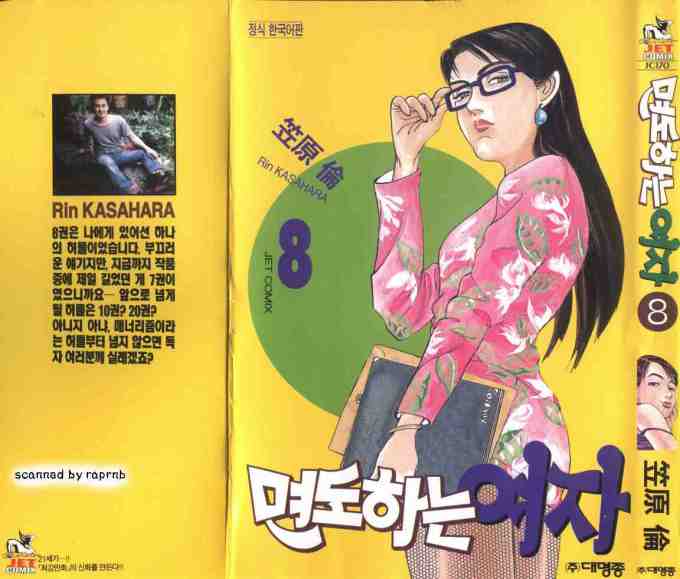
( “The Woman Who Shaves”. Source )

Body Image

5. Leg Shaving

From Drifting Focus, a blog by a former teacher in Korea:

Women are constantly told by the media, our mothers, and our friends that men don’t like women who don’t shave their legs.  “You won’t find a man that way” they say. I call bullshit.

I would have predicted that it would have been men who had problems with my lack of leg-shaving. Presumably, they’re the ones we shave for, right? Nope.  No man I have ever dated has had much, if any, issue with my shaving preferences.  It’s possible that they’ve just been nice, but from more in-depth conversations I’ve had about that habit with them, that does not seem to be the case.  They simply don’t really care as long as it’s not “totally out of control”.

So where does this “huge amount of flack” that I’ve gotten over the years come from?  Well, that’s the surprising part: other women.

Read the rest here. With the proviso that Northeast Asians don’t tend to have as much body hair as other ethnicities, would readers say that that is also the case in Korea?

6. “What? Use some NORMAL-sized models??? I quit!”

Sociological Images looks at the issues raised when designer Mark Fast decided to use four plus-size models (US sizes 8-10) in his catwalk show at London Fashion Week in February, which prompted his stylist and creative director to quit, leaving him just three days to find replacements. As they explain, it is “possible that they thought being associated with the show could hurt their chances of success in a very competitive career,” but on the other hand it says a great deal about an industry “that stigmatizes fat so powerfully, ” that “it might be terrifying indeed to be seen as endorsing it.”

Can anybody think of any similar initiatives and/or reactions in the Korean fashion industry?
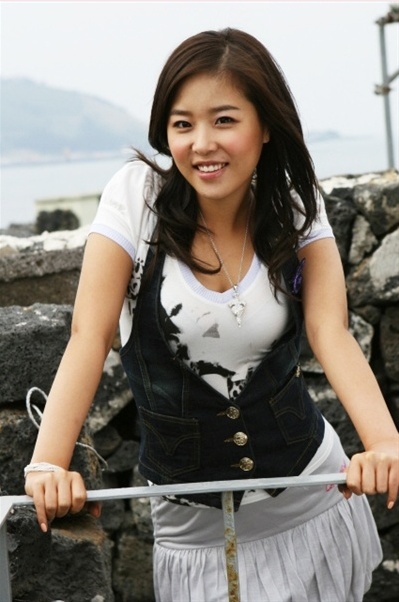
7. Koyote’s Shin-ji has no plans to go on a diet

Nice to see a positive role model for a change:

As is evident through K-pop’s many girl groups, Korea’s entertainment industry consists of a long line of ridiculously thin girls. (It doesn’t help that netizens are hawks when it comes to capturing the slightest bit of belly fat). In a recent interview, Koyote’s (커요태) Shin-ji (신지), who is known in Korea for being more on the chubby side, was asked if she was ever saddened by the harsh comments and jokes she received regarding her weight.

Shin-ji answered:

“I feel blessed to be a singer that older audiences like. In the past when I was thin, many said that it was unattractive. Now, I don’t plan on going on any diets. It really damages your body. Since I debuted when I was in my teens, I received a lot of stress regarding diets. It really weakened my health. These days, if I were to diet I would not be able to endure.“

Read the rest at allkpop. Admittedly the image above is a little old (source), but then much thinner celebrities are also regularly criticized for their weight: see #28 here for instance).

Sexuality

8. Queer in Seoul

The 3 Wise Monkeys pass on a rare 2005 overview of the evolution of the gay community in Seoul over the last few decades.  As explained there, “Gabriel Sylvian, the founder and torch-bearer of the Korean Gay Literature Project at Seoul National University, recommended it for all readers to get an idea of the LGBT life in the capital.”

9. Queer in China

Over at The Peking Duck, Richard discusses an article entitled A modern tragedy: Pressure on Chinese gays to marry that he was surprised to see in his local Arizona(!) newspaper. Meanwhile, Gender Across Borders provides a review of Backward Glances: Contemporary Chinese Cultures and the Female Homoerotic Imaginary by Fran Martin:
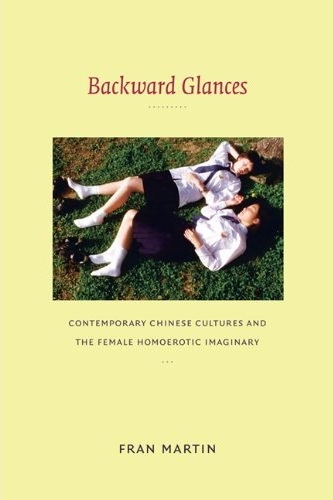
…Exploring popular media produced during the twentieth and twenty-first centuries in the People’s Republic of China, Hong Kong, and Taiwan, author Fran Martin addresses the ways in which same-sex love between women is commonly depicted, and the ways in which those depictions simultaneously reinforce and challenge the conventional discourse on homosexuality in China.

On the surface, many of the novels, television dramas, and films Martin analyzes do not appear to be particularly transgressive. A common theme among the media she explores is memory; stories of same-sex desire between women are often presented as a fleeting childhood fantasy, something that perpetually exists in the past and can never be fully realized by adults in the present…

10. Snakes are victim of men’s search for sexual prowess

See The Korea Times for the current mania for snake soup in Korea, openly praised by some celebrities despite snake soup restaurants being illegal and many of the snakes endangered spaces.

While I usually try to avoid generalizing and stereotyping, I can’t help but always be simultaneously amazed and appalled at how virtually anything that’s phallic is considered an aphrodisiac in this part of world.

11. Korea’s Low Birth Rate Continues to Decline

When even government-propaganda channel Arirang begins to report the following, things must indeed have reached crisis proportions (paraphrased slightly):

…according to the government’s internal assessment report on childcare policy, new measures lean too heavily towards childcare support and fail to address other major issues such as the disadvantages women face at work after taking maternity leave. Fear of discontinuities in their careers is currently the second biggest reason why Korean women refuse to have more than one child.

The other major problem with government policies mentioned is that financial aid is heavily targeted towards low-income families, with little funds left over for middle-class families that comprise 65% of the population. This is discussed in more depth in a Chosun Ilbo editorial.

Crime

12. Possible serial killer of sex-workers in Pohang

See Korea Beat for the details.

13. Vietnamese bride killed by mentally-ill husband after only 8 days in Korea
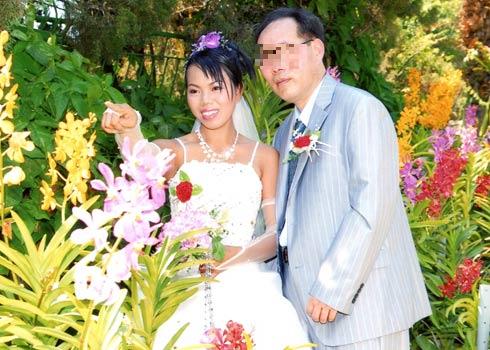
Like the original Dong-A Ilbo report from Monday says, since 2002 the man had been hospitalized or treated for depression and mental illness 57 times, so whether whether the matchmaker had prior knowledge of the man’s condition is crucial for determining wider responsibility. But however unethical, would the matchmaker actually have committed a crime?

Possibly: Extra! Korea mentions that police are investigating, but an editorial in The Chosun Ilbo also says that only from November must they “unveil records of previous marriages, health conditions, occupations and criminal histories of both the brides and grooms,” so the issue of criminal fault remains a little unclear. Regardless though, there will still be no way to check the validity of information about grooms provided from November, and the industry as a whole remains very unregulated, with virtually anyone able to open an international matchmaking business: 44% of the 1250 companies in Korea are staffed by just one person (and 33% by husband and wife teams), the ensuing intense competition not exactly encouraging companies to make their clients look any less marriage-worthy.

On a slight positive note though, the government now requires all prospective Korean grooms to attend “marriage ethics” classes before heading overseas to find wives (image source).

( Source )

14. Curbing Sex-Offenders

From The Korea Herald, an update (see #3 here) on moves to enact retroactive legislation aimed at sex-offenders in the wake of a perceived spate of sex crimes against children and teenagers:

Prosecutors will be able to request that sex offenders who were not already given an electronic anklet be electronically tagged after a legal revision takes effect Friday.

The revision allows authorities to retroactively apply the anklet to criminals convicted before the law took effect in 2008.

However:

Some, however, argue that the anklet is not the answer.

Earlier this year, a convicted rapist cut off his anklet and escaped, though he did not commit any other offense before he was apprehended.

The ministry will introduce stronger anklets by the end of August, said officials.

The new law has met some criticism for the retroactive application of the anklet system.

Meanwhile, KBS announced that the police are also going to enlist the (volunteer) help of community leaders to protect youths, and last month a law for allowing chemical castration as a possible punishment for child sex offenders was passed in South Korea. See The Marmot’s Hole for more details.

Work & Economy
15. Young People Face Continued Employment Crisis

Further compelling young Korean adults to live with their parents until marriage, recent improvements in the economy that have meant that more than 10 million Koreans are legally regular workers for the first time have largely bypassed those in their 20s or 30s, the only demographic still losing jobs. And to add insult to injury, not only was the minimum wage only raised 8 won (US$0.01!) last month, but 4 in 10 young people stuck in irregular and part time work weren’t even getting that anyway.

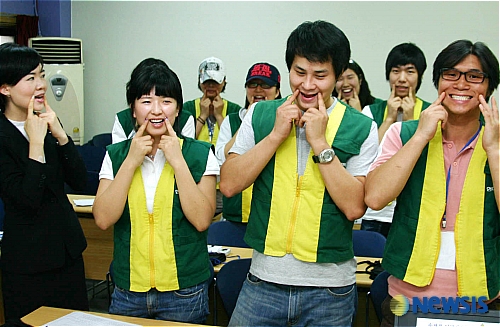
Hell, no wonder they have to be specially taught to smile at customers (source).

16. “More college girls work part time at massage parlors performing sexual services”

And who can blame them considering the above?

17. S Korea posts lowest employment rate for educated women among OECD countries

See here for details. Also recall from this book that in 1998 at least, the more educated a woman was the less likely she was to be employed, the only country in the OECD in which this phenomenon occurred. As far as I am aware, this is still the case today.

18. Korea lags behind in economic opportunities for women

Not unsurprisingly in light of the above, compare Korea’s latest dismal figures from the Economist Intelligence Unit’s survey with the UNDP’s “gender empowerment measure” last year also (see #2 here), both of which demonstrate that despite living in a developed country, in fact women in many developing countries have far more political and economic power.

This is both cause and effect of Korea being one of the rare exception to the worldwide “mancession”, which prompted headlines like “Is female dominance a success for feminism?” in many US feminism blogs. Also see The Wall Street Journal‘s report on Japan for an alternative sense of perspective, as it is a country with many of the same structural and ideological impediments to women’s employment; as you read how bad it is there, bear in mind that unfortunately the Korea situation is actually much worse!

19. Korea lacks gender-parity in education

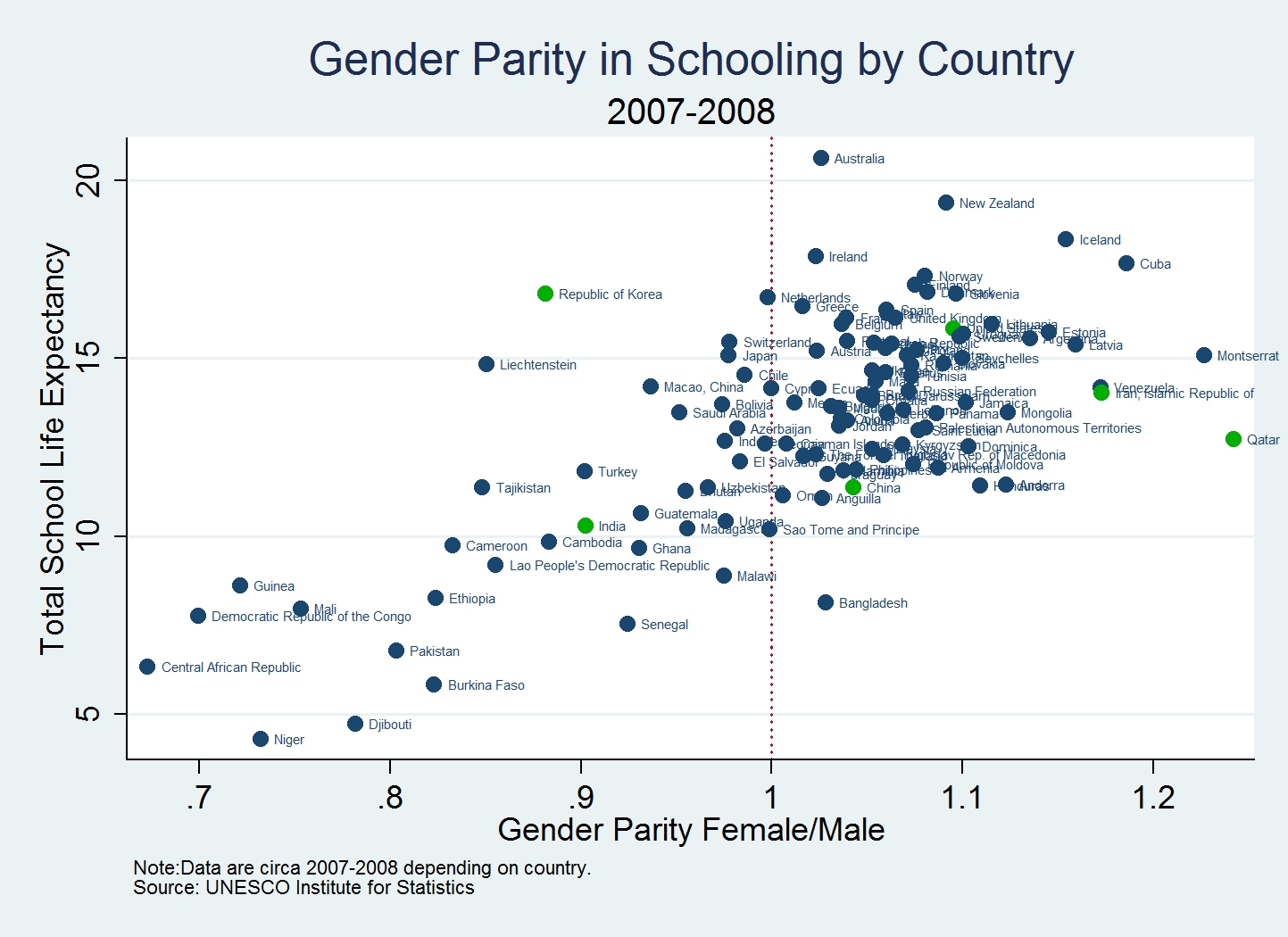
This graph came as a big surprise, as I’ve frequently read that the equal provision of education to both sexes was one of Korea’s crowning achievements of the post-war period:
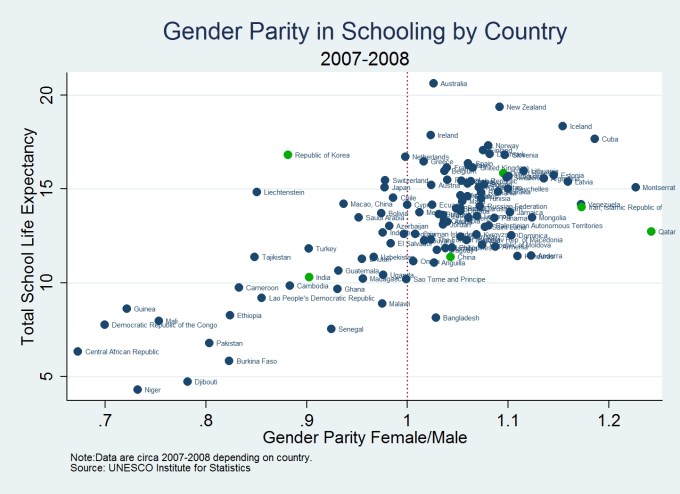
Originally found via Surprises Aplenty, the graph comes from Marginal Revolution, which unfortunately has only a minimal discussion of it. Assuming that the result is accurate (Korea is the green dot at the top left), then what do you think accounts for the gender difference?

East Asia & Overseas Koreans

20. Twenty-three percent of female homestay students from East Asian countries reported being sexually abused in Canada

Much more complicated than that headline suggests however, see Extra! Korea for an excellent summary for a summary of all the newspapers on the topic, and The Marmot’s Hole’s post for its typically vociferous (but often informative) comments thread.

21. Japan split over granting married women the right to their maiden names

A big difference with Korea, where married women retain their names, unfortunately the Democrats’ plans to allow this have stalled in light of recent political setbacks. See The China Press for more details.

( Source: Korean Lovers Photoblog )

Enjoy the rest of your weekend folks!

Prosecutors will be able to request that sex offenders who were not already given an electronic anklet be electronically tagged after a legal revision takes effect Friday.The revision allows authorities to retroactively apply the anklet to criminals convicted before the law took effect in 2008.

Share

Sex as Power in the South Korean Military: A Follow-up

( Source )

As I discussed back in March, the first ever survey on the issue of sexual violence in the Korean military discovered endemic levels of abuse, with roughly 15% of 250,000 conscripts each year experiencing it as either victims or perpetrators. A hugely important socialization experience for Korean men, this had grave implications for Korean society.

On a slight positive note however, I was happy to also read that much of the researchers’ data was obtained by interviews with soldiers in their barracks with the official cooperation of the Ministry of Defense. A sign of changing attitudes towards acknowledging and dealing with the problem?

Alas, I’ve just discovered that that was far too optimistic, as the military still remains one of the least transparent institutions in Korea:

When the Cheonan sank [in March], the initial reaction was shock and sadness, which quickly gave way to rage: with a government accused of dragging its feet, but also with a military that seemed unprepared for a North Korean attack.

But anger with the military runs deeper than over a single event. Mistrust of the institution is widespread because it has failed to open itself up, using the excuse of national security, while the rest of the country has embraced democracy.

South Korea’s military dictatorship may be a thing of the past, but the North’s constant saber rattling in the form of nuclear tests, missile launches, spy incidents and the occasional skirmish continue to give Korea’s men at arms an immediate relevance – and an excuse to conceal things from the public. That right to secrecy is enshrined in the National Security Law, which places restrictions even on regular citizens’ freedom of speech for the sake of preventing enemy subversion, but is even more of a cloak for the armed forces. It’s the legal manifestation of the bubble in which the military operates, isolating it from the massive changes the rest of Korean society has undergone. To date, for example, no civilian has ever been named defense minister.

Every year, a report is quietly released titled, “Military deaths caused by accidents.” In 2008, there were 134 names on that list, including 75 suicides. The suicides are usually explained by a “failure to adjust to military life.”

That explanation is unacceptable for Joo Jong-woo, whose son, Pvt. Joo Jung-wook, committed suicide in 2001 at age 22…

Read the rest at The JoongAng Ilbo, including about “its emphasis on tight ideological control of its conscripts” resulting in its banning of left-wing books like the works of Noam Chomsky, and the expulsion of military legal officers for “arguing that the military’s regulations are unconstitutional”. Meanwhile, the Korean military still refuses to recognize conscientious objectors and so imprisons them (see here also for a podcast on the development of the concept of conscientious objection in the West), the National Human Rights Commission is ineffective, and the maintenance of the conscription system as a whole is one reason why the Korean Military remains  “a 1970-vintage force structure, designed around a 1970-vintage threat, equipped with 1970-vintage weapons.”

( Source: anja_johnson )

As for the images of mascots, please note that I post them not to be facetious though(!), but rather to show how facile such attempts to soften the image of institutions like the police and military are in light of reports like this. But nothing against the mascots themselves of course, and see here, here, and here for more information about Podori (포도리) in the riot gear!^^

Update, October 2010: Unfortunately, this recent incident demonstrates that little progress has been made since this post was written.

Share

The Gender Politics of Smoking in South Korea: Newsflash

Estimated reading time: 3 minutes. Article source: Metro, Busan edition, 8 July 2010, p. 3.

A quick newspaper report on Korean smoking rates that caught my eye.

Of course, I was a little disappointed that it discussed “average” rates for men and women, as these are essentially useless pieces of information given the huge diversity within each gender in Korea, and doubly so for women because of chronic underreporting. But that is to be expected for a free daily, and at least it takes a step in the right direction by mentioning that female teenagers tend to start smoking much earlier than males, which will hopefully result in some much-needed attention being given to this burgeoning group:

People Would Consider Quitting if Cigarettes Cost 8500 won a Packet

At 42.6%, Korea has the highest adult male smoking rate in the OECD

Although the general social trend is for people to stop smoking, Korea retains its position as the country with the highest adult male smoking rate in the Organisation for Economic Co-operation and Development (OECD).

According to a survey of 3000 men and women over the age of 19 conducted by the Ministry of Health and Welfare last month, 42.6% of Korean men smoked in the first half of this year, a decrease of 0.5% from the second half of last year, and a break in continuous increases for the past 2 years from August 2008, when it was 40.4%. However, a large gap between this and the average OECD rate of 28.4% (2007) is apparent.

Of particular interest, the survey also revealed that compared to men, women are starting to smoke at earlier ages. Of those smokers under 29 surveyed, the average age both sexes started was 18.1, but the average age of women was 16.5 and that for men was 18.3, showing women started roughly 2 years earlier.

However, of non-smokers surveyed, 21.4% replied that they did once smoke, but 62% of those were successful in quitting on their first time, showing that it is becoming easier and the social norm to do so. Indeed, 59.4% of smokers replied that they intended to quit.

Accordingly, when asked what the most effective method of quitting would be, the most popular choice [James – among current smokers?] was “increasing the numbers of no-smoking zones” at 22.8%, followed by raising the price of cigarettes (18.7%), increasing penalties for smokers (18%), and launching public campaigns (16.3%). In particular, when asked “How much would the price of cigarettes have to be raised to be effective in making you quit?”, the average answer was 8510.8 won a packet, or 3-4 times higher than current prices.

Next week, after Part 4 is completed, I’ll translate this much longer Korean article that looks at female smoking more specifically.

(Links to other posts in the series as they appear: Part 1, Part 2, Part 3, Part 4; Korea’s Hidden Smokers; Living as a female smoker in Korea)

If you reside in South Korea, you can donate via wire transfer: Turnbull James Edward (Kookmin Bank/국민은행, 563401-01-214324)

Korean Sociological Image #44: Westerners, Nipples, and the Presentation of Sexuality in the Korean Media

( Source: Metro, July 8 2010, p. 7. Cropped slightly)

It’s amazing what pops up in Korean newspapers these days.

Yes, however difficult it may be for overseas readers to believe, that is the actually the first nipple my Korean wife, friends, and I have ever seen in a Korean advertisement. Moreover, it’s probably no coincidence that it belongs to a Caucasian model too, and one that looks like she’s about to get involved in a ménage à trois at that.

Focusing on the nipple first though (as one does), let me provide some context: with the important exception of ubiquitous single-sex bathhouses, Koreans are generally more conservative than Anglophones when it comes to public nudity; topless males are extremely rare away from beaches, swimming pools, and concert stages for instance, and topless females unheard of, let alone full nudists of either sex (recall also that just 5-10 years ago, women even covered their swimsuits with t-shirts too). In addition, while female celebrities have been showing a lot of cleavage in recent years, this trend has yet to be adopted by ordinary women, whom can expect just as much unwanted attention if they accidentally leave home bra-less.

However, breast-feeding is generally fine if done discreetly, and indeed one of the first things I noticed in my first time in a Korean supermarket 10 years ago was a brand of milk (or soy milk) that prominently featured a large breast and a suckling baby on its packaging. Unfortunately I can’t remember the name to find an image, but I do also recall that it was by no means hidden away in any sense.

I doubt that that would have been considered acceptable in New Zealand from which I’d just left, and in that vein note that the current trend for visible nipples in the Western media at least remains precisely that: a trend, and certainly not an liberal, progressive ideal that Korean social mores will somehow inexorably shift towards in the future. For all its eroticism, it pales compared to the standards of the 1970s for instance (see this NSFW example from a 1976 Cosmopolitan), while in Korea no less an authority than Tom Coyner points out (also NSFW) that 60 years ago Korean mothers in the countryside dressed with readily visible breasts “with pride if they had just given birth to a son.”

( Source )

So why the nipple now? Unfortunately, little about the advertisement or the drink provides a clue: “That’s Y” (댓츠와이) is merely a wine cooler (or alcopop?) produced by Lotte Chilsung (롯데칠성음료) since 2008, like wine coolers everywhere primarily marketed to 20-somethings. Judging by its moribund website though, then it hasn’t been selling very successfully (probably why there was a shift to selling it in more stylish bottles rather than cans last month), so one can speculate that Lotte Chilsung was desperate to draw people’s attention to it. Judging by the complete absence of reaction from netizens and the media so far however, strangely that “sex sells” strategy doesn’t appear to have worked.

Ultimately more significant then, is the race of the models in the advertisement in which it appears. Why are they Caucasian? And are Koreans ever portrayed in such brazenly sexual situations as that?

Again, Lotte Chilsung provides no clue: in fact only one more print advertisement for the drink is available online in addition to what you see here. That did also only feature Caucasian women, but then the above one has Korean women in it, and the only television commercial below also only has Koreans too (of both sexes). But looking at the wider context however, then of course there is overwhelming evidence that Caucasians are indeed portrayed more sexually than Koreans in the media here, and particularly women.

Why? Well, assuming that you’ve read that last link, then for one consider how well an artificial dichotomy between virginal, sexually passive Korean women and hypersexual, promiscuous Caucasian ones buttresses extensive human-trafficking in East European and Russian women here. And as for the guys, the notion that foreign male English teachers are oversexed, and thus more likely to be pedophiles than their Korean counterparts, certainly does serve to deflect attention away from the latter. Although one wonders why the Korean media bothers sometimes; after all, just this week apparently even politicians feel perfectly justified in presenting a completely imaginarywave” of sexual crimes by them to justify ever more stringent visa regulations.

Vodpod videos no longer available.

And I could go on, but I’d be much more interested in hearing readers’ own ideas. In the case of this particular advertisement though, I acknowledge that it may not in fact be the first nipple out there(!), but regardless let me pose the question of if you think Korean models instead would have aroused more or less controversy to get you started.

Against the argument that there are plenty of risqué ads with Koreans these days though, and so I’m making a mountain out of a molehill, then for sure, and you don’t have to look very far on this blog to find numerous discussions of how much things have changed just in the last 2 years. But look again: a threesome? And virtually in flagrante delicto on the sofa at that? By all means *ahem* pass on any Korean examples you’ve come across, but in the meantime I’d argue that while the goalposts for what is considered a “shocking advertisement” in Korea do indeed change over time, somehow Caucasians still seem to be in the majority of them!

Update – With thanks to Dave for passing it on, who apparently had much sharper eyes than I did back then, in fact there was a commercial with erect nipples as early as 2006. And yes, you guessed it: that had Caucasians too!

(For all posts in the Korean Sociological Images series, see here)

Share

Korean Gender Reader

( Left: source. Right: Change Begins Here, by Self-portrait_Girl )

A slew of negative stories this week I’m afraid.

1. “10-19 is the perfect age to show a lot of skin”

With apologies for copying and pasting so much of it here, but Mellowyel’s post really is a great introduction to this week’s main stories:

…two articles from yesterday peaked my interest: one being the comments of South Korean model Choi Eun-jung (최은정) saying that “10-19 is the perfect age to show a lot of skin” and “Since the sexy concept is the trend, the young idols are carrying it out. Is it really necessary to look at all of this from a negative perspective?” The other was the news that all the music chart shows were upping their age rating from 12 to 15 because of the sexy dancing and clothing.

Of course, Choi Eun-jung’s opinion shouldn’t be dismissed simply because of her occupation, but on the other hand she’s hardly a dispassionate observer of the fashion industry either: until very recently a high school gravure model, she appears to have become famous primarily for appearing semi-nude in the Mnet reality show I Am A Model at 17, albeit overshadowed somewhat by Park Seo-jin (박서진) above who was only 14. And Mellowyel is spot on with the wider issues these stories raise, echoed in The Lolita Effect that I’ve just finished reading (my emphases):

What i find interesting about both of these articles is that what is under consideration is the affect that the exposure of skin has on the public, and no one is talking about how the women themselves feel about it. Do young girls ages 10-19 generally WANT to wear skimpier clothing, and are simply not being allowed to? Do female k-pop idols they feel empowered by being able to wear sexier outfits on stage than Korean culture normally allows? Or do they feel objectified knowing that they’re dressing and dancing that way simply to attract fans? This is a problem that I feel a lot of women performers face, and have to negotiate through their choices of clothing and performance – when they have them….

….Korean rap artist Defconn responded to Choi Eun-jung’s comments with outrage, suggesting that she was not considering the feelings of other young girls, and her comments are improper in light of recent news about sexual offenses against elementary school students. Which wouldn’t bother me if it didn’t remind me of the common thought process of people towards women who have been sexually harassed or assaulted – “They were dressing provocatively so they are complicit in the crime.” I agree completely that young girls dressing provocatively could draw attention of the wrong kind, but I have never heard a sex offender say that he assaulted a woman or girl because she was wearing a short skirt. More often than not, a woman is sexually assaulted simply because she’s at the wrong place at the wrong time, and cannot defend herself successfully. It would be great if people could focus less on what the woman did to get herself assaulted (which is often, nothing) and focus instead on the motivations of the attacker.

I think Defconn’s comments come from the right place, though….

There’s a great deal more where that came from, and I also couldn’t agree more with her point that Choi Eun-jung’s comments that “older women” in bikinis are “disgusting” is infuriating (source above: allkpop).

2. Sex crimes against children put under a microscope by the media

Meanwhile, the recent numerous sexual offenses against elementary students described above are very real, and Matt at Gusts of Popular Feeling provides a typically well-researched and comprehensive summary of them. Probably the most important point to take away from it however, is that in fact this level of attacks is normal:

I found that comment [in this editorial] about the “recent series” of sexual assaults interesting, especially considering the statistics in the next paragraph. Put simply, if 1,017 children and 1,447 teens (between 13 and 15) are victims of sex crimes every year, that adds up to 3 children and 4 teens between 13 and 15 being victimized every day (on average). There is not a “recent series” of such sexual crimes – this is always happening. It’s just that the media has decided – as it does whenever a particular case angers people – to highlight these cases…

On the positive side though, such attention has fat least forced both police and schools to belatedly consider a number of measures to improve their security, although naturally I think some schools’ decisions to completely ban fathers from school grounds was rather misguided. Also the police are to use electronic means to keep track of sex criminals’ whereabouts:

The police will create a nationwide database on sex criminals this month as part of its war to combat sex crimes against children.

An electronic map will be created, marking previous crime sites and the residences of people liable to commit such crimes.

Locations with high odds of such crimes will be flagged and local police will increase their patrol of the sites.

The map will include initial data on 16-hundred convicted sex criminals. The police aim to up that number to 12-thousand over the long term.

Once the map is completed, a warning system, based on data gathered over the past three years, will also be introduced.

The police will also form an exclusive squad on sex crimes targeting children.

Also, see Sociological Images for an innovative but controversial anti-rape campaign in the U.K. (example above) that focuses on men rather than women for a change, with the logic that “stopping predation, harassment, and violence by men requires telling men not to do those things, and telling women to restrict their activities to avoid men who might victimize them is only doubly oppressive.”

3. English teacher in Daegu under suspicion for sexual misconduct with students

In light of the above, it will be interesting to see if this receives a typically disproportionate amount of the media attention. See The Marmot’s Hole for more details, and again Matt provides some historical context.

4. Word of warning

Again (see here, here and #1 here) an expat teacher in Seoul has been sexually attacked, and when she tried to report it to police she was told to leave because they were too busy with other cases.

Read more at Hot Yellow Fellows.

5. Actor Choi Chul-ho (최철호) caught hitting a woman on CCTV

Details in English available at allkpop.

Update: He has since made a public apology.

6. Korea has the highest rate of female suicides in the OECD

So Yonhap News claims:

The suicide rate of South Korean women ranks highest among major advanced nations, data showed Thursday, indicating that they are having difficulty in coping with growing stress from work, marriage and household responsibilities.

According to the data offered by Statistics Korea, 18.7 out of every 100,000 women here committed suicide in 2008, the third leading cause for female deaths in the country after cerebrovascular and heart diseases, whose rates stood at 58.3 and 23.6, respectively.

And this is echoed by Arirang,The Chosun Ilbo, and The Korea Times, the last of which notes that “the figure is higher than traffic accidents, gastric and lung cancer and other causes”, while The Economist also provides the sobering statistic that “an average of around 40 people a day took their own lives in 2009, an increase of nearly 19% on 2008”.

Curiously, The Korea Herald uses the same data, but argues that suicide is only the 5th leading cause of death for women. But regardless of which source is the more correct, it does at least provide the helpful, broad visual comparison between the genders on the right.

Finally, see The Marmot’s Hole for some analysis:

Bernard Rowan, professor of political science at Chicago State University weights in on the question after hearing of the death of Park Yong-Ha, the 33 year old actor found dead in his home last week in an apparent suicide.  Links on his death in the BBC, Wall Street Journal and The Chosun Ilbo.  Given Park’s role in Winter Sonata, there were a number of Japanese fans that mourned his death as well.

Former and current Korean entertainment stars commit suicide with disturbing regularity, but rarely does it attract attention from American professors.  Bernard appears knowledgeable enough about Korea to say a few interesting things, including suicide’s possible link to the concept of “haan”.

7. Poor working conditions for entertainers

Not unrelated to the previous story, probably most readers here are already well aware of the grueling schedules and slave-like contracts of most entertainers, including those hopefuls that train for many years with their respective entertainment companies, with no guarantee that will ever actually be included in a new group. As Extra! Korea reveals however, not only are hopefuls beginning as young as 10 years old, but average entertainers make barely more than minimum wage too. And even KARA (카라), currently one of Korea’s most popular girl groups, live in conditions worse than many university students’.


See here also for the original Straits Times story on young K-pop hopefuls, The JoongAng Daily for more on their working conditions, and Omona! They Didn’t and The Choun Ilbo for one lawmaker’s attempts to clean up the industry.

( Sidelong Glance by Drab Makyo )

8. Divorced husbands from interracial marriages establish rights group

They may have a point here:

“In divorce suits, judges tend to weigh on testimonies from wives, who claim to have been victimized by domestic violence or other mishaps caused by us, Korean husbands. They are untrue from time to time.

However, I seriously doubt that it is Korean husbands that suffer more from a lack of legal representation than their usually non-Korean speaking, penniless wives:

Still, husbands, the majority of those who cannot afford a proper lawyer, are labeled as offenders,” the group’s spokesman Cho, who declined to identify himself further, said.

Read more at The Korea Times.

9. Women working in some previously male-only occupations.

Some good news from The Korea Herald:

…The Statistics Korea report said Monday the number of women entering the field of medicine had increased more than any other field in the past few years. In comparison to a mere 13.6 percent of female dentists in 1980, More than 24.5 percent of Korea’s dentists in 2008 were women.

“Only 2.4 percent of Oriental medicine doctors were female in 1980, but this has increased to 5.9 percent in 1990 and to 15.7 percent by 2008,” the report said…

However, the report is lax in not reporting the wider context: unlike in the U.S., where the financial crisis’s effects on the male-dominated construction and manufacturing industries meant that for the first time in history, more women than men are working there, in Korea women were overwhelmingly targeted for lay-offs, as they comprised the bulk of irregular workers. See almost every previous Korean Gender Reader for more information(!), starting with #1 here and #2 here from early-2009.

10. Keyboard Warriors Against Young Women

Korea is notorious for its increasing internet vigilantism, but until I read this report at Global Voices by Lee Yoo-eun, I’d completely overlooked the gender component to it; in short, it is overwhelmingly done by male netizens against female targets (image source: unknown):

The cyber-vigilantism (or bullying) in Korea, is practiced mostly by men. More reasonable voices online have analyzed this phenomenon as modern witch hunting performed by belligerent netizens, in reaction to Korean women gaining more power while men struggle under heaping social and economic pressure. The ‘girls’ are everyday people who have been caught doing something annoying, mean or idiotic. But unfortunately, by ticking off vocal Korean netizens, it takes only a day for their lives to be mercilessly ruined.

11. Diet pills out of vogue after report on ill effects

Neither food nor medicine, unfortunately diet pills exist in a legal gray area between them that allows Korean companies to brazenly make completely spurious claims of their effects, so this news is encouraging:

Doctors, or at least the less philistinic of them, have been trying to drum home the same message again and again: weight loss drugs can be addictive and harmful and should be regarded as a last resort. Now, the sharply declining sales of slimming pills suggest that consumers have finally begun to listen.

According to industry figures, the local market for weight loss pills was worth around 20.01 billion won (about $16.4 million) during the Jan.-March period, representing close to a 10 percent decline year-on-year. It bears further watching whether the first-quarter slide proves to be more than just a speed bump ― the market’s revenue for the entire year of 2009 reached 101.1 billion won, a dramatic increase from the 60.3 billion won of 2006.

However, with health authorities issuing warnings about possible side effects related to the country’s two best selling slimming pills, it’s reasonable to think that consumers are legitimately scared.

Read more at The Korea Times.

( Source )

12. Gay actor’s lone fight against prejudice

The JoonAng Daily has an inspiring article about Hong Suk-chun’s (홍석천) coming out and eventual financial success, but unfortunately it’s rather telling that no other Korean public figure of his stature has done so in the 10 years since:

…In fact, society is still so closed off to sexual minorities that a recent SBS TV drama, “Life is Beautiful,” which portrays gay characters and romance, caused the People’s Association Against Pro-Homosexuality Laws to run anti-homosexuality advertisements in the country’s biggest conservative newspaper, the Chosun Ilbo, from late May to early June.

“In Korea, public awareness and social backing for gays and lesbians are still extremely far off,” said Li En, an activist at the Korean Sexual Minority Culture and Rights Center. “Although Hong Suk-chun fought the tide and succeeded, we still remember when he was fired by all the broadcasters the day after he came out. In a country where an anti-homosexuality ad runs in the biggest newspaper, how many do you think will actually sacrifice everything they have to come out?”

See here also for a summary of the state of LGBT rights in Korea over the last decade.

Share

Korean Sociological Image #43: ESL Students on Top?

( Source: Gusts of Popular Feeling. Reproduced with permission )

A recent advertisement for the Pagoda chain of language institutes noticed by Matt of Gusts of Popular Feeling, who notes that the attraction “is clearly for women to get close to, to have one on one communication with, and to have almost direct contact with the male foreign teacher.”

In any other context this would be unremarkable, but unfortunately the Korean media is notorious for presenting foreign male – Korean female relationships either negatively or not at all (although this is slowly improving). So this advertisement really stands out for the rare, quite literal closeness of the models in it, albeit not necessarily in a romantic sense.

In contrast, Japanese language institutes have already been advertising this way for a long time, as noted by Keiron Bailey in his 2006 journal article Marketing the eikaiwa wonderland: ideology, akogare, and gender alterity in English conversation school advertising in Japan. Two examples from that, both from 2002:

I’ve already discussed Bailey’s article in depth in an earlier post however, so let me just quickly highlight three points from it here:

Younger women are pursuing English-language learning for three major reasons. The first reason is to enhance their career prospects….The second purpose is to engage in travel, either for vacation purposes or for ryugaku. The third motivation is to actualize what Kelsky calls ”eroticized discourses of new selfhood” by realizing romantic and/or sexual desires with Western males. (pp.105-6)

Next:

…the visual pairing of Japanese women with white males invokes a set of social and professional properties that are radically differentiated from a hegemonic array of gender-stratifying ideologies. This metonymy relies on the properties of the white male signifier being defined in relation to a historical gendered Occidentalist imaginary as an ”agent of women’s professional, romantic and sexual liberation”. (p. 106)

And finally:

This [advertising] trend valorizes and celebrates female erotic subjectivity and positions the white male as an object of consumption for sophisticated, cosmopolitan female consumers. (p. 106)

And see that post or the article itself for more. Note that the latter was actually written in 2003 though, so I would appreciate it if any Japan-based readers could confirm if that is still in fact a trend there, and especially if you could pass on some examples. Also, I should stress that this is but one Korean example, and indeed possibly the first of its kind too, so it’s a little premature to argue that Korean language school advertisements are now going to be following the same logic that Bailey identifies. In particular, it definitely shouldn’t be taken as confirmation that Korean women are especially attracted to Western males either, a fallacy which unfortunately many expats (both male and female) seem to subscribe to.

Personally, I’d be much more interested in finding any advertisements featuring foreign female teachers instead, as the corollary of demonizing their male, mostly Caucasian, counterparts in the media in general seems to be hypersexualizing Caucasian women.  Alas, I haven’t taught in an adults language institute since 2004, so please help me: is this trend mirrored by Korean language school advertisers? Why or why not?

Meanwhile, Matt did also see an advertisement aimed at Korean male students, to whom the message appears to be “to take the intensive program and, moving beyond healthy competition, to be better than the (male) native speaker, to beat him, to be stronger than him”:

( Source: Gusts of Popular Feeling. Reproduced with permission )

Which is certainly quite a contrast! See the comments thread on Matt’s post for more commentary on both.

Update 1 – By coincidence, a commercial with a hint of an interracial relationship I saw as soon as I finished this post. Perfectly innocuous in itself, unfortunately the Korean media is almost completely devoid of anything with a reversal of the sexes:

Vodpod videos no longer available.

Update 2 – Brian in Jeollanam-do remembered this Wall Street Institute advertisement from March last year:

See Brian’s blog for more commentary, and Page F30 for the original images, including the clumsily added correction to the atrocious English a few weeks later.

(For all posts in the Korean Sociological Images series, see here)

Share

Radio Show and Live Webcast This Sunday

( Source: A. Germain )

Yes, I’ll be talking about Korean gender issues on Busan e-FM’s “Let’s Talk Busan” show on Sunday evening again, this time with new host and also Koreabridge owner and manager Jeff Lebow. Please tune in via the station website at 7pm Korean time if you’d like to listen, and as soon as that finishes at 8 I’ll be doing a live video webcast at Koreabridge too, where you’ll be able to talk to me either via the chatroom or by calling me directly via Skype (with or without a webcam).

As you’d expect though, the Busan e-FM interview was actually done a week ago, and unfortunately I tried to say too much in too short a space of time. I’ll probably want to use the webcast to qualify and/or add more details to the sometimes broad generalizations I made in that then(!), but of course we can talk about anything other callers like really. If you don’t get distracted by my two young daughters that is, who will probably be climbing all over my lap or dancing on the desk as soon as they hear me speaking!^^

For those of you that miss either show though, never fear, for I’ll post the files for you to download and/or listen to next week.

(Update: See here for those links)

Meanwhile, thanks very much to 10Magazine also for selecting The Grand Narrative as its Blog of the Month for July. Unfortunately, that probably makes any subsequent endorsement of mine sound a little insincere, but for what it’s worth if I was single or didn’t have any children then I really would regard its calender section alone as indispensable for living in Korea. Much easier to read in a magazine format than online though, you could do much worse than pick up a copy for a mere 3500 won.

Share

Korean Sociological Image #42: Sunset for the Red She-Devils?

( Source: ROKetship. Reproduced with permission. )
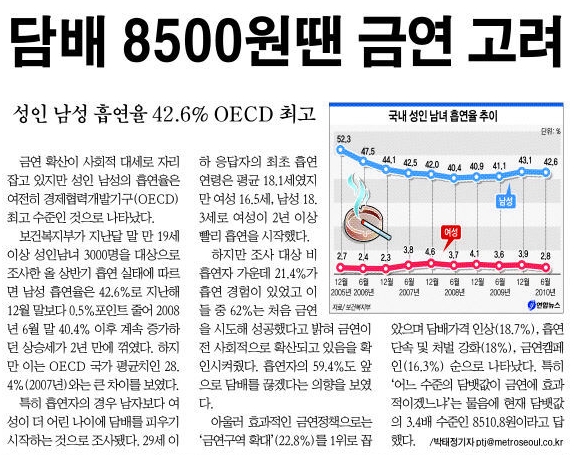
Like Joe McPherson of ZenKimchi fame says of the above cartoon, either way, it’s a win for my gender, so I was surprised that this was the first time I’d ever really noticed this curious Korean social more.

For those of you still at a loss however, yahada (야하다) generally means “too revealing” if it’s about clothes, and “too sexual” if it’s about anything else, like a conversation topic; alternatively, nomu pa-ee-da (너무 파이다) could have been used instead, which literally means “dug too much”. So, it’s a commentary on the difference in what is considered revealing clothing by Koreans and Western expats, and something which of course expat women have long been well aware of, congratulating ROKetship artist Luke Martin for his astuteness in droves on his Facebook page. One of them, Kelly in Korea, wrote on her blog:

So true. Showing your shoulders or chest will definitely get you stares from the older crowd and young men, while lotsa leg is okay. That being said, I feel like I see more Korean girls showing shoulder this summer than last—is that just me? Regardless, now that the full heat of summer is upon us, I have stopped worrying so much about societal dress codes and just wear whatever keeps me from passing out in the midday sun.

And for all my lapses, I think that there’s definitely something to that change. How long-lasting it is however, literally remains to be seen.

Why? Because as I’ve written here, here, here, and here (for starters), squads of daring female soccer fans known as oppa budae (오빠 부대) did have a dramatic and permanent effect on what were considered acceptable standards of dress for Korean women during the 2002 World Cup. But then it’s also true that many people that had tolerated their croptops, say, were much less willing to do so the next summer once they were no longer in the service of a national cause, which again just goes to show that revealing clothing (or suggestive dancing) should never be taken as a proxy for female sexual liberation.

In that vein, I’ve often wanted to do an empirical study of advertisements in various men’s and women’s Korean magazines for the summers before, during, and after the 2002, 2006, and 2010 World Cups, hypothesizing that there would be definite peaks in World Cup years. But note that those would not just be because of young women hoping to emulate Shin Mina and “Elf Girl’s” examples, who become famous overnight for, well, little more than having good bodies and wearing skimpy “Red Devil” (붉은악마) costumes like those above (source): that isn’t why oppa budae women were wearing them in 2002, and surely only accounted for very few in 2006 and 2010 too.*

Moreover, for anyone lucky enough to have been in Korea during any of the summers of 2002, 2006, and now 2010, you don’t need me to tell you that Koreans tend to let their inhibitions go during the World Cup, and that at the very least the normal standards for clothing didn’t apply; indeed, it would be very strange if – à la Rosie the Riveter – Korean women returned to their formally conservative ways afterwards. Accordingly, I’d also expect that study to show an increase in revealing advertisements for the period overall (although of course many factors would be responsible), and so while I don’t expect to see many croptops on Korean streets in the summer of 2011 unfortunately, I wouldn’t be surprised if they were the fashion in, say, 2015, or 2016. After all, recall that women didn’t even use to wear bikinis at the beach just 8 years ago!

What do you think? Either way, I’m perfectly serious about that study, in which I would using Erving Goffman’s 1979 Gender Advertisements framework (see here, here, and here), and would publish the results in a journal article; unfortunately I can’t do it alone though, so any Korea Studies geeks, please contact me if you’re interested (but be warned it would be rather more tedious than it sounds!). Meanwhile, see here, here, here, here, here, and here for more insights from ROKetship about Korean attitudes to fashion and body-image, (the last may be a little confusing though: see Scribblings of the Metropolitican for an explanation), and of course there’s many more about other aspects of Korean life that all expats will identify with!

* That’s unlikely to be repeated in light of entertainment companies using it to market their female stars in 2010, prompting a backlash)

(For all posts in the Korean Sociological Images series, see here)


The Gender Politics of Smoking in South Korea: Part 3

( Korea is 4th from right; source )

Apparently, Korea is pretty unique in its huge difference in smoking rates between the sexes: up to 10 times more Korean men smoke than women. Or do they?

In short, probably not: considering that a 2007 Gallup Korea study found that 83.4% of Koreans thought that women should not smoke, then the accuracy of almost all figures are undermined by chronic underreporting by women. Moreover, it is misguided to speak of male or female smoking rates in the first place when those within each gender differ so widely by age, socioeconomic position, and/or marital status. Even unhelpful too, as low perceived rates for women overall have encouraged Korean medical authorities to almost exclusively focus on reducing smoking rates among men instead, overlooking rapidly rising rates among young women especially.

But for all their flaws, it is only natural to want to have some numbers to work with. And so, when I wrote Part 1, my original intention here was to pass on all those provided by 3 recent journal articles on the subject, hopefully providing readers with enough information to get at least a rough idea of the true numbers in the process. Numerous failed drafts later however, I now realize that that approach was a mistake, and should have paid much more attention to the following points by Lee et .al. (2009):

…the limited data available on female smoking prevalence and behaviour in South Korea must be urgently addressed. Data from the Korean National Health and Nutrition Survey (Table 2) suggests female smoking rates have fluctuated significantly between 1980 and 2003, with variations within age groups by year that are difficult to explain. There are also inconsistencies across different data sources which prevent clear understanding of smoking behaviour within specific cohorts by age, location, socio-economic group and other variables.

Instead then, let me do my best to point out broad themes within the various data sources instead, starting with those revealed by the following graph provided by Young-Ho Khang and Hong-Jun Cho, “Socioeconomic inequality in cigarette smoking: Trends by gender, age, and socioeconomic position in South Korea, 1989-2003“, Preventive Medicine Volume 42, Issue 6, June 2006, Pages 415-422:

Based on a huge sample population from 5 Social Statistical Surveys from the Korea National Statistical Office, it does at least provide a good illustration of overall smoking trends for both sexes over the period covered. A quick summary:

Results show that for men, smoking rates decreased in all age groups…For women aged 45+, smoking rates decreased…while those for younger age groups either remained stable (25-44) or increased (20-24). In addition, the decreasing pattern of smoking among women aged 45+ was not the same as that of men. For women aged 45+… reductions began earlier than for men. (p. 418, paraphrased)

And they believe that the decreases were primarily due to legislation; in particular, the 1995 Health Promotion Act, which restricted smoking in public buildings and places. Unfortunately however, it was not very effective on young women, nor on the inverse relationship between educational level and rates of smoking, which was generally true in all age groups and both genders. They speculate that that was partially because:

…most policy efforts have been aimed at the dissemination of information about the hazardous health impacts of smoking while policy efforts on work site smoking cessation programs or economic measures (i.e., taxation) to discourage smoking were minimal. (p. 421)

( Source )

Khang and Cho do provide further details of how women’s smoking rates differ by their socioeconomic position, but to be frank I found that jargon-filled part of the article rather poorly written, and don’t understand it despite several rereadings. Whether that’s my fault or theirs, I’ll have to skip covering that topic here regardless, and instead will focus on the following point that you may already have noticed yourself:

Unlike many developed Western countries, this study showed greater smoking rates in older women compared to younger women. This is consistent with studies conducted in Asian countries such as China, Vietnam, and India….Age differences in power relations by gender and social pressure toward young women may explain the difference in female smoking prevalence between Western countries and less developed Asian countries. However, further studies are needed to elucidate the causes of the difference. (p. 420, my emphasis)

And probably not by coincidence, in Hong-Jun Cho, Young-Ho Khang, Hee-Jin Jun, and Ichiro Kawachi, “Marital status and smoking in Korea: The influence of gender and age“, Social Science & Medicine, Volume 66, Issue 3, February 2008, Pages 609-619, they provided exactly that, from which an intriguing finding was:

…that the difference in the effect of marital status on smoking rate varied according to gender….smoking rates for unmarried women compared with married women were generally much greater than comparable [rates] for men across all age groups, and were particularly high in younger women. This finding differs from many previous Western studies that reported either no gender difference in the influence of marriage on smoking, or greater difference between married versus unmarried rates in married men compared to married women. (pp. 613-14, my emphasis)

Some details:

The smoking rate for unmarried women was approximately 2-8 times higher than for married women depending upon the age group. In contrast, the smoking rate for unmarried men was not higher than the married men for the 25-34 and 65-74 year-old age groups…

…In the 35-54 year-old age range, the smoking rate in divorced women was more than twice that of the widowed women. This difference was smaller for men…

…the present study found that the smoking rate was higher in unmarried compared to married people. This finding is consistent with those of many Western studies of both men and women…(p. 613)

( Businesswoman by the_toe_stubber )

And crucially:

Women’s smoking can be underreported in societies where there is a strong social norm against young women adopting such behavior. Such a reporting bias may have affected the findings of this study. Nonetheless, it is not clear whether reporting bias would have produced the differential patterns of smoking rate according to marital status

…a definite casual relationship between marital status and smoking could not be established [in this study]. Selection is also possible. The divorce rate for smokers is twice that for non-smokers, and men who continue smoking have a lower probability of getting married. But, because the effect of marital status on smoking is stronger in men than women, this cannot explain the gender-related difference in the present study. (p. 616 & 617, my emphases)

And they identify many reasons why unmarried Korean women may smoke more than married ones, and particularly divorced or widowed ones. Some are positive:

…smoking by women, and especially married women, can be restricted by social pressure applied from both inside and outside the family. In such cases, becoming divorced or widowed may release women from the force of sanctions and expectations. (p. 611).

And see here and here for more on those social pressures married women face. Unfortunately however, newly-single women are much more likely to smoke from stress rather than a feeling of liberation:

Higher smoking rates in the unmarried may be a reflection of coping in response to stress brought on my marital disruption. Marital disruption can create two types of stress – that which is directly associated with the disruption, and that which is indirectly associated, such as role change, financial difficulties, and child caring responsibilities. Women suffer greater financial hardship following marital disruption compared to men, especially in societies where the gender age gap is high [James – and Korea’s is among the highest the world; see #10 here]….[in 2002], the income of a woman-headed single-parent family was 83% of a man-headed single-parent family.

Above: “A Woman Smoking” (여자가 담배피는게) by Im Su-bin (임수빈), which according to allkpop “tells of a sad story of how a woman resorts to smoking and drinking after being heartbroken and why there’s nothing wrong with that”.

On a final note however, it is also true that widowed or divorced women also tend to older than average, and in Korea particularly the effects of that are difficult to separate from their marital status because:

…older women may find it easier to smoke due to less social pressure on this age group stemming from the general respect shown for the elderly in Confucian traditions. (p. 611)

With a nod to copyright, if any readers interested in reading the articles for themselves, please email me if you like me to send copies (and thanks again to the reader who sent them to me in the first place!). Meanwhile, as those turned out to be much more closely linked than I first realized (indeed, they even use the same data), then I’ve decided to discuss the third article – Kelley Lee, Carrie Carpenter, Chaitanya Challa, Sungkyu Lee, Gregory N Connolly, and Howard K Koh, “The strategic targeting of females by transnational tobacco companies in South Korea following trade liberalisation”, Globalization and Health 2009, Volume 5, Issue 2) – in a separate post (Part 4) rather than carry on here. The final Part 5 though, will still be a “discussion on the ways in which tobacco companies have (largely successfully) targeted Korean girls and women over the last two decades” from that however!^^

Update 1 – For anyone interested, a recent survey found that Seoul residents endure 50 minutes of passive smoking a day.

Update 2 – A picture that I was reminded of by I’m no picasso’s comment on the connections between coffee-shop culture and female smoking. From Getting Married in Korea: Of Gender, Morality, and Modernity by Laurel Kendall (1996):

(Other posts in the series as they appear: Part 1, Part 2, Newsflash, Part 4, Korea’s Hidden Smokers; Living as a female smoker in Korea)