Estimated reading time: 9 minutes. Photo by Maria Talks on Unsplash.
So, it’s been a minute.
Why? Believe me, I could list all the reasons. Perhaps sometime in the future, I will. But those of you that have stuck around all this time, you deserve my endless gratitude(!), not my navel-gazing. And besides, I don’t feel much connection to the person and writer I was a year ago, so there’s really no need to go over the transformation process. The new me doesn’t waste your time, and gets straight to the point.
The main point of this post then, is to celebrate the example set by a Korean husband who, wanting to understand his wife and her body and needs better, loudly and proudly bought the Korean translation of The Origin of the World: A History of the Vagina (버자이너 문화사 – 교양과 문화로 읽는 여성 성기의 모든 것) by Jelto Drenth (2004; trans. by Kim Myeong-nam, 2006). And also, to present this six-foot, multicolored glowing uterus below too—the quite literal sign from the universe that inspired me to finally buy the book for myself!
It can be a real challenge sometimes finding the insider knowledge I use to pretend I’m smart, let alone knowing what to make of it. Fortunately, I can rely on these sources to provide both!
Estimated reading time: 5 minutes, plus 15-minute video. Photo by Andrew Neel on Unsplash.
Without any further ado, the first blog is Connecting the Data Dots by Ssen Kim, which has many excellent short posts in English.
So last winter, while preparing this semester’s Korean Gender Studies class, I realized I just had to use them. But as the day of this week’s lecture on the birthrate approached, a crisis loomed. While I found the topic very interesting, and you will when you read that post too, I started considereing it from the perspective of my already disengaged young students. Still scarred from growing up during COVID, and barely older than children themselves, would they find the topic of why Koreans aren’t having children completely irrelevant to them? Arcane even?
From banking to taking care of babies, it can be a real headache living and working in Korea as a foreigner. So much so, it’s usually objectively easier to let a Korean partner deal with any bureaucratic issues. And very, very possible to fall into some decidedly traditional gender roles in the process.
Estimated reading time: 5 minutes. Photo by Elle Morre on Unsplash.
Heartache, I expected from getting divorced. Backache? Not so much.
Every Saturday morning though, I have to contort myself like Houdini to clean my apartment’s tiny bathroom, lest I be judged on it later that evening. I have to vacuum and mop my floors often too, desperate to avoid the distinctive, single middle-aged guy smell my friend’s girlfriends all point out when they come over to break up with him. And in particular, I absolutely have to wash my dishes after every meal, because I have to do them in a kitchen sink that was expressly designed for the 155-160cm height of the average Korean woman of over 40 years ago. Let three meals’ worth pile up though, and it’s not just my lack of self-discipline that I’ll be wincing at.
Seriously, walking around my apartment like a hunchback every day gives a whole new meaning to feeling single. As a cishet, ostensibly middle-class, able-bodied man, it’s quite the novelty being a victim of the many gender norms literally built into our homesand cities.
Perhaps that’s why during my latest recuperation on my hard living room floor, I was finally persuaded to reach over and pick up Sociology of Everyday Life in New Zealand, ed. by Claudia Bell (2001), heading straight to the chapter “Negotiating Housework,” by Ruth Habgood (pp. 52-69). Amongst many other gems from the book I wish I’d seen earlier, this part really stood out:
So, I finally have the elevator pitch about what feminism is.
Pursuing equality of opportunity. For all sexes and sexual orientations.
It’s crude, but I think it’d do. In the moment, there’d probably be so little time to work with whoever might be asking, and so much hostility from some, that my priority would be getting them to acknowledge any inequality even exists at all.
First then, I’d broach that different sexes paying different prices for essentially the same product or service, or the same price for an inferior version of them, is obviously unfair.
(I wouldn’t waste any more time on anyone who couldn’t even concede that.)
I’d want to tread carefully next though. Maybe my inquirer wouldn’t know—or hadn’t deigned to know—that there are so many examples of this ‘pinktax’ out there, so named because it’s overwhelmingly women that suffer from them.
Here the old me, unsure about how to make that case in such a limited time, would probably jump the gun by explaining how just being angry about that discrimination, and wanting to do something about it, absolutely makes someone a feminist in his book.
The new me though, knows a case for that would need to actually be made first, and also how toxic that f-word is to so many people outside his circles—especiallyinKorea. So, he would confine himself to providing one or two quick examples, and consider that a solid achievement for two minutes. Surely it would be more effective to let his inquirer put two and two together themselves about them later, he’d reason, than beat them over the head with their obvious takeaways.
Take these two handy recent Korean examples for instance, courtesy of an April 22, 2024 contribution to the “중앙로365” column in the Busan Ilbo by Byeon Jeong-hee, standing representative of the ‘Salim’ Women’s Human Rights Support Center (my emphasis). Both also happen to be about issues dear to my heart, for reasons I’ll explain in a moment:
얼마 전 부동산에도 ‘핑크택스(Pink Tax)’ 현상이 일어나고 있다는 기사를 읽었다. ‘여성 전용’ 원룸이나 ‘여성 안심 구역’에 위치한 부동산 매물의 월세나 보증금이 다른 매물에 비해 비싸게 책정되어 있다는 것이다. 부동산 정보 플랫폼에서 제공한 자료에 따르면 서울 주요 10개 대학 중 원룸 월세는 이화여자대학교가 월 71만 원으로 가장 비쌌는데, 대부분 여성 전용 원룸 밀집 지역이었다. 부산에서도 부산대 인근 여성 전용 원룸과 일반 원룸을 비교한 결과, 별도 보안 장치가 추가된 것이 아님에도 불구하고 여성 전용 원룸의 월세가 약 20만 원 비쌌다는 취재 결과가 있었다. 때문에 주로 여성들이 느끼는 범죄에 대한 두려움이나 안전에 대한 불안을 이용한 마케팅이자 핑크택스라는 지적이다.
“Not long ago, I read an article saying that the ‘Pink Tax’ phenomenon was occurring in real estate….The monthly rent or deposit for real estate properties located in ‘female-only’ studio apartments or ‘female-safe zones’ are set at a higher price compared to other properties. According to data provided by a real estate information platform, among the 10 major universities in Seoul, Ewha Womans University had the highest monthly rent at 710,000 won per month, and most of them were concentrated areas of studio apartments exclusively for women. In Busan, as a result of comparing women-only one-rooms and regular one-rooms near Pusan National University, the results showed that the monthly rent for women-only one-rooms was about 200,000 won more expensive even though there were no additional security devices. Therefore, it is pointed out that it is a marketing and pink tax that mainly exploits women’s fear of crime or anxiety about safety.”
This may come as a surprise. For a long time Korea has had a reputation as a safe country, and in many respects it still is—the homicide rate is extremely low by international standards. However, it has also long been one of the few places in the world where women are actually more likelyto be murderedthan men. And, since the 2016 murder of a woman in a public toilet in Gangnam especially, the perception that Korea is a safe country for women is, I suspect, one largely only felt by short-term visitors, relying on outdated, frequently sanitized (or naive) sources.
It’s no wonder then, that among all demographics, it’s women living alone who are most anxious about these developments, so are prepared to pay extra not to have to worry about them. Indeed, so anxious that their fears are now being exploited by landlords and realtors, as Byeon points out.
I do however, completely acknowledge that she is vague about her sources, and provides none of their data. Indeed, the ‘Salim’ Women’s Human Rights Support Center, which Byeon represents, is actually an anti-sex work organization, which makes me wary of potential hyperbole in her claims (this is my unfortunate experience with such organizations). So, I’ll endeavor to find those sources and data myself for a follow-up post.
I can get lightbulbs changed if I need to, and the toilet unblocked too.
I don’t need to call Dad!
But I also acknowledge I don’t really have any doubts about their veracity, based on my deep dive into Remark Vill serviced apartments’ advertising campaign with then 32 year-old Im Se-mi in 2020 above. Because, although it first drew my attention through the cloying, traditional, initializing gender roles it portrayed (Could my interlocutor in the elevator seriously imagine a man being asked to say those things? Could anyone?), it also left me with a heavy sense of just how unsafe women felt even back then, the grim, more recent statistics in all those links above being just the tip of the iceberg of those I outlined in that earlier post.
Plus, in an equally deep follow-up the next year, I recounted what I learned from two must-read books about how adding safety features for women, real or otherwise, were often implemented entirely for financial reasons (giving the impression of gentrifying a neighborhood say), so frequently didn’t substantively improve women’s safety at all. Also, I learned how various Korean government policies often financially discriminate against single femalehouseholds specifically.
But of course my new elevator friend and I would never get that far. And I’d want to save them the embarrassment too, of getting into knots arguing that Korea’s consistently terrible gender gap…is because of Korean women choosing to have babies. We’re only talking about how much money women may or may not have to spend on safety features compared to men, and why, I’d remind them, not how much money they may or may not have in the first place. And, instead of quibbling about either, we could surely agree that is very not cool that women have to pay extra for the privilege of safety men take for granted, let alone be scammed over it (I might want to avoid that scary ‘p-word’ though). We could then talk next about what men and women should do to remedy that. In other words, be feminists, although I wouldn’t want to say that word yet either—I wouldn’t want them to realize they’ve been tricked yet.
Or, we could just move onto the next example (my emphasis again):
우리나라에서는 2018년부터 이러한 핑크택스에 대한 문제 제기가 있었다. 한 유명 아웃도어 브랜드에서 여성용 패딩의 충전량이 남성용의 절반밖에 되지 않지만 같은 가격에 판매되고 있다거나, 유명 패션 온라인 스토어에서 뒷주머니와 밴딩 처리 등을 없앤 여성용 슬랙스가 남성용보다 비싸게 판매되어 논란이 일었다. 같은 가격의 옷임에도 여성용으로 출시된 옷은 주머니가 너무 작거나 옷의 마감 처리가 허술하게 되어 있다는 취재가 이어졌다. 미용실에서 머리 커트 가격이 성별에 따라 다르게 책정되어 있는 것도 꾸준히 지적되어 왔다. 한국소비자원 사이트에 따르면 서울 지역 여성 커트 1회 평균 가격은 2만 1308원으로 남성 1만 1692원에 비해 약 1.82배 비싼 것으로 나타났다.
“In Korea, issues regarding the pink tax have been raised since 2018. Controversy arose when a famous outdoor brand said that women’s padding had only half the amount of padding as men’s but was sold at the same price. And, at a famous fashion online store, women’s slacks with no back pockets or banding were sold more expensively than men’s. Even though the clothes were the same price, there were continued reports that the clothes released for women had too small pockets or poor finishing. It has also been consistently pointed out that haircut prices at beauty salons are set differently depending on gender. According to the Korea Consumer Agency website, the average price of one haircut for women in Seoul is 21,308 won, which is about 1.82 times more expensive than 11,692 won for men.”
This last one is meaningful to me, because I recall hearing on the radio as a student in Auckland, New Zealand in the late-1990s, that hairdressers were complaining about having to charge the same prices for men and women. Which made complete sense to me then—women tended to have longer hair, and so took more time.
I’d stress this first. That this opinion was reasonable, based on the information I had available at the time. That it wasn’t stupid at all, and that I’m not about to judge someone for having an opinion that I once did.
(Only now, in my 40s, have I finally learnt it’s easier to persuade people by praising their intelligence and common sense first rather than by implying they have neither. Who’d have thought??)
Only then would I explain that when I actually asked women about haircuts much later though (another secret way to trick people into becoming feminists, I hear), did I realize how unfair differential pricing would be to them. Because have women ever really been completely “free” to get short hair cuts, and men long ones? How about right now then, after an attack on a woman in Jinju in November 2023, targeted because her short hairstyle made her look like a feminist to her attacker?
Perhaps that could lead to a discussion about everything else appearance-wise women are expected or required to spend their time and money on?
Perhaps. But the new me knows when to end when the going’s good ;)
But for all her flair, I think it was a little misdirected.
“I am very interested and concerned about hatred and discrimination, which hang as prevalent and thick in Korean society as air.”
Basically, she criticizes the controversy for being only the latest example of the ‘feminist check’ tactic the Korean manosphere engages in these days. Whereby they: go bananas over any alleged instance of a small penisfingergesture; dig deep to find evidence that those responsible have even the slightest of feminist leanings; then shrilly demand the company responsible fire them and remove the offending gesture.
This is more pernicious and impactful than it may sound to outside observers. Emboldened by the term “feminism/페미니즘/女性主義” more accurately meaning radical feminism in Korean, to most men and women alike, virtually anyone even only indirectly advocating for sexual equality can get tarred with that brush. And when that happens, say, for wearing t-shirts incels don’t like, companies are only too eager to throw those real or alleged “femis/페미” under the bus, all for the sake of appeasing the manosphere.
So I share her ire, and don’t want to get too hung up on semantics. It’s just that, precisely because the manosphere can be so loud and proud about what they doing, why they’re doing it, and who they’re hurting, with absolutely no subterfuge necessary, perhaps “bullshitting” isn’t the best way to describe the process.
Or, perhaps I only say that with the benefit of hindsight.
Because as if to prove her point, an even more bullshit controversy, over nonexistent government plans to switch the genders of emergency exit signs, is emerging as I type this a month later.
As you’ll see after her column, it’s a much more blatant example of what she describes. Especially when you contrast it with a real example, which there was a clear need for, made nationwide to the caregiver figures in subway escalator signs in the late-2000s. And which, to the best of my knowledge, did not result in any harm to anyone’s sense of manhood—no matter how deeply the Korean manosphere seems to feel threatened if the same ‘concessions’ were made today.
Left: the offending gesture, which is visible for precisely 0.1 second. Full screenshot source: 원정상 @YouTube. (For the record, I just thought it was too good a screenshot not to steal—I don’t know the YouTuber’s stance on the controversy.)
몇달 전 대학 때 친하게 지낸 남자 동기를 만나 들은 질문이다. 질문을 받은 뒤 처음 느낀 감정은 당황스러움이었다. 그동안 받아본 적 없는 질문이었기 때문이다. 페미니스트냐 아니냐를 따지는 게 무의미할 정도로, 나는 스스로 페미니스트가 아니라는 생각을 해본 적이 없던 터였다.
This is a question I was asked a few months ago, when I met a male classmate with whom I was close to in university. My first reaction was embarrassment. Because it was a question I’d never been asked before. I’d never thought of myself as *not* a feminist, to the point where it was meaningless to consider whether I was one or not.
“나는 페미니스트지.”
“Yea, I am a feminist.”
“왜 너 자신을 그렇게 규정해? 네가 생각하는 페미니즘이 뭐야?”
“Why do you define yourself like that? What do you think feminism is?”
“여성과 남성은 동등하고, 성별에서 오는 각종 차별을 없애야 한다는 거지.”
“I think it means women and men are equal, and so all kinds of sexual discrimination must be eliminated.”
“그건 인권 차원에서 당연한 거 아니야?”
“Isn’t that only natural from just from a human rights perspective though [So a feminist one isn’t necessary]?”
친구는 페미니즘의 방향에는 동의하면서도 페미니스트에 대해서는 부정적 생각을 가진 듯했다. 친구는 내게 “너의 정체성을 어느 하나로 규정하지 않길 바란다” “역차별당하고 있다고 주장하는 2030 남성들의 이야기도 귀담아들어달라”는 말을 남겼다.
Although my friend agreed with the general direction of feminism, he seemed to harbor negative thoughts about feminists themselves. He continued, “I hope you don’t define your identity as just this one thing,” and “Please listen to the stories of men in their 20s and 30s who claim they are being reverse discriminated.”
최근 게임 업계에서 일하는 여성 작가들을 향해 잇따르고 있는 ‘페미니즘 사상 검증’ 사태를 지켜보면서 당시 대화를 떠올린 건, 페미니스트를 옥죄는 사회 분위기가 전방위적이라는 생각 때문이었다. 친구의 질문 의도가 ‘사상 검증’일 것이라곤 생각하지 않는다. 다만, 이런 질문이 나와 동등한 위치에 선 사람의 ‘순수한 궁금증’에서 비롯된 것이 아니라 누군가를 검열하고, 억누르고, 일자리를 겨냥하고 있다면 말은 달라진다.
While watching the recent ‘feminist check’ [lit., ‘verification of feminist ideology’] that has been taking place against female writers working in the game industry, I remembered the conversation at that time because I thought that the social atmosphere that oppresses feminists is omnipresent. I don’t think the intention of my friend’s question [was malicious], to confirm that I was a feminist [and then target me on that basis]. However, if these questions do not arise from a place of genuine curiosity [and willingness to engage in dialogue] expressed by a person standing on equal footing with me, but instead is a form of sealioning aimed at censoring, suppressing, or targeting someone’s job, the story is different.
지난달 말 남초 사이트와 게임 업체 넥슨이 한 행동은 전형적인 ‘사상 검증’이었다. 남초 커뮤니티는 넥슨의 게임 ‘메이플스토리’ 홍보 영상에 등장하는 캐릭터의 손가락 모양을 두고 ‘남성 혐오’라고 주장했다. 근거는 빈약했다. 해당 영상을 작업한 하청 업체의 한 여성 직원이 자신의 사회관계망서비스 계정에 올린 페미니즘 옹호 발언이 전부였다. 전형적인 확증 편향이었지만 넥슨은 별다른 사실관계 확인 없이 해당 영상을 비공개하고 업체 쪽에 법적 대응을 예고했다.
At the end of last month, the actions taken by the manosphere sites and forums, and then the game company Nexon’s responses, were a typical example of the feminist check process. The manosphere claimed that the shape of the finger of the character appearing in the promotional video for Nexon’s game *MapleStory* was ‘man-hating.’ But the evidence was actually quite weak. A female employee of the subcontractor who worked on the video uploaded it to her social networking service account, and all she said was her defense of feminism. It was a typical confirmation bias, but Nexon made the video private without verifying the facts and announced legal action against the subcontractor she worked for?
이후 해당 작업물을 그린 이는 40대 남성 애니메이터라는 사실이 보도됐다. 주장의 근거가 사라졌으니, 남초 커뮤니티가 사과했을까. 아니다. 애초 사실 여부는 중요하지 않다는 듯, ‘언론의 보도가 거짓’이라거나 ‘남페미는 문제가 아니냐’며 방향을 틀었다. 그사이 해당 여성 직원은 개인 신상 정보가 털리고 온갖 욕설을 듣는 등 사이버불링을 당했다.
However, it was later reported that the person who drew the work was actually a male animator in his 40s. Now that the basis for the claim has disappeared, did the manosphere apologize? Not at all. In the first place, it seemed as if it didn’t matter whether it was true or not. And then they changed direction by saying, “The media’s reports were false,” or “Aren’t male feminists the real problem here?” Meanwhile, the female employee suffered cyberbullying, including having her personal information stolen and receiving all kinds of abusive language.
퓰리처상을 받은 영국의 저널리스트 제임스 볼은 책 ‘개소리는 어떻게 세상을 정복했는가’에서 ‘진실이든 거짓이든 신경 쓰지 않는 사람들이 만들어내는 그럴싸한 허구의 담론’을 ‘개소리’(bullshit)라고 말했다. 개소리꾼의 개소리는 거짓말과 달리 자신이 원하는 결과를 얻기 위해 최소한의 진실조차 중요하지 않기에 거짓말보다 해롭고, 팩트로 대응해도 힘을 잃지 않는다고 했다.
In his book Post-Truth: How Bullshit Conquered the World (2021), Pulitzer Prize-winning British journalist James Ball said that ‘bullshit’ is “a specious fictional discourse created by people who do not care whether it is true or false.” He said that unlike lies, this, the most bullshit of bullshits, is more harmful than lies because even the minimum amount of truth is not important to achieve the results one wants, and it does not lose its power even if it is responded to with facts.
“업장에서 왜 사회운동을 하냐”(허은아 국민의힘 의원), “악질적인 점은 실수가 아니라 의도적이라는 데 있다”(이상헌 더불어민주당 의원), “의도를 가지고 넣었다면 조롱”(류호정 정의당 의원)이라는 정치인들의 반응은 ‘개소리’ 기세를 더 강화할 뿐이었다. 정치권의 메시지는 ‘사상 검증을 하지 말라’ ‘페미니스트가 뭐가 문제냐’여야 했다. 기업은 개소리꾼의 개소리를 수용할 것이 아니라 무시해야 했다. 언론은 ‘집게손 논란’이라는 제목으로 개소리를 앞다퉈 보도하지 말아야 했다.
The politicians’ responses—“Why are you engaging in social movements at your workplace?” (People Power Party Rep. Heo Eun-ah), “The malicious point is not that it was a mistake, but that it was intentional” (Democratic Party Rep. Lee Sang-heon), “If it was put in with intention, it would be ridiculed” (Justice Party Rep. Ryu Ho-jeong)—only added to the bullshit’s momentum. Instead, the message from the political world should have been, “Don’t engage in a feminist check,” and “What’s the problem with feminists anyway?” Companies should have ignored this bullshit of bullshits, not blindly accepted it, and the media should not have rushed to report it under the title ‘Claw Hand Controversy.’
‘페미니스트는 남성 혐오론자이기 때문에 그런 집게손가락 모양을 넣었을 것’이라는 ‘개소리 담론’에 기업, 정치인, 언론 등이 동조한 결과는 ‘일터를 잃는 노동자’다. 2016년 ‘소녀에게 왕자는 필요 없다’는 글이 쓰인 티셔츠를 입었다는 이유로 교체된 성우처럼, 과거 에스엔에스에 페미니즘 관련 글을 올렸다는 이유로 2023년에 계약 해지된 게임 ‘림버스 컴퍼니’의 그림작가처럼 말이다.
The result of companies, politicians, media, and so on agreeing with the bullshit discourse, that “feminists must have put that index finger symbol because they are male haters,” is workers losing their jobs. Just like the voice actor who was replaced in 2016 for wearing a T-shirt with the words “Girls do not need a prince” written on it, the illustrator of the game Limbus Company whose contract was terminated in 2023 for [retweeting tweets that used derogatory terms for men].
개소리를 하며 ‘사상 검증’을 정당화하는 이들에게 말해주자. 너희 주장은 개소리라고. 페미니즘이 뭐가 문제냐고. 너희들이 페미니즘을 알긴 아느냐고.
Let’s tell those who spew bullshit in the name of feminist checks: Your arguments are bullshit. What’s the problem with feminism anyway? Do you guys even know *anything* about feminism? (END)
Now fast forward to mid-January 2024, when multiple media outletsreported that in the name of gender equality, the government was immediately replacing the ‘male’ pictogram in some of the emergency exit signs nationwide with more obviously ‘female’ ones. Some outlets added that it was at the behest of women’s groups.
I’m sure I don’t need to outline the absurdities of such a plan. Nor that (most of) the multiple, eminently justifiable criticisms, did not necessarily stem from misogyny.
But more often than not, feminists became the target anyway.
Because at best, the new design was actually just one of many possibilities considered for updating the signs, to replace the existing ones only as per needed (so, no extra cost at all). Whereas at worst—and it’s unclear which applies, frankly—it was a complete fabrication of the media.
As were the supposed women’s groups that were demanding it:
직장인 A씨(29)는 “새 픽토그램을 보니 긴 머리에 치마를 입고 가슴 부분이 튀어나와 있었다”며 “여성 중에 이런 기호를 원하는 사람이 실제로 얼마나 되겠냐. 오히려 여성을 희화화한 듯하다”라고 말했다. 한 누리꾼은 “누군가 일부러 논란을 만들었다고 생각될 정도”라고 했다.
한 여성단체 관계자는 “어떤 기사에선 ‘여성단체 등이 요구해왔기 때문’이란 식으로 설명했던데, 그런 요구를 한 단체가 어디에 있나. 괴담 수준의 터무니없는 얘기”라며 “오히려 성 고정관념을 고착화하는 그림이다”라고 비판했다. (Kyunghyang Shinmun)
Office worker A (29) said, “When I looked at the new pictogram, I saw her with long hair and a skirt and her breasts sticking out,” adding, “How many women actually want this symbol? “In fact, it seems like a caricature of women.” One netizen said, “It almost makes you think someone created controversy on purpose.”
An official from a women’s group said, “In some articles, it was explained as ‘because women’s groups have been making demands,’ but where is the group that made such demands?” “It is an absurd story at the level of a ghost story,” he criticized, adding, “Rather, it is a picture that perpetuates gender stereotypes.”
The deceit involved can be staggeringly blatant and obvious. I’ve even caught out with one bullshit story myself. When, after ‘reporting’ on a literally non-existent controversy over Berry Good member Johyun‘s cosplay above, then getting the sought-after inflamed response from the manosphere, the media added insult to injury by blaming the entire controversy on the reports of a single female reporter, who criticized Johyun for her overexposure despite praising male nudity in previous articles.
Only, her article on Johyun wasn’t published until several hours after news about about the controversy first appeared. (And ironically, her article wasn’t at all like it was described; in fact, they it was just as clickbaity as everyone else’s, and provided no basis to label her a feminist.)
But still: these three cases alone are insufficient evidence of systematic misogyny by Korean journalists and the media. I do strongly suspect though, that a thorough investigation by academics, media-watchdogs, and/or feminist groups will undoubtedly reveal that such an agenda exists. Likely, many such investigations have already been conducted, so I’ll follow this post up with those at a later date.
In the meantime, Korean or otherwise, I will never, ever trust any news source that makes claims about unnamed women’s and feminist groups.
As part of my own 2024 agenda though, I try to highlight the positive where I can, and can’t end on that note.
So, with my apologies for the crappy quality of my digital camera back in the late-2000s, finally let me remind you of when, in a bid to challenge antiquated gender roles and encourage more equitable childcare between parents, subway-caregiver signs with a female figure were gradually replacedwith an androgynous one. They were only replaced as per needed, so they didn’t cost extra money, leaving even the most vitriolic of incels struggling to oppose them without exposing their misogyny. Which is probably why I haven’t actually seen one with a female caregiver ever since.
Only, doing my due diligence, I’m sorry to report that today I learned my experience isn’t at all universal (let alone my nonexistent experience of female spaces). That the initiative stalled, and that as of 2019, many Seoul subway stations still have almost entirely female caregivers in their signs. Most ironically and symbolically perhaps, in Gangnam Station, where 100% of them are of women:
For sure, the patriarchy harms men just as much as women, and 3x more Korean men than women attempt suicide overall. But this dramatic reversal among Korean 20-somethings is truly shocking.
Estimated reading time: 5 minutes. Photo by Brandon Wong on Unsplash.
Not going to lie—when first reading the following tweet, this old Korea book geek felt a frisson of recognition. That warm feeling, and wanting to quickly joke about my overwhelming confirmation bias, is what initially made me want to share. Thinking about the horrifying content only came later:
Feeding into what I would learn from Under Construction and other sources about the strength of egalitarian and democratic ideals in Korea, which the education system promoted even during the height of its various military dictatorships, that point really stuck with me 20 years ago. It’s been in the back of my mind when thinking about Korean workplaces and marriages ever since.
Then I read the tweet again, and it finally hit me what so little change in two decades actually meant—”Women in their 20s are collapsing into dystopian depression.”
That’s from what the link was to—an interview of Professor Kim Hyeon-ah (김현아) of Hallym University Sacred Heart Hospital, author of My Daughter Was Quietly Falling Apart (딸이 조용히 무너져 있었다; 2023), about her struggles with her bipolar daughter who self-harmed and attempted suicide.
Through it, I learned that although men still comprise the bulk—three quarters—of Korean suicides overall, as myself and probably everyone reading would expect, the (translation) “number of female suicides has increased by 64.5% since 2015, compared to 19.7% for men. Also, that as of 2020, mood disorders such as depression were twice as common among women as among men, and were especially prevalent among those in their 20s.”
Only, those suicide statistics, by being generalized to all women, annoyed more than clarified.
You see, by coincidence I’d read yesterday that the smoking rate for Korean women was now 4.5%. Which was a huge red flag. Because as I demonstrated in my series on that a decade ago, the taboos surrounding female smoking in Korea meant rates varied hugely by age, with the rate for 19-29 year-olds then coming to 23.1%, and rising quickly. So quickly in fact, I’d estimate that their rate is now closer to 33%, and will try to confirm that in a much-needed follow-up to that series for you soon.
With that in mind, while a 64.5% rise in suicide rates for Korean women is of course terrible, as is a 19.7% rise for men, it doesn’t sound so dramatic considering the much, much lower figures for women overall. With not unlimited funds available for suicide prevention measures, it’s not unreasonable to suppose that, put that way, both policymakers and the public might be swayed into downplaying the changing gender dynamics of the problem. That perhaps specific age and sex-based policies aren’t necessarily the best use of resources.
I’m absolutely not blaming the reporter here, or claiming any sort of agenda over a few statistics that should have been presented differently. But it did mean an age-based breakdown of those suicide statistics was absolutely necessary, which I found in The Korea Bizwire:
When analyzed by gender, the highest rate [of self harm and suicide attempts] among males was among those over 80 years old (125.9 per 100,000), followed by those in their twenties (105.4), teenagers (69.1), and those in their thirties (65).
Among females, the highest rate was in those in their twenties (284.8 per 100,000), followed by teenagers (257.8), those in their thirties (119.9), and those in their forties (86.3).
And on that note, my apologies. This was supposed to be a light post, expressing my joy at finding something so similar to something meaningful that I once read 20 years ago. Then, joking at this curmudgeon’s ever-growing confirmation bias, and admonishing him to constantly seek sources that challenge his outdated views. Only now having done precisely that…I simply don’t know what to say.
Most suicide victims worldwide being men, I am just too shocked. Not just that the rate for Korean women in their 20s is higher than than that for men at all, but that also it’s almost triple. For the first time ever, this issue makes me genuinely scared for my daughters, whom I don’t live with any longer and don’t see day to day, and one of whom will be doing the university entrance exam this year.
My TBR pile is glorious, and it is teetering. So, I really should have known better than to even glance at the New Book Networks feed…
Assuming I can actually find the space then, this latest, slightly pricey candidate is all due to Tuesday’s interview of Dr. Gitte Marianne Hansen and Dr. Fabio Gygi, editors of The Work of Gender: Service, Performance and Fantasy in Contemporary Japan (NIAS Press, 2022). Specifically, the section from 28:35-31:10 where Dr. Gygi talks about Chapter 6, in which his colleague, Dr. R. J. Simpkins, shares his findings from months of observing and talking to buskers and street performers near a Tokyo train station. Like me, listening will probably immediately remind you too, my beloved tribe (*hugs*), of Feminist City: Claiming Space in a Man-made World by Leslie Kern (Verso, 2020; see my review here). You also get how tempted I am right now then, as I almost seem to hear the soft serenade of “지금 택배로 주문하면 11월 24일 출고” sweetly whispered into my ear…Oh! Aladin, you tease…
Ahem.
With no further ado then, sorry for any mistakes in my transcript of that section of the podcast below. And please don’t worry about giving offense if you’d rather jump ahead to a reviewer’s excellent summary below that instead!
“Well, I think this is a wonderful chapter, because Rob, the author, was actually playing as a street musician himself, and that’s how he entered the field, and he’s been there for quite a long time, and it’s a wonderful ethnography, and very detailed. But towards the end he realized, ‘Well, I’m only talking to men. I know a few female performers but it seems to be a very different experience for them.’ So he started to focus a little bit more on the differences, and one of the things that he really found was that it’s all about space-making.”
“So, it’s a public space, you’re exposed to the gaze of the passers-by, but as a musician or performer you have to create…you have to take this public space and turn it into something else, like a concert venue or a venue for self-expression. And this of course takes on a very strong gender dimension. So men felt very much at ease, you know…especially the more rock-type musicians who would just start to play…there would be a good vibration and people would sort of assemble. But women working as performers felt very much exposed in a very different way. Now, you have to imagine, during commuter rush hour it’s mostly men…it’s salarymen who come back from work, often in a state of inebriation, and there would be a lot of sexual harassment, there would be a lot of unwanted attention, or rather boundary-breaking attention, so people would come, they would listen to a song, and then they would try to chat you up or get close or break the sort-of boundaries that you have created. And so there was a much greater sense of vulnerability, and what he sort-of concluded from that is a public space is also to a strong degree male-coded, it’s the male gaze that defines what is happening.”
“So if you expose yourself to that, you have to be aware of the gendered dynamics of the space and so his artists chose very different and very creative strategies [to deal with those]…Reyna(?) for example performed in a mask to deflect from the fact that she was a female performer, and so it is very important to understand that this public sphere itself is gendered…not something we would normally, you know, have a good understanding of.”
These difficulties and dangers are underscored by co-editor Dr. Hansen then going on to note that this was the most difficult subject in the book for any of the contributors to research. Because, unlike with other venues and performances, the rules of engagement (and enforcement) were not set. My personal additional takeaway from that being, those rules were also more open to exploitation and abuse by those with (male) privilege.
For the busier feminist book geek among you though, as promised here is an excellent summary of Dr. Simpkins’ chapter by Dr. Kai E.Tsao, taken from her review in Feminist Encounters:
“Simpkins observed and interviewed music performers at a Tokyo station, and his chapter demonstrates that the musicians’ experiences of dis/comfort, im/mobility, security and threat, as well as their coping strategies, are all gendered. Male musicians considered their experience, occupying and transgressing in public space, as performing their authentic self and self-realisation. This sentiment was not shared by the female musicians. Instead, they performed ‘charm’ and created a ‘non-threatening atmosphere’ to navigate social interactions in a station space with a predominantly male presence. Public space around the station is coded: compared to their male counterparts who ‘naturally’ hung around to interact with their supporters, female musicians were much more cautious about the risks of inviting passers-by to take an interest in their performance. This makes me wonder: how is the performance of invitation gendered? How might female musicians be perceived if they invited an audience in a space where they were ‘not supposed to be’?”
And which also makes me wonder, what are the Korean parallels? Where are those spaces?
Frankly, I can’t really think of any. In fact, the only place I ever encounter buskers and street performers at all is the main drag of Gwangalli Beach close to where I live, which ironically I don’t visit very often because it’s always jam-packed with happy, 20-something, heterosexual couples (sigh). That very different audience composition to a busy Tokyo subway station then, as well as the very public and open setting, would likely mean performances there were almost completely devoid of the (negative) gendered dynamics described above.
Maybe various Korean laws are responsible for making them much less common than in Japan?
Or maybe not? Are there buskers in, say, Hongdae in Seoul? In Nampo-dong here in Busan, which I haven’t visited for years? Performers in busy Seoul subway stations? Please do let me know then, if know of any similar Korean spaces to what Dr. Simpkins outlines in Tokyo, and your experiences of them. And how do think the gender dynamics play out in those?
Less than 20 years ago, Korean women could get assaulted for publicly smoking. Less than 2 days ago, a short-haired woman in Jinju did get assaulted for the same, real reason—openly defying restrictive gender norms.
Estimated reading time: 3 minutes. Image sources (adapted): @TheKpopProf on X/Twitter and @cottonbro at Pexels.
An academic friend has asked for help for her students, who are having trouble finding participants for surveys they need to conduct as part of their coursework.
If you’re eligible, both surveys are completely anonymous, and each should just take just a few minutes to complete.
The first is about how women feel about the way women and young girls are portrayed in anime/hentai. Your nationality is not important, but it is open to women and non-binary participants only.
The second is about smoking habits and perceptions of men and women smoking in Korea, and is open to all Korean smokers, although Korean ability is not required.
Alas, I don’t think I’ve written anything much at all about anime. But back between 2010-2013, I did write the long series below about the gender politics of smoking in Korea, prompted by an incident in the news about a young woman getting physically attacked on the street for openly doing so. So I can certainly understand what prompted the line of questioning in that survey, and am very interested in learning from the students about how much things have changed in the last 10 years.
Fortunately, cases of women getting assaulted in Korea for smoking now seem like ancient history. But then it was never really about smoking, was it? The real reason female smokers were assaulted back then was for openly defying restrictive gender norms and roles. And, sadly, as more and more women are brave enough to do so in other aspects of Korean social life, it seems the rates of assault against them are only increasing in response. Most recently, with a woman in Jinju this week being attacked for having short hair.
I really didn’t intend to sound so cynical. And I’m not—preventing such crimes starts with undermining the attitudes behind them, and determining how prevalent they are helps towards that. So, thanks in advance for your help with the surveys, and please feel free to share them with your networks!
It seems my blog is devolving into rambling book recommendations about life, the universe, and female sexuality. Sorry not sorry!
Estimated reading time: 9 minutes. Photo by John Cahil Rom at Pexels.
But seriously, longform Korea-related content is coming soon.
In the meantime, you may recall one of my most recent longform posts was on how we talk about biological, sex-based differences. Like men’s slightly better ability to mentally manipulate 3D objects, or women’s to endure long-term pain.
I’d recently been forced to confront beliefs about those I’d held for nearly 30 years, and found them wanting. In the process, I learned so much from so many sources in so short a space of time, that I just had to share.
Naturally then, almost no one read it!
So, not going to lie—my first of six goals today is highlighting it again for anyone who may have missed it the first time.
To help persuade you, the spark was a passage in Invisible Women: Exposing Data Bias in a World Designed for Men by Caroline Criado Perez (2019), about how gender role expectations and social pressure prevent most girls and women from devoting themselves to their passions, whereas boys and men are giving much freer reign to obsess. So, more of their numbers going on to dominate in and excel in various stereotypical male fields like chess or coding was no simple consequence of those sex differences alone. Also, I read elsewhere that, despite the differences being very real, and many of them undeniably innate, people’s brains were remarkably pliable too, requiring surprisingly little training to overcome them.
And if that sounds interesting, let proceed with my second goal—availing myself of the opportunity to not only recommend Invisible Women, but also Eve: How the Female Body Drove 200 Million Years of Human Evolution by Cat Bohannon (2023), which I’ve recently ordered because reviews (Undark, The Atlantic) indicate it discusses many of those themes. Let me recommend The Evolutionary Biology of Human Female Sexuality by Randy Thornhill and Steven W Gangestad (2008) too, which I’ve also just ordered because it’s actually what Eve first reminded me of, and because it’s easily the most thorough, most challenging and demanding, but also most rewarding tome I’ve ever encountered on its subject. (Much more academic and narrowly focused than Eve though, see here for a positive review, here for a negative one, and here for the authors’ response to the latter.)
Which is all quite the introduction to why today’s title quote jumped out at me from “Haven” by Alice Munro, part of the short story collection Dear Life (2012), which I’ll give the full passage it’s from in a moment. All that explanation felt necessary to fully convey the connection I felt though, and why it brought me the frisson of joy it did, which I wanted to share—my third goal today.
But before I do pass it on, frankly it feels more important to explain how I came to be reading Dear Life in the first place. Which was actually because I first read the lesbian classic, The Price of Salt by Patricia Highsmith (1952; renamed as Carol, 1990), and specifically because this passage from Chapter 10 really resonated with me:
Therese watched Abby’s fork cutting the scaloppine into small bites before she picked up any. “Do you take trips a lot with Carol?”
“A lot? No, why?” Abby asked.
“I should think you’d be good for her. Because Carol’s so serious.” Therese wished she could lead the conversation to the heart of things, but just where the heart of things was, she didn’t know. The wine ran slow and warm in her veins, down to her finger tips.
“Not all the time.” Abby corrected, with the laughter under the surface of her voice, as it had been in the first word Therese had heard her say.
The wine in her head promised music or poetry or truth, but she was stranded on the brink. Therese could not think of a single question that would be proper to ask, because all her questions were so enormous.
I return to it often, because—please bear with me a moment—I’ve lived in Korea for most of my life, where house parties are just not a thing. Compared to what I remember of social gatherings in my 20s in New Zealand then, those I’ve been to here have tended to be quite structured, where most people already knew each other. Yes, I’m generalizing, and, now that I’m in my late-40s, maybe it’s just that I don’t get invites from the cool kids anymore. But add that Koreans generally don’t strike up conversations with strangers in coffee shops or on the subway either, least of all bald middle-aged white men they assume can’t speak any Korean, then I do so miss the opportunities parties gave for meeting interesting strangers and having deep conversations. Having the type of encounters that render evenings so memorable and magical for being pregnant with possibility, with friendships, romances, careers, and hopes and dreams hinging on what’s said—or not said—in a moment, before fracturing into a multitude of unreachable, mysterious alternate timelines and what ifs ever after.
Everyone has books and films that are merely good for them, until a passage, moment, scene, glance or you name it renders it great instead. For Carol the book, the above passage is that tipping point for me. And I type it all out here, rather than being content with photographing the page in the book for you, in my fourth goal, or rather hope, that somewhere out there are others who feel exactly the same way about it, and that one day we’re able to make a connection through them googling it :)
Alas, I haven’t actually watched the film yet—ironically, the better adaptations are, the less enthusiastic I am about watching, because I know what to expect. My fifth goal then, is to ask those that have watched, does that scene get included? How are the inner dialogue and tension conveyed? Please let me know!
Which finally brings me to the blurb to Dear Life then.
Thank you for reading this far. And, if you have, you’ll see why I was instantly sold on it:
And here’s the specific passage from “Haven” which precipitated this whole post. For context, the main character, a girl in her late-teens, has to live with her uncle and aunt while her parents spend a year abroad. Her uncle, perhaps not so much patriarchal as deeply controlling, has a sister (Mona), a gifted classical musician, and an unusually tall woman, whom he resents for vague, largely undisclosed reasons. So much so, that the main character only learns of the very existence of her aunt by accident:
Some of my ideas had changed during the time I had been living with my aunt and uncle. For instance, I was no longer so uncritical about people like Mona. Or about Mona herself, and her music and her career. I did not believe that she was—or had been—a freak, but I could understand how some people might think so. It wasn’t just her big bones and her big white nose, and the violin and the somewhat silly way you had to hold it—it was the music itself and her devotion to it. Devotion to anything, if you were female, could make you ridiculous.
And earlier in the same story, for even more context, and the obvious parallels with the inexplicable hatred all too many obsessive middle-aged male fans of, say, American football share, with anything whatsoever teenage girls like:
“…They’ve got too much sense, your parents. Too much sense to join all these people who are fussing and clapping and carrying on like [classical music concerts are] just the wonder of the world. You know the kind of people I mean? They’re lying. A load of horse manure. All in the hope of appearing high-class. Or more likely giving in to their wives’ hope to appear high-class. Remember that when you get out in the world. Okay?”
I agreed to remember. I was not really surprised by what he was saying. A lot of people thought that way. Especially men. There was a quantity of things that men hated. Or had no use for, as they said. And that was exactly right. They had no use for it. so they hated it. Maybe it was the same way I felt about algebra—I doubted very much that I would ever find any use for it.
But I didn’t go so far as to want it wiped off the face of the earth for that reason.
Did my providing a photo of the blurb, rather than my typing it out à la the passage from Carol, foreshadow my ultimate disappointment with the book though? Or did my adorable cats distract?
Because in so many of the stories, the characters just didn’t feel fully-formed, particularly in the senses that we could predict their actions and know what they were feeling. While the promised “unexpected turns” were very real then, I tended to find them jarring. And those “quiet depths”? Only the results of our own imaginations, which we’re forced to project into the voids that are the characters’ back stories. What does—can—a reader take away then, with say a married female character having a sudden tryst with a random man, when we know so little about ther, let alone her husband or the state of their marriage?
But I realize grandiose, evocative blurbs are ripe for criticism, and easy to feel duped by. I also realize the book is critically acclaimed, that I’m in a minority of bibliophiles in disliking it, and that having to fill the blanks with one’s own imagination would actually be a draw for many people. (Before I’m pigeonholed for having supposedly blunt, direct, and altogether much too shallow tastes though, its a draw for me too actually. But I do have limits.) So my sixth and final goal is to please hear from and engage with anyone who has read Dear Life themselves. Until then, I’m forced to google for definitive analysis instead. And find vindication in my charges of overprojection, or should I say unconcious need to compensate for those voids, in the very first hit being a two-hour long video. No, not about the book, which would be reasonable. Just about the first, 28-page story:
To be fair, I haven’t watched it yet. I only have a suspicion that the length is the result of overanalysis. And I know I can go on and on myself sometimes (cough). So, I will watch, and will be happy to learn something, and/or proven wrong about my dismissal of the book.
Or not. I write today, only to connect. To seek further conversations about Dear Life, or my takes on any of the half-dozen books I’ve mentioned.
So whether rants or raves, please do get in touch. About any of them!
If you reside in South Korea, you can donate via wire transfer: Turnbull James Edward (Kookmin Bank/국민은행, 563401-01-214324)
Estimated reading time: 4 minutes. Photo (cropped) by Juliana Malta on Unsplash.
Without further ado, let me introduce Erica Stevenson of Moan Inc. (lovethe name), who “dives into the mythology, philosophy, [and] history [of] the ancient Greeks & Romans” through “videos uploaded every Tuesday & Thursday (sometimes Sunday).” Overall, she “aims to show [her] viewers that the ancient world isn’t as tough or complicated to study as one may think,” and seeks to act “as the middle man between the myths we are told as children and the university lecture space you all try to avoid.”
I highlight Erica’s YouTube channel for you here, because despite—as far as I know—never explicitly aiming to give ‘ancient modern’ women or goddesses their due, or analyzing the ancient Greek and Roman worlds through a feminist lens, in practice she seems to do a hell of a lot of both. She’s also funny, has an infectious enthusiasm for her subject, and invites a lot more female than male experts to appear in her videos, which I’m guessing from all the memes is quiteunusual. For instance, she recently collaborated with one of yours and my favorite book reviewers, Willow Heath of Books and Bao:
What originally brought her to my attention though, was her enthusiasm for a recent biography on Plato, due to the author’s rare acknowledgement of the difficulties in making any definitive, factual statements about someone for whom so little information was actually available. Which, indirectly, mirrors some of the ways I compensate for my background in writing and researching the subjects that I do (8:51-10:57):
(Update, January 2024: To my chagrin, Erica Stevenson seems to have quietly deleted the original review video, possibly because she interviewed the author himself a few months later, which I include below. I’ve decided to keep this post up though, as the points she was making still stand!)
My transcript:
Moving into what I thought of the book itself…I loved it. Right, to keep this as short as possible, I thought it was absolutely fantastic, and the reason why I thought that this study was so good is because…something that I worry about when reading non-fiction, [and] something that I’ve heard a lot from non-fiction authors, is that publishing houses…push authors to write more definitively, and to write clearer. So, by that I mean, you know I spoke to Tim Whitmarsh about this, that with his book, about atheism in the ancient world, there were lots of sentences he wanted to keep very nuanced, that the publishers, the editors were kind of like, “You’re going to need to hammer that down.” To be a bit more clear, to be a bit more certain, because for a wider audience, they don’t want to have to read your silly “This might be…,” or “This could be interpreted…”. You know, they just want facts basically, to leave the book with a solid story, as opposed to you over-complicating it with so much nuance in there. And lots of other authors have mentioned that to me, so, whenever I go into non-fiction I’m always trying to see like “Errrr….How much did the editor have a say in this? How much did the publisher have a say in this? Are we going to get any real nuance here…what’s gonna haaappen?”. And with this book we did not have that problem, at all.
I don’t know who Robin Waterfield works with, but they allowed him to leave all of the questions in the book, right? He makes it very clear after any ‘facts’ he puts forward about Plato, that there’s no real way of knowing that, and the reasons why we can’t know those things. Or, what other people have latched onto in order to claim that that was a fact about Plato. So, it was really fantastically well-done. There are so many wider references, there’s a huge index sort of, you know, sort of thing at the back, which you can then check what ancient works he gets things from, what other scholars did he get things from. You know, all of that was just done so well, and that’s obviously so necessary for a study like this when absolutely nothing is certain.
And which would seem a strange place to end this post on. Sorry. But, well, in a previous version, three times as long, I went on to explain the epiphanies this led to when I first watched the video in July, the confidence that gave me, the exciting plans I have for my writing now, and how enthused I was about fulfilling those. Only then I realized I was actually sabotaging those plans, wasting the better part of a day writing about my least favorite subject instead—myself:
Ahem. So, lesson learned, I’ll wisely shoehorn this ending here. And have another post up for you up very soon!
If you reside in South Korea, you can donate via wire transfer: Turnbull James Edward (Kookmin Bank/국민은행, 563401-01-214324)
Turning Boys Into Men? The Performance of Gender for South Korean Conscripts, Part 8
Estimated reading time: 4 minutes. Photo (cropped) by Jim Flores on Unsplash.
Am I just projecting when I say Koreans too? Or that it’s mostly Korean and Japanese women, and especially young women, that suffer from this “involuntary consent”?
But first, I want to acknowledge that, of course, everyone has had the experience of being asked by bosses, relatives, and/or professors for unseen, undervalued, and usually unpaid labor, which social pressure prevented them from refusing.
There’s nothing specifically Korean or Japanese about this. Nor is expecting it of women the exclusive purview of Korean or Japanese men.
Korean academia, for instance, remains notorious for all the verbal abuse, sexual harassment, and demands for personal errands professors inflict on their grad students. I want to convey my curious mix of relief and rage too, over learning that it’s not just me that notices it’s mostly female students that have to run those errands. And, as discussed in Part 2 of this series, I’ve already noticed the welcoming of prospective students that my female students are expected to do in the freezing cold every winter.
In Japanese society, where people are conventionally inclined to avoid conflict and prioritize social relationships over their own self-interest, the attitude that can lead to unforced but involuntary consent is ubiquitous. Japanese American anthropologist Dorinne Kondo has captured how Japanese people, especially women—herself included, as she became enmeshed in Japanese society as a “daughter” of her host family over the course of a two-year homestay in the 1980s—avoid saying no in their day-to-day lives. Similarly to the young Japanese women who become involved in AV, Kondo was not overtly coerced but nevertheless pressured to involuntarily agree to do things for others such as teaching English, fulfilling her duty as a filial “daughter,” and taking on the role of a ‘proper’ Japanese citizen. Her frustration grew as she felt herself becoming “trapped by social convention.” Kondo then realized that there was a profoundly different way of thinking about the self in Japan: individuality was valued only insofar as social relationships were not compromised. Under such circumstances, she “had no choice but to comply.” Kondo’s ethnographic moment vividly recaptures why [former AV actress Kozai Saki] could not say no or walk away when she faced her won dilemma. Her resistance would have deeply upset relational others at the filming site. Each time she convinced herself that everything would be fine if she would only yield to their demands.
(page 51; italics in originals)
But really, it released a cascade of thoughts. Next was that the biggest problem for vegetarians and vegans in Korea is not so much finding ingredients or suitable restaurants, but all the pressure bosses, coworkers, and family members will inflict on them to eat meat for the sake of avoiding causing awkwardness and inconvenience for everyone. And then, all the parallels with how to determine consent in the K-pop industry.
But if you’re still reading, I’m guessing it resonated with you too, right? If so, please do take a moment to let me know what it reminded you of, either in the comments or on social media. But I’ll be glad to have just gotten you thinking. And thanks for reading!
p.s. (My bad that the titular quote actually comes from a must-read interview of the author!).
The Turning Boys Into Men? Girl-groups and the Performance of Gender for South Korean Conscripts Series:
One of these Korean men is not like the others? 🤔 Estimated reading time: 4 minutes.
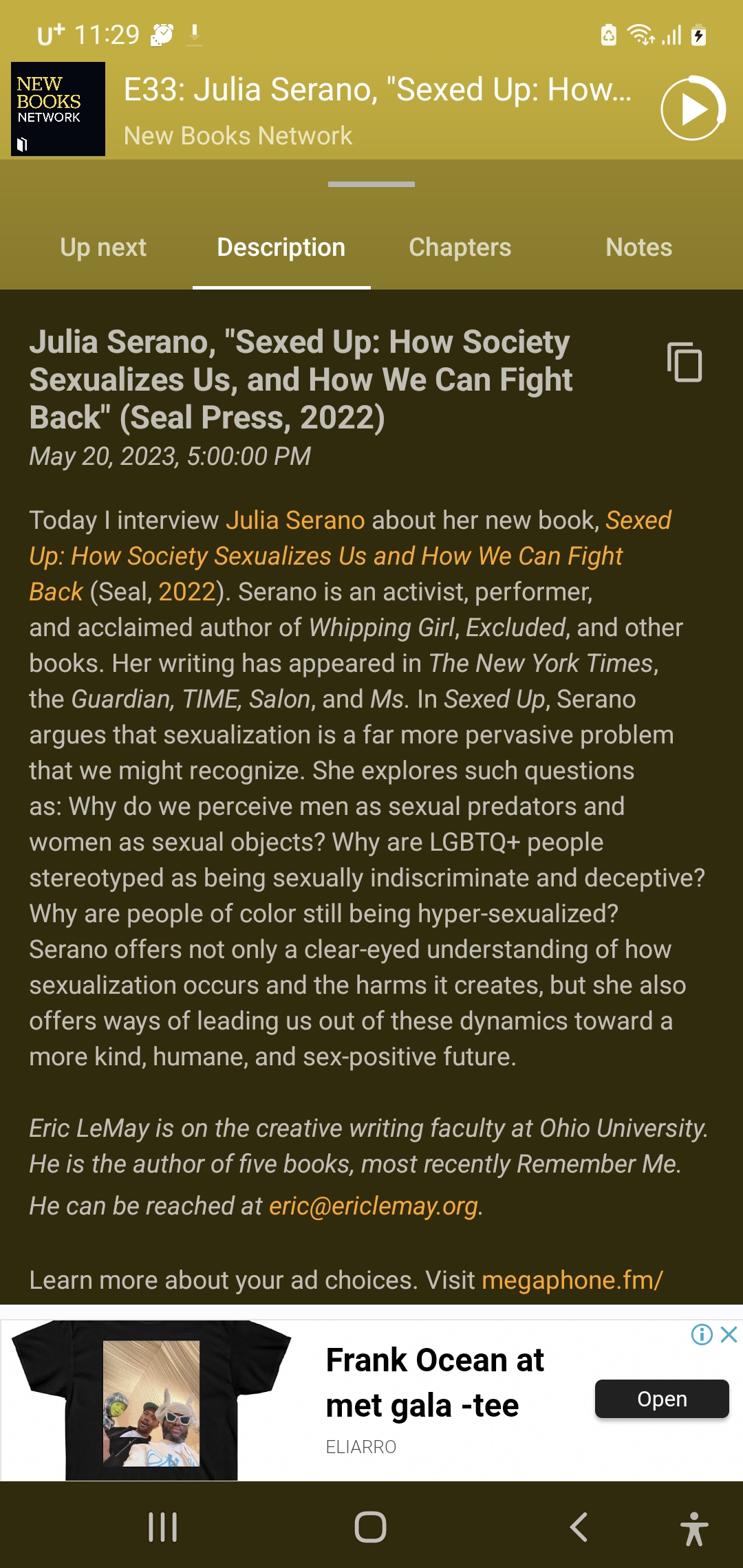
If you’re reading this, you’re probably already well aware of the emasculation and feminization of Asian men in US popular culture—which my image search for a “Korean man” at Unsplash above almost seems to be rubbing in.* But a few brief mentions towards the end of a book I just finished, Sexed Up: How Society Sexualizes Us and How We Can Fight Back by Julia Serano (2022), suddenly reminded me of a powerful passage about that from the novel Little Fires Everywhere by Celeste Ng (2017), which I want to share with you.
But first, to set the tone, here’s two of those mentions from Sexed Up, starting with (p. 153, Chapter 7):
…hypersexualized stereotypes are projected onto Asians (particularly East Asians). While there are occasional examples of Asian men being depicted as dangerous or predatory, they are more routinely depicted in an emasculated or desexualized manner, likely as a result of Asians more generally being stereotyped as “feminine” relative to other ethnicities.
…within white-centric gay male dating scenes…men of color often encounter sexual exclusion, or else find themselves pigeonholed into particular sexual roles (tops, bottoms) in accordance with previously discussed racial stereotypes (Black people being perceived as “masculine” and “aggressive,” and Asian people as “feminine” and “submissive”).
Which suddenly brought me to the titular passage from Little Fires Everywhere, at the top of page 267, Chapter 16 (in the top-right of the last picture; apologies that my camera skills weren’t the best on the subway that cold day in March!). For context, much of the novel revolves around Chinese immigrant Bebe Chow fighting to regain custody of her baby daughter that she put up for adoption when she was destitute. Mark and Linda McCullough are the girl’s adopted (Caucasian) parents, and Edward Lim, the angry, articulate, powerful Asian-American man, is Chow’s pro-bono lawyer:
I’ve since learned that the book was also made into a mini-series in 2020:
Has anyone seen it? Do you know if that scene, and/or the racist tactics used by the McCullough’s lawyer are included or conveyed somehow? Please let me know!
*(In fairness to Unsplash, the inclusion of a Caucasian woman was just random—once a search request starts running out of hits, Unsplash starts offering increasingly less related photos rather than just empty space. Personally I just find that frustrating, but I guess Unsplash judges that users may realize they could use some of those other photos instead.)
Don’t claim women are “naturally” inferior to men in any intellectual endeavor, argued pioneering feminist philosopher Mary Wollstonecraft in 1792, unless you first grant girls the same opportunities to master it as boys. Today, that includes not chiding them as “unfeminine” for being chess geeks. Or, for not taking things seriously when they’re not, and want to learn the game in their own ways.
Very few girls and women have ever made it to the ranks of the top 100 chess players. In fact, at the moment there aren’t any at all. For some pundits, including alltoo many of those top players, this is all the evidence they need to argue that women are “naturally” inferior at the game to men.
Alternatively, some people place a lot of weight on the fact that there’s only one female chess player for every nine males. Yes, some truly exceptional girls and women do make it to the top 100 players sometimes, they’d have to concede. (Most notably, Judit Polgar, who became a grandmaster at a younger age than Bobby Fischer, and who was once ranked #8 in the world.) They may even admit that the proportion that do, compared to all female players, is actually quite comparable to the proportion for male players that do too.
But that only further begs the questions of why more girls and women aren’t attracted to chess in the first place, or why they don’t stick with it.
Yes, there is rampantsexism in the sport. But surely no more than many other sports, and not enough to account for such a massively lopsided sex ratio? Maybe the main reason it doesn’t appeal is because, overall, they really are worse at some of the various attributes required for success in chess?
I frame the arguments like this because, until I started writing, I didn’t realize their connection. For whereas I’m a decent human being, and so have always rejected out of hand the notion that women are naturally inferior at any intellectual activity or profession whatsoever (or that any sex is, for that matter), the reality that there are indeed many various, incontrovertible, very specific skills and attributes in which men tend to perform better than women, and vice-versa, has also made a great deal of sense to me. Only, until today, I didn’t realize my own cognitive dissonance—that those slight differences in performance could be seized upon to justify those arguments that girls and women don’t belong in chess.
But also until today, I didn’t realize their awesome rejoinders, which is what I’ll cover here:
That there’s far, far more to becoming a professional chess player than, say, being able to mentally rotate a three-dimensional object while doing a math test.
That those methods girls and women tend to favor, despite what you may hear, are in no way less effective than those boys and men do.
That a dominance of boys and men in any intellectual field, is not, ipso facto, evidence of their natural superiority in it. Because the barriers to girls’ and women’s participation in it can be far more insidious and subtle than most men, including myself, are aware.
And that our brains have an enormous plasticity. To the extent that, once girls and women do fully participate in hitherto, naturally “masculine” intellectual activities (or boys and men in “feminine” ones for that matter), they are fully able to overcome those initial sex-based differences.
Here goes…
What do I Mean by Biological, Sex-based Differences?
So, despite that introduction trashing them, why do I also say those biological, sex-based differences still make a great deal of sense to me?
Well, first and foremost, because they jibe with my own experience as a chess nerd as a teenager, when I spent most of my free time at clubs and tournaments instead of driving lessons and dates. In between, I’d pore over my books into the small hours, rather than bothering with minutiae like completing homework, or doing more than the bare minimum to pass my high-school classes. Rest assured, I also noticed the almost complete lack of women playing chess, let alone girls my age. But I just took it for granted.
So today, whether posited as a misguided explanation for their relative absence as we’ll see, or just as a reasonable observation to add to the debate as to why that is, when chess trainers, professional players, and commentators alike routinely mention an obsessiveness they see in boys interested in chess but which seems almost non-existent in girls, I can’t help but nod in agreement.
Indeed, it’s a point made so often on chess YouTube or Twitch, I can’t pinpoint a specific clip to link to sorry. But desperate googling reveals a similar observation has been attributed to former world snooker champion Steve Davis, about why his sport is likewise so overwhelmingly male-dominated:
…[when] once asked to explain why men dominate snooker, even though it doesn’t require great strength…he gave a controversial but great answer that applies to snooker, chess and many other fields of endeavor.
He said, essentially, “Men are the idiots of the species. Men have a certain obsessiveness that women lack. We happily spend hours, months, years to become great at things that are a complete waste of time (like hitting balls into holes with a pointed stick).”
The Quora commenter who posted that continued:
Women COULD become elite chess or snooker players, but it requires a degree of obsession and an insane amount of work/practice that most women don’t see the value in. Women may enjoy playing chess or snooker, but not enough to devote their lives to it. And devoting your life may be exactly what it takes to become a champion.
But this also made sense because of my intellectual baggage. Specifically, in the form of the book, The New Sexual Revolution by Robert Pool (1993), that I picked up during my halcyon, impressionable first years at university, thinking women would be impressed by the title and cover. (Hey, this line of thinking did work eventually.) From it, I learned for the first time about multiple science, evidence-based examples of men and women tending to approach various tasks differently. Or, in many cases, having incontrovertible advantages over each other when performing the same task. An example of the former is that men usually navigate by streets and grids, women by landmarks. And of the latter, that overall men have demonstrably better greater spatial ability, as well as the ability to shoot moving targets, both of which prove to be independent of prior exposure or later training. What science says about those differences three decades later though, and their implications, I’ll get to soon. But crucial is that then—as now—Pool’s own speculations from those seem perfectly reasonable (pp. 61-62):
The male advantage in spatial ability probably has greater practical implications than other sex differences because it is one of the largest differences and because spatial ability is important in many jobs….Researchers have found…that the high school students with high spatial ability are the ones who are most successful in geometry, mechanical drawing and shop classes….the skills learned in those classes are important for careers in science, engineering, drafting and design, and studies have shown that high spatial ability is related to success in such diverse jobs as automotive mechanic, architect, and watch repairman.
The sex difference is spatial ability may spill over into mathematics, where males have a medium-sized edge….
Later still at university, those lessons would be reinforced by my finding myself in lectures about gynocentric feminism, which was presented to me as a school of feminist thought which was likewise concerned with highlighting sex-based differences, and positively revaluing what its advocates considered the ensuing core tenets of ‘femininity.’ In hindsight though, it was a much more fringe than my sympathetic professor suggested in the late-1990s, and was already well on its way out even then. But, you could also say it was just a twist on the nature-vs-nurture debate really—that all things being equal, would or do men and women gravitate towards different activities and professions based on these differences, and regardless that those dominated by women shouldn’t be undervalued—and which is still very much ongoing. Perhaps most interestingly and controversially at the moment, in the fact that even in Scandinavia, it is women who are still overwhelmingly plumping for caring, nurturing professions like teaching and nursing instead of those related to STEM. (Just because Jordan Peterson is oneofthemanypeople pointing this out, doesn’t make it untrue.)
To be clear, although Pool’s book was clearly formative, and I’ve been very receptive to the notion of fundamental, sex-based differences ever since, I’ve never been naïve either. Not about how absolutely no level playing field exists for entry into and success in hitherto “naturally” male-dominated interests and professions like chess, snooker, coding, engineering, and so on.
Or at least, I thought I’d never been naïve.
There’s More than One Way to Skin a Cat
Because today I learned that in addition to all the other, more obvious barriers and hurdles that discourage girls and women, that this extends to them even displaying the necessary character traits to succeed too. That it’s not that they don’t also want to geek out over the things only boys are “supposed” to like, necessarily. Just that if they do, they’re much more likely to be criticized for their obsessiveness. Whereas among boys and men, that same obsessiveness tends to be seen as a virtue instead.
See what I mean from this passage from Invisible Women: Data Bias in a World Designed for Men by Caroline Criado Perez (2019), the inspiration for this post. If you’ll please bear with me, it’s five paragraphs long. But totally worth it for the aha! moment in the final two (pp. 95-96):
In 1984 American tech journalist Steven Levy published his bestselling book Hackers: Heroes of the Computer Revolution. Levy’s heroes were all brilliant. They were all single-minded. They were all men. They also didn’t get laid much. ‘You would hack, and you would live by the Hacker Ethic, and you knew that horribly inefficient and wasteful things like women burned too many cycles, occupied too much memory space,’ Levy explained. ‘Women, even today, are considered grossly unpredictable,’ one of his heroes told him. ‘How can a [default male] hacker tolerate such an imperfect being?’
Two paragraphs after having reported such blatant misogyny, Levy nevertheless found himself at a loss to explain why this culture was more or less ‘exclusively male’. ‘The sad fact was that there never was a star-quality female hacker’, he wrote. ‘No one knows why.’ I don’t know, Steve, we can probably take a wild guess.
By failing to make the obvious connection between an openly misogynistic culture and the mysterious lack of women, Levy contributed to the myth of innately talented hackers being implicitly male. And, today, it’s hard to think of a profession more in thrall to brilliance bias than computer science. ‘Where are the girls that love to program?’ asked a high-school teacher who took part in a summer programme for advanced-placement computer-science teachers at Carnegie Mellon; ‘I have any number of boys who really really love computers,’ he mused.55 ‘Several parents have told me their sons would be on the computer programming all night if they could. I have yet to run into a girl like that.’
This may be true, but as one of his fellow teachers pointed out, failing to exhibit this behaviour doesn’t mean that his female students don’t love computer science. Recalling her own student experience, she explained how she ‘fell in love’ with programming when she took her first course in college. But she didn’t stay up all night, or even spend a majority of her time programming. ‘Staying up all night doing something is a sign of single-mindedness and possibly immaturity as well as love for the subject. The girls may show their love for computers and computer science very differently. If you are looking for this type of obsessive behavior, then you are looking for a typically young, male behavior. While some girls will exhibit it, most won’t.’
Beyond its failure to account for female socialisation (girls are penalized for being antisocial in a way boys aren’t), the odd thing about framing an aptitude for computer science around typically male behaviour is that coding was originally seen as a woman’s game. In fact, women were the original ‘computers’, doing complex maths problems by hand for the military before the machine that took their name replaced them.
While I don’t know anything about coding, I’ve been dying for a chance to flex that I’m still a pretty damn good chess player. (And single; 진짜 뇌섹남 인데…) So, although chess too is not all it appears, and there are many ways to fall in love with it (a common sentiment is that it’s equal parts an art, a sport, and a science), I like to think I have some rare authority when I say that I still can’t see any real alternatives to its mastery other than long hours spent practicing, studying, and committing thousands of games, opening variations, tactical motifs, positional themes, and endgames to memory.
But then I thought again about how I did those, and took Perez’s point about staying up all night not being all it’s cracked up to be. Because in hindsight, much of what I worked on when I did was completely useless, even counterproductive, and made my schoolwork and non-existent social life suffer. At university later, it meant I failed easy classes, and am still suffering the consequences through my student loan repayments today. So, someone more mature and self-disciplined than I was back then, and more well-rounded, with actual friends and mentors to talk about learning, training, and—heaven forbid—topics unrelated to chess, would undoubtedly have made far more progress in chess in a fraction of the time that I did, let alone in many other aspects of their life.
Historically, Women Literally Couldn’t be Geniuses, Despite Ticking all the Boxes
Still wanting to flex how smart I am though (did I mention I’m single?), I want to causally convey how there must surely be a reason why chess is still considered a symbol of high intelligence, even genius too, at least in the West (I concede that Go is more complex. Or baduk as it’s known here, which all the geeks in Korea who would be playing chess are playing instead, damnit.). Also, to smoothly segue through that into the fact that we are indeed so wedded to the notion that related skills, talents, and traits are only virtues when possessed by men, that even the histories of the concept of “genius” and of the word itself contain this bias, especially in the last two centuries. As Christine Battersby explains in her pioneering 1989 book, Gender and Genius: Towards a Feminist Aesthetics (pp. 8 & 11):
Starting from the persistence of sexual prejudice in art and literary criticism today, [in this book] I move back in time to explore the way our modern notions of creativity are modeled on notions of a male God creating the universe, and the devious tricks used to represent all creative and procreative power as he attribute of males….
Women’s inferiority had been rationalized by the writers in the Aristotelian tradition as a deficiency in judgement, wit, reason, skill, talent, and psychic (and bodily) heat. Women had been blamed for an excess of passion, imagination, sexual needs, and for vapor-induced delusion and irrationality. But if we look at the aesthetic literature of the late eighteenth century, we will see that the greatest males (the natural “geniuses”) were being praised for qualities of mind that seem prima facie identical with Aristotelian femininity. I discuss the new qualitative distinctions that were developed, that used different types of passion, imagination, frenzy, and irrationality to account for the difference between geniuses and females. A man with genius was like a woman—but was not a woman….the revalued “feminine” qualities of mind were appropriated for a supermale sex….
Why does it matter that, whereas ordinary males have been blamed for effeminacy, in (male) geniuses femininity has been transformed into a virtue? I hope this book will make clear how women have been presented with contradictory evaluative norms against which to measure their attainments.
Or indeed, this very accessible 2021 lecture:
“Hard-wired” Differences These Ain’t
Remember those incontrovertible sex-based differences Pool discussed in 1993 though? To follow this audacious history of belittling, denying, and hiding women’s genius by pointing out the verdict of 2023 is…that these differences very much still exist, feels churlish, almost rude. But here’s the rub: they’re easily overcome. As Andrew Curry explains in, given my own 30-year fixation with those differences, an even more eye-opening—I want to say shocking—article at Nautilus:
George M. Bodner, a professor of chemical education at Purdue University….stresses it’s important not to perpetuate the myth that a gender gap implies all men are better than all women at spatial cognition tasks. Stereotypes about spatial ability can have an insidious effect. “When women hear myths, such as the idea that they have ‘poor spatial ability when compared with men,’ they often believe this will be true for themselves, and it often is not true,” Bodner says.
Had [Sheryl Sorby, a professor of engineering education at Ohio State University] been a little less stubborn, she might have left engineering altogether. Instead she went on to earn a bachelor’s and then a Ph.D. in mechanical engineering from Michigan Tech, and was later hired as a faculty member. As Sorby took more engineering courses, she got better at spatial cognition tasks, until eventually she found herself teaching engineering graphics, the very course that almost derailed her as an undergrad. “The brain is pretty plastic when it comes to spatial skills,” Sorby says. “I have improved my spatial skills vastly as an adult.”
That initial experience never left her, though. As a professor, she noticed talented young women struggling the way she had. So she set out to find a solution. “The fact that there are these gender gaps is a challenge, but it’s not a death sentence,” she says. “I know it’s something we can fix.”
With her colleague, Beverly J. Baartmans, she developed a spatial visualization course to help her students develop their spatial cognition skills.
That course was just 15 hours long, and even improved men’s abilities as well, despite being given a biological head start. And, because I can’t even begin to convey the magnitude of what this brain plasticity implies for future sex and gender roles, let alone playing chess? I can’t think of a better way to end this post than recommending you head straight over to Nautilus to read the rest of the article!
Well, we don’t, actually. But for those who want to learn more about why not, and laugh themselves silly in the process, Nipple War 3 (젖꼭지 3차대전) is available for streaming on indieground until July 30!
“Nipple World War 3″ it should really say, otherwise the “3” makes no sense. After appearances in over 30 film festivals though, the misguided English title has stuck, so I’ll roll with it.
It’s very crude and slapstick too. But I’m not complaining about that either.
For there’s nothing subtle about the absurd double standards regarding male and female nipple exposure, in Korea or anywhere else for that matter. But it’s only relatively recently it’s become a real issue here, as explained by Jo Yeong-joon in hercolumn about the 2021 film yesterday at Oh My Star:
2019년쯤이었나. 여성 연예인들의 노브라가 사회적인 이슈가 된 적이 있었다. PD 출신인 백시원 감독도 당시 방송에서 이 문제를 다루는 방식을 놓고 상사와 의견을 나눈 적이 있었다고 한다. 당시에 상사는 두드러지는 여성의 젖꼭지에 모자이크를 처리하라고 했지만 취지에 옳지 않다고 생각한 감독은 극 중 인물처럼 적극적인 행동을 하지는 못했지만 속으로 불편함 감정을 느꼈다고 한다. 이 영화 <젖꼭지 3차 대전>은 그런 사실적 상황 속에서 태어나게 되었다. 코미디적 연출과 다양한 상황을 제시하기 위해 결과적으로 많은 부분이 각색되고 픽션화되기는 했지만 당시에 경험했던 사회에 만연해 있던 은근한 성차별에 대해 들여다보고자 한 것이다.
“Was it around 2019, when female celebrities not wearing bras in public became a social issue? [The ‘no-bra‘ movement?] Director Baek Si-won, a former producer, said that the ‘problem’ of a woman not wearing a bra came up in a program she was working on at the time; after discussing with her boss about how to deal with it, she followed his instructions to use mosaics to cover the women’s prominent nipples. But she was uncomfortable with doing so, and, although she didn’t object quite as actively as the characters do in her short film, it was from that real example that Nipple War 3 came about. Indeed, although much of the film is heavily dramatized and fictionalized for the sake of comedic affect, and for presenting a wider variety of scenes and situations, the intention in doing so was to better highlight the subtle sexism and double standards that were—still are—experienced every day in Korean society.”
영화는 연예인의 젖꼭지가 도드라지는 방송 화면을 모자이크 하라는 마정도 부장(정인기 분)에 맞서 자신의 의견을 피력하는 용 피디(최성은 분)의 모습을 다루고 있다. 영화의 구조도 그리 복잡하지 않다. 서로 다른 의견을 가진 두 사람이 총 세 차례에 걸쳐 부딪히는 것이 뼈대의 전부다. 대신 각각의 지점이 (영화의 표현을 빌리자면 세 번의 대전) 던지는 문제의 화두는 모두 다르다. 갈등의 중심에 놓인 매개는 여성의 젖꼭지 하나이지만, 감독은 이 과정을 통해 여성의 특정한 신체 부위가 드러나는 것에 (실제로는 여성의 자유와 권리, 평등을 보장하는 일에) 반감을 가지는 이들의 주장이 얼마나 차별적이고 비합리적인지를 드러내고자 한다.
“[As can be seen the opening scene above, which has English subtitles], the movie deals with Producer Yong (played by Choi Seong-eun) who disagrees with her manager Ma Jeong-do (played by Jeong In-gi) when he asks her to mosaic out a female celebrity’s prominent nipples under her t-shirt. From then, the film is structured around people with different opinions having an argument (having a ‘battle,’ to borrow the parlance of the film) a total of three times, each on a different aspect of women’s nipples—the central characters if you will. Through this variety of situations and arguments, Director Baek wants to make that it clear that only allowing men to expose certain parts of their body is extremely discriminatory and irrational, and ultimately fundamentally undermines their guarantees of freedom, rights, and equality.” (My emphasis and slight embellishments—James)
I’d just love to translate the full column. But unfortunately copyright is a thing, translation apps and plugins are more than adequate, and the reality is that if you don’t understand the Korean yourself, then you’ll struggle to make much sense of the film dialogue either, which has no Korean or English subtitles. (Sorry—I’m disappointed too.) I would like to highlight just a few more points from her column though, just in the remote case that you’re not already convinced to watch the film whenever and in whatever language you do get the chance:
Part of the the reason for Yong’s clash with her manager is because of the ambiguity of the Korea Communications Commission’s regulations. While they do say male and female genitalia [and pubic hair] are strictly forbidden, the criterion for excluding female nipples—and only female nipples—are far more open to interpretation. In the film, this is highlighting by showing a screenshot of topless African women from a previously-aired documentary, but one of Venus’s nipples in the famous Sandro Botticelli painting being mosaiced in another. Not only are—James here again—these examples probably real, but they also raise the element of racial hypocrisy and double standards, which are by no means confined to Korea.
Amidst all their handwringing about some women not wearing bras for their health and/or comfort, few self-appointed guardians of Korean morals seem to recall that even exposing navels on TV was technically banned when singer Park Ji-yoon‘s song Coming of Age Ceremony (성인식) was released in 2000, resulting in said body part sometimes getting mosaiced (or—James—I’m guessing, covered in a mesh, like in the second video below.) Similarly, singer Kim Wan-seon had the same problems with her ripped jeans in the late-1980s and early-1990s.
The film is absolutely not intended to inflame Korea’s “gender wars.” It’s a comedy. The men are not at all universally portrayed as dogmatic, conservative sexists, nor the women as universally progressive and beyond reproach. In particular, Ma is clearly very much in a bind, Yong is somewhat stubborn and self-righteous, and her male assistant is completely sympathetic and helpful to her cause.
Tired of feminazis pushing their nipples in your face? Don’t understand the big deal? Recall that female newsreaders couldn’t even wear glasses on Korean TV until 2018…
Honestly, with this topic I feel a personal connection to my first few years in Korea, in the early-2000s. Which I realize sounds…let’s generously say “somewhat odd.” But that’s when I was single just like now, but unlike now coming home after midnight a lot. And often when I did, I wouldn’t be sleepy, but would be somewhat at a loss with no computer, no 1500+ books, nor yet to be invented smartphone. So I’d turn on the TV to suddenly find…Las Vegas cabaret shows featuring topless dancers. Naturally, their breasts would be misted over. Only, there was so much dancing involved, so many breasts, and so many cuts between different dancers and different cameras, that the hapless censors (misters?) just couldn’t keep up. So,the misted circles would quite literally be chasing the dancers’ breasts across the TV.
If I’d had a cat, its eyes would have popped out of its head. But it’s probably best I didn’t then—I probably would have injured it, rolling around on the floor laughing too much. And, having just arrived from New Zealand, where I’d rarely had to think about censorship at all, I’ve continued laughing at its hypocrisy and ridiculousness ever since.
Much kudos to director Baek Si-won for continuing that tradition then, while also providing some much needed social commentary that won’t make any viewer feel like they’re being made fun of—or laughing too much to care even if they did.
Knowingly or unknowingly, how do you think you react differently to people depending on their sex?
Estimated reading time: 5 minutes. Photo by leah hetteberg on Unsplash.
“When you’re communicating with someone, but don’t know if they’re a man or woman, you feel a little guarded. You can’t help it. Until you can resolve their identity, your conversation is stilted and awkward, because you just can’t be yourself. ”
Or something like that—I can’t remember when and where I read it, but it resonated with my experience of chatrooms in the early days of the internet, or phone calls before Caller ID. Over the next decade, as realistic-sounding, AI-based chatbots become increasingly common in customer service roles, along with all their inherent gender biases and stereotypes, I expect younger generations will also experience the same moments of confusion and hesitation I did.
Or will they? Is it just me that sees sex first, and reacts to that? Do moments of ambiguity mean I actually behave and talk fundamentally differently around men and women, once their identity is resolved? I’ve often wondered. So, I was interested recently when I was listening to a New Books Network interview of Julia Serano, a transsexual woman, about her, well, new book, Sexed Up: How Society Sexualizes Us and How We Can Fight Back (2022), and learned that it was her experience that people reacted to their perception of her sex before anything else. Listen from 15:40 to see how, or read below:
“When I was about to begin my [male to female] transition, I really didn’t know what personally to expect, other than I figured there’d be this period of time where I’d be in, like, a gender limbo, when people wouldn’t be able to figure out if I was a boy or girl. And I had a couple of instances like that, but much to my surprise, almost always people would make the determination that I was male or female [for themselves]. It’s just that their determinations often differed from other people in the exact same room. So I describe a lot of anecdotes I had, including…having a conversation, for instance, where someone who knew me as male before I transitioned and wasn’t aware that I was transitioning, introduced me to…another man, who—he was very flirty with me. And I could tell, because of what I was going through at the time, that he was reading me as female, but, like, my friend didn’t pick up on that…because from my friend’s perspective, we all obviously knew that we were [just] three guys talking together. And there’d be a lot of situations like that where people would read me as one way or the other, and they’d really believe whatever their initial determination was, that’s what they believed and that’s how they viewed me, and it was really hard a lot of times to convince people in the other direction.”
“….The conclusion I came out of [those experiences], is that first and foremost, we don’t really see people—we see men and women. And that’s kind of how we’re socialized to see the world, and becomes really unconscious…and, you know, the fact that we automatically categorize people as male or female, obviously this has implications for trans people, and for non-binary people—it creates a lot of obstacles in our lives. But more generally, if we categorize people [like this], it really shapes a lot of the assumptions that we place on people, and it results in us filtering out other aspects of their person…like once I transitioned, there were aspects of my person that people couldn’t really see any more, that they used to react to.”
The title of the book, not to mention its description, is actually a little misleading—the book is no prudish, anti-sex tirade. Instead, it’s more her observations and thoughts about sexualization, objectifiction, sex and gender roles, socialization, pornography, and so on based on her experiences before and after transitioning. In other words, fascinating, and more than enough to decide I couldn’t wait for a paperback version to come out.
As for my own answers to the various questions I’ve raised? Actually I completely disagree with Serano that we’re socialized to see people’s sexes first. Women, in particular, who didn’t immediately register someone as a man, and weren’t more wary of the potential danger a man represented, were more likely to be a victim of violence, and less likely to pass on their genes. Also, with the exception of asexuals, our well-documented, subconscious reactions to other’s heights, signs of youth, indicators of wealth, and other attractiveness criteria demonstrate that most people can’t help but immediately consider others as potential mates or rivals, even if we don’t consciously frame them as such.
Or, very, very consciously once suddenly becoming single again, at a frequency that surprises even myself…
But I stress that to acknowledge these gut reactions, usually so short-lived to even notice them, doesn’t mean they aren’t easily overcome. Nor should they ever provide excuses for boorish behavior. For instance, I’m acutely aware that many men dominatewomen’s personal spaces, whether through being unaware or through deliberately taking advantage of their male privilege to do so. So, when I’m around women, I constantly try to check myself from manspreading, and so on. Also, befriending mostly women for most of my adult life, because of reasons, I’ve often questioned if I talked and behaved differently around them, and if there were subjects that I wouldn’t broach with them that I would with men, and vice-versa?
Recently starting to make more male friends again because I suddenly have a social life now, I’m leaning towards that I actually treat everyone pretty much the same. Which is to say I don’t actually have ‘friends’ so much as “like-minded folks [that] fill very specific needs,” at varying levels of closeness, with whom their sex is only one of many factors influencing how I behave around them and what we talk about. And which in my experience is much less important than nationality—at least amongst Westerners.
So, although I haven’t met any yet, I don’t think I would feel compelled to ‘assign’ any openly genderfluid or non-binary people at all. And, to those I am fortunate to meet, I can only apologize in advance for not lacking the restraint to want to immediately ask you all these questions too. Including the most important one:
Wasit necessary for Jane Austen to avoidconversations between men in her novels? Well??
Don’t let my glorious laser tits deter you from an eye-opening interview, and a must-read!
Estimated reading time: 11 minutes.
First, a quick update to explain my absence this past month,
Basically, I’ve finally gotten my shit together.
I could count the ways. Instead, suffice to say I’m so enthused and energized that I’ve even started paying attention to my laser tits again.
You read that right. (You’ll thank me for passing on this “꿀팁” later.) Ten random notifications from a reminder app a day, I advise, is the sweet spot for perking you up before starting to get annoying:
Naturally then, life chose to reward my newfound drive by bookending those past four weeks with two debilitating colds. Repetitive strain injury has flared up in my right arm too,* leaving me in agony every time I want to do anything even remotely fun or pleasurable with my hand. Like, say, eating or sleeping (what did you think I meant?), let alone banging away at a keyboard.
With my resolve being so sorely tested, literally, my response is to push even harder through my huge backlog of writing, as well as my new plans to completely overhaul this blog and my social media use. What those plans actually are, I’m going to tend towards doing before explaining. But one I already announced back in October—more geeking out over things that bring me joy, no matter how obscure or academic. The difference now being, I realize life is just too short to worry about losing followers who don’t share my obscure passions, or curious, ribald sense of humor.
On that note, the New Book Network’s (NBN) recent podcast interview of Monica Liu, about her new book Seeking Western Men: Email-Order Brides Under China’s Global Rise (2022), is conspicuously bereft of laser tits, but is no less jaw-dropping for all that. Primarily, for Liu’s emphasis on the women’s perspectives and their sense of agency, which in hindsight I’ve much neglected in myowncoverage of migrant brides to Korea over the years (understandably, given how so many are exploited and abused, but a neglect nonetheless). Moreover, despite the title of the book, and NBN’s synopsis below, it quickly becomes clear while listening to the interview that Chinese seekers of marriage with Western men share many of the same issues and goals with those Chinese, Central Asian, Russian, and Southeast Asian women seeking Korean men.
Her study of China’s email-order bride industry offers stories of Chinese women who are primarily middle-aged, divorced, and proactively seeking spouses to fulfill their material and sexual needs. What they seek in their Western partners is tied to what they believe they’ve lost in the shifting global economy around them. Ranging from multimillionaire entrepreneurs or ex-wives and mistresses of wealthy Chinese businessmen, to contingent sector workers and struggling single mothers, these women, along with their translators and potential husbands from the US, Canada, and Australia, make up the actors in this multifaceted story. Set against the backdrop of China’s global economic ascendance and a relative decline of the West, this book asks: How does this reshape Chinese women’s perception of Western masculinity? Through the unique window of global internet dating, this book reveals the shifting relationships of race, class, gender, sex, and intimacy across borders.
I strongly recommend listening to the interview yourself; at 39 minutes long, it doesn’t at all drag on like, frankly, most other NBN interviews do. To encourage you to do so, here are several eye-opening excerpts, all lovingly, painstakingly transcribed by myself (my apologies for any minor errors).
(Too young, and too well-off?) Photo by bruce mars on Unsplash.
First, from 7:30-8:45, an important difference between Chinese women seeking Western men to migrant brides in Korea: the former tend to be much older and financially well-off. As we’ll see soon, this has big implications for the power dynamics between prospective partners:
Q) Why really did the Chinese women seek Western men?
A) For a couple of different reasons. Across the board, one main reason I saw was that the women felt aged out of their local dating market, because men of similar age and economic standing tended to prefer much younger, never-married women without children, and so women believed Western men were more open to dating women their age. And there’s also some differences based on the women’s socioeconomic class. A lot of women who are financially well-off have previously been married to very wealthy Chinese men that cheated on them and left them for younger women, and so think that Western men are going to be more loyal and more family-orientated—that being the primary reason. While women who struggled financially, have often divorced Chinese ex-husbands that lost their jobs and couldn’t support their families, and so these women are also seeking financial stability in their new marriages. Finally, there’s also a group of women who wish to send their kids to college in the US, to escape the very, very brutal college entrance exam in China, but they couldn’t do that as single moms that were financially struggling.
Next, from 10:20-11:20, on how Chinese dating marriage agencies both respond to and perpetuate Occidental stereotypes:
Q) Tell us about global financial crisis of 2008 when the men lost their jobs. Did this impact the dating scene?
A) Yes, this certainly impacted the dating scene. At the dating agencies, before the crisis there would be this idea that many of the men would possibly be financially well-off, but actually after the crisis a lot of women were actually discovering off-site that those men that they thought were financially well-off were not in that position, and as a result one of the tactics that the agencies used to promote these men to the women was that these men were loyal, devoted, and family-oriented, and thereby worth of marriage, even if they’re not particularly financially well-off.
Then from 13:28-15:11, on the racial hierarchies contained within those Occidental stereotypes. But already, Chinese women’s agency is evident in their readiness to reject or subvert these:
Q) You talked about the discrimination against Black men with the Chinese women, but not other racial groups. Tell us more.
A) When I stepped into the dating agency, I found that Chinese women were very reluctant to date Black men. And for that reason, the agencies actually had a policy to not entertain emails from Black men unless given special permission from the women, in order not to “offend” the women. I’m not exactly sure what their personal reasons were…but I do know China has a long-standing history of anti-Black prejudice where Blacks are stereotyped as savage, hypersexual, and violent.
However, the women didn’t seem to discriminate against other racial groups, and to them, interestingly, the term “Westerner” included not only Caucasians but also Latinos and Native Americans. And occasionally some women would actually refer to Western men of Northern- or Central-European ancestry as “pure white,” and Latin-American men, or men of South-European ancestry, for example Italian men, or Native American men, as “non-pure white.” However, being pure white didn’t seem to actually boost the men’s desirability in the women’s eyes, and in fact I saw that some women in fact preferred the non-pure white look and they found the darker hair and eye color to be more Asian-looking, and more familiar and more pleasing to their eye than someone who is, say, blond-haired and blue-eyed.
From 18:24-19:52, on the traditional, patriarchal values the Western men using international dating agencies often bring to their anticipated relationships with Chinese women. Obviously, by no means all (or even a majority) do. But just as obviously, it’s surely no coincidence that many Korean men do the same:
Q) Now give us the profile of the Western male seeking a Chinese woman.
A) The majority of the men enrolled tended to be older, divorced, and tend to come from lower-middle class or working class backgrounds, although some were middle class. I’ve seen a lot of truck drivers, lots of small business owners, and these men tend to feel left behind by globalization as agriculture, manufacturing, and small businesses started declining. So these men actually viewed this changing economic landscape as a threat to their masculinity.
Now a lot of sociologists’ studies show that marriage rates have declined among working class men, and poor men, because women within their own class find them to be too poor to be marriage worthy. So for these men, having slipped down the socioeconomic ladder, they really struggle to hold on to what privilege they have left by pursuing so-called “traditional” marriages, possibly with foreign brides, because they think this will allow them to exert some kind of dominance and control at home. And there’s also some middle class men who, despite being financially stable, they still feel left out of place within the new gender norms that have emerged in Western societies, [supposedly] dominated by feminists who they see as destroying the family and nation through their spoiled behavior and materialism.
And, reluctantly, a final excerpt from 23:21-25:10 (there were so many I wanted to highlight!), on the upending of global masculinity and racial ideals when women are empowered to reject those marriages:
Q) Let’s look now at some of the theories about Western masculinity. What did you find concerning race, class, gender, globalization, and migration?
A) First, I challenge readers to rethink the relationship between race and class…the question I ask is, does Western masculinity still command some degree of hegemonic power in China, despite China’s global rise—and I confirm that it does, by showing how Chinese dating agencies market their Western male clients as morally superior to Chinese men despite their lack or wealth. So the fact is that this portrayal still sells in China, and this reflects this continued superiority of Western culture within the Chinese women’s imagination.
However, in this book I also show a lot of moments when Western masculinity is starting to lose its hegemonic power, and this typically happens in the latter stages of the courtship process, when couples go offline and start meeting face-to-face. And in this book, I show how some of these women quickly rejected their working class, Western suitors, once they realized these men didn’t embody the type of elite masculinity that they were seeking in a partner, and instead these women would choose to continue having affairs with their local Chinese lovers, even if those men were married and not willing to leave their wives. And this is because [they] had these refined tastes, lifestyles, and sexual know-hows that a lot of their foreign suitors lacked.
Two final points of interest to round off. First, by coincidence, shortly after listening to this interview I got an alert that Kelsey the Korean was busy dismantling Western masculinity’s hegemonic power in Korea too:
This article analyzes “returnees from marriage migration” by focusing on Vietnamese women from Cần Thơ and Hai Phong who have been to South Korea for marriage migration. In contrast to prevalent concerns in South Korea about the possibility of “child abduction” by Vietnamese mothers/divorcees, the author found many “deserted” Korean Vietnamese children and their mothers in Vietnam through this research. There is also a growing number of Vietnamese “return marriage migrants,” women who came back to South Korea after their first divorce and return to Vietnam. The article emphasizes the complexities and multidirectional trajectories of marriage migration and highlights the agency of female migrants, whose contribution to family welfare and to “development” is often overshadowed by their status within the family.
Does it really matter that, technically, my copy of the book hasn’t actually arrived yet? If you’ve read this far, I hope you too will indulge yourself (38,170 won on Aladin!), and I look forward to hearing your thoughts.
*I first had repetitive strain injury about 10 years ago, consequence of having my keyboard too close to me, forcing me to bend my arms to type; fortunately, it resolved itself in a few weeks once I moved my computer just shy of arm’s length. This time round, it’s undoubtedly due to spending hours in bed on my phone, again bending my arms to use it; now that I’ve stopped, hopefully again the pain will go away just as quickly.
In the meantime, I can’t stress enough how much my arm can hurt at the moment, nor how debilitating it is to be literally too scared to use your right hand as a result. So, if you reading this, please do take a moment to consider how you physically use your devices, and for how long!
“Women in South Korea are on Strike Against Being ‘Baby-Making Machines’” headlines a must-read article by Hawon Jung in last week’s New York Times, a role migrant women are expected to perform most of all. Here are two insidious ways in which they are socialized into doing so.
My neighborhood of Gwangalli Beach is one of the most popular and internationally famous tourist spots in Korea. It is also one of Busan’s busiest nightlife areas. It is not, in my general experience, positively teeming with middle-aged, malefarmers, the main customers of international marriage brokers. So why do they bother posting their ads here?
I realize the placement has got nothing to do with Gwangalli really—the ads get spammed just about everywhere in Korea. It’s just that whenever I see them a few blocks behind its trendy bars and nightclubs, I can’t help but laugh at the incongruity with their surroundings. Then pause as I remember the frequentabuse of those overseas brides by either the brokers and/or their new spouses and families, and feel guilty. The metaphor for the harmless-sounding, but ultimately racist, sexist, and objectifying “gendered nationalism” and “gendered multiculturalism” that lurks just behind the glitz and glamour of the Korean Wave, almost suggests itself.
That’s not quite why I paused when I saw the ad on the left in October 2021 though. It was because it was the first I’d ever seen that mentioned “Domestic” (국내) and “North Korean (refugees)” (북한) options in addition to the usual “Vietnam(ese)” (베트남) ones. Possibly, I’d stumbled on an ad for a rare international marriage broker which had also arranged marriages between ethnic Koreans before the pandemic (note that over 70 percent of North Korean refugees are women). But it’s much more likely it was a recent development, forced by international travel restrictions.
Then I paused again a few days ago when I saw that new version on the right, for three reasons.
First, because of the “Women” (여성) that had been tacked on to the new, but also quite usual “International” (국제). Not because it was a surprise that international marriage brokers only supplied brides from overseas, but because of what the “Women” being omitted from “Domestic” and “North Korean” implied: that the same brokers were now also in the business of finding North Korean grooms. Which again implied desperation, considering how neglected they’d been up to that point: as of mid-2020, there were 20-30 agencies that specialized in supplying North Korean brides, against none that specialized in supplying their male counterparts.
And I do mean “supply.” Because next, I’d actually already noticed an ad exactly like it back in May 2022. (With a different number; sorry that I don’t know how many brokers are behind these ads.) Only this time, I was seeing it again after just learning of a problematic episode of the documentary program Algorithm (알고e즘) that screened earlier in January, which featured a 34 year-old Korean husband’s (and parents’) relationship with his 21 year-old Vietnamese wife:
As Professor Michael Hurt of the Korea National University of Artsdescribed it, it was “stealthily ideological.” Specifically (quoted with permission):
If this ain’t human trafficking, I don’t know what is. All the cutesy piano music and pizzacato plucking can’t shoehorn this episode into anything looking like a heartwarming narrative. The closer you look and the more questions are asked, the more this looks like outright human trafficking. Of course this “daughter-in-law“ who is 21 married to a man obviously [much older] isn’t adjusting well to life in a poor Korean household. And they keep trying to frame things as normal mom and daughter-in-law friction, but the real answer to every single conflict in the show—especially when they make a quite performative trip to Vietnam, with mom in tow—is the obvious fact that she looks like a human trafficking victim. Because that’s what she is.
Going further, I’d argue that framing is also about putting migrant wives in their place—as docile, obedient ‘baby-making machines’ for the Korean state. Please hear me out. Combating Korea’s world-low birthrate, most acute in rural areas, is precisely why the international marriage agency was encouraged to develop in the first place. Next, recall that Korean women are alreadywell aware that’s how the Korean state regards them themselves; with migrant brides from much poorer countries, there’s even less pussyfooting about their designated role. Indeed, this mentality even pervades government programs designed to help their integration. Consider as evidence the following abstracts to two academic articles on the topic, and their eerie similarity to what was occurring in the documentary (Right: “Women of Childbearing Age Map” briefly released on Korean government website in December 2016, before being withdrawn dueto controversy):
This paper focuses on the role of Multicultural Family Support Centers (MFSCs) to explain the gender, race and cultural hierarchies inherent in South Korea’s system of multiculturalism. Since the 1990s the South Korean state has played an active role in facilitating marriage migration and influencing the reproductive and caregiving decisions of female marriage immigrants. This is reflected in immigration and welfare policies that incentivize migrant wives to have children and provide disproportionate power to Korean husbands. Over the past decade the Korean government has invested heavily in MFSCs. These centers cater exclusively to migrant wives with courses focused on the acquisition of the Korean language and culture. The teachers are generally older Korean women while students are migrant wives from developing countries. The version of Korean culture taught to migrant wives emphasizes traditional Confucian family roles and that a wives’ role is to focus on managing the home and supporting her husband and children. I present two case studies of cultural and cooking classes provided by a MFSC where I volunteered. The classes illustrate that multiculturalism in South Korea is focused on assimilation with limited expectation that Korean husbands and in-law families should adapt to migrant wives. Instead, migrant wives are expected to acquire a strong understanding of how to behave and understand their place in a traditional Korean family structure. I provide migrant wives’ perspectives on these classes and explain why they have limited opportunity to influence or respond to the expectations of the Korean state and in-law families.
“Multiculturalism in South Korea: putting migrant wives in their place” by Stella Jang in Social Identities, September 2022 (my emphases).
In this article, I investigate how gendered nationalism is articulated through everyday practices in relation to immigrant integration policy and the intersectional production of inequality in South Korea. By using ethnographic data collected at community centers created to implement national “multicultural” policy, I examine the individual perspectives and experiences of Korean staff and targeted recipients (marriage migrants). To defend their own “native” privileges, the Korean staff stressed the gendered caretaking roles of marriage migrants and their contribution to the nation as justification for state support. The migrants, while critical of the familial responsibilities imposed on them in Korea, underscored their gendered value to the nation (as mothers to “Korean” children) to offset their subjugated position. The diverging perspectives of the two groups are informed by “everyday” nationalism, generated through constantly gendered terms and effects. Bringing together the literature on nationalism and migration through a focus on reproductive labor, I expose how national boundaries are drawn through quotidian practices of gendered nationalism, with significant implications for gender and ethnic hierarchies.
“Gendered Nationalism in Practice: An Intersectional Analysis of Migrant Integration Policy in South Korea” by Sojin Yu in Gender & Society, November 2020 (my emphasis).
Finally, while admittedly only indirectly related to socialization, an interesting third reason I paid attention to the ad was because the Algorithm documentary reminded me of an episode of Marriage Hell (결혼 지옥) on MBC the month before. In that, the show’s producers and hosts were widely criticized for including scenes of domestic abuse as well as the sexual harassment of a minor, and for failing to intervene in either. Their inaction also revealed a gap in legislation regarding the use of minors in the entertainment industry, as whereas child actors are covered by long-standing legislation regarding their mental and physical well-being, those same protections do not extend to non-(child) actors in their brief appearances on reality programs.
Frankly, as MBC is notoriously racistand trashy, at first I thought that just like Marriage Hell, Algorithm was also produced by that channel. Actually, it was produced by educational channel EBS, that turns out to not at all be as tied to the government as I first thought: according to Wikipedia, “though nominally a public broadcasting entity, it gets most of its yearly budget from advertisements and sales revenue”—which may explain the tone of that program. Either way, I wonder if a better quality documentary on migrant women’s experiences might have been produced by an actual public/national broadcaster like KBS? One in the which the documentary makers didn’t just sit back and deliberately highlight 21 year-old Jjeonti Huin’s (쩐티후인느) complete isolation, but actively helped her to overcome it?
“I want to tell you a story about my body and my sexuality. But it’s going to be so revealing and embarrassing for me, that I can say it only once. So please listen carefully.”
If you can please indulge me, I just want to say I’m very proud of myself for ordering Bodies and Women ‘몸과 여자들’ by Lee Seo-su. It will be the first novel I’ll have read entirely in Korean!
I was instantly sold on it by reviewsthat mention its intimate coverage of beauty ideals, gender socialization and body-shaming in schools, sexual assault, pregnancy, sex in marriage, pervasive sexual objectification, and the male gaze.
However, there’s also the matter of the other members in The Grand Narrative Book Club,* who are much more knowledgeable and well-read than myself, and have often already read the original Korean versions of the translated novels we discuss. Because while I count myself lucky that I’m never the most interesting person in the (Zoom) room, does the fact I’m the dumbest really need to be so obvious?
In 2023 then, I want to work on disguising that. Starting by getting into the habit of reading novels in their original Korean myself.
Unfortunately, Bodies and Women will not be turning up in the club anytime soon. Lee Seo-su seems to be a relatively new writer, with a discussion in Korean Literature Now about of one of her short stories being all I could find out about her in English. So, although I could translate those persuasive reviews for you here, really any translation add-on for your favorite browser should more than suffice. Instead, hopefully I will find many interesting things in the book itself to pass on later.
Sorry. I did say this post was an indulgence!
However, with that my writer’s block does seem to be cured now too, so it served its purpose. Let me offer some humor too, as a parting gift—but also, a reminder of precisely why those reviews were so persuasive, and books like it so necessary. For I shit you not: these two sponsored ads on Facebook, I saw back to back after googling “몸과 여자들” the hour previously:
Again frankly, probably the juxtaposition is a complete coincidence. After the book itself, googling “몸과 여자들” in fact mostly brings up images of women perusing fine male specimens. But more to the point, during the evening rush hour, Korean advertisers on Facebook deliberately target men with ads for lingerie etc., which they won’t buy, but which do persuade them to swipe left to be rewarded with more lingerie models, then with ads for oh-so-masculine power tools and gaming equipment which they might.
Also, ever since I hit my mid-40s I’ve been inundated with ads for libido and erectile dysfunction treatments, and doubt it’s just me. I don’t mean to laugh at anyone or their partners who actually need to avail themselves of such products, especially since I’ll probably be joining their ranks sooner rather than later (sigh). But many prove just as creepy as campy. For instance, this one where the model’s head was cut off, in stark contrast to when a different advertiser used the same stock photos of her to advertise diet products to women:
Then there’s these screenshots from yet another ad in my feed today, from which I’ll let you form your own conclusion to this post to!
*Finally, the book for January’s meeting on Wednesday the 18th is Cursed Bunny by Bora Chung (2017), translated by Anton Hur (2021); I’ll put up an official notice soon. Sorry for not doing so earlier, which is my fault for not realizing that I may not be the only person out there who hasn’t actually read it yet!
Potential customers are put off by unequal sex ratios, and Duo already has more female customers than male ones. So what gives?
Estimated reading time: 4 minutes.
I know, I know—I’m not even divorced yet, and I’m already looking at marriage agencies. But the reality is that Duo’s latest campaign ads are just impossible to avoid on Korean public transport at the moment. And the obvious emphasis on attracting female customers in them, for a service ostensibly about providing those women with as many romantic encounters with male suitors as their finances allow, should give everyone misgivings. For it’s not like correcting an excess of male customers is the motivation.
This concern may still sound odd. “Sweet,” I’d wager, is what usually comes to mind when most people see Duo ads. Indeed, I only did a double-take at this one at all because I happened to be reviewing my translations of a lavishly-illustrated, feminist Korean book about paintings of nude women (as any normal person does on the subway), and, glancing up, was immediately struck by how unlike those paintings the ad was. For actor Lee Shi-won/이시원‘s look back at the viewer doesn’t exactly scream pandering to the male gaze. Nor did all the other Duo ads on the subway carriage I could see from my seat, some of which just had Lee alone, and only one of which had model Noh Seong-Su/노성수 looking back with her.
Then my stop was coming up. And you don’t exactly need to have read Erving Goffman’s GenderAdvertisements to be realize what the ‘relativesizes‘ of Lee and Noh in these ads signify in the ads I saw once I stood up:
But so what? What is the issue exactly, about Duo prioritizing women?
Well, the last time I checked in 2020, Duo had more female than male customers then, at a ratio of something like 6 to 4 or 5.5 to 4.5.
I don’t know if this ratio was affected by the pandemic. But regardless, more women competing for fewer men clearly disadvantages them. That extra level of competition also incentivizes charging women more for the same services offered men. Which indeed Duo, and most of the over 1000 other registered agencies out there, do so with a gusto.
So, although Duo clearly retains the financial resources for its latest massive campaign, I speculate that it may actually represent a doubling-down on financially discriminating against young women. And, given Duo’s position as a industry leader and model, I have concerns about what this will have on Korean dating, gender roles, and marriage norms.
Not convinced? Really, it’s only a matter of degree. Please see my in-depth investigation from 2020 for a plethora of evidence on how that sexual discrimination has in fact been occurring for decades. And don’t let me forget the influence on body-image either: just a few months ago, one agency focusing on wealthy clients, with nearly half a million customers, came under fire for its strict financial criteria for admitting men, but only requiring a members’ vote of 3.6/5 on appearance alone to admit women. I also invite readers to consider that demanding women pay more to date men than vice-versa,* and deliberately skewing their customers’ sex ratios to justify this, is surely yet another form of “pinktax” that perpetuates the gender gap.
*(I realize that the norm in Korea is for men to pay on dates; no social issue that is interesting isn’t complicated!)
Pervasive sexual inequality can feel like death from a thousand cuts. No one source of pain or minor irritation isn’t possible to dismiss or play down in favor of other, more visceral struggles against the patriarchy. But as it turns out, women’s relative absence from the legal profession has cascading effects across all society.
Estimated reading time: 6 minutes. Photo by cottonbro at Pexels.
When young Korean men return to university after doing their military service, they’re generally two to three years older than their female classmates. In a society where age really, really matters, this gap can grant those men a great deal of privilege. For example, by being able to avoid various mundane tasks periodically required of students by the university, as these get foisted onto the young(er) women instead. Like during this coming December after the university entrance exams, when some of my female students will be expected to “volunteer” to waste a precious day before their tests by bowing in the freezing cold to visiting high-schoolers as they arrive on the bus, while my male students study from the warmth comfort of the library.
Damn right, do I see a direct link to why so many talented and highly educated women are wasted answering the phones and making the coffee at Korean workplaces.
All of which may feel like an odd introduction to announce an upcoming hybrid talk (register) by Mark A. Levin and Tomomi Yamaguchi at the David Lam Centre of Simon Fraser University, which is not actually about Korea at all. But, based on its description below, it still feels intimately useful and relevant nonetheless. Specifically, I’m wagering it will reveal many more instances of how something seemingly innocuous like a slight age gap can have surprisingly wide implications for sexual equality, offering many similar possibilities to explore—and combat—in the Korean context:
“While the U.S. and Japan’s earliest generation of female legal scholars showed roughly similar numbers, their paths soon diverged dramatically. The number of women in the two legal academies in the 1950s to about 1960 were not all that different. Both nations counted phenomenally low numbers similarly. The U.S. took an early lead, but not by all that much. One report counted five women in tenure track positions in the U.S. in 1950 and another counted fourteen women before 1960. Japan could count five women by 1956 and eight women by 1958. Neither fifteen women in the U.S. nor eight women in Japan represent even token counts among individuals who made up the two countries’ legal academy professoriate in those times.”
“The difference then is in what followed. In the U.S., we crossed a count of 100 women around 1970 and then accelerated to 516 women by 1979, while Japan’s count essentially flatlined. From 1958 in Japan, there were no new women entrants for about ten years and then the next uptick in Japan was just five women entering the field in the late 1960s through 1974. After a second near hiatus of about eight years, Japan then saw some modest growth to have a total of twenty-two women who had entered law teaching by 1988. Our next found data point is 402 women in 2004.”
“The profound scarcity of voices of women academics as leaders, teachers, and scholars in Japanʻs legal academy for several decades remains significantly detrimental for Japanʻs gender circumstances today. The story demonstrates how crucial womenʻs and other feminist voices are in addressing gender gaps and dismantling patriarchy in a society. In particular, having women and feminist allies in the legal academy is essential for feminism to advance in a society. Conversely, deficits regarding women and feminist allies in the legal academy will invariably impact the overall society’s gender circumstances for the worse. And so, just as feminist legal theorists would suggest, it seems essential to assess those circumstances in Japan with the idea that gender gap deficits in Japan’s legal academy must be at least a contributing factor to the nation’s profound and distressing gender gap situation more generally that continue to the present day.”
“This talk aims to explore not only how, but why the two paths diverged so significantly. With time allowing, some effort will be made to draw upon Canada’s circumstances to add another historical sequence into the telling here.”
♥
Truthfully though, it was not those possibilities that first convinced me to sign up. Rather, it was the disjuncture the blurb noted between Japan’s postwar democratic, egalitarian ideals and the actual practice in Japanese women’s personal and professional lives. For it all sounded very familiar (as it probably did to many of you too), having already read much the same in a chapter from a classic Korean studies book: “The Concept of Female Sexuality in Korean Popular Culture” by So-hee Lee (pp. 141-164) in Under Construction: The Gendering of Modernity, Class and Consumption in the Republic of Korea (ed. by Laruel Kendell, 2002). To refresh your memories from page 144, with my emphases:
“[Korean women in their early-30s {now early-60s}]…were the first female generation to go to school en masse, side by side with their brothers. As Wonmo Dong (1988) argues, they learned democracy and its fundamental principles of liberty and equality as an academic subject, not as something to practice in everyday life. From the beginning of their university days, around 1980, they were pushed into the whirl of extremely violent demonstrations to demand national political democratization. Although political protests had long been a part of Korean student life, there was something about the culture of protest that emerged in the 1980s that was different from what had gone before; student activism became an all-pervasive and all-defining experience. In those days, various slogans and ideologies relating to the struggle for democracy were strongly imprinted on the consciousness of this generation as a metadiscourse. However, the students of the 1980s never examined these democratic values in the context of their own everyday lives.”
“Go Alone Like the Rhinoceros’s Horn (Source, left: Whitedevil) illustrates the bifurcation between theory and practice. Looking at their mothers’ lives,Korean women in their early thirties believed that their marriages would be different. Because the Korean standard of living and patterns of material life changed very quickly, they believed that Korean ways of thinking had been transformed with the same speed. This is where their tragedy begins. As Hye-Wan in the novel says, mothers “teach daughters to live differently from themselves but teach sons to live like their fathers” (Kong 1993, 83–84). As a result, the daughters’ generation experiences an enormous conflict between the real and the ideal. During sixteen years of schooling, they have learned that equality is an important democratic value, but nowhere have they been taught that women experience the institution of marriage as a condition of inequality. Many married women of this generation have experienced a process of self-awakening similar to that of Yông- Sôn, who early in the novel tries to kill herself. She says,“Where have I been during the last eight years of my marriage?” and concludes,“Though I don’t want to accept it, I’ve been a sincere and faithful maid who must carry out his every request” (109). Korean wives in their thirties cannot envisage a real-life alternative to the self-sacrifices of their mothers’ generation.”
Update—Indeed it was. There seem to be technical difficulties embedding it here however, so if the video below doesn’t work please watch it on YouTube:

 Estimated reading time: 9 minutes. Photo by Maria Talks on Unsplash.



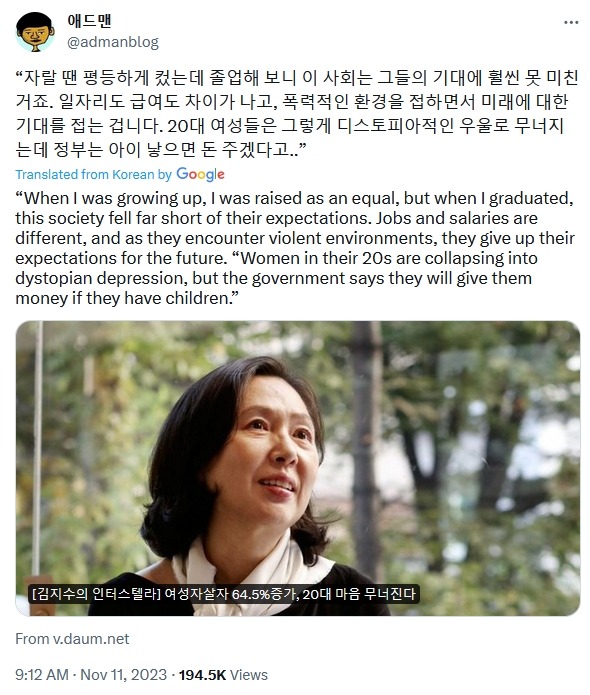
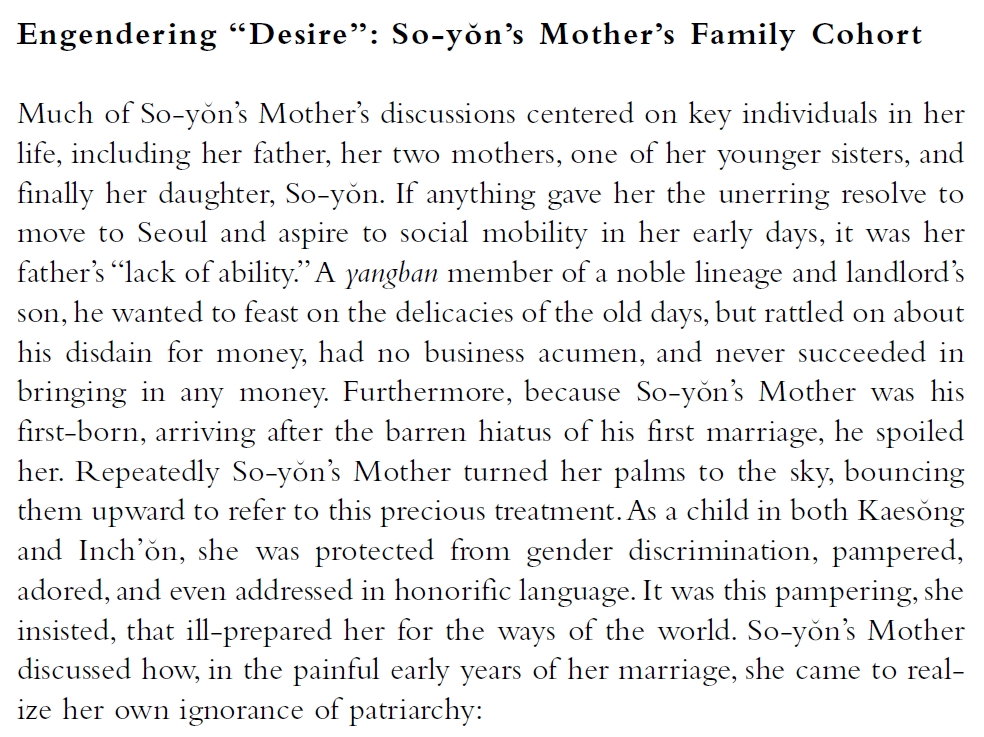
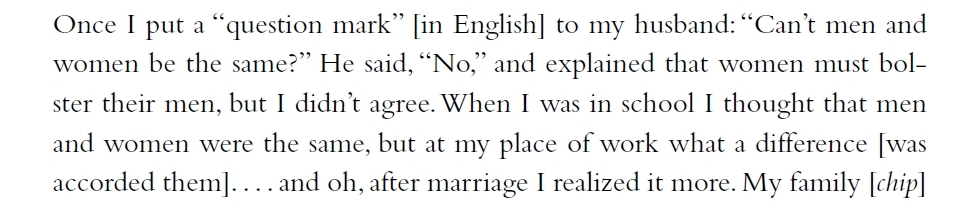
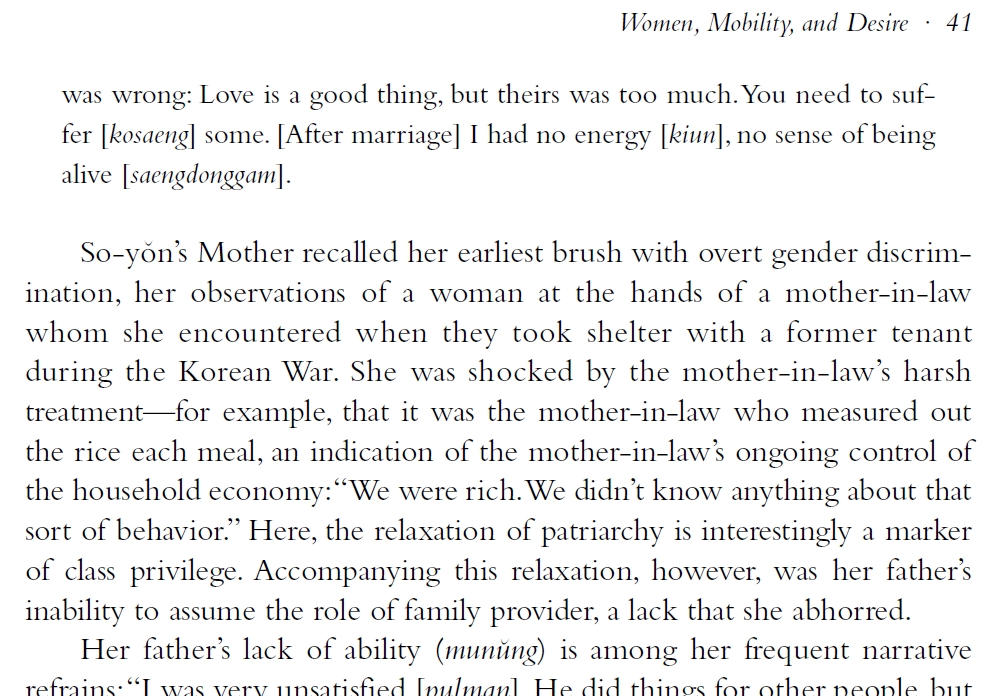
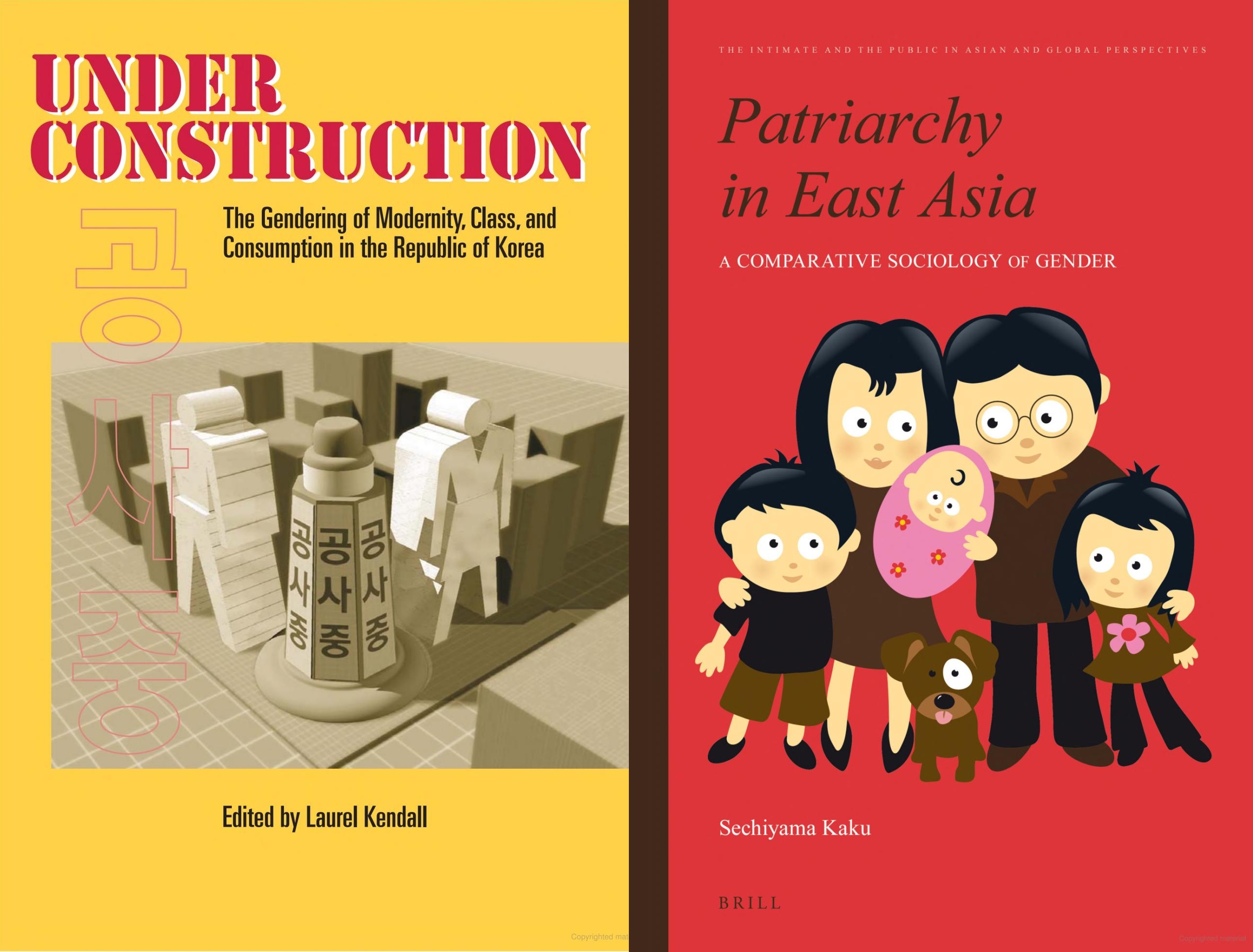

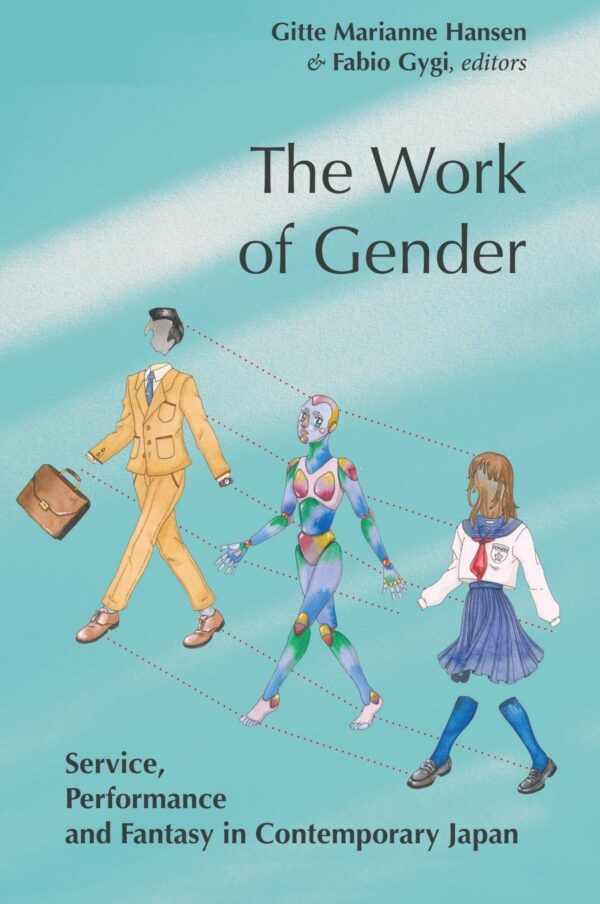


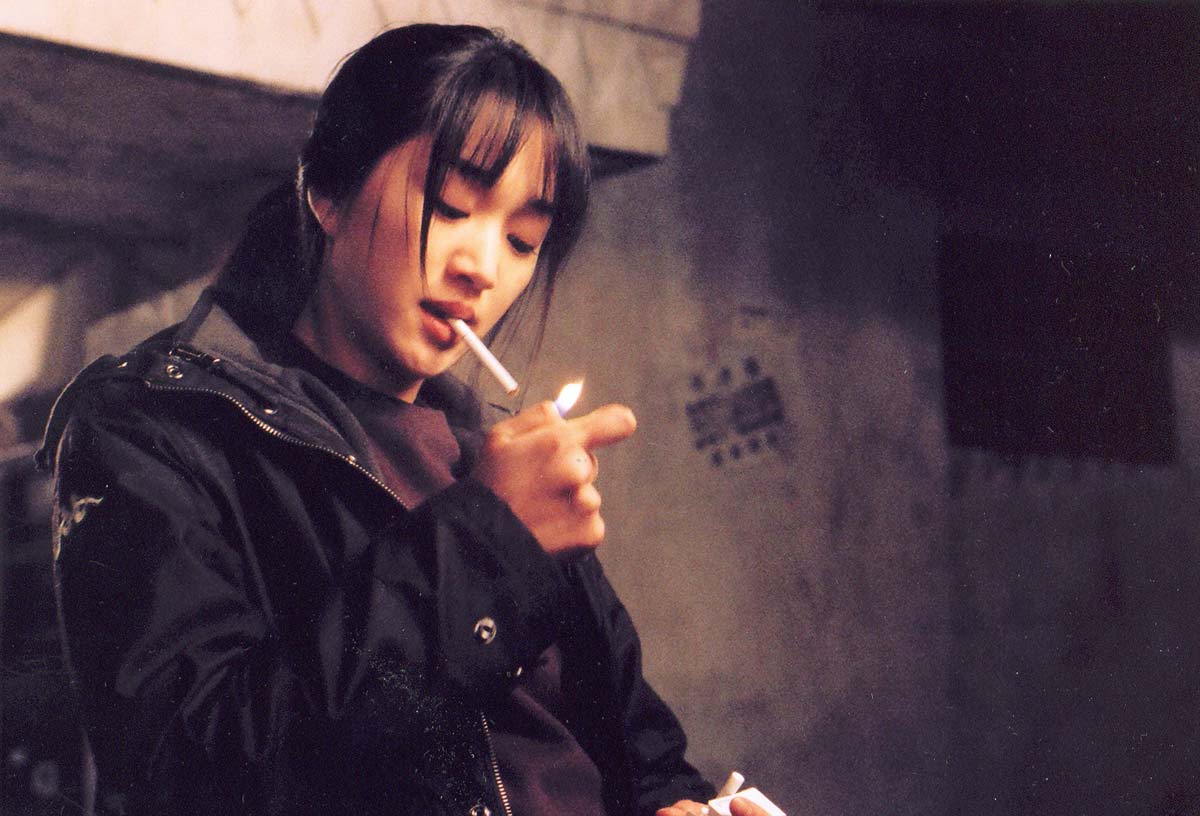
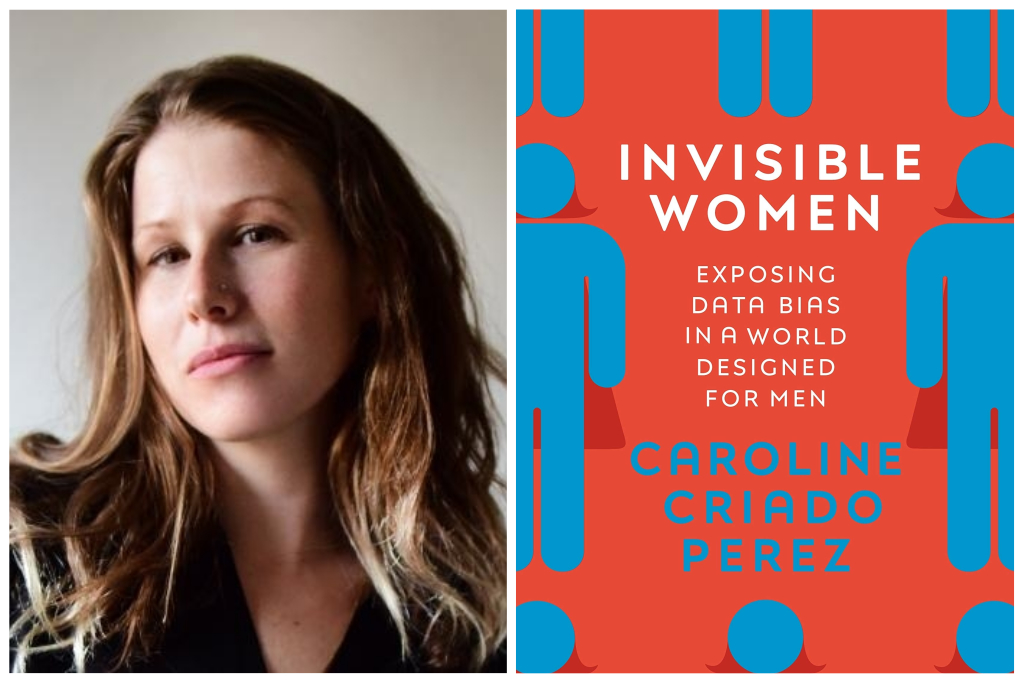
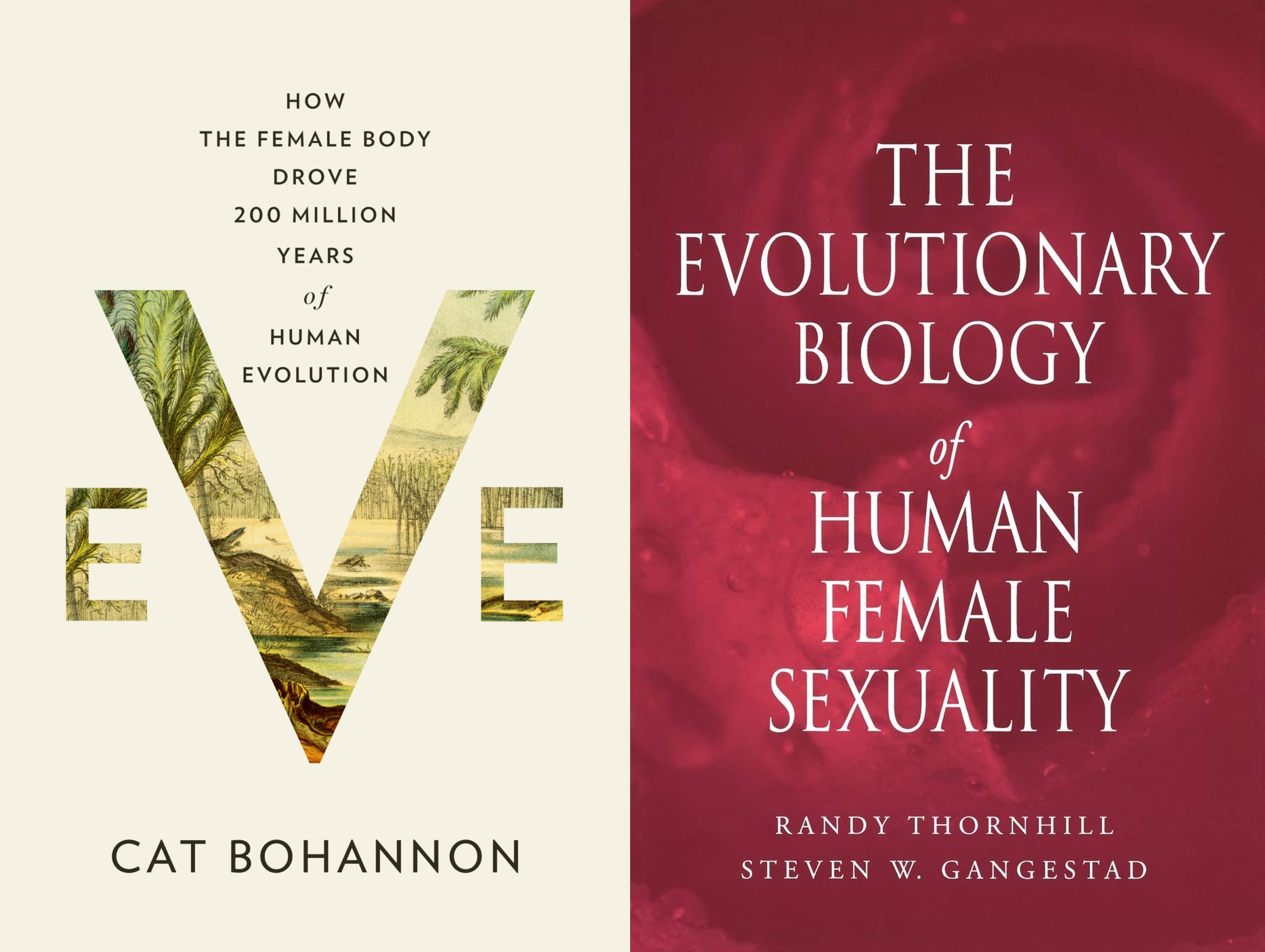
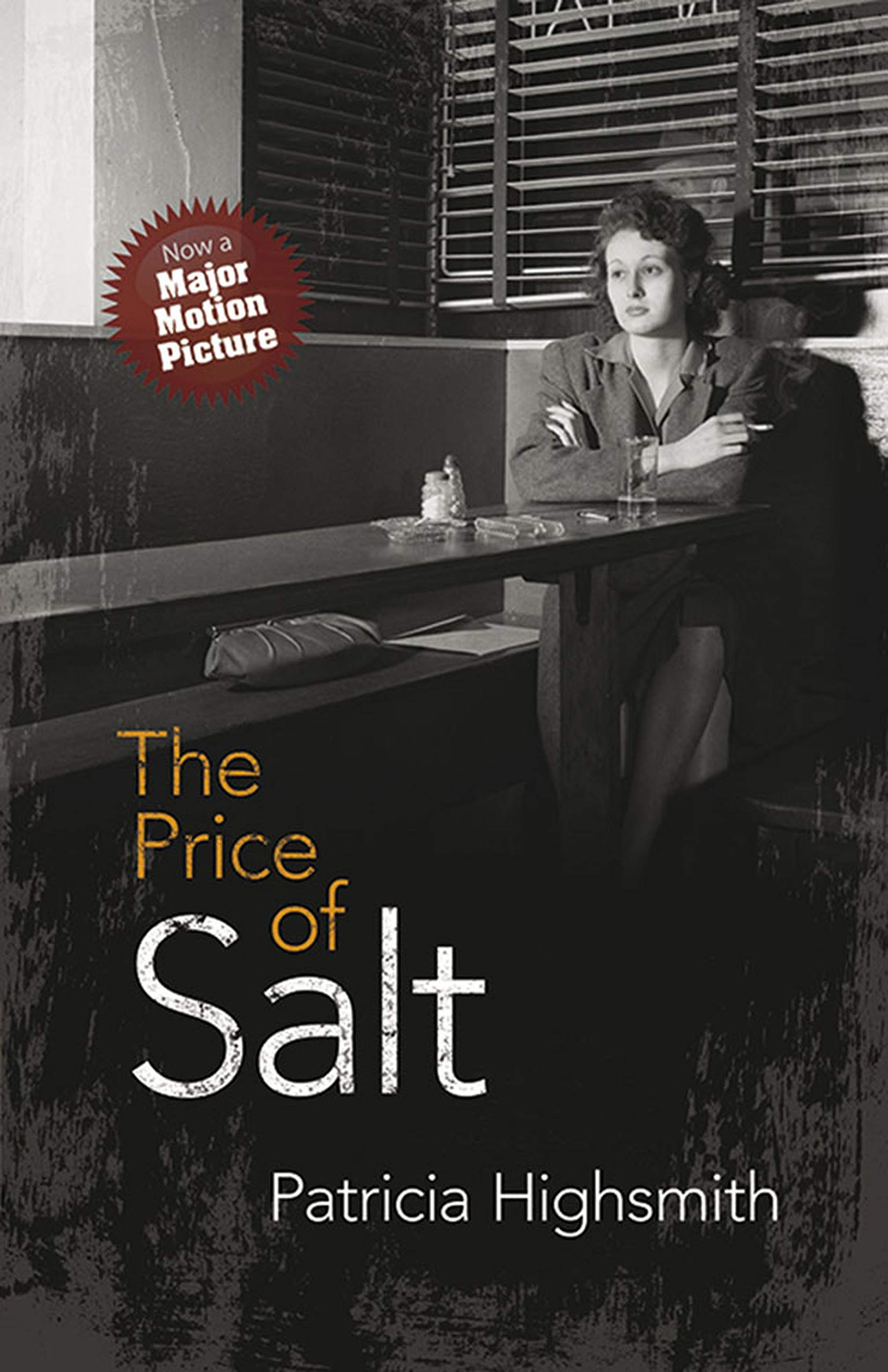
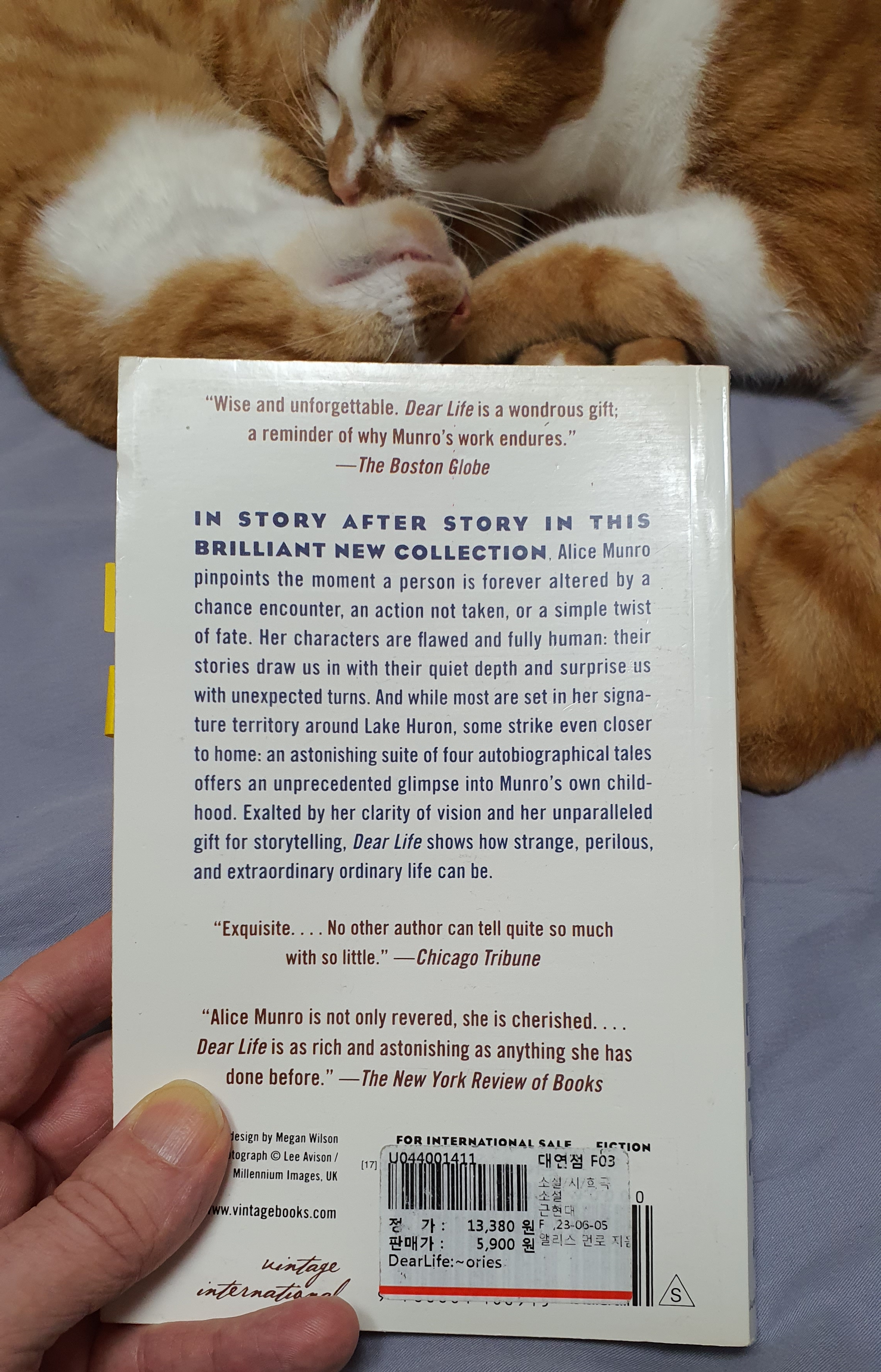
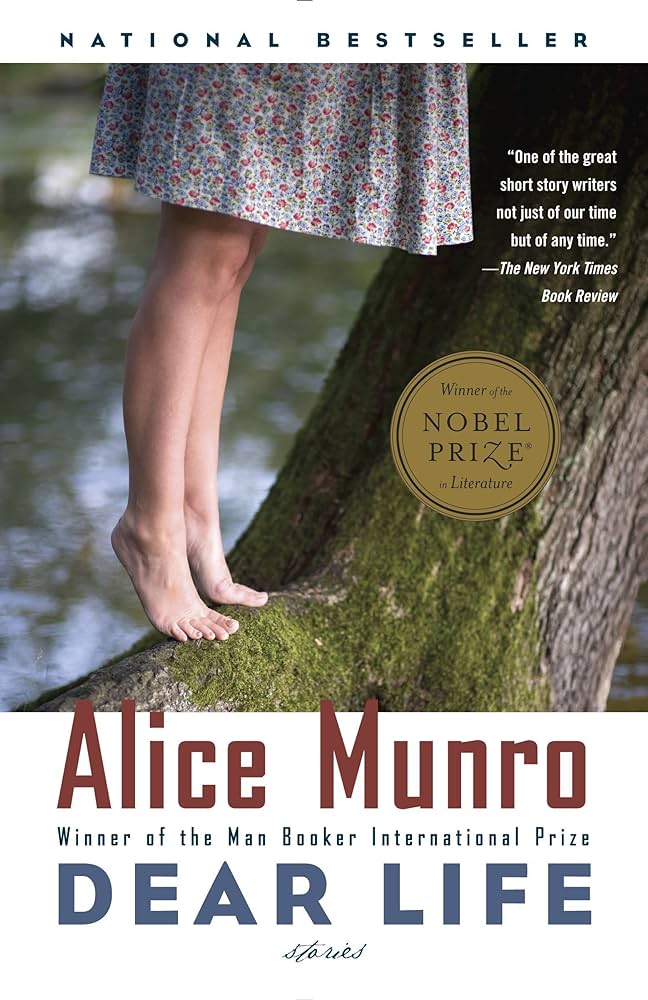

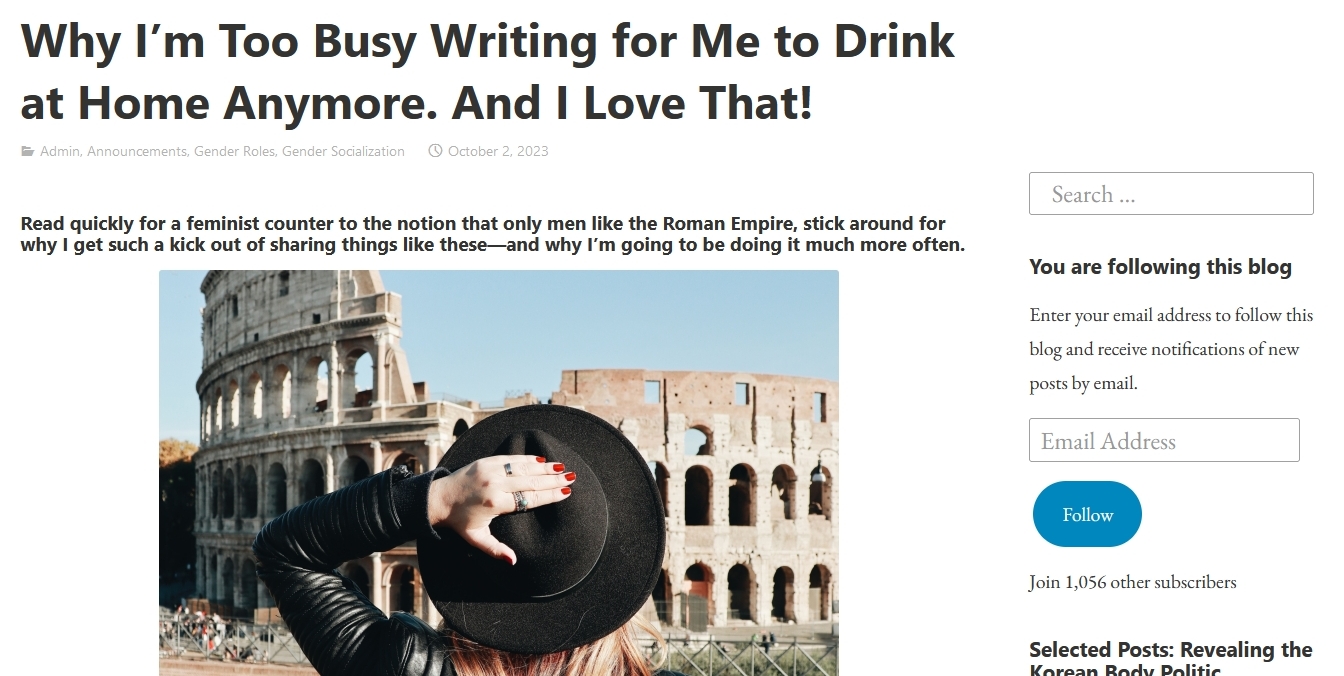



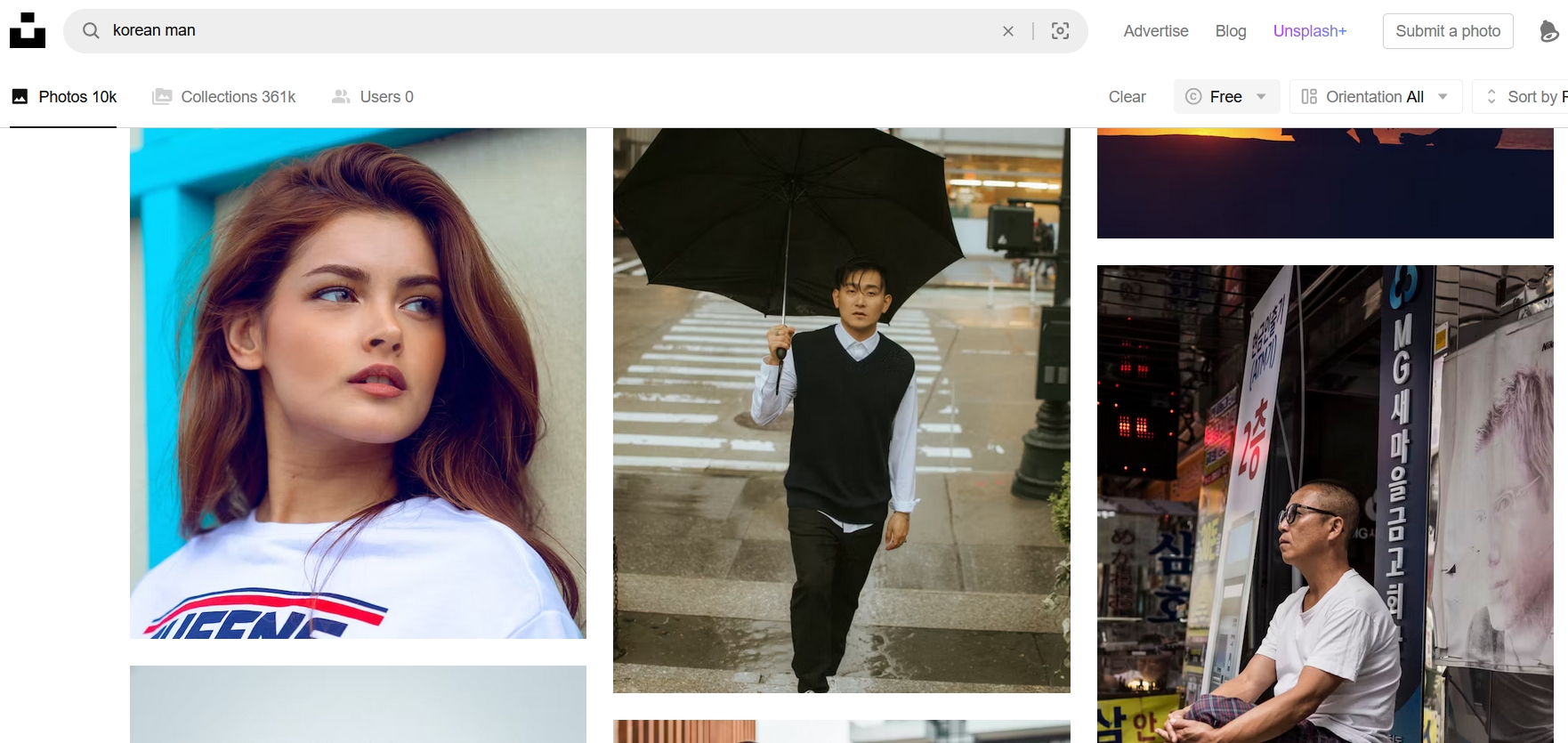
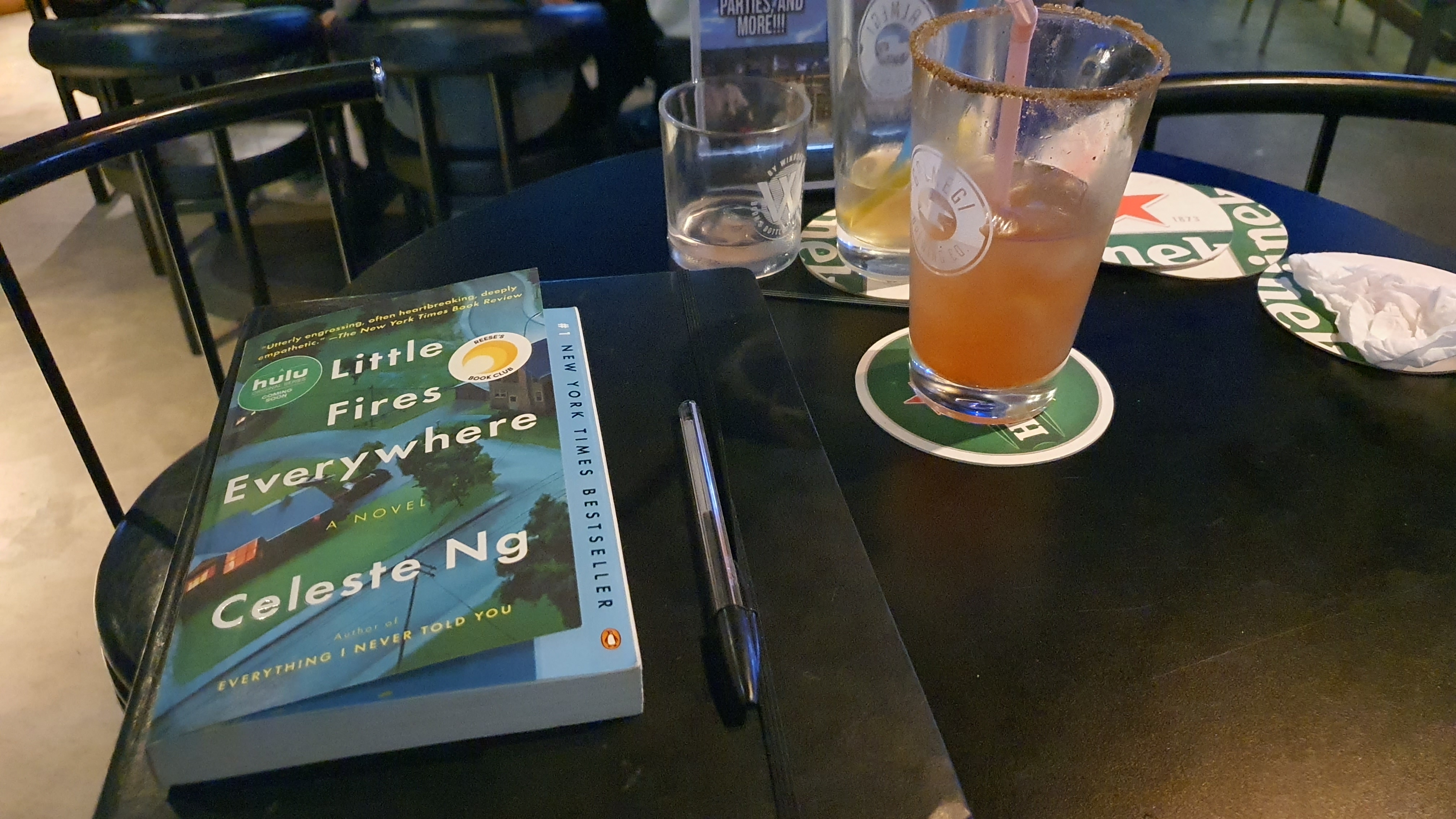
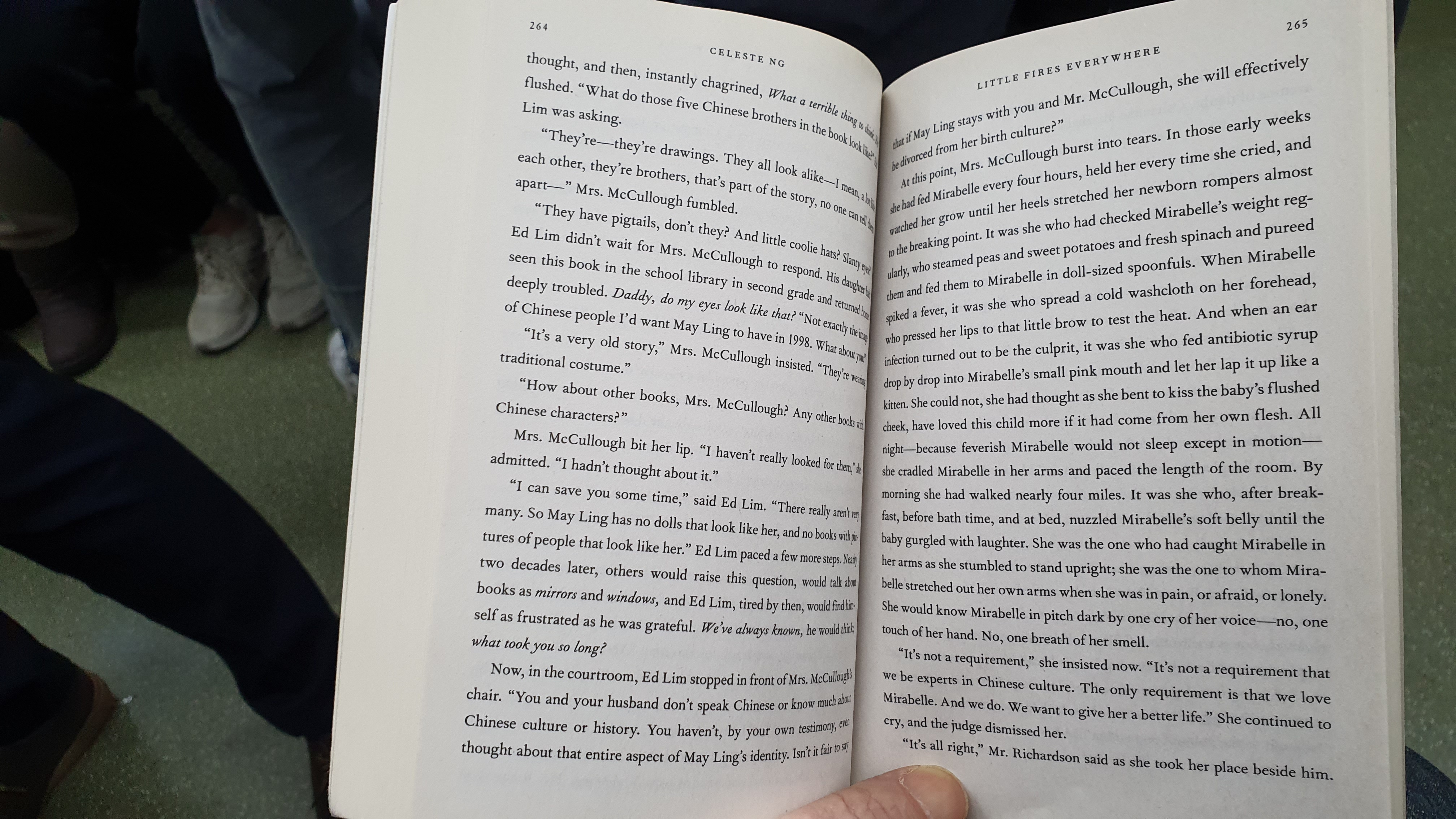
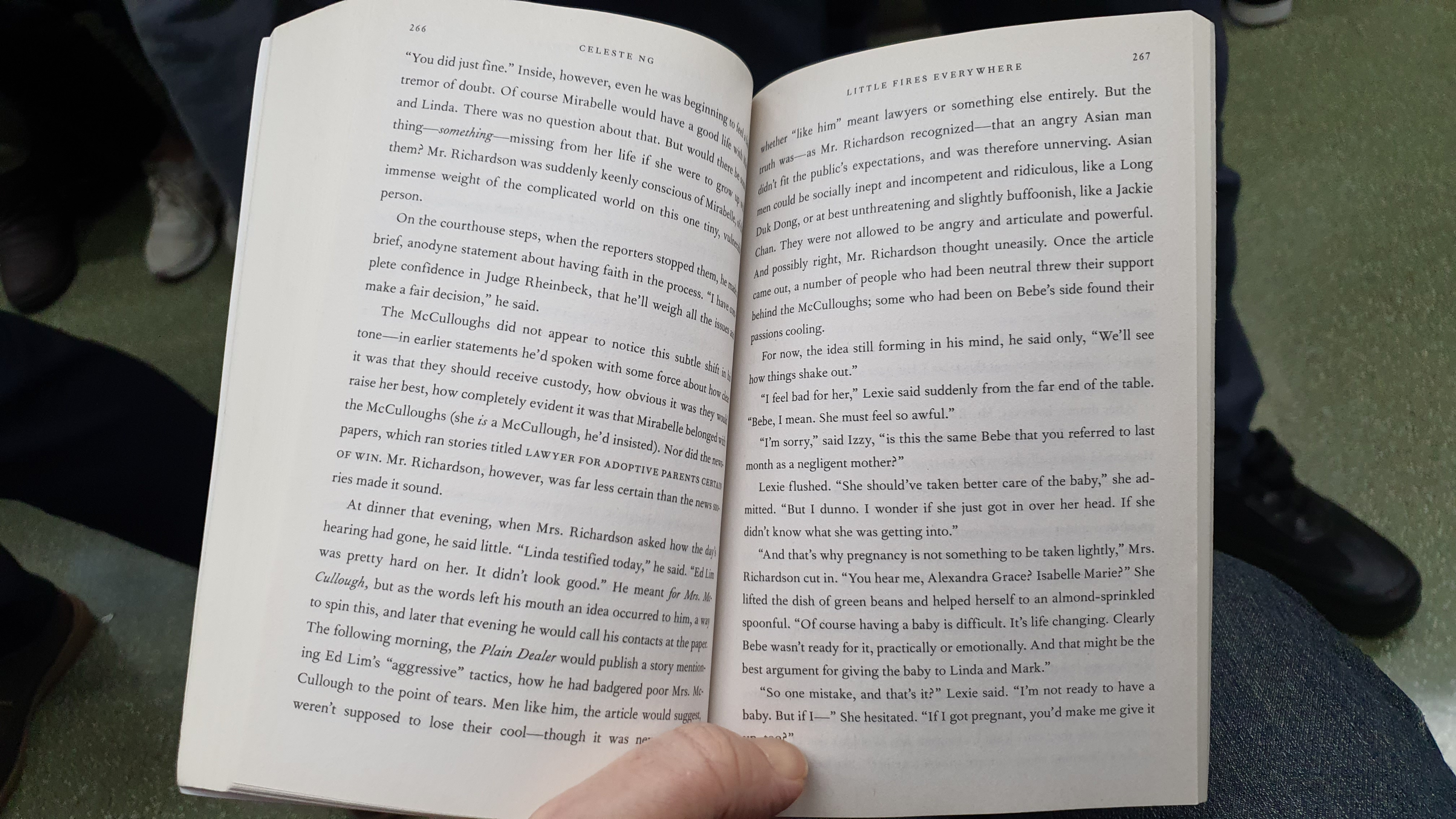
 The Quora commenter who posted that continued:
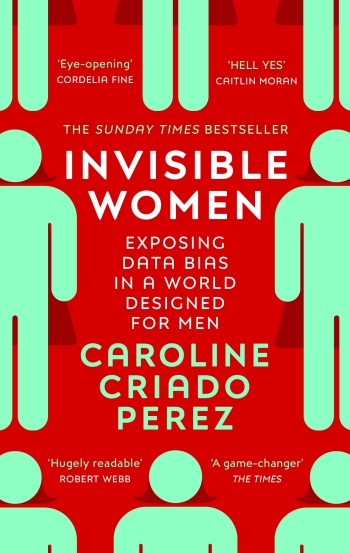 Because today I learned that in addition to all the other, more obvious barriers and hurdles that discourage girls and women, that this extends to them even displaying the necessary character traits to succeed too. That it’s not that they don’t also want to geek out over the things only boys are “supposed” to like, necessarily. Just that if they do, they’re much more likely to be criticized for their obsessiveness. Whereas among boys and men, that same obsessiveness tends to be seen as a virtue instead.
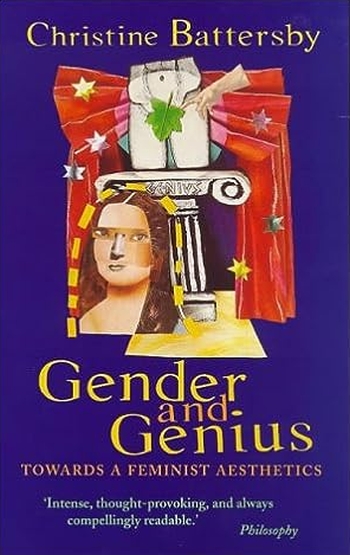 Still wanting to flex how smart I am though (did I mention I’m single?), I want to causally convey how there must surely be a reason why chess is still considered a symbol of high intelligence, even genius too, at least in the West (I concede that





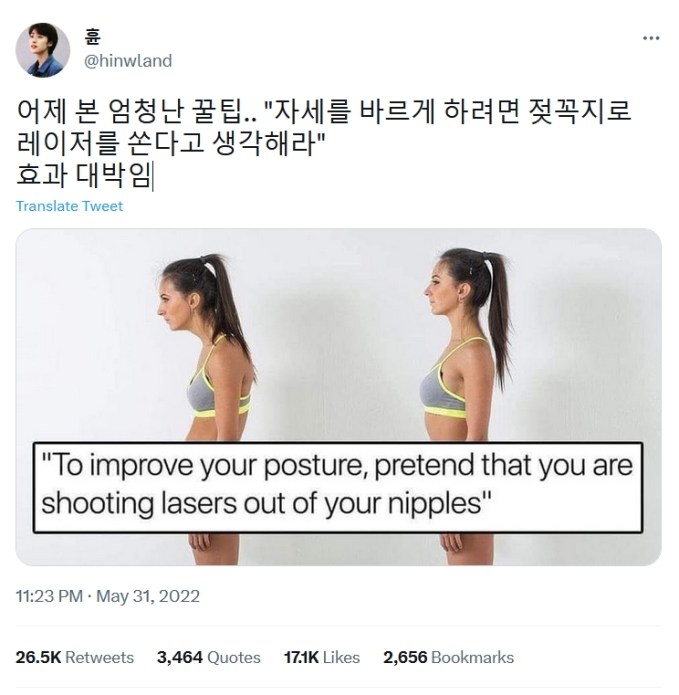




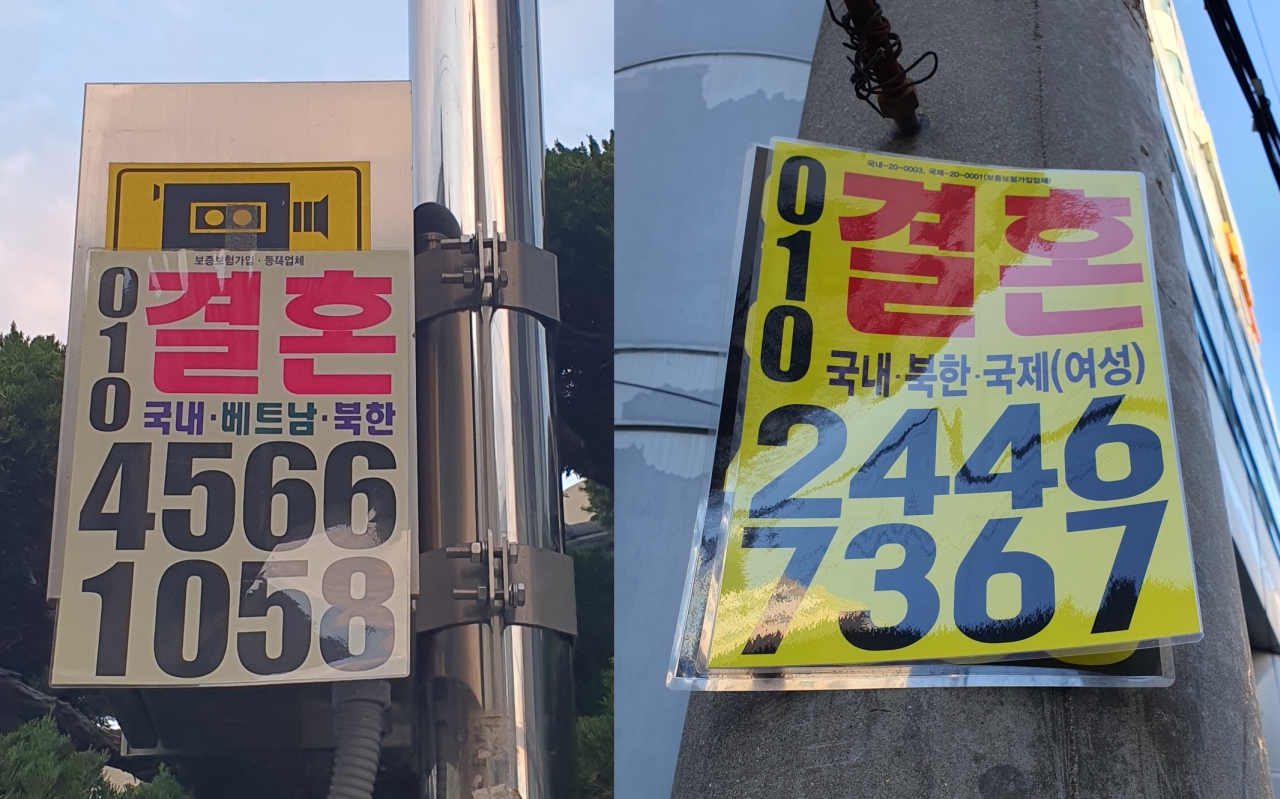
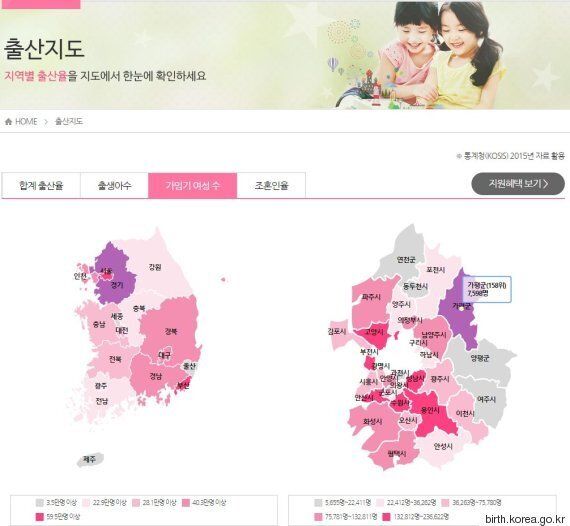

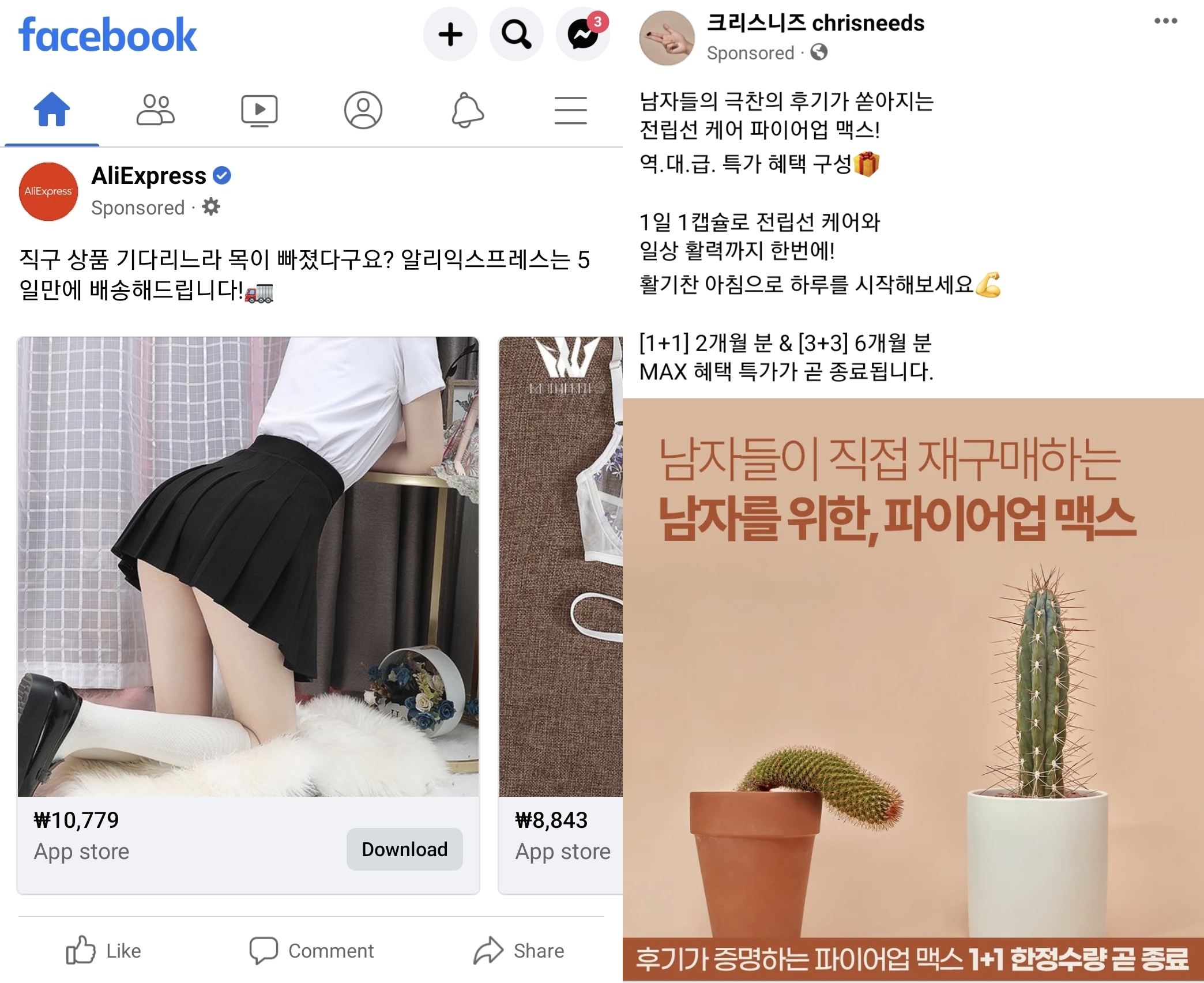
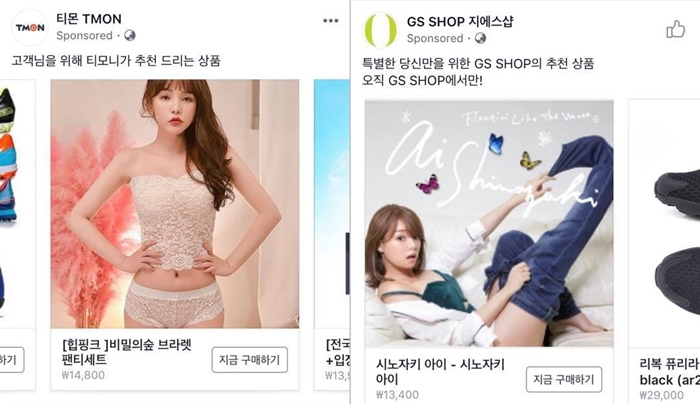




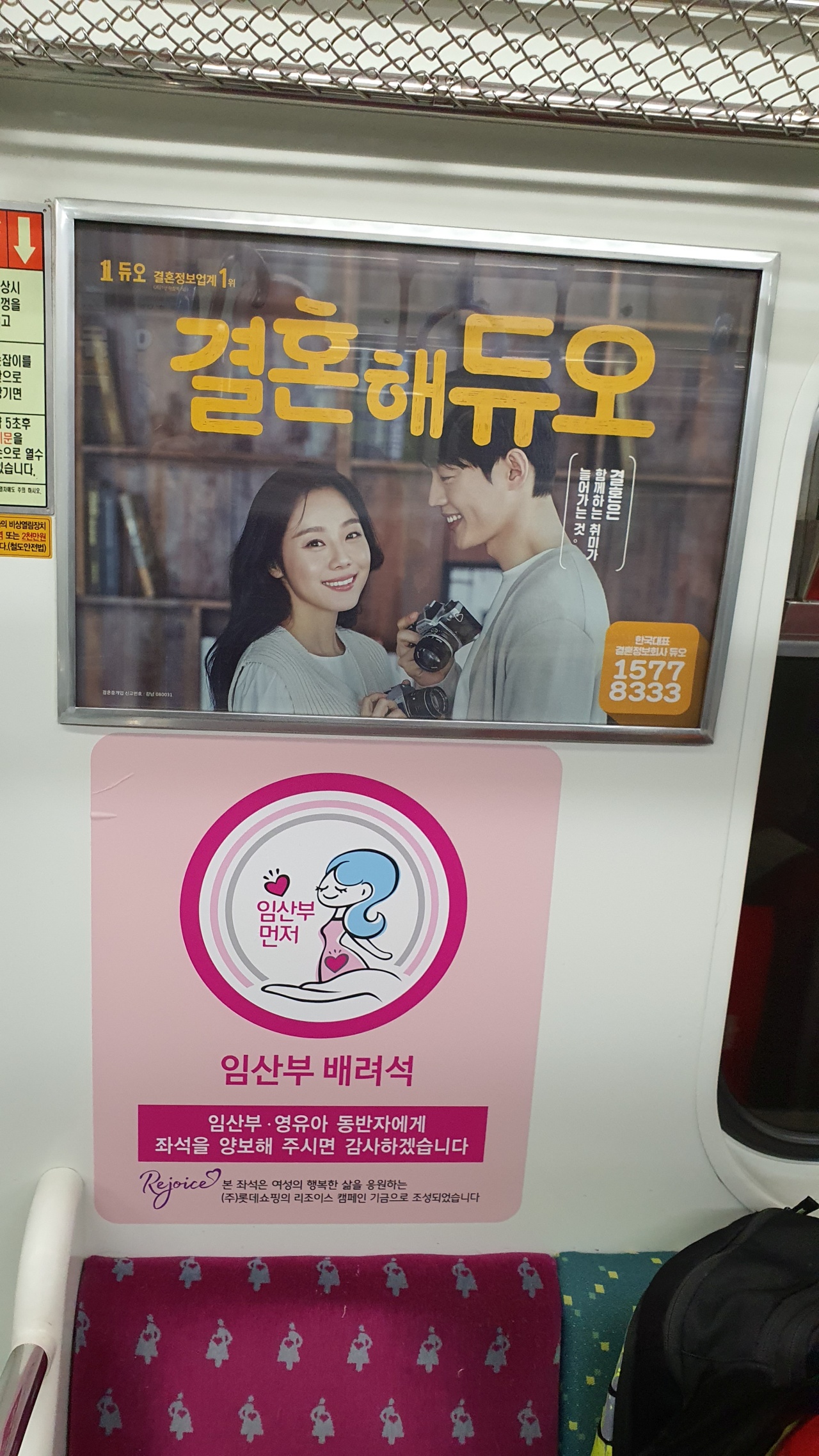



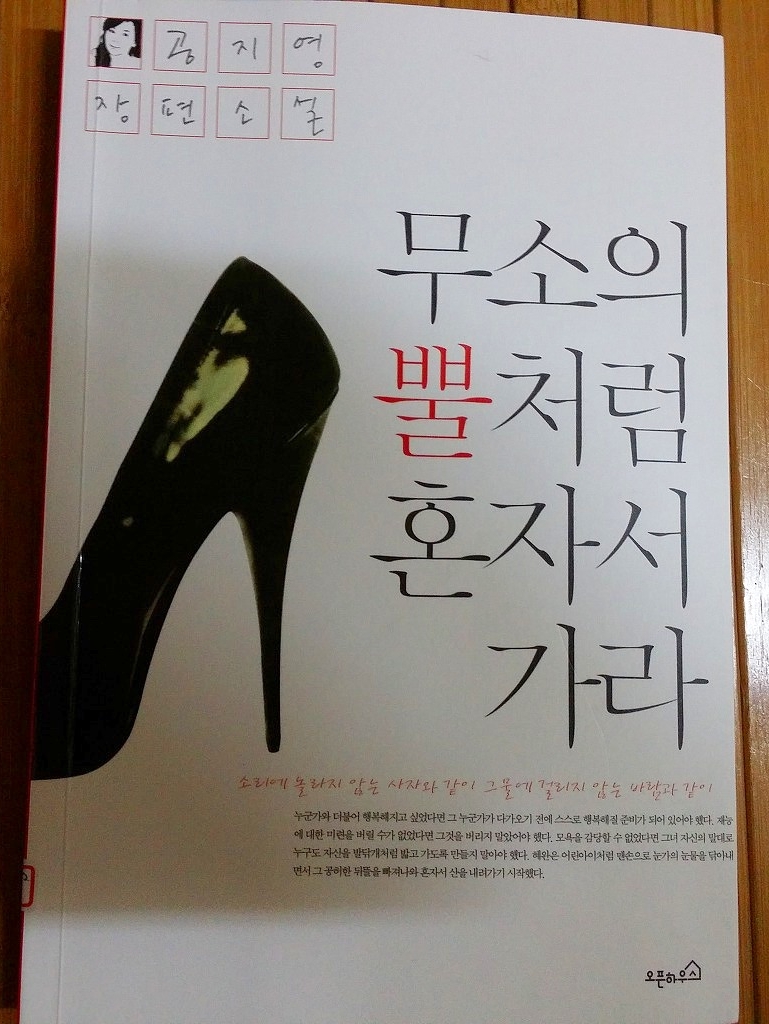
 The Grand Narrative