Turning Boys Into Men? Girl-groups and the Performance of Gender for South Korean Conscripts, Part 1

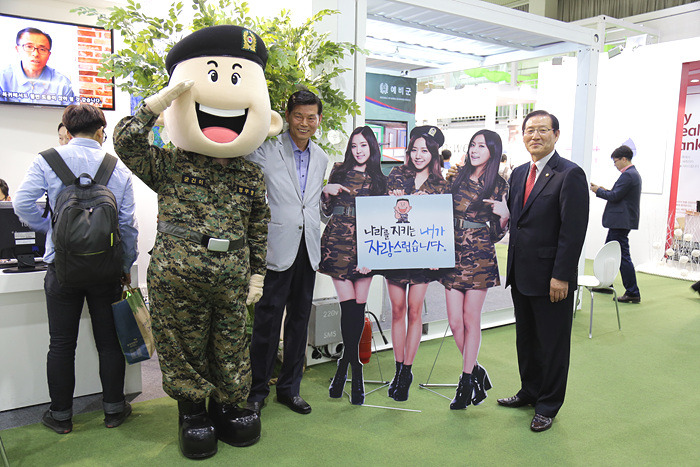
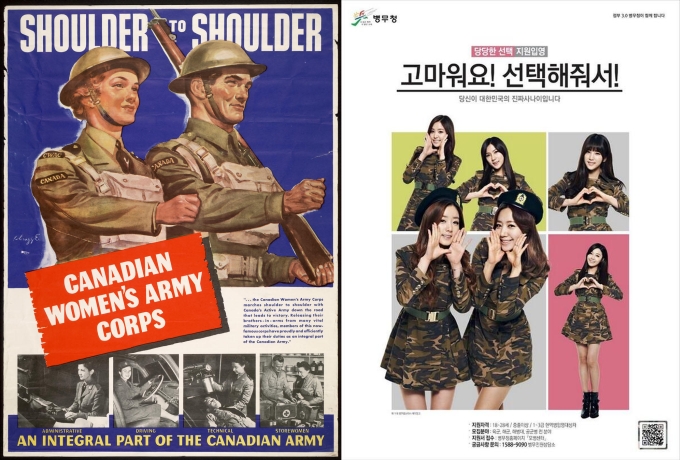
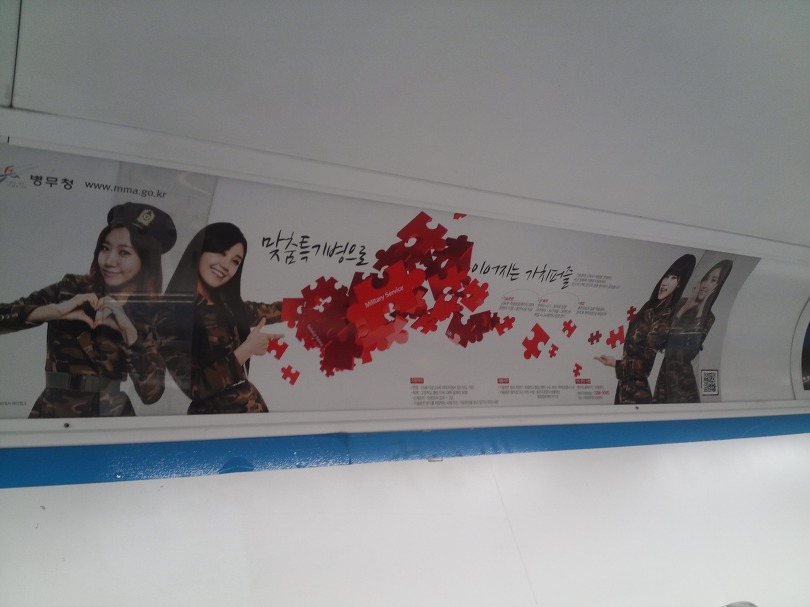
Canadian Women's Army Corps vs. ApinkSources: Left, Big Forehead Kisses; Right, 병무청 Twitter. The heading reads, “Thank you for choosing [to join] the military [early],” the subheading, “You are Korea’s real men.”
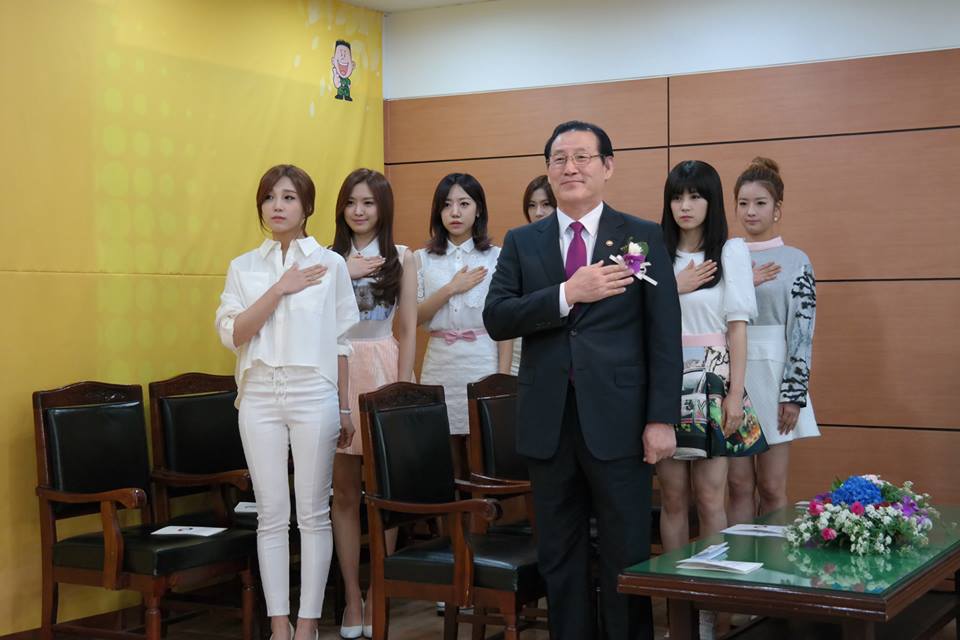
What could be more Korean than girl-group members in high heels and camo one-pieces, blossoming with aegyo for their big, strong oppas doing their military service?

What else but seeking out the cutest, most virginal group possible, then making them representatives for your entire military?

Last March, I learned that Apink had been selected as the first female PR “ambassadors” for the Military Manpower Administration (MMA), which administers Korea’s conscripts. Despite everything, it still felt jarring: what was a girl-group—any girl group—doing representing such a male-dominated (and notoriously sexist) institution?

Apink military 1The subway ad that sparked this post. Source: 23throom. Source, below: Pin Up: The Movie.
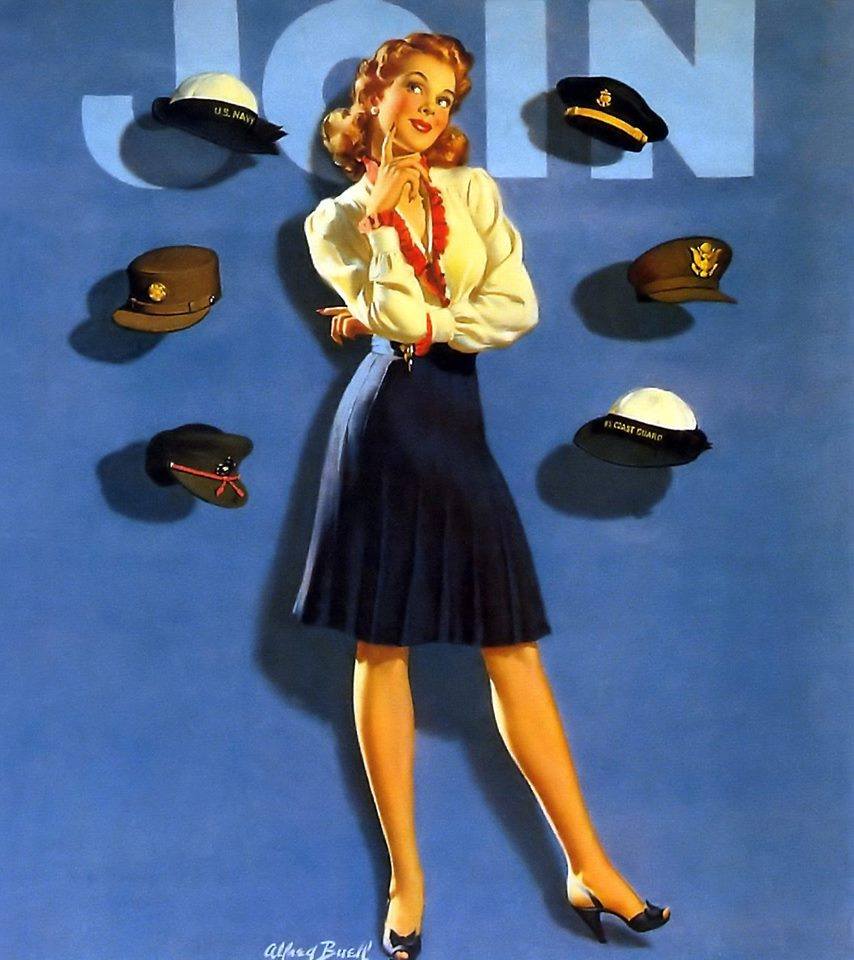
Not realizing that appointments like theirs actually had a long precedent as I’ll explain, my first thought was to compare their recruitment posters to some of their (Allied) World War Two equivalents. I expected that most that featured women would present sexual access to them as a motivation for fighting (PDF download) and/or the denial of that access to the rapacious enemy. But to my surprise, most of the posters with women were actually for women, with the purpose of recruiting them for ancillary organizations and factory work. Borrowing “the seductiveness, sass, and self-assurance” of pin-up girls, Maria Elena Buszek explains in Pin-Up Grrrls: Feminism, Sexuality, Popular Culture (2006), they reminded women of their choices among active, formerly “masculine” paths in the public sphere, “in what must have felt like an abundance of They're all topssubversive opportunities.” And the contrast with Apink’s roles in the MMA’s campaign for men was striking.
For Apink were not just some random girl-group. When they debuted in 2011, only one member was over 18, with another was as young as 14. So, whereas most entertainment companies relied on ever more provocative “sexy concepts” to get their groups noticed, Cube Entertainment chose to emphasize Apink’s cuteness and innocence instead. Those personas came across strongly in the campaign, indicating they likely played a big role in why Apink was chosen.

And that’s where it became problematic.

Not because I’m a grouch who thinks aegyo should only be enjoyed in moderation. But because the Apink members themselves, by then almost all grown women, increasingly complained about literally not being allowed to mature. Also, because it was disingenuous, those personas being very much at odds with the sexualized manner in which girl-groups are (naturally) viewed by conscripts, and are presented to them in practice. But most of all, because dig past the many, many layers of bullshit that can and probably will be used to disguise and/or justify this instance of Korea’s pervasivelolita nationalism” (a.k.a., samcheon fandom for a cause), then what you’re left with is one damned patronizing, infantilizing vision of female gender roles and sexuality deliberately being promoted to the 250,000 young Korean men conscripted every year.

For years I’ve described Korea’s universal, mandatory male conscription as a profound socialization experience, which practically—and to an extent even legally—has or still excludes a great many groups from effective participation in Korean economic and political life, most notably LGBT individuals, the disabled, mixed-race children, and, of course, women. But sorry—it’s been a while since I’ve given an actual example of how that works in practice. Also, while it’s a still a must-read, it’s been ten years now since Seungsook Moon’s Militarized Modernity and Gendered Citizenship in South Korea came out, and, in hindsight, she barely mentioned the role of popular culture in supporting and propagating the ideologies outlined therein. So, to compensate for both, here’s Part 1 of a #verylongread below, and one which I hope Apink fans will realize has nothing against Apink themselves…

Supporting the Troops—A Quick History

(Something) For The BoysSources: left, @ThemeTimeBob; right, dcinside.
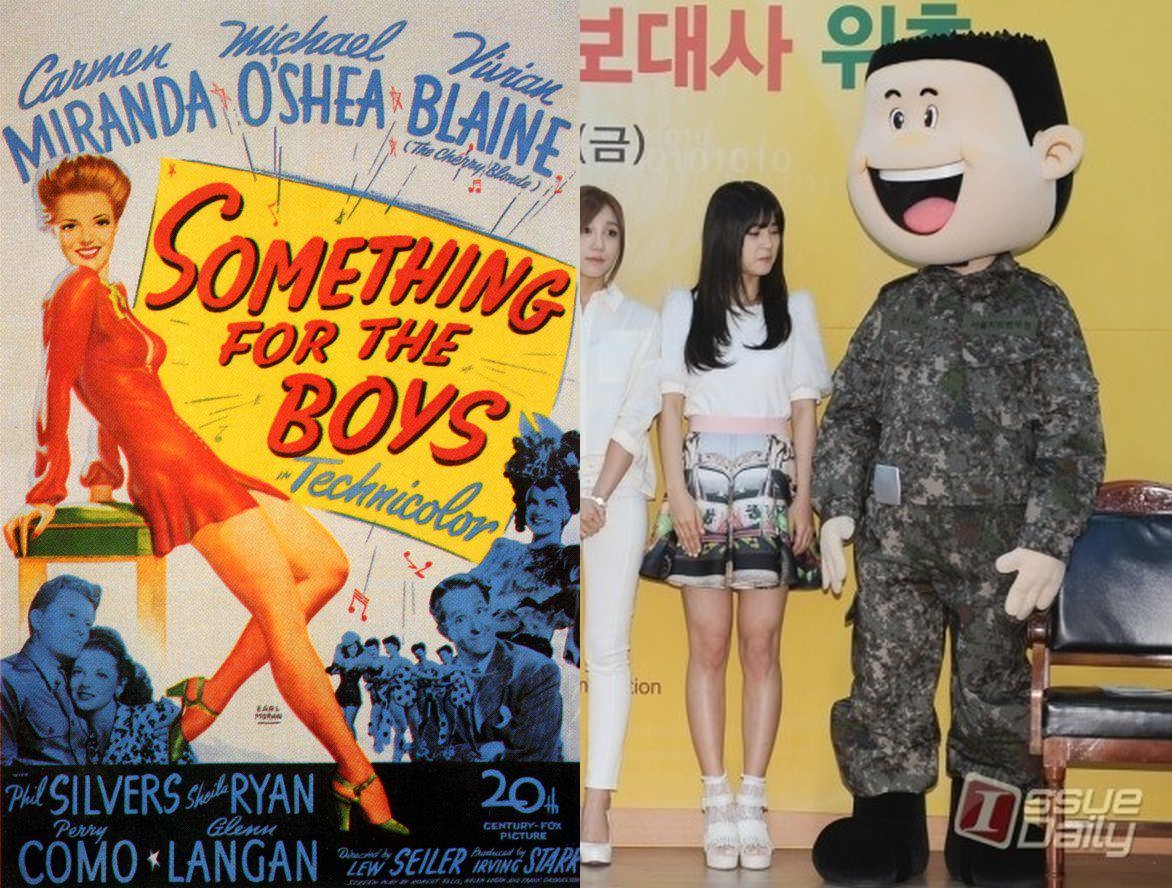
There are many reasons no-one should be surprised by the appointment of a girl-group to represent the MMA. If anything, it’s stranger that it didn’t happen much sooner, because:

1) Korean girl-groups and female entertainers performing for the military in Korea is a significant part of Korean popular-culture, with roots going back to the Japanese colonial and US occupation periods, and with spillovers into performances for schools. So the notion that one such group would come to officially represent the military is hardly a radical step.

Also, there is the elephant in the room that is the historical role of prostitutes around US bases, originally with official approval. That’s a far cry from K-pop performances of course. But, if nothing else, it’s indicative of the Korean state’s long-standing, very collusive, and very objectifying view of women vis-à-vis the military.

Here’s Apink performing on a base themselves, shortly after they debuted in 2011:

(Watching the conscripts, no-one can blame them for their over-the-top reactions to, well, female humans. But it all comes across as a little creepy when you realize they’re professing their love for middle-school girls, and begs the question of what such a young group was doing there.)

2) Just a cursory examination reveals a host of regular, albeit usually temporary “honorary ambassadorships” by girl-groups and female performers for a range of organizations. Examples include the Ministry of National Defense appointing 4Minute as ambassadors for its Korea Armed Forces’ 29 Seconds Film Festival; the appointment of Hello Venus to make the music video/dance/song Soldier for the recent 6th CISM Military World Games;

…the Seoul Metropolitan Police Agency, which also relies on conscripts to a large extent, appointing BESTIE to make a stirring song about stamping out school violence;

…and the appointment and later promotion of IU as an honorary police officer by the national police agency. Indeed, that was over a year before the appointment of Apink by the MMA, which makes me wonder how far back using women to advertise and promote still overwhelmingly male organizations goes?

I’m thinking probably quite far, given what I’ve just been learning about regular girl-group performances for the police. Which gives me a chance to totally stan this amazing 2NE1 video by way of example:

3) Korea, along with Japan, has one of the highest rates of celebrity endorsements in the world (among developed markets). This includes being the face of public campaigns and/or for governmental organizations, which sometimes have a profound impact on public opinion.

One memorable example is the National Election Commission’s choice of The Wondergirls to encourage voting in local elections in April 2008, which was somehow best achieved by outfitting them in faux, tight-fitting school uniforms, and despite—notice a trend here?—two members still being of middle-school age (15):

Two years later, Girl’s Generation would do something similar (although by that stage, no members of that group were underage). As described by Yeran Kim in “Idol republic: the global emergence of girl industries and the commercialization of girl bodies” (Journal of Gender Studies, 20:4, 2011):

At Korea’s 2010 national election, the most famous girl idol group, Girls’ Generation was recruited for the campaign to promote citizens’ participation in the vote. Girls’ Generation released a single, album and music video of the campaign song titled ‘LaLaLa’. Girls’ Generation also appeared on TV campaigns in which each girl member was visualized as a Tinkerbell-like mini-sized icon, while the citizen voters were represented by male citizens. Girl idols are equally utilized for important international events; for instance, Girls’ Generation were appointed as Customs Promotion Ambassadors in preparation for the G20 Summit Conference in 2010 in Seoul. The girl idols are, at least in appearance, presented as agents who have the power of motivating, seducing or interpellating citizens to become involved in the project of global nation building.

Also, to get yet another elephant in the room out of the way early on. (With K-pop, they tend to come in herds.) Yes, a lot of the things described in this post were modeled on Japan:
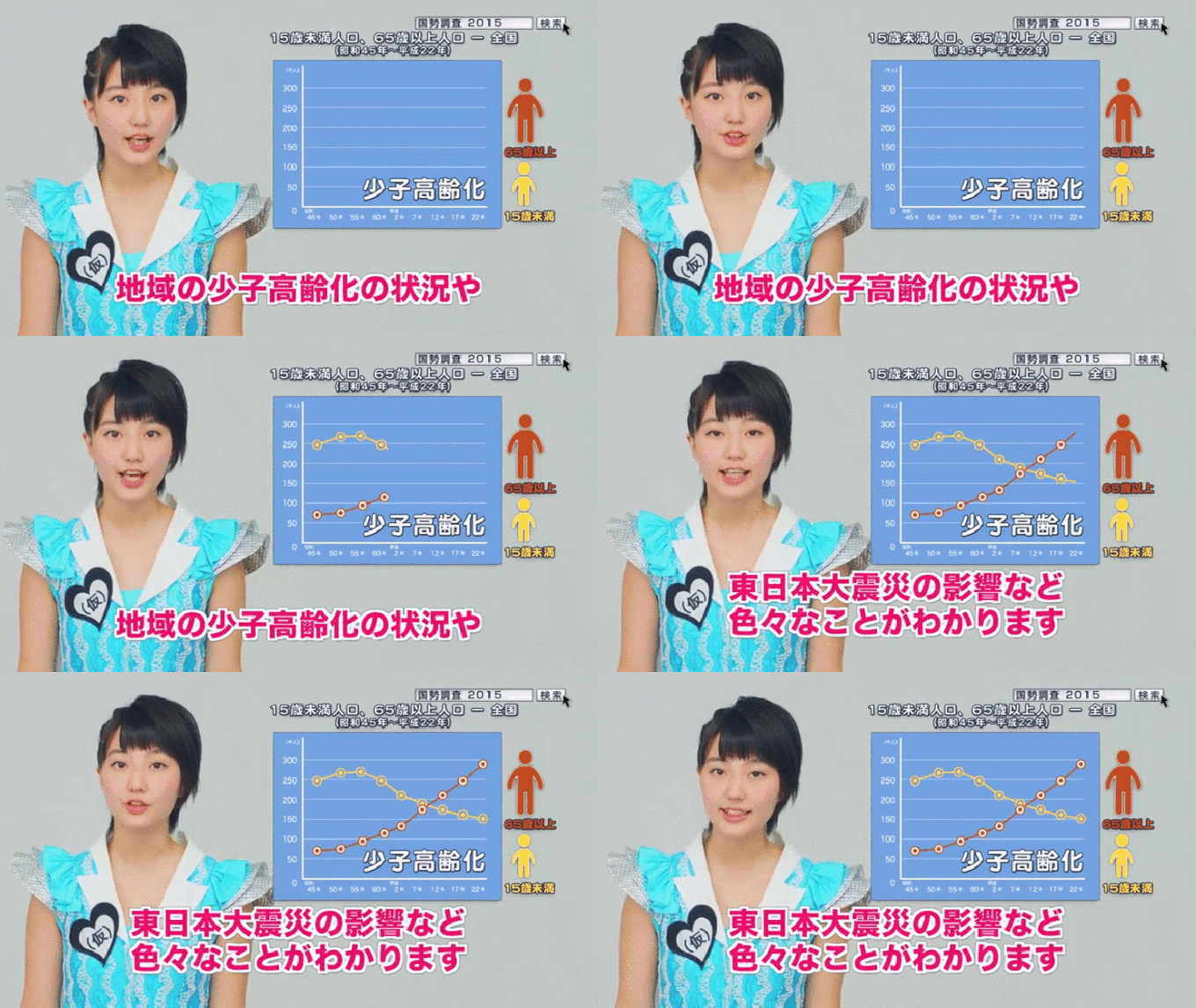
Here’s a cheerleader telling you everything you need to know about Japan’s population trend .. Old people up, young people down.“Here’s a cheerleader telling you everything you need to know about Japan’s population trend: Old people up, young people down.” Source: Fusion.

4) Though (probably) few in number, there have been some prominent gender-bending Korean ads in recent years. Examples include: Kim Sa-rang endorsing Gillette razors; Hyun Bin endorsing a tea-drink that supposedly gives you a V-line (albeit part of a process to encourage men to get hitherto “feminine” V-lines, thereby increasing the market); various male celebrities endorsing lingerie; and Yoo Yeon-seok endorsing feminine-hygiene products:
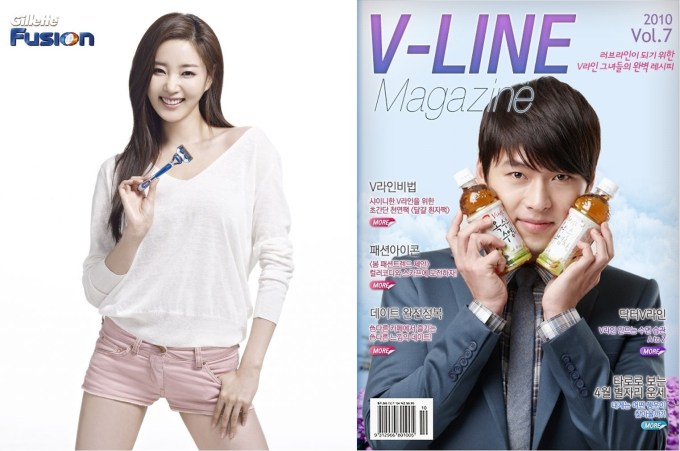
Korean Advertising CelebritiesSources: Nemopan, 초아의 퍼스트드림 이야기

5) The Korean military currently has one hell of a PR problem. In short, because it is still very much stuck in the 1970s. Let me explain.

Seventy-five percent of Korean soldiers are conscripts, who are paid minimal wages, and have to endure “abysmal living conditions.” Essentially, they’re a huge, convenient slave labor force, who not only “have to pave roads in the mountains or dig up snow” for the government, but have to do even the most menial of tasks too—”such as cleaning the pool of the general’s house.” This discourages expensive mechanization and modernization, as well illustrated by the following anecdote given by Ask a Korean!:

…the Korean has a friend who spent his military years in the eastern mountain range in Korea. One day, the general decided that he would have fresh sashimi for his guest. The Korean’s friend and his squad mate drove in a truck for two hours to the shore, and managed to acquire fresh, live fish. But how to bring them home fresh and alive?

A normal person’s answer would be, “Rent a truck with equipped with a tank and an air compressor, the kind that would deliver live fish to sushi restaurants.” But remember, this is the Korean military. It does not have the money to rent such a truck, but it does have the manpower of two soldiers.

So what did the Korean’s friend do? He sat in the back of the truck, churning the water in the tub so that air would go in and the fish would be kept alive. (His squad mate got to drive the truck because he joined the military a few months ahead of the Korean’s friend, therefore outranking him.) This was in the middle of winter, and the truck bed was exposed to the freezing wind as the truck drove into the mountains. The Korean’s friend nearly froze to death, but the fish were alive until they were served on a plate that evening.

Stories of this type, coming out of Korean military, are dime a dozen.

But for the victims, such stories are probably only amusing until well after their service is completed. Because with such perverse demands on conscripts, comes an unusually strictly defined hierarchy and secretive nature to ensure compliance. This leaves them vulnerable to sexual and physical abuse, which has culminated in a spate of high-profile suicides and killings in recent years. (Including on the very day I typed this.)

What’s more, this unprecedented media scrutiny comes at a moment when it’s increasingly struggling to maintain its numbers, as Korea’s low birth rate begins to make its impact felt. Probably then, the military is now very concerned about softening its image.

(That said, currently it has more men wanting to sign up than there are spaces available, but that’s only because they want to get their conscription out of the way while the job market is so terrible. Indeed, so terrible in fact, that even women are showing interest in the limited—but growing—number of positions open to them, despite the extreme discrimination and harassment they face once inside.)

When the Korean police had the same problem, this was one of their solutions:
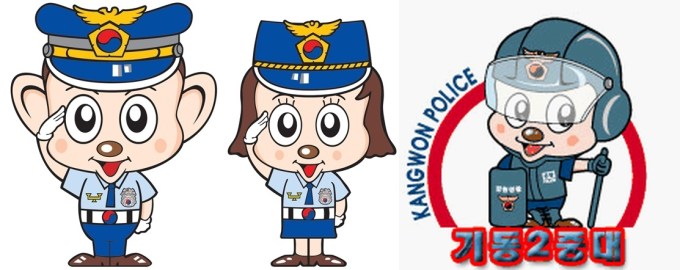
Podori, Posuni, Riot PodoriThe male is called “Podori,” the female “Ponsuni.” Yes, that’s really Podori in his riot gear on the right. Source, left: Chuing. Right: unknown.
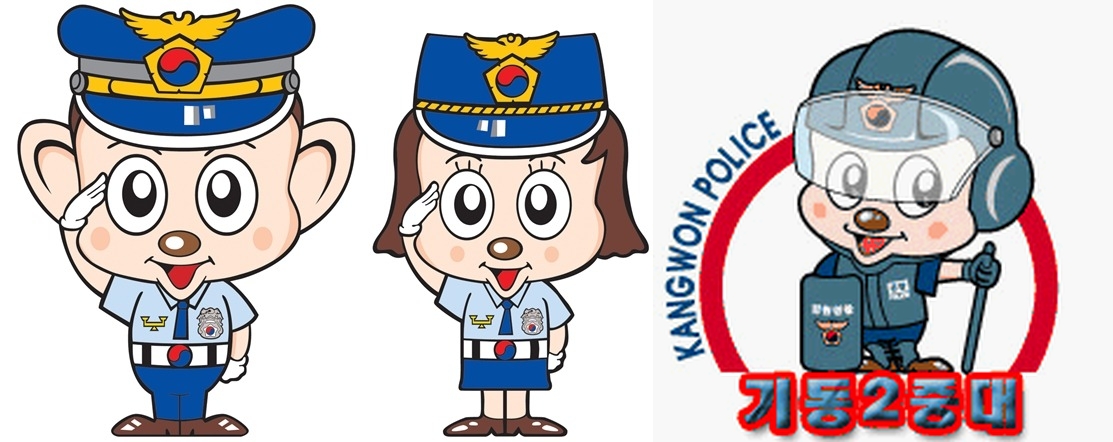
Did I say I was surprised to see a girl-group in camo? I didn’t say that, someone else must have. Because anyone up to speed on K-pop and the Korean media could have seen the time was ripe for a girl-group to represent the MMA. The cutesier, the better.

But Why Apink?

Apink MMASource: APinkPanda.

To many of you reading, who are already aware of Apink’s reputation, probably I’ve already answered that question. However, you could argue that Apink was chosen simply because of their popularity at the time. You’d be wrong, but I admit it’s a plausible first explanation. For instance:

Apink Military ChartsSource: TickTalk.

Technically though, all of those were after their appointment in March (although they’re still indicative). Possibly more influential then, was their winning the military charts in January, which apparently are a thing. Here’s a video about that and some screenshots of their reactions to the news, which give strong hints of the sorts of roles they’d be performing for the MMA campaign two months later:

Apink Military 1Jung Eun-ji: We are like [the soldiers’] little sisters next door…

Apink Military 2…the soldiers must have felt we were familiar…

Apink Military 3Park Cho-rong: (To the soldiers) Girl-groups are like the star candies in the hardtack snack

Apink Military 4…We will try to sing a lot to help keep your spirits up…

Apink Military 5…Cheer up! We love you!

Apink Military 6Further adding to the notion that Apink was chosen simply for their popularity, in the year and a half since their appointment the MMA has been happy to have a range of girl-groups pass on cutesie messages or songs to cheer the troops up. Regardless of where their reputations fell on the virginal-cutesie-aegyo to slutty-sexy-concepts scale:

For example, from 9Muses this September:

From two members of SISTAR (I can’t identify the male rapper sorry):

From EXID in July:

From Hyeri of Girl’s Day:

From GFriend:

Indeed, check out the video history of the MMA Youtube channel, and barely a month goes by without some girl-group making an appearance. Here’s 4Minute in September 2014:

And here’s Ladies’ Code in a video uploaded in December 2014. Somewhat strangely and tactlessly, that was actually two months after two members (2nd and 4th from the left) had died in a traffic accident:

Add that Apink’s popularity rapidly moved on to other groups, the implication of these examples is that any girl-group would have done really, and may well have been chosen if they’d been more popular at the time. And sure, why not? After all, despite the constant bullshit about girl-power from the Korean media, the Korean government, and Korean entertainment companies, most supposedly “sexy” and “mature” girl-groups seem to combine their revealing costumes and erotic dances with off-stage personas that are just as saccharine as their “cute,” “innocent” counterparts.

As one might expect with, usually, everyone but the women themselves telling us how grown-up and independent they are.

But with sexy groups, there is always the danger that their provocative costumes and choreography will overstep the limits of favorable netizen and public opinion. Also, and in particular, at about the same time Apink were appointed, many K-pop groups were beginning to suffer from dating “scandals”—that is, being revealed to be in relationships at all—with the women receiving the brunt of fans’ anger (from female fans for dating “their” male idol, from male fans for not “waiting” for them instead). Without condoning the double-standards behind that backlash, and indeed deploring those fans whose liking of a celebrity is contingent on his or her sexual history, I can appreciate why relationships are a sensitive subject for conscripts, many of whom either split up with their girlfriend before enlisting, or constantly fear that she’s cheating on him while he’s serving. (See the 2008 movie Crazy Waiting for an exploration of this.)

(That being said, the girlfriends have equal cause for concern, as it’s not uncommon for conscripts to visit sex workers.)

So if a cute, innocent, non-dating girl-group was required, why not select the group with the strongest reputation as such, and the least likely to radically change?

Indeed, one so strong as to be blatantly contrived for ajosshi/samhcheon fans? For instance:

  • While promoting their third mini-album in July 2013, Apink told an interviewer that Cube Entertainment suggested that they transition to more mature concepts, but they wanted to maintain an innocent one. They also pointed that several members were underage, preventing the group from doing those sexy concepts. (Although only one—Oh Ha-young—still was as of March 2014, and she turned 18 that July.)
  • In April 2014, it was revealed that 20 Fei yeah rightyear-old So Na-eun had never dated. Yes, technically after they’d been hired by the MMA, but again it’s indicative (I’m sure I could dig up earlier examples).
  • Also in April 2014, and in particular, they claimed that as no members had ever even kissed, then “they [had to think] of their fans while dancing the key choreography moves for Mr. Chu.
  • That was because they described it as “a pop dance song about a first kiss shared with a loved one, featuring Apink’s bolder but still shy way of confessing love.” But not so bold though, as to further stress the sensibilities of delicate fans, who had been concerned about a possible concept change ever since they saw the members wearing—wait for it—red lipstick on the album cover.

That is to say, the Korean media made that last claim, which is never shy of putting the concerns of ajosshi/samcheon fans front and center; click on the GIF above to see what (generally quite knowledgeable) Omona! They Didn’t! commenters thought of all that, and for more examples of the Lolitaesque subtext to Apink’s repeated claims of innocence. I’ll return to those in later posts, as I will the third elephant of the herd: that, all that time, the Apink members may have just been parroting the lines provided to them by Cube Entertainment, as indeed they may have been later when they started expressing their frustrations with their continued infantilization—an issue at the heart of how we judge K-pop, yet something that we usually just don’t know.

But we do know that, whether speaking for themselves and/or their employers, the change in tone is significant, and, having just made a deal with the MMA, not exactly in the latter’s interests. We also know that, even just judging by the campaign alone, that a cute, innocent group was indeed required for it, and obviously so:

Apink militarySource: MMA Facebook Page; left, right

These poster templates were used often, with the text changed as per necessary. The titles in these ones say:

Left: Those soldiers who make the bold choice to make the army your career (and get paid), we cheer for you.

Subheading: You can also choose to be in the special forces.

Right: Thank you for choosing [to join] the military [early].

Subheading: You are Korea’s real men
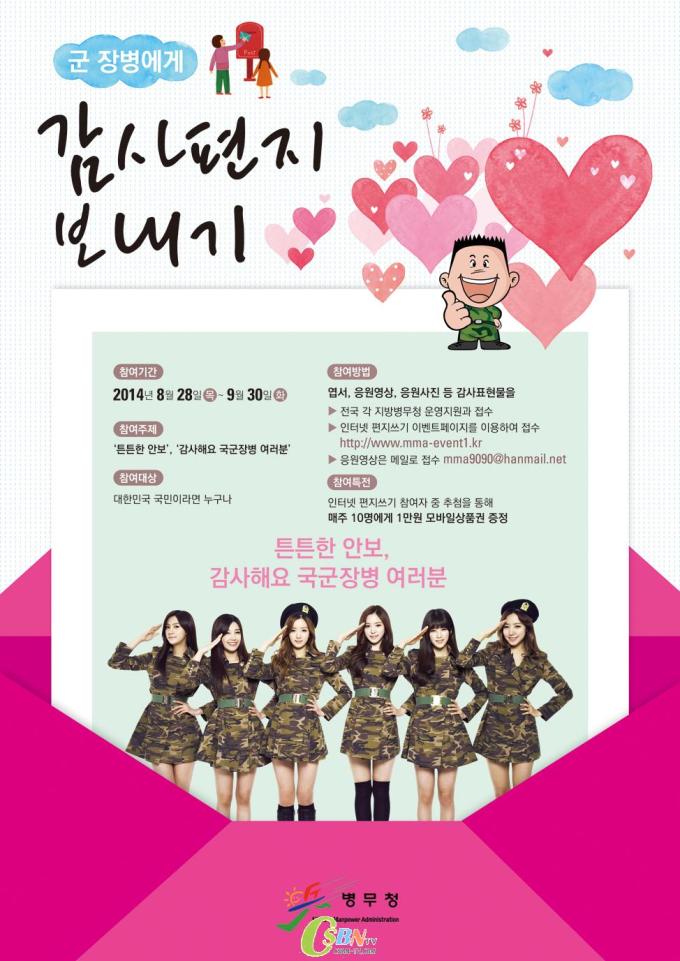
Apink LettersSource: CSBNTV

The MMA’s tweet reads (the poster is about the same thing):

If you write a letter, you will receive a mobile voucher [you can spend at coffee shops etc.] #MMA So let’s write a letter to the soldiers! #Apink #Nam-ju wrote a letter too!

And Kim Nam-ju’s own “letter” reads (see here, here, here, here, and here for similarly-themed messages in the series from other members):

Hello, this is Nam-ju from Apink! You are having a hard time, right? Aww…But I want you to always cheer up and find strength. Hee-hee. While listening to our songs, always cheer up and eat well and plentifully…I hope you get stronger. Ha ha ha…since friends the same age as me (in our 20s) are also doing their military service I worry more and more (cry cry). Always cheer up! If you laugh, you’ll be happy! Smile! I love you Korean soldiers! (Salute!)

Apink PR MMA AmbassadorsSource: Mogahablog

Rest assured, there’s much more where that came from.

But why didn’t I just lead with all these examples? Why have I so labored the point that Apink was so well suited to the cutesie MMA campaign, when probably nobody, not even the most dedicated of Apink fans, needed convincing in the first place?

Good questions.

The main reason is that to critique the MMA campaign, and specifically to demonstrate that it was disingenuous, you need to show the disconnect between the intent and the reality. But I can’t definitively claim that Apink wasn’t just chosen for their popularity in early-2014 of course. Or, for that matter, that they weren’t just chosen because of some special financial arrangements between the MMA and Cube Entertainment, that simply weren’t offered to and/or possible with other entertainment companies for their own groups. Again, we just don’t know.

What we can say though, is that entertainment companies and the military are joined at the hip. That away from the performances on bases that get most of the media’s attention, girl-groups of all stripes are constantly presenting the same sorts of cutesie messages to conscripts, and acting like children in front of them. That, even if Apink wasn’t necessarily the only group able to fulfill that role on a permanent basis, that it was the most reliable choice to do so. And, lest we forget, that the companies or institutions doing the hiring of K-pop groups that call the shots, and that entertainment companies are only too willing to compromise their groups’ brand images or concepts for the sake of the hard income their advertising campaigns provide. A lesson I personally learned from DSP Media, who quite literally presented a new, very womanly side to KARA through the choreography to Mister back in the winter of 2009, only then to have them acting like my children in a commercial for Pepero by the following spring:

KARA Butt DanceSource: FLV

Ergo, the MMA wanted a cutesie, virginal girl-group, and that’s what they got. But how about the conscripts themselves?

I’m sure you can guess. But it’s always best to get first-person accounts, so I’ll provide two in a later post (update: in Part 3). Then, because not all of you may share my instinctive distrust of all things aegyo, in another I’ll consider an interesting perspective on Apink’s from May 2012, which—dare I say it?—demonstrates it can have some positives when done willingly by and for teenage girls…but which makes the negatives of young women performing it unwillingly for men in 2015 all the clearer. Finally, I’ll discuss the alternative gender roles the MMA could have presented in their campaign, as suggested by those World War Two recruitment posters.

I really don’t like making the split, as frankly this post has been a real labor of love for the past *cough* three months, which I feel works best at a whole. But at a combined total of over 10,000 words, it’s a necessary, reluctant concession to reality. Please help me make the best of it then, by adding your own thoughts in the comments, which I’ll consider and maybe incorporate as I finalize the remaining post(s). Thanks!

(Update) This post and the intended follow-ups ultimately became an ongoing series:

If you reside in South Korea, you can donate via wire transfer: Turnbull James Edward (Kookmin Bank/국민은행, 563401-01-214324)

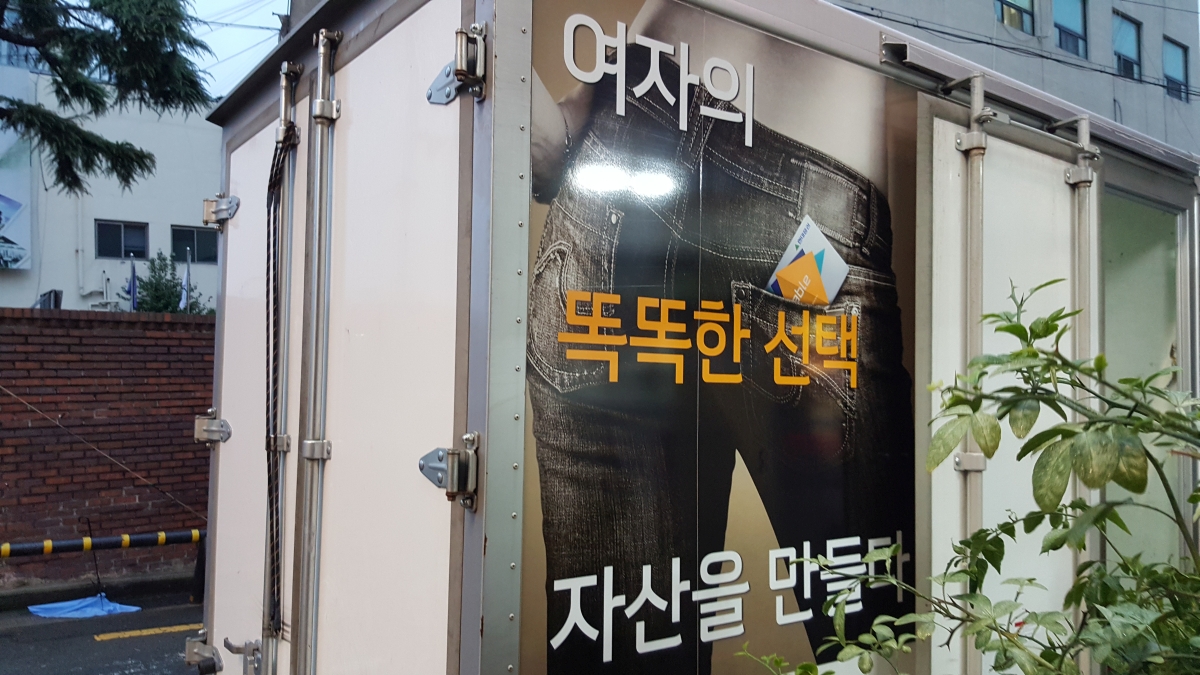
Appreciating Assets: When Sex Sells…Retirement Funds?

Gendering Advertising Man 2If you’re reading this, you’re concerned about gender roles in Korea. And with any luck, it’s been a while since you’ve come across any blatant gendered marketing here. Maybe, because the notion is just no longer sustainable, especially when so many boy-bands are now using “girly” aegyo.

So, when this delivery truck passed my daughters and I as we were coming home from school last week, I was off like a flash. After all, my eldest daughter did say she wanted to try walking by herself sometime…

Gendering Advertising WomanAlas, it wasn’t really gendered marketing: as my panic-stricken daughters were catching up, wailing something about abandonment, I realized there was no real difference between the captions “Men’s wise choice: make/gain tax deductions” and “Women’s smart choice: increase your assets.” (And the puns only work in English too; but it’s still a very clever post title, yes?) And both had the same sub-text on the right:

Gendering Advertising ManThat reads “Tax reduction’s smart choice, get tax deductions on your assets,” and in the yellow box “Pension savings account, tax-reduction long-term fund, IRP (personal retirement pension).”

Ultimately then, while they did get my attention, they were just another lame example of sex sells.

Or not. Because with thinking about the crotch or buttocks of your heart’s desire, comes a deep concern about managing your retirement funds, right?

Reminding me of the fruits of those loins though, might have been a little more successful in persuading me to think more about my long-term future. Like what to do when my daughters start pretending not to know me as I snap away at the next yahan ad…

Related Posts:

Korean Sociological Image #92: Patriotic Marketing Through Sexual Objectification, Part 1

The Chosun Ilbo August 7 2015 Korean Women Korean Flag Korean NationalismJoin with me please, in bursting out laughing at the caption to this image on the Chosun Ilbo website

Models pose with the taegeukgi or national flag in front of the Lotte World Tower in Seoul on Thursday, ahead of the 70th anniversary of liberation from the Japanese colonial rule.

…because of its eerie resemblance to a description of a “spontaneous demonstration” given in the TV adaptation of Animal Farm (1999):

Animal Farm 1“And now we go to our leader’s house, where earlier today, a spontaneous demonstration took place.”

Animal Farm 2“A grateful duck has written a new song for our beloved leader, and she is here joined by the chorus of the Animal Guard!”

Animal Farm 4Animal Farm 6Amimal Farm 7Animal Farm 8

No? I assure you, it’s much funnier in the officious, slightly hungover voice of the pig making the announcement. But the fact remains: promotions like Lotte’s are like theaters of the absurd. Because really: what was the point of the models exactly?

Was it because otherwise disinterested heterosexual men and lesbians feel more patriotic if they see attractive women? Was it because they inspire people to learn more about Korea’s history, and to be more concerned about Korea’s image abroad? Was it because other less objectifying, less patronizing methods have been tried and failed?

No? Then why are young female models so routinely used to promote nationalist causes in Korea?

As if Lotte Group was posing the questions to news outlets itself, perhaps half of all the illustrated news articles on its tower flag I quickly surveyed didn’t even mention the models at all. So too the first English article I encountered, which instead offered a borderline advertorial on its deep numerical symbolism.

It’s almost as if wrapping themselves up in the national flag and posing in front of highly symbolic, highly controversial chaebol mega-projects is just something young women spontaneously like to do.

But who can blame anyone for not paying attention? The trend for flag-wearing in (then) revealing clothing was set way back during the 2002 World Cup, when Korean women of all ages did indeed choose to do so of their own accord. A sexually subversive act then, it’s been debased by advertisers and wannabe media stars ever since, building on the already widespread use of young women as doumi (도우미/”assistants”) and “narrator models” to promote the most everyday and mundane of consumer products (indeed, one source described the Lotte models as “PR doumi”). It’s also been a good fit with the sometimes quite literal use of K-pop girl-group members’ bodies to promote Korean governmental and business interests abroad.

Also, no-one supposes that these models weren’t hired by Lotte Group, as part of an obvious ploy to counter criticisms of excessive chaebol power in Korean political and economic life, and that Lotte Group is not even a Korean company at all. Some tweeters I found via the seong sangpoomhwa (성상품화/sexual objectification) search feed on Twitter I subscribe to (who doesn’t?), for example, said:

“Lotte Group’s solution to weaken public opposition to its power: patriotic marketing + sexual objectification = a tall building with the flag and thin models wearing flags. In Korea, patriotism is used like this. Oh, how bold!”

https://twitter.com/sxysxy000/status/632560249686200321

“Who are these women? Don’t use yourselves as tools of sexual objectification. Especially on a meaningful day like today. How come you can use our national flag like that, which was used to support and give courage to the Korean independence movement?”

Which was in reaction to:

https://twitter.com/kyung0/status/630324166483275777

“[Here’s some] women in hot pants wearing the Korean flag like a skirt, in front of the Lotte Tower, which has been accused of causing problems with the the air force’s flight paths and [consequently] implementation of strategy during wartime. How wily: even Lotte Group’s promotion strategy is Japanese-orientated.” [James — Eh? Because Japan would be the enemy in the event of a war? And surely he means the building location, rather than the promotion?]

Sigh. Of course, I don’t pretend for a moment that a twitter wordsearch represents everything being spoken about a subject. So I’m sure that, somewhere, people are asking such questions as:

  • Why is it almost always only young female models are ever chosen for promotions like these?
  • Why only models with a very narrow range of body types?
  • What kind of gender and sexual roles are they promoting, when women are mere decorations for a cause?

As always, I’d be grateful for any pointers to where people are doing so. But, if it turns out people aren’t really talking about such a widespread phenomenon or belief though, then that’s precisely why we should look more closely at it. Because, as Amy Wharton explains in her book The Sociology of Gender: An Introduction to Theory and Research (2005):

…understanding gender requires us to go beyond the obvious and to reconsider issues we may think are self-evident and already well understood. Challenging the taken-for-granted is one essential component of the sociological perspective. In fact, sociologists argue that what people view as unproblematic and accept as “the way things are” may be most in need of close, systematic scrutiny.

So to encourage further conversation along those lines, and to highlight the issues raised by this example, next month I’ll examine another highly symbolic instance of Korean “patriotic marketing [through] sexual objectification” then demonstrating why it’s more problematic than it may at first appear (apologies for the split, but it’s necessary for 5000 words). Until then, I appreciate hearing your thoughts on the flag-wearing promotions, and any other questions they raise.

Apink military(Source: MMA Facebook Page; left, right)

If you can’t wait though, I encourage you to read “Angry Green Girl: Sexualizing Women for the Environment” at Sociological Images, to which I acknowledge my debt and inspiration for this introduction.

Update: Ultimately, that next post became a mammoth, 10,000 word series in itself!

(For more posts in the Korean Sociological Image Series, see here)

Calling all Korean-Western Couples!

A Mixed Relationship(Source, edited: ufunk)

I’ve been asked to pass on the following by Dr. Daniel Nehring, a British sociology lecturer:

My project looks at the experiences of Korean-Western couples currently living in Korea, of any sexual orientation. It involves conversational interviews of approximately one hour, covering various aspects of everyday life in a transnational relationship; I interview the Western participants in English, while my Korean (female) colleague interviews the Korean participants in Korean. I work according to the code of ethical conduct of the British Sociological Association, so participation is confidential and anonymous, which includes not divulging one partner’s responses to the other(!). I am looking for participants aged 25 to 45 who are settled in Korea and currently live in a long-term transnational relationships. I could meet participants in a place of their choice; alternatively, the interview(s) could take place on Skype. I would be happy to answer any further questions about my research; my e-mail address is d.nehring@worc.ac.uk.

I’d add that I’ve had the pleasure of meeting Daniel several times, and that he has conducted similar projects in Mexico and China; see here for one of his journal articles on the latter, which is still ongoing, while the Mexican interviews ultimately became part of a book.

Korean Sociological Image #90: Watch Out For Those Italian Men…

Two back-to-back YouTube commercials for SK Telecom’s “T Roaming” Service, which have a blatant double standard:

In the first, actor Son Ho-jun freaks out when his girlfriend tells him she’s going on an overseas trip with her old college friends. First, he asks if any men are coming with her, but relaxes when she reminds him that she went to a women’s college. Only to freak out again when he learns she’s going to Italy:

T Roaming Italian MenMy immediate reaction? Whatever your gender or sexuality, if your partner can’t trust you not to bang your friends or the natives when you’re more than a few days away from each other, then in my book that’s your excuse to move on and do precisely that.

But I’ll grant that it’s just a commercial, and that Son Ho-jun’s reactions are exaggerated for comedic effect. Also, provided you’re not too clingy, there’s nothing wrong at all with staying in touch while your partner’s away.

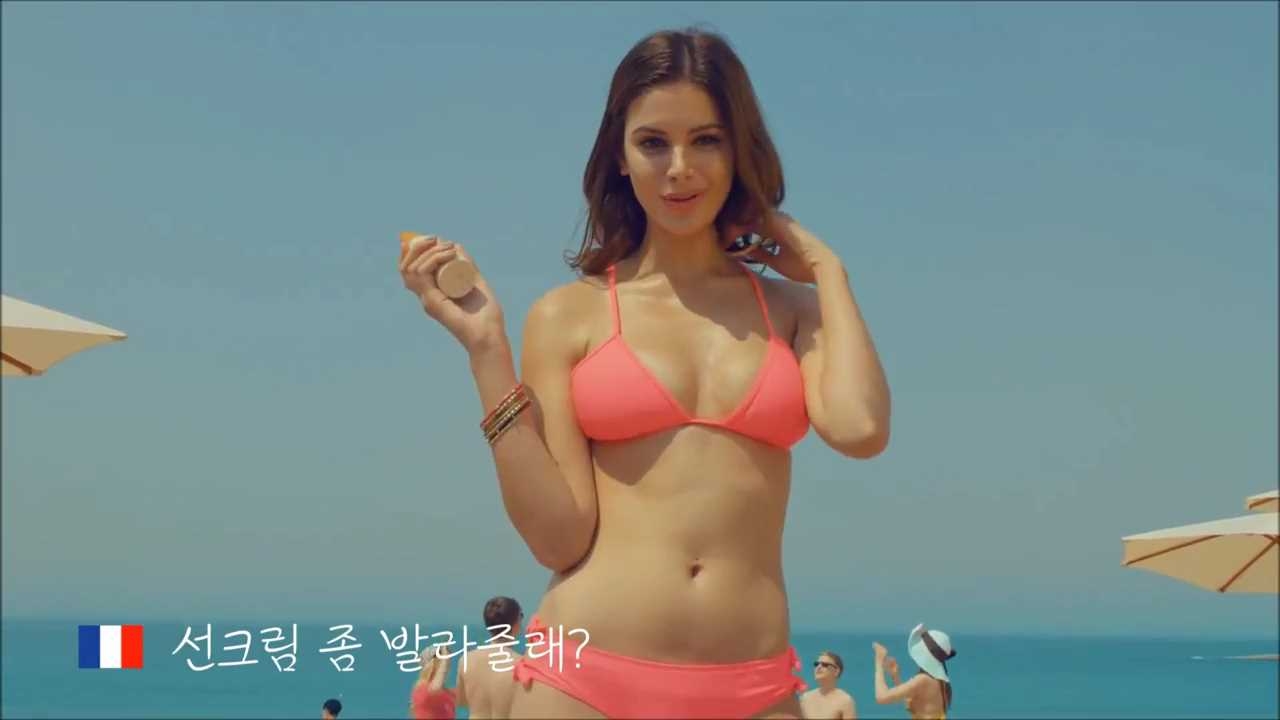
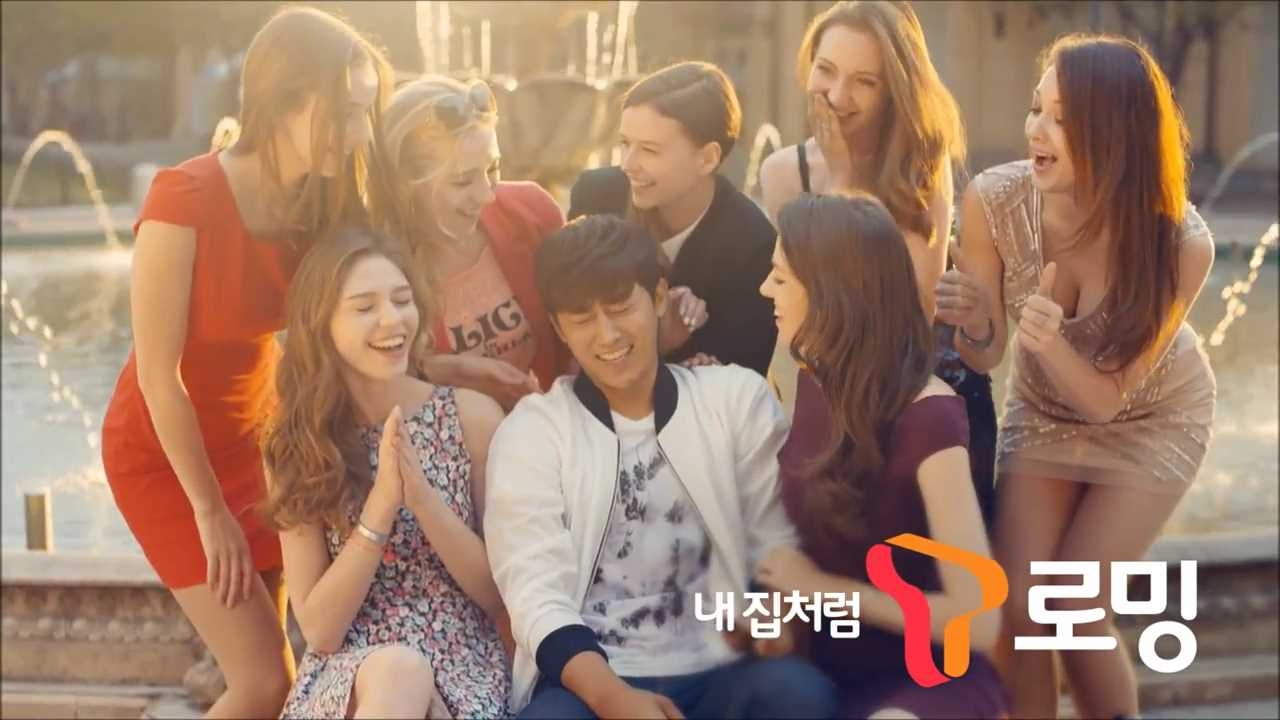
The double-standard lies in the huge contrast with the second commercial, which shows what Ho-jun would need the roaming service for when he’s overseas: access to a translation app, without which he doesn’t realize the local women are throwing themselves at him.

T Roaming French WomanOr, once he does realize that “With T Roaming, [he] can translate, take pictures, and do anything [he likes]”, that he can set up his own harem:

Foreign Women T RoamingAgain, it’s innocuous in itself, and I’m all for taking advantage of technology to make sure people don’t miss out on any potential liaisons. Given the selling point of the first commercial though, it’s a bizarre choice of follow-up.

Instead, I would have plumped for a more provocative, much more memorable version with his girlfriend and foreign men, showing Ho-jun exactly what she thinks of insecure boyfriends who want to keep electronic tabs on her.

Or, if that was indeed deemed too provocative, then simply two more commercials with the sexes reversed. As the only extra costs would have been the additional male actors and the extra shooting time, then you really have to wonder why not.

Because without those versions, these ones not only seem entirely aimed at men, but it’s very difficult not to contrast his Korean girlfriend’s childishness in the first—and lack of an angry response to his question about her male friends—with the boldness and confidence of the foreign women in the second. It’s also difficult not to place the commercials in the Korean media’s long history of depicting foreign women as sexual conquests, but foreign men as something to defend Korean women against. (Although this has been improving in recent years.)

What do you think?

(For more posts in the Korean Sociological Image Series, see here)

Two Must-Listens About Korean Popular Culture

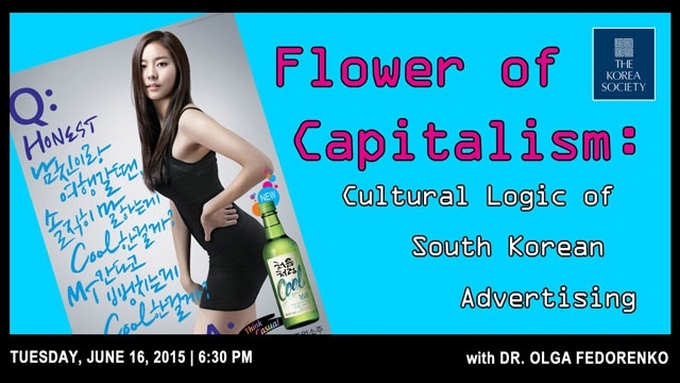
Flower of Capitalism Olga Fedorenko(Source: The Korea Society)

First up, I wouldn’t usually make an announcement about an event in far-off New York, but I have no hesitation in making an exception for friend and fellow Korean Popular Culture Reader contributor Dr. Olga Fedorenko, who’s lecturing at the Korea Society on Tuesday evening. As the FB event page and Korea Society website explain:

Advertising in South Korea is often referred to as a “flower of capitalism.” Rather than calling attention to the inherent links between commercial advertising and capitalism, this clichéd metaphor presents advertising as a wholesome, creative medium of public good and positive contribution to society. South Korean’s consume advertising as a product of popular culture and celebrate it for the humanist societal ideals it often promotes, instead of viewing it as an intrusive commercial message. Dr. Fedorenko explores the origins of such attitudes toward advertising through some notable contemporary examples, and considers challenges of using advertising for public good in the twenty-first century South Korea.

I owe a lot to Olga for much of what I’ve written about Korean advertising over the years, most recently referencing her work in my post “Sex, Self-Confidence, and Social Activism: When Women Made Soju Ads” about Korean femvertising, so you have my personal guarantee that her lecture will be very interesting. (You may also find this review of her dissertation interesting, let alone her dissertation itself.)

As I type this I’m unsure if her lecture will be recorded unfortunately, but it probably will—most Korea Society lectures are made into podcasts, and increasingly online videos are provided too. Either way, I’ll provide a link once her’s is/are ready later this week.

Update: Here is the video. It is also available as a podcast here or here.

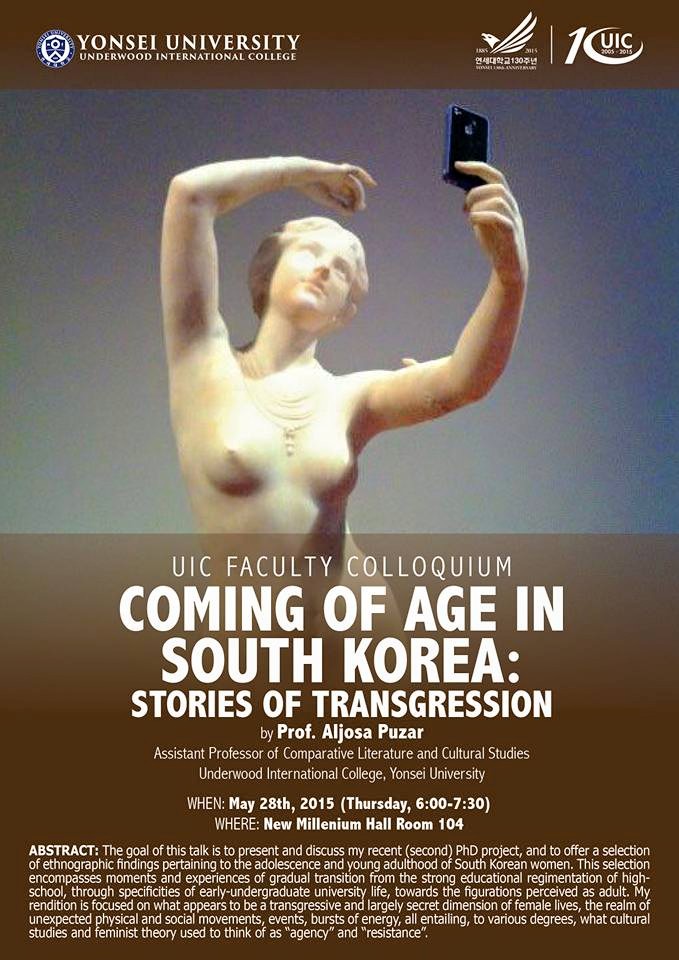
Next, for those of you who were unable to attend Aliosa Puzar’s lecture in Seoul last month, and frustrated that it wasn’t recorded, I’m very happy to announce that he has just been interviewed on the same topic(s) by the Korea and the World team. (Full disclosure: they’re the cool guys who also interviewed me back in November). Make sure to visit Beyond Hallyu for an excellent review of his podcast first, then you can listen to it directly on the Korea and the World website. (It’s also available on iTunes.)

Aljosa Puzar Coming of Age in South Korea(Source: Facebook)

Once again: what are you waiting for? ;)

Sex, Self-Confidence, and Social Activism: When Women Made Soju Ads

Korea’s first ‘femveritising’ campaign was a fun take on sexual double standards, and popular among women too.
uee heart(Source: Celebrity Republic)

A request from a reader:

      Hello Grand Narrative readers! I’m reaching out for some help for a research project I’m working on about female empowerment trends in Korea and opportunities for brands to play in that space.

I’m looking for recent examples of brands, organizations and entertainment personalities empowering girls and females through products, campaigns, messages or services in Korea, similar to Nike’s Seoul Women’s Race, Whisper’s #likeagirl campaign or femvertising campaigns abroad.

Unfortunately, these are hard to find as Korea hasn’t quite embraced the trend like other nations. As such, I’m also looking for the opposite — recent examples of who is doing it completely wrong and sending messages of conforming to male-informed and limiting traditional stereotypes?

Any help, examples, or opinions are greatly appreciated! Please email me at amynwilliams@gmail.com.

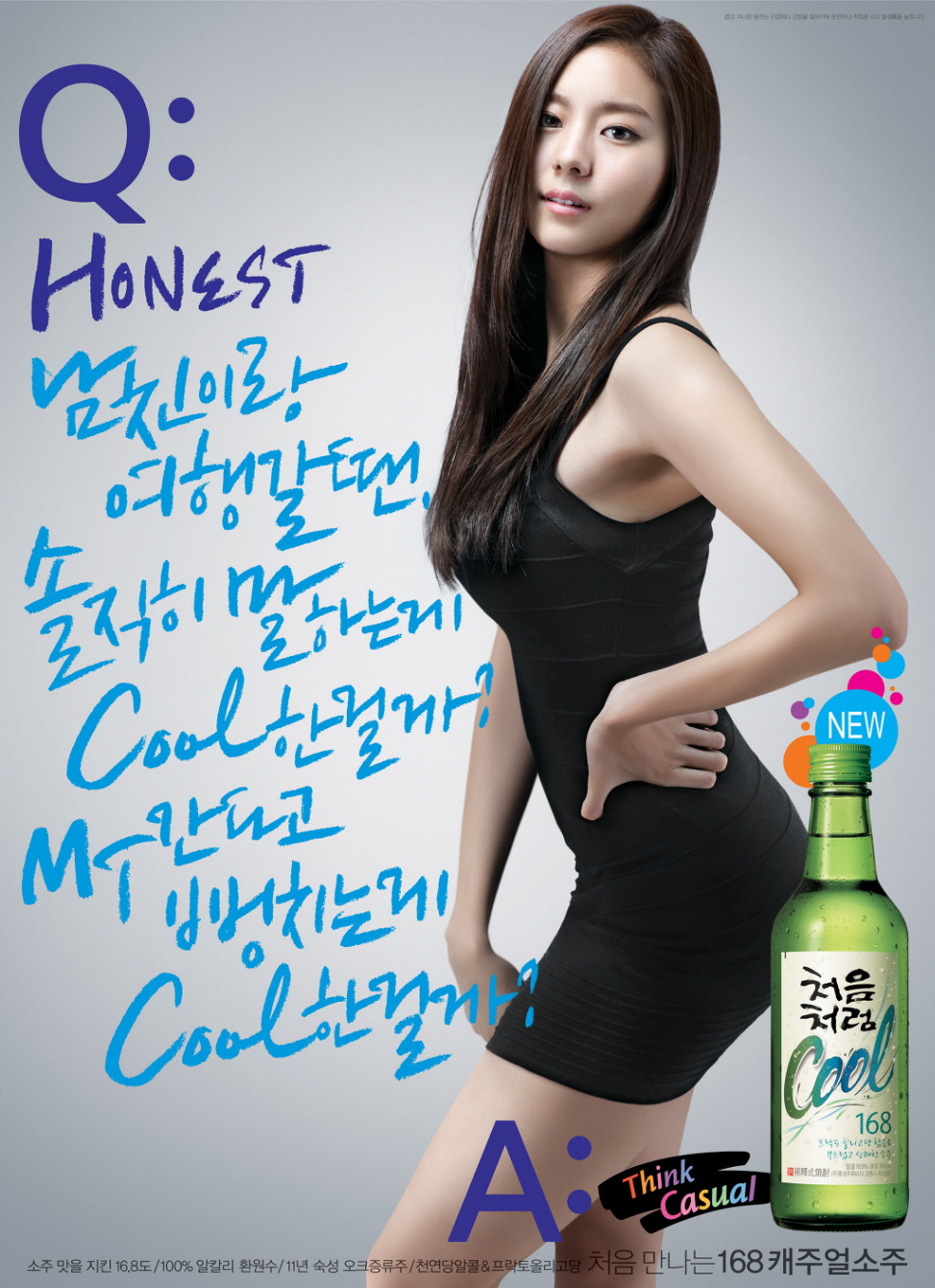
James: Alas, all the examples I can think of are quite old. Still, to get the ball rolling, and because I think its empowering aspects deserve to be much better known, let me take this opportunity to quickly mention the best, and possibly first and only well-executed one: Lotte Liquor’s ‘Think Casual’ campaign for Cheoum Cheoreom (“Like the First Time”) Cool soju, from back in Autumn 2009:

I admit, that hardly looked like a bra-burning moment. Nor even all that different to any other soju commercials before or since, for which a young woman dancing in revealing clothes is de rigueur. And Uee, then 21, was no fledgling feminist icon either, reveling in the increasing attention she gained through her objectification. (Albeit likely having little choice in the matter.)

Frankly, I completely dismissed it at the time.

But it was different. That “Am I really your first?” question, and the men’s reactions? Those may seem pretty innocuous from a Western perspective, but they still got netizens riled-up. As did messages in posters like the one below, easy to reject as just another soju pin-up if you—ahem—didn’t take the time to read the text. Because ultimately, not only was the campaign breaking strong taboos on openly acknowledging this thing called sex, but it was directly challenging the double standards for women too.

UEE Soju Cool Honest(The text reads: “Q: When you travel with your boyfriend, which is cooler: admitting it to your parents, or lying and saying you’re going on a trip with your university friends? A: Think Casual”. Source: Naver blog, untitled.)

Rather than backtracking in the face of the ensuing negative publicity however, the advertisers were justifiably proud of what they were doing, as explained by Olga Fedorenko in her chapter “South Korean Advertising as Popular Culture” in The Korean Popular Culture Reader (2014, p. 356):

…[Uee’s] ‘cool shot dance’ achieved a viral popularity, young women recording their own versions and posting them online. Many other [netizens], however, were offended by what they saw as encouragement of promiscuity, noting that Uee looked “too easy,” that her coolness about sexual matters was inappropriate for her young age and “innocent face.” As I investigated the campaign, I was surprised to learn that the advertising team behind it included a few young and well-educated women who saw the ad as empowering and were hoping that young people, whom the ad targeted to broaden the traditional demographics of soju consumption, would perceive it the same way. In other words…they pushed for individual sexual freedom against oppressive norms, and the ‘Think Casual’ campaign became a site for negotiating parameters of female sexuality. The advertising agency took a leading a role in challenging patriarchal mores — reflecting the worldview of advertising workers, who saw themselves as representing the worldviews of the target consumers.

To put those patriarchal mores in some perspective, ironically just this February Uee would again be chastised for admitting to sexual experience and desires, this time in real life. (Note: she was just about to turn 27.) Also, it’s female celebrities that have received the brunt of fans’ anger for all the dating ‘scandals’ of the past year.

That said, things may have reached a tipping point. Because, given their overexposure in popular culture, Korean celebrities are very much considered role models, who are expected to follow high moral standards accordingly. With so many revealed to be in relationships now though, and getting caught spending their limited time together in hotels, it’s just getting too difficult to defend the notion that us mere mortals can’t or shouldn’t be able to do the same, or pretend that we haven’t always been doing so anyway.

But that’s a subject for another post. In the meantime, good or bad, please pass on more examples of femvertising to amynwilliams@gmail.com, and/or mention them here, even if you can’t remember all the details. (I’ll follow them up.) Also, if it emerges that there haven’t really been any femvertising campaigns in the last six years, or at least none as provocative as this one, then I’d be very interested in hearing your thoughts on why. Thanks!

Update: One more recent example of positive femvertising could be Zigbang’s campaign aimed at 20 and 30-somethings stuck living with their parents — something which again points to the need for evaluating empowerment in terms of its cultural context, and for preparing campaigns accordingly. But I still draw the line at anything that includes aegyo!

What Donald Duck, Hani, and Big Tits Taught Me About Body-Image in Korean Comedy

Exid Hani Vitamin(Source: Euri)

“That’s Problematic!”

Many smart people loathe the word “problematic.” Others, because it’s “frequently used in progressive political settings among White People of a Certain Education,” or because they think they’re the best judges of what the rest of us should concern ourselves with. And maybe they have a point. I do often use the word; I am indeed White; I’ve had a “certain education” I guess; and, if it’s both “progressive” and perverse for someone like me to be troubled about body-image in Korea, then guilty as charged.

That is to say, I couldn’t give a rat’s ass about the dictates of any self-appointed arbiters of cultural criticism. So let me shout it from the rooftops, loud and proud: Korean comedy’s body-policing is damned problematic sometimes. This post, very much a #longread, is about several recent cases in point.

But before I got to work on what was all set to be my usual diatribe, I came across some comments made by Lizzie Parker of Beyond Hallyu, someone I do pay attention to. Learning that she too dislikes the word, I realized with that great power of not giving a rat’s ass, comes great responsibility:

It’s such a cop out…problematic is just lazy-speak for ‘there is something bad about this and I can’t be bothered to figure out what’. It’s bad writing.

Lizzie’s comment was made in a different context, but it resonated with what I’d just been reading in Cultural Imperialism: A Critical Introduction by John Tomlinson (1991), and I’ll take my muses in whatever guises they appear, thank you very much. Specifically, it clicked because Tomlinson discussed scholars’ tendency to assume the nefarious impacts of Western consumer products on local cultures, but reluctance to explain the actual means by which those products (allegedly) do so. If I just confine myself to one illustrative example from the book here, about How to Read Donald Duck: Imperialist Ideology in the Disney Comic by Ariel Dorfman and Armand Mattelart (English ed.,1975; quoted in italics):

To service our ‘monoproduct’ economies and provide urban paraphernalia, we send copper, and they send the machines to extract copper and, of course, Coca Cola. Behind the Coca Cola stands a whole superstructure of expectations and models of behavior, and with it, a particular kind of present and future society and an interpretation of the past. (p. 97.)

So, imported cultural goods — Coke, Disney — somehow ‘contain’ the values of American consumer capitalism and offer an implicit interpretation of the good life. Still, we have yet to see how these cultural goods are supposed to transmit the values they contain and the social vision they ‘offer’. When the explanation comes, it is frankly disappointing:

The housewife in the slums is incited to buy the latest refrigerator or washing machine; the impoverished industrial worker lives bombarded with the images of the Fiat 125. [in the same way]….Underdeveloped peoples take the comics at second hand, as instruction in the way they are supposed to live and relate to the foreign power center. (p. 98)

When it comes to the crucial question of ideological effects, Dorfman and Mattelart can only offer an unproblematized notion of the manipulative power of the media text. They simply assume that reading American comics, seeing adverts, watching pictures of the affluent yanquí lifestyle has a direct pedagogic effect. (p. 44.)

Tomlinson may well be another White Person of a Certain Education, but his book is easily one of the most enlightening and well-explained cultural studies texts I’ve read in years, and provides an obvious solution to the challenge presented by Lizzie. Yet in my bid to look smart, I quote him at my peril. For now I’m obliged to demonstrate just how exactly Korean comedy teaches such harmful messages about body image, and why its constant, egregious examples can’t be dismissed as just harmless fun—all without patronizing Korean audiences in the process.

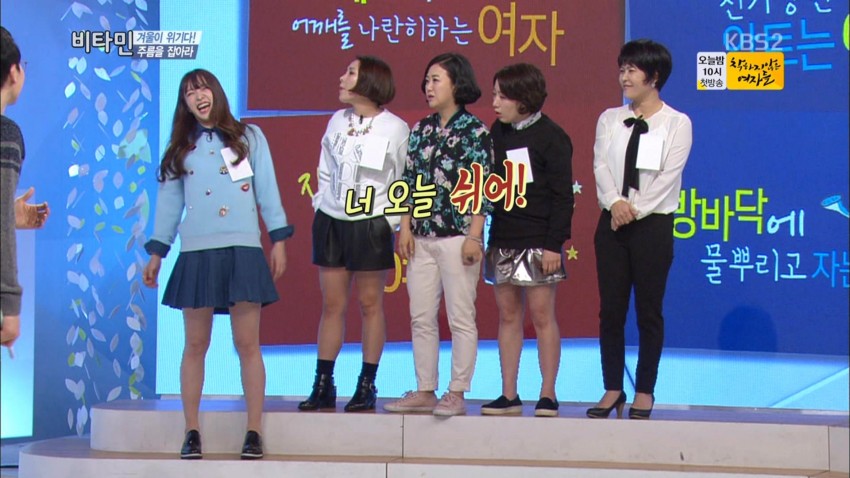
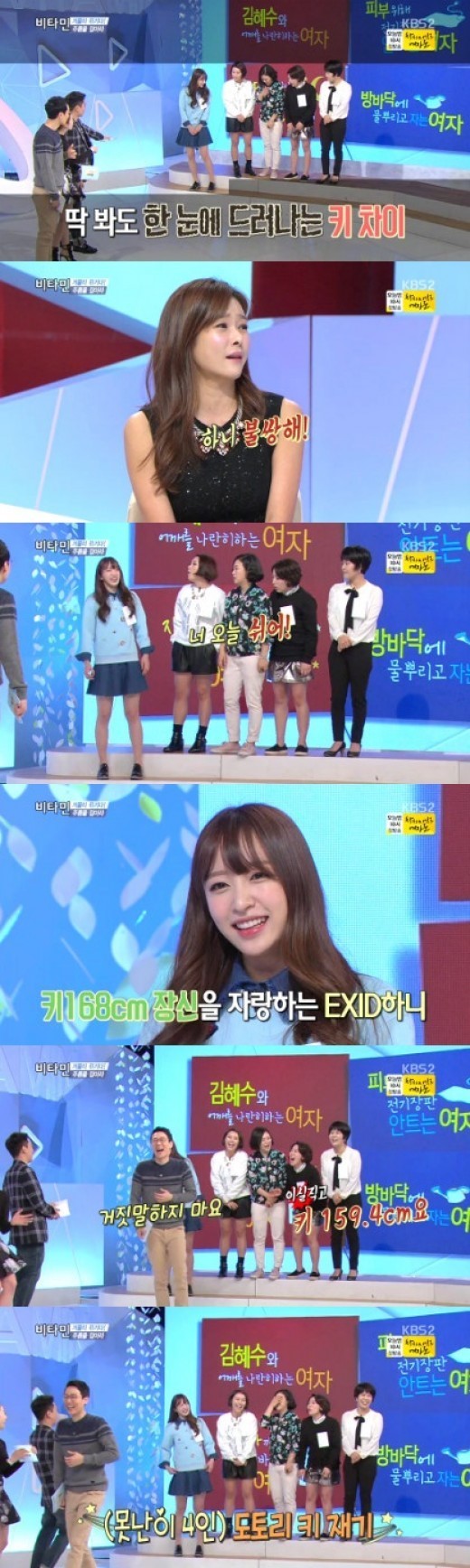
It’s a tall order. So, to set the stage, let’s see what happened when long-limbed Hani recently stepped onto that of Vitamin, a health-cum-variety show on KBS:

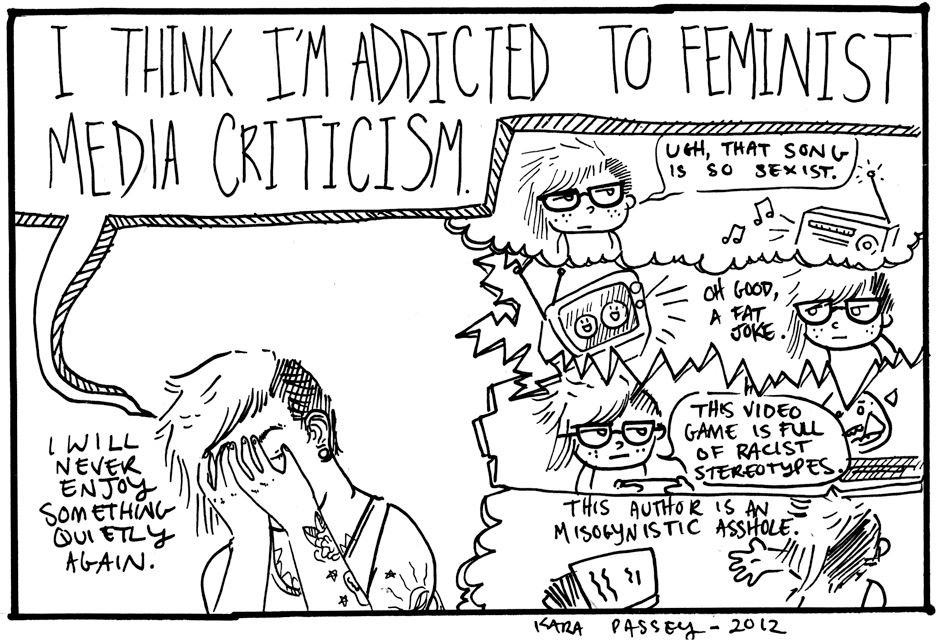
I think I'm addicted to feminist media criticism(Source: Social Justice For All)

걸그룹 옆에 ‘못난이’…이 장면이 웃긴가요 The Ugly Sisters Next to a Girl-group Member…A Scene to be Laughed at

[TV리뷰] 예능 프로그램 속 외모 비하, 여전히 개선되지 않는 문제점

[TV Review] An entertainment program criticizes women’s bodies: why has this problem still not improved?

OhmyStar, 27 February 2015, 우동균/Woo Dong-gyoon

큰 키의 미녀가 한 계단 위에 올라서 있는 키 작고 통통한 여성들과 비교대상이 된다. 그리고 ‘못난이 삼형제’라는 자막이 버젓이 표시된다. 비웃는 패널들의 표정은 덤이다. 미스코리아 선발대회의 한 장면이 아니다. KBS 건강 프로그램 <비타민>에서 등장한 장면이다.

A tall beauty stands to the side; some short, tubby women stand on a step next to her to be compared. “The 3 Ugly Sisters” appears in the captions, with a shot of [the beauty’s?] fans laughing thrown in too. But this is not a scene from the Miss Korea contest. It’s from Vitamin, a health program on KBS.

미녀로 등장한 것은 대세로 떠오른 그룹 EXID의 하니이고, 못난이로 묶인 연예인들은 신봉선, 김숙, 김영희, 조혜련 등 개그우먼이다.

In this example of the trend, the girl-group member is Hani from EXID, and the four gagwomen are Shin Bong-seon, Kim-sook, Kim Yeong-hee, and Jo Hye-ryeon.

개그맨들의 단골 소재도 외모에 관한 것이다. 외모가 개성적이거나 뚱뚱한 개그맨은 자신의 얼굴이나 몸을 희화화해서 웃기기 일쑤다. 이런 현상은 예능에서 쉽게 찾아볼 수 있다. 예쁜 게스트들이 나오면 환호하고 상대적으로 외모가 떨어지는 개그맨들과 비교선상에 놓는다. 남자고 여자고 할 것 없이 같은 취급을 받는 것이다.

Comedians regularly use the subject of appearance for joke material. They will routinely make fun of their own bodies and faces if they are tubby, or in any way unique; examples are very easy to find in entertainment programs. So, if an attractive guest appears on their show, the guest will be cheered by the audience, and their bodies will be compared to the inferior ones of the comedians. This is done to both men and women.

Vitamin Hani<비타민>의 한 장면, 여성들의 키와 몸매가 비교당하는 장면이 공중파에서 버젓이 방영되고 있다 In a scene from Vitamin, women’s heights and bodies are openly compared on air.

외모에 관한 차별은 우리 사회에 뿌리 깊게 박혀 있다. 예쁘면 좋고, 못생기면 나쁘다는 식의 고정관념은 단순히 성형외과 광고에만 있지 않다. 이미 2015년 현재 TV속에서 벌어지고 있는 현실이다.

Discriminating against people on the basis of looks is something deeply rooted in our society. The notion that if you’re attractive, you’re good, and if you’re ugly, you’re bad, is not something that you only find expressed in advertisements for cosmetic surgery clinics. Rather, it is the reality of our television screens in 2015.

작년 여름 <1박2일>에서도 난데없는 외모 차별 논란이 일었다. 예쁜 여성들과 데이트하는 ‘상’과는 반대로 개그우먼들과 데이트해야 하는 ‘벌’이 주어졌기 때문이다. 많은 사람들은 이 장면을 두고 갑론을박을 벌였다. ‘분명한 외모 차별’ ‘여성의 성 상품화’라는 이야기부터 ‘외모가 부족한 남성 패널들이 같은 취급을 당하는 것은 왜 묵과하느냐’ ‘이정도는 용인 될 수준’이라는 이야기까지 설전이 벌어졌지만 결국 명확한 결론은 나지 않았다.

Last summer, some controversy arose over the body discrimination displayed on the show 1 Night, 2 Days. In one episode [aired July 27th; a clip is below — James], dates with attractive women were offered as prizes [to the all male cast] while dates with female comedians were provided as punishments, leading to charges that this was a clear case of both body discrimination and sexual objectification of women, as well as a double-standard in that the less desirable male comedians on the show weren’t treated in the same manner as the female ones were. This provoked a lot of heated discussion, but no clear conclusions.

그러나 이런 논란이 일어나는 것 자체가 아직까지 한국에서 외모를 두고 비난할 수 있는 환경이 얼마나 자연스럽게 이루어지고 있는지를 보여준다. 예능 프로그램에서 이영자나 이국주는 단순히 ‘잘 먹는’ 캐릭터가 아니라 ‘뚱땡이’ ‘과체중’이라는 캐릭터로 각인되어 있고 상대적으로 외모가 부족한 여성들은 예쁜 연예인들과 비교 선상에 놓이고 무시당해도 당연하게 받아들여야 한다. 그렇지 못하면 쿨하지 못한 것이 되기 때문이다.

The fact that this incident occurred shows that openly criticizing people on the basis of appearance is seen as natural in Korea. On entertainment programs, the comedians Lee Young-ja and Lee Guk-ju are not recognized simply as ‘characters that eat well,’ but are instead known as ‘fatties’ and for being overweight. [Also,] ordinary women that appear on the shows are unfavorably compared to pretty entertainers, and are expected to just roll with the criticisms and disrespect, lest they be considered uncool [and putting a damper on things].

이 같은 현상은 공개 코미디에서 더욱 심화되어 나타난다. 개성적인 외모가 주를 이루는 개그맨들은 외모를 무기로 코미디를 하려는 경향이 강하다 보니 이런 패턴에서 벗어나기가 쉽지 않다. 특히 개성적인 외모와 과체중의 소유자라면 그런 경향은 반복된다.

This trend is most evident in comedy programs. On them, it is the norm for comedians to take advantage of some very obvious bodily feature or aspect of their appearance to make jokes, and it is not easy to break out of this trend.

현재 <개그콘서트>에서도 ‘크레이지 러브’나 ‘속상해’ 같은 코너는 외모의 비교라는 전제를 두고 진행된다. ‘크레이지 러브’는 이 공식을 살짝 비틀긴 했지만 여전히 웃음 포인트는 박지선이 김나희에게 못생겼다고 독설을 퍼붓는 역설적인 형식으로 표현된다. ‘속상해’는 이 희화화의 대상을 여성에서 여장을 한 남자 정태호로 바꾸기는 했지만 외모 때문에 무시 당하는 노처녀라는 설정은 이전과 크게 다르지 않다.

One example on TV screens at the moment is Gag Concert, which has two regular skits called ‘Crazy Love’ and ‘I’m Hurt’ that are both based on comparing people’s appearances. In the former, the humor revolves around Park Ji-song berating Kim Na-hee for her ugliness, despite Park actually being the uglier of the two; while in the latter it’s about Jeong Tae-ho dressing as an old maid, who’s always ignored by suitors because of her ugliness.

이제까지 <개그콘서트>에서는 이런 코미디가 반복돼왔다. 단순히 못생긴 여성이 무시당한다는 설정보다 더 심각한 문제는 외모가 부족한 여성들이 잘생긴 남성에게 집착하며 눈치도 없어 남성들에게 쉽게 여겨지고 비아냥을 당해도 좋은 여성으로 묘사된다는 점이다.

This comedic theme is normal for Gag Concert. But more serious than unattractive women getting ignored, is the notion that if they obsess over attractive men, they can be treated tactlessly and thought little of, as if their only value is their potential for sarcasm and ridicule.

이는 코미디의 소재 부족을 여실히 느끼게 한다. 현재 <개그콘서트>는 예전에 비해 히트작이 나오지 못하고 있다. 코미디의 패턴이 반복되고 있는 와중에 그들의 웃음 포인트가 단순히 외모나 분장을 활용하는 것 이상으로 흐르지 못하고 있기 때문이다. 통렬한 풍자나 패러디는 물 건너 간지 오래다. 대표 코미디 프로그램인 <개그콘서트>가 이 정도면 다른 프로그램들은 더욱 심각하다. 단순한 패턴도 지겨워지는데 외모적인 특징으로 하는 1차원적인 개그는 어느 순간 불편한 지경에까지 이르렀다. 그들의 개성적인 외모가 개그맨이는 새로운 길을 열어주었을지는 모르지만 그 외모로 발산하는 에너지가 긍정적이지 못하다면 그들의 코미디에 마음 놓고 웃을 수는 없는 노릇이다.

This dramatically shows how lacking comedy is these days. Compared to the past, Gag Concert no longer has any really popular skits. Its humor is repetitive, relying on little more than laughing at costumes or appearance. It no longer has any biting satire or parody. [What’s more,] if a representative comedy program like Gag Concert is like this, you can imagine what other comedy programs are like. Their simplistic patterns are getting tedious, and the gags poking fun at some special aspect of people’s appearance have become uncomfortable and embarrassing. While that focus can open the door for comedians, as an audience it feels insincere to still laugh at such things.

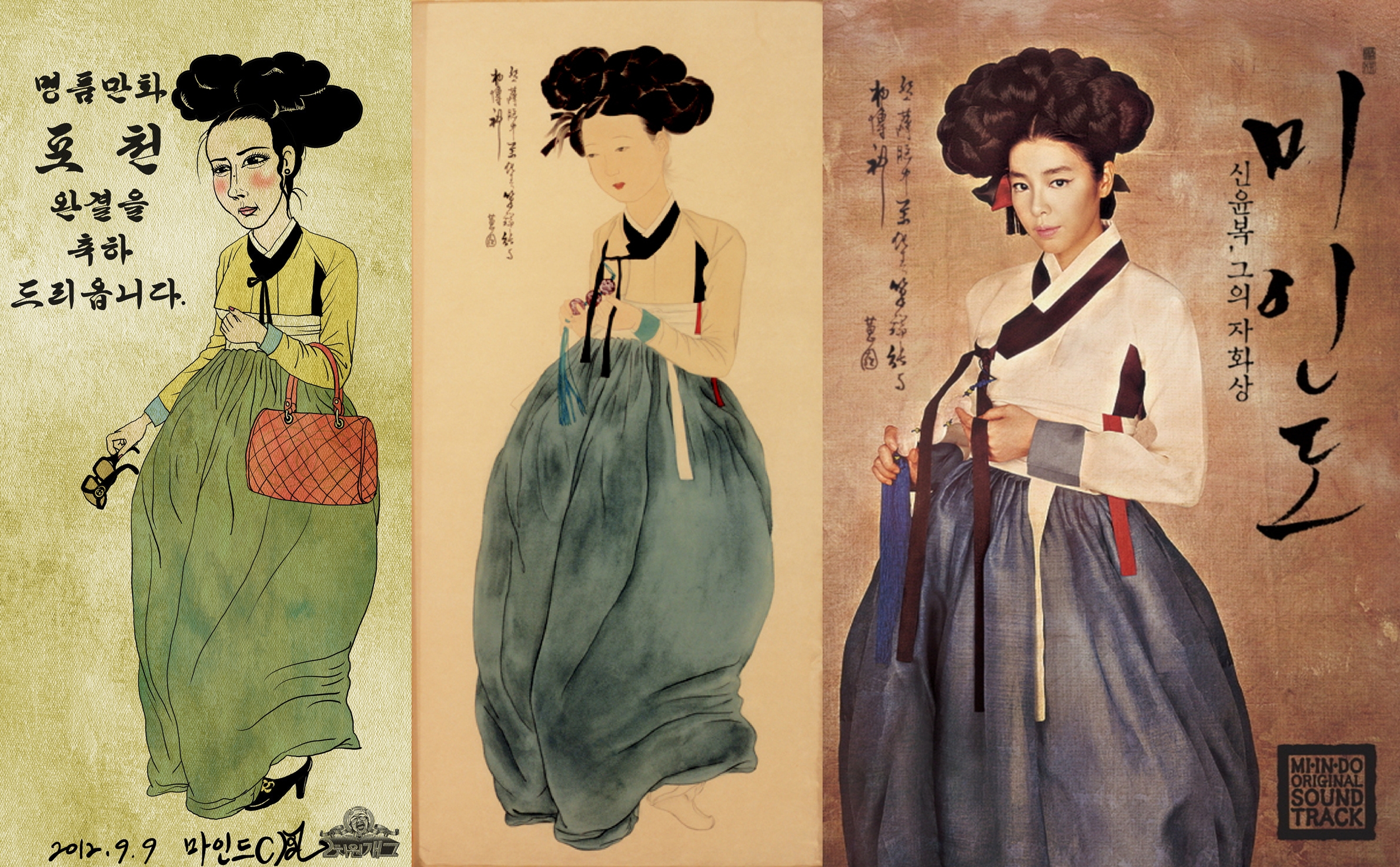
외모가 예쁘면 물론 좋다. 그러나 누구나 다 예쁘게 태어나지는 않는다. 외모의 다양성과 개성을 존중하지 않고 단순히 ‘이렇게 생겨야 한다’는 고정관념 속에서 사람들은 지쳐간다. ‘강남 미인도’ 같은 풍자가 나오는 것이 이런 분위기와 무관하지 않다. 그러나 여전히 대한민국은 지금 ‘외모’ 하나만으로 사람을 판단하는 경향이 강하다. 단순히 못생긴 얼굴을 무시하는 경향이 문제가 아니다. 예쁜 얼굴이라 할지라도 ‘자연미인’이냐는 시험대에 놓인다. 예쁜 것을 원하면서도 성형을 한 얼굴이나 화장으로 달라진 얼굴에 뭔가 하자가 있는 것처럼 묘사되는 것은 아이러니다.

[Of course,] it’s good to look pretty. But not everybody is born that way. There is a great deal of variety among people really, and we are exhausted by strong prejudices in Korea against those that don’t live up to the ideal, which is partially related to the ‘Gangnam beauty’ stereotype. [See here for a classic satire of that by SNL Korea— James]. This is not just a problem of people being ignored if they have an ugly face though, because even if you’re pretty, you’ll always be on the judgement table over whether you’re a ‘natural beauty’ or not—it is such an irony that, even while judging people based on their appearance, we’ll criticize them if they use cosmetic surgery or cosmetics to look prettier.

Gangnam Miindo(L-R: a ‘Gangnam beauty’; the original Miindo/Portrait of a Beauty by Sin Yun-bok (b. 1758); and a poster of the 2008 movie of the same name. Sources: Awesome Pick; 기냥 보는 재미…원미동통신; and 연예계 뒷담화)

단순히 못생긴 여성이나 남성에 대한 무시뿐 아니라 자연적으로 예쁘게 태어난 여성이나 남성에 대한 지나친 환호 역시 우리 사회가 외모 지상주의에 멍드는 현실을 여실히 나타내 준다.

The issue here is not just that ugly women and men are ignored, but that we so loudly cheer those of us that are naturally born attractive, showing how broken our present society is.

외모는 타고 난다. 성형한 외모가 아무 노력없이 얻은 것이라 비판할 수 있다면 자연미인 역시 그 외모를 가지려고 노력한 것은 아니다. ‘뚱땡이’ ‘못난이’ 등의 캐릭터가 버젓이 TV에서 통하고 그 외모로 사람을 평가하는 분위기는 김치와 한국인을 비하했다는 할리우드 영화 <버드맨>보다 훨씬 더 심각하게 생각해야 할 문제가 아닐까.

Our appearance is something that we’re born with. But if you criticize those who get cosmetic surgery to look attractive as doing it without any hardship or effort, [then you’re being hypocritical,] for natural Beauties didn’t expend any effort also. Surely the characters like ‘fatties’ and ‘uglies’ that appear on TV shows, and the atmosphere created by judging people so harshly on their appearance, are some things much more important to think about and criticize, than a character in a Hollywood movie saying that kimchi smells? (End.)

Ajummification

Woo Dong-gyoon’s article starts well with its raising of an important issue, but disappoints with its repetitive platitudes. Also, in a mental note not to repeat the EXID HANI Vitaminsame mistake myself, he probably makes few converts among Korean comedy fans with his sweeping denunciations of the entire genre. (Edit: In fairness, it’s more of an op-ed than an article really.)


His greatest and most surprising sins though, were ones of omission. First, what of the comedians jokingly imitating Hani’s (now famous) dance move?

Yes, in isolation it was all good fun, and yes, even Hani herself comes across as pretty goofy here, and shy and endearing on the episode overall. (The contrast with her on-stage presence is really quite remarkable.) In the context of body-shaming the comedians because they don’t match the very narrow height and weight range of typical girl-group members however, it adds insult to injury by suggesting that women of their ages and body-types couldn’t possibly be sexy either, the notion that they could get their groove on being self-evidently absurd.
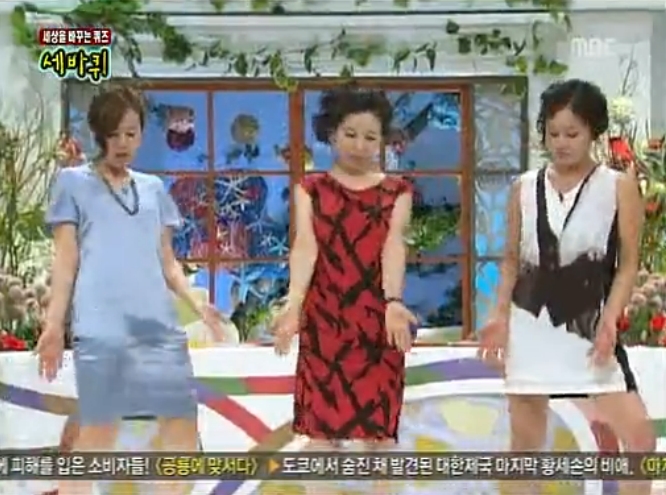
If all this sounds familiar, that may be because I wrote about a very similar example nearly five years ago, in which Hyuna of 4Minute performed her own ‘sexy pelvic dance’ on the MBC variety show Quiz That Changes The World. Unfortunately, I’ve long since deleted the post sorry, and remaining copies of the full episode (#62, 10 July 2010) are behind paywalls, but I can tell you that after Hyuna performed:

First, then 51 year-old male singer KIm Heung-gook would get up and parody her:

Kim Heung-gook Quiz That Changes the World(Source: KBS Conting. Technically, this is from an earlier part of the show, but you get the idea.)

Then host Park Mi-sun (then 43), actress Im Ye-jin (50), and actress Lee Kyung-shil (44):

Copying Hyuna's Pelvic Dance(Update: I was able to find a low resolution copy of the episode here, from which I took the above screenshot.)

Then finally the 12 year-old daughter of retired footballer Yoo Sang-chul, the guest in the yellow t-shirt (the “13” in the video was likely her ‘Korean age’):

As you might expect, the episode quickly generated a lot of controversy for its sexualization of an adolescent girl. Alas, that ‘girl’ would actually be 18 year-old Hyuna, a bizarre blind spot that I went on to explore in my Reading the Lolita Effect in Korea series. More to the point here though, if viewers had few qualms about laughing to a 12 year-old thrusting her crotch in their faces, then presumably they’d have even less about the stereotypes of asexual, unattractive ajummas perpetuated by almost always only having 20-something women doing the sexy dances on such shows, every 30+ woman only the goofy parodies.

Yes, they’re not solely responsible for widespread perceptions that women lose their sex drives after having children, and consequently that its only fair that men should visit prostitutes to meet their needs. But they certainly don’t help either, and it’s surely very telling that I’m seeing the exact same, apparently still fucking hilarious joke 5 years later.

Rather than outrage though, I was strongly reminded of a (very) old skit by the UK comedian Ben Elton instead, in which he laments he can never be a great comedian because he lacks…

Big Tits

And it’s worth quoting him at length, because replace all the “big tits” below with “he/she’s fat/ugly/unsexy/too old” jokes, then I feel exactly the same way about the Korean comedy programs I’ve just described. From An Approach to Traditions of British Stand-up Comedy by Oliver John Double (PhD thesis, University of Sheffield, 1991, pp. 298-299):

In another of his routines, Elton makes a more political attack on clichéd comic style, satirizing the British tradition of smutty humor. A hypothetical situation comedy is described, which contains a number of covert references to breasts. Elton deconstructs these jokes, and adds ironic laughter:

I saw this sitcom, working title: Can You Show Me the Way to Oldham?. That was the first laugh: Oldham sounds a bit like “hold ’em” doesn’t it, very very funny, well done BBC, well worth sixty five quid a year license money I don’t think. I watched ’em all, Benny Hill…laugh? I nearly did, fantastic. And in this sitcom, there was Gloria, behind the bar, she’s a big woman, bring in the camera, steam up the lens, everybody loves it, big tits, best gag in the world, that’s the one for the British punter. In comes Tom, he’s an amicable northern stereotype, ‘e says, “By ‘eck, you don’t get many of those to the pound”, ‘e gets a laaauuuugh!! Nice one Tom, ‘cos she’s got big tits, oh ho ho ho ho! ‘E says, ‘By ‘eck, I wish I were her doctor’, yes Tom, second laugh, same pair o’ tits, I couldn’t believe it, it’s happening in front of me. ‘E says, “By ‘eck, no wonder they built the extension,” go on Tom, you’re winning, ‘e says, “By ‘eck, that’s the loveliest pair of…eyes I ever saw!”. Oh, amazing Tom, we thought he was gonna say “tits'” didn’t we? Faaantastic!

After ridiculing the simplicity of the joke-structures of breast innuendo humor, Elton then tackles the root of the problem. Jokes which make covert references to breasts rely on the idea that breasts are rude, naughty objects of desire, which cannot be overtly mentioned. Elton destroys this conception, by reincorporating the jokes from his hypothetical situation comedy in the context of a woman’s getting dressed in the morning. This robs the breasts of their naughty connotations, restoring their status as ordinary physiological features, and thus making the jokes laughably unfunny:

Come on girls, how do you get dressed in the morning, dear me ladies, you must die!! Bathroom mirror, up with the nightie, there’s my tits! Fuckin”ell, these are funny!! I’ll ‘ave a good laugh at my tits while I’m brushing my teeth! Ooh, I wish I were my doctor, ho ha ho ho ho!! I’m glad I built the extension, tee hee. These are the loveliest pair of… eyes I ever saw…! Fuck me, I nearly said I ‘ad big tits!!

Ben Elton, alas, is also a White Person of a Certain Education. Be that as it may, I remember laughing so hard I was crying as I first listened to him 20 years ago, and, once the tears dried, how surprising and refreshing it felt to hear comedy deconstructed so. It’s even more impressive when you learn that he first performed this particular skit way back in 1981, and that it was a deliberate reaction to the virulently racist, sexist, homophobic jokes that were standard for UK comedy in the 1970s (see 10:55-12:45, and 1:35:00 here).

Update — I was able to find a video of that first performance from 1981, but have to admit that it hasn’t aged well, partially because his delivery was much too fast (in fairness, he was only 22; he improved as he got older):

Elton’s skit clicked with me because in my experience, Korean comedy is very physical and slapstick, and seems to repeat many of the same childish jokes, as described above. Friends and colleagues I’ve discussed this with though, chosen because they’ve watched much more Korean comedy than me, say that my characterization is unfair, with sitcoms like High Kick, for instance, being just as sophisticated as the likes of Friends. And they’re probably right. Rather than discussing Korean comedy then, which I’ve already stated that I can’t and shouldn’t generalize, I think it’s more correct to say that, as a whole, Korean television is very comical, primarily because it has an unusually large number of variety programs—which include shows like Vitamin and Quiz That Changes The World:

“Much of Japanese television content, including even what is aired during [prime time], consists of ‘infotainment’ on subjects that range from science and diet to current affairs and travel. Rather than being broadcast as straightforward factual television, these shows are often bifurcated into segments that involve a panel of celebrities who discuss and interpret the informational content in an entertaining way. By cutting back and forth between factual and entertaining content, celebrities remain central to Japanese televisual discourse. As opposed to a continuum defined by fact and fiction, Japanese variety TV generally alternates between fact and celebrity.”

Patrick Galbriath and Jason Karlin (ed.s), “Introduction: The Mirror of Idols and Celebrity,” in Idols and Celebrity in Japanese Media Culture, (2012, p. 17.)

Yes, that quote was actually about Japan. But if I was so desperate for sources that I still used it in my recent conference paper on the disproportionate role of celebrities in Korean popular culture, then I’m just going to go right ahead and extrapolate from it here too. Because seriously, it does sum up Korean television rather well, and serves to suggest that the compulsion for panels of celebrities to “interpret informational content in an entertaining way” is a strong one, for which crude body-shaming and physical, slapstick jokes would be easy methods to rely on. (Not to mention racist jokes.)

Julien and Ga-hee(Source: Think Different)

Moreover, whatever the explanation, I suspect that all these examples are just the tip of the iceberg. For instance, in the very next episode of Quiz That Changes the World, Ga-hee opined that because she was tall, she preferred to date men over 183cm, prompting her and fellow tall guest Juilen Kang to line up against much older and shorter hosts Kim Gu-ra and Jo Hyung-gi. (Never fear: afterwards, she did some completely spontaneous sexy dances to make them feel better.) Also, here’s three more examples from 2012; another from this February; another from March; and God knows how many more I’d find if I actually watched the damn things…

I Should Really Be Doing More Interviews by Now, Dammit…

But do such examples have “a direct pedagogic effect” on Korean girls and women watching though? Or on Korean boys, on Korean men, or on pretty much anyone that watches them for that matter? Or do they instead see them as merely harmless fun, are fully aware of their damaging messages about body-image and sexuality, and reject them completely? After all, the second main take-away point of Tomlinson’s book, and which should surely be a mantra for all cultural-studies students, is the question of “who speaks?”, the necessity of acknowledging and analyzing (supposed) victims’ negotiation of ‘texts’ they’re confronted with being Tomlinson’s very next point:

Any advance in [an approach to cultural imperialism based on texts rather than institutions] is dependent on an analysis of the relationship between text and audience. This is something that, as Boyd-Barrett points out, few critiques of cultural imperialism have addressed (pp. 44-45):

The orthodox view of audiences in the West is now one that stresses the social context in which communications are received, and which stresses the individual’s capacity for active selection and selective retention. This view does not seem to have carried over sufficiently to Third World contexts….Individual capacity for psychological compartmentalization and rationalization is underestimated to an extraordinary degree. Much more attention needs to be given to the processes by which individuals and groups interpret, translate, and transform their experiences of foreign culture to relate to more familiar experiences.

(J.O. Boyd-Barrett “Cultural Dependency and the Mass Media”, in M. Gurevitch et al. (eds) Culture, Society, and the Media, London, Methuen, (1982, p. 193.)

In light of that, the second failing of Woo Dong-gyoon’s article on Hani and the 3 ugly sisters is that he doesn’t attempt this, not interviewing a single person. By extension though, it is also my own for relying on such articles, rather than scouring Korean academic journals and/or conducting my own ethnographic research, and consequently failing the challenge I set myself in the introduction. But this is just a blog sorry, academic Korean is tough, and the approximately $10 a year in donations I receive these days don’t allow for much fieldwork. (Yes, it does feel a little awkward and distasteful to mention that; but doing so could hardly lead to less donations, right?!) Given those constraints, I would be very interested in and grateful for readers’ own interpretations of any of the examples mentioned here, of what they know of Koreans’ interpretations of them, and/or for links or any other sources with more.

Also, necessity being the mother of invention, for your help in establishing a second means to fulfill the challenge. Because if Korean popular culture is actually just bursting with positive representations of non-skinny, non-tall, and/or 30+ women looking and feeling sexy, and rare proud girl-groups with larger than average members don’t feel compelled to slim down…then sure, maybe it’s all just harmless fun. If not though, then maybe, just maybe, those fat jokes are indeed—yes—problematic.

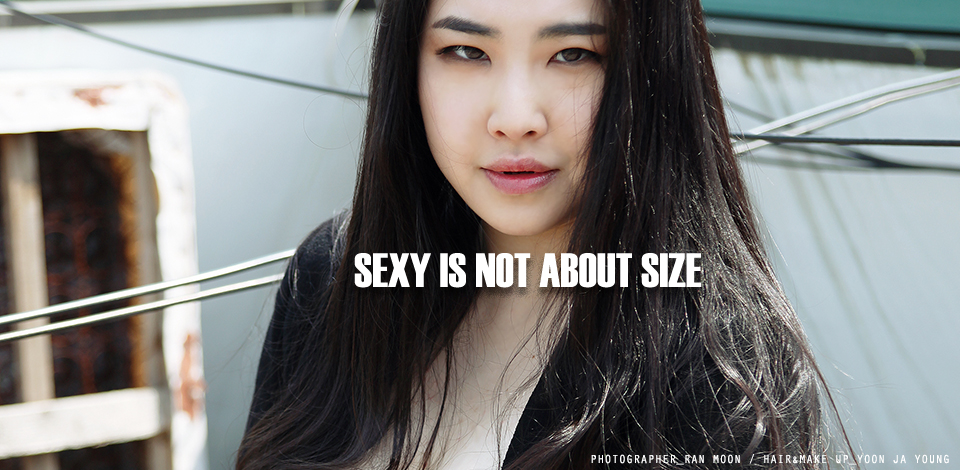
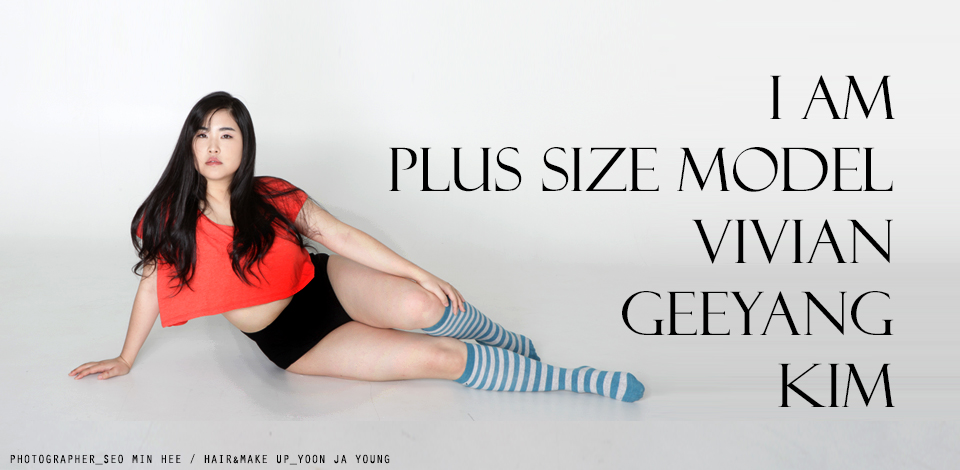
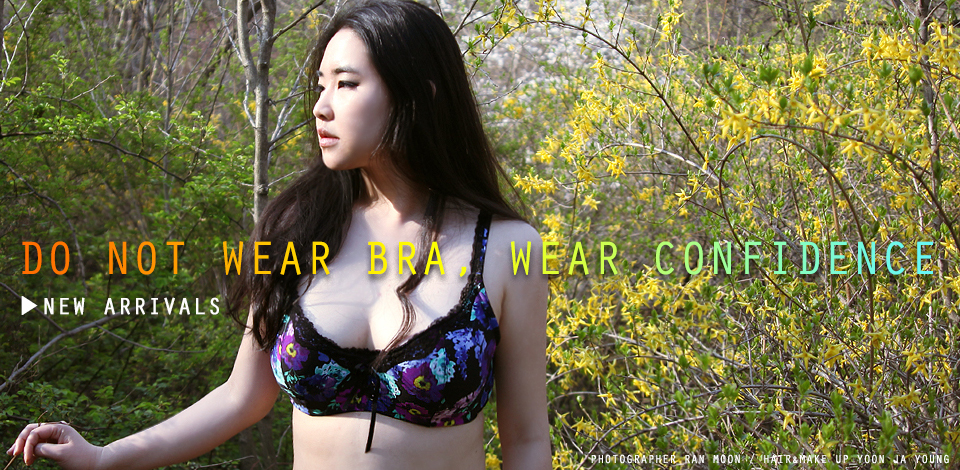
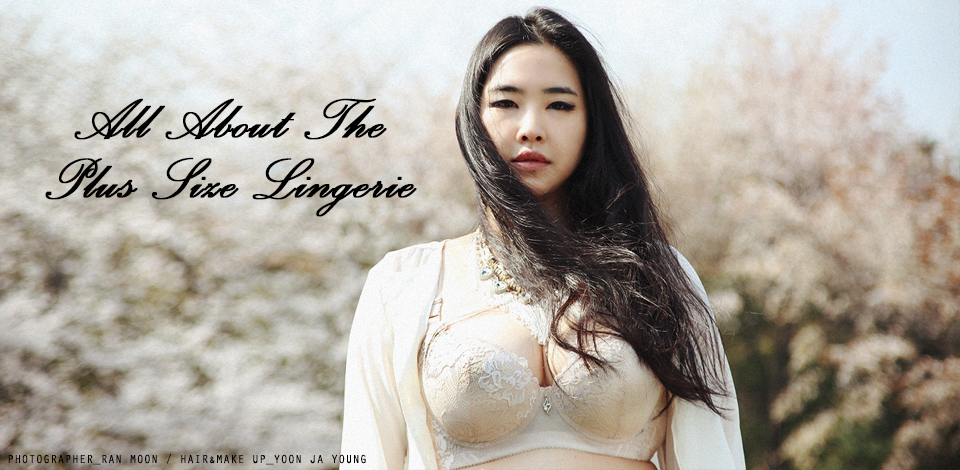
To get the ball rolling, let me present all the examples of ‘plus-size’ Korean models I know:

Sexy is not about size(Source: All Tha+ Plus)
Sexy is not about size 2(Source: All Tha+ Plus)
Sexy is not about size 3(Source: All Tha+ Plus)
Sexy is not about size 4(Source: All Tha+ Plus)
Sexy is not about size 5(Source: All Tha+ Plus)

Did I get them all? Did I miss anyone? WHAT DO YOU MEAN, THEY’RE ALL THE SAME WOMAN?!!

Brains & Beauty: With Korean women achieving higher education, why do so many rely on the scalpel?

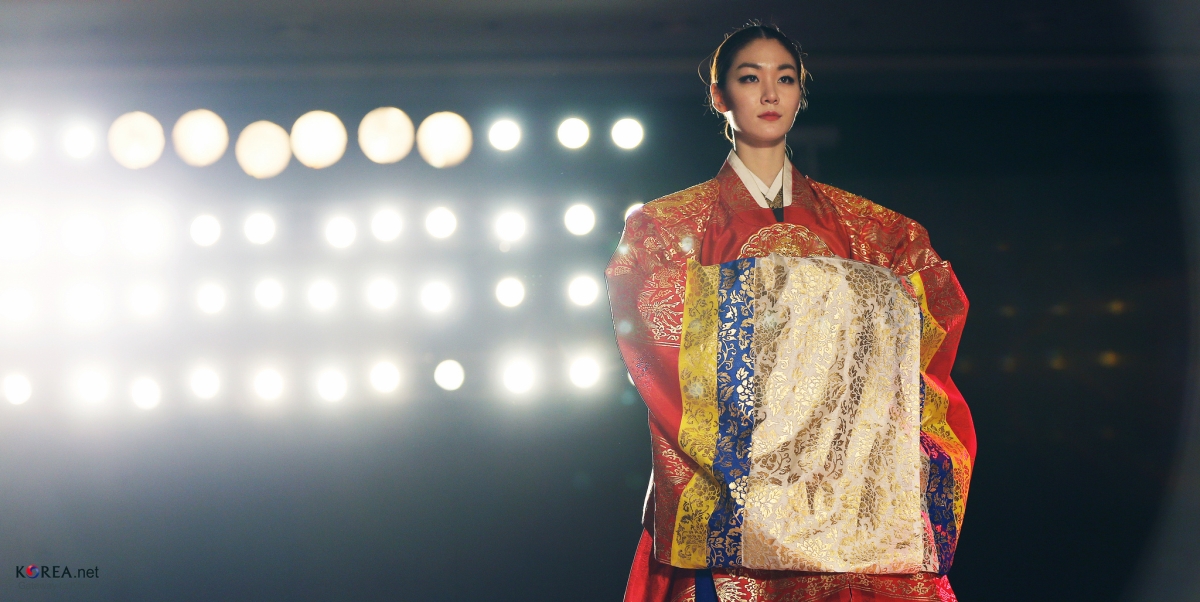
Hanbok Fashion Show(Source: Republic of Korea; CC BY-SA 2.0)

“I believe in equality and love the Free the Nipple movement. After four years in Korea, I am still intrigued by its thirst for modernity mixed with its fear of losing its cultural past, sometimes to the point of schizophrenia.”

And with that self-introduction, how could I not accept Manouchka Elefant’s proposed guest post?

As well as being a long-time reader, she’s also a Swiss recipient of the NIIED scholarship, and has just completed her Master’s in finance at Yonsei University (see here for her LinkedIn bio). She adds:

“Anyways, a few friends read my paper [for my Modern Korean Society & Culture class] and found it very interesting and suggested I publish it. Since your blog is my reference on the subject I thought I’d send it to you.”

Flattery will get readers everywhere. So, without any further ado, let me present her post:

Introduction

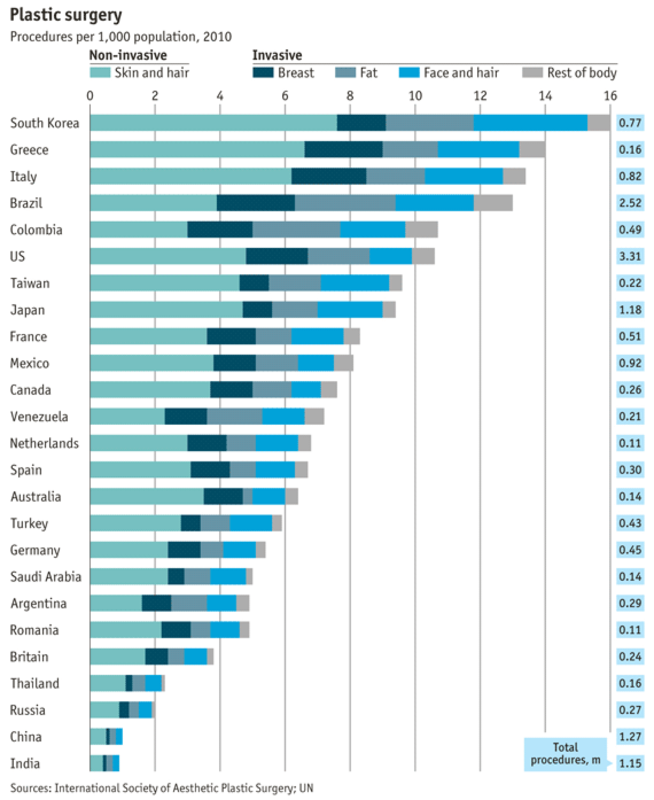
Women in Korea have come a long way since the beginning of the century. They have more freedom, greater access to education, and higher spending power thanks to their increasing participation in the workforce. This emancipation of women has been accompanied by a seemingly paradoxical phenomenon: the explosion of the beauty industry and in particular the normalization of plastic surgery procedures. Per capita, South Korea is the number one country for non-invasive and invasive plastic surgery performed and counts the highest number of plastic surgeons (Raitt 2014). The peninsula’s history and Confucian heritage has a tremendous impact on women’s growth in society as well as on contemporary beauty ideals. Today cosmetic surgery can be seen as the two sides of a same coin, it is both an appropriation of one’s body and conformation to society’s expectations of women in Korea.

Historical heritage

Analyzing womanhood in Korea requires us to understand the country’s Confucian heritage and its revolutions. Typically, the contemporary obsession for beauty in Korea is seen as “conformity to patriarchal version of femininity in order to maximize women’s chances of success in marriage and the economy” (Ruth Holliday 2012). However, in a relatively short period, the Confucian ideal has gone through a lot of transformations, notably in the 1930’s and after the Japanese occupation.

Confucian Ideal

Confucian scholars would be quite surprised to see that Korean people no longer appreciate women with beautiful moon faces. In their time, “virtuous femininity” meant that upper class women conformed to an exacting Confucian decorum (Ruth Holliday 2012). Whether a wife, mother, or daughter, a woman’s self was fully dependent on that of men. They were restricted to the domestic sphere, and their success was in their “ability to mimic a concealed and deferential ideal, defined by virginity or maternity” (Ruth Holliday 2012).  Chastity and modesty were highly valued and expected of women from a young age (Lee 2014). To some extent, Korean women are still expected to portray an image of innocence and modesty no matter their age.

Also inherited from the Choson dynasty is the concept of embodying one’s social class through one’s appearance, with the “practice of displaying social status through class-appropriate clothing and decorum, and the ways in which they are interpolated in neoliberal discourses of self-improvement and class mobility are evident in the ways in which cosmopolitan subjectivity is embodied through cosmetic surgery as a sign of a desired class, social or gendered identity” (Elfving-Hwang 2013), leading to one of the theories behind cosmetic surgery as a way to achieve social class identity, which seems to be only part of the phenomenon.

Modern Girl

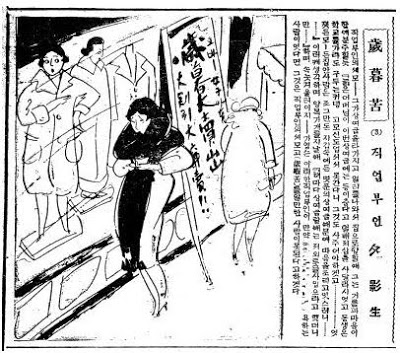
The 1920-1930’s with its fun flapper girls in the West, dancing to jazz and smoking were in stark contrasts to the Confucian doctrine, yet this new “modern girl” had a strong impact on Korean women and their an seok-ju modern womanaspiration to emancipate themselves from constraining paternalism (appendix 1, source: Gusts of Popular Feeling; rather than in the original separate appendix, I’ve posted images and tables as they came up—James). The modern girl’s short hair was in direct clash with Confucian values and was seen by many as a sexual revolution (Chung 2012). However, the modern girl was associated to decadence, bourgeoisie, and conspicuous consumption.  “A woman drawing attention to her own sexuality – body and desire- was frowned upon in traditional Korea” and the modern girl came to symbolize more than women’s freedom, but also the “fracturing of class [poor versus bourgeois] and citizenship [Korean versus Japanese]” (Chung 2012).

Furthermore, the modern girl was not a mere imitation of Japanese or American influences, it went deeper than hair and clothes, “it mirrored the changing social consciousness, the collective identity of traditional womanhood as an aspect of modernity and modern conditions in colonial Korea” (Chung 2012).

Additionally, the modern girl “challenged the traditional gender roles and centuries of Confucian morality by accumulating products that enhanced female beauty and sexuality” (Chung 2012), which also meant that one was able to alter their appearance and other’s perception of them through consumption. We can wonder if it was a precursor to contemporary Korea’s constant availability of cosmetics and clothing shops.

However, in the context of occupied Korea, the modern girl was highly criticized for being influenced by the Japanese media and to some extent for supporting the colonial agenda. It was seen as another way in which Japan attempted to impose itself as a modernizer over Korea and that “the modern girl phenomenon evolved in the framework of this cultural and economic subordination of the era, which led to its conflicting popular reception” (Chung 2012). Paradoxically, people were attracted to this new image of femininity, spurring their “voyeuristic participation in mass culture, titillating the public while inviting condemnation at the same time” (Chung 2012). It can be similarly observed with today’s pop-culture idols, with the public simultaneously attracted by these sophisticated girl bands while criticizing their over-sexualized image.

Wise Mother Good Wife

At the other end of the spectrum is the ideal of wise mother good wife and although it also served to empower women, its motivations were quite distinct from the modern girl. This concept was at the complicated “intersections of patriarchy, colonialism, nationalism, and western modernity” under which women followed, fought back, or appropriated the predominant male dominated world (Choi 2009).

The wise mother good wife ideology was used by different groups, each with its agenda. Korean nationalists reinforced the role of mothers as educators of Korean children and as supporters for their husbands. Japan’s gender program used it both at home and in colonial Korea “with the aim of producing obedient imperial subjects and an efficient, submissive workforce” (Choi 2009), while protestant missionaries saw it as a way to spread their faith with a “pious mother and wife as a moral guide in the Christian family” (Choi 2009). All of this contributed to the education of women in Korea.

This ideology was deeply rooted in a patrilineal social structure, promoting chastity, marriage and motherhood. It was in direct clash with the modern girl, which was highly criticized for her vanity, her consumption, and her relatively open sexuality. Nevertheless, wise mother good wife also served as a platform to empower women, even if within a restricted domain. The women who “benefited from this education centered in domesticity paved the way to new domains for career women” (Choi 2009). Women were however, not educated for their own benefit and advancement as individual beings, but rather for what they brought to men and society, therefore not for their emancipation. Nonetheless, it set the path towards higher education and more freedom for Korean women.

Women’s Growth in Korean Society

Women’s Education

As we saw, there were several different movements promoting women’s education in Korea, from the protestant missionaries to the Japanese regime. However, some Confucian scholars, influenced by the West, also associated the advancement of women as a sign of a modernized society. They thought that “woman is the foundation of human society and the girder of the house and thus if she is weak or ignorant, she would not be able to fulfill her central role” (Choi 2009).

With Korea’s independence and its efforts towards development, education became widely available to both genders. Educating women therefore was modernizing Korean society, as well as increasing the Higher Education trend for men and women in Koreaworkforces’ overall education level to achieve economic development. In 1966, only 33% of girls went from elementary school to middle school. Similarly, 20% continued to high school and 4% to university. However, by 1998, 61.6% went from middle school to high school and 61.6% to university (Korean Overseas Information Service n.d.). By 2006, the number of women reaching higher education was as high as that of men, with 81.1% and 82.9% respectively entering college and university (table 1)  (Ou-Byung Chae 2008).

This remarkable progress in the number of women achieving higher education also came with its own challenges. Although women achieve higher education there is still a strong gender bias both in the educational curriculum, in the family sphere, and in the workplace.

Women’s Employment

Today, Korea is known for its high educational standards but also for the high inequalities between men and women in the workplace. Last years’ World Economic Forum ranked Korea 111th out of 136 nations in its Global Gender Gap report. While in 2012, the Organization for Economic Cooperation and Development’s (OECD) pay gap report placed Korea in the top of the list with a 39% differences between men and women’s pay (McKay 2014).

Although women have made a lot of progress in Korea’s work environment, according to Statistics Korea’s latest figures, they still only participate for about 50% in the workforce, whereas men reach over 73% participation. Furthermore, the market research firm CEOScore found that in 2013 about 1 out of 1,430 employed women reached a corporate management job against 1 out of every 90 men (McKay 2014). On top of it, Korea also shows the poorest level of female graduate employment among the OECD countries (McKay 2014).

Granting the Korean government has made it part of its objectives to change the situation, a number of factors create this tense work environment for women. It is commonly perceived that women in Korea suffer from higher job discrimination, starting from the hiring process all the way to corporate advancement. The Korean work culture and social expectations of gender roles both have an important effect. High unemployment further reduces women’s chances of finding good jobs, with the economy feeling global pressures and a staggering number of overqualified job hunters, women are often passed over for men in an environment where youth unemployment has been around 8% since 2010 (Park 2014). Both women and men, see being good looking as the next level to compete in the job market and “employment cosmetic surgery” is growing in popularity with both genders (Korean Overseas Information Service n.d.).

Furthermore, preconception of women’s gender roles as mothers and wives results in discrimination in the workplace. The government’s policies to increase women’s participation in the workforce are not “working well because companies still view men and women’s societal duties as different” (McKay 2014). Additionally, the prevalent perception that women are supposed to quit working after getting married to focus on raising children means that “women are being forced to choose between having a career or having a family” (McKay 2014). Very few women go back to work after having had children in Korea, not necessarily by choice. During recruiting, a lot of companies prefer male recruits over young women, apprehensive at the prospect of them getting pregnant (maternity leave cost). As a result, a lot of women choose to delay having a family (Lee 2014).

Breaking the glass ceiling is particularly difficult, with a male dominated work culture. After-work bonding, involving copious amount of alcohol, can improve work relationships and even impact promotions. However, these are not widely considered as appropriate for women, especially if they have children, and whom often don’t want to drink as much as their male colleagues. With numerous reports of male colleagues using alcoholic intoxication as an excuse for sexual harassment, it also puts women in a vulnerable position. Of reported workplace sexual harassment 44.5% of them happened at a hoesik (McKay 2014).

Additionally, there is a strong form of blatant sexism in the workplace. Taking the form of pressure against women not to take roles with responsibilities, to their abilities being questioned on the basis of their gender. Today’s sexism “arises from […] subordination for male authority, especially in the current capitalist environment where women are gradually gaining influence” to the point that some men feel threatened by women taking jobs they consider as being theirs (Lee 2014). Even more, “powerful women are facing negative sentiment among people in general” (Lee 2014).

On top of it all, women are expected to be feminine and complacent, to conform to social expectations (Lee 2014). In Korea, this usually means conforming to the rigid code of beauty.

The Female Ideal of Beauty

In all cultures and societies, beauty norms and representations are not frozen in time, but are constantly changing. The place of women in society has a very strong impact on what is deemed appropriate for their appearance. “Historically, Korea is a nation founded on Confucianism that places women at the bottom of the hierarchy and that treats women as inferior to men” (Lee 2014). Furthermore, Korea seems to be special in the way that the traditional model of beauty from the Choseon era lasted a long time without drastic changes until the country opened up to external influences (voluntarily and involuntarily) and at which point it was completely transformed. During the colonial period new beauty ideals started to emerge, but it is from the 1960’s on that a beauty revolution took place and accelerated with the country’s development.

Korean Beauty Standards

With the rapid transformation of Korea from a rural economy to a developed one, the role of women in society tremendously changed and with it the norms and customs of beauty. Looking back at pictures from the first part of the 20th century (appendix 2, below), we can see women with round faces, often with a center part in their hair. For many centuries, thick glossy hair, fair skin, thin eyebrows and small lips were the symbols of beauty. Make-up was often home-made from spices and plants and used minimally to enhance features. It was only acceptable for entertainment ladies to wear white powder or colorful products. In the 1930’s the Korean garb still was the norm and only very wealthy women would occasionally wear western clothing. Since the Choseon period (1392-1919) a simple yet elegant appearance, associated with a dignified behavior and humble manners, were considered the quintessence of beauty and elegance following Confucian standards. However, as the country suffered from poverty, most women did not have the means to spend on their appearance, only wealthy women could. Western fashions were for the wealthy and city folks while the average person still wore traditional clothes. “Korea was not a strong country, and people’s efforts to protect and preserve their identity served to strengthen their conservative values” (Lee 2014), which also translated in the way they portrayed themselves. This shifted slowly until the 1980s when Korean clothes started being reserved for special occasions and western fashion became the norm.

Examples of Korean women in the 1900’s(Appendix 2, L-R: Portrait of four women, Peng Yang, Korea, 1924; Bride, Gishu, Korea, 1926; A young ‘kisaeng’ in full Korean traditional dress, ca. 1904. Source: University of Southern California Library)

After the war, Korea opened up further to western culture, which became synonymous with development and modernity. Until the 1987 Democracy Movement “Confucian tradition was largely responsible for dictating the roles of women” (Lee 2014) and with it the way they should present themselves in society, but The 'S' Shapethis new era transformed both the role of women, bringing them from the home to the workplace, and the perception of beauty. “Under consumer capitalism Korean women’s bodies have entered the public sphere, no longer hidden away but now available for scrutiny and consumption” (Ruth Holliday 2012).

In Korea, there is tremendous pressure on women to conform, and most women are conscious of the “harsh criticism that comes when [they] deviate from the norm” (Lee 2014), leading to a strictly defined beauty ideal. The contemporary beauty ideal is quite far from the prevalent model of only 20 years ago. Nowadays, the Korean ideal of beauty looks nothing like the moon-shaped beauties of the past. Fair skin is still admired, but beautiful features are singularly different than in the past. Eyes should be big and open, the bridge of the nose should be high and its tip slender, the face should be small with a narrow jaw, the body should be very slight yet show an “S” shaped curves (appendix 3, source: The Grand Narrative). To some extent, this new ideal looks more like a comic book character than a realistic image of women, and can rarely be achieved without constraining one’s body or altering it drastically through cosmetic procedures. Yet it is omnipresent in the media, advertising, and in the messages directed to children from an early age (appendix 4).

Bean paste S-line V-line(Appendix 4: Messages directed to young children carry messages of beauty, physiognomy and conformity, here in an advertisement for bean paste. Source: The Grand Narrative)

This standardization of beauty is especially strong among young women who want to emulate celebrities and are constantly being reminded by the media and society that showing good care for one’s appearance is essential for achieving a good marriage and a successful life. The popularity of cosmetic surgery is such that it is considered normal for celebrities to be redone and still represent role models. It is hence no wonder that Korea is the countries with the highest number of children having plastic surgery and double eyelid surgery is a common gift for graduation from parents.

The paradox goes even further, asking women to embody simultaneously images of innocence and purity, while being glamourous and exciting to the male gaze. However, “expressions of sexual subjectivity remain a big taboo in Korea” where we “can have a 25 year-old’s S-line quite literally highlighted for a heterosexual male gaze, but heaven forbid she admit to having sexual feelings and experience herself” (Turnbull 2012).

Standardization of beauty is also spread through the assignment of different letters to exemplify the ideal shape, “while this practice is seemingly frivolous on the surface, it actually belies much more pernicious trends in society at large, when you have celebrities vocally espousing their alphabet-lines and therefore actually objectifying themselves as a conglomeration of “perfect” body parts rather than as whole, genuine people” (Turnbull 2013).

Fueling the Korean cosmetic industry’s steady growth of more than 10% per year for the last few years, the beauty obsession is constant, from adds for plastic surgery and dieting in public transportation to the “mushrooming cosmetic shops, which have increased 37% a year on average” (Raitt 2014). In a patriarchal society where women are not yet treated as equals, these all reinforce the belief that “pretty girls are more valuable” (Lee 2014) and push for conformity. It is a new way to impose the demure Confucian-influenced image that is wanted and anticipated of women.

Conforming to the Ideal

Some researchers assign plastic surgery in the “Neo-Confucian ‘culture of conformity’, where the unity of the whole is more important than the individuality of the one, producing beauty as a new requirement of decorum’ for women” leading to an environment where women are “obsessed with their appearance” (Ruth Holliday 2012).

Furthermore, the backlash in Korea can be very strong and according to scholar Lee Sang-Wha three factors have “helped uphold Korean society and eventually led to the demure girl image of today: gender segregation, division of gender-assigned labor and the subordination of women” (Lee 2014). It left no place for feminism in Korea’s Confucian heritage where the old values still push them to “appear subordinate and innocent” (Lee 2014).

However, important changes in Korean society can offer another reason behind contemporary beauty trends. The political and economic transformations of the past 30 years, accompanied by an incredible speed of democratization and industrialization, offered new social opportunities for women. As we have seen earlier, university attendance is extremely high, and Korea actually has one of the highest rate for women’s enrollment in college globally according to the OECD.  Some sociologists argue that this “recent upsurge in female societal empowerment may be associated with an oppressive backlash in media portrayals of gender ideals” (Turnbull 2013). This unrealistic expectation on women has also been observed in other regions and “historical data suggest that societal shifts toward gender equality are often accompanied by increased media portrayal of unrealistic gender norms as a reactive “tool of oppression” by mainstream society” (Turnbull 2013) further pressuring women to conform to the beauty ideal.

All of these negative forces appear in the private and the public spheres. The “care of self and cosmetic surgery increasingly link notions of ‘correct’ or ‘appropriate’ appearance with performing adequately in society as a social subject” (Elfving-Hwang 2013).

Plastic Surgery’s Normalization

The numbers speak for themselves, the International Society of Aesthetic Plastic Surgeons’ global ranking places Korea number one in procedures per capita in 2010 (table 2, below), ahead of the United States and Brazil, and also tops the list with the biggest number of registered cosmetic surgeons per capita (Elfving-Hwang 2013). According to the Korean Association for Plastic Surgery, “1 in every 77 people in South Korea has had [at least one] plastic surgery (Raitt 2014). The Fair Trade Commission also stated that one quarter of the world’s plastic surgeries take place in Korea, representing a 500 billion won industry (Raitt 2014).

Plastic Surgery Procedures per 1000 population, 2010There are two categories of cosmetic procedures. For the non-surgical procedures, the most popular ones are in order of importance: Botox, hyaluronic acid injectables, laser hair removal, autologous fat injectables, and IPL laser treatments (Raitt 2014). These petite surgeries are highly popular as they are non-invasive, cheaper, and require no down-time, exemplified by Botox which counted 145,688 procedures in 2012. On the other hand, the surgical procedures in order of popularity are: lipoplasty, breast augmentation, rhinoplasty, blepharoplasty (double eyelid), and abdominalplasty (table 3, source: source: the Korean Consumer Agency).

Top plastic surgery procedures in 2010As shown by these statistics, plastic surgery in Korea is increasingly normal, with more and more women, and men too, opting to go under the knife. However it is important to point out that women are not passive consumers of beauty, on the contrary they are “highly informed, active agents in their engagements with cosmetic surgeons” (Ruth Holliday 2012). Cosmetic surgery is seen as something positive, that enables access to a desired social status and becomes a symbol of middle class and gendered identity (Elfving-Hwang 2013). Furthermore, the liberalization of cosmetic surgery is also seen as “democratizing practice” and the high growth rate of complex surgeries with high risks, such as the chin and mandibular reduction operation, reflect the trivialization of the practice (Elfving-Hwang 2013).

Confirming earlier arguments about the culture of appearance, plastic surgery has become a marker of consumer middle class identity, of wealth and social status. In turn it “emerges as a highly effective force encouraging individuals to perceive aesthetic surgical intervention as a practical and normative option for self-improvement” (Elfving-Hwang 2013). However, it carries an important weight as well, creating an internalization of patriarchal beauty standards, where “women constantly examine their bodies in a negative and pathological light” (Ruth Holliday 2012) in their insatiable quest to an unrealistic body image.

Conclusion

Women’s place in Korean society, their assigned gender role and idealized representation, is the fruit of the country’s Confucian heritage as well as external influences from the West and Japan. Korean women have not yet reached emancipation as shown by the fact that they still do not own they own body and image and that they are subjected to the paternalistic ideal of beauty. Women’s higher education level is met by tough sexism in the workplace, and although they have more freedom and spending power they still suffer from the constant pressure to conform to beauty standards and expected behavioral traits. The strong backlash against those who do not conform also serves as a way to keep women in check and limit their emancipation.

However, all is not negative. With the new generation coming of age, more and more women are fighting against the system to gain recognition and equal rights in the workforce and it ripples to the private sphere through their increased independence. Korean gender roles are still changing and women will find a way to reconcile their need belonging to the group and their want for self-determination.

References

Choi, Hyaeweol. 2009. “”Wise Mother, Good Wife”: A Transcultural Discursive Construct in Modern Korea.” Journal of Korean Studies, Vol.14(1) , pp.1-33.

Chung, Yeon Shim. 2012. “The Modern Girl (Modeon Geol) as a Contested Symbol in Colonial Korea.” In Visualizing Beauty: Gender and Ideology in Modern East Asia, by Aida Yuen Wong. Hong Kong University Press.

Elfving-Hwang, Joanna. 2013. “Cosmetic Surgery and Embodying the Moral Self in South Korean Popular Makeover Culture.” The Asia-Pacific Journal, Vol. 11, Issue 24, No. 2.

Kim, Taeyon. 2003. “Neo-Confucian Body Techniques: Women’s Bodies in Korea’s Consumer Society.” Body & Society 9(3): 97–113.

Korean Overseas Information Service. n.d. “Women’s Role in Contemporary Korea.”

Lee, Annie Narae. 2014. “The Fight for Equality: Women’s Struggle to Defy Prejudice, Stereotypes and Tradition.” Groove, Issue 91, pp.58-65.

McKay, Anita. 2014. “The Working Woman: Is Korea Ready for Women in the Workplace?” Groove, Issue 91.

Ou-Byung Chae, Jung-Hae Choi. 2008. “Korean Society in Change: Statistics and Sources (I, II, III, IV).” Korean Journal of Sociology 42.

Park, Hyejin. 2014. “Qualified, trained and nowhere to go.” Groove, Issue n.91.

Raitt, Remy. 2014. “The Big Bucks in Beauty: From cosmetics to eyelid surgery, vanity spurs Korea’s economy.” Groove, Issue n. 91.

Ruth Holliday, Joanna Elfving-hwang,. 2012. “Gender, Globalization and Aesthetic Surgery in South Korea.” Body & Society, Vol.18(2), pp.58-81.

Turnbull, James. 2012. “Bikinis, Breasts, and Backlash: Revealing the Korean Body Politic in 2012.” The Grand Narrative, Korean Feminism, Sexuality, and Popular Culture.

—. 2013. “Revealing the Korean Body Politic, Part 3: Historical precedents for Korea’s modern beauty myth.” The Grand Narrative, Korean Feminism, Sexuality, and Popular Culture.

“Sexy Concepts with James Turnbull”

Lee Hyori Bad Girls SBS Inkigayo 인기가요 25 May 2013(Source)

Ahem. But really, they’re just a very small part of my July interview with Colin Marshall for the Notebook on Cities and Culture podcast, where we also discuss:

…what Westerners find so unappealing about Korean plastic surgery; the associations of the “double eyelids” so often surgically created; why he used to believe that Koreans “want to look white”; the meaning of such mystifying terms as “V-line,” “S-line,” and “small face”; the uncommon seriousness about the Western-invented concept of the “thigh gap”; how corn tea became publicly associated with the shape of the drinker’s jaw; Korea’s status as the only OECD country with young women getting thinner, not fatter; Korean advertising culture and the extent of its involvement with the “minefield” of Korean irony; the prominence of celebrities in Korean ads, and why the advertisers don’t like it; how long it takes to get tired of the pop industry’s increasingly provocative “sexy concepts”; the result of Korea’s lack of Western-style reality television; how making-of documentaries about 15-second commercials make the viewers feel closer to the celebrities acting in them; why he doesn’t want his daughters internalizing the Korean sense of hierarchy; why an expat hates Korea one day and loves it the next; how much homework his daughters do versus how much homework he did; the true role of private academies in Korea, and what he learned when he taught at one himself; the issues with English education in Korea and the oft-heard calls for its reform; the parallels between English test scores and cosmetic surgery procedures; the incomprehension that greets students of the Korean language introduced to the concept of “pretending to be pretty”; and how to describe the way Korean superficiality differs from the Western variety.

Apologies in advance for not being much more succinct when I spoke (I’m, well…er..uhm…working on that), and by all means please feel free to ask me to clarify or elaborate on any of those topics.

Also note that Colin has interviewed over 30(?) other expats and Koreans, men and women, and Korea and overseas-based speakers for the Korean component of his series, all most of whom are much more articulate and entertaining than myself, so I strongly encourage you to browse his site. I myself was blown away by Brian Myers’ interview yesterday, which was full of insights and observations that all long-term expats will be able to relate to (and will be very useful listening for those thinking they may become one), and Bernio Cho’s is essential if you want to understand the Korean music industry better. And those are just the two I’ve listened to so far!

A Weighty Matter: Deconstructing the Korean Media’s Messages about Body Image, Cosmetic Surgery, and Obesity

Korean Drama Screenshot(Source)

I was quoted in the Korea Times today, on “Korean primetime’s ‘lookism’ problem”. Due to my sloppy wording though, the fact that I was actually paraphrasing someone else(!) got lost in the final article. So, to give credit where credit’s due, and to use the opportunity to provide some helpful links to further reading, here’s my original email quote:

As researcher Sarah Grogan pointed out in Body Image: Understanding Body Dissatisfaction in Men, Women and Children (2007), watching more television doesn’t necessarily lead to greater dissatisfaction with one’s body—it’s the messages it gives that are what’s important. So, whether it’s a variety program, a music video, an advertisement, or whatever, if what you’re watching stresses being thin, if it encourages viewers to compares themselves with the ideal men and women presented, and/or if it makes you feel like there’s such a huge gap between your own body and theirs, then you’re just going be left feeling ugly. Television everywhere is guilty of that. Korean television though, really stands out with the sheer amount of programming time devoted to appearance and dieting, with its uncritical narratives that cosmetic surgery is a safe and reliable means to financial and romantic success, and with the seeming unconcern with, even positive encouragement of passing those messages on to children. Call that a gross generalization if you wish, but consider this: although Korean children (of both sexes) are only about average weight compared to other OECD countries, Korea is the only country where 20-39 year-old women are getting thinner. Is it really so strange to suppose that the Korean media might have had something to do with that? So unreasonable to suggest that it could sometimes present more realistic images of women?

To be precise, it’s the 2nd half of the 2nd sentence (from “if what you’re watching” to “feeling ugly”) where I’m paraphrasing Sarah Grogan again (p. 112). But, without my making that clear, then it’s no wonder that reporter Kim Bo-eun didn’t realize, and so didn’t mention Grogran. My fault sorry, and, not just because I’m feeling guilty at the *cough* inadvertent plagiarism, naturally I highly recommend Grogans’ book, although frankly I’d wait to see if a third edition is coming out before you consider purchasing it yourself.

Most the of the subsequent links are self-explanatory, so I’ll just highlight a couple. First, the one to Joanna Elfving-Hwang’s “Cosmetic Surgery and Embodying the Moral Self in South Korean Popular Makeover Culture” at the Asia-Pacific Journal, because it’s a must-read. At best, I can only supplement it myself with this recent translation of mine (with links to many more articles) on how scarily unregulated—and genuinely dangerous—the Korean cosmetic surgery industry is, with a Chinese patient dying just last week.

Next, my latest article for Busan Haps, where I debunk recent alarmist reports about—yes, really—a ‘Korean Obesity Epidemic’, especially among children. To quickly sum up my findings for you here, despite the definite improvements that can be made to Korean children’s health, they are actually only about average weight for the OECD (which I suppose is news for Korea), and Korean adults are still the 5th thinnest overall. Like with smoking however, it is both misguided and unhelpful to think in terms of overall rates rather than specific demographics, two extreme cases in point being young, urban women who are getting more underweight, and elderly, rural, poor women who do indeed tend to be (slightly) more obese than ‘average’. World-Changing Quiz ShowSomething to consider the next time a columnist or show host lectures Korean women on eating less—which will probably be as soon as next week, in the run-up to Seolnal on the 18th (source, right: Entermedia).

Finally, another clarification. By “Korean television…really [standing] out with the sheer amount of programming time devoted to appearance and dieting”, I don’t mean shows explicitly devoted to those subjects as such (although I’m sure that, comparatively speaking, their numbers would still be quite high). Rather, it’s that those subjects pervade Korean programming content, with hosts on Korea’s disproportionately high number of variety and guest shows, for example, frequently commenting on especially female guests’ appearances, either by jokingly fat-shaming those that don’t fit the ideal, or by prompting ‘impromptu’ skits, dance performances, or testimonials about dieting and miracle fat-reduction products by those that do, to the extent that such body-policing becomes an integral component of the entertainment (Kim Bo-eun also mentions some examples in Korean comedy shows).

This is just my strong impression though, which I admit I can’t offer any content analysis to back-up, and which I doubt even exists anyway (would anyone like to do some with me?). If any readers have a different impression of Korean television then, and feel that I’m mistaken, by all means please tell me why!

Friday Fun? Korean Women Putting Shoes on Their Heads (Updated)

EXID‘s Hani Star1 shoe on head(EXID’s Hani. Source: Asian Junkie)

When I think of my shoes, nothing repulses me more than imagining sticking them on my head.

When I think of ads and magazine photoshoots, nothing infuriates me more than seeing so many women sticking their shoes on their heads. I don’t care how clean they are.

(The shoes I mean, not the women).

Most cases, naturally enough, are by shoe manufacturers—or in magazines heavily influenced by the prerogatives of shoe manufacturers. Presumably, their motivation in having the models fondle the shoes, play with them, and generally put them anywhere but their feet, is to make the shoes appear as much more interesting, fetish-worthy objects than they really are. Which is all well and good.

But for every guy that gets a faceful of rubber, I’d wager there’s at least 10 women. Combine that gender difference with the playing, and it becomes one of a host of childish representations of women in advertising, so ubiquitous that we come to take such behavior as only natural. As explained in A Web Essay on the Male Gaze, Fashion Advertising, and the Pose:

“Look at these images. What do they suggest to you about these men? Do they seem silly?”

Men Childlike Expressions Ritualization of Subordination“What about these images?”

women childlike expressions Ritualization of Subordination“Most viewers find the images of the men odd or laughable. But the images of the women seem charming and attractive…Why should it seem funny to see a picture of adult men striking a pose when the same pose seems normal or charming to us in pictures of adult women?”

See my post ‘Beauties and the Beast? Understanding and Subverting the Male Gaze through Soju Advertisements‘ (or the Gender Advertisements tag) for many more Korean examples. Lest we forget though, that oh-so-feminine charm sometimes involves women sticking their shoes on their heads.

Their shoes. On their heads. In 2015.

Wondergirls So-hee Reebok Shoe on Head(The Wondergirls’ So-hee. Source: Unknown)
Go Joon Hee - Oh Boy! Magazine Vol.53 shoe on head(Go Joon-hee. Source: Korean Magazine Lovers)
After School Shoe on Head(After School. Source: Focus Newspaper, 8 May 2012, p. 14)
Lee Hyori No Touch Puma Shoe on Head(Lee Hyori. Source: zziixx)
After School Nana - Xtep 2015(After School’s Nana. Source: Korean Magazine Lovers)
sooyoung shoes ceci(Girls’ Generation’s Soo-young. Source: soozarr@minus)
Lee Yoo Bi - NUOVO 2015(Lee Yoo-bi. Source: Korean Magazine Lovers)

It’s not all bad though. With the proviso that advertising is a very broad subject, with sometimes huge differences between different mediums, my own impression is that while sexualization has greatly increased in recent years (albeit by no means a uniform evil), it’s rare that I’ll find a glaring gender difference (à la Goffman) worthy of mention here. That’s what makes these ads stick out so much, and why they’re so infuriating. Cute, yes. But still infuriating.

Please tell me about any more examples you know of, of either sex, and I’ll post them here. Or, shoes on heads aside, what ads bug you the most these days? Please rant away!

Update: Hat tip to reader chocole, who found a variation on the theme with a guy:

Hong Jong-hyun handbag on head(Hong Jong-hyun. Source: I love Hong Jung-hyun)

It’s not a shoe of course, and it’s specifically the thought of putting a dirty, smelly shoe on one’s head that bugs me, and which prompted me to write this post. But I acknowledge that Hong Jung-hyun above looks equally childish, stupid, and/or cute (or whatever) as the women do in the other examples, and indeed in the photoshoot as a whole. This raises an important point mentioned in the comments to that old 2010 post of mine I linked to, which I began incorporating into my presentations:

Slide219“As noted, Korean men are increasingly shown semi-nude and/or with confident and assertive poses. But…”

Slide220“…they are more likely than Caucasian* men to be shown behaving cutely and childishly.”

*As is still the case today, it is very rare to see non-Caucasians among foreign models in Korean advertisements.

Slide222(A much more detailed version of my caption): “According to Nam Kyoung-tae et. al. in Gender Role Stereotypes Depicted by Western and Korean Advertising Models in Korean Adolescent Girls’ Magazines (from 2011; but I was using a 2007 version), Korean men were:

‘…more likely than Western men [and even Western women] to be associated with many female stereotypical behaviors such as self-touching, canting postures, smiling, and childlike and cute expressions. This might indicate that in contemporary society men are not immune to commercial and sexual objectification and this phenomenon was more evident in Korean advertising.'”

Slide221“They concluded that if young Koreans usually only see strong, confident, sexy, and assertive Caucasians, then they may feel that their examples don’t apply to them”.

But that’s based on an old study, so I’ve been working on getting more recent data. To quickly sum up my findings for you here (no link sorry; it’s in the process of being reviewed for a journal), through my tedious, mind-numbing examination of 2329 fricking ads in various selected months of Metro newspaper between 2007-2013, I determined that K-pop stars at were sexualized at about the same rates as Caucasians, and that both were sexualized at much higher rates than other celebrities, so there’s no longer so much of a gap between those two groups at least.

Unfortunately though, there were actually so few ads with either that it was difficult to draw any definite conclusions, not helped by Metro declining in page numbers and circulation over the period because of the advent of smartphones. Also, I didn’t specifically look for assertiveness and childishness and so on (not the focus of my study, which was more on the numbers of celebrities), and of course Metro is very different to Korean adolescent girls’ magazines too, so we should be very, very wary of making comparisons between them. Sorry!

Korea and the World: My Podcast Interview

Brown Eyed Girls Japan(Source: Danny Choo; CC BY-SA 2.0)

“Korea’s entertainment industry has become extremely popular abroad and conveys the image of a modern and attractive country. Watch any K-Pop video and you see plenty of skin and sexiness; but look into Korean culture as a whole, and you witness the dominance of traditional values. Does the way women are depicted in Korean popular culture tell us something about gender politics in Korean society? How persistent are traditional gender roles? Does the entertainment industry empower women or does it merely represent the reality of gender patterns in Korea’s conservative society? To answer these questions and more, we sat down with media specialist James Turnbull in Busan.”

A big thank you to the good folks of Korea and the World, for being such pleasant podcast hosts back in November. Unfortunately though, frankly I had a terrible cold at the time, so apologies in advance if I sometimes sound a little incoherent during the interview!

Either way, make sure to also check out the interviews of Robert Kelly, Daniel Tudor, and Andrei Lankov, with many more to be added in coming weeks.

Update: If you’re interested in hearing more about K-pop specifically, also check out the first episode of Anonymous Said, a new podcast series in which the host aims to “talk to anonymous guests each week, and together…comment on recent events in Korea, and the experiences the guests have from behind-the-scenes of entertainment and life here.” This blog gets a brief mention at 21:50 (squee!).

Presentation, Yonsei University, Friday 12th: “Give it to Me? The Impact of K-Pop’s Sexualization on Korean Advertising”

Sistar Rice Ad(Source: *cough* Ilbe)

The reason I’ve been so busy in recent weeks, and unable to properly reply to all your comments and tweets sorry. But, I’m happy to finally announce I’ll be presenting in the 2014 Situations International Conference, “Culture and Commerce in the Traditional, Modern and Contemporary Asian Music Industries” this Friday at 3pm, and I’d be delighted if any readers could make it.

If you can’t make Friday though, never fear, for there’s a host of much more interesting presentations than mine on Saturday, and I’m happy to meet up after the conference on Sunday too. Please just say hi there, or give me a buzz here or on Facebook or Twitter.

As for my topic, consider it a direct extension of this post. I look forward to your questions and comments!

Sunday Fun: Bottoms!

Hidamari Sketch EscherGirlMy 8 year-old daughter Alice is really into comics these days, often hiding our home phone under her pillow to keep reading when she’s supposed to be asleep. To my chagrin, she couldn’t care less if the female characters have huge eyes though, and/or no noses. But yesterday, I noticed the above while she was watching the opening to the anime adaptation of Hidamari Sketch. It was a great opportunity to start teaching her about female characters’ typical poses too.

Cue 20 minutes of giggling at the bottoms in the Escher Girls blog, which ultimately had the whole family trying—and failing—to imitate some of the pictures (although I was pretty good myself actually). Naturally, we quickly skipped past some of the more inappropriate ones, and Alice still has no idea why female characters are so often drawn in a “boobs and butt” style. But at least she’s aware of the phenomenon now, and, with gentle prodding from me, will hopefully think more about it herself as she gets older.

For now though, she’s still very much a 8 year-old girl, and I can hardly fault her for that. Much of those 20 minutes were also spent by her and her 6 year-old sister Elizabeth saying “와! 예쁘다…” (Wow! They’re so pretty…), and today this post took a long time to write because she kept on stopping me to tell me all about the characters in Hidamari Sketch. Including Yoshinoya above, who’s supposedly a high school teacher (sigh)…

Korean Sociological Image #85: Just One 10 Minutes…to Improve Your Spouse’s Specs

Korea Gender Roles Marriage Specs(Source: Jinvas, left, right; edited)

Two notebook covers, found by reader Stephanie Rosier at her local Kyobo bookstore. As she explains on the blog’s Facebook page, the left reads, “If I study for ten more minutes, my [future] wife’s face will change,” and the right, “If I study for ten more minutes, my [future] husband’s job will change.”

Of course they’re just notebooks, and just for fun (although I do hope it’s adults they’re aimed at!). But they’re also a reflection of how deeply “specs” (스펙) like certain jobs and physical standards dominate matchmaking discussions among Koreans these days. Whereas back in the 1980s, it was older family members or family friends that would size up children’s potential spouses for arranged 선 (seon) matches like this, nowadays hard economic times mean that young people can be just as pragmatic and calculating as their grandparents were.

Meanwhile, what’s “Just One 10 Minutes?” you ask? :D

Related Posts:

(For more posts in the Korean Sociological Image Series, see here)

I Read a Book: Susan Blumberg-Kason’s Good Chinese Wife: A Love Affair with China Gone Wrong (2014)

Good Chinese Wife CoverLet me be honest: Good Chinese Wife is not something I would normally read.

Susan’s ex-husband was Chinese; my wife is Korean. Susan’s relationship goes from friends to engaged in less than two minutes; we lived together for years, and had lots of wild sex before I proposed. Their marriage rapidly turned sour; we just celebrated our tenth anniversary. They married, had a child, and divorced way back in the 1990s; I’m really only interested in Chinese attitudes towards dating, sex, and marriage in the 2010s. And so on.

I’m still grateful for receiving a reviewer’s copy, organized by Jocelyn Eikenburg of the Speaking of China blog (see here for many more bloggers’ reviews). But first impressions? I expected it to be very outdated, and that it would have little to offer readers with Korean partners.

I was dead wrong, on both counts.

Good Chinese Wife begins in Hong Kong in the mid-1990s, where Susan is doing a graduate degree (she previously spent a year there as an exchange student in 1990). Then in her early-twenties, she soon becomes smitten with Cai, an older mainlander from Wuhan. She starts tutoring him English in her dorm room; unbeknownst to her, other students consider them already dating. This prompts him to open up and explain he’s already been married and has a child, revealing all as a prelude to showing he is now interested in dating Susan. Because in China, Cai explains, “couples traditionally only date if they plan to marry.”

This sounded very antiquated. But as it turns out, dating in China is still not at all like in the West, nor even Korea. In Behind the Red Door: Sex in China (2012), Richard Burger explains that even in the big cities, “serial dating” is frowned upon as immoral or promiscuous. Instead, “most Chinese women still believe it is best to date only man and to marry him. Once the man invites her on a second or third date, he is indicating that he’s serious, that he is hoping for an exclusive Behind the Red Door Sex in Chinarelationship, and that marriage might be on the cards.” Whereas for women, inviting her to meet her parents “means she expects to marry him, and Chinese men understand this arrangement.” What’s more, the average age of marriage for Chinese men was only 24 in 2010; for women, 22 (in Korea, 31.8 and 28.9 respectively).
So, I understood Cai. And, being head-over-heels ever since they’d met, why Susan quickly accepted his proposal, before so much as a kiss—it sounded sweet. Her frankness about her feelings and mistakes is also a definite charm, especially for someone who likewise fell very easily in love at that age.

But that’s only 36 pages into the book. For the remaining 300, sympathy turns to constant frustration and exasperation with Susan’s rushing into marriage, then her frequent acquiescence towards her increasingly controlling and abusive husband. These feelings are only amplified by knowing that she’s doomed to fail.

In an interview, Susan says her problems were more because “He told me from the get-go that he had certain conditions for our marriage. Those are things I ignored or thought I could eventually get him to change. That should have been my red flag, not the [6 months] in which we became engaged and married.” (Likewise many happily-married Koreans, for whom such whirlwind courtships are also common, would surely bristle at the suggestion that they should have taken things slower.)

I disagree. From Cai’s belief that women are especially “dirty” in the summer, once all but physically forcing an exhausted Susan to bathe in a rat-infested bathroom, to his bizarre, surprisingly submissive relationship with eccentric professor friend ‘Japanese Father’ (“He thinks it’s not good [for us] to have sex relations more than once a week”), most of Susan’s later issues with Cai could have been discovered if they’d spent (much) more time together before the wedding day—and/or resolved if an expensive wedding wasn’t already looming over them.

Still, it does make for a good page turner. There is also merit in studying a bad relationship to learn what to avoid, and much about this one that will already be familiar to those with Korean, Japanese, and Taiwanese partners. New and expecting parents in Korea, for example, will sympathize with Susan’s expectations to conform to man yue, the belief that mothers shouldn’t bathe or go outdoors in their first month—it mirrors the Korean one of sanhoojori. Also, for those couples planning to move to a Western country, her discussion of Cai’s difficulties with adjusting to life in San Francisco will be very beneficial. Her avoidance of tiresome Orientalist stereotypes is especially welcome, with her ex-parents-in-law coming across as old-fashioned but lovely, and Chinese men portrayed no better or worse than Western ones.

That said, I am reminded of a book for couples I once flicked through, which encouraged them to discuss their expectations of marriage in great detail before committing. With checklists ranging from beliefs about circumcision and determining which cities were best for both partners’ careers, to dividing the housework and setting dating policies for potential teenage children, that approach would be much too calculating for most couples. Marriage, after all, is ultimately about making a scary but exciting leap of faith with someone. But when partners come from such wildly different backgrounds, and bring such different expectations into marriage? Susan’s experience teaches readers that for international couples in particular, perhaps they really should learn the answers to those questions sooner rather than later.

Good Chinese Wife back cover

One minor quibble was all the hyperbole. Not to diminish Susan’s genuine fears for herself and her son at times, but did it lead me to expect a story involving forged passports and bribed border guards(!). Also, I disliked the format of numerous short chapters, with so little happening in some that they felt like diary entries. But that is just a personal preference.

The verdict? Good Chinese Wife is well worth the US$14.99 cover price (16,410 won at What the Book), and a definite eye-opener about the value of reading more about relationships in this part of the world, especially with such limited options for reading about Korean ones specifically. Please do leave your suggestions (and reviewer copies!) for more like it, and/or for blogs.

Korean Women’s Sexual Histories: Still a slippery subject

Durex Korea Condom Ad December 2013(Source)

Remember last summer, when Korea’s first condom commercials came out?

Showing a woman bringing condoms to a date, I hailed Durex Korea for challenging popular, slut-shaming attitudes that women must feign sexual inexperience and naivety with new partners, with contraception widely considered only men’s responsibility.

But those would be the last condoms to grace Korean TV screens, by any company. Add Durex Korea’s recent, asinine marketing attempts, and that its Facebook page looks like it belongs to a lads’ mag, then the cynic in me lamented that last year’s efforts weren’t so much the start of a progressive, feminist campaign as simple, one-off copies of the original.

Then I discovered that there had been a similar, OMG-girls-like-sex-too commercial back in December, which played on various cable channels after 10pm:

Durex Korea Condom Ad December 2013 screenshotSounds awesome, right? Even if it was just a copy again.

My hopes raised, I began looking for more information, but was soon frustrated by the lack of mention on Durex Korea’s website, Facebook page, Twitter feed, and blog. What’s more, there proved to be only one low-res, IE-only version of it that is publicly available. (Another requires a paid subscription to this site.)

I began to suspect that some unspecified controversy spilling over from last year’s June commercials may have been responsible, as those videos are also no longer available on its FB page (although the posts are). But probably that’s just simple neglect; with a Facebook page, Twitter, and blog myself, I can confirm that it’s difficult finding the time or inclination to fix broken links in old, rarely-read posts. Better to create new content, and accordingly Korean companies rarely keep old ads on their websites, preferring that consumers focus on their recent most ones instead. Sure enough, Durex Korea’s reply to my tweet made me realize that it was actually private Youtube users that were originally responsible for (re)uploading and sharing their June commercials, without whom they too wouldn’t be publicly available today.

I guess the December commercial just wasn’t all that popular really—there was never any great patriarchal conspiracy to have it removed. But, popular or not, it shouldn’t have been such a struggle to find more information—any information—about a (relatively) groundbreaking campaign, let alone from the company responsible. So, again, I have to conclude that Durex Korea was never making any real effort to engage with female consumers and challenge double-standards. Sigh.

This summer then, it’s probably T-ara member Eun-jung’s recentconfession” to—shock! horror!—past sexual relationships that is most likely to have an impact on how the public views or discusses theirs. Or, alternatively, the news that matchmaking companies no longer assume that their female clients will pretend to be virgins before marriage…

Korean Couple Under the Co vers(Source)

That’s the takeaway message from this survey by two matchmaking companies, currently making the rounds of the Korean portals. Ostensibly, its message is actually that Korean women let men take the initiative when it comes to sexual relationships, and that previous experience with one partner makes a significant number of women—not men—much “more cautious” with their subsequent ones. Which does appear to confirm previous, more rigorous surveys, and hence the context about double-standards provided in the first half of this post.

But with no mention of the methodology, what exactly “more cautious” (etc.) means, and likely a self-selecting sample population? Then really, it confirms nothing at all. Please make of it what you will:

미혼女 34%, 애인과의 첫 성관계는 ‘술김에…’ 34% of unmarried woman need alcohol for their first time with a lover

이낙규 기자 (nak17@ajunews.com) 26.06.14

성(性)에 대한 의식이 개방적으로 바뀌고 있지만 미혼여성들은 아직도 10명 중 6명 이상이 애인과 첫 관계를 가질 때 술의 힘을 빌린다던가 억지로 끌려가는 듯한 수동적 자세인 반면, 남성은 10명 중 7명 정도가 성관계를 주도하거나 적극적인 자세로 임하는 것으로 나타났다.

Awareness of and attitudes towards sex are changing these days, [but still traditional gender roles remain]. With a new lover, six out of ten women admit that they take advantage of alcohol to overcome their shyness or reluctance when having sex for the first time, and/or passively accept it when their partner is insistent, whereas seven out of ten men believe they have to take the initiative and assume an active role.

결혼정보회사 비에나래가 결혼정보업체 온리-유와 공동으로 미혼남녀 544명을 대상으로 ‘애인과 첫 성관계를 가질 때 본인의 자세’에 대한 설문조사를 실시했다.

Marriage matchmaking companies Bien Aller and Only You surveyed 544 male and female customers, asking them about their thoughts and feelings the first time they had sex with previous partners.

그결과 남성과 여성의 반응이 판이하게 달랐는데, 남성은 37.1%가 ‘주도적’, 33.5%는 ‘적극적’으로 답해 나란히 1, 2위를 차지했다. 즉 70.6%가 능동적이라는 것을 알 수 있다.

Men and women differed quite widely in their replies. Out of the men, 37.1% said they took the lead, and 33.5% that they were active in initiating sex, the top two replies. Altogether, 70.6% said they took an active role.

Wait, I'm beginning to feel something(Source)

반면 여성은 34.2%가 ‘술의 힘을 빌린다’, 28.3%는 ‘억지로 끌려가듯 (응한다)’이라고 답해 상위 1, 2위에 올랐다. 성관계를 거부하지는 않지만 수동적인 자세가 62.5%이다.

In contrast, 34.2% of women said they need alcohol [to get over their shyness or reluctance], and 28.3% that their partner insisted, the top two replies. Altogether, 62.5% said they weren’t against a sexual relationship, but they assumed a passive role.

그 다음 세 번째로는 남녀 공히 4명 중 한 명꼴이 ‘자연스럽게 임한다'(남 26.1%, 여 24.6%)고 답했다.

With both men (26.1%) and women (24.6%), the third most common reply was that they “just behaved naturally.”

‘성 경험이 있는 상황에서 다른 애인과 성관계를 가질 때의 마음 상태’에 대해서도 남녀 간에 시각차를 보였다.

With the question of how previous their sexual experience impacted their feelings about sex with a new boyfriend or girlfriend, a big difference was visible in the replies from men and women.

남성은 ‘(마음이) 더 편해진다’가 54.7%로서 과반수를 차지했고, ‘변함없다'(33.5%)에 이어 ‘더 신중해 진다'(12.8%)가 뒤따랐으나, 여성은 ‘마음이 더 편해진다'(42.7%)는 대답이 가장 많기는 하나, 그 다음의 ‘더 신중해진다'(39.7%)와 큰 차이가 없었고(3.0%포인트), ‘변함없다’는 대답은 17.6%였다.

With men, more than half (54.7%) replied it would make them feel more comfortable; 33.5%, no change; and 12.6% that it would make them more cautious. While “more comfortable” was also 고준희 정진운the most popular reply with women (42.7%), 39.7% replied that it would make them more cautious, a gap of only 3%; 17.6% replied that it wouldn’t make any difference.
자세한 응답분포를 보면 남성은 ‘다소 편해진다'(37.5%) – ‘변함없다'(33.5%) – ‘훨씬 더 편해진다'(16.2%) – ‘다소 신중해진다'(12.8%) 등의 순이고, 여성은 ‘다소 편해진다'(31.3%) – ‘다소 신중해진다'(29.4%) – ‘변함없다'(17.6%) – ‘(훨씬 더 편해진다'(11.4%) – ‘훨씬 더 신중해 진다'(10.3%)의 순서이다 (source, right).

In detail, 37.5% of men replied that it would make them a little more comfortable; 33.5% no change; 16.2% a lot more comfortable; and 12.8% that it would make them a little more cautious. With women, 31.3% replied that it would make them a little more comfortable; 29.4% a little more cautious; 17.6%, no change; 11.4% a lot more comfortable; and 10.3% a lot more cautious. (END)

Thoughts?

The Women’s Issue

Groove May 2014Sorry for the slow posting everyone: I recently had food-poisoning, some editing deadlines and my students’ end of semester exams are looming, and on my days off I’ve been on a mini-whirlwind tour of Korean universities giving presentations about body-image. But I hope to be posting again soon, and, until then, the latest issue of Groove Magazine will easily provide more than enough insights and new information to whet your appetites!

If you can’t get a physical copy, please click on the image above to read it at Issuu (a quick registration is required), or to download a PDF (click on “share” to get the link).

Update: I forgot to mention that I was interviewed for Annie Narae Lee’s article on page 58, but it may not appear online unfortunately. Also, I’m still too busy to listen myself, but Groove’s recent podcast on abortion in Korea sounds useful and interesting.

Disruptive Womyn: Media and Body Image — Presentation in Itaewon this Sunday

Disruptive Women Media and Body Image(Source)

Minji Kim, founder of the 몸매불문 나되기 / Real Beauty Doesn’t Hurt project, and whom many of you will remember from this post, is giving a presentation at Bar Carmen in Itaewon this Sunday. As explained at the Facebook event page:

Media has had a massive impact on ourselves and how we view and value ourselves. Even when we try to turn a blind eye or are fully aware of the internal system of “media” and all that it entails, the effects and subliminal messages are deeply massaged into our minds.

We live in a world that sends us all sorts of messages about the ‘perfect’ body. We are constantly receiving image related messages from different mediums, both within the media and our surrounding environments, indicating what society views as ‘beautiful’.

Naturally, instead of embracing and celebrating diversity in all body types, we concentrate on a dangerous notion of physical perfection.

While the media provide a necessary and valuable community service to society, the other reality is that media is responsible at times for misleading as well as perpetrating these ‘perfect’ images which are often than not digitally enhanced (airbrushed) and manipulated before final production.

Real Beauty Doesn’t HurtLadies, let’s join together to discuss how media has or hasn’t impacted your self-worth. Let’s also discuss the relationship(s) we have with our bodies, our relationships with others, etc.

There will be tea available (for free) and wine and beer for purchase (source, right).

Hope to share in this conversation/discussion with all of you~

And in Korean:

우리는 외형적 “완벽함”을 요구하는 사회에서 살고 있습니다. 미디어 외 여러 매체를 통해 우리 사회로부터 인정받는 전형적인 “미인”이 무엇인지, 나아가 여성으로서의 값어치를 외형으로 측정받는다는 메세지를 매일 일상 속에 끊임 없이 받고 있습니다.

이렇듯, 개개인이 가지고 있는 다양한 몸매를 존중하고 축복하지 못하고 우리는 미디어와 사회에서 제시하는 위험한 ‘완벽한 외모’를 쟁취하기 위해 힘을 쏟습니다.

미디어는 우리 사회에 여러 필요하고 가치있는 서비스 및 정보를 제공해주는 역할을 함과 동시에 포토샵 및 디지털 편집으로 왜곡된 “완벽한” 이미지들을 대중에게 강요하는 역할도 하고 있습니다.

여러분! 다른 여성들과 함께 <Media and Body Image> 에 대해 이야기 함께 나누면 좋겠습니다. 사회 속 미의 기준이 우리에게 어떻게 영향을 미쳤으며 미치고 있는지 나아가 우리의 미래를 위한 발걸음을 어떻게 나아갈 것인지 의논해봅시다.

See the link for further details, or alternatively the project’s blog or Facebook page (both in Korean).