Sorry for the lack of posts everyone. I’ve been absentmindedly researching many, not realizing that I hadn’t put pen to paper for a while. To remedy that, here’s some interesting links that add new information to previous posts of mine, but which didn’t really justify separate updates by themselves:
Like most articles praising the rapid rise of the Korean digital music market and the supposed success of Korean anti-piracy efforts, this article completely fails to mention how absurdly cheap Korean digital tracks are, as noted by Bernie Cho in the opening quote.
Music in Korea used to cost 73 won per download before the changes. That has now risen to 110 won, which is still less than one-tenth what iTunes costs.
Gangnam Style only earned 3.6 million won in online royalties in Korea, coming from 2.86 million downloads and 27.32 million streams, which works out to an average of about 10.7 won per download and 0.2 won per stream.
However, in the US, Psy received the equivalent of 2.8 billion won for 2.9 million downloads.
Meanwhile, one estimate says that the average indie musician earns just two-to-three-million won a year (about the same as most expat English teachers make per month).
Streaming accounts for 74 percent of online music spending in Korea (probably because of Korea’s ubiquitous broadband wifi), and downloads continue to fall. In contrast, in the rest of the world downloads dominate, making up 71 percent of the online market.
Leah of The Lobster Dance is featured in a (heavily-commented)Tofugu article about the usage of the word “gaijin,” which she has used in the past but now rejects. It begins:
Gaijin (外人, short for 外国人), or “foreigner” in Japanese, is a complicated word that means a lot of different things to a lot of different people.
Some people take the word lightly; when the Tofugu team was in Japan and a roller coaster we were riding unexpectedly malfunctioned, we joked that it was because the ride wasn’t designed to hold the weight of our giant gaijin bodies.
But for some people in Japan, “gaijin” can be a hurtful and alienating word. It can mean refusal of service at businesses, a barrier to entry for housing, or even threats of harassment or violence.
I thought that I’d reach out to some bloggers living in Japan to see what their thoughts on the word “gaijin” were. I got a lot of great, varied, and nuanced responses.
See “Korean Sociological Image #46: The Language of Exclusion” for a similar discussion surrounding the Korean term waegookin, or “foreigner,” with links to many other posts on the subject in the Korean blogosphere (as of 2010).
The ad features a startlingly lifelike computer-generated rendering of the revered martial-arts star, who died four decades ago. It has sparked ire among fans, who argue that Mr. Lee was a teetotaler and abstained from drinking alcohol for most of his life.
Critics see Mr. Lee’s personal stance as incongruous with an endorsement for a brand whose blended Scotches sell for more than $200 a bottle.
Johnnie Walker has defended the ad, saying it worked closely on it with Shannon Lee, Mr. Lee’s daughter.
Ms. Lee, meanwhile, told the Journal that while her father wasn’t a drinker, he didn’t think drinking was immoral. She also thought the video would be an “innovative way to get my father’s ideas out.”
See Scene Asia for the rest, or my “Raising the Dead: The Future of Advertising?” for a much better example featuring Audrey Hepburn, and many others in the comments (readers made me realize using dead celebrities in ads was surprisingly common). As for this example, I share The Ethical Adman’s criticisms that “there’s something really disturbing about dead celebrities being recreated to sell brands,” and that “it seems like the ultimate violation of a person’s integrity, at a time when they cannot even defend themselves.”
Most of all, I think it was incredibly hackneyed to use a teetotaler to sell alcohol, no matter how famous he was. And I just can’t believe how incredibly bad the CGI is, despite the accolades.
What’s more, according to the Korea Times, now they’re more common than ever. Some excerpts (source, above-right):
Celebrity couples such as actor Jang Dong-gun and his wife Ko So-young, and Kim Seung-woo and Kim Nam-joo, have admitted they walked down the aisle with the brides pregnant.
Actress Kim Bu-sun goes as far as to say she approves of premarital pregnancy.
“My premarital pregnancy was the best thing that ever happened to me,” Kim says. “If my daughter becomes pregnant, I will host a party in her honor.”
She believes people should embrace single mothers, whom she considers a minority in need of attention and care.
Nice to hear, considering the Ministry of Health and Welfare defined unwed mothers as “ignorant whores” as recently as 2010 (technically, it was “low levels of education [and] impulsive sexual drives”). Continuing:
But premarital pregnancy is now humdrum, even among people who are not stars.
In a survey that consultancy Duo Wed conducted between June 1 and June 14, one-third of 374 newlyweds questioned said the bride was pregnant when they married.
Of these couples, 92.1 percent said their babies were unexpected.
Read the link for the rest. Note that this doesn’t mean Koreans are necessarily becoming more tolerant of cohabiting couples however (and who face a lack of suitable accommodation anyway), nor of pregnancies that don’t lead to marriage.
7. This Dude’s Response To Female Crotch Sweat Shame Is Perfect
See Bust for more. Fortunately, I haven’t seem any similar products advertised here yet, and perhaps that’s because there will never be a market for them, as Korean women generally don’t sweat as much as those of other races. This was discussed in my 2010 “Hot Sweaty Korean Women” post, about a rare Korean commercial that did feature a Korean woman sweating:
Please note I also made some overgeneralizations about Korean (women’s) exercise and gym culture in that post though, and would write it very differently today. But on the plus side, readers soon corrected my mistakes, and it (hopefully) remains useful for the journal study on Korean attitudes to dieting it references.
For all their passion, home-grown fans are not paying enough for K-Pop.
The CD industry is stagnant, and digital music sites are seen as vastly underpriced, with some charging just a few cents a song.
Bernie Cho, head of music distribution label DFSB Kollective, says online music sellers have dropped their prices too low in a bid to compete with pirated music sites….
….With downward pressure on music prices at home, “Many top artists make more money from one week in Japan than they do in one year in Korea.”
With many implications for the Korean music industry, and raising many questions about the curious preferentialtreatment givenKorean fansover international ones, I’ve been quoting Bernie ever since. So too Sony Pictures chief Michael Lynton and Paramount Vice Chairman Rob Moore on movies, the latter of whom suggested that cultural differences are the main reason that Koreans illegally download so much more of them than the Japanese:
…governments around the world are subsidizing and promoting the ubiquity of high speed broadband to make their economies more efficient and competitive. With this increase in speed, content will travel that much more easily on the Internet. But without restraints, much of that content will be contraband.
I’ve already seen it happen in South Korea, which has one of the most highly developed broadband networks in the world. But piracy has also become so highly developed there that we and virtually every other studio has recently had to curtail or close down our home entertainment businesses. It’s hard to sell a legal DVD when it can be stolen without any repercussions.
…Paramount is holding back the release of “Iron Man 2” in Japan for several weeks, having little fear about the country being swamped with bootleg copies of the film.
However, when it comes to Korea, it’s a different story. “For better or worse, there are certain countries — notably like Korea — where it’s culturally acceptable to download movies online pretty much right away,” said Moore. “By the third week of a movie’s release, you’re starting to see a large part of the audience who will start consuming the film online. It’s why Korea has almost no home video business anymore.”
Given Lynton and Moore’s frustrations, readers — and myself — can be forgiven for accepting that culture must have something to do with it, and that this would necessarily apply to music too. However, I’ve just finished reading Ian Condry’s brilliantHip-Hop Japan: Rap and the Paths of Cultural Globalization (2006), a must-read for all Japanese and — yes — Korean music fans (I’ll explain in a review later this month), who adds two crucial economic and technological reasons that few outsiders to Japan would be aware of:
Two other aspects that distinguish Japan’s music market are rental CD shops and low rates of online piracy. These characteristics further demonstrate that abstract markets do not operate separately from their concrete settings. In Japan, recorded music sale rose steadily during the postwar period, peaked in 1998, and then began a sharp decline that continued through 2004. The start of the decline coincided with the emergence of Napster in 1999, but there are reason to think that online piracy offers only a partial explanation for the decline in sales. As I discuss elsewhere, online piracy is less prevalent in Japan than in the United States. In Japan, most young people access the Internet using cell phones, which as yet tend to have neither broadband connections not substantial hard drives. In addition, ubiquitous CD rental shops make it relatively easy and inexpensive to sample new music without relying on unauthorized downloads. CD prices are high in Japan, generally between ¥2,500 and ¥3000 (US $23-27), but renting a CD is very cheap, generally around ¥300 ($3). The widening availability of CD burners contributes to this “sneaker net” for passing around music and also limits the attractiveness of online file sharing. This suggests that the lack of online piracy arises less from a national respect for copyright than from the combination of a business setting in which rental shops make it easy for consumers to sample music cheaply and a technology environment dominated by Internet-ready cell phones that make downloading over peer-to-peer networks unfeasible.
(pages 190-191; my emphasis)
Written well before smartphones had made their debut, clearly that description is a little dated. Indeed, by 2012, the Recording Industry Association of Japan estimated that only 1 in 10 music downloads were legally purchased, prompting the Japanese government to introduce harsh fines and jail times* for — uniquely — the illegal downloading (rather than the more usual uploading) of content, which in turn provoked an attack on government websitesby Anonymous.
However, the Japanese are notorious for stubbornly sticking to outdated technology. Common-sense dictates that looking only at digital downloads would give a very skewed impression of the Japanese music market, which is still the second biggest in the world.
“The Japanese market is very different from the rest of the world,” said Mr. Minewaki [CEO of Tower Records Japan]…
….While global sales of physical CDs have been plunging under pressure from the digital download market, Japanese CD sales bucked this trend in 2012 with a 9% rise from a year earlier, according to the Recording Industry Association of Japan. Tower Records Japan is majority-owned by Japan’s largest wireless carrier NTT DoCoMo Inc.
Mr. Minewaki said CDs continue to do well in Japan because of legal constraints that curbs rapid discounting, a lag in consumers switching from feature phones to smartphones, and the popularity of rental CD shops where consumers can rent then copy music, a cheaper alternative than buying songs or albums online.
But the compact disc business isn’t completely immune to the marching popularity of digital downloads…
Meanwhile, here in Korea, I don’t think I’ve even touched a CD in the last year. Although I do have hundreds, being 37 years old and all…
How about yourself? Are CD rental stores also still around in Japan?
*Like most articles praising the rapid rise of the Korean digital music market and the supposed success of Korean anti-piracy efforts, this article completely fails to mention how absurdly cheap Korean digital tracks are, as noted by Bernie Cho in the opening quote.
…whenever claims of female empowerment or sexual expression are made of girl groups, just a little investigation reveals the conspicuous absence of the voices of the girls themselves. Rather, you find that it’s the entertainment companies speaking for them…
I do apologize for quoting myself. But it’s not often that K-pop makes you laugh so hard:
After Girl’s Day held their comeback showcase with the uber-sexy Female President song and choreography, some expressed concerns about the group’s change in image becoming perhaps too sexual.
Their label said,
“They got so much love from ‘Expectation’ that it’s true we were at first burdened about this new song and choreography. Since we worked so hard, the members were confident in the new song, but they’re so happy because the reaction was better than expected. We’re so thankful for the interest.”
Regarding the sexy choreography and concept, the label said, “After the suspenders dance, now it’s the nine-tailed fox dance. It’s the point choreography of the new song, so they worked on it for a long time. They’re not burdened at all by the skin exposure. They’re just happy to have a new image. They’re working hard with the determination to look even sexier when promoting ‘Female President’. As the members are working hard and passionately, please watch over them fondly.”
(Allkpop; original unsourced, but it appears to be a translation of thisNewsen article)
Amusement turned to consternation though, when I read the following, harrowing account of what really happened at one of their recent promotions (my emphases; source, right):
…Girl’s Day performed right under the sun and lighting equipment for eight straight songs. By the second song, Sojin practically fainted back stage and Minah could barely stand on her own…
After their stages, the journalists asked questions and one of them asked what they would promise their fans if they won #1. The host asked the girls to do their promise early and do it by jumping into the water ㅋㅋㅋㅋ Ridiculous. The girls obviously looked distressed and Minah kept looking at the staff section, looking like she was asking her CEO what they should do. The girls were drenched in sweat and it was obvious that they just wanted to finish up and go home early but the CEO and the host forced the girls to go ahead with the promise anyway…
….I guess the problem was that once they were done greeting their fans, the girls could not walk at all… They tried to get out of the pool but it was obvious they had no strength left in their bodies. Minah was practically crawling out of the water because her legs had no strength and Sojin had to be supported by her manager… Meanwhile fans and journalists were taking pictures of this, of course [but making them appear erotic and consensual]…
Tellingly, those scenes where they were coerced into jumping into the water have been edited out of videos of the event (out of those I’ve been able to find). But their tiredness is still evident afterwards. For example:
(Update: Billboard Korea disingenuously claims that the Girl’s Day members “surprised viewers at one point when they jumped into the pool… in their hot pink ensembles.”)
For more, read the full article at Netizen Buzz. Technically, their lack of consent to the swimming at that promotion is unrelated to the girl on girl action, the panties fashion, or the stripping in the MV to Female President, and I don’t bemoan anyone for enjoying any of that. But personally, it’s completely overshadowed by what happened above, which just speaks volumes about the coercive relationship between Girl’s Day and their management company, Dream Tea Entertainment. Add that all the skin in the MV is gratuitous anyway, then I have no qualms about also labeling that negative sexual objectification, as defined by the criteria outlined in the previousposts in the series.
The irony though? The lyricsto the chorus at least are relatively empowering.
As Amy at YAM Magazine puts it, the title may be a misnomer, but it’s still a song…
…to empower girls to not sit around waiting for guys to give the first step, but to go for it saying “you love him,” and to go and “kiss him first”…
Commenters to a review at McRoth’s Residence disagree, including Kyungmi, who is “angered” by how “bland” they are. While her opinions necessarily carry more weight than my own, and my knowledge of K-pop is hardly exhaustive, I’m still struggling to think of more examples of girl-groups’ songs promoting such boldness in taking relationships to the next level, compared to a plethora of ones that promote passivity instead. In particular, compare Female President’s:
Come on come on oh oh oh
Come on come on oh oh oh
You go first and say you love him
Now is the time, you can start first
We have a female president
Why so serious? What’s the problem?
If a girl kisses first, she gets arrested or what?
Get it yourself, goddammit. I’m not a fucking mindreader.
And about the lyrics in general:
So as I said, people are apparently touting this as a sexualized, female empowerment song or whatever. In the music video’s comments, there are those commenting about how this is about women gaining control of their sexuality and shit.
But to me, it’s the exact opposite. It’s either saying, “Men need to be more rapey and force themselves on us because we’re wearing slutty clothes” OR “It’s not socially acceptable for us to make the first move because that would be slutty, so here’s our whining about not being aggressive enough to demand dick, we’re still waiting on you.”
Getting back to Female President, again I acknowledge the irony of empowering lyrics accompanying a song so negatively objectifying, and would be very happy to learn that there’s actually many more out there in K-pop that encourage women to be more assertive in their relationships (not just empowering in general though — I already know of many of those). Also, I fear that again it’s appropriate to quote myself, as I can never stress enough that…
…it’s not the place of this author—a slightly fat, bald, middle-aged man—to tell any young female singer or consumer what they should and shouldn’t consider empowering.
But to argue that the “saddest fact” about this song is that the lyricists Nam Gi-sang (남기상), Gang Jeon-myeong (강전명), and Daniel R. are men though?
That’s sexist.
(Update: Dana’s “‘Female President’ Has Nothing To Do With A Female President” at Seoulbeats is a must-read.)
Slip up just once while you’re promoting your new album, and give me your honest opinion of your costumes, your choreography, or your lyrics. Tell me what input you had in them. Tell me if you ever rejected those that Starship Entertainment provided for you.
Or did you waive that right when you signed your contracts?
Because several things are going to happen in the next few weeks: some people are going to slut-shame you for the lewdness of your performances, and some people are going to raise concerns about your sexual objectification. Some people might even do both.
And whatever they say, the issue of your consent will be the elephant in the room.
First, because it’s both misogynistic and asinine to slut-shame you if you’re actually projecting a creation of your management company, rather than expressing your own sexuality and personality. Second, because as discussed back in April, there is both negative and positive (or benign) objectification, and the presence or absence of the consent of the person(s) involved is crucial for determining which is which:
According to Martha Nussbaum (1995; opens PDF) then: ‘In the matter of objectification context is everything. … in many if not all cases, the difference between an objectionable and a benign use of objectification will be made by the overall context of the human relationship (p. 271); ‘… objectification has features that may be either good or bad, depending upon the overall context’ (p. 251). Objectification is negative, when it takes place in a context where equality, respect and consent are absent.
On positive objectification, “dissident feminist” Camille Paglia is very much on point (my emphases in bold):
Early on, I was in love with beauty. I don’t feel less because I’m in the presence of a beautiful person. I don’t go [imitates crying and dabbing tears], “Oh, I’ll never be that beautiful!” What a ridiculous attitude to take!–the Naomi Wolf attitude. When men look at sports, when they look at football, they don’t go [crying], “Oh, I’ll never be that fast, I’ll never be that strong!” When people look at Michelangelo’s David, do they commit suicide? No. See what I mean? When you see a strong person, a fast person, you go, “Wow! That is fabulous.” When you see a beautiful person: “How beautiful.” That’s what I’m bringing back to feminism. You go, “What a beautiful person, what a beautiful man, what a beautiful woman, what beautiful hair, what beautiful boobs!” Okay, now I’ll be charged with sexual harassment, probably. I won’t even be able to get out of the room!
We should not have to apologize for reveling in beauty. It is not a trick invented by nasty men in a room someplace on Madison Avenue….It is so provincial, feminism’s problem with beauty. We have got to get over this.
Granted, Paglia is unfairly homogenizing and stereotyping feminism, as my own favorite feminist scholar explains:
Few issues have caused more debate within feminism’s history than the sexualized representation of women….Feminist activists and scholars have long tangled with the issue of whether images liberate women from or enforce traditional patriarchal notions of female sexuality. From Laura Mulvey’s psychoanalytical constructions of the “masculine gaze” to Andrea Dworkin and Catherine MacKinnon’s longstanding appeals to broaden both cultural and legal definitions of pornography, there is a wide and influential range of contemporary feminist discourse on the ways in which women are manipulated and victimized through various cultural representations. These have led to a popular stereotype of the “feminist view” (if there ever were such a monolith) of the sexualized woman as a consistently negative one. However, the history and evolution of the women’s movement problematizes this stereotype, as women have actively demanded the right to act as free and discerning sexual subjects even as they may be interpreted or serve as another’s object of desire.
Be that as it may, in my experience there are precious few commentators on K-pop that heed Paglia’s imperative, let alone make any consent-based distinctions between negative and positive objectification. I’m especially frustrated with Korean commentators who, caveats about my article-searching skills aside, tend to view increasing sexual objectification — and/or sexualization — as a blanket evil, SISTAR usually only getting a mention as one, interchangeable example in a roll-call of groups at the forefront of thesepernicioustrends. Certainly, I’ve yet to find someone who bothered to find out if equality, respect and consent are indeed absent in your relationship with Starship Entertainment.
Then I remembered that if you want something done properly, you have to do it yourself.
So, I became your biggest fanboy, spending the last two weeks poring over all your interviews and TV appearances. Whereas I used to think that they were just mindless trash, and that you weren’t free to speak openly, I finally — belatedly — realized I could no longer simply assume either.
But ten plus hours of videos, and numerous reading later? No offense SISTAR, but now I know they’re mindless trash.
I’ve learned, for instance, that: Bora has a mole on her left ear (32:37); Hyorin met her first love when she was in her second year of high school (7:10); all of them just love Las Vagas (7:00); there is an unofficial rule that band members can secretly start going out on dates once they approach 1000 days since their debut, but as of 973 days neither Hyorin nor Bora had (15:20); Hyorin has a pet snake; Soyou prepared for Christmas, 2011 by listening to a lot of carols (1:55); Dasom‘s mother is a big fan of the host of YHY’s Sketchbook (4:35); and so mindlessly on and on…
I would have watched more, but stopped paying much attention after watching one show that had you all spitting gum at a target for five minutes. Then I quit altogether when I came across another that opened with a pig shitting, as if to taunt me. Because suddenly I realized, what on Earth was I doing? How was that pig shit really any different to the contents of all those other programs? (Source, right).
But, most of all, I was giving up out of frustration at how many interviewers and TV show hosts would waste their precious time with you by almost always asking the same sort of inane questions, with the same predictable “Awww-we-love-you-[insert city/country/name of show]-guyz” type answers.
True: I am highlighting the most inane, the most vacuous, the most trivial parts of them. This may be patronizing and unfair: after all, some people are interested in such things, I’d probably bemore interested myself if they were about, say, Lee Hyori, and providing them is an integral part of creating and sustaining a fanbase. Also, the Sketchbook one is interesting in another way — albeit a negative one — for the disproportionate attention given to the handful of samchon (uncle) fans in the audience (5:50; that will have to be another post!). And I did learn one thing, albeit via the Soompi blog, rather than a video — that perhaps you’re forced to wear short skirts sometimes:
SISTAR’s Soyu recently revealed her dislike of short stage outfits.
On the June 1 episode of “Beatle’s Code: Season 2,” Soyu honestly talked about the late controversies behind the group’s outfits.
Soyu stated, “It is a little upsetting, it might be a good thing in a way. Even if we wear the same hot pants as other girl group members, when we wear them people call it racy. We think it’s because we have a healthy image so we try to think of it in a good way.”
When asked if she liked wearing short skirts/dresses, Soyu answered, “I really hate wearing short skirts/dresses. Sometimes there are rude people who take photos from below us. There are even people who touch us with their hands.”
I’d add that sometimes PR people or press conference organizers will take advantage of this, only providing high stools for female celebrities to sit on (source, above-right). But Soyu, did you mean you would wear something different given the choice? Or that you just don’t like the perving? Why, oh why, didn’t the interviewer just ask?
And that was the best I got for ten hours work. (Readers will surely understand why I’ll refrain from the addressing the post to SISTAR from this point!) But in hindsight, perhaps it was naive of me to expect anything more than frequently tantalizing — but always unsatisfying — hints, for several reasons.
First, because I’ve already discussed the problem of Korean language sources in my ongoing Who arethe KoreanPin-up Grrrls? series. As always, I welcome readers’ suggestions for critical Korean commentary on K-pop; of course do know of, have read, and have translated some here; and acknowledge that my inability to find as much as I’d like doesn’t necessarily mean that there’s not more of it out there.
But frankly? As someone whose idea of a good time is to Google “성 상품화” after a couple of Black Russians, that caveat is sounding increasingly hollow and unnecessary.
Second, because for all the associations with the Korean idol and Japanese jumisho systems, as I’ll discuss in a moment, things are really little different for Western performers:
Women have always felt the pressure to look decorative or pleasing, but within pop and rock, when the star is the focus of a mass gaze, this expectation is increased tenfold. In the face of the pop orthodoxy that a woman is there first and foremost to look attractive, female artists have consistently had to negotiate the Image issue. “There’s always what we call the Cleavage Question,” said singer Suzanne Vega. “How much to show, when to show it, if at all.”
While Cleavage was the main sexual barometer of the 80s, when pop was in its infancy, with 20s vaudeville blueswomen and 40s jazz swingers, focus was on the Leg. With 50s dream babes the emphasis may have been on the Derriere, as opposed to the fetishizing of the Hair in the 60s. Whatever the focus, the acceptability of women in pop has rested on their ability to read and wear the codes, to promote whatever body part is fashionable at the time.
An early shot from Kate Bush’s 1978 publicity campaign has her looking full-lipped and big-eyed, wearing a clinging vest, her nipples showing through. When asked about her image at the time, Bush insisted that she didn’t feel exploited. “I suppose the poster is reasonably sexy just ’cause you can see my tits,” she continued matter-of-factly. “But I think the vibe from the face is there….Often you get pictures of females showing their legs with a very plastic face. I think that poster projects a mood….I’m going to have trouble because people tend to put the sexuality first. I hope they don’t. I want to be recognized as an artist.”
Some years later, at the time of her third or fourth album, the penny dropped. “I was very naive and I was very young,” she said of the early photo sessions which led to her being one of the most popular ‘wank’ images to grace student bedrooms. “It was all very new to me and, in the first year, I learned so many lessons about how people wanted to manipulate me.”
(Update: I really wanted to mention — but felt that the post already had more than enough quotes — “Selling an image: girl groups of the 1960s” by Cynthia J. Cyrus in Popular Music, May 2003, as the similarities between Korean girl-groups of today and US and UK girl-groups of the 1960s are simply astounding. Please email me if you’d like a copy, or of any of the other journal articles mentioned here.)
Third, because it’s by no means only Korean reporters and TV hosts that are restricted in what they can ask Korean stars. As John Seabrook revealed in “Factory Girls: Cultural technology and the making of K-pop” in last October’sNew Yorker, for instance:
Half an hour before the Anaheim show, I was backstage, on my way to meet Tiffany and Jessica, the two members of Girls’ Generation born and brought up in the U.S., who are both in their early twenties. An S.M. man was guiding me through the labyrinth of dressing rooms, where various idols, mainly guys, were having their hair fussed over and their outfits adjusted. There was a lot of nervous bowing. My minder hustled me along, telling me what questions not to ask the Girls. “Was it sad to say goodbye to your friends who didn’t make it?” he said. “Do you have a boyfriend?” He paused. “This is all going to Korea, and it’s a little different there,” he said. “So if we could stay away from the personal questions like boyfriends.”
(Update: Gag Halfrunt provides a second example in the comments)
Finally, because I watched Nine Muses of Star Empire (2012), an 82 minute documentary about Nine Muses’ life and training under management company Star Empire Entertainment, directed by Lee Hark-joon.
Or rather, I watched the 47 minute version that played on BBC World in mid-February (available here; it doesn’t embed well sorry), which byall accounts turned it into much more of a “journalistic exposé” than was originally intended, and certainly — deservedly — portrays Star Empire Entertainment in a very negative light. While SISTAR’s Starship Entertainment is of course a completely different company, I still probably wouldn’t even have bothered with their interviews if I’d first seen Nine Muses’ PR Manager (3:15) schooling them in exactly what to say at theirs, or their CEO (10:15) personally choosing — how empowering! — outfits that showed off their honeythighs:
That said, I do encourage readers to check out twointerviews of the director, particularly in the latter link where he says:
Q) In the documentary the managers can be seen deciding on the girls’ outfits, songs and choreography. Do the girls have any say in their group’s concept, or is everything decided on for them?
A) The girls’ and boys’ band concept is decided by the agency. However, not all successful bands are like that. As they adjust to the music industry, they start composing their own songs and have more of a voice in their concept. In the documentary, the girls are told by managers: “If you become a star, your opinion is law. If you think you are treated unfairly, become a star.” What the manger said is cruel but it shows a reality.
Next, I insist readers check out at least Part One of — and especially the much longer comments to — W. David Marx’s series at néojapanisme on the Japanese jumisho system that the Korean idol system is based on, and which it’s clearly still very similar to. (The introductory chapter to Idols and Celebrity in Japanese Media Culture{2012} is also helpful, as is Googling “idol” and “Seoulbeats“; here’s a good starting post). Assuming that you have, then it’s an opportune moment to stop and take stock here:
It’s difficult to find material on SISTAR specifically
There is great variation in different management companies’ relationships with their employees/groups/artists. Star Empire Entertainment, T-ara’s CoreContents Media, and KARA’s DSP Media would be at one end of the scale, and probably 2NE1’s YG Entertainment and The Brown Eyed Girls’ Nega Network at the other.
These relationships — i.e., level of groups’ freedom, autonomy, and involvement in their work — change over time, as indicated by director Lee Hark-joon above. To wit, SM Entertainment has reportedly improved in recent years, and just this week JYP announced that he no would no longer insist on having his name mentioned at the beginning of songs, and would allow his artists more freedom with composer choices
Not being able to ask artists tough questions doesn’t preclude us from making informed guesses about their relationships with their management companies. Moreover, unfiltered news and confessions does appear all the time, After School’s UEE admitting just last week that their CEO effectively forced them to do (painful) pole dances in their latest MV for example, and CL on the right (source; edited) mentioning back in March that she refused her company’s requests for her to get cosmetic surgery before her debut (something YG would later do a complete 180 on). Likewise, I hope SISTAR will be more — er — revealing in the future too.
But where does all that leave the question of how to determine sexual objectification in K-pop?
Recall that in the last post, I provided some criteria on sexual objectification devised by various feminist scholars, and concluded that most purported examples in K-pop (and specifically, SISTAR’s Gone Not Around Any LongerMV and TV performances) didn’t meet those. Commenter ‘dash’ however, to whom I’m eternally grateful, pointed out that because of the levels of coercion involved in the idol system, then most likely idols did meet those criteria, even if — the main thrust of my post — sexy dancing and showing skin aren’t necessarily sexually objectifying — or rather, negatively sexually objectifying — in themselves.
To refresh readers’ memories, here are the seven specific criteria devised by Nussbaum, plus three more provided by Rae Langton:
instrumentality: the treatment of a person as a tool for the objectifier’s purposes;
denial of autonomy: the treatment of a person as lacking in autonomy and self-determination;
inertness: the treatment of a person as lacking in agency, and perhaps also in activity;
fungibility: the treatment of a person as interchangeable with other objects;
violability: the treatment of a person as lacking in boundary-integrity;
ownership: the treatment of a person as something that is owned by another (can be bought or sold);
denial of subjectivity: the treatment of a person as something whose experiences and feelings (if any) need not be taken into account.
reduction to body: the treatment of a person as identified with their body, or body parts;
reduction to appearance: the treatment of a person primarily in terms of how they look, or how they appear to the senses;
silencing: the treatment of a person as if they are silent, lacking the capacity to speak.
Applying academic theories to the real world is often messy and unsatisfying, but to conclude that we just don’t know if SISTAR are coerced by Starship Entertainment, so we just don’t know if #3, #7, and #10 apply, so we just don’t know if they’re negatively sexually objectified or not? It just felt galling, as if the last two weeks had been a complete waste.
It also presented quite an impasse, which took another two weeks to overcome.
For a while, it was tempting to leave it just at that, as you could argue that objective definitions are actually unnecessary, and/or seeking them misguided. After all, you’d think devising some for pornography would be much easier, but my (layperson’s) impression is that despite laws distinguishing between its many forms, and despite various coda used by law enforcement agencies to police, say, child porn (for example, the COPINE scale), we’re actually no closer to having objective definitions of it than when Supreme Court Justice Potter Stewart famously said in 1964 that it was hard to define the hard-core stuff, but that he knew it when he saw it (note it was later regretted and retracted however).
Perhaps, that vagueness is partially because the world’s first peer-reviewed academic journal on pornography won’t even be launched until next year?
In contrast, Buszek’s quote in the introduction is a reminder that academic work on objectification has a long pedigree, and is indeed the primary means — and likely will remain the primary means — by which we discuss “the ways in which women are manipulated and victimized through various cultural representations.” And who could doubt it the necessity of doing so, after watching the following video?
Not what it may seem, Escher Girls describes it as:
A video about the straight cis male gaze in cinema (and video games), examples of it, and talking about how even when men are sexualized on screen, it’s still as active agents and not as a collection of body parts where the camera zooms in and cuts to various secondary sex characteristics. Not a new concept, but the video is still interesting, even as just food for thought.
I also think having it deconstructed visually like he does, helps one pay a little more attention to how the world around us is constructed via the media we consume, in even small subtle ways, like where the camera focuses, pans, and zooms in on, and the difference between cuts that show pieces of the body versus full face & body shots.
….Also, this doesn’t mean it’s NEVER a thing to do, sometimes it can be used very effectively, and increases the understanding of a scene…but it’s when it becomes the norm of depicting women in all situations…
So, after two weeks of banging my head against a brick wall, it finally occurred to me to Google PDF files with “sexual objectification” in the title. In just — ahem — five minutes of looking, I came across the solution in the form of “Sexual Objectification of Women: Advances to Theory and Research” in The Counseling Psychologist 39(1), 2011, pp. 6-38 by Dawn Szymanski, Lauren Moffitt, and Erika Carr, as I was immediately struck by how their five core — but very interrelated — criteria of a “sexually objectifying environment” were eerily similar to life in a management company:
A) Traditional gender roles exist
The first thing that came to mind upon reading this were the traditional gender roles perpetuated by a significant number — butbyno meansmajority — of songs and MVs by girl-groups, buttressed by the ridiculousdouble-standards of Korean censors. But, while that’s certainly something worth exploring, it’s more appropriate to focus on the environment in which management company employees work in.
Especially as this is a concept originally devised for places like Hooters (pp. 21-22):
Specific to the workplace, [one researcher] used the term gender role spillover to refer to the carryover of these traditional gender roles into work environments where they are irrelevant or inappropriate. This phenomenon is more likely to occur when gender role is more salient than work role and/or gender ratios are highly skewed, because under many circumstances, individuals use gender role stereotypes to guide behavior, especially in male-female interactions. In particular, gender role spillover occurs when women (more than men in similar occupational roles) are expected to project their sexuality through behavior, appearance, or dress. When gender role spillover occurs, the effects may be magnified when women hold jobs where one aspect is reminiscent of a sex object (i.e., cocktail waitress). In this position, women are likely to be targets of unwanted sexual attention but may (inaccurately) attribute the way they are treated to their job rather than to their gender. A dynamic is then set up where men are expected to take the role of sexual initiator. One potential outcome is a sexualized work environment where sexual remarks, seductive clothing, and sexual advances are tolerated and encouraged.
(Update: See here for more on Hooters in Korea {source, above})
B) A high probability of male contact exists (physically speaking, a male-dominated environment)
Here, the authors’ meaning is the greater numbers of men compared to women in the environment in question; lacking that data, this cannot be confirmed or denied in the case of Korean management companies. But we can guess — and this is confirmed by Nine Muses of Star Empire — that the female idols do have considerable contact with the same few men, and…
…the extent of contact with men [is] a key predictor of incidence of harassment, number of different types of harassment, sexual comments, sexual categorical remarks, and sexual materials for women. Thus, contact with men may serve as a mediator between women and sexual objectification (SO). Frequent contact with men may create a more sexualized environment, which in turn allows for more SO experiences. (pp. 22-23)
Next, consider the disproportionate power of those men:
C) Women typically hold less power than men in that environment
This can be taken as a given. But Seabrook puts it well, and the combination he describes is covered well in the comments to Part One of the jumisho series at neojaponismé:
When you replicate the American entertainment business, and add the Confucian virtue of rigid respect for elders to the traditionally unequal relationship between artists and suits, the consequences can be nasty.
I’d also add that although men can and do write, direct, and/or produce — for want of a better word — feminist songs and MVs, and that although those intended for heterosexual men can be willingly embraced by women (of all sexualities) nevertheless, the example of lyricist Kim Eana (and others) points to the common-sense conclusion that the more women in the industry, the more feminist and/or positively-objectifying songs and MVs will likely be produced.
D) A high degree of attention is drawn to sexual/physical attributes of women’s bodies
Environments where women are required, often by specifications of a uniform, to reveal and emphasize their bodies are clearly sexually objectifying. Additionally, wearing tight or revealing clothing may facilitate self-objectification, as women constantly review their appearance and the fit of their clothing in the surrounding mirrors. Supporting this notion, [one study] found that women in fitness centers who wore tight and fitted exercise clothing (gym tops and gym pants) placed greater emphasis on their appearance attributes and engaged in more habitual body monitoring than women who wore looser clothing (T-shirts and sweatpants). Relatedly, [other researchers] found that the attention focused on women’s bodies in fitness centers leads women to self-objectify more. (p. 23)
E) The approval and acknowledgement of male gaze
…girl watching is a “targeted tactic of power” where men use gaze to demonstrate their right to physically and sexually evaluate women. The activity serves as a form of playing a game among some men; however, the targeted woman is generally understood to be an object, rather than a player, in the game. Thus, from a male point of view, “acts such as girl watching are simply games played with objects: women’s bodies”. The effects of male gaze on women may be intensified by the accompaniment of sexually evaluative commentary. (p. 24; source, right)
And with that, I could finally conclude my month-long inquiry. Which in short, is that I now more or less agree with dash(!), the commenter that started me on it. Or in full, that:
Given everything we know about the idol system, it is fair to assume that management companies are sexually objectifying environments
Consequently, it fair to assume that female performers do not always consent to the sexual objectification asked of them
Consequently, it is negative sexual objectification
And crucially, if the management companies and/or performers feel that these assumptions are incorrect and unfair, that the onus is on them to prove us feminist whiners wrong
Yes, you can argue that that’s a lot of assumptions. And/or that, because the first set ivory tower criteria from the last post didn’t work in the real world, that I’ve merely gone and replaced them with another. Both criticisms are fair. Also, I acknowledge the very very broad range of topics above, and am aware of the many exceptions, over-generalizations, and just plain simple mistakes involved in covering them all. I welcome and appreciate readers pointing them out to me, and look forward to discussing them in the comments.
Yet most of all, I’m happy that I now longer feel so stymied, so…inadequate when talking about objectification in K-pop because I feel I won’t ever been able to hear enough about it — or indeed, anything about it — from the singers themselves.
Of course, the drudgery of religiously scanning news reports and interviews for their voices — i.e. to make assumptions into facts — is still essential, and, having recognized that, motivated fanboying is something I definitely plan to continue doing in the future. But spending hours toiling over, say, all 114 pages of the SISTAR tag on allkrap allkpop for those slip-ups before you can feel you can even write? Really, us feminist whiners can do much better than that.
And SISTAR, so can you too. Give it to me indeed.
You know what I mean!
Update: The dynamics of guest-host interactions on Korean talk-shows are a little more subtle than I gave them credit for in this post. See “Goo Hara is Allegedly Rude because ‘MCs Gotta MC’” at Seoulbeats to learn more.
p.s. Like this post? Did it keep you occupied for half an hour? Please consider making a small donation, to help me write more of them — I’ve only had one two so far this year! ㅠㅠ
Given that context, then it’s natural that girl-groups — and boy-bands — would also come to regularly perform for schools too, albeit more obviously as a means of self-promotion than as a patriotic service. However, as a performance the next month by dance group Waveya (웨이브야) demonstrated, and today’s commentary on it at BuzzFeed highlights, perhaps they don’t always tone down their choreography for their teenage audiences.
Here’s a just taste of what middle and high-school students (aged 13-18) at the September 2012 Gonggam (Sympathy)Concert witnessed, hosted by the Gangwon Provincial Office of Education:
Naturally, I don’t have anything against Waveya themselves, and of course sexualized performances are just fine with adult audiences. Also, what boy-band or girl-group hasn’t overstepped the line on occasion, whether by accident or as a deliberatepromotion tool?
Nevertheless, this particular performance seems not so much an imitation of some of the more risqué K-pop songs, as a deliberate mash-up of their most provocative choreography. Add that Waveya are a self-styled “sexy dance group,” and include pictures of themselves in skimpy schoolgirl outfits on their homepage, then it’s strange — and very telling — that they so regularly get invited to perform for children:
Should there be restrictions on explicit school performances? Whatever the girl-group or boy-band?
One argument against that is that teenagers can readily — and do — see music videos’ original sexualized choreography on their smartphones (let alone pornography), in which case toning things down would be both naive and pointless. And perhaps there’s some merit to that.
On the other hand, we are talking about adult women spreading their legs just 3 meters in front of teenage boys’ faces, a much more visceral experience than images or video can provide (sure enough, there were some complaints about the September performance). Also, regardless of whether you feel Waveya are being sexually objectified or not, or if that’s even a negative, if performances like this prove to be routine at Korean schools then they’d surely be a powerful socialization agent. Especially for what’s been described as the saturation of costumed, frequently scantily-clad female ‘narrator models‘ and ‘doumi‘ in daily life here.
That’s no exaggeration. But it’s also something very difficult to appreciate until you’ve seen it for yourself. To remedy both, please go directly to the source, a 2005 piece from Scribblings of the Metropolitician (my emphasis):
….Some parts of this topic have been covered in previous posts about the social status of women the commodification of their bodies, but I just wanted to point out a few things here visually. When I talk about the 도우미 (doumi – “assistants” who can be found in everything from grocery stores to ones singing rooms), people often ask me why they bother me so much. To reiterate a point I made in a previous post, it’s the saturation of the doumi into the realm of the everyday and mundane that is so insulting – to both the customers and the workers themselves (source, above).
Of course, I am making a value judgement and perhaps seem like I am engaging in a condescending discourse about these women. But I am not irritated because I “feel sorry” for them or I am fighting for some notion of their human rights; I simply think that the simple equation of baring flesh for the sake of selling toothpaste and razor blades just cheapens the whole enterprise for everyone. When I say this, I acknowledge that “sex sells” and that hot models are the standard eye candy of choice for trade, car, and electronics shows the world over. Still, hiring a model who is a larger-than-life figure showcasing a larger-than-life product or prototype somehow seems appropriate, whereas watching dozens of women who look like my cousin or niece hawking the most everyday and mundane of objects just seems ineffective and demeaning….
What do you think? About anything mentioned in today’s post?
But whatever your opinion, please note that the boys in the audience don’t deserve the mockery they’ve been receiving on BuzzFeed and YouTube (remember: we were all teenagers once!), so please don’t repeat it. Also, because it is just a handful of performances by a dance group being discussed here, we should be wary of overgeneralizing to more mainstream music groups based only on their example. So, I’d really appreciate it if readers — especially public school teachers — could confirm how common or exceptional such full-on performances really are.
Update: Based on all your comments, both below (thanks!) and in the wider blogosphere, such sexualized performances are actually quite common in Korean schools (although Waveya’s is still more explicit than most). Here’s some representative commentary, by Party in the R.O.K:
…in every school I’ve worked at, sexy dance moves are totally acceptable in the school environment. Teachers have let the kids watch music videos before or after class that have made me blush, but no one else seems affected by the raunchiness. Also, when I taught at middle school, they would have joint assemblies with the high school girls and often do dance performances. My middle school girls would wear high heels and short skirts (nothing out of normal but still a little risque for school) but one time the high school girls did an After School-inspired dance that involved wearing almost invisible short shorts and high heels and straddling flags and getting low and practically twerking onstage… in front of an audience of parents and siblings and other teachers… while lots of male parents and teachers took videos with their phones… no one acted like it was weird at all. I felt like I was breaking a law just watching it! That is one thing about teaching in Korea that I will never be used to.
See my Reading the Lolita Effect in Korea series below also (especially Part 2), which discusses those issues in greater depth:
From part of an email interview of me (and many other bloggers) at The Korea Blog last month:
….I actually kind of called him out as a Korea hater, which he rebutted thoroughly.
Jon: Reading your site, I get the strong impression that you’re not a fan of a lot of the content you analyse and criticise, especially K-pop. I’m not into it myself, but I don’t spend much time thinking about it. What is your relationship to your subject matter?
James: Well, given the huge time and commitment involved, it’s never a good idea to write about something you don’t even like. So as it turns out, I’m actually a big fan.
That said, there’s always a great deal to criticize K-pop and the Korean media on how they objectify women, encourage unhealthy body ideals, and present such passive gender and sexual roles for them. And with such limited time to write, plus — until very recently — so few writers out there willing to bring any kind of academic research to their own critiques (not that I claim to be an academic myself!), then it was easy for my writing to fall into a certain pattern.
See the link for the rest, and for more on many other bloggers you should be reading. As for Lee Hyori…well, this post is just an excuse to post that picture and indulge in some more of that socially-conscious fanboying really, of which she is just as deserving as Ga-in. But I am looking forward to her comeback (see here for some video teasers), and hope that it’s well received, which would bring much more attention and support to the causes she’s embraced.
Until then, apologies to those who don’t share my love of her, but you are dead to me and I promise more of that cynicism and repetition soon. To everyone else, note that the above edition of Nylon is now available in stores, unlike — grrr — last Wednesday evening (and Thursday morning, and Friday, and…) when I first heard of her inclusion, and — oh, yes — squee!
Reading recent discussions about 2NE1tv and the BBC’s Idol, I was reminded of Lee Hyori’s endearing Off The Record series from 2008, which I’ve tried and failed to find online for years. So I checked again, and to my amazement and consternation discovered that blogger 쓰리에스의 한류 Storyhas actually had all 12 episodes up since last May…
Needless to say, all of them were rapidly in my possession, via this Firefox extension. Normally, it doesn’t work for Naver videos, but I lucked out in this case.
For those who’ve never heard of the series though, please note that it’s hardly a critique of the Korean entertainment industry akin to Idol. But, it does provide some insights into the day-to-day practicalities of it, and makes it obvious why Lee Hyori — Korea’s first ethical sex-symbol — was so popular in the 2000s. Also, even in the rare event that you don’t become a fan yourself, it’s still a valuable Korean study tool, providing a rare combination of everyday Korean language and Korean subtitles that isn’t in the form of an inane gameshow or clichéd drama.
(This Must be the Place, Roy Lichtenstein, 1965. Source)
— First, the next 2 weekends are just jam-packed with V-day related events, culminating in the Vagina Monologues performances. See Busan Haps for those happening in Busan, and KoreaMaria for Gwangju.And if anyone knows of any more events being held in different cities, please let me know!
— Next, a request from Arianna Casarini (almostelse@gmail.com), who is looking for Korean or East Asian artists that reflect on cosmetic surgery and/or body-image. Unfortunately, I don’t know of any myself, so (with permission) I’m reprinting her email here:
I’m an Italian student of the University of Bologna, close to get my first degree.
Very little after I started getting deeper in the study of Korean culture, I discovered your blog and your illuminating articles, and thanks to it I became especially interested in the problem of the pervasiveness of cosmetic surgery in the South Korean reality.
Since I found the subject really deep and stimulating, I decided to make it the subject of my graduation thesis.
In my thesis, I want to focus on the connection between Art (especially Contemporary Art) and cosmetic surgery, both in Eastern and Western countries. I wish to focus on inspecting the interpretations and criticisms that Contemporary Art gives on the problem of cosmetic surgery, and on the mutual influence that Art and aesthetic plastic surgery have on each other, paying attention to all the psychological and sociological matters implied.
Even though I’m quite well informed on the side of contemporary Western artists whose artworks dwell on cosmetic surgery, I lack a deep knowledge of East Asian artists and I wondered if you could help me on this matter.
Could you indicate me Korean/East Asian artists that reflect on cosmetic surgery/body problems or some essay that treats this subjects?
Sadly I can’t read Korean, so I must specifically look for English sources.
I’m really glad I found your blog and that, thanks to it, I have been able to get to know your interesting work.
I thank you in advance for your attention,
— Finally, Ashley Turner is looking looking for people with experience in web design, visual/graphic arts and audio/video editing who may interested in assisting with a Hallyu project:
Our vision is to help bridge the cultural gap between America (and other Western countries) and Korea by bringing all enthusiasts of Korean culture in a social project that encourages cultural exchange between all fans; as well as making conversation about it accessible to everyone by integrating and welcoming international fans. It is about proving the power of cultural exchange to balance the connection between Korean and international fans and bringing culture outside the context of K-pop, as well as using K-pop as gateway to the rest of culture. The project will serve as a casual learning entry point that makes the Hallyu wave accessible, and allows people reflect on their own culture in relation to Korea’s….
….This project is a social media website being funded by the Korean Cultural Center Washington D.C. and KOFICE (Korea Foundation for International Culture Exchange).
The corresponding proposal [ask Ashley for a copy] has further information concerning the individual aspects of the project. Those with experience in web design, graphic arts, and audio/video editing are being actively scouted. This is primarily a volunteer opportunity with potential for compensation later in development. If you are interested in participating, please contact Ashley at ashley.trnr@gmail.com.
Any readers who also have requests and/or would like events publicized, please just email me and I’d be happy to post them on the blog (and apologies for the slight delays with these ones). To make it easier for me though, when you do please just send something I can quickly copy and paste. Thanks!
Misuse feminist rhetoric, and it’s easy to come across as a prude.
The author of this music column, for instance, laments that SISTAR19 are mere victims, forced to objectify themselves by their management agency. But he never provides any evidence of that coercion, nor elaborates on how members Hyorin and Bora “cross a line” with their sexy dances and tight clothes exactly. By the end of his column, he comes across as a borderline slut-shamer.
Had he not also divulged that, “as a man,” he still likes the results, it would be easy to conclude that they really just made him uncomfortable somehow, his claims of objectification a mere rationalization.
As feminists are accused of all the time, regardless of their sex or sexual orientation.
Still, surely we’ve all been guilty of being too liberal with the ‘O’ word on occasion, and/or lost sight of the fact that it’s actually just as complicated as any ‘ism.’ To make sure everyone is on the same page in future discussions, it would be useful to have a list of its various forms to refer to.
After the translation of the column, I’ll provide two: the Sex Object Test (SOT) devised by Caroline Heldman at Sociological Images, then Evangelia Papadaki’s “Feminist Perspectives on Objectification” in The Stanford Encyclopedia of Philosophy (Winter 2002). As quickly becomes apparent from them, you may well call SISTAR19’s sexy costumes and choreography crude and unoriginal, but objectifying? They don’t register on those criteria at all. And, by extension, neither does a lot of K-pop.
[HStereo의 음악칼럼]씨스타19 있다 없으니까를 통해 본 여자 아이돌의 성 상품화(19금) / [HStereo’s Music Column] Female Idols are Objectified through SISTAR19’s Gone Not Around Any Longer
확실히 통했다. 씨스타19의 이번 있다 없으니까는 요즘 가장 인기있는 노래이고 공중파에서 1위를 차지하며 씨스타의 인기를 유닛그룹인 씨스타19(효린,보라)로도 계속해서 이어나가고 있다. 안타까운 것은, 씨스타 19를 통해 돌아본 대한민국 여자 아이돌 문화가 가면 갈수록 너무 성 상품화 되고 있는것이 아닌가하는 우려가 생기며 이번 칼럼을 쓰게 됬다. 그리고 이번 칼럼은 섹시컨셉의 글을 건드리는 부분인 만큼 19금으로 가게 될것이다. 사실, 필자도 남자인지라 이번 씨스타19, 너무 좋다. SNL의 이엉돈PD가 씨스타19를 본다면 “저도 참 좋아하는데요, 제가 한번..” 하는 섹드립을 치게 될법한 무대이다. 그만큼 섹시하다. 근데 진짜 솔직히 이 정도 선에서 섹시는 끝나야 한다. 사람들은 시간이 지날수록 더 자극적인걸 원하고 더 야한걸 원하게 된다. 어찌보면 이 시작은 섹시 아이돌이라고 하는 컨셉으로 나오는 여자 가수들의 공통적인 특징이고 “내가 더 야해” 라고 말하고 있는것같은 느낌까지 받게 된다.
It definitely worked: SISTAR19’s song Gone Not Around Any Longer is the most popular song these days, getting a number 1 ranking on the main public broadcast channels. This is having a knock-on effect on SISTAR’s own popularity. This is worrying — SISTAR19 has gotten me thinking about how, as time goes by, Korean female idol culture is becoming too full of sexual objectification.
Since this column is about sexual concepts, it is adults-only. And, because the writer is a man, he likes SISTAR19! Indeed, if Lee Yeong-don, the Production Director of SNL Korea saw them, he would make a sexual joke like “Oh, I really like them too. Can I just one time…” — they’re that sexy. [But] if I speak really honestly, they [still] cross a line.
As time goes by, people want to see more stimulating and revealing things. I get the feeling that, perhaps, this sexy idol concept is the start of female singers all having the common trait of announcing “I am more sexual and revealing [than other female singers].”
(씨스타19의 새앨범 타이틀곡 “있다 없으니까”의 MBC 음악중심 무대영상. 뮤직비디오보다 확실히 무대를 보는게 더 섹시를 강조했다. 특히 투명의자에서 추는 “착시댄스”는 보자마자 놀랠정도로 야했다)
(Caption: A video of SISTAR19 performing their new title song Gone Not Around Any Longer on MBC’s [February 2nd] “Music Core” show. It is much more sexual than the song’s actual music video. In particular, it was their ‘Illusion Dance’ performed on a transparent, perspex bench that immediately showed me how lewd it was.)
James: Here is the — choreography and costumes-wise — virtually identical music video:
물론 이들이 잘못했다는 건 아니다. 남자관점에서 보면 이렇게 섹시아이돌이 나와주는건 고마운(?) 일이다. 다만, 앞서 말했듯이 이제는 어느정도의 수위조절이 필요한것은 아닐까? 하는 생각이 들었다. 씨스타19의 효린같은 경우에는 이미 가창력으로도 인정을 받았어서 필자 개인적으로는 이들이 진정으로 “음악성”으로 승부해도 충분한 아이돌이 될텐데, 왜 자꾸 소속사에서는 옷을 못벗겨 안달이 난것마냥 상품화를 시켜버렸다는것이 좀 안타깝게 작용된다.
Of course, I’m not saying that they did anything wrong. From men’s perspective, we’re grateful for the sexy idols. However, as I said before, this level of exposure needs adjusting [reduced]. This is what I think: SISTAR19’s Hyorin has already been acknowledged for her singing ability; if it came to a contest over true musical talent, SISTAR19 would hold their own. Why then, is their agency so eager to make them constantly take their clothes off? I feel bad that they’re sexually-objectified like this.
(최근 논란이 된 소주브랜드 “처음처럼”의 19금 광고영상. 씨스타의 효린, 포미닛의 현아, 카라의 구하라, 이렇게 3명이 광고모델이 됬다. 논란이 된것은, 유튜브를 이용하여 소셜마케팅을 사용했는데, 조회수 공약으로 높아질수록 광고가 더 야해지는 기발한 S코드의 광고를 찍었다. 이를 보며 수많은 사람들은 여자 아이돌을 “벗기기”를 원하고 있고, 이에 계속 여성의 성 상품화가 적당선에서 계속 흔들거리며 위험수위에 오르지 않을까라는 생각이 들었다.)
(Caption: The controversial R18 commercial for the soju brand Like the First Time; SISTAR’s Hyorin, 4Minute’s Hyuna, and KARA’s Gu Hara are the models. The controversy comes from using the ‘Extraordinary S Code’ social marketing strategy of promising an even more revealing commercial the more hits gained on YouTube. Seeing this, many viewers call for female idols to wear less; if this continues, I fear the sexual objectification of women will overstep a line.)
반면, 현재 아이돌에서 가장 성 상품화 되있는 여자 가수는 누굴까? 누가 뭐래도 바로 현아라고 생각한다. 여자에겐 수치일수도, 자부심일수도 있지만, 그녀는 “패왕색기”라는 별명까지 붙어가며 섹시로 밀고 나가게 되었다. 사실 이는, 대중들이 만들어낸 문화적 코드이다. 안타까운건 아직 나이도 어린 그녀가 너무 “섹시”로만 밀고 나가며 정작 실력있는 뮤지션으로 인정받기가 힘들어질것 같다는 생각이 들었다. 사람이 한번 정해진 이미지는 쉽게 바꾸기 힘들기 때문이다.
Who is the most sexually objectified female singer these days? I’d wager most people would answer Hyuna. To [most] women, such a label could be seen as something shameful, or alternatively as a sign of arrogance. But to someone with the nickname of ‘The One and Only Supreme Queen’ however, this only further promotes her sexual image.
On the other hand, this is just the role the public has designated for her. Yet she is still quite young for it. I worry that if she continues to be labelled and promoted this way, she will never be acknowledged as a musician. It is difficult to change one’s image once it has been set in the public imagination.
(여자 아이돌중에 가장 상품화가 많이 된 아이돌은 단연 현아다. 사실 강남스타일에서 같이 나온 덕분에 외국에 많이 알려진 것도 있고 美빌보드 지에서는 현아를 전 세계 섹시한 여자아이돌 17위에 랭크시키며 세계시장 진출에 큰 가능성이 있는 아이돌이라고 극찬을 하였다.)
(Caption, right: Among female idols, the most sexually-objectified one is of course Hyuna. Thanks to Gangnam Style, she has received a lot of attention and praise overseas, ranking 17th in a list of “Sexist Female Idols” in the U.S. Billboard magazine. She now has a lot of potential to make it big internationally.)
헌데 세계적인 문화 코드로 봐서, 섹시컨셉은 결코 야하고 음란한것이 아닌, 대중문화의 한 큰 틀이 되었다. 그렇기에 빌보드에서도 현아를 세계적인 섹시 여가수 17위에 랭크시킨것은 아닐까? 넓게 보자니 세계문화속에 한국 아이돌이 어우러져 좋을수도 있지만 좁게 보자니 시간이 지날수록 도를 심하게 넘을까 우려되는 것도 어쩔수 없는 현상인듯 하다.
By the way, looking at the world cultural code, a sexy concept is [now] never a too risqué or lewd thing, but a fundamental part of popular culture. Isn’t that why Hyuna was [noticed] by Billboard magazine? Looking at the big picture, it is wonderful that Korean idols are integrating so harmoniously into world culture. But looking more narrowly, as time goes by I am also more and more worried by this phenomenon.
(한류로 인해 수많은 가수들이 일본이나 동남아, 미국으로 진출하고 있다. 그 예로 일본에서 최근 성황리에 활동중인 레인보우. 메이지식품의 “갈보” 초코렛의 광고 모델이 되었는데. 갈보가 일본어로는 “가루보”라고 발음이 되는데, 그게 중요한것이 아니라 왜 하필 한국에서는 정말 입에 담기 힘든 속어인 “갈보”초코렛의 모델이 왜 하필 또 한국 아이돌가수냐는 뜻이다. 그전에, 이들은 이 뜻을 알고는 찍은걸까?)
(Caption: Through Hallyu, many singers are being promoted in Japan, Southeast Asia, and the United States. Take Rainbow for example. Recently successful in Japan, they have become endorsers for Meiji Seika’s “Galbo” chocolate. Whereas in Japanese, it is pronounced “ga-roo-bo,” in Korean “galbo” is a slang word that I can not bring myself to say. Why on Earth are Korean idols endorsing this product? Didn’t they know beforehand?)
한류를 통해 수많은 가수들이 세계로 진출하고 있다. 위의 레인보우 예시처럼, 스스로를 저렇게 “갈보”라고 외칠수 있게 하는 이 대중문화 시장이 이상하게 여기는건 기분탓일수도 있지만, 엄연히 한국의 아이돌이고 갈보라는 뜻은 한국어로는 심하게 안좋은 뜻이다. (뜻을 모르는 사람들을 위해 대놓고 말해서 “걸레창녀”라고 이해하면 된다) 그런 뜻을 알고 이들은 광고를 찍은걸지도 의심되며 기획사 측에서는 파장이 커진다면 어떻게 될지도 생각을 해볼 문제로 판단된다. 문화적 코드로 자리잡은 “한류”에 스스로 먹칠을 가하게 되는 사건이 아닐지, 우려가 되기도 했다. 특히나 레인보우 같은 경우에도 “섹시컨셉”을 밀고 나가는 아이돌가수 아닌가? 이 광고가 과연 19금일까?
Through Hallyu, many singers are promoting themselves overseas. With the above example of Rainbow, it could just be my personal feelings that make me think it strange that the popular culture market makes them yell “galbo” at each other. But they are distinctively Korean idols, and that means something very bad in Korean (for those of you that don’t know, it means “hooker”). Actually, I suspect that they did do, and their agency will view this a problem if news about it spreads further. I also worry that, through such disgrace, they will ruin the established cultural code [image] of Hallyu. Especially in the case of Rainbow, who heavily promote their sexy concept. Is this ad ultimately R18?
(가장 요즘 핫한 댄스인 “착시댄스” 이보다 선을 넘는다면 아이돌에게는 이제 기회보단 위기로 다가올수도 있다)
(Caption: The hottest dance at the moment is this “illusion dance.” But if they cross the line any more, it will become more of a crisis for them than an opportunity [to get noticed])
한류가 계속해서 이어나가고 여자 아이돌 가수가 세계적 진출을 하기 위해선, 섹시컨셉을 버리라는 말은 절대 못하겠다. 허나, 어느정도 선을 유지시켜야 하는것이 맞다고 판단된다. 섹시의 기준을 넘어 싸보이게 가면 안된다는 뜻을 비추는 것이기 때문이다. 좀 심한말로, 섹스를 못해서 안달이 나게 보이면 그건 문제가 있다고 보기 때문이다. 기획사측에게 바라는 것 하나는, 적당한 선의 섹시컨셉과 실력으로 승부할수 있는 아이돌들을 발굴하고 만들어내주길 바랄뿐이다.
In order for Hallyu to continue, and to promote female idols and singers overseas, I can’t bring myself to say they should stop using sexy concepts. But I do think there should be limits: [because] if they overdo it, it emphasizes how cheap that can look. Speaking very harshly, I think it’s a problem if they look too sexually available. One thing I expect from agencies, is that they scout for people who can compete more on ability than on sexual appeal (end).
Whatever our opinion of the author, simply shouting “objectification” doesn’t settle an argument. Instead, he could have used the SOT from Sociological Images, which provides the following suggested criteria to check for (technically only for images, but clearly also applicable to music videos and performances):
1) Does the image show only part(s) of a sexualized person’s body?
2) Does the image present a sexualized person as a stand-in for an object?
3) Does the image show a sexualized person as interchangeable?
4) Does the image affirm the idea of violating the bodily integrity of a sexualized person that can’t consent?
5) Does the image suggest that sexual availability is the defining characteristic of the person?
6) Does the image show a sexualized person as a commodity (something that can be bought and sold)?
7) Does the image treat a sexualized person’s body as a canvas?
For examples and further discussions of each, see the original post, and I highly recommend also reading Parts 2, 3, and 4 on the harm caused by objectification, and the daily rituals to stop and start doing to avoid that respectively. Like GenderAdvertisements by Erving Goffman (1979), it’s one of those rare pieces that immediately changes your view of the world.
In my case, by allowing me to put my finger on how this Makgeollu ad objectifies Kang So-ra for instance, seen — I kid you not — less then 5 minutes after reading the SOT posts in my local Starbucks. It’s #5, by suggesting that sexual availability is her defining characteristic:
Yet however eye-opening, I’d be lying if I didn’t admit that the SOT ultimately only provides a short, really quite superficial introduction to the subject, commenters at Sociological Images questioning categories 3 and 7 in particular. In that vein, despite now further appreciating (via Part 2) that objectification as a whole is harmful, I’m yet to be convinced that this particular example is so, either for her or for viewers.
Instead, also knowing that the missionary position is the most commonly used sex position for heterosexual couples, and that women look sexually attractive lying on beds as a result (heightened here by the virginal white), then I see a simple case of sex being used to sell.
It would be excruciatingly inane not to expect that in ads.
On the other hand, it is hardly original. Or, through overuse, particularly effective either. And indeed, it is precisely these sorts of complaints about Gone Not Around Any Longer that have the most validity, not hollow, dogmatic rhetoric about victimization and objectification (although perhaps the masked background dancers do partially qualify under #3?).
As explained by Nicholas in his review of the song at Seoulbeats for instance (source, right):
The rest of the music video tended to play out like SISTAR videos past: cube-like neon-lighted sets, with army of back-up dancers (a duo group often equates to a lot of empty space) and emotive posturing next to random objects.
There’s also the SISTAR staple of sexy body waves. While the moves do appear overdone after a while, I’m going to stop ranting about them. After all, this brand of synthesised sexy has become very much a part of their identity. And maybe because of its frequent presences, I’ve become desensitised. As much as I’m numb to this, something must be said about the incongruence of a body wave in a song that talks of pining and loss. No?
As far as I know, that body wave (originally by Beyoncé) was first seen in K-pop in their Ma Boy video, released in April 2011. By the next year, that and ‘booty circles’ had become “two staple moves in the SISTAR arsenal”:
Fany Pack echoes Nicholas in finding it overused however:
It might just be because I don’t have a penis, but I’m getting a little bored with presenting Sistar members as just boobs and ass. I realize they have some of the best bods in kpop (esp. Bora and Hyorin), but come on. Can’t the girls do anything other than stand there and touch themselves? Give them something new to do. I don’t even care if they’re still touching themselves but, like, fighting crime in an action-y video. Or touching themselves while exploring new galaxies in some futuristic, space video. This latest song offers an MV with basically no plot, though.
Before the inevitable “But that’s what ‘Ma Boy’ was like. Why don’t you complain about that song?” response, I know “Ma Boy” had a video about sexy ladies being sexy with no plot. That song was better, though, and didn’t copy the main group’s latest hit so much.
The dance (If you can even call it a dance) was a very lazy dance. The choreographer this time around really ran out of ideas so he just threw a bunch of slow movements together to match the tempo. And when that failed, he recycled some old Sistar dances. Shame. Shame. The reason people loved Ma Boy was its odd blend of Cute and Sexy, the fun dance and the catchy song. They had over a year to come back with an equally great concept or better and failed. The editor couldn’t even do his job and edit out Bora’s wardorbe malfunction. I guess they thought if they gave us an overload of sexy, we wouldn’t catch the sloppy editing. This whole video just screams rushed.
Nevertheless, I love the song. The lyrics of the song are very powerful, and the melody is nice….
Finally, it behooves me to mention Dialectofmyown’s take on their above commercial too:
Sistar are the stars of a new Pelicana commercial advertising for chicken and LO AND BEHOLD, that choreographer for Sistar (whoever they are) went and choreo-ed something creative and completely out of the box: body waves. I know a huge shocker, I can’t think of a single other music video in which the majority of Sistar’s dance is composed of body waves and hip rolls and that’s all, well except for all of the music videos they are known for minus Shady Girl….
Without disputing those opinions, it should also be noted that the body waves and hip roles are ultimately no different to any other group’s overused signature move(s), of which there are many (and, seeing as we’re on the subject, here’s an analysis of Rihanna’s “five unique crotch-grabbing techniques” that just appeared in my Twitter feed). Moreover, their admittedly many wardrobemalfunctions aside, I can’t help but wonder if it’s really the double-standards surrounding (asexual) legs and (slutty) large cleavage that are one reason why Hyorin, for one, gets singled out for “sex-instrument talk [and/or] whore-bashing” by netizens “as soon as SISTAR puts out another music video.” Whereas Girls’ Generation, whose legs are so objectified (#1) that they’ve influenced fashion all over Asia, and spawned a medical tourism boom, don’t seem to attract quite the same opprobrium.
In addition, Sophie of J-Popping fame, writing at Selective Hearing, doesn’t think the choreography is as superfluous as it may seem, placing the music video on the same continuum as Ga-in’s Bloom. I think that’s overdrawn myself, but then I think Bloom is one of the most (sexually) radical K-pop songs of the last decade too, so I’m surely the last person that can accuse someone of reading too much into a music video:
I feel guilty for not saying more about the hyper-sexualization in the video. Certainly, it’s heavily influenced by Ga-in’s ”Bloom: from October 2012, and features sensual depictions of the duo’s sexual desire. There are blindfolded women, the striking contrast of black and white, and a sultry watery motif (It’s a metaphor! For renewal! or…sad!).
Ga-in’s video sparked a debate about whether or not it is empowering for women to be intimately expressing their desires. As “Bloom” was released almost contemporaneously with Hyuna’s “Ice Cream,” participants had to defend their point of view in lieu of a radically different but equally carnal expression of sexuality….
….In particular, the dance [in SISTAR19’s video] is captivatingly visceral. It’s clear from the precision that it’s been highly choreographed, but it’s executed with such emotion that it feels motivated from a place of real emotion. The live performance and dance practice videos have fewer distractions, and I highly recommend viewing them as well.
But we were talking about objectification. So, here are the criteria provided by Evangelia Papadaki in her essay “Feminist Perspectives on Objectification,” available online here:
Objectification is a notion central to feminist theory. It can be roughly defined as the seeing and/or treating a person, usually a woman, as an object. In this entry, the focus is primarily on sexual objectification, objectification occurring in the sexual realm. Martha Nussbaum (1995, p.257; opens PDF) has identified seven features that are involved in the idea of treating a person as an object (source, above-right):
instrumentality: the treatment of a person as a tool for the objectifier’s purposes;
denial of autonomy: the treatment of a person as lacking in autonomy and self-determination;
inertness: the treatment of a person as lacking in agency, and perhaps also in activity;
fungibility: the treatment of a person as interchangeable with other objects;
violability: the treatment of a person as lacking in boundary-integrity;
ownership: the treatment of a person as something that is owned by another (can be bought or sold);
denial of subjectivity: the treatment of a person as something whose experiences and feelings (if any) need not be taken into account.
Rae Langton (2009, pp.228–229; unavailable to view online, but here is a related essay) has added three more features to Nussbaum’s list:
reduction to body: the treatment of a person as identified with their body, or body parts;
reduction to appearance: the treatment of a person primarily in terms of how they look, or how they appear to the senses;
silencing: the treatment of a person as if they are silent, lacking the capacity to speak.
Papadaki’s essay is quite thorough and academic, so I’ll wisely leave discussion of it to interested readers in the comments But, to get that discussion started, I’d be grateful for your thoughts on a) if and/or how any of these new criteria apply to SISTAR19, and b) two final observations:
— No matter how trendy it may be to dismiss them these days, I don’t think the works of centuries-dead white guys have absolutely nothing to teach us about modern society. But still, I really do wonder why “Immanuel Kant’s (1724-1804) views on sexual objectification have been particularly influential for contemporary feminist discussions on this topic” especially as, in Papadaki’s words, he ultimately believed that “The only relationship in which two people can exercise their sexuality without the fear of reducing themselves to objects is monogamous marriage,” let alone is someone who wrote well before the development of photography and mass media (italics in original).
— I’m much more persuaded by Nussbaum’s work, especially by the following (my emphasis in bold):
According to Nussbaum, then: ‘In the matter of objectification context is everything. … in many if not all cases, the difference between an objectionable and a benign use of objectification will be made by the overall context of the human relationship (Nussbaum 1995, 271); ‘… objectification has features that may be either good or bad, depending upon the overall context’ (Nussbaum 1995, 251). Objectification is negative, when it takes place in a context where equality, respect and consent are absent. (Among the negative objectification cases she discusses in her article are Hankinson’s Isabelle and Veronique, the magazine Playboy, and James’s The Golden Bowl). And it is benign/positive, when it is compatible with equality, respect and consent. Nussbaum gives an example of benign objectification: ‘If I am lying around with my lover on the bed, and use his stomach as a pillow there seems to be nothing at all baneful about this, provided that I do so with his consent (or, if he is asleep, with a reasonable belief that he would not mind), and without causing him pain, provided as well, that I do so in the context of a relationship in which he is generally treated as more than a pillow’ (Nussbaum 1995, 265).
Last week, I found Trance Blossom’s remix (download) of 2NE1’s Scream, and have only danced in my room to it (and surreptitiously on the subway) about 20 times since. Unfortunately, the accompanying video was smote by the copyright gods, but, 2NE1 being 2NE1, I was still looking forward to the MV of the orginal…
No, not quite what I was expecting. But hell: the dancing, costumes, and make-up ain’t half bad.
Meanwhile, here is the original Japanese version. I haven’t been able to find one with accompanying lyrics and English translations, but you can see find both here:
Yes, despite the date, this really did happen to me today…I guess I got rickrolled K-pop style. And now, you too!^^
Why then, does seeing this picture of her get me so hot and bothered?
Blame the 30-minute subway rides to work as I pass it everyday. After two weeks of those, I’ve realized there are several questions raised by that label of hers, which I’d love to hear your thoughts on (source, right: Guerrilla Feminism):
1) In Korea, has a male celebrity in his late-teens (or older) ever been explicitly marketed as “innocent”?
To be clear, I’m not saying that their general image can’t be innocent. For instance, as described by Bethany at Seoulbeats, this has certainly been the case for Lee Taemin (and, at 19 now, is something he’s trying to shake off):
Many K-pop fans probably also remember cutie pie Taemin debuting at the age of 15, all fresh-faced and adorable. But while he was the youngest member of SHINee, he also boasted the slickest dance moves onstage and in their music video for “Replay,” which still remains my favorite SHINee song to date. Taemin has been pegged as the cute member of SHINee since his debut days, and even though he has taken on a sexier, more mature look in “Lucifer” and more currently, “Sherlock,” noona fans still remember the days of innocent Taemin. It’s lucky that Taemin had such good hyungs who took care of him so diligently — looking at you, Key. He also graduated high school not long ago…
And, of course, such innocent images have indeed been exploited and/or manufactured by advertisers; in Taemin’s case, by cosmetic company Etude House for one, with appropriately cutesy taglines. But explicitly identifying a young male celebrity as innocent, to the extent that there’s a “soonsoohan;순수한” next to his name like next to Suzy’s? Although I’d be happy to be proven wrong (and I do acknowledge the over-generalizations I may be making in this post), I have the strong suspicion that’s a gendered divide which advertisers and the public simply aren’t prepared to cross.
To buttress that point, consider the following thought experiment:
2) Can anyone imagine the sexes reversed in the opening ad?
Alone or with other women, it goes without saying that women are indeed regularly depicted—or explicitly described—as “chic” in advertisements. Or, in any one of any number of other mature, positive terms. But mix the sexes up, and the tendency is to reaffirm gender stereotypes and roles.
Usually, this is subtle, like in the ways described in my Gender Advertisementsin theKorean Context posts. In the opening ad though, it is explicit, the young and innocent females providing the binary opposite to the man’s chicness, thereby affirming his greater sophistication (for a similar example, see this vintage lego ad, ironically usually lauded for its gender neutrality). Which is fine in itself, but to see the sexes reversed is so uncommon as to be jarring, and all the more memorable for it.
3) Is this gender stereotype more prevalent in Korea than elsewhere?
With the provisos that (sexual) innocence will always be treasured more in females than in males, as the latter will always have concerns about the paternity of their children; and that, as Brian in Jeollanam-doput it, everything in Korea “tries to be cute, in the same way everything in the States is “Xtreme” and too cool for school,” I’d wager this is indeed the case. Consider how:
Stressing the cuteness, innocence, and (supposed) asexuality of young female celebrities is the modus operandi — i.e., key to deflecting criticism — of “ajosshi fandom” and “uncle fandom.”
Not only is there also a “The Nation’s Little Sister” out there in addition to Suzy being “The Nation’s First Love,” but: a) There are no male equivalents; and b) Technically, Suzy is actually the thirdfirst love!, with JYP, well-known for experimenting until a concept is shown to work, arguably more responding to this clear media-driven and/or public demand for one rather than deliberately over-promoting Suzy per se.
As a commenter at Netizen Buzz explains (my emphasis; source, right: 윤삼의 블로그):
ppl always complaint that Suzy get too much spotlight, too much articles. But it’s funny that when there’re some articles/ objects about other members, nobody cares. I think it’s not Suzy’s fault to make other members become underrated. it’s just that fans ( specially K-fans) don’t love them enough. If everybody don’t love Suzy so much, she won’t be get so many CFs, drama invitations. You have to understand that they want Suzy to be in their dramas, CFs, not others. So we can’t say “Instead of using Suzy, why don’t we use Min/Jia/Fei?” And JYP can’t do nothing with it. And why ppl kept hating on her? She has to work with a murderous schedule, but she never complaint about anything. Just keep working so hard and share her money to her unnies, but still she get so many hates. You guys always think that’s not fair for others but I think that’s not fair for Suzy too.
And on that note, again I acknowledge any generalizations I may have made in this post (difficult to avoid with something ultimately based on just one ad!), and am happy to learn of exceptions. But even happier though, to learn of your own thoughts on those questions!
Update 1: An April 13 Netizen Buzz headline says “Suzy takes the lead as the star with the most CFs in 2013 with 22.”
Update 2: See KpopStarz for the November 2013 rankings of the various contenders for the title of “Korea’s Little Sister” over the last five years.
(For more posts in the Korean Sociological Image series, see here)
Just a quick note to apologize for the slow posting everyone. Actually, I’m not taking a holiday (although Christmas was a little busy), it’s just that my next post is taking longer than expected. But rest assured that it’ll be up on Monday sometime next week (update: forgot that my kids were off next week sorry!).
In the meantime, my latest article for Busan Haps, “K-girl Power: The emerging trend of empowerment and sexuality in K-pop,” is available here, a condensed version of this post. And, as a Christmas present to myself, I’ve just ordered — squeee! — the third edition of She Bop above, just released this month; The Beauty Myth, by Naomi Wolf (my other copy is in my mother’s spare room, and my friend’s gift of a PDF just isn’t cutting it!); Behind the Red Door: Sex in China, by Richard Burger; and finally, belatedly, Tune by Derek Kim.
If anyone’s read any of them, I’d love to hear your thoughts. And Happy New Year everybody!
I make a brief appearance in the Korea Herald today, in an article by John Power on the recent government crackdown on pornography. With his permission, here are all of his original questions and my replies, with some links for further reading:
1. Do you foresee the Korean public becoming increasingly unhappy with the heavy censorship of pornography and other sexual content in the short term? Or do you think a largely conservative Korean public will remain happy with the status quo?
In all my 12 years in Korea, ordinary Koreans have loudly and consistently complained of being treated like children by censors. But the censorship of movies has been considerably relaxed in recent years (recall that the Korean Supreme Court overturned a ban on Shortbus for instance), and even the Ministry of Gender Equality and Family has beguntoacknowledge its own excesses with music videos. So this latest crackdown actually goes against recent trends, and I expect it to face a lot of opposition.
2. Often, censorship is justified to protect young people. Do you think there is a feasible way of protecting youth, while not controlling what adults wish to see?
Frankly I don’t, but this is a dilemma faced by every democracy. Most, however, don’t resort to the draconian restrictions imposed by the Korean government, yet somehow have equal or lower rates of sex crimes by and/or against minors nonetheless.
(“Because I’m a man / 남자기 때문에.” For English subtitles, click on “captions”)
3. A local site pornography site called Soranet had 600,000 subscribers before it was shut down in 2004, showing the widespread nature of its consumption. Do you think the government is fighting a losing battle in trying to ban such material?
If nothing else, banned sites will remain available via proxy servers, but I’m sure young, tech-savy Koreans won’t need to resort to using those. With the proviso that of course the government should continue to monitor the pornography industry as a whole, to prevent exploitation and the use of minors, you have to question the government’s zeal in attacking an otherwise victimless activity, and which there is clearly a huge demand for. Surely the time and resources could be better spent? Perhaps on more up-to-dateandeffective sex-education, so people could better judge the supposed harmful effects of pornography for themselves?
4. What do you think is the true motivation for censorship of adult content in Korea? Or, put another way, do you think there are sometimes hidden agendas at play?
As someone who notoriously devoted Seoul to God as mayor, and who believes that (re)criminalizingabortion is an effective method of raising the birth rate, clearly Lee Myung-bak’s conservative and religious beliefs are playing a big role here. That aside, blaming pornography for sex crimes, and censoring it on that basis, is also an easy way for the ruling party to appear to be doing something to address public concerns during its candidate’s presidential election campaign, yet without doing anything about their real causes whatsoever.
And, crucially, it doesn’t just poke fun at the obvious negatives, but also at the public discourses surrounding the industry. Namely, the hypocrisy of the men who loudly criticize women who get operations, yet shamelessly admire the results.
In addressing such a gendered contradiction, it strongly reminds of the messages in Miss A‘s (미쓰에이) Bad Girl, Good Girl (배드걸 굿걸). It also happens to be hilarious too, one of several skits by the Brown Eyed Girls (브라운아이드걸스) on the show last week.
In this one, the main character is Narsha (나르샤), joined by co-member JeA (제아) and Miryo (미료) (Ga-in /가인 is absent). None of the other actors are familiar, but I can find out who they are if anyone is interested:
Here’s my translation. Apologies in advance for any mistakes, but frankly there were some very new words that even my wife didn’t know (let alone be in my smartphone dictionary), and of course the swear words especially are open to interpretation!
Update: Naturally, a translation from earlier today popped up shortly after I finished this post. But which I couldn’t find at all when I decided to write it!
Swallowing my pride (and several hours’ worth of effort), I have to admit that it’s much better than mine (although—*sniff*—I still disagree with a few lines here and there):
At 6 and 4, Alice and Elizabeth aren’t quite strong, confident “independent ladies” yet. But I’m going to try damn hard to make sure they will be, and I’m certain taking to heart some of the messages in Miss A‘s (미쓰에이) I Don’t Need a Man (남자 없이 잘 살아) will help.
Probably, I was much too harsh on the song in my last post. And their obvious enjoyment of the song has reminded me that nobody really has the right to tell any girl or woman what she should and shouldn’t find empowering. Not least, a fat, bald, middle-aged man like myself.
That aside, I think they’re both really good dancers too, even if that is just my parental pride speaking. Let me leave you with the original to compare, which may help explain some of their stranger-looking moves (like the finger on the lip at 3:24, and the bending on the floor at 3:40) to those of you that aren’t Miss A fans yourself (yet):
And to help, she watched adult videos from many different countries, finding “that the porn from third world countries fit the most with [her] personal tastes.” Accordingly, Bloom (피어나) has many bed scenes, and—yes really—features her masturbating on her kitchen floor.
In contrast, Miss A‘s (미쓰에이) I Don’t Need a Man (남자 없이 잘 살아) speaks for itself, and the video is so family-friendly that my daughters (demand to) dance to it several times a day.* So to many, it might seem like a much more appropriate, softly-softly feminist anthem for “sexually conservative” Korea. Not least, by those who think the pornification of the media has already gone far enough, and/or that imitating porn stars isn’t something that should be celebrated.
To the latter, I would suggest that they actually take a look at the music video. Because while it is certainly erotic, it is by no means mere sexual titillation masquerading as art, nor is it provided exclusively for the male gaze. On the contrary, as Dana D’Amelio explains in a must-read at Seoulbeats (see this follow-up also):
Essentially, what Ga-in does is take female sexual desire, wrest it from the men who have manipulated it to their own device, and put it back in female hands. Ga-in’s sexuality is something that women can get behind, and that’s something you can’t much say for the rest of K-pop; that she herself is portrayed as taking pleasure as much as she is giving it is unique, fresh, and deeply relatable to female viewers.
Dana and fellow Seoulbeats writer Mark both compare Bloom to Kim Hyuna’s (김현아) Ice Cream (아이스크림), which is just as sexually-explicit as Bloom, but wasn’t banned by the Ministry of Gender Equality and Family. Arguably, precisely because it didconform to the male gaze and pervasive double-standards of K-pop.
In light of those, the sooner songs like Bloom rock the K-pop boat, the better. And for that reason, I’m going to wager that Bloom will have much more longevity than not just (frankly) vacuous songs like Ice Cream, but also, as explained below, those ostensibly empowering ones like I Don’t Need a Man that actually seem to be about nothing but men. Yet which, unfortunately, now seem to be the dominant from in pop music worldwide:
Lucy O’Brien, author of She-Bop: The Definitive History of Women in Rock, Pop and Soul, thinks the continuing importance of image and presentation is to blame. The key thing that ossified gender roles, she suggests, was MTV, which changed popular culture, leaving feminist punk bands such as the Slits and the Raincoats behind. “Image became the big thing, and angry women who didn’t care about it didn’t really fit that picture,” O’Brien says. There was a brief window of opportunity for women who didn’t fit the MTV template in the early 1990s, she suggests, a time when bestselling artists such as Sinead O’Connor ripped up pictures of the Pope on TV, and Tori Amos sang about her experiences of rape (though, equally, O’Connor’s greatest success came with her most MTV-friendly moment, Nothing Compares 2 U). But then came the Spice Girls, appropriating the vocabulary of riot grrrl, and proclaiming “Girl Power”, but within the conventional model of the pop group manufactured by men for young girls. “Everything became sophisticated and sanitised after that, and the industry has never got over it,” O’Brien says.
Which brings me to today’s translation, found via Lost in Traffic Lights. Here’s her summary of it (emphasis in original):
…the main difference is…while Bloom talks about how a woman views herself, free from social constructs and how people view her. However, while Miss A’s “I don’t need a man” looks like it’s gunning for female empowerment, at the end it’s still feeding into a discourse that men made for a “good girl” or a “sensible woman” in Korea.
I see this a lot actually. On the internet, there’s always a guy-or a male figure-who argues that “all women do is buy luxury bags and leech off men blah blah blah” and the women are like “but we don’t. A lot of us don’t. I am special because I’m not like those other girls. I don’t buy luxury bags, I pay for my own stuff” and so on. But at the end of the day though, isn’t that gunning for another gold star from the men who criticize us?
For much more on that theme, see Nabeela’s review of the song (and especially the comments), and — for starters! — here, here, here, here, here, here, and here for more information about the “beanpaste girl” (된장녀/dwenjang nyeo) and “ladygate” discourses being referred to.
As for the translation, frankly I and my long-suffering wife found it exhausting, and there were many parts we found difficult, so we apologize in advance for any mistakes. Also, there’s much to query in both the author’s generalizations and his details, starting with the confusion in the first part as to whether he’s talking about the music video (far above) or a stage performance (e.g. below, on SBS a few days before the article was published), and indeed although he mentions a part where she supposedly pretends to look into a mirror, I can’t find that in either video. But these don’t detract from the author’s main points, and I hope you’ll all agree that comparing Bloom with I Don’t Need a Man is very valuable and worthwhile.
가인이 피워낸 100%짜리 여자의 욕망 / 100% Women’s Desire Blooms With Ga-in
Naver News, October 17 2012; 강명석 칼럼 / Column by Gang Myeong-seog (two@10asia.co.kr; Twitter).
붉은빛 스웨터를 입는다. 다리에는 가터벨트를 착용한다. 혀 끝으로 입술을 핥는다. 가슴을 내민다. 의자에 앉은 채 허리를 뒤로 젖힌다. 손이 온 몸을 훑는다. 가인의 신곡 ‘피어나’의 무대는 남성들에게 온갖 야한 상상을 불러일으킨다. 그러나, 정작 무대 위의 남성 댄서들은 무표정하다. 그들은 로봇처럼 동작을 소화할 뿐 가인의 춤에 반응하지 않는다. 가인은 그들과 한 번도 정면으로 눈을 맞추지 않는다.
She wears a red sweater. On her legs she has a garter belt. She licks her lips with the tip of her tongue. She sticks her breasts out. She arches her back while sitting in a chair. She touches her whole body with her hands.
Ga-in’s new song “Bloom” provokes all sorts of bawdy male fantasies. But those men actually on the stage with her are expressionless, behaving like robots that don’t even notice her dance. She, in turn, never looks any of them in the eye.
대신 가인의 시선은 무대 정면을 향한다. 정면을 바라본 채, 가인은 다양한 포즈들을 취한다. ‘피어나’의 안무는 동작과 동작을 하나의 흐름으로 연결하지 않는다. 대신 섹시한 느낌을 주는 각각의 포즈들을 취할 수 있도록 구성됐다. 댄서들이 사라지고, 가인 혼자 정면을 바라보며 여러 포즈를 취하는 무대 후반의 구성은 가인의 시선이 누굴 향한 것인지 짐작케 한다. 남자들이 사라져도, 가인은 자신의 섹시함을 표현하는 것을 멈추지 않는다. 마치 거울 앞에 선 자신을 보는 것처럼.
Rather, Ga-in looks directly at us, while adopting various poses. In “Bloom,” the choreography isn’t seamless. Instead, each scene is defined by and constructed around a different pose, each providing a very sexy, sensual feeling.
Later in the performance, in which Ga-on looks ahead while continuing to do various poses, making people wonder who she is actually looking at. Then, the dancers disappear again, but Ga-in doesn’t stop expressing her sexiness. She continues as if she’s looking at herself in the mirror.
(Source: Unknown)
Caption: 가인은 남자들의 판타지를 자극하는 방식의 ‘피어나’를 통해 오히려 가장 주체적인 여성상을 그려낸다 / Rather than stimulate male fantasies, Ga-in provides a very independent symbol for women in “Bloom.”
가인, 타인이 아닌 나를 위한 섹시 / Ga-in: The Sexiness is For Me, Not For Others
거의 모든 여성 가수에게 섹시한 댄스는 타인의 시선을 끌기 위한 장치다. 걸그룹이 곡에서 악센트를 줘야할 부분마다 다리를 벌리는 춤을 추곤 하는 것이 그 예다. 섹시함이 콘셉트 그 자체라 해도 좋을 ‘피어나’도 당연히 시선을 끈다. 그러나, ‘피어나’는 특정 동작을 강조하며 시선을 끄는 포인트 춤이 없다. 대신 모델이 계속 포즈를 취하는 듯한 동작들이 이어진다.
Almost all female use a sex dance as a means to attract people’s attention. For example, girl-groups will often emphasize spreading their legs apart in their dance routines. Naturally, “Bloom” could also be seen in this vein. However, “Bloom” doesn’t have ‘point dances’ which are only used for the specific purpose of getting people’s attention; instead, the poses adopted are more similar to the ones real models use.
가인의 소속사 로엔엔터테인먼트 관계자에 따르면 ‘피어나’의 안무에도 원래 포인트 춤이 포함돼 있었지만, 그 포인트를 빼고 지금처럼 다양한 포즈 중심의 안무를 요구한 사람이 바로 가인이었다. 그 결과 ‘피어나’의 안무는 타인에게 어필하는 것이기도 하지만, 그 이전에 여성이 섹시한 표정과 포즈를 마음껏 해보는 구성이 됐다. 또한 ‘피어나’의 뮤직비디오는 황수아 감독이, 가사는 작사가 김이나가 맡았다. 두 여성은 그들의 시선에서 섹시함을 표현한다. 뮤직비디오에 가인의 베드신이 등장하지만, 가인과 관계를 갖는 남자의 얼굴도 제대로 안 나온다. 대신 카메라는 희열을 느끼는 가인의 표정을 잡는다. <김이나의 가사로 표현한다면, 남자는 ‘내가 선택한’ 존재고, 그가 사랑스러운 것은 나를 ‘high’하고 ‘fly’하도록 만들었기 때문이다. 남자가 어떤 매력을 가졌는지는 묘사하지 않는다. 중요한 것은 남성이든 섹시함이든 여성 자신의 욕망이 선택한 결과라는 점이다.
According to a representative of Loen Entertainment, originally the choreography did have point dances, but these were removed and replaced at Ga-in’s insistence. As a result, the choreography appeals not just to other people [men?], but has as many sexual poses and expressions as it could have too [James – That sentence sounds strange in Korean also]. Also, the director of the music video, Hwang Su-ah, and lyricist, Kim Ee-na [both women], express sexiness from their own perspectives. In the music there is Ga-in’s bed scene, but we can’t really see the face of the guy she’s with [James – The screenshot below would be the closest you get]. Instead the camera focuses on her expression of joy and ecstasy. According to Kim Ee-na’s lyrics, “This is the guy I chose,” and the reason is because he makes Ga-in “fly high.” Crucially, why she finds the man attractive is not described; rather, the important thing is that it’s her sexual desire that is paramount here.
전체적인 윤곽은 남성의 판타지를 충족시키지만, 그 디테일은 섹시함이 ‘(타인의)시선 따윈 알게 뭐니’라고 노래하는 여성의 욕망을 드러낸다. 이 절묘한 공존은 이 곡의 구성원들의 독특한 조합 때문일 것이다. 안무, 가사, 뮤직비디오는 여성이 주축이지만, 프로듀싱과 작곡은 각각 남성인 프로듀서 조영철과 작곡가 이민수가 맡았다. 이들 중 가인을 제외한 네 명의 남녀는 아이유와 브라운 아이드 걸스를 제작한 바 있다. 아이유는 귀여운 여성에 대한 남성 판타지의 극단이었고, 브라운 아이드 걸스는 섹시함에 터프함을 가미한 강한 여자들이었다.
While the whole character of this song fulfills men’s fantasies, contained in the details is a depiction of sexiness and women’s desire that poses the question, “Who cares about the gaze of others?”. This exquisite coexistence is the result of the unique combination of the people involved in its production: the choreographer and lyricist are women, but the producer, Jo Yeong-cheol, and the composer, Lee Min-su, are men [James – What happened to the director Hwang Sun-ah?]. Moreover, in addition to Ga-in’s songs, these men and women have produced songs for the IU and the Brown Eyed Girls. IU projects a cute image that is an extreme men’s fantasy [James – Actually, this cute image is exaggerated and/or very outdated], while the Brown Eyed Girls’ image is a mixture of tough and strong women.
가인은 이 네 남녀의 정확한 한가운데다. 남성들에게 확실히 어필할 수 있는 섹시한 콘셉트는 남성 스태프가 짠 틀일 것이다. 그러나 여성 스태프는 그들의 시선으로 섹시함을 표현했다. 여성도 성관계에서 오는 육체적, 정신적 쾌감에 대한 욕망이 있고, 그 욕망을 드러내자 가인은 가련한 소녀도, 남성의 시각적 만족만을 위한 쇼걸도 아닌 무대를 지배하는 주인공이 된다. ‘피어나’는 주체적인 여성에 대한 시각을 무엇을 보여주느냐가 아니라 어떻게 보여주느냐로, 바깥의 시선에서 내면의 욕망의 문제로 옮긴다.
Ga-in is positioned firmly in the center of these 4 men and women. Her sex appeal, which definitely appeals to men, would have come from the male staff; the women’s perspective on sexiness, from the female staff. Women too, find sexual relationships physically and mentally pleasurable, and here Ga-in owns the stage with that desire, rather than being turned into a miserable girl or a showgirl for the male gaze for it.
“Bloom” moves the question of what are independent women from not what they show, but how they show it. Or in other words, from outside appearances to inner perspectives.
미스에이, 타인이 만들어놓은 좋은 여자의 기준 / Miss A Conform to the Standards of Good Women Defined by Others
그래서, 미스에이의 ‘남자 없이 잘 살아’가 ‘피어나’와 완벽한 대비를 이루는 것은 흥미롭다. 박진영이 작사한 ‘남자 없이 잘 살아’의 여성은 ‘내 돈으로 방세 다 내’고, ‘내 차 내 옷 내가 벌어서 산’다. ‘남자 믿고 놀다 남자 떠나면 어떡할’거냐는 걱정을 하기 때문이다. 가사만 보면 ‘남자 없이 잘 살아’는 주체적이고 독립적인 여성을 칭송하는 것처럼 보인다. 그러나 남에게 폐 끼치지 않는 인생은 남자 역시 필요하다.
So, “Bloom” and “I Don’t Need a Man” provide a perfect, very interesting contrast. The lyrics to “I Don’t Need a Man”, written by JYP, say “I pay the rent with my own money,” “I bought this car and these clothes with my my own money,” and that “If you trust and fool around with a man and then he leaves, what will you do?”, which is a constant worry of women.
If you only look at the lyrics to the song, they do praise self-reliant and independent women. [Although] men, too, need a way of life that isn’t dependent on others.
Caption: 반면 ‘남자 없이 못 살아’를 발표한 미스에이는 타인의 시선에 의해 결정되는 여성의 단면을 보여준다 / On the other hand, with “I Don’t Need a Man,” released by Miss A, they show a side of women defined by others
그리고, 이런 경제생활이 당당한 여성의 기준은 타인의 시선이다. ‘남자없이 잘 살아’의 뮤직비디오에서 멤버들이 콧수염을 붙여보거나, 이두박근을 강조하는 것은 우연이 아니다. 미스에이가 노래하는 독립적인 여성은 사실상 남성들이 요즘 ‘개념녀’라고 말하는 이상적인 여성이다. ‘피어나’가 남성들에게 어필하는 코드로 여성의 욕망을 말한다면, ‘남자 없이 잘 살아’는 당당한 여성을 어필하면서 ‘된장녀’와는 정반대인 ‘개념녀’라는 남성의 욕망을 말한다.
Also, these financially confident women are conforming to the standards of others. In “I Don’t Need a Man,” it is no accident that the members of Miss A stick on a fake mustache or emphasize their biceps. The independent women that they are singing about are actually the gaenyeomnyeo, or “good girls,” that men say are their perfect women these days.
While “Bloom” appeals to men while also articulating female desire, “I Don’t Need a Man” provides an image of confident women and also the good girl image that males desire, an opposite of the dwenjang-nyeo, or “bean-paste girl” one.
(“miss A I Don’t Need A Man Chibiby,” by jinsuke04)
‘피어나’는 타인의 시선 대신 내면의 욕망을 더 적극적으로 드러내는 여성의 목소리를 반영하고, ‘남자 없이 못 살아’는 남자, 또는 사회가 원하는 좋은 여성의 기준을 더욱 더 강화한다. 출산과 결혼을 선택하지 않는 여성에 대한 논의가 사회적 화두로 떠오르고, 인터넷에서는 남녀가 수많은 문제들로 논쟁을 하는 이 시점에서 두 곡의 등장은 어떤 징후처럼 보인다. 많은 남자들은 명품 백을 사느냐 마느냐에 따라, 결혼할 생각이 있느냐 없느냐에 따라 ‘개념녀’와 그렇지 않은 여성을 가른다.
Rather than emphasizing the male gaze, “Bloom” reflects more the inner desires and voices of women, whereas “I Don’t Need a Man” does more men and/or society’s standards for women. These two songs are a reflection of how many women choosing not to get married and/or have children has become a hot topic of debate in Korean society, and of the discussion, arguments, and problems as many men and women discuss that on the internet. In which many men are dividing women into good girls or beanpaste girls, or who want to get married or not, [simply] according to whether they buy brand-name bags or not.
반면 많은 여성들은 타인에게 폐 끼치지 않는 한 돈을 쓰고 싶은 곳에 욕먹지 않고 쓸 권리와 결혼과 출산을 하지 않을 자유에 대해 말한다. 주체적인 욕망과 타인의 시선이 정한 기준 안에 들어오는 것 사이의 대립. 남녀 모두 주체적인 여자에 대해 말하는 것 같지만, 그 층위는 전혀 다르다. ‘피어나’가 예상치 못했던 카운터펀치인 이유다. 인터넷에서 끝없이 반복되던 남녀의 가장 중요한 논쟁점이 흥미로운 방식으로 수면 위로 떠올랐다. 그것도 모두가 답 없는 논쟁을 할 때, 여성의 욕망을 놀라울 만큼 잘 드러내면서 남성도 즐길 수 있는 판타지의 접점을 만들면서 말이다.
But as long as women do not trouble others with their spending choices, then they have a right not to be sworn at and criticized by others, and the freedom not to choose marriage or children. [However], there is a contradiction between the desire for self-reliance and the standards set by the male gaze. Men are women are talking about the same self-reliant women, but the amount of what they say about them are totally different.
This is the reason why “Bloom” has a surprising counter-punch. The most important thing men and women are unceasingly arguing about on the internet [James – What is that?? Sex?] arose in an interesting and amusing way. That is, in an argument which has no answers, this song provides a rare point of contact in which women can enjoy their desires just as much as men have their fantasies fulfilled.
강하거나, 세거나, 독특한 여성 걸그룹들의 노래들이 하나의 흐름을 형성한 지금, ‘피어나’가 대중음악 시장에서 얻는 반응은 지금 이런 목소리에 대한 수요를 알 수 있는 척도가 될 수도 있을 것이다. 그것은 반대로 ‘남자없이 잘 살아’에 대한 반응도 마찬가지일 것이다. 지금 우리는 주류 대중음악, 또는 걸그룹으로 대표되는 아이돌 시장에서 여성을 표현하는 방식이 아주 조금은 달라진 순간을 보고 있다. 그게 결과적으로 누구의 목소리가 더 크게 멤돌지는 알 수 없지만 말이다.
Now, bold, strong, and unique girl-groups are forming a new trend, and how well “Bloom” does commercially will demonstrate how much of a demand there is for this new voice. The same goes for “I Don’t Need a Man.” Now, in popular music, we are seeing the beginning of a new phase in the way women express themselves. Ultimately, whose voice will be loudest? (end)
*Truth be told, I let my daughters watch Bloom as well, which isn’t that explicit at all really; they love the song and pastel colors, and at 4 and 6, they’re much too young to understand what’s really going on anyway. And I hope that their happy childhood memories of it spur a renewed interest in it much later, just like mine of She-Bop (1984) did for me!
Update: While I’m at it, see here for 10 more songs about female masturbation.
Update 2, November 2013: With the benefit of a year’s hindsight, Gang Myeong-seog and I were much too harsh in our critique of I Don’t Need a Man, which definitely has its merits. See here to learn more.
Update 3, March 2014:Here’s another article about more recent songs about female masturbation (or that mention it in passing).
Out of all this week’s stories, up tomorrow in the Korean Gender Reader, probably one of the most important — but also the most under-appreciated — is the news that Lee Hyori (이효리) will no longer be doing any commercials for products that conflict with her animal rights, environmental, and/or vegetarian beliefs.
This excludes her from working with so many companies, that her agency had to clarify that she hadn’t given up modelling or endorsements altogether.
Certainly, she’s already well known — and liked — for being so outspoken and sassy, which is very rare for female celebrities here. But this is still a significant step, because it’s difficult to think of any other Korean celebrity explicitly rejecting the endorsement culture upon which their agencies so heavily depend. Let alone someone who was once the country’s biggest sex-symbol.
Moreover, while she’s open to charges of hypocrisy, as it’s undoubtedly much easier to take an ethical stance on endorsements after years of making millions from them, she did at least acknowledge this contradiction in a recent interview, and at only 33 could have continued to do them for decades. Also, with “We can’t help but be subjected to the power of the companies when we sign a contract. Hara, please don’t forget my words,” her tweet of advice to Goo Ha-ra (구하라), one of her replacements as a soju model, she indirectly criticized companies’ excessive power over their endorsers — recall Ivy (아이비) being sued for an completely non-existent sex-tape for instance, or Choi Jin-sil (최진실) being sued for going public about being a victim of domestic abuse, and then being sued againafter she committed suicide — and/or entertainment agencies’ willingness to enter into such arrangements regardless. And, albeit perhaps unfairly, has put the onus on much younger celebrities to be more discerning with their own choices (or, rather, to challenge their agencies’ choices).
Can anybody think of any other Korean celebrities that have made similar ethical stands and/or critiques of the media and entertainment industries? I admit I don’t have much time to follow Korean celebrity news, and would be happy to learn that Lee Hyori isn’t as exceptional as I thought!
(Update: Also, if anybody come across a Korean source that places Lee Hyori’s decision in that above context, that would also be appreciated. Unfortunately, apparently they’re just as rare!)
Sorry, but I just can’t help it: I get very excited when I see the words “성 상품화” (sexual objectification) and “걸그룹” (girl-group) together.
That’s because I struggled for years to find critical Korean commentary on either. Whereas now, I’m just inundated with articles to translate, with or without relying on my “성 상품화” Google News Alert. And, if nothing else, this recent column of Jo Woo-yeong’s I’ve translated below is testament to that greatly increased public interest and discussion.
Unfortunately though, frankly it says little that is new either, and provides no evidence for its numerous assertions. But on the plus side, I did learn of popular-music critic Kang Tae-gyu’s twitter and blog through it. What’s more, in the process of figuring out what on Earth Jo Woo-yeong meant when she talks about Gangnam Style in the 6th paragraph, I also learnt what apparently every Korean over 30 already knew: the word “horse” (말/mal) has sexual connotations.
No, I never thought to ask Korean friends their feelings about horses either. And yes, it’s more what the word reminds them of really: the movie Madame Aema (에무 부인; aema buin) to be precise, and/or its numerous sequels. As Andrei Lankov explains in The Korean Times:
In early 1982 Madam Ema, the most explicit of Korean movies ever made, hit the theaters. Not much can be said about its plot which is, for all practical purposes, absent. It was an erotic movie, often bordering on the pornographic….
….To everybody’s surprise, the censors did not ask too many questions. Actually, the only change they demanded was a change in the movie title. The title….was deliberately conceived in a way which hinted at Emmanuelle, the [French] erotic classic which was also a great hit in Korea of the late 1970s….
….Ema was a huge success. In March 1982 the movie was put on at an experimental late night show which attracted a huge crowd. The late night shows were another invention of the military regime which was preparing to lift a decades-old curfew….
….The pioneering Ema had 12 sequels, which were shot until the early 1990s. This makes it the longest series in the history of Korean cinema. It was very successful commercially as well ― the “first” Ema was seen by 310,000 people during the first year, and it became the box office champion of 1982. Some of the copycats were doing almost as well as the original.
(Update: After seven years in Korea, this Emma is a little tired of older Koreans explaining the connotations of her name to her!)
I’m a little confused by the censors’ ultimate title-change though (see the article and/or here for details), and would appreciate it if anybody could clarify. In return, for anyone further interested in sexuality and gender roles in Korean cinema in the period, Yu Gina of Duksung Women’s University mentions that (source, right):
The early 20th century, in the movie, <The Vow Make below the Moon, (1923)> the woman has the role of a good wife that rescues her husband from a gambling addiction. The woman dedicates to her husband, and this women’s character became the origin image of a ‘good wife.’ However, the heroin of <Sweet Dream-Lullaby of Death (1936)> is the opposite of that good wife. She resists her oppressive husband and her desire hits her daughter with a car and poisons herself because of the guilt. The ending contains the message that a woman who refuses to be a ‘good wife’ is going to be punished. This flow is maintained in other movies such as <The Ae-ma Woman and Madame Freedom>. These movies imply that women who pursue their desires are punished and vilified.
I’ve highlighted that last part because of its familiarity: as I explain in depth here, that dominant narrative wouldn’t be challenged until the mid to late-1990s, which proved to be a watershed in Korean cinema history. As might all the radical changes occurring today too, at least in terms of censorship, sexuality, and free speech.
And on that note, here’s the translation. Resolving to be more discerning with my choices in future though (even if this one did result in an interesting tangent), this will be the next one, which sounds very interesting according to Lost in Traffic Lights’ description!
점점 야해지는 걸(girl), 점점 식상해질 걸 / The More Risqué, The More Boring
Jo Woo-yeong, E Daily Star IN, 5 November 2012 (duplicated at Domin.com, 6 November; all images from these 2 sources)
‘란제리룩 의상을 입은 여성이 허벅지에 가터벨트를 착용한 채 봉춤을 춘다.’ 성인용 비디오물에 흔히 등장하는 장면이 아니다. 요즘 섹시 콘셉트를 내세운 일부 걸그룹의 단면을 모아놓으면 이런 모습이라는 얘기다.
Wearing a lingerie-style outfit and a garter belt on the thigh, then pole-dancing, is not a common scene in adult videos. But it has become routine for some girl-groups to do so as part of their “sexy concepts.”
점점 야해지고, 점점 섹시해지고 있다. 속살로 착각을 일으키는 살구색 천이 덧대인 시스루 스타일 의상은 ‘귀여운 꼼수’다. 핫팬츠를 입은 채 다리를 과도하게 벌리는 일명 ‘쩍벌춤’이나 야릇한 상상을 부추기는 교태 섞인 몸짓은 웬만한 걸그룹이 거쳐야 할 필수 코스가 된 지 오래다.
Things are getting sexier and more risqué. Wearing apricot-colored clothing that gives the illusion of skin normally hidden by clothing, faux see-through clothing as it were, is known as a new “cute tactic.” Also, adopting flirty sexual poses that stir up people’s lecherous imaginations, such as dancing with your legs wide open while wearing hot pants (known as the “spread-leg dance”), has long been a requirement of girl-groups.
심지어 남녀간 성 관계 체위를 연상케 하는 커플 댄스도 빼놓을 수 없는 퍼포먼스 아이템이다. 실제 본 무대는 그렇지 않더라도 활동에 앞서 공개하는 뮤직비디오 티저 영상이나 이미지에는 ‘19금’, ‘침대 셀카’, ‘키스’, ‘목욕신’, ‘파격 노출’ 등의 수식어 정도는 붙어줘야 한다.
Worst of all, couple dances with moves that look like sex positions are also performance items. And even if they’re not ultimately done on stage, teaser videos and images beforehand have to have descriptions like “R18,” “photographed in bed,” “kiss,” “bath scene,” “excessive exposure,” and so on attached to them.
애프터스쿨, 카라, 시크릿, 안다미로, 현아, 지나, 걸스데이, NS윤지 등 수많은 여가수가 올 하반기 한 번쯤 선정성 논란에 휘말렸거나 혹은 이를 자처했다. 걸그룹들의 과도한 노출•선정적인 춤에 대한 비판과 이에 맞서 표현의 자유를 부르짖는 목소리는 서로 메아리가 돼 잊을 만하면 돌아온다.
After School, Kara, Secret, Andamiro, Hyuna, G.Na, Girls’ Day, and NS Yoon-G are just some of the female singers and girl-groups that have been embroiled in controversy about their excessive exposure and/or sexual provocation at least once in the second half of this year, or have sought it. But if you criticize either, invariably the rejoinder is that it is merely freedom of expression.
대중은 각박한 현실에서 판타지(Fantasy)적인 이야기와 동경의 대상을 찾기 마련이다. 대중은 일탈하고 싶고, 내가 하지 못하거나 할 수 없는 것들을 해내는 연예인을 보면서 대리만족, 카타르시스를 느끼기 때문이다. 앞서 소녀시대, 씨스타, 나인뮤지스 등은 특정 직업 ‘제복’ 같은 무대 의상으로 일종의 ‘타부(Taboo)’와 로망을 절묘히 배합해 대중의 욕망을 건드리기도 했다.
Wanting to escape from their harsh reality, it is natural that the public yearns for fantasies. So, while watching entertainers doing what they can’t do or won’t do, they gain a vicarious satisfaction and feeling of catharsis. Previously, groups like Girls’ Generation, Sistar, and Nine Muses did this by specializing in a uniform look, provoking the public’s desire with an exquisite combination of taboo [breaking?] and romance.
강태규 대중음악평론가는 “치열한 경쟁 속 대중의 이목을 끌기 위한 방송사나 연예기획사가 결국 대중의 판타지를 쫓고 있다”고 말했다. 스무 살도 안 된 미성년자 연예인을 ‘청순 글래머’, ‘베이글녀’ 등으로 성 상품화 하는 세태가 현실이다. 방송 카메라는 무대 아래서부터 위 방향으로 걸그룹 멤버의 몸을 훑고, 신체 특정 부위를 클로즈업해 촬영한다. 그는 “보다 자극적인 것을 요구하는 사회에서 시청률을 추구하는 방송과 ‘생존의 몸부림’ 치는 연예기획사가 성적 판타지를 쫓는 것은 당연한 수순일지 모른다”고 씁쓸해했다.
Kang Tae-gyu, a popular-music critic said, “In an intense war for the public’s attention, the media and entertainment agencies ultimately provide fantasies.” Yet it’s not just 20-somethings that are sexually-objectified with terms like “Innocent Glamor” and “Bagel Girl,” but even teens. Cameras will go over their bodies from bottom to top while girl-groups are on stage, lingering with close-ups on certain body parts. Kang continued, despairingly, Providing sexual fantasies may be natural with the media and entertainment agencies’ relentless pursuit of higher viewer rates.”
일부 매체 역시 어느덧 가수의 음악을 분석, 무대 전체를 평하기보다 그들의 선정적인 의상•퍼포먼스에 주목한다. 그게 쉽고 편해서다. 수요자(대중)와 공급자(방송•기획사)가 서로에게 원하는 것만을 주고 있는 ‘필요악’인 존재가 되어가고 있다.
But almost before we know it, we have some elements of the media not paying ever paying attention to singers’ music or what’s on stage, but only taking notice of sexually suggestive costumes or performances. This is because it is easy and convenient to do so. Both the public consumers and producers (both in broadcasting and in entertainment agencies) are only giving each other what they want, so in effect this is a necessary evil of the music industry.
역설적으로 코믹한 춤으로 세계적인 인기를 끌고 있는 싸이는 보는 음악뿐 아닌 듣는 즐거움까지 안겼다. 국내 가요계의 큰 수확이다. 하지만 싸이의 ‘말춤’ 역시 그 특유의 유쾌함으로 상쇄됐을 뿐 그 안에 ‘말’이라는 동물이 갖는 묘한 성적 상징성이 담겼다. 사실 ‘섹시한’ 매력은 남녀 누구나 갖고 싶은 본능이라 할 만하다.
Paradoxically though, Psy gained worldwide popularity [not by providing something sexual, but] by providing both a funny dance and listening pleasure, and the Korean music industry in general has benefited greatly from this popularity. Yet while Psy’s comedic “horse dance” is unique, ironically even the word “horse” has sexual connotations. Moreover, man or woman, who doesn’t want to be more sexually attractive?
대중음악 가수에게 순수예술을 바라서도 안 되고 그럴 필요도 없다. 퍼포먼스도 실력이고 잘 생기고 예쁜 외모도 개인이 가진 하나의 능력이다. 문제는 그들이 내세우는 ‘섹시’가 얼마만큼의 당위성과 명분을 갖느냐다. 단순히 눈길을 끌기 위해 속살을 드러내고 몸을 흔드는 것이라면 ‘예술’이 아닌 ‘외설’에 가깝다는 비판을 피하기 어렵다.
We cannot expect singers of popular music to only produce pure art, and not be influenced by commercial imperatives. Also, there is nothing wrong with performing well, and/or being physically attractive. The problem is when sexiness is presented where it is uncalled for, with no justification. Simply showing singers dancing in tight and/or faux nude clothes isn’t art but rather obscenity, and isn’t difficult to criticize.
성시권 대중음악평론가는 “국내 대중의 인식이 많이 변해가고 있으나 마돈나, 레이디 가가 등 유명 팝스타들과 지금 국내 걸그룹들을 비교 대상으로 삼기에는 무리가 있다”고 말했다. 음악과 퍼포먼스, 주객이 바뀐 경우가 많다는 게 그의 주장이다. 그는 “퍼포먼스는 음악에 담긴 메시지를 조금 더 잘 표현하기 위한 수단이어야 하는데 일부 걸그룹이나 여가수의 무대가 과연 그러한지 의문”이라며 “몇몇 그룹이 비슷하게 돌고 도는 섹시 콘셉트는 계속 양산되고 시장서 꾸준히 소모되겠지만, 갈수록 식상함이 더해져 그들 스스로를 가둘 것”이라고 평했다. 그는 “그들은 물론 더 나아가 K팝 발전을 위해 방송•언론•평단과 각 연예 기획사의 각자 역할에 대한 고민이 필요한 시점”이라고 말했다.
Song Shi-kwon, a popular-music critic, said “In Korea, perceptions are changing, but you still can’t really compare them to famous stars like Madonna or Lady Gaga.” But in many cases, girl-groups’ performances are now more important than their music. He continued, “Performance should be a tool to convey the message in the music a little better, but I have to wonder if some girl-groups and female-singers’ stages really do that,” and judged that “by all copying each other in providing a sexy concept, their music and performances will certainly be consumed in the market, but in the process people will becoming bored with it, and so the groups will come to limit each other’s’ development.” Ultimately, “For the further development of K-pop, broadcasters, the media, critics, and entertainment agencies need to seriously think about their own roles in it.”
Young Korean women—not men—are the only demographic in the OECD that are getting moreunderweight than obese.
Call me making a mountain out of a molehill, but diet-drink companies being allowed to donate their product to teens, out of supposed concerns for their heath? And plastering their classrooms with ads of heavily photoshopped women in the process? Those may just have something to do with that:
청정원 홍초가 수험생 여러분을 응원합니다 / Chung Jung Won’s HongCho Cheers For Students Taking University Entrance Exams
by Kim Jong-hoon (김종훈), Asia Today, November 4 2012
대상은 자사의 브랜드인 ‘청정원’ 홍초가 수능시험을 앞둔 고3 수험생을 응원하기 위해 오는 7일까지 서울시내 20여개 학교를 찾아 다니며 홍초 2만여개를 무료로 나눠줄 계획이라고 4일 밝혔다.
On Sunday, Daesang’s brand Chung Jung Won [English website here] announced that to support 3rd year high school students about to take their university entrance exams, they would visit 20 high schools in Seoul before the 8th (the day of the exams) and donate 20,000 bottles of HongCho to students (source, right).
청정원측은 오랜 시험준비로 지친 수험생들이 좋은 컨디션으로 시험을 볼 수 있도록 응원하기 위한 마음으로 기획 된 행사라고 설명했다. 수능이 끝난 이후에도 홍초를 내세운 다양한 마케팅 활동으로 그간 고생이 많았던 수험생들을 지원할 계획이다.
Chung Jung Won explained that this is an event for tired students that have been preparing for the exams for such a long time, so that they can be in good condition on the exam day. Also, that even after the exams, the company plans to continue supporting those students that have suffered so much, through various HongCho marketing events.
한편, 홍초는 피로회복 등에 도움이 되는 기능성 원료인 콜라겐과 헛개나무 농축액, 그리고 식이섬유를 풍부하게 함유하고 있는 건강기능성 음용식초다.
HongCho is a healthy vinegar drink that includes collagen, liquids extracted from the Oriental Raisin Tree, and a lot of fiber, and is very helpful for recovering from tiredness. (end.)
Diet drinks: Include calorie-free and low-calorie versions of sodas, fruit drinks, energy drinks, sports drinks, and carbonated water, consistent with definitions reported by the National Cancer Institute and U.S. Food and Drug Administration food labeling guidelines. Diet drinks do not include 100% fruit juice or unsweetened teas or coffees.
However, a quick perusal of the Chung Jung Won website demonstrates that it is explicitly being marketed as a “body-changing” drink, with—especially after photoshopping—exceptionally tall and skinny Jun Ji-hyun (전지현) endorsing it most recently (that’s Kim Hee-sun/김희선 from 2010 above). Also, the following website screenshot (from 2011) and commercial show that the body-changing theme is no mere Konglish accident:
Meanwhile, girl-group Kara (카라) are promoting the drink in Japan, with much the same theme. Which is ironic, considering that these are the same women who admitted that they can’t even drink water on the (frequent) days that they’re required to wear revealing clothing:
What do you think? Have any Korea-based readers had similar promotions at their own schools? How about overseas? Are concerns and issues different there? I know that in the US for instance, it is more sodas that are considered a problem, and that if students drank HongCho instead that would probably be considered a blessing. From TIMEback in March (my emphasis):
If some public-health advocates have their way, sodas could become the cigarettes of food. Doctors already dislike the sugary drinks for their teeth-dissolving properties and for the role they may play in childhood obesity. There’s a constant struggle to get soda vending machines out of public schools, with administrators often forced to choose between losing sponsorship money from big soda companies and dealing with overcaffeinated, less healthy kids. Given the sheer size of the American soda industry—9.4 billion cases of soft drinks were sold in the U.S. in 2009—it’s not a war that will end anytime soon. Especially if a certain C word starts getting thrown around.
Update: From the picture, I got the impression that is was only girls’ schools that were targeted, but technically the advertorial (I can’t bring myself to call it a news report) only mentions 20 unnamed schools, and is repeated verbatim across newspapers.
Update 2: It’s not really related to the original post, but if you read that TIME magazine article above, you may also be interested in the recent findings that one of the main reasons for US children’s obesity is that they’re eating away from home so often, and (of course) that they’re mostly eating junk food when they do.
“Want to talk third wave feminism, you could cite Ariel Levy and the idea that women have internalized male oppression. Going to spring break at Fort Lauderdale, getting drunk, and flashing your breasts isn’t an act of personal empowerment. It’s you, so fashioned and programmed by the construct of patriarchal society that you no longer know what’s best for yourself. A damsel too dumb to even know she’s in distress.”
Via Genderly Speaking, a typically provocative quote from Palahnuik to ponder. Not least, when you’ve just translated today’s article, about a clothes company offering discounts to customers for wearing mini-skirts and hot-pants.
Cancelled for being too lewd, I think the event should have gone ahead, and not just because I wasn’t all that impressed by Levy’s Female Chauvinist Pigs (2005) either. Rather, it’s mainly because I completely reject the notion of any woman— or man—as a mere unthinking pawn of the patriarchy. Also, heavily promoted by the media, there’s already a huge demand for such revealing clothes, so this event stood out only for being more explicit than most.
While there are legitimate issues of sexual objectification that can be raised in light of that, another problem is that the writer of the article (or the parties involved—it’s unclear) implies that it was the “sexual provocation” or “sexual suggestiveness” (선정성) that was the greatest concern. Whether she was talking about the clothes or the event as a whole though, is a little vague, but if the former then I imagine that many women would take offense at the implication that they should never wear revealing clothes? (Source, right)
Had the event gone ahead as planned though, I do realize that it would have been just as empowering and tasteful as, say, a wet t-shirt competition. (Seriously, I’m wincing at the thought of lecherous cheering and the flash of cameras as customers are revealed to have over 30cm of skin showing above their knees.) Also, even if this did all happen a month before the first Slutwalk in Toronto, and 4 months before Korea’s own, it was still disappointing that the company representative only offered platitudes in defense of the event.
Is it hypocritical of me to intellectually support such an event, but — were they old enough to attend — hope that my own daughters would avoid it like the plague? Or merely honest? Or both?
Sigh. Like Peggy Orenstein explains in the first chapter of Cinderella Ate My Daughter (2011), sons sound so much easier to raise!
“벗는 만큼 세일” 의류업계 ‘막장’ / Just Typical For The Clothing Industry: “The less you wear, the bigger the discount”
코오롱인더스트리 이벤트 ‘성 상품화’ 논란…결국 행사 취소 / Kolon Industries event leads to sexual objectification controversy, is ultimately cancelled
Consumer Times, 9 March 2011, by Choi Min-hye (최미혜), choimh@consumertimes.net
코오롱인더스트리가 최근 치마길이에 따라 옷 값을 깎아주는 행사를 기획한 가운데 선정성 논란이 일자 다급히 취소하는 촌극을 벌여 소비자들의 눈살을 찌푸리게 하고 있다.
While planning an event in which customers would receive discounts depending on how high their mini-skirts were, Kolon Industries abruptly cancelled it in light of the controversy over its sexual provocation and the [anticipated] negative reaction from consumers.
참여자들의 과다 노출과 같은 부작용을 우려하는 목소리와 함께 ‘성상품화’라는 지적도 나와 행사를 예정대로 강행하기는 무리라는 업체 측의 판단이 작용했을 것이라는 분석이다.
As voices of worry were raised about the sexual objectification and such side effects as participants’ sexual objectification, the company judged that to go ahead with the event as planned would be unwise.
◆ 할인권 걸고 ‘여성 노출’ 부추겨? / Encouraging Women to Expose Their Bodies via Discount Coupons
코오롱인더스트리는 오는 13일 자사 패션 브랜드 매장인 ‘조이코오롱’에서 길이가 짧은 하의를 입은 고객들에게 제품 할인권을 증정하는 ‘하의실종 종결자를 찾아라’ 이벤트를 진행키로 했다 돌연 취소했다.
Kolon Industries abruptly cancelled an event titled “Who has the shortest?” that was to be held on the 13th at one of their stores, in which customers would have been offered discounts on clothes like hot-pants or mini-skirts if they arrived already wearing really short ones.
연예계를 중심으로 유행처럼 번지고 있는, 하의 길이가 매우 짧은 이른바 ‘하의 실종’ 패션을 제품 할인이벤트에 접목시켰다 여론의 뭇매를 맞은 탓이다.
While the entertainment world has spread this so-called “Disappearing Lower Body” trend of wearing very short clothes, Kolon Industries was roundly criticized by the public for grafting a sales event onto it.
당초 이 업체는 행사에 참여한 고객의 무릎부터 하의까지의 길이를 재 5cm까지는 50%, 10cm까지는 60%, 20cm는 70%, 30cm가 넘으면 90% 할인 쿠폰을 제공하겠다는 계획이었다. 다리 노출을 많이 할수록 옷 값을 더욱 깎아준다는 얘기다.
The intention of the company was to offer customers a 50% discount on clothes if they arrived exposing 5cm of their legs (from their knees), 60% for 10cm, 70% for 20cm, and 90% for 30cm. Or in other words, the more they exposed their legs, the greater the discount.
행사에 참여키로 예정돼 있던 이 회사 의류 브랜드는 ‘헤드’, ‘쿠아’, ‘쿠론’ 등이다. 헤드는 스포츠브랜드지만 쿠아와 쿠론은 각각 여성복, 핸드백 등 액세서리 전문 브랜드다. 행사의 주요 타깃이 여성이라는 분석이 가능하다.
Clothing brands that planned to participate in the event were Head, Qua, Couronne, and so on. While Head is a sports brand, Qua and Couronne sell women’s clothes and handbags and accessories respectively. Women were clearly the target of the event.
일각에서는 국내 대표 의류업체가 할인권을 내세워 여성의 노출을 부추긴다는 곱지 않은 시선이 쏟아져 나왔다.
Some people are critical of the famous national company for planning an event that will encourage women to expose themselves.
코오롱인더스트리는 선정성 논란은 ‘기우’에 불과하다며 패션 트랜드를 반영한 행사라는 사실을 강조했다.
[But] Kolon Industries emphasized that to describe this event as sexual provocation is misguided, as it merely reflects current fashion trends.
이 회사 관계자는 “다른 업체에서 (하의실종 종결자 이벤트를) 하면 문제가 될 수 있겠지만 우리는 패션회사”라며 “패션업계에서 핫 이슈인 ‘하의 실종’ 패션을 깜짝 할인행사에 접목시킨 것”이라고 해명했다. 선정성 논란 등 행사의 부정적 효과는 이미 기획단계에서 내부적으로 논의됐다는 부연이다.
A company representative explained “If other [non-clothing] companies had hosted an event like this, it would have been a problem, but we are a fashion company.” Also, that “possible reactions like controversy about sexual provocation were anticipated and already taken into account before deciding to host the event.”
◆ “패션업계 ‘핫 이슈’ 행사에 접목 시킨 것”…결국 이벤트 취소 / In the end the event was cancelled
이어 이 관계자는 “평소 소비자들이 입고 다니는 반바지나 치마를 입어도 할인권을 받을 수 있다”며 “하의를 최대한 짧게 입고 오라는 취지는 아니다”라고 강조했다.
The representative added “Customers that wore normal-length shorts and skirts would also have been able to receive discounts, so the intention was not to encourage them to wear as short clothes as possible.”
“과열 경쟁 등으로 지나치게 노출이 심한 옷을 입은 참가자가 등장하면 문제가 되지 않겠냐”는 기자의 질문에는 “상황에 따라 대처하겠다”고 두루뭉술하게 답했다. 사진촬영도 막지 않겠다는 입장이어서 현장 단속이 사실상 전무한 것 아니냐는 추측이 나온다.
When asked by a reporter if people wearing too revealing clothing [in order to get a bigger discount] would be a problem, the representative replied “We don’t anticipate that, but will deal with any problems if and when they occur.” [However] it will be too difficult to police the event and prevent people from taking pictures.
이 관계자는 “기본적으로 신분증을 지참한 성인남녀만 참가할 수 있도록 했지만 행사 자체는 모두에게 공개된다”며 “(지나친 노출 등) 누가 봐도 문제가 될 상황이 발생하면 현장에서 해결할 것”이라고 말했다.
The representative also said that “the event will be open to the public, but only adults (we will check IDs) will be allowed to participate,” and again that “we will deal with any problems of excessive exposure if and when they occur.” (source, right)
업체 측의 해명에도 불구하고 ‘선정성 논란’은 수그러들지 않았다. 결국 이 업체는 문제의 행사를 열지 않기로 입장을 선회했다. 소비자들의 반응은 냉담했다.
Despite these explanations, the controversy about the sexual provocation didn’t die down. In the end, the company decided not to hold the event in question. But consumers’ feelings about it are still cool.
한 소비자는 “결국은 짧은 치마를 입고 와야 옷을 싸게 살 수 있다는 것 아니냐”며 “성 상품화에 대한 논란도 많은데 코오롱인더스트리가 꼭 이런 행사를 기획했어야 했는지 모르겠다”고 지적했다.
One consumer complained that “Why would we have to come to the store in high mini-skirts in order to receive the discount,” and wondered “why did Kolon Industries plan such event when sexual objectification is such a controversial issue?”
또 다른 소비자는 “의류업체에서 유행 아이템을 반영한 행사는 개최할 수 있다”면서도 “다만 행사 내용이 지나치게 선정적으로 비춰지면 소비자들이 거부감을 느끼지 않겠냐”고 말했다.
Another consumer said “A company can certainly hold an event that reflects current fashion trends,” but “if it is too sexually provocative, won’t people reject that?”
한편 코오롱그룹 모기업인 코오롱인더스트리는 ‘캠브리지멤버스’, ‘헤드’ 등의 브랜드로 유명한 패션 전문기업이다.
The Kolon Group, the parent company of Kolon Industries, is well known for fashion brands like Cambridge Members and Head (end).
Update — Via this blog, a video promoting the event:

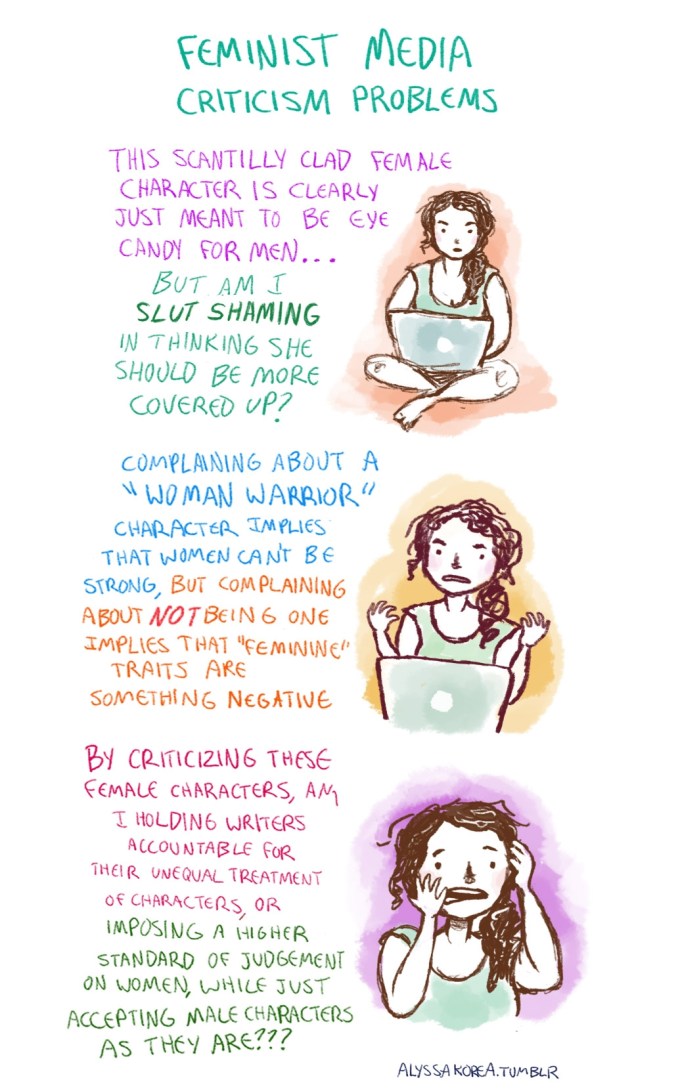 (Source: Alyssa Korea)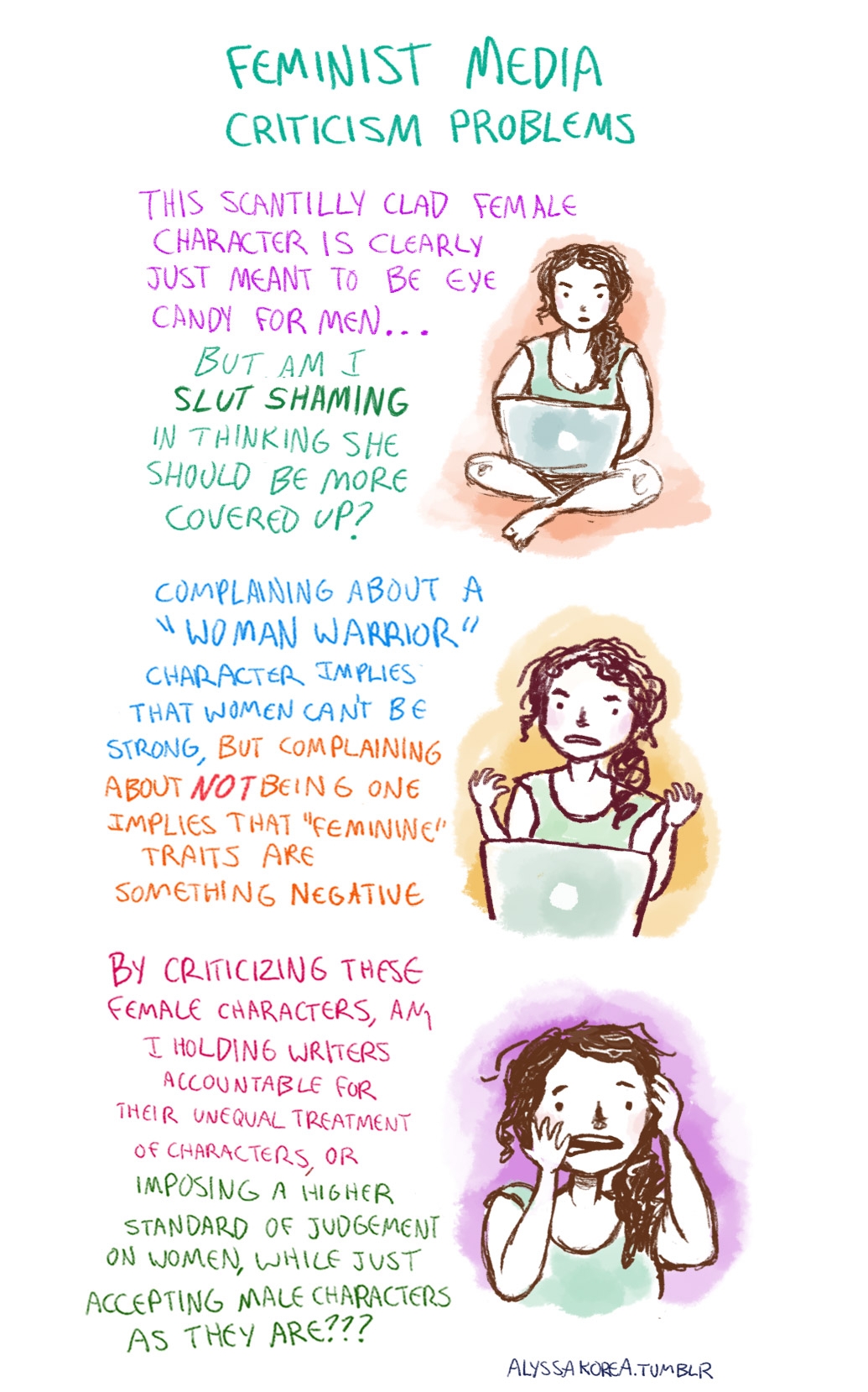
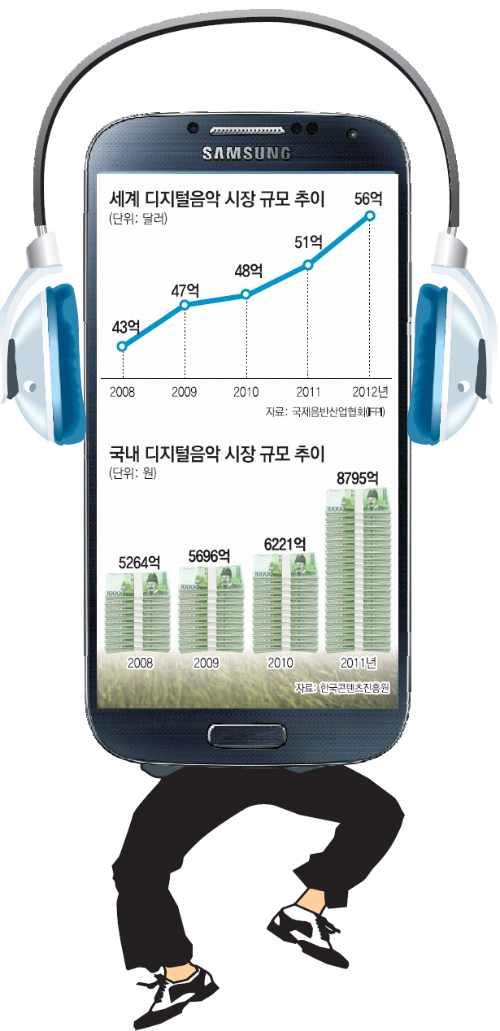 In an endnote to my recent “Why the Japanese Don’t Illegally Download Music. Much.” post, I wrote:
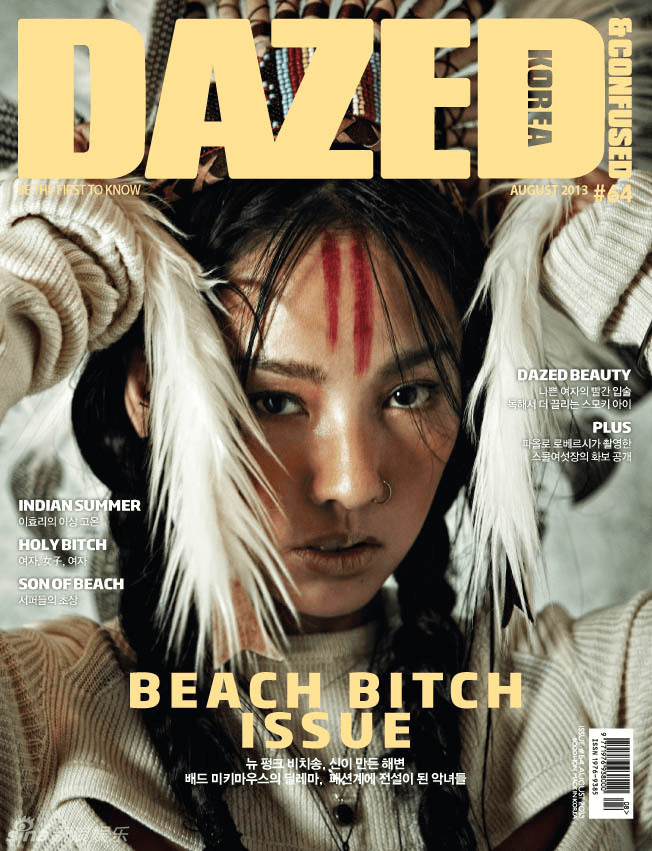 (Source: Unknown)
 6. Premarital pregnancy gets trendy


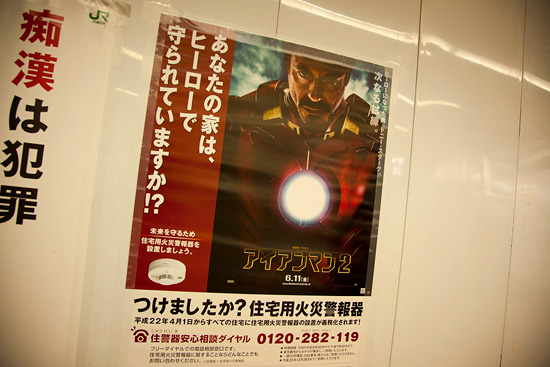
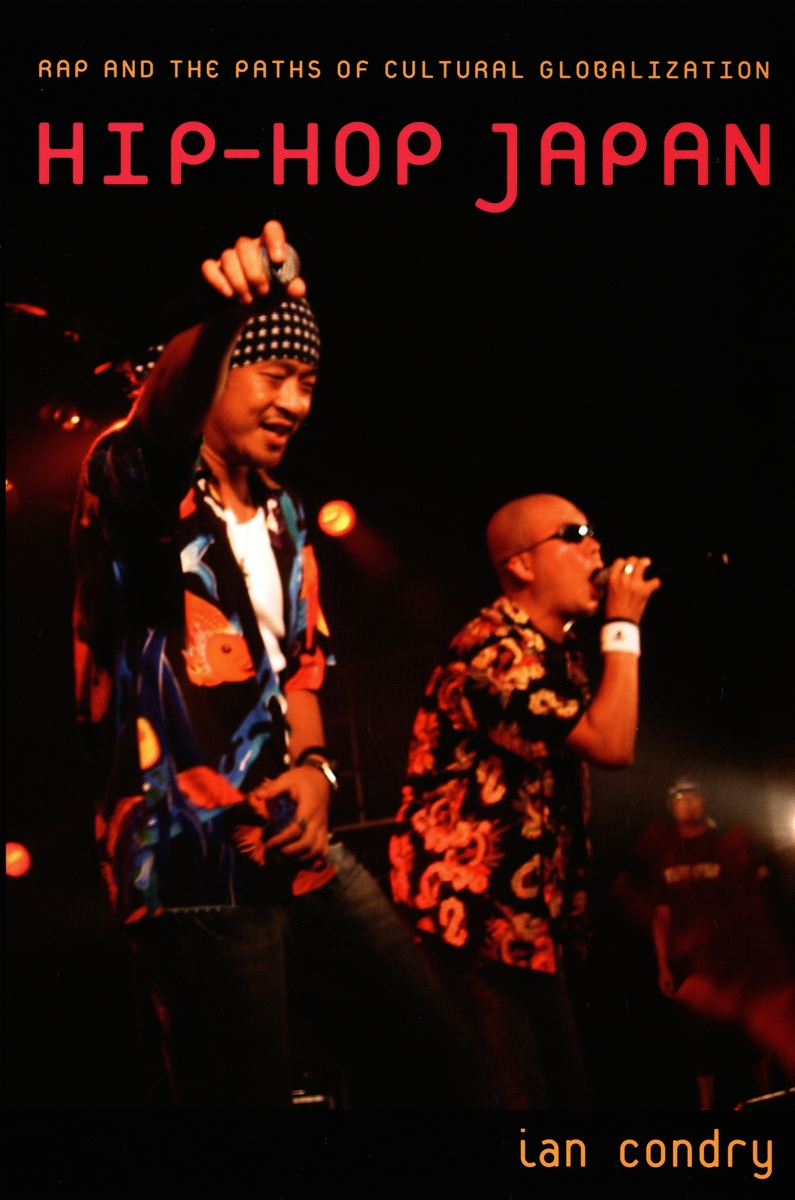

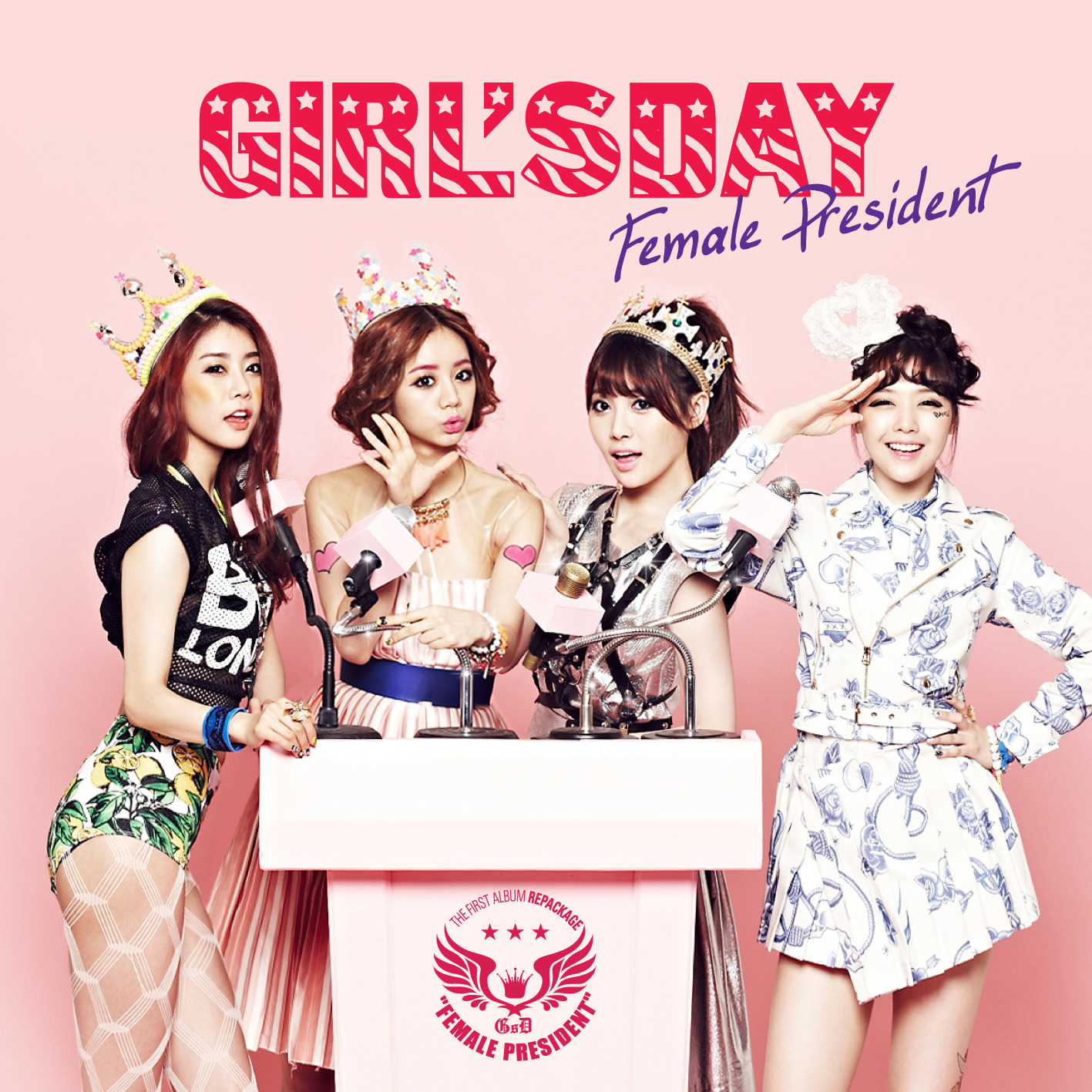




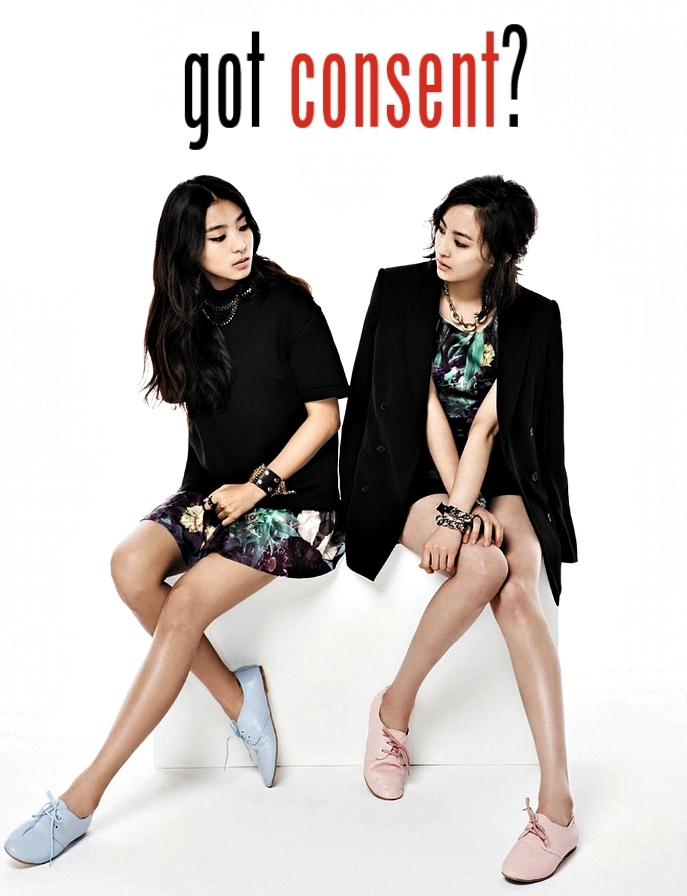


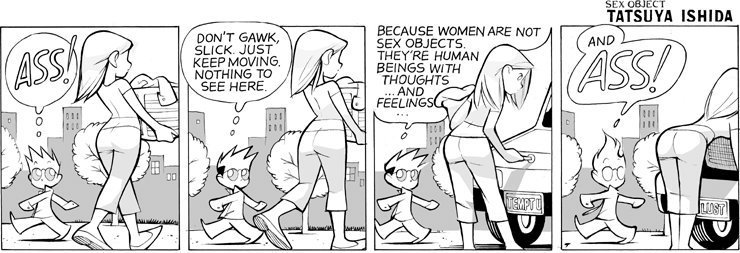



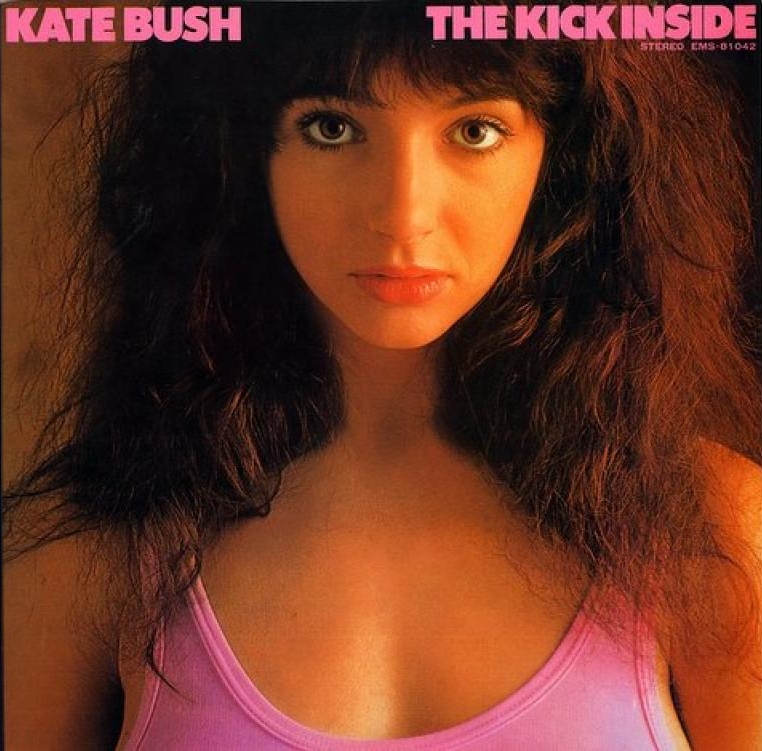

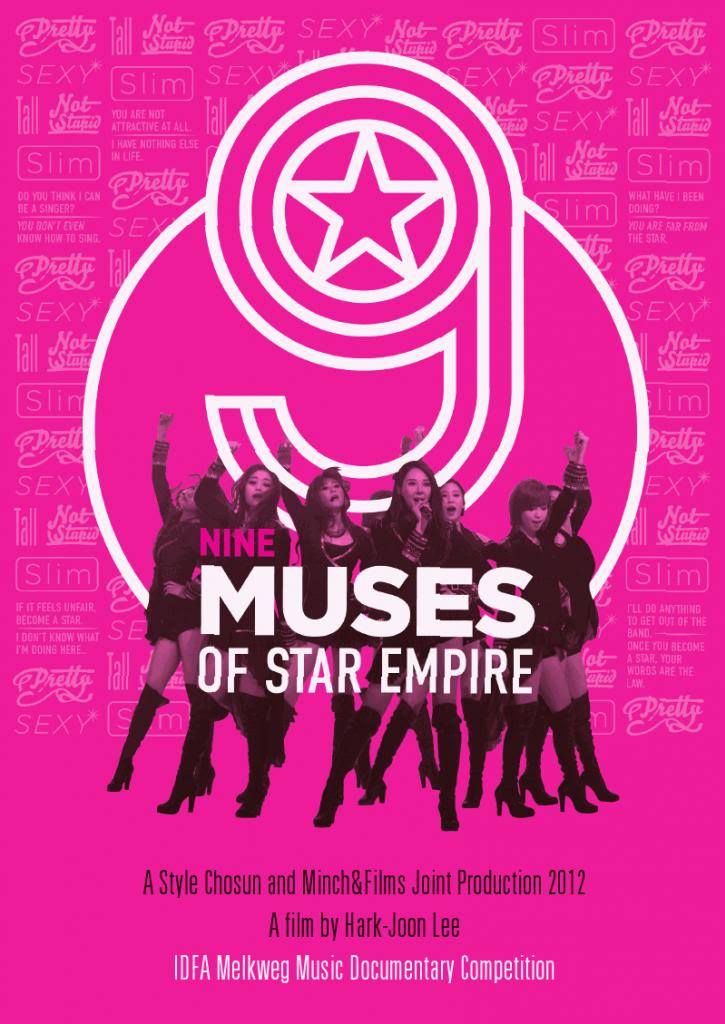
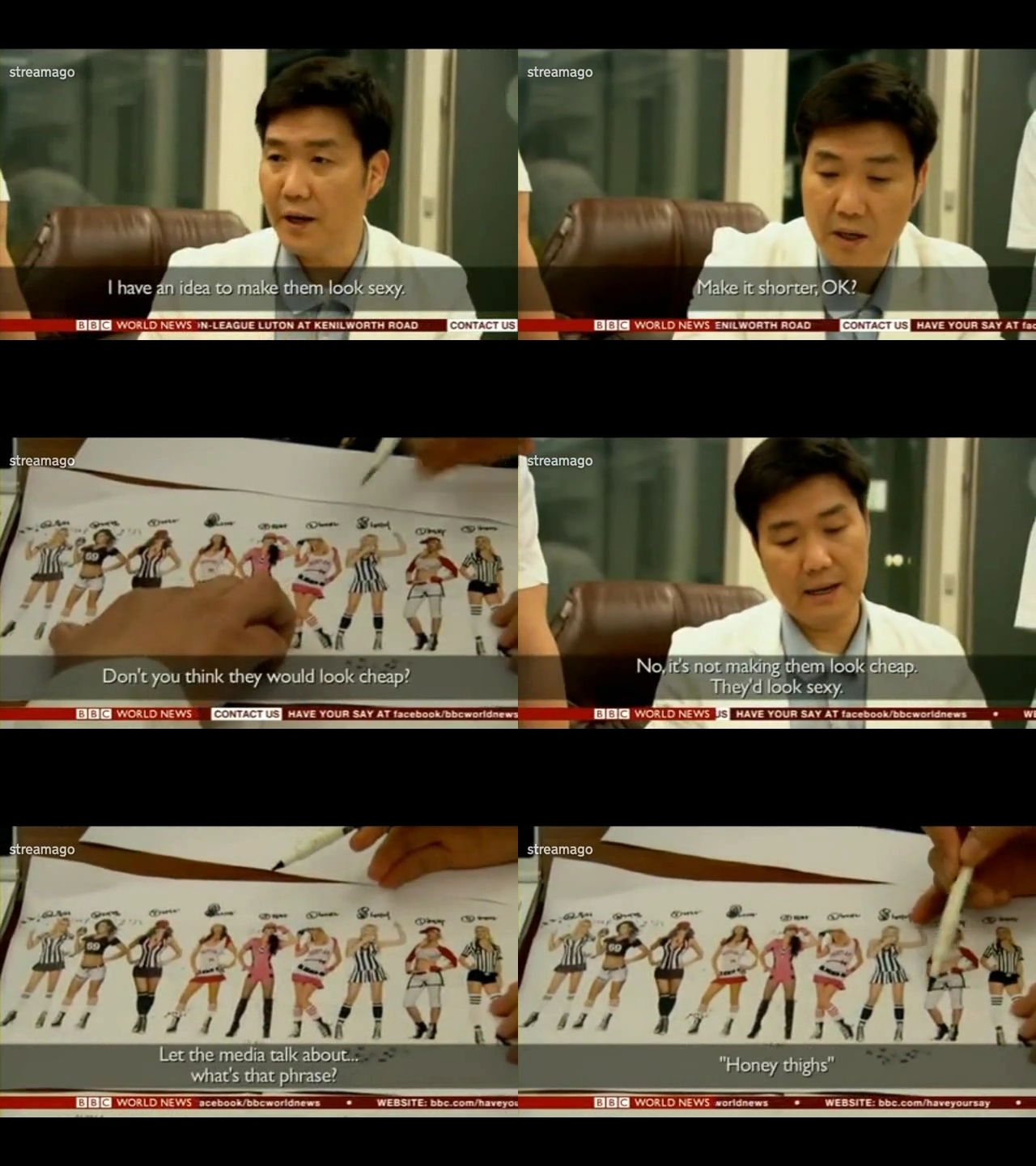




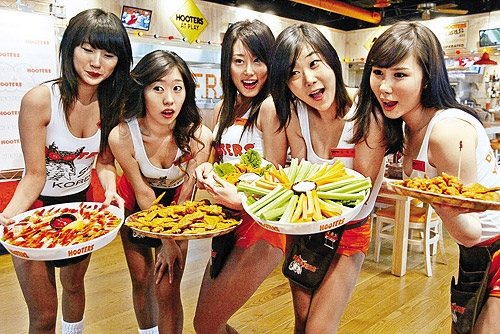
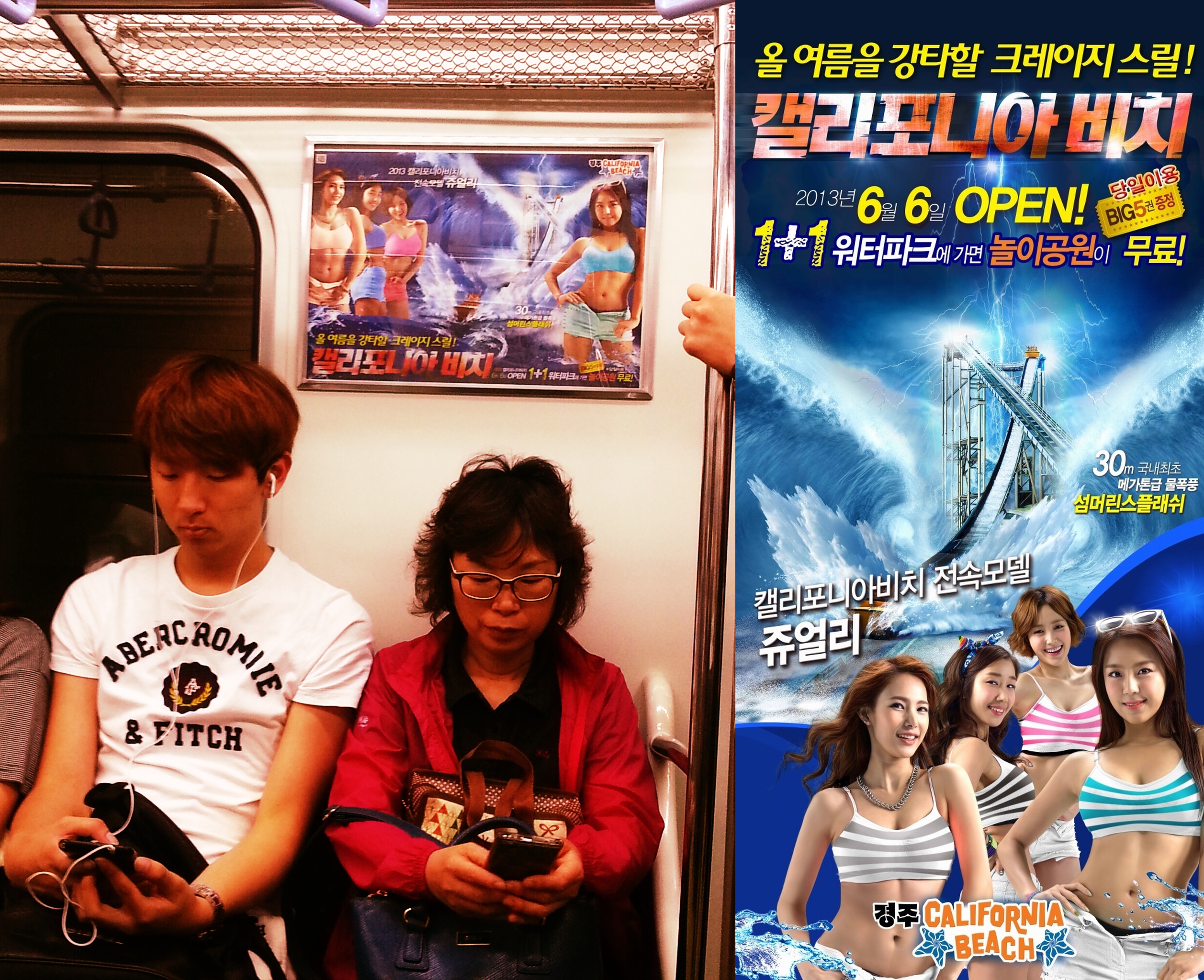



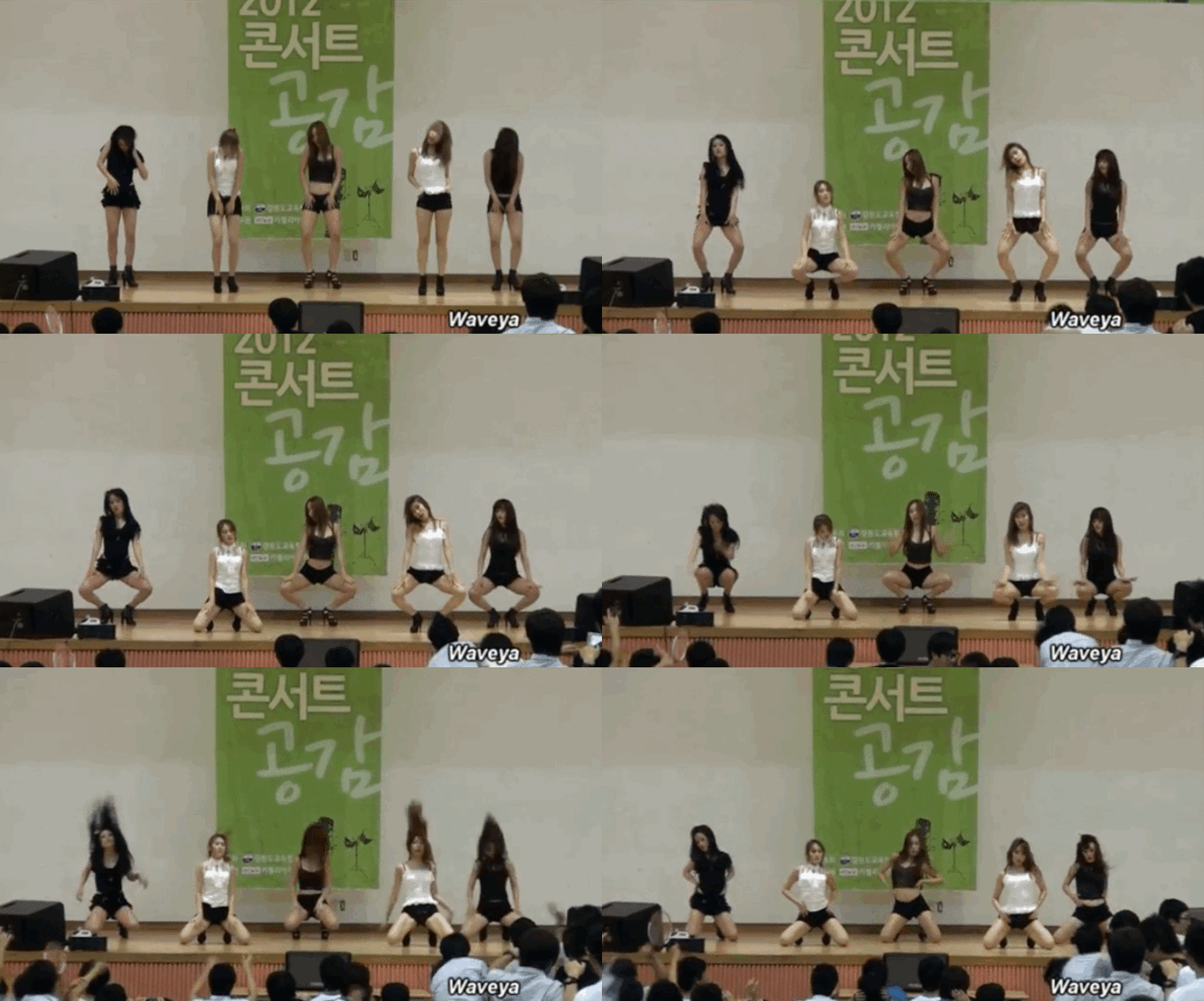





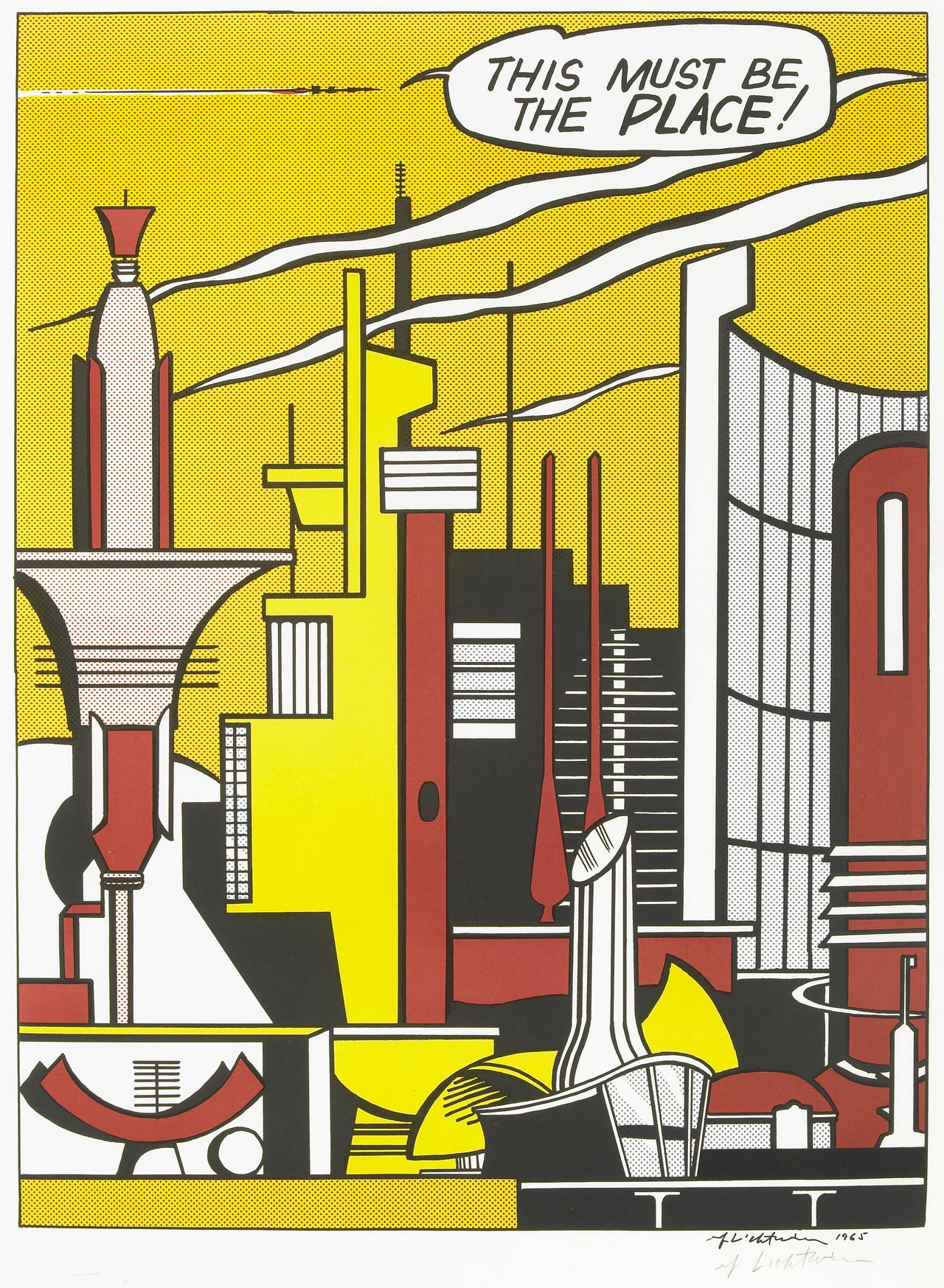

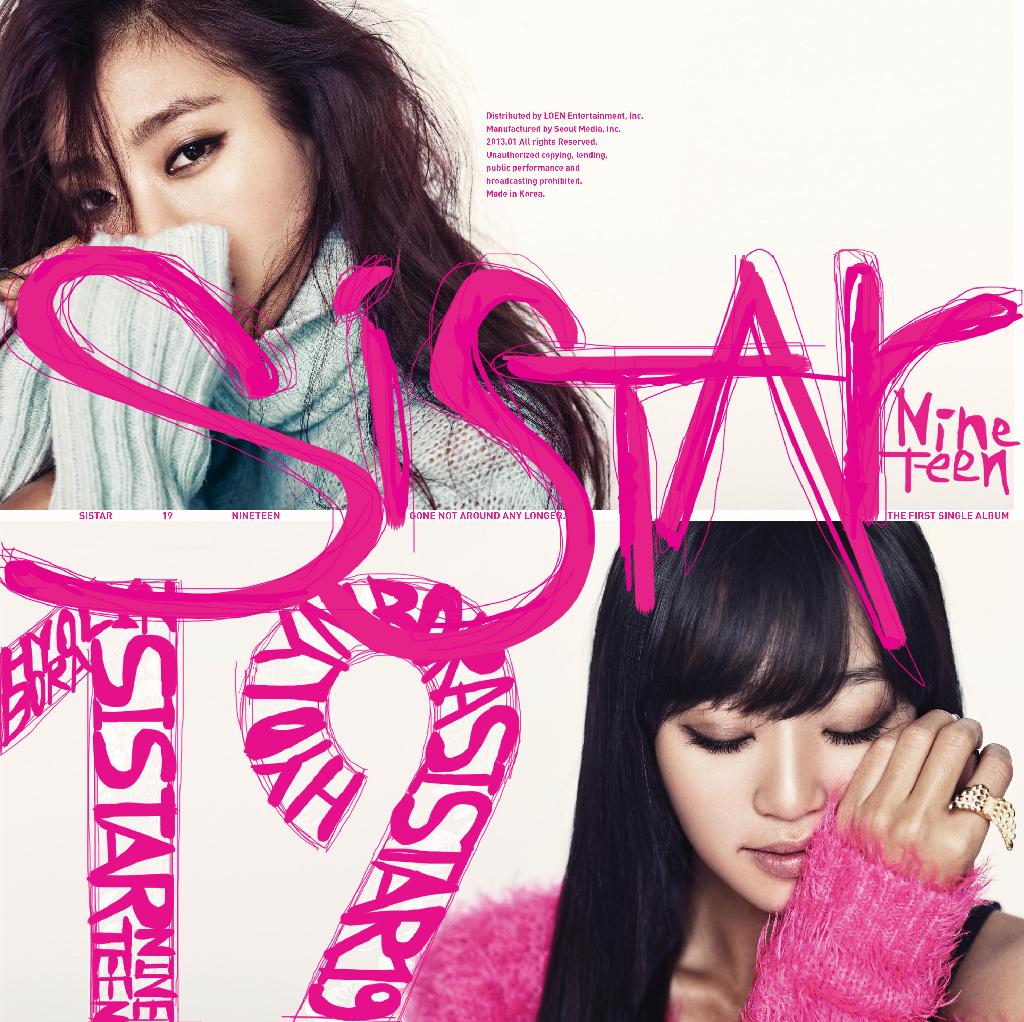

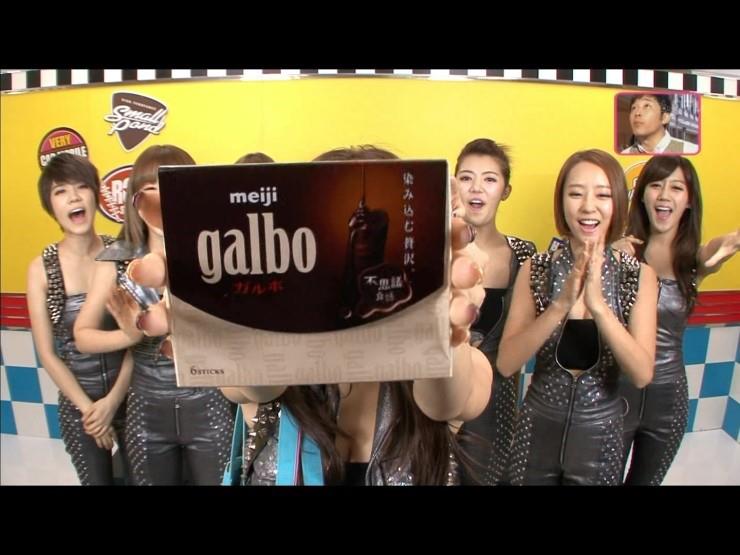

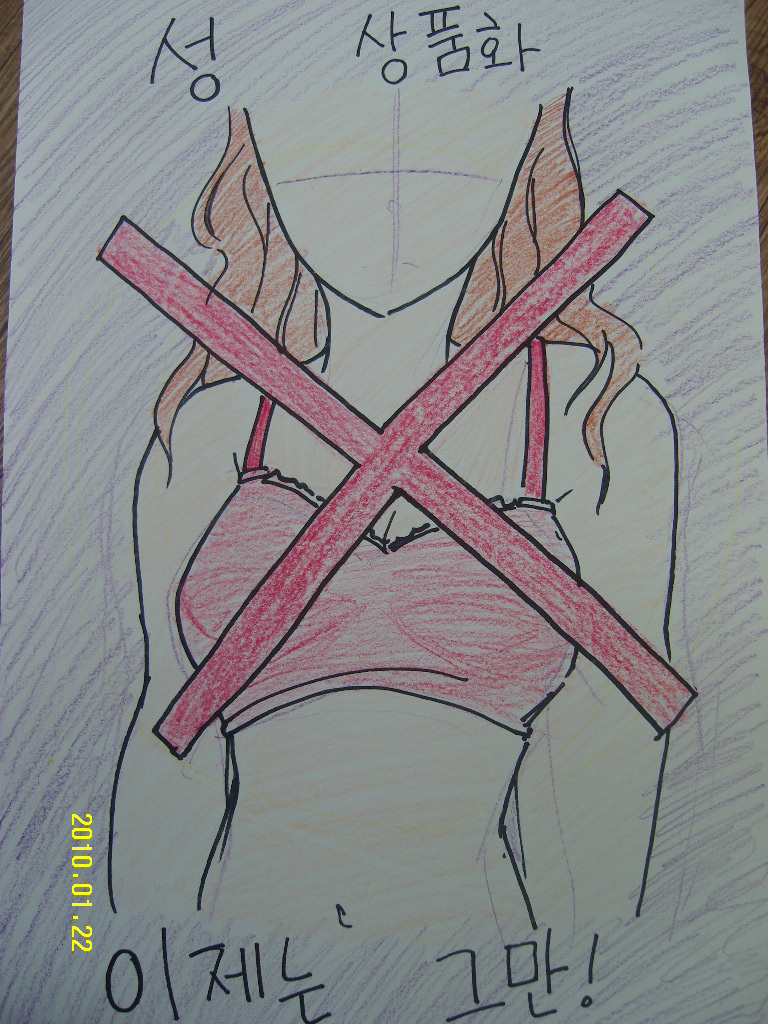



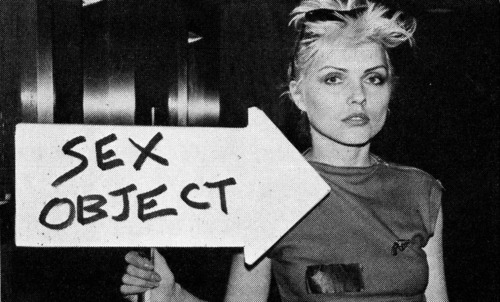

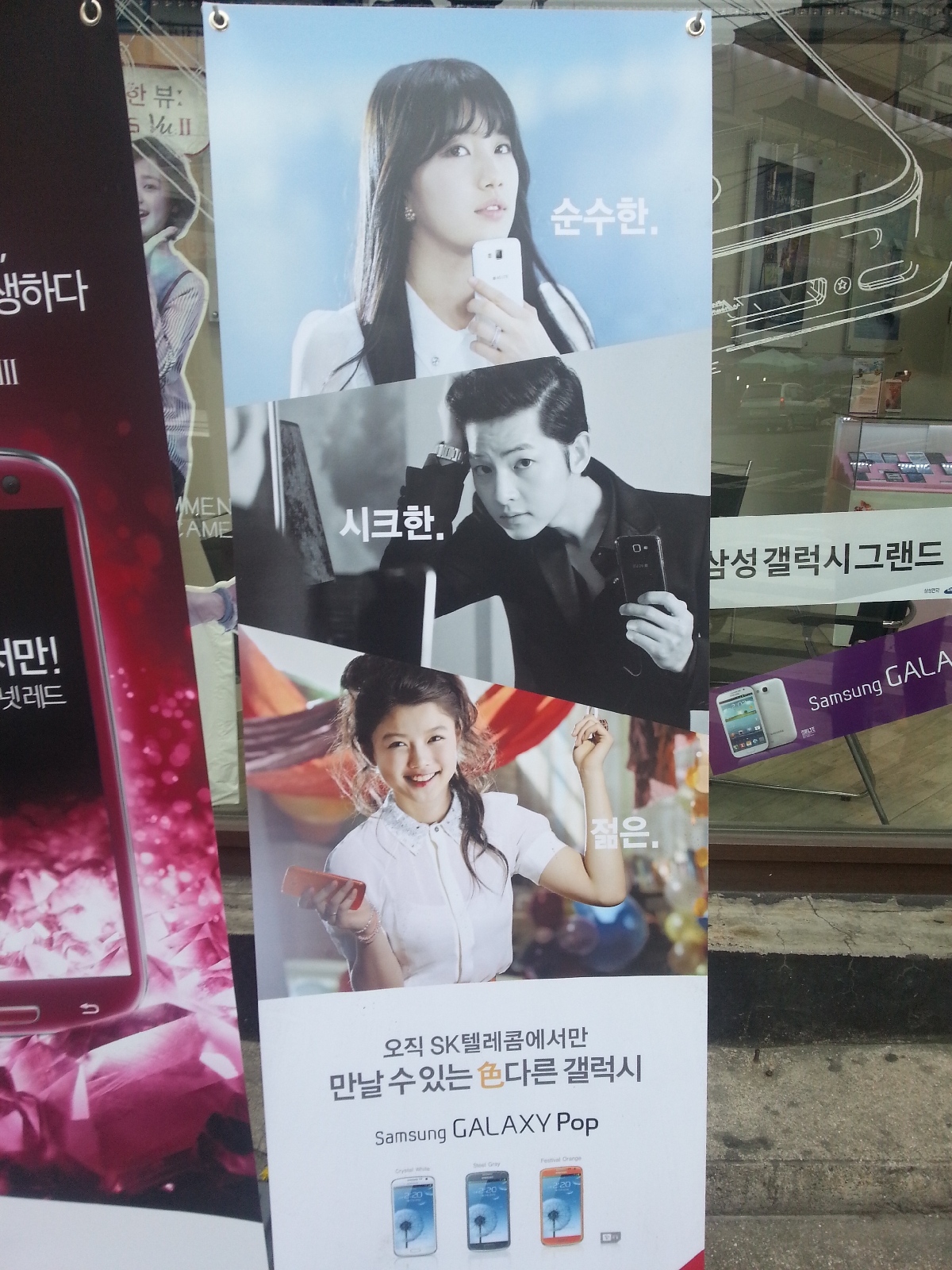
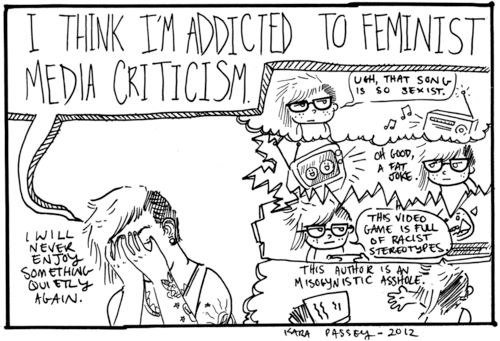

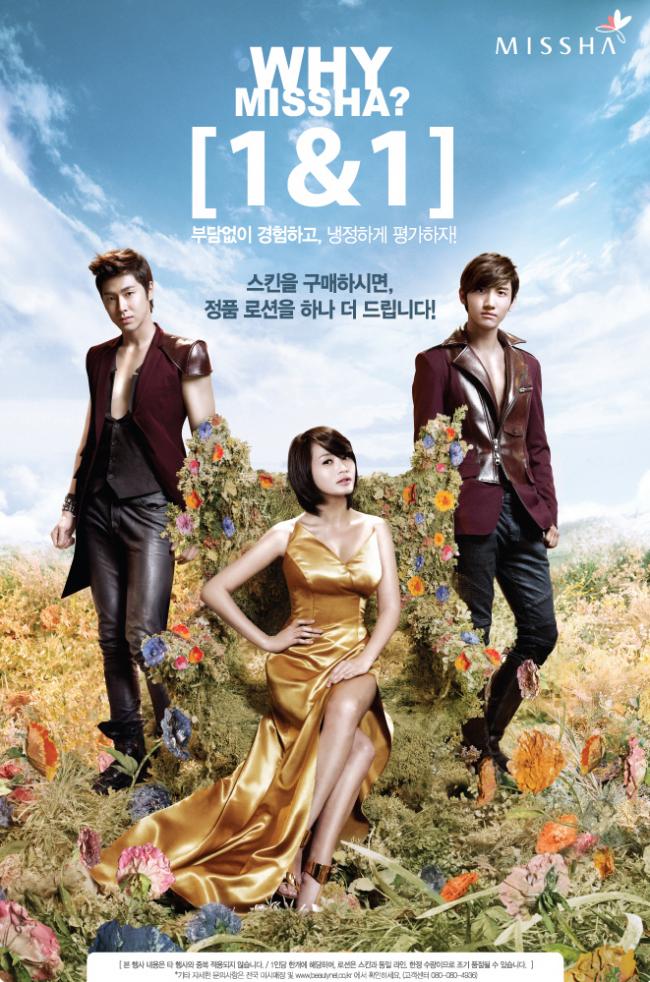
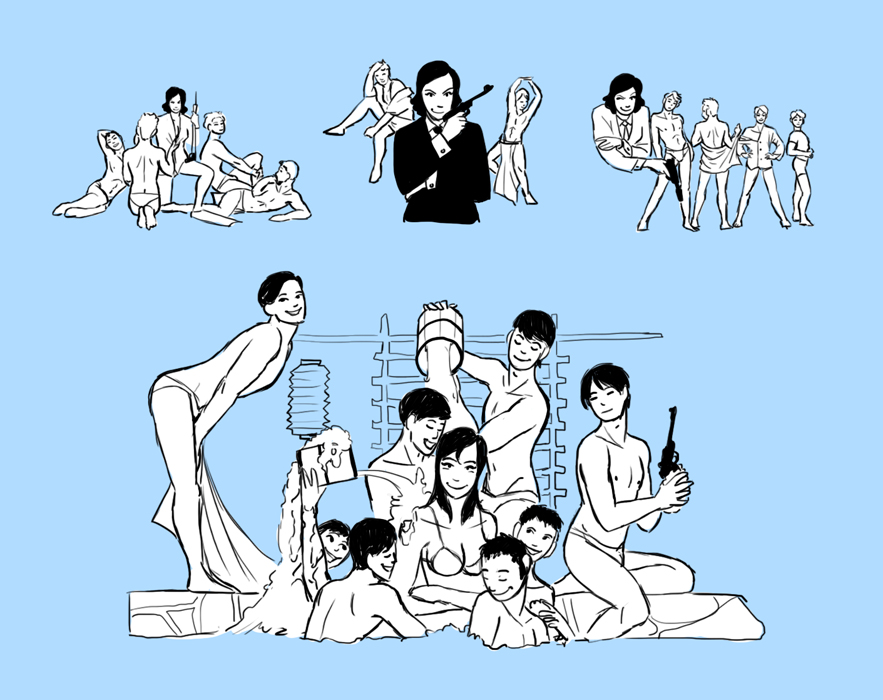
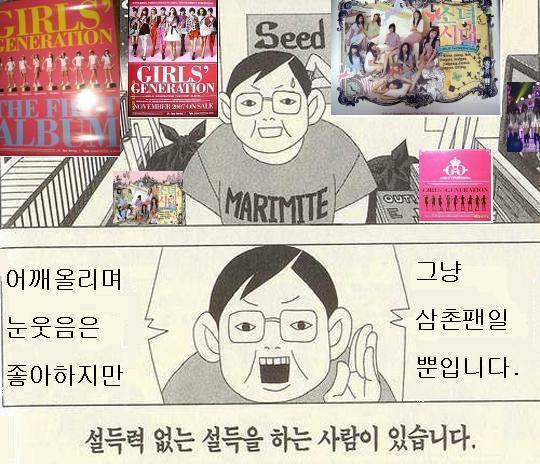
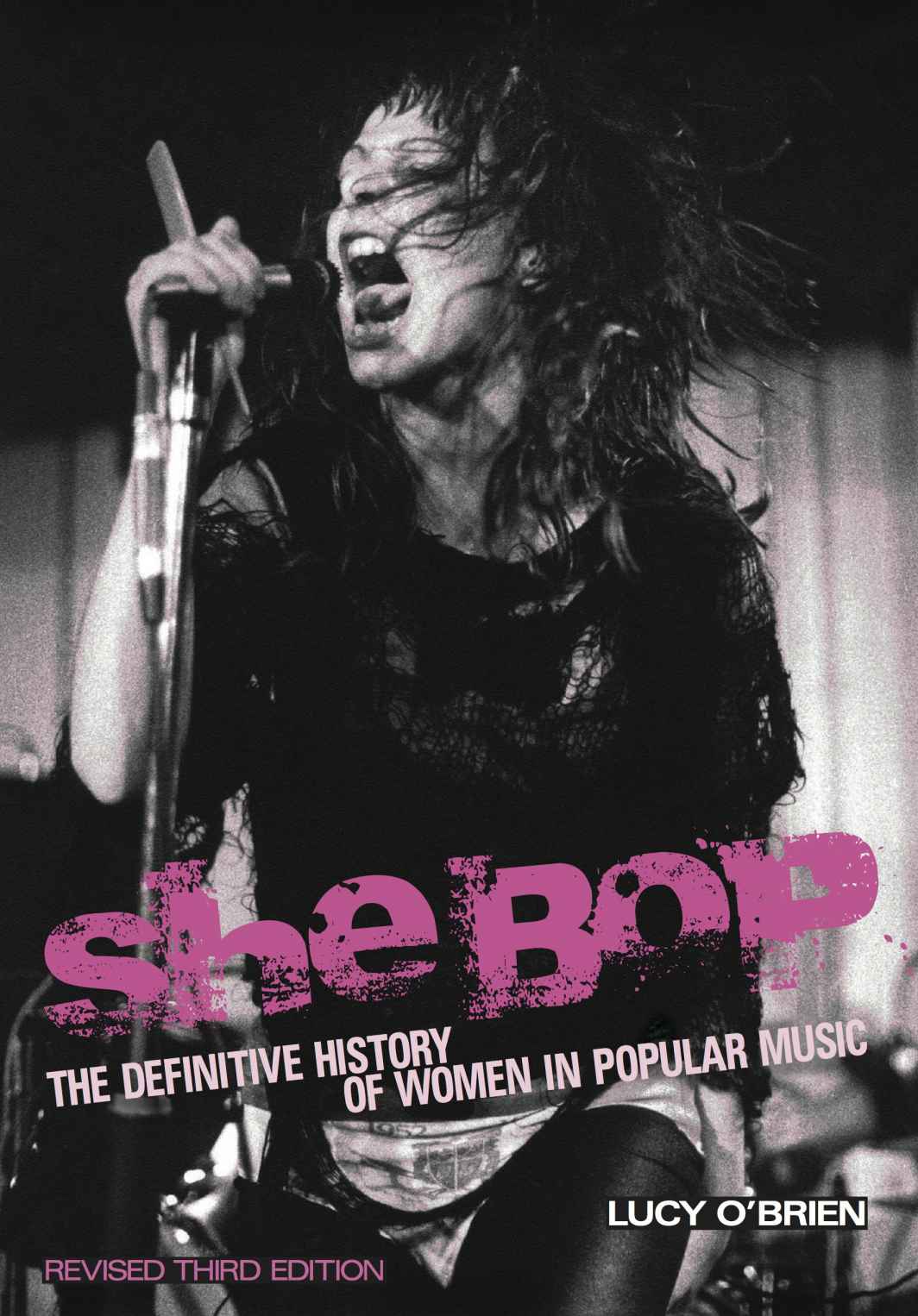












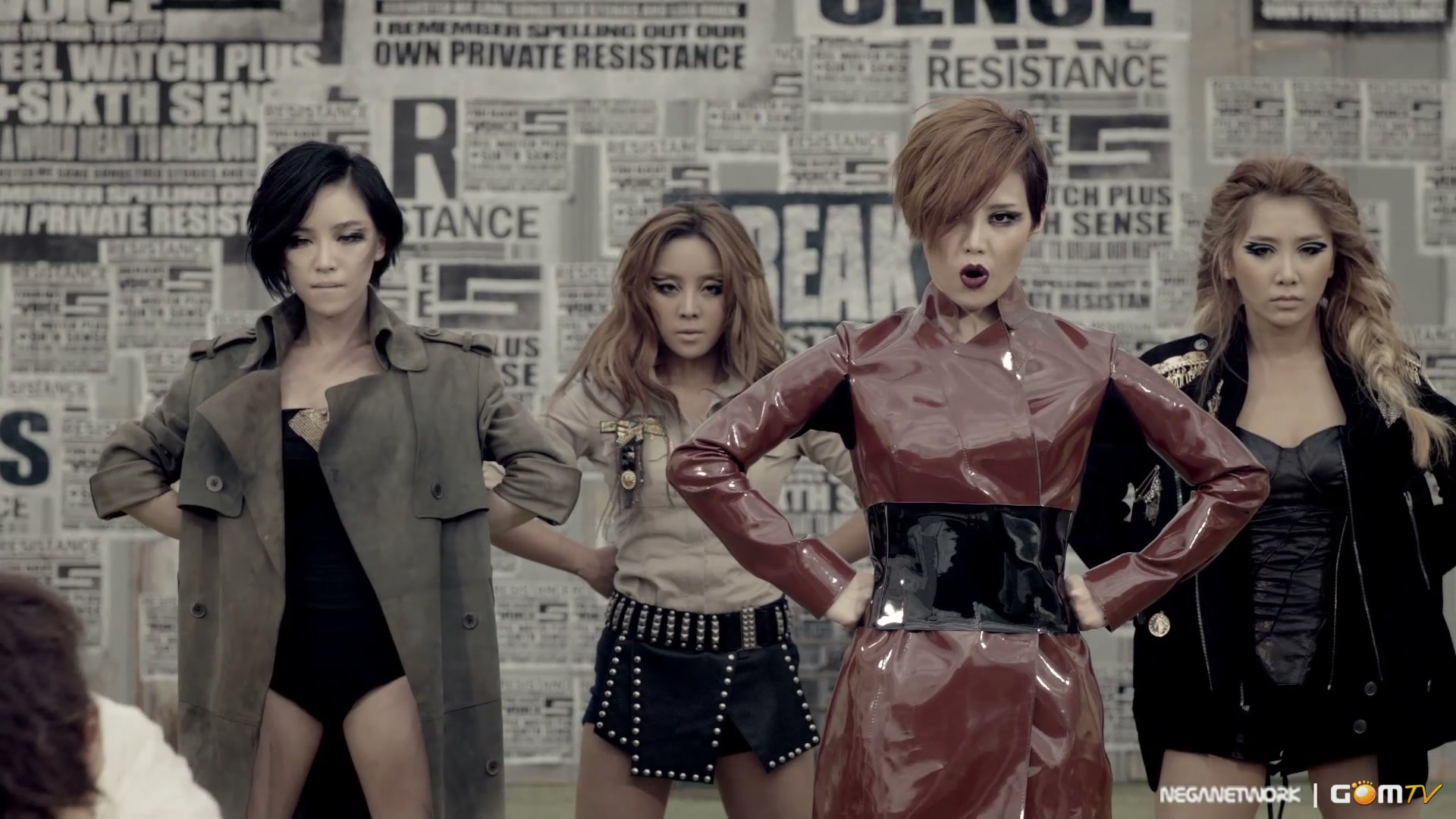
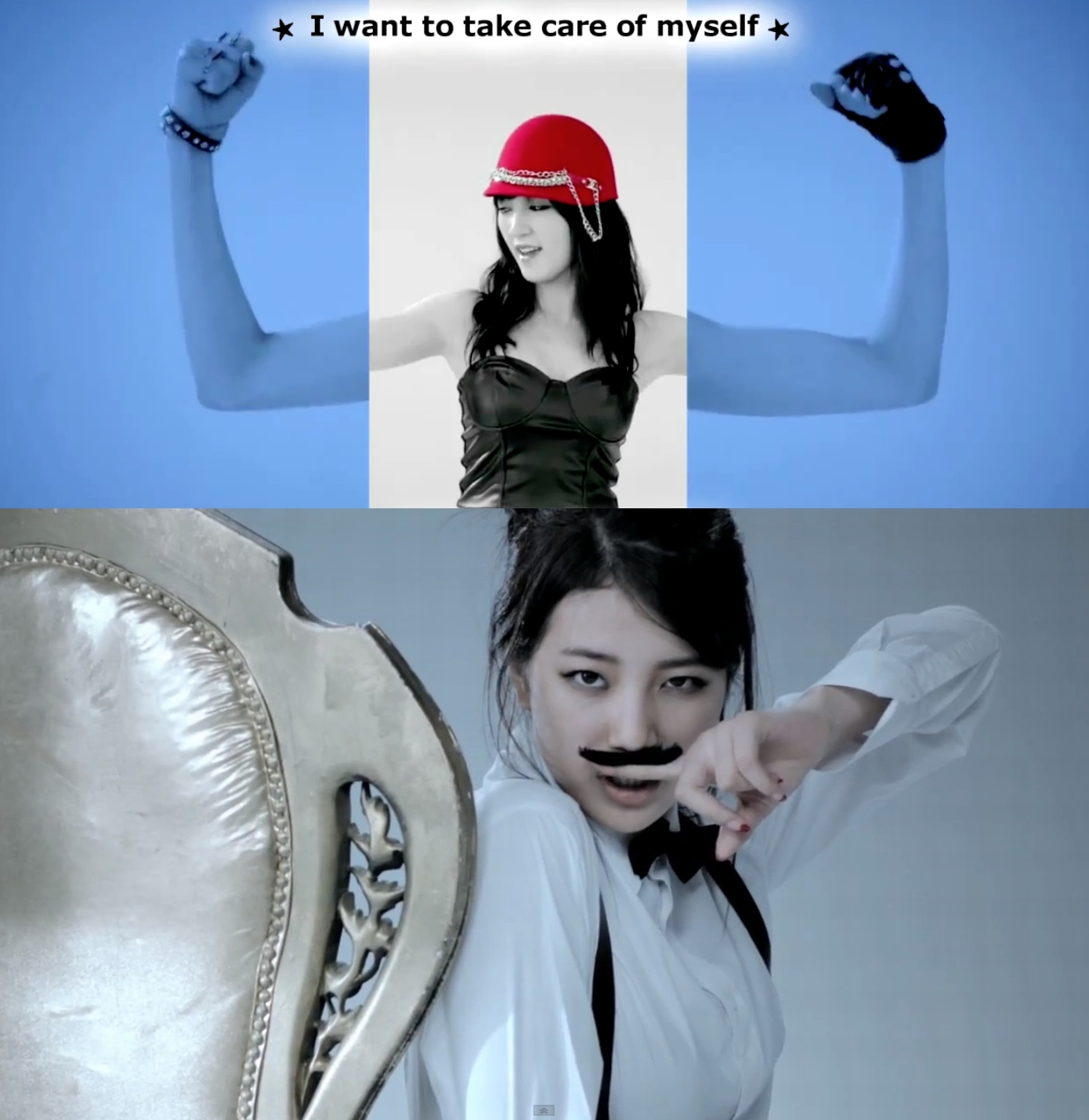


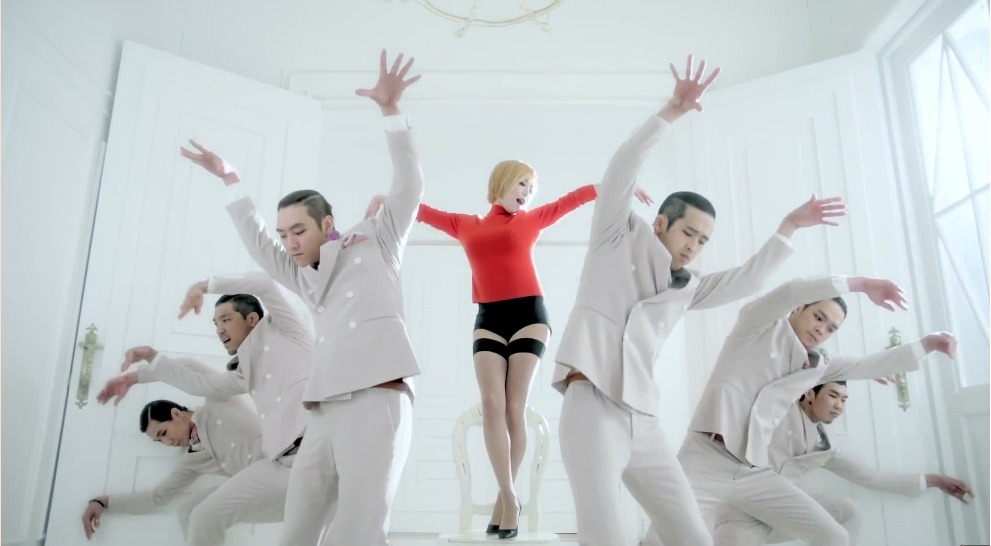












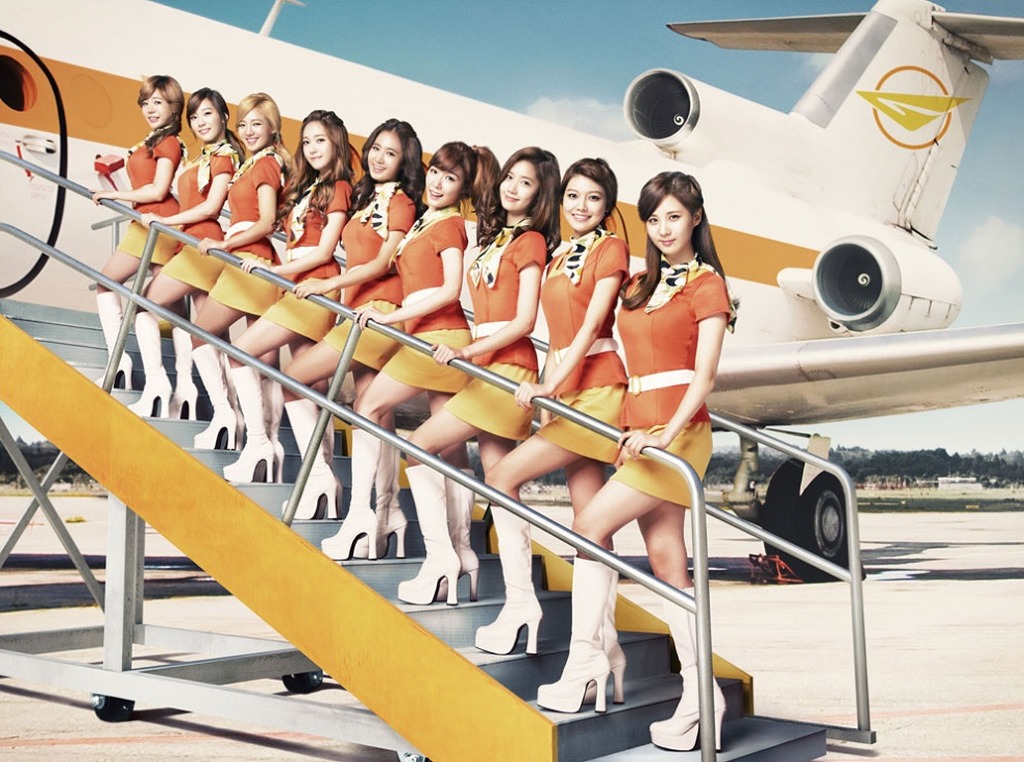
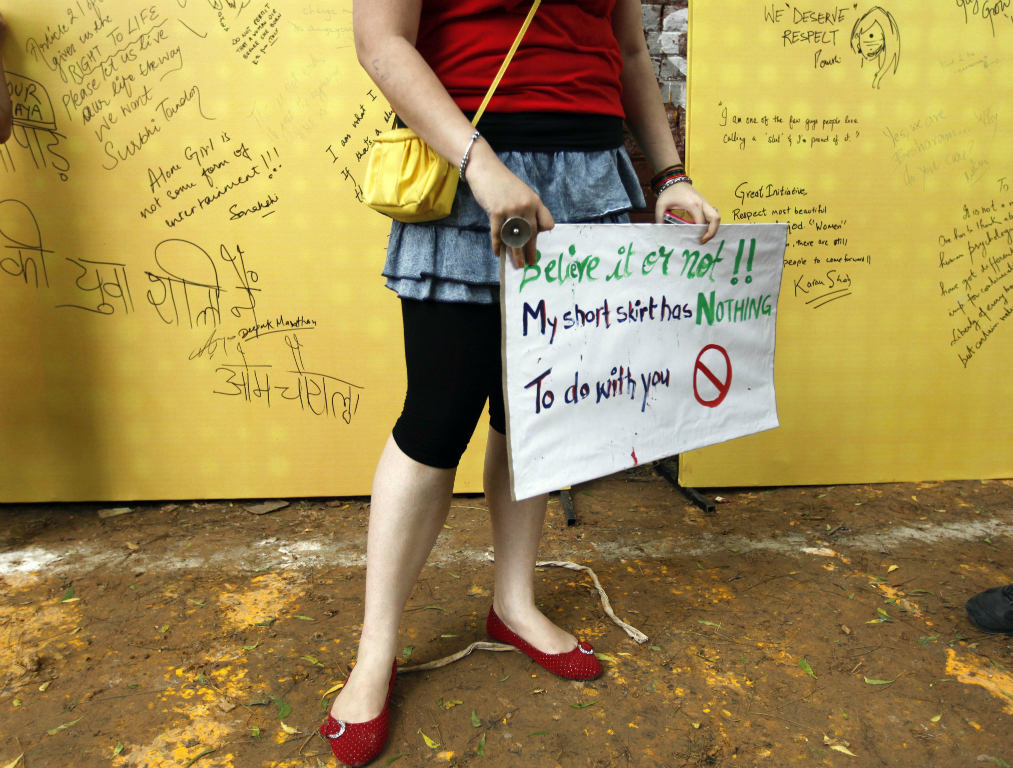


 The Grand Narrative