How my boyfriend CHEATED with another Asian girl

Finally, this segment of her show gives me just the excuse I need to let The Grand Narrative readers about my favorite Chinese-Australian comedian Jenny Tian!

Especially when you realize “Alex” is probably the same guy she mentions in her interview at Being Asian Australian, about Yellow Fever and dating as an Asian-Australian woman

Not going to lie—I’m especially fond of her because much of her humor is Australia-related, which resonates because I lived in Australia and New Zealand for 13 years, but might be off-putting for you. But never fear, non-Antipodeans! As you’ll quickly realize from her Instagram, most of her content is universal, and particularly funny to East Asian diaspora anywhere:

Enjoy!

Related Posts:

If you reside in South Korea, you can donate via wire transfer: Turnbull James Edward (Kookmin Bank/국민은행, 563401-01-214324)

“This may be the first time I’ve encountered a Black man in fiction stepping up when the women in his life have checked out.”

Estimated reading time: 3 minutes. Photo by Muhammad-taha Ibrahim on Unsplash.

By virtue of what I research and write about, I’d say roughly 2/3rds of the books I read are by women, split evenly between white women and women of color. And of the latter, probably almost all of them are Koreans and Asian-Americans.

So, it’s been a real pleasure and eye-opener this week to read Girl, Woman, Other by Bernadine Evaristo (2019), which has 12 short stories about the linked lives of (mostly) black British women.

Most of it is very metropolitan, so you don’t have to be at all familiar with London or the UK to enjoy it. But I have to admit I’m especially enjoying the later stories set in Newcastle and Northumberland by the Scottish border, where I’m originally from.

Intrigued then, now I’m thinking the next one about black women I’ll read will be Mama Said: Stories by Kristen Gentry (2023), also a collection of linked short stories about mostly black women, this time set in Louisville, Kentucky. Which to be sure, is quite a leap from the UK. But what instantly sold me was actually her depiction of black men, as explained by Deesha Philyaw in her recommendation at Electric Literature. Specifically of Parker, the point of view character in the story “A New World”:

“Despite carrying the weight of several worlds on his shoulders, Parker’s brand of masculinity never disappoints. This may be the first time I’ve encountered a Black man in fiction stepping up when the women in his life have checked out. Further, Parker isn’t a Black man looking for praise or credit for doing the shit he’s supposed to do, to paraphrase a classic Chris Rock stand-up bit. Parker doesn’t want to be a hero. He just doesn’t want to be a coward.”

Please read the rest of Philyaw’s recommendation there, which also has the full story.

Related Posts:

If you reside in South Korea, you can donate via wire transfer: Turnbull James Edward (Kookmin Bank/국민은행, 563401-01-214324)

“당신의 얼굴 괜찮습니까?/Is Your Face Okay?” Anti Deepfake Poster Misses the Mark

Estimated reading time: 3 minutes.

An ad at my local Busan subway station, which I’d never given a second thought to until today. I had no reason to—with a title and image like that, I’d assumed it was for some kind of beauty app or filter.

Then my aging eyes finally noticed the “딥페이크/Deepfake,” and I did a double-take:

It reads:

당신의 얼굴 괜찮습니까?

딥페이크로 인한 성 범죄가 매년 증가하고 있습니다. 성폭력처벌법 제14조의 2에 의거해 타인의 얼굴이나 신체 등을 허위 영상물로 만들거나 배포하면 5년 이하 징역 또는 5천만 원 인하의 벌금에 처하게 됩니다.

Is Your Face Okay?

Sex crimes caused by deepfakes are increasing every year. Pursuant to Article 14-2 of the Sexual Violence Punishment Act, anyone who creates or distributes a false video of another person’s face or body is subject to imprisonment for up to 5 years or a fine of up to 50 million won.

This text, a bland rehashing of the law, feels like a real missed opportunity.

The issue is who this ad is aimed at. The “Is Your Face Okay?” headline seems aimed addressed to victims, and indeed a Korean friend assures me that it is. However, surely most victims aren’t unaware that deepfakes are illegal? Surely, more of a concern would likely be feelings of embarrassment, shame, that they themselves were to blame for them in some way, and/or worries about the impact on their jobs and livelihoods? So, the priority should be giving victims assurances that these are not at all the case, and that they could receive all the help, support, lack of judgement, and legal aid they needed at the Center.

In their absence, a more creative alternative is that the headline is a double entendre intended to mean “Aren’t You Red-faced/Ashamed?” to potential perpetrators, then letting them know what might happen if they get caught.

Which applies? Unfortunately, there’s no further information about it on the Busan Gender-based Violence Prevention Center’s website, nor does Googling/Navering yield any results.

So, without disputing the Center’s good intentions for a moment, again I’m forced to defer to my friend’s judgement. In which case, I think the poster really misses the mark.

What do you think?

Related Posts:

If you reside in South Korea, you can donate via wire transfer: Turnbull James Edward (Kookmin Bank/국민은행, 563401-01-214324)

WOMEN WE LOVE Bookclub Event—Sunday, February 11, 2-4pm

Estimated reading time: 2 minutes.

Just a heads-up to let you all know about this upcoming event, to give you time to order and read the excellent Women We Love: Femininities and the Korean Wave (2023) before we zoom!

(My copy arrives tomorrow! Squeeeee~)

Organized again by Rhea Metituk (rhealm@gmail.com) of the KOTESOL Women and Gender Equality Special Interest Group, at the moment there’s absolutely no agenda other than everyone being welcome to join, that it won’t be recorded, and that you can rest assured that Rhea will be graciously but ruthlessly ensuring the KOTESOL Code of Conduct is followed by all participants. So please do get in touch with myself or Rhea if you’d like to be on the list to receive the private Zoom link closer to the event, and we’d appreciate any ideas for discussion questions before the day. Thanks!

See you there!

If you reside in South Korea, you can donate via wire transfer: Turnbull James Edward (Kookmin Bank/국민은행, 563401-01-214324)

The Not So Korean Podcast, Ep. 38: James Turnbull (INTERVIEW) – Sexuality, Feminism, Translation, Cats & More

Podcast Running Time: 1 hour 12 minutes.

Apologies all, for any distress caused at suddenly discovering I’m not a 20-something Korean-American woman (no, seriously—it happens a lot!), and thanks very much to Jay and Tim of the Not So Korean Podcast Team for all their hard work in putting this interview together. And to my cats Albert and Elliot too, who insisted on making their own contributions to the episode.

Please visit YouTube or Spotify for the full interview, which was recorded in October 2022. Please also make sure to visit the Not So Korean Podcast’s Instagram too, to get a quick taste of the huge variety of other topics and people Jay and Tim have covered. As you’ll soon see, their other interviewees are all far more interesting and knowledgeable than me!

If you reside in South Korea, you can donate via wire transfer: Turnbull James Edward (Kookmin Bank/국민은행, 563401-01-214324)

Today, I Learned That 3x More Korean Women in Their 20s Attempt Suicide Than Men.

For sure, the patriarchy harms men just as much as women, and 3x more Korean men than women attempt suicide overall. But this dramatic reversal among Korean 20-somethings is truly shocking.

Estimated reading time: 5 minutes. Photo by Brandon Wong on Unsplash.

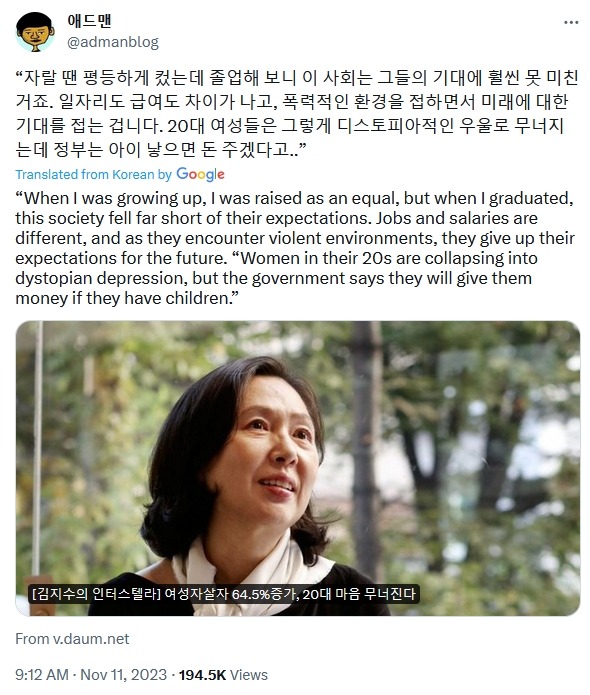
Not going to lie—when first reading the following tweet, this old Korea book geek felt a frisson of recognition. That warm feeling, and wanting to quickly joke about my overwhelming confirmation bias, is what initially made me want to share. Thinking about the horrifying content only came later:

Source: 나도계란/@aravis12
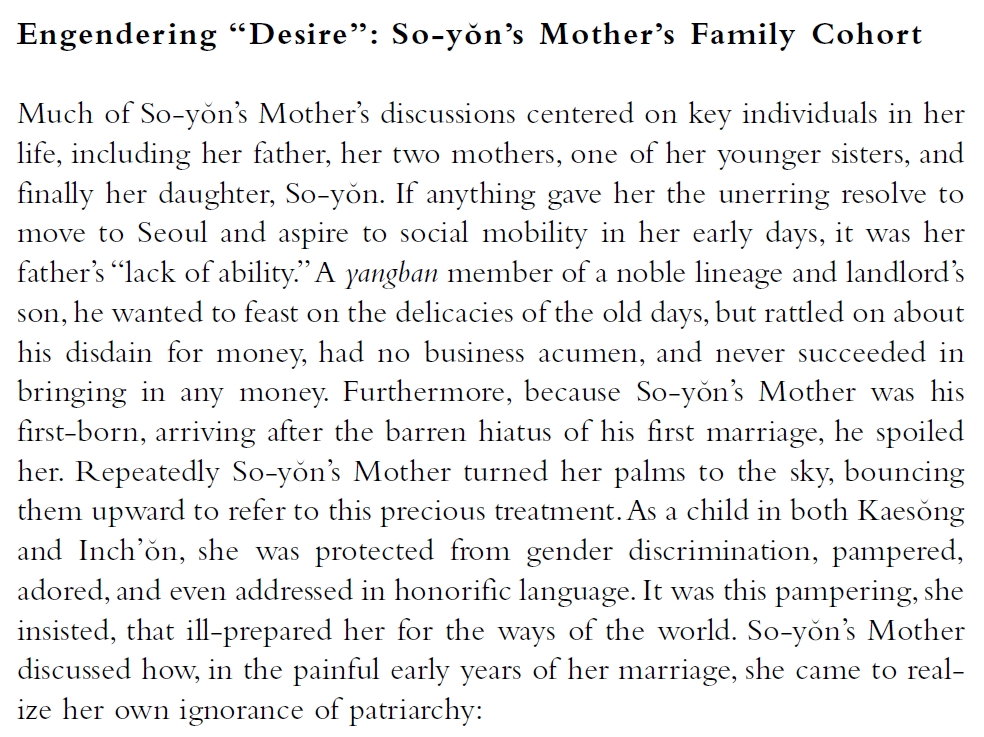
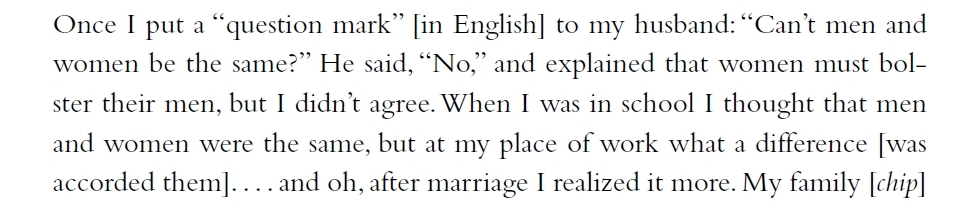
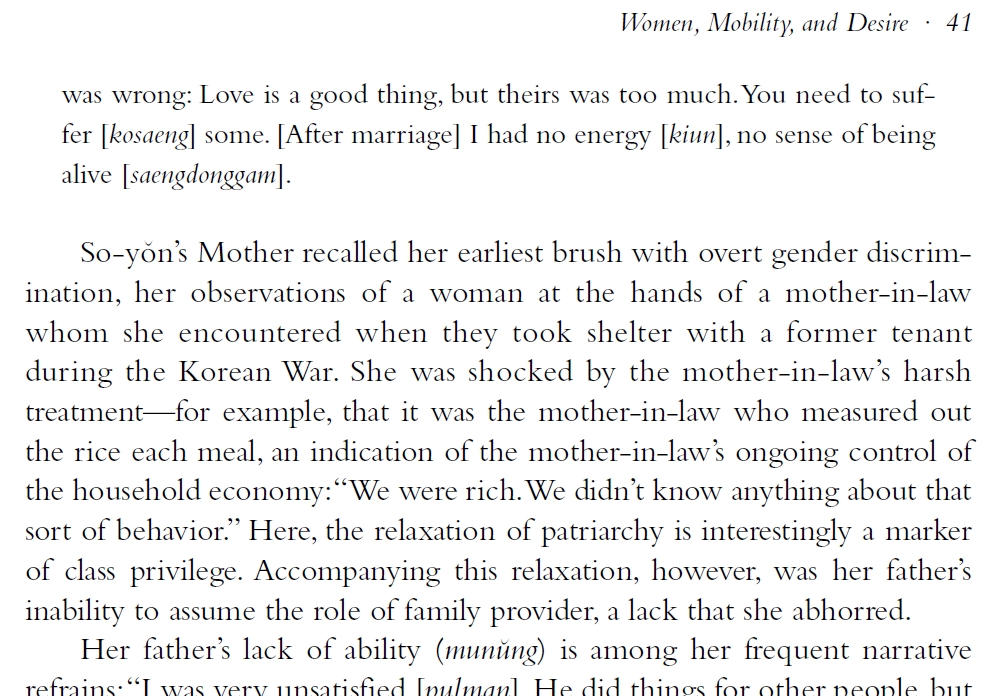
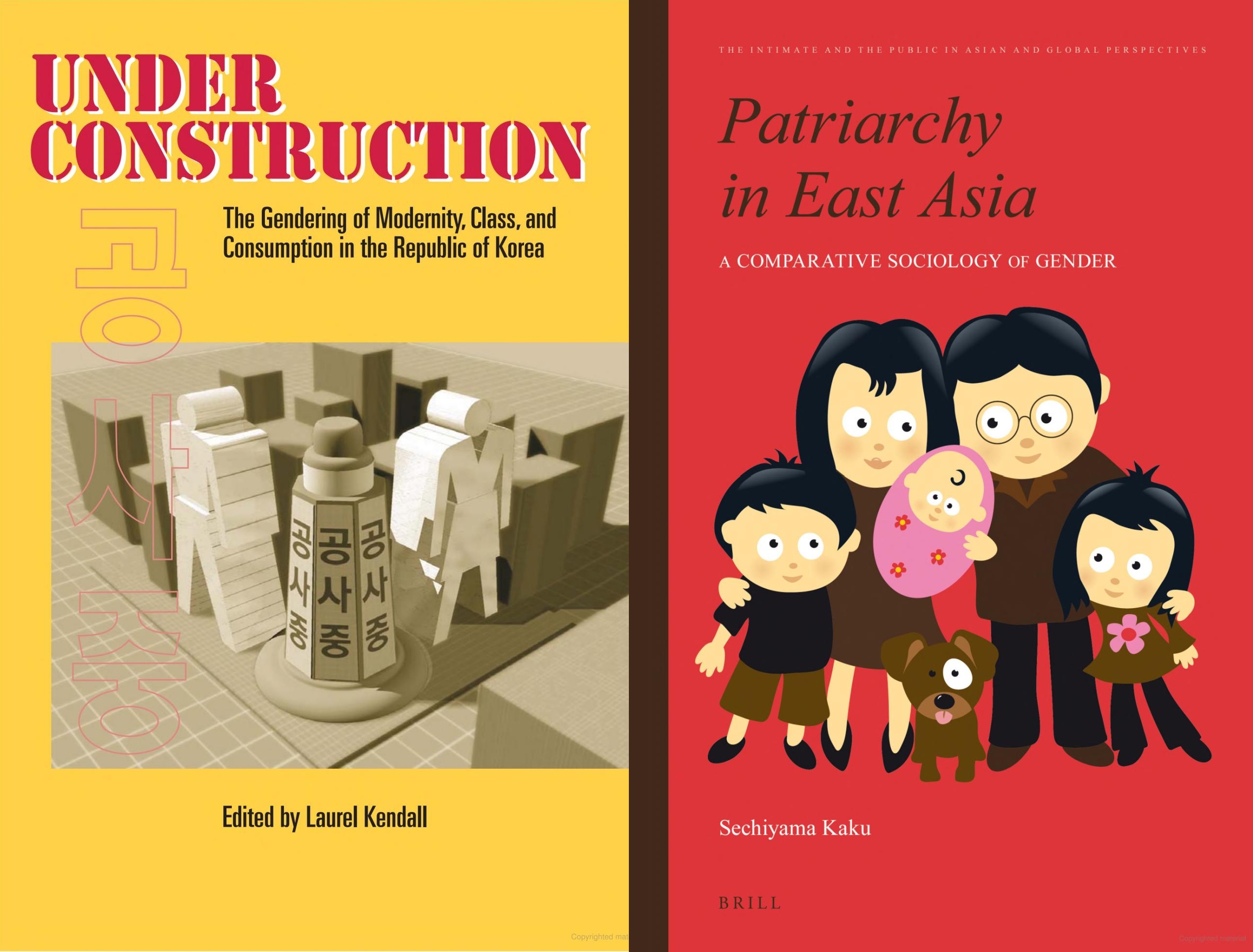
Its similarity is to the following from Chapter 2, “Women, Mobility, and Desire: Narrating Class and Gender in South Korea” by the late Nancy Abelmann, in Under Construction: The Gendering of Modernity, Class, and Consumption in the Republic of Korea, edited by Laurel Kendall (2002):

Feeding into what I would learn from Under Construction and other sources about the strength of egalitarian and democratic ideals in Korea, which the education system promoted even during the height of its various military dictatorships, that point really stuck with me 20 years ago. It’s been in the back of my mind when thinking about Korean workplaces and marriages ever since.

Then I read the tweet again, and it finally hit me what so little change in two decades actually meant—”Women in their 20s are collapsing into dystopian depression.”

Also highly recommended: Patriarchy in East Asia: A Comparative Sociology of Gender by Kaku Sechiyama (2013)

That’s from what the link was to—an interview of Professor Kim Hyeon-ah (김현아) of Hallym University Sacred Heart Hospital, author of My Daughter Was Quietly Falling Apart (딸이 조용히 무너져 있었다; 2023), about her struggles with her bipolar daughter who self-harmed and attempted suicide.

Through it, I learned that although men still comprise the bulk—three quarters—of Korean suicides overall, as myself and probably everyone reading would expect, the (translation) “number of female suicides has increased by 64.5% since 2015, compared to 19.7% for men. Also, that as of 2020, mood disorders such as depression were twice as common among women as among men, and were especially prevalent among those in their 20s.”

Only, those suicide statistics, by being generalized to all women, annoyed more than clarified.

You see, by coincidence I’d read yesterday that the smoking rate for Korean women was now 4.5%. Which was a huge red flag. Because as I demonstrated in my series on that a decade ago, the taboos surrounding female smoking in Korea meant rates varied hugely by age, with the rate for 19-29 year-olds then coming to 23.1%, and rising quickly. So quickly in fact, I’d estimate that their rate is now closer to 33%, and will try to confirm that in a much-needed follow-up to that series for you soon.

With that in mind, while a 64.5% rise in suicide rates for Korean women is of course terrible, as is a 19.7% rise for men, it doesn’t sound so dramatic considering the much, much lower figures for women overall. With not unlimited funds available for suicide prevention measures, it’s not unreasonable to suppose that, put that way, both policymakers and the public might be swayed into downplaying the changing gender dynamics of the problem. That perhaps specific age and sex-based policies aren’t necessarily the best use of resources.

I’m absolutely not blaming the reporter here, or claiming any sort of agenda over a few statistics that should have been presented differently. But it did mean an age-based breakdown of those suicide statistics was absolutely necessary, which I found in The Korea Bizwire:

When analyzed by gender, the highest rate [of self harm and suicide attempts] among males was among those over 80 years old (125.9 per 100,000), followed by those in their twenties (105.4), teenagers (69.1), and those in their thirties (65).

Among females, the highest rate was in those in their twenties (284.8 per 100,000), followed by teenagers (257.8), those in their thirties (119.9), and those in their forties (86.3).

And on that note, my apologies. This was supposed to be a light post, expressing my joy at finding something so similar to something meaningful that I once read 20 years ago. Then, joking at this curmudgeon’s ever-growing confirmation bias, and admonishing him to constantly seek sources that challenge his outdated views. Only now having done precisely that…I simply don’t know what to say.

Most suicide victims worldwide being men, I am just too shocked. Not just that the rate for Korean women in their 20s is higher than than that for men at all, but that also it’s almost triple. For the first time ever, this issue makes me genuinely scared for my daughters, whom I don’t live with any longer and don’t see day to day, and one of whom will be doing the university entrance exam this year.

What do you think needs to be said?

Related Posts:

If you reside in South Korea, you can donate via wire transfer: Turnbull James Edward (Kookmin Bank/국민은행, 563401-01-214324)

The 66 Books I Read in 2023

Estimated reading time: 4 minutes. Photo by Aziz Acharki on Unsplash.

It’s good to be writing again. And I can’t think of a better topic to start with than books!

Honestly I’m so enthused, that in 2024 I aim to read 100 of them, and to write quick reviews of each as I do.

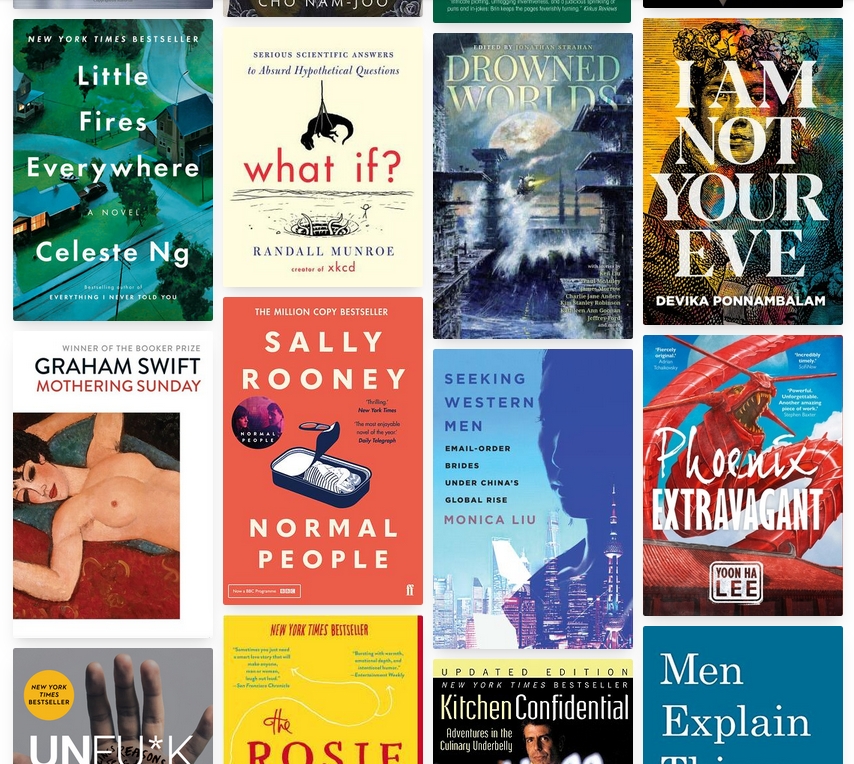
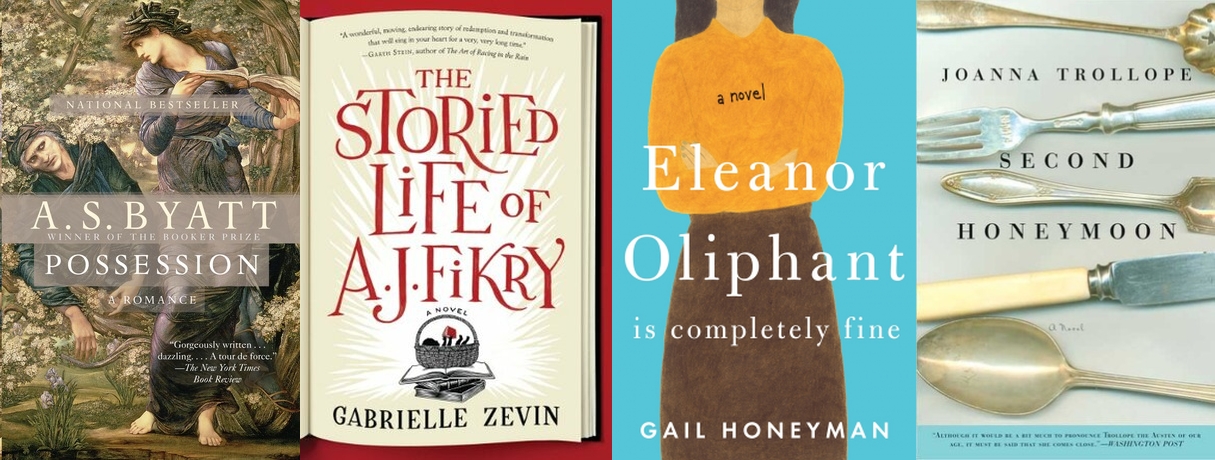
Or at least, of those I think you’d find interesting. As you’ll see from the covers of those I read in 2023, my tastes are pretty eclectic.

Other reasons to write reviews include expanding my writing skills, and to cover a glaring absence—in hindsight, it’s just bizarre how few reviews I have actually written here over the years, despite talking about books so often. There’s also my wanting to better connect with fellow bibliophiles, and my desperate need to appear smart and know big words and stuff.

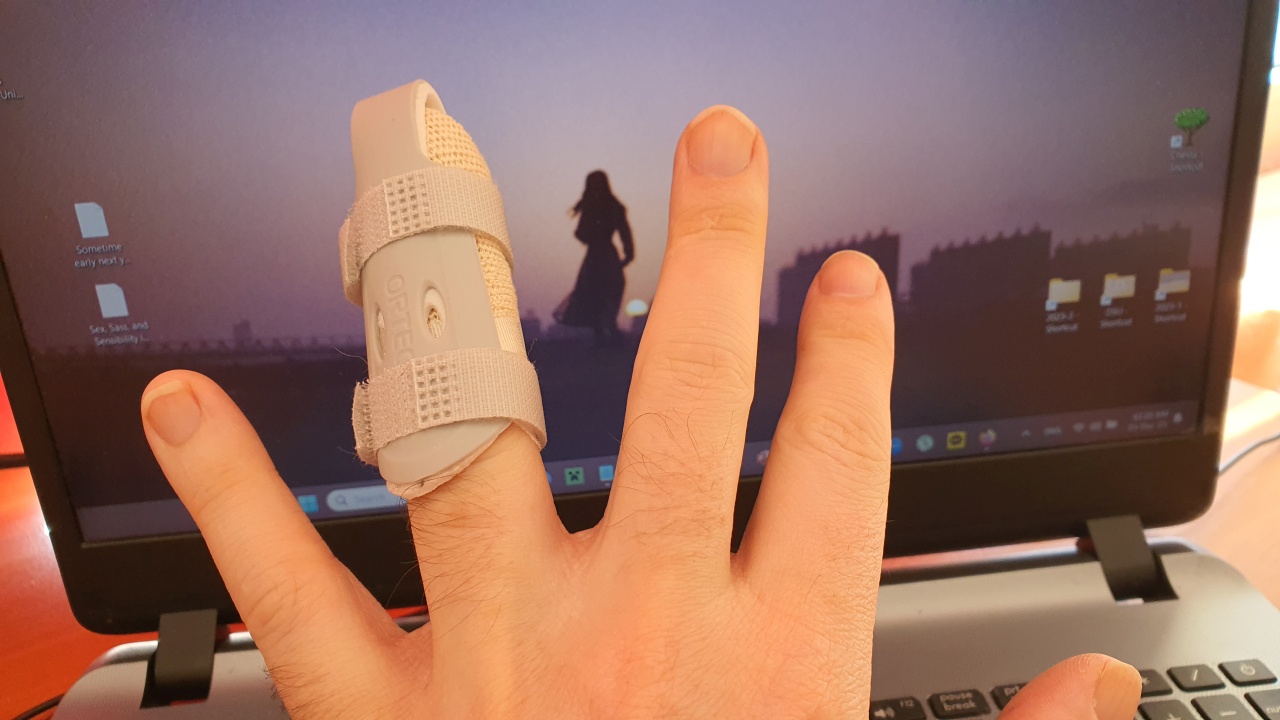
Suddenly writing sixty-six reviews at the end of 2023 was beyond even my enthusiasm though, and not just because I had a broken finger. So, I’ll wisely focus on my TBR pile instead.

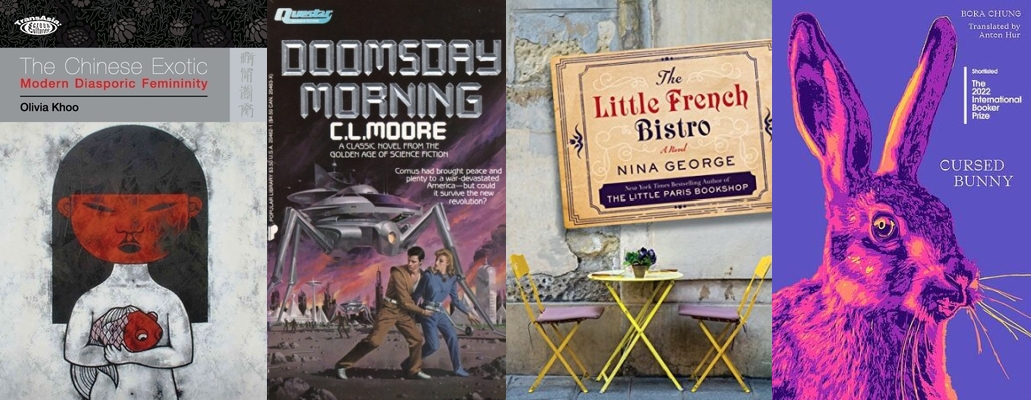
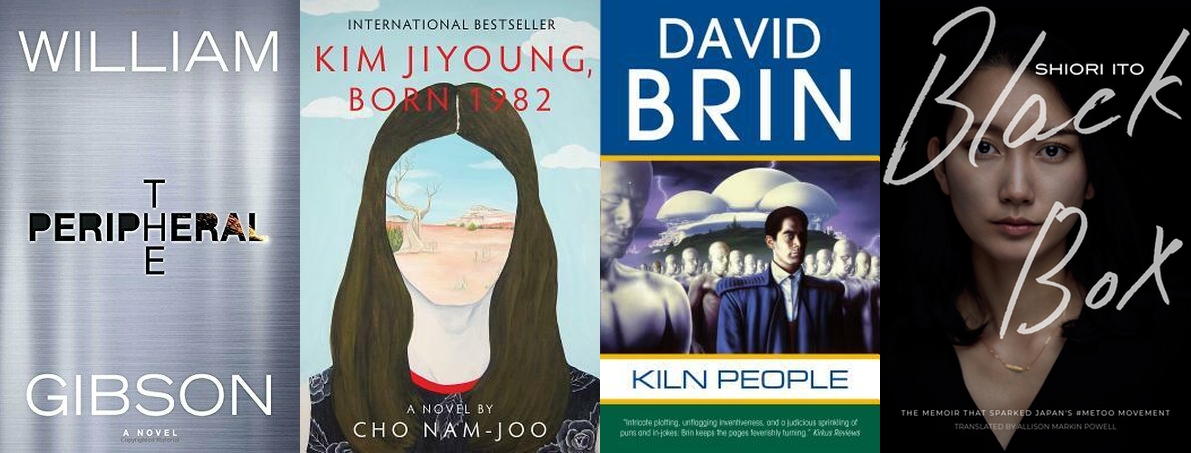
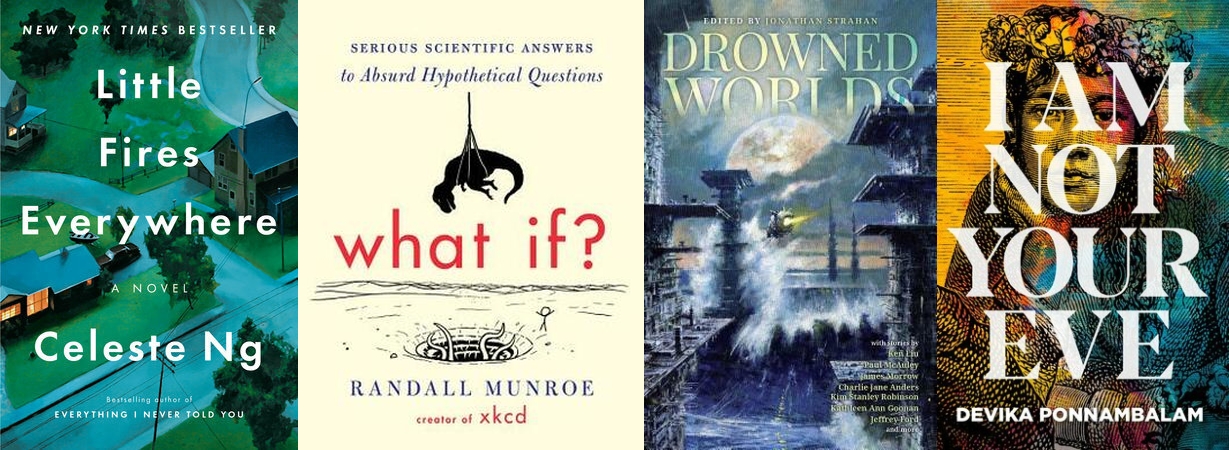
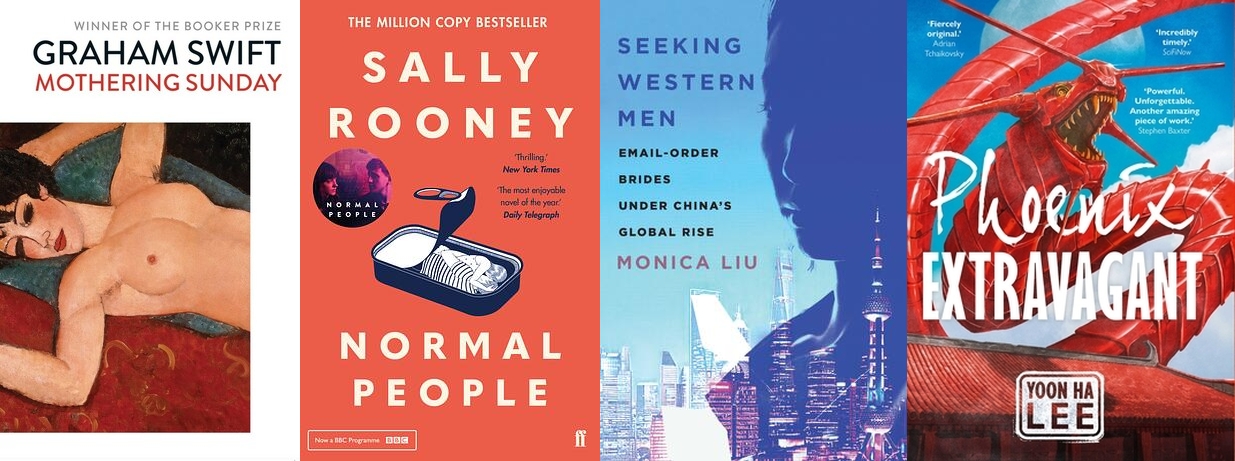
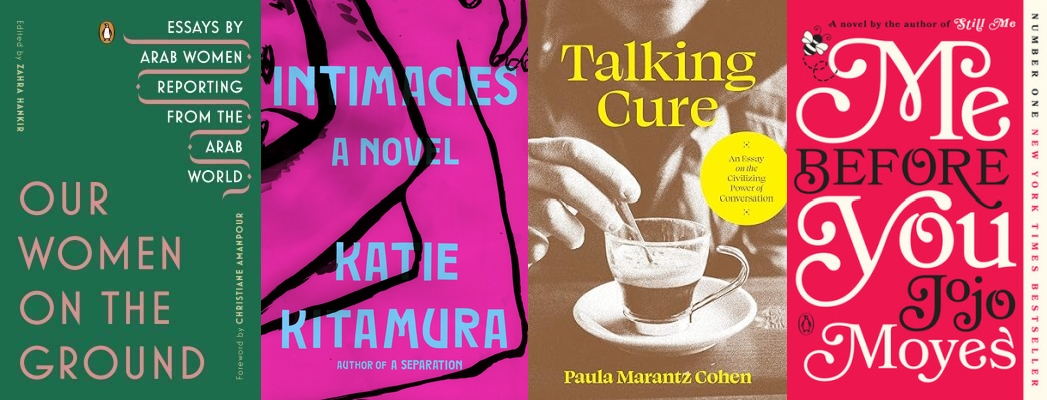
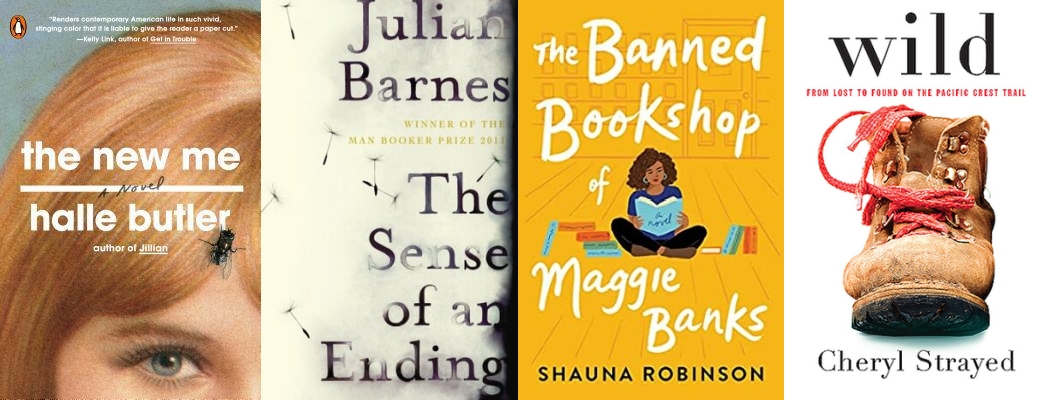
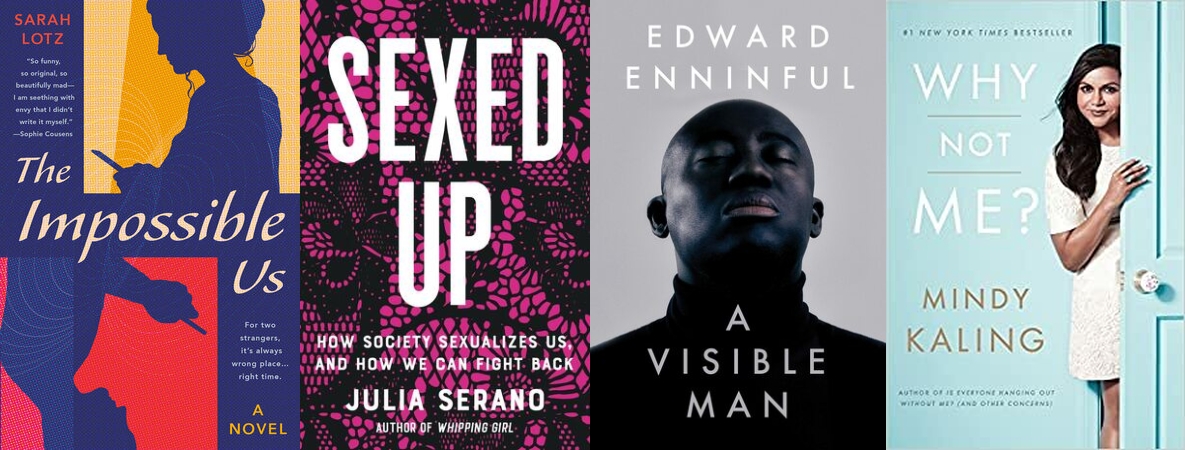
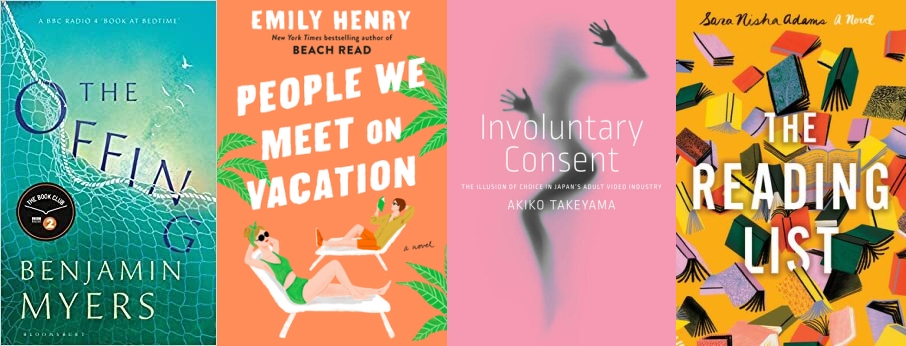
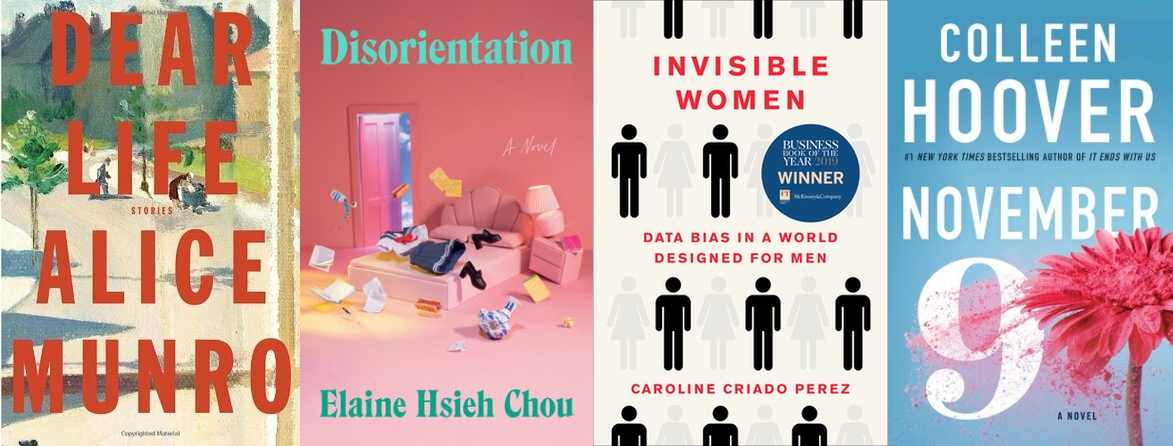
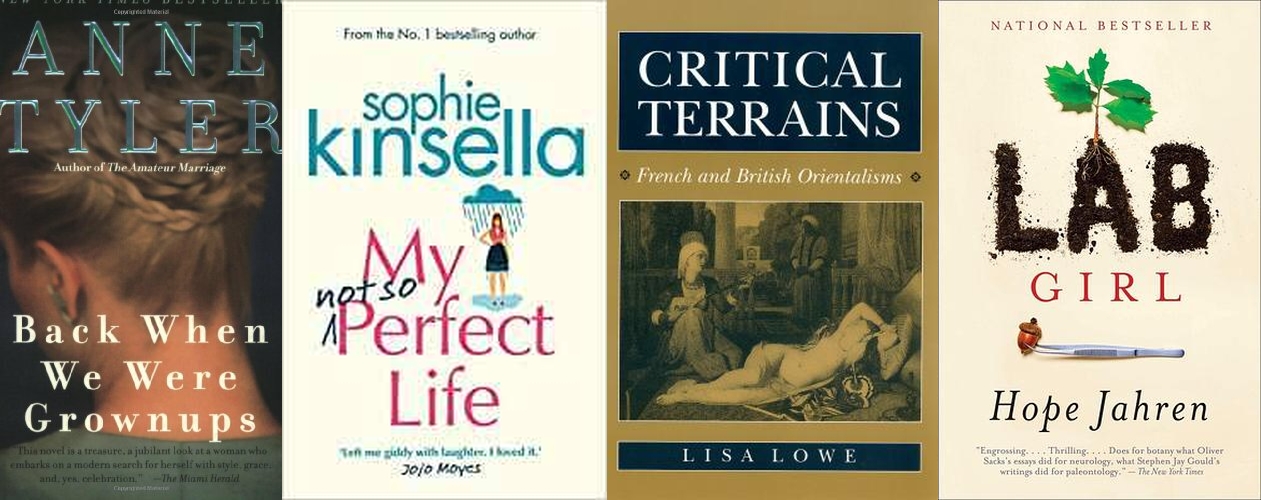
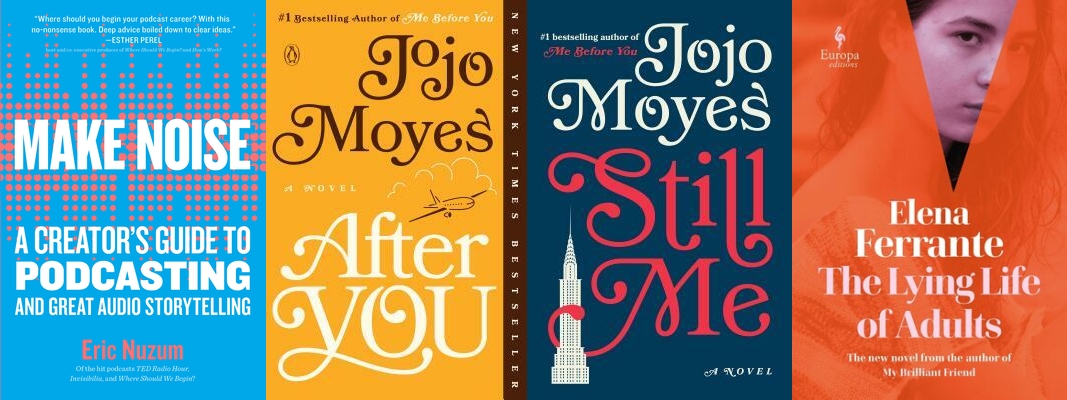
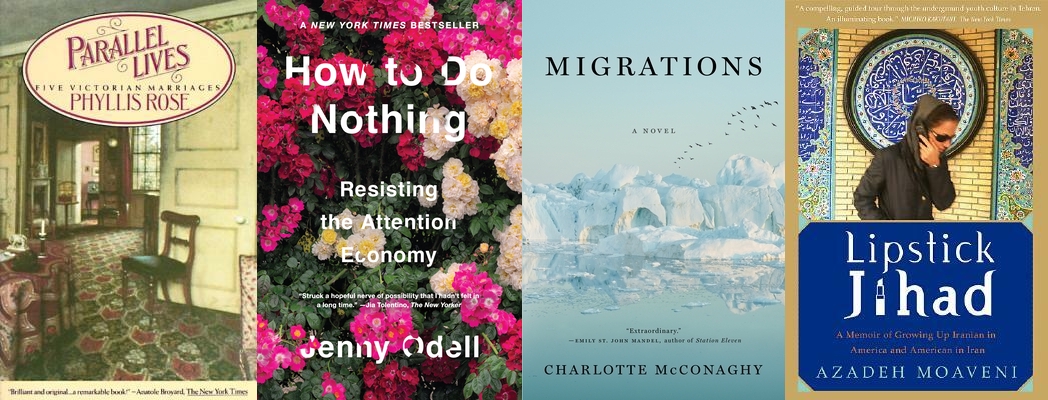
As I go through it then, in the meantime here are the covers of those sixty-six books from 2023 to flex for your interest. And if any do look worth a read, please go to my 2023 Reading Wrap-Up at The StoryGraph (I include the link in the numbers in bold too), quickly scroll down to “2023 at a glance” at the bottom, and you can click on the covers for their details there. Which is admittedly not very tech-savvy sounding of me sorry, but frankly the 5 seconds that will take you is a much better use of our time than my creating 66 separate titles and links is (which few people would click on anyway)!

If you do take the time though, and would even like to talk about any of the titles below, please be warned I will rant or (mostly) rave about them for hours them in gratitude. If that prospect doesn’t faze you, then absolutely please do get in touch, either in the comments or via my social media! (Facebook Page, Twitter, Linkedin, Threads, Bluesky, Post, Instagram)

Happy New Year! 🤓

1-4:

5-8:

9-12:

13-16:

17-20:

21-24:

25-28:

29-32:

33-36:

37-40:

41-44:

45-48:

49-52:

53-56:

57-60:

61-64:

65-66, and, for good measure, 1-2 of 2024!

If you reside in South Korea, you can donate via wire transfer: Turnbull James Edward (Kookmin Bank/국민은행, 563401-01-214324)

“Sex, Sass, and Sensibility in South Korea” 뭐야?

Okay, this is far too long and honest, damnit.

Estimated reading time: 12 minutes. Image by Riki Ramdani at Unsplash (account since discontinued).

Sorry for being so inconsistent with my posting schedule.

That’s about to change, big-time.

In three months from today, I’ll be bringing the blog to a close on WordPress, then continuing it on Substack, or on another, more ethical newsletter platform like it. Or in other words, all my preexisting posts will remain here, and remain freely available to read, but all my new posts will exclusively be published on Substack from then on.

At first, all those new posts will also be freely available to read. But later, sometime in the next three months after making the move, most of them, or at least the full versions of them, will only be available to paying subscribers, for somewhere between $2-$5 a month.

Well, that was the plan. Turns out, Korean internet banking restrictions considerably complicate getting donations for work published on non-Korean platforms. But I’ll work it out by March 8 (probably an overseas bank account will be required). And, whatever platform I do settle on, crucially all the new content will only be about the price of a cup of coffee. For a whole month.

So, I like to think that many of you won’t need to think twice about signing up when the time comes. Still, to help even further persuade you, the delay is only because over the next three months I’ll be making all the lifestyle changes and sacrifices necessary for me to begin delivering content to you regularly.

Starting by typing this with a broken finger!

How regularly you callously ask, indifferent to my pain? Well, I can’t make any promises at this stage, as this is only the first day of seeing what I’m capable of. But I can guarantee that once you get used to regular, much more frequent posts, you will genuinely miss them one they’re no longer available for free.

Here, the old me would start talking about the myriad of reasons for making the move, including the problems with the old tagline of “Korean Feminism, Sexuality, and Popular Culture.” But really, most would only be of interest to aging bloggers. So I’ll confine myself to just two, bumped to the end because they’re both a little disheartening, frankly.

Better to lead with the positive—my new tagline. Which a lot of thought went into, and which I’m very excited and passionate about focusing on in 2024—the year this Dragon comes into his element. But what do I mean by it exactly?

“The reaction to having a woman in a condom ad is exactly why we need women in condom ads.”

First, the “Sex,” short for “A Feminist Take on Korean Sexuality” (but which just didn’t have the same bite, you know?), will be the least changed from before. The only difference will be that there will be many more posts on that from now on, prompted by a dire need to reexamine and update the many aspects of it that I haven’t covered in many years. Some, in over a decade.

I have good excuses for that inattention. Compared to a decade or even just five years ago, the quality of instant translation programs, and of English-language reporting about Korea in general, have improved dramatically. When I have wanted to make another deep dive into any Korean-language sources on sexuality then, it’s seemed almost pointless when any non-Korean speaker can get their gist with just a mouseclick. (Albeit with some Korean ability still necessary to find the mistakes, sentences the program inexplicably missed, and so on.)

And yet, despite so much about Korean sexuality having changed in that time, and despite it being a more fascinating, contemporary, and relevant subject than ever, I’m just not seeing the attention I would have expected. Beyond academia, English-language coverage seems overwhelmed by Me-too, molka, and the ongoing legal limbo of abortion. All vitally important issues for sure, but hardly the entirety of what’s been going on.

So, because I really have always seen it as part of my mission to make factual information about Korean sexuality—not rumors and stereotypes from K-dramas and dating TikToks—available to international audiences, it’s high time for someone to step up and fill in those gaps. Again.

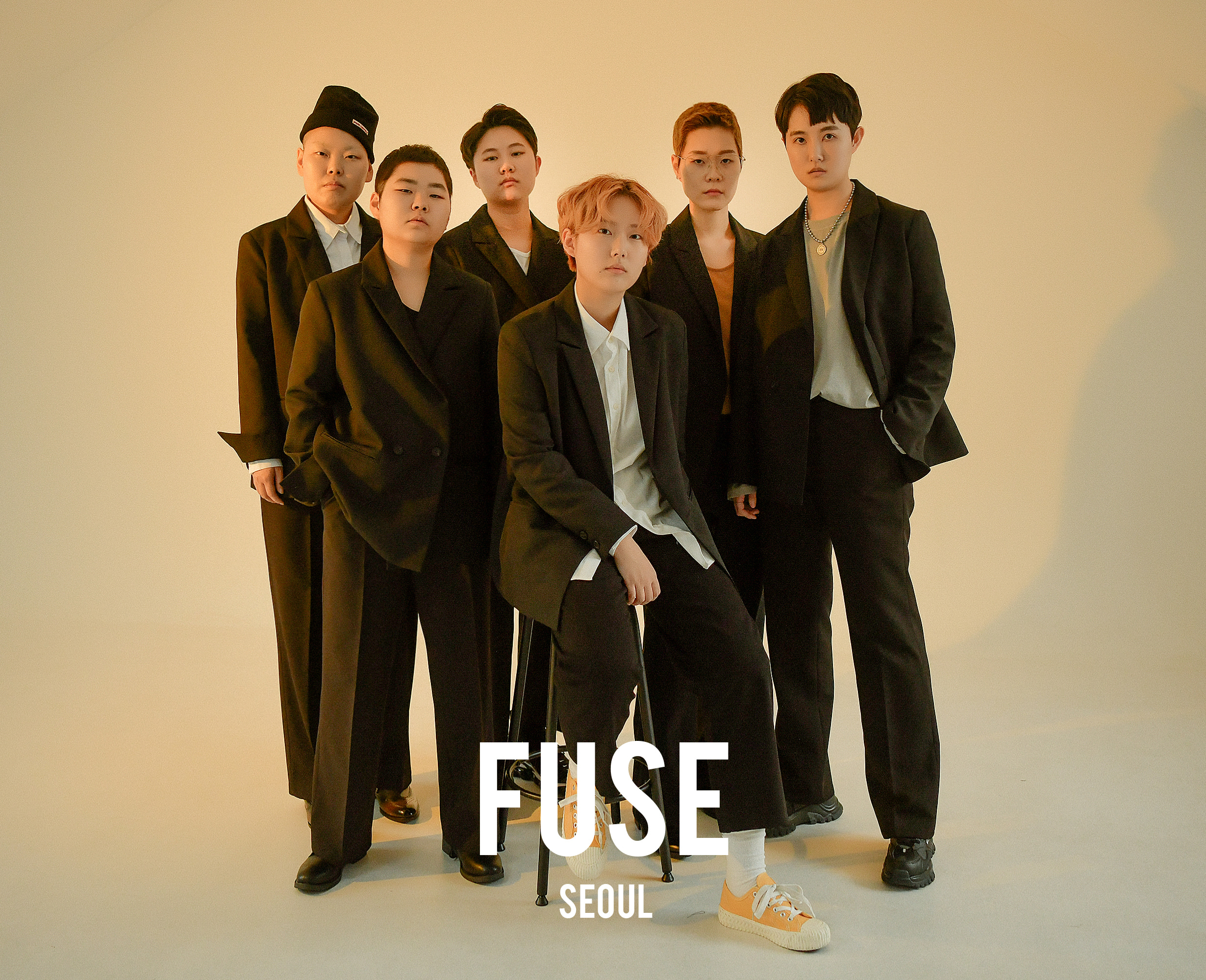
“Fuse Seoul” Clothing Brand Subverts Gender Stereotypes, Offers Women Comfortable Clothing. What’s Not to Love?

Next, “Sass” will be the biggest change. Partially, it’s to counter valid criticisms that I focus too much on negative news stories sometimes, which can be a downer for me to write just as much as they can be for you to read. But more, I’m emphasizing it because by this, the week of my first divorce-anniversary (divorcary?), I’m freer than ever before, and like to think I’m even acquiring some semblance of a social life too. Put all that together, and I have much more of a capacity and desire to meet and write about cool, sassy people who share my convictions, who are working hard for the many social changes needed in Korea (especially those related to sexuality), who inspire others to do so, and who very much deserve absolutely all the publicity and support they can get.

(Also, I’m finally realizing how many such people are right here in Busan, a much-neglected population compared to Seoulites. So, sorry not sorry for what will may be a local bias!)

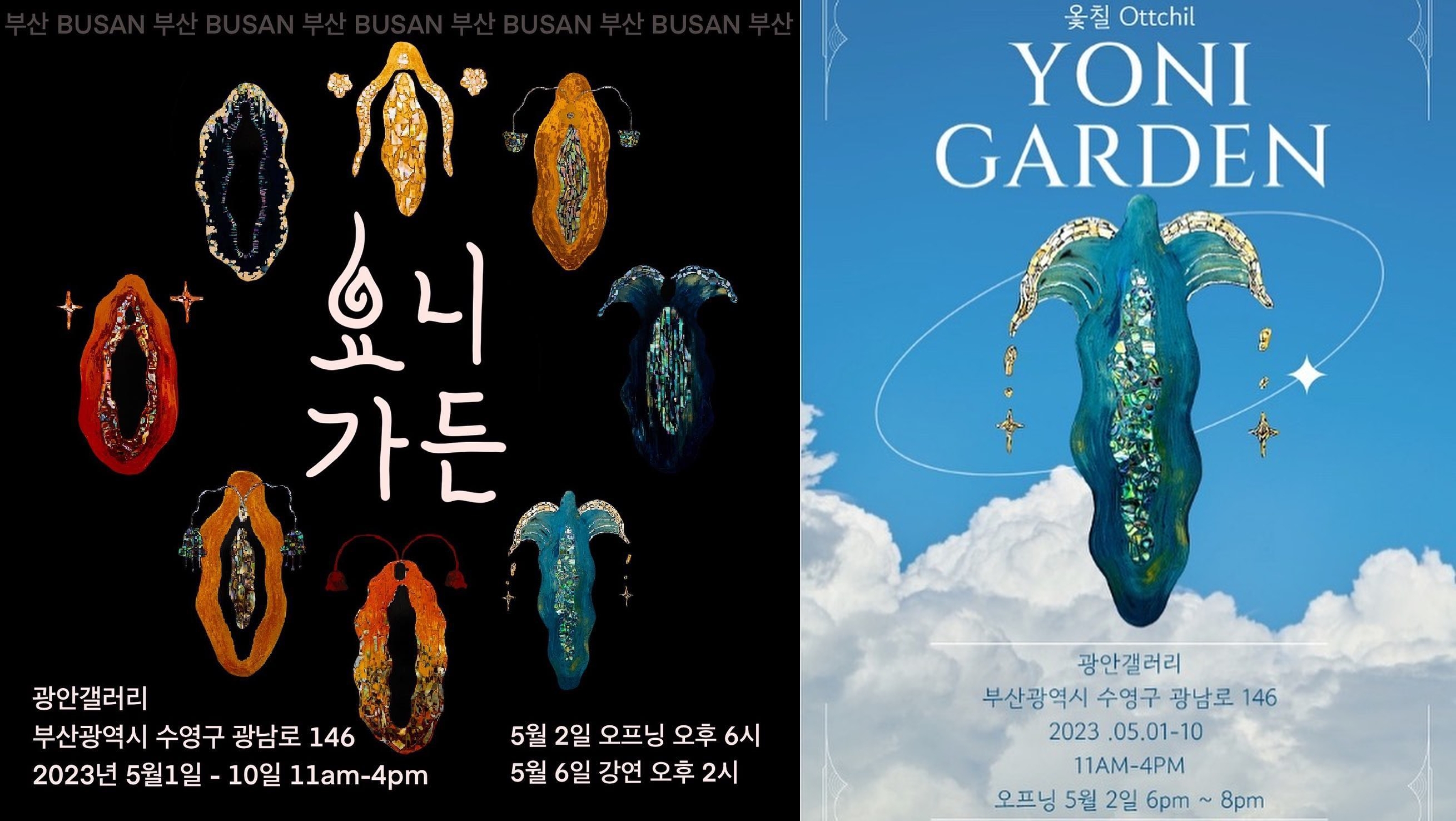
Posters for the “Yoni Garden” exhibition, held in Gwangalli Beach back in May.

Finally, there’s “Sensibility.” Which, not going to lie, I hope that mention alone will endear me to the huge, 99% overlapping demographic of feminists who are also Jane Austen fans, thereby instantly conveying my feminist credentials/allyship (take your pick! It’s all good!) despite the lack of an obvious place to insert “Feminism” or “Feminist” in the tagline. (Believe me, I tried!)

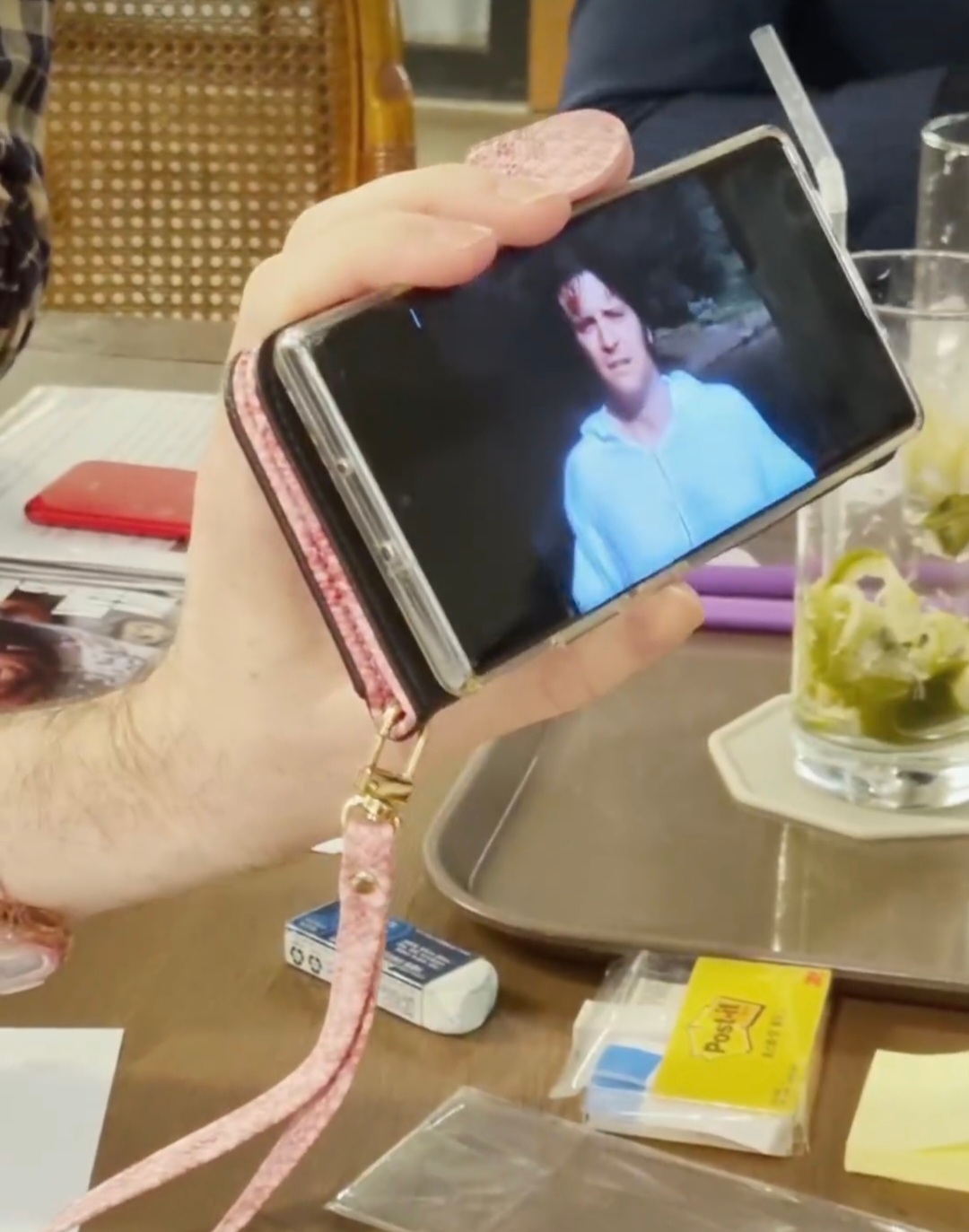
If not, then I could take a photo of my eight books by or about Jane Austen—but won’t, because no-one needs to know that three of those are actually three separate copies of Sense and Sensibility. Instead, let me offer the screenshot below, of me recently explaining “The Darcy Moment” to some sadly deprived female members of my bookclub (you know it’s me, because it’s a pink phone case). So we’re good?

But of course, there’s much more to it than that (I’ve even read some of those eight books!). Google “sensibility,” and even the most diehard Austen fan will have to admit it turns out to be extremely vague, with multiple definitions, especially when applied outside of an Austenian context. I’ve no qualms at all then, in appropriating the term to mean things which bring me joy, which resonate with me, which appeal to my sensibility then, and which I share because I hope—nay, fully expect—you’ll feel the same way about them too.

Generally, there’ll be four kinds of them.

First, those about books (etc.) which may not even mention Korea, but will be about sexuality, feminism, and so on. Shared because they have such eye-opening lessons about and/or parallels to Korea, that not covering them because they’re not technically Korea-related would do every reader a grave disservice. Not to mention withholding an aspect of my life I’m extremely passionate about, am still searching for people in real life who feel the same way, and, if I couldn’t share it at least in writing, simply don’t know what I would do with myself. (Kill myself, I helpfully suggested in another recent bookclub meeting.)

A good example of this is what An Intimate Affair: Women, Lingerie, and Sexuality by Jill Fields (2007) revealed about the uncanny parallels between the corset industry in ‘Western’ countries—for want of a better term—in the 1920s and the “V-line” and “S-line” and other “bodyline” trends of the beauty industry in Korea 2000s-2010s, which have enmeshed themselves into Korean beauty ideals so successfully (see below) that they go almost completely unremarked upon today. All of a sudden while reading that book, how and why finally made sense.

And understanding is happiness.

Dat name.

Next, there’s similar epiphanies to share even if there’s no link to Korea whatsoever. Like what I learned recently about how stereotypes about ‘appropriate’ gender roles and slight, natural biological sex differences in various abilities end up magnifying and perpetuating them, and how in practice many of them are easily overcome with just a little training, no matter how much they may or may not be ‘hardwired.’ Because remember my post on that, in which I describe how what I read in one book led to what I’d read in another, to another book, to another article, and to another book I’d read nearly 30 years ago, and upended beliefs I’ve held dearly for nearly as long? Originally that was supposed to be just a quick quote, posted only to sound smart. Instead, I just couldn’t pretend I wasn’t making the connections as I typed the quote out. Connections I felt were absolutely necessary to do the original topic justice, but which also required a lot of time and effort to fully explore, let alone explain.

That’s why so many of my posts end up so long, and why my posting is so irregular.

Because I do, absolutely, want to give the deep dives people have said they prefer. But they’re just so exhausting, and just take so much time.

That said, they absolutely will keep coming. For maybe I’ve finally read enough books to reach some sort of tipping point? Because while writing that post, I reveled in my ability to make those connections just as much as I did from learning from them. And coincidentally, not long after, someone who knows me well, whose own special ability is recognizing the qualities and uniqueness of others, and who’s really adept at working with her knowledge of those to bring people together and pull off numerous successful meetings, clubs, and group events, made the same observation about me. Ergo, for the first time ever, at the tender age of 47, someone else noticed I was good at something I alone have also long thought I was good at.

Perhaps only now because, finally, I know I’m good at it.

So what then, if those connections I make aren’t always about Korea?

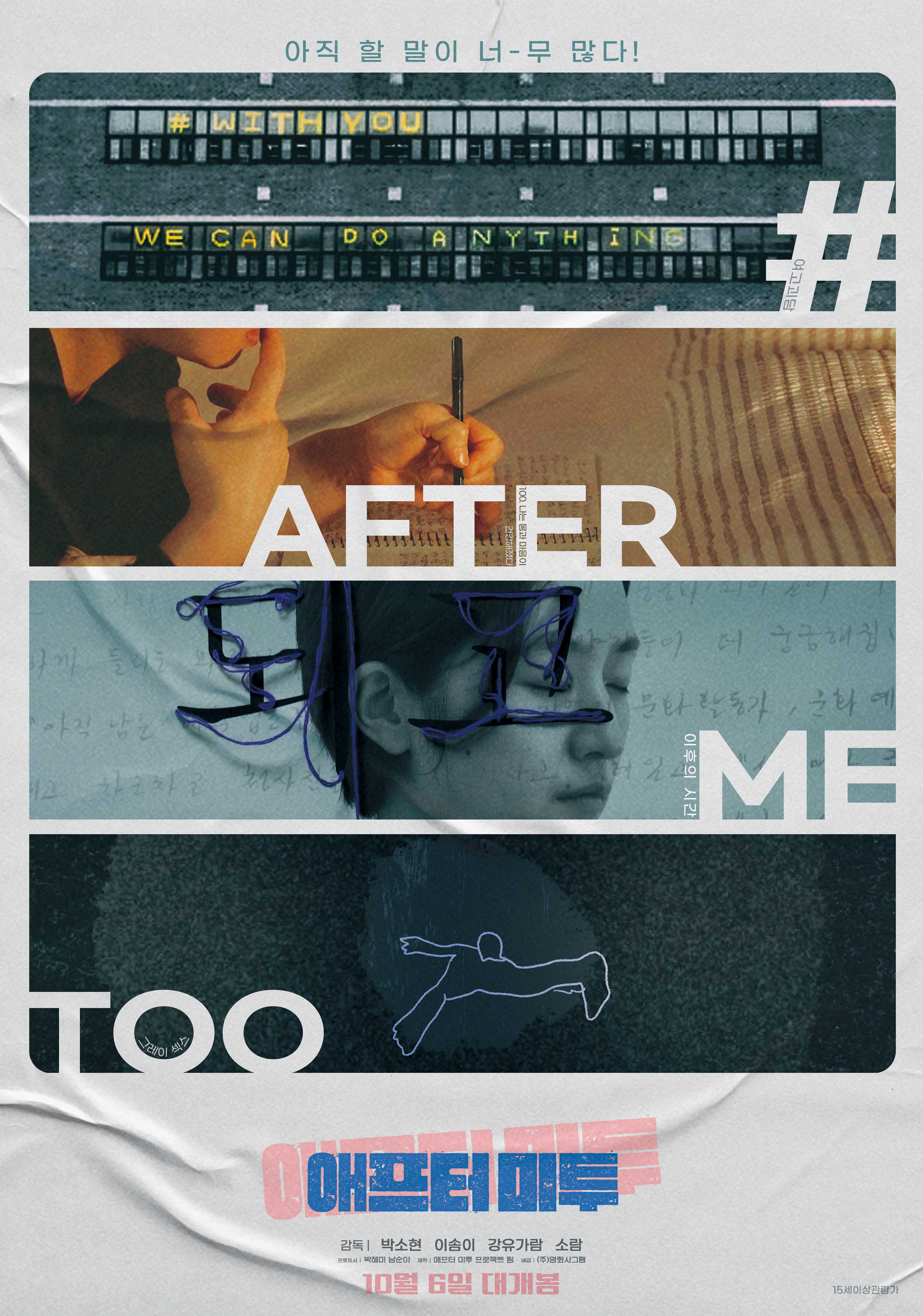
Third, there’s Korean popular culture. But almost always though, absolutely not mainstream movies, dramas, or K-pop. For various reasons, those have generally never appealed to me over the last ten years or so, and besides which they get more than enough coverage elsewhere. Instead, I want to share moments like when I went to see After Me Too last October, which I frankly attended more out of a sense of obligation than anything else, wanting to show my support but also expecting to find it dry and political, and that I would struggle with the Korean.

What actually happened though, was that I understood far more than I thought, and found the film surprisingly moving. And it sparked an interest in films like it I’ve ironically barely covered at all here.

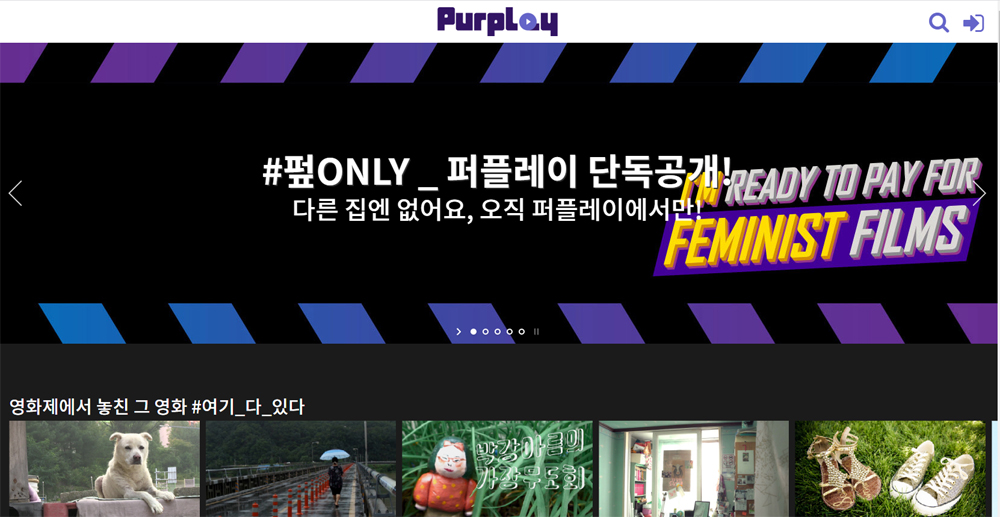
I was still so reticent though, because if I had shared that reaction here, readers might have just been left frustrated with how practically difficult or even impossible it would have been to see the film for themselves. But then, not sharing would hardly help rectify that situation, yes? And films do sometimes get shown again, if you know where to look. Just knowing about how good one was then, even if you missed it, helps you keep an eye out for others coming up by the same directors and/or featuring the same actors. Extend the same logic to other much neglected, indie films. To all the female-centered Korean short films I’ve been watching on Purplay with a vengeance since that moment of mine in the empty theater last year. To the Korean-language books I’ve read. To the feminist dances. All links which are just a drop in the ocean compared to what I want to experience, have experienced, and, despite everything I’ve just said, am wondering what on Earth was stopping me from sharing previously.
Finally, if you’re reading this far, it’s safe to assume we likely share many of same interests—and the same needs to delve into things completely unrelated to Korea sometimes, or even any of all the other things mentioned so far. So—yeah, it’s not just you detecting a theme here—why not talk about those too?

But with sooo much to talk about, and so much passion to do so, and desire to be heard, that begs the question of why I’ll be limiting myself to only doing so with paid subscribers eventually. Which brings me to conclude here with those two, disheartening reasons I alluded to for making that change.

First, because other than a small flurry of one-time donations when I wrote about blogging in June 2021, for several years before and since then I’ve only had one regular donor, who donates $2 a month. While I’ll always be eternally grateful to her (I love you MT!), that there’s only her after 16 years of blogging just underscores how long overdue a move to paid subscriptions really is, and how ridiculous it is that even now, I’m not fully making the leap for another six months.

Next, although I have over 10,000 followers between all my social media and email subscribers, in the last five years say, I’ve probably only ever interacted with less than 50 of you, and only a dozen or so often enough to know your names. Add that almost no-one leaves comments on blogs themselves these days, then the reality is that writing here is a pretty lonely and isolating experience most of the time. Much more so than I think most readers realize.

Photo by Tim Gouw on Unsplash.

By saying that, I absolutely don’t want anyone to feel guilty for not engaging with my content in the past, nor that future paying subscribers should at all feel obliged to. It’s completely my own choice to write at home alone, instead of doing something more sociable. But, having made that choice, which presumably you’d like me to continue making…it’s just hard sometimes, you know? The utter silence I usually receive in response to most posts, even after spending weeks pouring my heart and soul into some of them, can feel heartbreaking sometimes. Like I’m just screaming into the void.

Put all those reasons together, then I’d much rather have just ten people who are inclined to say hi sometimes, or who at least show they value my work through their renewed subscriptions, than 10,000 who don’t think I’m worth even a cup of coffee.

(More than ten people would be nice too though!)

And with that, to those of you who do want to say hi, let’s get to work on finally building our community, which I will do with my best attempts to keep you entertained, interested, and informed as I can.

So I’ll see you again very soon!

If you reside in South Korea, you can donate via wire transfer: Turnbull James Edward (Kookmin Bank/국민은행, 563401-01-214324)

Remedy, Mobility, and the Feminized Consumption of Beauty in Post-Authoritarian South Korea—Zoom Lecture, 8-9:30AM Thursday, November 16 in South Korea

Estimated reading time: 2 minutes.

Please register here, and see here for more details.

Here’s a quick summary from the latter:

[Dr. So-Rim Lee from the University of Pennsylvania] will discuss remedy (koch’ida), a term she uses to refer to changing one’s appearance through medical interventions—including plastic surgery, cosmetic injections, among others—to make life better. Remedy is much broader than medical discourse alone; Lee’s current book project contends that remedy is a critical cultural ethos, a teleological narrative, a social performance of subjectivity, and a material praxis of embodiment where state biopolitics and individual desire for belonging are inextricably entangled. From the postwar 1950s to the 1970s, remedying the body primarily signified rehabilitating disabled bodies; its grammar was integral to the narrative of nation-building under developmental dictatorship by way of remaking a healthy, re/productive national body marked by continued economic development. However, with the emergence of middle-class consumer culture and rapidly changing mass mediascape in the 1980s-1990s, remedying the body through plastic surgery became normalized in various print media as a gendered, individualized, and hyper-visible consumption practice undertaken by women for upward mobility. Perusing teen pictorials, feminist magazines, newspapers, and films, this work-in-progress talk explores how the consumerist discourse of remedy in post-authoritarian South Korea was keenly entwined with the discursive marginalization of different yet intersecting strata of women—specifically, housewives and working-class young women/teens.

See you there!

If you reside in South Korea, you can donate via wire transfer: Turnbull James Edward (Kookmin Bank/국민은행, 563401-01-214324)

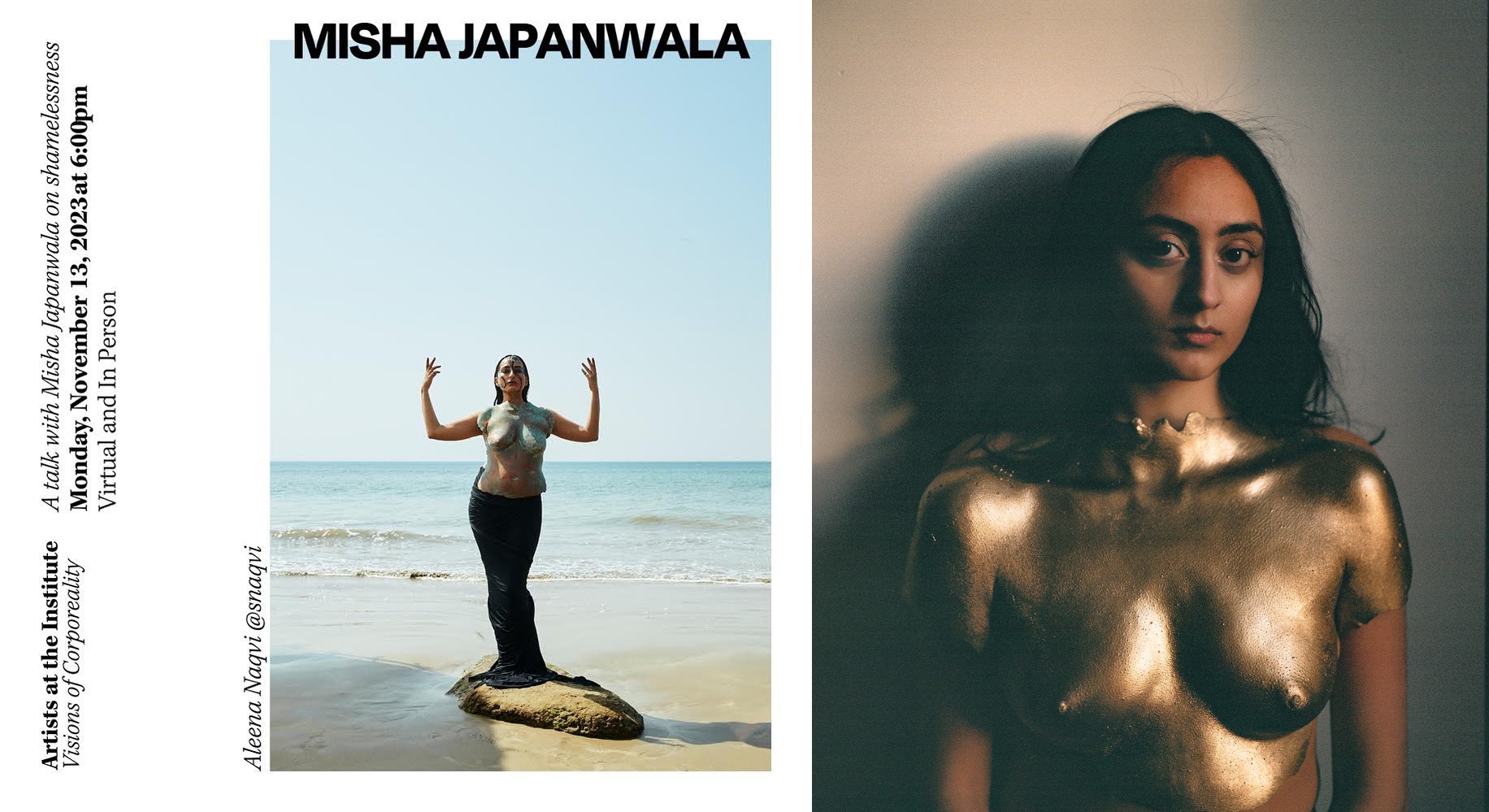
Visions of Corporeality | Artists at the Institute: Misha Japanwala—Webinar, 8AM Tuesday, November 14 in South Korea

(Also available as an in-person lecture at 6PM, Monday, November 13 at The Institute of Fine Arts, 1 East 78th Street, New York.)

Estimated reading time: 3 minutes. Image source (cropped): NYU The Institute of Fine Arts newsletter. NSFW images follow.

For the sake of shorter, more impactful and easy-to-remember announcements, I’m posting about notices about webinars and virtual lectures (that I’m able to attend) separately from now on.

Sorry that this one comes so last minute, but as far as I know registration for the webinar is available right up until the event itself:

“As part of the Institute of Fine Arts’ (Instagram, Facebook, Linkedin, X/Twitter) ongoing tradition of inviting contemporary artists to speak about their practices in the Duke House Lecture Hall, this year’s Artists at the Institute Lecture Series invites four artists who explore the body as a site of confrontation. The body is continuously subjected to political, social, and aesthetic judgments both within and outside of the art historical canon. Whether it be through the ongoing battle with reproductive rights or the modification of the body in digital and social media, this phenomena proves to be omnipresent. Contemporary artists are constantly grappling with conceptions of corporeality, and each artist brings a diverse approach to what this means to them. This year’s series is committed to uplifting the voices of women working in representational practices across a range of media, styles, and backgrounds. Through feminist, cross-cultural, and art historical methods, these artists challenge the contours of corporeal form, transcending the limitations and restrictions that have bound the female body to the canonical canvas, and imagining how such liberation might transform aesthetics.”

Sources: NYU Institute of Fine Arts Instagram & Newsletter.

“For our second installment of Artists at the Institute, Visions of Corporeality, lecture series we are excited to welcome Misha Japanwala. Misha Japanwala (b. 1995, London, England and raised in Karachi, Pakistan) is a Pakistani artist and fashion designer, whose work is rooted in the rejection and deconstruction of shame attached to one’s body, and discussion of themes such as bodily autonomy, gender based violence, moral policing, sexuality and censorship.” (Instagram, homepage.)

“In our second installment of this series, Misha will touch upon what it means to be a Pakistani woman familiar with the historical objectification, commodification and control exerted on marginalized bodies by societies and systems enveloped in patriarchy.”

(Join in-person / Join virtually.)

And as a reward for those you still reading, please click here to register for the next virtual lecture I’ll be announcing tomorrow: “Remedy, Mobility, and the Feminized Consumption of Beauty in Post-Authoritarian South Korea,” a virtual talk featuring So-Rim Lee from the University of Pennsylvania, and presented by the Korean Studies Research Network. In South Korean time, that event will be on Thursday, November 16, again at 8am.

See you there!

Related Posts:

If you reside in South Korea, you can donate via wire transfer: Turnbull James Edward (Kookmin Bank/국민은행, 563401-01-214324)

Performing in “Public” Spaces in Korea and Japan—Can Anyone Do it? Or Mostly Just Men?

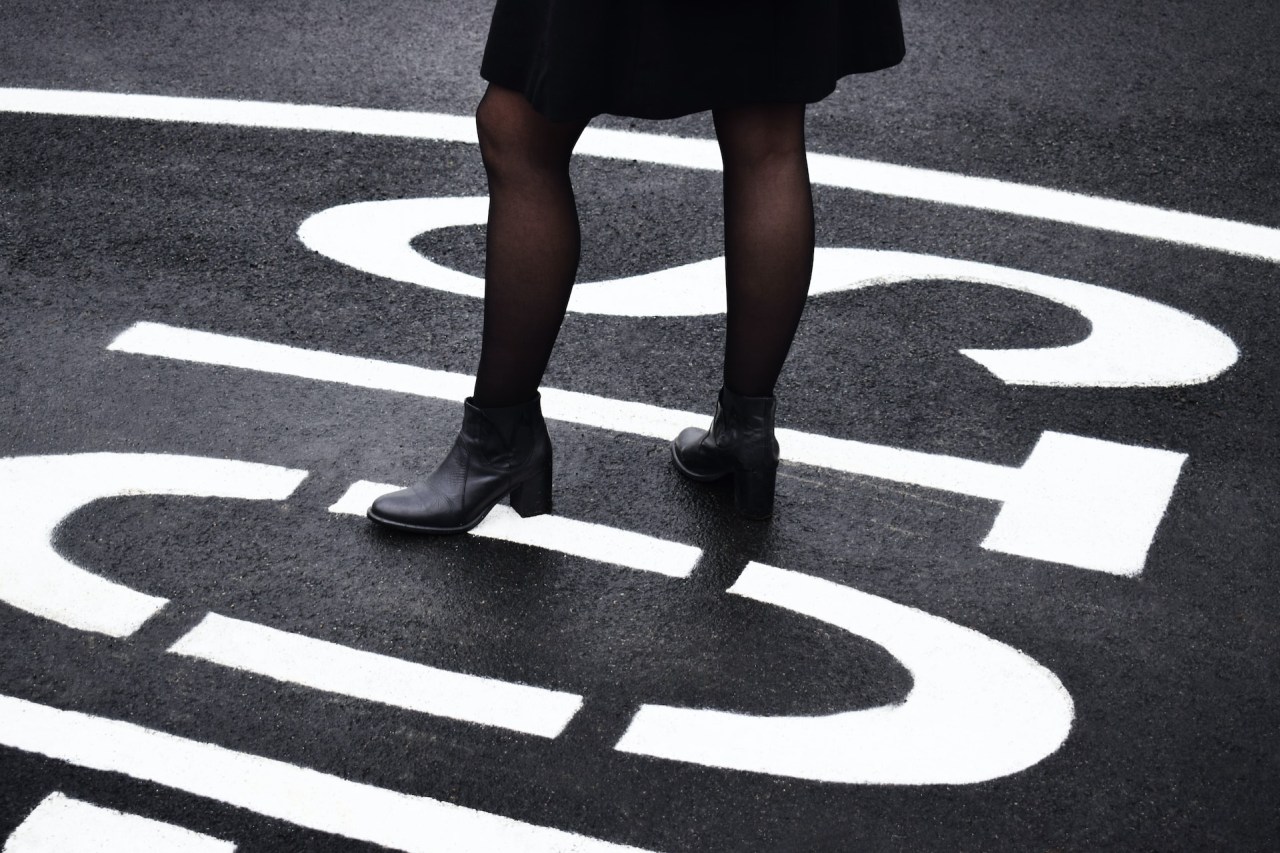
“Musicians’ experiences of dis/comfort, im/mobility, security and threat, as well as their coping strategies, are all gendered.”

Estimated reading time: 5 minutes. Photo by Chris Barbalis on Unsplash.

My TBR pile is glorious, and it is teetering. So, I really should have known better than to even glance at the New Book Networks feed…

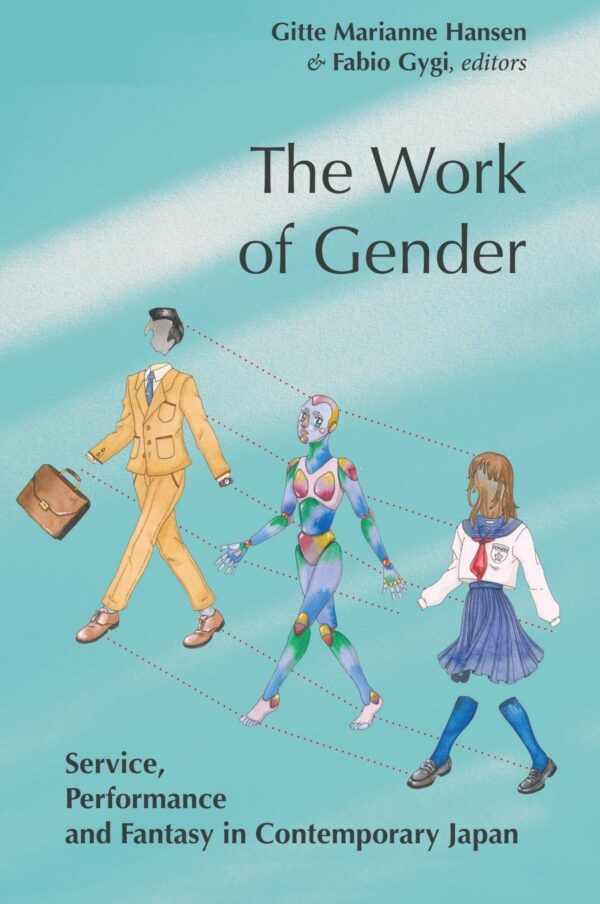
Assuming I can actually find the space then, this latest, slightly pricey candidate is all due to Tuesday’s interview of Dr. Gitte Marianne Hansen and Dr. Fabio Gygi, editors of The Work of Gender: Service, Performance and Fantasy in Contemporary Japan (NIAS Press, 2022). Specifically, the section from 28:35-31:10 where Dr. Gygi talks about Chapter 6, in which his colleague, Dr. R. J. Simpkins, shares his findings from months of observing and talking to buskers and street performers near a Tokyo train station. Like me, listening will probably immediately remind you too, my beloved tribe (*hugs*), of Feminist City: Claiming Space in a Man-made World by Leslie Kern (Verso, 2020; see my review here). You also get how tempted I am right now then, as I almost seem to hear the soft serenade of  “지금 택배로 주문하면 11월 24일 출고” sweetly whispered into my ear…Oh! Aladin, you tease…

Ahem.

With no further ado then, sorry for any mistakes in my transcript of that section of the podcast below. And please don’t worry about giving offense if you’d rather jump ahead to a reviewer’s excellent summary below that instead!

“Well, I think this is a wonderful chapter, because Rob, the author, was actually playing as a street musician himself, and that’s how he entered the field, and he’s been there for quite a long time, and it’s a wonderful ethnography, and very detailed. But towards the end he realized, ‘Well, I’m only talking to men. I know a few female performers but it seems to be a very different experience for them.’ So he started to focus a little bit more on the differences, and one of the things that he really found was that it’s all about space-making.”

“So, it’s a public space, you’re exposed to the gaze of the passers-by, but as a musician or performer you have to create…you have to take this public space and turn it into something else, like a concert venue or a venue for self-expression. And this of course takes on a very strong gender dimension. So men felt very much at ease, you know…especially the more rock-type musicians who would just start to play…there would be a good vibration and people would sort of assemble. But women working as performers felt very much exposed in a very different way. Now, you have to imagine, during commuter rush hour it’s mostly men…it’s salarymen who come back from work, often in a state of inebriation, and there would be a lot of sexual harassment, there would be a lot of unwanted attention, or rather boundary-breaking attention, so people would come, they would listen to a song, and then they would try to chat you up or get close or break the sort-of boundaries that you have created. And so there was a much greater sense of vulnerability, and what he sort-of concluded from that is a public space is also to a strong degree male-coded, it’s the male gaze that defines what is happening.”

“So if you expose yourself to that, you have to be aware of the gendered dynamics of the space and so his artists chose very different and very creative strategies [to deal with those]…Reyna(?) for example performed in a mask to deflect from the fact that she was a female performer, and so it is very important to understand that this public sphere itself is gendered…not something we would normally, you know, have a good understanding of.”

These difficulties and dangers are underscored by co-editor Dr. Hansen then going on to note that this was the most difficult subject in the book for any of the contributors to research. Because, unlike with other venues and performances, the rules of engagement (and enforcement) were not set. My personal additional takeaway from that being, those rules were also more open to exploitation and abuse by those with (male) privilege.

Photo by Victoriano Izquierdoh Barbalis on Unsplash.

For the busier feminist book geek among you though, as promised here is an excellent summary of Dr. Simpkins’ chapter by Dr. Kai E. Tsao, taken from her review in Feminist Encounters:

“Simpkins observed and interviewed music performers at a Tokyo station, and his chapter demonstrates that the musicians’ experiences of dis/comfort, im/mobility, security and threat, as well as their coping strategies, are all gendered. Male musicians considered their experience, occupying and transgressing in public space, as performing their authentic self and self-realisation. This sentiment was not shared by the female musicians. Instead, they performed ‘charm’ and created a ‘non-threatening atmosphere’ to navigate social interactions in a station space with a predominantly male presence. Public space around the station is coded: compared to their male counterparts who ‘naturally’ hung around to interact with their supporters, female musicians were much more cautious about the risks of inviting passers-by to take an interest in their performance. This makes me wonder: how is the performance of invitation gendered? How might female musicians be perceived if they invited an audience in a space where they were ‘not supposed to be’?”

And which also makes me wonder, what are the Korean parallels? Where are those spaces?

Frankly, I can’t really think of any. In fact, the only place I ever encounter buskers and street performers at all is the main drag of Gwangalli Beach close to where I live, which ironically I don’t visit very often because it’s always jam-packed with happy, 20-something, heterosexual couples (sigh). That very different audience composition to a busy Tokyo subway station then, as well as the very public and open setting, would likely mean performances there were almost completely devoid of the (negative) gendered dynamics described above.

Maybe various Korean laws are responsible for making them much less common than in Japan?

Or maybe not? Are there buskers in, say, Hongdae in Seoul? In Nampo-dong here in Busan, which I haven’t visited for years? Performers in busy Seoul subway stations? Please do let me know then, if know of any similar Korean spaces to what Dr. Simpkins outlines in Tokyo, and your experiences of them. And how do think the gender dynamics play out in those?

Related Posts:

If you reside in South Korea, you can donate via wire transfer: Turnbull James Edward (Kookmin Bank/국민은행, 563401-01-214324)

Please Help Some Struggling Students by Filling in Their Quick Surveys on Anime and Smoking!

Less than 20 years ago, Korean women could get assaulted for publicly smoking. Less than 2 days ago, a short-haired woman in Jinju did get assaulted for the same, real reason—openly defying restrictive gender norms.

Estimated reading time: 3 minutes. Image sources (adapted): @TheKpopProf on X/Twitter and @cottonbro at Pexels.

An academic friend has asked for help for her students, who are having trouble finding participants for surveys they need to conduct as part of their coursework.

If you’re eligible, both surveys are completely anonymous, and each should just take just a few minutes to complete.

The first is about how women feel about the way women and young girls are portrayed in anime/hentai. Your nationality is not important, but it is open to women and non-binary participants only.

The second is about smoking habits and perceptions of men and women smoking in Korea, and is open to all Korean smokers, although Korean ability is not required.

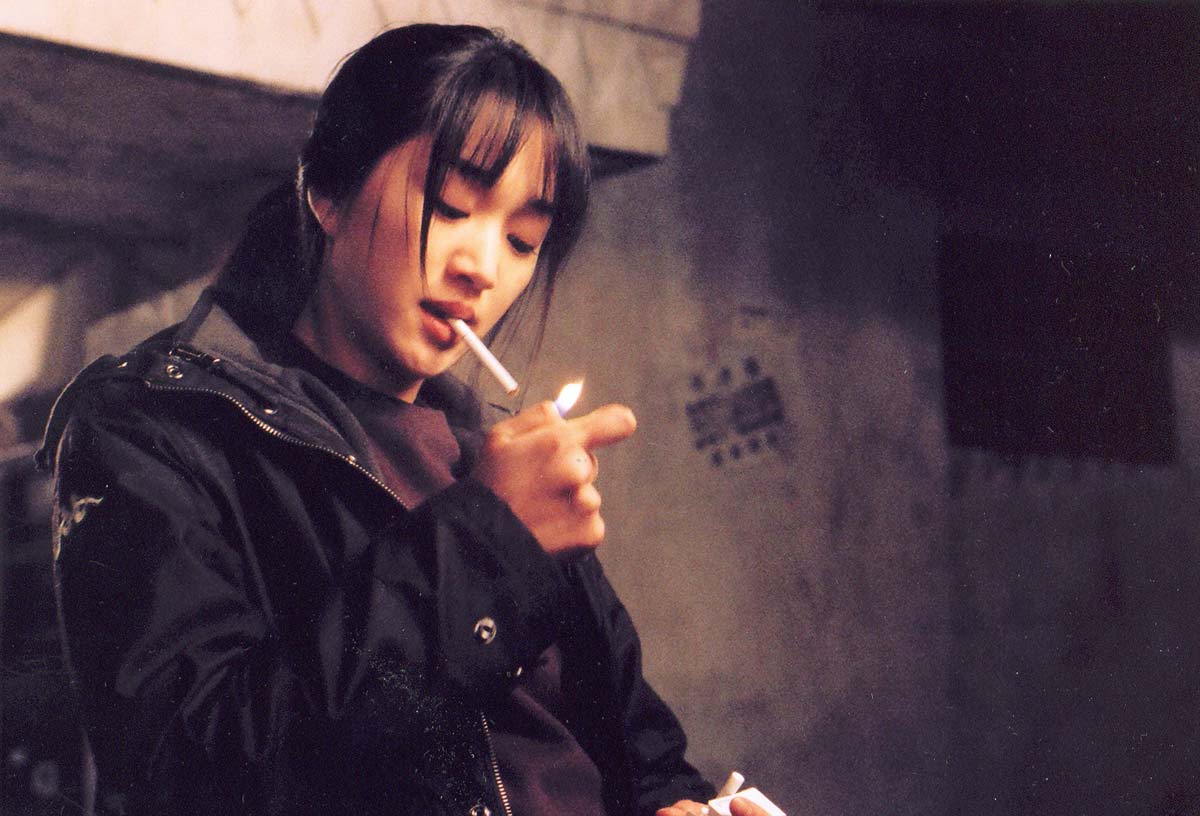
Park Soo-ae/박수에 in A Family/가족 (2004). Source.

Alas, I don’t think I’ve written anything much at all about anime. But back between 2010-2013, I did write the long series below about the gender politics of smoking in Korea, prompted by an incident in the news about a young woman getting physically attacked on the street for openly doing so. So I can certainly understand what prompted the line of questioning in that survey, and am very interested in learning from the students about how much things have changed in the last 10 years.

Fortunately, cases of women getting assaulted in Korea for smoking now seem like ancient history. But then it was never really about smoking, was it? The real reason female smokers were assaulted back then was for openly defying restrictive gender norms and roles. And, sadly, as more and more women are brave enough to do so in other aspects of Korean social life, it seems the rates of assault against them are only increasing in response. Most recently, with a woman in Jinju this week being attacked for having short hair.

I really didn’t intend to sound so cynical. And I’m not—preventing such crimes starts with undermining the attitudes behind them, and determining how prevalent they are helps towards that. So, thanks in advance for your help with the surveys, and please feel free to share them with your networks!

Related Posts:

If you reside in South Korea, you can donate via wire transfer: Turnbull James Edward (Kookmin Bank/국민은행, 563401-01-214324)

Note to Self—Check Thy Orientalism!

Lady Mary Wortley Montagu, an 18th Century woman of letters, had a keen eye for ignorant European male travel writers who projected their sexual fantasies onto Turkish women, and why they waxed lyrical about women’s suffering under barbarous Turkish men. Her skills at exposing hidden agendas, and at highlighting women’s shared experiences of misogyny, rather than stressing exoticism and difference, remain just as useful and necessary today.

Estimated reading time: 10 minutes. Photo, right, by Kazi Mizan on Unsplash.

Now, I know you’re totally jealous I have a physical copy of Critical Terrains: French and British Orientalisms, a.k.a. “a sustained reflection on Orientalism, with feminist accents” by Lisa Lowe (1991), and not just an open-access PDF.

Or not? Perish the thought. Still, while this particular tome does make its central point that orientalism “is profoundly heterogeneous,” I can concede it’s also very academic and literary and critical-theory heavy, requiring a lot of concentration. So, if you’re actually just trying to impress fellow bibliophiles and geeks on the subway in the mornings with it, or beat crippling insomnia in the evenings when that fails to elicit the companionship you seek, much of it will simply fail to stick.

But of the two parts that did stand out to me, which I’ll highlight in two separate posts, I wasn’t expecting the first to make me feel so…uncomfortable.

Specifically, it was the second chapter on Lady Mary Wortley Montagu’s Turkish Embassy Letters, a collection of her reflections on her travels through the Ottoman Empire between 1716 and 1718, published in 1763 just after her death. In those, she criticized European men’s writings about Turkish men and women for presenting the former as barbarous, and using the alleged civilized treatment of women in Christendom as evidence of that, compared to their supposed abject misery under Islam in Turkey. In other words, they presented a false dichotomy between a feminist West and patriarchal East that, well, you could probably see faint echoes of in my own first attempts writing about Korea nearly two decades ago.

Image: Young Woman Reading, 1880 by Osman Hamdi Bey (Turkish, 1842–1910).

Mercifully, the offending posts have long since been deleted. I don’t think I could ever have been accused of projecting my sexual fantasies onto Korean women like Montagu’s male contemporaries did Turkish women either, let alone doing so while acknowledging they had no knowledge on which to base those fantasies whatsoever, as we’ll see.

But that false dichotomy? Stressing the differences between the men and women ‘over there’ compared to ‘here,’ rather than emphasizing shared experiences and potential solutions to, say, overcoming the patriarchy?

That’s definitely something to be remain wary of. In particular, when so many negatives of women’s position in Korea are genuinely objectively worse than in the countries interested English-speaking readers tend to hail from, it’s deceptively easy for any Korea-related news to simply confirm one’s preexisting prejudices and stereotypes about Korean men and women, or to pander to those if you want your work to be read. And I’m just as open to temptation as anyone.

So, to help maintain that awareness, let me highlight the relevant passages from the second chapter of Critical Terrains for you here. Starting with the first mention of the letters on page 31:

Then on page 32, introducing the crucial additional theme that for all her proto-feminism, Montagu was also very elitist and aristocratic, both in her concerns and in the Turkish women she most interacted with. But for more on that, you will have to read the chapter for yourself sorry!

Then on page 38, on one of those European men waxing lyrical about what goes on in the fabled harems, despite never actually visiting one…

Continuing with yet another man doing the same:

Continuing past the page break into page 39:

Continuing:

Continuing:

Page 40, which I especially liked for its point about Turkish and European women’s shared experiences:

And finally from page 44 (NSFW image coming below):

If you’ll please bear with me a moment, Orientalism, I find, is a bit like the Theory of Relativity. (Hey, I did ask you.) As in, like my physics professor once pointed out back when I was studying to become a professional astronomer (it’s a long story), Einstein’s theory, for all the creativity, originality, and genius behind it, is actually quite simple to understand after a couple of lectures or good YouTube videos. Which is my somewhat arcane excuse for why, wanting to learn more about Lady Montagu, I consulted my other books exclusively devoted to Orientalism, and discovered to my horror and shame that I actually only had two: Culture and Imperialism by Edward Said (1993), and The Erotic Margin: Sexuality and Spatiality in Alterist Discourse by Irvin C. Schick (1999). Alas, Said didn’t mention Lady Montagu at all (perhaps it’s time to finally purchase Orientalism?). But Schick did…

…and then I finally noticed a certain similarity of cover theme with that of Critical Terrains. Potential accusations of hypocrisy by authors and/or publishers and a certain blogger aside though, and how much that extends to the genre as a whole or not (Culture and Imperialism actually has quite a bland cover), obviously both covers were used to sell more copies of both books. Or, to put it crudely, there was an agenda behind the choice to put naked Oriental women on both.

Which finally brings me to how, even 150 years after the publication of Montagu’s letters, Schick explains that the British public, industry, government, and press, for a wide variety of reasons and agendas, were all just too fundamentally committed to their own agendas—an alternative, collective ‘truth’ about the Orient so to speak—to really care less about what its men and women were actually like. Which is also why, sadly, Montagu’s letters ultimately made little impact:

From Pages 211-212:

And finally, from pages 50-51:

Related Posts:

If you reside in South Korea, you can donate via wire transfer: Turnbull James Edward (Kookmin Bank/국민은행, 563401-01-214324)

OMG YOU HAVE TO WATCH THIS KOREAN FEMINIST DANCE PERFORMANCE

“Women have always been at the center of my work and world.”

Estimated reading time: 4 minutes. Image source: tumblbug.

Is contemporary Korean dance always as hypnotic as this? Have I been wholly misjudging it all these years?

Actually, if you’re at all knowledgeable, please reserve your answers for the comments. Better that most readers approach the video with no preconceptions like I did, puzzled at the notification from an unfamiliar YouTube channel on my phone. Better still, that first they turn off the lights, get close to their screens, plug in their headphones or ear buds, are slightly sleepy, drunk, or high…and be ready for their jaws to hit the floor:

The choreographer and performer is Jinyeob Cha (차진엽) founder of Collective A, an interdisciplinary dance performance group, and who is probably best known for having been the director of the choreography for the opening and closing ceremony of the 2018 Pyeongchang Winter Olympic Games. But the reason I personally was subscribed to her channel was because in March 2022, London Korea Links wrote about her and Collective A’s performance there of “MIIN: Body to Body,” in which Cha:

“…examines perceptions of beauty and femininity beyond societal norms and traditions.”

“Accompanied by a hypnotic soundscape created by two acclaimed musicians based in Seoul, Eun-yong Sim, from Korean Avant-rock band Jambinai, and haihm, an electronic musician, six female dancers flit between precise, discreet, feminine poses and aggressive, erratic movements to embody all aspects of a woman.”

“Miin (미인) is a Korean word meaning ‘beautiful person’, but is more often used as a synonym for ‘beautiful woman’. This work challenges the meaning of ‘beauty’ and encourages women to embrace their bodies as they are without succumbing to unrealistic expectations.”

Source: Collective A

You can read much more about her in—some—English at the Collective A website, and especially in a May 2018 interview at The Wonderful World of Dance, from where I took that lede. And for Korean speakers, I also recommend Tell You About Her: Korean Feminist Dance Since the 80s] 차진엽 Interview, which can (only) be watched on her channel.

She’d slipped my mind though, because this was the first upload on her channel in a year. There seems to be little information specifically about the “원형하는 몸: round1” (“Body Go-round: round 1”) performance in English available too (or at least that I could find), which is surprising because it was actually first performed in 2021. What I could find then, was a quick explanation in the blurb to another UK performance in September 2022, that explained it was:

“…a genre-bending, mixed reality, dance spectacle inspired by the process of melting to evaporation in the water cycle.”

“Looming above the stage, a giant ice formation slowly melts as performers respond to the process of circulation and transition through dance. Each drop shaping the sound and visual landscape of the stage influences the interaction of each body in the space.”

Image source: tumblbug.

And in Korean, a blurb from the tumblbug page used to raise funds for it, that at least hints at feminist themes:

차진엽 작업의 중심은 한 인간으로서의 인간성, 여성으로서의 여성성을 둘러싼 몸의 안과 밖을 연결하기 위해 몸을 둘러싸고 있는 세상에 관심을 두며, 몸/몸짓 을 통해 끊임없이 존재에 대해 질문한다. 이는 곧 예술행위를 통해 자기 자신의 본질적 가치를 찾아가는 여정이며 collective A의 궁극적인 모토이다.

The center of Cha Jin-yeop’s work focuses on the world surrounding the body in order to connect the inside and outside of the body surrounding humanity as a human being and femininity as a woman, and constantly questions existence through body/gesture. This is a journey to discover one’s own intrinsic value through artistic activities and is the ultimate motto of collective A.

And finally, a in-depth making-of video on her channel, in which she likely expands on those themes at some point:

Only “likely” though, because of her background (so…very likely!), and because I haven’t had the chance to watch myself yet sorry—powerpoints for tomorrow’s lectures beckon. But please do let me know if you’re interested but can’t speak Korean, and I’ll watch properly and translate the relevant segments as soon as I can. (I’m interested too!)

In the meantime, why not check out more of her performances on her YouTube channel? ;)

If you reside in South Korea, you can donate via wire transfer: Turnbull James Edward (Kookmin Bank/국민은행, 563401-01-214324)

“Devotion to anything, if you were female, could make you ridiculous.”

It seems my blog is devolving into rambling book recommendations about life, the universe, and female sexuality. Sorry not sorry!

Estimated reading time: 9 minutes. Photo by John Cahil Rom at Pexels.

But seriously, longform Korea-related content is coming soon.

In the meantime, you may recall one of my most recent longform posts was on how we talk about biological, sex-based differences. Like men’s slightly better ability to mentally manipulate 3D objects, or women’s to endure long-term pain.

I’d recently been forced to confront beliefs about those I’d held for nearly 30 years, and found them wanting. In the process, I learned so much from so many sources in so short a space of time, that I just had to share.

Naturally then, almost no one read it!

So, not going to lie—my first of six goals today is highlighting it again for anyone who may have missed it the first time.

Source: DiversityUK.

To help persuade you, the spark was a passage in Invisible Women: Exposing Data Bias in a World Designed for Men by Caroline Criado Perez (2019), about how gender role expectations and social pressure prevent most girls and women from devoting themselves to their passions, whereas boys and men are giving much freer reign to obsess. So, more of their numbers going on to dominate in and excel in various stereotypical male fields like chess or coding was no simple consequence of those sex differences alone. Also, I read elsewhere that, despite the differences being very real, and many of them undeniably innate, people’s brains were remarkably pliable too, requiring surprisingly little training to overcome them.

And if that sounds interesting, let proceed with my second goal—availing myself of the opportunity to not only recommend Invisible Women, but also Eve: How the Female Body Drove 200 Million Years of Human Evolution by Cat Bohannon (2023), which I’ve recently ordered because reviews (Undark, The Atlantic) indicate it discusses many of those themes. Let me recommend The Evolutionary Biology of Human Female Sexuality by Randy Thornhill and Steven W Gangestad (2008) too, which I’ve also just ordered because it’s actually what Eve first reminded me of, and because it’s easily the most thorough, most challenging and demanding, but also most rewarding tome I’ve ever encountered on its subject. (Much more academic and narrowly focused than Eve though, see here for a positive review, here for a negative one, and here for the authors’ response to the latter.)

Which is all quite the introduction to why today’s title quote jumped out at me from “Haven” by Alice Munro, part of the short story collection Dear Life (2012), which I’ll give the full passage it’s from in a moment. All that explanation felt necessary to fully convey the connection I felt though, and why it brought me the frisson of joy it did, which I wanted to share—my third goal today.

But before I do pass it on, frankly it feels more important to explain how I came to be reading Dear Life in the first place. Which was actually because I first read the lesbian classic, The Price of Salt by Patricia Highsmith (1952; renamed as Carol, 1990), and specifically because this passage from Chapter 10 really resonated with me:

Therese watched Abby’s fork cutting the scaloppine into small bites before she picked up any. “Do you take trips a lot with Carol?”

“A lot? No, why?” Abby asked.

“I should think you’d be good for her. Because Carol’s so serious.” Therese wished she could lead the conversation to the heart of things, but just where the heart of things was, she didn’t know. The wine ran slow and warm in her veins, down to her finger tips.

“Not all the time.” Abby corrected, with the laughter under the surface of her voice, as it had been in the first word Therese had heard her say.

The wine in her head promised music or poetry or truth, but she was stranded on the brink. Therese could not think of a single question that would be proper to ask, because all her questions were so enormous.

I return to it often, because—please bear with me a moment—I’ve lived in Korea for most of my life, where house parties are just not a thing. Compared to what I remember of social gatherings in my 20s in New Zealand then, those I’ve been to here have tended to be quite structured, where most people already knew each other. Yes, I’m generalizing, and, now that I’m in my late-40s, maybe it’s just that I don’t get invites from the cool kids anymore. But add that Koreans generally don’t strike up conversations with strangers in coffee shops or on the subway either, least of all bald middle-aged white men they assume can’t speak any Korean, then I do so miss the opportunities parties gave for meeting interesting strangers and having deep conversations. Having the type of encounters that render evenings so memorable and magical for being pregnant with possibility, with friendships, romances, careers, and hopes and dreams hinging on what’s said—or not said—in a moment, before fracturing into a multitude of unreachable, mysterious alternate timelines and what ifs ever after.

Everyone has books and films that are merely good for them, until a passage, moment, scene, glance or you name it renders it great instead. For Carol the book, the above passage is that tipping point for me. And I type it all out here, rather than being content with photographing the page in the book for you, in my fourth goal, or rather hope, that somewhere out there are others who feel exactly the same way about it, and that one day we’re able to make a connection through them googling it :)

Alas, I haven’t actually watched the film yet—ironically, the better adaptations are, the less enthusiastic I am about watching, because I know what to expect. My fifth goal then, is to ask those that have watched, does that scene get included? How are the inner dialogue and tension conveyed? Please let me know!

Which finally brings me to the blurb to Dear Life then.

Thank you for reading this far. And, if you have, you’ll see why I was instantly sold on it:

And here’s the specific passage from “Haven” which precipitated this whole post. For context, the main character, a girl in her late-teens, has to live with her uncle and aunt while her parents spend a year abroad. Her uncle, perhaps not so much patriarchal as deeply controlling, has a sister (Mona), a gifted classical musician, and an unusually tall woman, whom he resents for vague, largely undisclosed reasons. So much so, that the main character only learns of the very existence of her aunt by accident:

Some of my ideas had changed during the time I had been living with my aunt and uncle. For instance, I was no longer so uncritical about people like Mona. Or about Mona herself, and her music and her career. I did not believe that she was—or had been—a freak, but I could understand how some people might think so. It wasn’t just her big bones and her big white nose, and the violin and the somewhat silly way you had to hold it—it was the music itself and her devotion to it. Devotion to anything, if you were female, could make you ridiculous.

And earlier in the same story, for even more context, and the obvious parallels with the inexplicable hatred all too many obsessive middle-aged male fans of, say, American football share, with anything whatsoever teenage girls like:

“…They’ve got too much sense, your parents. Too much sense to join all these people who are fussing and clapping and carrying on like [classical music concerts are] just the wonder of the world. You know the kind of people I mean? They’re lying. A load of horse manure. All in the hope of appearing high-class. Or more likely giving in to their wives’ hope to appear high-class. Remember that when you get out in the world. Okay?”

I agreed to remember. I was not really surprised by what he was saying. A lot of people thought that way. Especially men. There was a quantity of things that men hated. Or had no use for, as they said. And that was exactly right. They had no use for it. so they hated it. Maybe it was the same way I felt about algebra—I doubted very much that I would ever find any use for it.

But I didn’t go so far as to want it wiped off the face of the earth for that reason.

Did my providing a photo of the blurb, rather than my typing it out à la the passage from Carol, foreshadow my ultimate disappointment with the book though? Or did my adorable cats distract?

Because in so many of the stories, the characters just didn’t feel fully-formed, particularly in the senses that we could predict their actions and know what they were feeling. While the promised “unexpected turns” were very real then, I tended to find them jarring. And those “quiet depths”? Only the results of our own imaginations, which we’re forced to project into the voids that are the characters’ back stories. What does—can—a reader take away then, with say a married female character having a sudden tryst with a random man, when we know so little about ther, let alone her husband or the state of their marriage?

But I realize grandiose, evocative blurbs are ripe for criticism, and easy to feel duped by. I also realize the book is critically acclaimed, that I’m in a minority of bibliophiles in disliking it, and that having to fill the blanks with one’s own imagination would actually be a draw for many people. (Before I’m pigeonholed for having supposedly blunt, direct, and altogether much too shallow tastes though, its a draw for me too actually. But I do have limits.) So my sixth and final goal is to please hear from and engage with anyone who has read Dear Life themselves. Until then, I’m forced to google for definitive analysis instead. And find vindication in my charges of overprojection, or should I say unconcious need to compensate for those voids, in the very first hit being a two-hour long video. No, not about the book, which would be reasonable. Just about the first, 28-page story:

To be fair, I haven’t watched it yet. I only have a suspicion that the length is the result of overanalysis. And I know I can go on and on myself sometimes (cough). So, I will watch, and will be happy to learn something, and/or proven wrong about my dismissal of the book.

Or not. I write today, only to connect. To seek further conversations about Dear Life, or my takes on any of the half-dozen books I’ve mentioned.

So whether rants or raves, please do get in touch. About any of them!

If you reside in South Korea, you can donate via wire transfer: Turnbull James Edward (Kookmin Bank/국민은행, 563401-01-214324)

Upcoming Zoom Lectures and Webinars You Should Totally Register for ASAP

They just KEEP coming. Grrr…

Reading time: 3 minutes. Photo by Fausto García-Menéndez on Unsplash.

First, on Friday 6 October at 09:00 Korean Time, Professor Sarah Mellors Rodriguez (Missouri State University) will discuss research from her new book, Reproductive Realities in Modern China: Birth Control and Abortion, 1911-2021 (Cambridge University Press, 2023):

At an annual rate of 49 abortions per 1,000 reproductive-aged women, China has one of the highest abortion rates in the world. This phenomenon is often attributed to the One Child Policy (1979-2015), yet even when abortion was illegal in the early twentieth century, it was already commonplace. This talk traces the history of contraception and abortion in China from the fall of the Qing dynasty in 1911 to the present. Rodriguez demonstrates how inconsistent state policies and patriarchal norms have historically worked in concert to normalize abortion as birth control.

More information and registration are available here and here. Also, check out an interview of her about her book at Made in China Journal, and a long podcast interview at New Books Network.

Next, and finally for today, on Thursday 12 October, from 07-08:30 Korean Time, Dr. Kyunghee Eo, assistant professor of East Asian languages and literatures at Yale University, will give a virtual talk entitled “Politics of Purity: The Making of the South Korean Sonyŏ Sensibility”:

Eo will demonstrate how we can enrich our understanding of Korean culture and society through a critical engagement with the figure of the girl (sonyŏ), a subject position that seldom takes center stage in official narratives of history. Using an interdisciplinary methodology, Eo will trace how girls were represented in various types of cultural texts, from canonical literature and popular magazines of the postwar period to the contemporary K-pop industry. By doing so, Eo will show how the unique girl sensibility (sonyŏ kamsŏng) that we see in South Korean cultural production today is not just a byproduct of hetero-patriarchal discourse, but rather, a cultural form that has articulated the desires, erotic fantasies, and political aspirations of women and girls in Korea over the past century.

See here and here for more information and registration. Also, make sure to check out last week’s post for information about two more upcoming Zoom presentations—one about the exhibition Only the Young: Experimental Art in Korea, 1960s-1970s, the other on Househusbands and Breadwinning Mothers: (Un)doing, Displaying and Challenging Gender in Japan—which will also take place next week.

If you reside in South Korea, you can donate via wire transfer: Turnbull James Edward (Kookmin Bank/국민은행, 563401-01-214324)

How to Persuade Many More Women to Think Daily About the Roman Empire! (And Men Too!)

Estimated reading time: 4 minutes. Photo (cropped) by Juliana Malta on Unsplash.

Without further ado, let me introduce Erica Stevenson of Moan Inc. (love the name), who “dives into the mythology, philosophy, [and] history [of] the ancient Greeks & Romans” through “videos uploaded every Tuesday & Thursday (sometimes Sunday).” Overall, she “aims to show [her] viewers that the ancient world isn’t as tough or complicated to study as one may think,” and seeks to act “as the middle man between the myths we are told as children and the university lecture space you all try to avoid.”

I highlight Erica’s YouTube channel for you here, because despite—as far as I know—never explicitly aiming to give ‘ancient modern’ women or goddesses their due, or analyzing the ancient Greek and Roman worlds through a feminist lens, in practice she seems to do a hell of a lot of both. She’s also funny, has an infectious enthusiasm for her subject, and invites a lot more female than male experts to appear in her videos, which I’m guessing from all the memes is quite unusual. For instance, she recently collaborated with one of yours and my favorite book reviewers, Willow Heath of Books and Bao:

What originally brought her to my attention though, was her enthusiasm for a recent biography on Plato, due to the author’s rare acknowledgement of the difficulties in making any definitive, factual statements about someone for whom so little information was actually available. Which, indirectly, mirrors some of the ways I compensate for my background in writing and researching the subjects that I do (8:51-10:57):

(Update, January 2024: To my chagrin, Erica Stevenson seems to have quietly deleted the original review video, possibly because she interviewed the author himself a few months later, which I include below. I’ve decided to keep this post up though, as the points she was making still stand!)

My transcript:

Moving into what I thought of the book itself…I loved it. Right, to keep this as short as possible, I thought it was absolutely fantastic, and the reason why I thought that this study was so good is because…something that I worry about when reading non-fiction, [and] something that I’ve heard a lot from non-fiction authors, is that publishing houses…push authors to write more definitively, and to write clearer. So, by that I mean, you know I spoke to Tim Whitmarsh about this, that with his book, about atheism in the ancient world, there were lots of sentences he wanted to keep very nuanced, that the publishers, the editors were kind of like, “You’re going to need to hammer that down.” To be a bit more clear, to be a bit more certain, because for a wider audience, they don’t want to have to read your silly “This might be…,” or “This could be interpreted…”. You know, they just want facts basically, to leave the book with a solid story, as opposed to you over-complicating it with so much nuance in there. And lots of other authors have mentioned that to me, so, whenever I go into non-fiction I’m always trying to see like “Errrr….How much did the editor have a say in this? How much did the publisher have a say in this? Are we going to get any real nuance here…what’s gonna haaappen?”. And with this book we did not have that problem, at all.

I don’t know who Robin Waterfield works with, but they allowed him to leave all of the questions in the book, right? He makes it very clear after any ‘facts’ he puts forward about Plato, that there’s no real way of knowing that, and the reasons why we can’t know those things. Or, what other people have latched onto in order to claim that that was a fact about Plato. So, it was really fantastically well-done. There are so many wider references, there’s a huge index sort of, you know, sort of thing at the back, which you can then check what ancient works he gets things from, what other scholars did he get things from. You know, all of that was just done so well, and that’s obviously so necessary for a study like this when absolutely nothing is certain.

And which would seem a strange place to end this post on. Sorry. But, well, in a previous version, three times as long, I went on to explain the epiphanies this led to when I first watched the video in July, the confidence that gave me, the exciting plans I have for my writing now, and how enthused I was about fulfilling those. Only then I realized I was actually sabotaging those plans, wasting the better part of a day writing about my least favorite subject instead—myself:

Ahem. So, lesson learned, I’ll wisely shoehorn this ending here. And have another post up for you up very soon!

If you reside in South Korea, you can donate via wire transfer: Turnbull James Edward (Kookmin Bank/국민은행, 563401-01-214324)

Upcoming Zoom Lectures and Webinars You Should Totally Register for ASAP!

Reading time: 4 minutes. Image source: Photo by Fausto García-Menéndez on Unsplash

First, on Friday September 29, from 09:00-10:15 Korean Time (Yes—very soon!). The University of San Francisco Center for Asia Pacific Studies welcomes Monica Liu (University of St. Thomas Minnesota) to share her latest research on why Chinese women seek Western men (details; registration):

China has undergone a striking transformation over the past four decades, growing from a poor country to the world’s second-largest economy. Despite its ascendance on the world stage, a significant number of women are still desperately seeking to marry Western men and immigrate abroad. To pursue their elusive dream, these women are turning to global internet dating agencies. From 2008 to 2019, Liu conducted research at three different transnational dating agencies in China, interviewing 61 Chinese female clients, the majority of whom were middle-aged and divorced. In this talk, she will address how emerging inequalities brought on by China’s transition from state socialism toward a global market economy shaped these women’s desires to leave their country. Ultimately, their desires to pursue marriage migration not only reveal their longing for a better life but also cast a revealing light on the pervasive gender, age, and class inequalities that continue to plague modern-day China.

Not at all about “yellow fever,” but actually more about why many of the Chinese women she interviewed concluded that Western men were neither rich nor sophisticated enough to marry, I’ve previously mentioned an interview of Monica Liu at New Books Network about her related book Seeking Western Men: Email-Order Brides Under China’s Global Rise (2022), and have no hesitations at all in thoroughly recommending it!

Next, on Wednesday October 11 at 07:30 Korean Time, IFA Contemporary Asia is presenting Happening Now: A Conversation with Kyung An and Sooran Choi, on the occasion of the exhibition Only the Young: Experimental Art in Korea, 1960s-1970s, on view at the Solomon R. Guggenheim Museum through January 7, 2024 (details; registration):

The air was fidgety in 1960s and 1970s South Korea. While the nation urgently anticipated new breakthroughs from the rapid socioeconomic transformations, Park Chung Hee’s dictatorial grip on the young republic tightened. In response, the new generation of young artists embarked on innovative and often provocative approaches to art making by experimenting with radical artistic concepts and a wide variety of mediums, including but not limited to video, installation, photography, and performance. Featuring approximately eighty works, Only the Young examines the works born out of both individual and collective experimentations, which were bounded not by a single aesthetic, but by their engagement with the dynamic social atmosphere of South Korea and the world beyond.

This discussion seeks to explore Experimental Korean art in the 60s and 70s as a unique moment in Korean history while situating it within the broader discourse of global art history, to question: How has the term “Experimental art” been forged and developed? How do we navigate between the artists’ local distinctiveness, yet avid engagement with concurrent global art movements? How does the exhibition engage with the current sociopolitical climate? The event will begin with a brief presentation and walkthrough by the exhibition curator, Kyung An, Associate Curator of Asian Art at the Guggenheim, followed by a conversation between her and Sooran Choi, Assistant Professor of Art and Art History in the School of the Arts at the University of Vermont, Burlington, VT.

Finally, on Friday October 13, from 19:00 to 20:30 Korean Time, Ofra Goldstein-Gidoni (Professor, Tel Aviv University) will discuss her paper Househusbands and Breadwinning Mothers: (Un)doing, Displaying and Challenging Gender in Japan, which is:

…a study of Japanese heterosexual couples self-defined as “role-reversed couples” (fūfu gyakuten). As the term suggests, these couples are surely not representative of the normative gender division between work and care in Japan. In fact, in the Western Anglo-American context, role-reversed parenting has been recently described as “statistically rare,” but of growing practical and theoretical significance.

The paper will present these couples against a shifting background in Japan, which includes the growing participation of women in the workforce and an ongoing vibrant public discourse about re-defining the role of the father in the family, largely encapsulated in the popular neologism ikumen.

Examining couples who respond, challenge, confront, perform and even negate what they perceive as their ascribed “roles,” the paper will pose the question of doing and undoing gender at its focus, the presentation will aim to challenge or problematize the allegedly too-narrow binary opposition of doing/undoing.

See here and here for further details and registration. (Image, above-right: Ofra Goldstein-Gidoni’s latest book.)

If you reside in South Korea, you can donate via wire transfer: Turnbull James Edward (Kookmin Bank/국민은행, 563401-01-214324)

“Japan is Famously—or Notoriously—Known for its People Not Being Able to Say No.”

Turning Boys Into Men? The Performance of Gender for South Korean Conscripts, Part 8

Estimated reading time: 4 minutes. Photo (cropped) by Jim Flores on Unsplash.

Am I just projecting when I say Koreans too? Or that it’s mostly Korean and Japanese women, and especially young women, that suffer from this “involuntary consent”?

In a moment, I’ll share a passage about that from a recently published, thought-provoking book that you should totally buy, because it brought home to me just how gendered this stereotype was.

But first, I want to acknowledge that, of course, everyone has had the experience of being asked by bosses, relatives, and/or professors for unseen, undervalued, and usually unpaid labor, which social pressure prevented them from refusing.

There’s nothing specifically Korean or Japanese about this. Nor is expecting it of women the exclusive purview of Korean or Japanese men.

Photo by Valentin Fernandez on Unsplash.

But it’s also true that in this part of the world, that pressure is compounded by deeply hierarchical social relationships, gapjil, and long working hours combined with an expectation of unpaid overtime. And, with “superiors” generally doing the “asking,” Korean women’s relative lack of economic and political power means they do indeed get asked

Korean academia, for instance, remains notorious for all the verbal abuse, sexual harassment, and demands for personal errands professors inflict on their grad students. I want to convey my curious mix of relief and rage too, over learning that it’s not just me that notices it’s mostly female students that have to run those errands. And, as discussed in Part 2 of this series, I’ve already noticed the welcoming of prospective students that my female students are expected to do in the freezing cold every winter.

Which is why the following passage from Involuntary Consent: The Illusion of Choice in Japan’s Adult Video Industry (2023) by Akiko Takeyama, a professor of women, gender & sexuality studies at the University of Kansas, resonated so strongly. So strongly in fact, I didn’t even notice she also says “especially women” until I posted it here:

In Japanese society, where people are conventionally inclined to avoid conflict and prioritize social relationships over their own self-interest, the attitude that can lead to unforced but involuntary consent is ubiquitous. Japanese American anthropologist Dorinne Kondo has captured how Japanese people, especially women—herself included, as she became enmeshed in Japanese society as a “daughter” of her host family over the course of a two-year homestay in the 1980s—avoid saying no in their day-to-day lives. Similarly to the young Japanese women who become involved in AV, Kondo was not overtly coerced but nevertheless pressured to involuntarily agree to do things for others such as teaching English, fulfilling her duty as a filial “daughter,” and taking on the role of a ‘proper’ Japanese citizen. Her frustration grew as she felt herself becoming “trapped by social convention.” Kondo then realized that there was a profoundly different way of thinking about the self in Japan: individuality was valued only insofar as social relationships were not compromised. Under such circumstances, she “had no choice but to comply.” Kondo’s ethnographic moment vividly recaptures why [former AV actress Kozai Saki] could not say no or walk away when she faced her won dilemma. Her resistance would have deeply upset relational others at the filming site. Each time she convinced herself that everything would be fine if she would only yield to their demands.

(page 51; italics in originals)

But really, it released a cascade of thoughts. Next was that the biggest problem for vegetarians and vegans in Korea is not so much finding ingredients or suitable restaurants, but all the pressure bosses, coworkers, and family members will inflict on them to eat meat for the sake of avoiding causing awkwardness and inconvenience for everyone. And then, all the parallels with how to determine consent in the K-pop industry.

But if you’re still reading, I’m guessing it resonated with you too, right? If so, please do take a moment to let me know what it reminded you of, either in the comments or on social media. But I’ll be glad to have just gotten you thinking. And thanks for reading!

p.s. (My bad that the titular quote actually comes from a must-read interview of the author!).

The Turning Boys Into Men? Girl-groups and the Performance of Gender for South Korean Conscripts Series:

If you reside in South Korea, you can donate via wire transfer: Turnbull James Edward (Kookmin Bank/국민은행, 563401-01-214324)

“Asian Men…[Are] Not Allowed to be Angry and Articulate and Powerful.”

One of these Korean men is not like the others? 🤔 Estimated reading time: 4 minutes.

If you’re reading this, you’re probably already well aware of the emasculation and feminization of Asian men in US popular culture—which my image search for a “Korean man” at Unsplash above almost seems to be rubbing in.* But a few brief mentions towards the end of a book I just finished, Sexed Up: How Society Sexualizes Us and How We Can Fight Back by Julia Serano (2022), suddenly reminded me of a powerful passage about that from the novel Little Fires Everywhere by Celeste Ng (2017), which I want to share with you.

But first, to set the tone, here’s two of those mentions from Sexed Up, starting with (p. 153, Chapter 7):

…hypersexualized stereotypes are projected onto Asians (particularly East Asians). While there are occasional examples of Asian men being depicted as dangerous or predatory, they are more routinely depicted in an emasculated or desexualized manner, likely as a result of Asians more generally being stereotyped as “feminine” relative to other ethnicities.

And (p. 206, Chapter 9):

…within white-centric gay male dating scenes…men of color often encounter sexual exclusion, or else find themselves pigeonholed into particular sexual roles (tops, bottoms) in accordance with previously discussed racial stereotypes (Black people being perceived as “masculine” and “aggressive,” and Asian people as “feminine” and “submissive”).

Which suddenly brought me to the titular passage from Little Fires Everywhere, at the top of page 267, Chapter 16 (in the top-right of the last picture; apologies that my camera skills weren’t the best on the subway that cold day in March!). For context, much of the novel revolves around Chinese immigrant Bebe Chow fighting to regain custody of her baby daughter that she put up for adoption when she was destitute. Mark and Linda McCullough are the girl’s adopted (Caucasian) parents, and Edward Lim, the angry, articulate, powerful Asian-American man, is Chow’s pro-bono lawyer:

I’ve since learned that the book was also made into a mini-series in 2020:

Has anyone seen it? Do you know if that scene, and/or the racist tactics used by the McCullough’s lawyer are included or conveyed somehow? Please let me know!

*(In fairness to Unsplash, the inclusion of a Caucasian woman was just random—once a search request starts running out of hits, Unsplash starts offering increasingly less related photos rather than just empty space. Personally I just find that frustrating, but I guess Unsplash judges that users may realize they could use some of those other photos instead.)

Related Posts:

If you reside in South Korea, you can donate via wire transfer: Turnbull James Edward (Kookmin Bank/국민은행, 563401-01-214324)