Estimated reading time: 2 minutes. Photo by Clark Gu on Unsplash.
2026 June 4 Thurs 9-10pm ET | 6-7pm PT (US) || June 5 Fri 10-11am KST
“Tanya Goyal (Jawaharlal Nehru U), Joseph Yi (Hanyang University), and other experts discuss militarized prostitution in comparative perspective, including in South Korea (post-1945) and Colonial India (1855–1947).”
Recently, I was having dinner with a woman I was dating. It was supposed to be romantic, so naturally we soon got to talking about my PPTs. (Hey, she’d already been gushing about this book she’d borrowed!) When she suggested that probably my students already knew all of Korea’s gender-related woes though, and wanted to hear solutions, not problems, I had to laugh that she had no idea what she was talking about.
My students? Listen to me??
Curiously, we’re no longer dating. But don’t worry—I got my book back. And of course I was taking her seriously really. I also just as firmly believe that, just like learning of the changes wrought by the Asian Financial Crisis of 1997-98 is crucial to understanding why Korean society is the way it is today, nearly three decades later, determining why the #MeToo movement played out—is playing out—so differently in Korea and Japan, despite their workplace cultures and social systems being so similar, is just as necessary to grasping how the country is going to handle the next three:
Combine those two compulsions weighing on my mind, and totally not at all a third to prove my ex wrong about me, that’s why I paid so much attention to this news of an academic journal article just published, about a study of how to combat the gender wage gaps in Korea and Japan.
Or rather, how not to.
Specifically, it showed where there is little public willingness to confront issues of gender inequality, then working to ensure greater awareness of them is not necessarily going to motivate people to suddenly do so. Even more specifically still, albeit outside the scope of that study, it is Japan’s refusal to confront the systemic sexual violence overseas during World War Two that is preventing confronting its endemic sexism at home today, as this recent book helped me realize.
And yet, its absence does not necessarily account for why #MeToo would shake things up so much in Korea either. Korean society it seems, and I hesitate to say Korean women especially, but will because it’s absolutely true, constantly surprise even long-time cynics like me.
Some excerpts from the summary in the news then, with a bonus link to the study itself at the end:
While young Korean women’s greater use of condoms in recent years is—You go girls!—definitely something to be celebrated, their continued disdain for long-term contraceptive methods, particularly the pill, sends mixed messages about female empowerment.
Estimated reading time: 7 minutes. Image source: FM Korea
But no, seriously. There has been a seismic shift in Koreans’ attitudes to premarital sex over the last decade or so.
So earth-moving in fact, that I just did a huge double take during my own lecture. I had to pause for a moment when I presented the slides below, so many other things I was covering that day—nay, the entire semester—seeming to suddenly coalesce into a coherent whole, vindicating all the work I’d put into it.
In particular, my earlier lecture on the almost equally dramatic rise in single households in Korea, more than doubling in 20 years to reach 42% of all households in 2024, with particularly rapid rises in the years since Covid. Also that, coming just a few slides later in this one, 20-something Korean women have far, far more experience of and willingness to use contraception than their 30- and 40-something counterparts do.
Whereas as recently as 2014, unmarried women were so concerned about maintaining their virginal reputations, akin to UK women before the sexual revolution of—yes—the 1960s, that the Ministry of Health and Welfare would launch a campaign to encourage them to stop relying entirely on their male partners to provide, know how to use, and, you know, actually use contraception.
Alas, it wasn’t as enlightened as it necessarily sounds, mostly being prompted by a desire to reduce the (then illegal) abortion rate. But still—that was then, and this is now. As, during class, the following statistics suddenly made abundantly clear:
Korea’s #MeToo movement was much more successful than Japan’s. This must-read 2025 interview from Asia-Pacific Journal: Japan Focus suggests some of the differences responsible.
Estimated reading time: 5 minutes. Screenshot, Company Retreathomepage.
It’s such a relief to have made the decision to share things that are simply of interest from now on, feeling no shame if I’m unable to substantially add to them. While I’m still definitely working on my own original posts, that means in the meantime I have years’ worth of links to pass on.
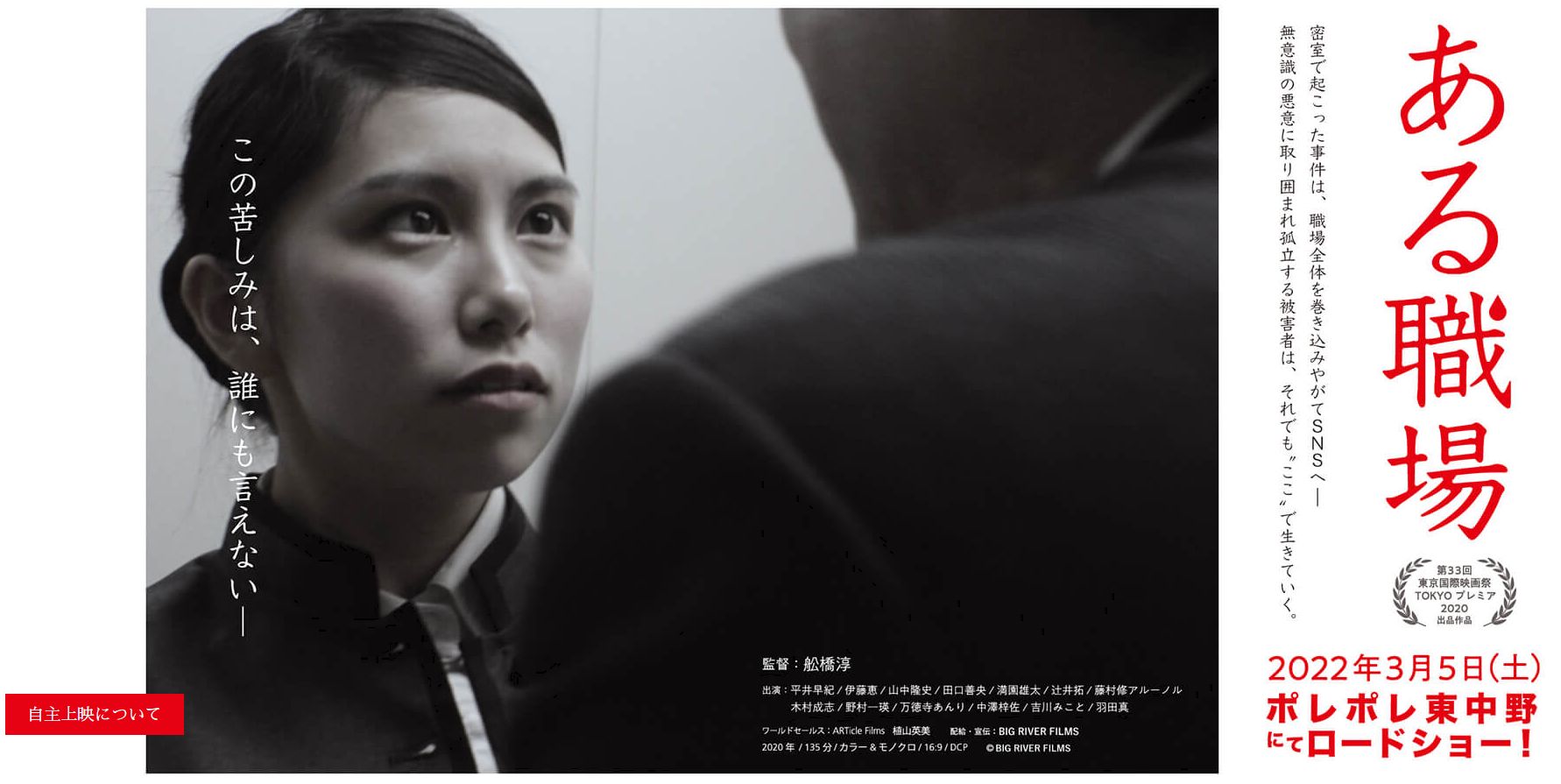
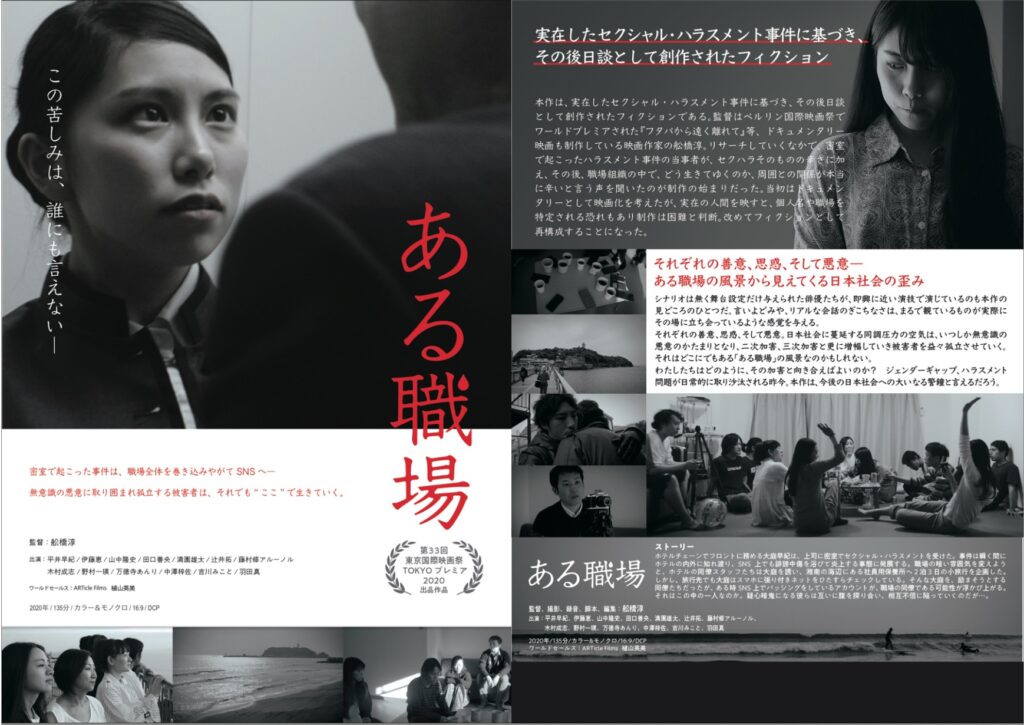
With apologies to the Asia-Pacific Journal: Japan Focus for the large copy and paste below then, what I’m sharing today is actually just a short excerpt of art historian Asato Ikeda’s lengthy, November 2025 interview there of film director Atsushi Funahashi about his 2022 film Company Retreat, a fictional #MeToo scenario based on a true story. In it, they cover much about the pernicious effects of a culture that strongly discourages challenging superiors, asking questions in Japanese schools, and how paying special attention to reading the room (a.k.a., not ruffling feathers) has significantly hindered the progress of Japan’s #MeToo movement. Indeed, “this basic inability to have debate” about uncomfortable, thorny problems has previously been cited as why the “comfort women issue still remains unresolved in Japan—and East Asia—nearly a century later.
Those familiar with Korean society will find much to recognize here. But don’t worry—this is no essentializing screed, which I highlight only because it confirms my own Orientalist stereotypes about collectivist Asians and their fixation with saving face.
Rather, recall that Korea’s #MeToo movement was much more successful than Japan’s? Meaning that the differences are more important.
To get a sense of those then, I encourage you to read the excerpts below if you’re pressed for time, or the entire interview if you’re not.
What are you waiting for? ;)
(I do have one, very familiar complaint about Company Retreat though—like much pop culture produced in Japan, it’s unavailable outside of it. Grrr.)
Ikeda: Thank you for making the time for this today. I re-watched Company Retreat for this interview a few days ago, and I’m still struck by how uncomfortable the film made me. As somebody who grew up in Japan, I remember how human relationships there can be convoluted in a particular way. There are certain very abstract phrases that are often used in Japan, such as “you are relying too much on other people” (amaeteiru), “you must work hard” (ganbatte), “we are a team” (nakama dakara),” or “don’t run away” (nigenaide). I am working on collaborative research on NHK data regarding sexual violence and consent with other researchers, but the survivors’ voices there are isolated from the cultural context.2 I thought your film did a great job presenting that context—the dark aspects of Japanese culture—though I am having a hard time articulating exactly what they are. Perhaps narrow-mindedness and herd/village mentality? I know you talked about the goal of your filmmaking as capturing the “unconsciousness of the times” (jidai no muishiki), which might be relevant here. Would you like to elaborate on this?
Funahashi: There might be many answers to this question, but I often talk about how there is no education in Japan that allows people to have debate. They cannot debate. I think they take things personally. In our East Asian culture, the hierarchical thinking—the idea that we cannot challenge somebody in a higher position—is deeply ingrained in our unconscious. There are cultural codes about how we are expected to behave toward our boss (jōshi), the senior (senpai), and the junior (buka) and to be mindful about that relationality. When somebody “lower” than you speaks in a certain way, you get to think “how dare you talk like that” and that emotional reaction comes first. That cultural code prevents us from having a frank “debate” about something on an equal level. You are supposed to “read the air”—the hierarchy among people.
When I was in New York and I worked on the NHK production team for a show called “New Yorkers.” For a special episode on American education, I went to an elementary school in Brooklyn. Everybody raises their hands when their teachers ask if there are any questions and they grow up like that. When I went to a Japanese elementary school, first and second graders usually raise their hands, but around third and fourth grades, the students stop raising their hands. They will start looking around and see if it is okay to raise their hands or speak up and say certain things. For fifth and six grades, nobody raises their hand and there is only silence. That moment of silence where everybody is looking around trying to “read the air” is quite unique to Japan, I think. It is the culture of “hirame-kyorome,” referring to somebody who only looks upwards at “superiors” and sideways at “equals,” not caring to see people “below” or “inferiors.”
The underlying problem regarding sexual violence in Japan is this basic inability to have debate. When sexual harassment happens, there is no clear debate about what caused it. In addition to the lack of practice of debate, sexuality is a complex and sensitive issue to begin with, and sexual violence becomes a topic that people cannot discuss for multi-layered reasons. So consequences or narratives of sexual harassment get decided by people on “the top” and everybody else has to follow them without questioning. And often the understanding of sexual violence or harassment by those people in senior management positions has not been updated, so I can see how this could easily become a problem.
As a 23-year resident of Busan, who can often see Japan from his apartment, how could I not attend this book talk tomorrow?
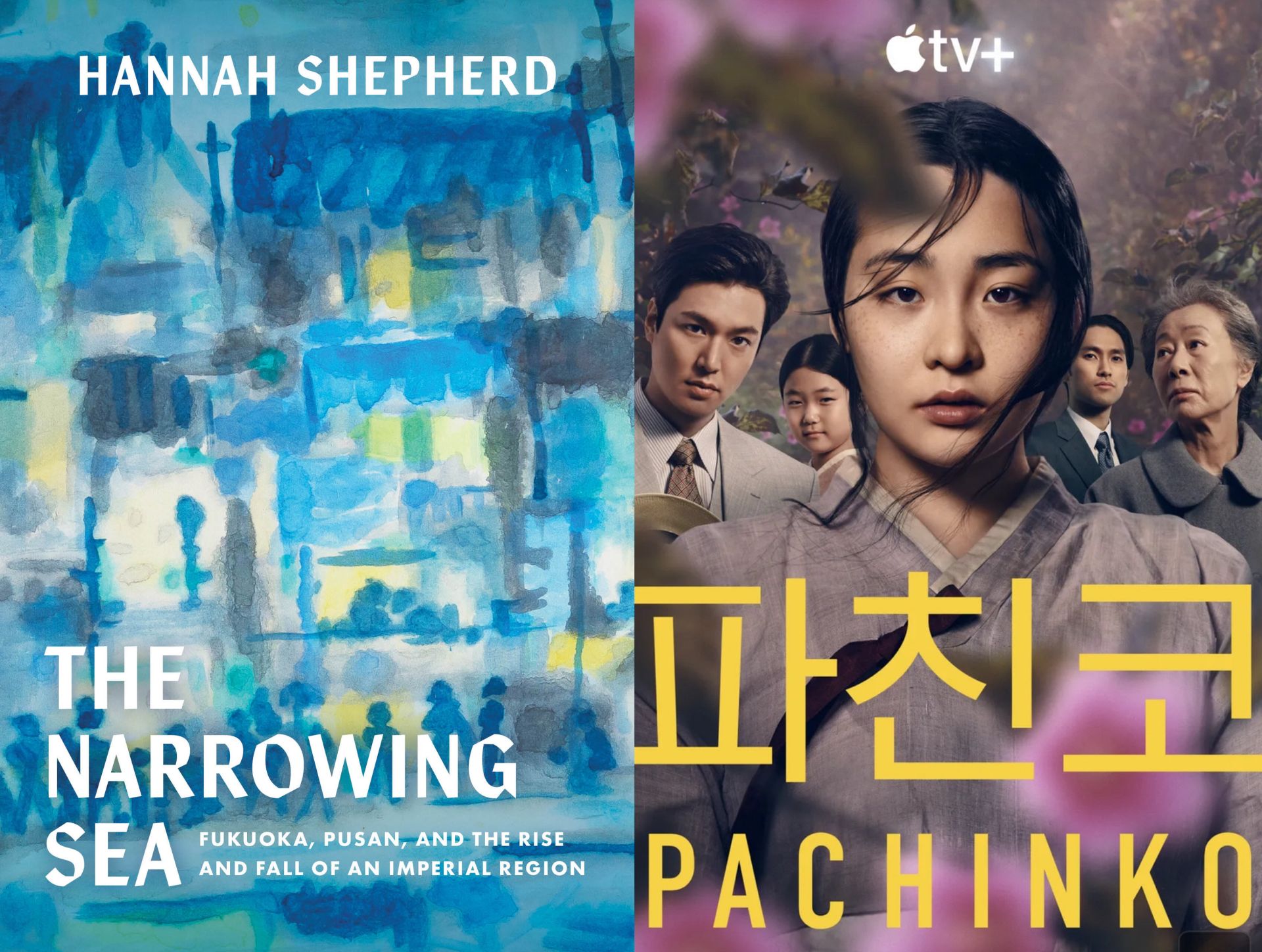
Alternatively, maybe you’re a fan of the Pachinkonovel or TV series? Their story begins on Yeong Island, which I once used to see the sun rising over as my (yes) 7am English class in Nampo-dong began. And which means now you have to attend the talk too.
Discussant: Tessa Morris-Suzuki, Professor Emerita of Japanese History, Australian National University
Moderator: Joseph Seeley, Associate Professor of History, University of Virginia
The Modern Japan History Association invites the wider community to a conversation with Hannah Shepherd, who will be speaking about her new book The Narrowing Sea: Fukuoka, Pusan, and the Rise and Fall of an Imperial Region (University of California Press, 2025). This book examines the shared histories of Pusan and Fukuoka over the eight decades from Japan’s forced opening of Korea’s ports in 1876 to the end of the Korean War in 1953. One city was Korean, the other Japanese; one was a burgeoning colonial port, the other a provincial city buoyed by imperial expansion. Wars, colonization, and capitalist industrialization forged intimate connections between the two, knitting together an imperial region that transcended its maritime boundaries. Drawing on both Japanese and Korean archives, and emphasizing the concept of imperial urbanization, Shepherd challenges traditional views of empire and urban growth and shows how local networks, migration, and capital flows shaped the region’s exploitative and uneven geographies. The waters between Fukuoka and Pusan narrowed through intensified interactions that continued even after the end of empire, creating enduring legacies for the postwar and postcolonial eras. Tessa Morris-Suzuki (ANU) will serve as interlocutor.
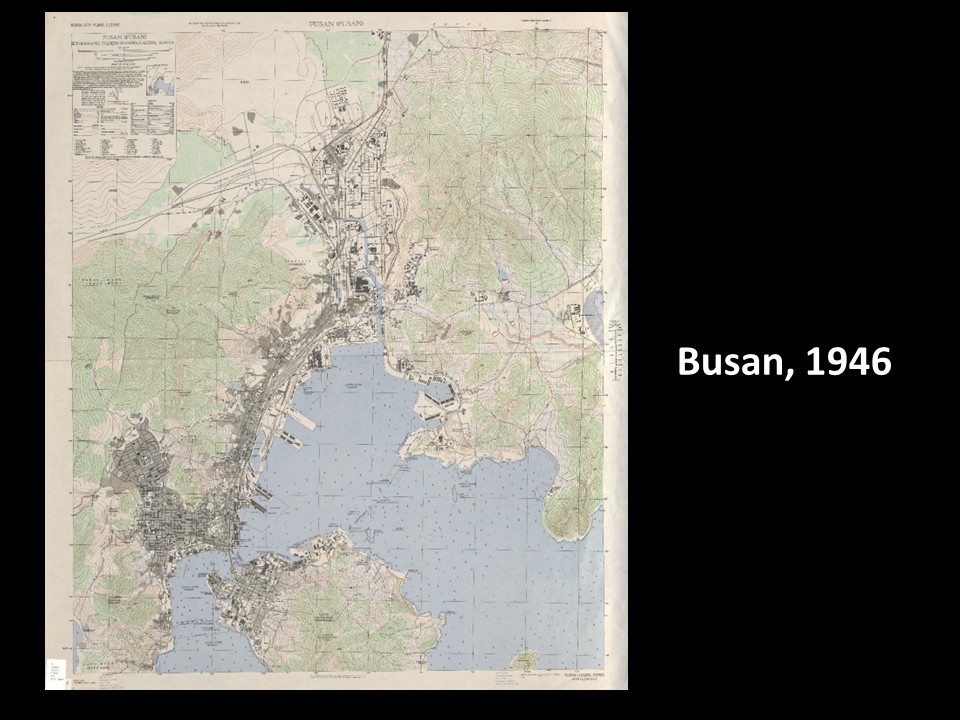
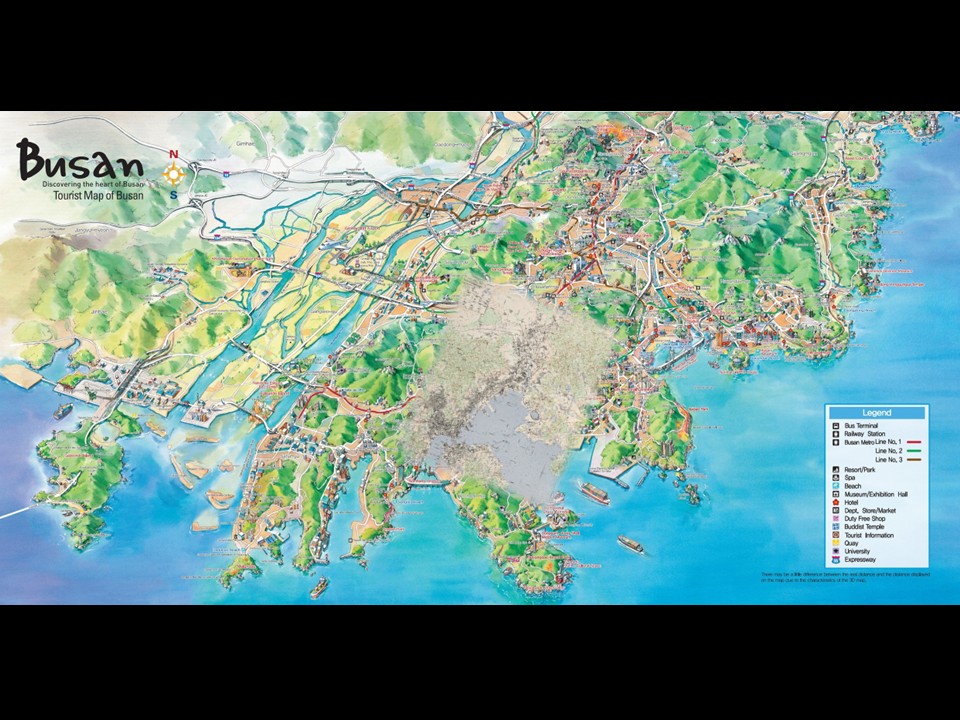
By coincidence, which admittedly tends to happen very often when it comes to my blog, just last week I was giving a lecture on a favorite topic of mine: the “new women” (shinyeoseong/신여성) of the Japanese colonial period that spans most of the period of the book talk. Careful to impress upon my students that despite my passion for them (new women I mean), and despite their huge impact on the Korean popular imagination, their numbers were actually extremely small, I show the following map of Busan to try to convey just how small the city actually was then:
See here for a high-quality version. It comes from the blog Gusts of Popular Feeling, which I highly recommend for more historical maps, long descriptions, and a potted history of the period. Young Island is in the center-bottom.
Alas, in preparing the lecture I did have to account for the fact that I’ve lived in Busan longer than any of my students, let alone that few would ever share my fetish for maps. So, in the next slide, I superimposed it on a modern map of Busan:
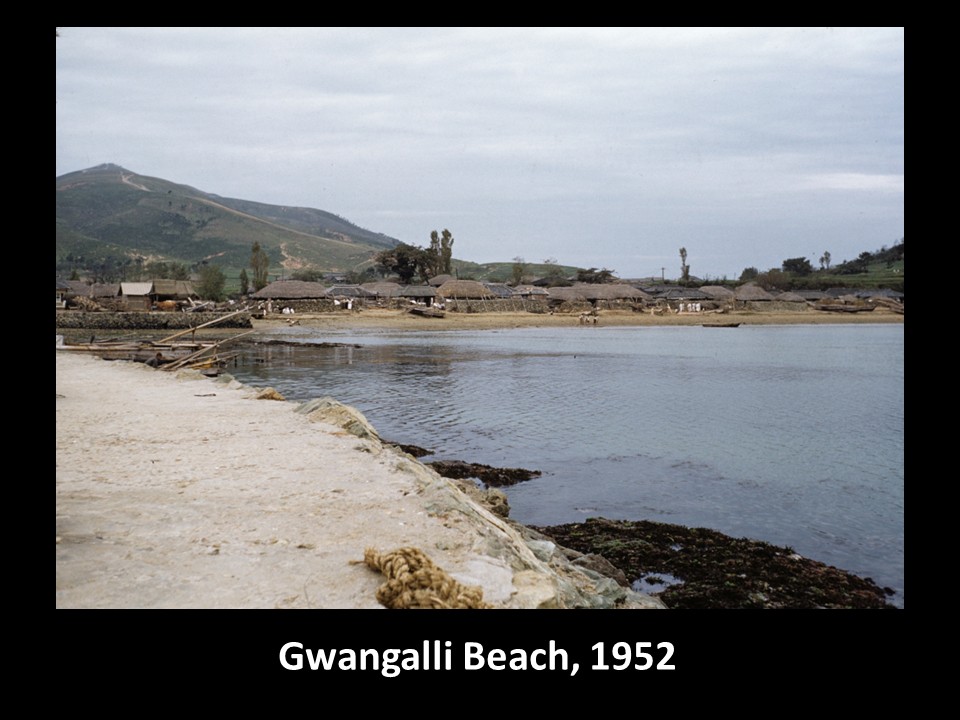
And if that didn’t have any impact on them, my last resort was a picture of where they probably went drinking the night before. I have them try to guess where it is before I make the caption appear:
“Seaside Village, Busan, 1952” by Kenneth H. Lehr. Source: m20wc51 (used with permission).
Maybe it’s just the Jim Beam talking. But fuck, do I contain multitudes. And I’m so regretting confining them only to my closest friends and bullet journals all these years.
Because if anyone, it’s you I should have been sharing them with most of all. My closest friends, bless their hearts, often seem to be only indulging my rants and fixations and passions of the moment. Whereas you stick around for nothing less.
Thank you.
So, for reasons, which I may divulge one day (if you ask), I’ll be posting as often as I can from now on. In other words, many, many short items of interest, while I’m working on the longer ones.
Starting with the following from an interesting author interview I recently listened to. Which, just from its description below, I knew would dovetail nicely with the lecture on bodylines I gave to my “Introduction to Korean Gender Issues” class a few days ago:
(That said, please, please, please don’t tell my students that some of the PPT slides they saw were virtually unchanged from this 2014 post of mine…)
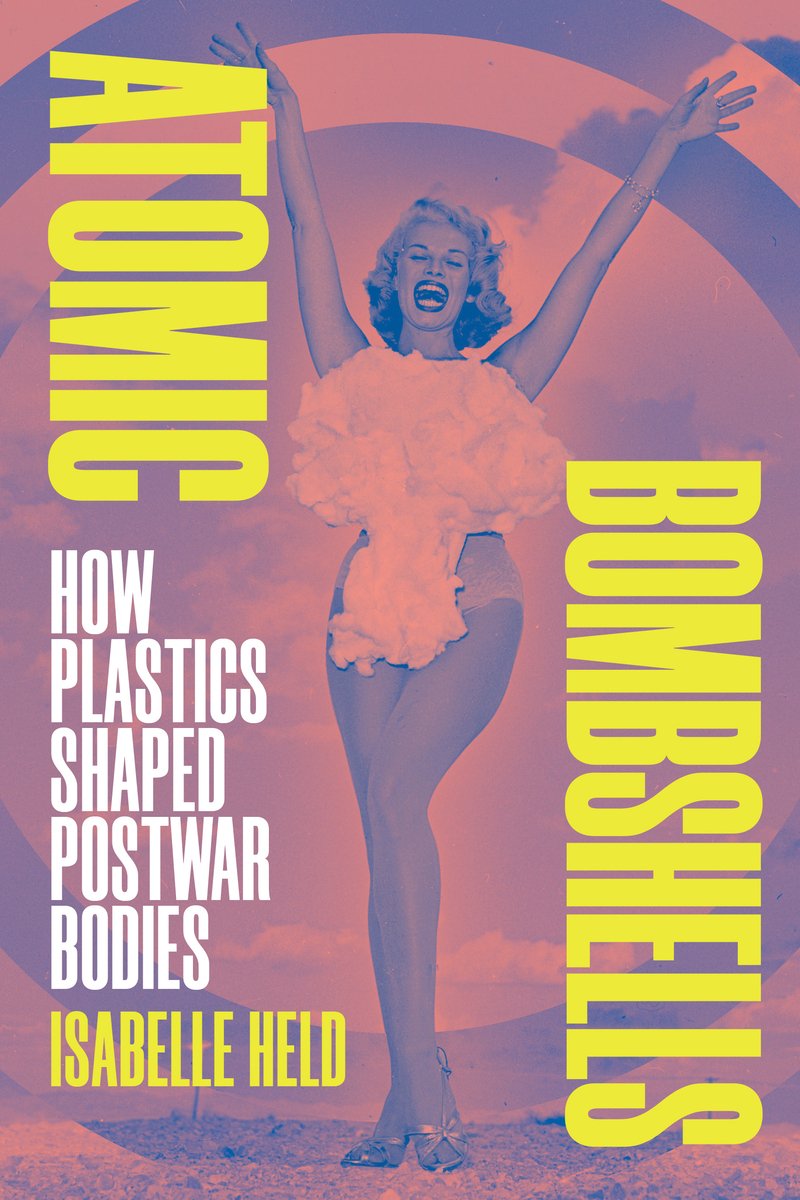
Bullet bras, bazookas, bombshells, bikinis. In Atomic Bombshells: How Plastics Shaped Postwar Bodies (Aladin), Dr. Isabelle Held (homepage, Linkedin) challenges the usual narratives of how war technologies enter domestic use by following plastics on their journey into women’s bodies. Dr. Held explores the effects of military-industrial science and the emergence of nylon, silicone, and plastic foams on embodied and expressive configurations of gender, sexuality, and race. She focuses on the United States between the late 1930s with the launch of nylon—whose potential was widely celebrated as the world’s first fully synthetic fiber and the ideal replacement for silk stockings—and the late 1970s, when policies began addressing the dangerous health consequences of implantable plastics.
Dr. Held untangles the complex relationships between chemical companies, the US military, the Federal Drug Administration, plastic surgeons, advertising agencies, the Hollywood star system, go-go dancers, drag queens, and fashion and industrial designers. Using feminist, queer, and trans lenses, she shows that there was never just one bombshell identity. In so doing, Dr. Held complicates typical understandings of the shaping and reshaping of gender.
And, what I wanted to share with you from that specifically, was the question posed by long-standing New Books Network host, Dr. Miranda Melcher at 22:30:
…I want to keep this thread alive about language as well, right? Because throughout all the answers you’ve given us, popular culture has been a huge part of this, right? The images of these things, the talking about them, the different media involved. Something however that is really striking about it, is that you mentioned the items themselves are being described in ways that kind of relate them for example to war, right? You know, this bra is improved by wartime, whatever. Fine. That’s strange in and of itself. But the bodies, women’s bodies, are also being described and compared to weapons. We’ve talked about the bullet bra. Also, car references show up a lot around now(??!). So, what is going on with that linguistic slippage at this point?
…So, you know, I think it’s really important to stress that human bodies have long been compared to technology, machinery. But what’s interesting about this particular period is that women’s bodies were positioned as something, you know, sexually explosive and dangerous, essentially, at the same time there are efforts by government messaging and social norms to make women, so mostly white, middle-class women, return to the home. And the unmarried, sexually explosive bombshell was seen as a threat to the established social order. And so her power, essentially this explosive power potential, had to, you know, “be put to good use.” And that could be, you know, homemaking or reproductive capacity for example. So in this period women’s bodies are used as a way of also domesticating and softening materials, I would argue.
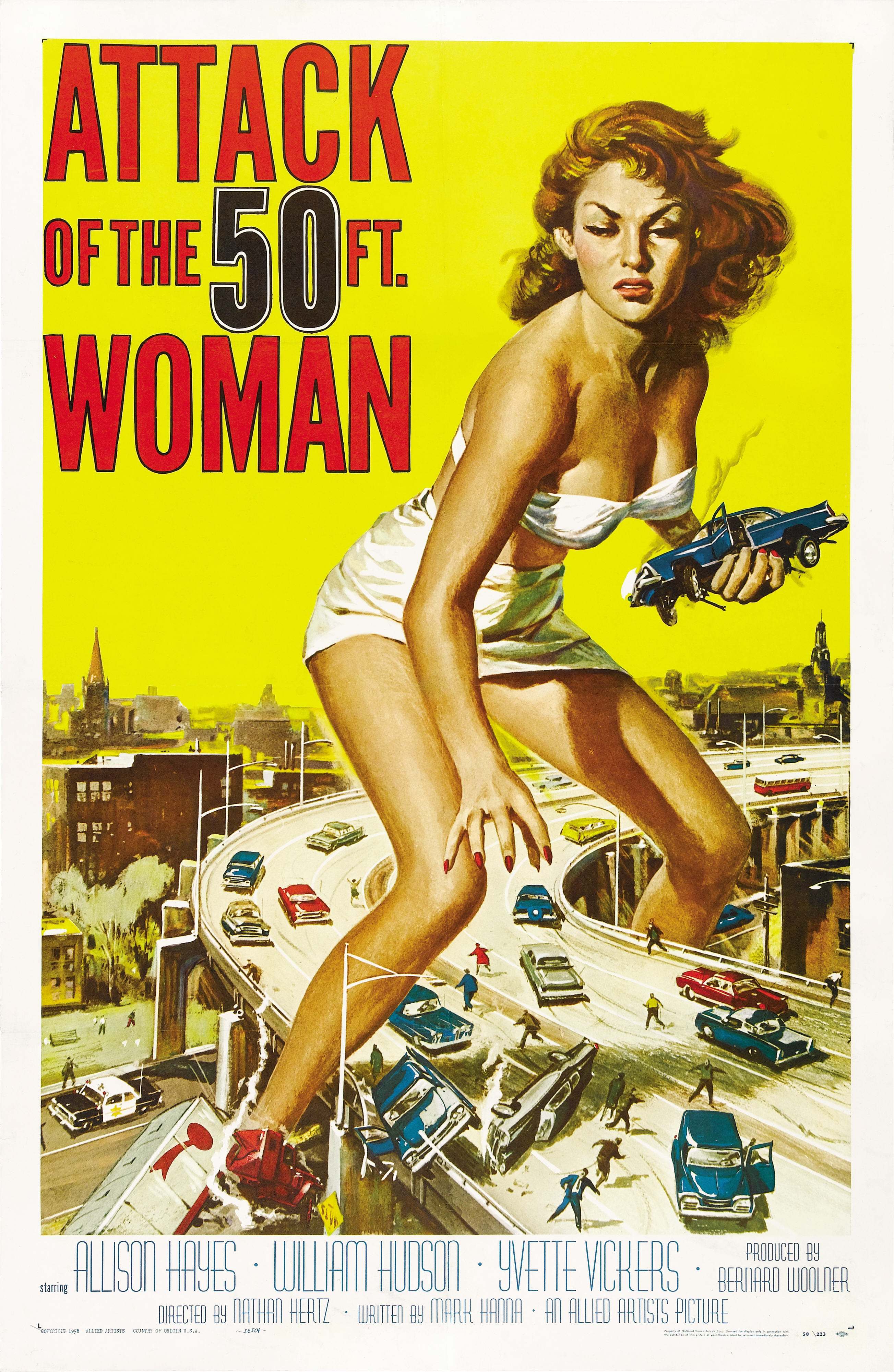
Truth be told, I first heard this interview when it first came out over a month ago. Which is perhaps why I made sure to include an example of Korean women’s bodies being compared to technology in my lecture on Wednesday:
Whatever your motivations for learning Korean, this YouTube audiobook channel is an amazing resource!
Estimated reading time: 7 minutes.
So, last week I played in the Korean National Chess Championships, coming 9th out of 62 (I came 2nd in 2019; just saying). The next day, I started a new semester, teaching a brand new “Sociology through Science Fiction” class in addition to my “Introduction to Korean Gender Issues” one. The day after that, I hit the one month-mark into dating someone simply amazing who lives in another city—which suddenly feels so close, and yet so frustratingly far. And then yesterday, I turned 50.
I wasn’t intending such a slow comeback sorry. But as excuses go, that combination is pretty hard to beat.
You could say the same thing about my date’s intelligence, personality, and appearance too. Out of respect to her though, as well as to your preferred topics, that’s the last thing I’ll mention about her for a while.
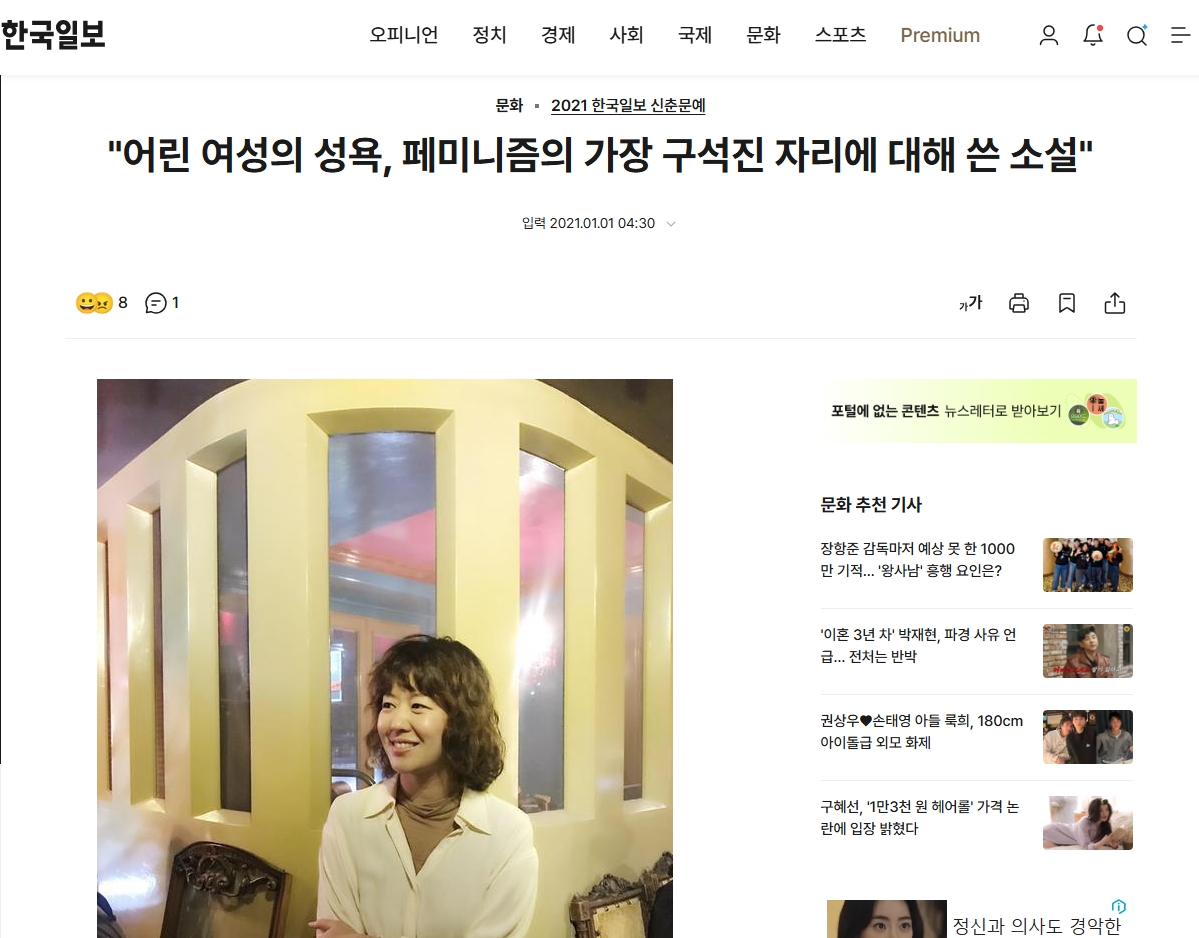
The last thing that is, except for her major being Korean language and literature. And, that on the day she told me, my Google Alert for “페미니즘” (feminism) sent me an article about author Kang Bo-ra winning the novel category in the Hankook Ilbo‘s Literary Contest for her short story “In Tinian,” with the theme of the intractable hypocrisy and double-standards surrounding “young women’s sexual desire.” Which, of course, I just had to send her a link to immediately. Because how better to impress a woman I hadn’t even met yet, than suddenly talking about sex? Right?
But seriously, she was interested. Too interested. She asked insightful questions, which I couldn’t immediately answer. Before I knew it, I realized I was going to have to actually read the short story itself if I was going to pull this totally fake persona off.
Rude.
Fortunately, it was available online. Unfortunately, I hate reading on devices, especially reading Korean. And this story especially felt rather flat in translation.
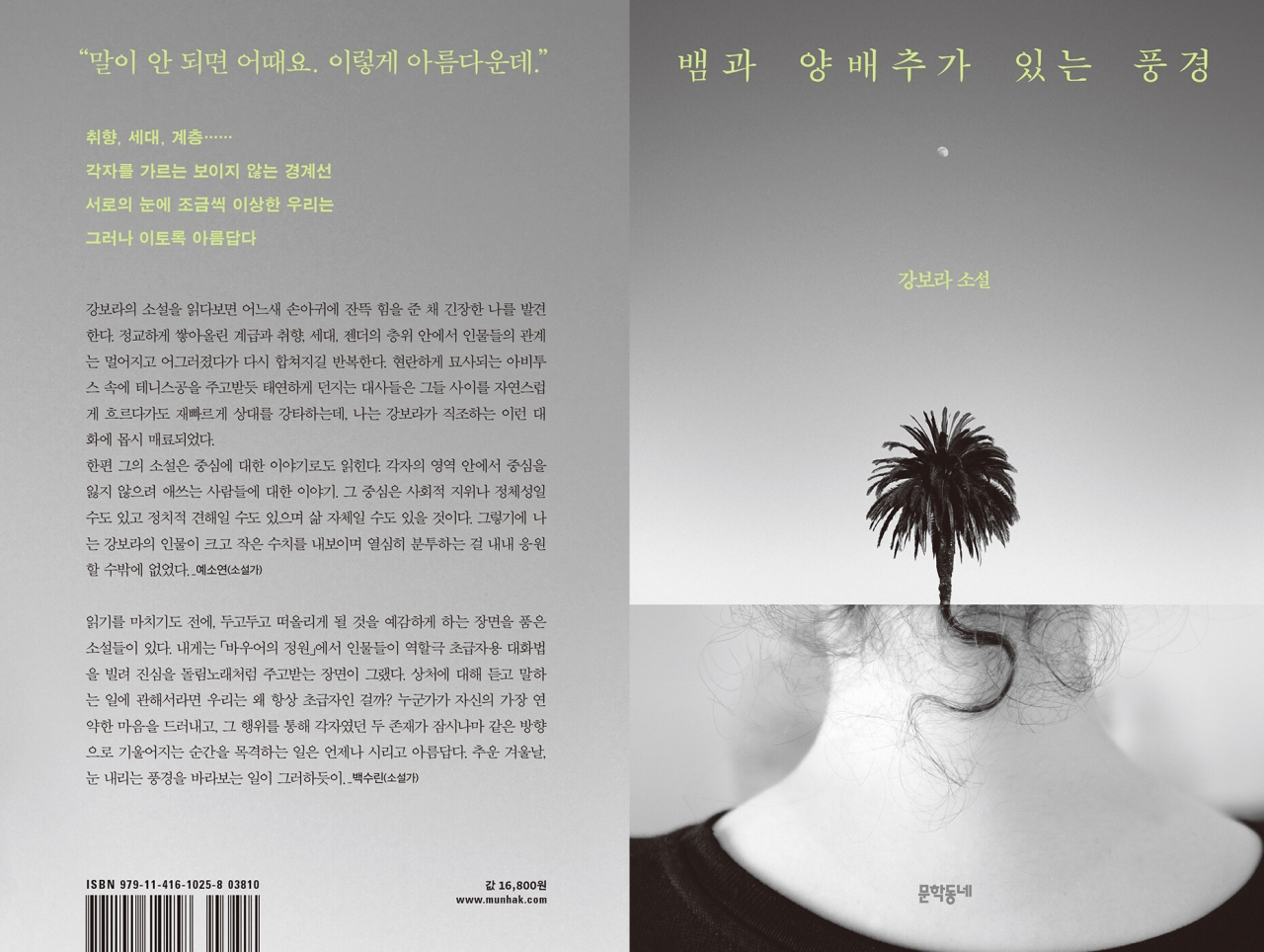
Fortunately again though, yes, Google Alerts really did send me a five-year old article that day. Because last year, Kang published her short story collection 뱀과 양배추가 있는 풍경 (Landscape with Cabbages) with “In Tinian” as the first chapter. Needless to say, I had a copy by the next day.
Still, something felt missing.
And that, dear readers, is the story behind how I came across the YouTube channel 아름다운 소리책방 (lit. “Beautiful Audiobook Room”), where the selfless narrator (I don’t think it’s AI) reads out literally hundreds of Korean short stories and novels for you:
For someone like me, not a fan of mainstream Korean dramas and films, and whose Korean ability patently suffers from that, it’s a real game-changer. I hope it’s as transformative and helpful for you too.
But I’d be remiss if not finishing by passing on a little more information about “In Tinian” itself, whatever your own motivations for reading it—and maybe listening too!
First, here’s a summary of it from a brief review by Pyeon Seong-jun, from his brunch blog about books (brunch is like a Korean version of Substack):
사이판에서 가까운 섬 티니안으로 3박4일 여행을 떠난 중학교 동창 수혜와 민지의 이야기다. 그들은 거기서 ‘펫맨’과 ‘리틀보이’라는 미국 남자들을 만나는데 알고 보니 그 이름은 히로시마와 나카시마에 떨어졌던 두 개의 원자폭탄 이름에서 따온 짓궂은 농담이었다. 이 섬은 태평양전쟁의 격전지였고 원자폭탄들을 보관했던 ‘맨해튼 프로젝트’ 기지였던 것이다. 민지는 처음 보는 미국 남자들 앞에서 스스럼없이 수영복 상의를 벗고 노는 수혜가 못마땅하다. 그러면서 한창 성욕이 왕성했고 그 욕망에 충실했던 중학교 시절 ‘걸레 삼총사’라 불리며 전교에서 따돌림과 폭행을 당했던 수혜와 나, 그리고 연선을 떠올린다. 갑자기 ‘증발’해버린 연선과 그들이 함께 나누었던 비밀 일기장의 마지막 페이지를 궁금해하면서.
This is the story of [former] middle school classmates Su-hye and Min-ji, who embark on a three-night, four-day trip to Tinian, an island near Saipan. There, they meet American men named “Fay Man” and “Little Boy,” whose names, it turns out, were a mischievous pun derived from the two atomic bombs dropped on Hiroshima and Nakashima. The islands were a fierce battleground during the Pacific War and a base for the Manhattan Project, where the atomic bombs were stored. Min-ji, [the narrator], is displeased with Su-hye’s brazen stripping off her swimsuit in front of these American men, whom she’s never met before. She then recalls how Su-hye, herself, and [a third girl called] Yeon-seon were bullied everyone during their middle school years, when their sexual desires were at their peak, and how they were nicknamed the “Slut Trio.” She comes to wonder about Yeon-seon’s sudden disappearance and the final page of the secret diary they shared.
And with my apologies to Pyeon, my intention was to offer a variety of perspectives on the short story, and I do try to avoid copy and pasting everything Korean content creators write when offering my translations of their work here. But his thoughts alone were just too good not to offer them in their entirety:
읽어보니 작가 강보라는 ‘어린 여성의 성욕’에 대해 써보고 싶었다고 한다. 신춘문예의 소재로는 다소 위험해 보이기도 하는데 막상 읽어보면 적당한 등장인물들의 효과적인 배치는 물론 실감 나는 대화와 과감한 생략 등을 통해 주제의식을 훌륭하게 형상화하고 있다.
Reading the acceptance speech, Kang said she wanted to write about “young women’s sexual desire.” While it might seem like a risky topic for a spring literary contest, the novel masterfully embodies its thematic message through its effective characterization, realistic dialogue, and bold omissions.
But let me interrupt briefly by expanding upon that point with Kang’s own words, taken from an anonymous interview in Elle magazine (and which is also worth reading in its entirety):
2021 한국일보 신춘문예 소설 부문에 당선됐다. 수상 소감 기사의 제목이 ‘어린 여성의 성욕, 페미니즘의 가장 구석진 자리에 대해 쓴 소설’이던데 학창시절에 ‘쟤 노브라래’ ‘남자친구랑 어디까지 갔대’ 같은 자잘한 소문에 시달린 기억이 있다. 어린 여자애였기에 부당하게 겪는 루머들. 마흔 살이 된 지금 웃으며 이야기하지만 그런 시선들이 지금 나의 성적 관념을 만드는 데 일조하지 않았을까 싶긴 하다. 그래서 저 기사 타이틀이 부담스러웠을지언정 부끄럽지는 않았다.
I won the 2021 Hankook Ilbo Spring Literary Contest in the fiction category. The title of my acceptance speech article was “A Novel About Young Women’s Sexual Desire and the Cornerstones of Feminism.” I remember being plagued by petty rumors during my school days, like, “She’s braless,” and “How far did you go with your boyfriend?” Rumors I was unfairly subjected to as a young girl. I laugh about it now, in my forties, but I wonder if those gazes contributed to my current sexual perceptions. So, while the title of the article may have been burdensome, I wasn’t ashamed.
Finally, back to Pyeon’s thoughts:
소설 말미에 주인공 민지는 중학교 시절 호기심으로 자신과 몸을 섞은 뒤 자신을 걸레 취급했던 남자들의 SNS를 뒤지며 ‘그들이 좀 불행했으면 좋겠다는 인간적인 바람’을 슬쩍 고백하기도 한다.
소설은 ‘영혼이 자유로운(사실은 몸에 헤픈)’ 여자애들을 바라보는 남성들의 꼰대스러운 시각과 그게 그렇게 나쁜 건가?라고 되묻고 싶어하는 여성들의 심리를 여러 가지 상황이나 메타포를 통해 전달하는데 특히 섬에서만 볼 수 있는 나무 플레임 트리에 대한 묘사나 – 약한 바람에도 새빨간 꽃잎을 폴폴 날리는 아름답지만 헤픈 나무 – 여행이 끝나갈 때쯤 민지가 느꼈던 황량함을 묘사하는 문장이 – 사흘간의 여행이 나만 못 알아들은 농담처럼 느껴졌다 – 너무 좋았다. 하다못해 섬에 와서 다큐멘터리를 찍는 ‘썬글라스’ 남자의 “그러고 보면 역사란 거대한 아이러니의 텍스타일인 것 같아요.”라는 멋 부린 대사 바로 뒤에 “저 밥맛은 뭐래.”라고 비웃는 수혜의 속삭임을 붙인 것조차 너무 귀여웠다.
게스트하우스 주인이나 다큐멘터리 제작자들의 걱정과는 달리 전날 미국 남자들과 번갈아 키스를 나누던 수혜가 결국은 아무 일 없이 돌아오는 장면 처리가 좋았고 돌아오는 경비행기 안에서 두 친구가 헤드셋을 부딪히며 웃는 장면은 통쾌했다. 오랜만에 읽어본 신춘문예 당선작이었는데 느낌이 좋아서 짧게라도 리뷰를 남겨보고 싶었다. 그래서 썼다. 다시 말해 추천한다는 얘기다, 이 멋진 단편소설을.
Toward the end of the novel, Min-ji, out of curiosity, searches the social media accounts of the men who treated her like a slut after having sex with her in middle school, and even subtly confesses her “human wish that they were a little unhappy.” The novel conveys the old-fashioned perspective of men regarding “free-spirited” (but really meaning “slutty”) girls, and the psychology of women who want to question whether that’s really such a bad thing, through various situations and metaphors.
I particularly enjoyed the description of the flame tree, a tree found only on the island—a beautiful yet slutty tree that flutters its bright red petals even in the slightest breeze—and the sentence describing Min-ji’s sense of desolation toward the end of the trip—which made the three-day trip feel like a joke I couldn’t understand—was especially captivating. Even the way Su-hye whispers, “What does that food taste like?” right after the stylish line from the “Sunglasses” man who came to the island to film a documentary: “Come to think of it, history seems like a vast textile of irony,” was incredibly cute.
Contrary to the concerns of the guesthouse owner and the documentary producers, the scene where Su-hye, who had been taking turns kissing American men the day before, ultimately returns without incident was well-handled, and the scene where the two friends clink headsets and laugh on the light plane on the way back was exhilarating. It had been a long time since I read a winning work in the Spring Literary Contest, and I loved it so much that I wanted to leave a review, even if it was brief. So I wrote this review. In other words, I heartily recommend this wonderful short story. (End.)
As I also did to my date, of the last Korean novel I featured here: Bodies and Women ‘몸과 여자들’ by Lee Seo-su. An intimate discussion of beauty ideals, gender socialization and body-shaming in schools, sexual assault, pregnancy, sex in marriage, pervasive sexual objectification, and the male gaze, she immediately borrowed my copy once we did meet, and had devoured it within a day. Before I know it, she’ll surely be wanting to talk about that too.
Is this what dating is like in 2026? Clearly, she has an eager eye for everything this guy can offer her. At 50 now though, how am I ever going to keep up with her insatiable demands? Arrgh!
Estimated reading time: 9 minutes. Photo by Maria Talks on Unsplash.
So, it’s been a minute.
Why? Believe me, I could list all the reasons. Perhaps sometime in the future, I will. But those of you that have stuck around all this time, you deserve my endless gratitude(!), not my navel-gazing. And besides, I don’t feel much connection to the person and writer I was a year ago, so there’s really no need to go over the transformation process. The new me doesn’t waste your time, and gets straight to the point.
The main point of this post then, is to celebrate the example set by a Korean husband who, wanting to understand his wife and her body and needs better, loudly and proudly bought the Korean translation of The Origin of the World: A History of the Vagina (버자이너 문화사 – 교양과 문화로 읽는 여성 성기의 모든 것) by Jelto Drenth (2004; trans. by Kim Myeong-nam, 2006). And also, to present this six-foot, multicolored glowing uterus below too—the quite literal sign from the universe that inspired me to finally buy the book for myself!
It can be a real challenge sometimes finding the insider knowledge I use to pretend I’m smart, let alone knowing what to make of it. Fortunately, I can rely on these sources to provide both!
Estimated reading time: 5 minutes, plus 15-minute video. Photo by Andrew Neel on Unsplash.
Without any further ado, the first blog is Connecting the Data Dots by Ssen Kim, which has many excellent short posts in English.
So last winter, while preparing this semester’s Korean Gender Studies class, I realized I just had to use them. But as the day of this week’s lecture on the birthrate approached, a crisis loomed. While I found the topic very interesting, and you will when you read that post too, I started considereing it from the perspective of my already disengaged young students. Still scarred from growing up during COVID, and barely older than children themselves, would they find the topic of why Koreans aren’t having children completely irrelevant to them? Arcane even?
From banking to taking care of babies, it can be a real headache living and working in Korea as a foreigner. So much so, it’s usually objectively easier to let a Korean partner deal with any bureaucratic issues. And very, very possible to fall into some decidedly traditional gender roles in the process.
Estimated reading time: 5 minutes. Photo by Elle Morre on Unsplash.
Heartache, I expected from getting divorced. Backache? Not so much.
Every Saturday morning though, I have to contort myself like Houdini to clean my apartment’s tiny bathroom, lest I be judged on it later that evening. I have to vacuum and mop my floors often too, desperate to avoid the distinctive, single middle-aged guy smell my friend’s girlfriends all point out when they come over to break up with him. And in particular, I absolutely have to wash my dishes after every meal, because I have to do them in a kitchen sink that was expressly designed for the 155-160cm height of the average Korean woman of over 40 years ago. Let three meals’ worth pile up though, and it’s not just my lack of self-discipline that I’ll be wincing at.
Seriously, walking around my apartment like a hunchback every day gives a whole new meaning to feeling single. As a cishet, ostensibly middle-class, able-bodied man, it’s quite the novelty being a victim of the many gender norms literally built into our homesand cities.
Perhaps that’s why during my latest recuperation on my hard living room floor, I was finally persuaded to reach over and pick up Sociology of Everyday Life in New Zealand, ed. by Claudia Bell (2001), heading straight to the chapter “Negotiating Housework,” by Ruth Habgood (pp. 52-69). Amongst many other gems from the book I wish I’d seen earlier, this part really stood out:
Knowing the concepts of “Ambiguous Loss” and “Learned Helplessness” can be useful for understanding a personal or professional rut you’re in. But for actually getting out of one, smiling “like you have laser tits” is a simple, fun, and surprisingly effective method—and has helped me stave off a repeat of clinical depression for nearly 30 years too!
Estimated reading time: 15 minutes; if you haven’t already, please consider reading the introduction and Part 1 first. Photo by Conner Ching on Unsplash.
Only 10 a week.
Ten.
If I extend Bumble’s filters to neighboring cities, entailing weekend-only relationships, that’s about how many age-appropriate profiles I encounter in a good week, in a region of ten million people. And of those ten profiles, nine will include either tourists, scammers, MAGA or Yoon Seok-yeol cultists, women my age using using pictures from their 20s, chain-smokers, anti-vaxxers, those whose only book they read is the Bible, five or six with no bios or personal information whatsoever, “ethical non-monogamists,” or—shudder—dog people.
Yes, it’s always going to be tough wanting a fluent English speaker. Yes, heaven forbid that compatible hobbies and personalities aren’t enough either, and that I only swipe right on women I find attractive too. Yes, there’s other apps I could talk about. Or what I’ve been doing offline as well. Yes, there’s finally going to bars to consider, and maybe it’s about time I should. Yes, we could indeed dwell on my game, or supposed lack thereof.
But that would be boring for both of us. As I stressed in the introduction, my giving dating advice, or wanting to receive your tips, is absolutely not the point of this series.
What it is about, is “how to cope when life isn’t going the direction you expected, when you feel trapped, when nothing you do to escape seems to work, and you just feel like giving up.” So, although I personally learned the following lessons through trying and then giving up on seeking a long-term partner, and ultimately being all the happier for it, all of the advice below is centered on providing answers for when you find yourself in that kind of space too, whatever your own personal or professional goals may be.
Very much inspired by, mirroring, and further developing Atlantic staff writer Faith Hill‘sAugust 2024 article, “The People Who Quit Dating” though, first, in sections 3 and 4 below, I really want to convey what the dating scene is actually like in 2025. Especially to well-meaning family members and friends already with partners and spouses, who tend to be…well, utterly clueless and unsympathetic frankly. I want to empathize with any of my fellow singles too, who may also be struggling and disheartened like I was. In particular, by giving their feelings names in section 5, “ambiguous loss,” and “learned helplessness,” that show they’re not alone in suffering from them, and which have a whole host of associated therapies and solutions. Then finally in section 6, I’ll talk about my own experience of—yes—clinical depression in my early-20s, for the sake of imparting just how serious I am about my own solution of smiling “like you have laser tits”—which anybody can benefit from!
Not everyone can see the pedagogical value of a film about finding the clitoris, let alone apply its lessons to power networking. So, if you do have a special skill set like that, then flaunt it baby—and these easy to learn methods will show you how.
Estimated reading time, 15 minutes; if you haven’t already, please consider reading the introduction first. Photo by Carl Jorgensen on Unsplash.
I have a confession to make.
The truth is, if you’re reading this because we talked recently at an exhibition of your art, a screening of your film, your band’s gig, your lecture on the Korean #MeToo Movement, an information session about your NGO’s work, and so on, our meeting was no coincidence.
Unbeknownst to you, I’d already been all over your website and social media. When I liked what I saw, I decided I just had to meet you in person. Same applies if the event wasn’t even about you, but I knew you were coming.
Indeed, if we met during this cold winter especially, you, and you alone, may have been the only reason I left my apartment at all that day.
If those stalker-like vibes don’t already have you reaching for a lighter to burn my business card though, I fear also revealing I would still never have had the guts to approach you, had I not once watched a film about finding the clitoris, will have you burying the ashes too.
But seriously, there’s a lot to cover before we get to that point, and we’ll only arrive there once we’re both good and ready. So instead, let’s start on how, the fact is, now you’ve taken the time to look me up too. And not simply because you appreciated my interest in your work either, because of my knowing your shit as it were. (Which, being genuine, was a very easy trick to pull off.) More, it was because you thought I also seemed to be interesting, my having tricked you with just enough long words and wide, masculine-coded hand gestures to make me seem just as knowledgeable and passionate about my work as you are yours.
In other words, that I seemed to know my shit too.
Which was a lot harder to pull off. And even just six months ago, probably not something I’d have been capable of convincing you of at all.
So how did I do it?
My recipe to success has three main steps, with ever fresher and more active ingredients added at each. And like most recipe books these days, it may seem like I’m obliged to annoy you with a long and rambling anecdote before getting to the meat of this first one. Only, the anecdote is the meat. When I was 21, I did suffer from clinical depression, my crippling social anxiety always preventing me from overcoming my chronic loneliness. The advice I heard as I was recovering, did have me dancing shirtless to Ecuador in nightclubs by the summer, moving in with drag queens and flamboyant gay sex workers, getting on a plane to Korea, and giving lectures to audiences of hundreds. That same advice did, seemingly by magic, render that awkward nerd you thought you saw in the corner one minute at that party this winter, playing with the host’s cat, to that suave and sophisticated guy beelining you to shake your hand the next.
Do you have your pots and pans ready?
Fresh Breeze by Gil Elvgren, 1960. Source: Amazon.
In dark times, strategies for accepting and embracing the single life have much to offer anyone seeking a sense of agency and empowerment. Here’s announcing my deep dive into some that worked for me, which completely upend outdated stereotypes that your personality is set once you’re 30!
“Straight men rarely write about the end of their marriages,” I happened to read shortly after the end of mine, and that traditional gender roles were to blame. Forced to defy those ever since everyone in New Zealand pegged me as gay in my early-20s though, I resolved right there and then it wouldn’t be a case of if I would ever take on that mantle, but when.
My naïve, happy mistake. Unfortunately for exploring that topic, I’m on much friendlier terms with my ex than when we left the courtroom three years ago. (It’s so annoying.) We’re both fully committed to amicably co-parenting our teenage daughters too. If I could still offer any genuine insights or advice about divorce without getting too personal about ours then, avoiding potentially embarrassing or hurting anyone involved, I would. But I just can’t see how.
Besides, I’m long since past moping. I’m single now, for the first time in over 20 years. Happy. Been dating even. Were I to talk about what I’ve learned from that transition instead, any second-hand embarrassment or judgments would be entirely on me.
I sense some of you already cringing in anticipation. But it’s not how it sounds. Actually, the advice which follows is barely about dating at all, and was prompted by the prospect of quitting it entirely, inspired by a August 2024 Atlanticarticle by staff writer Faith Hill on people who did just that. Reading her article right when what had felt like a flood of likes, matches, and dates over the summer was starting to reduce to a trickle by autumn, and ultimately no dates at all since, she helped me realize I’m probably going to remain single for much, much longer than I expected (indefinitely even), for reasons largely beyond my control. In particular, she had such a rare, enormously helpful piece of actual practical advice from a therapist for coming to terms with all the angst and frustration I’d felt, rather than just offering the typical unhelpful cliches about all the fish in the sea and how great single life supposedly was (so shut up and stop complaining already), that I absolutely had to share for that alone.
Yet that advice was only about dating. (Or indeed, not dating.) And it only had the impact on me it did, because it dovetailed with so many other pieces of advice I’ve gathered over the years about how to cope when life isn’t going the direction you expected, when you feel trapped, when nothing you do to escape seems to work, and you just feel like giving up.
I realized by the winter too, that the validation from getting matches and dates had only been a crutch. Blinding me from the personal and professional rut I was in, and the need to do the hard work of actually putting that advice into practice.
Hence the long break sorry. Much has changed for me in the last five months, and periodically writing and rewriting this deep dive over that time has been a fundamental part of that process.
Now that I suddenly find it in a form I’m happy to share though, I’ll gladly take as a sign that my transformation, if not nearing completion, at least has enough momentum that I know I’ll see it through. I honestly do think too, that I’ve stumbled on some methods that completely upend outdated notions that our personalities are fixed by our 30s, and am very excited to share my secrets!
And once I do, I think I can give myself permission to resume my typical feminist overanalysis and critiques again ;)
“Life is Immense (인생은 광대해)” comes from the 1998 Italian, English-language film The Legend of 1900; I’ll explain in the conclusion! Image source: 페페.
Much too long for a single post though, in Part 1 of this series I’ll jump straight ahead to the most useful and universally applicable advice. (It’s centered around two quotes by Mary Schmich and Mindy Kaling, but the contexts I give them and my interpretations are very much my own.) Next, in Part 2, I’ll very briefly comment on Hill’s article, and how it mirrors my own experience. Rest assured though, talking about the hows and whys of my lack of dates would be just as boring for me to write as for you to read, so I’ll avoid those as much as possible. But how I handled the result is needed, as the advice I end with—wholly my own, and far more serious and useful than its subheading suggests—is very much rooted in that. Finally, Part 3 will be the conclusion, with links to many other pieces of advice that unfortunately would have been just too long to develop here.
(For ease of navigation, here are the three groups of posts in the series; I’ll add links to each as they go up.)
3. “Being single can be hard—but the search for love may be harder.”
4. It’s Okay to be Lonely
5. Use Insights from Psychology and Therapy
6. Smile Like You Have Laser Tits
Part 3
7. Make a Conscious Decision to Leave the Purgatory. Live Lewis’s Thought Exercise
8. The Rest
9. Life is Immense 인생은 광대해
See you next Monday then, for the first installment. It’s good to be back! And extremely annoying that, despite my best intentions, I actually had a great date last night—meeting her literally 24 hours before telling you all how great it’s been feeling not even looking for one. Grrrr.
If you reside in South Korea, you can donate via wire transfer: Turnbull James Edward (Kookmin Bank/국민은행, 563401-01-214324)
I went on a date through Bumble recently. Yes, even I manage to pull that off sometimes. And no, don’t worry—this post is about Simu Liu.
You see, for the benefit of those blessed without ever having used dating apps, most give you the option of using prompts to get conversations going with nervous matches. You can come up with your own, or use one of the app’s suggestions. My suitress chose one of the latter—”What’s the last thing that made you smile?”. Commence instant mad pacing of my apartment. How to sound smart, sexy, and sincere in response, and all in just the one initial paragraph Bumble allows before—if—you get a reply?
Then it hit me—she’d recently lived in Canada for a number of years. I was 1/3rd into Liu’s autobiography, We Were Dreamers: An Immigrant Superhero Origin Story (2022) for a bookclub meeting soon. That was the connection. I could say how, never having watched any of his work, nor particularly wanting to, I hadn’t been all that enthused about the club’s choice. Only then, that the story of his parents falling in love and moving to Canada was just so damned wholesome and nice, that I couldn’t help but smile while reading it. That I was seriously annoyed at how much I was enjoying it.
I know, right—seducing by just being yourself, and saying the actual truth? And it worked? Who’d have thought?!
Little did I know, the next few pages would begin to outline the ‘Tiger Parenting’ he received, which was really just plain emotional neglect and physical abuse. And, in the first of two excerpts from the book I want to share with you, I especially remembered what he wrote at about the period his parents “graduated from spanking to full-on hitting” when he was 12. Which was also when his hormones were appearing, he was a Chinese boy growing up in Canada, and he needed emotional support more than ever (Chapter 9, pp. 104-5):
“I came out of the whole experience [of my crush] with a lot of anger…at myself for being completely ill-equipped to deal with my feelings, and at my parents, who I felt had trapped me into a life I no longer wanted. They had given me neither the emotional maturity nor the social wherewithal to have any shot with girls.”
“And then, of course, there was the total mindfuck that came with growing up Asian and male, in a society that saw us as nothing more than a bunch of derogatory stereotypes. Asian men were frequently depicted in Western media as awkward, nerdy and completely undatable—pretty much exactly what my parents were trying to make me into. I know this is a lot of really heavy stuff to put into the psyche of a twelve-year-old, but it definitely affected me, and it definitely affected every Asian boy that grew up in a Western country. The double whammy of being teased on the playground with ching-chong noises and then seeing ourselves ridiculed on the screen robbed us of our natural confidence. Without proper guidance from our parents, who were not terribly concerned with our self-confidence, most of us grew up feeling like we weren’t worthy to be loved or desired; like whatever we were was not enough.”
“Disillusioned and embittered, I began to pull away from my parents, my upbringing and my heritage. I started acting out, talking back and refusing to do homework. I didn’t want to be a math genius, or a scientist, or a sidekick—I wanted to be Thomas MacDonald, the mediocre-yet-charming leading man who got B-minuses and called his parents by their first names. I didn’t want to be Jackie Chan or Jet Li—I wanted to be hot stuff like Justin Timberlake, the kind of guy that dated Britney Spears and had bras thrown at him onstage.”
“Obviously, my parents were not down with my newfound rebelliousness.”
“‘Look at everything we’ve invested in you,’ they spat. ‘You’re a spoiled brat who’s squandering all of our effort and money, and wasting time on useless things. You’re nothing but a loser!'”
“’Fuck you! I don’t want any of it.'”
“WHAP!”
Update: It’s a point made many times before. But just two days later, its continuing relevance was demonstrated to me by blog mentorJae-Ha Kim 김재하, who covered a very similar same issue in the post “Does Racist Vintage Art Get a Pass?” on her SubStack K-Culture with Jae-Ha Kim. I’ll post two images from that to demonstrate what I mean, and encourage you to read the (non-)controversy in full:
Next, for reasons I’ll explain in a moment, let me pass on what the second excerpt from We Were Dreamers immediately reminded of before I give Simu Liu’s words themselves: this paragraph from “Dropping Out” by Daniel Pinchbeck, (pp.102-3), in the autobiographical story collection Personals: Dreams and Nightmares from the Lives of Twenty Young Writers, edited by Thomas Beller (image source: Amazon):
“For one Wesleyan history class, I read the works of Pierre Bourdieu, a French sociologist. Bourdieu wrote about the concept of ‘cultural capital’—how cultural experiences acted as a boundary between the elite and the lower classes. I saw how the high price of the Wesleyan degree was a prime example of ‘cultural capital.’ The purpose of Wesleyan and other, similar colleges is not education so much as it is a way of signifying one’s membership in a certain class. An elite liberal arts degree is an indoctrination in high expectations, not hard actualities. I still maintain a sharp awareness of how the machinery of privilege works, how certain universities create an elite that reinforces itself through school connections, and the alumni’s shared, smug belief in their own entitlement.”
I first provide that because, unlike when I read the following by Liu, in the cold light of day it feels I was projecting to a certain extent, and a little unfair to connect his classmates with it when they were guilty of no more being driven and ambitious whereas Liu (and I!) were not. But no matter. If it provides an opportunity to pass on where I first learned what cultural capital was, a concept that has been very helpful to me over the last nearly 30 years (sigh) and so am very happy to share, then I’ll gladly take advantage (Chapter 14, pp. 160-161):
“On my first day of classes I could immediately tell that I was dealing with a vastly different breed of student. Incumbent Ivey [School of Business] kids were not at all like the dumb, borderline illiterate eighteen-year-olds that I’d wiped the floor with during my freshman year—these guys read the Wall Street Journal every morning and monitored the stock market religiously. They were alphas, who strode around campus with the absolute conviction that they were the literal white knights at the vanguard of a capitalist society just ready to be exploited for all it was worth, and they were ready to make it go their way. Most of them came from considerable wealth—some were scions of multibillion-dollar corporations.”
“You could mock their American Psycho–level douchery and harp on their arrogance, but there was no denying that these were men and women with goals. Unfortunately, the same could not be said about me.”
I too lament that gender gap, but also found the image amusing, so am sharing it for that reason.
I don’t really mean to imply anything more meaningful in it beyond that! Indeed, just a quick perusal of other Korean books on feminism I’ve recently bought, showed that that same buying pattern didn’t apply to those.
If that leaves you dissatisfied though, let me also take this opportunity to link to what I somehow found next: “A new variation of modern prejudice: young Korean men’s anti-feminism and male-victim ideology” by Han Wool Jung, in Volume 14-2023 of Frontiers in Psychology. Probably the most comprehensive, crucially open-access article I’ve ever encountered on the subject, it should keep you—and me!—occupied for several hours at least.
Apologies that this post comes so last-minute. I only just discovered I was free, and my policy with Zoom lectures is only to announce those I can attend myself. If I didn’t, this blog would be overwhelmed, turning into a lighter version of the Korean Studies Events Database!
(You should totally sign up for the Korean Studies Events Database.)
The first lecture, from 3:30–5:00 pm (all Korean time), is:
“Doing Ethnography in the Wake of the Displacement of Transnational Sex Workers in Yokohama: Sensuous Remembering” by Ayaka Yoshimize, author of a book of the same title. From the event page:
(Zoom participation: Pre-registration is not required. Please login with the Zoom Meeting ID: 923 4787 3527 and Passcode: KUMMC.)
This presentation reflects on the politics, poetics, and ethics of remembering the lives of migrant sex workers in a diasporic city of Yokohama, Japan. Drawing on her performative sensory ethnography, Yoshimizu will focus on the transnational space of mizushobai (water trade) in Yokohama’s historically marginalized neighbourhoods along the Ōoka River, where sexual services were performed by racialized migrant women. Since 2005 the city has sought to rebrand one of these neighbourhoods, Koganecho, evicting transnational migrant sex workers who had been integral to postindustrial development and erasing their past presence. Yoshimizu examines Yokohama’s dominant memoryscapes in the aftermath of displacement, examining the built environment, official historical narratives, films, and photographic works that obscure racialized migrants’ participation in the city’s place-making. She then seeks to create an alternative memoryscape based on her own fieldwork experience of becoming entangled with the local social relations, unexpectedly coming to perform social roles legible in the field, and, ultimately, having her relationship with the city refashioned anew. Yoshimizu writes the alternative memoryscape through the imagery of water in ways that are informed by the local usage and imaginations—the ocean, flowing rivers, swamps, humidity, alcohol, the fluidity of relationships, and transient lives. This talk will end by introducing her current multi-sited research on transpacific memories of karayuki-san in Yokohama, Nagasaki, and Western Canada.
Then immediately after, starting at 5pm:
“Current status and policy response to migrant integration and multiculturalism in Korea” by Prof. In-Jin Yoon” (Korea University)
The current status of migrant integration in Korea seems to be far from ideal. The human rights violations against migrants remain common in the workplace and everyday life. The public’s perception and attitudes toward migrants have changed from paternalism to apathy, and is deteriorating to the level of hatred toward certain groups. Korean adults’ multicultural acceptance increased from 2010 to 2015, but has continued to decline since then. The level of social integration of migrant workers and married immigrant women, which are representative groups of migrants in Korea, is not high in both material and psychological aspects. Migrant workers have a high employment rate, but they work long hours in low-skilled, low-wage work, are exposed to non-payment or delayed payment of wages and physical and verbal violence, and their labor rights are greatly restricted. They cannot bring their families, and their opportunities to acquire permanent residency and nationality are greatly limited, so they are not subject to social integration. Marriage migrant women tend to have low employment rates, employment stability, and income due to their low age and education level, ability to understand Korean language and culture, the large age and cultural gap with their husbands, and the burden of childbirth and childcare. They are also dependent on their husbands because they need their consent when applying for permanent residency and nationality. The language and culture of their home country are not respected and they are under strong pressure to assimilate into Korean culture.
See you there!
If you reside in South Korea, you can donate via wire transfer: Turnbull James Edward (Kookmin Bank/국민은행, 563401-01-214324)
Smart people tend to make more logical, more directly-related parallels and connections between the news and the pop culture they consume. So, my niche has to be providing the wilder and more bizarre ones instead.
Last week, our Busan Book Club covered The Girl with Seven Names by Hyeonseo Lee (2014—The StoryGraph, LibraryThing, GoodReads). A tale of her escape from North to South Korea via a decade spent in China, and later her returning to the border to help her mother and brother also escape, generally we found it very informative and moving. But, we were also struck by her incredible naivety, and sheer luck. In particular, without her family’s high status within North Korea, and without being able to rely on wealthy connections and generous benefactors at the last moments, there would have been no story to tell at all.
The smart takeaway is how, by coincidence, those last two points dovetailed with one about North Korean representation made a few days later by my Donsgeo University colleague, B. R. Myers, as part of a presentation he gave at Seoul City Hall at the Seoul Forum on North Korean Human Rights 2024. From his blog, Sthele Press:
“….This brings me to the escapee issue. These days talk of the grim punishment awaiting repatriated escapees is often contradicted in the same breath by reference to how so-and-so just saved up enough money for a second escape. The sum needed just before the pandemic—if my sources are correct—was over $5000, and let’s face it, that’s more than the average American has in the bank, so I worry that if we continue to present these people as representative, we’ll be creating confusion about what living standards in North Korea are really like. I’m not downplaying the ordeals that they all go through, especially the women who are trafficked across the river, but it’s time, I believe, that we concentrated on the great mass of people inside North Korea.”
“That goes also for the issue of North Korean workers in China and Russia. If you spread the blame between three regimes, Kim gets off lightly. Just how bad are conditions at home, that people compete to get treated like slaves in foreign countries? I think that’s what we should focus on.”
Read the rest of Myers’s presentation there. While my own thoughts may seem flippant by comparison, especially given the gravity of those conditions in North Korea, that is absolutely not my intention. Rather, I feel they only help underline his point about representation all the more.
Specifically, reflecting on Lee’s incredible run of good luck while I was reading her book, I couldn’t help but constantly be immediately reminded of a free-talking activity I’ve been using for the last 20+ years with my ESL students, about what supplies to prioritize in the event of a plane crash in the Pacific Ocean. (I call it Cast Away after the 2000 movie, but these days most students have never heard of it.). Which I grant does indeed sound bizarre, but the connection is there:
You see, most students, and me too if I didn’t already know better, rank obvious things like the fishing line and hooks very highly. Only, as I think it was the US Coast Guard that explained things in the version I originally got this from, in fact both those and 12 other things on this list are completely useless.
The reason being, quite unlike in movies like Cast Away, where the main character quickly paddles to a deserted island to survive on, in most oceans 99 per cent of plane crash survivors simply wouldn’t. So, unless they were found within 2-3 days, they’d die of thirst and sun exposure.
Which generally doesn’t make for riveting viewing.
That means we only get movies about the 1 per cent that do make it to land instead. Leading my students to prioritize hooks, matches, and so on. Whereas really, the only genuinely useful things are the flare gun to help rescuers find you, and the bottles of water to give them an extra day or so to do so while you’re still capable of firing it:
(Let me know if you’d like a copy of my PPT, and the rationale behind the specific ranking).
Wisely, I spared the other book club members this huge segue in our meeting in the coffee shop. But, now that I’ve put pen to paper here, I am indeed intrigued at how this—unfortunately named—’survivorship bias‘ potentially colors narratives about North Korean and its escapees.
And also intrigued whether Lee is asked about her incredible luck in this 1.5 hour interview. I’ll let you know!
TIL that many simple, everyday things like monkey bars in playgrounds, and standing desks, were originally born out of eugenic concerns with white people’s postures.
What surprises might an examination of Korean “figure correction” services also provide?
Estimated reading time: 10 minutes.
Full disclosure—I’m not actually answering that question I pose. Or at least, not for now. Sorry. Instead, this meta post is about reveling in the asking. Then, passing on to you the mind-blowing BBC podcast episode about the “posture police” that helped me remind me of the value of that, plus a myriad of sources to help come to some answers. I’ll also give a shoutout to my favorite fashion history YouTuber.
But first, how I got to them, starting with the visceral unease I felt when I first saw the ad below. It was just too much, even by Korean standards. It simply begged commentary.
Or did it? What was there to say exactly?
I’m not at all against the “체형교정,” or “figure correction” services this clinic provides. Actually, I could do with a consultation for my back myself.
But that figurehead-like ‘after’ shot, the model’s impossibly high heels conveniently hidden? That however uncomfortable and painful that pose looks to hold for more than a moment, it’s still presented as an ideal?
For readers unfamiliar (long-term readers, please bear with me a moment), those manufacturers’ pseudo-scientific justifications for their ensuing schema for women’ bodies, developed only to disguise that their flaws were wholly invented, somehow became the accepted wisdom for how women viewed themselves. Which I saw uncanny parallels to in the Korean craze for inventing various “lines/라인” for women’s bodies 10-20 years ago. Then, it was
astonishing to see how brazenly companies would compete for their new, eponymous lines to sink into in the public consciousness. Venus lingerie claiming that women’s breasts were a “V-line” for instance, Yes lingerie that they were a “Y-line.”
Hanging over this trend was the inconvenient fact that most women neither needed nor wanted exciting new names for their body parts, which would invariably be found wanting compared to those photoshopped versions in the ads. Hence most lines, mercifully, were quickly forgotten. But some did indeed stick, a V-line neck becoming a standard offering by cosmetic surgeons today for instance, and just a few days ago my female students told me that their summer plans included working on their “bodylines.” In fact, in the 2020s, it seems just about everything to do with a woman’s body has become a generalized “line.”
But these subjects, I’ve already covered in depth. You could argue I’m merely projecting too, and overemphasizing mere semantic similarities.
Either way, I could have just tweeted the ad, and all those links.
For both you long-term and hopefully new, interested readers though, who I need to provide extra value to if I’m (very) belatedly going to transition this blog into a paying, subscriber-based newsletter, simply linking to stuff you’ve probably read before felt woefully insufficient.
But again, what to add though? An in-depth look at the growth of the figure-correction industry? Now ubiquitous, but which I’m not sure I’d even heard of 5 years ago? Interesting to learn more about, for sure, but probably lacking English sources. So, not really worth, as a busy divorced dad, the huge time investment I’d need to spend on all the translations.
“For liposuction and fat transplantation, Model-Line Clinic, Busan.”
Hence I sat on this post for a year, leaving it half-finished. And, frankly, dozens like it before and since, for the same reason that I didn’t feel I knew enough about the subject to add that value, so fresh research was needed first. All culminating in my recent hiatus.
Then finally, in just the last two weeks, they all suddenly starting making sense again.
All of which I was too daunted by to even begin to parse here. But just thinking about them all together for the first time now, persuaded me to buy 운동하는 여자: 체육관에서 만난 페미니즘 / A Woman Who Exercises: Feminism Meets the Gymnasium by 양민영 / Lee Min-yeong. Which I’m finding surprisingly well-suited to my Korean level, and has already thrown me headfirst into an equally deep dive on the sexualization of Korean (female) basketball players’ uniforms, which I’ll link to here once I emerge.
More specifically, the breakthrough is my suddenly beginning to see the links between all of those. A grand narrative coalescing as it were, rather than feeling overwhelmed all the time. That maybe just through osmosis, I do know my shit. That I’m worth $2-$5 a month, if only I can put those thoughts into words on paper on a regular basis. And, crucially, stop with all the navel-gazing already!
On that note, may I first present the “The Politics of the Body,” the 16 June episode of the BBC 4 radio show and podcast Thinking Allowed, hosted by sociologist Laurie Taylor. The ultimate impetus for this post, his interview of Beth Linker, Associate Professor in the Social Sciences at the University of Pennsylvania, about her new book Slouch: Posture Panic in Modern America (2024), which I will happily throw money at once the paperback comes out, is a fascinating examination of aspects of everyday life we take for granted—which nicely dovetailed with my sense there was—is—something to be said about those figure correction ads.
Beth Linker’s full interview, from 1:45 to 16:50, I can’t possibly do justice to with my transcripts of brief sections. But hopefully they’ll suffice give a taste.
First, from 5:45-7:10:
Laurie Taylor:
“Then you actually get posture exams in the early 20th-Century, [they] became mainstays in the military, workplace, and schools…and there’s a thing called the ‘American Posture League,’ which was formed in 1914. Tell me about the League, and what beliefs it promoted.”
Beth Linker:
“Yes, the American Posture League was formed by Jessie Bankcroft, head of public schools in New York City…the first order of business was to standardize posture…they developed tools by which to measure posture…, so they used what’s called a schematograph—an overhead projector where you get posture tracings. Eventually they adopt camera technology. And they begin to use this technology in the military, in public schools, and universities to physically examine every person, and then, they develop grading systems for everybody’s posture. Standard grades then became A, B, C, D—D being the worst….and they also developed posture contests.”
Next, from 10:08-11:00:
Laurie Taylor:
“Slouching has been linked to an offensive discourse about so-called ‘primitive people,’ but you found out that the rise of eugenics in the early 20th-Century prompted scientists to worry that bad posture could lead to a backward slide in human progress. Tell me a little bit more about this development and about ‘race betterment’ projects.” (Source, right: Penn Arts & Sciences.)
Beth Linker:
“The white educated class, again, very much worried that, if they lacked physical fitness, that other non-white peoples would become stronger and overtake them and their better physical form. The end of that quote that you had you could hear good posture requires drill, which requires a certain kind of intellect and a will, which still puts white people as superior.”
And finally, from 16:02-16:45:
Beth Linker:
“…it was assumed that your outward appearance indicated inward ability and morality.”
Laurie Taylor:
“That’s not denying posture therapy can be a powerful tool when used to alleviate existing back pain. But…in a way, we’ve got to salvage that thought, haven’t we, from the rather long, troubled history of ‘posture panic.'”
Beth Linker:
“I am not opposed to, you know, standing desks…to anything that people do to improve their well-being. I am more trying to get us to think more critically about when we say to someone ‘Oh, you should stand up straight,” what do we mean by that, and what do we think that that’s going to improve?”
And finally for this post, let me take advantage of the opportunity to give a shoutout to my favorite fashion history YouTuber, SnappyDragon. Swayed by the image above that reigned supreme on the sidebar I had then, a year ago the model’s pose in the figure correction ad reminded me ofthebustle, leading me to the following two videos of hers. For the second, I’ll wrap up this post by leaving you with several screenshots I took before I developed my colossal writer’s block—but again, I highly recommend watching both in full.
Suffice to say, I was feeling a deep, stultifying sense of ennui leading up to this blog’s recent 17-year anniversary, frankly. In hindsight, I really needed a break.
But simply opening up this page and just writing is already doing wonders for getting that spark back. And if it happens to be posting about this film screening that enables this soft restart, with more regular and longer posts soon to follow, then I’ll gladly take advantage!
This announcement is not just a means to that end though!
If you’re reading this, you’re probably already familiar with Blue Is the Warmest Colour (2013, but released in 2014 in Korea). You’ll know it’s controversial, for reasons well covered by Manohla Dargis in a 2013 article in The New York Times (free registration required). You may have strong opinions of your own too, which I’d be very interested to hear.
Because while I’ve read so much about it these past 10 years, I haven’t actually watched it myself yet.
Okay, that’s not technically true. Yes, I am indeed a cishet male. I won’t insult your intelligence pretending I haven’t perused certain scenes on Netflix. But, unlike watching it on Netflix, with all the distractions of home, in the cinema I’ll be forced to watch it in its entirety for its full 3 hours. Giving me lots of time to judge its problematic elements for myself.
Which is why I’m so excited to watch it at Corner Theater / 모퉁이극장 here in Busan next week, as it’ll probably be my first and last opportunity.
And even without this particular screening, I must really give a shoutout to Corner Theater itself too. With its constant line-up of arthouse and classic films, for half the price of regular cinemas, an uncomplicated online booking process (no downloads!), and the staff showering you with free film posters, let’s just say it’s not just been ennui that’s been preventing me from writing these last few months!
Contributors to this book provide an Asian women’s history from the perspective of gender analysis, assessing Japanese imperial policy and propaganda in its colonies and occupied territories and particularly its impact on women. Tackling topics including media, travel, migration, literature, and the perceptions of the empire by the colonized, the authors present an eclectic history, unified by the perspective of gender studies and the spatial and political lens of the Japanese Empire. They look at the lives of women in, Taiwan, Korea, Manchuria, Mainland China, Micronesia, and Okinawa, among others. These women were wives, mothers, writers, migrants, intellectuals and activists, and thus had a very broad range of views and experiences of Imperial Japan. Where women have tended in the past to be studied as objects of the imperial system, the contributors to this book study them as the subject of history, while also providing an outside-in perspective on the Japanese Empire by other Asians.

 Estimated reading time: 2 minutes. Photo by Clark Gu on Unsplash.