Korean Gender Reader

(Source: unknown)

1) Street harassment and respect in Korea

After a terrible Korean New Year’s, It’s Daejeon, darling! wrote the following:

I am tired of feeling so fucking vulnerable in Korea. I am tired of inappropriate bosses and groups of drunk guys who yell awful things in the street. I am tired of guys who think No means Maybe! or Just keep trying! I’m tired of fighting with men about wearing condoms. I’m tired of the fucking cat-and-mouse game where even if they do wear one, you have the exhausting task of making sure they keep it on. I’m tired of men who don’t respect my personal space and try shit with me that they would never attempt with a Korean women. I’m tired of taxi drivers who hit on me and give me their business card, men who leer and intimidate me. I’m tired of feeling like there’s a significant group of people out there who don’t view me as an equal, and it’s because I’m foreign. I’m tired of people expecting that I should be fucking pleased by the “attention”. I’m tired of the people who pass this shit off as a “cultural difference”. I am tired of feeling so fucking vulnerable in Korea.
See here for a follow-up on the condoms issue, and here for more on groping and street harassment in Korea.

Update: a recent survey of 1500 men and women by the Korea Transport Institute and the Korean Women’s Development Institute found that “about 26 percent of the women said they experienced sexual harassment on buses and 21 percent on the subway, compared to 2.3 percent and 2.4 percent of men respectively”.

2) Hot sweaty Korean women

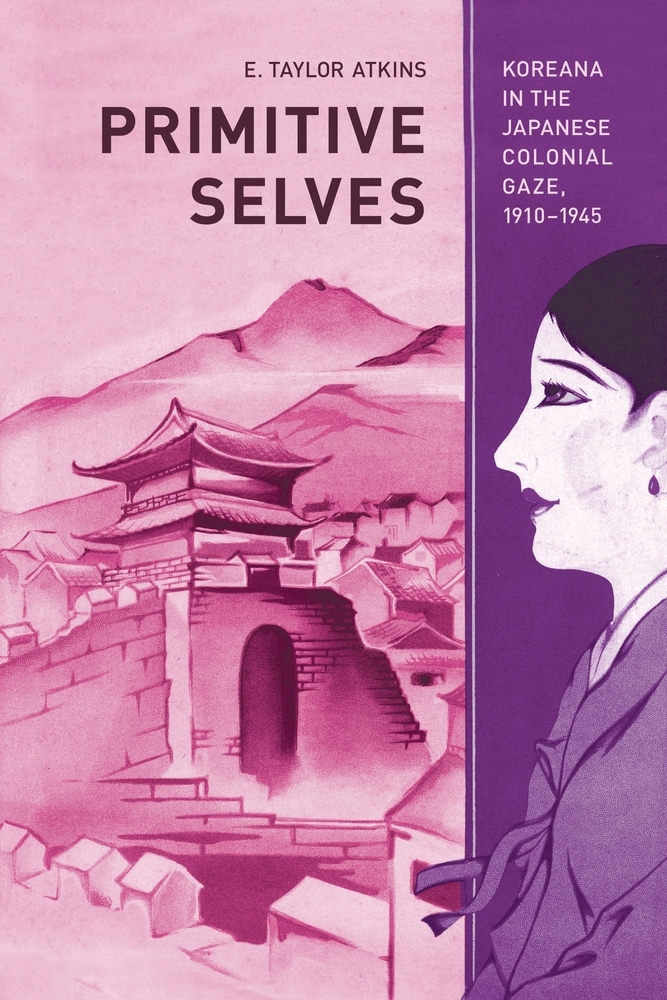
In his review of E. Taylor Atkins’ Primitive Selves: Koreana in the Japanese Colonial Gaze, 1910-1945 for the Japan Times, Gord Sellar noted that:

One of the things that grabbed me, while reading this book, was how much of the stuff Westerners in Korea complain about, that Japanese were complaining about back in the colonial era.

An example of this is clothing. Japanese anthropologists especially liked to complain about Koreans’ clothing, which if you will think back to the early 20th century was quite different from what most people wear today–it was mostly white ramie fiber clothing. Because it was all-white, it tended to get dirty quite easily, and as a result, according to those Japanese anthropologists…Koreans, especially women, tended to avoid any kind of exercise or physical activity as it presented the risk of dirtying their white clothing

And which reminded him of comments made by many expats including myself, that Korean women don’t tend to exercise very hard in gyms here. Granted, a lot can change in 100 years of course, but still: modern Korean attitudes to exercise may have deeper roots than we think (Source above: Gord Sellar).

3) Japan custody heartache for foreign fathers

From the BBC :

In Japan, the courts normally give custody to one parent after a marriage breakdown and it is up to that parent if they let the other parent have any access.

Many separating couples come to amicable agreements, but it is not unusual for one parent to be cut out of their children’s lives forever.

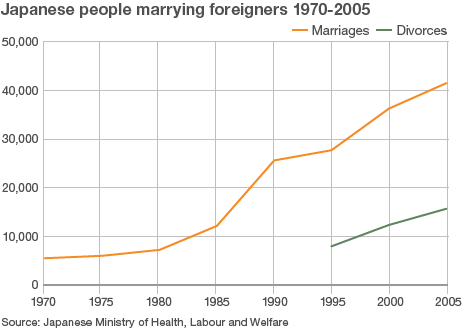
And the article gives the example of one foreign father who, as things stand, will effectively never see his children again, and the numbers of similar cases are growing with the rising number of marriages to foreigners.

But without any other evidence though, then observers should resist the temptation to assume that custody rulings are automatically made in favor of the Japanese parent. And although there is definite pressure for change, note that the system does have some logic, being based on “the expectation that families should largely work things out for themselves”, rather than “the state enforcing agreements on access and child-support payments” (source, right: BBC).

Does anybody have more information on how foreign parents usually fare, and/or know what the Korean system is like? And speaking of the latter, now 1 in 10 Korean marriages are with foreigners.

4) Cambodian wife cuts off husband’s member in Sunchang, Jeollabuk-do.

Yes, I think this will be the most clicked link this week too.

(Source)

5) “Kiss Rooms” raided because of their…advertising

As reported by Asian Correspondant:

Police have begun a harsh crackdown on “kiss rooms” and other varieties of prostitution that until now existed under legal loopholes.

The Ilsan Police Station in Gyeonggi-do announced on January 20 that it conducted a two-day crackdown on the 17th and 18th against kiss rooms and internet prostitution in Ilsan New City, and arrested without detention 32 people, including 38-year old “B”, the owner of a kiss room, on charges of [their advertising] violating the law on the protection of teenagers (청소년보호법).

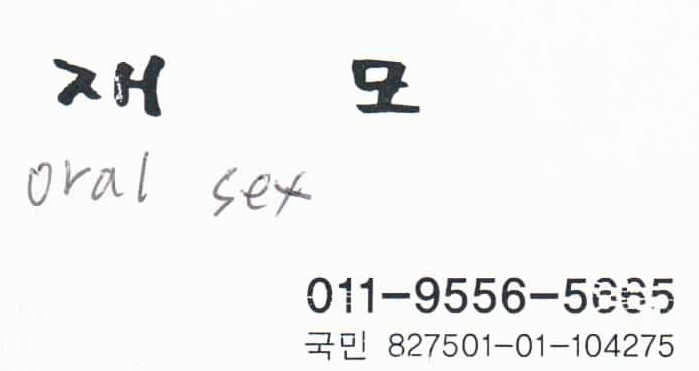
As hinted at there, this seems to be very arbitrary use of the law, as it’s difficult to so much as step out of one’s apartment in Korea without coming across numerous advertisements for brothels. Or, indeed, peacefully sitting by the river in beautiful Jinju in September 2003, enjoying your last morning there before moving to Busan later that afternoon…only to be suddenly presented with this business card by a passing local:

6) South Korea: online haven for gays

When Suh Eun-pil was being harassed at school last year because of rumors he was gay, the internet was one of the few places he felt safe. One website in particular, called Rateen, provided a haven from critical eyes and verbal abuse.

Suh began visiting Rateen regularly, and six months later his life had completely changed — for the better.

On a recent Friday afternoon, Suh, 18, was surrounded by friends, everyone chatting and laughing. The small group of friends — all whom met through Rateen — was planning a social event for gay and lesbian teens, with games, prizes and special speakers…

Read the rest at globalpost.

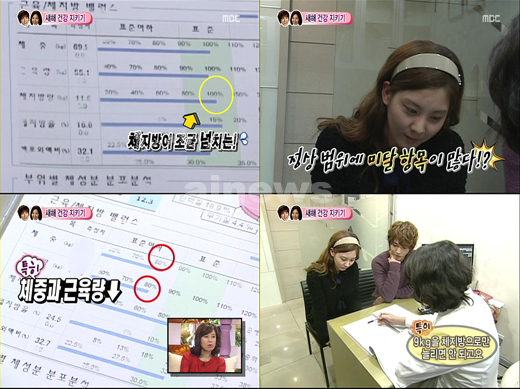
7) Seo-hyeon (서현) of Girls’ Generation (소녀시대) revealed to be 9kg underweight

But this is no great surprise given the group’s 1500 calories a day dietary regime of course, and belies claims by their gym instructor that “otherwise they love snacks and eat well.”

Later, netizens worked out her exact weight to be 51kg (source, right).

8) The perils of trusting oppa

A hotshot young app developer, a great idea, and technology that lets you know where your loved ones are. What could possibly go wrong?

Plenty, as it turns out.

9) Korean dermatologists assume that unmarried women don’t have sex

More insights gained the hard way by It’s Daejeon, darling!:

The doctor…put me on Accutane. Hella cheaper than the states but the health oversight is SHITTY. Accutane carries a lot of serious health risks and I researched quite a bit on my own because the derm didn’t tell me dick about it. All he asked was, “Are you married?” No. “Then no problem. You can take this.” I’m guessing that question was to assess if there was any reason to warn me about the dangers of getting pregnant while on the drug. The US has the iPledge program, Korea has the ‘Let’s believe that unmarried women are practicing abstinence, so there’s no reason to discuss this and that’s that thankyouverymuch’ program.

For the record, she does mention that this may just be her dermatologist, but she’d probably agree – and have the experiences to back-up – that such attitudes exist throughout the Korean medical establishment. But note that this frequently doesn’t apply to foreign women though, whom hospital staff often assume that their visit is simply because they want the morning-after pill, and it can take a lot to convince them otherwise (see here and here as to why).

(Source)

10) The Piggy Dolls (피기돌스) finally explain their name, and why they don’t think it’s degrading

If this is the first you’ve heard of them though, first see #10 here and #8 here on why there’s such an interest in them.

Share

Visual Dreams (비주얼드림) by Girls’ Generation (소녀시대): Lyrics, Translation, and Explanation

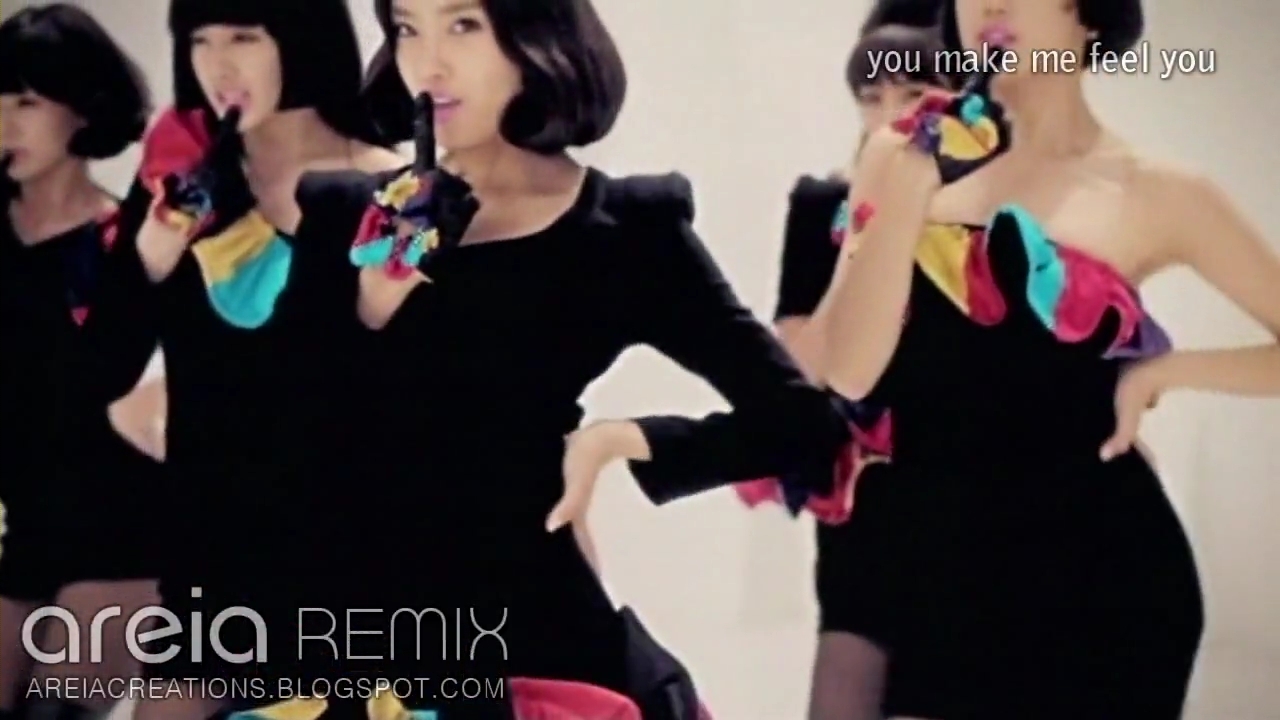
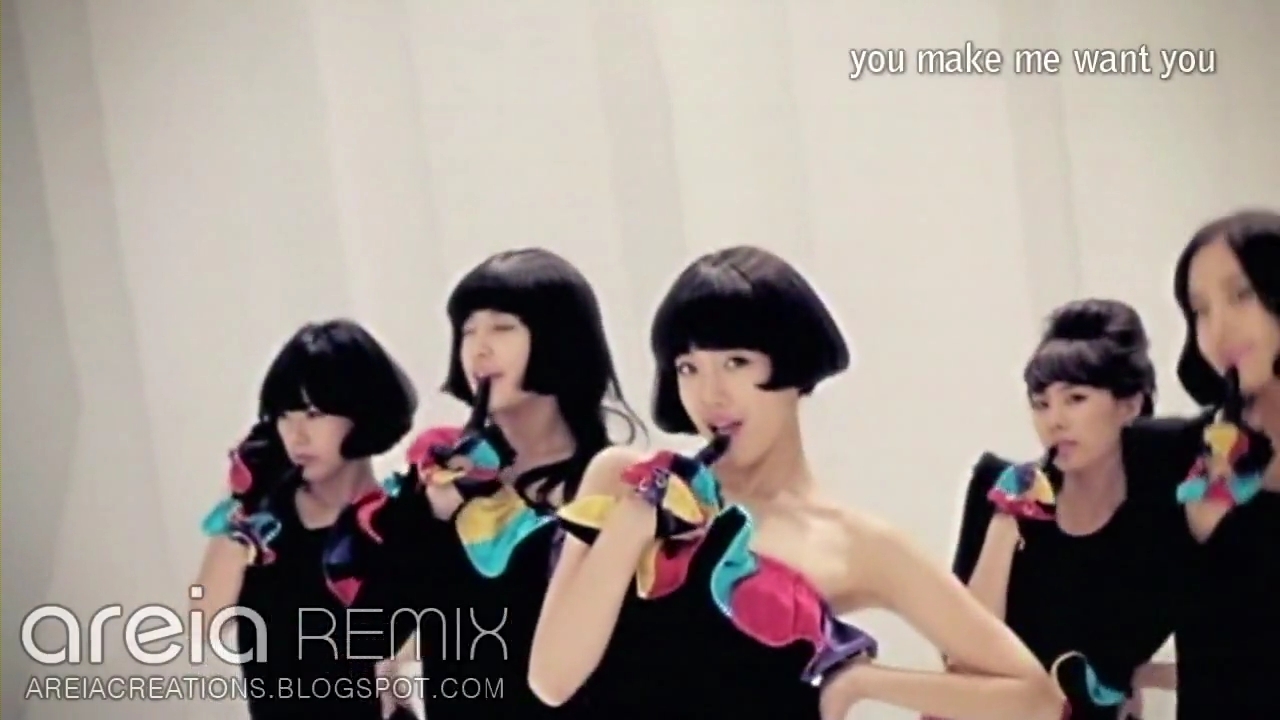
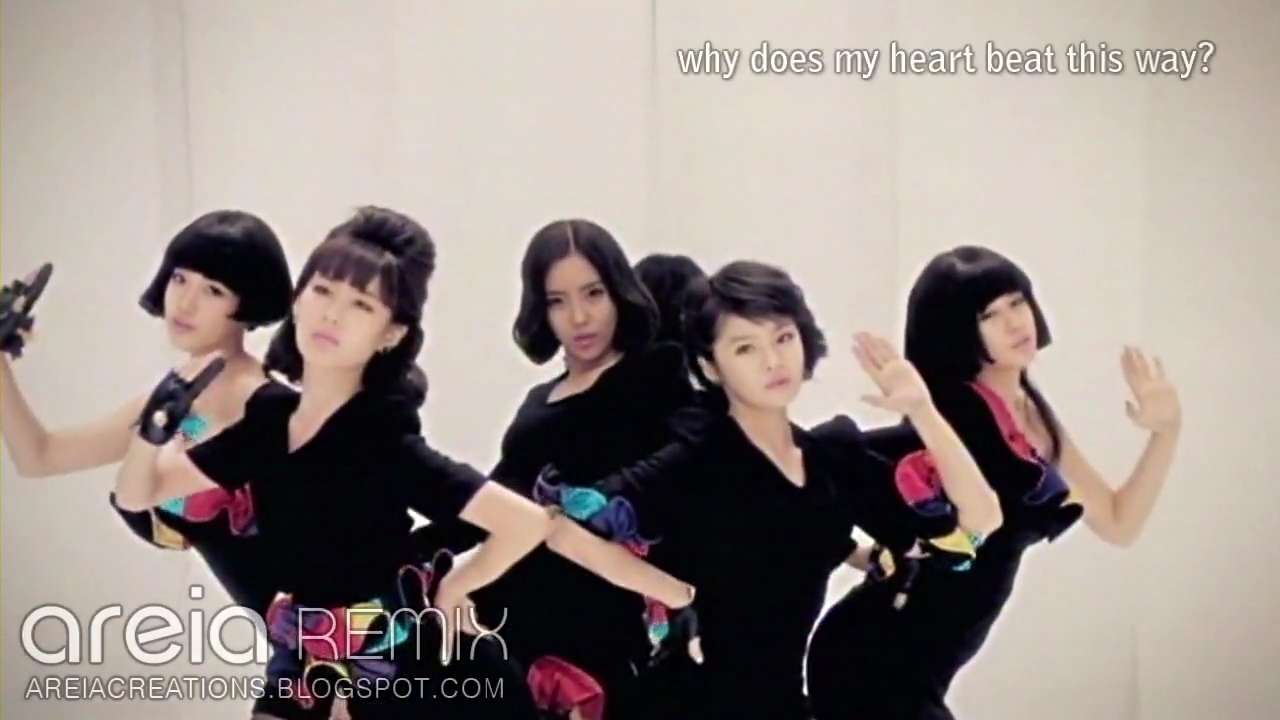
Apologies for not providing the lyrics for Girls’ Generation’s (소녀시대) 2010 hit Oh!(오!) as promised, but then I’m much too addicted to DJ Areia’s remix of this one at the moment. And just like that of Oh!, which instantly got me into mainstream K-pop despite a whole decade of simply loathing it, this one has rendered an otherwise mediocre song into, well, something magical for me.

Music quality aside though, a much more striking parallel with Oh!is its narrative of helplessness, passivity, and sexual desire but both inexperience and inability to act on it, in turn very similar to Like the First Time (처음처럼) by T-ara (티아라) and Breathe (비리드) by Miss A (미쓰에이) as already discussed in previous posts. Which is not to say that all songs by Girls’ Generation or those other groups are like that of course, and in particular I’ve heard that Run Devil Run and Hoot! are quite different. But still, jumping ahead to the conclusion of a project I’m working on at the moment, there does seem to be a definite paucity of song themes for popular Korean girl groups these days.

Alternatively, you could argue that this isn’t really an official song of theirs at all, but rather part of an Asia-wide marketing campaign for Intel’s 2nd Generation Core™ processors, and in which case it should possibly be viewed more as something aimed at a very techie audience, and therefore assumed to be a largely male one. If so, then that might also explain all the obvious double entendres in it, which although not surprising in themselves (Korean advertising and popular culture are full of them), are most definitely aimed at men here.

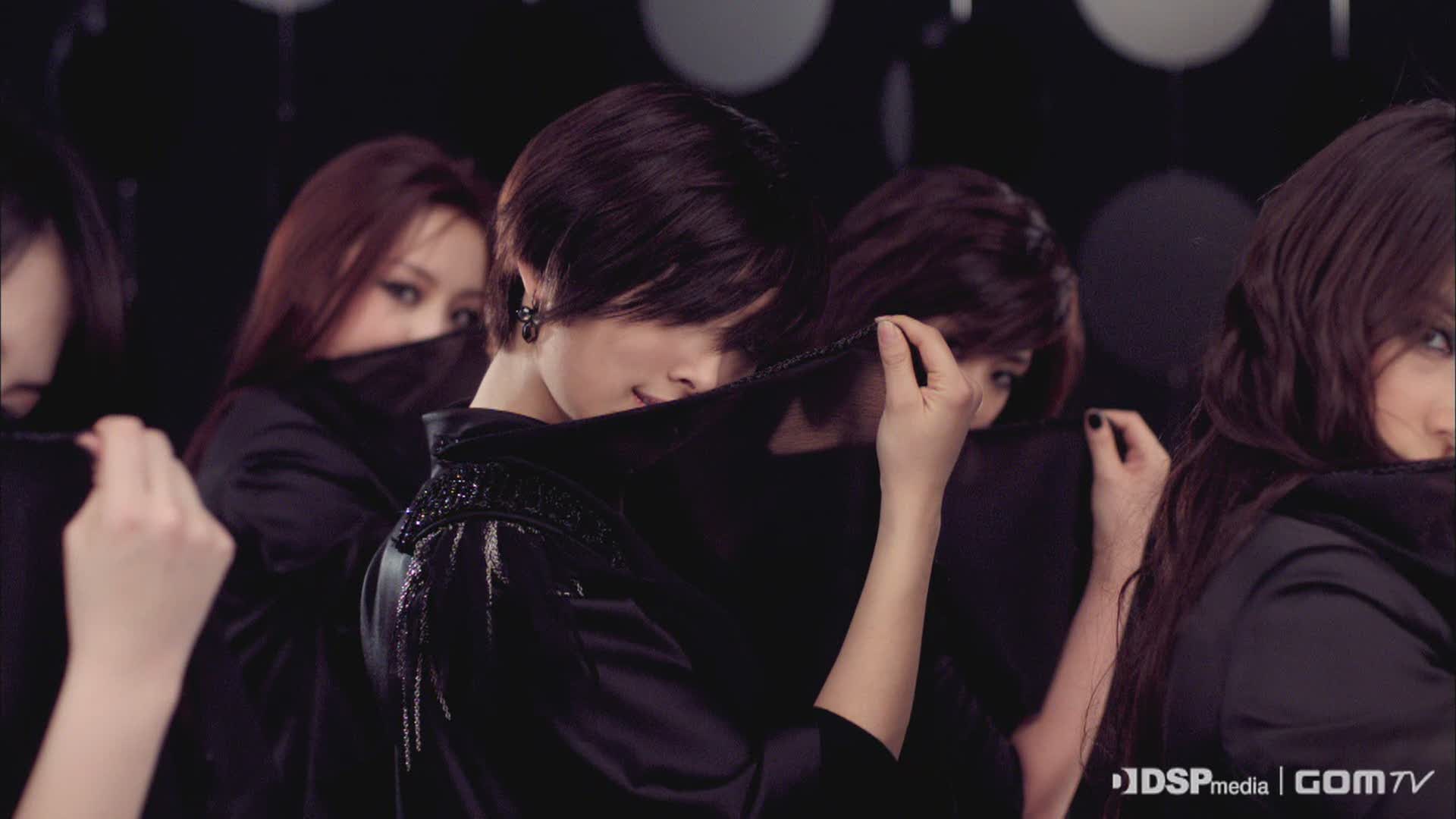
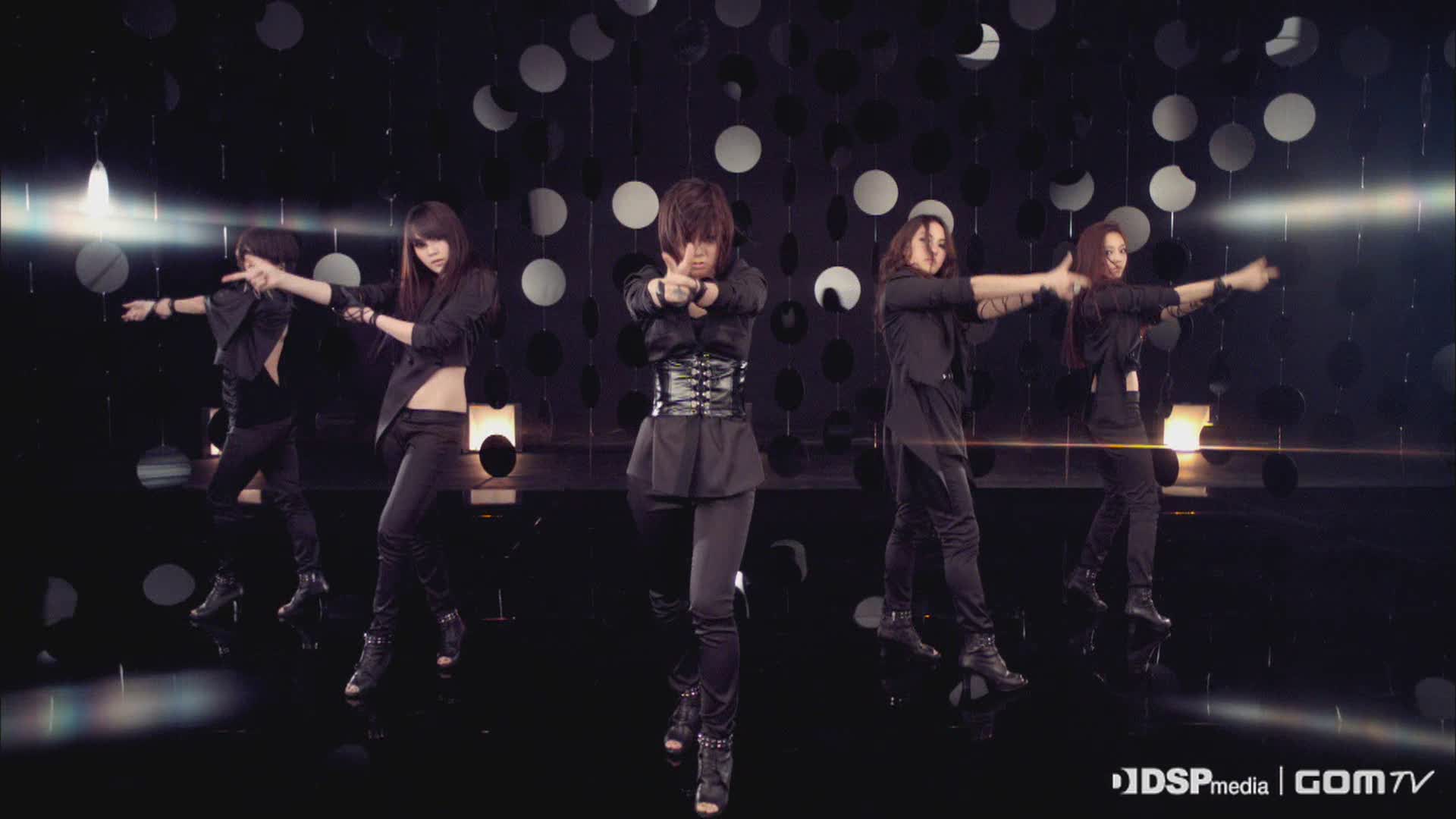
Either way, but for their regulation hot pants (which have less sexual connotations in Korea than they do in Western countries anyway), actually you might never have realized this from the music video itself, in which all 9 women appear even more cute and innocent than normal. Those of you who would still like to maintain that rather naive image of them then (and there’s an awful lot of you, both in Korea and in Western countries!), by all means feel free to watch the video with DJ Areia’s remix below, followed by the slow – nay, appalling – original under that, as well as all the screenshots provided courtesy of this 26MB(!) zip file from Red and Rosy. As for the lyrics though…well, read them at your peril!

Update: I’ve rewritten some of the lyrics in response to a commenter’s suggestions, many of which require a great deal of extra explanation. Rather than add those explanations to the post though (which would mean completely rewriting it), I’ve indicated the changes with an asterisk, with a number next to that to indicate what part of this comment to refer to for the explanation:

One Two Three Four 짜릿하게 어머나

One Two Three Four 너를 원해 이미 난

One Two Three Four 솔직한 내 맘을 다 들켜버릴래 다 들려줄래

촉촉촉 오 달콤한 내 입술에 Come Come Come 천천히 그래 다가와

Tic Tac Toe 오 아찔하게 네게 푹 빠져버린걸 녹아버린걸

One Two Three Four Oh, how exciting (*1)

One Two Three Four, I already want you

One Two Three Four, I want to tell you all my honest feelings, I want them to be discovered (*2)

Yes, oh, come come come to my sweet, moist lips

Tic Tac Toe, Oh, you make me hot and giddy…Despite myself, I’ve deeply fallen and melted for you (*4,6)

First up in what turns out to be the chorus, in line 1 the “게” in”짜릿하게” make the word look like an adverb, which would give…er….”tinglingly”, but following the advice of commenters on the last translation then I’ve wisely tried to sever the mental link I’ve long had between “-게” forms and adverbs (especially as “짜릿하다” could just as well be “thrilling” say). Meanwhile, “어머나” is an expression of surprise that is almost exclusively used by women, the closest English equivalent I could think of being “Oh my!”, although in practice it’s usually said very quickly (and so just “Oh!” might be better).

Next, in line 3, “들켜버릴래” is a combination of “들키다” (to be found out, discovered, caught etc.), “버리다” (literally to throw away, but when added to another verb gives a sense of relief and/or completeness in finishing the act”, and then “~ㄹ래” (to want to do the verb). And so after all that,  then, “I want to tell you all my honest feelings” seems more than sufficient, but nevertheless the Korean includes the superfluous “들려줄래”, or “I want them to be discovered”. Possibly it just makes the words flow better, and indeed there does seem to be a lot of nonsense words in the song as a whole for that reason.

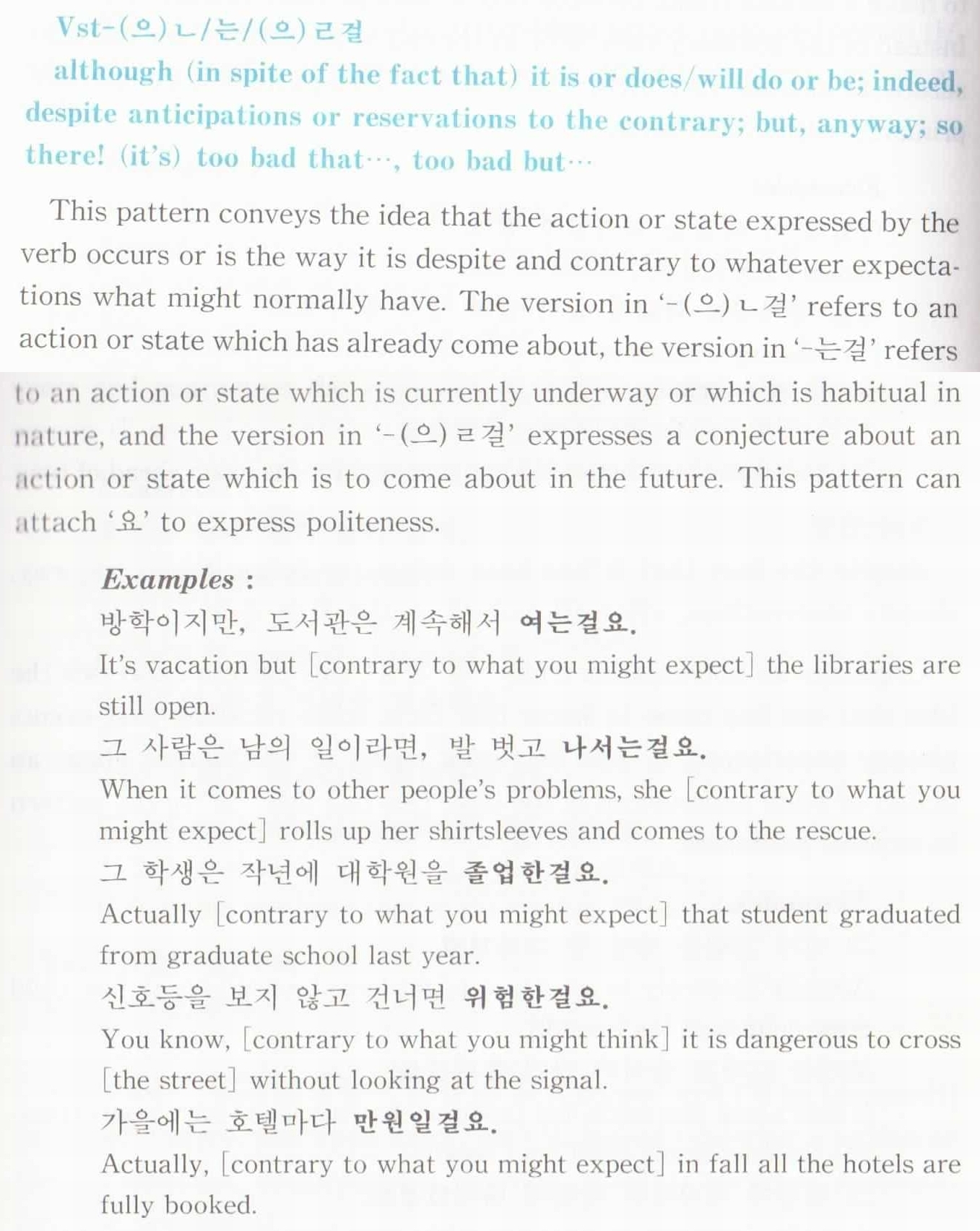
Finally, line 5 – “Tic Tac Toe 오 아찔하게 네게 푹 빠져버린걸 녹아버린걸” – is literally “Tic Tac Toe – oh – dizzily – to you – fall + 버리다 + thing – melt + 버리다 + thing”. As you can see, I thought “dizzily” was fine in this case (although probably “I’m dizzy” is okay), but really don’t understand why the fall and melt parts were in the “~ㄴ걸” (thing) form.

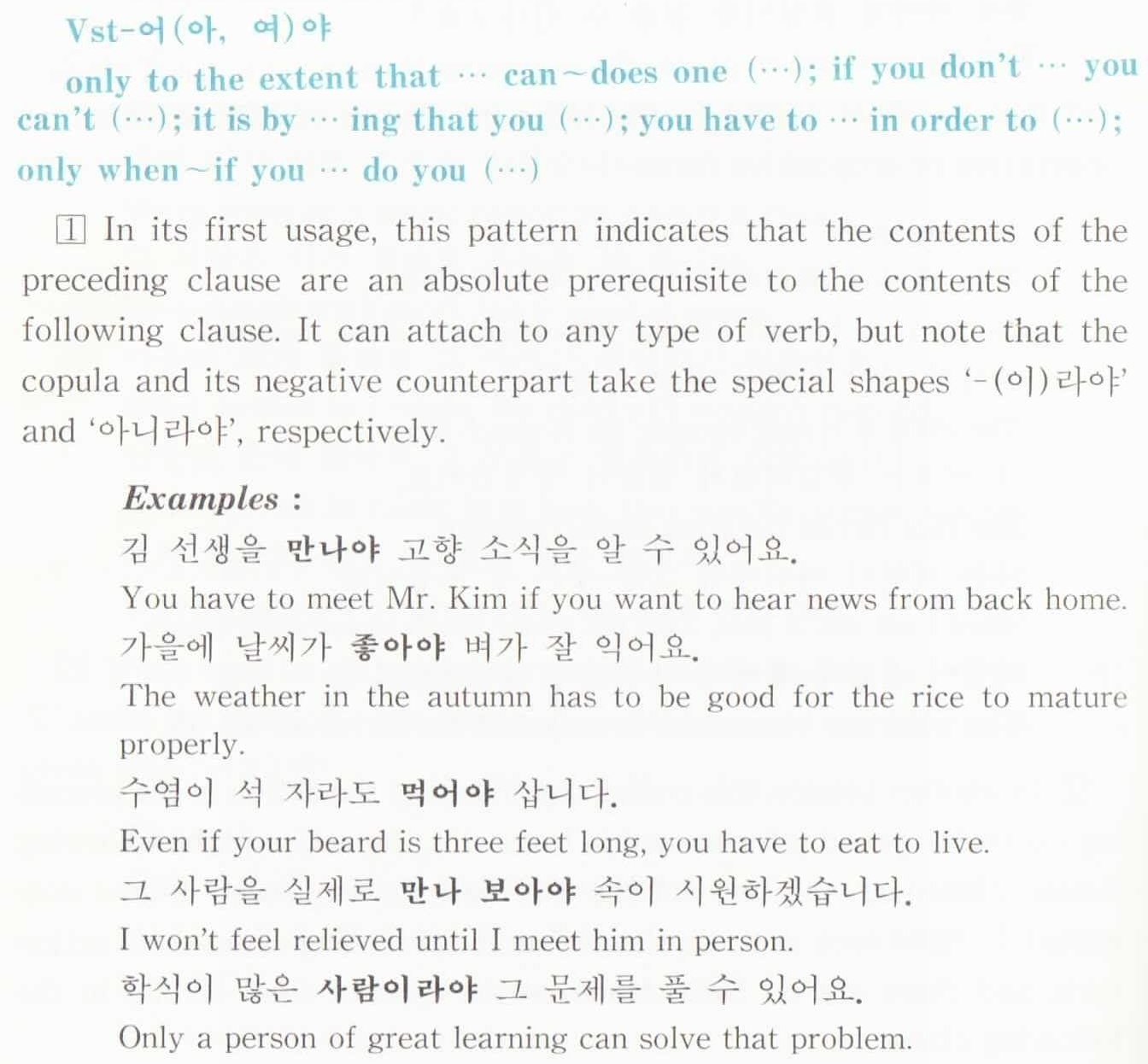
Update: The “~ㄴ걸” form isn’t as simple as I first thought. As discussed in #4 and #6 of that later comment I refer to, this explanation from Korean Grammar for International Learners (KGIL) is required (pages 224-225):

처음 느낀 이 감정 My Deep Love Core

점점 뜨거워지는 얼굴 숨이 막히는 순간 어쩌지

떨리고 있어

Boy boy boy boy bo bo bo boy boy boy boy

고민고민 해봐도 모르겠어

상상만으론 정말로 하나도 오 how to do my first kiss

Just wait a minute?

Boy boy boy boy bo bo bo boy boy boy boy

망설이지 말고 my love get into my core

This is the first time I’ve had this feeling My Deep Love Core

My face is getting hotter and hotter, and at this moment I can’t breathe. What should I do? (*3, 5)

I’m trembling

Boy boy boy boy bo bo bo boy boy boy boy

I don’t know what to do no matter how much I agonize (*see below)

No matter how I think through it over again and again, I’m just not sure. I truly have no idea, from just imagining [it], how to do my first kiss (*7)

Just wait a minute?

Boy boy boy boy bo bo bo boy boy boy boy

Don’t hesitate my love, get into my core

An awkward verse.

My first problem was with “어쩌지” in line 2, which I mistook for “어쩐지”. That means “so that’s why!”, which made no sense here. Once I realized my mistake though, “어쩌지” wasn’t in my dictionary, and so I turned to my long suffering wife, who said it means “what am I going to do?”.

Next was “고민고민 해봐도 모르겠어” in line 5, which, although I’m sure my translation of “Even though I worry and worry about this, I just can’t solve it” is fine, I was stuck on it for a while because it doesn’t seem to make much sense in the context of the song (learners, note there’s a missing “아무리” at the beginning).

*(Update: with thanks to commenter dogdyedblack, probably “I don’t know what to do no matter how much I agonize” is better).

Both were a doddle though, compared to line 6, “상상만으론 정말로 하나도 오 how to do my first kiss”, literally “imagination – only – through – as for – really – through – one more again – oh”. But my wife said that there should be a “모르겠다” after “하나도”, and that together “하다도 모르겠다” means “I really don’t know”, and with that knowledge and the context then we cobbled “I can’t really do it only in my imagination, I have to do for real, oh how to do my first kiss”. I admit that that might not be the final word though!

Finally, the English “just a minute” in line 7 seems very strange next to the “don’t hesitate” in line 9, but that is definitely what both say. Perhaps the English in line 7 is just something essentially random by the song writers, which happens all the time in K-pop, but then much of the English in the rest of the song suggests otherwise. Get into her core indeed…

Ahem. Anyway, next is the chorus again:

One Two Three Four 짜릿하게 어머나

One Two Three Four 너를 원해 이미 난

One Two Three Four 솔직한 내 맘을 다 들켜버릴래 다 들려줄래

촉촉촉 오 달콤한 내 입술에 Come Come Come 천천히 그래 다가와

Tic Tac Toe 오 아찔하게 네게 푹 빠져버린걸 녹아버린걸

One Two Three Four Oh, how exciting

One Two Three Four, I already want you

One Two Three Four, I want to tell you all my honest feelings, I want them to be discovered

Yes, oh, come come come to my sweet, moist lips

Tic Tac Toe, Oh, you make me hot and giddy…Despite myself, I’ve deeply fallen and melted for you

내 맘 속 visual 너무 완벽해

네 가지 고민 언제 어디서 무엇을 어떻게만 빼고 헤매고 있어

Core Core Core Core Co Co Co Core Core Core Core

우물쭈물 하단 놓칠지 몰라

망설임 the end 여길 봐 두근두근 pop pop 들리지 어때

Core of my love

Core Core Core Core Co Co Co Core Core Core Core

지금이야 바로 start! jump into love core

[When I imagine the scene of our first kiss in my mind, with images pulled from the movies, comics and TV programs I have watched ever since I was little] the visual images in my mind are so perfect (*9)

But for 4 kinds of things not to worry about – when, where, what and how – I’m puzzled

Core Core Core Core Co Co Co Core Core Core Core

If you keep hesitating, you might miss [lose] me

Hesitation, the end, look [listen] here: how is the throb throb pop pop sound [of my heart]?

Core of my love

Core Core Core Core Co Co Co Core Core Core Core

Yes, of course, start right now, jump into love core

The final verse already, unfortunately much of it is completely non-nonsensical. Starting with line 1: “내 맘 속 visual 너무 완벽해” which gives “Inside my heart the visuals are perfect”, which means…well, God knows, but probably alludes to the functions of the chip more than it continues the romantic narrative of the song. But anyway, note that “맘”, short for “마음”, really means something between heart and mind (a phrase difficult to sing well), and in my experience “너무” means “very” just as often as the dictionary definition of “too [much]”.

Next, my wife said that “가지” in line 2 is just another form of the counter word “게”, or “thing”, but I beg to differ: my dictionary gives “a kind, a sort; a variety”. But which is not to say that line 2 – “But for 4 kinds of things to worry about – when, where, what and how – I’m puzzled” – actually makes any sense of course.

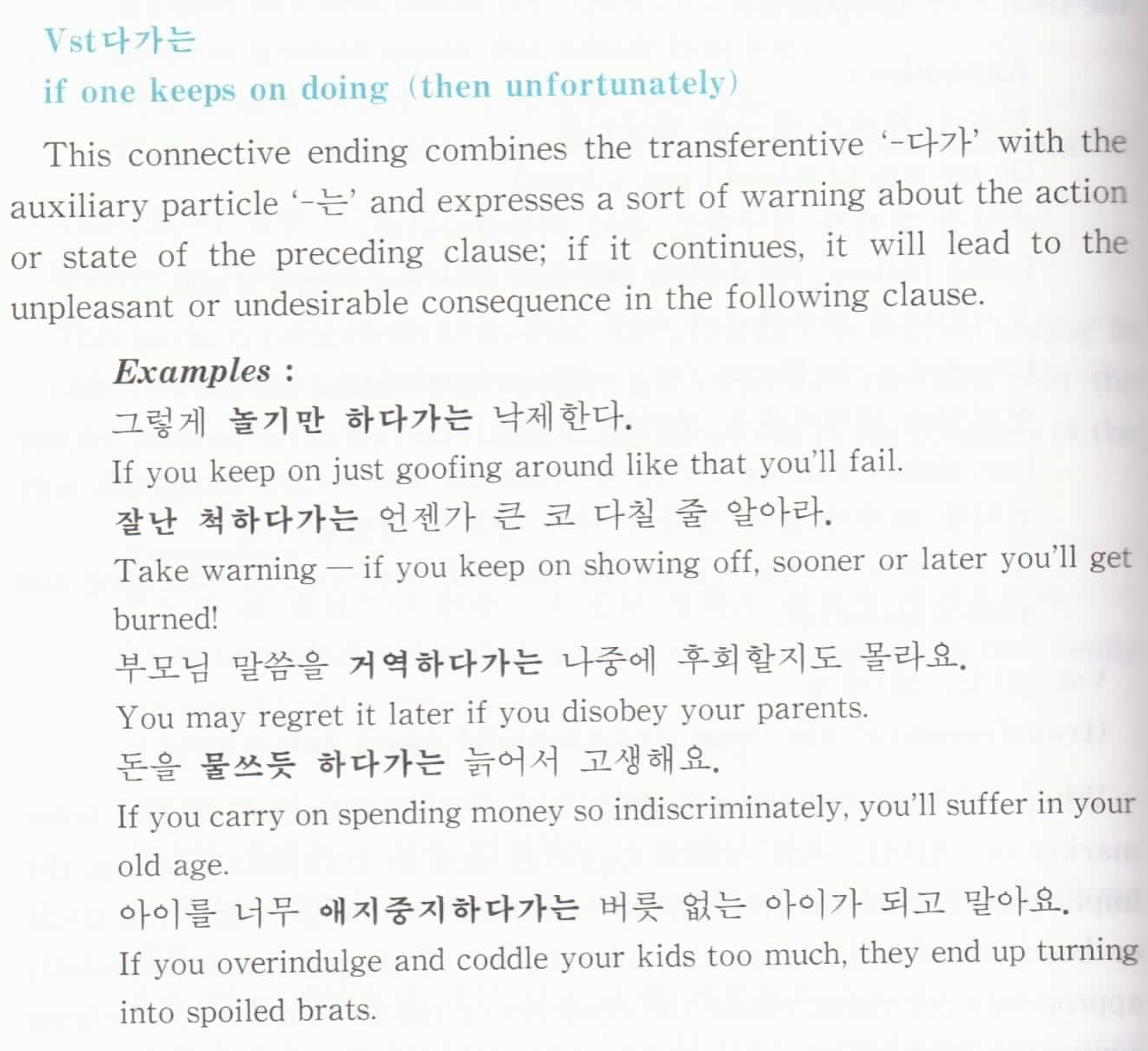
After that, line 4 was really tough. But then my wife told me that “하단”, was short for “하다가는”, which fortunately was in KGIL. Which I’ll let you read for yourself (p.280):

As for the rest of line 4, naturally I’m assuming that it’s the object of the female narrator’s affections that shouldn’t hesitate rather than vice-versa, as clearly she doesn’t want to make the first move despite what she repeatedly says she wants him to do to her core. The same goes for line 5, although note that she does say “look here” (“여길 봐”) when “listen to this” would be better, with the “this” surely being her heart.

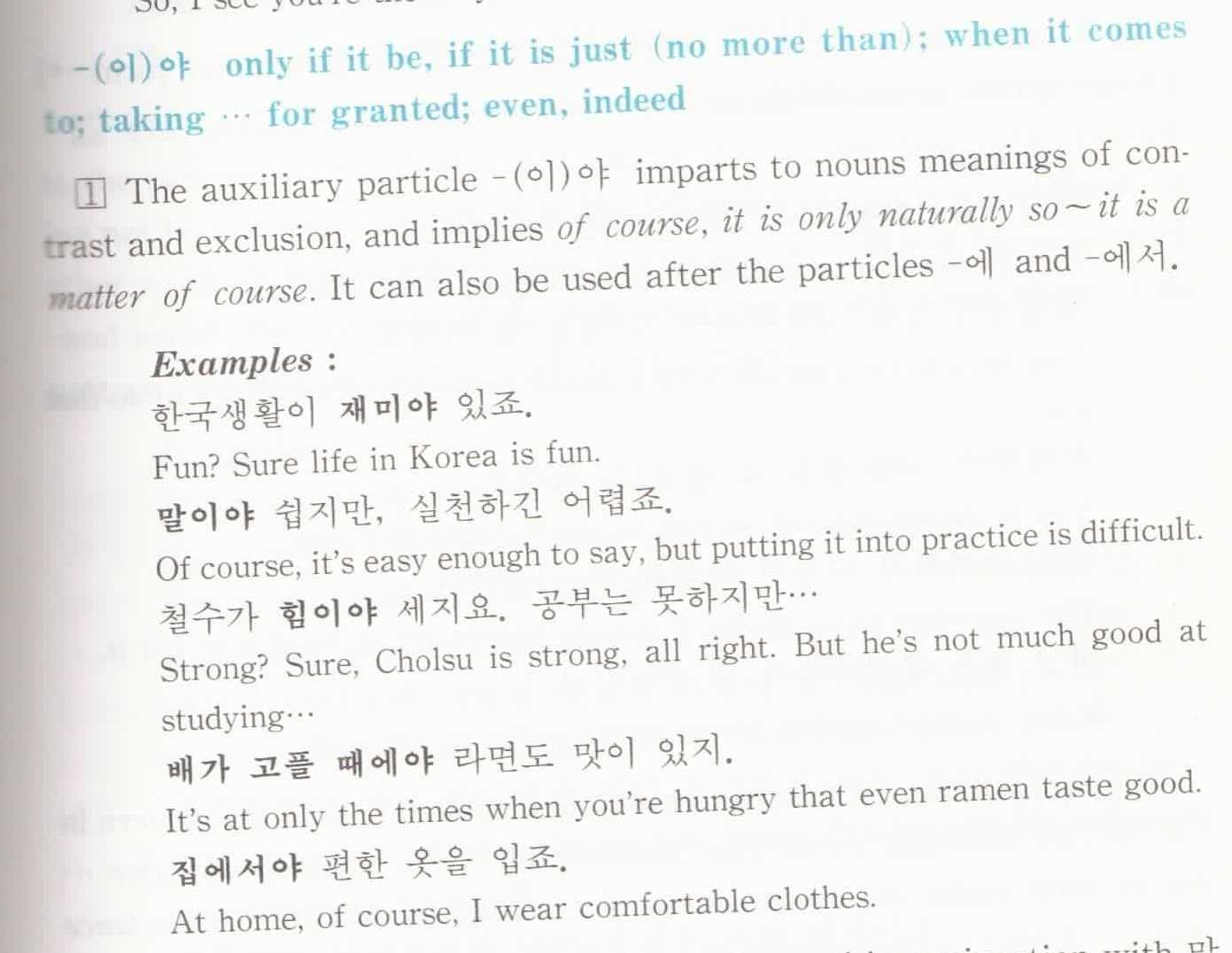
Finally, the “이야” in line 8 was interesting, which, seeing as I still have my KGIL next to me as I type this and have already cleared the junk off my scanner, I may as well give you page 181 of too (but sorry that I can never seem to get the book straight!):

Note that KGIL gives 4 more meanings for  “이야” depending on what comes immediately after it by the way, but if you want to know those too, then buy the damn book yourself already fortunately none of those apply here.

Finally, there’s the chorus again, the first part of which is repeated twice, and with the addition of 3 extra English lines:

One Two Three Four 짜릿하게 어머나

One Two Three Four 너를 원해 이미 난

One Two Three Four 솔직한 내 맘을 다 들켜버릴래 다 들려줄래

Take you higher / oh my love ooh yeah

visual dreams / 느껴봐 beating of my heart

One Two Three Four 짜릿하게 어머나

One Two Three Four 너를 원해 이미 난

One Two Three Four 솔직한 내 맘을 다 들켜버릴래 다 들려줄래

촉촉촉 오 달콤한 내 입술에

Come Come Come 천천히 그래 다가와

Tic Tac Toe 오 아찔하게 네게 푹 빠져버린걸 녹아버린걸

ooh yeah visualize my love oh yeah

One Two Three Four Oh, how exciting

One Two Three Four, I already want you

One Two Three Four, I want to tell you all my honest feelings, I want them to be discovered

Take you higher / oh my love ooh yeah

visual dreams / try feeling the beating of my heart

One Two Three Four Oh, how exciting

One Two Three Four, I already want you

One Two Three Four, I want to tell you all my honest feelings, I want them to be discovered

Yes, oh, come come come to my sweet, moist lips

Tic Tac Toe, Oh, you make me hot and giddy…Despite myself, I’ve deeply fallen and melted for you

ooh yeah visualize my love oh yeah

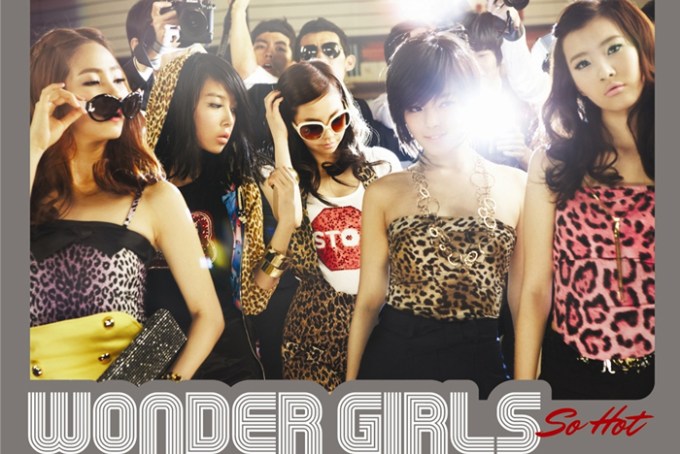
Sigh: if only all song translations could be so quick and easy! Still, I have many more to do this month nevertheless, and so expect at least 2 or 3 a week in addition to other posts, starting with So Hot by the Wonder Girrls (원더걸스) on Wednesday or Thursday Sunday, followed by Can’t Nobody by 2NE1 (투애니원) on Friday next week.

Meanwhile, apologies to Girls’ Generation fans, but Oh! will have to wait until next week I’m afraid, as one Girls’ Generation song a week is probably more than enough for many people!
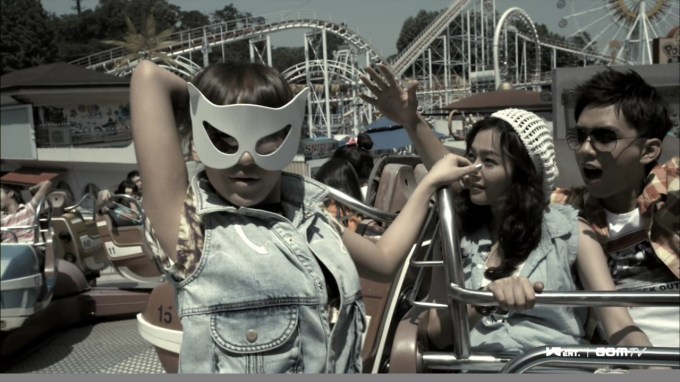
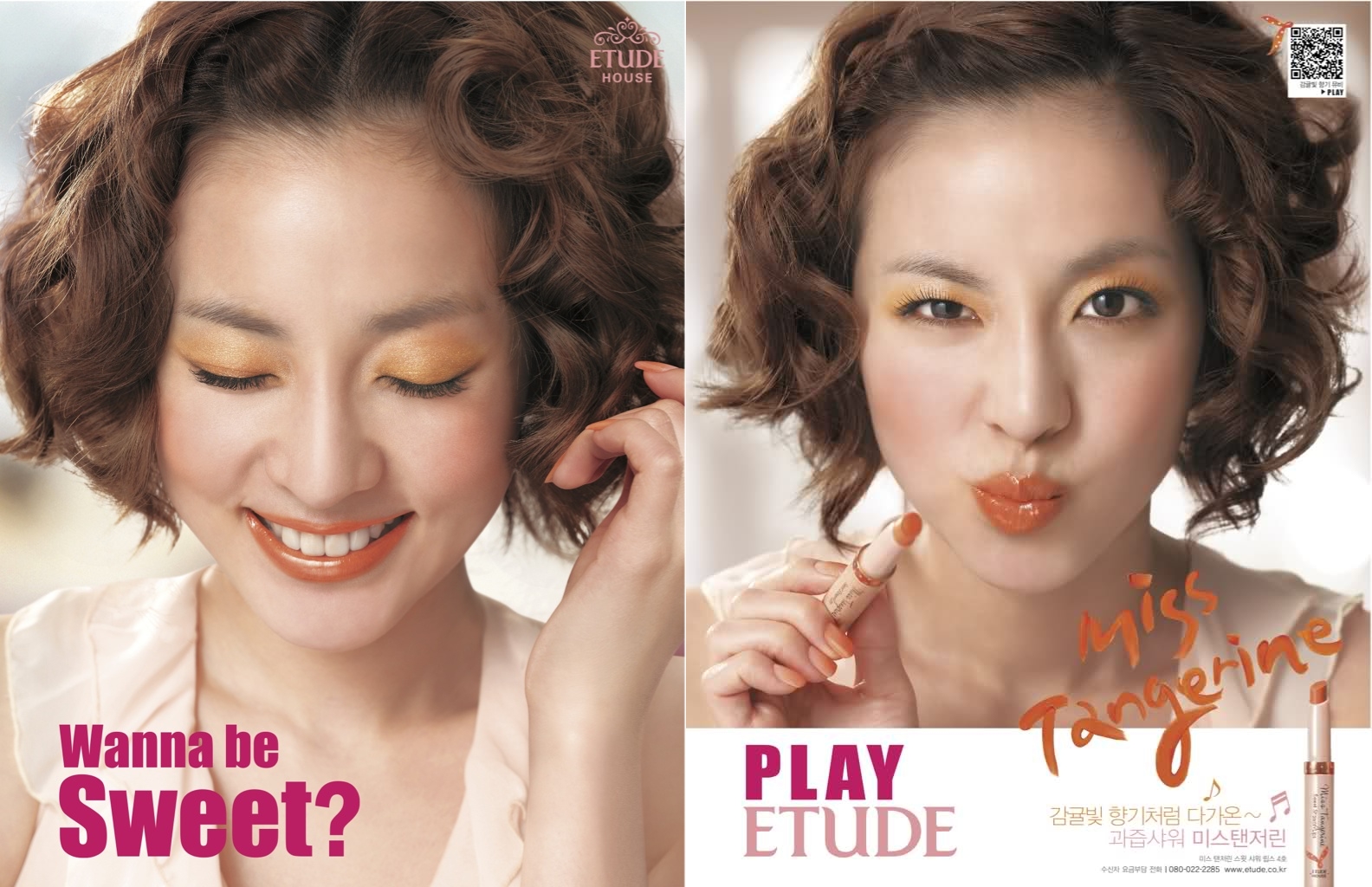
Wanna Be Sweet?

(Sources: left, right)

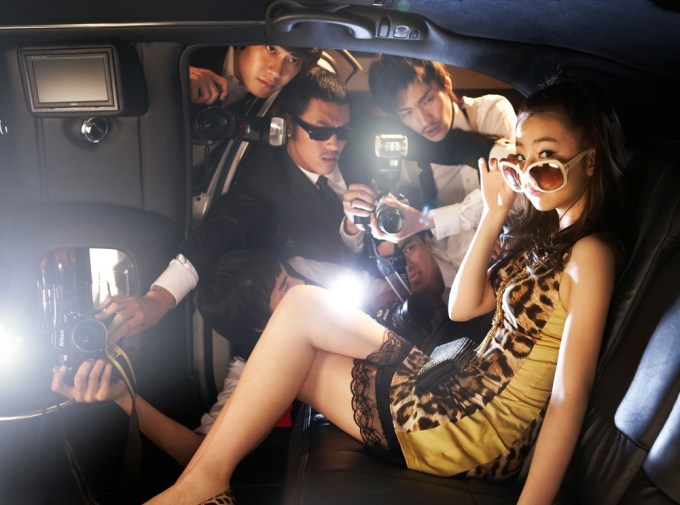
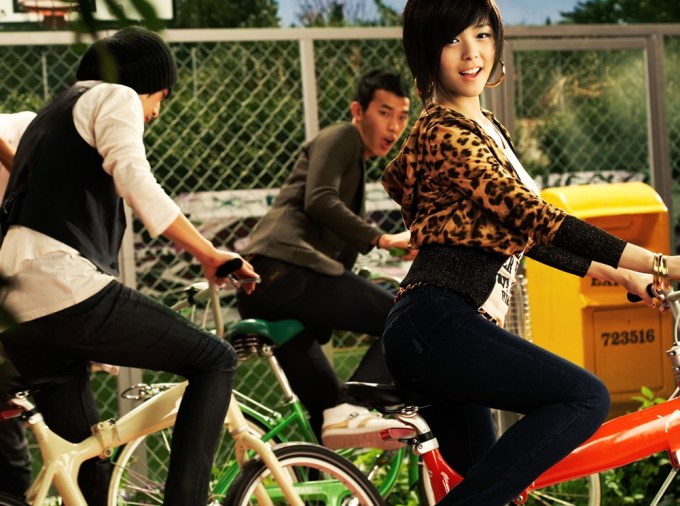
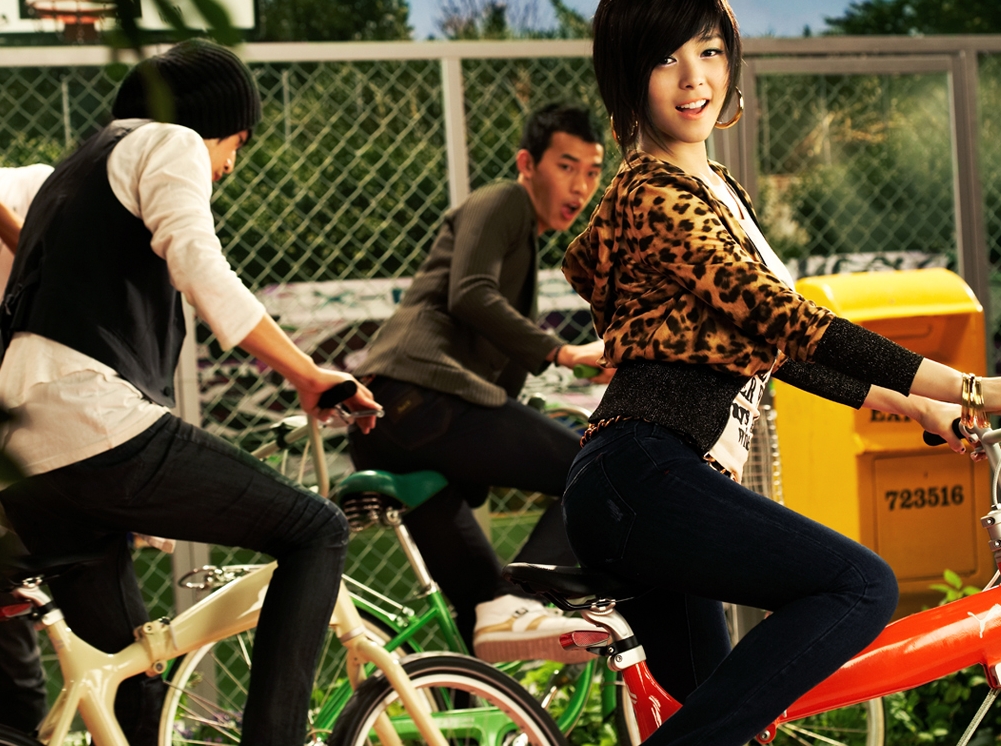
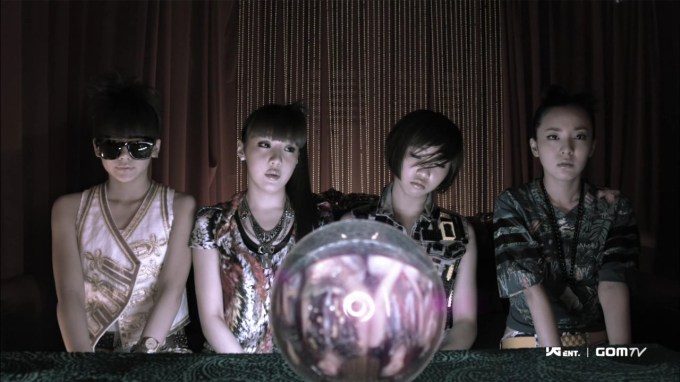
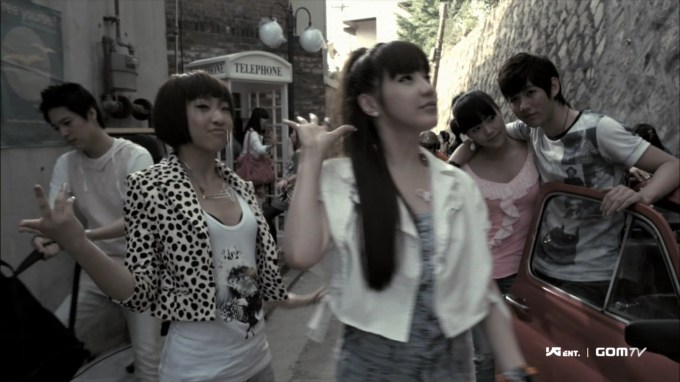
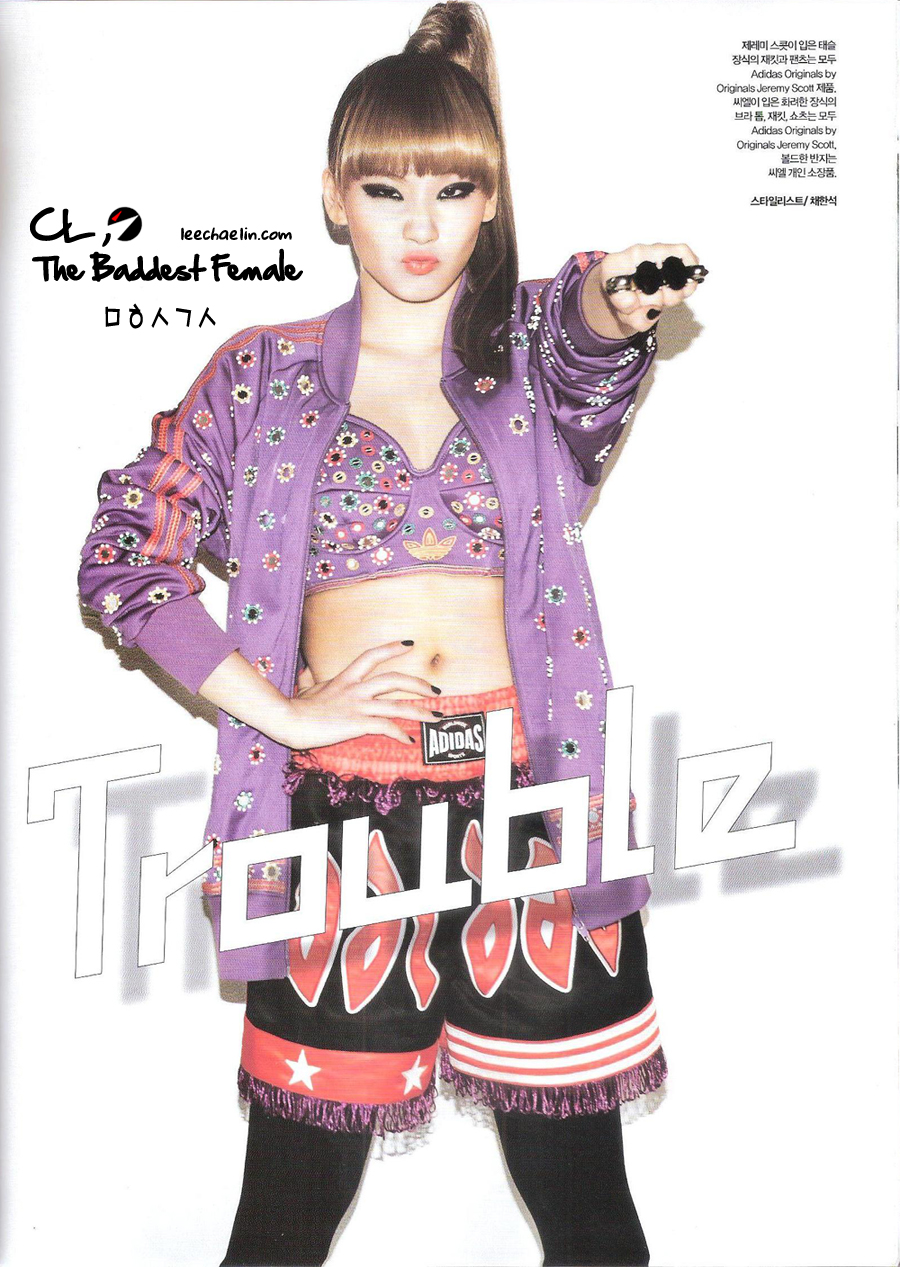
Yeah, I know: a 3000 word post on gender issues this ain’t. But then I’ve always been a real sucker for high-definition images of women’s faces, and like fashionista Effiel in Seoul, simply loved singer Sandara Park’s (박산다라) expressions in these ones the instant I saw them. So I thought I’d make an exception!

Enjoy your weekend everyone!

Share

Korean Sociological Image #55: School Uniform Advertisements

(Source)

Has anyone been paying close attention to teenage girls’ legs recently?

If so, then please answer a question for me, as they’re the darnedest things to find once you actually have a legitimate reason to look: until their recent break, had female school students still been required to wear skirts this winter, while their male classmates got to wear pants? Or did Korean schools show some flexibility because of the unusually cold weather?

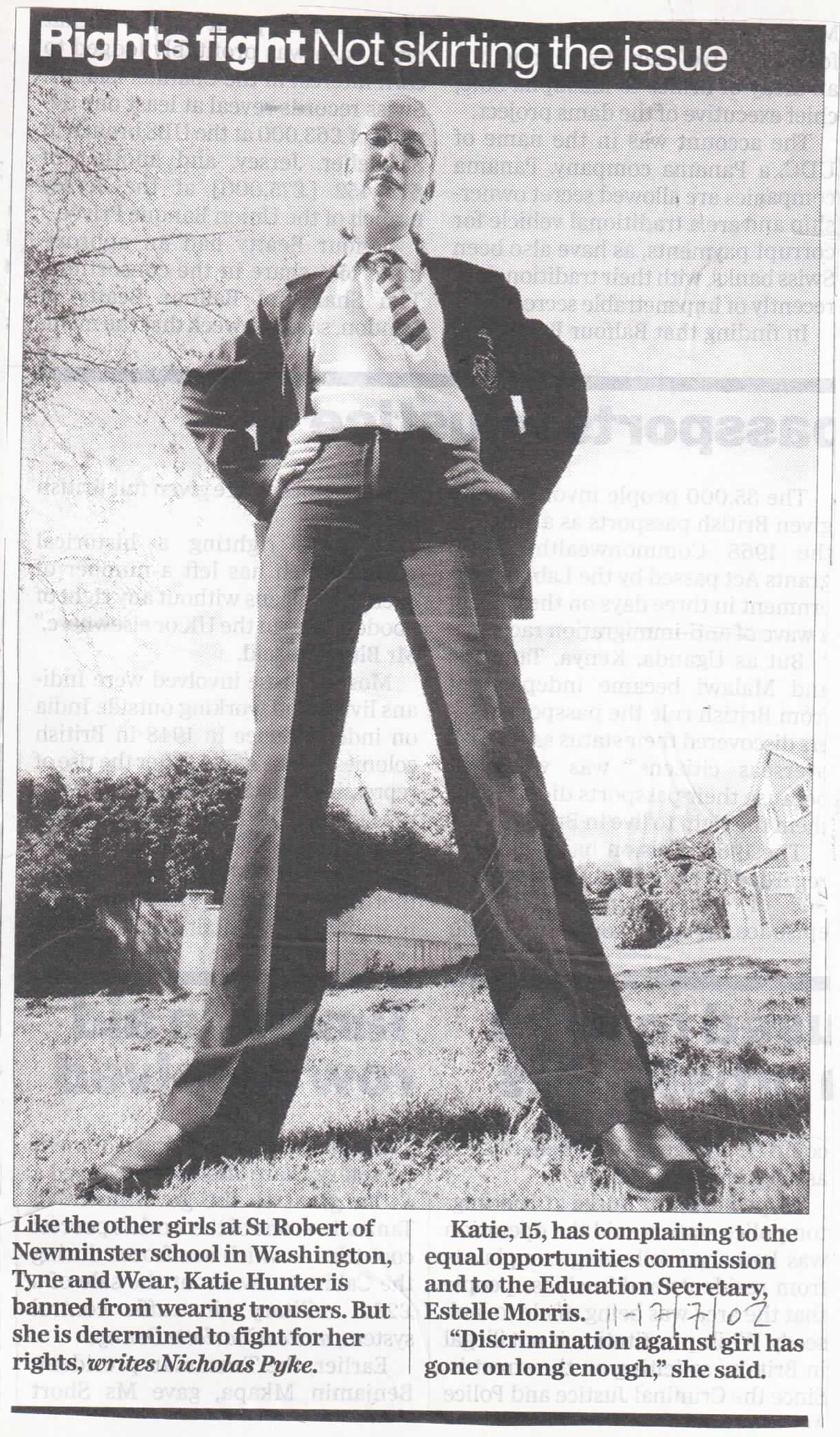
Mostly I ask because as my eldest daughter approaches school age, it’s just one of many things to consider as my wife and I decide whether to send our daughters to a Korean school, to homeschool them, or—in our dreams—to send them to an expensive international school. But whatever we ultimately decide, it’s interesting to compare attitudes towards uniforms in the U.K. for instance, where most schools have in practice allowed girls to wear pants for a long time now. On the other hand, they’ve only legally been required to do so as recently as last year, and only then because it was judged to violate the rights of transsexual students.

Which is not to imply that those are unimportant of course. But still, it was surprising that it wasn’t arguments about sexual equality and student’s health that had more impact on legislators:

(Guardian Weekly, July 11-17 2002)

The other reason for my interest is because of what they can represent. First, to the students themselves, many of whom consider them symbols of every hardship and injustice they had to endure at school, which is why they’re going to be ripping them off in public and/or slashing them with scissors upon their graduations next week. And who can blame them?

Next, to someone more interested in gender issues and social trends, they could be seen as something that both physically prepares girls for and/or socializes them into wearing skirts simply for the sake of being fashionable later. But considering that young U.S. women for instance, who don’t wear uniforms at school, still freeze to death outside nightclubs every winter just as readily as their U.K. and Korean counterparts, then that may be making too much of it.

I’m on much firmer ground though, when I say that school uniform advertisements at least, epitomize how Korean girls are socialized to be notoriously obsessive about their appearance:

(Source: unknown)

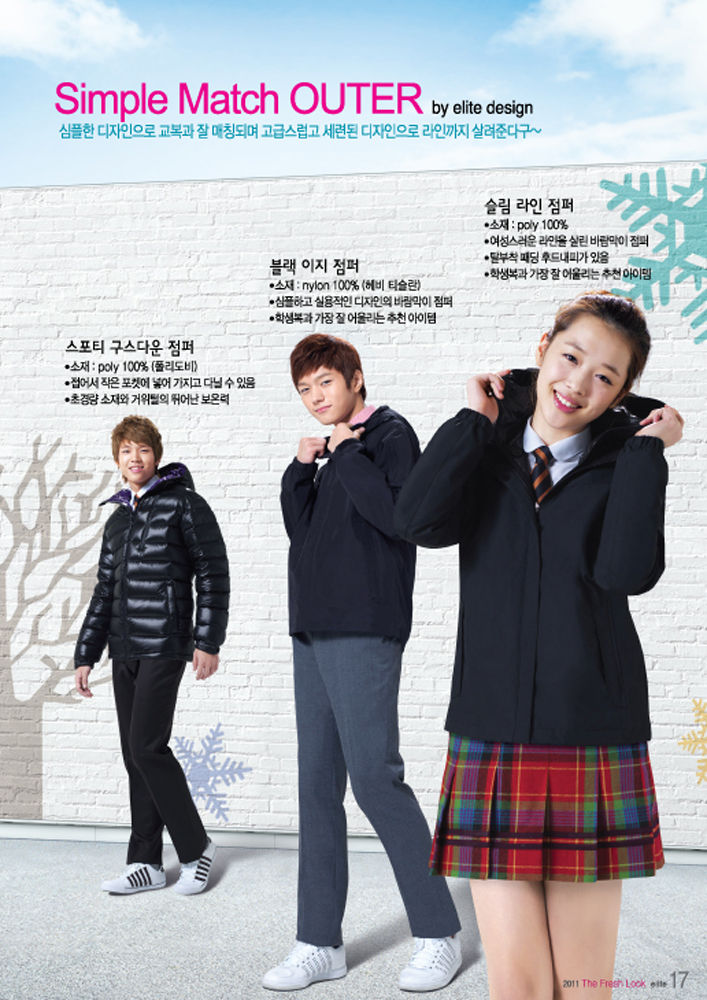
To be precise, it’s the fact that such advertisements exist at all. For unlike in the UK, Australia, and New Zealand where I went to school, and where parents buy—and can only buy—their children’s school uniforms directly from their schools, in Korea there has actually been a free market for them since 1983. Or in other words, for any specific school there’s a range of companies competing to sell their brand of its uniforms to students, complete with their own individual stores and with sometimes marked differences in quality and price.

One obvious problem with this is that it completely works against one of the major purposes of having a school uniform in the first place, which is to minimize the visible differences between wealthy and poor students.

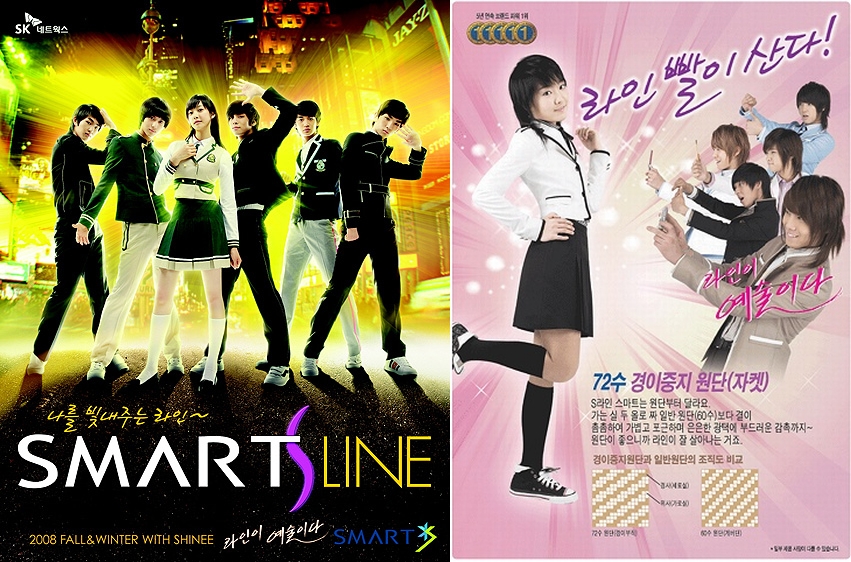
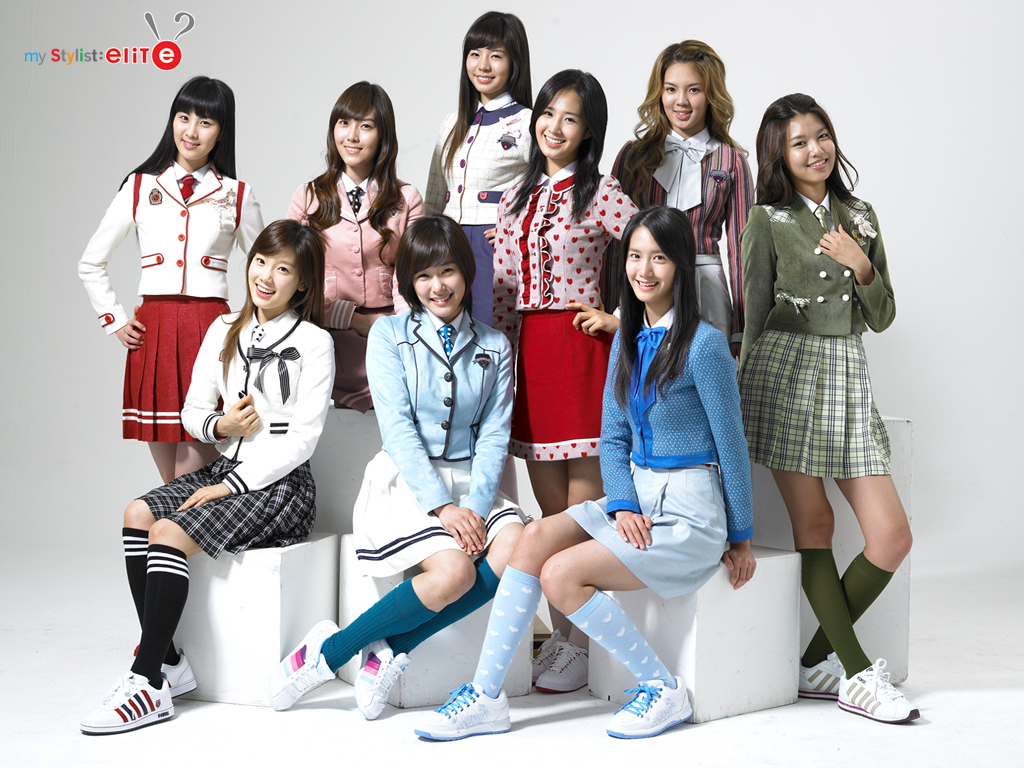
Another is that school uniform advertisers naturally use the same methods as clothes companies do for most any kind of clothes: buy their brand, and you will be successful both among your peers and with the opposite sex.

(Sources: left, right)

Granted, that latter hardly sounds heinous. And just like everywhere else, many Korean girls will make their uniforms as revealing as possible if they’re too conservative for their liking. Moreover, in this excellent quick guide to the school uniform industry at An Acorn in the Dog’s Food here, Paul Bailey argued in January 2009:

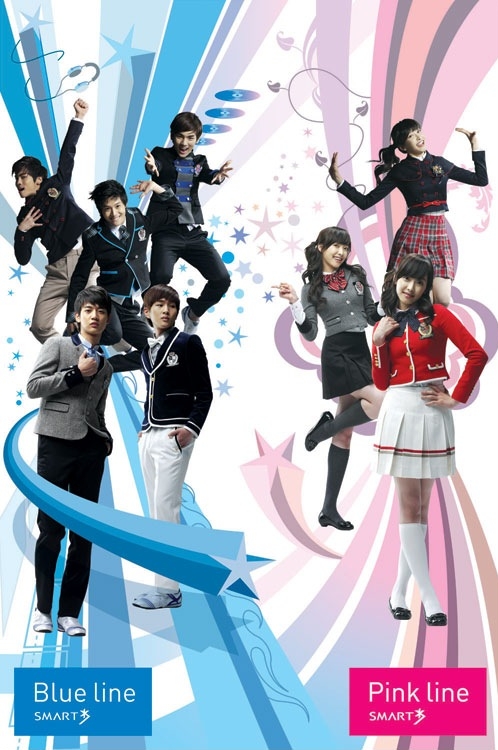
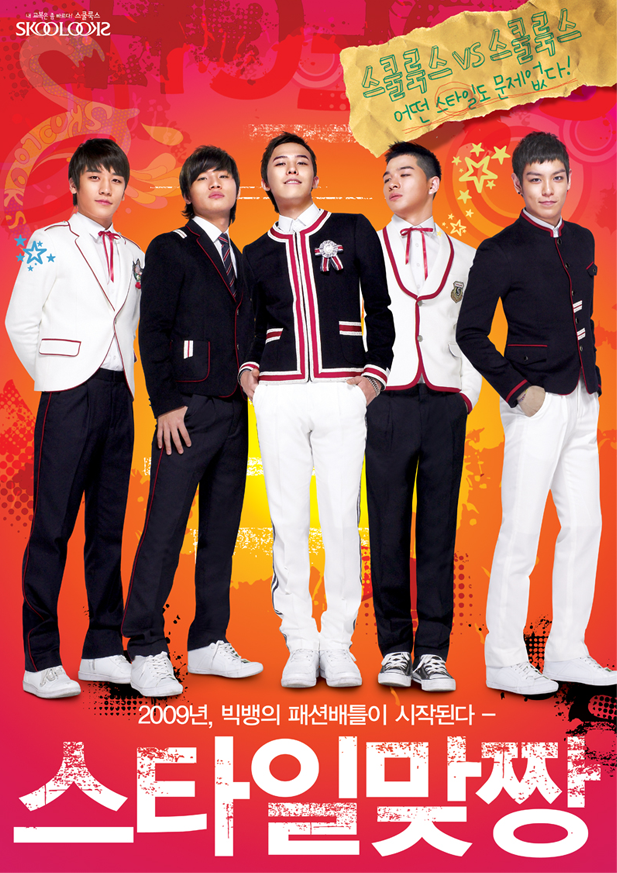
Another thing I noticed from the English-language sites reporting on [this] is that they all feature an advertisement of celebrities promoting a particular line of school uniforms, and this ad always features a girl group. Looking through the first few pages of image results on Naver, it looks like there might actually be more advertisements featuring boy bands — but I guess a group like the Wonder Girls or Girls’ Generation is more recognizable to the average reader. In his write-up, James mentions that it was only by accident that he learned how students buy their uniforms through these retailers instead of through their school. Never having worn a school uniform, that was also my assumption before arriving in Korea, but upon exploring my neighborhood I turned up three school uniform vendors – Ivy Club, Smart and Skoolooks – located within four blocks of my apartment. Between those vendors, one featured posters of only boy bands and the other two advertise with both male and female celebrity models. Interesting, then, to see what images have been used online.

And I’ve no reason to disagree with any of his observations. But with the benefit of hindsight from several years of writing and lecturing about advertisements since, I’ve noticed that the majority of ads featuring boy-bands from back then clearly seemed to be aimed at girls rather than boys, as in the large pink example with boy-band Shinee and an unidentified female model above. Which again, is only natural…but then the ones featuring girl groups seemed to be aimed at girls too.

Take these recent ones with girl-group f(x) for example, in which the group members are almost always the most prominent models in them, even though the ad technically is also selling boys’ uniforms (update: this ad is a good comparison):

sulli-school-uniform(Source)

Sure, in Korea’s overwhelmingly celebrity-driven advertising culture, then of course they’re going to be the most prominent things in the ads. And I also concede that some of the ads in this post are among the most blatant, deliberately chosen to make a point. But whether the models in a uniform ad are exclusively male, exclusively female, or a mix of both, there seems to be a noticeable lack of comparable ads featuring boys getting the approving looks of female admirers. And which, when you think about it, is just plain bizarre really.

As long term readers will recall though, the practice of celebrities endorsing uniforms was actually banned by the Ministry of Educational Science and Technology (MEST) 2 years ago (see #7 here), and indeed I mentioned that a rare positive step in my recent lecture in Boston. I was very surprised and embarrassed then, to find that they’d started again almost literally the day I got back, which is what ultimately prompted this post. As it turns out, not only were they actually not banned at all, school uniform companies merely being asked to stop in order to decrease the burden on consumers during the economic crisis, but my hope that someone within MEST thinking that middle-school girls had better things than their S-lines to worry about now seems particularly naive.

And on that note, let me leave you with the facts on the original decision to temporarily cease star endorsements back in 2009, courtesy of Marilyn:

(Sources: left, right)

교복 광고 속 아이돌 스타들, 이제 “교복을 벗고”

Idols stars in school uniform ads, now “take off the uniform”

새 학기가 시작되면서 강력한 호황을 누리는 의류업계가 있다. 바로 교복업계다. 마치 경쟁이라도 하듯 인기 아이돌 가수들을 광고 모델로 쓰며 학생 소비자들의 시선을 잡아 끄는 교복 광고는 그 동안 10대 팬들에겐 ‘오빠, 누나’의 브로마이드를 한 장이라도 더 받을 수 있는 통로였으며, 스타들에겐 아이돌의 이미지를 더욱 견고하게 할 수 있는 ‘꿈의 CF’였다.

As a new semester begins, there is a clothing industry that is thriving powerfully – the school uniform industry.  As school uniform ads, which, as if they were competing, grab and lead the attention of student consumers while using popular idol singers as advertising models, have been a way for teenage fans to get even one more poster of their ‘oppa, noona’, to stars they have been “dream TV commercials” that could make an idol’s image even more solid.

그러나 최근 들어 TV 광고에서 교복을 입은 아이돌 스타들의 모습을 보기가 힘들어졌다. 어느 채널을 돌려도 이젠 긴 다리로 뛰어 다니며 십대답지 않은 ‘교복 간지’를 뿜어내는 아이돌들을 찾기는 힘들다.

However, it has recently become rare to see an idol star wearing a school uniform in TV commercials.  No matter which channel you turn to, it is difficult to find an idol running around on their long legs while exuding ‘school uniform chic’ that is unlike a teenager.

(Source)

바로 지난 달 1일 교육과학기술부(이하 교과부)와 교복 업체들 간에 이뤄진 간담회 결과, 교복 업체들은 ‘가격 인하 노력 전개’, ‘디자인 변경 자제’, ‘사회공헌 활동 강화’ 등과 더불어 ‘유명 연예인을 동원한 과도한 광고 및 판촉 활동 자제’의 지침을 지킬 것을 요구 받았기 때문이다.

It is because on the first of last month [Feb. ’09], the result of the discussion between the Ministry of Educational Science and Technology (MEST) and school uniform companies was that the uniform companies were asked to follow the guidelines of ‘a price reduction effort campaign’, ‘abstention from design change’, ‘strengthening of social contribution activities’, etc., along with ‘abstention from advertisements and promotional activities that excessively employ famous entertainers.’

이에 교복업체들은 현재 자율적인 협의를 거치고 향후 ‘스타 모델 기용’을 더 이상 지속하지 않기로 결정한 상황이다. 그렇다면 교과부가 ‘스타 모델 기용’을 반대하는 권고안을 내놓은 이유는 무엇이며, 이러한 권고를 수용한 교복업체들의 ‘스타 모델’에 대한 생각은 무엇일까? 또한 이번 교복업계의 결정에 따라 아이돌 스타들의 전유물로 여겨졌던 교복 광고 시장은 어떻게 변하게 되는 것일까?

Following that, school uniform companies recently underwent an autonomous discussion and decided that, from now, ‘star model employment’ will no longer continue.  So, what is the reason that the MEST put forth a recommendation that opposes ‘star model employment’, and what might school uniform companies who accept this recommendation think about ‘star models’?  Also, how might the school uniform advertising market, once considered monopolized by idol stars, change according to this decision by the school uniform industry? (Source, right)

교과부 “빅 모델이 교복값 부추긴다.” VS. 교복업계 “1000원 미만 정도”

MEST: “Famous models drive up school uniform prices” vs. school uniform industry: “Less than 1,000 or so”

교과부를 비롯해 다수의 고객들이 교복 빅 모델 사용을 반대하는 결정적인 이유는 하나다. 스타 모델 기용으로 인해 발생하게 되는 개런티가 교복값에 그대로 반영돼 교복값 상승을 더욱 부추긴다는 것. 그러나 이러한 일반적인 생각에 대해 교복업체들은 하나같이 ‘No’라고 대답하고 있다.

There is one deciding reason that the MEST and a majority of customers oppose the use of famous models for school uniforms: a star model’s fee is directly reflected in the price of school uniforms so it contributes to their further rise. However, school uniform companies, together as one, have answered “no” to this common thought.

최근 매일경제 스타투데이와의 전화 통화에서 업계관계자들이 주장한 ‘스타모델로 인해 추가되는 교복값’은 한 벌당 300원에서 1000원 정도. 그러나 현재 국내에는 제품원가와 관련해 심의를 담당하는 기관이 없기 때문에 그 정확한 비용적 수치를 알기는 어렵다.

Recently, in a phone call with Maeil Kyungjae Star Today, industry sources claimed that the ‘school uniform price additions caused by star models’ are about ₩300 to ₩1,000 per uniform.  However, because there are currently no domestic organizations responsible for the review of the production costs of goods, it is difficult to know the exact figure.

업계 관계자들은 “다른 의류업체들이 스타들을 모델로 기용하는 것과 다를 것이 없고 또 실제로 스타 모델이 교복 가격에 미치는 영향도 미미하다”면서 “오히려 교복 가격을 1000원 정도 깎아주고 빅 모델들을 계속 쓰는 게 우리에게는 더 효과적”이라고 말한다. 브랜드 이미지를 강화하기 위해 스타 모델들을 쓰는 것 보다 더 좋은 방법을 찾기 힘들기 때문이다.

Industry sources said, “It is no different from other clothing industries using stars as models and also, actually, the influence caused by star models on school uniform prices is slight” and, “Instead, it’s more effective for us to discount the school uniform price by ₩1,000 and continue to use famous models.”  This is because it is difficult to find a better way to strengthen a brand image than using star models.

(Source)

교복의 독과점 특성 상 빅 모델은 신생업체의 중요 진입 통로

Because of monopolies in the school uniform industry, using famous models is an important way of entry for new companies

그러나 스타모델에 대한 보다 구체적인 효과와 관련해선 교복업체들마다 조금 다른 의견을 보이고 있는 것도 사실이다.

It is also true, however, that each school uniform company expresses slightly different opinions concerning the more specific effects of star models.

1995년 송혜교를 시작으로 자사 광고에 스타들을 모델로 기용한 스마트는 “회사 내부적으로 빅 모델들 때문에 특별히 큰 효과를 본다고 생각지는 않는다”는 입장을 가지고 있다. 스마트 마케팅팀의 손정주 대리는 “스타 모델 사용의 목적은 직접적인 수익 창출이라기 보다 우리 브랜드의 이미지 형성을 위한 것”이라며 “또 워낙 스타 모델들을 쓰는 것이 일반화된 교복 광고계에서 타 경쟁 브랜드와의 차별성을 두고 스타와 브랜드 간의 연상작용을 위해 하는 측면이 크다”고 말했다. 예를 들어 샤이니를 보면 스마트를 연상케 하는 이미지적 과정을 중요한 마케팅 수단의 하나로 보는 것이다.

Smart, which started using stars as models in its advertisements with Song Hye-kyo in 1995, believes that, “Within our company, we don’t believe that we see especially big results because of famous models.”  Smart marketing deputy section chief Sohn Jeong-joo said, “The goal of using star models, more than the direct creation of profit, is the development of our brand,” and added, “Also, using star models in a school uniform advertisement differentiates us from competitor brands, and the aspect of doing it for the association between the star and the brand is considerable.”  For example, the visual process of being reminded of Smart when one sees Shinee is seen as an important marketing tool.

(Source)

하지만 업계에 처음으로 발을 디디는 신생업체의 생각은 다르다. 교복업계에 진입한 지 4년여 만에 메이저 기업으로 성장한 스쿨룩스 측은 “사용하지 않는 것 보다는 훨씬 낫다”는 입장이다. 스쿨룩스의 한 관계자는 “물론 빅 모델 기용 이외에 다양한 영업, 마케팅 기법들이 혼합되면서 수익이 창출되는 것이므로 스타 모델이 수익적 성과를 결정한다고 단정지을 수는 없다”면서도 “브랜드 인지도를 높이는데 효과적인 것만큼은 사실이다”라는 의견을 밝혔다.

However, the opinion of a new business first entering in the industry is different.  The position of School Looks, which has grown into a major business in the four years since it entered the school uniform industry, is that, “It’s a lot better than not using them.”  A source from School Looks said, “Of course, because in addition to using famous models, diverse sales and marketing techniques are blended while creating profit, we can’t conclude that star models determine our revenue results,” but, “it’s a fact that it raises brand awareness enough to be effective.”

스쿨룩스는 업계에 처음 진입할 때부터 장근석, 유아인 등의 아이돌 스타들을 광고 모델로 썼고, 2007년부터 현재까지 빅뱅을 전속 모델로 쓰고 있다. 이와 관련해 스쿨룩스의 관계자는 “특히 빅뱅의 경우 대중들에게 잘 알려지지 않았던 데뷔 시절부터 써왔는데, 브랜드 이미지를 강화하려는 교복 광고주와 대중들에게 얼굴을 알려야 하는 아이돌들에게 교복 광고는 특히나 효과가 큰 윈윈전략의 하나로 통한다”고 말했다.

Since it entered the industry, School Looks has used idol stars like Jang Geun-seok and Yoo Ah-in as advertising models, and from 2007 to the present they have had the exclusive use of Big Bang as models.  A School Looks source involved with this said, “Especially in Big Bang’s case, we’ve used them as models since their debut when they weren’t well-known to the public; a school uniform ad is known as an especially effective win-win tactic for a school uniform advertiser that wants to strengthen its brand image and idols who need to make their faces known.”

(Source)

교복업체들 “국민정서 따르겠다.”

School uniforms companies “will conform to public sentiment”

그러나 결과적으로 교복 광고의 빅 모델들에 대한 국민 정서가 좋지 않고, 나라 경제가 전체적으로 악화되고 있는 상황에서 교복업체들은 교과부의 권고를 수용하고 스타 모델을 더 이상 쓰지 않는 방향으로 가닥을 잡을 예정이다. 실제로 지상파 교복 광고도 지난 달 들어 모두 중단됐으며 팬 사인회 등의 프로모션도 현재 끊겨있는 상태다.

However, in the end public opinion about famous models in school uniform ads is not good, and in a situation in which the country’s economy is worsening on the whole, school uniform companies plan to accommodate the MEST’s recommendation and move in the direction of no longer using star models.  School uniform ads have actually ceased since last month, and promotions such as autograph signing parties are currently suspended.

그렇다면 학생들을 소비 계층으로 하는 교복의 특성상 아이돌 스타들이 광고료를 대폭 낮추고 광고를 찍을 수는 없을까? 이와 관련해 소속사들 측은 “아이돌의 이미지 상 교복광고를 긍정적으로 볼 수도 있겠지만, 결과적으로 수익을 창출해내는 한 기업의 광고라는 점에서 가격붕괴를 시키면 다른 광고에서 분명히 문제가 발생할 것”이라는 의견이다. 따라서 추후 광고 방법에 관련된 구체적인 논의는 업체별로 계속될 것으로 보인다.

(Source)

So, because students are the main consumers of school uniforms can’t idol stars sharply lower their fees and shoot the commercials?  About this, star management agencies’ opinion is, “We might have a positive view of school uniform ads as far as the idol’s image goes, but in the end, if we drop our advertising appearance fees for one business that needs to make a profit, there will obviously be a problem with other advertisements.”  Thus, in the future we will continue to see detailed discussion in each company about advertisement methods.

이렇게 브랜드 교복 업체들의 주장대로 교복 한 벌에 들어가는 비용이 ‘단 몇 천원’에 불과하다 하더라도 몇 억대에 이르는 광고 모델료와 지상파 광고를 위해 지출되는 10억대에 이르는 거품이 사라질 수 있다면 서민들의 부담을 조금이라도 덜어줄 수 있다는 것만큼은 확실한 것이 아닐까? 교복광고와 관련된 권고안이 실행된 지 한 달 남짓, 시장의 자유 경쟁을 저해하고 교복 광고에만 유난히 날카로운 잣대를 들이댄다는 일부의 불평 속에서 사라질 스타 모델 교복 광고가 광고 시장과 교복 시장에 어떤 바람을 불러 일으킬 지는 더욱 두고 볼 일이다.

Even if the added cost to one uniform is ‘only a few thousand Won,’ as brand school uniform companies claim, if the advertisement model fees that reach a few hundred million and the extra billion spent on TV advertisements disappeared, isn’t it certain that would be enough to lift, in however small a way, the burden on ordinary people?  Star model school uniform advertisements will disappear as a result of complaints like facing the hindrance of free market competition and especially strict standards just for school uniform advertisements.  At over one month since the recommendations were carried out, it even more remains to be seen how this will affect the advertising market and school uniform market (end).

(Source)

So, it looks like celebrity endorsements will continue. Do you think they have an influence on what we wear later in life? Was, or is, cost ever an issue to you or your parents? Alas, not having worn one since 1993, then I’ve had a lot of catching up to while writing this article, and so would really appreciate any more recent information!^^

(For more posts in the Korean Sociological Images series, see here)

Time for a Change!

( Source )

I won’t bore you with the details, but just a quick note to let you know that after receiving some atrocious service from WordPress.com recently, I’ve decided to host this blog myself from now on.

Yes, I’m surprised it took me so long too.

Apologies in advance for any problems that may arise as I go to town playing with new themes and plugins make the transition over the next week or so then, and for those of you that subscribe to the RSS feed, please note that the old thegrandnarrative.wordpress.com one will no longer work once I’ve finished sorry. Those of you that already use the thegrandnarrative.com one though, shouldn’t have any problems.

Meanwhile, I’ll still be posting as normal, and if anyone can recommend a web hosting service and/or give any advice about making the transition from WordPress.com to WordPress.org, then that would be really appreciated!

Share

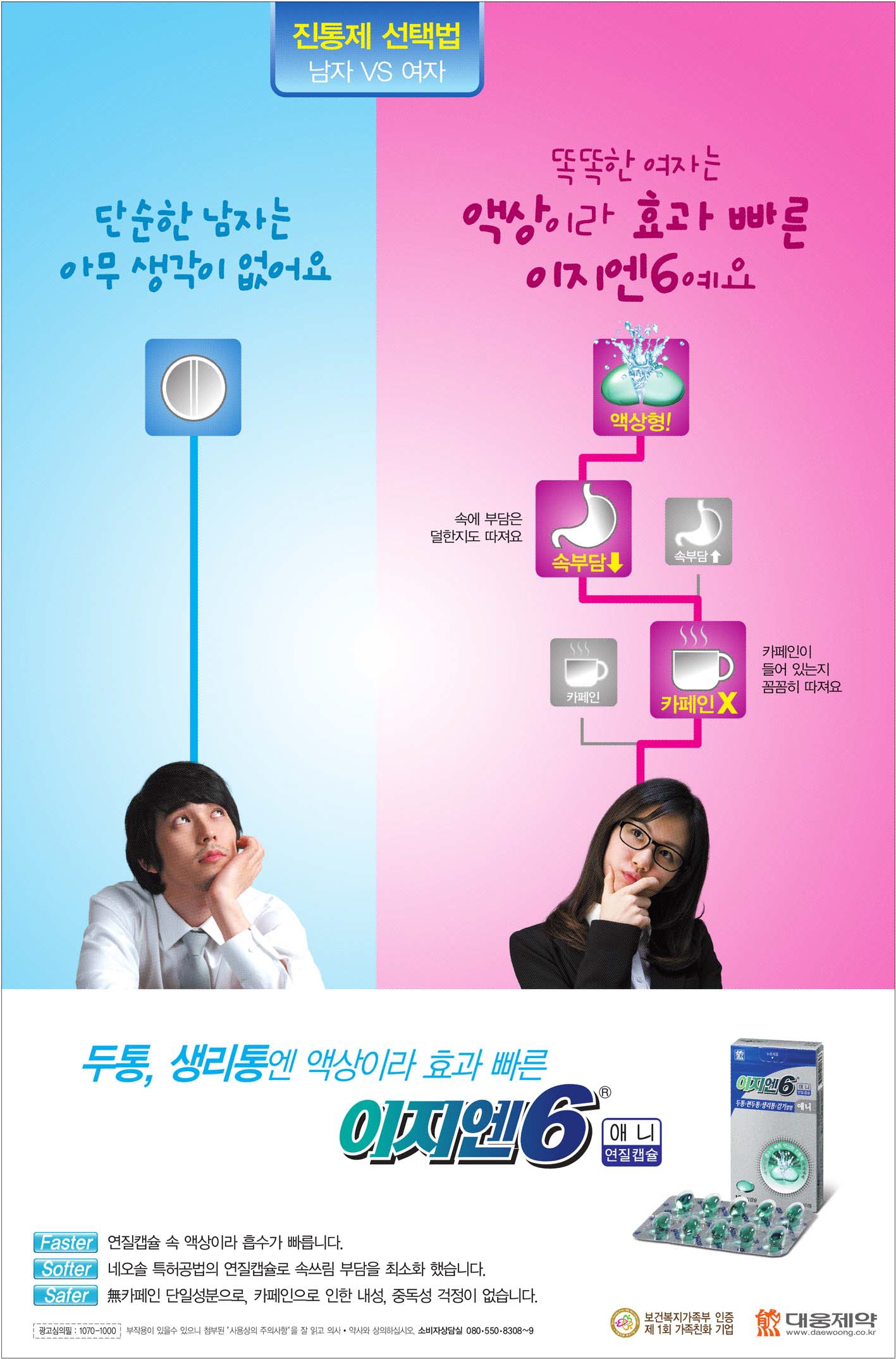
Korean Sociological Image #54: Sex & Drugs

(Source: Focus {Busan ed.}, 08.12.2010, p. 17)

As we all know, if you’re a real man, then you couldn’t care less about what painkiller to use.

But to be precise, the ad actually says dansoonhan men (단순한남자). Which usually translates as “simple” in English, but probably best would be “straightforward” in this case.

Forgive me though, for still considering myself just as smart (dokdokhae;똑똑해) as the woman in the ad. After all, I too wear glasses sometimes.

How am I supposed to choose a painkiller then? Or – heaven forbid – straightforward women for that matter?

Alas, the ad gives no clue:

Methods of choosing a painkiller – Men vs. Women

Straightforward men [choose] without thinking.

As for smart women…because it’s a liquid, its effects are fast. This is EZN6.

Liquid Form…[They need to] think about if it will decrease the burden on the stomach or not

[They need to] carefully think about if it contains caffeine or not

And at the very least, it certainly doesn’t discourage the notion that looking after one’s body is really something only women should do. Unlike most products that are marketed very differently to each sex though (see here, here, here, here, and here for more Korean examples), the irony here is that there’s now a wealth of evidence to suggest that painkillers that work on one sex can be ineffective or even increase pain on the other. In the near-future, there may well be completely different painkillers developed for men and women.

And when they are, then yes: I’d wager that they’re going to be pink and blue too.

You’re in for a world of hurt Neo! (Source)

When that day arrives though, do you think Daewoong Pharmaceutical (대웅제약) will simply come up with 2 versions of the ad, each only featuring one sex? Or will ads for men continue to emphasize simplicity, but those for women stressing how they’d have even more things to consider?

My money’s on the latter…!

(For all posts in the Korean Sociological Images series, see here)

Share

Is Divorce in Korea Finally Socially Acceptable?

(Source)

Sorry for the lack of posts recently, and the very short notice with this one, but in an hour from now (7:45pm Korean time) I’ll briefly be on 101.3 TBS eFM’s evening show, talking about the title topic. For the details, see here, and note that unfortunately you can only listen live on Internet Explorer sorry.

Update – Well, that was a little embarrassing: because of a miscommunication, technical problem, and/or a last minute editorial decision, I didn’t actually get called in the end!

But for anyone still interested in the subject though, then I was going to mention that while on the one hand the stigma surrounding divorce is certainly disappearing over time, with 1 in 4 marriages now involving a divorcee and in particular both the numbers of women remarrying and their rate of increase outstripping those of men, on the other hand the profoundly gendered effects of the recent economic crisis here have left Korean women more financially reliant on their husbands than ever, as explained at #2 here, here, and #15 here.

Meanwhile, see here for more information on both the high rates and the practicalities of getting a divorce in Korea, and here for more on the hoju or family-registry system (호주), which had a huge role in drawing attention to people’s marital status (or parents’ status) and consequently being able to discriminate against them on that basis. Moreover, although that has recently been abolished, one final point I was going to make was that unfortunately that’s just one of many superfluous things corporations take into account in their hiring practices, as demonstrated here, at #8 here, here, here, and here, and so it’s probably going to take a while before Korean business culture catches up with the social reality.

Share

Korean Gender Reader

(Source)

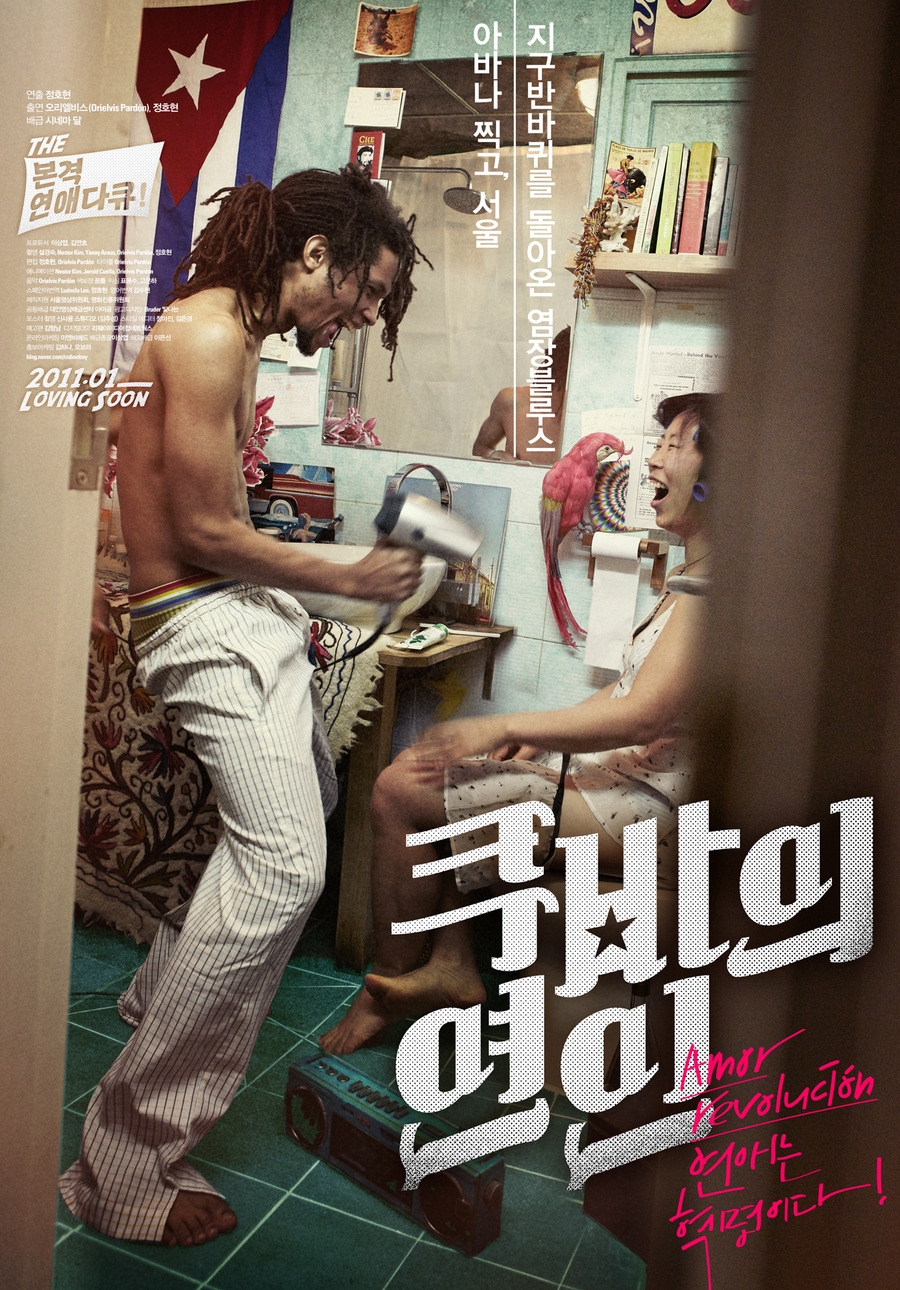
1) Cuban Boyfriend playing in theaters

According to HanCinema, it’s a documentary about a Cuban man who falls in love with a Korean woman 10 years his senior. Unfortunately there’s little information available about it in English, but it does looks interesting.

2) Economic burdens prompting Koreans to delay marriage

3) Mandatory 3-hour training class for Korean men importing Asian brides

(Source)

4) Advice to male idols: don’t you dare avoid your military service!

Roboseyo discusses actor and singer Hyun Bin’s (현빈) decision to join the marines for his 24 months of compulsory military service, unlike most entertainers who prefer comfortable military PR-type positions.

But celebrities aside, Korea has 250,000 ordinary men conscripted each year, and this has a profound effect on Korean life. For more on that, see here, here, and here.

5) Picture of Day: ROK Army Female Cadets Head Out for Training

Like it says, its just a picture (source), but one commenter over at ROK Drop raised some interesting points about it:

ROK women in the military? Big deal. FYI, they’ve been serving alongside their male counterparts ever since 1948. The embarrassingly unjustified attention these Sookdae chicks are getting just b/c they’re in the first women’s ROTC outfit is disgraceful. Korean women have been getting commissions through OCS since the Korean War, the ROK service academies since 1998, and are serving in all ranks and branches (excluding Armor, Artillery and ADA) for decades. (Also, the reason they look so cute in their BDU’s is b/c the Gender Equality Ministry many years ago forced the Defense Ministry to provide tailored utilities specifically cut for women — e.g., female BDU pants have a more flattering cut around the hips, and micro-sizes they offer are small enough to qualify for junior misses or girls’ sizes back in the U.S.)

I disagree about some of the details about that last: the uniforms for women were only first tested last September (and won’t be fully introduced until July), and there’s no evidence to suggest that the Ministry of Gender Equality and Family Affairs (여성가족부) was originally behind the decision (see #2 here).

But although less then 1% of Korean soldiers are women, I have no reason to doubt that they’ve been serving for over 60 years, so the commenter is right to query the attention. And recall that The Chosun Ilbo is notorious for finding literally any excuse to post pictures of women and girls!

6) CEO of entertainment agency charged for sexually harassing a trainee

For the details, see allkpop, and see here and here for some context. Meanwhile, in other crime-related stories, Korea Beat reports that a serial child-molester was let off lightly by a judge for quitting his teaching job. And on the plus-side, albeit prompted by a tragic event, Global Voices passes on the news that:

A posting by the mother of the victim has mobilized net users to file an online petition and drawn media attention to a questionable murder case. The mother claimed her daughter was beaten to death while resisting being raped. The police has decided to reinvestigate the case.

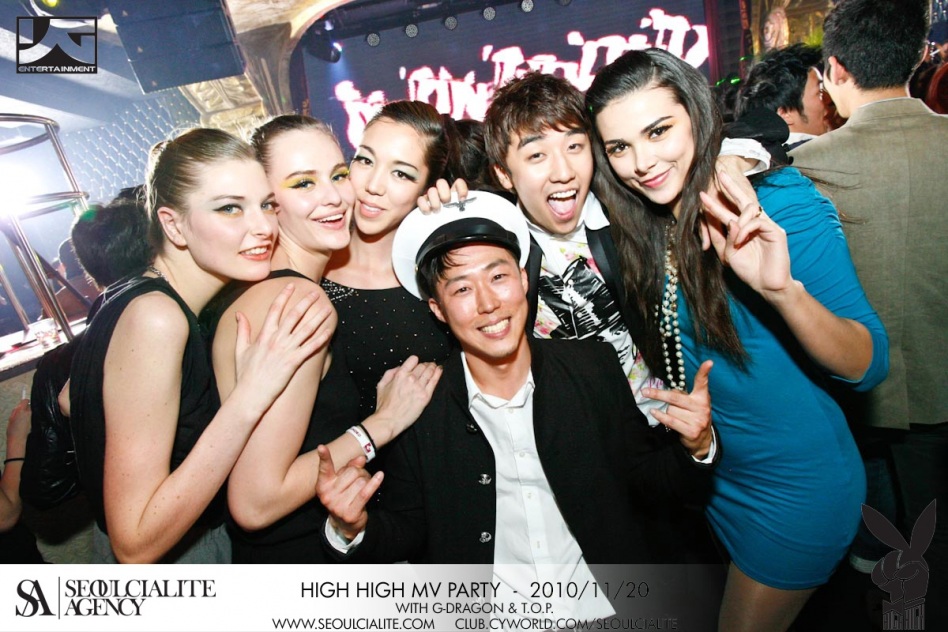
7) Who are all these White chicks?

I’m no Picasso adds her insights to Mixtapes and Linear Notes’ post on G-Dragon (지드래곤) and T.O.P.’s recent High High music video.

(Source)

8) Who are all these fat chicks?

And in turn, Hot Yellow Fellows does to my own on the “Piggy Dolls”  (피기돌스). Whom, in addition to everything else, now netizens are also calling too old-looking.

9) Hating the Korean Wave (NSFW)

I’ll let SeoulBeats summarize this one (The Marmot’s Hole also has a little on it):

Netizens have been in an uproar over a Japanese internet manga, created by otakus, which fetishizes a rather unflattering side of the Hallyu Wave that has recently invaded Japan.

The story is told by a fictional former Korean pop idol, working as a hostess, who gives an expose about the “real” inner workings of the K-pop industry to a journalist. The comic presents the Korean entertainment industry as extremely manipulative and seedy in which female idols are forced to give sexual favors to their bosses and their coworkers for fame. In the comic both SNSD and KARA are accused of performing such favors.The manga features highly sexualized images of SNSD and KARA members performing their hit songs “Genie” and “Mister.” Poor KARA has even been drawn performing naked.

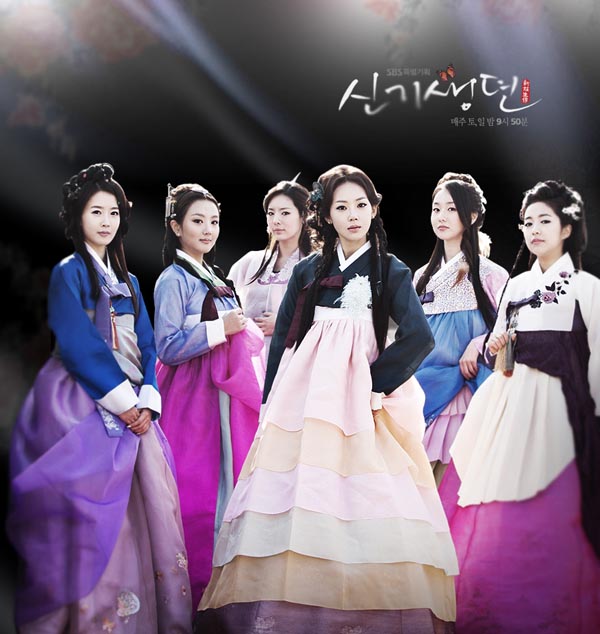
10) New Gisaeng Story (신기생뎐) premieres this weekend

(Source)

And for more on gisaeng (기생), the Korean equivalent of geisha, see here and here.

Share

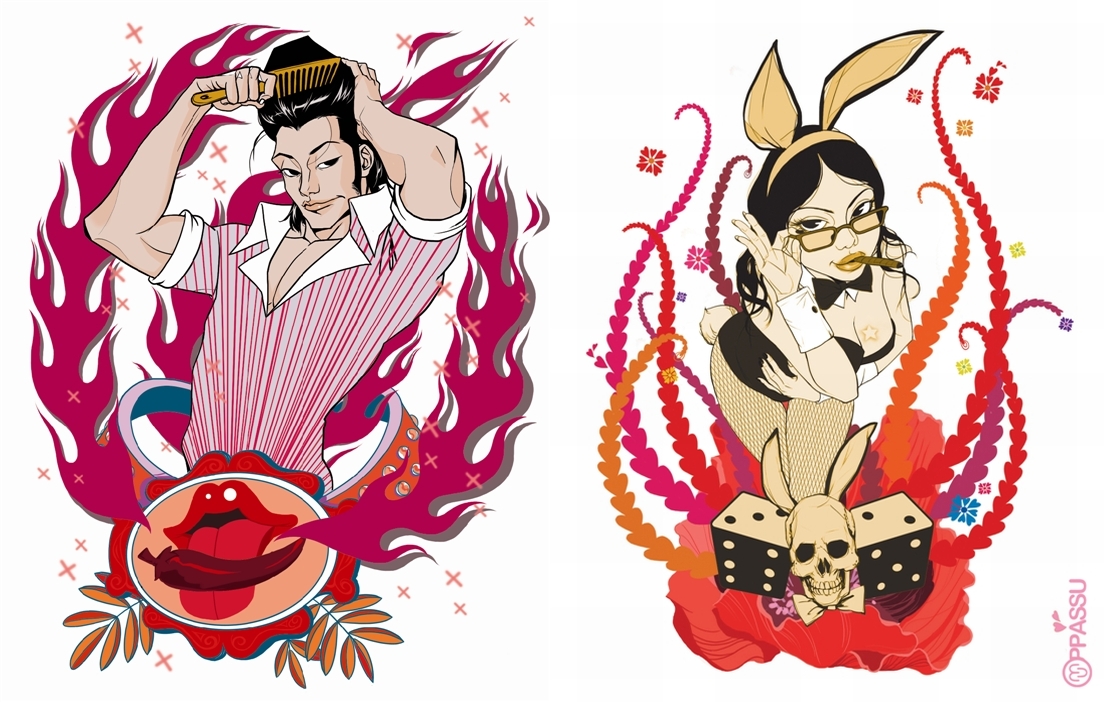
Studying Korean Social Issues Can Be Fun…

(Sources: left, right)

And using manhwa (만화), or Korean cartoons, is a good place to start. Sadly, my favorite “grown-up” comic-book poptoon (팝툰) sold its last edition back in March, but there’s lot’s more where that came from.

One possibility is Department Head Dal-ma (Dalmagwajang; 달마과장), available in the free Focus newspaper. Although it’s often very basic, requiring no Korean ability to get the gist of, you could do much worse than quickly translating it on your morning commute.

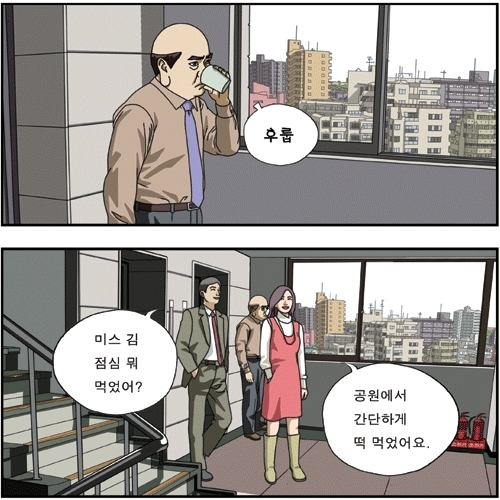
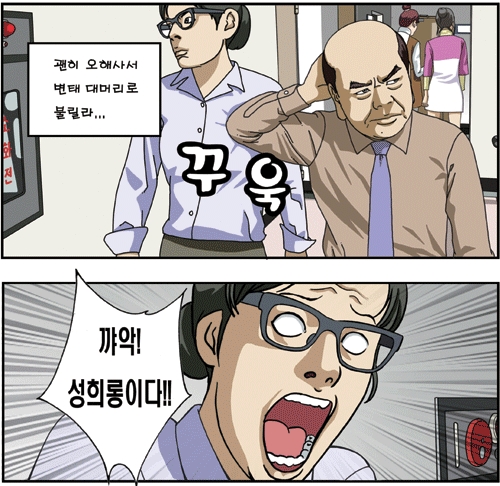
Take these two strips for instance, which kept cropping up in Naver searches while I was preparing a recent post on sexual harassment in Korea. First, number 21:

Dal-ma: Gulp.

Man: Miss Kim, what did you have for lunch?

Miss Kim: I simply had ricecake at the park.

Even from just these first panels, already one thing of interest is that the man uses banmal (반말), or informal speech to speak to Miss Kim, and she replies in nopimmal (높임말), formal speech. No big deal there you might say: he’s probably her superior in the company. And as this recent incident on a subway demonstrated, using the appropriate level of speech to others is considered extremely important in Korea, with even many of my university students using nopimmal to friends just a few months older.

But then the same happens in the second cartoon too, even though the man addresses the woman with the semi-formal shi (씨) at the end of her name. And while a brief survey of other Dalmagwajang cartoons does occasionally show men and women each using nopimmal to each other, I didn’t see any cases of a woman speaking to a man in banmal and he answering in nopimmal. Which is not to say that they don’t exist necessarily, but if there are any then I’d wager there’d be very few.

If so, then is that just a reflection of reality? After all, women do tend to have junior and/or non-advancing positions in Korean workplaces, as even in 2011 it considered perfectly normal for them to resign and/or be fired upon marriage or becoming pregnant (only 50% of Korean women work, the lowest rate in the OECD).

(Source: unknown)

But on the other hand, recall that even subtitles for foreign films and programs have this gender-dichotomy grafted onto them too, despite being absent in the original English:

A women’s group has issued a report on the “sexist” dubbing of foreign films and dramas, reports women’s newspaper Ilda The group took a look at some 27 English-language dramas shown on terrestrial broadcasting in September and October.  It found that most of them employed sexist sexist practices when dubbed into Korean.  Namely, male characters spoke in banmal, or “low language,” while female characters used jondaenmal, or “high/respectful” language, even though the original English dialogue made no such distinctions.

This tendency was most often seen in dialogue between husbands and wives or lovers.  Besides dramas, foreign films showed the same tendency, with 12 of 15 films monitored by the group employing this dubbing practice.

Clearly then, for TV at least there is a compulsion to conform to it. Whether that’s just the industry convention, fear of negative public reaction, and/or the personal choices of the translators themselves, then that remains to be seen, but I’d be surprised if that didn’t apply to some extent to other forms of media. And either way, you’re left with a pretty pervasive socialization agent, and one easy to overlook for English speakers, and/or even easier to get used to for native Korean speakers.

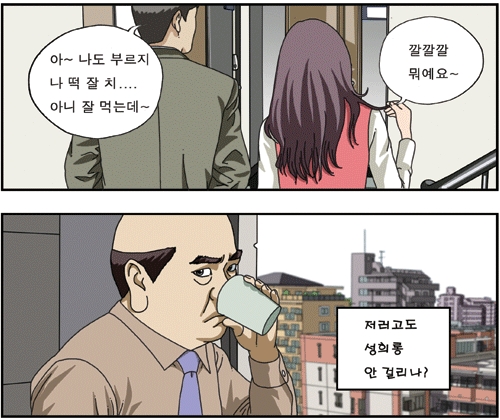
Man: Ah, why didn’t you invite me? I pound ricecakes really well…No, well, I eat them well…

Miss Kim: (Laughing) What do you mean?

Dal-ma: Even acting like that, he won’t get accused of sexual harassment?

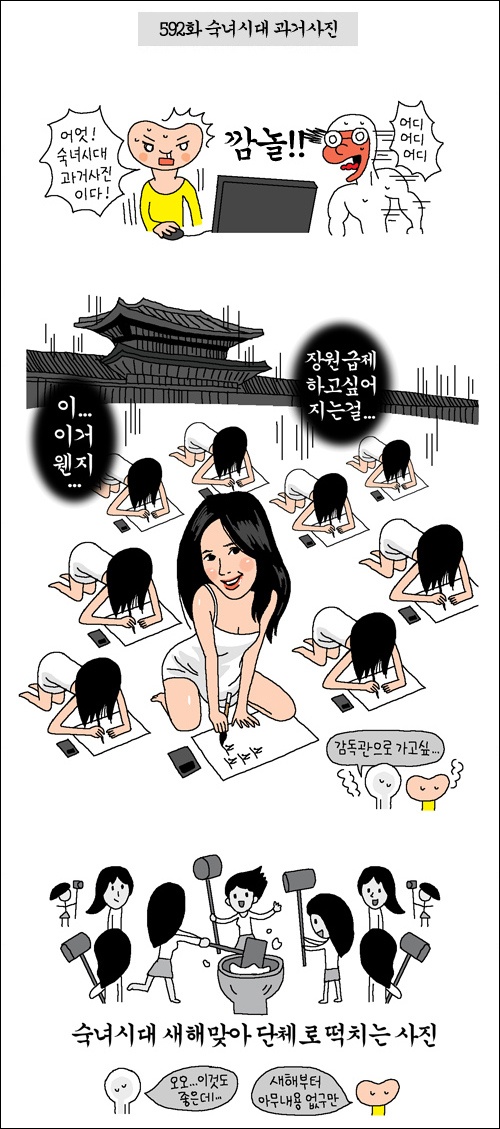
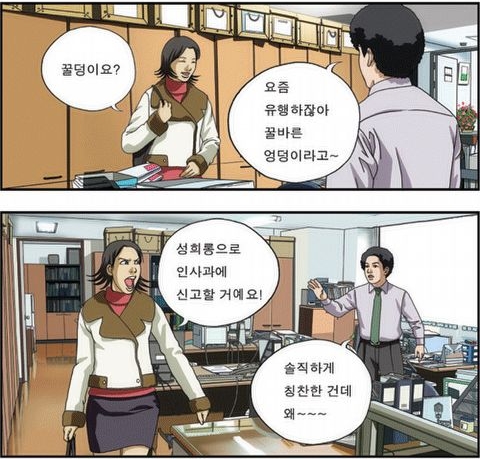
Next, despite its curious reputation for conservatism overseas, in fact the Korean media is simply full of sexual innuendo, and this cartoon read by millions every weekday is surely a classic case in point: “떡을 치다” is literally “pounding rice cake”, but is really slang for having sex. Which is why a year ago, a cartoonist was sued for sexual harassment by Girls’ Generation’s (소녀시대) management company SM Entertainment for this otherwise innocuous-looking cartoon:

(Source)

This might sound strange, but personally I find that slang quite endearing. For not only does it seem quintessentially Korean (here’s another example), but with most Koreans living in the countryside until as recently as 1979, then it reminds me of the country’s strong agricultural roots too (no pun intended).

Ahem. Continuing:

Dal-ma: Still, if something is judged sexual harassment or not all depends on your face (how attractive you look)

Woman left: He really said that?

Woman middle: (Laughing) Really?

Dal-ma: Wow! Look at her chest!

Dal-ma: Jeez, how can’t they feel ashamed to wear clothes that emphasize their breasts like that…

Eek, I forgot! Staring is also sexual harassment.

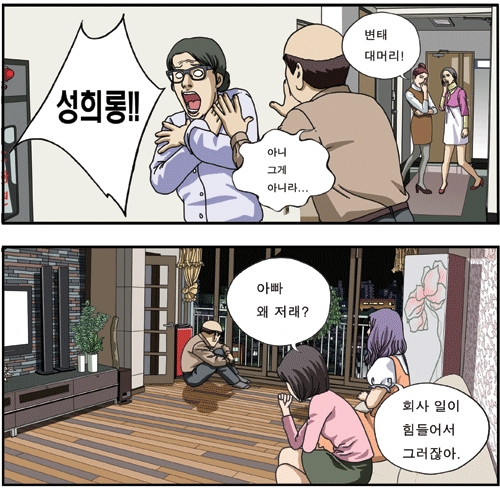
Dal-ma: (Worried) For no reason, because of a misunderstanding I’d be called a bald pervert.

Woman: Eek! It’s sexual harassment!

Having a shaved head myself, then I couldn’t help but chuckle at the unnecessary mention of his baldness here, as if that somehow makes his perversion all the worse. But with shaved heads being best known as a symbol of “prison, protest, or penance” in Korea, then unfortunately those negative connotations aren’t likely to go away any time soon.

Woman: Sexual harassment!

Dal-ma: No, it’s not that…

Women in background: Bald pervert!

Dal-ma’s daughter: What’s wrong with Dad?

Dal-ma’s wife: He’s like that because working at the office is tiring.

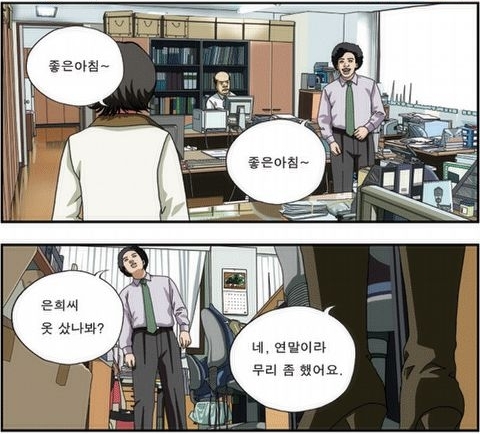
Next, number 57 (as I type this, the latest is number 327 by the way). Sorry for the poor image quality:

Woman (Eun-hee): Good morning!

Man: Good morning! Eun-hee, you bought new clothes?

Eun-hee: Yes, because it’s the end of the year I spent a lot on myself

Man: Wow, your back is a killer!

Eun-hee: Really?

Man: Yes, you’ve a perfect Honey-bottom!

Despite what the man says in a moment, that’s the first time I’ve heard the term ggooldongi, a combination of ggol (꿀; honey) and ongdongee (엉덩이; bottom). But I have heard (and written about) ggoolbokji (꿀벅지) that it comes from though, which, as Matt at Gusts of Popular Feeling explained:

…apparently means, according to this article and allkpop, ‘sweet-as-honey thighs’ or “alluring as-if they-were-coated-with-honey thighs”, though a more creative, if incorrect, translation would be ‘alluring thighs that spread like honey.’ Ahem.

And in particular:

…a ‘high school girl living in Cheonan’ posted a petition on the Ministry of Gender Equality’s website claiming that the word ‘honey thighs’ actually means ‘thighs that you want to smear honey all over and lick off’, and represented the sexual commodification of a female body part, was sexual harassment, “induced a feeling of sexual shame” and said its use should be banned. She was also irritated that such a ‘sexually derogatory word’ was used by the media and asked that it stop. According to allkpop, “Even Korean portal site Daum has requested people to refrain from using this controversial term…”

Hence Eun-hee’s justified reaction:

Eun-hee: Honey bottom?

Man: These days it’s popular. It means honey applied to a bottom…

Eun-hee: I’m going to the Human Resources Department to complain about your sexual harassment!

Man: Honestly, it was just a compliment, why…

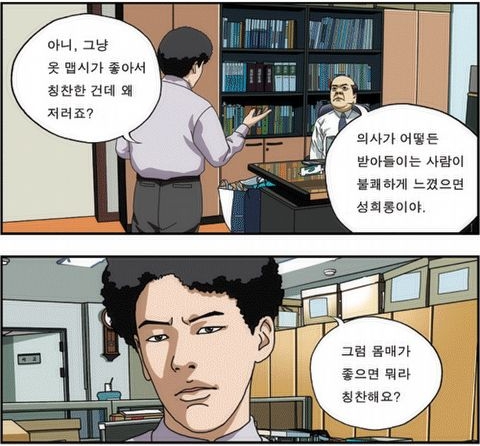
Man: Well, I was just complimenting her on how well her clothes fit. Why’s she acting like that?

Dal-ma: It doesn’t matter what your intention is, it depends on how the other person receives it. If they feel uncomfortable, then it’s sexual harassment.

Man: In that case, if someone has a good body, how can we give them a compliment?

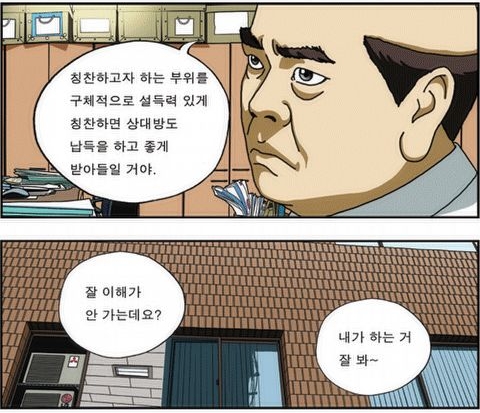
Dal-ma: If you intend to compliment a certain part of a person’s body, then do it precisely. Then, the other person will take it well.

Man: I don’t really understand.

Dal-ma: Watch me do it.

Dal-ma: Sung-mi, your pectoral muscles are amazing. And your Sternocostal joints and Sternocleidomastoid muscle are beautiful!

Sung-mi: Er…thank you.

Dal-ma: You see?

No, I didn’t find them funny either. What’s more, they give the impression that all it takes to deal with sexual harassment in Korean workplaces is a quick visit to the Human Resources Department, and consequently that male employees are very nervous about being accused of it. Unfortunately though, as this case at Samsung and these recent testimonies by victims demonstrate, the reality is anything but.

Why the discrepancy? That’s a good question, and it’s made me curious to see if its also found in other newspapers, and so on. Which is not bad for a couple of quick cartoons over a morning coffee, yes?^^

Like the First Time (처음처럼) by T-ara (티아라): Lyrics, Translation, & Explanation

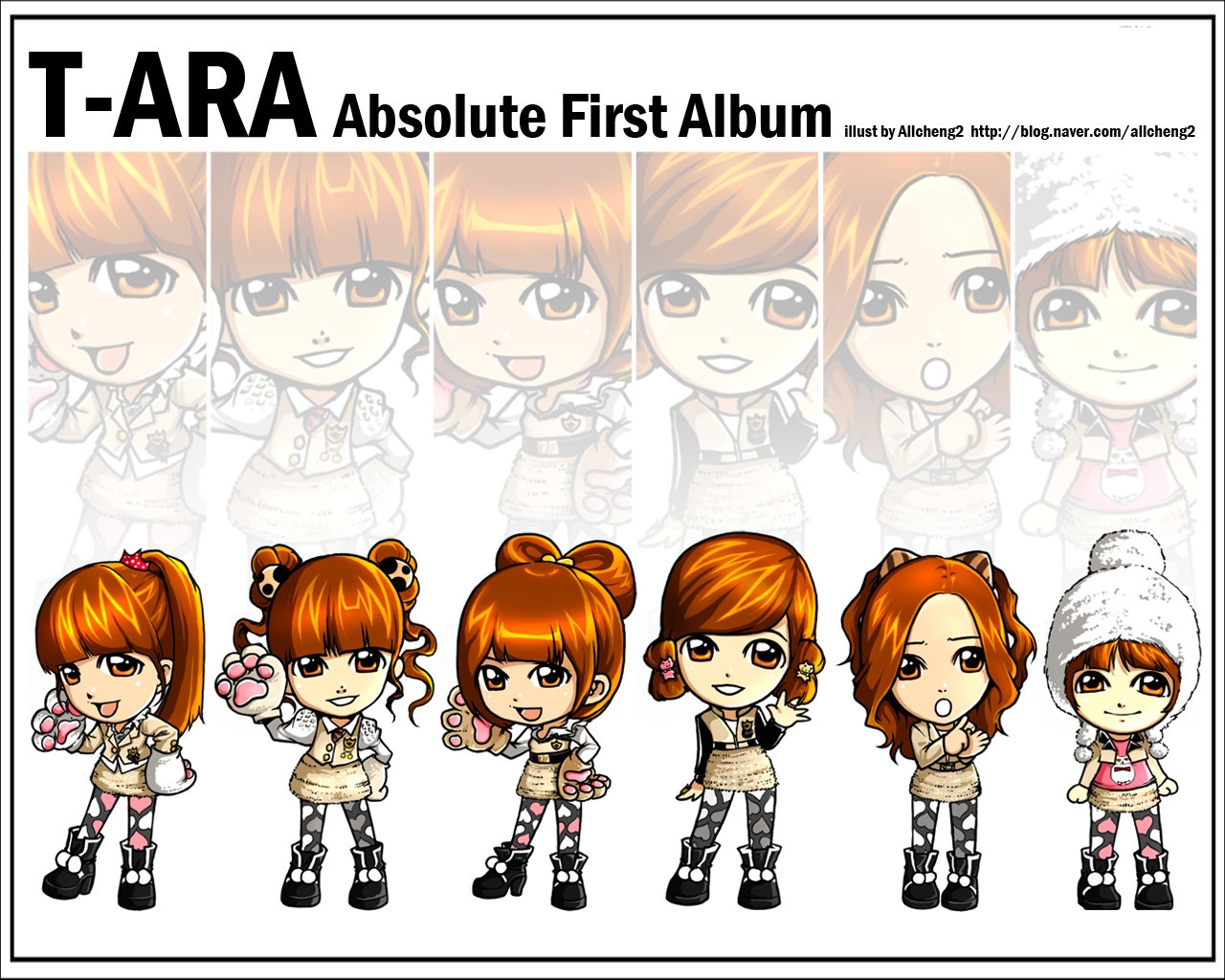
With lyrics designed to stoke any guy’s ego, and a music video full of eye-candy to boot, Like the First Time (처음처럼) by T-ara (티아라) is a very embarrassing song for a pro-feminist blogger to admit to liking.

Let alone have as his ringtone.

One of the handful of songs that got me addicted to K-pop though, then I’m guess I’m stuck with this peccadillo of mine. But in fairness, I wouldn’t have had it on my old, audio-only iPod for the past year if that’s all it could be be reduced to.

And in hindsight, is it really all that different to, say, You Look So Fine (1999) by Garbage, who to the best of my recollection have never been described as projecting an image of weakness and passivity?

Either way, here’s the remix by DJ Areia that originally got me hooked (downloadable here):

And here’s the original, which for a change I like almost as much:

And here goes with the translation:

왜 자꾸 두근두근대죠 이 내 가슴이

왜 자꾸만 터 터질것 같죠 왜 자꾸만

왜 자꾸 숨이 가빠오죠 미칠것같이

왜 자꾸만 수 숨이 막히죠 왜 자꾸만

첫 사랑도 아닌데 순진한 건 아닌데

그댄 자꾸만 또 자꾸만 또 느끼게 해줘요

Why does my heart throb so often? Why does my chest

often feel like it’s going to burst? Why do I often keep

running out of breath? It’s like I will go crazy

Why do I often feel like I’m suffocating? Why so often?

This is not the first time I’ve fallen in love, I’m not innocent

You often again and again make me feel this way

Nothing too difficult here. First, as we’ve seen in just about every other song translation, again “만” doesn’t mean “only” but is just added for emphasis. Next, “죠”, short for “지요” is an ending meaning “right” that turns the sentence into a tag question, but I haven’t put it like that in the text because just like in English, tag questions often aren’t real questions, and clearly aren’t here (again, they just seem to be for emphasis). Finally, there’s the construction “~ㄹ 것 같다” which is used twice, and literally means ” [future tense]-thing-same [as]”, or effectively “it seems like/looks like/appears that … will do/be”; hence “Why does my chest often feel like it’s going to burst?” and “It’s like I will go crazy”, although admittedly the latter doesn’t sound that great in English.

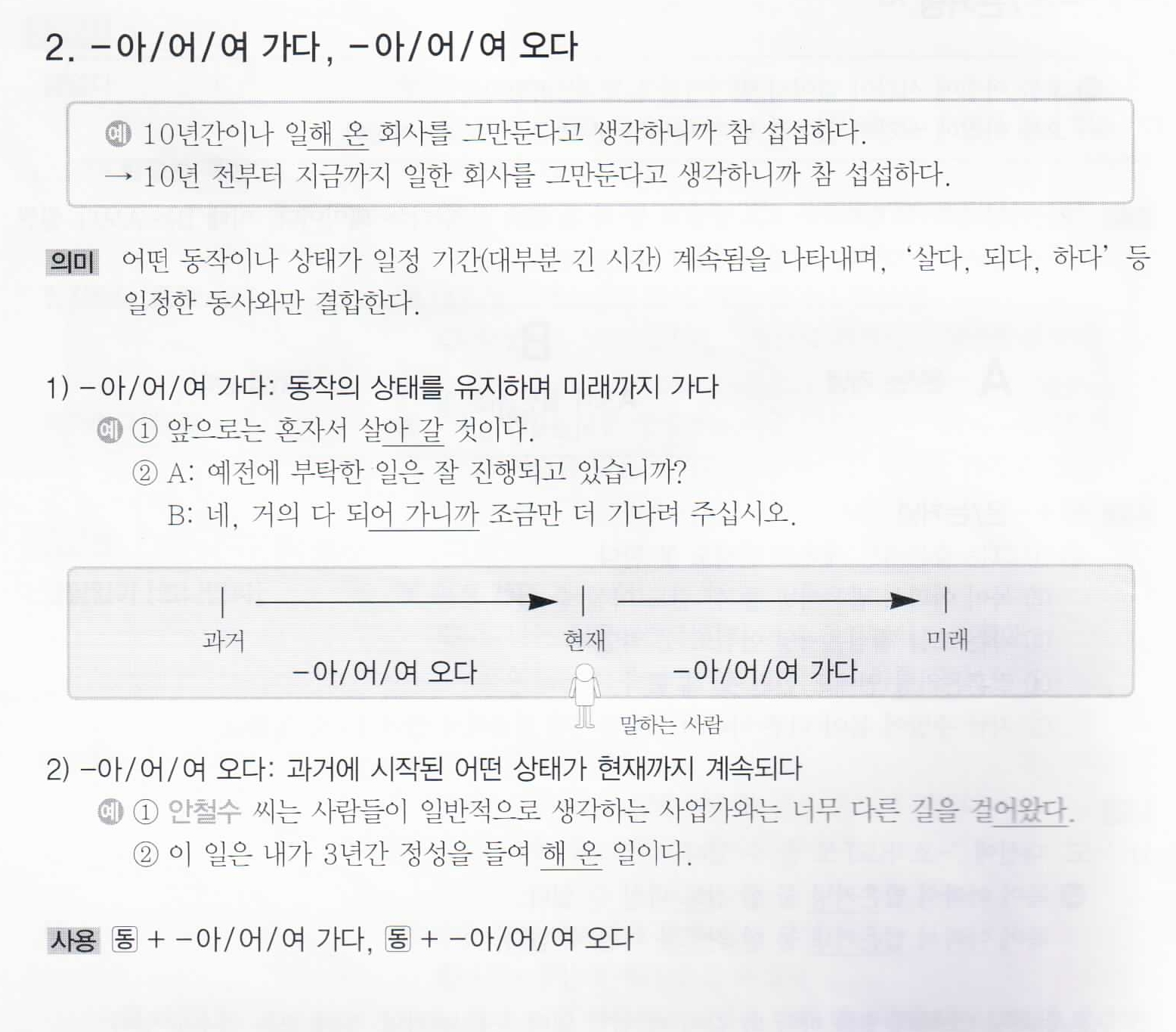
One thing of great interest to me personally though, because it sort of came up in another translation, is the “오다” added to “가쁘다” in 3, with a tag question at the end added on top of that giving “가빠오죠”. Now “가쁘다” means “gasping [panting] for breath; difficulty in breathing”, but what does the “오다” (“come”) added to that do to it? Well, this is what I originally learned, from page 16 of the grammar and vocabulary guidebook that comes with 5A of the Sogang Korean series:

If you’d rather have an English explanation though, then this is what my trusty Korean Grammar for International Learners (KGIL) says on page 340:

When [“오다” & “가다” are] expressed as auxiliary verbs, they signify that an action is carried out continuously and repeatedly over a period of time. In keeping with the original meaning of these verbs, the patterns [above] mean “continuous performance of an action over time in the past as one comes toward the ‘present and continuous’ performance of an action over time into the future (away from the present)” respectively.

Quite a mouthful unfortunately, which I think it could be better edited (I’m sure an “and” is missing in it), and I think the above diagram is a must to make any sense of it! But hopefully, now you can see why I chose “Why do I often keep running out of breath?” for “왜 자꾸 숨이 가빠오죠” at least, rather than “Why do I often run of breath?”. Granted, they effectively mean the same thing, and “Why do I keep running out of breath” would sound better in English (like in the translation in the video). But with the “자꾸” is  still in the Korean unfortunately, then I’ll allow it to awkwardly remain in the English too (and same logic goes for line 6).

그댄 나를 기쁘게 해요 그댄 나를 느끼게 해요

처 처음처럼 처 처음처럼 처 처음처럼

그댄 나를 미치게 해요 자꾸자꾸 원하게 해요

처 처음처럼 처 처음처럼 처 처음처럼

처 처음처럼처럼처럼 처럼처럼처럼처럼

처 처음처럼처럼처럼 처럼처럼처럼처럼

처 처음처럼처럼 처처처처럼처럼

처럼처럼처럼처럼 처처처처처음처럼

You make me feel happy You make me feel you

Like the first time Like the first time Like the first time

You make me feel crazy I want you again and again

Like the first time, like the first time…(etc)

Easy as, but it’s just impossible for me to do a literal translation and keep a straight face sorry: for instance the first line would be “As for you – me – joyfully – do” then “As for you – me – feelingly – do”…gotta love the way Korean uses adverbs. More seriously though, I don’t think “기쁘다” should ever be translated as “joyfully” in English (the first entry in Korean dictionaries, but used by precisely zero native speakers), and it’s a red flag for me for any translator that does.

After that, I think “again and again” is more appropriate than the literal Korean “often often”.

왜 자꾸 열이 나는 거죠 온몸이 자꾸

왜 자꾸만 다 달아오르죠 왜 자꾸만

왜 자꾸 아찔아찔 하죠 정신이 없어

왜 자꾸만 주 죽을것 같죠 왜 자꾸만

사랑 사랑 지금껏 말로만 했던건지

그댈 만나고 난 느껴요 난 진짜 사랑이 뭔지

Why do I often get this fever, Why does my whole body

often burn, Why do I often

get so dizzy and lightheaded, It’s crazy

Why is it often like I’m going to die, Why did I often

love through only words before now

After meeting you I feel it, I [know] what real love is

Again easy, but it’s difficult to know where one clause and/or sentence begins and the other ends, although of course the resulting numerous translations would all pretty much amount to the same thing.

Just 3 things of note. First, that although “정신이 없어” on line 3 is literally “without a mind”, “mindless”, or “absent-minded”, and that it’s especially tempting to translate it in that vein given the context of the “왜 자꾸 아찔아찔 하죠” before it (“Why do I often get so dizzy and lightheaded”), in reality it’s most often said to express one’s annoyance at some crazy and/or untenable situation. Like me trying to write this post with two toddlers literally climbing all over me and the desk demanding to listen to KARA for instance, or both of them bawling their eyes out when I tell them 5 times every other night is quite enough.

Next, the “주” in “왜 자꾸만 주 죽을것 같죠” on line 3 (“Why is it often like I’m going to die”) is just to emphasize to the “death” part (“죽다”).

Finally, in line 6 the “건지” in “했던건지” had me stumped for a little while. The “던”, of course, refers to “recollection of a state in the past, or of a repeated, habitual, or uncompleted action in the past”, and the “~았/었/였” form before that “gives clearer expression to the notion of ‘completeness’ and also expresses experience” (KGIL, pp. 318-19), but “건지”? Then I realized it was short for “것인지”, or literally “thing-is-yes?”, another way of saying “I guess”.

그댄 나를 기쁘게 해요 그댄 나를 느끼게 해요

처 처음처럼 처 처음처럼 처 처음처럼

그댄 나를 미치게 해요 자꾸자꾸 원하게 해요

처 처음처럼 처 처음처럼 처 처음처럼

처 처음처럼처럼처럼 처럼처럼처럼처럼

처 처음처럼처럼처럼 처럼처럼처럼처럼

처 처음처럼처럼 처처처처럼처럼

You make me feel happy You make me feel you

Like the first time Like the first time Like the first time

You make me feel crazy I want you again and again

Like the first time, like the first time…(etc)

No explanation: that’s the chorus again!

(Source)

리무진에 champagne bling bling jewelry chain

나를 원해 목이 메인 그런 남자 oh no

항상 발길에 채이는 그런 남잔 just pain

Don’t wanna play this game 꺼져버려 이젠

Now I wanna pump up my gain this is about a man

You know you’re the only man 넌 나를 너무 잘 알기에

나를 기쁘게 기쁘게 기쁘게 해줘

나를 느끼게 느끼게 느끼게 해줘

Limousine champagne bling bling jewelry chain

I don’t want a man who wants me so badly he chokes oh no

I don’t want a man who always gets pushed around by a woman just pain

Don’t wanna play this game Get lost now

Now I wanna pump up my gain this is about a man

Now I wanna pump up my gain this is about a man Since you know me so well

You make me happy happy happy

You make me happy happy happy

(Source)

Finishing the translation of this song late last night, and composing an introduction to (hopefully) pique your interest as I fell asleep, then that was the first thing I wrote this morning. In hindsight though, it’s a little frivolous for how provocative this verse is.

In particular, lines 2 & 3. But as they were also the hardest parts of the song to translate, then I’ll keep the introduction as it is for now just in case I’ve misinterpreted them.

The difficulty was because at first, little things meant that they were quite different to what you’d expect given the rest of the song. For instance, there’s a phrase “사랑에 목을 메다”  which means you’re very in love with someone, so much so that you’re sort of hanging around their neck all the time. But then in line 2 it’s not actually  “목이” but “목을”, and “목을 메다” means “choke”.

With that in mind, then “나를 원해 목이 메인 그런 남자” literally gives “me-want-choke-kind of-man”, which was very very easy to interpret as “a man that wants to choke me”. But to put it mildly, that raised alarm bells. Instead, there’s really 2 clauses here “나를 원해” and “목이 메인 그런 남자”, giving “me-want”  and “choke-kind of-man”, and cobbling those together I came up with “I don’t want a man who wants me so badly he chokes”.

That seemed out of place, but it made sense in the context of line 3, “항상 발길에 채이는 그런 남잔” literally being “always-a kick-get kicked-kind-of-man”, but which I interpreted as “always-gets kicked [pushed around]-kind of-man”, and presumably by his female partner. The English “just pain” cobbled on the end of that though, is probably just virtually random English, and too much shouldn’t be read into it.

Taken all together then, then there’s a huge double standard: the female protagonist is free to feel powerless in wake of her desire for her man, but a man that feels the same way about her, and is prepared to spend a lot of money on and get pushed around by her to win her heart? That’s unacceptable.

Which is fine I suppose. But why I say the verse is provocative though, is that given the context of the woman’s weakness and passivity in the song as a whole, then I’m left with the uneasy feeling that she at least wouldn’t mind if things were reversed. That she wants to be dominated by him.

What do you think? Is there something to that, or should I reconsider after having my second coffee?

Either way, that’s it, but for the chorus again:

(Source)

그댄 나를 기쁘게 해요 그댄 나를 느끼게 해요

처 처음처럼 처 처음처럼 처 처음처럼

그댄 나를 미치게 해요 자꾸자꾸 원하게 해요

처 처음처럼 처 처음처럼 처 처음처럼

처 처음처럼처럼처럼 처럼처럼처럼처럼

처 처음처럼처럼처럼 처럼처럼처럼처럼

처 처음처럼처럼 처처처처럼처럼

처럼처럼처럼처럼

You make me feel happy You make me feel you

Like the first time Like the first time Like the first time

You make me feel crazy I want you again and again

Like the first time, like the first time…(etc)

For more on T-ara and (indirectly) this song and the surreal ads above, see here and here. Meanwhile, for those of you that like your K-pop gossip, netizens are very concerned about Hyo-min’s (효민) recent excessive weightloss, the main character in the music video.

Next song to be translated: Oh! (오!) by Girls’ Generation (소녀시대), with a very similar narrative to this one.

Share

Sexual Harassment in the Workplace & the 2001 Equal Employment Opportunity Law: What Still Needs to be Done

(Source)

With thanks very much to Marilyn for the translation of the following article from Ildaro (일다), I’ll quickly let it speak for itself:

고용불안 속, 직장내 성희롱 위협 커져

In the midst of employment instability, the threat of workplace sexual harassment increases

고용평등상담실 10년, 여성노동의 현실과 미래를 말한다(2)

10th year of the Equal Employment Counseling Office, discussing female employees’ present and future

[편집자 주] 2001년 남녀고용평등법 4차 개정으로 고용평등상담실 지원제도가 도입된 지 10년이 되었습니다. 민간단체들의 고용평등상담실은 그동안 여성노동자들의 실질적 보호장치로 기능해왔으며, 여성노동자들이 처한 현실을 사회에 고발하는 창구역할을 해왔습니다. 일다는 여성노동자회와 함께 고용평등상담실에 접수된 상담사례를 통해 IMF 경제 위기 이후 후퇴 일로를 걷고 있는 여성노동의 현실과 과제를 살펴보고자 합니다. 필자 황현숙님은 현재 서울여성노동자회 회장을 맡고 있습니다.

우 리 사회의 성폭력 문제는 온 국민이 알게 된 끔찍한 아동 성폭행, 유명 정치인의 성희롱 등으로 자주 언론에 오르내리는 이슈가 되었다. 직장내 성희롱으로 고용평등상담실의 문을 두드리는 여성들의 호소 또한 가벼운 성적 농담이나 접촉을 넘어서 심지어는 강간에 이르는 경우조차 발생되고 있다. 직장내 성희롱은 그 자체가 미치는 정신적․신체적 악영향, 노동환경의 악화뿐만 아니라 일자리 자체까지 위협받게 된다는 데에 그 심각성이 있다.

[Editor’s note] It’s been 10 years since the Equal Employment Counseling Office support system was introduced through the 4th Amendment to the 2001 Equal Employment Opportunity Law.  During that time, the Equal Employment Counseling Offices of private organizations have been functioning as female workers’ practical safeguards and have acted as liaisons that report to society the realities that female workers encounter. Through the case consultations received in the Equal Employment Counseling Office, Ilda and the Women Workers Association intend to look at the realities and problems of women workers, who are losing ground after the 1997 Asian Financial Crisis.   Author Hwang Hyun-sook  is the current head of the Seoul Women Workers Association.

Through incidents of horrible child molestation, a famous politician’s sexual harassment, and others of which the entire nation is aware, our society’s problem with sexual violence has become an issue that often comes up in the press.  According to the complaints of women workers who’ve knocked on the Equal Employment Counseling Office’s door because of sexual harassment, there are also cases occurring that surpass light sexual jokes or touching to go as far as rape.  Workplace sexual harassment itself not only has bad mental and physical effects and worsens work environments, but is even of such a magnitude that jobs themselves [of victims] may be threatened.

(Source)

일자리 위협으로 이어지는 직장내 성희롱

“과장이 ‘피곤하지?’라며 손, 팔을 주물러 너무 불쾌하여 늘 가슴을 조이며 지냈어요. 어느 날 허벅지를 만지기도 하여 우울증에 시달리다가 문제제기를 하였더니 그 후 재계약을 하지 않겠다는 통보를 받았어요. 성희롱으로 실직하게 된 것 같아 너무 억울해요.”(2009년 상담사례, 계약직)

“사 장님이 자꾸 만나자고 하면서 ‘옆에 오면 가슴이 떨린다. 만나면 안고 싶고 무릎을 베고 누워 얘기도 하고 싶고 즐기고 싶다. 나를 받아 줄 수 없냐.”고 하더라고요. 남자에 대해 관심이 없다고 거절했더니, 부장을 통해 퇴사하라는 통보를 받았는데……“(2009년 상담사례, 2개월 근무)

성희롱 가해자가 사업주, 상사 인 상담은 매년 75~85% 가량이다. 가해자가 인사권을 직접 가지고 있는 경우가 많아 성희롱을 거부하거나 문제제기했을 경우에는 직. 간접적인 괴롭힘으로 스스로 그만두게 하거나 권고사직, 심지어 다른 사유를 들어 해고하는 사례들도 나타난다. 그래서 성희롱이 발생해도 공론화하기 어렵고 이를 은폐하도록 가해자가 권력을 행사하기도 한다.

Workplace sexual harassment extending to job threats

“My manager would ask, ‘Are you tired?’ and massage my hands and feet; it was so uncomfortable and I always went around feeling anxious.  One day he even touched my thigh and so while suffering from depression, I made a complaint; because of that I received notice that my contract wouldn’t be renewed.  I became unemployed because of sexual harassment – it’s so unfair.” (2009 counseling case, contract worker)

“The president of the company often asked me out and said ‘When you come near me my heart pounds.  If we go out I want to hold you, put my head in your lap and talk, and have fun.  Can’t you accept me?’  I refused, telling him I wasn’t interested in men, and through the general manager I received notice that I was to resign…” (2009 case consultation, working for 2 months)

Every year, about 75-85% of the consultations are ones in which the perpetrator of sexual harassment is the business’ owner or victim’s boss.  There are many cases in which the perpetrator is directly in charge of the company’s human resources.  Because of this, when the victim has rejected the perpetrator’s advances or made an official complaint, there have been cases in which the perpetrator may cause her to quit though direct or indirect harassment, urge her to resign, or even find grounds to fire her.  Therefore, even though sexual harassment occurs, making it public is difficult and the perpetrator often exerts his authority to conceal it.

(Source: unknown)

성희롱의 온상, 회식자리 남성중심 문화

“입 사한지 1주일 만에 본사 간부급 직원들과 회식자리가 있었어요. 간부들이 버릇인양 손잡기, 어깨동무하기, 허리 감싸기, 끌어안기, 볼 부비기……. 마치 간부들을 위해 여직원들이 대접하는 자리 같았는데 어렵게 입사하여 그만둘 수도 없고 어찌해야 할지……” (2007년 상담사례, 정규직)

“회 식 2차로 노래방에 끌려가다시피 갔어요. 술 마신 남직원들이 안으려고 해서 피했는데, 갑자기 뒤에서 끌어안더니 들었다놓았다하는데 과장, 계장 모두 묵인하고, 계장은 블루스를 추자고 하더라고요. 그래서 울면서 집에 왔는데 동기들도 다른 구청이나 동사무소 근무하면서 회식자리 성희롱 때문에 너무 힘들어 해요. 블루스를 춘 여직원한테는 잘해주고, 안 추면 욕하고 못살게 군다고 하더라고요.” (2007년 상담사례, 공무원)

회 식문화가 변하는 곳도 생겨나고 있지만, 회식자리에서의 성희롱은 지금도 일상적으로 일어나고 있다. 회식자리는 직장내 위계적 관계의 연속으로 상사의 기호에 맞추어야 하고 그의 요구에 따라야 하는 업무의 연속처럼 진행된다. 우리 사회의 남성 중심적인 문화, 위계질서가 이어지는 회식 문화는 여성들의 고용환경을 악화시키는데 일조하고 있다.

The hotbed of sexual harassment, office dinner male-centric culture

“I was at an office dinner with head office management-level employees only a week after joining the company.  The executives had habits of holding my hand, putting their arms around my shoulders and waist, hugging me, pressing their cheeks against mine…   It was like a place for the female employees to serve executives; it was hard to get a job here so I can’t quit and [don’t know] what to do…”  (2007 case consultation, regular employee)

“I went to the second [drinking-heavy] part of our office dinner like I was being dragged.  Male employees who were drinking were trying to hug me so I avoided them; suddenly I was embraced from behind and picked up and put down.  The manager and section chief overlooked everything, and the section chief asked me to slow-dance with him.  So I came home crying; also my peers who work at other district offices or dong offices have a really hard time because of sexual harassment at office dinners.  They say the female employees who slow-danced are treated well, and if you don’t dance they curse and treat you badly.” (2007 case consultation, government employee)

There are places where office dinner culture is changing, but sexual harassment at office dinners happens regularly even now. Office dinners progress similar to the  business itself, in which one must adjust to the preferences of a superior ahead of one in the workplace’s hierarchical relationships, and follow his demands.  Our society’s male-centric culture and hierarchy-connected office dinner culture lead to the worsening of women’s working conditions.

(Source)

친밀한 관계가 질곡인 영세소규모사업장 성희롱

“5 명도 안 되는 회사에서 근무한지 2개월인데 사장이 아침부터 술을 먹자고 하고, 남자친구랑 몇 번 하냐고 묻고 ‘나랑 애인 같은 거 하자’는 소리를 자꾸 해요. ‘이런 소리 들으려고 일하는 거 아니다’라고 말하면 무릎 꿇고 안한다고 하면서도 술만 마시면 또 그러니 일자리가 아니라 고문받는 자리 같아요.”(2008년 상담사례)

“연 말에 사장이 송년회를 가자고 해서 부담스러웠지만 가게 되었어요. 결국 2차까지 가게 되었는데 노래방에서 강제로 키스를 하고 옷 속으로 손을 넣어 몸을 만졌어요. 거부하면서 강하게 밀쳤더니 “난 사장이고, 넌 경리야”, “너 내일부터 나오지 마.”라는데, 다시 직장을 알아보면서 화도 나고 얼굴 보는 것도 두렵고 생각할수록 화가 나고 억울해요.“(2008년 상담사례, 사업주와 2명 근무)

영세소규모사업장의 성희롱은 가해자가 사업주인 경우가 많아 실질적인 법적 조치가 어려운 점, 성희롱 예방교육 특례조항 적용 사업장이라 예방교육이 실시되지 않는다는 문제점이 있다.

업 무적으로 둘만이 접촉하는 경우가 많아 사업주의 부당한 성적 요구나 사적인 친밀감을 성적 언행으로 표시하는 경우도 잦다. 성희롱을 거부하면 바로 그만두라는 통보를 받는 노동권 위협의 문제도 크지만, 매일 가까운 곳에서 얼굴을 마주쳐야 하니 버티고 싶어도 버티기 어렵다는 어려움이 있다.

Sexual harassment in a small business bound by close relationships

“I’ve been working for 2 months at an office that doesn’t even have 5 people in it; from the morning on the president suggests drinking together, asks me how many times I do it with my boyfriend, and keeps saying ‘Let’s date or something’. When I say, ‘I don’t work in order to listen to this kind of noise’, even though he gets on his knees and says he won’t do it [anymore], when he drinks, he gets like that again, so it’s like a torture chamber, not a workplace.” (2008 case consultation)

“At the end of the year, the president wanted to have an end-of-the-year party, so I went though it was annoying.  I ended up going to the second part and at a karaoke room he forcibly kissed me and put his hands under my clothes and touched me.  I refused him and pushed him hard so he said ‘I’m the president and you’re the bookkeeper’ and ‘From tomorrow, don’t come in [to work] anymore.’  I’m looking for another job and I feel angry and afraid of seeing his face, and the more I think about it, the angrier I get and the more unfair it feels.”  (2008 case consultation, office with company president and two people)

There are many cases in which the perpetrator of sexual harassment in a small business workplace is the business owner, so real legal measures are a challenge, and they are workplaces to which the Sexual Harassment Prevention Education Exception Clause applies, so there is the problem of prevention education not being implemented.

There are many cases in business in which two people only have contact with each other, so cases in which the business’ owner expresses his unjustified sexual demands or personal feelings of intimacy through sexual speech and behavior also frequently occur.  If victims rebuff the sexual harassment, the labor rights-threatening problem of immediately receiving notice to quit is serious, but there is also the drawback that because they have to see the other person’s face nearby every day, even though they want to endure it [keep working], enduring it is difficult.

(Source)

늘어나는 서비스직, 늘어나는 고객에 의한 성희롱

“고객센터에서 근무하고 있는데 외주업체 소속 강사가 메신저로 ‘만나자, 남자친구와 몇 번 했냐는 등의 말과 스킨십을 하는데 법적으로 어떻게 처리할 수 있을까요?” (2009년 상담사례, 텔레마케터)

“노 인돌보미 일을 하고 있는데, 고객이 70세인데 전직 교장이래요. 첫날부터 자꾸 몸을 밀착해오고 ‘젊은 사람이 곁에 있으니 내가 다시 남성이 되는 느낌이다’, 어제는 노골적으로 ‘아랫도리가 되살아난다’며 치근대 괴로워요. 어떻게 해야 할지…….“(2009년 상담사례, 45세)

고 용형태와 업무 방식이 다양해지면서 업무상 맺는 관계의 폭도 다양하고 복잡해졌다. 협력업체나 거래처 직원, 대인서비스직의 성희롱도 다양하게 나타난다. 그리고 간병이나 노인돌봄 같은 사회서비스 일자리가 늘어남에 따라 재가 돌봄서비스에 종사하는 여성들의 성희롱 피해상담도 늘어나고 있다.

Increasing service-industry workers, increasing sexual harassment by customers

“I work in a customer service center.  A supervisor [actually she uses the word for “lecturer” but I think that’s a mistake] affiliated with our subcontractor says things on Messenger like ‘Let’s go out’, ‘How many times have you done it with a boyfriend?’ and so on, and does skinship [touching like they’re in a relationship].  How can I deal with this using the law?” (2009 case consultation, telemarketer)

“I work in elder care.  My patient is 70 years old and says he used to be a school principal. From the first day he has often pressed up against me and said ‘Because there’s a young person at my side I feel like I’m becoming a man again’ and yesterday, saying bluntly, ‘My lower body is coming back to life”, he made pass at me; I’m really upset.  [I don’t know] what to do…” (2009 case consultation, 45-year-old)

As types of employment and ways of conducting business are diversifying, the range of relationships formed through business is also diversifying and becoming complicated. Sexual harassment of employees of subcontractors or clients, and personal service workers also presents itself in various ways.  Also, in line with the increase in social service positions like nursing or elder care, sexual harassment victim counseling for women working in in-home care is also increasing.

(Source)

성희롱은 사적인 일?

“남자 동료가 수시로 농담을 하면서 뽀뽀하자, 너도 밤일 할 줄 아냐는 등 수치심을 갖도록 하여 회사에 제기하였는데, 개인의 일이라고 개인적으로 대응하라고만 하는데……”(2009년 상담사례)

직 장내 성희롱은 안전한 환경에서 일할 노동권과 직접 관련이 있다. 그래서 남녀고용평등법에서도 직장내 성희롱을 금지하고 있을 뿐만 아니라, 사업주의 의무로 △직장 내 성희롱의 예방을 위한 교육 실시△성희롱 행위자에 대하여 징계나 이에 준하는 조치를 취할 것△피해자에게 해고나 다른 불이익 조치를 하지 말 것을 규정하고 있다. 그런데도 성희롱이 발생하여 이를 사측에 문제제기하면 위의 상담사례처럼 개인적인 일로 치부해 버리는 문제들이 여전히 일어나고 있다.

Sexual harassment is personal business?

“A male coworker often makes jokes and says, ‘Let’s kiss’, ‘Do you too know how to do night work [sex]?’ and other things to humiliate me so I made a complaint to the company.  They said it was personal business and just told me to deal with it privately…” (2009 case consultation)

Workplace sexual harassment is directly related to the employee’s right to work in a safe environment.  Therefore, the Equal Employment Opportunity Law not only prohibits workplace sexual harassment, it also stipulates, as the business owner’s duty, 1) implementation of education for the prevention of sexual harassment in the workplace, 2) disciplinary action, or taking steps in accordance with disciplinary action, against the perpetrators of sexual harassment, 3) not firing or taking other disadvantageous action against victims.  However, when sexual harassment occurs and is reported to the management, problems with it just being regarded as personal business, as in the case consultation above, are still coming up.

(Source)

고용평등상담실 통해 가해자의 공식사과와 징계 등 확보하기도

“부 원장님이 간호사들에게 안마를 해달라고 하거나 성적인 얘기도 잦아 힘들었어요. 며칠 전에는 맨발로 제 다리를 쓰다듬었는데 징그럽고 수치스러운 느낌 때문에 정신과 상담까지 받았어요. 그런데 고용평등상담실에서 도와주셔서 부원장은 공개사과와 감봉처분에, 병원 전체에 성희롱예방교육까지 실시하게 되었답니다!”

“과장님 성희롱 때문에 괴로웠는데 상담실에서 도와주셔서 공개사과도 받고 가해자는 다른 근무지로 전출되어 얼굴보지 않고 근무할 수 있게 되었어요!”

직 장내 성희롱 자체가 노동환경을 악화시키고, 이를 문제제기하면 해고나 불이익이 따르기도 한다. 그러나 다른 여직원들을 위해서라도 그냥 있을 수 없다며 이에 맞서 문제를 제기하는 여성들 또한 늘어나고 있다. 이렇듯 권리를 확보하게 되는 사례도 많았지만, 일자리 자체의 불안정이 갈수록 커지면서 적극적인 대응을 주저하는 경우도 많은 안타까움이 있다.

Securing perpetrators’ public apology, disciplinary action, etc., through the Equal Employment Counseling Office

“The vice director frequently asked the nurses to give him massages or talked about sex, so it was difficult.  A few days ago he stroked my leg with his left foot; because of the nasty and shameful feeling, I even got psychiatric counseling.   But the Equal Employment Counseling Office helped me so the vice director’s public apology and pay docking measure, and even sexual harassment prevention education for the whole hospital were implemented!”

“I suffered because of my manager’s sexual harassment, but the Equal Employment Counseling Office helped me so I received a public apology and the perpetrator was transferred to a different workplace so I don’t see his face and I’ve become able to work!”

Workplace sexual harassment itself has a negative effect on a work environment, and if one reports it, dismissal or disadvantages often follow.  However, the number of women saying that, for the sake of other women workers, they can’t just [let it] be and accordingly, making complaints, is rising.  In this way there have been many cases that secured rights, but regrettably, as the instability of jobs themselves increases, there are many cases in which [victims] hesitate to take assertive action.

(Source)

직장내 성희롱 문화? 이젠 바뀌어야

직장내 성희롱을 겪으면 그만두라고 할까봐 참고 견디거나, 문제제기하면 결국 피해자가 그만두게 되는 상황이 더 이상 반복되지 않도록 해야 한다. 지난 해 여성노동자회 고용평등상담실에 접수된 성희롱 발생 사업장의 78%가 성희롱예방교육을 실시하지 않은 것으로 파악되었다. 그러므로 사업장에서는 형식적이지 않은 예방교육 실시해야 하고 사내에서 발생하는 성희롱에 대하여 조사와 조치, 재발방지 대책 등을 마련하여 실시해야 한다.

그 리고 정부는 이런 사항들이 실질적으로 이루어지도록 적극적인 행정지도·감독을 해야 한다. 또한 남성 중심적이 아닌 성인지적 관점의 성희롱 인정, 영세사업장장의 성희롱 예방교육 지원 확대, 돌봄서비스노동의 성희롱 실태조사와 예방교육 및 대책 등을 마련해야 한다. 이를 통해 우리 사회와 직장 전반의 남성 중심적인 문화가 변화될 때 직장내 성희롱에 대한 인식과 대책의 변화 또한 이끌어낼 수 있을 것이다.

Workplace sexual harassment culture?  Needs to change now

We need to make it so that situations in which, if one experiences workplace sexual harassment, they hold back and endure it because they’re afraid of being told to quit, or in which if they report it, they end up quitting, are no longer repeated. Last year, 78% of the workplaces reported to the Women Worker’s Association’s Equal Employment Counseling Center for sexual harassment were places where sexual harassment prevention education had not been implemented.  Therefore, in the workplace, prevention education that is not cursory needs to be implemented, and for sexual harassment that occurs in-house, research, action, recurrence prevention measures, etc., need to be arranged and implemented.

The government needs to use assertive administrative guidance and supervision to make these remedies become reality.  Also, recognition of sexual harassment from a gender-sensitive perspective that is not male-centric, securing support for sexual harassment prevention education for the owners of small businesses, research, prevention education, and measures regarding the sexual harassment of care-industry workers, etc., have to be arranged. When, through these, both our society’s and all workplaces’ male-centric culture changes, they will also be able to lead to changes in the understanding of and countermeasures for workplace sexual harassment.

Share

Korean Gender Reader

(Source)

1) 1 in 10 elderly have unsafe sex.

And for more on many elderly men’s reliance on prostitution, the Korean public’s attitudes to elderly sexuality, and depictions of that in popular culture, see here.

2) Gender inversion in K-pop.

Why do you find so many male groups imitating female ones, but never the other way round?

3) 50-year-old member of Japanese parliament and prominent reproduction-rights advocate gives birth.

As explained at The Wall Street Journal, that has prompted a lively debate on maternity issues there, as:

Despite Japan’s embrace of innovative medical technologies, egg donation is virtually banned, and the practice of using a surrogate mother is forbidden by the Japan Society of Obstetrics and Gynecology, an official doctors organization. However, artificial reproduction using sperm donation is allowed.

In comparison, laws in Korea are probably much more liberal, as the notorious case of Hwang Woo-suk’s (황우석) faked stem-cell research illustrates.

4) Bus driver sentenced to jail for injuring a male student who molested a female passenger and then attacked a female escort on a school bus.

Like Brian in Jeollanamdo says, examples like this show why “don’t interfere” is an unfortunate necessity of living in Korea, and which is ultimately self-destructive for Korean society.

Fortunately though, the 2 year sentence was suspended, so the bus driver will not actually go to jail.

(Source)

5) American film critic Roger Ebert thinks Korean groups don’t really understand all the Playboy references they’re using

To put it mildly, and it doesn’t help that the same-sounding Korean word (플레이보이) literally only means a guy who has many girlfriends.

In fairness though, I’ve heard that the Playbody bunny logo is popular across much of the rest of Asia, so this isn’t just a Korean thing. But still, I’ve been amazed at the numbers of women sporting the bunny ears on Korean TV recently, and was about to write a post about it myself before this came up.

6) Sex and Chinese Men

The latest in the “Ask the Yangxifu” series from Speaking of China, a blog by a Western woman with a Chinese husband.

7) The science of getting men to take off their shirts in Korean dramas

(Source)

8) What is Confucianism?

Essential reading from Ask a Korean! for anyone wanting to understand Korean gender issues.

9) Casting couch still has huge role in Korean entertainment industry

As explained by John Glionna at The Los Angeles Times, nearly 2 years since the suicdie of Jang Ja-yeon (장자연) for being forced to prostitute herself by her managers, unfortunately:

…little has changed in the cutthroat “Korean Wave” of TV, film and music that each year draws thousands of young hopefuls ready to endure whatever it takes — including sexual abuse and exploitation — to make it big.

And in particular:

An April 2010 survey conducted by a human rights group here found that 60% of South Korean actresses polled said they had been pressured to have sex to further their careers. In interviews with 111 actresses and 240 aspiring actresses, one in five said they were “forced or requested” by their agents to provide sexual favors, nearly half said they were forced to drink with influential figures, and a third said they experienced unwanted physical contact or sexual harassment.

10) New girl-group “Piggy Dolls”  (피기돌스) debuts with Trend (트렌드)

And so unusual is it for members of girl groups to be anything but skinny, there has already been a lot written about his group. But for the basic details, then I’d recommend allkpop or Popseoul!, and then I’d suggest Seoulbeats for more commentary and analysis (and extra clips). Last but not least, I’d share Mellowyel’s critique of their marketing at Mixtapes and Liner Notes, and am happy to report that, as she hoped, the news report in it is indeed (sort of) about young girls feeling alienated because of their weight, and that the song as a whole is about them breaking stereotypes. See for yourself by clicking on the video above and accessing the subtitles over at Youtube.

Meanwhile, thanks to reader @izzysangtae for first passing the news of them on!

Share

The Gender Politics of Smoking in South Korea: Part 4

Estimated reading time: 12 minutes. Source: cutilove.

“Smoking Among Men Drops to Record Low” reads a recent headline in The Chosunilbo, with only 39.6% of Korean men over 19 now doing so: a drop of 3.5% from a year earlier, and of 17.1% from 2003. Which is something to be celebrated for sure, but, strangely, the even more amazing news that almost half of women smokers also quit last year barely gets a mention. Why not?

Of course, it may just be an oversight. But there is some context to consider: overemphasizing reductions in the male smoking rate is intrinsic to the Ministry of Health and Welfare’s (보건복지부) tobacco control policies for instance, and it also has a long track record of exaggerating its successes. Possibly then, the report just reflects the Ministry’s own emphases in its press release.

Alternatively, readers too may not have been interested in a paltry reduction of 4% to 2.2%. The rate has always been low, they may have said. And with a 2007 Gallup Korea study finding that 83.4% of Koreans thought that women shouldn’t smoke too, with some even slapping them in the street if they do, then apparently the consensus is that so it should be too.

But given that background, then as you’d expect there is chronic under-reporting of smoking by women, best estimates of their real numbers being closer to 20%. Add the absence of any dramatic social or economic changes to prompt women to give up the habit in droves in just the past year too, then it’s difficult not to conclude that these latest figures are essentially meaningless.

Was a line or two to that effect really too much to expect from a newspaper?

Source: Naver Movies.

But I’ve already discussed both statistical issues and taboos against women smoking in great depth in Parts One, Two, and Three (and in a newsflash), and, with the benefit of *cough* 6 months’ hindsight (sorry), then there’s little more to add on those topics really. Instead, let me continue this series by looking at the ways in which transnational tobacco companies (TTCs) have successfully targeted Korean women ever since the cigarette market was liberalized in the late-1980s, despite legislation specifically designed to prevent that. Fortunately, the journal article I’ll be relying on – Kelley Lee, Carrie Carpenter, Chaitanya Challa, Sungkyu Lee, Gregory N Connolly, and Howard K Koh in “The strategic targeting of females by transnational tobacco companies in South Korea following trade liberalisation”, Globalization and Health 2009, Volume 5, Issue 2 – is freely available for online-viewing or as a PDF download, and is short and very readable, so I’ll just summarize the main points here.

First, some historical context: this is not the first time tobacco companies have encountered strong taboos against women smoking, with attitudes towards it in the U.S. in the 1920s sounding not unlike those of Korea today (in 1922, a woman was even arrested for smoking on the street). The solution was to get women to associate smoking with equality and female emancipation, as ably described in the following segment of The Century of the Self (2009):

If that gives you a taste for watching the full documentary, as I suspect it might, then see here for links to all episodes. If you’d rather just read an explanation though, then let me refer you to towards the end of this short interview of producer, writer, and director Adam Curtis. Or for something even shorter, then this alternative explanation also gives the gist:

Edward Bernays, the man who supposedly invented most modern PR techniques, in the 1920s convinced women to start smoking. Supposedly at the time smoking was considered gross and basically for men only so very few women smoked. The show claims he hired a bunch of women to march in the New York Thanksgiving Day Parade (a big yearly parade) and had them put a pack of cigarettes in their garters. On cue they were all to lift their dresses and light one up. He then told the press to come to the parade because there was going to be a protest for women’s equality. On cue the women light up, the press took photos and reported lighting up a cigarette as the symbol for women’s equality and like over night it was now seen as if you supported equality for women you should be smoking.

And internal TTC documents demonstrate that that same logic has also been applied to emerging markets across Asia since the early-1990s. Focusing more specifically on Korea here though, crucial is the 1989 National Health Promotion Law Enforcement Ordinance, which bans all tobacco advertising, marketing and sponsorship aimed at women and children (yes really, and for more on this enduring paternalistic attitude, see Part 1). This has been circumvented by TTCs in 4 main ways:

Source: Naver Movies

First, if not blatantly targeted at them, then advertising of each cigarette brand remains permitted up to 60 times a year in print media, and “tobacco companies are also allowed to sponsor social, cultural, music, and sporting events (other than events for women and children) using company names but not product names” (pp. 4-5). Consequently, sometimes TTCs have simply used ostensibly “gender-neutral” advertisements to target women, in the mid-1990s the former Brown & Williamson promoting the Finesse brand (sold as Capri outside of Korea) by using romantic imagery of couples for instance.

Next, in the 1990s at least there was a focus on retail distribution in venues which tended to be frequented by young women, such as coffee shops, restaurants, event lunches, bars, nightclubs, and so on. Especially the first, and which is worth expanding on here, as it might sound strange in an era of ubiquitous, smoke-free, multinational chain-stores. But then it wasn’t so long ago that they were the place to hang out for young people, a rare oasis from school, work, and/or extended families living under the one, cramped roof. As described in Yogong: Factory Girl for instance (published in 1988, but really about the 1970s):

Often [18 year-old Sun-hi] goes to the home of a friend from her work. Three or four girls, all from the same factory, may walk together, stopping in at a tea room (다방/dabang) for coffee or cola and to listen to music. Or, if they have less money, they may stop to buy a packaged ice cream confection at the local grocer’s. But whether on the street corner or at the tea room, where, for the price of a drink, one may sit without interruption, there is ample opportunity to see and be seen by boys of the same age. (p. 140)

And in particular, in The Joongang Daily (image sourced from article)”

In the 1970s, cafes…became more commercialized, and owners sought to sell an image rather than a drink. “The dabang was a place for socializing. People didn’t care much about the taste of coffee ― and it tasted terrible,” said Mr. Lee.

The hugely popular “music dabangs” were associated with long hair, blue jeans and folk guitarists. Dabang deejays became the idols of teenage girls. When that trend faded, “ticket dabangs” emerged, where sexy hostesses would do more than just pour your coffee.

After half a century of popularity, dabangs started giving way to modern and chic cafes in the 1980s. Specialty cafes such as Jardin and Waltz House ― imitations of Japanese versions of European style cafes ― spread everywhere. This type of cafe, however, had its limits. Despite expensive interiors and espresso machines, the coffee quality was still poor. “Neither cafe owners nor coffee drinkers knew what a cup of good coffee tasted like,” said Mr. Lee.

But in the 1990s, the mantle of coolness suddenly passed away from dabangs:

During my first week in Korea back in 1990, I started going to a small coffeehouse Jardin, just down the street from the language institute where I taught. It was one of these upscale gourmet-type coffeehouses that, according to an article I had read in one of the English-language newspapers, had suddenly started springing up everywhere in the city….Now almost over night, people could choose a variety of coffee concoctions and flocked to these coffeehouses.

This was a big change in the early 90s in Korea. It might have seemed subtle to some people who just wanted to enjoy their coffee, but what was really happening was a break from tradition.

Young Koreans wanted something new and modern. They did not want to hang out in the dank, dark dabangs that were more often than not frequented by middle-aged Korean men and women. Likewise, the tea houses and cafés their parents had gone to in the 70s and 80s were not hip enough for the urban chic beginning to appear.

And as for what happened after 1999, when the first Starbucks opened, then I recommend this recent article in 10 Magazine. But then *cough* this post is actually about gender and smoking rather than coffee per se, so let me just highlight two aspects of that most recent development here.

First, that these new, Western establishments have been more heavily patronized by women than men, as explained by Gord Sellar back in 2008 (and recently expanded upon by him here):

The interesting thing to look at is the emergent young women’s consumer society. I’ve been trawling about online, trying to piece together the story of the Soybean Paste Girl archetype (or, dwenjang nyeo{된장녀}, as she’s called in Korean), and what I’ve found is that almost all of the criticism of this young woman is focused on her female-consumerism. That is: when she buys a coffee from Starbucks for W4,000 (usually about $4, though the won is doing badly these days) coffee, she gets criticized, but when a young man of the same age consumes two bottles of eminently acceptable (read: Korean) soju, nobody thinks to criticize it. The soju, that’s normal, but the Starbucks… that’s all foreign, all “expensive,” and more disturbingly, it’s “girly.” Girls can go there and have fun without men. (Which is doubly threatening to young men who frustratedly already see such women as “out of their league.”) As in, you see women in Starbucks with women, you see women in Starbucks with men. You almost never see men in Starbucks with men. Starbucks, like Gucci and Prada and Luis Vuitton before it, and like Outback and other “Western” restaurants since, are distinctly of appeal to women.

Sources: left, right.

And second, that women are puffing away in droves in them, as I’m no Picasso explained in a comment on Part 3:

It would be interesting to look into the correlation between the development of coffee shop culture in Korean and that of the growth rate of female smokers. I’ve seen maybe five women smoking on the street in my nearly two years in Korea, and at least three of those were ducked into telephone booths or alleys. However. When I sit in the smoking rooms of cafes (which I do quite often), they are often (particularly in the afternoon, when the coffee shops are full almost exclusively of women, with no male audience around to balk) overflowing with groups of young women smoking. A commenter above mentioned the lack of public space available for such behavior. The coffee shop seems to have become a safe haven for women smoking openly in public. I would say the growth of the popularity of coffee shops have encouraged women to be seen, at least here, smoking in public. Which has probably had an influence on the acceptance of the behavior in general, which has no doubt increased its popularity.

Meanwhile, for cigarette advertising at nightclubs then I highly recommend the 2003 Tokyo Inc. article “The Night is Still Young” about a similar strategy in Japan, and which was quite a shock to someone who used to attend dance parties naively thinking they were more about peace, love, unity, and respect:

Liquor and cigarette companies initially started to push their products to Japan’s club generation about five years ago, when new legislation banned them from advertising to people under 20. Since you have to be over 20 to legally enter a club in Japan, clubs become the perfect forum for legitimate advertising to young people. (Advertisers know, of course, that many people under 20 are habitual clubbers who can easily get into the venues). Ishihara calls it a “closed world,” a guaranteed market of self-selected consumers. Indeed, the rapid rise of tobacco sponsorship in clubs and bars since the 1990s globally has been well documented. Corporate sponsorship started conspicuously in Japan in 1996, notes Ishihara, when Grammy award-winning producer and DJ Little Louis Vega received an unprecedented [yen] 3 million from Gordon’s Gin to spin his magic in a Tokyo club.

And, getting back on track now, then a third strategy to circumvent legislation by TTCs has been “trademark diversification”, also known as “brand stretching”. In short, it means to extend a well-known brand to things with which it isn’t traditionally associated, and the article notes that in 1996, Brown & Williamson took great interest in the fact that leading Korean tobacco company KT&G:

…had advertised its brand Simple in numerous magazines aimed at female readers. Strategies included the coupling of cigarettes with bottles of Chanel perfume, and the placement of advertisements in foreign language women’s magazines available in South Korea. (p. 5)

And which as I explain here, are much more popular among young women than Korean magazines. But finally, and semi-related to the last, TTCs also used—again—ostensibly gender-neutral sports sponsorship to discreetly target females, in 1991 British American Tobacco creating “a Kent Golf Sponsorship program targeted at higher-educated, male and females aged 25 years or older with above average incomes” for instance.

But that was 20 years ago. And indeed, one big criticism of this otherwise excellent journal article (and as far as I know, the only one of its kind), is that despite the authors’ searches of internal TTC document searches being conducted between May 2006 and March 2008, literally all the practical examples of TTC strategies to target Korean women they provide are from the 1990s. Why?

Granted, there may be legal reasons and/or questions of access to consider, but these are not mentioned. But regardless, as I type this I’m suddenly left wondering as to if and/or how much they still apply in 2011, and it seems inopportune to continue as intended with more prosaic matters, like, well, how TTCs determined the appropriate cigarette circumference size for the Korean female market.

Source: kkwang.

Instead then, let me reserve that for a new, final Part 5, and I’ll finish here by opening that above question to the floor: what evidence have you yourself noticed of any of the strategies being used by TTCs described here? Or are they a little passé in 2011? And if so, then what else explains why so many young Korean women and teenagers are taking up the habit these days, as explained in previous posts?

(Other posts in the series: Part 1, Part 2, Part 3, Newsflash, Korea’s Hidden Smokers; Living as a female smoker in Korea)

If you reside in South Korea, you can donate via wire transfer: Turnbull James Edward (Kookmin Bank/국민은행, 563401-01-214324)

Korean Sociological Image #53: “SK-II No. 1 Whitening Celebration Party”

(Source)

See here or here for more photos. Is such a deathly pallor really something to be aspired to?

(For more posts in the Korean Sociological Images series, please see here)

I Don’t Care by 2NE1 (투애니원): Lyrics, Translation, & Explanation

( Source )

Seems like everyone was really disappointed with Korean girl groups in 2010, and for good reason.

It’s kind of embarrassing then, that it was also the year that I first got into them. But still, I too was struck by how many of their members couldn’t even sing, and soon resolved to stick to the original tracks and official music videos rather than watch any live performances again.

It was with some trepidation then, that after I discovered I Don’t Care by 2NE1 (투애니원), I immediately thought to describe their voices as, well, simply beautiful, especially Park Sandara’s (박산다라). Fortunately however, they don’t seem too different on stage either, and I think I’d enjoy listening to them singing even without any accompanying music.

Here is the original music video that got me hooked:

A live performance for the sake of comparison:

Next, a video which already has English lyrics. Some are very strange and/or completely wrong though, but otherwise they’re mostly correct, and good for getting the gist:

Yeah, I don’t think a Playboy bunny costume is apt either, even for an anime version of – I think – Park Bom (박봄).

But next, a reggae mix that I hate myself, but you might like it, and I think it actually became more popular than the original in Korea:

Finally, a not bad dance remix, although I’m not really sure who the “Baek Kyoung” referred to is sorry:

Meanwhile, I’m just as surprised as you are to find myself describing the “bad girls” of K-pop as having beautiful voices. But now that I think about it, why can’t they go together?

If I did have to find a flaw with the song though, it would be that the lyrics are a little inconsistent with what stage of the relationship the couple is in exactly: as you’ll soon see, in one line the girlfriend can appear to have just split up with the boyfriend, then in the next they seem to be together but she’s thinking about it, and then in yet another they sound like they split up a long time ago!

It would be very very tempting just to have assumed that they’re in one of those stages and translated accordingly (like in the video with English lyrics above), but I don’t think the lyrics justify that, and so ended up stumbling along accordingly. But with just a bit more thought by the writers, all that unnecessary confusion could easily have been avoided.

Update – In hindsight, the final verse does indeed resolve their relationship: they’re together, but about to split up. But please forgive me though, for declining to rewrite all 2400 words of translations and explanations accordingly!^^

Hey playboy, it’s about time and your time’s up

I had to do this one for my girls you know

Sometimes you gotta act like you don’t care

That’s the only way you boys learn

Oh oh oh oh oh oh 2ne1 이야이야

Oh oh oh oh oh oh 2ne1 이야이야

니 옷깃에 묻은 립스틱들 나는 절대로 용서못해

매일 하루에 수십번 꺼져있는 핸드폰

변하지 않을것만 같아 oh oh

I absolutely can’t forgive your collar being stained with lipsticks

Every day your phone dies many times

I don’t think you’ll ever change oh oh

( Source )

Line 1 of the Korean is a pretty basic, literal translation, although personally I was pretty surprised to learn that “묻다” means “stain” as well as “dig”. I’m more familiar with”얼룩지다”, easier to remember because “zebra” is “어룩말”, or literally “stain horse”.

Line 2 was more difficult though. First, because “매일” means “every day”, but then “하루” means “a day,” or “one day”, so already there’s some either unnecessary and/or nonsensical repetition (not to be confused with that about the relationship though). Not being able to figure out what the combination meant, then I decided to plump for the former, although I was tempted to put “all day long” in there instead, or “하루정일”, as given the next part then that would make sense in English at least.

That next part was “수십번”, rather confusedly “several” and/or “many times” according to my dictionary, but clearly the latter is more appropriate in the context of the song. Then, “꺼져있다”  was a little confusing for a moment, as it has many meanings. And for a while, I thought that the 2 most suitable here – “fade/die out/extinguish” and “be turned off” give slightly different nuances to the song: does the boyfriend’s phone “keep on dying”, like the lyrics in one of the videos above gives, or is it turned off, presumably deliberately in order to avoid the girlfriend? But either way, note that it’s actually “꺼지다” + “있다”, meaning that the phone is left in the state of dying and/or being turned off for a long time…and I guess that the 2 meanings actually amount to pretty much the same thing in the end.

Finally, the “만” in line 3 doesn’t mean “only”, but is just used for emphasis, as we’ve seen in many previous song translations.

(Source)

그저 친구라는 수많은 여자친구

날 똑같이 생각하지마 I won’t let it ride

이제 니 맘대로 해 난 미련은 버릴래

한땐 정말 사랑했는데 oh oh

All those girls you call just your friends

Don’t think of me as the same, I won’t let it ride

Now just do what you like, I want to be rid of my lingering affection for you

I really loved you once

(Source)

Pretty easy, although my wife said that “그저” in line 1 meant “just”, which wasn’t one of the meanings in my dictionary, and that “한땐” in line 4 was “한때” + “는”, or “once”.

But as for the jump in the middle of the song, between sounding like they’re still together and she’s working at improving the relationship, to sounding like she, well, just doesn’t care, presumably them having split up? I’m just as stuck as you!

Update: In hindsight, it’s strange that she wants to be more than just one of his female friends? I thought that she already was, and the problem was that all of those female friends of his were actually women he’s cheated on her with?

( Source )

가끔씩 술에 취해 전활 걸어 지금은 새벽 다섯시 반

넌 또 다른 여자애 이름을 불러 no no

I don’t care 그만할래 니가 어디에서 뭘 하던

이제 정말 상관 안할게 비켜줄래

이제와 울고불고 매달리지마

Frequently when you’re drunk you call me at 5:30 in the morning

And again you call me by another woman’s name no no

I don’t care, I want to end this, Wherever you are, Whatever you do

Now I won’t have anything to do with it, Get out of my way

Don’t suddenly hold on to me and start weeping

( Source )

A long section, but pretty easy. Just a couple of points: first, don’t be confused by the “걸다” in “전활를 걸다” (shortened to “전활 걸어” here), as I often used to be; although by itself it does mean “hang”, “”전활를 걸다” does not mean “hang up the phone” but rather “to make a phone call”, the complete opposite.

Next, my wife says “이제와” is short for “이제와서”, which means “suddenly”. Frankly I don’t get that, so I’ll have to take her word for it, but if anybody else has an explanation then that would be appreciated!

Meanwhile, the next part is very easy, so I’ll skip an explanation:

(Source)

Cause I don’t care e e e e e

I don’t care e e e e e

Cause I don’t care e e e e e

I don’t care e e e e e

Boy I don’t care

다른 여자들의 다리를 훔쳐보는

니가 너무너무 한심해

매일 빼놓는 커플링 나 몰래 한 소개팅

더 이상 못 참을 것 같아 oh oh

You steal a glance at other women’s legs

You’re so pitiful

Every day you take off your couple ring and secretly go on a blind date

I guess I can’t take it any more oh oh

( Source )

넌 절대 아니라는 수많은 나의 친구

난 너 땜에 친구들까지 다 잃었지만

차라리 홀가분해 너에게 난 과분해

내 사랑이라 믿었는데 oh oh

My many friends that said you weren’t right for me

I lost all of them because of you, but

That’s actually a relief

You don’t deserve me

I believed you were my true love oh oh

( Source )

And as if to make up for the easy part, that was quite difficult. True, the basic translations are easy enough, but an important part was unspoken, then yet again some sentences seem to contradict the others, then finally one way of saying something in English is said completely the opposite way in Korean!

Dealing with each in turn, line 1 is literally “you-absolutely-not-many-my friends”, but the “not” part is a relative clause incorporating the “many-my friends”. But what is the boyfriend “not”? Presumably, right for her, and presumably they said that to her too.

Next, I don’t how on Earth losing all her friends was “차라리 흘가분해”, literally “rather [a] relief” but that’s what it says: maybe because they weren’t really her friends or something.

Finally, just after that you have literally “you-to-me-unworthy”. Which sounds fine in English when put like that, but then the “me” is the subject here, as indicated by the addition of the “ㄴ”, short for “는”, and Korean is made much easier by thinking of “는” and “은” as meaning “as for” in English. So with those qualifications, now you have “you-to-as for me-unworthy”, which would be best re-ordered in English to “as for me-to-you-unworthy”. But rest assured, it is definitely still he that is unworthy of her in the Korean nonetheless…

There are only 2 new lines in the next section, and they’re pretty easy, so again I’ll skip an explanation. Yeah, I ‘m beginning to notice a pattern too:

(Source)

오늘도 바쁘다고 말하는 너 혹시나 전화해봤지만

역시 뒤에선 여자 웃음소리가 들려 oh no

I don’t care 그만할래 니가 어디에서 뭘 하던

이제 정말 상관 안할게 비켜줄래

이제와 울고불고 매달리지마

Cause I don’t care e e e e e

I don’t care e e e e e

You said you were busy today too, but by chance I got a hold of you and

In the background I heard a woman’s laugh oh no

I don’t care, I want to end this, Wherever you are, Whatever you do

Now I won’t have anything to do with it, Get out of my way

Don’t suddenly hold on to me and start weeping

Cause I don’t care e e e e e

I don’t care e e e e e

(Source)

난 너 땜에 울며 지새던 밤을 기억해 boy

더 후회할 걸 생각하면 맘이 시원해 boy

날 놓치긴 아깝고 갖기엔 시시하잖니

있을때 잘하지 너 왜 이제와 매달리니

I remember the night I cried until dawn because of you boy

I think I will regret it more if we stay together, now I feel relieved boy

When I’m gone I’m valuable, but when we were together I was nothing

You should have done better back then, why are you are hanging on to me now?

(Source)

As per the pattern, you’d expect this verse to be difficult. And indeed, although line 1 was fine, frankly I can’t make head or tail of line 2 especially, and invite alternative translations.

Literally, it is “more-regret [will]-think [if]-my heart & mind-relief”. But regret what? Not splitting up? And if you think? Arrgh!

As you can see, I came up with something for line 2 that certainly sounds okay, but it’s largely guesswork really. Line 3 and 4 at least though, were simple enough, with my wife telling me that the “있을때 잘하지” in the latter (when you have [them], you have to do well) is often used to express regret about relationships.

(Source)

속아준 거짓말만 해도 수백번

오늘 이후로 난 남자 울리는 bad girl

이젠 눈물 한방울 없이 널 비웃어

사랑이란 게임 속 loser

무릎꿇고 잘못을 뉘우쳐

아님 눈 앞에서 당장 꺼져

Now clap your hands to this

I also know about the hundreds of lies you’ve tricked me with

As of today, I’m a bad girl that makes men cry

Now, without so much as a tear I laugh at you

Love is a loser in this game

Get on your knees and repent

Or get out of my sight

( Source )

With great relief, the pattern was maintained with this last verse(!), and so it was quite easy, only the “속아준” in line 1 throwing me off a little. Normally, saying a verb + “주다” means to do the verb for the speaker, i.e. a request, but how do you  be tricked” for someone (note that “속다” means “be tricked”, wheres “속이다” means ” to trick”)? I gave up, but the native speaker in the other room told me that it basically means that, she, the singer, knows or knew she was being tricked.

I’ll take my wife’s word for it. Other pearls of wisdom from her include “오늘 이후로” in line 2 meaning “as of today”, and “잘못을 뉘우쳐” in line 5 as a whole meaning “repent”, my dictionary just giving the 2nd word.

And not before time, there’s just the chorus after that:

I don’t care 그만할래 니가 어디에서 뭘 하던

이제 정말 상관 안할게 비켜줄래

이제와 울고불고 매달리지마

you know I don`t care e e e e e

I don`t care e e e e e

you know I just don`t care e e e e e

I don`t care e e e e e

Boy I don`t care

And on that note, I hope you enjoyed it, and as always I’m open to and grateful for any help and suggestions for anything you think I made a mistake with, and/or – in this case – simply couldn’t understand.

Before I wrap this up though, one thing I was very surprised about in it was that no matter how bad her boyfriend has been, and no matter how much of a “bad girl” the singer supposedly is now, that she would still take him back if he did indeed repent. Granted, confession and expression of remorse carries considerably more weight in Korean (and Japanese) society than in Western ones. But still, perhaps 2ne1 is not quite as “bad” as I’ve been led to believe all these years then (or only is by restrictive Korean standards for female performers), and it’ll be very interesting to see just how provocative (or not) their lyrics in their other songs are now.

But first, I’ll be translating Like The First Time (처음처럼), by T-ara (티아라):

Share

Korean Photoshop Disaster #8: The 100% Korean Lady Burger

A photoshop disaster, or a deliberate satire of the way models are typically presented on women’s magazine covers?

Alas, given how difficult it is to find this particular version, then unfortunately probably the former. But with that face held fast between the “A” and the “D”, as if prepped for cosmetic surgery? That X-line? And especially that emaciated look of her skin? Then for her at least, Lotteria’s Hanwoo Lady Burger is a “must eat” indeed.

But much more interesting than the bad photoshopping though, or what the ad says about women’s body images in the media, is the explicit gendered marketing contained therein. After all, you can’t call something a “Lady Burger” – and not even allow men to buy it – without explaining what it is exactly that supposedly makes it only appropriate for women.

Yet there are no physiological reasons why men and women can’t and don’t enjoy the same foods and drinks, so branding is the only real reason many are still marketed to only one sex nevertheless. Woe betide the company that actually admits that though, and hence Lotteria’s public rationale for Lady Burgers below comes across as rather artificial.

As indeed, do Lotteria’s products themselves, and not for nothing have I completely avoided the chain for the last 5 years (source, above):

롯데리아, 女心잡는 ‘한우레이디버거’ 출시 Lotteria Launches the ‘Lady Burger’ to Catch Women’s Hearts

한우레이디버거는 100% 한우 패티에 국내산 쌀 떡이 첨가된 떡갈비 형태의 프리미엄 버거로, 여성들이 선호하는 파프리카, 토마토, 양상추 등의 야채로 뒷맛이 상큼하고 깔끔한다는게 회사측 설명이다. 특히 쌀떡의 쫄깃함과 한우의 고소함의 조화도 느낄수 있다고. 가격은 단품 4500원, 세트 6000원.

As the company explains, the Hanwoo Lady Burger is a premium burger made from 100% Korean beef patty with ricecake made from Korean rice added, giving the form of ddokgalbi [ribs with ricecake added].  To that is added what women prefer: paprika, tomato, and lettuce, making the vegetable aftertaste both fresh and clean, and in particular, the ricecake’s chewiness and the Korean beef’s sesame taste harmonize well. The price for one is 4500 won, and for a set 6000 won.

특히, 전국한우협회가 인정하는 100% 한우만을 사용, 매월 1회 DNA 판정 검사를 실시해 인증을 받고 있다.

In particular, only beef that has been approved as 100% Korean beef by the Hanwoo Association is used, and every month its DNA is examined in order to receive that certification.

롯데리아 관계자는 “‘한우레이디버거’는 철저한 고객 세분화 전략으로 여성의 입맛을 고려한 제품”이라며, “기존의 한우불고기와는 제품에서부터 차별화시켜, 여성을 위한 햄버거로 자리잡을 예정이다”라고 설명했다.

According to a Lotteria spokesperson, “after formulating a strategy based on the segmentalization of the market, the Hanwoo Lady Burger was considered a product appropriate for women’s tastes”, and that “this is a means to distinguish the product from existing barbecued Korean beef dishes, and we expect it to dominate the market for burgers aimed towards women”.

롯데리아는 출시기념으로 세트 구매 고객에게는 치즈스틱과 알뜰 디저트 쿠폰을 무료로 증정하는 행사를 11월30일까지 진행한다. 알뜰 디저트 쿠폰은 콜라, 콘샐러드, 포테이토 등 디저트 3종을 1000원에 구입 가능한 것으로, 해당쿠폰은 12월 말까지 사용 가능하다.

To commemorate the launching of this product, until the end of November customers that buy it will receive a free cheesestick and a “Thrifty Desert” coupon, allowing them to buy desserts of either cola, corn salad, or potato for the price of 1000 won. These coupons will be valid until the end of December (James: yes, those don’t sound like “desserts” to me either).

한편, 롯데리아 한우제품은 한우레이디버거와 한우불고기버거 등 총 2가지로, 일반 버거 대비 1.5배 사이즈인 한우 불고기 버거는 폭넓은 남성 선호층을 확보하고 있다.

This is the second Korean beef product sold by Lotteria, the first being the Hanwoo Bulgogi Burger. In order to make sure to appeal to men’s preferences, that is 1.5 times larger than normal burgers. (end)

And with translating that last, I suddenly remembered this segment about the financial rationale to gendered burger marketing from page 91 of Essentials of Contemporary Advertising, by William Arens and David Schaefer (2007 edition):

Sorry for the poor quality: it was difficult to fit into the scanner. By way of compensation then, I’ve managed to find the 2003 ad with model Cameron Richardson referred to:

See here, here, here, and here for more examples of Korean gendered marketing, and here for more posts in the Korean Photoshop Disasters series. Meanwhile, have any readers actually tried one of those Thickburgers of Hardees’? Only 1,410 calories!

Update 1: See here for a much better version of the original Lady Burger ad, taken of a poster in a Lotteria window.

Update 2: The Bobster also has an interesting post on the Lady Burger.


Lupin (루팡) by KARA (카라): Lyrics, Translation, and Explanation

(Source)

Well, this is embarrassing.

Now as you’re probably aware, I simply love this song, and must have listened to it well over a hundred times. And the music video is amazing too.

But now that I’ve actually studied the lyrics? Hell, but for the word “2010” at the beginning, I actually had no idea that so much of the song was in English.

On the positive side though, that’s given me a renewed appreciation for the difficulties many Koreans have in realizing that a (frustrated) foreigner is actually speaking Korean to them, albeit in a strange accent. And I don’t mind how nonsensical all the English in the song is either, as that’s quite normal for K-pop.

But unfortunately the Korean too seems literally thrown together in many places, which made it difficult for even my Korean wife to understand. And as you’ll soon see, the small amount of it below belies how much time and effort went into translating it.

And knowing all that about the song now? To be frank, it’s made it lose just a bit of its magic for me.

Lest the same happen to you, read on at your peril!

The first part obviously doesn’t need an explanation, although I’d be interested in learning what “la couture” means exactly:

Sing it with me now

2010, We bringing new love to the floor

Rocking what’s real la couture

We opening new doors new show new world new control

Can you keep up oh!

Hallo! Hallo! Hallo! Hallo! Hallo!

Hallo! Hallo! Hallo! Hallo! Hallo!

Hallo! Hallo! Hallo! Hallo! Hallo! Catch!

Hallo! Hallo! Catch! Catch! Hallo! Hallo!

(Source)

겁먹지마 니 심장소리가 들켜 (쉿!)

뒤에 서서 침착하게 지켜봐봐

탐난다고 서두르단 결국 Game set

유연하게 행동해봐 As usual it’s mine

Hide your fear, your heartbeat will be detected (shh!)

Stand behind [me], calmly try to keep watch

Even if it is desirable, if you hurry in the end Game set

Try to be flexible As usual it’s mine

(Source)

Most of that was pretty basic, provided you know that adding “보다” to the end of a verb, and conjugated in banmal (반말; informal speech) as “봐”, simply means try to do the verb. At the end of line 2, it’s added to “지켜보다” (to keep watch), hence the “지켜봐봐”.

But I don’t understand line 3 at all: “탐난다” means “be desirable” (not “burn” as given everywhere else: that’s “타다”), which is simple enough, but then it’s given as indirect speech, as indicated by the “~ㄴ다고” ending. But who said what is desirable? And what’s the connection to “서두르다” (hurry) after that for that matter, and while we’re at it what’s the “ㄴ” doing at the end of that too?

To make sense of it then, I suggested to my wife that possibly something like “탐나더라도” was intended, the “더라더” being a grammar pattern meaning “no matter how much, even though, I don’t care if”, and so on, and she concurred.

Finally, line 4 is literally “flexibly act/behave-try-to”.

(Source)

Next, there’s the main chorus. As you can see though, there’s just one Korean line in it, and its simply “Go/climb high, try to grab/take all the world”:

(Eo eo eo) It’s  mine

(Eo eo eo) This is mine

(Eo eo eo) This is mine

(Eo eo eo)

높이 올라 가 (Ye Ye Ye) 세상을 다 가져봐 (Ye Ye Ye)

Never back it up Back it it up (it it up)

Never turn it up Turn it it up (it it up)

(Source)

Hallo! Hallo! Hallo! Hallo! Hallo! Catch!

Hallo! Hallo! Catch! Catch! Hallo! Hallo!

한눈팔면 기회조차 뺏겨버려 (쉿!)

누구보다 한발 먼저 다가가 봐

남들처럼 티내다간 결국 Game set

유연하게 행동해봐 As usual it’s mine

If you so much as glance away, you’ll throw away your chance (shh!)

You should take the first step and try to approach

If you have the air of everyone else in the end Game set

Try to be flexible As usual it’s mine

(Source)

In Line 1 (of the Korean), “한눈” is literally “one eye”, and “팔다” sell, but hopefully it’s not too much of a jump to see that “selling one eye” means “look (or glance) away”, especially as the listener was already told to keep watch in the last verse.

Then, next to “기회” (chance, opportunity) there is the grammar pattern “조차”, which basically means “even, to boot, in addition”, as in “목이 아파서 밥은커녕 물한 잔조차 마실 수 없다” for example, or “My throat is so sore that I can’t even drink a glass of water, let alone eat rice”.

But with the next, “뱃기다” (be dispossessed of) plus the grammar pattern “버리다” added to it, which adds a sense of completely ruining or throwing away something, then in English the “even” seemed a bit awkward. So I came up with “If you so much as glance away, you’ll throw away your chance” instead.

Then line 2 is literally “who than- one step – first – approach try to”, so I think “You should take the first step and try to approach” gets the gist of that. And the “who” (or rather “they”) referred to is the “남들” in line 3, which I originally thought was an abbreviation for men (“남자” plus the plural marker “들”),  but it turns out to mean “other people” instead. But note though, that that’s not in the sense that the male is used the default for both genders like in Spanish(?), as they’re different words: the “남” in “남들” has no hanja (Chinese character) root, whereas that for “남자” does, and indeed you’ll often see it – 男 – on doors to toilets and men’s changing rooms and so on (and while we’re on the topic, here’s the one for women {여} too: 女).

Finally, in line 3 “티내다” wasn’t in my electronic dictionary, but “티” can mean “an air”, and pulling a thick print dictionary from my bookcase with more examples  of that usage confirmed it.

(Source)

Next, the chorus is repeated, then you have:

이제 차근차근 걸어나가봐

세상 하나하나 전부 가득 담아봐

특별하길 원하니 네 것이길 바라니

시작해 Uh! Yeah, yeah!!

Now try to step out slowly and carefully

Try to fill in each and every part of the whole world

Do you want to be special? Do you hope it will be yours?

Start Uh! Yeah, yeah!!

(Source)

First up, in line 1, “차근차근” can mean “scrupulously”, “methodically”, “systematically”, and so on, but the final, more literal meaning of “step by step” seems most appropriate here. But then “Step out step by step” sounds awkward in English though, so I changed it to “slowly and carefully” instead. That does seem to contradict the carpe diem spirit of the song a little unfortunately, but I think that’s the fault of the original Korean!

Then you have “걸어나가다”, which was annoying for me as a beginner (Yet another word for “walk”?? And Koreans complain about learning English!), but is quite easy to understand really. You see, “걷다”, which is irregular and so conjugates as “걸어~”, is your basic “walk”.  But then you can have things like “가다” and “오다” added to them, giving “걸어오다” and “걸어가다”, and which simply mean “walk” plus “come” and “go” respectively, or “walk towards [the speaker]” and “walk away from [the speaker]” in English. And with “걸어나가다” in the song, “나가다” simply means “go/step out”, giving “walk out”. Granted, it can also mean “walk towards, approach” according to the dictionary, (and don’t forget that “다가가다” from the last verse means “approach” too!), but “walk out” seems much more appropriate given the context of the previous verses.

Line 2 was very annoying though. Literally, it is “world – one by one – all parts/whole – full – fill/put in try to”, which can probably be translated many different ways (but not one by one as in separate worlds though), and “Try to fill in each and every part of the whole world” was the best I could do.

But that was a doddle compared to line 3. First up, “특별하다” means “to be special”, but then adding “기” at the end changes it to a noun, and then the “ㄹ” makes it the object. So, “specialness”, with the “원하다” being “want” plus the “니” at the end being an informal question form, and usually implying that the speaker places themself slightly higher than the listener – usually determined by age, as explained by Seamus Walsh in his comments to a translation of another song (a belated thanks for those by the way!). Which gives “Do you want specialness”, or “Do you want to be special?”.

Then you have “것이길 바라니”. “바라다” means “desire”, “hope for”, and “look forward to” (you’ll often see the formal form “바랍니다” at the end of signs on the subway and so on), and it includes the “니” form at the end as just explained. But “것이길”? I guess it’s “것” (thing) plus “이다” (to be) plus “기” to make it a noun, then “ㄹ” to make all that an object. So literally “your thing – the act of beingness – hope for”!

And that’s it, but for the 2nd half of the chorus again:

높이 올라 가 (Ye Ye Ye) 세상을 다 가져 봐 (Uh yeah)

Never back it up Back it it up (it it up)

Never turn it up Turn it it up (uh yeah, yeah!!)

As a reward for slogging your way through all that, let me present you with the DJ Amaya vs Groovebot Hard Club Edit, which reminds me a lot  of what I used to dance to in clubs 10-15 years ago (wistful sigh):

Originally, this particular KARA fan didn’t like it much. But it rapidly grew on her, and you can see how she felt when it finally finished:

Next week: I Don’t Care by 2NE1.

Sex and the University, Part 3: University Students’ Cohabitation Culture

(Live Together, 2007. Source)

Much to my regret later, I never properly met any Koreans in New Zealand before I first came here.

But by coincidence, a Korean woman replaced me in my last flat after I left. And as my ex-flatmates soon gleefully reported, she was the perfect flatmate, paying her share of the rent without ever actually spending so much as a single night there.

Glee rapidly turned to genuine concern though, as she completely disappeared a week after moving her stuff in, not answering her cell-phone at all for 2 weeks.

Alas, once she was back from her trip home(!), she explained she was actually living with her Korean boyfriend at his place. But, lest she be caught with him by her parents back in Korea somehow, she needed a separate address and home phone number, and a pretend bedroom just in case they made a surprise visit.

And once they were in the loop, then naturally that was fine with her flatmates, and she would end up spending less than, say, 4-5 hours a week there for the next 6 months.

(Source)

Of course, I’m sure she had good reasons for what she did. And even 10 years later, openly cohabiting is a big taboo in Korea, testament to which is the fact Korean portal sites like Naver require age verification for you to search for anything related to donggeo, “동거”, the Korean word for cohabitation, placing it on a par with pornography and so on.

Granted, along with pregnancy, couples are generally forgiven if they have already made arrangements to marry, or at least do so shortly after being discovered.  But as a Seoul-based friend who wrote his MA thesis on them frequently lamented, that means it can be near impossible just to find cohabiting couples, let alone ones willing to talk about their experiences with a researcher.

Still, that’s not to say that they don’t exist, and fortunately amorous Yonsei University couples at least don’t seem to need to go to quite such extremes to hide their living arrangements, as the third of four articles on the “Sex and the University” theme from the Yonsei Chunchu (연세춘추) campus newspaper explains. Not really giving any background on the subject though, if you haven’t already then I recommend reading this short introductory article I wrote for the Korea Times before starting here, and it also has a list of links to many other related posts for anyone further interested.

Update: Strangely, the internet searches work fine if you add an extra term, and hence there’s unrestricted access to info about the 2007 movieLive Together (donggeo-donglak; 동거동락) in the opening image for instance, which sounds great to watch in bed with your partner interesting. Anybody seen it already? It’s also known as Happy Together, and yes, that is indeed a dildo mosaiced out at 0:42.

And without any further ado, thanks again to Marilyn for translating the article:

지금 사랑하는 사람과 살고 있나요? Are you living with the person you love?

원주캠, 신촌캠, 신림동 고시촌…요즘 젊은 세대들의 동거문화를 엿보다

Wonju campus, Shinchon campus, Sillim-dong gosichon [area where there are many people studying for Civil Service or other exams] – a look at the young generation’s cohabitation culture

『개인의 취향』, 『풀하우스』, 『옥탑방 고양이』….

모두 미혼남녀의 동거를 소재로 한 드라마들이다. 이런 드라마들은 동거생활의 알콩달콩한 면면을 보여주며 화제를 불러일으켰다. 미디어의 영향일까. 동거를 바라보는 대학생들의 시선은 관대한 편이다. 실제로 성의식 설문에 응답한 우리대학교 학생 중 43.6%가 “동거를 할 의향이 있는가”를 묻는 문항에 “그렇다”고 답했다. 그러나 동거에 대해 긍정적으로 생각한다는 것과 진짜 동거를 하는 것은 다른 법. 직접 학생들을 만나 실제 대학생들의 동거생활과 이에 대한 인식을 들어봤다.

Personal Preference, Full House, Attic Cat – all dramas about unmarried men and women cohabiting.  These dramas have caused a stir by portraying the cute side of cohabitation.  Does the media have influence [on us]?  University students’ views on cohabiting are on the tolerant side.  When asked, “Are you interested in cohabiting with a partner?”,  43.6% of students at our university who participated in a survey about attitudes toward sexuality said “yes.”  However, there is a difference between having positive views of cohabitation and actually cohabiting.  We met students and heard about real students’ experiences and perception of cohabitation.

(Source)

매지리 동거족, 말하지 않아도 알아요

Cohabitation in Maejiri, known about even though they don’t talk about it

우리대학교 원주캠퍼스의 경우 학생 대부분이 타지방생이다. 그래서 통학생은 거의 없고 대부분 기숙사에 살거나 인근 지역인 ‘매지리’에서 자취한다. 상황이 이렇다보니 매지리에는 동거에 관해 다소 관대한 분위기가 형성돼 있다. 동거 사실을 공공연히 밝힐 정도는 아니지만 동거족이 많은 것은 알 사람들은 아는 사실이다. 실제로 매지리의 한 아파트에서 남자친구와 살고 있는 전아무개(23)씨는 친구들에게는 굳이 동거 사실을 숨기지 않는다고 말했다. 매지리에서 동거는 크게 문제시되는 사안이 아니기 때문이다. 그녀가 살고 있는 아파트에서 만난 김아무개(24) 커플은 완전한 동거 형태는 아니었지만 ‘거의’ 함께 살고 있다. 김씨는 기숙사생이지만 남자친구의 방에서 지내며 기숙사에는 거의 들어가지 않는다. 매지학사의 경우 기숙사비가 비싸지 않은 데다 집으로부터 의심을 피할 수 있기 때문에 들어가 살지 않더라도  일단 신청해두는 것이다. 김씨는 “이런 원주캠퍼스의 특징이 비교적 자유로운 동거 생활이 가능한 분위기를 조성하는 것 같다”고 말했다.

Most of the students at our university’s Wonju campus are from other areas. There are almost no students who commute from home, and most live in a dormitory or live independently in ’Maejiri’, a neighboring area. Because of that, an atmosphere of tolerance toward cohabitation has developed in Maejiri.  It’s not to the point where people publicly reveal their cohabitation, but it is an open secret that many people are doing it.  One Ms. Jeon (23), who actually lives in an apartment complex in Maejiri with her boyfriend, says that she doesn’t feel the need to hide the truth from her friends.  She says it’s because in Maejiri living together is not a very problematic issue.  In the same apartment complex, a Ms. Kim (24) and her partner are not quite in a cohabitation situation but are “almost” living together. Ms. Kim lives in a dormitory, but stays at her boyfriend’s place and hardly ever goes to the dorm.  In the case of the Maeji school,  a place where the dormitory fee is not expensive, students enter the dorm to avoid suspicion from home, so even though they don’t live there, it’s important to apply. Ms. Kim said, “One special feature of the Wonju campus is that it seems to create an atmosphere in which comparatively free cohabitation is possible.”

(Source)

존재하지만 눈치 보이는 신촌

Sinchon, where it occurs but they care about others’ opinions

그렇다면 신촌캠퍼스의 상황은 어떠할까. 우리대학교 뿐 아니라 인근에 여러 대학이 밀집해있는 신촌의 경우 대학생들의 수 자체가 클 뿐 아니라 대학 간 커플도 종종 보인다. 그러나 동거를 대하는 학생들의 태도는 앞서 살펴본 매지리와는 사뭇 다르다. 신촌의 동거 커플들은 동거를 한다는 사실에 대해서는 크게 심각하게 받아들이지 않았다. 그러나 상대적으로 매지리에 비해 타인의 시선을 의식하고 있었다. 이아무개(22)씨는 여자친구와의 동거를 진지하게 고민해봤다고 했다. 그러나 그는 동거를 좋지 않게 보는 사람들의 시선이 신경 쓰여 망설이다 결국 단념했다. 지방에서 올라온 김아무개씨(21)는 그와는 조금 다른 경우로, 현재 신촌에서 여자친구와 함께 살고 있다. 김씨는 “처음엔 혼자 살았는데 어느 때부터 여자친구가 놀러오는 빈도가 잦아졌고 얼마 안가 동거를 제안하게 됐다”고 말했다. 그러나 둘 다 집에는 전혀 알리지 않았고 그것이 반드시 필요한 절차라고는 생각지 않는다고 했다.

So then how is it done in Sinchon?  In Sinchon, where not only our university but several others are clustered, not only is there a large number of students, but also couples who go to university are often visible.  However, the students’ attitude towards cohabitation is quite different than that seen in Maejiri above.  Sinchon’s cohabitating couples don’t take living together very seriously.  Compared to Maejiri, though, they were more conscious of others’ views.  One Mr. Lee (22) has seriously considered cohabiting with his girlfriend.  But because some of the people whose views he cares about think that cohabitation is not good, the plans fell apart and he finally gave up.  A Mr. Kim (21), who came from outside of Seoul, was in a slightly different situation; he is currently living with his girlfriend in Sinchon.  He said, “At first I lived alone but at some point my girlfriend started coming over a lot and not much later I asked her to move in with me.”  However, he said the two have certainly not told their families, and he doesn’t think that it’s absolutely necessary to do so.

(Source)

장래 약속한 동거커플 많은 신림동

Sillim-dong, where there are many cohabitating couples who’ve made promises for the future [about marriage]

신림동 고시촌은 함께 살며 고시를 준비하는 동거족들이 많은 지역이다. 이진아(25)씨는 자신의 고시촌 입주 당시를 회상하며 “큰 문화적 충격에 휩싸였었다”고 말했다. 동거하고 있는 커플들이 생각보다 너무 많았기 때문이었다. 주위 몇 집만 둘러봐도 동거 중인 커플들을 쉽게 볼 수 있다는 것이다. 이씨는 “공부에 전념하느라 연애할 여력이 없을 것 같은데 의외의 현상이었다”고 말했다. 또 다른 고시촌 거주 고시생인 김지영(28)씨도  비슷한 얘기를 전했다. 김씨는 “결혼을 약속한 남자친구와 함께 살며 공부하는 친구가 있다”며 “고시공부로 인한 외로움을 달래고 경제적인 부담도 줄이려는 것”이라 말했다. 김씨는 “같이 고시를 준비하는 고시촌 동거 커플들은 특히 장래를 약속한 사이가 많은 것 같다”고 덧붙였다.

The Sillim-dong gosichon is an area where there are many people cohabiting while preparing for major exams.   While recalling moving into the gosichon, Lee Jin Ah (25) said, “It was a big cultural shock.”  It was because there were many more cohabiting couples than she had thought.  It’s that looking around at just a few of the nearby houses, she can find many cohabiting couples.  Ms. Lee said, “It seemed like they would be too busy studying to have energy for romantic relationships so it was an unexpected situation.”  At another gosichon residence, Kim Ji Young (28), who is preparing for an exam, also had a similar story.  She said, “I have friends who are studying while living with boyfriends they have promised to marry,” and “It soothes the loneliness caused by studying for a major exam, and lessens the financial burden too.”  She added, “It seems that many of the couples cohabiting in the gosichon and preparing for a major exam together have made special promises about the future to each other [are engaged].”

(Source)

(Part 1, Part 2, Part 4)

Reading the Lolita Effect in South Korea, Part 1: The role of K-pop and the Korean media in sexual socialization and the formation of body image

A simply surreal video making the rounds at the moment. As explained by Lisa at Sociological Images, it:

…beautifully illustrates the socialization of children into particular kinds of worship. With hand motions, body movements, and facial expressions, this child is doing a wonderful job learning the culturally-specific rules guiding the performance of devotion.

Which led to a great deal of discussion at that site. But I’ll confine myself here to echoing Jason’s comment that it simply reminds him of his son picking up his own behaviors such as sweeping, and that the young girl:

…certainly isn’t worshiping here, but is just mimicking her parents and the other people around her. I can guarantee she has no concept of a deity.

But what has all that got to do with K-pop, let alone Meenakshi Durham’s The Lolita Effect? Well, because after reading all that, it was very interesting comparing my daughters’ own reactions to KARA’s Lupin just half an hour later. First, those of four and a half year-old Alice:

Then with her two and a half year-old sister Elizabeth:

Granted, perhaps you had to be there…and in which case I probably would have removed my dirty laundry from the floor first (sorry). But I didn’t notice it myself, because at the time I was simply transfixed.

You see, along with dozens of other K-pop music videos, Alice and Elizabeth must have watched and “danced” to Lupin at least 20 times before that night. But that was the first time that Alice at least seemed to demonstrate that she not only remembered it, but actually knew it very well, and was performing repetitive actions that were recognizably part of the same dance…which she’d demand to do seven more times before going to bed.

Unfortunately for my paternal pride though, in hindsight she was neither simply copying the music video nor giving her own original interpretation of it: as confirmed by her teacher later, she’s preparing for a Christmas performance at her kindergarten soon, and—yes—she’ll be dancing to Lupin.

So what’s the big deal? After all, while I’m still translating the lyrics myself (or at least I was until my “study” got invaded), they seem harmless enough:

But what if the kindergarten teachers had chosen Mister instead?

Or something by the Wondergirls perhaps? Two weeks from now, might I have looked on in abject horror as my 4 year-old kept thrusting her bottom out at me while singing I’m So Hot?

(See here for the video; the owner has disabled embedding)

No, because first, no matter how much WonderBaby’s appearances on national television could be construed as widespread public acceptance of that sort of thing, my wife confirms that many other Korean parents would also have complained well before then.

But second, and most importantly, actually Alice has already been thrusting her bottom out at me like the Wondergirls, for about three months now.

Seriously: several times a day, she’d suddenly run up to me giggling when I was at my desk, quickly thrust her bottom out at me a few times, then she’d run away in hysterics. Fortunately, she seems to have largely grown out of it now, but not through any discouragement on my part, which just seemed to make doing it all the more amusing for her.

Why did she start in the first place? I’ve no idea, as although she could have seen that dance move virtually anywhere, she wouldn’t have had any idea what it represented, or what adults would think of it. Perhaps one of her teachers overreacted to her or one of her classmates doing it or something, after which it became fun.

But whatever the reason, does that mean that it’s hypocritical to have any misgivings about Wonderbaby then?

Hell no. But to counter the argument that it’s just clean harmless fun, let’s be very specific about what the problems with her dancing to So Hot on national television are exactly. I can identify two main ones.

First, there’s the fact that Wonderbaby quite literally invites the viewer to view her as a sexual person. Of course, she probably has virtually no idea of the meanings of what she’s singing, let alone the consequences. In which case, one might already reasonably ask what she’s doing there in the first place, and in cases like this it is usually this naive, unknowing projection of sexuality that adults tend to be most concerned with. As explained by Durham in The Lolita Effect:

…the signals that girls send out about their sexuality, often naively, in response to the prevailing media and marketing trends, [are] signals that adults fear will attract harmful sexual attention. As the columnist Rosa Brooks lamented in the Los Angeles Times, “old fashioned American capitalism…is busy serving our children up to pedophiles on a corporate platter”….

….These charges open up quite a can of worms. Can marketers in fact “serve” children up to pedophiles? Is there any real danger in young girls wearing low-cut, skimpy, or “trashy” clothes, or is this just a harmless fashion trend designed to raise parental hackles, like so many others in the past? Could it even be seen as a feminist moves towards embracing a femininity or “girliness” scorned by previous generations and linking it to power rather than passivity? (p. 69)

I’ll return to the last point later. But before I do, from the outset I want to put paid to the notion that even children that young are completely neuter and/or are unaffected by sex in the media:

For children to take an interest in sex is not out-of-the-ordinary or scandalous. Even toddlers “play doctor” to explore each others’ bodies and mimic intercourse, though scholars are still debating what constitutes “normal” sexual behavior in young children. Sex is a part of life, so it is bound to surface in different ways at different developmental stages; it is not cause for alarm unless there is harm or abuse involved. Of course, sexuality needs to be dealt with in ways that are appropriate for the age and maturity of the child, the cultural and social context, and above all, the ethical implications of the situation, but sex per se cannot reasonably be viewed as harmful to minors. (p. 68)

And in particular:

The conventional wisdom is that interest in sex escalates as children approach adolescence; this is a biological viewpoint that connects the hormonal shifts and physical maturation of puberty with an increased interest in sex. But now sexuality marks preadolescence and childhood, too, and for many adults, this is justifiable cause for alarm. In today’s world, children as young as eight report worrying about being popular with the opposite sex; first graders describe being sexually-harassed by classmates; and by middle school, kids are steeped in sexual jargon, images, and exploration. Sex educator Deborah Roffman argues that little girls start wanting to look good for others at age four….(p. 65)

Very few—if any—cultures have found ways of adequately and appropriately dealing with the inconvenient fact of child sexuality (let alone the media) but surely Wonderbaby’s example doesn’t help. Nor do the music videos discussed below with slightly older girls either, but which I only realized thanks to Barry Raymond, a friend of mine that used to live in Korea (and now with 3 daughters himself):

No, that’s not them: rather, it’s a screenshot from the music video for Bang! (뱅!) by After School (애프터스쿨), which I translated back in June. One of my favorite Korean songs, I was originally a little miffed when Barry criticized it because the inclusion of the young girls, to which I replied on Facebook:

I’m usually quite wary of that too Barry, especially in Korea, where people are generally very reluctant to admit that things like that can be problematic. But in this particular case I think their presence is fine personally, because they’re gone within the first 20 seconds or so, and don’t perform any dance moves that can be considered remotely sexual. So they’re clearly supposed to be decorations at the beginning, considered quite separate to the grown-up (sexual) women of the group.

His response:

The lyrics and dancing that make up the song and video are all about sex. To place a child at the beginning of that exploits them in a sexual way. How would you feel about a child appearing at the beginning of Bad Romance or some other Lady Gaga song. It’s a girl group exploiting itself on the basis of sexuality, at least in this song. That is their choice, don’t force it upon the clearly underaged girls that appear in the video or try to make it appealing to an underage audience.

Me:

Hmmm, you may well have a point there, which I admit I wouldn’t have considered if you hadn’t brought up imagining the same in Bad Romance; I wonder if that shows just how used to that sort of thing I am here?

(15 year-old f(x) band member Sulli in Oh! Boy Magazine; source)

And finally, albeit admittedly after my asking if I could post it here at some point(!):

According to Wikipedia… See More’s typology of child pornography, the type described as posing involves (allow me to paraphrase) ‘deliberately posed pictures (video) of children fully clothed, partially clothed etc. where the context and/or organization suggests sexual interest’.

The”Bang” video places two clothed girls wearing the exact same attire as the older models at the beginning of the video. The girls dance alongside the older models where the older models are dancing in a sexually provocative manner (the younger girls are not in my opinion dancing in a sexually provocative manner). It should also be noted that while the girls wear the same outfits as the older models the fitting of their outfits is not alarmingly provocative although the same outfit on the older models is certainly sexually provocative. So we have a situation where several sexually provocative models are juxtaposed with what appears to be virtually identical under-aged girls. This to me would constitute a context of sexual interest where the line between the older models and the younger models is intentionally blurred.

Further to this context would be the lyrics….and the title of the song, “After School” along with the school oriented marching parade uniforms. To me this video is unambiguous contextualized sexual exploitation of children.

Is judging the Korean media and Korean music videos with an assessment system developed by the Paedophile Unit of the London Metropolitan Police merely imposing a Western value system on Korea? You decide, although I’d wager that in fact the Korean police have a very similar system.

Either way, not much later one of After School’s subgroups – Orange Caramel –  did the same again with their music video for A~ing (아잉):

For the sake of providing sufficient warning of the slightly NSFW image coming up in a moment, let me take the opportunity here to point out that it’s not so much the lyrics and dance moves that are the issue this time (see here for a video with them), but more having a child in a music video “sugar-coated with sexual undertones,” with an “obviously pedobaittastic tone,” and with “kinky cosplay lolita outfits”, all as noted by Johnelle at SeoulBeats. And so much so, that this next screenshot…

…instantly reminded of this next image, which I’ve had on my hard drive for years, from God knows where. Not looking very closely at the small print before then, I’d always assumed that it was the cover of an erotic fiction book, but it actually turns out to be a poster for a pornographic cartoon:

(Source: unknown)

Continuing with A~ing though, just in case you think Johnelle and I are exaggerating:

And in particular, these costumes, which—correct me if I’m wrong—seem to serve no other purpose than to have one’s breasts spill out of them:

All good wholesome stuff. So, like Johnelle notes, what’s with having a little girl dressed up in the same kind of vinyl red riding hood get-up as the women at the end?

So, does all the above mean I’m advocating that girls should never be allowed to appear in sexually-themed music videos (and so on) then? Yes, I guess so.

But how to set a minimum age for that? After all, the upshot of everything I’ve written so far that any age limit would be somewhat arbitrary and artificial.

If I did have to to set an age though (and it would be very unrealistic not to have one), then I’d say that the age of consent would be the most logical choice. Unfortunately however, in Korea that happens to be as low as 13 (see here and here), even though the age at which one can view and perform in sexually-related material and/or have reliable access to contraception is 18.

Yeah, I don’t see the reason for the huge discrepancy in age limits either…which is not quite the same as arguing that any of them should be 13.

But that’s a subject for another post. In the meantime, one argument against any age limit on appearances is that the average age at which girls begin to menstruate has been dropping steadily since 1850, so much so that – in developed countries at least – they now enter puberty between the ages of 8 and 13. It would be a pity to deny girls the right to express their ensuing sexuality in popular culture, especially with female sexuality in general being repressed and/or literally viewed as evil for so much of human history.

(16 year-old Bae Su-ji of Miss A; source)

Yet the notion that the feminist sexual empowerment of girls and women is what primarily motivated the appearances of Wonderbaby, the girls in the After School videos, the tight pants of 15 year-old Sulli, and 16 year old Bae Su-ji’s pose above is simply absurd, and indeed there is solid evidence that most young female entertainers are in fact pressured to wear their supposedly empowering skimpy clothing (and dance provocatively) rather than doing so out of choice. But although such arguments have still been made in Korea nevertheless, the overwhelming public attitude is to stick one’s head in the sand and deny the existence of teenage sexuality at all (let alone child sexuality), as this Korean commentator complains himself.

And in a sense, this is the official Korean government position too, if the article “Swept up by Girl Groups” by Jeong Deok-hyun is anything to go by. You can find it on pages 44-48 of the March 2010 edition of Korea Magazine, the official magazine of the Korean Culture and Information Service (downloadable here), and about this specific part on page 48…

“The shadow of recession and nostalgia:  Some are so surprised by the elder generations’ enthusiasm for girl groups that they cannot help but mention the Lolita complex. Nevertheless, that would be an example of an exaggerated principle that remains from the past authoritarian era. In the course of shifting from a masculine-dominated era to one of feminine equality, the imposing frames of age and gender are being slowly torn down. The time has come in pop culture where a man in his 40s can cheer for teenage girl groups without being looked at suspiciously.”

…my friend Dr. Stephen Epstein, Director of the Asian Studies Institute at Victoria University wrote to me:

The logic here is almost comical: the empowerment present is not that it brings young women to a heightened sense of their own possibilities in the world (which is mentioned nowhere in the piece), but rather that pop culture commodification of sexuality has reached the point that middle-aged men now have the privilege of ogling teenage girls in bands without fear of embarrassment. Now that’s what I call empowerment….

(Source)

But again—and this bears repeating—its not girls’ sexuality itself that is the problem. Rather it is that:

…the expression of girls’ sexuality seems to be possible only within an extremely restrictive framework. Girls’ sexuality, it seems, has to comply with the markers of sexuality that we recognize, and it cannot be manifested, recognized, or mobilized in other, potentially more empowering and supportive, ways.

This is a form of mythmaking. When a concept as complicated, multilayered, and diverse as sex is reduced to expression through a single channel – the one involving lacy lingerie, skintight clothing, and the rest of what Ariel Levy calls “the caricature of female hotness” – it has to be seen as construction or a fabrication, in which the complexities of the subject are flattened into a single, authoritative dimension, and in which all other possibilities are erased.

So it is important to think about the ways in which girls are being coached to aspire to “hotness” by popular culture, and how the commercialized definitions of “hot” offer beguiling but problematic representations of sex that limit its vast and vital potential. (pp. 70-71, emphasis in original).

And that is the second major problem with WonderBaby’s appearance: how it already sets her on that path, and/or provides an example for others to follow. And while that is by no means a problem confined to Korea – Durham’s book alone is testament to that – it is taken to extremes here. As like I explain in Part 1, it is near impossible for a young aspiring female singer or actress to advance her career without doing “sexy dances” on numerous talk shows and entertainment programs:

And yet strangely, when 30-somethings (and above) do the same it is usually only as part of a big joke, as if they were suddenly neuter. Moreover, whenever a girl group’s music video features sexy dancing and lyrics that aren’t exclusively designed for a male gaze, then they have a very good chance of being banned from television, as anyone with even just a passing familiarity with K-pop can attest to.

But on a final note, one frequent complaint I have about most articles and blog posts on this subject is that they rarely explain why this is the case, nor why younger and younger women and girls are becoming more involved over time. And indeed, for all its popularity, even Durham isn’t as clear about this as I would like either, and I had to read her book several times to figure out what she actually means by “The Lolita Effect” exactly.

In short, it is the natural consequence of various industries’ (fashion, cosmetics, cosmetic surgery, diet-related, food, and so on) need to build, expand, and maintain markets for their products, which obviously they would do best by – with their symbiotic relationship with the media through advertising – creating the impression that one’s appearance and/or ability to perform for the male gaze is the most important criteria that one should be judged on. And the younger that girls learn that lesson and consume their products, the better.

Simplistic? You bet, and I’d be the last person to deny the role of a whole host of other factors, including – for one – the fact that basic biology makes women’s physical attractiveness a much more important factor in choosing a mate for men than vice-versa.

But do consider that: there is not a single country that did not also experience “housewifization” as a consequence of development; that in economic terms at least Korea is now officially the most consumerist country in the world, and much more so than the US (no, really); that comsumerism was explicitly conflated with national-security and anti-communism by the Park Chung-hee (박정희) regime of 1961-1979 (and very much still is); and finally that Korean women played a crucial role in that last, as that last link makes clear.

Given all that, then is anyone surprised that Korean women the thinnest in the developed world, yet actually consider themselves the fattest, and act and spend accordingly?

Correlation not always implying causation be dammed. And if nothing else, I hope I have at least persuaded you of that link with this long post!

(Source)

The “Reading the Lolita Effect in South Korea” series:

The effeminacy of male beauty in Korea

( Attack on the Pin-Up Boys, 2007. Source )

With thanks to author Roald Maliangkay for the kind words about this blog in it, see here for his short and very readable article of that title in the latest International Institute for Asian Studies newsletter, which I also highly recommend taking 2 minutes to subscribe to. (Email me for a PDF if the link doesn’t work).

For the specific post of mine he refers to, and many more on the kkotminam (꽃미남) phenomenon in general (literally “flower-beautiful-man”), scroll down to the sidebar on the right until you come to the “My Constantly Evolving Thesis Topic” section.

(Update: that’s been removed after a change in theme. Please see here for a list of recommended posts instead)

True, he actually argues that the factors I cite are just some of many that were ultimately responsible for the emergence of that, but then my own views have considerably evolved since first writing about the subject over 2 years ago, and I think we’re in broad agreement really.

Alternatively, perhaps that just reflects how persuasive his own article is?^^ What do you think of it?