Potential customers are put off by unequal sex ratios, and Duo already has more female customers than male ones. So what gives?
Estimated reading time: 4 minutes.
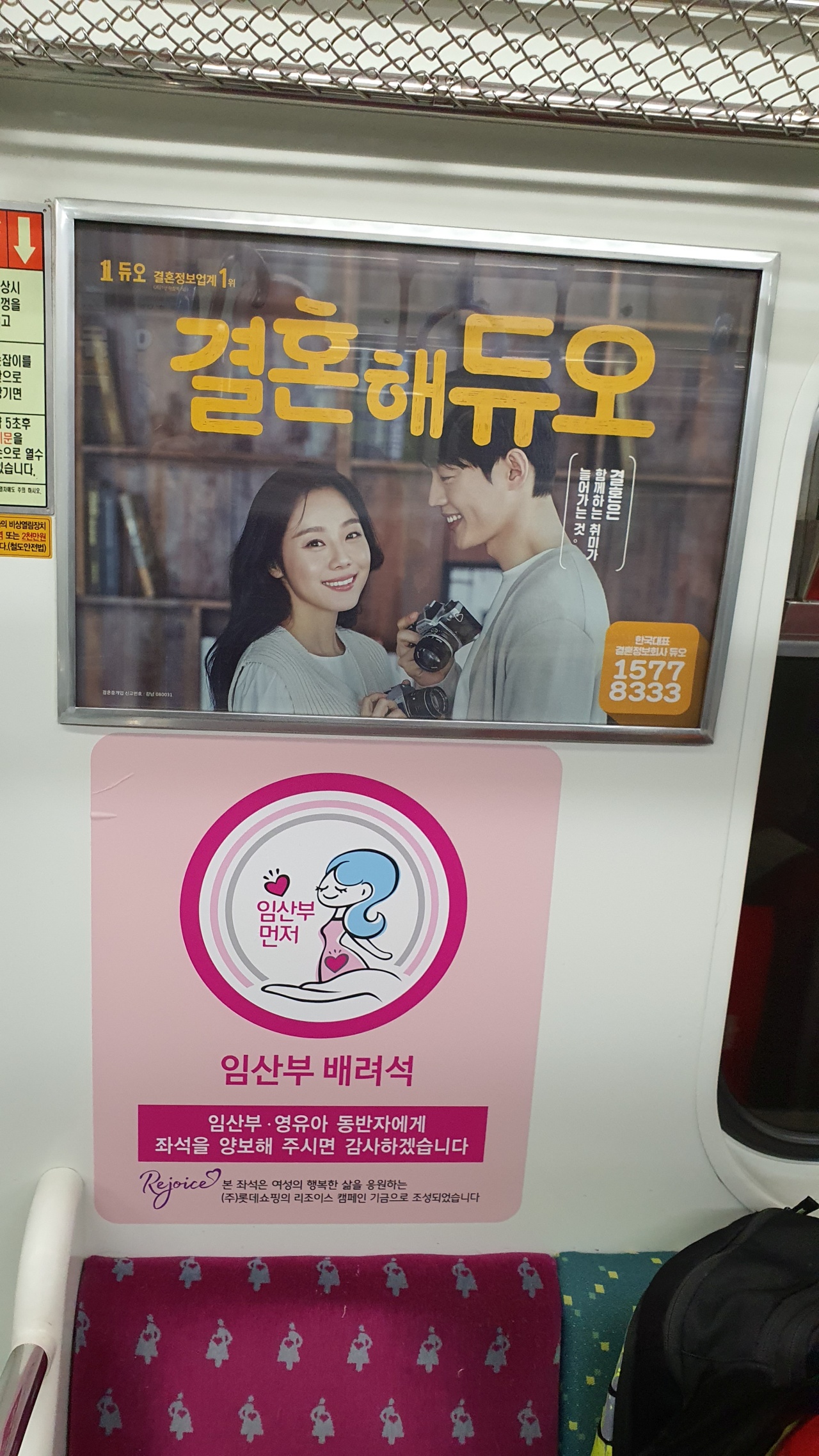
I know, I know—I’m not even divorced yet, and I’m already looking at marriage agencies. But the reality is that Duo’s latest campaign ads are just impossible to avoid on Korean public transport at the moment. And the obvious emphasis on attracting female customers in them, for a service ostensibly about providing those women with as many romantic encounters with male suitors as their finances allow, should give everyone misgivings. For it’s not like correcting an excess of male customers is the motivation.
This concern may still sound odd. “Sweet,” I’d wager, is what usually comes to mind when most people see Duo ads. Indeed, I only did a double-take at this one at all because I happened to be reviewing my translations of a lavishly-illustrated, feminist Korean book about paintings of nude women (as any normal person does on the subway), and, glancing up, was immediately struck by how unlike those paintings the ad was. For actor Lee Shi-won/이시원‘s look back at the viewer doesn’t exactly scream pandering to the male gaze. Nor did all the other Duo ads on the subway carriage I could see from my seat, some of which just had Lee alone, and only one of which had model Noh Seong-Su/노성수 looking back with her.
Then my stop was coming up. And you don’t exactly need to have read Erving Goffman’s GenderAdvertisements to be realize what the ‘relativesizes‘ of Lee and Noh in these ads signify in the ads I saw once I stood up:
But so what? What is the issue exactly, about Duo prioritizing women?
Well, the last time I checked in 2020, Duo had more female than male customers then, at a ratio of something like 6 to 4 or 5.5 to 4.5.
I don’t know if this ratio was affected by the pandemic. But regardless, more women competing for fewer men clearly disadvantages them. That extra level of competition also incentivizes charging women more for the same services offered men. Which indeed Duo, and most of the over 1000 other registered agencies out there, do so with a gusto.
So, although Duo clearly retains the financial resources for its latest massive campaign, I speculate that it may actually represent a doubling-down on financially discriminating against young women. And, given Duo’s position as a industry leader and model, I have concerns about what this will have on Korean dating, gender roles, and marriage norms.
Not convinced? Really, it’s only a matter of degree. Please see my in-depth investigation from 2020 for a plethora of evidence on how that sexual discrimination has in fact been occurring for decades. And don’t let me forget the influence on body-image either: just a few months ago, one agency focusing on wealthy clients, with nearly half a million customers, came under fire for its strict financial criteria for admitting men, but only requiring a members’ vote of 3.6/5 on appearance alone to admit women. I also invite readers to consider that demanding women pay more to date men than vice-versa,* and deliberately skewing their customers’ sex ratios to justify this, is surely yet another form of “pinktax” that perpetuates the gender gap.
*(I realize that the norm in Korea is for men to pay on dates; no social issue that is interesting isn’t complicated!)
Am really far too busy…must resist…but neither spirit…nor flesh…is willing…
So, let’s just make letting you know about interesting online presentations and webinars I’m attending a regular thing from now on.
In chronological order then, with the first one starting just tomorrow (hey, I only just found out about it myself!):
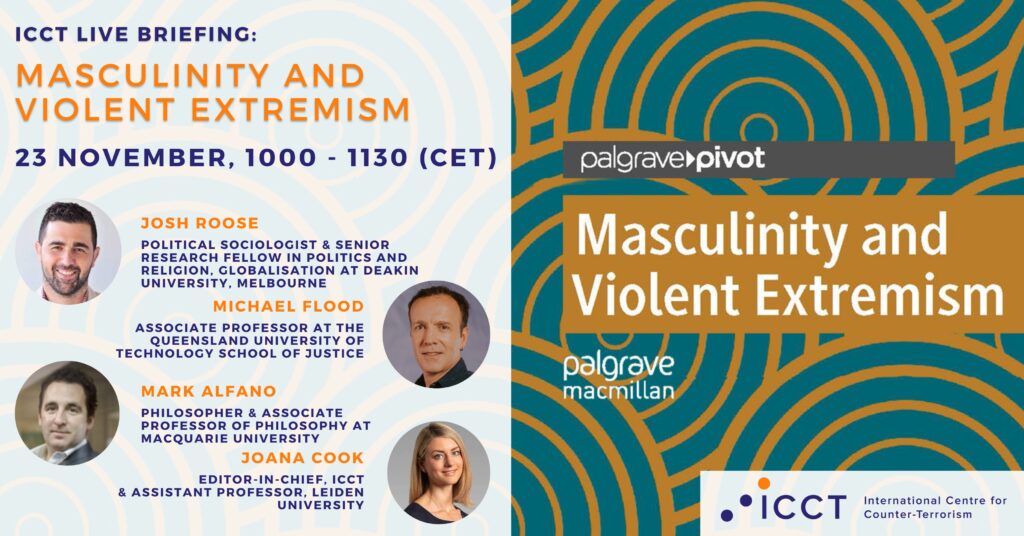
On Wednesday 23 November, 18:00-19:30 Korean Time / 10:00-11:30 CET, the International Centre for Counter-Terrorism will host a live briefing for the release of the book Masculinity and Violent Extremism. More information and registration here:
Update: Here’s a recording of the webinar. One of the presenters, Professor Michael Flood, told me it’s going to be made into an open-access book soon too. I’ll keep you posted! :)
Next, on Tuesday 29 November, 12:00 Korean Time, Chuyun Oh (San Diego State Univ.) will give a talk about her book K-pop Dance: Fandoming on Social Media. More information and registration here and here:
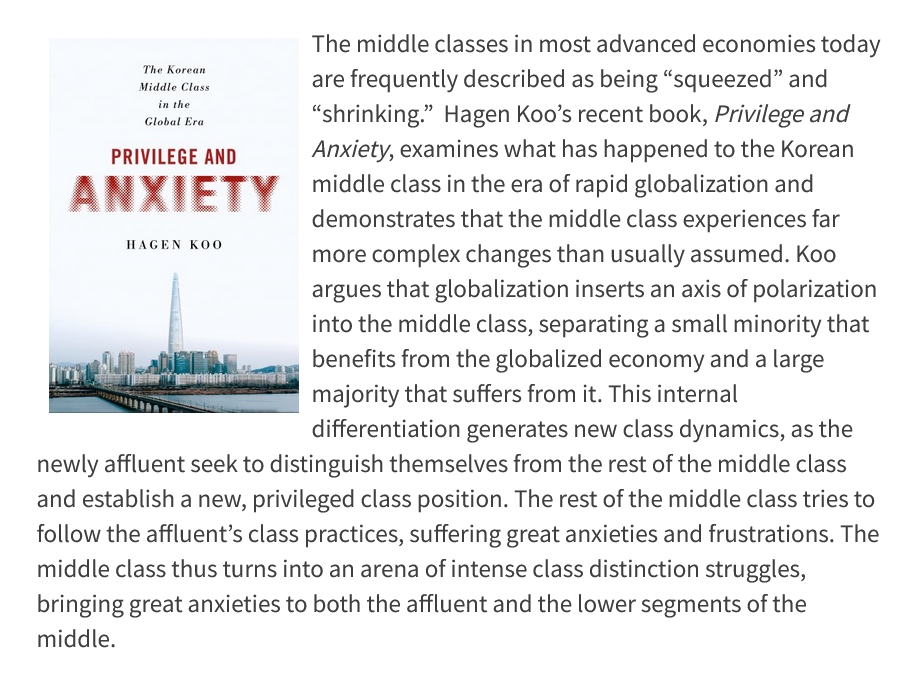
Then on Friday 02 December, 09:00-10:00 Korean time / Thursday, December 1, 16:00-17:00 (Pacific), Hagen Koo will talk about his book Privilege and Anxiety: The Korean Middle Class in the Global Era. More information and registration here and here:
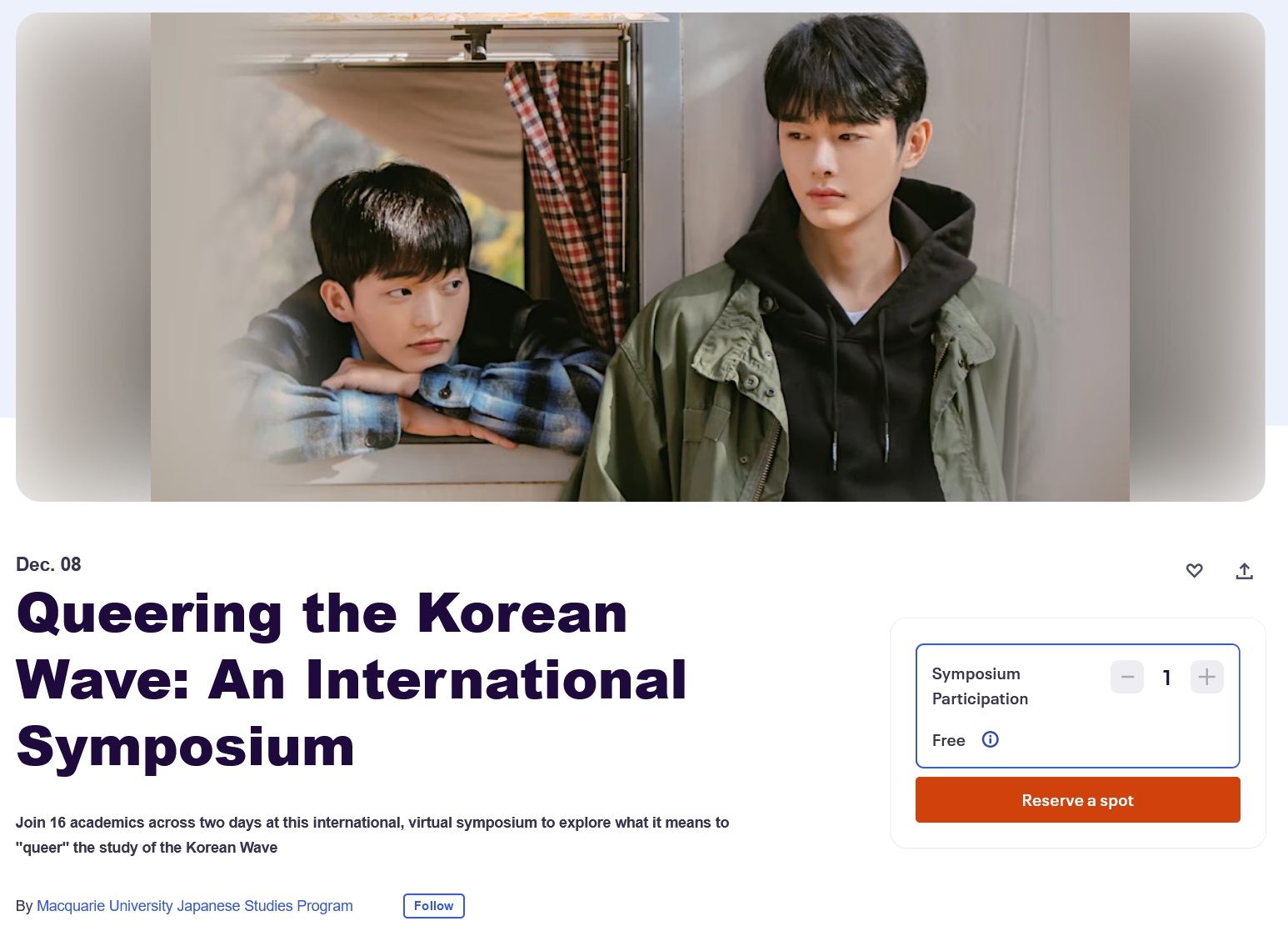
Finally, on Thursday and Friday, 08 and 09 December, 11:30-19:00 Korean time, 13:30-21:00 AEDT, the jam-packed Queering the Korean Wave: An International Symposium will be held, with multiple presentations spread over the two days. See here for more information and registration:
What are you waiting for? ;)
If you reside in South Korea, you can donate via wire transfer: Turnbull James Edward (Kookmin Bank/국민은행, 563401-01-214324)
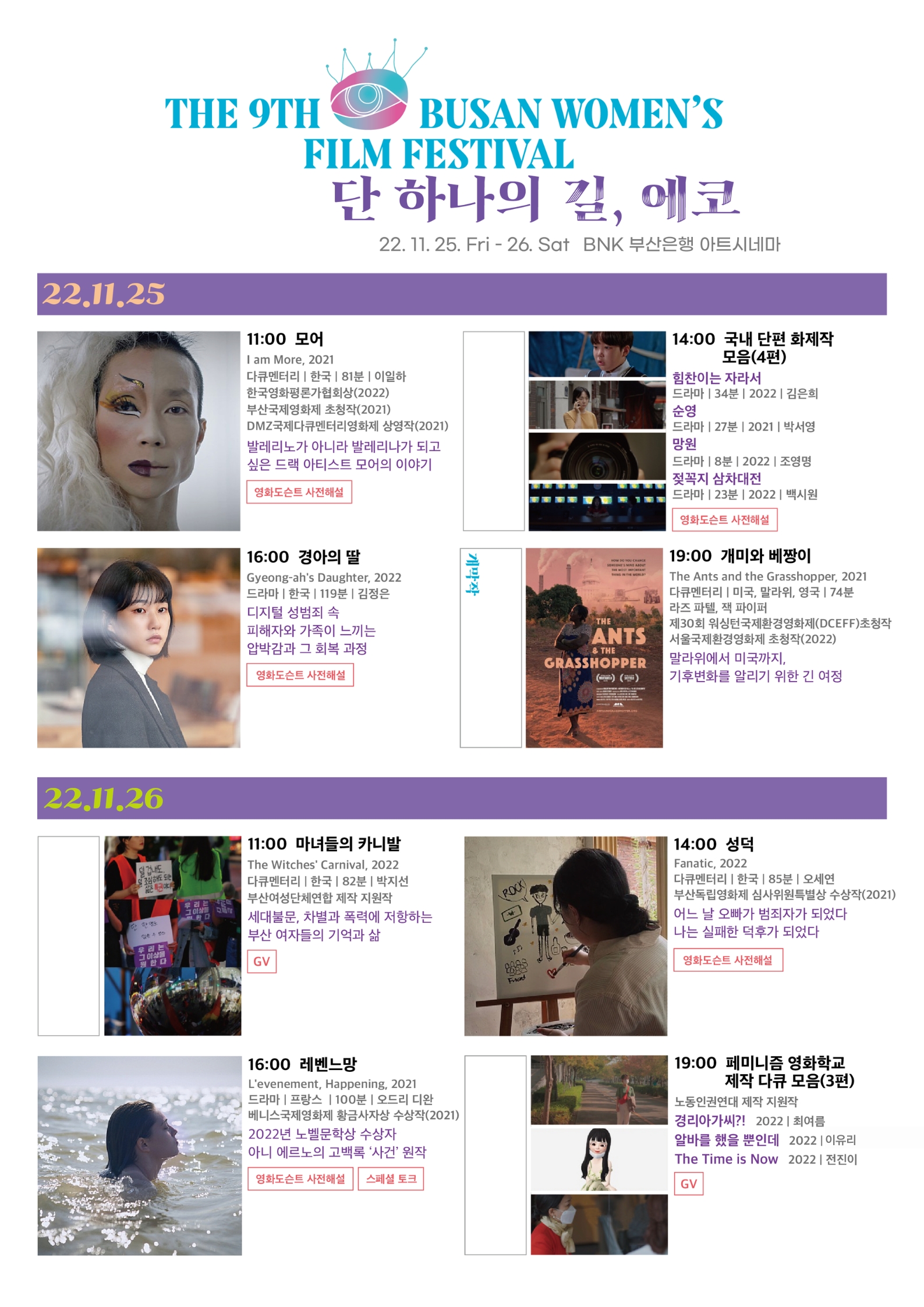
Curiously unconcerned about consulting with me first (I know, right?), the organizers of the Busan Women’s Film Festival scheduled this year’s event to open on the day of my divorce hearing.
This somewhat complicates my own attendance. But don’t let that stop you!
Obviously if your Korean is good, then you’re spoilt for choice. As for non-Korean speakers though, unfortunately I’ve yet to hear if any of the Korean films will have English (or even hangul) subtitles available, and frankly doubt there will be. (Update: The organizers have confirmed only the two foreign films will have subtitles.)
However, there is the English-language The Ants and the Grasshopper screening on Friday night, and the French-language L’événement on Saturday afternoon. With translation apps or plugins, reserving tickets for either and arranging the bank transfers seem pretty straightforward.
So what are you waiting for? ;)
If you reside in South Korea, you can donate via wire transfer: Turnbull James Edward (Kookmin Bank/국민은행, 563401-01-214324)
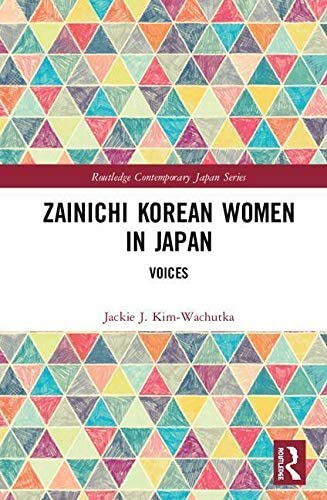
It’s not as simple as just increased childcare responsibilities—Korea already has a record-low birthrate, and women journalists the world over have less children than women in most other professions. So what gives?
It is a truth universally acknowledged, I like to think, that a single industry so possessed by one sex, must be in want of dramatic reform.
Okay, I did force that Austen-like opener somewhat.
But when you realize that the entry number of Korean women journalists has started to exceed that of men in recent years, only for most women to leave the industry in less than 10 years? Also, that the ensuing absence of women mentors, and continued domination of newsrooms by masculine culture are, ipso facto, some of the main causes of that?
Perhaps awkward forced changes, such as quotas for board members of news organizations, are precisely what the industry needs.
If your interest isn’t piqued just by the title alone, let me leave you with some telling quotes that demonstrate why it really should be,* and please get in touch if you don’t have access to a copy.
*Apologies for removing the numerous sources mentioned for the sake of readability. Please consult the original for those, many of which sound just as interesting and informative as this one!
First, on why I think quotas are absolutely necessary:
…in South Korea in 1996, JoongAng Daily, one of the largest South Korean newspapers, employed only 24 women journalists out of a total of 402 journalists. Soon after, the percentage of women journalists began to surge so that by 2020 women accounted for about 32.8% of the total number of journalists. However, most women journalists were younger and about 10% of women journalists were in top-management positions.
And:
In South Korea in recent years, although the entry number of women journalists has exceeded that of men journalists , there were only 7 women out of 138 (5.07%) board members among the 29 major news organizations.
Next, on why a gender balance in news media is so important:
The under-representation of women journalists in newsrooms is regarded as problematic based on findings of previous studies that the gender of journalists influences their reporting practices as well as the content of news coverage. For example, a recent study found that news organizations where women journalists occupy positions at editorial levels were more likely to have covered the “#Me Too Movement” than organizations without women editors in high positions. In fact, previous studies have repeatedly reported that with fewer women journalists, portrayals of women as well as marginalization of women’s concerns are themes often overlooked in news stories. Therefore, if women journalists consistently exit the news industry, their voices in covering newsworthy topics will likely disappear along with recommendations for improved newsroom policies and culture.
Moreover, in the absence of upper-level women journalists…
…several studies have shown that while the number of women journalists has increased, characteristics of newsrooms as masculine domains remain entrenched. In fact…“Young women journalists decided to resign because of men-centered culture and they felt they had less attention than men journalists from their organizations.” [Also], although there has been an increase in the number of Korean women journalists in recent decades, the traditional model of newsrooms based on a male model that expects strong work commitment and unusually long hours has not substantially changed. In addition, in South Korea, women journalists often face work-family conflicts after marriage due to society’s concepts of the traditional gender role of women, influenced by Korean cultural standards.
…the results of this study show that the three most important factors in women journalists’ leaving the newsroom are (1) the weakening of social status, (2) a newsroom dominated by masculine culture, and (3) additional online workloads.
…although more and more women journalists have entered the news industry, the masculine newsroom culture has not changed because most of high-level positions in news media organizations are still held by men journalists. Interestingly, in-depth interviews, conducted…with nine young women journalists who resigned with less than 10 years of experience, revealed they had voluntarily left because they were unable to “find a role model who overcame the male-centered culture of a journalist society and the organizational culture of newspaper companies.” Their responses indicate that women journalists in South Korea continue to be perceived as “often excluded from the internal networks established by men.” Also, they are less likely than men to have the benefit of mentors.
It’s been a while, I know. Sorry. Please rest assured many posts are coming soon, and many more ideas are being worked on.
However, time and tide wait for no (wo)man. Nor, indeed, do the registration periods for Zoom lectures care much for what bloggers have got going on in their lives.
So, while of course I can’t post about every interesting-sounding Zoom lecture and webinar out there, I will always try to at least let you know about the ones I’m personally attending.
If you are able to make it to any of them, that’s just great, I hope you enjoy them, and please feel free to say hi in the private chat any time!
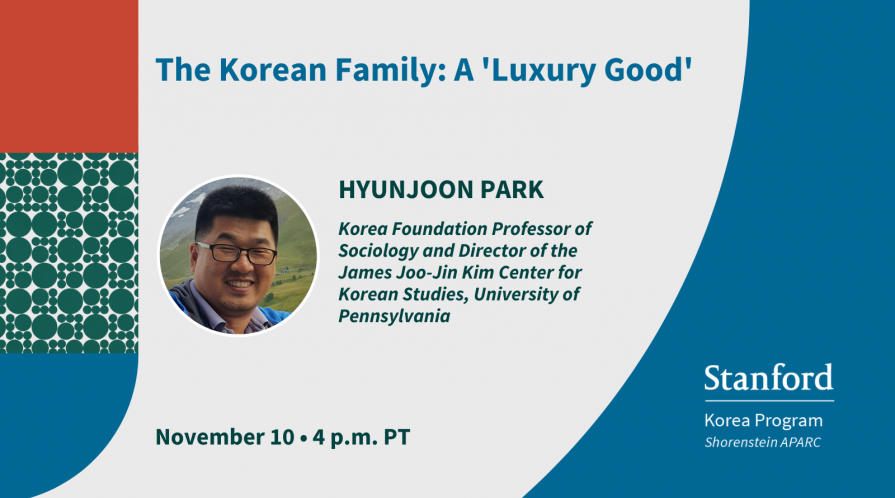
In this talk, Hyunjoon Park will give a brief overview of how Korean families have changed over the last three decades in various family behaviors. Although the trends of falling marriage rates and rising divorce rates, along with the increase in the population living alone, are well known, less known is divergence in those family behaviors between the more and less educated. Tracing family changes differently for those at higher and lower ends of the educational hierarchy highlights growing educational differentials in family life. Compared to their college-educated counterparts, it is increasingly difficult for those without a college degree to form and maintain a family in Korea, making the Korean family a ‘luxury good.’
Next, literally as soon as that finishes, at 10am Friday 11 November Korean time:
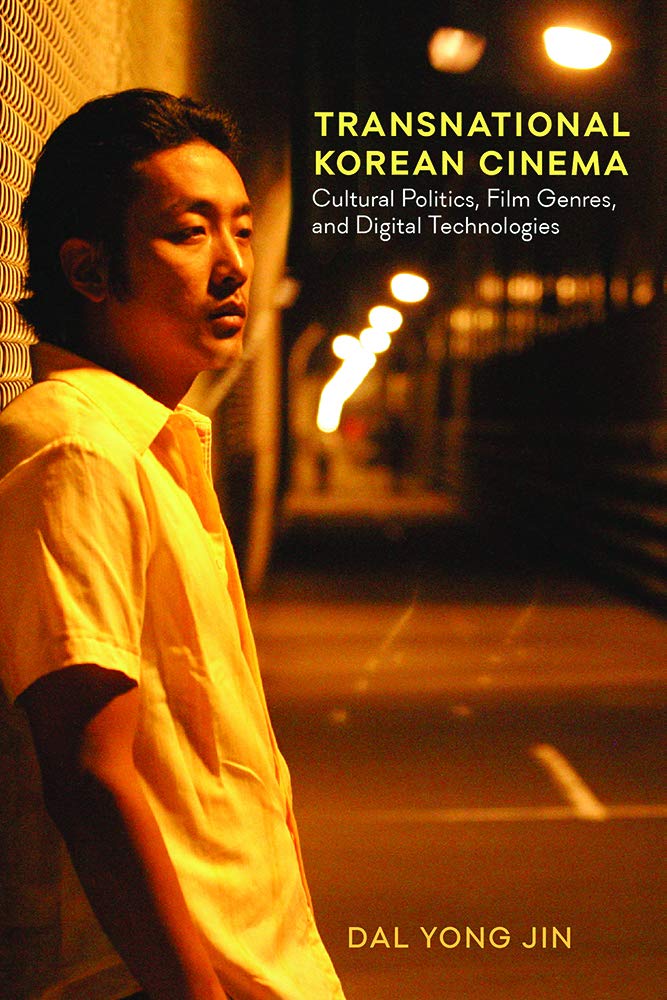
The International Center for Korean Studies of the Kyujanggak Institute is hosting a Book Talk series, introducing Dal Yong Jin’s Transnational Korean Cinema: Cultural Politics, Film Genres, and Digital Technologies.
Title: Transnational Korean Cinema: Cultural Politics, Film Genres, and Digital Technologies
Date: November 11 (Friday) 10:00 – 12:00 (Seoul)
Author: Dal Yong Jin (Simon Fraser University)
Moderator: Seok-kyeong Hong (Seoul National University)
Discussants: Jihoon Kim (Chung-Ang University), Chung-kang Kim (Hanyang University)
The event will be held online via Zoom. The link for Zoom meeting will be sent a day before the event after your registration is confirmed.
Please contact icks@snu.ac.kr (Tel. 02-880-9378) for more information.
Finally, at 10am Thursday 17 November Korean time:
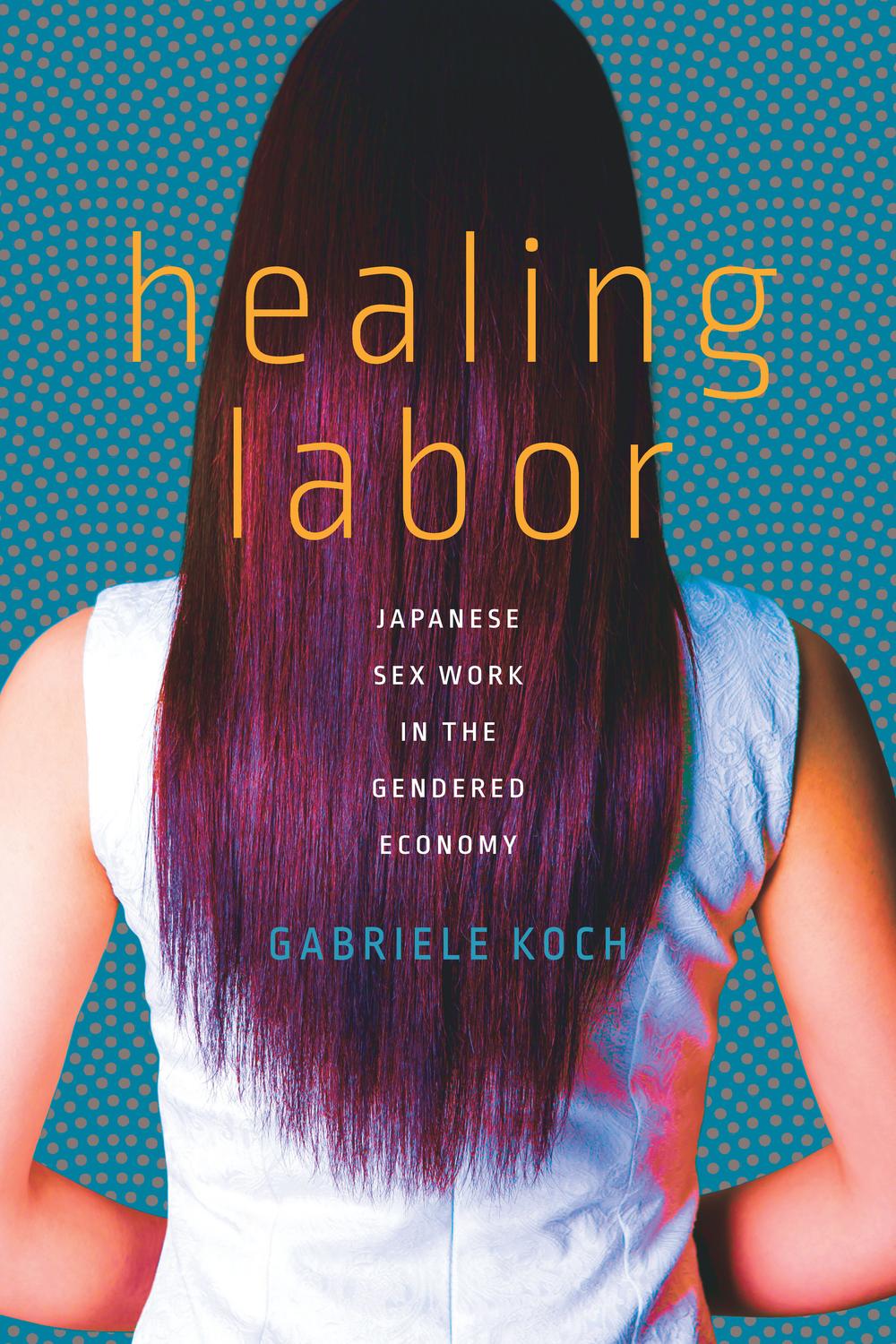
Spurred by this review at The Japan Times, I read the book last December and thoroughly enjoyed it, rating it 5 out of 5. So please do be warned that if you click that link, you’ll doubtless end up ordering a copy too ;)
Gabriele Koch is an Assistant Professor of Anthropology at Yale-NUS College in Singapore. Gabriele is a sociocultural anthropologist whose research focuses on the social meanings and consequences of care in contemporary Japan. Her first book, Healing Labor: Japanese Sex Work in the Gendered Economy (Stanford University Press, 2020), explores the relationship between how adult Japanese women working in Tokyo’s sex industry think about what sex is and the political-economic roles and possibilities that they imagine for themselves. The book examines how Japanese sex workers regard their services as a form of socially necessary care and highlights the gendered interdependencies and inequalities that shape women’s work in the Japanese economy more generally.
See you there!
If you reside in South Korea, you can donate via wire transfer: Turnbull James Edward (Kookmin Bank/국민은행, 563401-01-214324)
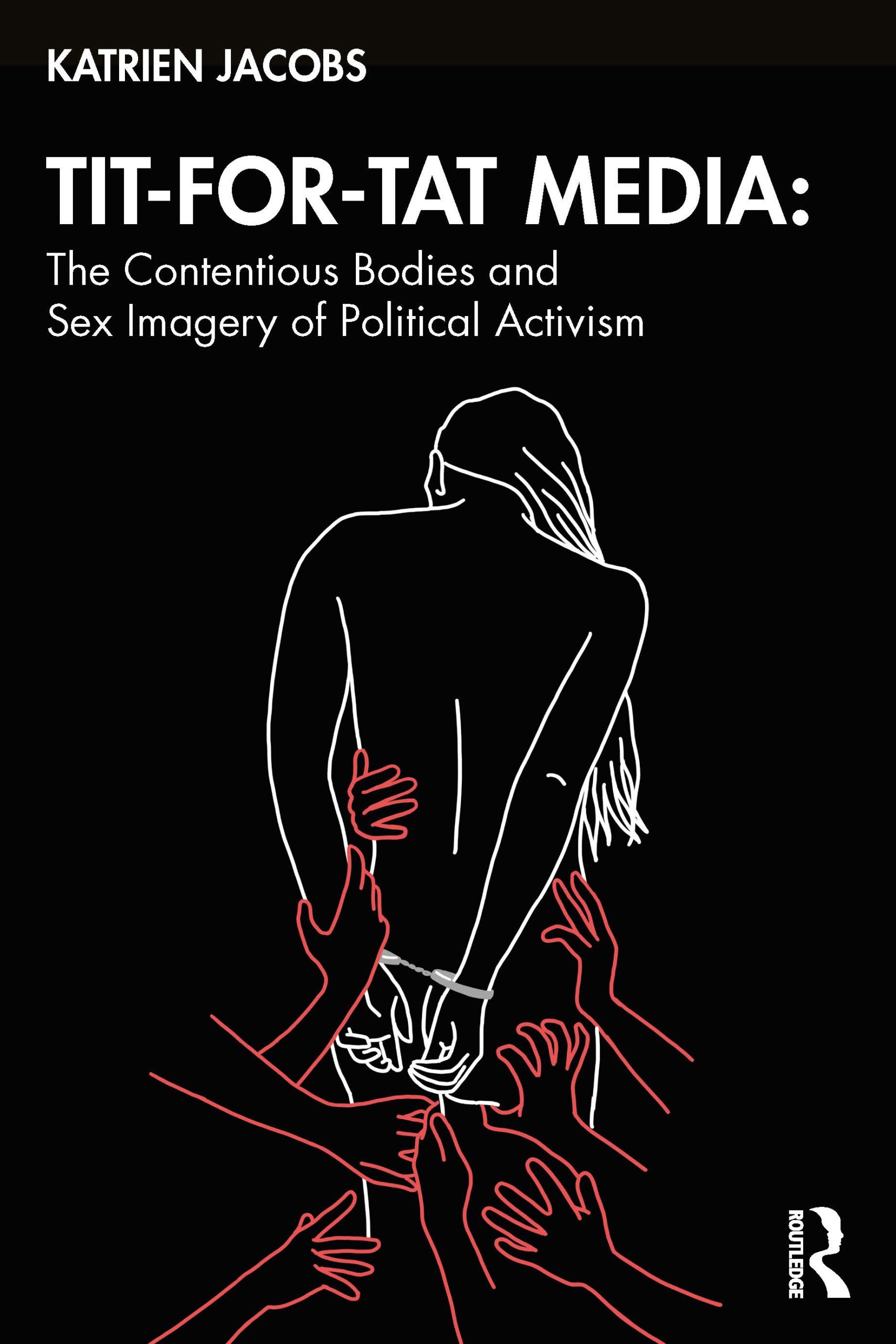
In response to a former Korean pornography actor’s shame preventing them from dating, I like to think that if they were monogamous with me, and didn’t behave in real life the ways they’d been required to in their videos, then I wouldn’t mind their past at all. But that’s all very easy to say when an opportunity to meet is so unlikely to ever occur. If it did, would I turn out to be a hypocrite? Would you?
In Korea, something pretty big was cut from Boogie Nights, Paul Thomas Anderson’s classicportrait of the 1970s LA porn industry. But it wasn’t what you might think.
Instead, it was the three-minute scene where Julianne Moore, playing pornography actor Maggie/”Amber Waves,” tries and fails to get visitation rights to her son. Not only is it an extraordinary performance by Moore, but it also shows a very human side to the industry, providing a profoundly dark, thoughtful counterpoint to the glamour, sex, drugs, and tension that defines the rest of the movie. It was easily the most memorable scene from when I first watched the movie in New Zealand in 1998, and why I was virtually apoplectic when I suddenly realized it was just not there at all when I watched it again in Korea two years later.
Seeing the headline “Adult actress Seo Ha-hee looks for genuine love through tears” the same day as tributes to 25 years since the release of Boogie Nights then, I felt a duty to highlight her story. Yet it’s not really a news item per se, but rather a few slides from Insight’s Instagram account about her appearance (and lamentation) on a new Disney+ show; as Netizen Buzz has already translated the comments, the least I could do is translate the captions in a moment below.
But if felt insufficient.
Looking ahead then, eventually I’d like to cleave throughthe mass of (contradictory, hypocritical, patronizing, completely ineffectual) censorship laws in an attempt to determine exactly how South Korea remains one of the few developed countries where pornography is largely illegal. In particular, considering just how simple it is to download pornography from overseas, I’m especially intrigued by how the legal domestic Korean pornography industry continues to exist at all, when even pubic hair may not be shown on it (let alone genitalia) and the sex is so obviously simulated. Is the hospitality industry literally its only consumer, given that even in 2022, Korean hotels, motels, and yogwans still invariably have a few cable Korean pornography channels available on their TVs?
Either way, as Kelsey the Korean points out in her recent video above (from 6:08), while there’s a great deal about mainstream pornography that’s objectionable, it’s not like Korean censorship laws are achieving their stated aim of protecting the sexual morals of Koreans from it. If anything, she alleges, they may in fact be no small factor in their utter corruption and distortion. The lack of healthier homegrown options, I tend to agree, may indeed play no small role in channeling manyyoung men to what (illegal) Korean pornography has become notorious for instead—anongoingspy-camepidemic.
Yes, healthyfeministpornographydoes exist—provided you’re prepared to pay for it, to help ensure the working conditions and salaries which make it such. And, seeing how much damage Korean censorship laws seem to have done in promoting unhealthy alternatives, then why not unblock access to other options?
In that sense of changing hearts and minds about pornography, would you say Seo Ha-ni’s “confession” below is a step in the right direction? Or do you think her shame about her former profession, so great that she hadn’t been prepared to date at all in the last five years, merely perpetuates stereotypes? Please let me know in the comments!
“I’m looking for a man who can understand what it’s like [/not worry about] to be [dating] a [former] pornography actor.”
A woman sheds tears in her quest to find true love.
[Insight reporter Gwon Gil-yeo]
Many people claim their loved one’s pasts are not important.
But if it were you, to what extent would that be true?
An interesting new dating reality program tests whether you can really fully understand/[not worry about/forgive] your true love’s past.
Released on Disney+ on 5 October, Pink Lie is a show in which one cast member each episode confesses lies they’ve been living under, in order to find true love from people who accept them for who they are.
In the first episode, Seo Ha-ni (36) drew attention for having formerly worked as a pornography actor.
For the last five years, she has run a candle manufacturing workshop. She describes herself as a candle artist, never revealing her past as a pornography actor.
She has performed at a high level in the industry, appearing in such movies as The Purpose of Reunion 2and Private Tutor: Advanced Course (NSFW). [James—Rather confusedly, the former has no sex or nudity, and indeed is even available on YouTube.]
Seo Ha-ni, who cried while talking about her past, said “[Because of my former job], men [constantly] send me photos of their genitals or nude body shots on social media.”
This has meant she’s never been comfortable in romantic relationships.
“I’m always worried that someone will recognize me in public,’ Seo Ha-ni said. “So, I’ve never held hands with a boyfriend while walking among the cherry blossoms. I’ve never had fun in water with a boyfriend in the summer, never walked together in the Autumn leaves, and never gone skiing with someone in the winter.”
In fact, Seo Ha-ni has [been so nervous she has] avoided men completely, confessing she has not been in a relationship in a whopping six years.
There is a lot of interest in her case, and everyone is anxious for her to find true love with someone without prejudice.
[James: The remaining two slides just explain a little more about the show.]
Meanwhile, three other women and four men appeared in the first episode.
They were: Han Ba-reum (33), a researcher at Samsung Electronics’ Future Technology Research Center; Han Da-on (31), a beauty company marketer; Kang Da-hae (26), an intern at a fashion company; Hong Ha-nu (32), CEO of Hallyu Entertainment; Park Han-gyeol (25), a wedding video company CEO, and Mo Chan-sol (29), an elementary school gym teacher.
Although they disclosed their age and occupation, in fact, just like Seo Ha-ni [at first], they were all lying.
According to the rules of the show, they must not reveal their lies [until their turns in later episodes].
MCs singer Kim Hee-chul, actor Lee Sun-bin, and YotuTuber RalRal all expressed their curiosity about what truths were hidden by the cast.
Episodes 1 and 2 of Pink Lie were released on 5 October, which single episodes to be released once a week on Wednesdays. (END)
Pervasive sexual inequality can feel like death from a thousand cuts. No one source of pain or minor irritation isn’t possible to dismiss or play down in favor of other, more visceral struggles against the patriarchy. But as it turns out, women’s relative absence from the legal profession has cascading effects across all society.
Estimated reading time: 6 minutes. Photo by cottonbro at Pexels.
When young Korean men return to university after doing their military service, they’re generally two to three years older than their female classmates. In a society where age really, really matters, this gap can grant those men a great deal of privilege. For example, by being able to avoid various mundane tasks periodically required of students by the university, as these get foisted onto the young(er) women instead. Like during this coming December after the university entrance exams, when some of my female students will be expected to “volunteer” to waste a precious day before their tests by bowing in the freezing cold to visiting high-schoolers as they arrive on the bus, while my male students study from the warmth comfort of the library.
Damn right, do I see a direct link to why so many talented and highly educated women are wasted answering the phones and making the coffee at Korean workplaces.
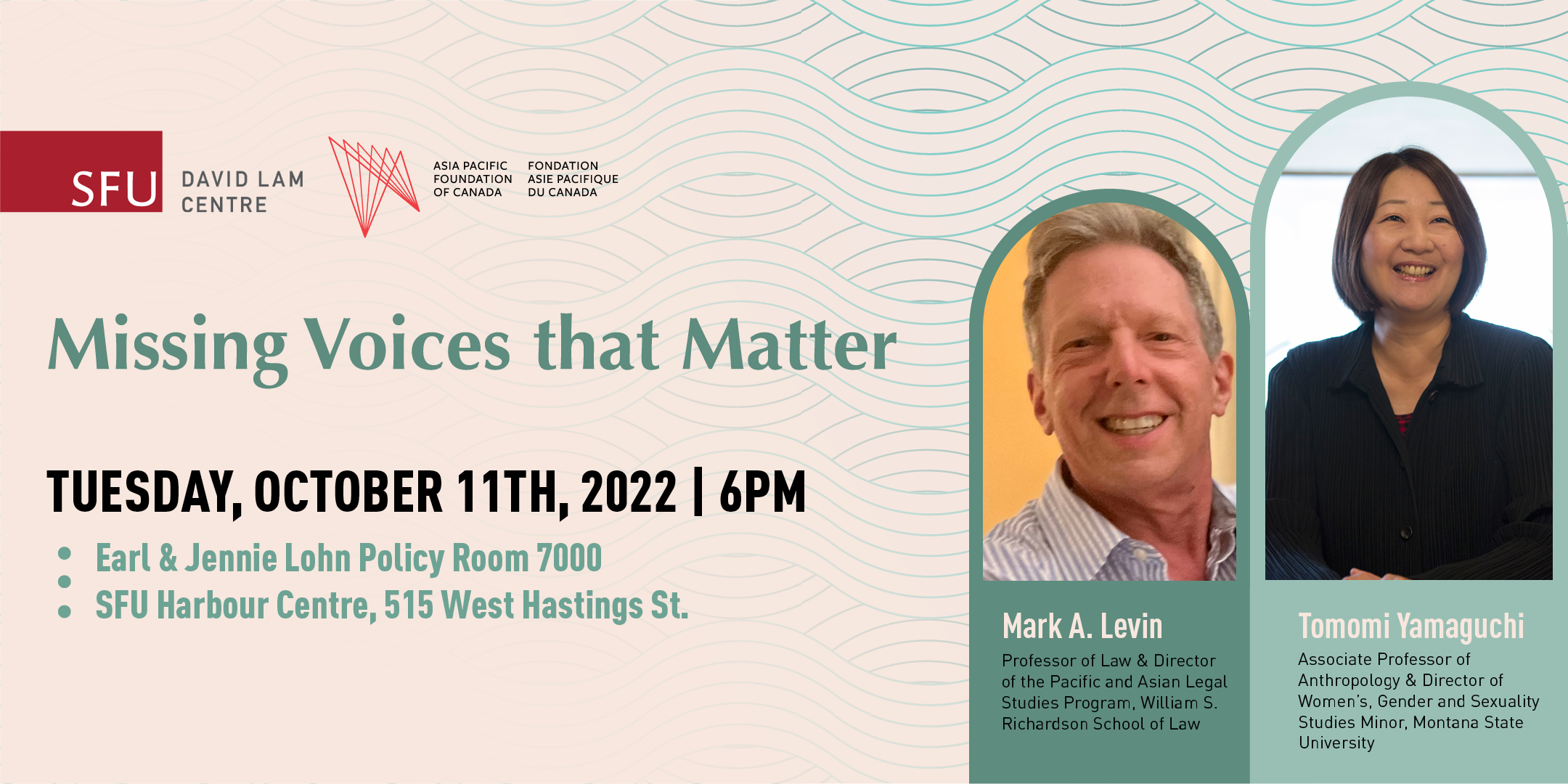
All of which may feel like an odd introduction to announce an upcoming hybrid talk (register) by Mark A. Levin and Tomomi Yamaguchi at the David Lam Centre of Simon Fraser University, which is not actually about Korea at all. But, based on its description below, it still feels intimately useful and relevant nonetheless. Specifically, I’m wagering it will reveal many more instances of how something seemingly innocuous like a slight age gap can have surprisingly wide implications for sexual equality, offering many similar possibilities to explore—and combat—in the Korean context:
“While the U.S. and Japan’s earliest generation of female legal scholars showed roughly similar numbers, their paths soon diverged dramatically. The number of women in the two legal academies in the 1950s to about 1960 were not all that different. Both nations counted phenomenally low numbers similarly. The U.S. took an early lead, but not by all that much. One report counted five women in tenure track positions in the U.S. in 1950 and another counted fourteen women before 1960. Japan could count five women by 1956 and eight women by 1958. Neither fifteen women in the U.S. nor eight women in Japan represent even token counts among individuals who made up the two countries’ legal academy professoriate in those times.”
“The difference then is in what followed. In the U.S., we crossed a count of 100 women around 1970 and then accelerated to 516 women by 1979, while Japan’s count essentially flatlined. From 1958 in Japan, there were no new women entrants for about ten years and then the next uptick in Japan was just five women entering the field in the late 1960s through 1974. After a second near hiatus of about eight years, Japan then saw some modest growth to have a total of twenty-two women who had entered law teaching by 1988. Our next found data point is 402 women in 2004.”
“The profound scarcity of voices of women academics as leaders, teachers, and scholars in Japanʻs legal academy for several decades remains significantly detrimental for Japanʻs gender circumstances today. The story demonstrates how crucial womenʻs and other feminist voices are in addressing gender gaps and dismantling patriarchy in a society. In particular, having women and feminist allies in the legal academy is essential for feminism to advance in a society. Conversely, deficits regarding women and feminist allies in the legal academy will invariably impact the overall society’s gender circumstances for the worse. And so, just as feminist legal theorists would suggest, it seems essential to assess those circumstances in Japan with the idea that gender gap deficits in Japan’s legal academy must be at least a contributing factor to the nation’s profound and distressing gender gap situation more generally that continue to the present day.”
“This talk aims to explore not only how, but why the two paths diverged so significantly. With time allowing, some effort will be made to draw upon Canada’s circumstances to add another historical sequence into the telling here.”
♥
Truthfully though, it was not those possibilities that first convinced me to sign up. Rather, it was the disjuncture the blurb noted between Japan’s postwar democratic, egalitarian ideals and the actual practice in Japanese women’s personal and professional lives. For it all sounded very familiar (as it probably did to many of you too), having already read much the same in a chapter from a classic Korean studies book: “The Concept of Female Sexuality in Korean Popular Culture” by So-hee Lee (pp. 141-164) in Under Construction: The Gendering of Modernity, Class and Consumption in the Republic of Korea (ed. by Laruel Kendell, 2002). To refresh your memories from page 144, with my emphases:
“[Korean women in their early-30s {now early-60s}]…were the first female generation to go to school en masse, side by side with their brothers. As Wonmo Dong (1988) argues, they learned democracy and its fundamental principles of liberty and equality as an academic subject, not as something to practice in everyday life. From the beginning of their university days, around 1980, they were pushed into the whirl of extremely violent demonstrations to demand national political democratization. Although political protests had long been a part of Korean student life, there was something about the culture of protest that emerged in the 1980s that was different from what had gone before; student activism became an all-pervasive and all-defining experience. In those days, various slogans and ideologies relating to the struggle for democracy were strongly imprinted on the consciousness of this generation as a metadiscourse. However, the students of the 1980s never examined these democratic values in the context of their own everyday lives.”
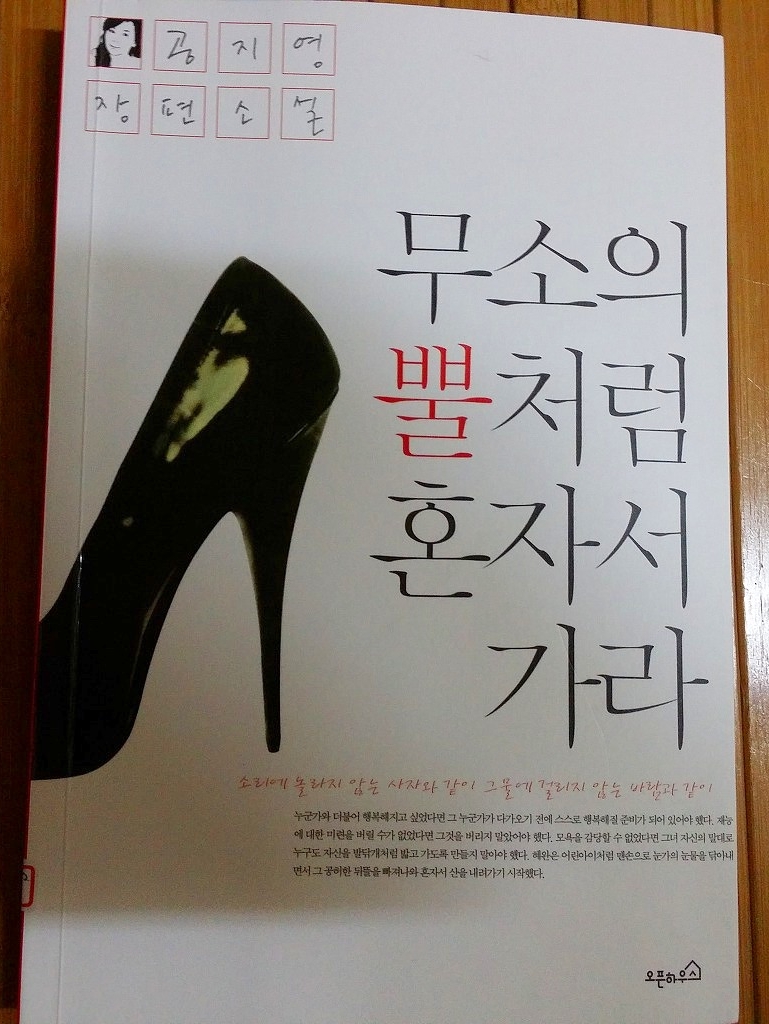
“Go Alone Like the Rhinoceros’s Horn (Source, left: Whitedevil) illustrates the bifurcation between theory and practice. Looking at their mothers’ lives,Korean women in their early thirties believed that their marriages would be different. Because the Korean standard of living and patterns of material life changed very quickly, they believed that Korean ways of thinking had been transformed with the same speed. This is where their tragedy begins. As Hye-Wan in the novel says, mothers “teach daughters to live differently from themselves but teach sons to live like their fathers” (Kong 1993, 83–84). As a result, the daughters’ generation experiences an enormous conflict between the real and the ideal. During sixteen years of schooling, they have learned that equality is an important democratic value, but nowhere have they been taught that women experience the institution of marriage as a condition of inequality. Many married women of this generation have experienced a process of self-awakening similar to that of Yông- Sôn, who early in the novel tries to kill herself. She says,“Where have I been during the last eight years of my marriage?” and concludes,“Though I don’t want to accept it, I’ve been a sincere and faithful maid who must carry out his every request” (109). Korean wives in their thirties cannot envisage a real-life alternative to the self-sacrifices of their mothers’ generation.”
Update—Indeed it was. There seem to be technical difficulties embedding it here however, so if the video below doesn’t work please watch it on YouTube:
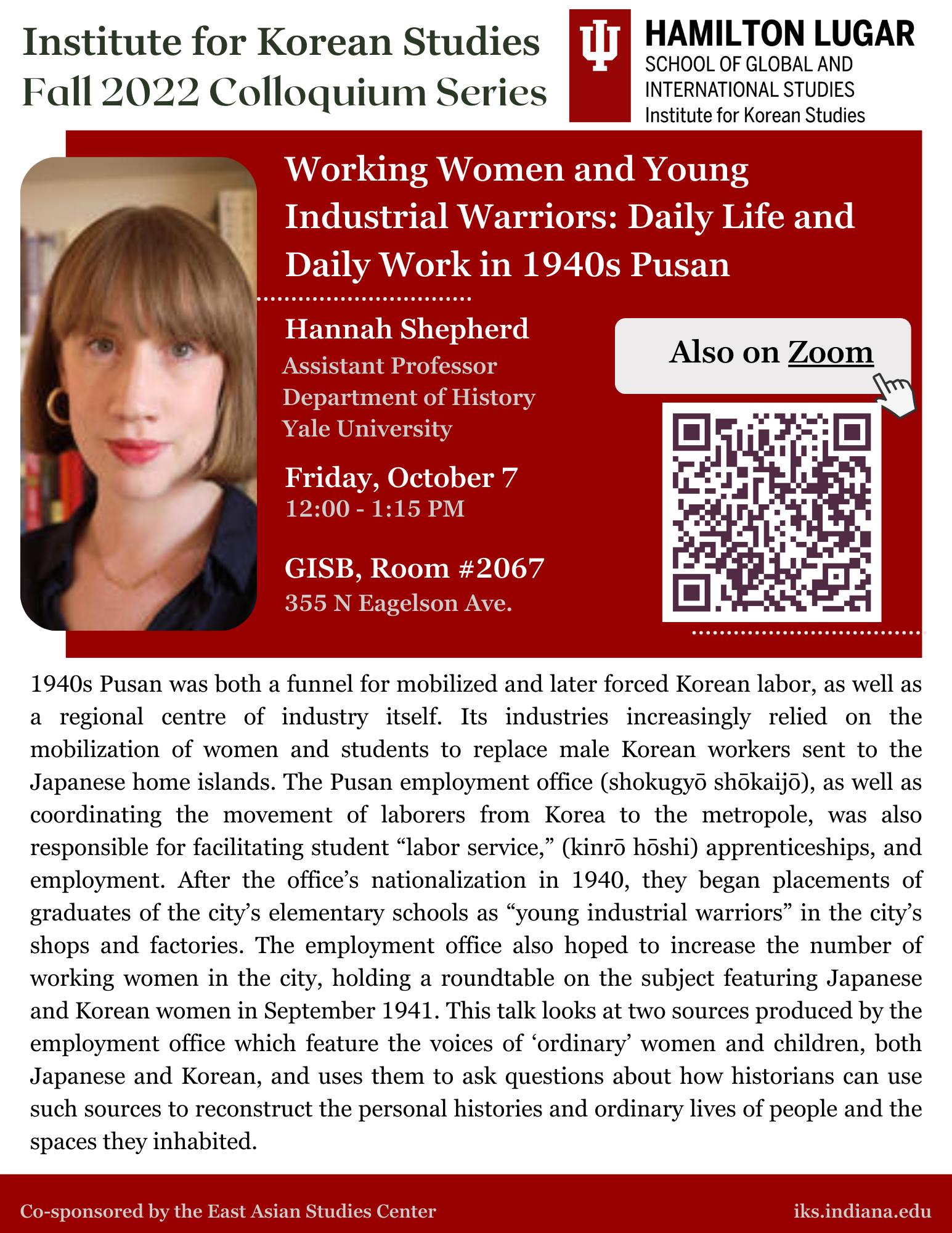
From now on, I’ll be posting information here about every upcoming Zoom talk I’ll be attending personally. And this particular one, how could I not shout from the rooftops about it, despite its horrible hour? Not only is it a rare one for focusing on Busan, my home for two decades, but it also covers wartime Korea. Which in hindsight, is a period I’ve severely neglected, sandwiched as it were between the Modern Girls and New Women of the 1920s and 1930s and the birth of Modern Korea.
Meanwhile, for information about any further upcoming Korea and East Asia-related public Zoom talks, I have to recommend Pusan National University professor CedarBough Saeji, who makes a real effort to inform everyone about as many as she can through her Twitter account. To make sure you don’t miss out, please follow her there @TheKpopProf.
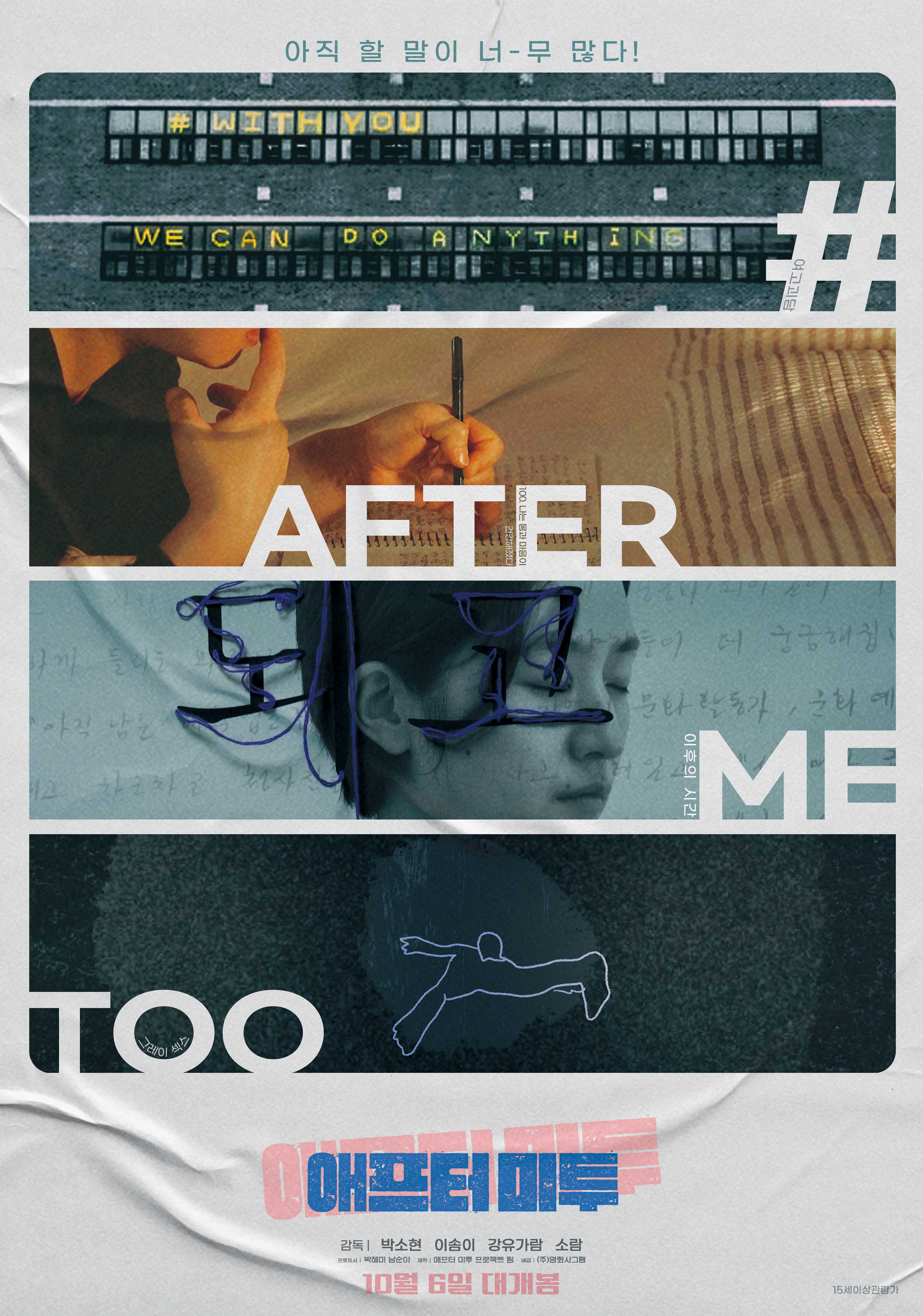
가장 도발적인 작품은 소람 감독의 ‘그레이 섹스’다. 흑백으로 구분할 수 없는 회색지대처럼 성폭력은 아니지만 그렇다고 즐거운 섹스도 아닌 성 경험을 말한다. 여성의 성적 욕망 자체에 조명을 비추는 작품이기도 하다. 내가 무엇을 원하는지 정확히 알아야, 피해 아니면 가해라는 이분법의 언어를 벗어나 자신이 느끼는 혼란과 모호함의 정체를 붙들 수 있다고 말하는 듯 하다. ‘미투’ 운동에 대한 다큐멘터리라기보단 말 그대로 ‘미투 그 이후’, 새로운 장으로 넘어가기 위한 고민이다. 네 작품 중 가장 마지막으로 배치됐지만, 매끈한 결론 대신 오히려 생각할 거리를 안고 극장을 나서게 한다.
“The most provocative [of the four mini-documentaries] is director Soram’s Grey Sex. It refers to sexual experiences that can be considered to be in a grey area—not outright sexual assault, but not exactly pleasurable, enjoyable sex either. It is also a work that shines on a light on the nature of women’s sexual desire itself. It seems to be saying that if you know exactly what you want, you can break free of the binary, dichotomous language of victim and aggressor, thereby taking control of and overcoming any confusion and ambiguity you may feel. Rather than a documentary about the ‘Me Too’ movement per se [like the previous mini-documentaries], it’s literally ‘After #MeToo,’ illuminating a path on how to move on to a new chapter. By being placed last of the four, rather than providing a smooth conclusion to the documentary as a whole, it give viewers something to think about as they leave the theater.”
See here for more information about this documentary as a whole, or these two trailers:
♥
Not going to lie, I’m expecting a few curious looks when I attend myself later this week. Will I be the only non-Korean person in the theater? The only man?*
What if that curiosity leads to—horror of horrors—someone actually striking up a conversation afterwards, forcing me to brush off my rusty spoken Korean skills as I explain why I came?
The peculiarities of my glorious visage aside, it would seem odd I was there. After all, my job is actually almost entirely devoid of office politics, because of reasons. True, there’s interacting with my young Korean students, which I admit will indeed always be overshadowed by my privilege of being a middle-aged cishet white man, not to mention the power over them which comes with conferring grades. Yet if you really knew anything my utterly lowly job, you’d laugh at the notion that such power was sufficient to seriously consider abusing it.
(Update—In hindsight, I realize my privilege in being a middle-aged cishet white man may have clouded my judgement about the lack of office politics. Sigh.)
Then there’s dating (etc.), which I’ve recently become painfully aware I haven’t pursued in nearly 22 years. Those few genuine offers I’ve received in all that time, that I like to pretend weren’t entirely just wishful thinking on my part (but do know I always turned down with nothing but grace and respect), don’t provide much of a foundation to navigate the choppy sexual politics of dating in the 2020s.
Gaining one then, is one good enough reason alone to watch this documentary. As is learning about the subject in general. There’s also simply showing financial (and moral) support for a worthy cause, which not everyone who feels the same way has the privilege to bestow. And finally, there’s reading that paragraph at the start of this post, through which I discovered that one of four mini-documentaries contained within speaks so profoundly to what I’ve read recently about #Metoo inthese twoexcellentbooks, which I’ll be discussing at a later date:
I completely share your frustrations though, that in Busan at least, Korea’s second-biggest city, in CGV cinemas it will only play for a total of 12 times over 4 days, As in, literally only a single theater, let alone having no subtitles available.** Still, for those of you with the Korean ability and time, I do hope you consider supporting it by attending.
**Update—Actually, it screened for much longer than expected, and did include Korean subtitles. Both of which were great of course, but it still seems odd not to mention the subtitles on the movie’s information page.
If you reside in South Korea, you can donate via wire transfer: Turnbull James Edward (Kookmin Bank/국민은행, 563401-01-214324)
I find myself only mentioning my private life at all, because I wanted to explain my sporadic writing as of late. Only once I got started, I just couldn’t bring myself to roll out the same old platitudes about the stress of the new semester, or simply being too busy.
Actually, the start of the new semester was very stressful. I have been busy. But the truth is, neither compare to the hell I’ve been going through these last few years, especially this past summer. Or how it’s just been so exhausting pretending everything’s okay.
Sorry to be so dramatic, and so cryptic. But simply making it “official” is helping me to move on, by forcing me to write about it. For just these few lines alone, knowing thousands of strangers are going to be reading them, reflect many hours of grappling with my demons. Let alone the thousands more I’ve only written to myself.
It’s in the same spirit of candor, and of writing as a process, of both informing and learning, that I want to apologize for being unable to produce the long, well-researched posts—à la The Grand Narrative—which I know most of you prefer. My head just hasn’t been in the right place, and now you know why.
But now, I realize know how desperately I need to write anyway.
So what to do?
Just write of course. But that’s easier said than done, when writing is both the solution and the problem.
Well, for the time being, avoid those long posts. Just write whatever brings you joy instead. Whether that is: informing people of an interesting-looking Korean documentary on #Metoo that you’re going to make an effort to see, despite the lack of subtitles; sharing a paragraph on the gender politics of Japanese fitness clubs that made you buy the book on the spot; waxing lyrical over a sculptor’s unique skills, even if you did only find out about their two week-long exhibition half an hour after it had ended; gushing over how good it feels to be reading and understanding a Korean language book about feminism and the Korean entertainment industry, whilst also ruing how its contents seem so resistant to being shoehorned into any post here; venting your frustrations about how almost all the novels you’ve recentlybeenreading on the promise they would deeply explore the female gaze and sexual desire, just haven’t hit the spot, and asking readers for recommendations; letting everyone know about an upcoming Zoom lecture on the 1940as wartime mobilization of Busan women into factories,* which sounds interesting enough to stay up all night for; or admitting your concerns about how many of your posts—and likely your views—on various aspects of Korean sexuality are likely very outdated, and how you’ll go about addressing those.
It doesn’t matter if you’re not an expert on many of these topics, or even know barely anything at all about them. Sharing and talking about them with smart people like your learned selves, is how we all become more knowledgeable.
So, provided they all prove worthy once I put pen to paper, all of those posts will all go up in the next few weeks. They also represent just the tip of the iceberg, which I’m glad to have finally given myself permission to reveal, and excited and anxious to begin breaking apart.
On which note, on Monday I’ll bring you the first of what I’m calling My Vignettes. And all, like their namesake, very much still belonging to the same Grand Narrative.
*(The lecture is at 1am, Saturday October 8 Korean time, 12pm Friday October 7 Eastern Standard Time. So if you’re also interested, please don’t wait for my post about it to register!)
If you reside in South Korea, you can donate via wire transfer: Turnbull James Edward (Kookmin Bank/국민은행, 563401-01-214324)
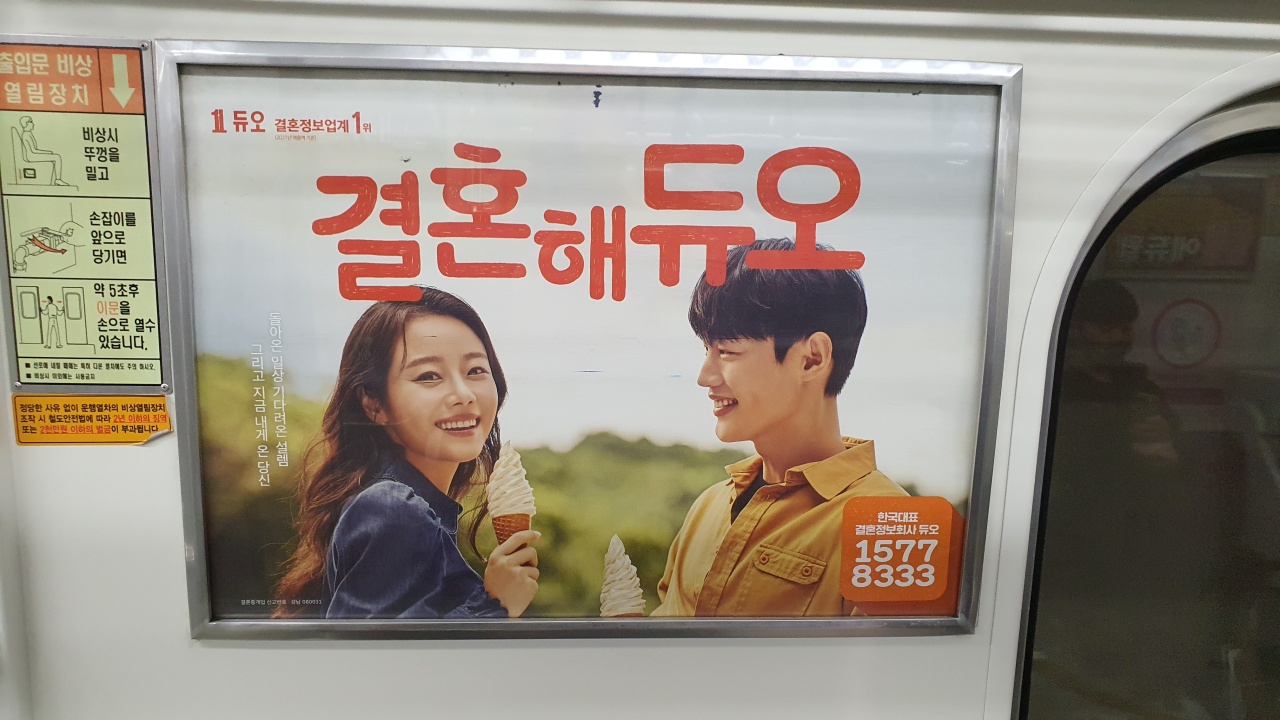
Sorry for the lack of posts everyone—I’ve just been exceptionally busy and frantic this start of the new semester. On top of all that, my order for BrokenSummer seemingly vanished into the aether after processing(!), meaning I finally only received a copy today. That’s much too late for a September book club meeting unfortunately, so instead that one will now be on Thursday October 13, followed by the next one for Concerning My Daughter on Thursday October 27 (both at 8pm).
If you are interested in attending either, please contact me via email, or leave a comment below (only I will be able to see your email address). I will contact you to confirm, and then include you in the club reminder email with the Zoom link a few days before the event.
Once I’ve read it myself, below will be a SPOILER FILLED list of suggested discussion topics and questions for Broken Summer which we’ll use to loosely structure the meeting (I’ll write a separate post and list for Concerning my Daughter next month). But they will be suggestions only, as I stress that the meetings are very small and informal really. And also, to help ensure that they remain as safe a space as possible, that there’s a limit of 12 participants including myself. So please get in touch early to ensure your place (and give you time to read the books!).
In the meantime then, please enjoy the books, and watch this space for an update with the list of discussion topics. And I’ll look forward to seeing you on Zoom! :)
(Update: For various reasons, those discussion topics and questions were sent in the club email rather than posted here. Sorry!)
If you reside in South Korea, you can donate via wire transfer: Turnbull James Edward (Kookmin Bank/국민은행, 563401-01-214324)
A reading list for everything you ever wanted to know about the sexualization of minors in K-pop
Estimated reading time: 3 minutes.
The best thing you can read to make sense of it, actually, is Haley Yang’s article in Tuesday’s Korea JoongAng Daily, which is an excellent primer—and a model example of how to convey a great deal of information in just a few hundred words.
Also highly recommended is Choi Yoon-ah’s short article in the Hankyoreh, about the sexual exploitation of minors in the industry.
If you do have the luxury of time however, and a feeling that all of this sounds very familiar, then please allow me present some of my own longform posts (and book chapter) on the same topics, going back all the way to 2010:
Next, for some context on the farce that is ADOR’s denialof anysexual overtones to Cookie whatsoever, check out the collective mania surrounding 4Minutes’ “leg spread dance” in Mirror Mirror when it was released in 2011.
Finally, my apologies that these links are so old; K-pop no longer being to my taste from about 10 years ago, I could no longer sustain the motivation and hard work required to speak with any sort of authority on it—and have a huge amount of respect and admiration for those that still do. For the same reason, I’m very much behind on my own reading. So, I plan to rectify that, starting with From Factory Girls to K-Pop Idol Girls: Cultural Politics of Developmentalism, Patriarchy, and Neoliberalism in South Korea’s Popular Music Industry by Gooyong Kim (2018). Anyone already read it? What did you think? Any other recommendations? Please let me know in the comments!
If you reside in South Korea, you can donate via wire transfer: Turnbull James Edward (Kookmin Bank/국민은행, 563401-01-214324)
Estimated reading time: 2 minutes. Source: The Rodeo @Facebook.
I was intrigued by the title alone, frankly. But the song itself proved mesmerizing:
With “elements of indie and psych rock,” Coeur Kamikaze “is a song about loneliness, about missing someone deeply during the challenging times of the Covid pandemic,” by French-Vietnamese singer-musician “The Rodeo” (Instagram, Facebook, Twitter, Homepage) in collaboration with Taiwanese band “Huan Huan 緩緩” (Facebook, Youtube), and something I was really looking forward to seeing performed by the artist herself in Busan next week.
Meanwhile, to any fellow confused Gen-Xers out there—the song you’re probably thinking of, or at least the one which Coeur Kamikaze instantly reminded me of, is the ATB remix of It’s a Fine Day from the late-1990s:
Recently waylaid by a broken toe, my audacious jogging and weight-loss plans in tatters, the following home-truths about the the male gaze, female gaze, and double standards hit painfully close to home this summer. Or am I just projecting?
Those of you who also followme on social media, may recognize them from back in June. Guilty as charged—I’ve been neglecting this blog due to self-imposed minimum word limits on content I post here, unnecessarily depriving you of interesting content and me of interesting responses. No longer!
…not ignoring the critical writing which points out that women can gain erotic pleasure from the beautiful, muscular male body (Smith 2007), it does seem that women desire characteristics in men that are very different from the features that men seem to value in women. I constantly see Stepford-esque couples in which the wife is stunningly beautiful, and obviously committed to a regime of diet, exercise and beauty treatments, while the husband is a Homer Simpson. While the wife is still devoted to her husband I always wonder: if the situation were reversed, and the wife were to become fat, would the husband be equally devoted to her? Indeed, one of the recent British films to address this very issue was The Full Monty in which a group of out-of-shape, unemployed men organised an amateur strip show which was a resounding success, obtaining a standing ovation from the female audience. I agree with Susan Bordo who asks, if it were a team of out-of-shape women performing in a strip regime would they be similarly applauded by an audience of men? (Bordo 1999: 174). It does appear to be the case that men do not objectify their bodies to the same extent as women and certainly do not function under the tyranny of slenderness to the same extent. I once met a man who was obese – not moderately fat, but obese – who continually referred to himself as a ‘big guy’ and told me in detail about his job as a security guard at the psychiatric hospital in which he was required to ‘provide the muscle’. I wondered how this muscle was provided given that all I could see was fat and no muscle at all, but this didn’t seem to occur to this particular ‘big guy’. In short, there is a general acceptance in normative, heterosexual culture of male mass, bulk, excess flesh, or indeed anything which exceeds the taught and toned….
It is also not fair to say that men are excused the sin of fatness or bulkiness only in heteronormative culture. Although…
It’s a real chore sometimes, attempting to sound smart through posting original content.
Much better then, to deceive by association, by letting you know about any intelligent-sounding books, podcasts, and films I encounter.
The problem with that method however, is that too ultimately entails actually engaging with new material. Otherwise, the very next stranger I try to impress may challenge my recommendations, embarrassing me in front of the entire cocktail party. There’s also the small matter of providing genuinely useful information to my readers too, as well as not wasting their time.
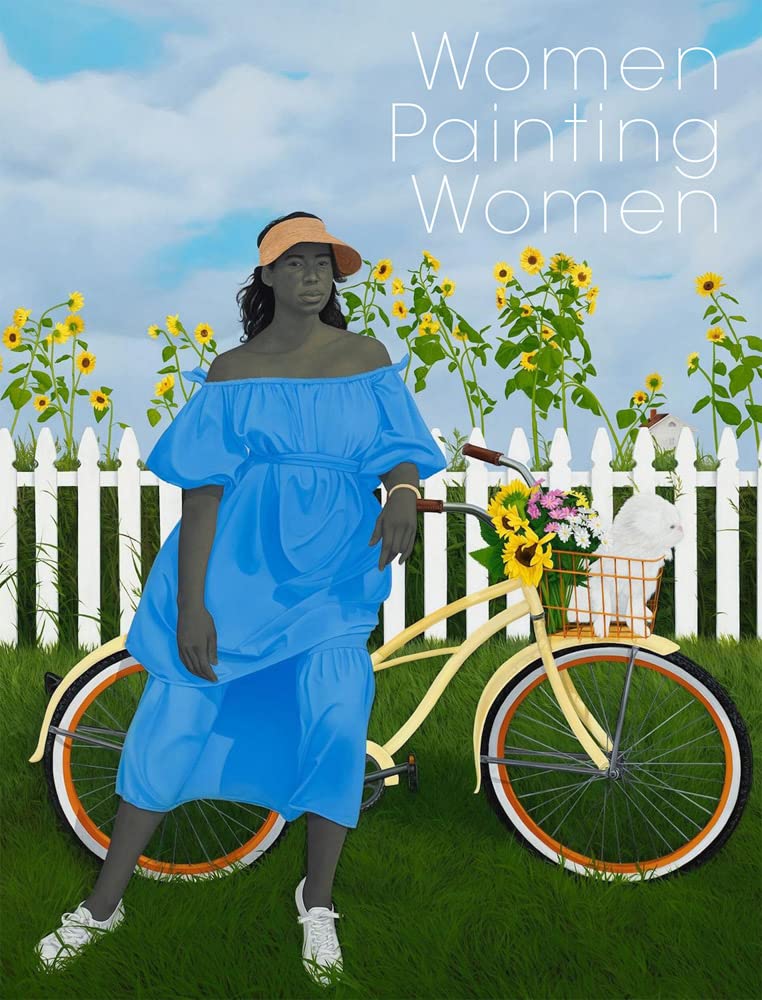
But when it’s worth the time investment, it’s worth it. So, without any further ado, allow me to present a recent podcast interview of Andrea Karnes, Chief Curator at the Modern Art Museum of Fort Worth, about her ongoing exhibition there (and accompanyingbook) titled Women Painting Women. As interviewer Dan Hill of EQ Spotlight explains:
The book documents a wide-ranging exhibit inclusive of women as both the makers and subjects of paintings. The artists hail from around the world, and over the past half-century. Our conversation took several directions. One was to discuss the power of the gaze; who’s looking, who’s being seen, and the poses evident more a matter of self-agency or passivity. Another angle was the body itself, with these female images being more realistic and often far less glamorous than commercial popular culture allows for. Third, what subject matter tropes are being overturned – from Christianity to pornography, and points in between. As the exhibit strived to accomplish, there should be something here for everyone – women especially.
It’s a genuinely enjoyable and informative interview, critically engaging with the (evil, objectifying, brutish) male gaze and (sweet, butterflies and puppies, emotionally-based) female gaze while also being refreshingly absent of jargon and dogma. It’s only a very doable 30 minutes in length too, unlike most other New Books Network interviews.
And yet, the subject is art. While it remains entirely possible to enjoy and learn a great deal from the interview as is, it was frustrating not being able to see the art being discussed as I listened (some of which, jumping ahead, was very different to how I’d imagined it). The book is priced a littleprohibitively for me too, let alone a plane ticket to Texas.
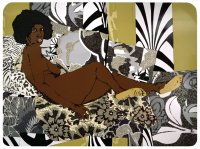
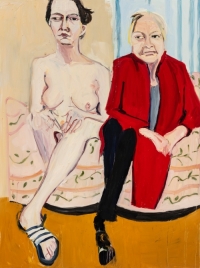
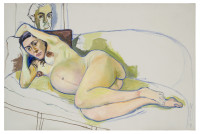
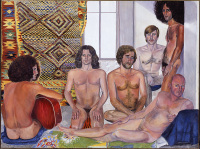
So, for your sake and mine, I’ve collected all of the artworks mentioned in the interview below in order when they’re mentioned, for you to follow along as you listen yourself. Being very wary of avoiding potential copyright claims though, I can only allow myself to post these small thumbnails sorry. But, if you do click on those, they’ll take you to far bigger versions, many of which are located in equally interesting articles about the artist and/or exhibition. Enjoy!
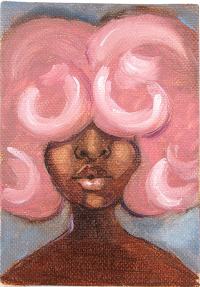
(7:50-8:30) “A Precious Blessing with a Poodle Up-doo,” 2019, by Somaya Critchlow (right).
Preceded by a discussion from 6:40 on the central importance of the subject meeting the viewer’s gaze instead of looking away (although I disagree with Andrea Karnes that the pink wig hiding her eyes doesn’t significantly diminish it in this piece). See also the recently published “Photographer Renée Jacobs Sees Her Female Nudes As Activism” (NSFW) at AnOther, for Jacob’s argument that “terms such as male gaze and female gaze are fraught. If it was up to me, I would replace them with the empowered gaze and disempowered gaze” (italics in original), as well as “The Painter [Joan Semmel] Who Directed Her Resolute Gaze at Herself” at HyperAllergic.
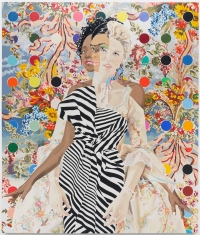
(8:30-9:30) “A Little Taste Outside of Love,” 2007, by Mickalene Thomas (left).
A connection not mentioned in the interview, now that I can see the work for myself it’s obvious it’s channeling—indeed, challenging—Amedeo Modigliani’s “Nu couché (sur le côté gauche).”
(9:30-11:20) “Self-Portrait Naked with My Mother II,” 2020, by Chantal Joffe (right).
(12:55-17:30) “Strategy (North Face, Front Face, South Face),”1994, by Jenny Saville (left).
Please see also Dallas Voice and GlassTire for photos of the artwork at the exhibition itself, for a sense of how the artwork looms over visitors and seems to ask questions of them.
(14:35, in passing) “Pregnant Woman,” 1971, by Alice Neel (right).
Unfortunately, I’ve been unable to confirm if this is precisely the (unnamed) work referred to in the interview. However, Andrea Karnes does mention that the subject looks extremely awkward and uncomfortable in it, which is certainly the case here!
(17:30-20:20) “The Turkish Bath,” 1973, by Sylvia Sleigh (left).
Andrea Karnes acknowledges the irony and contradiction of having a painting of men in an exhibition of women by women, but includes it to highlight the restrictions on depictions of female sexuality by cishet female artists in the 1970s, who were regularly censored or had exhibitions closed down for depicting men the same way women routinely were (and still are).
(21:30-22:20) “Yellow Studio,” 2021, by Lisa Yuskavage (right).
Again, my apologies for being unable to confirm if this is the (unnamed) work referred to.
(22:20-23:50) “Yayoi,” 2021, by Christiane Lyons (left).
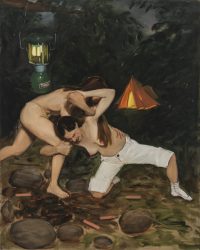
(23:50-26:10) “Weenie Roast Wrestlers,” 2019, by Jenna Gribbon (right).
Not going to lie—I need to fill this space to deal with some formatting issues I’m having in this post. Will doing so with a link to Gribbon’s Instagram suffice? ;)
(26:10-28:00) “Crucifixion I,” 1969, by Eunice Golden (left).
I appreciate the notion of bodies as landscapes Andrea Karnes explores in her final discussion about this piece. But for the life of me, I just can’t find the disembodied penis she mentions. Can you?
Estimated reading time: 2 minutes; 8 minutes with questions.
After a brief rest last month, the book club is back in August with Violets by Kyung-Sook Shin, first published in 2001 and translated into English by Anton Hur this year. Probably neither giant in Korean literature needs any further introduction though(!), so let me direct you post-haste to some reviews of the book instead—Books and Bao, The Guardian, Washington Independent Review of Books, Tony’s Reading List—and then, if Violets still appeals, to invite you to our meeting on Thursday August 25 at 7pm Korean time.
If you are interested in attending, please contact me via email, or leave a comment below (only I will be able to see your email address). I will contact you to confirm, and will include you in the club reminder email with the Zoom link a few days before the event.
Finally, below is a SPOILER FILLED list of suggested discussion topics and questions that we’ll use to loosely structure the meeting. But these are only suggestions, as I stress that the meetings are very small and informal really. And also, to help ensure that they remain as safe a space as possible, that there’s a limit of 12 participants including myself. So please get in touch early to ensure your place (and give you time to read the book!).
See you on Zoom!
♥♥♥
1) One thing I really liked about this book was Kyung-Sook Shin’s knowledge of her subject, which she gained from working on a farm for six months. As I read, I was surprised at how I couldn’t help but grow more and more intrigued by the intricacies involved in the care of trees and flowers, despite my having no real interest in the subject previously.
Are there any other books that have piqued an unexpected interest for you like this? Or at least, a greater appreciation of the subject? How about just a respect for the depth of the author’s research? In my own personal recent reading history, “The Secret Lives of Dresses” by Erin McKean comes to mind for the former, and “Limitless” by Alan Glynn for the latter two. How about you?
♥♥♥
2) Showing my age, another thing I enjoyed was the frequent mention of using phonecards and phonebooths, something I too reluctantly spent a lot of my time and loans on as a student in the 1990s. Are there any other little time and/or setting-based details like that which you found endearing? Or put you off for that matter?
♥♥♥
3)Is it a fair characterization to say that the first half of the book comes across as a very contemporary and grounded story, akin to previous book club selections like “If I Had Your Face,” “Love in the Big City,” and “Shoko’s Smile”? Only then, upon San’s second meeting with the photographer, to sequeway into something much darker, psychological, and surreal, more akin to, say, “The Vegetarian”? (One reviewer mentions there are “several moments when the narrative voice takes over, appearing to have more power and agency than the characters”; another, that “at times San felt more like an abstract idea rather than a character.”)
Were any of you surprised with that shift? Or, being more familiar with her novels than I am, already knew that surrealism was characteristic of her work? Were you disappointed by the shift? Alternatively, did you not find the transition so jarring, if indeed you agree there was one at all?
♥♥♥
4)There are many ways in which this book explores the themes of misogyny and sexism. For example, in how San’s mother is so ostracized as a single mother after her husband’s death, and so limited in economic opportunities as a woman in rural 1970s Korea, that even with her hair salon work she still has to live with boyfriend after boyfriend in order to provide for herself, mother-in-law, and her daughter—and yet still finds that task so thankless and miserable, that she ultimately leaves them both.
Without prompting, what other examples of these themes stood out to you, or resonated with you the most? Why?
♥♥♥
5)But now very much with prompting, my unpopular opinion is that I’m also finding a great deal of hyperbole and exaggeration about the book’s contents, with many reviewers shoehorning various feminist themes and elements into the book which I argue simply aren’t there at all. (See The Feminist Press for an extensive collection of such blurbs.)
Let me give two specific examples. First:
I have a deep interest in how our usage of (seemingly neutral) public space is very gendered. So, when I heard from Willow in Books and Bao’s “10 Best Books of 2022 (so far…)” video, where they cover Violets from 4:35 to 6:30, and say that (starts at 5:18)…
“It looks at the ways in which men invade women’s spaces, in a very invisible way that we all just take for granted…by touching their arm, or touching their lower back as they scoot past them in a train aisle, or they all just go up to a woman and talk to her when she’s busy, because they believe they have the right to interrupt women. There’s this sense of patriarchy that what a man has to say or do is more important and more valid than what a woman is doing by herself. And there’s a lot of moments in the book that explore that.”
…then I was instantly sold. That they don’t actually mention any of those moments in that video, was of no consequence because they couldn’t in the two minutes available.
You can imagine my frustration then, as I waited in vain for those moments to appear while reading the book. Likewise, in Willow’s earlier dedicated review video below, in which they expound upon this theme of men invading women’s personal space in great length (starts from 9:00), still they ultimately give one brief instance—the goosebumps incident—from the book itself:
Simply put, I’m just not seeing what they’re seeing. And in that vein, I’m not seeing a lot of what’s claimed in the blurbs either. (Which are exaggerated in order to sell you the book, granted—but I’m finding them echoed verbatim in the reviews.)
That being said, I’m not saying those examples are not necessarily there. They may have just been too subtle for me, consequence of not approaching the book with the right frame of mind, and/or my baggage from a long life of unwittingly dominating my own personal space as a cishet male. If anyone could point out what went under my radar then, I would be very grateful. Similarly, is there anything you expected to see, but likewise struggled to find? Please mention them, and hopefully we can all help each other to find them!
♥♥♥
6) The second specific example: in the afterword written in 2021, Kyung-Sook Shin herself says (my italics):
“This is the story of a woman unable to find a place to fit in the world, suddenly swept up into a warped desire for love that eventually breaks her; it is the story of a woman punished by violent men in a cruel city because she is unable to express her confused desire for love and connection, who then disappears into the dark.”
Which, not least because it’s coming from the author herself, sounds like a perfectly fair, uncontroversial characterization of the book, especially in light of the brutal ending. But still—would it completely unreasonable to point that except for that specific incident, almost all of the bad things that happen to San seem to be self-inflicted?
Of course, there are good reasons for San’s psychological sabotage and frail, weak, violet-like condition. Many of these reasons—most even—seem clearly related to the patriarchal circumstances of her upbringing, of her society in general, and of her present-day circumstances. But, crucially, only indirectly. So, with the proviso that in the second, more abstract half of the book I struggled to grasp what was happening most of the time, is it not fair to ask:
Does she literally only meet the photographer three brief times in the entire novel? The last occasion only after a gap of many months, after which he has no memory of her?
If true, how is her overwhelming, consuming obsession with him and his confusion—it can’t even be called rejection—his fault? Or men’s fault in general?
Who, other than herself, causes her to enter a fugue-like state and prostrate herself in a on the construction site?
Who, other than herself, “punishes” her? Which “violent men” do so, other than her rapist in the penultimate chapter?
Again, please forgive me if I’m appearing willfully polemical and disingenuous in raising what may seem such awkward questions, but my confusion and slight misgivings about popular descriptions of the contents are genuine. So, if anyone can help address those, and/or help me look at the book in a new light, I’d be very grateful!
♥♥♥
7)But still with the unpopular opinions sorry(!): San’s first meeting with the photographer, in which he is not shy expressing his disdain for what he considers an aesthetically bland photo subject (violets), and by implication shows his dismissal of San’s expertise, occupation, and/or interests, is again often cited by reviewers as a powerful example of the pervasive sexism that San encounters in her daily life. And by all means, I get that vibe too. I appreciate that (most) men often act that way (knowingly or unknowingly) towards women but not men, and so women encounter it to a degree which men might find astounding.
And yet, technically, in that particular scene, can the reasons for the photographer’s attitude be unequivocally tied to his and San’s respective genders or sexes? As a long-term resident of three countries beyond my native UK so far, whose interests and opinions in each have often been decidedly non-mainstream in my host cultures, and sometimes even considered a direct challenge to perceived norms of masculinity and sexuality, I’ve often been the brunt of similar dismissive attitudes towards what I hold dear, from men and women alike. Which is why the claimed gender symbolism of San and the first photographer’s meeting rings a little hollow for me.
♥♥♥
8)Finally, back to Willow’s dedicated review and description of a crucial scene at the beginning of the book (from 8:20 below), in which they say…
“San and her friend [Nam-ae] in Chapter 1 have the most beautiful, romantic moment in literature that I’ve read in literature in years. It took my breath away, these two young girls, exploring their intimacy with one another.”
…and go on to describe it as an unfortunately sad, but very much life-defining moment for San. Which raises two final questions:
8a) San and Nam-ae are only ten in this scene. Ten. Do you have any similarly explosive, life-defining moments from such a young age? Romantic or otherwise?* Because without wanting to detract from anyone’s ability to interpret and enjoy a novel in any way they damn well please, personally I can’t but help but see Willow’s takeaway as a projection of a more mature sensibility onto San than her age really warrants.
(*I realize this may be too private and TMI for a book club meeting. So please don’t worry—as with any of these questions, answering is completely optional!)
8b) Lest we forget, recall we are talking about two nude ten-year old girls kissing.
Although I personally question if “romantic” is really the correct term to describe such an interaction between children, I don’t deny anyone the right to regard it as such, regardless of their age, gender, or sexuality. But do you sense a huge double-standard in who would be publicly admit it? What would be your reaction if you were at a bookish party and met someone like myself, a middle-aged cishet man, who claimed that that scene was the most romantic moment he’d read in years? That he found it so romantic in fact, that it made him cry? No, really?
See you in the meeting! ;)
If you reside in South Korea, you can donate via wire transfer: Turnbull James Edward (Kookmin Bank/국민은행, 563401-01-214324)
It’s all very cute and charming until you realize how rarely you see it used on men. Why is that?
Estimated reading time: 7 minutes. Right: So-hee of the Wonder Girls.
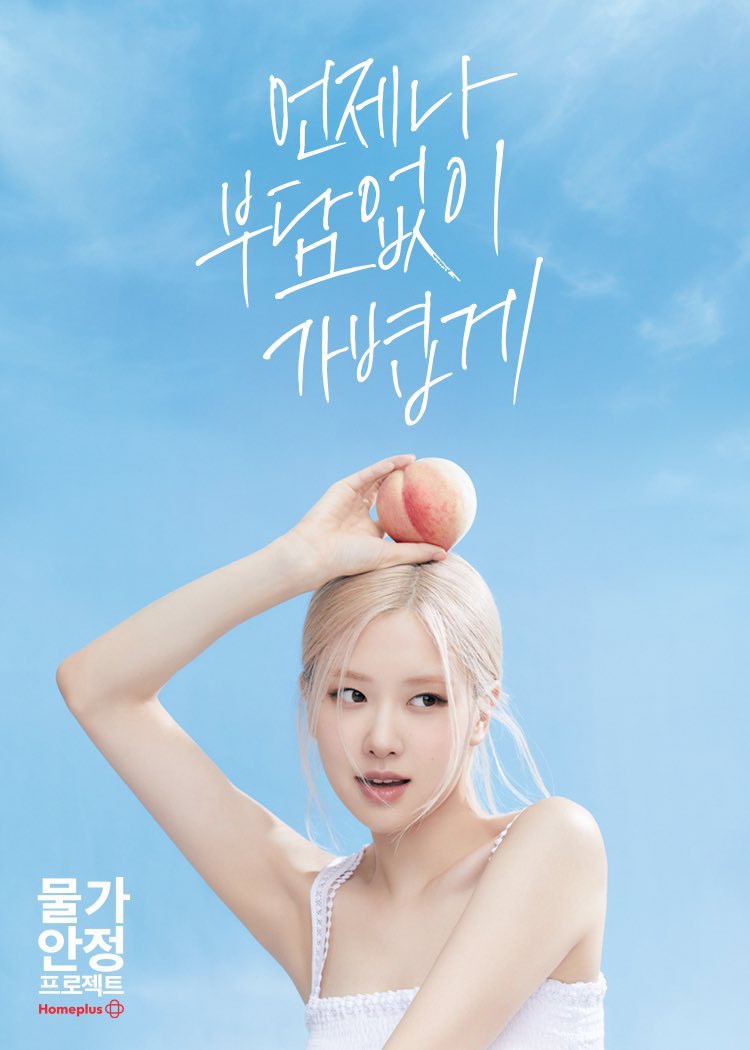
Yeah, Rosédoes look very cute and charming in that poster. So it’s not like I’m about to boycott my local Homeplus over it. I have absolutely nothing against her either, who likely had little to no input in the direction of their advertising campaign. But when you realize that peach on her head effectively sabotages the whole concept behind that campaign, despite all the planning, preparation, and financial risks involved in hiring one of the hottest and most expensive stars in the world to help create that concept in the first place, then you really do have to ask why.
The poster, one of two of her that that nowfeature prominently at Homeplus stores (and online), is part of the chain’s “25 Years: A Fresh Way of Thinking” rebranding campaign to mark its 25th anniversary and launch of its new one hour delivery service. But critics were non-plussed by Rosé’s first, very different commercial for the campaign in February below, only grading it only a 2.6 out of 5. One of them thought the dancing and focus on Rosé’s face and body in the first half rendered the commercial more like one for Yves Saint Laurent, for whom Rosé already works as an ‘ambassador.’ Many others, that the luxurious, almost mature tone and atmosphere would only cause confusion among consumers when the logo for the homely supermarket chain then suddenly appeared. Also, that people’s attentions would be concentrated more on Rosé rather than on the service being advertised, and that stressing that she was 25 was unnecessarily ageist and alienating. (Actor Yeo Jin-goo was also hired as an endorser for being 25, with his own commercial rightly focused on high quality food. But the limelight has firmly been on Rosé.)
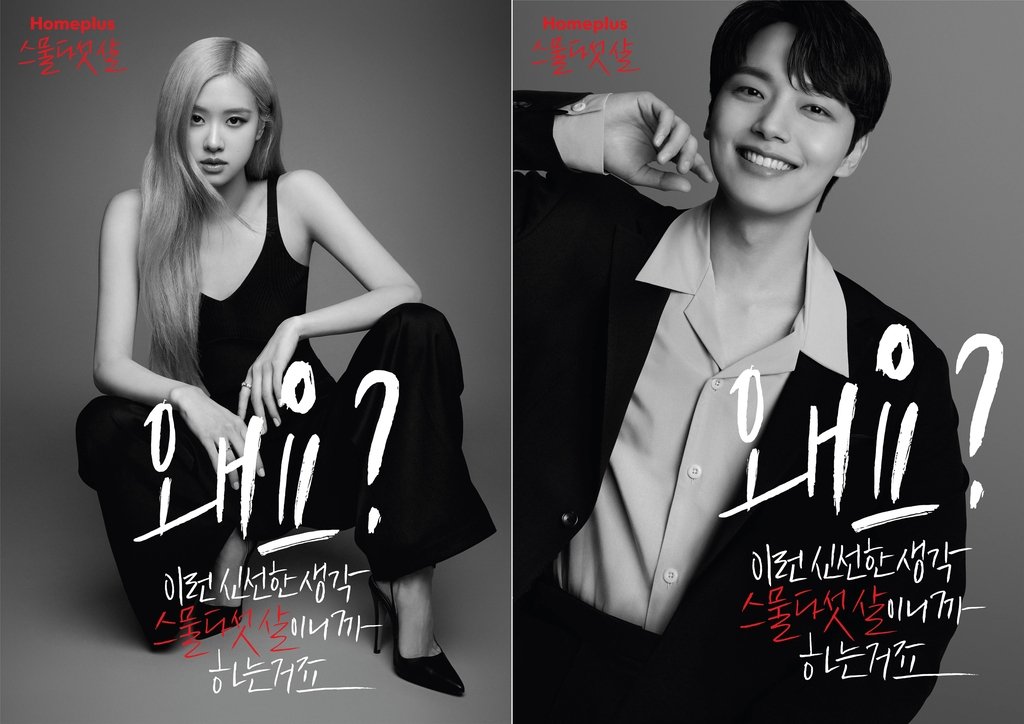
I tended to agree, especially about the unnecessary alienation of the bulk of its much older customers. Because well before I saw that commercial, I’d already noticed Rosé’s and Yeo Jin-goo’s glamorous visages in the giant banners below at my own local Homeplus, their eyes seeming to follow me as I perused the toiletries aisle, pondering which toilet paper best represented me as a person. Their purpose just baffled me. Neither of them offered any hint of any particular new Homeplus product or service, with both just saying (lit.) “Why? I have this fresh thinking because I’m 25.” Was Homeplus trying to remind me I’m almost twice as old? That just like when I used to run into my horrified students in bars, could I please just stop embarrassing them and leave?
Shockingly however, younger Koreans didn’t seem to care less about any of their elders and betters thought of the campaign. By April, there were 30 percent more visitors to brick-and-mortar stores in that age group than a year previously; of 20-24 year-olds specifically, a whopping 60 percent. Meanwhile, online customers in the 20s and 30s combined also increased by 60 percent.
Which still doesn’t mean it was a good commercial. It wasn’t. But the next one, which came out on July 14, was. It refined the concept, presenting the perfect combination of the millennial dream of living in own’s one place in the heart of Seoul, of having the free time to luxuriate over the exquisite-looking grapes, and of having such a convenient fast delivery service for them available. And, lest I forget: that it was want-her or want-to-be-her Rosé showing us all of this too:
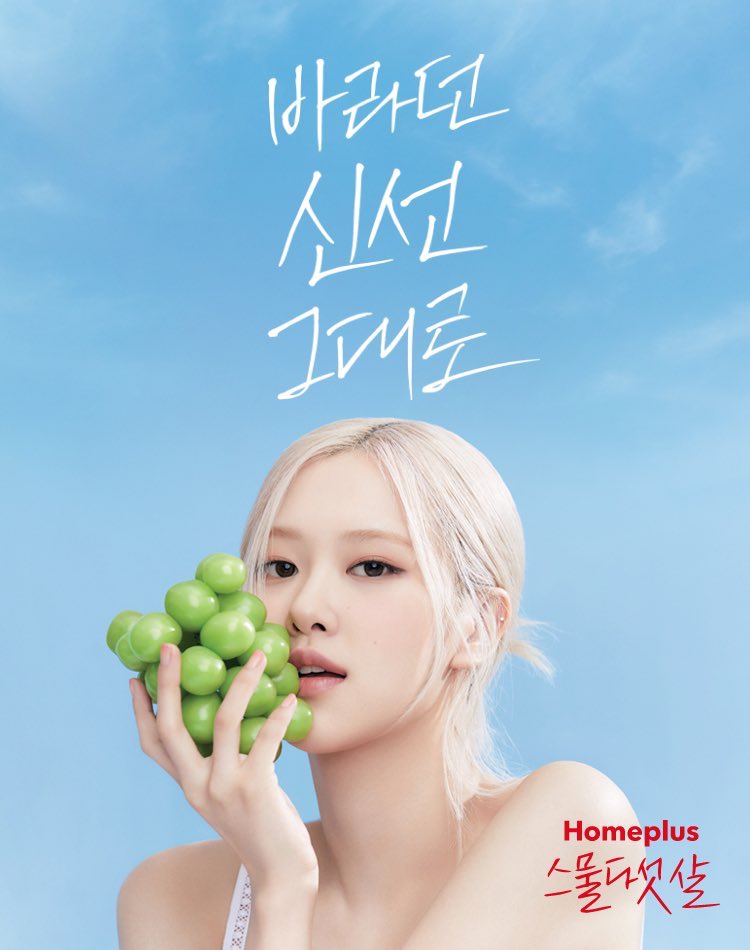
Which is why I’m so annoyed by the laziness of the two accompanying banner posters, which have since replaced those for the first commercial in stores (poor Yeo Jin-goo is nowhere to be seen):
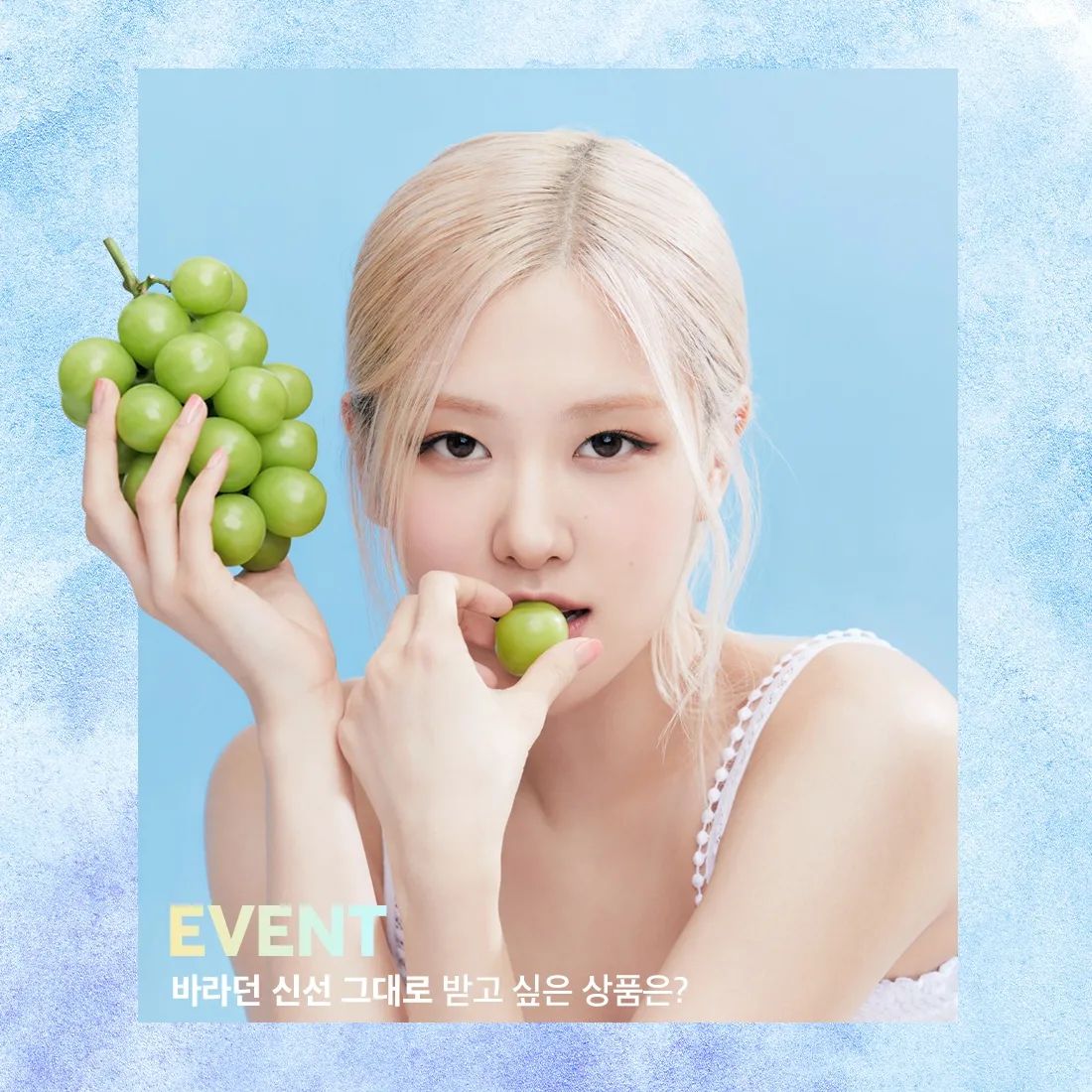
This first one, ironically used as the YouTube thumbnail, is simply poorly executed: as it happens, I consider myself a more sensual person than most (just throwing that out there), but even I can’t picture anyone so enjoying the texture of grapes that they’d ever want to rub them against their face. But let’s say I do suspend my disbelief for a moment. Even then, I’m still not getting the feeling from this poster that Rosé was, say, really, really enjoying the grapes just a moment ago, but has suddenly just noticed me and is about to invite me to join. Instead, the poster simply shows what actually happened: she was instructed to put the grapes to her face, so she obliged. Not to pretend to be interested in them too, as she was asked and did so well in the commercial.
By all means, the grapes do add an aesthetically pleasing splash of green, and vaguely fit in with the headline of “As fresh as you see.” Her mesmerizing gaze back at the viewer? It quashes all doubts of why she’s a superstar. And perhaps—okay, I see it now—the taut, tight skin of the grapes is meant to vibe with Rosé’s own. Again, symbolizing that freshness concept. (But so too, illustrating the huge potential for any celebrity endorser to completely overshadow the advertised service or product.) But surely it was possible to do so without losing the sensuality of the original commercial?
Just see for yourself. Compare this first of two additional images Homeplus released on its Instagram on July 15, but neither of which seem to be displayed in stores. (Yes, I’ve visited four in the last two weeks to check, feverishly snapping away at Rosé; by now, the security staff have probably flagged me as a pervertedsamcheon fan.) This one isn’t perfect by any means, but it at least retains some of the sensuality of the commercial, by reminding consumers that delicious-looking grapes are best enjoyed by actually eating them. And again, even if making a link to her youthful skin was considered just as or even more important (because Korea), why not combine both motifs?
This next, much cuter and more playful Instagram one, is very difficult to dislike (notice a recurring theme?). But it too represents a big step away from the sensual concept of the commercial, and of the commercial before that as well. And yet, still it would have been a far better choice than the second poster actually chosen for the stores and homepage:
There’s three big reasons not to like it. No, really.
First, in the second, very aspirational TV commercial it’s ostensibly tied to, we were supposed to pretend Rosé was just like you and (much younger) me, only with a nicer apartment and more carefree lifestyle. Which worked. To a greater or lesser extent, you could still roll with that vibe in all of the other images with the grapes above too. Whereas this one just casually tosses that carefully crafted fantasy aside. As playing with the product by putting it on your head, combined with her looking not at you, but at a more important, separate person/photographer instead, instantly identifies her as a glamorous model or celebrity. Ergo, not at all like you or me.
Second, just in case I haven’t stressed it often enough: the whole concept of the entire campaign, best expressed in the second commercial, was all about Homeplus gratifying your senses. Being able to get your fresh fruit quickly through its new delivery service, then enjoying, perversely lingering on and luxuriating in its look, taste, smell, feel, and—if you try hard enough—sound too. There was a strongly implied erotic potential as well. But here? What I actually see when my raging alcoholism drives me to head out to my local store for a cheap bottle of whiskey? That would be placing a peach on your head. As in, Homeplus no longer cared what I think of how that peach looks, tastes, smells, and feels like, the whole ostensible reason for signing on its to new, trendy, one-hour delivery service in the first place (what, you too had forgotten this is what the campaign was selling?). Rather, the peach has become instead just a prop, a toy even, which ultimately could be replaced by just about anything Homeplus sells and still have the same effect. Say, even that toilet paper I eventually did choose.
So, being generous, at best it’s lazy. It’s unoriginal. You could say the peach on her head loosely matches the headline of (lit.) “Whenever, with no burden, lightly,” but it’s tenuous. More likely, the advertisers asked Rosé for that pose because again, it simply makes her look cute and carefree, campaign concept be damned. And also because third, finally, and more likely still, that’s just what advertisers do with young female models.
“Look at these images. What do they suggest to you about these men? Do they seem silly?”
“What about these images?”
“Most viewers find the images of the men odd or laughable. But the images of the women seem charming and attractive…Why should it seem funny to see a picture of adult men striking a pose when the same pose seems normal or charming to us in pictures of adult women?”
Or, to conclude by going back to where we started: no matter how cute and charming Rosé may appear in the last poster, the campaign’s concepts of sensuality, luxury, and convenience are frequently confused by focusing on her looks, skin, and cute personality instead. Had they been the focus from the get-go, that would have been fine, and I wouldn’t have been annoyed at all.
I really do have better things to do with my time than write about this shit.
Instead, I’m reminded that it’s just so normal and unremarkable to infantilize grown women in ads, and that advertisers just can’t help themselves.
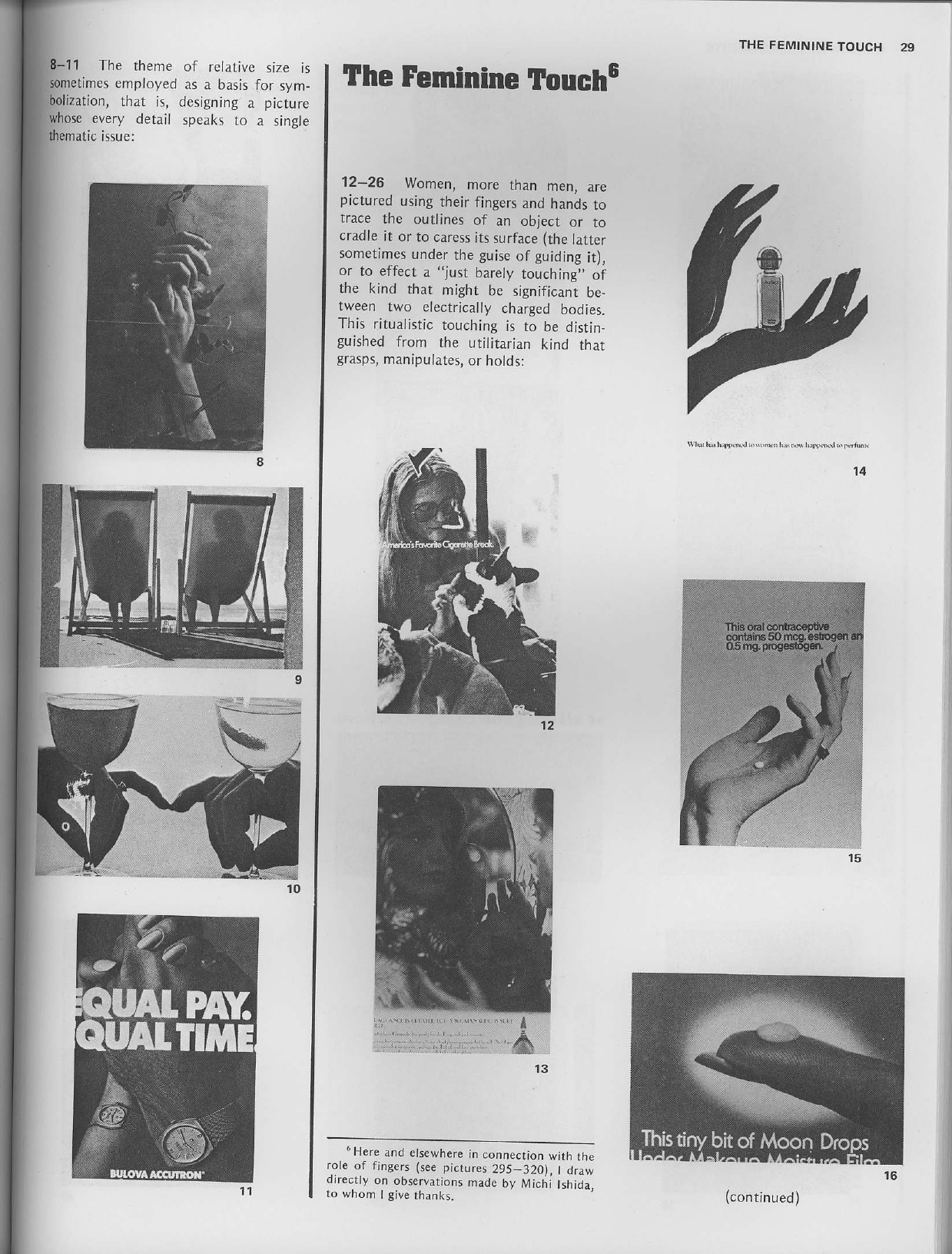
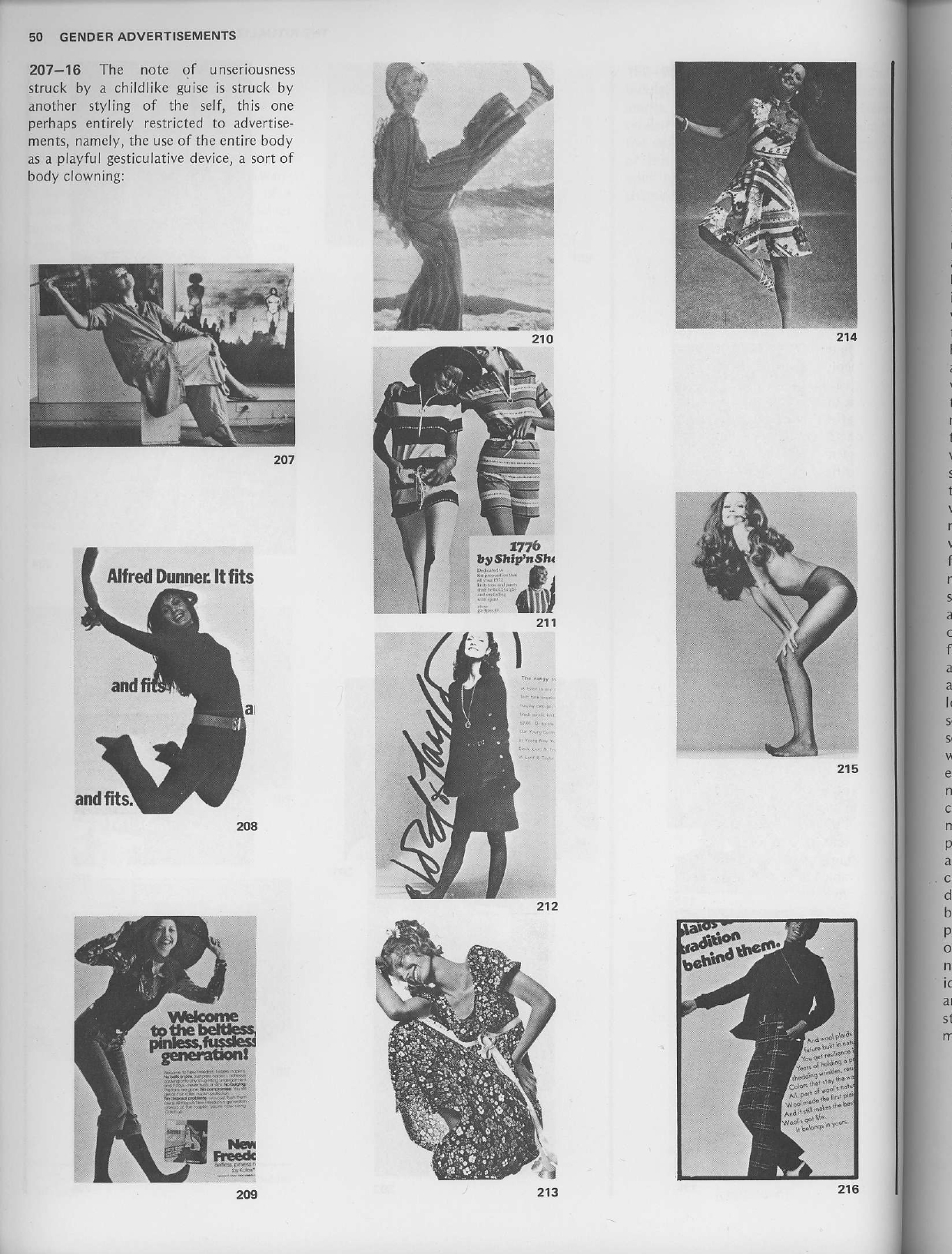
Because in addition to the aforementioned gender imbalance (which is the real issue; there’s absolutely nothing wrong with being cute), let me leave you with two pages from the classic Gender Advertisements by sociologist Erving Goffman, first produced the same year as me—1976. Sometimes, as you’ll see, it’s astounding to realize how little has changed in the 46 years since then.
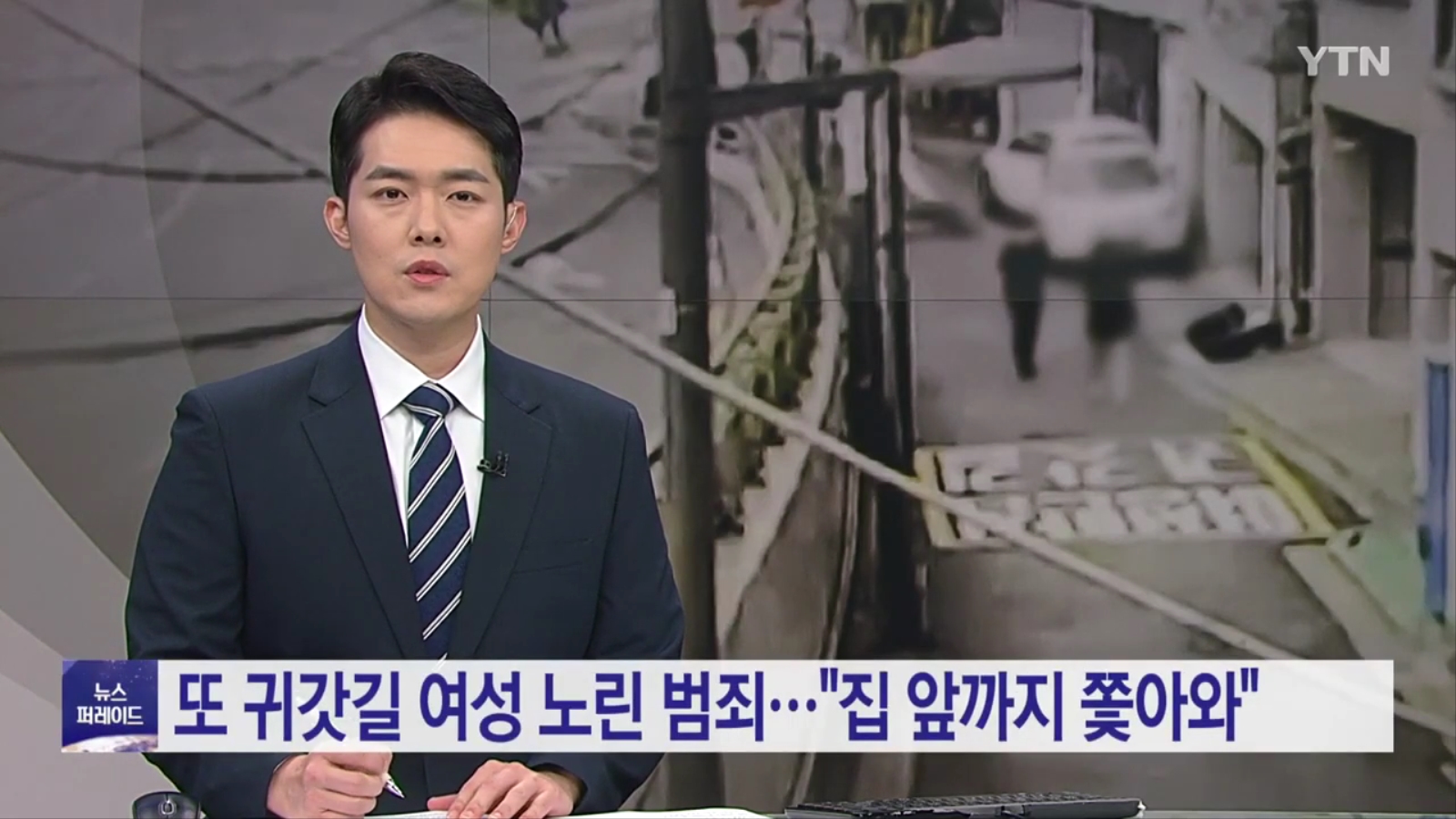
To my surprise, I’ve encountered no English-language news about it in the 3 weeks since the news broke. So, to compensate and raise greater awareness, I’ve translated the transcript of a YTN news report about it for you below. Following that, for context I’ve also included a chronological list of related news articles about stalking in Korea and recent law changes in the ‘Related Posts’ section:
[Exclusive] Another targeting of a woman on her way home… “He followed me all all the way to my front door!”
YTN, Wednesday June 15
Anchor:
새벽 시간대 한 남성이 홀로 걷는 여성을 뒤쫓아 집까지 따라 들어가려다 달아난 사건이 일어났습니다.
여성이 수상한 낌새를 눈치채지 못했다면 더 큰 범죄로 이어질 뻔한 상황이었는데요.
YTN이 관련 영상을 확보했습니다. 김혜린 기자의 단독 보도입니다.
During the early morning hours, a man followed after a woman walking home alone, ultimately running after her all the way to her home.
If she hadn’t sensed something suspicious was up, there’s no telling what might have happened.
YTN has gained a copy of the relevant security camera footage. Here is an exclusive report by reporter Kim Hye-rin.
[Reporter]
검은색 티셔츠를 입은 남성이 여성의 뒤를 바짝 쫓습니다.
곁눈질로 돌아봐도 아랑곳하지 않고 쫓아가는 남성.
두려움을 느낀 여성이 멈춰 서서 뒤를 돌아보자, 그제야 여성을 뒤쫓던 게 아니라는 듯 인근 건물로 향합니다.
여성이 다시 가던 길을 가자마자 이번엔 여성을 쫓아 전속력으로 달립니다.
여성이 사는 주택 대문까지 남성의 미행은 계속됐습니다.
[피해 여성 :골목길 시작되고 조금 더 걸어갔는데 그 남자가 진짜 저를 너무 바짝 쫓아오는 거예요.]
A man in a black t-shirt follows the women closely.
Even though he only ever seems to give her side-glances, he pursues her relentlessly.
When the woman, feeling scared, stops and turns around, he heads to a nearby building and acts as if he was not following her at all.
But as soon as she starts walking again and turns into another street he starts running after her.
In fact, he didn’t stop following her until she’d made it home.
[Female Victim: Once I walked into the alley I wanted to get away from him by walking a little further head, but he just kept following me closely.]
지난 6일 새벽 6시 반쯤, 남성은 서울 마포구 대흥역 개찰구에서 20대 여성 A 씨의 단독주택까지 도보로 10분 거리를 미행했습니다.
현관문을 열고 들어서는 순간 주택 대문을 넘어서는 남성을 발견한 A 씨.
현관문을 재빨리 닫은 뒤 경찰에 신고했지만, 사건 발생 열흘이 다 되도록 남성을 잡았단 소식은 없었습니다.
개찰구에서 교통카드를 찍은 명의자를 확인하는 데에 며칠이 걸린다는 경찰의 답변만 받았을 뿐입니다.
혹시나 남성이 다시 찾아오진 않을까 공포에 떨어야 했던 A 씨는 결국 정신과 상담까지 받았습니다.
[피해 여성 : 스트레스도 심하고 신경이 계속 곤두서 있고, 계속 긴장이 되어 있고…. 제 사건은 일주일이 넘도록 안 잡히고 있고. (경찰은) 영장을 두 번 받아야 해서 수일이 소요된다 이런 말씀을 하시는데 어제 답변을 받고 답답해서….]
The ordeal began at around 6:30am on Monday the 6th of June, when the man followed the female victim in her 20s for about 10 minutes from the ticket gate of Daeheung Station in Mapo-gu, Seoul to her detached house.
Once she made it to her home, he even climbed over(?)/went through(?) the front gate. The victim quickly closed her front door on him and reported the incident to the police, but there was no news until the man was arrested 10 days later.
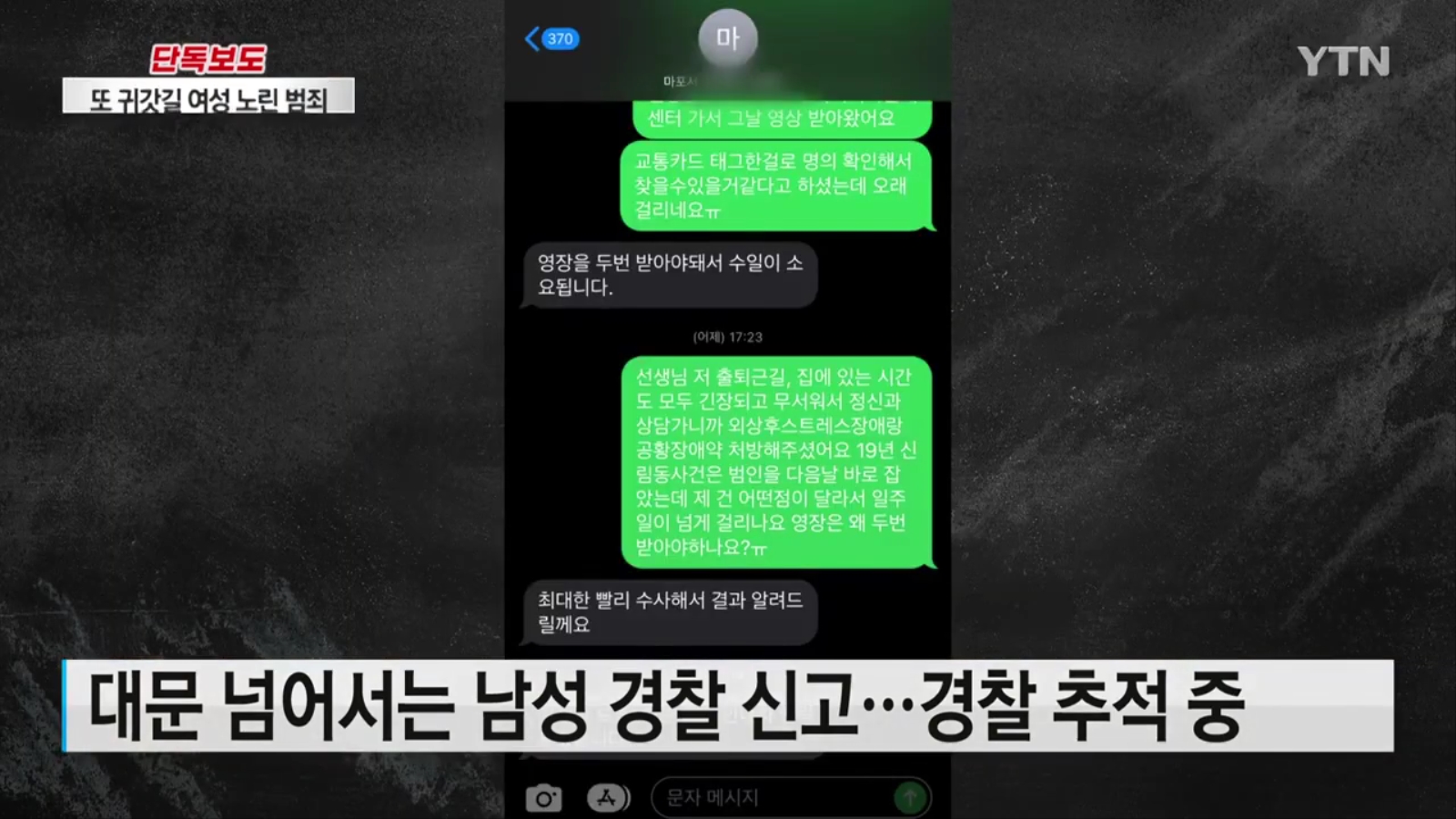
Rather, after making the report, all the victim heard was that it would take a few days to check the station’s ticket gate records to determine which transportation card the man used and determine his identity.
(James—I think saying there was “no news” is slightly misleading, because as you’ll see below the victim was very much in communication with the police. Also, by no means would I ever default play Devil’s Advocate for them, but it’s not like they could *ignore* the legal requirement for two warrants before gaining access to those records, and in the screenshot of their texts with the victim below they do say they’ll notify her as soon as possible of any results of the investigation.)
Consequently, the victim, who had to remain in fear in the meantime that the stalker might come again, ultimately had to receive counseling.
[Victim: I’m under a lot of stress, my nerves are constantly on edge, and I’m still nervous. Nothing’s happened in my case in over a week. “Police: We have to get two warrants, which takes days.” Victim: The police told me this yesterday, which left me so frustrated.]
지난 2019년에는 서울 신림동 원룸에 사는 여성을 따라가 집에 침입하려 한 30대 남성이 붙잡히기도 했습니다.
이 남성은 원룸에는 들어가지 못했지만 공동 주택 현관문에 이미 들어온 상황이라 주거 침입죄가 적용됐습니다.
문제는 집에 침입해 강력 범죄가 발생하지 않는다면 범죄 의도만으론 강하게 처벌할 수 없다는 점입니다.
신림동 원룸 사건 역시 재판부조차 성폭력 의도를 의심했지만, 남성은 징역 1년의 처벌을 받는 데에 그쳤습니다.
[이은의 / 성폭력 전문 변호사 : 따라가서 문을 열려고 했던, 사실 의도야 뻔해 보이기는 하지만 그 의도를 단정하거나 입증할 수 없는 상황(이라 의도를 처벌하기는 어렵지만,) 강간을 하기 위해 따라갔는지는 정확히 알 수 없으나 침입을 하기가 쉬운 대상이기 때문에 그 사람을 따라간 거는 확실하잖아요.]
현실적으로 범죄 의도만 놓고 처벌을 강화하긴 어렵지만 최소한 주거 침입죄에 대해선 형량을 높여야 한다는 목소리가 나오고 있습니다.
YTN 김혜린입니다 (khr0809@ytn.co.kr).
In 2019, a man in his 30s was caught on CCTV trying to enter the one-room apartment of a women living in Sillim-dong, Seoul that he had been following.
Although he was unsuccessful, he was charged with trespass as he had already entered the apartment building itself.
(James—Here, it is curious—well, startling really—that the news report does not mention that the stalker was only prosecuted in response to overwhelming public pressure, nor that it was the catalyst for a recent law change forcing more active responses by police. Either way, given that the most recent victim had to remain in fear of a repeat encounter for so long, and that the stalker will still only be charged with trespass at most, clearly still much more needs to be done.)
A problem with such offenders is that unless an actual break-in or other crime actually occurs, prosecution is difficult when based on suspected criminal intent alone.
Consequently, in the Sillim-dong case, the man was only sentenced to one year in prison despite the judges having strong suspicions that he intended to sexually assault the victim.
[Lee Eun-euo, a lawyer specializing in sexual assault cases: In the Sillim-dong case, the man had clearly determined the inebriated woman walking home alone to be an easy target, so the criminal intention was obvious. But in addition to being difficult to prosecute based on intention alone, it is unclear whether rape or robbery was the goal.]
Realistically, it remains difficult to strengthen punishment based on criminal intent alone. But there are voices that call for at least harsher sentences on trespassing to be made.
YTN Kim Hye-rin reporting (end).
Related Posts:
Raped, assaulted, nowhere to find help: Foreign women speak out about their experiences of sexual violence in Korea (14/01/2022, The Korea Times)
S. Korea will now immediately detain stalkers who threaten their victims (16/12/2021, The Hankyoreh)
Police again draw fire for inadequate response to stalking case (13/12/2021, Yonhap)
Daily reports of stalking sharply increase after implementation of anti-stalking law: police (18/11/2021, The Korea Herald)
Stalking perpetrators to face up to 5 years in jail under new law (21/11/2020, The Korea Herald)
New law strengthens punishment for stalkers, expands reach (21/10/2021, The Korea Herald)
9 out of 10 stalking suspects go unpunished (24/04/2021, The Korea Herald)
Korean law 101 stalking and protective measures (14/10/2020, 안현주 변호사 Hyunjoo Ahn@YouTube)
Policeman arrested for housebreaking, attempted rape (18/10/2019, The Korea Times)
It’s attempted rape, not just trespassing: K-stalker in viral video gets charge changed as South Korean police bow to public outrage (31/05/2019, South China Morning Post)
Court to decide arrest of ‘Sillim-dong CCTV’ rape suspect (31/05/2019, The Korea Herald)
Stalking crimes rise with lax punishment (05/11/2018, The Korea Herald)
“Another day, another story on South Korean media portraying violence against women as if it’s something romantic or playful” (16/08/2018, Hawon Jung @allyjung)
“Cute Lines for Cute Girls”: Street Harassment Framed as Fun (02/02/2013)
If you reside in South Korea, you can donate via wire transfer: Turnbull James Edward (Kookmin Bank/국민은행, 563401-01-214324)
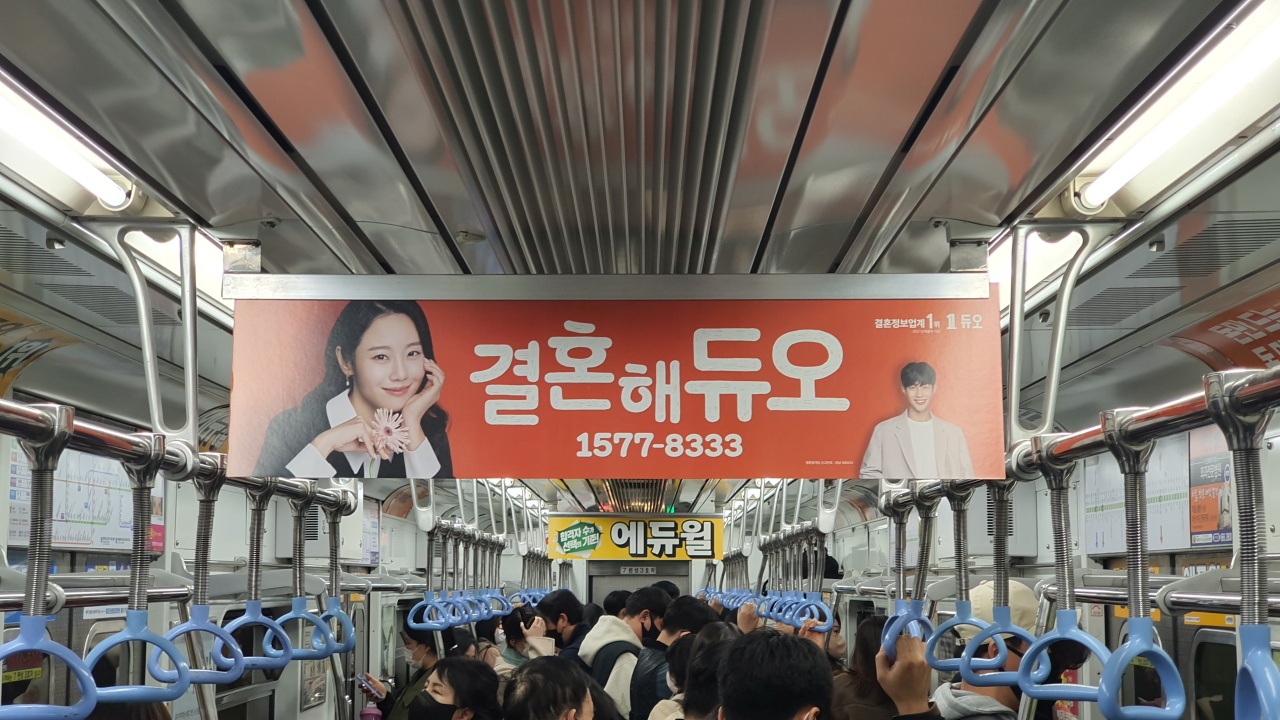
I have a confession to make: I sometimes watch a YouTube channel called Charisma on Command. But please don’t be fazed by the name—“The Game” it is not, and its videos on topics like networking and public speaking can benefit anyone. So selective is my viewing though, that I often forget just how centered on cishet men the channel really is. Which, to be clear, is absolutely not a bad thing. But it does indicate a strong potential for biased perspectives, as recently became evident to me through their May 2022 video “How to Command Respect If You’re Short” below:
I realize it may seem unfair to bring a critical feminist lens to a video that was likely only intended for men. But most of its tips still appear to apply regardless of sex, leaving viewers with the reasonable assumption that women are just as free to use them. Whereas in reality, there are a number of sexist obstacles in their way, to the extent it may actually be more prudent for many women not to use the tips at all.
So, paralleling a now infamous 2013 Quora piece in which the white author believed he was simply giving ‘lifehacking’ advice, but was ultimately providing more of a demonstration of how white privilege operates, let’s highlight three of those obstacles here, taking advantage of the opportunity offered by the video to show how male privilege works.
All three are related to overall advice point “#2: Be a big presence” (3:04), starting with “Option 1: Be the loudest person in the room” (3:10). In the video, comedian Kevin Hart naturally makes that look very easy in his talk with male sports commentators. But for the vast majority of women in more mundane, less public professions who are, say, looking for more of a voice in work meetings? The unfortunate reality is that not only are they usually underrepresented in them, but they’re also generally expected to talk less than the male attendees too. So normal and routine can this feel to men and women alike, even attempts to achieve simple gender parity can raise shackles and accusations of female bias—let alone for a woman deliberately attempting to be “the loudest in the room.” Just see for yourself, through the many excellent points and links raised in a convenient recent Twitter thread posted by regular meghan 나영지 (@ruemcclammyhand):
Source: Michael Farrell (@mikefarrell); see here for the linked article at In These Times.
Source: CyberLuddite (@WispyNeckbeard); see here for the linked article at PBS.
As with all of the tips offered in the video, none of this context entirely precludes women from still taking them up. In this particular case for instance, I’m sure there’s much to be said for women “leaning in” and getting the attention they deserve, chauvinistic bosses’ and coworkers’ opinions be damned. (You tell me.) But the point remains that women face difficulties that men may not realize exist. So too with “Option 2: Use expansive hand gestures” (3:37) and—I regard them as the same really—“Option 3: Freely use neutral space” (4:24), which again ignore how strongly we’re all socialized against women doing either. As Niall Richardson sums up very well in Transgressive Bodies: Representations in Film and Popular Culture (2010, page 78):
…the question of “taking up space” is not the same when it transfers across the gender divide. From an early age women are taught to restrict their bodies and retreat while men are encouraged to dominate the space. Consider this vivid description from a Marge Piercy novel in which performers in a drama workshop are instructed by the teacher how to perform gender for the forthcoming play:
She demonstrated how men sat and how women sat on the subway, on benches. Men expanded into available space. They sprawled, or they sat with spread legs. They put their arms on the arms of chairs. They crossed their legs by putting a foot on the other knee. They dominated space expansively.
Women condensed. Women crossed their legs by putting one leg over the other and alongside. Women kept their elbows to their sides, taking up as little space as possible. They behaved as if it were their duty not to rub against, not to touch, not to bump a man. If contact occurred, the woman shrank back. If a woman bumped a man, he might choose to interpret it as a come-on. Women sat protectively, using elbows not to dominate space, not to mark territory, but to protect their soft tissues.
Another confession: actually, I only found Transgressive Bodies while (unsuccessfully) searching for a very similar page from Nancy Henley’s groundbreaking 1977 work, Body Politics: Power, Sex, and Nonverbal Communication, which frankly instantly came to mind when I saw the video title. For your interest, and because this classic deserves to be far better known, let me also include the following photos of pages 38-39:
Let me also pass on the first hit in my search, City Living: How Urban Spaces and Urban Dwellers Make One Another by Quill R. Kukla (2021, pages 261-262), who: shows how such micro-behaviours and norms extend to the macro; makes observations about the similar constraints on various races and classes; and indeed who goes on after the below to discuss that notorious Quora piece on white privilege:
A wide range of factors help determine who can access and participate in a purportedly shared space…. The color of our skin, our perceived gender identity, and our perceived class (regardless of our actual economic situation) all affect how we can move through and use space…. People whose bodies are read as female are trained from a young age to avoid streets at night, to travel in groups, and to adopt defensive and self-isolating bodily positions in order to avoid sexual attention from men (Young 1980). This training not only shapes their bodily movement through space, but prevents many social micro-interactions of the kind that make up city life; women cannot risk minor friendly passing interactions with men for fear that they will escalate.
For more on the macro, or more specifically how our transportation, streets, buildings, rooms, even the very chair you may be sitting on to read this may all be designed, built, or created under the assumption you’re a middle-aged cishet white man, I also highly recommend Feminist City: Claiming Space in a Man-made World by Leslie Kern (2020; my brief review here).*
Finally, for women to try “Option 4: Use platonic touch” (4:57) on men, they would not confront a sexist obstacle per se. More, a sexual reality: that cishet men, forgoodreason, are just wired to frequently misinterpret friendliness from women as sexual interest—let alone physical touch. But of course, there are issues with men using platonic touch on women too, which few men are going to start ignoring due to the video (although, confusedly, it does feature 2 male-female encounters among the dozen male-male ones).
And yet again a sexist obstacle emerges anyway. As most workplaces are male-dominated, especially as you move up the hierarchy and encounter figures you most need to impress, simple numbers ensure that men are far more likely to have opportunities to try this tactic on other men than women will on other women.
Or do they? I have a final confession to make: I am not the most ambitious of Charisma on Command subscribers, having very, very limited opportunities to use any of their tips in my own career. I have obvious limits in placing myself in working women’s shoes too. So, if I’ve dropped the ball asking myself what it might be like for women applying this video’s tips, please let me know. But either way, there will always be value in having such conversations about whether ‘universal’ tips genuinely apply to non cishet white men, and I look forward to continuing this one with you in the comments below, or on Facebook or Twitter!
The semester is finally winding down, I’m finding free time to research and write, and I’m happy to announce that I will have new posts for you very soon (thank you for your patience!). But in the meantime, great minds continue to think and…er, read alike, which brings me to this month’s book: Korean Teachers by Seo Su-Jin (Harriet Press, Aladin, Amazon), first published in Korean in 2020 and then in English in March this year. In short, it’s a quick, very readable, and very contemporary book about four Korean teachers in a Seoul university, which anyone who’s ever worked a Korean hagwon, school, or university will instantly be able to relate to, as well as students of Korean too. But as the synopsis from the publisher Harriet Press explains, really it’s about much more than that:
Winner of the Hankyoreh Literature Award, Seo Su-jin’s debut novel follows four Korean language lecturers at Seoul’s prestigious H University over the course of an academic year. Readers will spend one season with each of the four protagonists—Seon-yi in the spring, Mi-ju in the summer, Ga-eun in the autumn, and Han-hee in the winter—getting a close glimpse into the challenges and joys of sharing a new language and culture with students from abroad.
As readers delve into the story of each woman and the unique paths they have chosen to become a Korean lecturer, they watch Seon-yi, Mi-ju, Ga-eun, and Han-hee deal with a myriad of social and ethical challenges that accompany their job and their personal lives. From asserting themselves as modern-day career women braving sexism from both students and coworkers, to the shocking revelation that students, too, are treated unfairly as some are deemed to be more ‘desirable’ than others by H University. Some of the teachers had to bow to these pressures, but what fate would befall those who fought against the grain? Each of these women must ultimately find her place as a conduit between her students and an increasingly multicultural Korean society.
Praised as a novel that questions why highly educated women are still facing the formidable hurdle of ‘becoming somebody’ in Korean society, Korean Teachers is gratifyingly piquant as it skillfully peeks into the lives of contemporary women and how they challenge the societal norm where gender discrimination is ever so prevalent.
For further information, both about the book and more about the reality of conditions for Korean university teachers, please also check out this author interview in the Korea Times and this dedicated Reddit thread.
If you’re interested in attending, please contact me via email, or leave a comment below (only I will be able to see your email address). I will contact you to confirm, and will include you in the club reminder email with the Zoom link a few days before the event.
Finally, below is a SPOILER FILLED list of suggested discussion topics and questions that we use to loosely structure meetings. But the meetings are still very small and informal really, and, to help me ensure they’re as safe a space as possible, there’s a limit of 12 participants including myself. So please get in touch early to ensure your place (and give you time to read the book!).
See you on Zoom!
Update: With many parallels to the issues for Korean teachers raised in the book, the Yonsei’s Korean Language Institute Union is currently in the second year of its dispute with Yonsei University.
Update 2: For the July 28 meeting, we’ve chosen Violets by Kyung-sook Shin (2001, trans. 2022). A separate announcement will be made later, but in the meantime please enjoy these reviews from The Guardian and Books and Bao:
♥♥♥
General Questions/Thoughts
Anyone who’s ever worked a Korean hagwon, school, or university will instantly relate to the teachers’ many complaints about their management, bureaucracy, and students. Do you have any similar experiences to share?
How about similar experiences as a Korean language student?
The teachers in the book all have different opinions on the appropriate levels of how social to be with students, how difficult to make their courses, and what the students’ needs are. Which teacher’s opinions are most like your own?
Did anyone else find the romanized Korean words pretty difficult to follow at times? I wish the original Hangul had also been included alongside them, and am frustrated that so few translations of Korean works provide these!
Spring Semester—Seon-yi
If you were a teacher, what would you do if you discovered that your adult students were surreptitiously taking (appearance focused, but non-sexual) pictures of you at your workplace and uploading them to social media?
Obviously, Seon-yi is very upset that Quan is ultimately going to be deported, losing all the considerable money he and his wife Phuong invested in coming to Korea. It also results in a mass exodus of Vietnamese students, for which she is unfairly blamed. Should she have handled it differently? Could she have handled it differently, seeing as, ironically, she was the only victim among the teachers who didn’t file a police report?
Summer Semester—Mi-ju
Have you, or someone you know, made a similarly egregious case of misgendering someone? What happened and what were the consequences?
How could Mi-ju have avoided her own mistake?
In Korea, my students invariably struggle with my attempts to use even the most basic sexuality and gender-inclusive language in the classroom, and would much prefer I stuck to simply he/she and assuming everyone is heterosexual (admittedly, most of my students are low-level; by no means is their reluctance necessarily due to ignorance or homophobia). What have been your own experiences with using such language in Korea, or indeed in any country where little thought is given to political correctness, let alone preferred pronouns?
Autumn Semester—Ga-eun
I liked the point about Ga-eun being popular with the students partially because she teaches low-level classes—whereas as you advance, progress becomes much more difficult and frustrating, and this gets reflected in lower student evaluations for those trying to teach you more difficult stuff. This is reflected in my own evaluations!
Are there points where Ga-eun is too accommodating of Tanya’s depression? Which sounds cold, so let me rephrase it: are there instances where accommodating Tanya’s mental health needs ultimately defeats the purpose of her attending the classes at all? To further explain: in a “Korean Gender” summer school course I taught once, I required students to give a presentation, having learned from my own favorite lecturer 20 years earlier that being able to give presentations is a much more useful and necessary skill than writing essays, and that gaining confidence in public speaking, does, well, ultimately require actually speaking in public at some point. Then I was confronted with a student who was able to give a perfectly fine presentation, but only to me alone—which placed me in quite a dilemma.
What do you think of Hye-seon’s method of warning Ga-eun of the possible consequences of her illicit relationship with Yuto? Seeing as it shocks her into quitting her job, then I’m guessing not very highly. But how would you have handled it instead?
Winter Semester—Han-hee
I respected Han-hee’s realism in this story, her having no illusions about the chances of taking up comfortable university positions in England after her English husband Jacob’s absence from academia for four years. Ironically then, the notion of a PhD holder settling for teaching at a kindergarten, one of the standard, entry level ESL jobs for foreigners in Korea which most do straight after graduating, felt anything but realistic.
Were the problems with her physical health ultimately her own fault? How badly did she need to continue working in the late stages of her pregnancy? Certainly, it seems clear that she wouldn’t have been hired at H University again, which is why she wanted to prove how essential she was. But would getting a similar job elsewhere later, at a commensurate or slightly lower pay and level, really have been that difficult? Or am I completely underestimating the sexism and difficulties faced by mothers hoping to return to the workforce?
I admired Han-hee’s grit too, in resolving to wait for years if necessary for the sake of justice. But in light of what happens at H University in the next story, do you think in the end she will give up and move to the UK with Jacob?
Short-Term Winter Course—Seon-yi
Did anyone else cringe at how immature the international students sounded, finding them more like high-school children than adults?
Do you think that, again, Seon-yi will be made a scapegoat, in this case by both H University and the media?
If you reside in South Korea, you can donate via wire transfer: Turnbull James Edward (Kookmin Bank/국민은행, 563401-01-214324)