Revealing the Korean Body Politic, Part 4: Girls are different from boys

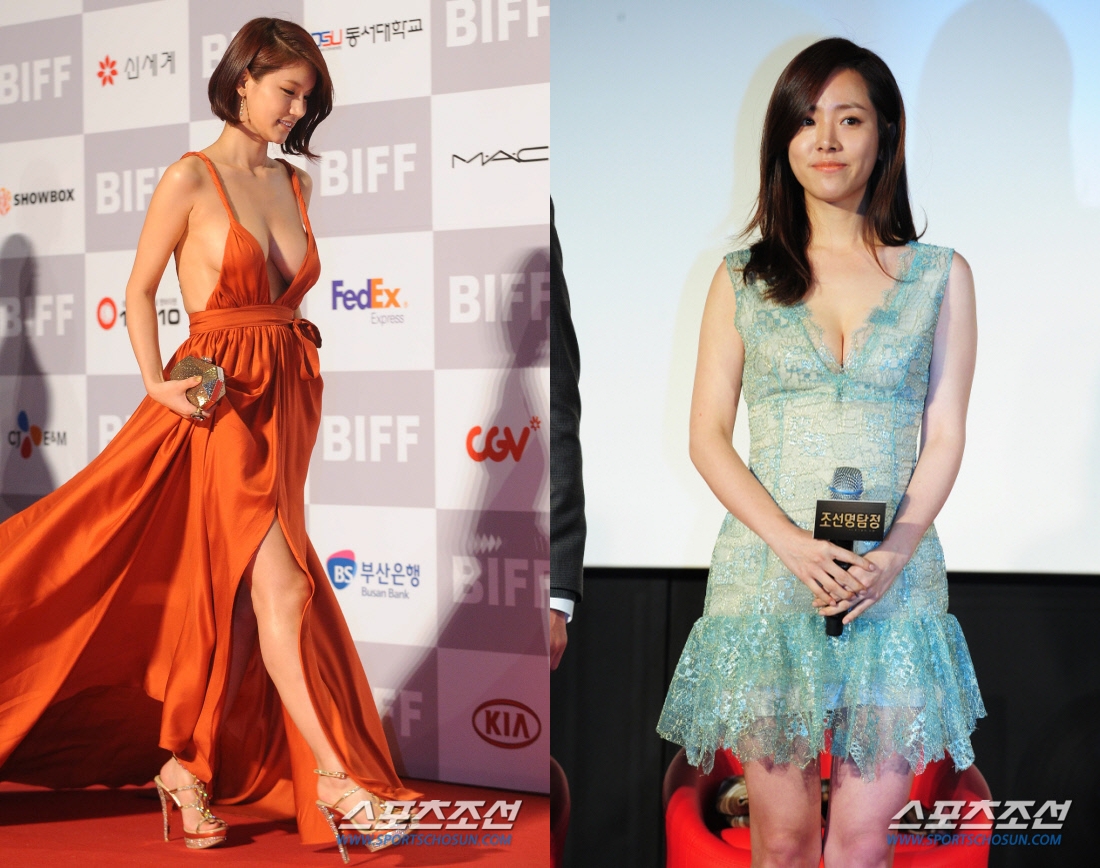
Ha Ji-won Breast Size Korean AttitudesEstimated reading time: 16 minutes. Image sources: left, right.

“The JoongAng Ilbo reports that having a full rack is seen as a disadvantage for women in North Korea.

This is in marked contrast to the South, where a thin figure and big breasts have become symbols of beauty.

According to defectors, if a woman appears well-endowed in the North, people think she is intentionally and lewdly stressing her femininity, and she can easily come to be regarded as a slut. You have an atmosphere that doesn’t allow women to wear revealing clothing, and the North is still a male-dominated society.

One defector from Hoeryong said she had a work friend with large breasts who often ate chives because she’d heard they make your boobs smaller. She added that she was surprised upon learning that women in the South actually have operations to make their breasts bigger.”

The Marmot’s Hole

Alas, The Joongang Ilbo provides nothing to verify those claims. But, I see no reason why the defectors would lie, and negative stereotypes of large-breasted women are by no means confined to North Korea. Also, who would ever question that “a thin figure and big breasts have become symbols of beauty” in the South?
Korean Women Revealing Clothing AttitudesFortunately though, Liminality did, who in a must-read response shows that however much the Korean beauty industries and media promote such an ideal, and however much East Asian-women may have a genetic predisposition towards small breasts, cosmetic surgery patients at least hardly consider themselves lacking in that department. In fact, quite the opposite:

  • Per capita, far more breast surgery operations are performed in European and North and South American countries than in Korea (or Asia)
  • Despite having the highest per capita number of cosmetic surgery operations overall, Korea only came 22nd in the number of breast surgery operations performed per capita
  • Of those operations, Koreans had slightly less augmentation and lift operations than their counterparts in the US and Brazil, and slightly more reduction surgeries (source, above; reproduced with permission)

Similar attitudes may exist in Japan too, where even lingerie maker Wacoal was surprised by the number of women who told told them they wanted a bra that made their breasts look smaller, and then by the huge popularity of the—yes, really—’Bra That Makes Big Breasts Look Small’ design they developed in response. Also, Japanese mail order fashion magazine Bellemaison has developed a ‘Chest Line Cover’ (see second image below) that “promises to be a cool alternative to wearing a real camisole as Japan prepares for another hot summer made even hotter with another year of power rationing,” which I’m sure readers of both sexes can confirm would probably be just as big a hit in Korea.
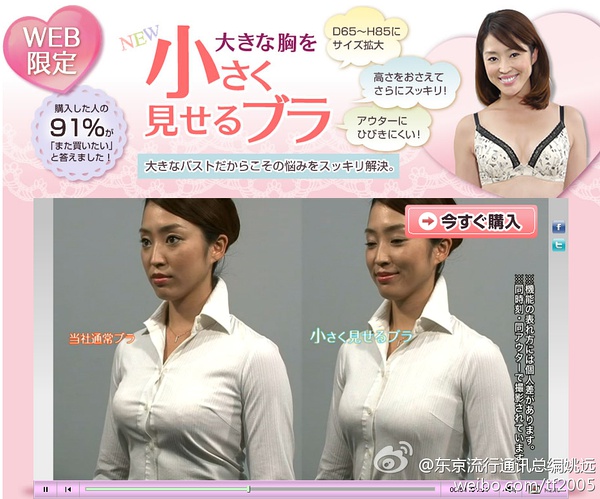
Bra That Makes Big Breasts Look SmallSource: duoban

But readers don’t need me to tell them that showing cleavage is still a big taboo in Korea, or that there’s a big disconnect between ordinary Koreans’—and even models’—attitudes to fashion, body image, and sexuality and what you may see on Korean TV. And I can’t claim any special expertise on ordinary North Koreans’ attitudes either.
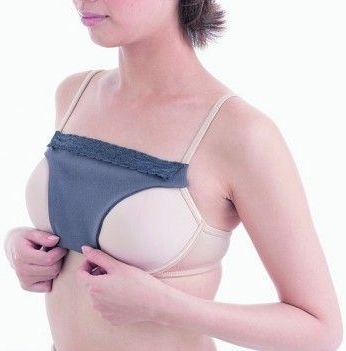
Chest Line CoverHowever, when I read that original post at The Marmot’s Hole, by coincidence I’d also just finished The Home Front and Beyond: American Women in the 1940s by Susan M. Hartmann (1983), in which she explains that the massive social dislocations of that decade—in particular, women suddenly entering the workforce in large numbers—were responsible for big changes in women’s fashion there, as well as preferred breast sizes. And, as it happens, North Korea is also going through a very turbulent period at the moment, with power relations between the sexes undergoing especially dramatic change:

Imagine going to work every day and not getting paid. Then, one day, you’re told there’s no work to do — so you must pay the company for the privilege of not working.

This is the daily reality facing Mrs. Kim, a petite 52-year-old North Korean. Her husband’s job in a state-run steel factory requires him to build roads. She can’t remember the last time he received a monthly salary. When there are no roads to build, he has to pay his company around 20 times his paltry monthly salary, she says.

“He had to pay not to work for about six months of last year,” Mrs. Kim told NPR, sighing. “You have to pay, even if you can’t afford to eat. It’s mandatory.”

So she is the one who must keep the family alive, as her husband wrestles with this state-sanctioned extortion.

Welcome to the Orwellian world of work in North Korea. In this reclusive country, profound social change is happening beyond the view of the outside world. The demands of politics have dramatically redrawn gender roles, forcing women to become the breadwinners.

National Public Radio, December 28; hat tip to Matt at Gusts of Popular Feeling.
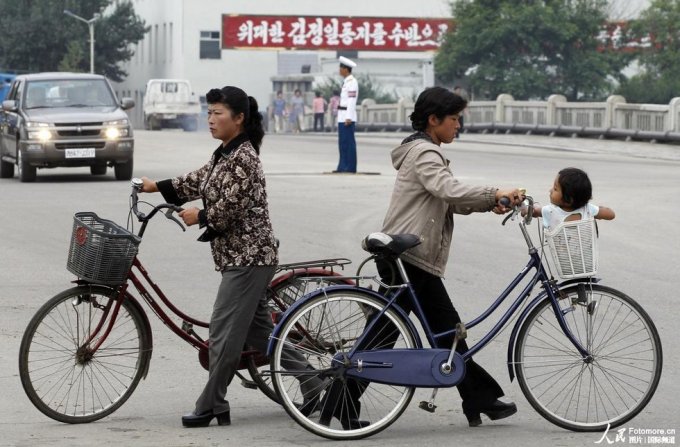
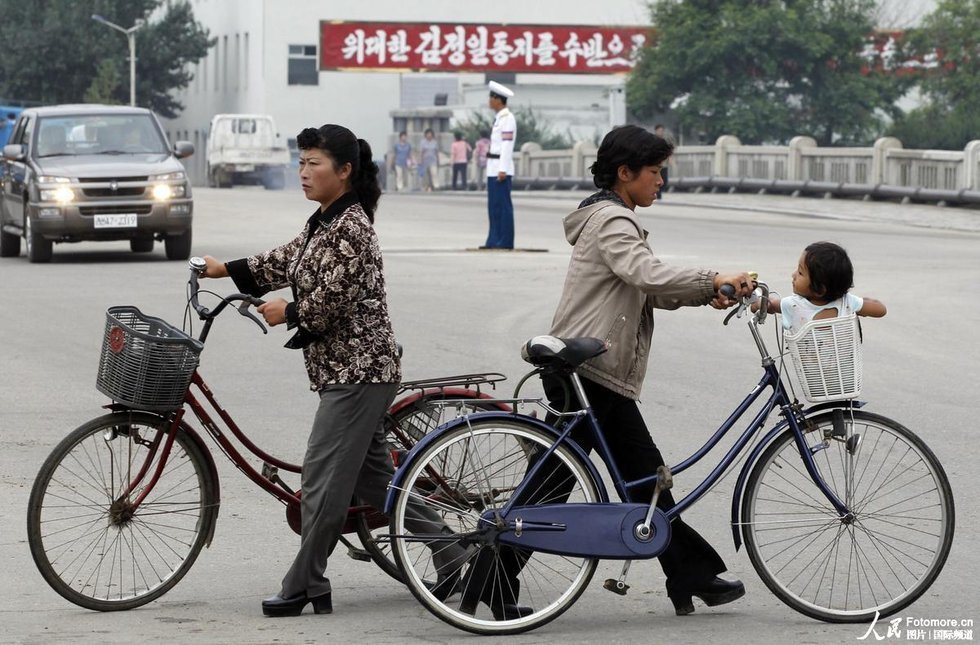
North Korean Women BikesSource: diandian

The NPR goes on to mention that one major consequence of that emasculation is skyrocketing domestic violence, against which speculating about ensuing changes in fashions can admittedly sound frivolous. But those have changed regardless—indeed, by government decree. First, in July last year:

Supreme leader Kim Jong-un appears to be loosening the government’s grip on how women dress by allowing them to wear pants, platform shoes and earrings, ABC News reported.

Previously, pants were only permitted as uniforms for females in the factories or the fields — and not for making a fashion statement.

“If caught, sometimes they would cut your pants right there in public to make it into a skirt,” Park Ye-Kyong, who defected to South Korea in 2004, told ABC News.

That doesn’t mean North Korean women don’t enjoy preening, Park added.

“Yes, we were hungry but desire to look beautiful lies in any woman,” she said.

North Korean Female IdealIn addition, the next month a 20 year-ban on women riding bicycles was lifted. Ostensibly imposed for women’s safety, numerous sources also mention its supposed incompatibility with juche, related educational television promoting “the idea of a woman wearing a skirt while riding a bicycle [being] contrary to socialist custom.” (See NK News {source, right} for more on North Korean ideals of women). Moreover, in 2009 Human Rights Watch also noted that:

…the ban on pants and bicycles for women is symptomatic of a range of other, often-overlooked, problems.

Across North Korea’s conservative, male-dominated society, there is discrimination against women, a knowing disregard for the consequences of such policies, and an opportunistic manipulation of power by police officers trying to make easy money by preying on an undervalued and underprivileged population.

In light of that, most likely the lifting of the bans was mainly simple populism on the part of a new leader, as well as — despite those state gender ideologies described above — a reluctant concession to the new realities of female breadwinners. Sure enough, in typical North Korean fashion (pun intended), just 5 months later the ban on women riding bicycles would actually be reinstated. Also, while technically they can still keep their pants on, in practice opportunities for women to beautify themselves remain limited, with both sexes punished for straying from officially-sanctioned hairstyles; sharp divisions in what is permissible for married and unmarried women; and a general lack of (beauty-related) resources overall, including such simple things as hairdryers.

Perhaps, things are not changing in North Korea as much as they first appear?
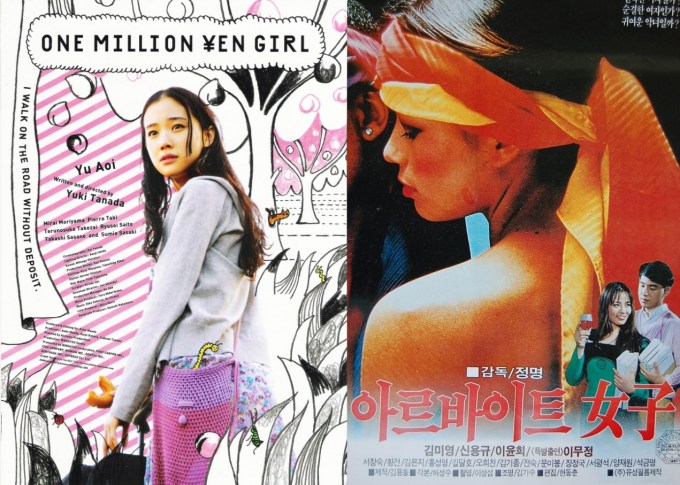
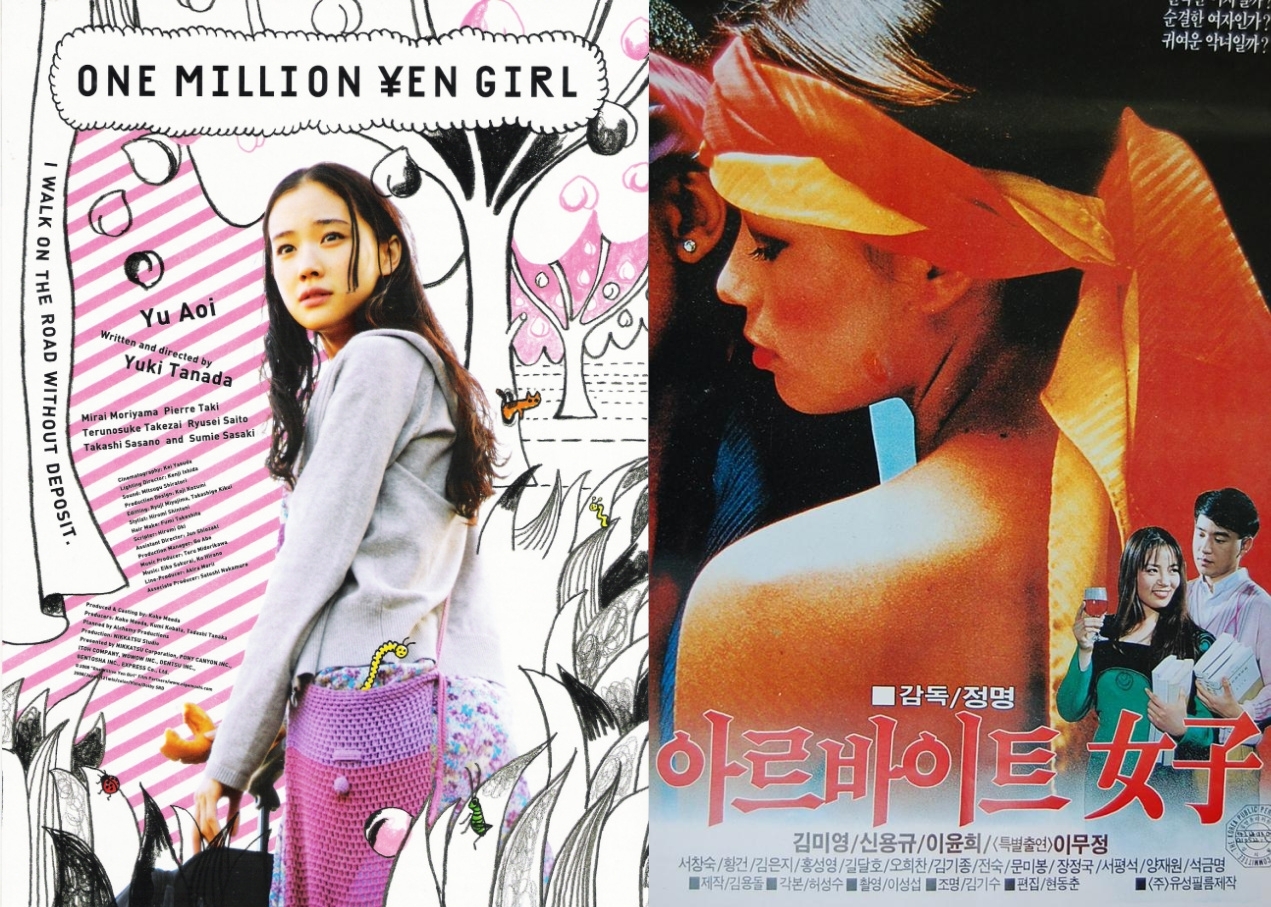
One Million Yen Girl Part Time WomanSources: left, right.

Yet in South Korea at least, it’s true that the last 15 years have seen a vast increase in the numbers of women competing with—and increasingly displacing—men for irregular and part-time work, despite the (extremely low) overall female workforce participation rate remaining unchanged. This has spawned quite a backlash, and—à la The Beauty Myth (1991)—a rapid increase in (overwhelmingly female) objectification in popular culture. So, while again I stress my ignorance and lack of knowledge with anything North-Korea related, it’s not unreasonable to suppose that, surely, the sudden large influx of women into the workforce may also be having some sort of impact there.

The Home Front and BeyondEither way, reading about similar experiences elsewhere can inform an understanding of what’s happening in both countries. So, with the obvious—but still necessary—caveat that of course both countries are very different to the US in the 1940s, for the remainder of this post let me try to pass on some of what I’ve learned about what happened there.

First, it’s important to get a sense of the numbers (pp. 77-8):

  • The female labor force grew by 6.5 million during the war
  • In 1944, 37% of all adult women were reported in the labor force, but nearly 50% of all women were actually employed at some time during that year
  • The greatest changes took place among married women
  • 1 in 10 married women entered the work force during the war, representing over 3 million of those 6.5 million new female workers (3.7 million, according to Marilyn Yalom in A History of the Wife {2002; p. 320})
  • 2.89 million were single, the rest widowed or divorced
  • So, for the first time in US history there were more married women than single women in the workforce.
  • Note however, that the war resulted in many more marriages than there would have been normally — approximately 1 million more, according to Yalom. Moreover, wives of absentee husbands were twice as likely to seek jobs, with half of all servicemen’s wives being in the labor force
  • The percentage of wives that worked grew from 13.9 in 1940 to 22.5 in 1944 (Yalom says 15 in 1940 to over 24 in 1945)
  • The percentage of women with children that worked grew from 7.8 in 1940 to 12.1 in 1944
  • By 1945, half of all working women were over 35; slightly more than 1 in 4 were 45 or older
  • The typical female worker had shifted from younger and single to older and married, a pattern which was maintained in the postwar years
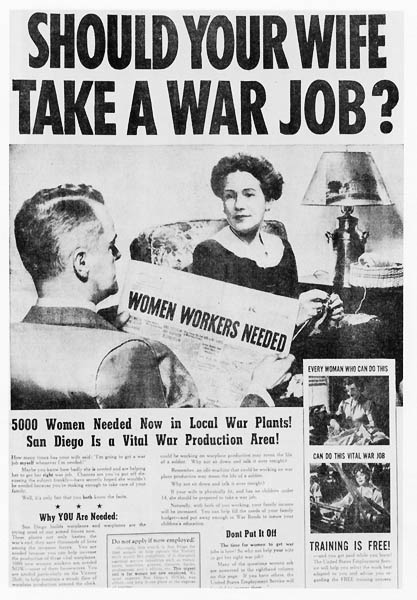
Should Your Wife Take a War JobAs Hartmann elaborates throughout her book, these figures represent an ensuing era of relative opportunity and freedom for many women (including sexual freedom; see Pin-Up Grrrls {2006} by Maria Busnek, pp. 213-224; see below also), even if it was usually simple economic necessity that compelled them to work in the first place (and usually at tedious, menial, and unfulfilling work at that). Accordingly, it definitely set the stage for second-wave feminism in the 1950s and ’60s, and deserves the place it’s gained in the Western historical imagination.

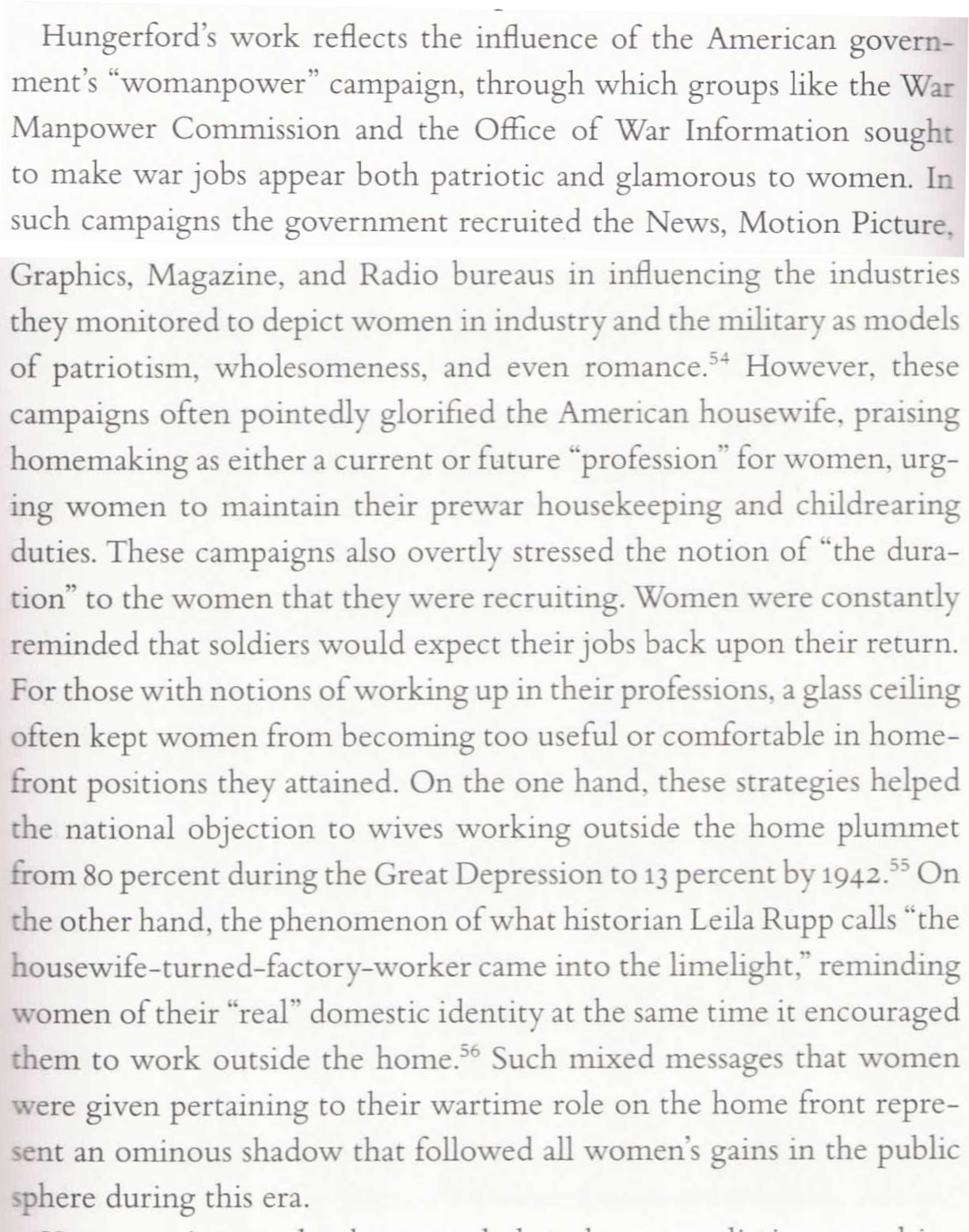
However, it’s also true that despite the huge public and private need for women to enter the workforce, that need was still considerably tempered by both sexes’ preexisting gender and racial ideologies, with both official propaganda and popular culture glamorizing women’s work and stressing its patriotic importance on the one hand, yet emphasizing its strictly temporary nature on the other. Not least, to nervous male workers and servicemen, who: lacked our knowledge that the war would lift the US out of the Depression (source, right); were very much judged by their ability to provide for their families, in an era where many simply couldn’t (note that one big difference between the Depression and the current financial crisis is that many people were literally starving during the former); and who sometimes had genuine difficulties with employment after demobilization, particularly in the shrinking war industries in which the women had been recruited (Hartmann, p. 63).

Buszek summarizes the contradictions of this era well (pp. 214-5):
Pin-up Grrrls pp. 214-5And in particular:

  • Despite the huge demand for workers, and the ultimate, relative flexibility both employers and male employees would demonstrate in incorporating Caucasian women into their midst, African-American women remained largely unwelcome (e.g., 10 months after Pearl Harbor, there were fewer than 100 out of 3000 women in Detroit war industries). So, while the numbers of them working did increase from 1.5 million in 1940 to 2.1 million in 1944, their share of the female labor force actually dipped from 13.8 to 12.5. By 1950, their employment patterns were very similar to those of 10 years earlier, albeit partially because by then their husbands were making more money. (Hartmann, pp. 60, 78-9)
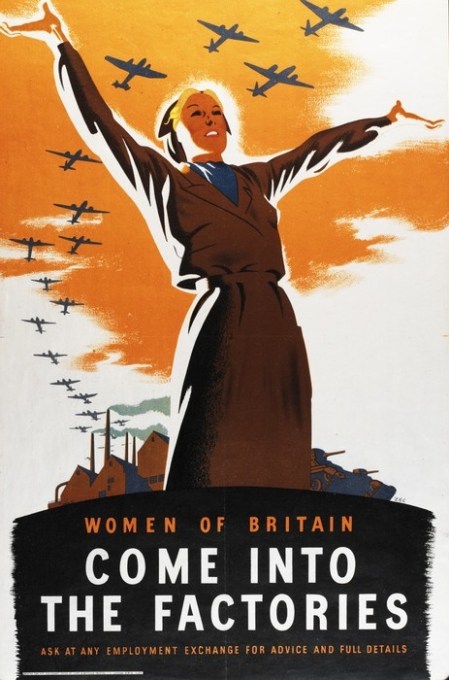
  • Women of Britain Come into the factoriesPartially, the huge numbers of wives that entered the workforce is because there were previously bans against them by many companies, let alone being against social convention; even schools discriminated against them. It’s amazing how quickly bans were dropped once the need for labor arose though, with some previously hostile managers coming to express a “preference for married women as more stable and conscientious than their single sisters” (pp. 59-60). And this provides encouraging news for Korea, which unfortunately still largely retains those conventions, and where as recently as 2009 I was working for a company that — yes, really — fired women upon marriage (source, right).
  • Nevertheless, there remained extreme public and private ambivalence about working mothers. Officially seen as more of a social problem than something to be encouraged, officials did recognize “that financial need compelled some mothers to work and that in localities with severe labor shortages production goals would requite the employment of mothers,” and urged employers not to discriminate against them (p.58). But on the other hand, the government would also constantly remind them that homestay mothers were essential for children’s development; popular culture was full of stories of child neglect; and daycare provision, while expanded, was ultimately completely inadequate, paling behind that which was provided in the UK, and prompting frustrated managers of some defense plants to set up their own (Yalom, pp. 324-6).
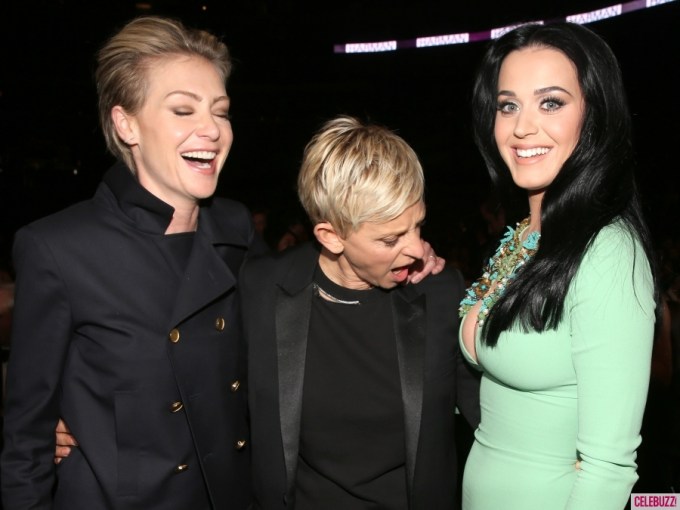
Ellen DeGeneres, Portia de Rossi Check Out Katy PerrySource: Celebuzz

But, lest we forget, this post is about breasts. And changes in women’s fashions which came with the contradictions involved with entering the workforce, with women having to confront rampant sexual harassment on the one hand, and often being blamed for the “distraction” they posed, but on the other relishing their newfound freedoms (Buszek, pp. 216-7):
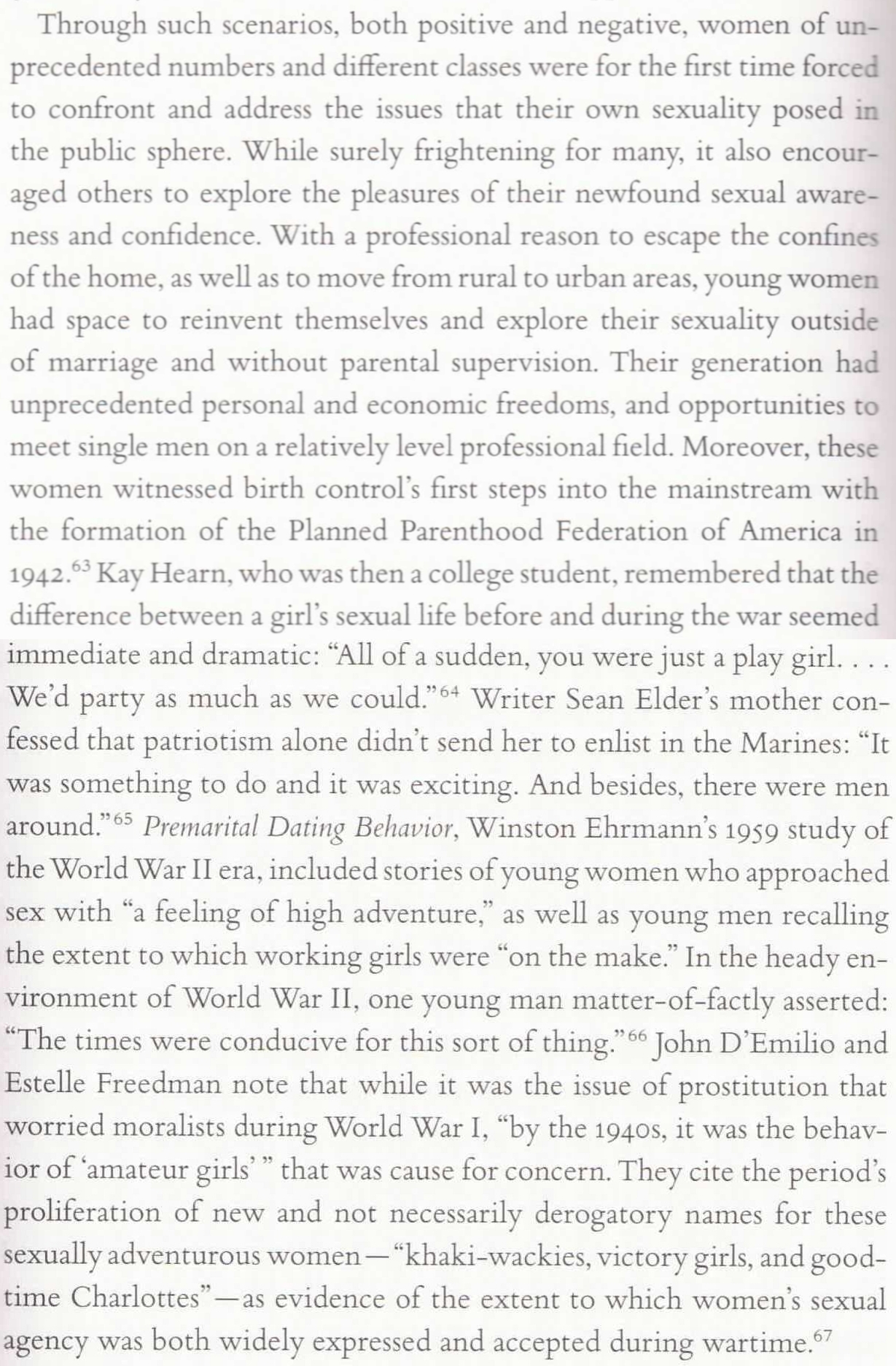
Pin-up Grrrls p216-7However, the combination of war-time shortages and women’s entrance into the workforce meant that people suddenly became used to women in functional, masculine clothing and with more practical hairstyles, and that women’s fashions became more simplified, comfortable, less overtly sexual, and changed less frequently than before. So, when you learn that popular culture stressed the exact opposite, for example…
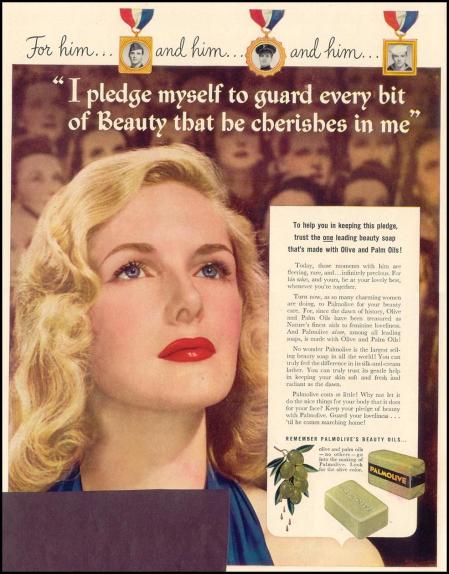
  • I pledge myself to guard every bit of beauty that he cherishes in meThat female workers were still “glamorous” and feminine despite their new roles (Hartmann, p. 199)
  • As were female sport stars, women’s sports enjoying a lot of popularity while their male counterparts were occupied (p. 194)
  • Lingerie manufacturers coped with wartime shortages and new demand by producing much practical bras, yet these coincided with pinup photographs that emphasized their subjects’ breasts (Jill Fields, An Intimate Affair: Women, Lingerie and Sexuality, 2007, p. 106). As explained in Part 3 of this series, this ultimately led to the fashion for large and uplifted breasts that remains to this day.
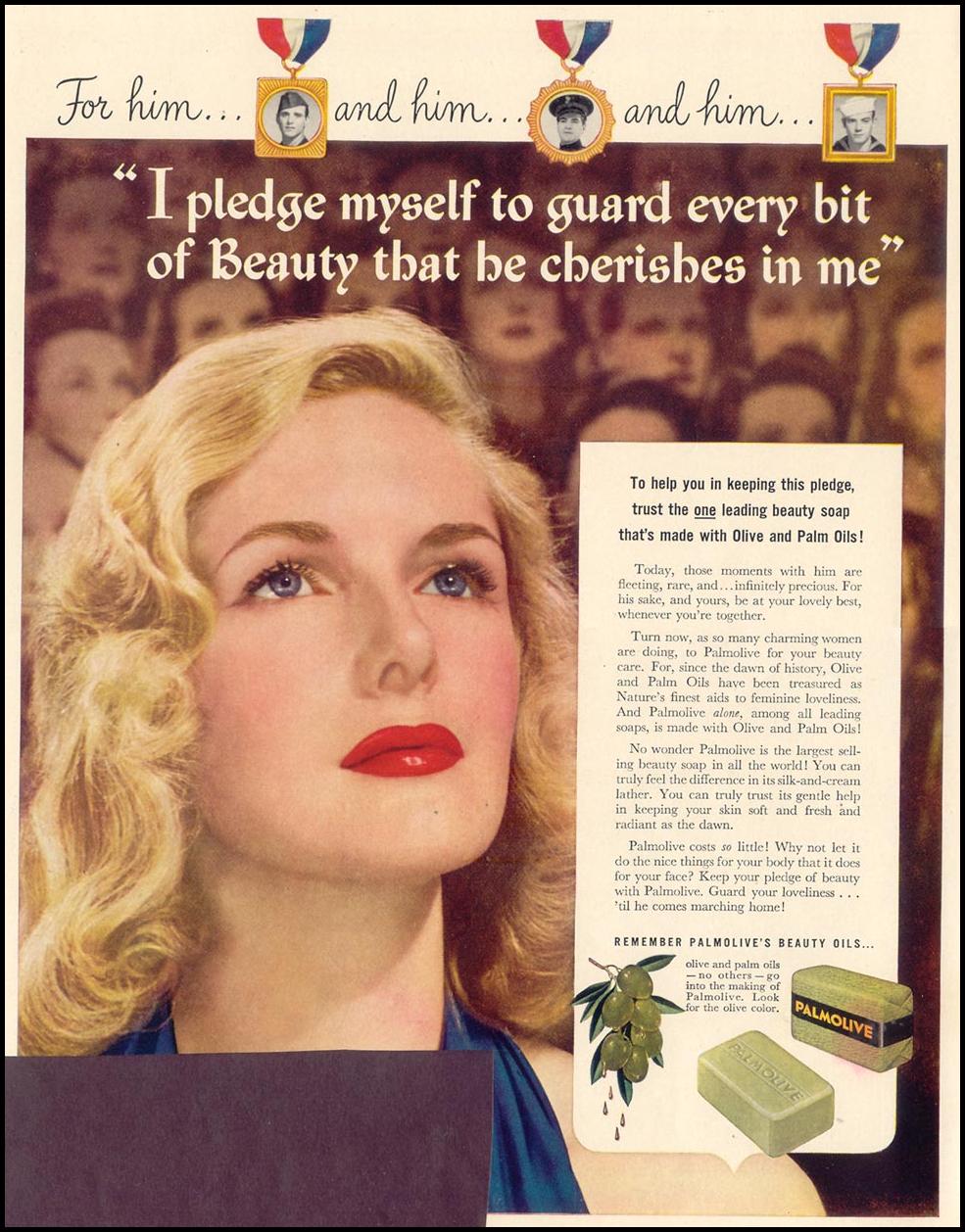
…then it is very easy and natural — indeed, this is my very strong impression from the books discussed here, although exact page references are suddenly proving maddeningly elusive(!) — to argue that this alternate ideal was imposed by, for want of a better word, the patriarchy, to encourage women to enter the workforce yet at the same time remind them that their place there was unnatural and temporary. And, to be clear, not for a moment am I arguing that this wasn’t very much the case (source, right).

However, as Hartmann explains on p. 198 below (echoed by the other sources), it’s also true that women themselves were just as passionate about preserving their femininity (indeed, they would understandably revel in impractical but much more feminine fashions once war rationing ended):
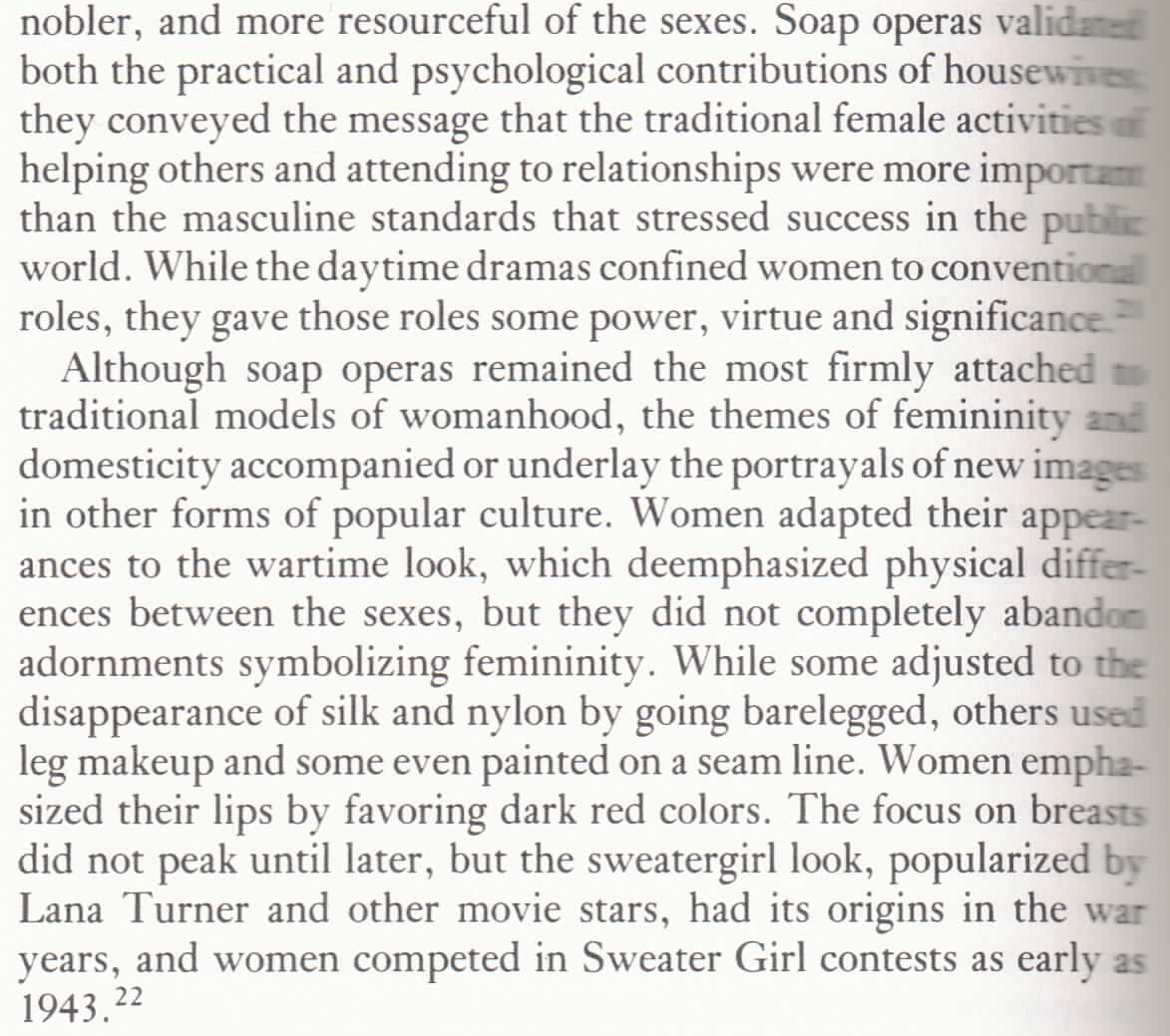
Hartmann, The Home Front, p.198In particular, and especially in light of the new opportunities open to them as mentioned, I think it’s both overly dogmatic and patronizing to dismiss choosing to use those feminine adornments as mere false consciousness and women’s own mindless incorporation of patriarchal values. Also, although it’s true that the period was rife with pop psychology theories (it was conveniently claimed that women like boring, monotonous work much more than men for instance) it’s very unlikely that men and women rationalized and articulated their choices and concerns in such patriarchal terms. Even if those did operate on a subconscious level, and patriarchy is still the only thread which can bring otherwise disparate developments in the period together, surely men did not think, for example, that if they saw more big-breasted women in popular culture, emphasizing the differences between the sexes as increased use of lipstick did in the workplace, that this would make them feel more secure in their jobs.

In addition, while changes in attitudes were certainly quick, they didn’t happen overnight, Jill Fields (p. 106) noting that “uplift” and “separation” trends in bras for instance, which accentuated the projection of the breast silhouette, had actually already started back in the 1930s. Finally, if you’re confused like I am, because I just noted above that bras actually became more practical during wartime, and am now stating that women could simultaneously be censured and praised for wearing distracting clothes, that’s because contradictory and competing trends coexisted simultaneously, the 1940s being just as messy, complicated, and contradictory as modern life.
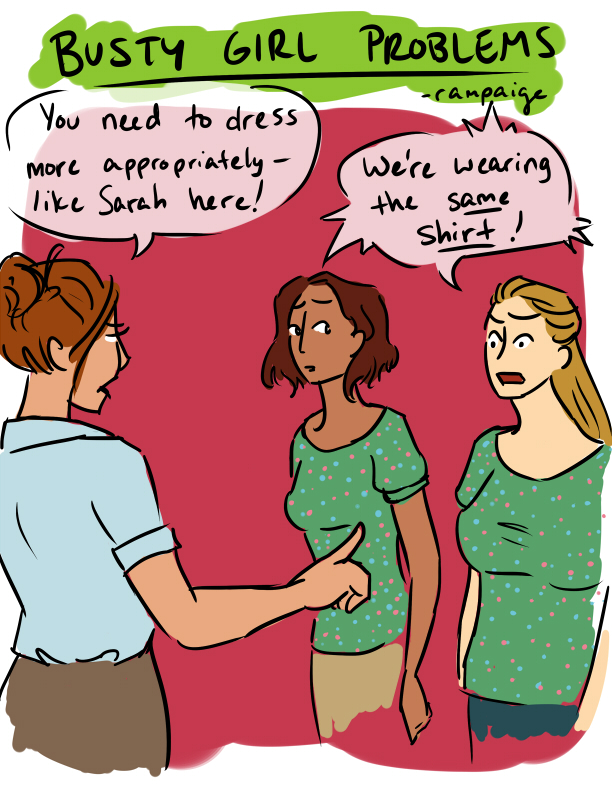
Busty Girl Comics Double StandardAnd on that note, thank you very much for bearing with me in this admittedly equally messy, complicated, and contradictory post, the result of me personally trying to understand what patriarchy means in practice as well as theory. And, with the proviso that my relief — and frankly joy — at discovering historic parallels (and especially English-language historiography!) to modern North and South Korean developments should make me wary of projecting too much, and not blind me to the significant differences, I’m very happy to have pointers towards further study, and very much welcome readers’ own suggestions! (source, right)

The Revealing the Korean Body Politic Series:

Update: See Fit, Feminist, and (almost) Fifty for “the medical condemnations of women’s cycling [which are] fascinating for what they tell us about what people thought (and maybe still think?) about women’s athletic capabilities and potential.”

Update 2: “Saudi daily al-Yawm cited an unnamed official as saying women can now ride bikes in parks and recreational areas. According to the official, the ruling stipulated that women must wear a full-body abaya, be accompanied by a male relative, and stay within certain areas. They are allowed to bike for recreational purposes only, not as a primary mode of transportation.” (Aljazeera)

Crossing the Lines: The Trends Reshaping Women’s Bodies in Korea

James Turnbull Busan Haps What's My LineSee here for my latest article of that title at Busan Haps, and here for more details and context :)

Lee Hyori: Korean Pin-up Grrrl #1?

Lee Hyori Pin-up Grrrl(Source)

Out of all this week’s stories, up tomorrow in the Korean Gender Reader, probably one of the most important — but also the most under-appreciated — is the news that Lee Hyori (이효리) will no longer be doing any commercials for products that conflict with her animal rights, environmental, and/or vegetarian beliefs.

This excludes her from working with so many companies, that her agency had to clarify that she hadn’t given up modelling or endorsements altogether.

Certainly, she’s already well known — and liked — for being so outspoken and sassy, which is very rare for female celebrities here. But this is still a significant step, because it’s difficult to think of any other Korean celebrity explicitly rejecting the endorsement culture upon which their agencies so heavily depend. Let alone someone who was once the country’s biggest sex-symbol.

Lee Hyori and Dog(Source)

Moreover, while she’s open to charges of hypocrisy, as it’s undoubtedly much easier to take an ethical stance on endorsements after years of making millions from them, she did at least acknowledge this contradiction in a recent interview, and at only 33 could have continued to do them for decades. Also, with “We can’t help but be subjected to the power of the companies when we sign a contract. Hara, please don’t forget my words,” her tweet of advice to Goo Ha-ra (구하라), one of her replacements as a soju model, she indirectly criticized companies’ excessive power over their endorsers — recall Ivy (아이비) being sued for an completely non-existent sex-tape for instance, or Choi Jin-sil (최진실) being sued for going public about being a victim of domestic abuse, and then being sued again after she committed suicide — and/or entertainment agencies’ willingness to enter into such arrangements regardless. And, albeit perhaps unfairly, has put the onus on much younger celebrities to be more discerning with their own choices (or, rather, to challenge their agencies’ choices).

Can anybody think of any other Korean celebrities that have made similar ethical stands and/or critiques of the media and entertainment industries? I admit I don’t have much time to follow Korean celebrity news, and would be happy to learn that Lee Hyori isn’t as exceptional as I thought!

(Update: Also, if anybody come across a Korean source that places Lee Hyori’s decision in that above context, that would also be appreciated. Unfortunately, apparently they’re just as rare!)

Related Posts:

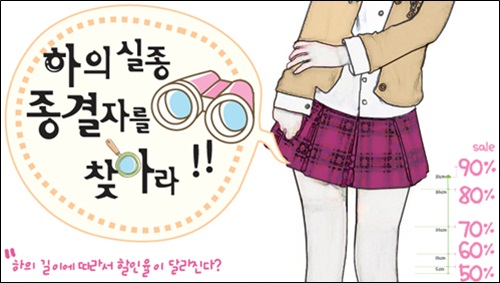
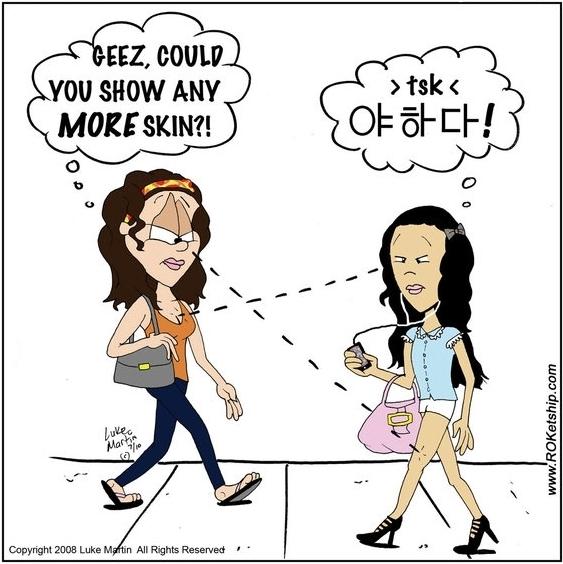
“The less you wear, the bigger the discount”

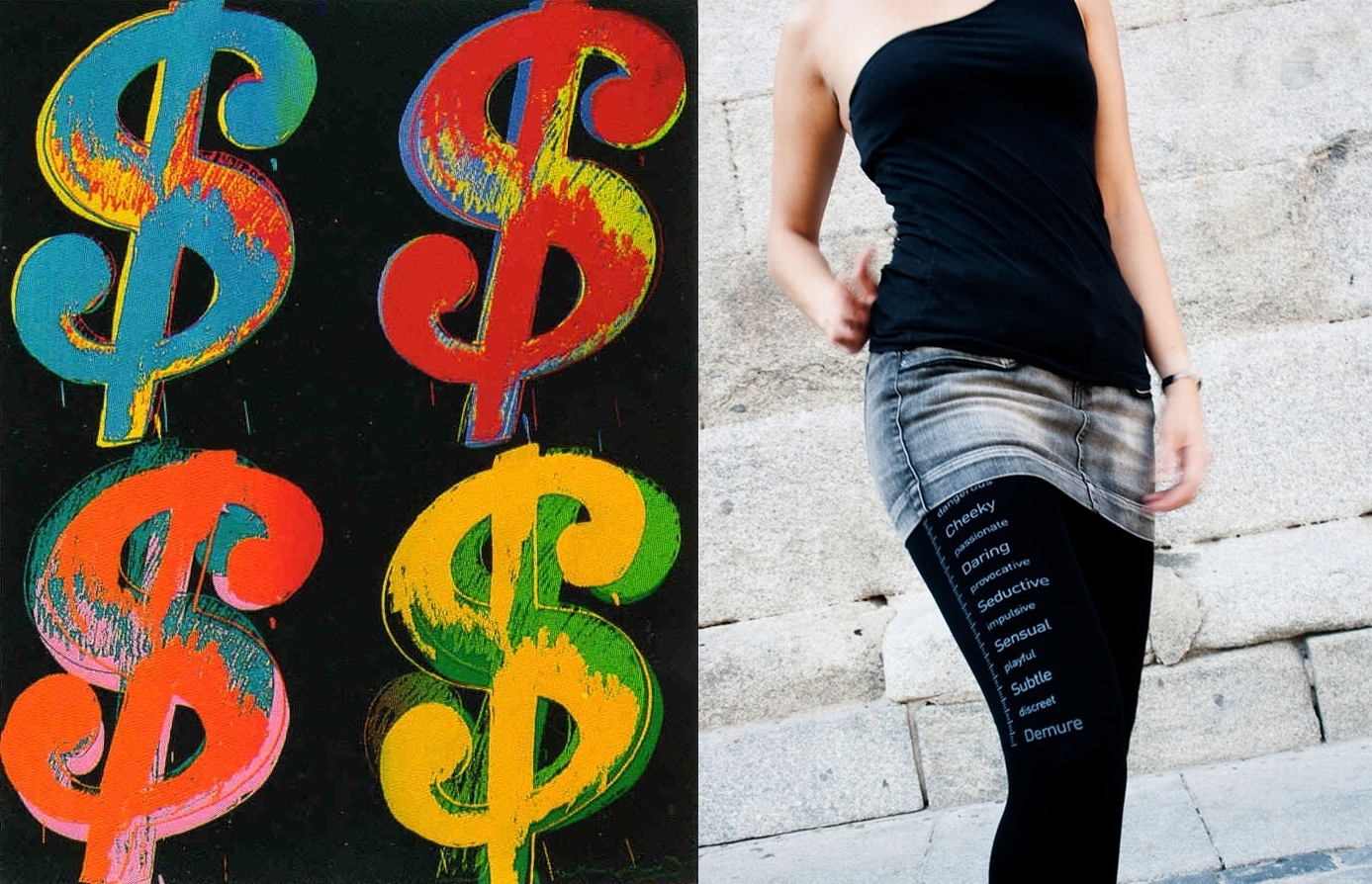
(Sources, edited: left, right)

“Want to talk third wave feminism, you could cite Ariel Levy and the idea that women have internalized male oppression. Going to spring break at Fort Lauderdale, getting drunk, and flashing your breasts isn’t an act of personal empowerment. It’s you, so fashioned and programmed by the construct of patriarchal society that you no longer know what’s best for yourself. A damsel too dumb to even know she’s in distress.”

Chuck Palahnuik, Snuff (2008)

Via Genderly Speaking, a typically provocative quote from Palahnuik to ponder. Not least, when you’ve just translated today’s article, about a clothes company offering discounts to customers for wearing mini-skirts and hot-pants.

Cancelled for being too lewd, I think the event should have gone ahead, and not just because I wasn’t all that impressed by Levy’s Female Chauvinist Pigs (2005) either. Rather, it’s mainly because I completely reject the notion of any woman— or man—as a mere unthinking pawn of the patriarchy. Also, heavily promoted by the media, there’s already a huge demand for such revealing clothes, so this event stood out only for being more explicit than most.

While there are legitimate issues of sexual objectification that can be raised in light of that, another problem is that the writer of the article (or the parties involved—it’s unclear) implies that it was the “sexual provocation” or “sexual suggestiveness” (선정성) that was the greatest concern. Whether she was talking about the clothes or the event as a whole though, is a little vague, but if the former then I imagine that many women would take offense at the implication that they should never wear revealing clothes? (Source, right)

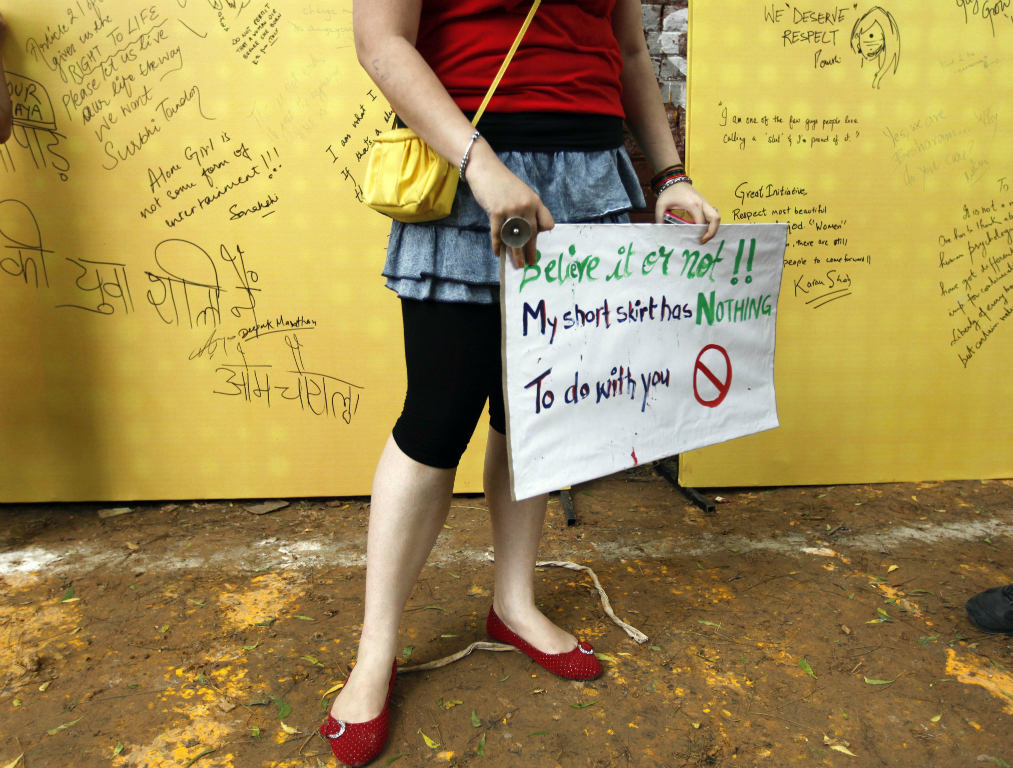
Had the event gone ahead as planned though, I do realize that it would have been just as empowering and tasteful as, say, a wet t-shirt competition. (Seriously, I’m wincing at the thought of lecherous cheering and the flash of cameras as customers are revealed to have over 30cm of skin showing above their knees.) Also, even if this did all happen a month before the first Slutwalk in Toronto, and 4 months before Korea’s own, it was still disappointing that the company representative only offered platitudes in defense of the event.

Is it hypocritical of me to intellectually support such an event, but — were they old enough to attend — hope that my own daughters would avoid it like the plague? Or merely honest? Or both?

Sigh. Like Peggy Orenstein explains in the first chapter of Cinderella Ate My Daughter (2011), sons sound so much easier to raise!

“벗는 만큼 세일” 의류업계 ‘막장’ / Just Typical For The Clothing Industry: “The less you wear, the bigger the discount”

코오롱인더스트리 이벤트 ‘성 상품화’ 논란…결국 행사 취소 / Kolon Industries event leads to sexual objectification controversy, is ultimately cancelled

Consumer Times, 9 March 2011, by Choi Min-hye (최미혜), choimh@consumertimes.net

코오롱인더스트리가 최근 치마길이에 따라 옷 값을 깎아주는 행사를 기획한 가운데 선정성 논란이 일자 다급히 취소하는 촌극을 벌여 소비자들의 눈살을 찌푸리게 하고 있다.

While planning an event in which customers would receive discounts depending on how high their mini-skirts were, Kolon Industries abruptly cancelled it in light of the controversy over its sexual provocation and the [anticipated] negative reaction from consumers.

참여자들의 과다 노출과 같은 부작용을 우려하는 목소리와 함께 ‘성상품화’라는 지적도 나와 행사를 예정대로 강행하기는 무리라는 업체 측의 판단이 작용했을 것이라는 분석이다.

As voices of worry were raised about the sexual objectification and such side effects as participants’ sexual objectification, the company judged that to go ahead with the event as planned would be unwise.

(Source)

◆ 할인권 걸고 ‘여성 노출’ 부추겨? / Encouraging Women to Expose Their Bodies via Discount Coupons

코오롱인더스트리는 오는 13일 자사 패션 브랜드 매장인 ‘조이코오롱’에서 길이가 짧은 하의를 입은 고객들에게 제품 할인권을 증정하는 ‘하의실종 종결자를 찾아라’ 이벤트를 진행키로 했다 돌연 취소했다.

Kolon Industries abruptly cancelled an event titled “Who has the shortest?” that was to be held on the 13th at one of their stores, in which customers would have been offered discounts on clothes like hot-pants or mini-skirts if they arrived already wearing really short ones.

연예계를 중심으로 유행처럼 번지고 있는, 하의 길이가 매우 짧은 이른바 ‘하의 실종’ 패션을 제품 할인이벤트에 접목시켰다 여론의 뭇매를 맞은 탓이다.

While the entertainment world has spread this so-called “Disappearing Lower Body” trend of wearing very short clothes, Kolon Industries was roundly criticized by the public for grafting a sales event onto it.

당초 이 업체는 행사에 참여한 고객의 무릎부터 하의까지의 길이를 재 5cm까지는 50%, 10cm까지는 60%, 20cm는 70%, 30cm가 넘으면 90% 할인 쿠폰을 제공하겠다는 계획이었다. 다리 노출을 많이 할수록 옷 값을 더욱 깎아준다는 얘기다.

The intention of the company was to offer customers a 50% discount on clothes if they arrived exposing 5cm of their legs (from their knees), 60% for 10cm, 70% for 20cm, and 90% for 30cm. Or in other words, the more they exposed their legs, the greater the discount.

행사에 참여키로 예정돼 있던 이 회사 의류 브랜드는 ‘헤드’, ‘쿠아’, ‘쿠론’ 등이다. 헤드는 스포츠브랜드지만 쿠아와 쿠론은 각각 여성복, 핸드백 등 액세서리 전문 브랜드다. 행사의 주요 타깃이 여성이라는 분석이 가능하다.

Clothing brands that planned to participate in the event were Head, QuaCouronne, and so on. While Head is a sports brand, Qua and Couronne sell women’s clothes and handbags and accessories respectively. Women were clearly the target of the event.

일각에서는 국내 대표 의류업체가 할인권을 내세워 여성의 노출을 부추긴다는 곱지 않은 시선이 쏟아져 나왔다.

(Source)

Some people are critical of the famous national company for planning an event that will encourage women to expose themselves.

코오롱인더스트리는 선정성 논란은 ‘기우’에 불과하다며 패션 트랜드를 반영한 행사라는 사실을 강조했다.

[But] Kolon Industries emphasized that to describe this event as sexual provocation is misguided, as it merely reflects current fashion trends.

이 회사 관계자는 “다른 업체에서 (하의실종 종결자 이벤트를) 하면 문제가 될 수 있겠지만 우리는 패션회사”라며 “패션업계에서 핫 이슈인 ‘하의 실종’ 패션을 깜짝 할인행사에 접목시킨 것”이라고 해명했다. 선정성 논란 등 행사의 부정적 효과는 이미 기획단계에서 내부적으로 논의됐다는 부연이다.

A company representative explained “If other [non-clothing] companies had hosted an event like this, it would have been a problem, but we are a fashion company.” Also, that “possible reactions like controversy about sexual provocation were anticipated and already taken into account before deciding to host the event.”

(Sources: left, right)

◆ “패션업계 ‘핫 이슈’ 행사에 접목 시킨 것”…결국 이벤트 취소 / In the end the event was cancelled

이어 이 관계자는 “평소 소비자들이 입고 다니는 반바지나 치마를 입어도 할인권을 받을 수 있다”며 “하의를 최대한 짧게 입고 오라는 취지는 아니다”라고 강조했다.

The representative added “Customers that wore normal-length shorts and skirts would also have been able to receive discounts, so the intention was not to encourage them to wear as short clothes as possible.”

“과열 경쟁 등으로 지나치게 노출이 심한 옷을 입은 참가자가 등장하면 문제가 되지 않겠냐”는 기자의 질문에는 “상황에 따라 대처하겠다”고 두루뭉술하게 답했다. 사진촬영도 막지 않겠다는 입장이어서 현장 단속이 사실상 전무한 것 아니냐는 추측이 나온다.

When asked by a reporter if people wearing too revealing clothing [in order to get a bigger discount] would be a problem, the representative replied “We don’t anticipate that, but will deal with any problems if and when they occur.” [However] it will be too difficult to police the event and prevent people from taking pictures.

이 관계자는 “기본적으로 신분증을 지참한 성인남녀만 참가할 수 있도록 했지만 행사 자체는 모두에게 공개된다”며 “(지나친 노출 등) 누가 봐도 문제가 될 상황이 발생하면 현장에서 해결할 것”이라고 말했다.

The representative also said that “the event will be open to the public, but only adults (we will check IDs) will be allowed to participate,” and again that “we will deal with any problems of excessive exposure if and when they occur.” (source, right)

업체 측의 해명에도 불구하고 ‘선정성 논란’은 수그러들지 않았다. 결국 이 업체는 문제의 행사를 열지 않기로 입장을 선회했다. 소비자들의 반응은 냉담했다.

Despite these explanations, the controversy about the sexual provocation didn’t die down. In the end, the company decided not to hold the event in question. But consumers’ feelings about it are still cool.

한 소비자는 “결국은 짧은 치마를 입고 와야 옷을 싸게 살 수 있다는 것 아니냐”며 “성 상품화에 대한 논란도 많은데 코오롱인더스트리가 꼭 이런 행사를 기획했어야 했는지 모르겠다”고 지적했다.

One consumer complained that “Why would we have to come to the store in high mini-skirts in order to receive the discount,” and wondered “why did Kolon Industries plan such event when sexual objectification is such a controversial issue?”

또 다른 소비자는 “의류업체에서 유행 아이템을 반영한 행사는 개최할 수 있다”면서도 “다만 행사 내용이 지나치게 선정적으로 비춰지면 소비자들이 거부감을 느끼지 않겠냐”고 말했다.

Another consumer said “A company can certainly hold an event that reflects current fashion trends,” but “if it is too sexually provocative, won’t people reject that?”

한편 코오롱그룹 모기업인 코오롱인더스트리는 ‘캠브리지멤버스’, ‘헤드’ 등의 브랜드로 유명한 패션 전문기업이다.

The Kolon Group, the parent company of Kolon Industries, is well known for fashion brands like Cambridge Members and Head (end).

Update — Via this blog, a video promoting the event:

Related Posts:

Essential Reading: “Multiple Exposures: Korean Bodies and the Transnational Imagination”

(Sources — left: unknown; right)

See The Asia-Pacific Journal for the article. Covering many of the themes discussed on the blog, and much more besides, expect to see me linking to it for many years to come!

Korean Sociological Image #68: Laughing at the 1970s Fashion-Police

(Sources: left, right)

Remember when the Korean Defense Ministry said it was considering playing girl-groups’ music videos on giant TV screens along the DMZ?

The rationale, according to the official that thought of it, was that “the revealing outfits worn by the performers and their provocative dances could have a considerable impact on North Korean soldiers.”

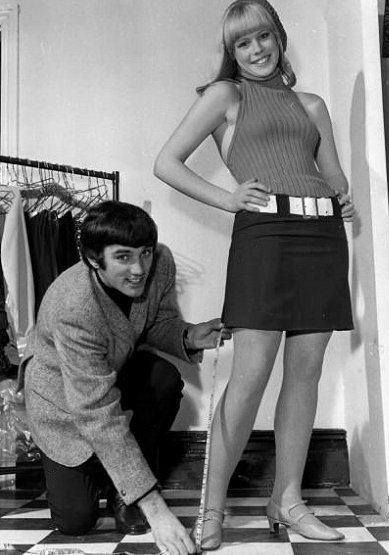
Alas, nothing came of the idea. But the irony was palpable: in the 1970s, such revealing outfits were deemed subversive by the military government, with ruler-bearing policemen stopping women on the street to measure the length of their skirts (they would also cut men’s hair if it was too long).

This difference is humorously illustrated in Samsung’s 2007 commercial for the Anycall Miniskirt (애니콜 미니스커트), with Jun Ji-hyun (전지현):

It’s disappointing that it was set in the UK though, which never had such ‘fashion-police.’ Why not pick from the wealth of Korean video and imagery from that period? (Just look under “미니스커트 다속” for instance, literally “miniskirt control/supervision/clampdown.”)

My first thought was because the ad is already doing some subtle fashion-policing, through informing the Korean public of the new de facto rules. That would be much less subtle with authentic Korean examples though, and the ensuing social message, however refreshing, would be at odds with the cheerful tone of this one.

On the other hand, we can make allowances for creative license; perhaps the advertisers just wanted a swinging ’60s vibe. Also, it’s not like Koreans themselves aren’t afraid to poke fun at their old, ridiculous laws on miniskirt length (not least because they weren’t removed from the books until as recently as 2006), nor critique modern fashion and body-image ideals.

Still, it is yet another example of a phone literally embodying a woman. As is LG’s recent LTE wireless ad, which isn’t subtle at all:

(Source)

On the left, the black text reads “If it’s only the shape/appearance of LTE, then it isn’t available everywhere,” while on the right the pink reads “If it’s really LTE, then it’s available in every city.” The headline in the middle reads “But it’s different,” and finally the text at the bottom reads “The one and only LTE, in touch in every city nationwide. Automatic roaming in 220 countries worldwide.”

Personally, I think the execution is flawed—if the woman on the left is supposed to only have the shape and/or appearance of the real LTE (confusedly, “모양” means both), then shouldn’t both women actually look and be clothed exactly the same, with some indication that they’re different for some other reason (say, by having the women on the left scowling)?

Either way, the advertisement’s other message is that the woman on the right, with high-heels, a V-line face, impossibly-long (and uneven!) photoshopped legs, and a dress that only just covers her underwear, is quite literally the modern standard that all agasshis (young women) should adhere to. Jun Ji-hyun’s bobbies would be proud.

(For more posts in the “Korean Sociological Image” series, see here)

“Making Pretty Women” (예쁜 여자 만들기) — Consumerism, S-lines, and Learning that Healthy≠Beautiful in 1930s Korea

(Sources: left—unknown, right—KyoboBook)

As you all know, I’m very interested in women’s S-lin…let me rephrase that.

As you all know, I’m very interested in where body-labels like the S-line come from, how they’re used, why new ones appear so frequently in the Korean media, why Korean popular-culture is saturated with them, what role (if any) they have in comparative studies regularly finding that Korean women have the greatest levels of body dissatisfaction in the world (despite actually being the thinnest), and so on.

Unfortunately though, I’ve struggled for years to find Koreans that shared these interests. But that doesn’t necessarily mean that they’re not out there. More likely, I’ve just been looking in the wrong places.

I would never have guessed, for instance, that some of the first critical commentary on Korean ads I would find online would be in the form of student essays (and in English at that!), or that the first decent Korean discussion of excessive photoshopping in ads—next week’s translation—would be on a blog rather than in expensive advertising magazines. And somehow, inexplicably, it never occurred to me to simply type in “S-line” (S라인) and “history” (역사) into Korean search engines either.

Which is not to say that much came up at all actually. But it did lead me to Lee Yeong-ah’s (이영아, right; source) Making Pretty Women (예쁜 여자 만들기), published last year, en route to me as I type this. Based on the Busan Ilbo review of it I’ve translated below, it appears that while the S-line term itself wasn’t used back in the 1920s and ’30s, those were certainly formative years for Korean consumerism, in which the practice of encouraging and/or pandering to certain looks, styles of dress, and body shapes of especially female consumers was first established.

Many of these centered on what were called “New Women” (shin-yoseong; 신여성), very similar to flappers, who not only took advantage of scandalous foreign fashions and non-traditional lifestyles to assert their sexuality and women’s rights, but would also later face a backlash that would be eerily similar to that faced by “Beanpaste girls” (dwenjangnyeo; 된장녀) in the 2000s, and in similarly strained economic circumstances. Indeed, Yewon Lee of Yonsei Graduate School wrote about precisely that in 2007 (opens a PDF; see the end of the post for a full list of sources), and Gord Sellar and Gusts of Popular Feeling have also made the same connection.

Unfortunately however, the reviewer doesn’t mention this self-agency of New Women. Rather, he depicts them only as passive victims of new trends, who had no choice but to accommodate the new demands of the male gaze, manifest in the burgeoning media industry. Also, he ends the review with the curious assertions that, in light of this long history, today’s women shouldn’t be worried about likewise being obsessed with beauty, and that it is sufficient simply to be aware of his history in order to lead a happy life.

While such platitudes are common in the Korean media, I was disappointed to see them in what is otherwise one of the better pieces of Korean writing I’ve read in a while (again, my fault for looking in the wrong places!). And I hope that Lee Yeong-ah doesn’t share them.

(Source)

1930년대에도 ‘S라인열풍 The ‘S-line’ Was Popular in the 1930s too

Busan Ilbo, 5 March 2011

한국 여성들의 ‘미인 강박증’ 역사

Korean women’s history of being obsessed with beauty

‘가슴을 앞으로 그냥 내밀며, 양손을 위로 쭉 뻗었다가, 손끝이 발가락에 닿을 때, 양손을 아래로 뻗으며, 전신을 굽힌다. 이 운동을 계속하면 가슴의 모양이 곱게 발달되고 미끈한 각선미를 갖게 된다.’

“Stick your chest out, stretch both arms up high, bend over and curve your whole body, touching your toes with your fingertips. If you keep doing this exercise, your breasts will beautifully develop and you’ll get a sleek, slender bodyline.”

몸매를 가꾸기 위한 기본적인 스트레칭 동작에 대한 설명이다. 요즘 발행되는 여성잡지에 실린 내용일까. 천만에. 이 미용체조법은 1935년 10월 ‘삼천리’란 잡지에 실렸다. 여성들이 1930년대에 아름다운 몸을 가꾸기 위해 이런 동작들이 필요하다는 것을 알고, 실천했음을 보여주는 사례다. 오늘날 미인들의 필수요건 중 하나인 ‘S라인’이 이미 1930년대부터 각광받기 시작했다는 말이다.

This is an explanation of a basic stretch used for shaping your body. But it’s not from a magazine published today. Rather, it’s from the October 1935 edition of Samcheonri. Women in the 1930s all knew that they had to do this sort of thing in order to get a beautiful body, and an example of them doing it in practice too. These days, beautiful women know they need to get an ‘S-line’, but it was in the 1930s that this sort of thing started becoming popular.

(Source)

무엇이 이런 변화를 불러왔을까? 당시 조선에 볼거리를 즐기는 시각 중심 문화가 태동한 것이 결정적 이유다. 당시 인쇄매체의 사진과 삽화, 연극과 영화 속 여배우들, 길거리를 활보하는 신여성들을 통해 ‘여성의 몸’은 중요한 문화적 담론으로 부상했다. 여성들이 시각 중심 문화 속 남성들의 시선에 노출되면서부터 몸에 대한 인식의 변화가 시작됐던 것이다. 1931년 삼천리는 미인경연 대회를 개최했고, 미인대회는 갈수록 여성들의 몸을 노골적으로 드러내는데 치중했다. 당시 한 일간지는 여성의 아름다운 기준이 얼굴뿐만 아니라 풍만한 가슴, 잘록한 허리, 볼륨 있는 엉덩이, 미끈한 각선미를 고루 갖춰야 한다고 전했다. 바로 S라인이었다.

What brought about this change? In the final analysis, it was the quickening of Korea’s interest in and enjoyment of visual culture. At the time, through pictures and illustrations in print media, through actresses in plays and movies, and through “new women” just walking on the streets, women’s bodies became an important topic of cultural discourse. Because [this meant] they were increasingly exposed to the male gaze, women started changing Korean body and clothing culture. In 1931, the Samcheomri began holding beauty pageants, which stressed ever more suggestive clothing as time went by. A daily newspaper of the time would proclaim that beauty standards were no longer just focused on the face, but now covered the whole body, requiring voluptuous breasts, an hourglass waistline, voluminous buttocks, and a slender figure. This was the S-line.

1920~30년대 예술지상주의, 유미주의적 경향이 문화계에 확산된 것도 원인이다. 당시 예술가, 문학가, 사회적 유명 인사들은 건강한 몸보다 예쁜 몸에 더 중점을 뒀다. 그들의 ‘미인관’을 단적으로 보여주는 사례가 소설가 현진건의 관점이다. 그는 “키가 조금 큰 듯하고 목선이 긴 여자가 좋다. 제아무리 얼굴이 예쁘장하고 몸맵시가 어울려도 키가 땅에 기는 듯하고 목덜미가 달라붙은 여자는 보기만 해도 화증이 난다”고 했다. 그는 몸매 좋은 여성을 노골적으로 선호하는 데서 그치지 않고 몸매 나쁜 여성에게 화를 내고 있다. 오늘날 여성들이 보면 ‘정말 기가 막히고 코가 막힐’ 멘트다.

(Source)

One reason for this was that aesthetic trends and the notion of art for art’s sake began to influence culture too. Artists, cultural scholars, and famous society-people all stressed that a beautiful body was more important than a healthy body [James — sound familiar?]. One example is the novelist Hyeon Jin-geon, who bluntly wrote that “I like women that are tall with long necks. Even if their faces are pretty, and they have good bodies, if they are so short as to be crawling on the floor then I hate even looking at them”, something which would be considered crazy if written today.

위생을 이유로 여성들의 의복 변화가 권장됐다는 사실도 몸매 중요성 증가에 일조했다. 20세기 초 근대적 지식인들은 조선시대 여성의 옷이 위생에 해롭다며 개선해야 한다고 역설했다. 긴 저고리는 길거리의 더러운 오물을 쓸고 다녀 호흡기 질환을 낳고, 가슴을 동여맨 가슴띠는 흉부 압박을 심화시킨다고 했다. 이에 따라 여성들의 옷이 점차 몸매를 드러내는 쪽으로 바뀌었다. 미니스커트와 브래지어가 등장했다. 옷이 변하자 여성들의 몸에 대한 인식도 달라졌다.

Another reason for this new interest in bodylines was that women were encouraged to change their traditional outer garments for the sake of hygiene. In the early 20th Century, public-health advocates stressed that the Jogori, a traditional coat, was so long that it kept dragging in the dirt of the streets and caused respiratory ailments [James — by raising dust around the home?], and that binding women’s breasts put a lot of pressure on their thoraxes. Accordingly, fashions gradually changed. Miniskirts and bras appeared. And notions and practices about women’s bodies also changed.

여성들은 이런 사회적 분위기 속에서 자신들의 몸을 어떻게 바라보고 관리했을까. 요즘의 여성들이 그러하듯, 그들도 자신의 몸을 대상으로 전환해 바라봐야 했다. 자기 자신을 남성의 시선으로 응시하는 법을 배우고 그것이 정답이라고 세뇌됐던 것이다. 여성들은 지식인, 예술가, 직업부인이 되기 위해 미인이 돼야 했다. 그것은 생존의 문제였다. 그렇게 여성들은 ‘S라인’이 미인이라고 말하는 남성들의 시선에 맞추기 위해 자신의 몸을 가꿔야 했다.

(Source)

What did women think about this new social atmosphere, and how did they cope? Well, just like women now, they had to objectify their own bodies. It was drilled into them that they had to look at themselves how men would look at them. And in order to be respected [James — lit. a person of knowledge], or to be an artists, or to have a job, they had to become beautiful. It was a matter of survival. They had to adapt to and dress-up themselves to fit this notion of a beautiful woman being one that had an S-line.

예쁜 여자 되기에 성공했던 여성들의 운명은 어떠했을까. 그들은 세련된 미적 감각, 유행을 선도하는 패션, 화려한 외모로 인해 뭇 남성들에게 관심과 욕망의 대상이 됐다. 동시에 그녀들의 진보적인 사유와 자유로운 행보는 멸시와 질타의 대상이기도 했다. 1920년대 대표적 신여성이었던 윤심덕, 나혜석, 김원주 등은 그 누구도 행복한 말년을 보내지 못했다.

What became of the women who were successful in making such a transformation? They became the object of men’s desires for their sophistication, their sense of aestheticism, being leaders in fashion, and for their magnificent bodies. However, they were also the object of contempt and scorn for their progressive and free thinking. Of representative new women of the 1920s, such as Yun Shim-deok, Na Hye-seok, and Kim Won-ju and so on, none were happy in their old age.

‘예쁜 여자 만들기’는 한국 여성들의 미인 강박증 형성 역사를 보여준다. 예쁜 여자가 되기를 강요하고 압박하는 힘이 근대 이후 한국사회에 생겨난 것이기에 오늘날 여성들이 자책감을 가질 필요는 없다는 것이다. 근대의 몸, 여성 등에 관한 담론을 활발하게 제기해왔던 저자는 몸에 대한 모든 관심을 끊고 외양보다 내면의 아름다움을 추구하라는 식의 도덕적 결론을 강요하진 않는다.

Making Pretty Women shows us the history of women’s obsession with being beautiful. As the pressures women face in doing so have been around since the dawn of modern Korea, today’s women should not feel guilty about it. Moreover, in actively raising these discourses about women’s bodies, the writer does not moralize and argue that the practice should be stopped, or that inner beauty is more important than outward appearances.

대신 왜 우리가 몸에 대해 그렇게 지나치게 집착하는지를 제대로 알고, 그러한 앎을 통해 한층 행복한 삶을 사는 방법을 스스로 선택하라고 말한다. 여성들이 ‘앎’을 통해 위로받는다는 것으로도 족하다고 한다. 이영아 지음/푸른역사/343쪽/1만3천900원. 김상훈 기자 neato@busan.com

Rather, the author teaches us about today’s obsession with body image. Through this knowledge,women can choose to live happily, and this is sufficient (review by Kim Sang-hoon).

Sources

– Hellgren, Tess. “Explaining Underweight BMI and Body Dissatisfaction among Young Korean Women“, Spring 2011 Conant Prize in General Education, Harvard University, May 2 2011

Lee, Yewon. How Women Are Represented within the Patriarchal Nationalism in (neo) Colonial Times, Paper presented at the annual meeting of the American Sociological Association, TBA, New York, New York City, Aug 11 2007

– Park, Bongsoo. “Sensational Politics of Desire and Trivial Pursuits: Public Censure of New Women in Private Lives in early 1930s Korea Paper presented at the annual meeting of the International Communication Association, Sheraton New York, New York City, NY,  May 25 2009

(Please email me for PDFs if any of those links don’t work)

“Cleavage out, Legs in” — The Key to Understanding Ajosshi Fandom?

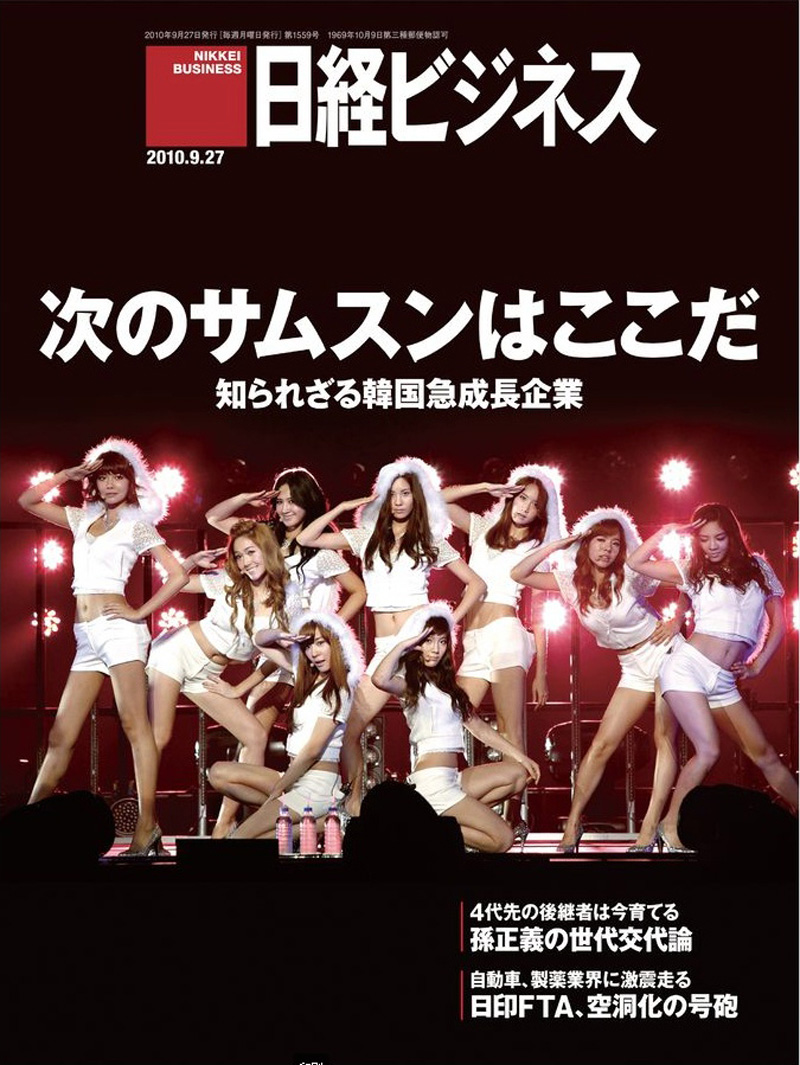
“Here is the next Samsung: fast growing Korean companies that you’d better know about.” Source.

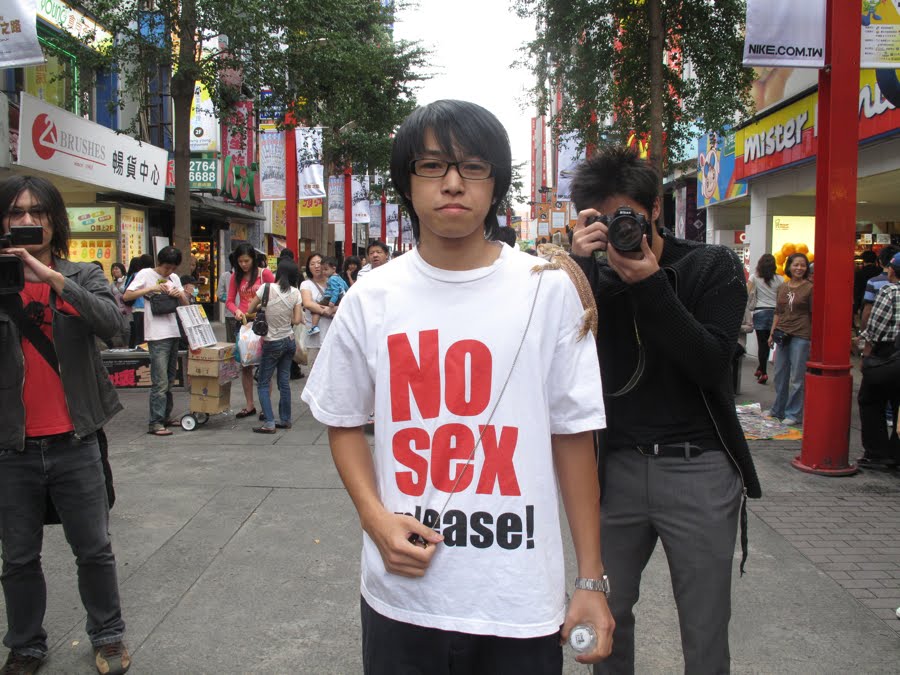
“Stop obsessing with sex.” (Fernando)

“If I went to New York and started pointing out how many skyscrapers there were, would you suggest that it was *me* that had the obsession with noticing skyscrapers, or New York for building them all?” (Norman Lewis; source)

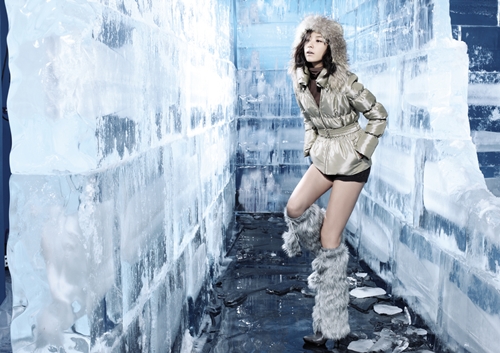
And indeed if you went to Seoul instead, it’d be difficult not to notice all the exposed women’s legs. Even—or perhaps especially — in the winter.

It wasn’t until I saw this November 2010 video from the Singaporean RazorTV though, that I realized the fashion might not be so common there yet. Likewise, it was just starting in Thailand, where authorities were warning against the danger of dengue fever from the ensuing extra mosquito bites:

Unfortunately, only the narrator speaks English, while the hosts and interviewees chat away in Chinese (is that normal for Singaporean TV?), and no subtitles are available. However, I was able to find this related article from parent organization The Straits Times, and it had an intriguing conclusion:

Entertainment journalist Tan Chew Yen from the Chinese Central Integrated Newsroom reasoned that showing off legs allows these girl groups to maintain a healthier but nonetheless sexy image.

It invites less controversy and criticism from concerned citizens as compared to showing cleavage, for example, due to their young fan-base.

I beg to differ on the youth of their fan-bases these days. But still, those few words resonated on so many levels, potentially speaking volumes about how K-pop has developed over the last 5 years.

First, because it’s certainly true that Koreans regard legs as a much less sexual body part than cleavage. While that distinction is easy to overstate though, and is eroding precisely because so many Korean girl-groups are wearing hot-pants and mini-skirts these days, it’s confirmed by numerous expat women that have had to adjust to it (and of course cishet men like myself have noticed it too!).

Source

Next, because choreography, outfits, and music videos tailored for that distinction would be equally applicable to the more conservative—but still lucrative and influential—Chinese market, where for a long time Korean groups were considered much “safer” than their Japanese and Western counterparts:

In 2003, the Korean National Tourism Office [a major investor in the Korean wave] conducted a Hanliu tourism survey in China, Taiwan, and Hong Kong exploring attitudes to Korean culture, publishing the results online…

….It compared the impact of Korean culture with that of four “competitor” countries (the U.S., Japan, Taiwan, and Hong Kong), and in the process revealed much about Korea’s own political and nationalist concerns, particularly in relation to Japan and America. Six of the eleven options for respondents to the category “reasons I like Korean culture” reflect this preoccupation: “less sexual than Japanese culture,” “less sexual than American culture,” “less violent than Japanese popular culture,” “less violent than American popular culture,” “decreased interest in American culture,” and “decreased interest in Japanese culture.” One other echoes Straubhaar’s notion of cultural proximity: “similar in culture.” Certainly, Korea’s own music media censorship laws (which even in 1997 prohibited the displaying of body piercings, navels, tattoos, “outfits which might harm the sound emotional development of youth,” and banned violent or political lyrics), meant that Chinese TV stations could buy in Korean music videos and music TV shows knowing that they were unlikely to upset local censors. However, these questions also reflected a perception that Korea acts as a defender against excessive Westernization and as a guardian of Confucian values within East Asia. (Rowan Pease, 2009)

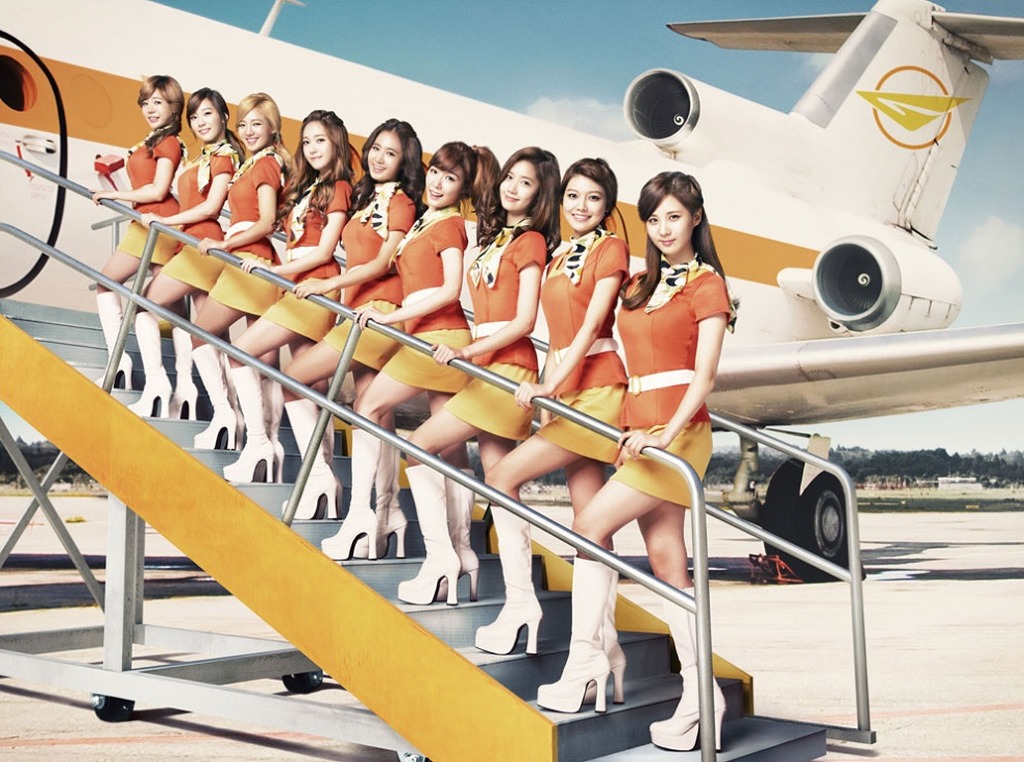
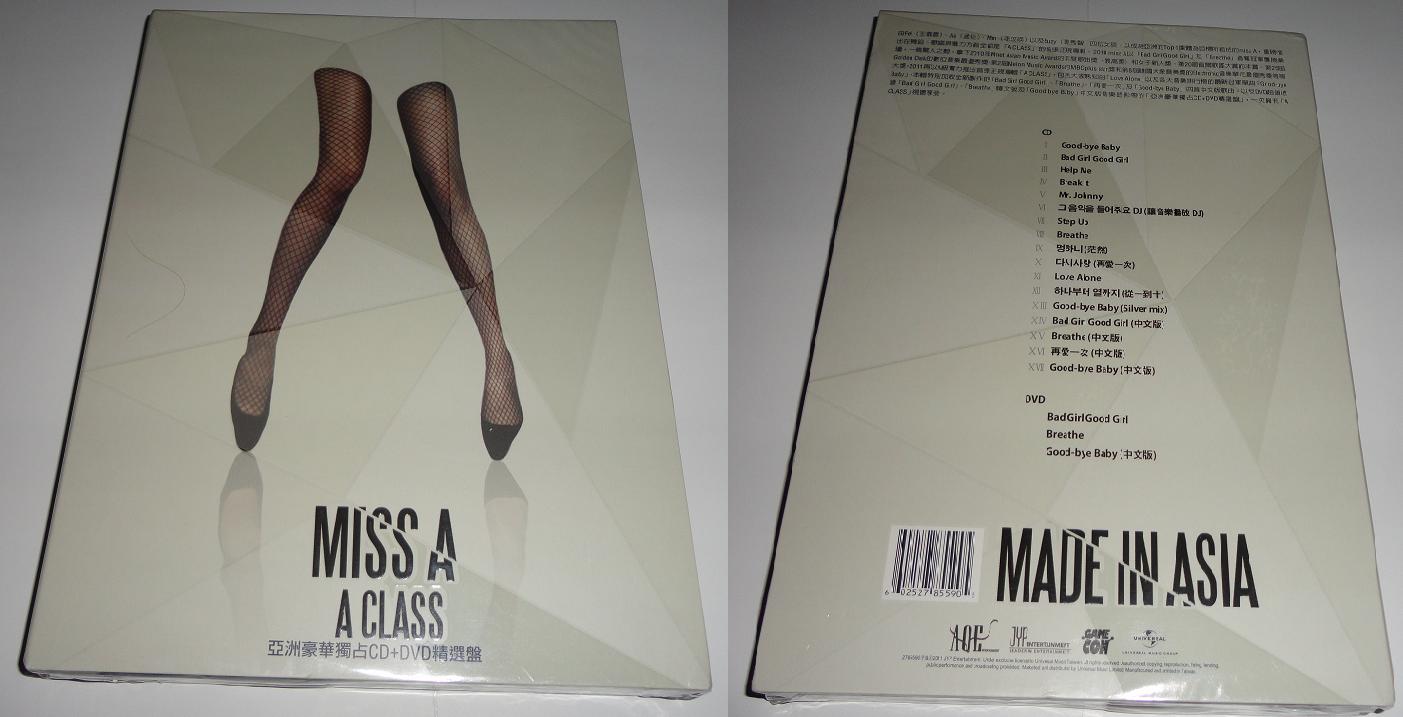
Of course, this assumes that the Chinese make the same distinction between legs and cleavage. But I’d wager they do—after all, Park Jin-young of JYP Entertainment especially has always had a firm eye on the Chinese market, with two members of Miss A being Chinese, and even the “A” in the name meaning “Asia.” And the group’s logo speaks for itself:

Source

Finally, likewise hot-pants would be a perfect fit with “Ajosshi” or “Samchon” fandom. Here’s a quick definition of that for new readers:

…what is extraordinary in girl idols’ fandom is that a large number of male fans in their 30s and 40s have constructed the unprecedented scale and mode of fandom called Samchon-fans, or uncle-fans. As Samchon in Korean refers to one’s parent’s brother, this name implies the middle-aged men’s care for their young nieces. Once this familial setting is built up, a relationship between male viewers or self-claimed Samchon fans is restructured in the complicit relationship between uncle and little nieces. Accordingly, the male’s gaze at young female bodies is legitimized and normalized as the voluntary support and pure love of uncles for their nieces. Under the identity of uncle, they can deny the sexual aspect of what they see and insist on appreciating merely the pure surface of pretty children. This double male psychology of interwoven denial and justification is pervasive in the constitution of the girl idols’ fandom. Thus, with the pretentious reformulation of the male gaze into an uncle’s familial support, the male consumption of the girl bodies becomes relieved of the predictable blame for pedophiliac abnormality. (Yeran Kim, 2011; see sources below)

Previously, most discussions about Samchon fandom have focused on pointing out its existence and/or its effects, both of which you can read about in depth here and here. But in hindsight, not enough attention has been give to the process of how it came about, which this cleavage/legs distinction now potentially helps to fill. For if entertainment companies subscribed to it, having their girl-groups members flaunting their legs while covering up their cleavage, then it’s easy to see why this would provide plausible deniability for all involved.

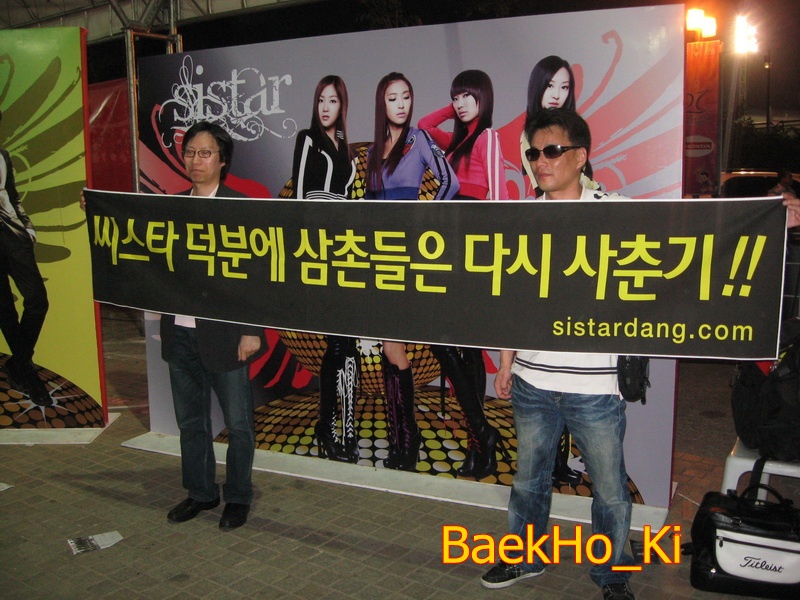
“Because of Sistar, uncles [feel like] teenagers again!!” Source.

Not that being a middle-aged male fan of a girl-group is wrong per se of course. But for a number of years the Korean media would indeed promote the deceitful “innocent until proven sexual” byline of Samchon fandom (and to a large extent still does—see here and here), providing a window for entertainment companies to sex up performances to their hearts’ content.

Was this the result of a deliberate, years-long strategy by entertainment companies? That’s unlikely: not only did Girls’ Generation at least actually wear “skinny jeans” well before hot-pants for instance (I believe they only started doing so with Tell Me Your Wish in July 2009), but it’s difficult to speak of grand plans by JYP, for instance, when he’s well known for his constant experimentation with groups, trying everything until one concept finally succeeds.

In short, I think entertainment companies lucked out. But like the video says, K-pop has been about legs, legs, and legs ever since they did, and with a palpable influence on Korean fashions. Moreover, whether they’re on the screen or on the streets, people will still make much the same claims about them:

…people maintain [Girls’ Generation are] pure, clean, and cute, and everyone tries to erase and deny the blatant fact of their sexualization in that curiously Korean way that college freshman can click-clack to class in 5-inch hooker heels and a leather skirt and when asked if that might not to be too risque for class, people get defensive and indignant and call the gazer the pervert, while letting the main parlayer in and of the male gaze (the women totally subjecting herself to it) off the hook. (Michael Hurt; source)

Granted, mini-skirts especially are just as — if not more — popular in Japan, so it’s entirely possible that the Korean trend actually comes from Japan, and predates the girl-group boom of the late-2000s. Yet I don’t personally recall seeing quite so many legs on the streets of Busan (which is much warmer than Seoul!) until just a few years ago, with the exception of World Cup summers (when standards are relaxed). And while I’m usually loathe to ascribe top-down origins to fashion trends, I’d be lying if I said Koreans don’t seem to be notoriously conformist in this regard (as this 2004 Prugio commercial with Kim Nam-ju used to be a good illustration of, before the video was taken down!):

And on that note, please let me know what you think, and by all means poke holes in it—my connection between girl-groups only showing their legs and the rise of Samchon Fandom is just the germ of an idea at the moment, which now needs fleshing out (not unlike many of the legs themselves). But if I do say so myself, it’s one of the biggest epiphanies about K-pop I’ve had in a while!

Update 1—See here, here, and here for the next 3 parts of the RazorTV video, about which idol has the best legs, problems with underage performers, and the increasing objectification of male idols respectively. Parts 2 & 3 also have more English

Update 2—Let me pass on Esther Hoeve’s illuminating comment from Facebook:

The difference in what constitutes as ‘sexy’ bodyparts is an interesting one. Back home (western Europe) I’m much quicker to reveal cleavage or shoulders, but I spent half a year in Thailand and had to adjust to wearing shorts, but tops with sleeves. The shorter my skirt or shorts, the longer my sleeves would be. I actually grew self conscious of how much upper body I was showing, but usually have the same feeling concerning my lower body here in Europe. It completely changes your perspective on what’s considering ‘revealing’.

Like I say there, this reminded me of some of my female students back in 2000 complaining of middle-aged and old women telling them to cover up their bare arms. This was in Jinju/진주 though, a university town but still quite small and conservative, so I don’t know if their counterparts in larger cities had the same problems.

Sources

  • Yeran Kim (2011): Idol republic: the global emergence of girl industries and the commercialization of girl bodies, Journal of Gender Studies, 20:4, 333-345.
  • Rowan Pease (2009): Korean Popular Music in China: Nationalism, Authenticity, and Gender, in Chris Berry, Nicola Liscutin, and Jonathan D. Mackintosh ed.s, Cultural Studies and Cultural Industries in Northeast Asia: What a Difference a Region Makes, 151-167.

(Hat tip to dogdyedblack)

Korean Boys: “Wearing Hot Pants Says Something About You”

(Source)

A much more serious topic than it may sound, this article from Ilda Women’s Journal will definitely give you a renewed appreciation for the goals of the Slutwalk (잡년행진) movement.

Once it does though, unfortunately you’ll probably find yourself pretty frustrated with it too. For the author only really gives platitudes about the need for change, rather than provide any details about who those boys were, what they said exactly, and the sex-education program her and her colleagues were involved in.

But still, she’s right to be concerned about the messages children are receiving about sexuality when any elementary school boys both approve of and chastise attractive women for wearing revealing clothes. Let alone disallow “ugly” ones from wearing them:

(Source)

“못생긴 애들 핫팬츠 입지 말라”는 아이들 Children That Say “Ugly Girls Shouldn’t Wear Hot Pants”

여성의 노출’을 바라보는 십대들의 시선 Teenagers’ Views on Women Who Wear Revealing Clothes

So Yeong-mi, August 2010

(일다의 독자위원인 서영미님은 현재 십대들과 함께하는 성교육 프로그램을 진행하고 있습니다―Editor)

Editor: Ilda reader So Yeong-mi is currently involved in a sex-education program aimed at teenagers.

“선생님, 질문 있어요. 왜 여자애들은 그렇게 짧은 반바지를 입어요?”…“여자애들이 핫팬츠 좀 못 입게 해주셨으면 좋겠어요!”…“?????????”

“Teacher, I have a question. Why do women wear such short shorts?”…”If young women didn’t wear hot pants, that would be good.”

이게 도대체 무슨 문제란 말이지? 최근 들어 두 번이나 받은 질문이다. 고등학교 청소년 남자 아이들을 만났을 때 한번, 그리고 초등학교 남자아이들과 교육하면서 한번. 성장기 자신의 몸의 변화나 성관계, 임신/출산에 관련한 질문들이 대부분인 편이라 이 질문이 유독 기억에 남았다. 같은 반 여자아이들이 핫팬츠를 입지 말았으면 좋겠다니 이 무슨 말인가?

(Source, NSFW)

Why on earth are they saying and asking these things? This has happened to me twice recently. Once, from teenage boys at a high school, and the other from boys at an elementary school. Most of the questions I get are normal ones about their development, changes to their body, sexual relationships, pregnancy and childbirth and so on, but I especially remembered these. Why are boys saying that girls in their classes shouldn’t wear hot pants?

James – Because of the mention of female classmates, I’m assuming the boys were in mixed-schools then? But So Yeong-mi doesn’t mention how the girls reacted to such questions, an omission which hopefully means she taught the boys and girls separately.

뜬금없는 질문이 궁금해 스무고개 하듯 계속해서 질문을 주고받으며 질문한 의도를 파악하려 애썼다. 질문자는 한 명이었지만 반 아이들 모두가 동의하고 있었고 별로 웃기지도 않은 질문에 아이들은 자지러졌기 때문이다. 질문을 받은 내가 자신들 생각대로 웃어넘기지 않고 진지하게 계속 물으니, 나중엔 아이들도 제법 진지하게 맞받아쳤다. 그리하여 나온 결론은 같은 반 여자아이들은 핫팬츠를 입으면 안 된다는 것!

I was very curious why these questions came out of the blue, so I sort of played 20 Questions with the students to find out. Only 1 student [in each case?] asked, but all the other students thought it was hilarious, and they expected me to laugh along with them. I wanted to get to the bottom of that, and so later when they gave me feedback it emerged that they felt that girls in their classes shouldn’t wear hot pants.

(Source)

모자와 핫팬츠는 다르다? What’s the Difference Between Hot Pants and Hats?

“오크가 그런 걸 입는 게 말이나 돼요?” “Would Orcs Wear Hot Pants?”

판타지 소설이나 롤플레잉 게임에 주로 등장하는 괴물, ‘오크’족. 쭉쭉빵빵 몸매도 좋고 능력도 좋은 미녀캐릭터들에 비해 볼품이 없어 쉽게 무시당하고 힘만 센 캐릭터. 아이들의 설명에 의하면 이랬다. TV에서 연예인들이 입는 것과는 다르다는 것. 그건 당연히 ‘봐줄 만하다’는 것이다. 핫팬츠뿐만 아니라 미니스커트에도 역시 강한 불만을 표했는데, 이번에는 또 다른 이유를 제기했다.

As the students explained, in fantasy novels and role-playing games the monster that appears the most frequently is the orc. Unlike beautiful female characters, with great abilities and voluptuous bodies (and usually useless armor – James), orcs are essentially faceless characters that can easily be disregarded. What entertainers wear on TV is different though, and, of course, it’s worth watching.

But it’s not just hot pants that the boys had problems with girls wearing, but also miniskirts. They gave a second reason for that.

“옷이 그러면 그렇고 그런 거 아니에요? 위험할 수도 있잖아요.”

“Doesn’t wearing clothes like that say something about you? And it’s dangerous too!”

아이들은 여성인 내게 “선생님도 그런 옷을 입냐”며 “도대체 왜”냐고 야단이었다. 한 학생이 모자를 쓰고 있기에 “너는 왜 모자를 쓰고 있냐” 물으니 “그냥 좋아서”라고 가볍게 얘기했다. 그럼 “핫팬츠나 미니스커트를 선택해서 착용하는 것은 무엇이 다르냐” 물으니 “그건 당연히 다르다”고 소리친다. 적절한 대답이 없을 때 아이들은 대개 화를 낸다.

(Source)

The students asked me, a woman, “Do you wear clothes like that?”, and, in a critical tone, “Why on Earth do women wear those?”. So, to one student who was wearing a hat I asked “Why are you wearing that hat?”, to which he casually replied “Because I like it”. So then I asked “How is that different to choosing hot pants or a miniskirt”, and got the retort that “Of course it’s different!”, the student becoming angry that he didn’t really have a proper answer.

그날 종일은 아이들과 좀 더 많은 시간을 들여 ‘개인의 취향’에 대한 이야기를 나누었다. 서로의 취향을 존중하고 이해해야 하는 이유를 찾아보며 남/녀를 탈피한 다양한 관계 속에서 역할활동까지 해봤다. 그러나 그 날의 아이들에게는 이미 모자와 핫팬츠의 ‘선택’이 다르지 않다는 것을 이해시키는 것이 어려워 보였다. 너무나 견고한 그들만의 ‘패션철학’이 놀라울 따름이었다.

I spent all day with the students, and shared a story about personal tastes with them. Then we did roleplaying, breaking away from normal man/woman and girl/boy ones, in order to better understand and respect each other’s personal tastes. It was difficult to make them understand that wearing hot pants was a choice, no different to wearing a hat, and I was very surprised in how unwavering some of their attitudes to fashion were.

우연히 비슷한 시기에 만난 이 집단 아이들만의 문제였을까. 교육이 끝난 후 평가시간에 이 에피소드를 털어놓으니 유난히 남자아이들 교육을 진행할 때 그런 질문이 많이 나온다는 실무자들의 의견이 있었다. 예쁜 사람이 입으면 괜찮고, 아니면 안 괜찮고, 짧은 옷을 입으면 위험하고 야한 어떤 것이라는 10대 초반의 아이들의 논리. 고등학생 이상의 청소년 들을 만났을 때만 해도 성인과 비슷하게 생각해나가는 시기여서 그런가 생각했는데, 초등학생들에게서까지 강한 불만으로 표출되어 나오니 그냥 웃어넘길 일이 아니라는 생각이 들었다.

I wondered if this way of thinking was just confined to the groups of students I taught, so afterwards I asked other sex-ed teachers involved in the program, and they confirmed that they get similar questions and opinions from especially male students. The logic of boys in their early teens was that if pretty girls wear hot pants and so on it’s okay, but if they’re not pretty then it’s not, and that [in either case] such clothes are both too revealing and dangerous.

(Source)

Now, if I’d asked high school students and so on, who think like adults, then I wouldn’t have been surprised, but once I learned that even elementary school students are saying such things then I realized that this was no laughing matter.

고 민지점은 성인들이 갖고 있는 편견이나 고정관념들이 고스란히 아이들에게도 답습된다는 것이다. 또한 그 연령이 대폭 낮아졌다는 사실도 놀랄만한 일이다. 그 어린 학생들마저도 ‘여성’의 몸을 검열하고 있다는 사실에 주목하지 않을 수가 없는 것이다.

Children are picking up adults’ prejudices and biases, although it is surprising that they’re doing so at such a young age. And we can’t help but notice that even these children too think the female body is something to inspected and evaluated.

우리가 어떤 일을 할 수 있을까 What can do we do about this?

노출이 많은 옷을 입은 여성과 그렇지 않은 여성을 간단하게 이분화 시키고, 거기에 아름다움이라는 가치를 연결시킨 잣대로 평가하는 것은 아이들도 어른들과 크게 다르지 않았다. 다만 아이들의 용어로 표현하고 있을 뿐이었다. 이를 우스갯거리로 사용하는 아이들을 보고 있자니 솔직히 조금 화가 나기도 했다. 그리고 그와 동시에 우리 스스로 반성해야 될 때가 아닌가 생각해보게 됐다.

Children splitting women into simply those who wear very revealing clothes and those that don’t, and judging their value only in terms of their appearance, is little different from what adults do. But although the children just used these terms jokingly, to be honest I still got a little angry with them.

Yet at the same time, we really need to examine ourselves too.

대중매체에 대한 비판을 하려던 차에 최근 10대 청소년 연예인들을 상대로 60%가 신체 노출이나 과도한 성적 행위 장면을 강요했다는 기사들을 보게 되었다. 한 언론과의 인터뷰에서 가수 이은미는 음악성 보다 외적인 면에 더 관심을 갖는 사회 분위기를 우려하며, 성적인 면이 강조된 걸그룹의 노래, 의상, 춤에 환호하는 이 사회를 ‘몰상식의 극’이라고 표현했다. “초등학교를 졸업한지 몇 년 되지 않은 아이들을 벗겨놓고 대 놓고 섹시하다고 박수를 치거나, 꿀벅지, 꿀복근 같은 용어들을 사용하는 대중문화를 보면 소름이 끼친다.”는 것.

(Source: unknown)

I was about to blame the mass media, as recently I’ve read reports which say that 60% of female teenage entertainers have claimed to have sometimes been forced to wear revealing clothes and/or do sexual dances and so on. And in an interview of the singer Lee Eun-mi (James – Not one of those teenage entertainers; she was born in 1968), she said she was worried about a society that considered external appearance more important than musical quality for singers, where girl groups’ sexual dances, songs, and outfits where cheered…she used the term “thoughtless/careless”. She said “I freak out at the thought that just a few years after they graduate from elementary school, young male and female entertainers are being praised for taking off their clothes and being talked about in terms of their ‘honey thighs‘ or six-packs.

쏟 아지는 대중매체의 벗기기 논란은 새삼 어제오늘 일도 아니건만, 아무 손쓰지 않고 있었음에 반성하게 된다. 상품화되고 대상화되고 있는 여성들의 문제를 공공연히 문제 삼지 않았던 것이 일상생활에까지 주변 사람을 대상화하고 외모로써 평가하는 지금의 일을 만든 게 아닌가 하는 생각에서다.

But these trends in the media didn’t just appear overnight – they were allowed to flourish by the public’s inattention and lack of concern. This way, we have come to consider the commercialization and objectification of women as a normal part of our daily lives.

아 이들의 생각을 넓게 펼쳐주진 못할망정 오로지 외모로써 사람을 평가하는 우리 사회에서 우리가 어떤 일을 할 수 있을지 함께 고민해봤으면 좋겠다. 우리가 그동안 무심코 내뱉었던 말들이 아이들에게 어떤 영향을 미치게 될지 생각해보면서 말이다. 문제가 수면으로 드러난 지금이야말로 왜곡된 미와 과장된 외모 중심의 평가들로부터 벗어나 아이들에게 더 많은 관심을 가져야 할 때다. 아이들뿐만 아니라 사실은 우리 모두를 위해서 말이다.

It’s difficult to broaden children’s minds, but we do have to make an effort to stop judging each other on our appearances. We have to consider what has been the effect on our children of this focus, this excessive emphasis on appearance. Not just for them, but for society as a whole (end).

My post title aside, I don’t mean to generalize about all Korean boys, and given the author’s vagueness then what she says about them really needs to be taken with a grain of salt. So, to get a better overall picture, I’d really appreciate anything any teachers can tell me about what their own young students have ever said about such things (alas, it’s been a while since I’ve taught children or teenagers myself).

And to end on a positive note, was anyone else reminded of the above semi-response to such sentiments? Now I have a renewed sense of appreciation for that too!^^ (See here for a discussion of the song’s lyrics and meaning)

Who are the Korean Pin-up Grrrls?

(Source)

No, not pin-up girls, but pin-up grrrls. Let me explain the difference.

First, take another long hard look at Yoon Eun-hye’s (윤은혜) photoshoot for October’s Dazed and Confused, as one does. Because despite appearances, it was probably a tough sell. Would you invest 8000 won (US$7.24) in a magazine for just 7 revealing pictures of a celebrity, out of 255 pages? Even if there are no high-definition versions available on the internet?

Maybe. I did, but as you’ll see, I was looking for an interview of her. You can make jokes about my real motivations later.

I suspect then, that the photoshoot’s main purpose may not have been to sell more copies of that particular edition per se. Rather, it was looking to enhance Dazed and Confused’s brand through the ensuing publicity, thereby selling more magazines and being able to charge more for advertisements in the long-term. If so, then the massive attention the pictures have been getting in the media can be considered a success, in the process Eun-hye literally – if only fleetingly – embodying the Wikipedia definition of a pin-up girl as “a model whose mass-produced pictures see wide appeal as popular culture”. Even, in a hyperreal sense, in the absence of the physical pictures themselves.

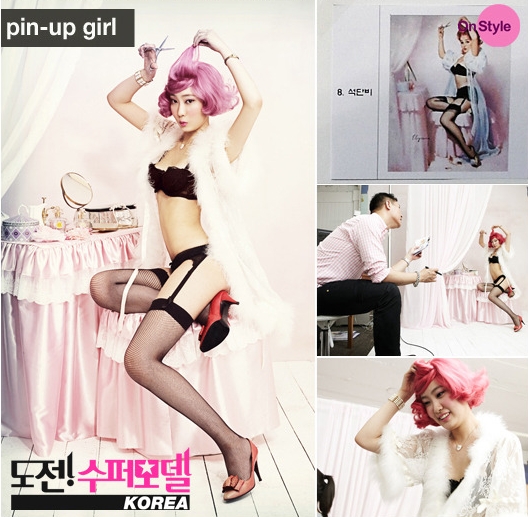
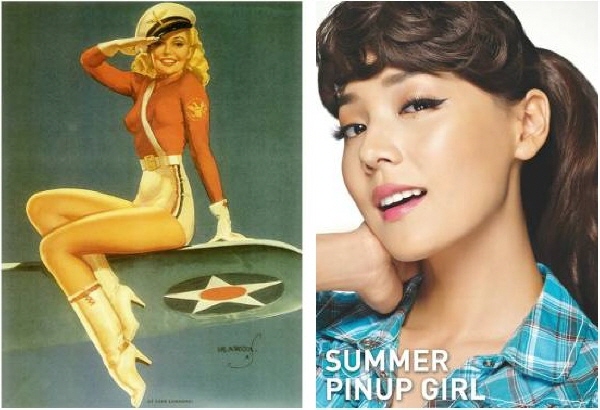
Next, consider them in the context of a retro fad that has been sweeping movies and K-pop (or at least the female half of it) since at least Lee Hyori’s (이효리) U Go Girl of 2008. Again, while strict censorship and sexual conservatism likely confined any physical Korean pin-ups to seedy bars until the 1990s (I’ll consider “soju girls” separately shortly), pin-up girl chic is certainly becoming a recognizable part of Korean popular culture. It was no great surprise to see models copying them (source, right) on Korean television last year for instance, and I refuse to believe that it’s a mere coincidence that now there’s even an online clothes store with the pin-up name.

Vivent les femmes?

Well, that’s certainly a possibility, which I’ve very much underplayed in the last five years I’ve been writing about Korean gender issues. And not that I wasn’t correct to do so: knowing that baring breasts in magazines was one notable form of resistance to censorship in Francoist Spain in the 1970s, naively I projected that onto what were increasingly risqué Korea soju ads starting from about 2006, likewise equating more T&A in them with, well, sexual and political liberation (see here for a modern Arab equivalent). Thankfully, many readers soon disabused me of that notion, and I’ve been at pains to point out that the latter doesn’t automatically signify the former ever since.

But then I read Maria Buszek’s Pin-Up Grrrls.

A brilliant book, alas it is also 444 pages long, but fortunately a roughly 20 times shorter version(!) is available online here, which I strongly encourage you to read in full. Here’s just a taste of why it was so eye-opening:

In the same way that women surely saw their own reflection in the illustrated recruitment pin-ups of WWII, it seems that many similarly saw the Varga Girl not as an unattainable fantasy of the heterosexual male imagination, but an ideal they could both associate with and aspire toward. Contrary to contemporary assumptions that the Varga Girl (and Esquire magazine) were enjoyed by an exclusively male audience, we find her presence in such contexts where she would not only have been highly visible to women, but there as the result of what one can assume was her already existing popularity with a female audience. By the start of the war, women were certainly familiar with her; in the very same issue as the first Varga Girl, an Esquire reader-poll appeared that indicated nearly three-quarters of the “gentlemen’s magazine” subscriptions were in fact read by women, for whom the magazine’s illustrations were the number one attraction…. In fact, if one reads the magazine’s letters section, “The Sound and the Fury,” throughout the ‘40s, women’s letters were frequently published–many written solely to remind the male editors and readers that the magazine had a broad audience that included women, whose presence they should consider in features, cartoons, and advertisements.

(Source)

Next, consider the following from pages 169 and 170 of Whang Zheng’s chapter “Gender, employment, and women’s resistance” in Chinese Society: Change, Conflict, and Resistance (2nd Edition), 2003:

Replacing the “iron rice bowl” of job security in urban China in the 1990s is the craze of creating the “rice bowl of youth”. Everywhere attractive young women have been sought to represent the shining image of “modernity”. Booming service, commercial, and entertainment industries post numerous age-, gender-, and, often, height-specific advertisements seeking women under the age of 25 and above 165 centimeters in height. Stylish, elegant, or sexy, young “Misses” are displayed in remodeled or newly built “modern” hotels, restaurants, department stores, travel services, night clubs, dance halls, and so on. As older state industries lay off women workers over 35, these modern young Misses, many with no particular education or technical skills, are entering the rising industries (mostly in the private sector, some with foreign investment) where their youth and beauty provide a ticket to incomes several times higher than those of their older sisters.

And in particular:

The creation of the rice bowl of youth is a “joint venture” of consumerism and capitalism that commodifies and objectifies women. Its contradictory aspects should not, however, be overlooked. Many a Miss Public Relations, Miss Shopping-guide and Miss Travel-guide is far from being a passively constructed “decorative” object for the fulfillment of her bosses’ utility needs and their male clients’ sexual fantasies. Rather, many are active players in the melodrama of modernity, who consciously manage their “profits” by a range of strategies, including frequent job changes to advance their position, and investing in various adult education programs to acquire new qualifications and skills [James – a surprising absence here is mention of cosmetic surgery]. Seizing the rice bowl of youth, many young women catapult themselves into lasting careers. The inherent modern values in this position, such as assertiveness and competitiveness, have been expressed prominently in young Misses’ pursuit of career development in a competitive job market. This gendered employment pattern with its inherent contradictions, in short, provides opportunities for young women’s social and economic advancement, even if it blocks employment access of older laid-off workers, and reinforces gender [James – and sexual] stereotypes.

For an alternative, much more critical view of that development in the Korean context, please read this post of Michael Hurt’s at Scribblings of the Metropolitician, and indeed I do think Whang slightly overstates her case. But the points have been made: dressing and posing sexily in commercial photographs isn’t necessarily exclusively for men, nor does a woman deserve scorn if she does so simply in order to advance her career. Also, that these are not mutually exclusive.

But as something to celebrate in a Feminist sense? That all sounds somewhat hollow, let alone just basic common-sense. Whereas last week I promised you a useful, refreshing perspective with this post.

Enter the pin-up grrrl, who exalts in her sex appeal to both men and women, whether as sexual object, subject, role model, or all three. And above all, she never strays out of character.

By these criteria, merely being featured in Korean pin-up girl chic isn’t quite enough. Just like www.pinupgirl.co.kr doesn’t actually sell anything even remotely pin-up girl themed, simply appropriating the risqué clothing, poses, and terminology of an earlier, quite literally foreign era is meaningless if the same women are infantilizing themselves in their next commercial, talkshow appearance, and/or photoshoot (update: or their Japanese promotions). Yet this is the norm in Korea, where so many female icons loudly touted as confident and independent are actually under the firm control of their management agencies (not even being able to use the internet or have cellphones, let alone go on dates), and where the fact that almost 3 out of 4 commercials feature celebrities means that the same women can be found endorsing just about anything (even competing brands).

Examples abound. At the same time that KARA (카라) were making waves for their “butt dance” (엉덩이 춤) choreography for Mister (미스터)  below for instance (and which is a problematic song in itself, placing — for all its supposed female bravado — all romantic initiative in the hands of said “Mister”)…

…you were just as if not more likely to see them on Korean TV doing their childish commercials for Pepero (빼빼로):

More recently, Girls’ Generation’s (소녀시대) purported shift to a more mature, sexual, and empowering image with the release of their latest album The Boys is undermined by familiar narratives of passivity in the lyrics to the Korean version of the song (but which are tellingly absent from the English one). In particular, while one member (Sunny) did claim that (hat tip to askbask):

“The lyrics’ [meaning] are up to the interpretation [of the listeners’]. Rather than just the simple meaning of girls giving boys support, it can be interpreted in many ways. The girls could be telling the boys that we’ll take the lead, giving off a more tough image. It could also be interpreted as girls telling the boys to get their act together and cheer up. (laughs) The song also aims to give courage to people, whether they’re girls or guys, who are tired out [by life].”

(Source)

Nevertheless, as someone not just contracted to SM Entertainment, but also the niece of its founder, she is hardly in a position (or have the inclination) to claim otherwise. Moreover, even if for the sake of argument I allow that the lyrics are indeed open to interpretation, most likely the very next thing I’ll see Girls’ Generation in will still be an advertisement for one of the numerous brands they’ve endorsed above, piling on the cutesy aegyo. And even if I further concede that that’s because surely many of those endorsement contracts precede the release of The Boys, and will continue to apply for some time after it, you’d a) assume that if that was a genuine concern, then SM Entertainment could have scheduled things better so as not to undermine Girls’ Generations’ new image, and b) be hard-pressed not to recall that actually they were already supposed to have become “bad girls” with Run Devil Run nearly two years ago.

Forgive me for being a little cynical.

(Sources: left, right)

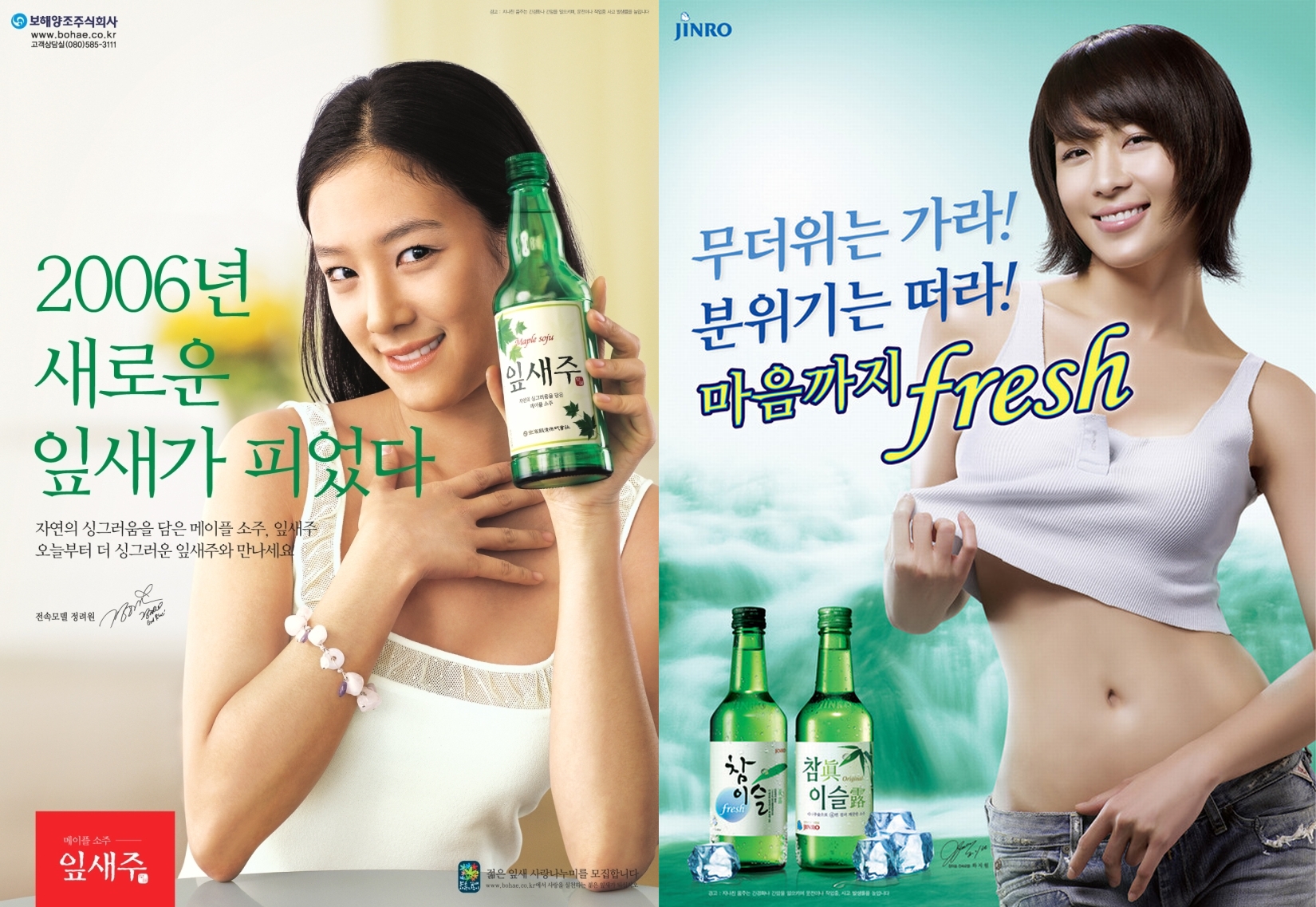
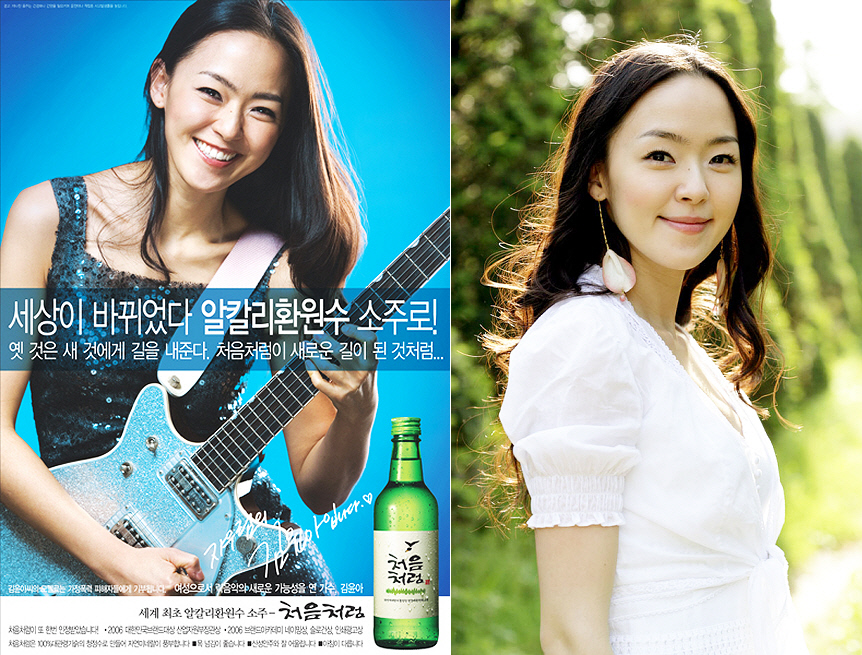
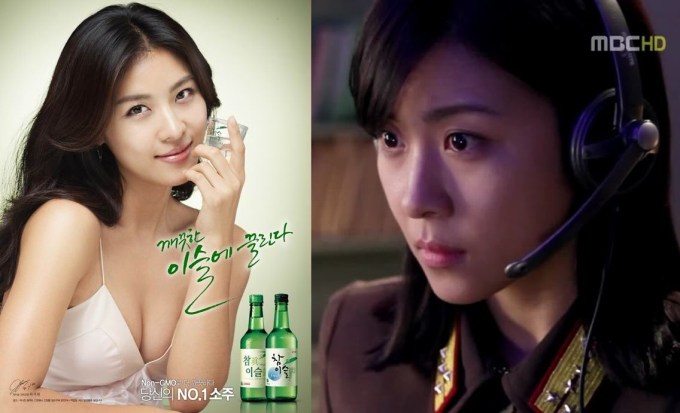
So again, it’s promoting and maintaining a pin-up grrrl image that is crucial. By which token we can also dismiss most soju girls too, even if they are indeed technically a kind of Korean pin-up. Because with very rare exceptions, such as Kim Yoon-ah’s (김윤아) example discussed here (the singer, not the skater), not only are soju ad formats usually extremely restrictive, but, for all their sexing-up in recent years, the models therein remain firmly ensconced within a virgin/vixen dichotomy, well illustrated by Jeong Ryeo-won (정려원) and Ha Ji-won (하지원) above (only three years apart btw; they changed really quickly!).

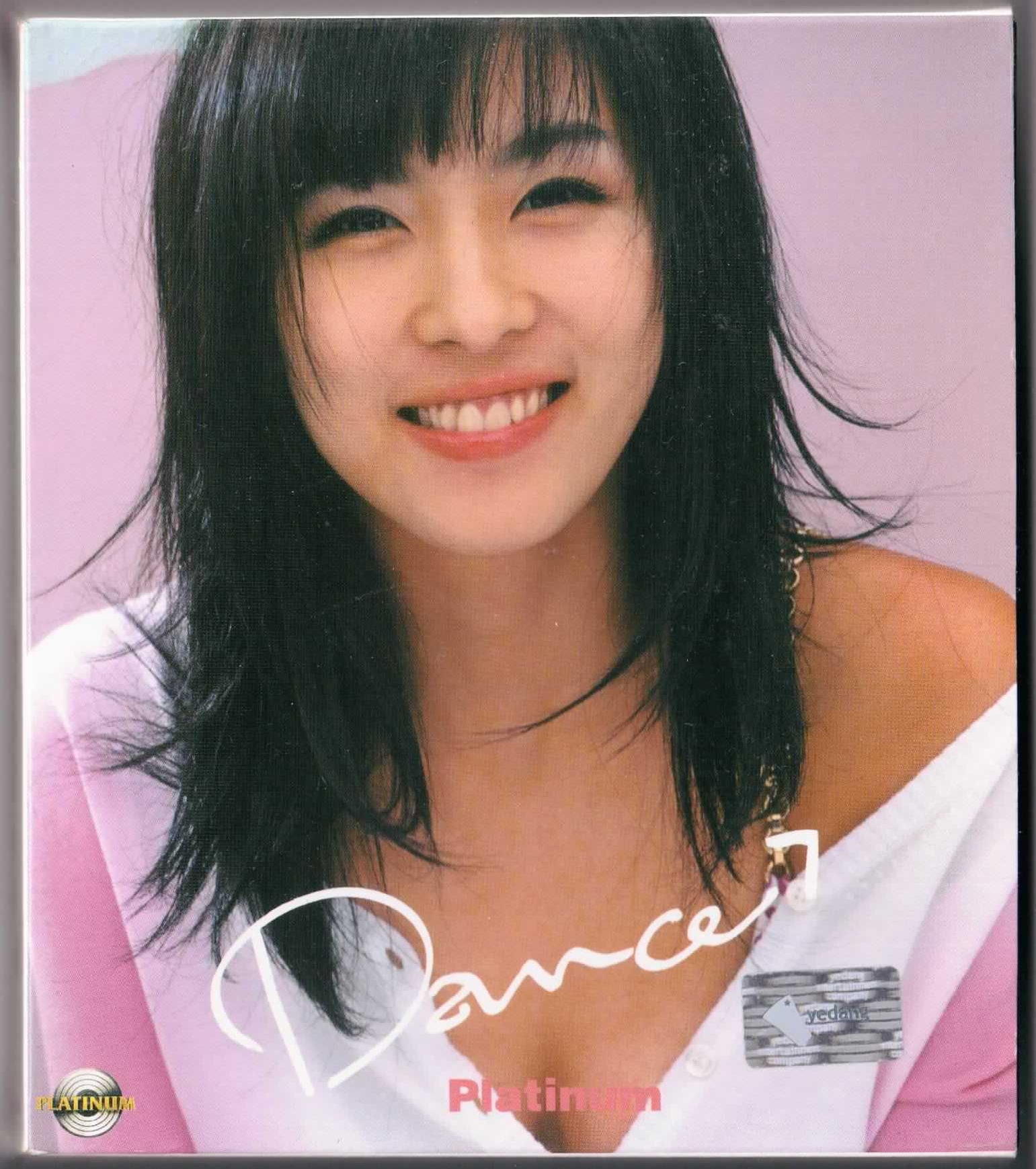
And yet again, despite the latter having – ahem – a special place in my heart because of: a) first learning of her through ads for the Platinum Dance 7 CDs that played on Korean TV for much of 2002, in which she simply stood there looking stunning; b) singing in Wax’s (왁스) music videos, my favorite Korean artist; c) later learning of her connection to my hometown;  and d) literally being kick-ass in the drama Secret Garden (시크릿 가든) and more recently the movie Sector 7 (7광구)…she undermines all that by, amongst other things, looking decidedly pale, unnatural, and delicate in her advertisements for skin care products. And so on.

Which brings me back to Eun-hye’s pictures, which surprised me because I remember that she endorsed the Korean lingerie brand Vivian (비비안) back in 2008, yet somehow without actually wearing the lingerie at all (as you could see earlier in the post {source}; see here and here for the politics of Korean lingerie modelling behind that). So, I bought the magazine itself assuming that they would include an interview of her, in which, however lame, unreliable, and/or perfunctory, she explained her reasons for the sudden change. Not only was there no interview inside though, but to my chagrin (no, really) I soon discovered that actually she’s been talking her clothes off in public for years now (“have you seen this” indeed!). Which possibly explains why I can’t find any mention of why she did the photoshoot on the internet whatsoever, despite the ubiquity of “news” articles about it as mentioned (source, right).

So, the jury’s still out on Eun-hye at least (although I admit that I’ve yet to look for interviews about her earlier photoshoots), and I acknowledge that my relative lack of knowledge about Korean female celebrities means I may be unfairly and/or prematurely dismissing them, something I’m sure has also gone through many readers’ minds.

So, as you can see below, I’ve been trying to rectify this, looking for reliable interview sources of interviews of Korean singers. But this is harder than you may think, as Korea seems to lack any definitive music magazines. AstaTV, for instance, is literally just 105 pictures of mostly boy-bands for 11,800 won (US$10.44), a magazine format I’ve very surprised to still see around in 2011, while Junior is, well, very much for juniors. Alternatively, the very cheap – but thick – weekly Movieweek and Cine21 magazines are good sources for singers that have also acted, but naturally I’m frustrated not to find something much more music focused.

So, I would very much appreciate recommendations from readers, or if in future you could pass on any decent interviews and articles available on the internet (whether of men or women), in which they elaborate on the themes discussed in this post (I’ve included my translation of one I did find at the end of this post). Indeed, probably in just five minutes some of you will find something about Eun-hye’s Dazed and Confused photoshoot in that I couldn’t in two weeks.But even if so, you’d think that someone earnestly looking would surely have a much easier time of it?

And with that thought, I suddenly realized that I’ve been going about this all the wrong way, and in fact had been quite hypocritical. Because the onus is not on me to find pin-up grrrls by sifting through what, by this stage, looks like an increasingly homogenized, clone-like mass of female celebrities, but rather to highlight those ones who are already doing their darnedest to stand out themselves.

Can any old-timers guess whom I’m thinking of?

(Source)

Who else but Nancy Lang (낸시 랭)?

Yes, her eccentricities have put me off in the past too. No, I haven’t heard anything about her in at least a year either. But, just like that picture in that last link demonstrates (well, just about any picture of her really), you’d be hard-pressed to think of a well-known Korean woman quite so brazen (Update – Oops: actually she’s Korean-American, in which case Margaret Cho also instantly comes to mind. But she’s not quite so well-known in Korea itself).

If you personally have never heard of her though, then here is a quick biography of her below. Normally I’d be reluctant to copy and paste an entire article like this, but unfortunately there is increasingly less information about her available in English, and so this (originally from KBS somewhere) needs to be preserved before it’s lost when the long since defunct Pretty Korean Girls blog disappears (hey, beggars can’t be choosers!):

Since her performance of ‘Lost Dream’ in her underwear at the 2003 Venice Biennale, Nancy Lang was introduced to Korea, and she quickly appeared in magazines, on TV and on the Internet. Her showbiz philosophy that she would make money with art shouting “Cutie! Sexy! Kitty!” and “I Love Dollars” has raised controversy among art circles as well as the public.

Unconventional performance

Lang played the violin in the middle of a street wearing Victoria Secret lingerie and red high heels with kabuki style makeup. Her childhood dream was to become a violinist. And she realized the dream through art. Once, at the San Marco Piazza in Venice, she was held by the police for four hours, after which she became popular. Her performances thereafter continued to stand out. The New York born ethnic Korean is a US citizen. She only attended an international high school in Manila but her mannerisms and accent bear the hallmarks of a third generation Korean-American. Her Korean name is Park Hye-ryeong. But eyeing the world as her stage, she strategically changed her last name through help from a lawyer. “Lang” was the final choice among several names as it visually looked nice in typographic terms. Born into a well-to-do family, Lang however went through difficult times when her father died during her college years and her mother fell sick. At times, she couldn’t pay her tuition. But through the trials, she developed a clear sense of life and living.

The evolving Taboo Yogini

Multi-talented Lang’s unconventional character and provocative performances have grabbed the attention of the art, fashion and entertainment circles alike. In her trademark series ‘Taboo Yogini,’ characters such as a woman with a huge courtesan wig or a figure with a body of a robot and a head of a girl, rooster or dog appear. And invariably held in their hand is a powerful gun or a Louis Vuitton bag. In the backdrop is a car, a Chanel lipstick and other luxury brand logos. “Yogini” means an angel or a devil in the dictionary. Taboo Yogini, representing both good and bad, is a ceaselessly resurrecting spiritual being due to its persistent power and life energy. It is the symbol of Lang herself, her dreams, her wounds and her fight. The self-proclaimed ‘walking pop art’ doesn’t hide her love for brand name and elite goods. Last year at the Seoul Arts Center, the bikini clad Lang asked audience members to put oil on her body before going on to sing ‘Purple Scent’ to the tune of a karaoke machine. She pulled off another eccentric performance “Nancy Lang’s autograph session” during which she autographed her posterior as the inaugural artist of the Gwangju Biennale. The Taboo Yogini series is expected to evolve even more. In pursuit of breaking apart and assembling robots, Lang has only yet gathered the parts, and during the process she can let go of past regrets. Her work these days in fact show glimpses of her severing chains with the past and moving toward a fantastic future, portrayed by a wounded yogini and a guardian angel robot. If yogini was Peter Pan to Lang, the robot would be her Tinker Bell. It may be that she is inviting someone she can rely on in the future into her world filled with luxury goods.

Dreaming of Korea’s Takashi Murakami

Her work and lifestyle and her brutally candid and daring speech and actions invite criticism at times. But she doesn’t care. She confidently argues that, like a racehorse, she only runs toward a clear goal. She has firmly established herself as an artist reaching out to the public. Few others see art as showbiz as much as she does. But approaching show business with new ideas and works is a whole different realm. Her role model is Takashi Murakami, who successfully turned his character creations into art based on the animation, comics and games culture. Most of her works sell well and her name once topped the top online search word list. She knows what she wants, “I will become a world renowned artist who can influence the general public, and based on that foundation, I want to gain wealth and fame.” We wonder what she will show us next, as she brings along issues and controversies wherever she goes with her art.

Next, in the unlikely event that you’re not already convinced of her worthiness of the title of pin-up grrrl, then surely Psychedelic Kimchi’s interview of her in 2006 will be sufficient, which I was very glad to still find five years after first reading it (and apologies for stealing that above image from it!). Especially as, unfortunately, that seems to be the sum total of the only substantive English sources remaining on her, although there is still her (pretty active) official Facebook page (albeit not accepting new Friend requests, or at least not mine; sniff), her (less active) Twitter account, and finally her personal website (but curiously blocked because of phishing attempts the day after I first found it!). And of course I would again be very grateful if readers could pass on anything else, as I would for any suggestions of any other candidates for Korean pin-up grrrls.

(Source)

But one final thing before I do thank you though, is to draw attention to the origins of the term “grrrl” itself, lest people more familiar with it than I feel that I’m using it too liberally. In short, it comes from the Riot Grrrl underground Feminist Punk movement in the Pacific Northwest in the early-1990s, about which the New York Times wrote the following on the twentieth anniversary of its founding earlier this year:

Ms. Marcus, the author of “Girls to the Front,” agreed that it was part of a 20-year nostalgia cycle. But she added that “people are flocking to these reminiscences because there remains a tremendous hunger” for the kind of liberated, don’t give-a-damn femaleness “that was in full flower in the ’90s,” with nothing quite as potent since.

The fashion pendulum may have inevitably swung back to the ’90s, but riot grrrl, with its snarky cut-and-paste zines and carefully built micro-communities, prefigures a lot of youth culture today: targeted communication and social networking (although they did it with letters and flyers, not e-mails and Facebook messages); the lure of the handmade and the local — the craft marketplace Etsy could have been born in a riot grrrl meeting; and an attitude, evident in blogs like Jezebel and the Hairpin, that feminism can be fun.

(Source)

And in particular, the original Riot Grrrl Manifesto included the following, in what was I’m sure a deliberate choice of double entendre:

BECAUSE we must take over the means of production in order to create our own moanings.

Why this is important is because of how in her book proper, Maria Buzek contrasts Andre Dworkin’s Beauty Hurts (1974; see it here) and Annie Sprinkle’s Anatomy of a Pin-up Photo (1991) above, then in her conclusion (pages 362-3) discusses Ann Magnuson’s Revenge of the Vargas Girl (1992) below, about which she says:

In “Revenge”, the artist poses in the guise of an elegant World War 2 Varga Girl but turns the artist’s airbrush gun – the medium through which Vargas created his fantasy women – back onto the world. Magnuson has associated her appropriation of the pin-up with the same bait-and-switch subversion as the riot grrrl movement, saying: “Women’s sexuality has been shunned; there’s no shame attached to being sexual. But then, why should frat boys be the only ones who get to appreciate a curvy figure? When the pin-up is allowed to speak (and has something to say), it changes the landscape”. But Mangnuson’s assertion that the tools of the pin-up’s male creator, in the hands of its dangerous spawn, can be easily turned against its creator’s or viewer’s potentially oppressive motives also serves as a metaphor for all of the Feminist pin-up imagery we’ve seen here. In this way, the pin-up’s ultimate “revenge” lies in the fact that, although it may have been created as a tantalizing but unreal object for the delectation of heterosexual men, the pin-up would also find ways to reject this role to reflect and encourage the erotic self-awareness and self-expression of real women.

I’ll leave it up to the reader to determine how and where Nancy Lang fits into that. Or, indeed, how Korean women who wear extremely revealing clothes on the red carpet do, as discussed in the following article from the Sports Chosun, found via Charles Tilly at the Marmot’s Hole. Normally, I’d reject such a tabloidish and vacuous source, but then you recall the difficulty of finding more “serious” sources, and besides which I’ve often pointed out how tabloidish even the mainstream Korean media is. Indeed, considering that such pictures are the newspaper’s unofficial focus, then it might actually be the best source on them(!), and to my surprise its choice of accompanying pictures is not only quite conservative (as Tilly also points out; in particular, it makes no mention of Kim So-yeon’s [김소연] notorious dress below, worn at the opening of the 2007 Busan International Film Festival), but to its credit it also extols the virtues of confident “older” women, usually at best considered completely asexual by most of the Korean media:

(Source)

[WHY] 여배우들의 레드카펫 과다 노출, 왜 끊이지 않나 / Why is there no end to actresses’ excessive exposure on the red carpet?

김표향 기자 suzak@sportschosun.com / Reporter: Kim Pyo-hyang

이처럼 수위가 높은 ‘파격 노출’은 지금껏 없었다. 뜨거운 ‘노출 논란’의 주인공은 바로 신인배우 오인혜. 6일 부산국제영화제 개막식 레드카펫에 그녀가 등장하자 사람들은 충격으로 벌어진 입을 다물지 못했다. 겨우 가슴의 일부만을 아슬아슬하게 가렸을 뿐, 상반신의 대부분은 훤하게 드러냈다. 곧바로 그녀의 이름 앞에는 ‘노출 종결자’ ‘노출 폭격’이라는 단어가 붙었고, 인터넷과 SNS는 관련 내용으로 도배됐다. 전세계인의 애도 물결 속에 하루종일 검색어 1위였던 스티브 잡스도 이번만큼은 자리를 내줄 수밖에 없었다.

Never has there been exposure like this. In this “exposure controversy”, the leading figure is new actress Oh In-hye. As soon as she stepped out on to the red carpet at the opening ceremony of the Busan International Film Festival (BIFF) on the 6th, everyone was so shocked they couldn’t close their mouths. With a dress that only barely covered just part of her breasts, she was displaying almost her entire upper body. Immediately, prefixes like “Exposure Terminator [Killer/Best]” and “Exposure Bombshell” were attached to her name, and social network services inundated with them. While all day previously the world was in a wave of grief over Steve Job’s death, [in Korea at least?] his position as the most searched item couldn’t help but be replaced by Oh In-hye.

(Source)

Image caption left – 제16회 부산국제영화제 개막식이 6일 부산 영화의전당에서 열렸다. 개막식에 앞서 거행된 레드카펫 행사에서 배우 오인혜가 등장하고 있다. 최문영 기자 deer@sportschosun.com / The opening ceremony of the 16th BIFF on the 6th at the [new] Busan Cinema Center. Actress Oh In-hye arriving at the red carpet event prior to the ceremony. Photographer: Choi Mun-yeong.

Image caption right – 조선명탐정: 각시투구꽃의 비밀’ 제작발표회에 나선 한지민. 스포츠조선DB / Han Ji-min at the Chosun Dynasty: Detective K production announcement (SportsChosunDB)

(Sources: unknown)

Image caption left – 백상예술대상 시상식을 찾은 민효린 (스포츠조선DB) / Min Hyo-rin at the Paeksang Arts Award Ceremony (SportsChosunDB)

Image caption right – 지난 해 열린 골든디스크 시상식을 찾은 남규리 (스포츠조선DB) / Nam Gyu-ri at the GoldenDisks Award Ceremony last year (SportsChosunDB)

여배우들의 파격 노출, 끊이지 않는 이유는? / What is the reason actresses keep exposing themselves so?

오인혜가 부산의 레드카펫을 휩쓸고 간 후, 개막식 자리에 참석했던 한 중견감독은 이런 말을 했다. “무명일수록 노출이 심하더라.” 여배우들이 레드카펫 노출을 선택하는 이유가 이 말 속에 들어 있다. 화제와 논란을 일으키며 사람들 입에 오르내리는 것. 그러면서 자연스럽게 인지도가 올라가기를 기대하는 것이다. 무명에 가까웠던 오인혜도 강렬한 첫 등장과 함께 사람들 머리에 그녀의 이름을 깊숙이 새겼다. 신인들에게 레드카펫 노출은 자신을 PR하는 가장 효과적인 전략인 셈이다.

After Oh In-hye overwhelmed the red carpet in Busan, an important producer attending the opening ceremony said the following: “The less famous, the more extreme the exposure”. Herein lies the reason so many actresses choose to wear such revealing costumes on the red carpet. As the controversy surrounding them grows, the more they will be on everyone’s lips. At the same time, you can naturally expect them to get a lot of name recognition. [Indeed] Oh In-hye was a virtual unknown, but with her intense first entrance has carved a deep impression on people’s minds. To new actresses, exposing themselves on the red carpet is definitely the most effective PR strategy.

반면에 신인이 아닌 배우들은 이미지 변신과 연기 활동을 위해 과감한 노출을 선택한다. 한지민과 민효린, 남규리는 공식석상에서 선보인 섹시한 드레스로 ‘첫사랑 소녀’ 같은 이미지에서 벗어날 수 있었다. ‘반전 몸매’ ‘베이글녀’라는 수식어와 함께 여성스럽고 고혹적인 매력이 보태졌고, 남성들은 물론 여성들에게도 호감도가 상승했다. 작품 선택의 폭이 넓어졌음은 물론이다.

On the other hand, for established actresses a bold, revealing dress statement can be used to change an image or [assist in some new] acting activity [like a comeback?]. By wearing sexy dresses, Han Ji-min, Min Hyo-rin, and Lam Gyu-ri could get rid of their “First Love” images. Now with the words “electrifying body” or “bagel girl” [James – I disagree: that latter is invariably a term applied by the media rather than deliberately sought, and indeed many women labelled with it actually reject it] they have a charming, feminine attractiveness added to their names, of course increasing their popularity among men and widening the acting roles available to them.

(Source)

Image caption left – 2008년 청룡영화상 시상식의 김혜수 (스포츠조선DB) / Kim Hye-su at the 2008 Blue Dragon Awards (SportsChosunDB)

Image caption middle – 제16회 부산국제영화제 개막식이 6일 부산 영화의전당에서 열렸다. 개막식에 앞서 거행된 레드카펫 행사에서 배우 송선미가 등장하고 있다. 최문영 기자 deer@sportschosun.com / The opening ceremony of the 16th BIFF on the 6th at the [new] Busan Cinema Center. Actress Song Sun-mi arriving at the red carpet event prior to the ceremony. Photographer: Choi Mun-yeong

Image caption right – 2007년 대종상 시상식에 참석한 김수미 (스포츠조선DB) / Kim Su-mi at the 2007 Daejeong Film Awards (SportsChosunDB)

노출의 고수들은 뭐가 다른가? / What makes the experts different?

레 드카펫을 노리는 여배우들의 ‘워너비’는 단연 김혜수다. 관록과 여유, 고급스러움이 느껴지는 김혜수의 레드카펫 드레스는 여배우들에게 교과서나 다름 없다. ‘김혜수’ 하면 자연스럽게 파격적인 드레스가 떠오를 만큼 노출에 능하지만, 과감한 드레스를 입고 움츠러들거나 옷을 추스리느라 바쁜 여느 여배우들과 달리, 김혜수는 고개 숙여 인사할 때도 좀처럼 손으로 가슴을 가리지 않는다. 그 당당함과 자신감이 김혜수를 지난 10년간 ‘레드카펫의 여왕’으로 만들었다. 매번 베스트드레서로 뽑혀도 드레스 자체보다 김혜수가 더 빛나는 이유이기도 하다.

Of course, the model for red-carpet actresses is Kim Hye-su. She [not only] gives off an aura of dignity, composure, and refinement, [but in] the case of red-carpet outfits, is like a textbook for other actresses. She is very skilled in making her name synonymous with daring fashion statements, [for instance] unlike other actresses wearing revealing clothes, not only not shrugging, laughing, adjusting, and/or rearranging her clothes when she has to lean forward to greet someone [in order to not expose themselves further], but not even covering her chest up with her hand [James – as is the Korean custom]. [Indeed], it is not so much her outfits that have made her the “Red Carpet Queen” for the last 10 years, or why her dresses have been selected as the best at the award shows so many times, but rather it’s the way that she wears them.

올 해 부산국제영화제를 찾은 송선미도 지적인 이미지에 맞는 ‘지능적인’ 노출로 눈길을 끌었다. 가슴 부위가 세로로 깊게 파인 블랙 홀터넥 드레스로 우아함을 잃지 않으면서도 파격 노출에 성공했다. 세련된 포즈와 여유로운 표정도 단연 압도적이었다.

This year at the Busan International Film Festival, Song Sun-mi gave off an eye-catching “intellectual exposure” that suited her intellectual image. Over her breasts was a deep vertical cut in her black halterneck dress, which successfully showed off her body without detracting from her elegance. Of course, the combination of her sophisticated pose and composed expression was overwhelming.

중견배우 김수미도 공식석상에서 노출을 즐겨온 대표적인 여배우다. 김수미는 글래머러 스한 몸매를 강조한 과감한 드레스를 종종 선보였다. 그리고 근래에는 드라마에서 호피무늬 비키니까지 소화했다. 올해 제천국제음악영화제를 찾은 김부선도 상반신과 하반신이 분리된 독특한 드레스로 화제의 중심에 올랐다. 다소 난해한 컨셉트였지만, 사람들을 의식하지 않고 축제의 열기와 팬들의 환호를 마음껏 즐기는 그녀의 모습은 당당하고 아름다웠다. 나이를 무색하게 만드는 두 사람의 노출은 여배우의 자존심이 무엇인지를 몸으로 증명했다.

Kim Su-mi is a middle-aged actress who also enjoys showing off her glamorous [James – busty] body, often wearing daring dresses that emphasize it. In a recent drama for instance, she even wore a tigerskin pattern bikini, and what’s more it fitted her well too.

Also, at this year’s Jecheon International Film and Music Festival , Kim Bu-seon wore a unique dress that separated her upper and lower body into two halves, and which was on everyone’s lips. While its concept was a little difficult to understand, she was unconcerned, and was beautiful and confident reveling in fans’ passion and cheering for her [James – see above; source].

Both actresses showing of their bodies like this is testament to the fact that age is just a number!

(Source. Call me indulgent, but that dress really does have to be seen to be believed!)

때론 노출이 발목을 잡기도 / But sometimes exposure backfires

‘노출’에는 반드시 치밀한 전략과 계산이 필요하다. 자칫 무리수를 둘 경우, 배우 생활에 치명타를 입을 수도 있기 때문이다. 오인혜가 등장하기 전까지 파격 노출의 대명사처럼 인식됐던 한 배우는 그 덕분에 인지도는 올라갔지만 작품 활동에 있어서 보이지 않는 제약이 생겼다. 매번 비슷한 역할만 제안이 들어오고, 노출에 가려져 상대적으로 연기력까지 저평가 받고 있다. 털털하고 액티브한 이미지로 호감도가 높았던 한 배우 또한 레드카펫에서 선보인 파격 드레스가 화제가 되면서 오히려 원래의 건강한 이미지를 잃어버리고 말았다.

“Exposure” requires elaborate strategy and calculation. Even if it just barely excessive, it can permanently affect an actress’s career. Before Oh In-hye appeared on the red carpet for instance, there was one actress who became well-known for her own exposure but found the roles available to her severely restricted from then on – indeed, not only was she offered the same kind of ones again and again, but her exposure detracted from people’s evaluation of her acting ability in them. And in another case, an actress was well-liked for her free and easy and active image, but she lost her original healthy image when she wore a revealing dress on the red carpet.

James – I’m surprised the author doesn’t mention who, as she is so ready to directly comment on everyone else (albeit positively). Also, I’m afraid I don’t know what “healthy” means in this context either!

신 인일 경우, 이같은 노출은 더욱 조심해야 한다. 이미지가 생명과도 같은 연예계에서 ‘노출 전문’이라는 꼬리표가 평생 따라다닐 수도 있기 때문이다. 한 영화 관계자는 “레드카펫은 여배우들을 위한 것이라 해도 과언이 아닐 만큼, 여배우의 아름다움과 숨겨진 매력을 최고치로 보여줄 수 있는 자리다. 그만큼 사람들의 시선도 더 강하게 끌어당기고 이미지를 선명하게 새길 수 있다. 하지만 그것 때문에 오히려 역효과가 날 수도 있다”며 “노출로 논란을 일으킨 배우의 경우, 그 이미지가 워낙 강해서 전혀 새로운 역할에 캐스팅하기는 현실적으로 쉽지 않다”고 조언했다.

Meanwhile, new actresses have to be much more careful about this type of exposure, as they may be labelled an “exposure expert” and be unable to shake it off later, which would be disastrous in an industry where image is everything. Like someone in says, ” the red carpet is mainly for female actresses, and it is the best chance for them to show off their beauty and hidden charm. It’s also a good chance to get people’s attention, and to emphasize their image. However, that can have side effects. If an actress arouses too much controversy because of her exposure, then the reality is that she will be typecast in that corresponding role from then on”. (end)

(Source)

A possible starting point for discussion: is Lee Hyori (이효리) also a pin-up grrrl, whom I’m sure many of you expected me to mention instead of Nancy Lang? That is, if any of you still have the energy to talk by this stage!^^

Update 1: Or how about the Brown Eyed Girls (브라운아이드걸스) instead? While I was pretty disappointed with them for endorsing “Juvis Diet” back in 2009 (see here and here for why), this recent post on them by Dana in Soko has definitely persuaded me to reconsider.

Update 2: The link to Dana in Soko has been fixed. Sorry!

Update 3: It’s not really worth translating, but for what it’s worth, Oh In-hye doesn’t regret her choice of dress! (Via: The Marmot’s Hole).

Vaginas & Street Fashion: Two Great Things to Check Out This Weekend!

(Sources, used with permission: left; right)

Two very interesting events this weekend, at both ends of the country!^^

First, this Saturday at 4pm, there will be a performance of “The Vagina Monologues” at Changwon Women’s Development Center, with an after-party to follow: see here for details and further links. And again, guy or girl, I highly recommend it, especially if you’re already in the neighborhood and missed Busan’s performance in February.

Next, this Sunday at 12pm, Michael Hurt will be launching his “The Fashion of the Korean Street” photography exhibition at Cafe Bene, just outside exit #5 of Chungmuro Station in Seoul. Just his name alone surely being enough to persuade The Grand Narrative readers to go(!), please see his Facebook event page or his blog for further details.

Finally, there will be further performances of “The Vagina Monologues” in Jeonju on April the 2nd, in Seoul on April the 2nd and 3rd, and again in Seoul (but in a different location) on April the 9th and 10th. But I’ll remind everyone again closer to the dates.

If there’s any more events anybody would like me to publicize, please let me know in the comments or via email.

Share

Shin Min-a Shows Us How to Pose Like a Woman

(Source)

Yeah, I eat sitting cross-legged on my kitchen bench all the time too.

Fearing they hadn’t already made things quite awkward enough for Shin Min-a (신민아) in their latest entirely unconvincing “slice of regular life” photoshoot however, Giordano decided to go one better with this next shot. But which I have to admit, did at least get my attention:

(Source)

Alas, for all her efforts in keeping that smile on her face despite her right leg cramping however,  So Ji-sub (소지섭) just doesn’t seem interested. But then probably I wouldn’t be either given how loose she seems to be with her affections: she’s so enraptured with Tiger JK, for instance, that’s she’s content to sit perched on a ladder to listen to him playing his guitar:

(Source)

Unlike So Ji-sub and Jung Woo-sung (정우성), who choose to sit more comfortably when they listen to him themselves:

(Source)

But then Giordano relented, finally allowing her to sit normally while listening to Jung Woo-sung. Heck, no wonder she looks so happy:

"Oppa, thanks for talking to the producer for me. My butt was killing me!" "You're welcome. But what happened to all the spaghetti sauce?"
(Source)

Or that she has mixed feelings about appearing in the photoshoot in the first place. Which, in hindsight, is one of the most bizarre I’ve ever seen, as her purpose in it seems not to be so much to model the clothing herself, as to be a validation of the 3 men’s own clothing choices through her sexual interest in them.

Granted, the second shot should have made that obvious, but then the 3 men are widely considered among the sexiest male celebrities in Korea, about whom some female commentators on Omona! They Didn’t, for instance, had few inhibitions describing what they would like to do with them after seeing these pictures.

(Source)

Lest anyone feel I’m reading too much into the photoshoot though, then I’ll finish here by inviting readers to imagine replacing Shin Min-a with a man in the first, third, and fifth images above (and Tiger JK and Jung Woo-sung with a woman in the third and fifth respectively), and would argue that it’s so difficult to – and even harder to find actual examples – because advertisements are overwhelmingly designed for a male gaze. And which, what with seeing 500-1000 a day of them, can’t help but have socialized even the most media-savvy of us into thinking that eating spaghetti while sitting cross-legged on a kitchen bench, wedged between a gas range and toaster, is a normal and appropriate thing for women to do.

For much more on the male gaze, and many more Korean examples, see the “Erving Goffman’s ‘Gender Advertisements’ in the Korean Context” section in my sidebar, especially the following posts:

Share

Korean Sociological Image #55: School Uniform Advertisements

(Source)

Has anyone been paying close attention to teenage girls’ legs recently?

If so, then please answer a question for me, as they’re the darnedest things to find once you actually have a legitimate reason to look: until their recent break, had female school students still been required to wear skirts this winter, while their male classmates got to wear pants? Or did Korean schools show some flexibility because of the unusually cold weather?

Mostly I ask because as my eldest daughter approaches school age, it’s just one of many things to consider as my wife and I decide whether to send our daughters to a Korean school, to homeschool them, or—in our dreams—to send them to an expensive international school. But whatever we ultimately decide, it’s interesting to compare attitudes towards uniforms in the U.K. for instance, where most schools have in practice allowed girls to wear pants for a long time now. On the other hand, they’ve only legally been required to do so as recently as last year, and only then because it was judged to violate the rights of transsexual students.

Which is not to imply that those are unimportant of course. But still, it was surprising that it wasn’t arguments about sexual equality and student’s health that had more impact on legislators:

(Guardian Weekly, July 11-17 2002)

The other reason for my interest is because of what they can represent. First, to the students themselves, many of whom consider them symbols of every hardship and injustice they had to endure at school, which is why they’re going to be ripping them off in public and/or slashing them with scissors upon their graduations next week. And who can blame them?

Next, to someone more interested in gender issues and social trends, they could be seen as something that both physically prepares girls for and/or socializes them into wearing skirts simply for the sake of being fashionable later. But considering that young U.S. women for instance, who don’t wear uniforms at school, still freeze to death outside nightclubs every winter just as readily as their U.K. and Korean counterparts, then that may be making too much of it.

I’m on much firmer ground though, when I say that school uniform advertisements at least, epitomize how Korean girls are socialized to be notoriously obsessive about their appearance:

(Source: unknown)

To be precise, it’s the fact that such advertisements exist at all. For unlike in the UK, Australia, and New Zealand where I went to school, and where parents buy—and can only buy—their children’s school uniforms directly from their schools, in Korea there has actually been a free market for them since 1983. Or in other words, for any specific school there’s a range of companies competing to sell their brand of its uniforms to students, complete with their own individual stores and with sometimes marked differences in quality and price.

One obvious problem with this is that it completely works against one of the major purposes of having a school uniform in the first place, which is to minimize the visible differences between wealthy and poor students.

Another is that school uniform advertisers naturally use the same methods as clothes companies do for most any kind of clothes: buy their brand, and you will be successful both among your peers and with the opposite sex.

(Sources: left, right)

Granted, that latter hardly sounds heinous. And just like everywhere else, many Korean girls will make their uniforms as revealing as possible if they’re too conservative for their liking. Moreover, in this excellent quick guide to the school uniform industry at An Acorn in the Dog’s Food here, Paul Bailey argued in January 2009:

Another thing I noticed from the English-language sites reporting on [this] is that they all feature an advertisement of celebrities promoting a particular line of school uniforms, and this ad always features a girl group. Looking through the first few pages of image results on Naver, it looks like there might actually be more advertisements featuring boy bands — but I guess a group like the Wonder Girls or Girls’ Generation is more recognizable to the average reader. In his write-up, James mentions that it was only by accident that he learned how students buy their uniforms through these retailers instead of through their school. Never having worn a school uniform, that was also my assumption before arriving in Korea, but upon exploring my neighborhood I turned up three school uniform vendors – Ivy Club, Smart and Skoolooks – located within four blocks of my apartment. Between those vendors, one featured posters of only boy bands and the other two advertise with both male and female celebrity models. Interesting, then, to see what images have been used online.

And I’ve no reason to disagree with any of his observations. But with the benefit of hindsight from several years of writing and lecturing about advertisements since, I’ve noticed that the majority of ads featuring boy-bands from back then clearly seemed to be aimed at girls rather than boys, as in the large pink example with boy-band Shinee and an unidentified female model above. Which again, is only natural…but then the ones featuring girl groups seemed to be aimed at girls too.

Take these recent ones with girl-group f(x) for example, in which the group members are almost always the most prominent models in them, even though the ad technically is also selling boys’ uniforms (update: this ad is a good comparison):

sulli-school-uniform(Source)

Sure, in Korea’s overwhelmingly celebrity-driven advertising culture, then of course they’re going to be the most prominent things in the ads. And I also concede that some of the ads in this post are among the most blatant, deliberately chosen to make a point. But whether the models in a uniform ad are exclusively male, exclusively female, or a mix of both, there seems to be a noticeable lack of comparable ads featuring boys getting the approving looks of female admirers. And which, when you think about it, is just plain bizarre really.

As long term readers will recall though, the practice of celebrities endorsing uniforms was actually banned by the Ministry of Educational Science and Technology (MEST) 2 years ago (see #7 here), and indeed I mentioned that a rare positive step in my recent lecture in Boston. I was very surprised and embarrassed then, to find that they’d started again almost literally the day I got back, which is what ultimately prompted this post. As it turns out, not only were they actually not banned at all, school uniform companies merely being asked to stop in order to decrease the burden on consumers during the economic crisis, but my hope that someone within MEST thinking that middle-school girls had better things than their S-lines to worry about now seems particularly naive.

And on that note, let me leave you with the facts on the original decision to temporarily cease star endorsements back in 2009, courtesy of Marilyn:

(Sources: left, right)

교복 광고 속 아이돌 스타들, 이제 “교복을 벗고”

Idols stars in school uniform ads, now “take off the uniform”

새 학기가 시작되면서 강력한 호황을 누리는 의류업계가 있다. 바로 교복업계다. 마치 경쟁이라도 하듯 인기 아이돌 가수들을 광고 모델로 쓰며 학생 소비자들의 시선을 잡아 끄는 교복 광고는 그 동안 10대 팬들에겐 ‘오빠, 누나’의 브로마이드를 한 장이라도 더 받을 수 있는 통로였으며, 스타들에겐 아이돌의 이미지를 더욱 견고하게 할 수 있는 ‘꿈의 CF’였다.

As a new semester begins, there is a clothing industry that is thriving powerfully – the school uniform industry.  As school uniform ads, which, as if they were competing, grab and lead the attention of student consumers while using popular idol singers as advertising models, have been a way for teenage fans to get even one more poster of their ‘oppa, noona’, to stars they have been “dream TV commercials” that could make an idol’s image even more solid.

그러나 최근 들어 TV 광고에서 교복을 입은 아이돌 스타들의 모습을 보기가 힘들어졌다. 어느 채널을 돌려도 이젠 긴 다리로 뛰어 다니며 십대답지 않은 ‘교복 간지’를 뿜어내는 아이돌들을 찾기는 힘들다.

However, it has recently become rare to see an idol star wearing a school uniform in TV commercials.  No matter which channel you turn to, it is difficult to find an idol running around on their long legs while exuding ‘school uniform chic’ that is unlike a teenager.

(Source)

바로 지난 달 1일 교육과학기술부(이하 교과부)와 교복 업체들 간에 이뤄진 간담회 결과, 교복 업체들은 ‘가격 인하 노력 전개’, ‘디자인 변경 자제’, ‘사회공헌 활동 강화’ 등과 더불어 ‘유명 연예인을 동원한 과도한 광고 및 판촉 활동 자제’의 지침을 지킬 것을 요구 받았기 때문이다.

It is because on the first of last month [Feb. ’09], the result of the discussion between the Ministry of Educational Science and Technology (MEST) and school uniform companies was that the uniform companies were asked to follow the guidelines of ‘a price reduction effort campaign’, ‘abstention from design change’, ‘strengthening of social contribution activities’, etc., along with ‘abstention from advertisements and promotional activities that excessively employ famous entertainers.’

이에 교복업체들은 현재 자율적인 협의를 거치고 향후 ‘스타 모델 기용’을 더 이상 지속하지 않기로 결정한 상황이다. 그렇다면 교과부가 ‘스타 모델 기용’을 반대하는 권고안을 내놓은 이유는 무엇이며, 이러한 권고를 수용한 교복업체들의 ‘스타 모델’에 대한 생각은 무엇일까? 또한 이번 교복업계의 결정에 따라 아이돌 스타들의 전유물로 여겨졌던 교복 광고 시장은 어떻게 변하게 되는 것일까?

Following that, school uniform companies recently underwent an autonomous discussion and decided that, from now, ‘star model employment’ will no longer continue.  So, what is the reason that the MEST put forth a recommendation that opposes ‘star model employment’, and what might school uniform companies who accept this recommendation think about ‘star models’?  Also, how might the school uniform advertising market, once considered monopolized by idol stars, change according to this decision by the school uniform industry? (Source, right)

교과부 “빅 모델이 교복값 부추긴다.” VS. 교복업계 “1000원 미만 정도”

MEST: “Famous models drive up school uniform prices” vs. school uniform industry: “Less than 1,000 or so”

교과부를 비롯해 다수의 고객들이 교복 빅 모델 사용을 반대하는 결정적인 이유는 하나다. 스타 모델 기용으로 인해 발생하게 되는 개런티가 교복값에 그대로 반영돼 교복값 상승을 더욱 부추긴다는 것. 그러나 이러한 일반적인 생각에 대해 교복업체들은 하나같이 ‘No’라고 대답하고 있다.

There is one deciding reason that the MEST and a majority of customers oppose the use of famous models for school uniforms: a star model’s fee is directly reflected in the price of school uniforms so it contributes to their further rise. However, school uniform companies, together as one, have answered “no” to this common thought.

최근 매일경제 스타투데이와의 전화 통화에서 업계관계자들이 주장한 ‘스타모델로 인해 추가되는 교복값’은 한 벌당 300원에서 1000원 정도. 그러나 현재 국내에는 제품원가와 관련해 심의를 담당하는 기관이 없기 때문에 그 정확한 비용적 수치를 알기는 어렵다.

Recently, in a phone call with Maeil Kyungjae Star Today, industry sources claimed that the ‘school uniform price additions caused by star models’ are about ₩300 to ₩1,000 per uniform.  However, because there are currently no domestic organizations responsible for the review of the production costs of goods, it is difficult to know the exact figure.

업계 관계자들은 “다른 의류업체들이 스타들을 모델로 기용하는 것과 다를 것이 없고 또 실제로 스타 모델이 교복 가격에 미치는 영향도 미미하다”면서 “오히려 교복 가격을 1000원 정도 깎아주고 빅 모델들을 계속 쓰는 게 우리에게는 더 효과적”이라고 말한다. 브랜드 이미지를 강화하기 위해 스타 모델들을 쓰는 것 보다 더 좋은 방법을 찾기 힘들기 때문이다.

Industry sources said, “It is no different from other clothing industries using stars as models and also, actually, the influence caused by star models on school uniform prices is slight” and, “Instead, it’s more effective for us to discount the school uniform price by ₩1,000 and continue to use famous models.”  This is because it is difficult to find a better way to strengthen a brand image than using star models.

(Source)

교복의 독과점 특성 상 빅 모델은 신생업체의 중요 진입 통로

Because of monopolies in the school uniform industry, using famous models is an important way of entry for new companies

그러나 스타모델에 대한 보다 구체적인 효과와 관련해선 교복업체들마다 조금 다른 의견을 보이고 있는 것도 사실이다.

It is also true, however, that each school uniform company expresses slightly different opinions concerning the more specific effects of star models.

1995년 송혜교를 시작으로 자사 광고에 스타들을 모델로 기용한 스마트는 “회사 내부적으로 빅 모델들 때문에 특별히 큰 효과를 본다고 생각지는 않는다”는 입장을 가지고 있다. 스마트 마케팅팀의 손정주 대리는 “스타 모델 사용의 목적은 직접적인 수익 창출이라기 보다 우리 브랜드의 이미지 형성을 위한 것”이라며 “또 워낙 스타 모델들을 쓰는 것이 일반화된 교복 광고계에서 타 경쟁 브랜드와의 차별성을 두고 스타와 브랜드 간의 연상작용을 위해 하는 측면이 크다”고 말했다. 예를 들어 샤이니를 보면 스마트를 연상케 하는 이미지적 과정을 중요한 마케팅 수단의 하나로 보는 것이다.

Smart, which started using stars as models in its advertisements with Song Hye-kyo in 1995, believes that, “Within our company, we don’t believe that we see especially big results because of famous models.”  Smart marketing deputy section chief Sohn Jeong-joo said, “The goal of using star models, more than the direct creation of profit, is the development of our brand,” and added, “Also, using star models in a school uniform advertisement differentiates us from competitor brands, and the aspect of doing it for the association between the star and the brand is considerable.”  For example, the visual process of being reminded of Smart when one sees Shinee is seen as an important marketing tool.

(Source)

하지만 업계에 처음으로 발을 디디는 신생업체의 생각은 다르다. 교복업계에 진입한 지 4년여 만에 메이저 기업으로 성장한 스쿨룩스 측은 “사용하지 않는 것 보다는 훨씬 낫다”는 입장이다. 스쿨룩스의 한 관계자는 “물론 빅 모델 기용 이외에 다양한 영업, 마케팅 기법들이 혼합되면서 수익이 창출되는 것이므로 스타 모델이 수익적 성과를 결정한다고 단정지을 수는 없다”면서도 “브랜드 인지도를 높이는데 효과적인 것만큼은 사실이다”라는 의견을 밝혔다.

However, the opinion of a new business first entering in the industry is different.  The position of School Looks, which has grown into a major business in the four years since it entered the school uniform industry, is that, “It’s a lot better than not using them.”  A source from School Looks said, “Of course, because in addition to using famous models, diverse sales and marketing techniques are blended while creating profit, we can’t conclude that star models determine our revenue results,” but, “it’s a fact that it raises brand awareness enough to be effective.”

스쿨룩스는 업계에 처음 진입할 때부터 장근석, 유아인 등의 아이돌 스타들을 광고 모델로 썼고, 2007년부터 현재까지 빅뱅을 전속 모델로 쓰고 있다. 이와 관련해 스쿨룩스의 관계자는 “특히 빅뱅의 경우 대중들에게 잘 알려지지 않았던 데뷔 시절부터 써왔는데, 브랜드 이미지를 강화하려는 교복 광고주와 대중들에게 얼굴을 알려야 하는 아이돌들에게 교복 광고는 특히나 효과가 큰 윈윈전략의 하나로 통한다”고 말했다.

Since it entered the industry, School Looks has used idol stars like Jang Geun-seok and Yoo Ah-in as advertising models, and from 2007 to the present they have had the exclusive use of Big Bang as models.  A School Looks source involved with this said, “Especially in Big Bang’s case, we’ve used them as models since their debut when they weren’t well-known to the public; a school uniform ad is known as an especially effective win-win tactic for a school uniform advertiser that wants to strengthen its brand image and idols who need to make their faces known.”

(Source)

교복업체들 “국민정서 따르겠다.”

School uniforms companies “will conform to public sentiment”

그러나 결과적으로 교복 광고의 빅 모델들에 대한 국민 정서가 좋지 않고, 나라 경제가 전체적으로 악화되고 있는 상황에서 교복업체들은 교과부의 권고를 수용하고 스타 모델을 더 이상 쓰지 않는 방향으로 가닥을 잡을 예정이다. 실제로 지상파 교복 광고도 지난 달 들어 모두 중단됐으며 팬 사인회 등의 프로모션도 현재 끊겨있는 상태다.

However, in the end public opinion about famous models in school uniform ads is not good, and in a situation in which the country’s economy is worsening on the whole, school uniform companies plan to accommodate the MEST’s recommendation and move in the direction of no longer using star models.  School uniform ads have actually ceased since last month, and promotions such as autograph signing parties are currently suspended.

그렇다면 학생들을 소비 계층으로 하는 교복의 특성상 아이돌 스타들이 광고료를 대폭 낮추고 광고를 찍을 수는 없을까? 이와 관련해 소속사들 측은 “아이돌의 이미지 상 교복광고를 긍정적으로 볼 수도 있겠지만, 결과적으로 수익을 창출해내는 한 기업의 광고라는 점에서 가격붕괴를 시키면 다른 광고에서 분명히 문제가 발생할 것”이라는 의견이다. 따라서 추후 광고 방법에 관련된 구체적인 논의는 업체별로 계속될 것으로 보인다.

(Source)

So, because students are the main consumers of school uniforms can’t idol stars sharply lower their fees and shoot the commercials?  About this, star management agencies’ opinion is, “We might have a positive view of school uniform ads as far as the idol’s image goes, but in the end, if we drop our advertising appearance fees for one business that needs to make a profit, there will obviously be a problem with other advertisements.”  Thus, in the future we will continue to see detailed discussion in each company about advertisement methods.

이렇게 브랜드 교복 업체들의 주장대로 교복 한 벌에 들어가는 비용이 ‘단 몇 천원’에 불과하다 하더라도 몇 억대에 이르는 광고 모델료와 지상파 광고를 위해 지출되는 10억대에 이르는 거품이 사라질 수 있다면 서민들의 부담을 조금이라도 덜어줄 수 있다는 것만큼은 확실한 것이 아닐까? 교복광고와 관련된 권고안이 실행된 지 한 달 남짓, 시장의 자유 경쟁을 저해하고 교복 광고에만 유난히 날카로운 잣대를 들이댄다는 일부의 불평 속에서 사라질 스타 모델 교복 광고가 광고 시장과 교복 시장에 어떤 바람을 불러 일으킬 지는 더욱 두고 볼 일이다.

Even if the added cost to one uniform is ‘only a few thousand Won,’ as brand school uniform companies claim, if the advertisement model fees that reach a few hundred million and the extra billion spent on TV advertisements disappeared, isn’t it certain that would be enough to lift, in however small a way, the burden on ordinary people?  Star model school uniform advertisements will disappear as a result of complaints like facing the hindrance of free market competition and especially strict standards just for school uniform advertisements.  At over one month since the recommendations were carried out, it even more remains to be seen how this will affect the advertising market and school uniform market (end).

(Source)

So, it looks like celebrity endorsements will continue. Do you think they have an influence on what we wear later in life? Was, or is, cost ever an issue to you or your parents? Alas, not having worn one since 1993, then I’ve had a lot of catching up to while writing this article, and so would really appreciate any more recent information!^^

(For more posts in the Korean Sociological Images series, see here)

The effeminacy of male beauty in Korea

( Attack on the Pin-Up Boys, 2007. Source )

With thanks to author Roald Maliangkay for the kind words about this blog in it, see here for his short and very readable article of that title in the latest International Institute for Asian Studies newsletter, which I also highly recommend taking 2 minutes to subscribe to. (Email me for a PDF if the link doesn’t work).

For the specific post of mine he refers to, and many more on the kkotminam (꽃미남) phenomenon in general (literally “flower-beautiful-man”), scroll down to the sidebar on the right until you come to the “My Constantly Evolving Thesis Topic” section.

(Update: that’s been removed after a change in theme. Please see here for a list of recommended posts instead)

True, he actually argues that the factors I cite are just some of many that were ultimately responsible for the emergence of that, but then my own views have considerably evolved since first writing about the subject over 2 years ago, and I think we’re in broad agreement really.

Alternatively, perhaps that just reflects how persuasive his own article is?^^ What do you think of it?

Korean Sociological Image #52: Are Celebrities Removing the Stigma of Lingerie Modelling?

After writing about double-standards in the objectification of men’s and women’s bodies in the Korean media last month, this month I was looking forward to wrapping that up. Finally, I thought, I’d be able to remove the prominent “Abs vs. Breasts” folder on my Firefox toolbar.

Alas, I’ve decided some more context is needed first. Which by coincidence, also allows me to get rid of the even more embarrassing “Lingerie” folder in the process.

But while the topic sounds facetious perhaps, having overwhelmingly Caucasian models in lingerie advertisements has definite effects on how Koreans perceive both Caucasians’ and their own bodies and sexuality. If you consider what Michael Hurt wrote in his blog Scribblings of the Metropolitician back in 2005 for instance:

…One thing that I also notice is that in underwear and other commercials that require people to be scantily-clad, only white people seem to be plastered up on walls in the near-buff. Now, it may be the sense that Korean folks – especially women – would be considered too reserved and above that sort of thing (what I call the “cult of Confucian domesticity”). Maybe that’s linked to the stereotyped expectation that white people always be running around all nasty and hanging out already, as is their “way.” Another possibility has to do with the reaction I hear from Korean people when I mention this, which is that white people just “look better” with less clothes, since Koreans have “short leg” syndrome and gams that look like “radishes.” The men are more “manly” and just look more “natural” with their shirts off…

Then I’m sure you’ll appreciate that while that artificial dichotomy between “naturally” nude, more sexual Caucasians (and by extension, all Westerners) and more modest, virginal, pure Koreans is neither new, solely confined to Korea, nor wholly a construct of the Korean media, at the very least this odd feature of Korean lingerie advertisements certainly helps sustain it. And that dichotomy has largely negative effects on all Westerners here, especially women.

( Caucasian models used for the first erect nipple ever featured in a Korean ad {see here also}. Source: Metro, July 8 2010, p. 7. )

Already having discussed the evidence for and consequences of the sexualization of Caucasian women in great depth last September however, then let me just quickly summarize relevant points from it here:

Empirical studies have shown that Korean women’s magazines have a disproportionate numbers of Caucasian female models in them, with some even have more Caucasian models than Korean ones overall. Unfortunately though, none of those studies made any distinction between lingerie and non-lingerie advertisements.

Before laws banning foreign models were lifted in 1994, many Korean female porn stars were also lingerie models, which discouraged female models from lingerie modeling. This fact only really became public in June 2008 however, which explains why those earlier studies didn’t take it into account (or Michael Hurt back in 2005).

Of course, there have always been exceptions, with the Yes’ company especially having no qualms about using Korean models. But for other companies, they are usually anonymous, with either their heads not being visible or them literally covering themselves up by whatever means available. See the examples below from Korean lingerie company StoryIS’s website for instance, or #3 here, where the Korean female models look simply absurd hiding under large hats and sunglasses.

Update: I forgot to mention lingerie infomercials, on which it’s common to see Caucasian models wearing the lingerie alongside fully-clothed Korean models carrying the lingerie on coathangers.

Moreover, when female celebrities are used, they are invariably fully-clothed. And so much so in fact, that it’s no exaggeration to say that they may not have been actually wearing the advertised lingerie at all considering that you couldn’t actually see it.

( Sources: left, right )

But that was over a year ago. At the end of that post though, I did note a (then) recent advertisement by Shin Min-a that you could see it in, and simply had no idea that it was just the beginning of a veritable flood of celebrity lingerie photoshoots thereafter. Finally noticing by the following summer though, by its end I had: Ivy (in the opening image); Shin Min-a (again); Park Han-byul; Seo-woo; Girls’ Day; Gong Hyo-jin; Song Ji-hyo; LPG; Min Hyo-rin; Lee Si-yeong; Shin Se-Kyeong; and Yoon Eun-hye in that infamous “Lingerie” folder.

Then I discovered a Korean blog on lingerie while researching this post, and from just one post there I learned that I had to add at least Baek Ji-young, Lee Hyori, Seo In-young, Hyuna, Hyo-min, and Yu-jin to that list also…by which point I frankly gave up keeping track. And belatedly realized that, of course, Korean celebrities have actually been modeling lingerie for far longer than just the past year (I’d completely forgotten about this example for instance).

But still, I think it’s no coincidence that I would notice so many photoshoots in such a short space of time. And for that reason, would argue that the most recent ones at least should definitely be seen in the wider context of Korean entertainment companies’ ever-increasing need for the greater exposure (no pun intended) and differentiation of their celebrities in order to maximize profits. Recall what I wrote of the ensuing objectification of male singers for instance:

…whereas it’s mostly young girl-groups that have sprung up in the past year or so (see here for a handy chart), likewise Korean male singers have to adapt to the Korean music industry’s overwhelming reliance on musicians’ product endorsements, appearances on variety shows, and casting in dramas to make profits (as opposed to actually selling music). This encourages their agencies to make them stand out and differentiate themselves from each other by coming up ever more sexual lyrics and/or performances and music videos: namely, more abs from the guys, let alone feigned fellatio, feigned sex on beds, or even virtual rapes of audience members on stage during performances.

Regardless of the motives however, on the positive side surely these photoshoots can not but help to remove the stigma associated with the industry in Korea? And, once that’s been achieved, then that will in turn begin to (at least slightly) challenge that hypersexual Caucasians vs. chaste Koreans dichotomy as mentioned earlier.

( Source )

But in reality, perhaps things will not be quite as quick or as simple as that. For while I merely bookmarked those photoshoots as they came up in K-pop blogs, in hindsight I should also have been making the following distinctions between them:

  1. Advertisements for lingerie companies in which just the lingerie is worn
  2. Advertisements for lingerie companies in which the lingerie is hidden partially or completely under clothing
  3. Photoshoots for men’s or women’s magazines like Maxim and Cosmopoltian
  4. Korean Gravia photoshoots

And from what I can tell now, most of the them seem to be #3, with Ivy’s opening newspaper cover probably being the most prominent exception (and what prompted this post). Hoping to find an authoritative Korean perspective on all that as I begin working on this post then, probably by no coincidence – I guess wasn’t the only person to notice this trend – Yahoo! Korea linked to what appeared to be precisely that the next day, and so I happily translated it that same night.

In the light of the next day though, I was simply stunned at its terrible quality, and after trying to edit it to some level of coherence but abjectly failing, gave up on the post in disgust; regularly complaining about Korean portal sites, then I should have known better really. But 3 weeks later, I realize that it would be a pity to waste all that time spent translating, and that at the very least fans of Hwang Jung-eum (황정음) and High Kick Through the Roof (지붕킥) may still like it. And who knows? You may be able to gain some insights from it that I missed.

But if not, then let me end this post here by apologizing in advance if I have possibly conflated Caucasians with Westerners too often and too readily in this post, but which is frankly difficult to avoid in a post focused on the former, but raising issues that still have large effects on the latter. And to better understand that, at the suggestion of a reader I now have Imperial Citizens: Koreans and Race from Seoul to LA by Nadia Kim (2008) sitting on my desk, which will be my reading for my flight to Boston next week!^^

황정음 속옷화보, 득보다 실이 많은 노출

Hwang Jung-eum Loses More than She Gains by Showing Her Body

황정음이 속옷 화보를 찍었네요. 그동안 깜찍하고 귀여운 얼굴만 보다가 섹시하고 볼륨감 있는 그녀의 노출 사진을 보고 조금 놀랐어요. 노출 정도가 생각보다 파격적이고 아찔하기 때문이에요. 황정음은 이번 노출이 처음이라고 하는데요. 처음치고는 너무 도발적이고 과감한 노출이에요. 그만큼 몸매에 자신 있었기 때문이겠죠. 요즘 속옷 화보는 신세경, 한예슬도 찍었고 TV광고에도 나오고 있는데, 노출이 심한 편이 아니죠. 몸매 노출보다 속옷에 더 비중을 뒀기 때문이에요.

Wow, Hwang Jung-eum has done a lingerie photoshoot. So far, we’ve only ever really seen her small, cute face, so I was a little surprised by her sexy, curvaceous body in these photos. Because she showed so much more than I thought, I’m really a little light-headed too. This is the first time she’s showed so much of her body like this, and it’s much more provocative than I would have expected for her first time; I guess she was confident about her body. These days, Shin Se-kyeong and Han Ye-seul have appeared in lingerie photoshoots and television advertisements, and [yet] in those the amount of exposure tends not to be so serious. In those, the focus is more on the lingerie than their bodies.

속옷 광고 화보는 잘 나가는 여자 톱스타들만 찍는다고 하죠? 고소영, 송혜교, 김남주, 김태희 등 당대 톱스타들도 유명 속옷 광고를 찍었어요. 그런데 이들의 속옷 광고는 S라인만 자랑할 뿐 노출이 거의 없습니다. 말 그대로 속옷을 광고한 화보였고 몸매 자랑을 한 것이 아니었어요. 보통 무명 연예인들이 속옷 광고를 찍을 때는 노출 수위가 높아집니다. 그런데 나중에 유명 배우가 된 뒤 이런 노출 화보로 굴욕을 당하기도 합니다. 모델 시절 속옷만 입고 해맑게 웃고 있는 홍수아의 속옷 화보도 한 때 인터넷에서 화제가 되기도 했어요. 그리고 수애, 오윤아도 데뷔 전 속옷 화보에 출연한 경험이 있고요.

Only women who are already well on the route to becoming top-stars do lingerie advertisement photoshoots, yes? Go So-young, Song Hye-gyo, Kim Nam-joo, Kim Tae-hee, and others [at] that age have all appeared in lingerie advertisements for famous brands. However, in those showing off and exposing their S-lines is almost completely absent. Indeed, there are virtually none that show off the model’s body. Take more common ones featuring unknown models however, and the level of exposure goes up markedly. And if that woman becomes famous later, then this might come back to haunt her. For instance, Hong Soo-ah appeared in one wearing just lingerie and a bright smile, and this become a hot internet topic later. And Soo-ae and Oh Yoon-ah also have the experience of modeling lingerie before becoming famous.

그런데 일부 스타의 경우 지나친 노출 속옷을 찍어 구설수에 오르기도 했죠. 가수 아이비도 얼마 전 속옷 화보를 찍었는데, 노출이 너무 파격적이라 네티즌들의 입방아에 오르내리기도 했어요. 속옷 모델이라 어느 정도의 노출은 당연하지만 플레이보이 잡지를 연상케 하는 놰쇄적인 느낌이 너무 강했기 때문이죠. 속옷보다 아이비의 몸매가 더 시선을 끌었으니 주객이 전도된 경우라 할 수 있어요.

( Source )

In some stars’ cases, showing far too much in lingerie photoshoots gave rise to them being the subjects of malicious gossip and rumors. For instance, a little while ago Ivy [above] was in one. Because she showed so much of her body, a lot of netizens were gossiping about her. And while of course lingerie models have to show at least little of their bodies, in her case it was so much that it reminded you of Playboy magazine. Even though the photoshoot was supposedly for  showing off the underwear, it seemed to be showing off Ivy’s body far far more.

그렇다면 황정음의 경우는 어떨까요? 황정음의 속옷화보도 아이비에 버금갈 정도에요. 한번도 노출을 하지 않다가 왜 이렇게 파격적인 노출을 했는지 모르겠네요. 가슴이 훤히 드러난 사진을 보면 깜찍함은 온데 간데 없고 섹시함이 풍기는데 그리 귀티나는 이미지는 아니에요. 섹시미가 보이긴 보이는데, 인위적인 느낌이 든다고 할까요? 그리고 가슴이 드러난 사진은 뽀샵 흔적이 너무 강하네요.

If so, what to make of the case of Hwang Jung-eum? It’s very similar to Ivy’s. She’s never done anything like this before, so I don’t know why she suddenly appeared in such a revealing photoshoot. Her breasts are very exposed, she’s lost her cuteness, and while she gives off some sexiness she’s not very elegant-looking. Moreover, don’t you feel her sexiness is a little artificial? And there are signs that her breasts have been heavily photoshopped too.

요즘 ‘자이언트’ 촬영하면서 체중이 6kg 늘었다고 하는데, 다리를 보니 ‘말라깽이’ 그 자체네요. 보정작업 흔적이 역력한데 소속사는 촬영 후 보정을 하지 않았다고 합니다. 눈에 빤히 보이는 거짓말이죠. 황정음만 하는 것이 아니라 모든 모델이 뽀샵을 하는데, 왜 굳이 하지 않았다고 하는지 모르겠네요.

These days, while shooting for the drama Giant she gained 6kg, but her legs remain extremely thin. There are obvious signs that this was compensated for in the photos then, but her agency says this didn’t happen. But you can tell this is a lie. And it’s not like Hwang Jung-eum is the only model that gets photoshopped, so I have no idea why her agency would so adamantly deny it.

황정음 속옷 화보는 신세경과 비교해 보면 알 수 있어요. 신세경의 속옷 화보는 드레스에 속옷이 보일듯 말듯한 신비주의 컨셉으로 찍었어요. 이는 신세경의 청순미와 신비주의 컨셉이 딱 맞아 떨어진 절묘한 사진에요. 사실 이런 화보가 여배우에게 좋은 이미지를 남길 수 있어요. 물론 노출이 무조건 나쁘다는 것은 아니지만 황정음의 노출 화보는 그동안 쌓아놓은 깜찍 이미지를 한꺼번에 날릴 수 있는 위험한 화보에요. 지금 황정음은 나름 톱스타기 때문에 굳이 노출 화보를 찍을 이유가 없어요.

If we compare Hwang Jung-eum’s photoshoot with Shin Se-kyeong’s then I think we can learn the reason. The concept of Shin Se-kyeung’s photoshoot is a mysterious and subtle one that has the lingerie under the dress, leaving us always guessing as to whether we can see it or not. This mysterious and innocent-beauty concept is well suited to her image, and in fact it does no harm to any female actor. In contrast, while of course showing off one’s body is not bad per se, Hwang Jung-eum has long cultivated a very cute image and there is a danger that she’s ruined it all at once with this photoshoot. And seeing as she’s sort of a top star already now, then I don’t know the reason why she did it.

황정음은 ‘지붕킥’ 이후 돈과 인기를 한번에 거머쥔 스타인데, 화보촬영으로 돈을 더 벌려한 것은 아니라고 봅니다. 그렇다면 배우로서 깜찍, 엉뚱 이미지를 벗기위한 노출이라고 볼 수 있는데요. 한 번에 너무 파격적인 노출을 하다보니 그녀의 속옷 화보를 보고 당황스러운 사람이 많을 겁니다. 같은 속옷 화보를 찍어도 배우에 따라 그 느낌이 다른데, 황정음은 신세경, 한예슬과는 달리 ‘싼티’가 좀 풍기네요. 소속사는 다양한 모습의 황정음이 있다고 봐달라며 절대 이미지 변신을 위한 파격적인 시도는 아니라고 강조했는데요. 사진은 아찔한데 어떻게 그냥 일반적인 화보로 봐달라는 건지 모르겠네요.

( Source )

Hwang Jung-eum suddenly gained a lot of money and popularity through appearing in High Kick Through the Roof, so she didn’t do this photoshoot for the sake of money. Perhaps then, it was in order to lose her cute image gained through acting, even though many people will be confused by it because it is so revealing? But different actresses can do the same kind of lingerie photoshoots [James: this contradicts all the above, as they are quite different] and give off quite different impressions, and unlike Shin Se-kyeung or Han Yae-sul, Hwang Jung-eum comes across as very cheap. However, her agency stress that this photoshoot was absolutely not done to change her image, just to show a different side of her. Yet how can anyone claim it is just your average, run-of-the-mill lingerie photoshoot?

‘ 자이언트’에서 황정음은 가수 이미주로 출연하고 있는데, 주상욱과의 키스신으로 얼마전 남친 김용준이 키스장면을 보며 담배를 물고 있는 사진이 화제가 되기도 했지요. 이번 속옷 화보 촬영에 김용준은 쿨하게 응원을 해주었다고 하는데, 황정음의 노출사진이 수많은 남자들에게 공개되는데 쿨한 반응을 보였다니 의외네요. 주상욱과의 키스신보다 속옷 화보가 낫다고 본 건가요?

In Giant, Hwang Jung-eum plays the singer Lee Mee-ju, and in reaction to one scene in which she kisses her partner (actor Ju Sang-wook) her real-life boyfriend (singer Kim Young-jun) posted a spoof picture of himself biting a cigarette in anger at seeing it on the internet. And in reaction to her photoshoot, he was very cool about it, which was surprising: who would be so cool about having his girlfriend exposed to so many other men? Did he really think that that was better than the kiss scene?

여자 연예인들에게 화보촬영은 자신의 가치를 드러낼 수 있는 아주 좋은 기회죠. 해마다 여름만 되면 너도 나도 비키니 몸매를 자랑하는 것도 자신의 상품성을 과시(?)하는 것이라고 볼 수 있어요. 황정음도 자신의 상품적 가치를 더 높이기 위해 이번 속옷 화보를 찍었을 겁니다. 그러나 이번 속옷화보 촬영은 황정음에겐 득보다 실이 많을 것 같네요. ‘지붕킥’으로 대박스타가 된 그녀는 정극 ‘자이언트’에서 연기력 논란을 빚기도 했는데, 배우로서 연기로 승부하는 것보다 노출로 승부한다는 느낌을 줄 수 있기 때문이에요. 그런데 그 노출이 인위적인 뽀샵으로 귀티보다 ‘싼티’가 나는게 더 문제가 아닐까요?

Photoshoots are a good opportunity for female entertainers to demonstrate their worth. Just like every summer we can see women showing off their bodies in bikinis, which also is like demonstrating their product value [James: that’s literally what it says]. But Hwang Jung-eum did the photoshoot to increase her worth. However, through doing so she actually lost more than she gained, because while she became a big star through High Kick Through the Roof, now she is appearing in the much more conventional drama Giant, in which her acting abilities have been questioned. In light of this, then at the very least the photoshoot seems very badly-timed, and surely not appearing elegant but instead literally overexposed and heavily photoshopped is in fact much more of a problem for her than a benefit?

‘지붕킥’에서 깜찍한 춤과 애교 연기로 하루 아침에 벼락스타가 된 것에 대해 황정음을 곱지 않은 시선으로 보는 사람들도 많습니다. ‘잘 나갈 때 조신하게 행동해라’는 말과 달리 황정음은 노출화보를 찍는 등 오히려 더 오버하고 있는 듯 합니다. 벤츠를 타면서도 노출 화보를 찍은 황정음을 곱게 보는 사람은 많지 않아요. ‘자이언트’를 통해 정극 연기 도전을 하는 황정음은 오직 연기력으로 배우 수명을 오래가게 할 수 있는 길을 찾아야 합니다. 노출 화보는 황정음에게 독이 될 수 있으니까요.

Through her cute dancing and aegyo in High Kick Through the Roof, Hwang Jung-eum became famous almost literally overnight, which many people seem to resent. Rather than following the old adage to behave well while one is in the spotlight however, rather this photoshoot of hers is just too much, and there are not many people who would have done while already rich enough to drive a Mercedes Benz. With Giant, Hwang Jung-eum was presented with a challenge that she could have used to increase her acting ability and sustain a long acting career. Unfortunately, she seems to have squandered it with this photoshoot. (end)

( Source )

p. s. Not related to Korea, but you may also enjoy the post Lingerie as liberating? from Sociological Images on a woman (in an advertisement) feeling “hot” as a result of wearing lingerie, only then to cover it up with a burqa

(For all posts in the Korean Sociological Images series, see here)

Share

Korean Sociological Image #45: Modernizing Traditional Korean Clothes

(Source)

For all my love of Korean culture, I’ve never really understood the appeal of modern hanbok (한복).

Primarily, because of their impracticality: after performing the ancestor worship rites known as cha-ryae (차례) in mine at my parents-in-laws’ house on various Korean holidays for instance, I find it very difficult to eat the traditional breakfasts that follow with such baggy sleeves getting in the way, especially at the low tables that most Koreans use. It also has no pockets, no zipper, and can get uncomfortably hot very easily, especially during Chuseok (추석) when the weather can still be quite warm. And my wife has similar problems with hers too, adding that women also seem to find their slightly more elaborate version more uncomfortable than men do theirs.

For those reasons, I fully expected the Wikipedia article on hanbok to mention that despite popular perceptions, only the small elite known as the yangban (양반) ever really wore them historically, who were notorious for being resolutely opposed to performing anything that smacked of physical labor. Was Koreans’ pride in their “national dress” a little misplaced then, and just another invented tradition like the kilt in Scotland?

Alas, it doesn’t say, although it does seem reasonable to suppose that practical considerations were undoubtedly more important for the bulk of the population. But what the article does demonstrate though, is that the hanbok has as rich and varied a history as, say, the Western suit (it was naive of me to be surprised at that), and the frequent changes in the various forms and usages of the garment over time indicate that its role as a signifier of class, status, and occupation was much more complicated than I first thought.

Still, I can’t think of a more unflattering garment for women.

No, I’m not so uncouth as to think that women can only be attractive in clothes that are form-fitting and/or show some skin. But then from the neck down, the hanbok is almost like a burqa in that it’s impossible to tell if there’s a man or woman under it, so I certainly can’t imagine anyone ever describing as a woman as sexy in it. Beautiful, yes. Pretty, cute, charming, handsome—sure, you name it. But sexy? Judge for yourselves at Flickr, or from the hanbok sections of recent Miss Korea pageants:

Of course, possibly I’m being too harsh, and by all means feel free to disagree with me: these two bloggers here and here certainly do for instance. (Update: in turn, I disagree with this blogger’s response that being “traditional” means that the clothes shouldn’t be sexy, and that only “a non-Korean male writer” would think they could be both. I’d also point out that they were once considered everyday clothes, with many different purposes. So why should how they now “honor [one’s] tradition and culture” be the only criteria we evaluate them on?). But regardless, hopefully now at least you can understand why I did a double-take when I saw the following new designs last week:

(Source)

Unfortunately, the only information about them are in clumsily-written advertorials from the company that makes them (see here, here, here, and here), but at least they do explain a little about the logic to the new designs. Here’s my rough translation of the first of them, which incidentally also has the best quality version of the image on the left(!):

아찔한 초미니 한복 / Giddy Ultra-miniskirt Hanbok 2010-07-07 12:09

한국의 아름다움을 오롯이 담고 있는 우리의 옷, 한복. 복을 부르고 화를 쫒는다는 뜻을 담고 있는 한복은, 인생의 중요한 순간마다 반드시 갖춰 입어야 하는 우리 생활의 일부이자 소중한 문화유산이다.

The hanbok is the item of clothing that completely and harmoniously shows Korea’s beauty. It has the meaning of bringing good luck and dispelling anger, and at every important event in your life you should wear this vital part of our cultural inheritance.

한복을 아름답게 입기 위해서는 속적삼과 속치마는 물론이고 긴 치마와 저고리까지 제대로 갖춰야 하지만, 시대가 변하고 젊은 층의 안목도 새로워지면서 한복은 어느새 고리타분하고 촌스러운 옷으로 전락하는 듯 했다. 그러나 명품 한복 브랜드들을 위시해 전통한복을 계승하고 퓨전한복과 한복 드레스를 내놓으며 젊은 층은 물론이고 나아가 세계인의 시선까지 사로잡는 상품을 개발함으로서, 한복은 다시금 아름다운 우리의 옷으로 발돋움하고 있다.

In order to beautifully wear the hanbok, of course you need to the undershirt, petticoat, long skirt, and top and to properly wear them, but as times change the hanbok is become old-fashioned and rustic in young people’s eyes.  However, the hanbok is currently taking a big step in becoming all Koreans’ beautiful clothing again by the entrance on the market of a new brand which has developed a fusion style of traditional hanbok and long skirts that will appeal to everyone from the young generation to globalized people.

(Source)

한복 알리기와 보급에 주력해 온 명품 브랜드 <안근배 한복 대여> 역시 초미니 한복 드레스와 퓨전 한복 등, 차별화된 디자인과 소재 개발로 고객들의 다양한 요구를 충족시키고 있다. 최근 2010/2011 신상품 70여개를 출시한 <안근배 한복 대여>는 높은 퀄리티의 전통 한복뿐만 아니라 파격적인 초미니 한복 드레스와 퓨전 한복등을 선보이며 화제를 모으는 한편, 우리 고유의 멋을 계승하며 신세대 고객들의 입맛까지 사로잡았다는 평가를 받고 있다. 특히 <안근배 한복 대여>는 전통 한복의 아름다움은 그대로 살리면서도, 더운 여름철에 쾌적하게 한복을 입고 싶어 하는 고객의 구미에 맞는 상품을 전략적으로 출시해 눈길을 끌었다.

Angunbae Hanbok Rentals (AHR) is a company that has concentrated on supplying and letting people know about this new style of hanbok, and in addition to having one fusion type with and ultra-short miniskirt, is differentiating its designs and materials in order to satisfy the varied demands and requirements of customers. Recently, AHR has launched 70 new designs for the 2010/2011 season, and these have been attracting lots of attention not just for their high quality traditional forms but also their fusion with unconventional ultra-short miniskirts, and have been gaining a lot of praise for their coolness that satisfies customers’ modern tastes. In particular, AHR has been noticed for strategically providing customers with hanbok that, while showing off the garments’ traditional beauty, are also a comfortable choice for their summer tastes.

<안근배 한복 대여>는 초미니 한복뿐만 아니라 전통 한복과 한복 드레스 등 다양한 상품으로 인기몰이중이며, 업계 1위의 브랜드답게 전문화된 콜센터 운영과 홈페이지 운영으로 고객들을 만족시키고 있다. 특히 공식홈페이지 http://www.hanbokrent.kr에서는 7월 한 달 간 진행되는 신랑 신부 커플 한복 20% 할인 행사 안내와 다양한 신상품들을 확인할 수 있다.

AHR doesn’t just provide hanbok with ultra-short mini-skirts, but is also popular for its traditional hanbok and hanbok dresses and so on, and provides a wide variety of products to rent; as the top brand in the business, it operates a call center staffed by experts and a homepage to make sure to fully satisfy customers’ needs. And please note: any couples about to get married, visit www.hanbokrent.kr to get a 20% discount on couple hanbok and/or a variety of new products.

(Sources: left, right)

Is 300,000 won reasonable to rent the first ones? Regardless, see many more examples at the “Fusion” section of AHR’s website, and I’m all for changes to any popular item of clothing that make it more comfortable, cooler to wear in the summer, and a little sexier and more elegant too.

But this post wasn’t intended to be only about hanbok. In fact, the humble podaegi (포대기), or traditional Korean baby sling, may ultimately be much more interesting:

(Source)

Quite simple to put on once you get the knack, it’s very easy to see why Korean mothers would use these while working in fields, or even just the kitchen (scroll down here a little for a picture). Hell, if I had to carry a baby for hours while doing manual labor, then I’d probably choose something that comfortable and tight too, and so I wasn’t surprised to hear from my father’s Nigerian colleagues that my wife’s was just like Nigerian ones, where, naturally enough, they’re called “wrappers,” and the act of wearing one “backing.” (Thanks to reader eccentricyoruba for the terms.)

Still, note that the shoulder straps are a recent adaptation carried over from Western baby harnesses, and there weren’t many versions with them available in 2006 when my first daughter was born; wearing a version like this without them then, my wife’s back got tired quickly, and she speculates that perhaps that would have been less of a problem had she been bending over in a field in it like her mother and grandmother did (she eventually got a Western-style baby harness). Also, as you can imagine they can get extremely hot in the summer, which is why these modern mesh types are now available (and I’m sure ones with shoulder-straps are available too):

(Source)
(Source)

Clearly then, podaegi manufacturers are also quite capable of adapting their products to modern tastes. But still, one big, possibly insurmountable problem with them remains.

Men usually refuse to wear them.

(Source: unknown)

At this point, I should probably mention that I don’t wear anything to carry either of my 2 daughters myself: when Alice was born in June 2006, I was working long hours and my wife became a housewife, so it was only natural that she carry her while I carried groceries and so on; when Elizabeth was born in August 2008, my wife carried her whereas I had Alice to either walk with me, chase after, and/or only briefly carry when crossing roads. Sometimes I wish I had used a Western style baby carrier though: both daughters refuse to sleep or be carried in my left arm, often crying until I put them in my right one, and I’m sure that I now have a slightly crooked spine as a result.

Still, of course I did wear my wife’s poedagi at home sometimes, especially when she was out and I had to put them to sleep in the way that they were used to. But in public? Never, for I think I’m safe in assuming that the vast majority of Koreans consider the podaegi as inappropriate on a men as a bra, and which is why you’ll only ever see pictures of them in podaegi if they’re posed in comical situations like the above.

Western-style harnesses however, you’ll see plenty of Korean men wearing them, which leads me to a question I’d like to throw open to readers: are podaegi then, in a sense an impediment to changing people’s beliefs that childcare is only a women’s job?

Yes, of course popular perceptions of clothes and senses of appropriate fashions are constantly changing, and of course there are also a myriad of reasons completely unrelated to clothing that explain why Korea has the highest number of housewives in the OECD. But recall that throughout our daily lives,  we are in fact constantly bombarded with subtle messages that reinforce the notion that parenting is women’s job, so it doesn’t seem unreasonable to suppose that this may also have an impact.

Alternatively, look at it this way: if you were a woman expecting a baby soon, which style would you buy if you wanted your male partner to take equal responsibility for carrying the baby after it arrived?^^

Update: See FeetManSeoul (or The Marmot’s Hole) for a post about upcoming fashion shows featuring Jung Jun Hong and Lee Young Hee, the latter of whom:

…is considered the greatest living hanbok designer. And her stuff is smoking, every season. It’s one of the classiest shows of the season, consistently. She really does hanboks like they should be done — who knew hanbok style was still evolving, and evolving quite stylishly? The former, designer Jung, has a more modern take on the hanboks and always has some of the most colorful shows out there.

ung Jun Hong and Lee Young Hee, the latter of whom is considered the greatest living hanbok designer. And her stuff is smoking, every season. It’s one of the classiest shows of the season, consistently. She really does hanboks like they should be done — who knew hanbok style was still evolving, and evolving quite stylishly? The former, designer Jung, has a more modern take on the hanboks and always has some of the most colorful shows out there.

Korean Sociological Image #44: Westerners, Nipples, and the Presentation of Sexuality in the Korean Media

( Source: Metro, July 8 2010, p. 7. Cropped slightly)

It’s amazing what pops up in Korean newspapers these days.

Yes, however difficult it may be for overseas readers to believe, that is the actually the first nipple my Korean wife, friends, and I have ever seen in a Korean advertisement. Moreover, it’s probably no coincidence that it belongs to a Caucasian model too, and one that looks like she’s about to get involved in a ménage à trois at that.

Focusing on the nipple first though (as one does), let me provide some context: with the important exception of ubiquitous single-sex bathhouses, Koreans are generally more conservative than Anglophones when it comes to public nudity; topless males are extremely rare away from beaches, swimming pools, and concert stages for instance, and topless females unheard of, let alone full nudists of either sex (recall also that just 5-10 years ago, women even covered their swimsuits with t-shirts too). In addition, while female celebrities have been showing a lot of cleavage in recent years, this trend has yet to be adopted by ordinary women, whom can expect just as much unwanted attention if they accidentally leave home bra-less.

However, breast-feeding is generally fine if done discreetly, and indeed one of the first things I noticed in my first time in a Korean supermarket 10 years ago was a brand of milk (or soy milk) that prominently featured a large breast and a suckling baby on its packaging. Unfortunately I can’t remember the name to find an image, but I do also recall that it was by no means hidden away in any sense.

I doubt that that would have been considered acceptable in New Zealand from which I’d just left, and in that vein note that the current trend for visible nipples in the Western media at least remains precisely that: a trend, and certainly not an liberal, progressive ideal that Korean social mores will somehow inexorably shift towards in the future. For all its eroticism, it pales compared to the standards of the 1970s for instance (see this NSFW example from a 1976 Cosmopolitan), while in Korea no less an authority than Tom Coyner points out (also NSFW) that 60 years ago Korean mothers in the countryside dressed with readily visible breasts “with pride if they had just given birth to a son.”

( Source )

So why the nipple now? Unfortunately, little about the advertisement or the drink provides a clue: “That’s Y” (댓츠와이) is merely a wine cooler (or alcopop?) produced by Lotte Chilsung (롯데칠성음료) since 2008, like wine coolers everywhere primarily marketed to 20-somethings. Judging by its moribund website though, then it hasn’t been selling very successfully (probably why there was a shift to selling it in more stylish bottles rather than cans last month), so one can speculate that Lotte Chilsung was desperate to draw people’s attention to it. Judging by the complete absence of reaction from netizens and the media so far however, strangely that “sex sells” strategy doesn’t appear to have worked.

Ultimately more significant then, is the race of the models in the advertisement in which it appears. Why are they Caucasian? And are Koreans ever portrayed in such brazenly sexual situations as that?

Again, Lotte Chilsung provides no clue: in fact only one more print advertisement for the drink is available online in addition to what you see here. That did also only feature Caucasian women, but then the above one has Korean women in it, and the only television commercial below also only has Koreans too (of both sexes). But looking at the wider context however, then of course there is overwhelming evidence that Caucasians are indeed portrayed more sexually than Koreans in the media here, and particularly women.

Why? Well, assuming that you’ve read that last link, then for one consider how well an artificial dichotomy between virginal, sexually passive Korean women and hypersexual, promiscuous Caucasian ones buttresses extensive human-trafficking in East European and Russian women here. And as for the guys, the notion that foreign male English teachers are oversexed, and thus more likely to be pedophiles than their Korean counterparts, certainly does serve to deflect attention away from the latter. Although one wonders why the Korean media bothers sometimes; after all, just this week apparently even politicians feel perfectly justified in presenting a completely imaginarywave” of sexual crimes by them to justify ever more stringent visa regulations.

Vodpod videos no longer available.

And I could go on, but I’d be much more interested in hearing readers’ own ideas. In the case of this particular advertisement though, I acknowledge that it may not in fact be the first nipple out there(!), but regardless let me pose the question of if you think Korean models instead would have aroused more or less controversy to get you started.

Against the argument that there are plenty of risqué ads with Koreans these days though, and so I’m making a mountain out of a molehill, then for sure, and you don’t have to look very far on this blog to find numerous discussions of how much things have changed just in the last 2 years. But look again: a threesome? And virtually in flagrante delicto on the sofa at that? By all means *ahem* pass on any Korean examples you’ve come across, but in the meantime I’d argue that while the goalposts for what is considered a “shocking advertisement” in Korea do indeed change over time, somehow Caucasians still seem to be in the majority of them!

Update – With thanks to Dave for passing it on, who apparently had much sharper eyes than I did back then, in fact there was a commercial with erect nipples as early as 2006. And yes, you guessed it: that had Caucasians too!

(For all posts in the Korean Sociological Images series, see here)

Share

Korean Sociological Image #42: Sunset for the Red She-Devils?

( Source: ROKetship. Reproduced with permission. )

Like Joe McPherson of ZenKimchi fame says of the above cartoon, either way, it’s a win for my gender, so I was surprised that this was the first time I’d ever really noticed this curious Korean social more.

For those of you still at a loss however, yahada (야하다) generally means “too revealing” if it’s about clothes, and “too sexual” if it’s about anything else, like a conversation topic; alternatively, nomu pa-ee-da (너무 파이다) could have been used instead, which literally means “dug too much”. So, it’s a commentary on the difference in what is considered revealing clothing by Koreans and Western expats, and something which of course expat women have long been well aware of, congratulating ROKetship artist Luke Martin for his astuteness in droves on his Facebook page. One of them, Kelly in Korea, wrote on her blog:

So true. Showing your shoulders or chest will definitely get you stares from the older crowd and young men, while lotsa leg is okay. That being said, I feel like I see more Korean girls showing shoulder this summer than last—is that just me? Regardless, now that the full heat of summer is upon us, I have stopped worrying so much about societal dress codes and just wear whatever keeps me from passing out in the midday sun.

And for all my lapses, I think that there’s definitely something to that change. How long-lasting it is however, literally remains to be seen.

Why? Because as I’ve written here, here, here, and here (for starters), squads of daring female soccer fans known as oppa budae (오빠 부대) did have a dramatic and permanent effect on what were considered acceptable standards of dress for Korean women during the 2002 World Cup. But then it’s also true that many people that had tolerated their croptops, say, were much less willing to do so the next summer once they were no longer in the service of a national cause, which again just goes to show that revealing clothing (or suggestive dancing) should never be taken as a proxy for female sexual liberation.

In that vein, I’ve often wanted to do an empirical study of advertisements in various men’s and women’s Korean magazines for the summers before, during, and after the 2002, 2006, and 2010 World Cups, hypothesizing that there would be definite peaks in World Cup years. But note that those would not just be because of young women hoping to emulate Shin Mina and “Elf Girl’s” examples, who become famous overnight for, well, little more than having good bodies and wearing skimpy “Red Devil” (붉은악마) costumes like those above (source): that isn’t why oppa budae women were wearing them in 2002, and surely only accounted for very few in 2006 and 2010 too.*

Moreover, for anyone lucky enough to have been in Korea during any of the summers of 2002, 2006, and now 2010, you don’t need me to tell you that Koreans tend to let their inhibitions go during the World Cup, and that at the very least the normal standards for clothing didn’t apply; indeed, it would be very strange if – à la Rosie the Riveter – Korean women returned to their formally conservative ways afterwards. Accordingly, I’d also expect that study to show an increase in revealing advertisements for the period overall (although of course many factors would be responsible), and so while I don’t expect to see many croptops on Korean streets in the summer of 2011 unfortunately, I wouldn’t be surprised if they were the fashion in, say, 2015, or 2016. After all, recall that women didn’t even use to wear bikinis at the beach just 8 years ago!

What do you think? Either way, I’m perfectly serious about that study, in which I would using Erving Goffman’s 1979 Gender Advertisements framework (see here, here, and here), and would publish the results in a journal article; unfortunately I can’t do it alone though, so any Korea Studies geeks, please contact me if you’re interested (but be warned it would be rather more tedious than it sounds!). Meanwhile, see here, here, here, here, here, and here for more insights from ROKetship about Korean attitudes to fashion and body-image, (the last may be a little confusing though: see Scribblings of the Metropolitican for an explanation), and of course there’s many more about other aspects of Korean life that all expats will identify with!

* That’s unlikely to be repeated in light of entertainment companies using it to market their female stars in 2010, prompting a backlash)

(For all posts in the Korean Sociological Images series, see here)