

See here for my latest Busan Haps article, a review of Sumie Kawakami’s Goodbye Madame Butterfly: Sex, Marriage and the Modern Japanese Woman. Any readers have similar horror stories about sexless Korean marriages to share?

See here for my latest Busan Haps article, a review of Sumie Kawakami’s Goodbye Madame Butterfly: Sex, Marriage and the Modern Japanese Woman. Any readers have similar horror stories about sexless Korean marriages to share?
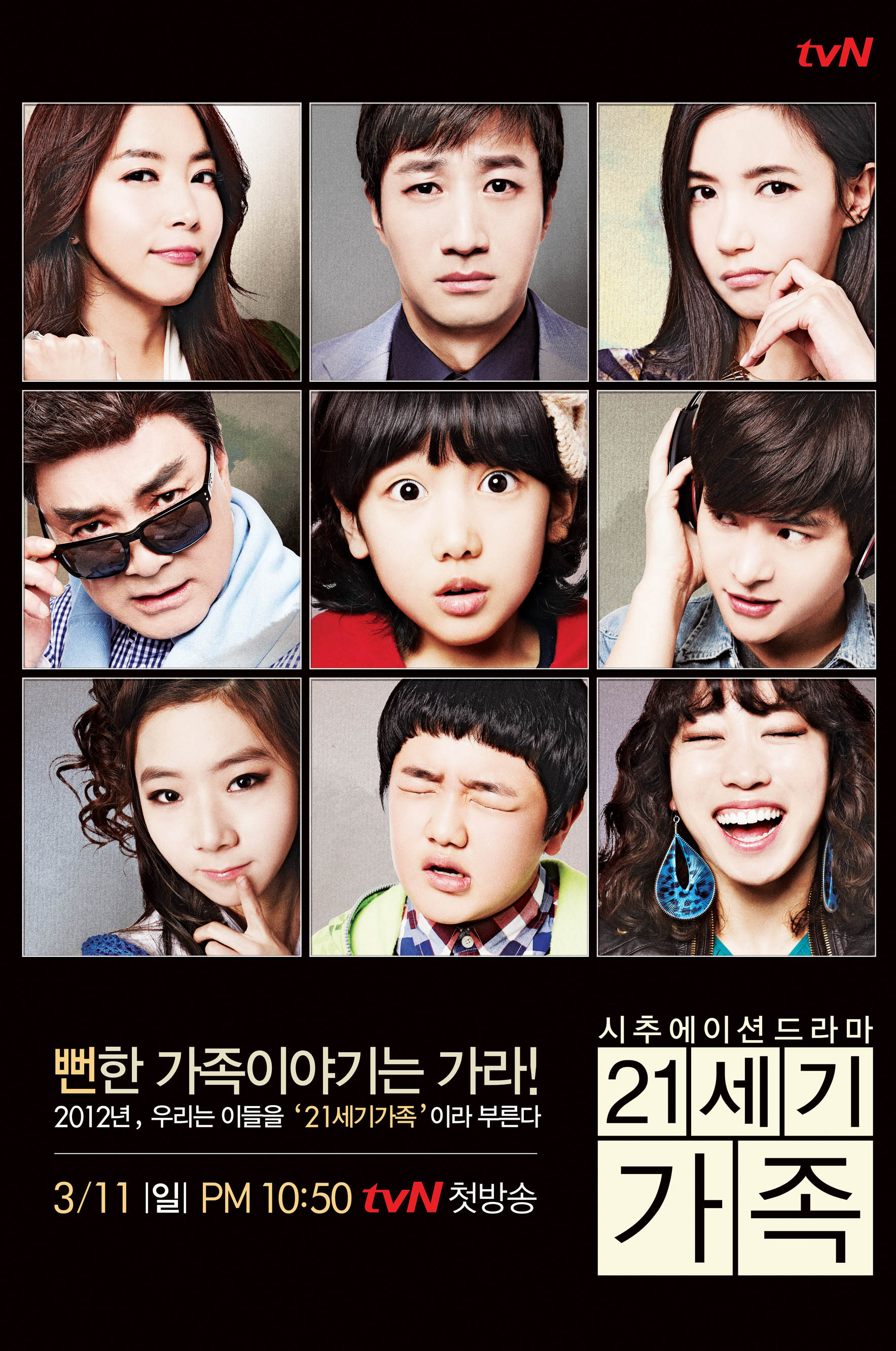 (Source)
Thank you very much to Maria, whose synopsis instantly sold me on this recent drama:
…I’ve seen a lot of Korean dramas and they almost always find a way to disappoint me in the way they portray women, sexuality or both. This little drama is quite refreshing. Unusual in that it’s only 8 episodes long, it openly talks about issues like teenage sex, puberty, the difficulty married couples have getting sex regularly, and even one episode about viagra. To be fair, I have taken the last nearly 9 months away from watching dramas, so maybe things have heated up out there when I wasn’t looking. But this is the first time I’ve seen sexually related issues being dealt with so frankly and humorously…
If you think it already sounds a lot like Modern Family, you’d be quite right — it’s explicitly modeled on it, albeit without a gay family. See here for a helpful family tree, starting with Lee Deok-hwa (이덕화) playing the father role that Ed O’Neill does in the US original, and DramaTic for some historical context on Korean sitcoms, which helps you better understand what makes this one so different. In particular:
…the word comedy [was removed] from the show’s promotion to avoid all the implications it brings to the table, at least in Korea – namely, the idea that sitcoms should all be about a relentless succession of mindless gags punctuated by the good old laugh track. It’s an intelligent expedient, which highlights this show’s priorities better than any trailer or presentation would. This, in other words, is a back-to-basics approach, while at the same time exploring different answers to the usual formula.
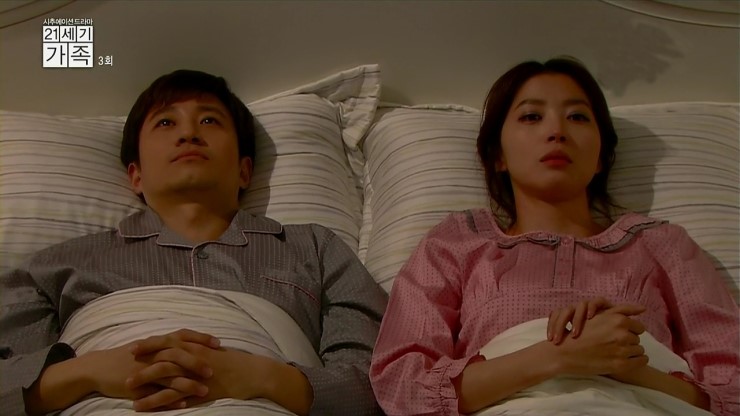 (Source)
Perhaps it’s no surprise that it’s so easy to find with English subtitles then — I just watched episode 1 here, and although frankly I found it a little slow after all that build-up, it was still quite enjoyable. Also, crucially, it only had precisely one cringe-worthy moment for me, when Oh Yoon-ah (오윤아) behaves quite childishly in the police-station towards the end. Considering how routinely women behave that way in most Korean dramas, making me turn the TV off in disgust within 5 minutes of watching, it was very refreshing not to see it for a whole 40 minutes here.
Anybody else seen the show, and/or like a detailed episode by episode discussion (à la Dramabeans) over the next 8 weeks? Please let me know!
 (Source)
Sorry for the slow posting everyone: alas, I’m so busy with all my offline projects these days that my planned posting schedule for 2012 is already proving unsustainable. But in the meantime, the news stories just keep coming!
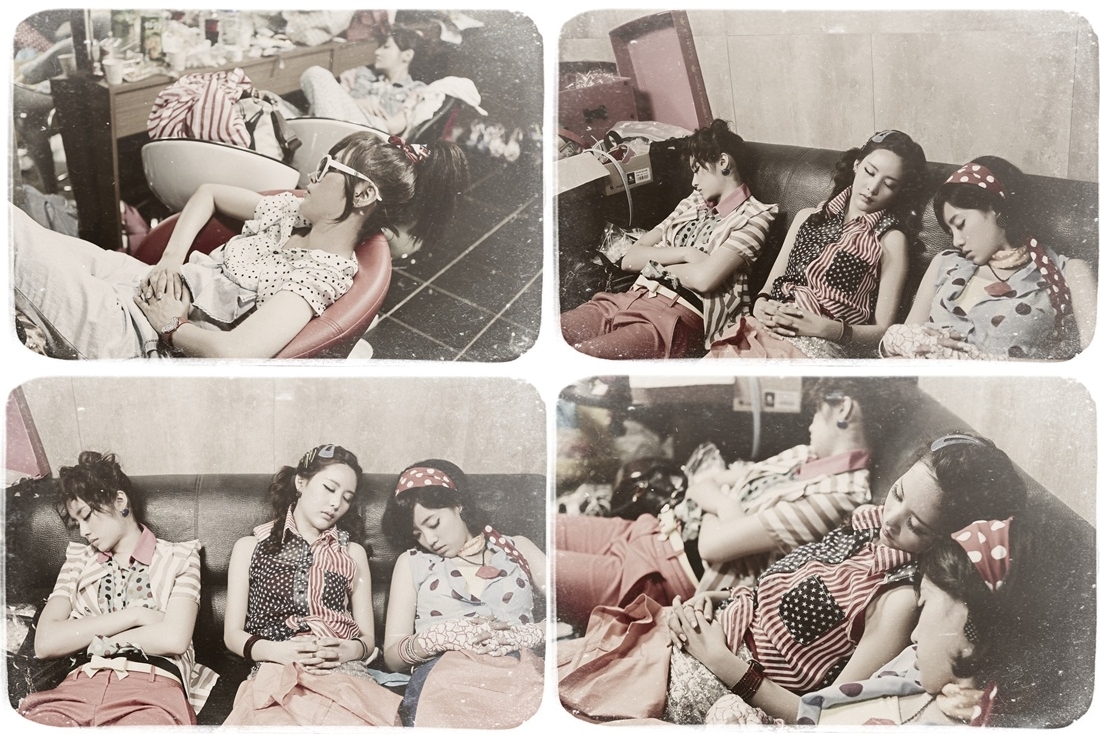
• T-ara members sleep for 2 hours a day (Frank Kogan; see Seoulbeats also)
• Convicted rapist successfully uses the ‘crooked dick’ defense (The Marmot’s Hole; update)
• Korea divorce checklist for negotiation of a marital separation agreement in Korea (The Korea Law Blog)
• Parents tremble at ‘pleasure parties’ thrown by foreign instructors (Gusts of Popular Feeling)
• Travel in Korea still lacks women’s bathrooms (Travelwire Asia)
• 쓰레기 같은 학생, or, Why you might need pepperspray (Gord Sellar)
• Hair freedom for Seoul students (Hankyoreh)
• Internet hot over ‘bikini protest’ (Korea Times) vs. Gong Ji-young (“The Crucible”) Bikinis, Breasts and Weasels (Korean Modern Literature in Translation)
• Fat tax elicits mixed reactions from S. Korean public (Xinhuanet)
• Survey finds lots of sexual harassment at South Korean workplaces (Asian Correspondent)
• Korean women and western/white men: a complicated and troubled relationship (The Unlikely Expat)
• Women leading Korea (The Peninsula) vs. Lone Star and the women of Korea (The Wall Street Journal: Business Asia)
• Jeju Island, known for wind, women, and water…now has more men than women (The Wall Street Journal: Korea Realtime)
• My final post on Asian/white interracial relationships (Shanghai Shiok!)
• Brides-to-be being ripped off ahead of their big day (Hankyoreh)
• “[Is] dating a 28 year-old guy in Korea like dating a 15 year-old in the US?” Deconstructing inane and offensive reader questions (I’m No Picasso)
• An update to the above story – the question wasn’t as bad as it first looked!
• Ministry strives for women’s rights (The Korea Herald)
• South Korea’s racism debate – What debate? (Gord Sellar)
• Headline of the week: “Hard competition coming for erectile dysfunction remedies” (Hankyoreh)
• Entertainment agency representatives voice opinions on idol dating, marriages, and age-limits on usefulness (Allkpop)
• More elderly people sue their children for support (The Chosunilbo)
(Links are not necessarily endorsements)
 (Source)
It’s just a short article, tucked away on page 6 of the Busan edition of the November 10th Focus (below). But still, it’s always nice to hear that a new domestic violence law is actually being enforced:
First incident since implementation of special exemption law
After the implementation of a special exemption law which includes domestic abuse punishment that allows police at the scene to officially isolate the persons concerned in the event of serious domestic abuse, the first case in the Busan area has emerged.
Busan Seobu Police Station revealed on November 9th that a police officer dispatched to the scene used his authority to order isolation and a restraining order for a Mr. Kim (43), currently in the waiting period [lit. “careful consideration period”] for a divorce, who had gone to his wife, who is raising their 5-year-old son, and assaulted her; a court later decided to keep those measures in place.
Mr. Kim is under suspicion of going to the house of his wife (32), with whom he is in a divorce suit, in Busan’s Seogu on November 1st at 12:05AM, asking, “Why didn’t you answer the phone?” and committing violence that included hitting her, which he did habitually.
The couple filed for divorce in September, and a court ordered that Mr. Kim be allowed to visit his son, of whom his wife has custody, once a week on the weekend during their 3-month waiting period, but Mr. Kim went to his wife’s house on weekdays and became violent.
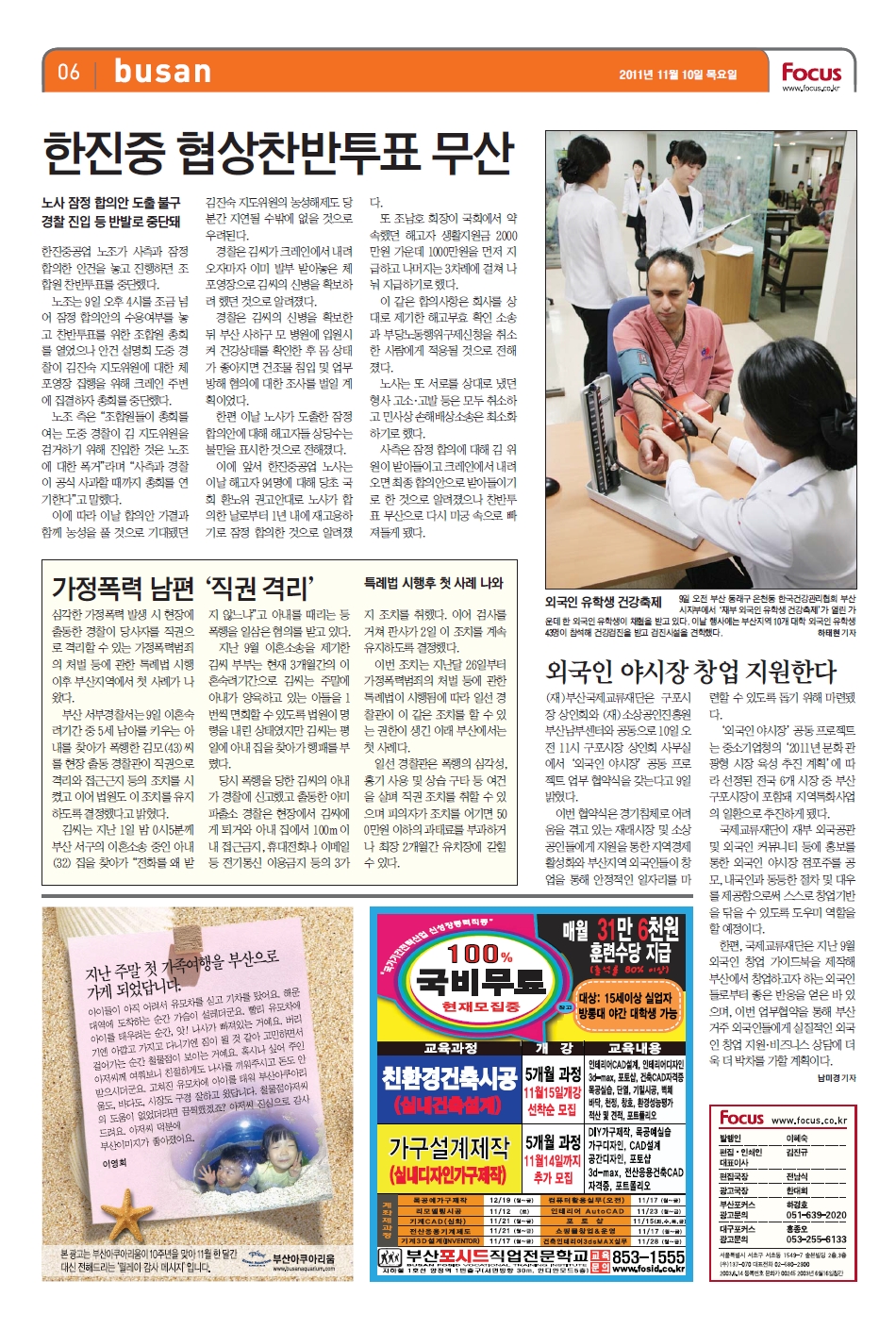
His wife, while being assaulted, notified the police, and the officer dispatched from the Ami Precinct Station ordered Mr. Kim to leave the house, not to come within 100 meters of his wife’s home, and not to use electronic communication like a cell phone or email to contact her. After a review, a judge decided on November 2nd to keep the measures in place.
The measures represent the first case in Busan since a special exemption law for domestic abuse punishment that gives front-line police officers the authority to take such measures came into effect on October 26th.
Front-line officers can appraise conditions like the seriousness of the violence, the use of a deadly weapon, or habitual beating, and then take official action, and if the suspect violates those orders, the officer can impose fines of up to five million won or imprison him or her for a maximum of two months (end).
(Thanks to Marilyn for the translation)
 (Source: Paranzui)
Turn on a Korean TV, and you won’t be waiting long before you see a commercial with a Korean man in a relationship with a non-Korean woman. But for a long time, I was only aware of one ever produced with the opposite pairing, which I discussed back when it came out in July last year.
Since then, there has also been at least one music video produced that positively features a Korean woman with non-Korean men (not just the one man in this case!), which you read more about at Mixtapes and Liner Notes and Fanboy vs Fangirl here, here, and here. But again, there’s many many more with the opposite pairing (see here, here, and here for examples). And as far as I know, no more commercials with Korean women hitting on non-Korean men.
It turns out though, that Lee Hyori (이효리) did so back in 2006 in a commercial for Anycall, a mobile phone brand. I must have seen it a hundred times on TV that year, but only ever the fifteen second version, in which the ethnicity of the lucky gentleman at the end was unclear. I would automatically have assumed he was Korean then, but he’s actually Caucasian (with a hint of Latino?), as you can see at 0:27 in the thirty second version above.
As always, I’d be happy to be proven wrong — again(!) — with any further examples of similar pairings. But I doubt I’ll ever receive enough to challenge this clear discrepancy in the Korean media’s representations of different genders and races, which is why I raise it here.
For any readers further interested in why that discrepancy exists, please read last year’s post for more background and many more links.
Update 1) As soon as I’d packed away my netbook and was walking home, I remembered that there was indeed one more example from last year, a promotional video for the 2010 G-20 Seoul Summit. It features a Korean woman and Caucasian man having a traditional Korean wedding, just like I had (the kiss is just for show though—traditional Korean weddings are really quite sombre affairs!):
Update 2) With thanks to Dan for passing it on, here’s a recent commercial for a smartphone, apparently with screen quality so good you’ll be able to see your foreign boyfriend’s bit on the side reflected in his sunglasses:
Until I saw that, I was wondering if the “positively” in the title was a little redundant. But now it seems more apt than ever!
(For more posts in the Korean Sociological Images series, see here)
 (The Beast and the Beauty, 2005. Source)
On a recent episode of Thinking Allowed, a BBC4 radio show and podcast, host Laurie Taylor talked to Kate Fisher and Simon Szreter about their new book Sex Before the Sexual Revolution, an “illuminating exploration of intimate life in England between 1918 and 1963, which involved them speaking frankly and in depth to almost a hundred people about their sex lives in the period”. Fascinating in its own right, my ears immediately pricked up upon hearing the following at 16:10 (source, below right):
Laurie Taylor:
Let’s turn to some things you found out as a result of your, I mean, very sensitively conducted conversations…I mean, Kate, one of the things is about this, this…the notion is that people were utterly ignorant about sex before marriage. Does the research bear this out?
Kate Fisher:
Yes and no. This is a world in which sexual info is increasingly available, but it’s still one in which parents are reluctant to talk to their children, where schools don’t…er…give away information until after 1944, and even still, that’s fairly limited. So people are having to piece things together, listen to jokes, overhear other people…
But what’s particularly striking, is the ways in which women in particular, even when they did come across information, they were careful to not find out too much. They wanted to maintain a sense of ignorance in order to…
 Laurie Taylor:
Yes, particularly working-class women though, yes…this idea that they should be innocent…
Kate Fisher:
They should be innocent and indeed they saw innocence as part of an attractive naivety…Their attractiveness was bound up with appearing naive, and innocent, and sort of coy.
Which as you’ve probably already guessed, has striking parallels with the attitudes of Korean women today.
Not that I want to overstate those of course. But I do think it’s no coincidence, and it’s certainly got my intellectual juices flowing. In particular, over whether UK society at the time had its own equivalent to aegyo (애교), and, regardless, how much such notions of female sexuality underscore it (albeit very much in combination with financial dependence on male breadwinners).
Food for thought anyway!^^ Meanwhile, for a glowing review of the book itself, see The Guardian here (I’m sold!), and to listen to the full interview, scroll to 11:35 here, or alternatively you can download the whole podcast here (it’s the February 16 episode).
Update – Naturally, the point that most got my attention in the interview of the authors was also mentioned in the book review:
The book’s three sections – “What was sex?”, “What was love?” and “Exploring sex and love in marriage” – take us through the whole cycle of the interviewees’ awareness of sex, from the rudimentary and often non-existent provision of sex education, through courtship, petting, birth control, marriage and parenthood. The social context is clearly delineated, but even the woeful ignorance of the young about sex – “the profound and beautiful ignorance of sex”, as one respondent calls it – is examined with great subtlety. “For women of all classes, the preservation of innocence and modesty was a complex cultural accomplishment in which many around them had to play their protective role and with which they had to comply. It was an enduring positive element of their self-identity, instilled into them by their parents, especially their mothers.”
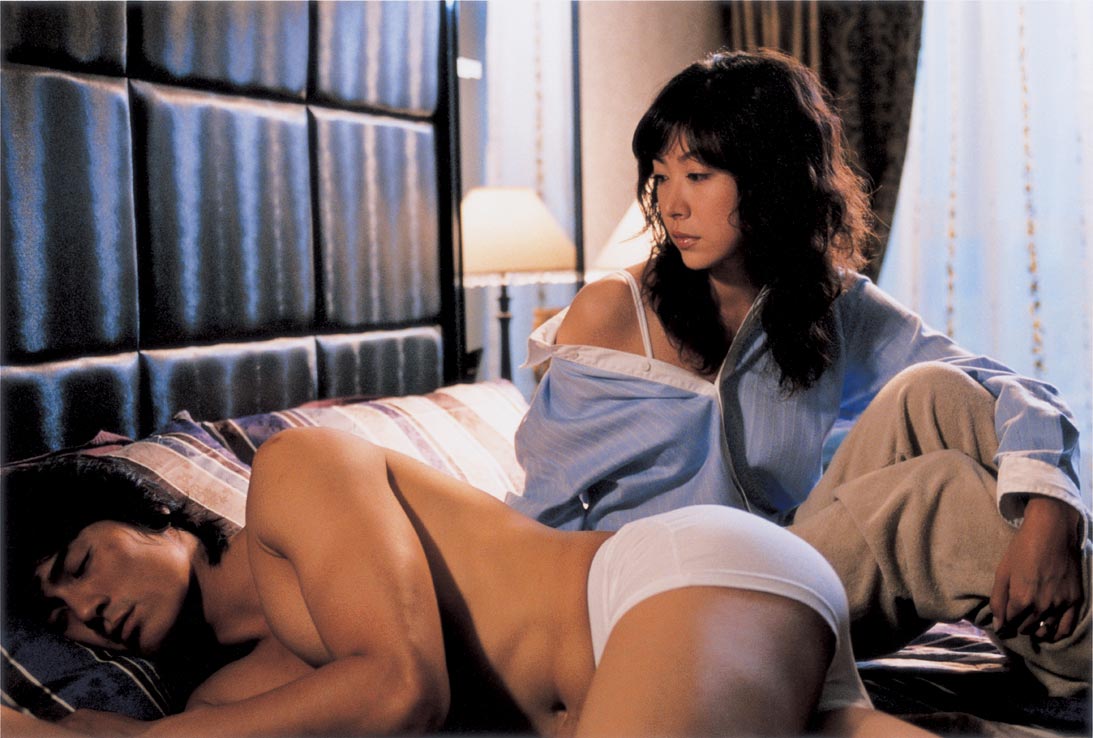 (Source)
Sorry for the lack of posts recently, and the very short notice with this one, but in an hour from now (7:45pm Korean time) I’ll briefly be on 101.3 TBS eFM’s evening show, talking about the title topic. For the details, see here, and note that unfortunately you can only listen live on Internet Explorer sorry.
Update – Well, that was a little embarrassing: because of a miscommunication, technical problem, and/or a last minute editorial decision, I didn’t actually get called in the end!
But for anyone still interested in the subject though, then I was going to mention that while on the one hand the stigma surrounding divorce is certainly disappearing over time, with 1 in 4 marriages now involving a divorcee and in particular both the numbers of women remarrying and their rate of increase outstripping those of men, on the other hand the profoundly gendered effects of the recent economic crisis here have left Korean women more financially reliant on their husbands than ever, as explained at #2 here, here, and #15 here.
Meanwhile, see here for more information on both the high rates and the practicalities of getting a divorce in Korea, and here for more on the hoju or family-registry system (호주), which had a huge role in drawing attention to people’s marital status (or parents’ status) and consequently being able to discriminate against them on that basis. Moreover, although that has recently been abolished, one final point I was going to make was that unfortunately that’s just one of many superfluous things corporations take into account in their hiring practices, as demonstrated here, at #8 here, here, here, and here, and so it’s probably going to take a while before Korean business culture catches up with the social reality.

Yes, it had to happen eventually! A big round of applause to Nextour, for quite possibly the very first positive representation of a Korean female – Western male relationship in a Korean commercial.
New readers shaking your heads in disbelief however, please consider reading other posts in the “interracial relationships” category, especially here, here, here, here, here, and here. And please also ponder the following quote from Hyun-Mee Kim in her chapter “Feminization of the 2002 World Cup and Women’s Fandom” in Feminist Cultural Politics in Korea, ed. by Jung-Hwa Oh, 2005, pp. 228-243 below on the then unprecedented public attention by Korean women on the bodies of the Korean players, and which gives a big clue as to why such an essentially innocuous commercial didn’t emerge back then:
 …if Korean women’s enthusiasm had mostly been directed at handsome Western soccer players, such as England’s Beckham or Owen, Portugal’s Figu, Italy’s Toti or Spain’s Morientes, the situation would have been drastically different. That they zealously applauded Hiddinck, a Dutch male and the director of the Korean team, seemingly too much of a “father” for them to desire sexual union with, and the familiar handsome guys of Ahn Jeong-hwan, Kim Nam-il, and Song Jong-Guk, must have been the chief reason for positive response the Korean women fans got from the rest of the society.
In particular:
The attitude of the Korean media that looks down on Japanese women for expressing their love for Beckham and treats them as “ppansun-i”s [빤순이, or condescending slang for crazed girl fans – James], clearly shows what line the Korean women should dare not cross. This World Cup, which ended up as a worshiping of the 23 [Korean players], delineates the limitations as Korean women rose up as the subjects of their own sexual desires. This is a society in which there is still a strong belief in the sexual union of the full bloods: for the women to collectively root for Ronaldo or Morientes, there is too much at stake. It is so much easier to shout out that they want the “yellow bodies” of our own race rather than “white and black bodies”. Hence, the happy union of women’s sexual desires and new patriotism in the 2002 World Cup. (p. 239)
Naturally one commercial doesn’t mean a sexual and racial revolution of course (note that only Caucasian men were featured), but it is a start, and certainly provides a welcome contrast to the general persecution of foreign males in the Korea media in recent years, as most recently demonstrated by the fact that Anti English Spectrum’s Lee Eun-ung was uncritically allowed to present his repulsive, unsubstantiated views on foreign males on a national radio show for instance. Indeed, the lack of netizen reaction to the commercial so far hopefully demonstrates that things may have actually improved a little since 2002, and provides a healthy reminder that, just like in other countries, the Korean media is probably not a very accurate guide to public opinion in the first place.
Meanwhile, see here for the male version, albeit a slightly seedy one (caressing a ‘sandwoman’ anyone?), and young readers see here also if you didn’t understand the “East End Girls” reference!^^
Update, November 2011) Alas, it wasn’t actually the first! See here for an example from 2006 (and one more from later in 2010).
(For all posts in the Korean Sociological Images series, see here)
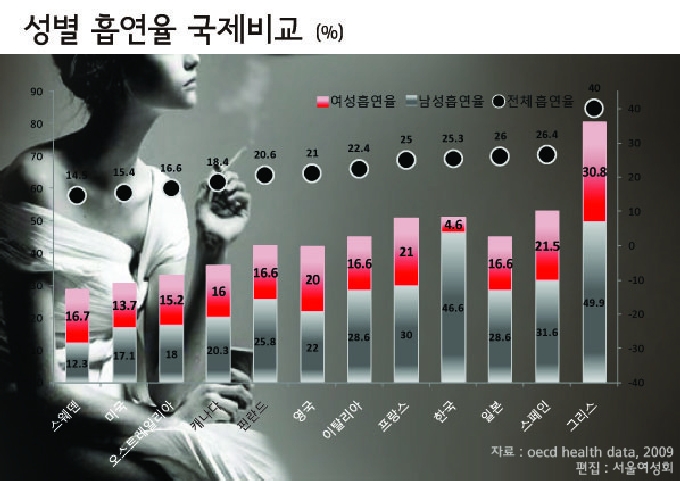 ( Korea is 4th from right; source )
Apparently, Korea is pretty unique in its huge difference in smoking rates between the sexes: up to 10 times more Korean men smoke than women. Or do they?
In short, probably not: considering that a 2007 Gallup Korea study found that 83.4% of Koreans thought that women should not smoke, then the accuracy of almost all figures are undermined by chronic underreporting by women. Moreover, it is misguided to speak of male or female smoking rates in the first place when those within each gender differ so widely by age, socioeconomic position, and/or marital status. Even unhelpful too, as low perceived rates for women overall have encouraged Korean medical authorities to almost exclusively focus on reducing smoking rates among men instead, overlooking rapidly rising rates among young women especially.
But for all their flaws, it is only natural to want to have some numbers to work with. And so, when I wrote Part 1, my original intention here was to pass on all those provided by 3 recent journal articles on the subject, hopefully providing readers with enough information to get at least a rough idea of the true numbers in the process. Numerous failed drafts later however, I now realize that that approach was a mistake, and should have paid much more attention to the following points by Lee et .al. (2009):
…the limited data available on female smoking prevalence and behaviour in South Korea must be urgently addressed. Data from the Korean National Health and Nutrition Survey (Table 2) suggests female smoking rates have fluctuated significantly between 1980 and 2003, with variations within age groups by year that are difficult to explain. There are also inconsistencies across different data sources which prevent clear understanding of smoking behaviour within specific cohorts by age, location, socio-economic group and other variables.
Instead then, let me do my best to point out broad themes within the various data sources instead, starting with those revealed by the following graph provided by Young-Ho Khang and Hong-Jun Cho, “Socioeconomic inequality in cigarette smoking: Trends by gender, age, and socioeconomic position in South Korea, 1989-2003“, Preventive Medicine Volume 42, Issue 6, June 2006, Pages 415-422:
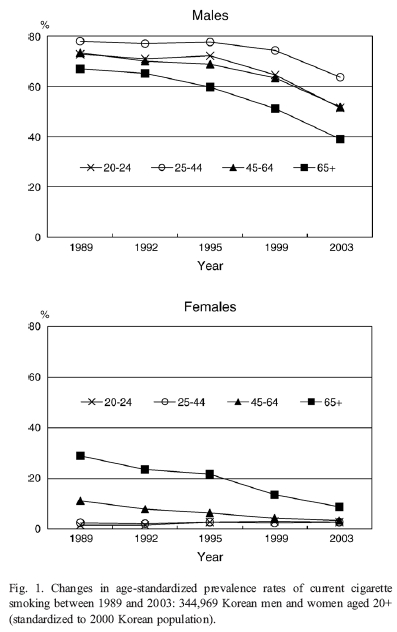
Based on a huge sample population from 5 Social Statistical Surveys from the Korea National Statistical Office, it does at least provide a good illustration of overall smoking trends for both sexes over the period covered. A quick summary:
Results show that for men, smoking rates decreased in all age groups…For women aged 45+, smoking rates decreased…while those for younger age groups either remained stable (25-44) or increased (20-24). In addition, the decreasing pattern of smoking among women aged 45+ was not the same as that of men. For women aged 45+… reductions began earlier than for men. (p. 418, paraphrased)
And they believe that the decreases were primarily due to legislation; in particular, the 1995 Health Promotion Act, which restricted smoking in public buildings and places. Unfortunately however, it was not very effective on young women, nor on the inverse relationship between educational level and rates of smoking, which was generally true in all age groups and both genders. They speculate that that was partially because:
…most policy efforts have been aimed at the dissemination of information about the hazardous health impacts of smoking while policy efforts on work site smoking cessation programs or economic measures (i.e., taxation) to discourage smoking were minimal. (p. 421)
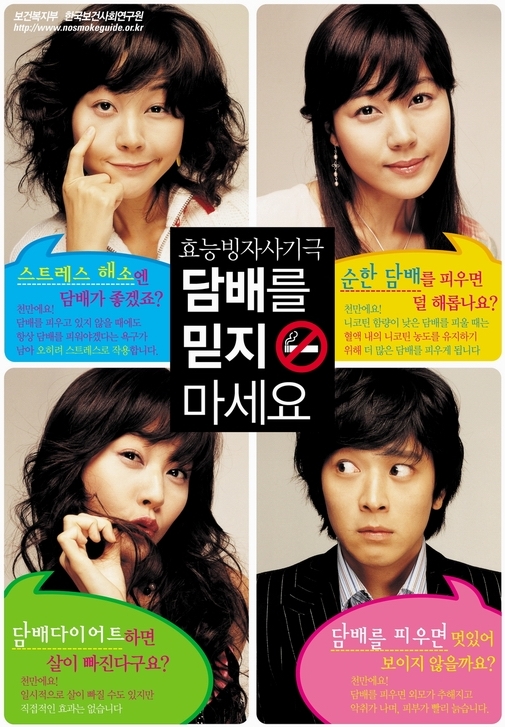 ( Source )
Khang and Cho do provide further details of how women’s smoking rates differ by their socioeconomic position, but to be frank I found that jargon-filled part of the article rather poorly written, and don’t understand it despite several rereadings. Whether that’s my fault or theirs, I’ll have to skip covering that topic here regardless, and instead will focus on the following point that you may already have noticed yourself:
Unlike many developed Western countries, this study showed greater smoking rates in older women compared to younger women. This is consistent with studies conducted in Asian countries such as China, Vietnam, and India….Age differences in power relations by gender and social pressure toward young women may explain the difference in female smoking prevalence between Western countries and less developed Asian countries. However, further studies are needed to elucidate the causes of the difference. (p. 420, my emphasis)
And probably not by coincidence, in Hong-Jun Cho, Young-Ho Khang, Hee-Jin Jun, and Ichiro Kawachi, “Marital status and smoking in Korea: The influence of gender and age“, Social Science & Medicine, Volume 66, Issue 3, February 2008, Pages 609-619, they provided exactly that, from which an intriguing finding was:
…that the difference in the effect of marital status on smoking rate varied according to gender….smoking rates for unmarried women compared with married women were generally much greater than comparable [rates] for men across all age groups, and were particularly high in younger women. This finding differs from many previous Western studies that reported either no gender difference in the influence of marriage on smoking, or greater difference between married versus unmarried rates in married men compared to married women. (pp. 613-14, my emphasis)
Some details:
The smoking rate for unmarried women was approximately 2-8 times higher than for married women depending upon the age group. In contrast, the smoking rate for unmarried men was not higher than the married men for the 25-34 and 65-74 year-old age groups…
…In the 35-54 year-old age range, the smoking rate in divorced women was more than twice that of the widowed women. This difference was smaller for men…
…the present study found that the smoking rate was higher in unmarried compared to married people. This finding is consistent with those of many Western studies of both men and women…(p. 613)
 ( Businesswoman by the_toe_stubber )
And crucially:
Women’s smoking can be underreported in societies where there is a strong social norm against young women adopting such behavior. Such a reporting bias may have affected the findings of this study. Nonetheless, it is not clear whether reporting bias would have produced the differential patterns of smoking rate according to marital status…
…a definite casual relationship between marital status and smoking could not be established [in this study]. Selection is also possible. The divorce rate for smokers is twice that for non-smokers, and men who continue smoking have a lower probability of getting married. But, because the effect of marital status on smoking is stronger in men than women, this cannot explain the gender-related difference in the present study. (p. 616 & 617, my emphases)
And they identify many reasons why unmarried Korean women may smoke more than married ones, and particularly divorced or widowed ones. Some are positive:
…smoking by women, and especially married women, can be restricted by social pressure applied from both inside and outside the family. In such cases, becoming divorced or widowed may release women from the force of sanctions and expectations. (p. 611).
And see here and here for more on those social pressures married women face. Unfortunately however, newly-single women are much more likely to smoke from stress rather than a feeling of liberation:
Higher smoking rates in the unmarried may be a reflection of coping in response to stress brought on my marital disruption. Marital disruption can create two types of stress – that which is directly associated with the disruption, and that which is indirectly associated, such as role change, financial difficulties, and child caring responsibilities. Women suffer greater financial hardship following marital disruption compared to men, especially in societies where the gender age gap is high [James – and Korea’s is among the highest the world; see #10 here]….[in 2002], the income of a woman-headed single-parent family was 83% of a man-headed single-parent family.
Above: “A Woman Smoking” (여자가 담배피는게) by Im Su-bin (임수빈), which according to allkpop “tells of a sad story of how a woman resorts to smoking and drinking after being heartbroken and why there’s nothing wrong with that”.
On a final note however, it is also true that widowed or divorced women also tend to older than average, and in Korea particularly the effects of that are difficult to separate from their marital status because:
…older women may find it easier to smoke due to less social pressure on this age group stemming from the general respect shown for the elderly in Confucian traditions. (p. 611)
With a nod to copyright, if any readers interested in reading the articles for themselves, please email me if you like me to send copies (and thanks again to the reader who sent them to me in the first place!). Meanwhile, as those turned out to be much more closely linked than I first realized (indeed, they even use the same data), then I’ve decided to discuss the third article – Kelley Lee, Carrie Carpenter, Chaitanya Challa, Sungkyu Lee, Gregory N Connolly, and Howard K Koh, “The strategic targeting of females by transnational tobacco companies in South Korea following trade liberalisation”, Globalization and Health 2009, Volume 5, Issue 2) – in a separate post (Part 4) rather than carry on here. The final Part 5 though, will still be a “discussion on the ways in which tobacco companies have (largely successfully) targeted Korean girls and women over the last two decades” from that however!^^
Update 1 – For anyone interested, a recent survey found that Seoul residents endure 50 minutes of passive smoking a day.
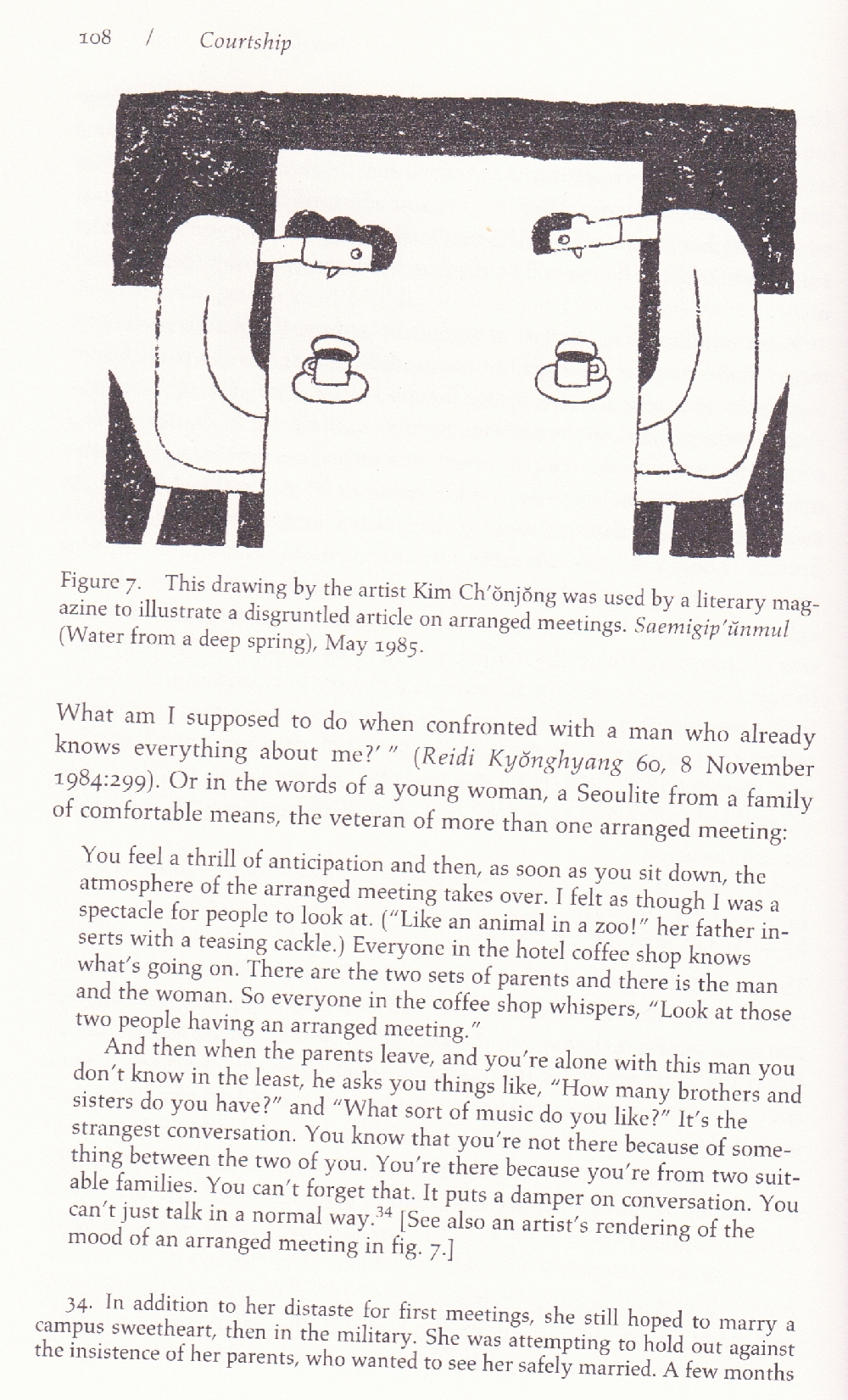
Update 2 – A picture that I was reminded of by I’m no picasso’s comment on the connections between coffee-shop culture and female smoking. From Getting Married in Korea: Of Gender, Morality, and Modernity by Laurel Kendall (1996):
(Other posts in the series as they appear: Part 1, Part 2, Newsflash, Part 4, Korea’s Hidden Smokers; Living as a female smoker in Korea)

With apologies for not being able to mention more of you in the 800 word limit, here is my article in Busan Haps magazine based on your thoughts on the sudden increase in the number of bloggers discussing dating and marrying Korean men. Thanks again for your help!
Update: Ironically, just 2 days after that went up, Hot Yellow Fellows reports a lull in the number of new blogs on the subject, and most of the rest going “into dating hibernation, either due to leaving Korea (what’s up.), having gotten into relationships, or running into bad luck/apathy”!
(If you’d like to leave any comments, please do so on the Busan Haps website)
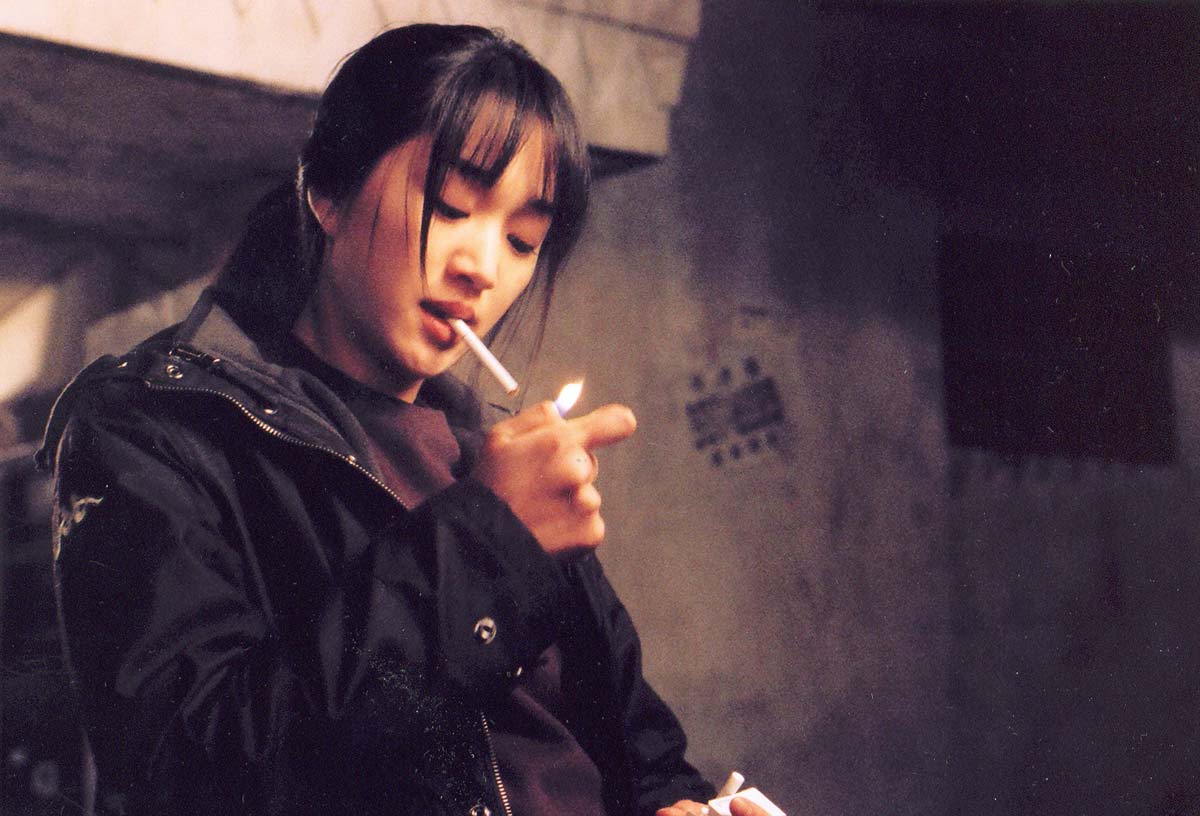 ( Park Soo-ae {박수에} in A Family {가족; 2004}; source )
As numerous expats can attest to, coming to live in Korea can be quite a jarring experience sometimes. But probably not as much as you’d expect, for Korea too is a modern, developed country, with institutions and services that match – nay, are often better – than equivalents in your home country. Comparatively speaking, the transition is really rather smooth.
Scratch below the surface however, and decidedly archaic twists to many aspects of daily life do soon emerge, many of which are profoundly gendered too. For example, after a few months here I began teaching a group of highly intelligent women already fluent in English, who attended my class merely as a hobby. All housewives, later I learned that they likely did so because while Korea has been providing an equal education to both sexes for decades now, and indeed as many as 82% of high-school graduates go on to university, just a few years after graduating women are routinely fired and/or are pressured to resign upon getting married or becoming pregnant. Which makes one wonder what the point of women’s higher education was exactly, and accordingly a study conducted just a few years earlier (Women’s education, work, and marriage in Korea: women’s lives under institutional conflicts by Mijeong Lee, 1998, pp. 161-163) found that, à la Jane Austen, it was largely to secure higher-earning husbands.
 It is true though, that modernization the world over has invariably entailed such “housewifization” and nuclearization of the family, so in that sense at least Korea is arguably simply repeating the experience of societies that developed earlier. One way in which Korea does stand out then, is the case of smoking, and you’re probably well aware that it once had the highest male smoking rate in the world, whereas that for women has historically been extremely low. But unless you are already living in the country, then you may not have realized that this is not necessarily by choice, but rather because women can still get slapped for simply smoking in the street, even in 2010. And as testament to the strength of this taboo, it has influenced the smoking habits of at least one female blogger here too for instance, even though most Koreans excuse expats from the vast majority of Korean social norms (source, right).
This brief four-part series is about that gender politics of smoking in Korea, starting in this post with how such an artificial gender binary emerged in the first place; a later one will provide detailed statistics on the number of smokers in Korea, followed by a discussion on the ways in which tobacco companies have (largely successfully) targeted Korean girls and women over the last two decades. As you’ll soon see, it is really a little naive to speak of a “Korean smoking rate” or even “Korean male” or “Korean female” smoking rate when the results differ so widely by age, gender, class, and/or marital status, and the widely perceived notion that Korean women don’t and/or shouldn’t smoke is obscuring the fact that in reality more and more are over time (very roughly 1 in 5), and that success in reducing the number of male smokers comes in the midst of a looming health crisis among female ones.
But first, perhaps “taboo” is not strong enough a word. Consider why the Seoul Metropolitan Council recently proposed banning smoking in public spaces for instance:
“I suggested the bill to protect pregnant women and children from second-hand smoke on streets and at other public spaces” Park Hee-sung, a city councilor, said. “It also secures the right to smoke by designating smoking areas.”
No mere slip of the tongue, this is really a bizarre rationale for banning public smoking: don’t men and non-pregnant women also suffer from passive smoking? But place it in the context of decades-old legislation that posits both children and all women alike as in need of protection however, as mentioned in Kelley Lee et. al. in “The strategic targeting of females by transnational tobacco companies in South Korea following trade liberalisation”, Globalization and Health 2009; 5: 2 (download here), then it does begin to make some sense:
The National Health Promotion Law Enforcement Ordinance, adopted in 1989, bans all tobacco advertising, marketing and sponsorship aimed at women and children including both print and broadcast media.
Although as I’ll explain in Part 4, cigarette companies have largely managed to circumvent this restriction. In the meantime, how did the gender ideology behind the law come about?
 ( Source: iMorpheus )
Well, consider the thoughts of C. Paul Dredge in “Smoking in Korea” published in the Korea Journal back in April 1980, (downloadable here), which are worth quoting at some length. From page 28:

With a clear logic rooted in Neo-confucianism, this explanation intuitively makes sense, and I feel confident that I speak for almost everyone when I say that if that excerpt was all of Dredge’s article that was still available, then we’d be more than satisfied with it.
You can imagine how I felt then, when I read on and learned that that was actually bullshit. From pages 28-29:
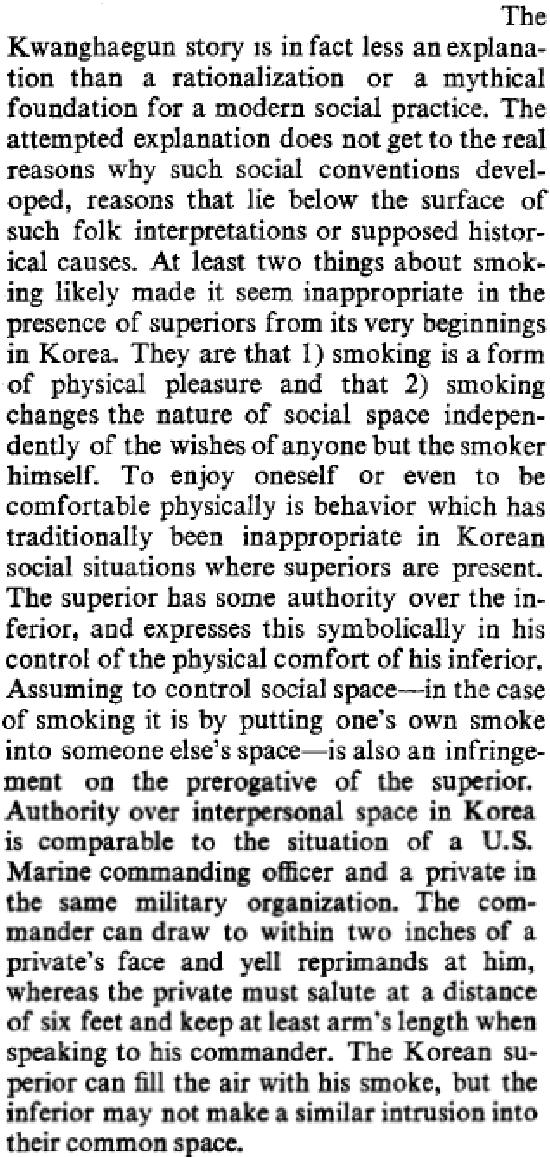
A good lesson to remember when trying to understand any society better, and indeed I’ve previously made a similar point in the context of how authority and/or hierarchical relationships are portrayed differently in Korean and Western advertisements, so I should have given it a little more thought myself.
With a newfound respect for Dredge then (does anyone know more about him?), I highly recommend reading his article for yourself to learn more (it’s only 11 pages long), in which he goes on to discuss how the above affected Korean women’s smoking habits (at least in 1980). Also analyzing how they differed in the context of the aforementioned divisions of age, class, and marital status however, then I’ll leave that discussion for Part 3 next week.
For now, I’d be more interested in hearing about your own experiences and opinions of smoking in Korea. Alas, although I’ve never lectured anyone about smoking, I confess that I’m an anti-smoking Nazi myself, and possibly for that reason I only have 2 very occasional smokers among my friends to ask. So I would really appreciate it!^^
Update 1: For those interested in smoking culture in North Korea also, see here.
Update 2: An interesting response to this post by a Korean blogger (in English) is available here.
(Other posts in the series: Part 2, Part 3, Newsflash, Part 4, Korea’s Hidden Smokers, Quick Hit: Living as a female smoker in Korea)
 (Wedding Day by summer park; CC BY 2.0)
An interesting question from Curtis, a reader with a slightly unusual family in which 2 brothers from one family married 2 sisters from another. As you will see, he was concerned about how this would be received by Koreans:
Dear James,
Lately I’ve been seriously confused and irritated by a seeming issue with relation to Korean marriages. I can’t figure out why it is even a problem to begin with. I’ve never heard the term until recently, but apparently Koreans (I’m not sure if this is general or only among certain classes) seem to be against marriages that create “double in-laws,” meaning that, for example, member A of the Kim family marries member A of the Lee family. Then Member B of the Kim family marries the sister/brother of member A of the Lee family. The first marriage made them in-laws, but this second marriage creates what I’ve heard Koreans term “double in-laws” which seems to have some stigma. As far as I am concerned as a westerner, the second marriage has little to no bearing on anything since it isn’t incest or intermarriage, therefore I see no problem. In fact, my father married my mother, and soon after that, my father’s brother married my mother’s sister. I guess that creates double in-laws in my family, but since it’s neither incest nor intermarriage, I haven’t once heard any issues being brought up about it. Could you explain if this “double in-laws” thing is really an issue, and if so, why? All I can think of is that the families are not being spread out far enough for maximum social networking and both sides of the family may end up being in one household, but since Korean family dynamics are changing, this doesn’t have to be the case.
I’ve also heard the English term “co-in-laws” to describe this, but again, I find no reports of issues with this arrangement other than in a few Korean instances.
And an update in a second email:
[I’ve done some more thinking]…, and I thought about the collective culture that Korea is. I thought that perhaps when a family marries another family, the WHOLE family in that household become in-laws as such, whereas in western societies, the distinctions between in-laws is limited more so to the ones who married into the family. I, personally, would consider the sister of my brother-in-law just that, the sister of my brother-in-law, not an in-law herself since she did not marry into the family.
 (The Bride by Tetsumo; CC BY 2.0)
What do you think? Personally, while this is the first I’ve heard of any potential stigma, I suspected that there might be something to it when my wife instantly came up with the Korean term for people in such arrangements: gyeobsadon (겹사돈), or “a person doubly related by marriage.” Moreover, however illogical any stigma would be, there is certainly precedent too: until as late as 2005, Article 809 of the Korean Civil Code prohibited marriage between those of the same ancestral, regional clan (or local subgroup of Lees, Parks, or Kims and so on), of which the largest had over 4 million members. Or in short, somewhere between 8-15% of the Korean population were literally forbidden to marry each other, with even the children of any de-facto unions discriminated against also because their out-of-wedlock status prohibited them from receiving national health insurance, let alone complicating inheritance and property rights.
But as it turned out in this case at least, my wife knew the term not because of any stigma that she’s aware of…rather, because she remembered such arrangements from dramas!
Probably there is nothing to worry about then, but if anyone could confirm that then I’m sure Curtis will appreciate it, and I’d be interested in hearing any other unusual stories about marriage and Korean families also. If you’d rather read more yourself though, then consider this series on the uncertain role of Neo-Confucianism in the similarities between Japanese and Korean family forms, and especially how daughters-in-law are treated therein.
Update: Speaking of the importance of family names in Korea, today there was an interesting article in the New York Times about the trials and tribulations a Korean man (and subsequently his family) had due to his Japanese ancestry.
 (Source: Matt Scott; CC BY 2.0)
With my considerable gratitude to its author for passing it on, I’ll let the following email speak for itself:
…As a foreign woman married to a Korean man, myself and my husband face a unique set of cultural obstacles in our marriage. It can be trying at times, but we are usually able to work out our differences through a serious commitment to communication. However, there is one aspect of being married to a Korean man that I continually struggle with. From what I have observed throughout my time in Korea (and please correct me if I’m wrong), it seems that frequenting prostitutes is an accepted part of life for Korean married men. In fact, it is often required of businessmen if they want to be successful and accepted among their coworkers. For example, I have a friend who was offered a highly coveted position with a certain large corporation. While working there, he was required to regularly go out drinking and visiting prostitutes with his team. Given the strong hierarchical nature of Korean society, he felt unable to say no to his superiors, yet his religious beliefs compelled him to reject this lifestyle. As a result, he had no other choice but to quit and try to find another line of work.
I am told by Korean friends that going out drinking and womanizing with coworkers is an integral part of business in Korea (and, I imagine, another way that female employees are excluded and held back in business). Although this was shocking to me at first, it wasn’t hard to believe once I became more familiar with the language and more observant of my surroundings. It’s impossible to go anywhere in this country without being faced with a constant barrage of prostitution venues. Of course, they often masquerade as something else- massage parlors, karaoke rooms, barber shops, tea shops, PC rooms, bars, rest houses, etc., but they all offer at least the possibility of sex. It’s not exactly comforting to walk around in the middle of the day and see middle-aged men in business suits going into cheap motels on their lunch breaks or after work before returning home to their families. Although I know my husband is a good man and he has assured me that he’ll never engage in that type of behavior, I find it hard to trust him completely when every man in his life, including his father, his friends, and his mentors, sets this kind of example.
When I ask my female friends how Korean women put up with this from their husbands, they tell me that it’s what the men must do if they are to be successful. One said that even though the husbands stay out all night with prostitutes, drink with them, touch their bodies, etc., it is their choice whether or not they go all  the way. I simply can’t wrap my head around this rationalization. Where I come from, if a spouse cheats, it is expected that the couple will either get divorced or go into some serious marriage counseling. It is not simply tolerated, or at least not by those who have any self-respect. As I love my husband deeply, my greatest fear is that he will give in to his peers and join them some time, resulting in the end of our marriage. I can’t conceive of how Korean men can not only hurt and disrespect their wives like this, but also spend all their time fraternizing with coworkers and women rather than spending it with their children. This aspect of Korean culture is toxic to families, and is one of the reasons I don’t believe I could raise a family in Korea. I am truly interested to hear how other married women – both Korean and foreigners – deal with this problem. Have they experienced the same fears that I have, or have their experiences been different? Do they tolerate their husbands going out with coworkers and meeting women, and if so, why? Finally, for those like me who are greatly disturbed by this aspect of the culture, how do they overcome these anxieties and learn to trust their husbands? (end)
 (Source: Simon Helle Nielsen; source above: Shawn Perez. Both CC BY 2.0)
As I too would soon quit any job that required regularly drinking with colleagues, let alone visiting prostitutes, then I don’t have anything to add to the email I’m afraid. But I can point you towards my discussion of the effects on married couples’ sex lives, based around my review of Goodbye Madame Butterfly: Sex, Marriage and the Modern Japanese Woman by Sumie Kawakami (2007); as I explain there, the experiences and attitudes described there are very relevant to Korean couples, largely because both countries share the same salaryman working culture, with husbands (and indeed wives) working late most evenings.
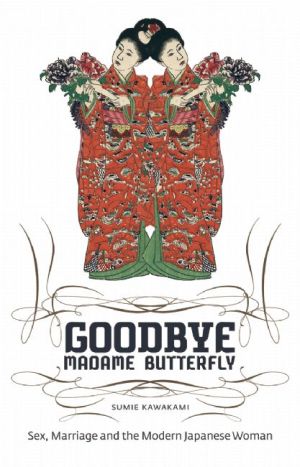 Also, by coincidence Michael Hurt at the Scribblings of the Metropolitician has just written a post on Korean society’s denial of the pervasiveness, ubiquity, and above all systematic nature of prostitution that is highly relevant to the discussion here. A snippet:
…I posit that the resistance to what every outsider observes as KOREAN SOCIAL REALITY in terms of the commodification and subjugation of women in this society, especially as embodied in the rampant institutionalized prostitution that is as observable in terms of the sheer numbers and types of such places of business (room salons, business clubs, barber shops, massage parlors, handjob rooms, juicy bars, miin-chon, 단란주점, 도우미 노래방, which goes without even mentioning the vast numbers of red-light districts in every part of Seoul and every city in Korea) NARY REQUIRES statistics, either.
What I see as the frequent resistance of people to believe something that is OBVIOUS in observed reality if one simply COUNTS the number of houses of prostitution on a single city block in any part of this city — Kangnam Station to Shinchon to City Hall to Apkujeong to Chungdam to nearly any neighborhood after midnight, when the plastic balloons, mini-trucks, and neon signs come on that aren’t on during the day — is partially a denial of obvious reality, coupled with the urge to throw out the many statistics that bolster easy observation because they make one very uncomfortable.
But I’m a human being. I understand emotions. But what makes it so easy for me to recognize that the US brutally kidnapped, displaced, and murdered MILLIONS of human beings for the sake of material gain, which has resulted in creating some negative aspects to my culture, i.e. discrimination and institutionalized racism? But when I mention institutionalized prostitution as a legacy of compressed and authoritarian development in the Korean context, people instantly start equivocating and dismissing my argument, while holding it to such an abnormally high bar of scrutiny, one would be hard-pressed to assert ANYTHING particular about Korean society….(end)
Read the rest there.
Related Posts:
 ( Source )
What do you find interesting about Korea? Perhaps even interested enough to study Korean for?
I’d wager that very few of you would consider doing so for pottery or the history of kimchi-making. Unfortunately however, such things are still staples of most Korean textbooks and courses on Korean culture.
But as the blogger I, Foreigner points out:
…sometimes I wonder if Koreans actually know what their own culture is all about. Do they not realize that watching TV on tiny screens on the bus/subway, playing games at the PC bang all day and boiling it up at the Jimjil Bang or Baths are as much part of Korean culture as kimchi is? Would it not be more useful for us to learn more about the history and use of these? Show me ONE teacher who has been here more than a month who has not heard about the whole history of kimchi.
And not just more useful, but also more interesting and more entertaining too. In that vein, let me present the blog “솔직녀의 섹스와 연애 이야기” (An Honest Woman’s Thoughts on Sex and Love) as an alternative Korean study source, and of course as another Korean voice on gender and sexuality in Korea also.
While the author has actually been living in America for 10 years, in her own words she’s had a lot of Korean boyfriends and sexual experiences, and more importantly aims to avoid a loveless and sexless marriage like many of her counterparts back in Korea. In particular, it was this post about teaching Korean to her American boyfriend that first caught my eye, and which readers here might be most interested in. Rather than spoiling that for you though, and being unable to choose from so many interesting-looking posts to translate myself, here is one my wife selected for me instead(!):
 ( Source )
혼전섹스는 결혼의 필수조건 Why Sex Before Marriage is Necessary
최근에 이글루스에선 처녀 논쟁이 한창이었다. 뭐 보지 않아도 뻔한 논쟁이지만, 아직도 여자는 결혼할때까지 처녀여야 된다고 주장하는 사람들을 보면서 묻고 싶었다.
Recently, on Egloos there was a big debate about virginity and sex before marriage. It was predictable and quite boring really, but it showed me that still some people think that women have to be virgins before marriage. Which made me ask myself the following:
사랑하는 사람이 처녀가 아니면 그 사람과 결혼 못한다는 얘긴가? 누군가를 사귀기 시작해서 좋아하게 됐는데 알고보니 섹스 경험이 있더라.. 그러면 좋았던 감정이 사그라드는건가? 결혼하고 싶은 여자가 있는데 혼전 섹스를 하자고 한다면? 꾹참고 결혼할때까지 기다려 할껀가?
Are there people that would not marry someone they loved if they discovered that they weren’t a virgin? If they found out after starting to like someone that they have had sexual experience, would their feelings for them disappear? How about if a woman they loved suggested having sex before marriage? Do both of them still have to resolutely suppress their desires until the wedding night?
사람마다 가치관이 다르니 누가 옳다 그르다 따지고 싶진 않다. 하지만 누가 나에게 혼전섹스에 대해 어떻게 생각하냐고 묻는다면 난 주저없이 말하겠다.
Everybody’s values are different, and I don’t want to distinguish between right and wrong here. But if anybody asks me what I think of sex before marriage, I wouldn’t hesitate to give my answer:
넌 차 살 때 테스트 드라이브도 안 해보니?
Wouldn’t you test-drive a car before buying it?
모든 남자가 차로 치면 벤츠나 BMW 같을 수는 없지만, 최소한 내가 편안하게 느낄 수는 있어야 되지 않을까? 좀 삐거덕 거리는 부분이 있다면 고칠 수도 있겠지만, 아무래도 어색하고 영 내 몸에 안맞는 차가 있듯이, 사람도 그렇다. 서로 좋아해도 이상하게 섹스에 있어선 영 아닌 경우가 있다. 그리고 섹스가 영 아니다보면 결국 그 남녀관계엔 불만이 생기게 마련이다.
 ( Source: unknown )
If all men are cars shall we say, then of course not all can be Benzes or BMWs. But at least I should feel comfortable driving it before I buy it, yes? And sure, if there’s a squeaking noise or small problem, then it can be fixed. But still, I wouldn’t feel as comfortable about buying it anymore. Just like people. Strangely, even if a man and a woman really like each other, the sex can be bad. And if it continues to be bad, then of course it will be a problem for their relationship.
1년 정도 사귀었던 남자친구가 그런 경우였다. 원래가 그다지 말이 많은 사람이 아니었지만, 섹스에 관해선 거의 서로 침묵을 지키던 사이었다. 문제는 난 그와의 섹스가 전혀 만족스럽지 않았던거다. 난 나름 그를 흥분시켜주려구 ‘자긴 내가 뭘해주면 좋아?’ 물어보면, ‘음.. 니가 하고 싶은대로 해.’ 모든 대답이 이런 식이니.. 내가 만족스러운지 어떤지는 한 번도 물어본 적이 없고, 그러니 나도 물어보기 힘들고.. 그와는 결국 헤어졌고 (섹스가 가장 큰 이유는 아니었다), 헤어질 때까지도 서로의 섹스만족도에 대해선 한마디도 나누지 못했다.
This happened with a boyfriend I had for one year. Originally, he wasn’t really a talkative person, and although we did have sex we never talked about it with each other. But it was completely unsatisfying for me. I would ask him “What would you like me to do to turn you on?,” but he would always answer “Do whatever you want.” And he never asked me if it was good or not for me, which meant it was kind of awkward for me to ask him n turn. In the end, we split up. Our unsatisfactory sex life wasn’t the biggest reason for that, but then until the split-up we never asked each other even once if it was good for the other person or not.
섹스가 잘 맞는 상대와는 섹스에 대해 솔직하게 얘기하기가 쉽다. 서로 기본적으론 만족스러워하는 걸 아니까. 잘 안 맞는 상대일 수록 섹스얘기를 꺼내기 힘들고, 그러다보면 계속 불만이 쌓이고.. 악순환의 연속인거다. 그런 상황을 피하기 위해서라도 진지하게 좋아하는 상대라면 더욱더 결혼을 결심하기 전에 섹스를 해볼 필요가 있다. 좋으면 다행인거고, 실망이라면 적어도 결혼하기 전에 실망하는게 나으니까.
 It’s easy to speak honestly to talk about sex with someone when the sex is good. Basically, because you both already know the other is satisfied. But for those for whom the sex is bad, it’s very difficult to bring the subject up. But that leads to a viscous circle of bad sex leading to not talking about it, which leads to continued bad sex, and so on. So, if you want to avoid that happening with a partner whom you really like and are thinking about marrying, then you really need to have sex with them before making that decision. It’s better to be disappointed before marriage rather than after.
결혼 상대는 결국 평생의 섹스 파트너가 되는 셈인데 섹스를 테스트해보지 않고 결혼하는건 너무 위험한 결정아닐까?
Your wife or husband will be your lifelong sexual partner, so not having sex before marriage is very risky!
James: Personally, I would rather have stressed the value of talking with your partner particularly if the sex is bad. And I’m a little troubled with her argument that she would still be put off buying a ‘car’ with a ‘small problem’ even if it got fixed, and in turn that she seems to be advocating simply giving up on your partner if they’re bad in bed rather than biting the bullet and talking to them about it!
But I don’t want to potentially misrepresent her views, as I haven’t really read enough of her posts to properly judge her opinions yet. And of course something may be lost in translation, so I invite and would very much appreciate it if any other Korean speakers could check for me.
In the meantime, for those with Korean partners especially, I hope you enjoy the “inside information” she regularly offers!
(For all posts in the Korean Sources on Sexuality and Gender series, see here)
For those of you that are interested in the title topic, then let me mention that I’ve finally finished the rather lengthy post on it that I started back in May, which you can read here. Apologies for taking 2 months rather than the promised 2 days to do so, and by why of compensation you can expect a flurry of related posts from me over the next 3 weeks, which by complete coincidence I’ve just realized is all the time I have left to prepare a presentation on the subject for a conference in Daejeon…
Seriously though, while it is a much more academic post than usual, even if you just give it a quick scan then you may be simply amazed at how much Korean television and movies have changed in the last 10-15 years, and how important dramas in particular have been at subverting traditional ideologies of female sexuality. This provides a precedent for the impact of things like Friends and Sex and the City on Korean gender relations and consumerism a little later, and hence also myself a newfound respect for them: see here for some recommendations for more recent ones in the same radical vein as the ones mentioned in the post.
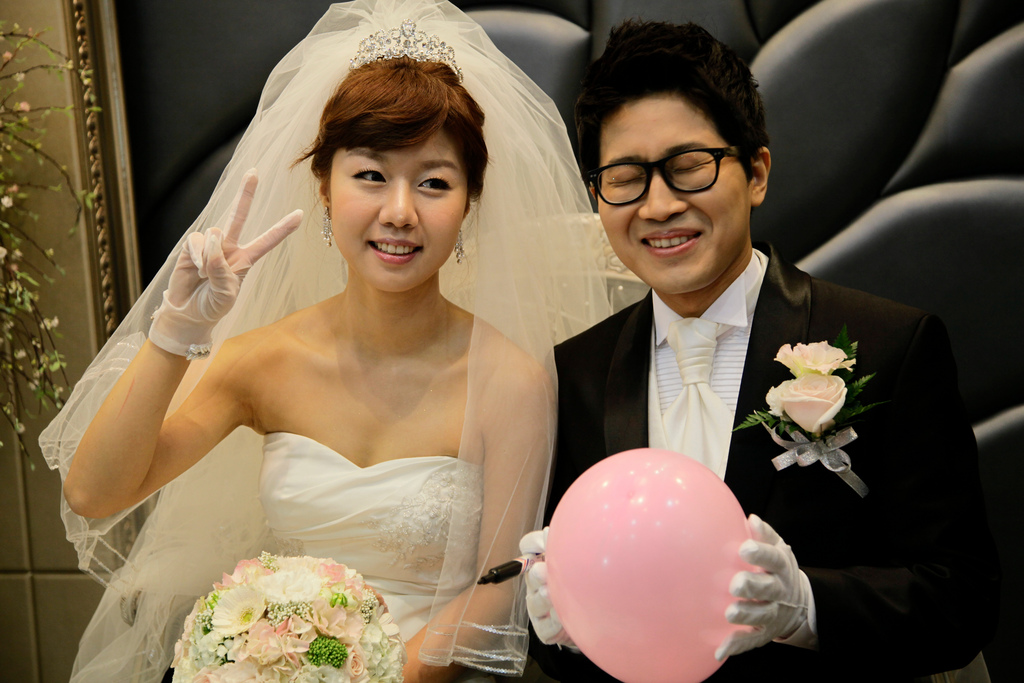 (Source: Sunghwan Yoon; CC BY-SA 2.0)
Of course, a society’s accepted norms of sexuality are always in flux, and popular culture both reflections of and a huge catalyst for that. But while you and I will undoubtedly be able to name individual dramas, movies, novels, and so on that have been deeply influential in that regard (yes, Sex and the City was the first thing that came my mind too), it is probably much harder to think of a recent period which had many in rapid succession, fundamentally and forever changing a society as a result. But according to So-hee Lee, who wrote ‘The Concept of Female Sexuality in Korean Popular Culture’ (pp. 141-164) in Under Construction: The Gendering of Modernity, Class and Consumption in the Republic of Korea (ed. by Laruel Kendell, 2002) and the must-read text for Korean gender studies, this is precisely what occurred in Korea in the mid-1990s.
Which is not to say that equivalent periods in Western, English-speaking societies don’t exist: it’s just that with having spent most of my adult life in Korea, then none really spring to mind, although I am interested in learning about any that readers can think of. And there are certainly many instances of Western-Korean cultural transmission too, with Friends and (again) Sex and the City in particular arguably having surprising impacts on Korean consumerism and gender relations here despite – nay, because of – the much more sexually repressed and sexist context in which they were received. But these earlier works Lee discusses were definitely home-grown, and:
…should be considered not only as illustrations of contemporary concerns but also as generating social discourse on female sexuality….each publication and each media screening provoked intense discussions throughout Korea (p. 142).
But although this post is ostensibly about popular culture, even some of my friends in academia that specialize in it admit that the three novels, three films, two dramas, and one play Lee discusses would probably be too dated for them to enjoy watching, let alone worth going to the time and trouble to find. Moreover, my own aim in looking at this subject is primarily to demonstrate that on the eve of the Asian Financial Crisis of 1997-98, Korean women were already very open to challenging sexual stereotypes and their ideals of men, and that this partially explains their alacrity in doing so afterward, as I’ll be arguing in this conference presentation I’ll be giving in Daejeon in August (but which has evolved a lot since I first submitted that abstract many months ago: see here for my latest, hopefully much more nuanced thoughts on the subject, and to which I owe a great deal of credit to commenters on this blog). Hence, with apologies to culture buffs, this post is much more about those “intense discussions” than in the cultural works themselves.
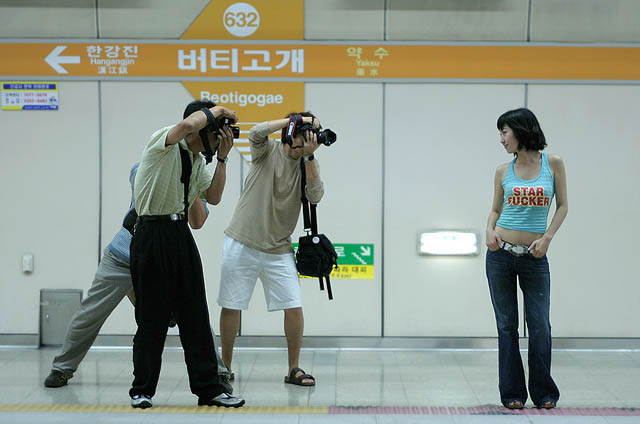 (Source: Unknown)
Naturally enough, Lee starts with the context in which these cultural works were received, recalling her embarrassment and confusion when she attended some English literature lectures at Cambridge University in the mid-1980s:
My topic was “Women Characters in Victorian Novels”. During the lectures and seminars, I was acutely embarrassed by what I heard. Why was everyone talking about sexuality, masculinity, and femininity?…
In those days, Koreans did not have exact counterpart terms for “sex”, “sexuality”, “sexual intercourse”, and “gender”. I was very confused as I struggled to determine the appropriate meanings. In Korean, one very general term “seong” (성) could be used for these four concepts, its particular meaning dependent on the speaking and listening context….
It’s actually a little more complicated than that, “성” really being the chinese character that means “nature” and “life” as well as “sex”, but that probably adds to rather than detracts from her point.
….Korean society in the mid-1980s did not find it necessary to make sharp distinctions between these concepts. At the annual Korean Women’s Studies Association Conference in 1989, the issue of sex language was raised and discussed. More recently, the Korean counterpart of the term “sexual intercourse” (성교) has gained wide usage, accompanied by the frequent use of the a Korean counterpart for the term “sexual violence” (성폭행)….Sexual violence has now become a recognized issue in need of a discourse.
Korean concepts of sexuality have changed profoundly since the Democratic Revolution of 1987….In 1995, the most popular topics among university students were sexuality, sexual identity, and other sexual subjects. There are many reasons for this…In Korea, there is still no broad popular social discourse on female sexuality outside of marriage.
Which changed a great deal as a result of the 2002 World Cup, as I wrote here, but I’m getting ahead of myself. All of the above I originally typed from the book when I wrote this post about the (literal) Korean language of sex and sexuality, and in which based on my own largely unsuccessful attempts to find Korean-language internet sources on such issues as “sexist advertisements” and “sexual discrimination,” I argued that the change Lee noted was more apparent then real, and that Korean gender studies as an academic discipline clearly somewhat lagged its Western counterparts. Ironically however, that may well add to rather than detract from her arguments for the explosive impacts of the movies and so on that she discusses, for they would have been all the more exceptional and unprecedented at the time.
On top of that, something that can be said with some certainty was how exceptional Korean women (then) in their late-20s and early-30s were in themselves, as they were really the first ever Korean generation to have grown up going to school en masse, alongside their brothers, and while doing so to have learned as an abstract, academic concept the notions of democracy, liberty, and equality. Indeed, Lee is by no means the only author to note Korean military regimes’ curious desire for at least the trappings of democratic legitimacy through (tightly-controlled) elections, and a reflection of this in the education system, replete with references to Thomas Jefferson, the Magna Carta, the French Revolution, and so on. But, this meant that in the 1990s:
Looking at their mother’s lives, Korean women in their early thirties believed that their marriages would be different. Because the Korean standard of living and patterns of material life changed very quickly, they believed that Korean ways of thinking had been transformed with the same speed. This is where their tragedy begins….[this] generation experiences an enormous conflict between the real and the ideal. During sixteen years of schooling, they have learned that equality is an important democratic value, but nowhere have they been taught that women experience the institution of marriage as a condition of inequality. Many married women of this generation have [thus] experienced a process of self-awakening….(p. 144)
And another way in which that process is a novel one is because women of their mothers’ and grandmothers’ generation:
…would have had an entirely different concept of female sexuality. [They] accepted the sexual double-standard as a women’s fate and put their sexual energy into rearing children, identifying themselves as asexual, strong mother figures. [But] Korean women [of this] generation give priority to their identities as sexual beings, struggling to conceptualize a sense of individual selfhood while the mystified ideology of mothering and family obligation, which has repressed Korean women for so long, collapses. (p. 145)
 (Source: Dreamday)
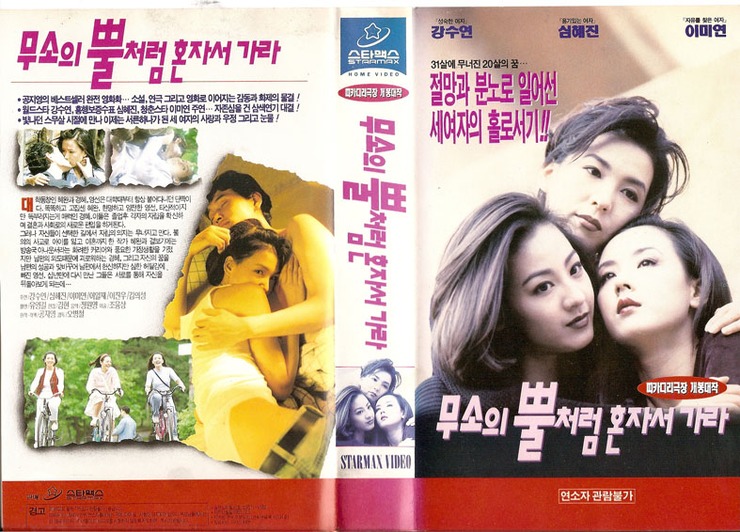
The novel Go Alone Like the Rhinoceros’s Horn (also know as Go Alone Like Musso’s Horn) (무소의 뿔처럼 혼자서 가라, 1993) by Gong Ji-Yeong (공지영) , produced as a play that performed for several months in 1994, and released as a film in 1995 (both adaptations were successful), is about the lives of three married women friends, all 31, and all of whom deal with that process in different ways. Another is the widely-read novel Marriage (결혼) by Kim Su-hyeon (김수현) in 1993, which was made into an even more successful television drama the following year, and about the marriages of three sisters (aged 25, 32, and 34) and their different perceptions of the institution based on their different ages, and indeed it is in Lee’s discussion of it that I first came across the quote that I’ve used repeatedly in this blog:
Generation is an important attribute of identity in Korea, like race in the United States. (p. 146)
But in this section of the chapter I think Lee disproportionately blames Korean husbands seeing their wives as asexual, unattractive ajumma (아주마) for their sexless marriages (and finding their own sexual relief with mistresses and prostitutes and so on), whereas in reality just as many Korean women share widely-held stereotypes and expectations of rarely having sex after getting married or having children, even in 2009 (I am not exaggerating: see here).
 ( Source: KoreanMovie)
Probably by coincidence, at about the time that these were making waves, the new term “Missy” (미시) was invented, which when Lee wrote (it’s not so common these days) was used widely as:
…an expression of the strong desire of young Korean wives in their late twenties for an alternative way of life. The term was first used…in the marketing advertisement of a grand department store in Seoul. As soon as it came out, it was adopted widely to indicate a particular kind of housewife, a married woman who still looks like a single woman. Even the copywriter was surprised at the speed with which this term took on social meaning and evoked specific images of women and femininity. “Missy” rapidly permeated the Korean language once the advertising industry recognized the consumerist implications of this target age group’s flamboyant desires (pp. 149-150).
I think Lee ascribes too much importance to the Missy concept, as both Cho Haejoang in the same book that Lee writes in, and Dennis Hart in this book on Korean consumerism, have written about a steady series of (mostly negative) terms invented in the 1980s and 1990s for different kinds of women that “Missy” is just one example of, culminating in this crass one used today and which in hindsight make Koreans’ recent predilection for naming women’s body-parts and shapes after letters of the alphabet a little more explicable (but still absurd). I also think she exaggerates its novelty, as the Korean advertising industry, buttressed as it was by Neo-Confucianism and associations of the development of a consumer industry with national security (see this series), had developed a profound and intimate relationship with Korean housewives well before 1994. But, regardless, I’m sure you can already see how well the Missy concept meshed with the provocative novels and films I’ve described. Moreover:
The essential condition of being a Missy is a preoccupation with being looked at….Film, as a visual medium, has provided the best representation of this kind of social desire, not confined to material possessions but inclusive of an active and blatant sexuality. While [some characters] in Go Alone Like the Rhinoceros’s Horn and…Marriage decide to have lovers in reaction to their husbands’ relationships with mistresses, the Missy jumps into affairs to satisfy her own needs and desires (p. 150).
And another fundamental condition of being a Missy is having a professional job, yet another reason why women being the first to be fired a few years later during the Asian Financial Crisis would have had a big psychological and cultural impact.
 (Source: Equal Writes)
The film Mommy Has a Lover (also known as Mom Has a New Boyfriend) (엄마에게 애인에 생겼어요, 1995), was about two Missys, and was exceptional in doing away with the previous film conventions of portraying women as reluctant and ashamed when they intentionally or unintentionally had a lover outside of marriage, nor of having a woman somehow punished for her “fall”. At its first screening, reactions were divided along gender lines, men complaining about the ending because it seemed to glorify wives having affairs, whereas no women expressed any complaints. Probably a more influential work involving the development of a late twenty-something’s sexual identity though (and not about a Missy per se, but in a similar vein), was the novel of the same year called The Pornography in my Mind (내마음의포르노), by then only 26 years-old Kim Byeol-ah (김별아), and whom:
…bravely deals with a previously forbidden theme. The novel rebels against the sexual double-standard, insisting on the existence of female sexual desire in contemporary Korea, where adultery is still illegal (p. 143).
Hence:
This novel [played] an important part in an emergent sexual politics by bringing the forbidden theme of sexuality into the public sphere via television talk shows and other media events. However, this public discussion has been confined to the experiences of married women (p. 151).
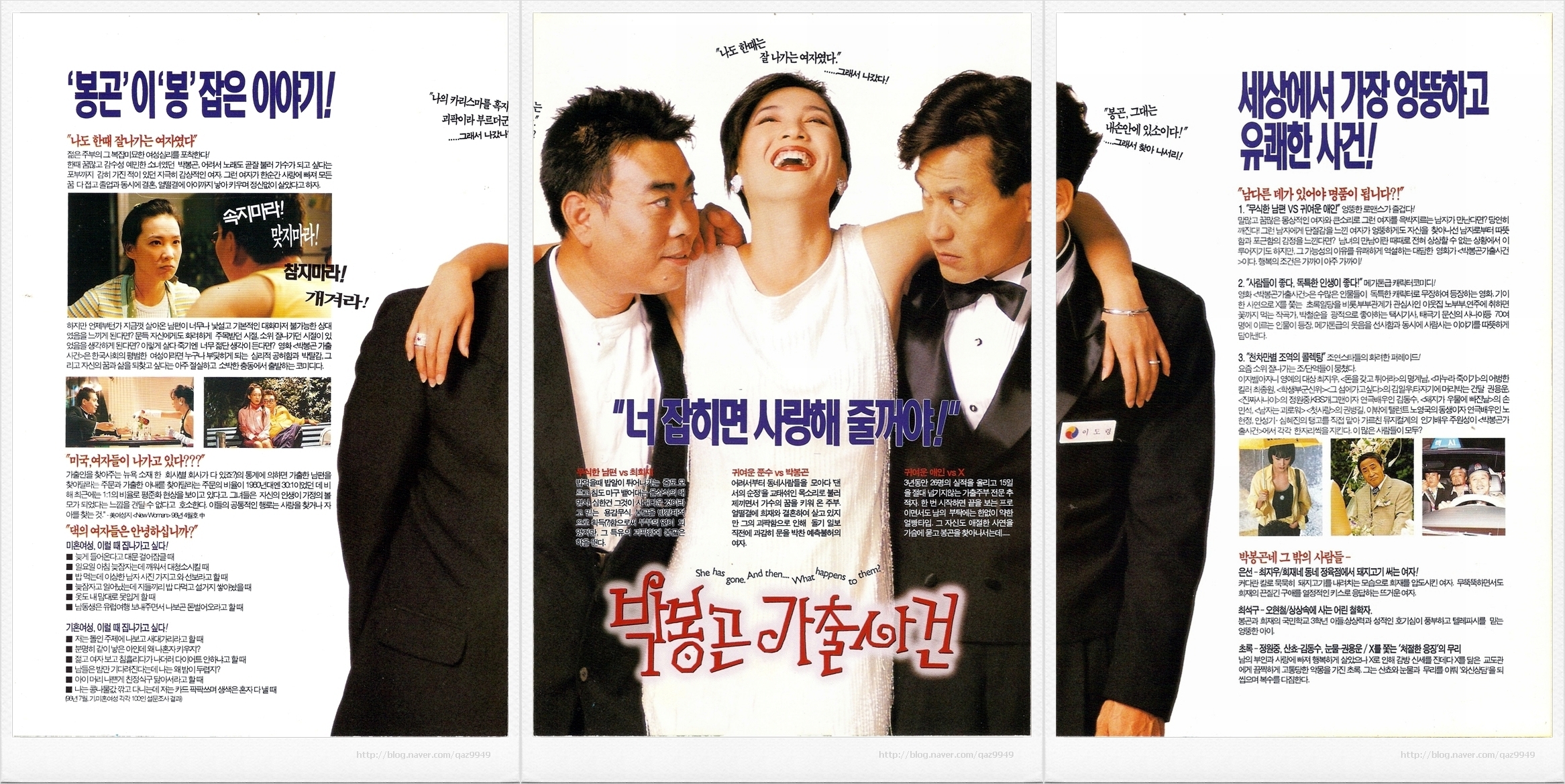
And which paved the way for the even more provocative and controversial drama The Lover (애인) and the film The Adventures of Miss Park (박봉곤 가출 사건), both of which came out in September the following year. In particular, the drama’s depiction of an extramarital love story between two highly successful professionals in their mid-30s hit Korean society like a bombshell, primarily because television tends to be conservative because of its wide audience of course, but also because both the ages of the characters meant that the drama had to confront the all-important issue of familial duties and roles. Indeed, by October it reached 36.3% of television viewers, and it:
…even was discussed in the National Assembly because of the social implications of its theme, a challenging portrayal of a married woman’s sexuality. This response reveals how powerful the television is in subverting the traditional ideology of female sexuality (p. 154).
 (Above: Screenshot from My Wife got Married)
An important point for me to remember, although I would have liked to have also learned more about the contents of that discussion in the National Assembly! There is, however, also a third possibility for its success that Lee does not really mention, and that is that in many senses both characters ostensibly had perfect and desirable lives, with no apparent reason to have affairs, and yet they did anyway: it must have been quite confounding to many, and which may also play a role in “many married men in their 40s and 50s [calling] the broadcasting company to protest this drama, demanding ‘What is it trying to say?’ (p. 155).”
Rather then getting into details here, for a very thorough examination at The Lover see this lengthy presentation by Kim Sumi entitled “Popular Feminism and the Hegemonic Practice of Mass Media: A study of two South Korean TV dramas, Lovers [The Lover] and The Woman Next Door,” which was presented at the annual meeting of the International Communication Association in New York in May this year, and in passing let me note a point not unimportant to my presentation, which is that like in Mommy Has a Lover, the man that the lead female character has an affair with “has a soft, gentle, and sweet personality, reflecting the new masculinity of 1990s Korea” (p. 155). Meanwhile, Lee sees the drama as having:
…accomplished a great deal in bringing into public discourse the issue of a middle-aged wife’s sexuality. Until recently [which is 2002 at the latest, but I think she’s actually writing in early 1998 – James], the wife’s subjective sexuality has been elided by the web of obligations spun by the husband’s family or by the terms of a wife’s subordination to her husband, as in [one character’s] case in Go Alone like the Rhinoceros’s Horn. However, in the mid-1990s, as the wife’s subjective sexuality emerged through the weakening of Korean familism, a sympathetic rapport between a man and a woman became more important than the functional element of role obligations between a husband and wife, or of a father and mother to their children (pp. 155-156).
Coming out at the same time as The Lover, on the surface The Adventures of Mrs. Park is an average romantic comedy, albeit a very successful one, but Lee notes that unlike the convention of most films in the genre, this one ends with a women running away from a domineering husband, achieving her dream of becoming a singer, and finally entering into a happy second marriage, “thus subverting a traditional morality that expects the runaway wife to come back home to restore everyone’s happiness and family security (p. 156).”
(Source: Unknown)As such, Lee notes the film director was concerned about how a conservative audience might respond to the uncommon story and its unexpected ending, and in many ways the movie presents a guerrilla attempt to sneak a serious social message into Korean cinema by presenting it as comedy. In the poster above for instance, it appears that the female character is in possession of two men simultaneously, and what’s more she is bursting into laughter while her soon to be ex-husband and the detective he hires to find her (who falls in love with her instead) stare fiercely at each other, whereas in reality women less wealthy than the Missys described earlier (and the characters in Mommy Has a Lover and The Lover) tended to be (and still are) very economically dependent on their husbands and therefore very submissive to them, and hence that is how they tended to be portrayed in previous Korean movies. Moreover, the happy ending made possible by the comedy genre here implicitly highlighted the grim reality that such an act would entail for most women in that position…and which probably explains much of its success, for it articulated their feelings.
And that marks the end of the works that Lee looks at. By way of conclusion, let me mention just two things that she mentions in her final section of the chapter, entitled “Prospects for the Social Concept of Sexuality in Twenty-First Century Korea”. First:
Looking at Korean culture with a certain detachment, I can imagine that the years 1995 and 1996 will be remembered as a critical period for the emergence of a social discourse on sexuality, particularly female sexuality (p. 160). The year 1995 was particularly remarkable in that housewives began, on their own initiative, to speak in public about wives’ subjective sexuality (p. 160).
Although the book this chapter is in was published in 2002, I strongly suspect that Lee actually wrote this in late-1997 at the latest, as only 2 out of 50 or so references are from sources later than 1996, and she writes in the next paragraph that “even with the economic downturn since November 1997, this tide is still in motion.” Unfortunately, when the true extent of Korea’s economic crisis became apparent just a few months later, and in particular its profoundly gendered nature (women, particularly married women, were overwhelmingly targeted for layoffs, under the explicit presumption that they would be provided for by their husbands or fathers), then this “tide” was to proved to be at best a mere ripple against new economic realities.
On the other hand, she proved to be remarkably prescient with the following:
…while this discussion of the changing process of female sexuality in the popular culture from 1993 to 1996 gives the impression that Korean women now are marching to demand their sexual subjectivity, in reality, most Korean women are marching only as the passive consumers of the sorts of cultural products described previously, not as their active cultural producers. When women are able to intervene in the process of cultural production as subjective consumers with a feminist point of view, the Korean concept of female sexuality can be transformed more rapidly than before (p. 159, my emphasis).
And as I explain here in great detail, such an opportunity was provided by the 2002 World Cup, and Korean women more than took advantage of it. That will be the focus of a follow-up post, hopefully to be written well before the conference!
Update) For those of you fluent in Korean, this short essay also discusses some of the movies mentioned here, and adds many more from the 2000s that in the same vein)
 (Source: Andrew Butts; CC BY 2.0)
(Update, 2 March 2016: Thanks for the link in today’s Guardian, but this Korea Times article of mine is a little out of date. I recommend this 2013 Busan Haps article instead.)
In Saturday’s Korea Times. As always, here’s the original version:
…Everyone knows the strong Korean custom of adult children living with their parents until marriage. Yet a report released earlier this year revealed that one-person households now account for a fifth of all households in Seoul.
This is lower than national figures for most other developed countries, the Seoul Development Institute report notes, and the number for Korea as a whole is likely to be lower still. But the rise puts Seoul on par with Australia, and the rate is predicted to grow to a quarter of all households by 2030.
How to interpret this? Does it signal that the Korean custom of staying in the family home until marriage is under threat?
That is unlikely. The figure includes single professionals, jobless youth, those separated from their spouses, divorcees, and senior citizens, with growth in every category. It does not imply a sudden glut of young Koreans leaving home.
While Korea has experienced many periods of great labor mobility in its recent history, particularly of young, single, working-class women moving to work in factories in cities in the 1960s and 1970s, there is definitely no tradition of young middle-class Korean university students leaving home to share private accommodation with fellow students, and there are still strong taboos against openly cohabiting with partners.
At the same time, young Westerners are adjusting their expectations for living arrangements, as the combination of rising university fees, stingier government allowances, and prospect of paying back student loans leads them to defer leaving home until graduating and/or getting their first job. This delay is often both parents’ and children’s least preferred option, but it is a trend likely to continue given the bleak job market for graduates worldwide.
This points to important economic reasons for the differences, and indeed there are big financial hurdles to overcome to live independently in Korea. For instance, at the moment Korean students cannot get student loans without their parents acting as guarantors (although the Ministry of Education, Science and Technology is working to change this). Nor do the vast majority of universities accept credit cards for payment of fees. In practice though, the combination of extremely high “key money” deposits required by landlords and the low wages afforded by part-time jobs favored by students are keeping even the most rebellious of youths at home until graduating and getting their first job. And then, he or she faces a dearth of rentals of appropriate size.
But familiarity breeds acceptance, and while cultural factors are still important, in practice they are often overstated, as for all the purported differences in how Koreans and Westerners view and value family life, many would behave in a similar fashion in similar circumstances.
For instance, with a child’s school being such an important consideration for entrance into a preferred university, and seniority-based promotion systems locking an employee into a specific company, then if a man is transferred to a different city it is very logical for his wife and children to remain in the family home rather than the children leaving the good school and/or him starting at a much lower wage and position in another company.
Also, as legions of unhappy mothers driving home every Sunday night can attest, Koreans generally don’t like to give their children to relatives to look after during the week, but with childcare facilities being so inadequate, working parents usually have little choice.
Certainly there are some arrangements that Westerners would almost unanimously reject, such as sending one’s family overseas for years for the sake of the children’s education, but Koreans’ living arrangements do not mean that they are as cold, calculating, or dogmatic as they may at first appear. For instance, while they are not openly discussed, ubiquitous love hotels point to unmarried Koreans having romantic relationships much like Westerners, and as the spate of recent celebrity pregnancies can attest, engaged couples are usually given a great deal of freedom.
Moreover, Korean’s living arrangements may well become more liberal in the future.
A long-running debate within sociology rages over whether capitalism forces very different societies to “converge” and become more similar to each other over time or not, and as one of the only non-Western developed societies, Korea is an important element in that debate.
And as reported by the Economist in March, a decade ago Andrew Oswald of the University of Warwick observed that countries with high rates of home ownership have higher rates of unemployment: with few rental options, he argued, young people living with their parents find it harder to move out and get work, or are stuck in local jobs for which they are ill-suited, and earning less than they could.
 Perhaps given the dire state of today’s economy, such imperatives will force such a change in Korea? (End)
With apologies to long-term readers, for naturally my articles for the KT will tend to be about subjects that I’ve already covered and know well (source right: Korea Times).
As they’re for a newspaper rather than a blog though, then I’m being forced to make the subjects much more newsworthy, contemporary, and concise than in their original rambling manifestations here, which (presumably) can’t help but have positive effects on my writing style in the blog as a whole. At the very least then, my planned next blog post will be much shorter than it would have been had I posted it just a few months ago(!), but never fear, for I am still a geek, and so it will still be an in-depth one on an original subject (update: sorry, it’ll be next week, but I’m not sure what day now).
For anyone new to the blog and wanting to learn more about any of the issues raised in the article though, then please try the following links:
Enjoy!
Update) The SDI’s report also mentioned that 51% of those people living alone in Seoul lived in the districts along subway line No. 2, a very small area relative to the vast conurbation that is the second most populous city in the world! It’s definitely no coincidence then, that those districts are dense with cafes, restaurants and retail shops, in total offering 21% of all the part-time jobs in Seoul.
Most of those pay 4000 won an hour, that article reports; the minimum wage is 3500.
Update 2) Here’s a graphic representation of the “single belt” around subway line No. 2, from p.15 of the SDI report.
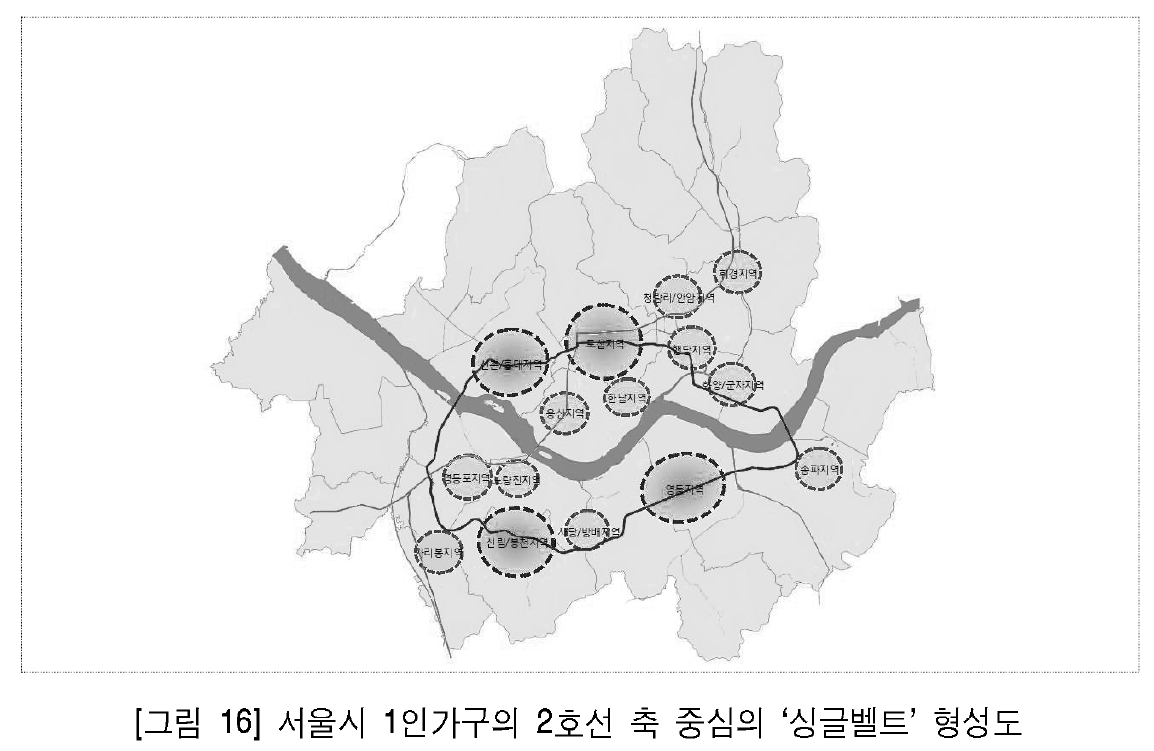
 (Source: myllissa; CC BY-SA 2.0)
To refresh your memories, last month I came across this study that showed that Japanese women living with their husbands and parents-in-law were more than three times more likely than their husbands to have a heart attack: interesting in its own right, it led me to wonder how likely a similar study of Korean women would have been to have come up with a similar result, and why I so readily assumed that it probably would. This brief series is the result, a personal combination of learning new things, a healthy airing of some of my intellectual baggage, and, finally, some much-needed hard statistics about Korean families with which to analyze them from now on; without them, then I’ve been as guilty of relying on gut-feelings and generalizing about Korea just as much as the next expat.
As I discussed in Part One, most of those gut feelings about Korean women being under similar stresses were because I knew of the practice of eldest sons living with their parents after marriage and the great potential for the subordination and/or exploitation of the new daughter-in-law within, ethically and legally buttressed by Neo-Confucianism in much the same way that Christianity also heavily informs Western, historically unequal notions of marriage and family life. But are the same living arrangements also common in Japan? And if so, what role does Neo-Confucianism play in their numbers, and in the ways they internally operated so to speak?
Possibly I got the order in which I should have looked at those various questions mixed up, but I confess that prior to writing that post I knew very little about Japanese religion, and given Japan society’s relative progressiveness, and some important, decidedly non-Confucian features of it (most notably sexuality), would previously have assumed the virtual irrelevance of Neo-Confucianism in Japanese society today. Part One was about me investigating that, and I was surprised to learn that Neo-Confucianism permeates daily life in Japan just as much as it does here. Having done that, then this post is (mostly) about the actual numbers of couples and parents living together in Korea and Japan, and given how much I conflate doing so with Neo-Confucianism – or at least, permanently and willingly doing so – then probably I shouldn’t have been surprised at the high rates of that living arrangement I found in Japan also. Ergo, there are many daughters-in-law living with their husbands’ families in both countries, and they are likely to face very similar, stressful social expectations of filial duty and subservience in both countries. But much higher rates in Japan?Why?
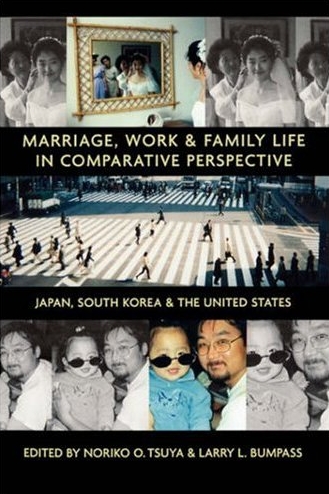 Well, before getting to the “why stage” though, you’d be surprised at how difficult it was to find even the most basic of demographic data on Korea in particular, even with the plethora of sources that a Korea Studies geek like myself has. And the only(!) book I have which does provide some of the answers: Marriage, Work and Family Life in Comparative Perspective: Japan, South Korea and the US (click on the image for a link to Amazon), I was originally very disappointed with when I first bought it over a year ago, for while it was published in 2004 most of its data actually comes from 1994 or even earlier, a flaw not exactly highlighted by the accompanying notes at online bookstores either. But forced out of desperation to reread it, I realized that I’d dismissed it too quickly: like a visiting UN demographer who lectured at my university once pointed out to me, demographics is all about waves, and as I’ll explain, 15 years later Korea is definitely still feeling the effects of the processes highlighted in this actually rather good book.
And, once I realized that, then I confess that I got a bit lost in it at that point, for the similarities and differences between the three countries are simply fascinating, and go well beyond mere numbers of extended families. In particular, after hearing it first on some old Korea Society podcast, I’ve often said that one’s generation in Korea is as important a marker of identity as, say, race is in the US, but I doubt that whoever I heard that phrase from meant it as anything more than an allusion to Korea’s extremely rapid rate of development (I know that I certainly haven’t!). But then I read this on page 61:
Korea tends to differ from the other two countries on a number of structural characteristics that are likely to [strongly] affect intergenerational relations.
But first, the basics. Seeing as they take up an entire chapter, then I won’t get into all the technical details and potential flaws of the methodologies of the surveys in the three countries sorry: suffice to say that, unless stated otherwise, all the statistics in the remainder of the post refer to married couples at the time of questioning, with both spouses between 30 and 59, and almost all for Korea, Japan and the US are from 1994, 1994, and 1988 respectively. Starting off then, the number of couples that were:
Yoshi Sugimoto, in his excellent book An Introduction to Japanese Society (2003), also notes that in 2000 “about a half of persons at or above the age of sixty-five live with their relatives, mainly with the family of one of their children” and that “this pattern is inconsistent with the prediction of modernization theory, that industrialization entails the overwhelming dominance of the nuclear family system” (p. 175). Far from being because immutable and deeply-held Neo-Confucian beliefs however, in reality:
…most two-generation families make [the] arrangement for pragmatic rather than altruistic reasons. Given the high cost of purchasing housing properties, young people are prepared to live with or close to their parents and provide them with home-based nursing care, in the expectation of acquiring their house after their death in exchange. Even if the two generations do not live together or close, aged parents often expect to receive living allowances from their children, with the tacit understanding that they will repay the “debt” by allowing the contributing children to inherit their property after death. This is why aged parents without inheritable assets find it more difficult to live with their children or receive an allowance from them. (p. 176)
But why do more Japanese parents and married children live together than Korean ones? Rather than giving you the answer straight up, let me highlight the other differences, so that hopefully you might be able to work them out for yourself:
And finally here are some more interesting facts, albeit more indicative and/or the cause of Korean women’s extremely low economic and political empowerment (possibly – make of them what you will) rather than why Japan has more extended families than Korean does:
I confess, there appeared to be rather more noteworthy statistical differences and interesting tidbits when I began writing this post: I expected to have much more to say, and yet I find I’ve gotten through those in *cough* only 1470 words as I type this, half of which was an introduction/recap, albeit probably necessary. On the plus side though, I do see much of my role as a blogger as being to do condense (very) much larger pieces of work into their key points, thereby making them much more accessible to a wider audience, and so even if you can’t see the reasons for the differences in the numbers of extended families between Japan and Korea yet, if you just read the part of the authors’ summary below, then go back and look at the four points above the last (rather stylish) photo above, and then finally say something like “Ahh! Of course!” once you do…then I’ll know I’ve been doing the right thing!
…from a number of socioeconomic and demographic perspectives, Japan and the US are more like one another, and Korea is more distinctive. Korea’s mortality and fertility declines are more recent than either Japan’s or those the US. In Korea, the generation of middle-aged adults examined here has experienced all the dislocations and opportunities that go with a recent and rapid shift from an agricultural to a manufacturing and service economy, from a rural to an urban settlement pattern, and from a low level to a higher level of educational attainment. In the US and Japan, these transitions occurred somewhat earlier, and it is expected that the timing and nature of these transitions would affect patterns of intergenerational relations. (p.74, my emphases)
If you’re also interested in why so many unmarried Korean and Japanese children live with their parents, see here and here.
 (Source: danle; CC BY 2.0)
Not the outcome I expected when I first wrote about this on Sunday. From Yonhap news:
BUSAN, Jan. 20 (Yonhap) — A South Korean man, the first to be convicted of spousal rape in the country, was found dead Tuesday in an apparent suicide, police officials said.
The 43-year-old man, identified by his surname Lim, was found by his mother hanged at his home in southern Busan around 2:40 p.m., according to the police.
This is just breaking news, so I’ll add more tomorrow once more than just the bare details become available. In the meantime, here is a brief Korean news video with a transcript for those of you that speak Korean.
Update: Rather than simply repeating what he mentions, for more information let me direct you to Robert Koehler’s post on the subject here.
Update 2: See also #2 here.
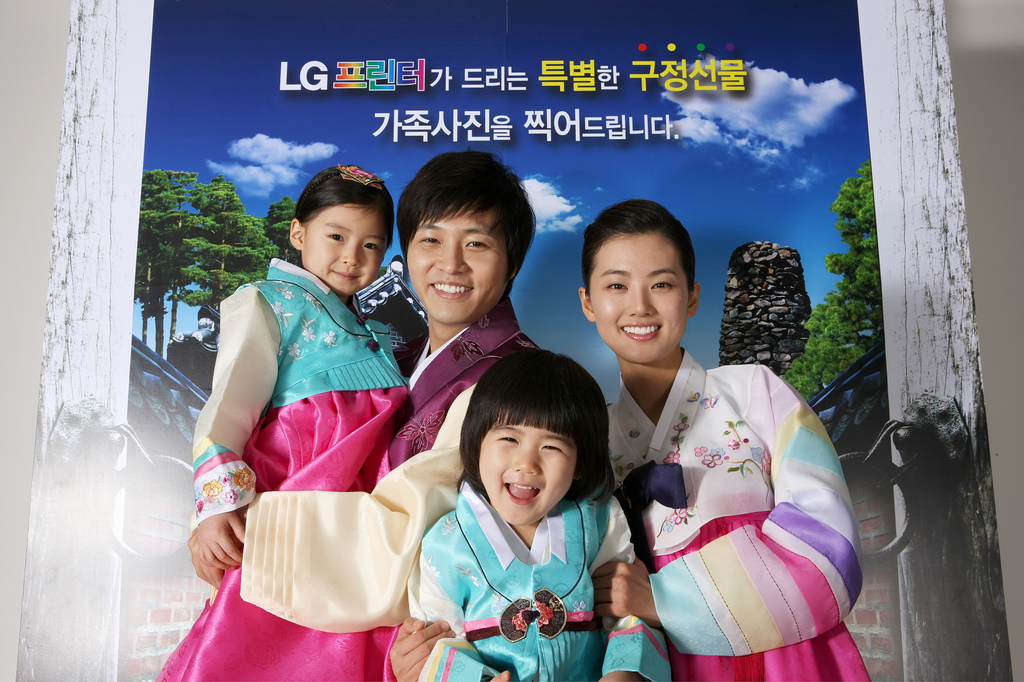 (Source: LG 전자; CC BY 2.0)
According to a recent study, Japanese women living with their parents-in-law are three times more likely to have a heart attack than those just living with their husbands. This, in a country famous for its very low rates of heart problems overall.
Which got me wondering about Korea. Korean family structures and gender roles are very similar to those of Japan, so it seems reasonable to suppose that the Japanese study has great relevance to Korea, and that a knowledge of Korean family life can reliably inform our interpretation of it.
Or does it? This is the question that has occupied me for past nine days, and, for readers by definition interested in Korean social issues, it is much less abstract and pedantic than perhaps it first sounds. Let me explain.
As a writer about Korean society, but often lacking in English-language material, frankly it is always a temptation to stress its similarities with Japan, just for the sake of having something to work with. But seriously, the huge Japanese role in the development of both the modern Korean state and economy has left profound and enduring legacies. Add that I’m a big proponent of the Marxian concept of base and superstructure—basically that much of a society’s oft-claimed timeless and enduring culture (one aspect of the superstructure) changes pretty damn quickly once economic structures or modes of production change (the base)—too, then it stands to reason that, with still broadly similar economic structures centered around horizontal and vertically-integrated conglomerates known as keiretsu and chaebol respectively, then much about daily life in both societies (workplace culture, working hours, drinking-culture, male-breadwinner based welfare systems, gender divisions between work and the home, and so on) would also be very similar. And it wouldn’t take much reading of just this blog alone to find that this indeed the case.
 With that background and strong inclination however, there is always a danger of taking similarities as a given. And particularly in this case, where the authors of the study point out that:
One of the overwhelming things that stands out is that it doesn’t matter for Japanese men what the living arrangements are…they’re immune from stresses in the home (source, right: Urânia – José Galisi Filho).
And from which Samhita of the Feministing blog argues:
The article feigns surprise in finding out that men don’t have these same health problems, but fails to make the obvious conclusion that women get inordinate amounts of pressure from their in-laws to live up to certain expectations that increases stress in their lives. Many women are choosing not to get married or have as many children in Japan, but the culture of expectation around how women should act in the home seems resilient. I wonder if a similar correlation can be made with women that are living with their in-laws in the states?
Which is equally true of Korean brides, where those expectations include assuming the bulk of housework duties, and utter subservience to their mother-in-laws. Naturally, the ensuing potential for domestic tension and conflict make such living arrangements a staple of Korean dramas for decades, one such playing at the moment being You are My Destiny (너는 내 운명, but not to be confused with the 2005 movie with a similar name) starring the decidedly unhappy-looking bride Yuna below. Having said that, just like the traditional hanok houses that many of these dramas are inexplicably set in, one can’t help but assume that women’s disdain for eldest sons and the nuclearization of the Korean family mean that these living arrangements are increasingly rare in practice, which begs the question of why dramatizations of them remain so popular even today.

Writing a week ago, I thought it was because, in practice, living in separate homes has not diminished many parents’ intimate involvement in their childrens’ married lives, and hence the exaggerated situations of dramas still strike a chord amongst married couples and those of marriageable age. Indeed, the combination of Korea’s small size and improvement in Korea’s transport and communications infrastructure has made this even more possible and likely over time. Note that even as recently as the 1970s, a move to Seoul might entail not seeing parents and siblings in the countryside for many years, let alone friends who moved elsewhere in the country. (Source, above: HKGolden.)
But, to spare you the reflections on my preconceptions and academic baggage that took up much of an earlier version of this post, there comes a point where you need evidence. Much of those nine days were spent looking.
Fortunately, I was successful. But in the process, I discovered the question was much more difficult than I thought. Again, to spare readers from a frankly rather incoherent argument in a previous version of this post, in sum I learned that:
Or so I thought. But, after a decade of constantly reading how Korea is the most Confucian country in the world, and “more Confucian than China,” I’d considerably underestimated Confucianism’s influence on the rest of East Asia.
 (Source: thomas park; CC BY 2.0)
This was revealed to me by Robert Smith in his chapter “The Japanese (Confucian) Family: The Tradition from the Bottom Up” in Tu Wei-Ming (ed.), Confucian Traditions in East Asian Modernity: Moral Education and Economic Culture in Japan and the Four Mini-Dragons (1996), and who aims to show:
…that it is impossible to advance a plausible argument that the Japanese family today is Confucian in the strict sense. It is equally impossible to argue that it has been completely purged of the effects of attempts by the authorities to structure it in terms of selected Confucian principles. (p. 157)
Some selected excerpts to make up the remainder of this post then. Please forgive me if there’s rather a lot of them, and apologies to any Japan-based readers who already started saying “Well…Duh!” to the computer screens some time ago, but hopefully they’ll still be helpful for any readers like myself that aren’t/weren’t as familiar with Japanese social history as they thought they were.
First, on why I had that impression that I did:
I have asked a hopelessly unrepresentative sample of Japanese colleagues, acquaintances, and friends whether contemporary Japanese think of themselves or their families as Confucian. The spontaneous answer is a resounding no, often supplemented by a dismissive reference to the conservative, reactionary, or feudal (a favorite term of opprobrium in Japan) character of its teachings. The implication is that one’s grandfather or great-grandfather may have been taught Confucian ethics and might even have internalized them, but in 1945 the Japanese consigned Confucianism to the dustbin of history. (p. 157)
…
There is one obvious difference between the role of Confucianism in China and Japan, where is has always been only one of many competing ideologies, philosophies and ethical systems, and never, as in China, “a way of life encompassing the ultimate standards for Chinese social and political order.” (158)
And the Japanese tend to underplay the Confucian influence in their own society because:
Japanese Confucianism started as a cultural ideology serving the needs of the Tokugawa Bakufu (or Shōgun, or Army Commander)….Although for a time Confucianism had been discredited along with everything else associated with the shogunate, it gained currency again with the consolidation of conservative power in the late 1920s and 1930s. (p. 158-9).
The latter of which was the decade when:
…Japanese society was being reduced at the hands of fanatics to its most stifling condition of oppressive irrationalism [and] in which the ideals of the Japanese educational world were closer to those of its Togukawa past than at any time since 1870….Is it any wonder that today’s Japanese, if they have thought about it at all, are likely to view Confucianism in a negative light? (p. 159, my emphasis)
Now, why the influence of Confucianism on the Japanese and particularly the Japanese family remains pervasive nevertheless:
Were the Japanese ever Confucianists in, say, the same sense as the Koreans? No one claims that they were. Nevertheless, there are many ways in which the Confucianist concern with hierarchical relationships and its emphasis on harmonious families as the basis for harmonious states seems to have influenced Japanese society. Be that as it may, it is just as likely that the Japanese selectively utilized Confucian teachings to reaffirm and strengthen characteristics of their society, which was deeply rooted in the pre-Confucian past.
Presumably one of the domains in which Confucianism did not simply reinforce and justify older social practices is the treatment of women, for it is widely argued that they enjoyed a far more favorable position in Japanese society before the introducton of Confucianism. It may well be, however, that the decline of women’s status in Japan actually began with the popularization of Buddhism. (pp. 160-1, my emphasis)
Finally:
The question is not whether Confucianism is a religion. It is rather: Does Confucianism, broadly defined (or, perhaps better, undefined) have anything at all to do with religion in Japan?
…
The “rules” by which religions are tacitly expected to operate in Japan are, more than anything else, Confucian. As so often in Japan, Confucianism plays the role of a moral and ethical substratum that, its preconditions being met, allows a harmless surface diversity. Indeed, one could argue, as many have, that these principles go back beyond Confucian influences on early Japan to the values inherent in ancient clan structures and an agricultural society with their demands for loyalty and cooperative effort; Confucianism did not so much crate as articulate the values by which Japanese society works.
…
Virtually all religions that have endured in Japan have adapted external forms agreeable to the patriarchal family model and have made their peace with the state. (p. 171, my emphasis)
At this point, a more thorough blogger than myself would probably move onto those passages where Smith discusses that latent Confucianism within Japanese families (and the education system) more specifically, but I think that readers can reasonably extrapolate those from the big picture that I have already provided rather than requiring me to add those too. Ergo, Japanese families are indeed (Neo) Confucianist, and I’m especially glad that demonstrating that gave me a legitimate opportunity to get stuck into my recently purchased copy of Tu-Wei Ming’s book. But while 2500 words is a rather short post (for me), given the long time this one took and that Confucianism, Demographics and Biological Anthropology are much more discreet subjects than what I normally blog about, I’ll wisely end this post here!
Update
Although they’re not really related to the topic at hand, the questions of: a) to what extent the US could be described as a “Christian country” and b) whether Confucianism is a religion or not came up in the comments, and are interesting in their own rights. And while I’m usually reluctant—yes, really—to type out literally entire pages from books here, Robert Smith does answer both much better than I could:
To what extent has the Japanese family ever been Confucian, and to what extent is it today? Would that the question could be so easily answered. Even the most casual survey of the vicissitudes of Confucianism in Japan suggests the need for caution. Indeed, I was tempted to indicate just how cautious one must be by titling this essay either “Confucianism Is in the Eye of the Beholder” or “Confucian Is as Confucian Does.” That is to say, how Confucianism is described, the praises sung of it, the importance assigned to it, and the terms by which it is denounced are all very strongly colored by the historical period in which the assessments are made, the position in the social hierarchy of the person expressing the opinion, and – not least in recent times – the age and gender of those who views they are.
I hasten to add that in these respects Confucianism seems to me rather like all other philosophical, ethical, and/or religious systems of whatever time or place. An example, drawn from personal experience with one such system, involves one of the myriad subcategories of the southern United States brand of Protestantism. Fifty years ago its construction of Christianity was a finely crafted one that had no place for Catholics, who were thought of as idolaters, or for Quakers, of whom few had ever heard. Depending on the particular church and the position of its minister on the issue, it was not always entirely clear that Methodists and Presbyterians were Christian either.
Be that as it may, did my relatives and neighbors think that they themselves led Christian lives? Of course they did, or tried to. Were it to be pointed out that someone had committed some “unchristian” act, the usual explanations were that all are conceived and born in sin, that it all happened before the miscreant had found God – or perhaps it was because Christ had found him. It is all now too far in the past for me to recall the full inventory of shifting grounds on which our neighbors and relatives took their unshakable Christian stands. Would they have agreed – and do they still – that the United States is a “Christian country”? Of course. They have never doubted it….Yet I wager that in the course of conducting interviews on the subject, you could collect scores of definitions – some of them flatly contradictory – of just what the term “a Christian country” might mean. There is bound to be some overlap, to be sure, but no consensus. Are we then to conclude that the United States is not a Christian country? I think not. But I submit that consensus on the religious and ethical dimensions of Christianity is not much more likely to be achieved than agreement as to precisely what Confucianism might be and whether the Japanese family is a Confucian institution.
It is possible, of course, that I am looking in the wrong place for an authoritative definition, and would be better advised to seek it among the philosophers, the theologians, the ethicists, or the intellectual historians. My reading of the relevant sources, however, strongly suggests that consensus at the tip is even more difficult to achieve than at the bottom. In any event, my anthropological training predisposes me to start at ground level. (pp. 155-157)
Thoughts?
 The Grand Narrative
