Yet just fouryearsearlier, only Seoul was remotely close to that figure, with one in five. That wasn’t expected to rise to one in four until 2030, let alone the rest of country.
It’s a remarkable rise (one of the fastest in the world), and companies have been responding with such things as smaller food portions, more home-delivery services, and smaller appliances. And then there’s the start-up Zigbang (pron. jeekbang) founded in early-2012, which takes the hassle, legwork, and pitfalls (ㅋㅋㅋ) out of finding studio apartments through real estate agents by arranging everything online instead. If you’ve taken the subway recently, probably you’ve seen their ad above, featuring comedian Kim Ji-min (source: Platum).
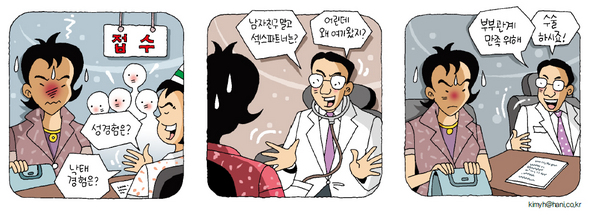
Much more interesting though, are the ads you probably haven’t seen. Covering everything from the hassles of long commutes and living with one’s parents in your 20s and 30s, to gaining independence and sexual liberation, they provide an interesting look at some of the push and pull factors behind this singles trend. Most are amusing, and some are very, very Korean too. Here’s a small selection from Zigbang’s Facebook page:
I think the text is badly chosen: literally, it says,”Do you want to eat noodles and go?”, which would mean the object of her affections is already at her place, whereas “Do you want to go eat noodles at my place?” would make much more sense (update: actually, the line is from a movie—see below). But either way, the double-entendre is obvious, and if not then a helpful Korean “R18” symbol makes it clear.
Which is interesting in its own right, and a good counterexample to my recent post on Sookmyung Women’s University students being given a dresscode. Because whereas our natural reaction to such news may be to label Korean society as sexually conservative, or to shoehorn narratives of progression onto to it because of these ads, really there’s abundant evidence of both. Also, even if one does find some definitive, profoundly conservative aspect of Korean sexuality, it can be very modern in others—just like everywhere else.
Even more remarkable though, is that those last two yahan ads made it from the confines of Facebook to Seoul subway stations, all the better to corrupt Korean youth. Here’s two photos of them by reader Thibault Deckers, whom I have to thank for inspiring this post:
Ads don’t necessarily reflect a change in social attitudes of course, nor necessarily spark one, but I think the sheer numbers of single households are surely having effects. One recent article found that 70% of 30-somethings prefer their own company for instance, and I too have noticed that my students will no longer react in horror upon learning that I always go to the cinema alone (I prefer sitting in the front row).
What changes have readers noticed? I’d be especially interested to hear about knock-on changes in attitudes towards cohabitation, given how difficult it was to find a reader to find interviewees for his MA thesis on that just a few years ago (as in so scared of being found out that they would frequently cancel, not that they didn’t exist). Or do you think this is all exaggerated, not least by companies like Zigbang?
Update 1) I forget to mention that despite Zigbang’s focus on 20-30 somethings, most people living alone in Korea remain middle-aged professional men, and elderly women living in poverty. Likely, the latter don’t use Zigbang at all, but it would be interesting to know how much of its business comes from the former, despite being ignored in its marketing.
Update 2)With thanks, a clarification to that confusing line about noodles. It’s from the 2001 movie One Fine Spring Day:
Searching for Storytellers for Naughty Storytelling Event
Are your friends always telling you how they look forward to hearing your crazy stories? Are you a fan of The Moth or Risk and have always wanted to get up on stage and tell a true story? Now’s your chance! In mid-October, I’m hosting a naughty storytelling event called The Naughty Yarn at HQ Bar in the Kyungsung area of Busan. I’m looking for people to tell true stories themed around sexuality or dating. Naughty storytelling is a sex-positive event and meant to embrace and playfully examine the ways we navigate our sexual lives. This show is not an open mic; I’m taking story pitches and am looking for eight to ten performers for the evening. If you’re interested, your story must:
*
Be true (this is storytelling, not erotica!)
Have a narrative arc (no rambling or anecdotes!)
Be eight minutes long at the maximum
If you think this is something you’d like to do, please send a short paragraph or two giving a summary of your story to thenaughtyyarn@gmail.com. Thanks!
Let me be honest: Good Chinese Wife is not something I would normally read.
Susan’s ex-husband was Chinese; my wife is Korean. Susan’s relationship goes from friends to engaged in less than two minutes; we lived together for years, and had lots of wild sex before I proposed. Their marriage rapidly turned sour; we just celebrated our tenth anniversary. They married, had a child, and divorced way back in the 1990s; I’m really only interested in Chinese attitudes towards dating, sex, and marriage in the 2010s. And so on.
I’m still grateful for receiving a reviewer’s copy, organized by Jocelyn Eikenburg of the Speaking of China blog (see here for many more bloggers’ reviews). But first impressions? I expected it to be very outdated, and that it would have little to offer readers with Korean partners.
I was dead wrong, on both counts.
Good Chinese Wife begins in Hong Kong in the mid-1990s, where Susan is doing a graduate degree (she previously spent a year there as an exchange student in 1990). Then in her early-twenties, she soon becomes smitten with Cai, an older mainlander from Wuhan. She starts tutoring him English in her dorm room; unbeknownst to her, other students consider them already dating. This prompts him to open up and explain he’s already been married and has a child, revealing all as a prelude to showing he is now interested in dating Susan. Because in China, Cai explains, “couples traditionally only date if they plan to marry.”
This sounded very antiquated. But as it turns out, dating in China is still not at all like in the West, nor even Korea. In Behind the Red Door: Sex in China (2012), Richard Burger explains that even in the big cities, “serial dating” is frowned upon as immoral or promiscuous. Instead, “most Chinese women still believe it is best to date only man and to marry him. Once the man invites her on a second or third date, he is indicating that he’s serious, that he is hoping for an exclusive relationship, and that marriage might be on the cards.” Whereas for women, inviting her to meet her parents “means she expects to marry him, and Chinese men understand this arrangement.” What’s more, the average age of marriage for Chinese men was only 24 in 2010; for women, 22 (in Korea, 31.8 and 28.9 respectively).
So, I understood Cai. And, being head-over-heels ever since they’d met, why Susan quickly accepted his proposal, before so much as a kiss—it sounded sweet. Her frankness about her feelings and mistakes is also a definite charm, especially for someone who likewise fell very easily in love at that age.
But that’s only 36 pages into the book. For the remaining 300, sympathy turns to constant frustration and exasperation with Susan’s rushing into marriage, then her frequent acquiescence towards her increasingly controlling and abusive husband. These feelings are only amplified by knowing that she’s doomed to fail.
In an interview, Susan says her problems were more because “He told me from the get-go that he had certain conditions for our marriage. Those are things I ignored or thought I could eventually get him to change. That should have been my red flag, not the [6 months] in which we became engaged and married.” (Likewise many happily-married Koreans, for whom such whirlwind courtships are also common, would surely bristle at the suggestion that they should have taken things slower.)
I disagree. From Cai’s belief that women are especially “dirty” in the summer, once all but physically forcing an exhausted Susan to bathe in a rat-infested bathroom, to his bizarre, surprisingly submissive relationship with eccentric professor friend ‘Japanese Father’ (“He thinks it’s not good [for us] to have sex relations more than once a week”), most of Susan’s later issues with Cai could have been discovered if they’d spent (much) more time together before the wedding day—and/or resolved if an expensive wedding wasn’t already looming over them.
Still, it does make for a good page turner. There is also merit in studying a bad relationship to learn what to avoid, and much about this one that will already be familiar to those with Korean, Japanese, and Taiwanese partners. New and expecting parents in Korea, for example, will sympathize with Susan’s expectations to conform to man yue, the belief that mothers shouldn’t bathe or go outdoors in their first month—it mirrors the Korean one of sanhoojori. Also, for those couples planning to move to a Western country, her discussion of Cai’s difficulties with adjusting to life in San Francisco will be very beneficial. Her avoidance of tiresome Orientalist stereotypes is especially welcome, with her ex-parents-in-law coming across as old-fashioned but lovely, and Chinese men portrayed no better or worse than Western ones.
That said, I am reminded of a book for couples I once flicked through, which encouraged them to discuss their expectations of marriage in great detail before committing. With checklists ranging from beliefs about circumcision and determining which cities were best for both partners’ careers, to dividing the housework and setting dating policies for potential teenage children, that approach would be much too calculating for most couples. Marriage, after all, is ultimately about making a scary but exciting leap of faith with someone. But when partners come from such wildly different backgrounds, and bring such different expectations into marriage? Susan’s experience teaches readers that for international couples in particular, perhaps they really should learn the answers to those questions sooner rather than later.
One minor quibble was all the hyperbole. Not to diminish Susan’s genuine fears for herself and her son at times, but did it lead me to expect a story involving forged passports and bribed border guards(!). Also, I disliked the format of numerous short chapters, with so little happening in some that they felt like diary entries. But that is just a personal preference.
The verdict? Good Chinese Wife is well worth the US$14.99 cover price (16,410 won at What the Book), and a definite eye-opener about the value of reading more about relationships in this part of the world, especially with such limited options for reading about Korean ones specifically. Please do leave your suggestions (and reviewer copies!) for more like it, and/or for blogs.
Showing a woman bringing condoms to a date, I hailed Durex Korea for challenging popular, slut-shaming attitudes that women must feign sexual inexperience and naivety with new partners, with contraception widely considered only men’s responsibility.
But those would be the last condoms to grace Korean TV screens, by any company. Add Durex Korea’s recent, asinine marketing attempts, and that its Facebook page looks like it belongs to a lads’ mag, then the cynic in me lamented that last year’s efforts weren’t so much the start of a progressive, feminist campaign as simple, one-off copies of the original.
Then I discovered that there had been a similar, OMG-girls-like-sex-too commercial back in December, which played on various cable channels after 10pm:
Sounds awesome, right? Even if it was just a copy again.
My hopes raised, I began looking for more information, but was soon frustrated by the lack of mention on Durex Korea’s website, Facebook page, Twitter feed, and blog. What’s more, there proved to be only one low-res, IE-only version of it that is publicly available. (Another requires a paid subscription to this site.)
I began to suspect that some unspecified controversy spilling over from last year’s June commercials may have been responsible, as those videos are also no longer available on its FB page (although theposts are). But probably that’s just simple neglect; with a Facebook page, Twitter, and blog myself, I can confirm that it’s difficult finding the time or inclination to fix broken links in old, rarely-read posts. Better to create new content, and accordingly Korean companies rarely keep old ads on their websites, preferring that consumers focus on their recent most ones instead. Sure enough, Durex Korea’s reply to my tweet made me realize that it was actually private Youtube users that were originally responsible for (re)uploading and sharing their June commercials, without whom they too wouldn’t be publicly available today.
I guess the December commercial just wasn’t all that popular really—there was never any great patriarchal conspiracy to have it removed. But, popular or not, it shouldn’t have been such a struggle to find more information—any information—about a (relatively) groundbreaking campaign, let alone from the company responsible. So, again, I have to conclude that Durex Korea was never making any real effort to engage with female consumers and challenge double-standards. Sigh.
This summer then, it’s probably T-ara member Eun-jung’s recent “confession” to—shock! horror!—past sexual relationships that is most likely to have an impact on how the public views or discusses theirs. Or, alternatively, the news that matchmaking companies no longer assume that their female clients will pretend to be virgins before marriage…
That’s the takeaway message from this survey by two matchmaking companies, currently making the rounds of the Korean portals. Ostensibly, its message is actually that Korean women let men take the initiative when it comes to sexual relationships, and that previous experience with one partner makes a significant number of women—not men—much “more cautious” with their subsequent ones. Whichdoes appearto confirmprevious, morerigorous surveys, and hence the context about double-standards provided in the first half of this post.
But with no mention of the methodology, what exactly “more cautious” (etc.) means, and likely a self-selecting sample population? Then really, it confirms nothing at all. Please make of it what you will:
미혼女 34%, 애인과의 첫 성관계는 ‘술김에…’ 34% of unmarried woman need alcohol for their first time with a lover
성(性)에 대한 의식이 개방적으로 바뀌고 있지만 미혼여성들은 아직도 10명 중 6명 이상이 애인과 첫 관계를 가질 때 술의 힘을 빌린다던가 억지로 끌려가는 듯한 수동적 자세인 반면, 남성은 10명 중 7명 정도가 성관계를 주도하거나 적극적인 자세로 임하는 것으로 나타났다.
Awareness of and attitudes towards sex are changing these days, [but still traditional gender roles remain]. With a new lover, six out of ten women admit that they take advantage of alcohol to overcome their shyness or reluctance when having sex for the first time, and/or passively accept it when their partner is insistent, whereas seven out of ten men believe they have to take the initiative and assume an active role.
결혼정보회사 비에나래가 결혼정보업체 온리-유와 공동으로 미혼남녀 544명을 대상으로 ‘애인과 첫 성관계를 가질 때 본인의 자세’에 대한 설문조사를 실시했다.
Marriage matchmaking companies Bien Aller and Only You surveyed 544 male and female customers, asking them about their thoughts and feelings the first time they had sex with previous partners.
그결과 남성과 여성의 반응이 판이하게 달랐는데, 남성은 37.1%가 ‘주도적’, 33.5%는 ‘적극적’으로 답해 나란히 1, 2위를 차지했다. 즉 70.6%가 능동적이라는 것을 알 수 있다.
Men and women differed quite widely in their replies. Out of the men, 37.1% said they took the lead, and 33.5% that they were active in initiating sex, the top two replies. Altogether, 70.6% said they took an active role.
반면 여성은 34.2%가 ‘술의 힘을 빌린다’, 28.3%는 ‘억지로 끌려가듯 (응한다)’이라고 답해 상위 1, 2위에 올랐다. 성관계를 거부하지는 않지만 수동적인 자세가 62.5%이다.
In contrast, 34.2% of women said they need alcohol [to get over their shyness or reluctance], and 28.3% that their partner insisted, the top two replies. Altogether, 62.5% said they weren’t against a sexual relationship, but they assumed a passive role.
그 다음 세 번째로는 남녀 공히 4명 중 한 명꼴이 ‘자연스럽게 임한다'(남 26.1%, 여 24.6%)고 답했다.
With both men (26.1%) and women (24.6%), the third most common reply was that they “just behaved naturally.”
‘성 경험이 있는 상황에서 다른 애인과 성관계를 가질 때의 마음 상태’에 대해서도 남녀 간에 시각차를 보였다.
With the question of how previous their sexual experience impacted their feelings about sex with a new boyfriend or girlfriend, a big difference was visible in the replies from men and women.
남성은 ‘(마음이) 더 편해진다’가 54.7%로서 과반수를 차지했고, ‘변함없다'(33.5%)에 이어 ‘더 신중해 진다'(12.8%)가 뒤따랐으나, 여성은 ‘마음이 더 편해진다'(42.7%)는 대답이 가장 많기는 하나, 그 다음의 ‘더 신중해진다'(39.7%)와 큰 차이가 없었고(3.0%포인트), ‘변함없다’는 대답은 17.6%였다.
With men, more than half (54.7%) replied it would make them feel more comfortable; 33.5%, no change; and 12.6% that it would make them more cautious. While “more comfortable” was also the most popular reply with women (42.7%), 39.7% replied that it would make them more cautious, a gap of only 3%; 17.6% replied that it wouldn’t make any difference.
자세한 응답분포를 보면 남성은 ‘다소 편해진다'(37.5%) – ‘변함없다'(33.5%) – ‘훨씬 더 편해진다'(16.2%) – ‘다소 신중해진다'(12.8%) 등의 순이고, 여성은 ‘다소 편해진다'(31.3%) – ‘다소 신중해진다'(29.4%) – ‘변함없다'(17.6%) – ‘(훨씬 더 편해진다'(11.4%) – ‘훨씬 더 신중해 진다'(10.3%)의 순서이다 (source, right).
In detail, 37.5% of men replied that it would make them a little more comfortable; 33.5% no change; 16.2% a lot more comfortable; and 12.8% that it would make them a little more cautious. With women, 31.3% replied that it would make them a little more comfortable; 29.4% a little more cautious; 17.6%, no change; 11.4% a lot more comfortable; and 10.3% a lot more cautious. (END)
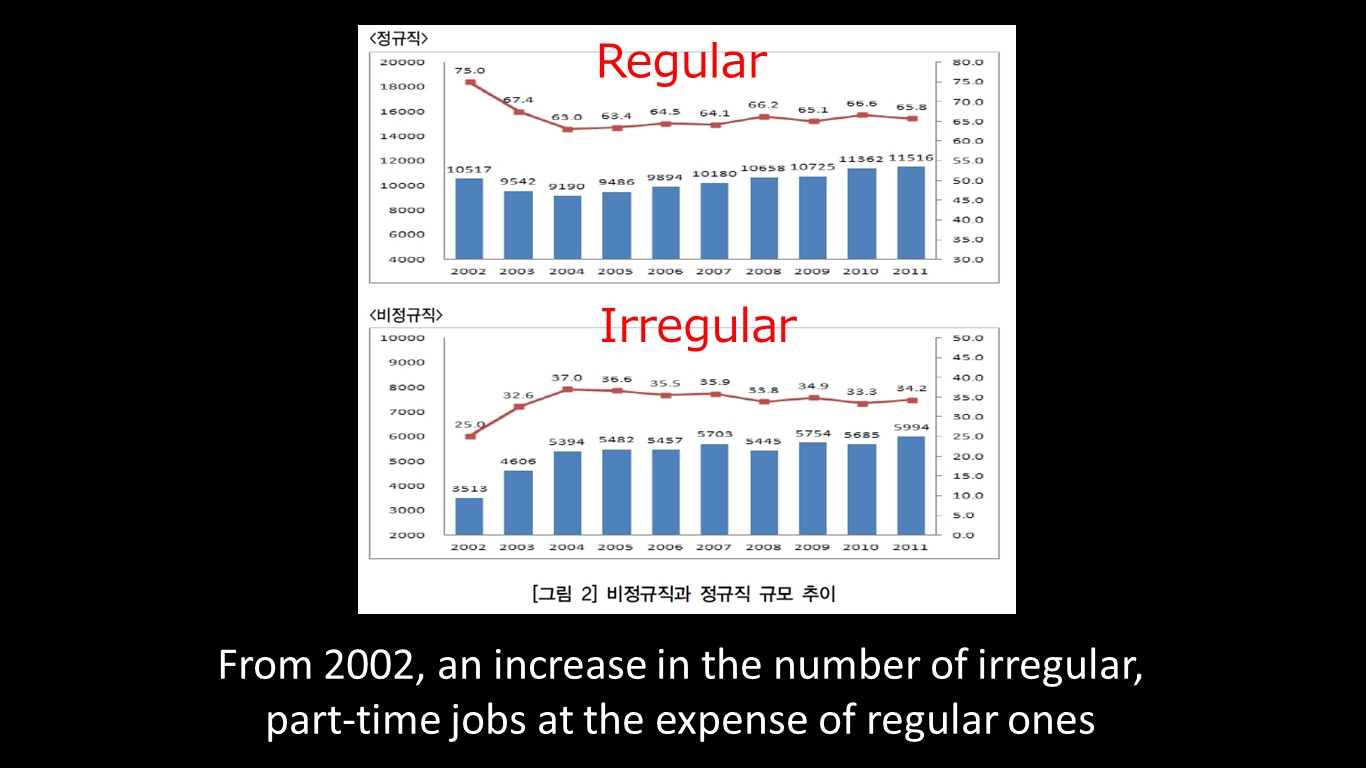
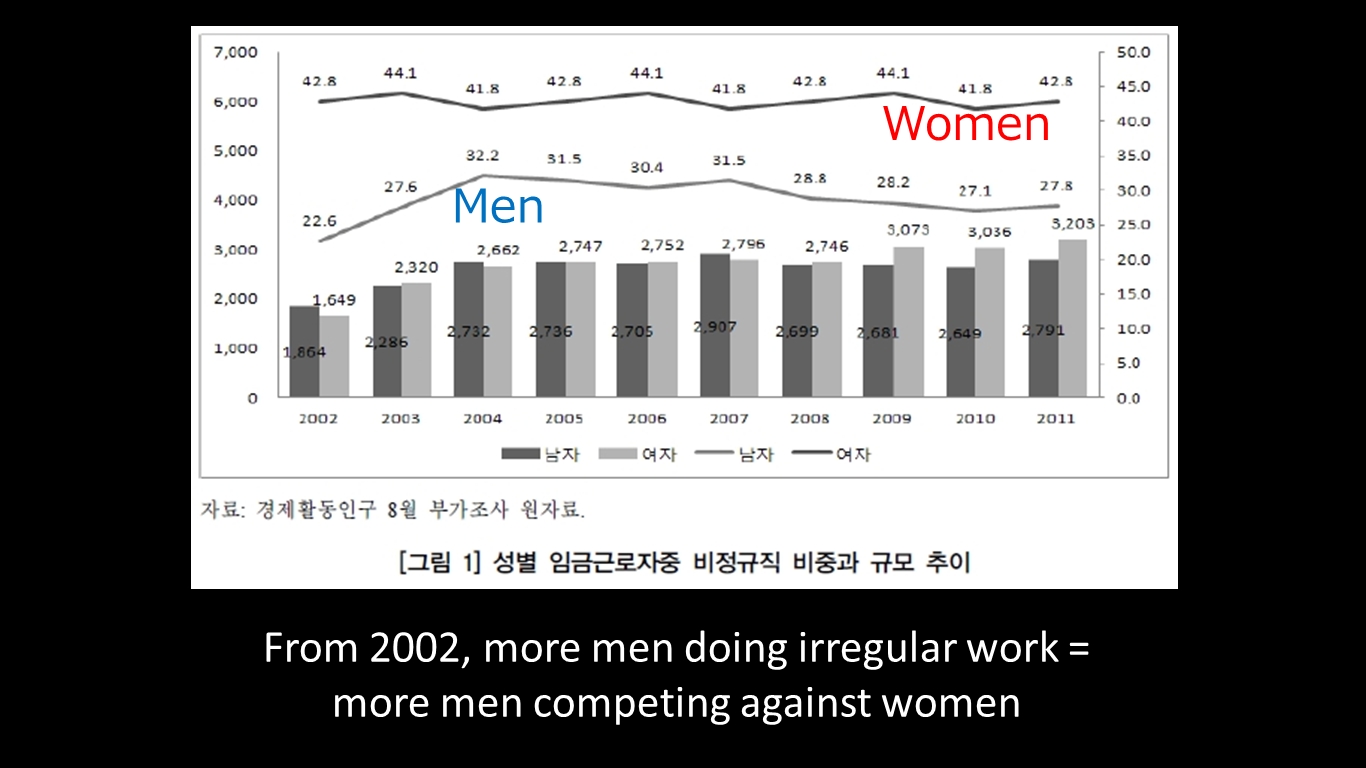
Ironically though, thebacklashin much of the 2000s wasnot due to women taking over “men’s jobs”. In fact, it was the other way round, with a significant number of men losing better paid, advancing, more secure, regular work and being forced to compete for the irregular jobs that were—and still are—primarily done by women. You can see this in following slides I used in my last presentation (see here for the source and a more detailed explanation).
First, here are graphs showing the percentage rates and numbers of all workers (both men and women) doing regular and irregular work over time:
To be clear, the above graphs give no indication that it was primarily men that lost those regular jobs, and were forced to take up irregular ones instead. However, unstated is the fact that women with regular work were already targeted for layoffs in the aftermath of the 1997 Asian Financial Crisis, with the result that they took up irregular work in droves before 2002. So it’s a safe assumption.
What’s more, there’s the next graph, which shows the the percentage rates and numbers of men and women doing irregular work. As women’s rates barely changed, the implication is that the regular jobs men lost weren’t taken over by women:
With rates settling in 2004 though, it’s a bit of a stretch to blame the ongoing backlash in 2014 on the shift (although it certainly echoes in popular culture, with today’s freshmen—of both sexes—espousing the negative stereotypes). Today’s generation of young, job-seeking men are much more used to the difficulties of finding regular work, and certainly have no objective reason to fear or resent working women.
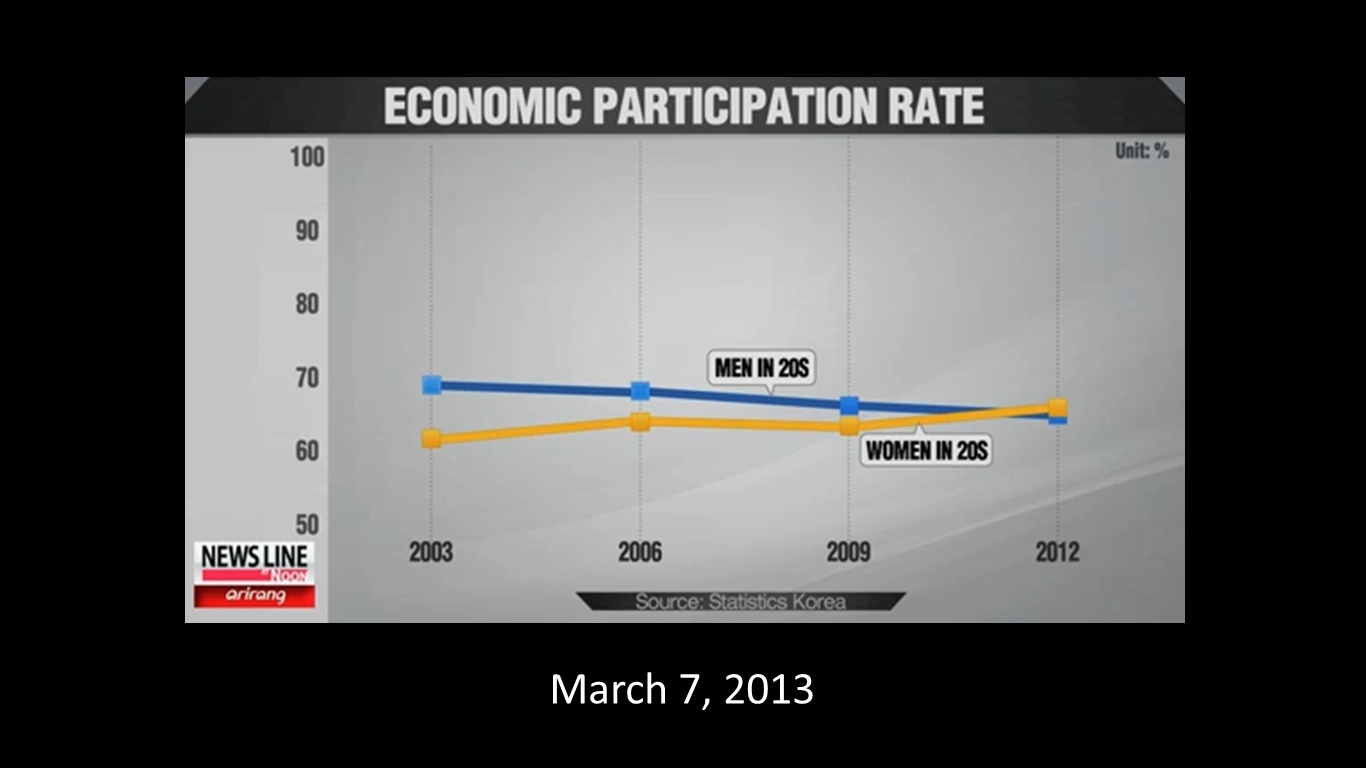
Or do they? See my next slide, a screenshot from thisArirang news video:
What’s more, Yonhap just reported that the gap has continued to widen—in fact, that the crossover occurred as early as 2010. As translated by koreaBANG (my emphases):
The trend in the employment rate of female to male workers in their twenties over the last 4 years has made a historic reversal. Due to so-called ‘female power’, the gap is getting larger.
According to the National Statistics Office’s statements on the 19th, the employment rate of 20-something female workers last year was 57.8%. This is 2.1 percentage points higher than their male counterparts(56.8%)…
…Since 2010, the employment rate of female workers in their twenties has been higher than their male counterparts.
In 2010, the employment rate of female 20-something workers, at 58.3%, surpassed the rate of males by 0.1%. In 2011, the lead increased to 0.4%, and in 2012, as women lead by 1.5%, the gap continues to widen.
The rate of economic participation of female 20-somethings was 62.5% in 2011, then rose to 62.9% in 2012. Conversely, the men went from 64% down to 62.6%, being surpassed by the women for the first time by 0.3%.
The labor market is changing little by little as women obtain higher levels of education and more positions in the workplace.
In every part of society, the female tornado is blowing strong even in specialized careers, and women are making considerable advances.
A gap of 2.1% hardly sounds like a “tornado” of “female power” to me, and much more like natural variation. But I can understand how news of women’s “considerable advances” might rankle, especially in the context of Korea’s lowest twenty-something employment rates since 2000, and the numbers of students deferring graduation nearly doubling in the last two years. It’s not at all difficult to empathize with a male graduate stuck working at (say) a convenience store, frustrated at how some women he went to university have regular jobs because they gained skills and qualifications during the two years he was stuck in the military.
Still, likely that’s not the only reason he’s angry:
Put simply, most of Korea’s extra boys are now men, and many of them can’t find girlfriends and wives. Most likely, precisely those who lack the steady jobs and money to be considered good partners.
Yes, I know what you’re all thinking, so let’s not mince words. I mean they can’t get laid.
That may sound facetious, and/or that I’m laughing at them. I’m not. Because fourteen years ago, frankly I was in a very similar situation myself. After graduating, I too couldn’t find a good job, and had to work three part-time ones just to scrape by (when my Doc Martins got holes in them, I had to put cardboard in them every day until I could afford new ones; yes, really). Needless to say, I didn’t have much time for dating, and wouldn’t have been very successful if I did.
I felt trapped.
Fortunately, I had the privilege of being able to take up a well-paying job (for a 24 year-old) in Korea, and, desperate in more ways than one, I took advantage of that just six months after graduating. So, while I can definitely empathize with how my students must feel today, on the other hand I can only imagine what it must feel like to never have the option to escape that I had, with no prospect of a partner or steady job for your entire twenties or beyond.
Still, I wasn’t spewing hatred about New Zealand women back in 2000, and likewise most of Korea’s angry young men (or indeed, China and India’s) aren’t destined to be misogynists in 2014 either. Most do direct their anger at the government and chaebol that deserve it.
Unfortunately though, all too many seem to firmly believe in such charming stereotypes as ‘kimchi bitches‘ instead. Moreover, China and India’s own “angry young males” are already considered huge sources of instability, crime, and sexual violence in those countries. Why would Korea’s be any different?
Also, the data raises a simple but important question: do the statistics about twenty-something men and women’s economic participation rates take into account the fact that there’s actually far more twenty-something men than women out there? That while a greater proportion of women than men are working now, that more men than women may still be working overall?
If not, then that “tornado” of “female power” may prove to be nothing more than hot air. Which makes you wonder why the media seems so full of it…
Either way, of course I’m grossly overgeneralizing in this post, so please feel free to call me out on that, and add any important information I’ve overlooked (I acknowledge I’m no great statistician too, and would appreciate any additional sources of data). But I think these demographic realities do significantly add to the many, often quite legitimate reasons for many young Korean men’s sense of anxiety in post-crisis Korea (which is not to say that things are any rosier for young Korean women), and it’s also fair to say that anxiety seems to be manifesting itself in excessive, distorted, and/or caricatured critiques and stereotypes of women. So at the very least, I hope knowing about all the extra men out there provides some much-needed context to current employment statistics and women-blaming. In hindsight, it’s extraordinary that any discussions of either wouldn’t take them into account.
In a nationwide survey conducted by the Federation of Korean Industries in 2010, marriage was the leading cause for South Korean women to quit their jobs – not childrearing. According to the poll, females in general have a 37.8 percent higher chance to give up work after getting married than if they were single – a percentage that shoots up to 58.2 for those in their 20s. The likelihood, however, of married mothers to leave their jobs was only 2.9 percent higher than married women without children. The federation explains these statistics by saying it is due to the foundational social belief that females should be full-time homemakers…
…Despite these numbers, measures to change cultural expectations – that it is not only the woman’s responsibilityto carefor children – are being opposed. In January, the Ministry of Labor and the Ministry of Strategy and Finance rejected one of President Park’s campaign promises: mandatory paid paternity leave, or “Father’s Month.” Ministry officials quoted potential financial problems such as the depletion of employment reserve funding for the opposition against the bill. They added that they will work towards a resolution but are unsure how they will initiate it.
Take the title dates with a grain of salt: this brief post says that they actually come from 1982, 1976, and 1976 respectively, and the second at least is corroborated by very similar print advertisements appearing in 1976 newspapers. The writer gains further credibility by noting the names of the actors in the first (An So-yeong/안소영) and third ones (Yeon Gyu-jin/연규진 and Yeom Bok-soon/염복순), and by pointing out that the 1970s ones would have appeared in cinemas rather than on television—although as TV bans on contraceptive commercials weren’t actually lifted until2006, then presumably the same goes for the 1982 one too.
Here’s what Yeon Gyu-jin (love his expression!) and Yeom Bok-soon ‘say’ in the last one, although I confess I’m a little confused by the end caption that says it’s a “contraceptive pill that you don’t take” (먹지않는 피임야):
M: 이봐, 이봐, 첫 아기는 아들이야. / The first one has to be a son.
W: 어휴, 어휴 아들 좋아하네. 누구맘대로. 딸이 좋단 말이예요. / Tsk. You like boys, but it won’t happen. I like girls.
M: 글쎄 아들이라니까. / Well, I said I like boys.
W: 어휴, 어휴 딸이란 말이예요. / Well, I said I like girls.
M: 당신같은 딸 낳아 누굴 또 속 썩일려구. 어휴…. / If we get a girl like you, she’ll be a handful…
W: 그럼 자기 나 닮은 아들, 딸 어때요? Then, how about a boy and a girl that look like me?
M: 에이,,에이.. 그게 당신맘대로 할 수 있어? Is that something you can happen just because you want it to?
W: 그건 저한테 맡겨 주세요. 제가 자신있으니까요. You leave that up to me. I’m confident!
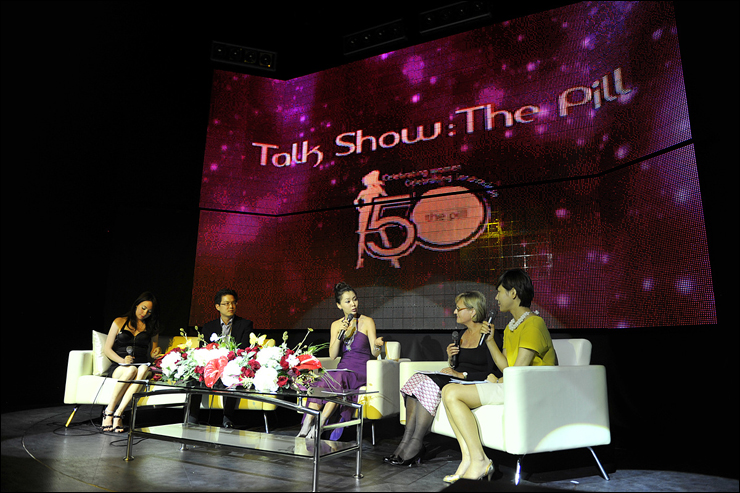
Celebrating 50 years of the pill in — where else? — a nightclub :) Source.
However charming the commercials may appear now though, any nostalgia for simpler times would be misplaced, as in reality Korea’s population polices were every bit as systematic and draconian as China’s back then. What’s more, the state tended to view the pill as a temporary or supplemental contraceptive at best, much preferring one-shot and permanent methods. In the 1960s, that would be the “patriotic” and “ideal” IUD; by the 1980s, sterilization.
In light of that, these pill commercials become all the more exceptional(?) and intriguing. I’d appreciate any additional information readers can provide about them.
Likewise, it’ll be interesting to see what contraceptive commercials appear — or rather don’t appear — on Korean screens in the future as the Park Geun-hye administration grapples with Korea’s ironic world-low birthrate. Because on the one hand, it is regrettable that the former Lee Myung-bak administration saw no need to defend women’s access to the pill, and it is preposterous that his (re)criminalization of abortion — which simply puts women’s lives at risk — is likewise viewed by his successor as a viable method of baby-making. But on the other, because of course Korea is now a democracy, and finally aired its first condom commercials on television in July last year, and with a firm sex-is-fun message at that (in contrast to the PSAs that were briefly allowed in October 2004). Here’s hoping there’ll be a lot more coming this year too! ;D
(For more posts in the Korean Sociological Image series, see here)
Looking for people to share stories about relationships in Korea
*********Have you fallen in love in South Korea? Battled cultural differences and other pressures to be with someone you never would have met anywhere else? Found the freedom to do things, meet people, or be someone you wouldn’t have dared to at home? Kept things going long-term and long-distance? Decided that dating in Korea is just too daunting and put that side of your life on hold while you’re here? Worn a couple shirt?
If you have a great story you’d like to share about dating, relationships and sex in Korea, I’d love to hear from you.
I’m making a documentary about how living in Korea can affect relationships, and I’d like to interview people with experiences that been delightful and difficult, wonderful and weird, sour and sweet.
It would be great to speak to partnered and single, cis- and trans-gender people, from a variety of backgrounds, and with a range of preferences and interests, including:
Korean people with experiences with other Korean people and people from other countries;
Non-Korean people with experiences with people from Korea and other countries;
People in monogamous and non-monogamous relationships with one or more partners;
People happy or unhappy not to be in a relationship;
People who have made their homes in Korea;
People who are in Korea on a temporary basis.
The film will be inclusive, non-judgemental and sex-positive, allowing the stories to act as an honest look at the unique experience of looking for, holding onto and losing companionship in Korea. To this end, and because I intend it for gallery screenings, the film probably won’t be a traditional talking-heads documentary. Instead, I’ll try to respond creatively to the themes of the stories people tell me, especially when the storytellers wish to remain anonymous. If you’re happy to appear on camera, that’s great, but if you’d like to share your story and would rather not have your face, voice or name be part of the film, I’ll find ways to accommodate those wishes.
I hope to collect stories in December and January, and am happy to travel anywhere in Korea to conduct interviews.
If you’d like to know more, or if you’re interested in taking part, please get in touch at relationshipsinkorea@gmail.com
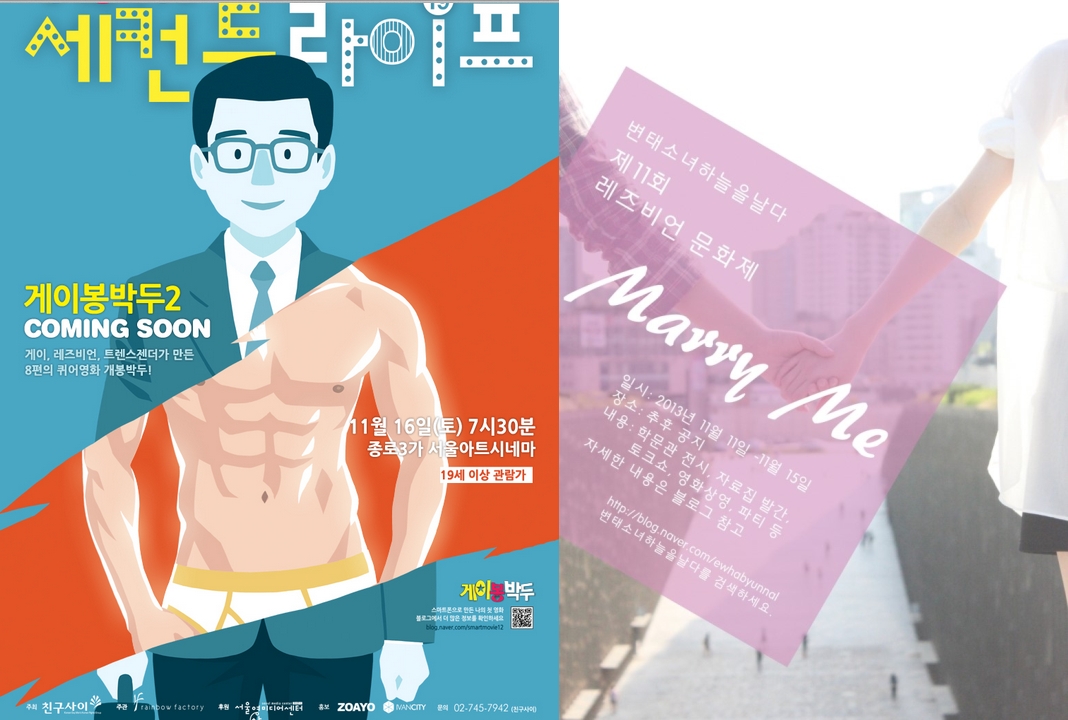
Sorry for the late notice, but this week features the both the 11th Annual Queer (Lesbian) Culture Festival and the 2nd Gay Short Film Festival, both in Seoul (I’m unsure if they’re related). See Psyched in S.Korea and The Kimchi Queen respectively for further details.
Update:The Kimchi Queenhas expanded upon the information about the Queer (Lesbian) Culture Festival also.
As Min-gun and Sae-young left their Seoul high school one fall afternoon, they strolled down a tree-lined street more than an arm’s length apart from each other. As they got further away from school, they gradually moved closer together until after a few hundred meters, Min-gun reached over to hold hands with Sae-young, his girlfriend of nearly a year.
If they had linked hands earlier in the day at school, they could have been punished under their school’s code on the Degradation of Public Morals, which prohibits such shows of affection.
Over the past few years, there has been a jump in the number of South Korean high school students punished for hand holding, hugging, kissing or other amorous acts…
Read the rest at the link. Confusedly, it follows a Korea Heraldreport last month that that the Education Ministry “would prohibit schools from taking disciplinary measures against students for being pregnant or in a relationship.” But Korea Realtime claims that this was only a request, as the Ministry neither sets nor enforces school rules.
I’d appreciate it if anyone can offer a third opinion, and will try to find a Korean source to translate myself. If it turns out Korea Realtime is correct however, it would greatly surprise and unnerve me that even the Ministry can not prevent the expulsion of pregnant students. Surely that is an obvious violation of their human rights?
Either way, see here for my September post on ‘Room Cafes,’ which seem just about the only place some unfortunate teens can do that “hand holding, hugging, kissing or other amorous acts.” As such, let me reiterate that I’m very glad they exist, because:
…if some teenagers are going to [do those amorous acts] — and some are going to do [them] — then, all other options being barred…, it’s surely best that they do [them] in the safety and relative privacy of a new room cafe. Especially when the alternatives would be dark alleys behind their schools, or in the older, seedier variety of ‘DVD rooms‘ still out there…
Any teachers among you noticed your own schools becoming stricter in recent years? (Source, above)
“As in most places, Japanese junior high schools have a naughty-boy contingent fond of teasing girls and sexual braggadocio….Such boys grow up to be sukebe (lechers) and girls are not supposed to like them. As they both grow older, however, the boys’ approaches might be a little more subtle and the girls a little more responsive. Having sex, however, is a different matter.
The scope is rather limited. Being compelled to wear uniforms rules out love hotels, for all sex-orientated businesses are officially prohibited from servicing high-school pupils by law. Many private schools, especially the conservative kind who staunchly emphasize shitsuke — discipline — tend to keep an even stricter eye on students, even outside the school building. A government survey conducted in 1980 revealed that 40 per cent of young people aged between fifteen and nineteen never associated socially with members of the opposite sex at all, and that only 7 per cent were going steady. Although increasing, the likelihood of sexual hanky-panky is still not very great.
In Korean society, there is almost a universal taboo against adolescents dating, meaning that they have to do it secretly. Indeed, having sexual relationships or even dating the opposite sex is virtually considered a crime by adolescents here, and hence that which does occur is in places far from the eyes of adults.
(Oh Yun-ho, “The Effects of Having Sex at an Early Age” {translation}, Medical Today, January 25 2010)
You really have to wonder where Oh did his research in 2010. Because teenage couples were already easy to spot around schools and hagwons back then. Not least, because Korea’s first ad to feature kissing, in 2008, had just helped normalize PDA for couples of all ages.
Sex, however, is still a different matter, with young lovers having no more options—and probably much less free time —than their parents did at their age. Not for nothing did a 2006 study of over 70,000 13-18 year-olds find that only 5.1% had sexual experience, and just last week I would have wagered it was still in single figures.
Then I read about ‘room cafes,’ and for a moment I was no longer sure. I learned that, paralleling developments in the prostitution industry, where ‘kissing rooms‘—the Korean equivalent of massage parlors—have proliferated to avoid the 2004 Special Law on Prostitution, but in which it is “highly likely that after kissing, additional, actual sex might be arranged,” these establishments likewise avoided love hotels’ legal restrictions against admitting teens by being classified as food establishments instead.
However, judging by image searches, many room cafes—perhaps most?—are indeed cafes or coffee shops, and it’s telling that the following, alarmist article doesn’t mention those. Instead, it focuses on rooms’ lack of locks, and all of the smoking, drinking, and wild sex allegedly occurring within.
Underage drinking and smoking I am against. But the wild sex?
I can’t deny that I think most adolescents aren’t psychologically ready for it—and often not even physiologically ready for it—until their late-teens. But hey, regardless of what I think, not only are even middle-schoolersabove the age of consent in Korea (it’s 13 here), but if some teenagers are going to do it—and some are going to do it—then, all other options being barred to them, it’s surely best that they do it in the safety and relative privacy of a new room cafe. Especially when the alternatives would be dark alleys behind their schools, or in the older, seedier variety of ‘DVD rooms‘ still out there…
“룸카페서뭐든다해요” 청소년탈선온상어쩌나… “Anything is possible in a room cafe” What can be done about these [modern-day opium-dens] for teenagers?
잠금장치만 없을 뿐 멀티방과 비슷, 흡연·음주·성관계…
일반음식점으로 분류돼 여전히 단속 사각지대
There’s no locks, but they’re just the same as multi-rooms — smoking, drinking, and sex…
Classified as restaurants, they are under the police radar
“오늘만 세 번째 치우는데요, 뭘.” / “Jeez, just today I’ve [already] cleaned up three rooms [like this].”
토요일인 지난 10일, 10대 청소년으로 보이는 한 커플이 조금 전까지 머문 1평 남짓한 칸막이 방안은 담요와 긴 베개가 어지럽게 엉켜 있었다. 방 한 쪽에 놓인 휴지통 안에는 콘돔과 맥주캔, 휴지가 뒤섞여 있었지만 방을 정리하러 온 직원 A씨는 대수롭지 않다는 반응이다. A씨는 “평일 주말 할 것 없이 일주일에 4~5일은 이런 쓰레기를 꼭 치운다”고 말했다.
This Saturday the 10th [of August], I saw what looked like a teenage couple just leaving a messy, one pyeong (3.3m²) room, leaving a blanket and a long pillow tangled together. Condoms, beer cans, and used tissues were in the bin in the corner, but an employee, “A,” said that this was nothing unusual: “Weekend, weekday, it doesn’t matter — I have to empty bins like this four or five times a week.”
서울 마포구에 위치한 이곳은 10m쯤 되는 긴 복도 양 쪽으로 작은 칸막이 방들이 빼곡한 일명 ‘룸카페’다. 소파가 놓여있고 벽걸이 TV가 설치된 방 구조가 얼핏 멀티방을 떠올리게 한다.
지난해 8월 탈선을 조장한단 이유로 미성년자의 멀티방 출입이 금지된 뒤 룸카페가 청소년들의 새로운 탈선의 온상이 되고 있지만 관련법조차 갖춰지지 않아 단속의 사각지대에 놓여 있다.
This so-called “room cafe” in Mapo-gu in Seoul has a hallway about 10m long with tightly-packed room partitions on either side. Inside each room is a sofa, wall-hangings/posters, and a TV — at a glance, it reminds you of a multimedia room [like a DVD room cafe].
Room cafes started appearing last August [James—But here’s a very similar article from May 2011] because teenagers were denied access to “multi-rooms.” They have become very popular among teens [since], but because [as of yet] there is no law regarding covering them then they operate well under the police radar.
Multi-rooms (멀티 방) are for the indecisive people, and can please on an everyday basis. They do exactly as the name describes – you can go there to do a wide multitude of things, including singing, watching films, and playing computer or console games. They are equipped with large TV screens, and sound systems. A multi-room is basically a combination of all the other bangs put together.
There’s all the entertainment you need in just one multi-room (멀티 방), meaning that families like to go to them.
룸카페는 잠금장치만 없을 뿐 사실상 멀티방이나 다름없다. 게임기나 노래방 기계 소음을 막는다는 이유로 설치된 밀실에서 음주, 흡연, 성관계 등 탈선행위가 이어지던 멀티방과 전혀 차이가 없기 때문이다.
본보가 지난 5일부터 10일까지 서울 노원구와 종로구, 마포구, 송파구 룸카페 22곳을 직접 확인한 결과 매장 14곳에서 중고등학생들을 어렵지 않게 발견할 수 있었다. 서울 노원구 C룸카페 단골이라는 박모(18)군은 “멀티방 출입규정이 강화돼 지금은 룸카페를 간다”며 “술을 사 들고 와 친구들과 마시거나 여자친구와 스킨십도 자유롭게 할 수 있어 애용한다”고 말했다. 마포구 한 룸카페에서 만난 이모(16)양은 “문을 잠글 수 없지만 누가 와서 들여다 보는 것도 아니고 음주 등 할 건 다한다”고 말했다.
Apart from not having locks on doors, room cafes are little different to multi-rooms. In multi-rooms, there are “secret rooms” [ostensibly] set up to avoid the noises coming from the game rooms and karaoke rooms and so on, but where [in practice] it is possible to drink, smoke, and/or have sex (source, right).
This August 5-10, this newspaper investigated 22 room cafes in Nowon-gu, Jeongno-gu, Mapo-gu, and Songpa-gu in Seoul, finding that middle-school students had no problems entering 14 of them [James — *How* this was determined isn’t explained]. At “C” room cafe in Nowon-gu, Mr. Park (18), a regular customer, said “Because the entry rules for Multi-rooms have been strengthened, now I go to room cafes instead,” and that “I love being freely able to buy alcohol and drink with friends, or doing skinship with my girlfriend.” At another room cafe in Mapo-gu, Ms. Lee (16) said “Even though the doors don’t lock nobody peeks in, so we can drink and so on.”
하지만 관계당국은 뾰족한 수가 없다는 입장이다. 마포구청 관계자는 “멀티방은 ‘복합유통게임제공업’으로 영업신고를 하게 돼있지만 룸카페는 ‘일반음식점’으로 분류돼 있어 미성년자 출입을 금지할 수 없다”며 “일반음식점은 식품위생법상 방에 잠금장치 설치가 금지되는데 이를 준수하는 룸카페는 단속할 근거가 없다”고 말했다.
Nevertheless, authorities have no clear solution to this. A concerned official in the Mapo-gu District Office explained “Multi-rooms are legally classified as ‘Multi-room-game-provider-businesses,’ but because room-cafes are classified as ‘general restaurants’ then they can’t restrict teenagers from entering,” and that “in normal restaurants, hygiene regulations state that locks cannot be installed on [dining] rooms. We can’t police room cafes if they are sticking to these regulations” (source, right).
더욱이 룸카페는 게임기를 방 안에 설치할 수 없게 돼 있지만 상당수 업소가 카운터에서 게임기를 대여해주는 방식으로 법망을 피해가고 있어 청소년 고객들이 더 몰리는 실정이다. 성윤숙 한국청소년정책연구원 박사는 “청소년들을 무조건 룸카페에 출입하지 못하게 하는 것은 또 다른 대체업소를 만들 뿐”이라며 “유리창 설치 의무화 등 업소의 내부 환경 변화를 통해 청소년들의 건전한 놀이공간이 되도록 유도해야 한다”고 말했다.
Room cafes are prohibited from installing game machines [James – Consoles?] in the rooms, but more and more are circumventing the rules and lending them to customers at the counter, which is something that attracts teens. Dr. Song Yun-suk of the National Youth Policy Institute said “If teenagers are prevented from freely entering room cafes, then alternatives will just spring up. Instead, through doing things like installing glass windows in them then their atmosphere can be changed and a healthy, wholesome free-time space for teens can be maintained.” (end)
(Source: unknown)
As always, I appreciate readers pointing out any mistakes in my translation. And, as I haven’t taught teenagers myself in nearly 5 years, and haven’t even been in so much as a DVD room in 10 years (although my wife and I have — ahem — many fond memories of them), then it would be great to hear from teachers, and/or those who have seen the new multi-rooms and so on I’ve just learned about. Also, for anyone interested in reading more, please see:
The Korea Herald for more on prostitution in general, and why a lack of police resources meant the 2004 law was doomed to failure, with a proliferation of kissing rooms (and so on) inevitable
Here and especially here for surveys on Korean university students’ sexual experience, habits, and beliefs
Busan Haps for more on Koreans’ habit of living with their parents until marriage, the main reason for the love hotel and various cafe/room establishments in the first place (but of course older, married couples also frequent them). As I write there though, numbers of single households are rapidly increasing (now 1 in 4 — higher than in many Western countries), and the Korea Joongang Daily recently wrote that high rents are encouraging 20-somethings to start flatting/getting housemates.
Update:Frank Kogan has some interesting thoughts on a commenter’s suggestion that dating restrictions on middle-school students may be behind the lack of co-ed Korean pop groups (hint: he disagrees).
Update 2: On October 1, the article “Schools banned from disciplining students for pregnancy, relationships” appeared in the Korea Herald. It’s short enough that I may as well copy and paste the entire thing:
The Education Ministry said Tuesday it would prohibit schools from taking disciplinary measures against students for being pregnant or in a relationship.
The ministry ordered local education offices to revise related school regulations that it considers an improper breach of their rights to study.
Controversy stirred earlier this year when two high school students received an official reprimand of volunteer work for being in a relationship. One of them was removed from a position as class president. The school, in the southeastern part of the country, had required students to report private relationships along with violence and bullying.
In some other schools in Seoul and the surrounding areas, similar regulations were introduced at the parents’ request.
Under the new guidelines, schools are required to amend any rules that allowed them to suspend or expel pupils for being pregnant or in a relationship.
Local education offices will monitor and support schools as they implement the new rule.
The Ministry of Education also recommended schemes that could help teenage single mothers continue their studies.
For single mothers who seek transfers or admission to another school, the ministry allowed school principals to decide the graduation year for those pupils based on previously acquired credits and learning experience outside of school.
Once a student is pregnant, the school should also introduce an alternative program to help her remain on the school register.
Nine alternative schools for teenage single mothers currently exist in the country, including Narae and Dodam in Seoul.
In recent weeks a number of Chinese secondary schools have introduced prescriptive new rules designed to discourage teenage romance. But this has been met with scorn and outrage on both social and official media, as the BBC’s Dong Le reports
Read the rest there.
If you reside in South Korea, you can donate via wire transfer: Turnbull James Edward (Kookmin Bank/국민은행, 563401-01-214324)
Sorry for the lack of posts everyone. I’ve been absentmindedly researching many, not realizing that I hadn’t put pen to paper for a while. To remedy that, here’s some interesting links that add new information to previous posts of mine, but which didn’t really justify separate updates by themselves:
Like most articles praising the rapid rise of the Korean digital music market and the supposed success of Korean anti-piracy efforts, this article completely fails to mention how absurdly cheap Korean digital tracks are, as noted by Bernie Cho in the opening quote.
Music in Korea used to cost 73 won per download before the changes. That has now risen to 110 won, which is still less than one-tenth what iTunes costs.
Gangnam Style only earned 3.6 million won in online royalties in Korea, coming from 2.86 million downloads and 27.32 million streams, which works out to an average of about 10.7 won per download and 0.2 won per stream.
However, in the US, Psy received the equivalent of 2.8 billion won for 2.9 million downloads.
Meanwhile, one estimate says that the average indie musician earns just two-to-three-million won a year (about the same as most expat English teachers make per month).
Streaming accounts for 74 percent of online music spending in Korea (probably because of Korea’s ubiquitous broadband wifi), and downloads continue to fall. In contrast, in the rest of the world downloads dominate, making up 71 percent of the online market.
Leah of The Lobster Dance is featured in a (heavily-commented)Tofugu article about the usage of the word “gaijin,” which she has used in the past but now rejects. It begins:
Gaijin (外人, short for 外国人), or “foreigner” in Japanese, is a complicated word that means a lot of different things to a lot of different people.
Some people take the word lightly; when the Tofugu team was in Japan and a roller coaster we were riding unexpectedly malfunctioned, we joked that it was because the ride wasn’t designed to hold the weight of our giant gaijin bodies.
But for some people in Japan, “gaijin” can be a hurtful and alienating word. It can mean refusal of service at businesses, a barrier to entry for housing, or even threats of harassment or violence.
I thought that I’d reach out to some bloggers living in Japan to see what their thoughts on the word “gaijin” were. I got a lot of great, varied, and nuanced responses.
See “Korean Sociological Image #46: The Language of Exclusion” for a similar discussion surrounding the Korean term waegookin, or “foreigner,” with links to many other posts on the subject in the Korean blogosphere (as of 2010).
The ad features a startlingly lifelike computer-generated rendering of the revered martial-arts star, who died four decades ago. It has sparked ire among fans, who argue that Mr. Lee was a teetotaler and abstained from drinking alcohol for most of his life.
Critics see Mr. Lee’s personal stance as incongruous with an endorsement for a brand whose blended Scotches sell for more than $200 a bottle.
Johnnie Walker has defended the ad, saying it worked closely on it with Shannon Lee, Mr. Lee’s daughter.
Ms. Lee, meanwhile, told the Journal that while her father wasn’t a drinker, he didn’t think drinking was immoral. She also thought the video would be an “innovative way to get my father’s ideas out.”
See Scene Asia for the rest, or my “Raising the Dead: The Future of Advertising?” for a much better example featuring Audrey Hepburn, and many others in the comments (readers made me realize using dead celebrities in ads was surprisingly common). As for this example, I share The Ethical Adman’s criticisms that “there’s something really disturbing about dead celebrities being recreated to sell brands,” and that “it seems like the ultimate violation of a person’s integrity, at a time when they cannot even defend themselves.”
Most of all, I think it was incredibly hackneyed to use a teetotaler to sell alcohol, no matter how famous he was. And I just can’t believe how incredibly bad the CGI is, despite the accolades.
What’s more, according to the Korea Times, now they’re more common than ever. Some excerpts (source, above-right):
Celebrity couples such as actor Jang Dong-gun and his wife Ko So-young, and Kim Seung-woo and Kim Nam-joo, have admitted they walked down the aisle with the brides pregnant.
Actress Kim Bu-sun goes as far as to say she approves of premarital pregnancy.
“My premarital pregnancy was the best thing that ever happened to me,” Kim says. “If my daughter becomes pregnant, I will host a party in her honor.”
She believes people should embrace single mothers, whom she considers a minority in need of attention and care.
Nice to hear, considering the Ministry of Health and Welfare defined unwed mothers as “ignorant whores” as recently as 2010 (technically, it was “low levels of education [and] impulsive sexual drives”). Continuing:
But premarital pregnancy is now humdrum, even among people who are not stars.
In a survey that consultancy Duo Wed conducted between June 1 and June 14, one-third of 374 newlyweds questioned said the bride was pregnant when they married.
Of these couples, 92.1 percent said their babies were unexpected.
Read the link for the rest. Note that this doesn’t mean Koreans are necessarily becoming more tolerant of cohabiting couples however (and who face a lack of suitable accommodation anyway), nor of pregnancies that don’t lead to marriage.
7. This Dude’s Response To Female Crotch Sweat Shame Is Perfect
See Bust for more. Fortunately, I haven’t seem any similar products advertised here yet, and perhaps that’s because there will never be a market for them, as Korean women generally don’t sweat as much as those of other races. This was discussed in my 2010 “Hot Sweaty Korean Women” post, about a rare Korean commercial that did feature a Korean woman sweating:
Please note I also made some overgeneralizations about Korean (women’s) exercise and gym culture in that post though, and would write it very differently today. But on the plus side, readers soon corrected my mistakes, and it (hopefully) remains useful for the journal study on Korean attitudes to dieting it references.
In a few hours I’ll be on Busan e-FM’s Let’s Talk Busan again, this time talking about gay marriage. You can listen on the radio at 90.5, online here (please note that you’ll have to download Windows Media Player 10 first), or via an archived version here later in the week.
For any readers who didn’t already know, I’m all for it, although I’m not very confident about seeing the issue on the political radar in Korea for at least another 15 years, and actual law changes not for another 15 after that. But I’ve often noted the extraordinary pace of change in Korean society too, so here’s hoping I’m proven wrong!
If so, do you carry a condom in your handbag these days?
Because not so long ago, academic research on the subject said you probably didn’t — Korean women were just too scared of being slut-shamed for it, leading to popular attitudes that contraception was overwhelmingly — or even exclusively — men’s responsibility. Further contributing to that stigma, bans on contraceptive commercials weren’t lifted until as recently as 2006, although (bland) public campaigns promoting condom use had been made two years earlier for the sake of HIV/AIDS prevention.
Since then though, surveys show that attitudes among young Koreans are changing, and there’s been some alarmist articles about how much casual sex they’re having these days. Also, I often see commercials for the pill on television (especially MNet, a music channel) and in women’s magazines. But for condoms? I haven’t seen any personally, beyond minimalist ones in newspapers and magazines.
So, I was very happy to learn from a reader that he just saw two Durex ones on television, both of which encourage women to be very prepared:
And the men too:
What’s more, they’re both based on Sticky Tape below, Iggy Cerda-Salas’s winning entry for Durex at the MOFILM London 2012 Awards, which only had a male version. Add that these are the only videos on Durex Korea’s Youtube account, and that its Facebookpages were also only set up recently, then it appears that they were specifically created for the Korean and/or Northeast Asian market.
Or in other words, Durex Korea at least now feels that there’s a definite market for their product among Korean women, and that they’ll no longer be so embarrassed if they’re caught with them.
Here’s hoping sales go well!
But have any readers seen any previous Korean commercials or ads by other condom manufacturers? Did women feature in those too?
(Related: See Korean Sexuality: Still Awaiting a Revolution? for more on the curious parallels between Korean women’s *previous* attitudes to contraception and those of their UK counterparts in the 1950s.)
(Update: Durex Korea has just confirmed that these are Korea’s first condom commercials)
(Update, June 2014: Unfortunately, these commercials proved to be just a one-off, with no real attempt to engage with female consumers and challenge double-standards. Sigh.)
Starring: Son Yae-jin (Joo In-Ah), Kim Ju-Hyeok (Noh Deok-Hoon), and Joo Sang-Wook (Han Jae-Kyeong). Written by Song Hye-Jin (original novel by Park Hyun-Wook) and directed by Jeong Yoon-soo.119 minutes.
Before the mid-1990s, very few Korean movies featured a wife leaving an unhappy marriage. Of those that did, either she would ultimately return to her husband, tail between her legs, or she would face an untimely death, so great was the inevitable spiral into destitution and despair.
So, when Kim Tae-kyun (김태균) directed The Adventures of Mrs. Park (박봉곤 가출사건; 1996), who not just successfully pursued her lifelong dreams of becoming a singer, but found new romance with a second husband too, he softened the subversive social message by making the movie into a romantic comedy. But even then, he would later confess to Cine 21 magazine, he was extremely concerned at how audiences might react to such “an unexpected ending”.
Fast forward to 2008, and My Wife Got Married, about a woman who demands 2 husbands, was one of the most popular movies of the year, and even won Son Ye-jin the Blue Dragon Film Award for best actress. Not quite a comedy, and sparking minimal complaint or controversy (although women were careful not to publicly identify too closely with her character), it’s difficult not to see it as a sign of how quickly and irrevocably Korean attitudes had changed in the preceding decade. I’ve projected feminist empowerment onto it ever since.
It’s somewhat ironic then, that it turns out that the movie is *ahem* actually told exclusively from the perspective of the main male character, Noh Deok-Hoon…
*Minor spoliers follow*
Opening in Spring 2002 with Deok-Hoon bumping into Joo In-Ah on the subway, next they’re at a coffee shop, where he reminisces about missing his chance to ask her out back when they worked together, and speculating with his male coworkers about whether she wore a bra or not (as one does). Discovering a shared love of football, specifically the rivals Real Madrid (him) and FC Barcelona (her; expect many ensuing football/relationship metaphors in the movie), soon they’re having drinks, then sex at her place.
In a surprisingly erotic scene, Deok-Hoon has the best sex of his life, and instantly makes such an emotional, almost spiritual connection to In-Ah that it’s easy to see how wounded he would be by what audiences already know will come. But, by no means does she merely humor him in response. So, even without that benefit of hindsight, it’s no surprise that they do genuinely fall in love.
This is more important than it may sound. Because, before falling in love, first they are lovers (what an oxymoron!), with one scene in which she encourages him to very explicitly talk about his sexual fantasies — he struggles; she’s well aware of hers — hinting at her much greater sexual subjectivity, and willingness to act on it. Considering that just 13 minutes in, audiences were — à la Basic Instinct — reflexively craning their necks to get a better glimpse of her exposed(?) nipples, it would have been very natural and easy for writer Song Hye-Jin to have continued on that salacious, titillating basis, portraying In-Ah as a emotionally manipulative nymphomaniac that can’t be satisfied with just one man, with all the double standards that that implies.
Instead, as soon as we’re shown that they’re in love, In-Ah also says that despite that, she can’t guarantee that Deok-Hoon will be the only person she loves for her entire life. Her surprise at his umbrage with that seems both authentic and naive (a constant theme), as is her not realizing how he might feel at her continuing to drink and socialize until all hours as if she were still single.
Not that she can’t or shouldn’t mind you. Rather, it’s how secretive she is about it that is the problem, never answering her phone; it’s only when he eventually, desperately confronts her at her apartment after one such session that it seems to click. Only slightly drunk and still impeccably dressed, you sense maybe she is only testing him when she retorts that she was sleeping with someone. Either way, he leaves her.
After a month of moping around, he’s encouraged by a friend to forgive her, but also to ensure it doesn’t happen again by marrying her and then knocking her up. Surprised at his call, let alone his marriage proposal, she takes a lot of persuading, only finally acquiescing during a World Cup game.
Those that were here that magical summer, will surely understand.
Domestic bliss ensues, only briefly interrupted by her moving to a different city for 4 days a week for the sake of her job; after all, such arrangements are completelynormal for millions of Koreans. This movie being what is though, soon his world comes crashing down when she reveals that she’s not just fallen in love with a second man — Han Jae-Kyeong — there, but she would like him to also be her husband — not just boyfriend — just as Deok-Hoon is in Seoul. Angry, emotional, and this time also physical confrontations follow, with Deok-Hoon resolving not to let her to “win” by divorcing her.
Let’s pause for a moment here, as many viewers may well have needed to take a deep breath at this point in the movie. Because, victim or perpetrator, likely most would also been affected by cheating spouses, partners, or parents at least once in their lives. Equally likely, they resolved to never let it happen again, or to them. So, if Deok-Hoon returning to In-Ah the first time didn’t already, his acquiescing to this new arrangement surely brought many of those same feelings of rage, hurt, impotence, and frustration back to the surface.
Or perhaps I’m just projecting? Either way, frankly, if I wasn’t already committed to a review, I would have stopped watching at that point, for the same reasons I turn off most Korean dramas within 10 minutes: it’s difficult to be sympathetic to — or interested in — a character you constantly want to grab by the shoulders and just shake some damn sense into.
Yet, for a time, the trio — well, technically two duos — does seem to work, providing one takeaway message that polygamy (technically, polyandry) is neither as absurd nor as evil as it’s usually assumed to be. Moreover, in the process the movie pointedly questions many of Korean society’s double standards regarding marriage, especially how prostitutes and mistresses are tolerated for men while many wives languish at home, resigned to continuing their — by their own admission — loveless, sexless marriages out of financial dependence and fears they will lose custody of their children. Many reviewers erroneously claim these are shared by Deok-Hoon; however, but for sneaking glimpses of In-ah’s breasts at work, then complaining of her not wearing a bra in public (after sleeping together just one time!), he’s only guilty of firmly believing in monogamy. Indeed, he’s the one that repeatedly lashes out at his male friend’s hypocrisy, although it’s true that he could have done so with much greater gusto at his brother’s.
However, no matter how positively it portrays polyandry, the movie also demonstrates how unfeasible it is in a society where it’s both illegal and there’s strong social prejudices against it. And, coming from a movie which can be described as a romance only by default (to those reviewers that call it a comedy, I’m perplexed at what they laughed at), you’re left wondering what the point of the 2 hours was exactly.
Specifically, it’s the birth of a daughter that starkly demonstrates how the trio’s arrangement simply can’t be sustained in the face of family and official obligations. Questions of paternity aside (In-Ah wants him to love the child regardless of the who is the father, so never reveals that. Later, it’s Jae-Kyeong that reveals that they always used contraception when they were together), it soon becomes apparent that Deok-Hoon and Jae-Kyeong’s families are none the wiser.
This facade comes tumbling down when Deok-Hoon’s colleagues in Seoul see In-Ah, Jae-Kyeong, and daughter in a magazine article written by (unknowingly to them) the latter’s cousin, and assume that he’s secretly gotten a divorce. Fearing he’s slowly but surely losing both wife and daughter, and partially out of spite (really, he hasn’t felt in control of his life since the start of the movie), he responds by crashing the first birthday party Jae-Kyeong’s family has for “their” daughter.
In response, In-ah disappears with her daughter, and her two husbands — this is much more believable than it may sound — come to live together and even become friends; as they say, they have nowhere else to go. When a postcard from Spain arrives 5 months later, the movie ends with both of them joining her there to watch football games and live happily ever after, as if somehow questions of employment, visas, schooling, custody rights, and social prejudice didn’t also apply there.
*Spoilers End*
Was it too much to ask that the movie delved a little more into some of those questions? Do any movies know any Korean movies that do cover alternative living arrangements a little more realistically, but are still entertaining? Thanks!
Update, Feb. 3: By coincidence, today The Atlantic had an interesting article titled “When Taking Multiple Husbands Makes Sense,” with the byline “Historically, polyandry was much more common than we thought.”
Update, January 3 2014: And today, Salon one titled “My Two Husbands.”
Partially, that’s because many feminist criticisms of the discipline and its researchers — and vice-versa — are really just based on strawmen and stereotypes.
That said, it’s also true that evolutionary psychologists can indeed sometimes make outlandish, sexist claims based on little to no evidence.
Or at least, they can seem to. More often than not, it’s actually journalists that are doing that for them, who rarely have time for their caveats and qualifications. Also, journalists can sometimes simply make mistakes and/or misunderstand too, or evolutionary psychologists fail to clearly explain the purpose, methodology, and conclusions of their research.
These maxims are worth repeating, especially when you read a headline that brings an instant, smug satisfaction of being proven right. In this case, with “Why Dating Women With Slim Waists Lowers Men’s Risk for Erectile Dysfunction” by Christine Hsu in Medical Daily, which not only makes sense given everything else I’ve read about women with hourglass figures — that they’re significantlymore fertile than those with other body types, which likely plays a strong role in why that one is so popular amongst heterosexual men (to the extent that even congenitally blind men prefer them) — but, sharing that preference, also reminds me that I’ve got great taste in women too.
Just taking Hsu’s word for it though, would be nothing more than confirmation bias. So, starting with her introduction (my emphasis):
Possessing a ‘figure 8’ body has long been a trademark of feminine beauty, and now new research has revealed the reason why men tend to prefer women with a waspish waist.
The study also linked the middle proportion of a woman’s body to the likelihood of satisfaction and erectile dysfunction in her partner.
Researchers found that the slimmer a woman’s waist, the more satisfied her partner and the less likely he is to suffer impotence in the bedroom, according to the study published in the [December 2012 issue of the] journal Archives of Sexual Behavior.
That study is “Slimmer Women’s Waist is Associated with Better Erectile Function in Men Independent of Age” by Stuart Brody and Petr Weiss, and I’ve highlighted that last section because — admittedly in hindsight — it should already raise alarm bells: sexual satisfaction isn’t actually mentioned in the title of the article, nor the original study. That doesn’t necessarily mean that it’s not there, but the combination of the titles and the highlighted part does strongly imply that, somewhere within, the study will mention that female participants’ waists were measured and the sexual satisfaction and levels of impotence of their male partners.
At first glance, it appears to be done so in the abstract, (my emphasis; source, right):
….To assess the association of women’s waist size with a more tangible measure of perceived sexual attractiveness (as well as reward value for both sexes), we examined the association of women’s age and waist circumference with an index of men’s erectile function (IIEF-5 scores), frequency of penile-vaginal intercourse (PVI), and sexual satisfaction in a representative sample of Czechs (699 men and 715 women) aged 35–65 years. Multivariate analyses indicated that better erectile function scores were independently associated with younger age of self and partner and women’s slimmer waist. PVI frequency was independently associated with women’s younger age and women’s slimmer waist. Sexual satisfaction was independently associated with men’s younger age and slimmer waist for both sexes. Better erectile function, greater PVI frequency, and greater sexual satisfaction were associated with women’s slimmer waist, independently of both sexes’ ages….
But then I moved on to the methodology (the first 2 pages are available at the above link), which ends the section on how the participants were chosen with (my emphasis):
The rationale for using participants who were not both members of the same couple includes prioritizing a representative sample and decreasing risk of a couple comparing responses (Weiss & Brody, 2011). The 649 women who provided complete data had a mean (SD) age of 48.1 (8.6) years, and the 685men who provided complete data had a mean (SD) age of 49.6 (8.7) years.
Which begged the question of how on Earth, if data on the waist sizes and sexual satisfaction of both partners in a couple was not gathered (and erectile function of the male partner), it was determined that “the slimmer a woman’s waist, the more [sexually] satisfied her partner and the less likely he is to suffer impotence in the bedroom.” This in turn spawned an interesting all-day conversation on The Grand Narrative Facebook page, and ultimately led — thank you! — to my getting my hands on the full study itself.
As it’s only 8 pages long, I highly recommend that you read it for yourselves (please email me or let me know in the comments if you would like a copy) so let me just sum it up here. As it turns out, Hsu did indeed make some mistakes (source, right).
First, the methodology:
Page 3, paragraph 1, mentions that “The same wording for the IIEF-5” — the test of erectile function — “was used for both sexes with the added instruction that the woman should complete it on behalf of her partner.” Earlier, it also mentions that the test is very reliable, with men’s and their female partners’ assessment of the men’s erectile function being very similar (obviously, their female partners would know!).
Page 3, paragraph 2, mentions that only participants completed the survey on sexual satisfaction; and page 3, paragraph 3, that participants measured only their own waists. In short, it’s these points that already prove the error of Hsu’s link between male sexual satisfaction and female waist size that I highlighted in the introduction.
The younger the men and women, the less problems with erectile dysfunction the men (or the women’s male partners) had.
The slimmer the women’s waists, the less problems their male partners had with erectile dysfunction.
The slimmer the women’s waists, or the younger the women, the more often they had sexual intercourse.
The slimmer both sexes were, the more likely they were to have satisfying sex lives. The younger the men were (not the women) the more likely they were to have satisfying sex lives.
The more often men and women had sex, the less problems with erectile dysfunction they (or the women’s male partners) had; and the younger the men (not the women), the more likely they were to have satisfying sex lives.
Women with slimmer waists tended to have sex more often; their male partners had less problems with erectile dysfunction; and they (the women) were more likely to have satisfying sex lives.
And finally, crucially, “It was noteworthy that the association of women’s slimmer waist with all measures of sexual function was independent of both partners’ age” (from the end of page 6).
That’s a lot to take in, many points seem obvious and to follow naturally from each other, and there’s certainly the possibility that I’ve misunderstood and/or misrepresented some of them myself — if you think so, by all means please correct me. Also, I don’t mean to harshly criticize a reporter who undoubtedly had less time to spend on the study than the 3 days of my semester break(!) that I ultimately did. But, although it’s very very easy to take away the message that “the slimmer a woman’s waist, the more satisfied her partner” from it, with the conclusion stating —
The findings were generally in accord with evolutionary perspectives. Men’s erectile function scores were independently associated with younger age of self and partner, and women’s slimmer waist (all factors generally associated with greater reproductive fitness). Similarly, PVI frequency was independently associated with women’s younger age and women’s slimmer waist. Sexual satisfaction was independently associated with men’s younger age, and slimmer waist for both sexes. Better erectile function, greater PVI frequency, and greater sexual satisfaction were associated with women’s slimmer waist, independently of both sexes’ ages. Thus, capacity for potentially reproductive sexual behavior, frequency thereof, and a psychological response that might support pair-bonding were all linked to women’s slimmer waist.
— for instance, Hsu does appear to have misunderstood it, also mentioning that “researchers also recorded how often the 699 study participants — Czech men between the ages of 35 and 65 years old — had sexual intercourse,” whereas actually (page 2, paragraph 5) 699 men and 715 women were surveyed, and of those 685 men and 649 women provided complete data.
Either way, I can just imagine what many journalists and advertisers would — and probably will? — make of a study which seems to say that men with slimmer wives and partners have more satisfying sex lives!
I showed my (Korean) wife this thread. Her response:
“They think Koreans can’t talk about gay rights? How insulting. We’re more advanced than you think. Gay issues are talked about all the time on talk shows and in the media. [Those commenters] clearly do not understand Korean culture.”
I would have said more “ignorant” of Korean culture, but you get the idea. And, as if to prove her point, somehow the very next thing in my browser was the new Kim Soo-yong’s 19 [R18] Show, hosted by (obviously) comedian Kim Soo-Yong and announcer Kim Min-jin, and also starring psychologist Dr. Choi Chang-ho and comedian Yun Sok-ju.
Although this particular show may not have talked about LGBT issues (yet), it hit home because it provided a second healthy reminder that Koreans are frankly talking about sex at least, despite foreign stereotypes of their extreme sexual conservatism. Indeed, there’s actually been shows like this for many years now.
Out of feelings they share when they love each other, there’s some things they don’t understand, or they do understand but feel strange about, or they thought they understood but can be easily mistaken about.
From the first date, skinship, and sex to proposing and marriage, we need to something to clear the wish-washy, hidden, unspoken things between men and women.
For the hidden sex stories in your heart, to the secret urges of your partners whom you thought you knew well…
And fortunately for something that plays at 1:10am on weeknights, all of the 5 shows so far — and shorter segments of shows — are available on Youtube here. Here’s the full first episode to get you going:
Alas, language-wise, it’s not for the faint-hearted: the Korean subtitles are minimal, and there’s unlikely to ever be English ones available. Can anyone please recommend any similar shows that are more accessible for non-Korean speakers, and/or — seeing as they inspired this post — pass on any of those that have dealt specifically with LGBT issues? Thanks!
(Update: I should also mention the Talk on Sex podcast that I’ve been following on and off for years, but again that’s entirely in Korean).
Although Korea isn’t covered specifically, there’s a lot discussed that is very relevant to it, so I think readers will still find it very interesting. Personally, I really started paying attention after I heard the following 5 minutes in:
…but affluence, and prosperity, that’s not enough. We know that because there’s parts of the world where there’s lots of wealth, but very little living alone. So for instance, in Saudi Arabia, where almost no-one lives alone…and the reason for that is another big driver of living alone is women’s independence: women’s economic independence, and also their capacity to control their own lives, and control their own bodies. When women enter into the paid labor market, and gain sexual independence…personal independence…they are able to delay marriage (and now, people delay marriage longer than ever), they’re also able to get out of marriages that aren’t working. Through divorce, without worrying about sentencing themselves to a lifetime of poverty or having to move back in with their families. So, this is a BIG part of the story I tell…
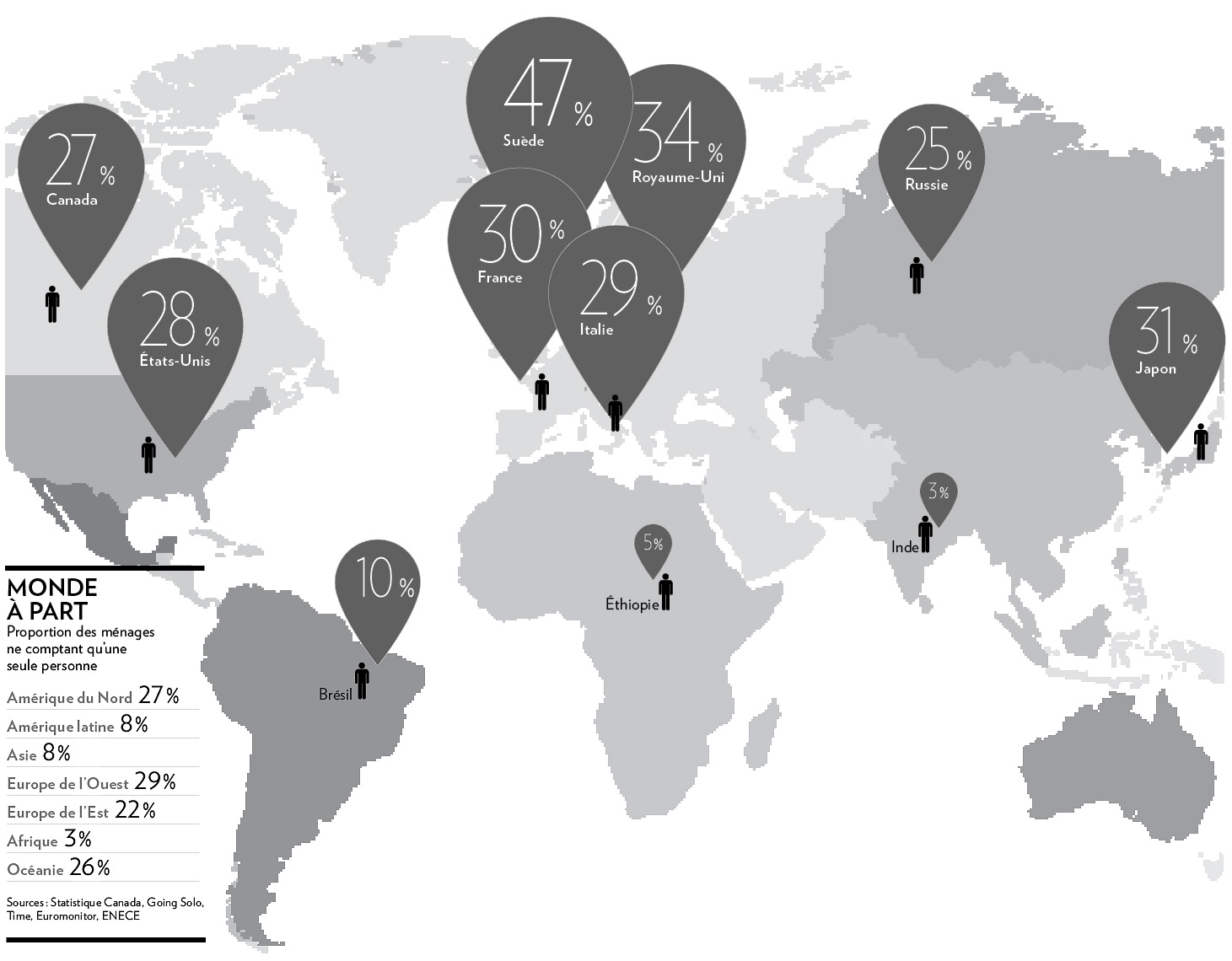
See here and here for some reviews of the book, and here’s a quick comparative map of national rates from La Presse:
Unfortunately, I’ve been unable to find a base national rate for South Korea, but in January 2009 the Seoul Development Institute did find that 20.4% of Seoul households involved people living alone, and which was expected to rise to 25% by 2030. For more information and discussion, see the Korea Heraldhere, or in passing in the following posts (the last is at the blog Asadal Thought):
(“Pretend not to know”, “Pretend not to go”, “Pretend it’s the first time”. Push! Push! {1997}. Source)
This was the most read society news story on Naver last week, undoubtedly because of the recent announcement that the pill is to be made prescription only (a similar article was #5), which will naturally require more visits to OBGYNs. I have my own article about that coming out in Busan Haps next month (update: here it is!), but in the meantime see here, here and here for further details, as well as Korean Gender Reader posts from June.
Without discounting the genuine negative experiences outlined below, for the sake of balance let add that my wife has had no problems with those OBGYNs she’s dealt with since her first pregnancy, nor this 19 year-old student who wrote about her first visit to a clinic for her university newspaper (although it’s true she was given some strange and/or unnecessary tests). Also, it seems somewhat naive of patients to be surprised at questions about their sexual experience, and a little churlish of them to complain about them.
Update — in addition to many helpful, practical reader comments on this post below, and on the previous one about the student’s visit, let me recommend this one by a friend on Facebook:
…to be honest, I think most women expect a trip to the gyno to be awkward, that’s par for the course. However, many of the questions mentioned in the article were definitely way out of line. I’ve come across some less than sensitive (aka prejudiced and or judgmental) docs here.. I just assumed their overly-direct statements/questions were just a translation issue. Obviously not!
One disheartening aspect of women’s clinics is that you have to speak to a nurse (or sometimes just the receptionist) first, often in crowded reception area, to explain why you’re there. They often ask for all your symptoms, check your weight and blood pressure and when you had your last period in front of countless strangers. One clinic I went to had an LCD screen with the waiting patients listed in order of their turn.. including the reason why there were there… So much for privacy! It just adds another layer of humiliation to an already uncomfortable situation.
That being said- there are some amazing gynos here. I hope these problems can be properly addressed- no one should have to feel ashamed in front of their doctor. The danger here is that women will stop seeing doctors about their gynecological/sexual health out of fear of embarrassment and risk greater health problems.
“성경험 유무는 왜…? 굳이 그것까지” 굴욕의 진료, 산부인과
“Why do they ask about sexual experience? Is that really necessary?” Humiliating Treatment at OBGYN Clinics
여성이 불편한 산부인과 / Women find gynecology clinics uncomfortable
접수대부터 진료·시술까지 / From reception to treatment and surgery
의료진 노골적 발언에 민망 / OBGYNs make suggestive, embarrassing comments
사전피임약 처방전 필요한데… / The pill requires a prescription…
여성들 심리적 부담 커 고민 / Psychological pressure on women increases
환자 배려 의료지침 등 필요 / OBGYNs need guidance on bedside manners
지난 6월 정부는 사전피임약을 전문약으로 분류하는 약사법 개정안을 발표했다. 이 법안이 국회에서 통과되면 여성들이 산부인과를 찾을 일이 더 많아질 수 있다. 이를 두고 여성들은 산부인과에 가는 것 자체가 눈치 보이는 사회 분위기를 지적한 바 있다.
This June, the government announced that it was considering amending the Drugs, Cosmetics, and Medical Instruments Law to reclassify the pill as a prescription medicine. If passed by Congress, it will mean women will have to visit OBGYN clinics much more often. In light of this, women have been pointing out the [bad] atmosphere at them.
한국여성민 우회가 산부인과 진료 경험이 있는 여성 210명을 상대로 설문조사한 결과는 ‘외부의 시선’ 못지않게 산부인과 진료 자체에 대한 여성들의 두려움이 실제로 광범위하게 퍼져 있다는 사실을 확인해준다. 설문 특성상 응답자의 신상과 구체적인 피해 일시·장소 등을 밝히진 않았지만, 여성들은 산부인과에서 겪은 수치와 불편을 설문지에 빼곡히 적었다.
Korean Womenlink conducted a survey of 210 women who had received treatment at OBGYN clinics, and the results confirmed not just the endurance of public stereotypes that all women visiting OBGYN clinics had STDs, but also that women’s fears in visiting them were well-founded. The survey was anonymous, and respondents were asked to provide no details of the times or places in which they’d been made to feel embarrassed or humiliated, but many still felt compelled to write a great deal about their negative experiences.
신지은(가명·36)씨는 얼마 전 산부인과에서 느낀 굴욕감이 생생하다. 아이를 낳고 정기검진차 방문한 신씨에게 의사는 은근히 ‘수술’을 권했다.
Shin Ji-eun (not her real name), 36, vividly remembers visiting a clinic for a regular check-up after her child was born, where the doctor implied she should have surgery:
“출산을 한 뒤니 부부관계를 오래 유지하고 싶으면 이참에 수술을 하라”고 말했다. 그가 권한 것은 여성 성기를 성형하는 수술이었다. “배려인지 희롱인지 알 수 없는 제안”이었다고 신씨는 말했다.
“After having a baby, and seeing as you’re already here, you should have surgery on your genitals for the sake of your married life”, the doctor said [James – what kind of surgery isn’t specified]. “I didn’t know whether to take it as a joke or a serious suggestion” Ji-eun said.
실제로 설문조사에 응한 여성들은 진료가 시작되는 접수대에서부터 낙태경험 또는 성경험을 묻는 수치스런 질문을 받았다고 증언했다. 어느 여성은 “진료 접수 때 ‘냉이 많아져서 병원에 왔다’고 했더니, 접수대 간호사가 큰 소리로 ‘성병이네요’라고 말해 매우 불쾌했다”고 적었다.
Respondents to the survey reported being asked embarrassing questions about their sexual experience and having abortions even as soon as arriving at the reception desk. One woman said “I went to the OBGYN clinic because I was having a heavy vaginal discharge, and the nurse at the desk loudly said ‘Oh, you must have an STD!’, which mortified me.”
진료 시작 뒤에도 수치심을 주는 의료진의 발언이 이어졌다고 응답자들은 적었다. 특히 “성경험이 있느냐”고 묻는 의료진의 태도가 당혹스러웠다고 여성들은 밝혔다. 어느 여성은 “성경험이 없다”고 답했다가 “검사할 때 번거롭다. 솔직히 말하라”는 의사의 말을 들었다. “그 뒤로 가급적 산부인과에 가지 않는다”고 이 여성은 밝혔다.
The shaming experiences continue after treatment starts too, because of doctors’ comments. In particular, after being asked if she had sexual experience, and replying that she didn’t, one woman found her doctor’s reply – “Be honest. Otherwise the examination will be more complicated” – perplexing, and said she’d rather not visit an OBGYN again.
의료진이 성경험 여부를 묻는 것은 관련 진료에 필수적인 정보이기 때문이다. 그러나 성경험이 있든 없든 “왜 그런 정보가 필요한지 사전 설명 없이 다짜고짜 물어 불쾌했다”는 게 처음 산부인과를 방문한 여성들의 이구동성이다. 여성민우회 조사를 보면, 산부인과 방문 당시 성경험이 있었던 경우는 69.5%, 없었던 경우는 29.5%였다.
Before being treated, patients need an explanation of why being asked about their sexual experience was necessary. Without that, many women reported, they felt very embarrassed on their first visits to clinics.
Of the respondents, 69.5% had prior sexual experience, and 29.5% didn’t.
Top Left — Of 210 Respondents: 35.2% had no negative experiences, 64.3% did, and 0.5% didn’t reply.
Top Right — Of the 64.3% of women who reported negative experiences: 56.3% were related to fears and anxieties about their treatment; 30.4% to public perceptions [of OBGYN patients]; 3.7% to questions about STDs; 3.0% to costs of treatment; and 6.7% to other things.
Bottom — Age at first visit to an OBGYN
자궁경부암 검사를 받으러 갔던 어느 여성은 “결혼 안 했으면 처녀막이 상할 수 있으니 검사하지 말라”는 의사의 말을 들었다. 자신을 배려하는 듯하면서도 ‘처녀성’ 운운하는 발언에 수치심을 느꼈다고 응답자는 적었다. “몇번 경험해봤나”, “최근엔 언제였나”, “첫 경험이 언제인가”, “남자친구 말고 섹스 파트너가 있나” 등을 아무렇지 않게 묻는 일은 점잖은 축에 속했다. 이들이 기록한 의료진의 어떤 발언은 그대로 옮기기에 민망할 정도다.
One woman who visited in order to be examined for cervical cancer was asked if she was married, “because if you haven’t, then you shouldn’t receive an examination that will break your hymen”; while possibly the doctor was just being considerate about her virginity, the woman still felt ashamed and embarrassed. Other embarrassing questions, like “How many times have you had sex?”; “When was the last time you had sex?”; “When did you lose your virginity?”; and “Do you have another partner in addition to your boyfriend”, don’t even begin to compare to what some doctors asked patients, which they reported were too shameful to write down in their surveys (source, right).
“성기 모양이 참 예쁘다. 남편이 함부로 하지 않는가 보다.” “가슴이 작아서 사진이 찍히려나 모르겠네.” “어린데 왜 산부인과에 왔을까?” 심지어 체모가 많은 것을 보고 “남편이 좋아했겠다”는 이야기를 들은 경우도 있었다.
“Your vagina is very pretty. Your husband wasn’t as rough as most men”; “Your breasts are so small I’m not sure they will even show in the mammogram”; ” You’re so young, why are you visiting an OBGYN?” and even, after seeing that a patient had lots of pubic hair, commenting that “Your husband must like it” are among some of the stories about doctors that respondents did provide.
환자보다 의사 중심으로 꾸며진 진료 환경에 대한 여성들의 성토도 이어졌다.
In general, respondents felt that the treatment environment was designed with doctors rather than patients in mind.
다리를 위로 향한 채 눕게 돼 있는 산부인과의 ‘진료의자’를 응답자들은 ‘굴욕의자’, ‘쩍벌의자’로 부르며 불쾌감을 표시했다. 한 여성은 “진찰대에 다리를 벌리고 올라가는 것 자체가 매우 불쾌해 다시 가고 싶지 않다”고 적었다.
Women showed how upset they were by describing the treatment chair, in which patients lie with their legs in stirrups, as the “Chair of Shame”, or the “Spreadeagle Chair”. One woman wrote “I never want to go in that chair again. Having to spread my legs like that is very upsetting.”
자궁암 검사를 위해 병원을 찾았던 여성은 “의사가 들어오기 전 속옷을 벗고 다리를 벌린 채 준비했고 뒤이어 들어온 의사는 아무 설명도 없이 진료도구를 질 내부에 집어넣어 검사했다”고 불쾌감을 드러냈다.
Another woman who went to a hospital to be checked for cervical cancer wrote “Before the doctor came, I took off my underwear and got up and spread my legs, and when he arrived he just quickly put an instrument inside me, without any warning or explanation.”
‘진정으로 산부인과를 걱정하는 의사들 모임’의 최안나 대변인은 “산부인과 진료는 특히 예민한 분야이므로 성경험 여부 등 구체 정보가 왜 필요한지, 진료 과정은 어떻게 진행될 것인지 상세히 설명하고 의견을 구하는 건 당연한 절차”라며 “산부인과의 진료 서비스가 많이 나아지고 있다고 해도 여전히 일부 환자 눈높이에 부족한 점이 있다”고 말했다.
Choi Ahn-na, a spokesperson for the Korean Gynecological Physicians’ Association (GYNOB) [James — a notoriously anti-abortion group of OBGYNs. See here for more information about them] explained that “Gynecology and Obstetrics are very sensitive branches of medicine, for which it is both normal and essential for OBGYNs to have detailed information about patients, as this determines both the treatment type and how it’s administered. However, while OBGYNs have improved their services a great deal, it is also true that remaining weak spots need to be dealt with, as well as how things looks from patients’ perspectives.”
여성민우회는 이달 중 1000여명에 대한 실태조사 최종 결과 분석이 끝나면 전문의·보건전문가 등과 간담회를 열어 환자를 배려하는 산부인과 의료 지침을 만들어 배포하는 등 ‘산부인과 바꾸기 프로젝트’를 이어갈 계획이다.
Continuing its “Transform OBGYN Clinics Project” [James — Yes, this is the first time it’s been mentioned in the article], this month Womenlink is following-up by surveying 1000 women. After analyzing the results with health specialists, it will produce and distribute a guide for OBGYNs for dealing with patients.
김인숙 한국여성민우회 공동대표는 “왜 여성들이 산부인과에 가는 데 부담감을 느끼는지 구체적으로 확인해 앞으로 더 나은 산부인과 진료 문화를 만들어 갈 것”이라고 밝혔다.
Kim In-sook, a co-spokesperson of Womenlink, said “We will determine exactly why women feel so stressed about going to clinics, with the aim of making a better and more welcoming environment for them there.”
<한겨레>는 ‘여성이 불편한 산부인과’를 ‘여성이 행복한 산부인과’로 바꾸기 위한 제보와 의견을 받아 관련 보도를 이어갈 예정이다.
(Editor): In order to make women feel comfortable with visiting OBGYN clinics, The Hankyoreh will continue to receive and report on women’s opinions and experiences of them.
This video is a parody of the ridiculous, offensive video “The Shocking Reality About Relationships With Foreigners” which aired on South Korea’s MBC TV network in May 2012. Click here to see the original video with English subtitles.

 As of last year, one in four Korean households had just one person. That was the same as Australia, and just shy of the US.
 (Source: Zigbang Facebook)
 (Source: Zigbang Facebook)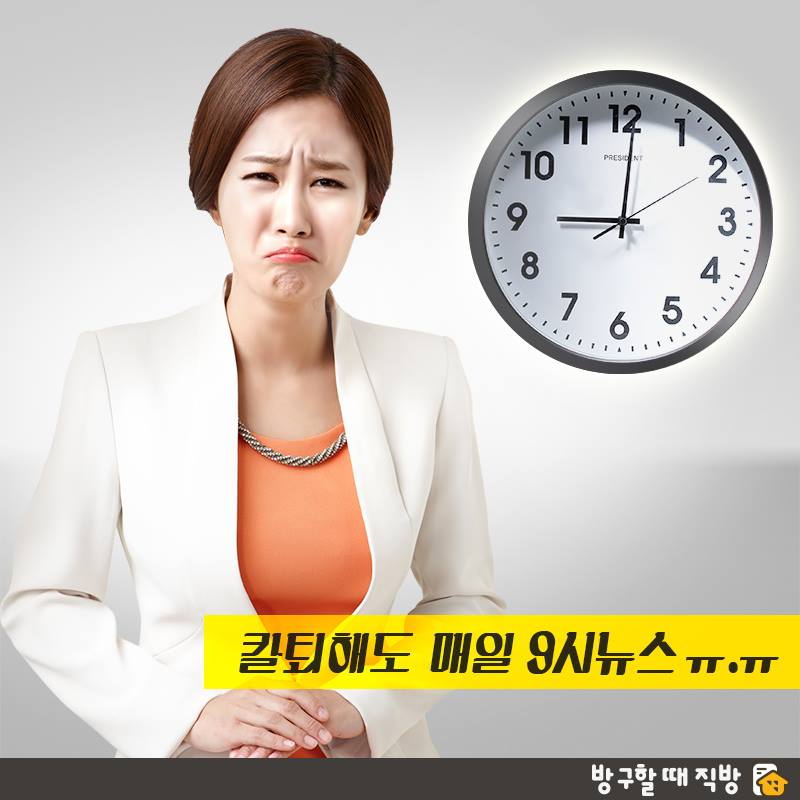
 (Source: Zigbang Facebook)
 (Source: Zigbang Facebook)
 (Source: Zigbang Facebook; alternative version here)
 (Source: Zikgbang Facebook; alternative version here)

 Ads don’t necessarily reflect a change in social attitudes of course, nor necessarily spark one, but I think the sheer numbers of single households are surely having effects. One recent article found that 70% of 30-somethings prefer their own company for instance, and I too have noticed that my students will no longer react in horror upon learning that I always go to the cinema alone (I prefer sitting in the front row).

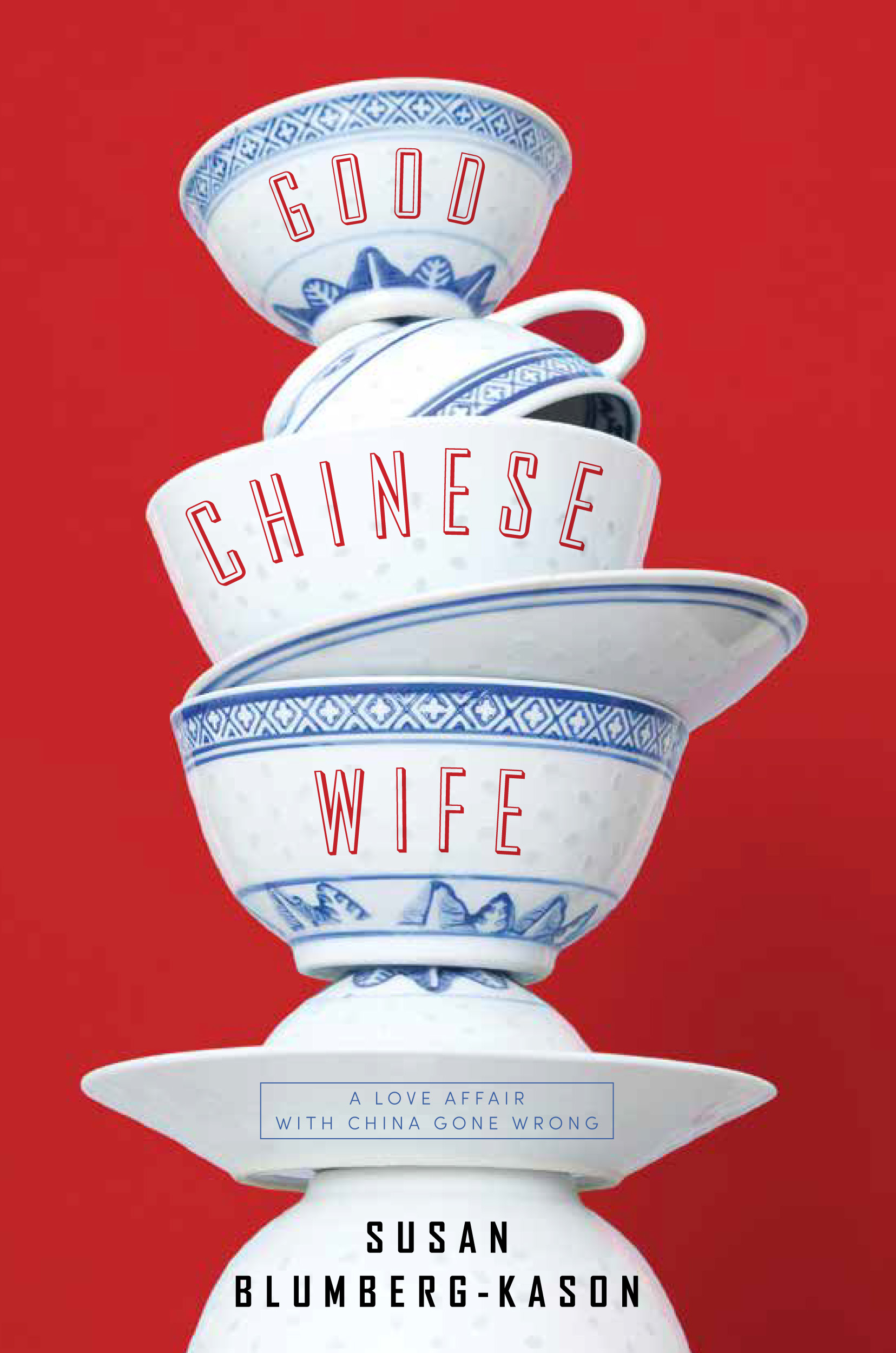
 relationship, and that marriage might be on the cards.” Whereas for women, inviting her to meet her parents “means she expects to marry him, and Chinese men understand this arrangement.” What’s more, the average age of marriage for Chinese men was only 24 in 2010; for women, 22 (
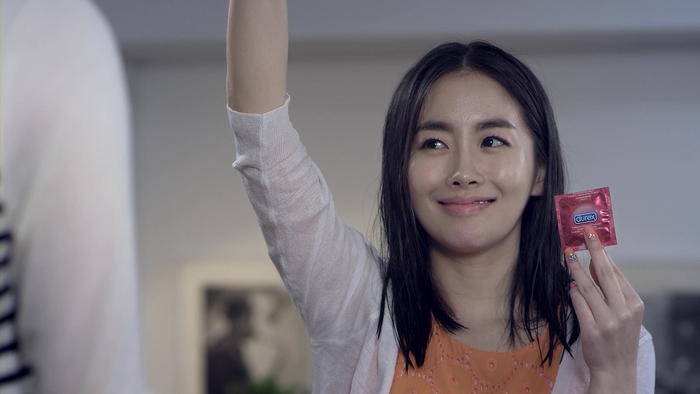

 the most popular reply with women (42.7%), 39.7% replied that it would make them more cautious, a gap of only 3%; 17.6% replied that it wouldn’t make any difference.