Urgent—Your Quick Help is Needed to Unblock my Blog Please! (FIXED)

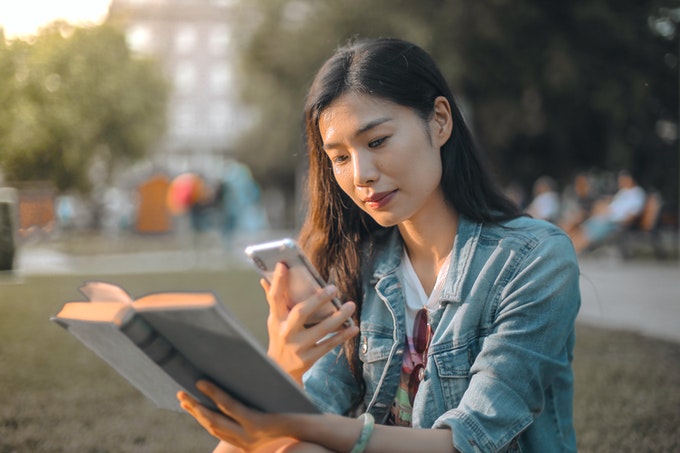
Estimated reading time: 3 minutes. Photo by Andrea Piacquadio from Pexels

FIXED!

Thank you SO MUCH for your help everyone, I don’t think I could have done it without you.

And honestly, being blocked has kind of had a silver lining too. I’ve been really touched and surprised by how quickly everyone has responded, and for all your kind messages about how much my blog means to you. All this time, I’ve really had no idea at all!

The least I can do in return is to endeavor to keep writing and posting, and more consistently 😉

Thanks again then, and for being such awesome readers over the last 13 years.

Stay safe everyone!
Love,
James 😍

(Original post below.)

Sorry to ask, but I really need 3 minutes of your help please.

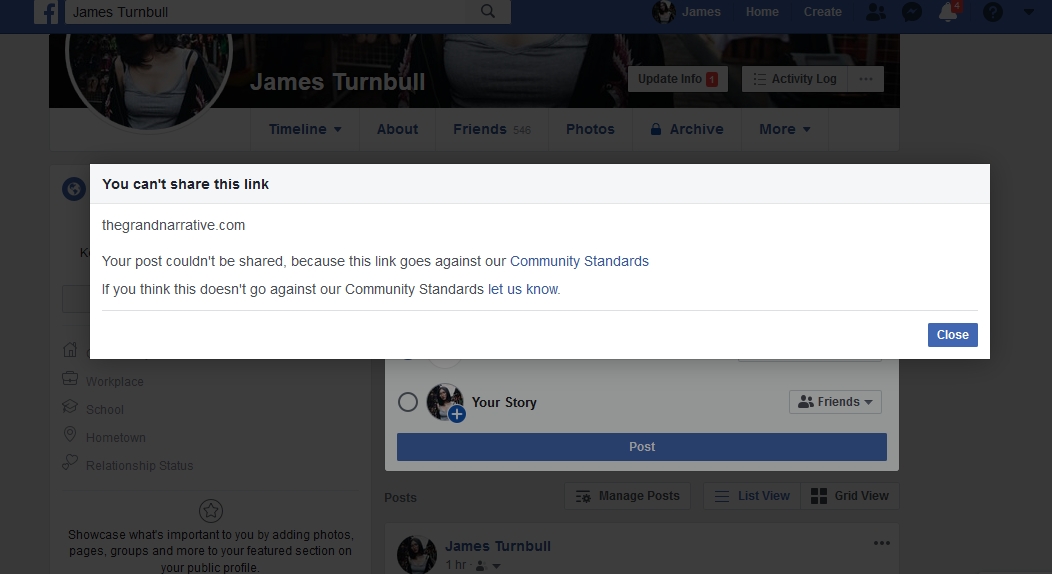
I need you to go to Facebook, copy and post this link to my blog—https://thegrandnarrative.com/—and when a message pops up saying “Your post couldn’t be shared, because this link goes against our Community Standards,” to click on the “If you think this doesn’t go against our Community Standards let us know,” and then leave a brief message explaining there’s clearly been a mistake, and for Facebook to please review the problem. Please make sure to post the link to my blog again in the message too.

Thanks. I know it doesn’t seem much, but you’ve no idea how helpful this is to me!

The reason is, trolls have gotten my blog blocked on Facebook.

Yesterday, I was unable to publish my last blog post on Facebook, as it went “against community standards.” That was annoying, but no biggie—I figured probably the algorithm mistakenly flagged the opening image as nudity or something. This sort of thing often happens to feminism and sexuality blogs (sigh), and normally all that is required to remove the block on the post is choosing a different image, and/or then reposting under a different url.

That didn’t work this time. In fact, my whole blog is blocked. All 800 posts and 13 years’ worth of work. Even all the links already on Facebook are blocked.

As you can imagine, people not being able to share your work on Facebook is a nightmare for a writer.

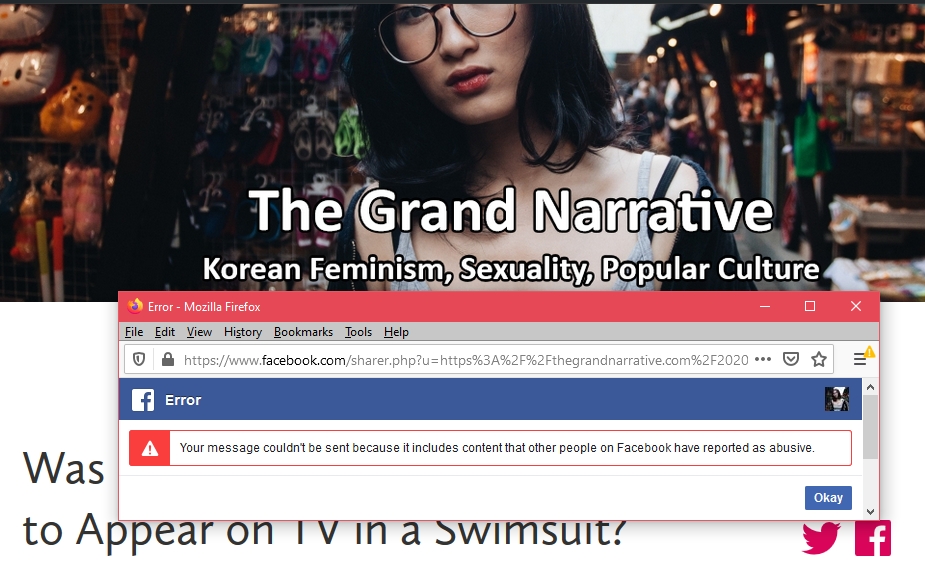
Frustratingly, Facebook gave no warning, and never gives any specific information about any alleged offense. The only clue I was able to receive at all was when I tried using the Facebook sharing button at the bottom of my posts:

There you have it. Given the timing, possibly those responsible are the same trolls on Twitter who recently targeted me for the heinous crime of simply linking to the awesome Unseen Japan site (I had to block more people on Twitter in the next 24 hours than in the previous 12 years!).

But whoever turns out to be responsible, they’re taking advantage of an all-too-common tactic used against feminists. All they have to do is report a site they don’t like, whereas the only thing you, I, or anyone can do in response is filling out the same “let us know” form above. (I’m very open to other ideas though!)

To add insult to injury, even at the best of times Facebook is notoriously unreliable in responding to those messages, let alone by a human. But right now, Facebook has cut its human support staff due to the Corona virus.

In other words, the worst possible thing has happened to my blog, at the worst possible time. There’s every possibility my blog may be banned from Facebook for months or even forever, all because of a few trolls.

That’s where you come in. With all your messages about my blog going through too though, there’s a much, much better chance that an actual human will receive one of them, give my blog a glance, and instantly realize the block was a mistake.

Thank you very much again then, for taking the time to send a quick message, and for being such awesome readers over all these years. With your help, hopefully this will all be resolved soon! :)

(Update: if you’re having difficulties, please just try typing in www thegrandnarrative dot com instead, and/or posting it in a comment on Facebook rather than in a new post. Those alternatives have been working for some people.)

If you reside in South Korea, you can donate via wire transfer: Turnbull James Edward (Kookmin Bank/국민은행, 563401-01-214324)

Was 21 Year-old Jeon In-hwa *Forced* to Appear on TV in a Swimsuit?

The #MeToo era may be the first time that older models and actors have ever been able to open up about their own experiences. When they do, the media should listen.

Estimated reading time: 5 minutes. Source: YouTube.

Sometimes you have to state the obvious to show just how absurd and unfair an everyday situation is.

One such is the constant stream of movie posters featuring women with no heads. So, comedian Marcia Belsky countered that with the ‘Headless Women Of Hollywood’ project, pointing out that heads are “first and foremost the thinking part of the human body, where our motivations and feelings are located.” It naturally follows that the headless images of women “we are bombarded with on a daily basis, tell us persistently that [their] thoughts, feelings and personal agency either don’t exist or are of no interest. Further, facial features are the way we recognize other people. It’s the face that makes us individuals. That too is taken away.”

Source: Extreme Movie (left, right).

Smiling faces then, and the consent implied within, seem obvious counters to charges of objectification. Again, it naturally follows that the world would be a better place if everyone bore that in mind in their production and consumption of popular culture.

Yet ultimately they can only be a guide too. And one which often falls under the weight of its numerous exceptions.

The MV for Spring Girls by Sunwoo Jung-a is replete with headless, ostensibly objectifying imagery. Yet it remains “both feminist and as sexy as hell.” Source: YouTube.

I’ve covered many of those exceptions elsewhere, as well as US philosopher and law and ethics professor Martha Nussbaum’s argument for necessary distinctions between ‘positive’ and ‘negative objectification.’ And yet another is the reality that actors’ and models’ smiles are often plastic, belying their unpleasant experiences with the photoshoots themselves.

No-one reading this would suppose otherwise. But again, it’s sometimes necessary to be reminded of the obvious. Because without the giveaway of the title, no-one would have ever suspected there’d been anything untoward about the following, utterly innocuous-looking commercial:

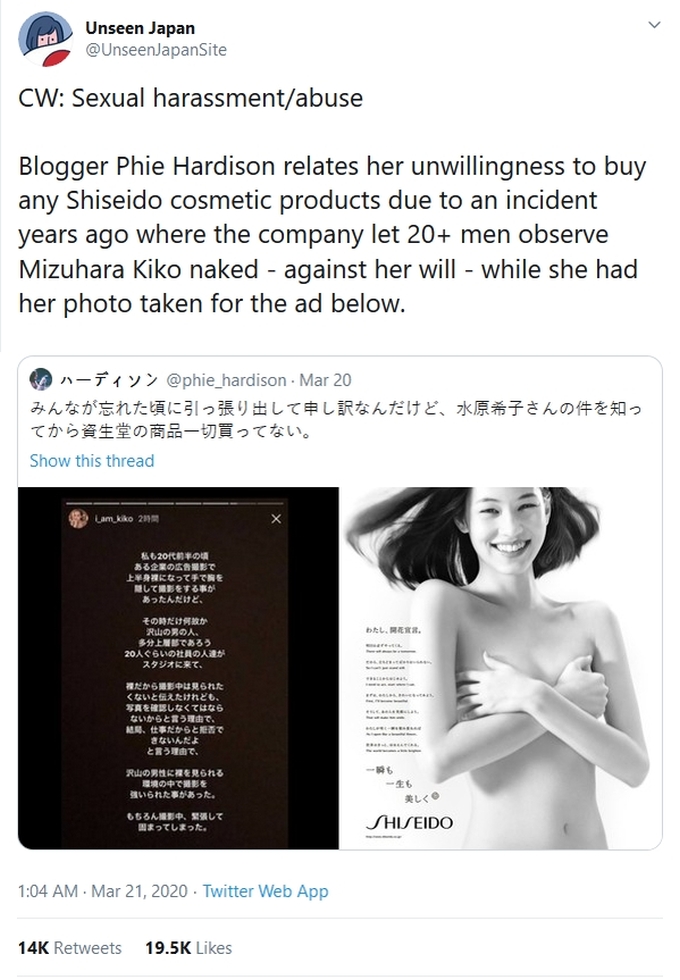
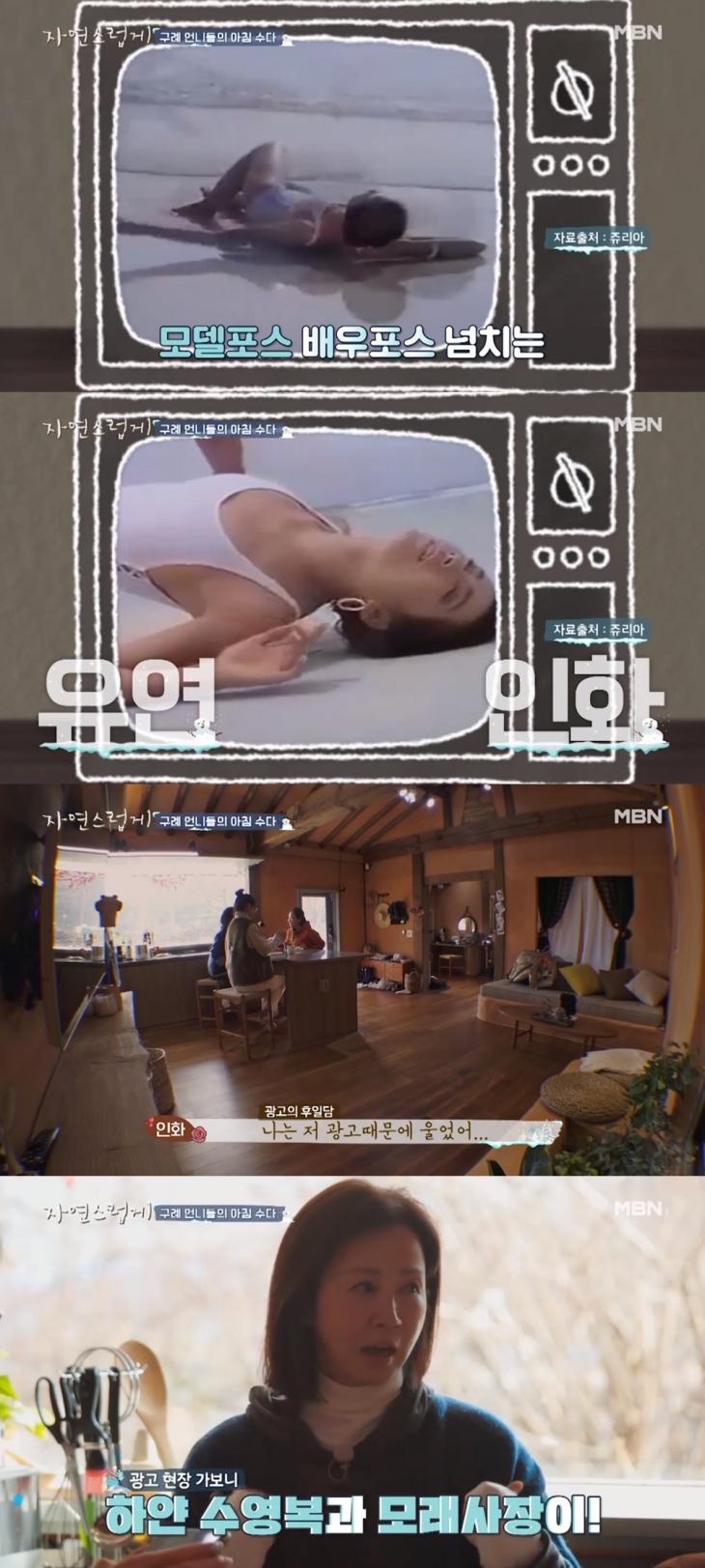
Featuring now well-known drama star Jeon In-hwa (54), it was her first for Julia Cosmetics’ ‘two-way cake,’ way back when she was 21. I only read about it at all, because first, a few days earlier I’d learned what happened to then 22 year-old Japanese actor and model Kiko Mizuhara in 2013:

Source: @UnseenJapanSite

And next, only because that prompted a double-take when I stumbled across the following segment of the January 20, 2020 episode of Naturally, in which Jeon In-hwa explains her own similar negative experience with that commercial, when she was about the same age:

Source: YouTube.

Specifically, from the 1:00 mark, Jeon In-hwa, Han Ji-hye, and So Yoo-jin begin talking about the former’s commercials in her youth:

And from 1:20, her issues with the one of her wearing a swimsuit (my emphases):

지난 20일 방송된 MBN ‘자연스럽게’에는 전인화가 출연해 처음이자 마지막 수영복 차림 광고에 대한 이야기를 언급했다.

…전인화는 “저 광고 때문에 울었다”며 “그 때는 절대 방송에서 파인 옷이나 수영복을 안 입으려고 했는데 현장에 가니 수영복이 준비돼 있었다”고 말했다. 이어 “너무 안 하고 싶어서 울었지만 결국 설득돼서 찍었다”고 덧붙였다.

On [yesterday’s] episode of Naturally, Jeon In-hwa’s ad was mentioned, her first and last appearance in a swimsuit.

…”I cried because of that commercial,” Jeon In-hwa said. “I had absolutely no intention of ever wearing revealing clothes or a swimsuit on TV then. But once we got to the shooting location, [I saw that] a swimsuit had been prepared [for me].” She added “I cried that I really didn’t want to do it, but in the end I was persuaded to, and the shooting went ahead.”

Jeong So-yeong, MoneyS, 21/01/2020.

All over in a few seconds, I admit I lay myself open to charges that I’m blowing things out of proportion. My title—maybe a little clickbaity. Jeon In-hwa doesn’t seem particularly wrought over the memory. She humorously—but explicitly—doesn’t want to talk about it (much) either. And the potential downer is quickly passed over by her costars.

“Persuasion” potentially covers a wide range of sins too, but doesn’t automatically mean “coercion.” What point then, is there in dwelling further on a young, inexperienced actor and model overcoming their nerves 34 years ago?

Alternatively, even if something more sinister did occur, there would be little possibility of legal recourse after all this time. Moreover, Korea has draconian libel and defamation laws, which are regularly used to silence sexual harassment and rape victims—and both Julia Cosmetics and Korea’s largest advertising agency Cheil Worldwide are very much still around.

I would tend to agree with letting it go then, if Jeon had gone on to do more commercials in swimsuits and/or revealing clothes. But she didn’t. For a young, attractive female model and actor destined to become a huge drama star, ultimately with 24 more years of endorsement deals ahead of her, that avoidance borders on remarkable.

Unless her first experience was genuinely traumatic?

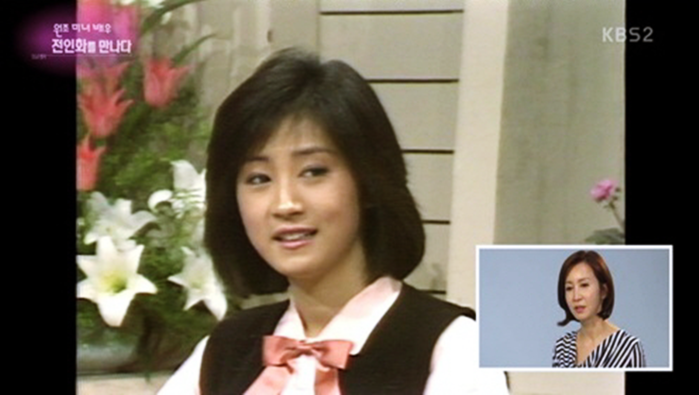
Jeon In-hwa in 2016, reminiscing about being a reporter at 20 before she got her break as an actor and model. Source: Seoul Economic Daily.

The possibility means she at least deserves to be (gently) asked what happened in 1986 exactly. Yet not a single media outlet has followed up on her unburdening. Believe me, I’ve looked.

Yes, legal issues remain a concern. But if it’s not possible to talk about her experience in the #MeToo era, then when?

Without asking the questions, her costars, the producers of Naturally, and/or the media missed a golden opportunity. At the very least, for encouraging others to come forward, and for fostering a small moment of solidarity with different generations of victims.

Instead, their collective nonchalance perpetuates the absurdity and unfairness of another everyday occurrence. That crying your eyes out and then being forced to smile as you wear revealing clothes in front of strangers? It’s just what women have always needed to do, and always will need to do to secure that modelling gig, right? It’s certainly not something newsworthy.

I’m just saying I think maybe it should be.

What do you think?

If you reside in South Korea, you can donate via wire transfer: Turnbull James Edward (Kookmin Bank/국민은행, 563401-01-214324)

We Can…Make 집밥?!

Estimated reading time: 2 minutes.

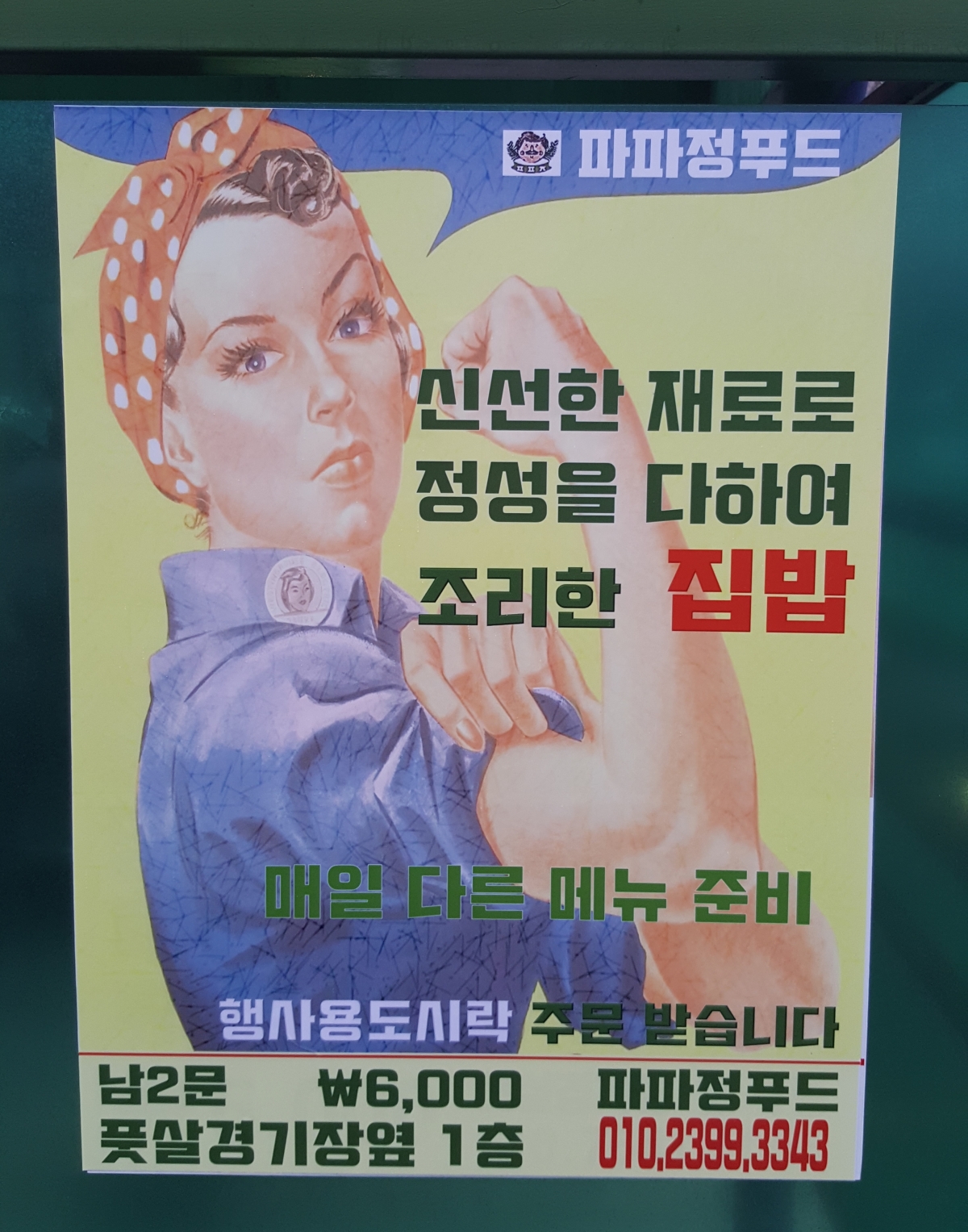
If I was going to misappropriate Rosie the Riveter, I like to think I’d come up with a more inspiring, more imaginative tagline to accompany her than “Home-cooked food, made with a sincere heart and fresh ingredients.”

Sigh.

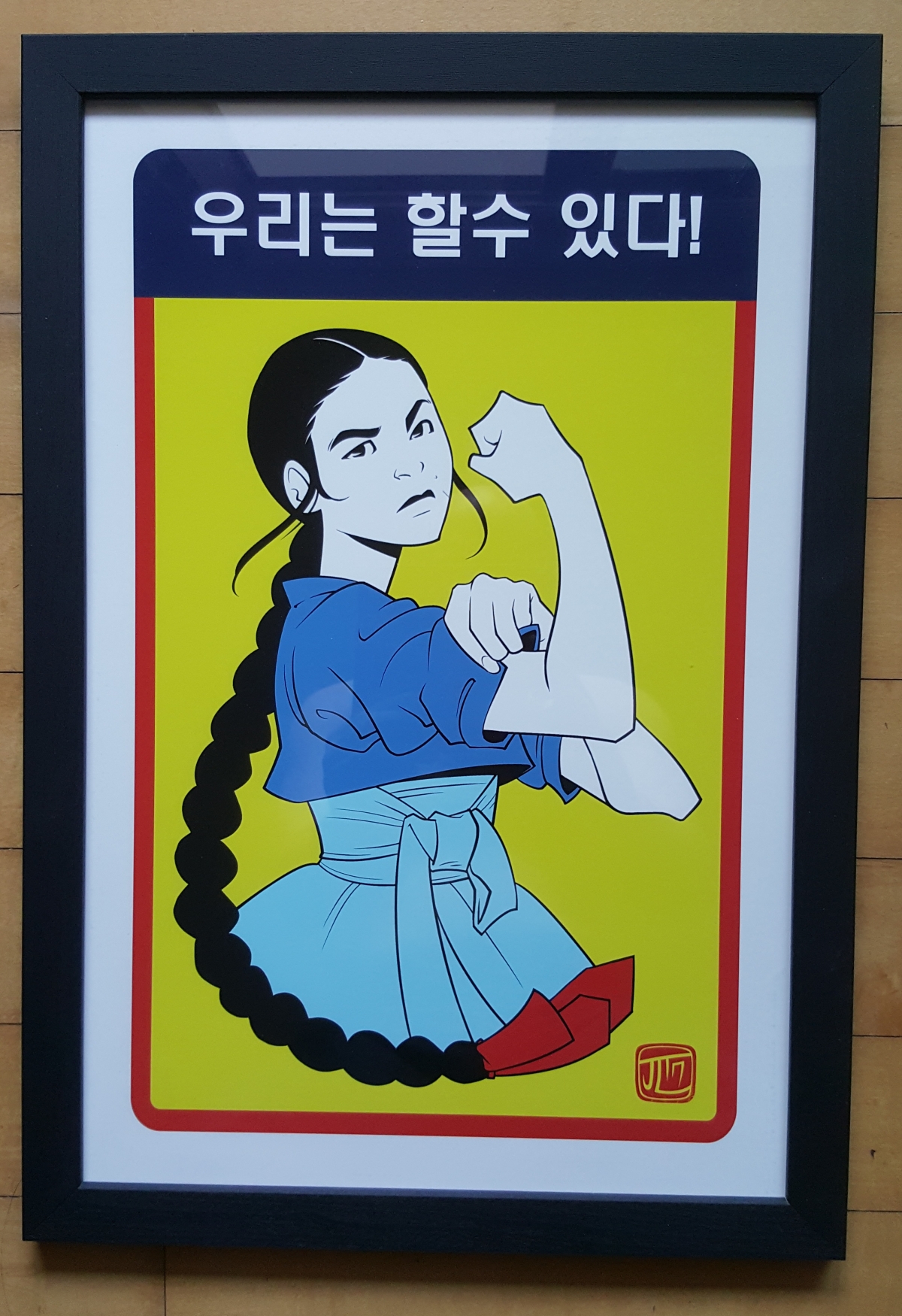
Fortunately though, this ad for a local restaurant is not the first Korean version of the We Can Do It! poster I’ve ever seen. That would be “우리는 할수 있다!” by cartoonist Jen Lee, which I just got a print framed of for my birthday my daughters:

Curiously, they seemed nonplussed at its proud display in our living room. So, feeling especially generous, I also got my huge poster from the “Arrival of New Women” exhibition framed for them to place alongside it. After all, what better gift could there possibly be for 11 and 13-year-old girls, right?

Source: National Museum of Modern and Contemporary Art, Korea. (Not technically my poster, as it was difficult to take a picture without being reflected in the glass!)

Alas, memorabilia from something only I actually attended, about a group of women dear to my heart but which they’ve barely heard of, failed to tear them away from their phones either.

But seriously, I’m hoping having the posters around will make them curious. And I’ll try to refrain from overwhelming them with books when they do ask about them.

Meanwhile, it’s two years too late to get an exhibition poster yourself sorry. But the lavishly illustrated and commentary-dense accompanying (Korean) book is still available on Korean book sites, and well worth it. Kevin Michael Smith’s excellent, extensive review of the exhibition and discussion of Modern Girls and New Women in general is also newly available online at the Cross Currents journal. (Update: Chung Jae-suk’s review at Koreana is a must-read too.)

Finally, prints of “우리는 할수 있다!” can still be bought here. But perhaps only for as long as stocks remain available, as Jen Lee is sadly inactive these days(?). So make sure to order one yourself soon!

Stay safe everyone! :)

If you reside in South Korea, you can donate via wire transfer: Turnbull James Edward (Kookmin Bank/국민은행, 563401-01-214324)
Why Women Pay More to Join Korean Marriage Agencies

Women dominate the clientele at Korean marriage agencies, which is often used to justify extra costs for joining. But this differential pricing goes well beyond just sex, both reflecting and shaping consumers’ notions of the “perfect” wife too. And it seems she’s neither highly-educated, highly-earning, nor even over 32.

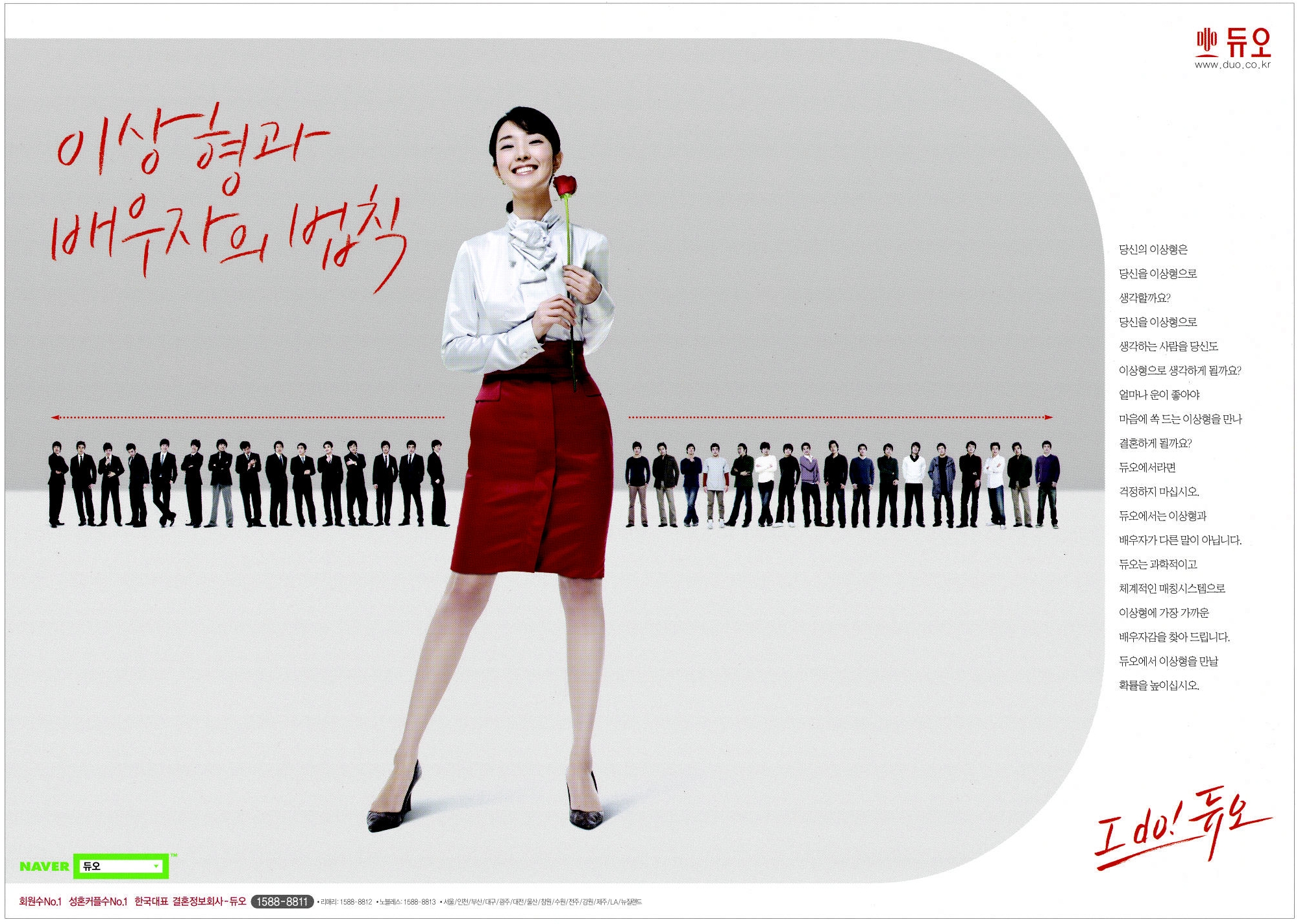
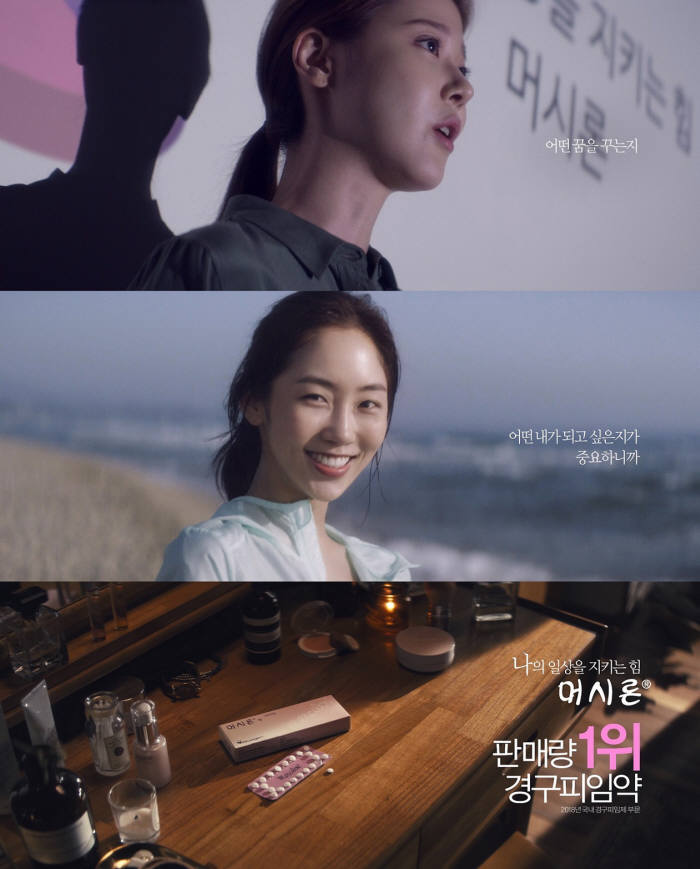
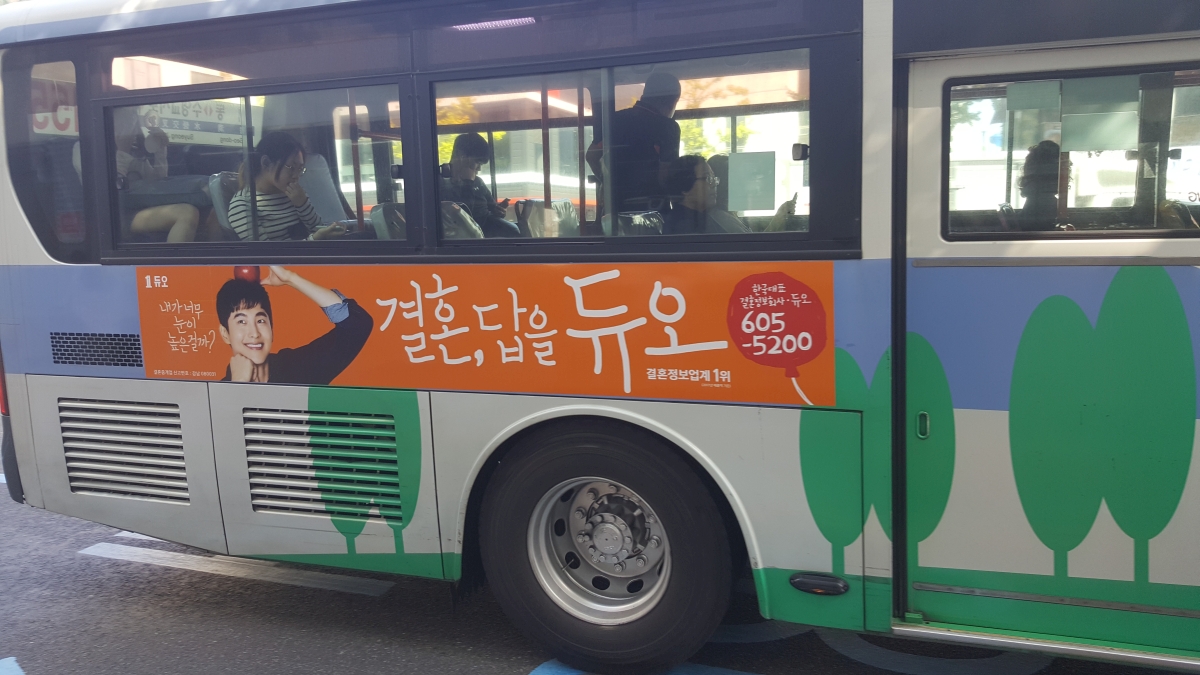
Estimated reading tme: 12 Minutes. Image source: Duo.

Korea’s largest matchmaking-agency Duo, on the rebound after experiencing massive reductions in sales in recent years, claims to be voicing “the inner minds and concerns of young Koreans” in its latest series of ads. With this particular one though, its “Am I just being too picky?” subhead seems hilariously out of touch. As if young Koreans did have the financial resources to marry, but were just too stuck-up to consider looking for a spouse on the internet. Because damn millennials ruin everything, right?

It’s so awkward, it immediately reminded me of this ham-fisted, Singaporean government birthrate campaign ad that came out in the 1980s, which Asian Studies students have been laughing at ever since:

But my source didn’t find Duo’s ad so funny, accusing them of gaslighting:

“What amazing gaslighting. Those marriage agencies don’t have many female customers, so they resort to harmful gaslighting tactics.”

Actually, it was difficult to avoid the male version of the ad with the same caption. Yet the wider accusation about marriage agencies begged investigation. Surely there was something much more substantial behind the barbed tweet, I sensed, than merely snapping at one single ad?

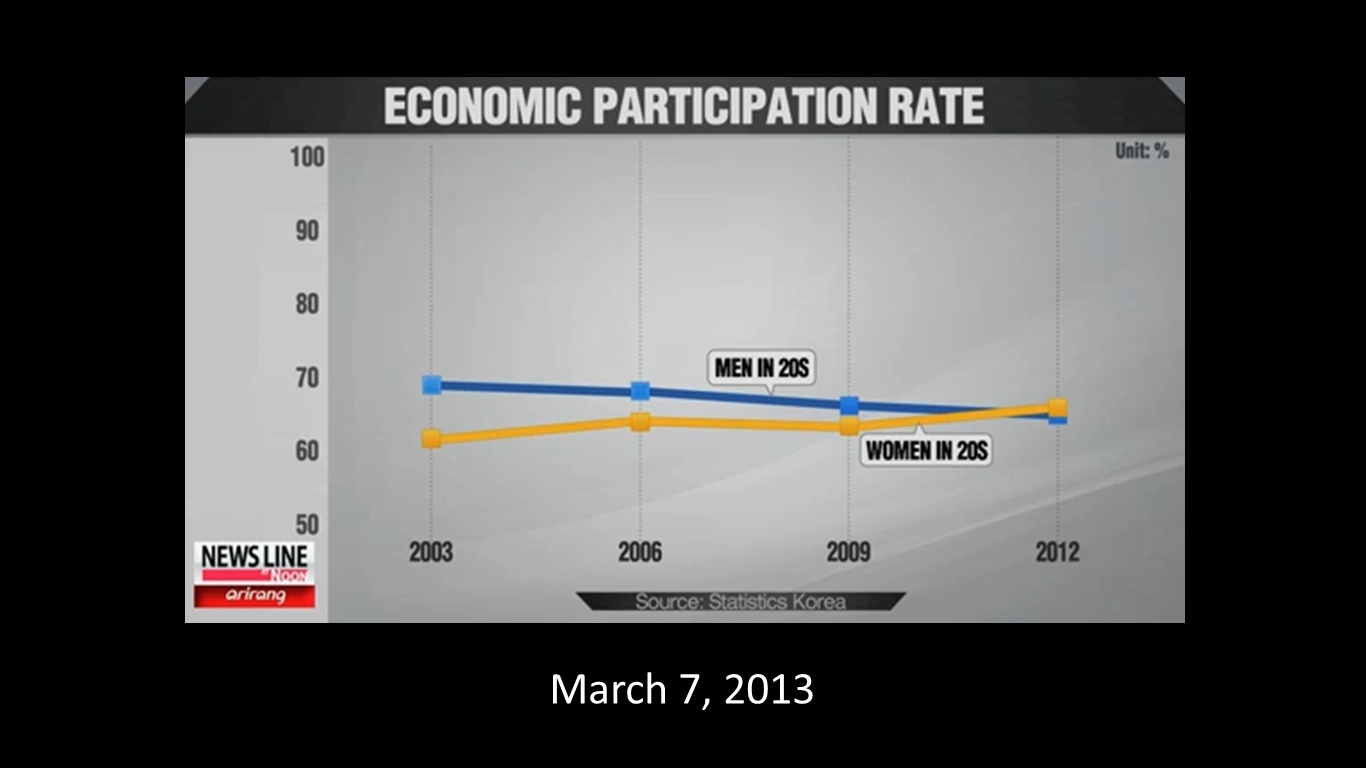
My first searches did little to support that gut feeling. In fact, it turned out that until a few years ago, Duo used to have more women than men. Then in the early-2010s the numbers of men signing up starting rising, and by 2014 there were more men than women in both Duo and second-place rival Gayeon. These shifts can be seen quite clearly below in the table for Duo and Gayeon and graph for Duo respectively:

Sources: Yonhap, Chosun.

At the time, Bae Joon-yong at the Chosun Ilbo accounted for the shift by the (alleged) rise of “herbivore men,” whom he defined as men rejecting dating in their 20s, but still open to marriage once they hit their 30s. Statistics speak louder than buzzwords however, and its difficult to argue with Namuwiki’s contention that the increasingly high numbers of female fetuses aborted in the late-1980s were responsible, with the ensuing lonely men coming of marriage age. Especially when those numbers are presented in graphical form:

See here for my examination of the likely effects on Korea’s “gender wars.” Source: Cinnamon Ginger Tea; reprinted with permission. Note that the WHO considers a natural birth sex ratio to be 105 boys for every 100 girls.

Unfortunately, very little information exists for the 2016 to 2019 period. But we are just talking about statistics from three years ago. It would only be natural to assume that the trend for more men continued.

So imagine my surprise at learning that it appears to have completely reversed. In fact, the sex ratios have already returned to their female-dominated 2006 levels.

First, consider this December 2018 interview of an anonymous former matchmaker by Na Jin-hee at the Segye Ilbo (my emphasis):

—결혼정보업체 회원의 성비는 어떤가?

“예전에 비하면 많이 나아졌다지만 여전히 여성 회원이 남성보다 훨씬 많다. 메이저 회사는 여성 대 남성 비율이 6:4에서 5.5:4.5 정도로 추정된다. 영세 회사는 훨씬 더 차이가 크다. 8:2에서 9:1까지 가기도 한다.

남자 수가 적으니 자연히 남자 회원에게 서비스가 훨씬 많다. 전문직 남성의 경우 가입비를 할인받거나 아예 내지 않는다. 만남 횟수도 훨씬 많이 제공된다.”

—What is the sex ratio of customers at marriage agencies?

“The ratios have greatly improved, but there’s still many more women than men. Larger agencies estimate female to male ratios of 6:4 to 5.5:4.5. But the differences are much greater at smaller agencies. Sometimes they’re as high as 8:2 or even 9:1.

As there are fewer men, they naturally receive preferential service. “Professional” men [e.g., lawyers, doctors, and Samsung employees] receive discounts on membership fees, or may have them waived altogether. They get many more dates arranged [than women do] too.”

And another article by the same author published an hour(!) later:

◆아르바이트 회원에 남녀 성비 불균형… 업체는 ‘쉬쉬’

…애초에 남녀 성비가 맞지 않아 결혼 성사가 어렵다는 비판도 있다. 결혼정보업체의 여성회원 비율이 남성보다 상당히 높은 건 업계의 공공연한 비밀이다. 익명을 요구한 업계 관계자에 따르면 영세 업체일수록 이 같은 현상은 심해져 여성 비율이 90%에 이르기도 한다고 전해진다.

◆Fake, “part-time” customers used because of unequal sex ratios…Agencies say “Shhh!”

…There is also criticism that the very first step to finding a spouse—meeting new people—is difficult because of the unequal sex ratios.

The fact that marriage information agencies have considerably higher numbers of women than men is an open secret. According to industry officials who asked for anonymity, it is even worse at smaller companies, where the proportion of women may be as high as 90 percent.

By all means, this does not constitute proof. The claims of writers who use such cliched devices as “common knowledge” and “anonymous industry sources” should always be taken with a grain of salt, especially those who won’t acknowledge earlier sources that flatly contradict their claims. Be that as it may, in June 2019 Pyo Ju-yeon at Newsis offered slightly more evidence for the new ratio at Gayeon at least, in the form of “[an unspecified disclosure on the 16th by] the Korean marriage agency industry”:

대부분 회사들은 가입 금액에서 남녀 차등을 두고 있다. 차등이 가능한 이유는 성비가 맞지 않기 때문이다. 여성회원이 남성 회원보다 많기 때문이다. 가연의 경우 여성과 남성비중이 55대45정도다. 듀오의 경우에도 비슷한 수준이다. 이 때문에 결혼정보업계에서는 연애할 때는 ‘여성우위’, 결혼할때는 ‘남성우위’라는 말을 하기도 한다.

Most marriage agencies have different signing-up charges for men and women. The difference is possible because the sex ratio of customers is skewed, with far more women than men. In Gayeon, the ratio of women to men is 55 to 45; in Duo, it is similar. For this reason, people in the industy use the term “female advantage” to describe the dating scene, and “male advantage” for when looking for a spouse.

In addition, in a detailed breakdown of Gayeon members’ “specs” provided by a November 2019 article for the Asia Business Daily, Choi Shin-hye noted that the agency claimed a 53 women to 47 men ratio for first-time members in December 2018.

More authoritative NGO and governmental sources would be ideal, but they too prove lacking: their concerns with marriage agencies are overwhelmingly focused on the abuse of overseas brides instead. (As always, my apologies if I’m missing obvious Korean search terms, and my eternal gratitude to any readers who can pass on further sources.) Therefore, until proven otherwise, the claim still stands. Moreover, again the correlation with changes to the birth sex ratio decades earlier—specifically, the dramatic efforts made to curb the imbalance between 1994-1997—begs us to see causation.

But this opens up many more questions.

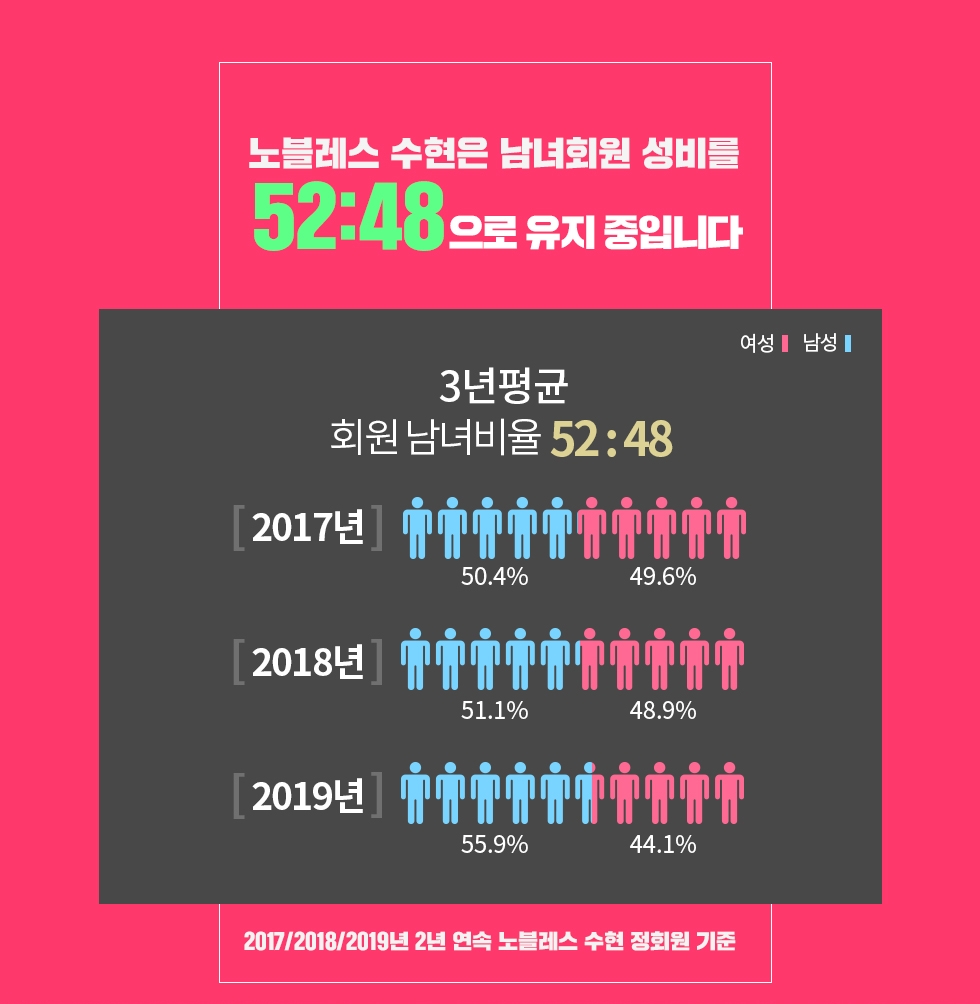
First, what of other agencies? While Duo and Gayeon are synonymous with the industry in Korea, they’re only the 2 largest of over 1000 agencies registered with the Ministry of Gender Equality and Family (as of 2016), and the sex ratios at smaller rivals may be completely different. For instance, two agencies that cater to “VIP” clients—N. Noble and Noblesse Soohyun—explicitly aim for a 50:50 ratio, and both succeeded in doing so in 2017 and 2018. Indeed, the latter prominently displays its ratio on its website, ironically allowing all to see that in fact its streak is now over:

What’s more, click on that “view details” button, and it emerges that the 52-48 male to female ratio is only an average for 2016 to 2019, disguising the fact that the number of female clients dropped precipitously last year:

Why these agencies for one-percenters are bucking the trend, we can only speculate in the absence of any further sources (again, sorry). So too, about the truth of those alleged 8:2 and even 9:1 female to male ratios at all those unnamed smaller agencies. Just like—let’s face it—@bobduryeo’s tweet, these assertions of “common knowledge” may be no more than the thoughtless perpetuation of baseless stereotypes.

Noblesse Soohyun’s exceptional candor, however, is something we can grapple with. Which raises the next question of why any marriage agency would make maintaining a 1:1 ratio a unique selling point.

Why else, if not for problems associated with unequal ratios at other agencies?

The main problem with them is obvious: the more unequal the ratio, the more difficult it is for one sex to find potential partners, as pointed out by Gwak Jong-hyeon’s advertorial for N. Noble in Newsfreezone earlier this month:

결혼정보회사를 가입할 때 확인해야 하는 객관적 지표는 성혼율과 회원수, 회원들의 수준, 남녀회원의 성비 등이다. 어느 하나 빼놓지 않고 중요하지만, 특히 남녀회원 성비가 균등한지, 오랜 기간 유지돼 왔는지를 잘 확인해야 한다. 성별이 한 쪽으로만 치우쳐 있다면, 만남 자체가 어려울 수 있다.

이러한 가운데, 노블레스 결혼정보회사 엔노블이 수년간 50:50의 균형 있는 남녀회원 성비를 유지하며 다채롭고 깊이 있는 만남을 주선해 높은 성혼율을 기록하고 있다.

The crucial things to check when joining a marriage agency are the sex ratio of customers, the number of customers, and the rate of marriages. But while all of these are so important that issues with any one can’t be overlooked, it is the sex ratio that is most crucial, and needs checking for how long it has been maintained too. For if there are problems with this, then getting the desired meetings can be difficult.

In light of this, Noblesse marriage agency N.Noble [JamesI’m suddenly confused too] stands out for maintaining a balanced sex ratio for many years, for arranging a variety of in-depth, meaningful meetings between customers, and for enjoying high success rates.

But that overarching problem spells two big consequences. First, that some agencies simply lie about their ratios, and then they use a variety of subterfuge, tricks, and legal loopholes to avoid compensating (mostly female) customers when their (mostly male) dates’ specs are not what they were told, or when those men fail to show up to arranged meetings at all.

Frankly, I can’t begin to summarize the plethora of articles about those scams and how to avoid them, many of which are sensationalist and provide no sources, like Na Jin-hee’s mentioned earlier (translation). But I can certainly recommend Choi Seo-hee’s comprehensive May 2019 article on the topic at KBS News (it’s the only one I found that mentioned agencies exploiting legal loopholes), and the google translation is more than adequate. Namuwiki’s guide (translation) is also a good starting point, with many further links.

It seems @bobduryeo was onto something after all. Just not on the causes of all the gaslighting.

Making much more of an impact, however, is the second consequence: not having enough men to choose from is used to justify higher prices for female customers—another unofficial extra tax for women if you will, like those for maintaining their appearance and wardrobe and for finding safe accommodation. And then, to add insult to injury, the higher prices are usually not just for women in general, but are especially for those who don’t fit very traditional notions of what constitutes a “good” wife.

I’ll let Pyo Ju-yeon explain:

Photo by Ike louie Natividad from Pexels

결혼정보회사의 수익모델은 남녀를 소개해주고, 남녀 모두로부터 서비스비용을 받는 방식이다. 이때 대부분의 업체들은 남성보다 여성에게 약간 더 비싼 금액을 받고 있는 것으로 확인됐다.

16일 결혼정보회사 업계에 따르면 듀오는 150만원에 5회, 가연은 99만원에 5회 소개를 가장 기본적인 서비스로 운영하고 있다. 물론 이 금액은 가장 기본 가입비다. 듀오나 가연 등 다소 대중적인 결혼정보회사들도 1000만원이 넘는 상품을 판매하기도 한다.

…그렇다보니 업계에서 공공연하게 여성의 가입비가 더 비싸게 책정되고 있다. 만약 가입비가 같다면 만남의 횟수가 다르게 제공된다는게 이 업계 ‘불문율’이다. 결혼정보업체들은 계약서 상에는 남녀 같은 금액을 적어도, 무료 소개 횟수를 남성에게 더 부여하는 방식으로 가격에 차등을 두고 있다. 이때 ‘조건’이 좋은 남자는 무료 소개 횟수가 훨씬 더 많아진다.

Marriage agencies’ profits come from the charging of customers for arranging introductions. But most companies charge women more than men.

According to [an unspecified disclosure on 16 June 2019 by] the Korean marriage agency industry, Duo charges 1.5 million won (US$1,268) for arranging 5 meetings, while Gayeon charges 990,000 won (US$837) for the same. But of course, those fees are only for the most basic of services. Most of the larger agencies offer a variety of packages, some of which cost over 10 million won (US$8,451).

…[Because of the unequal sex ratios], it can be more expensive for women to sign up. Or alternatively, if the sign-up fees and number of arranged meetings are the same, men will be rewarded with more free referrals, particularly if they have good specs.

Spotted in a Seoul bookstore: “If I study for ten more minutes, my [future] wife’s face will change”; “If I study for ten more minutes, my [future] husband’s job will change.” Source: Jinvas, left, right; edited.

And here’s how agencies’ traditional gender norms have an impact:

재미있는 점은 여성의 경우 조건이 좋을수록 가격이 비싸진다는 점이다. 남성의 경우 학력이나 소득이 높을수록 횟수가 증가하지만, 여성의 경우 그 반대다.

이렇게 가격이 책정되는 이유는 간단하다. 결혼정보회사들이 자체 기준으로 남성은 자신보다 조건이 약간이라도 낮은 여자를 선호한다고 판단하기 때문이다. 고학력, 고소득 여성의 경우 매칭이 가능한 남성 인력군이 더 적어져, 소개가 쉽지 않다고 보기 때문에 더 비싼 가격을 물린다는 이야기다.

또 여성의 경우에는 나이가 많아질수록 가격이 비싸진다. 역시 계약서 상에는 같은 금액을 내더라도 무료 소개 숫자를 줄이거나 없애는 방식으로 가격을 차등화하고 있다. 예를 들어 28살 여성이 200만원을 내고 소개 받는 횟수 5회를 계약한다면, 32살의 경우에는 4회, 35살이 넘어가면 3회에 계약을 할 수도 있다

Curiously, the better quality of specs for a female customer, the higher her fee and the fewer meetings she will be able to have. Whereas for men, the opposite is true.

The reason is simple: marriage agencies believe men prefer women who have worse specs than themselves. So marriage agencies will struggle to find men willing to meet highly-educated, high-earning women.

In addition, things become more expensive for women the older they get. Once again, one difference is through reducing or eliminating the numbers of free referrals. For example, whereas a 28 year-old woman may pay 2 million won (US$1,689) to get 5 free referrals, a 32 year-old woman may only get 4 for the same price, and 3 for a 35 year-old woman.

Pyo Ju-yeon goes on to mention that female customers often get told they’re “a little old” once they reach 32, are gaslighted about what they can expect for their money at that age, and that costs rise substantially for women once they reach 35. Alternatively, some agencies simply refuse female applicants over that age whatsoever, although they may still be able to signup for the same agencies’ separate services for divorcees. (For the sake of perspective, as of 2017 the average marriage age for Korean women was 30.2, and for men 32.9.)

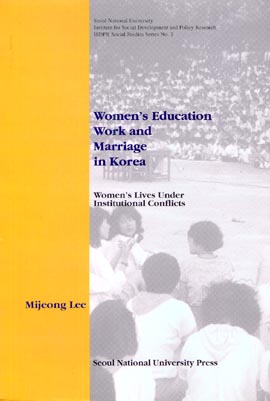
Ironically for one of the most highly-educated populations in the world, unfortunately that distaste for highly-educated, high-earning women is very much a thing, and is one major reason why so many young Korean women now shun marriage. (Indeed, such women were stigmatized in 2012 too. And even as far back as in 1998 also, as that excellent resource on the right from then discusses in detail.)

It also leads to three further interesting, concluding questions that I’d like to pose to readers.

First, do you think agencies like Duo and Gayeon are merely responding to traditional Korean gender norms, and have little ability or incentive to challenge prejudices against (especially) women who don’t conform to those? Or alternatively, are they actively complicit in perpetuating those gender norms for the sake of profit? Or both?

Whatever your opinion, there’s a surprising parallel in the form of major pornography portal sites, in which the categorizations used and forms of content offered have a big impact on how the public and the media come to think about and frame pornography and sexuality. In other words, rather than, say, feminist porn being the norm, the degradation and exploitation of women is seen as normal and acceptable because that’s supposedly what both men (and women) want.

According to whom? That would be the pornography portals. Why? Because they make more money if consumers think that way.

It really is as simple as that sounds. Sourcing material only from producers that ensure decent pay for actors, their continual consent, and that provide them with safe, hygienic working environments, all of which should be the norm across the entire porn industry, simply costs more. But I digress.

Do marriage agencies then, have similar impacts on their own customers’ feelings about what makes the “perfect” spouse? Do Duo and Gayeon, which like to tout their large customer bases and tens of thousands of successful matches, have any impact on how Koreans as a whole think of marriage and gender roles? Or is their impact strictly limited to only their customers, who arguably are already well aware of the agencies’ very traditionally-gendered categorizations and notions of married life, and who already—by virtue of signing-up with those agencies—largely share their values?

To ultimately judge complicity, it would be interesting to do further research on how and if costs for women decreased in those few short years male customers became the majority. Or, on determining if marriage agencies were so—cough—wedded to traditional gender norms that they still made signing-up for women more expensive nonetheless?

Never to be repeated? A Duo advertisement from 2008. Source: All4MAC.

Finally, something I really wanted to find the answer for you here, but couldn’t sorry. Why do you think Korean marriage agencies “naturally” tend to have more female members, to the extent that that cohort of extra male customers in the 2010s seems to have been no more than the exception the proved the rule? Is the same true in other countries?

Please let me know in the comments below, or on Facebook or Twitter!

Related Posts:

If you reside in South Korea, you can donate via wire transfer: Turnbull James Edward (Kookmin Bank/국민은행, 563401-01-214324)
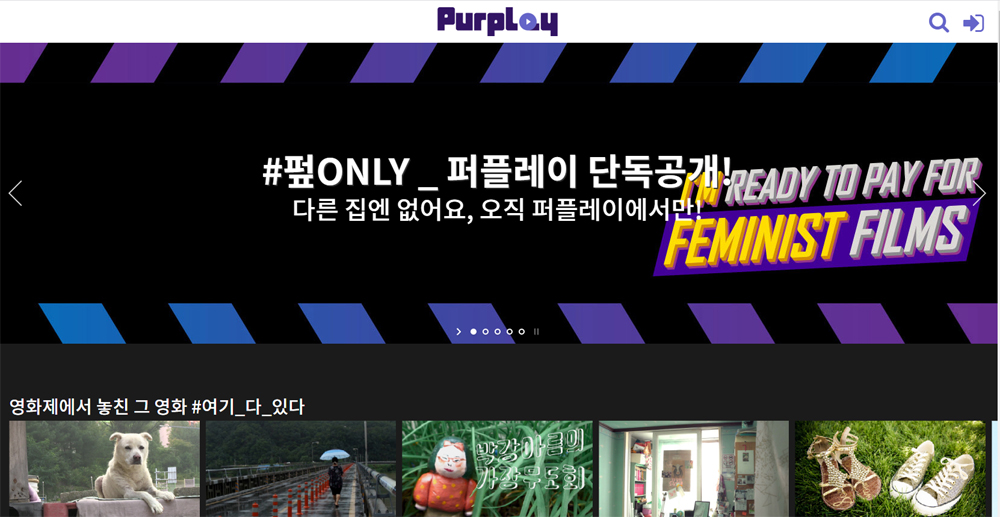
I’m Ready to Pay for Korean Feminist Films!

Estimated reading time: 2 minutes. Image source: MediaUs

And have started doing so via the newly-launched streaming service Purplay (Twitter, Facebook), which focuses on short films about Korean gender issues and those by and about Korean women.

Alas, you’re going to need considerable Korean skills to enjoy the service. There are no Korean or foreign subtitles available, and just to pay 1500 won (US$1.28) for 72 hours’ access to one film took my long suffering wife and me about 45 minutes of navigating Korea’s kafkaesque internet payment systems, by which stage we were considering simply strapping some coins to a carrier pigeon instead.

Those Korea-wide problems are no fault of the site though. And, now that everything’s installed, a simple password should suffice for future payments.

In the meantime, my first film choice of 은하비디오 below is getting me all nostalgic over the video store I used to visit in my first year in Korea in Jinju in 2000. I’m also especially enjoying the warm buzz that comes with encouraging the creation of content I like by actually paying for it, rather than just complaining about what I don’t like as per usual. I recommend it!

If you reside in South Korea, you can donate via wire transfer: Turnbull James Edward (Kookmin Bank/국민은행, 563401-01-214324)
Single Korean Women Already Have to Pay Extra to Stay Safe in Their Homes. They Don’t Need to be Infantilized in the Process.

Estimated reading time: 9 minutes. Source: Remark Vill.

If I was advertising literally anything to university students, “Don’t Worry Mom!” would probably be the very last headline I’d use. But until recently, this ad for Remark Vill serviced apartments really did tower over the Pukyong and Kyungsung University district, a small but popular nightlife district in Busan.

Its paternalism rankled immediately. In particular, it had the exact opposite message to this campaign by the accomodation-finding app Zigbang, which trumpeted the independence and sexual freedom for women which comes with leaving home. And it just feels odd for any real estate service to target potential customers’ parents, rather than the customers themselves.

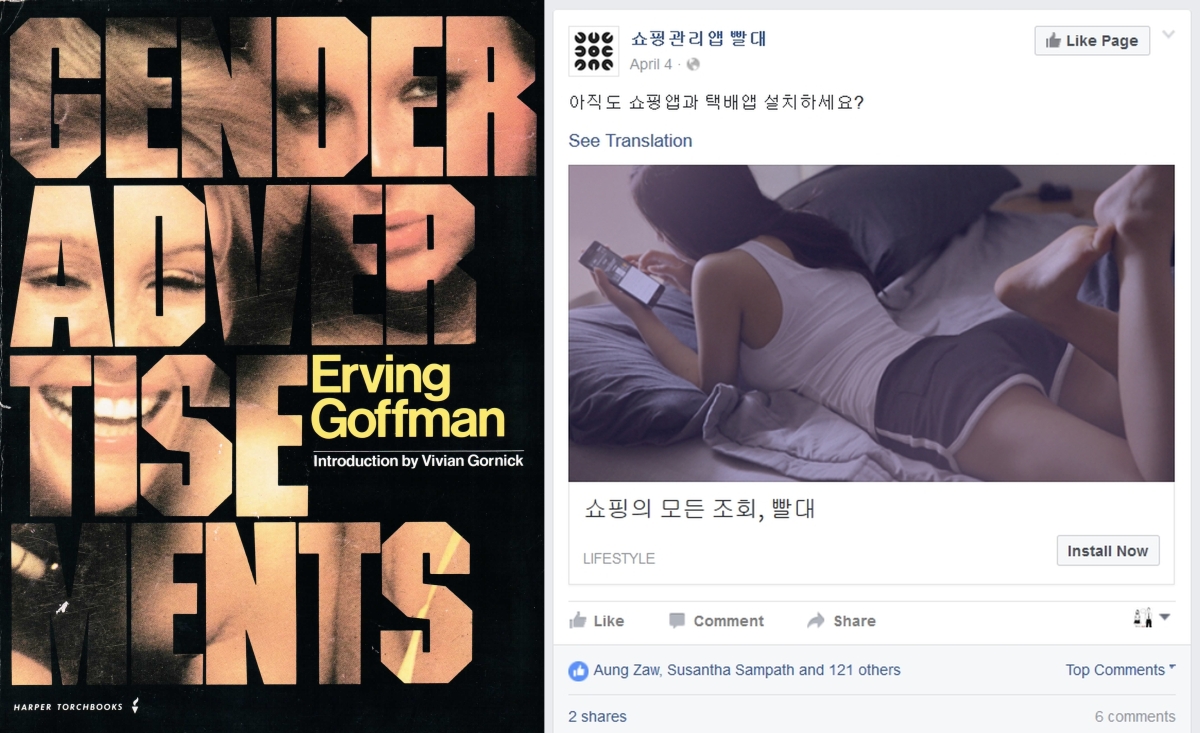
Upon further reflection however…it still rankled. Because as can be better seen in the full version, she’s also in one of the numerous, surprisingly awkward and uncomfortable poses almost only ever seen on women in ads. For sure, that’s hardly something to break the pitchforks out for in itself. Yet, as sociologist Erving Goffman pointed out in Gender Advertisements (1979), such nuances do subtly diminish the women involved. As whereas men’s usually more natural poses render them literally much more ready for action, and are thereby more authoritative looking, actor Im Se-mi above would have to uncross her legs in order to be able to do, well, anything. Or in Goffman’s own words about the similar ‘bashful knee bend,’ her pose “can be read as a foregoing of full effort to be prepared and on the ready in the current social situation, [as] the position adds a moment to any effort to flight or flee. Once again one finds a posture that seems to presuppose the goodwill of anyone in the surround who could offer harm.”

Pose like Lee Min-jung on the left, and it’s difficult even just to keep your balance. Stand more naturally like Gong Yoo instead, and you’re much quicker to spring into action.

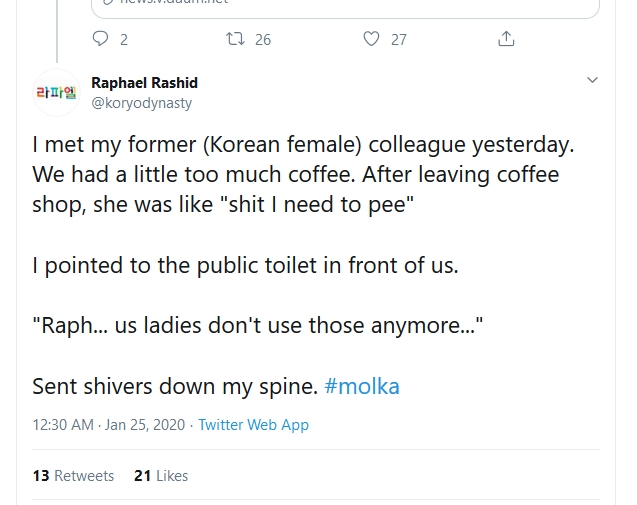
But one should pause after somehow arriving at phrases like “flight or flee” after pondering a sweet, innocuous-looking ad. Also, Korean mothers (and fathers) have good reason to be concerned about their daughters’ safety when living alone. The 2016 Gangnam murder case, in which a 23 year-old woman was stabbed to death in a public toilet for simply being a woman, is still very fresh in people’s minds. Korea’s spycam epidemic continues unabated, which is a big concern for women when using motels and public toilets. In May 2019, a security video shows a woman literally only just avoiding a stalker forcing himself into her apartment as she closed the door behind her. Moreover, before the video went viral, he was originally only going to be charged with trespassing, characteristic of a justice system widely considered to be very dismissive of women’s sexual harassment and violence claims.

Source: @koryodynasty

Naturally, daughters themselves are worried about the safety of their accommodation too. According to a recent study by the Seoul Metropolitan Government that surveyed 3,000 single-person households, 11.2 percent of female respondents cited safety as the number one difficulty living alone, against 0.8 percent of men. Also, according to a research paper by Kang Ji-hyun, a professor of criminology at the University of Ulsan, young women living alone are more than 11 times more likely to suffer from home invasion than men. Consequently, according to D. M. Park at The Korea Bizwire, they “have to pay relatively high housing costs [compared to men] as they prefer houses in safe locations and with security facilities, as well as additional money for anti-crime goods.” This difference is ignored in Korean social welfare and housing policies, as is the reality that women also make less money than men to pay those extra costs. One woman interviewed for the article described it as yet another ‘pink tax’ for women, being an example of the extra money women sometimes have to pay for a swathe of services and consumer items that men don’t, including what they have to put into grooming for their jobs.

The Daeyeon Remark Vill apartments advertised are symbolic of this: while the buildings won a special prize for their security features upon completion in 2017, nowhere on the Remark Vill website are the rental prices of any of their apartments in Korea listed—suggesting that they’re very expensive indeed (and, despite the area, unlikely to be actually aimed at university students). Moreover, given the dire job circumstances of Koreans in the late-20s and early-30s at the moment, even 32 year-olds like Im Se-mi might require parental assistance to live there. Who could possibly gripe about an ad then, that appeals to both potential female tenants and their parents?

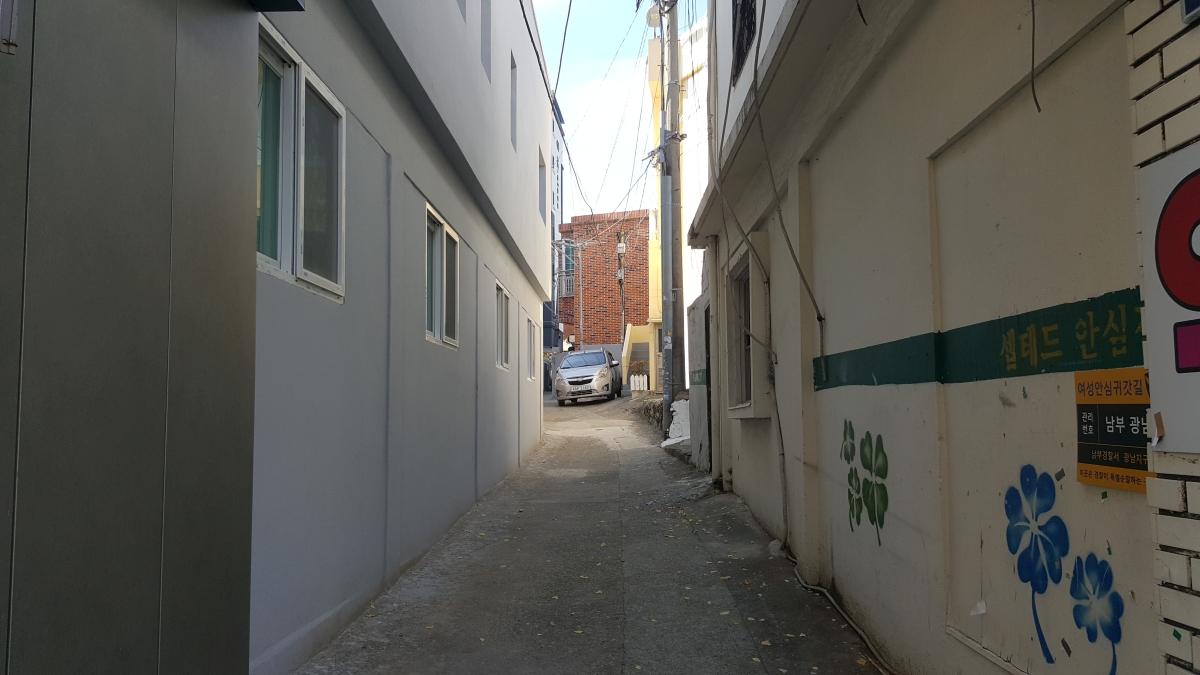
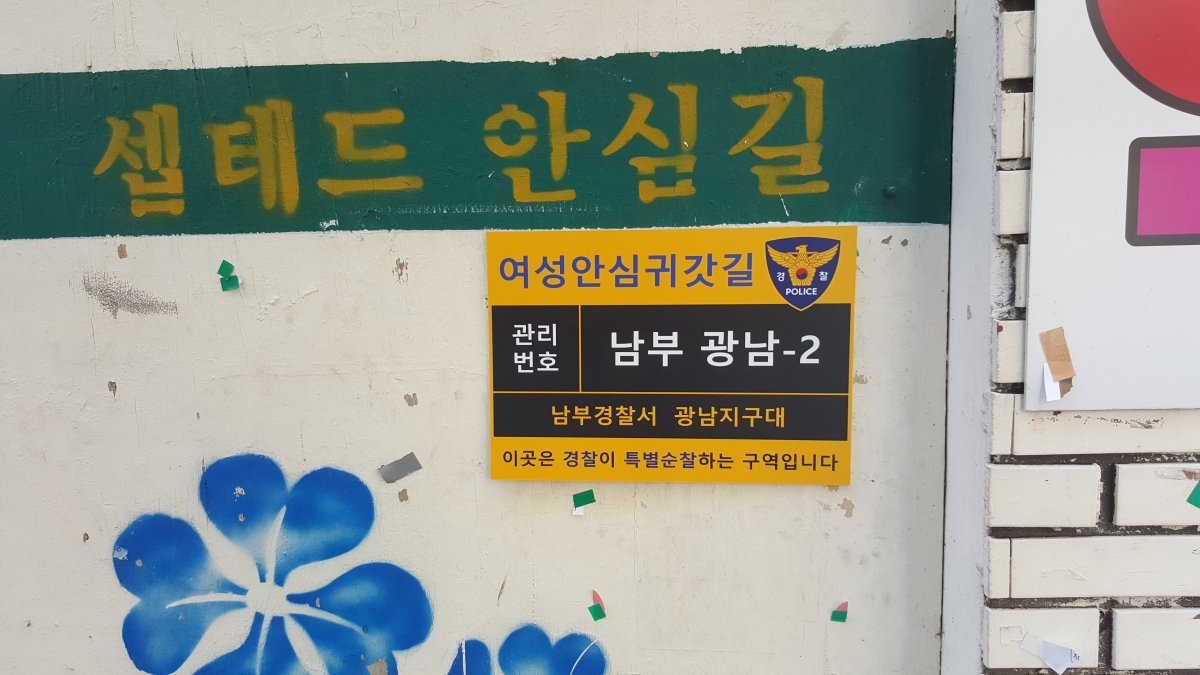
A couple of subway stops from the Daeyeon Remark Vill apartment buildings, an alleyway for “women to go home safely” that is “specially patrolled by police.” It’s the first I’ve ever encountered in Korea, but likely only because I have the male privilege of never needing to look for them. How common are they?

But I was reluctant to let this one go. I would have loved to have deferred to what Korean women thought of the ad, if only I could have found any opinions they’d offered. In their absence, I had to rely on my gut. And that told me that if something instantly rankles, there’s usually a good reason for it.

After all, recall how odd “Don’t Worry Mom!” sounded?

Just because daughters would share parents’ concerns about their safety, doesn’t necessarily mean the ad should be targeted towards the latter. Someone—a single copywriter perhaps, or maybe a whole creative team—made a conscious decision to do so. And, sure enough, even if this particular ad is relatively harmless, just a cursory investigation shows the campaign as a whole is rife with traditional gender stereotypes.

The smoking gun comes from the Remark Vill homepage itself. On it, there are four themed commercials available to watch. Two of them—about the gym facilities and various safety measures, conveniences, and business services available to tenants respectively—you don’t need my translations for. The “Mom’s Relief” one below however, is simultaneously sweet and cringey, for you sense that you would never have a 32 year-old man portrayed in the same manner. And under that, the “Teasing” one, which—spoilers!—suggests that the formerly virginal daughter is now free to invite male guests for casual sex.

Yes, really.

Unless you’re targeting parents like myself, who is very cool with that, it’s probably wise not to run a campaign tugging at parents’ heartstrings, only to present those parents who do visit your website with a reminder of how much wild sex your daughter will soon be having in your absence. Indeed, at your expense too.

Maybe, just maybe, the “Don’t Worry Mom!” campaign was ill-conceived in more ways than one.

But I’m getting ahead of myself. Here’s the “Mom’s Relief” commercial:

And my translation of the captions:

Mom, you’re bringing that up again?

I’m taking care of things myself now!

I can get lightbulbs changed if I need to, and the toilet unblocked too.

I don’t need to call Dad!

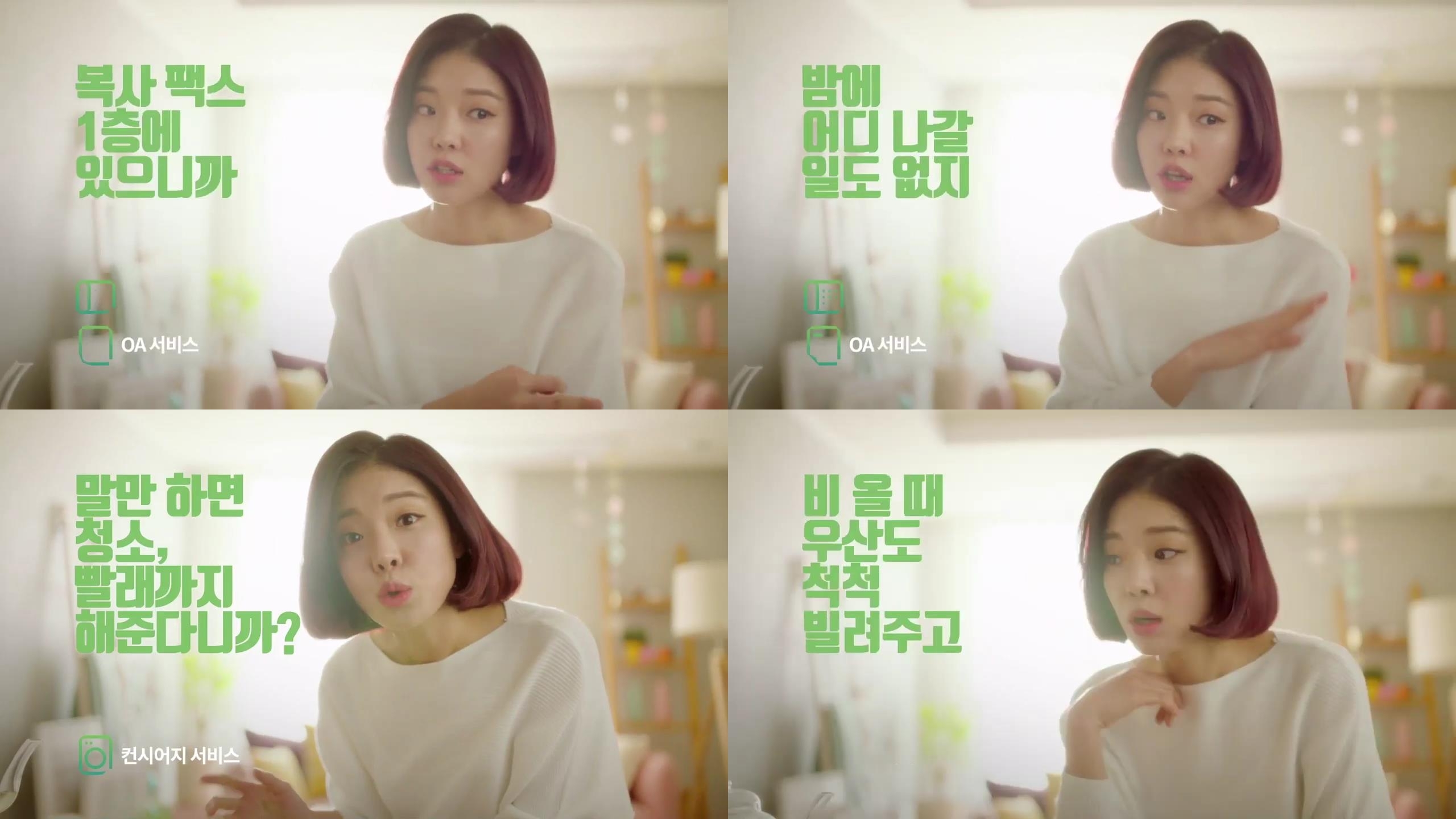
In fairness, of course there are many young people in any country who have to rely on others for simple household tasks; even back in 2009, when the single-household rate was much lower, there was already a plethora of such services available in Korea. My experience of the reporting on the trend, however, is that it tends to stress the alleged lack of adulting by female customers. And as for advertising, if the fact that a 32 year-old not knowing how to change a lightbulb or unblock a toilet doesn’t strike you as embarrassing enough—and who still doesn’t know after leaving home, the Remark Vill staff replacing the role of her long-suffering father—I invite you to consider how unlikely and unnatural-seeming it would be to have a male actor in Im Se-mi’s place.

The next screenshots reveal she gets her laundry and cleaning done by others too. Nothing wrong with that, and great if you can afford it, but—if she can’t even change a lightbulb, could she do those herself either? You really have to wonder.

(Ironically, earlier posts from the Remark Vill Facebook page actually include tips for such things as unblocking toilets by yourself—which just goes to show how much of a step backward this particular campaign is.)

There are copying and fax services available on the first floor.

I don’t need to go out at night.

If I want, there’s even cleaning or laundry services.

I can even borrow an umbrella when it’s raining.

Don’t worry!

But still, please come over often.

They don’t make kimchi for me here…

[You’ll come] Right?

I’ve got to admit, that’s pretty damn cute. Then I remember…

SHE’S THIRTY-TWO.

And on that note, on with the “Teasing” commercial:

And the captions:

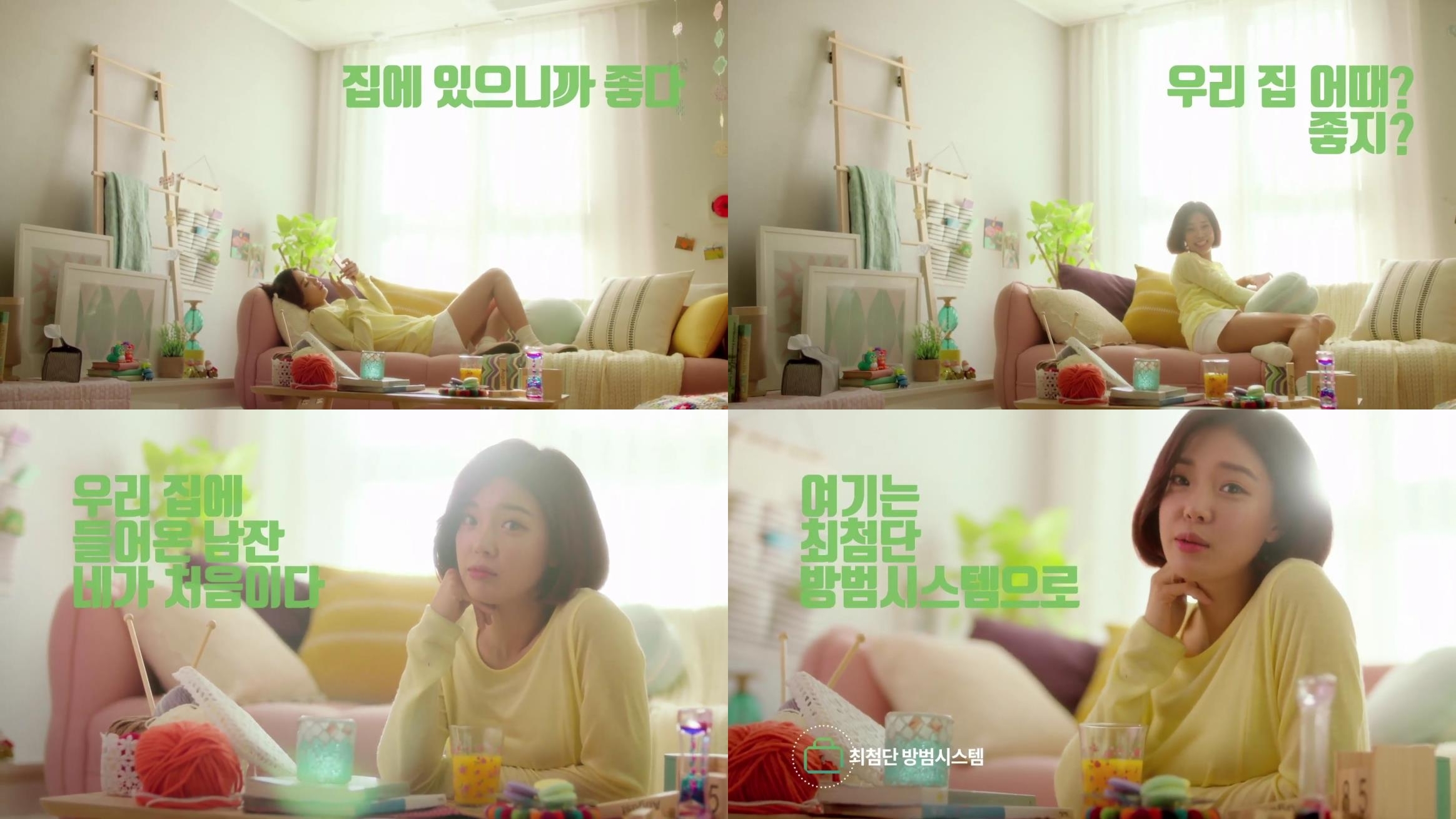
It’s so good to be home!

What do you think? It’s good, right?

This is the first time I’ve had a man come over.

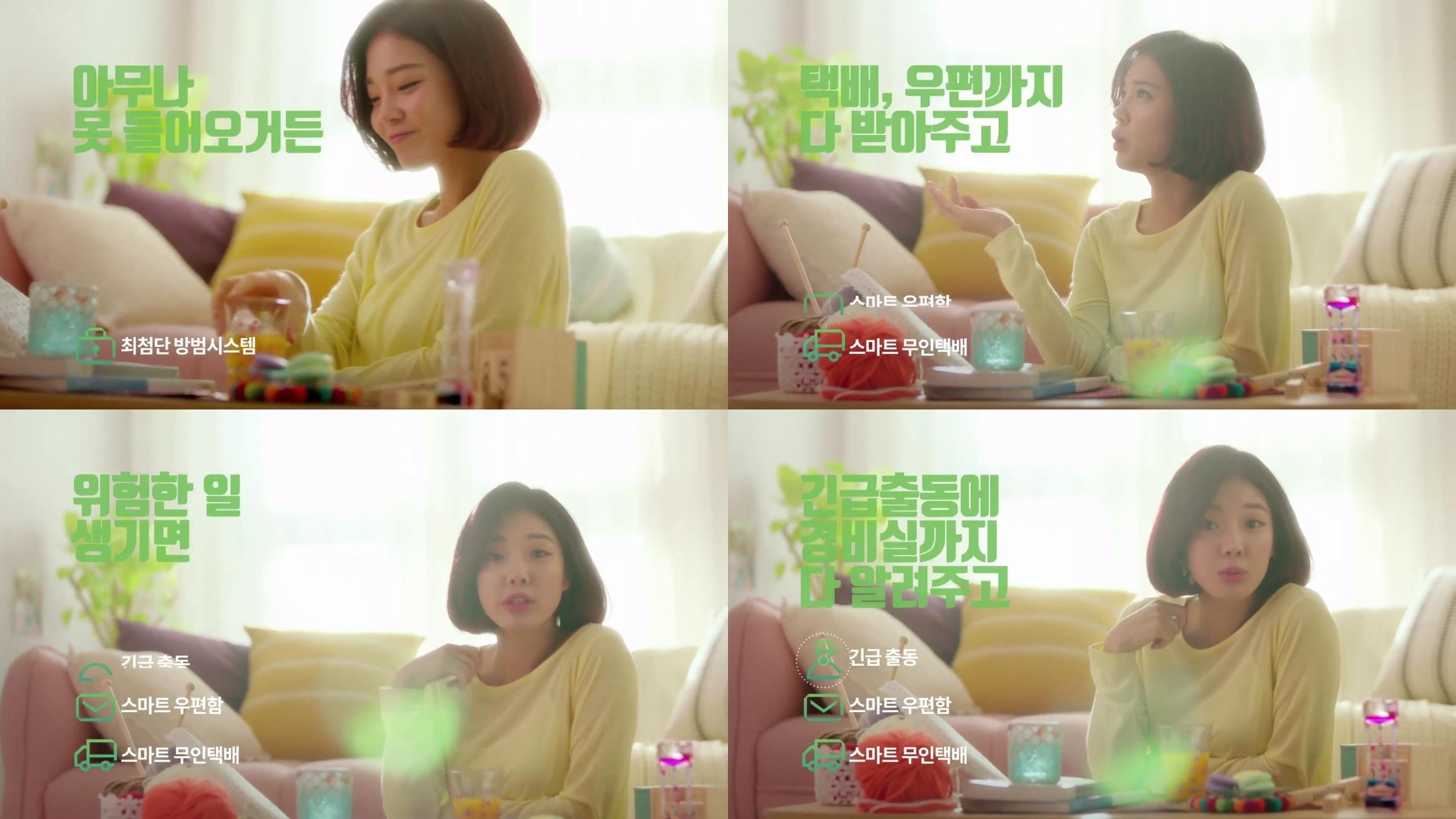
There is a state of the art security system in this building…

[…So] No unwanted visitors can come in [the building].

The building staff receive everything for me, like mail and deliveries.

If something dangerous happens…

A quick response from the security office is just a phone call away.

From the Remark Vill Facebook page, a highlight of that safe pick-up and delivery system (which can also be seen in the “Features and Services” video, as can real-time monitoring of one’s parking space):

Wireless delivery system. A smart delivery system makes this a very safe place to live alone.

Continuing:

There’s CCTV, and a tight security system overseeing everyone that enters the building.

[So] I don’t need a boyfriend!

Why are you looking like that?

You like me??

Wake up! I’ve never thought of you as more than a friend.

(No caption) Do you want to Netflix and Chill?

Technically, that the male viewer is the first to come to her apartment may only mean precisely that. But the hint of previous inexperience, combined with the desire suddenly awakened by his presence, sounds very familiar:

From Stephen Epstein’s and my chapter “Girls’ Generation? Gender, (Dis)Empowerment, and K-pop” in the Korean Popular Culture Reader (2014), alas, K-pop ages very quickly. Most of the 100 songs we analyzed for it, the young women of 2020 would only have vague memories of hearing as girls.

Perhaps it’s time Remark Vill realized they’ve grown up now too?

Related Posts:

If you reside in South Korea, you can donate via wire transfer: Turnbull James Edward (Kookmin Bank/국민은행, 563401-01-214324)

Headless Images Dehumanize Obese People. It’s Now a Fact.

Nearly 6 in 10 news articles about obesity are accompanied by headless images of obese people. In the first of its kind, a recent study demonstrates a direct, dehumanizing effect.

Estimated reading time: 9 minutes. Image by cocoparisienne from Pixabay

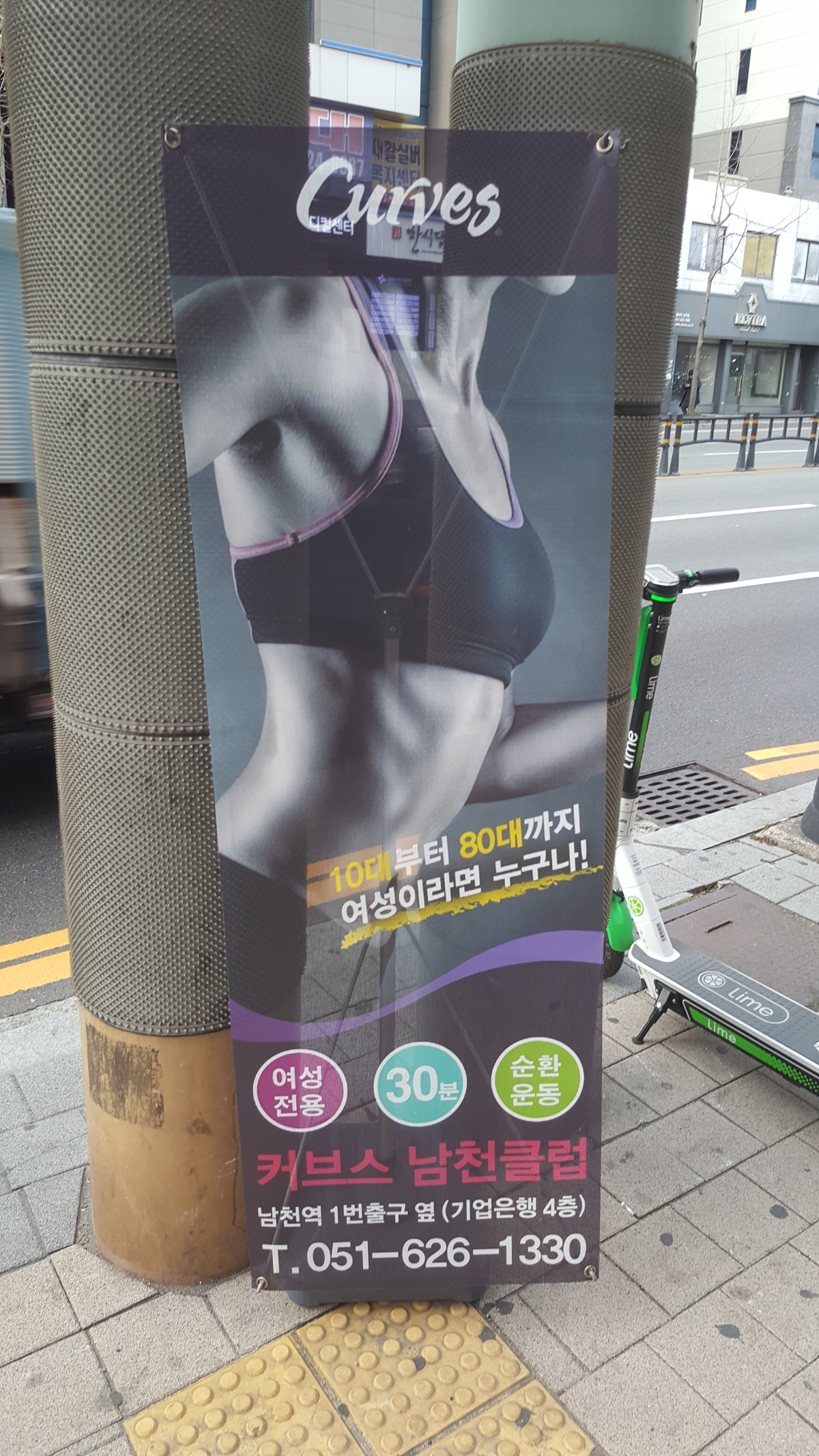
For most people, focusing on body parts is the very definition of objectification. Remove subjects’ faces in particular, and you remove the individuality and implied consent communicated. But context is everything. You could critique the “real women have curves” philosophy behind this women-only gym’s name for instance, or the slut-shaming that used to compel Korean lingerie models to hide their faces, but it’s difficult to take issue with the ensuing, headless ads themselves. In music videos and art too, viewers are generally reluctant to judge objectification in isolation. And rightly so: anyone (i.e. everyone) who’s ever discretely admired someone’s magnificent legs, breasts, muscular arms, broad shoulders, or six-pack from afar knows it is possible to like whatever body parts do it for you, while still completely respecting their owners.

Such imagery is pervasive however, nor is every viewer of it as woke as you. You sense there are real consequences for the objectified. But evidence is mixed, as a direct causal link is difficult to prove.

A recent study of the effects of common visual depictions of obese people in the news, however, may provide one. But may also be very specific to obesity.

Among major news outlets in the US, as many as nearly 6 out of 10 articles about obesity issues are accompanied by headless images of obese people. To non-obese people especially, this figure may sound high, but not necessarily a problem. To be sure, we’re all aware of fatty jokes and stereotypes in pop-culture, but news stories about obesity would seem to have that objective, factual context that obviated any potential negative effects. Namely, just like a bra ad featuring only a women’s chest in said bra is acceptable and expected, whereas the same shot of a non-consenting spycam victim would be a crime, that news articles about obesity would tend to be accompanied by pictures of obese people seems logical. That their editors, whether for reasons of civility, consideration, and/or privacy laws would choose to hide or cut out their faces, we can assume would almost always be well-intended. Yet the study shows that the ensuing headless images are precisely the ones that are most damaging. Indeed, obese people themselves, frustrated with almost only ever seeing bulging stomach and butt-shots of themselves in articles specifically about them, might be somewhat less surprised to learn that such images now have a proven dehumanizing effect.

Surrealist Composition by Friedrich Schroder-Sonnenstern, 1965. Source: WikiArt.

But those effects may be very specific to obesity due to the premise of the study, outlined in the opening paragraph (my emphasis, in the first of what I promise will only be two long copy and pastes):

Why would a human feel uncomfortable shaking hands with another human being? The answer from evolutionary psychology would be that the human brain is predisposed to ‘infer’ that a person carries a contagious disease if the person has a bodily cue that is grossly different in form or size from norms (Park, Schaller, & Crandall, 2007). This cognitive bias induces disease-avoidance responses including disgust or avoidance of physical contact with the possessor of unusual bodily cues (Park et al., 2007). An obese human body is one of the visual cues or ‘marks’ triggering such aversive responses (Park et al., 2007; Smith, 2012). Evidence from social neuroscience indicates that disease-avoidance responses inhibit or block cognitive processing of humanly unique traits such as high rationality of a person with the disease-relevant signs (Harris & Fiske, 2007). In this way, the possessor of the disease-relevant signs such as an obese body is perceptually dehumanized. In turn, the heightened dehumanizing perception could lead to exclusionary attitudes toward obese individuals (Buckels & Trapnell, 2013).

In other words, obesity mimics the symptoms of many communicable diseases, and the consequences of assuming a diseased person is healthy and safe to physically interact with are usually greater than shunning an apparently diseased person who is in fact healthy. Therefore, exposure to obesity, prompted and exaggerated by imagery in news articles that highlights obese people’s bodies over all else, provokes an instinctual aversion and disgust to obese people, which viewers rationalize by dehumanizing them:

When the false-negative bias is prompted, people will unfavorably react to individuals who display any of the disease-like signs as if they carry infectious diseases, even when they are completely healthy (Park et al., 2007). Lieberman, Tybur, and Latner (2012) similarly suggested that certain infectious diseases (e.g. elephantiasis) accompany bodily changes such as swelling or fluid buildup that may be visually similar to obesity. Following this disease avoidance account, Park et al. (2007) maintain that the obese body type may be a visual cue that triggers the activation of disease-relevant behavioral reactions (e.g. avoiding physical contact) and emotions (e.g. disgust). And this is in line with Smith’s model (2007). Yet, this account has actually long been supported by a large volume of past research (Kurzban & Leary, 2001; Park et al., 2007; Park et al., 2013; Ryan, Oaten, Stevenson, & Case, 2012). Of those studies, Park et al. (2013) provided more directly relevant evidence for the current study that showed that the photo of an obese man heightened participants’ discomfort level for having physical contact with an obese individual (Park et al., 2013). Likewise, Ryan et al. (2012) found that participants exhibited the same emotional and behavioural responses to confederates with ‘real’ disease signs such as influenza symptoms as with confederates displaying non-disease signs or ‘false alarms’ such as a facial birthmark.

The authors of the study—Yongwoog Andrew Jeon, of University of South Florida; Hyeseung Elizabeth Koh, of the University of Texas at Austin; Jisoo Ahn, of Hallym University, South Korea; and Renita Coleman, of the University of Texas at Austin—then set out to test the following hypotheses:

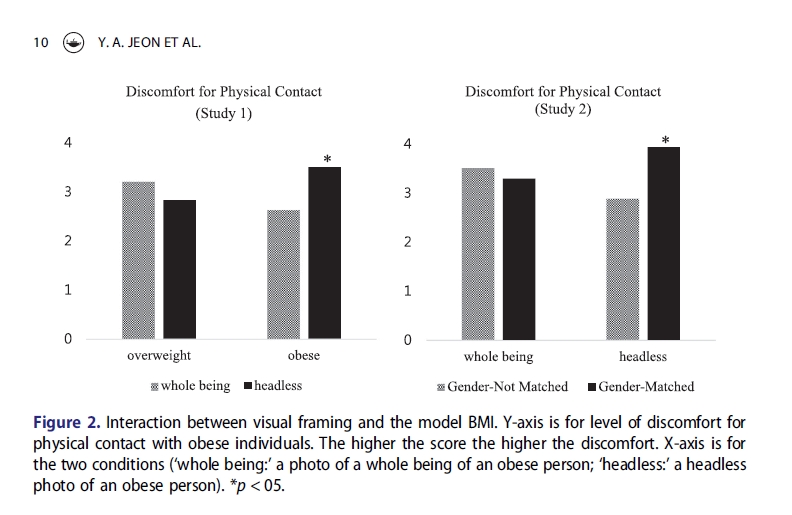
H1: People who see a news photo of a headless obese person will exhibit a greater level of discomfort with physical contact with an obese person than those who see the whole being of the obese person.

H2: When the head of the obese model in the photo is absent (present), readers’ identification with obese individuals will decrease (increase) in the identity match condition (i.e. BMI or gender matches) compared to when they do not match.

H3a: When the genders of the person in the photo and the reader match, the effect of the absence (presence) of head of the obese model in the photo on disease avoidance responses (indexed by levels of physical avoidance and disgust) will be significantly stronger (weaker) than when their genders do not match.

H3b: When the BMI levels of the person in the photo and the reader match, the effect of the absence (presence) of head of the obese model in the photo on disease avoidance responses (indexed by levels of physical avoidance and disgust) will be significantly stronger (weaker) than when their BMIs do not match.

In the first of what were actually two studies, 332 people (80 percent white, 40 percent male, 40 percent in regular BMI 18.5-24.9 range, and with a mean age of 40.13) read two very typical news articles related to links between obesity and disease, with the accompanying randomly-selected images being of headless (not) models, male (female) models, and obese (overweight) models (crucially, men only saw men, and women women). They were then asked about how comfortable they would be shaking hands with obese people, on a scale of one to ten.

In the second study, 312 people (79 percent white, 45 percent male, 44 percent in a regular BMI range, and with a mean age of 35.2) likewise read two very typical news articles related to links between obesity and disease, with the accompanying images being of either a male or female obese twin, controlled for similar, neutral facial expressions and equal levels of attractiveness and obesity (crucially, participants saw a model of either sex this time.) In addition to being asked about how comfortable they would be shaking hands with obese people, they were also asked about hugging or being in the same elevator as them.

The results:

H1: Supported—Headless, dehumanizing imagery of obese people increases feelings of discomfort towards obese people more than full pictures do.

H2: Supported for gender—When people are the same gender as the model, they will identify less with the model if their head is not visible. Headless images, however, do not decrease the likelihood of obese viewers identifying with the obese model.

H3a: Supported—When the genders of the person in the photo and the reader match, feelings of discomfort and disgust are stronger when models are headless

H3b: Not supported—Sharing the BMI of an obese model has no impact on the effect of seeing them headless or not

Source: Vippng

The authors acknowledge that far more testing is required, especially with models and participants of different ages and races, and that overcoming stigmas towards obesity is far more complicated than simply eliminating headless photos in the media. But it’s clear that at present, “the prevalent visual framing of obesity in the news media is [indeed] dehumanizing not just metaphorically.”

In turn, I acknowledge simply sharing the hypotheses and barest outlines of the results doesn’t at all do justice to their article, which would require a far longer post. But I am happy to email the article for those of you that lack access (*cough* Science Direct *ahem*), and I look forward to all your comments and queries.

In particular, do these results have anything to say about sexual objectification? Or are they just too specific to obesity, because of the authors’ premise as discussed?

Happy 2020 everyone!

Update

Thank you for the excellent responses made on Twitter and Facebook:

(Anonymous, used with permission.)

Many other commenters echo the points about legal reasons for the cropping, and possible alternative solutions. So for your interest, let me pass on what the authors have to say about both:

In general, almost half of obesity-related news articles from major news outlets including CNN, ABC, Fox, The New York Times, and The Washington Post, visually depict an obese person in only one of following ways: eating junk food, sedentary, showing a bare abdomen, dressed in inappropriately fitting clothing, and, most commonly, headless (Puhl, Peterson, et al., 2013). [Note, the 6 in 10 is from news articles in general; see Heuer, McClure, & Puhl, 2011—James] A negative visual depiction of obese individuals (e.g. eating unhealthy foods) can increase social distance and anti-fat attitudes toward obese individuals more than positive depictions (e.g. exercising) (Puhl, Luedicke, & Heuer, 2013). Even though this finding provided empirical evidence for visual framing’s role in prompting anti-fat attitudes, the most prevalent feature of the visual depiction of obese individuals, as ‘headless,’ has not yet been fully examined. Headless is a product of cropping – a technique of digitally removing a part of an image. Through cropping, journalists may attempt to convey the implicit message that ‘this is important!’ Likewise, by cropping out the head of the obese person in the photo, the obese person’s stomach is visually emphasized. News media may use cropping for anonymization and privacy (Puhl, Peterson, et al., 2013). However, regardless of journalists’ actual intentions, these photos can effectively capture people’s attention because the humans’ visual system assigns attentional priority to the human body (Peelen & Downing, 2007). Further, the stomach is one of the body regions that is of highest concern among both regular and overweight individuals when judging one’s physical attractiveness and health (Warschburger, Calvano, Richter, & Engbert, 2015)

And one of the practical implications of the findings of the study:

Of course, ‘putting the head back’ in the photo should not be the only way of depicting obese individuals. Researchers and journalists may need to work more on how to improve media portrayal of vulnerable or stigmatized groups of people. Already, the research institute has produced a guideline based on their research on how to use photos of obese individuals (RCFPO, n.d.). For example, all the photos provided by the guidelines show the whole being of obese individuals engaged in healthy activities or others that are counter-stereotypical. In addition, it may be better to develop a strategy that does not necessarily involve the use of the photos of people, but instead has other relevant visual information such as infographics that visualize data on, for example, the relationship between stress level and eating habits. Also, to solve the issue of privacy, instead of using photos, illustrations of obese individuals that are created by artists can be used. Photos that show the whole body of obese people from the back is another solution. All these alternatives await further empirical validations in future research.

If you reside in South Korea, you can donate via wire transfer: Turnbull James Edward (Kookmin Bank/국민은행, 563401-01-214324)

Finding the Mother Lode

Hi everyone. How’s your December been? Mine’s been full of testing, grading, breaking my toe, acquiring two homeless kittens, and finally doing some last-minute Christmas shopping…for myself. Which means that shortly after this goes up, I’ll have to hobble out of the door and actually start looking for presents for my poor daughters.

No, really. Ahem.

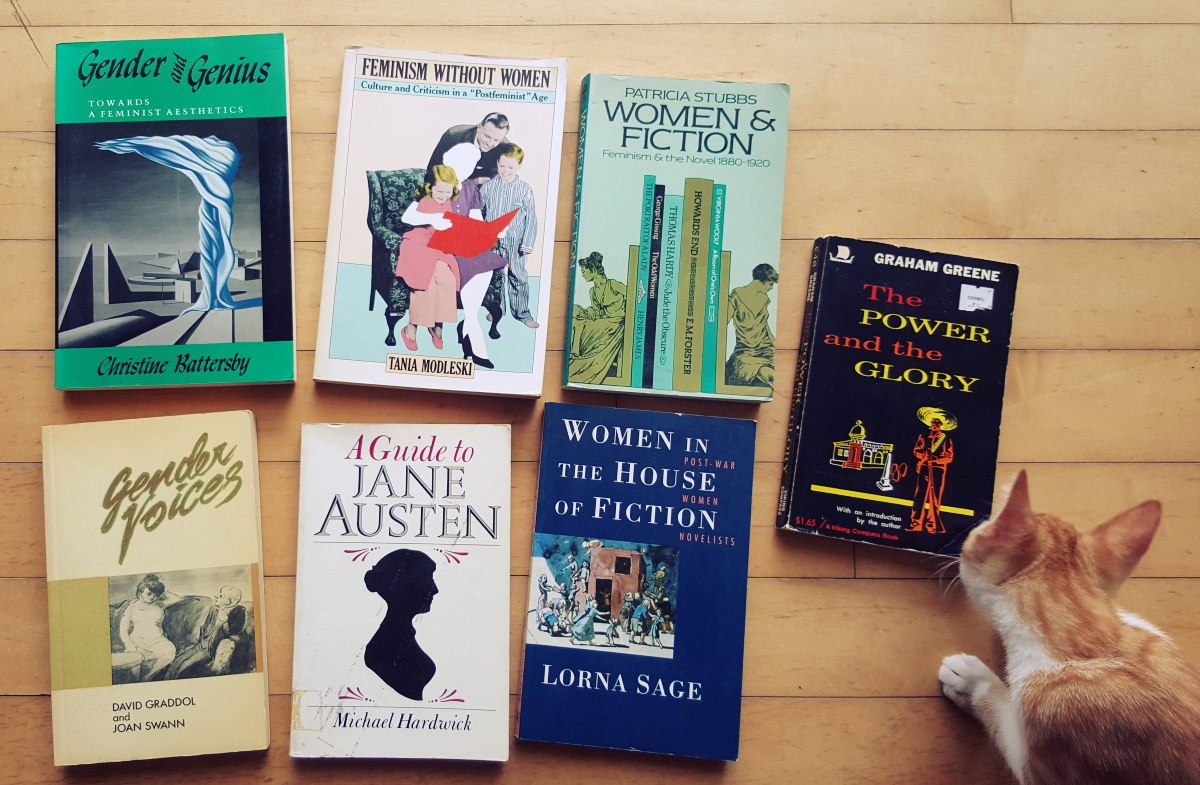
But back to me. I did discover quite the mother lode in Busan Book Alley yesterday, yes? Yet even I balked at the various readers on Lacan and Gender and Critical Theory available though, and reluctantly put down such tomes as examinations of the works of various Australian woman authors, which I’d be unlikely to ever read myself. So you’re more than welcome to pick those up yourself!

Meanwhile, I’m also happy to say I do finally have various long posts actually written for you. But, curiously, Christmas and New Year’s don’t seem to be the best times to post anything you’d like to actually get read. So, I’ll just keep writing more instead—I shouldn’t be walking much on this toe after all—and will delay posting them until late next week.

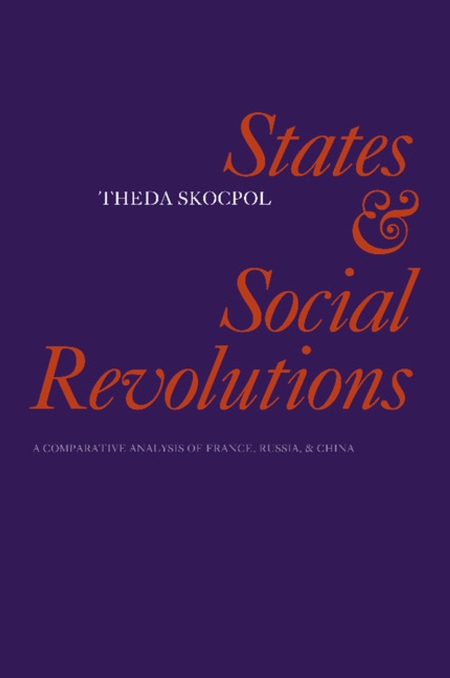
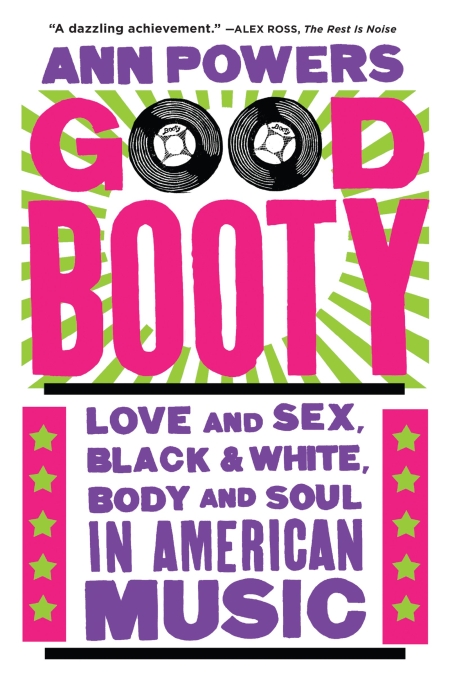
Until, I hope you enjoy the holidays. And, given that you’re still reading this probably means that you too get excited about 30+ year-old books, I’d be happy to chat with you about any of my picks above. Probably, I’ll start with Gender Voices by David Graddol and Joan Swann (1989), in which the authors “explore in a clear and comprehensive manner the idea that language shapes individual lives—that through our speech we all help recreate gender divisions in society,” as that’s a subject there’s been many Korean articles about in the last few months. First though, I’m going to finish the classic States and Social Revolutions: A Comparative Analysis of France, Russia and China by Theda Skocpol (1979), which I wish I’d actually read when I studied it in a course on revolutions as an undergraduate. After that, I’ll try to finish Good Booty: Love and Sex, Black and White, Body and Soul in American Music by Ann Powers (2017), a rare new book which I bought because I listened to an excellent podcast interview of the author. I had to put it down a third of the way in however, as I just wasn’t enjoying the overly evocative writing style, through which every other humdrum dance-hall meeting and church service described somehow becomes rendered into a hotbed of hidden desires, frustrated lust, secret liaisons, and opportunities for forbidden miscegenation. This “pregnant with possibility” style as I like to call it, prominent in Clive Barker’s fantasy novels which I learnt the term and from especially in The Price of Salt (a.k.a. Carol) by Patricia Highsmith (1952), I usually enjoy immensely. But not in this first encounter in non-fiction. Perhaps after 293 pages of Scokpol’s “structural functionalism sociological paradigm comparative historical analysis” though, I’ll enjoy the contrast, especially more once I begin the post-1950 chapters about music I know?

Happy reading everyone!

If you reside in South Korea, you can donate via wire transfer: Turnbull James Edward (Kookmin Bank/국민은행, 563401-01-214324)
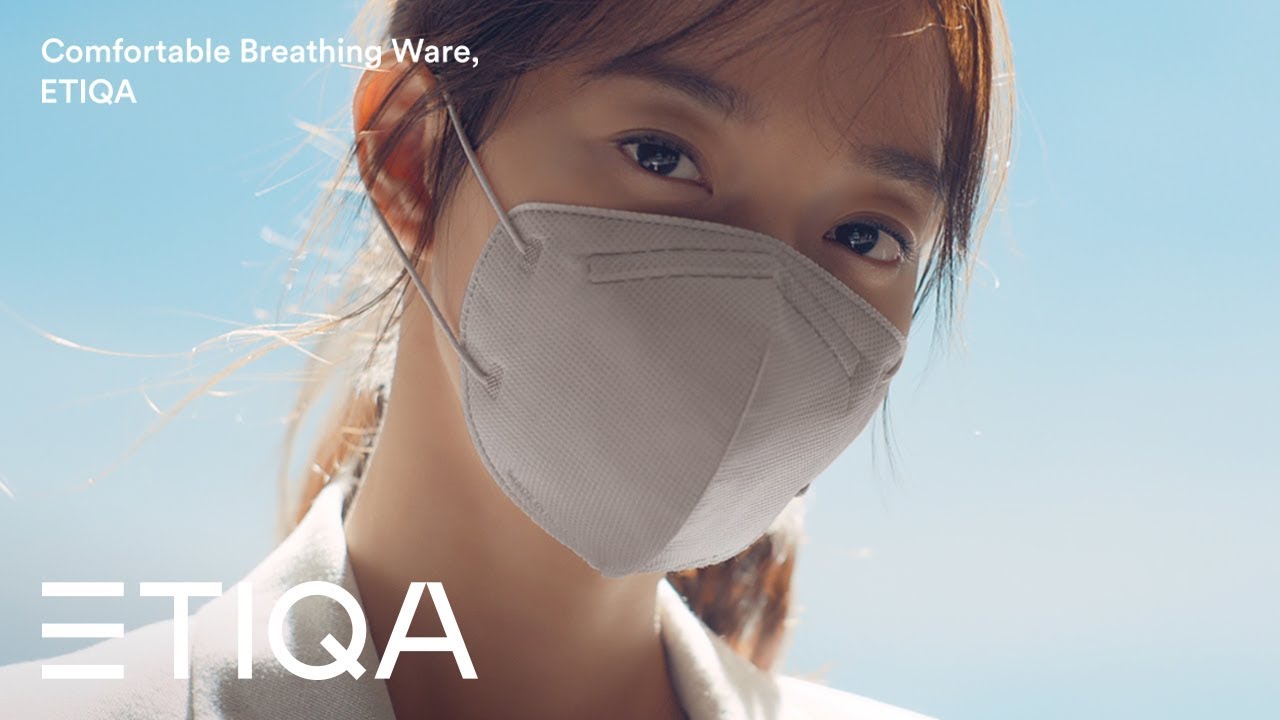
The Future is Now: Shin Min-a’s Dystopian Dust Mask Commercial Is Straight Out of Robocop 2

Estimated reading (+viewing) time: 3 (+4) minutes. Source: YouTube.

It’s become routine these days, trite even, to point out the many ways we are now living in the dystopias of once only imagined futures. So, when Shin Min-a’s endorsement of ETIQA dust masks came out back in February, reminding consumers there was no reason you couldn’t also look fashionable while trying to survive the climate apocalypse, I bit my tongue at the obvious resemblance to a spoof commercial from the Robocop 2 (1990) movie. Ten months later though? Again there’s much talk of fashionable ETIQA dust masks in the wake of the blinding, choking, toxic dust storms raging across the peninsula, yet a certain cyborg remains notable only for his absence. It seems this aging Generation X-er may in fact have been the only one to have made the connection.

Specifically, it was the Sunblock 5000 commercial that instantly came to mind. Because no need for the loss of the ozone layer to spoil getting that perfect tan, right?

And, with a nostalgic wink to fellow Gen X-ers, here it is in a compilation of some other spoof commercials from the first and second movie to give it some context:

In reality, without the ozone layer we’d all soon be dead; like much about the original movies (e.g., did you know the first was accidentally set in 2043?), with slightly more thought put into the commercial—as in having the voice-over claiming there was still slightly more than none of the ozone layer remaining—it would have been much more plausible. But at least, way back when I was 14, it did instill in me the first inklings of the sense that we were fiddling while Rome burned. And indeed, 30 years later, now we have a very real commercial that is in much in the same spirit.

What impact will this one have?

If you reside in South Korea, you can donate via wire transfer: Turnbull James Edward (Kookmin Bank/국민은행, 563401-01-214324)
If Slut-shaming Wasn’t a Thing, Why Would Korean Women be too Scared to Even Have Their Names Put Down in an OBGYN’s Appointment Book?

Half of Korean physicians prescribing the morning-after pill report being asked not to record identifying information

Estimated reading time: 5 minutes. Photo by fotografierende from Pexels (edited).

Korea is rare among high-income countries for allowing over the counter access to the monthly contraceptive pill. Also, ironically, for its extremely low rate of usage despite that access.

Meanwhile, the morning-after pill requires a prescription. This was reaffirmed by the government in 2016, citing, with incredible hutzpah, precisely that low rate of usage of the monthly pill as evidence that Korean women were simply too ignorant about contraception not to abuse emergency contraception.

Ignorant or not however, in practice OBGYNs were moralizing rather than educating those patients that sought it, as discussed by Claire Lee in the Korea Herald:

Jeong Yu-jin (31) said there was no benefit to her in visiting her gynecologist to obtain the drug, as the doctor gave no explanation on birth control as well as the pills. “It just cost me more time and more money,” she said. “With or without a prescription, it’s very hard for women to access accurate information about the drug and its effects. So why not just make it an OTC drug and at least allow us to access it as soon as possible?”

In order to avoid getting a “scolding” from doctors and unwanted attention from visitors and nurses, she visited different clinics every time she needed the drug, Jeong said.

“I think this notion of ‘unwed women are supposed to be sexually inactive,’ still prevails in Korea,” she said.

The duplicity ran deeper still. Prior to the decision, the Ministry of Food and Drug Safety itself admitted that “As the drug is known to be effective up to 72 hours after unprotected sex, the requirement of a doctor’s prescription may deter prompt access to the pills and reduce its effect.” However, it caved in response to pressure from religious groups and the Korean Society of Obstetrics and Gynecology, the latter of which long arguing that the overuse of morning-after pills can cause “serious side effects” to women—despite the WHO considering them “very safe and posing no risk of overdose.”

One of those reasons a prescription may deter prompt access to pills is because of simple logistics: just imagine a scared teen, with few breaks between busing to cram school after cram school, trying to find a dispensing clinic on a weekend. The other is because of Korean medical staff’s notorious disregard for privacy. As I wrote about in 2012, on her very first visit to a gynecologist in 2000 my then girlfriend-now-wife was asked my name, contact details, occupation, and intentions towards marriage. Likewise, many of you still suffer such indignities as having to loudly explain your intimate medical issues in busy waiting rooms, and/or being complimented on the prettiness of your vagina during examinations.

Add that Korean society does indeed shame sexually-active unmarried women, then the fear of being outed through that unprofessionalism is very real.

But how to provide proof of that concern, beyond the anecdotal?

“The reaction to having a woman in a condom ad is exactly why we need women in condom ads.”

The short article, “The attitudes of Korean physicians toward emergency contraceptive pills: Regarding women’s access and rescheduling” by Eun Sil Lee, Chong A Lee, Jee Hee Lee, Bo Ra Park, and Imsoon Lee (2018), based on a survey conducted in 2014-15, provides a starting point:

In addition to insufficient information, 22.5% of physicians recognized that there was a psychological issue with regards to women visiting clinics or hospitals to obtain ECP prescriptions. The fact that 51% of physicians had been asked to prescribe ECP without recording personal information, underscores the need for a policy to further improve ECP access in Korea. The fact that the survey indicates that 17% of physicians found ECP access difficult, suggests the need for greater and improved access.

There are issues with that statement: what personal information is normally required exactly? The morning-after pill is not covered by the national health insurance system, so the usual social security number wouldn’t be necessary. Also, how did the physicians respond to the request? Could they comply, or do tax-related and/or various other laws prevent it? What are the laws regarding the anonymity of minors (albeit only compromising 5.7 percent of patients)? And so on.

There are broader problems with the article too. One, that the survey respondents were not necessarily representative of all physicians, the authors acknowledge. Another, that physicians have vested financial interests in maintaining prescription-only access to the morning-after pill, they don’t. Nor that physicians themselves are in large part responsible for the “negative and false perception[s] about the safety of emergency contraceptive pills” that they cite as the biggest issue restricting women’s access to it.

The physicians’ honesty about their patients’ privacy concerns is remarkable, considering.

Hopefully, answers to some of those questions raised will be available from Korean-language sources. Until then, let’s end with how we began: if slut-shaming wasn’t a thing, why would Korean women be too scared to even have their names recorded in a OBGYN’s appointment book? Hopefully, this evidence of that will change some minds—or at least shut them up!

Related Posts:

If you reside in South Korea, you can donate via wire transfer: Turnbull James Edward (Kookmin Bank/국민은행, 563401-01-214324)
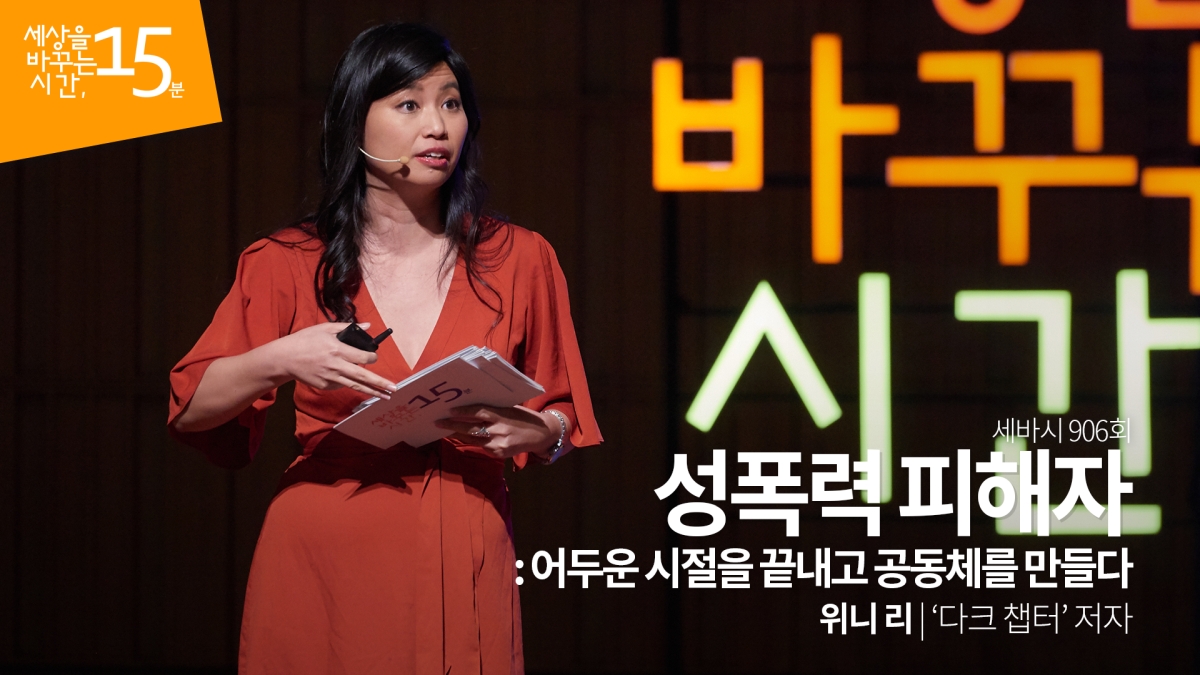
MUST SEE: “Reclaiming our Dark Chapters and Building a Community” Sebasi Talk by Winnie M. Li, Author of Dark Chapter

Estimated reading (and viewing) time: 3 (+17) minutes. Image source: YouTube.

Long time no see everyone, and sorry for the wait.

We’re all busy these days, so I won’t waste your time with explaining why. Suffice to say I no longer have long blocks of time free to really delve into a subject like I used to. Don’t worry: that doesn’t mean I won’t be writing marathon, heavily-researched posts anymore, or never finishing the—ahem—half-dozen series I have ongoing. Just that I can’t spend Herculean, lunch to dinner sessions on posts like I used to. Instead, I have to take advantage of a free half an hour here, an hour there, and…TBH, I’ve been struggling to make the transition. But I’ll get there.

In the meantime, there’s one more change I’m going to have to make, which has been a long time coming. The issue is I’m always reading, listening, and watching Korean feminism, sexuality, and pop-culture-related things, but I don’t share them because, time aside, I usually just don’t have much to add to them. That compulsion is such a 2007 blogging mindset though. (Yeah, that’s how long I’ve been doing this.) Also, that I’ve been spending an hour per day posting to Twitter and Facebook for many years has blinded me to the fact that many readers of mine aren’t actually on either (sorry). So, from now I’ll making lots of short posts, drawing your attention to the interesting and useful, with only minimal commentary from me if necessary. Meanwhile, I’ll still be working on the marathon posts in the background.

That said, most of those things I’m reading, listening, and watching these days are—yay me?—all in Korean, which, sans translating everything, are not necessarily the easiest things to pass on to non-Korean speakers. But again, I’ll see what I can do.

Which brings me to the video of the title, an April 2018 talk in Seoul for Sebasi (like a Korean TED) by sexual assault victim and now education and rights activist Winnie Li, author of Dark Chapter.

Frankly, I’d never heard of her before this Saturday, when I had to attend a TEFL conference at my university. But at that conference, attendees were told there was a mandatory viewing session of a video about preventing sexual harassment.

You can imagine most people’s reactions: in Korea, such videos are typically cringeworthy, patronizing, and terribly-translated cartoons. Instead, we got the presentation below…which by no means is about sexual harassment prevention.

What exactly it is about though, I’ll have to frustrate you by not saying, because I want you to be as shocked and amazed as I was. But I do promise that no matter how busy you are, it will easily the best use of 17 minutes you’ll make this week.

After you’ve watched, please let me know what you think in the comments. And make sure to check out Winnie Lee’s own blog too!

(Note that the talk is all in English, with Korean subtitles.)

If you reside in South Korea, you can donate via wire transfer: Turnbull James Edward (Kookmin Bank/국민은행, 563401-01-214324)
Is This “False Equivalence”?

When men are objectified, it’s often as a male-power fantasy, whereas women are usually objectified as passive objects of a cishet male gaze. Where do you think these ads for a Korean gym fit in?

I stopped outside this Jeju City gym for the terribly photoshopped, giraffe-like figure of the man alone.

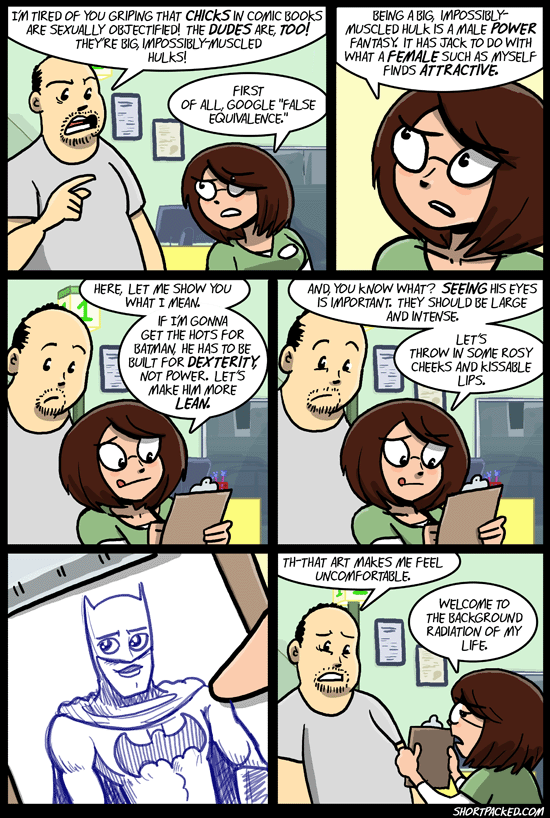
Then I noticed the banner of the woman behind me, presumably aimed at encouraging female customers to join. The contrast between his cockiness and her languid pose, seductively pulling down her leggings, immediately reminded me of this classic Shortpacked comic by David Willis:

What do you think? Are these gym ads an example of false equivalence?

Technically, the guy is pulling his pants down too—which took me a long time to notice, because it feels less integral to the concept as added after the fact, unlike the woman who was instructed to pose seductively from the get-go.

Or am I just saying that because I’m a cishet guy, instinctively feeling competitive and so immediately drawn to his pecs? Whereas cishet women reading first noticed his open crotch?

Please let me know in the comments below, or on Facebook or Twitter!

Related Posts:

If you reside in South Korea, you can donate via wire transfer: Turnbull James Edward (Kookmin Bank/국민은행, 563401-01-214324)
한국어 교재 충동구매를 했다^^

Estimated reading time: 1 minute.

ㅋㅋㅋ

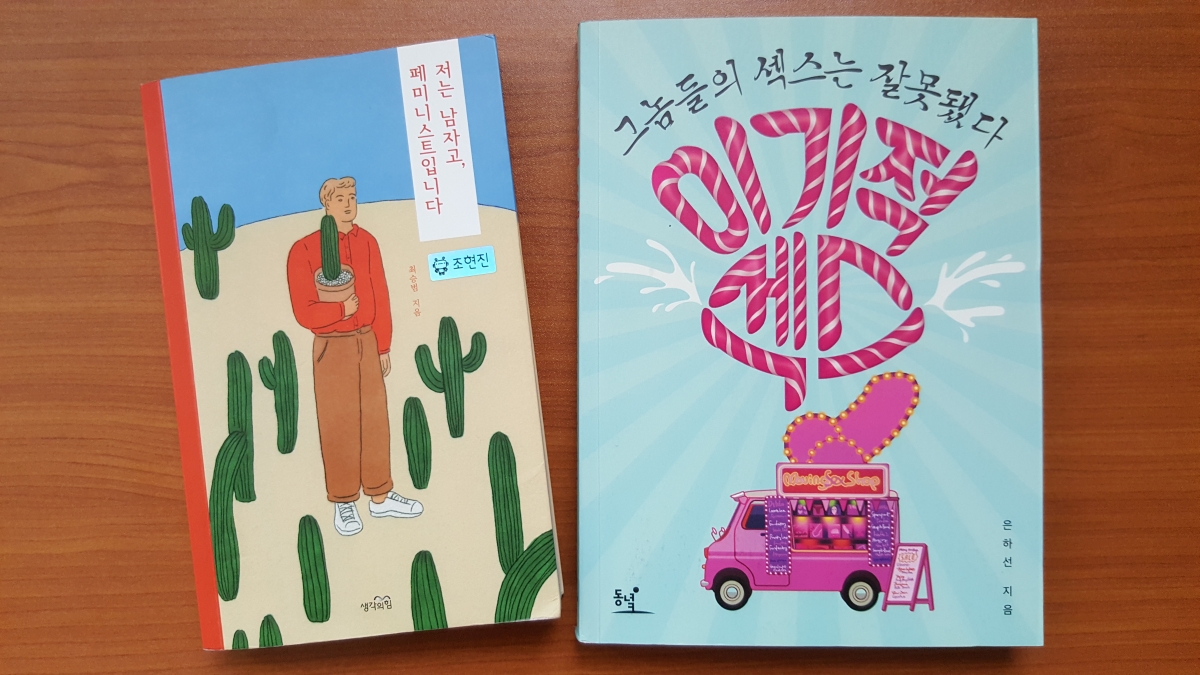
Just quickly sharing two books I’ve bought to study Korean with, by authors who deserve to be much better known by non-Korean speakers.

On the left, I am a Man, and a Feminist (2018) by Choi Seung-beom, a teacher at a boys’ high school in Gangneung, Gangwon Province (read a translated interview here); and on the right, (lit.) Selfish Sex: Those Bastards Were So Bad at Sex (2015) by sex-columnist Eun Ha-seon, perhaps best known as “the [completely awesome] woman who ‘tricked’ anti-gay Christians into donating money to the Seoul Queer Culture Festival” last year. (And who just accepted my friend request on Facebook! Squeee!)

Alas, I don’t have the guts to read Eun Ha-seon’s book while I’m on the subway, the only time I get to read these days, so it will be a while before I can pass on her insights sorry. But I hope to give you some excerpts from Choi Seung-beom’s book soon!

If you reside in South Korea, you can donate via wire transfer: Turnbull James Edward (Kookmin Bank/국민은행, 563401-01-214324)
Korean Textbooks for Foreign Brides Teach How to Survive the Patriarchy

It’s difficult to feel much outrage over the inclusion of genuine couple-talk like “I’m having my period” and “Do you want to make love tomorrow?” in Korean textbooks for foreign brides. But “Korean men like women who speak in cutesy aegyo“? “Your spouse’s greater financial power and living standards must be respected”??

Estimated reading time: 4 minutes. Photo by Yeo Khee on Unsplash.

My translation of the following article, as I’ve yet to see any mention of the news in the English-language media. Unfortunately, Korean libel and defamation laws being so draconian, no source actually provides the titles of the offending books, nor the names of their publishers; this makes it impossible to determine what different language editions were published, or which say what exactly. What some of them do appear to say however, is very telling:

“이주여성용 한국어 교재는 가부장제 가이드북?”

“Migrant woman’s teaching materials for learning Korean are patriarchy guidebooks?”

Yonhap, August 26 2019, by Intern Reporter Kim Min-ho (nowhere@yna.co.kr; Kakaotalk: okjebo)

“한국에 온 지 얼마 되지 않아 친정집을 도와달라 하거나 직업을 갖는다고 하면 안 된다”, “한국에서 결혼하면 바로 자녀를 가져야 한다”(한국어-베트남어 교재), “한국에서 결혼한 여성이 술이나 담배를 하면 절대로 안 된다”(한국어-몽골어 교재)

“You should not ask for help for your parents or get a job as soon as you arrive in Korea,” “If you get married in Korea, you should have children immediately” (Korean-Vietnamese textbook), “Women who get married in Korea should absolutely not drink or smoke” (Korean-Mongolian textbook).

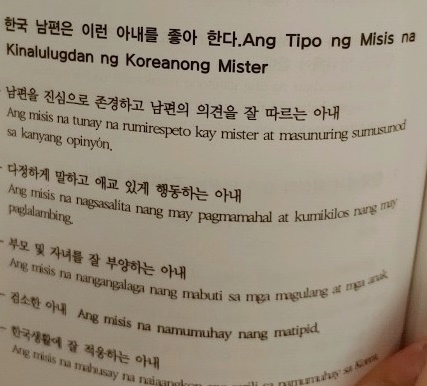
베트남어, 필리핀어, 몽골어 등 사용자에게 기초 한국어를 소개한 회화책에 ‘한국 생활에서 신부가 유의할 점’이라는 제목으로 달린 부록의 내용이다. ‘국제결혼을 한 이주여성과 한국인을 위해 집필됐다’고 소개된 이들 책이 왜곡된 사실과 차별적 시선을 담고 있다는 비판이 나온다.

These suggestions are to be found in a suplementary chapter entitled “Tips about Korean Life for Brides” found in various different language versions of a conversation book that introduces basic Korean to Vietnamese, Filipino, and Mongolian readers. These books, aimed at migrant women and overseas brides of Korean men, have been criticized for containing distorted facts and sexually discriminatory views.

이들 한국어 교재는 한국 남성이 좋아하는 여성상을 ‘부모와 자녀를 잘 부양하는 여성’, ‘애교 있게 말하는 여성’ 등으로 표현하기도 했다.

These Korean textbooks extol the virtues of “women who take good care of their parents [in-law]” and “women who speak in cutesy aegyo,” claiming that those traits are what Korean men prefer. (Right: 필리핀어-한국어 회화책 일부, 촬영 김민호; Part of Filipino-Korean conversation book, shot by Kim Min-ho.)

한국 유학 3년 차인 베트남인 A(23)씨는 베트남어-한국어 회화책 속 내용에 대해 “이주여성은 인형이 아닌데 자신의 행복을 비롯해 많은 걸 포기해야 하는지 모르겠다”며 “이 책대로라면 한국에 오면 인간답게 살지 못할 텐데 책을 읽고 한국에 오고 싶을 외국 여성은 없을 것 같다”고 말했다.

A Vietnamese woman “A” (23), who has been studying in Korea for three years, said, “A migrant woman is not a doll. I’m not sure [living or getting married in Korea] should mean I have to give up a lot of things, including my happiness.” She added, “According to this book, I shouldn’t live like a human being if I come to Korea. I don’t think there will be any foreign women at all who would want to come here after reading such a book.”

부록에 담긴 한국 생활 안내뿐 아니라 본문에 실린 한국어 예시문도 비판 대상이다.

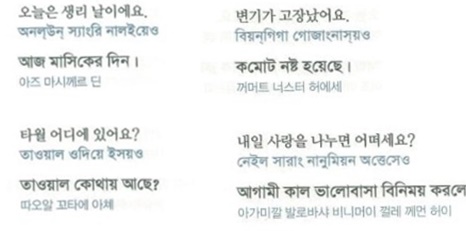
“오늘은 생리 날이에요”, “내일 사랑을 나누면 어떠세요?”(한국어-벵골어 회화책)

인도 일부 지역과 방글라데시에서 사용하는 언어인 벵골어-한국어 회화책에는 남녀의 성적 관계에 대한 직접적인 표현이 등장한다.

In addition to “Tips about Korean Life for Brides” in the supplementary chapter, some Korean sample sentences in the body of the book have been criticized. [In particular], in the book for speakers of Bengali, a language which is widely spoken in Bangladesh and parts of India, there are very blunt and direct expressions about sexual relationships between men and women, such as “I’m having my period today” and “Do you want to make love tomorrow?”.

‘yu_hy****’라는 아이디를 쓰는 트위터 이용자는 “한국 남성은 자존심이 강한 편이다”, “배우자의 현재 경제력과 생활 수준을 존중해야 한다” 등의 표현이 담긴 벵골어 회화책 사진을 올리며 “‘한국 가부장제에서 살아남기’라는 부제가 붙어야 할 것 같다”고 비판했다.

The Twitter user ‘yu_hy ****’ posted a picture of the offending page of the book, which also included such sample sentences as “Korean men tend to have a lot of self-esteem and pride” and “Your spouse’s current financial power and living standards must be respected” [James—I feel that a “greater” is strongly implied at the beginning of that sentence]; they felt a subtitle to the book title “Surviving the Korean patriarchy” should be attached to it. (Left: 벵골어-한국어 회화책 일부[트위터 캡처; Part of Bengali-Korean conversation book, from Twitter capture.)

남녀 성관계에 대한 직접적이고 세부적인 표현은 결혼 이주여성이 주로 보는 동남아권 언어를 다룬 교재에는 종종 등장하는 반면 서구권 언어-한국어 교재에서는 발견하기 쉽지 않다는 점이 대조적이다.

프랑스어나 일본어 사용자를 대상으로 한 한국어 회화책을 보면 사랑과 연애에 관한 표현을 싣더라도 ‘좋아해요’, ‘당신을 사랑해요’ 등으로만 표현됐다.

[Moreover], while such direct sex-related expressions are common in language books for South and Southeast Asian readers [from poor countries], who would primarily be foreign brides, they are not easily found in Korean textbooks [intended for speakers from rich countries.] If you look at Korean conversation books for French or Japanese speakers, the only expressions covering relationships that can be found in those are things like “I like you” or “I love you.”

필리핀 결혼이주여성의 한국 정착 생활을 지원하는 비영리법인 ‘아이다 마을’의 현제인(49) 대표는 “이주여성을 한명의 인간으로 보지 않는 시선이 한국어 교재에도 반영된 것”이라며 개선을 촉구했다.

이들 교재를 펴낸 출판사 관계자는 “수정이 필요한 내용이 담긴 것을 인지하고 있으며 수정을 한 것도 있고 앞으로 할 부분도 있다”면서 “팔려나간 책을 회수하는 것은 어렵겠지만 조금씩 고쳐나가고 있다”고 해명했다.

Hyeon Jae-in (49), president of Aida Village, a non-profit organization that supports Filipino married immigrant women in South Korea, called for improvements in the Korean textbooks.

The publisher responded to the criticisms that, “We are aware of the content that needs to be corrected, and we have made some corrections and minor changes and are in the process of reviewing other parts”, but “It is difficult to recover sold books.”

이 출판사가 차별적 내용을 담았다고 자체 판단해 내용 수정을 한 인도네시아어-한국어 회화책은 성적 관계 묘사를 싣지 않고 전화 사용법, 약국 이용법 등 실생활에 필요한 대화를 중심으로 구성했다. 또 ‘한국 생활 중 신부가 유의할 점’이란 제목의 부록도 삭제했다.

The publisher further noted that it had already removed offending content on its own initiative from the Indonesian-Korean conversation book, and that included Korean necessary for daily life such as phone usage and visits to the pharmacy, without that covering sexual relationships. The “Tips about Korean Life for Brides” in the appendix was also removed. (End)

If you reside in South Korea, you can donate via wire transfer: Turnbull James Edward (Kookmin Bank/국민은행, 563401-01-214324)
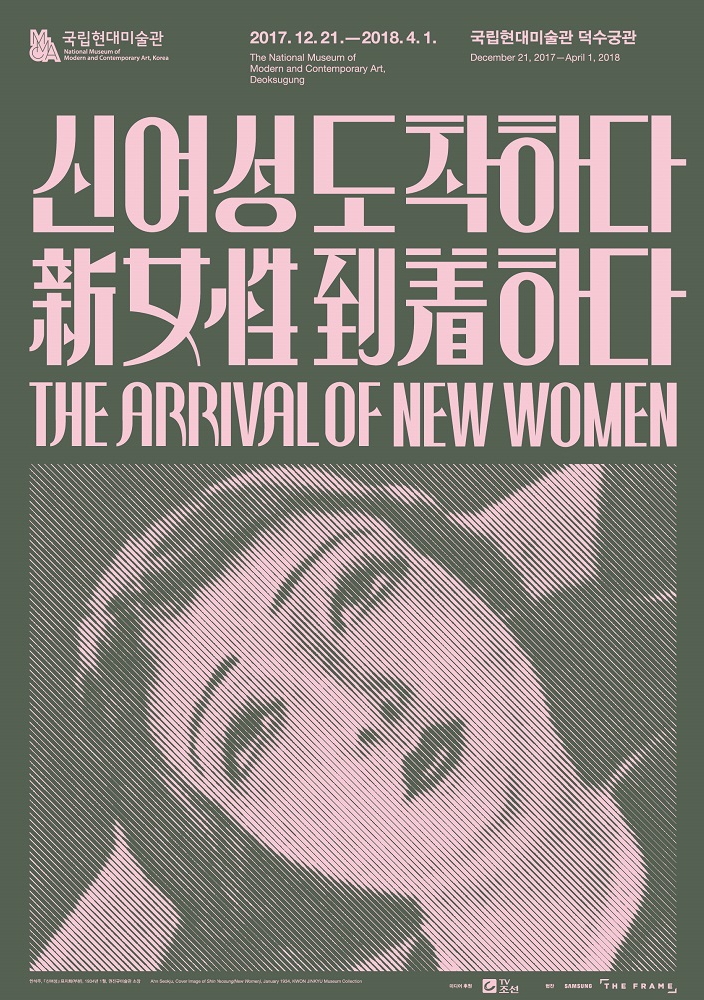
The Korean Word for “Stroller” is Literally “Milk-MOTHER-Vehicle.” Let’s Start Using This New Term That Includes Fathers Too.

Like or loathe political correctness, many everyday Korean terms are ripe for modernization.

Estimated reading time: 5 minutes. Source, all screenshots: YouTube.

Similar to how over 60 percent of English words have Latin and Greek roots, over half of all Korean words are of Chinese origin. Once you realize this, learning Korean vocabulary becomes immeasurably easier. Buy this book in particular, which groups Korean words by their Chinese roots, and it’ll feel like all your Christmases have come at once:

From pages 78 & 102 of Miho Choo and William O’ Grady, Handbook of Korean Vocabulary: A Resource for Word Recognition and Comprehension, 1996.

You may become so grateful for all these new connections between words suddenly being revealed to you though, that it’s easy to overlook how problematic some of them may be. To many native speakers too, for whom the words are so familiar that they would have little cause to think twice about their origins.

One such Chinese derivative is “모/母“,  as shown in my scan above-left. Clearly, it is apt for almost all of those examples of its usage given there, and a much better Korean-speaker than I points out that it even makes some sense for the seeming exception of “모음/vowel” too. Learn that it’s also contained in the absent “유모차” (pron. yoo-mo-cha) however, which means “stroller” (N. Am.) or “pushchair/buggy” (U.K.), and suddenly that ancient Chinese root really begins to feel its age.

This video suggests adopting a much more inclusive alternative:

In the first screenshot below, the top line says “stroller,” followed by the corresponding Chinese characters for “milk,” “mother,” and “vehicle.” (Possibly, “breastmilk” may be more appropriate for the first character?) Below those, a definition: “A wagon for carrying a child after it is born.”

These next two are self-explanatory:

“[Because of this], does ‘stroller’ have a sexually discriminatory meaning?”

“Does the person who pushes the stroller absolutely have to be the mother?”

“Other caregivers can push it, yet the meaning of ‘mother’ is still contained within the word. Does this imply the person responsible for childcare is the mother?”

“Let’s not focus on the person pushing the stroller, and focus on the child instead. Please call it ‘유아차’ (pron. yoo-a-cha).”

And FYI, here’s that Chinese character for “child,” from page 149 of The Handbook:

Anyone reading this far needs no reminding of Korea’s plummeting birthrates, or of the gendered stereotypes surrounding childcare that work against remedying those—a mere new word is no solution. But it is logical, inoffensive, easy to remember, and can’t help but work at least a little against those stereotypes. So why not use it?

Naturally then, the YouTube video has many more dislikes than likes. Its origins are suprisingly opaque for a public campaign too (“공공언이 바꾸기 캠페인,” or the “Campaign to change how we speak to other members of the community”) and for a long time my searches only brought screenshots of that video and of various others’ in the campaign, on sites of the sort where things are generally only posted to be ridiculed. The video does end with a note that the campaign was done in conjunction with the Seoul City Government however (or possibly “by”; “함께” can vary according to context sorry), and eventually I realized I’d be able to find the video and others on non-gendered, but still problematic words in the campaign on their website itself, which indeed were posted there in October and September 2018 respectively. But there was still no news or further information available.

With such abysmal promotion, frankly you have to wonder why the Seoul City Government even bothered making them.

But in the process of looking, I was reminded of the Gender Equality Week conducted by the Seoul Foundation of Women and Family conducted that July:

Which I’m happy to say did receive a lot of press. Quite possibly, the the Seoul City Government’s campaign was actually one of those efforts alluded to at the end of the press release above (but which didn’t get any mention on the Seoul Foundation of Women and Family’s website either!):

Either way, it was added to by the Ministry of Gender Equality and Family’s awareness video in January this year. Possibly that explains the stroller video’s abrupt appearance on the MBC YouTube channel that same month (used in this post):

From my own experience, using gender-neutral words takes minimal effort, once you make the conscious decision to. That said, I do understand the laziness in not doing so, and the resistance against being told what to do. If you meet such a person then, perhaps start by asking them, say, why “uterus” should be “자궁” (pron. ja-goong) which literally means “子宮/house for a son,” instead of the suggested “포궁” (pron. po-goong), which means ” 細宮/house for a cell/baby.” Once they realize how much work defending that absurdity would be, then surely they’ll realize all the other sexist, archaic words aren’t really worth the effort either!

Related posts:

If you reside in South Korea, you can donate via wire transfer: Turnbull James Edward (Kookmin Bank/국민은행, 563401-01-214324)
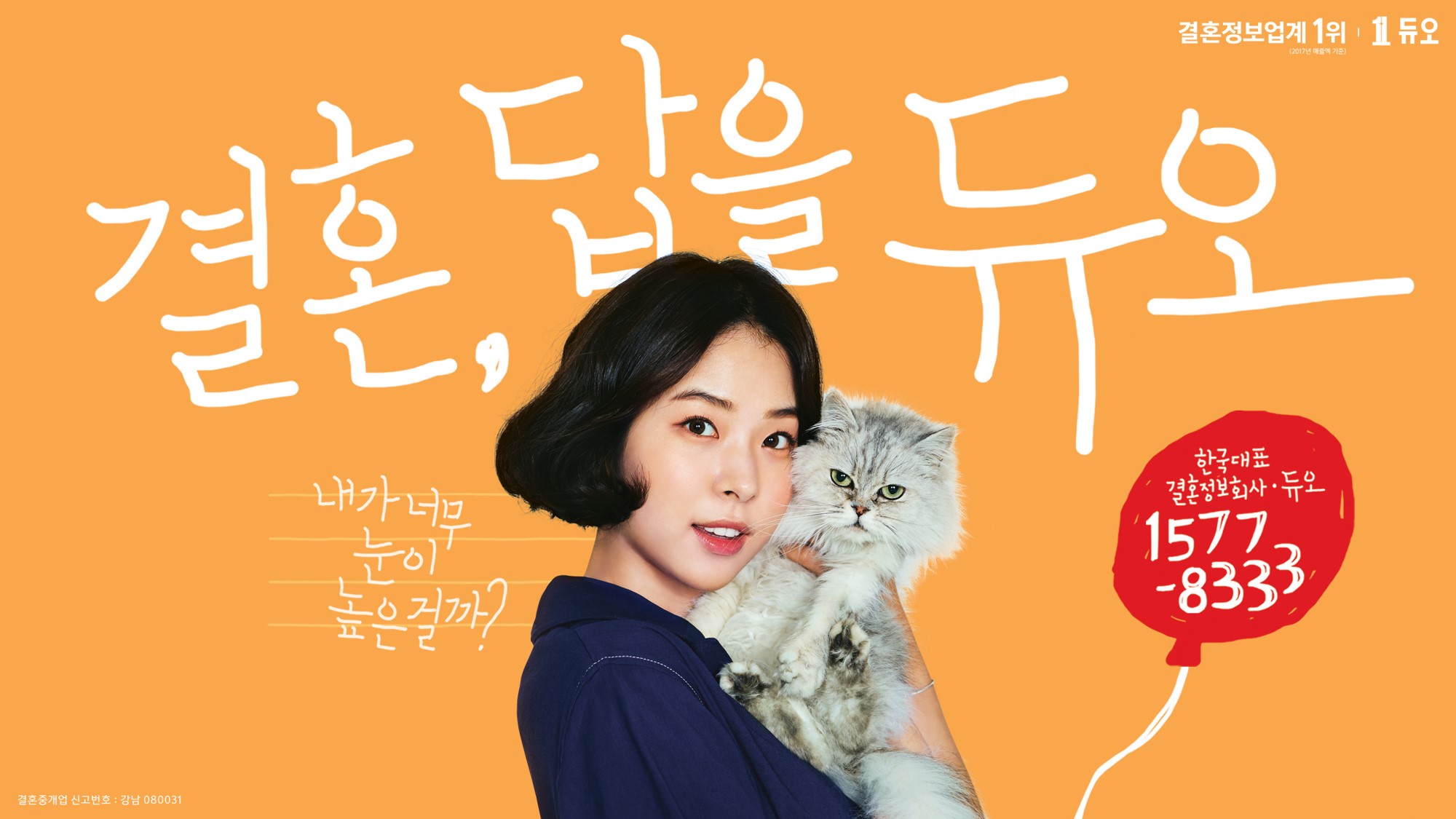
“Lingerie Advertisements Deflect the Danger of Homoeroticism by Using Models with Averted Eyes.” Huh?

Estimated Reading Time: 6 minutes. Source, left (edited): Emm’s Vintage Lingerie (CC BY 2.0). Source, right (edited): Moose Photos from Pexels.

I’m a big fan of Jill Fields’ 2007 book, An Intimate Affair: Women, Lingerie, and Sexuality. It’s where I first learned of the corset industry’s creation of new body types for women to conform to in the 1910s to 1930s, presaging the Korean media, beauty, and fashion industries’ creation of “S-lines,” “V-lines,” and so on in the 2000s. But I’ve always been skeptical of this common feature of lingerie advertisements she alleges, and especially her explanation for it (page 16):

And in that Chapter 5 (p. 211):

What models do with their eyes is important. When they return your gaze, they seem to own the room. Whereas if they don’t seem to be paying attention to anything in particular, or if they’re depicted without their faces at all, the temptation to dismiss them as people and focus only on their bodies is all the greater.

It can also be a mechanism by which advertisers perpetuate stereotypes of different sexes and races. Take what Kyoungtae Nam, Guiohk Lee, and Jang-Sun Hwang discovered from their survey of Korean girls’ magazines in 2011 for instance (p. 234):

“Gender Stereotypes Depicted by Western and Korean Advertising Models in Korean Adolescent Girls’ Magazines”, Sex Roles (2011), 64: 223.

No-one’s saying models staring into space is bad in itself. Nor can advertisers of fashion and beauty-related products really be faulted for wanting to focus attention on the products, or on their alleged effects on the consumer. But if you know anything at all about advertising and gender, you’ll know that regardless of what’s being advertised, women tend to be depicted much more passively than men. And herein lies the first of two fatal flaws in Fields’ argument. For she bases her conclusions on no more than (fn. 70) an unspecified “survey of ads” in various magazines and catalogues from the 1900s to 1960s, although she also asserts that “[c]urrent issues of the Los Angeles Times provide almost daily evidence of the continuing importance of these evasive postures in ads.” Or in other words, she provides no evidence whatsoever that the tactics she describes “to dispel the homoerotic impulse” are any more prevalent in lingerie ads than in other kinds of ads, whatever period she’s talking about. And sure enough, those same tactics can quickly be found in other ads just through, say, a simple walk down the average city street. Here’s some with “women alone, turned away from the viewer” and/or averted eyes in Korean soju ads for instance:

I’ve often wondered what on Earth is Jang Yun-jeong looking at exactly…

In 2010, I discussed those and many others using Erving Goffman’s Gender Advertisements framework. Specifically, those particular ads are illustrations of one aspect of the “Licensed Withdrawal” category, as described by Images of Women in Advertising:

[One] way in which women are disempowered is by displaying them as withdrawn from active participation in the social scene and therefore dependent on others. This involvement with some inner emotional processing, whether anxiety, ecstasy or introspection, can be symbolized by turning the face away, looking dreamy and introverted, or by covering the face, particularly the mouth, with the hands….

….Rather than being portrayed as active, powerful and in charge, females are commonly shown in this licensed withdrawal mode, removed into internal involvements, overcome with emotions, or symbolically silenced with hand over the mouth….

….In another variation, females are frequently shown withdrawn inwards into some dreamy introverted state; they pose, become things for others to gaze at and desire. Males will stereotypically be shown active, engaged, and in charge of the situation. They are not so much objects for others’ to gaze at, as actors with occupations and professions….

The point being, although no motivation for these depictions is explicitly mentioned here, advertisers wanting to avoid provoking homoeroticism seems a rather unlikely one—the second flaw of Fields’ argument. Because are lingerie advertisements really so salacious, and really so sexually transgressive, that homophobia needs to be invoked to explain the depictions commonly found therein? Are they really so different to all other kinds of ads, that explanations for the depictions of women in those ads wouldn’t also apply?

I know—boobs. Maybe there is something to them that prevents (male-dominated) advertising teams and advertising standards authorities from thinking rationally. I’m not dismissing any special considerations they have for lingerie ads out of hand, and indeed Fields provides a wealth of examples of precisely those, albeit with expressions of their worries about evoking homoeroticism notable only for their absence. But she hardly persuades in addressing those alternative explanations for lingerie ads’ typical features by deliberately ignoring them. And I do mean deliberately, for in fact she does mention Goffman earlier (p. 210):

And by all means, these are things, well covered in Gender Advertisements (see my earlier post for examples from soju advertisements). But to have read the book and demonstrated that she’s taken note of those various categories of its framework, only to fail to mention that one of its largest categories—Licensed Withdrawal—already well accounts for her claims about lingerie advertisements? She doesn’t have to agree with it, but she does have to acknowledge and respond to it. Otherwise, her shoehorning of an alternative explanation evoking homophobia seems very disingenuous.

Sources: Emm’s Vintage Lingerie, left, right (CC BY 2.0).

In fact, the foundations of the whole chapter may be equally tenuous. Its title, “The Invisible Woman: Intimate Apparel Advertising” refers to the tendency of early-20th Century lingerie advertisers to show only parts of women or not at all. But reviewer Jane Ferrell-Beck argues there was actually a very practical reason for this:

And reviewer Kristina Haugland goes further, arguing that “the author’s interpretation of the material is a serious concern” of the book as a whole. She cites no examples from Chapter 5 though, so let me just leave you with her conclusion:

Words to live by as a colleague, our student assistants, and I wearily plod through our own survey of Korean women’s magazines advertisements this summer, of which this post is admittedly but an extended version of one of its footnotes. Thanks for reading it!

Related Posts:

If you reside in South Korea, you can donate via wire transfer: Turnbull James Edward (Kookmin Bank/국민은행, 563401-01-214324)
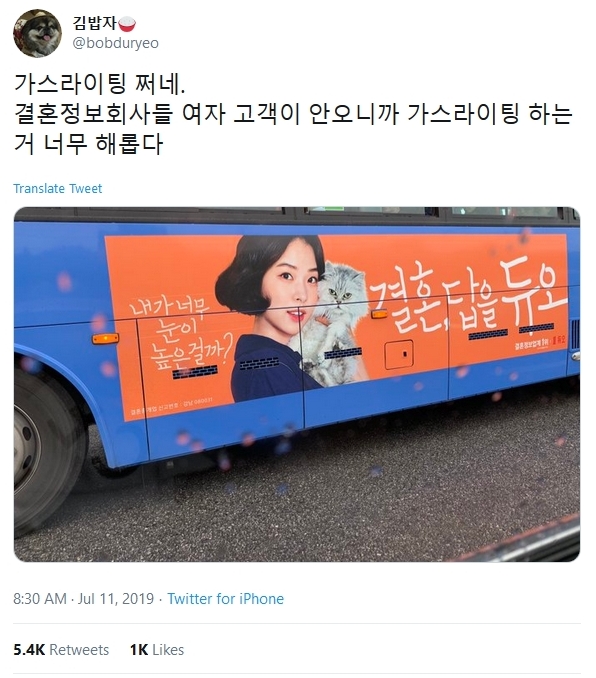
Less Than 3% of Korean Women Use the Pill. Perhaps These New Commercials That Treat Them Like Adults Might Change That.

Spot the Korean condom! Photo by Min An from Pexels. Estimated reading time: 5 minutes.

Korea has only ever had three condom commercials on TV since a ban was lifted in 2006, and none at all for the last six years. Korean women generally rely on men to purchase and use condoms too, and less than 3% use the monthly contraceptive pill, despite rare over-the-counter access. Women’s access to the prescription-only morning-after pill is very much only in name also.

In the midst of this, last year saw an awesome, much-needed commercial for Common Day condoms produced for social media, which focused on how empowering they are for women. Tellingly however, the notion that women could buy condoms triggered a backlash. Nor did the small company ever actually feature its condoms on its site either, although they are available to buy from online shopping malls.

You’ll appreciate then, why this recent fourth sighting of a condom on Korean screens was so important. And the hints its presence gives about the novel approach of the Senseday contraceptive pill commercial in which it can be found:

Released on June 19, a spokesperson for Yuhan (which produces the Senseday pill) said about the appearance of the condom:

…“피임은 남녀가 함께 하는 것임에도 콘돔 광고는 전무하고, 피임약 광고도 여성들에게만 피임을 권장하는 식으로 흘러가는 것이 아쉬웠다”며 “둘이 함께 책임지는 성숙한 피임 문화에 대해 화두를 던지고 싶었다”고 전했다.

JoongAng Ilbo, July 30 2019.

…[R]egardless of whether it’s men or women using the contraceptives, it is lamentable that there is no condom advertising at all, and that contraceptive pill advertising stresses only women’s responsibility for contraception. With this commercial, we want to raise the notion that contraception is the responsibility of both partners, and encourage the development of a more mature contraceptive culture.

Journalist Kim Jeong-min at the JoongAng Ilbo notes it follows a pill commercial released in March by Mercilon (produced in Korea by Alvogen Korea), which too is a breakaway from the cutesy pill commercials of the past:

비슷한 시기에 공개된 두 광고는 과거의 피임약 광고와는 여러모로 달라 화제를 모으고 있다. ‘어떤 내가 되고 싶은지’ 고민하는 주체적 여성상을 내세운 점, 피임약 광고 최초로 남성용 피임 도구인 콘돔이 등장한 점 등에서다. 기존 피임약 광고가 수줍은 20대 여성의 이미지를 강조(2013년 머시론 광고 ‘스무살의 서툰 사랑’ 등)하거나 피임을 여성의 몫으로 표현한 것과는 다른 문법이다.

JoongAng Ilbo, July 30 2019.

Both commercials…are gaining attention for being very different from the contraceptive pill advertisements of the past. [Mercilon’s] cry of “Whatever I want to be” stressing women asserting themselves and being independent as they think about their future, combined with the first appearance of…condoms [in Senseday’s commercial], present very different messages to that of existing contraceptive pill commercials that feature shy, bashful 20-somethings (such as Mercilon’s “Clumsy 20’s Love” from 2013 below) and/or which perpetuate the notion that contraception is women’s sole responsibility. [James—Alas, generally Korean women believe it is actually men’s sole responsibility, as noted earlier.]

An inaccuracy: the first appearance of a condom on Korean TV was in 2013, not counting a pre-ban HIV/AIDs prevention campaign in 2004. But I share Kim Jeong-min’s optimism about the potential for a sea change in Korean contraceptive advertising. Both because Yuhan and Alvogen are competing more vigorously now, due to various changes made to their licensing agreements as Kim goes on to explain, and because she wasn’t kidding about how twee Korean contraceptive pill commercials used to be. As I noted as recently as 2016, if you didn’t know any better then it was entirely possible to watch them and assume that the pill was actually a medicine, and had nothing whatsoever to do with sex and pregnancy:

“…Korea remains one of the few developed countries where the monthly pill is over-the-counter. Which makes we wonder: in terms of attitudes towards and use of the pill, in what other ways does Korea stand out?

With that in mind, I was struck by the emphasis on appearance in the following recent commercial:

The voiceover says ‘My body? ‘A.’ My personality? ‘A.’ My style? ‘A.’ [The reason for?] my success? Alesse contraceptive pills,” followed by the text also mentioning it’s a good treatment for acne.

Should women with only “normal” bodies try something else then? What about those with only so-so fashion sense?

That can’t compare with the Koreanness of this next one though, with its mention of “bagel girls” and use of aegyo:

So much so, it may actually be a satire: its title [in the original 2016 video was] “Pill Ads These Days,” and I can’t find any mention of the company. Either way, it stresses that even women who look great in a white one-piece, women on a diet, women with great bodies, and women who do aegyo with their boyfriends…all get mood swings and PMT. And all of which can be solved by rearranging their cycles with the pill.

Which I’m sure is indeed empowering. Yet, watching these, you could be forgiven for forgetting that the pill is sometimes used to prevent pregnancy too.”

What do you think? How do they compare to contraceptive pill and condom commercials in your own countries? Please let me know in the comments!

Related Posts:

If you reside in South Korea, you can donate via wire transfer: Turnbull James Edward (Kookmin Bank/국민은행, 563401-01-214324)
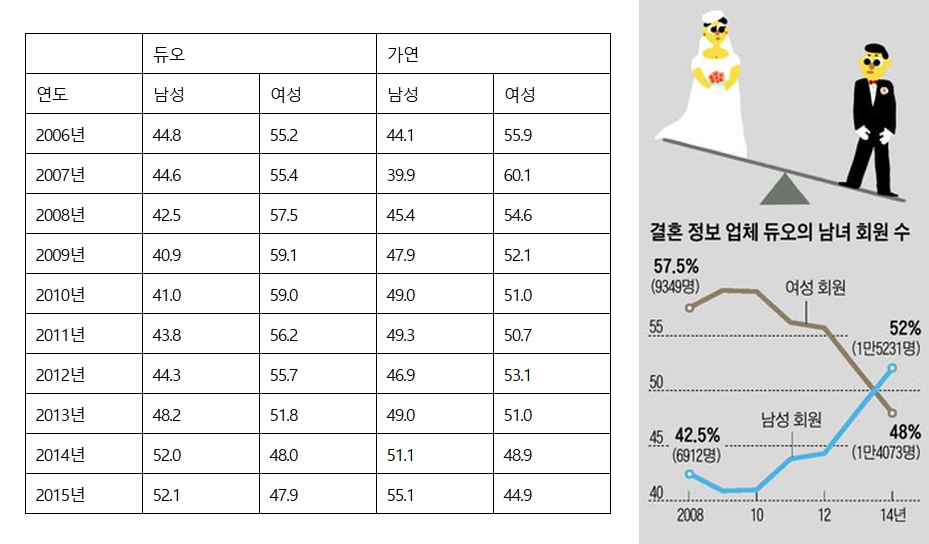
(TRANSLATION) On Blogging about Feminism in South Korea

Estimated reading time: 15 minutes. Photo by bruce mars from Pexels.

Many thanks to Menelik Lee (@LiMing6859), for all their hard work translating a long interview of me by Yiyi Zhang for Qdaily last year.

As you’ll see, unfortunately a lot of nuance is lost when going from English to Chinese to English again. The misunderstandings and factual mistakes multiply too, which crop up even when interviewers and interviewees share the same native language. Most are very, very minor though, which is a real testament to Menelik’s skills, so I’ve only corrected or clarified the most glaring ones [indicated in brackets]. Please pass on your rants or raves, or let me know if you’d like any further information about anything mentioned in the interview. Thanks!

An Englishman Who Writes a Feminist Blog in South Korea: Sex, Gender, and the Elephants in the Room.

Yiyi Zhang, Qdaily, 22/11/2018

Almost 20 years ago, Englishman James Turnbull was just starting his life in Korea. [W]hile traveling through the wild open countryside in his boss’s car [during one of his first jobs there], “I don’t know where it sprang from, but suddenly a hotel appeared in the middle of this vast emptiness.”

Just like every person that harbors a sense of wonderment for the culture of a foreign land, Turnbull immediately blurted out, “What’s that? [What tourist would come here, in the middle of nowhere?]” He learned from his boss that the establishment [actually] functioned like the much-fabled love hotels of Japan.

He soon discovered that in Korea such establishments are actually [common in rural areas, not just the cities]. These unassuming structures facilitate both the sex trade and the secret trysts of [lovers]. They have arisen because premarital sex is still heavily stigmatized in Korean society. However, unlike Japan, Korea’s “love hotels” lack neon signs and themed playrooms. If asked about such things the proprietors will simply evade the question.

“Everyone pretends they don’t exist, but you can tell they have a bad reputation. Anyway, it’s always been something that [just] shouldn’t be discussed.”

After having lived in Korea for 18 years, with a family and two kids of his own now, Turnbull looks back and realizes that the problems surrounding sex and gender in this culture are just like that little hotel in the wilderness. They’re arresting, painfully obvious, yet everyone turns a blind eye and carries on regardless.

In his 7th year in Korea, Turnbull launched The Grand Narrative, a blog sharing and analyzing Korea’s sex, gender and pop culture from the viewpoint of an English author.

Besides blogging, he also holds down a full-time job at Busan’s Dongseo University. He spends so much of his spare time and energy maintaining and updating his blog, it’s almost a kind of volunteer work at this point. Over time, his blog has gained the approval of the mainstream—[most recently, he was quoted for several stories for CNN in 2018]—and Turnbull became something of an authority on Korean feminism and pop culture in Western media. Occasionally, he has even been invited to give guest lectures at Seoul National University and other higher education institutions.

But most of the time he stays in his own wheelhouse, silently typing away under the glow of his computer monitor. Over the past 11 years, he has written hundreds of articles on topics ranging from sex and K-pop, to the politics of body image, from gender in advertising, to abortion and contraception. In the world beyond his writings, the transformations wrought by the Korean women’s rights movement have moved with breath-taking speed.

“This has been the product of the last decade or so of painstaking labor, maybe it’s time to talk about it a little.” Turnbull tells Qdaily.

The first [post] about women’s issues on The Grand Narrative was posted in 2007. [From his Korean female friends, Turnbull learned that when they] graduated and entered the job market the problems they ran into came thick and fast. One of the most prominent issues was the fact that as soon as they fell pregnant they were laid off.

“As soon as a woman has a child she is forced to leave work; after a year it’s basically impossible to go back. The hierarchy in Korean companies is very strict, those who have worked there the longest always have the final say and the most opportunities for advancement. When a Korean woman is married with kids, she simply can’t keep up professionally.” Turnbull also speaks about the low birth rate. Because all women have to face this decision, many women from this generation have decided to simply forego having children.

The BBC reports that because of this, Korea has developed a new social phenomenon: the Sampo Generation. “Sampo” means to abandon three things: relationships, marriage, and children.

Before graduating and coming to Korea, Turnbull [had already had some experience of fitting into] different cultures. Thanks to his parents, he moved from the UK to New Zealand, then to Australia, and from there back to the UK again. [In just three years], he attended six different secondary schools in three separate countries, “it was pretty crazy.”

One may say that the cultural differences between these three countries are small when compared to Korea, but they each have unique values and lifestyles. [When he was a teenager,] every time Turnbull questioned an [adult in New Zealand and Australia about some aspect of their countries, and even in the UK if they knew he’d lived overseas], the answer was always the same: “This is just the local culture.” This answer was rolled out like a panacea. No matter what the situation, no matter the problem, it could be used to explain it away. But when he seriously thought about it, he realized that adults were simply using this because they had nothing else to say. “I’d had enough,” he recalls.

So by the time he got to Korea, he simply couldn’t [let “culture” be used] to explain everything away. “It’s not [unlike] a fish in water, unable to sense the water. Some things are [genuinely unusual and noteworthy, only considered normal by people who’ve known nothing else].”

In his conversations, Turnbull found that many Koreans harbored a strong sense of nationalism [too], and so talking about the negative aspects of the country [with a foreigner met a lot of resistance]. However, this did not mean that they [themselves] were satisfied with everything that was going on.

“If there’s something in Korea that you don’t like, there’s a very good chance a lot of Koreans aren’t happy with it either.” And this is something the [English-language media often chooses not to cover]. Many debates [are to be found on the Korean internet and social media platforms], and the English-language media has trouble [relaying] these trends, so they [can give versions] of Korean sexual culture that are extremely superficial.

“When reporting on cultures outside of Asia, readers generally won’t afford you much credibility or value as a reference if you don’t understand the local language. But when it comes to Asia—China, Japan and Korea—the majority of the [Western experts or reporters] have a very limited understanding of the local languages and cultures, yet the audience is really forgiving—it’s a very strange double standard.”

Turnbull provides an example. In 2013, the South Korean Ministry for the Interior introduced “Pink Female Parking Spaces,” with extra room for the exclusive use of women. In no time, this news was plastered over mainstream media pages around the world. Almost all of them claimed that the policy demonstrated prejudice against female drivers because the spaces implied that the women wouldn’t be able to park properly without them.

“[To be more specific, one report quoted an anonymous source that claimed that the larger spaces were necessary for ‘unskilled women drivers.‘ However, ultimately that source appeared to have been made up.”] Turnbull says that, in actual fact, the spaces were created because the vast majority of child care duties are born by women, and the policy provided larger spaces for them to use prams when they go shopping—[as most of the Korean media accurately reported.]

“There’s obviously [still] a problem here: the idea that the role of primary carer is naturally filled by women. But it’s a completely separate issue to what the [overseas] media were saying. [Had overseas media outlets just taken a little more time to investigate, or, you know, spoken to someone who actually spoke Korean, then this ‘crazy Korea’ news story, which just plays to Orientalist stereotypes, would never have gotten off the ground.”]

Between the cracks of cultural misunderstanding, Turnbull saw his chance. Having been an English teacher for far too long, he was anxious to prove himself and open up further professional opportunities. As a result, when he first began writing about Korean culture, it soon transformed into writings about sex and feminism.

“Turnbull’s blog has continued to focus on female representation in Korean popular culture, including advertisements, soap operas, music videos, and more.” Source, right.

Turnbull’s blog was in its infancy ten years ago, but even just five to six years ago there was [almost] no one else doing the same thing. [“That doesn’t necessarily mean I was writing well, or that I was particularly knowledgeable—just that I was the only one writing about these specific topics. I’m quite serious when I say that, for a long time, I really was pretty much the only person on Earth writing about Korean feminism IN ENGLISH on the INTERNET.”] For the longest time, when opening Google’s search engine, Turnbull’s blog was the first thing listed under “Korea” and “feminism.”

According to Turnbull, he grew up in a very left-wing family, among piles of his father’s psychology and sociology textbooks. At university, he also spent his time on feminist research and sociology projects.

His foreign identity also opens the door for dialogue to some degree. “The reality is, if someone is truly interested in your culture, you’ll also be curious to find out where that interest comes from.”

Furthermore, in a Korean society that has always considered [open discussions of] sex to be taboo, Turnbull exists like a wanderer, beyond the normal customs and social networks of everyday Korean life. Thus, those around him [tend to be] happier to share their views on this topic [compared to how open they would be sharing them with a native Korean], disregarding his age and social position, they can trust him to be discrete. “It’s precisely because you’re a foreigner, people don’t have the same kinds of psychological barriers—they can pour their hearts out.”

This makes everything sound free and easy, but the reason he focused his gaze on women’s issues is because the urgency of the problems they still face simply cannot be overlooked.

“One day, a colleague rushed over to ask me a question: can abortions affect your health?” Upon further inquiry, he found out that this woman had had eight previous abortions, because she had never used—[and wasn’t even aware of]—any contraceptive methods. “I was totally shocked. To this very day, the lack of [adequate sex education in Korea] is astounding.”

Source: YouTube

As a non-academic, much of Turnbull’s understanding of social phenomena comes from his personal experience. His blog articles are written from the first-person perspective, but when compared to other news articles about the same events, he’s [often] much quicker than they are to cite authoritative sources.

From his perspective, feminism has never existed in isolation, and sex and gender issues are important because they are intimately connected to the everyday lives of all people.

Before becoming an English teacher at a university, Turnbull worked in a regular [Korean] company for almost two years. The hierarchical culture of humiliation in Korean workplaces really took him by surprise. “Every week our department head would make everyone stand up, and castigate each and every [employee] about every aspect of their work [regardless of how good it was]. On some level he had no choice, [because] angry or not, this was [just] how things were done.”

The sense of hierarchical oppression permeates most of everyday life, and in such a stratified society, standing up for oneself can make things even more difficult.

Despite himself, after coming to Korea, Turnbull says he can’t help pondering social stratification and rebellion. This is especially reflected around issues of sexual misconduct. “In Korea, if an older family member wants to hug you, you can’t refuse even if you want to. As a child or a young person, there are many people who can order you to do something even if you don’t like it.”

Once you’re a little older, this evolves into a power disparity between the sexes, “If a boy likes you, you just have to accept it, you can’t complain about it. Because of this, men don’t understand what constitutes “consent,” and women who reject others feel guilty.”

This attitude engenders deep seated emotional resentment, and Korean society is thus plagued by gendered violence and frequent sex crimes by spurned lovers. According to survey results released in 2017 by the Korean Institute of Criminology, 80% of males surveyed admitted to having previously abused a romantic partner.

“This is why I feel so surprised and proud that in the space of just a few years so many young women have come out to demonstrate. Because in Korea just doing that can be incredibly difficult.” He says that many demonstrators have to cover their faces, but the effects are deep and far reaching. Korea is undergoing a dramatic change towards gender equality and sexual minorities.

According to QZ, the watershed moment for the Korean women’s movement came in 2016. A woman was brutally murdered in a public bathhouse not far from the entrance to Gangnam Metro Station, one of Seoul’s busiest transport hubs. Following the incident, women came out onto the streets to protest sexual violence, and women’s rights groups stepped up their online activism. With the global acceleration of the #MeToo movement this year, Korea’s feminist wave has also picked up pace.

While this was happening, Turnbull was observing the heating up of what may be called a “gender war.” As all of society’s feelings of discontent and dismay were foisted off on the shoulders of women.

Source: Arirang News.

South Korea has one of the highest rates of tertiary education in the world, meaning that most young people will attend university. However, without a proportional level of demand in the job market, the youth unemployment rate is almost 10%—that’s three times higher than the global average. After graduating, most people can only find work in convenience stores and coffee shops, relying on the lowest paid positions to make a living. Still others choose to delay graduation despite the fact that there are no more classes for them to take.

Against this backdrop, [a vocal minority of] young men are blaming young women for having stolen all their opportunities. What’s more, some are beginning to question [compulsory] military service, claiming that it is unfair on men and are now seeking compensation.

In 2014, according to a South Korean National Statistical Office report, in the last four years there was a historic reversal in employment rates of males and females aged 20 or older. The female employment rate exceeded that of males for the first time since records began. “A female tornado” is one of the terms being used to describe what has become the latest hot topic.

Turnbull believes it is a term deliberately employed to cause agitation—the disparity in male and female employment rates is actually only 2.1%. However, the male groups of society have reacted swiftly and with mortal urgency in a massive backlash. Some men’s rights organizations have even called for the abolition of the Ministry of Gender Equality and Family. In fact, according to a World Economic Forum 2015 report on Global Gender Inequality, South Korea still ranks 115th out of 145 countries. In the “economic participation and opportunities” categories, South Korea is 125th.

Issues of gender equality are always fiercely debated, and the ongoing economic stagnation throws that much more fuel upon the fire. But lines are not only being drawn between the gender camps. In a universally anxious social atmosphere, people will always seek to set up a common adversary to set off against their own in-groups. Turnbull provides an example: this year, over 500 Yemeni refugees were detained on Korea’s Jeju Island, sparking mass public protests. Unlike trends seen before in most other countries, where opposition to refugees is strongest among older generations, in Korea the exact opposite is the case. Against all expectations, younger people are the heart of the movement.

“In April, female MBC news anchor Lim Hyeon-ju caused a stir by becoming the first Korean anchor-woman to wear glasses while on-air. Shortly after this, Korean media released the results of two studies on gender bias.” Image source: YouTube.
“Female idols are frequently depicted in advertisements for the Korean military conscription service.” Source: MMA Facebook page; left, right)

“Middle-aged, white, male, heterosexual; I’m pretty much a member of the most hated group on the planet.” Turnbull jokes during the interview.

Upon first finding Turnbull’s blog, not all readers are supportive. “The main reason they hate me is because of my identity.”

“No one wants to hear about Korean feminism from a middle-aged white dude.” And Turnbull admits that this wariness is not without good reason [James—I put it much more strongly during the interview: when studying and writing about what—who—I do, there are many conceptual and practical issues stemming from my privileged background; I can only always be aware of them and strive to overcome them as best as I can, most notably by relying on as many native Korean sources as possible, and especially on Korean women themselves]. In his first few years in Korea, he [admits he naively and arrogantly] thought that he’d already come to understand everything about the country [partially because, unlike most expats, he’d already studied Korean history and society at university], and was more than ready to lecture others about it. But soon enough, he came to realize that he had been very wrong about this. “I’ve probably deleted about half of my previous articles, just because they no longer reflect my current opinions [and/or later proved to be completely wrong, as often pointed out by my female readers—many of the most vocal of whom would become my best friends later!].”

But the internet has a long memory. A little over a month ago, he received an email, a 3000-word polemic referencing a 10-year-old piece he had already deleted [9 years ago!].

[A significant proportion of those that take] issue with his work are [Asian-American women]. Turnbull mentions a slang term, “yellow fever,” used to describe white men with a [fetishistic] preference for [East] Asian women. [Because of it], many Asian-American women [regularly] have to face [sexual stereotyping and harassment from white men] in their everyday lives, and so talking about sex in Korea as he does often brings him under [immediate] suspicion [of being no different to those men]. [The vast majority of those that actually read his work soon see that he is not, but] some have penned vicious attacks against him, and still others have posted fake pictures of him online. [James—I feel compelled to add that a significant proportion of my fans are Asian-American women too! :) But the actual question was about my trolls, and I wasn’t going to lie. It just is how it is.]

Turnbull’s blog used to provide a popular space for discussion. In the comments section people would air their views, and readers from all over the world would have lively debates with one another. But with the sudden onset of the social media age, people had a great many more ways of accessing news, and the number of hits and comments his blog received decreased significantly—[although] thankfully, the number of attacks decreased accordingly as well.

Nowadays, Turnbull seems to occupy an awkward position. He occasionally attends LGBTQ marches or feminist demonstrations [in Korea], but only rarely. “As a middle-aged white guy [who sticks out like a sore thumb at these], I don’t really want to [draw people’s attention away from the issues the activists are demonstrating about].”

Even today, he can’t envision things as he did when he was starting out. That he could, through his blog, make the outside world believe that a foreigner could be more than just an English teacher.

He even laughingly tells us that these days a decent number [MOST!] of the hits on his blog come from people searching for porn. Unfortunately, most rarely stick around to read the articles!

If you reside in South Korea, you can donate via wire transfer: Turnbull James Edward (Kookmin Bank/국민은행, 563401-01-214324)
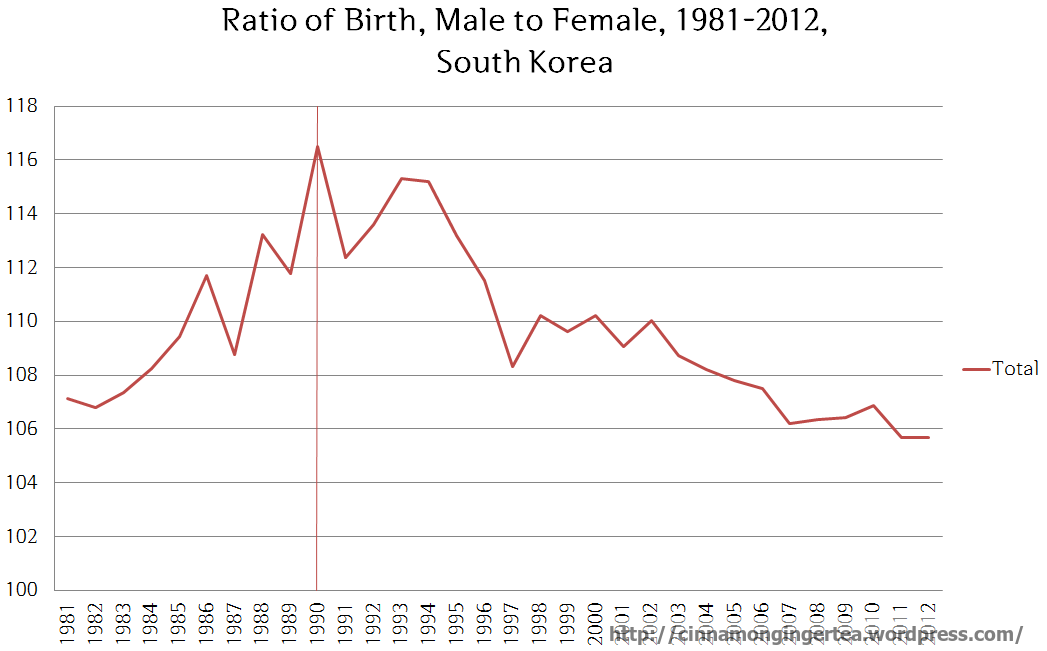
Manufacturing Outrage Against Feminists: The Cosplay Edition

I read trashy entertainment news stories about women in cosplay and half-naked men, so that you don’t have to. But when they’re all that’s available, it’s netizens with agendas that get to determine what we take away from them.

Estimated Reading Time: 15 minutes. Image sources: 스포츠하국, Pixabay (edited).

Surely it’s a bot that pumps out all these “Controversy Erupts Over K-pop Star’s Provocative Outfit” articles by now?

I’m almost serious. The names and details in the intros may change, but otherwise the articles follow the same pattern. First, you’re told about the throngs of netizens, feminists, and women’s groups who’ve criticized the sexual objectification, who are so great in number that actual names and links are usually deemed unnecessary. Next, responses from organizers of the show or event or from representatives of the star’s entertainment company are given, all of whom are men, and all of whom are stunned by the criticisms. After they recover, they’ll loudly defend her from the prudes, and join fans in praising her creative expression, sexual empowerment, and confidence and pride in her body. Finally, if we’re really lucky, we might even hear from the actual woman herself, providing a vague, suspiciously demure semi-defense or apology, which feels entirely scripted by the same men waxing lyrical about her grrrl-power.

Since Johyun of girl-group Berry Good appeared in cosplay at a gaming event on Monday June 17, “news” articles like this have appeared in the hundreds. Usually, I’d ignore them—give it a few weeks, and there’ll just be hundreds of similar articles about another immodest K-pop star to peruse, with the endless, national hand-wringing over Sulli not wearing a bra being relied upon to fill pages until then. But there’s a story about these stories which made Johyun’s case different.

I’ll let Danny Kim and David Kim of Youtube Channel DKDKTV explain, who covered the responses to her cosplay in their K-pop news video the next day (from 0:49 to 5:19):

Specifically:

Danny (in purple), (from 1:38): “Basically, this caused an alleged uproar led by a journalist, who called her out for promoting sexual objectification….And you know the funny thing was? She also happened to write an article about, like, how hot these male idols abs and boobs were about two years ago. Basically this one journalist wrote an article calling her out, and then all these different news outlets started covering this alleged ‘controversy’…but the weird part is it’s just that one journalist, and no-one really gives a shit. But I feel that this is like, what we call media play.”

David (in blue): “So what you’re saying is that there was one news article from that journalist, and the news just kept kinda reproducing—”

Danny: “Maybe she was, maybe the original article was allegedly offended by this outfit, but afterwards, all this like, a constant cycle of this controversy being covered when it’s not even a controversy, I think got media play. But anyway succeeded…”

David, (a little later, from 3:40): I saw the internet community reacting to her, and they were saying, like the headline was, ‘Do You Think it’s the Chosun Era?‘…Have you looked at the comments? Because, like, the most voted comment, for every article I’ve checked, is saying like, ‘Oh, it was all empowerment and strong for Hwasa [of MAMAMOO] and now you come for her, and which is all like ‘Provocative!’ and ‘Sexually objectifying!’…The comments are allegedly calling the journalist or the people who are criticizing [Johyun], like, radical feminists, because when they’re saying when like Hwasa did it, it was all fine, it was all like powerful and you know, all that stuff. But when a relatively Korean standard beauty person doing it, now, they’re like ‘OMG! She’s selling herself! OMG! That’s sexual objectification!’ Those are like double standards [too].

To summarize the charges: there was never any real controversy; the catalyst for the alleged controversy was one female journalist’s critical article; and that she hypocritically sung the praises of topless male actors in her previous articles. Let’s examine each in turn.

The first can be confirmed almost immediately. While absence of evidence is not necessarily evidence of absence, I’ve read dozens of articles that simply quote anonymous critics as discussed, and I’m not going to read dozens more in the vain hope that—heaven forbid!—one journalist actually does back up what they say. If that evidence of feminist outrage exists then, the onus is on believers to provide it. And they haven’t been doing a very convincing job so far:

Source: Netizenbuzz.

The second charge that a female journalist’s critical article sparked the whole media play though, is completely wrong. And that’s also very easy to prove.

The article in question, which I’ll give my translation of in a moment, was “‘Perfection vs. Unpleasantness.’ In the Aftermath of Johyun’s Exposure of Her Body, Can We Say the Intention Was Innocent?” / “‘완벽vs불쾌’ 조현 노출 후폭풍, 의도는 정녕 순수했을까”, written by Jo Yeon-gyeong (조연경) for Ilgan Sports (일간스포츠) and published at 8:37pm on Monday the 17th; from there, it was syndicated to Daum, where it currently has 1700 comments. The timing is crucial: do a search with the words “Johyun,” “Berry Good,” and “Controversy” on Naver, Korea’s biggest portal site, and it’s evident that numerous articles with that key final search term were published throughout the day, well before Yeon-gyeong’s in the evening. Moreover, that search is just of Naver and just with the word “controversy” attached to Johyun’s name; there’s also some earlier ones that mention, say, “sexual objectification,” with or without the specific word “controversy” too. Hell, even if you don’t speak Korean, just by clicking on the links to the four articles Netizenbuzz covered you can see that all of those preceded it as well.

To point out Danny and David’s mistake isn’t intended to imply anything: they’re busy YouTubers pumping out three videos a week, of which this story was just one short segment of one. Also, I appreciated their comments that Johyun’s smiling and easy demeanor at the event in no way implies her consent with the outfit chosen for her, which speaks to the difficulties in judging exploitation within and reporting on the notoriously controlling K-pop industry, a topic I’ve covered in depth elsewhere.

That said, their sloppy mistake, however inadvertent and lacking in malice, does perpetuate the stereotype of the interfering feminist, outraged over trifles that normal people couldn’t care less about. To understand why that version of events came about, and snowballed to the extent that that’s the one Danny and David took notice of, let’s examine what the journalist actually said:

“Perfection vs. Unpleasantness.” In the Aftermath of Johyun’s Exposure of Her Body, Can We Say the Intention Was Innocent? “완벽vs불쾌” 조현 노출 후폭풍, 의도는 정녕 순수했을까

Jo Yeon-gyeong, Ilgan Sports, 2019.06.17 20:37

이쯤되면 입힌 사람도, 입은 사람도 잘못이다. 반짝 이슈에 이미지를 홀라당 날려 버렸다. 응원하는 이들만큼 불쾌감 섞인 비난도 뒤따른다. 후폭풍을 전혀 예상하지 못했을까. 그 또한 패착이다.

Whether Johyun chose the outfit, or whether it was chosen for her, we cannot say. Either way, the hot issue that suddenly arose from it is the question of if she has ruined her image. There are as many people supporting her as there are critics or those made to feel uncomfortable by her outfit. We can not know yet what to make of the aftermath. Or if the choice was misguided.

베리굿 조현이 노출 논란에 휩싸였다. 과감한 코스프레 의상이 문제였다.

Because of her daring, provocative outfit, Johyun has been engulfed in controversy.

조현은 17일 서울 상암동 에스플렉스 센터OGN e스타디움에서 열린 ‘게임돌림픽2019 : 골든카드’ 행사에 참석했다. ‘게임돌림픽2019 : 골든카드’는 게임을 즐겨하는 아이돌 스타들이 게임 실력을 겨루는 아이돌 e스포츠 대회로, 이날 행사에는 약 40명의 아이돌 스타들이 참석했다.

On Monday the 17th, Johyun participated in OGN’s Game Dolympic 2019: Golden Card event at the Seoul OGN e-STADIUM in Samam-dong, along with approximately 40 other idols. As part of the event, idols showed off their skills competing against each other at e-games.

조현은 ‘리그 오브 레전드’의 구미호 캐릭터 아리 코스프레 의상을 차려입고 카메라 앞에 섰다. 게임 행사인 만큼 게임 속 캐릭터 의상을 착용한 자체는 문제가 되지 않는다. 하지만 가슴과 엉덩이가 훤히 드러나는 의상은 분명 과했다. 떨어지는 퀄리티에 스타킹 라인도 고스란히 노출됐다.

Johyun cosplayed as the nine-tailed fox character Ahri from League of Legends, and stood in front of the cameras [on the red carpet]. That she cosplayed is not a problem. However, her choice of clothing clearly exposed her breasts and bottom to an excessive degree. The outfit was poor quality too, and fully revealed her suspenders. (Source, right: Bias Wrecker.)

섹시와 저렴은 한끗차이다. 조현은 의도했든 의도하지 않았든 스스로 목적 뚜렷한 눈요깃거리가 됐고, 조롱의 대상이 됐다.

There’s a fine line between sexiness and looking cheap. Whatever Jo-hyun’s intentions were, she’s plainly just there as eye-candy, and is now an object of mockery.

물론 ‘완벽한 코스프레’라 극찬하는 이들도 있다. ‘코스프레일 뿐인데 왜 난리냐’ ‘하다하다 별걸 다 갖고 논란. 예쁘기만 하다’ ‘뭐가 과하고 뭐가 야하다는건지 모르겠다. 코스프레 무식자들’ ‘캐릭터 의상이 원래 저런데 어쩌라고’ ‘잘 입었다. 칭찬해 주고 싶다’ 등 옹호 반응도 쏟아지고 있다.

Of course, there are people who speak highly of this “perfect cosplay.” Those rushing to her support have made such arguments as “It’s just cosplay. What’s all the fuss?”, “Whatever she does, there’s controversy. Can’t you just acknowledge she’s pretty?”, “I really don’t know what’s revealing or excessive about her outfit. Only people who know nothing about cosplay would say such things”, and “She’s just dressed like the original character is dressed. I want to compliment her for that.”

특히 조현이 입은 의상은 주최 측과 사전 상의한 결과였다. 취지에 어긋나지 않고, 자리를 빛내기 위한 선택이었다는 것.

Crucially however, the choice of outfit was in made in prior consultation with the organizers and hosts of the event. It was not inappropriate for the event, and was chosen to lighten it up.

소속사 제이티지엔터테인먼트 측은 “평소 게임을 좋아하는 조현이 게임 행사에 참여하게 됐고, 주최 측과 협의 후 코스프레를 완벽히 소화하기 위해 준비한 의상을 착용했다”며 “조현이 평소 게임을 좋아하기 때문에 팬들과 더 많이 소통하고 싶어 했다”고 전했다.

A source from her entertainment company JTG Entertainment [further clarified] that “Johyun is a big fan of games, and that is how she came to participate in the event; the outfit that was chosen in consultation with the event hosts worked out for her beautifully. Also, that “Through wearing the outfit, Johyun hoped to better communicate her love of games to her fans.”

그럼에도 불구하고 ‘성상품화를 자처했다’는 목소리가 더 높은 실정이다. 이에 따른 네티즌들의 갑론을박도 점점 더 격렬해지고 있다. 의도가 무엇이었든 단발성 이슈 몰이에는 성공한 모양새다. 이후 조현이 보여 줄 행보가 그녀의 진정한 이미지를 결정짓게 만들 것으로 보인다.

Despite this, the accusations that she was sexually objectified have grown in number, and netizens have intensely debated the pros and cons of her choice of outfit—whatever her intentions [James—or those of JTG Entertainment], she’s certainly been successful in becoming the issue of the week. After it dies down, her true image will be determined by the paths she takes in the future. [End]

Source: 5:18, TopStarNews.Net@YouTube

Whatever you make of Jo Yeong-gyeong’s opinion piece, it’s only slightly harsher than those by many other journalists. Yet it’s her that has been made the figurehead for feminist outrage and overreaction by the more tabloidish and alt-right corners of the Korean internet, buttressed by her alleged hypocrisy and double-standards:

Sources: MLBPark (1; since deleted); 2)

Her haters generally provide five of her previous articles as evidence. I won’t translate them fully sorry (my first one above probably already pushes the limits of fair use), just those parts about “how hot those male idols abs and boobs were.”

First, one from October 2016, about a scene from the drama Sweet Stranger and Me, in which Kim Young-kwang appears wearing only an apron on top in front of Park Soo-ae:

주목할 것은 김영광의 차림이다. 상의는 입지 않은 채 빨간 앞치마만 걸치고 있는 그의 모습은 궁금증을 유발하기 충분하다.

특히 김영광의 태평양 어깨와 힐끗 보이는 잔근육, 팔의 힘줄은 시선을 압도, 여심을 흔들게 할 전망이다.

또 수애 앞에 바짝 다가선 김영광은 남성미를 폭발시켜 미묘한 긴장감을 형성한다. 이에 앞으로 두 사람에게 무슨 일이 생길지 기대감을 높인다.

Man of the drama title Kim Young-kwang is getting a lot of attention for a scene in which he’s topless but for a red kitchen apron.

In particular, he’s aroused the interest of women with his broad shoulders and the veins on his bulging muscles. Also, as he approaches Park Soo-ae, we suddenly become aware of his masculine beauty, and the building tension between them. With bated breaths, we wait to see what will happen next.

Next, from March 2017, about an episode of the Law of the Jungle reality TV show, in which the male guests took off their tops in the rain:

이에 따라 예상치 못하게 병만족의 숨겨왔던 초콜릿 복근도 공개됐다. 상의를 벗은 병만족은 함께 목욕탕에 온 것처럼 서로의 등을 밀어주기도 하고 장난도 치며 돈독한 우정을 다졌다. 다들 “자연인이 된 것 같아”, “진짜 시원하다. 대박이에요.” 등의 반응을 보이며 행복해했다고.

그 모습을 멀리서 지켜보던 홍일점 경리는 “나도 같이 벗고 싶었다. 그러나 여자라 참았다”며 알몸 샤워하는 남자 병만족을 부러워했다는 후문이다.

As they took off their tops, the “chocolate abs” of [host] Kim Byung-man‘s “tribe” were revealed, and the men began massaging each other’s backs and getting friendly as if they were in a bathhouse back at home. They were very happy, saying things like “It’s great to get so close to nature,” “This is so refreshing. It’s just the best!”

Watching from a distance, the only female member of the tribe, Nine Muses’s Park Kyung-ri, later revealed, “I really wanted to take off my clothes too. But because I was the only woman, I just had to put up with it. I was really jealous of the men being able to shower half-nude.”

From September 2017, when several members of Korean-Chinese boy-band Exo appeared on variety show It’s Dangerous Beyond The Blankets:

Source: @EXOXiuminTurkey; all other images from their original articles.

물놀이를 해본 지가 언제인지 까마득한 집돌이들은 계속 한참을 머뭇거리다 수영장에 들어갔는데, 이후에도 무엇을 해야 할지 몰라 하며 당황하는 모습을 보였다. 하지만 곧 자신들만의 물놀이에 빠져들어 상의 탈의를 감행, 그동안 그들이 소중하게 간직하고 있던 근육까지 공개하는 열의를 보이며 열띤 시간을 보냈다는 후문에 기대감을 증폭 시키고 있다.

At first the homebodies hesitated to get into the water, not having been in the swimming pool for a while. And once they did get in, it was like they didn’t know what to do. But in the end, they got so energized by the water that they took off their tops and showed off their hidden muscles with alacrity. Viewers’ expectations for the episode [which had then yet to be aired] will be high!

Then again on the Law of the Jungle reality TV show in February 2018, with Kim Yu-gyeom, Lee Tae-gon, and Kim Yun-sang enjoying themselves in a stream:

유겸의 상남자 매력은 다음날 과일 탐사에서도 어김없이 빛났다. 이틀 만에 소금기 없는 민물을 발견한 유겸은 거침없이 상의를 벗어 던지고 물속에 몸을 내던져 정글에서의 첫 샤워를 즐겼다. 이를 본 김윤상 아나운서는 “역시 아이돌이라서 그런지 몸매가 훈훈하다”며 눈을 떼지 못했다.

[After catching a fish with his bare hands the day before], Yu-gyeom’s masculine beauty was on his display while fruitpicking. In just two days, he found a fresh water source, threw off his clothes to dive into some water, and enjoyed a shower in the jungle. Kim Yun-sang [James—a cishet guy, in case of any confusion!] couldn’t keep his eyes off him, explaining his figure was just so admirable.

And finally in May 2018, about an episode of The Return of Superman in which volleyball player Moon Sung-min visited the bathhouse with his son Shi-ho:

…문성민 아빠와 시호 부자는 목욕탕에서 완벽한 몸매를 자랑하며 몸짱에 등극해 시청자들의 이목을 사로잡을 전망이다.

방송 전 공개된 사진 속 문성민 아빠와 시호는 목욕탕에서 신나는 시간을 보내고 있다. 만점 비주얼의 문성민 아빠의 훈훈한 미소와 완벽한 초콜릿 복근은 심쿵을 유발한다. 시호의 깜찍한 웃음은 매우 사랑스럽다.

이날 시호·리호는 배구선수인 문성민 아빠의 직장에 방문했다. 그곳에서 시호는 문성민 아빠와 공놀이를 하며 즐거운 시간을 보냈다고. 운동을 끝낸 두 사람은 흘린 땀을 씻기 위해 목욕탕으로 향했다. 목욕탕에 등장한 문성민-시호 부자에 모두가 심쿵했다는 전언이다. 문성민 아빠가 완벽한 식스팩을 자랑하며 모습을 드러냈기 때문.

…Moon Sung-min captured the audience’s attention by showing off his perfect body in the bathhouse.

Shi-ho and Sung-min had an enjoyable time there. Sung-min got hearts racing with his perfect visuals, charming smile, and perfect chocolate abs. Shi-ho’s cute laughing was very lovable too.

After having an enjoyable time at Sung-min’s workplace, the two of them went to the bathhouse to wash off their sweat. It was said that all the other patrons of the bathhouse almost stopped in their tracks at the sight of Sung-min showing off his perfect six-pack.

Making the big assumption that it’s not actually her editor that chooses the slant of all of her articles, perhaps from those you could indeed argue that Danny and David Kim’s third charge is correct: she was being hypocritical about Johyun. Against that however, you could respond that much of her concern about Johyun’s image stems from how unusual the cosplay was for her, in contrast to the male actors and boy-band members for whom taking their tops off for the cameras is a matter of routine. To which you could counter that, whether through choice or coercion, Johyun is actually very used to being objectified, as are the other members of Berry Good. And so on.

But to engage in that debate means not seeing the forest for the trees. Because if even we do concede the double-standards, all these articles are still just trashy entertainment news. Those short excerpts above? They’re actually half or more of the entire “news articles” in some cases. That’s not to single Jo Yeon-gyeong out, or imply that she’s bad at her job. Quite the opposite—it’s to point out that as a producer of quick, throwaway clickbait (hey, she makes more money from writing than I do), that in each case above, everything she said about the man boobs and chocolate abs was also made by dozens or even more other journalists like her. Many of who might even be men.

Forgive my own hypocrisy in not providing links to them; frankly, as I type this I’m just exhausted after a week of unpaid research, translation, and 3200 words on this myself. So, if you do have your doubts on that last, please indulge me with the two minutes of googling necessary to confirm.

That’s something the paid journalists were not prepared to do. Instead, we were asked just take to their word for it that Johyun’s cosplay was controversial.

Is it any wonder that people would form their own narratives instead?

Or that the version of events by the group with the biggest axe to grind would come to dominate the story?

For make no mistake: singling out a female journalist for articles that she may have had no choice over, which were replicated by many other male and female colleagues, is as misogynistic as they come.

Related Posts:

If you reside in South Korea, you can donate via wire transfer: Turnbull James Edward (Kookmin Bank/국민은행, 563401-01-214324)
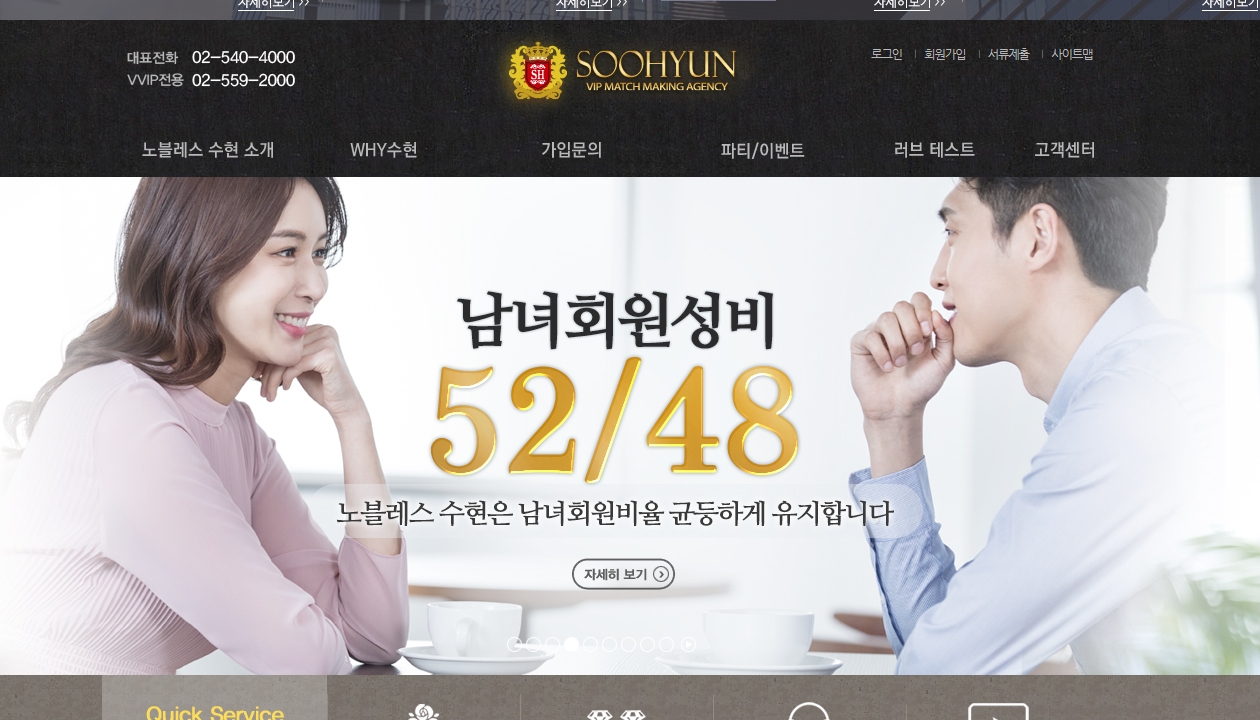
Why We Need to Stop Talking about “Asian” and “Western” Women’s Bodies

Setting arbitrary standards for what makes an “Asian” or “Western” body type punishes the vast majority of women who don’t fully measure up to either.

Estimated reading time: 14 minutes. Photo by Gabrielle Henderson on Unsplash. Post has one NSFW image.

What is it with people ever talking about “Asian” and “Western” women’s bodies?

If the conversation is in Korean, usually only Korean and white women will actually be meant; the latter, as women of color that don’t present as Korean tend to be referred to by their race or nationality instead. But even reduced to just those two groups of women, how could the idealized figures described in those conversations possibly embody the mélange of real, flesh and bone Korean and white women’s body types and features? Let alone actually have something useful to say about them?

I get that the habit mostly boils down to the natural, human tendency to overgeneralize groups in everyday speech. We’re all guilty of that sometimes. But on this topic specifically, the usual common-sense and restraint seem to get thrown out of the window. For one, because women of color are usually not considered “Western” as mentioned, a subject we’ll return to in future posts. Then take the alacrity with which various bodily features are pigeonholed as Korean or white by Korean journalists from all levels of the Korean media, who regularly come up with such pearls of wisdom as: “the most notable trait of Kim Yuna’s “golden ratio body” is her long limbs, just like those of a Westerner’s“; that “Lee Hyo-ri has an Asian bottom [and a Western chest]“; and that “female idols with ‘Western type bodies’…get praised by foreign fans.” Or how there’s items of women’s clothing that Korean women’s bodies are widely considered simply unsuitable for, which can present somewhat of a challenge to Korean companies trying to sell them:

Left picture: I’ve watched Western women wearing leggings, and I’ve had heated discussions about leggings with Western friends. After a month of that, I’ve come to realize why it’s so difficult for Asian women to wear them.

Right picture: When Asian women don’t have wide pelvises, flaps of skin in their “Y-zones” get bunched together and exposed. “Embarrassing!” / Instead of your skin looking soft, it looks thin and lacking in firmness; the underside of your bottom looks flabby. “I’m ashamed!” / Compared to Westerners’ long and slender legs, Asian women’s legs are short and many Asian women have stout lower bodies. “It’s upsetting!”

Shopping in New York’s Chinatown can sometimes be a minefield too:

There is resistance to this line of thinking. In response to Temple Leggings’ sponsored tweets above for instance, one Twitter user (since made a private account) argued that Korean women’s reluctance to wear leggings actually has nothing to do with their perceived body shapes or supposed too short legs vis-a-vis Western women, but is more because of a culture of constant evaluation of their bodies and “gaze rape” (“동양여성들이 레깅스를 입기 힘든 이유는 동양 여성들의 체형때문이 아니라 여성몸매평가 문화와 시선강간 때문입니다…”) with commentators in the ensuing long thread often echoing sentiments about leggings raised in both sides of recent controversies over them in the US. And probably she’s got a better handle than I do on why she doesn’t wear leggings, and has spoken to far more women about them too.
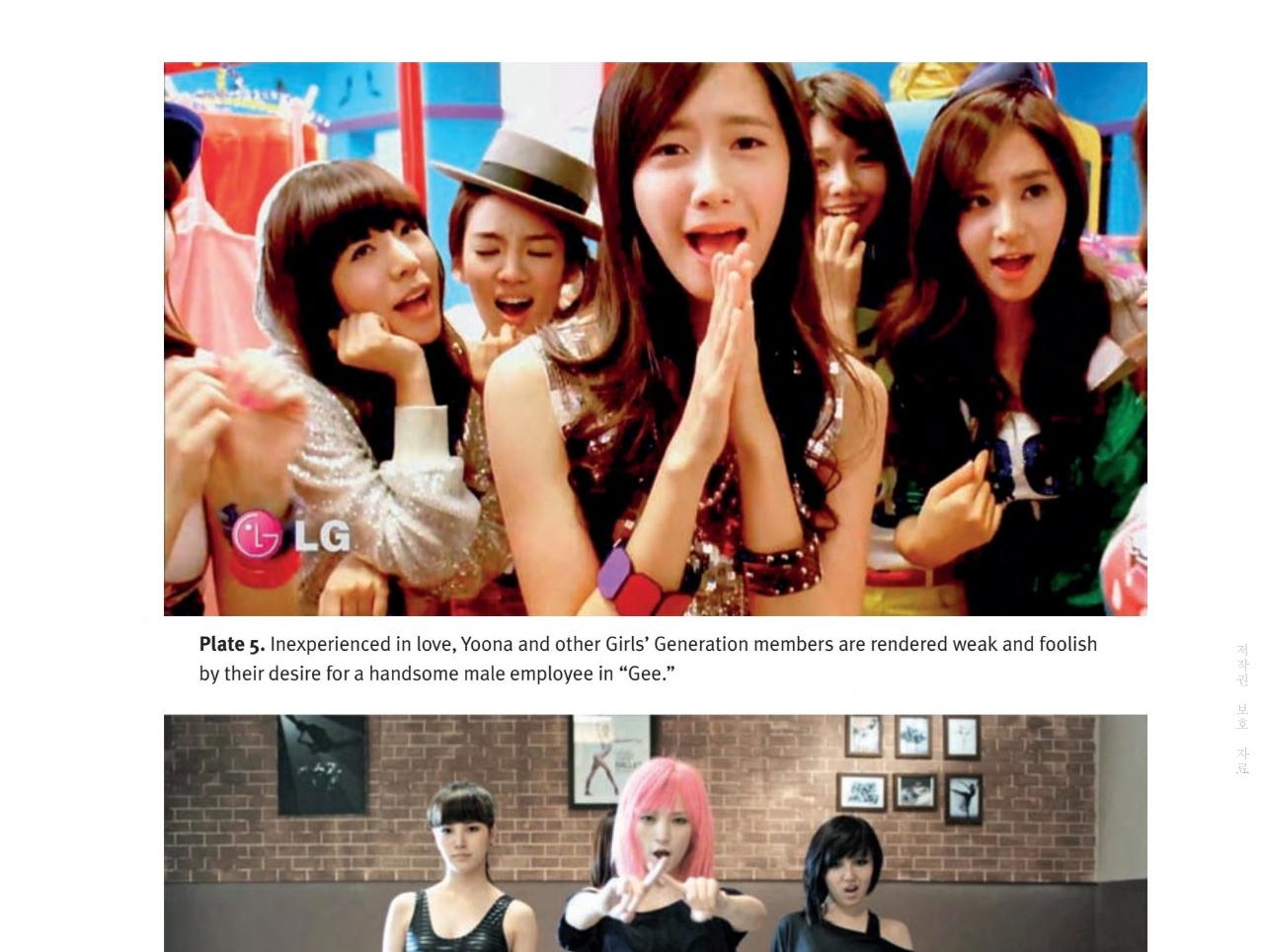
But Temple Leggings wouldn’t have mentioned Korean and Western bodies if they didn’t think it would resonate with their target market. And I have spoken to some Korean women on the subject of Asian and Western bodies specifically, and they’ve all been quite blasé about making such distinctions. I regularly hear women loudly doing so in coffee shops too, and my students aren’t shy about it either. Also, it may well just be confirmation bias, but it feels very telling that the very first result from my YouTube search for “동양몸매,” the “다이어트천재 동양몸매 vs 미친골반 서양몸매 구경하고 가세요” video (“Genius Asian body diet vs. crazy [wide?] pelvis Western body challenge”) that I couldn’t resist inserting the thumbnail from below, was titled and captioned thus without either woman ever actually mentioning Asian or Western bodies in it. Add journalists’ enthusiasm for raising the subject too, then I’m going to go right ahead and say this way of thinking is totally a thing.

Source: 파쿠아-PAQUA.

But that gives absolutely no-one permission to engage in Orientalist eye-rolling at the habit. For the Western, English-language pop culture, media, cosmetic, and medical industries are equally guilty of perpetuating such cringeworthy distinctions. More so even, as they’re frequently underscored by racist assumptions that Asian women aren’t just fundamentally different, but actually yearn to look white too.

If that’s news, I recommend reading Professor Ruth Holliday’s (Leeds University) and Professor Joanna Elfving-Hwang’s (University of Western Australia) 2012 Body & Society article “Gender, Globalization and Aesthetic Surgery in South Korea” on the subject, in which they present numerous examples—and which read like a withering manifest of the intellectual baggage Western observers can’t help but bring to the subject. But read it even if it’s not news too, both for their critiques of other journal articles and especially for the stark clarity with which two strong themes of English-language discourses on the subject emerge from their discussion.

First, is the hypocrisy and absurdity of raising the subject of race and a supposed desire for “westernization” at all when discussing the motivations of say, Korean-American breast-augmentation patients in the US, but never doing so for their white counterparts, who are ascribed completely different reasons—again, perpetuating the notion that each group is fundamentally different, both physiologically and psychologically. And second, the fact that Korean-Americans in the US, they point out (let alone Koreans in Korea), are hardly immune to specifically Korean beauty ideals, whether they retain them when they come to the US, they are exposed to them through relatives and the wider Korean-American community, and/or they are encouraged to adopt them by following the examples of increasingly visible Korean celebrities. In fact, they may be motivated more by those ideals than whatever Western reporters, cosmetic surgeons, and academics insist they are instead (who’d have thought?), with “V-line” surgery, for instance, being very popular in Korea, but which cannot possibly be described as making Koreans look more white.

Put like that, it seems astounding that the narrative that Koreans just want to look white persists.

But it’s not that simple. Spend any amount of time in Korea, and actually you’ll quickly encounter overwhelming evidence that seems to support it, which few people have the inclination and time necessary to debunk. This is why the stereotype is so strong.

Allure Korea took ten years to feature its first Korean cover model. Source: unknown.

For starters, consider how many ostensible Western beauty ideals such as pale skin are indeed heavily valued in Korea, Holliday and Elfving-Hwang explain, albeit largely only because they “entered Korea fitting pre-existing notions of class and status.” Also, among many, many other potential sources of confirmation bias:

(Update: Instead, it’s because they’re somewhat less likely to sue than Korean models, as once hilariously revealed by a nightclub owner that refused entrance to non-Koreans, despite featuring foreign women in the club’s posters. Indeed, as if to stress that it’s not always about white people, back in 2011 I thought the model in this poster for another club was Korean, and there was no reverse image-search available then; only now can she be revealed as the very white supermodel Miranda Kerr, photographed a few weeks previously by Seth Sebal. To the best of my knowledge, neither of their lawyers have gotten in touch with the nightclub yet.

Source: MS-Photograph; (CC BY 2.0).

Believing that Koreans want to look white then, does make a lot of sense. Right up the moment you read, or are personally informed through the clenched teeth of Koreans and colleagues, of how sick and tired they are of such assertions—and you suddenly realize that all this time you’ve been talking about Koreans rather than with Koreans, and can no longer rely on the convenient narratives you’ve being telling yourself to help understand the place.

By no means does this only apply to body image either: realizing how important it is to just STFU and listen is a very important process that every expat, observer, and commentator on every group or culture they are not native to must go through. And, if you didn’t personally need reminding of that, and feel I’ve actually been completely projecting all this time? With all the points mentioned so far reading like signposts in my own much too long journey through that process? Then you’re absolutely right.

Source: Mei Mei Rado, “The Qipao and the Female Body in 1930s China“, p. 193.

You’ll appreciate then, my uncomfortable surprise when I recently read Professor Mei Mei Rado’s chapter “The Qipao and the Female Body in 1930s China” in Elegance in the Age of Crisis: Fashions of the 1930s (2014). In that, Professor Rado (Parsons School of Design, NY) explains that in China in the 1920s and 1930s, Kuomintang government officials and male intellectuals did explicitly view white women’s bodies as ideals for Chinese women to aspire to. Which not to say Chinese women necessarily did themselves, or even at all, but Professor Rado’s argument that it dominated discourses about women’s bodies at the time is very convincing.

This post was originally intended to be a discussion of the numerous questions that raises: what other scholars can confirm her arguments? What influence, if any did those discourses have not just in China, but also in Taiwan, Japan, and Korea? What did people in those countries think of foreign bodies and beauty ideals then?

Those questions proved to be far too much for one post, so now my answers will be spread over several in a series. Always hanging over covering this topic at all though, was the fact that I’m still basically a middle-aged, cishet, white guy explaining that (he was shocked to read that some) Asian women (once) want(ed) to look white (maybe). To avoid being lumped in with every other pig-ignorant Orientalist commentator that genuinely believes that then, all my own baggage as a Western commentator needed to be laid on the table first. And there was a lot to unpack.

With that out of the way, Part 2 will be a discussion of Professor Rado’s chapter and other sources on discourses about women’s bodies in 1920s-1930s China, while Part 3 will be on those in Taiwan, Japan, and Korea at the same time, extending to a Part 4 if necessary. Until then, is there anything else that I’ve missed or been misguided about, or you think needs an alternative perspective? Please let me know in the comments!

If you reside in South Korea, you can donate via wire transfer: Turnbull James Edward (Kookmin Bank/국민은행, 563401-01-214324)