Girl’s Day and the New Lolitocracy: Part 2

(Source)

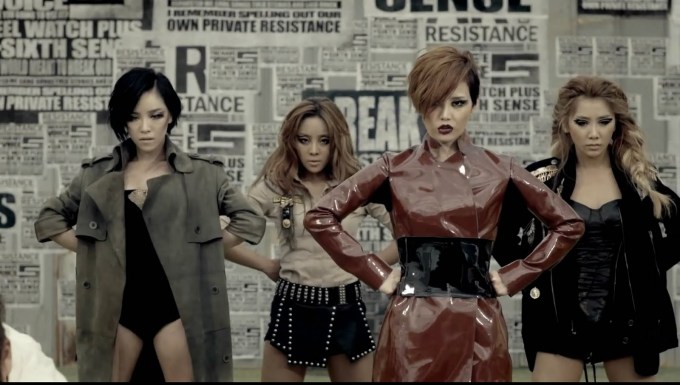
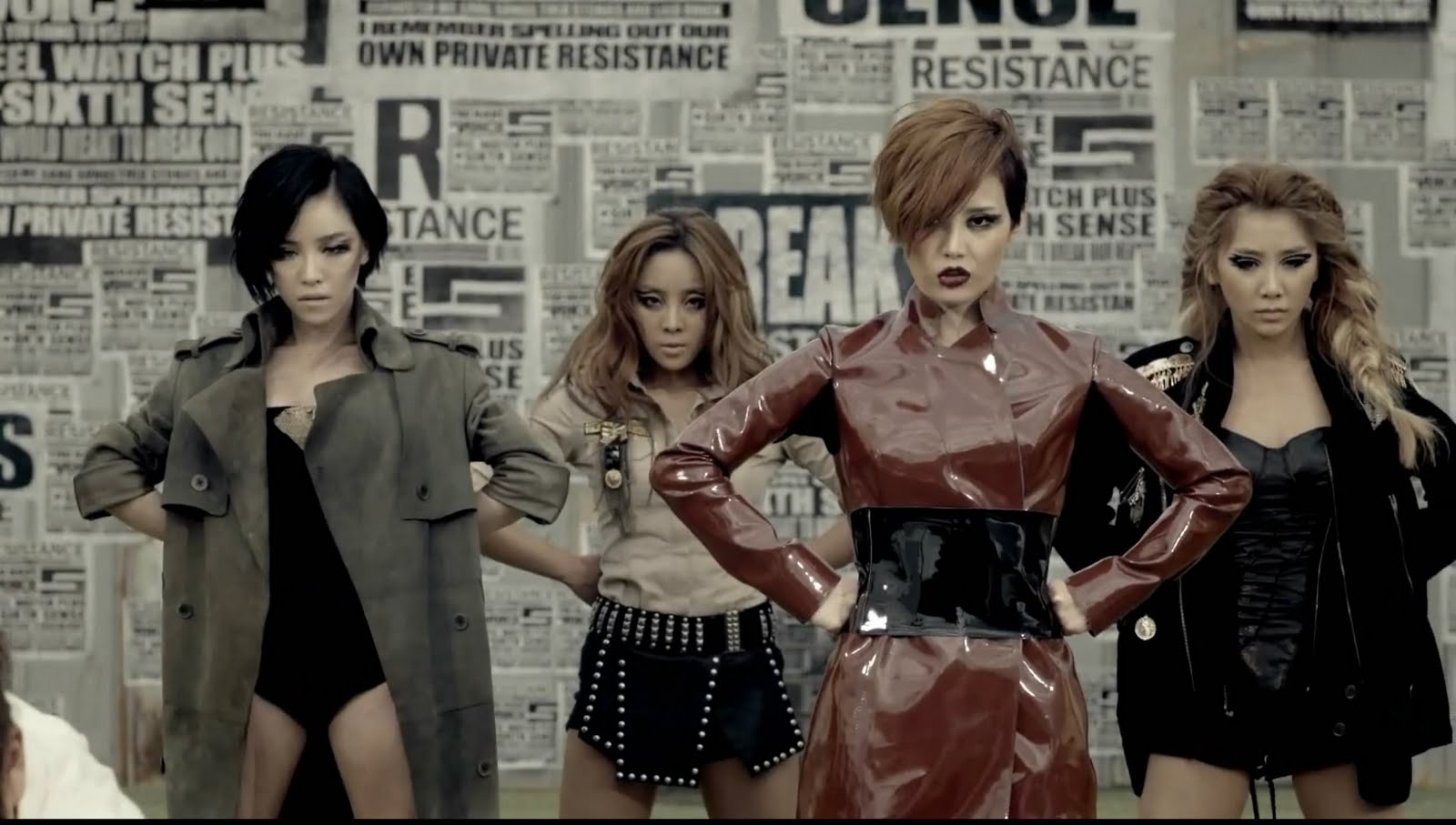
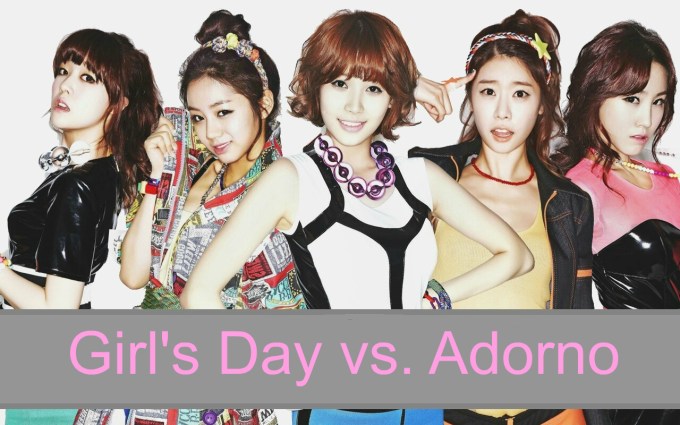
Frankly, all too many things come to mind when I see this picture of Girl’s Day from late-2010…but “Lolitas” isn’t one of them. Even if Haeri, second from left, did happen to be 16 at the time. Minah in the center, 17.

Fast-forward to March 2011 though, and the black leather, guitars, and bar setting of Nothing Lasts Forever would be ditched for uniforms and classrooms in Twinkle Twinkle, the sass for aegyo and pining after Oppa. By July, Girl’s Day would appear in the sickly-sweet Hug Me Once too, K-pop’s first music video to have a dating sim version.

Following on from Part 1, Part 2 of this blogger’s post is a very convincing account of this transformation over 2011, and makes you wonder how many fans they lost as a result (or, more cynically, how many more they gained). Also it takes little persuading to believe that many dating sims involve male characters selecting from a variety of youthful, even underage girls, and that it’s very telling that Girl’s Day would choose to replicate one.

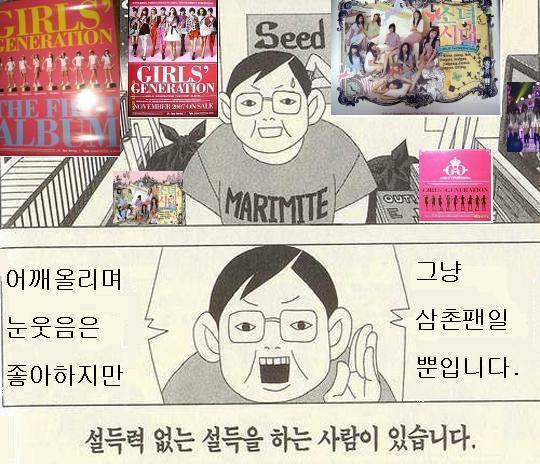
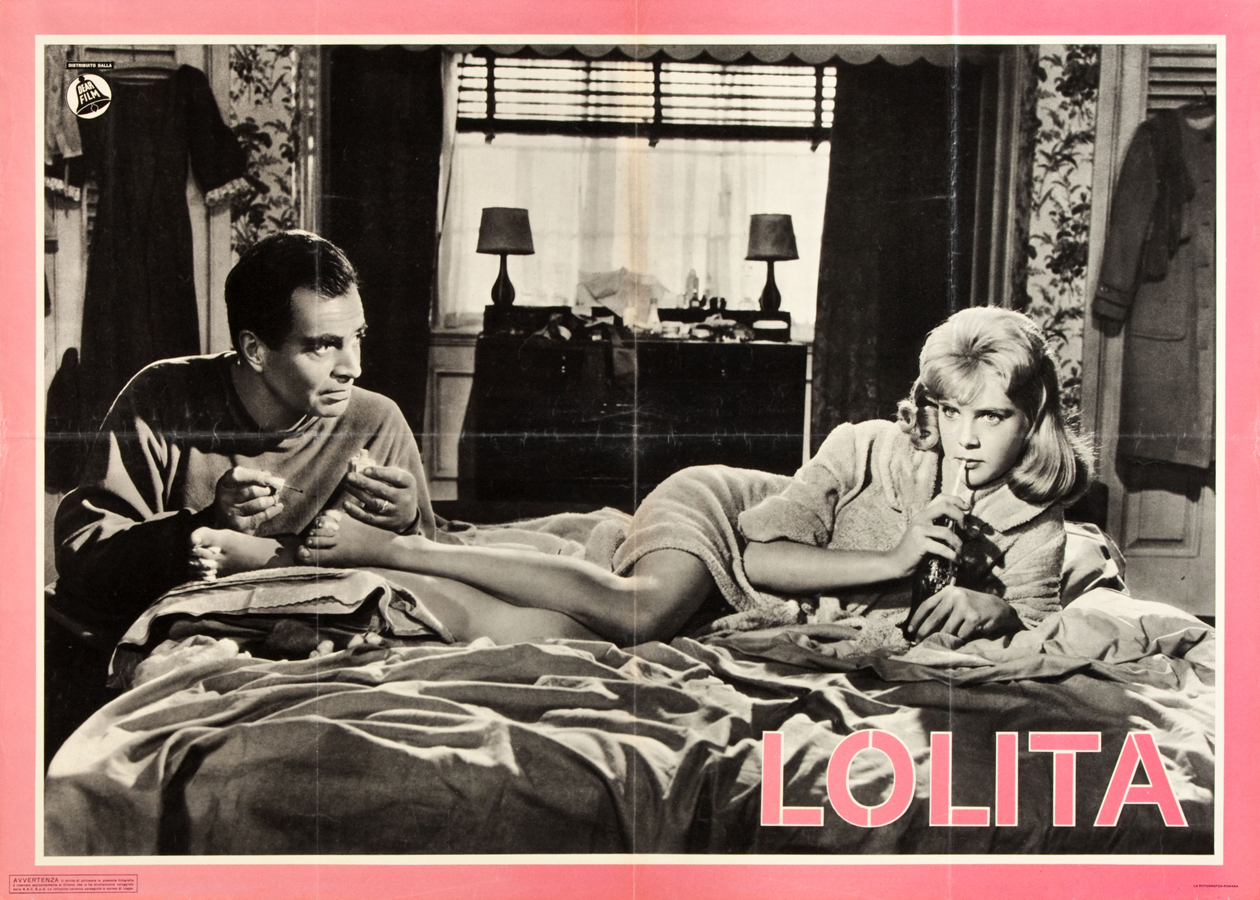
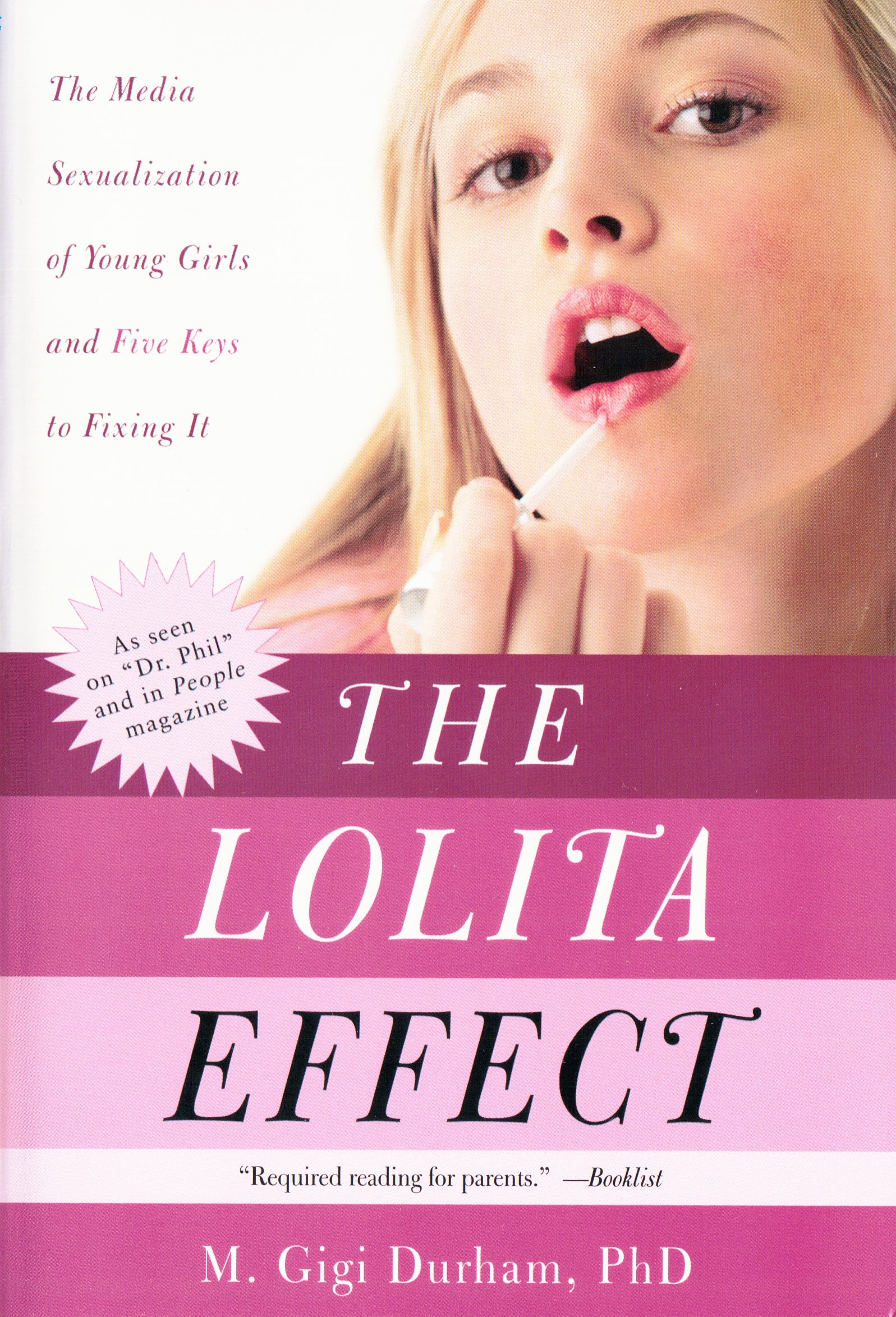
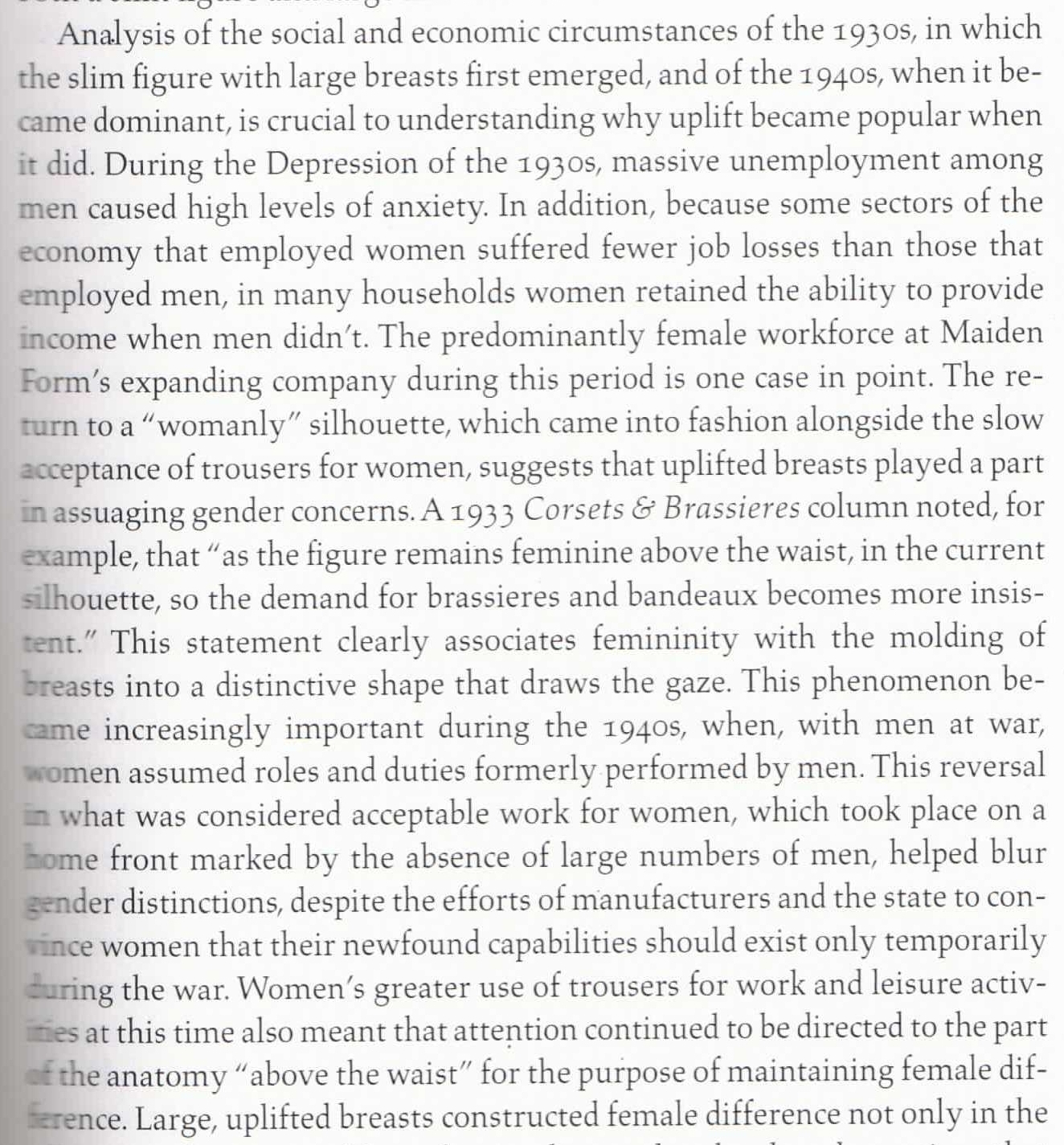
The Lolita Effect M Gigi DurhamBut really, it was their (now former) management company Dream T Entertainment that made the decision, so one criticism of the blogger is that he makes no distinction between the company and the group, despite members’ autonomy and consent being crucial for determining if they’re being sexually objectified or not (however, a dating ban and working conditions like these leave little doubt that they were indeed objectified). Another is his use of sweeping, take-his-word-for-it generalizations about lolicon and its popularity with otaku, which I’d wager readers familiar with Japanese popular culture will take issue with. Added to his sloppy, undefined, and interchangeable use of the terms “Lolita complex,” “Lolita syndrome” and the very rare “Lolitocracy” in Part 1, doing the same with a fourth Lolita-related term needlessly detracts from his arguments (source, right: author’s scan).

It was hypocritical of me to complain about a lack of definitions in Part 1 though, without providing my own. So, let me end this commentary here by offering what I took “The Lolita Effect” (which I think covers all the blogger’s related terms) to mean back at about the same time Dream T Entertainment decided to put it in action with Girl’s Day, based on my reading of the book of the same name by Meenakshi Durham:

…In short, it is the natural consequence of various industries’ (fashion, cosmetics, cosmetic surgery, diet-related, food, and so on) need to build, expand, and maintain markets for their products, which obviously they would do best by — with their symbiotic relationship with the media through advertising — creating the impression that one’s appearance and/or ability to perform for the male gaze is the most important criteria that one should be judged on. And the younger that girls learn that lesson and consume their products, the better.

Update 1 — Three things I should also mention:

1) Despite everything I’ve written about Girl’s Day, I’m hardly a hater, and I confess Female President is *cough* a bit of a guilty pleasure of mine, especially *ahem* that move at 0:51 in their performances (not so much in the MV though — their garish costumes put me off):

2) While they’re certainly sexually objectified in Female President, and likely will continue to be for their new mini-album to be released next week, it’s difficult to describe them as being portrayed as Lolitas now either. So, it appears further changes to their “concept” were made after the blogger wrote in August 2012, and I’ll investigate for a future post (can any fans provide any pointers?).

3) All that said, Nothing Lasts Forever just ROCKS (pun not intended), and is the only song of theirs I have on my MP3 player. If you haven’t heard it yourself, stop what you’re doing right now…then share my lament for Girl’s Day’s missed opportunity to stand out from most other girl-groups (and empathize with female indie groups that have to grapple with the same dilemma):

Update 2: For what it’s worth, leader and lead-vocalist So-jin recently expressed her discomfort with the group’s “cute concept.”

Taking up the translation directly where Part 1 leaves off:

(3) 걸스데이의 ‘MAXIM’ 화보 촬영 / Girl’s Day’s MAXIM Photoshoot

걸스데이의 성 상품화 방식은 반짝반짝 이후노래 뿐 아니라 다른 영역으로까지 확대된다. 그 중 대표적인 것이 걸스데이의 MAXIM화보촬영인데, 이러한 움직임은 걸스데이의 그룹전략이 성상품화 방식으로 흐르고 있다는 것을 극명하게 보여주는 사례가 된다. 걸스데이는 2011년 3월 반짝반짝 발매로 흥행을 거두고 있는 상태에서 걸 그룹 중 이례적으로 맥심(Maxim) 이라는 성인잡지에 모델로 출연하게 된다.

In addition to Twinkle Twinkle, Girl’s Day utilized a strategy of sexual objectification in many ways since. Out of these, their photoshoot for Maxim was both the most typical and most strongly demonstrated their shift in concept. They were chosen over other girl groups on the basis of the exceptional success of Twinkle Twinkle released in March.

맥심은 전형적인 성인 남성 잡지로 노출 수위가 높은 사진과 선정적인 내용을 담고 있는 잡지이다. 상반신이나 하반신을 의도적으로 노출시키는 포르노성 화보 뿐 아니라 특정 부분에서는 여성의 전라(全裸)의 신체가 노출되는 화보도 게재되고 있으며 그 내용도 선정적인 것이 많을 뿐더러 직접적인 성관계를 다루는 부분도 잡지 안에 상당부분 존재한다.

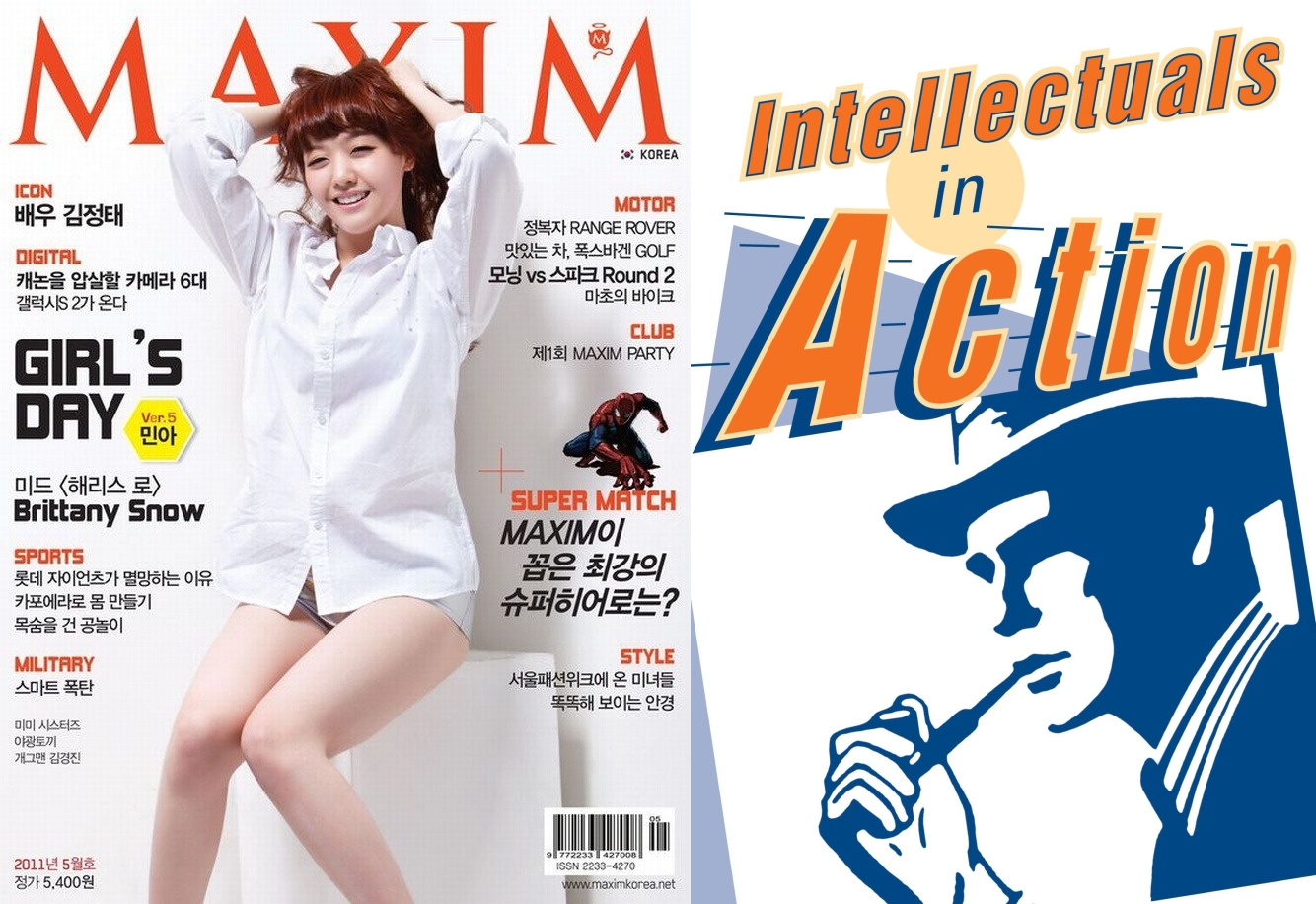
Girl's Day Maxim Minah Theodor Adorno(Sources: left, right)

Maxim is a typical adult men’s magazine with an emphasis on pictures and sexual content. It doesn’t just have pornographic pictures with people’s upper or lower bodies willfully exposed, but publishes pictures of completely nude females and its contents deal mostly with lewd topics or are directly about sexual relationships. [James — I haven’t seen a copy in five years, but describing it as something akin to Playboy is a bit of an exaggeration surely? Either way, see here for pictures of the Girl’s Day shoot]

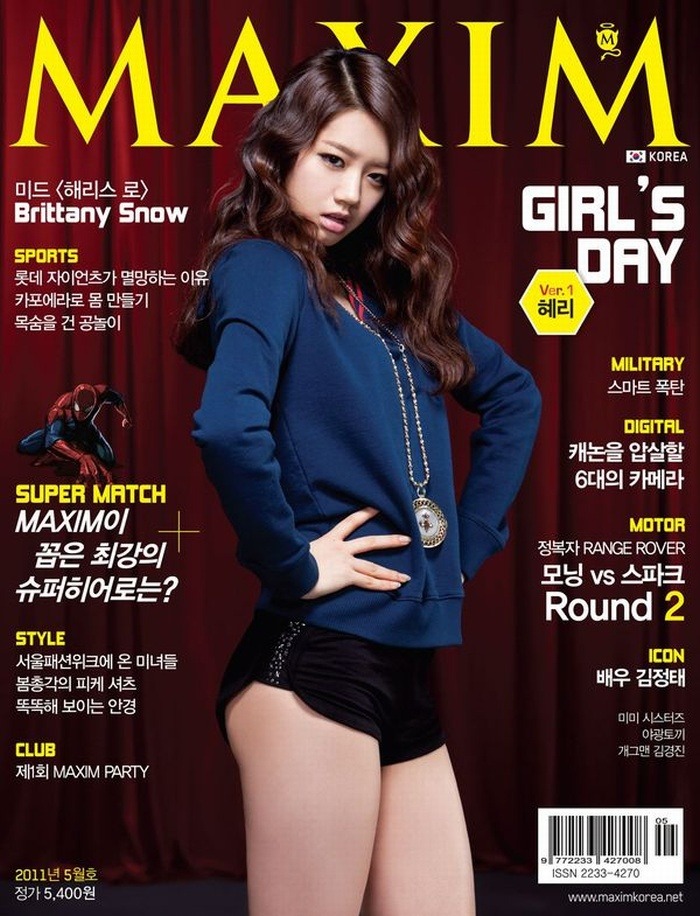
Girl's Day Maxim Hyeri이러한 성인잡지에 10대 걸 그룹이 화보의 모델로 출연한다는 것은 사회적으로도 문제가 되는 일이었음에도 불구하고 걸스데이는 화보촬영을 감행한다. 2011년 5월호 maxim 속 공개된 걸스데이의 화보는 흰색 셔츠에 짧은 바지를 입어 ‘바지가 없는 듯한’ 설정의 컨셉, 소위 ‘하의실종패션’이라는 컨셉과 더불어 상반신 노출이 심한 의상과 선정적인 자세로 잡지에 실리었다. 그 당시 미성년자인 멤버가 둘(방민아, 이해리)이 있었음에도 불구하고 진행된 이 화보촬영은 성인문화의 중심인 성인잡지에 미성년자를 놓음으로써 롤리타 콤플렉스를 이용한 ‘미성년의 성’을 상품화한 극단적인 예라고 볼 수 있으며, 성 개방 풍조에 편승하여 ‘미성년의 성’을 상품으로 공략했다는 점에서 그전까지 노래에서 암시적으로 제시된 성 상품화 전략이 노골적으로 드러나는 부분이라고 볼 수 있을 것이다.

Although problematic, teenage members of Girl’s Day were included in the photoshoot for the May 2011 edition. Members dressed in white shirts and very short pants in a “disappearing pants” concept, which also excessively exposed their upper bodies and placed them in sexually suggestive poses. Using two underage members — Minah (17 years 11 months at the time of release; see above image), Haeri (16 years 10 months; above-right {source}) — in a photoshoot as the focus of an adult magazine is an extreme example of the Lolita complex, and shows that Girl’s Day were blatantly using it as a marketing strategy, rather than just hinting at it previously in songs and music videos.

Update 3: I forgot to mention that despite laws against it, Korean authorities have long turned a blind eye to sexualized images of minors in the media. Consider what I wrote about the marketing of Samaria/Samaritan Girl (2004) back in 2009:

Consider the two promotional posters above from 2004, featuring Kwak Ji-min (곽지민) and Han Yeo-reum (한려름) respectively. Never mind that Kwak is topless, and as a minor when the picture was taken, meant that it was technically illegal; as this case with a 14 year-old in January and this case with an 18 year-old earlier this month demonstrate, the Korean authorities still seem strangely reluctant to prosecute this sort of thing. Rather, the point is that far from discouraging one from having sex with minors, both posters seem to be positively encouraging it.

Continuing:

(4) ‘반짝반짝’ 이전 작품과의 비교 / Comparing Twinkle Twinkle to Girl’s Day’s Previous Works

이러한 걸스데이의 성 상품화 전략은 2011년 3월 ‘반짝반짝’이 나오기 전까지의 음악적 색깔과 ‘반짝반짝’이후의 음악적 색이나 성향이 어떻게 달라졌는지를 살펴보면 그 의도를 더욱 명확히 확인할 수 있다. 걸스데이의 초기 형태는 지금과 같지 않았다. 초기 활동 당시 여성 락 밴드를 표방하여 시작한 걸스데이는 새로운 멤버 교체 이후 ‘잘해줘봐야’라는 밴드 락 중심의 음반으로 활동하고 있었다. 가사의 내용 또한 제목에서 알 수 있듯이 반짝반짝과 이후 노래에서 볼 수 있는 풋풋한 사랑에 대해 다룬 것과 상반되게 배신과 복수를 다루고 있으며 강력한 비트와 단조 중심의 선율로 무거우면서도 강렬한 여성 락 그룹의 이미지를 보여주고 있었다. 멤버들의 의상 또한 강한 느낌의 노래와 어울리는 검은색 가죽옷과 팜므파탈적인 소품이 주를 이루었으며 클럽과 밴드 무대를 배경으로 한 뮤직비디오에서도 각 멤버는 있는 힘껏 드럼과 기타를 치거나 수화기를 세차게 던지거나 망치로 특정 대상을 치는 등 다소 과격하고 강한 느낌을 연출하고 있다.

If you compare Girl’s Day’s style of music before and after Twinkle Twinkle, their new sexual objectification strategy is clear. They are now very different to when they started. At the beginning, after the sudden membership changes, they emerged as a girl rock group with their song Nothing Lasts Forever. Rather than Twinkle Twinkle, which was about a new love, this song’s title and contents were about betrayal and revenge, with a rhythm in minor chords. The music video set in a bar with a stage in the background, the members give off a strong femme fatale vibe with their black leather clothes, their powerful working of guitars and drums, and hitting of hammers [James — inflatable hammers that is, but point taken about the very different vibe!] and violent throwing of phone receivers.

하지만 이러한 ‘잘해줘봐야’의 컨셉은 당시 걸 그룹의 기본적인 형태와는 상이한 것이었다. 그 당시 소녀시대와 원더걸스를 중심으로 ‘어리다’는 컨셉 하에 수많은 그룹들이 ‘어느 그룹에 평균연령이 더 어린가?’, ‘어느 그룹에 더 어린 멤버가 있는가?’로 경쟁하며 어리면서도 은근하게 성적으로 어필하는 능력이 인기 있는 걸 그룹으로 평가되는 시기였다.

However, at the same time that they had this concept, the standard for girl groups was very different. Centered around the Wondergirls and Girls’ Generation, they competed against each other and were judged on the basis of their youth (Which group had the youngest average age of members? Which group had the youngest member?), with an implicit sexual appeal on that basis.

기존에 존재하던 자기만의 음악적 색을 띠는 가수들은 브라운관 너머로 사라지고 ‘어림’과 ‘섹시함’이라는 다소 모순적인 가치를 얼마나 훌륭하게 배합한 걸 그룹들이 가요계를 점령하고 있었다. 이러한 상황에서 다소 성숙하고 반항적인 이미지의 걸스데이의 초기 컨셉은 이러한 흐름과는 상이한 매우 ‘이질적인’ 컨셉이었다.

In this environment, girl-groups with different styles soon disappeared from the airwaves, while those that focused on the (actually contradictory) combination of youth and sexiness soared ahead. Unfortunately, Girl’s Day’s original concept directly defied this trend.

하지만 이러한 이질성은 결코 강점이 되지 못했다. 문화산업의 시스템은 너무나도 확연하게 획일화를 요구하고 있었고 그 획일화에 순응하지 않는 그룹은 경제적인 무능력자가 되어 사라질 수밖에 없었다. 이러한 상태에서 걸스데이는 결국 데뷔 초기의 그룹 컨셉을 완전히 버리고 걸 그룹 문화의 거대한 양식의 흐름 편승할 수밖에 없었고, ‘반짝반짝’에서 완전히 새로운 컨셉으로 재탄생되게 된다. 거친 느낌의 가죽 자켓은 교복으로 바뀌었고 노래의 분위기는 천진하고 가볍게 변했다. 가사는 더 이상 반항을 말하지 않으며 순종적이고 연약한 소녀의 모습만을 그리게 된다. 이러한 이미지 변신을 시작으로 걸스데이는 안정적인 팬층을 확보하며 걸그룹시장내에 견고한 입지를 굳히게 된다.

This difference couldn’t be sustained. The culture industries demanded standardization, and groups that couldn’t adapt ultimately disappeared. Because of this situation, Girl’s Day had to completely do away with the concept they debuted with and join the girl-group bandwagon, coming up with the completely new concept of Twinkle Twinkle. The leather jackets were done away with in favor of school uniforms, the atmosphere now one of light naivete. The lyrics were no longer about rebellion, but stressed being meek, obedient, weak and frail girls. This image change helped give them a secure fanbase and cemented their entrance in the girl-group market.

이러한 걸스데이의 음악적 양상의 변화에 따른 인기의 변화는 ‘어린 이미지’가 걸 그룹 문화에서 얼마나 핵심적인 요소로써 작용하고 있는가를 잘 보여주는 것이다. 비록 멤버들 중 어린 멤버가 있다고 할지라도 그 멤버가 성적 어필을 하지 않는 컨셉인 ‘잘해줘봐야’같은 노래는 대중들의 관심을 끌 수 없다. ‘반짝반짝’처럼 ‘미성년의 성’을 직접적으로 다루고 언급하는 노래만이 대중 걸 그룹 문화에서 살아남을 수 있다. 위에서 살펴본 이러한 면들은 걸 그룹에 팬들이 반응하는 이유가 그들의 ‘미성숙한 성’에 있는 것이라는 사실을 보여주며 이것이 현 걸그룹 문화의 거대한 흐름이라는 사실을 잘 보여주고 있다.

This [successful] change by Girl’s Day demonstrates that a girl-groups must have a youthful image at their core in order to survive. Also, despite having adolescent members in their group, the lack of sex appeal in Nothing Lasts Forever [James — I beg to differ; he means a Lolita-like sex appeal] meant that it went unnoticed by the media — only songs like Twinkle Twinkle that directly refer to or take advantage of teenage sexuality will gain attention. They are also the only kinds of songs that get a reaction from fans, and, combined, demonstrate how strong this trend is.

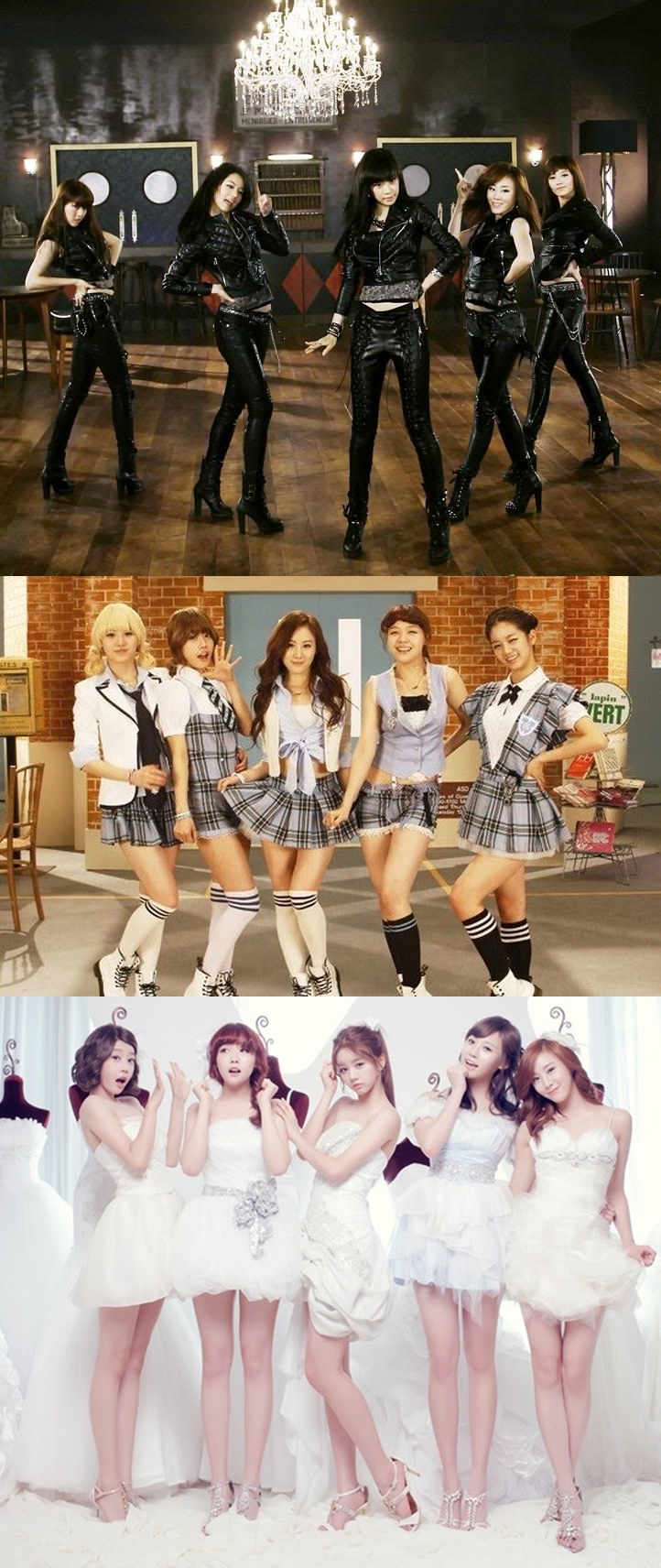
Girl's Day Lolita Transformation(Sources: top, middle, bottom)

<사진 2> 위 두 사진은 걸스데이의 반짝반짝 이전과 이후 스타일이 얼마나 크게 변화했는지 보여준다. 맨 왼쪽 사진은 ‘잘해줘봐야’ 활동 당시 모습으로 락 밴드 느낌의 강하고 터프한 이미지로 활동했음을 잘 보여준다. 중앙 사진은 ‘반짝반짝’의 컨셉사진으로 ‘girl’s day school’이란 마크와 교복을 변형한 형태를 통해 그룹 멤버의 ‘어린’ 이미지를 강조한 모습한다. 두 컨셉의 변화는 롤리토크라시의 양상으로의 변화가 잘 드러난다.. 세 번째 사진은 ‘한번만 안아줘’의 컨셉사진으로 하얀 드레스와 순백의 배경으로 ‘잘해줘봐야’와 완전히 상반되는 ‘여성성’을 강조하는 컵셉을 기반으로 하고 있다. 걸스데이는 ‘반짝반짝’의 흥행성공으로 걸스데이는 완전히 방향을 전환하여 기존 컨셉을 버리고 ‘어린 이미지’와 ‘미성년의 여성성’을 강조하는 이미지로 탈바꿈하였다. (사진출처: “걸스데이”, 구글)

Caption: These three pictures show the evolution in Girl’s Day’s style. In the first from Nothing Lasts Forever, they give off the image of a strong, tough, rock band. In the middle, a concept photo for Twinkle Twinkle, the new emphasis on members’ youth with the “Girl’s Day School” banner and school uniforms can be seen. Finally, with Hug Me Once, the complete transformation from Nothing Last Forever is evident, with a virgin-white background and dresses and an emphasis on women’s sexuality. Twinkle Twinkle was such a hit that Girl’s Day completely did away with their old image, and instead stressed a youthful image and adolescent girls’ sexuality.

(5) 걸스데이의 ‘한번만 안아줘’ / Girl’s Day’s Hug Me Once

이러한 양상은 이후 2011년 7월 ‘반짝반짝’ 이후 연이어 출시된《Everyday》의 타이틀곡 ‘한번만 안아줘’에서 완전히 고착화되었음을 보여준다. 제목에서부터 다소 자극적인 느낌의 이 곡은 걸스데이의 음악이 완전히 ‘잘해줘봐야’의 컵셉에서 ‘반짝반짝’의 컨셉(즉, 귀엽고 깜찍하지만 또 한편으로는 성적인 어필을 하는 컨셉)으로 전환되었음을 보여주는 곡이다. 이 곡에서는 이전 ‘반짝반짝’에서처럼 직접적인 미성년에 대한 암시, 즉 교복이나 학교 같은 컨셉은 취하고 있지 않지만 뮤직비디오와 가사에서 아동성애적인 장치를 충분히 보여주고 있다.

Girl’s Day’s adherence to this new concept in Twinkle Twinkle was confirmed in their follow-up song Hug Me Once, the title-track to their second mini-album everyday — from the title to the music, it clearly gives off the same feeling of cuteness and preciousness on the one hand, and sex appeal on the other. Although it lacks the school uniforms and school-like setting of Twinkle Twinkle, the music video and the lyrics still hint towards adolescent sexuality through a variety of devices.

이 곡에서 특히 뮤직비디오가 상당히 특징적이다. 최초로 시도된 3개의 개별화된 뮤직비디오는 공식 발표 3일전 세 개의 뮤직비디오를 암시하는 intro 티져 영상을 통해 공개되어 많은 사람의 주목을 받았다. 3개의 뮤직비디오는 ‘한번만 안아줘’라는 하나의 곡을 가지고 3가지 다른 타입, Dance ver, Game ver, MV로 이루어져 있다. 감상자는 DVD의 영상선택방식을 이용하여 화면을 마우스로 클릭하여 다른 모드의 뮤직비디오를 시청할 수 있다. 이러한 뮤직비디오 방식은 이전까지 전무했던 뮤직비디오 양식이었다는 점에서 언론에 많은 관심을 받았으며 매우 획기적이라는 평가를 받게 된다.

The music video was also groundbreaking, and gained a lot of attention in the media, as three days before the official release, a teaser video hinted that there would be three versions: a dance version, a game version, and a typical music video. Viewers would be able to select between them and within each via menus and clicking options like when using a DVD.

여기서 우리가 주목할 것은 세 개의 뮤직비디오 중 Game version이다. Game version은 3개로 뮤직비디오를 분할한 것만큼이나 매우 실험적이고 도전적이었는데, 그 이유는 뮤직비디오의 Game ver이 일본 애니메이션 산업에서 파생한 ‘연예시뮬레이션’ 게임의 양식을 따랐다는 점에서이다.

Girl's Day Dating Sim(Sources: top, bottom)

Out of the three, the game version was the most noticeable and challenging to make, as it derived from a “dating sim” [lit. “Lovers’ simulation”] model used in the Japanese animation industry.

[연애 시뮬레이션 게임은 연애를 모방한 게임 장르의 하나로, 코나미에서 제작된 도키메키 메모리얼 시리즈에 근본을 두고 있다. 주로 주인공이 남성이고 연애 상대로 미소녀들이 등장하므로 미소녀 연애 시뮬레이션이라고도 한다. 대한민국에서는 이 말을 줄여서 미연시라는 용어를 만들었는데, 이 용어는 원래 뜻을 넘어서 미소녀 게임을 총칭하는 말로 쓰이고 있다. 이러한 연예시뮬레이션게임은 일본의 만화, 애니메이션 문화와 함께 발달하여 1차원적 감상에서 벗어나 만화 캐릭터와 실제로 상호작용 함으로써 “세계와 삶에 대한 종합적 체험을 갖는 것이 이제 불가능한 상태에서 오직 시각적인 체험의 형식”으로 경험이 가능한 오타쿠 문화에 주체의 의식을 반영할 가능성을 제시한  산업이다. [(김홍중, 심보선, 실재에의 열정에 대한 열정,한국문화사회학회, 문화와 사회, 제4권 2008.5, pp.114-146 )]

The dating sim genre is derived from the Tokimeki Memorial series by Konami. In them, the subject is usually male, the object of his affections female, and often underage; in Korea the name for such games has been shortened to mi-yeon-shi, and has come to encapsulate all games involving underage characters. Building upon Japanese comics, animation books, and the otaku culture industry it goes beyond passive viewing to an interactive experience with the characters, “giving a more holistic, lifelike experience, which changes the impossible to a visual form” [James — Apologies, but I found the second half of this paragraph exceptionally difficult; this is my best guess]. (Kim Hong-joong and Shin Bo-seon, “The Passion of the Passion of the Real: The Poetry and Poetics of Miraepa,” Culture and Society, The Korean Association for the Sociology of Culture, Volume 4, May 2008, pp. 114-146.)

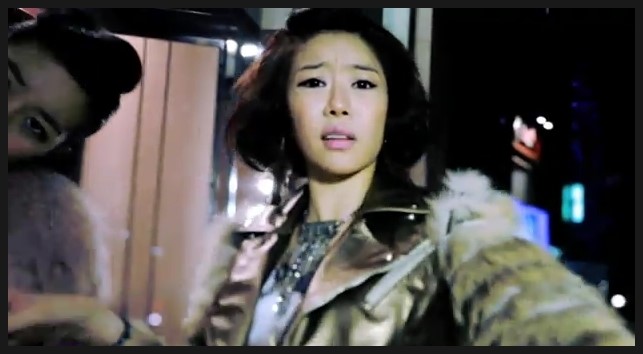
Game ver 뮤직비디오는 잠에서 깨어난 1인칭 시점의 화자가 걸스데이 멤버 한명 한명과 여러 장소를 이동하며 데이트를 한다는 내용으로 구성되어 있다. 뮤직비디오는 시작부터 ‘insert coin’이라든지 게임등급표시 등의 표시를 넣어 게임임을 강조하는데 뮤직비디오 전 프레임에 ‘연예시뮬레이션’게임에 사용되는 겉 테두리와 사각형의 말 상자 그리고 새로운 캐릭터가 등장할 때마다 팝업(pop up)되는 간략한 신상소개 상자 등은 완전히 뮤직비디오의 내용을 연예시뮬레이션게임에서 차용했음을 보여주는 면이다. 뮤직비디오의 주인공, 1인칭 대상은 손과 발만 노출하여 각 멤버들과 손을 잡거나 함께 걷는 등의 모습을 보이는데 이것은 간접체험으로써의 한계를 극소화 시키려는 연예시뮬레이션의 ‘비매개’의 속성을 이용한 흔적이라고 볼 수 있을 것이다. 그리고 5명의 멤버와의 데이트가 끝나게 되면 화면이 바뀌면서 5명의 멤버중 한명을 고르라는 선택화면이 나오게 되는데 이러한 설정 또한 연예시뮬레이션의 요소를 그대로 가져왔다고 볼 수 있다. 이 마지막 화면은 또 5개의 개별엔딩으로 구성되어 있어 감상자의 선택에 따라 개별엔딩으로 연결된다.

The game version of the music video is told from a first-person perspective, in which the viewer goes on separate dates with each member of Girl’s Day in a variety of different locations. It uses many elements common to dating sims, including: the use of an “insert coin” text; a frame or border around the screen; pop-up speech bubbles with simple introductions to the members; and only having the subject’s hands and feet visible, making his presence indirect but also more realistic. Another borrowed element is having a screen with all five members appearing at the end, with different endings [to each date] appearing depending on which member is selected.

James — Compare the June 2009 Tell Me Your Wish by Girls’ Generation, the group most strongly associated with the Lolita effect in Korea:

여기서 주목할 점은 이 뮤직비디오의 양식을 단순히 재미있는 뮤직비디오 아이디어로 보기 힘들다는 점이다. 왜냐하면 뮤직비디오가 차용한 일본 연예시뮬레이션 게임이 오랜 시간동안 ‘롤리타 콤플렉스’의 해소처, 즉 로리콘 문화의 중심으로 간주되어왔다는 사실 때문이다.

It is difficult to dismiss the music video as simple fun, for the lovers’ animation genre it so heavily borrows from has long been considered the natural home of the Lolita complex, and a natural fit with lolicon comics.

James — Given that natural fit, I expected to find a great deal of academic sources that discussed both, but to my surprise didn’t find any at all. Can any readers fill in the gaps? Lacking any expertise myself, I’m wary of relying on media sources that tend to have a “The Crazy, Perverted Japanese” undercurrent to them, but on the other hand it’s true that I can’t think of many other countries where events like this would ever happen, even if foreign media outlets do exaggerate their popularity.

연예시뮬레이션게임은 주로 애니메이션에서만 등장하는 캐릭터를 게임화시킴으로써 사용자와 상호작용할 수 있게 한다는 것이 게임의 취지이다. 사용자는 캐릭터를 사용자의 주체적인 내러티브에 집어넣음으로써 캐릭터와의 개별적인 경험을 형성함으로써 현실에서 만날 수 없는 미소녀와 연애를 함으로써 대한 대리 만족을 경험하게 한다. 연애시뮬레이션 게임은 그렇기에 현실에서 접하기 힘든 어린 미소녀를 주 대상으로 삼아왔으며 일본 로리콘 문화에 핵심적인 산업으로 자리 잡게 된다.

The purpose of dating sims is for the viewers to interact with ‘gameized characters, and to give them independent narratives and experiences with them. The underage characters are a proxy for something they are unable to have in real life, and are why lovers’ animation games are at the core of the Japanese lolicon comics industry.

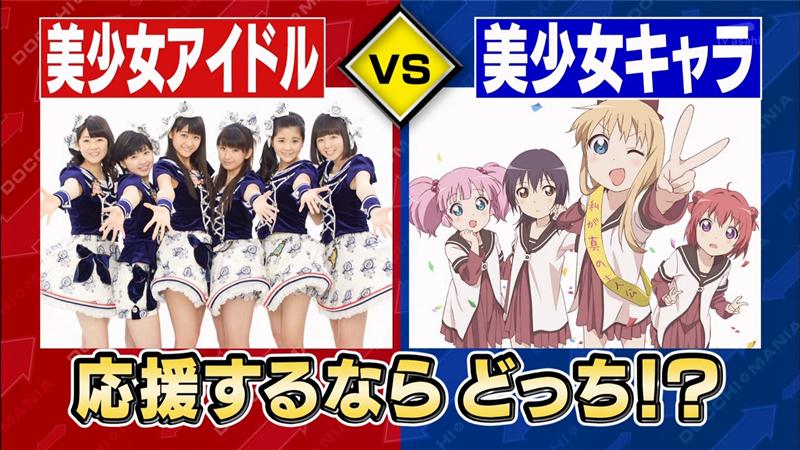
TV 아사히, 3차원 미소녀 아이돌 vs 2차원 미소녀 캐릭터(“TV 아사히, 3차원 미소녀 아이돌 vs 2차원 미소녀 캐릭터? / TV Asahi, 3rd level underage idols vs. 2nd level underage characters?” — just some of the unfamiliar terminology I had struggle with here! Source)

그런 점에서 연예시뮬레이션게임의 모델을 뮤직비디오에 차용했다는 사실은 단순히 뮤직비디오의 재미를 위해 제작하였다고 보기는 힘들게 만든다. 연예시뮬레이션 게임이 로리콘 문화에서 2차원의 어린 캐릭터와 상호작용하기 위한 욕망을 기반으로 만들어졌다는 점을 기억할 때, 뮤직비디오의 제작자가 이러한 요소를 인지하지 못한 채 뮤직비디오를 만들었다고 보기는 힘들다. 결국 이러한 점을 종합해 보면 ‘한번만 안아줘’의 뮤직비디오는 로리콘 문화와 같은 방식으로 ‘미성년에 대한 성애적 욕망’에 호소하여 성을 상품화하는 전략이라고 볼 수 있으며, 또한 뮤직비디오를 통해 그러한 문화에 익숙한 대중들, 즉 로리콘 문화에 익숙한 소위, ‘오타쿠’들을 직접적인 소비자로 설정하여 성 상품화하려는 제작자의 의도가 드러난다고 볼 수 있다.

In that regard, it is difficult to describe it as a simple music video. Also, when you remember that dating sims and lolicon comics are produced to stimulate interaction with and sexual desire for fictional underage characters, it is difficult to believe that the producer was unaware of that. In the end, by using elements similar to those in lolicon comics in the music video for Hug Me Once, and calling for a sexual objectification strategy based on sexual desire for underage girls, it is apparent that this music video was produced for the direct consumption of those most familar with lolicon comics, the otaku.

이러한 뮤직비디오의 구성과 더불어 곡 자체에서도 앞선 ‘반짝반짝’에서처럼 미성년임에도 성적인 어필을 하는 많은 부분을 발견할 수 있다.

Along with these elements, Hug Me Once shares many with Twinkle Twinkle that are based on a sexual appeal of underage girls.

‘한번만 안아줘’의 가사는 A-B-C-A-B-C-A-D 형태로 ‘한번만 안아줘’라는 말이 반복적으로 A 부분과 D부분에서 사용되고 나머지 가사의 내용 전개는 B와 C를 중심으로 이루어진다. 가사 B의 부분에 ‘한번만 안아보면 내 맘을 알 텐데 뛰는 내 가슴은 여기 시계보다 더 빠른데’ 라는 부분은 앞선 ‘반짝반짝’의 예에서처럼 모순적인 감정의 미성년을 드러내어 단순히 부끄러움 때문에 표현하지 못하는 것일 뿐 “어린 소녀도 욕망의 주체”라는 사실을  표현함으로써 수용자에게 사회적 억제기제에 대한 정당화의 구실을 제공한다. 또한 이후 바로 이어지는 ‘한번만 안아줘’로 구성된 반복적인 부분은 조르는 듯 한 애교 섞인 말투이지만 또 이성 간에 스킨십을 적극적으로 바라는 욕망을 표현한다는 점에서 어린 이미지와 성적인 주체로써의 이미지를 혼합함으로써 롤리타적 욕망을 자극하는 모습을 보이고 있다.

The lyrics to Hug Me Once follow an A-B-C-A-B-C-A-D form, “Hug Me Once” repeated in the A and D parts and the remainder concentrated in the B and C parts. In the B part, they read “If you hug me once, you will know my feelings [desires], my heart is beating faster than a clock,” an ironic, contradictory combination of desire and embarrassment at and/or inability to act on it, which removes societal constraints on relationships with minors by encouraging the [adult, male] viewer to Hyeri Nothing Lasts Forevertake the initiative. Also, the “Hug me Once” parts are said with such aegyo that the combination of opposite-sex skinship, and sexual and youthful images provided must be viewed as directly playing to a Lolita-like desire (source, right).

And that ends Part 2. Part 3, which I’ve left to an awesome, wonderful reader who generously offered to translate it, will be up next Monday. Until then, Happy New Year!

Related Posts:

Consent is Sexy, Part 3: Female President by Girl’s Day #FAIL

Korean Girl Rockers, Defying the Stereotypes

Reading the Lolita Effect in South Korea, Part 2: The role of K-pop and the Korean media in sexual socialization and the formation of body image

Ajosshis & Girls’ Generation: The Panic Interface of Korean Sexuality

What did Depraved Oppas do to Girls’ Generation? Part 1

“Cleavage out, Legs in” — The Key to Understanding Ajosshi Fandom?

The Origins of “Ajosshi Fandom”?

Girl’s Day and the New Lolitocracy: Part 1

Girl's Day Lolita Complex(L-R: Jihae, Sojin, Yura, Haeri, Minah. Source)

Humbert called Lolita ”the ideal consumer, the subject and object of every foul poster.” Damon Trent sounded the same theme while writing about ”the new Lolitocracy” in Spy Magazine last year. ”In the last five years, our own civilization has developed a bit of a thing for teen-age girls” and girls know it. Indeed, he added, ”every man woman, and child among us has become a vile, pustulating pedophile.”

In this stew of allegorical, sociological, high-minded speculation, you’ve got to admire Groucho Marx’s ineluctably moral position on the novel: ”I am going to put off reading ‘Lolita’ for six years, till she’s 18.”

(“Think Tank; ‘Lolita’ Turns 40, Still Arguing for A Right to Exist,” by Sarah Boxer, The New York Times, August 1998)

Sorry for the long break everyone, and I hope the following translation compensates, easily the longest and most academic (in style) I’ve ever worked on. By this anonymous blogger, I was sold as soon as I saw Theodor Adorno mentioned, as it’s very rare to find commentary on Kpop that reference any theories of popular culture. It’s also a good introduction to Girl’s Day too.

That said, unfortunately the blogger uses many terms very vaguely and interchangeably, and his(?) analysis of their hit Twinkle Twinkle could easily be a third of its length. However, admittedly I’ve yet to work on Part 2 where he discusses a Maxim photoshoot, compares Twinkle Twinkle to their previous songs, and looks at their additional hit Hug Me Once, or indeed Part 3 on Adorno, so I’m hoping his writing becomes more concise later.

Also, please note that: a) it was written in August 2012, when Girl’s Day was a five-member group (Woo Ji-hae would leave for personal reasons in October), and nearly a year before their hit Female President was released; and b) that it was originally a single, stand-alone post, which I’ve only split into three parts here because of its length:

대중음악 속에 파고들기 시작한 롤리토크라시의 성상품화: 걸스데이를 중심으로 Lolitocracy’s Sexual Objectification Taking a Hold of Popular Music: Girl’s Day as a Case Study

1. 서론 / Introduction

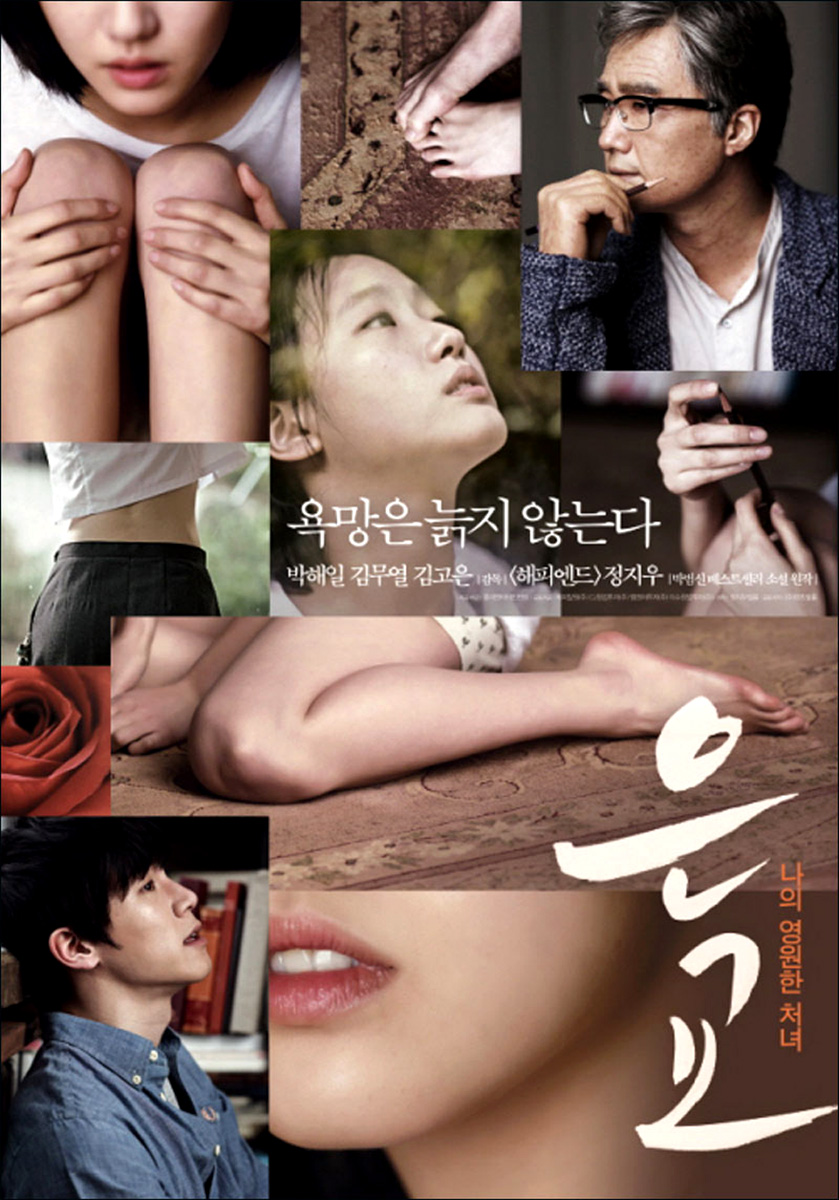
최근 ‘은교’라는 영화가 출시되어 세간에 이목을 끌고 있다. 70대 노시인과 10대 소녀의  성적인 탐욕을 그리고 있는 이 영화는 대중의 많은 관심을 받으며 개봉 전부터 영화계를 뜨겁게 달아올리고 있다. 이 영화가 이렇게 개봉 전부터 세간을 떠들썩하게 할 수 있는 이유는 영화 <해피엔드>의 정지우 감독이 연출을 맡았기 때문이기도 하지만 무엇보다도 이 영화의 주제가 우리 사회에서 금기시 되고 있는 ‘롤리타 콤플렉스’를 노골적으로 다루고 있기 때문이다. 아직 성적으로 성숙하지 못한 소녀에 대한 성애(性愛)적 욕망은 점점 개방적이고 다원화되는 문화 산업에서조차 다소 금기시되어온 주제였기에 이러한 영화의 대담한 발상은 ‘기존의 금기를 깨는 발칙한 상상의 즐거움’을 대중에게 선사하며 대중들의 관심을 사로잡은 것이다.

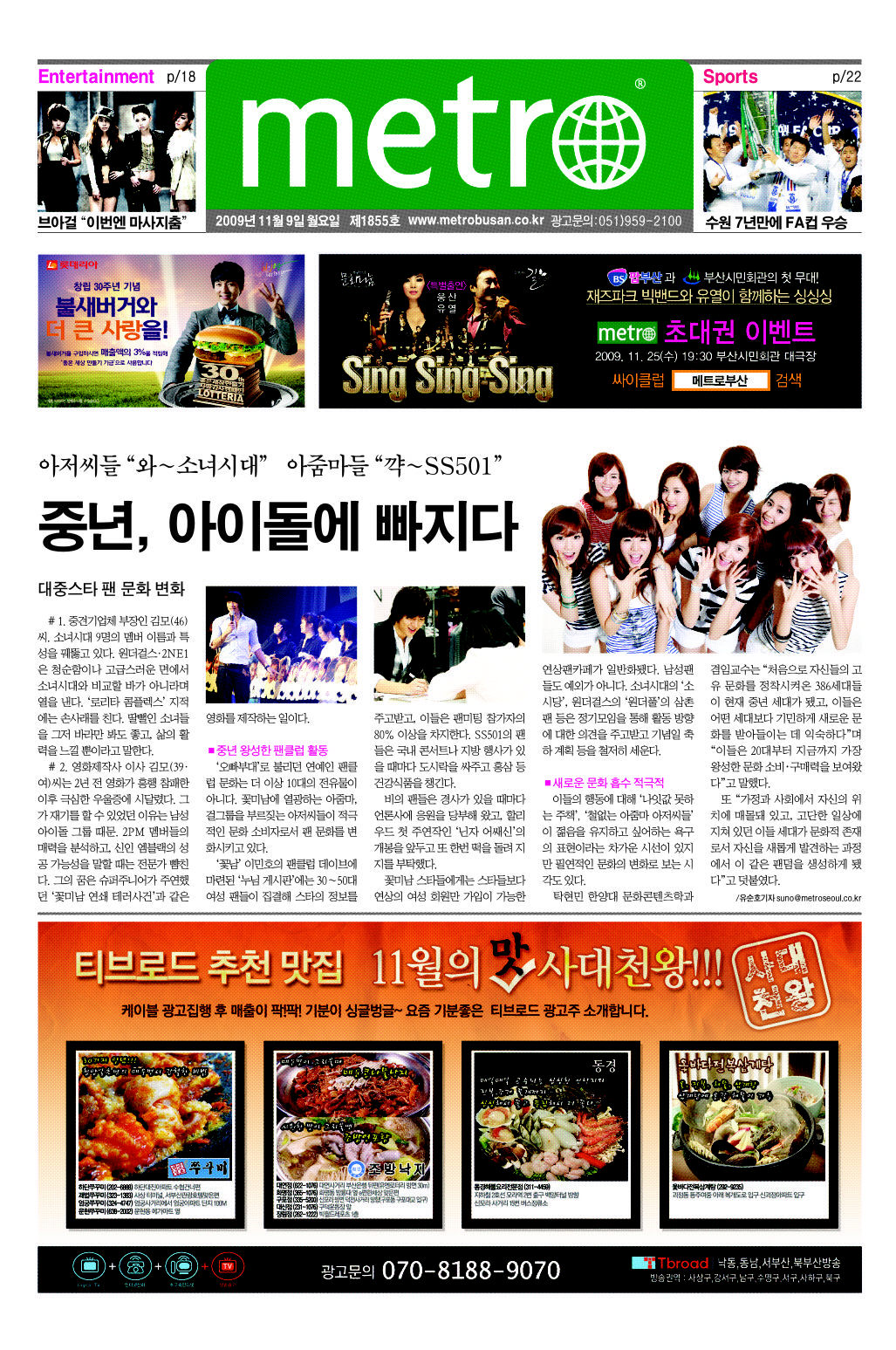
Eun-gyoRecently, the movie A Muse/Eun-gyo has been gaining a lot of public attention. About a man in his seventies who develops a strong sexual desire for an adolescent girl, it became a hot topic even before its release. Partially, this was because it was directed by Jung Ji-woo, who also worked on Happy End (1999), but primarily it was because it frankly deals with the taboo subject of the Lolita complex. This was bold, even for a culture industry with diversifying [but generally] slowly opening views towards the notion of sexual desire towards adolescent girls, and it titillated the public by breaking that taboo (source, right).

하지만 이러한 대중들의 반응을 단순히 이 영화의 ‘금기를 깨는 발칙함’때문이라고 보기엔 뭔가 부족하다. 일반적으로 대중 상업영화 속에서 성에 대한 주제, 특히 이번 은교의 경우처럼 사회적으로 금기시 되는 성적 주제를 다루는 영화의 경우 언제나 개봉과 함께 여러 곳에서 그 윤리성으로 인해 비판의 목소리가 높아져왔다. 하지만 이번처럼 가장 직접적으로 금기시된 이러한 성을 다룬 영화에서 조차 비판의 목소리는 예전처럼 높지 않다. 또한 요 근래 여러 가지 아동성폭행사건으로 인해 대중들의 의식이 높아진 상태에서도 이러한 영화에 대한 우려 섞인 목소리조차 나오지 않고 있다는 점은 매우 주목할 만한 것이다. 비록 작은 하나의 예이지만 이러한 대중들의 반응은 우리 사회에서 성 개방풍조와 함께 “성이 윤리를 수반하는 문제”라는 사실이 점점 희석되고 있는 모습을 반영하고 있는 것이다.

However, the simple breaking of taboos is not enough to account for the public reaction. Generally, whenever films with sexual themes are released, and especially cases like Eun-gyo in which taboos are broken, many ethical concerns and criticisms are raised. However, despite this movie breaking a stronger taboo than most, and despite the heightened public awareness and concern about the sexual abuse of children in recent years, the criticism of the movie has been muted compared to past cases. This reflects Korean society’s sexual liberalization, increasingly fluid sexual ethics, and diminishing sense of sexual responsibility.

이러한 양상은 특히 대중가요, 그 중에서도 2000년대 후반부터 시작된 걸 그룹 열풍에서 가장 두드러진다. 아직 중, 고등학생 티를 채 벗지도 못한 청소년이 무대 위에 올라가 짧은 바지를 입고 춤을 추고 노래하는 모습은 더 이상 낯선 장면이 아니다. 소속사들은 데뷔와 함께 멤버들이 ‘미성년’임을 강조하는 보도를 연신 내보내며 ‘나이 어린’ 걸 그룹을 적극 홍보한다. 대중들도 이런 모습에 더 이상 주저하거나 꺼리지 않는다. 이러한 아이돌에 대해 대중과 언론은 “섹시하다”라는 표현을 서슴지 않는다. 도발적인 춤을 추고 ‘오빠’라고 외치는 걸 그룹에 대해 대중들은 환호하고 열광한다. 우리나라의 모든 걸그룹이 롤리타 신드롬에 기반을 두고 있다는 것은 비약이겠지만 지금 현 대중 걸 그룹계에서는 최소한 ‘미성년’의 코드는 절대적이며 또한 이러한 코드가 단순히 어린 아이에 대한 ‘귀여움’에 그치지 않는다는 것은 부인하기 힘들다.

This aspect is also noticeable in popular songs, especially since the girl-group wave began in the late-2000s. Seeing high school students dancing on stage dressing in very short pants is no longer unusual. As soon as management companies debut a new girl-group they send out press releases emphasizing the members’ young ages, and the public doesn’t seem to mind. [Indeed], the public and media do not hesitate to describe them as “sexy,” and cheer them for doing provocative dances and shouting “Oppa.” Certainly, not all Korean girl-groups excessively rely on the Lolita syndrome, but its use is widespread, and it is hard to deny that this “underage code” is simply about cuteness.

이러한 대중 문화속의 롤리타 콤플렉스에 관한 논문은 이전에도 이번이 처음이 아니다. 하지만 기존까지의 원더걸스나 문근영을 중심으로 한 롤리타 콤플렉스에 관한 논의의 경우, 노래나 작품 중심의 해석에 초점을 맞추어 암묵적으로 제시되는 롤리타 성상품화의 조짐에 주목하는 정도에 그치는 한계가 있었다. 이 논문에서는 기존의 논문들에서 더 나아가 노래와 춤에 대한 해석과 더불어 그룹의 변화 양상과 연예활동을 통해서도 드러나는 미성년에 대한 성애를 자극하는 요소들, 또한 그것을 이용하는 연예기획사들의 성 상품화의 전략을 살펴보는 것을 목표로 하여 구체적인 예를 통해 접근할 것이다. 이러한 구체적인 예로 걸 그룹 중 아동성애적 요소가 두드러지는 걸스데이를 설정하였으며 특히 걸스데이의 대표곡 ‘반짝반짝’, ‘한번만 안아줘’ 와 그 뮤직비디오, 그 외기타 연예활동을 통해 어떻게 이러한 방식의 성 상품화가 드러나고 있는지 살펴볼 것이다.

What I will discuss today is not the first time the Lolita complex has been seen in popular culture. However, in discussions of it in relation to The Wondergirls or [former “the nation’s little sister“] Moon Geun-young, there have been implicit limits in previous analyses of noticeable Lolita-related sexual objectification in their songs and other cultural products. Unlike those, in this post I will not only analyze the songs and dances of the girl-group Girl’s Day, I will also look into the group’s different concepts and show how they encourage sexual interest in underage girls, providing concrete examples to demonstrate their management company’s sexual objectification strategy. I will give particular attention to the music videos to Twinkle Twinkle and Hug Me Once.

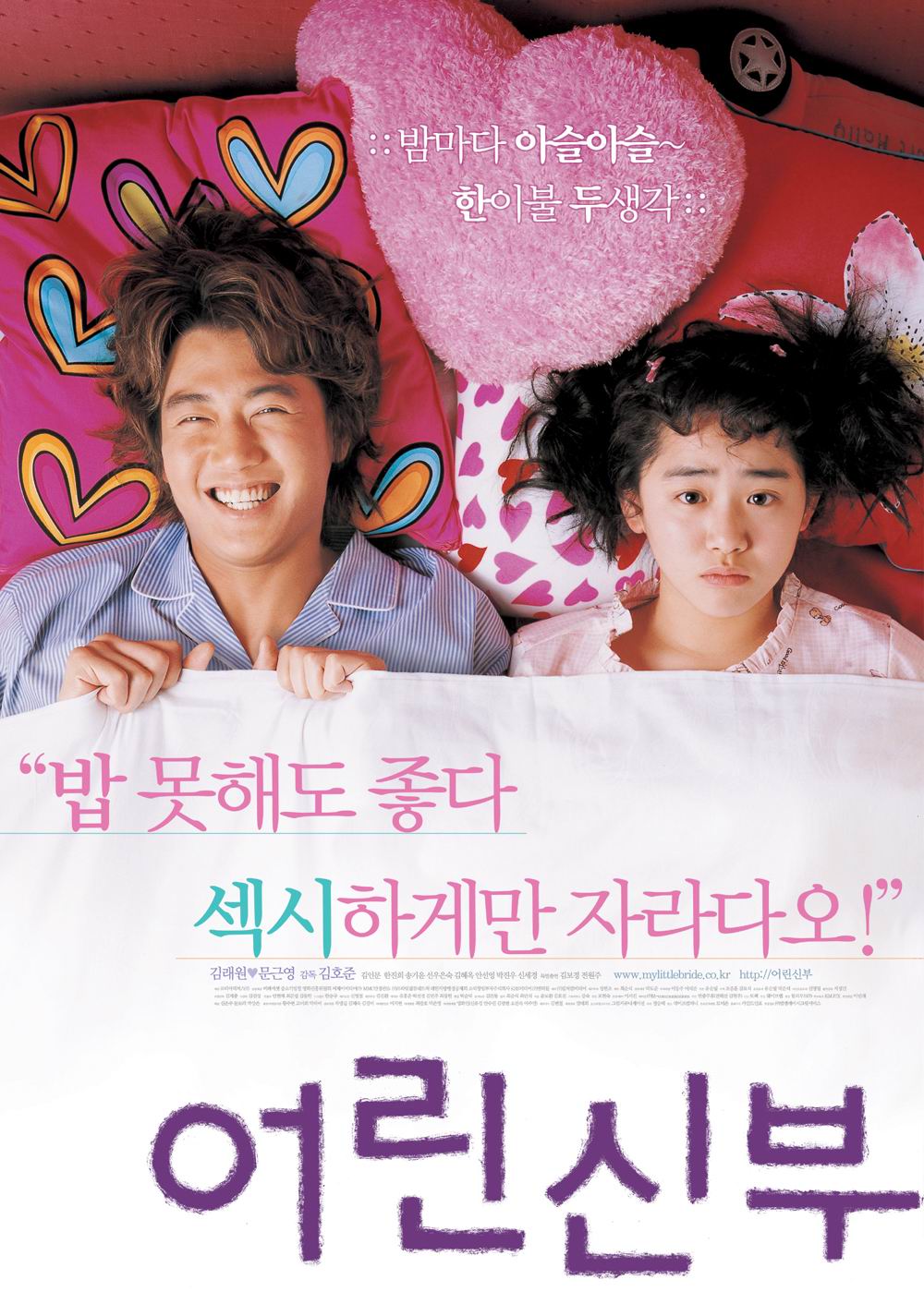
My Little Bride(Moon Geun-young in My Little Bride, 2004. Source)

또한 이 논문의 후반부에서는 아도르노의 문화산업론을 기반으로 하여 이러한 걸그룹의 문제점에 비판적으로 고찰해볼 것이다. 앞으로 살펴볼 걸스데이의 예에서 드러나는 바와 같이 걸그룹 시장의 양상은 획일화와 배타적인 시장체계, 단순 소비를 위한 제작등과 같이 아도르노가 주장한 대중문화의 특성과 많은 부분에서 일치한다. 그렇기에 롤리타 콤플렉스의 문제와 더불어 그것을 상품화하는 문화산업의 작용이 구체적으로 어떻게 드러나는지 아도르노의 관점을 기반으로 살펴보고, 마지막으로 현대 대중 걸 그룹문화의 롤리토크라시 문제점을 제시함으로 논문을 정리할 것이다.

Later, I will give a critical analysis of the problems and issues raised by girl-groups based on Theodor Adorno’s theories of popular music and the culture industry. As we will see, the example of Girl’s Day demonstrates the commonalities between the present day girl-group market and features or traits of Theodor Adorno Trading Cardpopular culture that were argued by Adorno, including standardization, an exclusive market system, and production only for simple consumption. Accordingly, I will address the problems of the Lolita complex and look in detail into how the culture industries objectify that, based on Adorno’s views. Finally, I will summarize the post by outlining the problems of today’s girl-group culture’s lolitocracy (source, right).

2. 본론 / Body

 (1)걸스데이와 롤리타 신드롬 / Girl’s Day and the Lolita Syndrome

먼저 걸스데이에 대해 간단히 알아보자. 5인조 여성그룹인 걸스데이는 2010년 당시 이미 포화상태에 이른 걸 그룹 시장의 후발주자로 출발하였음에도 유튜브와 기타 소셜미디어를 통해 대중들의 주목을 받으며 비교적 순탄한 데뷔를 하게 된다. 하지만 얼마 지나지 않아 붉어져 나온 가창력 논란과 더불어 5명의 멤버 중 2명의 멤버의 급작스러운 탈퇴는 걸스데이를 시작부터 위태롭게 한다. 하지만 이러한 악조건 속에서 걸스데이는 포기하지 않고 새로운 도전을 감행하게 되는데,  2009년 새로운 멤버 2명을 영입하고 새로운 음악적 양식으로 전환함에 따라 기존의 이미지를 쇄신하여 새롭게 대중들에게 다가서게 된다. 걸스데이는 새로운 멤버 교체 이후 두 번째 미니앨범 ‘반짝반짝’을 시작으로 ‘한번만 안아줘’, ‘너, 한눈 팔지 마’ 등 솔직한 가사와 친숙한 멜로디의 곡을 차례로 히트시키며 치열한 걸 그룹 시장에서 자신만의 입지를 확보하며 빠르게 성장하게 되고, 2011년 18회 한국문화예술시상에서 신인상을 수상하는 쾌거를 이루게 된다. 또한 걸스데이의 인기는 최근까지 계속되어, 2012년 4월 18일에 내놓은 정식 세 번째 앨범인 everyday2가 발매하는 동시에 주요 차트에서 상위권에 랭크되어 걸스데이의 인기가 한번의 쇼로 끝나지 않음을 증명해주고 있다.

First, let’s learn the basics about Girl’s Day. A late-runner, they arrived in September 2010 when the girl-group market was already saturated, but through the use of YouTube and other forms of social media their debut was moderately successful. However, not only was their singing ability soon called into question, but two members suddenly and unexpectedly withdrew, placing the future of the group in jeopardy.

So, they were quickly replaced, and Girl’s Day resolved to change their musical style and image and approach the public with a new face. Soon afterwards they released their second mini-album, and with their back-to-back hits Twinkle Twinkle, Hug Me Once, and Don’t Let Your Eyes Wander, which all featured honest lyrics and familiar melodies, they fully established themselves in the highly competitive girl-group market, winning Female Rookies of the Year at the November 2011 18th Republic of Korea Entertainment Arts Awards. Their popularity has continued in 2012, releasing their third mini-album Everyday2 on 18 April, and its high chart rankings prove Girl’s Day is no mere flash in the pan.

걸스데이가 이렇게 걸 그룹의 홍수와 여러 악조건 속에도 살아남을 수 있었던 데에는 물론 멤버교체와 걸스데이 각 멤버의 노력을 빼놓을 수 없겠지만 가장 지대한 영향을 끼친 것은 새 멤버교체 이후 두 번째 앨범인 ‘반짝반짝’의 히트라고 말할 수 있을 것이다. 2011년 3월 16일 쇼 케이스에서 컨셉 사진으로 먼저 공개된 이 앨범은 17일 엠넷 엠카운트 다운을 시작으로 이틀 후인 19일 벅스뮤직, 네이버 뮤직, 싸이월드 배경음악 실시간 차트에서 1위를 차지했으며, 그 외 멜론, 소리바다, 도시락 등에서도 10위권 내에 진입하는 기염을 토했다.  ‘반짝반짝’의 흥행 행진은 여기서 멈추지 않았다. ‘반짝반짝’은 이후에도 주요 지상파 방송차트에서 지속적으로 높은 순위로 랭크됨은 물론이고, 다음 앨범을 위해 활동을 중단한 후에도 노래음원이 주요 순위 체계에서 상위 10위권 안에 기록되는 등 빠른 속도로 변화하는 대중음악 시장에서 이례적인 모습을 보여주며 걸스데이를 주요 걸 그룹 반열위에 올려놓았다.

Of course, while Girl’s Day survived this perfect storm of a debut partially through the efforts and abilities of its members, the main reason was the wholly unexpected popularity of Twinkle Twinkle. Promotional concept pictures were first released on Showcase on March 16, 2011, then on the 17th it was made available for download on MNet MCountdown, then Musicbox, Naver Music, Cyworld Background Music Chart on the 19th. It reached number one on all of them, and made it to the top ten on Melon, Soribada, and Lunchbox. Later, of course it had a high ranking when it was performed on the major television music shows, and remained in the top ten in the charts despite Girl’s Day ceasing their promotions in order to prepare for their next album. This popularity was very atypical for a new group, and placed them among the elite girl-groups.

하지만 이러한 ‘반짝반짝’의 흥행 신화는 음악적인 양식을 완전히 버리고 ‘롤리타 신드롬’ 시장에 편입함으로써 가능한 것이었다. 걸스데이의 성공 요인인 ‘반짝반짝’은 기존의 걸스데이의 음악적 색과는 완전히 다른 롤리타적인 성애를 자극하는 장치들로 가득 차있는, 그당시 걸그룹 시장의 ‘어림’의 경쟁에 합류하기 위한 전환점이었다는 것이다.

That said, the big hit myth of Twinkle Twinkle was a complete reversal of their previous musical style, and was only possible because they decided to run with the Lolita syndrome concept, employing a number of devices to stimulate a Lolita-like sexual desire. The song marks a turning point in the groups’ attempts to [employ youth to compete in the girl-group market].

James: Forgive me for stating the obvious, but I recommend actually watching(!) the Twinkle Twinkle music video before continuing (the one above has English and Hangul subtitles). Also, make sure to check out reviews at McRoth’s Residence, KPop Reviews, and Yellow Slug Reviews (I’d appreciate any more recommendations), all of which emphasize an excessive use of aegyo and/or how much of a break it was from their previous work.

(2)걸스데이의 ‘반짝반짝’ / Girl’s Day’s Twinkle Twinkle

 우선 걸스데이의 성공의 시발점이 된 ‘반짝 반짝’이라는 작품을 살펴봄으로써 이러한 요소가 어떻게 드러나는지 살펴보자. 먼저 가사를 보면, 반짝반짝의 가사는 음악적인 반복되는 선율에 따라 A-B-C-A-B-D-B 형태로 이루어져 있다. 가사의 전체적인 내용은 ‘오빠’, 또는 ‘너’로 지칭되는 대상과의 사랑을 나누는 가사 속의 화자, 주체에 관한 내용으로 가사 전체는 ‘다가가고 싶지만 사랑의 아픔이 두려워 다가가는 것이 쉽지 않다’는 메시지가 주를 이루고 있으며 대상이 좋기는 하지만 어떤 이유인지 쉽게 다가가기 힘들다는 내용이 담겨져 있다.

Let’s look into what factors were responsible for the popularity of Twinkle Twinkle, the starting point of Girl’s Day’s success. First, if we look at the lyrics, they are very repetitive, following an A-B-C-A-B-D-B rhythm. Looking at them as a whole, the narrator often professes her love for someone referred to as “you,” or “Oppa,” but the song has the basic message that she wants to approach him, yet is scared of possible heartbreak, so it is not easy to do so. Or in other words, she likes the subject, but for some reason can’t act on it.

가사 속 중심적인 의미를 구성하는 이 ‘이유’는 가사 B 부분을 보면 알 수 있다. 가사 속의 화자는 ‘슬쩍슬쩍 바라보지마 .반짝반짝 내 입술 바라보지마. 좋아하는 우리사이 멀어질까봐. 멀어질까 두려워.’라는 가사를 통해 화자의 입술을 ‘훔쳐보는’ 대상으로 인해 화자와 대상과의 관계가 멀어질까 두렵다는 언급을 하고 있다. 즉, 노래 속 화자에게 사랑 속 힘든 이유는 대상이 화자의 입술을 바라보는 행위의 함의, 즉 육체적인 ‘스킨십’에 대한 부담감 내지는 거부감 때문으로 해석할 수 있으며 가사 속에서 이러한 대상에 대해 ‘사이가 멀어질지도 모른다’라고 경고하면서도 또 친밀한 관계를 유지하고자 하는 주체의 다소 모순되는 마음이 표현되고 있다.

If we look at the main, “B” part of the lyrics we can see the reason. Here, the narrator says to the subject, “Don’t peek at me. Don’t steal a glance at my twinkling (glistening) lips. I’m afraid that if we fall in love, we may end up driving each other apart.” Or alternatively, the reason falling in love is so difficult for the narrator is because if she does she would feel pressured to have a physical relationship with him before she is ready (so, something that may ultimately drive them apart), and this is manifested in her discomfort at him looking at her lips. On the other hand, the irony is that she actually does want a more romantic, more physical relationship with him.

Girl's Day Twinkle Twinkle Composite(Source)

이러한 식의 가사는 다른 여타의 사랑 노래에서 충분히 발견할 수 있는 부분으로써 문제가 되지 않는다. 하지만 이 노래의 배경과 기타 요소들을 종합해 보면 그 내용이 단순한 성인 연인들의 사랑 노래만으로는 해석할 수 없음을 보게 된다.

This kind of love story can be found in many other songs, and it’s not a problem in itself. However, given the music video’s setting and other factors, it can’t be described as a simple love song between two adults.

‘반짝반짝’에서 걸스데이는 기존의 앨범에서 추구했던 이미지와 완전히 상반된 교복의상의 컨셉를 가지고 온다. 또한 뮤직비디오의 배경도 ‘girl’s day school’ 이라는 팻말이 보이는 학교건물을 연상시키는 무대로, 노래의 주체가 고등학생임을 강조하고 있다. 또한 가사의 대상이 ‘오빠’로 지칭되고 있으며 이 오빠로 지칭되는 인물이 뮤직비디오 상에서도 고등학생이 아닌 다소 노숙한 인물로 묘사된다는 점과 걸스데이의 2011년 기준 평균나이는 만 19.2세로, 80년대 생인 두 명의 멤버를 제외하면 모두 고등학생과 중학생이었다는 점과 ‘반짝반짝’ 활동 당시 언론을 통해 ‘어린 청소년’의 컨셉을 중심으로 활동을 했다는 사실을 종합해 볼 때 노래 전체 가사는 미성년과 성인 사이의 사랑에 대해서 다루고 있음을 짐작할 수 있으며 가사 B에 해당하는 부분을 연인들 사이의 다툼으로 보기 어렵게 만든다.

With Twinkle Twinkle, Girl’s Day completely move away from their previous image of being the objects of desire, to a schoolgirl concept instead. In the music video, there is a stage a building reminiscent of a school, and “Girl’s Day School” can be seen written on a noticeboard in the background; the song emphasizes that the narrator is a high school student. The Oppa she calls and refers to, however, is not a high school student but much more mature and experienced. Add that the average age of the Girl’s Day members at the time the song came out was 19.2; that, but for two members born in the ’80s, three were of high school or middle-school age [James — Middle school is a bit of a stretch, as the three youngest members were nearly 18, nearly 19, and 19 when the song came out; Korean children attend high school from roughly 16 to 18, although 17-19 is certainly possible]; and that they promoted themselves in the media and on shows and so on through a “youthful adolescent” concept, then we can infer that the whole song is about love between an adult and a minor, and that the “B” section of the lyrics are not some ordinary lovers’ lament or spat.

가사 속에서 가사 B의 내용은 가사의 배경과 함께 이전 원더걸스에 관련한 롤리타 콤플렉스에 관한 논평에서와 언급된 것처럼 성적인 대상으로써의 미성년의 존재를 상기시키는 역할을 하고 있다.

The “B” section of the lyrics, combined with the setting of the music video, reminds us of the existence of underage girls being used as a sex object, as was mentioned in previous discussions [James — I think posts on his blog] about the the Wonder Girls and the Lolita complex.

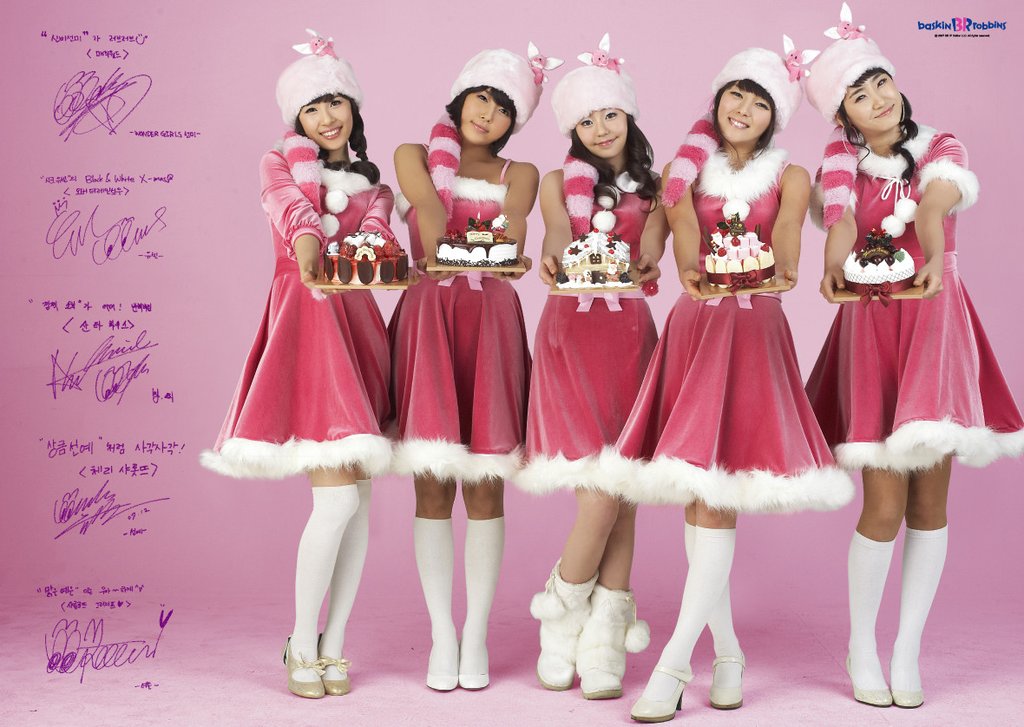
The Wondergirls Christmas Baskin Robbins(Source)

입술을 훔쳐보는 노래 속의 대상은 육체적인 욕망을 추구함으로써 가사 속 화자에게 ‘싫어질지 모른다’라는 협박을 받으면서도 반대로 노래 내의 화자에게 여전히 매력적인 존재로 묘사된다. 이러한 존재는 가사 속에서 미성년 성애에 대한 사회 문화적인 억압기제(예컨대 대중적인 의식과 법적인 제제)에 대한 부담감을 그저 ‘연애에서 일어날 수 있는 사소한 다툼, 기호의 차이’등으로 치환함으로써 타부(taboo)시 되었던 미성년 성애로부터 생기는 죄책감과 부담감들을 완화시키는 것이다. 가사 속 대상은 화자에게 법적인 처벌에 대한 위협을 받지 않는다. 그저 연애에서 발생할 수 있는 사소한 문제인 것처럼 화자는 ‘애교 섞인’ 투정을 부리고 있다. 이러한 식의 치환은 성인 감상자가 느끼게 될 이러한 죄책감의 존재를 허상이라고 인식시키게 되고 감상자로 하여금 심리적인 안정을 구현하며 미성년을 성애의 대상으로써의 추구하는 것을 자연스럽게 받아들이도록 한다.

The Oppa acts on his physical desire by peeking glances at her lips, and even though she warns him not to because of what a romantic relationship may bring, she still describes him as attractive. His existence in the song overcomes society’s cultural taboos and legal restraints against relationships with minors by portraying events as just a typical, trivial tiff between two people in a budding romantic relationship. There is never any mention or notion of him receiving some form of legal punishment. Also, the narrator trivializes it by just reacting with aegyo. This substitution helps adult admirers to dispel any guilt they may have about the pursuing of minors, and to rationalize it as natural.

또한 대상의 사랑을 원하면서도 또한 부끄러움 내지는 소극적인 태도를 취하고 있는 가사 속 주체는 유행하고 있는 미성년의 상품적 이미지, 즉 “가시적으로 드러나는 귀여움”, “풋풋한 여동생들이 단체로 발산하는 ‘대놓고 드러내지 않는 쎅시함’” 을 겨냥한 것으로 직접적인 Sex appeal이 아닌 ‘한 발 물러서는’ 어설픈 어필로 롤리타에 대한 남성 대중의 무의식적 욕망을 자극하는 것이고 볼 수 있다.

Girl's Day Twinkle Twinkle No Cut NewsThe narrator, who wants the Oppa’s love but is embarrassed and adopts a passive attitude in the lyrics, also uses an image that sexually objectifies minors, which is common among girl-groups at the moment; in other words, cuteness combined with an obviously exploited but unspoken sex-appeal. This faux modesty stimulates men’s unconscious desires for Lolitas.

<그림1> 걸스데이의 ‘반짝반짝’ 컴셉사진. 다양한 방식으로 변형된 교복이 그 당시 앨범컨셉이었다.기본적인 형태에서 벗 어나 섹슈얼리티를 강조하기 위한 변형들이 눈에 띈다. (사진출처: “걸스데이 반짝반짝”, 구글) Caption 1: Girl’s Day Twinkle Twinkle photo, demonstrating the altered, more sexualized school uniforms concept (source).

이러한 롤리타 콤플렉스를 겨냥한 장치들은 가사 이외의 다른 부분에서도 예외가 아니다. 앞에서 언급한 바와 같이 의상이나 무대 면에서도 이러한 아동성애적인 요소를 공략한 부분이 잘 드러난다. ‘반짝반짝’에서 나오는 교복 컨셉의 의상은 여학생 교복이라는 기본적인 형식을 취하지만 다양한 변형을 통해 섹슈얼리티를 강조하고 있다. ‘반짝반짝’에서 멤버들의 의상을 살펴보면 교복의 전형적인 모양을 본뜨되 상의의 아랫부분을 잘라 맨살을 드러낸다든지, 치마를 줄이거나 핫팬츠 형태로 축소시켜 신체 부위를 과도하게 노출시키고 있으며 몸에 달라붙는 옷으로 몸의 실루엣을 강조함으로써 멤버들의 여성성을 높이는 역할을 하고 있다. 이런 식의 변형된 교복은 학생, 미성년의 상징인 ‘교복’의 이미지를 섹슈얼리티의 일환으로 바라볼 수 있게 하는 시선을 제시함으로써 그전까지 존재하던 터부(taboo)를 깨 남성대중에 존재하는 소녀에 대한 성애적인 욕망을 자극하고 앞에서 언급한 바와 같이 가사를 통해 ‘죄책감의 기제’를 약화시킴으로써 감상자로 하여금 이러한 롤리타적인 욕망을 죄책감 없이 소비하도록 끌어들인다.

This use of the Lolita complex is not only found in the lyrics. As mentioned earlier, it is shown in the music video’s school setting and the performers’ school uniform concept, the latter of which emphasizes sexuality through various means. For example, the tops [of two members] are cropped to reveal their navels, their skirt lengths are raised so high as to resemble hot pants, and they’re skin-tight to better emphasize their feminine silhouettes. With uniforms being such symbols of underage students, this provides a means of sexualizing the clothes. In doing so, it breaks taboos towards and stimulates men’s sexual desire towards minors. As mentioned earlier, it weakens the sense of guilt surrounding viewing and sexualized minors, and makes them into a product to be consumed.

Girl's Day Christmas 2012(Source)

As always, I appreciate readers pointing out any errors in the translation (which I admit there may be more of than usual), and I’ll try to have Part 2 and Part 3 ready on Monday the 30th and the 6th respectively. Until then, Merry Christmas and Happy New Year, and I hope you all like the return to the old blog theme!

Related Posts:

Consent is Sexy, Part 3: Female President by Girl’s Day #FAIL

Reading the Lolita Effect in South Korea, Part 2: The role of K-pop and the Korean media in sexual socialization and the formation of body image

Ajosshis & Girls’ Generation: The Panic Interface of Korean Sexuality

What did Depraved Oppas do to Girls’ Generation? Part 1

“Cleavage out, Legs in” — The Key to Understanding Ajosshi Fandom?

The Origins of “Ajosshi Fandom”?
Why Did Allure Korea Take 10 Years to Have a Korean Cover Model?

Shin Min Ah, First Korean Cover Model for Allure, August 2013(Source: Unknown)

Basically, because its Korean readers wanted and expected foreign cover models. No matter how many commenters may try to shoehorn narratives of racism and cultural imperialism into those preferences.*

See my latest Busan Haps piece to learn more, or alternatively go straight to the source: the 2009 Korean Journalism Review article “Glocalization of International Women’s Magazines in Korea: Global-local nexus in the production process” written by Oh Hyun-sook of the Yonsei Communication Research Institute, upon which most of the first half of the article is based.

Meanwhile, related to the second half, Carol Dussere, a commenter in the Every Expat in Korea Facebook group noted:

When I first moved to Korea in 1988, all of the models used in sexy ads on the subway were non-Asians. It definitely carried the message to Korean men that non-Asian women were readily available.

This confused me, as I read years ago (and have often repeated since) that restrictions against foreign models weren’t lifted until as late as 1994. Checking, I found the following on page 103 of  “Neo-Confucian Body Techniques: Women’s Bodies in Korea’s Consumer Society” by Taeyon Kim, Body & Society, June 2003 vol. 9 no. 2 97-113:

In June 1994, changes in laws allowed the Korean advertising industry to use foreign models and celebrities, which led quickly to a sharp increase in the use of foreign models to sell domestic wares.

(Source)

This is repeated on page 7 of  “Perpetuation of Female Beauty Stereotypes through Korean Mass Media: Emancipation or Objectification of Women?” by Jee, Min-Joo. and Oh, Byoung-il. in a paper presented to the annual meeting of the American Sociological Association in 2006 (although both are based on Byun, Eun-mi {1997}, ‘Foreign Supermodels Emerge as Fashion Stars on TV Commercials’, in Korea Newsreview Vol. 26{5}: p. 32-3). However, it didn’t necessarily mean that Carol was wrong, and indeed I also found the following, tantalizing line in “Gender Role Portrayals in American and Korean Advertisements” by Roxanne Hovland et. al., in Sex Roles, December 2005, Volume 53, Issue 11-12, pp 887-899:

The use of foreign models in advertisements has been popular since the Korean government lifted restrictions on the use of foreign models in 1989.

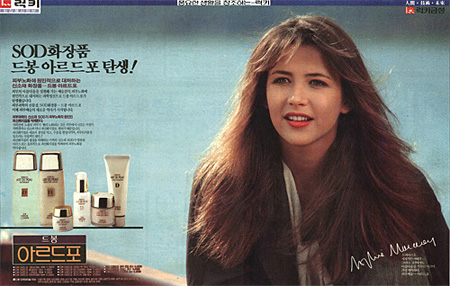
Sophie Marceau Korean Advertisement 1989And only then did I really notice the continuation of the “Neo-Confucian Body Techniques” article, which resolves everything quite nicely (right: French actress Sophie Marceau advertising LG cosmetics in 1989; source):

No longer were only foreign products sold to Koreans with a foreign face, now even domestic products were marketed to Koreans by the likes of Cindy Crawford, Meg Ryan, and Claudia Schiffer.

When I have time, I’ll try to find some Korean language sources to confirm, and to pinpoint the exact year of the law changes (but even if they do confirm it was 1989 rather than 1988, Carol can certainly be forgiven for her ever so slight inaccuracy 25 years later!). Until then, I’d appreciate any extra information readers can provide, and/or any comments on my article.

*Of course, racism and cultural imperialism are indeed factors to consider here. I’m just a little tired of patronizing, contradictory assumptions of passivity and unwillingness on the part of (especially female) Korean consumers if they enjoy foreign cultural products (are they *forced* to buy them somehow?), and/or that they’re somehow being duped by Caucasian men on Madison Avenue when they do so.

Korean Sociological Image #81: Cultural Appropriation

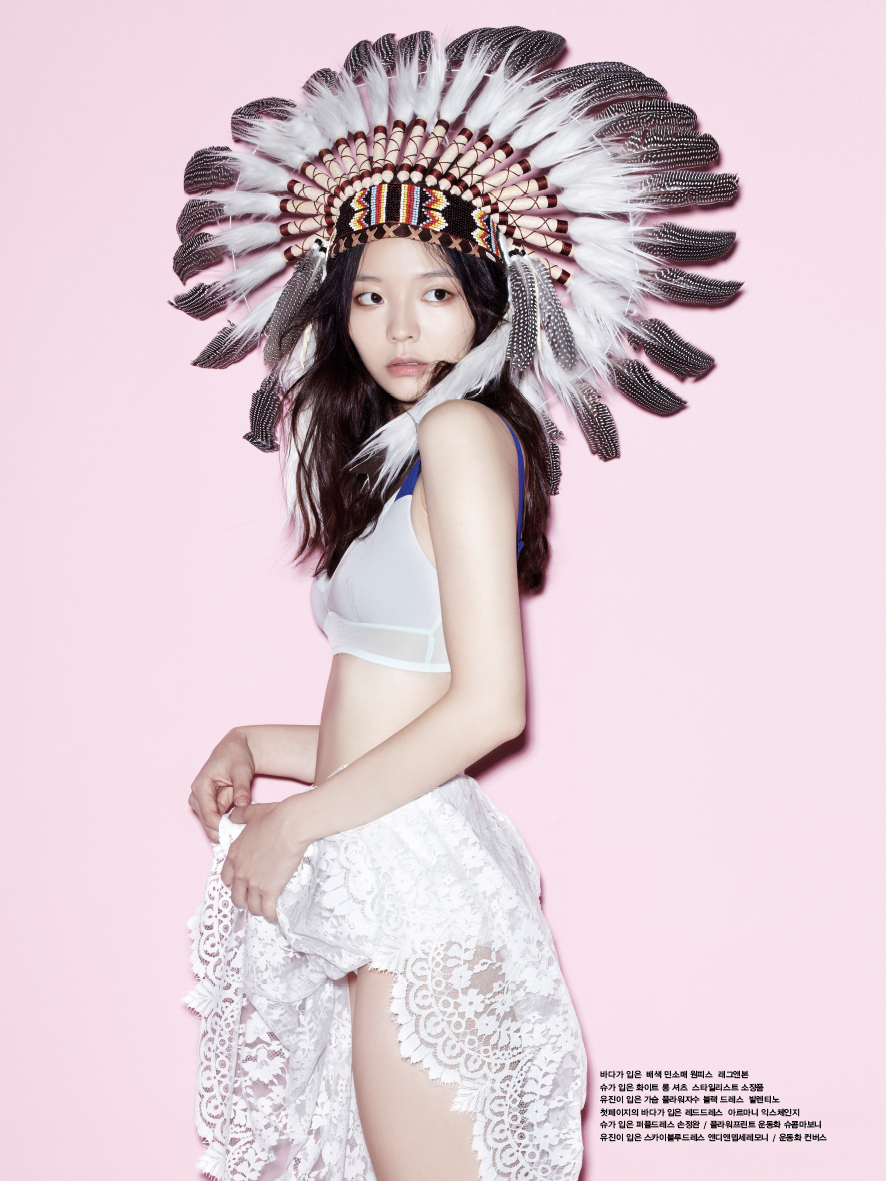
Lee Som -- Oh Boy! Magazine Vol.40 -- Native American Headdress Cultural Appropriation(Source)

Model and actress Esom (이솜; a.k.a. Lee Som), wearing a Native American(?) headdress in one photo from her recent shoot for OhBoy! magazine.

While it’s not directly related, ignorant and/or insensitive cultural appropriation is a big problem in K-pop especially. For an excellent primer on that, with many links and discussions of previous posts and articles, I recommend “Of Misconceptions About Cultural Appropriation in K-pop” by Assoc. Prof. Crystal Anderson of Elon University, at her blog High Yellow. Also, for something more recent, check out “The trouble with kpop” at Radio Palava, or the following video by Youtube user “Itsbrittany lajoyce“:

Meanwhile, nothing against Esom of course, who was likely given little choice in the outfits she would wear. See here for many more photoshoots of hers.

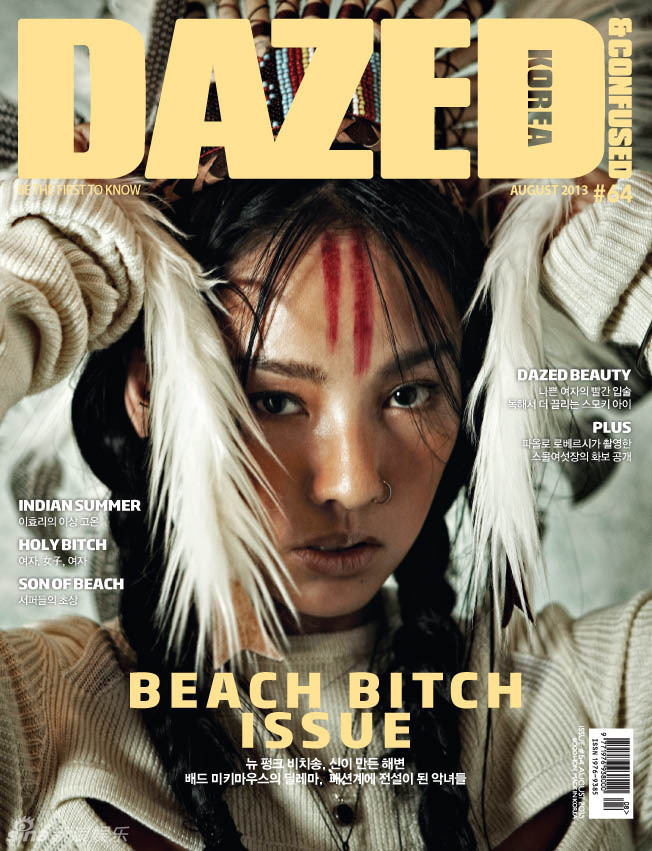
Update: I forgot about another recent example with Lee Hyori, in a photoshoot for the August 2013 edition of Dazed and Confused (Korea) magazine. See Audrey Magazine or Omona They Didn’t! for the details (Update 2: More pictures available here).

(For more posts in the Korean Sociological Image series, see here)

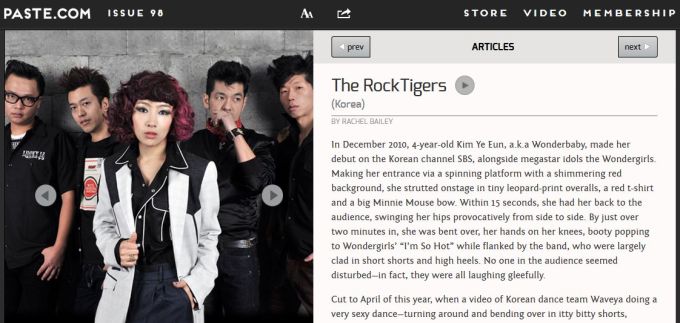
“This is why Korea needs people like Velvet Geena and the RockTigers”

The Rock TigersClick on the image to find the reasons, in an Paste Magazine article by Rachel Baily I was interviewed for this summer (and promptly forgot about — sorry!). Make sure to check out Busan Haps for a 2011 interview too, or here, here, and here for more on Waveya, Ga-in, and Wonderbaby also mentioned by Rachel.

Meanwhile, sorry for the slow posting everyone, but I’ve had — still have — a lot of offline deadlines, and the new semester is proving a lot of work. But I aim to have a big post up next week! :)

Update: Make that the week after next — I ended up catching one of those frustrating, lingering colds sorry.

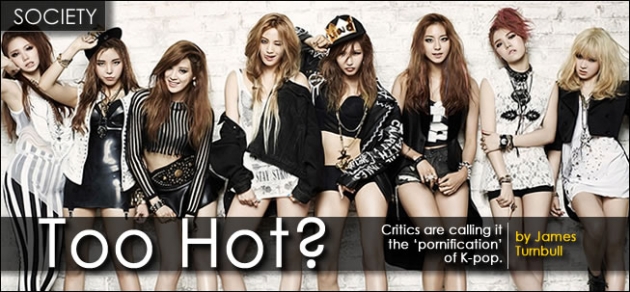
The Pornification of K-pop?

K-pop Porn

Pornography is art, sometimes harmonious, sometimes dissonant. Its glut and glitter are a Babylonian excess. Modern middle-class women cannot bear the thought that their hard-won professional achievements can be outweighed in an instant by a young hussy flashing a little tits and ass. But the gods have given her power, and we must welcome it. Pornography forces a radical reassessment of sexual value, nature’s bequest of our tarnished treasure.

Camille Paglia, Vamps & Tramps, 1994.

For reasons of space and propriety, an opening quote that didn’t make it to my latest article for Busan Haps. But, without denying for a moment that there’s been a lot of gratuitous T&A in K-pop this summer, with many more examples in just the few weeks since this article was written, I think Paglia’s quote brings a healthy dose of realism to the discussion, and frames the one on Beyoncé’s Super Bowl halftime show in the conclusion nicely. Please click on the image to see what I mean.

For much more on the concept of sexual objectification, why it can sometimes be positive, and why consent is so important for determining that, please see here. Also, a must-read is Peter Robinson’s “Naked women in pop videos: art, misogyny or downright cynical?” in The Guardian from last week, which raises many of the same issues (and is a reminder that the “pornification” of K-pop still has quite a long way to go).

Talking Points: From Music Downloads to Sweaty Crotches

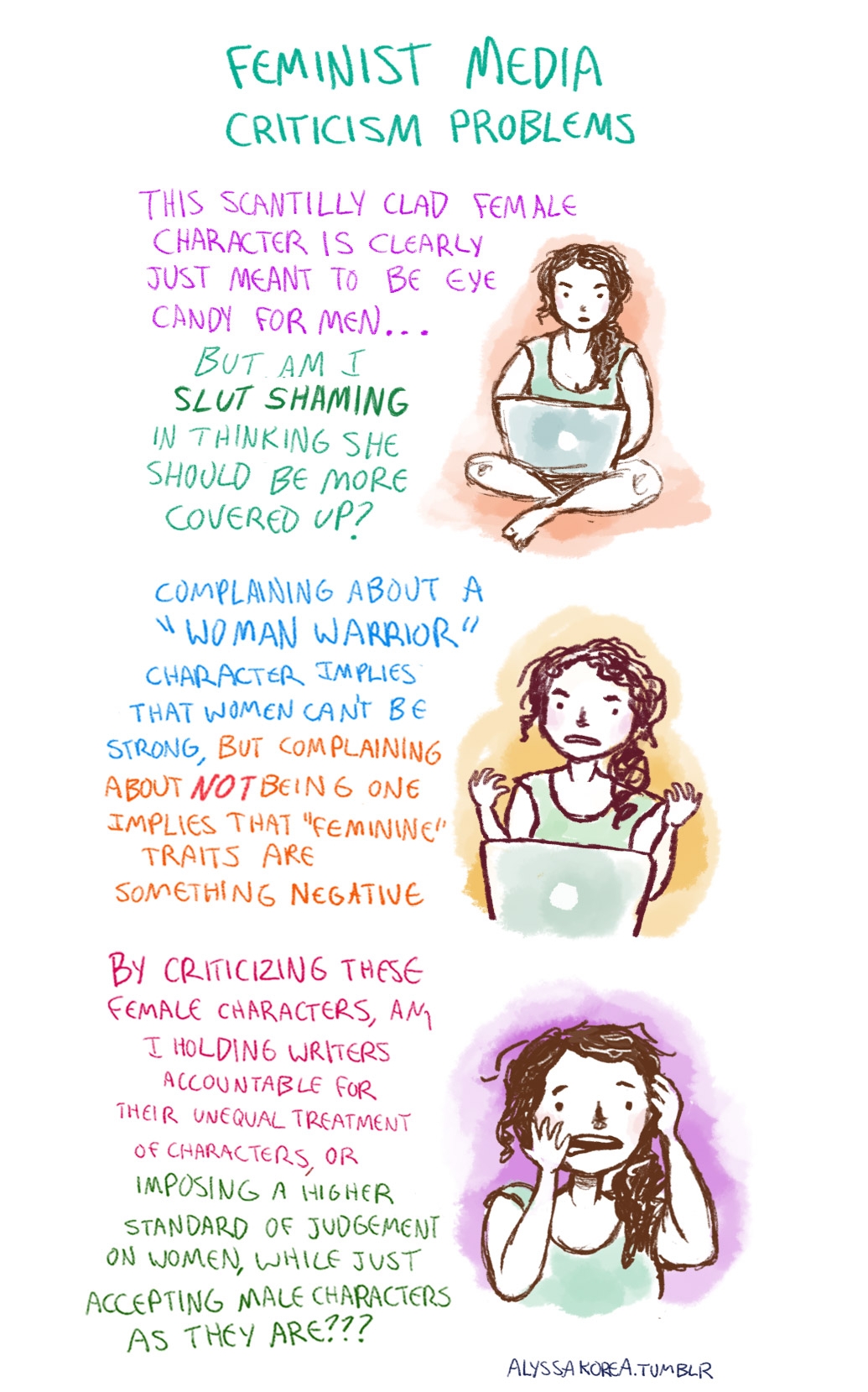
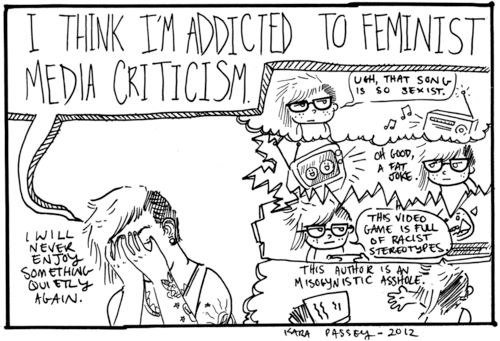
Feminist Media Criticism Problems(Source: Alyssa Korea)

Sorry for the lack of posts everyone. I’ve been absentmindedly researching many, not realizing that I hadn’t put pen to paper for a while. To remedy that, here’s some interesting links that add new information to previous posts of mine, but which didn’t really justify separate updates by themselves:

1. Will saving Korea’s music business end up killing it?

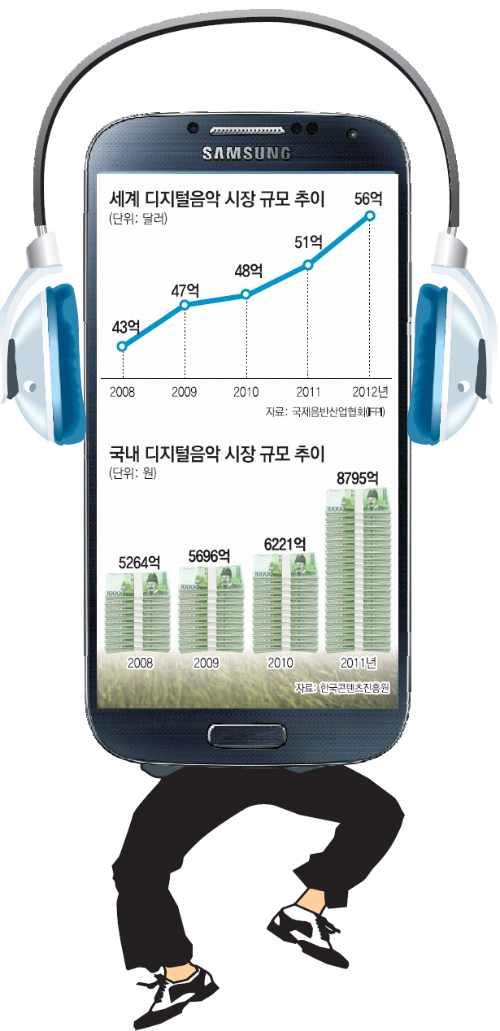
Korean Digital Music MarketIn an endnote to my recent “Why the Japanese Don’t Illegally Download Music. Much.” post, I wrote:

Like most articles praising the rapid rise of the Korean digital music market and the supposed success of Korean anti-piracy efforts, this article completely fails to mention how absurdly cheap Korean digital tracks are, as noted by Bernie Cho in the opening quote.

The next week, Yim Seung-hee at the Korea Joongang Daily wrote one of the most comprehensive articles on the Korean digital music market yet, noting a lot of resistance to government law changes aimed at raising prices. Here are just a few of the quick factoids to take away from it (source, right):

  • Music in Korea used to cost 73 won per download before the changes. That has now risen to 110 won, which is still less than one-tenth what iTunes costs.
  • Gangnam Style only earned 3.6 million won in online royalties in Korea, coming from 2.86 million downloads and 27.32 million streams, which works out to an average of about 10.7 won per download and 0.2 won per stream.
  • However, in the US, Psy received the equivalent of 2.8 billion won for 2.9 million downloads.
  • Meanwhile, one estimate says that the average indie musician earns just two-to-three-million won a year (about the same as most expat English teachers make per month).
  • Streaming accounts for 74 percent of online music spending in Korea (probably because of Korea’s ubiquitous broadband wifi), and downloads continue to fall. In contrast, in the rest of the world downloads dominate, making up 71 percent of the online market.

2. “Gaijin”

Leah of The Lobster Dance is featured in a (heavily-commented) Tofugu article about the usage of the word “gaijin,” which she has used in the past but now rejects. It begins:

Gaijin (外人, short for 外国人), or “foreigner” in Japanese, is a complicated word that means a lot of different things to a lot of different people.

Some people take the word lightly; when the Tofugu team was in Japan and a roller coaster we were riding unexpectedly malfunctioned, we joked that it was because the ride wasn’t designed to hold the weight of our giant gaijin bodies.

But for some people in Japan, “gaijin” can be a hurtful and alienating word. It can mean refusal of service at businesses, a barrier to entry for housing, or even threats of harassment or violence.

I thought that I’d reach out to some bloggers living in Japan to see what their thoughts on the word “gaijin” were. I got a lot of great, varied, and nuanced responses.

See “Korean Sociological Image #46: The Language of Exclusion” for a similar discussion surrounding the Korean term waegookin, or “foreigner,” with links to many other posts on the subject in the Korean blogosphere (as of 2010).

3. A Tasteless Ad, or Brilliant Marketing?

Johnny Walker is capitalizing on the 40th anniversary of Bruce Lee’s death by rendering him in CQI for a Blue Label commercial:

The ad features a startlingly lifelike computer-generated rendering of the revered martial-arts star, who died four decades ago. It has sparked ire among fans, who argue that Mr. Lee was a teetotaler and abstained from drinking alcohol for most of his life.

Critics see Mr. Lee’s personal stance as incongruous with an endorsement for a brand whose blended Scotches sell for more than $200 a bottle.

Johnnie Walker has defended the ad, saying it worked closely on it with Shannon Lee, Mr. Lee’s daughter.

Ms. Lee, meanwhile, told the Journal that while her father wasn’t a drinker, he didn’t think drinking was immoral. She also thought the video would be an “innovative way to get my father’s ideas out.”

See Scene Asia for the rest, or my “Raising the Dead: The Future of Advertising?” for a much better example featuring Audrey Hepburn, and many others in the comments (readers made me realize using dead celebrities in ads was surprisingly common). As for this example, I share The Ethical Adman’s criticisms that “there’s something really disturbing about dead celebrities being recreated to sell brands,” and that “it seems like the ultimate violation of a person’s integrity, at a time when they cannot even defend themselves.”

Most of all, I think it was incredibly hackneyed to use a teetotaler to sell alcohol, no matter how famous he was. And I just can’t believe how incredibly bad the CGI is, despite the accolades.

Lee Hyori Dazed and Confused August 2013(Source: Unknown)

4. Lee Hyori for “Dazed and Confused”: Appropriation or Appreciation?

See Audrey Magazine or Omona They Didn’t! for the details. Or, for a similar example by T-Ara last year, see “Thinking through Korean Appropriation of American Indians” at Sociological Images, which I made a big contribution to.

https://twitter.com/rjkoehler/status/359197611481239552

Meanwhile, I’m going to buy a copy to see if there was any rationale to that “vulgarity,” which I find rather charming myself…

5. Nine Goddesses are Hot for the Military

While writing my “Korean Sociological Image #72: Girl-group performances for the military” last summer, it proved surprisingly difficult to find actual embeddable videos of those. So, via Omona They Didn’t!, here are 3 with Nine Muses from earlier this year, who seem to be quite popular with the troops:

Pregnant Korean Bride6. Premarital pregnancy gets trendy

My 2008 post, Why Korean Girls Don’t Say No: Contraception Commercials, Condom Use, and Double Standards in South Korea, is still my most popular and most-commented, despite being based on 2003 data, and displaying what were then big, obvious gaps in my knowledge of Korean sexual mores. Hopefully I’ve filled most of those since, not least because one commenter pointed out that Koreans have always been quite tolerant of premarital pregnancies, so long as the couple planned to marry.

What’s more, according to the Korea Times, now they’re more common than ever. Some excerpts (source, above-right):

Celebrity couples such as actor Jang Dong-gun and his wife Ko So-young, and Kim Seung-woo and Kim Nam-joo, have admitted they walked down the aisle with the brides pregnant.

Actress Kim Bu-sun goes as far as to say she approves of premarital pregnancy.

“My premarital pregnancy was the best thing that ever happened to me,” Kim says. “If my daughter becomes pregnant, I will host a party in her honor.”

She believes people should embrace single mothers, whom she considers a minority in need of attention and care.

Nice to hear, considering the Ministry of Health and Welfare defined unwed mothers as “ignorant whores” as recently as 2010 (technically, it was “low levels of education [and] impulsive sexual drives”). Continuing:

But premarital pregnancy is now humdrum, even among people who are not stars.

In a survey that consultancy Duo Wed conducted between June 1 and June 14, one-third of 374 newlyweds questioned said the bride was pregnant when they married.

Of these couples, 92.1 percent said their babies were unexpected.

Read the link for the rest. Note  that this doesn’t mean Koreans are necessarily becoming more tolerant of cohabiting couples however (and who face a lack of suitable accommodation anyway), nor of pregnancies that don’t lead to marriage.

7. This Dude’s Response To Female Crotch Sweat Shame Is Perfect

See Bust for more. Fortunately, I haven’t seem any similar products advertised here yet, and perhaps that’s because there will never be a market for them, as Korean women generally don’t sweat as much as those of other races. This was discussed in my 2010 “Hot Sweaty Korean Women” post, about a rare Korean commercial that did feature a Korean woman sweating:

Please note I also made some overgeneralizations about Korean (women’s) exercise and gym culture in that post though, and would write it very differently today. But on the plus side, readers soon corrected my mistakes, and it (hopefully) remains useful for the journal study on Korean attitudes to dieting it references.

Also, for a related 2009 post on why Koreans generally don’t wear deodorant, its marketing, and the implications for Korea’s kkotminam (“pretty flower men”), which I recently updated and does still hold up today, please see “The Scent of a Man: What deodorant commercials tell us about Korean metrosexuality.”

Thoughts? On any of stories above?

Why the Japanese Don’t Illegally Download Music. Much.

Bodacious Space Pirates(Source)

For all their passion, home-grown fans are not paying enough for K-Pop.

The CD industry is stagnant, and digital music sites are seen as vastly underpriced, with some charging just a few cents a song.

Bernie Cho, head of music distribution label DFSB Kollective, says online music sellers have dropped their prices too low in a bid to compete with pirated music sites….

….With downward pressure on music prices at home, “Many top artists make more money from one week in Japan than they do in one year in Korea.”

(BBC, June 2011)

With many implications for the Korean music industry, and raising many questions about the curious preferential treatment given Korean fans over international ones, I’ve been quoting Bernie ever since. So too Sony Pictures chief Michael Lynton and Paramount Vice Chairman Rob Moore on movies, the latter of whom suggested that cultural differences are the main reason that Koreans illegally download so much more of them than the Japanese:

…governments around the world are subsidizing and promoting the ubiquity of high speed broadband to make their economies more efficient and competitive. With this increase in speed, content will travel that much more easily on the Internet. But without restraints, much of that content will be contraband.

I’ve already seen it happen in South Korea, which has one of the most highly developed broadband networks in the world. But piracy has also become so highly developed there that we and virtually every other studio has recently had to curtail or close down our home entertainment businesses. It’s hard to sell a legal DVD when it can be stolen without any repercussions.

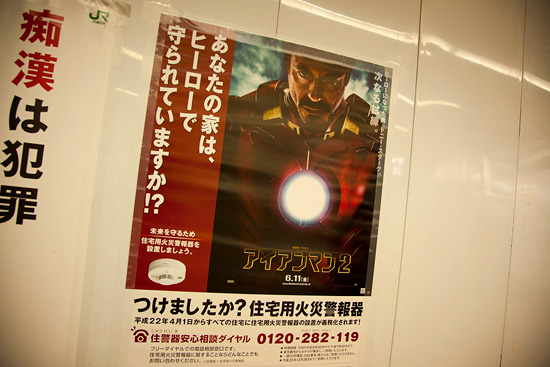
(Michael Lynton, The Telegraph, May 2009; source, below)

Iron Man 2 Japanese Poster…Paramount is holding back the release of “Iron Man 2” in Japan for several weeks, having little fear about the country being swamped with bootleg copies of the film.

However, when it comes to Korea, it’s a different story. “For better or worse, there are certain countries — notably like Korea — where it’s culturally acceptable to download movies online pretty much right away,” said Moore. “By the third week of a movie’s release, you’re starting to see a large part of the audience who will start consuming the film online. It’s why Korea has almost no home video business anymore.”

(Rob Moore, Los Angeles Times, May 2010; via The Marmot’s Hole)

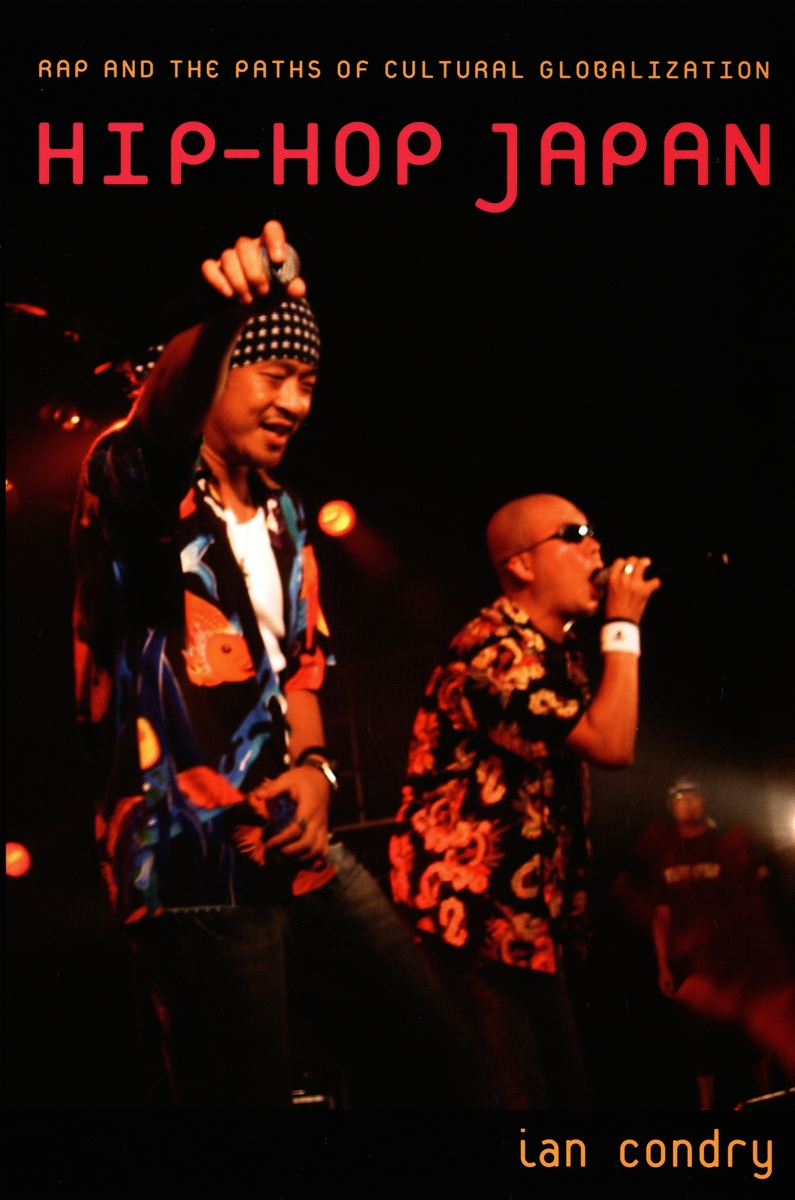
Given Lynton and Moore’s frustrations, readers — and myself — can be forgiven for accepting that culture must have something to do with it, and that this would necessarily apply to music too. However, I’ve just finished reading Ian Condry’s brilliant Hip-Hop Japan: Rap and the Paths of Cultural Globalization (2006), a must-read for all Japanese and — yes — Korean music fans (I’ll explain in a review later this month), who adds two crucial economic and technological reasons that few outsiders to Japan would be aware of:

Ian Condry Hip-Hop Japan(Source)

Two other aspects that distinguish Japan’s music market are rental CD shops and low rates of online piracy. These characteristics further demonstrate that abstract markets do not operate separately from their concrete settings. In Japan, recorded music sale rose steadily during the postwar period, peaked in 1998, and then began a sharp decline that continued through 2004. The start of the decline coincided with the emergence of Napster in 1999, but there are reason to think that online piracy offers only a partial explanation for the decline in sales. As I discuss elsewhere, online piracy is less prevalent in Japan than in the United States. In Japan, most young people access the Internet using cell phones, which as yet tend to have neither broadband connections not substantial hard drives. In addition, ubiquitous CD rental shops make it relatively easy and inexpensive to sample new music without relying on unauthorized downloads. CD prices are high in Japan, generally between ¥2,500 and ¥3000 (US $23-27), but renting a CD is very cheap, generally around ¥300 ($3). The widening availability of CD burners contributes to this “sneaker net” for passing around music and also limits the attractiveness of online file sharing. This suggests that the lack of online piracy arises less from a national respect for copyright than from the combination of a business setting in which rental shops make it easy for consumers to sample music cheaply and a technology environment dominated by Internet-ready cell phones that make downloading over peer-to-peer networks unfeasible.

(pages 190-191; my emphasis)

Written well before smartphones had made their debut, clearly that description is a little dated. Indeed, by 2012, the Recording Industry Association of Japan estimated that only 1 in 10 music downloads were legally purchased, prompting the Japanese government to introduce harsh fines and jail times* for — uniquely — the illegal downloading (rather than the more usual uploading) of content, which in turn provoked an attack on government websites by Anonymous.

However, the Japanese are notorious for stubbornly sticking to outdated technology. Common-sense dictates that looking only at digital downloads would give a very skewed impression of the Japanese music market, which is still the second biggest in the world.

Japan Smartphone(Source)

For just last week, Japan Realtime reported that CD sales are booming:

“The Japanese market is very different from the rest of the world,” said Mr. Minewaki [CEO of Tower Records Japan]…

….While global sales of physical CDs have been plunging under pressure from the digital download market, Japanese CD sales bucked this trend in 2012 with a 9% rise from a year earlier, according to the Recording Industry Association of Japan. Tower Records Japan is majority-owned by Japan’s largest wireless carrier NTT DoCoMo Inc.

Mr. Minewaki said CDs continue to do well in Japan because of legal constraints that curbs rapid discounting, a lag in consumers switching from feature phones to smartphones, and the popularity of rental CD shops where consumers can rent then copy music, a cheaper alternative than buying songs or albums online.

But the compact disc business isn’t completely immune to the marching popularity of digital downloads…

Meanwhile, here in Korea, I don’t think I’ve even touched a CD in the last year. Although I do have hundreds, being 37 years old and all…

How about yourself? Are CD rental stores also still around in Japan?

*Like most articles praising the rapid rise of the Korean digital music market and the supposed success of Korean anti-piracy efforts, this article completely fails to mention how absurdly cheap Korean digital tracks are, as noted by Bernie Cho in the opening quote.

Single Korean Female? Love Sex?

Krystal Etude Wanna Be Sweet(Source)

If so, do you carry a condom in your handbag these days?

Because not so long ago, academic research on the subject said you probably didn’t — Korean women were just too scared of being slut-shamed for it, leading to popular attitudes that contraception was overwhelmingly — or even exclusively — men’s responsibility. Further contributing to that stigma, bans on contraceptive commercials weren’t  lifted until as recently as 2006, although (bland) public campaigns promoting condom use had been made two years earlier for the sake of HIV/AIDS prevention.

Since then though, surveys show that attitudes among young Koreans are changing, and there’s been some alarmist articles about how much casual sex they’re having these days. Also, I often see commercials for the pill on television (especially MNet, a music channel) and in women’s magazines. But for condoms? I haven’t seen any personally, beyond minimalist ones in newspapers and magazines.

So, I was very happy to learn from a reader that he just saw two Durex ones on television, both of which encourage women to be very prepared:

And the men too:

What’s more, they’re both based on Sticky Tape below, Iggy Cerda-Salas’s winning entry for Durex at the MOFILM London 2012 Awards, which only had a male version. Add that these are the only videos on Durex Korea’s Youtube account, and that its Facebook pages were also only set up recently, then it appears that they were specifically created for the Korean and/or Northeast Asian market.

Or in other words, Durex Korea at least now feels that there’s a definite market for their product among Korean women, and that they’ll no longer be so embarrassed if they’re caught with them.

Here’s hoping sales go well!

But have any readers seen any previous Korean commercials or ads by other condom manufacturers? Did women feature in those too?

(Related: See Korean Sexuality: Still Awaiting a Revolution? for more on the curious parallels between Korean women’s *previous* attitudes to contraception and those of their UK counterparts in the 1950s.)

(Update: Durex Korea has just confirmed that these are Korea’s first condom commercials)

(Update, June 2014: Unfortunately, these commercials proved to be just a one-off, with no real attempt to engage with female consumers and challenge double-standards. Sigh.)

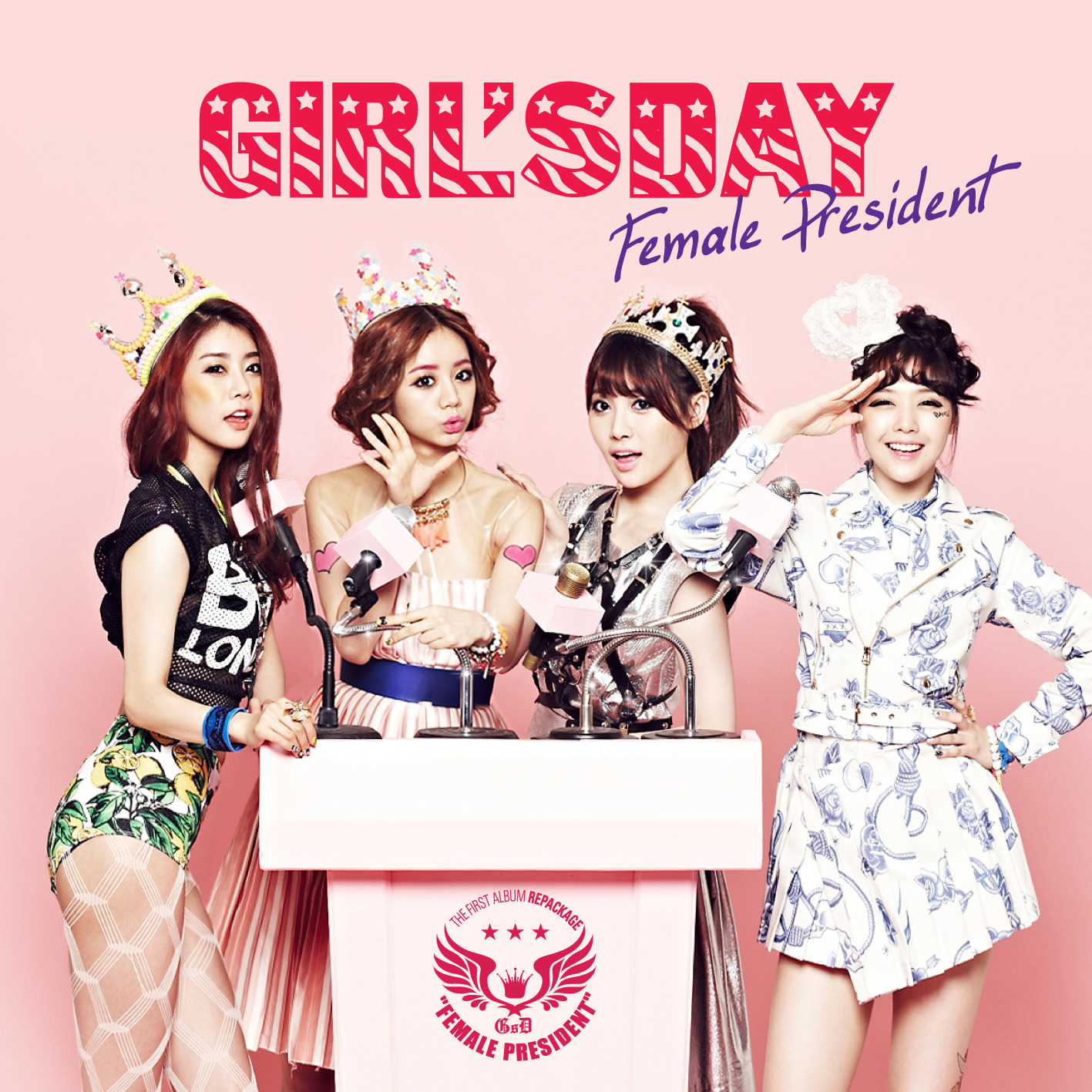
Consent is Sexy, Part 3: Female President by Girl’s Day #FAIL

Girl's Day Female President(Source)

…whenever claims of female empowerment or sexual expression are made of girl groups, just a little investigation reveals the conspicuous absence of the voices of the girls themselves. Rather, you find that it’s the entertainment companies speaking for them…

(Korea Herald, July 2011)

I do apologize for quoting myself. But it’s not often that K-pop makes you laugh so hard:

After Girl’s Day held their comeback showcase with the uber-sexy Female President song and choreography, some expressed concerns about the group’s change in image becoming perhaps too sexual.

Their label said,

“They got so much love from ‘Expectation’ that it’s true we were at first burdened about this new song and choreography. Since we worked so hard, the members were confident in the new song, but they’re so happy because the reaction was better than expected. We’re so thankful for the interest.”

Regarding the sexy choreography and concept, the label said, “After the suspenders dance, now it’s the nine-tailed fox dance. It’s the point choreography of the new song, so they worked on it for a long time. They’re not burdened at all by the skin exposure. They’re just happy to have a new image. They’re working hard with the determination to look even sexier when promoting ‘Female President’. As the members are working hard and passionately, please watch over them fondly.”

 (Allkpop; original unsourced, but it appears to be a translation of this Newsen article)

Girl's Day SwimmingAmusement turned to consternation though, when I read the following, harrowing account of what really happened at one of their recent promotions (my emphases; source, right):

…Girl’s Day performed right under the sun and lighting equipment for eight straight songs. By the second song, Sojin practically fainted back stage and Minah could barely stand on her own…

After their stages, the journalists asked questions and one of them asked what they would promise their fans if they won #1. The host asked the girls to do their promise early and do it by jumping into the water ㅋㅋㅋㅋ Ridiculous. The girls obviously looked distressed and Minah kept looking at the staff section, looking like she was asking her CEO what they should do. The girls were drenched in sweat and it was obvious that they just wanted to finish up and go home early but the CEO and the host forced the girls to go ahead with the promise anyway…

….I guess the problem was that once they were done greeting their fans, the girls could not walk at all… They tried to get out of the pool but it was obvious they had no strength left in their bodies. Minah was practically crawling out of the water because her legs had no strength and Sojin had to be supported by her manager… Meanwhile fans and journalists were taking pictures of this, of course [but making them appear erotic and consensual]…

Tellingly, those scenes where they were coerced into jumping into the water have been edited out of videos of the event (out of those I’ve been able to find). But their tiredness is still evident afterwards. For example:

(Update: Billboard Korea disingenuously claims that the Girl’s Day members “surprised viewers at one point when they jumped into the pool… in their hot pink ensembles.”)

For more, read the full article at Netizen Buzz. Technically, their lack of consent to the swimming at that promotion is unrelated to the girl on girl action, the panties fashion, or the stripping in the MV to Female President, and I don’t bemoan anyone for enjoying any of that. But personally, it’s completely overshadowed by what happened above, which just speaks volumes about the coercive relationship between Girl’s Day and their management company, Dream Tea Entertainment. Add that all the skin in the MV is gratuitous anyway, then I have no qualms about also labeling that negative sexual objectification, as defined by the criteria outlined in the previous posts in the series.

The irony though? The lyrics to the chorus at least are relatively empowering.

As Amy at YAM Magazine puts it, the title may be a misnomer, but it’s still a song…

…to empower girls to not sit around waiting for guys to give the first step, but to go for it saying “you love him,” and to go and “kiss him first”…

Commenters to a review at McRoth’s Residence disagree, including Kyungmi, who is “angered” by how “bland” they are. While her opinions necessarily carry more weight than my own, and my knowledge of K-pop is hardly exhaustive, I’m still struggling to think of more examples of girl-groups’ songs promoting such boldness in taking relationships to the next level, compared to a plethora of ones that promote passivity instead. In particular, compare Female President’s:

Come on come on oh oh oh

Come on come on oh oh oh

You go first and say you love him

Now is the time, you can start first

We have a female president

Why so serious? What’s the problem?

If a girl kisses first, she gets arrested or what?

Come up to him and kiss him first

Now is the time, you can start first

Girl's Day Female President Feigned Lesbian KissTo those to Dal Shabet’s Be Ambitious (but better translated as “Look at my Legs“), also recently released, and also notorious for its “sexy concept”:

You always only hold my hand and let go,

Is that enough for you? You don’t even kiss me,

When are you gonna make a move?

We stay up all night just talking, even when you’re drunk, you just go home.

Are you really a guy? Or are you just shy?

And, later:

I really can’t wait anymore,

I can’t believe this situation,

I really can’t wait anymore,

I don’t wanna just wait anymore.

Dal Shabet Be Ambitious(Source, above; source below — unknown)

To which Asian Junkie aptly responds:

SO DON’T WAIT WTF

Get it yourself, goddammit. I’m not a fucking mindreader.

And about the lyrics in general:

So as I said, people are apparently touting this as a sexualized, female empowerment song or whatever. In the music video’s comments, there are those commenting about how this is about women gaining control of their sexuality and shit.

But to me, it’s the exact opposite. It’s either saying, “Men need to be more rapey and force themselves on us because we’re wearing slutty clothes” OR “It’s not socially acceptable for us to make the first move because that would be slutty, so here’s our whining about not being aggressive enough to demand dick, we’re still waiting on you.”

Girl's Day Female President Screenshot(Source)

Getting back to Female President, again I acknowledge the irony of empowering lyrics accompanying a song so negatively objectifying, and would be very happy to learn that there’s actually many more out there in K-pop that encourage women to be more assertive in their relationships (not just empowering in general though — I already know of many of those). Also, I fear that again it’s appropriate to quote myself, as I can never stress enough that…

…it’s not the place of this author—a slightly fat, bald, middle-aged man—to tell any young female singer or consumer what they should and shouldn’t consider empowering.

But to argue that the “saddest fact” about this song is that the lyricists Nam Gi-sang (남기상), Gang Jeon-myeong (강전명), and Daniel R. are men though?

That’s sexist.

(Update: Dana’s “‘Female President’ Has Nothing To Do With A Female President” at Seoulbeats is a must-read.)

Related Posts:

Consent is Sexy: SISTAR, slut-shaming, and sexual objectification in the Korean idol system

SISTAR GOT CONSENT(Sources, edited: text, image)

Give it to me, SISTAR.

Slip up just once while you’re promoting your new album, and give me your honest opinion of your costumes, your choreography, or your lyrics. Tell me what input you had in them. Tell me if you ever rejected those that Starship Entertainment provided for you.

Or did you waive that right when you signed your contracts?

Because several things are going to happen in the next few weeks: some people are going to slut-shame you for the lewdness of your performances, and some people are going to raise concerns about your sexual objectification. Some people might even do both.

용감한 Producer 씨스타 SistarAnd whatever they say, the issue of your consent will be the elephant in the room.

First, because it’s both misogynistic and asinine to slut-shame you if you’re actually projecting a creation of your management company, rather than expressing your own sexuality and personality. Second, because as discussed back in April, there is both negative and positive (or benign) objectification, and the presence or absence of the consent of the person(s) involved is crucial for determining which is which:

According to Martha Nussbaum (1995; opens PDF) then: ‘In the matter of objectification context is everything. … in many if not all cases, the difference between an objectionable and a benign use of objectification will be made by the overall context of the human relationship (p. 271); ‘… objectification has features that may be either good or bad, depending upon the overall context’ (p. 251). Objectification is negative, when it takes place in a context where equality, respect and consent are absent.

(Evangelia Papadaki,”Feminist Perspectives on Objectification“; source, above)

On positive objectification, “dissident feminist” Camille Paglia is very much on point (my emphases in bold):

SISTAR BoraEarly on, I was in love with beauty. I don’t feel less because I’m in the presence of a beautiful person. I don’t go [imitates crying and dabbing tears], “Oh, I’ll never be that beautiful!” What a ridiculous attitude to take!–the Naomi Wolf attitude. When men look at sports, when they look at football, they don’t go [crying], “Oh, I’ll never be that fast, I’ll never be that strong!” When people look at Michelangelo’s David, do they commit suicide? No. See what I mean? When you see a strong person, a fast person, you go, “Wow! That is fabulous.” When you see a beautiful person: “How beautiful.” That’s what I’m bringing back to feminism. You go, “What a beautiful person, what a beautiful man, what a beautiful woman, what beautiful hair, what beautiful boobs!” Okay, now I’ll be charged with sexual harassment, probably. I won’t even be able to get out of the room!

We should not have to apologize for reveling in beauty. It is not a trick invented by nasty men in a room someplace on Madison Avenue….It is so provincial, feminism’s problem with beauty. We have got to get over this.

(Sex, Art, and American Culture: Essays by Camille Paglia {1992}, pp.264-5; source, above)

Granted, Paglia is unfairly homogenizing and stereotyping feminism, as my own favorite feminist scholar explains:

Few issues have caused more debate within feminism’s history than the sexualized representation of women….Feminist activists and scholars have long tangled with the issue of whether images liberate women from or enforce traditional patriarchal notions of female sexuality. From Laura Mulvey’s psychoanalytical constructions of the “masculine gaze” to Andrea Dworkin and Catherine MacKinnon’s longstanding appeals to broaden both cultural and legal definitions of pornography, there is a wide and influential range of contemporary feminist discourse on the ways in which women are manipulated and victimized through various cultural representations. These have led to a popular stereotype of the “feminist view” (if there ever were such a monolith) of the sexualized woman as a consistently negative one. However, the history and evolution of the women’s movement problematizes this stereotype, as women have actively demanded the right to act as free and discerning sexual subjects even as they may be interpreted or serve as another’s object of desire.

(Pin-up Grrrls: Feminism, Sexuality, Popular Culture, Maria Buszek {2006}, p. 5)
Sinfest Sex Object(Source)

Be that as it may, in my experience there are precious few commentators on K-pop that heed Paglia’s imperative, let alone make any consent-based distinctions between negative and positive objectification. I’m especially frustrated with Korean commentators who, caveats about my article-searching skills aside, tend to view increasing sexual objectification — and/or sexualization — as a blanket evil, SISTAR usually only getting a mention as one, interchangeable example in a roll-call of groups at the forefront of these pernicious trends. Certainly, I’ve yet to find someone who bothered to find out if equality, respect and consent are indeed absent in your relationship with Starship Entertainment.

Then I remembered that if you want something done properly, you have to do it yourself.

So, I became your biggest fanboy, spending the last two weeks poring over all your interviews and TV appearances. Whereas I used to think that they were just mindless trash, and that you weren’t free to speak openly, I finally — belatedly — realized I could no longer simply assume either.

But ten plus hours of videos, and numerous reading later? No offense SISTAR, but now I know they’re mindless trash.

I’ve learned, for instance, that: Bora has a mole on her left ear (32:37); Hyorin met her first love when she was in her second year of high school (7:10); all of them just love Las Vagas (7:00); there is an unofficial rule that band members can secretly start going out on dates once they approach 1000 days since their debut, but as of 973 days neither Hyorin nor Bora had (15:20); Hyorin has a pet snakeSoyou prepared for Christmas, 2011 by listening to a lot of carols (1:55); Dasom‘s mother is a big fan of the host of YHY’s Sketchbook (4:35); and so mindlessly on and on…

Sistar AegyoI would have watched more, but stopped paying much attention after watching one show that had you all spitting gum at a target for five minutes. Then I quit altogether when I came across another that opened with a pig shitting, as if to taunt me. Because suddenly I realized, what on Earth was I doing? How was that pig shit really any different to the contents of all those other programs? (Source, right).

But, most of all, I was giving up out of frustration at how many interviewers and TV show hosts would waste their precious time with you by almost always asking the same sort of inane questions, with the same predictable “Awww-we-love-you-[insert city/country/name of show]-guyz” type answers.

True: I am highlighting the most inane, the most vacuous, the most trivial parts of them. This may be patronizing and unfair: after all, some people are interested in such things, I’d probably be more interested myself if they were about, say, Lee Hyori, and providing them is an integral part of creating and sustaining a fanbase. Also, the Sketchbook one is interesting in another way — albeit a negative one — for the disproportionate attention given to the handful of samchon (uncle) fans in the audience (5:50; that will have to be another post!). And I did learn one thing, albeit via the Soompi blog, rather than a video — that perhaps you’re forced to wear short skirts sometimes:

SISTAR’s Soyu recently revealed her dislike of short stage outfits.

On the June 1 episode of “Beatle’s Code: Season 2,” Soyu honestly talked about the late controversies behind the group’s outfits.

Park Han-byul short skirts high stools yoga schoolSoyu stated, “It is a little upsetting, it might be a good thing in a way. Even if we wear the same hot pants as other girl group members, when we wear them people call it racy. We think it’s because we have a healthy image so we try to think of it in a good way.”

When asked if she liked wearing short skirts/dresses, Soyu answered, “I really hate wearing short skirts/dresses. Sometimes there are rude people who take photos from below us. There are even people who touch us with their hands.”

I’d add that sometimes PR people or press conference organizers will take advantage of this, only providing high stools for female celebrities to sit on (source, above-right). But Soyu, did you mean you would wear something different given the choice? Or that you just don’t like the perving? Why, oh why, didn’t the interviewer just ask?

And that was the best I got for ten hours work. (Readers will surely understand why I’ll refrain from the addressing the post to SISTAR from this point!) But in hindsight, perhaps it was naive of me to expect anything more than frequently tantalizing — but always unsatisfying — hints, for several reasons.

The Dazed and Confused Blogger October 29th 2011First, because I’ve already discussed the problem of Korean language sources in my ongoing Who are the Korean Pin-up Grrrls? series. As always, I welcome readers’ suggestions for critical Korean commentary on K-pop; of course do know of, have read, and have translated some here; and acknowledge that my inability to find as much as I’d like doesn’t necessarily mean that there’s not more of it out there.

But frankly? As someone whose idea of a good time is to Google “성 상품화” after a couple of Black Russians, that caveat is sounding increasingly hollow and unnecessary.

Second, because for all the associations with the Korean idol and Japanese jumisho systems, as I’ll discuss in a moment, things are really little different for Western performers:

Women have always felt the pressure to look decorative or pleasing, but within pop and rock, when the star is the focus of a mass gaze, this expectation is increased tenfold. In the face of the pop orthodoxy that a woman is there first and foremost to look attractive, female artists have consistently had to negotiate the Image issue. “There’s always what we call the Cleavage Question,” said singer Suzanne Vega. “How much to show, when to show it, if at all.”

While Cleavage was the main sexual barometer of the 80s, when pop was in its infancy, with 20s vaudeville blueswomen and 40s jazz swingers, focus was on the Leg. With 50s dream babes the emphasis may have been on the Derriere, as opposed to the fetishizing of the Hair in the 60s. Whatever the focus, the acceptability of women in pop has rested on their ability to read and wear the codes, to promote whatever body part is fashionable at the time.

(She-Bop: The Definitive History of Women in Popular Music by Lucy O’Brien, 2012; pp.168-169)
Kate Bush The Kick Inside 1978(Source)

Kate Bush provides an illustrative example:

An early shot from Kate Bush’s 1978 publicity campaign has her looking full-lipped and big-eyed, wearing a clinging vest, her nipples showing through. When asked about her image at the time, Bush insisted that she didn’t feel exploited. “I suppose the poster is reasonably sexy just ’cause you can see my tits,” she continued matter-of-factly. “But I think the vibe from the face is there….Often you get pictures of females showing their legs with a very plastic face. I think that poster projects a mood….I’m going to have trouble because people tend to put the sexuality first. I hope they don’t. I want to be recognized as an artist.”

Some years later, at the time of her third or fourth album, the penny dropped. “I was very naive and I was very young,” she said of the early photo sessions which led to her being one of the most popular ‘wank’ images to grace student bedrooms. “It was all very new to me and, in the first year, I learned so many lessons about how people wanted to manipulate me.”

(p.171; see 3rd paragraph down *here* also)

(Update: I really wanted to mention — but felt that the post already had more than enough quotes —  “Selling an image: girl groups of the 1960s”  by Cynthia J. Cyrus in Popular Music, May 2003, as the similarities between Korean girl-groups of today and US and UK girl-groups of the 1960s are simply astounding. Please email me if you’d like a copy, or of any of the other journal articles mentioned here.)

Taeyeon 25 No Boyfriend NeededThird, because it’s by no means only Korean reporters and TV hosts that are restricted in what they can ask Korean stars. As John Seabrook revealed in “Factory Girls: Cultural technology and the making of K-pop” in last October’s New Yorker, for instance:

Half an hour before the Anaheim show, I was backstage, on my way to meet Tiffany and Jessica, the two members of Girls’ Generation born and brought up in the U.S., who are both in their early twenties. An S.M. man was guiding me through the labyrinth of dressing rooms, where various idols, mainly guys, were having their hair fussed over and their outfits adjusted. There was a lot of nervous bowing. My minder hustled me along, telling me what questions not to ask the Girls. “Was it sad to say goodbye to your friends who didn’t make it?” he said. “Do you have a boyfriend?” He paused. “This is all going to Korea, and it’s a little different there,” he said. “So if we could stay away from the personal questions like boyfriends.”

(Update: Gag Halfrunt provides a second example in the comments)

Nine Muses of Star Empire(Source)

Finally, because I watched Nine Muses of Star Empire (2012), an 82 minute documentary about Nine Muses’ life and training under management company Star Empire Entertainment, directed by Lee Hark-joon.

Or rather, I watched the 47 minute version that played on BBC World in mid-February (available here; it doesn’t embed well sorry), which by all accounts turned it into much more of a “journalistic exposé” than was originally intended, and certainly — deservedly — portrays Star Empire Entertainment in a very negative light. While SISTAR’s Starship Entertainment is of course a completely different company, I still probably wouldn’t even have bothered with their interviews if I’d first seen Nine Muses’ PR Manager (3:15) schooling them in exactly what to say at theirs, or their CEO (10:15) personally choosing — how empowering! — outfits that showed off their honey thighs:

Nine Muses Honey ThighsThat said, I do encourage readers to check out two interviews of the director, particularly in the latter link where he says:

Q) In the documentary the managers can be seen deciding on the girls’ outfits, songs and choreography. Do the girls have any say in their group’s concept, or is everything decided on for them?

A) The girls’ and boys’ band concept is decided by the agency. However, not all successful bands are like that. As they adjust to the music industry, they start composing their own songs and have more of a voice in their concept. In the documentary, the girls are told by managers: “If you become a star, your opinion is law. If you think you are treated unfairly, become a star.” What the manger said is cruel but it shows a reality.

Nine Muses I really did my best(Source)

Next, I insist readers check out at least Part One of — and especially the much longer comments to — W. David Marx’s series at néojapanisme on the Japanese jumisho system that the Korean idol system is based on, and which it’s clearly still very similar to. (The introductory chapter to Idols and Celebrity in Japanese Media Culture{2012} is also helpful, as is Googling “idol” and “Seoulbeats“; here’s a good starting post). Assuming that you have, then it’s an opportune moment to stop and take stock here:

  • CL GQKRIt’s difficult to find material on SISTAR specifically
  • There is great variation in different management companies’ relationships with their employees/groups/artists. Star Empire Entertainment, T-ara’s Core Contents Media, and KARA’s DSP Media would be at one end of the scale, and probably 2NE1’s YG Entertainment and The Brown Eyed Girls’ Nega Network at the other.
  • These relationships — i.e., level of groups’ freedom, autonomy, and involvement in their work — change over time, as indicated by director Lee Hark-joon above. To wit, SM Entertainment has reportedly improved in recent years, and just this week JYP announced that he no would no longer insist on having his name mentioned at the beginning of songs, and would allow his artists more freedom with composer choices
  • Not being able to ask artists tough questions doesn’t preclude us from making informed guesses about their relationships with their management companies. Moreover, unfiltered news and confessions does appear all the time, After School’s UEE admitting just last week that their CEO effectively forced them to do (painful) pole dances in their latest MV for example, and CL on the right (source; edited) mentioning back in March that she refused her company’s requests for her to get cosmetic surgery before her debut (something YG would later do a complete 180 on). Likewise, I hope SISTAR will be more  — er — revealing in the future too.

But where does all that leave the question of how to determine sexual objectification in K-pop?

Recall that in the last post, I provided some criteria on sexual objectification devised by various feminist scholars, and concluded that most purported examples in K-pop (and specifically, SISTAR’s Gone Not Around Any Longer MV and TV performances) didn’t meet those. Commenter ‘dash’ however, to whom I’m eternally grateful, pointed out that because of the levels of coercion involved in the idol system, then most likely idols did meet those criteria, even if — the main thrust of my post — sexy dancing and showing skin aren’t necessarily sexually objectifying — or rather, negatively sexually objectifying — in themselves.

To refresh readers’ memories, here are the seven specific criteria devised by Nussbaum, plus three more provided by Rae Langton:

  1. instrumentality: the treatment of a person as a tool for the objectifier’s purposes;
  2. denial of autonomy: the treatment of a person as lacking in autonomy and self-determination;
  3. inertness: the treatment of a person as lacking in agency, and perhaps also in activity;
  4. fungibility: the treatment of a person as interchangeable with other objects;
  5. violability: the treatment of a person as lacking in boundary-integrity;
  6. ownership: the treatment of a person as something that is owned by another (can be bought or sold);
  7. denial of subjectivity: the treatment of a person as something whose experiences and feelings (if any) need not be taken into account.
  8. reduction to body: the treatment of a person as identified with their body, or body parts;
  9. reduction to appearance: the treatment of a person primarily in terms of how they look, or how they appear to the senses;
  10. silencing: the treatment of a person as if they are silent, lacking the capacity to speak.

Applying academic theories to the real world is often messy and unsatisfying, but to conclude that we just don’t know if SISTAR are coerced by Starship Entertainment, so we just don’t know if #3, #7, and #10 apply, so we just don’t know if they’re negatively sexually objectified or not? It just felt galling, as if the last two weeks had been a complete waste.

It also presented quite an impasse, which took another two weeks to overcome.

Nana After School What's Next(Source)

For a while, it was tempting to leave it just at that, as you could argue that objective definitions are actually unnecessary, and/or seeking them misguided. After all, you’d think devising some for pornography would be much easier, but my (layperson’s) impression is that despite laws distinguishing between its many forms, and despite various coda used by law enforcement agencies to police, say, child porn (for example, the COPINE scale), we’re actually no closer to having objective definitions of it than when Supreme Court Justice Potter Stewart famously said in 1964 that it was hard to define the hard-core stuff, but that he knew it when he saw it (note it was later regretted and retracted however).

Perhaps, that vagueness is partially because the world’s first peer-reviewed academic journal on pornography won’t even be launched until next year?

In contrast, Buszek’s quote in the introduction is a reminder that academic work on objectification has a long pedigree, and is indeed the primary means — and likely will remain the primary means — by which we discuss “the ways in which women are manipulated and victimized through various cultural representations.” And who could doubt it the necessity of doing so, after watching the following video?

Not what it may seem, Escher Girls describes it as:

A video about the straight cis male gaze in cinema (and video games), examples of it, and talking about how even when men are sexualized on screen, it’s still as active agents and not as a collection of body parts where the camera zooms in and cuts to various secondary sex characteristics. Not a new concept, but the video is still interesting, even as just food for thought.

I also think having it deconstructed visually like he does, helps one pay a little more attention to how the world around us is constructed via the media we consume, in even small subtle ways, like where the camera focuses, pans, and zooms in on, and the difference between cuts that show pieces of the body versus full face & body shots.

….Also, this doesn’t mean it’s NEVER a thing to do, sometimes it can be used very effectively, and increases the understanding of a scene…but it’s when it becomes the norm of depicting women in all situations…

Dal Shabet Legs Objectification(Source)

So, after two weeks of banging my head against a brick wall, it finally occurred to me to Google PDF files with “sexual objectification” in the title. In just — ahem — five minutes of looking, I came across the solution in the form of “Sexual Objectification of Women: Advances to Theory and Research” in The Counseling Psychologist 39(1), 2011, pp. 6-38 by Dawn Szymanski, Lauren Moffitt, and Erika Carr, as I was immediately struck by how their five core — but very interrelated — criteria of a “sexually objectifying environment” were eerily similar to life in a management company:

A) Traditional gender roles exist

The first thing that came to mind upon reading this were the traditional gender roles perpetuated by a significant number — but by no means majority — of songs and MVs by girl-groups, buttressed by the ridiculous double-standards of Korean censors. But, while that’s certainly something worth exploring, it’s more appropriate to focus on the environment in which management company employees work in.

Especially as this is a concept originally devised for places like Hooters (pp. 21-22):

Hooters KoreaSpecific to the workplace, [one researcher] used the term gender role spillover to refer to the carryover of these traditional gender roles into work environments where they are irrelevant or inappropriate. This phenomenon is more likely to occur when gender role is more salient than work role and/or gender ratios are highly skewed, because under many circumstances, individuals use gender role stereotypes to guide behavior, especially in male-female interactions. In particular, gender role spillover occurs when women (more than men in similar occupational roles) are expected to project their sexuality through behavior, appearance, or dress. When gender role spillover occurs, the effects may be magnified when women hold jobs where one aspect is reminiscent of a sex object (i.e., cocktail waitress). In this position, women are likely to be targets of unwanted sexual attention but may (inaccurately) attribute the way they are treated to their job rather than to their gender. A dynamic is then set up where men are expected to take the role of sexual initiator. One potential outcome is a sexualized work environment where sexual remarks, seductive clothing, and sexual advances are tolerated and encouraged.

(Update: See here for more on Hooters in Korea {source, above})

B) A high probability of male contact exists (physically speaking, a male-dominated environment)

Here, the authors’ meaning is the greater numbers of men compared to women in the environment in question; lacking that data, this cannot be confirmed or denied in the case of Korean management companies. But we can guess — and this is confirmed by Nine Muses of Star Empire — that the female idols do have considerable contact with the same few men, and…

…the extent of contact with men [is] a key predictor of incidence of harassment, number of different types of harassment, sexual comments, sexual categorical remarks, and sexual materials for women. Thus, contact with men may serve as a mediator between women and sexual objectification (SO). Frequent contact with men may create a more sexualized environment, which in turn allows for more SO experiences. (pp. 22-23)

Next, consider the disproportionate power of those men:

C) Women typically hold less power than men in that environment

This can be taken as a given. But Seabrook puts it well, and the combination he describes is covered well in the comments to Part One of the jumisho series at neojaponismé:

When you replicate the American entertainment business, and add the Confucian virtue of rigid respect for elders to the traditionally unequal relationship between artists and suits, the consequences can be nasty.

I’d also add that although men can and do write, direct, and/or produce — for want of a better word — feminist songs and MVs, and that although those intended for heterosexual men can be willingly embraced by women (of all sexualities) nevertheless, the example of lyricist Kim Eana (and others) points to the common-sense conclusion that the more women in the industry, the more feminist and/or positively-objectifying songs and MVs will likely be produced.

California Beach Jewelry red(Source, right)

The final two are also self-evidently true:

D) A high degree of attention is drawn to sexual/physical attributes of women’s bodies

Environments where women are required, often by specifications of a uniform, to reveal and emphasize their bodies are clearly sexually objectifying. Additionally, wearing tight or revealing clothing may facilitate self-objectification, as women constantly review their appearance and the fit of their clothing in the surrounding mirrors. Supporting this notion, [one study] found that women in fitness centers who wore tight and fitted exercise clothing (gym tops and gym pants) placed greater emphasis on their appearance attributes and engaged in more habitual body monitoring than women who wore looser clothing (T-shirts and sweatpants). Relatedly, [other researchers] found that the attention focused on women’s bodies in fitness centers leads women to self-objectify more. (p. 23)

E) The approval and acknowledgement of male gaze

세상을 바꾸는 퀴즈 현아…girl watching is a “targeted tactic of power” where men use gaze to demonstrate their right to physically and sexually evaluate women. The activity serves as a form of playing a game among some men; however, the targeted woman is generally understood to be an object, rather than a player, in the game. Thus, from a male point of view, “acts such as girl watching are simply games played with objects: women’s bodies”. The effects of male gaze on women may be intensified by the accompaniment of sexually evaluative commentary. (p. 24; source, right)

And with that, I could finally conclude my month-long inquiry. Which in short, is that I now more or less agree with dash(!), the commenter that started me on it. Or in full, that:

  • Given everything we know about the idol system, it is fair to assume that management companies are sexually objectifying environments
  • Consequently, it fair to assume that female performers do not always consent to the sexual objectification asked of them
  • Consequently, it is negative sexual objectification
  • And crucially, if the management companies and/or performers feel that these assumptions are incorrect and unfair, that the onus is on them to prove us feminist whiners wrong

As many do

Ga-in Bloom(Source, above; below)

Yes, you can argue that that’s a lot of assumptions. And/or that, because the first set ivory tower criteria from the last post didn’t work in the real world, that I’ve merely gone and replaced them with another. Both criticisms are fair. Also, I acknowledge the very very broad range of topics above, and am aware of the many exceptions, over-generalizations, and just plain simple mistakes involved in covering them all. I welcome and appreciate readers pointing them out to me, and look forward to discussing them in the comments.

SISTAR give it to me pleaseYet most of all, I’m happy that I now longer feel so stymied, so…inadequate when talking about objectification in K-pop because I feel I won’t ever been able to hear enough about it — or indeed, anything about it — from the singers themselves.

Of course, the drudgery of religiously scanning news reports and interviews for their voices — i.e. to make assumptions into facts —  is still essential, and, having recognized that, motivated fanboying is something I definitely plan to continue doing in the future. But spending hours toiling over, say, all 114 pages of the SISTAR tag on allkrap allkpop for those slip-ups before you can feel you can even write? Really, us feminist whiners can do much better than that.

And SISTAR, so can you too. Give it to me indeed.

You know what I mean!

Update: The dynamics of guest-host interactions on Korean talk-shows are a little more subtle than I gave them credit for in this post. See “Goo Hara is Allegedly Rude because ‘MCs Gotta MC’” at Seoulbeats to learn more.

p.s. Like this post? Did it keep you occupied for half an hour? Please consider making a small donation, to help me write more of them — I’ve only had one two so far this year! ㅠㅠ

Raising the Dead: The Future of Advertising?

Audrey Hepburn Sociology Through Science Fiction(Sources: left{edited}, right)

Via Phenomenology/Intervention:

CGI technology has brought the late Audrey Hepburn back to the screen, as she stars in a TV advertisement for the chocolate company, Galaxy. Hepburn’s sons, Sean Ferrer and Luca Dotti, said regarding the project: “Our mother often spoke about her love of chocolate and how it lifted her spirit, so we’re sure she would have been proud of her role as the face of Galaxy.”

It made the author a little queasy, and reminded her(?) of “Pat Metheny’s rant on ‘musical necrophilia,’” which is “the technique of overdubbing on the preexisting tracks of already dead performers.” For those more interested in the likely impact on entertainment and politics as the technology becomes more widely available though, I recommend the 2008 short story “Fenneman’s Mouth” available at the science-fiction podcast Escape Pod, which explores the making of a new Groucho Marx (1890-1977) movie, and then the rewriting of a senator’s comment on television.

Iran Missle Launch PhotoshopCommenter k23 said of it (source, right):

While not too big on the action, it did get me thinking about the plausibility of the story. While I understand the concept of manufactured memories, I think that if we were aware of the technology that could alter videos to that advanced degree, it will spawn a contingent that will publicly question, research, and often discredit every video that is produced. It’s happening right now with still photographically, like when the blogosphere was quick to research and discredit Iran’s missile launch photos.

And DaveNJ:

I love this story from a sci-fi and personal perspective….You’ve got a story where a group of people create a new piece of technology and use it originally for entertainment purposes, but during the course of the story the technology changes the face of politics as we know it…

Against that, Meercat commented that the technology was already very much in use:

Granted, we are led to believe the characters have improved the technology to the point that it appears real, but current real-life animation, sophisticated voice over, etc. does the same thing. These things have been used for several years to sell products, complete films and I would guess even fabricate more than a few factual accounts. A couple of years ago, a product, Coca-cola I think, had a series of advertisements featuring Bing Crosby and other dead celebrities. It was pretty rough, but the concept and execution is there.

Indeed, it is in this sense that one of the first links to this part of the world emerges. For according to Joe Joseph in The Japanese: Strange But Not Strangers (1993), print advertisements of dead celebrities were used there for many decades (pp.112-3; source, right):

James Dead Japanese AdJapan first began hoovering up American film stars in the 1950s, a golden age when America stood for baseball, hamburgers, Hollywood, and everything else that a still poor Japan yearned for. Some of the starts from that golden age are still winking from commercials and hoardings across Japan, even though they died years ago. Irritatingly for the estates of these actors, Japanese law does not oblige Japanese firms to pay royalties for ‘portrait rights’ of dead stars. So James Dean promotes just about everything in Japan from hygienic rubber gloves to high-tech robots. He is infinitely obliging. You only have to ask and he will personally endorse your noodle restaurant or petrol station. Marilyn Monroe’s face also peers out of the unlikeliest posters in the unlikeliest places.

I would be grateful if any readers can tell me if that is still the case, and/or whether they were also used in Korea (I haven’t seen any in the last thirteen years here). Either way, the second link emerges in that given that Korea is a society not just lagging in implementing legislation on advertisers disclosing the use of Photoshop, but arguably one that positively embraces its use, then I fully expect Koreans to be at the forefront of using such technology in the future.

And soon. Recall how quick and easy it already is to do extensive digital manipulation of video — not just images — these days, as demonstrated in the following video (hat tip to maitretya). It takes no great leap to see how dead celebrities could be used instead of living actors:

And that video was from 2010, just after a similar technology was used for a Georgia coffee commercial (see here for a discussion and more examples):

The money shot:

Jessica Gomes Georgia Coffee Photoshop(Sources: left, right)

But while there is definite cause for concern, especially given that the Korean media and advertisers already present physically-impossible, computer-generated body shapes for consumers to aspire to, I shouldn’t deny that there are also benefits to photo and video-manipulation, or that retouching has existed just as long as both technologies themselves. These considerations are well covered in the following short Off Book video (which in turn is further discussed at PetaPixel):

Accordingly, I’m more fascinated than left queasy by the Audrey Hepburn commercial, and particularly enthused by the similarities to an SF story I read just five years ago. For those of you similarly inspired by such a connection, I highly recommend Sociology Through Science Fiction (1974), edited by John Milsted and Martin Greenberg, for further reading if you can ever get a hold of a copy (see a review here), or “Expanding the Sociological Imagination: Teaching Sociology with Speculative Fiction” at The Sociological Cinema for something (much) more recent and accessible.

Funny Face 1957(Source)

Thoughts? Any more examples, or suggestions for further reading?

Update: John from Daejeon provides some great — and really quite old — examples here. In hindsight, the Galaxy commercial only stands out for its technological sophistication, not its concept.

Korean Sociological Image #76: Gendered Innocence and “The Nation’s First Love”

Galaxy Pop Advertisement

Three celebrities, three natural labels.

After all, Kim Yoo-jung is young. Song Joong-ki is chic, or at least compared to us mere mortals. And Suzy?

Well, she is simultaneously the baby, the designated cute member, and the “most visual member” of the girl-group Miss A, all standard archetypes for cookie-cutter K-Pop groups. So, perhaps it’s no wonder she’s become known as ‘The Nation’s First Love’ (kookmin chotsarang;국민 첫사랑).

As the bearer of that label, last year she displaced even Girls’ Generation members to become the ‘CF Queen,’ and she became a major earner for label JYP Entertainment in the process (to the extent that she’s been accused of completely overshadowing the other members of Miss A). Clearly, she’s very popular.

Addicted to Feminist Media CriticismWhy then, does seeing this picture of her get me so hot and bothered?

Blame the 30-minute subway rides to work as I pass it everyday. After two weeks of those, I’ve realized there are several questions raised by that label of hers, which I’d love to hear your thoughts on (source, right: Guerrilla Feminism):

1) In Korea, has a male celebrity in his late-teens (or older) ever been explicitly marketed as “innocent”?
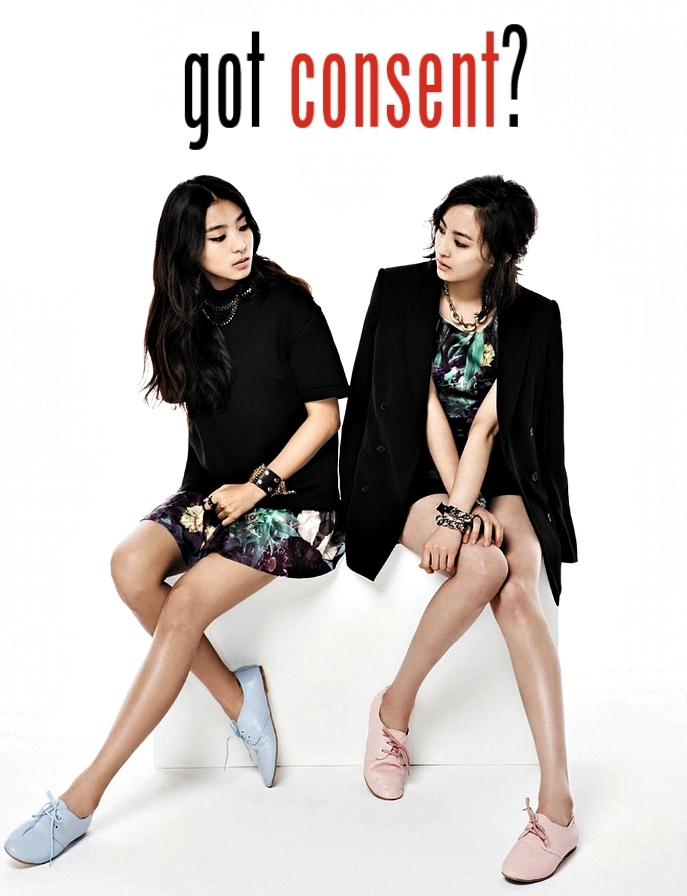
To be clear, I’m not saying that their general image can’t be innocent. For instance, as described by Bethany at Seoulbeats, this has certainly been the case for Lee Taemin (and, at 19 now, is something he’s trying to shake off):

Many K-pop fans probably also remember cutie pie Taemin debuting at the age of 15, all fresh-faced and adorable. But while he was the youngest member of SHINee, he also boasted the slickest dance moves onstage and in their music video for “Replay,” which still remains my favorite SHINee song to date. Taemin has been pegged as the cute member of SHINee since his debut days, and even though he has taken on a sexier, more mature look in “Lucifer” and more currently, “Sherlock,” noona fans still remember the days of innocent Taemin. It’s lucky that Taemin had such good hyungs who took care of him so diligently — looking at you, Key. He also graduated high school not long ago…

Taemin Etude House(Source: ningin)

And, of course, such innocent images have indeed been exploited and/or manufactured by advertisers; in Taemin’s case, by cosmetic company Etude House for one, with appropriately cutesy taglines. But explicitly identifying a young male celebrity as innocent, to the extent that there’s a “soonsoohan;순수한” next to his name like next to Suzy’s? Although I’d be happy to be proven wrong (and I do acknowledge the over-generalizations I may be making in this post), I have the strong suspicion that’s a gendered divide which advertisers and the public simply aren’t prepared to cross.
To buttress that point, consider the following thought experiment:Why Missha Kim Hye-soo TVXQ

2) Can anyone imagine the sexes reversed in the opening ad?

Alone or with other women, it goes without saying that women are indeed regularly depicted—or explicitly described—as “chic” in advertisements. Or, in any one of any number of other mature, positive terms. But mix the sexes up, and the tendency is to reaffirm gender stereotypes and roles.

Usually, this is subtle, like in the ways described in my Gender Advertisements in the Korean Context posts. In the opening ad though, it is explicit, the young and innocent females providing the binary opposite to the man’s chicness, thereby affirming his greater sophistication (for a similar example, see this vintage lego ad, ironically usually lauded for its gender neutrality). Which is fine in itself, but to see the sexes reversed is so uncommon as to be jarring, and all the more memorable for it.

Like in this 2011 Missha advertisement for instance (source: Metro), with then 41 year-old Kim Hye-soo and—albeit not exactly innocent-looking—25 year-old Jung Yun-ho and 23 year-old Shim Changmin of TVXQ. Personally, it reminds me of “Jane Bond” a little:

Jane Bond(Source: Tumblr, Gender Role Reversals)

3) Is this gender stereotype more prevalent in Korea than elsewhere?

With the provisos that (sexual) innocence will always be treasured more in females than in males, as the latter will always have concerns about the paternity of their children; and that, as Brian in Jeollanam-do put iteverything in Korea “tries to be cute, in the same way everything in the States is “Xtreme” and too cool for school,” I’d wager this is indeed the case. Consider how:

  • Stressing the cuteness, innocence, and (supposed) asexuality of young female celebrities is the modus operandi — i.e., key to deflecting criticism — of “ajosshi fandom” and “uncle fandom.”
  • Through young, overwhelmingly female celebrities, Korean girls are heavily socialized to use infantilizing aegyo
  • Not only is there also a “The Nation’s Little Sister” out there in addition to Suzy being “The Nation’s First Love,” but: a) There are no male equivalents; and b) Technically, Suzy is actually the third first love!, with JYP, well-known for experimenting until a concept is shown to work, arguably more responding to this clear media-driven and/or public demand for one rather than deliberately over-promoting Suzy per se.

As a commenter at Netizen Buzz explains (my emphasis; source, right: 윤삼의 블로그):

Uncle Fan Girls' Generationppl always complaint that Suzy get too much spotlight, too much articles. But it’s funny that when there’re some articles/ objects about other members, nobody cares. I think it’s not Suzy’s fault to make other members become underrated. it’s just that fans ( specially K-fans) don’t love them enough. If everybody don’t love Suzy so much, she won’t be get so many CFs, drama invitations. You have to understand that they want Suzy to be in their dramas, CFs, not others. So we can’t say “Instead of using Suzy, why don’t we use Min/Jia/Fei?” And JYP can’t do nothing with it. And why ppl kept hating on her? She has to work with a murderous schedule, but she never complaint about anything. Just keep working so hard and share her money to her unnies, but still she get so many hates. You guys always think that’s not fair for others but I think that’s not fair for Suzy too.

And on that note, again I acknowledge any generalizations I may have made in this post (difficult to avoid with something ultimately based on just one ad!), and am happy to learn of exceptions. But even happier though, to learn of your own thoughts on those questions!

Update 1: An April 13 Netizen Buzz headline says “Suzy takes the lead as the star with the most CFs in 2013 with 22.”

Update 2: See KpopStarz for the November 2013 rankings of the various contenders for the title of “Korea’s Little Sister” over the last five years.

(For more posts in the Korean Sociological Image series, see here)

Revealing the Korean Body Politic, Part 4: Girls are different from boys

Ha Ji-won Breast Size Korean AttitudesEstimated reading time: 16 minutes. Image sources: left, right.

“The JoongAng Ilbo reports that having a full rack is seen as a disadvantage for women in North Korea.

This is in marked contrast to the South, where a thin figure and big breasts have become symbols of beauty.

According to defectors, if a woman appears well-endowed in the North, people think she is intentionally and lewdly stressing her femininity, and she can easily come to be regarded as a slut. You have an atmosphere that doesn’t allow women to wear revealing clothing, and the North is still a male-dominated society.

One defector from Hoeryong said she had a work friend with large breasts who often ate chives because she’d heard they make your boobs smaller. She added that she was surprised upon learning that women in the South actually have operations to make their breasts bigger.”

The Marmot’s Hole

Alas, The Joongang Ilbo provides nothing to verify those claims. But, I see no reason why the defectors would lie, and negative stereotypes of large-breasted women are by no means confined to North Korea. Also, who would ever question that “a thin figure and big breasts have become symbols of beauty” in the South?

Korean Women Revealing Clothing AttitudesFortunately though, Liminality did, who in a must-read response shows that however much the Korean beauty industries and media promote such an ideal, and however much East Asian-women may have a genetic predisposition towards small breasts, cosmetic surgery patients at least hardly consider themselves lacking in that department. In fact, quite the opposite:

  • Per capita, far more breast surgery operations are performed in European and North and South American countries than in Korea (or Asia)
  • Despite having the highest per capita number of cosmetic surgery operations overall, Korea only came 22nd in the number of breast surgery operations performed per capita
  • Of those operations, Koreans had slightly less augmentation and lift operations than their counterparts in the US and Brazil, and slightly more reduction surgeries (source, above; reproduced with permission)

Similar attitudes may exist in Japan too, where even lingerie maker Wacoal was surprised by the number of women who told told them they wanted a bra that made their breasts look smaller, and then by the huge popularity of the—yes, really—’Bra That Makes Big Breasts Look Small’ design they developed in response. Also, Japanese mail order fashion magazine Bellemaison has developed a ‘Chest Line Cover’ (see second image below) that “promises to be a cool alternative to wearing a real camisole as Japan prepares for another hot summer made even hotter with another year of power rationing,” which I’m sure readers of both sexes can confirm would probably be just as big a hit in Korea.

Bra That Makes Big Breasts Look SmallSource: duoban

But readers don’t need me to tell them that showing cleavage is still a big taboo in Korea, or that there’s a big disconnect between ordinary Koreans’—and even models’—attitudes to fashion, body image, and sexuality and what you may see on Korean TV. And I can’t claim any special expertise on ordinary North Koreans’ attitudes either.

Chest Line CoverHowever, when I read that original post at The Marmot’s Hole, by coincidence I’d also just finished The Home Front and Beyond: American Women in the 1940s by Susan M. Hartmann (1983), in which she explains that the massive social dislocations of that decade—in particular, women suddenly entering the workforce in large numbers—were responsible for big changes in women’s fashion there, as well as preferred breast sizes. And, as it happens, North Korea is also going through a very turbulent period at the moment, with power relations between the sexes undergoing especially dramatic change:

Imagine going to work every day and not getting paid. Then, one day, you’re told there’s no work to do — so you must pay the company for the privilege of not working.

This is the daily reality facing Mrs. Kim, a petite 52-year-old North Korean. Her husband’s job in a state-run steel factory requires him to build roads. She can’t remember the last time he received a monthly salary. When there are no roads to build, he has to pay his company around 20 times his paltry monthly salary, she says.

“He had to pay not to work for about six months of last year,” Mrs. Kim told NPR, sighing. “You have to pay, even if you can’t afford to eat. It’s mandatory.”

So she is the one who must keep the family alive, as her husband wrestles with this state-sanctioned extortion.

Welcome to the Orwellian world of work in North Korea. In this reclusive country, profound social change is happening beyond the view of the outside world. The demands of politics have dramatically redrawn gender roles, forcing women to become the breadwinners.

National Public Radio, December 28; hat tip to Matt at Gusts of Popular Feeling.
North Korean Women BikesSource: diandian

The NPR goes on to mention that one major consequence of that emasculation is skyrocketing domestic violence, against which speculating about ensuing changes in fashions can admittedly sound frivolous. But those have changed regardless—indeed, by government decree. First, in July last year:

Supreme leader Kim Jong-un appears to be loosening the government’s grip on how women dress by allowing them to wear pants, platform shoes and earrings, ABC News reported.

Previously, pants were only permitted as uniforms for females in the factories or the fields — and not for making a fashion statement.

“If caught, sometimes they would cut your pants right there in public to make it into a skirt,” Park Ye-Kyong, who defected to South Korea in 2004, told ABC News.

That doesn’t mean North Korean women don’t enjoy preening, Park added.

“Yes, we were hungry but desire to look beautiful lies in any woman,” she said.

North Korean Female IdealIn addition, the next month a 20 year-ban on women riding bicycles was lifted. Ostensibly imposed for women’s safety, numerous sources also mention its supposed incompatibility with juche, related educational television promoting “the idea of a woman wearing a skirt while riding a bicycle [being] contrary to socialist custom.” (See NK News {source, right} for more on North Korean ideals of women). Moreover, in 2009 Human Rights Watch also noted that:

…the ban on pants and bicycles for women is symptomatic of a range of other, often-overlooked, problems.

Across North Korea’s conservative, male-dominated society, there is discrimination against women, a knowing disregard for the consequences of such policies, and an opportunistic manipulation of power by police officers trying to make easy money by preying on an undervalued and underprivileged population.

In light of that, most likely the lifting of the bans was mainly simple populism on the part of a new leader, as well as — despite those state gender ideologies described above — a reluctant concession to the new realities of female breadwinners. Sure enough, in typical North Korean fashion (pun intended), just 5 months later the ban on women riding bicycles would actually be reinstated. Also, while technically they can still keep their pants on, in practice opportunities for women to beautify themselves remain limited, with both sexes punished for straying from officially-sanctioned hairstyles; sharp divisions in what is permissible for married and unmarried women; and a general lack of (beauty-related) resources overall, including such simple things as hairdryers.

Perhaps, things are not changing in North Korea as much as they first appear?

One Million Yen Girl Part Time WomanSources: left, right.

Yet in South Korea at least, it’s true that the last 15 years have seen a vast increase in the numbers of women competing with—and increasingly displacing—men for irregular and part-time work, despite the (extremely low) overall female workforce participation rate remaining unchanged. This has spawned quite a backlash, and—à la The Beauty Myth (1991)—a rapid increase in (overwhelmingly female) objectification in popular culture. So, while again I stress my ignorance and lack of knowledge with anything North-Korea related, it’s not unreasonable to suppose that, surely, the sudden large influx of women into the workforce may also be having some sort of impact there.

The Home Front and BeyondEither way, reading about similar experiences elsewhere can inform an understanding of what’s happening in both countries. So, with the obvious—but still necessary—caveat that of course both countries are very different to the US in the 1940s, for the remainder of this post let me try to pass on some of what I’ve learned about what happened there.

First, it’s important to get a sense of the numbers (pp. 77-8):

  • The female labor force grew by 6.5 million during the war
  • In 1944, 37% of all adult women were reported in the labor force, but nearly 50% of all women were actually employed at some time during that year
  • The greatest changes took place among married women
  • 1 in 10 married women entered the work force during the war, representing over 3 million of those 6.5 million new female workers (3.7 million, according to Marilyn Yalom in A History of the Wife {2002; p. 320})
  • 2.89 million were single, the rest widowed or divorced
  • So, for the first time in US history there were more married women than single women in the workforce.
  • Note however, that the war resulted in many more marriages than there would have been normally — approximately 1 million more, according to Yalom. Moreover, wives of absentee husbands were twice as likely to seek jobs, with half of all servicemen’s wives being in the labor force
  • The percentage of wives that worked grew from 13.9 in 1940 to 22.5 in 1944 (Yalom says 15 in 1940 to over 24 in 1945)
  • The percentage of women with children that worked grew from 7.8 in 1940 to 12.1 in 1944
  • By 1945, half of all working women were over 35; slightly more than 1 in 4 were 45 or older
  • The typical female worker had shifted from younger and single to older and married, a pattern which was maintained in the postwar years

Should Your Wife Take a War JobAs Hartmann elaborates throughout her book, these figures represent an ensuing era of relative opportunity and freedom for many women (including sexual freedom; see Pin-Up Grrrls {2006} by Maria Busnek, pp. 213-224; see below also), even if it was usually simple economic necessity that compelled them to work in the first place (and usually at tedious, menial, and unfulfilling work at that). Accordingly, it definitely set the stage for second-wave feminism in the 1950s and ’60s, and deserves the place it’s gained in the Western historical imagination.

However, it’s also true that despite the huge public and private need for women to enter the workforce, that need was still considerably tempered by both sexes’ preexisting gender and racial ideologies, with both official propaganda and popular culture glamorizing women’s work and stressing its patriotic importance on the one hand, yet emphasizing its strictly temporary nature on the other. Not least, to nervous male workers and servicemen, who: lacked our knowledge that the war would lift the US out of the Depression (source, right); were very much judged by their ability to provide for their families, in an era where many simply couldn’t (note that one big difference between the Depression and the current financial crisis is that many people were literally starving during the former); and who sometimes had genuine difficulties with employment after demobilization, particularly in the shrinking war industries in which the women had been recruited (Hartmann, p. 63).

Buszek summarizes the contradictions of this era well (pp. 214-5):

Pin-up Grrrls pp. 214-5And in particular:

  • Despite the huge demand for workers, and the ultimate, relative flexibility both employers and male employees would demonstrate in incorporating Caucasian women into their midst, African-American women remained largely unwelcome (e.g., 10 months after Pearl Harbor, there were fewer than 100 out of 3000 women in Detroit war industries). So, while the numbers of them working did increase from 1.5 million in 1940 to 2.1 million in 1944, their share of the female labor force actually dipped from 13.8 to 12.5. By 1950, their employment patterns were very similar to those of 10 years earlier, albeit partially because by then their husbands were making more money. (Hartmann, pp. 60, 78-9)
  • Women of Britain Come into the factoriesPartially, the huge numbers of wives that entered the workforce is because there were previously bans against them by many companies, let alone being against social convention; even schools discriminated against them. It’s amazing how quickly bans were dropped once the need for labor arose though, with some previously hostile managers coming to express a “preference for married women as more stable and conscientious than their single sisters” (pp. 59-60). And this provides encouraging news for Korea, which unfortunately still largely retains those conventions, and where as recently as 2009 I was working for a company that — yes, really — fired women upon marriage (source, right).
  • Nevertheless, there remained extreme public and private ambivalence about working mothers. Officially seen as more of a social problem than something to be encouraged, officials did recognize “that financial need compelled some mothers to work and that in localities with severe labor shortages production goals would requite the employment of mothers,” and urged employers not to discriminate against them (p.58). But on the other hand, the government would also constantly remind them that homestay mothers were essential for children’s development; popular culture was full of stories of child neglect; and daycare provision, while expanded, was ultimately completely inadequate, paling behind that which was provided in the UK, and prompting frustrated managers of some defense plants to set up their own (Yalom, pp. 324-6).
Ellen DeGeneres, Portia de Rossi Check Out Katy PerrySource: Celebuzz

But, lest we forget, this post is about breasts. And changes in women’s fashions which came with the contradictions involved with entering the workforce, with women having to confront rampant sexual harassment on the one hand, and often being blamed for the “distraction” they posed, but on the other relishing their newfound freedoms (Buszek, pp. 216-7):

Pin-up Grrrls p216-7However, the combination of war-time shortages and women’s entrance into the workforce meant that people suddenly became used to women in functional, masculine clothing and with more practical hairstyles, and that women’s fashions became more simplified, comfortable, less overtly sexual, and changed less frequently than before. So, when you learn that popular culture stressed the exact opposite, for example…

  • I pledge myself to guard every bit of beauty that he cherishes in meThat female workers were still “glamorous” and feminine despite their new roles (Hartmann, p. 199)
  • As were female sport stars, women’s sports enjoying a lot of popularity while their male counterparts were occupied (p. 194)
  • Lingerie manufacturers coped with wartime shortages and new demand by producing much practical bras, yet these coincided with pinup photographs that emphasized their subjects’ breasts (Jill Fields, An Intimate Affair: Women, Lingerie and Sexuality, 2007, p. 106). As explained in Part 3 of this series, this ultimately led to the fashion for large and uplifted breasts that remains to this day.

…then it is very easy and natural — indeed, this is my very strong impression from the books discussed here, although exact page references are suddenly proving maddeningly elusive(!) — to argue that this alternate ideal was imposed by, for want of a better word, the patriarchy, to encourage women to enter the workforce yet at the same time remind them that their place there was unnatural and temporary. And, to be clear, not for a moment am I arguing that this wasn’t very much the case (source, right).

However, as Hartmann explains on p. 198 below (echoed by the other sources), it’s also true that women themselves were just as passionate about preserving their femininity (indeed, they would understandably revel in impractical but much more feminine fashions once war rationing ended):

Hartmann, The Home Front, p.198In particular, and especially in light of the new opportunities open to them as mentioned, I think it’s both overly dogmatic and patronizing to dismiss choosing to use those feminine adornments as mere false consciousness and women’s own mindless incorporation of patriarchal values. Also, although it’s true that the period was rife with pop psychology theories (it was conveniently claimed that women like boring, monotonous work much more than men for instance) it’s very unlikely that men and women rationalized and articulated their choices and concerns in such patriarchal terms. Even if those did operate on a subconscious level, and patriarchy is still the only thread which can bring otherwise disparate developments in the period together, surely men did not think, for example, that if they saw more big-breasted women in popular culture, emphasizing the differences between the sexes as increased use of lipstick did in the workplace, that this would make them feel more secure in their jobs.

In addition, while changes in attitudes were certainly quick, they didn’t happen overnight, Jill Fields (p. 106) noting that “uplift” and “separation” trends in bras for instance, which accentuated the projection of the breast silhouette, had actually already started back in the 1930s. Finally, if you’re confused like I am, because I just noted above that bras actually became more practical during wartime, and am now stating that women could simultaneously be censured and praised for wearing distracting clothes, that’s because contradictory and competing trends coexisted simultaneously, the 1940s being just as messy, complicated, and contradictory as modern life.

Busty Girl Comics Double StandardAnd on that note, thank you very much for bearing with me in this admittedly equally messy, complicated, and contradictory post, the result of me personally trying to understand what patriarchy means in practice as well as theory. And, with the proviso that my relief — and frankly joy — at discovering historic parallels (and especially English-language historiography!) to modern North and South Korean developments should make me wary of projecting too much, and not blind me to the significant differences, I’m very happy to have pointers towards further study, and very much welcome readers’ own suggestions! (source, right)

The Revealing the Korean Body Politic Series:

Update: See Fit, Feminist, and (almost) Fifty for “the medical condemnations of women’s cycling [which are] fascinating for what they tell us about what people thought (and maybe still think?) about women’s athletic capabilities and potential.”

Update 2: “Saudi daily al-Yawm cited an unnamed official as saying women can now ride bikes in parks and recreational areas. According to the official, the ruling stipulated that women must wear a full-body abaya, be accompanied by a male relative, and stay within certain areas. They are allowed to bike for recreational purposes only, not as a primary mode of transportation.” (Aljazeera)

Crossing the Lines: The Trends Reshaping Women’s Bodies in Korea

James Turnbull Busan Haps What's My LineSee here for my latest article of that title at Busan Haps, and here for more details and context :)

Let’s Talk About 섹스, 베이비~

Kim Soo-yong's 19 Show Banner(Source)

I showed my (Korean) wife this thread. Her response:

“They think Koreans can’t talk about gay rights? How insulting. We’re more advanced than you think. Gay issues are talked about all the time on talk shows and in the media. [Those commenters] clearly do not understand Korean culture.”

(Comment at Gusts of Popular Feeling)

I would have said more “ignorant” of Korean culture, but you get the idea. And, as if to prove her point, somehow the very next thing in my browser was the new Kim Soo-yong’s 19 [R18] Show, hosted by (obviously) comedian Kim Soo-Yong and announcer Kim Min-jin, and also starring psychologist Dr. Choi Chang-ho and comedian Yun Sok-ju.

Although this particular show may not have talked about LGBT issues (yet), it hit home because it provided a second healthy reminder that Koreans are frankly talking about sex at least, despite foreign stereotypes of their extreme sexual conservatism. Indeed, there’s actually been shows like this for many years now.

Here’s the introduction to it on the Kukitv station website:

Kim Soo-yong's 19 Show(Source)

My (very quick) translation:

Men and women,

Out of feelings they share when they love each other, there’s some things they don’t understand, or they do understand but feel strange about, or they thought they understood but can be easily mistaken about.

From the first date, skinship, and sex to proposing and marriage, we need to something to clear the wish-washy, hidden, unspoken things between men and women.

For the hidden sex stories in your heart, to the secret urges of your partners whom you thought you knew well…

And fortunately for something that plays at 1:10am on weeknights, all of the 5 shows so far — and shorter segments of shows — are available on Youtube here. Here’s the full first episode to get you going:

Alas, language-wise, it’s not for the faint-hearted: the Korean subtitles are minimal, and there’s unlikely to ever be English ones available. Can anyone please recommend any similar shows that are more accessible for non-Korean speakers, and/or — seeing as they inspired this post — pass on any of those that have dealt specifically with LGBT issues? Thanks!

(Update: I should also mention the Talk on Sex podcast that I’ve been following on and off for years, but again that’s entirely in Korean).

Revealing the Korean Body Politic, Part 3: Historical precedents for Korea’s modern beauty myth

Y-line Choi Yeo-jin(Source)

“Building a Body” isn’t my favorite track off Marnie Stern’s third LP, but I think it’s one of the most important.

It plays with the idea that a woman’s body is a canvas; a thing that is often viewed or regarded as a tool, an asset, a means to an end. Still. There’s the acknowledgment that we can choose how to construct our own image. However much anxiety is involved in the process.

($30 Project)

As often discussed on TGN, Korean beauty, dieting, and clothing companies are constantly promoting idealized body shapes for women to aspire to. And, although they’re just following the universal logic of creating new perceived wants and needs in the minds of consumers, their alacrity — and audacity — in doing so can still be nothing short of remarkable sometimes.

With new “lines” appearing almost as quickly as the girl-groups used to endorse the ensuing products or services though, it’s easy to lose sight of the utilitarian, utterly reductionist view of women that this alphabetization process relies on.

This post is about some recent stark reminders of both. Easy to dismiss as frivolous, or mere semantics, it’s also about what’s occurring in Korea today nevertheless has strong historical precedents in North America and Europe in the 1920s-1950s. Which, as Jill Fields explains in An Intimate Affair: Women, Lingerie, and Sexuality (2007, pp. 80-81), “not only affected women’s everyday experience of their bodies, but also transformed the construction of feminine identity,” sparking public discourses and expectations surrounding women’s bodies that endure to this day.

S-line vs. Corsets(Sources: left, right)

What’s more, not only is what’s best for women never the main concern —

There is ample feminist discussion about shifting cultural definitions of what the female form is supposed to look like in order to be the most appealing to a (predominately) male gaze….intimate apparel was often marketed as scientifically advantageous to women’s health, but the sexual function of breasts was always the bottom line. Binding them down, lifting them up, pushing them together – none of this had anything to do with encouraging the natural state of a woman’s breasts. No wonder women’s liberationists threw their bras in the trash can.

(Nursing Clio)

— but the Korean case also coincides with a rapid increase in (overwhelmingly female) objectification in popular culture; and highly visible, palpable resistance from men against (largely only perceived) increased economic competition from women. Bearing a striking resemblance to — à la The Beauty Myth (1991) — what occurred in North America and Europe in the 1980s, the combination proves as fascinating as it is alarming.

Angry Hello KittyA Woman’s Body as a Canvas

The first reminder comes from Rob Walkers’ discussion of what makes Hello Kitty so attractive to consumers, in his book Buying In: The secret dialogue between what we buy and who we are. Because however indirect, if you replace “Hello Kitty” with “women’s bodies,” and “consumers” with “advertisers,” an eerie — and disturbing — parallel emerges (2008 ed., p.18, emphases added; source, right):

A perceptive study of the Hello Kitty phenomenon by Tokyo-based cultural scholar Brian J.McVeigh suggests an interesting theory that is implied by his paper’s title: “How Hello Kitty Commodifies the Cute, Cool, and Camp.” While he notes factors like “accessibility” and consistency, the most compelling factor he isolates is “projectability.” Hello Kitty’s blank, “cryptic” simplicity, he argues, is among her great strengths; standing for nothing, she is “waiting to be interpreted,” and this is precisely how an “ambiguous”—and, let’s be frank: meaningless—symbol comes to stand for nostalgia to one person, fashionability to another, camp to a third, vague submissiveness to a fourth….Belson and Bremner return to this theme repeatedly in their book on he business of Hello Kitty. “What makes Hello Kitty so intriguing is that she projects entirely different meanings depending on the consumer,” they write. The cat is “an icon that allows viewers to assign whatever meaning to her that they want.”

If that parallel remains too indirect for some however, recall Dramabeans’ comment (#21 here) about the “Love Your W” event in 2008, “W” being one of the numerous letters used for women’s breasts. The similarities are obvious (emphases added):

…while this practice is seemingly frivolous on the surface, it actually belies much more pernicious trends in society at large, when you have celebrities vocally espousing their alphabet-lines and therefore actually objectifying themselves as a conglomeration of “perfect” body parts rather than as whole, genuine people. You wanna know why plastic surgery is such a big deal in Korea, why actresses don’t eat, why there’s an obsession with thin? It’s because we’re all just Latin letters waiting to be objectified as a beauty ideal rather than living, breathing people with flesh on our bones and brains in our heads.

Why, Oh Why, Does it Need to be Called a “Y-line”?
The next reminder (hat tip to @holterbarbour) was by learning of the simply absurd “Y-line,” via Mundipharma Korea’s ads for gynobetadine, a vaginal cleanser:

Mundipharma Korea are a little coy about what a Y-line is exactly, placing Choi Yeo-jin (최여진) in several Y-shaped poses, and with copy and advertorials speaking of bold, confident — “당당한” — Y-lines. But given the product, and that all those “Y”s center at her crotch, then it’s safe to say that, yes, the term does indeed refer to a vagina.

Choi Yeo-jin Y-lineWhich sounds like something from The Onion.

But to play Devil’s advocate, is it merely a euphemism, rather than a line per se? The ad is, after all, just for a cleanser, not — thank God! — labiaplasty (NSFW) or anything like that. And if so, is it really all that different to similar terms and usage in, say, English-speaking countries? For, as recently explained in “The Myth of the Vajazzled Orgasm”at Nursing Clio (emphasis added):
The popular emphasis on the vagina is certainly on the rise. The explosive popularity of the Vagina Monologues, now regularly performed on college campuses, made many more comfortable with the V word. Social critic Naomi Wolf has recently argued for the existence of the “mind-vagina” connection. Commercials coyly refer to the letter V for various feminine products and sitcoms and singers laud their own embrace of the vajayjay as a way of indicating equal sexual footing with men. “Designer” vaginas are also part of this new emphasis. Cosmetogynecology is one of the fastest growing types of cosmetic surgery.

On top of that, the Y-line appears not to be an invention of Mundipharma Korea at all, as this cartoon (at least) predates its August ad campaign:

Y-line Story(Source)

Yet while acknowledging those, you also have to acknowledge the context. Because whoever was ultimately responsible for the term, it’s safe to assume that they were influenced by the alphabetization trend. And it’s clearly in that commercially-driven, objectifying sense that the term is being used here.

Moreover, just like all the other lines, bear in mind that it’s just one version of the Y-line that has been co-opted by one company (and perhaps others) to sell its product, against which it must compete with other versions used by other companies to sell their own.

But which version — if any — will stick in consumers’ minds? And, like the “V-line,” will it ultimately become so normalized a part of popular culture, so accepted an expectation of women, that one day classrooms will be full of girls working on their own?

V-line Face Rollers Korean Schoolgirls(Sources:left, right)

The contenders include, first, a Y-line lift promoted by a hospital specializing in the procedure (as either a compliment or alternative to the V-line — it’s a little confusing sorry):

Y-line cosmetic surgery(Source)

Next, as breasts, from the line between them. I’d previously assumed that it was invented by the lingerie company Yes’, but it’s also used by others, as well as by cosmetic surgeons:

Y-line breasts(Sources: left; right unknown)

As the crotch:

Y-line crotch(Source)

As the back:

Y-line as the back(Sources: top-left, top-right; bottom unknown)

And finally(?) the buttocks.Now, forgive me if it sounds facetious, but I’ve examined many examples, and never once seen a “Y” in them. Again, you really have to wonder at the mindset of companies — and consumers — that do:

Y-line buttocks(Source)

And here’s part of a show episode devoted to nothing but, well, that Y-line butt:

Historical Precedents

Corset Figure Type Classification Korea(Sources: left, right)

Did I say only two stark reminders of the absurdity and audacity of the Korean alphabetization trend? A third was discovering all those other ludicrous examples of Y-lines. Yet, however natural it may be to mentally assign something so absurd and asinine in another culture as distinctive to it, by no means is this trend only Korean, or even East Asian. Rather, as numerous examples from An Intimate Affair make clear, in fact they’re almost as old — and universal — as mass-production, mass-media, and marketing themselves.

While I can’t begin to do justice to those examples here, two are particularly illustrative, and will hopefully encourage you to purchase your own copy of the book(!). First, the figure classification schemes invented by corset manufacturers in the 1920s (a scan; click to enlarge it):

Corset Figure-Classification Schemes p.66 An Intimate AffairFortunately, the next page is available at Google Books:

Corset Figure-Classification Schemes p.67 An Intimate Affair

This strongly reminded of the following video on how “pear”-shaped women should dress to look like they actually have hourglass-figures, spawning 159 comments at Sociological Images (also see here on subtle Korean encouragements through hourglass-shaped drink bottles):

In turn, that video gave me the impression that Western beauty, dieting, and clothing companies are more concerned with extorting women to conform to a narrow range of preexisting, publicly accepted body types rather than creating their own, then encouraging women to gain those instead. Can any overseas-based readers confirm? And/or recommend books and websites, so that a male reader, 13 years based in Korea, can find out?

(Update 1: Although it’s not specifically about women, or fashion, a reader suggests Our Aesthetic Categories: Zany, Cute, Interesting by Sianne Ngai, released last October. Based on the two reviews I’ve read, it sounds fascinating).

(Update 2: See Glamor Daze for an illustrated guide to “dressing for your body shape” from a Spencer Corsetry catalogue).

Despite that particular, potential difference however, from the 1930s to the 1950s Hollywood, the fashion industry, and — to a lesser extent — economically-threatened men would all influence the second example of “glamour” for their own ends, with the ensuing popular notions of the concept displaying a malleability and responsiveness remarkably similar to that of modern Korean lines. Indeed, although the English definition of the term has continued to considerably evolve since, ironically it’s (the main) one of those from that era — glamour as large breasts — that would enter the Korean lexicon as “글래머,” from which the appalling, infantilizing term “Bagel Girl/베이글녀” derives.

Marilyn Monroe Ga-in Sweater Girls(Sources: left, right. Surely not a coincidence, does anybody know who chose Ga-in’s wardrobe for Bloom?)

Again only snippets which can not do the book justice, but which probably already exceed what counts as fair use for a website nevertheless, here are some selected excerpts to give a hint of all that. First, from page 105, about the context of assuaging the fears of un(der)-employed men during the Depression, and then of soldiers during World War Two:An Intimate Affair, p. 105 excerptNext, from page 109 on the quite literal embodiment of glamour in breasts (and why I mentioned Lana Turner in my recent Busan Haps article on Ga-in’s Bloom):

An Intimate Affair, p. 109 excerptNext, although frankly I don’t fully understand the final paragraph here, hopefully page 110 gives you an impression of how glamour came to shift from body parts to inanimate items of clothing (hence “Sweater Girls“) and so on, as also revealed in the illustrations below:An Intimate Affair, p. 110 excerptUpdate: Given my love for Maria Buszek’s Pin-up Grrrls (2006), it seemed a pity not to add the conclusion to the chapter on the next page (actually page 112) also:

An Intimate Affair, p. 112 excerptAn advertisement for a Sweater Girl course(!) from 1954:

You can be a sweater girl(Source)

Glamorous glasses?

(Sources: left, right)

Conclusion: The Korean Beauty Myth?

With my new copy of The Beauty Myth arriving at my door literally as just before I type this, I should wisely reacquaint myself with it before proceeding further. But, of course, others have already made the same connection(s) that I have, including  Tess Hellgren in her (oft-quoted by me) 2011 Exposé piece “Explaining Underweight BMI and Body Dissatisfaction among Young Korean Women” (pp. 7-8):

…recent gendered shifts in Korean society offer another potent explanation for the trend in female body image. In the past thirty years, Korean society has undergone significant political and economic transformations, democratizing and industrializing at an incredible pace — and offering an extreme expansion of societal opportunities for women.19 Specifically since the 1980s, Korean women have seen an important increase in university attendance; today, 72% of South Korean women attend college, the highest rate of any country. According to feminist theory, this recent upsurge in female societal empowerment may be associated with an oppressive backlash in media portrayals of gender ideals. As explained in the work of Jaehee Jung and Gordon Forbes, historical data suggest that societal shifts toward gender equality are often accompanied by increased media portrayal of unrealistic gender norms as a reactive “tool of oppression” by mainstream society. Jung and Forbes cite the examples of both Europe and the United States: In the 1870s, it was during Europe’s industrialization and nascent women’s movement that accounts of anorexia nervosa first appeared, and the thinnest women in American fashion magazines appeared at the same time as momentum built for women’s rights in the 1920s and the 1970s. According to these scholars, the case of Korea is particularly striking due to the restrictive patriarchal nature of the country’s traditional Confucian culture, in which women’s familial and societal subordination is rigidly emphasized. Linking media portrayals to South Korea’s recent expansion of overall female opportunities, this feminist argument offers another potential explanation for the rise in body dissatisfaction and low BMI among Korean women in recent years.

Is something along these lines the only way to account for the combination of both an increased alphabetization/objectification of and backlash against women in the 2000s? Or is it that simply imposing a convenient narrative where none really exists?

Design Your Body Line(Sources: left, right{NSFW})

Please let me know what you think. And, as a reward to Seoul-based readers who have read this entire post, let me give you advance notice of a presentation I’ll be giving on this topic for the 10 Magazine Book Club on Sunday March 10, the weekend following International Women’s Day. As I type this there’s only 22 more seats available, so please put your name down if you’re (fairly) certain you’ll attend, and I look forward to carrying on this conversation with some of you there! :)

The Revealing the Korean Body Politic Series:

Update

She Bop: The Definitive History of Women in Popular Music(Source)

Just a quick note to apologize for the slow posting everyone. Actually, I’m not taking a holiday (although Christmas was a little busy), it’s just that my next post is taking longer than expected. But rest assured that it’ll be up on Monday sometime next week (update: forgot that my kids were off next week sorry!).

In the meantime, my latest article for Busan Haps, “K-girl Power: The emerging trend of empowerment and sexuality in K-pop,” is available here, a condensed version of this post. And, as a Christmas present to myself, I’ve just ordered — squeee! — the third edition of She Bop above, just released this month; The Beauty Myth, by Naomi Wolf (my other copy is in my mother’s spare room, and my friend’s gift of a PDF just isn’t cutting it!); Behind the Red Door: Sex in China, by Richard Burger; and finally, belatedly, Tune by Derek Kim.

If anyone’s read any of them, I’d love to hear your thoughts. And Happy New Year everybody!

The Korea Herald: Should pornography be censored?

Pornography Censorship(Source)

I make a brief appearance in the Korea Herald today, in an article by John Power on the recent government crackdown on pornography. With his permission, here are all of his original questions and my replies, with some links for further reading:

1. Do you foresee the Korean public becoming increasingly unhappy with the heavy censorship of pornography and other sexual content in the short term? Or do you think a largely conservative Korean public will remain happy with the status quo?

In all my 12 years in Korea, ordinary Koreans have loudly and consistently complained of being treated like children by censors. But the censorship of movies has been considerably relaxed in recent years (recall that the Korean Supreme Court overturned a ban on Shortbus for instance), and even the Ministry of Gender Equality and Family has begun to acknowledge its own excesses with music videos. So this latest crackdown actually goes against recent trends, and I expect it to face a lot of opposition.

2. Often, censorship is justified to protect young people. Do you think there is a feasible way of protecting youth, while not controlling what adults wish to see?

Frankly I don’t, but this is a dilemma faced by every democracy. Most, however, don’t resort to the draconian restrictions imposed by the Korean government, yet somehow have equal or lower rates of sex crimes by and/or against minors nonetheless.

(“Because I’m a man / 남자기 때문에.” For English subtitles, click on “captions”)

3. A local site pornography site called Soranet had 600,000 subscribers before it was shut down in 2004, showing the widespread nature of its consumption. Do you think the government is fighting a losing battle in trying to ban such material?

If nothing else, banned sites will remain available via proxy servers, but I’m sure young, tech-savy Koreans won’t need to resort to using those. With the proviso that of course the government should continue to monitor the pornography industry as a whole, to prevent exploitation and the use of minors, you have to question the government’s zeal in attacking an otherwise victimless activity, and which there is clearly a huge demand for. Surely the time and resources could be better spent? Perhaps on more up-to-date and effective sex-education, so people could better judge the supposed harmful effects of pornography for themselves?

4. What do you think is the true motivation for censorship of adult content in Korea? Or, put another way, do you think there are sometimes hidden agendas at play?

As someone who notoriously devoted Seoul to God as mayor, and who believes that (re)criminalizing abortion is an effective method of raising the birth rate, clearly Lee Myung-bak’s conservative and religious beliefs are playing a big role here. That aside, blaming pornography for sex crimes, and censoring it on that basis, is also an easy way for the ruling party to appear to be doing something to address public concerns during its candidate’s presidential election campaign, yet without doing anything about their real causes whatsoever.

Ga-in's BEG Concert Teaser(Source)

5. Do you think there are double standards at play in the how and what content is restricted?

If we’re talking specifically about pornography, then no. As for K-pop however, both fans’ widespread perceptions and the empirical evidence suggests that female entertainers are disproportionately censored, often for things that make entertainers are allowed to do scotfree. In particular, whenever female entertainers present themselves as sexual subjects rather than just objects for the male gaze, then the ironically-named Ministry of Gender Equality and Family can be expected to come down hard on them. A good recent case of this is the ban placed on Ga-in’s Bloom, a rare song about sexual awakening from a woman’s perspective, whereas the Ministry had no problem with the gratuitous skin shots in Hyuna’s Ice Cream.

What do you think?

SNL 코리아 Satirizes Korea’s Cosmetic Surgery Craze (Translation)

SNL Korea Plastic Face 1(Source)

And, crucially, it doesn’t just poke fun at the obvious negatives, but also at the public discourses surrounding the industry. Namely, the hypocrisy of the men who loudly criticize women who get operations, yet shamelessly admire the results.

In addressing such a gendered contradiction, it strongly reminds of the messages in Miss A‘s (미쓰에이) Bad Girl, Good Girl (배드걸 굿걸). It also happens to be hilarious too, one of several skits by the Brown Eyed Girls (브라운아이드걸스) on the show last week.

In this one, the main character is Narsha (나르샤), joined by co-member JeA (제아) and Miryo (미료) (Ga-in /가인 is absent). None of the other actors are familiar, but I can find out who they are if anyone is interested:

Here’s my translation. Apologies in advance for any mistakes, but frankly there were some very new words that even my wife didn’t know (let alone be in my smartphone dictionary), and of course the swear words especially are open to interpretation!

너쌍꺼풀 수술했지?

너 코도 했지?

아니

난 자연 미인이 좋아

You got double-eyelid surgery, right?

A nose-job too, yes?

No…

I [only] like natural beauties.

SNL Korea Plastic Face 2(Source)

아무리 예뻐도 성형하면 싫어

웃겨 니들 사실 알아보지도 못해 (병X들)

니들이 좋아하는 얘네도 다 한 거야

X같은 것들이 항상 성괴라고 욕해

However pretty we become, you hate it when we get cosmetic surgery

That’s funny…you guys don’t actually recognize us (jerks!)

The girls you like, got everything done

Guys like that always swear at [criticize?] women who become “plastic surgery monsters”

SNL Korea Plastic Face 3(Source)

오오 오오오~

고경표 신동엽 강진도 헀을걸?

(그게)

눈했어 코 했어 그래 싹 다 바꿨어 턱했어

(압구정역 4번 출구)

맞았어 넣었어 그래 싹 다 갈았어 다헀어

(강남역 10번 출구)

프프프플라스틱 페이스 (x4)

Probably Go-gyeong Pyo, Shin Dong-yeob, and Gang-jin all got it done

(Really??)

[People] get their eyes done, their noses done…they change everything…they get their jaws done

(Apgujeong Station Exit #4)

That’s right, they put [botox? silicone?] in…Really, they change everything

(Gangnam Station, Exit #10)

Plastic Face (x4)

SNL Korea Plastic Face 4(Source)

네 여자친구 성형 안했을 거 같지

했어도 눈코 정도 했을 겉 같지 (x밥들)

들어 봤니 눈코 입돌려 깎기 양약

너 환장하는 그 가슴은 물방울 코젤

오오 오오오~

너보다 훨 알럽 의느님

You think your girlfriend didn’t get anything done?

And even if you think she did, you think she just got her eyes and nose done? (You fucking dickheads)

Have you heard of maxillofacial surgery, which involves breaking the upper and lower jaw?

The breasts you’re crazy about are just saline implants

Oh oh, oh oh oh ~

She will probably love her Doctor God more than you

SNL Korea Plastic Face 5(Source)

똑같아 똑깥아

니얼굴 내얼굴 다 똑같아

압구정동에서 했니

프프프플라스틱 페이스 (x4)

또또또 똑같아 모두다 같아

They’re the same, they’re the same

Their faces are all the same

Did they all get them done in Apgujeong?

Plastic Face (x4)

They’re all the same, they’re all the same

SNL Korea Plastic Face 6(Source)

우릴 욕할 때가 아냐 거울 좀봐

눈코 입은 요좀 헐값

명품가방 살돈으로

눈코 입을 달아

세트로 하면 디씨돼

친구랑 가면

더 디씨

부끄럽게 생각 마

자신감이 중요해

It’s not time to swear at us, look at yourself in the mirror

Nose, eye, and mouth-jobs are so cheap

With the money for a brand name bag

You can get a new face

If you get them all done as a set you can get a discount

If you get them done with your friends at the same time, you can get even more of a discount

Don’t be embarrassed

Confidence is important

SNL Korea Plastic Face 8(Sources: above, below)

당당해 당당해 우린 너무 당당해

만족해

(과거 사진 X까라해)

꺼내봐 꺼내봐

네 얼굴에 가려진 매력들

(넌시X 존X 매력있어)

프프프플라스틱 페이스 (x2)

다다다당당해

당당해 우린

프프프플라스틱 페이스 (x2)SNL Korea Plastic Face 7

Bold, Confident, We are all so bold and confident

We are satisfied

(Don’t you ever fucking show old photos)

Bring out those changes to your face that you hid

(You’re fucking hot now)

Plastic Face

Bold, Confident

Plastic Face

(Hat tip to dogdyedblack)

Update: Naturally, a translation from earlier today popped up shortly after I finished this post. But which I couldn’t find at all when I decided to write it!

Swallowing my pride (and several hours’ worth of effort), I have to admit that it’s much better than mine (although—*sniff*—I still disagree with a few lines here and there):