I know: you’ve just got to have one, right? Unfortunately though, Jen, whom many of you will already know and love as the author of the Dear Korea webcomic, doesn’t offer it as a poster yet. But I’m hoping that so many of you will join me on her Facebook page in demanding one, that she’ll just have no choice but to find a way to print and sell them online ;)
Meanwhile, I hope you all had a great International Women’s Day (which is also my birthday BTW!), and sorry for not having a post up on Monday—I’ve just been very busy with the start of the new semester, and my wife has just started a new job too. But I’ll be back to my normal posting schedule next week.
See you then!
Update: In case you can’t get access to Jen’s personal Facebook page, please try her at her Dear Korea one or at her Instagram instead.
Update 2: It’s working! To help Jen work out the logistics, please click on this one-minute poll to give her an idea of what size you’d prefer, and if you’re inside or outside of Korea.
어깨 축 쳐진 아빠에게 아이들이 용기를 줬던 노래인데 이 노래가 양성평등을 저해한다는 판정이 나와 문화관광부가 해명자료까지 내는 소동이 벌어졌습니다.
This is the song which gives encouragement to exhausted, depressed fathers, but it has been recently criticized for hindering gender equality. In response, the Ministry of Culture, Sports, and Tourism issued a statement clarifying what the song is really about.
무슨일인지, 박철현 기자가 보도합니다.
Park Cheol-hyon reports:
“아빠 힘내세요, 우리가 있잖아요”
1997년 발표된 동요 ‘아빠 힘내세요’입니다.
“Dad, cheer up/be strong, you have us”: this is the children’s song released in 1997.
“IMF때 굉장히 많이 들어봤고요. 아이들이 보자마자 불러줬을 때 저절로 힘도 났고..”
Cho Hong-joon, Person on the street #1:
“I heard this song a lot during the IMF Crisis. It cheered me up when my kids sang it to me”.
그런데 문화관광부는 이 노래가 우리 사회 양성 평등 의식을 해치는 대표적인 사례 중 하나라는 연구 결과를 발표했습니다.
However, in a statement of research results released by the Ministry of Culture, Sports, and Tourism, this song was given as an example of something hindering gender equality awareness.
이 노래가 경제활동을 하는 것은 남성이라는 고정 관념을 키워준다는 겁니다.
This song encourages the notion that it is only men that should partake in economic activity.
특히 엄마가 요리하면서 아빠를 기다리는 만화 동영상은 여성은 가사 노동만 한다는 선입견을 심어줄 수 있다고 지적했습니다.
In particular, a popular accompanying video for the song depicts women cooking while waiting for their husbands, perpetuating traditional gender roles.
[James: Actually, only one of videos shown in the report does that; it can be viewed here.]
“여자들도 많이 일을 하고 더 힘들어요. 여자가 들어봤을 때는 별로인 것 같아요.”
Park Hyeon-joo, Person on the street #2:
“Women work a lot, and it’s harder for us. When they hear it, women don’t care for this song.”
하지만 황당하다는 반응이 많습니다.
But many people replied that the criticisms were nonsense.
“노래는 노래일 뿐이지, 거기에 그런 의미를 부여한다면 그게 더 문제..”
Jeon Byeong-rok, person on the street #3:
“This song is just a song, it only becomes problematic if you read too much into it.”
노래를 만든 현직 초등학교 교사 한수성씨는 가사는 아내가 썼고 이 노래로 국무총리 표창까지 받았다며 황당해했습니다.
The song writer Han Soo-seong, who is an elementary school teacher, said that the lyrics were written by his wife, and pointed out that he received an award from the Prime Minister for it.
“가사가 그렇게 깊은 뜻을 담고 있는 지 몰랐습니다. 말도 안되는 거죠”
“I don’t think that the lyrics have that deeper [sexist] meaning. It’s ridiculous to say so.”
논란이 커지자 문화관광부는 양성 평등 교육에 참고하라고 진행된 연구 결과일 뿐 유해 가요로 지정한 건 아니라고 해명했습니다.
In response to the controversy, the Ministry of Culture, Sports and Tourism clarified that the research was only conducted to further the cause of gender equality, not naming and shaming. (End.)
This report is actually a few years old. But the topic still regularly pops up in my Google Keyword Alerts and on Twitter, albeit usually only leading to Ilbeand DC Inside users having a good laugh at the feminazis. Emboldened perhaps, by the Ministry’s criticisms falling on such deaf ears.
Because it’s still taught to just about every Korean child, even those too young to understand it:
Demanding it of guests is still part of the repertoire of the variety-show hosts, used to elicit infantilized gender performances from girl-group members. For instance, from 20 year-old Yoo-a of Oh My Girl below (which is not to say her tears aren’t genuine):
It’s still such an ingrained part of Korean culture, that even insurance company employees will name their project teams after it, and the media will raise it in reports about the dutiful daughters of male politicians (as well as commenting on their beauty):
And finally, because Korean fathers still work among the longest hours in the world, and wish they could be home in time to see their families. As this recent feel-good advertisement makes clear:
Who else but a feminazi would deprive Korean fathers of such a small source of joy?
But wait. Most of those examples above aren’t exactly compelling reasons to continue teaching the song to children. What’s more, even if you still don’t find the song problematic, or how it’s used, there remains the inconvenient fact that MOTHERS WORK TOO:
(“Women work a lot, and it’s harder for us. When they hear it, women don’t care for this song.”)
Is Park Hyeon-ju referring to work inside the house, outside, or both? A song about the former would hardly challenge traditional gender roles. Yet even that would be an improvement on something that only acknowledges the work of men. Twenty years after Cheer Up Father was written, it’s high time to acknowledge its flaws, and to begin teaching children something much more inclusive.
My suggestion is for the government to arrange a national songwriting competition. It should be determined by popular vote (the public tends to be better judges of what’s catchy), with the winning entry to replace Cheer Up Father in kindergartens and elementary schools.
Do any readers know of any examples like that from other countries? How did they go?
Update: A friend mentioned it would be a pity to lose such a catchy song, and jokingly suggested replacing appa “아빠” (father) with eomppa “엄빠,” a combination of appa and eomma “엄마” (mother) which is actually a word already, although one of those ones everyone knows but has never actually used. But I’d be all for that, especially if the videos and songbook illustrations were changed accordingly. While using the word would be awkward at first, much of this blog is about Korean companies’ and the media’s proclivity for inventing new labels and buzzwords, many—most—of which were also very awkward at first, but some of which have definitely stuck. So why not?
Today’s post is a collection of encouraging images and words from the incredibly woke students of the Ewha University Women’s Committee (이화여성위원회/@ewhalovewom), which were used in their 16th Feminism Festival.
I hope you’re inspired by them, and I’d love to hear of any similar examples, and/or of anything else you’d like translated. Especially if they’re related to my birthday International Women’s Day that is coming up in a couple of weeks, and will help spread the word about Korean events :)
The title of the festival poster reads “Becoming a slut.” (Lit. “The technology/method of weaving/making a slut.”)
A word for a “male slut” doesn’t exist. If you search for it on Google, you’ll only find “transvestite.”
“Slut”: there’s no more powerful word for criticizing women. It has the power to destroy them. In practice, it is used in so many ways to attack women.
We are going to think about that at this festival. Everyone’s situation is different, but we need to talk more about the words “slut” and “prostitute,” and to redefine them. When even the most trivial things about women are used to attack them as sluts, rather than avoiding the word shouldn’t we instead reconsider the images the word evokes?
Although what we have written is not eloquent, please enjoy reading it.
If you don’t look naturally at the many varied forms of women’s lives, but only look at them through one twisted lens, then that is a form of misogyny. In the end, it’s not that people hate women living alone or studying abroad per se. I think it’s more that people look suspiciously at women who are not under the protection of their families, calling them sluts.
“Nobody can avoid being accused of being a slut.” (Hee-da)
How can it be convincing when you say that “The cause of sexual violence has nothing to do with women’s exposure” on the hand, but on the other hand say to women “Don’t wear such revealing clothes”?
“DON’T DO THAT. Don’t do that!” (Yeol-mae)
If you talk about women working as tenpro* by just using that label, as if they were just numbers rather than real women with real names, then you’re dehumanizing them and indirectly criticizing them. Instead, we can talk about why they became tenpro, and how come that kind of profession exists.
“Even if they are numbered, their names are not numbers.” (Bam-cha)
*This means “high class prostitute”; am embarrassed to say this was the first time I’d ever heard of this surprisingly common word.
A teacher and a prostitute. Or, a prostitute and a teacher. I hesitate at the point where these two subjects meet. But the more I hesitated, the more I thought I should write about this. This is about my fear and insincerity when I met a prostitute.
“This is about those things.” (Sung-hyeon.)
To victims of sexual violence, people commonly recommend saying that they were virgins. They have to prove that [they didn’t deserve it a little by showing that] they are not bitches, they are not women who exploit their sexual attractiveness, they are not women who just play around and don’t listen to people, and that they are not the kind of women who deserve to get raped, and so on.
“Our society’s S-line.” (Rumble.)
To a woman, labeling her a “prostitute” is like a warning to other women, which forces those other women to act modestly and appropriately. Ultimately, it functions to control women.
This one, a test for whether you’re a saint, a kimchi-girl, or a slut, looks like a lot of fun, but formatting it for this post looks a little difficult sorry. But I’ll happily try if anyone asks.
Underneath, people are encouraged post about taboos and unwritten rules they’ve heard. The three examples at the top read:
“Don’t go on a working holiday to Australia, people might misunderstand [your reasons for going].”
Apologies that the festival was actually held two years ago BTW, as eagle-eyed readers will already have spotted. But those images still resonate, which is probably why they somehow surfaced in my Twitter feed last week. So too this tweet below, which I think is speaking about stereotypes of passive Korean women, but am not sure if it’s critiquing them or perpetuating them sorry (even my wife struggled with its meaning). Hence this post, just in case in was the latter!
To find out, please check out my journal article “Just beautiful people holding a bottle: the driving forces behind South Korea’s love of celebrity endorsement”, which has just been published in Celebrity Studies. There’s only a very limited number of e-copies available unfortunately, so please get in touch if you have any problems accessing it.
Part of a special cultural report on (South and North) Korean celebrity, it’s only 4000 words long, which, alas, makes it at least 4000 words too short for the topic. I’m especially gutted that I had to cut out a paragraph about the “Metal Tray Karaoke Room” segment of the first season of Happy Together. So, let me mention it here instead. For if you really want to understand the strong humanizing streak in Korean celebrity culture I discuss, which underlies why there’s just sooo many ads featuring them, then there’s no greater example than that of a variety show which:
and getting metal trays dropped on their heads if they made mistakes.
It also just happens to exemplify just about everything I love about Korea:
All that said, only having 4000 words to work with (actually supposed to be only 3500, but my long-suffering editor gave up on me) does force you to—ahem—get to the point, and to only cover the bare essentials. If you have any questions about the article then, and/or would just like to know more about anything covered in it, please let know in the comments, and I’d be very happy to get into greater detail.
I’m going to let my hair down this week. And I do enjoy covering Korean artists or groups who deserve to be much better known by English speakers. Even if they reward me by disbanding as I type this, or by never replying to my tweets.
Here’s hoping I get a different reaction from Na-mi, probably the coolest ajumma you’re ever going to meet. Allow me to present her dance/club anthem Voyeur, released in November 2013:
One of the most popular and famous disco singers of the 1980s, if you’ve spent longer than a month in Korea you will undoubtedly have heard one of her songs. Most likely, this one:
Naturally, I first heard it myself via Lee Hyo-ri:
T-ara did a version in 2012 too:
For Korean speakers, here’s a quick taste of her history:
Before Voyeur, Na-mi last performed live in 1992, and last released any new music in 1996. So you’d have imagined her comeback would have been a verybigdeal indeed. Unfortunately though, Voyeur just didn’t take off. Na-mi has faded back into obscurity since, closing her Twitter account and rarely updating her YouTube channel.
In hindsight, Euro-dance-pop was unlikely to appeal to her middle-aged fans. And you need more than one song and a remix to sustain the interest of any youthful converts.
Still, it’s my party, and I’ll dance to the coolest 58-year-old I know if I want to. If you want to join in, here’s my translation of the lyrics to help you sing along:
나미—보여 (Voyeur)
아련히, 너 한동안은 없었어
다 잊었다고 생각한,널 보고 있었어
Looking back nostalgically, you weren’t here for a while
I thought I’d gotten over you completely, but really I was still watching you
Chorus:
외로이, 혼자 있는 그림자
잘못 본 게 아닐까, 다시 찾아왔어 난
I’m your voyeur 보여, 너밖에 없잖아
I’m your voyeur 보여, 내겐 너뿐이야
보여 보여 보여, 날 찾아 왔잖아
보여 보여, 이젠 날 놓지마
I was lonely, I saw your shadow everywhere
Maybe it was just my imagination, but I came to find you again
I’m your voyeur, voyeur, I have only you
I’m your voyeur, voyeur, you’re the only one for me
Voyeur, voyeur, voyeur, you came to find me
Voyeur, voyeur, don’t let go of me now
아직도, 날 떠난 네가 그리,워
흔들린 너의 표정이 내 마음을 움직여
Even now, even though you left me, I miss you
Your shaking expression moved my heart
(Chorus)
보여 보여 보여 보여 보여 보여
Voyeur, voyeur, voyeur, voyeur, voyeur, voyeur
(Chorus)
♥
And as an extra bonus, these videos too:
The Remix:
Behind the scenes:
The dance routine:
If readers know of any other singers, groups, or songs that deserve more attention, especially if they seem a little yahae, then please let me know in the comments. I can’t guarantee I will cover them sorry—a weekly posting schedule leaves little room for maneuver—but if I like them then I will definitely try!
Turning Boys Into Men? The Performance of Gender for South Korean Conscripts, Part 4
“Do one thing everyday, that scares you.”
My personal motto adopted from Wear Sunscreen by Baz Luhrmann (1999), without which I wouldn’t be in Korea now. Nor have had intimate relations in a lot of strange places.
Now a middle-aged parent though, it’s difficult finding scary things to do during my daily routine. So, I force myself to take photos of interesting ads in public, including those with young women in them. It’s just terrifying you see, knowing that everyone in the bank or subway carriage will peg me as a pervertedsamcheon fan.
This ad however, seemed well worth my pain and shame. Much like Chou Tzu-yu’s ads for LG last year, taken when she was only 16, it can take a moment to realize she’s not actually the product being sold here:
That’s because of the red header, which reads “A special gift for Korean men.” The subheading in the center, with the black in bold, adds the Catch-22 that: “To qualify as a Korean man, you need a Kookmin Bank Korea Love Card”, which provides discounts at various cinemas, coffee shops, restaurants, language institutes, and stores.
Now that’s patriotism.
But humor aside, it would have been more accurate to say that only those with military experience qualify as “Korean men”, as the card is onlyavailableto currentor former soldiers who had their physical after January 2007 (i.e., mostly 20-somethings). This link to the military is made more obvious in the following ad, the top line of which reads “Anyone Can Be a Youth That Loves Their Country!”, under which it says you can apply for a card at a military recruitment office in addition to KB banks:
In fairness, even the most innocuous of Korean ads and government slogans often sound very much like propaganda when translated into English. Also, no-one is denying the great sacrifice made by young men doing their mandatory 21-24 months of military service. What clearly isn’t fair however, is how exclusionary ad campaigns like these effectively label women, the disabled, openly LGBTQ individuals, conscientious objectors, and (until just 6years ago) mixed-race Koreans as incapable of “loving their country,” which only serves to justify denying them various privileges given to former soldiers later.
Starting with this bank card. There’s many more reasons why women end up so excluded from Korean economic and political life of course, with modern, democratic Korea being ranked a shocking 115th out of 145 countries in gender equality by the World Economic Forum. But examples like this one undoubtedly form part of the process.
Did I tell you how much I love following Korean feminism on twitter? I’m completely addicted now. Add some sexual attraction to the buzz, thanks to my becoming acquainted with a self-professed loud and proud “fertile woman” (a.k.a. 나는 가임여성 이다/@niiaebi), and my body was all set to receive one powerful hit last week:
좆나 크리피하고 토악질나온다 무슨 재단사세요? 정육점 고기 품평하세요? 하 좆팔 김연아 선수는 외국에서 태어나셔야했다
“That [picture below] is so fucking creepy, I feel like throwing up. Are you a tailor or what? Are you judging her body parts like cuts of meat? Fucking hilarious. If only Kim Yuna* had been born in a foreign country. [Because they wouldn’t write about her like that there.]”
I know, right? If only I wasn’t already married. But she wasn’t finished yet:
진짜 국적이 죄다 국적이 죄야. 대체 왜 사람을 고기처럼 분석해놓는 거냐. 그리고 개쳐웃긴 점이 냄져몸은 ^절대^ 이렇게 상세히 나누고 재단하는 꼴 살면서 단 한번도 못봤음. 여성을 사람으로 안보고 인형으로 본단 걸 아주 당당하게 기사로 냈지요?
“It’s her nationality that is the real crime. Why on earth was she measured like meat? But the funniest thing is that I’ve never seen men’s bodies measured like this. Not even once in my life. The fact that this is from a news article clearly shows women are seen as dolls. Is the author proud of this article?”
I was so mesmerized, I couldn’t have agreed more. But then I glanced again at the images of Kim Yuna skating, and suddenly sobered up: didn’t she retire 3 years ago?
She did. It turned out, the left image came from a 7 year-old Chosun Ilbo article, which was also translated into English. And both are as vacuous as they are problematic. Rather than digging them up again, I began coquettishly tweeting back to @niiaebi, she should have burned them and buried the ashes. Lest they grow back again in the form of some mammoth blogpost somewhere.
Then I noticed that there was one crucial omission in the English translation, and it was too late.
Also, perhaps remembering that objects of your affection are not usually impressed if you have no opinion of your own and simply agree with everything they say, later I realized the articles weren’t problematic for the reasons @niiaebi mentioned, but were for exciting new ones that you will totally want to learn about.
I shouldn’t come on too strong though. So, let’s warm up to those with that omission first. It’s in the second paragraph:
서양인 못지않은 김연아의 ‘황금 몸매’의 가장 큰 특징은 긴 팔과 다리다. 1m64의 키에 체중 47㎏인 김연아의 하체 길이(허리~복사뼈)는 96㎝. 목 아래에서부터 허리까지 잰 상체 길이(50㎝)의 두 배에 가깝다. 패션 스타일리스트 김성일씨는 “일반인은 상·하체 비율이 4.5대 5.5만 돼도 다리가 긴 편에 속한다”며 “이렇게 다리가 긴 덕분에 똑같이 회전을 해도 회전이 크고 우아해 보이는 것”이라고 말했다.
In the English version:
Standing 164 cm tall and weighing 47 kg, Kim’s lower body from waist to the ankle bone measures 96 cm, almost double the length of her torso, which is 50 cm. Fashion stylist Kim Seong-il said, “With normal people, if the ratio of the upper and the lower body is 4.5:5.5, we consider them long-legged. Because of her long legs, Kim’s jumps look bigger and more elegant.”
It’s the first line that’s missing:
서양인 못지않은 김연아의 ‘황금 몸매’의 가장 큰 특징은 긴 팔과 다리다
“The most notable trait of her ‘golden [ratio] body’ is her long limbs, just like those of a Westerner’s.”
I admit that sounds pretty innocuous in itself. People use races and ethnicities as shorthand for body types and features all the time. In this case, author Jeong Sae-yeong is alluding to the common knowledge that Westerners are taller and have longer limbs than Koreans, and that Western women have larger breasts too.
But journalists shouldn’t be using such lazy stereotypes. This binary hinders more than it helps understanding, and can even lead to genuine harm.
For a start, because in practice “Westerners” usually only means “Caucasians.” Next, because Caucasians alone have a wide range of body types and sizes. Also, because even if the comparison was once broadly true, changes in Korean health and diets meant it was already out of date in 2010 (let alone in 2017).
Why do such obvious things need to be said? To someone purporting to explain bodies to us?
Continuing to position a fundamentally flawed representation of one race as the Occidental opposite of all Koreans though, does justify providing a very narrow range of small clothing sizes to the latter. It places the onus on consumers to fit their bodies to the clothes, rather than vice-versa.
This makes its absence in the English version of the article all the more glaring. Why did the anonymous translator not include it? Did they feel non-Koreans wouldn’t be interested? Did they feel embarrassed by it at all?
We can only speculate. But probably there is no grand conspiracy really: the same newspaper wasn’tshy in talking in terms of Western bodies in other English articles back then. It’s still depressinglycommon in the media today too. Alas, the very sexy quotes from Japanese sociologist Yoshio Sugimoto I planned to give, about the agendas of core subcultural groups dominating the mass media and intercultural-transactions, will have to wait for a more opportune time.
Yet the fact remains, English readers weren’t being given the full story. It’s something to chew on.
Moving on to the rest of the article and the image, to my surprise my issue with them was less with the fact that Kim Yuna’s body parts are presented like slabs of meat, as with ice-skating itself.
It’s all Camille Paglia’s fault:
Early on, I was in love with beauty. I don’t feel less because I’m in the presence of a beautiful person. I don’t go [imitates crying and dabbing tears], “Oh, I’ll never be that beautiful!” What a ridiculous attitude to take!–the Naomi Wolf attitude. When men look at sports, when they look at football, they don’t go [crying], “Oh, I’ll never be that fast, I’ll never be that strong!” When people look at Michelangelo’s David, do they commit suicide? No. See what I mean? When you see a strong person, a fast person, you go, “Wow! That is fabulous.” When you see a beautiful person: “How beautiful.” That’s what I’m bringing back to feminism. You go, “What a beautiful person, what a beautiful man, what a beautiful woman, what beautiful hair, what beautiful boobs!” Okay, now I’ll be charged with sexual harassment, probably. I won’t even be able to get out of the room!
We should not have to apologize for reveling in beauty. It is not a trick invented by nasty men in a room someplace on Madison Avenue….It is so provincial, feminism’s problem with beauty. We have got to get over this.
Which I take to mean that it is okay to exalt in magnificent bodies, whether for their looks, athletic prowess, or any number of reasons. It is okay to be curious about what it is exactly that sets them apart from everyone else in those regards, and to try to quantify that. So, when Jeong Sae-yeong writes (in the translation) that because “of [Yuna’s] long legs, Kim’s jumps look bigger and more elegant”, that because her arms are very long her “small arm movements look softer and more fluid”, and that “overdevelopment of muscles in certain parts of the body such as upper arms or thighs can make movements look stiff”? And when those certain parts of the body are all sized up in the graphic?
Then so what?
It pains me to say that, but, for all I know, those are all core tenets of figure-skating, and in that sense are no different to observing that, say, you need to be tall to play basketball well. If so, I can certainly disagree with those tenets and the values enshrined in them—short, toned people can’t help but be stiff and inelegant on the rink?—and I can strongly dislike figure-skating for that reason (and also because I believe anything entirely reliant on subjective, corruptible judging can’t possibly be considered a sport). But the point remains that athletes will always be sized up like this. It’s human nature.
Indeed, as @lsjkhj0903 points out in a reply to @niiaebi, it’s done to male athletes too:
What many of you will have already noticed though, is that the graphic doesn’t just give a basic run-down of the lengths her long limbs. As pointed out in a reply by @lifejogipogi:
이건 정도의 차이가 너무 다르네요 김연아 선수는 ‘s라인’ ‘황금몸매’ 등 주관적인 평가가 한가득 들어있고 몸매 평가위주예요 김요한 선수 사진은 사무적이고 데이터의 일종 같은데 김연아 선수 사진은 가십거리 같네요
“No they are very different. The one with Kim Yuna is full of subjective comments, saying she has an ‘S-line’ and a ‘golden body figure’, and it is definitely about evaluating her body. Kim Yuhan’s case is more objective, and more like simple data. Yuna Kim’s photo just looks like a tabloid article.”
It also provides her bust size, the implication being that only those within a very narrow range can be elegant. Which is absurd, as is finding significance in instancesof thegolden ratio in the human body. So too with her “well-balanced” waist and silhouette (you have to wonder why the rest of us don’t topple over), as discussed in the article. Which concludes:
Fashion stylist Han Hye-yeon said, “Unlike many other athletes, Kim has a slender, flexible body, so she has the natural ‘S’ curve when she’s performing.” Kim So-yeon, an executive at a modeling agency, said, “She has perfect body proportions for a fashion model.”
That is not okay. It’s quite a leap from discussing athlete’s bodies’ suitability for ice-skating, to positioning Kim Yuna as standard-bearer of a body image ideal for everyone else. Particularly when she’s been hawking diet and beauty-related products for her entire career.
I don’t bemoan her for that necessarily, as it’s a rare female celebrity in Korea that has the luxury of being able to say no to advertising offers; although she’s certainly rich enough to reject them now, especially those that make dubious links to their products and her athletic prowess. I’ve also recently learned from reading Autumn Whitefield-Modrano’s new book Face Value: The Hidden Ways Beauty Shapes Women’s Lives (2016) about how having very specific statistics for the “perfect” body can even be liberating, in the sense that once you realize you can’t have something, you free yourself from trying (like with my accepting my being bald for instance, which I learned from a friend who’d accepted her own small breasts.)
I remain really struck though, at how this whole notion of ever obtaining such a specific combination of such perfect vital statistics so closely resembles that of a competition in the United States 100 years ago, fought over which college’s female students most closely resembled the Venus de Milo. Tens of thousands of women would be measured for it, and some women would come very close, even filing lawsuits to gain official recognition. But, crucially, none were ever universally accepted as the one and only, 20th century Venus de Milo. Because it’s almost like they were set to fail from the start:
The ridiculous thing about all this—well, one of the ridiculous things—is that these [measurements of women that came close] varied from one another by several inches. Not only that, but they were being compared to different standards, for there were multiple versions of the Venus de Milo’s measurements. Some physical culture practitioners quoted the statue’s bust-waist-hip stats as 39-26-38, while others believed she measured in at 34.75-28.5-36. The only stat everyone could agree on was the Venus de Milo’s height, which was set at 5-foot-4….
…times were changing anyhow—the flapper fashions newly in vogue looked best on tall, slender figures, and the Venus de Milo was starting to look a little too plump. In April 1923, the New York Times introduced the world to the “new Venus, whose proportions have been reduced by the athletic tendencies of the modern girl.” To be a true American modern Venus, women now “must be 5 feet 7 inches in height, a perfect 34, with 22-inch waist and 34-inch hips.” Furthermore, “[t]he ankle should measure 8 inches and the weight not exceed 110 pounds.”
And just like that, the beauty rules changed again. After decades of searching and dozens of contenders, America hadn’t found its perfect living, breathing reincarnation of Venus—because she didn’t, and couldn’t, exist.
Likewise, if they’re no longer presented in terms of their utility for her sport, then what is the purpose of providing Kim Yuna’s vital statistics, which is a combination that only she can ever have?
What else, but to remind women that their own bodies suck, and that they will probably die alone if they don’t at least try?
♥
* For those of you that don’t know: “Kim Yuna” does read like “Kim Yoona” in English, but it’s a misspelling. Her Korean name, “김연아,” should be spelt “Kim Yeon-a,” and it actually sounds like “Kim Yon-a,” with the “on” in “yon” pronounced like the “on” in “on/off.”
Note that all of those links (but the last) are in Korean, so you’ll need to either speak Korean or get a Korean friend to help navigate them. But I’m sure the organizers will be happy to help if you contact them :)
(Caption: 이렇게 입으면 혼난다?: 경찰청의 과다 노출 단속 지침은 그 기준이 애매해 단속 경찰관과 대상자들 간에 갈등이 생길 것으로 예상된다. If you dress like this, you’ll get a telling-off? Police guidelines for cracking down on excessive exposure are vague; disputes between the police and public are expected)
I react pretty strongly when people claim I have no place writing about Korean feminism.
Partially, simply from turning 40. Because when you do, you realize that half of your life has passed, and that you probably have less than half remaining. Suddenly, you have zero time and patience for other people’s bullshit.
It’s quite liberating, frankly.
The second reason is more personal. I’ve emigrated five times. The first time, from the U.K. to New Zealand with my family, when I was 11. Which means that for nearly 30 years now, I’ve had people lecturing me about how I couldn’t possibly ever understand some things about where I lived, simply because I wasn’t born and raised there.
So, I was already sick and tired of that before I came to Korea. Once I got my bearings, I was never going to put up with it for very long.
Where Korea differs from other countries I’ve lived in though, is that I didn’t really need to with Koreans. Not after a couple of years here, anyway. Maybe it’s just because I’m writing in English, but it’s always been more other expats and people outside of the country who would place limits on what are appropriate subjects for me to write about, solely based on my sex and ethnicity.
That’s not to say I don’t have many limitations with being a white, middle-aged, cisgender, heterosexual man working on the subjects I cover. Of course I do. When those raise legitimate issues in my writing, I can but do my best to overcome them, and to constantly remind myself of the importance of listening and research.
It’s also important to remember to sometimes write provocative and unusual introductions too, to make sure I’m actually read.
In that vein, this one, I hope, explains why I am so interested in “framing” with regards to Korean feminism, sexuality, and pop-culture, and why I chafe so much when their many gatekeepers tell me I can’t ask questions.
Which brings me to this week’s post: a magazine article from 1996(!), about a police crackdown on women’s revealing clothing that summer. Originally, I just planned to translate it for its own sake, for reasons I’ll explain later. I was also tempted to trick you by only revealing its age at the end, to highlight just how little victim-blaming attitudes have changed in 21 years. But, knowing that dominant media and governmental discourses about women’s bodies and revealing clothing would change so radically just 6 years later, and especiallywiththe second, K-pop-led Korean wave from 2006, I realized the contrast served as a chilling reminder of how brazen and manipulative our designated authorities can be, and how quickly they can make a volte-face when it serves their interests.
[문화현실] 노출이 강간 유혹?…허튼소리 말라 Wearing Revealing Clothes Leads to Rape? Don’t Be Absurd.
과다 노출→성충동→성범죄’ 물증 없어…경찰의 단속은 여성에게 올가미 씌우기. There is no evidence for the notion that revealing clothing leads to sexual urges, leads to sexual assaults. This police crackdown is victim-blaming.
지난 여름은 여성의 노출이 그 어느 때보다 심했다. 80년대 말부터 불기 시작한 60~70년대풍 복고 바람에다, ‘육체도 패션의 한 요소’라는 새로운 인식이 덧붙었기 때문이다. 젊은 여성들의 거리 패션은 육체 그 자체와 육체의 선을 선명하게 드러내는 특징을 보였다. 광적인 다이어트 열풍도 여기에 합세해 날씬한 몸매를 과시하는 노출을 한껏 부채질했다.
This summer, women have been wearing more revealing clothing than ever before. This is because of the drive, since the late-1980s, to restore the freedom of the fashions of the 1960s to the [early-]1970s, and because of the new belief that one’s body is also a fashion item. Young women’s street fashions now emphasize and clearly display their figures. A fanatical dieting boom is also adding to this desire to display one’s body.
그런데 여름이 다 가고 가을이 오는 마당에 노출의 계절이 ‘연장’되고 있다. 국가 공권력도 복고풍의 영향을 받은 것일까. 지난 8월25일 경찰청은 70년대에 ‘유행’했던 복장 단속을 실시하겠다고 발표했다. 경범죄처벌법 제1조 제41항 ‘과다 노출’ 규정을 적용해 불특정 다수 또는 다수인의 눈에 띄는 장소에서 ‘알몸을 지나치게 내놓은 행위’등을 단속하라는 지침을 일선 파출소에 보냈다.
But the summer is almost over, and the autumn is coming. Yet still, the season for showing off one’s body seems never-ending. In response, the government’s zeal to crackdown on such fashions has also risen. On the 25th of August, the police announced that they will be invoking Clothing Misdemeanor Law, Chapter 1, Clause 41, to launch a crackdown on clothes, with guidelines sent to regional departments. (Just like in the 1970s.)
경찰청은 △여성의 신체 노출이 점점 과다해지는 추세인데, 유림 및 시민단체에서 강력히 단속해 달라는 건의가 있고 △과다 노출이 풍기 문란 및 성범죄의 원인이 되고 있는 실정이며 △배꼽 및 상반신 과다 노출에 대해 무죄가 선고되어 소극적 단속을 해왔다는 사실이 이번 단속의 배경이라고 설명했다.
Explaining the background to this crackdown, the police stated:
Women’s body exposure is increasing, and civic groups’ suggestions and requests to counter this have increased in response.
Excessive exposure is becoming a cause of excessive PDA and sexual crimes
Exposing the navel and more of the breasts have so far been considered publicly acceptable, and so the police have not actively cracked down on it. [Attitudes are hardening however.]
(Caption: 70년대 미니 스커트와 잘리는 장발: 70년대 초 사진이다. 당시 경찰관들은 30cm 자를 들고 다니며 여성들의 치마 길이를 쟀고, 짧은 치마를 입지 못하도록 무릎 위를 때려 빨갛게 만들기도 했다. 장발은 당시 젊은이들이 정권의 물리적 위협에 반발하는 일종의 문화적 저항 행위이기도 했다. 90년대 들어 남성들은 경찰관이 머리를 자르지 않아도 머리를 깎는 경찰관(위 사진 왼쪽)과 같은 머리 모양을 하고 있다.)
(A woman wearing a mini-skirt and men’s hair being forcibly cut in the eary-1970s. Back then, the police carried 30cm rulers with them and measured women’s skirt lengths; if they were too short, they hit the women above the knees until they were red. Meanwhile, young men grew their hair long as a rebellious act of defiance against the government. [Prompting the police to cut it off.] In the 1990s, however, young men tend to have the same hairstyles as the police.)
경찰의 뒤늦은 단속을 지켜보며 풍기 문란을 염려해오던 쪽에서는 잘한 일이라며 응원을 보내고 있지만, 또 한쪽에서는 ‘시대착오적인 발상’이라며 비판을 서슴지 않는다.
There have generally been two kinds of responses to this crackdown from the public. On the one hand, people are relieved that the police are dealing with the excessive exposure. On the other, that this is a big step backward, which is completely out of touch with the changing times.
한국은 92년부터 스웨덴을 제치고, 미국에 이어 성폭력 세계 2위라는 오명을 안고 있다. 성범죄를 예방하기 위한 당국의 고육책인지 모르지만, 경찰청의 단속 지침은 예방보다는 성범죄와 관련한 통념, 즉 ‘여성의 몸가짐에도 잘못이 있다’는 고정 관념을 더욱 고착화할 것이라는 우려를 낳고 있다.
Since 1992, Korea has had the second highest rate of sexual assaults in the world, overtaking Sweden [James: I think the author actually meant in the OECD. Either way, both Korea and Sweden’s high rankings beg further investigation, but unfortunately no source is given for them]. This crackdown may be a desperate response to that, but the police guidelines have more to do with laying the blame on women and their bodies than with genuine preventive measures. There is a worry that the crackdown will lead to greater victim-blaming and bias against and stereotyping of women.
문제는 과다 노출이 성 ‘충동’이 아닌 성 ‘범죄’의 직접적인 원인이 되고 있느냐 하는 점이다. 한국여성의전화•한국성폭력상담소 등 관련 단체에 따르면, 노출 패션이 성범죄와 직접 관련이 있다는 근거는 없다. 조사 자료를 살펴보면, 성폭행을 당한 여성 중 19세 미만이 50% 이상(13세 미만은 전체의 30%)으로 노출 패션과 거의 관련이 없는 학생층이 절반 이상을 차지하고 있다.
The issue here is that while greater exposure does greater sexual urges, but does it lead to greater sexual crimes? This needs to be determined. According to the Korea Women’s Hot Line and the Korea Sexual Violence Relief Center, there is no evidence of a relationship. A survey of female rape victims (50% of whom were under 19, 30% of whom were under 13), shows that they were not wearing revealing clothes at their time of their rape.
다음은, 성폭력이 계절과 관련이 있다고 보는 인식의 문제이다. 노출의 계절이라고 해서 성폭력이 증가하는 것은 아니다. 성폭력 발생 빈도는 계절과 관련이 없다. 게다가 성범죄에서 가해자와 피해자의 관계를 보면, 친인척•직장 상사•데이트 상대•교사•동네 사람 등 아는 사람이 70% 이상을 차지하고, 모르는 사람의 경우도 대부분 계획된 범죄를 저지른다. 노출 패션이 성 충동을 불러일으킬지는 몰라도, 성폭력과 직접적인 관련이 있다는 근거는 없는 것이다.
Next, the notion that sexual violence is related to the season is also problematic. In fact, they are completely unrelated; so, just because it is the summer, it doesn’t mean there will be a spike in sex crimes. Moreover, if you break down the statistics of sex crimes based on the relationship between the perpetrators and victims, more than 70% are relatives, coworkers, dates, teachers, neighbors, and so on. Also, in the cases of perpetrators unknown to the victims, their crimes tend to premeditated. In other words, they are planned and executed regardless of the clothing of the victim at the time. So, there is no evidence for a direct relationship between exposure and sex crimes.
“경찰력 과다 노출이 노출 패션보다 심각” “The Excessive Use of Police Power is a More Serious Problem then Excessive Exposure”
성충동, 곧 성욕이 성폭력을 낳는 것도 아니다. 한국여성의전화 정춘숙 부장은 “성폭력은 여성을 성적 대상으로 삼아 지배하는 행위이지, 성욕과는 별 관계가 없다. 성폭력의 대상이 반항하지 못하는 어린 연령층으로 자꾸 내려가는 추세는 이 때문이다”라고 말했다. 일반적으로 성폭행은, 자기가 처한 환경에 대해 분노나 소외감을 갖는 이들이 자기보다 약한 사람을 지배하거나 통제력을 행사하는 차원에서 이루어지는, 철저한 권력의 문제인 것으로 알려져 있다.”
Sexual desire doesn’t a role in sex crimes. Jeong Choon-sook, the director of the Korean Women’s Hot Line, said, “Sex crimes are a case of dominance targeting women sexually; they are little related to sexual urges. This is why the targets of sexual crimes are getting younger over time.” In general, sex crimes are known to be power games. So those who have feelings of loneliness or anger about their situation, they want to control those [they consider] weaker than themselves.
경찰청이 단속의 근거로 내세운 ‘과다 노출→성충동→성범죄’화살표 공식은, 단순한 심증만 있을 뿐 확실한 물증이 없다. 경찰청의 단속은, 노출 패션을 성범죄의 원인으로 간주함으로써 1차적 책임을 가해자가 아닌 피해자에게 돌릴 개연성을 안고 있다. 또 과다 노출을 성범죄와 연관시킴으로써 여성뿐 아니라 남성들마저 모욕하고 있다는 비판을 받고 있다.
There is little evidence to support the police’s logic that excessive exposure leads to sex crimes. Consequently, their crackdown has a strong possibility of victim-blaming, based solely on the victims’ clothing. The police have also received complaints that men can not control themselves in the face of excessive exposure belittles men also.
“경찰이 여전히 ‘여성 유발론’이라는 통념을 갖고 있다는 사실을 보여주는 단속이다. 여성에게 1차적 책임을 묻는 것은 가해자인 남성에게 면죄부를 주는 일이자, 피해자인 여성에게는 또 하나의 올가미를 씌우는 일이다.” 한국성폭력상담소 최영애 소장의 말이다.
According to Choi Yeong-ae, director of the Korea Sexual Violence Relief Center, “This crackdown clearly shows that the police still subscribe to the conventional wisdom that women can be partially responsible for their rape. This indulges male perpetrators, and frames women.”
패션, 그 가운데서도 거리 패션은 한 시대의 정치•사회•문화 환경과 그로 인한 심리를 민감하게 반영한다고 알려져 있다. 신경정신과 전문의 신승철씨(광혜병원 원장)의 분석을 들어 보자. “정신분석학으로 보면, 노출 패션은 단순해지는 인간 관계에서 말미암는 것으로 보인다. 인간 관계에서 자꾸 소외되다 보면 몸을 통한 자기 표현 욕구가 극대화한다.”
Considering fashion, street fashion represents people’s feelings and thoughts about the politics, society, culture, and environment of its era. Neuro-psychologist Shin Sung-cheol, head of Gwanghye Hospital in Seoul, said, “According to psychoanalytic research, wearing revealing clothing comes from a need for relationships. People experiencing loneliness and/or who feel left out a lot experience an increased urge to express themselves through their bodies.”
[James: This is just as bizarre as the notion that revealing clothing is a cause of rape, and it hardly advances the author’s argument. Nevertheless, I don’t think it’s a mistake with my translation.]
경찰청의 단속 발표를 시대착오적인 발상이라고 비판하는 정유성 교수(서강대•교육학)는, 문제는 결국 여성의 노출이 아니라 성을 지배하고 소유하려는 남성들의 음험한 눈이라고 말했다. 어떻게 보이느냐가 중요한 것이 아니라, 어떻게 보느냐가 중요하다는 지적이다.
Education professor Jeong Yoo-seong of Sogang University, who criticized the police’s crackdown, described it as outdated, and that the problem is not women’s exposure, but rather an insidious desire of men to control and police women’s bodies. The issue is not with attracting the male gaze, but with the male gazers.
(Caption: 모호한 단속 기준:‘지나친 애정 표현’도 경찰의 단속 대상이다. Vague crackdown guidelines; public displays of affection are also a target.)
경찰청이 정한 단속 기준은 대부분 모호하다. ‘알몸을 지나치게 내놓은 행위’ ‘보는 사람으로 하여금 수치심을 느끼게 하는 행위’‘불쾌감을 주는 행위’등 단속 경찰관의 주관적·개인적 판단에 맡길 수밖에 없는 기준들이다.
The majority of the police’s guidelines are rather vague. Things like “revealing one’s body excessively,” “acts which make people feel embarrassed and humiliated,” “acts that cause discomfort among others,” and so on are extremely subjective.
“70년대의 장발 단속이 지금은 웃음거리가 된 것처럼, 이번 경우도 나중에 웃음거리밖에 안되는 단속이 될 것이다. 데모대에 총기 사용을 불사하겠다, 고무 총탄을 쓰겠다는 발표와 더불어 민주화 이후의 개방 분위기에 역행하는 조처로 보인다”라고 전상인 교수(한림대·사회학)는 말했다. 전교수는 시민 사회에서 숨어 있어야 할 경찰의 ‘과다 노출’이 ‘패션 노출’보다 더 심각한 문제라고 지적했다.
Just like crackdowns on long hair in the 1970s are now considered laughable, this one will be too. Sociology Professor Jeon Sang-in of Hallym University said “This crackdown is an anti-democratic step backward, on a par with statements like ‘We will shoot protestors.'” He pointed out “Police excessive use of power is more serious than excessive exposure. Police are supposed to blend in seamlessly into civil society.”
“과다 노출이 비록 눈살을 찌푸리게 하는 일이더라도, 그것은 개인이 결정하는 자기 표현의 한 방법이므로 그 나름으로 존중해 줘야 한다. 성폭력을 방지하는 길은, 이런 유치한 수준의 단속이 아니라 성 태도 교육을 비롯해 사회 전체가 성문화에 대해 공개적이고 진지하게 성찰해야 가능하다” 라고 정유성 교수는 말했다.
“Even though excessive exposure can be something to frown upon, it is an individual’s decision to make as well as a way of expressing oneself. This is something to be respected,” continued Jeong Yoo-seong. “In order to prevent sex crimes, the public should be educated about sexual attitudes and public sex culture. Not endure childish crackdowns like this.”
경찰청의 노출 단속은 촌극으로 끝날 가능성이 많다. 일간지의 독자투고 난과 컴퓨터 통신을 통해 반대 여론이 거세지자 ‘주의를 환기하자는 뜻에서 발표했다’고 경찰청 관계자가 밝히고 있거니와, 무엇보다 노출의 계절이 지나갔기 때문이다. 게다가 패션 주기가 급격하게 짧아지고 있는 만큼 내년 여름이면 또 다른 유행이 거리 패션을 휩쓸지도 모른다.
The police’s crackdown is more likely to end in comedy than anything else. Because, as opposition has increased among the public, the police have since responded that “The announcement of the crackdown was just intended to make people more cautious.” The season of excessive exposure is almost over, and fashions change rapidly. Maybe next summer, even modesty might come back in style. (End.)
That extra reason I just wanted to post this translation just for the sake of it? Simply because it came from one of many popular tweets I’ve saved, from my Hootsuite Twitter feeds for “페미니즘,” “여성주의,” and so on, where I’m constantly finding interesting new stuff to read instead of writing. Whats more, unlike gender studies as an academic discipline here, which my professor friends lament is still grappling with second-wave feminism, I’ve found the Korean feminist Twitterverse to be really quite vibrant and progressive. I highly recommend following it, even if your Korean isn’t fluent enough to follow the links—just the tweets themselves provide convenient, bite-sized Korean practice.
I highly recommend following KLAWGURU too, who wrote about a change that has actually been made since 1996. In November last year, Korea’s exposure law was found unconstitutional, because its wording was too vague and subjective (see above). Ironically and perhaps tellingly however, it was a man contesting his fine for being half-naked in public that led to it being re-examined:
Watch how an innocuous video on vacations in history segues into admonitions against overspending:
To be precise, the 1971 video from 0:57 to 1:20:
2016 anchor: “In the 1970s the word ‘vacation’ was a buzzword, and many social issues associated with disorder, excessive prices, and overconsumption at vacationing spots occurred.”
Huh?
Look past the black and white, and many scenes from that segment look surprisingly modern. That’s what makes the original anchor’s warning so jarring. Who the hell buys so many beach balls, I wondered, that they get into debt?
In 1971, I’m sure Korean viewers were thinking the exact same thing. So, what on Earth had been the government’s motivation in producing that?
To answer, let’s be clear about what we’re actually discussing first. That Arirang report from August above is a translation of Korean news reports from a few weeks earlier, about 44 various videos, pictures, and documents on the theme of vacations just released by the National Archives of Korea (see here for a full list; opens PDF):
The segment we’re interested in is “To the Extent You Can Afford It” (분수에 맞는 피서를), originally shown on Daehan News (대한늬우스) on 16 August, 1971; see here for the full version, with much better picture quality.
Here’s a transcript:
무더운 여름철 물놀이가 한창입니다. 도심의 백화점이나 시장에서는 필요이상의 피서용구들을 경쟁이나 하듯 사들이는 이가 많은데 이 가운데에는 빚을 내어가면서까지 분에 맞지 않는 놀이를 즐기는 분도 있다고 합니다. 하기야 애써 번 돈을 무더울 때 분에 맞게 쓴다고 해서 탓할바는 못되지만은 그렇다고 지나치게 낭비를 하거나 빚까지 얻어 쓴다는 것은 삼가해야 할 일이 아니겠습니까? 물놀이는 형편과 분수에 맞게 그리고 가족과 함께 즐기는 것이 좋겠습니다. 또 수영장이나 피서지에서는 공중도덕과 질서를 지킵시다. 술에 취해서 큰 소리로 떠들어 대거나 눈에 거슬리는 짓은 삼가해야겠습니다. 우리는 분수에 맞는 피서로써 무리가 없고 명랑한 여름철을 보내야겠습니다.
“This hot summer, people are in the middle of having fun in the water. At city department stores and markets, many people are buying more leisure items than they need, as if they were competing with each other. Among them, some are enjoying themselves beyond their means, even getting into debt. Of course, people can’t be blamed for spending their own money which they earned themselves. Yet even so, isn’t overspending and getting loans something we should refrain from? It’ll be nice to enjoy the holiday with your family to the extent that you can afford. Let’s obey public rules and morals at swimming pools and leisure places. We should avoid speaking loudly while drunk, and behaving inappropriately. We should enjoy a bright summer to the extent we can each afford (end).”
Unfortunately, I’ve been unable to find any more information about the video online. But probably, that’s only because the first thing to take away from it is how normal it was for its time.
That’s partially because under President Park Chung-hee, accusations of personal enrichment could be used as a device to bring down political opponents and errant factory owners; as Mark Clifford explains in Troubled Tiger: Businessmen, Bureaucrats, and Generals in South Korea (1998), when “the system was at its heart corrupt, virtually everyone was vulnerable to punishment.” But primarily it was because, regardless of what one thinks of his means, Park wasat hearta developmentalist, who firmly believed in the necessity of short-term sacrifice and capital accumulation for the sake of longer-term goals—and who regularly reminded the public of that in his speeches.
Writing in Measured Excess: Status, Gender, and Consumer Nationalism in South Korea (2000), Laura Nelson stresses how important it is “to recognize how widespread and pervasive the censure of the pursuit of enrichment was” back then. In particular:
“During South Korea’s lean years in Park’s early tenure, quotidian frugality was ideologically transformed into an act of popular patriotism….Park placed the burden of responsibility for the success of national development strategies on the shoulders of individuals in all their daily economic decisions.”
(p. 113; emphasis added)
Nonetheless, in May 1970 the Health and Social Affairs Ministry issued a report arguing that income inequality was creating serious social problems. Yet more troublesome still, according to Joungwon Kim, author of Divided Korea: The Politics of Development, 1945-1972 (1976), was the simultaneous “conspicuous consumption of the new elite, who began building luxurious homes and riding through Seoul in expensive imported Cadillacs and Mercedes Benz.”
And I want to offer yet more fruits from my hitting the books, to convey just how dire I learned the domestic economic and international geopolitical situation was for South Korea then, how tenuous the support for the government was, and just how vulnerable it felt politically. Because it’s reasonable to suppose that it only meant such admonitions became ever more fervent and extreme.
We were talking about a warning about buying too many beach balls, after all.
That would require thousands of words though, and probably most readers are already quite familiar with the circumstances leading up to the authoritarian Yushin Constitution of October 1972.
Instead, the promised insight of the title is how to make those feel more real and convincing.
Doing so is especially meaningful to me, because when I first learned about them as a student in the mid-1990s, it was before the Asian Financial Crisis. Tales of hardship in Korean history back then sounded somewhat abstract, or even hyperbole. Even when I learned much later that, in 1973, the Minister of Education praised prostitutes for securing much needed foreign exchange from USFK soldiers, Korea’s poverty failed to really sink in.“Hardship” isn’t what comes to mind when watching that video either, nor with that much–shared image of women’s fashions in 1971 that I opened this post with. Nor with this personal favorite too:
(“Seoul 서울 1968-08-07 – 68D08-0723”, by Pal Meir; used with permission)
I mean, that pink dress, right? And that sweet smile? Could you look her in the eye, and tell her she couldn’t buy a second beach ball?
Ahem. But whatever the reasons such videos and images may or may not do it for you, the temptation to project a familiar, nostalgic Western image of the abundance of the ’60s onto Korea can be quite a powerful one. Perhaps even for Korean readers too, as it may be sufficiently distant that Korean popular culture now glamorizes that era.
That’s probably why it took cold, hard statistics to break the spell for me. Because at the time of that video, which looks so modern, and despite a miraculous-sounding average GDP growth rate of 10% between 1963-1970, still less than 1 in 10 Koreans had washing machines, refrigerators, phones, or televisions:
(Measured Excess, pp. 87-88)
Those figures are sobering, and beg further questions about to what extent such videos served as both warning and propaganda. Even the women’s bikinis and swimsuits need to be considered in that regard, as again, they seem so modern—certainly no more or less modest than those of today—and may represent genuine permissiveness back then. Or, they may have been a deliberate, photogenic exception in an era when women-only swimming pools were deemed necessary in some places.
But let’s reserve answering those questions for the comments, and/or anything else raised here. Let me conclude instead with another quote from Laura Nelson, as she gives a much better sense than I could of how important the era is for understanding the negative, consumption-based stereotypes of Korean women that would come later. For remember those individuals, whose shoulders “the burden of responsibility for the success of national development strategies” would be placed upon? Ultimately, most of them would prove to be women:
…the image of the housewife as the archetypal consumer…begins to equate women as consumers and women as housewives, and is also part of the process by whereby men’s consumer practices become invisible. Moreover, the kind of consumption that women conduct as “housewives”…is a special case of consumption: women-as-housewives-as-consumers assume a responsibility for a collective interest….The dominance of the image of women-housewives-consumers foregrounds, for women consumers in particular, a moral distinction between responsible consumption and personal indulgence.
This leads to a consideration of the second gendered aspect of consumption: the danger…
As promised, I’ve gotten the writing bug again, and am just putting the finishing touches to some long posts. I’ve even decided to start publishing every Monday too! :D
Apropos of New Year’s resolutions though, starting this coming Monday sounds a little premature. By the same token, the next Monday as well, which will still be New Year’s Day in much of the world. But hey, you’ve got to start sometime.
So, Monday the 2nd it is. Until then, let me leave you with my favorite Christmas card again, found in Daiso while looking for some stocking fillers for my daughters. It reads: “Like a powergirl, always be confident! Spread/Brace your shoulders, be strong/cheer up! Yay!”
And on that note, Merry Christmas, Powergirls everywhere! And Powerboys too! :)
Sorry for the slow posting everyone. It’s been a tough semester, I’ve had many colds, and my daughters have been demanding to play Stardew Valley on my computer most evenings. But my students did their final exams today, which means I just have grading and some paperwork to complete now. So, I’m about to get stuck-in to a backlog of roughly 20-30 blogposts.
First though, I absolutely have to attend Friday’s workshop at Busan National University, with special guests Olga Fedorenko and Bonnie Tilland. Frankly I’m unfamiliar with Bonnie’s work, but I intend to remedy that before the event, and am looking forward to meeting her, as well as many other Korea-Studies figures I’ve only ever met online. Olga probably needs no introduction to readers of this blog however, and you may also recognize her as the writer of the recent “Open Letter to the Student Who Harassed Me” too.
Please see the Facebook event page for further details. And say Hi if you see me on Friday! :)
You know the media plays some role in perpetuating misogyny—let’s just take that as a given.
Let’s also take it as a given that the first step in dealing with a problem is determining how big it is. For a government that wants to show it’s serious about misogyny, that means setting up an organization tasked with monitoring it in the media, rather than simply relying on the public and NGOs. It means actually acting on what that organization finds too, challenging instances as they occur.
Unfortunately however, today’s story below is not so much about the heroic KIGEPE doing a sterling job under difficult circumstances, as about it not being given enough resources to do its job whatsoever. In short, the government just seems to be going through the motions, rather than really grappling with some of the underlying causes of misogyny.
Ministry of Gender Equality and Family Monitors Sexual Discrimination in Mass Media for 6 Years, But Makes Only 21 Requests to Challenge Cases in That Time
공감신문, 04.11.2016, 김송현 기자 By Kim Song-hyeon, GoKorea.
지난 2일 박주민 국회의원(더불어민주당/서울 은평갑)이 여성가족부로부터 제출받은 자료에 따르면 여가부는 2010년부터 “대중매체 양성평등 모니터링 사업”을 실시한 이후 6년 간 진행한 개선요청이 21건에 불과하다고 밝혔다. 이 가운데 권고 등 시정조치가 이루어진 경우는 4건에 그쳤다.
This November 2, Congressperson Park Ju-min (Seoul Unpyeong District, Democratic Party of Korea), claimed that, according to materials provided by the Ministry of Gender Equality and Family, its Mass Media Sexual Equality Monitoring Project has only made 21 requests to remove or adapt offending segments in over 6 years of operation. Out of these requests, only 4 resulted in action actually being taken.
한국양성평등교육진흥원은 여가부로부터 예산 지원을 받아 2010년부터 대중매체를 모니터링해 성차별·편견·비하를 드러낸 내용에 대해 개선을 요청하는 사업을 진행해왔다. 그러나 모니터링 기간은 짧았고 그 대상범위도 협소하였다.
The Korean Institute for Gender Equality Promotion and Education is responsible for the monitoring, under the auspices of the Ministry. From 2010 onwards, the institute has been monitoring mass media for cases of sexual discrimination, sexual prejudice, and sexual insults. But the actual monitoring period each year is very short.
지난해 대중매체 양성평등 모니터링은 방송의 경우 단 1-2주의 기간 동안 10개 방송사에 대해서 이루어졌으며, 인터넷 포털사이트 내의 언론기사의 경우 35개 매체에 대해 단 1주일만 모니터링이 이루어졌다. 신문의 경우 월마다 신문사를 지정하여 6개월 간 6개의 신문을 모니터링했다.
Last year, the institute’s monitoring period of the 10 main television channels was only 1-2 weeks long, and 1 week for 35 news portal websites. For newspapers, 1 newspaper is chosen to be examined per month, up to a total of 6 newspapers in 6 months.
2016년 9월 기준으로 언론중재법에 따라 등록된 언론사의 수는 지상파 48개, 종합유선(위성)방송 31개, 방송채널 241개, 신문 등 간행물 16,520개에 이르고 있다. 최근 인터넷을 통한 개인방송이 늘어나는 실정까지 감안하면 여성가족부의 사업 규모가 지나치게 작다는 지적이 나오는 이유이다.
However, as of September the number of mass media-related outlets includes 48 main TV channels, 31 satellite channels, 241 cable channels, and 16,520 print publications. Considering the recent rapid growth of personal broadcasting on the internet also, the institute’s monitoring of the media is clearly inadequate.
여가부는 모니터링 사업에 지난 2014년부터 매년 3,600만원의 예산을 지원해왔다. 최근 온라인상 각종 혐오 문제가 대두되면서 이 사업의 확대실시와 내실화를 위해 예산을 늘려야한다는 목소리가 정치권에서 제기되었음에도, 여성가족부는 2017년 예산안으로 전년도와 동일한 3,600만원을 편성하였다.
From 2014, each year the Ministry has provided 36 million won in funds to the institute. [James: To get a sense of how much that is, that’s the annual salary of a completely hypothetical lowly assistant professor.] This amount has continued at this level despite the increasing problems of misogyny in Korea society however, and the growing calls to expand the monitoring project and funds made available.
박주민 의원은 “대중매체에 실린 혐오 표현은 부지불식간에 확산되기 쉽기 때문에 성평등한 문화 조성을 방해하는 심각한 요인으로 작용할 수 있다”고 지적했다. 또한 “갈수록 늘어나는 온라인 매체를 고려하면 예산을 증액하여 사업을 내실화할 필요가 있다”이라고 지적했다.
Congressperson Park Ju-min pointed out that “Expressions of misogyny in the mass media can easily spread and negatively impact on efforts to achieve sexual equality.” Also, “Considering the increasing growth of the online mass media, a reorganization of the project and more funds are urgently needed.” (End.)
Another article gives a few more details about those 4 cases that were acted upon:
지난해 한 예능 프로그램에서 방송인 강용석 씨가 “외국신부를 데리고 와서 결혼하는 바람에 사회적인 문제로 번질 가능성이 굉장히 높다”는 내용의 발언을 하는 장면에 대해 방통심의위원회가 권고 조치를 내고, 한 음악 프로그램에서는 그룹가수 출신 위너 송민호가 “딸내미 저격 산부인과처럼 다 벌려”라는 가사로 랩을 해 방심위가 과징금을 부과했다.
Last year, on one entertainment program [above], the [controversial] panel-member Gang yong-seok said “The more marriages there are to foreign women, the more social problems Korea will have.” However, The Korea Communications Standards Commission simply let him off with a warning. Next, the singer Song Min-howas finedfor rapping, “I’m targeting your daughters; [they’ll] spread their legs like they’re at a gyno’s'” on a music program.
또 한 신문사는 특정 외국배우의 신체부위를 필요 이상으로 세밀하게 표현하고 선정적인 사진을 게시해 한국신문윤리위원회로부터 ‘주의’ 조치를 받았다.
한 드라마에서는 여성에게 술잔을 던지며 폭력을 행사하는 장면에 대해 방심위가 의견을 제시하는 등 2건의 조치가 이루어졌다.
Also, one newspaper received a warning for posting unnecessarily revealing pictures of a foreign actress. And finally, in one drama, they suggested alternatives to a scene in which a male character attacked a female one by throwing a glass of alcohol at her. (End.)
I’ve been unable to find out which newspaper and which drama sorry; if you do, please let me know thanks, and I’ll consider translating this (frankly) much more interesting related article, which provides some positive examples of combating sexual inequality and stereotypes too.
Update: Korea Bizwirereported back in September that the “The Korea Communications Standards Commission announced…[it] will be revising its regulations on broadcasting deliberation in an effort to promote gender equality on television programs and for online video content.” Given that it already said something similar in April however, as did the Ministry in January, then you can understand Park Ju-min for raising a fuss.
The 2016 US presidential election can be viewed as a struggle for power. Not only was it a struggle for political power, but there was a very basic struggle that permeated throughout the entire election season — the struggle between men and women. Late into last Tuesday night, we saw Donald Trump, a man with a history of misogyny, triumph over Hillary Clinton and dashing the hopes of those wishing to see the first female president in US history. As I sat in my living room watching the results unfold, I couldn’t help but think to myself, “Misogyny is sexy.”
Misogyny, defined as an ingrained prejudice against women, is at its core an ideology which allows the man to assert power and dominance over the woman. This can be manifested in many variations, a prominent form of which is portrayed through the culture of sex. Misogyny is highly embedded into the culture of sex in that sex is often times presented as a power trip for men. Under the context of misogyny, women are the gatekeepers of sex and men are the conquerors who must get past the gatekeeper in order to claim the prize. By viewing sex as a competition of man versus woman, misogyny is inherently at play. In this cat and mouse game, the woman is initially presented as having the upper hand and the man’s goal is to shift the balance of power by conquering the woman through obtaining sex. In essence, misogyny is normalized in this kind of relationship and, in turn, a man’s dominance over a woman is at the very center of this culture of sex.
As with any form of culture, its inherent values are often highlighted in the media, and K-pop is no exception. Misogyny is widely at play in many concepts, storylines, and character tropes of our favorite groups and idols. It’s the normalization of misogyny, and its influence on our perception of sex, which makes some of these examples so subtle and hard to distinguish. However, it’s important to recognize misogyny in the things we consume and to identify the difference between what’s sexy and what’s sexist.
The roots of misogyny appear in many forms among a wide variety of cultures. Many civilizations have a popular mythology which represents the female embodiment of wrongdoing in which the foundation of misogyny resides. The most well-known of these mythological scapegoats among Christian societies is the story of Eve and the Original Sin which resulted in man’s exile from the Garden of Eden. Under the influence of the snake, Eve bites the apple despite God’s specific instructions not to and, as a result, Adam and Eve are booted from paradise. By listening to the treacherous snake and indulging in the Tree of Knowledge, Eve decided that knowledge was worth the price of utopia, and her female descendants have had to bear the scorn of her mistake ever since. The characteristics of the snake, the embodiment of deceit and evil, also happen to be attributed to Eve.
Ancient Greece introduced the idea of women as dangerous creatures who lured unknowing male seamen into shipwreck by their irresistible song. The Sirens of Homer’s The Odyssey are a prominent example of the demonization of women in popular mythology. They are the classic representation of a trope which depicts women as duplicitous, treacherous, and all the while irresistible to their male victims. The song sung by the Sirens introduces an element of temptation. The allure of their song can easily be interpreted as the irresistible offer of sex which draws in unsuspecting men. Very much like Eve’s snake, the Siren’s song is another embodiment of the deceitful and ill-intent female. In the case of the Sirens, these females are directly portrayed as villains and their ill-intent is specifically targeted at men.
Korea is not without its share of misogynistic roots in its popular mythology, the most prevalent of which is the Kumiho. As legend would have it, a nine-tailed fox that lives for a thousand years turns into a shapeshifting creature who’s out to ingest men. One of its most poignant tricks is to change into the shape of a seductive woman in order to attract men and devour them. While comparisons to the Sirens can be easily drawn, the Kumiho is certainly much more vicious in her deceit. The premise of shapeshifting, the ability to look like anyone or anything, can be truly horrifying when the creature is clearly a predator out for the blood of men. At best it’s a trope which adds to the element of deceit introduced by the Sirens, but at worst it may also be viewed as a painstaking metaphor for women who seem insincere, double-dealing, and generally untrustworthy — terms which happen to be associated with Hillary Clinton.
Not surprisingly, the Kumiho is often depicted as the Korean version of the treacherous, man-hating woman whenever she appears in K-dramas and in K-pop MVs. T-ara’s “Bo Peep Bo Peep” depicts the Kumiho as a seductive woman who frequents nightclubs to lure her prey, not unlike the monster in the Species franchise. There’s also this A-Jax MV which combines an odd mishmash of mythologies.
Woori, formerly of girl group Rainbow, plays a villainous mix of Eve, Siren, and Kumiho all at once. The boys are on some deserted island which may indicate that they were shipwrecked at some point. They happen upon the lifeless body of Woori who eventually awakens to entrap and devour each A-Jax member one by one. She’s constantly shown biting into an apple and there’s even a sequence of shots which shows five skulls by her feet, one for each victim. Then the screen flashes and the skulls turn into apples. As if the heavy imagery was not enough to drive home the point, the English title of the song is somehow translated into “Snake.” The tone of the MV is silly yet it hits upon many subtle points that are associated with this trope — women are lying evildoers who are dangerous because they possess the power of attraction.
Despite what these tropes may implicate, they alone do not indicate misogyny. However, these tropes point to a perceived suspicion of women and the power that men believe women have over them due to their ability to use attraction as a form of deception. This correlates with the notion that women are the gatekeepers of sex and that they hold all the power in deciding who gets to have sex. By equating sex with power, it creates a power structure where women have all the power and men must gain it back by obtaining sex from women. And thus misogyny rears its ugly head as it is used as a tool for men to regain the power they feel they have lost due to the perceived imbalance of power in their pursuit of obtaining sex.
Under this notion, men become naturally drawn to mediums which reassure them of their power, and nowhere is this balance of power so skewed, so unevenly distorted in the favor of men as it is in porn. As explained in this brilliant Ted Talk, porn is often a misogynistic power fantasy for men which reaffirms the “male domination of women, [the] subordinance of women, not only as a sexual preference [but] as a way of being, a genderial hierarchy of this world.” Porn has the power to dictate what is sexy by giving men what they truly crave and wish to reclaim — power. As a result, because corporations know that sex sells, mainstream media has imitated the imagery of porn in order to appeal to men. In other words, what is sexy becomes influenced and ultimately defined by porn. And because porn is influenced by misogyny, it’s easy to cut out porn as the middleman and make the logical leap that what is sexy is defined by misogyny.
Aside from the skimpy fetishized uniforms that Sailor Moon and her team of Sailors transform into, there is a gendered power structure which the show very subtly exploits to further insatiate the sexual appetite of its male audience. On the surface, the Sailors are presented as powerful women with extraordinary powers which allow them to overcome obstacles and destroy their enemies. Despite their powerful demeanor, however, there are many incidences where they fall for some sort of trap laid out by the villain, get tied up, and require the rescue of the show’s male protagonist, Tuxedo Mask. In these moments where strong female characters are shown to be physically vulnerable and in need of a man’s rescue, there’s a shift in power which reaffirms the man’s dominance. Despite all the time the show spends displaying the strength of its female characters, they still must rely on a stronger male character to save them. Combined with the sexual imagery of underage girls in fetishized costumes, the shift in power from the powerful women to the more powerful man invites the male viewer to take further sexual pleasure in the show’s underlying message.
It’s not too dissimilar from the Women in Refrigerators trope which uses the murder of a strong female character to motivate a male character into action, subtly implying that the strength of the female character is inferior when juxtaposed against the power of the male character, reaffirming the shift in power which once again favors that of the man.
In similar fashion, the idea that even an empowered woman can be conquered by the sexual desires of a man makes it so alluring, so provocative, and so misogynistic all at the same time. Not only is it sexy to depict a strong and confident woman as being physically and sexually subordinate to a powerful male figure, it’s even sexier to depict her as being physically and sexually resistant to the man’s advances before eventually succumbing to them. This is the ultimate shift in power that caters to the male viewer’s delicate ego and fuels his power-hungry libido. Under this context, sexual assault can even be viewed as sexy, as is conveyed by Mamamoo’s “Decalcomanie” beginning at the 3:14 mark.
As mentioned in Qing’s review at Seoulbeats, the encounters depicted during a sequence of scenes are borderline displays of sexual assault against each member, deploying wrist grabs and wall slams in order for the male figure to secure a kiss, and possibly more depending on how one interprets the symbolism of the bursting fruit and blindfold removing imagery. The MV subtly builds to this climactic moment by portraying the male in each scene as a stranger to each of the members and implying that these are completely random encounters in very isolated and vulnerable environments for the victim, such as the side of the road, an empty hallway, and inside an elevator. Not to mention that there was an actual struggle depicted between Solar and the man in the elevator which was quickly edited out after Mamamoo’s agency received a litany of complaints from upset viewers.
Furthermore, we’ve come to know Mamamoo as a strong and confident girl group through their powerful singing and rapping voices, funny and confident variety personalities, and elegant yet non-exploitative concepts. “Decalcomanie” seemed to follow the same pattern until scenes of sexual assault were seemingly strung in for none other than to satiate the sexual appetites of its male audience. The shots of Solar struggling against her male assailant (I was unfortunate enough to see the original MV before the edits) is in the same vein of Sailor Moon getting tied up and Barbara Gordon, aka Batgirl, falling victim to the Joker in The Killing Joke — it’s a form of misogyny meant to satisfy the male libido by demeaning a strong female persona.
In a culture where misogynistic portrayals of women are considered sexy to the point where sexual assault, entrapment, and even murder is used to stimulate a man’s sexual desires, is it really that surprising that the same narrative occurred in this year’s presidential election? A woman with decades of political experience was defeated by a man who’s never held a political office. With the odds heavily in his disfavor, the man was able to shift the balance of power and triumph over the woman to reaffirm for all men that the gender hierarchy is still in their favor.
Like the men who feel disempowered by the culture of sex, many voters gravitated towards Donald Trump because he was misogynistic. They turned to him because his narrative is one they can understand and are familiar with. They turned to him because misogyny is sexy while acceptance and inclusion is not. The misogynistic culture of sex which exemplifies the degradation of women as a form of sexual arousal is harmful, distasteful, and discomforting. It also provides insight into how a misogynist was elected into the highest political office in the US.
(Guest posts reflect the opinions of the author{s}, and do not necessarily reflect those of The Grand Narrative. Please get in touch if you’d like to make your own contribution.)
Back in August, I was interviewed by reporter Isabella Steger for her article “An epic battle between feminism and deep-seated misogyny is under way in South Korea”, which came out at Quartz today. It’s a good introduction to current trends and conditions, as well as being a great read. So for this post, let me just add a few links and extra context to those segments attributed to me. Starting with:
In the late 1990s, the Asian financial crisis upended the stability of the Korean “salaryman.” Many men who lost their jobs started to compete with women for work. “A lot of the negative stereotypes about women, a lot of very gendered labels, started appearing in the early 2000s,” says James Turnbull, a long-time resident in the southern city of Busan who writes about feminism.
To be more precise, a large cohort of men lost their regular, full-time jobs between 2002-2004, and started having to compete for irregular work with women, who’d already lost their own regular, full-time jobs five years earlier in the wake of the Asian financial crisis (under the rationale that they would be provided for by their husbands or fathers). Then another point of friction came in 2013, when the percentage of women in their 20s that were working began to slightly surpass that of men.
Tellingly, the media portrayed achieving equality with men as a “tornado” of female power.
For the exact statistics, and my analysis of their implications, see part 6 of this series in the links below. As for those negative labels and gendered stereotypes, see Parts 3 and 4, or Part 7 for a summary.
While overall crime and homicide rates in Korea remain very low, more women in Korea are murdered than men, which is unusual in a developed country, says Turnbull. The United Nations singles out Japan, Hong Kong, and Korea as places with some of the lowest homicide rates in the world but where the share of male and female victims is near parity, with intimate partner violence also an acute problem in Japan (pdf, p.54-56).
In addition to the extra information on that provided in Isabella’s article, see this Facebook post by a friend of mine (which he generously made public) for a breakdown and analyses of the statistics involved, which was originally prompted by the blog post “Women Are More Likely To Be Murdered In South Korea Than The U.S.” by Matt Pressberg.
Reporter John Power also provides some things to think about:
While women have gained some power and independence in Korea, a preference for male children in the 1970s and 1980s has resulted in an excess of men–and the disparity in numbers contributes to tensions. In 1990, thanks to the availability of selective abortion, Korea’s sex ratio at birth was 116.5, meaning 116.5 boys were born per 100 girls, a ratio that since has evened out (paywall). Many of those 1990 male babies are now grown men unable to find girlfriends and wives, says Turnbull. At the same time, more Korean women are choosing not to marry at all.
Again, see Part 6 for more detailed information on those statistics and their implications (also see the tweet below, which graphically shows the number of excess men by age group.) By a huge coincidence, the Korean media would only finally begin reporting on the potential consequences of this imbalance in April this year, just a month before the murder in Gangnam.
과거부터 남아선호사상과 인구억제정책이 맞물려 여아낙태(성감별낙태)가 이어져왔고 그 결과가 지금 한국사회의 심각한 성비 불균형인데 한마디 남성잉여세대가 도래한 것임..열명 중 세명은 평생 결혼못함https://t.co/bwzWgR8U5s
Sorry for the lack of posts everyone: I’ve been insanely busy, and still am in fact. Naturally then, I’ve just decided to make myself busier still, by signing up for the free online course “An Introduction to Japanese Subcultures” provided by FutureLearn and Keio University. Here’s a description from their welcome page, which also has an introduction video:
Subcultures have existed for a long time: the greasers of 1950s America, the mods and rockers of the 1960s and 70s in England, the grunge of the 1980s and 90s, to name a few. Each subculture sits within a broader ‘parent’ culture and can often give us an insight into cultural fears and hopes, especially in the youth of the population.
On this course you will get an introduction to Japanese subcultures that have developed since the 1970s.
Explore different aspects of Japanese subcultures
Japanese subculture has been long considered as ephemeral youth culture compared to authentic traditional culture. It contains, however, subversive power which encourages younger generations to re-create the world they live in. We mainly focus on the significance of immaturity and vulnerability of youth which eventually give permission to younger people (in other words, minorities) to stay as they are.
In this course, together with three other specialists, Professor Niijima, Professor Takahashi and Professor Ohwada, we will explore girls comics, boys comics, the Hatsune Miku vocaloid, cosplay, and J-pop idols, focusing on the themes such as Love, Battle, Technology and Fan culture, in which you’ll learn about the different cultural creations that underpin Japanese subcultures. With materials for cultural analysis, you’ll develop a basic knowledge of key Japanese subcultures, learning the recognisable traits of each.
Understand the historic context of Japanese subcultures
On the course you’ll discover historic background of youth culture in Japan, and understand the enormous impact of World War II.
Learn about Japanese subcultures and the youth of Japan
Finally, this course will give you a new perspective on the young people of Japan, exploring how they can be seen to elaborate the world of “immaturity” and “vulnerability.” You will see the reason these characteristics of Japanese subculture attracts “global” attentions.
This post isn’t an endorsement of course, but the course does sound interesting, and hardly demanding at 3 hours a week for 4 weeks. Please let me know if you sign up too (we can be buddies!), and/or if you’ve done any other FutureLearn courses and what you thought of them.
Meanwhile, seeing as we’re on the subject of Japan, I do very much want to give an endorsement of Cecilia D’Anastasio’s interview of Amelia Cook, about her new site Anime Feminist. Frankly, Cook’s answers really spoke to me about the work I do in Korea, and especially most recently on the male gaze, which just goes to show how universal some of the pop culture issues she addresses are—so I’m sure you’ll have lots to take away from the interview too. Make sure to check it out over at Kotaku.
Spring Girls, by singer-songwriter SunwooJung-a, is literally dripping with sex.
For starters, take the word cheonyeo (처녀) in its Korean title. Many sources do give “young unmarried woman” as one meaning, so “girls” seems fine for the English. (When they’re obvious, Korean usually omits plurals.) But most translate it as “virgin” first.
Why would Sunwoo choose something so loaded? The neutral term agasshi (아가씨) is far more common.
Possibly, she simply hoped to capitalize on the name-recognition, as she acknowledges being inspired by a well-known folk song of the same title. It’s also true that the lyrics are really quite chaste.
Possibly, I just have a dirty mind.
But then there’s the MV. Watch it, and by its end you’ll have a dirty mind too. Add that there’s no connection to the folk-song whatsoever, and it’s difficult not to think that Sunwoo deliberately primed Korean listeners with a blatant double entendre:
In that vein, I’m tempted to describe the MV as a continuation of this cultivated ambiguity. But that would be to underplay its sheer spunk, and to detract from how refreshing that feels compared to the bland, repetitive, profoundly unarousing “sexy concepts” of most K-pop. For suggestive and full of symbolism it is, but “ambiguous” those symbols are not. Add the frequent shots of partially-exposed breasts, the luscious lips, and the hands pulling up skirts and dresses, then I’d be hard-pressed to think of such a striking and shocking depiction of female bodies and sexuality since Bloomby Ga-in (2012).
To pretend otherwise is to willingly ignore the obvious. Like Arirang TV once did for instance, with hilarious results:
But audacity aside, are scenes like that something to celebrate? Perhaps as much as a third of the MV is of headless women (especially if you count scenes that only go up to models’ mouths), the camera by definition focusing on their body parts. Which, you don’t need me to explain, is widelyconsideredone of the most basic and common forms of dehumanizing, sexual objectification.
On the face of it then, shouldn’t it be criticized, rather than applauded?
미국 코미디언 벨스키는 SNS 프로젝트 ‘할리우드의 머리 없는 여성들’을 시작했다. “얼굴이 잘린 채 등장한 여성은 남성의 시선에서 수동적인 대상, 익명의 존재가 돼버리고 남성에 대한 성적 어필만으로 표현된다”https://t.co/JQKrZLibQB
각색각양 다가오는 몸짓 Gestures are coming in all kinds of colors and shapes
가지가지 처치곤란한 밤 Nights are hard in so many ways
뒤죽박죽 도시의 봄이라 This city’s spring is so mixed
(hmm hmm hmm hmm hmm)
(0:49)
볼엔 진달래 An azalea on the cheek
눈은 민들레 A dandelion on the eye
입술은 쭉 철쭉 A rhododendron on the lips
(hmm hmm hmm hmm hmm)
목련 파우더 Magnolia powder
라일락 칙칙 A spray of lilac
마무리는 에이취 Rounding off with “H”~ [I don’t get this part sorry!]
(hmm hmm hmm hmm hmm)
속눈썹 위로 봄바람 A spring wind over eyelashes
머리카락에 봄바람 A spring wind in your hair
옷깃을 펼쳐 봄바람 A spring wind with collars opening
걸음은 좀 더 가볍게 (x3) Our steps become lighter
(3:11)
Chorus (x2)
♥
Next, another crucial part of that context would be some background provided by its songwriter, lyricist, arranger, guitarist, and mixer Sunwoo Jung-a, who very much owns the room in the MV too. But very few interviewers ever ask her about Spring Girls specifically. In fact, surprisingly little about it has been said about it at all, in Korean let alone in English, and much of what does exist only focuses on the fact of Sandara Park’sparticipation inthe MV.
That said, there is one more common theme to what I have found. That is, whenever it is featured or discussed, it seems to gets stripped of all meaning:
For non-Korean speakers, what Sunwoo was actually doing there was promoting Earth Day last spring, as well as an environmentally-themed music event she was to perform in. But the only connection whatsoever was the song title. And, perhaps learning from Arirang’s mistake three weeks earlier, KTV made sure to avoid showing the naughty bits of the MV too.
I don’t bemoan Sunwoo taking advantage of the opportunity for more publicity. Yet even in her very own self-interview, featured on her YouTube channel and Facebook page, she only really discusses the lyrics to the song. Which as you’ve already seen, are quite chaste compared to the MV:
Apologies for lacking the time to provide and translate a transcript, but I find she adds little there to, say, Rachel’s brief description of the song already at Seoulbeats:
Spring Girls is just a cool song, plain and simple. It’s got sass, a little jazz, and a dash of funk thrown in, feeling both old and new at the same time…The lyrics talk about seeing and being seen as the girls of spring come out “dressed in fresh new clothes.” Variety is really emphasized in the lyrics, with four Korean synonyms for “all kinds” being used to describe the flood of different spring girls in the “mixed-up” city. Each girl has her own charm which can light a spark. Like the song, the video also feels old yet new at the same time. It has some different spring girls, each with her own style, personality, and flower.
“BUT WHAT ABOUT ALL THE TITS??” I want to tweet at Sunwoo, but wisely I started by asking her if she has a link to an interview about the MV instead, and I’ll update you if she responds. In the meantime, my eyes briefly lit up at the “instinctive” in the (awkward) title of this Genie article—”Sunwoo Jung-a’s Spring Girls Taps the Beat of Women’s Instinctive Spring” (여자들의 본능적인 봄을 두드리는, 선우정아 ‘봄처녀’)—but it too waxes lyrical about banalities. Desperate, I turned to Sportsworld, a tabloid that is not exactly shy about discussing female body parts, and indeed it did prove to have the most substantial interview of her I’ve found so far. Alas, yet again with no real mention of the MV.
Still, it does give some extra background. She at least hints at the tone of the MV. And frankly, it’s only through this interview at all that I learned there’s a very well-known folk song of the same name:
…현대적이라고 표현하는, 그런 봄의 여자들을 보이고 싶었다. 이 노래는 되게 현대적이다. 비트나 사운드도 일렉의 느낌이 느껴진다. 시종일관 여기 저기서 ‘모던’을 찾았다. 자칫 방심하면 구수해질 수 있어서 회의 때도, 편곡 때도 계속 ‘모던’ 타령을 했다. 정말 세련된 한국팝의 느낌을 보여드리고 싶었다.
…I wanted to show spring women who express modernity. This song is very modern. You can really feel that the beat and sounds are electronic. In every aspect of it, I tried to insert an element of modernity. If we hadn’t taken great care with it, it could have sounded old, so I made sure to mention the “modern” constantly while we were working on it. I really wanted to show a new, very sophisticated version of K-pop.
Q) ‘봄처녀’를 만들게 된 계기가 있나? What was your motive in making the song?
A) 어린 시절부터 좋아하는 곡이었다. 그때부터 클래식 피아노를 쳤는데 악보 보는 걸 좋아했다. 남들이 만화책 볼 때 나는 악보를 보면서 곡을 재생해보는 취미가 있었던 것 같다. 그러던 중 어머니의 가곡집을 보게 됐다. 클래식보다 간단한데 가사가 있어서 재밌었다. 특히 ‘봄처녀’는 가사가 정말 예뻤다. 그러다 어른이 되고 기타치고 놀다가 비트를 만들고 ‘음음’ 까지 붙인 곡이 만들어졌다. 야하기도 하고 귀엽기도 하고 여자의 걸음걸이가 생각나면서 문득 ‘봄처녀’ 가사가 생각이 났다. 다행히 써도 된다고 허락을 해주셔서 ‘봄처녀’가 탄생됐다.
This is an old folk song that I’ve liked ever since my childhood. That’s when I started learning to play the piano and read music. When other children were reading comic books, I read music—that was my hobby. During that time, I once find my mother’s book of folk songs. Compared to learning classic music, the songs in it were much more fun because they had lyrics. In particular, Spring Girls had pretty ones.
Later, when I grew up, one day I just sort of played with the beat of the song on my guitar; as I did, I added some “hmmm”s as I did, and one thing led to another. Later still, I got thinking about women walking in a sexy and cute style, and that’s what led to the lyrics. Fortunately, the composer of the original song said it was okay to use the same title [and a couple of words in the lyrics]
If readers scoff at my perennial struggles with searching for substantive Korean articles about the MV, and can instantly provide a dozen to show just how pathetic my skills are, then nothing could make me happier. Until then though, or until Sunwoo replies to my tweet, we’ll just have to settle for the further context of the rest of the MV.
♥
Let’s start with a collage of the models’ faces and names, to make scenes easier to discuss:
(Women appearing in the MV, clockwise from top-left: Model Lee-seon/이선, Model Su-hyeon/수현, Tattooist Nini/니니, 2NE1 Member Sandara Park/산다라박, Model Ji-eun/지은, Model Jaejae/제제. Not shown: Sonwoo Jung-a. Source of names: By. Yeees.)
But really, most of that context is obvious, and already semi-covered through the numerous screenshots provided above. So I’ll just provide highlights here, as well as point out some things that readers with less dirty minds who haven’t watched the MV 30 times may have missed:
(0.01)
1) First, the identity of this model stumped me for a looong time. I thought it might even be a secret cameo of half African-American Insooni, known for looking much more youthful than her age.
It turns out to be Jaejae, seen wearing that black mesh top and gold earrings for just for a (very easily-missed) split second later:
(0.49)
2) Poor Ji-eun barely appears, literally getting no facetime at all:
(1.58)
3) This flower is a vulva, and gets ejaculated on. What, you didn’t see that? Don’t worry, you will now. Like I said, literally dripping with sex:
(0:45)
4) This flower though, almost seeming to pulse when shown, doesn’t look all that yonic…
(2:01)
Especially in light of all those bowling pins earlier, standing tall and proud…
(1:02)
As well as the phallic-looking, rapidly-engorging shadow of a statue of a (headless!) nude woman, with the breasts conveniently highlighted:
(1:42)
(1:43)
Not to mention that Su-hyeon gets her mouth covered in white icing sugar or flour in between those shots (and don’t forget Nini’s lollipop-sucking either):
(1:42)
5) I’ll address a potential criticism of that in #7. But, not unrelated, a potential criticism of all of the skin-exposure in the MV is qualified by the fact that almost all of it is actually done by just one person:
(One NSFW image appearing after this one.)
(1:30)
Certainly, you could argue that Nini has been brainwashed, and internalized the values of the patriarchy. You could also argue that she wears so little in the MV simply because she has the largest breasts of all the models, just like what happened with Yang Ji-won of Spica in their MV for Tonight.
But you shouldn’t, because Nini is atattoo artist who dresses much the same way in real life, and especially in all her magazine photoshoots. Her tattoo designs tend towards the revealing too:
By all means, her brand may just be a persona, carefully-crafted on Instagram. But it’s a much more consistent, much more convincing one than that of the K-pop stars usually presented as girl-power icons. It’s also very, very difficult to believe that Sunwoo or MV director Lee Sang-deok is forcing her to wear clothes that are more revealing that she’d like, which is something that happens to girl-group members all the time.
6) Yet while Nini stands out, that is not to say that the other models aren’t just as haughty in the MV. Jaejae for example:
(1:05)
7) Finally, whether in defiance, whether they’re caught up in the joy of spring, and/or whether they’re relishing the attention, crucially all the models (but Ji-eun) return the gaze at many points:
(3:18)
Lee-seon in particular, seems determined to confront the viewer (again, there’s many more examples above):
(1:22)
(2:05)
(2:08)
I’m so impressed, I’m tempted to veer into hyperbole and cliches at this point—that these models “own the gaze,” and so on. (Although they totally do.)
But I want to avoid that, because we all bring a lot of baggage to the concept of the male gaze, which can make for a lot of misunderstandings and talking past each other.
Instead, let me be very specific with my praise, and why.
Whenever *I* talk about the male gaze, I simply mean the way heterosexual men tend to look at women. That way is, of course, vastly overrepresented in just about all forms of media, and those representations of the male gaze usually degrade and diminish the sexualities of both the viewer and the viewed—let alone vastly underrepesent people of different body types, ethnicities, sexual orientations, and ages. And, because of those problems, for many commentators the term “male gaze” has become a pejorative for all sexism and objectification in the media.
But the mere act of heterosexual men looking at women is not responsible for those problems—the people in those industries are. Rather, it is a integral feature of human (hetero)sexuality, and one that can be represented while retaining complete respect for the viewed, recognizing them as sexual subjects just as much as objects.
Spring Girls does that.
♥
And, to reinforce that point, but also raise some uncomfortable and inconvenient questions, let me conclude by briefly contrasting the MV with the similar “Double Exposure” series of paintings by Korean artist Horyon Lee (이호련):
Originally, my intention for this post was to give equal attention to Sunwoo and Lee. But Spring Girls rapidly proved to be a more deserving subject, and not just because Lee’s work has had enough written about it to fill volumes, both in English (#1, #2, #3, #4), and in Korean (#1, #2, #3, #4, #5, #6, #7, #8, #9). Rather, it’s because whereas individual paintings of his may strongly resemble some screenshots from the MV, a crucial difference is that Lee has made a whole series (NSFW) of almost nothing but such headless images of women, most of which are much more sexually explicit than the examples given here. Whats more, and very unusually for an artist, Lee provides no titles or descriptions of those paintings either, as if to even further stress the dehumanization and objectification of the women in his work.
Fred McCoy, a rare critic of Lee’s, has written at CF Magazine about the artificial andharmful distinctions the art world maintains between erotica and pornography that he feels Lee exploits, which I recommend reading. Especially damming is his discussion of the similarities between one of Lee’s painting and one of American Apparel’s (many) notorious ads:
What stands out is the purposeful removal of the female’s face in both the advertisements and paintings. If you were to include the face, you would then place the viewer in a precarious spot where they would have to make a conscious decision as to whether or not they wanted to objectify the woman. By removing the face, as well as any emotion it might carry, objectification becomes easy. We are simply looking at a dressed up piece of flesh and bear no responsibility in how we choose to engage it.
Yet without disagreeing with the sentiment, it is more correct to say it is easier. As I discussed at length in my review of Tonight, removing a face does not make negative objectification and disrespect of that person inevitable, nor does including a face automatically ward off both. In Spring Girls, objectification is certainly occurring, but it is not negative objectification because of the context of the rest of the MV. And, because so many screenshots from that MV so closely resemble Lee’s paintings, I can’t prima facie proclaim all the latter to be “disgusting,” as McCoy and his colleague do:
“[His Work] is dirty and uncomfortable [as well as] is grotesque and demeaning. I think what makes it worse than just portraying women as a piece of meat is that he felt the need to make an entire series out of it.”
(Zola Paulse)
“Dirty”? “Grotesque”? “Piece of Meat”? This too is hyperbole. His work is repetitive, certainly. It is baffling that he never paints pictures of women with faces, and he may well do so because he really does think of women as sex objects.
Yet compare that painting of a woman in red above for example, with this (NSFW) photograph of a real woman in a very similar pose. Evidently, the latter is very happy with her sexualization.
I don’t need to ask which one you prefer, whatever your sex or sexuality. You don’t need to hear about why I love it so much either.
But to dismiss the other one as disgusting, because it lacks a face? That feels much too simplistic.
On the other hand, perhaps I’m just creating strawmen here. Also, if I’m arguing that we can judge similar screenshots from Spring Girls by looking at the context of the rest of the MV, then surely we can judge a painting of Lee’s by the context provided by his series as a whole. In which case, he abjectly fails his test.
So far so good. Yet still, somehow I can’t bring myself to outrage.
How about you? If you can, why?
I admit I feel hypocritical. And I do find it troubling that Lee’s received so many accolades, and so many invitations to exhibit. Again, McCoy is a good read on what that implies about the art world.
I’m strongly reminded of my series and lectures on GenderAdvertisements too, in which I’ve often pointed out that it’s the trends towards sexism and gender stereotyping in advertising that are problematic. Those trends should be called out. With individual ads though? Unless they’re really egregious examples, especially of unnecessary (and negative) sexual objectification, often it’s simply incorrect to label them as sexist, and unhelpful to do so.
(It is harmful that men tend to be depicted more actively than women in advertisements, and that Caucasians are given such prominence over POC. But it’s implausible to describe these individual examples as sexist and racist respectively.)
But I’ve spent many years on Gender Advertisements. Perhaps too long, and it’s high time I learned more about other conceptual approaches, especially of different media like music videos and art (I’d appreciate suggestions and recommendations). Alternatively, perhaps I’m untroubled by Lee because it’s “just” esoteric art we’re talking about, so a painting of his would never have the impact that a similar ad would.
What do you think? Of my dilemma, or about any other interesting questions raised by Sunwoo and Lee? Please let me know in the comments!
♥
Song Credits
Songwriter, Lyricist, Arranger: Sunwoo Jung-a; Guitar: Sunwoo Jung-a; Bass: Baek Gyeong-jin; Mixing: Brad Wheeler, Sunwoo Jung-a @ Union studio; Mastering: bk! of Astro Bits @ AB room; Special thanks to: The Barberettes, realmeee, chch.
Music Video Credits
Director: Lee Sang-deok; Assistant Director: Kim Hoon; Director of Cinematography: Lee Han-gyeol; Cinematography Team: Park Chi-hwa, Oh Min-shik, Im Hee-joo; Lighting Director: Lee Jung-ook; Lighting Team: Lee Ji-min, Ji Hyeon-jong; Colorist: Jo Hye-rim; 2D: Lee Sung-hoon; Art Directing/styling: Gu Song-ee; Photography: Rie; Design: Seo-ro; Marketing: Jo Eun-bi, An Seong-moon.
Wasting money on frivolous Western things, gaining financial independence, following their hearts instead of the wishes of their families, and not making enough babies.
All these criticisms of Korean “modern girls” in the 1930s sound eerily like those of “beanpaste girls” today. In so doing, they have much to teach us about the causes of misogyny, and why their stories resonate so deeply with its victims over 80 years later.
Take 강심바 (@kang_simba)* for instance, who begins describing the caricatures above as:
미친놈의 전통적 여혐국가. 1930년대 조선일보 만평. 나는 처녀입니다 돈만많으면 좋아요 나는외국유학생하고 결혼하고자합니다 나는문화주택만지어주는이면 일흔살도 괜찮아요 만평 제목은 ‘여성 선전시대가 오면’.
“Fucking asshole men’s traditional misogyny. A cartoon from The Chosun Ilbo in the 1930s…”
And then:
이 만평은 이미 화제였던 듯한데 반응은 대개 그시절에도 된장녀가 있었군요, 수십년후를 소름끼치게 예언헀네요 이다.
“Even back then, stereotypes like the ones in this cartoon were controversial. Wow, there were even labels like today’s “beanpaste girl.” It was prophetic.”
But what does it say exactly? Not recognizing some of the hanja characters, I consulted Lee Yeong-ah’s description in her 2011 book, Making Pretty Women (예쁜 여자 만들기). From left to right, the legs read:
Ahn Seok-yeong “If the Age of Woman Comes (2)”, The Chosun Ilbo, January 12, 1930.
1) Any guy is okay for me if he buys me a piano.
2) Any guy is okay for me if he builds me a house. Even a 70-year old.
3) I’m still single.
4) I want to marry a man who has been overseas to study.
5) I love chocolate. Only that one box.
6) I didn’t pay my rent. Please help me.
7) I am a virgin. [But] I like anyone who has lots of money.
8) I am hysterical. You have to understand this.
(p. 242)
Naturally, Lee finds the criticisms unfair, arguing that the cartoon says just as much about the cartoonist and the men who laugh at it as it does about the women so caricatured:
안석영의 이 만문만화는 “물질을 매개로 한 자유연애와 자유결혼의 속내를 ‘선전propaganda’이라는 상상의 장치를 통해 드러낸 작품이다. 만화 속 여성들은 자신의 몸을 내걸고 남성들에게 돈, 선물, 집, 사치품 등을 요구한다. 안석영은 이 만문만화에서 아마도 당시의 상품화한 연애와 결혼을 돈만 밝히는 허영심 강한 여성들의 책임으로 돌리고자 한 듯하다. 그러나 남성들은 어떤가? 위의 그림에서 여성은 다리만으로 표현되어 있다. 프레임 안은 남성들의 시선이 머문 지점이다. 즉 남성들은 여성들의 영혼이나 지성이 아니라 몸과 다리만을 보고 있었던 것이다. 그런 점에서 남성들 역시 왜곡된 연애나 결혼에서 ‘결백’을 주장하기 어려울 듯하다.
(p. 243)
In this cartoon, Ahn Seok-yeong uses an imaginary device called “propaganda” to criticize modern girls by showing their real, very materialistic feelings and motivations behind their embrace of free love and free marriage. The women in this cartoon are asking for money, gifts, presents, luxury items, and so on by using their bodies. It seems that Ahn criticizes the women for being greedy, blaming them for self-objectifying themselves for love and marriage. But what about the men? In the cartoon, the women are faceless. It only shows their legs, as the objects of the male gaze. In other words, men are only looking at women’s bodies, and are unconcerned with their personality and intelligence. In that regard, surely men are equally culpable for a distorted, perverted view of love and marriage?
Lee goes onto describe that, spearheaded by modern girls, the 1920s and 1930s were very much the period when Korea’s modern notions of free love, sexuality, and marriage were first formulated. (As well as the tendencies to judge women in terms of their appearance, and men in terms in their earning power.) Much closer to American flappers than their relatively conservative, usually less financially-independent Japanese counterparts, such notions were especially radical in Korea, where arranged marriages were the norm—and, alas, continued to be for many decades thereafter.
In the early 20th century, “love” and “love marriage” were new concepts in Korea. When arranged marriage—determined by one’s inherited class and financial status—was the only legitimate way to form a heterosexual union, women’s sexuality were confined in heterosexual relationships for procreation only, and love had no place in it. People of a lower class, who usually freely mingled with each other more than those in the upper class freely mingled with each other, no doubt fell in love and got married; however, middle and upper-class women had no right to assert their will in a matrimonial process. Therefore, the goal of new women’s contestation was not only to change the customary practice of marriage but also to bring a fundamental shift in people’s way of thinking about heterosexual unions. The women of the 1920s sought to overcome the prescriptive definition of women’s sexuality through writing publicly about their personal lives. Without a doubt, their demands were heavily criticized as immoral by elite male. Even today’s scholars criticize their demands as “too individualistic and extreme” and their approach to women’s liberation as “bourgeois feminism” that were said to turn blind eyes to class oppression operating within a gender structure.
(p. 2)
What fascinates the most though, are againthe uncanny parallels between the subsequent backlash and modern misogyny. For more on those specifically, see “How Women Are Represented within the Patriarchal Nationalism in (neo) Colonial Times” by Yewon Lee, who describes how critiques of modern girls first arose as a result of the increasing militarization of Korea’s Japanese colonizer:
Western thoughts such as the concept of natural rights of the individual and equality among man and woman were denied in the ’30s, and the so called “Old women” that stands in the opposite of the “New women” [신여성] that used to be criticized as old fashion, submissive, and dependent were reevaluated as those who retain the virtue of the past tradition. On the other hand, the “modern girls” who voiced their subjectivity on issues such as sexuality were blamed to be ‘selfish’ and ‘morally corrupted.’ This is not irrelevant with the fact that the Japanese colony was conducting a war that goes beyond their capacity and needed all the resources it can pull, thus, needed the women to become the ‘strong mothers’ to give birth and raise the ‘strong soldiers’ and be ideologically loyal enough to send their son’s willingly to war. This is the well known explanation of why the discourse of “New women” suddenly shifted to a conservative one in the 1930’s.
(pp. 9-10)
In particular, she argues that Korean men made them the scapegoats for forces over which neither sex had any control:
…not only did the discourse change due to the need of the Japanese colonialism but also it reflects the frustration of the colonized. Many of the Korean men were forced to join the army against their will. There was not much they can do when their mothers, sisters, wives, and lovers were harassed and mobilized as comfort women during the war. The sense of helplessness and powerless the colonized men had to put up with as the rule of the colonization harshens, made them in needs of a object, the women of the nation, to be kept under their control and for times to take out their anger. Thus, the women were safe from reproach as long as they were labeled as the ‘mother’ that gives birth and raise the child of the nation; however, once they insist on their rights as a woman they become an object of criticism. Thus discussions about women’s subjectivity on sexuality and gender equality almost disappear in the public scene by this time.
(pp. 10-11.)
And with that criticism, came a host of body and/or lifestyle labels and ideals for women to aspire to, and/or stereotypes to be criticized for. For an instance of the latter, take the “stick girl” at the top left of the left image below, so-called because her much older partner uses her body as a walking cane. Whether she’s with him for love or money, I imagine that the cartoonist’s real issue is less with the age disparity than with the woman’s brazen freedom and sexual agency. Because would he have criticized a similar marital union arranged between two families of the same class, with the woman getting pregnant shortly thereafter?
Left: “The various types of ‘girls’ in the 1920s to 1930s”; scan, 예쁜 여자 만들기, p. 245. Right: Actor Hideko Takamine, Japanese White Powder Foundation advertisement, 1930s; via The Flapper Girl.
Either way, the parallels continue, for this label-making has been a strong trend in the last decade too. Also, whereas those feelings of helplessness and powerless are now because of “Hell Joseon” rather than colonial rule, nevertheless they still get channeled by the media into anger against young women, supposedly for taking over “men’s jobs” while the men suffer their mandatory military service. Writing in 2007 though, well before some important developments in Korea’s demographics (an excess of teenage boys turning into men) and labor market (more young women doing irregular and part-time work), instead Yewon Lee stresses the strong anti-Americancomponents to the misogyny she witnessed. Her paper is worth reading for that alone, and I’d be very interested in hearing readers’ opinions on how important that component remains nearly ten years later.
So, I encourage readers to check out both papers (actually conference presentations), which deserve to be much better known. Unfortunately PDFS are no longer available online, so please contact me if you’d like me to email them.
* Note: The twitter account @kang_simba was public at the time of publication; it has since been set to private.
Update) A must read is “Sweet Dream” at Gusts of Popular Feeling, about the strong critique of modern girls in the form of—sigh—Korea’s oldest surviving movie.
By definition absurd, the reaction was vociferous, and the Ministry scrambled to remove the offending post from its website.
Somehow amongst all the commotion though, a response by cartoonist and illustrator @ickjong got overlooked, at least by the English-language media.
That just won’t do. So, for phallus-lovers and/or owners everywhere, let me hereby present his “guidelines for a beautiful penis“. Or as I like to think of it, the “P-line/피라인” (you heard it here first):
When viewed from the front, it should look like Mr. Elephant, who has a nice personality. [And is from a well-known children’s song.]
When viewed from the side, the head of the penis should be lower than the approximate position of the anus. [“Approximate” because it’s difficult to see from the side I guess. No, I’ve never really thought about it either.]
“Wouldn’t this be hurtful to someone who couldn’t get it lower?”
“That’s why it’s important to squat. If you squat properly, and maintain it, it’s possible to raise your anus.”
Good to know. Continuing:
Left, top: The number of wrinkles on each testicle should be three times your age.
Left, bottom: As the length of “C’ is the source of men’s pride, it should be measured from somewhere between the belly-botton and the sternum to the tip.
Right: Testicles are different sizes, and are extremely sensitive. You have to take good care of them!
But…THREE times your age? Even for teens, that’s going to require a lot of counting. So, make sure to ask your nearest and dearest to lend a hand, and I guarantee you’ll both have a good day! ;)
At 7:30 tonight, I’ll be briefly appearing on Inside Out Busan at Busan e-FM, to talk about Korean feminism and the media. Please tune in if you can, and feel free to ask me here to expand upon or clarify anything I mention in the interview. I’ll also post a link to a download once it becomes available.

 (Source: nabichan@instagram)
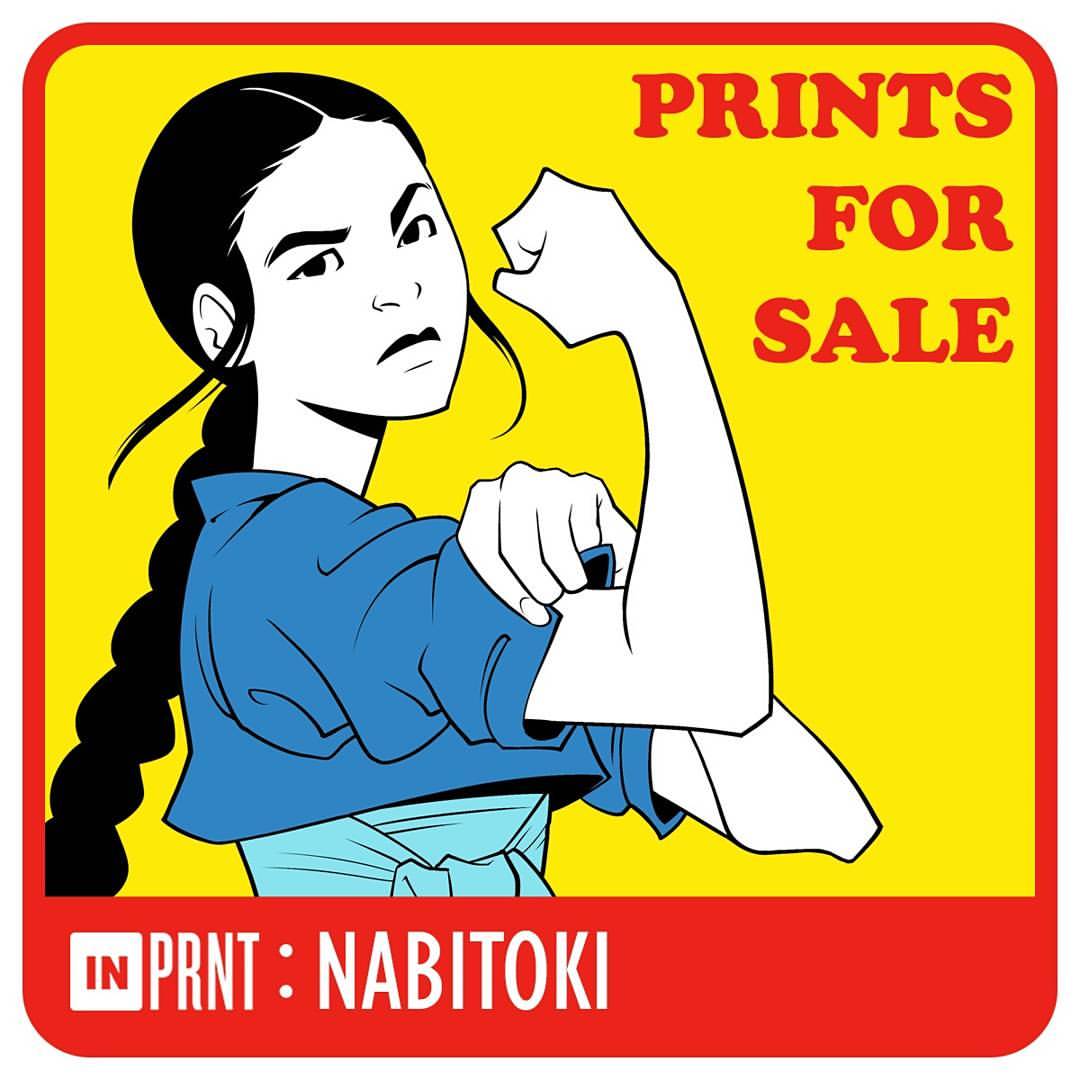

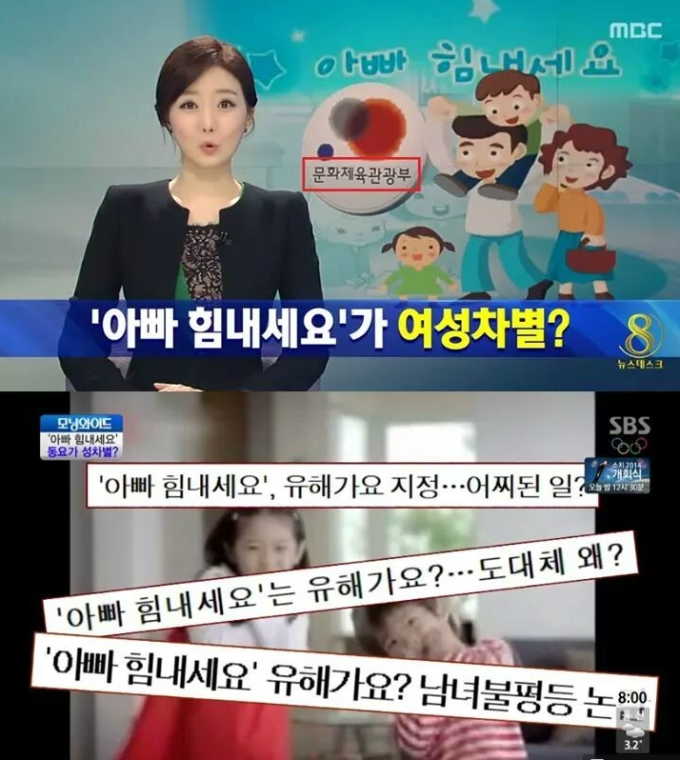
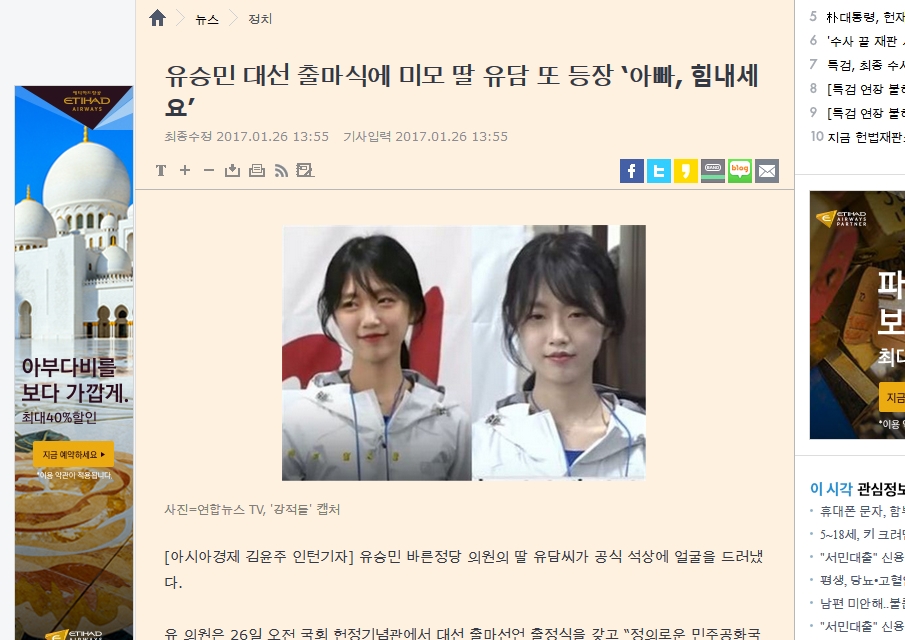
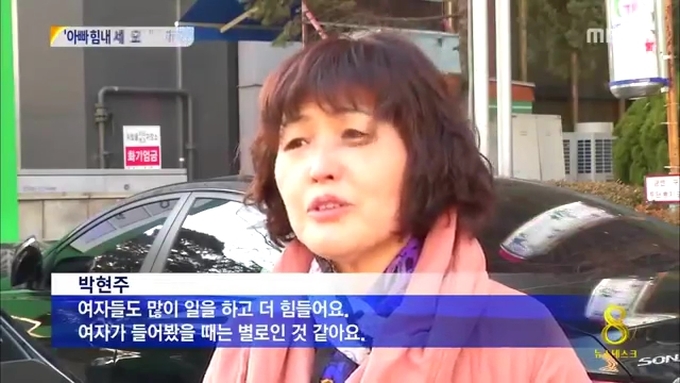
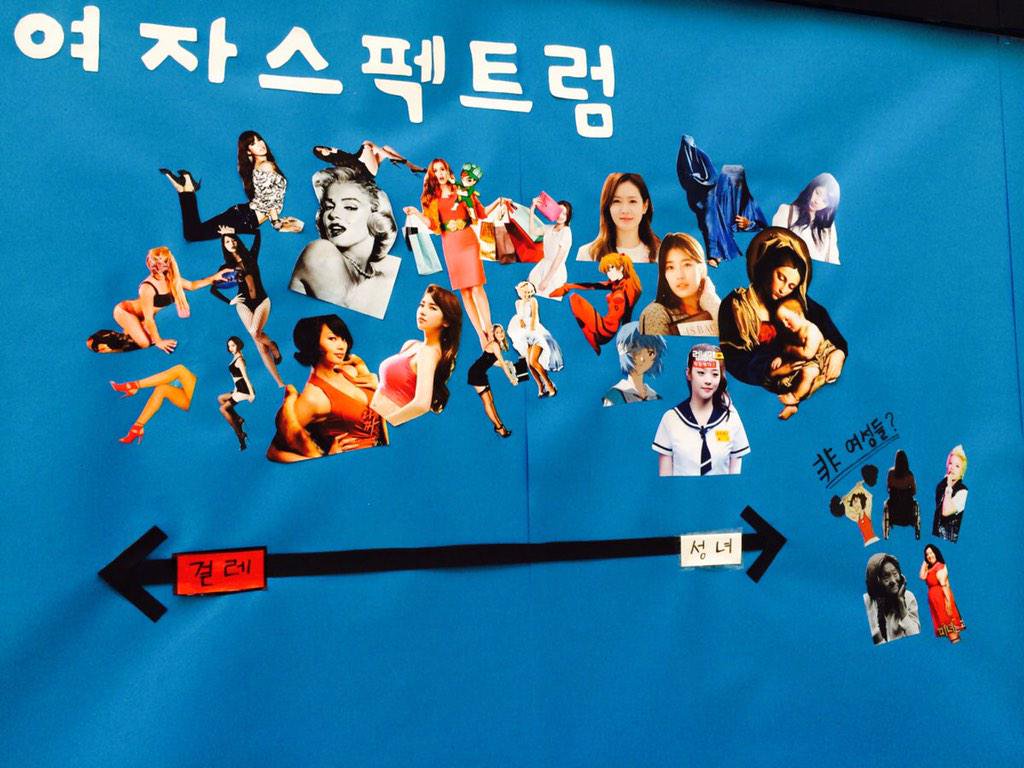

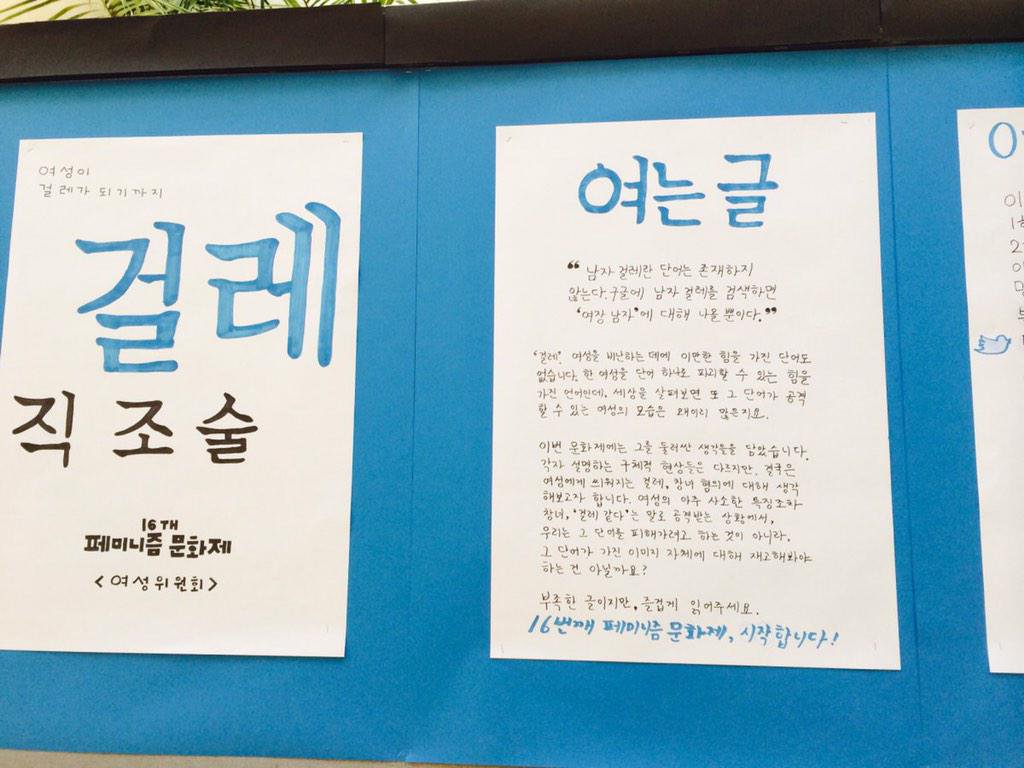

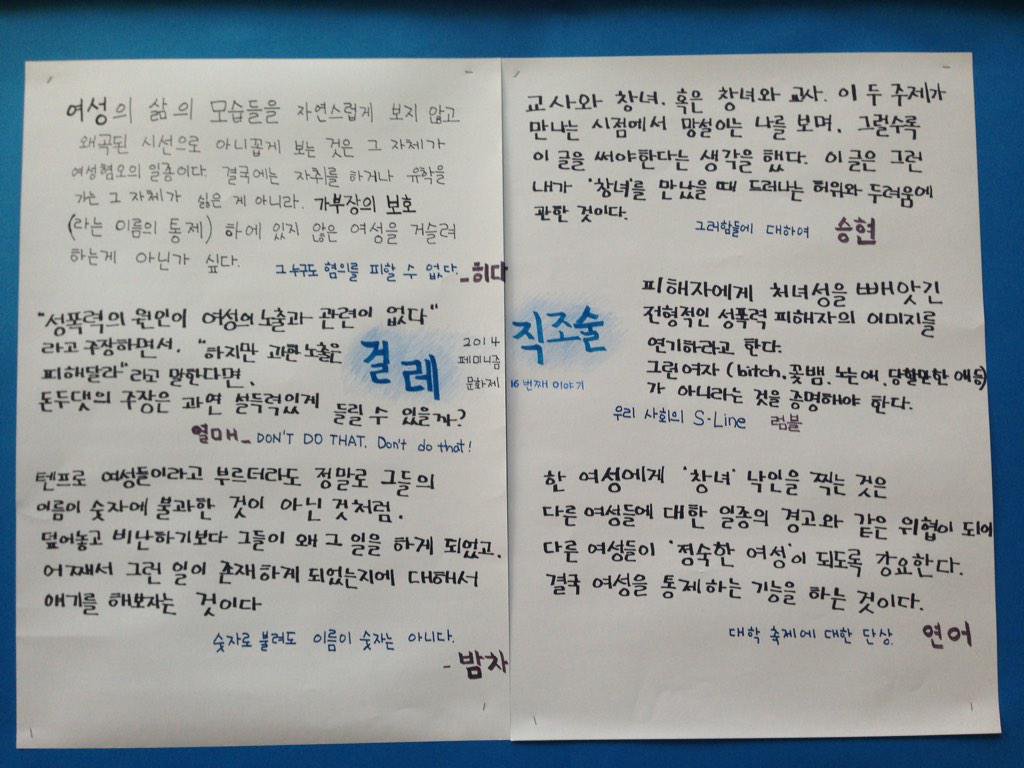


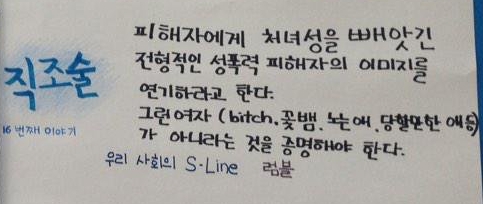
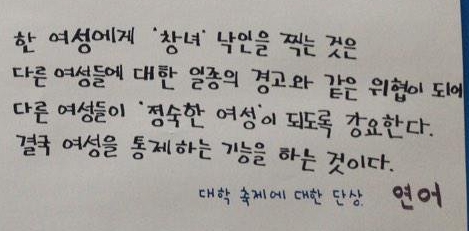

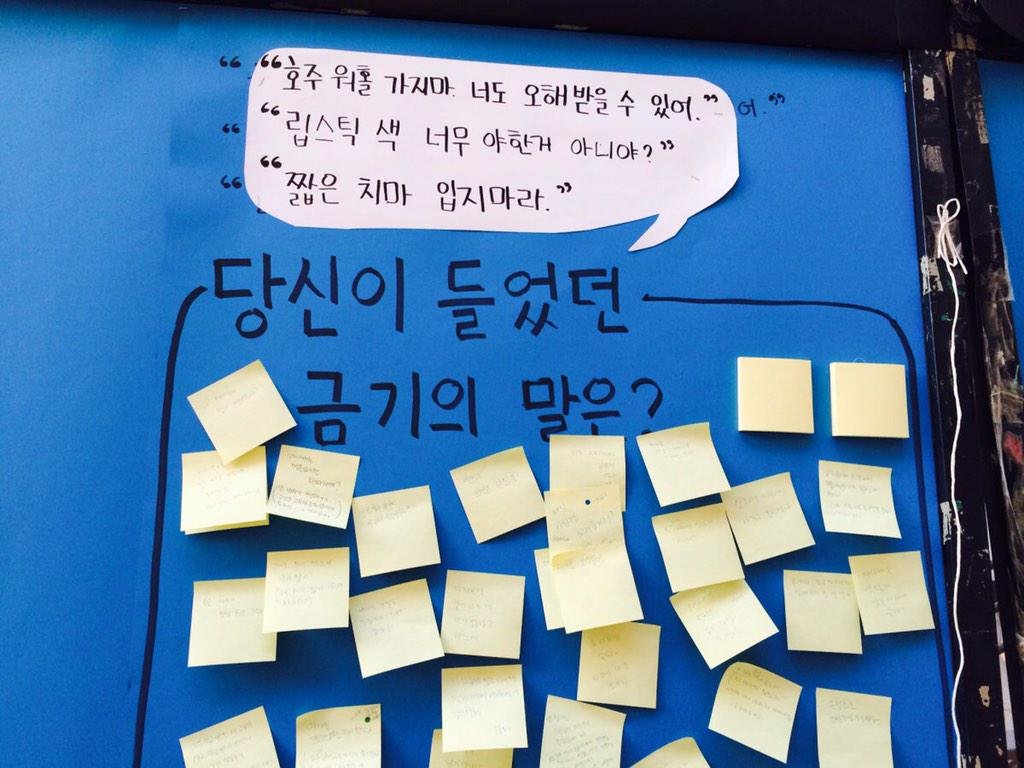
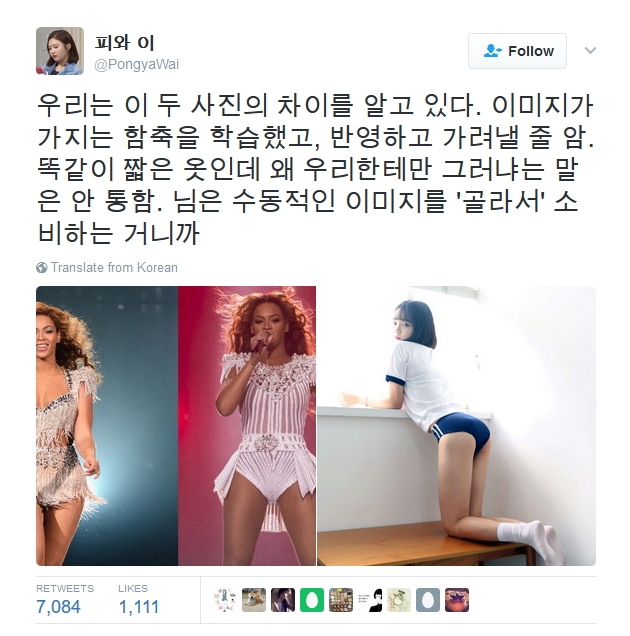
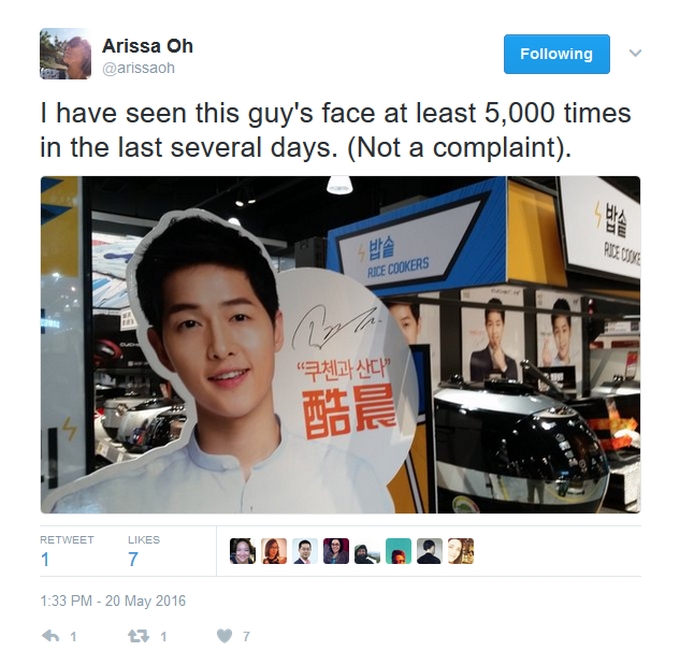

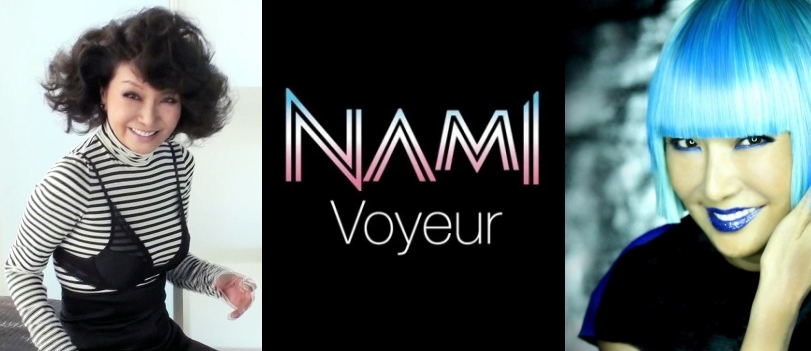



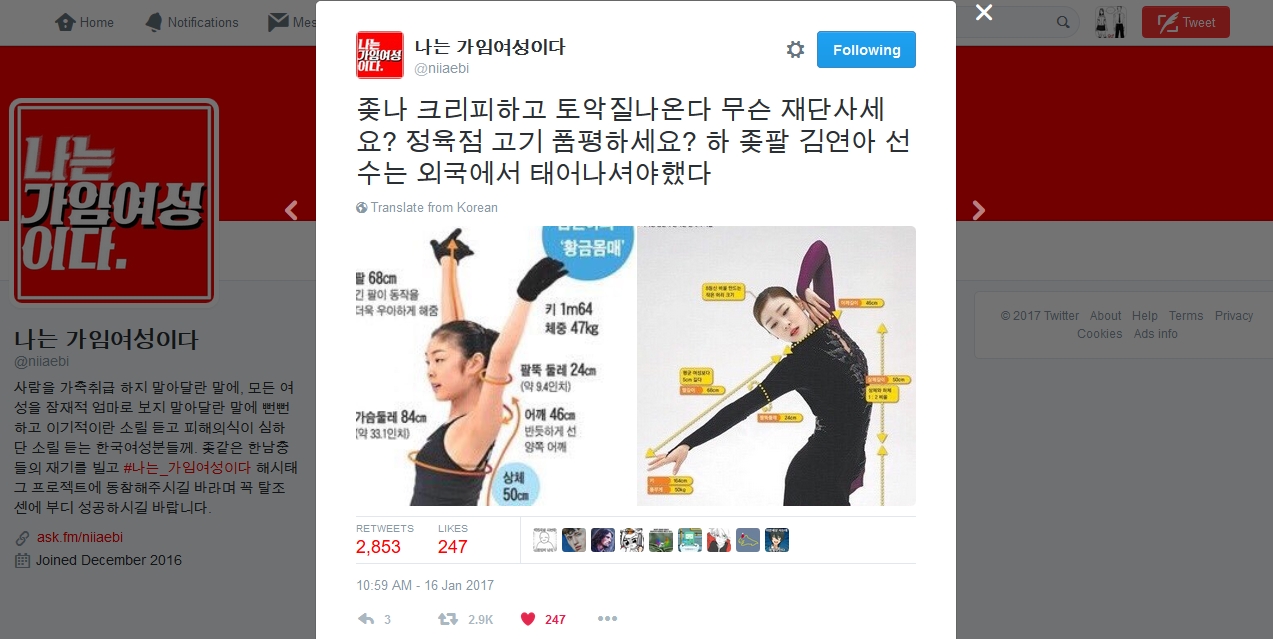


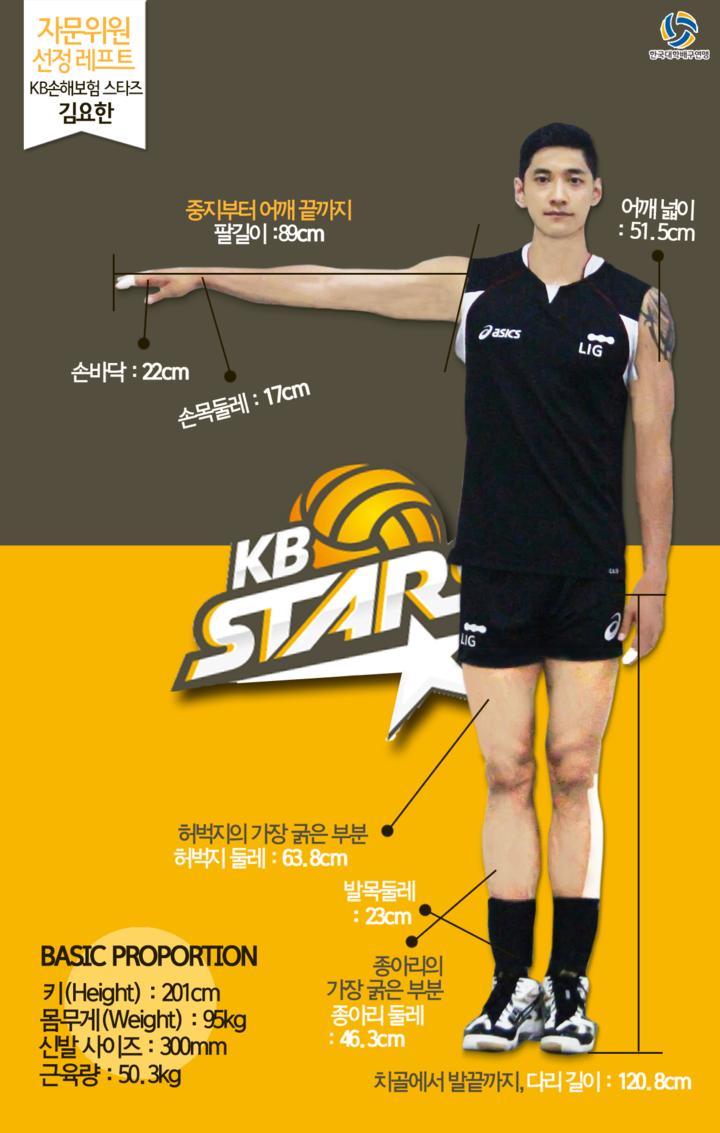

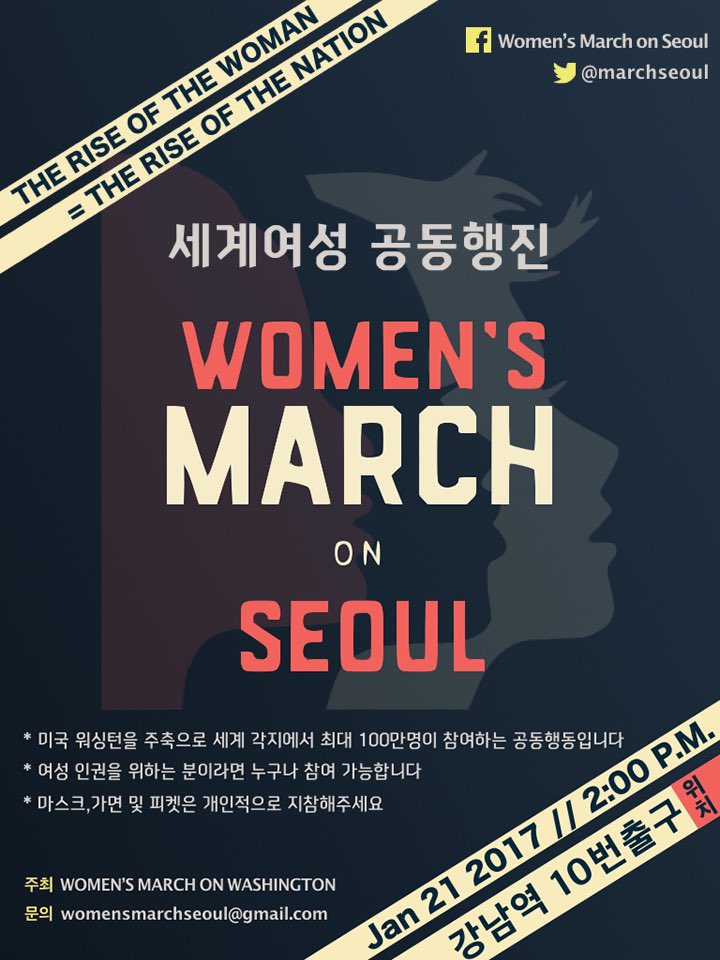

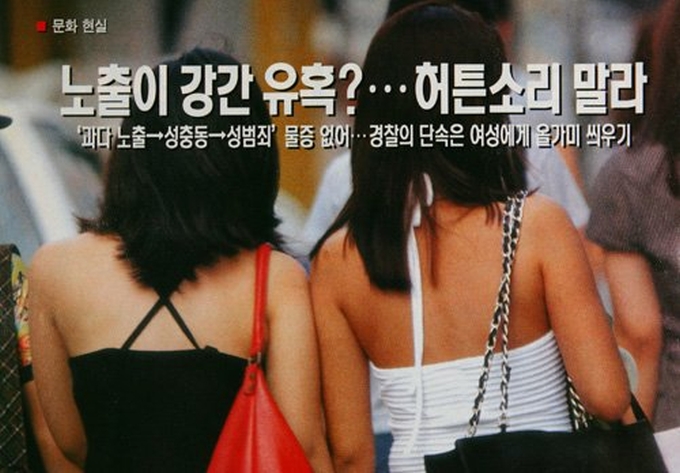

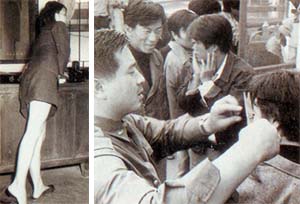
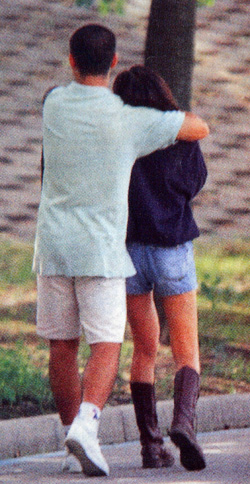
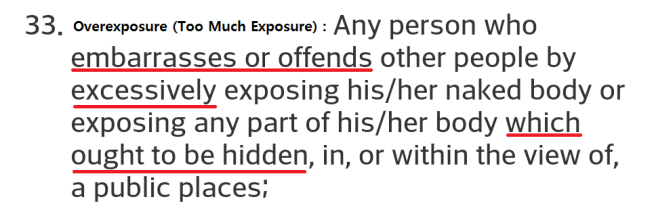
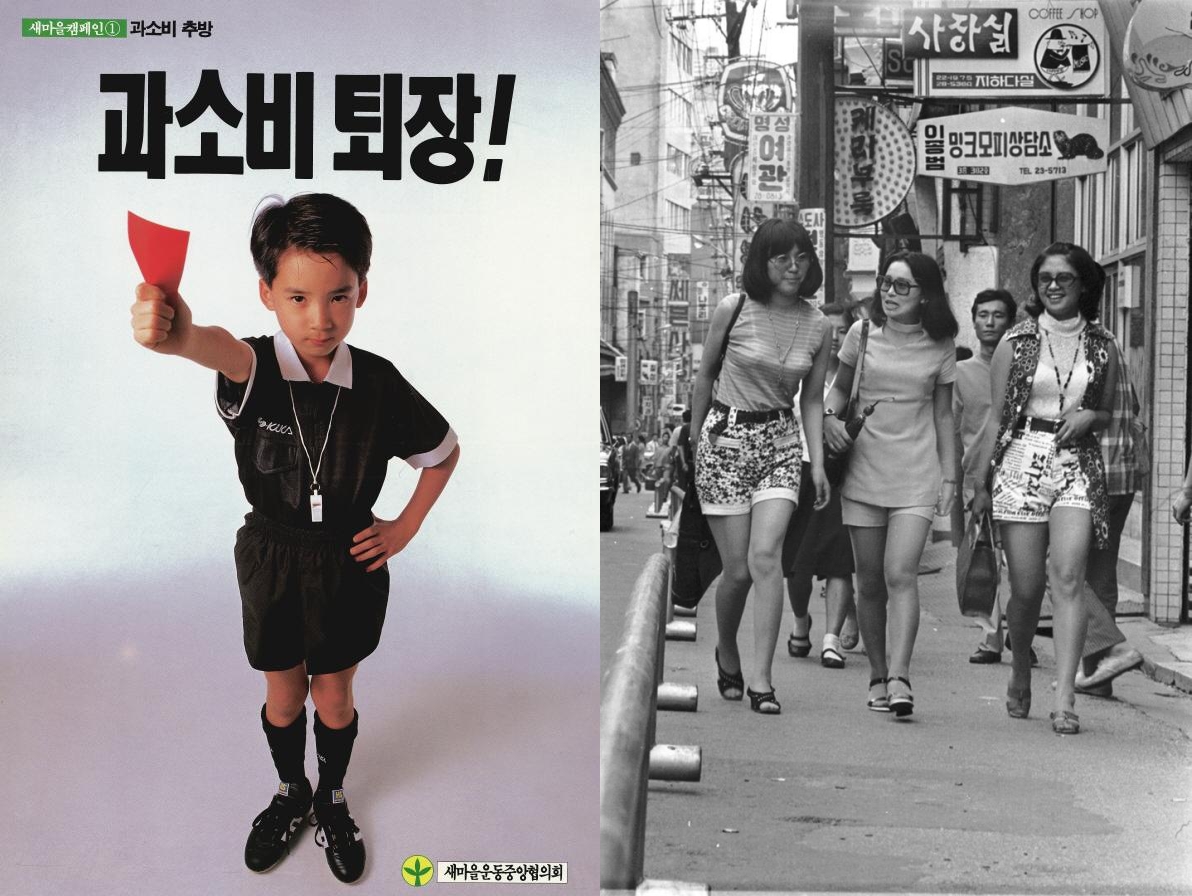
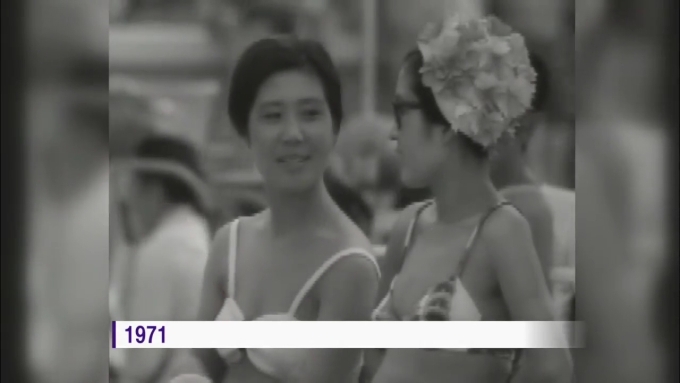

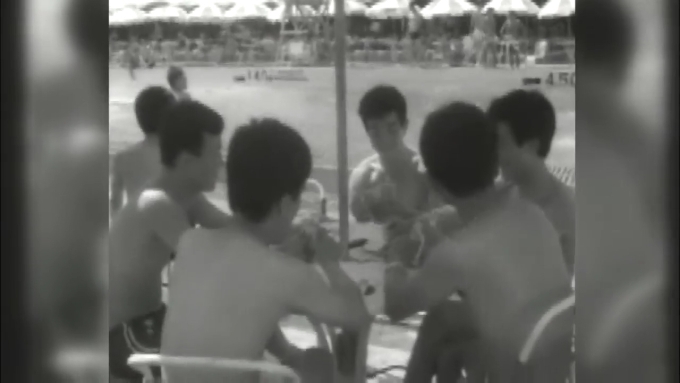
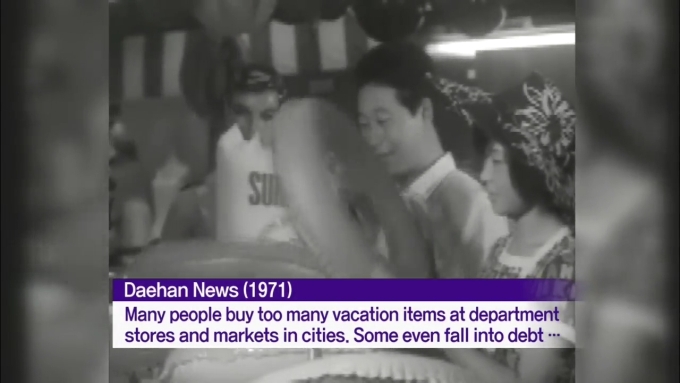


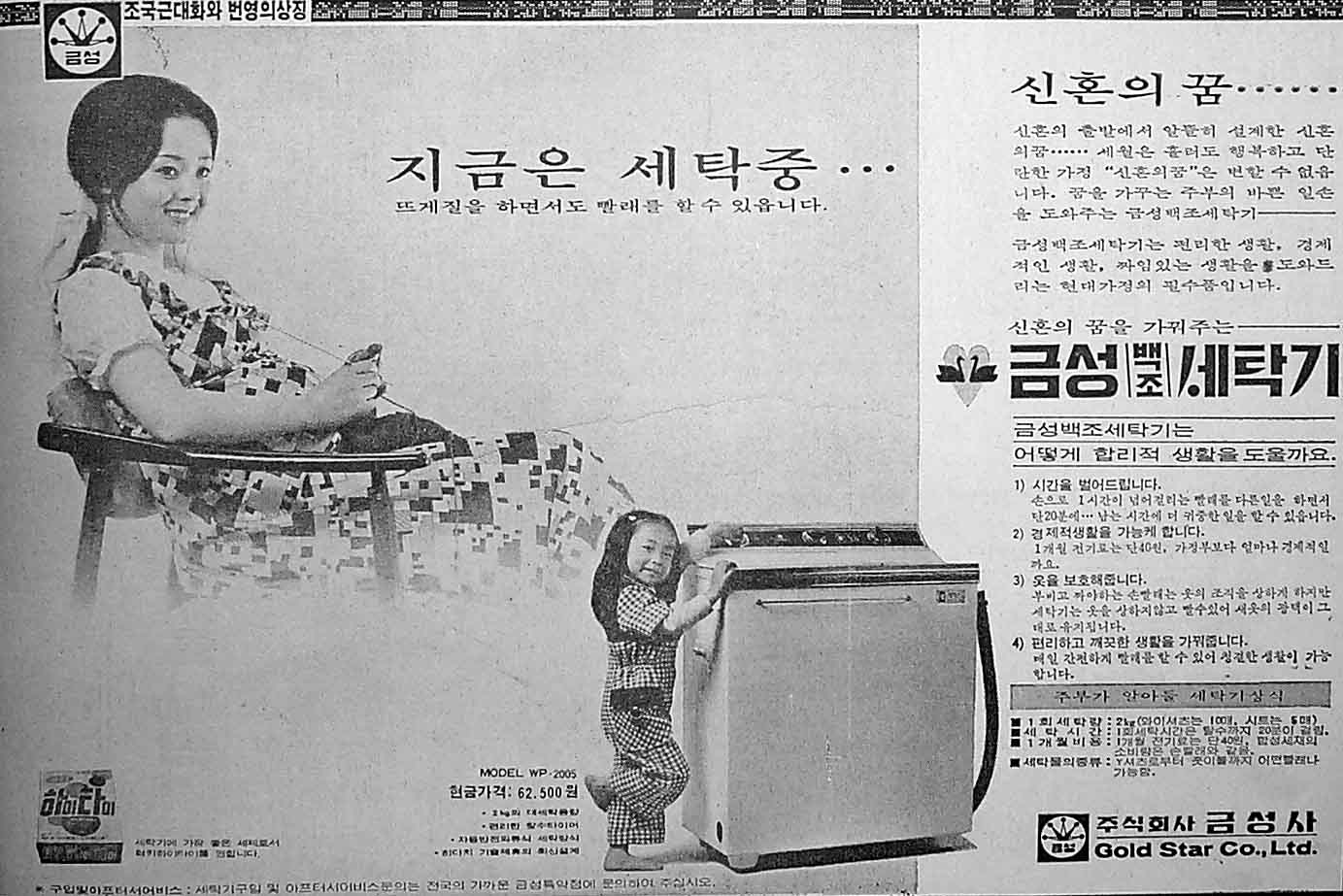
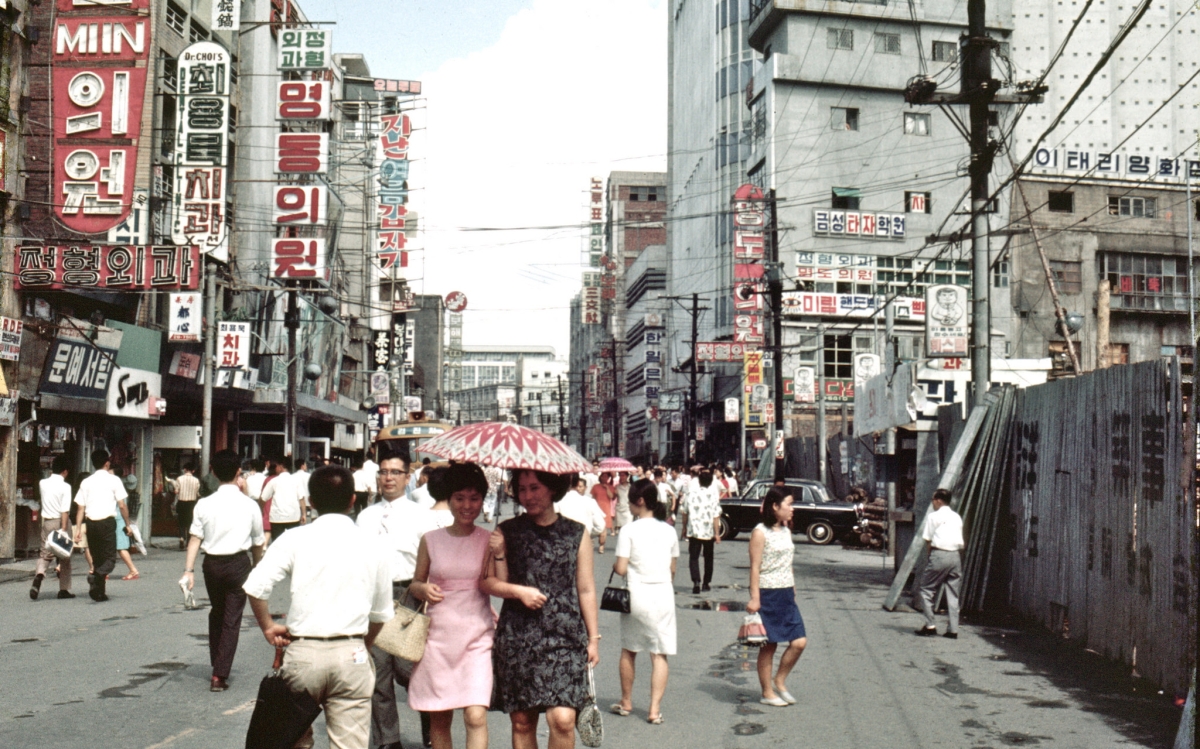



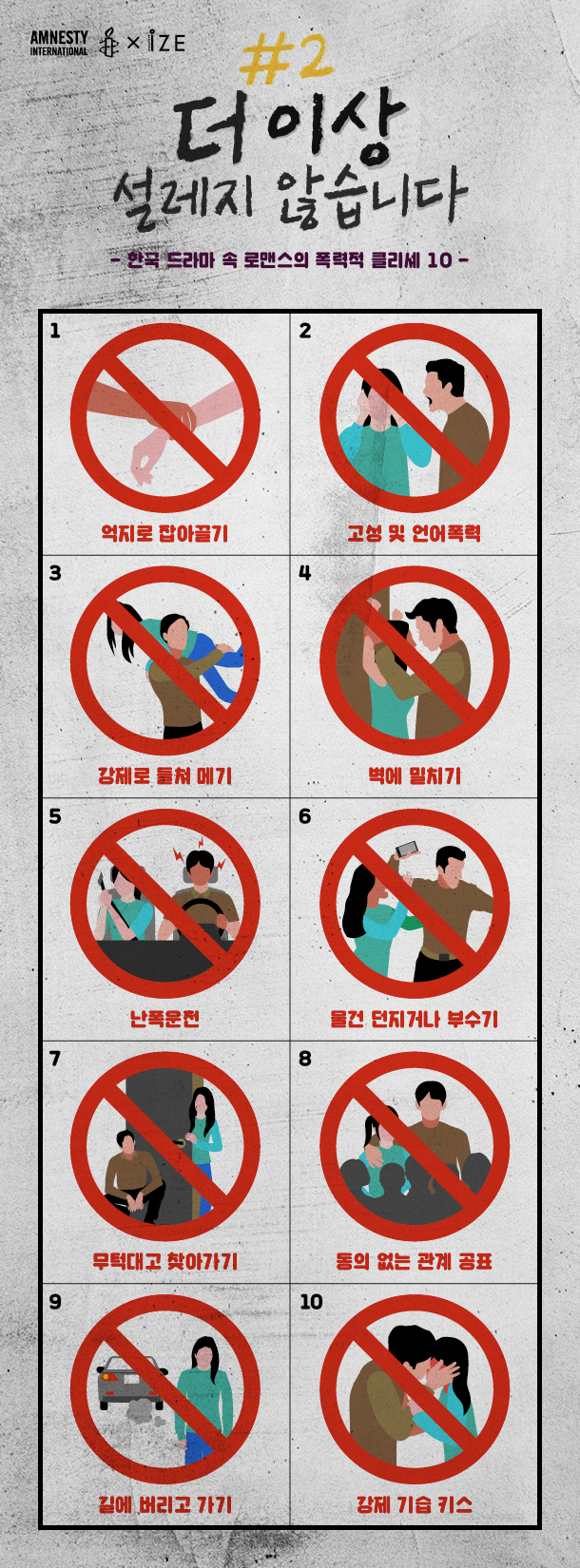
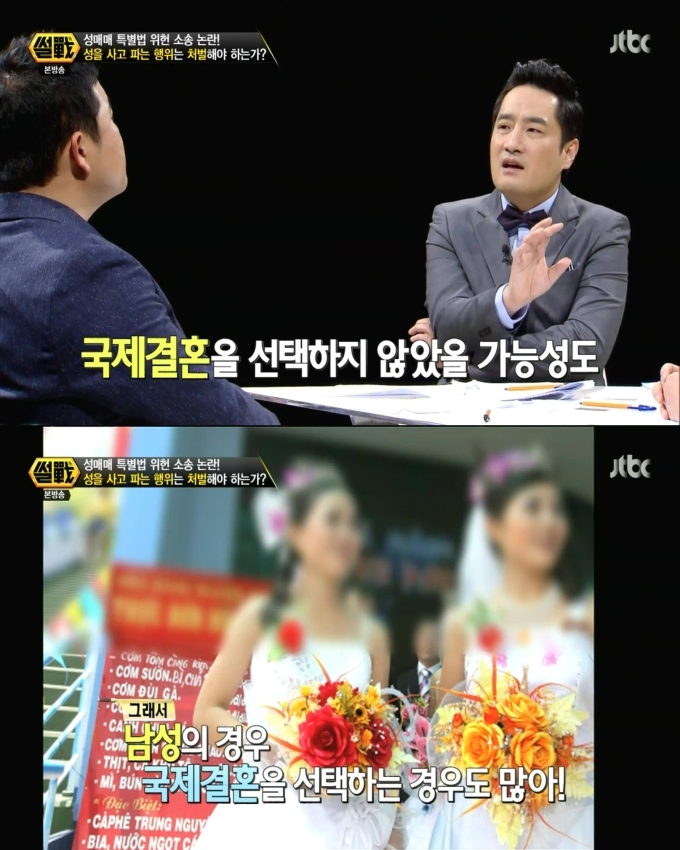
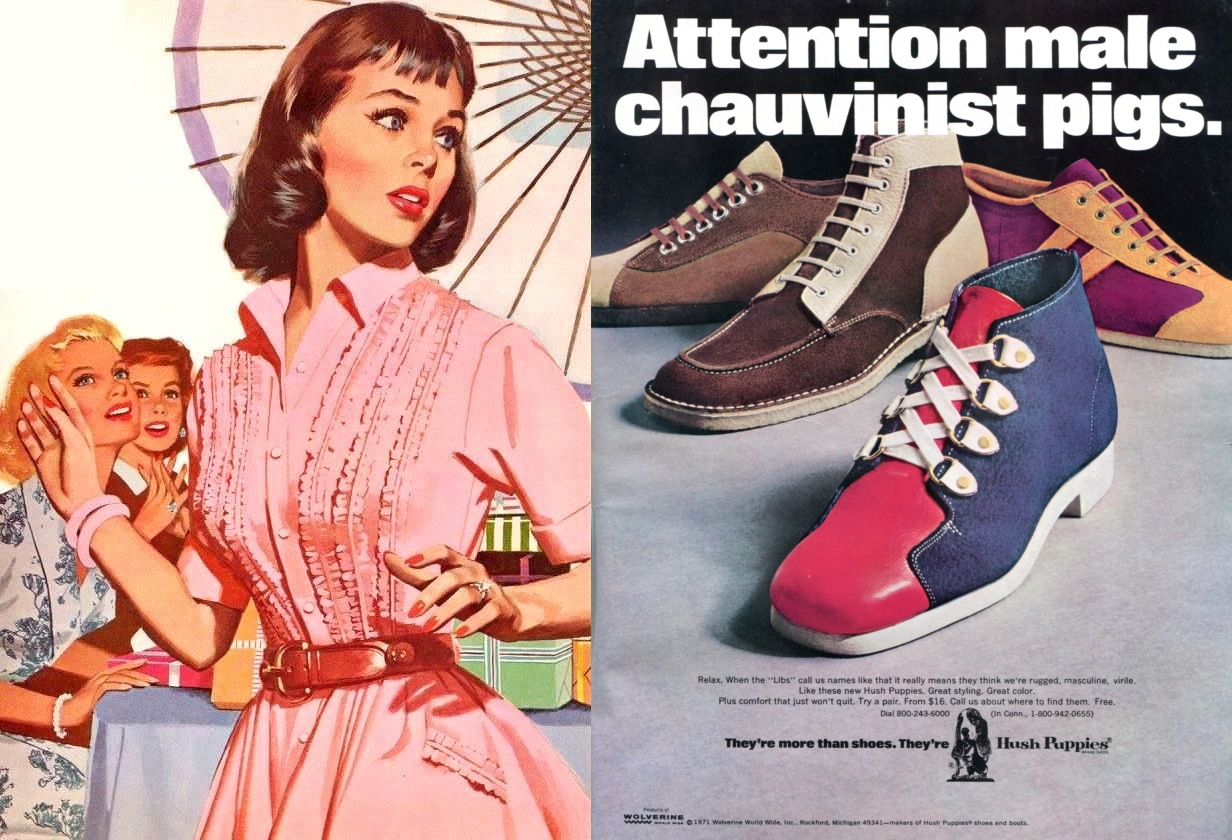

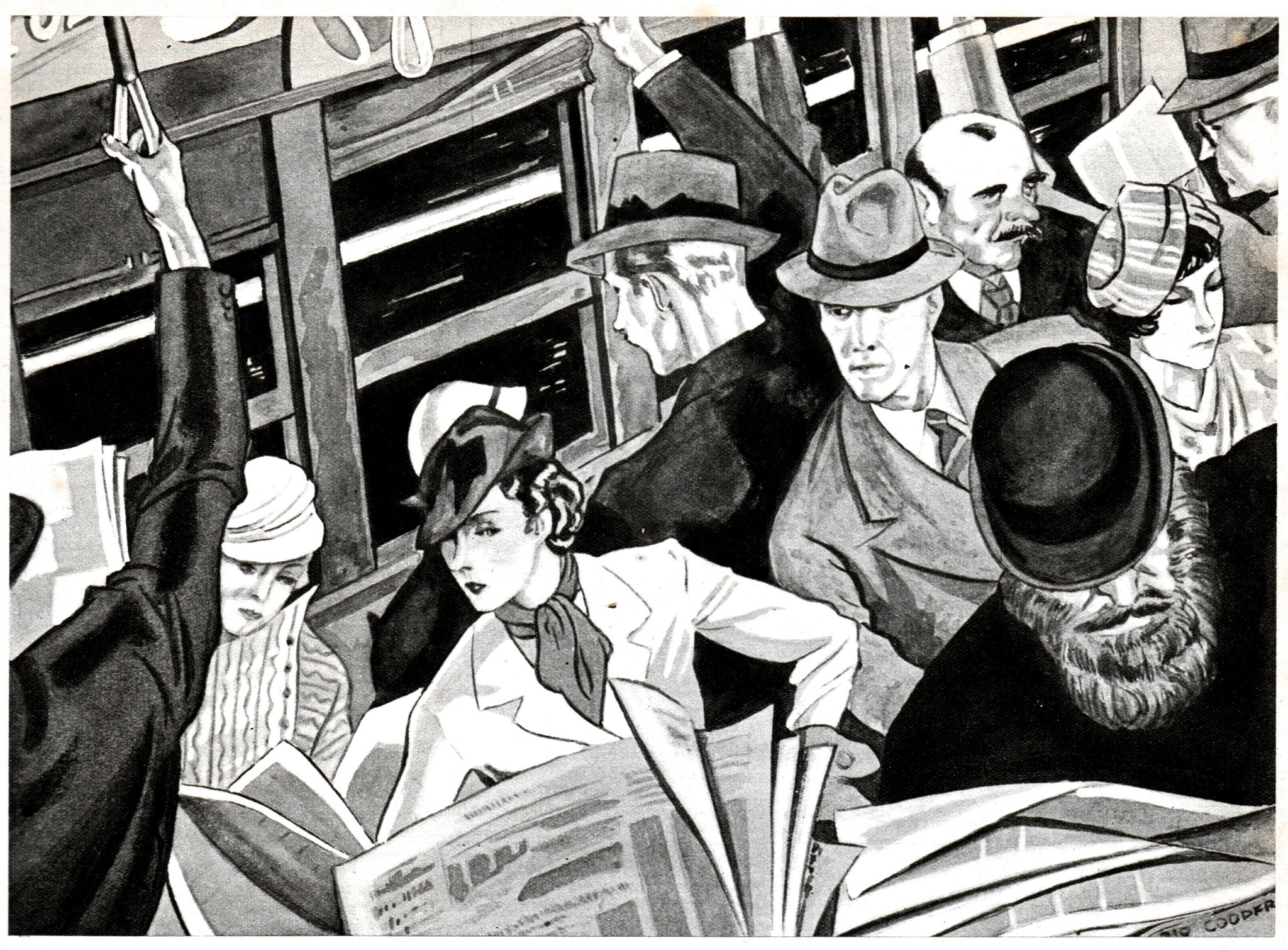
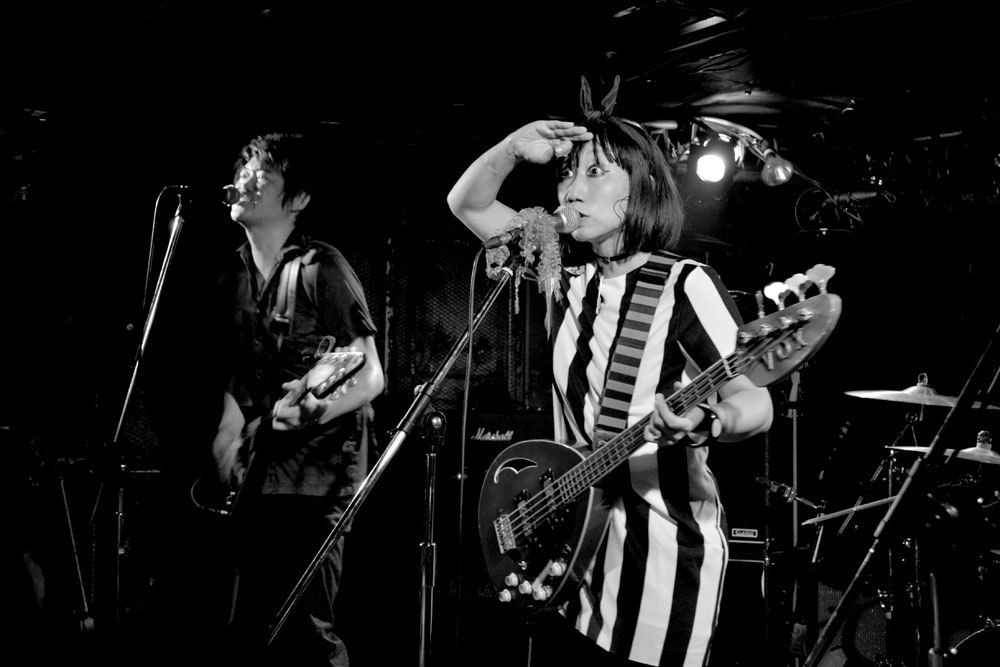

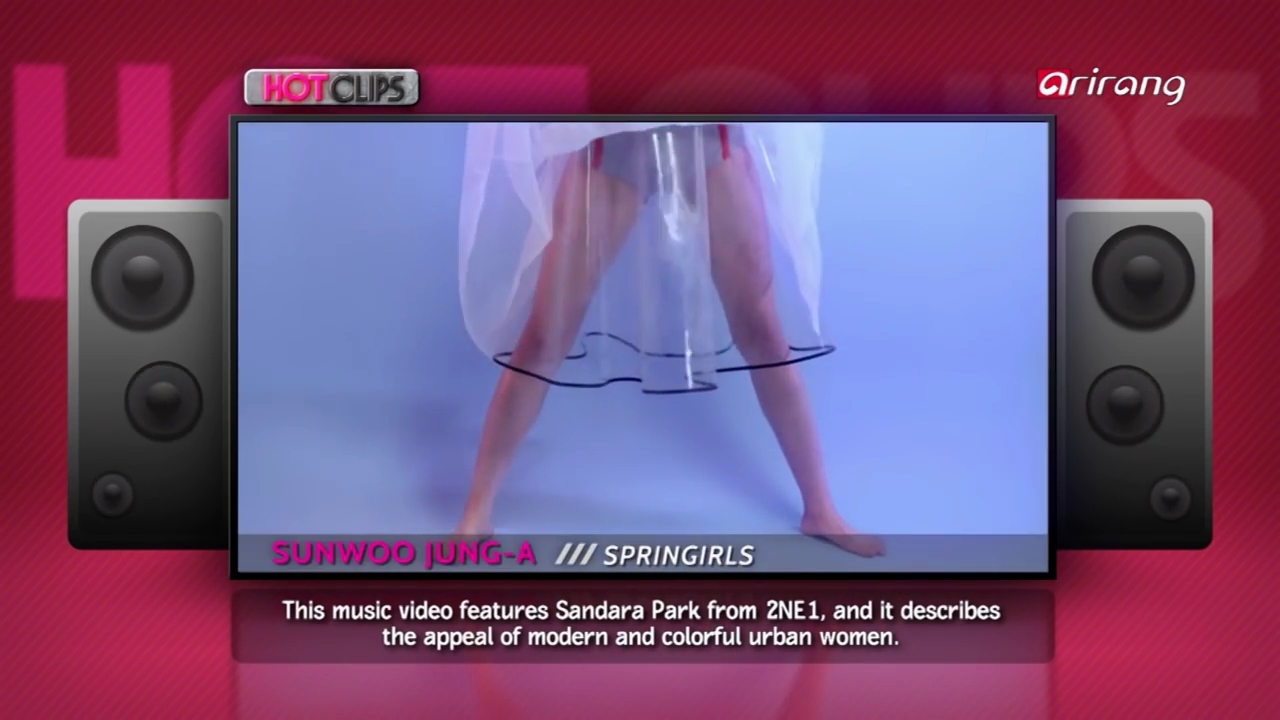
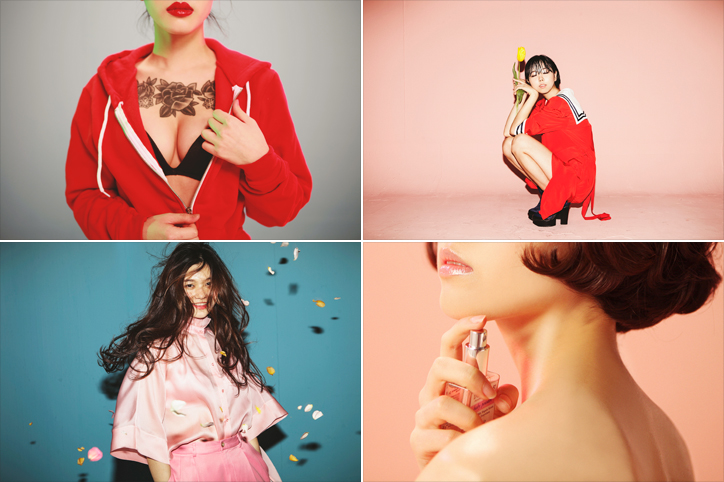
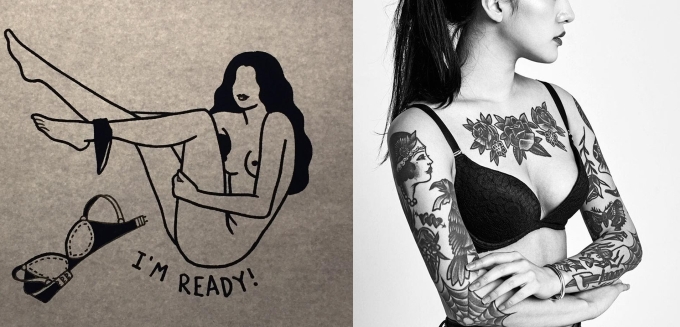

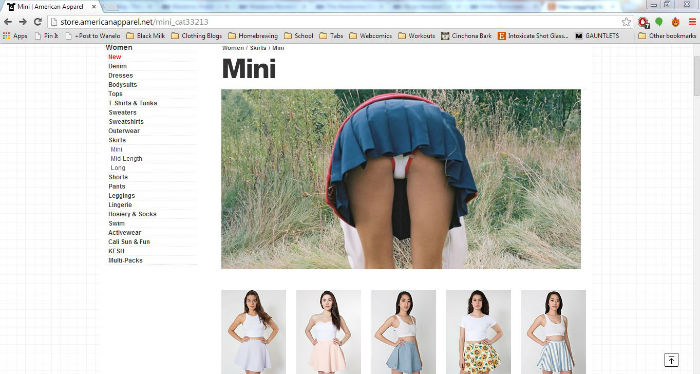
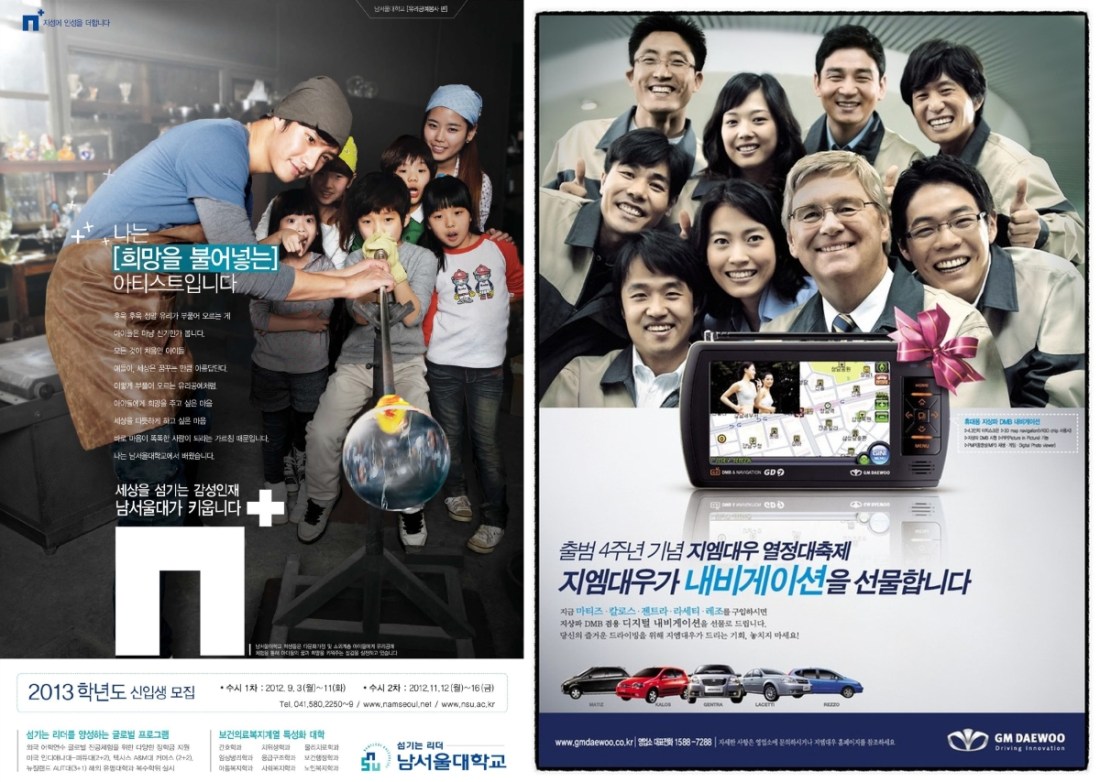
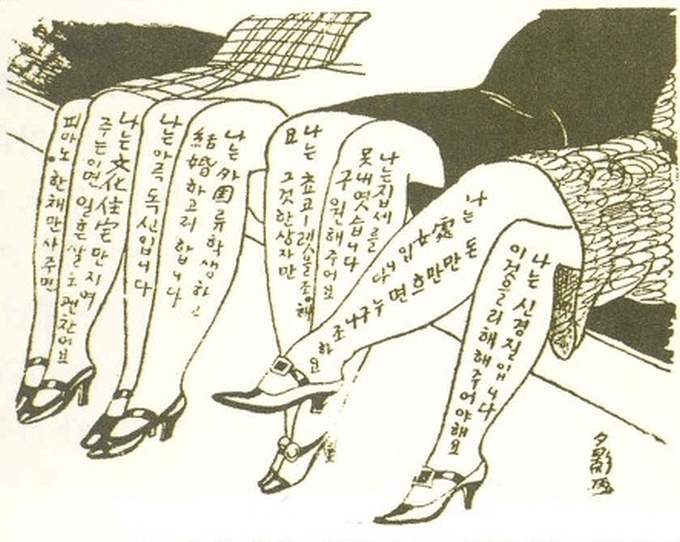
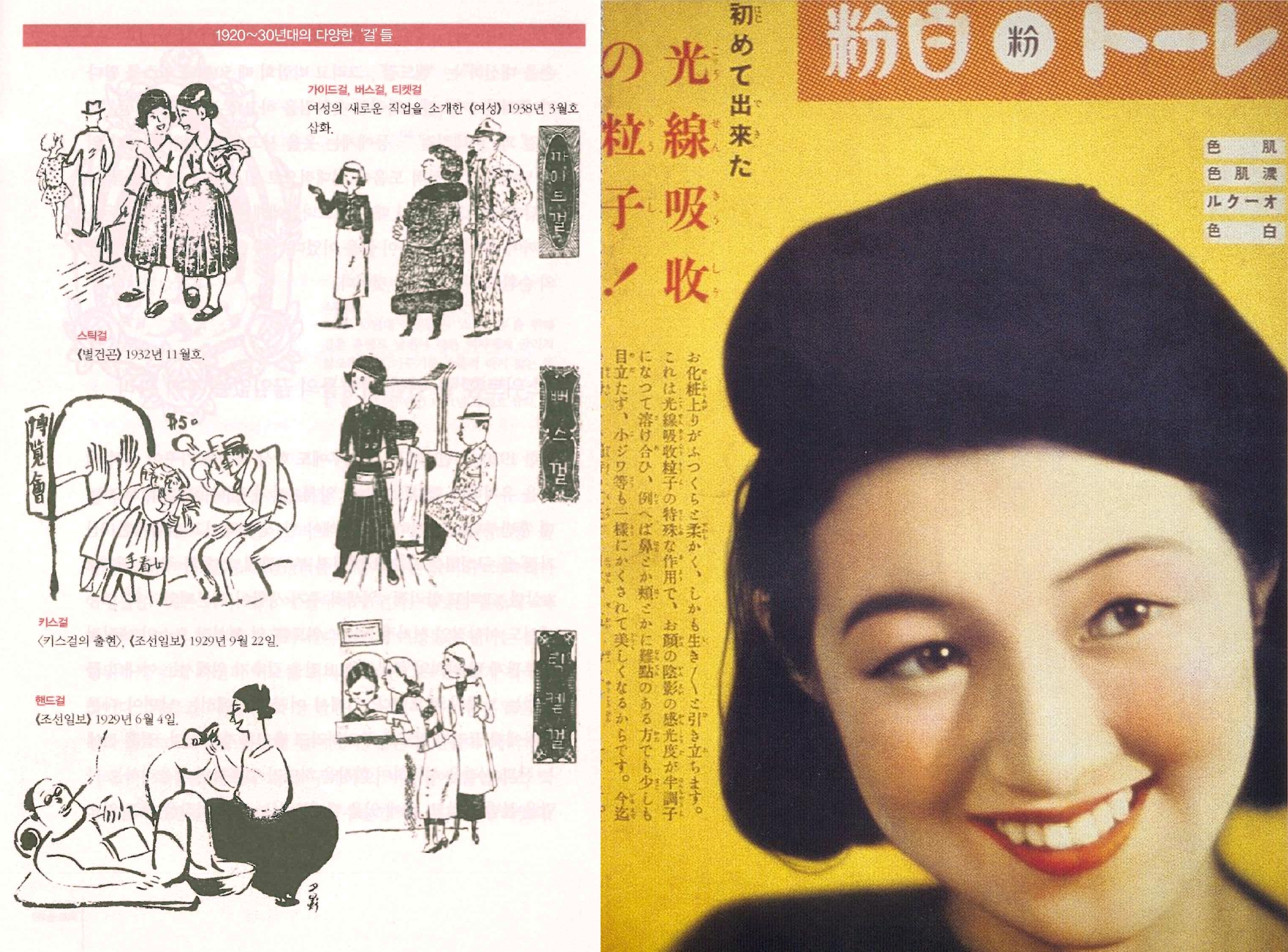



 The Grand Narrative