Korean Gender Reader

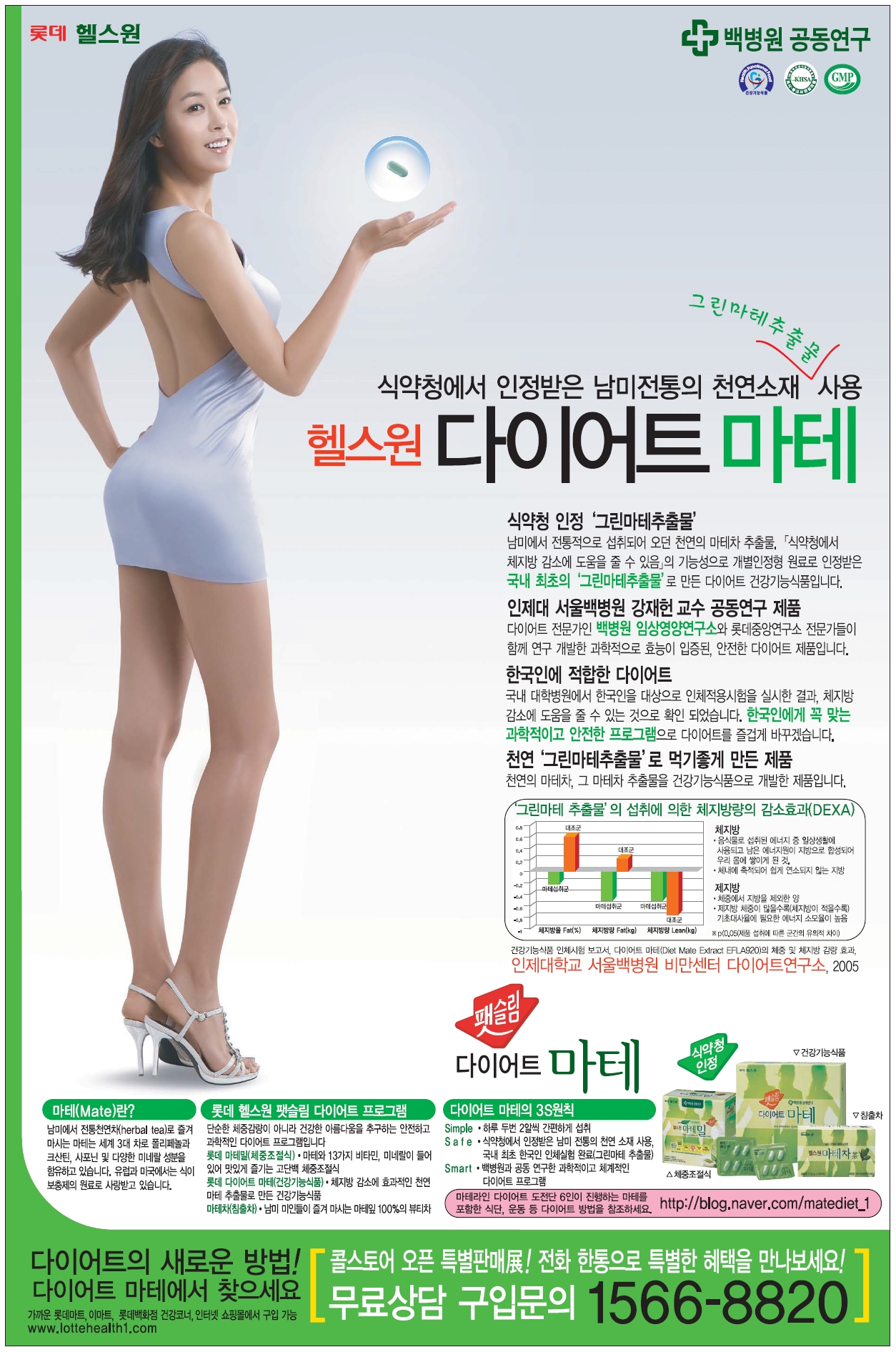
(Source: Busan Metro, March 14 2012, page 22)

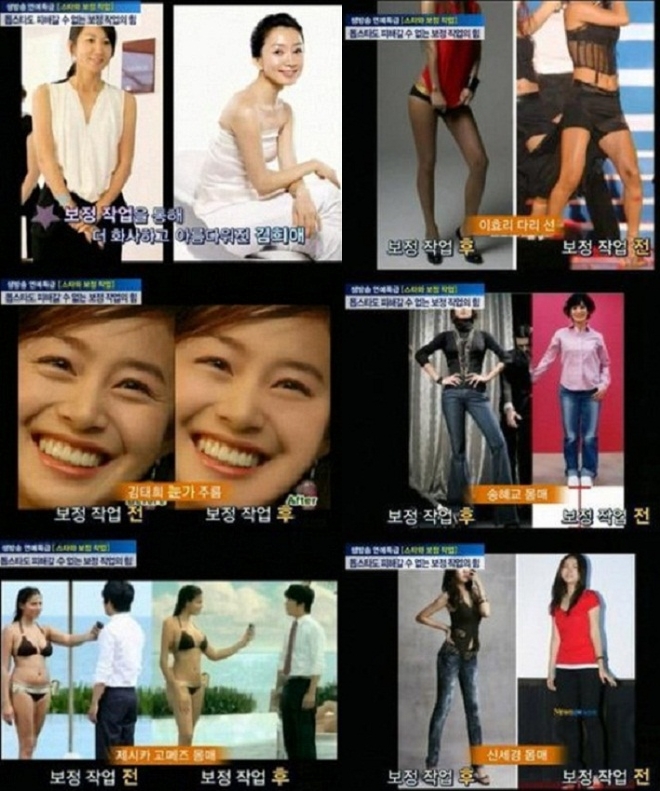
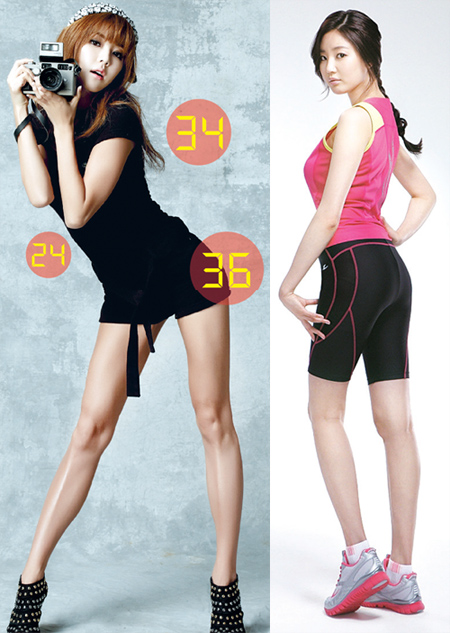
A teaser for Monday’s post on Photoshop. Sorry that it’s taking so long, but as I type this I have my second cold in three weeks!

Why is NU’EST’s Ren Doing the Gender Bender? (Seoulbeats)

Korean Women’s Increasing Participation in Politics (Arirang)

Solo households changing Korean economy (The Korea Herald)

Why Kim Yoo-jung’s March Photo Spreads Are Not Age Appropriate (Seoulbeats)

One-On-One with Minister of Gender Equality and Family, Kim Kum-lae (Arirang)

Chinese parents call for anti-gay discrimination legislation (Shanghaiist)

Korea has biggest gender wage gap among OECD nations (The Dong-a Ilbo)

Metrosexual Koreans Seen as Guinea Pigs for New Cosmetics (The Chosun Ilbo)

Different Strokes: Being Biracial in Korean Entertainment (Seoulbeats)

For Some in Vietnam, Prosperity Is a South Korean Son-in-Law (The New York Times)

Why I Write About “Forbidden” Love in China (Speaking of China)

Transgender Actress Finds That Art Really Does Imitate Life (The Chosun Ilbo)

On Breastfeeding Resources in Korea (On Becoming a Good Korean {Feminist} Wife)

Blackface, Korean Media, and the Context of the American Vaudeville Show (Gord Sellar)

Alleged Rape Tests Bangkok (The Diplomat)

Women gather to push for progress in science (The Korea Herald)

US GIs in Gyeonggi-do to undergo sex crime prevention training? (The Marmot’s Hole)

It’s Not Sexist To Point Out the Dangers of Declining Birthrates (Double X)

A third child? (The Dong-a Ilbo)

Segregating children is wrong (The Korea Herald)

Same Old, Same Old: Why the Structure of Boy Groups Needs a Makeover (Seoulbeats)

Chung-Ang Univ. fights discrimination (The Korea Herald)

Idol manager of 10 years discloses his memories of sasaeng fans (Allkpop)

Who pays wedding expenses in an intercultural East-West relationship? (Shanghai Shiok)

Find a Korean Boyfriend (Noona Blog: Seoul)

Campaign to ban cosmetic surgery advertising in UK (The F Word)

K-drama Kisses: the Good, the Bad, and the WTF? (Seoulbeats)

Rape law to include male victims, but only minors (The Marmot’s Hole; see my Men Can’t Get Raped in Korea? for some background)

(Links are not necessarily endorsements)

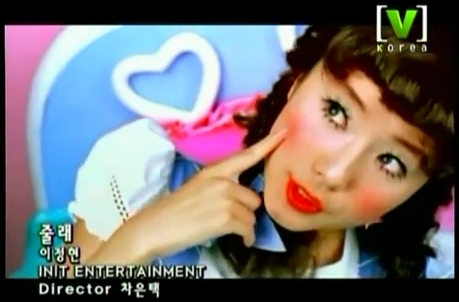
Give it to me (줄래) by Lee Jeong-hyeon (이정현): Lyrics and Translation

It feels like a long time since I’ve posted something here simply because I liked it. So, let me put what I had planned aside for a moment and remedy that, starting by passing on this video of “internet DJ” Lee Jeong-hyeon (이정현), covering the 2000 hit Give it to me (줄래) by the singer of the same name. The next time I’m harping on about the evils of aegyo and female infantilization in Korea popular culture, please remind me of how much I love this video despite myself, and that being cute definitely does have its time and place:

Unfortunately, I wasn’t able to find much information about her when I first saw the video on Mongdori back in 2008, and I can’t find anything at all now. But I did find the music video of the song itself to compare (update: see here for a higher quality version):

And as it turns out, it was covered that same year by the Wondergirls (원더걸스), then by KARA (카라) the year after that:

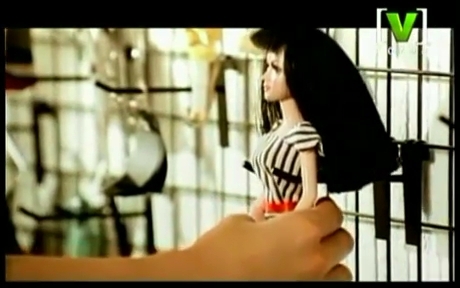
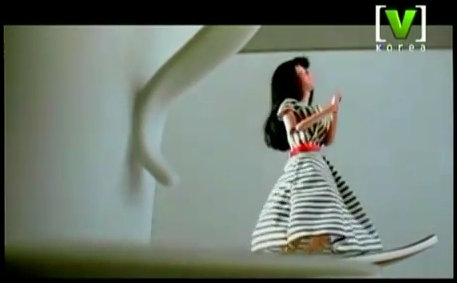
Given that popularity; an English title that reminded me of double entendres like the “get into my core” from Girls’ Generation’s (소녀시대) Visual Dreams (비주얼드림); a doll in the music video that surely symbolized something; and the fact that Lee Jeong-hyeon was selected by Lady Gaga to open her Seoul concert in 2009, then — you guessed it — I just had to translate it!

(Lee Jeong-hyeon opening for Lady Gaga, 2009. Source)

뒤돌아 날 본다…넌 내가 셋을 셀동안

홧김에 끝내잔 얘길 넌 던진 것 뿐야

이대로 날 두고 갈 생각 전혀 없어 넌

거봐 너! 지금 너! 또 오잖아

Look back and you see me…while I count to three

You said that you only broke up with me because you were angry

You don’t want to leave me like this

See, look at you now. You’re coming back.

불안해 왜 불안해 내 말을 왜 못믿어

그렇게 겪어봐도 나를 몰라 왜 몰라줘

니몸에 날 묶을까? 내 옷에 써 붙힐까?

난 바로 니 여자라고…

Nervous? Why are you nervous? Why can’t you believe what I say?

Don’t you know me by now, after going through life so much together?

Shall I tie myself to you? Shall I write your name on my clothes?

I’m the woman for you

처음엔 좋댔잖아

섹시한 눈웃음도 감았다 살짝 뜬 우아한 내 윙크도

너 만을 위한거야

딴데선 난 안그래 왜 맘 좁게 날 의심해

At first, you said you liked my sexy eyes and my elegant, subtle wink

It was all for you

I don’t do that to other guys

Why are you so shallow and suspicious?

[CHORUS BEGINS]

톡 쏘는 콜라처럼 난 니 마음 속에 들어갈꺼야

지금은 화난척해도

또 풀릴걸 내가 안기면

Like a cola fizzing, I’ll rise to be in your heart

Now, you’re only pretending to be angry really

I know that will go away if I hold you

모든걸 가질래 아무도 안줄래

나 니 마음을 다 사로잡을래

나 오늘은 순결한 백합처럼

나 때로는 붉은 장미처럼

모든걸 다줄래 너에게 다줄래

나의 관심은 언제나 너뿐야

언제나 나만 사랑해줘 날 안아줘 너는 내꺼야

I’m going to have it all, I’m not going to give anything [of you] to anyone

I’m going to grab all your heart again

Today, like a pure lily, and sometimes like a red rose

I’m going to give everything to you

It’s always been just you

Please love and hold me always, you are mine

[CHORUS ENDS]

우리가 그동안 함께한 날이 얼만데

난 알아 널 알아 널 알아

너무나 잘 알고있지

하나에 하나반 둘에 또 둘에 반에 셋!

거봐 너! 지금 너!

또 오잖아…

A long time has passed since we were together

I know you, I know you, I know you

I know you so well

One, one and a half, two, two and a half, three!

See, look at you now, you’re coming back to me again

오늘은 뭐했는지 누구를 만났는지

핸드폰 왜 껐는지 물어볼래

간섭할래 사랑은 구속인걸 난 너무 잘 알지만

때로는…난 숨이 막혀…

I’m going to ask you what you did today, who you met, why your phone was off

I am going to interfere like that, because I know well that love is a prison

Sometimes it means I can’t breathe

할수만 있다면 넌 날 작게 만들어서

주머니 속에 날 넣고 다니겠다고

그게 소원이라고 그렇게 말하는 널

나 어떻게 미워하니

You said that if you could, you would make me smaller

So that you can put me in your pocket

That was your wish

How can I not love you when you’re like that?

[CHORUS REPEATS]

아무리 차가운 척해도 소용없어

넌 가득찬 내 작은 손을 넌 못벗어나

이대로 널 두고 갈생각 전혀없어 난

하나 또 둘에 반 셋…거봐 너 또 오잖아…

날줄래, 날줄래, 날줄래, 날줄래

There is no reason for you to pretend to be cold

You’re stuck with me

I won’t break up with you like this

One, one and a half, two, two and a half, three!

Look at you, you’re coming back again

I want to give myself to you (x4)

What do you think? Naturally, the feminist in me rebels against a woman loving that her boyfriend literally wants her to be his doll, but on the other hand the lyrics indicate that she’s by no means the submissive partner in the relationship. Even if she does uses a lot of aegyo to achieve that, which is the impression I get from Lee Jeong-hyeon seemingly going through her entire repertoire in the music video!

Meanwhile, apologies for the quick translation (I’m sure there’s many mistakes), and I’m more than happy to be corrected and/or explain any of it. But I do think I have the gist of it!

(See here for Lee Jeong-hyeon’s website [there’s an English section], and here for her Twitter feed)

Korean Gender Reader

(Source)

When Fans Buy Idols Lunch — A response to the Wall Street Journal (Seoulbeats)

Korean Teens Rage Against Cinderella Policy (The Waygook Effect)

Lee Hyori as a role model for younger female celebrities (10confessions)

South Korean actor throws open closet door (Los Angeles Times)

Silenced: Giving Children a Voice (Seoulbeats)

What crossdressing in K-pop says about patriarchy (My First Love Story)

This is not at all how to promote stopping child abuse (Copyranter)

K-Pop Fan Clubs: Friend, Foe and Fear (Inconseoulable)

New York City Department Of Health Targets Asians With Anti-Smoking Ads (NYULocal)

Infographic: The plight of China’s ‘leftover’ women (Shanghaiist)

Hyori points haters to the left (Seoulbeats)

More Koreans Put Off Marriage Till Their 40s (The Chosunilbo)

Gallery: Homoerotic Sino-USSR friendship propaganda (Shanghaiist)

Three decades of blackface in Korea (Gusts of Popular Feeling)

Chinese mainland to crack down illegal organizing of pregnant women into HK (NPC; hat tip to @MaraHvistendahl)

Internet Porn Crackdown Campaign Continues in China (TechwireAsia; hat tip to @AsCorrespondent)

Fight Over Sexuality Festival Continues (Southeast-Asia Real Time)

Women In Korea: Glass Half Full or Empty? (Korea Real Time)

T-ara Eunjung’s “chubby” figure causes a stir (Omona!)

Ending the One-Child Policy (The Diplomat)

JYJ and Sasaeng Fan Hitting Incident: An Ugly Controversy (Seoulbeats)

International Women’s Day in Korea (Arirang)

‘Pretty boys’ in the days before boy bands and teen idols (Gusts of Popular Feeling)

Korea Time Warps to Higher Fertility (Via Korea)

(Links are not necessarily endorsements)

Quick Hit: Advertising a Korean Stewardess School

It’s easy to criticize an industry that – in Korea at least – so needlessly stresses age and appearance, and to consider the young women that aspire to it as hopelessly vain and naive. However, despite these stereotypes, not only do the limited options available to Korean women arguably make stewardessing a rational, adventurous, and even quite rebellious career choice, but Korean airlines even require university degrees from applicants too (and some cabin crew actually have Ph.Ds!).

See the Korea Herald here for more information. Guaranteed, you’ll be much more sympathetic to Korean stewardesses (and hopefuls) after reading it!

Written by me last October, a couple of years after a Qatar Airways-bound student of mine forced me to rethink some of my own assumptions about stewardesses. One of the most intelligent and ambitious 23 year-olds I’ve ever met, I was reminded of her resolution and determination yesterday when I read that Asiana Airlines stewardesses had protested the company’s “sexist guidelines regarding female flight attendants’ appearance”, their union head arguing that:

Flight attendants are not Barbie dolls. We are professionals with diverse characteristics who strive to become successful. We should not be judged by how we appear outside. We cannot be subject to any discrimination at work just because we are women.

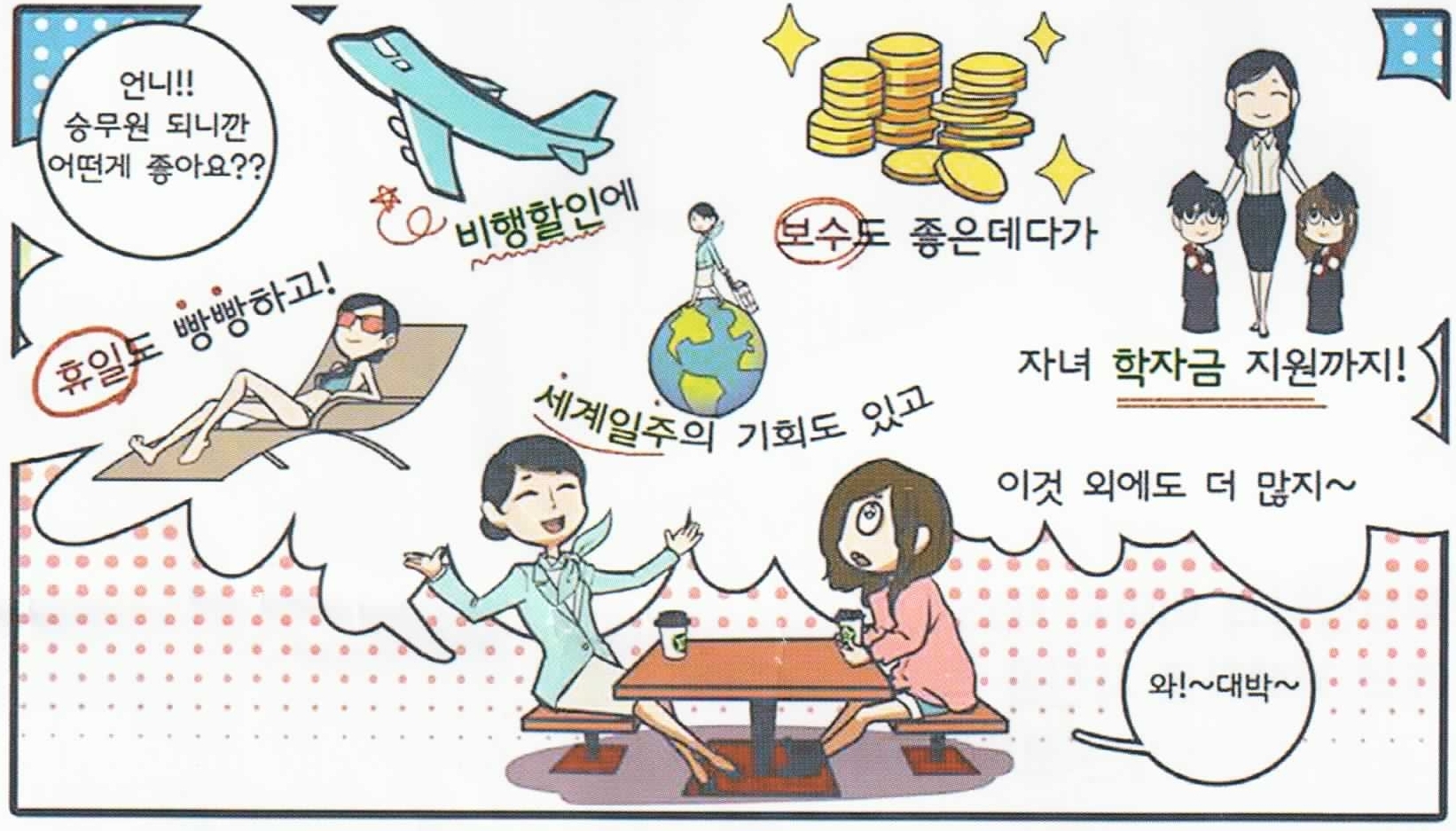
If anything, this stress on appearance is confirmed by the following advertisement for a Korea stewardess school, which begins by mentioning the benefits of becoming a stewardess, but then has a promotion about a competition to find the “uniform queen” on the back.

On the other hand, it is just the one ad, so we should be wary of drawing too many conclusions from it. I’m just presenting it here mostly for the sake of readers outside of Korea, who may never have seen a Korean one.

Also, from Korea-based readers, I’d be interested in hearing if any other universities likewise got inundated with other schools’ ads at the end of last semester, how they compare, and how effective you’d think they’d be with students (don’t dismiss the cartoon format though — recall that everything is cute in Korea!):

– If you’re a woman, who doesn’t want to become a stewardess? But there’s probably many women who don’t know what you have to do to prepare to be one (nod nod).

– I thought like that too when I began. I was short, my appearance was just average, my English wasn’t good…could I really do it? I worried a lot about it.

– But now you’re the perfect crew member, despite all that. Unbeliv[able]~!! (I don’t believe you!)

– [Older Sister]!! If you become a crew member, what are the benefits?

– The days off are great

– You get discounts on air travel

– You get global opportunities

– You make lots of money

– You even get support for your children’s tuition

– And lots more…

(Wow!~Amazing~)

– So, older sister, how did you prepare? I too absolutely want that challenge!

– I’ll tell you how I did it.

– Okay then! Seonyeong’s stewardess success story, here we go~!!!

Keen eyes will have noticed that that was just Part 1; alas, I don’t have any more in the series, and can’t seem to find them on the school’s website sorry. But here is the back:

The title and first paragraph say:

– Find the Cosea Uniform Queen!!

– Cosea has a school vacation event for students with the dream of becoming crew members!

Next, there’s the details of that event:

– After having a free consultation and an image test, have your picture taken with an instant camera. The best student will win a free course at the school!!

– 1st prize: a free course

– 2nd prize: a set of interview clothes

– 3rd prize: a voucher for a free interview make-up and hair-styling session

– *Everybody that participates will get a personal color image check [James – ???]

Finally, it tells you how to enter the competition. But if you’re interested, then I’m afraid you’re on your own with that!^^

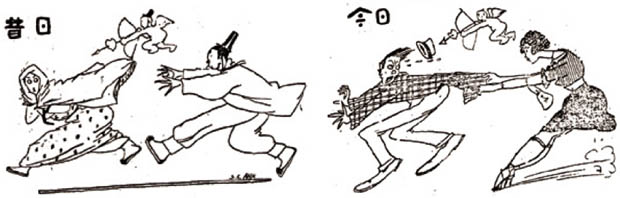
Korean Sociological Image #68: Laughing at the 1970s Fashion-Police

(Sources: left, right)

Remember when the Korean Defense Ministry said it was considering playing girl-groups’ music videos on giant TV screens along the DMZ?

The rationale, according to the official that thought of it, was that “the revealing outfits worn by the performers and their provocative dances could have a considerable impact on North Korean soldiers.”

Alas, nothing came of the idea. But the irony was palpable: in the 1970s, such revealing outfits were deemed subversive by the military government, with ruler-bearing policemen stopping women on the street to measure the length of their skirts (they would also cut men’s hair if it was too long).

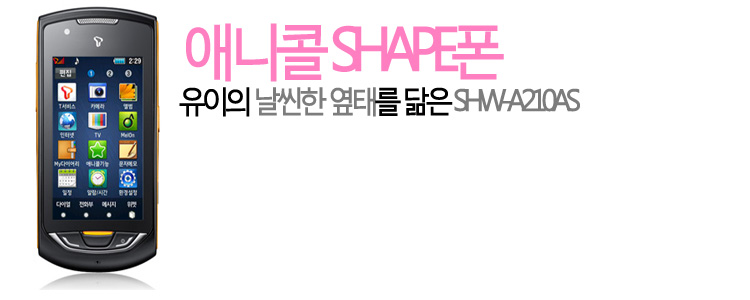
This difference is humorously illustrated in Samsung’s 2007 commercial for the Anycall Miniskirt (애니콜 미니스커트), with Jun Ji-hyun (전지현):

It’s disappointing that it was set in the UK though, which never had such ‘fashion-police.’ Why not pick from the wealth of Korean video and imagery from that period? (Just look under “미니스커트 다속” for instance, literally “miniskirt control/supervision/clampdown.”)

My first thought was because the ad is already doing some subtle fashion-policing, through informing the Korean public of the new de facto rules. That would be much less subtle with authentic Korean examples though, and the ensuing social message, however refreshing, would be at odds with the cheerful tone of this one.

On the other hand, we can make allowances for creative license; perhaps the advertisers just wanted a swinging ’60s vibe. Also, it’s not like Koreans themselves aren’t afraid to poke fun at their old, ridiculous laws on miniskirt length (not least because they weren’t removed from the books until as recently as 2006), nor critique modern fashion and body-image ideals.

Still, it is yet another example of a phone literally embodying a woman. As is LG’s recent LTE wireless ad, which isn’t subtle at all:

(Source)

On the left, the black text reads “If it’s only the shape/appearance of LTE, then it isn’t available everywhere,” while on the right the pink reads “If it’s really LTE, then it’s available in every city.” The headline in the middle reads “But it’s different,” and finally the text at the bottom reads “The one and only LTE, in touch in every city nationwide. Automatic roaming in 220 countries worldwide.”

Personally, I think the execution is flawed—if the woman on the left is supposed to only have the shape and/or appearance of the real LTE (confusedly, “모양” means both), then shouldn’t both women actually look and be clothed exactly the same, with some indication that they’re different for some other reason (say, by having the women on the left scowling)?

Either way, the advertisement’s other message is that the woman on the right, with high-heels, a V-line face, impossibly-long (and uneven!) photoshopped legs, and a dress that only just covers her underwear, is quite literally the modern standard that all agasshis (young women) should adhere to. Jun Ji-hyun’s bobbies would be proud.

(For more posts in the “Korean Sociological Image” series, see here)

Korean Gender Reader

(Source)

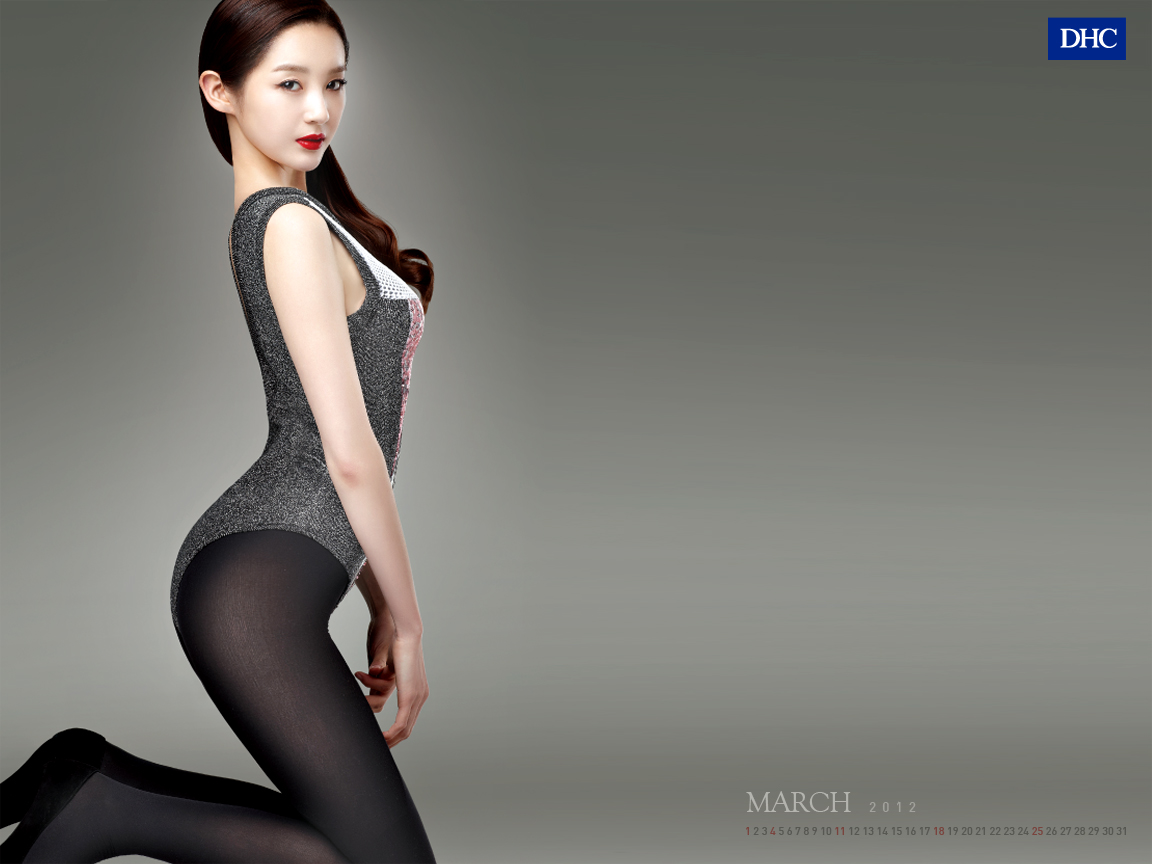
I would comment on this ridiculous rendition of Davichi’s (다비치) Kang Min-kyeong (강민경), but unfortunately two pressing matters(!) prevent me as I type this. In the morning though, I may well submit my daughters’ drawings of her to DHC Korea for its consideration, as surely those would be just as realistic as whatever else it has planned for its latest ad campaign?^^

Seoul Food: Treating Your Idol to Lunch Is the True Test of Fandom (The Wall Street Journal)

Extreme Private Ethos: Japanese Documentaries (Asia Society)

A refreshing approach to condom marketing: an app that keeps you from being walked in on by your parents (Work That Matters)

KPOP and Black Music: Rap (My First Love Story)

How Parents’ Zeal for Education Drives Up Rents (Korea Real Time)

The Nude Collection – An International Artists Community Group Exhibition (Seoul; Social Discourse of Disquiet)

Girls′ Generation’s Jessica Gets a Little Photoshop Lift (Enewsworld; see Omona! for scans)

[Part 1] The Yoke of Korean Women (The Jeju Weekly)

Hey, where’s your skirt? (The Korea Blog)

Foreign Husband Troubles (The Marmot’s Hole)

Women readjusts her curves with green tea (Work That Matters)

Introducing Escher Girls, a Site Dedicated to Superheroine Poses That Warp Spacetime (io9)

Chinese woman sent naked photo by interviewer exposes him online (The Nanfang)

South Korean survey: Appearance-based discrimination is widespread (Asian Correspondent)

Porn and the Peninsula (Via Korea)

International Women’s Day events in Seoul (10 Magazine; Korea Business Central)

Jeremy Lin and debates about Asian masculinity (I’m No Picasso)

Hong Seok Cheon Opens Up About AIDS Scare (Enewsworld)

China to soften its one-child policy slogans, but not the law itself (Yahoo! News; hat tip to Amanda)

Why Aren’t Women in Japan Working? (Gender Across Borders)

Lee Hyori gets criticized over her “belly fat”, proceeds to address the haters (Omona!)

Japanese porn actress Hotaru Akanei’s China university lecture cancelled (Shanghaiist)

School’s Closed, Working Moms Suffer (Korea Real Time)

More babies being born in Korea, and gender disparity among newborns at all-time low (The Hankyoreh)

Hot pants or hot air? Is the sexualization of childhood less of a concern than gender-stereotyping? (The F-Word)

Obesity growing among school students (The Hankyoreh)

Fewest Elementary School Students in Seoul since 1965 (The Chosunilbo)

Company-provided daycare: just for female employees? (On Becoming a Good Korean {Feminist} Wife)

Why did Jun Ji-hyun Have to Hide Her Marriage? (Enewsworld)

(Links are not necessarily endorsements)

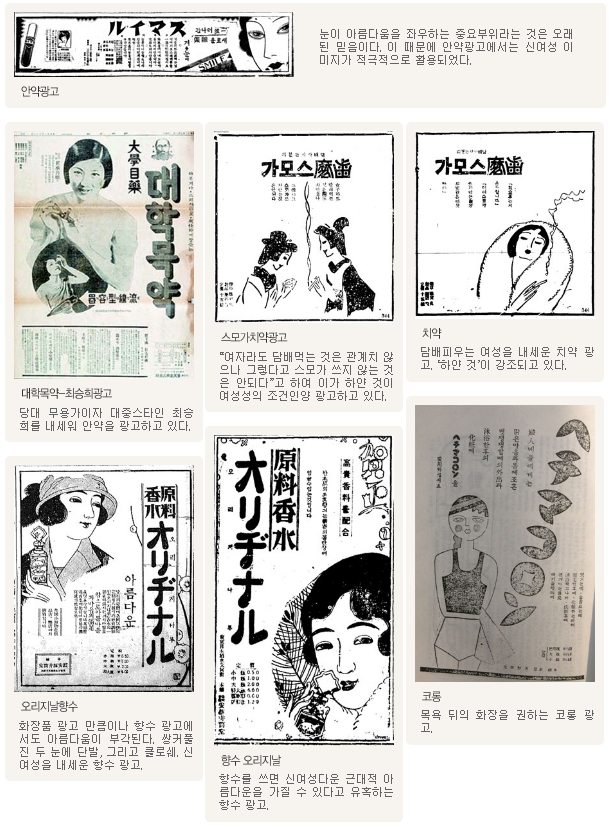
“Making Pretty Women” (예쁜 여자 만들기) — Consumerism, S-lines, and Learning that Healthy≠Beautiful in 1930s Korea

(Sources: left—unknown, right—KyoboBook)

As you all know, I’m very interested in women’s S-lin…let me rephrase that.

As you all know, I’m very interested in where body-labels like the S-line come from, how they’re used, why new ones appear so frequently in the Korean media, why Korean popular-culture is saturated with them, what role (if any) they have in comparative studies regularly finding that Korean women have the greatest levels of body dissatisfaction in the world (despite actually being the thinnest), and so on.

Unfortunately though, I’ve struggled for years to find Koreans that shared these interests. But that doesn’t necessarily mean that they’re not out there. More likely, I’ve just been looking in the wrong places.

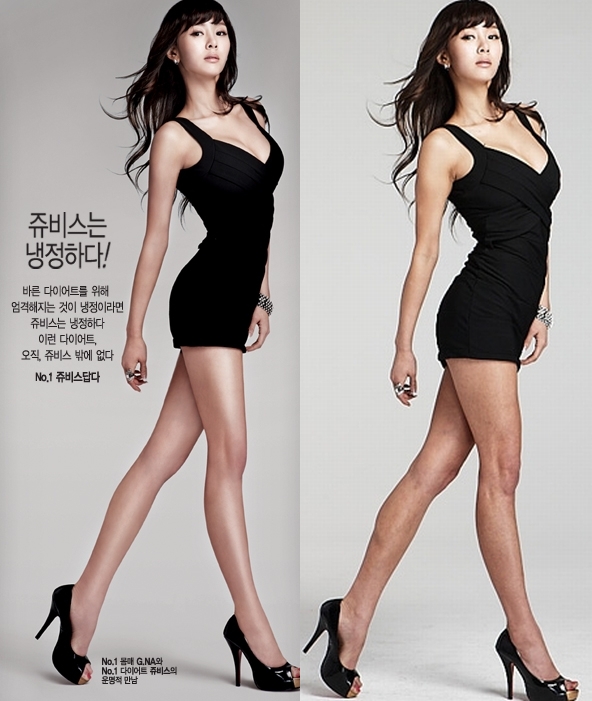
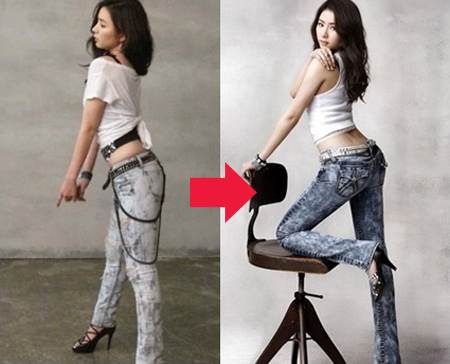
I would never have guessed, for instance, that some of the first critical commentary on Korean ads I would find online would be in the form of student essays (and in English at that!), or that the first decent Korean discussion of excessive photoshopping in ads—next week’s translation—would be on a blog rather than in expensive advertising magazines. And somehow, inexplicably, it never occurred to me to simply type in “S-line” (S라인) and “history” (역사) into Korean search engines either.

Which is not to say that much came up at all actually. But it did lead me to Lee Yeong-ah’s (이영아, right; source) Making Pretty Women (예쁜 여자 만들기), published last year, en route to me as I type this. Based on the Busan Ilbo review of it I’ve translated below, it appears that while the S-line term itself wasn’t used back in the 1920s and ’30s, those were certainly formative years for Korean consumerism, in which the practice of encouraging and/or pandering to certain looks, styles of dress, and body shapes of especially female consumers was first established.

Many of these centered on what were called “New Women” (shin-yoseong; 신여성), very similar to flappers, who not only took advantage of scandalous foreign fashions and non-traditional lifestyles to assert their sexuality and women’s rights, but would also later face a backlash that would be eerily similar to that faced by “Beanpaste girls” (dwenjangnyeo; 된장녀) in the 2000s, and in similarly strained economic circumstances. Indeed, Yewon Lee of Yonsei Graduate School wrote about precisely that in 2007 (opens a PDF; see the end of the post for a full list of sources), and Gord Sellar and Gusts of Popular Feeling have also made the same connection.

Unfortunately however, the reviewer doesn’t mention this self-agency of New Women. Rather, he depicts them only as passive victims of new trends, who had no choice but to accommodate the new demands of the male gaze, manifest in the burgeoning media industry. Also, he ends the review with the curious assertions that, in light of this long history, today’s women shouldn’t be worried about likewise being obsessed with beauty, and that it is sufficient simply to be aware of his history in order to lead a happy life.

While such platitudes are common in the Korean media, I was disappointed to see them in what is otherwise one of the better pieces of Korean writing I’ve read in a while (again, my fault for looking in the wrong places!). And I hope that Lee Yeong-ah doesn’t share them.

(Source)

1930년대에도 ‘S라인열풍 The ‘S-line’ Was Popular in the 1930s too

Busan Ilbo, 5 March 2011

한국 여성들의 ‘미인 강박증’ 역사

Korean women’s history of being obsessed with beauty

‘가슴을 앞으로 그냥 내밀며, 양손을 위로 쭉 뻗었다가, 손끝이 발가락에 닿을 때, 양손을 아래로 뻗으며, 전신을 굽힌다. 이 운동을 계속하면 가슴의 모양이 곱게 발달되고 미끈한 각선미를 갖게 된다.’

“Stick your chest out, stretch both arms up high, bend over and curve your whole body, touching your toes with your fingertips. If you keep doing this exercise, your breasts will beautifully develop and you’ll get a sleek, slender bodyline.”

몸매를 가꾸기 위한 기본적인 스트레칭 동작에 대한 설명이다. 요즘 발행되는 여성잡지에 실린 내용일까. 천만에. 이 미용체조법은 1935년 10월 ‘삼천리’란 잡지에 실렸다. 여성들이 1930년대에 아름다운 몸을 가꾸기 위해 이런 동작들이 필요하다는 것을 알고, 실천했음을 보여주는 사례다. 오늘날 미인들의 필수요건 중 하나인 ‘S라인’이 이미 1930년대부터 각광받기 시작했다는 말이다.

This is an explanation of a basic stretch used for shaping your body. But it’s not from a magazine published today. Rather, it’s from the October 1935 edition of Samcheonri. Women in the 1930s all knew that they had to do this sort of thing in order to get a beautiful body, and an example of them doing it in practice too. These days, beautiful women know they need to get an ‘S-line’, but it was in the 1930s that this sort of thing started becoming popular.

(Source)

무엇이 이런 변화를 불러왔을까? 당시 조선에 볼거리를 즐기는 시각 중심 문화가 태동한 것이 결정적 이유다. 당시 인쇄매체의 사진과 삽화, 연극과 영화 속 여배우들, 길거리를 활보하는 신여성들을 통해 ‘여성의 몸’은 중요한 문화적 담론으로 부상했다. 여성들이 시각 중심 문화 속 남성들의 시선에 노출되면서부터 몸에 대한 인식의 변화가 시작됐던 것이다. 1931년 삼천리는 미인경연 대회를 개최했고, 미인대회는 갈수록 여성들의 몸을 노골적으로 드러내는데 치중했다. 당시 한 일간지는 여성의 아름다운 기준이 얼굴뿐만 아니라 풍만한 가슴, 잘록한 허리, 볼륨 있는 엉덩이, 미끈한 각선미를 고루 갖춰야 한다고 전했다. 바로 S라인이었다.

What brought about this change? In the final analysis, it was the quickening of Korea’s interest in and enjoyment of visual culture. At the time, through pictures and illustrations in print media, through actresses in plays and movies, and through “new women” just walking on the streets, women’s bodies became an important topic of cultural discourse. Because [this meant] they were increasingly exposed to the male gaze, women started changing Korean body and clothing culture. In 1931, the Samcheomri began holding beauty pageants, which stressed ever more suggestive clothing as time went by. A daily newspaper of the time would proclaim that beauty standards were no longer just focused on the face, but now covered the whole body, requiring voluptuous breasts, an hourglass waistline, voluminous buttocks, and a slender figure. This was the S-line.

1920~30년대 예술지상주의, 유미주의적 경향이 문화계에 확산된 것도 원인이다. 당시 예술가, 문학가, 사회적 유명 인사들은 건강한 몸보다 예쁜 몸에 더 중점을 뒀다. 그들의 ‘미인관’을 단적으로 보여주는 사례가 소설가 현진건의 관점이다. 그는 “키가 조금 큰 듯하고 목선이 긴 여자가 좋다. 제아무리 얼굴이 예쁘장하고 몸맵시가 어울려도 키가 땅에 기는 듯하고 목덜미가 달라붙은 여자는 보기만 해도 화증이 난다”고 했다. 그는 몸매 좋은 여성을 노골적으로 선호하는 데서 그치지 않고 몸매 나쁜 여성에게 화를 내고 있다. 오늘날 여성들이 보면 ‘정말 기가 막히고 코가 막힐’ 멘트다.

(Source)

One reason for this was that aesthetic trends and the notion of art for art’s sake began to influence culture too. Artists, cultural scholars, and famous society-people all stressed that a beautiful body was more important than a healthy body [James — sound familiar?]. One example is the novelist Hyeon Jin-geon, who bluntly wrote that “I like women that are tall with long necks. Even if their faces are pretty, and they have good bodies, if they are so short as to be crawling on the floor then I hate even looking at them”, something which would be considered crazy if written today.

위생을 이유로 여성들의 의복 변화가 권장됐다는 사실도 몸매 중요성 증가에 일조했다. 20세기 초 근대적 지식인들은 조선시대 여성의 옷이 위생에 해롭다며 개선해야 한다고 역설했다. 긴 저고리는 길거리의 더러운 오물을 쓸고 다녀 호흡기 질환을 낳고, 가슴을 동여맨 가슴띠는 흉부 압박을 심화시킨다고 했다. 이에 따라 여성들의 옷이 점차 몸매를 드러내는 쪽으로 바뀌었다. 미니스커트와 브래지어가 등장했다. 옷이 변하자 여성들의 몸에 대한 인식도 달라졌다.

Another reason for this new interest in bodylines was that women were encouraged to change their traditional outer garments for the sake of hygiene. In the early 20th Century, public-health advocates stressed that the Jogori, a traditional coat, was so long that it kept dragging in the dirt of the streets and caused respiratory ailments [James — by raising dust around the home?], and that binding women’s breasts put a lot of pressure on their thoraxes. Accordingly, fashions gradually changed. Miniskirts and bras appeared. And notions and practices about women’s bodies also changed.

여성들은 이런 사회적 분위기 속에서 자신들의 몸을 어떻게 바라보고 관리했을까. 요즘의 여성들이 그러하듯, 그들도 자신의 몸을 대상으로 전환해 바라봐야 했다. 자기 자신을 남성의 시선으로 응시하는 법을 배우고 그것이 정답이라고 세뇌됐던 것이다. 여성들은 지식인, 예술가, 직업부인이 되기 위해 미인이 돼야 했다. 그것은 생존의 문제였다. 그렇게 여성들은 ‘S라인’이 미인이라고 말하는 남성들의 시선에 맞추기 위해 자신의 몸을 가꿔야 했다.

(Source)

What did women think about this new social atmosphere, and how did they cope? Well, just like women now, they had to objectify their own bodies. It was drilled into them that they had to look at themselves how men would look at them. And in order to be respected [James — lit. a person of knowledge], or to be an artists, or to have a job, they had to become beautiful. It was a matter of survival. They had to adapt to and dress-up themselves to fit this notion of a beautiful woman being one that had an S-line.

예쁜 여자 되기에 성공했던 여성들의 운명은 어떠했을까. 그들은 세련된 미적 감각, 유행을 선도하는 패션, 화려한 외모로 인해 뭇 남성들에게 관심과 욕망의 대상이 됐다. 동시에 그녀들의 진보적인 사유와 자유로운 행보는 멸시와 질타의 대상이기도 했다. 1920년대 대표적 신여성이었던 윤심덕, 나혜석, 김원주 등은 그 누구도 행복한 말년을 보내지 못했다.

What became of the women who were successful in making such a transformation? They became the object of men’s desires for their sophistication, their sense of aestheticism, being leaders in fashion, and for their magnificent bodies. However, they were also the object of contempt and scorn for their progressive and free thinking. Of representative new women of the 1920s, such as Yun Shim-deok, Na Hye-seok, and Kim Won-ju and so on, none were happy in their old age.

‘예쁜 여자 만들기’는 한국 여성들의 미인 강박증 형성 역사를 보여준다. 예쁜 여자가 되기를 강요하고 압박하는 힘이 근대 이후 한국사회에 생겨난 것이기에 오늘날 여성들이 자책감을 가질 필요는 없다는 것이다. 근대의 몸, 여성 등에 관한 담론을 활발하게 제기해왔던 저자는 몸에 대한 모든 관심을 끊고 외양보다 내면의 아름다움을 추구하라는 식의 도덕적 결론을 강요하진 않는다.

Making Pretty Women shows us the history of women’s obsession with being beautiful. As the pressures women face in doing so have been around since the dawn of modern Korea, today’s women should not feel guilty about it. Moreover, in actively raising these discourses about women’s bodies, the writer does not moralize and argue that the practice should be stopped, or that inner beauty is more important than outward appearances.

대신 왜 우리가 몸에 대해 그렇게 지나치게 집착하는지를 제대로 알고, 그러한 앎을 통해 한층 행복한 삶을 사는 방법을 스스로 선택하라고 말한다. 여성들이 ‘앎’을 통해 위로받는다는 것으로도 족하다고 한다. 이영아 지음/푸른역사/343쪽/1만3천900원. 김상훈 기자 neato@busan.com

Rather, the author teaches us about today’s obsession with body image. Through this knowledge,women can choose to live happily, and this is sufficient (review by Kim Sang-hoon).

Sources

– Hellgren, Tess. “Explaining Underweight BMI and Body Dissatisfaction among Young Korean Women“, Spring 2011 Conant Prize in General Education, Harvard University, May 2 2011

Lee, Yewon. How Women Are Represented within the Patriarchal Nationalism in (neo) Colonial Times, Paper presented at the annual meeting of the American Sociological Association, TBA, New York, New York City, Aug 11 2007

– Park, Bongsoo. “Sensational Politics of Desire and Trivial Pursuits: Public Censure of New Women in Private Lives in early 1930s Korea Paper presented at the annual meeting of the International Communication Association, Sheraton New York, New York City, NY,  May 25 2009

(Please email me for PDFs if any of those links don’t work)

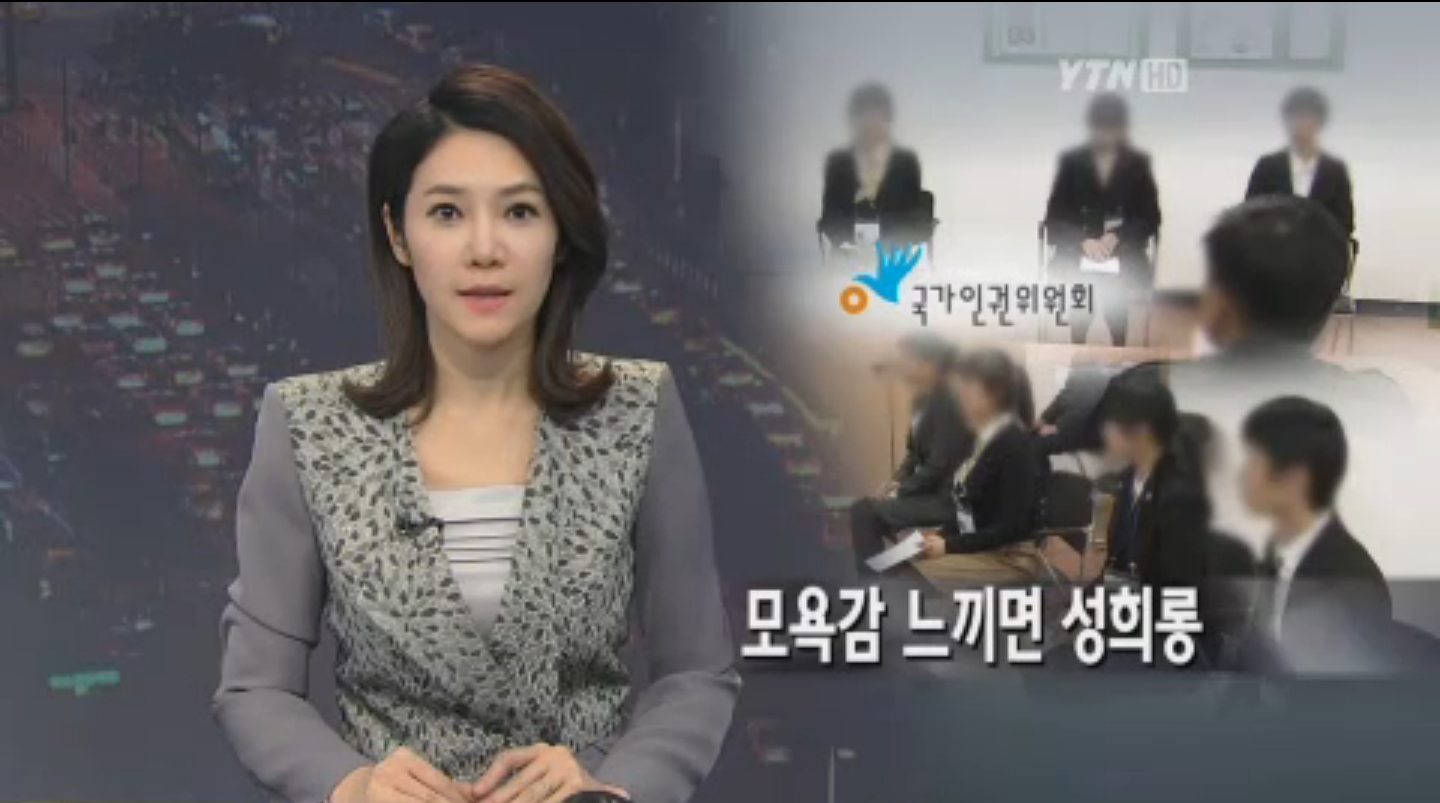
YTN: Sexual Questions and Jokes Common at Job Interviews

A brief report from YTN on Wednesday, which you can see the video of here (I can’t embed it sorry). Unfortunately, it provides no actual sources for its assertion that sexual harassment is common at interviews, but I’m inclined to believe it given how invasive and often needlessly humiliating the job interview process already is in Korea.

Indeed, when even Samsung admits that many Koreans “take it for granted that they have to tolerate anything in return for getting paid”, then it’s difficult not to see such an interview style as an integral and deliberate part of indoctrinating new workers.

Lest you scoff at the ensuing passivity and regular unpaid overtime however, and claim that you would never tolerate that crap from your boss, note that a 2011 OECD report found that “Korean workers [are the] most vulnerable to an economic crisis compared with their counterparts in other OECD countries, due to the country’s extraordinarily low levels of unemployment benefits” (i.e., lose your job in Korea, and you’re screwed). Also, that it’s very common to be interviewed in a group rather than individually, especially at larger companies, and that particularly stressful and demeaning interviews are so common as to have their own special name (abbak-myeonjob/압박면접, or ‘pressure interview’), mentioned at the end of the report.

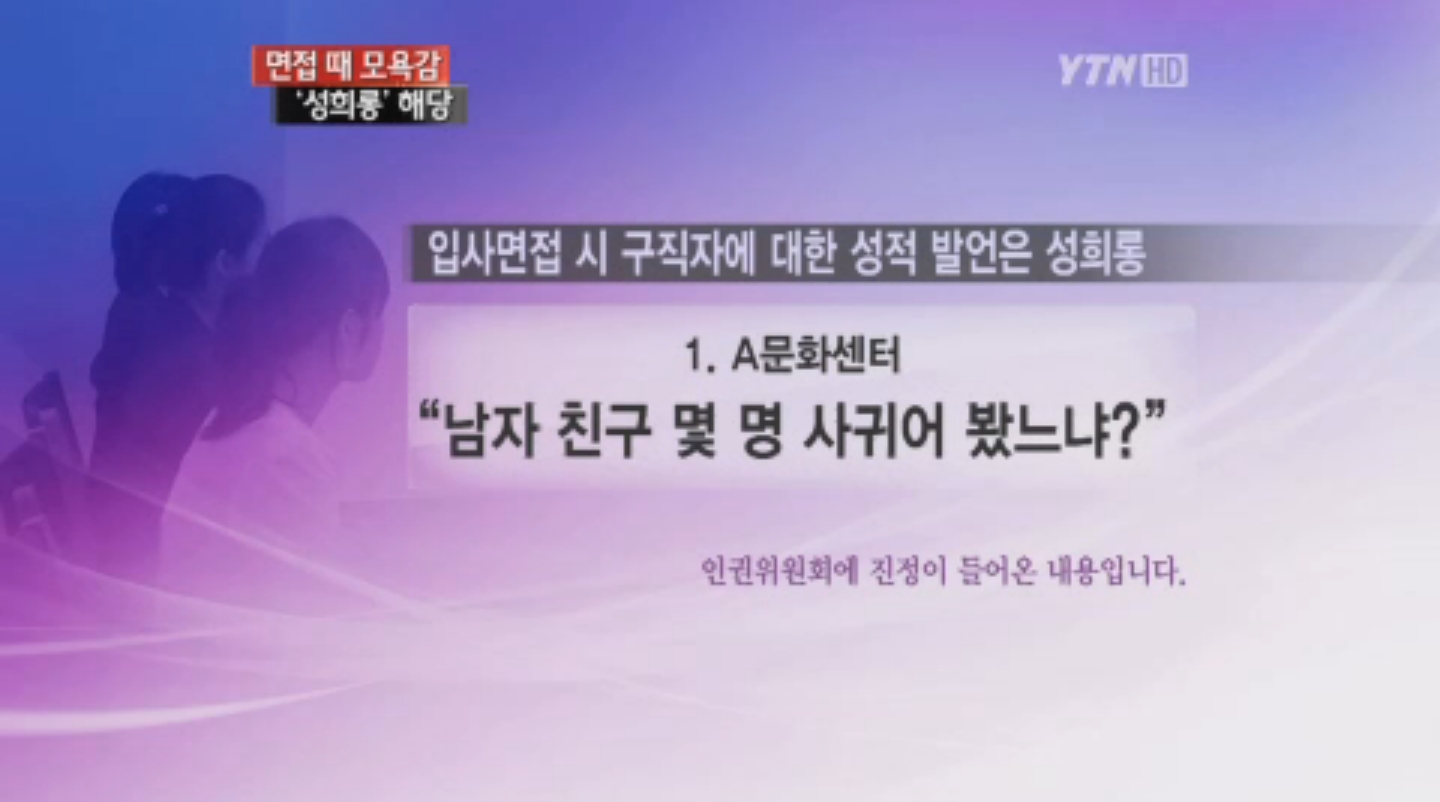
면접 성적 모욕감 느꼈다면 성희롱” / “If you feel insulted from sexual jokes at a job interview, that’s sexual harassment”

Anchor Comment:

여성 구직자들이 입사 면접을 볼 때 면접관들이 성적인 농담을 던질 때가 종종 있습니다.

구직자가 이런 말을 듣고 모욕감을 느꼈다면 성희롱에 해당된다는 국가인권위원회의 판단이 나왔습니다.

조임정 기자가 보도합니다.

Female job seekers report frequently receiving jokes of a sexual nature from interviewers at job interviews. If they feel insulted as a result, that’s sexual harassment according to a judgment of the National Human Rights Commission (NHRC). Jo Im-jeong reports.

Reporter:

취업을 앞두고 면접에 다녀온 여성들은 종종 무력감에 빠지곤 합니다.

면접 때 던져지는 이상한 질문들 때문입니다.

Prior to getting a job, women feel powerless after having an interview. That’s because they receive such strange questions in them.

Interview — Miss Gomo, a student preparing to start working:

“성적인 수치심을 느끼는 질문을 한다면, 사실 면접자 입장에서는 어떻게 강하게 대응할 수 있는 부분이 아니고…”

“If an interviewee feels a sense of sexual shame [from the questions in an interview], they’re not in a strong position to do anything about that…”

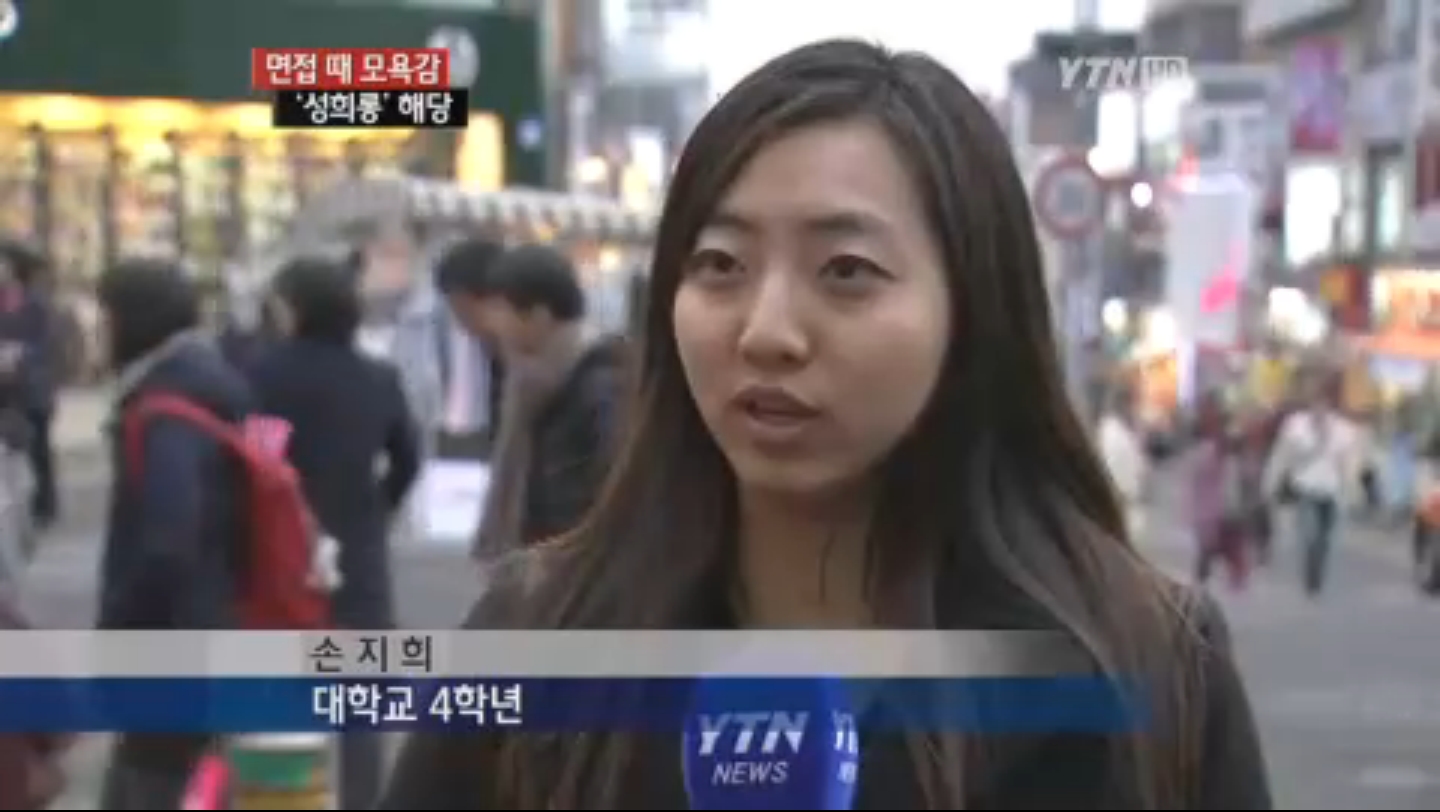
Interview — Son Ji-hee, 4th year university student:

“성품을 보기 위해서 그렇게 자극적으로 얘기하는 것에 대해서, 정말 실효성이 있는지는 두고봐야겠지만, 그렇게까지 상처를 받는 사람이 있다면, 자제될 필요는 있다고 생각합니다.”

“Saying provocative things like that in order to determine one’s personality…it has to be seen if that’s effective. And if it’s done to the extent that people are hurt by it, then it needs reconsidering.”

이처럼 면접을 비롯한 구직 과정에서 성적 굴욕감을 느꼈다는 진정이 잇따라 국가인권위원회에 접수되고 있습니다.

지원자에게 “남자친구 몇 명을 사귀어봤는지”처럼 업무와 관련 없는 질문을 던지거나, 심지어 회사 대표가 면접 과정에서 지원자의 특정 신체 부위를 만지는 경우도 있었고, 채용이 확정된 뒤 회식 자리에서 남자 직장 상사와 블루스를 출 것을 강요한 경우도 있었습니다.

인권위는 입사 면접 과정에서 면접관의 발언 때문에 구직자가 성적 굴욕감을 느꼈다면 성희롱에 해당한다고 판단했습니다.

문제는, 면접에서 결정적인 권한을 가진 회사 관계자가 성희롱을 해도 절대적 약자인 구직자가 제대로 대처하기 힘들다는 겁니다.

People who have felt humiliated like this in interviews have appealed to the NHRC.

Applicants report being asked questions like “How many boyfriends have you had?” that have no relationship to the job, and there have even been cases of company representatives touching certain body parts of theirs during the interview. Or, after they’re hired, of male superiors forcing them to dance the blues with them at company dinners.

Feeling sexual shame because of comments by interviewers has been judged sexual harassment by the NHRC.

The problem is that when the final decision about hiring is by the sexual harassers themselves, interviewees are in a weak position and find it difficult to cope with what has happened.

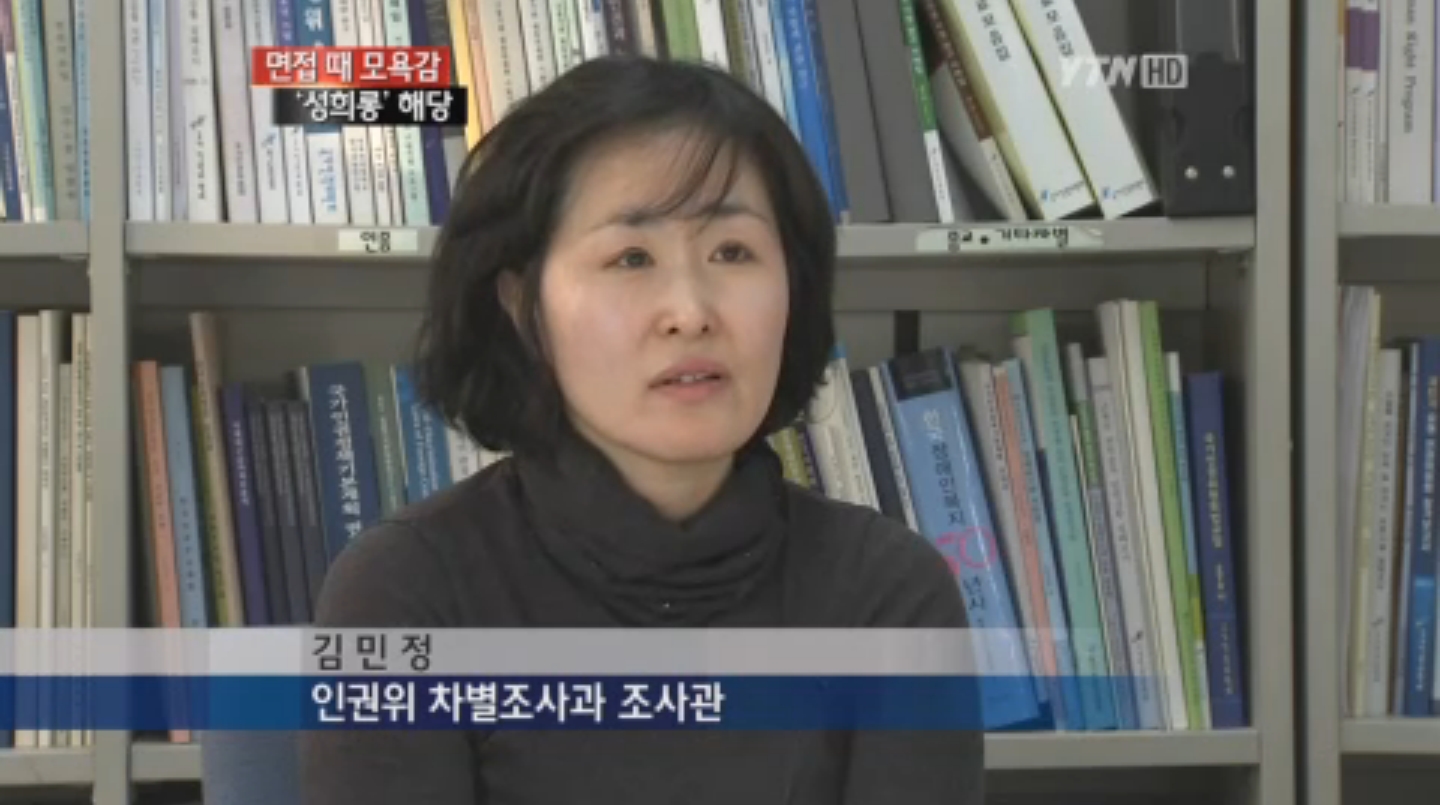
Interview — Kim Min-jeong, NHRC Discrimination Department Investigator

“압박면접을 시행하더라도 개인의 직무 능력이나 본인의 가치관 등을 알아볼 수 있는 질문을 하는 것이 훨씬 더 중요하다고 생각합니다.”

인권위원회는 해당 기업 관계자에게 인권위가 주최하는 특별 인권교육을 받고 피해자들에게 손해배상금을 지급하라고 권고했습니다.
YTN 조임정[ljcho@ytn.co.kr]입니다.

“Even if people are doing a ‘pressure interview’, we think questions about one’s work ability and the person’s value and so on are far far more important.”

The NHRC recommends that offending employees are given human rights education, while the victims should receive financial compensation.

YTN Reporter Jo Im-jeong reporting (end).

Korean Gender Reader

Via Hello Korea!, I’ve just learned of Donga TV’s Single Mom Story above, a series that looks at successful single mothers in Korea. Unfortunately, you’ll need to be fluent in Korean to watch it, but just that the series exists at all is very welcome news, especially considering the stereotypes they have to confront on a daily basis (and which in turn have very real effects on social welfare policy).

Meanwhile, I’m much busier than expected with translations this week sorry (see here, here, here, and here if you’d like a preview!), and on top of that I’m preparing to start teaching again from next week too. But as you can see, the stories still just keep coming!

Not Made Up: Tourists Boost Cosmetics Industry (Korea Real Time)

White Person + Asian Person = $? (New York, Pew Research Center, MSNBC; hat tip to Robert Koehler)

Vietnam to ban marriage with Korean men aged 50 years old or over (Korea Times; hat tip to Bobby McGill)

Korea only second in the world in plastic surgery operations per capita? (Toronto Sun)

Korean plastic surgeons charge foreign patients almost double that of Koreans (The Korea Herald)

The great gender divide: lunch time edition (I’m no Picasso)

Why half-Black, half-Korean Michelle Lee will not win K-Pop Star (Allkpop, SNSD Free for all, Omona!)

Office worker arrested for producing drug for sex crimes (Korea Times; hat tip to nayaCasey)

The Korean entertainment business: a statistical analysis of what happens after stars find trouble (Han Cinema)

Women and young people still underrepresented in National Assembly (The Hankyoreh)

China — “A wife has become a luxury good” (Global Times; hat tip to @MaraHvistendahl)

Female students Occupy Male Toilets in Guangzhou (Shanghaiist, Baidu Beat; hat tip to David Willis)

Border town brothels openly cohabit with military – “a shock to most Korean women, but no secret to their men” (Korea Times; hat tip to @tomcoyner)

Global Gender Imbalance Poses Critical Problems for Women (Inter Press Service)

The Hunt for Mr. Swirl – documentary on capture of pedophile that led to changes in Korea’s E-2 visa regulations (Gusts of Popular Feeling)

Rent a Husband (Korea Times)

“Be White” (Groove Magazine)

Education ministry threatening to limit students‘ hair freedom (The Hankyoreh)

Filipinos: Nannies, maybe; native speakers, no. (Gusts of Popular Feeling, The Dong-a Ilbo)

Plastic Surgery in the ROK: An Army of Clones (Expat Hell)

Kdramas, Rape Culture, & Complicity (Idle Revelry)

Asians Are Stealing Our Boyfriends On This American Life (Racialious; via My First Love Story)

Japanese rightists angry about Korean men stealin’ their women (The Marmot’s Hole)

• The Bodyguard Drama: When Women Protect Men (Seoulbeats)

(Links are not necessarily endorsements)

Challenging Stereotypes about Abortion

(Source)

Okay, maybe I have overdone it a little with that above image. Because I certainly I don’t mean to appear flippant about the subject of abortion.

But hear me out — something just snapped in me when I saw the unnecessarily sombre cover (and tone) of Womenlink’s new book on abortion below. Because in reality, most abortion patients and their partners report feeling more relieved than depressed and regretful, despite what you usually read about them in the media.

So, the humor of the Yoda-like, oddly-appropriate Engrish above felt like a very welcome antidote. As did the additional images of happy couples you’ll find throughout this post, used in lieu of much harder to find “relieved” (안심했다? 안심이다?) ones.

Also, it was ironic that something that set out to challenge stereotypes would confirm so many of my own in the process. Namely, that all too many Koreans are forced to seek abortions because of a lack of basic knowledge about contraception, and that women are still wary of keeping condoms on hand and/or insisting their partners use them, lest they “be regarded as a slut or an experienced and impure woman” (which in turn leads to the perception that contraception is only men’s responsibility).

But don’t get me wrong — these are minor quibbles really, and otherwise I have nothing but praise for the book!

(Source)

‘낙태’ 사회적 배경을 이야기하는 이유, The reason why we talk about the social background of ‘abortion’

Ildaro, November 15th 2011

민우회, 낙태 사례집 <당신이 생각하는 낙태는 없다> 발간 의의, The Significance of the Publication of Womenlink’s Abortion Casebook There’s no such thing as the abortion you’re thinking of

필자 회색연필님은 비혼 페미니스트 방송 ‘야성의 꽃다방’ 활동가로, 현재 대학원에서 보건학을 전공하고 있습니다. [편집자 주]

The author, Grey Pencil, is a graduate student in health science and activist who is part of the unmarried feminist radio program “Wild Nature’s Flower Tea Room.” [Editor’s Note]

낙태 금지한 형법은 위헌‘ 헌법재판소 공개 변론, Constitutional Court public proceeding ‘for the criminal law that prohibits abortion’

지 난 10일 헌법재판소에서는 ‘낙태죄’의 위헌 여부를 두고 첫 공개 변론이 열렸다. 이번 소송은 2010년 부산에서 인공임신중절시술을 시행한 혐의로 기소된 조산사가 ‘낙태를 금지하는 형법 조항은 임부의 인간으로서의 존엄과 가치, 행복추구권, 평등권, 신체의 자유, 사생활의 자유, 혼인과 가족생활의 존엄 등을 침해하여 위헌’이라며 소송을 청구한 것에서 시작됐다.

On November 10, the first public arguments over criminal abortion began at the Constitutional Court. This case began after a midwife who was indicted on the charge of carrying out a procedure to terminate a pregnancy in Busan in 2010 filed suit, saying, “The criminal law clause that prohibits abortion violates a pregnant woman’s dignity and value as a human, her right to pursue happiness, right to equality, bodily freedom, privacy, and the dignity of her marriage and family life, and thus is a violation of the constitution.”

형법 270조 1항(업무상 동의낙태죄)은 임산부의 동의를 얻어 낙태시술을 한 의사, 조산사 등을 형사처벌하도록 규정하고 있다.

Criminal Law Article 270 Clause 1 (Professional Abortion with Consent) stipulates that doctors or midwives who receive the pregnant woman’s consent and perform an abortion will receive a criminal penalty.

이날 변론에서 청구인과 법무부는 낙태죄의 실효성 여부와 임산부의 자율권 침해 여부 등 쟁점을 두고 첨예한 의견 대립을 보였다. 청구인 측은 임부의 자기결정권을 주장했고, 법무부 측은 태아의 생명권 존중을 내세웠다.

At the proceeding on this day, the claimant and the Ministry of Justice showed sharply conflicting opinions on the issues of the effectiveness of the abortion law and the violation of the autonomy of pregnant women.  The claimant’s side insisted on the right to self-determination of a pregnant woman, and the Ministry’s side advocated respect for the right to life of a fetus.

현재 대한민국에서 낙태(인공임신중절)는 ‘불법’이다. 그러나 지난 몇 십년 간 낙태는 암암리에 이뤄져왔고, 사회적으로 큰 문제가 되지 않았다. 그러나 ‘저출산 문제’가 대두되면서 정부는 낙태율을 줄이기 위해 지금까지 쉬쉬하던 ‘불법’ 행위를 집중적으로 단속하기 시작했다. 그리고 작년, 낙태 근절 운동을 벌여온 프로라이프 의사회의 고발로 몇몇 병원과 조산원이 검찰에 고발돼 징계를 받으면서, 낙태를 둘러싼 찬반 논쟁이 촉발되었다.

Currently, abortion (the artificial termination of a pregnancy) is “illegal” in the Republic of Korea.  However, for the past few decades abortion has been done in secret, and it hasn’t become a big societal problem.  As the low birth rate problem comes to the fore, however, the government has begun to intensively crack down on this formerly covered-up “illegal” activity in order to reduce the rate of abortions.    Also, last year, as several hospitals and maternity clinics were reported to prosecutors and punished through the accusations of a pro-life medical association that has campaigned for the eradication of abortion, controversy has been sparked surrounding the pros and cons of abortion (source, right).

이러한 시점에서 한국여성민우회는 낙태의 당사자이면서도 정작 논쟁에서는 배제되었던 여성들의 목소리를 모으기 시작했다. 그렇게 모인 22명의 여성의 이야기를 엮어 올 가을, 낙태 관련 사례집 <당신이 생각하는 낙태는 없다> 발간되었다.

At this time, Korean Womenlink began to gather the voices of women, who, though they are the actual people whom abortion directly concerns, had been excluded from the argument.  The stories of women gathered like this were woven together and this autumn, the abortion casebook “There’s no such thing as the abortion you’re thinking of” was published.

여성들이 말하는낙태란 무엇인가’, What women say “abortion” is

사 례집은 낙태 경험이 있는 여성들을 인터뷰하고, 그 내용을 바탕으로 총 22명의 여성들의 이야기를 낙태 결정의 순간과 낙태를 하는 순간, 낙태 그 이후의 경험들 그리고 피임에 관련된 부분과 상대(남성)의 이야기 등으로 구분하여 엮었다.

Women who’ve had an abortion were interviewed, and from that material, a total of 22 women’s stories are divided up into the moment they decided to get an abortion, the moment they got it, their experiences afterwards, and a section about birth control and their (male) partner’s story, and these parts are woven together in the casebook.

사례집에 실린 각양각색의 배경을 가진 22명의 여성들의 이야기는 모두 다 다르면서도 같았다. 낙태를 하게 된 상황이나 상대에 대한 생각 등은 모두 다 달랐지만, 다들 ‘낙태는 어쩔 수 없는 선택이었다.’는 점과 ‘다른 여성들에게 힘이 되고 싶다’는 마음은 같았다. 그랬기에 이 어려운 이야기들을 선뜻 나서서 이야기할 수 있었던 것이리라 생각한다.
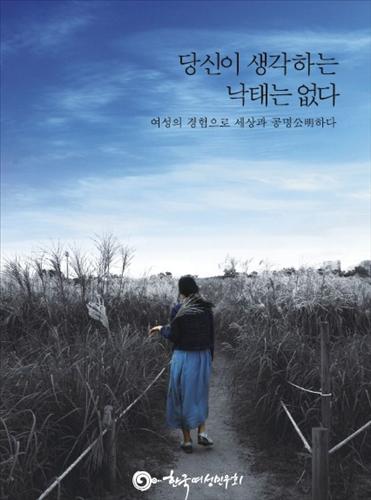
The stories of the 22 women of various backgrounds in the casebook are all different yet the same.  The situation in which they chose abortion or their thoughts about their partners are different, but all of them had the same feeling that, “Abortion was the only option,” and, “I want to be a source of strength to other women.”  I think that may be the reason that they were able to come forward and tell their difficult stories willingly (Caption, right: 한국여성민우회에서 발간한 낙태 관련 사례집 <당신이 생각하는 낙태는 없다>; The abortion-related casebook published at Womenlink {source}).

태아를 생명권으로 보아 생명을 우선시하느냐, 아니면 산모의 선택을 존중하느냐는 논쟁은 단순히 ‘낳을 것인가, 낳지 않을 것인가’의 ‘낙태’ 행위에만 초점이 맞춰져 있다.

The debate over whether to put life first out of consideration for the right to life of a fetus, or to respect the choice of a pregnant woman, is focused into the act of abortion as simply, “have the baby, or not.”

보건의료학적 측면에서 보면 태아=생명이기 때문에 낙태는 비난받아야 한다는 결론이 난다. 그런데 보통 보건영역에서 정책을 결정할 때 단순히 건강만을 위한 것 외에도 사회경제적 요인도 같이 고려하여 판단한다. 여성의 낙태 문제 역시 보건 영역에 속하는 것으로 볼 수 있지만 희한하게도 ‘낙태’만큼은 사회-경제적 요인은 간과하여 판단하고 있다. 윤리적인 이슈가 이미 형성되어 있어, 낙태 행위 그 자체만을 놓고 이야기하려 하는 것이다.

From a health-care perspective, because a fetus = life, one comes to the conclusion that abortion must be criticized.  However, in the usual domain of health care, when making policy decisions, other socioeconomic factors besides simple health must be considered when making a judgment. Women’s abortion question could of course be considered in the domain of health care, but strangely, only in abortion’s case, socioeconomic factors are being ignored when making a judgment.   The ethical side of the issue is already formed in people’s minds, so the casebook attempts to discuss the act of abortion itself.

그렇기에 이번에 민우회에서 발간한 낙태 사례집은 이러한 ‘낙태’ 행위만을 보지 않고, 낙태를 둘러싼 ‘사회적’ 배경이 그녀들에게 어떤 영향을 미쳤는지를 당사자들의 목소리를 통해 잘 보여주고 있다는 점에서 큰 의미를 갖는다고 본다.

That’s why the abortion casebook that Womenlink published doesn’t just look at the act of abortion, it shows what kind of effect the societal background that surrounds abortion has on these women through the voices of the people involved; for this reason, it is meaningful.

흔히, 낙태를 하는 사람들은 ‘성적으로 문란하다.’, ‘순결하지 못하다.’, ‘미혼 여성들이 많을 것이다.’라고 생각하는데, 사례집에서 드러난 바로는 그렇지 않았다. 모두 우리 주변에서 볼 수 있는 평범한 사람들이었고, 비혼 여성이 많을 것이라는 생각과는 달리 오히려 기혼 여성들의 낙태경험이 많았다.

Commonly, people that have an abortion are thought of as “sexually promiscuous,” “impure”, or “probably mostly unmarried women,” but according to the casebook, that isn’t true.  They are all average people we can see around us, and different from the unmarried women that were expected, many married women had experiences with abortion.

(Source)

혼인 유무를 떠나, 그들에겐 낙태는 어쩔 수 없는 ‘강요된 선택’의 문제였다. 기혼 여성의 경우, 육아를 둘러싼 경제적, 사회적 여건에 때문에 낙태를 선택할 수밖에 없었지만, 자식들을 기르면서도 마음의 상처를 안고 살아간다. 비혼의 경우 역시 크게 다르지 않다. 역시 젊은 나이라 경제적인 기반 등 아이를 낳아 기를 준비가 되어있지 않을뿐더러, 사회적 ‘낙인’ 때문에 산부인과에서도 애초부터 아이를 낳을 선택권이 주어지지 않는 경우가 많았다.

Whether or not they were married, abortion was an unavoidable “forced choice” to them.  For married women, because of the economic and social conditions surrounding raising a child, they couldn’t choose anything but abortion, but they live with that pain in their heart even as they raise their other children.  Unmarried women are also not very different.  They are young, of course, and so lack a financial base, so not only are they not prepared to have and raise a child, but there are many cases in which, because of their social label, they are not even given the right to choose to have the baby, even at an ob-gyn.

사례집에 실린 여성들 모두, ‘낳고 싶었지만 낳을 수 없는 상황’이 문제였다고 이야기한다. 낙태는 개인의 기호가 담긴 선택이 아니라 사회가 강요한 ‘선택’이었던 것이다. 사회는 저출산을 문제 삼으면서도 왜 여성들이 아이를 낳지 않으려하는지를 보지 않고 그저 낙태를 선택한 여성에게만 손가락질 한다.

The women in the casebook all say the problem was that they “wanted to have the baby but couldn’t in that situation.”  Abortion was not a matter of personal preference, but a “choice” forced by society.  Even as society makes an issue of the low birth rate, it doesn’t ask why women don’t want to have children, it just points the finger at women who have chosen abortion.

임신은 남녀가 함께 관여해서 발생하는 문제이고, 해결 역시 남녀가 같이 풀어야 될 문제이다. 하지만, 원치 않은 임신이 닥쳤을 때, 결국 책임지는 사람은 ‘여성’이 된다. 그렇기 때문에 여성에게는 임신이 갖는 의미가 굉장히 크다. 그럼에도 불구하고 사회는 이러한 임신의 문제가 단순히 여성이 10개월짜리의 고생으로 인식되고, 거의 대부분의 여성들이 감당하는 향후 20년간의 양육문제는 인식조차 하지 않는다.
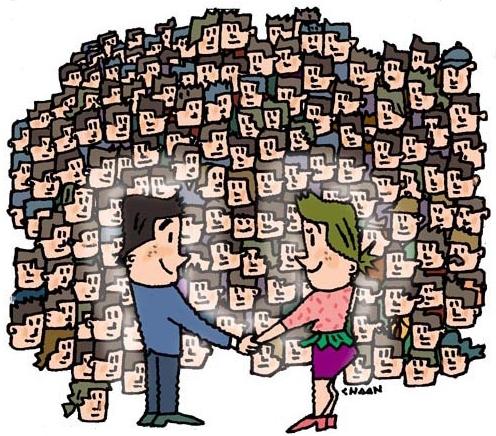
Pregnancy is a problem that occurs with both men and women’s participation, and its solution should also be an issue that a man and woman resolve together.  However, when an unwanted pregnancy happens, the woman becomes the person who takes responsibility.  Because of this, pregnancy is very significant for women.  Despite this, society considers this issue of pregnancy as simply 10 months of hardship for a woman, and doesn’t even recognize the following 20 years of raising the child that is mostly done by women (source, right).

이로 인해, 임신 사실 조차 달갑지 않은 여성들도 많을 것이다. 미혼의 임신은 순결이데올로기와 맞물려 미혼모라는 이유만으로 손가락질 당하고, 그 자식마저도 편견으로부터 자유로울 수 없다. 그 뿐 아니라 경제적인 뒷받침도 미비하다. 기혼 여성이라도 크게 다르지 않다. 육아는 전업주부든, 직장여성이든 누구에게나 가벼운 문제가 아니다.

For this reason, there will be many women to whom the very fact of their pregnancy is unwelcome.  Unwed pregnancy is [negatively] connected to the ideology of purity, and so they are scorned just for being unwed mothers, and even their children are not free from prejudice.  Not only that, economic support is also inadequate.  Even married women are not much different.  Child-rearing is not an easy problem for anyone, full-time homemaker or career woman.

직 장여성의 경우는 더 버거운 문제이다. 임신과 동시에 직장에서는 그만두기를 강요당하고, 출산 이후 재취업이 쉽지 않아 임신을 더 꺼리게 만든다. 그 뿐인가, 맞벌이가 대세인 요즘에도 탁아시설 등의 인프라는 갖춰주지도 않고 여성 개개인에게 모성만을 강요하여 워킹맘이 슈퍼맘이 되도록 요구한다. 이런 상황에서 사회적으로나 경제적으로나 열악한 상황일 경우 누가 낳아 기르려고 하겠는가.

In career women’s case, it is a more unmanageable problem.  When pregnant, they are forced to quit, and re-entering the workforce after giving birth is not easy, so they are reluctant to become pregnant.  Not only that, even in this time in which dual-income families are the general trend, infrastructure like day-care facilities are not provided and each woman is pressured to be maternal, and so working  moms are asked to become super moms. In this kind of situation, when both the social and financial situations are inadequate, who would want to have and raise a child?

(Source)

남자들도 수술대에 앉아 본다면…If men also tried sitting on that operating table

무엇보다 낙태에 대한 정부의 태도가 여성을 재생산의 측면에서 보고 있다는 점은 무례하고 후진적이다. 출산율을 올리기 위해 낙태를 금지하는 정책을 편다는 것은, 여성을 자아실현 등의 욕구가 있는 한 개인이 아니라, 아이를 낳는 존재로서  ‘관리’해야 하는 대상으로 간주하는 것이다.

More than anything, the government’s attitude towards abortion looks at women from a reproductive aspect, which is disrespectful and backwards.  Implementing a policy that prohibits abortion in order to raise the birth rate is considering women not as individuals with desires like that of self-realization, but as beings that give birth and thus objects [in the sense that they are the targets of an action] that need to be managed

과거의 인구조절정책을 봐도 그렇다. 인구가 많았던 시절에는 낙태를 쉬쉬했으며, 남녀 모두 정관수술이나 난관수술 등을 권장하고 강요했다. 그러던 정부가 20~30여년이 지난 지금, 이제는 출산률을 올리기 위해 ‘낙태’를 금지하겠다는 것이다.

Past population-control policies show this as well.    At the time when the population was large, abortion was done quietly, and men and women were encouraged or compelled to have vasectomies or tubal ligations.  Twenty or thirty years have passed and now the government that did that has resolved to prohibit abortion in order to raise the birth rate.

사실, 낙태를 반대하는 입장에서는 ‘낙태는 피임만 잘 하면 줄일 수 있다’고 말하는데 나는 일부는 동의한다. 사례들을 살펴봐도 남녀 모두 피임법을 잘 몰랐던 경우가 많았다. ‘피임’이라는 개념 자체를 몰라서 덜컥 임신이 된 경우들도 있었고, ‘질외사정법’이던가 ‘체온주기법’과 같은 피임 성공률이 낮은 방법을 사용하고 있었다는 점이다.

In truth, I agree in part with the anti-abortion position that says, “We can reduce abortions just by using birth control well.”  Looking at the casebook, there were many instances in which neither the man nor the woman knew much about birth control.  There were cases in which they didn’t know of the very concept of “birth control” and so unexpectedly became pregnant, and also those who were using types of birth control with a low success rate, like the “withdrawal method” or the “body-temperature cycle method.”

(Source)

최근에 성교육이 많이 보급되었다고 하지만, 위의 사례들을 보면 아직도 성교육이 부족하다는 생각이 든다. 한편으로, 피임이 완벽히 성공할 것이라는 우리의 생각과는 달리 실제로 100% 피임은 불가능하다는 사실도 인정해야 한다.

Sex education has become quite widespread these days, but looking at the cases above, one gets the impression that sex education is still deficient.  On the other hand, different from our belief that birth control will be perfectly effective, we must recognize the fact that 100%-effective birth control is not truly possible.

성관계 시 작용하는 남녀 간의 권력구도 역시 짚고 넘어갈 필요가 있다. 사례들을 보면 여성이 피임도구 사용에 대해 이야기할 수 없는 상황이 많았다. 피임 성공률이 가장 높은 콘돔을 사용하자고 이야기 할 때 ‘헤픈 여자’, ‘경험 있는 순결하지 못한 여자’로 치부될까봐 말하지 못하거나 남성 쪽에서 콘돔 사용을 꺼려한다는 이유로 사용하지 못하는 식이다.

There is also a need to deal with the power structure between a man and woman who start to have sex. Among the cases, there were many in which the woman was in a situation in which she couldn’t talk about using birth control.  She couldn’t say anything because she was afraid that if she suggested using a condom – the birth control with the highest success rate -she would be regarded as a “slut” or an “experienced and impure woman”, or she didn’t use a condom because the man was reluctant to (source, right: unknown).

자신이 준비되지 않았음에도 불구하고 남성의 요구를 차마 거절하지 못하고 성관계를 맺은 사례도 많았다. 그리고 심지어 부인에게 정관수술 했다고 거짓말하는 남편들도 있었다.

There were also many cases in which the woman couldn’t bear to refuse the man’s demand and so had sex even though she wasn’t ready. There were even men who lied and told their wives that they had had vasectomies.

이처럼 가부장제하에서 ‘순결이데올로기’와 맞물린 남녀 간의 권력구도가 여성에게 상당히 불리하게 작용함을 알 수 있었다. 그러나 사례집에서 나타난 여성의 임신 상황에 대처하는 남자들의 태도는 미숙하기만 했다. 걱정해주고 함께 고민하는 남자들도 있었지만, 나 몰라라 하고 사라지는 경우도 적지 않았다. 그런 남성을 만난 어떤 여성은 ‘남자들도 그 수술대에 앉아 보면 좋겠다.’고 말한다. 오죽하면 그런 이야기를 했을까 싶다.

In this way, we see that in a patriarchal system, the power structure between men and women, which is connected to the “purity ideology,” is considerably disadvantageous to women.  However, in the casebook, the attitude of the men who are dealing with the women’s pregnancies is merely one of inexperience.  There were men who were anxious and who worried with the woman, but there are also not a few instances in which the man did nothing and disappeared.  One woman who met a man like that said, “I wish that men would try being on that operating table.”  She must have had a hard time, for her to say that.

낙태, 말할 있게 하라, Make it possible to talk about abortion

아직도 우리사회에서는 낙태에 대한 인식이 좋지 않다. 사례집의 몇몇 사례들에서 이야기한 ‘낙태 경험’에서 심지어 낙태를 시술하는 의료인까지도 사회적 통념의 틀을 벗어나지 못하고 있음을 잘 보여준다.

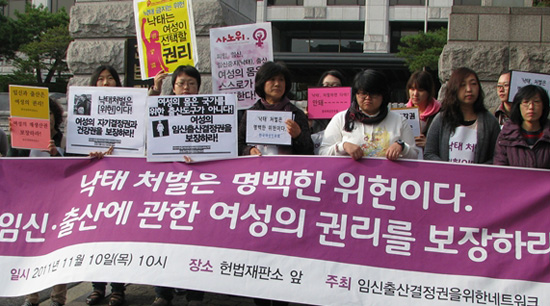
In our society, the perception of abortion is still not good.  The “abortion experience” section of several of the cases in the casebook shows that even some of the doctors who perform abortions can’t think outside the box of societal norms (Caption, above: 임신출산결정권을 위한 네트워크는 헌번재판소 공개변론일에 맞추어 ‘낙태 처벌 반대’를 주장하며 집회를 가졌다; A network for pregnancy and childbirth decision-making rights holds a gathering and argues for “opposition to abortion punishments” to address the public proceedings at the Constitutional Court).

낙태를 결심하고 병원을 찾은 여성들 역시 죄책감에 시달리고 말 못할 비밀을 갖게 되는데, 미혼이니 당연히 낙태를 선택할 것이라 생각한 의사며, 헤픈 여자라는 시선으로 싸늘하게 대한 간호사의 태도는 그들에게 낙태에 대한 부정적인 인식을 더욱 강화하게 만든다. 낙태는 축복받을 일도 아니지만, 어떤 측면에서는 ‘시선의 폭력’이라는 생각이 든다. 그리고 이런 식의 ‘낙인’들이 낙태 경험을 가진 여성을 더욱 더 말할 수 없는 존재로 만들어버린다.

Women who decide to have an abortion and find a hospital suffer from a sense of guilt and acquire a secret they can’t tell, of course, and while there are doctors who think that it’s natural to get an abortion because a woman is unmarried, the attitude of nurses who consider them sluts and treat them coldly further reinforces to them the negative perception of abortion.  Abortion isn’t a blessed event, but in some ways, this [attitude] seems like a “violence of perception”.  Also, those kinds of labels make women who’ve had abortions more unable to speak.

(Source)

사실, 국내에서 낙태에 대한 정확한 수치를 파악조차 하기 힘들다고 한다. 국가에서 의료인과 일반 여성들을 대상으로 인공임신중절 실태조사를 했지만, 생각보다 적은 수로 나온다. 그만큼 낙태는 음성적으로 행해져왔고, 대책을 세우기도 쉽지 않은 상황이다. 여성의 낙태 경험을 이야기 할 수없는 사회적 분위기가 낙태를 ‘비현실적인 것’으로 만들어버린다. 하지만 낙태는 여성에게 ‘일어날 수 있는 사건’이다.

Truthfully, it is said to be difficult to even figure out the exact number of domestic abortions. Research on the artificial termination of pregnancy has been done targeting the country’s health care providers and average women, but the numbers were smaller than expected.  Abortion has been done that secretly; also, it is not easy to establish measures.  The social atmosphere in which women can’t talk about their abortion experiences has made abortion an “unreal thing.”  However, abortion is an event that can happen to women.

낙 태 경험을 드러냄으로써 낙태가 단순한 것이 아니라 복잡한 상황 속에서 내린 매우 어려운 선택이었고 큰 고통이었음을 세상에 이야기하는 것이 중요한 의미가 있다는 생각이 든다. 나 역시도 사례집을 읽기 전까지는 낙태를 경험했던 내 친구가 겪었을 고통을 깨닫지 못했으니까. 내 주변에는 낙태 경험이 없다고 생각했었다. 적어도 사례집을 읽기 전까지는 친구가 내게 낙태 경험을 이야기했다는 사실 조차 기억하고 있지 못했다.

Through the disclosure of experiences with abortion, it occurs to me that abortion is not a simple thing, but a very difficult choice made in a complicated situation, and telling of that great pain to the world has important meaning.  That’s because before reading the casebook, I too did not realize the pain that my friend who had an abortion went through.  I had thought that no one around me had had an abortion.  Before reading the casebook, at least, I hadn’t even remembered the fact that my friend had told me she’d had an abortion.

(Source)

몇년 전, 방학이라 한동안 연락이 끊어졌던 친구가 개강 후 만난 내게 가볍게 ‘애 떼러 갔다 왔다’고 웃으며 이야기했던 적이 있었다. 그 당시의 나는 ‘아, 그랬구나’ 대수롭지 않게 넘겼지만, 사례집을 읽으면서 뒤늦게 그 친구가 내게 그렇게 이야기하기까지 얼마나 힘들었을지, 웃음 뒤에 숨겨진 그 친구의 아픔을 이제야 이해하고 공감할 수 있었다. 이런 낙태 경험을 공유함으로써 어쩌면 여성들끼리의 연대가 형성되고, 또 그렇게 여성들이 뭉칠 필요가 있지 않을까 하는 생각이 든다. 그런 의미에서 이 사례집 발간은 연대의 시발점이 되지 않을까 싶다.

A few years ago, a friend who I hadn’t been in contact with during a [university] break said to me, when we met after the start of classes,  “I went to have a baby removed,” lightly and with a smile.  “Oh, I see,” I said, passing over it as not a big deal, but while reading the casebook, I can finally understand and sympathize, belatedly, with how hard it must have been for her to tell me that, and the pain that was hidden behind her smile.   I think that through sharing these kinds of experiences, solidarity may be formed between women, and that women standing together in that way might be necessary.   In this kind of meaning, the publishing of the casebook could become a starting point for solidarity.

인간은 사회적 동물이기에 사회가 인간에게 미치는 영향력은 굉장하다. 그 맥락에서 낙태를 여성 개인의 한 문제로 볼 수 없을 뿐더러, 여성 개인의 문제로 국한시켜서 책임을 지울 수도 없다. 낙태를 금지(pro-life)냐 허용(pro-choice)이냐로 먼저 따지기 전에, 낙태를 둘러싼 입체적인 사회적 배경을 먼저 읽어야 할 것이다.

Because humans are social animals, the influence that society has on people is tremendous.  In that context, not only can we not look at abortion as an individual woman’s problem, but we also can’t limit it to an individual woman’s problem and thus saddle her with the responsibility.  Before quibbling over being pro-life or pro-choice, we need to first read about the multi-dimensional, societal background that surrounds abortion.

(Many thanks to Marilyn for the mammoth translation)

Korean Gender Reader

This being the week of romance, allow me to repost this 2005 Mis en scène commercial featuring Ha Ji-won (하지원) and Jo In-sung (조인성), still the sexiest Korean commercial ever.

Apologies for the poor quality, but unfortunately this copy of mine appears to be the only one available. I have found (via A Koala’s Playground) a good copy of the 15-second version though, but, alas, you really need more of a build-up to fully appreciate Ha Ji-won’s smouldering stares!^^

V-Men Auditions in Busan, Sunday the 19th (Busan Haps)

Marriage and tears in Joseon Korea (The Marmot’s Hole)

All Camp in Korea (Bathhouse Ballads)

While Brazil Telenovelas Shrink Families, Jdramas Seek to Expand Them? (YAM)

Does Confucianism have a place in modern Korea? (The Korea Herald; hat tip to Colette Balmain)

The Korean Look Travels Well in China (The Three Wise Monkeys)

Brian’s “Let This Die” MV: Romanticizing Violence In Korean Media (Musical Dialect)

Cesarean Nation: The cautionary tale of how China came to have the world’s highest C-section rate (Slate)

Brokered marriages hurt husbands, too (Korea Joongang Daily)

The Baby Owner’s Manual: Operating Instructions, Trouble-Shooting Tips, and Advice on First-Year Maintenance (Geek in Heels)

Itaewon in 1984: A paradise for foreign gypsies that lead Korean women astray (Gusts of Popular Feeling)

Putting the fun into feminism (The Sydney Morning Herald; via: Blog in a Tea Cup)

DONA-International Workshops for Birth and Postpartum Doulas (10Magazine)

K-Pop and Consumer Nationalism (Seoulbeats)

Middle school students to spend more time on physical education (The Hankyoreh)

How young is too young to model? (Work That Matters)

(Links are not necessarily endorsements)

Learning From Korean Family Planning Advertisements of the 1960s-1980s

…American military officers helped make abortion the population control tool of choice in those Asian countries where they wielded influence, first in Japan in the late 1940s and 1950s, then South Korea in the 1960s. USAID, America’s aid agency, provided Jeeps for mobile clinics which roamed South Korea performing abortions. At one point, a quarter of the country’s health budget was going on population control and the number of abortions hit an all-time record in Seoul, where, in 1977, there were 2.75 abortions for every live birth. “What would have happened if the government hadn’t allowed for such easy abortion?” asks one sociologist. “I don’t think sex-selective abortion would have become so popular.”

(Review of Mara Hvistendahl’s Unnatural Selection: Choosing Boys Over Girls, and the Consequences of a World Full of Men, @The Economist)

Apropos of the above quote, let me present some government advertisements of the period to give you a better impression of that amazing zeal for population control back then. Also, that whereas couples were encouraged to have two children in the 1970s, and not to favor boys over girls, that this would be reduced to only one child by the 1980s. Messages about the sex-ratio were invariably diluted.

Obviously, these would come to play a huge role in today’s world-low birthrate, the difficulty many Korean men are now having in finding wives (although fortunately the sex-ratio among newborns has since been normalized), and the ensuing massive influx of overseas brides. Less obviously, they defy stereotypes about Koreans’ squeamishness when it comes to sexual matters, as I’ll explain.

But first, some context. All 30 or so advertisements I’ve been able to find were produced by the Planned Parenthood Federation of Korea (대한가족계획협회; now known as the Planned Population Federation of Korea {PPFK; 인구보선복지협회}) and/or the now defunct Ministry of Health and Social Affairs (보건사회부), and can be found here, here, here, and here, as well as (best) on the PPFK’s website.

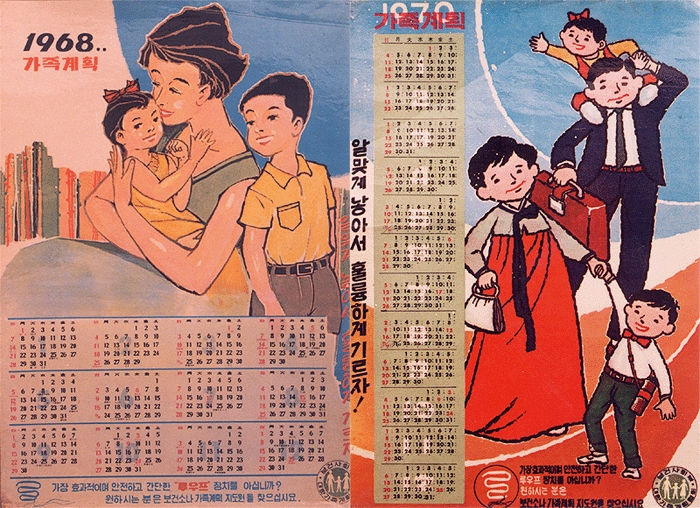
(Text, both calenders—”Did you know that the most effective, safest, and simplest device is the loop (IUD)? People who want one, please go to a welfare or family planning center.” Black headline, right calender—”Let’s have the proper number of babies, and raise them well!”)

Formed in April 1961 just before the coup, the PPFK would soon have the strong support of the military government. But according to Seungsook Moon in Militarized Modernity and Gendered Citizenship in South Korea (2005; pp. 81-2), its activities wouldn’t really take off until the 1970s, which possibly explains its rather uninspired efforts above (but note though, that the government itself was extremely active in population control well before then):

The modernizing state had to launch aggressive propaganda for family planning because the idea of contraception was foreign to most Koreans, who tended to believe that having many children meant good luck and that every child would bring his or her own food into the world….

….The state…worked closely with the PPFK to change the public perception of birth control, establishing a department of public relations in 1970 to make the idea and practice of contraception familiar to the populace. The PPFK increasingly relied on mass media (radio, television, newspapers, magazines and education texts of its own) to disseminate positive images and information about families with a small number of children. To encourage popular participation, the PPFK organized popular contests of various kinds, ranging from posters, songs, and slogans to stories of personal experiences by mothers and wives concerning contraception.

A fascinating book, it’s difficult not to quote much more here, as the next few pages make it clear that Korea’s population policies were just as systematic and draconian as China’s. In light of what is revealed in Hvistendahl’s more recent book though, it is strange that it doesn’t also discuss abortions, but it does mention that while IUDs insertions were offered freely in the 1960s (with the Marine Corps mobilized to provide them to isolated islanders), and considered the “patriotic” and “ideal” form of contraception (but with the pill also introduced in 1968 to alleviate their effects, in stark contrast to Japan), by the second half of the 1970s it would be female sterilization that was offered and aggressively applied, becoming “what can only be described as a sterilization mania” by the 1980s. Between 1982 and 1987, over 2 million Korean women would be sterilized, a “semiforced mass sterilization” that “led to abrupt reductions in the fertility rate and the rate of population growth in the 1980s” (p. 85).

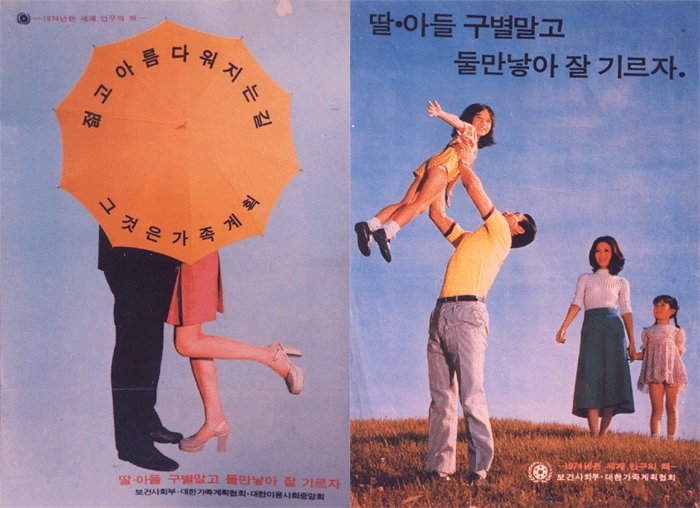
(Left, umbrella—”The path to youth and beauty is family planning.” Both posters—”Don’t discriminate between boys and girls, have only two children and raise them well.” {This slogan can be seen on many 1970s posters}.)
(Left, headline—”Which method is good?”; cup—”Family planning consultations”; man, text —”I’ll do it”; text, bottom—”1975 is International Women’s Year.” Right, 19th Family Weekly Magazine May 5-12 1974—”The World has One Destiny”; “NCC=The National Council of Churches in Korea.”)

This poster on the left above is particularly interesting, and not just because that was the year that March 8—which *cough* happens to be my birthday—was made International Women’s Day (alas, I was born a year later). Rather, it’s because of the guy saying “I’ll do it”, which couldn’t help but remind me of young Koreans’ surprising attitude that contraception is exclusively men’s responsibility (as indeed the Japanese think too). However, women were overwhemingly the focus of population control drives back then (Moon notes that only 1 vasectomy was performed for every 10 IUD insertions, although I think the ratio to female sterilizations would have been more useful), and women’s organizations co-opted or specifically created by the state to carry them out, so it seems anachronistic to see a connection between young Koreans’ attitudes today and those of their parents at the same age.

Indeed, this one on the left below turns out not to be about family-planning at all, but rather women’s rights:

(Left, headline—”We are all [the same] human”; Man (clockwise from hat)—”Family registry rights, parental rights, inheritance, children, estate”; Text—”Women’s Family Law Change Committee”. Right, arrow—”The path to a Gross National Income of of $1000 in 1981″; Text, below—”[Previous 1970s’ slogan]”.)

Next, before moving on to posters from the 1980s, note that sterilization campaigns would come to be complimented by various economic incentives (p. 85):

In 1981, confronting negative economic growth for the first time since 1982, along with a decrease in the number of sterilization acceptors, the state issued “Countermeasures to Population Growth.” These measures were characterized by incentives to a family with one or two [James – ?] children; priority in getting housing loans and business loans, monetary support of low-income families, and free medical service for the first visit. During the 1980s, variations of these kinds of incentives were introduced almost every year.

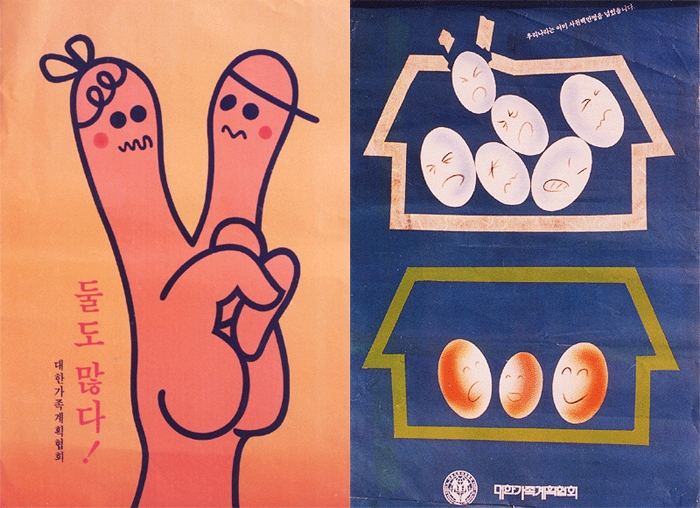
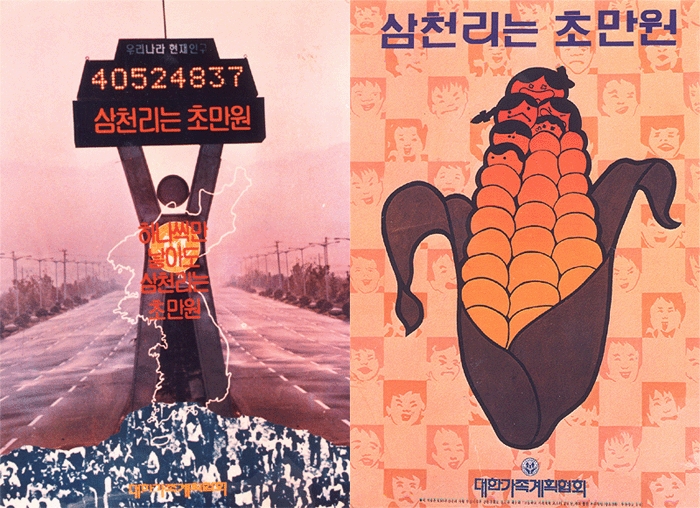
(Left—”Two children is many too!”. Right—”Korea’s population has already exceeded 40 million”.)

And here are two posters with sons, and then two with daughters. But note that, confusedly, there were also some with two children like those in the 1970s though, and that clearly the government and PPFK were still very much concerned about the sex-ratio.

However, like I said that message was surely somewhat diluted by having some posters featuring and explicitly praising having a son, and it would be interesting to do a content analysis to determine the ratio of those that depicted sons to daughters, two children, or (preferably) a sex-neutral image like the eggs above:

(Left—”One family, full of love. One child, full of health”. Right, headline—”Because of one son”; Text—”Overpopulation is everybody’s responsibility”.)

(Top—”A blessing of one child, loved strongly”. Bottom—”Raise one daughter well, and you won’t envy [those who have] ten sons”.)
(Left, sign—”Korea’s current population: 40,524,837, Korea is overflowing”; Text in map—”Even if you only have one child, Korea is overflowing”. Right—”Korea is already overflowing”.)

Finally, please note that these posters are just a handful of those available on the PPFK website, and which in turn must be a small sample of all that were produced. But in combination with what I’ve learnt from Militarized Modernity, they’ve still lead me to an interesting conclusion. Which is that, bearing in mind Koreans’ reputation for procrastination, yet doing things with outstanding zeal and efficiency once they set their minds to them (albeit usually precisely because of putting them off for so long), sexual matters are no exception, despite Koreans’ conservative reputation. Moreover, and intriguingly, it appears that young Korean couples of the 1970s and 1980s were likely to have been much better educated and informed than their children are now.

Assuming it does exist, what on Earth happened in the 1990s and 2000s to account for this curious generation gap? And why, even though technically adults rather than children were the target of government campaigns in the 1970s and 1980s, is sex education in Korea today so appalling?

Question from a Reader — Help Sought for Pregnant Rape Victim

(Source: unknown)

For obvious reasons, the reader that submitted this email would like to remain anonymous. Unfortunately I’m unable to think of any organizations that can help myself (especially after the baffling responses from the ones the couple has tried), so he would greatly appreciate any help or information readers can give:

xxxxxMy wife (Korean) was recently raped and became pregnant. We had been trying to get pregnant for a few months, so due to the timing of the attack, she assumed it would be impossible for it to be the attacker’s baby and decided to keep it a secret until recently when she finally told me about what happened. It turns out that she was misguided and it is actually very possible, though not probable, that the rapist impregnated her.

Every avenue we have explored for getting support has been a non-starter. We have gone through the police, rape hotlines, and the Seoul Global Center. Everyone seems to have never heard of a situation like ours, does not have the answers to our questions, and is unwilling to help us find the answers to our questions (mostly they just seem like they’re uncomfortable and try to get us off the phone as soon as possible). We briefly thought we might qualify for free counseling services for my wife, but we were later told that she is not eligible because she didn’t make a report. The police won’t take a report because she cannot identify her attacker.

We are unable to undergo any genetic testing (via amniocentesis or CVS) to determine if the baby is mine. We have been told there was a recent change in Korean law because of Dr. Hwang Woo-Suk that made it illegal to perform any tests on fetuses in the womb. This sounds ridiculous considering the ease with which one is able to procure an abortion. This is critical information for us, as I am a Caucasian-American and the child is likely to face questions its whole life about why it looks totally Korean (depending on if we decide to continue with the pregnancy), not to mention the strange looks from family and friends. We will all have a lifetime of reliving this horrible experience. I’m also thinking about possible issues that might come up with trying to get the child American citizenship, and my wife her permanent residency.

We are currently looking at going overseas to undergo the testing that needs to be done, but the information on that seems sketchy as well. I’m hoping that you might be able to put us in contact with an organization (preferably non-governmental) that would be informative, non-judgmental and understanding. Suffice it to say, this has been an incredibly difficult time for us. All we want is to know what the actual odds are that the child is mine, and perhaps some assistance in finding the best overseas options for genetic testing. So far it has been a dead end, although I know it is possible.

It seems like this may be a tall order, but I greatly appreciate any information you might be able to send my way.

Quick Hit: Korea’s Hidden Smokers

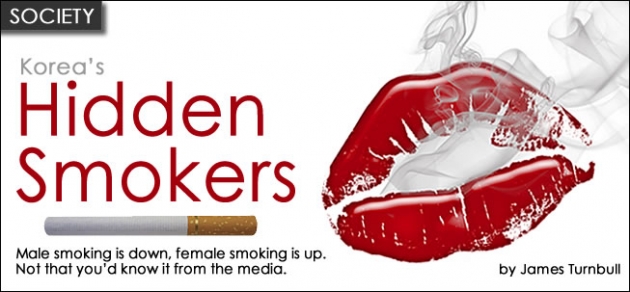
I wrote an article for Busan Haps this month, about a topic which many of you will recognize from my The Gender Politics of Smoking in South Korea series (Part 1, Part 2, Part 3, Newsflash, Part 4; Living as a female smoker in Korea). Rather than have anyone sift through those thousands of words just to find sources for the statistics I mention in the article though, let me make it easier by providing them all here instead (in order of their appearance):

Here is the July 8 2010 Busan Metro article, with my translation.

• In that article, the OECD average male smoking rate of 28.4% (in 2007) was unsourced, but the same figure — albeit for 2008 — can be found at Asian Correspondent’s translation of this Yonhap News report.

• The 1980 figure of a 79% male smoking rate is from footnote 80 of “The strategic targeting of females by transnational tobacco companies in South Korea following trade liberalisation” by Kelley Lee et al., Globalization and Health 2009, 5:2. Unfortunately, I’ve been unable to find the Chosun Ilbo article referred to in that, but the same figure can be found in this January 2007 Arirang report instead.

Gallop Korea’s figure of “almost as many as 1 in 5” young Korean women smoking (technically 17%) comes from Gallop Korea: Investigating the Actual Condition of Smoking in South Korea, mentioned in footnote 28.

• That is also the source for the figure of 83.4% of Koreans disapproving of women smoking.

Mathias Specht was the Korea Times reader who witnessed an old man slapping women in the face for smoking in March 2010.

I’m No Picasso is an example of one expat female smoker who has changed her smoking habits because of the stigma against women smoking. More can be found in comments to the posts in my blog series.

• More on the “1989 National Health Promotion Law Enforcement Ordinance” can be found in the Globalization and Health article.

• C. Paul Dredge’s Smoking in Korea article, from the Vol. 20., No.4, April 1980 Korea Journal, can be downloaded as a PDF here (the March 1980 reference is a typo by me). For a change though, probably scrolling down Part 1 of my series is actually a much quicker way of finding the text I refer to.

• Finally, I’m indebted to I’m No Picasso for making the links between coffee shops and female smoking, which I expanded upon in Part 4.

Korean Gender Reader

(Apocalypse Tomorrow Pin-up Girl Calendar, via io9)

Classic Venus nudes altered for today’s beauty standards (Work That Matters; Geek in Heels; Visual News)

BREAKING NEWS: Black Woman Featured Prominently in K-Pop Video (Mixtapes and Liner Notes)

What is a Dried Fish Lady (건어물녀)? (Ethnoscopes: Tracks of an Anthropologist)

Artificial hymens banned from online sale in China (Shanghaiist)

Let’s Talk About Sex…With Seniors (Inconseoulable)

Life in Plastic, It’s Fantastic! (Caviar C:reme)

Show Beautifies Plastic Surgery (Korea Times)

Kids’ drawings of Mommy and Daddy Getting Married (Previouslyafter)

Divorced women prefer unmarried men (Korea Times)

Male Circumcision and Quality of Sex Life, For Both Sexes (Homo Consumericus)

Hong Kong full page ad against pregnant mainland women (China Hush)

N. Korean women popular as brides (The Marmot’s Hole)

Seoul City to Ban Draconian Appearance Rules at School (The Chousnilbo)

The Female Grotesque: South Korean poet Kim Hyesoon on subverting expectations, her use of grotesque language, and the state of feminism in Korea (Guernica; hat tip to Tin Alvarez)

The new economics of tying the knot (Korea Times; hat tip to Chris Backe)

Talking through bigotry (Gord Sellar)

China’s surrogate mothers see business boom in year of the dragon (The Guardian)

Korean HR commission rules against women-only library (Asian Correspondent)

1 in 10 teenagers have sexual experience (The Chosunilbo)

Teenagers Banned from Multi-Purpose Private Rooms (The Chousnilbo)

“Superstar K3” Chris Golightly Calls Sexual Abuse Allegation “Lying Trash” (Soompi; Allkpop; Korea Joongang Daily)

Lee Hyori Furious with MBC for False Stories (Allkpop)

MBC Responds (Omona)

Announcement: Feb. 15th presentation on “The Triumphs and Tribulations of Being Married to a Korean” (Seoul International Women’s Association)

(Links are not necessarily endorsements)

“Cleavage out, Legs in” — The Key to Understanding Ajosshi Fandom?

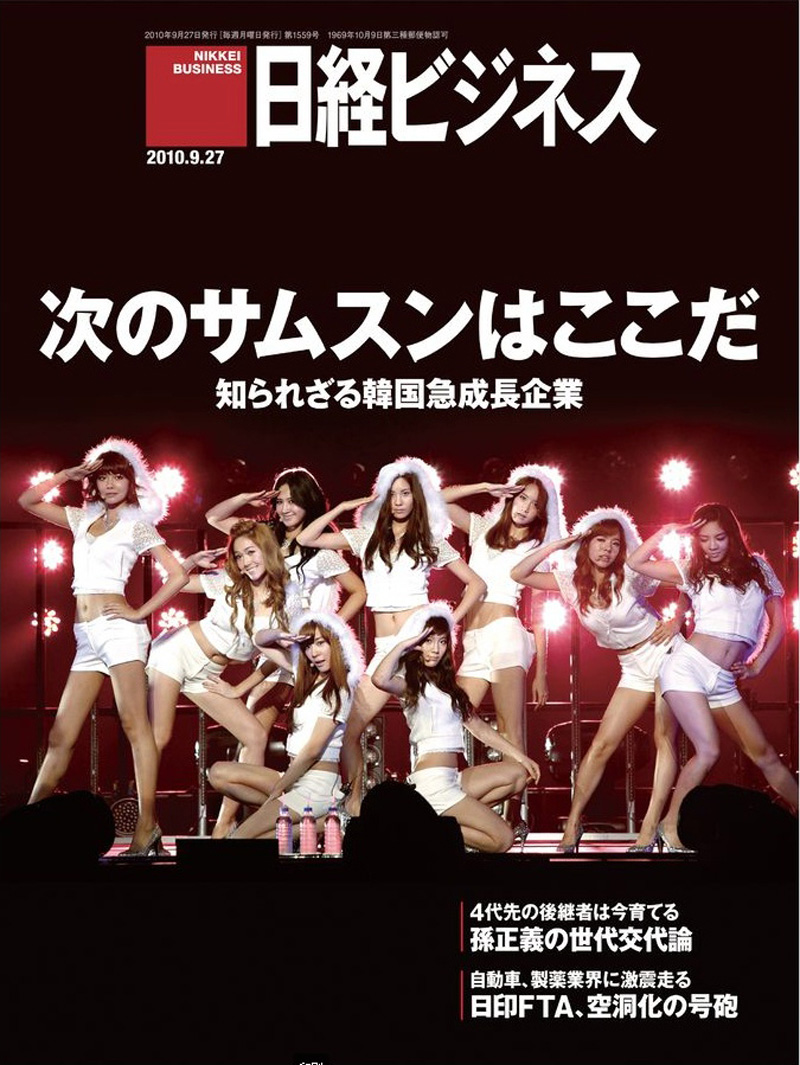
“Here is the next Samsung: fast growing Korean companies that you’d better know about.” Source.

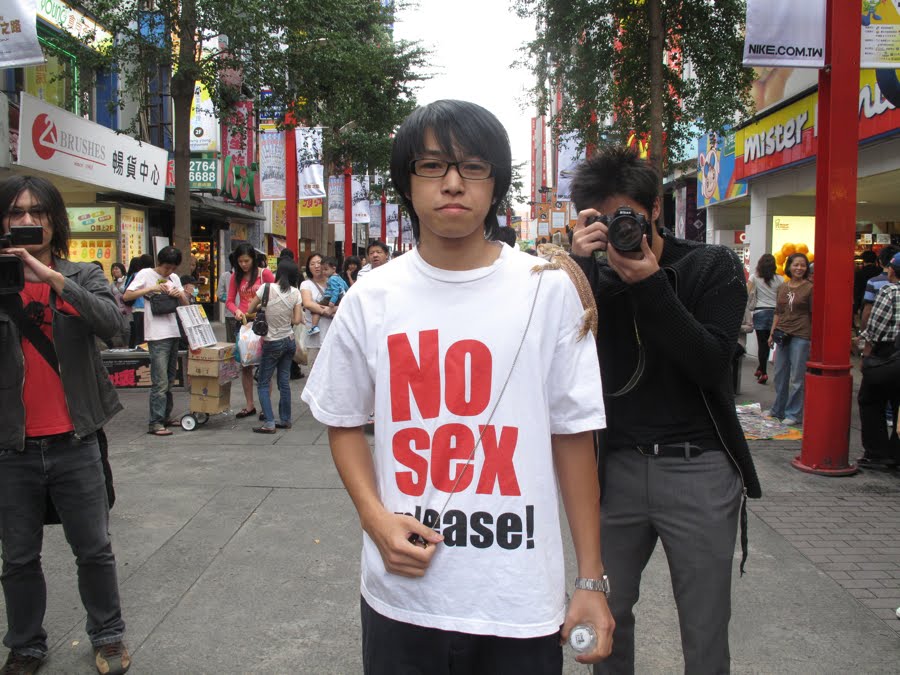
“Stop obsessing with sex.” (Fernando)

“If I went to New York and started pointing out how many skyscrapers there were, would you suggest that it was *me* that had the obsession with noticing skyscrapers, or New York for building them all?” (Norman Lewis; source)

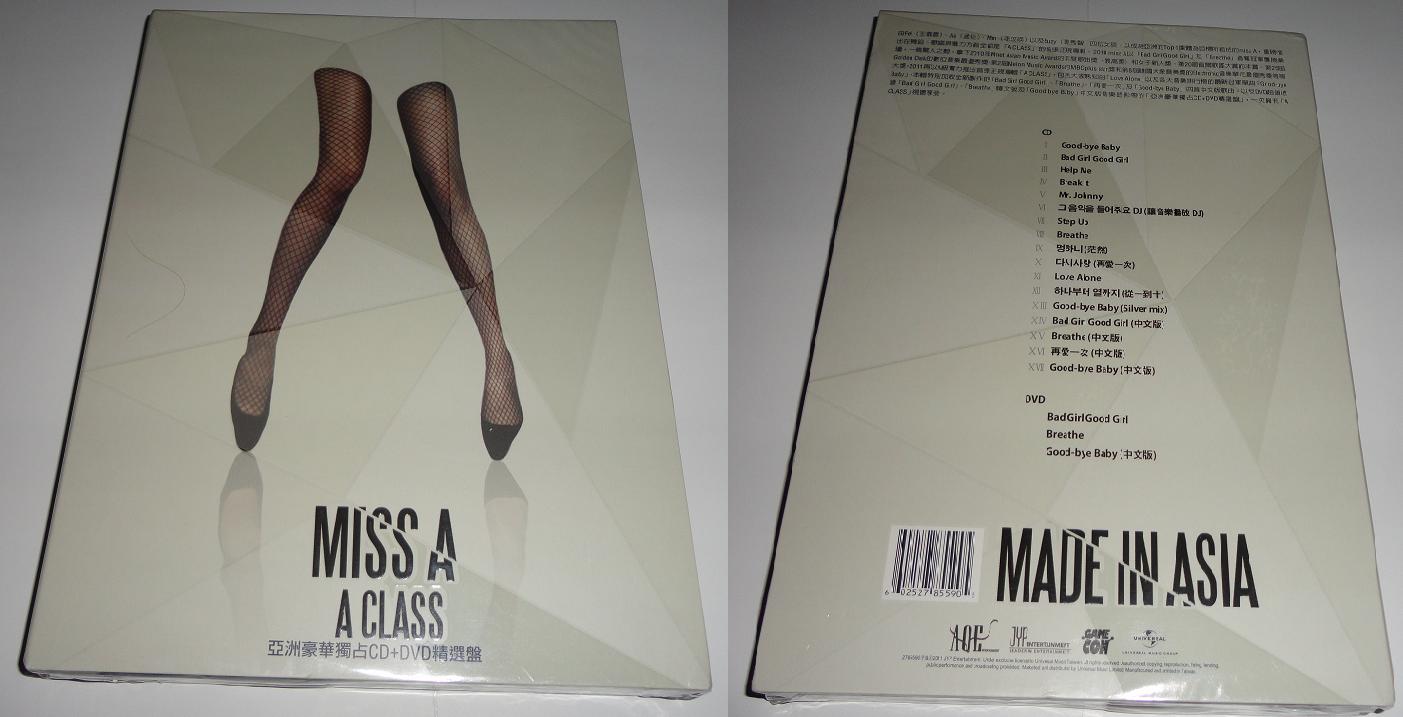
And indeed if you went to Seoul instead, it’d be difficult not to notice all the exposed women’s legs. Even—or perhaps especially — in the winter.

It wasn’t until I saw this November 2010 video from the Singaporean RazorTV though, that I realized the fashion might not be so common there yet. Likewise, it was just starting in Thailand, where authorities were warning against the danger of dengue fever from the ensuing extra mosquito bites:

Unfortunately, only the narrator speaks English, while the hosts and interviewees chat away in Chinese (is that normal for Singaporean TV?), and no subtitles are available. However, I was able to find this related article from parent organization The Straits Times, and it had an intriguing conclusion:

Entertainment journalist Tan Chew Yen from the Chinese Central Integrated Newsroom reasoned that showing off legs allows these girl groups to maintain a healthier but nonetheless sexy image.

It invites less controversy and criticism from concerned citizens as compared to showing cleavage, for example, due to their young fan-base.

I beg to differ on the youth of their fan-bases these days. But still, those few words resonated on so many levels, potentially speaking volumes about how K-pop has developed over the last 5 years.

First, because it’s certainly true that Koreans regard legs as a much less sexual body part than cleavage. While that distinction is easy to overstate though, and is eroding precisely because so many Korean girl-groups are wearing hot-pants and mini-skirts these days, it’s confirmed by numerous expat women that have had to adjust to it (and of course cishet men like myself have noticed it too!).

Source

Next, because choreography, outfits, and music videos tailored for that distinction would be equally applicable to the more conservative—but still lucrative and influential—Chinese market, where for a long time Korean groups were considered much “safer” than their Japanese and Western counterparts:

In 2003, the Korean National Tourism Office [a major investor in the Korean wave] conducted a Hanliu tourism survey in China, Taiwan, and Hong Kong exploring attitudes to Korean culture, publishing the results online…

….It compared the impact of Korean culture with that of four “competitor” countries (the U.S., Japan, Taiwan, and Hong Kong), and in the process revealed much about Korea’s own political and nationalist concerns, particularly in relation to Japan and America. Six of the eleven options for respondents to the category “reasons I like Korean culture” reflect this preoccupation: “less sexual than Japanese culture,” “less sexual than American culture,” “less violent than Japanese popular culture,” “less violent than American popular culture,” “decreased interest in American culture,” and “decreased interest in Japanese culture.” One other echoes Straubhaar’s notion of cultural proximity: “similar in culture.” Certainly, Korea’s own music media censorship laws (which even in 1997 prohibited the displaying of body piercings, navels, tattoos, “outfits which might harm the sound emotional development of youth,” and banned violent or political lyrics), meant that Chinese TV stations could buy in Korean music videos and music TV shows knowing that they were unlikely to upset local censors. However, these questions also reflected a perception that Korea acts as a defender against excessive Westernization and as a guardian of Confucian values within East Asia. (Rowan Pease, 2009)

Of course, this assumes that the Chinese make the same distinction between legs and cleavage. But I’d wager they do—after all, Park Jin-young of JYP Entertainment especially has always had a firm eye on the Chinese market, with two members of Miss A being Chinese, and even the “A” in the name meaning “Asia.” And the group’s logo speaks for itself:

Source

Finally, likewise hot-pants would be a perfect fit with “Ajosshi” or “Samchon” fandom. Here’s a quick definition of that for new readers:

…what is extraordinary in girl idols’ fandom is that a large number of male fans in their 30s and 40s have constructed the unprecedented scale and mode of fandom called Samchon-fans, or uncle-fans. As Samchon in Korean refers to one’s parent’s brother, this name implies the middle-aged men’s care for their young nieces. Once this familial setting is built up, a relationship between male viewers or self-claimed Samchon fans is restructured in the complicit relationship between uncle and little nieces. Accordingly, the male’s gaze at young female bodies is legitimized and normalized as the voluntary support and pure love of uncles for their nieces. Under the identity of uncle, they can deny the sexual aspect of what they see and insist on appreciating merely the pure surface of pretty children. This double male psychology of interwoven denial and justification is pervasive in the constitution of the girl idols’ fandom. Thus, with the pretentious reformulation of the male gaze into an uncle’s familial support, the male consumption of the girl bodies becomes relieved of the predictable blame for pedophiliac abnormality. (Yeran Kim, 2011; see sources below)

Previously, most discussions about Samchon fandom have focused on pointing out its existence and/or its effects, both of which you can read about in depth here and here. But in hindsight, not enough attention has been give to the process of how it came about, which this cleavage/legs distinction now potentially helps to fill. For if entertainment companies subscribed to it, having their girl-groups members flaunting their legs while covering up their cleavage, then it’s easy to see why this would provide plausible deniability for all involved.

“Because of Sistar, uncles [feel like] teenagers again!!” Source.

Not that being a middle-aged male fan of a girl-group is wrong per se of course. But for a number of years the Korean media would indeed promote the deceitful “innocent until proven sexual” byline of Samchon fandom (and to a large extent still does—see here and here), providing a window for entertainment companies to sex up performances to their hearts’ content.

Was this the result of a deliberate, years-long strategy by entertainment companies? That’s unlikely: not only did Girls’ Generation at least actually wear “skinny jeans” well before hot-pants for instance (I believe they only started doing so with Tell Me Your Wish in July 2009), but it’s difficult to speak of grand plans by JYP, for instance, when he’s well known for his constant experimentation with groups, trying everything until one concept finally succeeds.

In short, I think entertainment companies lucked out. But like the video says, K-pop has been about legs, legs, and legs ever since they did, and with a palpable influence on Korean fashions. Moreover, whether they’re on the screen or on the streets, people will still make much the same claims about them:

…people maintain [Girls’ Generation are] pure, clean, and cute, and everyone tries to erase and deny the blatant fact of their sexualization in that curiously Korean way that college freshman can click-clack to class in 5-inch hooker heels and a leather skirt and when asked if that might not to be too risque for class, people get defensive and indignant and call the gazer the pervert, while letting the main parlayer in and of the male gaze (the women totally subjecting herself to it) off the hook. (Michael Hurt; source)

Granted, mini-skirts especially are just as — if not more — popular in Japan, so it’s entirely possible that the Korean trend actually comes from Japan, and predates the girl-group boom of the late-2000s. Yet I don’t personally recall seeing quite so many legs on the streets of Busan (which is much warmer than Seoul!) until just a few years ago, with the exception of World Cup summers (when standards are relaxed). And while I’m usually loathe to ascribe top-down origins to fashion trends, I’d be lying if I said Koreans don’t seem to be notoriously conformist in this regard (as this 2004 Prugio commercial with Kim Nam-ju used to be a good illustration of, before the video was taken down!):

And on that note, please let me know what you think, and by all means poke holes in it—my connection between girl-groups only showing their legs and the rise of Samchon Fandom is just the germ of an idea at the moment, which now needs fleshing out (not unlike many of the legs themselves). But if I do say so myself, it’s one of the biggest epiphanies about K-pop I’ve had in a while!

Update 1—See here, here, and here for the next 3 parts of the RazorTV video, about which idol has the best legs, problems with underage performers, and the increasing objectification of male idols respectively. Parts 2 & 3 also have more English

Update 2—Let me pass on Esther Hoeve’s illuminating comment from Facebook:

The difference in what constitutes as ‘sexy’ bodyparts is an interesting one. Back home (western Europe) I’m much quicker to reveal cleavage or shoulders, but I spent half a year in Thailand and had to adjust to wearing shorts, but tops with sleeves. The shorter my skirt or shorts, the longer my sleeves would be. I actually grew self conscious of how much upper body I was showing, but usually have the same feeling concerning my lower body here in Europe. It completely changes your perspective on what’s considering ‘revealing’.

Like I say there, this reminded me of some of my female students back in 2000 complaining of middle-aged and old women telling them to cover up their bare arms. This was in Jinju/진주 though, a university town but still quite small and conservative, so I don’t know if their counterparts in larger cities had the same problems.

Sources

  • Yeran Kim (2011): Idol republic: the global emergence of girl industries and the commercialization of girl bodies, Journal of Gender Studies, 20:4, 333-345.
  • Rowan Pease (2009): Korean Popular Music in China: Nationalism, Authenticity, and Gender, in Chris Berry, Nicola Liscutin, and Jonathan D. Mackintosh ed.s, Cultural Studies and Cultural Industries in Northeast Asia: What a Difference a Region Makes, 151-167.

(Hat tip to dogdyedblack)

Korean Sociological Image #66 – Inventing Labels for Women’s Bodies

(Source)

Introduction – Objectification Done Right

This may be an old ad, but it’s just a great introduction to my Gender Advertisements in the Korean Context lecture. I’ll probably still be using it 10 years from now.

First, because it shows the value in spending a couple of extra seconds to really look at an ad. Most readers probably immediately notice the faux scratches and blotches on it, reminiscent of a phone screen overlay, but it’s easy to overlook that Kang Dong-Won (강동원) and Kim Tae-hee (김태희) themselves are also supposed to resemble the advertised phone. Once you notice that his collar resembles the reflection on the screen though, then you’ll quickly realize that his grey button represents the dial, and that her black belt buckle matches the cover of the entry port, the curve of her breasts the back of the phone at the top. It’s really quite clever.

But still: if they’re supposed to resemble the phone(s), then why weren’t models of equal heights used? Or why wasn’t the layout of the ad rearranged and/or Kim Tae-hee photoshopped to make her look as tall as Kang Dong-won? Either would have been quite easy, as this second phone ad with the two of them makes clear (source).

To explain, I raise Erving Goffman’s concept of “Relative Size”, or the fact that, if random men and women are paired off together, then in 1 in 6 cases the woman would be taller than the man, whereas in advertisements it’s as low as 1 in 200. Later, I consider the obvious rejoinder that Kang Don-won and Kim Tae-hee were primarily chosen for their celebrity status, discussing why 65% of Korean advertisements feature celebrities, whereas it’s only 10% in most other developed countries. Finally, there’s also the concept of “Licensed Withdrawal” to mention, one aspect of which is how men are often shown providing virtual shields for women.

Bearing all that in mind, what does this Samsung SHW-A210S Shape Phone on the right remind you of (source), released back in November 2010? Specifically, the side, which according to Samsung is a particularly attractive feature of the model?

S-lines Will Sell Anything

What? You didn’t guess Uee (유이) of the girl-group After School (애프터스쿨)? Well, clearly that must be your own fault, as Samsung not only said it’s specifically designed to look like her profile (source), but this and this blogger agree.

Perhaps these screenshots from the phone’s promotional website will help:

(Source)

Alas, Samsung was really just attempting to capitalize on Uee’s star power, and on men’s interest in seeing and women’s interest in having an “S-line” (again, the copy makes that explicit). Lest we forget though, that actually means a great set of tits and ass, and it’s testament to the saturation of the term in Korean advertising and popular-culture that Samsung could get away with linking it to a completely unrelated inanimate object.

But that’s not the main reason I’m highlighting the phone here – after all, it’s by no means the first time the S-line has been used to sell one. The Wondergirls (원더걸스), for instance, did so back in 2008:

Instead, what makes this advertising campaign stand out is because on the one hand, Samsung is taking advantage of one body label to sell something, but on the other it’s attempting to replace that label a new one of its own creation – the yoptae (옆태), or “profile”.

The Invention Process

Actually, the campaign starts quite innocently, with Uee simply sketching profiles of things, finishing by announcing that it’s now “The Age of the Profile”. Later on in the campaign, visitors to the website would be encouraged to submit their own sketches and photographs in a competition:

(Source)

But not before viewers were show which kind of profile the campaign was really focused on. Skip ahead to 0:40 for fashion tips on how to show it off:

Next, Men’s Health cover model (source) and fledgling drama star (and friend of Rain!) Jung Sueng-kyo (정승교) is shown working on his own profile. And you’ve just got to hand it to Samsung for thinking of something that can be applied equally to men and women:

Instead of running with that equally-opportunity objectification though, we’re quickly back to women’s profiles. It’s difficult not to wonder if advertisers are just a little too used to using women’s bodies sometimes:

Context – The Profit Motive

Usually, when Korean body terms are explained to non-Korean audiences, then they’re made out as simple equivalents of English ones, the S-line and now profile substituting for the “hourglass figure” for example. But unlike that term, which I’d wager goes back to at least the infatuation with corsets in the 1800s, the S-line wasn’t even around when I came to Korea in 2000: jjookjjook-bbangbbang (쭉쭉빵빵) was used instead. Moreover, not only are so many invented these days that it’s difficult to keep track, but the pace and especially audaciousness with which this is done in Korea is nothing short of outstanding (source, below right).

(Update:  I may be mistaken about how old the hourglass term is –  Stuart and Elizabeth Ewen, for example, only mention the “Grecian Bend” in Channels of Desire: Mass Images and the Shaping of American Consciousness {1992; p. 75}. But surely it dates back to at least the 1950s?)

You are probably already familiar with the unbelievable example of the X-line for instance, which is literally only possible in Photoshop, but you may be surprised to also learn that companies are also constantly trying to get the public to redefine “established” terms too, lingerie company Vivian (비비안) hoping to make the V-line better known as the line between a women’s breasts rather than a triangular jaw (which Kwangdong Pharmaceutical sells – yes really –  “Corn Silk Tea” to help you obtain). On top of that, Yes’ (예스) lingerie company and W Magazine would rather have that area of a woman’s body known as a Y-line and W-line respectively…while in turn other companies still would rather have the Y-line mean a woman’s back.

And that alphabet soup is just the tip of the iceberg when it comes to that competition for buzzwords and (re)definitions that will stick with consumers. But unfortunately there’s only so much I could fit on a Powerpoint slide!

Media Promotion

Of course, the media and Korean public are well aware of this – the combined image on the left of that slide is testament to that (I added the two on the right). But in my own experience, usually the latter finds the situation more humorous than concerning (a generalization I’d be very happy – but don’t expect – to be proven wrong), while the former merely “reports” on the new body labels (and others like “Gold Misses” – more abstract perhaps, but still very much designed to get women to buy things), only very rarely criticizing the process and/or its effects. In so doing, it serves to simply promote the term, whether that’s in direct collusion with the companies or otherwise.

Take, finally, this inane example from Star News, a transcript of which (from here) I’ve translated below. If you get confused by some of the dates mentioned in it, please note it was aired in November 2011:

스타 노출의 변화, 옆태가 뜬다? The way stars show off their bodies is changing, the “profile” look is now booming

[Y-Star] 스타들의 노출이 많아지면서 섹시한 앞태는 물론이고 일명 숨 막히는 뒷태라 불리며 신체의 뒤 라인이 주목을 받고는 했었는데요 이제 노출의 키워드는 바로 옆태가 됐다고 합니다. 새로운 섹시함의 상징, 옆태에 대해 <스타뉴스>가 알아봤습니다.

While stars have been showing a lot of skin recently, and of course people’s focus is on their sexy “front figures”, and most recently on their so-called breathtaking “back figures”, now a new body-revealing keyword is emerging – the profile. A new symbol of sexiness, Star News has investigated.

드라마 <브레인>를 통해 1년6개월여 만에 컴백을 알려 화제가 된 최정원.오랜만의 제작발표회에서 모습을 드러낸 것보다 더 화제가 된 것이 있습니다. 바로 옆태가 훤히 드러나는 파격 시스루 의상인데요

A year and half since her last acting role, Choi Jung-won has recently made a comeback in the drama Brain. At a press conference about it, the topic of how she looked was much more interesting than the drama itself, as she wore a striking see-through dress that was very revealing in profile.

[현장음: 최정원] 안녕하세요 <브레인>에서 지혜 역을 맡은 최정원입니다

[Choi Jung-won]: Hello everyone, I’m Choi Jung-won, and play the role of Ji-hyae in this drama.

(Source)

이날 최정원은 이번 시즌 트렌드인 토트 무늬가 가미된 블랙 원피스에 은빛의 과감한 킬힐과 우아한 헤어스타일을 더해 한층 성숙해진 매력을 과시했는데요

On the day of the press conference, Choi Jong-won showed off this season’s trend of a black one-piece with a jigsaw-like design; silvery, bold killer-heels; and had an elegant hairstyle, all of which combined to make to make her attractiveness all the more mature.

특히 옆태가 훤히 보이는 파격 시스루 원피스는 주위 시선을 사로잡으며 집중 플레쉬 세례를 받기도 했습니다

In particular, her profile, visible through her striking one-piece dress, received a lot of attention, getting lots of camera flashes.

이 아찔한 옆태노출패션은 작년 11월, 애프터스쿨의 유이가 선보이기도 했었는데요 일명 옆태폰이라 불리는 한 휴대폰 광고에서 보일 듯 말듯 옆태라인을 노출한 미니 드레스를 입고 옆태 댄스를 선보이기도 했었습니다

This dizzy profile-revealing fashion was also shown off by After School’s Uee last November, in a dance wearing a now-you-see-it-now-you-don’t revealing mini-skirt in a commercial for the so-called “Profile Phone” (source).

그리고 월드컵 축하공연을 위해 무대에 올랐던 포미닛의 현아는 붉은 악마 티셔츠의 옆 라인을 과감하게 자른 의상으로 파격적인 노출을 해서 화제가 되기도 했죠

Also, in a public performance to congratulate soccer World Cup players, 4Minute’s Hyuna appeared on stage in a Red Devil t-shirt with the side cut away,  so revealing that it became a hot topic (see below).

지난해 유이와 현아에 이어 올해는 최정원 뿐만 아니라 많은 여배우들이 옆태를 내세운 몸매로 시선을 끌기도 했습니다

Following Uee and Hyuna last year, many actresses have drawn attention to their bodies by showing off their profiles, not just Choi Yong-won.

지난 10월 6일 개막한 부산국제영화제에서 파격적인 노출 패션으로 화제를 모았던 신인배우 오인혜.

This October the 6th, new actress Oh In-hye’s exceptionally revealing dress at the opening ceremony of the Busan International Film Festival also became a hot issue.

어깨는 물론 가슴을 거의 드러낸 오렌지 빛 드레스를 입은 그녀는 가슴라인과 등 라인을 노출한 것은 물론이고 아슬아슬하게 비춰지는 옆 라인은 보는 이들의 입을 딱 벌어지게 하기도 했습니다

Of course the orange dress showed off her shoulders, and almost completely exposed her breasts, but it was how dangerous she looked in profile [James – i.e., how close it was to also showing her nipples] that had people’s mouths agape.

그런가하면 지난 7월 14일 열렸던 부천 국제 판타스틱영화제 개막식 현장에서 가장 화제가 됐던 배우 곽지민은 앞트임, 뒤트임에 이어 옆트임까지 노출 포인트를 모두 갖춘 무한 노출 패션을 선보였는데요

(Source)

Also, at the opening ceremony of the Bucheon Fantastic Film Festival on July 14th, the hottest topic was actress Kwak Ji-min’s outfit, which, being open at the front, back, and the side, revealed almost everything.

[인터뷰: 곽지민] 반응이 그렇게 뜨겁게 될 지는 상상도 못했어요. 학교에서 특히 반응이 굉장히 뜨겁더라고요

[Kwak Ji-min]: I could never have imagined the reaction would have been so intense. It was especially heated at [the?] school. [Kwak Ji-min is 27, so I don’t know what school she’s referring to. Is she referring to a festival venue? – James]

Update: Thanks to (native Korean) Grace in the comments, who clarifies that Kwak Ji-Min is “referring to how popular that image is among schoolboys, saying that the reactions were hot from schools, i.e. the kids in school.”

드라마<내 마음이 들리니>에서 발랄한 캔디녀로 사랑을 받았던 황정음. 지난 5월 공개했던 섹시화보 제작발표회에서 언뜻 보면 평범해 보이지만 옆라인에 반전이 있는 의상을 입어 눈길을 끌었는데요 슬쩍 보이는 상체 라인이 더 아찔했다는 평가를 받았습니다

Hwang Jung-eum has received much love for her role as a vibrant and active candygirl [James – I’m told this means a young woman who’s cheerful and extroverted, especially someone who overcomes some kind of adversity] in the drama Can You Hear my Heart.  In May, at a press conference for her new sexy photobook, at a glance she appeared to be wearing ordinary clothes, but if you looked closer you saw that she was wearing eye-catching ones that showed off her profile, making you think of her upper body in a new light [James – see here for my translation of a blogger’s thoughts on how such “exposure” affects her career].

이어 지난 7월 한 패션매거진 화보를 공개한 윤은혜는 옆 라인을 살려 상의를 탈의하고 손으로 가슴부위를 감싸 안은 파격적인 포즈로 화제가 되었죠 그리고 상체 위주의 옆태 라인을 강조하던 다른 스타와는 달리 하체 옆 라인을 과시하며 아찔한 각선미를 보여 주기도 했습니다

In July, Yoon Eun-hye became a hot topic by showing off her profile in a photoshoot for a fashion magazine, undressing her upper body and embracing herself, covering her breast with her hand. Unlike other stars that emphasize the top half of their profiles, Yoon Eun-hye mostly shows off the bottom half of hers.

이렇게 과감하게 옆 라인을 노출해 제대로 된 S라인을 뽐내는 스타들이 많았는데요 새롭게 떠오른 노출의 키워드 옆태! 적정한 선을 지킨 옆태 노출로 진정한 아름다움을 뽐내길 바랍니다.

There are now many stars that have been showing off their well-made S-lines through boldly exposing their profiles like this, making “profile” the new exposure keyword! But let us hope that nobody overdoes it, only showing off sincere beauty by exposing their profiles (end).

(Source)

If you were confused by the second to last paragraph, then you weren’t the only one: as is clear from the image above (seen in the video), Yoon Eun-hye’s photoshoot was actually in October, and the other pictures can only be said to emphasize the bottom half of her profile (alas, not her bottom itself) in that her legs are physically longer than the upper half of her body. But speaking of Yoon Eun-hye, and to end on a positive note, by no means does all the above imply that Korean celebrities feel compelled to show off every new body term out there, nor – if they do decide to – that they can’t exploit them for their own ends, and/or simply to feel sexy. For much more on that, please see here!

(For all posts in the “Korean Sociological Image” series, see here)

Korean Gender Reader

(Source)

Sorry for the slow posting everyone: alas, I’m so busy with all my offline projects these days that my planned posting schedule for 2012 is already proving unsustainable. But in the meantime, the news stories just keep coming!

T-ara members sleep for 2 hours a day (Frank Kogan; see Seoulbeats also)

Convicted rapist successfully uses the ‘crooked dick’ defense (The Marmot’s Hole; update)

Korea divorce checklist for negotiation of a marital separation agreement in Korea (The Korea Law Blog)

Parents tremble at ‘pleasure parties’ thrown by foreign instructors (Gusts of Popular Feeling)

Travel in Korea still lacks women’s bathrooms (Travelwire Asia)

쓰레기 같은 학생, or, Why you might need pepperspray (Gord Sellar)

Hair freedom for Seoul students (Hankyoreh)

Internet hot over ‘bikini protest’ (Korea Times) vs. Gong Ji-young (“The Crucible”) Bikinis, Breasts and Weasels (Korean Modern Literature in Translation)
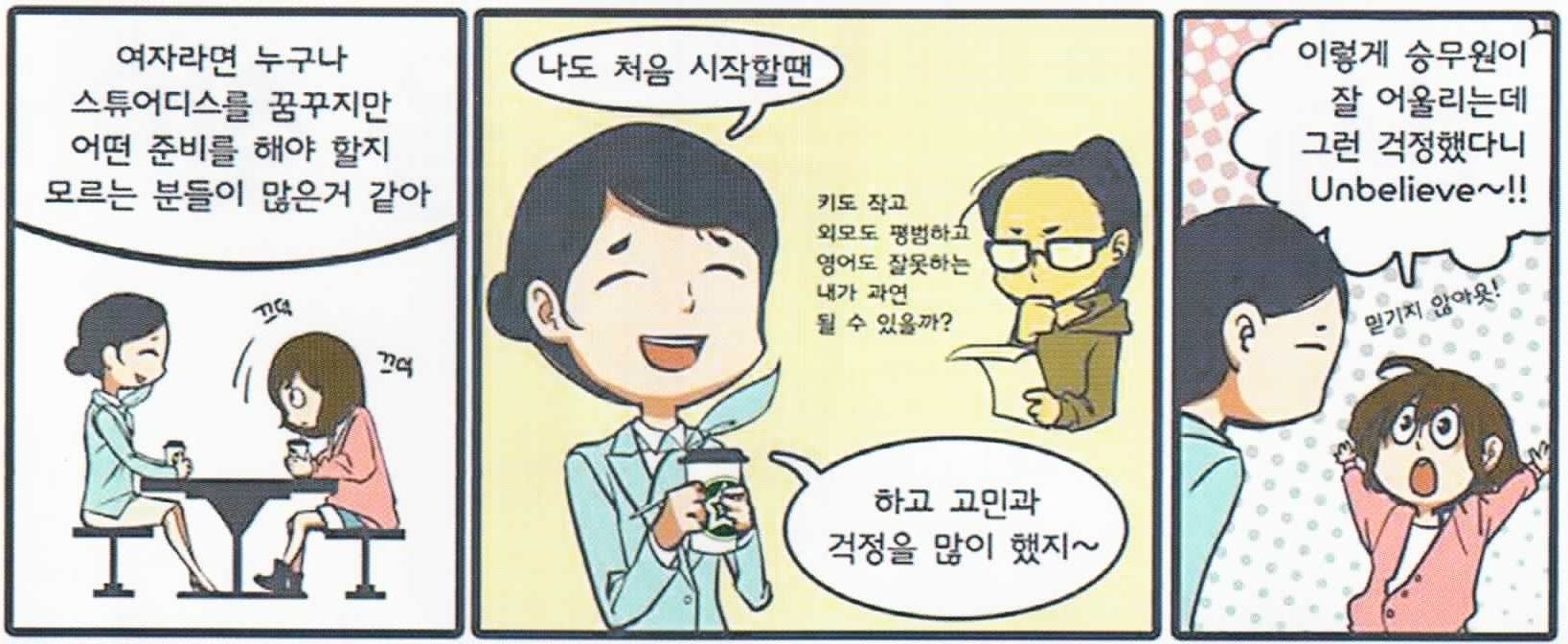
Fat tax elicits mixed reactions from S. Korean public (Xinhuanet)
Survey finds lots of sexual harassment at South Korean workplaces (Asian Correspondent)

Korean women and western/white men: a complicated and troubled relationship (The Unlikely Expat)

Women leading Korea (The Peninsula) vs. Lone Star and the women of Korea (The Wall Street Journal: Business Asia)

Jeju Island, known for wind, women, and water…now has more men than women (The Wall Street Journal: Korea Realtime)

My final post on Asian/white interracial relationships (Shanghai Shiok!)

Brides-to-be being ripped off ahead of their big day (Hankyoreh)

“[Is] dating a 28 year-old guy in Korea like dating a 15 year-old in the US?” Deconstructing inane and offensive reader questions (I’m No Picasso)

• An update to the above story – the question wasn’t as bad as it first looked!

Ministry strives for women’s rights (The Korea Herald)

South Korea’s racism debate – What debate? (Gord Sellar)

• Headline of the week: “Hard competition coming for erectile dysfunction remedies” (Hankyoreh)

Entertainment agency representatives voice opinions on idol dating, marriages, and age-limits on usefulness (Allkpop)

More elderly people sue their children for support (The Chosunilbo)

(Links are not necessarily endorsements)

Pray (기도) by Sunny Hill (써니힐): Lyrics, Translation, and Explanation

(Source)

…Sunny Hill have shaken things up in K-Pop by releasing unconventional music – at least as far as Korean pop is concerned – and they’ve garnered a new following by doing so. Sunny Hill is a talented group and they’re in the hands of creative people who understand the purpose of a concept, in that a concept not only melds visuals with music, but is designed to evoke a powerful response from their audience (Allkpop, September 2011).

Hey, I do like what I’ve heard of Sunny Hill (써니힐) so far, but still: nothing about their music really strikes me as really different. Rather, to me they stand out for their collaboration in in Mamma Mia (맘마미아) by Narsha (나르샤), the first(?) and only(?) Korean music video to feature a Korean woman kissing a Caucasian man, and then for their rare critique of the Korean rat race in The Grasshopper Song (베짱이 찬가). And I’d love to hear of any more such “socially-conscious K-pop” by them.

Pray (기도) though, doesn’t really qualify. But it is one of the darkest music videos I’ve ever seen (for which it was banned on MBC and KBS), and can be very moving. As the reader who asked me to translate it admitted:

Seriously. . . I was crying within the first 15 seconds.  I was a WRECK by the end.  My roommate came in and asked ‘Who died?’  Me? ‘The *hiccup* man in the *hiccup* videooooooo!’  The main character is the type that truly tugs at my heart strings.  Of course, Joseph Merrick comes to mind, but the character has such an. . .how do I put it…almost unspoiled nature.  Innocent in the most pure sense of the work – like the innocence of a child (that’s getting much harder to find today).  What I truly loved, though, is that it fit with the tone of the song but wasn’t melodramatic.  Dramatic, yes, but not melodramatic.

See here for an excellent discussion of all the symbolism in it. Meanwhile, the “mutant” is played by veteran movie actor Lee Jae-yong, and fans have noticed that only three of the five members of the group actually sing, although all of them are featured in the music video:

Save me from broken time

라라라 라라라 라라라 라라라

그 어떤 누군가가 기도하라 꿈꿔라

이뤄진다 했던가 어떤 모든 것들도

다 내게 말해 넌 나를 보고 말해 이젠 제발 멈추라고

한숨은 잔혹하게 거칠게만 들리네

허나 들리지 않아 어떤 구원의 소리

난 기도하네 또 나는 소리치네 누가 나를 꺼내주길

Did someone say your dreams would be achieved if you prayed?

Tell me everything

Now you look at me and tell me to stop

A sigh sounds so cold-hearted and coarse

But I can’t hear the sound of a rescue

I pray, I scream out, I hope someone will help me break out

The chorus is next:

Stand by me and necessary

점점 깊어만가 너를 앓을수록

라라라 라라라 라라라 라라라

Cry for me and I’m sorry

점점 패여만가 너를 잃을수록

제발 다시 안아달라고

멈춰 있던 나를 깨워줘 멈춰 있던 시간 돌려놔

어제처럼 그렇게 나에게만 웃어 보여줘

감춰 있던 슬픔 조여와 감춰 있던 아픔 올라와

헤어지잔 그 말은 아니 아니 아니 아니야

Stand by me, and necessary (pronounced “nesary”)

The more I long for you, the deeper I get

La la la, la la la, la la la, la la la

Cry for me, and I’m sorry

The more I lose you the more empty I am

Please, I beg you, hold me again

Please wake me from my paralysis, please give me back my frozen time

You showed me your laugh like that yesterday

Hidden sorrow is strangling me, hidden pain is rising

“Let’s break up” – those words, no no no

그 어떤 누군가가 사는 게 다 그렇다

무뎌진다 했던가 어떤 모든 것들도

다 내게 말해 넌 나를 보고 말해 제발 정신 차려 좀 달라고

눈물은 빗물 되어 내 몸을 다 적시고

온몸이 얼어붙어 땅에 늘어뜨리고

몸서리치네 또 나는 울부짖네

따라라라 라라라라

Did someone say that life is like that, that you just get used to it?

Tell me everything

You look at me and tell me to hang in there

My tears become like rainwater, I get drenched

I lie down, my whole body frozen to the ground

Dah la la la, la la la la

The chorus is repeated, then finally:

간절히 난 기도하네 listen to the song

대답은 또 나를 울리네

날아가는 나를 잡아줘 날아가는 우릴 돌려놔

떠다니며 잡히지 않아 너를 붙잡지 못해

하루만 더 살아보려고 깨물었던 나의 입술을

사라져가 이제는 아니 아니 아니 아니야.

Save me from broken time

라라라 라라라 라라라 라라라

I sincerely pray, listen to the song

And the answer makes me cry again

Grab me from flying away, turn back our fleeting relationship

It flouts around but cannot be grasped, I cannot grasp you

Just to live one more day, I bite down on my lips

But now it’s vanishing, and it’s not not not not there

Save me from broken time

La la la, la la la, la la la, la la la la

(Source)

A confession: just before I started translating the final verse, I stumbled across this translation on Youtube (embedding on blogs isn’t allowed sorry), and, finding nothing wrong with it, decided to use it for the final verse here too. Also, I have to admit that the whole translation is much more elegant than mine, so I strongly encourage readers to check it out, especially if you want to read the lyrics as you watch.

But there are some differences though, so I’d be happy to elaborate on those, and/or any other parts of the translation if Korean learners are interested. Alternatively, by all means please correct me if you think I’ve made a mistake!^^

Korean Gender Reader

(Source)

If you’ll please indulge an old Korean Studies geek for a moment, Girlfriday’s review of Dancing Queen (댄싱퀸) at Dramabeans this week instantly reminded me of The Adventures of Mrs. Park (박봉곤 가출사건), from way back in 1996. After all, both are about wives who blatantly defy their husbands to follow their dreams of becoming singers, both are comedies, and – I’ll take a wild guess about Dancing Queen – both wives are ultimately successful.

One likely difference though, is that Mrs. Park runs away from her husband. And in fact, The Adventures of Mrs. Park was the first Korean movie to ever show a wife getting away with such insubordination.

That may sound difficult to believe today, but director Kim Tae-kyun (김태균) would later confess to Cine 21 magazine that he was extremely concerned at how audiences might react to such “an unexpected ending”. As even comedies back then would invariably close with continued happy marriages, while more realistic movies would show a miserable and destitute wife returning home with her tail between her legs.

In contrast, I doubt director Lee Seok-hoon (이석훈) has any such qualms in 2012. And it’s always quite sobering, realizing how much Korea has changed in the time I’ve been here.

So, while I doubt I’ll ever make the effort to track down and watch The Adventures of Miss Park for myself (all of the above is based on this book chapter), I will watch Dancing Queen. For not only is Hwang Jung-min (황정민) my favorite actor ever (see here for my review of A Good Lawyer’s Wife {바람난 가족; 2003}, the first movie I saw him in), but I’ve always had a soft spot for Uhm Jung-hwa (엄정화) too, as she was very much the queen of K-pop when I came to Korea back in 2000. Here’s my favorite song of hers from back then (just give me the word, and I’ll translate it in a flash!^^):

And after all that reminiscing(!), finally here are this week’s links, in no particular order:

What K-pop can teach us about the ROK military (Seoulbeats)

Foreigners organize flash mob against prostitution (The Marmot’s Hole)

‘Dream High 2′ cast express the need for laws protecting minors in the industry (Allkpop)

Sexual harassment widespread in workplaces (Hankyoreh)

Did the Piggy Dolls ruin their credibility? (Mixtapes and Liner Notes)

Essential information for understanding divorce in Japan: there is no such thing as joint custody of children (Economist)

How Korean fashion is seen from an international perspective; opposed to how Koreans think it’s seen (Noona Blog: Seoul)

K-pop’s first lesbian love story? (Seoulbeats)

Congratulations on the Dragon baby! (On Becoming a Good Korean {Feminist} Wife)

290,000won bags for elementary kids – competition at the extreme? (Hangukdrama and Korean; also see my post on how pink and princessey the schoolbag ads for girls are, but sporty and full of space-shuttles and racing-cars for boys)

[Debate] Leave ancestral rites where they belong- in the past (Hankyoreh)

[Debate] Cultural rites provide key to understanding ourselves (Hankyoreh)

• “Holiday stress for an average married Korean woman is as bad as the pain of losing a close friend” (Arirang)

Statistics on social trends in Korea – a great resource (Korean Journal of Sociology; scroll down to the “research guide”s)

Roundtable: our friend, MOGEF (Seoulbeats)

Harsher punishment urged for pedophiles (Korea Times)

Monfemme: gender, feminist, and medical anthropology in the steppes and deserts of Mongolia (Blog recommendation)