Precious few songwriters and MV directors present female K-pop stars as grown women with sexual experience, agency, and desire. But these assigned gender roles can quickly crumble under revelations that they’re actually in relationships, as can as the business models that depend on them.
Estimated combined reading time: 8 minutes. Photo by Zun Zun from Pexels.
Recently, I was email-interviewed by James Griffiths at CNN about Cube Entertainment firing HyunA and E’Dawn for dating. My contribution to the final article is necessarily brief though, so here’s my original longer response to his question about just why K-pop labels are so sensitive about their stars’ love lives:
That some fans feel they have a strong personal bond with their idols, and then feel betrayed when those idols are revealed to be in a relationship, is a problem hardly confined to K-pop fandom. But it is amplified by three characteristic features of Korean popular culture.
First, there is the overexposure of its celebrities. Flick through the channels, and it is entirely possible to see the same K-pop star in an MV, a talkshow, a commercial, and a drama. And for each, they’ll generally be expected to maintain the persona for which they’re best known.
Next, as a broad rule, virginal personas are overwhelmingly preferred for unmarried female K-pop stars. Precious few songwriters and MV directors are prepared to present them as grown women with sexual experience, agency, and desire, as a decade’s experience with censors has taught that their work will generally get banned if they do.
Consequently, in K-pop, most women are presented as scantily-clad, passive objects for the male gaze, regardless of the actual make-up of a girl-group’s fandom. Again, this centralizing of supposed cishet male tastes as the norm isn’t unique to Korea. But the third and final feature is that the Korean media has tended to downplay their criticisms of this, so as—among other reasons—not to jeopardize the success of the Korean Wave overseas. This deliberate myopia however, has contributed to such phenomena as the rise of middle-age “uncle fans,” who are defined by supposedly only possessing a harmless avuncular love for teenage girl-groups in hot pants—and a lot of money to spend on them.
Clearly, revelations of K-pop stars dating challenge all these tenets of Korean pop-culture, and their fundamentally gendered nature explains why the negative reactions have overwhelmingly been directed at the women in those relationships, who simultaneously get slut-shamed by both their entitled male fans and the female fans of their partners.
Those last two paragraphs link up to my answer to another question of James’s, about to what extent it’s fans or labels that are driving these attitudes to stars dating. And you can guess which way I went in light of this recent breakdown of the top 3 labels’ revenues:
Source: Jenna Gibson, Korea Economic Institute and The Korea Society @YouTube (3:50).
But I’ll cover the significance of those numbers in a forthcoming post. In the meantime, there are many huge generalizations in my answer to James’s first question of course, and it’s also entirely possible that I still look at K-pop through the prism of when I got into it back in 2010, and have had terrible confirmation bias ever since. If so, and you feel the gist of any of my generalizations are outdated, then please do let me know. I would just love the excuse to crack open some new K-pop books and journal articles I’ve been hoarding, and to get back into writing more about the subject here.
No really—please rip my email to shreds! I beg you! ;)
If you reside in South Korea, you can donate via wire transfer: Turnbull James Edward (Kookmin Bank/국민은행, 563401-01-214324)
The reaction to having a woman in a condom ad is exactly why we need women in condom ads.
Estimated reading time: 5 minutes. All screenshots via YouTube.
Korea has only ever had three condom commercials on TV since a ban was lifted in 2006, and none at all for the last five years. Korean women generally relyon men to purchase and use condoms too. I wish these realities weren’t true, and am always looking for evidence to show attitudes are changing. Yet they stubbornly persist.
That’s what makes commercials like this one for Common Day condoms so important. Produced for social media in April but only going viral this week, it’s surprisingly sweet, with messages that are simple but powerful. So why is it so disliked?
Here’s my translation of the captions:
난 콘돔사는 여자다.
여자가 콘돔을 어떻게 사냐고?
약국, 편의점, 인터넷, 성인샵에서
‘그냥, 사면 된다.’
I’m a woman who buys condoms.
How can a woman buy condoms you ask?
At pharmacies, convenience stores, over the internet, and at sex shops.
“Just buy them.”
물론 처음엔 쉽지 않았지
내가 콘돔을 사기 전까지
‘여자답지 못하네’
‘여자가 밝히네’
‘그건 남자가 사야지’
Of course, it wasn’t easy at first.
Up until the moment I finally bought them myself, I thought [people would say]:
“That’s not ladylike.”
“Wow, is she oversexed or what.”
“That’s something only men should buy.”
이런 말들과 싸워왔거든
나만 겪어본 건 아닐거야
근데, 지금은 21세기
‘그냥, 사면 된다’
Actually, I struggled with those thoughts too.
I’m sure I’m not the only who felt like this.
And hey, isn’t it the 21st Century now?
“Just buy them.”
현재의 우린 ‘자기결정권’ 이란 게 있어
생각과 말,
몸과 욕망을 스스로 결정할 권리
누가 준 것도 아니고
빼앗을 수도 없는 거야
내가 원래 가지고 태어나는 거거든!
We in the modern age, have the right to decide what’s best for ourselves
That includes rights about our bodies and our desires
This is something that wasn’t given to me, and so can’t be taken away from me.
This is something that we were born with.
예를 들면,
내가 원할 때 섹스하고
원할 때 임신하는 것
뭐 그런 거 말야
남자가 콘돔이 없을까 불안하다고?
그래서 내가 ‘그냥, 사면 된다’
For example,
I can have sex when I want,
and I can get pregnant when I want—
you know, things like that.
So you get concerned and worried when men say they don’t have a condom?
That’s why you should just buy them yourself!
난 19세기 여자가 아니거든!
난 힘이 있고,
욕망이 있으며,
모든 것은 내가 결정해
난 콘돔사는 여자다.
I’m not a woman of the 19th Century!
I am powerful,
and I have desire,
I decide everything for myself,
And I am a woman who buys condoms. (End)
Awesome, right? Yet it has 8 to 1 dislikes to likes on YouTube. Probably, because of trolls like this one below, who replied to the tweet I first found the commercial on. I don’t mean to feed him, but will translate a couple of tweets from his long screed to show what Korean women, condom manufacturers, and sexual-health advocates are up against (I welcome alternate translations; being such a typical troll, he’s not very coherent sorry):
Jeez, this is just such typical BS from a “21st Century woman.” What is it with “women hav[ing] the right to decide what’s best for themselves,” and carrying condoms in case men don’t have them, and choosing for themselves when they want to get pregnant? This isn’t something women should even buy! Men are supposed to buy them! Can’t you make a condom commercial for men instead?
And later, after discovering that the CEO of the promotion company behind the campaign is—wait for it—a man himself:
Ah, now I get it. Your company often provides junk information in its twitter promotions, like you did while selling diet supplements once. In this case, you just make a commercial with commonly-used feminist words thrown in, as you know women will automatically buy anything that says “feminist.”
Sigh. Please head over to YouTube and like the video right now, to encourage more feminist commercials like it. And please share this post and the video too! :)
If you reside in South Korea, you can donate via wire transfer: Turnbull James Edward (Kookmin Bank/국민은행, 563401-01-214324)
A rare Korean government campaign promoting contraception use has many positives. But its motivations are anything but progressive.
Estimated reading time: 8 minutes. Image, via @smartlovekorea (Facebook): “Fun Waterplay! Sweet Couple Travel! The Secret to the Perfect Vacation · The Oral Contraceptive Pill ·”
Korea stands out for its over-the-counteraccess to the monthly contraceptive pill, and that’s awesome. Not just because sexual independence is a good thing in general, but because it’s essential when so many obstacles stand in the way of gaining that independence here, especially forunmarried women.
But that last was implemented by disgraced, former governments. So far, while the current Moon Jae-in administration has been no radical reformer of sexual rights, it is left of center, and operates in a shifted political climate of Me-too and the Gangnammurder. It is legally required to respond to a recent popular petition to legalize abortion, and this week was further pressured by the Korean College of Ob & Gyn’s announcement that its members would no longer perform abortions while its members faced punishments for doing so. Also, governments are never monoliths, as different ministries can oppose each other as they jockey for funding and jurisdiction. In particular, the Ministry of Gender Equality and Family (MOGEF) has officially supported legalization since as of this May, a 180 degree shift from its position under Moon Jae-in’s predecessors, and at odds with the Ministry of Defense that is concerned about its shrinking pool of conscripts. And there havealwaysbeenexcellentinitiativesby various sex-education teachers, women’s rights groups, feminists, and NGOs operating in the background.
Which of those actors was behind this poster, encouraging hetero couples to use the pill? What were their motivations? Trick question—eagle-eyed readers will have already noticed the Ministry of Health and Welfare’s (MOHW) logo. Which makes it all the more remarkable.
Yes, remarkable. Sexual themes may well pervade the Korean media, but recall that even condom commercials are considered too risque for Korean consumers, only two ever making it to television screens in the 12 years since they were legalized. That’s indicative of how there are still such limits to discussing sexual relationships in Korea, which is why I’m so drawn to the rare, no-BS conversations about them favored by Korean feminist groups. And why I was so surprised to discover a government ministry acknowledging that, sometimes, people have sex just for fun.
Yet however refreshing, it seemed odd to focus on the pill, which doesn’t protect against STDs. For the sake of Koreans’ sex-lives, empowerment, and general well-being, shouldn’t the MOHW encourage the use of contraception in general? Including of those ever so vulgar French letters?
Fortunately, it does. Perusing the source, it emerges that many alternatives have indeed been promoted in the Ministry’s “Loveplan Campaign.” The “combined method” of the pill and the condom for instance, which I learned all the cool kids are now referring to as the “Double Dutch” method:
And shortly after I saw the poster promoting the pill, there was a new post about using condoms, with good advice about using a fresh one if there is a tear, to not use oil-based lubricants, and so on:
There are many more examples like it, which is just awesome. Any government should promote greater contraception use, and help spread awareness of all the different types available, as well as how to use them properly.
But I also learned the campaign was launched 3 years ago. And it got odd all over again.
Because that was during the Park Geun-hye administration, which was notorious for its hardline on abortion, and for using the aforementioned crucial access to the pill as a bargaining chip in a dispute between doctors’ and pharmacists’ associations—as well as making numerous other backward steps in Koreans’ sexual health and rights. In particular, the MOGEF, ironically, had been at the forefront of many these developments. So, if the MOHW had actually been its liberal, sex-positive counterweight during all that time, you can bet I would have noticed.
I hadn’t, because it wasn’t. As explained in The JoongAng Ilbo at the campaign’s launch, sadly it was never about sexual empowerment per se. Rather, it was entirely aimed at reducing the number of (illegal) abortions:
‘성’을 주제로 한 방송프로그램이 인기를 끌고, 숙박업소 광고도 안방에서 쉽게 접할 수 있을 정도로 ‘성문화’는 빠르게 개방되고 있다. 더불어 일명 ‘가출팸’ 사건과 같은 청소년 성범죄 비율도 10대 강력범죄의 70%를 차지할 만큼 빠르게 증가하는 등 그 문제점도 속출하고 있어 다양한 접근의 해결책이 요구되고 있다.
Through the popularity of television programs with sexual themes, and the increasing ease of finding love hotel advertisements, a “sex culture” is rapidly opening up. In addition, as the proportion of teenagers’ sex crimes such as “Runaway Family” incidents* account for 70% of all teenagers’ major crimes and is also rapidly increasing, various measures should be addressed in order to tackle these problems.
*(“Runaway Families” refers to runaway teens living together for support; implicit is that many must turn to sex work to do so.)
특히, 개방된 성문화로 인한 무분별한 인공임신중절 시술의 문제점으로 95%정도가 불법시술인 것으로 나타났으며, 이로 인해 청소년은 물론 성인들의 신체적, 정신적 건강을 위협하고 목숨까지 앗아가는 등 심각한 사회문제로 대두되고 있다.
In particular, this opening sex culture is responsible for 95% of casual, illegal abortions, and this is causing serious social problems due to the damage caused to teenagers’ and adults’ physical and mental health, even leading to suicide.
이와 같이 나날이 증가하고 있는 무분별한 인공임신중절 사례, 만연하게 퍼진 생명경시풍조 등과 같은 현 사회적 세태에서 보건복지부가 진행하고 있는 「2015 인공임신중절 예방 캠페인: 러브플랜」은 생명존중 문화와 올바른 성문화를 조성하고자 하는 점에서 중요한 의의가 있다…
Consequently, the MOHW is launching a “Loveplan, 2015 Abortion Prevention Campaign” to create a culture of respect for the sanctity of life and encourage a healthy and responsible sex culture…
…보건복지부는 청소년에게는 생명존중의식과 미래의 건강한 부모가 되기 위한 책임 있는 선택을, 미혼남녀에게는 양성평등에 입각한 책임 있는 사랑과 계획을, 가임부부에게는 건강한 아이를 출산하기 위한 계획 임신 등 상황에 따른 메시지를 전파하고 있다. 이는 인공임신중절 예방을 위한 실질적인 실천으로 이끄는 견인차 역할을 하고 있다.
…The MOHW is committed to spreading the message of the importance of respecting the sanctity of life, and to promoting sexual responsibility and planning based on gender equality for unmarried men and women, in order that they will become responsible parents in the future and raise healthy children. These goals drive its emphasis on promoting practical contraceptive methods for the prevention of abortion.
It’s difficult to feel any anger towards such friendly-looking, probably genuinely helpful and concerned young students. And even among pro-choice activists, who wouldn’t want the abortion rate to go down? The students are also mainly just educating people about contraception, and promoting men and women’s equal involvement in their use. So, all power to them, right?
Wrong. Because it doesn’t matter where you are in the world, when someone comes towards you with a big sign that that says something about loving or respecting “life” on it, 99 times out of 100 you know it’s not your lovelife that they’re advocating for.
And with this campaign’s stress that abortions are illegal and to be avoided, implicit is that they are morally wrong.
But abortions are not a necessary evil, the last, distasteful resort of irresponsible couples. Contraception doesn’t always work. People can change their minds as they realize they’re not ready for a child. Couples can break up. Raising a child isn’t easy, and societies shun single mothers (especially Koreansociety). People can lose their jobs, and realize they can no longer afford to have a child. And so on. And hell, irresponsible couples have just as much of a right to abortion as anyone else too.
In other words, people will always need abortions, and will always have abortions, whether they’re legal or not. The only difference their legality makes is whether they can have safe ones, or whether many will die from the procedure.
Ergo, abortion is a GOOD thing.
In the past, friends of mine have been amused when I’ve accidentally said I’m “pro-abortion” rather than “pro-choice”, but that’s no longer a mistake on my part.
Here’s hoping for a positive, very overdue response by Moon Jae-in to the petition for the legalization of abortion then. And with it, a refocusing of this campaign.
Last week, I caught Sean Pablo’s interview of Nara Kong about dating culture and the sex education she received—or rather didn’t receive—in North Korea. Short and interesting in its own right, I recommend watching the entire video, and subscribing to both Youtubers. But it was the section from 1:30 that will really bring out your Korean sexuality geekgasm:
For those of you also completely turned on right now, but frustrated because you can’t put your finger on exactly why, let me lend a helping hand: it’s because you once read that things were very similar in South Korea in the 1980s. Specifically, from the opening to So-hee Lee’s “The Concept of Female Sexuality in Korean Popular Culture” (pp. 141-164) in Under Construction: The Gendering of Modernity, Class and Consumption in the Republic of Korea (ed. by Laruel Kendell, 2002), recalling her embarrassment and confusion when she attended some English literature lectures at Cambridge University in the mid-1980s (pp. 141-2):
My topic was “Women Characters in Victorian Novels”. During the lectures and seminars, I was acutely embarrassed by what I heard. Why was everyone talking about sexuality, masculinity, and femininity? What was the relationship between those terms and feminist literary criticism?
In those days, Koreans did not have exact counterpart terms for “sex”, “sexuality”, “sexual intercourse”, and “gender”. I was very confused as I struggled to determine the appropriate meanings. In Korean, one very general term “seong” (성) could be used for these four concepts, its particular meaning dependent on the speaking and listening context.
(It’s actually a little more complicated than that, the specific Chinese character she’s referring to—there are many different ones rendered as “성” in Korean—also meaning “nature” and “life” as well as “sex.” But that just adds to her point.)
Korean society in the mid-1980s did not find it necessary to make sharp distinctions between these concepts. At the annual Korean Women’s Studies Association Conference in 1989, the issue of sex language was raised and discussed. More recently, the Korean counterpart of the term “sexual intercourse” (성교) has gained wide usage, accompanied by the frequent use of the a Korean counterpart for the term “sexual violence” (성폭행)….Sexual violence has now become a recognized issue in need of a discourse.
Korean concepts of sexuality have changed profoundly since the Democratic Revolution of 1987….In 1995, the most popular topics among university students were sexuality, sexual identity, and other sexual subjects. There are many reasons for this…
As an added bonus to those who have read this far, who can consider themselves the true Korean sexuality geeks, let me also pass on Jo Kwon and Lia Kim’s dance to Lemon by NERD & Rihanna, my gateway video—thanks Asian Junkie!—to becoming a complete fanboy* of both:
A song with a lot of seong that. What more could you ask for on a Monday? ;)
If you reside in South Korea, you can donate via wire transfer: Turnbull James Edward (Kookmin Bank/국민은행, 563401-01-214324)
(*I’m really, really wincing at the high-heels in this one though. And Lia really shouldn’t have had a pre-teen dancing alongside her to Starships by Niki Minaj in her latest video either. But I only criticize out of love!)
“I’ve seen many pictures of Seol-hyun, but I think these are the first ones I’ve ever seen that haven’t sexualized her or shown off her body.”
Me too.* Which is not to say I’m against either, of any consenting adult. Sometimes, a famous figure in tight-clothes is just what is needed to grab your attention, whatever your sex or sexuality. Especially in a commercial’s all too brief 15-second window:
Or was it? Compare this 2013 commercial by Sistar for Ottogi set rice meals, which I used in a recent lecture I gave to The 11th Korea-America Student Conference. Mostly, because the incongruity of all the flesh with the actual, rather mundane product is just so jarring: were all those legs really needed, and those belonging to an expensive girl-group in particular? Also, because I couldn’t find a single news article about it from 5 years ago, in contrast to all the attention Hani’s commercial is getting today:
But after the presentation, thinking again about the commercial got me hot and bothered, and not in a good way. I realized my making the point with the screenshots had overshadowed the commercial itself, which I hadn’t actually seen in many years. Once I did, I realized it did have its own jingle and dance, and a sort-of chorus-girl concept which the hot pants weren’t necessarily out of place in:
Sure, neither the jingle nor dance are quite as distinctive as Hani’s, but they’re there. So, without that hindsight, who’s to say that this commercial would flop, whereas Hani’s would be a guaranteed success?
Especially as it didn’t flop, damnit. As a renewed search revealed:
또 주요 소비자층인 20~30대 남성이 선호하는 걸 그룹 ‘씨스타’를 활용한 프로모션을 전개하면서 지난해 세트밥 매출을 2012년 대비 95% 늘렸다.
“Compared to 2012, Otoggi’s promotion with the girl-group ‘Sistar’ in 2013 led to an increase of 95% in sales among the major consumer group of men in their 20s and 30s.”
Well duh, although I like to think more men need more than just legs to be sold on a meal (thinking we would be is still kinda patronizing, TBH). And my next reaction was that what worked for young men in this case didn’t necessarily speak for other demographics, Korea’s brutal M-curve meaning it’s housewives that do the food shopping for most households. But with Korea’s rapidly-risingsingle household rate, that’s probably not the case for these convenience meals in particular. Hence:
오뚜기는 편의점 유통 물량을 늘리는 한편 자사 페이스북에서 다양한 이벤트를 진행해 소비자와의 소통을 강화했다. 이런 노력에 힘입어 오뚜기밥 전체 매출은 전년 대비 50% 이상 증가했다.
“Ottogi’s strategy of increasing sales volumes at convenience stores and strengthening its communication with consumers, such as by hosting events on Facebook, has led to its rice sales increasing over 50% compared to the previous year.”
So, my path for future lectures was now clear: to seek out new commercials and new girl-groups in hot pants, to boldly question if they really do work, where no one has questioned before. And to seek out successful Korean femvertising, or just simply those successful commercials by women wearing actual clothes. Because in the revised version of my lecture, the final slide will continue to feature the following troubling fact about Korean life, which has my daughters increasingly running for the scales rather than happily dancing being kids. I wish I was joking:
“Females were 5.9 times more likely than males to not be fully dressed (vs. fully dressed) in Hong Kong advertisements, whereas females were 22.89 times more likely than males to not be fully dressed in Japanese ads and 56.83 times more likely than males to not be fully dressed in South Korean ads.”
Please let me know of any examples in the comments, of either the good or the bad, and your thoughts of any of the above :)
*On the theme of shattering convenient narratives, I noticed an ad featuring a fully-clothed Seol-hyun on the same day I noticed the tweet:
Fortunately for my paranoia about conspiracies to undermine my lectures though, Seol-hyun’s ads for Dashing Diva nails do follow a predictable pattern. Er…Yay?
The vision of male-female relations that conscription engenders—that men’s role is to do important work for the nation, while women’s is to remain on the sidelines offering their support through youthful looks and sexual availability—is pervasive in Korean daily life.
Last week, came the monumental news that Korean men were going to be offered alternatives to mandatory military service. So, CNN reporter James Griffiths asked me for some input into the Korean military’s background, specifically conscription’s effects on Korean gender relations. Little of my email could make it to his final article though, so here’s my full response for some context and further reading:
1) How does the military conscription issue affect gender relations and attitudes to women?
It’s difficult to overemphasize the role of the military as a socialization agent. Consider their ages: most Korean men choose to do their military service after their first year of university, barely out of high school, and Korea’s education hell means most would have had very little time for dating previously. Ironically though, new recruits can face being ostracized if they don’t have sexual experience, so many Korean men’s first sexual experience is with a sex worker just before enlistment. Visiting sex workers during their service is also considered normal. This is not wrong, but it is combined with frequent sexualized K-pop girl-group performances on bases, their ubiquitous messages of support for the troops in the media, and their being prominently featured on the military intranet (there are even military K-pop charts). This vision of women and male-female relations that the combination engenders—that men’s role is to do important work for the nation, while women’s is to remain on the sidelines offering their support, especially through their youthful looks and sexual availability—is pervasive in Korean daily life.
Military Manpower Association (MMA) endorsement models Apink saying “Thank you for choosing to enter the military. You are Korea’s REAL men!” (MMA Facebook page).
That may sound like hyperbole, but it is telling that Korea is the only country in East Asia where it is customary to use superiority-based titles in place of names in the workplace, and that even the Samsung Economic Research Institute once said that mistreatment by superiors in Korean companies is so pervasive that “many workers…take it for granted that they have to tolerate anything in return for getting paid.” In other words, when hierarchical military culture has had such a profound effect on the Korean workplace, and indeed much else about Korean daily life, then it is not unreasonable to see its role in shaping Korean gender relations too.
2) As regards the anti-feminist backlash from men’s rights groups, how driven is this by perceived unfairness of military service?
It is overwhelmingly driven by this perceived unfairness. But the media has done much to fan the flames, especially by encouraging the scapegoating of young women by exaggerating their economic successes in relation to men, and by perpetuating many negative stereotypes of them. In particular, that of the kimchi-nyeo (kimchi bitch), which refers to an economically successful woman who exploits her female privilege in not having to do military service, but who still expects men to pay on dates, who (always successfully) cries sexism when a man is promoted over her, and so on. Korea’s grossly skewed sex ratio among 20-somethings has a huge role to play in this backlash too, consequence of Korea’s sex selective abortions in the 1990s.
That Korea has the highest gender gap in the OECD however, is conveniently ignored by men’s rights groups. One can argue that it exists simply because women lose experience and rank after taking time off to have children, which is indeed crucial in what are such hierarchical, seniority-based companies as explained. But the gap also very much exists because doing military service comes with a host of indirect benefits, including taking advantage of their old boys networks created during their service, and of the widespread attitudes that men are more deserving of jobs (explicitly enshrined in government policy during the 1997 and 2008 financial crises), and that women, if no longer youthful and and sexually-available, should again step aside and support men from the sidelines by quitting their jobs by staying home to raise the children.
Korean entertainment programs are notorious for perpetuating traditional gender roles, let alone for normalizing body-shaming and sexual violence. But news programs can be just as big offenders.
Back in April, MBC anchorwoman Lim Hyeon-ju caused a sensation by being the first Korean female news anchor to wear glasses on the job, sparking a national conversation about double standards in dress codes. Shortly thereafter, the results of two studies on gender biases in the Korean media were released.
Yet the raw figures can still make for some alarming reading.
The first study, conducted in March by the Korean Institute for Gender Equality Promotion and Education (KIGEPE), focused on entertainment programs, the results of which can be read in The Korea Bizwire and The Korea Herald. The second, conducted in 2015 and 2017 by the National Human Rights Commission of Korea (NHRCK), covered both entertainment and news programs. About the former, it found similar results to the KIGEPE’s study. As for news programs, men and women’s roles on them were revealed to be dramatically different. I haven’t been able to find any news about the study in English however, so here’s a quick breakdown from an article at Youth Daily (청년일보):
…국가인권위원회는 한국방송학회에 의뢰해 지난해 지상파와 종합편성채널에서 방영된 드라마·뉴스·생활교양·시사토크·오락 프로그램을 대상으로 미디어 성차별 실태를 모니터링한 결과를 1일 발표했다.
…The NHRCK has released the results of its study of gender discrimination in dramas, news programs, lifestyle programs, current affairs shows, and other entertainment programs shown on public broadcast channels and cable channels last year. The study was commissioned by the Korea Broadcasting Commission.
먼저 뉴스 프로그램 앵커의 경우 오프닝 멘트와 그 날 가장 중요한 기사인 첫 다섯 꼭지를 남성 앵커가 소화하는 비율은 2015년과 2017년 모두 60%를 넘었다.
First, in the case of news program anchors, the rate in the number of occasions in which the male anchor made the opening remarks and announced all of the first five news segments exceeded 60% in 2015 and 2017 [see chart, right].
주요 아이템 소개는 남성 앵커가 맡고, 중반 이후의 아이템 소개는 여성 앵커가 맡는 경우가 많았다.
Indeed, most of the biggest, major news items of each program were introduced by male anchors, while female anchors predominated with lesser news items introduced after half-way into the programs.
앵커가 소개하는 기사의 내용도 성별에 따라 달랐다. 정치·국방·북한 관련 등 딱딱한 ‘경성’ 뉴스는 남성 앵커가 소개하고, 경제·사회·생활정보·해외뉴스·날씨 관련 등 부드러운 ‘연성’ 뉴스는 여성 앵커가 소개하는 비율이 높았다.
The contents of anchors’ articles also tended to be differentiated by sex. While male anchors would introduce news items in “hard” areas such as politics, defense, and North Korea, female anchors tended to introduce those in “soft” areas such the economy, society-related topics, day-to-day information, overseas news, and the weather.
취재기자의 경우 전체 뉴스 아이템의 64%를 남성이 보도하고, 여성은 31%만 보도한 것으로 나타났다. 기자도 앵커처럼 남성 기자가 경성 뉴스를, 여성 기자는 연성 뉴스를 보도하는 경향이 강했다.
There was a discrepancy in the sexes of news reporters also, 64 percent of all news items being reported by men, and only 31 percent by women [I don’t know why these don’t add up to 100—James]. Hard news stories introduced by male anchors were also more likely to feature male reporters, and vice-versa with soft news stories and female anchors and reporters.
인터뷰 대상자 역시 남성이 73%였고 여성은 26%에 그쳤다. 전체 대상자 중에서 남성 전문직은 20.8%였던 반면 여성 전문직은 5.8%에 불과했다.
There were big differences in the sexes of interviewees also, 73 percent being men and 26 percent being women [again, no explanation for why they don’t add up to 100 sorry—James]. In addition, 20.8 percent of the male interviewees were considered experts in their various fields, but only 5.8 percent of the female ones were.
♥
The lack of any mention of methodology is frustrating, so please hit me up in me up in the comments section if you’d like me to dig deeper, or about anything else raised. Personally, my first impression was that however sexist the contents, fortunately the impact of traditional news is increasingly limited. Even in the US for instance, where people still watch an astonishing 7 hours and 50 minutes of TV a day, only 50% of adults regularly get news from television, most of them in older demographics. Surely in wired Korea, that figure would be far lower?
But that would be missing the point. Just because a news video is more likely watched on Facebook on a smartphone than on the 6 o’clock news on TV, doesn’t mean a traditional news organization wasn’t the most likely producer. Ergo, the differences revealed by this study still have real impacts and still need fixing, as evidenced by the scale and enthusiasm of the reaction to Lim Hyeon-ju donning her glasses.
If you reside in South Korea, you can donate via wire transfer: Turnbull James Edward (Kookmin Bank/국민은행, 563401-01-214324)
Kim Yuna may well be the “Ad Queen” in South Korea, but the reality is that precious few female athletes have the face and body-type necessary to get noticed by Korean advertisers. Whereas for male athletes, they just have to be good at their sports.
Estimated reading time: 12 minutes. Image source: YouTube via Humoruniv.
My writing is pretty erratic these days, because reasons. Sorry about that. One of those reasons is worth mentioning though: I’ve been fielding lots of inquiries from journalists instead. Here are some of the results:
For “Korean advertisers, all their Christmases came at once when Kim Yuna became popular,” said James Turnbull, a South Korea-based author who writes about Korean feminism, sexuality and pop-culture.
By at least one measure, celebrity matters more in South Korea than elsewhere. Roughly 60 per cent of the country’s advertisements feature endorsements, some six times higher as those in the United States. Former South Korean advertising executive Bruce Haines once called the country’s advertising “beautiful people holding a bottle.”
Mr. Turnbull is critical of the unfair standards this imposes. South Korean Ahn Sun-ju was among the best golfers in the world, but South Korean advertisers said she needed plastic surgery if she wanted to appear in commercials.
Ms. Kim, however, “was tailor-made for Korean advertisements,” Mr. Turnbull said. She is “young, attractive, photogenic, a figure skater – thin, tall – whose body is the type they want.”
“The question isn’t so much why she retired so early as why she retired so late,” he added. “Because really, did she enjoy what she was doing?”
There’s lots to unpack in that short segment. Starting with giving credit to Roboseyo for the point about advertisers’ love of Kim Yu-na, who wrote that in 2009:
Kim Yu-na…is a teen-aged figure skating phenomenon out of Seoul. She’s only eighteen years old now, and she’s been kicking the crap out of the ladies’ singles category for a few years already. She’s telegenic and cute: she appears in TV commercials here in Korea and sells, better than most of Korea’s other “Best in the world/Korea at X” stars, for example Park Ji-sung (family name Park), the Soccer (that’s Football to the rest of the world) star who is holding his own impressively on Manchester United, but who’s so ugly, and un-charismatic in front of the camera, that they can only make commercials like this [long since deleted example—sorry]: keep the camera at a distance, and show him kicking stuff, because that’s the only time he looks impressive. (Notice at the end of the ad, when the close-up is as short as they can make it and still have him be recognizable, as if the camera’s afraid to get close to his face).
Catch me on a bad hair day, and I’m hardly charismatic in front of a camera myself. I’m all about widening the media’s narrow range of beauty ideals too. But it’s objectively true: even at his physical peak, Park Ji-sung’s face would never have launched a thousand ships. As a male celebrity however, his phenomenal popularity for his sporting prowess meant that advertisers still flocked to him nonetheless, especially after it became apparent he was responsible for onemillion new Manchester United-branded Shinhan Mastercard accounts. Add various other factors responsible for that world-high celebrity endorsement rate of 60 percent of TV commercials (see my journal article), plus—in this case—Koreans’ (in)famous toleration of blatant photoshopping, then you can hardly blame Gillette for joining his bandwagon in 2009:
Like Park Ji-sung, golfer Ahn Sun-ju was one of the best at her sport in Korea. Unlike Park Ji-sung, she was cursed with being a woman, which meant advertisers were very concerned about her appearance—and her body type didn’t fit their narrow requirements. Frustrated with her ensuing lack of corporate sponsorship, she ultimately chose to compete in Japan instead, where—to my shock and pleasant surprise—advertisers were more interested in her sporting achievements. As The Korea Times explains:
…[Ahn] said that when she competed in Korea, her ability as a golfer was never enough.
“Some (potential Korean) sponsors even demanded I get a plastic surgery,” she said. “Companies did not consider me as a golf athlete, only that I was a woman. It mattered most to them was whether my appearance was marketable. I was deeply hurt by that.”
Ahn her made pro debut with the KLPGA in 2006 and won six tournaments before jumping to the JPLGA. But despite her stellar play, she struggled to find a corporate sponsor in Korea.
“As you can see, I do not have a pretty face, I am not thin, I am not what you would call sexy,” Ahn said. “But does that mean I shouldn’t be playing golf?
“Japanese companies, on the other hand, focused on my ability as a golfer. They are more concerned about my performance and how I treat my fans. I am being sponsored by six Japanese companies, including a clothing brand.”
Writing in Kore in response to that article, Ethel Navales speculates that we can’t “say for certain that Ahn’s decision to move to JLPGA was due to Korea’s inability to accept her physical appearance”, and that she may have just been reacting to one negative experience, so “we certainly shouldn’t assume that the KLPGA puts those expectations on [all] their players.” But personally, I see no reason to challenge Ahn’s stated motivations for leaving. As for the KLGPA, I turned to Transnational Sport: Gender, Media, and Global Korea (2012) by Rachel Miyung Joo to learn more about its attitudes towards its female players, but unfortunately she doesn’t mention Ahn at all, focusing largely on Korean women in the (US)LGPA instead. So, while her descriptions of their Orientalist and sexualized depictions therein are fascinating, and her description of its 2002-2007 “Five Points of Celebrity” marketing drive (a.k.a. “Anti-butch Campaign”), “understood to place a large emphasis and personalities of the players rather than on their performance as athletes” (p. 153), sounds particularly relevant here, indeed we still can’t automatically assume the same of the KLPGA. But she does note that “[i]n the current media climate in South Korea, female golfers are often sexualized through sports tabloids, fansites, and advertisements” (p. 156; see Le Coq Sportif example below). Also, her description of what happened to the Korean image of predecessor Pak Se-ri, “probably the most popular athlete in South Korea at the end of the twentieth century”, is quite telling. Because after Pak left for the LGPA in 1998:
…there [was] a considerable shift in ideas of public sexuality in [South Korea]. This shift can be read in the changes to the public appearance of Pak Se-ri. She was transformed from a dowdy twenty-something golfer at her debut to the tidy player of today through a national makeover. The masculinity of Pak—her broad shoulders, strong legs, dark tan, baggy shorts, and flat short hair covered with ill-fitting baseball caps—did not detract from her initial national fame….[But] [o]ver the years, her public image has been transformed through a wardrobe redo and the use of heavy makeup. She is often featured in women’s magazines in tailored designer sportswear with highly stylized hair and makeup. In the photos, she strikes poses that emphasize her “feminine side”—taking a stroll in the wood, relaxing on a couch, playing with her dogs, or cooking in her kitchen. The transformation of a tomboyish national icon to the womanly figure of today demonstrates that, although femininity was not a requisite for her national importance, she was normalized into public femininity through the transnational circuit of images of professional golf.
“In the current media climate in South Korea, female golfers are often sexualized through sports tabloids, fansites, and advertisements.” One of many long, lingering shots of conventionally-attractive, (now) JLPGA player Lee Bo-mee in a 2016 Le Coq Sportif commercial. Source: YouTube.
To note that isn’t to diminish her considerable achievements and hard work. But it’s entirely possible she would never have become such a national icon if her body didn’t fit the part. As was thecase with Yi So-yeon, Korea’s first astronaut, whose treatment by netizens and the media was really quite shocking in comparison.
Finally, just for the record, the point about her retirement was actually made by Nathan, but I agreed. Also, it’ll be interesting to see to what extent the GarlicGirls’endorsementswillchallengeall these body-standards for female athletes. But it’s time to move onto the (much shorter) second article.
Update, July 2018: While preparing for my interview with Nathan, I remembered that a Korean journalist had made similar comments about a female golfer in 2016, and was consciously echoing him TBH, but I couldn’t find his article at the time. Now that I’ve just relocated it though, I was surprised to learn that he was actually talking about Park In-bee, who by coincidence very closely resembles Ahn. Unlike with Ahn however, one additional factor behind advertisers’ disinterest in her may be that her family moved to the US when she was 12 (she’s now 29), and that she only competed in Korea for the first time in May this year.
It doesn’t help that the South Korean sense of nationalism also “stresses Koreanness through having Korean ‘blood,'” said James Turnbull, a writer and speaker on Korean culture. “This means many Koreans react the way they do because they feel like a member of their ‘family’ has been cheated.”
Admittedly, that last possibly sounds a little patronizing coming from a foreign observer. So I would have preferred Nathan had noted that it was actually my Korean friend Ji-eun that said that, attempting to explain things after I expressed my mystification at the Korean (over)reaction to the Apolo Ohno controversy in the 2002 Winter Olympic Games—which included passers-by harassing my coworkers on the streets of (normally very pleasant and friendly) Jinju. But no matter: whoever points it out, bloodlines-based nationalism is very much a thing in Korea (and Japan), and has led to such oddities as numerous apologies for and a national sense of guilt and shame over the actions of Virginia Tech shooter Seung-hui Cho in 2007, despite his having left South Korea at the age of 8 and absolutely no-one in the US considering him “Korean.”
Left: highly-recommended further reading (source: Stanford University Press). Right: “A BBC poll from 2016 of various countries, asking what the most important factor in self identity was. South Korea has the highest proportion given for ‘race or culture – 25%” (source: BBC via Wikipedia).
“Of course these pressures are not unique to Korea, they are found elsewhere,” says James Turnbull, a specialist in feminism and pop culture in Korea. But without having lived here, where, on a daily basis, your beautician, your teachers, your parents, your colleagues, your bosses constantly repeat to you that you have to go on a diet […], we can not realize how these pressures are particularly harsh for Korean women. “
That Korean women face body image issues will come as a surprise to nobody. But it can be difficult to convey their intensity, especially to overseas observers who are constantly bombarded with negative body image messages themselves. Probably most effective then, is to hear from the victims in person, especially overseas Koreans who frequently express their shock at the level of body-shaming they experience here compared to in their home countries. Listen to Korean-American Ji Eun-gyeong for instance, writing for Ilda South Korean Feminist Journal:
In contrast to the casual attire and revealing clothing of some of the Korean American women in the student program, Korean female students were uniformly slim, wore formal clothing to school, and always had perfectly groomed hair and makeup. I remember gawking at the female students wearing formal suits and heels at nearby Ewha University, something that was unheard of at schools in the US, where it was perfectly acceptable to go to school wearing pyjamas and looking like you rolled out of bed.
In comparison to these women, I was fatter, did not know how to put on makeup “properly,” and was relatively not well-groomed. The physical standards for Korean women were a palpable social pressure on me and the Korean American women, and despite our best efforts to “fit in,” we always fell short. We did not have the skills, energy, or time to put on full makeup, to dress formally for school everyday, nor did we have the slim body types that almost everyone around us seemed to have. Most importantly, we were not “well-behaved” women.
As Korean American women, we were unused to having so many restrictions on our movement and our bodies. One student in my exchange program was slapped for smoking in public, and another was yelled out for having lightly dyed hair. Others were reprimanded for wearing revealing or messy clothing, such as shorts with “holes” in them (shredded shorts). We talked too loudly and laughed too hard. Because of these and the daily judgments about our physical appearance that left us lacking, most of the women in our program felt a demoralized and degraded while we were in Korea. The policing of our bodies was limited to Korean Americans, because we were being compared to Korean women, while the foreign women were help up to different standards.
In contrast, the Korean American men in our program had less restrictions on their dress or their physical appearance. While they were subject to some pressures – ie, having clean-cut haircuts and not being able to wearing shorts – they were subject to less judgment about their bodies than the foreign women.
Admittedly she was writing about 1994, but you don’t need me to tell you that very, very little has changed for the next generation. That is also indicated by the following damning statistics, collected in these slides for my lecture on body image for my “Gender in South Korea” course at Hankuk University of Foreign Studies last summer:
(Linkto Georgia Hanias’s 2012 Marie Claire article in the slide, plusanother oneto an interesting critique.)
♥
Finally, there was one more interview after that, but I was completely edited out of the article when it was finally published last week. I’ll wisely spare you my rant though, only mentioning it as a final excuse for the delay in posting. So too, that I also did a long podcast interview in March, which will hopefully be coming out in the next couple of months.
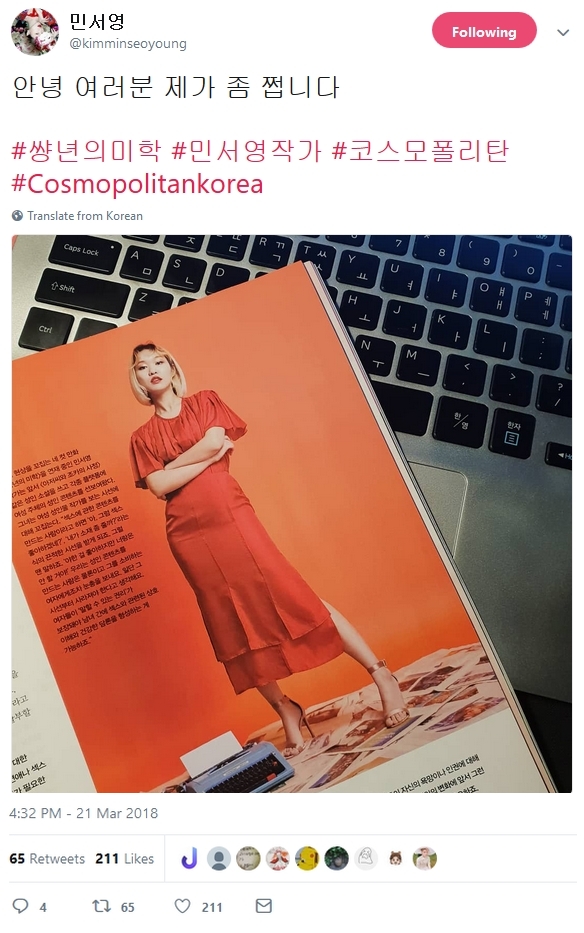
Writing about feminism for 10 years, I’m no stranger to double-standards. What I’m struck by whenever I encounter a new one though, is not just by how many there are that every woman already knows about and has to deal with. More, it’s by how much my male privilege had left me so utterly, blissfully unaware of them. That girl-pants don’t have proper pockets for instance, I had no idea about until I saw this comic in 2014—despite having a wife and two daughters. Likewise, if this newsreader’s glasses hadn’t become national news this week, I’d have remained clueless that many Korean cinemas were “notorious for not allowing [only] female part-time workers to wear glasses on duty.” And, if I hadn’t already been following awesome feminists on Twitter, the Korean magazine industry’s surprising prudishness about women’s sexual subjectivity would have completely passed me by too:
I was pleasantly surprised to see that there was a copy of the magazine I was interviewed in at the COEX library. But the pages with my interview were sealed with double-sided tape. When I contacted the magazine about it, they said that it was a measure to prevent minors from reading because of the sexual contents. But there were no sealed sections in other parts of the magazine, or in other magazines.* #Womencan’ttalkaboutsex
Min Seo-young (Twitter; Facebook) is an outspoken feminist webtoonist and sex columnist that I’ve been following since her interview by Ilda in July last year (google translation here), smitten by her loud frustration at the social pressures that force Korean women to act chastely and demurely. Later, in an interview for Brunch in December (translation), she added that she rejected one stereotype that only victims can be feminists, and pointed out that chafing against double-standards kind of forces women to become feminists anyway.
This would definitely qualify as one of those double-standards, so I decided to buy a copy of April’s Cosmopolitan to read her interview for myself. Alas, they were all long gone. And frankly, I can’t tell from her tweet if she meant just her interview was sealed off, or if she meant things like the ‘Super Hot Sex Games’ were too (*so I’ve just asked her to clarify; I’ll update this if she responds). Whatever the case though, I can confirm from all my hard work that Playboy Korea and Maxim were still available, with no sealed sections to ward off minors from their equally salacious, equally traumatizing content.
And besides which, Seo-young already posted a picture of part of her interview herself:
Copyright makes me wary of translating whole interviews or articles sorry, but I will indulge myself a little with this one:
“…[If men hear] I’m a writer about sexual matters, they joke ‘Ah, so you like sex? Shall I give you some source material?’…I’m kind of stuck with being looked at that way. But then I reply to that sort of thing: ‘Just because I like sexual things, that doesn’t mean I’m going to have sex with you!'”
Sounds like something minors should see. Not be protected from! ;)
If you reside in South Korea, you can donate via wire transfer: Turnbull James Edward (Kookmin Bank/국민은행, 563401-01-214324)
안녕하세요! 제 이름은 Edward Glayzer입니다. 저는 미시간주립대학교 인류학과의 박사과정생이고, Grand Narrative의 오래된 독자이기도 합니다. James Turnbull씨는 제가 서울에 와서 한국의 성불평등에 대한 학위논문 연구를 시작할 때부터 많은 도움을 주셨고, 또한 저번과 같이 이번에도 연구대상자 모집을 공고할 수 있게 해주셨습니다. James Turnbull씨께, 그리고 제 첫 설문에 참여해주셨던 모든 분들께 진심으로 감사하다는 말씀 전하고 싶습니다.
제 연구는 한국 사회의 성불평등에 관한 광범위한 주제들을 더 잘 이해하기 위한 것이며, 이를 위해 한국인들의 데이트와 결혼 의식에서 일어나는 물질적 교환을 살펴봅니다. 제 연구는 또한 남성과 여성의 소득 불평등이 어떻게 상품 소비를 통한 친밀함의 표현에 영향을 미치는지를 다룹니다. 해당 연구는 전에 공고했던 연구의 후속 연구이며, 그 전 연구에서는 다루지 않았던 면들도 다루고 있지만 여전히 연구의 중심은 위와 같습니다. 이 연구의 유일한 참여조건은 “다른 한국인과 데이트를 해본 대한민국 국적의 성인”입니다. 이 조건만 충족하신다면 성적 정체성이나 성적 지향성 등 다른 특징과 관계 없이 모두 환영합니다.
독자 여러분의 의향이나 내주실 수 있는 시간에 따라 두 가지 참여방법이 있습니다. 이 중 하나 혹은 둘 다 자원해주신다면 매우 감사할 것입니다.
Are you Korean? Have you been dating a Korean? Please help this researcher! (2nd survey)
Update: Please note that Eddie is only seeking native Koreans (and gyopos) fluent in Korean for his research. This English translation is just for your interest, and the hope that you’ll pass on his request to your Korean friends and partners. Thanks!
Hello Grand Narrative readers!
My name is Edward Glayzer. I am a Ph.D. student in the Department of Anthropology at Michigan State University and an long time reader of the Grand Narrative. Since moving to Seoul to begin my dissertation research on Korean gender inequality, James Turnbull has been extremely helpful and kind enough to post this call for research subjects. I would like to thank James Turnbull and all those who participated in my first study.
My research aims to better understand the wide range of topics related to gender inequality in Korean society. For this purpose, I look at material exchanges that take place in Korean dating and marriage ceremonies. My research also deals with how income inequality in men and women affects the expression of intimacy through commodity consumption. This study is a follow-up study of the research that was announced before, and it covers the aspects that were not covered in the previous research. The only requirement for participation in this study is to be an adult of Korean nationality and have spent time dating other Koreans. If you meet these conditions, you are welcome, regardless of other characteristics, such as gender or sexual orientation.
There are two ways of participating, depending on your intentions and the amount of time you can give. I would be very grateful if you volunteered for one or both of these.
One is a simple online questionnaire that takes about 15 minutes. The survey link is as follows, and you may participate even if you also participated in the first questionnaire: https://msu.co1.qualtrics.com/jfe/form/SV_bC46GYBqqZK8g3r
The second way to participate is to contact my via email or Kakao for an interview. Interviews can be done in either Korean or English and take about an hour. I will provide drinks and snacks for your time!
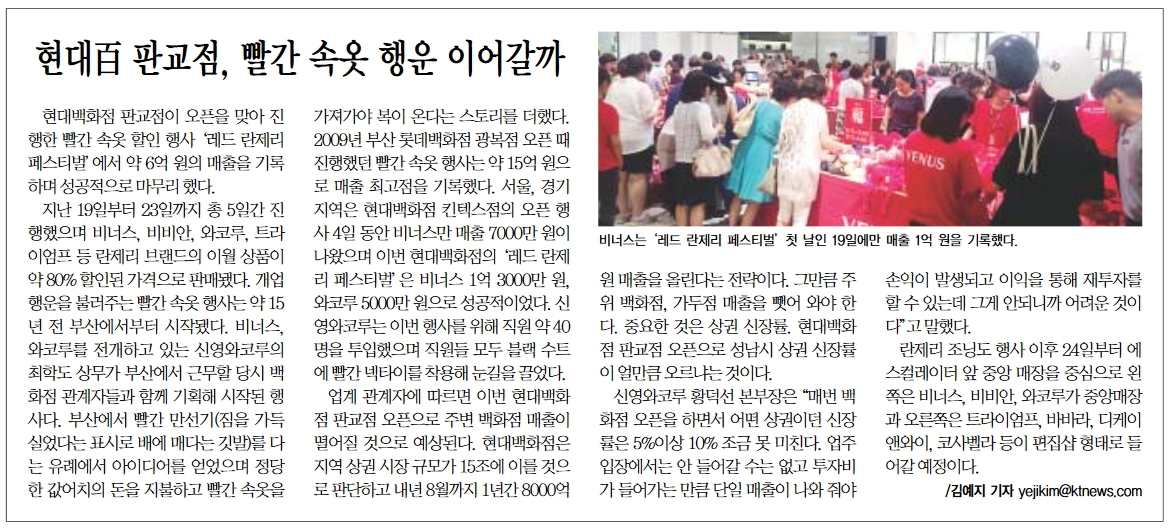
Go clothes shopping in East Asia at the moment, and it seems impossible to avoid all the red underwear. But it’s not because of Valentine’s Day. It’s because red is considered a lucky color by the Chinese, and the Lunar New Year’s celebration is just around the corner.
Unlike loud red clothes, red underwear will suit any wardrobe. Those whose Chinese Zodiac falls in the coming year for instance, when ironically they’ll need extra luck, can don it without revealing their age. So too Mahjong Players in Macau, who hope to leave their opponents seeing a different kind of red.
All these associations explain why “Triumph, the biggest underwear-maker in Asia, says its sales of red items are usually ten times higher than usual in Singapore and Malaysia around the Lunar New Year,” according to the following 2015 BBC report (0:35):
But it’s not just those countries with large Chinese populations that fall for red—Japanese stores alsohave big promotions. And Valentine’s Day can still be a very big deal: as the then Director of Triumph, Doy Teo above brightly noted, Lunar New Year’s fell very close to Valentine’s Day that year, making red underwear not just a good romantic gift. They will be even closer together this year.
Buying red on such an occasion seems a natural fit for young Korean consumers especially. Consider how Valentine’s Day has already been expanded into 11 other monthly holidays on various romantic themes, each with their own colors. Other non-native holidays, most notably Christmas, are not so much family occasions as rare opportunities to escape parents and spend time with partners or friends. “Couple clothes” arepopular, and worn all year-round. Red is the color of the “Red Devils” soccer supporters, who the Korean media already portrays as young women in red, skimpy clothing. And in particular, red has many of the same lucky connotations in Korean culture too. As explained by Jang Jang-sik, Research Institute Director at the National Folklore Museum of Korea, it’s traditionally been worn by soldiers or those doing something dangerous, gifted to students doing exams, and there is a folk belief that it helps women who are finding it difficult to conceive a son:
국립민속박물관 장장식 학예연구관은 “전쟁이나 위험지역으로 떠날 때나 도박판에 갈 때도 붉은 속옷을 입는다”며 ” ‘수험생이 붉은 속옷을 입거나 지니고 있으면 합격한다’ ‘아들을 못 낳는 여자가 아들을 낳은 여자 속옷을 입으면 아들을 낳을 수 있다’는 속설도 있다”고 했다.
There’s also a tradition of buying it for good luck from newly-opened stores. It rapidly sold out at the opening of Shinsegae’s Centum City branch in Busan in 2009 for instance, as well as at the opening of the Hyundai Department Store in Pangyo, Seongnam in 2015 (below), and at the re-opening of a Lotte Mall in Busan last July (video below):
Where then, is all the red underwear for lovers this Valentine’s Day?
To everyone’s relief, I have not done extensive field research in Korean lingerie stores to confirm its absence. The stores’ websites however, display no more red underwear than usual, nor do they have any red-themed promotions. Also, unlike couple outerwear, couple underwear has always been relatively expensive and limited in options in Korea, as I discovered before one frustrating anniversary recently. As friends later pointed out, if something’s only for each other to see, then what on Earth is the point?
But if lingerie stores are not even bothering to offer much in way of red at all, on a combined Lunar New Year’s and Valentine’s when it should sell more than ever, there must be some alternative, non-romantic connotations that the color has in Korea.
A tradition of buying red lingerie for one’s mother would certainly fit the bill.
…I write the Your Money column for the New York Times — all about anything and everything that hits you in the wallet. I write often about families and money — how not just dollars but also wisdom and values are taught and passed between generations.
On that note, over the years Korean-American friends of mine have told me about a tradition where new college graduates (or teenagers or college students or even some older adults getting their first paychecks at a new, prestigious workplace) buy a gift for their parents after they start their first full-time jobs. I’ve heard about everything from handing the entire paycheck over in cash to buying red thermal underwear for both parents or lingerie for their mothers.
And I was further intrigued by the answer provided by Dr. Barbara Wall, then Research Assistant in Korean Studies at the Asien-Afrika-Institut in Hamburg:
…if you search for first salary 첫월금+ present 선물 many of the results you get mention red underwear 빨간 내복. I am no underwear expert, but what people say is that the custom of wearing “modern” underwear in Korea started only in the 1960s at which time underwear was a luxury item. Dyeing nylon at that time was not easy and worked best with red. That is said to be the reason for the red underwear as symbol of filial piety. Red is also said to have the ability of blocking everything “evil”…
There is an old saying that one should buy red “long johns” for one’s parents after receiving the first paycheck from your first job. People tend to give other gifts to show appreciation to their parents, but the red long johns have an explanation. Back in the day, when floor heating was not as prevalent as it is now, people wore long underwear at night. Red-colored underwear was more expensive than the other drab colors offered at the time and therefore more desirable. Anyone who still observes this belief will probably buy red boxers, briefs, bras or panties for their parents.
NumerousKoreansourcesconfirm. In addition to the information provided in the video below (apologies to region-blocked Korean viewers), it’s interesting to note that in 2009, over a quarter of respondents would buy red underwear for their parents upon receiving their first paycheck.
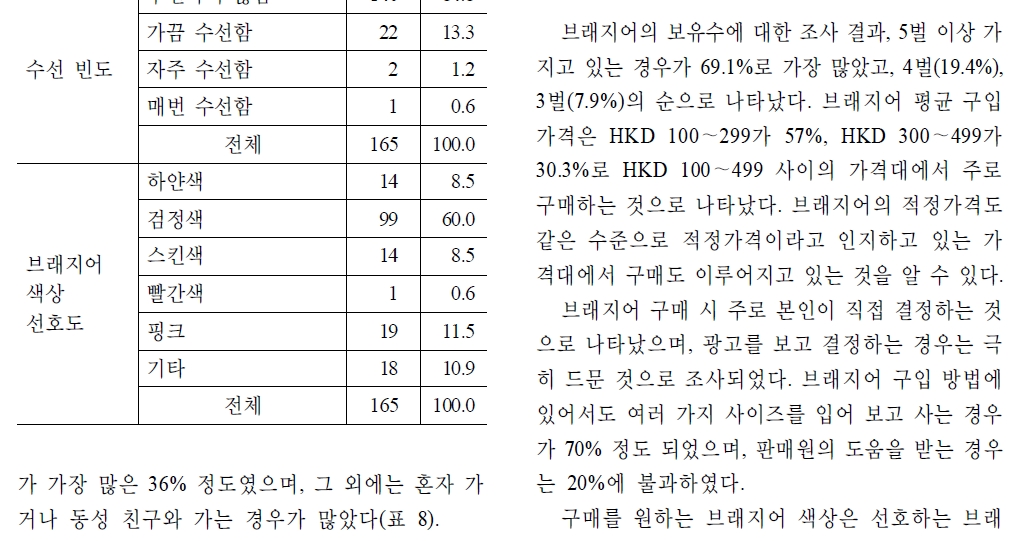
We must address the red elephants in the room too. “Underwear” is a wide-ranging term. Buying red thermal underwear for your parents, or long johns, is a far cry from buying sexy lingerie for them; as the Korean sources suggest, I’d wager children’s gifts are almost entirely the former. Also, even in Hong Kong, where the latter is supposedly all the rage, less than 1% of Chinese female undergraduates actually preferred that bra color:
Source: Sujoung Cha and Kristina Shin, “Hong Kong Chinese Breast Cathexis and Brassiere Design Preferences”, The Research Journal of the Costume Culture. 2011. Aug, 19(4): 780-793.
I also couldn’t help but notice that 60% preferred black. Because in An Intimate Affair: Women, Lingerie, and Sexuality (2007), although author Jill Fields frustratingly doesn’t mention red at all, she does have a groundbreaking (albeitcontroversial) chapter on the connotations of black lingerie in the US, which she tied to stereotypes of African-Amercian hypersexuality. Not only do those obviously not apply to Hong Kong however, but Chinese lingerie-makers themselves boggle at the differences in consumer preferences between borders. Which suggests it’s misguided to assume Pan-Asian similarities in tastes:
Guanyun workshops operate their own online stores in addition to producing wholesale stock for other brands. They are increasingly looking to sell overseas, which now only accounts for about a tenth of the county’s yearly output. But understanding the preferences of foreign customers remains an obstacle, according to [lingerie manufacturer] Lei. “There’s a huge gap in the aesthetics of different countries,” he explains. Sexy cop costumes are popular in Brazil, which Lei says is because Brazilians don’t like the police; French maid costumes don’t sell well in Poland because, he theorizes, the two countries don’t have a good relationship; and Japanese customers love any and all seductive outfits. The lingerie tastes of most European countries — except France and Italy — are still riddles to him. “Every collection that we deliberately designed has failed in their markets,” Lei says. “Germany borders France, right? But their taste is the most difficult thing for me to figure out.”
What do you think then, does explain Koreans’ distaste for red underwear this Valentine’s? Lingering unsexy associations with parents? Associations of red with the psuedo-communist North? Or some other reasons? Please let me know in the comments!
Related Posts:
Underwear a secret gift between lovers? Meet the traditional Chinese dudou (Speaking of China)
The first time I watched the TVs on the KTX, Korea’s high-speed train, I wondered if graphic footage of insects eating each other was really the best way to showcase Korea’s glorious flora and fauna to tourists.
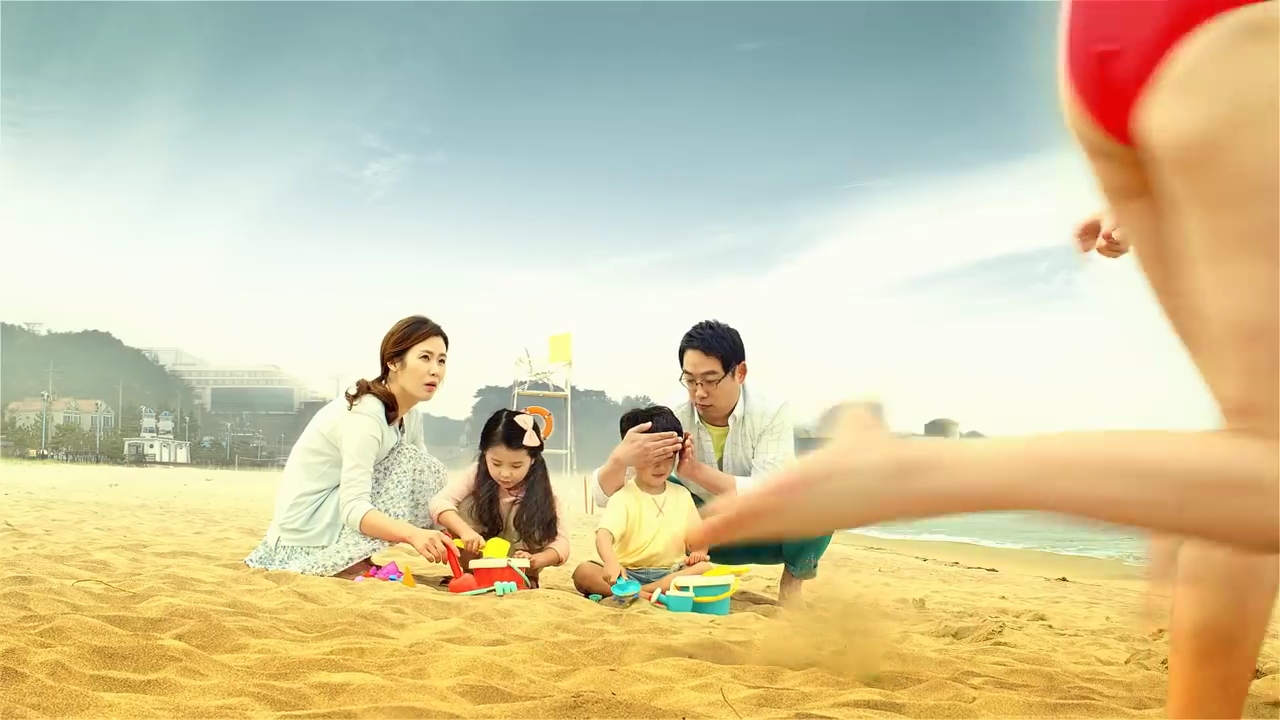
Fourteen years later, now I’m not so much fazed by this curious peccadillo of KORAIL’s, as eagerly look forward to the latest installment in these Boschian tragedies to entertain myself with on my trips to Seoul. And, it has to be said, they make a lot more sense than this safety campaign featuring women in bikinis did that I noticed last summer:
Fortunately, people with backbones complained, resulting in its removal and likely replacement with the same old invertebrate snuff films, as I’ve just learned from the following article:
“비키니 입으면 노출증?”…한수원 공익 광고 ‘성 상품화’ 논란 “Wearing a Bikini is Exhibitionism?” Korea Hydro & Nuclear Power Public Service Commercial Causes Controversy Over Sexual Objectification
Chosun Biz, September 20 2017
한국수력원자력이 성을 상품화한다고 볼 수 있는 공익광고를 KTX와 서울 지하철 등에서 방영해 논란이 되고 있다.
A public service commercial by Korea Hydro & Nuclear Power (KHNP) that has been playing on the KTX train and Seoul subway has led to some controversy over its sexual objectification.
20일 한수원과 코레일 등에 따르면 한수원은 최근 신고리 5·6호기 공론화가 진행되는 동안 원전과 관련된 홍보를 중단하기로 결정하며 기존에 계약한 광고 시간에는 지난 2015년에 만들었던 공익광고를 내보내고 있다.
According to [a KHNP official earlier today], KHNP and KORAIL [the national railway operator], KHNP decided to halt public relations efforts related to nuclear power plants while a public consensus was being sought on the fate of reactors Shin Kori 5 and Shin Kori 6 [at Kori nuclear power plant, close to Busan.] Three preexisting public service commercials made in 2015 were put in their place.
이 광고는 “당신은 상식적인 사람인가요. 다음 영상에서 비상식적인 점을 찾아보세요”라는 말로 시작된다. 이후 해수욕장에서 여성 3명이 겉옷을 벗어 던지고 비키니를 입은 채 바다로 뛰어드는 장면이 이어진다. 이 때 여성들의 모습은 슬로우모션으로 처리되며 몸매가 부각된다. 이후 자막으로 ‘무엇이 잘못되었을까요?’라는 자막이 나온다.
In the offending example, the text begins with “Are you a sensible person? Try to find what’s out of place in the following video.” Next, three clothed women on a beach run to the water, throw their clothes off, then jump into the waves in the bikinis that they were wearing underneath. While this is happening, the women’s bodies are focused on and [later] put into slow-motion, followed by the caption “What was wrong?”.
(James—Actually, the video did linger but technically didn’t slow-mo over the women’s bodies, and ended with “Did you find it?”, as the screenshot in the article also shows.)
이어 한 여성은 “아이들이 앞에서 막 벗는 것?”이라고 답한다. 또다른 한 남성은 “흐흐흐”라고 웃으면서 고개를 좌우로 흔들기도 하고, 또다른 여성은 “노출증?”이라고 말한다. 이후 광고 자막에는 “그것도 맞지만, 더 중요한 것은 이것”이라며 수영을 하기 전에는 준비운동을 반드시 해야한다고 알린다.
After that, one woman suggests “Was it getting undressed in front of children?”. Next, a man shakes his head left and right and laughs, then another woman suggests “Is it exhibitionism?”. Then, the text reads “Those are correct, but there’s something more important,” before revealing that it was that the women should have warmed up before swimming.
(James—Yes, really. It then shows the women doing precisely that instead, with the caption “No common-sense is more important than that to do with safety.”)
한수원의 유튜브 계정에는 해당 광고 영상에 대해 “화창한 날씨. 넓게 펼쳐진 바다와 예쁜 백사장. 평화로운 시간을 보내던 가족들 사이로 갑자기 젊은 여성 무리가 나타나 다른 이들의 시선은 아랑곳하지 않고 옷을 훌렁훌렁 벗어 던집니다. 여기서 가장 비상식적인 부분은 무엇일까요?”이라고 설명되어 있다…
In the description of the advertisement on YouTube, it says: “Sunny weather, a wide open ocean, and a pretty white sand beach. A family enjoying the peace is suddenly disturbed by a throng of young women undressing without thinking of anyone else around them. What is out of place here?”
(James—And then, after giving more information about why KHNP had to start running 2015 commercials, a spokesperson explaining the organization wanted to stress public service rather than be seen to be showing favoritism to nuclear power, the article continues:)
…하지만 일각에서는 이 광고가 여성 입장에서 불편하게 느낄 수 있다는 지적이 나온다. 직장인 이지은(27)씨는 “해수욕장에서 비키니 수영복을 입은 여성들이 왜 노출증이라고 비난받아야 하는지 공감이 가지 않는다”라면서 “비키니 입은 여성들을 본 남성이 음흉한 웃음을 짓는 것도 성적 대상화를 하는 것 같아 불편하다”고 말했다.
…Yet it has been pointed out that the situation depicted is uncomfortable for women. Lee Ji-eun (27), an office worker, argued “I have little sympathy for a commercial that says women should be criticized for exhibitionism simply for wearing bikinis or swimsuits at a beach,” adding “It’s already uncomfortable enough for women wearing bikinis to be sexualized and smirked at by men.”
대중음악평론가 서정민갑씨는 자신의 페이스북 계정을 통해 “왜 공익광고에 젊은 여성의 몸매를 관음하고, 그들은 준비운동도 안하고 바다로 뛰어드는 신중하지 못한 존재 역할을 전담하는가”라고 지적하기도 했다.
A popular music critic, Seo Jeong-min, asked on his personal Facebook “Why does the ad so voyeuristically use women’s bodies this way, and why is it young women that are placed in the role of being foolish, thoughtlessly running into the sea without warming-up first?”
한수원 관계자는 “2015년 제작 당시 각 방송사 등에서 문제가 없다는 판정을 받았기 때문에 괜찮다고 판단하고 광고 영상을 상영했다”면서 “여성을 희화화한다는 지적이 있어 광고를 중단할 예정”이라고 덧붙였다.
The KHNP spokesperson explained “No problems with the advertisement were noted when it is made in 2015, which is why we decided to use it.” However, “due to the way women are depicted in it, we will discontinue it.” (End.)
As explored in great depth on this blog, the Korean media and government have a long tradition of sexualizing and/or sexually-objectifying young women for public causes, particularly of girl-groups for the military, so the complaints about this example came as a pleasant surprise. Was it because it was just so inane, and so egregious? Or was it the hypocritical slut-shaming that pushed viewers over the edge? Please let me know what you think in the comments.
My name is Mary Perez, and I’m a Documentary Photography student living in the UK. I am traveling to South Korea at the end of February to produce a photo series on Korea’s military and the ways in which the need for conscription manifests itself in today’s society.
I am looking for men currently serving (or have recently served) and girlfriends/family of military men, to introduce myself to and discuss the project with.
Contact me (15011313@students.southwales.ac.uk) if you or someone you know would like to participate, or if you know someone who will be serving in the near future. I’m a keen student and would appreciate any research sources that you’d also like to pass my way.
Part 1 of 2. Estimated reading time: 15 minutes. Image source: Pexels (CC0).
“We love coffee! We love books!”
An amusing mantra I’ve taught my young daughters to recite over the breakfast table, all the stranger to hear considering they aren’t allowed to drink coffee. I do worry how much longer their hearts will be in our little morning ritual though, given the bad example with books I’ve been setting—I only ever read them on the subway these days, while home is for online magazine articles. Hence my first resolution for 2018, which is to grab a book and join them more often when they’re reading by themselves. And to find more books we can read together too.
My second is to commit to buying at least one new Korea, feminism, gender, and/or sexuality related-book a month. Partially, because writing about those subjects as a white cishet man, I have an extra responsibility to learn from as many women and Koreans about them as possible. But mostly, because nothing feels quite so thrilling as dropping their quotes in my writing in order to sound smart, and unfortunately Busan’s second-hand English book stores are just not providing.
What are your resolutions for reading in 2018? What books did you read last year? As for mine, apologies that my reviews are very short and personal, but that’s because many of the books are very obscure, and will only be of interest to very few readers. If you are one of those readers though, please let me know, and I’d be very happy to chat more about them with you in the comments.
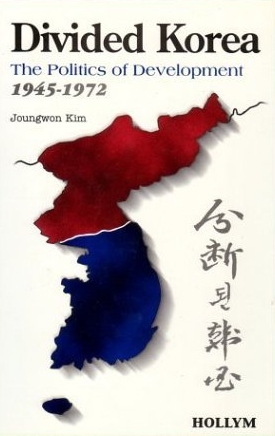
Written while Park Chung-hee was alive, and much of which is devoted to his military regime, I was worried this would be little more than a propaganda piece, especially as Park was actually interviewed for the book. Yet while it certainly does have its biases, and hardly delves into the democracy and labor movements, it hardly paints a glowing picture of the period either. Indeed, its main strength is in conveying just how economically desperate and politically unstable Korea was even as late as the time of publication, providing numerous anecdotes and facts and statistics that I’ve since used in my writing and classes. Add that it’s chronologically based, giving an extremely detailed political-economic timeline for the period covered, then it becomes a must-read for any serious Korea Studies geek.
Once having read any of those books however, then you’ll have a lot to gain from Divided Korea too. Albeit at a strict maximum of only one chapter per daily commute!
Reading about Freud for the first time in my early-teens, I quickly pigeonholed him as a complete freak to be avoided, wisely deciding that the “Readers’ Letters” section of my friend’s gifted Penthouse was a much healthier source of salacious reading. And thirty years later, I still think he’s a complete freak to be avoided. But I’ve come to appreciate his huge impact on society, especially after watching the excellent documentary The Century of the Self (2002)* about “how those in power have used Freud’s theories to try and control the dangerous crowd in an age of mass democracy.” More recently, Cody Delistraty’s September article “Untangling the Complicated, Controversial Legacy of Sigmund Freud” at The Cut is a great account of how he came to exert—and continues to exert—such influence in the first place. So buying this book seemed the natural next step.
But I also bought it assuming I would be learning about the originator of the term “Torches of Freedom,” the infamous advertising gimmick that persuaded suffragettes to take up smoking. That it would end with his dealings with US advertising agencies in the 1940s and 1950s, and perhaps give me so much renewed enthusiasm for Mad Men that I’d be able to persuade my wife to try it. That was Freud’s nephew Edward Bernays however, a completely different person. Instead, Ernest Jones was one of Freud’s lifelong closest friends, probably his greatest popularizer in Europe, and ultimately his first biographer. Being the driving force behind the establishment of psychoanalysis in the UK too, biographer Brenda Maddox leaves you fully convinced of the back cover’s claim that he was a “critical, heretofore overlooked, architect of our modern intellectual landscape”, and very much a fascinating figure in his own right—not just because he’s essential for understanding Freud.
Such a noble subject doesn’t necessarily make for a page-turner, but Maddox’s down-to-Earth writing style makes all the difference. Her wry descriptions of Jones’s frequent sexual escapades for instance, are especially amusing, but aren’t there simply to titillate the reader—they’re relevant because they nearly derailed his career. Also, although such inclinations are hardly confined to female biographers, I liked how she seemed to take pains to explain why both Freud and Jones were so popular among their overwhelmingly female patients, despite being reviled by male colleagues, and how she includes a great deal of social history to ground readers and help them appreciate just how scandalous and revolutionary their work was for its time. Let me leave you with an example from Chapter 6, “Hamlet in Toronto”:
Nervousness about sexuality was hardly confined to the United States and Canada. In Dublin in 1907, on the opening night of J. M. Synge’s Playboy of the Western World, the mention of the word “shifts”, referring to female undergarments, caused the audience to stamp their feet, sing patriotic songs, and shout “Kill the author!” The performance had to be abandoned in the second act. “Shifts” had the same connotations as “knickers” and was not to be uttered on a public stage. (p. 74)
*The Century of the Self can be watched online here.
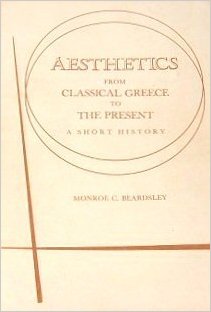
Bought because of my interest in beauty ideals, under the assumption that the subjects were quite similar. But whereas works on the former tend toward the descriptive and historical, in my limited experience the subject of aesthetics seems more light philosophy, which is not to my taste. Frankly, that means I haven’t retained much from this book then, and feel no closer to answering the questions it raises. But I can still see the merit in asking them, and respect the scholarship that went into what seems a very comprehensive guide to virtually everything that had been written on the subject up to the date of publication.
I would be interested in reading something similar on developments in the subject 50 years since, especially of a more scientific bent. Also, I do have copies of Donald A. Norman’s The Design of Everyday Things (2002 ed.) and Emotional Design: Why we love (or hate) everyday things (2004), and I’m optimistic that his tying of aesthetics to practical examples will make me much more interested in the subject.
Every time I buy a reader-type book, I remind myself of back when CDs were effectively the only way to listen to music on demand. With songs bundled together like chapters, and so much trash alongside hit singles, I learned to take the plunge on an album only if I liked a least a third of the songs on it.
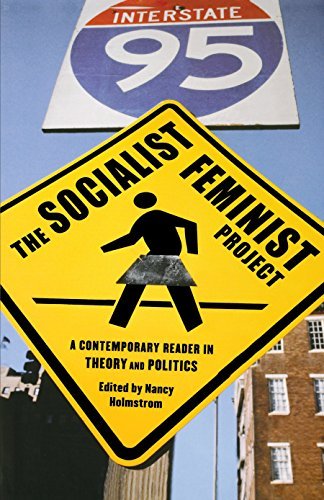
Did I say every time I buy a reader-type book? Actually usually I don’t, because meeting that ratio is harder than it sounds. Variety, which this book has in spades—nearly forty chapters on topics including PMS, queer theory, domestic violence, Guatemala’s sugar industry, intersectionality, and Asian-American environmental movements—doesn’t necessarily mean one in three chapters will be worth paying money for. It doesn’t help that authors’ writing styles vary widely in this particular reader either, some being so informal they seem very out of place for such a title. (Not that I have a hard-on for hard-core socialist theory. But if I did, I’d be very annoyed not to find it here.)
What makes all the difference with The Socialist Feminist Project though, is that the book isn’t at all US-centric, and that the topics tend towards universal themes rather than contemporary 2002 political issues (although of course some chapters are indeed very dated.) So, one out of three useful and readable chapters, 15 years after publication, is a great ratio really. It helps explain why those chapters I did like, I really liked, and will probably be referring to for years to come. See my post South Korea’s Invisible Military Girlfriends for an example, based on the chapter “Militarizing Women’s Lives” by Cynthia Enloe.
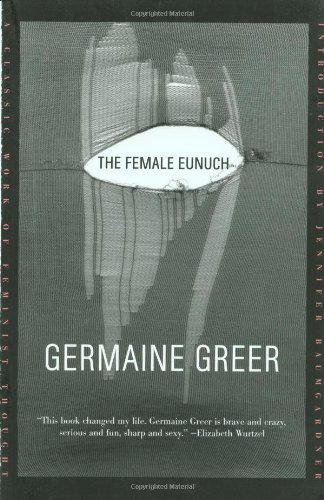
#5. The Female Eunuch by Germaine Greer (1970; with updated introduction, 2001) 1.5/5
It’s easy to see why this is a feminist classic. Much of it is so insightful, taboo-breaking, and confrontational that it reads like it was written today—and must have been mind-blowing to encounter for the first time ever back in the 1970s. Fans of Camille Paglia especially, with whom she seems to have much in common, will appreciate her blunt writing style. Also, for female readers in Korea in particular, her description of UK workplaces then will sound depressingly familiar today.
Like Paglia however, Greer presents many controversial or decidedly odd opinions as if they were universal truths. This forceful style can be very moving on a first reading, but it discourages providing long arguments or evidence for those opinions, meaning a sober second reading leaves you deeply questioning. Also, the format of the book—four main chapters titled “Body,” “Soul,” “Love,” and “Hate,” subdivided into equally vaguely-titled and focused subchapters—makes for a lot of repetition, to the extent that 200 pages in you’re slogging through more out of sense of obligation to the sisterhood than any expectation of learning anything new in the next 200. Hence my surprisingly low, blasphemous rating. And why, despite what the book may have meant to women once, I just can’t recommend it today.
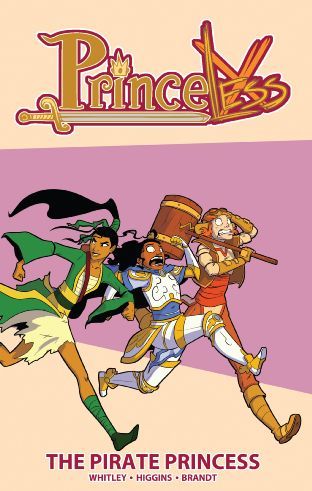
Some English practice and wonderful feminist role-models for my manhwa-loving daughters. Need I say more? ;)
I’m very embarrassed to realize that we finished this in April and didn’t follow-up with the next volumes though, so I’m ordering those as I type this.
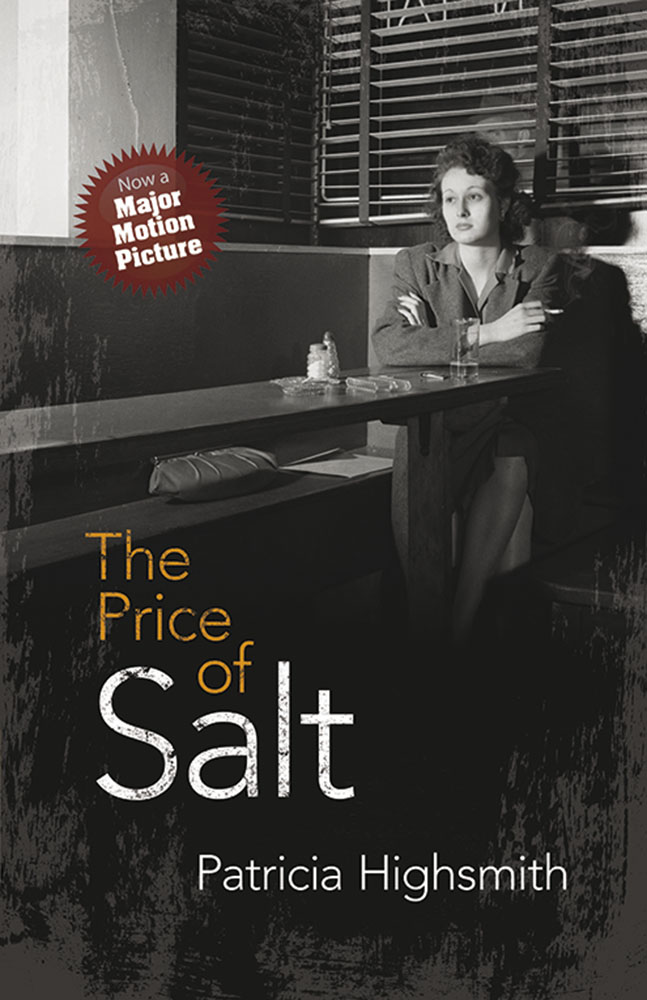
Needing no introduction due to the excellent 2015 film, which by all accounts is very faithful to the book, I think the most helpful thing I can do is to pass on my favorite quote from it:
“The wine in her head promised music or poetry or truth, but she was stranded on the brink. Therese could not think of a single question that would be proper to ask, because all her questions were so enormous.” (p. 98)
Evoking the “pregnant with possibility” line from (I think) The Great and Secret Show by Clive Barker (1989), which I remind myself of whenever I’m about to cross the threshold into some party, if that quote doesn’t speak to your core then you’ll probably find the book too ponderous for your liking, Therese’s character much too self-absorbed and infuriating in her indecision. If it resonates at all though, then you’ll just love The Price of Salt.
I haven’t seen the movie myself yet. Ironically, the more faithful to a book one is, usually the less motivated I am to bother, as I feel it will offer me nothing new (I may never get round to watching Atonement!). Carol (2015) however, is so often mentioned as astellarexampleof thefemalegaze, about which I’m writing a series at the moment, that I guess I’m just going to have to force myself. Oy vey!
If you’re reading this post, then you’re well aware that stereotypes of race and sexuality in Korean popular culture have a huge impact on foreigners’ lives here. But perhaps you weren’t aware once, so the hows and whys of their influence were a little to difficult to understand upon first encounter, especially if you had never experienced being a minority before. Learning about the Asian-American experience in the US through familiar pop culture examples through Orientals then, can be very helpful in providing some signposts to the Korean case, as well as revealing surprising and often uncomfortable similarities in one’s own cultural baggage brought here.
But Lee’s book is also useful and interesting simply for shedding light on a much misrepresented social group, and for presenting a history of the US from a perspective that many readers will be unfamiliar with. I especially liked the common thread of what we take for granted about a society actually being a perennial source of contention between dominant and subordinate groups, with what Lee writes about the US below being just as true of Korea:
“The mobilization of national identity under the sign ‘American’ has never been a simple matter of imposing elite interests and values on the social formation, but is always a matter of negotiation between the dominant and the dominated. Subordinated groups offer resistance to the hegemony of elite culture; they create subaltern popular cultures and contest for a voice in the dominant public sphere. The saloon vies with the salon, the boardwalk with the cafe, and the minstrel theater with the opera as an arena for public debate and political ideas.
Although it mobilizes legitimacy, the cultural hegemony of dominant groups is never complete; it can render fundamental social contradictions invisible, explain them away, or ameliorate them, but it cannot resolve them. However deracinated, whether co-opted, utopian, nostalgic, or nihilist, popular culture is always contested terrain. The practices that make up popular culture are negotiations, in the public sphere, between and among dominant and subaltern groups around the question of national identity: What constitutes America? Who gets to participate and on what grounds? Who are ‘real Americans?'” (p. 6)
That said, while learning about the Asian-American experience through familiar pop culture examples can indeed be helpful, many of those selected by Lee were rather dated even at the time of writing. Also, one reviewer claims that “you probably won’t find [the book] interesting or appealing unless you enjoy left-wing polemics.” I think that’s an exaggeration, but it certainly was evident in his one-sided discussion of Michael Crichton’s 1992 novel Rising Sun—a pet interest of mine—which Lee shoehorns into racist anti-Japanese narratives of the time. That’s still not enough to put me off recommending the book by any means, but it’s something to bear in mind.
I’m not a big fan of self-help books. Most just seem full of truisms, leaving me not so much motivated to conquer the world as angry and confused that someone was paid for stating the completely obvious. Then bitter, because why wasn’t that person me?
Despite that, it can sometimes help to be reminded of them nonetheless. And a big plus for this book, unlike many others in the genre, is that the real-life examples used to raise them aren’t dated, nor relevant only to those in the US, nor even just to 20-somethings. Frankly, I’ll feeling a little peppier now having just glanced at my bookmarks for this review, which is not bad for the price of a cocktail.
What if—mind blown—I read it while drinking a cocktail though? Hmm…
I had no love for English at high school, and was nonplussed at the two Shakespearean plays—The Merchant of Venice and Romeo and Juliet—I studied there. Older and wiser now though, ironically it’s only through having studied and understood them at school that I understand and like them at all—and find the prospect of learning a third so daunting.
But then in 2016, getting drunk on Black Russians at home while watching the latest episodes of Westworld (my idea of heaven, TBH), I was inspired to overcome my fears, and bought several new plays and books about Shakespeare. Alas, that’s as far as my inspiration ever got with them, but Poole’s book might just give me the final push I need.
Not just because it’s an amazing introduction to the subject, making even an illiterate like myself finally understand what tragedies even are. But especially because of the explanations of what draws audiences to them, one particular passage intimately speaking to my own personal experience of very literally, physically being unable to speak upon suddenly learning of a very close friend’s death 10 years ago:
“What a dream, to be articulate in the midst of passion—anger, desire, grief—yet when we meet it in reality it usually seems specious, a glib and oily artfulness. Great tragic art satisfies our dreams by endowing characters with the verbal resourcefulness we never muster for ourselves, especially when it’s expressed through the body and voice of gifted performers….We remember with gratitude lines and passages, turns of phrase and voice, that seem to grasp the shapes of true passion, the moments when for once, amidst all the inequities of tragedy, language appears equal to what it addresses and expresses.” (p. 90)
On which note, should I delve into Julius Caesar, King Lear, or Macbeth first, the tragedies among those plays I bought? Please let me know in the comments, or anything at all about any of the other books mentioned in the post. Meanwhile, Part 2 is the works too, which you can see my Librarything list of for a sneak preview!
If you reside in South Korea, you can donate via wire transfer: Turnbull James Edward (Kookmin Bank/국민은행, 563401-01-214324)
Just a quick update to apologize for the ongoing lack of posts, and to explain.
Basically, I’ve been too busy. The same week my wife’s father died, she started a new job as an interpreter and translator at a rapidly-expanding medical technology company. Every other week since then, she’s been jet-setting to places like Andorra, India, the US, and Indonesia. Also, when she is in Korea, her workplace is across town, meaning she has to leave home at 7:30am, and doesn’t come back until 8pm, after which she’s straight back on her computer. It’s all very glamorous and exciting from my perspective (only glamorous and exciting-sounding, she insists), and I’m very proud of her, but practically-speaking I’ve been a single parent for the last two months. It’s been tough!
Every cloud has a silver-lining though, and it’s been a real eye-opener being forced by the lack of free-time to break down how I’ve been spending my days, and trying to eliminate time-wasting habits. I’m still very, very far from becoming a paragon of discipline of course, but one important change I have made recently is going to bed at 10pm and getting up at 6am, to get in that fabled hour of writing every day. True, so far those hours have more been spent only thinking about writing, while luxuriating in a second cup of coffee and watching the sunrise over the ocean (still totally worth it, IMHO), but the actual writing will surely come soon.
Just a very quick update to let everyone know that, tragically, my father-in-law died in an accident earlier today. Which means I’m very busy and stressed right now sorry, so I’ll just quickly say that my planned comeback on Monday will have to be delayed a few more weeks unfortunately.
Until then, thank you very much for your condolences and for your patience, and I promise to be overanalyzing pop-culture with you all again soon (*hugs*). Take care!
It’s the blog’s 10 year anniversary this month. But I’m just too busy to celebrate!
Classes only finished at my university a few days ago. My Gender in South Korea course starts at HUFS in less than 3 weeks. Then I’ll be in Seoul teaching that for 4 weeks, then I’m going on a quick holiday to the UK for 2 weeks (our family’s first overseas trip in 9 years!), then it will be the next semester already, and then my mother will be staying with me for 2 weeks.
So, if there was ever a good time to take a break from blogging, now would be it. And I deserve one after 10 years too!
Don’t worry though, I’ll still be very much around, posting links on Twitter and on the blog’s Facebook page as per usual, and responding to comments. But the next post won’t be up until mid-September.
Until then, thanks very much for reading and for all of your comments over the years, and I hope you all have a great summer. Also, please consider helping me keep the blog going for another 10 years, by clicking on the button below and making a small donation. I do hate to ask, but then keeping the blog going at all costs me $78 a year, and—well, I only received $5 in donations last year, and in the year before that too. So not asking doesn’t seem to be working much! :D
Earlier this month, the Korean media ignored a Free the Nipple event held by Womenlink. This lack of coverage is just one reason why the campaign may struggle to take-off in Korea. But stranger things have happened. Once, men too were forbidden from exposing their chests in public. As Korean summers get hotter and drier, soon these double-standards may seem as absurd as no-pants laws and the skirt-length police.
If they’re larger than average, their owners are often criticized for flaunting their femininity, and stereotyped as sexually voracious. Those same women also struggle to find comfortable, attractive bras that will fit them.
This, despite Korean women’s breasts getting larger for decades as Koreans’ diets have changed.
Of course, women the world over struggle withthese issues. But it’s not just size, it’s exposure in general, and standards in Korea are that much stricter. As I’m no Picasso explains:
“Base line standard in Korea: If you are showing even the tiniest centimeter of a crack of cleavage, you are not dressed appropriately for work. Shoulders are also largely taboo, although we have noticed this changing a bit this past summer. Even too much exposed skin on the chest above the cleavage mark can be considered risque.
It’s a pain in the ass for girls with larger chests, because it’s really difficult to find garments that won’t show any cleavage, no matter what position you are in. I’ve also had to take to having an army of undershirts on hand, in order to be sure that not even the shadow of a bra can be seen…”
Image Source: Rok Kim. Anonymous source (quoted with permission): “What are you, ladies? Personally I am 가슴 B컵 for Boobs Are Great In All Sizes and 얼굴 F급 for Fucks Given About Your Opinion Are Zero.” (Advertisement Caption: Breasts, D-cup; Face, A-grade.
But these are all necessary generalizations. The reality is messy, undercut by age, class, marital status, motherhood, occupation, and region. Every morning while working on this post, the range of women’s fashions and levels of exposure I witnessed even just on the subway would defy any of the neat conclusions I’d arrived at the night before.
So, two weeks of pondering nipples and breasts later, as one does, the only generalization I’m still confident of making is that all women suffer from the inconveniences—and, ultimately, the dangers—of the double standards of men’s and women’s fashion.
Most of the negative effects I’m aware of have been covered in those earlier links. But I also happen to be a guy, so I would appreciate female readers’ input. One I didn’t know about for instance, because I don’t shop for women’s clothes, one anonymous woman told me:
“When I came back here 5 years ago, I was shocked because…dresses and/or skirts were way too short in general even when they were meant for the ‘office look’. When you buy clothes online, often the pictures are very misleading because companies often use very petite models so dresses/skirts look something of a normal length. I’ve learned it hard way and started to double-check the length. Nowadays I tend to stick with only a few sites when I shop my work clothes. I should probably start exploring offline stores again.
I don’t mind sporting short skirts/dresses every now and then when time & place is right—I just don’t wanna be surprised when I expect to receive something in a normal length for my work.”
Continuing, I’ve just been wearing short-sleeved shirts to work for the last month, and just long-sleeved shirts before that. In contrast, as a Womenlink activist wrote on her placard at the event (see below), women always have to wear unventilated padding to hide their nipples; to wear bras to hide their breasts; to wear vests to hide their bras; and to wear t-shirts to hide their vests.
Even more alarmingly, in one 2013 surveyof Korean police officers, over half considered revealing clothing to be a cause of sexual assault (indicating little had changed from back in 1996). To those who would make fun of and dismiss Free the Nipple and Slutwalk campaigns in response to such attitudes, and continue to police women’s bodies so unfairly, I’m genuinely curious as to where they would draw the lines. Especially if they claim to still support women’s rights. For to whom else but misogynists, could so much shame and blame hinge on an exposed bra strap or visible nipple?
“I dropped a lot of money on a nice bra…one with frills and made of lace, not like all my other ones that I bought from Uniqlo.” / “Minju! You can see your entire bra! Don’t wear a white t-shirt!” Source, above and below: @bambooblock
“But what about her? That’s the fashion!!” / Fashion you say… / Jeez… [put this on].” Ironic coincidence: this picture of Korean duo Love X Stereo appeared in my Facebook feed as I was translating!
But where did these attitudes come from? Again, the question is more difficult than it appears, and there’s no handy introduction akin to Laura Miller’s “Mammary Mania” chapter in her excellent book on Japanese body aesthetics.
So, I spent most of those last two weeks laying the framework for what may be my own equivalent chapter on Korea someday. Allow me to present the fruits of that research, in the form of themes and trends I’ve identified that any answer must cover, as well as some highlights from new sources I’ve discovered (please let me know if you have any difficulty obtaining copies of the journal articles). As you’ll soon see, there’s a lot of things to consider, and it can be very difficult—even naive and counterproductive—to separate nipple and breast exposure from taboos surrounding other body parts:
“[Most striking of all] is the provocative portrayal of semi-nude bathers in the lower left-hand corner, where a woman stands sensually, her face turned in the direction of the beholder. Equally daring is the inclusion of two young monks, who observe the bathers with unequivocally frank poses and facial expressions…Considering that even in the West, the female nude in a contemporary setting—devoid of classical or biblical context (e.g. Diana or Susanna in Her Bath)—did not appear until the 19th century, the representation of bathing women in Sin Yunbok’s painting is all the more remarkable.“
• You may have noticed that the working woman carrying a load on her head is fully-clothed, but has her breasts exposed. This is because, as explained by Hyung Gu Lynn in “Fashioning Modernity: Changing Meanings of Clothing in Colonial Korea” in the Journal of International and Area Studies (2004; pp. 77-78):
“…during the Chosôn period, clothing was not a unifying medium for all Koreans, but rather a means of social differentiation. Considerable scholarly energy has been directed to the study of the regulations that governed what clothes and colors could be worn by [whom]. The results show, for example, that it was only women of the upper class who wore long coats and head covers called chang-ot when venturing outside. In contrast, commoner women who worked outdoors often wore short chôgori [blouses], which left their breasts exposed for ease in nursing their babies.”
• In the chapter “Female Images in 1930s Korea: Virtuous Women and Good Mothers” in Visualizing Beauty: Gender and Ideology in Modern East Asia, ed. by Aida Yuen Wong (2012), Yisoon Kim notes that women were infrequently depicted in Korean art, even compared to other Confucian societies, but the new “Paintings of Colonial Women” genre exemplified by Sin Yun-bok briefly changed all that. What she writes about the anonymous picture on the left below however, contradicts the notion that breasts were not at all eroticized, a notion further corroborated by “firm breasts” being included in contemporary lists of beauty ideals (p. 93.):
Sources: Naver, Daum,Vosub. On the right is a poster for the fanciful 2008 movie Portrait of a Beauty, which re-imagines Sin Yun-bok as a woman in disguise.
“…[this left] picture recalls Sin Yun-bok’s style except for the absence of ornate hair accessories. Donning a short skirt, which tantalizingly reveals the breasts, the woman lifts one hand to adjust her hairdo. Although the hanbok is designed to fully cover the body, these paintings expose the flesh in strategic places. Sin’s picture [in the center] includes a silver knife, a traditional symbol of chastity, hanging from the shirt as a reminder of the sexual potential of the image. [Paintings of this genre] facilitated carnal fantasy. They could be made to hang on walls like Western pin-ups or portable scrolls for the convenience of private viewing, presumably at men’s leisure.”
Perhaps it was the elite status of the women depicted that made all the difference? Or, if the women depicted were actually low-status gisaeng, because of the novelty of seeing them bare-breasted, as opposed to commoners?
• As Hyung Gu Lynn goes on to explain in her article, the adoption of Western clothing during the colonial period also had important class components, as well as becoming tied to anti-colonialism and nationalism. It’s difficult to understand the rise of—and misogyny against—the “New Woman” and “Modern Girl” ideals without those, so it’s worth quoting her at some length (p. 87, my emphases):
“[In addition to modernization bringing] increasing numbers of women out the house and into public spaces…the diffusion of technologies of visual reproduction and the development of the culture of tourism allowed for more men to consume more images of women, further multiplying the number of meanings embedded in a given piece of clothing.
Although increasing numbers of urban men wore Western-style suits, the changes in women’s clothing occurred at a far slower pace. The transition for women from Chosôn period ch’ima [skirt] to the “improved ch’ima” with the shorter skirt hem and the longer tops meant that the visual distinction between upper class women who had hidden under the chang-ot and the common women with exposed faces and breasts was eliminated. However, in the place of the exposed breast as a marker of commoner status, the degree of calf exposure became one of the indicators of female proximity to capitalism and modernity—more leg, more modern.
Students and workers were encouraged to wear shortened skirts and longer tops for their purported practicality in the more mobile world, but the exposed calf sparked heated debate over its sexual implications…The increased visual presence of women in public and the diffusion of romantic love imbued clothing with heightened sexual meaning.”
And (p.88):
“New styles of clothing which exposed more skin, legs in particular, influenced ideas of beauty that extended and encompassed to the shape of the female body. By the mid-1930s, articles on beautifying calisthenics for women that would not appear so out of place in twenty-first century magazines were appearing in the mass publications…Other articles introduced the proper way to put on makeup, what to wear for which occasions, and how to behave in the “modern life,” further supplementing the new definitions and ideals of beauty and grace. The changes in clothing clearly helped shape the sexual meanings imbued in various body parts, providing further evidence that the eroticized body parts and ‘proper’ areas of skin exposure changes with culture and time.
Developments in visual technology and tourism added to the intensified sexuality of clothing. Magazines, movie posters, and postcards distributed consumable images of women in various styles of dress…The complete covering of the female breast in the colonial period gradually eroticized what had previously been merely regarded a body part. The tourist and travel literature usually contained images of kisaeng in P’yôngyang, but in the late colonial period, the women sea divers in Cheju Island became increasingly popular subjects for postcards and photographs, usually pictured with their breasts exposed.
The ‘traditional’ ch’ima chôgori, which may have been the only clothes a Korean woman owned, or consciously wore as a symbol of resistance to colonial rule or as a reflection of class and status, could be perceived merely as an exotic costume by the unknowing male gaze. The multivalency of each piece of clothing allowed the ‘traditional’ female dress to symbolize Korean identity, and at the same time distend the exotic allure of travel in Korea by promising different vistas and enticing females to the male (predominantly Japanese) tourist.”
• Many years ago, I read that older Korean men (and women?) fondly remember those photos of semi-nude Haenyeo (Jeju divers) from when they were children, taken before the divers began wearing wetsuits in the 1950s and 1960s. Unfortunately, I’ve long since lost the source, so it was good to find indirect confirmation in Hyung Gu Lynn’s article. Actual examples of those photographs however, remain surprisingly difficult to find online, the vast majority actually being of Amadivers in Japan. But they’re out there. The one on the left below for instance, is part of a romanticized series from the 1950s according to the source, although the costumes are authentic; that later one on the right, very likely taken for a Jeju postcard, is much more modest, but remains a good example of glamorization and sexualization.
• Yisoon Kim provides a good summary of why a new trend of portraying “virtuous” women then arose, with depictions of breastfeeding in particular becoming the main subjects of paintings for the first time (p. 91):
“…[the 1930s were] the height of colonialism, when conservatism and progressiveness coexisted…Fine artists tended to depict the opposites [of the much-criticized Modern Girls], that is, virtuous women who demonstrated chastity and sexual restraint. Modernization was underway…but unfavorable economic conditions inside and outside the country made Koreans wary of change. [Under the conditions of the Great Depression and coming war], the colonized and impoverished Korean nation took comfort in the idea of women carrying out their motherly duties and grooming the next generation for a more prosperous future.”
• In a previous chapter, “The Modern Girl as a Contested Symbol in Colonial Korea”, Yeon Shim Chung notes that other reasons for the adoption of the virtuous mother as a nationalist symbol include the facts that most of the new beauty products for the Modern Girls and New Women—as well as the original ideals themselves—came from Japan. Indeed (p. 82):
“Commerce and feminism intersected with colonialism in controversial ways. Korea’s access to Western goods was one vehicle for Japan to prove its utility as a civilizer and modernizer. As voracious consumers of these goods, Modern Girls inadvertently participated in Korea’s colonial subordination to Japan, which entailed [heavily] promoting [to both Koreans and to the West] progressive images of Japan while denigrating Korea as a remote, pre-industrial land…”
Which may have included bare-breasted women in hanbok, as the comment threads linked to earlier suggest, and why many Koreans’ understandable first reaction to seeing them is to dismiss them as Japanese propaganda.
• Most ordinary women entering the newly-created jobs open to them, of course, had no time for men’s criticisms of their newfound professional and sexual freedoms, or the shoehorning of their consumer purchases into narratives of nationalist betrayal. Indeed, as Young Na Kim describes in “Being Modern: Representing the ‘New Woman’ and ‘Modern Girl’ in Korean Art“, Western clothes became the norm by the 1930s (p. 222) “…not because they signified modernity, but because they were practical and comfortable.” Also, and in particular, further examples she gives caution against tendencies in previously mentioned sources that neatly categorize trends and depictions into the decadent 1920s vs. the virtuous 1930s (p. 238):
“One of the characteristics of the Modern Girl was her consciousness of her body. There were now attempts to freely express the physical strength or beauty of woman’s body. Nude paintings, which once were banned from being shown in public, now could be displayed at an exhibition with no restrictions, but they were still depicted in the setting of the artist’s studio. However, there is a photograph of famous dancer Choi Seong-hee [left, below] in 1931 which reveals that she exposed her body half naked in a public performance, as if to declare the freedom of the body. Kang Dae-sok’s photograph of a female nude [the first nude photograph in Korea; right, below] should be also noted in this context, in her stretched posture facing toward the sky as if to embrace the whole world, breaking away from the passive reclining or standing nude form.”
• Next, there is the oft-mentioned mini-skirt fever prompted by singer Yoon Bok-hee, hemlines reaching a peak of 30cm above the knee in 1968. But in my opinion, the liberalization of Korean clothing and attitudes then is exaggerated. While more revealing imagery from the period tends to stick out, it may not be representative, not unlike the aforementioned wide gap between the busty ideals promoted by the Korean media and ordinary Korean women’s attitudes today. Also, not only was Yoon branded a “public enemy” for her bravado, and had eggs thrown at her the very same day she revealed her mini-skirt, but this was hardly the swinging ’60s in Korea. In fact, the country was desperately poor at the time (less than 1 in 10 Koreans had washing machines, refrigerators, phones, or televisions), with most of the public unable to spend much on fashion, and possibly deeply resentful of those that could.
Fears of the ensuing social conflict are one big reason for the implementation of the highly authoritarian “Yushin System” of 1972-1981, which included forced haircuts for men, minimum skirt-lengthsfor women, and strict censorship of sexual media content.
• This censorship would not just end in the early-1980s however, but in fact sexual content would ultimately be encouraged by the government, as part of its “3S” policy of “sex, screen, and sport” to distract people from politics. Accordingly, Madame Aema, “the most explicit of Korean movies ever made,” would hit the theaters in early-1982.
• In the late-1980s, the government began to lift restrictions on the use of foreign models in advertisements. First, they were allowed to appear in advertisements for foreign products, then in 1994, for domestic products also. Their use exploded after that, particularly after the liberalization of the magazine market in 1999.
• In the summer of 2002, record numbers of Korean women would take advantage of the soccer World Cup to go out and have a good time, and weren’t modest about what they would like to do with the soccer players; in the process, they directly challenged conservative standards of dress, as well as taboos against assertive representations of female sexuality in the media. Although both developments had in fact already begun in the mid to late-1990s, and were accelerated by the sexual politics of the aftermath of the Asian Financial Crisis, unfortunately the “movement” was then largely co-opted and channeled into narratives of support for the national soccer team by the media and government.
• Finally, in addition to the K-pop industry and government censorshipregimes perpetuating the notion that breasts are bad, but women’s legs and men’s abs are good clean harmless fun, there is the dramatic rise of the cosmetic surgery industry over the last few decades to consider. Fueled, I’d go so far as to say primarily by, Korea being one of only two countries in the OECD where photographs are required on resumes, despite multiple attempts to stop the practice. And this is the same industry that, as previously noted, is heavily encouraging bustier body ideals.
Exhausted after reading that? You’re not the only one(!). Yet that potted history of the taboo is still just the bare-bones, and needs considerable fleshing-out. Not least, from all the Korean-language sources I’ve also discovered and barely scratched the surface of, as well as the voices of Korean women and men themselves. I also acknowledge the almost complete lack of mention of men, and eagerly await your suggestions for further scholarly sources on Korean men’s nipples in particular ;)
Despite all the generalizations and gaps however, a clear theme of fluidity and rapid change in Korea’s exposure taboos emerges from all the above, and there’s no reason to suppose those won’t continue. Indeed, to those that feel that women walking around with exposed breasts is too much of an extreme to ever return to, it was once considered just as outlandish for men to expose their chests too, as pointed out by activists in the Free the Nipple campaign:
Moreover, to those that feel that such a campaign has chances for success in Western countries, but that a Korean equivalent will inevitably lag far behind, I’d point out how recentthe call for change isin Western countries too.* And nobody who was in a crowd of Red Devils in Korea in 2002—or, indeed, in a candlelight democracy vigil in 2017—can fail to appreciate what ordinary Koreans are capable of when decide they can no longer tolerate other people’s bullshit.
Kudos then, to the activists from Womenlink earlier this month. You can read more about their event (and see many more comments) in twoposts on Womenlink’s Facebook Page, or on their homepage, and here’s my translations of their posters and placards to round off this post:
*As friends have rightly pointed out, the puritan standards of the US referenced in those links do not represent those of all Western countries. In particular, nude beaches have been popular in much of continental Europe for decades, and standards for the workplace and presenters on television are much more relaxed. Also, nudity is common on French daytime and primetime TV.
We wear padding (which isn’t ventilated) to hide our nipples, we wear bras to hide our breasts, to hide our bras we wear vests, and to hide our vests we wear t-shirts…this prickly heat is so frustrating! We can’t live like this! Free the Nipple!
Q) If you have a lot of sexual experience, do your nipples get darker? A) No way!
Free the nipple / Why is looking at only women’s nipples restricted to over-18s?!?! Let’s stop the sexual objectification of women now!!
Update:Korea Observer reported on a very similar event in 2014, although I’m unsure if it was connected with Womenlink in any way. Here’s a video from that:
Trick question: I’ve raved about it many times. Who wouldn’t, when after yearsspent looking for quality, accessible Korean-language commentary on feminism and sexuality, now they’re inundated with it?
It feels so energizing to discover all the fresh perspectives, events, trends, and activists that I’ve been overlooking these past 17 years in Korea. And to think about where learning about them will take me (and this blog) in the future.
It also explains why I haven’t been writing much recently sorry: when you have so much material to work with, it’s difficult to settle on just one thing at a time. Other reasons include preparing my upcoming Gender in South Korea course this summer, my wife starting an exciting and glamorous new job which keeps taking her on long business trips overseas, and my angst over my blog’s 10 year anniversary coming up in a couple of weeks.
This female artist painted a masterpiece of female nudity.
In particular, the model has no interest whatsoever in the viewer’s gaze—indeed, she seems to be ignoring it almost entirely. Instead, she has an unaffected air about her, her eyes closed and sporting an ever so slight smile with her lips turned up. Rather than simply being the object of the gaze, she’s revealed to be the master of her own body.
Any more old or newfound fans of Gentileschi out there, please say hi in the comments. Also, does anyone know of any paintings with similar motifs by different artists, especially Korean ones? Thanks!
Do you remember the ravescene from The Matrix Reloaded? What did you think of it?
Most people I ask express their disdain. To them, it represents everything that went wrong with the sequels.
I hear them about the sequels I tell them. In general. But this particular scene? They don’t have to like it, and there’s much to complain about the execution. Yet for all its flaws, it is integral to the story, as “Signal Chaser 76” makes clear at arts technica:
The scene represents humanity, a beleaguered and nearly extinct humanity. It’s humanity at its most reckless and youthful stage, humans engaged in wild, primitive, and raw sexual dancing, humans dirty with mud from the caves gyrating to primitive but hypnotic beats, vulnerable to the ambiance of the party and their situation under ground.
It’s humans inspired by a great speech to celebrate what makes humans human. This may be the last time they can dance like this, this may be the last time they can celebrate what makes them so peculiar and odd in a world of robots and virtual reality…
…It is offset by the relentless precision of the machines, their singular drive to destroy Zion, their unemotional quest to destroy any semblance of humanity in the heretofore tolerated Zion. Cold, steal, mechanical- the machines are precisely the opposite of the dancing humans in Zion.
I can’t pretend to have been aware of all that back in the theater in 2003. But I did get an inkling. Because, sitting in my favorite spot in the front row, the sudden eruption of gargantuan raw flesh in my face, with all the glistening breasts, the nipples, the muscles, the biceps, the grinding in rhythm to deep, pounding, hypnotic beats…made me realize right then and there just how fundamental sexuality was to being human, and how anybody that pretended otherwise was just fucked up.
Yeah, those really were my exact words to myself in the movie theater. You can see why they provided such a big step on the path that led to this blog.
I mention them fourteen years later, because I was actually writing a post about two feminist artists, and wanted to explain why I’m so drawn to those brave enough to call out all the bullshit surrounding sexuality. Much better though, to actually focus on the artists themselves in the introduction to that post, and to use this one as an opportunity to get a conversation with you going instead.

 Estimated combined reading time: 8 minutes. Photo by Zun Zun from Pexels.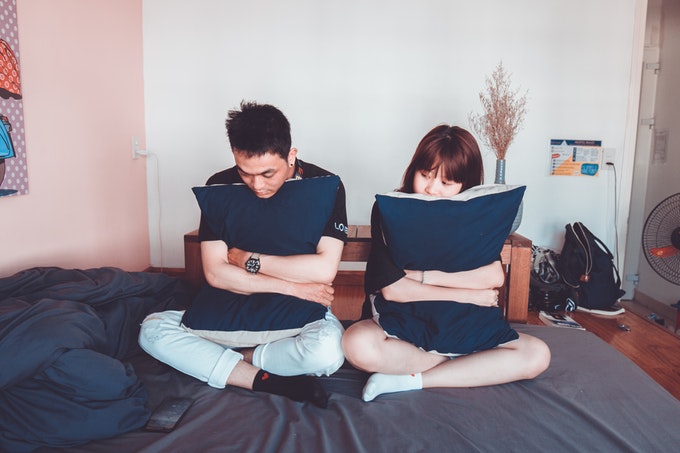
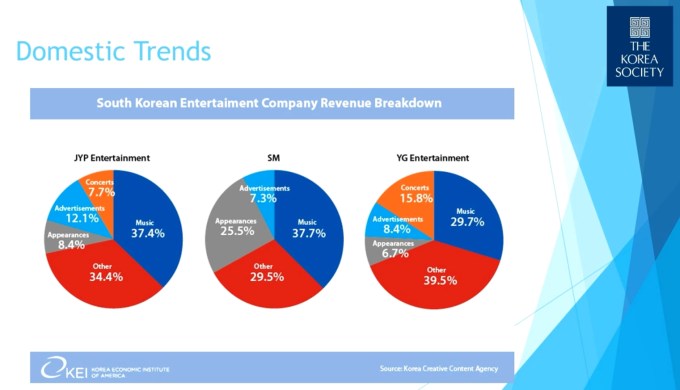 Source: Jenna Gibson, Korea Economic Institute and The Korea Society @YouTube (3:50).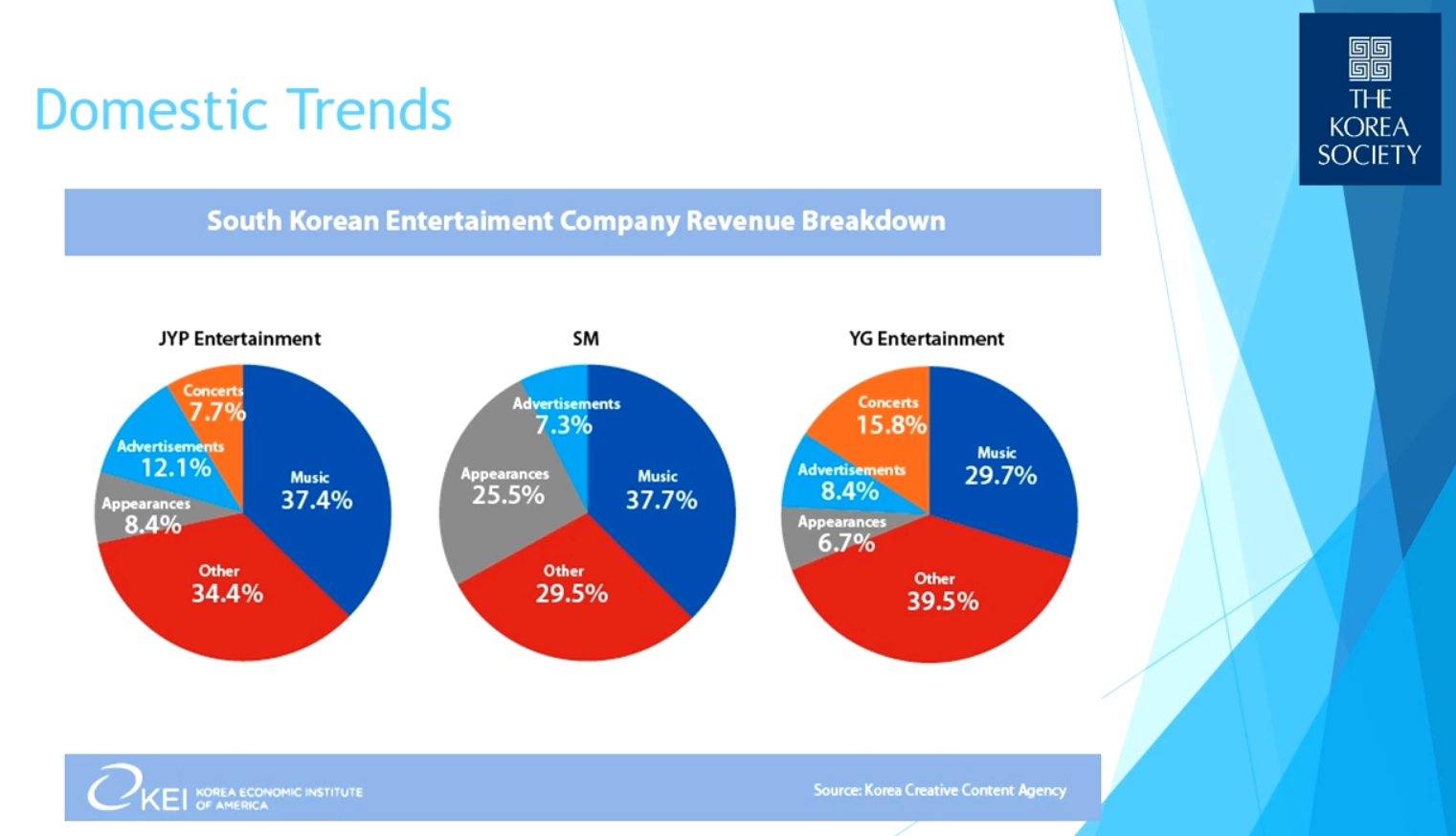


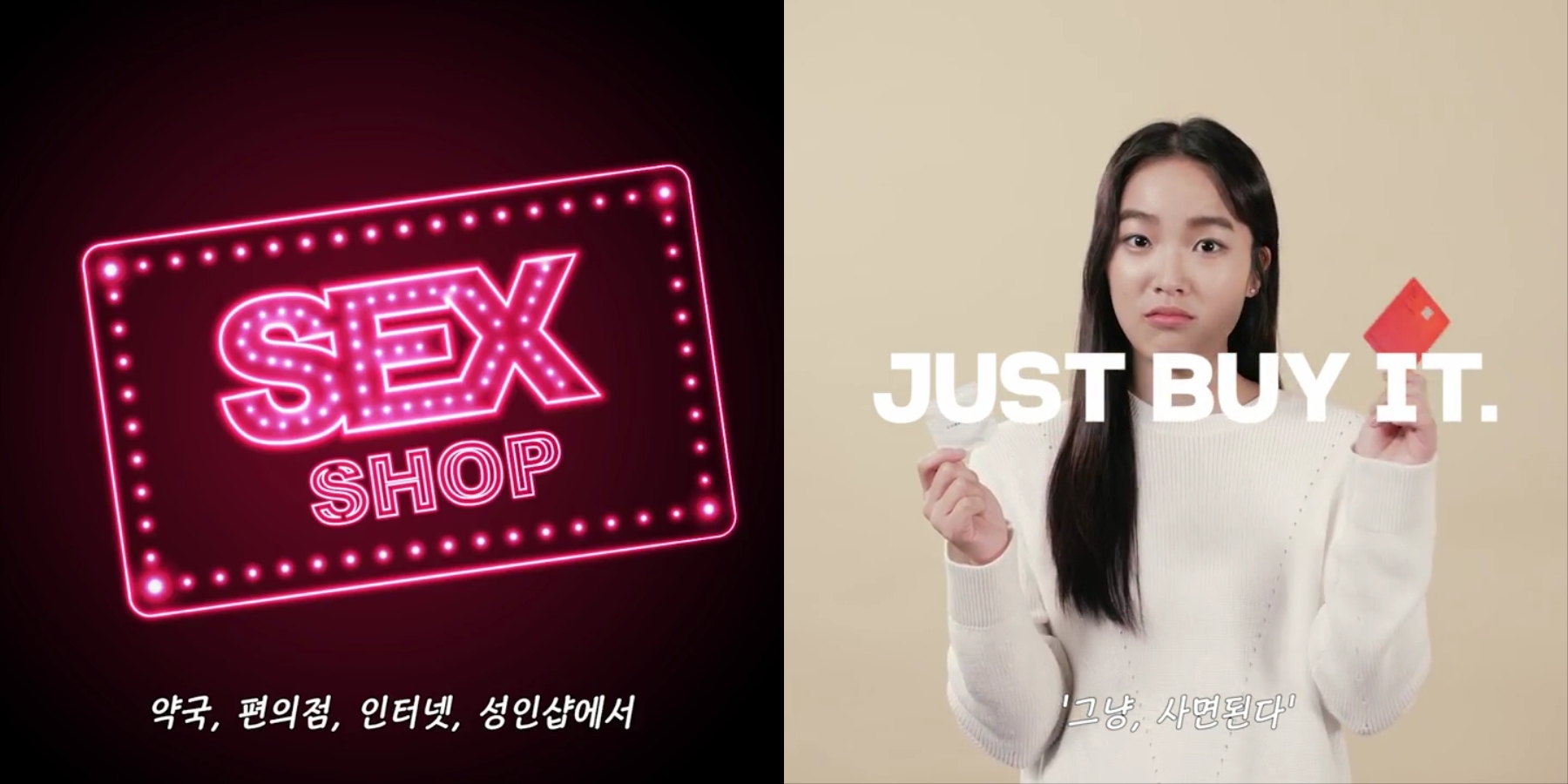


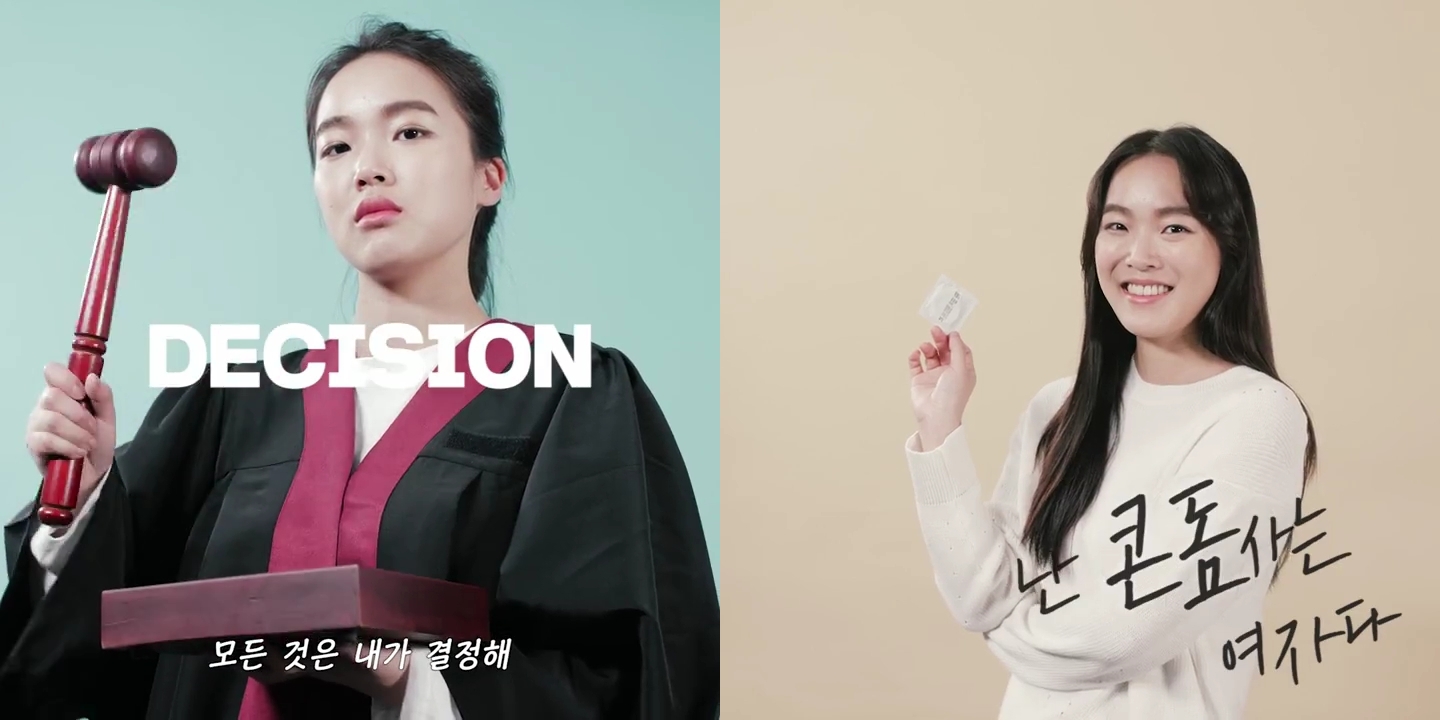
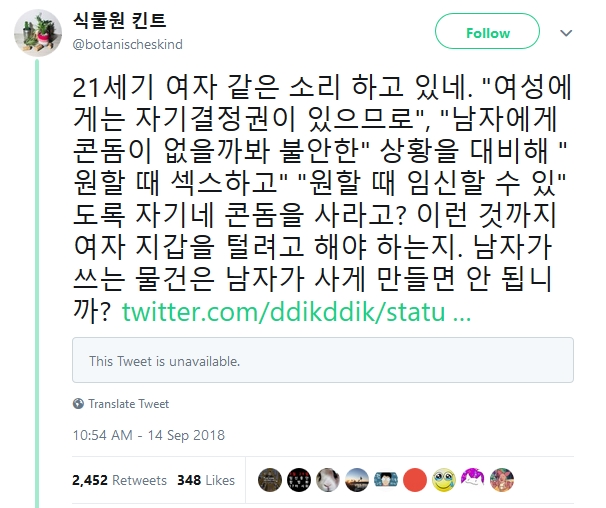
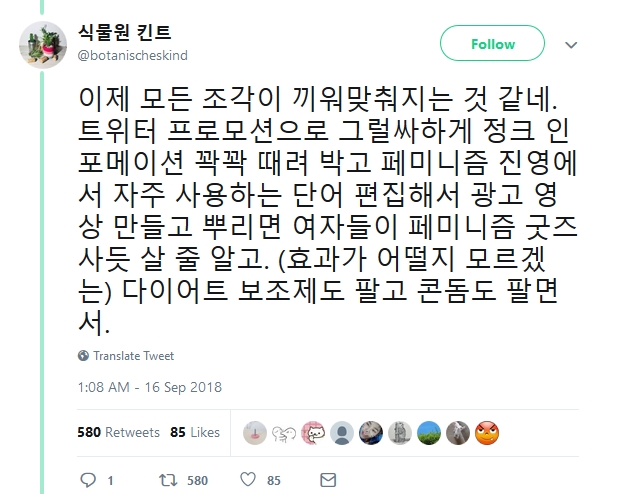
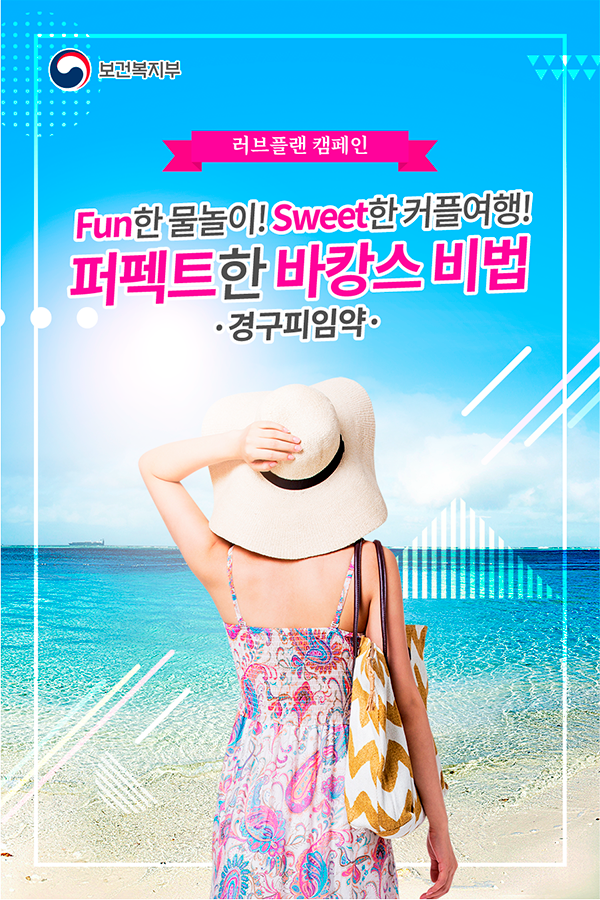

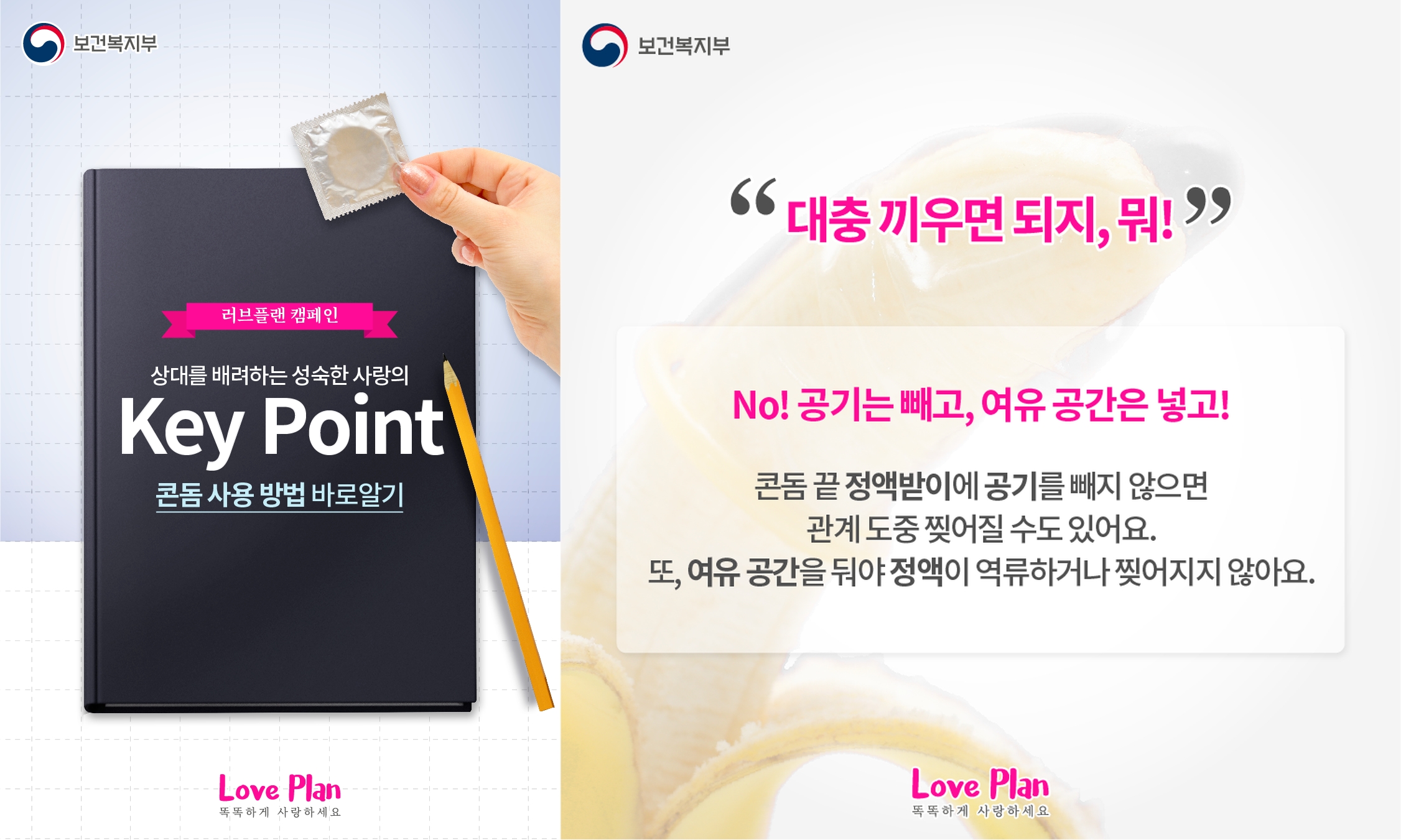


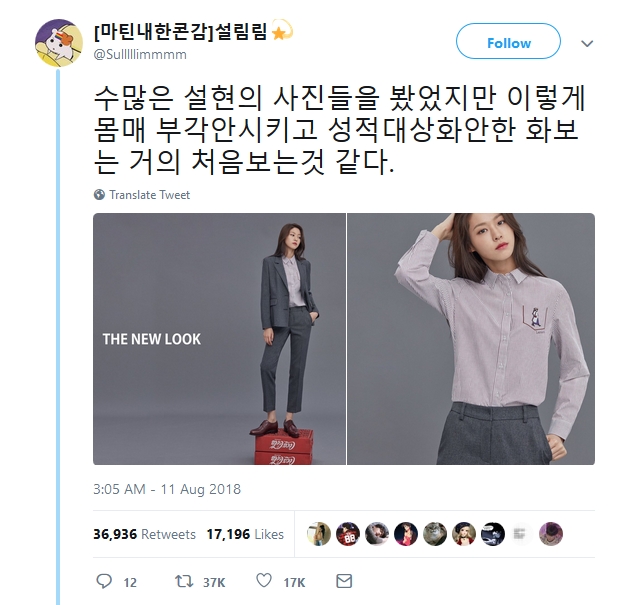 Estimated Reading Time: 5 minutes. Source:


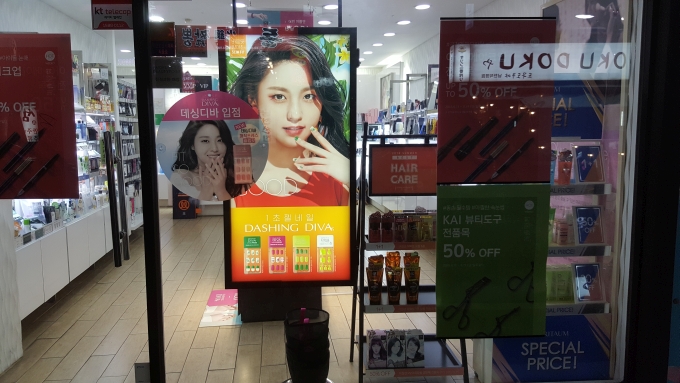

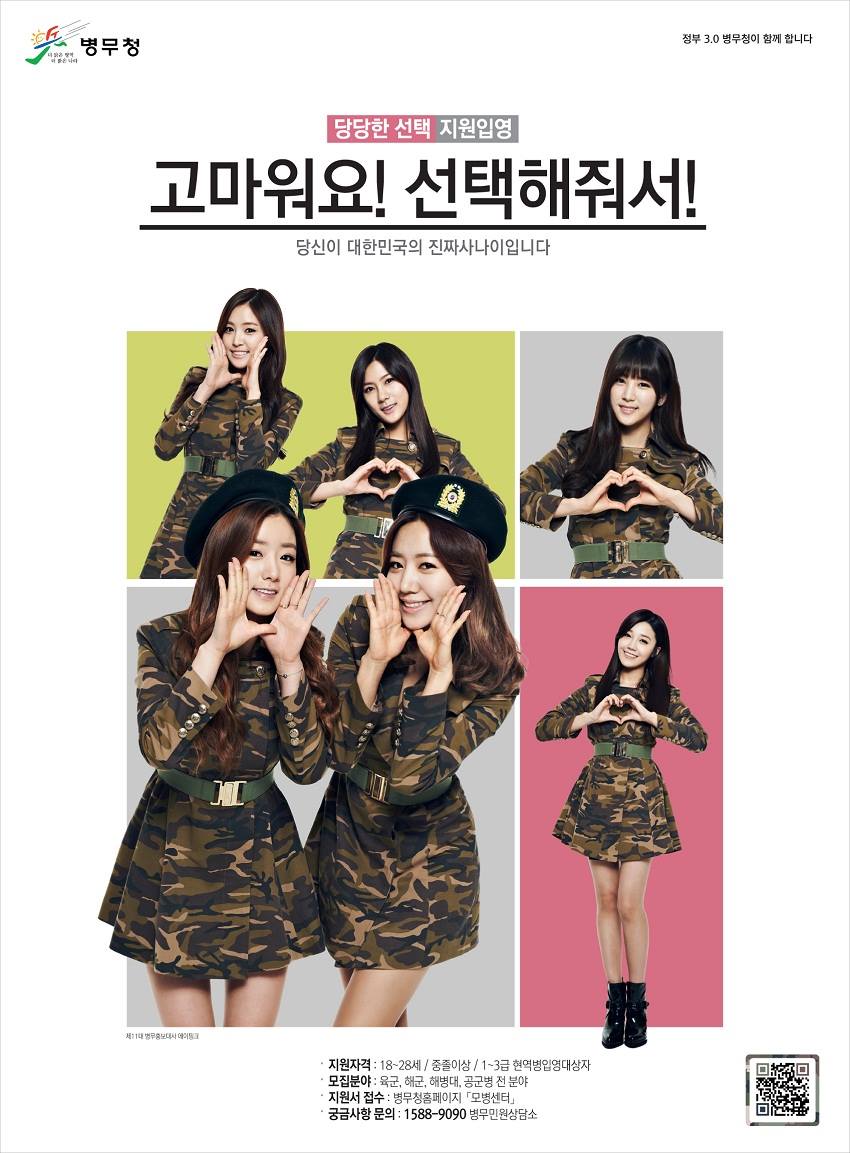

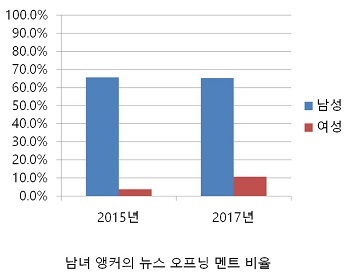
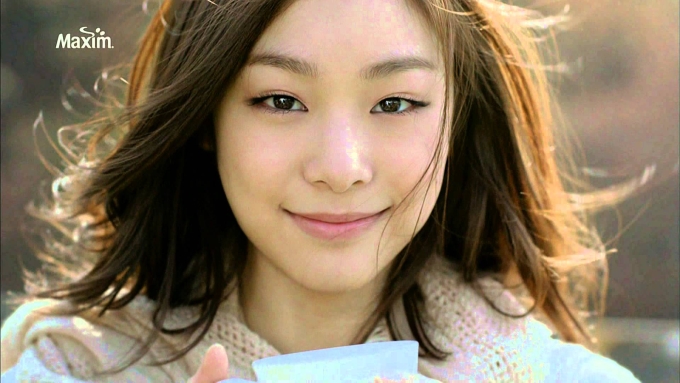

 Sources: