Follow These Two Blogs for Up-to-date Statistics and Commentary on Social Trends in South Korea!

It can be a real challenge sometimes finding the insider knowledge I use to pretend I’m smart, let alone knowing what to make of it. Fortunately, I can rely on these sources to provide both!

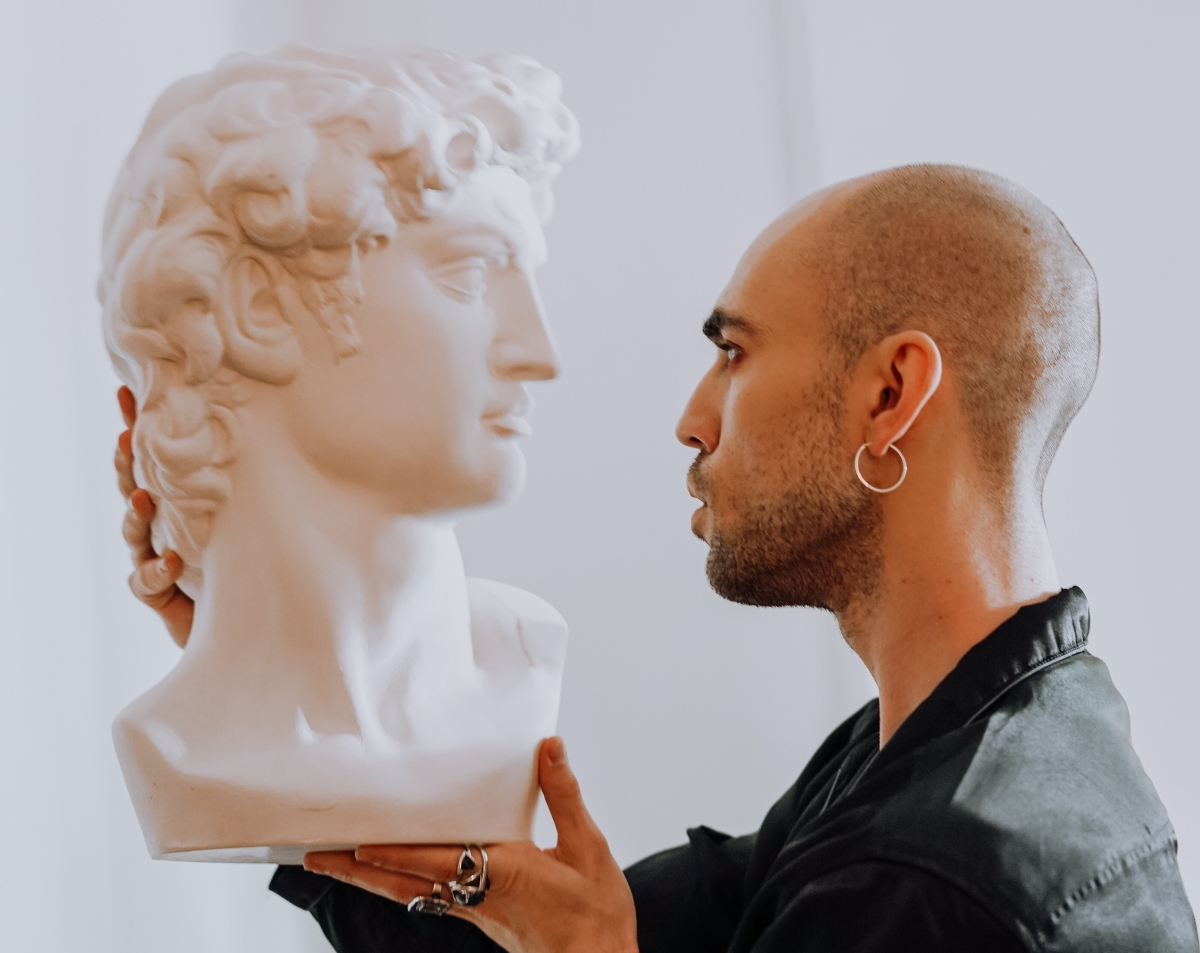
Estimated reading time: 5 minutes, plus 15-minute video. Photo by Andrew Neel on Unsplash.

Without any further ado, the first blog is Connecting the Data Dots by Ssen Kim, which has many excellent short posts in English.

Alas, there seems to be no information about the author. But I do know that in the very first post of theirs I read, “Has The M-shaped Curve Of South Korea’s Female Employment Rate Disappeared?“, they not only directly addressed a question I’ve long been worried about getting called out on, they’d even provided some handy graphs for me to distract my accusers with too.

So last winter, while preparing this semester’s Korean Gender Studies class, I realized I just had to use them. But as the day of this week’s lecture on the birthrate approached, a crisis loomed. While I found the topic very interesting, and you will when you read that post too, I started considereing it from the perspective of my already disengaged young students. Still scarred from growing up during COVID, and barely older than children themselves, would they find the topic of why Koreans aren’t having children completely irrelevant to them? Arcane even?

What to do?

Continue reading “Follow These Two Blogs for Up-to-date Statistics and Commentary on Social Trends in South Korea!”

How to Persuade Many More Women to Think Daily About the Roman Empire! (And Men Too!)

Estimated reading time: 4 minutes. Photo (cropped) by Juliana Malta on Unsplash.

Without further ado, let me introduce Erica Stevenson of Moan Inc. (love the name), who “dives into the mythology, philosophy, [and] history [of] the ancient Greeks & Romans” through “videos uploaded every Tuesday & Thursday (sometimes Sunday).” Overall, she “aims to show [her] viewers that the ancient world isn’t as tough or complicated to study as one may think,” and seeks to act “as the middle man between the myths we are told as children and the university lecture space you all try to avoid.”

I highlight Erica’s YouTube channel for you here, because despite—as far as I know—never explicitly aiming to give ‘ancient modern’ women or goddesses their due, or analyzing the ancient Greek and Roman worlds through a feminist lens, in practice she seems to do a hell of a lot of both. She’s also funny, has an infectious enthusiasm for her subject, and invites a lot more female than male experts to appear in her videos, which I’m guessing from all the memes is quite unusual. For instance, she recently collaborated with one of yours and my favorite book reviewers, Willow Heath of Books and Bao:

What originally brought her to my attention though, was her enthusiasm for a recent biography on Plato, due to the author’s rare acknowledgement of the difficulties in making any definitive, factual statements about someone for whom so little information was actually available. Which, indirectly, mirrors some of the ways I compensate for my background in writing and researching the subjects that I do (8:51-10:57):

(Update, January 2024: To my chagrin, Erica Stevenson seems to have quietly deleted the original review video, possibly because she interviewed the author himself a few months later, which I include below. I’ve decided to keep this post up though, as the points she was making still stand!)

My transcript:

Moving into what I thought of the book itself…I loved it. Right, to keep this as short as possible, I thought it was absolutely fantastic, and the reason why I thought that this study was so good is because…something that I worry about when reading non-fiction, [and] something that I’ve heard a lot from non-fiction authors, is that publishing houses…push authors to write more definitively, and to write clearer. So, by that I mean, you know I spoke to Tim Whitmarsh about this, that with his book, about atheism in the ancient world, there were lots of sentences he wanted to keep very nuanced, that the publishers, the editors were kind of like, “You’re going to need to hammer that down.” To be a bit more clear, to be a bit more certain, because for a wider audience, they don’t want to have to read your silly “This might be…,” or “This could be interpreted…”. You know, they just want facts basically, to leave the book with a solid story, as opposed to you over-complicating it with so much nuance in there. And lots of other authors have mentioned that to me, so, whenever I go into non-fiction I’m always trying to see like “Errrr….How much did the editor have a say in this? How much did the publisher have a say in this? Are we going to get any real nuance here…what’s gonna haaappen?”. And with this book we did not have that problem, at all.

I don’t know who Robin Waterfield works with, but they allowed him to leave all of the questions in the book, right? He makes it very clear after any ‘facts’ he puts forward about Plato, that there’s no real way of knowing that, and the reasons why we can’t know those things. Or, what other people have latched onto in order to claim that that was a fact about Plato. So, it was really fantastically well-done. There are so many wider references, there’s a huge index sort of, you know, sort of thing at the back, which you can then check what ancient works he gets things from, what other scholars did he get things from. You know, all of that was just done so well, and that’s obviously so necessary for a study like this when absolutely nothing is certain.

And which would seem a strange place to end this post on. Sorry. But, well, in a previous version, three times as long, I went on to explain the epiphanies this led to when I first watched the video in July, the confidence that gave me, the exciting plans I have for my writing now, and how enthused I was about fulfilling those. Only then I realized I was actually sabotaging those plans, wasting the better part of a day writing about my least favorite subject instead—myself:

Ahem. So, lesson learned, I’ll wisely shoehorn this ending here. And have another post up for you up very soon!

If you reside in South Korea, you can donate via wire transfer: Turnbull James Edward (Kookmin Bank/국민은행, 563401-01-214324)

Your Burning Questions about Korean Feminism, Sexuality, and Pop Culture—Answered!

Estimated reading time: 2 minutes. Photo (cropped) by Tsuyuri Hara on Unsplash.

Please send them in, either in the comments below, on the Facebook event page, or on the registration form, and I’ll answer them in person next Tuesday July 13 at 7:30pm (KST), in a Zoom interview organized by Rhea Metituk (rhealm@gmail.com) of the KOTESOL Women and Gender Equality Special Interest Group. Everyone is welcome to join, it won’t be recorded, and you can rest assured that Rhea will be graciously but ruthlessly ensuring the KOTESOL Code of Conduct is followed by all participants.

And I do mean please send them in. Good answers need preparation, the only ruse I know to bluff people into thinking I’m smart. Also, bear in mind that from my perspective I’ll be the least interesting person in the room, and would rather ask you questions instead. A long list of yours to get through first however, means there’ll probably only be time to cover the topics you want. So please ask away! 🤓

If you reside in South Korea, you can donate via wire transfer: Turnbull James Edward (Kookmin Bank/국민은행, 563401-01-214324)

The Grand Narrative is Evolving

I’m about to lose 1000s of followers. Yet I couldn’t feel any more relieved or enthusiastic.

Estimated reading time: 10 minutes. Photo by Christian Diokno from Pexels.

No, not ending—evolving. Radically changing form, in order to survive and thrive.

Sorry if I alarmed you. So too, for my unexpected recent hiatus from writing. Real life just kept intruding, whether it was through moving apartments, chronic insomnia, teaching face-to-face again, noise complaints from my new neighbors, going though a bottle of whiskey every few days, one of my few close friends ghosting me, or so on.

But suffice to say we’ve all had our demons to face after over a year of Covid, and most people’s have presented far more of a challenge than mine. To let you get back to dealing with yours then, here’s the TL;DR:

Starting in July, I’m going to be dramatically cutting back on what I post to social media, in favor of longer twitter threads and Facebook posts designed to spark conversations instead. And, sometimes extending those conversations to Zoom and Clubhouse.

If you’ve primarily been relying on me as a news source, then I completely understand unfollowing me after hearing this. Sail thee well.

If you’d like an entirely too frank explanation for the change though, to understand why I’m so excited, and why only the smartest and most interesting among you are going to want to stick around? Then read on.

Photo by Marga Santoso on Unsplash.

Basically, the process began when Hootsuite announced it was altering its pricing plans.

If you haven’t heard of it, Hootsuite is a social media service I’ve been freely using for posting and scheduling links simultaneously across the blog’s Facebook, Twitter, and so on. It’s saved a lot of time compared to posting each link into each social media network manually.

From July however, its free service is going to be rendered effectively useless, and its next tier will cost $19 a month.

I’m not complaining. For what it provides, it’s definitely worth the money. If I could have paid monthly or 3-monthly, I probably would have.

Yet it can only be done in an annual lump sum of $228, which is very unwise on Hootsuite’s part. Because that feels like so much more money, it prompts hard questions in users’ minds about the real value they place on social media, which I think Hootsuite would rather they didn’t ask.

You see, with me, I was forced to admit I’ve been using social media as a crutch.

Image by Gerd Altmann from Pixabay

Way back when social media was first taking off, all the blogging gurus advised getting on board. Create an audience there they said, and more people will see your blog posts than if you just relied on email sign-ups and google searches alone. It made sense, and still does.

The issue is creating and maintaining that audience, which I’ve naturally been doing by regularly posting links to (mostly) East-Asian feminism, sexuality, and pop-culture stories. Which may sound like the easiest thing in the world, but consider the full process.

First, those stories have to be found. So, by now I have hundreds of google keyword alerts, email subscriptions, twitter search feeds, and RSS feeds set up to deliver them to me which you don’t, and have lost track of all the related groups and forums I’m in. All those have to be continuously updated too, as old sites die and new ones emerge.

Then, from all the ensuing links, a shortlist of articles, videos, artworks, and podcasts has to be blitzed through to make sure they’re interesting and suitable. Which again doesn’t sound like a grind at all for a geek, but in reality there just isn’t the time to absorb their content in any great depth.

Next, their links, headlines, and ledes need copying, pasting, and posting, before finally, with a huge sigh of relief, I can schedule them, trying to ensure a variety of content throughout the day and the maximum possible audiences.

Put that all together, and it can easily add up to an hour’s work every day—more actually, if I wasn’t so good at it by now. As I’ve been doing it for ten years.

It’s become very much a ritual, mostly performed over breakfast and my morning coffees, then again as soon as I return home from work. Both increasingly precious windows of free time which, you know, most real and aspiring writers would use to actually write.

Photo by Ketut Subiyanto from Pexels.

Yeah, all that time and effort does sound nuts in hindsight. But it’s also how I came to gain over 10,000 followers. I’ve seen how people really do sit up and take notice when they see numbers like that next to your name. And, when that happens, that feeling that the world is a happy place and that you are a notable person in it, is every bit as addictive and sublime as all that whiskey I’ve been drinking.

It’s still all a crutch though, because ultimately it’s just been an avoidance mechanism.

However much hard work is involved in pursuing likes, and however much it feels like I’m “advancing my brand” when I put a link up to do so, doing my own work presents far more of a challenge.

As a cishet white male specializing in the subjects that I do, it can be a struggle finding topics about which I feel I actually have something valuable and worthwhile to say. So, to gain the knowledge and confidence to do so, I rely heavily on Korean-language sources. But locating and translating those is hard. Interviews, difficult to arrange—nay, find the time and energy for—when you’re middle-aged and have a full time-job and a family. Putting what you do obtain all together and writing something cohesive, sometimes a herculean task. Trying to learn from established writers how to make the end result at least vaguely enjoyable and readable, thoroughly depressing—as if I’m a permanently stunted child, who will never, ever rise to their level. And, after all that, don’t even get me started on persuading people to actually read what you do finally come up with.

To continue a theme, if you don’t do any of that yourself, you really no have idea of the work involved. No, really you don’t.

Just a small taste of what’s on my desk and screen while working on my next post. Photo (edited) by cottonbro from Pexels.

It’s so much easier to just post links instead. So what if that ends up taking the place of my own work that day? There’s always mañana. Besides which, a story about the latest K-pop controversy will almost always get me far more likes and new followers than my writing will.

Yet if people responded more in the comments, then the social media schmoozing would feel much more worthwhile. But honestly? Most of the time, it’s as if I’m just screaming into the void, whether we’re talking about my own writing or the stories I link to.

Or indeed, not talking.

Only getting comments once in a blue moon on my blog, I understand—for those, I would need to go through the rigmarole of self-hosting, necessary to install the much more user-friendly Disqus commenting system. But on Facebook especially, with 4300 followers? Or on Twitter, with 3600? I don’t mean to exaggerate that I don’t get any comments at all, and I’m very grateful to all of you who have ever taken the time to leave any. Yet somehow, even when I respond to a long, thoughtful comment in kind, there’s rarely the sparks there that flare into the longer conversations I encounter on other people’s pages, groups, and tweets, despite them having much smaller numbers.

Put all that together, and I’d be hard pressed to name more than a dozen of you I’ve regularly interacted with.

I’m not gonna lie—it’s been lonely.

“You’ll talk about about my writing with me, won’t you? Please?” Photo (cropped) by cottonbro from Pexels.

It’s not you, it’s me. I know there’s much more I could do to increase engagement, and I’d appreciate your help in learning how. Indeed, jumping ahead, having real conversations with you from now on is precisely what this change is all about.

Another elephant in the room is that without that interaction, it’s exacerbated my feelings of being taken for granted. I don’t mean to make anyone feel guilty by mentioning that (okay, maybe just a little), and I readily admit I myself only donate to the tiniest fraction of the people and sites I follow. But if, likewise, even if only just the tiniest fraction of 1% of my followers had made occasional, minimal donations, I could easily have afforded to keep using Hootsuite. Instead, despite my stats showing me that people sometimes spend hours poring over my long posts that took me months of work, and despite 1000s of people a day clicking on the stories I find and post for them, I haven’t received so much as a dollar for providing either in over four years.

Source: Fanpop.

For sure, I don’t mean to imply anybody should feel under any obligation whatsoever. It’s always been entirely my choice to do what I do, and for the most part I’ve enjoyed it.

But I am, after all, just one person. My feelings have weighed heavily in my decision to make this change, so it would be disingenuous of me not to include them in my explanation. That, you know, just a note of thanks here and there would have been nice in the last few years, let alone an occasional $5 donation.

Without those, I just can’t keep running what has essentially become a free newswire service. Let alone if it’s going to start costing me $228 a year to do so.

So I won’t.

Photo by Andrea Piacquadio from Pexels.

What I will be doing on social media from now on is: choosing only the most interesting, relevant, and awesome news stories, music videos, advertisements, interviews, artworks, podcasts, and books; writing some brief commentary and adding translations as per necessary; and then posting those, with the deliberate intention of getting conversations going.

Honestly, I’ve no idea how long or how often those will be yet. It’s a work in progress, which I wouldn’t want to lose all my newfound extra writing time to. I’m certain though, that it will mean losing the vast majority of my followers.

But even if as few as 100 remain?

Who I can have real conversations with, that we learn from each other in?

That we mutually look forward to hearing each other’s commentary and insights from?

And who sometimes have their own cool stuff they’d like to share with everyone?

Then it will all be worth it.

And I do mean conversations. It’s 2021. It’s finally occurred to this grizzled old blogger that there’s no reason to just type at people anymore. So, by genuine coincidence, the KOTESOL Women and Gender Equality Special Interest Group has already arranged a Zoom session with me for a ruthlessly moderated/completely chill chat about life, the universe, and East-Asian feminism, sexuality, pop-culture, and the blog in 2 weeks (I’ll make a separate announcement soon), and I would love for Zoom chats to become a regular thing if enough people join them. I’d like to set up a regular room on Clubhouse too, now that the semester break has begun and I can familiarize myself with how to use it.

I know, right? Me feeling excited and optimistic about the blog, for the first time in years? This is going to take some getting used to!

From Pictures for Sad Children by John Campbell. Source: unknown.

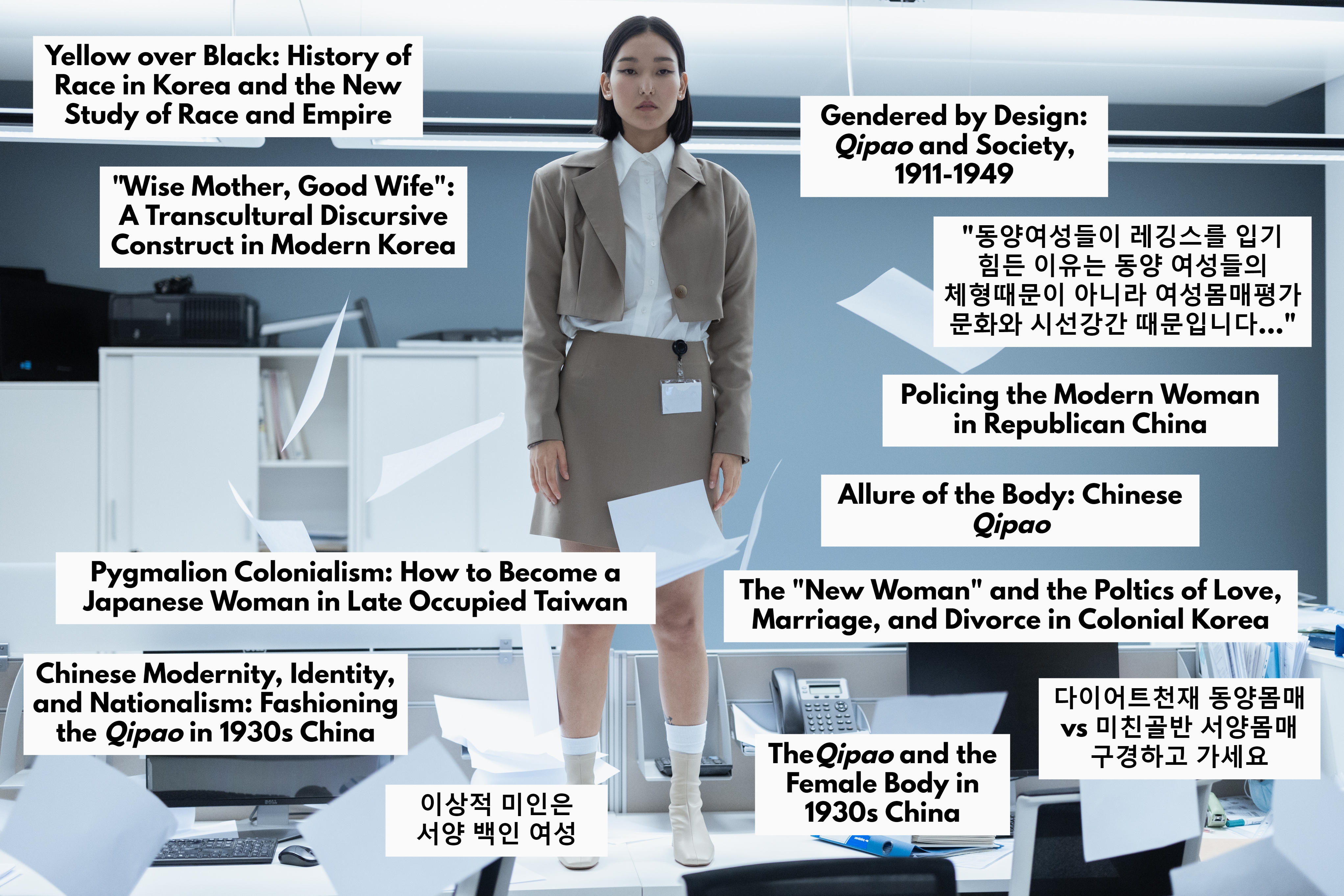
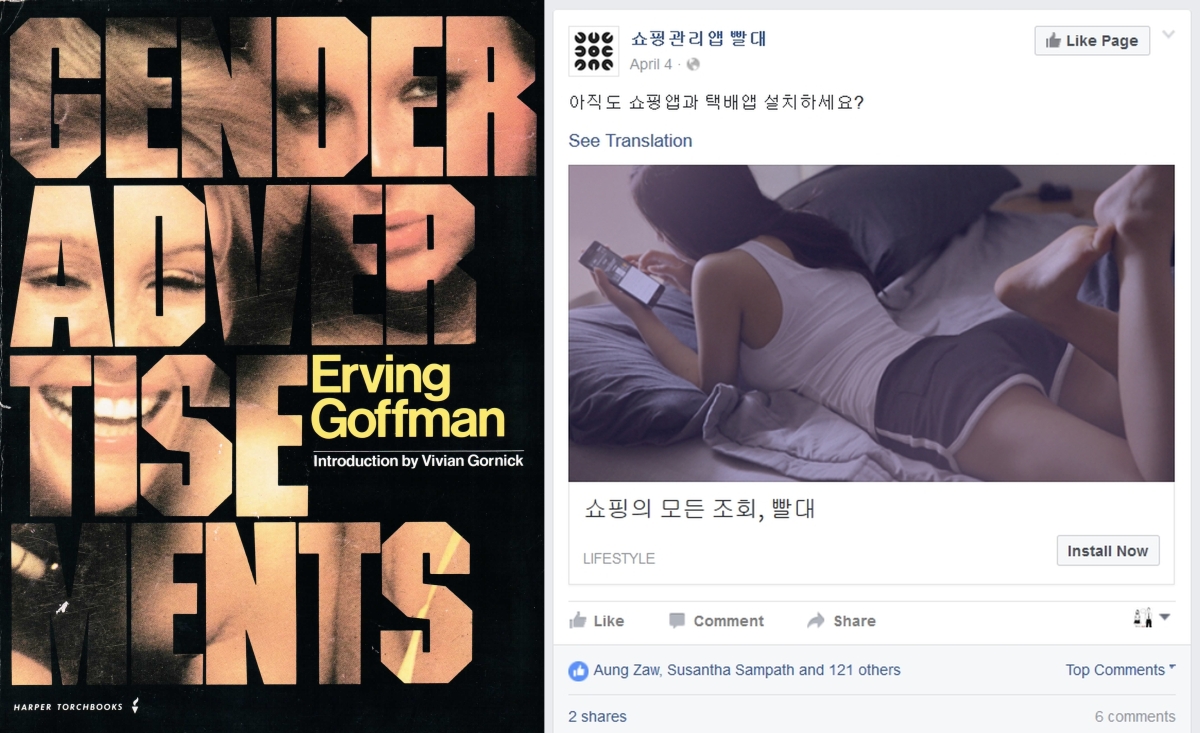
Meanwhile, the blog itself will change a lot behind the scenes, but little on the surface. As revealing how and why would require an explanation just as long again however (but you’re still free to ask!), suffice to say I’ll be returning to longform writing only, will refuse to be distracted by the 100s of folders of potential post topics I’ve had bookmarked for years, and will exclusively work on actually continuing and—heaven forbid—even completing my “Asian” vs. “Western” Women’s Bodies and then Queer Female Gaze series, which will take a few months at least. Finally, before the year is out, I’ll also be aiming to complete a journal article on Erving Goffman and Korean advertisements I’ve been putting off for, oh, only about 10 years. Then in the next 6 months after that, another on the gender politics of Korean school uniforms.

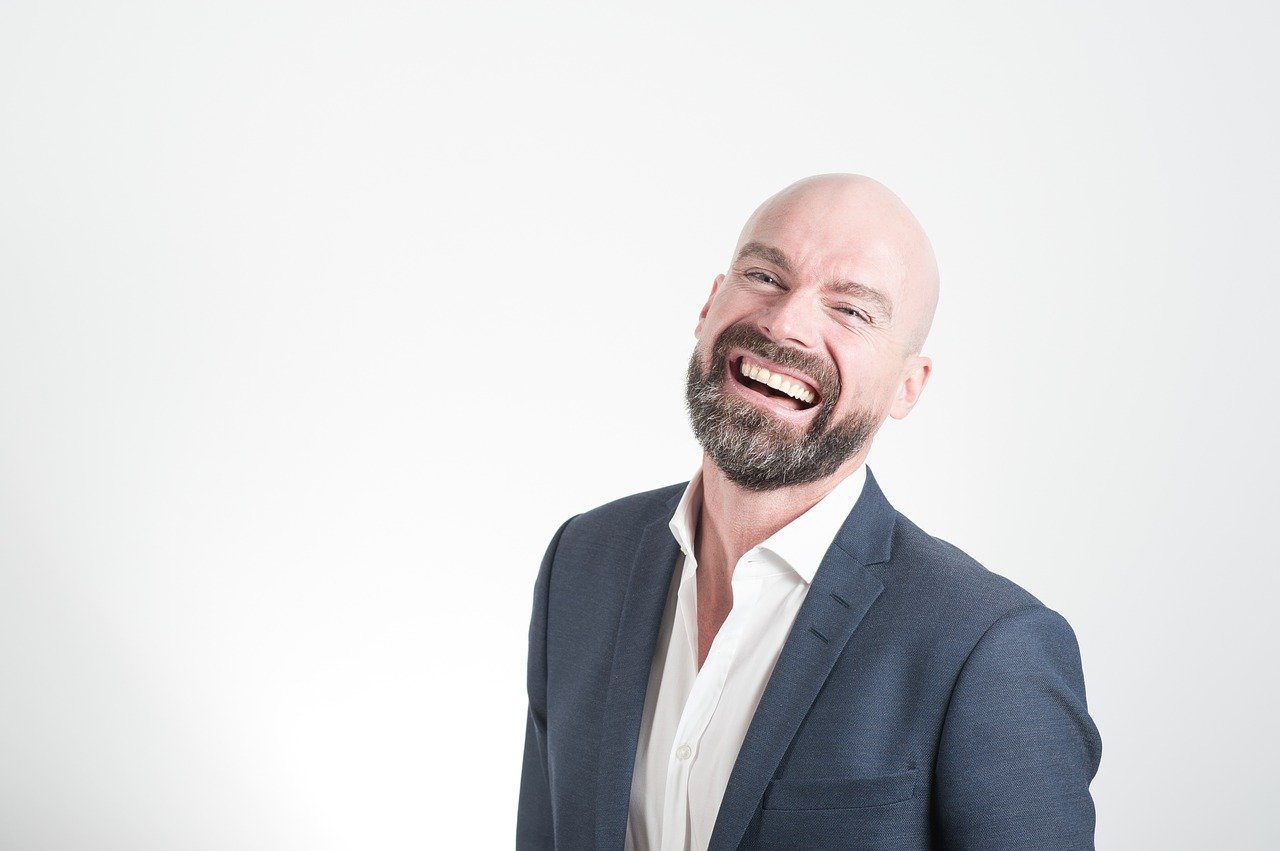
I may look as relaxed as this guy, but in reality I’m sweating buckets about finding a ringlight suitable for countering a shiny bald head in the next two weeks. Any suggestions? Image by Pexels from Pixabay.

Here’s to hearing many of your thoughts and comments from now on then, wherever or however I receive them! 😊 And please don’t worry about the drinking—I’m already over a month sober, and 5 kg lighter!

If you reside in South Korea, you can donate via wire transfer: Turnbull James Edward (Kookmin Bank/국민은행, 563401-01-214324)

Finding the Queer Female Gaze, and What it Says About Anda’s Touch (COMING MAY 4)

It’s a dirty job, publicly shaming yourself into finally writing about a subject that you’re passionate about and have been working on for years. But someone has to do it!

Estimated reading time: 2 minutes. Source: YouTube.

The MV for Touch by Anda, released in 2015, is as queer and objectifying as they come. Naturally, I fell in love at first sight, and just had to review it.

I’m not a woman though—neither a lesbian, a heterosexual, nor any other on the glorious spectrum. So, before I got started, I needed to hit the books. But no sweat, I reasoned. The concept of the male gaze has been around since 1975. It’s well-known enough that no-one who’s already woke has to explain it to another. Surely over forty years later, I thought, there would be just as extensive a literature on what women want? With helpful lists of clear criteria to guide even the most hapless of cishet male reviewers?

You can already guess the answers. But, absorbing what was out there proved addictive. And, as some of you may recall, I did eventually feel that I had enough of a handle on it to write a review.

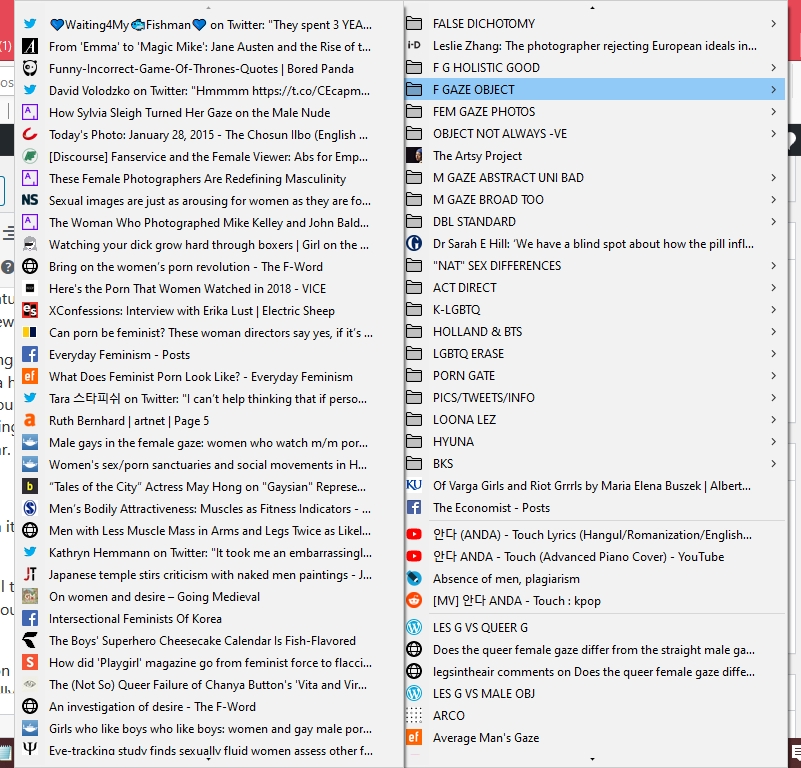
Only to delete it in consternation as I realized the queer female gaze was a much broader, much more contentious subject than I’d first imagined. In fact, one requiring an epic series to do it justice. Humbled, I resolved to keep researching and gathering all the information that would be necessary, not putting pen to paper again until I was absolutely certain I’d covered all my bases. I duly created a second “Anda + Queer Female Gaze” folder on my Firefox toolbar, and set to work.

That was over two years ago.

That folder now has three hundred bookmarks in it, with thirty more bookmarks added today in the wake of the recent release of Portrait of a Lady on Fire.

All of a sudden, adding to that morass finally made me realize what a fool I’ve been. All this time, the effortless collecting and reading of articles has been an albatross around my neck, providing an easy out from the harder work of actually writing.

And, if I wasn’t going to start just as soon as I had that epiphany, then when? And if making such a public commitment wasn’t motivation enough to actually see it through too, then what would be?

Source: YouTube.

I admit, a strange post. But if it gets the job done. I also felt it would be more helpful to explain than just ghosting you until the 27th, chosen for when I’ll hopefully no longer be teaching from home.

Thank you very much for indulging me then, and I’ll be back here soon. And please stay safe!

(p.s. If you can’t wait, you can still catch me on Twitter or Facebook!)

Update 1, Monday, April 27: All completed, but it needs some ruthless editing after a good night’s sleep, so I’ve postponed publication until Wednesday. Sorry for the slight delay!

Update 2, Wednesday, April 29: Arrrgh! Sorry *again*, but real life has intervened in the form of sudden urgent editing projects from my boss, and my post still needs a *lot* more work than I thought it did on Monday.

TBH, I think it’s going to be controversial—I really want to challenge people’s assumptions about the male & female gazes—so I really want to make sure I get it right. Let me just call it for *next* Mon then, with my promise to do my best to make it worth the wait. Thanks!

If you reside in South Korea, you can donate via wire transfer: Turnbull James Edward (Kookmin Bank/국민은행, 563401-01-214324)

Urgent—Your Quick Help is Needed to Unblock my Blog Please! (FIXED)

Estimated reading time: 3 minutes. Photo by Andrea Piacquadio from Pexels

FIXED!

Thank you SO MUCH for your help everyone, I don’t think I could have done it without you.

And honestly, being blocked has kind of had a silver lining too. I’ve been really touched and surprised by how quickly everyone has responded, and for all your kind messages about how much my blog means to you. All this time, I’ve really had no idea at all!

The least I can do in return is to endeavor to keep writing and posting, and more consistently 😉

Thanks again then, and for being such awesome readers over the last 13 years.

Stay safe everyone!
Love,
James 😍

(Original post below.)

Sorry to ask, but I really need 3 minutes of your help please.

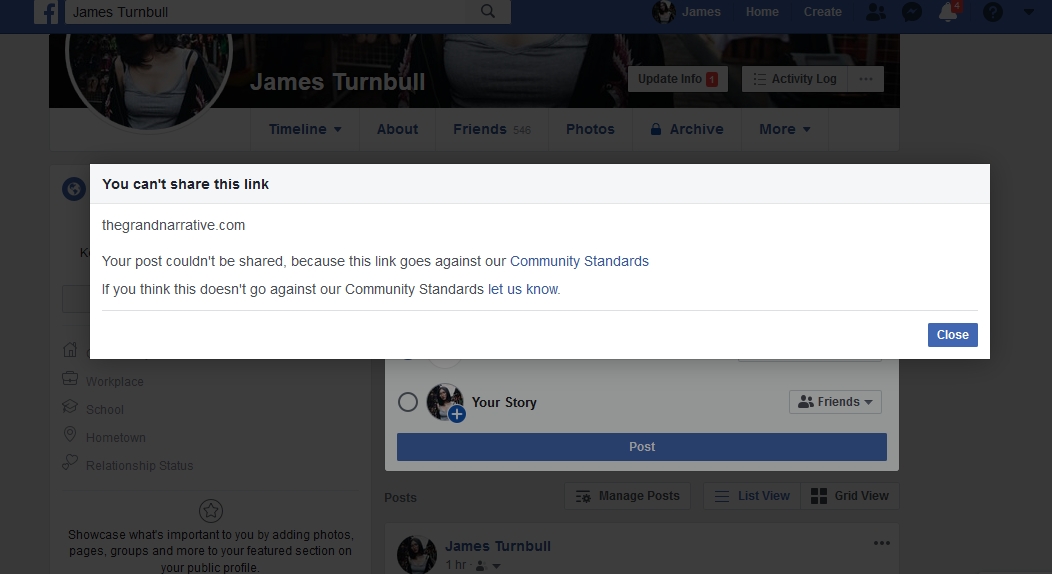
I need you to go to Facebook, copy and post this link to my blog—https://thegrandnarrative.com/—and when a message pops up saying “Your post couldn’t be shared, because this link goes against our Community Standards,” to click on the “If you think this doesn’t go against our Community Standards let us know,” and then leave a brief message explaining there’s clearly been a mistake, and for Facebook to please review the problem. Please make sure to post the link to my blog again in the message too.

Thanks. I know it doesn’t seem much, but you’ve no idea how helpful this is to me!

The reason is, trolls have gotten my blog blocked on Facebook.

Yesterday, I was unable to publish my last blog post on Facebook, as it went “against community standards.” That was annoying, but no biggie—I figured probably the algorithm mistakenly flagged the opening image as nudity or something. This sort of thing often happens to feminism and sexuality blogs (sigh), and normally all that is required to remove the block on the post is choosing a different image, and/or then reposting under a different url.

That didn’t work this time. In fact, my whole blog is blocked. All 800 posts and 13 years’ worth of work. Even all the links already on Facebook are blocked.

As you can imagine, people not being able to share your work on Facebook is a nightmare for a writer.

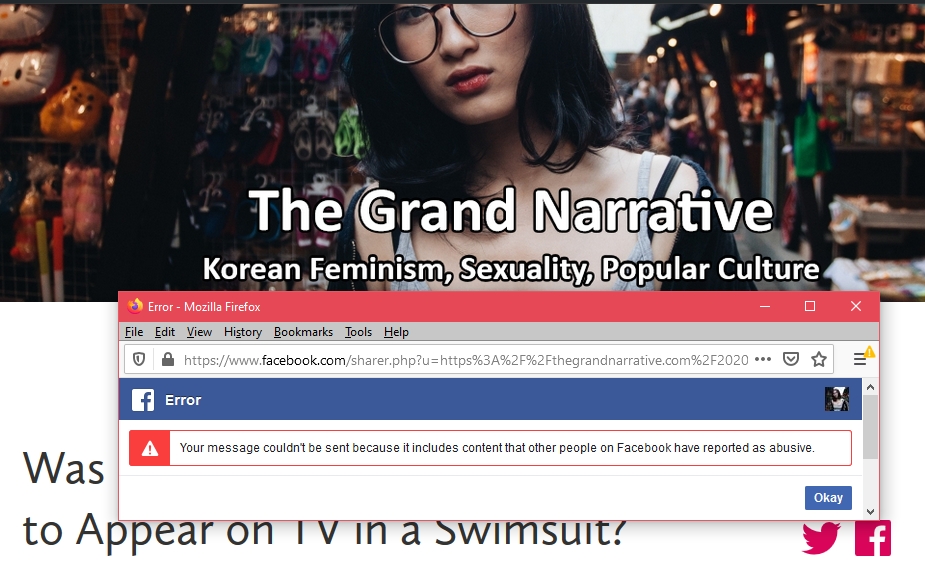
Frustratingly, Facebook gave no warning, and never gives any specific information about any alleged offense. The only clue I was able to receive at all was when I tried using the Facebook sharing button at the bottom of my posts:

There you have it. Given the timing, possibly those responsible are the same trolls on Twitter who recently targeted me for the heinous crime of simply linking to the awesome Unseen Japan site (I had to block more people on Twitter in the next 24 hours than in the previous 12 years!).

But whoever turns out to be responsible, they’re taking advantage of an all-too-common tactic used against feminists. All they have to do is report a site they don’t like, whereas the only thing you, I, or anyone can do in response is filling out the same “let us know” form above. (I’m very open to other ideas though!)

To add insult to injury, even at the best of times Facebook is notoriously unreliable in responding to those messages, let alone by a human. But right now, Facebook has cut its human support staff due to the Corona virus.

In other words, the worst possible thing has happened to my blog, at the worst possible time. There’s every possibility my blog may be banned from Facebook for months or even forever, all because of a few trolls.

That’s where you come in. With all your messages about my blog going through too though, there’s a much, much better chance that an actual human will receive one of them, give my blog a glance, and instantly realize the block was a mistake.

Thank you very much again then, for taking the time to send a quick message, and for being such awesome readers over all these years. With your help, hopefully this will all be resolved soon! :)

(Update: if you’re having difficulties, please just try typing in www thegrandnarrative dot com instead, and/or posting it in a comment on Facebook rather than in a new post. Those alternatives have been working for some people.)

If you reside in South Korea, you can donate via wire transfer: Turnbull James Edward (Kookmin Bank/국민은행, 563401-01-214324)

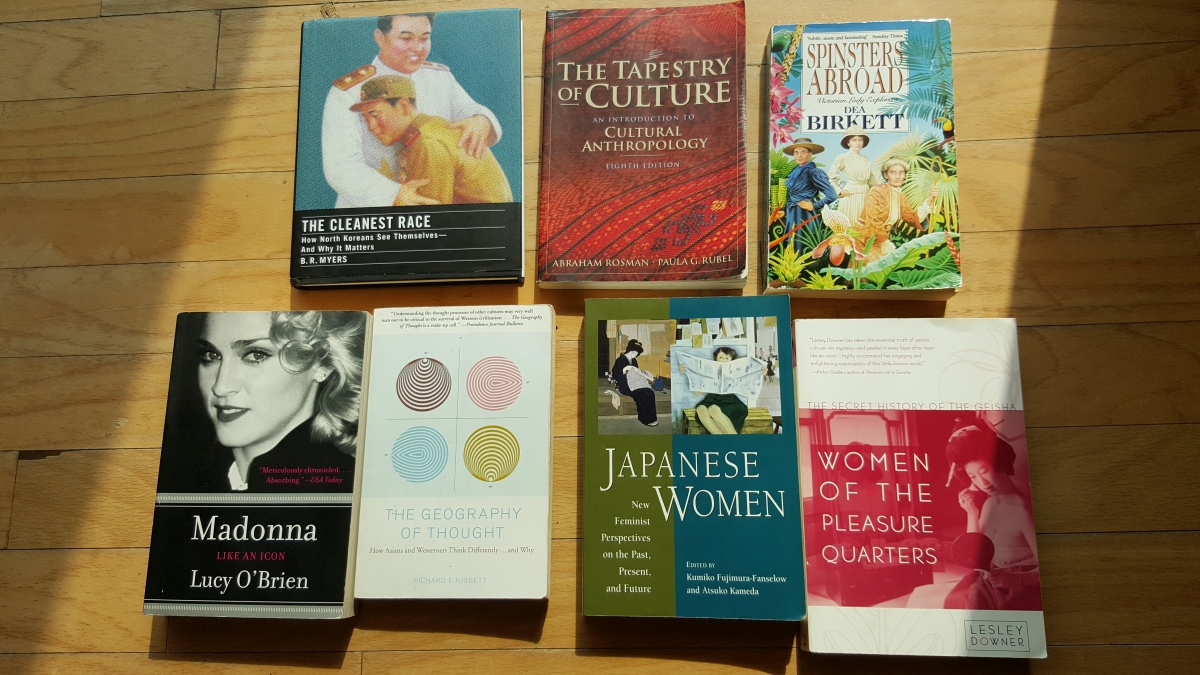
Finding the Mother Lode

Hi everyone. How’s your December been? Mine’s been full of testing, grading, breaking my toe, acquiring two homeless kittens, and finally doing some last-minute Christmas shopping…for myself. Which means that shortly after this goes up, I’ll have to hobble out of the door and actually start looking for presents for my poor daughters.

No, really. Ahem.

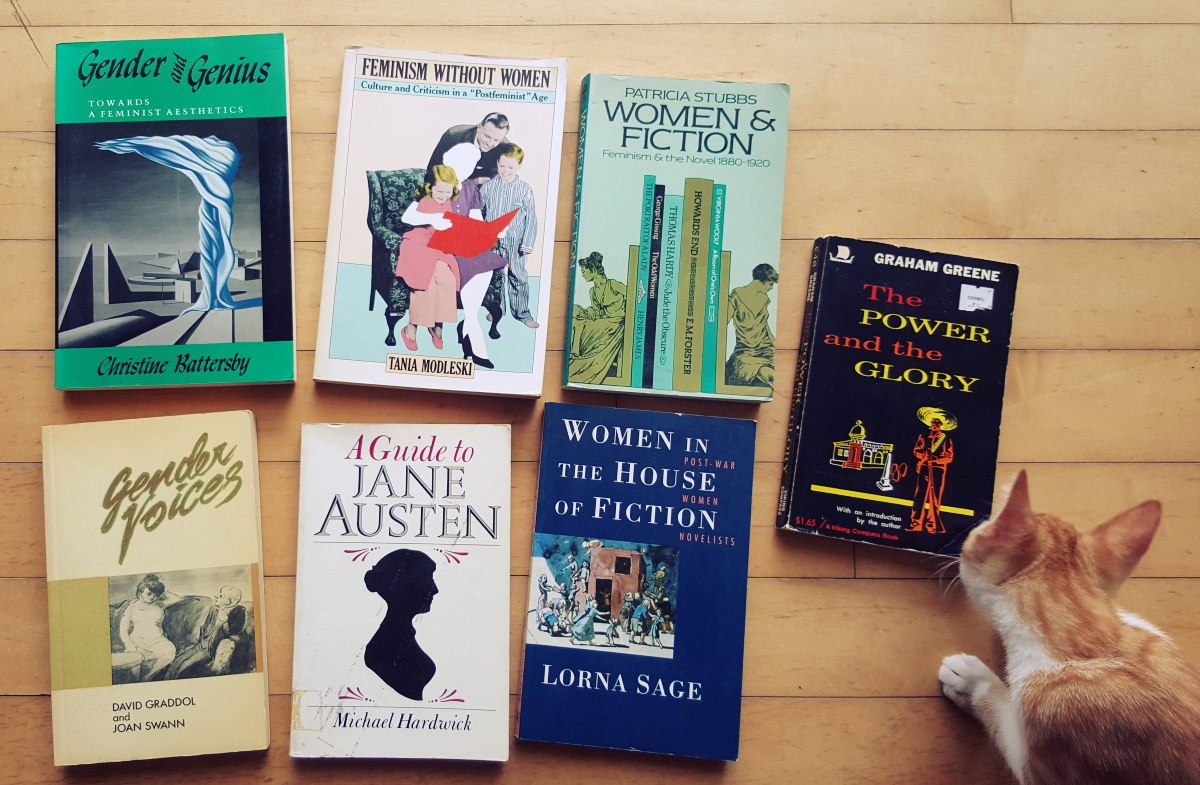
But back to me. I did discover quite the mother lode in Busan Book Alley yesterday, yes? Yet even I balked at the various readers on Lacan and Gender and Critical Theory available though, and reluctantly put down such tomes as examinations of the works of various Australian woman authors, which I’d be unlikely to ever read myself. So you’re more than welcome to pick those up yourself!

Meanwhile, I’m also happy to say I do finally have various long posts actually written for you. But, curiously, Christmas and New Year’s don’t seem to be the best times to post anything you’d like to actually get read. So, I’ll just keep writing more instead—I shouldn’t be walking much on this toe after all—and will delay posting them until late next week.

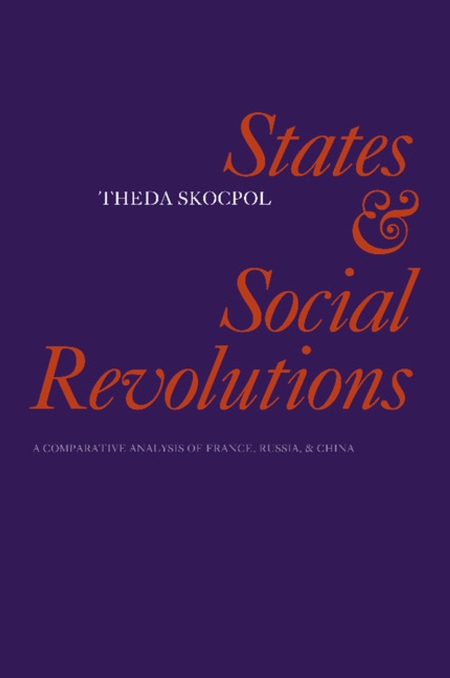
Until, I hope you enjoy the holidays. And, given that you’re still reading this probably means that you too get excited about 30+ year-old books, I’d be happy to chat with you about any of my picks above. Probably, I’ll start with Gender Voices by David Graddol and Joan Swann (1989), in which the authors “explore in a clear and comprehensive manner the idea that language shapes individual lives—that through our speech we all help recreate gender divisions in society,” as that’s a subject there’s been many Korean articles about in the last few months. First though, I’m going to finish the classic States and Social Revolutions: A Comparative Analysis of France, Russia and China by Theda Skocpol (1979), which I wish I’d actually read when I studied it in a course on revolutions as an undergraduate. After that, I’ll try to finish Good Booty: Love and Sex, Black and White, Body and Soul in American Music by Ann Powers (2017), a rare new book which I bought because I listened to an excellent podcast interview of the author. I had to put it down a third of the way in however, as I just wasn’t enjoying the overly evocative writing style, through which every other humdrum dance-hall meeting and church service described somehow becomes rendered into a hotbed of hidden desires, frustrated lust, secret liaisons, and opportunities for forbidden miscegenation. This “pregnant with possibility” style as I like to call it, prominent in Clive Barker’s fantasy novels which I learnt the term and from especially in The Price of Salt (a.k.a. Carol) by Patricia Highsmith (1952), I usually enjoy immensely. But not in this first encounter in non-fiction. Perhaps after 293 pages of Scokpol’s “structural functionalism sociological paradigm comparative historical analysis” though, I’ll enjoy the contrast, especially more once I begin the post-1950 chapters about music I know?

Happy reading everyone!

If you reside in South Korea, you can donate via wire transfer: Turnbull James Edward (Kookmin Bank/국민은행, 563401-01-214324)

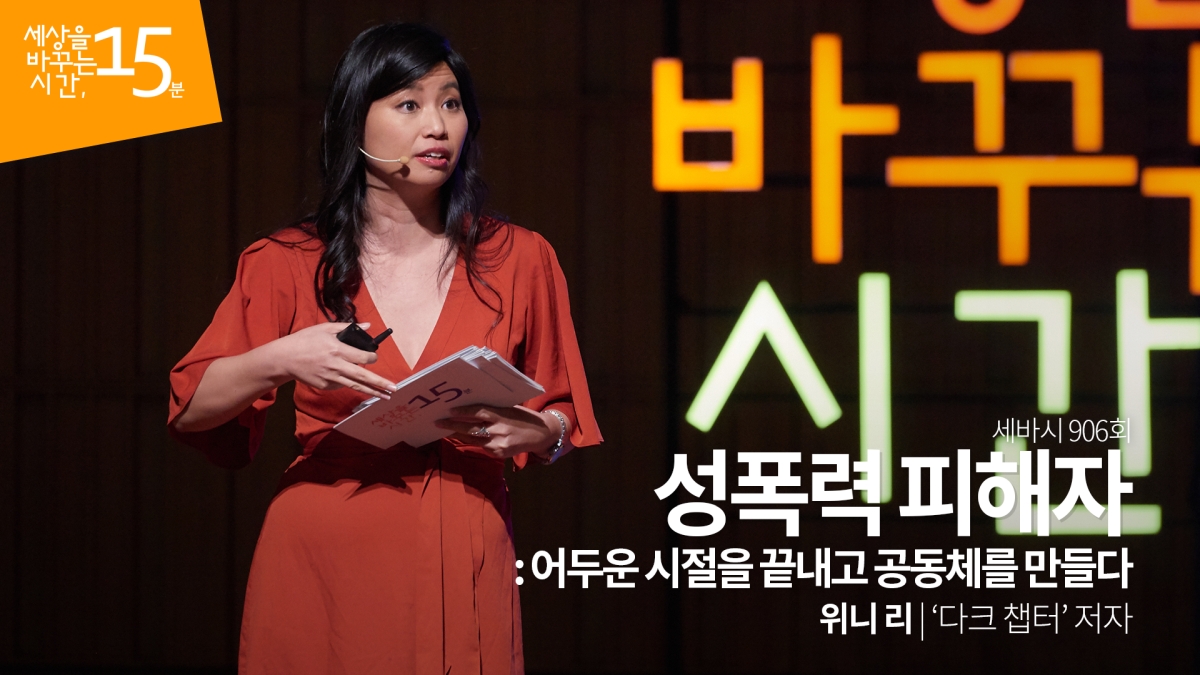
MUST SEE: “Reclaiming our Dark Chapters and Building a Community” Sebasi Talk by Winnie M. Li, Author of Dark Chapter

Estimated reading (and viewing) time: 3 (+17) minutes. Image source: YouTube.

Long time no see everyone, and sorry for the wait.

We’re all busy these days, so I won’t waste your time with explaining why. Suffice to say I no longer have long blocks of time free to really delve into a subject like I used to. Don’t worry: that doesn’t mean I won’t be writing marathon, heavily-researched posts anymore, or never finishing the—ahem—half-dozen series I have ongoing. Just that I can’t spend Herculean, lunch to dinner sessions on posts like I used to. Instead, I have to take advantage of a free half an hour here, an hour there, and…TBH, I’ve been struggling to make the transition. But I’ll get there.

In the meantime, there’s one more change I’m going to have to make, which has been a long time coming. The issue is I’m always reading, listening, and watching Korean feminism, sexuality, and pop-culture-related things, but I don’t share them because, time aside, I usually just don’t have much to add to them. That compulsion is such a 2007 blogging mindset though. (Yeah, that’s how long I’ve been doing this.) Also, that I’ve been spending an hour per day posting to Twitter and Facebook for many years has blinded me to the fact that many readers of mine aren’t actually on either (sorry). So, from now I’ll making lots of short posts, drawing your attention to the interesting and useful, with only minimal commentary from me if necessary. Meanwhile, I’ll still be working on the marathon posts in the background.

That said, most of those things I’m reading, listening, and watching these days are—yay me?—all in Korean, which, sans translating everything, are not necessarily the easiest things to pass on to non-Korean speakers. But again, I’ll see what I can do.

Which brings me to the video of the title, an April 2018 talk in Seoul for Sebasi (like a Korean TED) by sexual assault victim and now education and rights activist Winnie Li, author of Dark Chapter.

Frankly, I’d never heard of her before this Saturday, when I had to attend a TEFL conference at my university. But at that conference, attendees were told there was a mandatory viewing session of a video about preventing sexual harassment.

You can imagine most people’s reactions: in Korea, such videos are typically cringeworthy, patronizing, and terribly-translated cartoons. Instead, we got the presentation below…which by no means is about sexual harassment prevention.

What exactly it is about though, I’ll have to frustrate you by not saying, because I want you to be as shocked and amazed as I was. But I do promise that no matter how busy you are, it will easily the best use of 17 minutes you’ll make this week.

After you’ve watched, please let me know what you think in the comments. And make sure to check out Winnie Lee’s own blog too!

(Note that the talk is all in English, with Korean subtitles.)

If you reside in South Korea, you can donate via wire transfer: Turnbull James Edward (Kookmin Bank/국민은행, 563401-01-214324)

(TRANSLATION) On Blogging about Feminism in South Korea

Estimated reading time: 15 minutes. Photo by bruce mars from Pexels.

Many thanks to Menelik Lee (@LiMing6859), for all their hard work translating a long interview of me by Yiyi Zhang for Qdaily last year.

As you’ll see, unfortunately a lot of nuance is lost when going from English to Chinese to English again. The misunderstandings and factual mistakes multiply too, which crop up even when interviewers and interviewees share the same native language. Most are very, very minor though, which is a real testament to Menelik’s skills, so I’ve only corrected or clarified the most glaring ones [indicated in brackets]. Please pass on your rants or raves, or let me know if you’d like any further information about anything mentioned in the interview. Thanks!

An Englishman Who Writes a Feminist Blog in South Korea: Sex, Gender, and the Elephants in the Room.

Yiyi Zhang, Qdaily, 22/11/2018

Almost 20 years ago, Englishman James Turnbull was just starting his life in Korea. [W]hile traveling through the wild open countryside in his boss’s car [during one of his first jobs there], “I don’t know where it sprang from, but suddenly a hotel appeared in the middle of this vast emptiness.”

Just like every person that harbors a sense of wonderment for the culture of a foreign land, Turnbull immediately blurted out, “What’s that? [What tourist would come here, in the middle of nowhere?]” He learned from his boss that the establishment [actually] functioned like the much-fabled love hotels of Japan.

He soon discovered that in Korea such establishments are actually [common in rural areas, not just the cities]. These unassuming structures facilitate both the sex trade and the secret trysts of [lovers]. They have arisen because premarital sex is still heavily stigmatized in Korean society. However, unlike Japan, Korea’s “love hotels” lack neon signs and themed playrooms. If asked about such things the proprietors will simply evade the question.

“Everyone pretends they don’t exist, but you can tell they have a bad reputation. Anyway, it’s always been something that [just] shouldn’t be discussed.”

After having lived in Korea for 18 years, with a family and two kids of his own now, Turnbull looks back and realizes that the problems surrounding sex and gender in this culture are just like that little hotel in the wilderness. They’re arresting, painfully obvious, yet everyone turns a blind eye and carries on regardless.

In his 7th year in Korea, Turnbull launched The Grand Narrative, a blog sharing and analyzing Korea’s sex, gender and pop culture from the viewpoint of an English author.

Besides blogging, he also holds down a full-time job at Busan’s Dongseo University. He spends so much of his spare time and energy maintaining and updating his blog, it’s almost a kind of volunteer work at this point. Over time, his blog has gained the approval of the mainstream—[most recently, he was quoted for several stories for CNN in 2018]—and Turnbull became something of an authority on Korean feminism and pop culture in Western media. Occasionally, he has even been invited to give guest lectures at Seoul National University and other higher education institutions.
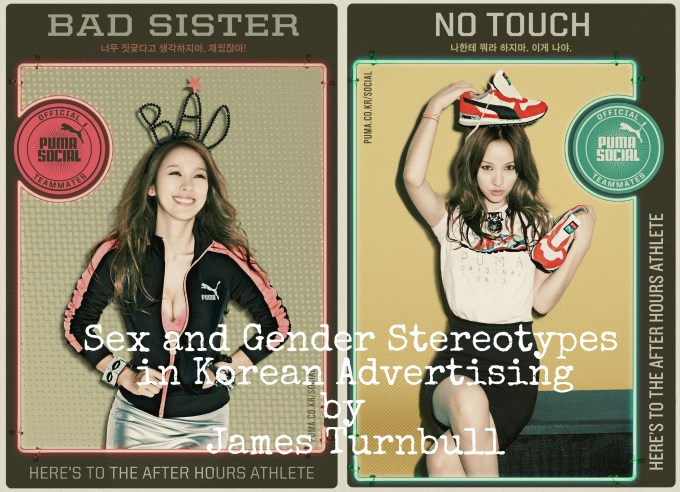
But most of the time he stays in his own wheelhouse, silently typing away under the glow of his computer monitor. Over the past 11 years, he has written hundreds of articles on topics ranging from sex and K-pop, to the politics of body image, from gender in advertising, to abortion and contraception. In the world beyond his writings, the transformations wrought by the Korean women’s rights movement have moved with breath-taking speed.

“This has been the product of the last decade or so of painstaking labor, maybe it’s time to talk about it a little.” Turnbull tells Qdaily.

The first [post] about women’s issues on The Grand Narrative was posted in 2007. [From his Korean female friends, Turnbull learned that when they] graduated and entered the job market the problems they ran into came thick and fast. One of the most prominent issues was the fact that as soon as they fell pregnant they were laid off.

“As soon as a woman has a child she is forced to leave work; after a year it’s basically impossible to go back. The hierarchy in Korean companies is very strict, those who have worked there the longest always have the final say and the most opportunities for advancement. When a Korean woman is married with kids, she simply can’t keep up professionally.” Turnbull also speaks about the low birth rate. Because all women have to face this decision, many women from this generation have decided to simply forego having children.

The BBC reports that because of this, Korea has developed a new social phenomenon: the Sampo Generation. “Sampo” means to abandon three things: relationships, marriage, and children.

Before graduating and coming to Korea, Turnbull [had already had some experience of fitting into] different cultures. Thanks to his parents, he moved from the UK to New Zealand, then to Australia, and from there back to the UK again. [In just three years], he attended six different secondary schools in three separate countries, “it was pretty crazy.”

One may say that the cultural differences between these three countries are small when compared to Korea, but they each have unique values and lifestyles. [When he was a teenager,] every time Turnbull questioned an [adult in New Zealand and Australia about some aspect of their countries, and even in the UK if they knew he’d lived overseas], the answer was always the same: “This is just the local culture.” This answer was rolled out like a panacea. No matter what the situation, no matter the problem, it could be used to explain it away. But when he seriously thought about it, he realized that adults were simply using this because they had nothing else to say. “I’d had enough,” he recalls.

So by the time he got to Korea, he simply couldn’t [let “culture” be used] to explain everything away. “It’s not [unlike] a fish in water, unable to sense the water. Some things are [genuinely unusual and noteworthy, only considered normal by people who’ve known nothing else].”

In his conversations, Turnbull found that many Koreans harbored a strong sense of nationalism [too], and so talking about the negative aspects of the country [with a foreigner met a lot of resistance]. However, this did not mean that they [themselves] were satisfied with everything that was going on.

“If there’s something in Korea that you don’t like, there’s a very good chance a lot of Koreans aren’t happy with it either.” And this is something the [English-language media often chooses not to cover]. Many debates [are to be found on the Korean internet and social media platforms], and the English-language media has trouble [relaying] these trends, so they [can give versions] of Korean sexual culture that are extremely superficial.

“When reporting on cultures outside of Asia, readers generally won’t afford you much credibility or value as a reference if you don’t understand the local language. But when it comes to Asia—China, Japan and Korea—the majority of the [Western experts or reporters] have a very limited understanding of the local languages and cultures, yet the audience is really forgiving—it’s a very strange double standard.”

Turnbull provides an example. In 2013, the South Korean Ministry for the Interior introduced “Pink Female Parking Spaces,” with extra room for the exclusive use of women. In no time, this news was plastered over mainstream media pages around the world. Almost all of them claimed that the policy demonstrated prejudice against female drivers because the spaces implied that the women wouldn’t be able to park properly without them.

“[To be more specific, one report quoted an anonymous source that claimed that the larger spaces were necessary for ‘unskilled women drivers.‘ However, ultimately that source appeared to have been made up.”] Turnbull says that, in actual fact, the spaces were created because the vast majority of child care duties are born by women, and the policy provided larger spaces for them to use prams when they go shopping—[as most of the Korean media accurately reported.]

“There’s obviously [still] a problem here: the idea that the role of primary carer is naturally filled by women. But it’s a completely separate issue to what the [overseas] media were saying. [Had overseas media outlets just taken a little more time to investigate, or, you know, spoken to someone who actually spoke Korean, then this ‘crazy Korea’ news story, which just plays to Orientalist stereotypes, would never have gotten off the ground.”]

Between the cracks of cultural misunderstanding, Turnbull saw his chance. Having been an English teacher for far too long, he was anxious to prove himself and open up further professional opportunities. As a result, when he first began writing about Korean culture, it soon transformed into writings about sex and feminism.

“Turnbull’s blog has continued to focus on female representation in Korean popular culture, including advertisements, soap operas, music videos, and more.” Source, right.

Turnbull’s blog was in its infancy ten years ago, but even just five to six years ago there was [almost] no one else doing the same thing. [“That doesn’t necessarily mean I was writing well, or that I was particularly knowledgeable—just that I was the only one writing about these specific topics. I’m quite serious when I say that, for a long time, I really was pretty much the only person on Earth writing about Korean feminism IN ENGLISH on the INTERNET.”] For the longest time, when opening Google’s search engine, Turnbull’s blog was the first thing listed under “Korea” and “feminism.”

According to Turnbull, he grew up in a very left-wing family, among piles of his father’s psychology and sociology textbooks. At university, he also spent his time on feminist research and sociology projects.

His foreign identity also opens the door for dialogue to some degree. “The reality is, if someone is truly interested in your culture, you’ll also be curious to find out where that interest comes from.”

Furthermore, in a Korean society that has always considered [open discussions of] sex to be taboo, Turnbull exists like a wanderer, beyond the normal customs and social networks of everyday Korean life. Thus, those around him [tend to be] happier to share their views on this topic [compared to how open they would be sharing them with a native Korean], disregarding his age and social position, they can trust him to be discrete. “It’s precisely because you’re a foreigner, people don’t have the same kinds of psychological barriers—they can pour their hearts out.”

This makes everything sound free and easy, but the reason he focused his gaze on women’s issues is because the urgency of the problems they still face simply cannot be overlooked.

“One day, a colleague rushed over to ask me a question: can abortions affect your health?” Upon further inquiry, he found out that this woman had had eight previous abortions, because she had never used—[and wasn’t even aware of]—any contraceptive methods. “I was totally shocked. To this very day, the lack of [adequate sex education in Korea] is astounding.”

Source: YouTube

As a non-academic, much of Turnbull’s understanding of social phenomena comes from his personal experience. His blog articles are written from the first-person perspective, but when compared to other news articles about the same events, he’s [often] much quicker than they are to cite authoritative sources.

From his perspective, feminism has never existed in isolation, and sex and gender issues are important because they are intimately connected to the everyday lives of all people.

Before becoming an English teacher at a university, Turnbull worked in a regular [Korean] company for almost two years. The hierarchical culture of humiliation in Korean workplaces really took him by surprise. “Every week our department head would make everyone stand up, and castigate each and every [employee] about every aspect of their work [regardless of how good it was]. On some level he had no choice, [because] angry or not, this was [just] how things were done.”

The sense of hierarchical oppression permeates most of everyday life, and in such a stratified society, standing up for oneself can make things even more difficult.

Despite himself, after coming to Korea, Turnbull says he can’t help pondering social stratification and rebellion. This is especially reflected around issues of sexual misconduct. “In Korea, if an older family member wants to hug you, you can’t refuse even if you want to. As a child or a young person, there are many people who can order you to do something even if you don’t like it.”

Once you’re a little older, this evolves into a power disparity between the sexes, “If a boy likes you, you just have to accept it, you can’t complain about it. Because of this, men don’t understand what constitutes “consent,” and women who reject others feel guilty.”

This attitude engenders deep seated emotional resentment, and Korean society is thus plagued by gendered violence and frequent sex crimes by spurned lovers. According to survey results released in 2017 by the Korean Institute of Criminology, 80% of males surveyed admitted to having previously abused a romantic partner.

“This is why I feel so surprised and proud that in the space of just a few years so many young women have come out to demonstrate. Because in Korea just doing that can be incredibly difficult.” He says that many demonstrators have to cover their faces, but the effects are deep and far reaching. Korea is undergoing a dramatic change towards gender equality and sexual minorities.

According to QZ, the watershed moment for the Korean women’s movement came in 2016. A woman was brutally murdered in a public bathhouse not far from the entrance to Gangnam Metro Station, one of Seoul’s busiest transport hubs. Following the incident, women came out onto the streets to protest sexual violence, and women’s rights groups stepped up their online activism. With the global acceleration of the #MeToo movement this year, Korea’s feminist wave has also picked up pace.

While this was happening, Turnbull was observing the heating up of what may be called a “gender war.” As all of society’s feelings of discontent and dismay were foisted off on the shoulders of women.

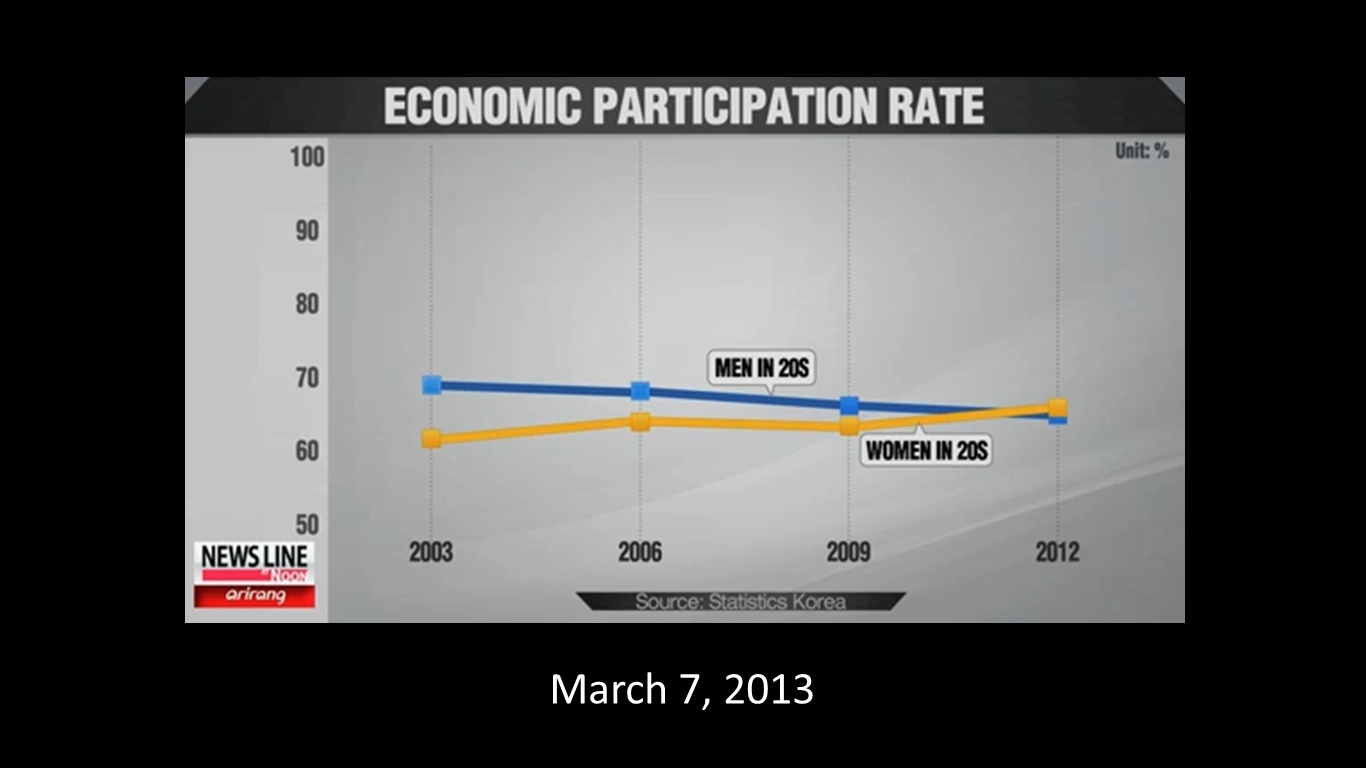
Source: Arirang News.

South Korea has one of the highest rates of tertiary education in the world, meaning that most young people will attend university. However, without a proportional level of demand in the job market, the youth unemployment rate is almost 10%—that’s three times higher than the global average. After graduating, most people can only find work in convenience stores and coffee shops, relying on the lowest paid positions to make a living. Still others choose to delay graduation despite the fact that there are no more classes for them to take.

Against this backdrop, [a vocal minority of] young men are blaming young women for having stolen all their opportunities. What’s more, some are beginning to question [compulsory] military service, claiming that it is unfair on men and are now seeking compensation.

In 2014, according to a South Korean National Statistical Office report, in the last four years there was a historic reversal in employment rates of males and females aged 20 or older. The female employment rate exceeded that of males for the first time since records began. “A female tornado” is one of the terms being used to describe what has become the latest hot topic.

Turnbull believes it is a term deliberately employed to cause agitation—the disparity in male and female employment rates is actually only 2.1%. However, the male groups of society have reacted swiftly and with mortal urgency in a massive backlash. Some men’s rights organizations have even called for the abolition of the Ministry of Gender Equality and Family. In fact, according to a World Economic Forum 2015 report on Global Gender Inequality, South Korea still ranks 115th out of 145 countries. In the “economic participation and opportunities” categories, South Korea is 125th.

Issues of gender equality are always fiercely debated, and the ongoing economic stagnation throws that much more fuel upon the fire. But lines are not only being drawn between the gender camps. In a universally anxious social atmosphere, people will always seek to set up a common adversary to set off against their own in-groups. Turnbull provides an example: this year, over 500 Yemeni refugees were detained on Korea’s Jeju Island, sparking mass public protests. Unlike trends seen before in most other countries, where opposition to refugees is strongest among older generations, in Korea the exact opposite is the case. Against all expectations, younger people are the heart of the movement.

“In April, female MBC news anchor Lim Hyeon-ju caused a stir by becoming the first Korean anchor-woman to wear glasses while on-air. Shortly after this, Korean media released the results of two studies on gender bias.” Image source: YouTube.
“Female idols are frequently depicted in advertisements for the Korean military conscription service.” Source: MMA Facebook page; left, right)

“Middle-aged, white, male, heterosexual; I’m pretty much a member of the most hated group on the planet.” Turnbull jokes during the interview.

Upon first finding Turnbull’s blog, not all readers are supportive. “The main reason they hate me is because of my identity.”

“No one wants to hear about Korean feminism from a middle-aged white dude.” And Turnbull admits that this wariness is not without good reason [James—I put it much more strongly during the interview: when studying and writing about what—who—I do, there are many conceptual and practical issues stemming from my privileged background; I can only always be aware of them and strive to overcome them as best as I can, most notably by relying on as many native Korean sources as possible, and especially on Korean women themselves]. In his first few years in Korea, he [admits he naively and arrogantly] thought that he’d already come to understand everything about the country [partially because, unlike most expats, he’d already studied Korean history and society at university], and was more than ready to lecture others about it. But soon enough, he came to realize that he had been very wrong about this. “I’ve probably deleted about half of my previous articles, just because they no longer reflect my current opinions [and/or later proved to be completely wrong, as often pointed out by my female readers—many of the most vocal of whom would become my best friends later!].”

But the internet has a long memory. A little over a month ago, he received an email, a 3000-word polemic referencing a 10-year-old piece he had already deleted [9 years ago!].

[A significant proportion of those that take] issue with his work are [Asian-American women]. Turnbull mentions a slang term, “yellow fever,” used to describe white men with a [fetishistic] preference for [East] Asian women. [Because of it], many Asian-American women [regularly] have to face [sexual stereotyping and harassment from white men] in their everyday lives, and so talking about sex in Korea as he does often brings him under [immediate] suspicion [of being no different to those men]. [The vast majority of those that actually read his work soon see that he is not, but] some have penned vicious attacks against him, and still others have posted fake pictures of him online. [James—I feel compelled to add that a significant proportion of my fans are Asian-American women too! :) But the actual question was about my trolls, and I wasn’t going to lie. It just is how it is.]

Turnbull’s blog used to provide a popular space for discussion. In the comments section people would air their views, and readers from all over the world would have lively debates with one another. But with the sudden onset of the social media age, people had a great many more ways of accessing news, and the number of hits and comments his blog received decreased significantly—[although] thankfully, the number of attacks decreased accordingly as well.

Nowadays, Turnbull seems to occupy an awkward position. He occasionally attends LGBTQ marches or feminist demonstrations [in Korea], but only rarely. “As a middle-aged white guy [who sticks out like a sore thumb at these], I don’t really want to [draw people’s attention away from the issues the activists are demonstrating about].”

Even today, he can’t envision things as he did when he was starting out. That he could, through his blog, make the outside world believe that a foreigner could be more than just an English teacher.

He even laughingly tells us that these days a decent number [MOST!] of the hits on his blog come from people searching for porn. Unfortunately, most rarely stick around to read the articles!

If you reside in South Korea, you can donate via wire transfer: Turnbull James Edward (Kookmin Bank/국민은행, 563401-01-214324)

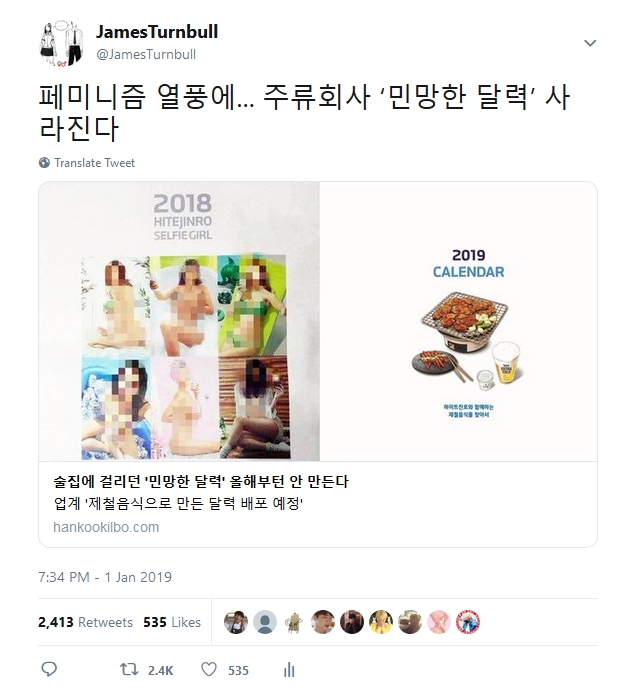
#MeToo to meat: no more soju calendars with nearly nude women in South Korea

Estimated reading time: 6 minutes. Photo by Tan Danh from Pexels.

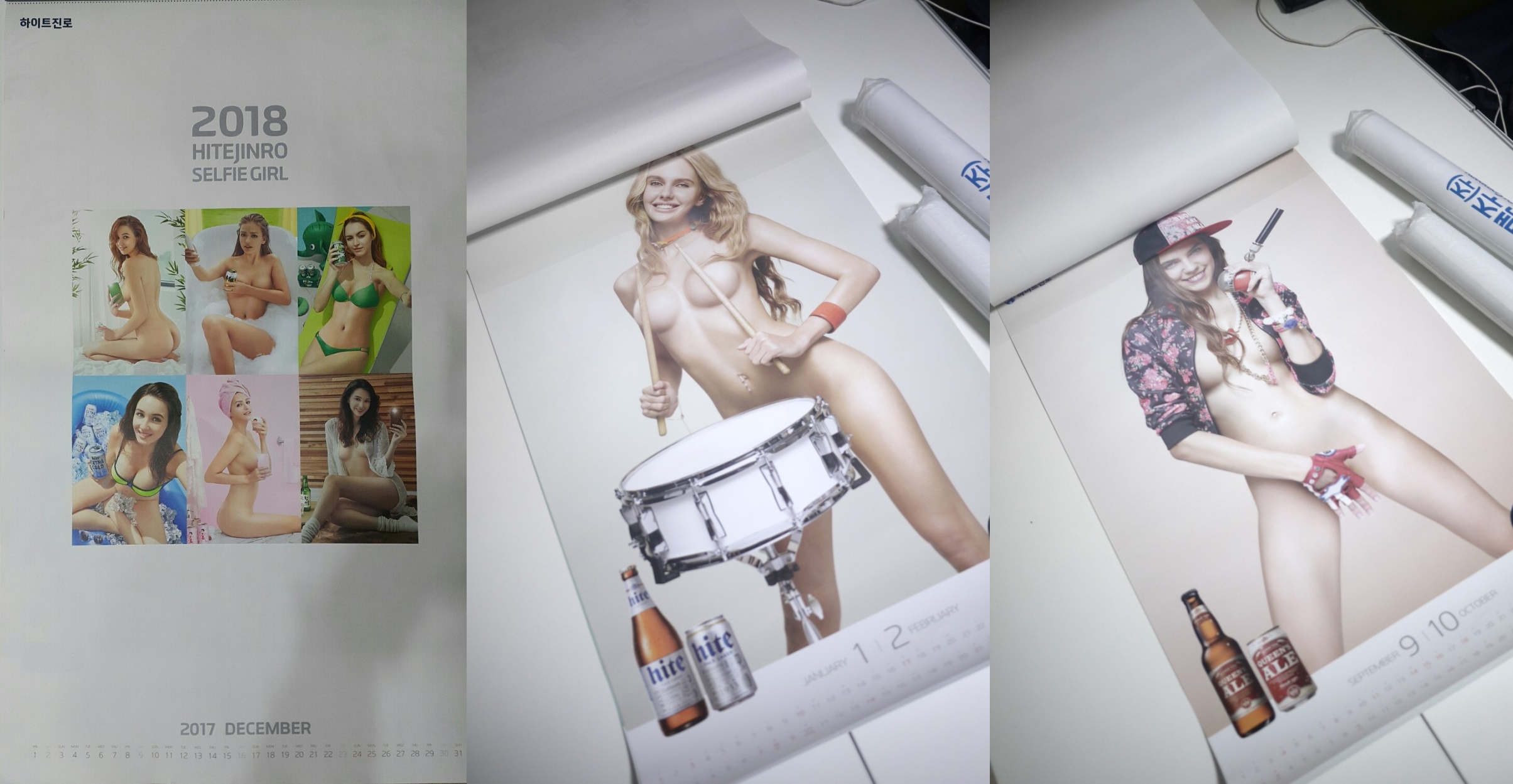
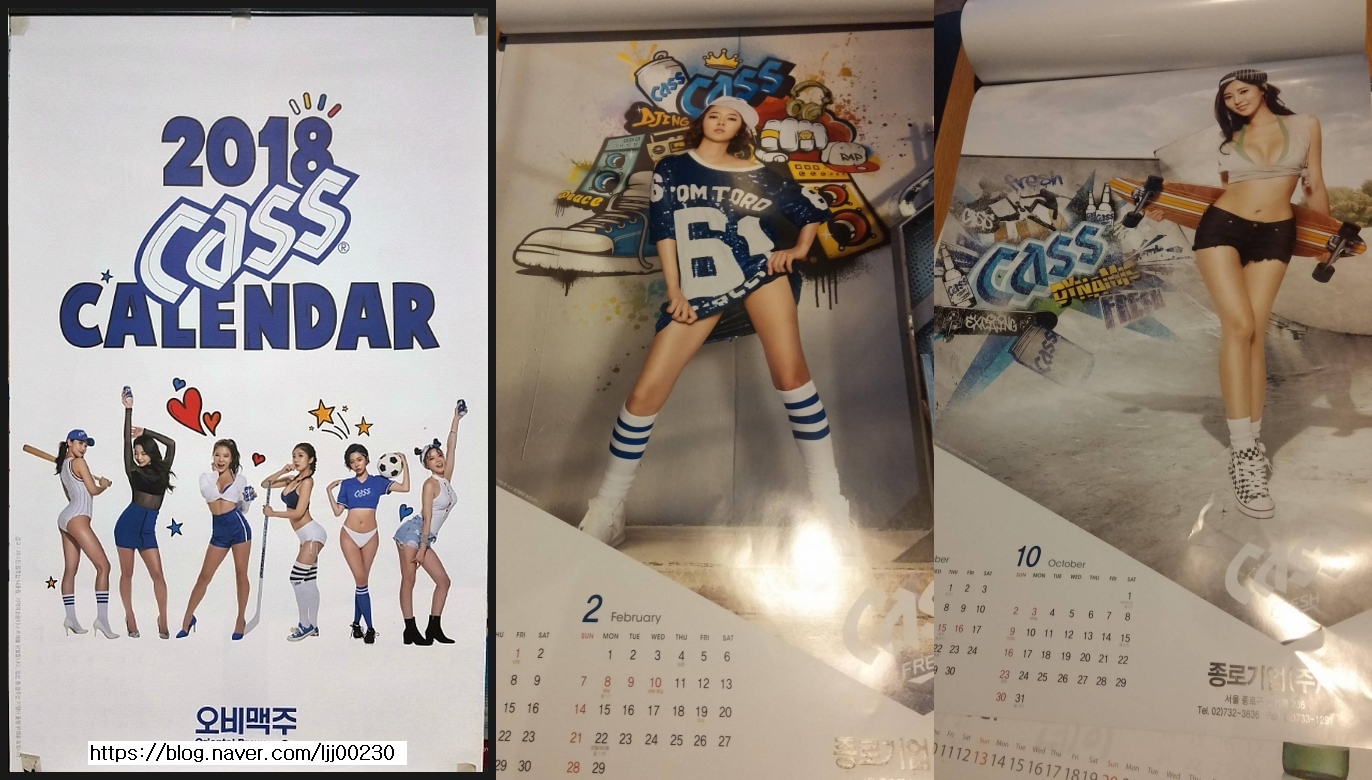
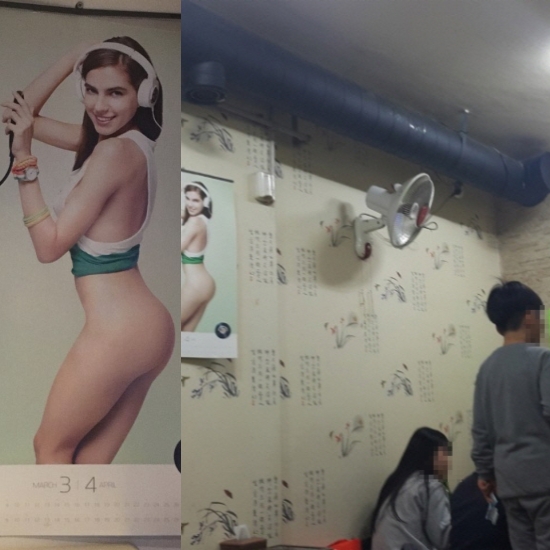
No, not normal soju posters and calendars, but these ones (NSFW) and these ones by Hite-Jinro and Oriental Brewing respectively. I’m not surprised seeing them in restaurants (NSFW) made so many people uncomfortable (seriously, where would you look?), and wasn’t exaggerating when I was quoted in Crystal Tai’s article that “assuming that pictures of nude women [is] all that is required to [get people to change soju brands] is just patronising and insulting.” Perhaps that’s why my tweet about them below, a simple link to a news article, gained such traction:

Please read Crystal’s article for more information on what all the fuss is about. And, for even more information, here are some of my original email interview questions and answers:

Q) When did you first notice soju posters of women and such calendars around you? Do you remember the first time you saw one?

I noticed them immediately after I arrived in Korea in 2000, because they were ubiquitous; the level of alcohol advertising in New Zealand couldn’t begin to compare. I didn’t pay them much attention until about six years later however, because all of a sudden many soju companies started depicting women in revealing clothing and more sexualized poses in their posters, which was a big shift from the virginal depictions of the previous two decades. Soon after, this trend was further accelerated by the liberal use of K-pop stars as endorsement models, as gaining notoriety through revealing campaigns was and remains a win-win for both their entertainment companies and the soju companies.

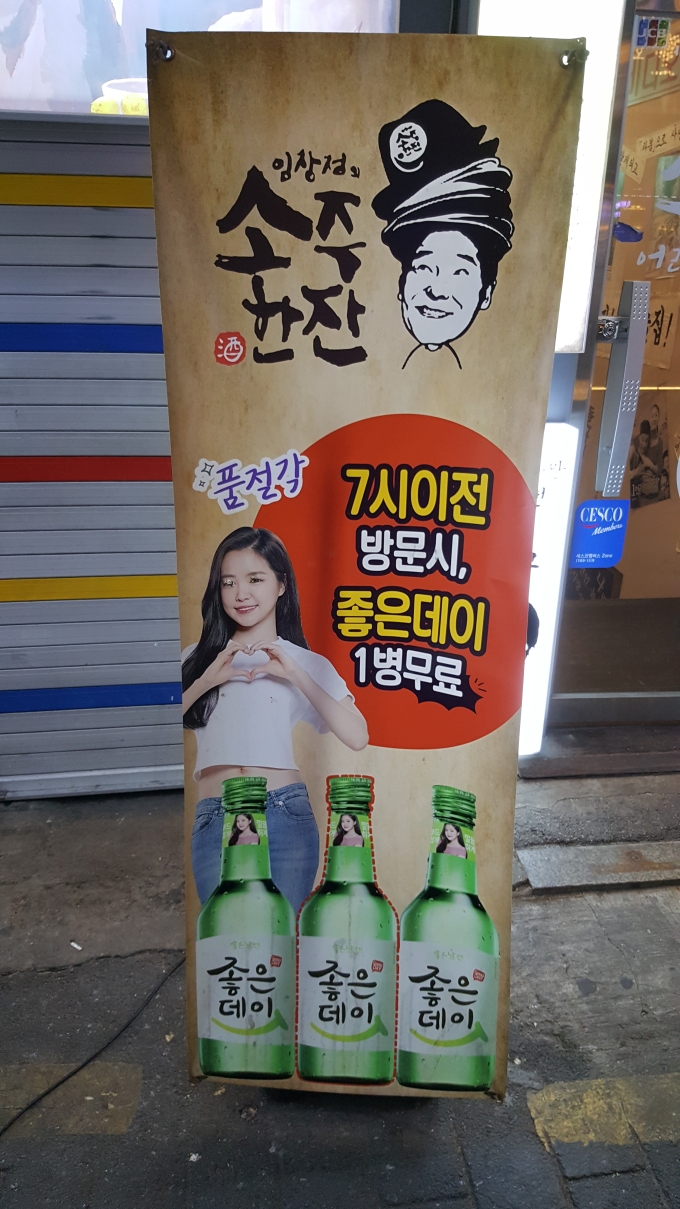
That said, soju posters are just another means to “consume” a celebrity by fans, who generally must assume the same persona whether they’re in a talkshow, MV, or a soju commercial.* So, despite the trend, by no means are all soju models sexualized today: “innocent” IU, Son Na-eun of Apink, and especially Suzy (of the former Miss A) all tend to be depicted virginally in their own campaigns, the latter despite her having been in several high-profile relationships.

(*Hat-tip to to friend and SNU Associate Professor Olga Fedorenko, whose book chapter I was channeling just a little too directly there!)

Q) What do you think such images mean to Korean men? Why do you think they are often surrounded by such images at bars, pubs, gogijibs (meat restaurants) etc?

It’s unlikely they hold any special meaning that they wouldn’t hold for men of any other nationality. As for their being surrounded by such images however, this is likely because Korea is in many ways a very homosocial society, with many unspoken but strongly-defined separate spaces for men and women. Note that most middle and high-schools were single-sex two decades ago, that almost all Korean men do approximately two years of military service, and that Korean women still struggle to retain their jobs after childbirth, those that succeed often having to leave mandatory after-work drinking gatherings early to look after their children while their male colleagues continue drinking elsewhere. Consequently, while coffee shops are strongly associated with women, and feature in many complaints and negative stereotypes about them, the atmosphere in bars and restaurants that sell a lot of soju can sometimes feel very off-putting for anyone that isn’t a middle-aged Korean man.

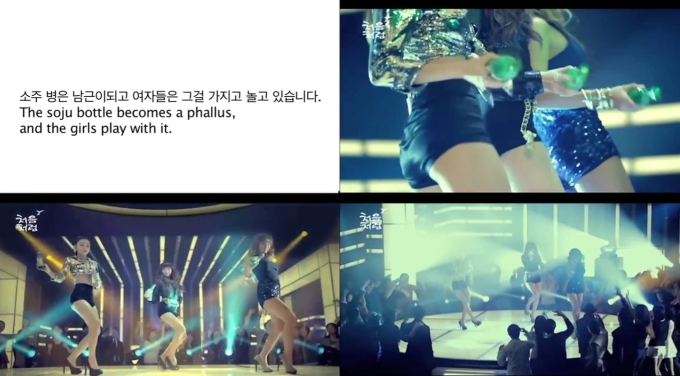
(Image: This interpretation in this video analysis is maybe too much. Yet I can never pass Na-eun’s poster below without thinking about that bottleneck on the left!)

Do you think that the Me-too movement and recent feminist movements really play a big role in Hite-Jinro’s decision to discontinue such calendars?

Given the recent news that “racequeens” are going to be phased out of the racing industry,* as well as calls to do the same with cheerleaders at sporting events, then the timing can hardly be a coincidence. But it may also be a convenient excuse for decisions already made. Unless revealing soju posters are also part of a creative and memorable campaign—which these calendars definitely are not—then it’s extremely debatable whether they ever have any real influence on Korean men’s consumption choices. In my own experience, their tastes in soju tend to be very regional, and they tend to stick to the same brands throughout their lives. Assuming that pictures of nude women are all that is required to change their minds is just patronizing and insulting, so I’m both glad and not particularly surprised that alternative strategies are now being attempted.

(*My mistake: they’re being phased out in Formula 1, but I don’t know enough about the industry to judge what—if any—impact that will have on racing events in Korea. See here for an article about the impact in Japan.)

Do you think other alcohol companies will follow suit as well? And do you think this means the provocative celebrity posters and campaigns will change as well?

No. The calendars by Hite-Jinro were the only ones to feature nudity, and the “sporty” ones by Oriental Brewery were also much more revealing than average. But most soju posters aren’t particularly any more sexually-objectifying of women than Korean advertising in general, because that is already pervasive in the industry as a whole. To wit: in a 2015 study, women were 5.9 times more likely than men to not be fully dressed in Hong Kong television ads, 22.89 times more likely in Japanese ads, and 56.83 times more likely in South Korean ads. By no means, can soju ads be the only culprit in the Korean case!

And if that’s still not enough, here’s a small sample of related posts I’ve written over the years:

Meanwhile, I hope everyone had a happy new year, and sorry my posting has been so erratic. But I have big writing plans for 2019!

If you reside in South Korea, you can donate via wire transfer: Turnbull James Edward (Kookmin Bank/국민은행, 563401-01-214324)

Update

Source: Burst@Pexels; CC0

Just a quick update to apologize for the ongoing lack of posts, and to explain.

Basically, I’ve been too busy. The same week my wife’s father died, she started a new job as an interpreter and translator at a rapidly-expanding medical technology company. Every other week since then, she’s been jet-setting to places like Andorra, India, the US, and Indonesia. Also, when she is in Korea, her workplace is across town, meaning she has to leave home at 7:30am, and doesn’t come back until 8pm, after which she’s straight back on her computer. It’s all very glamorous and exciting from my perspective (only glamorous and exciting-sounding, she insists), and I’m very proud of her, but practically-speaking I’ve been a single parent for the last two months. It’s been tough!

Every cloud has a silver-lining though, and it’s been a real eye-opener being forced by the lack of free-time to break down how I’ve been spending my days, and trying to eliminate time-wasting habits. I’m still very, very far from becoming a paragon of discipline of course, but one important change I have made recently is going to bed at 10pm and getting up at 6am, to get in that fabled hour of writing every day. True, so far those hours have more been spent only thinking about writing, while luxuriating in a second cup of coffee and watching the sunrise over the ocean (still totally worth it, IMHO), but the actual writing will surely come soon.

See you next week? ;)

Update

writing coffee pexels(Source: Pexels)

Just a quick note to say sorry for the unplanned blogging break everyone, and to let you know that it’s almost over. Mainly, it was just because I had a journal article to complete, which turned out to be much more work than expected. Truthfully though, I’ve also been feeling surprisingly angsty about turning 40 next week, not helped by a good friend just leaving Korea, and by a close colleague of mine suddenly dying over the vacation (she sat next to me actually—it’s been painful thinking about her empty desk). So, it’s been difficult to get in the mood for blogging.

But it felt good to make a fresh start with the new semester today. And the combination of splurging on a trip to Seoul to get drunk with said friend last weekend, and seeing my daughters being just plain adorable enjoying the unexpected blizzard, was already more than enough to break me out of my melancholy. Plus, OMG DID I MENTION ALL THE BOOKS I BOUGHT? SQUEEE~ #BOOKGASM #BESTSEOULTRIPEVER

Books, 27.02.16But seriously: I’m back, it feels great, and I’ll have some posts for you next week! :)

Screening Tomorrow: Our Nation: A Korean Punk Rock Community (2002) and Us & Them: Korean Indie Rock in a K-pop World (2014)

us and them korean indie rock in a k-pop worldVia the event’s Facebook page:

Please join our screening on Saturday 17th October. We will be showing two short documentaries about the Korean indie and punk rock music scene. Producer Stephen Epstein will be there to introduce the documentaries and take part in a Question and Answer session after the screening. This is your chance to hear all about the vibrant Korean indie rock and punk scene. FREE ENTRY & ENGLISH SUBTITLES.

서울필름소사이어티의 10월 17일 토요일 영화상영회에 초대합니다. 이날 상영드릴 영화는 한국의 인디 음악과 펑크락 음악을 주제로 한 두 편의 다큐멘터리입니다. 상영을 마친 후에는 본 다큐멘터리를 감독하신 스테판 엡스타인 감독을 직접 모셔 다큐멘터리에 대한 설명을 듣고 관중들과 함께 질의응답을 하는 시간을 가질 것입니다. 한국의 다채로운 인디 음악과 펑크 음악의 현주소를 알아볼 수 있는 좋은 기회입니다. 입장은 무료이며 영화는 영어자막과 함께 상영됩니다.

Stephen Epstein, you may recall, wrote most of was my coauthor for our chapter in The Korean Popular Culture Reader, and I’ve linked to many of his articles over the years; suffice to say, I’ve no hesitation in recommending literally anything he’s produced. See the link for more information about his and Timothy Tangherlini’s documentaries screening tomorrow, and for further details about the event schedule and location.

Meanwhile, apologies for the late notice, and for the lack of blog posts. Both are because, sadly, my wife’s grandmother had a stroke over Chuseok, and while she’s recovering (relatively) well from that, she’s also been diagnosed with cervical cancer, which little can be done about at her advanced age of 86. Specifically, Korean patient-care being what it is, my wife has been spending much of her time in her hometown taking care of her, leaving me to look after our daughters. That can’t be helped of course, and I’m managing, but it does mean it’ll be a few more weeks before I’m able to start writing again sorry.

Until then though, sorry for the downer, and you still keep up with the news via my Twitter and/or the blog’s Facebook page :)

On Grandly Narrating…Korean Dramas?

Misaeng(Source: The Huffington Post Korea)

Sorry for the slow blogging everyone. Not just for the last few weeks, but for the last few months. Many of you have noticed and have been wondering, so I thought I should offer a quick explanation.

Long story short, I’ve got much less time than I had in 2014.

I’m doing a Master’s again. I’m teaching more classes this semester. I’m working on my first academic journal article. My daughters have started a (lovely) alternative school for multiracial children, which is a long commute away; it’s nice spending the extra time with them, but that’s another 10 hours a week that I used to spend on other things. And so on.

Still, I could and did work on the blog a little. But then I caught an on-off, debilitating flu for over a month. As you can imagine, now I’m behind on just about everything.

All that said, after 8 years of blogging, I am in a bit of a rut with regards to topics and style, and am looking for new ideas to motivate myself—and hopefully to interest and entertain you too. One possibility might be an episode by episode discussion of the recent(ish) drama Misaeng, which I’ve heard was a very realistic portrayal of Korean corporate life, and especially of the position of women therein. I’ve already watched the first episode, and, although it wasn’t earth-shattering, it was refreshingly free of K-Drama cliches, especially the childish female roles. If, like me, you’ve been disappointed with “progressive” Korean dramas before, this might finally be one worth getting stuck into.

If you’re interested in following along with me, at the pace of one episode per week say, please let me know in the comments. And/or, about anything else you’d like to see more of on the blog. Thanks!

Update (July): Thanks for the comments everyone, and sorry for the false starts in June. I’ll start sometime this month.

p.s. Three Cheers for Halcion, the only way I managed to finally get a good night’s sleep last night!

From The Archives: October

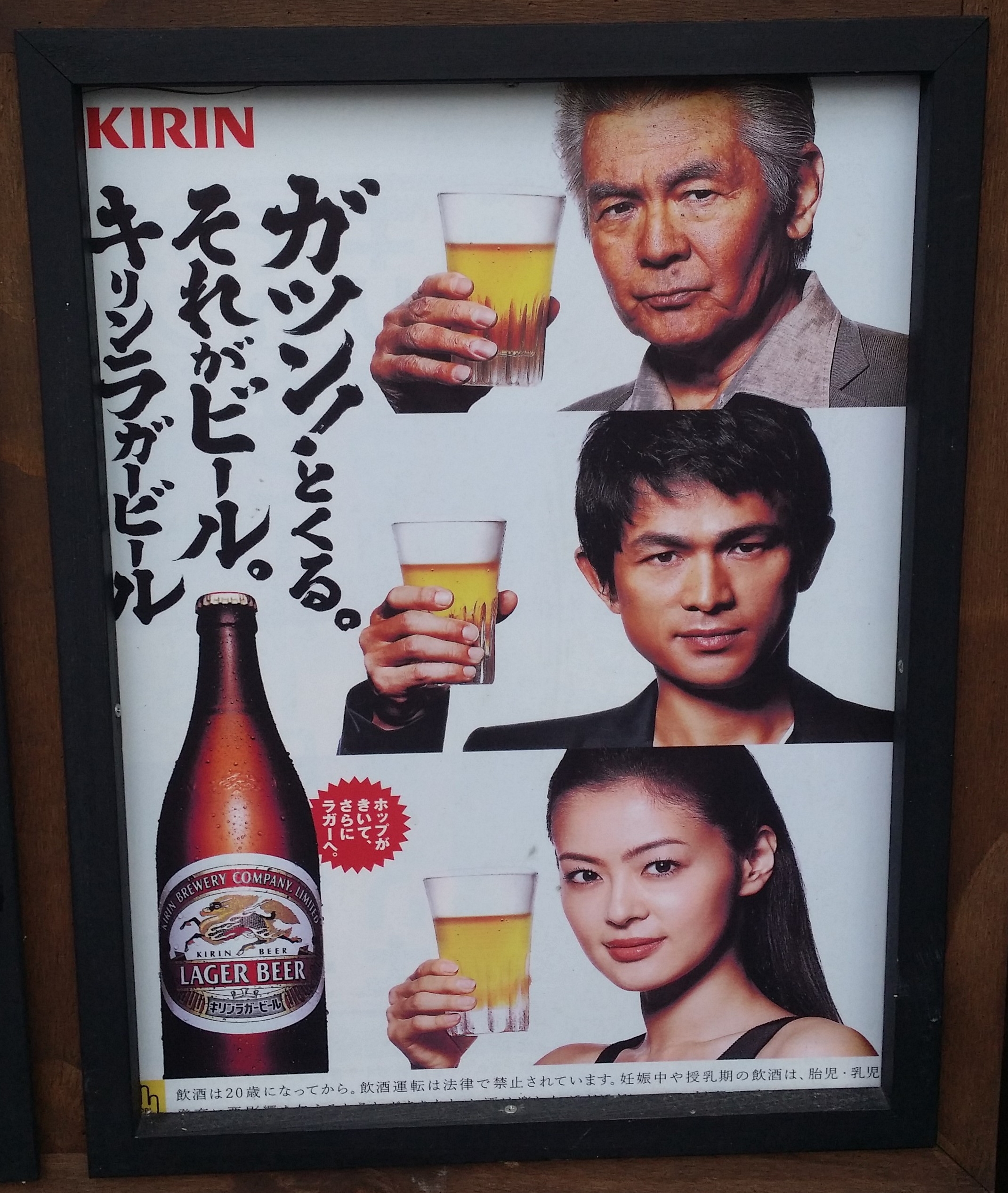
Kirin Neo-Confucian Hierarchy(Source; CC BY-NC-SA 2.0)

Apropos of this quick look back at over 7 years of blogging, here’s a picture of an old ad close to my home that I must have passed hundreds of times in the last few years, which often gets me thinking. I hope some of these posts can still do the same for you too.

Meanwhile, please feel free to use the picture for your own post or presentation on gender, hierarchy, and (Neo-)Confucianism(!). From my perspective, it’s a pity it’s Japanese and not Korean, but that does raise the interesting question of how similar Japanese society is (or not) in those regards. Continuing today’s theme, please see here for some investigating of that I did back in 2008.

Thoughts?

Taking a Short Break…

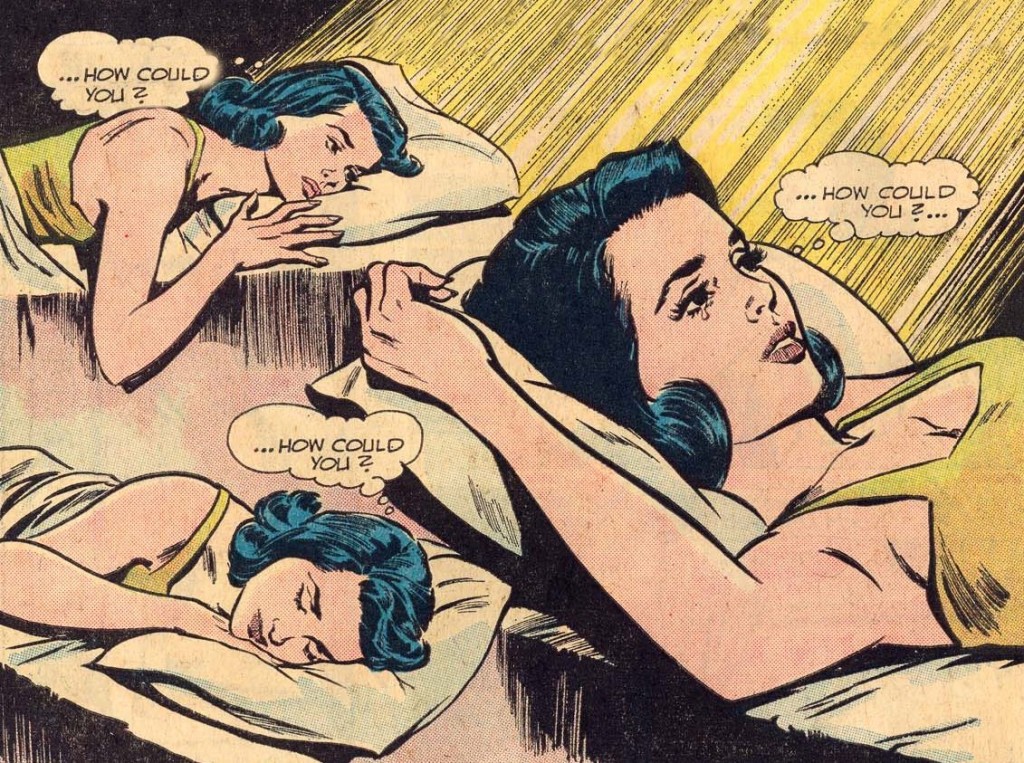
how could you(Source)

Sorry everyone, but with some offline deadlines looming, final tests beginning for my students, and this new hobby of getting over 6 hours of sleep a night I’ve started (very decadent of me, I know), I’m going to have to take a short break from blogging. But I’ll still be very much around, tweeting and posting interesting links to the blog’s FB page as per usual, and I’ll be blogging again sometime after December the 16th. See you then!

R.I.P. Korean Gender Reader

Girls' Generation Shocked(Source)

Sorry everyone, but this will be the last Korean Gender Reader.

It’s not the workload—this new format, decided upon a few months ago, is really quite light. I even enjoy collecting all the links now. And I do realize that many people look forward to these posts and rely on them.

Really, if I could keep doing them, I would.

The problem is that by their nature, they require a regular posting each week. Whereas partially because of my very limited free time, and partially because planned short posts often turn out to need weeks of extra research and writing, my natural posting style is anything but regular.

Try to combine the two? You’ve already been seeing the results—little but Korean Gender Reader posts filling in the gaps between the long ones. It doesn’t look good at all, and has an obvious solution.

And, frankly, it feels great to be able to post on what and whenever I like again, rather than constantly feeling pressured.

I could go on, including mentioning — no joke — developing repetitive strain injury in my right arm last month, but I’m sure you get the idea. Let me just say that it’s reminded me to only work on what I enjoy, while still doing my best to keep you entertained and informed in the process.

Meanwhile, I’ll continue to post links on Twitter (@JamesTurnbull) and on the blog’s FB page, so all the stories that would have been going up will still be quite accessible really. And I’ll still be very happy and grateful to receive ideas and leads from readers, and/or to post announcements of your upcoming events and so on.

Announcements

Wanted: Your Stories Of Love Lost, Unrequited Love and More (Speaking of China)

Saturday

Girls & Guitars: K-Girls Rocking the Hallyu Wave (Elegiacomo; YAM Magazine)

Queer Links from the Week (The Kimchi Queen)

Sasaeng fan guests on CulTwo’s Veranda Show (Netizen Buzz)

Could This Be China’s Long-Awaited Youth Movement? (The Diplomat)

Why Aren’t Asian Actors Getting Leading Roles in Hollywood? (Jezebel)

Sunday

Children of executed Chinese criminals don’t count as orphans, doomed to be homeless (Shanghaiist)

South Korea lives in the future (of brutal copyright enforcement) (Boing Boing)

— “It was not so long ago that writing an article on queer cinema in Korea was a real struggle, for want of source material.” (London Korea Links)

Former celebrity trainee reveals how much sexual favors cost (Netizen Buzz)

Chinese matchmaking agencies to regulate online dating due to lying scumbags (Shanghaiist)

Monday

From incorrectly calculated foreign crime rates to tabloid TV (Gusts of Popular Feeling)

Abs in Review: Super Junior (Seoulbeats)

Do It Palli-Palli, Keep Doing It Palli-Palli (Outlook India)

Number of students with HIV increasing, Chinese sex-ed still sucks (Shanghaiist)

And Hollywood’s latest bad guys are… the North Koreans (The Independent)

Tuesday

It’s Not (and Never Was) a Korean Wave — It’s a Globalization Wave (Mark Russel’s Website)

JTBC’s “We are Detectives” looks at foreign crime using the KIC report (Gusts of Popular Feeling; Part 2)

Beyond the Bad and the Ugly (Thick Dumpling Skin)

Couleur de peau: Miel, aka Approved for Adoption, screens at Leeds Young Film Fest (London Korea Links)

Government says flash mobs must be registered in advance (The Hankyoreh)

Wednesday

Failed minister nominee makes bitter attack on Korea’s ‘old prejudices’ (The Korea Herald; The Washington Post)

Why do they do that? Korean culture and the K-pop industry (Beyond Hallyu)

Sun Yat-sen University wants to see you masturbate (Shanghaiist)

Scenes from a Tokyo Skid Row Clinic (Japan Subculture Research Center)

What is quasi-rape? Is Park Si-hoo charged with rape? (Korean Gender Cafe; Asian Junkie)

Thursday

The problem with debuting a girl group labeled as “tomboys” is that you gotta deliver the goods (YAM Magazine)

Korea: A Case Study in Normalcy Bias (The Patriot Post)

Journalist spotlights interview of school bullying victim in light of recent suicides (Netizen Buzz)

For JTBC, consensual sex between white men and Korean women is a “sex crime” (Gusts of Popular Feeling)

My Best Gay Friends Big YouTube Hit for Vietnam (The Diplomat)

Friday

Quite frankly, Taeyeon is not necessarily the “prettiest” member of SNSD. But… (Phenomenology/Intervention)

Experts call for a long-term vision of Korea as a multiethnic society, social agreement on overall immigration policy (The Korea Herald)

‘Extreme’ Hagwon Adverts Start Korean Education Debate (koreaBANG)

Hypergamy, Immigration and the Sexual Market in Hong Kong (Via Korea)

Confessions of a Fangirl: Girl Crushes? Oh, I Definitely Got Those (Seoulbeats)

(Links are not necessarily endorsements)

Adieu, Korean Gender Reader Version 1.0

Speech Balloons Background(Source)

Some minor changes to announce, blogging-wise.

The main change is that I’ll be completely redoing the format of the Korean Gender Reader posts. Because really, they’ve long been superseded by the blog’s Facebook page and Twitter feed where I first post the stories, and where they seem to generate much more discussion too. Also, although the posts may not look like much work, they actually involve 4-5 hours each week of tedious searching through RSS feeds, then copying and pasting them here. Frankly, I’ve long been tempted to simply stop writing them, but have kept at it for readers’ sakes.

I could also mention that I’d probably lose half of my readers if I stopped writing them too, but let’s not go there.

So, I’ve been looking at ways to automate the process somehow. Unfortunately, my options are very limited because this blog isn’t self-hosted, but one possibility is using paper.li instead, which produces “papers,” or digests of stories on a single webpage (which I could link to). Previously, I’d rejected it because those few examples I read always seemed to be very randomly-generated and unfocused, but I’ve since learned that it’s possible to be very selective with the stories you add, especially if — obvious, in hindsight — you choose your own Twitter feed as the only source.

After doing some experimenting, I’m quite happy with the results. It does have some minor issues, particularly with not being able to choose category names, or which stories go in which, but they’re still all easy to access. And, with excerpts and images thrown in to the mix too, it may well be an improvement.

I’ll roll it out next Friday Saturday, and will use the time saved to be a little more consistent in my production of longer, analytical pieces like this recent one, with translations thrown in here and there. And I have a lot more offline things I’m working on this year too, but I’ll let you know about those when they come up.

In short, my blogging plans for 2013 sound *ahem* suspiciously similar to those for 2012. But I’ll try really hard this time round!

Announcements

Gay Shorts on Smartphones Screening 1/9 through 1/26 (The Kimchi Queen)

Body Image, Health

My lucky thunder thighs (Salon)

Erin Li’s L.A. Coffin School Puts the Spotlight on Mental Illness Among Asian Americans (Mochi Magazine)

— The top 10 most handsome actors as chosen by a plastic surgeon (Netizen Buzz)

New Online Game Attracts Women Gamers with Free Beauty Treatment Offers (Korea IT Times)

My Body, My Self-Image, My Self-Destruction (Geek in Heels)

A new line of confidence-wear for girls (The Ethical Adman)

Ministry of Employment and Labor denied proposals of NHRCK on Industrial Accident Compensation Insurance Act (South Korean Human Rights Monitor)

Koreans Are Heaviest Drinkers Among Asian Americans, Study Shows (KoreAm)

400 Years of Women Removing Their Body Hair (Jezebel)

Israel’s New Ban on Super Skinny Models Won’t Fix the Problem (XX Factor; Thick Dumpling Skin)

Claims ginseng is ‘new Viagra’ just don’t stand up (NHS)

Woman’s Work: The Ugly Truth Behind the Beauty Premium (Bitch)

Vogue Italia Breaks Another Barrier With First Asian Cover Model (TIME)

Top celebrities suing Gangnam cosmetic clinic for using their images and names without permission (Omona They Didn’t)

Dr. Michi, I’d love to hear your thoughts about whether a heavy consumption of K-Pop can influence a young person toward disordered eating (Thick Dumpling Skin)

Perpetuating Stereotypes: How Korean high school girls (supposedly) see themselves (I’m No Picasso)

Censorship, Media

Power of the Korean Film Producer: Park Chung Hee’s Forgotten Film Cartel of the 1960s Golden Decade and its Legacy (The Asia-Pacific Journal)

BBC World Service considering opening station aimed at North Koreans (The Independent)

“I no longer use Naver as my primary search engine…because I am fed up with their tactics in manipulating media.” (Arari)

Crime

Authorities Entering Private Property on Domestic Violence Calls: A Problem? (South Korean Human Rights Monitor)

Go Young Wook in custody on four counts of sexual misconduct and assault against minors (Asian Junkie; The Chosun Ilbo; Omona They Didn’t)

Revenge Crimes on the Rise (South Korean Human Rights Monitor)

Retroactive application of tracking sex offenders ruled constitutional (The Hankyoreh)

Dating, Relationships, Marriage

[Q&A] Korean wedding customs: do brides give a lot of money for grooms? (Loving Korean)

Photos: Couples rush to wed on lucky day (Shanghaiist)

Perfect 10? Never Mind That. Ask Her for Her Credit Score. (The New York Times; see here for the Korean angle, especially the comments {update: also see “Korean Women Marry for Money”})

Celebrity dating rumors are serious business (Seoulbeats)

Ask the Yangxifu: On Wealth/Income for Chinese Men + Western Women Couples (Speaking of China)

Newly registered marriages in Korea fell to an all-time low last year, study finds (Asia Sentinel)

Education, Parenting, Demographics

Korean police have plan to reduce bullying (Asian Correspondent)

Family planning official in Fujian busted for infant trafficking (Shanghaiist)

Michelle Rhee Featured On PBS’s Frontline Program (ROK Drop)

Without Babies, Can Japan Survive? (The New York Times)

Preference for male babies has created a gender imbalance among young people aged 9-24 (The Hankyoreh)

Reliable Student Exchange Programs in Korea (Angry K-Pop Fan)

— Unwed mothers call for Park’s attention (Tales of Wonderlost)

Blind Stubbornness of Ministry of Health and Welfare is Destroying the lives of Children (The Korean Law Blog)

Growing pains for foreign academics in South Korea (Gusts of Popular Feeling)

— Harvard students marvel at lonely, hard-studying Korean students (The Hankyoreh)

Economics, Politics, Workplaces, Ladygate

“There are lots of reasons why Korea is a nice place to live, but endless Tea Party-style nationalism is not one of them” (Asian Security Blog)

Gender equality key to Japan’s future prosperity (The Japan Times)

Finnish Critique of Korean Hierarchy (Via Korea)

Korean military digs itself into a deeper hole with celebrity soldiers (Netizen Buzz; Asian Junkie; Omona They Didn’t)

Japan needs women power to galvanize economy: party (Reuters)

Korea: The Tyranny of Titles (Via Korea)

Defense ministry urges caution about cutting military service period (Yonhap)

Ministry of Gender Equality Receives More than Initial Budget: Netizens Angry (KoreaBANG)

Lee Hyori’s lack of plans for marriage garners backlash (Netizen Buzz)

LGBT, Sexuality

Queer Links from the Week (The Kimchi Queen)

Teacher Guidebook for Queer Korean Students (The Kimchi Queen)

Lana Wachowski Opens Up About Her Transition in Korea’s Talk Show (Kstar10)

Court questions anti-prostitution law (The Marmot’s Hole; Korea Law Today; The Korean Law Blog)

Foreign Media Perpetuating Stereotypes: “South Korea’s youth are among the most sexually conservative in the world” (VICE)

Miscellaneous

Think before you say “Korean” before a noun of any kind (I’m No Picasso)

Pop Culture

Is what’s happening to Block B now similar to what happened to TVXQ? (Angry K-Pop Fan)

Block B is Going to Court (Seoulbeats)

Roundtable: Block Bust? (Seoulbeats)

E.via splits with agency, forced to use new name, chooses Tymee (Frank Kogan)

New Korean Films: Raising Social Issues With A Musical (Modern Korean Cinema)

Aegyo Hip Hop: Cultural Appropriation at Its Messiest (Seoulbeats)

New music video teaches Korea’s young about Gwangju Massacre (The Hankyoreh)

Any feminist bloggers watching Chinese martial arts period dramas? (The F-Word)

“Gangnam Style”: Crossing Over in the New World (World Literature Today)

Teaching Sociology with Music Videos (The Sociological Cinema)

Video: Who Will Be China’s Psy? (The Asia Society)

“I am a Failed ABC”: Finding Identity as a Chinese-American K-pop Star (Seoulbeats)

Interview with Poet Kim Hyesoon (Korean Modern Literature in Korean)

Best of Korean Music 2012 (Mark Russell’s Website)

Cross-Cultural Cussing (Seoulbeats)

Social Problems

At the Front Line of Suicide Prevention in South Korea (Korea Real Time)

Korea Needs to Stem the Tide of Suicides (The Chosun Ilbo)

Suicide of Another Celebrity Grabs Koreans’ Attention (Korea Real Time)

Horses Cure Internet Porn Addiction In South Korea (Business Insider)

How can Korea improve road safety? (The Korea Herald; Via Korea)

(Links are not necessarily endorsements)

From the Archives: Bagel Girls, Banking, and Babies!

(Source)

…[the character of] Chi-Yong’s mother sees marriage as a way to achieve social advancement and material prosperity, as it was in the Victorian era. These ambitions have come to the forefront in Korea since the 1970s, due to rapid economic development and consequent aspirations to class mobility and consolidation during the last thirty years. This novel [Marriage/결혼 by Kim Su-hyeon, 1993] is a good illustration of how, given the pace of change of change in Korea, everybody has a different point of view on marriage, depending on their gender, class, and generation. The issue of communication across generations has become a serious matter. Generation is an important attribute of identity in Korea, like race in the United States. (My emphases.)

(So-hee Lee, “The Concept of Female Sexuality in Popular Culture” in Under Construction: The gendering of modernity, class, and consumption in the Republic of Korea, ed. by Laurel Kendell, 2002; page 146 of 141-164)

With apologies to So-hee Lee for variously attributing that quote to either her editor, to Hyun-Mee Kim, or to Nancy Abelmann over the years, it still very much applies 10 years later. It’s also why studying and living in Korean society can be so exciting sometimes.

For someone who’s been writing about the place for over 5 years though, it means that many of my posts need updating. Let alone mercifully deleted as reader feedback, further research, and greater use of Korean sources have exposed gaping holes in my knowledge and confident preconceptions. And from a practical standpoint too, links will die, embedded videos will get deleted, and my theme will always highlight recent posts at the expense of older ones, no matter how good they may be after going through my culling process.

With all that in mind, once a month I’ll be highlighting posts from the corresponding month in previous years. Not all of them of course (hey, I’ll still like some material to work with in September 2013 and 2014), and to some there’s no new news to add; I include them just to draw attention to for new and old readers, especially as they’ve since been slightly edited for this post with the benefit of several year’s of hindsight. Others though, I’m adding a great deal of new news and commentary below, as you’ll see.

Please let me know what you think!

2011

Alas, not really my own article, but about Grace Duggan’s for Bust Magazine. While I’d often criticized the body-labeling craze in South Korea previously, I didn’t realize just how offensive this particular term was until she pointed it out (source, right):

Sexualizing young women for having childlike features sets off all kinds of alarms, regardless of whether or not they are over 18. The “bagel girl” label does more than infantilize women. It compartmentalizes them by applying two irreconcilable ideals: looking like a baby and a full-grown woman at the same time.

Granted, that may make it sound no more harmful than any other “line.” But, as I explain in a later comment, in the context of how it’s actually used it ends up sounding almost pedophilic:

…there’s nothing wrong with looking young per se.

But consider who the label is applied to: not, say, women in their 30s and 40s and older, for whom – let’s be real – wanting to look younger than they are is understandable (hell, for a 35 year-old guy like me too), but rather it’s women barely on the threshold of adulthood that are being praised for looking like children. And, not to put too fine a point on it, what the FUCK is great about a 21 year-old looking younger than she is? And when her body is simultaneously praised for being developed? That is a seriously flawed ideal to aspire to, and, moreover – as I hint at in the post – it’s no coincidence that it occurs in an environment with strong expectations of childish behavior from women too. Indeed, the end result strongly reminds me of child and teenage female manga characters, with personalities appropriate for their age, but somehow the sex drives and physiological development to act on them of women 10-15 years older.

(Source)

Meanwhile, by coincidence just yesterday I finished the excellent An Intimate Affair: Women, Lingerie, and Sexuality by Jill Fields (2007), which explains how the word “glamour” — where the “gul/글” in Bagel Girl comes from — came to be closely associated with large breasts by Hollywood in the 1930s to 1950s. Something I’d previously chalked up to a Japanese and then Korean mistranslation of the word, see the above pages for more on that, or all of Chapter 3 on brassieres at Google Books here.

If I do say so myself, I’m very proud of the way I describe my feelings when child singers do aegyo:

…cutesy aegyo is bad enough coming from a 21 year-old singer, but simply surreal when you see it done by a 14 year-old.

Yes, surreal, not merely awkward and inexperienced: essentially, you’re watching a child pretending to be an adult pretending to be a child.

Thank you very much.

Thanks again to the (necessarily anonymous) reader who wrote about her experiences, and I’ve had dozens of inquires about the Seoul clinic she used since. Please just email me if you ever need to know the details yourself.

(Source)

2010

Once someone points out the “head cant” to you, it just can’t be unseen. Usually inoffensive in itself though, and frequently done simply for photographic and stylistic reasons (which I’ve under-acknowledged in the past), it’s the fact that it’s overwhelmingly women it that makes it problematic. Just one of a number of typical poses for women in ads, ultimately it serves to reinforce gender stereotypes.

Probably, that’s why these recent Giordano ads stood out to me: in the example above for instance, Shin Min-a (신민아) is the one in control, staring at the viewer, while So Ji-sub (소지섭) is distracted (it’s usually the guys that are presented as more focused). And, desperately seeking examples of pro-feminist advertisements for a TED presentation I may be giving next month, in which I have to — grrr — conclude with a positive message rather than just criticize, this made me realize that feminists and advertisers don’t necessarily have to be at odds with each other. Just a sense of balance by the latter would be a huge step forward.

Really about “lewd” advertisements, 2 years later (this June) I translated another article about how their numbers had surged 3 times over the previous 12 months. With no apparent sense of irony, just about every news site that reported on that had so many examples themselves that the text was difficult to read.

One of my most popular posts, anybody (especially men) who thinks street harassment isn’t a problem should just reflect on the opening cartoon, let alone female readers’ comments about their own negative experiences.

(Source: unknown)

2009

A short, harmless commercial for Shinhan Bank at first glance. But, once you take the time to analyze it, it has a clear message that men do the thinking at Shinhan while the women simply look good. Indeed, it’s such a classic example of gender stereotyping that I’m still using it in presentations today.

Here’s the slide I would present after providing that analysis:

But in the next presentation, I’ll be updating it with the recent news that the banking industry still has the largest gender pay gap in Korea, with women making an average of only 57% of what men make.

Not that I’m against skin by any means. But these remain very sweet ads!

Again one of my most popular posts, ironically soon after writing it trends in the Korean entertainment and music industries meant that Koreans would replace Caucasians in many of the modelling roles that sustained those Occidentalist stereotypes. Also, in my own (admittedly limited) experience, there’s far fewer Korean male – Western (invariably Caucasian) female pairings in popular culture now, after a spate of them in the years after Misuda first appeared. (There were never very many of the opposite.)

However, of course many of the stereotypes still do remain.

(Sources: left, right)

2008

When I read on Yahoo! Korea this week about pregnant Hollywood star’s “D-lines”, for a moment I did try to hold my tongue about seeing the label.

After all, this, for example, is just an advertisement for an event for expecting mothers (albeit one where likely body-shaping products are promoted); these D-line fashion shows were surely perfectly harmless; many of those Hollywood stars were indeed glowing, as was pregnant Moon So-ri (문소리) in Cosmopolitan last year; and finally, yes, I can see the humorous side — it is often applied to extremely obese men.

But although the Western media too promotes pampered celebrity mothers-to-be as ideals to follow, and I can certainly accept that pregnant women overseas may likewise feel under some indirect pressure to watch their weight, that post is about how pregnant Korean women were dieting as early as the late-1990s. One can only shudder at what things are probably like now.

Suddenly, talk of D-lines sounds a lot less funny.

One of my first attempts to grapple with the origins of the kkotminam phenomenon (꽃미남; lit. flower-beauty-man), which culminated in this piece by friend and ANU professor Roald Maliangkay 2 years later.

By coincidence, both of us will be quoted in a related news article to be published next week. Watch this space! (Update: and here it is!)

2007

And indeed there was. Unfortunately however, attitudes didn’t change with it, so fathers feel compelled by management to either ignore it entirely or to come back to work early, despite it only being 3 days (source right: unknown).

Note though, that the “paternity leave” in the original article I translated was a bit of a misnomer, it really meaning time off for a child’s birth. “Real,” paid paternity leave has been available since 2001 (or possibly 1995), but sources vary on specifics. Sung So-young in the Korean Joongang Daily, for instance, wrote in April 2011 that:

According to Korean law, all employees with a child under the age of 3 are eligible to take a year off to care for their children. Up to 1 million won ($919) in salary is provided monthly.”

But that is contradicted by a slightly later report in the Chosun Ilbo, which states that:

…those on leave can get up to 40 percent of their salary, or a minimum of W500,000 and a maximum of W1 million, and parents can take leave until the child is 6 years old.

And both in turn are contradicted by Lee Hyo-sik’s earlier report in the March 4 2011 Korea Times, which says:

Regardless of income levels, both male and female salaried workers are currently given 500,000 won per month during parental leave. This is expected to go up to one million won next year.

As for the maximum age of the children in order to be eligible, the same article states that it was 6 rather than 3. This is confirmed by an earlier February 2010 article by Kwon Mee-yoo, again in the Korea Times, which stated:

The Ministry of Labor passed a revision on Wednesday to the Act on Equal Employment and Support for Work-Family Reconciliation, or the Employment Equity Act for short, which will expand the range of workers eligible for parental leave. Now parents with preschoolers under six years old can benefit.

The leave allows employees to take a certain number of paid days off from work to care for their children. The parents can also take unpaid leave if they use up all of their paid days. This includes maternity, paternity and adoption leave. Currently, at private firms only workers with children 3 years old or less qualify for the leave.

Surprisingly, parents with adopted children weren’t eligible before this revision, and still, “only those who gave birth to or adopted children after Jan. 1, 2008 [were to be allowed] parental leave,” despite those (then) 2 to 6 year-olds obviously being of age. Which all sounds very tight-fisted, although logical during the worst of the financial crisis.

Kwon Mee-yoo also notes that it was in 2008 that the government increased the age restriction for (only) public servants, allowing them “to take time off for parental purposes if their children were under 6 years old.” I’ll assume that it previously only applied if their children were under 3 years old, like Kwon notes was the case for employees at private firms.

Finally, quibbles over details aside, Sung So-young’s and Lee Hyo-sik’s articles in particular remain excellent discussions of why Korean fathers are forced to avoid taking paternity leave, despite wanting to spend much more time with their kids. Against that though, just like in most other countries there’s still a pervasive attitude that childcare is primarily women’s work, with insidious manifestations in our daily lives.

And on that note, have a good weekend, and the Korean Gender Reader post will be up on Sunday!

Quick Break/Open Thread

Between my insomnia because of the heat, all my other writing projects, and running out of time to enjoy my summer break with my family (I haven’t even taken my daughters swimming yet!), I’ve decided I need a short break from blogging sorry. But just for about 2 weeks, and everyone’s more than welcome to raise and discuss anything Korean, feminist, sexuality, pop-culture etc. related here in the meantime — I’ll still be around to chat, and will be tweeting and posting links on the blog’s Facebook page as per normal.

So, have a good summer everyone, and please say hi if any of you are in Busan!^^

Update — Christal Phillips, a visiting professor at Yonsei University, has asked me to pass on the following:

I am writing a paper on biracial people in Korea and have created a brief survey for parents of biracial children in Korea as well as biracial Koreans. If this applies to you, please fill out the survey and pass it along to your friends and co-workers: https://www.surveymonkey.com/s/LZJNRJB Thank you for your assistance.”

I can confirm that it just takes 5-10 minutes, and participants will be entered into a draw for a $25 Starbucks gift card.