Korean Gender Reader

(Source)

If I’ve missed anything, please let me know!

Dating/Relationships/Marriage:

Love, Korean-style: Two’s company (The Economist)

The role reversal I never wanted to see happen (I’m No Picasso)

Under Siege: Korean Man (Busan Mike)

Jeju Finds New Honeymooners–in China (Korea Realtime)

S. Korean “goose fathers” so lonely they keep flies (CNBC)

‘Horny Bus Couple’ Shamed for Public Display of Affection (Korea Bang)

Why Asian Women Date White Men (Jezebel)

LGBT/Sexuality:

Male students know less about sex than females (The Korea Times)

Blind Spots of Over the Counter Contraception (The Korea Times)

Cervical cancer prevention falls through loopholes (The Korea Times)

Pregnancy/Childbirth/Parenting:

Ladygate: Pregnant ‘Adultery Girl’ Disgusts Netizens (Korea Bang)

South Korean Single Mothers Fight Discrimination (Voice of America)

Womb-renting raises questions on one-child policy (Shanghaiist)

— “The very last child in Japanese history will turn 15 on May 18, 3011”: The stupidest statistic you’ll see this week (io9)

China’s Achilles heel: A demographic comparison with America reveals a deep flaw in China’s model of growth (The Economist)

Murderous Teens and Korea’s Fighting Culture (Idle Worship)

Chosun Ilbo learns that behind asshat students stand asshat parents (The Marmot’s Hole)

Father’s day: Having children really does make a man more content with life (The Economist)

Pop Culture:

Doll People: Compendium on the Doll Motif in K-Pop (The Mind Reels)

Double Standard: Dancing in Kpop (YAM Magazine)

Little women of Korean cinema (The Korea Times)

K-pop Diets and the Logical Disconnect (Seoulbeats)

80% of K-Pop’s sales come from Japan (Arama)

Comment Of The Day: Japanese Are Perverted Monkeys, Koreans Are Innocent Angels (Asian Junkie)

Crime:

Domestic abuse rates soar (The Korea Times)

Outrage grows over sexual harassment in subway train (The Korea Times)

KakaoTalk Used as Evidence in Rape Case (Korea Bang)

Government Regulation of the Idol Industry: Is It Enough? (Seoulbeats)

Brit tourist sexually assaults Chinese woman in Beijing, anti-laowai cyber hysteria ensues (Shanghaiist)

Ex-band member speaks out about sexual assault charge (The Korea Times)

Go Young Wook Of Roo’ra Accused Of Sexual Assault, He Admits To Sex But Denies Rape (Asian Junkie)

2 More Victims Allege Sexual Assault by TV Personality (The Chosun Ilbo)

Go Young Wook has two more alleged victims come forth in his sexual assault case (Asian Junkie)

Korean Fishing Crews Accused of Sex Crimes against Indonesian Workers (The Hankyoreh)

The English Spectrum Series at Gusts of Popular Feeling:

Part 22: No putting brakes on ‘Internet human rights violations’

Part 23: “They branded us as whores, yanggongju and pimps,” part 1

Part 24: “They branded us as whores, yanggongju and pimps,” part 2

Economics/Politics:

An Easy Economic Boost: More Women at Work (Korea Realtime)

Misc:

Debito Arudou’s “Micro-Aggressions”: What Really Drives the Highly Sensitive Expat Crazy (Gord Sellar)

Ladygate Special: What’s With All These Ladygates? (Korea Bang)

Finally, some Shout-outs:

Gay-rights Petition: Protect the constitution of South Africa – AS IT IS!

Next, an anonymous reader seeking some help and/or information:

I was wondering if you had any info on the Korean culture’s perception of mentally disabled and handicapped women. I have searched on my own, but have limitations as I am still a beginner learning the language. I am curious how they function in society. I ask because I am a Korean adoptee who recently found out my mother had an ‘intellectual disability,’ which is not totally reliable, but I am trying to research what her life in Korea may have been like.

Just thought I would reach out and say I enjoy your blog, and wondering if you knew anything that could help me contextualize my research. Thanks!

And finally an email from Jaehak Yu (slightly adapted by me):

…two of my friends and I are participating in what is called the Mongol Rally in 2013. It’s basically a 10,000-mile drive from London to Ulanbator, Mongolia. The main focus of the rally, however, is to raise money and aid for both the Mongolian people and a charity of our choice. Our charity is the Children’s Hospital of Orange County — a great nonprofit that is devoted to taking care of children in need.

Currently, we are in an “awareness” stage — trying to gather attention to our causes and our journey….Naturally, I’m sure readers would want to read more before they promise any sort of involvement. Our website should detail the specifics of our journey as should our Facebook page. If anyone has any other questions and/or is interested in a possible collaboration, I’d love to talk to you some more. My email is jaehak.yu93@gmail.com or I can be reached by cell at (949) 648-1519.

Thanks for your consideration!

(Links are not necessarily endorsements)

Korean Gender Reader

(Source)

First up this week, a run-down of all the sex crimes in the entertainment industry that have recently emerged:

April 19 – Open World Entertainment and The Ugly Side of K-pop (Seoulbeats)

April 25 – Sex crimes in showbiz industry jolt society (Korea Times)

April 25 – Manager reveals that there are brokers connecting actresses with “sponsors” (Allkpop)

April 25 – Anonymous Actress Says Sexual Harassment is Common in the Biz (Enewsworld)

April 29 – Open World Entertainment artists cleared of all charges + Company’s future uncertain (Omona)

April 30 – Sixth Grader Trainee Sexually Abused by Head of Entertainment Agency (Omona)

May 3 – Witness Says Sexual Abuse Goes On At 80% Of Agencies + A Sixth Grader Was Targeted (Asian Junkie)

May 8 – Open World Entertainment CEO officially charged with rape, accused idols get off scot-free (Omona)

May 8 – Open World Entertainment’s Jang Seok Woo charged with rape + idols get off on technicality (Asian Junkie)

May 8 – Police investigating former Roo’ra member Go Young Wook for alleged sexual assault (Allkpop)

May 9 – Korean government steps in to prevent entertainment agencies from defrauding trainees (Allkpop)

May 9 – Tackling the Entertainment Industry’s Dark Corners (Korea Realtime)

May 10 – Former idol group member assaults aspiring teenage singer (Korea Joongang Daily)

May 10 – South Korean government to crack down on sexual exploitation in the K-pop industry. Sure. (Angry K-pop Fan)

May 11 – Go Young Wook refutes allegations concerning his sexual assault case (Allkpop)

Next, a continuation of the English Spectrum Series at Gusts of Popular Feeling:

— Part 14: Segye Ilbo interview with the women from the party, part 2

— Part 15: Web messages draw Koreans’ wrath

— Part 16: Thai female laborers and white English instructors

— Part 17: ‘Regret’ over the scandal caused by confessions of foreign instructors

— Part 18: “Korean men have no excuse”

— Part 19: “Unfit foreign instructors should be a ‘social issue'”

— Part 20: ‘Clamor’ at foreigner English education site

— Part 21: Foreign instructor: “I want to apologize”

And now for the regular categories:

LGBT/Sexuality:

Controversial TV Priest claims Korea ‘Free from Homosexuality’ (Korea Bang)

The Meet Market: For Queers and Their Allies (Chincha)

Pop Culture:

“Heavy” Girls in K-pop (10 Confessions)

— ‘Sasaeng’ fans: who and why Part 1, Part 2, Extended Discussion (Angry K-pop Fan; see Maddie Loves K-pop here and here also)

Making Over Asia: Hallyu and Medical Tourism (Seoulbeats; also see Korean Bodega)

South Korea Tops Plastic Surgery Tables Again, Netizens React (Korea Bang)

Sexy Zone: This isn’t it (Appears)

SHINEE ignites racist scandal with anti-Native American performance (Omona)

Korean Entertainment and the War on Women (Seoulbeats)

What it’s like to work in (American) entertainment as an Asian female (Thick Dumpling Skin)

Female Stars’ Abused Feet from Kill Heels Captured (Soompi)

AV star Aoi Sora to debut in Korea as a singer and actress (Kpopseven)

Ladies Breaking the Idol Stereotype (Seoulbeats)

The Lost Monarchy (My Musings)

Cinderella Stories Don’t Exist: How K-dramas Got it All Wrong (Seoulbeats)

Pop Girls: J-Pop and K-Pop (The F-Word Blog)

What’s Wrong With Co-ed Groups? (Seoulbeats)

Dating/Relationships/Marriage:

Here Comes the Bride? Marriage, Dating and Korean 30 Somethings (Inconseoulable)

Could a single pill save your marriage? (io9)

The average number of people in a Tokyo home has dropped below two for the first time (AlJazeera)

Spouses share their tales of life wedded to Koreans (The Korea Herald)

Introducing Mr. and Mrs. Shanghai Shiok! (Shanghai Shiok)

“Skins” Star Kaya Scodelario and Kim Soo-hyun for J.ESTINA (Seoulbeats)

Crime:

Police Gain Legal Right to Forcibly Enter Homes of Domestic Abuse (KBS)

Is domestic violence taken seriously in Korea? (The Korea Herald)

Electronic anklets have little effect on sexual crimes (The Korea Times)

How Effective are the Korean Police? (The Korea Herald)

Working to Death at Samsung (Global Voices; The Hankyoreh)

Redefining Rape in South Korea (The Korea Herald)

‘Sexual Harassment Grandpa’ Asks Girl for Gangbang On Subway (Korea Bang)

Kim Lee: Chinese law has failed to protect me (Shanghaiist)

Pregnancy/Childbirth/Parenting:

[Q&A] Do you intend to speak Korean language to your children? (Loving Korean)

On the Physicality of Motherhood (On Becoming a Good Korean [Feminist] Wife)

On Adventures in Feminist Parenting (On Becoming a Good Korean [Feminist] Wife)

More Kids from Cross-Cultural Marriages Start School (The Chosunilbo)

A Day For Forgotten Moms of Korean Adoptees (Korea Realtime)

Economics/Politics:

What’s the Difference Between a “Gender Quota” and “Gender Balance”? (Feminist Law Professors)

The Gender Gap (Infidelworld)

More Korean women working abroad for construction companies (The Dong-a Ilbo)

Finance Ministry to Staff: Go Home (Korea Realtime)

Misc:

New laws on smoking in Korea. News that affects nearly half of all Korean males. (Korea Law Today)

Military Service is a Privilege, Not a Duty (The Korea Herald)

‘Korea’s Helen Keller’ Turns Adversity into Opportunity (The Chosunilbo)

Full Frontal (Busan Mike)

Koreans Shop for Bigger Bottoms (The Chosunilbo)

South Korean women are surprisingly avid watchers of sporting events (Campaign Asia-Pacific)

A Korean Comic Wows Arab Crowds With an Insider’s Touch (The New York Times)

(Links are not necessarily endorsements)

Korean Gender Reader

(Source)

A light and colorful image to counter the shocking and depressing news of the past week.

First, that of the Suwon rape and murder case, which I’ve given just about all of the news and blog links on it I can find below (but please let me know of any more that you think should be added). As you read through them though, please bear in mind that despite the public stereotypes, despite the abject incompetence of the Suwon police, and despite their outdated attitudes to rape and domestic violence, in fact the Korean police as a whole have dramatically improved in the last 5 years, particularly with the latter. As I wrote back in 2009:

…while Korea certainly does have a great deal of work to do in combating domestic violence – and criminalizing spousal rape would be an essential first step (see #2 here; for a 2011 update, see #5 here) – it’s also true that police and legal attitudes towards it have considerably hardened in recent years, both cause and effect of a law change in 2007 that requires police to forward all cases of domestic violence to a prosecutor (the previous 1998 law just left it up to their own discretion). In addition, Korean women are now more likely than ever to divorce on the basis of verbal or physical abuse, rather than suffering silently as in past decades.

Unfortunately, I have yet to see this mentioned in the English-language media:

April 12 – Does Suwon killer have other victims? (Asian Correspondent)

April 12 – Korean rage? And what about the Chinese-Koreans? (The Marmot’s Hole)

April 11 – Korean media publish name of Suwon killer (Asian Correspondent)

April 10 – Political parties say police chief’s resignation was just (KBS Global)

April 10 – Suwon police apologize for failing to save kidnap victim (The Dong-a Ilbo)

April 9 – The police (and everyone else’s) blunder in Suwon (My Musings)

April 9 – Police fail to save murder victim despite 7 min phone call, GPS tracking; police commissioner resigns (The Three Wise Monkeys)

April 9 – Police chief quits after murder case (The Korea Times)

April 9 – Police chief to resign (The Korea Herald)

April 9 – With victim screaming, police bungle response (Korea Realtime)

April 8 – “Simple sexual violation” (10 Confessions)

April 8 – Why Korean police are worthless: more news from the rape front (The Unlikely Expat)

April 8 – Suwon murder shames police (The Korea Times)

April 7 – Brutal murder in Suwon, police incompetence and online comments (And with your help, I’ll get that chicken)

April 7 – Police can’t save woman after she calls with location (Korea Joongang Daily)

Next, there’s the Open World CEO sexual assault case. All links are from Allkpop unless otherwise indicated:

Managers taken aback at Open World Entertainment Incident (Mnet)

Managers react to the Open World Entertainment CEO incident (Koreaboo)

Open World Entertainment issues official statement

Open World CEO admits to some of the accusations against him + female victims total 6

Police investigate reports of Open World CEO allegedly forcing male idol group members to sexually harass female trainees

Open World Entertainment CEO arrested for alleged sexual harassment on artists and trainees

Now for some good news. Specifically, some upcoming events:

V-DAY returns to Busan with a series of events (Busanhaps)

Korean Unwed Mothers’ Family Association holding fundraiser (Tales of Wonderlost; via I’m No Picasso & Roboseyo)

More posts in the excellent English Spectrum series at Gusts of Popular Feeling:

Part 10: Movement to expel foreign teachers who denigrated Korean women

Part 11: “Middle school girls will do anything”

Part 12: Netizens propose ‘Yankee counter strike force’

Part 13: Segye Ilbo interview with the women from the party, part 1

And now everything else. There’s so many links these days, I’ve decided to put them into categories, although obviously many could go into several. Please let me know what you think of the new format:

LGBT/Sexuality:

Here/Queer: Two years as a lesbian expat in South Korea (Autostraddle)

Japanese sex museums are where your sanity goes to die (io9; NSFW)

Infographic: Sex in China (Shanghaiist)

Gay entertainment (Noona Blog: Seoul)

Pop-Culture:

“K-pop Utopianism” and its discontents (Occupied Territories)

Is T-ara’s member change a way for Kim Kwang Soo to punish T-ara? (Allkpop; also see The Mind Reels)

Boys becoming men overnight: the new drama trend (Dramabeans)

Girls run this world of K-dramas (Seoulbeats)

K celebs raising their voices (My Musings)

K-pop’s faulty perception of an homogenous West (Seoulbeats)

JYP sheds light on Korea’s deep-rooted racial divide (Soompi)

ZE:A’s Kwang-hee proudly admits to having his entire face ‘retouched’ (Korea Joongang Daily)

Is porn manly? (Seoulbeats)

Censorship:

‘Little Monsters’ in South Korea are not amused (International Herald Tribune)

Lady Gaga concert stirs debate about young fans (Korea Joongang Daily)

T-ara’s Lovey Dovey MV banned due to violence, criminal acts, harmful businesses, suicide, and drugs (Omona They Didn’t; see Seoulbeats here for a review of the song)

KBS bans MC Sniper’s “Push It” music video for rebellious content (Omona They Didn’t)

Dating/Relationships/Marriage:

Documentary: Korean-American woman has 50 weddings in 50 states (Hello Korea!)

Naked culture clash: Chinese husband uncomfortable with family nudity in Finnish saunas (Mandarin Stories)

Divorce/family lawyers in Korea: Korean divorce explained by U.S. military (The Korean Law Blog)

“Couples immortalize engagement with photos” (Visual Anthropology of Japan)

Crime:

JYPE to take legal action against online harassment of Sohee (Soompi)

A culture of tolerating sexual harassment (Korea Times)

Seoul: Former JMS cult members tell their stories (Asian Correspondent)

Korean rage: stereotype or real issue? (San Fransisco Chronicle; via The Marmot’s Hole)

Pregnancy/Childbirth/Parenting:

S Korea to respond to violence in schools (AlJazeeraEnglish; via The Waygook Effect)

South Korea: Case tests legal system’s approach to bullying (Asian Correspondent)

Korean girls, mothers assist development of Lego Friends (The Dong-a Ilbo; not something to be proud of IMO!)

Economics/Politics:

Korea’s sexual revolution (Korea Law Today)

The election swept 47 women into the 300-seat assembly, the most ever (Korea Realtime)

(Links are not necessarily endorsements)

Korean Gender Reader

(Source; via Dramabeans)

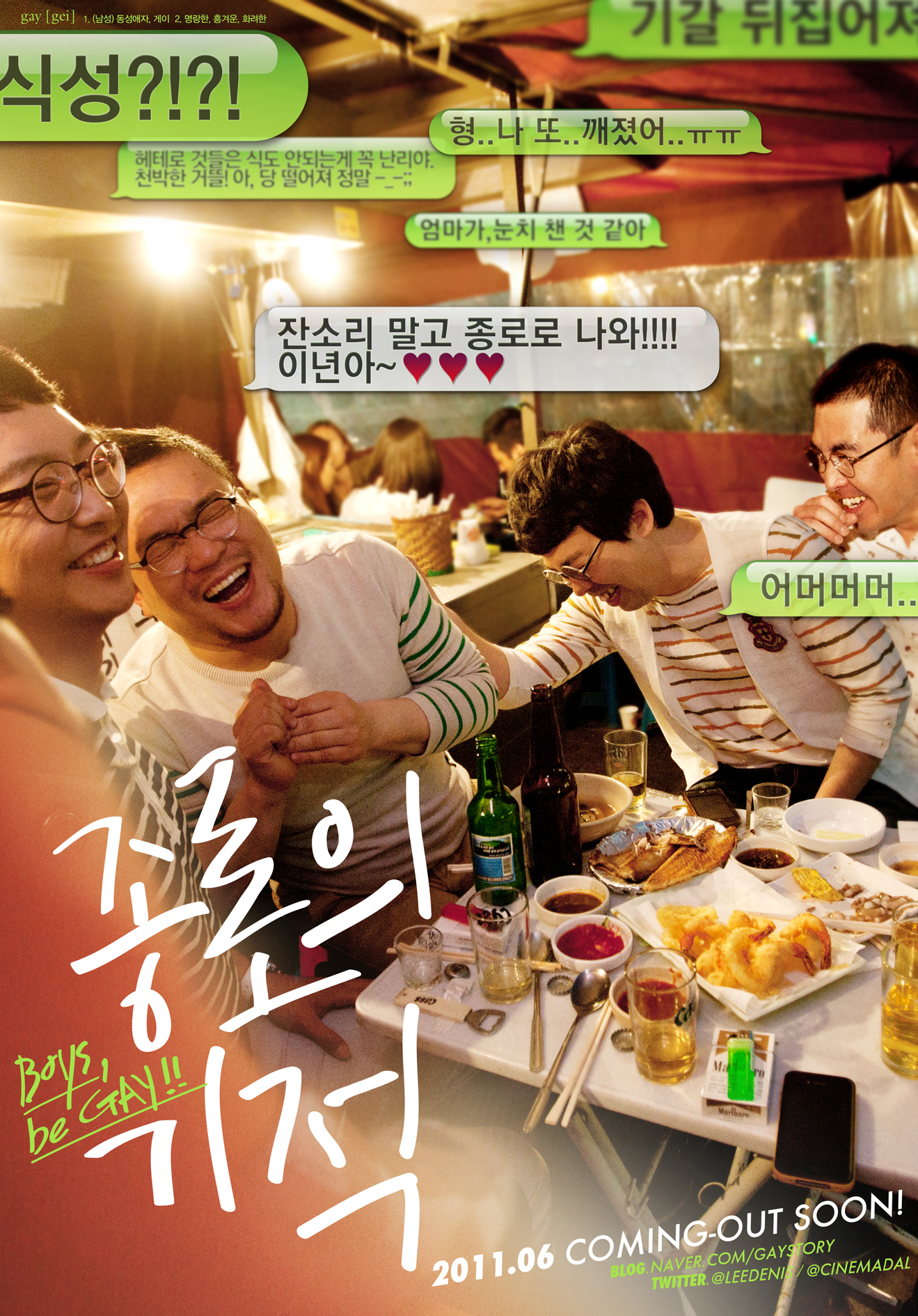
No relation to any of the links sorry — I just love the picture!

First round of sex-change operations a success for 25-year-old Yunnan twins (Shanghaiist)

Breastfeeding in public and in private (On Becoming a Good Korean Feminist Wife)

On the Boba Wrap — product review (On Becoming a Good Korean Feminist Wife)

Korean families split up for earlier childhood education (The Waygook Effect)

Adoptee identity from an older adoptee’s perspective (Hello Korea!)

Lady Gaga’s bad romance with Korean Rating Board (Korea Real Time)

Yoo Ah-in upset with Lady Gaga Seoul concert’s 18+ rating (Soompi)

Lady Gaga, too, gets banhammered (Seoulbeats)

Lady Gaga politely disagrees (Korea Real Time)

Korean/Western/Korean-American parenting blogs shout-outs (Konglish Baby)

There are few things creepier than an abandoned Japanese sex museum (io9; NSFW)

Parents just don’t understand: K-Drama’s guide to raising kids (Seoulbeats)

A radical narrative disguised as a K-Drama: “Coffee Prince,” gender, and sexuality (Occupied Territories)

From kiss scenes to dating: an idol’s dilemma (MTVK)

Most engagements broken off for money reasons (The Chosun Ilbo; via Iang nio)

Macho macho men (Noona Blog: Seoul)

Zig-zagging childcare policy vexes moms (Korea Real Time; but what about dads?)

Korean traditions challenged as mixed marriages soar (UPI; via KorAm)

Spouses share their tales of life wedded to Koreans (Korea Herald; via KorAm)

Why the Japanese obsession with cuteness? (Asian Talks)

Let’s talk about sex (and gender) in Korea (The Mind Reels)

Catching up with South Korea’s cosplaying superstars (Kotaku)

Ivy: k-pop’s most resilient scandal-maker (Seoulbeats)

Novelist and social critic claims that women always intend to have extramarital affairs (The Marmot’s Hole)

The unmarriageable generation? (The Dong-a Ilbo)

What gifts to give for an East-West couple? Money? Or stuff? (Shanghai Shiiok)

Who takes the wedding money gifts? (Ask a Korean!)

Victim in Korea University sex case might leave Korea (Asian Correspondent)

Citibank Korea donates $260,000 to foster women-owned SMEs (IT Times)

And special mention must be made of the following excellent series at Gusts of Popular Feeling:

Part 1: The 2005 English Spectrum Incident

Part 2: The Kimchiland where it’s easy to sleep with women and make money

Part 3: English Spectrum shuts down as Anti-English Spectrum is created

Part 4: How to hunt foreign women

Part 5: Did the foreigners who denigrated Korean women throw a secret party?

Part 6: The ‘Ask The Playboy’ sexy costume party

Part 7: Stir over ‘lewd party’ involving foreigners and Korean women

Part 8: The 2003 post that tarred foreign English teachers as child molesters

Part 9: Netizens shocked by foreign instructor site introducing how to harass Korean children

(Links are not necessarily endorsements)

Korean Gender Reader

(Source)

KARA becomes the first girl-group to be made into figure dolls (Allkpop)

Women’s rise reshaping society (The Korea Herald) vs. For Korean women, glass ceiling is more like concrete (The Korea Times)

A positive class discussion of the latest blackface incident on MBC (Gord Sellar)

Average wedding costs in South Korea (Roboseyo)

Sex education for all US soldiers in Korea? (Gusts of Popular Feeling)

Pregnant women getting more money? (The Waygook Effect)

Blaming the victim? Most sex crimes happen on Seoul’s Line 2 because “many women commute to the Gangnam region and they wear relatively low-cut dresses and short skirts” (The Chosun Ilbo; also see As the Burndog Turns)

Korea’s new adoption law is horrible (Roboseyo)

Modelling bikinis in a Korean drama (Noona Blog: Seoul)

Anti-bride wedding ideas shot down by mom (Shanghai Shiok)

Foreign wives falling prey to loansharks after divorce (Asian Correspondent)

Girls are not for sale (Groove Korea)

Anger at photos of male politicians looking at porn and sleeping in National Assembly building (Global Voices)

Oh Sister, where art thou?: Why bromance trumps sisterhood in K-dramas (Seoulbeats)

Bump N CENSORED: A look at dance in K-Pop (Allkpop)

Joseon women and money (The Jeju Weekly)

After School’s “A little deeper, shake me around, make me tingle” lyrics deemed not harmful for teenagers (Soompi)

Update: After School’s Bangkok City judged not to encourage youths to work in houses of ill-repute either (Enewsworld)

Coverage of Chinese political conference comes in form of “beautiful female journalists” slideshow (The Jane Dough)

Seeking Asian Female, a documentary about men who specifically seek out Asian women (Twitch Film; via @GlobalAsianista)

(Links are not necessarily endorsements)

Korean Gender Reader

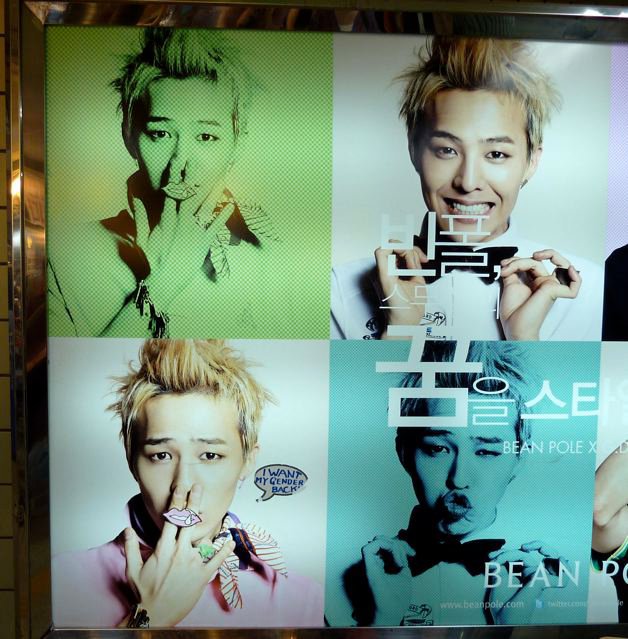
(Source: Busan Metro, March 14 2012, page 22)

A teaser for Monday’s post on Photoshop. Sorry that it’s taking so long, but as I type this I have my second cold in three weeks!

Why is NU’EST’s Ren Doing the Gender Bender? (Seoulbeats)

Korean Women’s Increasing Participation in Politics (Arirang)

Solo households changing Korean economy (The Korea Herald)

Why Kim Yoo-jung’s March Photo Spreads Are Not Age Appropriate (Seoulbeats)

One-On-One with Minister of Gender Equality and Family, Kim Kum-lae (Arirang)

Chinese parents call for anti-gay discrimination legislation (Shanghaiist)

Korea has biggest gender wage gap among OECD nations (The Dong-a Ilbo)

Metrosexual Koreans Seen as Guinea Pigs for New Cosmetics (The Chosun Ilbo)

Different Strokes: Being Biracial in Korean Entertainment (Seoulbeats)

For Some in Vietnam, Prosperity Is a South Korean Son-in-Law (The New York Times)

Why I Write About “Forbidden” Love in China (Speaking of China)

Transgender Actress Finds That Art Really Does Imitate Life (The Chosun Ilbo)

On Breastfeeding Resources in Korea (On Becoming a Good Korean {Feminist} Wife)

Blackface, Korean Media, and the Context of the American Vaudeville Show (Gord Sellar)

Alleged Rape Tests Bangkok (The Diplomat)

Women gather to push for progress in science (The Korea Herald)

US GIs in Gyeonggi-do to undergo sex crime prevention training? (The Marmot’s Hole)

It’s Not Sexist To Point Out the Dangers of Declining Birthrates (Double X)

A third child? (The Dong-a Ilbo)

Segregating children is wrong (The Korea Herald)

Same Old, Same Old: Why the Structure of Boy Groups Needs a Makeover (Seoulbeats)

Chung-Ang Univ. fights discrimination (The Korea Herald)

Idol manager of 10 years discloses his memories of sasaeng fans (Allkpop)

Who pays wedding expenses in an intercultural East-West relationship? (Shanghai Shiok)

Find a Korean Boyfriend (Noona Blog: Seoul)

Campaign to ban cosmetic surgery advertising in UK (The F Word)

K-drama Kisses: the Good, the Bad, and the WTF? (Seoulbeats)

Rape law to include male victims, but only minors (The Marmot’s Hole; see my Men Can’t Get Raped in Korea? for some background)

(Links are not necessarily endorsements)

Korean Gender Reader

(Source)

When Fans Buy Idols Lunch — A response to the Wall Street Journal (Seoulbeats)

Korean Teens Rage Against Cinderella Policy (The Waygook Effect)

Lee Hyori as a role model for younger female celebrities (10confessions)

South Korean actor throws open closet door (Los Angeles Times)

Silenced: Giving Children a Voice (Seoulbeats)

What crossdressing in K-pop says about patriarchy (My First Love Story)

This is not at all how to promote stopping child abuse (Copyranter)

K-Pop Fan Clubs: Friend, Foe and Fear (Inconseoulable)

New York City Department Of Health Targets Asians With Anti-Smoking Ads (NYULocal)

Infographic: The plight of China’s ‘leftover’ women (Shanghaiist)

Hyori points haters to the left (Seoulbeats)

More Koreans Put Off Marriage Till Their 40s (The Chosunilbo)

Gallery: Homoerotic Sino-USSR friendship propaganda (Shanghaiist)

Three decades of blackface in Korea (Gusts of Popular Feeling)

Chinese mainland to crack down illegal organizing of pregnant women into HK (NPC; hat tip to @MaraHvistendahl)

Internet Porn Crackdown Campaign Continues in China (TechwireAsia; hat tip to @AsCorrespondent)

Fight Over Sexuality Festival Continues (Southeast-Asia Real Time)

Women In Korea: Glass Half Full or Empty? (Korea Real Time)

T-ara Eunjung’s “chubby” figure causes a stir (Omona!)

Ending the One-Child Policy (The Diplomat)

JYJ and Sasaeng Fan Hitting Incident: An Ugly Controversy (Seoulbeats)

International Women’s Day in Korea (Arirang)

‘Pretty boys’ in the days before boy bands and teen idols (Gusts of Popular Feeling)

Korea Time Warps to Higher Fertility (Via Korea)

(Links are not necessarily endorsements)

Korean Gender Reader

(Source)

I would comment on this ridiculous rendition of Davichi’s (다비치) Kang Min-kyeong (강민경), but unfortunately two pressing matters(!) prevent me as I type this. In the morning though, I may well submit my daughters’ drawings of her to DHC Korea for its consideration, as surely those would be just as realistic as whatever else it has planned for its latest ad campaign?^^

Seoul Food: Treating Your Idol to Lunch Is the True Test of Fandom (The Wall Street Journal)

Extreme Private Ethos: Japanese Documentaries (Asia Society)

A refreshing approach to condom marketing: an app that keeps you from being walked in on by your parents (Work That Matters)

KPOP and Black Music: Rap (My First Love Story)

How Parents’ Zeal for Education Drives Up Rents (Korea Real Time)

The Nude Collection – An International Artists Community Group Exhibition (Seoul; Social Discourse of Disquiet)

Girls′ Generation’s Jessica Gets a Little Photoshop Lift (Enewsworld; see Omona! for scans)

[Part 1] The Yoke of Korean Women (The Jeju Weekly)

Hey, where’s your skirt? (The Korea Blog)

Foreign Husband Troubles (The Marmot’s Hole)

Women readjusts her curves with green tea (Work That Matters)

Introducing Escher Girls, a Site Dedicated to Superheroine Poses That Warp Spacetime (io9)

Chinese woman sent naked photo by interviewer exposes him online (The Nanfang)

South Korean survey: Appearance-based discrimination is widespread (Asian Correspondent)

Porn and the Peninsula (Via Korea)

International Women’s Day events in Seoul (10 Magazine; Korea Business Central)

Jeremy Lin and debates about Asian masculinity (I’m No Picasso)

Hong Seok Cheon Opens Up About AIDS Scare (Enewsworld)

China to soften its one-child policy slogans, but not the law itself (Yahoo! News; hat tip to Amanda)

Why Aren’t Women in Japan Working? (Gender Across Borders)

Lee Hyori gets criticized over her “belly fat”, proceeds to address the haters (Omona!)

Japanese porn actress Hotaru Akanei’s China university lecture cancelled (Shanghaiist)

School’s Closed, Working Moms Suffer (Korea Real Time)

More babies being born in Korea, and gender disparity among newborns at all-time low (The Hankyoreh)

Hot pants or hot air? Is the sexualization of childhood less of a concern than gender-stereotyping? (The F-Word)

Obesity growing among school students (The Hankyoreh)

Fewest Elementary School Students in Seoul since 1965 (The Chosunilbo)

Company-provided daycare: just for female employees? (On Becoming a Good Korean {Feminist} Wife)

Why did Jun Ji-hyun Have to Hide Her Marriage? (Enewsworld)

(Links are not necessarily endorsements)

Korean Gender Reader

Via Hello Korea!, I’ve just learned of Donga TV’s Single Mom Story above, a series that looks at successful single mothers in Korea. Unfortunately, you’ll need to be fluent in Korean to watch it, but just that the series exists at all is very welcome news, especially considering the stereotypes they have to confront on a daily basis (and which in turn have very real effects on social welfare policy).

Meanwhile, I’m much busier than expected with translations this week sorry (see here, here, here, and here if you’d like a preview!), and on top of that I’m preparing to start teaching again from next week too. But as you can see, the stories still just keep coming!

Not Made Up: Tourists Boost Cosmetics Industry (Korea Real Time)

White Person + Asian Person = $? (New York, Pew Research Center, MSNBC; hat tip to Robert Koehler)

Vietnam to ban marriage with Korean men aged 50 years old or over (Korea Times; hat tip to Bobby McGill)

Korea only second in the world in plastic surgery operations per capita? (Toronto Sun)

Korean plastic surgeons charge foreign patients almost double that of Koreans (The Korea Herald)

The great gender divide: lunch time edition (I’m no Picasso)

Why half-Black, half-Korean Michelle Lee will not win K-Pop Star (Allkpop, SNSD Free for all, Omona!)

Office worker arrested for producing drug for sex crimes (Korea Times; hat tip to nayaCasey)

The Korean entertainment business: a statistical analysis of what happens after stars find trouble (Han Cinema)

Women and young people still underrepresented in National Assembly (The Hankyoreh)

China — “A wife has become a luxury good” (Global Times; hat tip to @MaraHvistendahl)

Female students Occupy Male Toilets in Guangzhou (Shanghaiist, Baidu Beat; hat tip to David Willis)

Border town brothels openly cohabit with military – “a shock to most Korean women, but no secret to their men” (Korea Times; hat tip to @tomcoyner)

Global Gender Imbalance Poses Critical Problems for Women (Inter Press Service)

The Hunt for Mr. Swirl – documentary on capture of pedophile that led to changes in Korea’s E-2 visa regulations (Gusts of Popular Feeling)

Rent a Husband (Korea Times)

“Be White” (Groove Magazine)

Education ministry threatening to limit students‘ hair freedom (The Hankyoreh)

Filipinos: Nannies, maybe; native speakers, no. (Gusts of Popular Feeling, The Dong-a Ilbo)

Plastic Surgery in the ROK: An Army of Clones (Expat Hell)

Kdramas, Rape Culture, & Complicity (Idle Revelry)

Asians Are Stealing Our Boyfriends On This American Life (Racialious; via My First Love Story)

Japanese rightists angry about Korean men stealin’ their women (The Marmot’s Hole)

• The Bodyguard Drama: When Women Protect Men (Seoulbeats)

(Links are not necessarily endorsements)

Korean Gender Reader

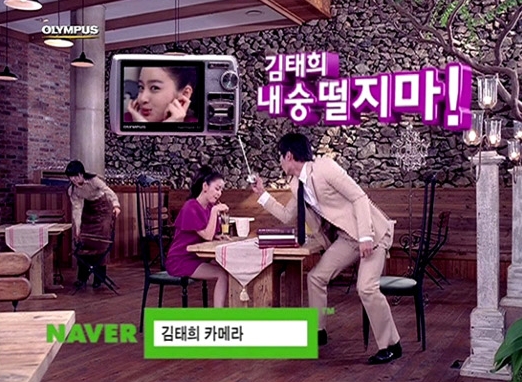
This being the week of romance, allow me to repost this 2005 Mis en scène commercial featuring Ha Ji-won (하지원) and Jo In-sung (조인성), still the sexiest Korean commercial ever.

Apologies for the poor quality, but unfortunately this copy of mine appears to be the only one available. I have found (via A Koala’s Playground) a good copy of the 15-second version though, but, alas, you really need more of a build-up to fully appreciate Ha Ji-won’s smouldering stares!^^

V-Men Auditions in Busan, Sunday the 19th (Busan Haps)

Marriage and tears in Joseon Korea (The Marmot’s Hole)

All Camp in Korea (Bathhouse Ballads)

While Brazil Telenovelas Shrink Families, Jdramas Seek to Expand Them? (YAM)

Does Confucianism have a place in modern Korea? (The Korea Herald; hat tip to Colette Balmain)

The Korean Look Travels Well in China (The Three Wise Monkeys)

Brian’s “Let This Die” MV: Romanticizing Violence In Korean Media (Musical Dialect)

Cesarean Nation: The cautionary tale of how China came to have the world’s highest C-section rate (Slate)

Brokered marriages hurt husbands, too (Korea Joongang Daily)

The Baby Owner’s Manual: Operating Instructions, Trouble-Shooting Tips, and Advice on First-Year Maintenance (Geek in Heels)

Itaewon in 1984: A paradise for foreign gypsies that lead Korean women astray (Gusts of Popular Feeling)

Putting the fun into feminism (The Sydney Morning Herald; via: Blog in a Tea Cup)

DONA-International Workshops for Birth and Postpartum Doulas (10Magazine)

K-Pop and Consumer Nationalism (Seoulbeats)

Middle school students to spend more time on physical education (The Hankyoreh)

How young is too young to model? (Work That Matters)

(Links are not necessarily endorsements)

Korean Gender Reader

(Apocalypse Tomorrow Pin-up Girl Calendar, via io9)

Classic Venus nudes altered for today’s beauty standards (Work That Matters; Geek in Heels; Visual News)

BREAKING NEWS: Black Woman Featured Prominently in K-Pop Video (Mixtapes and Liner Notes)

What is a Dried Fish Lady (건어물녀)? (Ethnoscopes: Tracks of an Anthropologist)

Artificial hymens banned from online sale in China (Shanghaiist)

Let’s Talk About Sex…With Seniors (Inconseoulable)

Life in Plastic, It’s Fantastic! (Caviar C:reme)

Show Beautifies Plastic Surgery (Korea Times)

Kids’ drawings of Mommy and Daddy Getting Married (Previouslyafter)

Divorced women prefer unmarried men (Korea Times)

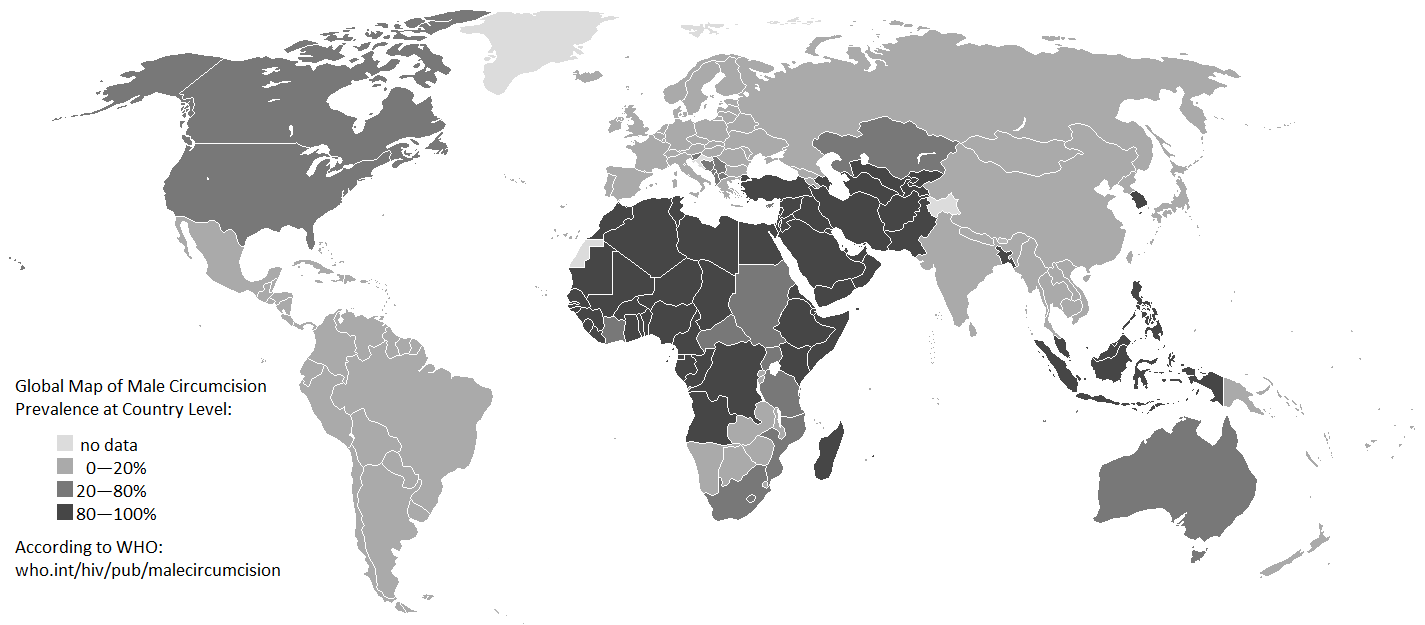
Male Circumcision and Quality of Sex Life, For Both Sexes (Homo Consumericus)

Hong Kong full page ad against pregnant mainland women (China Hush)

N. Korean women popular as brides (The Marmot’s Hole)

Seoul City to Ban Draconian Appearance Rules at School (The Chousnilbo)

The Female Grotesque: South Korean poet Kim Hyesoon on subverting expectations, her use of grotesque language, and the state of feminism in Korea (Guernica; hat tip to Tin Alvarez)

The new economics of tying the knot (Korea Times; hat tip to Chris Backe)

Talking through bigotry (Gord Sellar)

China’s surrogate mothers see business boom in year of the dragon (The Guardian)

Korean HR commission rules against women-only library (Asian Correspondent)

1 in 10 teenagers have sexual experience (The Chosunilbo)

Teenagers Banned from Multi-Purpose Private Rooms (The Chousnilbo)

“Superstar K3” Chris Golightly Calls Sexual Abuse Allegation “Lying Trash” (Soompi; Allkpop; Korea Joongang Daily)

Lee Hyori Furious with MBC for False Stories (Allkpop)

MBC Responds (Omona)

Announcement: Feb. 15th presentation on “The Triumphs and Tribulations of Being Married to a Korean” (Seoul International Women’s Association)

(Links are not necessarily endorsements)

Korean Gender Reader

(Source)

Sorry for the slow posting everyone: alas, I’m so busy with all my offline projects these days that my planned posting schedule for 2012 is already proving unsustainable. But in the meantime, the news stories just keep coming!

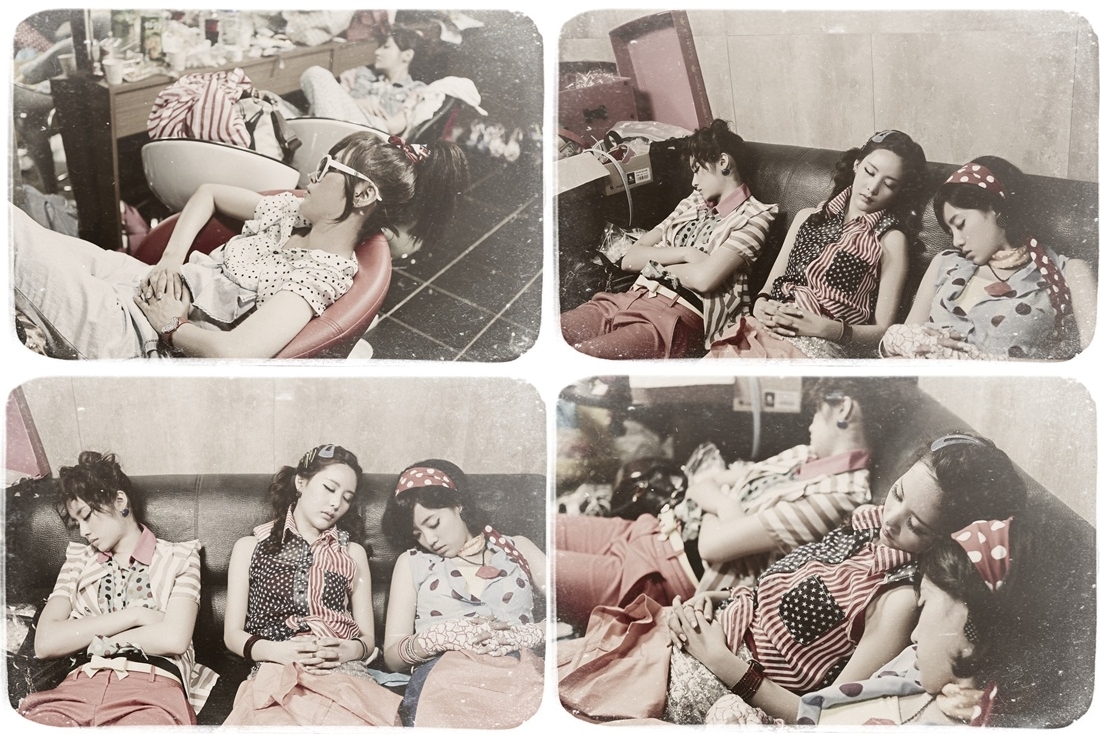
T-ara members sleep for 2 hours a day (Frank Kogan; see Seoulbeats also)

Convicted rapist successfully uses the ‘crooked dick’ defense (The Marmot’s Hole; update)

Korea divorce checklist for negotiation of a marital separation agreement in Korea (The Korea Law Blog)

Parents tremble at ‘pleasure parties’ thrown by foreign instructors (Gusts of Popular Feeling)

Travel in Korea still lacks women’s bathrooms (Travelwire Asia)

쓰레기 같은 학생, or, Why you might need pepperspray (Gord Sellar)

Hair freedom for Seoul students (Hankyoreh)

Internet hot over ‘bikini protest’ (Korea Times) vs. Gong Ji-young (“The Crucible”) Bikinis, Breasts and Weasels (Korean Modern Literature in Translation)

Fat tax elicits mixed reactions from S. Korean public (Xinhuanet)

Survey finds lots of sexual harassment at South Korean workplaces (Asian Correspondent)

Korean women and western/white men: a complicated and troubled relationship (The Unlikely Expat)

Women leading Korea (The Peninsula) vs. Lone Star and the women of Korea (The Wall Street Journal: Business Asia)

Jeju Island, known for wind, women, and water…now has more men than women (The Wall Street Journal: Korea Realtime)

My final post on Asian/white interracial relationships (Shanghai Shiok!)

Brides-to-be being ripped off ahead of their big day (Hankyoreh)

“[Is] dating a 28 year-old guy in Korea like dating a 15 year-old in the US?” Deconstructing inane and offensive reader questions (I’m No Picasso)

• An update to the above story – the question wasn’t as bad as it first looked!

Ministry strives for women’s rights (The Korea Herald)

South Korea’s racism debate – What debate? (Gord Sellar)

• Headline of the week: “Hard competition coming for erectile dysfunction remedies” (Hankyoreh)

Entertainment agency representatives voice opinions on idol dating, marriages, and age-limits on usefulness (Allkpop)

More elderly people sue their children for support (The Chosunilbo)

(Links are not necessarily endorsements)

Korean Gender Reader

(Source)

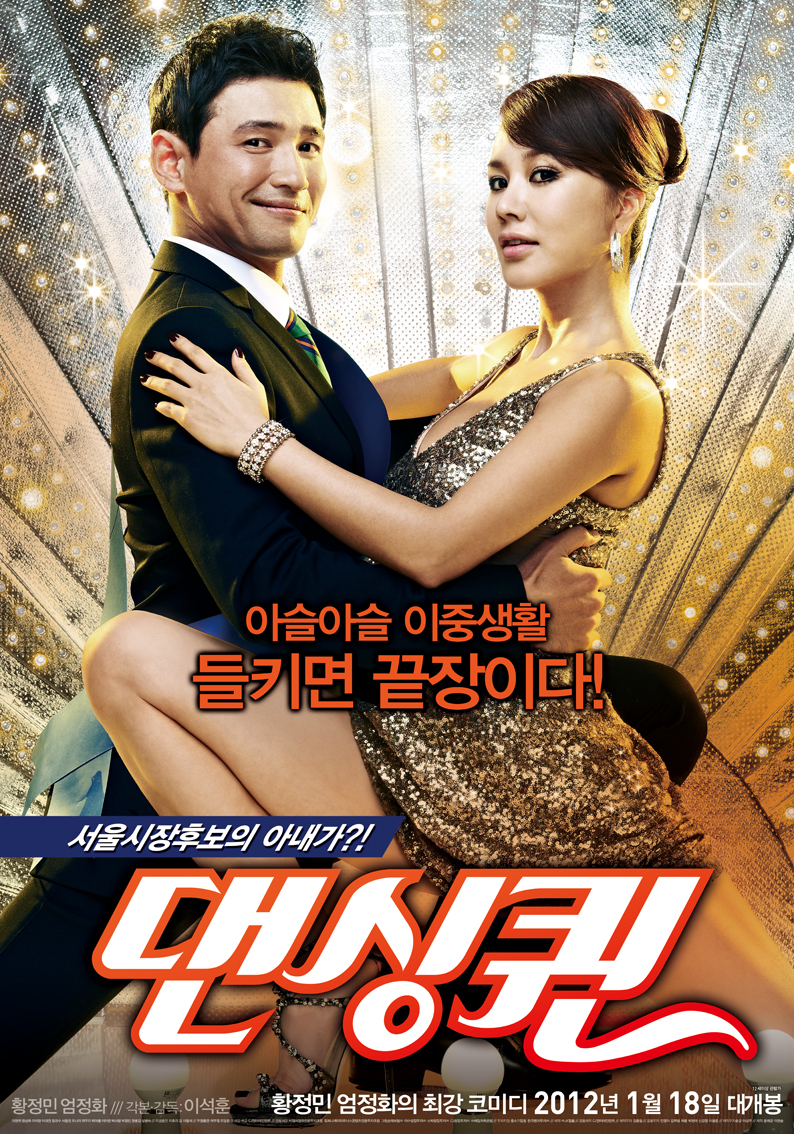
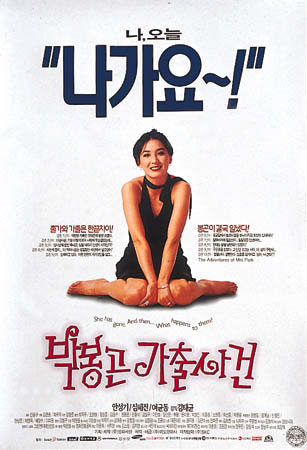
If you’ll please indulge an old Korean Studies geek for a moment, Girlfriday’s review of Dancing Queen (댄싱퀸) at Dramabeans this week instantly reminded me of The Adventures of Mrs. Park (박봉곤 가출사건), from way back in 1996. After all, both are about wives who blatantly defy their husbands to follow their dreams of becoming singers, both are comedies, and – I’ll take a wild guess about Dancing Queen – both wives are ultimately successful.

One likely difference though, is that Mrs. Park runs away from her husband. And in fact, The Adventures of Mrs. Park was the first Korean movie to ever show a wife getting away with such insubordination.

That may sound difficult to believe today, but director Kim Tae-kyun (김태균) would later confess to Cine 21 magazine that he was extremely concerned at how audiences might react to such “an unexpected ending”. As even comedies back then would invariably close with continued happy marriages, while more realistic movies would show a miserable and destitute wife returning home with her tail between her legs.

In contrast, I doubt director Lee Seok-hoon (이석훈) has any such qualms in 2012. And it’s always quite sobering, realizing how much Korea has changed in the time I’ve been here.

So, while I doubt I’ll ever make the effort to track down and watch The Adventures of Miss Park for myself (all of the above is based on this book chapter), I will watch Dancing Queen. For not only is Hwang Jung-min (황정민) my favorite actor ever (see here for my review of A Good Lawyer’s Wife {바람난 가족; 2003}, the first movie I saw him in), but I’ve always had a soft spot for Uhm Jung-hwa (엄정화) too, as she was very much the queen of K-pop when I came to Korea back in 2000. Here’s my favorite song of hers from back then (just give me the word, and I’ll translate it in a flash!^^):

And after all that reminiscing(!), finally here are this week’s links, in no particular order:

What K-pop can teach us about the ROK military (Seoulbeats)

Foreigners organize flash mob against prostitution (The Marmot’s Hole)

‘Dream High 2′ cast express the need for laws protecting minors in the industry (Allkpop)

Sexual harassment widespread in workplaces (Hankyoreh)

Did the Piggy Dolls ruin their credibility? (Mixtapes and Liner Notes)

Essential information for understanding divorce in Japan: there is no such thing as joint custody of children (Economist)

How Korean fashion is seen from an international perspective; opposed to how Koreans think it’s seen (Noona Blog: Seoul)

K-pop’s first lesbian love story? (Seoulbeats)

Congratulations on the Dragon baby! (On Becoming a Good Korean {Feminist} Wife)

290,000won bags for elementary kids – competition at the extreme? (Hangukdrama and Korean; also see my post on how pink and princessey the schoolbag ads for girls are, but sporty and full of space-shuttles and racing-cars for boys)

[Debate] Leave ancestral rites where they belong- in the past (Hankyoreh)

[Debate] Cultural rites provide key to understanding ourselves (Hankyoreh)

• “Holiday stress for an average married Korean woman is as bad as the pain of losing a close friend” (Arirang)

Statistics on social trends in Korea – a great resource (Korean Journal of Sociology; scroll down to the “research guide”s)

Roundtable: our friend, MOGEF (Seoulbeats)

Harsher punishment urged for pedophiles (Korea Times)

Monfemme: gender, feminist, and medical anthropology in the steppes and deserts of Mongolia (Blog recommendation)

Korean Gender Reader

(Source: Joseph Senior, via Visual News)

Just some quick links this week sorry, I’m very busy working on what feels like a dozen blog posts and offline articles at the moment!

Recent controversial events in K-pop (My First Love Story)

WTF Moment: Teen Top’s C.A.P and his jokes about domestic violence (Seoulbeats; see Feminoonas for updates)

Iron Butterfly: memoir of a female Kuk Sool Won master (BBC News)

Gay in Korea: foreign female perspective and foreign male perspective (Expatkerri)

Sejong move splits families, hits female civil servants’ marriage prospects (Korea Joongang Daily)

Portion of unmarried 30-something men growing, becoming social problem (Hankyoreh)

Number of elementary school students in Seoul falls 30% in 10 years (Korea Times, via Gusts of Popular Feeling; see The Marmot’s Hole also for more on Korean demographics)

Unemployed middle-aged men ostracized by their families (Chosunilbo)

• “In 2010, only 8.7% of working mothers in South Korea took maternity leave” (Hankyoreh)

The importance of women for the future of Korea (Korea: Circles and Squares. And after reading that, make sure to check out this revealing photo too!)

(Links are not necessarily endorsements)

Korean Gender Reader

(Source)

1) “Skinny Baby Hot Hot?” Not Really

Sometimes, people think I’m just being paranoid when I see pop-culture deliberately encouraging body dsyphoria among younger and younger fans. And to be sure, usually I do have to dig pretty deep to find such underlying message(s), only to be left with the nagging doubt that I’m just simply projecting really.

Frankly, the whole thing can be quite a chore.

But then something like BEAST (비스트) and A Pink’s (에이핑크) Skinny Baby (스키니 베이비) comes along. As Angry K-pop Fan explains:

Just by looking at this song’s title alone…it should be enough to understand why some fans are quite upset with this new release…

… [let’s] focus on the most disturbing issue at hand: the implicit, or even subliminal message this sends to not only BEAST and A Pink fans, but the general consumer audience of Skoolooks, the brand that this video serves as a promotion for.

Asides being the name of the song, “Skinny Baby” is also the newest collection of school uniforms released by Skoolooks…

However blatant though, Korean school uniform manufacturers have long used young celebrities to encourage girls especially to obsess over their body shapes, so Skinny Baby is exceptional only in its format really. But having said that, fans of either group at least are much more likely to be influenced by something more akin to a music video than a traditional advertisement, as Kpop Reality Check helped me realize (emphases in original):

Skinny Baby…has lyrical content that reinforces messages about what body types are attractive and superior. It is not subtle but instead is very blunt with messages such as “Skinny Skinny Boy Boy, Skinny Skinny Girl Girl, Skinny Baby Hot Hot.”

Now this easily forms an in group consisting of people who ARE SKINNY. They are not only reinforced with this song that they’re hot but they feel as if they can identify and a sense of belonging. They watch the music video and see the girls from A Pink and the boys from BEAST who are all skinny and feel abit closer to the idols.

Now this forms a direct out group. The out group is basically everybody who isn’t skinny. Those who have different body types or who feel offended watching the video. Those who aren’t skinny are discriminated against and aren’t allowed in the in group. Everyone in the out group is made to feel insecure, anxious and lost.

This is where the body image and self esteem issues come in. Everyone in the out group continues to watch and absorb the MV as it becomes something they aspire to become. They’re being fed this message that they too can be cool and hot like A PINK and BEAST only if they’re skinny and… surprise surprise purchase Skool Looks clothing.

2) Michael Stipe Produces Gay Korean Film

Update – Electric Banana has just informed me that they made a mistake. Stipe is actually the co-executive producer of Fourplay: Tampa, not Dol.

From Pink News:

Former REM frontman Michael Stipe is the executive producer behind a new short film of a gay Korean man who yearns for a family, which the director used to come out to his own parents.

The short, entitled Dol, will be shown at the Sundance Film Festival this year, Indie music news site Electric Banana reports.

Writer and director Andrew Ahn says he used the film to come out to his own parents, who agreed to feature in it as actors without knowing their son was gay.

As it happens, Michael Stipe quite literally represents my closest brush with fame, as I managed to get only about 2 meters away from him at a concert in Auckland in 1995. And come to think of it, the next time I was so close to a celebrity was the (now deceased) Andre Kim in Insa-dong in Seoul roughly 10 years later. Perhaps it’s no coincidence that I now find myself writing about sexuality and gender issues?^^

Seriously though, in further LGBT news Charles Montgomery of Korean Modern Literature in Translation continues his Q&A series with Gabriel Sylvian, the founder of The Korea Gay Literature Project, and Gil at Seoulbeats has a controversial post on Super Junior (슈퍼주니어) member Choi Siwon’s (최시원) homophobia.

(Source)

3) Korea’s First Lady of Space

Imagine you are runner-up in a contest to be the first person in your country to go into space. A month before launch, the finalist is disqualified by the hosting Russian Federal Space Agency due to security breaches and all eyes fall on you. You carry not only the nation’s pride, but also the reported $25 million your government paid to get you there. Yi So-yeon (이소연) was that woman. Nearly four years later, she talks about her life on earth and in space.

Read the rest of the interview at Busan Haps. I also highly recommend these video interviews of her by Michael Hurt (a friend of hers) at Scribblings of the Metropolitician, and especially these posts on the surprisingly negative way the Korean media handled what should have been one of Korea’s greatest achievements, which he makes a strong case for being entirely due to her sex.

(Source)

4) Korea’s Nationalistic Adoption Quota Hurting Children

As reported by Sean Hayes on the Korean Law Blog last November:

Korea has one of the highest populations of orphans in the OECD because of an unwillingness, in large numbers, of the local Korean population to adopt non-blood related children and a new policy that limits the number of overseas adoptions. The majority of local adoptions are the adoption of the children of family members.

The good news is the government may be changing its policy because of its plan to join the Convention on the Protection of Children and Cooperation in Respect of Intercountry Adoption (Hague Adoption Convention) and realization that its present policy is harming the psychological health of children.

In 2005 over 2100 overseas adoptions were granted in Korea, while in 2010 a little over 1000 adoptions were granted. The reason for the decrease was the decrease in the overseas adoption quota in favor of a policy of supporting domestic adoptions. The policy failed to the detriment of needy children.

And now photographer Romin Lee has written a moving photo-essay at Groove Korea on the very real effects of that on Korean children and the overseas couples that want to adopt them, a story which you can continue to follow at Our Happily Ever Afters.

Meanwhile, Hello Korea!, my favorite blog on Korean overseas adoptee-related issues, passes on the following video by Korean Unwed Mothers & Families Association worker Jennifer Kwon Dobbs, with “powerful images and rational arguments by an adoptee/scholar/poet on re-humanizing the women who gave birth to us [adoptees]”:

See also this Groove Korea article on those regular adoption scapegoats, single moms, whom the Ministry of Health and Welfare described as “ignorant whores” until as recently as May 2010. Also note that the photo above is from Korea’s nearly decade-long “Letters From Angels” (천사들의 편지) campaign to encourage domestic adoption (but which of course is not bad in itself).

5) Quick Links

– Anti-sex buying campaign causes stir

From the Korea Times:

“You will get 410,000 won if you promise not to buy sex during year-end drinking sessions.”

This is a campaign a male rights group is promoting in a bid to criticize the Ministry of Gender Equality and Family’s anti-prostitution policies.

But the campaign is causing a stir, as the prize money is fake and the ministry’s policies which the group stated have been non-existent.

To play Devil’s advocate however, the Ministry has indeed had similar campaigns in the past, as the article points out.

(Source)

– “Women Only” in Korean Swimming Pools

At NateOn’s local pool, frequently only women are allowed. Against which he argues:

In Egypt, I got the separate gender stuff a little bit.  The religion in many contexts called for it, and the men there are idiots.  It’s the Middle East, and gender and sexual  issues are rampant.  But this is Korea.  It’s the 21st century.  Why do we need two hours of open swim that are women only?  And why is that in the middle of the day?  Oh, yeah, because women aren’t supposed to work.  And are home at the day.

In an update, he clarifies that his problem is not with women’s only swimming in itself, but that 2 hours of women only for every 3 hours of mixed sessions seems a little excessive. And why aren’t there any men-only ones?

– Saturday Night Live Korea does Blackface

Not strictly-related to gender issues sorry, but for those that are unaware, the December 31 show had a skit with Blackface, which has generated a lot of negative publicity overseas (at least on Korean fan sites and so on):

It’s also a real pity, especially after the first show seemed so progressive. But Angry K-pop Fan at least thinks some of the accusations are unwarranted.

Meanwhile, see My First Love Story for a list of recent problematic and/or offensive Korean music videos, which includes those that have used Blackface.

Korean Gender Reader

(Source)

For anyone interested, auditions for the 3rd annual Busan performance of the Vagina Monologues will be held on the weekend of January the 7th and 8th at the HQ bar in Kyungsung (the performance itself will be at the end of April). See Busan Haps for the details.

1) Single Korean Female, 30. Not Seeking Marriage.

Over at Seoulist, Stephanie Kim has written a great article on the pressures Korean women her age come under to get married. An excerpt:

Much like writer Kate Bolic, I also left a long-term relationship at the age of 28. It is never an easy explanation as to why a relationship doesn’t work out, but more disconcerting than my ambiguous story are the perplexed looks on the faces of my more conservative friends, especially those who believe that certain things must happen at certain times in one’s life….

…My Korean friends tell me that there is a very bad stereotype for a man who dates and then leaves a woman in the twilight of her twenties, letting her waste away into what my Chinese friends call a Leftover Woman. This was hardly my case. My ex-boyfriend was, and still is, a wonderful man. Smart. Caring. Supportive. The easiest answer I can give as to why the relationship fell apart is that things did not “feel right,” and that I was not ready for the next level of commitment, the marriage-minded track. It’s a scary feeling we all experience: everyday you feel one step closer to fulfilling a perfectly planned life, and it’s damn comfortable, but deep in your gut something tells you that that’s not what you truly want. I simply had the courage to act on that feeling. Though I don’t regret my decision, the stereotypes I face every day remind me that I took a non-traditional path.

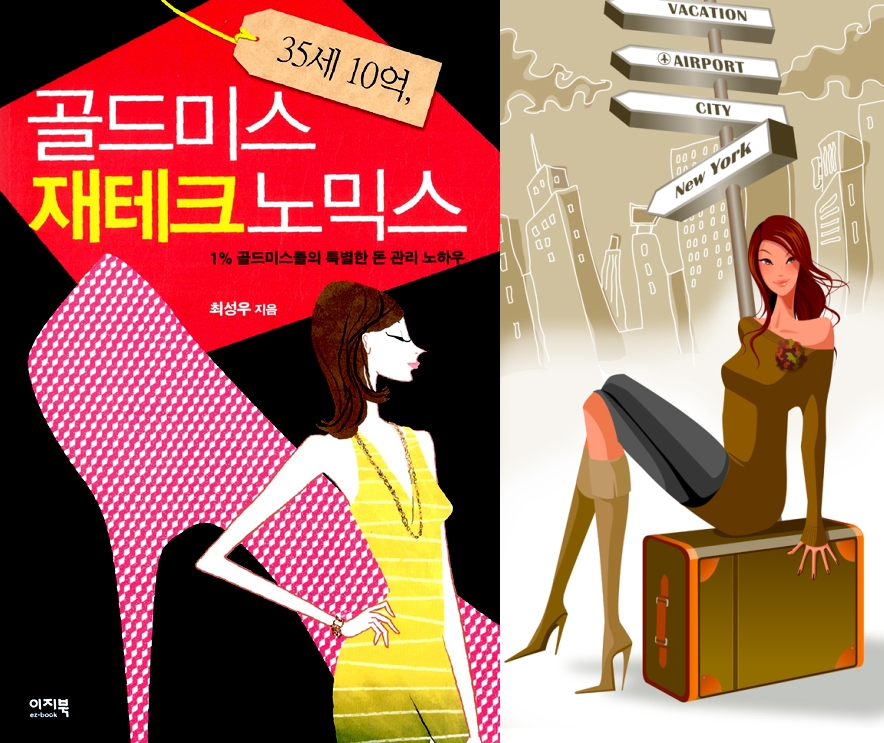
Read the rest there. Note though, that unfortunately her message is a little confused by her referring to herself as a “Gold Miss” (골드미스), which she mistakenly thinks refers to an unmarried woman in her thirties or above. As regular Grand Narrative commenter Gomushin Girl points out however, actually it refers to women also highly successful in theirs career and/or financially well-off (the Joongang Daily says an income of 40 million won or above is required), which you can read about in depth in this discussion of the Japanese origins of the term at Ampontan: Japan from the inside out.

(Sources: left, right)

Not that I endorse the use of the term in any way: as even the Joongang Daily indirectly concedes in that above link, Gold Misses have little in common besides their salary and marital status, and one wonders at all the media attention on them a few years ago considering there were only 27,000 of them in 2006 (2 years before the article was published).

The explanation is that a Gold Miss is simply an invented role model for 30-something unmarried women to aspire to, all the better to sell them products that (supposedly) help them achieve that goal; or in other words, it’s normative rather than descriptive. This financial motivation becomes obvious when you realize that Japan-based Ampontan overlooks that the term is actually suspiciously similar to the “Missy” (미씨) term first used in 1994, about which So He-lee explains in her chapter “Female Sexuality in Popular Culture” in Under Construction: The Gendering of Modernity, Class, and Consumption in the Republic of Korea (ed. by Laurel Kendall, 2002; my emphasis):

As soon as it came out [in a Seoul department store advertisement], it was adopted widely to indicate a particular kind of housewife, a married woman who still looks like a single woman. Even the copywriter was surprised at the speed with which this term took on social meaning and evoked specific images of women and femininity. “Missy” rapidly permeated the Korean language once the advertising industry recognized the consumerist implications of this target age groups’ flamboyant desires.

The essential condition of being a Missy is a preoccupation with being looked at….Another fundamental condition of membership in the Missy club is her professional job.

You could argue that that this was simply luck by the copywriter rather than being part of a grand conspiracy between advertisers and the media, but then both are constantly inventing new terms in order to find one that’s likewise happily adopted by the public, as the never-ending creation of new “bodylines” makes clear. Tellingly, the terms also tend to be quite broad and vague, conveniently leaving others free to further define them as they see fit: say, when they want to blame all Korea’s modern social ills on working women for instance, in an appalling Korea Herald report on “Alpha Girls” that I eviscerate here. So I think So He-lee is a little misguided in assuming that Missys’ “flamboyant desires” came before rather than after that 1994 ad.

2) Questions on Korean LGBT Literature

As explained by Charles at Korean Modern Literature in Translation:

Chasing down a question from long-time commenter Charles (not me^^) and some interesting information about Yi Kwang-su, I came across some interesting work by Gabriel Sylvian at The Three Wise Monkeys, .

I emailed him some questions and the answers were interesting (and lengthy!) enough that I decided to run them individually, with some comments they evoke from me.

Gabriel, a grad student in Korean Literature at Seoul National University, founded The Korea Gay Literature Project  in 2004, and you can read more about him here. In any case, my first question was for background:

Read those questions and answers there, continued in Parts 2 and 3 here and here.

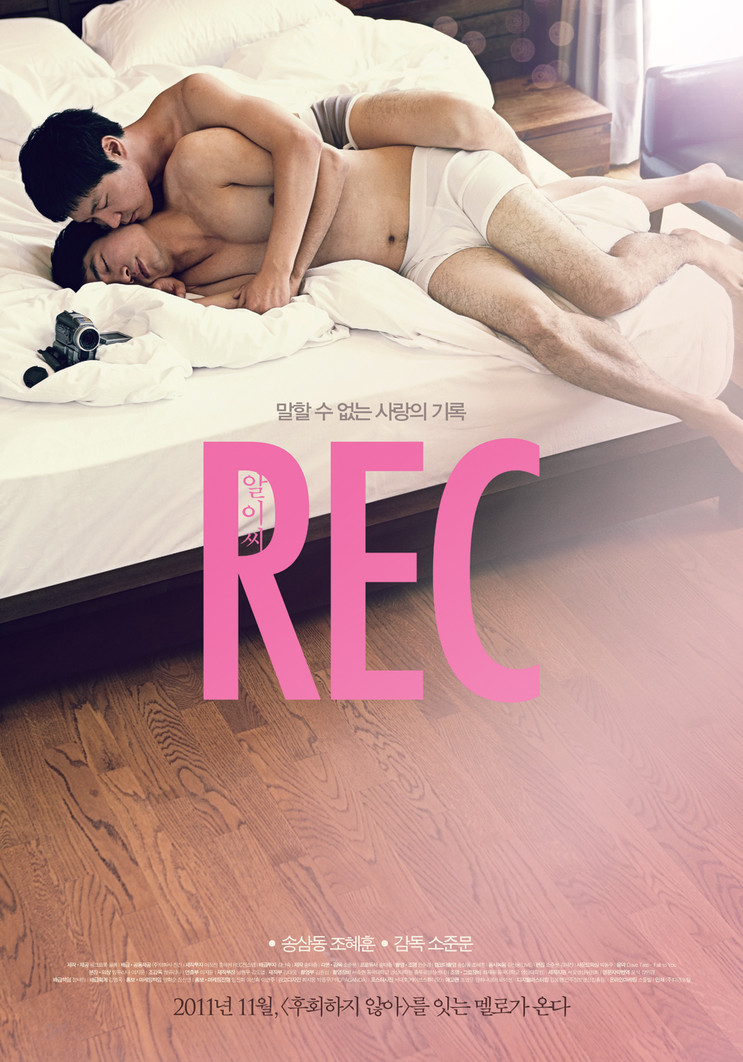
In other Korean LGBT-related news, a gay Korean man recently received refugee status in Canada because of the abuse and discrimination he would be expected to receive during his mandatory 2-year military service (see here also for more on sexual abuse in the military in general); anti-gay art caused a stir at a recent Seoul National University exhibition; and – sorry for not noticing earlier – the Korean gay movie 알이씨REC below came out last month, which you can find many links about here.

(Source)

3) Japan’s ‘Mancession

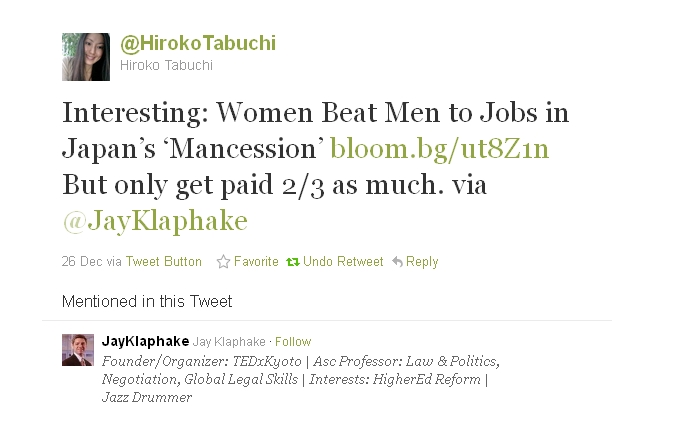
As Tokyo-based New York Times reporter Hiroko Tabuchi put it:

Very interesting in its own right of course, that Bloomberg article referred to is also particularly useful in contrasting the Korean government and businesses’ decision to fire women in droves in response to the financial crisis, as in the US and – now Japan – it was actually men that suffered more. Indeed, in the former working women came to outnumber working men for the first time in its history (see story #5 below also).

4) Another Reason to Hate Naesoong and Aegyo

Via Tumblr Kitty Kitty Korea (but actually written by Party in the R.O.K.):

I can’t count all the times I’ve said “I’m going home” and attempted to leave wherever I was, and the Korean guy would be like “Oh, no you don’t!” and grab my wrists or shoulders or take my phone or hold me against a wall so I was physically unable to get out. No, man, I’m not just saying I want to go to be cute; I want to go. It’s not until I start thrashing around and yelling at them that they let go, and then they just act really confused. (I’m guessing that it’s a thing for Korean girls to pretend they want to leave a man so they can watch him beg for them to stay. Korean couples go on all sorts of weird power trips I just don’t get coming from the relatively sane world of American dating.)

Read there for her discussion of what lay behind that confusion. Also, I don’t mean to cause and/or perpetuate negative stereotypes about Korean men, and should be(!) the very last person to ask for dating advice, so please let me know how that does or doesn’t match your own dating experiences.

Update – By a wonderful coincidence, 5 minutes after I published this post this one appeared at Seoulbeats, about how seemingly every Korean drama features the male lead grabbing the female lead by the wrist and literally dragging her away with him like she was his property and/or child, despite her screams and protests. Sound familiar?

(Source)

5) What do Women’s Groups Think of the Ministry of Gender Equality and Family (MOGEF)?

Not much, according to the Hankyoreh, citing:

…its passive approach in the cases of the comfort women who had been coerced to serve as sex slaves for the Japanese military during World War II and a sexual harassment victim who was dismissed from a Hyundai Motor subcontractor. In the latter case, the occurrence of sexual harassment was acknowledged in January by the National Human Rights Commission of Korea, and the victim held a nearly 200-day sit-in protest in front of the MOGEF building when she was not reinstated. The ministry made almost no efforts to offer support, merely reiterating that it was “not within our legal authority to help victims.”

And also that:

In addition to its failure to do its job, the ministry has also added fuel to existing conflicts in the most bewildering of places. A case in point was its embarrassment after indiscriminately handing out “19 and older” ratings to songs with references to alcohol in their lyrics. Meanwhile, a late-night Internet shutdown system for those aged 16 and under has stirred up a controversy over violations of freedom.

Hey, I’m no fan of the Lee Myung-bak administration, and indeed I think its mixed performance in other areas of governance pale in comparison to its appalling record on women’s rights, which will be one of its most enduring legacies. Having said that, it’s a real struggle to find a Hankyoreh article that doesn’t criticize the present government in some form or another, whereas MOGEF does have a point about its relative powerlessness (it has only 0.12% of the total government budget for instance), the editor’s assertion that “if its authority is limited, then it can only survive by constantly raising issues and making its voice heard” proving my own point that this is the very impetus behind its constant censorship of K-pop (but not that I’m for that either!). Also, when Lee Myung-bak himself encouraged the firing of women in 2008 (see #3 above), then it deserves at least some praise for its recent efforts at job creation (source, right):

On December 23, MOGEF presented its plans to provide individually tailored job assistance programs for 130,000 people in 2012 before the Korean Youth Counseling Institute with President Lee Myung-bak in attendance.

The plan stipulates expanding the number of job training centers for women to 111 by next year and developing more in-depth programs for those with less access to employment opportunities, such as migrant women and women with disabilities. Furthermore, the Women Friendly City program, which currently counts 30 cities among its members and has received growing interest from regional administrations, will expand to 40 cities. MOGEF will also perform assessments, differentiating for gender, to measure the effects of such programs.

Read the rest at Korea.net. It does have to be acknowledged though, that still much much more is needed to boost female employment in Korea, as today’s final link – this comprehensive report from the Korea Herald – makes clear.

Korean Gender Reader

(Source)

Not only is this poster simply cool, but the 3rd Montreal AmérAsia Film Festival it advertises will playing during my birthday too. So why does it bug me so?

I think, because I’m so used to seeing women in such mildly Orientalist imagery, that for the life of me I can’t imagine an East-Asian guy with the same expression and pose. Or is that just me?

Either way, see the end of this post for some Occidentalist imagery to compare (and of course, I wish nothing but the best for the festival!). Meanwhile, here are this week’s links, and one long discussion:

1) The Photoshop issue

Paula, a professional model, responds to last week’s post on excessive and unnecessary photoshopping in Korea at Noona Blog: Seoul. Like she says, photoshopping is the photographer’s or client’s prerogative, but still: what’s usually done to her pictures can hardly be considered an improvement!
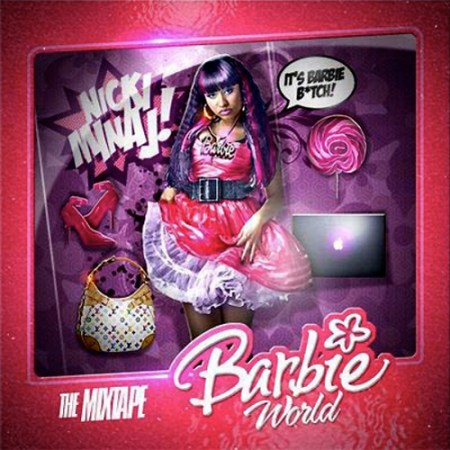
2) How Nicki Minaj kicked open the door for 2NE1

I confess, I never heard of Nicki Minaj before reading this post of Latoya Paterson’s at Racialicous. But now that I have, then I’m not going to forget anytime soon. I’m also convinced that there’s a genuine opportunity for 2NE1 (투애니원) to succeed in the US market where so many other K-pop acts have failed. As she explains (source, right):

After watching good artists try and fail to make it in the US market, I began trying to find a pattern. Why was this happening? The reasons vary – particularly because artists often use their entry to the US as a kind of reinvention, which can be risky – but a big component is that American marketers/listeners had no idea what to do with them.

But, luckily for 2NE1, they have a secret weapon: Nicki Minaj.

It may seem strange to look at Nicki Minaj as the the person who put a crack in the Billboard ceiling big enough for 2NE1 to break through to the top spot, but it is her inherent strangeness and genrelessness that is opening the door for other women artists to bend the rules.

And a little later:

Both Minaj and 2NE1 are also combatting societal scripts about what women of color can be. While Minaj occupies a space defined by feminist contradictions, she still actively defies the proper “place” for a black woman in the broader pop music space. Considering the limited spaces where black women are allowed to appear, it’s remarkable how Minaj has carved out a space for herself in both urban markets and the fashion industry. 2NE1 is facing off against stereotypes around Asian American women – particularly the submissive stereotypes that would push them out of the more aggressive sides of the pop and hip-hop scenes.

Read the rest there. Also, for anyone further interested in why BoA (보아) and Rain (Bi; 비) failed in the US, email me for a copy of “Playing the Race and Sexuality Cards in the Transnational Pop Game: Korean Music Videos for the US Market” by Eun-Young Jung in Journal of Popular Music Studies Volume 22, Issue 2, pages 219–236, June 2010, which covers both in some detail. Or, for something less academic, you may like this recent post on Girls’ Generation (소녀시대) by Natalie at Seoulbeats, which gave me a renewed appreciation of how different 2NE1 really are compared to most Korean girl-groups.

(Source)

3) There really is no difference between men’s and women’s maths abilities

For those of you that didn’t already know, the notion that there was any innate biological differences in maths ability between the sexes has long since been thoroughly debunked. But, as io9 explains:

Until now, there was [still] maybe a sliver of statistical data to support the existence of this gender gap — nothing remotely convincing, mind you, but just enough that the idea couldn’t be entirely dismissed out of hand. While most who studied the issue pointed for cultural or social reasons why girls might lag behind boys in math performance, there was still room for biological theories to be proposed.

Now though, a new study has debunked even that data too, as you can read about here.

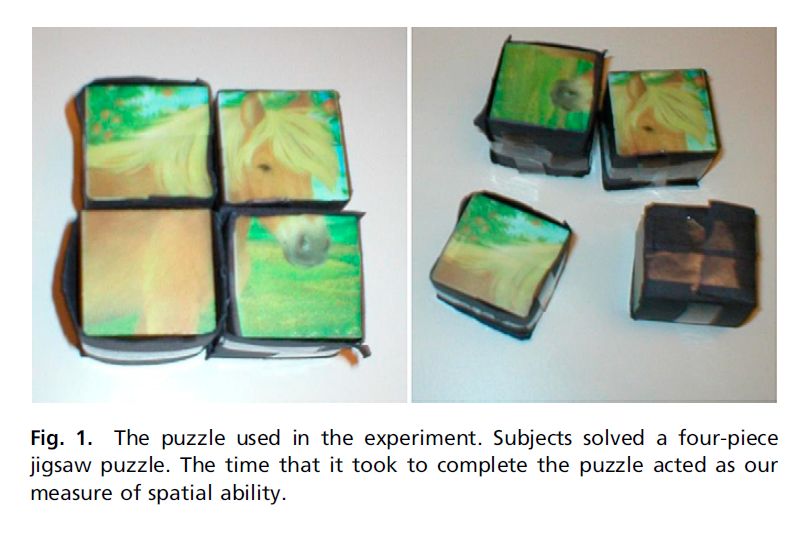
Related, also consider this post of mine from 2008 about how gender differences in maths ability show a direct relationship with a countries level of sexual equality (i.e. the more egalitarian the less – if any – difference there is), and #4 here on a recent, albeit very limited survey that suggests that men’s greater spatial ability similarly decreases the more power women have in a society.

(Source)

4) Obligatory post about that sex survey (or, sexuality and parenthood in Korea)

For those of you that have been living in a cave for the last week:

South Koreans are the least sexually active among people in 13 countries surveyed in an international online poll, a global pharmaceutical company said Monday.

Eli Lilly and Co.’s Seoul office said Korean couples over 34 have sex an average of 1.04 times a week, citing the survey based on data collected from 12,063 people worldwide including 1,005 South Koreans.

Read the rest at the Korea Herald, and some discussion of it at the Marmot’s Hole. Personally though, I’m extremely wary of surveys like these, especially if I know nothing about their methodology. What’s more, when just a 5 minute search of my books – let alone Google – reveals dozens of figures ranging between 1 and 2-3 times a week for US married couples, then “news” articles like this, poring over differences of national differences of less than 0.1% a week, is clearly only good for headlines.

Another problem is that the term “married couples” doesn’t take their ages into account, whereas – however politically incorrect it sounds – it’s well known that women’s libidos generally decline in their 30s, whereas men’s stay the same.  Also, it doesn’t take into account whether the couple has had children or not, which is a huge deal in Korea.

Why? Well, with the proviso that I haven’t studied sexuality in specifically Korean marriages as much as I should have by now, and that of course the Koreans I’ve spoken to about it aren’t a representative sample, I and especially my wife have spoken candidly about it with many (she’s worked from home for 5 years, and has known many couples in the 3 apartment buildings we’ve lived in), and I don’t think it’s just confirmation bias on our part when they consistently speak of having sex more like once per month or even year, and consider that perfectly normal.

But to be sure, it’s difficult for any married couple to get back into the swing of things after having a child. As explained on p. 362 of Our Sexuality (2002), by Robert Crooks and Karla Baur for instance (source, right):

In the first three months after delivery, over 80% of new mothers experienced one or more sexual problems, and at six months 64% were still having difficulty. The most common concerns were decreased sexual interest, vaginal dryness, and painful intercourse. An author of a book about pregnancy warns women to be prepared for their sex lives to be “downright crummy” for up to a year. “Mother Nature” is using her entire arsenal of tricks, from hormones to humility, to keep you focused on your baby and not on getting pregnant again”.

Things like breastfeeding can be a bit of a turn-off too, as Jenny at Geek in Heels is finding:

I also now have tremendous difficulty seeing my breasts as sexual objects. Yes, I know that women’s breasts are designed to feed and nourish the young, and any sexual uses should be considered secondary functions. But the sudden transition from years and years — from the moment I donned my first bra — of their being sexual objects to asexual tools that spend hours each day dangling from the mouth of a babe (or from the ends of a breast pump) is pretty brutal. Whenever my husband looks at them with *that look*, all I can think is, “These floppy things? Can we lay off of them because you’re only reminding me of the kids and that does little to turn me on.”

Yes, the boobies will be expelled from all sexual acts — by my request — until I can start disassociating them from my children.

Just as, and maybe even more important are the lifestyle changes, especially the lack of sleep. Factor in Korean men working such long hours too, to the extent that the Ministry of Health and Welfare notoriously told them to go home at 7pm on Wednesdays to, well, fuck their wives, and the fact that there’s a huge prostitution industry in Korea (see here for the ensuing effect on marriages), then it’s easy to appreciate why Korean marriages in particular might be relatively sexless after the birth of a child.

(Source)

Having said that, Korean marriages shouldn’t invariably be doomed to sexlessness though. Consider the following from p. 361 of Our Sexuality (my emphasis):

Couples are commonly advised that intercourse can resume after the flow of the reddish uterine discharge, called lochia, has stopped and after episiotomy incisions or vaginal tears have healed, usually about three to four weeks. However, most couples wait to resume intercourse after six to eight weeks following birth.

Also:

Typically, women and men with more positive attitudes about sex in general show more sexual interest and earlier resumption of intercourse than do others with more negative attitudes about sexuality.

In other words, US couples at least generally expect to and want to resume regularly having sex again after the birth of a child, whereas Korean couples expect to have it much less often, if at all. In saying that, I hate to perpetuate a “US/West = Good, Korea = Bad” dichotomy beloved of expat blogs, but when very similar lifestyles and attitudes produce the same result even in “sex-crazed” Japan too, then it’s time to call a spade a spade:

While Japan has an enormous sex-related industry, married couples don’t seem to do it that often (According to a Durex Survey, Japan ranks last internationally in terms of sexual activity.) And this would be the case in many modern societies as well. So for the last two years, author Sumie Kawakami gathered interviews of various Japanese women to depict this one aspect of society: Her latest book, Goodbye Madame Butterfly: Sex, Marriage and the Modern Japanese Woman by the superb Chin Music Press portrays eleven sex lives in painstaking detail.

(Source)

Moreover, even the physiological difficulties may not be as great as they may appear. As commenter Jo recently mentioned on another post for instance, and which is confirmed by similar anecdotes in my books:

I remember watching a documentary about breast feeding, an interview was shown with a wet nurse, she said that she gains great pleasure from breast feeding, even breast feeding other people’s babies. She was asked if the pleasure was at all sexual, and she replied that it was a mildly sexual experience for her. – touch, sexual feelings, pleasure are extremely complicated, the feeling toward a family member and a sexual feeling are not necessarily dichotomous, this may be a construction, there may be some, very un-sinister, overlap, in this case allowing for ‘uncle fans’ to deny the sexual element of their affection, and for touch between father and daughter to be slightly confusing. Maybe we should try not to separate ‘sexual feelings’ from all other feelings.

Also, I can’t find the source sorry, but distinctly remember reading somewhere that many mothers and fathers actually get incredibly turned on at the fact, which is quite logical when you think about it. But don’t get me wrong: I absolutely don’t intend for the above quote to be an indirect critique or comment on Jenny’s experience and feelings about breastfeeding. Rather, just again to stress that nothing is set sexuality-wise, and how crucial societal and personal attitudes are.

And on that note, again I can’t stress enough that of course there will be many exceptions to all the above, and that it’s overwhelmingly based on just what my wife and I have personally heard from Korean couples. So, please let me know how that matches – or doesn’t match! – your own experiences and/or what you’ve heard, and, now that my winter vacation has started (메롱~), I promise not to be so reticent in the comments if you do!
(Source: unknown)

5) White female academics suggest minority women with white men are sluts and gold-diggers

From Shanghai Shiok:

A reader, frustrated with how I constantly deny that my white male/Asian female relationship follows certain “societal streams,” pointed me to an article which he believed would enlighten me on the nature of my relationship and others like mine.

The article summarizes a new study which is flat out absurd, insensitive, bigoted, and racist — but since it’s conducted under the dignified umbrella of academic research, it’s perfectly acceptable to put these ideas out there.

Two privileged white female academics get together and make powerful statements about women who they deem unprivileged. These nuggets of wisdom include the suggestion that unprivileged women exchange their bodies for the material benefits and social status associated with the privileged white men whom these academics feel are most suited to their own caste. At a minimum, their study “proves” that privileged white women (like themselves) wouldn’t jump into those white guys’ beds as quickly as those coloured hussies. After all, they have statistics to prove it.

Read the rest there, and you may also find my “Real & Presumed Causes of Racism Against Interracial Couples in Korea” post interesting.

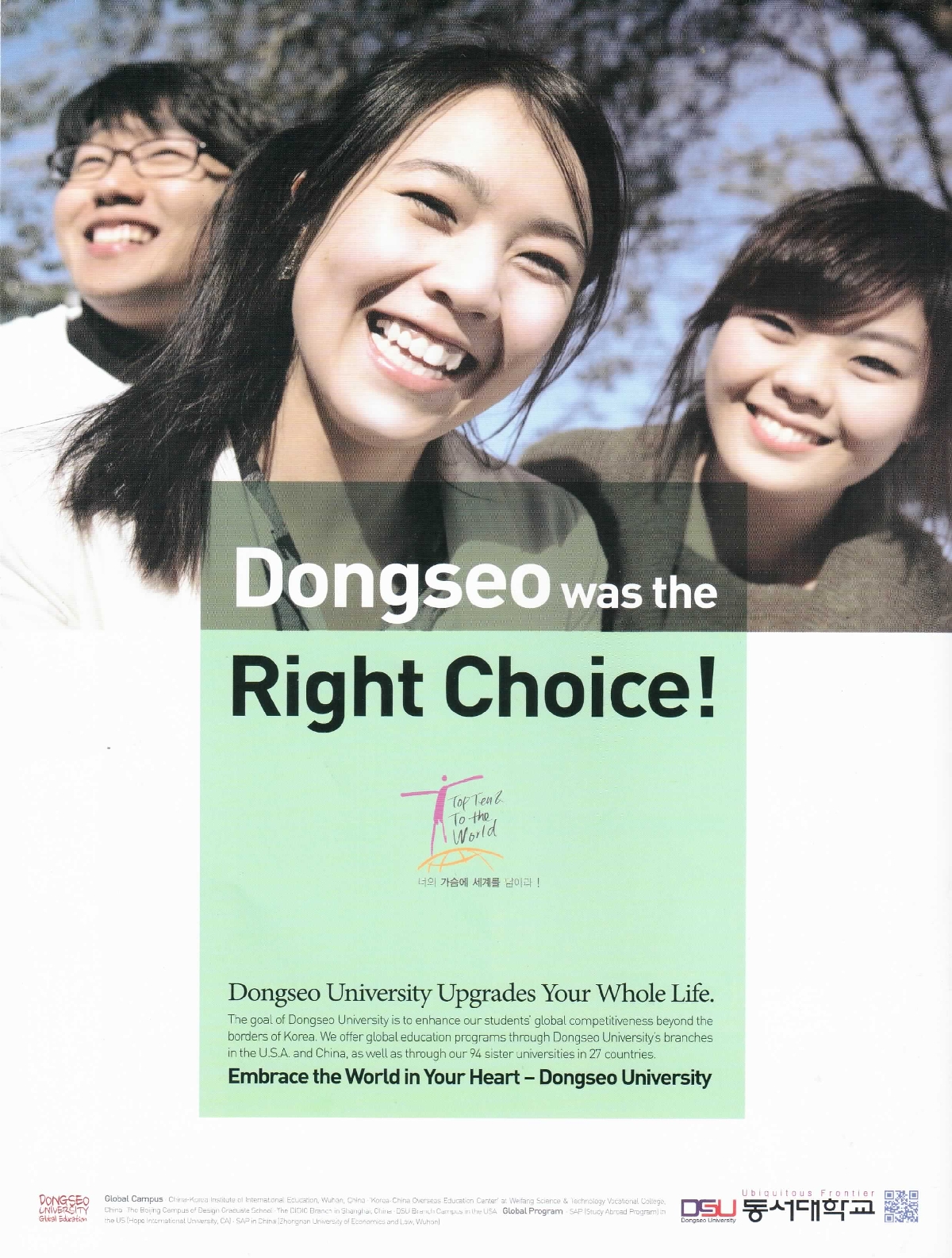
Finally, I can understand wanting to make a university more “international”-looking, but this Korean homepage probably overdoes it:
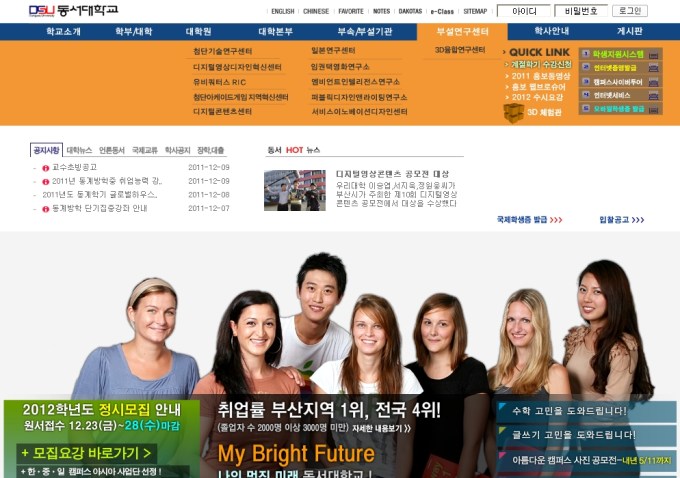
In contrast, the English and Chinese websites both feature the same 10 Caucasian guys, and 1 Southeast-Asian(?) one!

Korean Gender Reader

(Source)

Sorry for the slow posting and unanswered emails and comments everyone: I was busy with preparing for a guest lecture at Keimyung University held last weekend, and have been sick with stomach problems ever since (I’ll spare you the details)!

1) Photoshopped or Not? A Tool to Tell

Thanks to everyone who told me about this new software tool for detecting photoshopping. If this is the first you’ve heard of it though, probably the following paragraph from the Economist gives the best basic introduction:

Professor Hany Farid, a computer scientist at Dartmouth College in New Hampshire, and his PhD student Eric Kee, have been investigating photo retouching. They have developed a mathematical expression to quantify ballooning bosoms and winnowed waists. Their paper, published today in the Proceedings of the National Academy of Sciences, describes how they use mathematical models along with subjective human responses to produce a score of how radically a person’s image has been modified from an original photograph.

Even though there does seem to be an increasing backlash against excessive photoshopping in recent years, at least in Western countries, the exposure this paper has received in the media has still been (pleasantly) surprising, with articles on it published in the likes of the New York Times, the Guardian, Nature, and Wired. I think the reason is that several European governments have already been looking for ways to quantify how much a particular image has been manipulated, to be put as some sort of numerical rating next to it wherever it is displayed, and this new software provides exactly that. Indeed, I wouldn’t be surprised if such disclosures become required by EU law within the next 5 years, especially now that this software is available.

With excessive photoshopping not so much being critiqued as almost celebrated in Korea though (see here, here, here, and here), I’d hesitate to predict when or even if the Korean government will ever do the same. After all, one of the advertisements mentioned in the last link (posted again above; source) was plastered all over the Daegu subway on my trip there last week, despite making Lee Da-hae (이다해) look like an alien, and this week my wife’s and even children’s passport photos were automatically retouched by the photographer before we received them!

Update 1 – To play Devil’s Advocate, my wife says that our children’s photos were primarily retouched to ensure that their ears were visible, and that the background was completely white (their messy hair obscured both). I don’t seem to recall having problems when I was a kid with messy hair myself, but it’s certainly possibly that passport photo requirements have changed since, and by no means just in Korea. Can anybody shed some light on this?

Update 2– With thanks to Brian in Jeollnamdo for passing it on, here is a post doing just that!

(Source)

2) Boundaries, Consent, and “Skinship” (스킨십)

Reposted with permission from My Musings (thanks!):

i’ve been thinking about this for a while; and the thoughts i have around this topic is not yet fully fleshed out. but while i was watching this korean talk show called “sae ba qwe” that airs on MBC on saturdays, i was reminded of this topic that doesn’t sit well with me and i need to air it out some.

there’s this confusing and ignorantly dangerous message about personal boundaries within romantic relationships (actually, in all relationships, it seems) that went on blast, yet again, in the korean media.

they were talking about what women prefer more:

1. that men initiate “skinship” (aka physical affection through touch) without asking
2. that men ask permission before initiating “skinship” (source, right)

(alarmingly,) majority of the panel on the talk show picked option 1—that men do not need permission; that somehow, being in a relationship is an umbrella consent for skinship. thank God the panel was wrong—the group of women interviewed for this show this week supported option 2: they like being asked for permission.

it’s a slippery road; this assumption that agreeing to be in a relationship is somehow is equivalent to the green light to any and all kinds of skinship any time.

before i start harping on the patriarchal ideas that this seems to support and how backwards and misogynist my culture can be, i want to note something bigger than just gender issues at play here. this is a boundary thing that my korean culture (doesn’t) deal with that’s different from the western culture that i live in.

this seemingly alarming lack of regard for personal boundaries isn’t just about physical boundaries between a man and a woman within an intimate relationship. there’s lack of clear limit in emotional and social boundaries as well. it’s present in relationships between parent and children; teachers and students; even in boss and employee. consent and having to ask for one seems to mean something different in this cultural context than what i can make out through my western and very feminist lenses.

i haven’t fully figured it out what/how to make sense of it and where i stand on this lack of boundary thing for various reasons. i’m keeping my eye on it though, for sure.

Wikipedia, by the way, says the word “skinship” is derived from Japlish. It doesn’t mention though, that in Korea in at least its overwhelmingly used for couples, rather than for friends or parents and children (is this also true in Japan now?).

Update 1 – A pertinent observation from Noona Blog: Seoul:

It’s funny though, that regardless of how strong the female characters are, and regardless of how “feminist” they are supposed to seem, in a Korean drama there is always a  situation where a guy kisses her although she doesn’t want to, and then finally she gives in and kisses him back. Just a thought; is this really a good way to present relationships to a young audience? That it’s ok for a guy to kiss the girl even though she says no?

Update 2 – Please see here for My Musing’s response to the comments thread, and a clarification of her first post.

(The first interracial kiss on US television, November 1968)

3) Everything You Ever Wanted to Know about Interracial Relationships in Taiwan

And with the statistics to prove it. A must-read from My Kafkaesque Life, with many parallels to Korea.

4) South Korea Accepts Sexual Harassment as “Workplace Injury”

From Google News:

A South Korean woman who suffered repeated sexual harassment at work will be awarded compensation, the state workers’ welfare agency said in a landmark ruling which acknowledged her suffering amounted to a work-related injury.

Saturday’s judgment marked the first time that suffering caused by sexual harassment has been classed as a workplace injury, and many other victims are now likely to file similar appeals with the agency, the Yonhap news service reported.

Read the rest there. Also, you may be interested in this case from April last year, about the first woman to successfully sue Samsung for sexual harassment.

(Source)

5) First Korean Documentary about Homosexual Men Airs in Jeju

From the Jeju Weekly:

On Nov. 19 at Art Space C in Jeju City roughly 40 people, mainly Westerners, were on hand to watch “Miracle on Jongno Street,” (종로의 기적) the first Korean documentary about homosexual men. In his debut as director, Lee Hyuk-sang has created a film that shows the daily lives of four gay Korean men living in a society that has yet to accept them as equals.

Released nationwide at 20 theaters on June 2 of this year, the film follows Joon-Moon, film director; Byoung-gwon, a gay rights activist; Young-soo, a chef who moved to Seoul from the country; and Yol, an HIV/AIDS activist who wishes to live in a world that accepts his partnership with his HIV-positive lover. Connected around Jongno Street in Seoul, a “little paradise” for homosexual men according to the film’s synopsis, the documentary does much more than simply depict their lives as gay men, but attempts to break down walls of prejudice and show that their hopes, dreams, and goals are the same as those of heterosexuals.

Read the rest there. Has anybody seen it?

(The name, by the way, probably derives from that fact that Jongno is well-known for its LGBT [especially gay?] hotels and bars)

Korean Gender Reader

(Source)

1) Everything You Ever Wanted to Know About Circumcision in Korea

Whether you’re for or against male circumcision, there’s no sugarcoating some shocking facts about the practice in Korea.

First, consider why it is was taken up so enthusiastically after the Korean War. Not so much for its perceived health benefits, but more because it was seen a way to catch up with the medical practices of the developed world (i.e., the U.S.). Indeed, it was done so wholeheartedly that now more than 90% of Korean men between the ages of about 12 and 40 are circumcised, far higher than the U.S. rate.

Despite being world-leaders in numbers of procedures performed however, unfortunately Korean doctors are actually woefully ignorant about the practice, as Seamus Walsh explains at Asadal Thought:

What I find truly incredible is that the same misconceptions and outright false beliefs that were held about circumcision in the 50s – effects on sexual performance, prevention of STDs, cleanliness etc – are still so prevalent in Korea today, regardless of the fact that the rest of the developed world has moved on in its attitudes and knowledge, making such beliefs redundant.

Also, one of the journal articles he examines concludes that:

The mistaken and outdated notions of South Korean doctors about circumcision…seem to be a leading contributory factor to the extraordinarily high rate of circumcision [there].

Next, as most English teachers in Korea are probably well aware, Korean parents (painfully) get their sons circumcised in their early-teens rather than as babies. And finally, in what I regard as the most damning indictment of the practice, those parents often do so for no more compelling reason than the fact that all their sons’ friends are getting it done, as surveys of the parents make clear.

(Source)

Update: By a wonderful coincidence, a related article from the Canadian medical website CMAJ appeared in my Google News Alerts as I was typing the above. Here’s what it says about South Korea:

…South Korea…may be the only country on earth where the majority of men are circumcised but not as infants, and do so for reasons unrelated to health, religion or aesthetics. According to one paper, almost 85% of males 16–39 years old are circumcised in South Korea, the vast majority around the age of 12 (BJUI1999;83:28-33).

No one can say for certain how the country came to embrace circumcision so quickly — the procedure was basically unheard of there in the 1940s — though the prevailing theory is that South Korean men were influenced by circumcised American soldiers during the Korean War in the 1950s. “Within a decade, South Koreans came to believe that practicing circumcision was ‘advanced and modern,’ just like the American soldiers,” US sexologist Robert Francoeur wrote (http://gkorea.nayana.com/s1.html). “If Americans did it, it must be good.”

In the 1960s, South Korea’s doctors made a big push for circumcision, launching a widespread media campaign promoting it as better for hygiene and health. Since then, the practice had become the cultural norm. “Korea has no religious background, it is nevertheless practiced during adolescence, largely initiated by peer pressure,” states the South Korean study. “Therefore, it has partly become a ‘rite of passage’ and is fully integrated into present Korea culture.”

(Taken by a friend of mine at Hongdae Station this summer. Is it still there?)

2. Homophobia in K-pop

No, really. As Megan at Seoulbeats explains:

Just take a little time and browse some K-pop videos on YouTube. Odds are, on at least one video by a boy group, you’re going to see a comment along these lines:”See, this is why K-pop and Korea are superior to America! Because boys can look and act like this and not be accused of being gay!” This is hardly anything to celebrate. In fact, this is precisely the problem. People pretend that homosexuality doesn’t exist. It wouldn’t matter if a boy group member snogged his bandmates in public (ahem, Heechul), because it’s nothing. It’s just fanservice, they’re just close like brothers, is all. No way my oppas are gay! Even if an idol was to stand up on a table and scream at the top of their lungs that they were gay, it would mean nothing. This acceptance of behavior commonly pegged as gay in the West isn’t acceptance at all. It’s discrimination so strong it assumes that homosexuality doesn’t even really exist.

Maybe I’m just prejudiced by coming from New Zealand, where the only time men touch is when they’re fighting or playing rugby, and where if a guy doesn’t don’t like beer, cricket, or rugby then both the men and the women will think he’s gay, but still: I think the physical affection and pink clothes are something to celebrate. Also, please correct me if I wrong, but I’d argue that it’s overwhelmingly foreign audiences that are making such comments about Korean male singers, whereas the question of their sexuality wouldn’t be an issue in Korea itself.

I definitely agree with Megan though, that the corollary of allowing such a wide range of gender-bending (skillfully exploited by G-Dragon [지드래곤] throughout his career; hence the sticker above!) considerably narrows the range of what is regarded as genuinely homosexual behavior, although I think she’s putting it much too strongly when she says that people deny that possibility altogether (despite what the foreign media says, few Koreans now deny that homosexuals exist). Indeed, that that possibility is still very much open is evidenced by so many male celebrities making a lot of homophobic comments recently, lest their clothes and behavior cause people to question their sexual orientation (which to be fair, Megan also discusses).

(Source)

3) Science Blogging at its Finest

Remember last month, when one of my favorite blogs I09 told you about a study published in the latest issue of Hormones and Behavior, that concluded that women’s facial features and estrogen levels correlate with their self-reported desire to have children? Since then, two science bloggers wrote even-handed critiques of the study, to which the author of it responded with a blog post of her own.

In short, this was the internet was invented for, and you can read more about those exchanges at a follow-up post at I09 here.

4) The More Egalitarian the Society is, the More “Innate” Biological Differences Disappear

Back when I was an undergraduate student, I read The New Sexual Revolution by Robert Poole (1994), which would come to have a big influence on how I viewed the nature/nurture debate regarding differences between the sexes. As the introduction on Amazon explains:

In this controversial study of gender differences, Robert Poole outlines the recent research which has strongly challenged the notion that men and women would be equal if only they were brought up in the same way. The research has revealed that the brains of men and women are different in distinct ways and that it is these differences which account for much of the mental, emotional and psychological variation between the sexes.

To be sure, after four years of writing about gender issues I’m much more in the nurture camp now, and indeed I regularly make arguments about the influence of one’s environment in gender socialization myself. However, I do still think that there are some innate – not learned – differences between the sexes, especially men’s greater hand-eye coordination and spatial ability mentioned in the book’s introduction, which Poole suggested may be why men prefer playing computer games to women.

(Source)

Then I read on Sociological Images about spatial ability tests given to two tribes in Northern India, the Karbi and the Khasi. As the post explains:

– The Karbi are patrilineal.  Only the men own property, and they pass that property to their sons.  Males get more education.

Khasi society is matrilineal.  Men turn their earnings over to their wives.  Only women own property, which is passed along only to daughters.  Males and females have similar levels of education.

And whereas the Karbi men were much better at spatial ability than the women, the difference between the Khasi men and women was negligible.

For sure, it’s just one study, and there are also methodological issues to consider. But if the result holds true, and the relationship can be confirmed by a wide range of other groups, then it will definitely force me to reassess some beliefs about male/female differences I’ve held dear for the last 17 years!

(Source)

5) Gay-Han-Min-Guk: Gay Culture in Korea

For the last two years, I’ve been referring readers wanting a good quick history of Korean LGBT issues to a paper by Professor Douglas Sanders of the University of British Colombia, a noted author on human rights and LGBT issues, and as it happens also the first openly gay person to speak at the UN. And I still will, but now I’ll also link to this post by Michael Hurt and Josh Forman at Groove Korea, which does a good job of filling in the last two years (and much more).

Korean Gender Reader

(Source)

1) Korean Attitudes to Arranged Marriages

Probably everybody reading knows a Korean person who married someone just one or two months after meeting them. Of the three women I know that did, all enrolled the services of a professional matchmaking marriage agency like Duo (듀오) above to find them, two just the week after they split up with their heartbroken long-term boyfriends.

Needless to say, that sits uncomfortably with modern Western notions of romance and marriage. Yet despite most readers’ distaste, not all such pairings are doomed to loveless failure, and indeed all three of those women I know seem perfectly happy with their new spouses. But what compels such hasty arrangements?

See Dana in Soko for an answer, and for anyone further interested I highly recommend Getting Married in Korea: Of Gender, Morality, and Modernity (1996) by Laurel Kendall too, although it is a little dated.

Also, a confession and a question: the third woman I mentioned was actually a very close Korean friend of mine, but I was so surprised and disappointed with her for getting an arranged marriage that I didn’t try to keep in touch when she moved to a new city afterwards (although we both became much too busy with our respective families anyway). Do you think I was too judgmental? Have any other readers also had their intelligent, confident, ambitious female friends suddenly surprise them with an arranged marriage like that? Did you stay friends afterwards, despite that “traditional” Korean elephant in the room? Please let me know!

2) Korean Gay Community Warns of Assaults on Twitter

According to reports on Twitter there seems to be a group of men in Jongro assaulting gay men at night. See Asian Correspondent for more information.

3) Koreans’ Teeth and Cosmetic Infantilization

Five times a week, I’m greeted with the above advertisement for my workplace as I leave the subway. It may sound a little harsh of me, but every time I see it, I can’t help but ponder why the advertisers didn’t choose a model with nicer teeth (rest assured they look much worse when they’re the size of your palm!).

Possibly, it was felt that a using a “real” person would be more appealing to potential students than an obvious professional model. But on the other hand, good teeth aren’t really a requirement even for Korean celebrities either, as this post by Johnelle at Seoulbeats makes clear. In it, she speculates that good affordable orthodontic treatments weren’t really an option for the current generation of 20 and 30-something celebrities, and/or that they didn’t correct them once the option to do so did become available because crooked teeth are a good sign of being a fabled “natural beauty”, in particular of not having undergone jaw surgery to obtain a V-line.

Without disputing those at all though, the news that some Japanese women are deliberately making their teeth look crooked (known as yaeba) suggests a third, strongly gendered possibility. As explained by Sociological Images (source, right):

Michelle Phan, who blogged about the trend, explained:

It’s not like here, where perfect, straight, picket-fence teeth are considered beautiful. In Japan, in fact, crooked teeth are actually endearing, and it shows that a girl is not perfect. And, in a way, men find that more approachable than someone who is too overly perfect.

Communication Studies professor Dr. Emilie Zaslow had something different to say.  She argued that the trend represented a fixation with youth, the sexualization of girls, and pressure on women to infantilize themselves:

…the naturally occurring yaeba is because of delayed baby teeth, or a mouth that’s too small.

In other words, having a crowded mouth makes you look younger, like a girl instead of a woman.

In short, I’d argue that this possibility means that Korean men with crooked teeth are more likely to correct them than Korean women, and indeed that matches my own observations. But although it’s too early for confirmation bias to have an effect here(!), of course that result may simply reflect my being much more interested in women’s mouths than in men’s. So, what are readers’ own observtions? And if there is indeed a gender imbalance, can you think of alternative reasons for why that would be the case?

Related, Leanne of Hello Korea! laments the popularity of “Asian poses”, and how it perpetuates Orientalist stereotypes of childish East Asian poses (including among East Asians themselves). As she writes:

Now, to be fair, your common everyday Korean woman is not posing for a camera all the time, but it’s still disturbing that they do this stuff when a camera gets put in front of their face.

That really struck a chord with me, because, the same day I read that, I happened to be presenting the following video (albeit by an Asian-American I think) to an all-male class of computer-gaming students. Perennially bored and sleepy (the students that is), I thought a cute young woman imitating various feelings would spark some interest in studying English for a change. Indeed, it worked so well, I decided I’d do something similar for my other, mostly female classes…but, tellingly, soon gave up trying to find a cute young guy doing the same sort of video!

4) Korean Attitudes to Women Working While Pregnant

Msleetobe, of On Becoming a Good Korean (Feminist) Wife, discusses her realization that her Korean students and coworkers seem to find pregnant women essentially useless, or at least poor workers. While she is careful to not to generalize from that small group though, she also raises the important point that with so many pregnant women expected – or forced – to resign from their companies (see #2 here), then unfortunately very few Koreans actually get to meet anyone who could challenge that stereotype.

5) Police Arrest Individuals Behind Solbi’s Fake Sex Tape

I confess, I know little about Solbi (솔비) beyond her name, and certainly not that a fake sex-tape of her had been circulating for over two years, and which led to her breaking up with her boyfriend. Does anyone also know how the tape affected her career? (For comparison, see what happened to Ivy [아이비] because of her own alleged sex tape in 2008)

(Source)

Finally, it’s not related to Korea sorry, but do let me pass on this excellent In Our Time podcast on Eugène Delacroix’s 1830 painting Liberty Leading the People above, with a lot of discussion of how it has been appropriated as a Feminist symbol ever since. Which is kind of ironic, because as guest Tamar Garb of University College London especially points out, French women had almost all no rights at all at the time, and accordingly the woman depicted was definitely only intended to be an allegorical – and not Feminist – figure.

Share