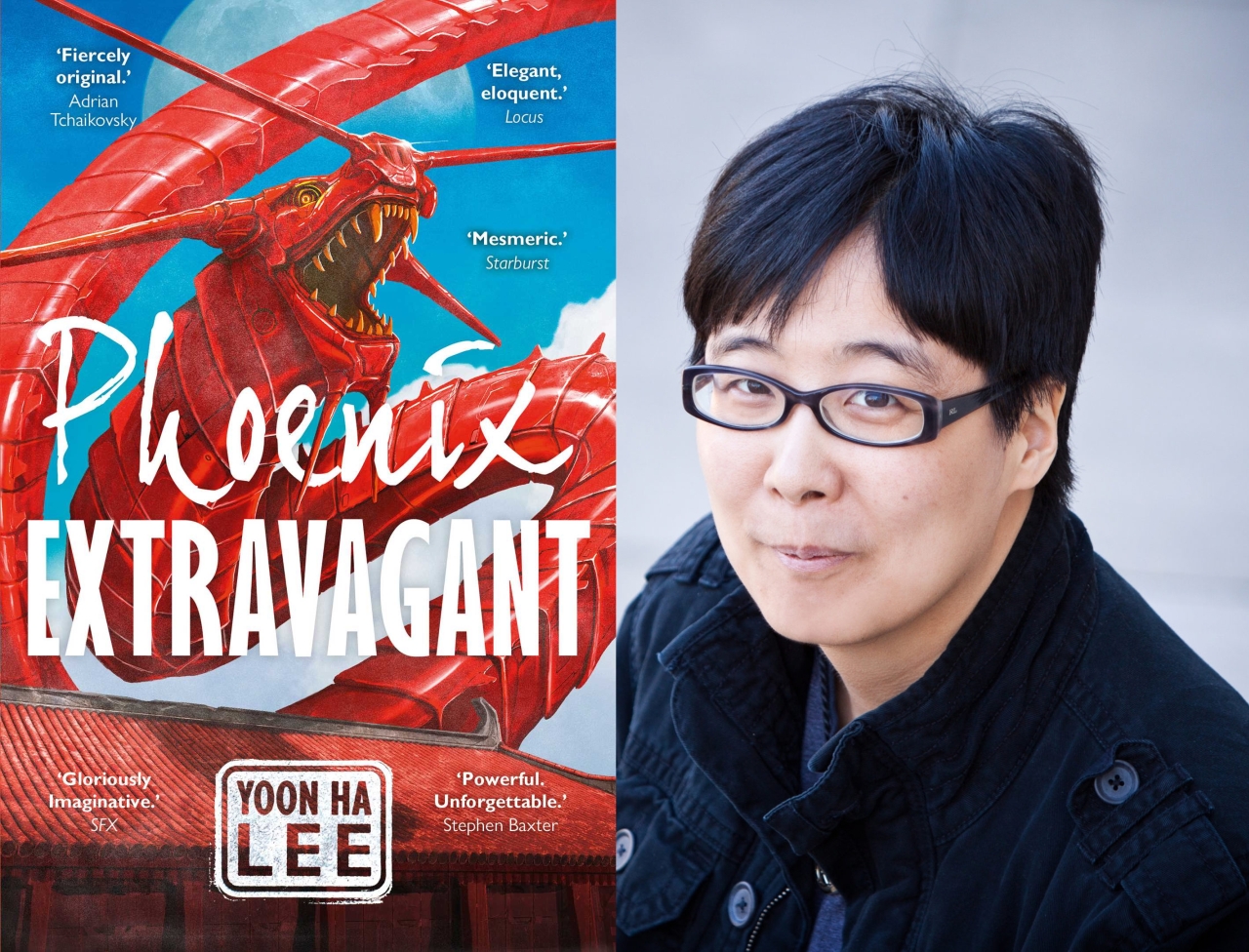
A medley of steampunk, fantasy, and magic realism? And featuring multiple animal characters? Frankly, none of those I like at all, let alone when all put together. But, expanding my literary horizons was of the main reasons I started this book club, as was supporting more LGBTQ representation in Korean and Korean-American fiction. So I was already well sold on Phoenix Extravagant (2021) by American writer Yoon Ha Lee (Wikipedia; interview) for this month’s book choice, only then to be even further persuaded by the following excellent, quick review by a fellow club member (posted with permission):
The genre is new to me, a giant leap really. Lots of norm transgressions, in the best possible way. Is it Steampunk, SciFi- Fantasy, Alternative History, Parody…??? Or none/ all?
American-Korean author Lee is not just transgressive in genre blending, but in the themes and characters of his story here. Lee himself identifies an a trans man/ queer (choosing “him/ he”) and his protagonist here is a gender neutral “them/they”. This was less confusing than the anti-woke mob might presume when reading. Non traditional nuclear/ heteronormative families, relationships and people populate this story with disarming naturalness. The whole book eschews complicated narrative and linguistic features, offering an ostensibly straightforward plot and “young adult” level vocabulary (albeit with some rather clever invented vernacular for the world described).
But the themes and historical parallels it clearly (maybe too obviously for a Korean audience) makes to Korea’s colonial experience are also subtly transgressive. It questions the ideas of nationalism and independence (for whom), as well as whether a foreign tyranny is worse than an indigenous one. In historical parallelism, it also questions who or what a loyal citizen/ collaborator is, in the face of daily needs to survive. The role of art also arises, and whether the effects of art can be attributed/ blamed on the artist?
There’s escapism and juvenile fantasy too – if you chose to read it that way. Worth a read!
Please see LibraryThing, The StoryGraph, and/or GoodReads for further reviews, and then, if Phoenix Extravagant still appeals, I’d like to invite you to our meeting on Wednesday 26 April, at 8:15pm Korean time. Just a small, informal event, with a limit of 12 participants to help ensure that they remain as safe a space as possible, please contact me via email or leave a comment below (only I will be able to see your email address) if you are interested in attending. I will contact you to confirm, and will include you in the club reminder email with the Zoom link a few days before the event.
See you on Zoom!
If you reside in South Korea, you can donate via wire transfer: Turnbull James Edward (Kookmin Bank/국민은행, 563401-01-214324)
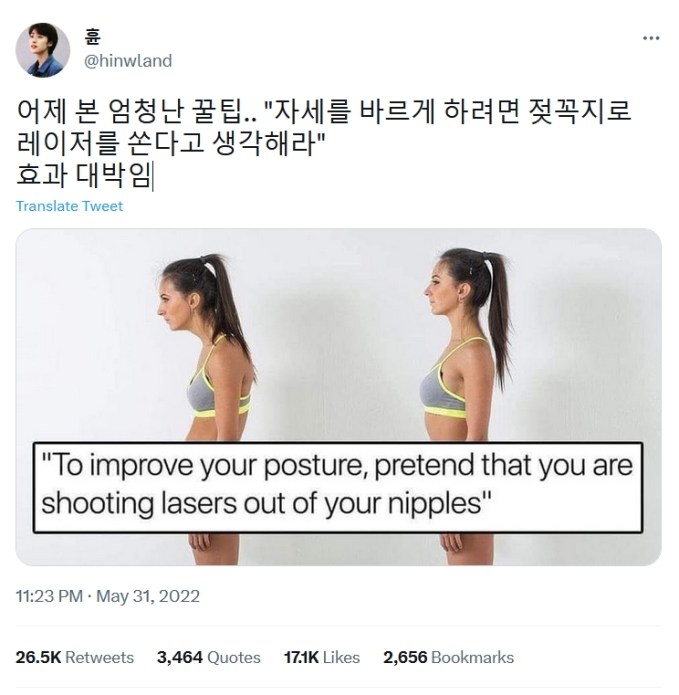
Don’t let my glorious laser tits deter you from an eye-opening interview, and a must-read!
Estimated reading time: 11 minutes.
First, a quick update to explain my absence this past month,
Basically, I’ve finally gotten my shit together.
I could count the ways. Instead, suffice to say I’m so enthused and energized that I’ve even started paying attention to my laser tits again.
You read that right. (You’ll thank me for passing on this “꿀팁” later.) Ten random notifications from a reminder app a day, I advise, is the sweet spot for perking you up before starting to get annoying:
Naturally then, life chose to reward my newfound drive by bookending those past four weeks with two debilitating colds. Repetitive strain injury has flared up in my right arm too,* leaving me in agony every time I want to do anything even remotely fun or pleasurable with my hand. Like, say, eating or sleeping (what did you think I meant?), let alone banging away at a keyboard.
With my resolve being so sorely tested, literally, my response is to push even harder through my huge backlog of writing, as well as my new plans to completely overhaul this blog and my social media use. What those plans actually are, I’m going to tend towards doing before explaining. But one I already announced back in October—more geeking out over things that bring me joy, no matter how obscure or academic. The difference now being, I realize life is just too short to worry about losing followers who don’t share my obscure passions, or curious, ribald sense of humor.
On that note, the New Book Network’s (NBN) recent podcast interview of Monica Liu, about her new book Seeking Western Men: Email-Order Brides Under China’s Global Rise (2022), is conspicuously bereft of laser tits, but is no less jaw-dropping for all that. Primarily, for Liu’s emphasis on the women’s perspectives and their sense of agency, which in hindsight I’ve much neglected in myowncoverage of migrant brides to Korea over the years (understandably, given how so many are exploited and abused, but a neglect nonetheless). Moreover, despite the title of the book, and NBN’s synopsis below, it quickly becomes clear while listening to the interview that Chinese seekers of marriage with Western men share many of the same issues and goals with those Chinese, Central Asian, Russian, and Southeast Asian women seeking Korean men.
Her study of China’s email-order bride industry offers stories of Chinese women who are primarily middle-aged, divorced, and proactively seeking spouses to fulfill their material and sexual needs. What they seek in their Western partners is tied to what they believe they’ve lost in the shifting global economy around them. Ranging from multimillionaire entrepreneurs or ex-wives and mistresses of wealthy Chinese businessmen, to contingent sector workers and struggling single mothers, these women, along with their translators and potential husbands from the US, Canada, and Australia, make up the actors in this multifaceted story. Set against the backdrop of China’s global economic ascendance and a relative decline of the West, this book asks: How does this reshape Chinese women’s perception of Western masculinity? Through the unique window of global internet dating, this book reveals the shifting relationships of race, class, gender, sex, and intimacy across borders.
I strongly recommend listening to the interview yourself; at 39 minutes long, it doesn’t at all drag on like, frankly, most other NBN interviews do. To encourage you to do so, here are several eye-opening excerpts, all lovingly, painstakingly transcribed by myself (my apologies for any minor errors).
(Too young, and too well-off?) Photo by bruce mars on Unsplash.
First, from 7:30-8:45, an important difference between Chinese women seeking Western men to migrant brides in Korea: the former tend to be much older and financially well-off. As we’ll see soon, this has big implications for the power dynamics between prospective partners:
Q) Why really did the Chinese women seek Western men?
A) For a couple of different reasons. Across the board, one main reason I saw was that the women felt aged out of their local dating market, because men of similar age and economic standing tended to prefer much younger, never-married women without children, and so women believed Western men were more open to dating women their age. And there’s also some differences based on the women’s socioeconomic class. A lot of women who are financially well-off have previously been married to very wealthy Chinese men that cheated on them and left them for younger women, and so think that Western men are going to be more loyal and more family-orientated—that being the primary reason. While women who struggled financially, have often divorced Chinese ex-husbands that lost their jobs and couldn’t support their families, and so these women are also seeking financial stability in their new marriages. Finally, there’s also a group of women who wish to send their kids to college in the US, to escape the very, very brutal college entrance exam in China, but they couldn’t do that as single moms that were financially struggling.
Next, from 10:20-11:20, on how Chinese dating marriage agencies both respond to and perpetuate Occidental stereotypes:
Q) Tell us about global financial crisis of 2008 when the men lost their jobs. Did this impact the dating scene?
A) Yes, this certainly impacted the dating scene. At the dating agencies, before the crisis there would be this idea that many of the men would possibly be financially well-off, but actually after the crisis a lot of women were actually discovering off-site that those men that they thought were financially well-off were not in that position, and as a result one of the tactics that the agencies used to promote these men to the women was that these men were loyal, devoted, and family-oriented, and thereby worth of marriage, even if they’re not particularly financially well-off.
Then from 13:28-15:11, on the racial hierarchies contained within those Occidental stereotypes. But already, Chinese women’s agency is evident in their readiness to reject or subvert these:
Q) You talked about the discrimination against Black men with the Chinese women, but not other racial groups. Tell us more.
A) When I stepped into the dating agency, I found that Chinese women were very reluctant to date Black men. And for that reason, the agencies actually had a policy to not entertain emails from Black men unless given special permission from the women, in order not to “offend” the women. I’m not exactly sure what their personal reasons were…but I do know China has a long-standing history of anti-Black prejudice where Blacks are stereotyped as savage, hypersexual, and violent.
However, the women didn’t seem to discriminate against other racial groups, and to them, interestingly, the term “Westerner” included not only Caucasians but also Latinos and Native Americans. And occasionally some women would actually refer to Western men of Northern- or Central-European ancestry as “pure white,” and Latin-American men, or men of South-European ancestry, for example Italian men, or Native American men, as “non-pure white.” However, being pure white didn’t seem to actually boost the men’s desirability in the women’s eyes, and in fact I saw that some women in fact preferred the non-pure white look and they found the darker hair and eye color to be more Asian-looking, and more familiar and more pleasing to their eye than someone who is, say, blond-haired and blue-eyed.
From 18:24-19:52, on the traditional, patriarchal values the Western men using international dating agencies often bring to their anticipated relationships with Chinese women. Obviously, by no means all (or even a majority) do. But just as obviously, it’s surely no coincidence that many Korean men do the same:
Q) Now give us the profile of the Western male seeking a Chinese woman.
A) The majority of the men enrolled tended to be older, divorced, and tend to come from lower-middle class or working class backgrounds, although some were middle class. I’ve seen a lot of truck drivers, lots of small business owners, and these men tend to feel left behind by globalization as agriculture, manufacturing, and small businesses started declining. So these men actually viewed this changing economic landscape as a threat to their masculinity.
Now a lot of sociologists’ studies show that marriage rates have declined among working class men, and poor men, because women within their own class find them to be too poor to be marriage worthy. So for these men, having slipped down the socioeconomic ladder, they really struggle to hold on to what privilege they have left by pursuing so-called “traditional” marriages, possibly with foreign brides, because they think this will allow them to exert some kind of dominance and control at home. And there’s also some middle class men who, despite being financially stable, they still feel left out of place within the new gender norms that have emerged in Western societies, [supposedly] dominated by feminists who they see as destroying the family and nation through their spoiled behavior and materialism.
And, reluctantly, a final excerpt from 23:21-25:10 (there were so many I wanted to highlight!), on the upending of global masculinity and racial ideals when women are empowered to reject those marriages:
Q) Let’s look now at some of the theories about Western masculinity. What did you find concerning race, class, gender, globalization, and migration?
A) First, I challenge readers to rethink the relationship between race and class…the question I ask is, does Western masculinity still command some degree of hegemonic power in China, despite China’s global rise—and I confirm that it does, by showing how Chinese dating agencies market their Western male clients as morally superior to Chinese men despite their lack or wealth. So the fact is that this portrayal still sells in China, and this reflects this continued superiority of Western culture within the Chinese women’s imagination.
However, in this book I also show a lot of moments when Western masculinity is starting to lose its hegemonic power, and this typically happens in the latter stages of the courtship process, when couples go offline and start meeting face-to-face. And in this book, I show how some of these women quickly rejected their working class, Western suitors, once they realized these men didn’t embody the type of elite masculinity that they were seeking in a partner, and instead these women would choose to continue having affairs with their local Chinese lovers, even if those men were married and not willing to leave their wives. And this is because [they] had these refined tastes, lifestyles, and sexual know-hows that a lot of their foreign suitors lacked.
Two final points of interest to round off. First, by coincidence, shortly after listening to this interview I got an alert that Kelsey the Korean was busy dismantling Western masculinity’s hegemonic power in Korea too:
This article analyzes “returnees from marriage migration” by focusing on Vietnamese women from Cần Thơ and Hai Phong who have been to South Korea for marriage migration. In contrast to prevalent concerns in South Korea about the possibility of “child abduction” by Vietnamese mothers/divorcees, the author found many “deserted” Korean Vietnamese children and their mothers in Vietnam through this research. There is also a growing number of Vietnamese “return marriage migrants,” women who came back to South Korea after their first divorce and return to Vietnam. The article emphasizes the complexities and multidirectional trajectories of marriage migration and highlights the agency of female migrants, whose contribution to family welfare and to “development” is often overshadowed by their status within the family.
Does it really matter that, technically, my copy of the book hasn’t actually arrived yet? If you’ve read this far, I hope you too will indulge yourself (38,170 won on Aladin!), and I look forward to hearing your thoughts.
*I first had repetitive strain injury about 10 years ago, consequence of having my keyboard too close to me, forcing me to bend my arms to type; fortunately, it resolved itself in a few weeks once I moved my computer just shy of arm’s length. This time round, it’s undoubtedly due to spending hours in bed on my phone, again bending my arms to use it; now that I’ve stopped, hopefully again the pain will go away just as quickly.
In the meantime, I can’t stress enough how much my arm can hurt at the moment, nor how debilitating it is to be literally too scared to use your right hand as a result. So, if you reading this, please do take a moment to consider how you physically use your devices, and for how long!
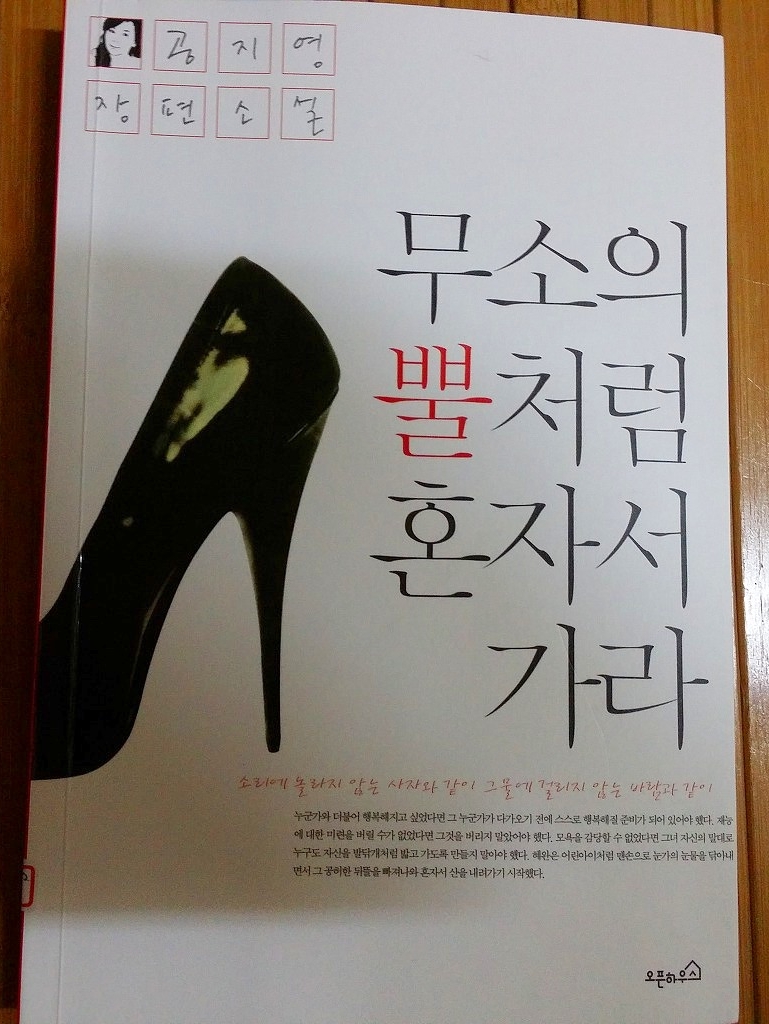
Knowing a thing or two about Korean feminism, I avoided reading the most popular Korean feminist novel, Kim Jiyoung, Born 1982, for the longest time. Ironic, I know, but I just felt it wouldn’t really teach me anything new.
I wasn’t being arrogant. I’m still no ‘expert’ on Korean feminism, and I’m never going to claim to be one. But expert or not, if you’ve spent nearly two decades immersed in a subject, there’s only so much you’re going to gain from a book aimed at a general audience.
Then March’s book club meeting was coming up, originally planned for International Women’s Day on the 8th (postponed because I was sick). It felt time.
So now, having read it…I actually liked it, and would recommend it. But yeah—it really didn’t teach me anything new.
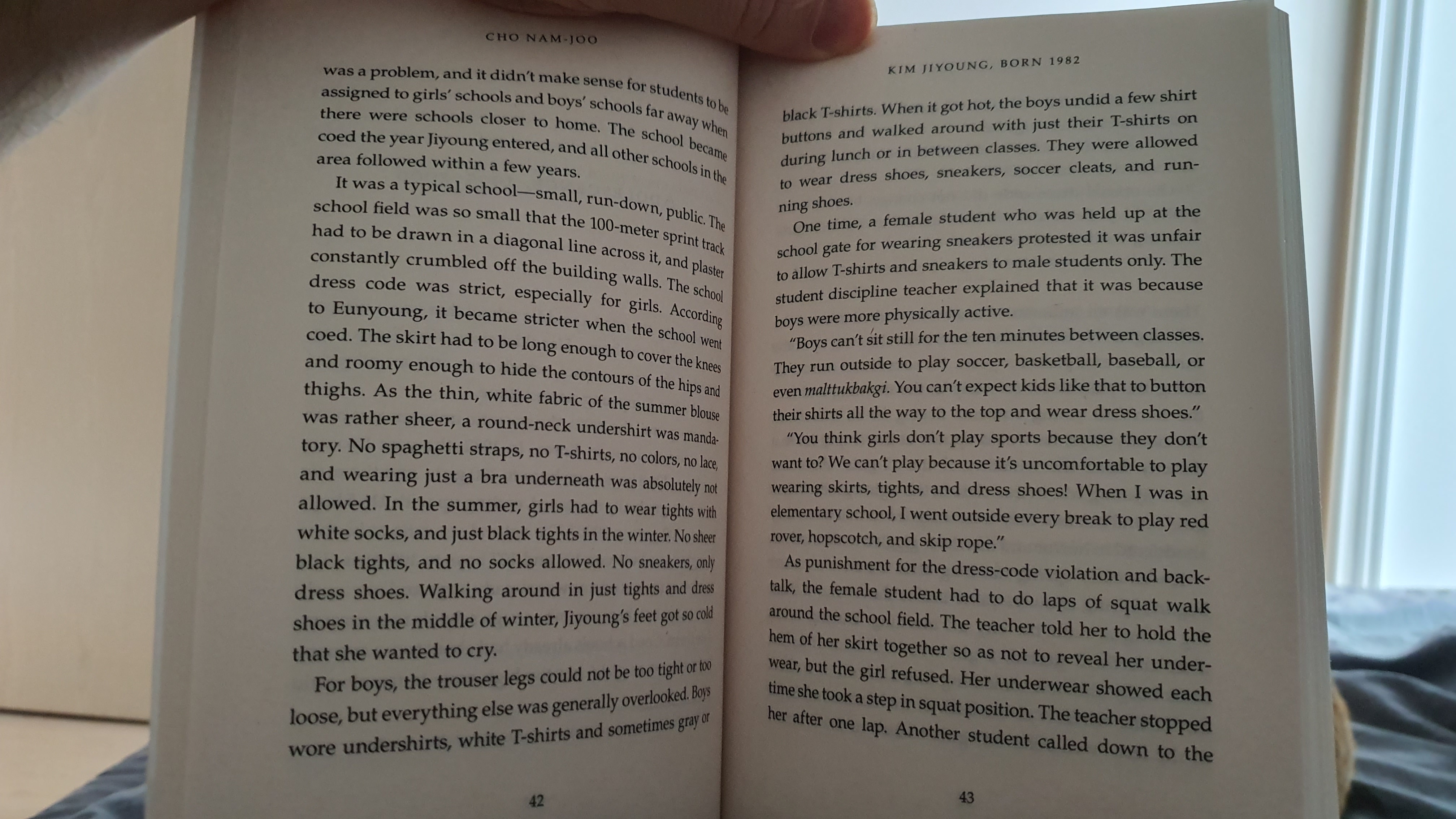
What it does do, and very well, is open a window onto the lived experiences of Korean girls and women. While much of what gets revealed by that may well not be news to anyone who’s shared, witnessed, listened to, read about, and/or studied those experiences, the way Cho Nam-joo summarizes and puts them all together into a succinct, very readable story is still very skillful, and essential for spreading knowledge of them to a wider audience.
Take the following two pages on many Korean schools’ blatantly unfair, sexualizing, and body-shaming dress codes for schoolgirls for instance. Just these few paragraphs alone are far more evocative of what it’s really like for girls than any of the news reportsI’ve translated, and much more likely to spur people to action:
It’s also true that while I can’t really think of anything earth-shatteringly new I learned from it, it covers so many aspects of Korean girls’ and women’s lives that it reminded me of many things I’d almost completely forgotten, and got me interested all over again. To give another for instance, a topic I covered here recently was a ruling against a (usually) rarely-enforced law requiring study-rooms to be sex-segregated; providing some context to that, I explained that in many respects Korea is a surprisingly homosocial society, starting with most Korean schools being single sex. Thanks to that same chapter above, “Adolescence, 1995-2000,” I was reminded that even in ostensibly coeducational schools too, the classes themselves are still often single-sex. And that’s just one important fact about Korean school life, packed in among so many others in the chapter on that subject. Likewise, there’s many more jumping out at you in the sections on university, dating, work, marriage, pregnancy, motherhood, and so on.
Yet I only gave it a 3 out of 5, for three reasons.
First, because of frequent, long seques into discussions of background statistics and trends. (I’d previously encountered them in The Girl with the Dragon Tattoo by Stieg Larsson, finding them very shoehorned in; hearing that they were in Kim Jiyoung too was another big reason why I put off reading it for such a long time.) Sure enough, while there were a lot fewer than I’d expected, they were definitely jarring, completely ruining the immersion in the story. Say, when listening to Jiyoung’s fuming about being discriminated against at job interviews in the mid-2000s, to suddenly being given figures on the numbers of female managers in the mid-2010s, then right back to going back to her fuming ten years earlier. Those stats, to the extent something from ten years in a character’s future even needed including at all, could surely have been brought in much more seamlessly.
Next, for its brevity. For sure, being only 163 pages long will likely have positively contributed to sales. But for what I personally wanted from the book, it felt at least 163 too short.
Specifically, I was approaching it having just read last month’s selection Cursed Bunny by Bora Chung, a collection of light horror-themed, often graphic, sometimes disgusting short stories (in the first, a woman’s doppelganger slowly grows out of her feces in her toilet, and begins talking to her). Struggling to understand these earthy, brutally corporeal choices of subjects, and trying to find a common theme to the stories, I gained a sense of women’s much more visceral relationship with their bodies and awareness of their cycles and rhythms, based on their physical difference with men’s.
Which I realize may sound crude and simplistic, and open to multiple (mis)interpretations. So, to be clear, I’m absolutely not saying that women are any less rational than men, that men can’t be emotional or don’t ever have mood swings, that men shouldn’t also be much more aware of their bodies, or that the similarities between men and women aren’t much stronger than the differences. I also completely understand every women’s outrage at ever being dismissed by men for being “hormonal.”
Surprised to suddenly see the image from my 2010 post “Sex and the Red-Blooded Woman” again. Turns out, “Hormonal: The Hidden Intelligence of Hormones” by @haselton,has just been translated into Korean. So naturally, I just ordered it for my birthday! 🤓 https://t.co/wg7fm9ymFYpic.twitter.com/DWtVZ7LTDM
I still raise that sense though, because I also brought to Kim Jiyoung my own lived experience, discussions with women, and those nearly two decades of immersing myself in various feminist materials and forums, all of which tell me that, yes, speaking very, very generally, (cishet) women do talk about their bodies much more than (cishet) men, talk about men and sex very differently, talk to women very differently than to men (as indeed men do to women), and that the female gaze, libido, and arousal are not at all like cishet men imagine them to be, and so on.
(Update: Having just seen the film, I realize I was so fixated on sex this issue that I neglected several, much more important flaws of the book. So, I cover them in a longer second review here.)
Put that considerable baggage of mine all together, and I was just expecting something much deeper—and less sanitized—from Korea’s most popular and famous feminist novel. Insights into what it’s really like being a woman that I didn’t already know. The numerous things that all women take for granted and so generally don’t discuss, least of all with men, which is why I’m still only learning about them at the tender age of 47.
Indeed, many of them from the first novel I’m (painfully slowly) reading in Korean: Bodies and Women ‘몸과 여자들’ by Lee Seo-su, which I’d easily recommend from anyone wanting an upgrade from Kim Jiyoung. And, given that Bodies and Women is also relatively short, tells me that even in a longer book Cho probably wouldn’t have provided what I was looking for anyway.
The third and final reason though, I couldn’t put my finger on, but somehow felt familiar. Then, as I actually clicked on those 3 stars at The StoryGraph, I was informed that my connection there, Mel of Equal Opportunity Reader, had also given it 3 stars (great minds think alike!), and written a review which hit the nail right on the head. Taken here from the longer one on her blog:
…despite the familiarity of her experiences, Jiyoung herself is nearly impossible for me to relate to. She has an infuriating lack of agency and inner thought–she’s a perfect victim and it’s only her privilege as a member of a stable family who support her financially that keeps her life from being far, far, worse. I found myself frustrated by how safe and protected she actually was and how little she did with that foundation. She’s a flabby marshmallow of a woman who goes along with everything that happens to her and comes out far better than a lot of women do despite that. This is only highlighted by the fact that most of the other women in the story–her mother, her sister, her first boss–all have much more developed, layered personalities, in my opinion.
As she goes on to explain, the book doesn’t really offer any solutions or ways forward, whereas “there [definitely] are in fact ways to claim agency and equity as a woman in the world.” I also suddenly realized the familiarity: all the K-dramas I was exposed to in the early-2000s, in which the hapless long suffering daughters-in-law and/or lowly company employees would just sit there and take abuse all day long, complaining and crying but never actually doing anything about it. Constantly shouting at the screen, just wanting to get up and shake them out of their resignation and passivity, it ruined K-dramas for me for life.
Unlike books ;)
And on that note, if you’re interested in attending the book club meeting—a very safe space, with a maximum of 12 members, but frankly usually more like 4 or 5—then please send me an email, and I’ll pass on the Zoom link before Wednesday. Also, my apologies for the very short notice, but you’re more than welcome to join if you’re just interested in Korean feminism in general, regardless of if you’ve actually read the book. Even most of the reading group questions below, helpfully provided at the end of the edition I bought, don’t at all require it. So please do get in touch!
Update: I forgot to mention there’s still time to cheat by watching check out the movie on Netflix too!
Estimated reading time: 5 minutes. Image by Jr Korpa on Unsplash.
For sixteen years, I’ve maintained a strict policy of never covering anything related to the “comfort women” issue. I already have my fair share of trolls, thank you very much, so don’t need to add Japanese and Korean ultra-nationalists to the mix.
With this convenient out-of-sight, out-of-mind attitude though, I recently realized I’ve been missing a crucial connection to present discourses about sexual violence today, especially in Japan.
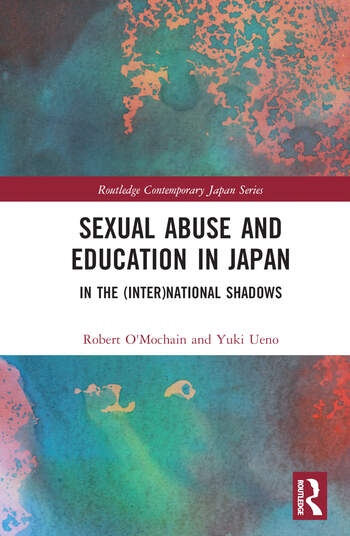
“The fixation with depicting comfort women as fake victims has repercussions for survivors of sexual assault today. Even if victims of abuse are not aware of comfort women issues, they are aware of the danger of being labeled a higaisha-buru (“fake victim”), and in the book we show how the association of ideas between ex-comfort women, and fake victims, and contemporary women who report sexual assault, is still a factor in the silencing of women, who have a right to report sexual assault, but…they remain in the shadows.
And, I think a good illustration of how this is relevant still today, is something that happened in 2020. There were prominent members of the main political party, the LDP, and there was an event there on a program that was looking at (unintelligible Japanese term?) through comfort women issues, and when the issue was under discussion a member of the House of Representatives, Sugita Mio, she made the comment “Women can lie as much they want.” Now she did issue an apology later for saying [that], but she wasn’t censured by her party for the comment. They actually refused to receive a petition against her then, when it came to the LDP headquarters…she is still around—she continues to exert influence as a lawmaker in the Diet. And the comment [about the refusal?] was “Why do you report it?”, so it’s part of public discourse. So I think it indicated there’s a determination there amongst ultra-conservative groups to depict ex-comfort women as fake victims, to cast doubt on their oral evidence, and that will affect all sexual assault survivors. I think that’s an important question that we’re exploring in the book.”
(Robert O’Mochain speaking,16:24-18:33)
Unfortunately for those of you who likewise now want to get their hands on said book, I think I speak for most of us when I say US$160–$204 is slightly out of our price range ㅠㅠ. So too, even US$44–$50 for a copy of Voices from the Contemporary Japanese Feminist Movement edited by Emma Dalton and Caroline Norma (Palgrave Macmillan, 2022) that I’ve long had my eye on, when you realize it’s only 141 pages long!
I therefore recommend the podcast interview again then, for more on links to the relative failure of Japan’s #MeToo movement (also Lile Otaki Donohue’s article in Trinity Women& Gender Minorities Review for an excellent 8-page summary and comparison with other countries), and the Daiwa Foundation’s video below for short interviews of the contributors to Voices:
Finally, it’s my birthday next week on—yes, really—International Women’s Day(!), so I think one source on Japan’s #MeToo movement even Ican indulge myself on is the self-explanatory Black Box: The Memoir That Sparked Japan’s #MeToo Movement by Ito Shiori :)
Has anyone read any of those books? Or have any other recommendations? Can any Japanese speakers please help with the term I couldn’t make out in the podcast at 17:25? Thanks!
“Women in South Korea are on Strike Against Being ‘Baby-Making Machines’” headlines a must-read article by Hawon Jung in last week’s New York Times, a role migrant women are expected to perform most of all. Here are two insidious ways in which they are socialized into doing so.
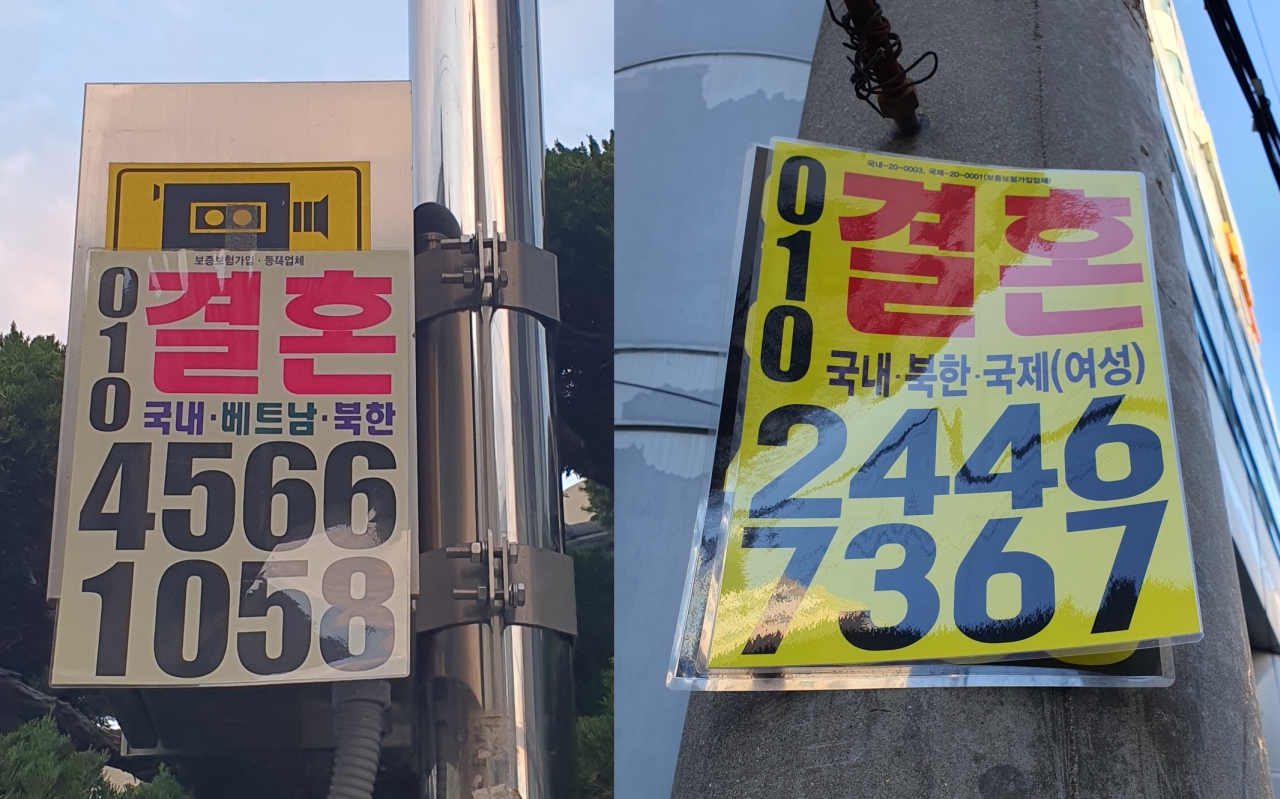
My neighborhood of Gwangalli Beach is one of the most popular and internationally famous tourist spots in Korea. It is also one of Busan’s busiest nightlife areas. It is not, in my general experience, positively teeming with middle-aged, malefarmers, the main customers of international marriage brokers. So why do they bother posting their ads here?
I realize the placement has got nothing to do with Gwangalli really—the ads get spammed just about everywhere in Korea. It’s just that whenever I see them a few blocks behind its trendy bars and nightclubs, I can’t help but laugh at the incongruity with their surroundings. Then pause as I remember the frequentabuse of those overseas brides by either the brokers and/or their new spouses and families, and feel guilty. The metaphor for the harmless-sounding, but ultimately racist, sexist, and objectifying “gendered nationalism” and “gendered multiculturalism” that lurks just behind the glitz and glamour of the Korean Wave, almost suggests itself.
That’s not quite why I paused when I saw the ad on the left in October 2021 though. It was because it was the first I’d ever seen that mentioned “Domestic” (국내) and “North Korean (refugees)” (북한) options in addition to the usual “Vietnam(ese)” (베트남) ones. Possibly, I’d stumbled on an ad for a rare international marriage broker which had also arranged marriages between ethnic Koreans before the pandemic (note that over 70 percent of North Korean refugees are women). But it’s much more likely it was a recent development, forced by international travel restrictions.
Then I paused again a few days ago when I saw that new version on the right, for three reasons.
First, because of the “Women” (여성) that had been tacked on to the new, but also quite usual “International” (국제). Not because it was a surprise that international marriage brokers only supplied brides from overseas, but because of what the “Women” being omitted from “Domestic” and “North Korean” implied: that the same brokers were now also in the business of finding North Korean grooms. Which again implied desperation, considering how neglected they’d been up to that point: as of mid-2020, there were 20-30 agencies that specialized in supplying North Korean brides, against none that specialized in supplying their male counterparts.
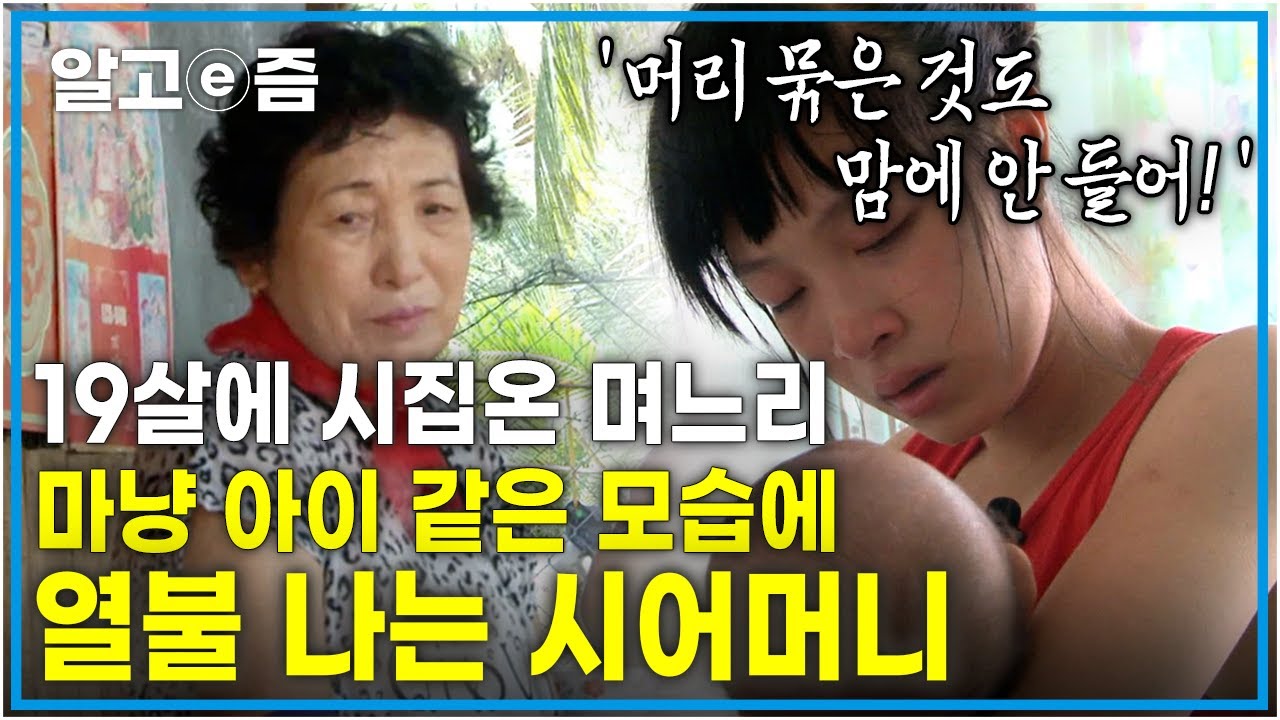
And I do mean “supply.” Because next, I’d actually already noticed an ad exactly like it back in May 2022. (With a different number; sorry that I don’t know how many brokers are behind these ads.) Only this time, I was seeing it again after just learning of a problematic episode of the documentary program Algorithm (알고e즘) that screened earlier in January, which featured a 34 year-old Korean husband’s (and parents’) relationship with his 21 year-old Vietnamese wife:
As Professor Michael Hurt of the Korea National University of Artsdescribed it, it was “stealthily ideological.” Specifically (quoted with permission):
If this ain’t human trafficking, I don’t know what is. All the cutesy piano music and pizzacato plucking can’t shoehorn this episode into anything looking like a heartwarming narrative. The closer you look and the more questions are asked, the more this looks like outright human trafficking. Of course this “daughter-in-law“ who is 21 married to a man obviously [much older] isn’t adjusting well to life in a poor Korean household. And they keep trying to frame things as normal mom and daughter-in-law friction, but the real answer to every single conflict in the show—especially when they make a quite performative trip to Vietnam, with mom in tow—is the obvious fact that she looks like a human trafficking victim. Because that’s what she is.
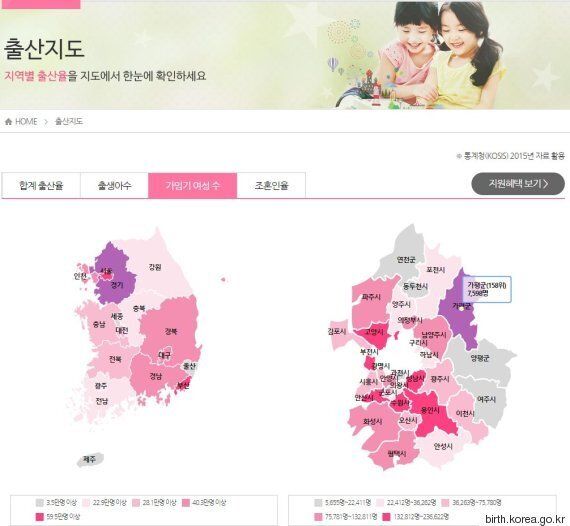
Going further, I’d argue that framing is also about putting migrant wives in their place—as docile, obedient ‘baby-making machines’ for the Korean state. Please hear me out. Combating Korea’s world-low birthrate, most acute in rural areas, is precisely why the international marriage agency was encouraged to develop in the first place. Next, recall that Korean women are alreadywell aware that’s how the Korean state regards them themselves; with migrant brides from much poorer countries, there’s even less pussyfooting about their designated role. Indeed, this mentality even pervades government programs designed to help their integration. Consider as evidence the following abstracts to two academic articles on the topic, and their eerie similarity to what was occurring in the documentary (Right: “Women of Childbearing Age Map” briefly released on Korean government website in December 2016, before being withdrawn dueto controversy):
This paper focuses on the role of Multicultural Family Support Centers (MFSCs) to explain the gender, race and cultural hierarchies inherent in South Korea’s system of multiculturalism. Since the 1990s the South Korean state has played an active role in facilitating marriage migration and influencing the reproductive and caregiving decisions of female marriage immigrants. This is reflected in immigration and welfare policies that incentivize migrant wives to have children and provide disproportionate power to Korean husbands. Over the past decade the Korean government has invested heavily in MFSCs. These centers cater exclusively to migrant wives with courses focused on the acquisition of the Korean language and culture. The teachers are generally older Korean women while students are migrant wives from developing countries. The version of Korean culture taught to migrant wives emphasizes traditional Confucian family roles and that a wives’ role is to focus on managing the home and supporting her husband and children. I present two case studies of cultural and cooking classes provided by a MFSC where I volunteered. The classes illustrate that multiculturalism in South Korea is focused on assimilation with limited expectation that Korean husbands and in-law families should adapt to migrant wives. Instead, migrant wives are expected to acquire a strong understanding of how to behave and understand their place in a traditional Korean family structure. I provide migrant wives’ perspectives on these classes and explain why they have limited opportunity to influence or respond to the expectations of the Korean state and in-law families.
“Multiculturalism in South Korea: putting migrant wives in their place” by Stella Jang in Social Identities, September 2022 (my emphases).
In this article, I investigate how gendered nationalism is articulated through everyday practices in relation to immigrant integration policy and the intersectional production of inequality in South Korea. By using ethnographic data collected at community centers created to implement national “multicultural” policy, I examine the individual perspectives and experiences of Korean staff and targeted recipients (marriage migrants). To defend their own “native” privileges, the Korean staff stressed the gendered caretaking roles of marriage migrants and their contribution to the nation as justification for state support. The migrants, while critical of the familial responsibilities imposed on them in Korea, underscored their gendered value to the nation (as mothers to “Korean” children) to offset their subjugated position. The diverging perspectives of the two groups are informed by “everyday” nationalism, generated through constantly gendered terms and effects. Bringing together the literature on nationalism and migration through a focus on reproductive labor, I expose how national boundaries are drawn through quotidian practices of gendered nationalism, with significant implications for gender and ethnic hierarchies.
“Gendered Nationalism in Practice: An Intersectional Analysis of Migrant Integration Policy in South Korea” by Sojin Yu in Gender & Society, November 2020 (my emphasis).
Finally, while admittedly only indirectly related to socialization, an interesting third reason I paid attention to the ad was because the Algorithm documentary reminded me of an episode of Marriage Hell (결혼 지옥) on MBC the month before. In that, the show’s producers and hosts were widely criticized for including scenes of domestic abuse as well as the sexual harassment of a minor, and for failing to intervene in either. Their inaction also revealed a gap in legislation regarding the use of minors in the entertainment industry, as whereas child actors are covered by long-standing legislation regarding their mental and physical well-being, those same protections do not extend to non-(child) actors in their brief appearances on reality programs.
Frankly, as MBC is notoriously racistand trashy, at first I thought that just like Marriage Hell, Algorithm was also produced by that channel. Actually, it was produced by educational channel EBS, that turns out to not at all be as tied to the government as I first thought: according to Wikipedia, “though nominally a public broadcasting entity, it gets most of its yearly budget from advertisements and sales revenue”—which may explain the tone of that program. Either way, I wonder if a better quality documentary on migrant women’s experiences might have been produced by an actual public/national broadcaster like KBS? One in the which the documentary makers didn’t just sit back and deliberately highlight 21 year-old Jjeonti Huin’s (쩐티후인느) complete isolation, but actively helped her to overcome it?
“I want to tell you a story about my body and my sexuality. But it’s going to be so revealing and embarrassing for me, that I can say it only once. So please listen carefully.”
If you can please indulge me, I just want to say I’m very proud of myself for ordering Bodies and Women ‘몸과 여자들’ by Lee Seo-su. It will be the first novel I’ll have read entirely in Korean!
I was instantly sold on it by reviewsthat mention its intimate coverage of beauty ideals, gender socialization and body-shaming in schools, sexual assault, pregnancy, sex in marriage, pervasive sexual objectification, and the male gaze.
However, there’s also the matter of the other members in The Grand Narrative Book Club,* who are much more knowledgeable and well-read than myself, and have often already read the original Korean versions of the translated novels we discuss. Because while I count myself lucky that I’m never the most interesting person in the (Zoom) room, does the fact I’m the dumbest really need to be so obvious?
In 2023 then, I want to work on disguising that. Starting by getting into the habit of reading novels in their original Korean myself.
Unfortunately, Bodies and Women will not be turning up in the club anytime soon. Lee Seo-su seems to be a relatively new writer, with a discussion in Korean Literature Now about of one of her short stories being all I could find out about her in English. So, although I could translate those persuasive reviews for you here, really any translation add-on for your favorite browser should more than suffice. Instead, hopefully I will find many interesting things in the book itself to pass on later.
Sorry. I did say this post was an indulgence!
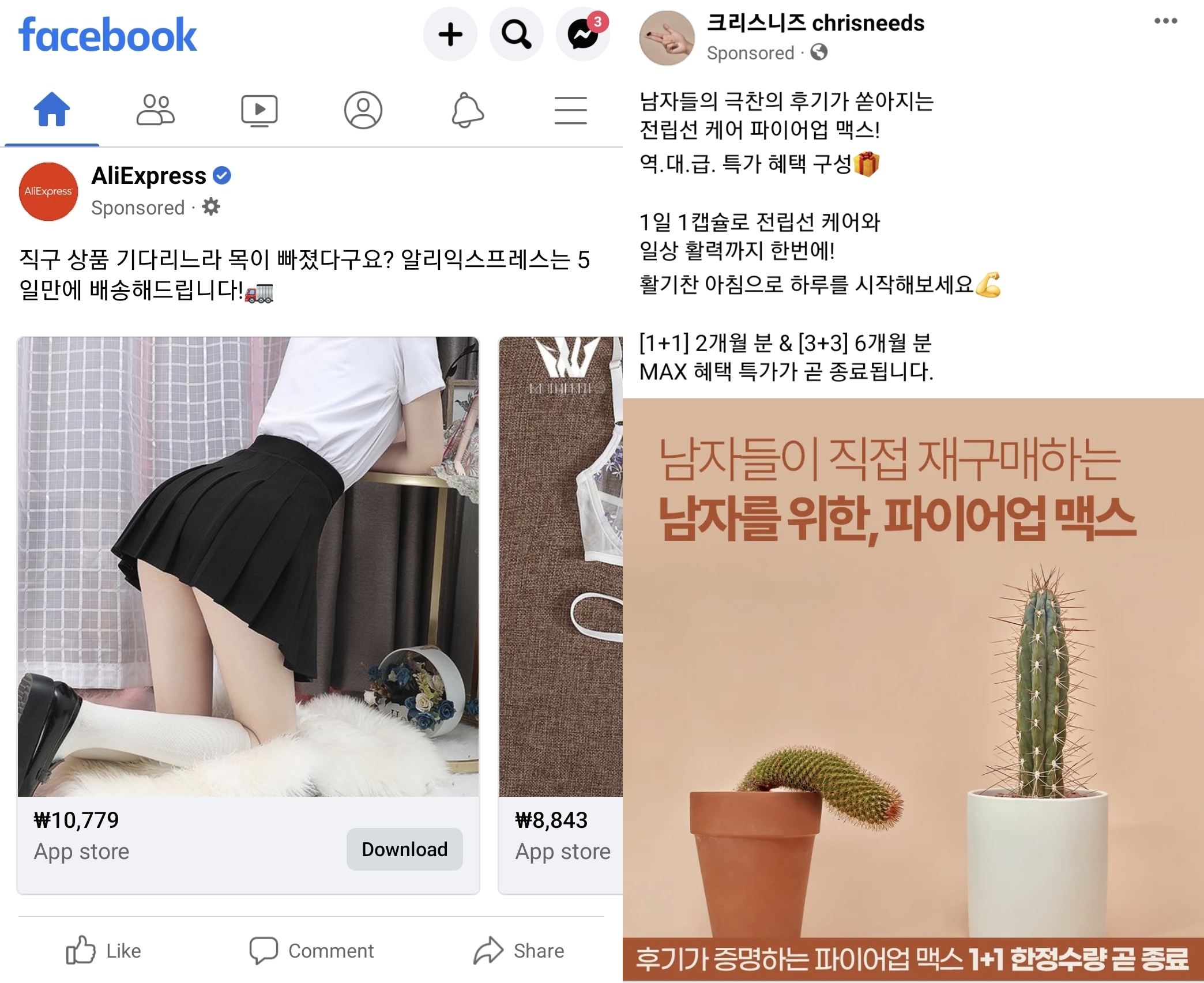
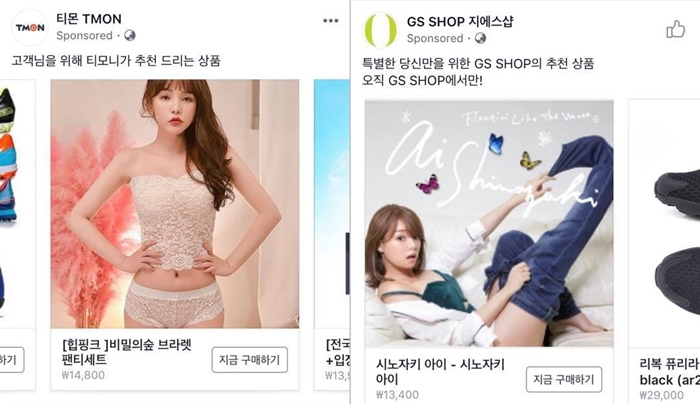
However, with that my writer’s block does seem to be cured now too, so it served its purpose. Let me offer some humor too, as a parting gift—but also, a reminder of precisely why those reviews were so persuasive, and books like it so necessary. For I shit you not: these two sponsored ads on Facebook, I saw back to back after googling “몸과 여자들” the hour previously:
Again frankly, probably the juxtaposition is a complete coincidence. After the book itself, googling “몸과 여자들” in fact mostly brings up images of women perusing fine male specimens. But more to the point, during the evening rush hour, Korean advertisers on Facebook deliberately target men with ads for lingerie etc., which they won’t buy, but which do persuade them to swipe left to be rewarded with more lingerie models, then with ads for oh-so-masculine power tools and gaming equipment which they might.
Also, ever since I hit my mid-40s I’ve been inundated with ads for libido and erectile dysfunction treatments, and doubt it’s just me. I don’t mean to laugh at anyone or their partners who actually need to avail themselves of such products, especially since I’ll probably be joining their ranks sooner rather than later (sigh). But many prove just as creepy as campy. For instance, this one where the model’s head was cut off, in stark contrast to when a different advertiser used the same stock photos of her to advertise diet products to women:
Then there’s these screenshots from yet another ad in my feed today, from which I’ll let you form your own conclusion to this post to!
*Finally, the book for January’s meeting on Wednesday the 18th is Cursed Bunny by Bora Chung (2017), translated by Anton Hur (2021); I’ll put up an official notice soon. Sorry for not doing so earlier, which is my fault for not realizing that I may not be the only person out there who hasn’t actually read it yet!
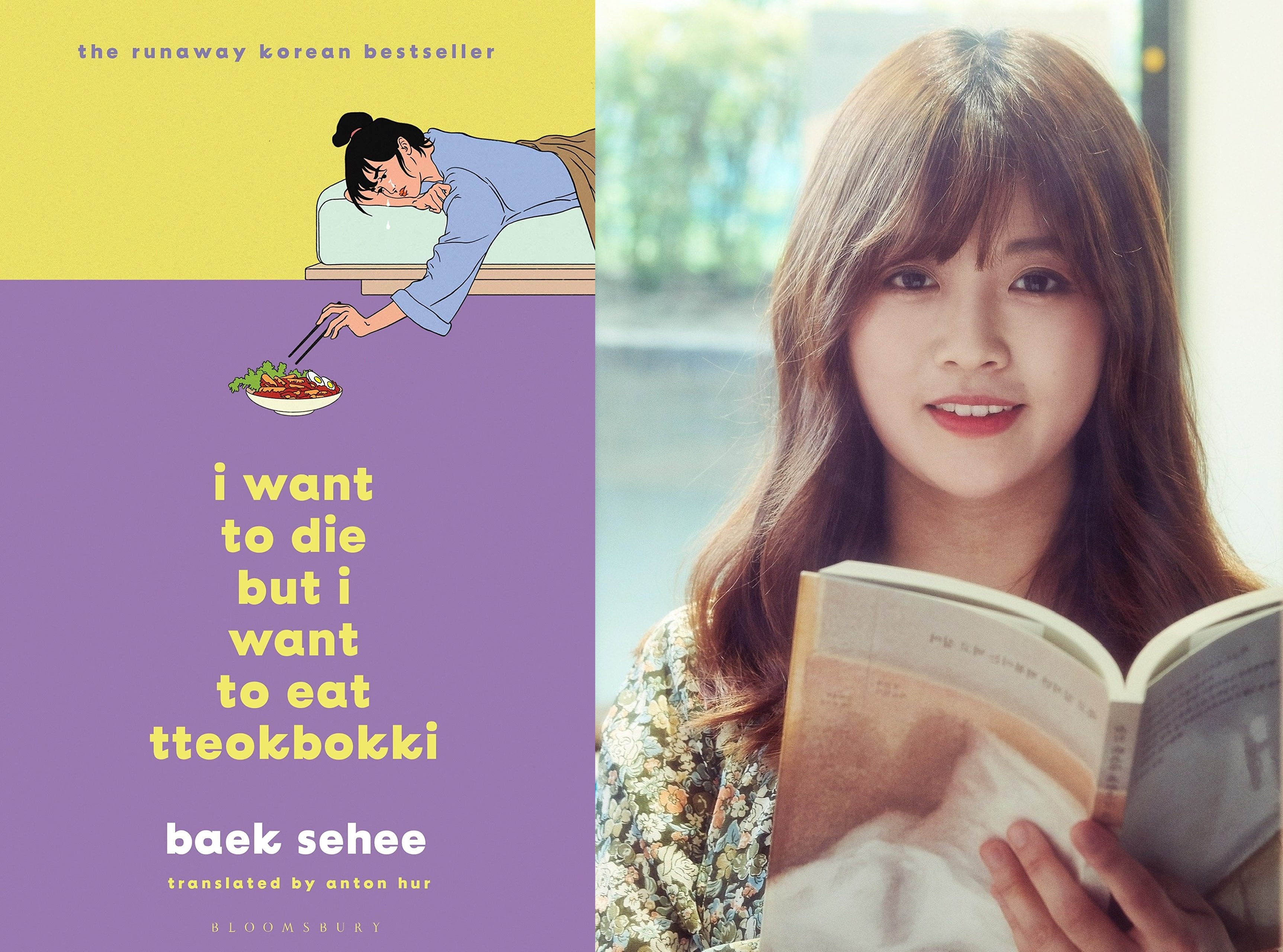
To round off our last book club meeting of the year, may I present I Want to Die But I Want to Eat Tteokpokki: A Memoir by Baek Se-hee, first published in 2018 and recently translated into English by Anton Hur. Described as “part memoir, part self-help book, and completely engrossing,” by The Korea Society, I Want to Die “is a book that captures the edgy relationship many millennials and Gen Z-ers have with hopelessness, hunger, and the pressure to be perfect.” It also provides, according to Willow Heath of Books and Bao, “a window into the mind of someone with depression, and a hand on the shoulder of anyone who suffers with it themselves,” and I just can’t wait to read it!
Please see LibraryThing, The StoryGraph, GoodReads and the videos below for reviews, and then, if I Want to Die still appeals, I’d like to invite you to our meeting on Wednesday 21 December, at 8:15pm Korean time. If you are interested in attending, please contact me via email, or leave a comment below (only I will be able to see your email address), and I will contact you to confirm, and will include you in the club reminder email with the Zoom link a few days before the event. At the same time, I will also post a SPOILER FILLED list of suggested discussion topics and questions below, which we’ll use to loosely structure the meeting (so please watch this space!).
But I want to emphasize that they will definitely only be suggestions, as I stress that the meetings are very small and informal really. And also, to help ensure that they remain as safe a space as possible, that there’s a limit of 12 participants including myself. So please get in touch early to ensure your place (and give you time to read the book!).
See you on Zoom!
♥♥♥
As Willow says, this is a very experimental book, both in subject and in format, so mostly these suggested discussion topics and questions will very much just be my observations:
My first is how valuable it is that a book about depression and therapy has become a bestseller in Korea. Mental problems are still hugely stigmatized here, not helped in recent years by incidents such as a murder/arson case by a schizophrenia patient in Jinju in 2019, as well as numerous attacks by men on women that are invariably attributed to mental illness rather than also acknowledging the role of misogyny, which is a much more politically sensitive subject. Accordingly, the government’s mental health care budget and number of trained personnel fall well below OECD average.
In such circumstances, it is very admirable and brave that Baek Sehee has deliberately set out to explain what depression is like for the public. That despite how vulnerable this makes her, she has shown the non-scary and non-judgemental reality of what therapy is actually like (sort of; I’ll return to this below), which is a good start towards encouraging more people in need to visit therapists. I’ve also heard that, especially in Korea it’s very valuable hearing the experiences of an ordinary person rather than a celebrity, and likewise the strong emphasis on her problems with her body image would find a lot of resonance with Korean readers—and Korean womenin particular.
Related, can anyone speak to the impact of BTS’s recommendation? Alas, I’m not a fan, so I’d be interested in hearing more about the circumstances of that. Thanks!
♥♥♥
Next, in raising the subject of therapy we can certainly talk about the different attitudes, perceptions, and experiences of it between Koreans and people from other countries, and perhaps also between US residents and people from other English-speaking countries. Indeed, one Western expert(?) is actually quite scathing in her criticisms of the therapist, and I personally thought the therapist tended to be too quick to label what Sehee was going through, regularly shoehorning her issues into various convenient narratives and/or mental conditions rather than acknowledging her individuality and their complexity.
Speaking to the point earlier about how real a picture of therapy sessions Sehee provides, we can also discuss the issue of the transcripts of the conversations being very packaged and edited to make their points. (There’s no interjections, there’s no pauses, there’s no crying or missing minutes, and so on.) In doing so, I don’t think Sehee was being dishonest per se, as it may just have been a practical necessity for the sake of readability. But you could argue that in giving unrealistic expectations of sessions it slightly undermines her intentions to encourage and guide others to seek therapy.
Also, what sex do you think the therapist was? Why?
♥♥♥
How did you find the structure?
In my reading of reviews, the vast majority of people liked the transcripts, but by the middle began to find them increasingly muddled and repetitive, with no clear theme or narrative. The essays—”random observations”—at the end were also almost universally disliked, some reviewers accusing of them of being just padding to justify the book format. I tend to agree.
♥♥♥
Finally, what were the positives and the negatives of the book for you?
Many, we’ve already covered. Additional potential positives include the author’s honesty, and her therapist’s ability to demonstrate links between her feelings and her negative behaviors and habits of which she had previously been unaware—and which is one of the first steps towards addressing them. Reviewers also mention time and time again just how relatable she is.
I’m going to be a contrarian though, and argue that relatability is mostly because there are just so many experiences and feelings covered. That of course there’s going to be some moments when you can completely identify with Sehee and what she’s going through, because who hasn’t ever been depressed, had issues with coworkers, or felt fat (etc.) at some point?
That said, if you deeply related to any—even many—such moments, if they moved you, if Sehee’s thoughts and feelings and/or the therapist’s advice were truly beneficial to you, then nobody can or should want to deny you any of that.
It’s just…there were no moments like that for me.
Probably, because although a lot of people found that although the book can appear to be a very general one about depression and therapy, really her core problems are very specific to her. The advice given, not really relevant to anyone without the exact same.
Indeed, despite the title, do suicide and tteokbokki get any mention at all? Is the book really as universal and relevant as it’s often described and marketed?
My verdict then: 2 out of 5. How about you?
Sehee does have my great admiration and respect for helping start the long, difficult, but very urgent and necessary conversation about mental health that needs to take place in Korea. Having read I Want to Eat Tteokbokki, now I very much hope to read its sequel, and from other authors it spawns on this topic, a genre which was previously dominated by psychiatrists themselves. But however valuable it was to open the doors for more such possibilities, unfortunately this particular one fell flat for me, the delivery and structure somewhat flawed. Sorry!
If you reside in South Korea, you can donate via wire transfer: Turnbull James Edward (Kookmin Bank/국민은행, 563401-01-214324)
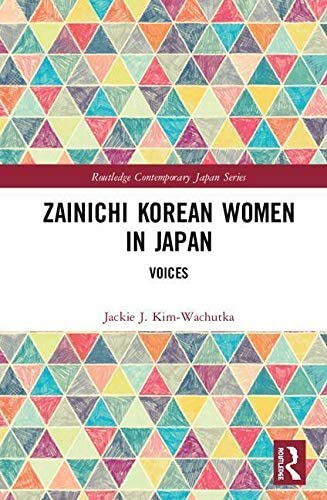
First, on Thursday 8 December at 10:00 Korean Time, Jackie Kim-Wachutka (Ritsumeikan University) will be talking about her book Zainichi Korean Women in Japan: Voices. More information and registration available here and here:
Presenting the voices of a unique group within contemporary Japanese society—Zainichi women—this book provides a fresh insight into their experiences of oppression and marginalization that over time have led to liberation and empowerment. Often viewed as unimportant and inconsequential, these women’s stories and activism are now proving to be an integral part of both the Zainichi Korean community and Japanese society.
Featuring in-depth interviews from 1994 to the present, three generations of Zainichi Korean women—those who migrated from colonial Korea before or during WWII and the Asia-Pacific War and their Japan-born descendants—share their version of history, revealing their lives as members of an ethnic minority. Discovering voices within constricting patriarchal traditions, the women in this book are now able to tell their history. Ethnography, interviews, and the women’s personal and creative writings offer an in-depth look into their intergenerational dynamics and provide a new way of exploring the hidden inner world of migrant women and the different ways displacement affects subsequent generations.
This book goes beyond existing Anglophone and Japanese literatures, to explore the lives of Zainichi Korean women in Japan.
Next, also onThursday 8 December, at 19:00 Korean Time, Gavin Campbell (Doshisha University) will present a Modern Japan History Workshop titled Modern Girl, Modern Geisha: Interwar Popular Entertainment and the Geisha of Kyoto. The Zoom link is https://u-tokyo-ac-jp.zoom.us/j/82336610079, and the password will be available here from December 5:
In 1927 a new building cast long shadows over the tiled roofs and narrow alleys of Kyoto’s Pontocho geisha district. Four stories framed by steel girders and clad with fashionable yellow bricks, the building dwarfed tea houses of wood, tile and paper. Inspecting it from across the river, an observer would have quite naturally wondered how much longer Pontocho’s narrow streets would echo the shamisen’s twang, the geisha’s song, and the quiet rustling of kimono over candle-lit tatami mats.
But in fact Pontocho geisha were thrilled. After all, they were the ones who had built this startlingly modern kaburenjo as a multi-purpose entertainment hall. It housed a large theater to showcase their district’s annual “Kamogawa odori,” it gave geisha and their maiko apprentices space for classrooms, and it boasted a large hall the public could rent out for dances, banquets or other fun. This new kaburenjo, then, was one prominent way Pontocho’s geisha adapted to a rapidly changing popular entertainment landscape.
Scholars of interwar Japanese culture have largely overlooked geisha in favor of department stores, cafes, and movie palaces, and the cabaret dancers, actresses and “modern girls” that all seemed to be making the geisha obsolete. Focusing on Kyoto’s Pontocho geisha district, this paper instead argues that geisha creatively adapted to new forms of mass spectacle and popular entertainment. Geisha are, in short, a fascinating and overlooked constituent in the emergence of “the modern.”
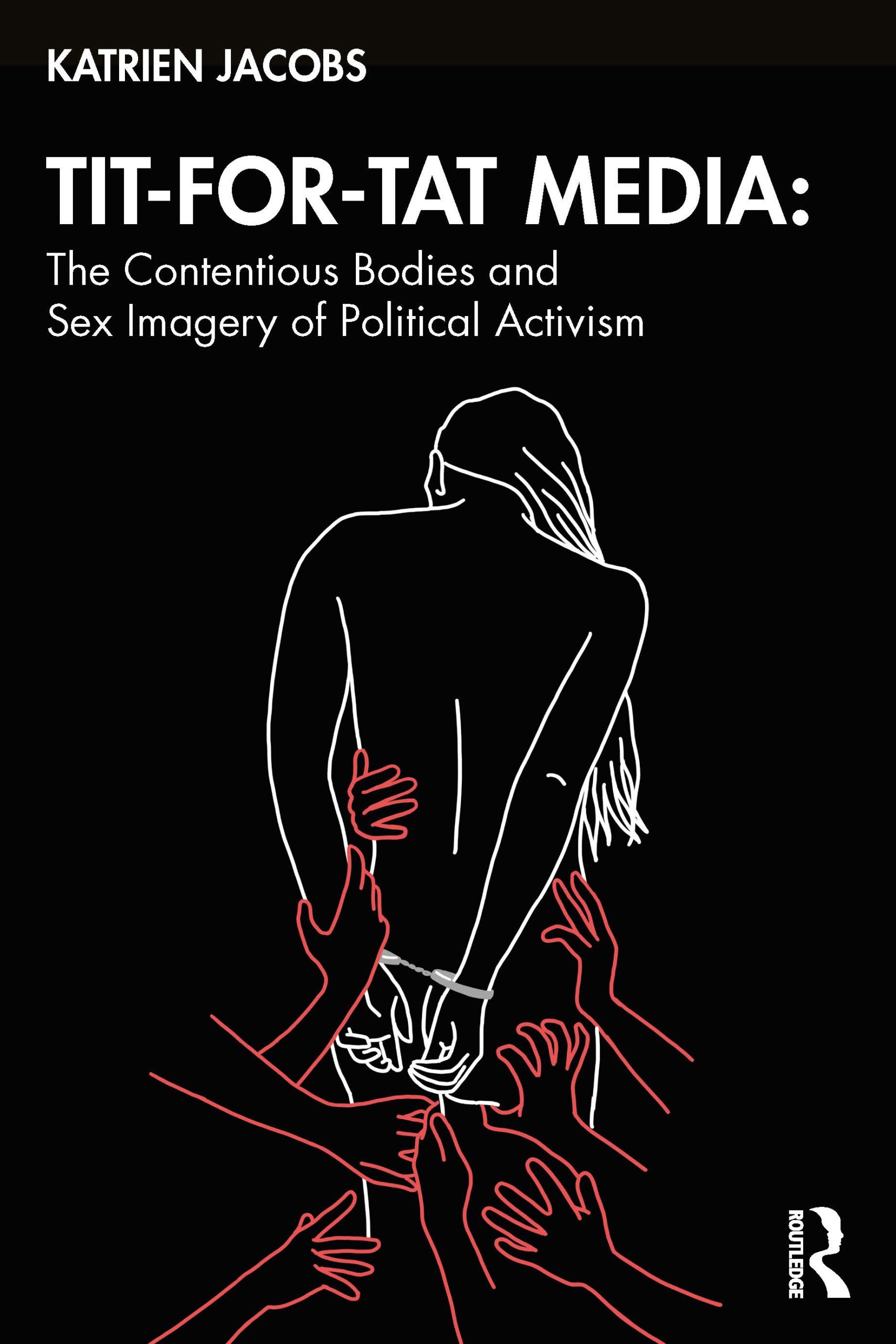
Then, on Monday 12 December from 20:00 to 21:30 Korean Time, Katrien Jacobs (Chinese University of Hong Kong and Ghent University) will lead a Centre for Research on Culture and Gender lunch seminar titled Tit-for-Tat Media and the Hong Kong Meltdown, (register and more info; Facebook event) in which she will discuss:
…a polarization in social media discourses and sexual politics in the field of online activism. Political activists across the political spectrum are using online visual cultures as “extreme speech” to target each other and as a mechanism of emotional release and social cohesion. The talk will zoom in on the role of sex-focused visuals used during the Hong Kong Anti-Extradition movement of 2019 and coinciding with “a highly radicalized “laam chau” doctrine. (“If we burn, you will burn with us”). It will outline the wider techno-political contexts of these visuals and also make a plea for archiving and studying them despite their highly contentious and “rubbish-like” nature. It will discuss research methods of “historicizing” and “humanizing” this imagery by positioning them as catalysts for radicalized movements, geo-political transformations and sexual well-being. At the same time, it will ponder a shift in a researcher’s methods of online ethnography from open and affective encounters or observations towards a cautious handling of highly polarized and politicized materials.
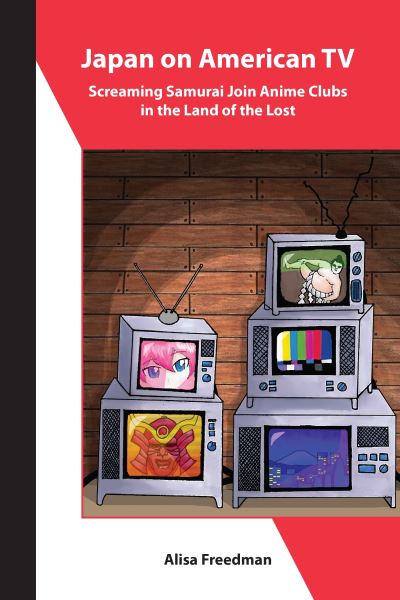
Finally, on Friday 16 December from 17:30 to 19:00 Korean Time, Dr. Alisa Freedman (University of Oregon) will give a talk titled Japan on American TV: An Alternate History of US Fascinations and Fears of Japan. More information and registration available here and here:
This talk explores political, economic, and cultural issues underlying depictions of Japan on US television comedies and the programs they have inspired. Since the start of regular broadcasting in the 1950s, US television programs have taken the role of “curators” of Japan, displaying and explaining selected aspects for viewers. Beliefs in US hegemony over Japan underpin this curation process. Drawing from my book Japan on American TV, I will take a historical perspective to understand the diversity of TV parodies about Japan and show how these programs reflect changing patterns of cultural globalization and perpetuate national stereotypes while verifying Japan’s international influence. I will suggest strategies for using TV comedies as research and teaching tools to gently approach racism, cultural essentialism, cultural appropriation, and other issues otherwise difficult discuss. Television presents an alternative history of American fascinations with and fears of Japan.
If you reside in South Korea, you can donate via wire transfer: Turnbull James Edward (Kookmin Bank/국민은행, 563401-01-214324)
Potential customers are put off by unequal sex ratios, and Duo already has more female customers than male ones. So what gives?
Estimated reading time: 4 minutes.
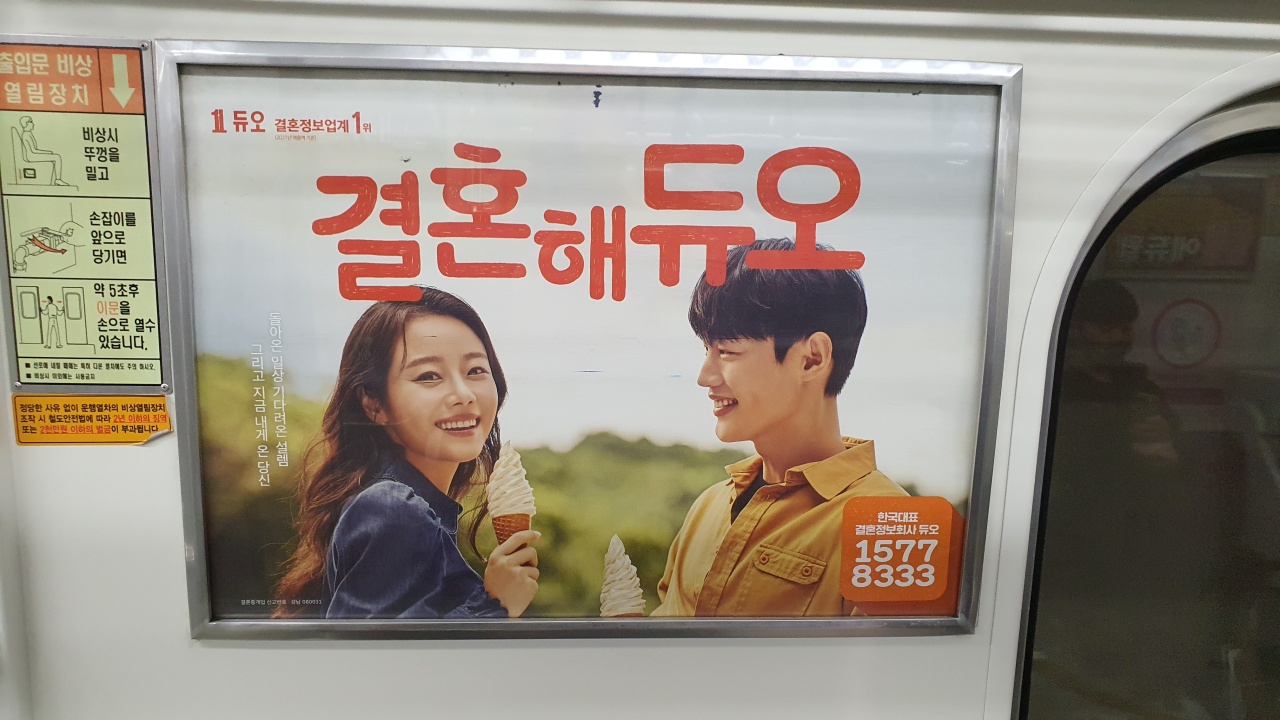
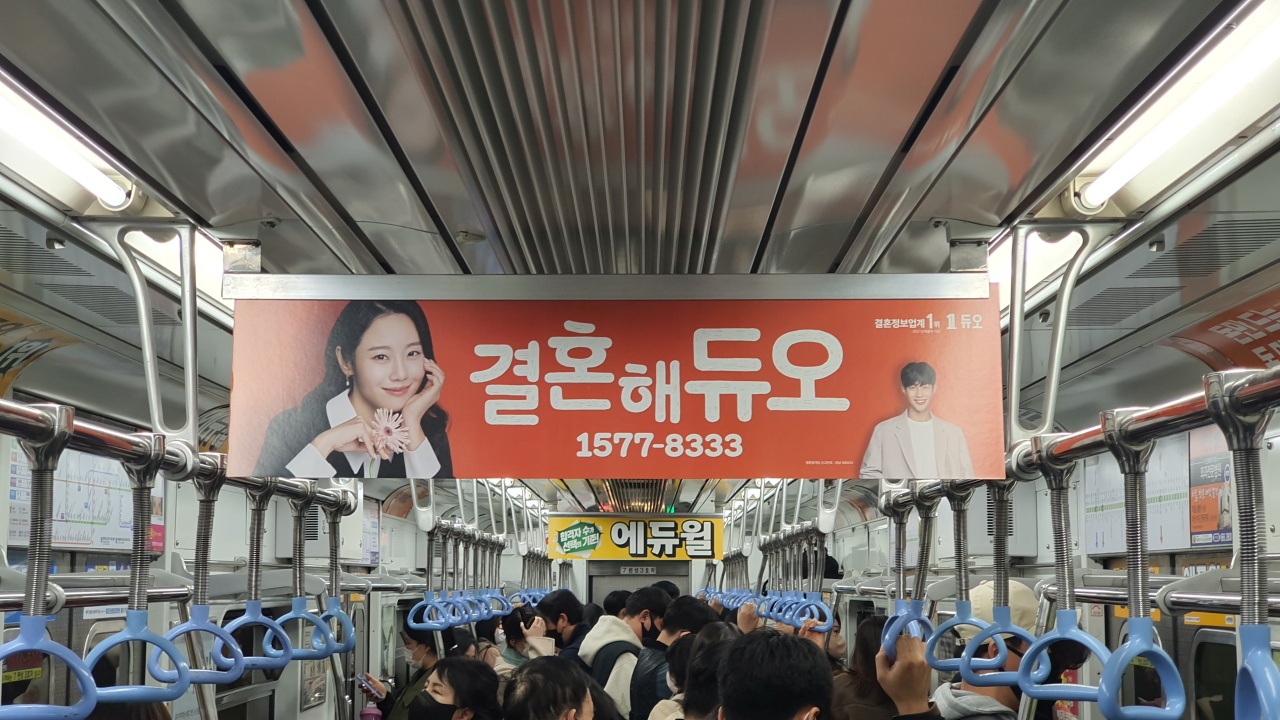
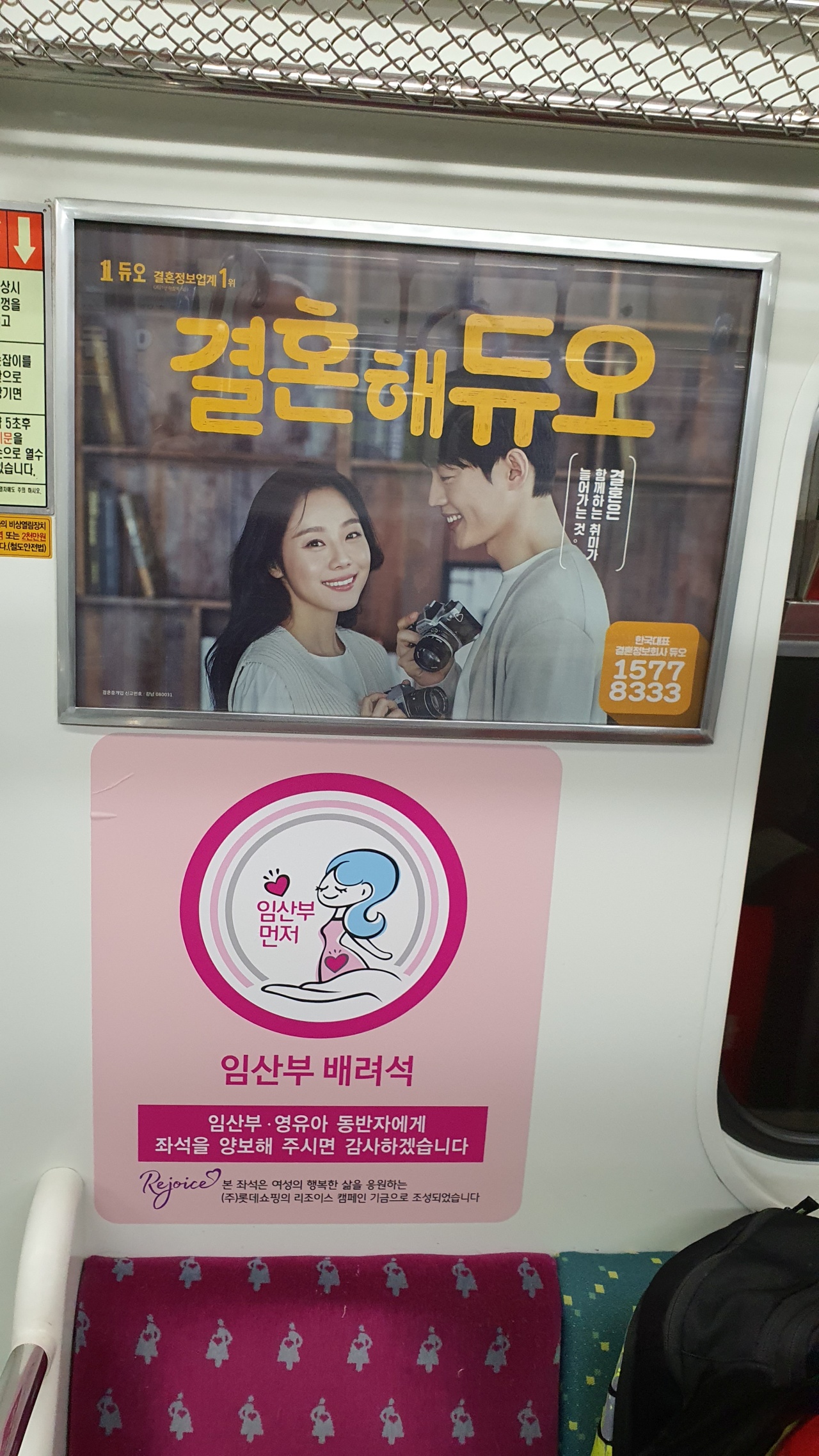
I know, I know—I’m not even divorced yet, and I’m already looking at marriage agencies. But the reality is that Duo’s latest campaign ads are just impossible to avoid on Korean public transport at the moment. And the obvious emphasis on attracting female customers in them, for a service ostensibly about providing those women with as many romantic encounters with male suitors as their finances allow, should give everyone misgivings. For it’s not like correcting an excess of male customers is the motivation.
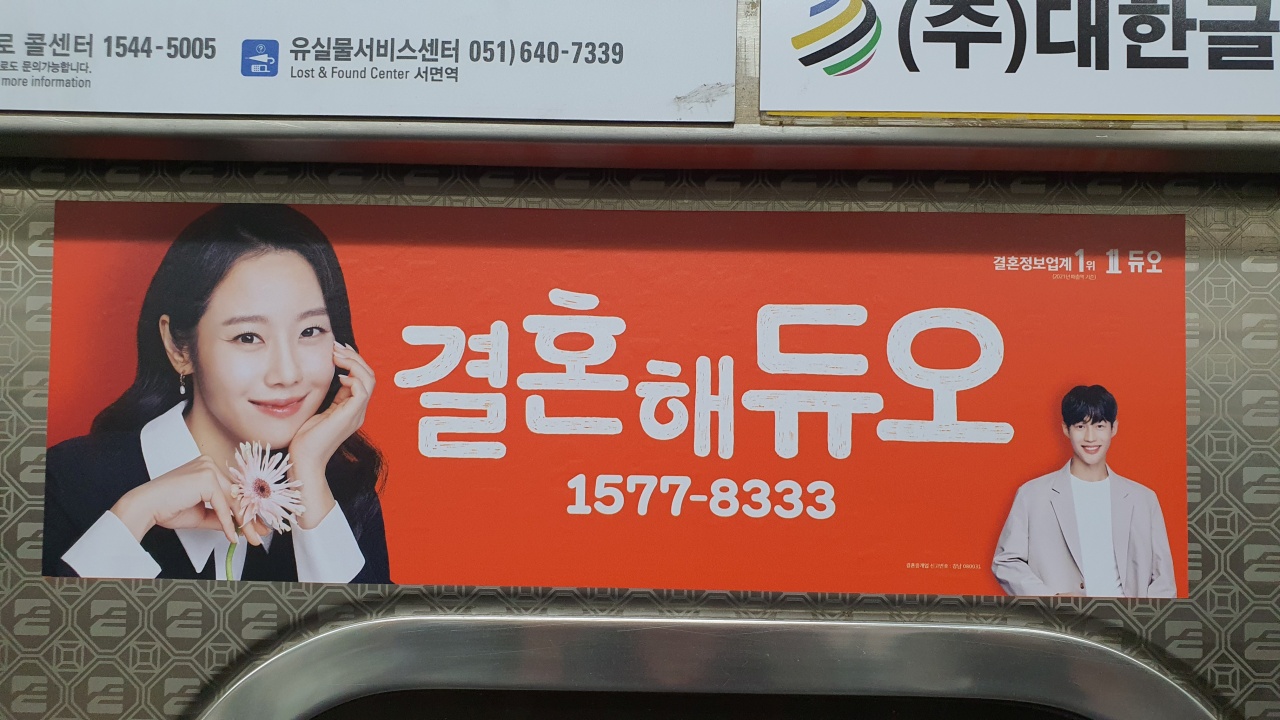
This concern may still sound odd. “Sweet,” I’d wager, is what usually comes to mind when most people see Duo ads. Indeed, I only did a double-take at this one at all because I happened to be reviewing my translations of a lavishly-illustrated, feminist Korean book about paintings of nude women (as any normal person does on the subway), and, glancing up, was immediately struck by how unlike those paintings the ad was. For actor Lee Shi-won/이시원‘s look back at the viewer doesn’t exactly scream pandering to the male gaze. Nor did all the other Duo ads on the subway carriage I could see from my seat, some of which just had Lee alone, and only one of which had model Noh Seong-Su/노성수 looking back with her.
Then my stop was coming up. And you don’t exactly need to have read Erving Goffman’s GenderAdvertisements to be realize what the ‘relativesizes‘ of Lee and Noh in these ads signify in the ads I saw once I stood up:
But so what? What is the issue exactly, about Duo prioritizing women?
Well, the last time I checked in 2020, Duo had more female than male customers then, at a ratio of something like 6 to 4 or 5.5 to 4.5.
I don’t know if this ratio was affected by the pandemic. But regardless, more women competing for fewer men clearly disadvantages them. That extra level of competition also incentivizes charging women more for the same services offered men. Which indeed Duo, and most of the over 1000 other registered agencies out there, do so with a gusto.
So, although Duo clearly retains the financial resources for its latest massive campaign, I speculate that it may actually represent a doubling-down on financially discriminating against young women. And, given Duo’s position as a industry leader and model, I have concerns about what this will have on Korean dating, gender roles, and marriage norms.
Not convinced? Really, it’s only a matter of degree. Please see my in-depth investigation from 2020 for a plethora of evidence on how that sexual discrimination has in fact been occurring for decades. And don’t let me forget the influence on body-image either: just a few months ago, one agency focusing on wealthy clients, with nearly half a million customers, came under fire for its strict financial criteria for admitting men, but only requiring a members’ vote of 3.6/5 on appearance alone to admit women. I also invite readers to consider that demanding women pay more to date men than vice-versa,* and deliberately skewing their customers’ sex ratios to justify this, is surely yet another form of “pinktax” that perpetuates the gender gap.
*(I realize that the norm in Korea is for men to pay on dates; no social issue that is interesting isn’t complicated!)
Am really far too busy…must resist…but neither spirit…nor flesh…is willing…
So, let’s just make letting you know about interesting online presentations and webinars I’m attending a regular thing from now on.
In chronological order then, with the first one starting just tomorrow (hey, I only just found out about it myself!):
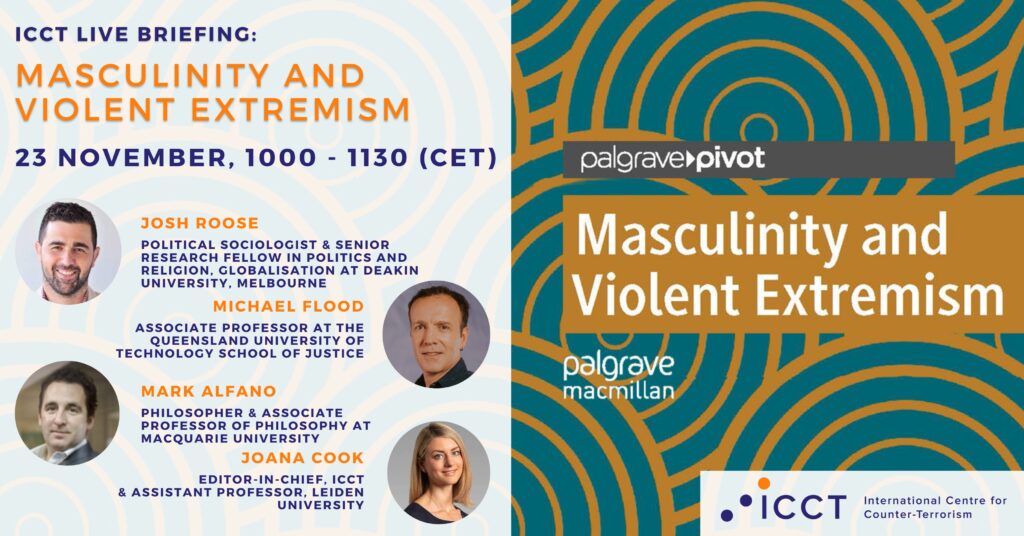
On Wednesday 23 November, 18:00-19:30 Korean Time / 10:00-11:30 CET, the International Centre for Counter-Terrorism will host a live briefing for the release of the book Masculinity and Violent Extremism. More information and registration here:
Update: Here’s a recording of the webinar. One of the presenters, Professor Michael Flood, told me it’s going to be made into an open-access book soon too. I’ll keep you posted! :)
Next, on Tuesday 29 November, 12:00 Korean Time, Chuyun Oh (San Diego State Univ.) will give a talk about her book K-pop Dance: Fandoming on Social Media. More information and registration here and here:
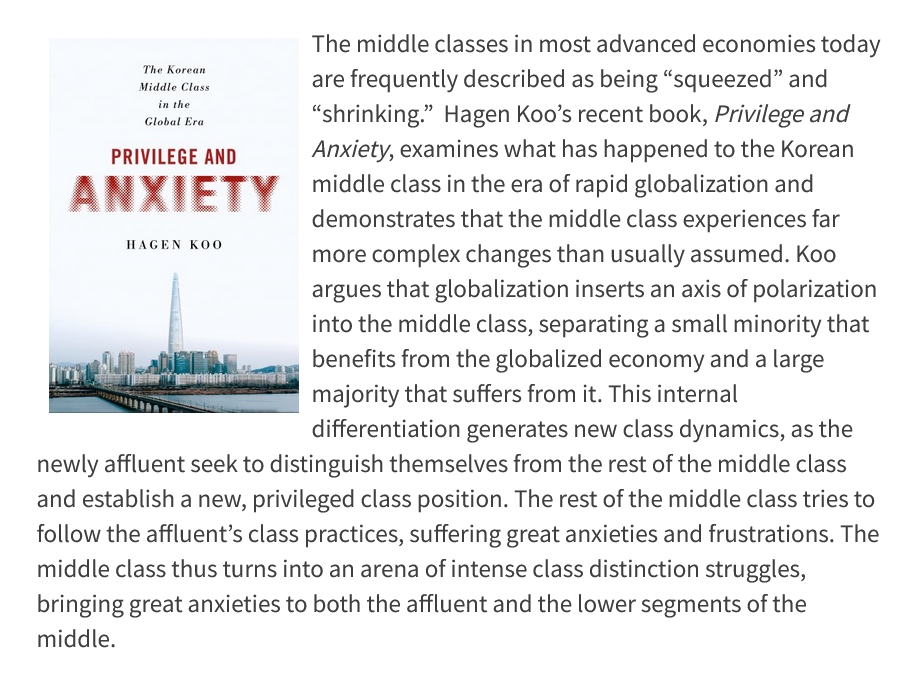
Then on Friday 02 December, 09:00-10:00 Korean time / Thursday, December 1, 16:00-17:00 (Pacific), Hagen Koo will talk about his book Privilege and Anxiety: The Korean Middle Class in the Global Era. More information and registration here and here:
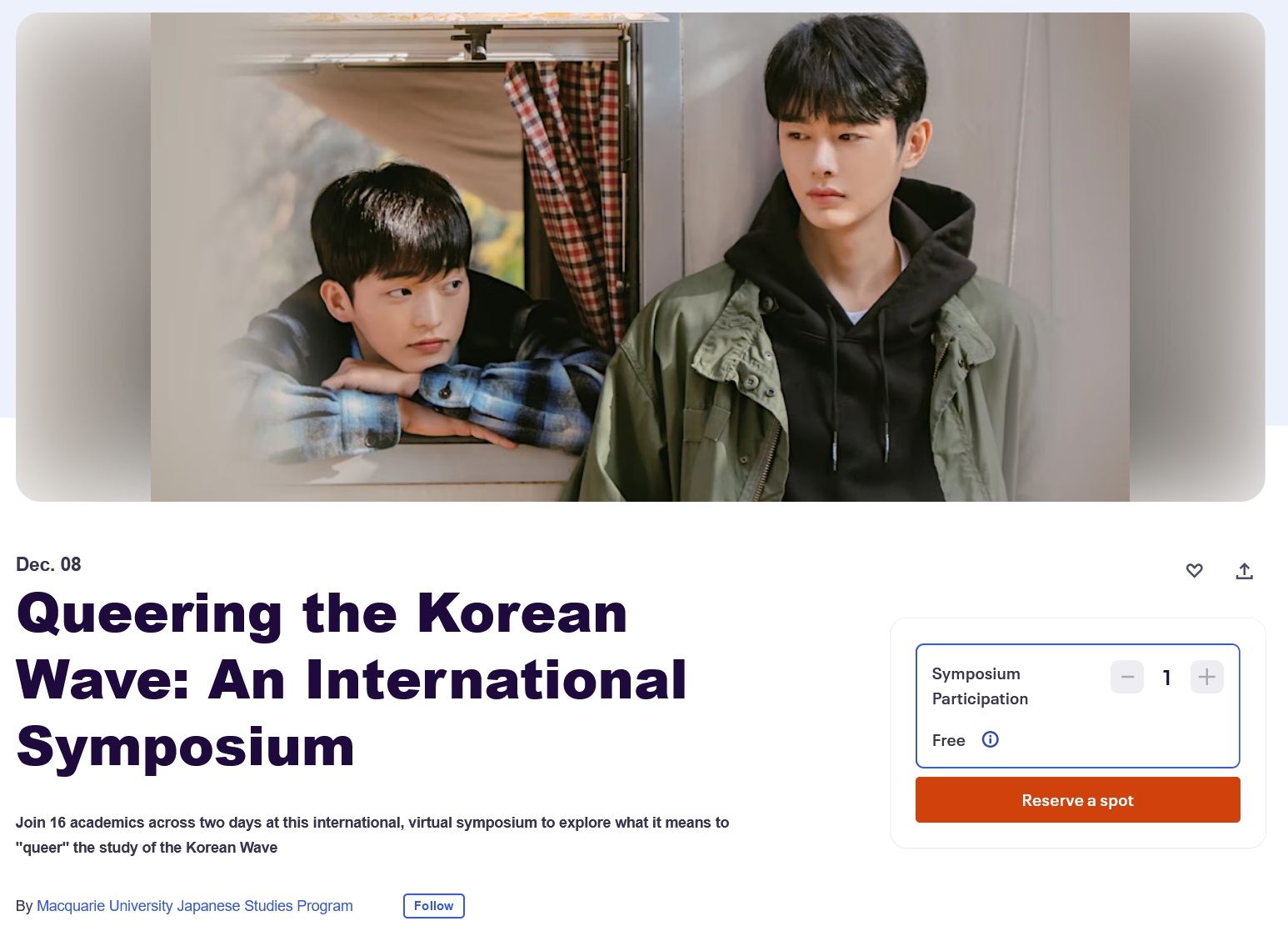
Finally, on Thursday and Friday, 08 and 09 December, 11:30-19:00 Korean time, 13:30-21:00 AEDT, the jam-packed Queering the Korean Wave: An International Symposium will be held, with multiple presentations spread over the two days. See here for more information and registration:
What are you waiting for? ;)
If you reside in South Korea, you can donate via wire transfer: Turnbull James Edward (Kookmin Bank/국민은행, 563401-01-214324)
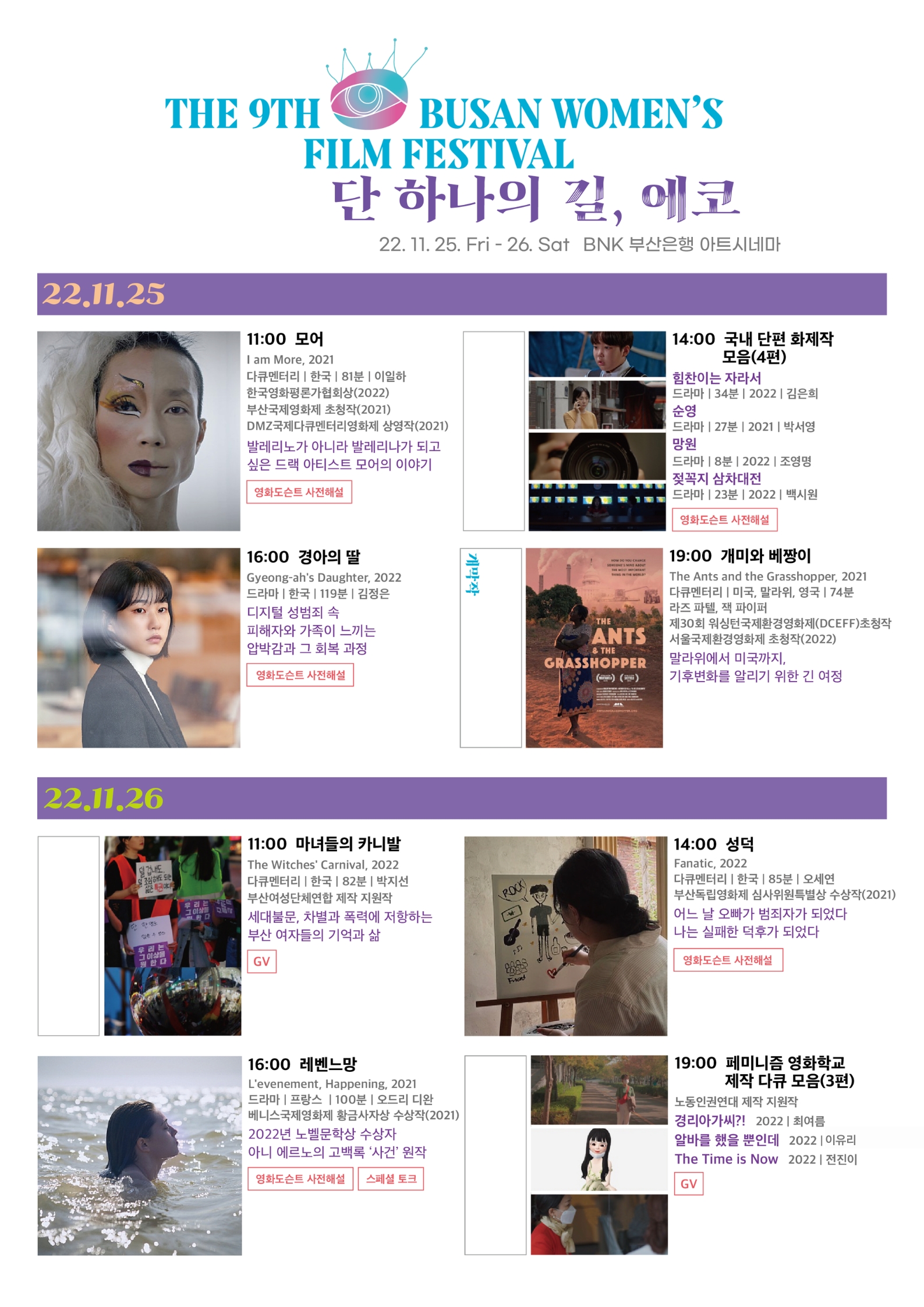
Curiously unconcerned about consulting with me first (I know, right?), the organizers of the Busan Women’s Film Festival scheduled this year’s event to open on the day of my divorce hearing.
This somewhat complicates my own attendance. But don’t let that stop you!
Obviously if your Korean is good, then you’re spoilt for choice. As for non-Korean speakers though, unfortunately I’ve yet to hear if any of the Korean films will have English (or even hangul) subtitles available, and frankly doubt there will be. (Update: The organizers have confirmed only the two foreign films will have subtitles.)
However, there is the English-language The Ants and the Grasshopper screening on Friday night, and the French-language L’événement on Saturday afternoon. With translation apps or plugins, reserving tickets for either and arranging the bank transfers seem pretty straightforward.
So what are you waiting for? ;)
If you reside in South Korea, you can donate via wire transfer: Turnbull James Edward (Kookmin Bank/국민은행, 563401-01-214324)
It’s not as simple as just increased childcare responsibilities—Korea already has a record-low birthrate, and women journalists the world over have less children than women in most other professions. So what gives?
It is a truth universally acknowledged, I like to think, that a single industry so possessed by one sex, must be in want of dramatic reform.
Okay, I did force that Austen-like opener somewhat.
But when you realize that the entry number of Korean women journalists has started to exceed that of men in recent years, only for most women to leave the industry in less than 10 years? Also, that the ensuing absence of women mentors, and continued domination of newsrooms by masculine culture are, ipso facto, some of the main causes of that?
Perhaps awkward forced changes, such as quotas for board members of news organizations, are precisely what the industry needs.
If your interest isn’t piqued just by the title alone, let me leave you with some telling quotes that demonstrate why it really should be,* and please get in touch if you don’t have access to a copy.
*Apologies for removing the numerous sources mentioned for the sake of readability. Please consult the original for those, many of which sound just as interesting and informative as this one!
First, on why I think quotas are absolutely necessary:
…in South Korea in 1996, JoongAng Daily, one of the largest South Korean newspapers, employed only 24 women journalists out of a total of 402 journalists. Soon after, the percentage of women journalists began to surge so that by 2020 women accounted for about 32.8% of the total number of journalists. However, most women journalists were younger and about 10% of women journalists were in top-management positions.
And:
In South Korea in recent years, although the entry number of women journalists has exceeded that of men journalists , there were only 7 women out of 138 (5.07%) board members among the 29 major news organizations.
Next, on why a gender balance in news media is so important:
The under-representation of women journalists in newsrooms is regarded as problematic based on findings of previous studies that the gender of journalists influences their reporting practices as well as the content of news coverage. For example, a recent study found that news organizations where women journalists occupy positions at editorial levels were more likely to have covered the “#Me Too Movement” than organizations without women editors in high positions. In fact, previous studies have repeatedly reported that with fewer women journalists, portrayals of women as well as marginalization of women’s concerns are themes often overlooked in news stories. Therefore, if women journalists consistently exit the news industry, their voices in covering newsworthy topics will likely disappear along with recommendations for improved newsroom policies and culture.
Moreover, in the absence of upper-level women journalists…
…several studies have shown that while the number of women journalists has increased, characteristics of newsrooms as masculine domains remain entrenched. In fact…“Young women journalists decided to resign because of men-centered culture and they felt they had less attention than men journalists from their organizations.” [Also], although there has been an increase in the number of Korean women journalists in recent decades, the traditional model of newsrooms based on a male model that expects strong work commitment and unusually long hours has not substantially changed. In addition, in South Korea, women journalists often face work-family conflicts after marriage due to society’s concepts of the traditional gender role of women, influenced by Korean cultural standards.
…the results of this study show that the three most important factors in women journalists’ leaving the newsroom are (1) the weakening of social status, (2) a newsroom dominated by masculine culture, and (3) additional online workloads.
…although more and more women journalists have entered the news industry, the masculine newsroom culture has not changed because most of high-level positions in news media organizations are still held by men journalists. Interestingly, in-depth interviews, conducted…with nine young women journalists who resigned with less than 10 years of experience, revealed they had voluntarily left because they were unable to “find a role model who overcame the male-centered culture of a journalist society and the organizational culture of newspaper companies.” Their responses indicate that women journalists in South Korea continue to be perceived as “often excluded from the internal networks established by men.” Also, they are less likely than men to have the benefit of mentors.
It’s been a while, I know. Sorry. Please rest assured many posts are coming soon, and many more ideas are being worked on.
However, time and tide wait for no (wo)man. Nor, indeed, do the registration periods for Zoom lectures care much for what bloggers have got going on in their lives.
So, while of course I can’t post about every interesting-sounding Zoom lecture and webinar out there, I will always try to at least let you know about the ones I’m personally attending.
If you are able to make it to any of them, that’s just great, I hope you enjoy them, and please feel free to say hi in the private chat any time!
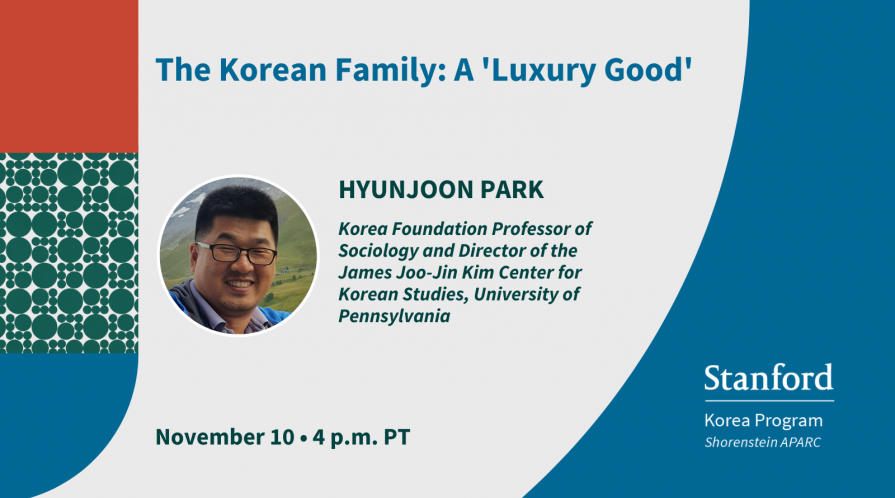
In this talk, Hyunjoon Park will give a brief overview of how Korean families have changed over the last three decades in various family behaviors. Although the trends of falling marriage rates and rising divorce rates, along with the increase in the population living alone, are well known, less known is divergence in those family behaviors between the more and less educated. Tracing family changes differently for those at higher and lower ends of the educational hierarchy highlights growing educational differentials in family life. Compared to their college-educated counterparts, it is increasingly difficult for those without a college degree to form and maintain a family in Korea, making the Korean family a ‘luxury good.’
Next, literally as soon as that finishes, at 10am Friday 11 November Korean time:
The International Center for Korean Studies of the Kyujanggak Institute is hosting a Book Talk series, introducing Dal Yong Jin’s Transnational Korean Cinema: Cultural Politics, Film Genres, and Digital Technologies.
Title: Transnational Korean Cinema: Cultural Politics, Film Genres, and Digital Technologies
Date: November 11 (Friday) 10:00 – 12:00 (Seoul)
Author: Dal Yong Jin (Simon Fraser University)
Moderator: Seok-kyeong Hong (Seoul National University)
Discussants: Jihoon Kim (Chung-Ang University), Chung-kang Kim (Hanyang University)
The event will be held online via Zoom. The link for Zoom meeting will be sent a day before the event after your registration is confirmed.
Please contact icks@snu.ac.kr (Tel. 02-880-9378) for more information.
Finally, at 10am Thursday 17 November Korean time:
Spurred by this review at The Japan Times, I read the book last December and thoroughly enjoyed it, rating it 5 out of 5. So please do be warned that if you click that link, you’ll doubtless end up ordering a copy too ;)
Gabriele Koch is an Assistant Professor of Anthropology at Yale-NUS College in Singapore. Gabriele is a sociocultural anthropologist whose research focuses on the social meanings and consequences of care in contemporary Japan. Her first book, Healing Labor: Japanese Sex Work in the Gendered Economy (Stanford University Press, 2020), explores the relationship between how adult Japanese women working in Tokyo’s sex industry think about what sex is and the political-economic roles and possibilities that they imagine for themselves. The book examines how Japanese sex workers regard their services as a form of socially necessary care and highlights the gendered interdependencies and inequalities that shape women’s work in the Japanese economy more generally.
See you there!
If you reside in South Korea, you can donate via wire transfer: Turnbull James Edward (Kookmin Bank/국민은행, 563401-01-214324)
In response to a former Korean pornography actor’s shame preventing them from dating, I like to think that if they were monogamous with me, and didn’t behave in real life the ways they’d been required to in their videos, then I wouldn’t mind their past at all. But that’s all very easy to say when an opportunity to meet is so unlikely to ever occur. If it did, would I turn out to be a hypocrite? Would you?
In Korea, something pretty big was cut from Boogie Nights, Paul Thomas Anderson’s classicportrait of the 1970s LA porn industry. But it wasn’t what you might think.
Instead, it was the three-minute scene where Julianne Moore, playing pornography actor Maggie/”Amber Waves,” tries and fails to get visitation rights to her son. Not only is it an extraordinary performance by Moore, but it also shows a very human side to the industry, providing a profoundly dark, thoughtful counterpoint to the glamour, sex, drugs, and tension that defines the rest of the movie. It was easily the most memorable scene from when I first watched the movie in New Zealand in 1998, and why I was virtually apoplectic when I suddenly realized it was just not there at all when I watched it again in Korea two years later.
Seeing the headline “Adult actress Seo Ha-hee looks for genuine love through tears” the same day as tributes to 25 years since the release of Boogie Nights then, I felt a duty to highlight her story. Yet it’s not really a news item per se, but rather a few slides from Insight’s Instagram account about her appearance (and lamentation) on a new Disney+ show; as Netizen Buzz has already translated the comments, the least I could do is translate the captions in a moment below.
But if felt insufficient.
Looking ahead then, eventually I’d like to cleave throughthe mass of (contradictory, hypocritical, patronizing, completely ineffectual) censorship laws in an attempt to determine exactly how South Korea remains one of the few developed countries where pornography is largely illegal. In particular, considering just how simple it is to download pornography from overseas, I’m especially intrigued by how the legal domestic Korean pornography industry continues to exist at all, when even pubic hair may not be shown on it (let alone genitalia) and the sex is so obviously simulated. Is the hospitality industry literally its only consumer, given that even in 2022, Korean hotels, motels, and yogwans still invariably have a few cable Korean pornography channels available on their TVs?
Either way, as Kelsey the Korean points out in her recent video above (from 6:08), while there’s a great deal about mainstream pornography that’s objectionable, it’s not like Korean censorship laws are achieving their stated aim of protecting the sexual morals of Koreans from it. If anything, she alleges, they may in fact be no small factor in their utter corruption and distortion. The lack of healthier homegrown options, I tend to agree, may indeed play no small role in channeling manyyoung men to what (illegal) Korean pornography has become notorious for instead—anongoingspy-camepidemic.
Yes, healthyfeministpornographydoes exist—provided you’re prepared to pay for it, to help ensure the working conditions and salaries which make it such. And, seeing how much damage Korean censorship laws seem to have done in promoting unhealthy alternatives, then why not unblock access to other options?
In that sense of changing hearts and minds about pornography, would you say Seo Ha-ni’s “confession” below is a step in the right direction? Or do you think her shame about her former profession, so great that she hadn’t been prepared to date at all in the last five years, merely perpetuates stereotypes? Please let me know in the comments!
“I’m looking for a man who can understand what it’s like [/not worry about] to be [dating] a [former] pornography actor.”
A woman sheds tears in her quest to find true love.
[Insight reporter Gwon Gil-yeo]
Many people claim their loved one’s pasts are not important.
But if it were you, to what extent would that be true?
An interesting new dating reality program tests whether you can really fully understand/[not worry about/forgive] your true love’s past.
Released on Disney+ on 5 October, Pink Lie is a show in which one cast member each episode confesses lies they’ve been living under, in order to find true love from people who accept them for who they are.
In the first episode, Seo Ha-ni (36) drew attention for having formerly worked as a pornography actor.
For the last five years, she has run a candle manufacturing workshop. She describes herself as a candle artist, never revealing her past as a pornography actor.
She has performed at a high level in the industry, appearing in such movies as The Purpose of Reunion 2and Private Tutor: Advanced Course (NSFW). [James—Rather confusedly, the former has no sex or nudity, and indeed is even available on YouTube.]
Seo Ha-ni, who cried while talking about her past, said “[Because of my former job], men [constantly] send me photos of their genitals or nude body shots on social media.”
This has meant she’s never been comfortable in romantic relationships.
“I’m always worried that someone will recognize me in public,’ Seo Ha-ni said. “So, I’ve never held hands with a boyfriend while walking among the cherry blossoms. I’ve never had fun in water with a boyfriend in the summer, never walked together in the Autumn leaves, and never gone skiing with someone in the winter.”
In fact, Seo Ha-ni has [been so nervous she has] avoided men completely, confessing she has not been in a relationship in a whopping six years.
There is a lot of interest in her case, and everyone is anxious for her to find true love with someone without prejudice.
[James: The remaining two slides just explain a little more about the show.]
Meanwhile, three other women and four men appeared in the first episode.
They were: Han Ba-reum (33), a researcher at Samsung Electronics’ Future Technology Research Center; Han Da-on (31), a beauty company marketer; Kang Da-hae (26), an intern at a fashion company; Hong Ha-nu (32), CEO of Hallyu Entertainment; Park Han-gyeol (25), a wedding video company CEO, and Mo Chan-sol (29), an elementary school gym teacher.
Although they disclosed their age and occupation, in fact, just like Seo Ha-ni [at first], they were all lying.
According to the rules of the show, they must not reveal their lies [until their turns in later episodes].
MCs singer Kim Hee-chul, actor Lee Sun-bin, and YotuTuber RalRal all expressed their curiosity about what truths were hidden by the cast.
Episodes 1 and 2 of Pink Lie were released on 5 October, which single episodes to be released once a week on Wednesdays. (END)
Pervasive sexual inequality can feel like death from a thousand cuts. No one source of pain or minor irritation isn’t possible to dismiss or play down in favor of other, more visceral struggles against the patriarchy. But as it turns out, women’s relative absence from the legal profession has cascading effects across all society.
Estimated reading time: 6 minutes. Photo by cottonbro at Pexels.
When young Korean men return to university after doing their military service, they’re generally two to three years older than their female classmates. In a society where age really, really matters, this gap can grant those men a great deal of privilege. For example, by being able to avoid various mundane tasks periodically required of students by the university, as these get foisted onto the young(er) women instead. Like during this coming December after the university entrance exams, when some of my female students will be expected to “volunteer” to waste a precious day before their tests by bowing in the freezing cold to visiting high-schoolers as they arrive on the bus, while my male students study from the warmth comfort of the library.
Damn right, do I see a direct link to why so many talented and highly educated women are wasted answering the phones and making the coffee at Korean workplaces.
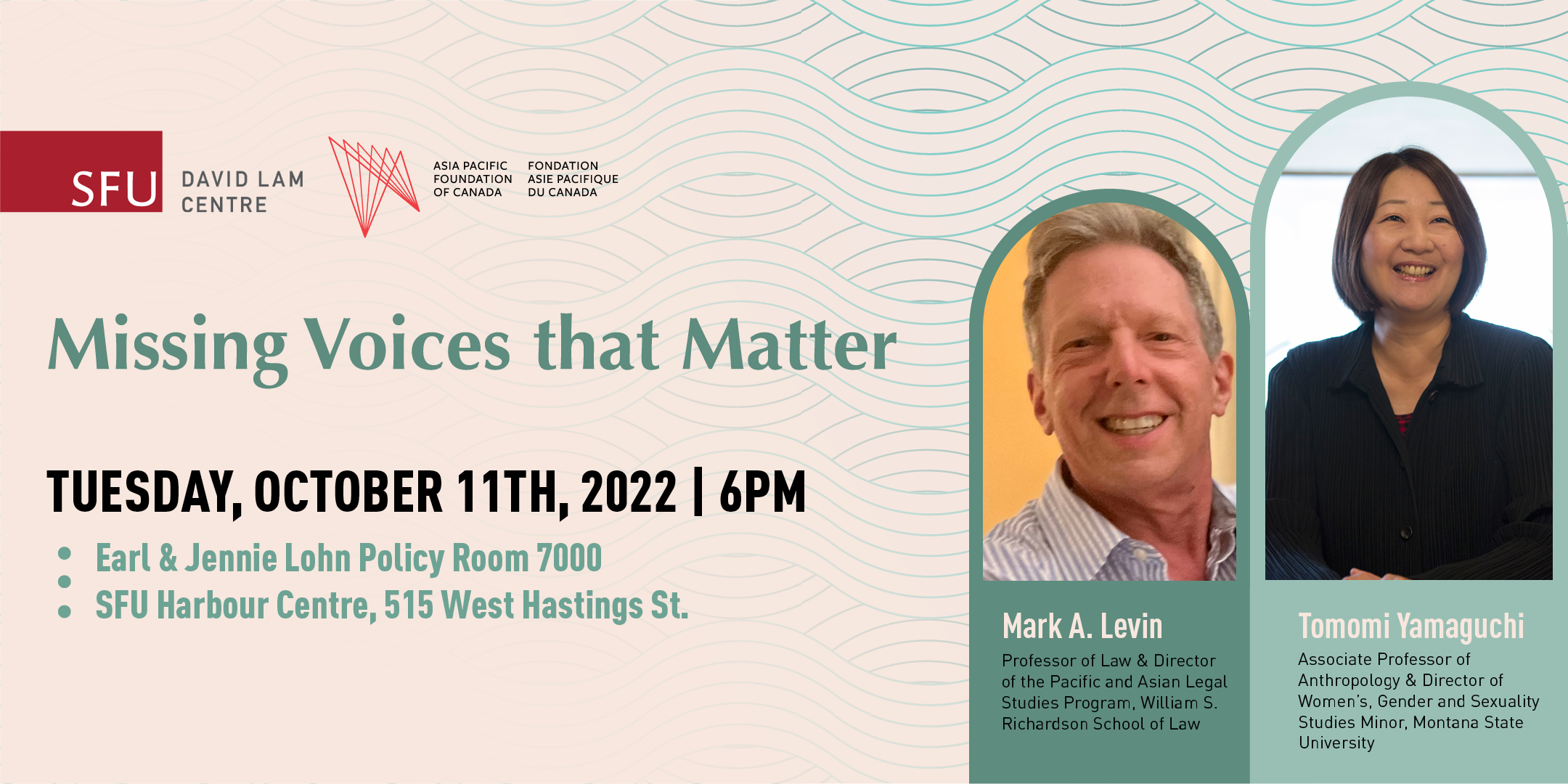
All of which may feel like an odd introduction to announce an upcoming hybrid talk (register) by Mark A. Levin and Tomomi Yamaguchi at the David Lam Centre of Simon Fraser University, which is not actually about Korea at all. But, based on its description below, it still feels intimately useful and relevant nonetheless. Specifically, I’m wagering it will reveal many more instances of how something seemingly innocuous like a slight age gap can have surprisingly wide implications for sexual equality, offering many similar possibilities to explore—and combat—in the Korean context:
“While the U.S. and Japan’s earliest generation of female legal scholars showed roughly similar numbers, their paths soon diverged dramatically. The number of women in the two legal academies in the 1950s to about 1960 were not all that different. Both nations counted phenomenally low numbers similarly. The U.S. took an early lead, but not by all that much. One report counted five women in tenure track positions in the U.S. in 1950 and another counted fourteen women before 1960. Japan could count five women by 1956 and eight women by 1958. Neither fifteen women in the U.S. nor eight women in Japan represent even token counts among individuals who made up the two countries’ legal academy professoriate in those times.”
“The difference then is in what followed. In the U.S., we crossed a count of 100 women around 1970 and then accelerated to 516 women by 1979, while Japan’s count essentially flatlined. From 1958 in Japan, there were no new women entrants for about ten years and then the next uptick in Japan was just five women entering the field in the late 1960s through 1974. After a second near hiatus of about eight years, Japan then saw some modest growth to have a total of twenty-two women who had entered law teaching by 1988. Our next found data point is 402 women in 2004.”
“The profound scarcity of voices of women academics as leaders, teachers, and scholars in Japanʻs legal academy for several decades remains significantly detrimental for Japanʻs gender circumstances today. The story demonstrates how crucial womenʻs and other feminist voices are in addressing gender gaps and dismantling patriarchy in a society. In particular, having women and feminist allies in the legal academy is essential for feminism to advance in a society. Conversely, deficits regarding women and feminist allies in the legal academy will invariably impact the overall society’s gender circumstances for the worse. And so, just as feminist legal theorists would suggest, it seems essential to assess those circumstances in Japan with the idea that gender gap deficits in Japan’s legal academy must be at least a contributing factor to the nation’s profound and distressing gender gap situation more generally that continue to the present day.”
“This talk aims to explore not only how, but why the two paths diverged so significantly. With time allowing, some effort will be made to draw upon Canada’s circumstances to add another historical sequence into the telling here.”
♥
Truthfully though, it was not those possibilities that first convinced me to sign up. Rather, it was the disjuncture the blurb noted between Japan’s postwar democratic, egalitarian ideals and the actual practice in Japanese women’s personal and professional lives. For it all sounded very familiar (as it probably did to many of you too), having already read much the same in a chapter from a classic Korean studies book: “The Concept of Female Sexuality in Korean Popular Culture” by So-hee Lee (pp. 141-164) in Under Construction: The Gendering of Modernity, Class and Consumption in the Republic of Korea (ed. by Laruel Kendell, 2002). To refresh your memories from page 144, with my emphases:
“[Korean women in their early-30s {now early-60s}]…were the first female generation to go to school en masse, side by side with their brothers. As Wonmo Dong (1988) argues, they learned democracy and its fundamental principles of liberty and equality as an academic subject, not as something to practice in everyday life. From the beginning of their university days, around 1980, they were pushed into the whirl of extremely violent demonstrations to demand national political democratization. Although political protests had long been a part of Korean student life, there was something about the culture of protest that emerged in the 1980s that was different from what had gone before; student activism became an all-pervasive and all-defining experience. In those days, various slogans and ideologies relating to the struggle for democracy were strongly imprinted on the consciousness of this generation as a metadiscourse. However, the students of the 1980s never examined these democratic values in the context of their own everyday lives.”
“Go Alone Like the Rhinoceros’s Horn (Source, left: Whitedevil) illustrates the bifurcation between theory and practice. Looking at their mothers’ lives,Korean women in their early thirties believed that their marriages would be different. Because the Korean standard of living and patterns of material life changed very quickly, they believed that Korean ways of thinking had been transformed with the same speed. This is where their tragedy begins. As Hye-Wan in the novel says, mothers “teach daughters to live differently from themselves but teach sons to live like their fathers” (Kong 1993, 83–84). As a result, the daughters’ generation experiences an enormous conflict between the real and the ideal. During sixteen years of schooling, they have learned that equality is an important democratic value, but nowhere have they been taught that women experience the institution of marriage as a condition of inequality. Many married women of this generation have experienced a process of self-awakening similar to that of Yông- Sôn, who early in the novel tries to kill herself. She says,“Where have I been during the last eight years of my marriage?” and concludes,“Though I don’t want to accept it, I’ve been a sincere and faithful maid who must carry out his every request” (109). Korean wives in their thirties cannot envisage a real-life alternative to the self-sacrifices of their mothers’ generation.”
Update—Indeed it was. There seem to be technical difficulties embedding it here however, so if the video below doesn’t work please watch it on YouTube:
From now on, I’ll be posting information here about every upcoming Zoom talk I’ll be attending personally. And this particular one, how could I not shout from the rooftops about it, despite its horrible hour? Not only is it a rare one for focusing on Busan, my home for two decades, but it also covers wartime Korea. Which in hindsight, is a period I’ve severely neglected, sandwiched as it were between the Modern Girls and New Women of the 1920s and 1930s and the birth of Modern Korea.
Meanwhile, for information about any further upcoming Korea and East Asia-related public Zoom talks, I have to recommend Pusan National University professor CedarBough Saeji, who makes a real effort to inform everyone about as many as she can through her Twitter account. To make sure you don’t miss out, please follow her there @TheKpopProf.
가장 도발적인 작품은 소람 감독의 ‘그레이 섹스’다. 흑백으로 구분할 수 없는 회색지대처럼 성폭력은 아니지만 그렇다고 즐거운 섹스도 아닌 성 경험을 말한다. 여성의 성적 욕망 자체에 조명을 비추는 작품이기도 하다. 내가 무엇을 원하는지 정확히 알아야, 피해 아니면 가해라는 이분법의 언어를 벗어나 자신이 느끼는 혼란과 모호함의 정체를 붙들 수 있다고 말하는 듯 하다. ‘미투’ 운동에 대한 다큐멘터리라기보단 말 그대로 ‘미투 그 이후’, 새로운 장으로 넘어가기 위한 고민이다. 네 작품 중 가장 마지막으로 배치됐지만, 매끈한 결론 대신 오히려 생각할 거리를 안고 극장을 나서게 한다.
“The most provocative [of the four mini-documentaries] is director Soram’s Grey Sex. It refers to sexual experiences that can be considered to be in a grey area—not outright sexual assault, but not exactly pleasurable, enjoyable sex either. It is also a work that shines on a light on the nature of women’s sexual desire itself. It seems to be saying that if you know exactly what you want, you can break free of the binary, dichotomous language of victim and aggressor, thereby taking control of and overcoming any confusion and ambiguity you may feel. Rather than a documentary about the ‘Me Too’ movement per se [like the previous mini-documentaries], it’s literally ‘After #MeToo,’ illuminating a path on how to move on to a new chapter. By being placed last of the four, rather than providing a smooth conclusion to the documentary as a whole, it give viewers something to think about as they leave the theater.”
See here for more information about this documentary as a whole, or these two trailers:
♥
Not going to lie, I’m expecting a few curious looks when I attend myself later this week. Will I be the only non-Korean person in the theater? The only man?*
What if that curiosity leads to—horror of horrors—someone actually striking up a conversation afterwards, forcing me to brush off my rusty spoken Korean skills as I explain why I came?
The peculiarities of my glorious visage aside, it would seem odd I was there. After all, my job is actually almost entirely devoid of office politics, because of reasons. True, there’s interacting with my young Korean students, which I admit will indeed always be overshadowed by my privilege of being a middle-aged cishet white man, not to mention the power over them which comes with conferring grades. Yet if you really knew anything my utterly lowly job, you’d laugh at the notion that such power was sufficient to seriously consider abusing it.
(Update—In hindsight, I realize my privilege in being a middle-aged cishet white man may have clouded my judgement about the lack of office politics. Sigh.)
Then there’s dating (etc.), which I’ve recently become painfully aware I haven’t pursued in nearly 22 years. Those few genuine offers I’ve received in all that time, that I like to pretend weren’t entirely just wishful thinking on my part (but do know I always turned down with nothing but grace and respect), don’t provide much of a foundation to navigate the choppy sexual politics of dating in the 2020s.
Gaining one then, is one good enough reason alone to watch this documentary. As is learning about the subject in general. There’s also simply showing financial (and moral) support for a worthy cause, which not everyone who feels the same way has the privilege to bestow. And finally, there’s reading that paragraph at the start of this post, through which I discovered that one of four mini-documentaries contained within speaks so profoundly to what I’ve read recently about #Metoo inthese twoexcellentbooks, which I’ll be discussing at a later date:
I completely share your frustrations though, that in Busan at least, Korea’s second-biggest city, in CGV cinemas it will only play for a total of 12 times over 4 days, As in, literally only a single theater, let alone having no subtitles available.** Still, for those of you with the Korean ability and time, I do hope you consider supporting it by attending.
**Update—Actually, it screened for much longer than expected, and did include Korean subtitles. Both of which were great of course, but it still seems odd not to mention the subtitles on the movie’s information page.
If you reside in South Korea, you can donate via wire transfer: Turnbull James Edward (Kookmin Bank/국민은행, 563401-01-214324)
I find myself only mentioning my private life at all, because I wanted to explain my sporadic writing as of late. Only once I got started, I just couldn’t bring myself to roll out the same old platitudes about the stress of the new semester, or simply being too busy.
Actually, the start of the new semester was very stressful. I have been busy. But the truth is, neither compare to the hell I’ve been going through these last few years, especially this past summer. Or how it’s just been so exhausting pretending everything’s okay.
Sorry to be so dramatic, and so cryptic. But simply making it “official” is helping me to move on, by forcing me to write about it. For just these few lines alone, knowing thousands of strangers are going to be reading them, reflect many hours of grappling with my demons. Let alone the thousands more I’ve only written to myself.
It’s in the same spirit of candor, and of writing as a process, of both informing and learning, that I want to apologize for being unable to produce the long, well-researched posts—à la The Grand Narrative—which I know most of you prefer. My head just hasn’t been in the right place, and now you know why.
But now, I realize know how desperately I need to write anyway.
So what to do?
Just write of course. But that’s easier said than done, when writing is both the solution and the problem.
Well, for the time being, avoid those long posts. Just write whatever brings you joy instead. Whether that is: informing people of an interesting-looking Korean documentary on #Metoo that you’re going to make an effort to see, despite the lack of subtitles; sharing a paragraph on the gender politics of Japanese fitness clubs that made you buy the book on the spot; waxing lyrical over a sculptor’s unique skills, even if you did only find out about their two week-long exhibition half an hour after it had ended; gushing over how good it feels to be reading and understanding a Korean language book about feminism and the Korean entertainment industry, whilst also ruing how its contents seem so resistant to being shoehorned into any post here; venting your frustrations about how almost all the novels you’ve recentlybeenreading on the promise they would deeply explore the female gaze and sexual desire, just haven’t hit the spot, and asking readers for recommendations; letting everyone know about an upcoming Zoom lecture on the 1940as wartime mobilization of Busan women into factories,* which sounds interesting enough to stay up all night for; or admitting your concerns about how many of your posts—and likely your views—on various aspects of Korean sexuality are likely very outdated, and how you’ll go about addressing those.
It doesn’t matter if you’re not an expert on many of these topics, or even know barely anything at all about them. Sharing and talking about them with smart people like your learned selves, is how we all become more knowledgeable.
So, provided they all prove worthy once I put pen to paper, all of those posts will all go up in the next few weeks. They also represent just the tip of the iceberg, which I’m glad to have finally given myself permission to reveal, and excited and anxious to begin breaking apart.
On which note, on Monday I’ll bring you the first of what I’m calling My Vignettes. And all, like their namesake, very much still belonging to the same Grand Narrative.
*(The lecture is at 1am, Saturday October 8 Korean time, 12pm Friday October 7 Eastern Standard Time. So if you’re also interested, please don’t wait for my post about it to register!)
If you reside in South Korea, you can donate via wire transfer: Turnbull James Edward (Kookmin Bank/국민은행, 563401-01-214324)
Sorry for the lack of posts everyone—I’ve just been exceptionally busy and frantic this start of the new semester. On top of all that, my order for BrokenSummer seemingly vanished into the aether after processing(!), meaning I finally only received a copy today. That’s much too late for a September book club meeting unfortunately, so instead that one will now be on Thursday October 13, followed by the next one for Concerning My Daughter on Thursday October 27 (both at 8pm).
If you are interested in attending either, please contact me via email, or leave a comment below (only I will be able to see your email address). I will contact you to confirm, and then include you in the club reminder email with the Zoom link a few days before the event.
Once I’ve read it myself, below will be a SPOILER FILLED list of suggested discussion topics and questions for Broken Summer which we’ll use to loosely structure the meeting (I’ll write a separate post and list for Concerning my Daughter next month). But they will be suggestions only, as I stress that the meetings are very small and informal really. And also, to help ensure that they remain as safe a space as possible, that there’s a limit of 12 participants including myself. So please get in touch early to ensure your place (and give you time to read the books!).
In the meantime then, please enjoy the books, and watch this space for an update with the list of discussion topics. And I’ll look forward to seeing you on Zoom! :)
(Update: For various reasons, those discussion topics and questions were sent in the club email rather than posted here. Sorry!)
If you reside in South Korea, you can donate via wire transfer: Turnbull James Edward (Kookmin Bank/국민은행, 563401-01-214324)
A reading list for everything you ever wanted to know about the sexualization of minors in K-pop
Estimated reading time: 3 minutes.
The best thing you can read to make sense of it, actually, is Haley Yang’s article in Tuesday’s Korea JoongAng Daily, which is an excellent primer—and a model example of how to convey a great deal of information in just a few hundred words.
Also highly recommended is Choi Yoon-ah’s short article in the Hankyoreh, about the sexual exploitation of minors in the industry.
If you do have the luxury of time however, and a feeling that all of this sounds very familiar, then please allow me present some of my own longform posts (and book chapter) on the same topics, going back all the way to 2010:
Next, for some context on the farce that is ADOR’s denialof anysexual overtones to Cookie whatsoever, check out the collective mania surrounding 4Minutes’ “leg spread dance” in Mirror Mirror when it was released in 2011.
Finally, my apologies that these links are so old; K-pop no longer being to my taste from about 10 years ago, I could no longer sustain the motivation and hard work required to speak with any sort of authority on it—and have a huge amount of respect and admiration for those that still do. For the same reason, I’m very much behind on my own reading. So, I plan to rectify that, starting with From Factory Girls to K-Pop Idol Girls: Cultural Politics of Developmentalism, Patriarchy, and Neoliberalism in South Korea’s Popular Music Industry by Gooyong Kim (2018). Anyone already read it? What did you think? Any other recommendations? Please let me know in the comments!
If you reside in South Korea, you can donate via wire transfer: Turnbull James Edward (Kookmin Bank/국민은행, 563401-01-214324)

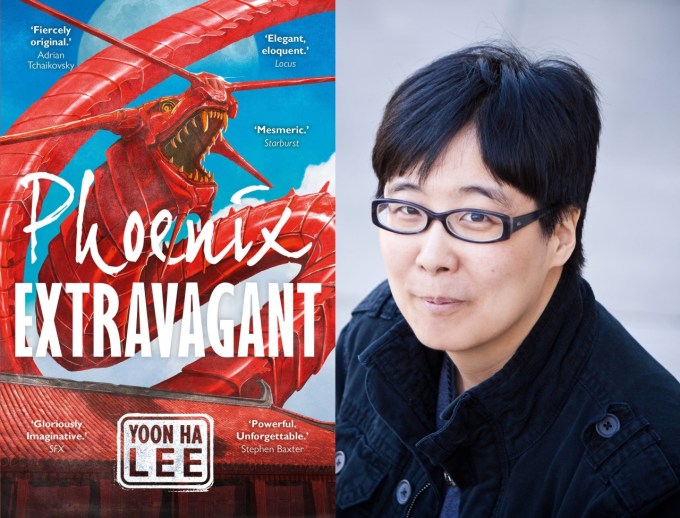 Estimated reading time: 3 minutes.