How Investigating Women’s Supposed Disinterest in Chess Showed Me the Subtle, Insidious Ways We Stifle and Suppress Female Genius

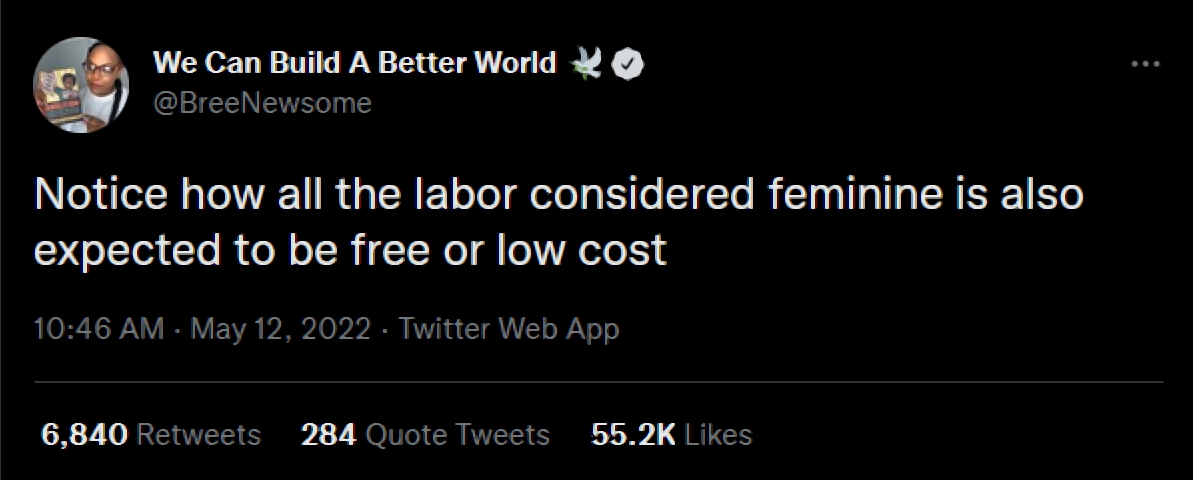
Don’t claim women are “naturally” inferior to men in any intellectual endeavor, argued pioneering feminist philosopher Mary Wollstonecraft in 1792, unless you first grant girls the same opportunities to master it as boys. Today, that includes not chiding them as “unfeminine” for being chess geeks. Or, for not taking things seriously when they’re not, and want to learn the game in their own ways.

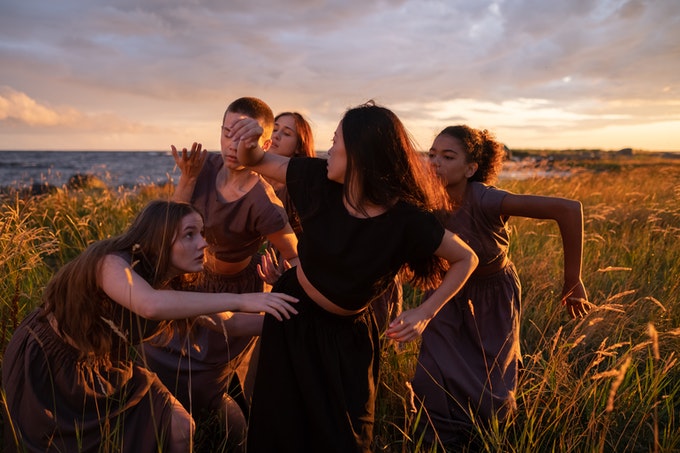
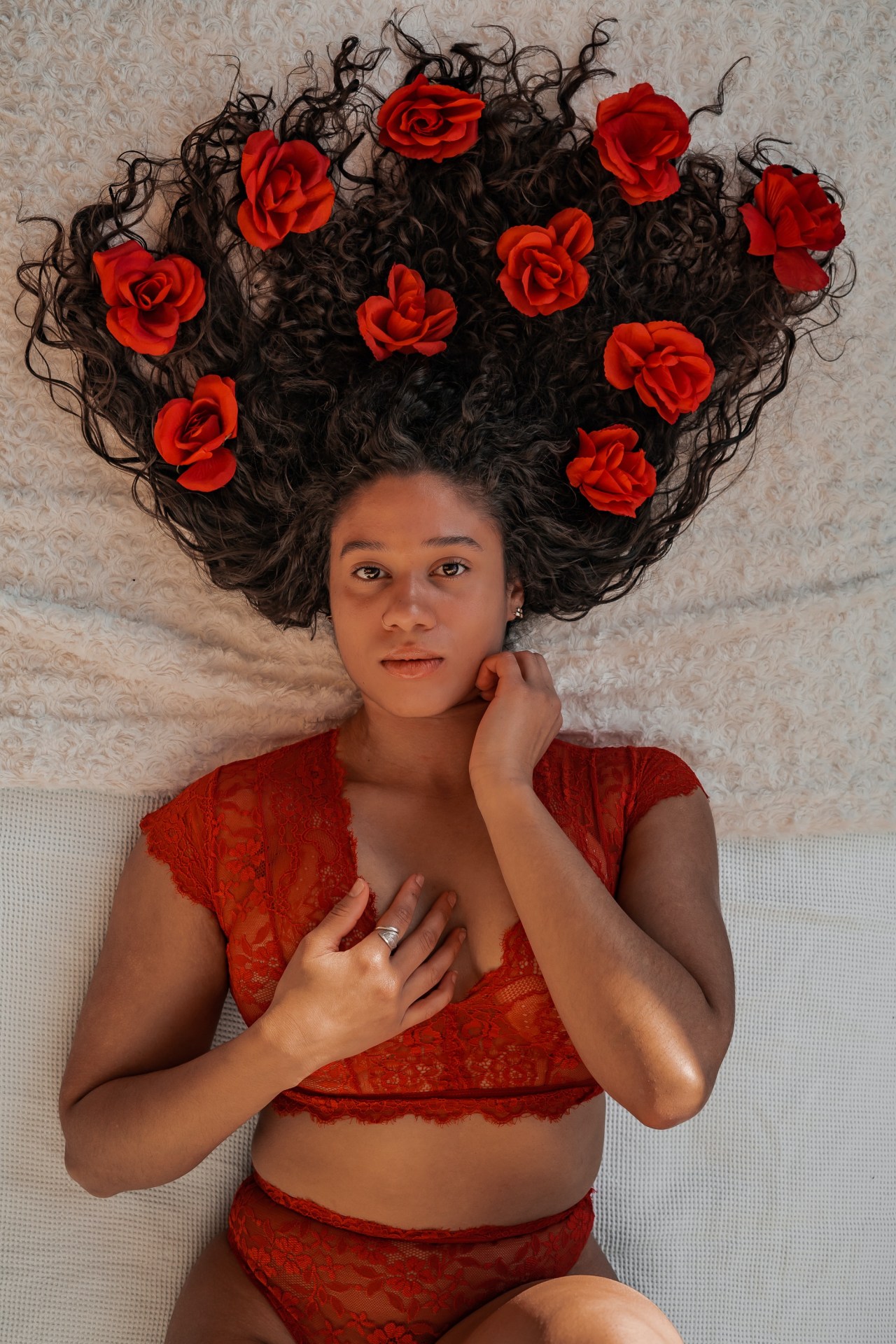
Estimated reading time: 12 minutes. Photo above by Chris Yang, below by Jennifer Marquez. (Both on Unsplash.)

Very few girls and women have ever made it to the ranks of the top 100 chess players. In fact, at the moment there aren’t any at all. For some pundits, including all too many of those top players, this is all the evidence they need to argue that women are “naturally” inferior at the game to men.

Alternatively, some people place a lot of weight on the fact that there’s only one female chess player for every nine males. Yes, some truly exceptional girls and women do make it to the top 100 players sometimes, they’d have to concede. (Most notably, Judit Polgar, who became a grandmaster at a younger age than Bobby Fischer, and who was once ranked #8 in the world.) They may even admit that the proportion that do, compared to all female players, is actually quite comparable to the proportion for male players that do too.

But that only further begs the questions of why more girls and women aren’t attracted to chess in the first place, or why they don’t stick with it.

Yes, there is rampant sexism in the sport. But surely no more than many other sports, and not enough to account for such a massively lopsided sex ratio? Maybe the main reason it doesn’t appeal is because, overall, they really are worse at some of the various attributes required for success in chess?
I frame the arguments like this because, until I started writing, I didn’t realize their connection. For whereas I’m a decent human being, and so have always rejected out of hand the notion that women are naturally inferior at any intellectual activity or profession whatsoever (or that any sex is, for that matter), the reality that there are indeed many various, incontrovertible, very specific skills and attributes in which men tend to perform better than women, and vice-versa, has also made a great deal of sense to me. Only, until today, I didn’t realize my own cognitive dissonance—that those slight differences in performance could be seized upon to justify those arguments that girls and women don’t belong in chess.

But also until today, I didn’t realize their awesome rejoinders, which is what I’ll cover here:

  • That there’s far, far more to becoming a professional chess player than, say, being able to mentally rotate a three-dimensional object while doing a math test.
  • That those methods girls and women tend to favor, despite what you may hear, are in no way less effective than those boys and men do.
  • That a dominance of boys and men in any intellectual field, is not, ipso facto, evidence of their natural superiority in it. Because the barriers to girls’ and women’s participation in it can be far more insidious and subtle than most men, including myself, are aware.
  • And that our brains have an enormous plasticity. To the extent that, once girls and women do fully participate in hitherto, naturally “masculine” intellectual activities (or boys and men in “feminine” ones for that matter), they are fully able to overcome those initial sex-based differences.

Here goes…

What do I Mean by Biological, Sex-based Differences?

So, despite that introduction trashing them, why do I also say those biological, sex-based differences still make a great deal of sense to me?

Well, first and foremost, because they jibe with my own experience as a chess nerd as a teenager, when I spent most of my free time at clubs and tournaments instead of driving lessons and dates. In between, I’d pore over my books into the small hours, rather than bothering with minutiae like completing homework, or doing more than the bare minimum to pass my high-school classes. Rest assured, I also noticed the almost complete lack of women playing chess, let alone girls my age. But I just took it for granted.

So today, whether posited as a misguided explanation for their relative absence as we’ll see, or just as a reasonable observation to add to the debate as to why that is, when chess trainers, professional players, and commentators alike routinely mention an obsessiveness they see in boys interested in chess but which seems almost non-existent in girls, I can’t help but nod in agreement.

Indeed, it’s a point made so often on chess YouTube or Twitch, I can’t pinpoint a specific clip to link to sorry. But desperate googling reveals a similar observation has been attributed to former world snooker champion Steve Davis, about why his sport is likewise so overwhelmingly male-dominated:

…[when] once asked to explain why men dominate snooker, even though it doesn’t require great strength…he gave a controversial but great answer that applies to snooker, chess and many other fields of endeavor.

He said, essentially, “Men are the idiots of the species. Men have a certain obsessiveness that women lack. We happily spend hours, months, years to become great at things that are a complete waste of time (like hitting balls into holes with a pointed stick).”

The Quora commenter who posted that continued:

Women COULD become elite chess or snooker players, but it requires a degree of obsession and an insane amount of work/practice that most women don’t see the value in. Women may enjoy playing chess or snooker, but not enough to devote their lives to it. And devoting your life may be exactly what it takes to become a champion.

But this also made sense because of my intellectual baggage. Specifically, in the form of the book, The New Sexual Revolution by Robert Pool (1993), that I picked up during my halcyon, impressionable first years at university, thinking women would be impressed by the title and cover. (Hey, this line of thinking did work eventually.) From it, I learned for the first time about multiple science, evidence-based examples of men and women tending to approach various tasks differently. Or, in many cases, having incontrovertible advantages over each other when performing the same task. An example of the former is that men usually navigate by streets and grids, women by landmarks. And of the latter, that overall men have demonstrably better greater spatial ability, as well as the ability to shoot moving targets, both of which prove to be independent of prior exposure or later training. What science says about those differences three decades later though, and their implications, I’ll get to soon. But crucial is that then—as now—Pool’s own speculations from those seem perfectly reasonable (pp. 61-62):

The male advantage in spatial ability probably has greater practical implications than other sex differences because it is one of the largest differences and because spatial ability is important in many jobs….Researchers have found…that the high school students with high spatial ability are the ones who are most successful in geometry, mechanical drawing and shop classes….the skills learned in those classes are important for careers in science, engineering, drafting and design, and studies have shown that high spatial ability is related to success in such diverse jobs as automotive mechanic, architect, and watch repairman.

The sex difference is spatial ability may spill over into mathematics, where males have a medium-sized edge….

Later still at university, those lessons would be reinforced by my finding myself in lectures about gynocentric feminism, which was presented to me as a school of feminist thought which was likewise concerned with highlighting sex-based differences, and positively revaluing what its advocates considered the ensuing core tenets of ‘femininity.’ In hindsight though, it was a much more fringe than my sympathetic professor suggested in the late-1990s, and was already well on its way out even then. But, you could also say it was just a twist on the nature-vs-nurture debate really—that all things being equal, would or do men and women gravitate towards different activities and professions based on these differences, and regardless that those dominated by women shouldn’t be undervalued—and which is still very much ongoing. Perhaps most interestingly and controversially at the moment, in the fact that even in Scandinavia, it is women who are still overwhelmingly plumping for caring, nurturing professions like teaching and nursing instead of those related to STEM. (Just because Jordan Peterson is one of the many people pointing this out, doesn’t make it untrue.)

To be clear, although Pool’s book was clearly formative, and I’ve been very receptive to the notion of fundamental, sex-based differences ever since, I’ve never been naïve either. Not about how absolutely no level playing field exists for entry into and success in hitherto “naturally” male-dominated interests and professions like chess, snooker, coding, engineering, and so on.

Or at least, I thought I’d never been naïve.

There’s More than One Way to Skin a Cat
Because today I learned that in addition to all the other, more obvious barriers and hurdles that discourage girls and women, that this extends to them even displaying the necessary character traits to succeed too. That it’s not that they don’t also want to geek out over the things only boys are “supposed” to like, necessarily. Just that if they do, they’re much more likely to be criticized for their obsessiveness. Whereas among boys and men, that same obsessiveness tends to be seen as a virtue instead.

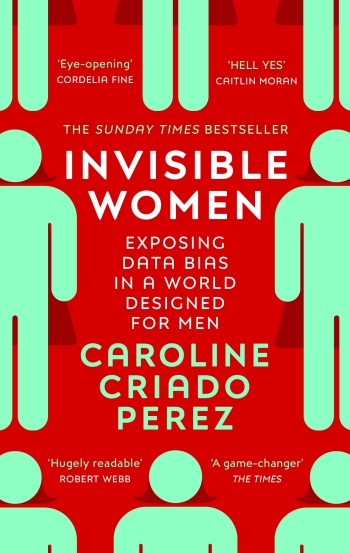
See what I mean from this passage from Invisible Women: Data Bias in a World Designed for Men by Caroline Criado Perez (2019), the inspiration for this post. If you’ll please bear with me, it’s five paragraphs long. But totally worth it for the aha! moment in the final two (pp. 95-96):

In 1984 American tech journalist Steven Levy published his bestselling book Hackers: Heroes of the Computer Revolution. Levy’s heroes were all brilliant. They were all single-minded. They were all men. They also didn’t get laid much. ‘You would hack, and you would live by the Hacker Ethic, and you knew that horribly inefficient and wasteful things like women burned too many cycles, occupied too much memory space,’ Levy explained. ‘Women, even today, are considered grossly unpredictable,’ one of his heroes told him. ‘How can a [default male] hacker tolerate such an imperfect being?’

Two paragraphs after having reported such blatant misogyny, Levy nevertheless found himself at a loss to explain why this culture was more or less ‘exclusively male’. ‘The sad fact was that there never was a star-quality female hacker’, he wrote. ‘No one knows why.’ I don’t know, Steve, we can probably take a wild guess.

By failing to make the obvious connection between an openly misogynistic culture and the mysterious lack of women, Levy contributed to the myth of innately talented hackers being implicitly male. And, today, it’s hard to think of a profession more in thrall to brilliance bias than computer science. ‘Where are the girls that love to program?’ asked a high-school teacher who took part in a summer programme for advanced-placement computer-science teachers at Carnegie Mellon; ‘I have any number of boys who really really love computers,’ he mused.55 ‘Several parents have told me their sons would be on the computer programming all night if they could. I have yet to run into a girl like that.’

This may be true, but as one of his fellow teachers pointed out, failing to exhibit this behaviour doesn’t mean that his female students don’t love computer science. Recalling her own student experience, she explained how she ‘fell in love’ with programming when she took her first course in college. But she didn’t stay up all night, or even spend a majority of her time programming. ‘Staying up all night doing something is a sign of single-mindedness and possibly immaturity as well as love for the subject. The girls may show their love for computers and computer science very differently. If you are looking for this type of obsessive behavior, then you are looking for a typically young, male behavior. While some girls will exhibit it, most won’t.’

Beyond its failure to account for female socialisation (girls are penalized for being antisocial in a way boys aren’t), the odd thing about framing an aptitude for computer science around typically male behaviour is that coding was originally seen as a woman’s game. In fact, women were the original ‘computers’, doing complex maths problems by hand for the military before the machine that took their name replaced them.

While I don’t know anything about coding, I’ve been dying for a chance to flex that I’m still a pretty damn good chess player. (And single; 진짜 뇌섹남 인데…) So, although chess too is not all it appears, and there are many ways to fall in love with it (a common sentiment is that it’s equal parts an art, a sport, and a science), I like to think I have some rare authority when I say that I still can’t see any real alternatives to its mastery other than long hours spent practicing, studying, and committing thousands of games, opening variations, tactical motifs, positional themes, and endgames to memory.

But then I thought again about how I did those, and took Perez’s point about staying up all night not being all it’s cracked up to be. Because in hindsight, much of what I worked on when I did was completely useless, even counterproductive, and made my schoolwork and non-existent social life suffer. At university later, it meant I failed easy classes, and am still suffering the consequences through my student loan repayments today. So, someone more mature and self-disciplined than I was back then, and more well-rounded, with actual friends and mentors to talk about learning, training, and—heaven forbid—topics unrelated to chess, would undoubtedly have made far more progress in chess in a fraction of the time that I did, let alone in many other aspects of their life.

Historically, Women Literally Couldn’t be Geniuses, Despite Ticking all the Boxes
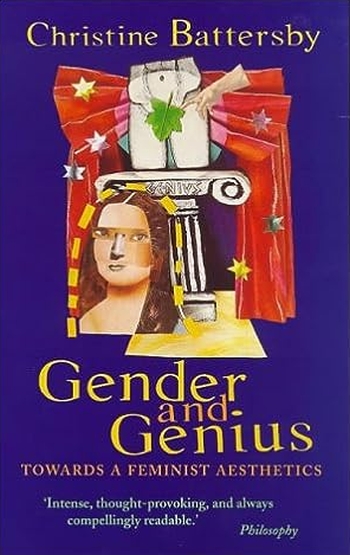
Still wanting to flex how smart I am though (did I mention I’m single?), I want to causally convey how there must surely be a reason why chess is still considered a symbol of high intelligence, even genius too, at least in the West (I concede that Go is more complex. Or baduk as it’s known here, which all the geeks in Korea who would be playing chess are playing instead, damnit.). Also, to smoothly segue through that into the fact that we are indeed so wedded to the notion that related skills, talents, and traits are only virtues when possessed by men, that even the histories of the concept of “genius” and of the word itself contain this bias, especially in the last two centuries. As Christine Battersby explains in her pioneering 1989 book, Gender and Genius: Towards a Feminist Aesthetics (pp. 8 & 11):

Starting from the persistence of sexual prejudice in art and literary criticism today, [in this book] I move back in time to explore the way our modern notions of creativity are modeled on notions of a male God creating the universe, and the devious tricks used to represent all creative and procreative power as he attribute of males….

Women’s inferiority had been rationalized by the writers in the Aristotelian tradition as a deficiency in judgement, wit, reason, skill, talent, and psychic (and bodily) heat. Women had been blamed for an excess of passion, imagination, sexual needs, and for vapor-induced delusion and irrationality. But if we look at the aesthetic literature of the late eighteenth century, we will see that the greatest males (the natural “geniuses”) were being praised for qualities of mind that seem prima facie identical with Aristotelian femininity. I discuss the new qualitative distinctions that were developed, that used different types of passion, imagination, frenzy, and irrationality to account for the difference between geniuses and females. A man with genius was like a woman—but was not a woman….the revalued “feminine” qualities of mind were appropriated for a supermale sex….

Why does it matter that, whereas ordinary males have been blamed for effeminacy, in (male) geniuses femininity has been transformed into a virtue? I hope this book will make clear how women have been presented with contradictory evaluative norms against which to measure their attainments.

Or indeed, this very accessible 2021 lecture:

“Hard-wired” Differences These Ain’t

Remember those incontrovertible sex-based differences Pool discussed in 1993 though? To follow this audacious history of belittling, denying, and hiding women’s genius by pointing out the verdict of 2023 is…that these differences very much still exist, feels churlish, almost rude. But here’s the rub: they’re easily overcome. As Andrew Curry explains in, given my own 30-year fixation with those differences, an even more eye-opening—I want to say shocking—article at Nautilus:

George M. Bodner, a professor of chemical education at Purdue University….stresses it’s important not to perpetuate the myth that a gender gap implies all men are better than all women at spatial cognition tasks. Stereotypes about spatial ability can have an insidious effect. “When women hear myths, such as the idea that they have ‘poor spatial ability when compared with men,’ they often believe this will be true for themselves, and it often is not true,” Bodner says.

Had [Sheryl Sorby, a professor of engineering education at Ohio State University] been a little less stubborn, she might have left engineering altogether. Instead she went on to earn a bachelor’s and then a Ph.D. in mechanical engineering from Michigan Tech, and was later hired as a faculty member. As Sorby took more engineering courses, she got better at spatial cognition tasks, until eventually she found herself teaching engineering graphics, the very course that almost derailed her as an undergrad. “The brain is pretty plastic when it comes to spatial skills,” Sorby says. “I have improved my spatial skills vastly as an adult.”

That initial experience never left her, though. As a professor, she noticed talented young women struggling the way she had. So she set out to find a solution. “The fact that there are these gender gaps is a challenge, but it’s not a death sentence,” she says. “I know it’s something we can fix.”

With her colleague, Beverly J. Baartmans, she developed a spatial visualization course to help her students develop their spatial cognition skills.

That course was just 15 hours long, and even improved men’s abilities as well, despite being given a biological head start. And, because I can’t even begin to convey the magnitude of what this brain plasticity implies for future sex and gender roles, let alone playing chess? I can’t think of a better way to end this post than recommending you head straight over to Nautilus to read the rest of the article!

Related Posts:

If you reside in South Korea, you can donate via wire transfer: Turnbull James Edward (Kookmin Bank/국민은행, 563401-01-214324)

Why, oh Why, do we Need Mosaics on Women’s Nipples?

Well, we don’t, actually. But for those who want to learn more about why not, and laugh themselves silly in the process, Nipple War 3 (젖꼭지 3차대전) is available for streaming on indieground until July 30!

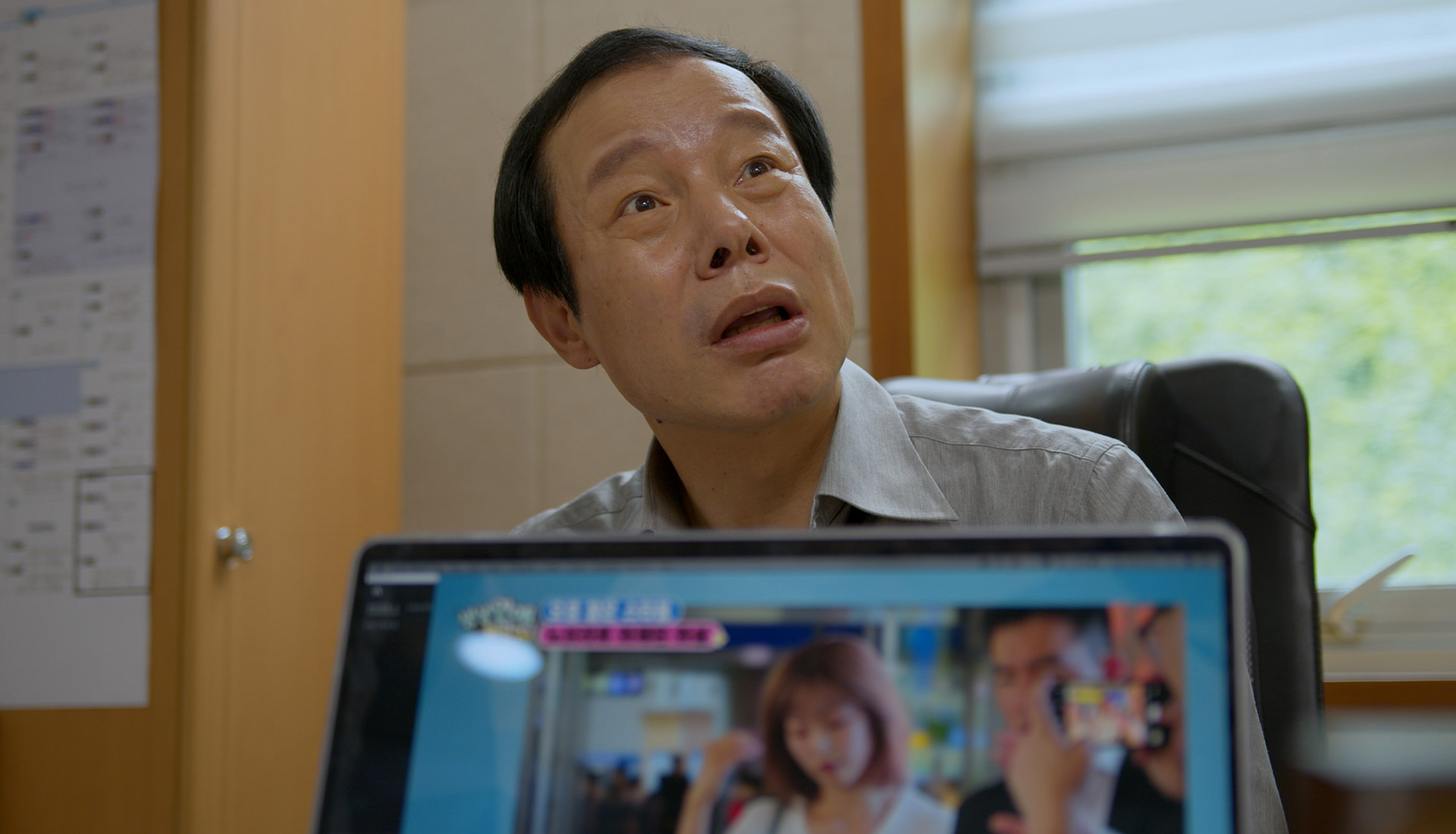
Estimated reading time: 5 minutes. Image source: indieground.

“Nipple World War 3″ it should really say, otherwise the “3” makes no sense. After appearances in over 30 film festivals though, the misguided English title has stuck, so I’ll roll with it.

It’s very crude and slapstick too. But I’m not complaining about that either.

For there’s nothing subtle about the absurd double standards regarding male and female nipple exposure, in Korea or anywhere else for that matter. But it’s only relatively recently it’s become a real issue here, as explained by Jo Yeong-joon in her column about the 2021 film yesterday at Oh My Star:

2019년쯤이었나. 여성 연예인들의 노브라가 사회적인 이슈가 된 적이 있었다. PD 출신인 백시원 감독도 당시 방송에서 이 문제를 다루는 방식을 놓고 상사와 의견을 나눈 적이 있었다고 한다. 당시에 상사는 두드러지는 여성의 젖꼭지에 모자이크를 처리하라고 했지만 취지에 옳지 않다고 생각한 감독은 극 중 인물처럼 적극적인 행동을 하지는 못했지만 속으로 불편함 감정을 느꼈다고 한다. 이 영화 <젖꼭지 3차 대전>은 그런 사실적 상황 속에서 태어나게 되었다. 코미디적 연출과 다양한 상황을 제시하기 위해 결과적으로 많은 부분이 각색되고 픽션화되기는 했지만 당시에 경험했던 사회에 만연해 있던 은근한 성차별에 대해 들여다보고자 한 것이다.

“Was it around 2019, when female celebrities not wearing bras in public became a social issue? [Theno-bramovement?] Director Baek Si-won, a former producer, said that the ‘problem’ of a woman not wearing a bra came up in a program she was working on at the time; after discussing with her boss about how to deal with it, she followed his instructions to use mosaics to cover the women’s prominent nipples. But she was uncomfortable with doing so, and, although she didn’t object quite as actively as the characters do in her short film, it was from that real example that Nipple War 3 came about. Indeed, although much of the film is heavily dramatized and fictionalized for the sake of comedic affect, and for presenting a wider variety of scenes and situations, the intention in doing so was to better highlight the subtle sexism and double standards that were—still are—experienced every day in Korean society.”

영화는 연예인의 젖꼭지가 도드라지는 방송 화면을 모자이크 하라는 마정도 부장(정인기 분)에 맞서 자신의 의견을 피력하는 용 피디(최성은 분)의 모습을 다루고 있다. 영화의 구조도 그리 복잡하지 않다. 서로 다른 의견을 가진 두 사람이 총 세 차례에 걸쳐 부딪히는 것이 뼈대의 전부다. 대신 각각의 지점이 (영화의 표현을 빌리자면 세 번의 대전) 던지는 문제의 화두는 모두 다르다. 갈등의 중심에 놓인 매개는 여성의 젖꼭지 하나이지만, 감독은 이 과정을 통해 여성의 특정한 신체 부위가 드러나는 것에 (실제로는 여성의 자유와 권리, 평등을 보장하는 일에) 반감을 가지는 이들의 주장이 얼마나 차별적이고 비합리적인지를 드러내고자 한다.

“[As can be seen the opening scene above, which has English subtitles], the movie deals with Producer Yong (played by Choi Seong-eun) who disagrees with her manager Ma Jeong-do (played by Jeong In-gi) when he asks her to mosaic out a female celebrity’s prominent nipples under her t-shirt. From then, the film is structured around people with different opinions having an argument (having a ‘battle,’ to borrow the parlance of the film) a total of three times, each on a different aspect of women’s nipples—the central characters if you will. Through this variety of situations and arguments, Director Baek wants to make that it clear that only allowing men to expose certain parts of their body is extremely discriminatory and irrational, and ultimately fundamentally undermines their guarantees of freedom, rights, and equality.” (My emphasis and slight embellishments—James)

Image source: indieground.

I’d just love to translate the full column. But unfortunately copyright is a thing, translation apps and plugins are more than adequate, and the reality is that if you don’t understand the Korean yourself, then you’ll struggle to make much sense of the film dialogue either, which has no Korean or English subtitles. (Sorry—I’m disappointed too.) I would like to highlight just a few more points from her column though, just in the remote case that you’re not already convinced to watch the film whenever and in whatever language you do get the chance:

  • Part of the the reason for Yong’s clash with her manager is because of the ambiguity of the Korea Communications Commission’s regulations. While they do say male and female genitalia [and pubic hair] are strictly forbidden, the criterion for excluding female nipples—and only female nipples—are far more open to interpretation. In the film, this is highlighting by showing a screenshot of topless African women from a previously-aired documentary, but one of Venus’s nipples in the famous Sandro Botticelli painting being mosaiced in another. Not only are—James here again—these examples probably real, but they also raise the element of racial hypocrisy and double standards, which are by no means confined to Korea.
  • Amidst all their handwringing about some women not wearing bras for their health and/or comfort, few self-appointed guardians of Korean morals seem to recall that even exposing navels on TV was technically banned when singer Park Ji-yoon‘s song Coming of Age Ceremony (성인식) was released in 2000, resulting in said body part sometimes getting mosaiced (or—James—I’m guessing, covered in a mesh, like in the second video below.) Similarly, singer Kim Wan-seon had the same problems with her ripped jeans in the late-1980s and early-1990s.

  • The film is absolutely not intended to inflame Korea’s “gender wars.” It’s a comedy. The men are not at all universally portrayed as dogmatic, conservative sexists, nor the women as universally progressive and beyond reproach. In particular, Ma is clearly very much in a bind, Yong is somewhat stubborn and self-righteous, and her male assistant is completely sympathetic and helpful to her cause.
Tired of feminazis pushing their nipples in your face? Don’t understand the big deal? Recall that female newsreaders couldn’t even wear glasses on Korean TV until 2018…

Honestly, with this topic I feel a personal connection to my first few years in Korea, in the early-2000s. Which I realize sounds…let’s generously say “somewhat odd.” But that’s when I was single just like now, but unlike now coming home after midnight a lot. And often when I did, I wouldn’t be sleepy, but would be somewhat at a loss with no computer, no 1500+ books, nor yet to be invented smartphone. So I’d turn on the TV to suddenly find…Las Vegas cabaret shows featuring topless dancers. Naturally, their breasts would be misted over. Only, there was so much dancing involved, so many breasts, and so many cuts between different dancers and different cameras, that the hapless censors (misters?) just couldn’t keep up. So, the misted circles would quite literally be chasing the dancers’ breasts across the TV.

If I’d had a cat, its eyes would have popped out of its head. But it’s probably best I didn’t then—I probably would have injured it, rolling around on the floor laughing too much. And, having just arrived from New Zealand, where I’d rarely had to think about censorship at all, I’ve continued laughing at its hypocrisy and ridiculousness ever since.

Much kudos to director Baek Si-won for continuing that tradition then, while also providing some much needed social commentary that won’t make any viewer feel like they’re being made fun of—or laughing too much to care even if they did.

Related Posts:

If you reside in South Korea, you can donate via wire transfer: Turnbull James Edward (Kookmin Bank/국민은행, 563401-01-214324)

How Were Korean New Women and Modern Girls Different? DID Their Rights Have to be Put Aside for the Sake of Achieving National Independence First?

I know what vernacular modernism means, and I’m not afraid to use it.

Estimated reading time: 8 minutes. Photo by Aleisha Kalina on Unsplash.

It’s tough impressing guests at my cocktail parties these days.

By definition, all of them are already bibliophiles—why else would I invite them? But that also means some guests don’t so much as bat an eyelid at my paltry 1500+ tomes, no matter how strategically I arrange their titles.

Hitherto my main trump card, and source of cultural capital, suddenly being exposed as neither smart nor well-read has become a real source of concern. And, when I do sense a guest’s moment of realization is finally arriving, my cats, trained to pose for Instagram, can only distract them for so long.

Increasingly desperate then, I’ve started preparing for said parties by attending esoteric Zoom presentations, hoping to drop the big words I learn therein. In particular, I now have “vernacular modernism” saved in my repertoire, which I first heard of via Northern Illinois University Professor E. Taylor Atkins talking about his new book, A History of Popular Culture in Japan: From the Seventeenth Century to the Present (2nd. ed., 2022):

(From 28:10) “Into the Twentieth Century, I write about the culture of…Japanese modernism, as expressed in these two icons, the mobo and the moga, and the era of what’s called ‘Erotic Grotesque Nonsense.’ One of the arguments I make in the book, is that if you went to Japan in the 1910s, ‘20s, and ‘30s, you would recognize a lot of the forms of entertainment, because they were…at least originally, they came from other parts of the world, particularly North America and Europe. But they also looked different. Scholars call this ‘vernacular modernism.’ Where [something is] part of a global movement, but is articulated in very specific ways in specific places and for specific reasons. And so, even though these people look like flappers and dandies…and they evoke some of the same moral panic, they also were challenging very specifically Japanese norms and were fulfilling particular Japanese needs.”

I hear your thoughts, all half-dozen or so of you still reading: what grown adult only hears of vernacular modernism for the first time in their late-40s? How can I even call myself a man? Have I no shame at all??

“How could he string me along like that? I really thought he would have more books(Sigh) Men can be such pigs…”. Photo (cropped) by Killian Pham on Unsplash.

But I’ll be way ahead of any guests voicing the same, already reaching for their raincoats and umbrellas. For I’ll use a cunning trick on them I’ve learned from a local book club I recently joined.

In those meetings, which are twice a week. we read our own books silently for an hour, then have a quick bathroom break, then go around in turns quickly summarizing our books, before finally posing a related question to the other members to answer. The ensuing discussions generally last until we’re kicked out of the various coffee shops. And—you guessed it—the most interesting and lively conversations tend to spring from questions that actually have no relationship to people’s books at all. So too, given how obvious my need for constant validation is, you can also guess that a not inconsiderable amount of my free time between meetings is spent preparing the most popular questions. Then, on procuring related books I can bring along to feign they just spontaneously came to me from my casual, cursory hour’s reading.

So, I will distract and impress my more discerning cocktail party guests not with big words, but by posing the first titular question: How were Korean new women and modern girls different…to their equivalents in other countries? Other than so many of their new fashions, beauty products, consumer goods, new education and employment opportunities, new beliefs about family life, sexuality, and women’s rights, being so closely associated with, forced by, enabled through, and/or utterly tainted by the Japanese colonial regime that is?

“Interesting questions James,” my guests will reply, stumped. “We misjudged you. Let’s bring your cats back for some more cute photos, then brainstorm some ideas. Oh, you already have a whiteboard and markers set up in the next room you say?”

Yes, I’m vastly overgeneralizing. But I know you too are intrigued by the prospect of learning the extent of the similarities and differences between Korean women and their Taiwanese and Manchurian counterparts in the 1920s and ’30s, let alone between those living in other colonial regimes. Indeed, the party will only just be getting started.

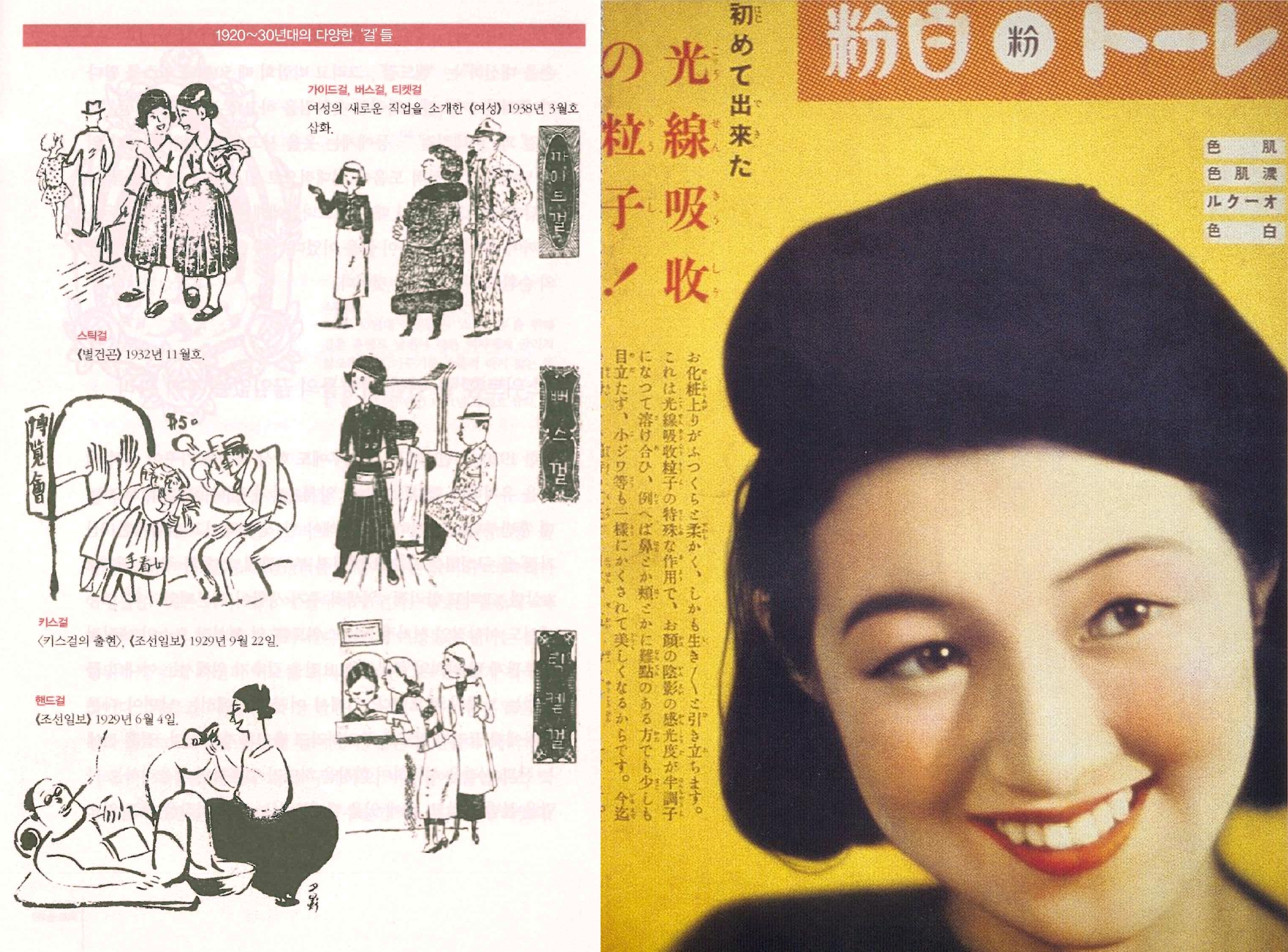
Left: “The various types of ‘girls’ in the 1920s to 1930s”; scan, 예쁜 여자 만들기, p. 245. Right: Actor Hideko Takamine, Japanese White Powder Foundation advertisement, 1930s; via The Flapper Girl.

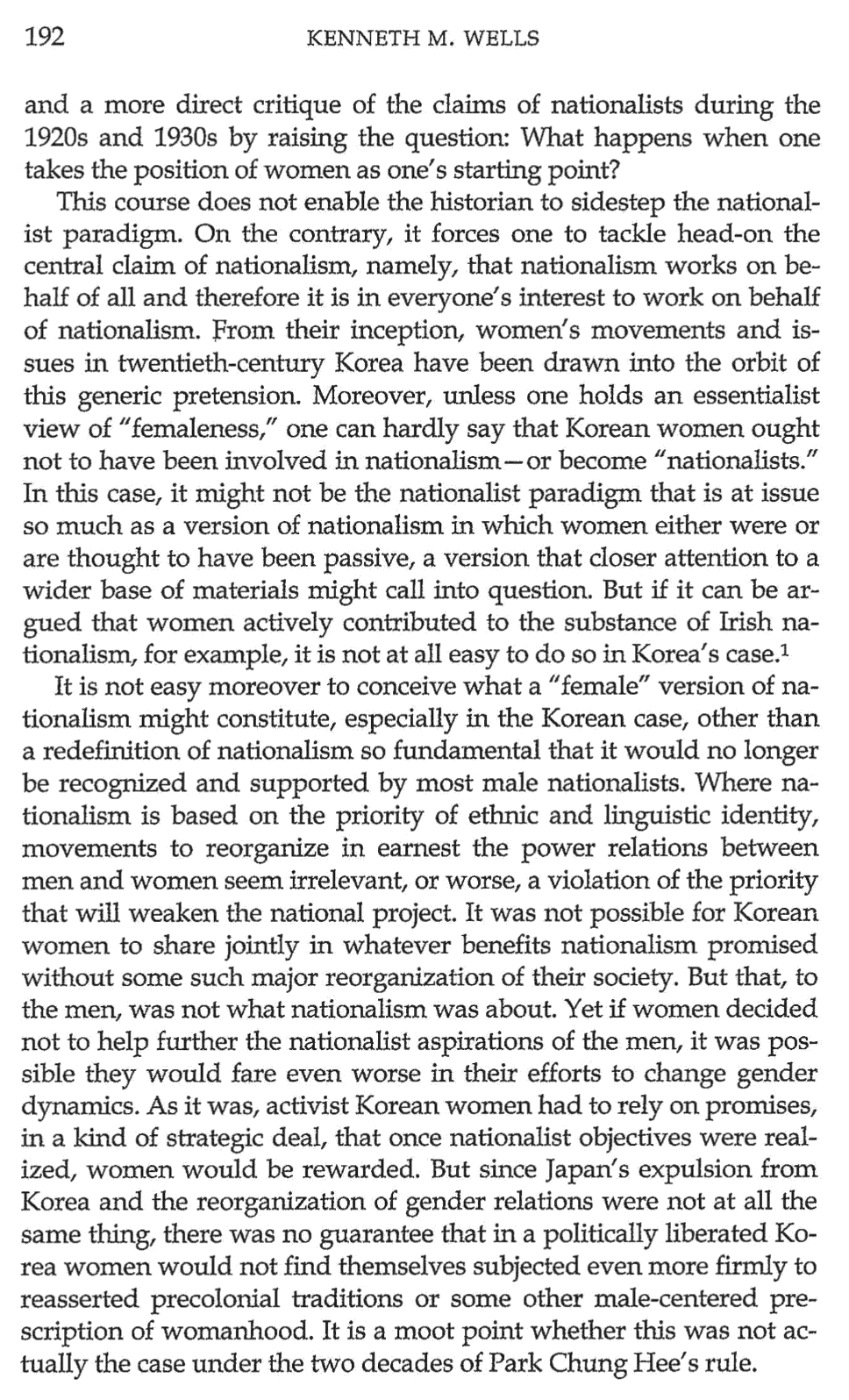
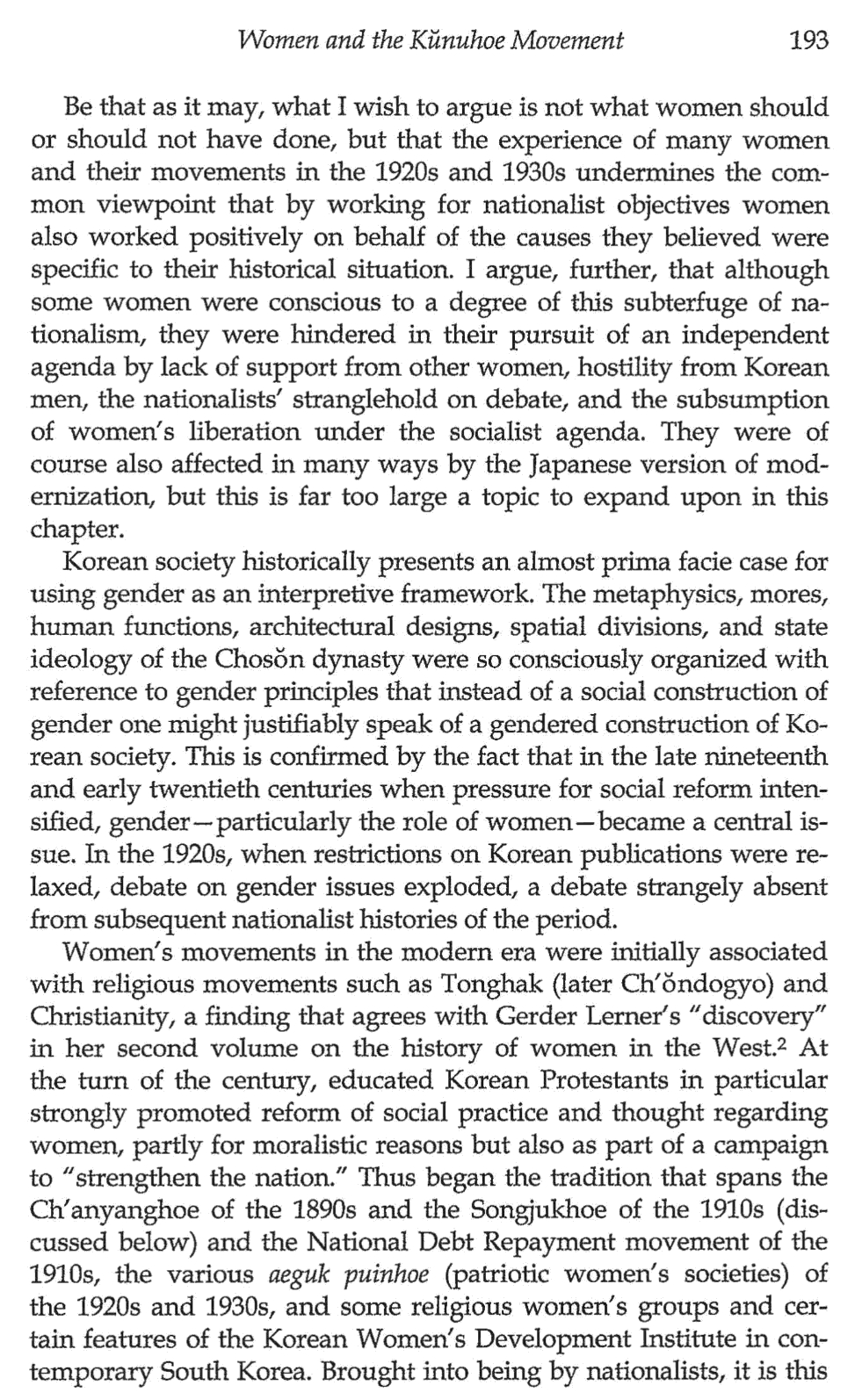
Unfortunately, my desire to learn from my guests’ answers will be so genuine, that I’ll quickly forget all my pretensions to aloofness and sophistication. So, when we move on to the next question, I’ll be quite unable to restrain my joy at recently (re)discovering an exceptional background source, and wanting to repay by sharing. Namely, albeit again vastly overgeneralizing, one that elaborates on how Korean women’s rights were put on the backburner in the first half of the Twentieth Century for the sake of focusing on liberation from the Japanese, then in the second half for the sake of democratization—which has basically informed just about everything I’ve ever written about Korean feminism here for the last 16 years. That is, Colonial Modernity in Korea, edited by Gi-Wook Shin and Michael Robinson (1999), and more specifically Chapter 7. “The Price of Legitimacy: Women and the Kunuhoe Movement, 1927–1931” by Kenneth M. Wells. Fortunately, much of the chapter is available via Google Books, including the following four pages (192-193, and 203-204) that will surely persuade you to buy your own copy:

Frankly, I’m embarrassed that this was a lengthy rediscoveryrather than immediately hitting the books the moment my curiosity was piqued by Atkins’s lecture, all I had to do was consult my own courses. I suspect it is not my—the—original source for that overarching narrative about Korean feminism either. More likely, that would have been a chapter in Under Construction: The Gendering of Modernity, Class, and Consumption in the Republic of Korea, edited by Laurel Kendall (2002) which I read first, and would have easily been the most relevant and useful book on Korean feminism available until Flowers of Fire: The Inside Story of South Korea’s Feminist Movement and What It Means for Women’s Rights Worldwide by Hawon Jung that came out earlier this year.

But only embarrassed by myself to myself, because clearly I’m already way past being worried about my reputation among you, my dear readers. And glad to have had the opportunity to recommend a book too you, or more generally to have shared something useful and/or interesting. Because no matter how long I sometimes take to get there, that, after all, is always the point.

“Pretty weird guy, but…yeah, that does sound like a good book. I must order it post haste.” Photo by Brooke Cagle on Unsplash.

On which note, so what if, technically speaking, I haven’t actually had a single guest in my home since moving in six months ago? Or that my toasting my cats with Pepsi lime zero and cheap whiskey every other evening for, say, not vomiting over my meager possessions that day, doesn’t exactly qualify as my hosting “lavish cocktail parties” either? These are mere minutiae in the pursuit of great art. Or, indeed, of great books!

Related Posts:

If you reside in South Korea, you can donate via wire transfer: Turnbull James Edward (Kookmin Bank/국민은행, 563401-01-214324)

Do We See Someone as a Man or Woman Before We See Them as a Person?

Knowingly or unknowingly, how do you think you react differently to people depending on their sex?

Estimated reading time: 5 minutes. Photo by leah hetteberg on Unsplash.

“When you’re communicating with someone, but don’t know if they’re a man or woman, you feel a little guarded. You can’t help it. Until you can resolve their identity, your conversation is stilted and awkward, because you just can’t be yourself. ”

Or something like that—I can’t remember when and where I read it, but it resonated with my experience of chatrooms in the early days of the internet, or phone calls before Caller ID. Over the next decade, as realistic-sounding, AI-based chatbots become increasingly common in customer service roles, along with all their inherent gender biases and stereotypes, I expect younger generations will also experience the same moments of confusion and hesitation I did.

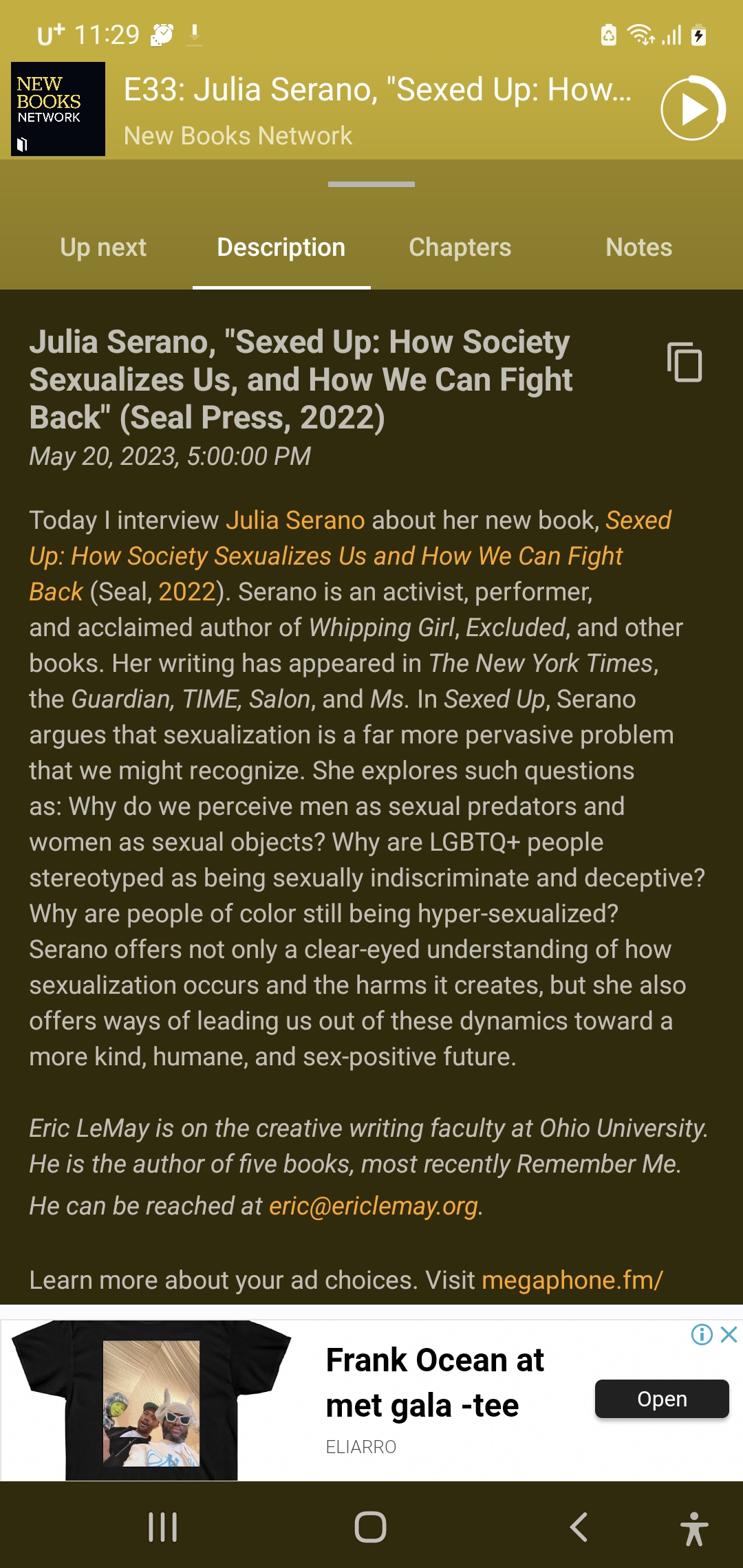
Or will they? Is it just me that sees sex first, and reacts to that? Do moments of ambiguity mean I actually behave and talk fundamentally differently around men and women, once their identity is resolved? I’ve often wondered. So, I was interested recently when I was listening to a New Books Network interview of Julia Serano, a transsexual woman, about her, well, new book, Sexed Up: How Society Sexualizes Us and How We Can Fight Back (2022), and learned that it was her experience that people reacted to their perception of her sex before anything else. Listen from 15:40 to see how, or read below:

“When I was about to begin my [male to female] transition, I really didn’t know what personally to expect, other than I figured there’d be this period of time where I’d be in, like, a gender limbo, when people wouldn’t be able to figure out if I was a boy or girl. And I had a couple of instances like that, but much to my surprise, almost always people would make the determination that I was male or female [for themselves]. It’s just that their determinations often differed from other people in the exact same room. So I describe a lot of anecdotes I had, including…having a conversation, for instance, where someone who knew me as male before I transitioned and wasn’t aware that I was transitioning, introduced me to…another man, who—he was very flirty with me. And I could tell, because of what I was going through at the time, that he was reading me as female, but, like, my friend didn’t pick up on that…because from my friend’s perspective, we all obviously knew that we were [just] three guys talking together. And there’d be a lot of situations like that where people would read me as one way or the other, and they’d really believe whatever their initial determination was, that’s what they believed and that’s how they viewed me, and it was really hard a lot of times to convince people in the other direction.”

“….The conclusion I came out of [those experiences], is that first and foremost, we don’t really see people—we see men and women. And that’s kind of how we’re socialized to see the world, and becomes really unconscious…and, you know, the fact that we automatically categorize people as male or female, obviously this has implications for trans people, and for non-binary people—it creates a lot of obstacles in our lives. But more generally, if we categorize people [like this], it really shapes a lot of the assumptions that we place on people, and it results in us filtering out other aspects of their person…like once I transitioned, there were aspects of my person that people couldn’t really see any more, that they used to react to.”

The title of the book, not to mention its description, is actually a little misleading—the book is no prudish, anti-sex tirade. Instead, it’s more her observations and thoughts about sexualization, objectifiction, sex and gender roles, socialization, pornography, and so on based on her experiences before and after transitioning. In other words, fascinating, and more than enough to decide I couldn’t wait for a paperback version to come out.

As for my own answers to the various questions I’ve raised? Actually I completely disagree with Serano that we’re socialized to see people’s sexes first. Women, in particular, who didn’t immediately register someone as a man, and weren’t more wary of the potential danger a man represented, were more likely to be a victim of violence, and less likely to pass on their genes. Also, with the exception of asexuals, our well-documented, subconscious reactions to other’s heights, signs of youth, indicators of wealth, and other attractiveness criteria demonstrate that most people can’t help but immediately consider others as potential mates or rivals, even if we don’t consciously frame them as such.

Or, very, very consciously once suddenly becoming single again, at a frequency that surprises even myself…

Photo by Tomas Robertson on Unsplash.

But I stress that to acknowledge these gut reactions, usually so short-lived to even notice them, doesn’t mean they aren’t easily overcome. Nor should they ever provide excuses for boorish behavior. For instance, I’m acutely aware that many men dominate women’s personal spaces, whether through being unaware or through deliberately taking advantage of their male privilege to do so. So, when I’m around women, I constantly try to check myself from manspreading, and so on. Also, befriending mostly women for most of my adult life, because of reasons, I’ve often questioned if I talked and behaved differently around them, and if there were subjects that I wouldn’t broach with them that I would with men, and vice-versa?

Recently starting to make more male friends again because I suddenly have a social life now, I’m leaning towards that I actually treat everyone pretty much the same. Which is to say I don’t actually have ‘friends’ so much as “like-minded folks [that] fill very specific needs,” at varying levels of closeness, with whom their sex is only one of many factors influencing how I behave around them and what we talk about. And which in my experience is much less important than nationality—at least amongst Westerners.

So, although I haven’t met any yet, I don’t think I would feel compelled to ‘assign’ any openly genderfluid or non-binary people at all. And, to those I am fortunate to meet, I can only apologize in advance for not lacking the restraint to want to immediately ask you all these questions too. Including the most important one:

Was it necessary for Jane Austen to avoid conversations between men in her novels? Well??

Recommended Related Books:

Related Posts:

If you reside in South Korea, you can donate via wire transfer: Turnbull James Edward (Kookmin Bank/국민은행, 563401-01-214324)

Unpopular Opinion: “Kim Jiyoung: Born 1982” Didn’t Hit Hard Enough

Kim Jiyoung: Born 1982 scores points for its raising of numerous feminist issues, but its treatment of them is frequently quite superficial. Here’s how one scene should have been handled differently, shattering stereotypes and suggesting solutions in the process.

Estimated reading time: 8 minutes. Photo by Gabe Pierce on Unsplash.

I didn’t like the novel Kim Jiyoung: Born 1982 much at all. There, I said it.

It’s basically a Korean Feminism 101 compendium, which means it didn’t really teach me anything new. Its constant shoehorning of facts and statistics into the narrative ruined it as a work of fiction too. But the biggest flaw was Jiyoung’s constant, infuriating lack of agency, with its flipside that author Cho Nam-joo didn’t really offer any solutions to the numerous hardships she faces either.

That doesn’t mean those hardships aren’t well-described. Like I said in my earlier review, I don’t think it’s a bad book at all. If you personally learned a great deal from it, and/or laughed, cried, and seethed in anger alongside Jiyoung, then I’m hardly going to claim that my own disappointment and frustration mean I’m somehow a much better, more knowledgeable feminist than you.

But Jiyoung’s lack of agency, and Cho’s lack of solutions, are absolutely a hill I’m prepared to die on. One scene in the film set in a subway toilet, albeit not mentioned in the book, illustrates both very well.

In it (55-56:00), Jiyoung (played by Jung Yu-mi) has to get off the subway to change her bawling infant daughter. Once that’s done, she realizes she needs to pee herself, but struggles in the narrow cubicle to hang up her heavy bag with her daughter strapped to her chest. Then, before she attempts again, she eyes the walls and lock nervously, remembering a recent molka (spycam) incident at the place she used to work. The scene then shifts to her home, implying she gave up and went there instead.

At first viewing, it’s difficult to find any fault here at all. Given that the burden of childcare falls overwhelmingly on women, then more men—or, indeed, more unsympathetic childless women—sometimes really do need to be literally shown just how much effort that actually involves. So too, do more men need to realize how stressful it is having to worry about being secretly filmed literally every single time you used any toilets outside of your home, as well as the potential health consequences if you understandably chose to avoid them.

Admittedly, that may seem like a lot to ask of a one-minute scene. Yet with just a little tweaking, it could have achieved those aims very effectively and forcefully. Instead, it largely fails, for three reasons.

The first is because, ironically, guys can relate to the practical difficulties. The indignity of using a cubicle while wearing a suit and carrying a backpack, desperately trying to prevent either from touching all the urine and smokers’ spittle on the floor, is absolutely no joke. As for childcare specifically, my ex-wife would naturally take our daughters with her to the female toilets when they were young, but it’s not like I wasn’t often in just as awkward and uncomfortable situations with them in other cramped locations.

Devoid of any wider context then, which I’ll provide myself in a moment, men’s own issues with using cubicles can mean women’s complaints fall on deaf ears, let alone calls to make women’s toilets bigger than men’s. (In fact, some men even consider the proposal to be reverse-sexism.) This lack of sympathy is misguided, of course, but I can understand it—unless men are flat out told or shown why not, it’s perfectly reasonable to assume that more cubicles in place of urinals suffice for women’s need to sit down. That women somehow still have to queue nonetheless, delaying everyone? Pop culture reveals that’s just their own fault, thanks to all the primping, preening, and gossiping that really goes on in there.

Next, the scene doesn’t do enough to convey the visceral fear of spy cameras. This is indeed much harder for men to relate to, because they never have to think about them when using public toilets. So, something much more forceful than Jiyoung’s brief nervous glances was required.

Best would have been a tweak to an earlier scene, which I’ll outline in a moment. But as an emphasis in this one, a more realistic cubicle should have been shown, with every nook, cranny, screw, bolt, and indent jammed with toilet paper and gum. Rather than the toilet the scene was actually shot in, which, complete with a rare heater, was easily the most pristine in Korea, seeing what it’s actually like in women’s toilets would surely have rammed home just how big of a problem spycams are in Korea—in a way that abstract news reports never could.

Image source: The Fact.

That earlier scene (44:30-47:30) is where Jiyoung’s former coworkers discover a spycam had been set up in one of the female toilets, and that their male coworkers had been sharing the videos, followed by meeting Jiyoung in a coffee shop to let her know. In hindsight, it’s all over surprisingly quickly. Whereas in the book, the incident is dealt with over three pages, and among the many grave consequences the coworkers reveal in those is that one victim overdosed on meds—possibly intentionally. This is omitted entirely in the film, but fits with the film’s much more kid-gloves, family-friendly tone overall (In particular, Jiyoung’s husband, played by Gong Yoo, is a vastly more sympathetic and likeable character than in the book. Perhaps a truer portrayal was rejected as harmful to his image?). In its place, the coworkers are not so much in tears as almost laugh off the affair, one joking about borrowing Jiyoung’s daughter’s diapers from now on.

Not only would I have absolutely kept that line about the coworker’s potential suicide instead, I would have devoted a minute to visiting her in hospital too. Was that not worth it to show that spycams have very real, devastating effects on people’s lives?

But if I only had an extra minute’s grace, I would use it to shift Jiyoung’s toilet scene to a few years earlier in her life, before she stopped working to have her daughter. She would be in her smart workclothes and high heels at a hweshik, an (effectively mandatory) after-work dinner with her boss and coworkers, and have to go to the toilet as everyone was preparing to leave to go to a second round at a bar. She would take longer than many of the men would like, because—and herein lies that context, as explained by Sora Chemaly in Time. Because, yes, it really does need explaining, as it’s not at all just about sitting vs. standing:

Women need to use bathrooms more often and for longer periods of time because: we sit to urinate (urinals effectively double the space in men’s rooms) [note also, “Women empty their bladders more frequently than men and take longer – an average start-to-finish time of 60 seconds for men, but 90 for women”—James], we menstruate, we are responsible for reproducing the species (which makes us pee more), we continue to have greater responsibility for children (who have to use bathrooms with us), and we breastfeed (frequently in grotty bathroom stalls). Additionally, women tend to wear more binding and cumbersome clothes, whereas men’s clothing provides significantly speedier access. But in a classic example of the difference between surface “equality” and genuine equity, many public restrooms continue to be facilities that are equal in physical space, while favoring men’s bodies, experiences, and needs.

So when Jiyoung did rejoin the group, one of those impatient men could have made an all too common complaint or joke about holding everyone up for the sake of putting on her lipstick. To which she could have angrily pointed out it wasn’t her fault, for any number of the above reasons she could have chosen to highlight (and/or by having to spend time ramming toilet paper into all those potential camera holes, would have killed two birds with one stone). She could have followed that the obvious solution of “potty parity”—mandating 2:1 or 3:1 female to male toilet size ratios in all new building plans, and/or building more shared toilets—wasn’t at all reverse-sexism, but would benefit both women and the men who had to wait for them.

Indeed, this scene would not be unlike the—MILD SPOILER—final scene in the film, in which Jiyoung actually does confront a guy who accuses her of being a “mom roach,” living the high life gossiping in coffee shops, a parasite on her rich husband and the hard workers who pay the taxes for her holiday of maternity leave. Which is a rare credit to the film, and certainly a better alternative to her just slinking away in shame like in the book, then getting gaslighted by her husband when she complains about it. However, as it’s the conclusion to what’s actually an extremely saccharine-feeling film overall as discussed, it’s somewhat underwhelming as a climax—SPOILER ENDS.

With an extra minute still, I would also add a scene of her as a teenager, suffering from bladder and dehydration problems that her much fawned-over brother avoided, because he could obviously better endure Korean schools’ notoriously dirty and outdated toilets. But I digress. The point is, Jiyoung in the subway toilet with her daughter is just one scene of many that could have been dramatically improved. I curse having read the book Feminist City: Claiming Space in a Man-made World by Leslie Kern (2020) in particular, which means I can just no longer unsee the flaws in the scenes in either the book or film. Although, given the former’s popularity, now I do appreciate the value of seeing one’s own lived experiences represented in print, even if Cho neither presents Jiyoung as a role model nor offers any potential solutions to what she faces.

Those responsible for the film however, could have and should have responded to the backlash by taking up that mantle, exploiting the potential of the new visual medium to shock and shame. Instead, they wasted the opportunity by making it as saccharine as possible, all for the sake of people who had probably never actually read the book and were even less likely to watch the film.

Related Posts:

If you reside in South Korea, you can donate via wire transfer: Turnbull James Edward (Kookmin Bank/국민은행, 563401-01-214324)
BUY THIS BOOK—”Seeking Western Men: Email-Order Brides Under China’s Global Rise” by Monica Liu (2022)

Don’t let my glorious laser tits deter you from an eye-opening interview, and a must-read!

Estimated reading time: 11 minutes.

First, a quick update to explain my absence this past month,

Basically, I’ve finally gotten my shit together.

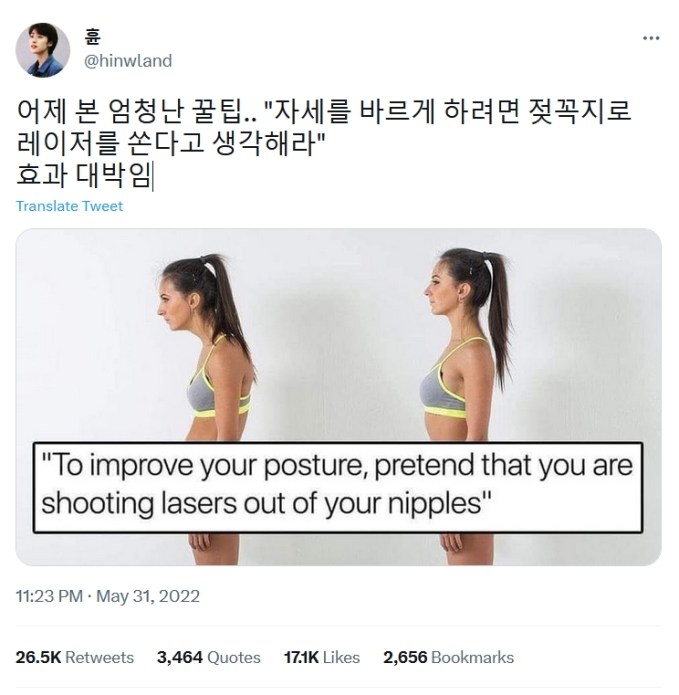
I could count the ways. Instead, suffice to say I’m so enthused and energized that I’ve even started paying attention to my laser tits again.

You read that right. (You’ll thank me for passing on this “꿀팁” later.) Ten random notifications from a reminder app a day, I advise, is the sweet spot for perking you up before starting to get annoying:

Naturally then, life chose to reward my newfound drive by bookending those past four weeks with two debilitating colds. Repetitive strain injury has flared up in my right arm too,* leaving me in agony every time I want to do anything even remotely fun or pleasurable with my hand. Like, say, eating or sleeping (what did you think I meant?), let alone banging away at a keyboard.

With my resolve being so sorely tested, literally, my response is to push even harder through my huge backlog of writing, as well as my new plans to completely overhaul this blog and my social media use. What those plans actually are, I’m going to tend towards doing before explaining. But one I already announced back in October—more geeking out over things that bring me joy, no matter how obscure or academic. The difference now being, I realize life is just too short to worry about losing followers who don’t share my obscure passions, or curious, ribald sense of humor.

On that note, the New Book Network’s (NBN) recent podcast interview of Monica Liu, about her new book Seeking Western Men: Email-Order Brides Under China’s Global Rise (2022), is conspicuously bereft of laser tits, but is no less jaw-dropping for all that. Primarily, for Liu’s emphasis on the women’s perspectives and their sense of agency, which in hindsight I’ve much neglected in my own coverage of migrant brides to Korea over the years (understandably, given how so many are exploited and abused, but a neglect nonetheless). Moreover, despite the title of the book, and NBN’s synopsis below, it quickly becomes clear while listening to the interview that Chinese seekers of marriage with Western men share many of the same issues and goals with those Chinese, Central Asian, Russian, and Southeast Asian women seeking Korean men.

Her study of China’s email-order bride industry offers stories of Chinese women who are primarily middle-aged, divorced, and proactively seeking spouses to fulfill their material and sexual needs. What they seek in their Western partners is tied to what they believe they’ve lost in the shifting global economy around them. Ranging from multimillionaire entrepreneurs or ex-wives and mistresses of wealthy Chinese businessmen, to contingent sector workers and struggling single mothers, these women, along with their translators and potential husbands from the US, Canada, and Australia, make up the actors in this multifaceted story. Set against the backdrop of China’s global economic ascendance and a relative decline of the West, this book asks: How does this reshape Chinese women’s perception of Western masculinity? Through the unique window of global internet dating, this book reveals the shifting relationships of race, class, gender, sex, and intimacy across borders.

I strongly recommend listening to the interview yourself; at 39 minutes long, it doesn’t at all drag on like, frankly, most other NBN interviews do. To encourage you to do so, here are several eye-opening excerpts, all lovingly, painstakingly transcribed by myself (my apologies for any minor errors).

(Too young, and too well-off?) Photo by bruce mars on Unsplash.

First, from 7:30-8:45, an important difference between Chinese women seeking Western men to migrant brides in Korea: the former tend to be much older and financially well-off. As we’ll see soon, this has big implications for the power dynamics between prospective partners:

Q) Why really did the Chinese women seek Western men?

A) For a couple of different reasons. Across the board, one main reason I saw was that the women felt aged out of their local dating market, because men of similar age and economic standing tended to prefer much younger, never-married women without children, and so women believed Western men were more open to dating women their age. And there’s also some differences based on the women’s socioeconomic class. A lot of women who are financially well-off have previously been married to very wealthy Chinese men that cheated on them and left them for younger women, and so think that Western men are going to be more loyal and more family-orientated—that being the primary reason. While women who struggled financially, have often divorced Chinese ex-husbands that lost their jobs and couldn’t support their families, and so these women are also seeking financial stability in their new marriages. Finally, there’s also a group of women who wish to send their kids to college in the US, to escape the very, very brutal college entrance exam in China, but they couldn’t do that as single moms that were financially struggling.

Next, from 10:20-11:20, on how Chinese dating marriage agencies both respond to and perpetuate Occidental stereotypes:

Q) Tell us about global financial crisis of 2008 when the men lost their jobs. Did this impact the dating scene?

A) Yes, this certainly impacted the dating scene. At the dating agencies, before the crisis there would be this idea that many of the men would possibly be financially well-off, but actually after the crisis a lot of women were actually discovering off-site that those men that they thought were financially well-off were not in that position, and as a result one of the tactics that the agencies used to promote these men to the women was that these men were loyal, devoted, and family-oriented, and thereby worth of marriage, even if they’re not particularly financially well-off.

Photo by Marcelo Matarazzo on Unsplash.

Then from 13:28-15:11, on the racial hierarchies contained within those Occidental stereotypes. But already, Chinese women’s agency is evident in their readiness to reject or subvert these:

Q) You talked about the discrimination against Black men with the Chinese women, but not other racial groups. Tell us more.

A) When I stepped into the dating agency, I found that Chinese women were very reluctant to date Black men. And for that reason, the agencies actually had a policy to not entertain emails from Black men unless given special permission from the women, in order not to “offend” the women. I’m not exactly sure what their personal reasons were…but I do know China has a long-standing history of anti-Black prejudice where Blacks are stereotyped as savage, hypersexual, and violent.

However, the women didn’t seem to discriminate against other racial groups, and to them, interestingly, the term “Westerner” included not only Caucasians but also Latinos and Native Americans. And occasionally some women would actually refer to Western men of Northern- or Central-European ancestry as “pure white,” and Latin-American men, or men of South-European ancestry, for example Italian men, or Native American men, as “non-pure white.” However, being pure white didn’t seem to actually boost the men’s desirability in the women’s eyes, and in fact I saw that some women in fact preferred the non-pure white look and they found the darker hair and eye color to be more Asian-looking, and more familiar and more pleasing to their eye than someone who is, say, blond-haired and blue-eyed.

Photo by Roselyn Tirado on Unsplash.

From 18:24-19:52, on the traditional, patriarchal values the Western men using international dating agencies often bring to their anticipated relationships with Chinese women. Obviously, by no means all (or even a majority) do. But just as obviously, it’s surely no coincidence that many Korean men do the same:

Q) Now give us the profile of the Western male seeking a Chinese woman.

A) The majority of the men enrolled tended to be older, divorced, and tend to come from lower-middle class or working class backgrounds, although some were middle class. I’ve seen a lot of truck drivers, lots of small business owners, and these men tend to feel left behind by globalization as agriculture, manufacturing, and small businesses started declining. So these men actually viewed this changing economic landscape as a threat to their masculinity.

Now a lot of sociologists’ studies show that marriage rates have declined among working class men, and poor men, because women within their own class find them to be too poor to be marriage worthy. So for these men, having slipped down the socioeconomic ladder, they really struggle to hold on to what privilege they have left by pursuing so-called “traditional” marriages, possibly with foreign brides, because they think this will allow them to exert some kind of dominance and control at home. And there’s also some middle class men who, despite being financially stable, they still feel left out of place within the new gender norms that have emerged in Western societies, [supposedly] dominated by feminists who they see as destroying the family and nation through their spoiled behavior and materialism.

Photo by Conikal on Unsplash.

And, reluctantly, a final excerpt from 23:21-25:10 (there were so many I wanted to highlight!), on the upending of global masculinity and racial ideals when women are empowered to reject those marriages:

Q) Let’s look now at some of the theories about Western masculinity. What did you find concerning race, class, gender, globalization, and migration?

A) First, I challenge readers to rethink the relationship between race and class…the question I ask is, does Western masculinity still command some degree of hegemonic power in China, despite China’s global rise—and I confirm that it does, by showing how Chinese dating agencies market their Western male clients as morally superior to Chinese men despite their lack or wealth. So the fact is that this portrayal still sells in China, and this reflects this continued superiority of Western culture within the Chinese women’s imagination.

However, in this book I also show a lot of moments when Western masculinity is starting to lose its hegemonic power, and this typically happens in the latter stages of the courtship process, when couples go offline and start meeting face-to-face. And in this book, I show how some of these women quickly rejected their working class, Western suitors, once they realized these men didn’t embody the type of elite masculinity that they were seeking in a partner, and instead these women would choose to continue having affairs with their local Chinese lovers, even if those men were married and not willing to leave their wives. And this is because [they] had these refined tastes, lifestyles, and sexual know-hows that a lot of their foreign suitors lacked.

Two final points of interest to round off. First, by coincidence, shortly after listening to this interview I got an alert that Kelsey the Korean was busy dismantling Western masculinity’s hegemonic power in Korea too:

Next, another well-timed coincidence: the latest issue of the Korean Anthropology Review just dropped, with an article by Han Seung-mi—”Critique of Korean Multiculturalism as Viewed through Gendered Transnational Migration in Asia: The Case of Vietnamese Returnee Marriage Migrants“—that sounds perfectly placed to challenge my own image of migrant brides in Korea as passive victims (my emphasis):

This article analyzes “returnees from marriage migration” by focusing on Vietnamese women from Cần Thơ and Hai Phong who have been to South Korea for marriage migration. In contrast to prevalent concerns in South Korea about the possibility of “child abduction” by Vietnamese mothers/divorcees, the author found many “deserted” Korean Vietnamese children and their mothers in Vietnam through this research. There is also a growing number of Vietnamese “return marriage migrants,” women who came back to South Korea after their first divorce and return to Vietnam. The article emphasizes the complexities and multidirectional trajectories of marriage migration and highlights the agency of female migrants, whose contribution to family welfare and to “development” is often overshadowed by their status within the family.

Does it really matter that, technically, my copy of the book hasn’t actually arrived yet? If you’ve read this far, I hope you too will indulge yourself (38,170 won on Aladin!), and I look forward to hearing your thoughts.

*I first had repetitive strain injury about 10 years ago, consequence of having my keyboard too close to me, forcing me to bend my arms to type; fortunately, it resolved itself in a few weeks once I moved my computer just shy of arm’s length. This time round, it’s undoubtedly due to spending hours in bed on my phone, again bending my arms to use it; now that I’ve stopped, hopefully again the pain will go away just as quickly.

In the meantime, I can’t stress enough how much my arm can hurt at the moment, nor how debilitating it is to be literally too scared to use your right hand as a result. So, if you reading this, please do take a moment to consider how you physically use your devices, and for how long!

Related Posts:

If you reside in South Korea, you can donate via wire transfer: Turnbull James Edward (Kookmin Bank/국민은행, 563401-01-214324)
Manufacturing Consent?: Socializing Migrant Brides to Korea into Becoming Docile, Obedient ‘Baby-Making Machines’

“Women in South Korea are on Strike Against Being ‘Baby-Making Machines’” headlines a must-read article by Hawon Jung in last week’s New York Times, a role migrant women are expected to perform most of all. Here are two insidious ways in which they are socialized into doing so.

Estimated reading time: 7 minutes. Image source: YouTube.

My neighborhood of Gwangalli Beach is one of the most popular and internationally famous tourist spots in Korea. It is also one of Busan’s busiest nightlife areas. It is not, in my general experience, positively teeming with middle-aged, male farmers, the main customers of international marriage brokers. So why do they bother posting their ads here?

I realize the placement has got nothing to do with Gwangalli really—the ads get spammed just about everywhere in Korea. It’s just that whenever I see them a few blocks behind its trendy bars and nightclubs, I can’t help but laugh at the incongruity with their surroundings. Then pause as I remember the frequent abuse of those overseas brides by either the brokers and/or their new spouses and families, and feel guilty. The metaphor for the harmless-sounding, but ultimately racist, sexist, and objectifying “gendered nationalism” and “gendered multiculturalism” that lurks just behind the glitz and glamour of the Korean Wave, almost suggests itself.

That’s not quite why I paused when I saw the ad on the left in October 2021 though. It was because it was the first I’d ever seen that mentioned “Domestic” (국내) and “North Korean (refugees)” (북한) options in addition to the usual “Vietnam(ese)” (베트남) ones. Possibly, I’d stumbled on an ad for a rare international marriage broker which had also arranged marriages between ethnic Koreans before the pandemic (note that over 70 percent of North Korean refugees are women). But it’s much more likely it was a recent development, forced by international travel restrictions.

Then I paused again a few days ago when I saw that new version on the right, for three reasons.

First, because of the “Women” (여성) that had been tacked on to the new, but also quite usual “International” (국제). Not because it was a surprise that international marriage brokers only supplied brides from overseas, but because of what the “Women” being omitted from “Domestic” and “North Korean” implied: that the same brokers were now also in the business of finding North Korean grooms. Which again implied desperation, considering how neglected they’d been up to that point: as of mid-2020, there were 20-30 agencies that specialized in supplying North Korean brides, against none that specialized in supplying their male counterparts.

And I do mean “supply.” Because next, I’d actually already noticed an ad exactly like it back in May 2022. (With a different number; sorry that I don’t know how many brokers are behind these ads.) Only this time, I was seeing it again after just learning of a problematic episode of the documentary program Algorithm (알고e즘) that screened earlier in January, which featured a 34 year-old Korean husband’s (and parents’) relationship with his 21 year-old Vietnamese wife:

As Professor Michael Hurt of the Korea National University of Arts described it, it was “stealthily ideological.” Specifically (quoted with permission):

If this ain’t human trafficking, I don’t know what is. All the cutesy piano music and pizzacato plucking can’t shoehorn this episode into anything looking like a heartwarming narrative. The closer you look and the more questions are asked, the more this looks like outright human trafficking. Of course this “daughter-in-law“ who is 21 married to a man obviously [much older] isn’t adjusting well to life in a poor Korean household. And they keep trying to frame things as normal mom and daughter-in-law friction, but the real answer to every single conflict in the show—especially when they make a quite performative trip to Vietnam, with mom in tow—is the obvious fact that she looks like a human trafficking victim. Because that’s what she is.

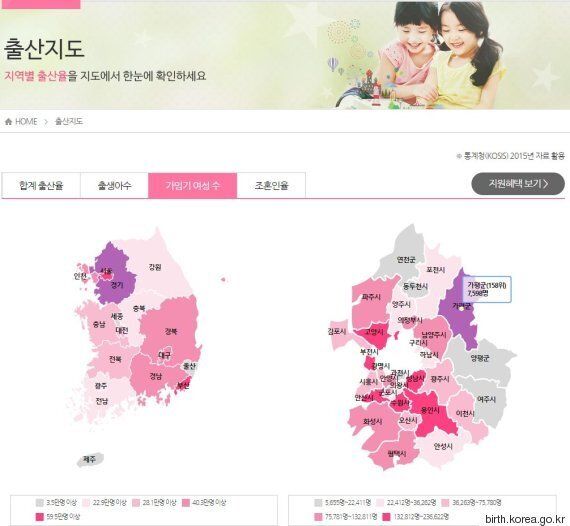
Going further, I’d argue that framing is also about putting migrant wives in their place—as docile, obedient ‘baby-making machines’ for the Korean state. Please hear me out. Combating Korea’s world-low birthrate, most acute in rural areas, is precisely why the international marriage agency was encouraged to develop in the first place. Next, recall that Korean women are already well aware that’s how the Korean state regards them themselves; with migrant brides from much poorer countries, there’s even less pussyfooting about their designated role. Indeed, this mentality even pervades government programs designed to help their integration. Consider as evidence the following abstracts to two academic articles on the topic, and their eerie similarity to what was occurring in the documentary (Right: “Women of Childbearing Age Map” briefly released on Korean government website in December 2016, before being withdrawn due to controversy):

This paper focuses on the role of Multicultural Family Support Centers (MFSCs) to explain the gender, race and cultural hierarchies inherent in South Korea’s system of multiculturalism. Since the 1990s the South Korean state has played an active role in facilitating marriage migration and influencing the reproductive and caregiving decisions of female marriage immigrants. This is reflected in immigration and welfare policies that incentivize migrant wives to have children and provide disproportionate power to Korean husbands. Over the past decade the Korean government has invested heavily in MFSCs. These centers cater exclusively to migrant wives with courses focused on the acquisition of the Korean language and culture. The teachers are generally older Korean women while students are migrant wives from developing countries. The version of Korean culture taught to migrant wives emphasizes traditional Confucian family roles and that a wives’ role is to focus on managing the home and supporting her husband and children. I present two case studies of cultural and cooking classes provided by a MFSC where I volunteered. The classes illustrate that multiculturalism in South Korea is focused on assimilation with limited expectation that Korean husbands and in-law families should adapt to migrant wives. Instead, migrant wives are expected to acquire a strong understanding of how to behave and understand their place in a traditional Korean family structure. I provide migrant wives’ perspectives on these classes and explain why they have limited opportunity to influence or respond to the expectations of the Korean state and in-law families.

“Multiculturalism in South Korea: putting migrant wives in their place” by Stella Jang in Social Identities, September 2022 (my emphases).

Next (for a summary article, see the Gender & Society blog):

In this article, I investigate how gendered nationalism is articulated through everyday practices in relation to immigrant integration policy and the intersectional production of inequality in South Korea. By using ethnographic data collected at community centers created to implement national “multicultural” policy, I examine the individual perspectives and experiences of Korean staff and targeted recipients (marriage migrants). To defend their own “native” privileges, the Korean staff stressed the gendered caretaking roles of marriage migrants and their contribution to the nation as justification for state support. The migrants, while critical of the familial responsibilities imposed on them in Korea, underscored their gendered value to the nation (as mothers to “Korean” children) to offset their subjugated position. The diverging perspectives of the two groups are informed by “everyday” nationalism, generated through constantly gendered terms and effects. Bringing together the literature on nationalism and migration through a focus on reproductive labor, I expose how national boundaries are drawn through quotidian practices of gendered nationalism, with significant implications for gender and ethnic hierarchies.

“Gendered Nationalism in Practice: An Intersectional Analysis of Migrant Integration Policy in South Korea” by Sojin Yu in Gender & Society, November 2020 (my emphasis).

Finally, while admittedly only indirectly related to socialization, an interesting third reason I paid attention to the ad was because the Algorithm documentary reminded me of an episode of Marriage Hell (결혼 지옥) on MBC the month before. In that, the show’s producers and hosts were widely criticized for including scenes of domestic abuse as well as the sexual harassment of a minor, and for failing to intervene in either. Their inaction also revealed a gap in legislation regarding the use of minors in the entertainment industry, as whereas child actors are covered by long-standing legislation regarding their mental and physical well-being, those same protections do not extend to non-(child) actors in their brief appearances on reality programs.

Source: MBC.

Frankly, as MBC is notoriously racist and trashy, at first I thought that just like Marriage Hell, Algorithm was also produced by that channel. Actually, it was produced by educational channel EBS, that turns out to not at all be as tied to the government as I first thought: according to Wikipedia, “though nominally a public broadcasting entity, it gets most of its yearly budget from advertisements and sales revenue”—which may explain the tone of that program. Either way, I wonder if a better quality documentary on migrant women’s experiences might have been produced by an actual public/national broadcaster like KBS? One in the which the documentary makers didn’t just sit back and deliberately highlight 21 year-old Jjeonti Huin’s (쩐티후인느) complete isolation, but actively helped her to overcome it?

What do you think?

Related Posts:

If you reside in South Korea, you can donate via wire transfer: Turnbull James Edward (Kookmin Bank/국민은행, 563401-01-214324)
Why is Korea’s Largest Marriage Agency Only Targeting Women?

Potential customers are put off by unequal sex ratios, and Duo already has more female customers than male ones. So what gives?

Estimated reading time: 4 minutes.

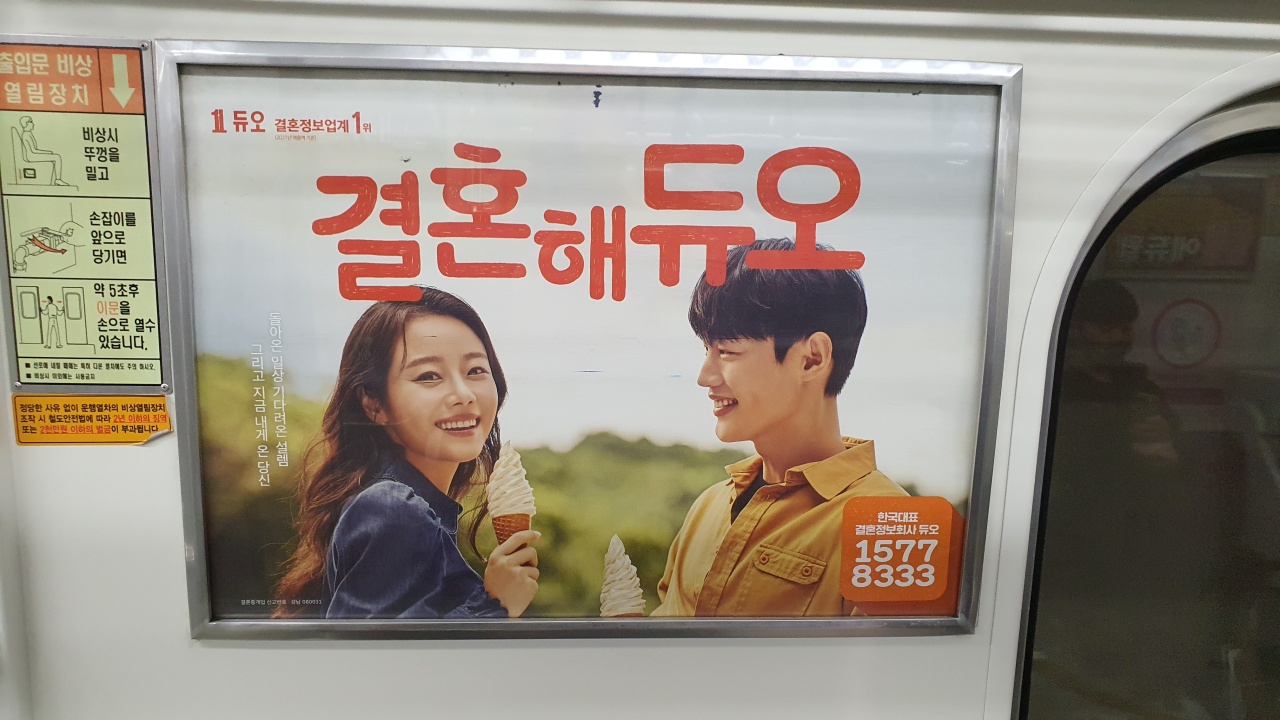
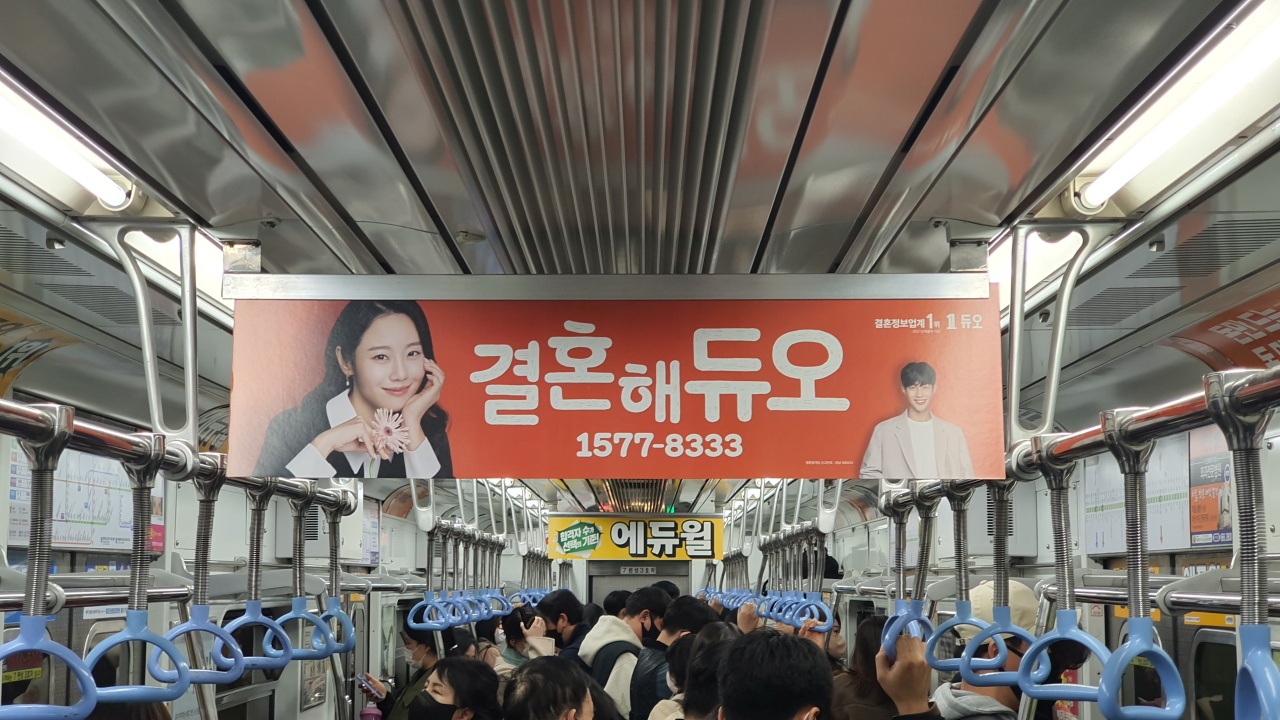
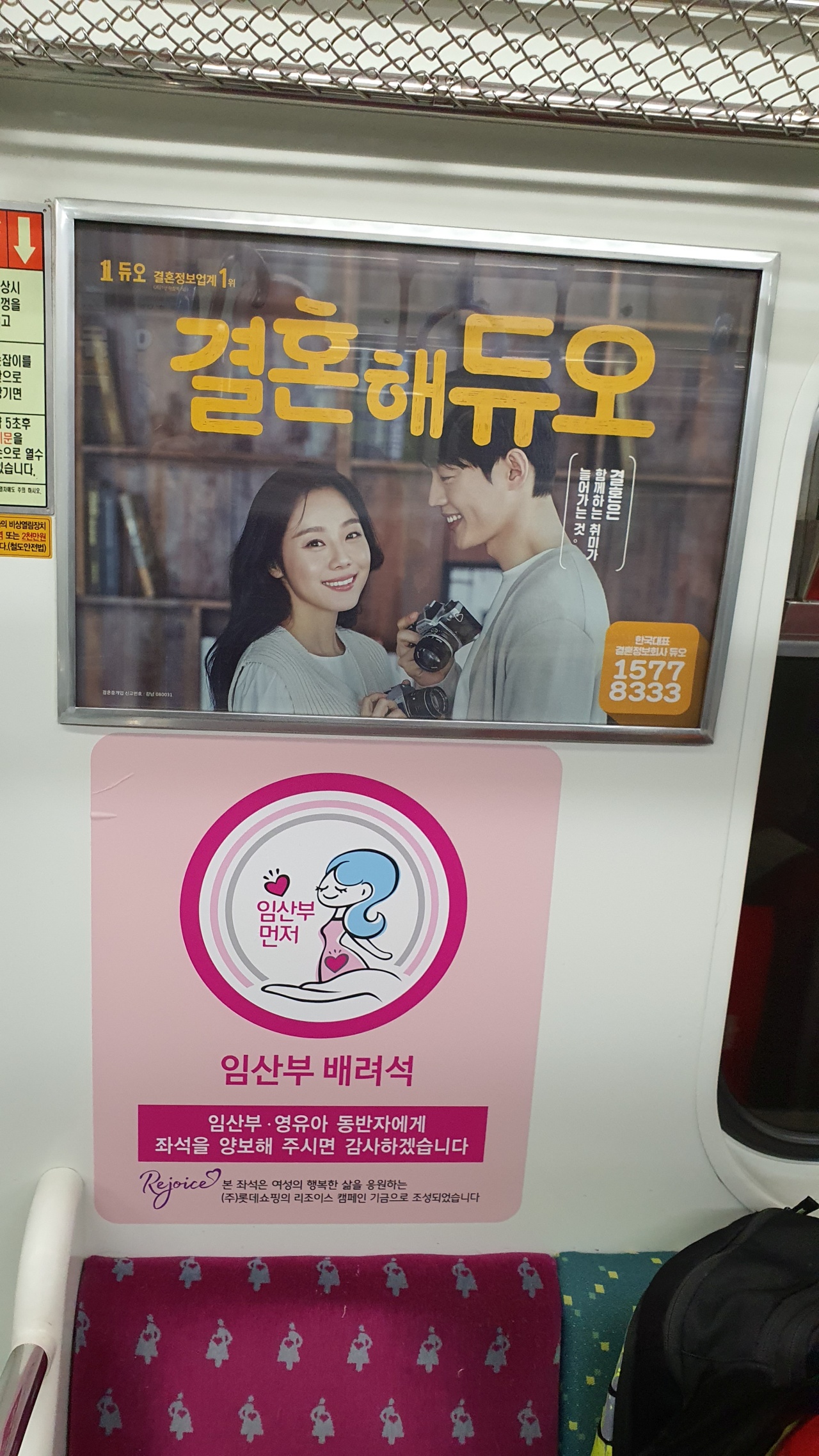
I know, I know—I’m not even divorced yet, and I’m already looking at marriage agencies. But the reality is that Duo’s latest campaign ads are just impossible to avoid on Korean public transport at the moment. And the obvious emphasis on attracting female customers in them, for a service ostensibly about providing those women with as many romantic encounters with male suitors as their finances allow, should give everyone misgivings. For it’s not like correcting an excess of male customers is the motivation.

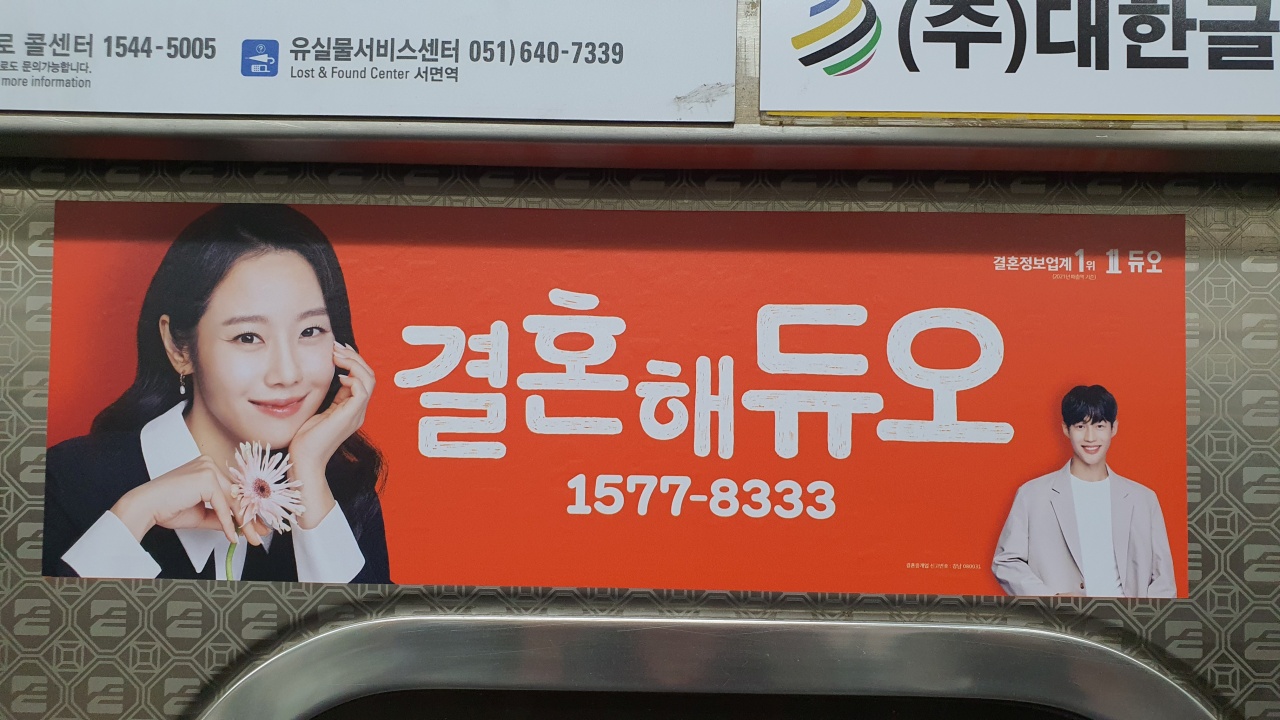
This concern may still sound odd. “Sweet,” I’d wager, is what usually comes to mind when most people see Duo ads. Indeed, I only did a double-take at this one at all because I happened to be reviewing my translations of a lavishly-illustrated, feminist Korean book about paintings of nude women (as any normal person does on the subway), and, glancing up, was immediately struck by how unlike those paintings the ad was. For actor Lee Shi-won/이시원‘s look back at the viewer doesn’t exactly scream pandering to the male gaze. Nor did all the other Duo ads on the subway carriage I could see from my seat, some of which just had Lee alone, and only one of which had model Noh Seong-Su/노성수 looking back with her.

Source: Duo.

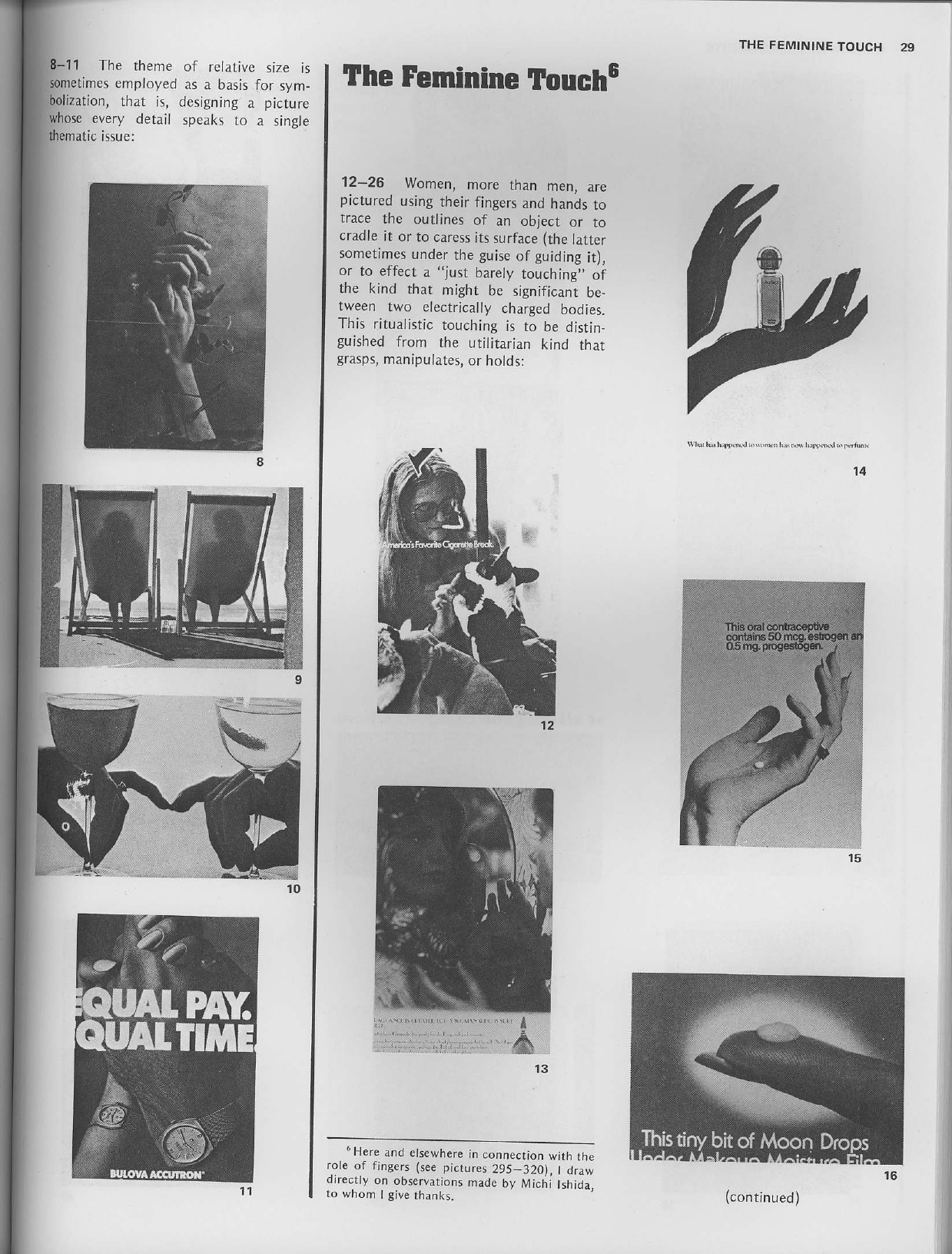
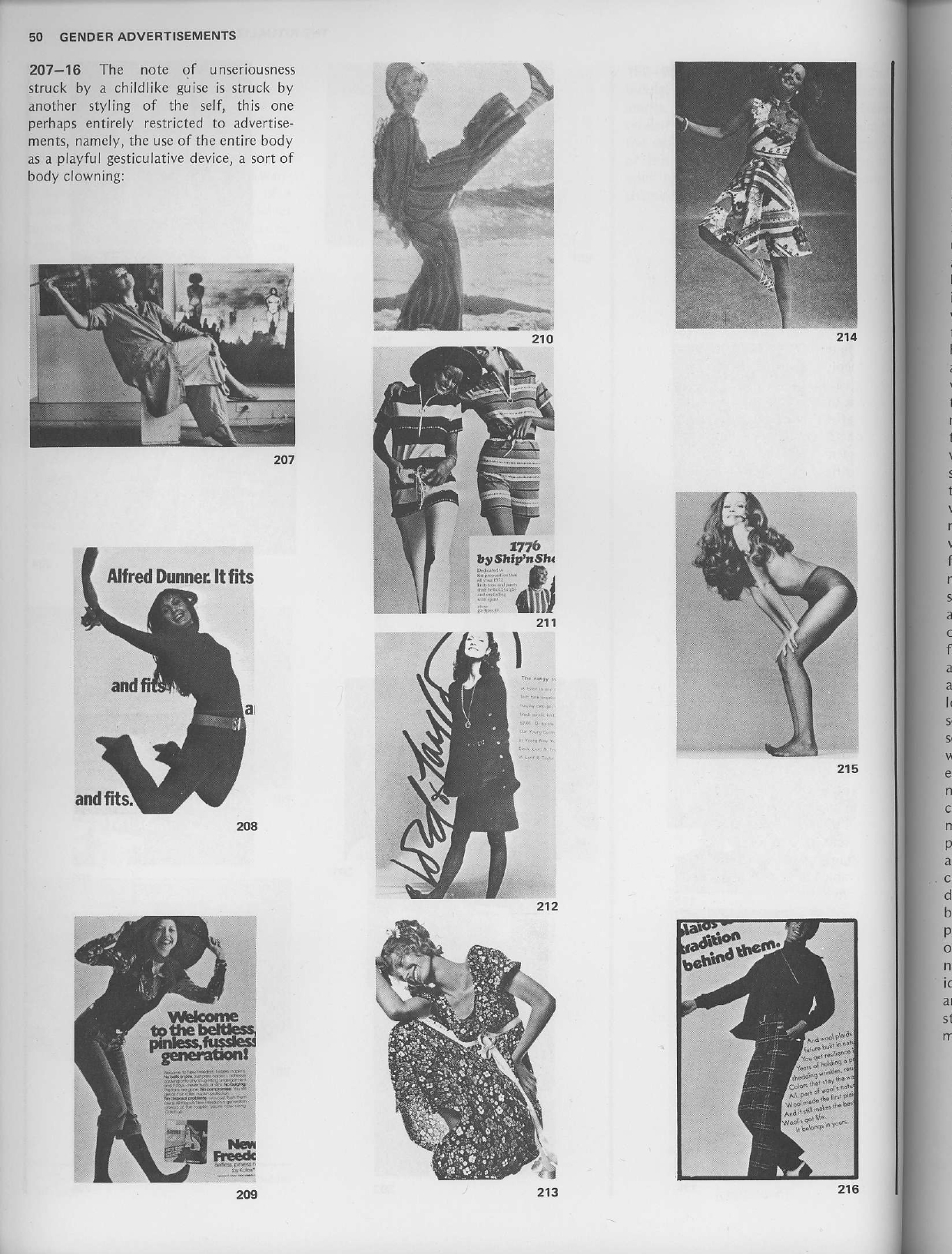
Then my stop was coming up. And you don’t exactly need to have read Erving Goffman’s Gender Advertisements to be realize what the ‘relative sizes‘ of Lee and Noh in these ads signify in the ads I saw once I stood up:

But so what? What is the issue exactly, about Duo prioritizing women?

Well, the last time I checked in 2020, Duo had more female than male customers then, at a ratio of something like 6 to 4 or 5.5 to 4.5.

I don’t know if this ratio was affected by the pandemic. But regardless, more women competing for fewer men clearly disadvantages them. That extra level of competition also incentivizes charging women more for the same services offered men. Which indeed Duo, and most of the over 1000 other registered agencies out there, do so with a gusto.

Moreover, Duo, already experiencing massive drops in sales in the mid and late-2010s, almost made none at all in 2021 thanks to the pandemic, as marriages and childbirths, still inexorably tied together in Korea, dropped precipitously. Which, once again, was something the subway carriage wasn’t subtle about reminding me:

So, although Duo clearly retains the financial resources for its latest massive campaign, I speculate that it may actually represent a doubling-down on financially discriminating against young women. And, given Duo’s position as a industry leader and model, I have concerns about what this will have on Korean dating, gender roles, and marriage norms.

Not convinced? Really, it’s only a matter of degree. Please see my in-depth investigation from 2020 for a plethora of evidence on how that sexual discrimination has in fact been occurring for decades. And don’t let me forget the influence on body-image either: just a few months ago, one agency focusing on wealthy clients, with nearly half a million customers, came under fire for its strict financial criteria for admitting men, but only requiring a members’ vote of 3.6/5 on appearance alone to admit women. I also invite readers to consider that demanding women pay more to date men than vice-versa,* and deliberately skewing their customers’ sex ratios to justify this, is surely yet another form of “pink tax” that perpetuates the gender gap.

*(I realize that the norm in Korea is for men to pay on dates; no social issue that is interesting isn’t complicated!)

RELATED POSTS

If you reside in South Korea, you can donate via wire transfer: Turnbull James Edward (Kookmin Bank/국민은행, 563401-01-214324)
There are More Entry-level Korean Women Journalists than Men These Days. So Why do Most Leave the Industry in Less Than 10 Years?

It’s not as simple as just increased childcare responsibilities—Korea already has a record-low birthrate, and women journalists the world over have less children than women in most other professions. So what gives?

Estimated reading time: 5 minutes. Photo (cropped) by Dynamic Wang on Unsplash.

It is a truth universally acknowledged, I like to think, that a single industry so possessed by one sex, must be in want of dramatic reform.

Okay, I did force that Austen-like opener somewhat.

But when you realize that the entry number of Korean women journalists has started to exceed that of men in recent years, only for most women to leave the industry in less than 10 years? Also, that the ensuing absence of women mentors, and continued domination of newsrooms by masculine culture are, ipso facto, some of the main causes of that?

Perhaps awkward forced changes, such as quotas for board members of news organizations, are precisely what the industry needs.

I can’t pretend to possess insider knowledge in that regard, nor detailed solutions. But from now on, I can at least share everything I’ve collected about sexism and bias in the Korean media industry over the years to spread awareness, as well as anything new as it comes up. In particular, such a gold mine of information as Na Yeon Lee and Changsook Kim’s “Why Are Women Journalists Leaving the Newsroom in South Korea? Gendered and Emerging Factors that Influence the Intention to Leave” just published last month in Journalism Practice.

If your interest isn’t piqued just by the title alone, let me leave you with some telling quotes that demonstrate why it really should be,* and please get in touch if you don’t have access to a copy.

*Apologies for removing the numerous sources mentioned for the sake of readability. Please consult the original for those, many of which sound just as interesting and informative as this one!

Just four years, ago MBC anchorwoman Lim Hyeon-ju caused a sensation by defying the rule that female news anchors weren’t allowed to wear glasses on the job.

First, on why I think quotas are absolutely necessary:

…in South Korea in 1996, JoongAng Daily, one of the largest South Korean newspapers, employed only 24 women journalists out of a total of 402 journalists. Soon after, the percentage of women journalists began to surge so that by 2020 women accounted for about 32.8% of the total number of journalists. However, most women journalists were younger and about 10% of women journalists were in top-management positions.

And:

In South Korea in recent years, although the entry number of women journalists has exceeded that of men journalists , there were only 7 women out of 138 (5.07%) board members among the 29 major news organizations.

Next, on why a gender balance in news media is so important:

The under-representation of women journalists in newsrooms is regarded as problematic based on findings of previous studies that the gender of journalists influences their reporting practices as well as the content of news coverage. For example, a recent study found that news organizations where women journalists occupy positions at editorial levels were more likely to have covered the “#Me Too Movement” than organizations without women editors in high positions. In fact, previous studies have repeatedly reported that with fewer women journalists, portrayals of women as well as marginalization of women’s concerns are themes often overlooked in news stories. Therefore, if women journalists consistently exit the news industry, their voices in covering newsworthy topics will likely disappear along with recommendations for improved newsroom policies and culture.

Moreover, in the absence of upper-level women journalists…

…several studies have shown that while the number of women journalists has increased, characteristics of newsrooms as masculine domains remain entrenched. In fact…“Young women journalists decided to resign because of men-centered culture and they felt they had less attention than men journalists from their organizations.” [Also], although there has been an increase in the number of Korean women journalists in recent decades, the traditional model of newsrooms based on a male model that expects strong work commitment and unusually long hours has not substantially changed. In addition, in South Korea, women journalists often face work-family conflicts after marriage due to society’s concepts of the traditional gender role of women, influenced by Korean cultural standards.

Photo by Anh Tuan To on Unsplash.

And finally, in conclusion:

…the results of this study show that the three most important factors in women journalists’ leaving the newsroom are (1) the weakening of social status, (2) a newsroom dominated by masculine culture, and (3) additional online workloads.

…although more and more women journalists have entered the news industry, the masculine newsroom culture has not changed because most of high-level positions in news media organizations are still held by men journalists. Interestingly, in-depth interviews, conducted…with nine young women journalists who resigned with less than 10 years of experience, revealed they had voluntarily left because they were unable to “find a role model who overcame the male-centered culture of a journalist society and the organizational culture of newspaper companies.” Their responses indicate that women journalists in South Korea continue to be perceived as “often excluded from the internal networks established by men.” Also, they are less likely than men to have the benefit of mentors.

RELATED POSTS

If you reside in South Korea, you can donate via wire transfer: Turnbull James Edward (Kookmin Bank/국민은행, 563401-01-214324)
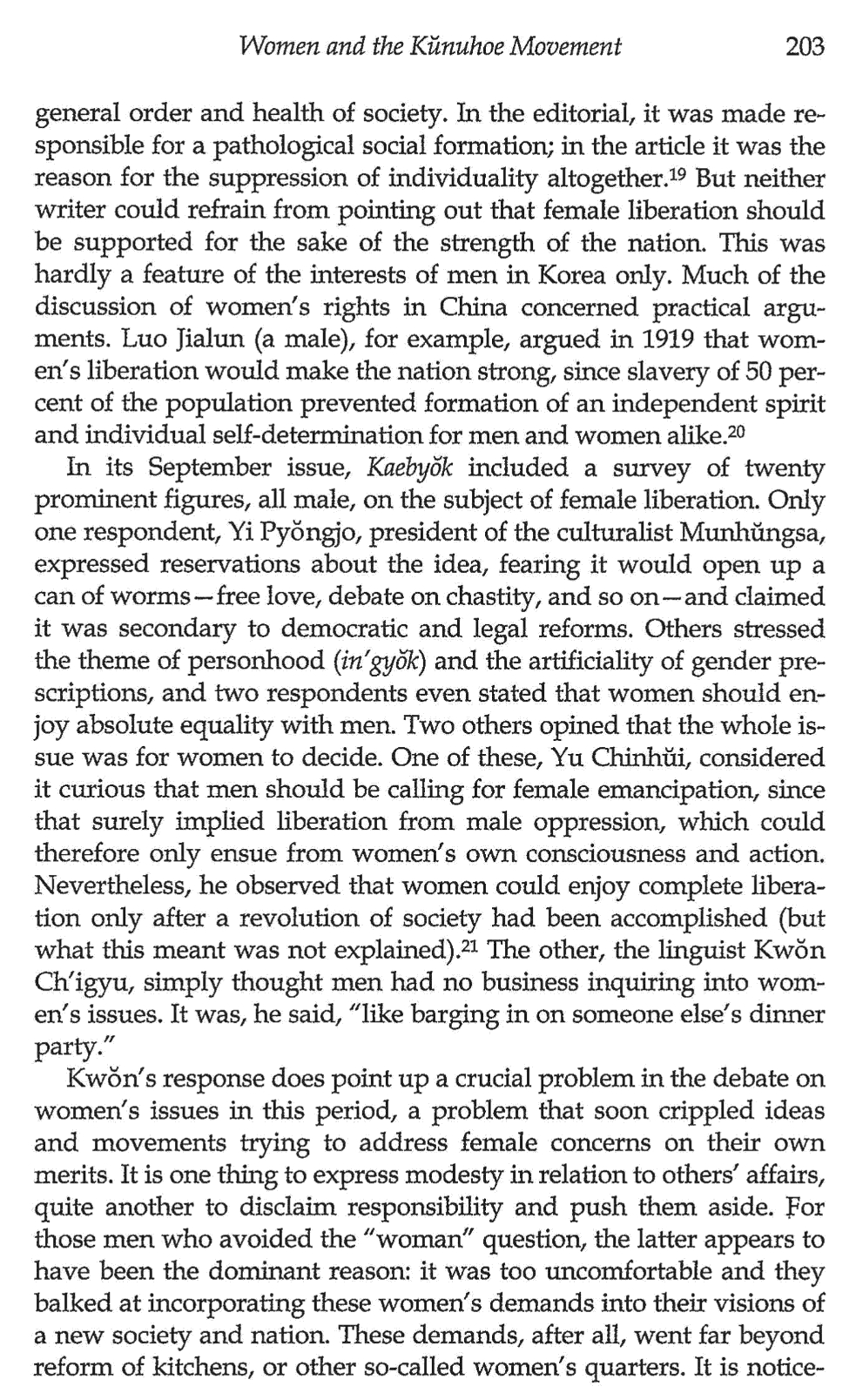
ZOOM TALK: “Missing Voices that Matter: a history of Japanese women law professorial pioneers, considering the social impact of their scarcity,” Tue 11 October 6pm (PDT)/ Wed 12 October 10am (KST)

Pervasive sexual inequality can feel like death from a thousand cuts. No one source of pain or minor irritation isn’t possible to dismiss or play down in favor of other, more visceral struggles against the patriarchy. But as it turns out, women’s relative absence from the legal profession has cascading effects across all society.

Estimated reading time: 6 minutes. Photo by cottonbro at Pexels.

When young Korean men return to university after doing their military service, they’re generally two to three years older than their female classmates. In a society where age really, really matters, this gap can grant those men a great deal of privilege. For example, by being able to avoid various mundane tasks periodically required of students by the university, as these get foisted onto the young(er) women instead. Like during this coming December after the university entrance exams, when some of my female students will be expected to “volunteer” to waste a precious day before their tests by bowing in the freezing cold to visiting high-schoolers as they arrive on the bus, while my male students study from the warmth comfort of the library.

Damn right, do I see a direct link to why so many talented and highly educated women are wasted answering the phones and making the coffee at Korean workplaces.

All of which may feel like an odd introduction to announce an upcoming hybrid talk (register) by Mark A. Levin and Tomomi Yamaguchi at the David Lam Centre of Simon Fraser University, which is not actually about Korea at all. But, based on its description below, it still feels intimately useful and relevant nonetheless. Specifically, I’m wagering it will reveal many more instances of how something seemingly innocuous like a slight age gap can have surprisingly wide implications for sexual equality, offering many similar possibilities to explore—and combat—in the Korean context:

“While the U.S. and Japan’s earliest generation of female legal scholars showed roughly similar numbers, their paths soon diverged dramatically. The number of women in the two legal academies in the 1950s to about 1960 were not all that different. Both nations counted phenomenally low numbers similarly. The U.S. took an early lead, but not by all that much. One report counted five women in tenure track positions in the U.S. in 1950 and another counted fourteen women before 1960. Japan could count five women by 1956 and eight women by 1958. Neither fifteen women in the U.S. nor eight women in Japan represent even token counts among individuals who made up the two countries’ legal academy professoriate in those times.”

“The difference then is in what followed. In the U.S., we crossed a count of 100 women around 1970 and then accelerated to 516 women by 1979, while Japan’s count essentially flatlined. From 1958 in Japan, there were no new women entrants for about ten years and then the next uptick in Japan was just five women entering the field in the late 1960s through 1974. After a second near hiatus of about eight years, Japan then saw some modest growth to have a total of twenty-two women who had entered law teaching by 1988. Our next found data point is 402 women in 2004.”

“The profound scarcity of voices of women academics as leaders, teachers, and scholars in Japanʻs legal academy for several decades remains significantly detrimental for Japanʻs gender circumstances today. The story demonstrates how crucial womenʻs and other feminist voices are in addressing gender gaps and dismantling patriarchy in a society. In particular, having women and feminist allies in the legal academy is essential for feminism to advance in a society. Conversely, deficits regarding women and feminist allies in the legal academy will invariably impact the overall society’s gender circumstances for the worse. And so, just as feminist legal theorists would suggest, it seems essential to assess those circumstances in Japan with the idea that gender gap deficits in Japan’s legal academy must be at least a contributing factor to the nation’s profound and distressing gender gap situation more generally that continue to the present day.”

“This talk aims to explore not only how, but why the two paths diverged so significantly. With time allowing, some effort will be made to draw upon Canada’s circumstances to add another historical sequence into the telling here.”

Truthfully though, it was not those possibilities that first convinced me to sign up. Rather, it was the disjuncture the blurb noted between Japan’s postwar democratic, egalitarian ideals and the actual practice in Japanese women’s personal and professional lives. For it all sounded very familiar (as it probably did to many of you too), having already read much the same in a chapter from a classic Korean studies book: “The Concept of Female Sexuality in Korean Popular Culture” by So-hee Lee (pp. 141-164) in Under Construction: The Gendering of Modernity, Class and Consumption in the Republic of Korea (ed. by Laruel Kendell, 2002). To refresh your memories from page 144, with my emphases:

“[Korean women in their early-30s {now early-60s}]…were the first female generation to go to school en masse, side by side with their brothers. As Wonmo Dong (1988) argues, they learned democracy and its fundamental principles of liberty and equality as an academic subject, not as something to practice in everyday life. From the beginning of their university days, around 1980, they were pushed into the whirl of extremely violent demonstrations to demand national political democratization. Although political protests had long been a part of Korean student life, there was something about the culture of protest that emerged in the 1980s that was different from what had gone before; student activism became an all-pervasive and all-defining experience. In those days, various slogans and ideologies relating to the struggle for democracy were strongly imprinted on the consciousness of this generation as a metadiscourse. However, the students of the 1980s never examined these democratic values in the context of their own everyday lives.”

“Go Alone Like the Rhinoceros’s Horn (Source, left: Whitedevil) illustrates the bifurcation between theory and practice. Looking at their mothers’ lives, Korean women in their early thirties believed that their marriages would be different. Because the Korean standard of living and patterns of material life changed very quickly, they believed that Korean ways of thinking had been transformed with the same speed. This is where their tragedy begins. As Hye-Wan in the novel says, mothers “teach daughters to live differently from themselves but teach sons to live like their fathers” (Kong 1993, 83–84). As a result, the daughters’ generation experiences an enormous conflict between the real and the ideal. During sixteen years of schooling, they have learned that equality is an important democratic value, but nowhere have they been taught that women experience the institution of marriage as a condition of inequality. Many married women of this generation have experienced a process of self-awakening similar to that of Yông- Sôn, who early in the novel tries to kill herself. She says,“Where have I been during the last eight years of my marriage?” and concludes,“Though I don’t want to accept it, I’ve been a sincere and faithful maid who must carry out his every request” (109). Korean wives in their thirties cannot envisage a real-life alternative to the self-sacrifices of their mothers’ generation.”

See “Women Getting on Top: Korean Sexuality in Flux in the 1990s” for a further discussion of Lee’s chapter. And, please feel free to say hi in the private chat if you are able to attend the talk! ;)

(But if you can’t make it, hopefully the talk will be made available on the Centre’s YouTube channel later.)

Update—Indeed it was. There seem to be technical difficulties embedding it here however, so if the video below doesn’t work please watch it on YouTube:


Related Posts

If you reside in South Korea, you can donate via wire transfer: Turnbull James Edward (Kookmin Bank/국민은행, 563401-01-214324)
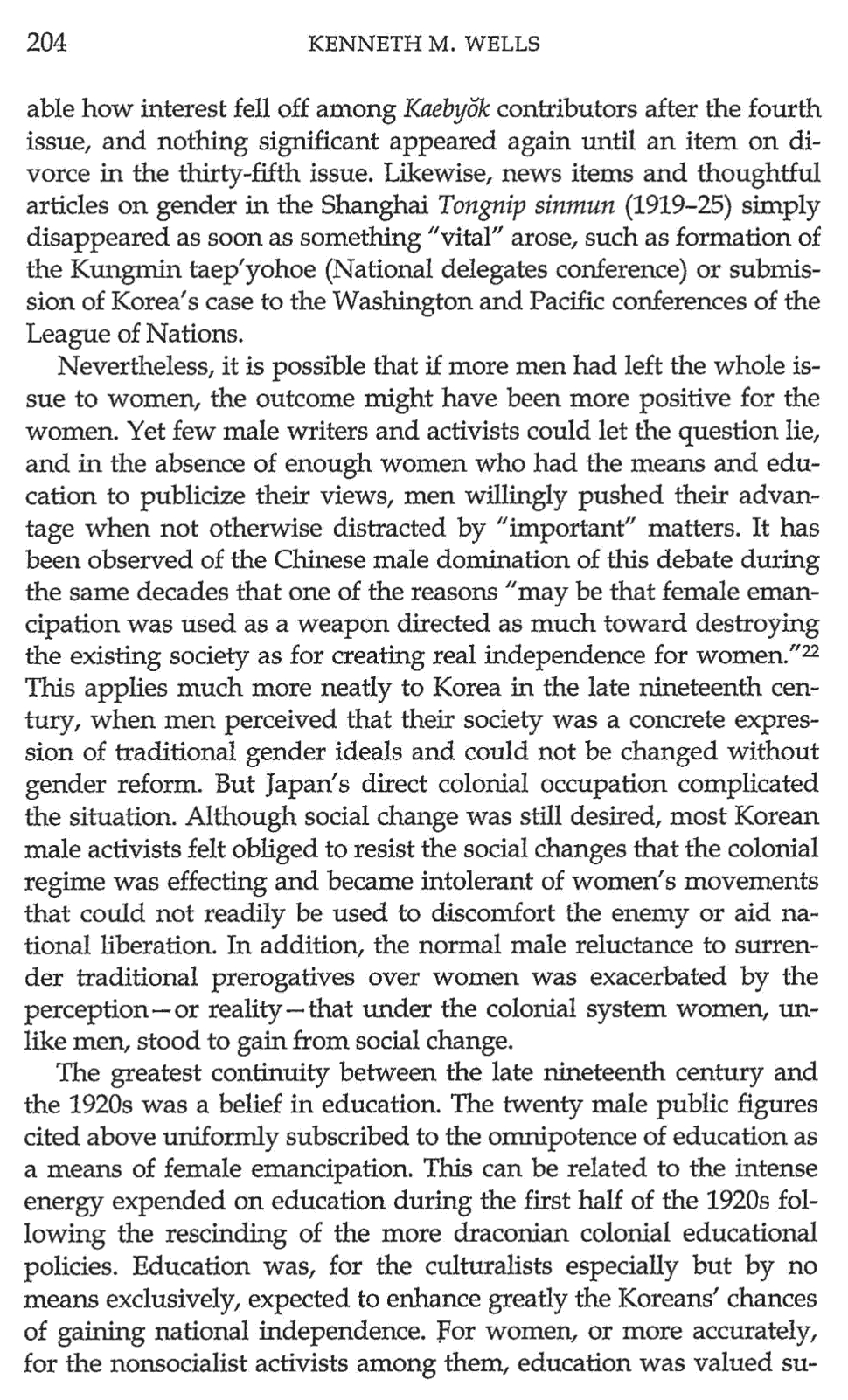
Blackpink’s Rosé Deserved So Much Better Than the “Young Silly Woman Puts Product on Head” Advertising Trope.

It’s all very cute and charming until you realize how rarely you see it used on men. Why is that?

Estimated reading time: 7 minutes. Right: So-hee of the Wonder Girls.

Yeah, Rosé does look very cute and charming in that poster. So it’s not like I’m about to boycott my local Homeplus over it. I have absolutely nothing against her either, who likely had little to no input in the direction of their advertising campaign. But when you realize that peach on her head effectively sabotages the whole concept behind that campaign, despite all the planning, preparation, and financial risks involved in hiring one of the hottest and most expensive stars in the world to help create that concept in the first place, then you really do have to ask why.

The poster, one of two of her that that now feature prominently at Homeplus stores (and online), is part of the chain’s “25 Years: A Fresh Way of Thinking” rebranding campaign to mark its 25th anniversary and launch of its new one hour delivery service. But critics were non-plussed by Rosé’s first, very different commercial for the campaign in February below, only grading it only a 2.6 out of 5. One of them thought the dancing and focus on Rosé’s face and body in the first half rendered the commercial more like one for Yves Saint Laurent, for whom Rosé already works as an ‘ambassador.’ Many others, that the luxurious, almost mature tone and atmosphere would only cause confusion among consumers when the logo for the homely supermarket chain then suddenly appeared. Also, that people’s attentions would be concentrated more on Rosé rather than on the service being advertised, and that stressing that she was 25 was unnecessarily ageist and alienating. (Actor Yeo Jin-goo was also hired as an endorser for being 25, with his own commercial rightly focused on high quality food. But the limelight has firmly been on Rosé.)

I tended to agree, especially about the unnecessary alienation of the bulk of its much older customers. Because well before I saw that commercial, I’d already noticed Rosé’s and Yeo Jin-goo’s glamorous visages in the giant banners below at my own local Homeplus, their eyes seeming to follow me as I perused the toiletries aisle, pondering which toilet paper best represented me as a person. Their purpose just baffled me. Neither of them offered any hint of any particular new Homeplus product or service, with both just saying (lit.) “Why? I have this fresh thinking because I’m 25.” Was Homeplus trying to remind me I’m almost twice as old? That just like when I used to run into my horrified students in bars, could I please just stop embarrassing them and leave?

Shockingly however, younger Koreans didn’t seem to care less about any of their elders and betters thought of the campaign. By April, there were 30 percent more visitors to brick-and-mortar stores in that age group than a year previously; of 20-24 year-olds specifically, a whopping 60 percent. Meanwhile, online customers in the 20s and 30s combined also increased by 60 percent.

(Staggering success stories like these are a major reason why Korea has the highest number of celebrity endorsements in the world. As is ignoring the 9 out of 10 times signing on expensive stars actually proves to be a complete waste of money.)

Which still doesn’t mean it was a good commercial. It wasn’t. But the next one, which came out on July 14, was. It refined the concept, presenting the perfect combination of the millennial dream of living in own’s one place in the heart of Seoul, of having the free time to luxuriate over the exquisite-looking grapes, and of having such a convenient fast delivery service for them available. And, lest I forget: that it was want-her or want-to-be-her Rosé showing us all of this too:

Which is why I’m so annoyed by the laziness of the two accompanying banner posters, which have since replaced those for the first commercial in stores (poor Yeo Jin-goo is nowhere to be seen):

This first one, ironically used as the YouTube thumbnail, is simply poorly executed: as it happens, I consider myself a more sensual person than most (just throwing that out there), but even I can’t picture anyone so enjoying the texture of grapes that they’d ever want to rub them against their face. But let’s say I do suspend my disbelief for a moment. Even then, I’m still not getting the feeling from this poster that Rosé was, say, really, really enjoying the grapes just a moment ago, but has suddenly just noticed me and is about to invite me to join. Instead, the poster simply shows what actually happened: she was instructed to put the grapes to her face, so she obliged. Not to pretend to be interested in them too, as she was asked and did so well in the commercial.

By all means, the grapes do add an aesthetically pleasing splash of green, and vaguely fit in with the headline of “As fresh as you see.” Her mesmerizing gaze back at the viewer? It quashes all doubts of why she’s a superstar. And perhaps—okay, I see it now—the taut, tight skin of the grapes is meant to vibe with Rosé’s own. Again, symbolizing that freshness concept. (But so too, illustrating the huge potential for any celebrity endorser to completely overshadow the advertised service or product.) But surely it was possible to do so without losing the sensuality of the original commercial?

Just see for yourself. Compare this first of two additional images Homeplus released on its Instagram on July 15, but neither of which seem to be displayed in stores. (Yes, I’ve visited four in the last two weeks to check, feverishly snapping away at Rosé; by now, the security staff have probably flagged me as a perverted samcheon fan.) This one isn’t perfect by any means, but it at least retains some of the sensuality of the commercial, by reminding consumers that delicious-looking grapes are best enjoyed by actually eating them. And again, even if making a link to her youthful skin was considered just as or even more important (because Korea), why not combine both motifs?

This next, much cuter and more playful Instagram one, is very difficult to dislike (notice a recurring theme?). But it too represents a big step away from the sensual concept of the commercial, and of the commercial before that as well. And yet, still it would have been a far better choice than the second poster actually chosen for the stores and homepage:

There’s three big reasons not to like it. No, really.

First, in the second, very aspirational TV commercial it’s ostensibly tied to, we were supposed to pretend Rosé was just like you and (much younger) me, only with a nicer apartment and more carefree lifestyle. Which worked. To a greater or lesser extent, you could still roll with that vibe in all of the other images with the grapes above too. Whereas this one just casually tosses that carefully crafted fantasy aside. As playing with the product by putting it on your head, combined with her looking not at you, but at a more important, separate person/photographer instead, instantly identifies her as a glamorous model or celebrity. Ergo, not at all like you or me.

Second, just in case I haven’t stressed it often enough: the whole concept of the entire campaign, best expressed in the second commercial, was all about Homeplus gratifying your senses. Being able to get your fresh fruit quickly through its new delivery service, then enjoying, perversely lingering on and luxuriating in its look, taste, smell, feel, and—if you try hard enough—sound too. There was a strongly implied erotic potential as well. But here? What I actually see when my raging alcoholism drives me to head out to my local store for a cheap bottle of whiskey? That would be placing a peach on your head. As in, Homeplus no longer cared what I think of how that peach looks, tastes, smells, and feels like, the whole ostensible reason for signing on its to new, trendy, one-hour delivery service in the first place (what, you too had forgotten this is what the campaign was selling?). Rather, the peach has become instead just a prop, a toy even, which ultimately could be replaced by just about anything Homeplus sells and still have the same effect. Say, even that toilet paper I eventually did choose.

So, being generous, at best it’s lazy. It’s unoriginal. You could say the peach on her head loosely matches the headline of (lit.) “Whenever, with no burden, lightly,” but it’s tenuous. More likely, the advertisers asked Rosé for that pose because again, it simply makes her look cute and carefree, campaign concept be damned. And also because third, finally, and more likely still, that’s just what advertisers do with young female models.

Allow A Web Essay on the Male Gaze, Fashion Advertising, and the Pose to explain:

“Look at these images. What do they suggest to you about these men? Do they seem silly?”

“What about these images?”

“Most viewers find the images of the men odd or laughable. But the images of the women seem charming and attractive…Why should it seem funny to see a picture of adult men striking a pose when the same pose seems normal or charming to us in pictures of adult women?”

Or, to conclude by going back to where we started: no matter how cute and charming Rosé may appear in the last poster, the campaign’s concepts of sensuality, luxury, and convenience are frequently confused by focusing on her looks, skin, and cute personality instead. Had they been the focus from the get-go, that would have been fine, and I wouldn’t have been annoyed at all.

I really do have better things to do with my time than write about this shit.

Instead, I’m reminded that it’s just so normal and unremarkable to infantilize grown women in ads, and that advertisers just can’t help themselves.

But why does women putting products on their head necessarily have that effect?

Because in addition to the aforementioned gender imbalance (which is the real issue; there’s absolutely nothing wrong with being cute), let me leave you with two pages from the classic Gender Advertisements by sociologist Erving Goffman, first produced the same year as me—1976. Sometimes, as you’ll see, it’s astounding to realize how little has changed in the 46 years since then.

Or, for that matter, the last 25:

Related Posts:

If you reside in South Korea, you can donate via wire transfer: Turnbull James Edward (Kookmin Bank/국민은행, 563401-01-214324)

Recent Studies Show it’s Hands-On Fathers That Have More Children, NOT Fictitious Alpha Males. The Implications for Raising Birthrates are Clear.

One recent study demonstrates the more of their fair share of housework and childcare fathers do, the more children they’ll probably have; another, the many entrenched workplace and social welfare practices that prevent Korean men from doing so. Loudly challenging the stereotypes and gender norms that discourage them, however, should be a no-brainer for policymakers.

Estimated reading time: 11 minutes. Photo by Annushka Ahuja from Pexels.

A lot of things have to come together, for a successful dating, sex, or family life.

Sadly, those combinations elude most young South Koreans. Which is not to say you won’t still see plenty of couples out on dates in this warm weather, popping into love hotels, or families out for a stroll. But when you do, as @publiusterence points out in this insightful Twitter thread, notice also their expensive haircuts, clothes, smartphones, handbags, watches, strollers, and cars. Then you realize: some of the very best things about being human, which the vast majority of us deeply, instinctively aspire towards, are simply “becoming a privilege for the middle class and above.”

No wonder everyone else is so angry.

There are a host of familiar, intractable reasons for this increasing bifurcation of Korean life. Too familiar, really. Who amongst you hasn’t already read how the economy in Korea is so polarized for instance, that singles say they simply lack the time and money to go on dates or have sex, let alone ever getting married and owning a home? Or how heavily the importance and costs of education (PDF) weigh on the decision to have children? Which only married people can even ponder really, so daunting remain the stigmatization and legal problems suffered by single mothers, as well as the strong taboos against having children if the parents have no intention to marry?

Is it any surprise that on the day of writing, a poll revealed that over half of 20-somethings don’t plan to have children after marriage?

And so depressingly on.

Photo by Alex Green from Pexels

Yet some of those reasons may also feel familiar, and personally and painfully so, because you’re in a similar position yourself—only you’re not in Korea. Which further begs the questions: to what extent are Korea’s own cultural and gender norms responsible for Korea’s world-low birthrate? Or, are they simply due to late-stage capitalism? How to tease the effects of each apart?

Such inquiries slide easily into a longstanding, ongoing sociological debate known as “convergence vs. divergence,” over whether the demands of capitalism force societies to adapt economically inefficient social, cultural, and gender norms as they develop, thereby making advanced capitalist societies resemble each other more over time, or whether some norms will endure regardless. Which is what makes the following graph, spreading rapidly on Korean Twitter, so interesting:

Source: Figure 16, “The Economics of Fertility: A New Era,” p. 32. Note that “Men” should more accurately say “Fathers.”

From the April 2022 “The Economics of Fertility: A New Era” by Matthias Doepke, Anne Hannusch, Fabian Kindermann, and Mich`ele Tertilt, a manuscript in preparation for the upcoming Handbook of Family Economics, unfortunately Korea is little mentioned specifically in the 129 page (but still fascinating) document. However, one of two potential takeaways is the seeming endurance and overwhelming influence of Korean cultural and gender norms. The dominant narrative projected by English-language commentators on Korean society after all, not least by myself, is that Korea remains a fundamentally sexist society. As BBC journalist Simon Maybin puts it in his August 2018 article, “Why I Never Want Babies,” with an iconic quote on this issue which I’ve often said myself (but am relieved to now have a much more reliable source for!):

A culture of hard work, long hours and dedication to one’s job are often credited for South Korea’s remarkable transformation over the last 50 years, from developing country to one of the world’s biggest economies.

But Yun-hwa says the role women played in this transformation often seems to be overlooked.

“The economic success of Korea also very much depended on the low-wage factory workers, which were mostly female,” she says.

“And also the care service that women had to provide in the family in order for men to go out and just focus on work.”

Now women are increasingly doing jobs previously done by men – in management and the professions. But despite these rapid social and economic changes, attitudes to gender have been slow to shift.

“In this country, women are expected to be the cheerleaders of the men,” says Yun-hwa.

Korean Sociological Image #92: Patriotic Marketing Through Sexual Objectification, Part 1

More than that, she says, there’s a tendency for married women to take the role of care-provider in the families they marry into.

“There’s a lot of instances when even if a woman has a job, when she marries and has children, the child-rearing part is almost completely her responsibility,” she says. “And she’s also asked to take care of her in-laws if they get sick.”

The average South Korean man spends 45 minutes a day on unpaid work like childcare, according to figures from the OECD, while women spend five times that.

“My personality isn’t fit for that sort of supportive role,” says Yun-hwa. “I’m busy with my own life.”

Also, for your interest, and because far more people need to be aware of Kaku Sechiyama’s excellent book, Patriarchy in East Asia: A Comparative Sociology of Gender (2015), here is his summary (p. 164) of Korean surveys from a decade earlier. As a reviewer noted, “it is in Korea (South and North) where motherhood is most pronounced, as is a household division of labor by gender”:

However, @publiusterence’s example also suggests looking beyond the headlines, as well as our preconceived stereotypes. For in addition to demonstrating that even in the progressive, supposed feminist utopias of Scandinavian countries, fathers still only do a third of the housework and childcare as mothers, a second, slightly contradictory potential takeaway is that regardless of the country, having fathers pull their weight more will invariably increase the fertility rate.

Source: Figure 16, “The Economics of Fertility: A New Era,” p. 32. Note that “Men” should more accurately say “Fathers.”

Does that make it also a potential point of convergence between capitalist societies? Admittedly, to posit it as such may seem misguided, as considering childcare and housework to be primarily mothers’ responsibilities is the very definition of a gender norm in itself. But the alternative, writing off all Korean fathers as simply lazy and sexist, is not exactly fair. Nor does it offer much in the way of solutions.

Instead, surely it is more helpful to point out the many structural factors that prevent Korean fathers from doing more work at home (whether they actually want to or not), as well as to point out practical steps that can overcome those.

Addressing the elephant in room first however, that last—let alone this post’s title—is not meant to imply that Korean policymakers aren’t already well aware of those many structural factors. Also, that they defy easy fixing, simply by virtue of not having already been done so. For an excellent summary of them, I recommend the second recent study, “Revisiting the Gender Revolution: Time on Paid Work, Domestic Work, and Total Work in East Asian and Western Societies 1985–2016” by Man-Yee Kan, Muzhi Zhou, Kamila Kolpashnikova, Ekaterina Hertog, Shohei Yoda, and Jiweon Jun in Gender & Society released just a month before that graph. Some highlights (my emphases):

Since the 2010s, the Korean government has introduced a series of family policies such as paid parental leaves, subsidized childcare services, and flexible working to help women and men to balance work and life. Public and social expenditure in Korea increased from five percent in 1990 to ten percent in 2012, but the figures were lower than the OECD average. Yet some scholars have classified the welfare regimes in Korea and Japan as [our “Conservative” type], given the fact that the governments in these countries work closely with businesses and corporations in providing social insurance and pension schemes; the result is a high degree of stratification among occupations and between the employed and the non-employed.

The reason for this was the Asian Financial Crisis of 1997, after which Korea underwent a revolutionary shift from having the most job for life, male breadwinner, “salarymen” in the world to having the most part-time and irregular workers in the OECD, as well as having one of the highest rates of self-employment. The important distinction is that those fortunate enough to secure “regular” jobs in large corporations make much more money and have far more fringe benefits than everyone else (hence all that money spent on children’s education; going to the right schools and universities is a must to secure such jobs). Also, as you can imagine, women make up most of the irregular workers.

Photo by Ketut Subiyanto from Pexels.

Continuing:

Our findings suggest that cultural norms interact with institutional contexts to affect the gender convergence in time use, and gender relations might settle at differing levels of egalitarianism. Furthermore, policies relying on family ties and women’s traditional gender responsibility for care provision, as in the case of Japan, Korea, and Southern European countries, will hinder progress in gender equality.

And today I learned:

In Japan and Korea, the gender gaps in paid and unpaid work time are large but the gap in total work time is relatively small; the gender convergence in paid and unpaid work time has been extremely slow and has even stalled.

Source: @BreeNewsome

Finally:

These findings reveal that policies relying on families as a key source of care provision, including those of Southern European countries, Japan, and Korea, prevent women from increasing labor market work and reducing their share of domestic labor. In addition, the persistently long work hours in Japan and Korea have created barriers for men to committing time in domestic work.

And yet, even if you can’t change the long working hours, the universal male military conscription, the general homosociality of Korean life, and so depressingly on overnight, something that can be put in motion is a clear, explicit, widespread government campaign at raising awareness about that graph, following by loud, well-publicized efforts at removing the outdated gender roles and stereotypes from our daily lives that sustain them.

This may sound somewhat naive, and certainly isn’t a magic bullet. Of course, various initiatives of this nature have already been going on for decades too. However, deepening them and enlarging their scope would be still relatively cheap, and uncontroversial. Moreover, given the direct correlation between fathers’ share of housework and childcare to the birthrate, what’s to lose for governments that have already spent billions on trying to raise the latter, to little effect?

Indeed, if as a selection of books recently reviewed in the Atlantic show, “social and political shifts are usually the result of sustained, unseen work,” then there is still far more that needs to be done before those shifts become visible:

Source: Wikitree via Naver.

For instance, when translating foreign language programs and films into Korean subtitles, government-television broadcasters shouldn’t be allowed to depict women usually using honorific speech (존댓말) to men and men usually informal language (반말) to women, an extremely common practice that is done regardless of the status of the characters and despite no such distinctions being made in the original language. (It was even done in The Return of Superman to BBC Dad and his wife here in Busan.) Likewise, private broadcasters who do should also be named and shamed.

In case it’s not immediately clear why, pop culture gatekeepers’ dogged determination in making sure that one sex is always portrayed as higher status than the other, is not exactly a good basis upon which to discuss a more egalitarian division of home responsibilities. A clear commitment by policymakers to do away with this practice then, would surely be helpful. Likewise, and finally, also a commitment to use gender neutral terms concerning childcare and housework standard practice for all government departments’ communications with the public. Because again, what possible harm could it do?

Source: YouTube.

I’ve written about this before, most recently in 2019 about a new term for stroller that removes the notion that it’s a mother that should be pushing it. Sadly however, I’ve yet to encounter that new term personally, as An Hyae-min also laments in their April 24 “Mabu News” column for SBS News. Some excerpts to finish with:

우리나라의 성차별 언어는 얼마나 될까요? 한국어는 독일어와 프랑스어처럼 성별이 박혀있는 언어보다는 상대적으로 성중립적이기 쉬운 언어 구조를 가지고 있습니다. 하지만 그럼에도 불구하고 한국어 곳곳에서 성차별적 언어를 어렵지 않게 발견할 수 있어요. 2018년 여성가족부가 조사한 <일상 속 성차별 언어 표현 현황 연구> 결과를 보면, 성차별 언어 표현을 한 번이라도 접해본 사람의 비율은 응답자의 90%가 넘는 수치를 기록했습니다. 특히 성역할에 관한 차별 표현이 91.1%로 가장 많았어요. 여성을 지칭할 때만 ‘여’ 자를 따로 붙이는 ‘여배우’, ‘여의사’, ‘여경’ 같은 단어들이 그런 예가 되겠죠.

“How sexist is the Korean language? Actually, Korean tends to be relatively gender-neutral compared to gender-studded languages ​​like German and French. Yet despite this, you can easily find many sexist terms in Korean. According to the results of a study conducted by the Ministry of Gender Equality and Family in 2018 on the status of sexist language expression in daily life, the proportion of people who have encountered sexist language at least once a day was recorded by more than 90% of the respondents. In particular, the expression of discrimination regarding gender roles was the highest at 91.1%. Examples of such words would be ‘actress’, ‘female doctor’, and ‘female police officer’, where the reference to the person’s sex is used only when referring to women who perform those roles [not the ‘default’ of men who do].” (Source, right: Geoffrey Fairchild; CC BY 2.0)

가족 호칭에서도 남편 쪽의 친척에게는 ‘도련님’, ‘아가씨’로 높여 부르지만 아내 쪽은 ‘처남’, ‘처제’로 부르고 있죠. 남성과 여성을 병렬적으로 배치할 경우에 ‘남녀노소’, ‘아들딸’, ‘남녀공학’ 등 남성이 먼저 위치하지만 비하하는 표현을 사용할 땐 ‘연놈’과 같이 여성을 지칭하는 말이 먼저 오기도 하고요. 심지어 여성이 앞에 와 있는 Ladies and Gentlemen을 ‘신사숙녀 여러분’으로 뒤바꿔 번역하기도 하죠.

“Even in family titles, relatives on the husband’s side are called ‘bachelor’ and ‘agassi/unmarried woman‘, but on the wife’s side they are called ‘brother-in-law’ and ‘sister-in-law’. Also, when men and women are placed in parallel in a neutral term, men are mentioned first, such as in ‘man and woman’, ‘son and daughter’, and ‘co-education’—even the English ‘Ladies and Gentlemen’ is reversed in Korean. But when using derogatory combined expressions, words referring to the women come first, such as in ‘Yeonnom.'”

● 유모차 → 유아차
: 여성(母)만 포함되어있는 단어로 평등육아 개념과 맞지 않음. 아이가 중심이 되는 유아차가 성중립 언어라고 할 수 있음.

● 스포츠맨십 → 스포츠정신
: 스포츠를 하는 누구나 가져야 하는 스포츠정신에 남성(man)만 포함되어있는 단어는 성평등에 어긋남.

● 자매결연 → 상호결연
: 상호 간의 관계 형성의 사회적 의미를 ‘자매’라는 여성적 관계로 표현. 여성에 대한 인격적 편향성을 높일 수 있다는 점에서 차별적 표현

● Stroller → Baby Car: A word that contains only women (母) does not fit the concept of equal parenting. A child-centered infant car can be said to be a gender-neutral language.

● Sportsmanship → Sports spirit : A word that contains only men in the spirit of sports that everyone who plays sports should have is against gender equality.

● Sisterhood relationship → Mutual relationship : Expressing the social meaning of mutual relationship formation as a feminine relationship called ‘sister’. Discriminatory expression in that it can increase personal bias toward women

이러한 성차별적 표현을 바꾸기 위한 노력은 곳곳에서 보입니다. 위에 정리해 둔 건 서울시 여성가족재단에서 2018년부터 진행하고 있는 성평등 언어 사전의 일부 내용들이에요. 서울시에선 시민들과 함께 성중립 언어 개선안을 만들어서 공표하고 있죠. 국립국어원에서는 가족 호칭에 대해서 아내 쪽 친척을 남편 쪽 친척의 호칭처럼 ~님으로 부르는 방식을 권고하기도 했어요.

“Efforts to change these sexist expressions are everywhere. Listed above are some of the contents of the Gender Equality Language Dictionary, which the Seoul Gender Equality and Family Foundation has been running since 2018. The Seoul Metropolitan Government is working with citizens to create and announce a gender-neutral language improvement plan. The National Institute of the Korean Language also recommended that relatives on the wife’s side be called with the honorific ‘nim’, just like relatives on the husband’s side.”

가장 보수적인 언어가 통용되는 법령 용어에서도 성차별적 언어 표현을 성중립 언어로 대체하고 있습니다. 법 조문에는 여전히 ‘미망인’과 같이 성차별적 표현이 있거든요. 이를 바꿔보려고 한국법제연구원이 법률을 전수 조사해서 차별 언어를 검토하기도 했습니다. 지난달엔 법무부 디지털 성범죄 전문위원회에서 ‘성적 수치심’이라는 단어를 성 중립적 용어로 변경하라고 권고한 일도 있었고요.

“Even in statutory terminology, which is used in the most conservative languages, sexist language is being replaced by gender-neutral language. There are still sexist expressions such as ‘widow’ in the law. To change this, the Korea Legislative Research Institute conducted a full investigation of the law to examine the language of discrimination. Last month, the Ministry of Justice’s Digital Sex Crimes Committee recommended that the word ‘sexual shame’ be changed to a gender-neutral term.”

Korean Sociological Image #61: Stereotypical Gender Roles in Pororo

RELATED POSTS

If you reside in South Korea, you can donate via wire transfer: Turnbull James Edward (Kookmin Bank/국민은행, 563401-01-214324)

How Korean Celebrity, Gender, and Advertising Intersect—Some Quick Key Points

Estimated reading time: 7 minutes.

But first, let me extend my warm thanks to Professor CedarBough Saeji (a.k.a. @TheKpopProf) for her invitation to talk on this topic to her class last week. Next, to her students also for their many interesting questions and observations, given to me both in person and as they live-tweeted the event!

As there were too many tweets to respond to individually afterwards however, and because most were related to some key points I’d ended up having to rush over because I’d wasted far too much time showing videos of time constraints, I decided to clarify them in a long thread instead. Please click to read, and, because the more in the discussion the merrier, please feel free to respond yourself, either on Twitter or in the comments section below.

Finally, seeing as we’re on the subject of talks, let me also remind everyone that if you too would like me to give one to your own class or organization, whether in person or via Zoom, then I’ll probably jump at the chance if our schedules work out. So please get in touch! :)

If you reside in South Korea, you can donate via wire transfer: Turnbull James Edward (Kookmin Bank/국민은행, 563401-01-214324)

Two Ads With the Same Female Model, for the Same Kind of Product. Spot the Differences in the One Aimed at Men.

Needless objectification, and a power trip from being called Oppa. WHY do advertisers assume cishet men genuinely prefer these?

Estimated reading time: 7 minutes. In case of any lingering doubts that it’s the same model, check out the wisps of hair on her right.

“You’re a man in his 40s, aren’t you?” reads the offending ad’s headline. Ouch. I scroll social media for the dopamine hits thank you very much, not to be reminded of how much my knees hurt.

I also really, really don’t like being pegged as someone who’d prefer to see a woman’s body without her face either. But it’s what the ad says which is more repugnant, so let’s address that first.

The product being advertised is a diet supplement. (Yes, I thought it was for something to help with “men’s stamina” too.) At the top, the text about it extols, “I only took a packet a day and it took care of everything. I levelled up from being called an uncle to an oppa! These days, it’s time for men to take care of their diets too!”. Then, the headline next to the model, “You’re a man in his 40s, aren’t you?” and “We will ensure you’ll never be called ajeossi again!”

I’m not judging the implied huge age gap with the model. One sex being used to sell products to another will always be a thing too, however absurd it feels in this particular case. What I do have a beef with, is encouraging myself and my fellow ajeossis to crave being calling Oppa by women, especially those like her who are much younger than ourselves.

Although we’d like to pretend it really wasn’t all that long ago we were dancing to Wax‘s classic in nightclubs in our 20s, when the word had more innocent and romantic connotations, really we know most women now find the word distasteful at best. We also know they especially resent how all too many older male colleagues, acquaintances, friends, and bosses, taking advantage of their male privilege, will sometimes demand they perform infantilizing aegyo to them at company dinners and so on—which will invariably include demands to call them Oppa.

The men who still ask women to do so regardless then, only to claim it was just harmless fun later, are being completely disingenuous. The only reason any man does so in 2022 is to get his ego boosted, and to put the younger women being asked in their place. Behavior which whoever at Sery Box and/or enigmatic shopping site 형만믿어 responsible for the ad would know full well, and absolutely shouldn’t be encouraging.

Source: Kakao.

To give a recent for instance, in a surreal scene from an episode of the Omniscient Interfering View talkshow in February last year, veteran, internationally acclaimed actor Moon So-ri calmly explained she didn’t call her four year-older husband Oppa because its cute connotations made the woman using it seem childish, whereas she wanted a relationship of equals. One male panelist’s tactless, boorish response to her thoughtful comments? To ask her to call him Oppa instead. When she refused, he demanded a flustered young K-pop star do so in Moon’s place, ultimately forcing Moon to cover for her to save her further embarrassment.

The top tweet: “Actor Moon So-ri explained the gender politics of the word in an easy-to-understand and non-accusatory manner. He was just such a typical sexist han-nam though, with no intention of listening to or trying to understand her whatsoever.”

On top of all that, the model is headless. No pun intended.

While having bodies or their various parts presented in isolation isn’t inherently bad in itself, and is a practice that people rightfully tend to judge in context, the cumulative effect on the people it’s usually done to day in day out—e.g, women overwhelmingly more than men, and obese people in news reports about them—is to dehumanize them in the minds of observers, even if they belong to the group being objectified themselves. It’s also been demonstrated that if my fellow ajeossis and I consider a woman attractive, we’d also be much more likely to respond to her returning our gaze instead. The implied enthusiastic consent to our interest through a wide smile can be a pretty big deal too.

All of which begs the question of why, if Sery Box and/or 형만믿어 clearly had access to the same stock photos of the same model that Centheal and/or 하태핫태 responsible for the left ad had, did they not also select one with her smiling face?

I’m no photographer or graphic designer, but I refuse to believe there’s anything particularly significant in terms of aesthetics or layout that would compel the choice they did make. Even just raising the bottom of the image just enough to show a smile would have made a big difference.

I’m overanalyzing, I know. Numerous surveys have revealed that Korean internet ads in particular have gotten distinctly smuttier over the past decade, and the Oppa ad is really nothing special in that regard. Less a patriarchal conspiracy, than simple laziness.

Yet there’s something to the juxtaposition nonetheless.

But if you could please bear with me a just a moment longer before elaborating, there remains the task of confirming the gender divide in the two ads first. So again, the offending one is indeed explicitly aimed at men, and the link it takes you to only features two images of a woman—Kim Tae-hee—among the many more of main celebrity endorser Lee Jung-jae, as well as numerous images of muscled men. Most of Sery Box‘s products are actually aimed at women however, and feature Kim Tae-hee and various other female celebrities (with absolutely no men) in their advertising on their various webpages for those.

During rush hour, when men are glued to Facebook on their phones, Korean shopping mall target men with ads like these. The logic being, the images on the left will get their attention, even though they’re not interested in actually buying women’s clothes. Then, when they invariably look away, the next things they will see are the ads for products they will be interested in buying on the right. Image source: The PR News.

In contrast, the left ad (now below) is advertising a fortified extract of garcinia cambogia (가르시니아 캄보지아 추출물) sold by Centheal. Although there’s nothing on their website to explicitly indicate they’re targeting it only at women, only female models are featured, and the logo on the packaging has a woman’s waist incorporated into it. There’s also a “WomaNature” mentioned, although I’ve been unable to pin down what that refers to. Meanwhile, the screenshot actually being saved by me in February 2021, just before the Korean New Year, the text at the top reads “With Seollal approaching, let’s enjoy holiday food with worrying about it.” Then, next to the model, “This Seollal, don’t become like one of those people who’s put on weight from staying indoors all day due to Covid. Instead, take care of your body [even] while eating all that [holiday] food. [Take advantage of this] half-price discount event to celebrate the holiday.”

Finally, let me post the other ad again for the sake of that juxtaposition:

I’m writing here today because personally, seeing them together, I was instantly reminded of a surreal experience I had in 2010, when I innocently switched tabs between Elle Korea‘s photoshoot of Lee Hyori, and then MSN Korea’s article about it (which I’ve presented in GIF form below). Someone at the latter, an ostensible news site, had apparently found the body of then Korea’s biggest sex symbol inadequate:

That particular juxtaposition sparked the beginnings of my own learning journey over the next decade about Korea’s many, many problems with female body-image. Whereas writing about this more recent pairing, has forced me to think deeply about, first, the modern connotations of the word Oppa, which frankly I wasn’t originally going to mention at all (I wasn’t joking about my intense dislike of cishet men being pigeonholed as preferring headless women); and second, what other baggage from my formative years in Korea I absolutely need to jettison over the next decade if I want to continue my quest to properly understand Korean misogyny—which “Call me Oppa” ultimately is.

I hope you too find what’s revealed by the juxtaposition featured today, just as telling and motivating to learn more about as I have.

Related Posts:

If you reside in South Korea, you can donate via wire transfer: Turnbull James Edward (Kookmin Bank/국민은행, 563401-01-214324)

If She’s Got Bette Davis Eyes…

…Science says she’d be foolish not to take advantage of them.

“Eyebrows have a huge impact on the impression you make”? Estimated reading and viewing time: 5 minutes

This image is from the back of a beauty parlor’s standee. The front, which I saw first, likewise featured an attractive woman. But that woman? I didn’t give her a second thought as I approached the parlor. There was nothing to make her stand out from the hundred or so other attractive women in ads I’d already seen on my walk that night. Whereas the woman on the back, who seemed to return my interest rather than avert her eyes? Of course that would elevate her above her rivals. But did you know that dopamine was the reason why? Which attractive women will trigger in cishet men’s brains only if they stare back?

All is explained in this one minute video from the Psychology TikToks channel, part of a 2010 lecture on human sexual behavior by Stanford University biology and neurology professor Robert Morris Sapolsky. But I encourage you to click on the video of the full lecture below that instead, which I’ve timed to start at 43:55 to help give you some quick context before that clip begins at 45:10:

Granted, no source is mentioned, maybe because it was in the syllabus (but see here for a student’s extensive notes), and I’ve been unable to find any possible candidates; I’ll keep looking. Another issue is that Sapolsky didn’t immediately follow his point with how cishet women reacted to attractive and ugly men returning their gaze (let alone anyone else on the LGBTQ spectrum), as I’m sure that’s what everyone in his audience was wondering. Or was that actually covered by a later comment about switching the genders?

Also granted, whatever your gender and sexual orientation, you too may prefer the back picture, for reasons that have nothing to do with dopamine. If so, having some additional chemical motivation isn’t mutually exclusive with sharing them. For instance, from an advertiser’s perspective, that picture surely ties in with the parlor’s various eyebrow-related services much better than the essentially random one on the front does. Noteworthy too is how, in discussions about the male gaze, examples of women staring back are frequently praised by women for having agency by “being aware of,” “controlling,” and “challenging” that gaze. In fact, as you can see from the links at the bottom of the post, I’ve written tens of thousands of words doing so myself, and wince at the memory of how much caffeine—not dopamine—was involved.

It’s also in those posts that I’ve expressed my anger and frustration with commentators on the female gaze who take it as a given that myself and all other cishet men actually prefer passive, compliant women we can lord over. Say, because that’s the image of women the male-dominated mainstream pornography industry, well known to be a bastion of feminist representation, overwhelmingly provides us with.

And I’m still angry and frustrated, frankly. Imagine if I likewise gave a one hour talk on what, say, cishet women want in men, without providing any evidence whatsoever that I’d asked a single one of them. It would be classic mansplaining.

It brings a certain satisfaction then, to learn that if some commenters won’t apply the same standards to themselves, there is at least now (potential) scientific proof that cishet men aren’t necessarily the domineering brutes that they describe them as ;)

Related Posts:

If you reside in South Korea, you can donate via wire transfer: Turnbull James Edward (Kookmin Bank/국민은행, 563401-01-214324)

The Hidden Roots of Korea’s Gender Wars

Universal male conscription and rampant discrimination against working mothers will always grab headlines, but a recent ruling against segregated seating in study rooms is a stark reminder of the pervasive homosociality behind the friction

Estimated reading time: 5 minutes. Photo by cottonbro from Pexels.

After university, Korean men and women have fewer friendships with each other than their counterparts in English-speaking countries do. At least, that’s my own personal experience, and I’d wager good money most of yours too.

Under-30s especially though, will make me want to hold on to my wallet. Koreans that age have known nothing but rapidly declining marriage and birth rates, a staggering rise in the number of single households, and ongoing economic precarity. In their wake, lifestyles and social norms that were centered around marriage and male breadwinner systems are undergoing a paradigm shift.

But change is never easy, nor universally welcomed. In particular, Korea’s ‘gender wars‘ are one troubling symptom of the transistion process. One of their main catalysts, misplaced anger over mandatory military service for men, will continue to buttress homosociality, by disrupting male university student’s relationships with female students who remain, as well as by subtly enabling male, age-based privilege when those men return, and by providing them with old-boy networks they will rely on for the rest of their lives. Not unrelated, long working hours for both sexes and a second shift of domestic and family responsibilities for women reinforce the notion of separate spheres.

17-Year-Old Tzuyu: “A Special Gift for Korean Men [who’ve completed military service].”

Yet these are only the broad swathes of the many roots of the phenomenon. Not so headline-grabbing, but no less impactful for all that, is that most Korean schools are single sex, with only a third of high schools in Seoul being coeducational for instance. Indeed, many schools prevent students from dating or even socializing with the opposite sex too.

A task in which they may have long been aided, it turns out, by a law requiring “study rooms” (독서실) to be segregated by sex, under the eye-rolling rationale that mixing them together is more likely to lead to sex crimes. (And a belief which is still taught in sex-education classes today.) As YTN just reported on Valentine’s Day however, this requirement has now been ruled unconstitutional:

I’ll translate the report in a moment below. But first, study rooms, for those unfamiliar, are like libraries where all the bookshelves have been replaced by rows of separate cubicles. Designed to be equally quiet, and with the sole purpose of studying, I’ve also been told by a friend that they were where teenagers especially “told their parents they were going when they were actually going on dates, since you were expected to be incommunicado while you’re there.” They’re also much cheaper and have been around much longer than “study cafes” (스터디카폐), which range much more widely in price and quality but in which you either have tables and desks to work at and/or can hire a separate room where noise is not a problem, and will likely have a range of snacks, coffees, and soft drinks available to purchase. For obvious reasons, both study rooms and cafes are primarily associated with school and university students, but they’re also commonly used by older adults, especially the half a million Koreans studying for civil service exams at any one time—which just goes to show how ubiquitous and common a part of daily life they are in Korea.

Unfortunately and finally, the report is frustratingly vague. Among the many obvious questions it doesn’t provide an answer to are: if the original law (or 1995 amendment?) covered all private educational intuitions, or if it only applied to study rooms and why; if it had been enforced at all before 2017 or if that was in fact the first and last time; why only 16 regional educational boards (out of how many?) incorporated it into their own ordinances; why the Jeonju Office of Education suddenly decided to enforce it; and so on. If any readers can help fill in any these blanks, I would be very grateful!

“This is a study café, which can easily be found in any neighborhood.”

주변에서 쉽게 볼 수 있는 스터디카페입니다.

남녀 자리를 구분하지 않고, 자유로운 착석이 가능합니다.

공공도서관, 공동주택 열람실도 마찬가지입니다.

하지만 독서실은 다릅니다.

남녀가 한 공간에 섞여서 앉아 있을 경우 행정처분을 받습니다.

This is a study café, which can easily be found in any neighborhood.

You’ll notice there is free seating, with no designated areas for men and women.

The same is true for public libraries and community reading rooms in apartment complexes.

But study rooms are different.

If men and women sit together in them, the owners will be subject to administrative sanctions and penalties.

“You’ll notice there is free seating, with no designated areas for men and women.”

근거는 지난 1995년에 개정된 학원법 시행령입니다.

성별에 따라 좌석을 구분해야 한다고 규정했고, 이 조항 등을 기초로 16개 시·도 교육청은 조례에 남녀 좌석구분을 못 박았습니다.

지난 2017년 12월 이 조례를 근거로 전주교육지원청은 한 독서실 업체에 열흘간 운영정지처분을 내렸습니다.

현장점검결과 열람실 내 성별 좌석 구분 배열이 준수돼 있지 않고, 한 공간에 남녀가 섞여 앉아 있었다는 겁니다.

이에 대해 독서실 측은 해당 조례가 직업수행의 자유를 침해하는 위헌적 규정이므로, 행정처분 역시 무효라고 주장하며 소송을 냈습니다.

This is due to the Education Academy Act, which was amended in 1995. [But the broadness of the Act is not given, nor why it was only being enforced in study rooms—James.]

It stipulates that seats should be divided according to sex. Based on this provision, 16 metropolitan and provincial offices of education have incorporated it into their own ordinances.

On this basis, in December 2017 the Jeonju Office of Education ordered a study room to suspend operation for ten days.

As a result of an on-site inspection, it had found that men and women were sitting together.

In response, the study room filed a lawsuit arguing that the sexual segregation requirement was invalid, as it infringed upon the constitutional right to freedom to practice one’s profession.

“[However], if men and women sit together in [study rooms], the owners will be subject to administrative sanctions and penalties.”

1심과 2심이 엇갈리는 치열한 법리 다툼 끝에 대법원은 독서실 혼석 금지 조례는 위헌이라고 결론지었습니다.

재판부는 헌법에서 보장하는 직업수행의 자유와 독서실 이용자의 행동 자유권을 지자체가 조례를 통해 과도하게 침범했다고 지적했습니다.

이어, 혼석을 금지해 성범죄를 예방한다는 입법 목적도 남녀가 한 공간에 있으면 성범죄 발생 가능성이 커진다는 불합리한 인식에 기초한 것이므로 정당성을 인정하기 어렵다고 설명했습니다.

대법원이 전북도 조례에 대해 위헌 결정을 내린 만큼 지난 2017년 먼저 관련 조례를 삭제한 충청남도를 제외한 나머지 15개 지자체는 조례개정이 불가피할 전망입니다.

YTN 김우준입니다.

After a fierce legal battle that went to a second trial, the Supreme Court agreed that the sexual segregation requirement was unconstitutional.

The Court pointed out that through the ordinance, the local governments excessively violated the freedom of occupation guaranteed by the Constitution and the freedom of action of users of the study room.

The Court further explained that the original purpose of the ordinance, to prevent sex crimes by reducing the opportunities for men and women to mix, was irrational and could not be used as justification to continue it.

As a result of the Supreme Court’s ruling that ruled that sexual segregation was unconstitutional, the remaining 15 metropolitan and provincial offices of education that incorporated the provision will be forced to revise it. One of the original 16 offices, that of Chungcheongnam-do, already removed the relevant ordinance in 2017.

Kim Woo-jun from YTN reporting. (End.)

Update:

An excellent article by Choi Jae-hee from The Korea Herald entitled “From study cafes to ride-sharing, Koreans seem to prefer same-sex environments. Why?” helped fill in some of those blanks. Specifically (but I highly recommend reading it in full):

[The Supreme Court’s] judgement was in favor of a local operator of a private reading room facility who was slapped with a 10-day business suspension from a local educational authority for breaking a gender segregation rule set by the North Jeolla Province’s education office.

The rule in question is the article 3 of the “Ordinance on the Establishment and Operation of Private Educational Institutes,” which stipulates that seats in studying spaces at private educational facilities should be divided by gender. It was introduced in 2009 largely to deter sex crimes and ensure a better study environment, officials said.

Unlike study cafes, which are categorized as a space leasing businesses or a restaurant/rest area business, reading rooms are regarded as private academies and thus are subject to the ordinance.

Related Posts:

If you reside in South Korea, you can donate via wire transfer: Turnbull James Edward (Kookmin Bank/국민은행, 563401-01-214324)

Announcing the First Book of The Grand Narrative Book Club: “If I Had Your Face” by Frances Cha, Thursday 27 January 7:00pm

Estimated reading time: 3 minutes.

If you wannabe my lover, you gotta get with my books.

Or, if you just want to be my friend (your loss!), I’ll settle for a shared love of books in general.

Just as in a romance though, a relationship on that basis can still entail a bittersweet mix of passion and frustrated longing. Specifically, as my own taste in books has rarely meshed with my friends’, I’ve found there’s only so much I can wax lyrical about my latest conquests when they’re so unlikely to ever read them themselves. And with 52 books read in 2021, plus a goal of 72 in 2022, that’s of lot of pent-up passion not to have an outlet for.

But you already know where it’s going to go now.

As I type this, I’m loving If I Had Your Face by Frances Cha, “a fierce social commentary about gender roles, class divisions and, yes, plastic surgery in South Korea.” I’ve been especially struck by how realistically Cha depicts the daily lives and conversations of the four main young(ish) Korean female characters, much more so than in previous Korean or Korea-related fiction I’ve encountered. “Finally,” I said to myself, “I’ve found characters in a book talking just like my Korean friends and I talk!”

Yet we’re not in our 20s or early-30s either. Beyond the swearing and sex talk that I love so much, does Cha indeed portray their lives realistically? It’s been especially difficult for someone with my background to tell, slowing down my reading with so many nagging thoughts and questions.

Then something occurred to me in the shower. It’s a popular book, making Time’s list of 100 must-read books in 2020 for instance, meaning there’s many of you out there with your own opinions, insights, and maybe even your own nagging questions. So why not share them with each other on Zoom?

I’m envisaging something very intimate and informal, cameras on, with a maximum of 12 participants (but in practice probably much fewer than that). To ensure it’s as safe a space as possible, I’ll screen all attendees as much as I’m able, the Zoom link will be invite only, and once it’s started I’ll be very busy behind the scenes to ensure things run smoothly.

Just for that last reason alone, I want to be clear that this will be a discussion, and definitely not any kind of lecture, webinar, or even dominated by me. While in my duties as host I will have prepared many hopefully interesting questions and potential talking points to raise if necessary, I strongly encourage—nay, demand—everyone attending to come up with at least couple of their own (please!).

For those amongst you who are interested but haven’t read the book yet, I’m thinking that by Thursday, January 27 is plenty of time to order, read, and digest it, and that 7pm on that evening (Korean time) is both late enough to drink eat first, and early enough to get a discussion of a decent length in before people get tired. We could also decide the next month’s book then too.

If you’re interested in attending, please leave a comment below (your email address will only be visible to me) or contact me, and I’ll get in touch in a group email closer to the date. Any thoughts, suggestions, and advice for running a book club would also be very welcome.

See you on Zoom!

If you reside in South Korea, you can donate via wire transfer: Turnbull James Edward (Kookmin Bank/국민은행, 563401-01-214324)
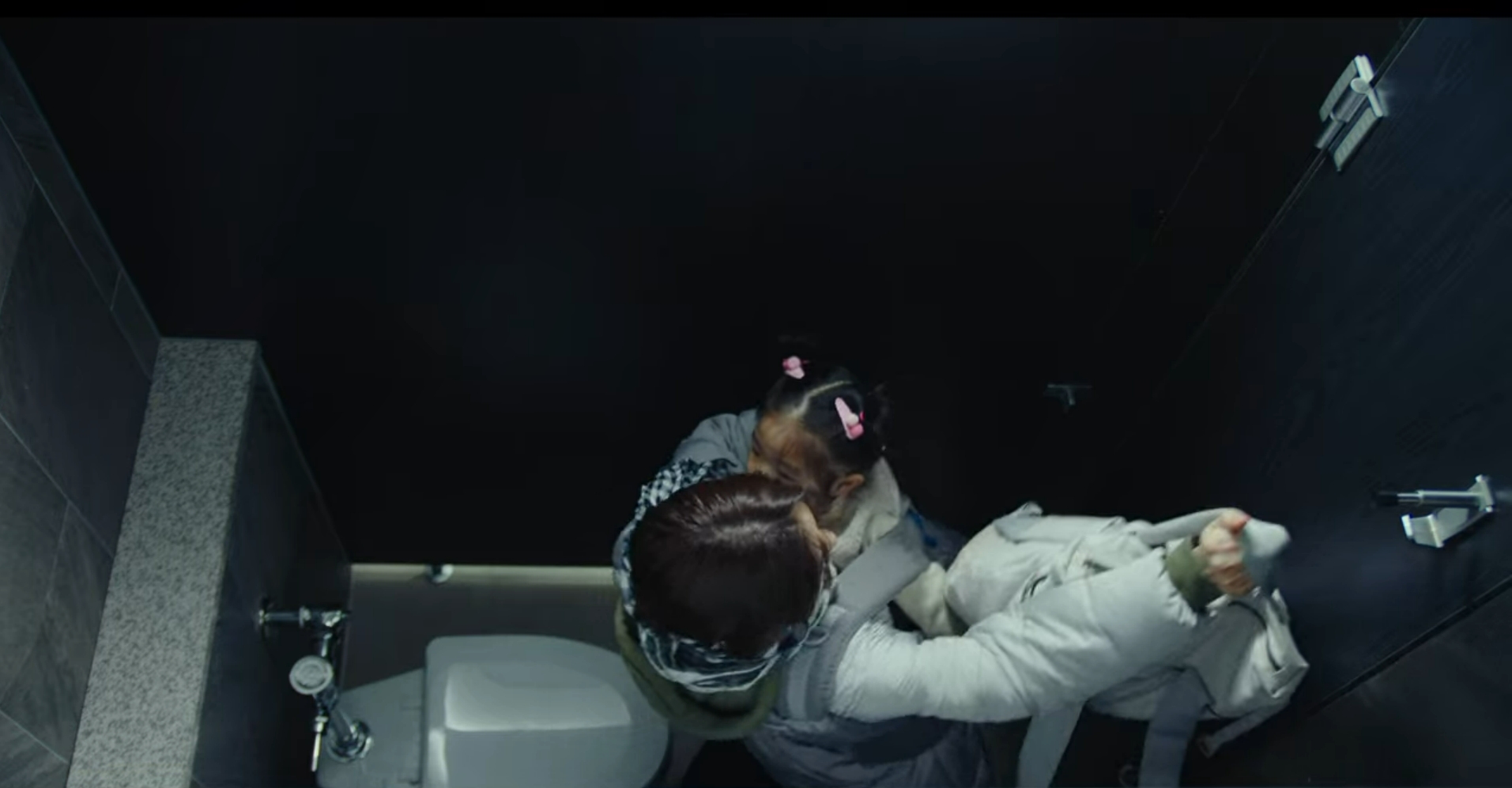
Even When it’s to Businessmen, it’s Still Evil to Advertise Your Hotel with What Feels Like a Male POV Dating Sim. Here’s Why.

Tell me Korea has a huge gender pay gap, without telling me Korea has a huge gender pay gap

“Would you like to dance with me?” Estimated reading time: 7 minutes.

Most gendered marketing, I get. Obviously, when it’s for products or services related to physical differences, like bras or medicines. So too when, assuming equal access, it’s primarily one sex that purchases them, whatever the combination of nature and nurture responsibility for that. But it’s a risky strategy for companies. Only focusing on one sex can easily lead to an overreliance on crude stereotypes in advertisements. As the example of “boobs and burgers” Carl’s Jr. in the US suggests, any company that willingly alienates half its potential market deserves intense scrutiny of how its male leadership and managers treat women behind the camera. And don’t get me started on what anyone in favor of “pinking and shrinking” thinks of them.

About the staff behind Korean travel-app Tripbtoz, I reserve making any judgements for the moment. Because I confess, I like—no, love—their commercial for Westin Josun Seoul. The background track alone, Summer of Our Lives by Waykap (ft. Emmi), is legitimately sensual in its own right. In combination with model Chae Yu-jin‘s dancing and sultry stares, mesmerizing.

But of course I would think that. The commercial is so squarely aimed at cishet men, to describe it merely as a classic example of the male gaze feels insufficient:

Just prior to watching, by coincidence I’d been reading “Privileging the Male Gaze: Gendered tourism landscapes” in Annals of Tourism Research (October 2000),* in which authors Annette Pritchard and Nigel Morgan persuasively argue that “the language and imagery of [tourism] promotion privilege the male, heterosexual gaze above all others.” While it’s not an empirical study, so not definitive “proof” as such, making the radical assumption for the moment that that bias does exist helps us formulate several uncomfortable, revealing questions we could ask of the commercial.

What it is, is a teaching moment.

Source: “How BTS is redefining art for the female gaze” by Michelle Fan.

First, we could ponder how difficult it would be to find a commercial with a male model in place of Chae. Certainly, in keeping with the theme of Pritchard and Morgan’s focus on transnational tourism imagery, catering to the foreign hetero female gaze has become a significant element of the Korean Wave. But specifically, a commercial featuring a young man strutting his stuff in a hotel for his female partner? Whatever the nationalities of the intended audience?

I suspect the world yet awaits. Yet even if enterprising, lusty readers do find an example, that exception would prove the rule: that no-one’s wanting for videos of scantily clad young women in luxurious surroundings appealing to the fantasies of middle aged businessmen. That in contrast to how awkward an equivalent video with a male model might feel due to its rarity, ones with women are so normalized and routine as to be boring.

In fact, I only clicked on this otherwise unwelcome YouTube ad break at all due to the background music.

Next, could it be not in fact be aimed at women? The idea being that, through showing Chae’s enjoyment of the many luxurious services the five-star hotel has to offer, many women would now just love to be in her shoes? (This may even be the advertisers’ genuine intention, a point I’ll return to a moment.)

If so, it’s strange how we never actually see what those services would look like from a female guest’s perspective. Instead, through the exclusion of anybody but Chae in our field of view, we’re only given that of her besotted paramour as she leads him into their shared room and bed, or acknowledges his admiring glance in the bathroom or corridor.

Should what she’s expecting of him from those glances isn’t already obvious enough, background lyrics like “Give it to me like you know you should now baby” help further clarify.

Is he necessarily a businessman? It’s true I have no figures on the sex ratio of business travelers, who would surely make up the bulk of guests at Korean 5-star hotels during a pandemic. But given that only 5.2 percent of Korean executives are women, only 3.6 percent of Korean CEOs are, and that Korea had the highest gender wage gap in the OECD prior to it (and only widened since), then it’s a safe assumption. It’s further reinforced by the use of the honorific language of “시” (as in “저랑 춤 추실래요?” instead of the more equal but still polite “나랑 춤 출래요”) in the “Would you like to dance with me?” of the opening image. While it is simply a polite way to ask, it’s much more likely to used by a younger woman to an older man than vice versa (make of that what you will), and also the level of politeness older businesspeople would be accustomed to.

Despite appearances however, women may actually have been the target. That the overwhelming majority of media is produced through the perspective of a supposed “average” cishet (usually white) man’s point of view, to the extent that it’s widely assumed to be an objective neutral, is painfully clear to anyone familiar with the concept of the male gaze. So, it’s entirely possible that the—very likely—men at Tripbtoz and Westin Josun Seoul responsible for the commercial may genuinely have been aiming it at women, and had no idea of how seeped in their own vision of luxury their notion of what women really wanted was. (The evidence from Tripbtoz’s YouTube channel is mixed.)

But whomever it was aimed at, the commercial is primarily about conveying a sense of luxury, and further questions could be asked about how gendered and sexualized life for the one-percenters is portrayed in Korean advertising as a whole. Specifically, I’m thinking of the eerily similar messages provided by Korean Air’s “Color of Perfection” campaign from 2007:

Designed to showcase “a refreshed image of a sophisticated, modern and creative airline,” complete with a specially-composed background track that likewise got people’s attention in its own right, unfortunately for Korean Air it was overshadowed by the image below in its print ad. Which, while unremarkable in East Asian markets, was wildly misinterpreted in Europe and North America:

Ironically for all the fellatio jokes however, perhaps that overshadowing is also why so few people noticed that in the accompanying commercial, cringingly unsubtle ejaculation imagery was provided by a champagne cork popping from a man’s crotch:

(NSFW image appearing in a moment.)

I’m no prude, and am all for fellatio and ejaculation when done well. What’s at issue is how the women are portrayed compared to the men. Of the three men you see, all of them are fully clothed. Of the seven women you see, two are virtually half-naked, one is on her back in (potentially nothing but) ultra-feminine high heels, another shows off her luscious red lips as the camera lingers on them, and another is the flight attendant waiting upon a male passenger. Of the two that remain, the first stands in front of a sculpture of a disembodied female torso—as if it wasn’t already clear enough that to Korean Air, “luxury” means ready access to women’s bodies, available to serve a wide variety of men’s needs.

I’ll let Pritchard and Morgan explain this conception of it is crucial (my emphases):

Kinnaird and Hall (1994:214) comment that tourism advertising and the myths and fantasies promoted by marketers are dependent upon shared conceptions of gender, sexuality and gender relations and that women are often used to promote the exoticized nature of destinations:

Sexual imagery, when used to depict the desirability of places in such a way, says a great deal about the gendered nature of the marketing agents and their fantasies…the sexual myths and fantasies extolled in the tourism promotion lead to the construction of these ideas in the hearts and minds of tourists (Kinnaird and Hall 1994:214).

Again, in themselves, these two cherry-picked commercials provide no proof of anything. But there are many more examples to choose from Korean tourist imagery for those who care to look, let alone from other areas of advertising. Sexualized imagery of haenyeo in the 1970s used to promote sex tours to Jeju to Japanese businessmen for instance. Or colonial-era postcards depicting kisaeng for the purposes of promoting the gigantean sex industry for the world-biggest number of colonial officials in Korea then. Segueing into my favorite musical genre, Korea is no stranger to electronic dance music’s notoriously sexualized aesthetics either, peddling only very narrowly-defined cishet male fantasy that is part and parcel of a deeply sexist industry—and which in Korea also has an additional Occidentalist element through its widespread theft of pictures of non-Korean models, who are unlikely to sue Korean nightclubs for copyright infringement from overseas. And so on.

(It’s Miranda Kerr.) Source: MS-Photograph; (CC BY 2.0).

Are any of the above examples offensive, or sexist? That’s not for me to decide for anybody. But in my experience, cases like them rarely generate any outrage. Most likely, because feminist activists generally have far more pressing concerns than a hotel gently indulging middle-aged businessmen’s fantasies. Possibly, also because it would be counterproductive to scream “sexism” about things most men would consider inoffensive, and maybe even like.

You tell me.

I feel on more certain ground though, in lamenting that were it not already bad enough that Korean women are so financially disempowered that luxury hotels might not even bother advertising to them. Or, when they do, that in the process their advertisements would so actively perpetuate the gender and sexual stereotypes underpinning that status quo.

I am not naïve about how companies perceive their social responsibilities. But in Korea in fact, they hold them more dearly than most. So perhaps appealing to that sense of duty could result in change? Combined with demonstrating the financial benefits to be gained from adding more women’s and sexual minorities’ voices to advertising campaigns?

Please let me know your thoughts!

RELATED POSTS

If you reside in South Korea, you can donate via wire transfer: Turnbull James Edward (Kookmin Bank/국민은행, 563401-01-214324)

Why You’re NOT Living in a Feminist City: Two must-reads on living as a single woman in Korea and overseas

Estimated reading time: 6 minutes. Image (cropped) by Sara Aho on Unsplash.

Daily reports of stalking sharply increase after implementation of anti-stalking law“—The Korea Herald, 18/11/2021.

When I read that, I happened to be in a coffee shop next to Remark VILL, an expensive serviced apartment building in Busan. Last year, I highlighted the owner’s sexist, infantilizing advertising campaign, which featured then 32 year-old actor Im Se-mi enthusing about being able to rely on maintenance staff to change her lightbulbs and unblock her toilet instead of her father, as well as showing us how eager she was to lose her virginity to the male guests she could now invite. (Yes, really. Maybe there’s a good reason those commercials are no longer available.) But while I did have to acknowledge the attraction of and dire need for the security services Remark VILL’s buildings offered their female residents, I also pointed out they represented yet anotherpink tax,” which most single women simply couldn’t afford. And I have to highlight them again today too, for the exquisite coincidence of what I then read next in Feminist City: Claiming Space in a Man-made World by Leslie Kern (2020, pp. 164-165), which I’d gone to that coffee shop to finish:

“In my research on gender and condominium development in Toronto, I found that developers and real estate agents enthusiastically marketed condos to women with the idea that the 24-hour concierge and security staff, as well as technical features such as handprint locks, CCTV, and alarm systems, made condos the safest option for women living downtown. These features were highly touted when condos were arriving in ‘up and coming’ neighbourhoods that had previously been stigmatized or seen as abandoned, industrial areas. I argued then that by making condos ‘safe’ for women, developers were smoothing their path to expansion into neighbourhoods that might otherwise have been risky real estate investments. This expansion certainly wasn’t going to make life any safer for the women who would be displaced by this form of gentrification. Nor does it tackle domestic violence in any way. Furthermore, asking women to ‘buy’ their safety through condo ownership contributes to the trend of privatization, where people are held responsible for their own well-being, even their safety from crime. Making safety a private commodity in the city means that it becomes less and less available to those who lack the economic means to secure themselves. This is certainly a long way from an intersectional feminist vision of a safer city for women.”

“We may not know exactly what a safe city looks like, but we know that it won’t involve private safety measures. It won’t rely on the police to prevent or adequately investigate crimes. It won’t throw sex workers, people of colour, youth, or immigrants under the bus to create the appearance of safety. It won’t be centred on the needs and desires of privileged white women. And it won’t expect physical changes to undo patriarchal dominance.”

My apologies for the white lie of the post title: by no means is Kern only or even mainly concerned with single women in her book, with Korea—as in Seoul—only getting a total five lines in it. Critics also tend to agree on two glaring flaws: her focus on the Global North, and her lack of solutions to the many problems she outlines. Yet her narrow focus can also be considered a strength: personally, I enjoyed that her book is so firmly rooted in her own experiences in Canada and the UK as, variously, a girl, university student, mother, divorcee, single-parent, and feminist geographer, for she brings a lot of wit, personal anecdotes, and insights to those experiences that you sense would be lacking about subjects less close to home. In addition, she is at great pains throughout to point out that her cishet, middle-class, and white privilege mean ethnic, racial, and sexual minorities can have very different experiences to her, as well as to expand upon those.

Even without the coincidence at the coffee shop that threw my own objectivity out the window, it’s an easy, eye-opening, and thoroughly enjoyable read overall, which would appeal to both newcomers to the dreaded F-word and diehard urban activists alike. It should also be required reading for the (overwhelmingly) male architects, urban planners, and city councilors who generally take their own urban lives as the default norm—and so have no idea how inconvenient, difficult, ill-suited, and even dangerous their policies can be for the very different lives of female residents of their towns and cities.

If you would like something more specifically about single Korean women though, then consider Living on Your Own: Single Women, Rental Housing, and Post-Revolutionary Affect in Contemporary South Korea by Jesook Song (2014), based on interviews of 35 single women in late-20s to late-30s.

Actually, this may be a tough sell once you realize those interviews were conducted in 2005-2007; since then, Korea’s single household rate has skyrocketed, a massive demographic shift that has potentially radically transformed many of the issues that Song describes. The book is also especially frustrating for being, well, just too damn short, with less than a hundred pages of actual chapters. In particular, it lacks one on navigating sex and relationships outside of marriage, which would have been invaluable in an era when, thanks to the stigma and fear of being caught engaging in either, other academic researchers had difficulty finding any interviewees at all. Another valid criticism is that her interviewees are unrepresentative, all of them being self-selecting, all remaining unmarried by choice rather than because they lacked the means, 90 percent of them being former activists, and with a significant minority identifying as lesbian. Hence, when compared to their contemporaries, there’s the uncharacteristic strength of their shared wherewithal and inclination to brave living alone at a time when that often led to being ostracized—which Song herself recognizes.

However, she does cover sex and relationships in passing. In addition, given how “stubbornly” unmarried 30-something women are generally considered “difficult” by their families, society, and policymakers alike, with their wants and needs easy to ignore, that Song has provided material on a group so often rendered voiceless and marginalized is reason alone to order the book in my view. But its main strength is how, by (explicitly) providing such a rare examination of what a hitherto abstract concept like “developmental state” means for ordinary people on the ground, she demonstrates how the Korean state’s goals, filtered through the lenses of familial and societal patriarchy, resulted in pervasive financial discrimination against women. So convincing is she of its huge scale in fact, that actually I’m not at all convinced that aspect of single Korean women’s lives has “radically transformed” at all in the 15 years since Song’s interviewees told her about its impacts on them.

Let me finish with some examples from pages 43-44 of the second chapter, described by one recent reviewer as “discuss[ing] the economic structure that marginalizes single women in trying to finance the lump sum required to secure decent housing. Young single women were excluded not only from official financing measures, driven by neoliberal restructuring, but also conventional informal financing. She also illustrates how cultural gender norms are reflected in loan conditions that only cater for heterosexual married couples, making securing housing even harder for single women”:

Sorry (not sorry) for not having an e-book to copy and paste from, but those are available. Meanwhile, I bought my physical copy from Aladdin in Korea, for about the same price as from publisher Suny Press.

Related Posts:

If you reside in South Korea, you can donate via wire transfer: Turnbull James Edward (Kookmin Bank/국민은행, 563401-01-214324)

One Quick Thing You Absolutely Must Read to Understand Modern East Asia

Estimated reading time: 3 minutes. Original image source: The Chosun Ilbo, August 2015. For a discussion, see here.

It’s not often that one brief book chapter helps your whole degree make sense overnight. Even less often that someone will rescue a nearly 30 year-old, long since out of print tome from obscurity and offer that chapter as a free download.

Let me thank Shuyi Chua of the Education University of Hong Kong then, for providing a scan of Manuel Castells’ “Four Asian tigers With a Dragon Head: A comparative analysis of the state, economy, and society in the Asian Pacific Rim,” from R. Appelbaum & J. Henderson (eds.), States and development in the Asian Pacific Rim (1992). Not only did it give me one of my first genuine Eureka moments at university, but it’s still so relevant and helpful today that it took pride of place in my recent presentation above, and hence my finding Chua’s link.

(It’s probably still technically illegal to offer it publicly though, which is why I’ve never done so myself. So take advantage while you can!)
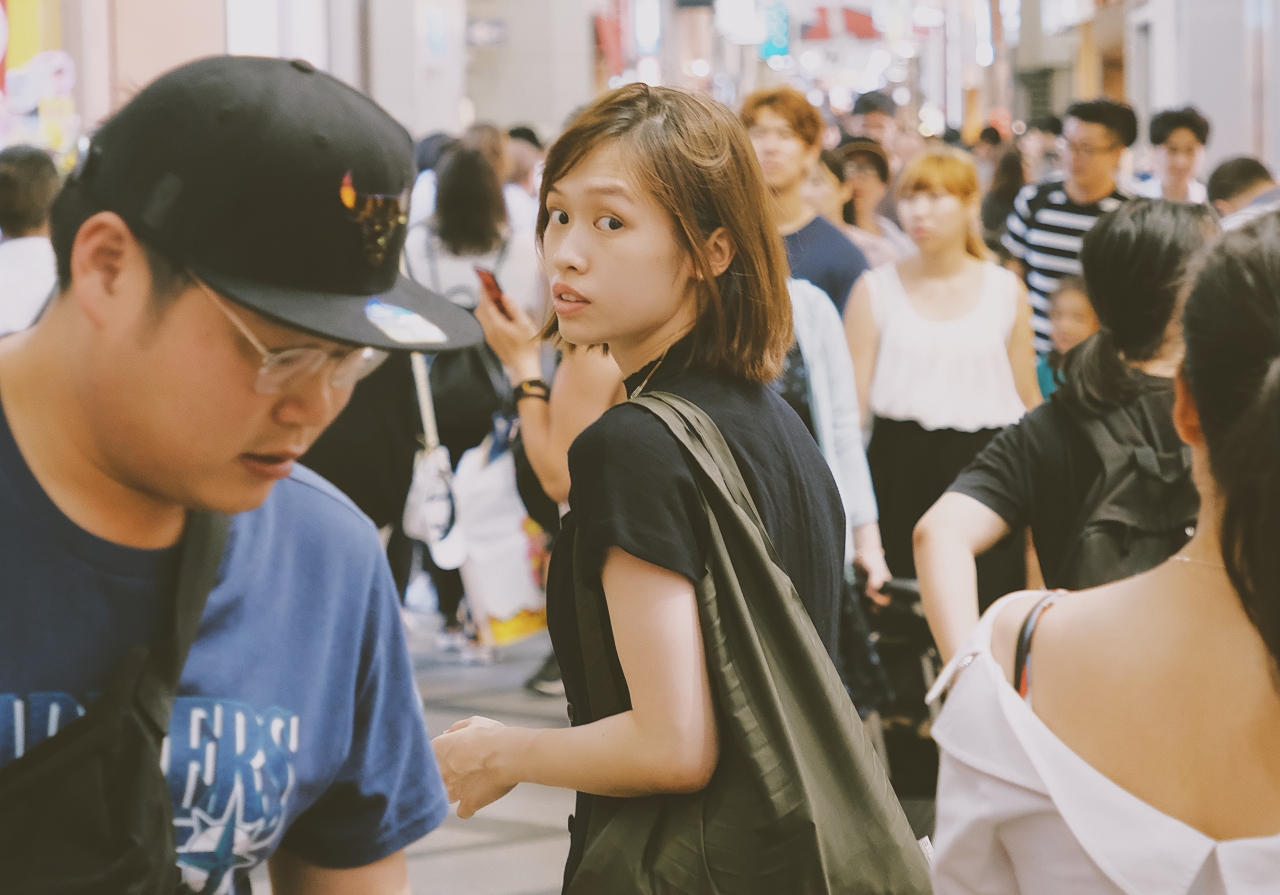
Let me also thank Professor Michael Free and his students at Kangwon National University, for the opportunity to wax lyrical about some of my favorite topics to them. If anyone reading would also like me to present to their students sometime in person or via Zoom, if for no other reason than to remind them that it’s not just you that gets excited about your subjects, please give me a buzz.

Finally, a big apology to everyone for not writing for so long. With so little physical social interaction over the summer, and with even what face-to-face contact I do get now almost entirely confined to my family and students, then frankly the weeks and months somewhat blurred into one another, making it difficult to pay much attention to the deadlines I set myself on the (always too many) posts I have in the pipeline. Inspired by my work on the presentation now though, I will try very hard to have one of my longer and more thought-provoking ones ready for you next week.

Until then!

If you reside in South Korea, you can donate via wire transfer: Turnbull James Edward (Kookmin Bank/국민은행, 563401-01-214324)