안녕하세요! 제 이름은 Edward Glayzer입니다. 저는 미시간주립대학교 인류학과의 박사과정생이고, Grand Narrative의 오래된 독자이기도 합니다. James Turnbull씨는 제가 서울에 와서 한국의 성불평등에 대한 학위논문 연구를 시작할 때부터 많은 도움을 주셨고, 또한 이렇게 연구대상자 모집을 공고할 수 있게 해주셨기에 감사하다는 말씀 전하고 싶습니다.
제 연구는 한국 사회의 성불평등에 관한 광범위한 주제들을 더 잘 이해하기 위한 것이며, 이를 위해 한국인들의 데이트와 결혼 의식에서 일어나는 물질적 교환을 살펴봅니다. 제 연구는 또한 남성과 여성의 소득 불평등이 어떻게 상품 소비를 통한 친밀함의 표현에 영향을 미치는지를 다룹니다. 이 연구의 유일한 참여조건은 “다른 한국인과 데이트를 해본 대한민국 국적의 성인”입니다.
독자 여러분의 의향이나 내주실 수 있는 시간에 따라 두 가지 참여방법이 있습니다. 이 중 하나 혹은 둘 다 자원해주신다면 매우 감사할 것입니다.
다른 하나는 1:1 대면 인터뷰이며, 보통 한 시간에서 한 시간 반 정도 걸립니다. 저는 현재 약혼녀와 서울 강남구에서 거주 중이지만, 독자 분을 만나기 위해서 기꺼이 다른 곳도 방문할 의사가 있습니다! 시간 내주시기 어렵다면 스카이프 인터뷰 역시 가능합니다.
혹시 제 연구에 대해 질문이 있으시거나 인터뷰 일정을 잡고 싶으시다면, eglayzer@gmail.com로 메일 주시기 바랍니다. 카카오톡도 가능하며, 아이디는 eglayzer입니다.
♥
Hello Grand Narrative Readers,
My name is Edward Glayzer. I am Doctoral Candidate from the department of Anthropology at Michigan State University and a longtime reader of The Grand Narrative. Since moving to Seoul to begin my dissertation research on Korean gender inequality, James Turnbull has been extremely helpful and kind enough to post this call for research subjects.
My research looks at gift-giving practices that take place during dating and marriage rituals among native South Koreans as a way of better understanding larger issues on gender inequality in South Korean society. My research will also address how the unequal access to income between men and women affects the expression of intimacy through the consumption of commodities. The only requirement for participation in this study is to be an adult of Korean nationality and have spent time dating other Koreans. (To clarify, any sexuality is welcome—James)
There are two possible levels of involvement that you may have depending on your availability and inclination. Volunteering for either one, or both, is extremely helpful to me and I would be in your debt.
The second involves a one-on-one interview that usually takes 1 hour to a 1 ½ hours. I am currently living with my fiancé in Gangnam, Seoul, but am more than willing to travel throughout Korea in order to meet with you! If your time is very limited, a Skype interview would also be possible.
If you have any questions about my research or if you would like to schedule an interview, please email me at eglayzer@gmail.com. You can also find me on Kakao by searching for eglayzer.
Thank you for your help,
Edward Glayzer M.A., Doctoral Candidate, Michigan State University, Department of Anthropology.
From the moment Korean schoolchildren start developing, and their hormones start raging, Korea’s school uniform codes give them a daily reminder that girls’ bodies should be hidden and controlled.
Estimated reading time: 17 minutes. Image sources: left, “How much do you really know me?” by VisualValor/大前, used with permission; right, Mike Rowe, (CC BY-NC 2.0).
More than half of Korean men think revealing clothes lead to rape. Almost as many Korean women do too.
Those and other harrowing statistics (English, Korean) come from a survey of 7,200 adults aged 16 to 64 conducted by the Ministry of Gender Equality and Family last year. In 2013, a survey of 200 South Gyeongsang Province police officers by the Korea Women’s Development Institute found similar results.
When I was much younger, I assumed results like this were simply due to ignorance. Surely, changing people’s minds was just a matter of presenting the facts? That even as far back as 1996 for instance, Korean Women’s groups, lawyers, and academics had thoroughly debunked any supposed links between clothing and sexual assault?
Well, we all know the answer to that. But only once I came across “This Article Won’t Change Your Mind” by Julie Beck in the Atlantic, about the bases of the post-truth era. did it finally click why:
…[People] will occasionally encounter information that suggests something they believe is wrong. A lot of these instances are no big deal, and people change their minds if the evidence shows they should—you thought it was supposed to be nice out today, you step out the door and it’s raining, you grab an umbrella. Simple as that. But if the thing you might be wrong about is a belief that’s deeply tied to your identity or worldview—the guru you’ve dedicated your life to is accused of some terrible things, the cigarettes you’re addicted to can kill you—well, then people [will] do all the mental gymnastics it takes to remain convinced that they’re right.
Ergo, if it is just common sense that a short skirt or exposed bra strap can lead to rape? And feels so intuitive and self-evident to so many people, despite any evidence whatsoever beyond confirmation bias? Then those beliefs must be deeply tied to self-identities indeed. Fundamental even, to how they understand and perform sex and gender roles. Which are not things people generally react well to being told they’ve been getting wrong all their lives.
Especially not by, say, slutty man-hating feminazis insisting on the abstract ‘truth’ of surveys over their own, average-Joe’s lived experience.
So where then, do their victim-blaming notions of sex and rape come from? Their beliefs in male entitlement to sexual access to women’s bodies, upon which those are based?
In short, from everywhere, which is how come those beliefs are held so strongly.
Among the many methods and messengers, one is undoubtedly the romanticized depiction of dating violence in Korean dramas. Another is inadequate, heteronormative, marriage and biology-focused sex education, which teaches girls not to be alone with their permanently sexed boyfriends, lest he demand sexual compensation for paying for their date. Another is the government and media encouraging the exposure of women’s and girls’ bodies for softpower, nationalist, and militarycauses, but discouraging it when it’s of their own accord. Linked to which is women being told to cover up on public transport to prevent upskirt photos, rather than potential perpetrators warned not to take them. And yet another, which will be the focus here, are the double-standards and victim-blaming inherent to Korea’s school uniform rules. They’re such a big deal because, when kids start developing, and when their hormones start raging, they teach fresh young minds how to deal “appropriately” with both—and what punishments girls and women will receive if they don’t learn that lesson.
For those unfamiliar, here’s a taste of what Korean school uniforms are like:
Korean school uniforms have actually had quite a chequered history over the past decade. In the late-2000s to early-2010s, the focus was on their increasing cost, which was partially fueled by retailers’ habit of hiring K-pop stars to promote them; ultimately, the industry announced a voluntary moratorium on celebrity hires, which lasted for about two years. At about the same time, there was a great deal ofcontroversy overgirls wearingshorter and shorter skirts, which was tied to the liberalization of students’rights (more on this later). Annual “naked graduation ceremonies” started hitting the news too, where students would attack their no longer needed, much-hated uniforms with knives and scissors. And then, in late-2015, Korean entertainment mogul JYP came under fire for girl-group TWICE’s overly-sexual and body-shaming advertisements for Skoollooks, which surprised because, JYP’s characteristic, pimp-like demeanor aside, their messages were little different from those which preceded them:
Compare Skoolooks’ 2015 ad with JYP and Momo of Twice (source: Instiz) with Smart’s 2008 ad with Shinee and Victoria of f(x) (source: Soompi).
But what of the boys in that history? If they’re mentioned at all, they’re framed as victims, being so distracted by the girls’ uniforms that they’re unable to concentrate—along with their male teachers. Another strong theme is adults stressing how vulnerable the girls are on their commutes, simply for wanting to be fashionable by wearing their skirts high.* Peruse the links, and you sense a collective throwing of hands in the air, as girls are reminded again and again that everything that happens to them is their fault…alongside repeated, titillating, pictures of their offending legs.
(*Related: A recent Al Jazeera report discusses how Japanese schoolgirls are indeed more vulnerable to harassment than adult women, for whom the harassment drops once they graduate and stop wearing school uniforms. But this is because schoolgirls are perceived as less assertive and more vulnerable, and has nothing to do with the make-up of their uniforms per se.)
By coincidence, an ad from an unidentified retailer that popped up the day before publication. The text in the photo reads: A 3D-level bodyline, a 3D design which fits your body perfectly; Capture men’s hearts with the tulipline, a skirt which shows off your body; Control the length of your skirt freely; A very good figure zipper, shows off your good-looking clothes. Source: 라니@ComfortnLullaby. (Update: Shortly after publication, Korea Exposé published a more detailed look at the advertisement.)
Yet all these points are already depressingly familiar from similar discussionsin English–speaking countries. And all of the above links happen to be in English too. So, I want to add something new to the English discussion of Korean uniforms by translating segments of some (mostly) recent Korean-language articles on the subject. Centered around this one:
속옷 입지 않으면 벌점… 황당한 학교 / Absurd Schools Punish Students For Not Wearing Underclothes
Written by Song Min-seo, edited by Son Ji-eun, OhmyNews, 26.02.2017
…지난 2016년 ‘청소년인권행동 아수나로’에서는 온라인을 통해 여성 청소년을 억압하는 서울시 소재 학교의 교칙들에 대한 설문 조사를 실시했다. 200여 건의 응답은 하나같이 학교보다는 수용소를 연상시키는 해괴한 교칙들과 사례들을 담고 있었다. 이 글에서는 해당 설문 내용을 바탕으로, 여성 청소년에게 가해지는 제재와 차별에 대해 다루어 보고자 한다.
…In 2016, the NGO “Asunaro: Action for Youth Rights of Korea” conducted on an online survey of Seoul school students about the ways in which their schools discriminate against and curtail the rights of female students. More than 200 responses revealed a series of bizarre rules and practices more reminiscent of concentration camps than of modern schools. In this article, I would like to discuss what sanctions and discrimination against women and youth emerged from the questionnaire.
The first part deals with restrictions on hairstyle and length, and discusses a case of a teacher in a school in Gyeonggi Province, who admonished a student with short hair for looking like a boy, telling her it wasn’t feminine enough and that men wouldn’t like her. Then later:
…복장 규제 또한 여전히 나아진 것 하나 없이 잔재한다. 치마 끝이 무릎 밑 몇 센티미터, 혹은 위 몇 센티미터에 오는지 재는 것은 빈번하고, 일정한 기간을 두고 복장을 대대적으로 검사하는 학교도 있었다. 한 학교는 여학생을 의자 위에 세워 놓고 교사가 자를 들고 치마 길이를 잰다. 이 행위는 학생들의 의사를 전혀 묻지 않은 채 강제적으로 이루어지고, 심지어 남교사도 참여한다. 응답자는 이 행위에 수치심을 느꼈다고 말한다.
…[Despite the Seoul City Council’s Students’ Rights Ordinance of 2011], uniform regulations showed little to no improvement also. Requirements that skirt lengths come to a minimum of a few centimeters above the knee, or even below the knee, were very common, and some schools regularly checked them. For those checks, all the girls in the classroom are required to stand on their chairs while the teacher measures the length of the skirts [This is discussed in several of the videos above—James]. This check is compulsorily, with no concern given to the students’ opinions or feelings at all, even if it’s a male teacher doing the checking. Respondents said that they felt very embarrassed and ashamed by these checks.
♥
Let’s pause from the article for a moment with news about one such inspection:
“왜 이렇게 짧아” 교복 들어 올린 교사 ‘강제추행’ / “Why is Your Skirt So Short?” Lifting a Student’s Skirt Ruled ‘Indecent Act by Force/Compulsion’
지난 2013년 서울의 한 고등학교. 교사 56살 박 모 씨는 교실에서 자기소개서를 쓰고 있던 한 여학생에게 다가가 왜 이렇게 치마가 짧냐며 교복 치마를 들어 올렸습니다.
이 과정에서 여학생의 속바지가 드러났고, 박 씨는 강제추행 혐의로 재판에 넘겨졌습니다.
박 씨는 단지 복장 불량을 지적하려고 치마 끝자락을 잡아 흔들었을 뿐 추행하려는 의도가 없었다고 주장했습니다.
하지만, 1, 2심 모두 유죄로 보고 벌금 5백만 원을 선고했습니다.
공개된 교실에서 16살 여학생의 치마를 들어 올린 것은 객관적으로 볼 때 성적 수치심을 일으키는 행위라는 겁니다.
또 강제추행죄는 꼭 동기나 목적이 있어야 성립하는 것은 아니라고 판단했습니다.
피해 여학생이 치마를 살짝 건드린 것이라며 처벌을 원치 않는다고 진술했지만 받아들여지지 않았습니다.
처음 조사에서 속바지가 훤히 비쳐 수치스러웠다고 진술했기 때문에, 합의 과정에서 진술을 바꾼 것으로 판단한 겁니다.
대법원 역시 상고를 기각하고 박 씨에게 강제추행죄를 적용해 벌금형을 확정했습니다.
In a Seoul high school in 2013, a 56 year-old male teacher identified only as “Mr. Park” grabbed the skirt of a female student who was writing a self-introduction letter, lifting it as he accused the student of having a skirt that was too short. In the process, the student’s underwear was exposed, and Mr. Park was accused of causing an “Indecent Act by Force/Compulsion.”
In his defense, Park insisted that he did not intend for the student to expose herself, but only to grab and shake the end of the skirt to point out that it was too short. However, it was judged that raising a girl’s skirt in a classroom in front of others is always an act of sexual shaming, regardless of the intent or motivation. Consequently, he was found guilty in both his first sentencing and by the Supreme Court in his appeal, receiving a fine of 5 million won.
♥
Back to the article:
여학생이 무조건 교복 치마만 착용하도록 여학생의 바지 착용을 교칙으로 금지한 학교도 있다. 19세기도 아닌 21세기에, 학교 밖 여성들은 자유롭게 원하는 옷을 입는데, 학교만이 아직도 여성에게 바지를 착용하지 못하게 하는 19세기에 머물러 있는 것이다.
Some schools prohibit schoolgirls from wearing pants, only allowing them to wear school uniform skirts. But this is the 21st century, not the 19th, and away from our schools girls and women can wear what they want freely. Why do schools seem so firmly entrenched in the past?
♥
And another break already sorry, because this pants vs. skirts issue was a big deal for me back in 2011, when I was concerned that my daughters would ultimately have no choice but to attend a skirts-only Korean middle school (my eldest daughter was starting elementary school then). Fortunately, we ultimately found an underfunded but otherwise lovely multicultural school for them, which among its many other benefits doesn’t actually have a uniform. But reading the above suddenly got me was curious as to how many Korean schools still insist [only] their female students freeze every winter:
교사 ‘성차별’ 발언 등 여학생 인권침해 여전 / Teachers Are Still Violating Female Students’ Rights Through Sexist Language and Verbal Attacks
…여학생에게 치마교복만 입도록 할 경우 성차별적 관행이 될 수 있다는 점에서 여학생의 바지 교복 선택권을 보장해야 한다는 내용도 담았다. 2015년 서울교육청 학생생활규정 점검 결과 ‘치마와 바지 선택권 조항’이 있는 학교 비율은 중학교 73%(281교), 고등학교 59%(189교)에 그쳤다.
…it was stated that girls should have the right to choose school uniforms because it is a sex discrimination practice if girls are allowed to wear skirt school uniforms. According to the Seoul City Education Office, in 2015 the ratio of schools with optional skirts or pants was only 73 percent (281 schools) of middle schools and 59 percent (189 schools) among high schools.
Note that this only refers to Seoul schools, and that the Seoul City Council Students’ Rights Ordinance of 2011 was only followed to varying degrees by schools in the rest of the country; consequently, the nationwide figures are likely to be lower. Continuing:
‘여학생다움’을 강조한 두발, 복장 기준의 개선도 필요하다고 봤다. 여학생과 남학생에게 상이한 기준을 적용한 용의복장 규정 여부를 점검해야 한다는 내용이다. 상담 사례에 따르면 학교평판을 이유로 여학생은 춥더라도 치마만 입어야 한다는 교칙이 있는 학교도 있었다.
I [the author] think that it is necessary to improve dress codes, which currently seem to be focused on female students. It is necessary to check for double-standards. According to a case heard by the Seoul Metropolitan Office of Education’s Students’ Rights Center for instance, one school had a rule that girls should wear only skirts “because of the school’s reputation.”
♥
Back to the main article:
학교 안의 여성들은 스타킹의 색깔마저도 하나하나 통제당한다. 이상한 점은, 스타킹 색에 관한 규제가 학교마다 통일되지 않았다는 점이다. 어떤 학교는 검은색만을, 어떤 학교는 살색만을 신게 한다. 그러나 이유는 같다. ‘야해 보이기 때문’이다. 스타킹 색마저도 성적 대상화의 소재가 되는 것이다.
The color of girls’ stockings is controlled by schools too. What is strange is that the rules for those aren’t uniform [no pun intended—James], but vary widely depending on the school. Some schools demand black stockings only, some schools demand flesh-colored ones. But in each case, the justification is the same: “It has to be dull.” It seems even stockings’ colors are considered a potential source of sexual objectification and sexualization.
응답자 A의 학교에서는 카디건을 허리에 묶는 것을 금지하는 교칙이 있었다. 허리 라인이 드러나서 선정적으로 보인다는 것이 근거라면 근거였다. 이 교칙은 여학생에게만 해당되었고, 당연하게도 여학생의 반발을 샀다. 그러자 학교가 취한 조치는 교칙을 없애는 것이 아닌 남학생에게도 똑같은 규칙을 적용하는 것이었다.
One respondent to Asunaro’s survey had a school rule that prohibited cardigans from being taken off and tied around the waist, as this was considered to draw attention to and sexualize the wearers’ waistlines. Of course, this rule only applied to girls, who complained a lot about it. In response, the school didn’t just eliminate the rule, but decided to apply it to boys as well.
머리부터 발톱까지… 그것도 모자라 속옷도 통제 / From Student’s Heads to Their Toenails…Even the Underwear They Can Wear is Controlled
여성 청소년의 속옷까지 통제하는 학교. 변화하지 않는 교칙으로 학교 안 청소년들은 억압받고 있다 / Schools Even Control Female Adolescent Girls’ Underwear. Unchanging School Rules Are Pressuring Female Students. Source: jackmack34@Pixabay.
학교는 여학생의 속옷에 관해서도 교칙을 만들어 규제한다. ‘흰색속옷, 티셔츠, 나시만 허용’, ‘작년까지는 셔츠 속에 나시 입는 것 금지, 현재는 무채색이고 프린팅 없는 티만 가능하고 꼭 입어야함. 브라만 차고 셔츠 입어도 벌점’. ‘브라 등 속옷 입지 않으면 벌점’.
Schools regulate female students’ underwear with such rules as “Only white underwear, t-shirts, and vests are allowed” at one school; at another, “Until last year, wearing vests under shirts was prohibited. Now, you have to wear a vest or t-shirt over your bra [and under your shirt], otherwise you get punished. But only black or white t-shirts are permitted, with no prints on them”; and at another “You get punished if you don’t wear a bra or other type of underwear.”
이상한 것은, 이런 교칙이 있는 대부분의 학교에서는 남학생에 관한 속옷 규제는 없는 경우가 많았다. 여학생만이 더운 여름에도 티셔츠(심지어 프린팅도 색도 없는), 나시, 브래지어를 껴입어야 하는 상황이다. 게다가 이러한 교칙들이 존재하는 이유를 물으면 ‘성범죄 유발 가능성이 있기 때문’이라고 답한다. 성범죄의 잘못이 가해자가 아닌 피해자에게 있는 것이라고 말하는 것과 같다.
Strangely, in most schools with these rules, there was usually no underwear regulation for boys. Only girls have to wear t-shirts (even with their colors regulated), vests, and bras, even in the hot summer months. In addition, if you ask what these rules are for, the answer is they’re because of the increased possibility of sex crimes without them. It’s like when such crimes occur, that it’s the victims’ faults, not the perpetrators’.
♥
A quick addition to those rules:
바지교복 금지·생리공결제 미준수…학교 ‘여학생 인권’ 실종 / Prohibiting Pants, Not Provided Mandated Menstrual Leave…Schools Are Violating Female Students’ Rights
불합리한 교칙으로 불편을 겪는 여학생도 있다. 서울 B고등학교는 여학생의 경우 무조건 검정구두에 흰 양말을 신어야 한다. 혹한기에만 한시적으로 운동화를 허용하기도 했으나 학교가 정한 디지인만 신을 수 있다. 이 학교에 다니는 한 여학생은 “차가운 구두를 신고 미끄러운 길을 걸을 때면 다칠까봐 불안하다”고 토로했다.
There are other ways in which female students suffer from unreasonable uniform requirements. At one high school in Seoul, girls could only white socks with black shoes, or, for a very limited time in winter, sneakers specially designed by the school. A girl at the school said, “I’m worried about getting hurt in my cold shoes when I walk on icy roads.” [I’m guessing she’s referring to the black shoes?—James.]
♥
The next section of the main article deals with rules about cosmetics, and the sexual language used and/or stereotypes raised by teachers as they punish the students that flout them. That doesn’t just happen when enforcing cosmetics rules of course, and indeed is so often mentioned by the above articles above that I may cover it in a separate post later. But for now, the article concludes:
학교는 이처럼 아주 당연하게, 청소년을 보호 또는 교육한다는 허울 좋은 명목으로 자신이 원하는 자신의 모습을 직접 결정할 권리를 앗아간다. 이러한 학교에서 여성은 누군가에게 자신의 몸이 통제당하는 것이 이상한 일이 아니라고, 당연하다고 생각할 수밖에 없다. 학생의 모습, 학생의 표본을 교사의 권력과 폭력적인 언어로 규정하는 이상하고 작은 낡고 폐쇄적인 사회, 이런 작은 사회 안에 밀어넣어지는 여성들. 그들이 “내 몸은 내가 알아서 할게!”라고 외칠 수 있게끔 더 많은 여성청소년인권에 관한 지지와 관심이 필요하다.
Schools have to decide for themselves if they want to be known for “protecting” or for educating youth. In the meantime, the young women in them can not help but think how strange it is that their own bodies are so controlled by others. This is such a strange, small-minded, old, and closed society that judges the appearance of its students so, that allows for teachers to abuse their powers to this extent, and that so readily restrains women with such rules and such violent language. We need more support for and concern about the human rights of women and youth so that they can grow to stand up as independent adults who can say, “I will be the one to take care of my own body!”.
It’s not all doom and gloom though. Let me end with a segment about a school where the students’ rights ordinance has been fully implemented, and what positive changes it has brought to the school’s educational culture:
“교복 위 패딩 안돼”…‘학생인권’ 관심 늘었지만 갈 길 멀어 / “No Padding Allowed in Uniforms”…Interest in Students’ Rights Has Increased But Still Has Far to go
…조례가 교육 현장에서 잘 안착해 의미를 보여주고 있는 사례도 있다. 서울 금옥여자고등학교에는 ‘금옥인권위원회’라는 이름의 동아리가 있다. 소속 35명의 학생들은 차별금지와 의사표현의 자유, 학습에 관한 권리 등 조례 속 정신을 녹여낸 6개의 소위원회에서 활동한다. 이민혁 담당교사는 “학생인권, 장애인권, 여성인권, 아동학대예방 등 학생들의 관심사에 따라 자발적인 소위원회를 꾸려가고 있다”며 “고등 교육과정을 마친 학생들이 졸업 뒤 사회 구성원이 되어서도 조례로부터 시작한 관심을 지속하길 바란다”고 전했다.
There are cases where the students’ rights ordinance has been fully implemented and is beginning to have a real influence. For example, there is a club named “Geumok Human Rights Committee” in Geumok Women’s High School in Seoul. Of the 35 students that belong to it, there are further grouped into six subcommittees that focus on different areas of the ordinance, including such as discrimination prevention, freedom of expression, and the right to learning. Geumok Women’s High School teacher Lee Min-hyeok said of them, “We are making voluntary subcommittees based on students’ interests, such as student rights, disability rights, women’s human rights, and child abuse prevention.” I hope the students continue fighting for these causes after they graduate.”
이 교사는 “학생인권소위원회의 경우 최저시급, 근로계약서 작성법 등 청소년노동권을 비롯해 ‘휴식권’(조례 10조)을 주제로 야간자율학습에 관한 토론을 진행했다”며 “차별받지 않을 권리에 주목한 장애인권소위원회는 근처 중학교에서 ‘장애 이해교육’을 진행할 만큼 내실 있는 활동을 펼쳤다”고 말했다. “서울 남영동의 경찰청 인권보호센터(옛날 대공분실)를 동아리 학생들과 함께 방문한 적이 있습니다. 권리침해로부터 보호받을 권리, 양심·종교의 자유 등 조례 내용을 마중물로 근현대사 교육까지 진행할 수 있었죠.”
Lee continued, “In the case of the Student Human Rights Subcommittee, we recently had a discussion night on the theme of the minimum wage. Another subcommittee on disability rights was able to carry out activities that increased their understanding of disability education and came up with ideas that will be utilized at nearby junior high schools.[An unidentified student] said, “With my clubmates, I visited the Human Rights Protection Center of the National Police Agency in Namyeong-dong in Seoul, and learned a lot about my rights of protection, my rights of freedom of conscience and religion, and so on.”
인권동아리 단장으로 활동한 금옥여고 3학년 김조은양은 “보통 학생은 억압받는 게 당연하다고 여기는데, 조례 제정을 씨앗으로 삼아 우리의 의무와 권리에 대해 생각해볼 수 있었다”며 “성별, 나이, 장애로 차별받지 않는 사회를 꿈꾸게 됐고 조례 등 정책의 중요성도 깨닫게 됐다”고 전했다.
Kim Jo-eun, a third grade student at the school and former president of the club, said, “Students these days think it is normal to be oppressed. But using the rights ordinance as a spark, I began to learn about my human rights. I could dream of a society in which I was not oppressed, and I realized the importance of policies such as ordinances that could make that happen. “
조례를 통해 학교 문화를 민주적으로 바꾸는 사례도 있지만 갈 길은 여전히 멀다. 2015년 11월27일 서울시의회 교육위원회 장인홍 의원이 공개한 ‘(서울시교육청 관내) 중·고등학교 학교규칙 점검 결과’에 따르면, 중·고교 702곳 가운데 87%(609곳)는 여전히 교칙에 두발 길이·염색·파마 등에 관한 엄격한 규제를 두고 있다.
There are more cases where a school’s culture has become more democratic through the students’ rights ordinance, but there is still much to be done. According to a inquiry published by the Seoul Metropolitan City Council on November 27, 2015, 87 percent (609) of the 702 middle and high schools examined still had strict regulations on the dyeing and perming of hair, and so on.
♥
Let me conclude by returning to Beck’s article in the Atlantic that inspired this post. After noting that group discussions are much more effective than lectures for changing hearts and minds, she concludes herself that:
“One real advantage of group reasoning is that you get critical feedback,” McIntyre [a research fellow at the Center for Philosophy and History of Science at Boston University] says. “If you’re in a silo [like Facebook], you don’t get critical feedback, you just get applause.”
But if the changes are going to happen at all, it’ll have to be “on a person-to-person level,” Shaw says.
He tells me about a patient of his, whose family is involved in “an extremely fundamentalist Christian group. [The patient] has come to see a lot of problems with the ideology and maintains a relationship with his family in which he tries to discuss in a loving and compassionate way some of these issues,” [former cult member Daniel Shaw] says. “He is patient and persistent, and he chips away, and he may succeed eventually.”
“But are they going to listen to a [news] feature about why they’re wrong? I don’t think so.”
When someone does change their mind, it will probably be more like the slow creep of Shaw’s disillusionment with his guru. He left “the way most people do: Sort of like death by a thousand cuts.”
And on that note, please do share this post with friends, family members, and/or coworkers that you wouldn’t usually—if just one changes their mind, then the last two weeks(!) spent on it will have been worth it. And who knows? Maybe that person’s influence will ultimately lead to a school changing its uniform rules too.
Please also note that I’ve never taught in a Korean school, and haven’t taught Korean teens in over seven years, so I would really appreciate any feedback on anything in this post, especially if you have any recent experience at/with either. Thanks!
If you reside in South Korea, you can donate via wire transfer: Turnbull James Edward (Kookmin Bank/국민은행, 563401-01-214324)
Wait for each other, or split up? It’s a dilemma as old as the military itself. In its modern Korean form, young couples have to decide if they will stay together for his 21-24 months of compulsory military service, with family members and friends competing for his few days of leave. And if they do stay together, lonely and miserable? She’ll worry that he’ll come back a patriarch, and/or have visited prostitutes; he’ll worry that she’ll sleep with his friends, and will wait in dread for a Dear John text.
To counter conscripts’ isolation, one measure developed by the military in 2015 was the provision of sharedmobile phones. But they have limited functionality, and the Korean military still stands out for conscripts’ very limited ability to get in touch with people off-base, offering nothing like the level of contact most young couples would be used to. Physical visits are impractical too, most conscripts being sent to the DMZ, and/or far away from their hometowns or any other urban centers.
Which makes the following KT commercial so poignant:
For non-Korean speakers: both his mom and his girlfriend think the unknown number is just spam, so they hang-up when he calls. With the “olleh Love of Country Plan” though, now his girlfriend can see exactly who it is…only to hang up on him anyway because she’s on a date.
Never fear however, for she happily answers him the next time round. Perhaps the date didn’t go so well?
(Chrome users: Is this showing as grey in your browsers too, or just for me? The video is definitely there!)
I was confused by the phone plan at first, which seemed to offer no more than a glorified caller-ID. Pause the video to read the fine print though, and you can see it also offers 200 minutes of free calls and 200MB of data per month, provided the conscript obtains a “Love of Country Card” first. With that, it explains, he can call from KT phones on bases, from public phones, and even do video calls on a smartphone, and his nearest and dearest will be informed it’s him too. (Presumably, he would have to input a special number on the card first, like with old-style international phone cards.) And good for them.
(Note: The commercials are from early-2015, before the military started providing nerfed mobile phones to conscripts; I don’t know if this service is still available sorry.)
(Update: Thanks to Eames (@Eames29), who tells me it is:)
But the commercials got me thinking. I suddenly realized, I see military couples so rarely in Korean pop culture, and military girlfriends even less so. I wondered, is there a shared bond there in the collective Korean female psyche so to speak, that isn’t getting the attention it deserves? Or, with 250,000 men conscripted every year, and probably tens of thousands of them deciding to soldier on with their girlfriends, are military girlfriends’ experiences as diverse as the women themselves? Is it just me that has been overlooking them in Korean pop culture? Or, is it that, being so normalized and unremarkable, no one thinks to give them any attention at all?
I’d wager the latter. Despite their ubiquity, my Korean wife and friends can’t think of any specific terms for “military girlfriend” or “military couple,” and can’t think of any movies or dramas that focus on them either.* I myself can only think of one movie: the slightly old but still very watchable and relatable Crazy Waiting (기다리다 미쳐), a.k.a. The Longest 24 Months or Going Crazy Waiting, an intertwined story about four military couples, but which stresses the girlfriends’ perspectives (I’ll write a review in a later post in this series):
Yet our ignorance hardly settles the matter. One purpose of this post then, is just to throw all those questions out there, and to ask readers to share their own pop culture suggestions. As well as their own experiences of being in military relationships, and/or of people they know.
The second is to stress the importance of simply asking those questions at all.
One needs to take seriously the complicated militarized experiences of women as prostitutes, rape victims, mothers, wives, nurses, and feminist activists in order to make full sense of what happens when women are permitted in limited numbers to soldier in still-militarized militaries. To invest one’s curiosity solely in women as soldiers is to treat the militarization of so many other women as normal.
p. 293
This focus is relevant to Korea too. Where, as I wrote in Part 1…
…but I’ve yet to see much media attention on present-day military prostitutes (as opposed to comfort women for Japan and then for the USFK), let alone military mothers, wives, and girlfriends.
Continuing with Enloe:
If we adopt the mainstream media’s fascination with women-as-soldiers, and thus devote only meager attention and thought to all other militarized women, we will, by our own very inattention, I think, perpetuate militarized officials’ capacity to manipulate many women’s hopes and fears and skills. Any militarized government’s manipulative capacity has relied on most people not being interested in military wives; on most people holding as “trivial” the mixed feelings of military girlfriends; on most people turning military mothers, wartime rape victims, and military prostitutes into either abstract nationalist icons or objects of shame and exclusion. Inattention is a political act.
…Women who serve militaries’ needs differently usually do not see themselves as bound together by their shared womanhood or even by their shared militarization. In fact, some militarized women will see their own respectability, income, or career chances thrown into jeopardy by the actions of other militarized women. Mothers of soldier-sons, for instance, do not have any automatic political affinity with women soldiers. A woman who is a military wife may go to considerable lengths to not ask about the women who work in the discos around his base. Feminists working to help women soldiers overcome the institutional barriers of sexual harassment and homophobia inside the military may not give much thought at all to women as militarized mothers, wives, and prostitutes.
…Military officials and their civilian supporters go to great lengths in order to ensure that each of these groups of women feels special and separate.
p. 294, emphases in original; bold emphases mine
Next, a rallying cry for this series, condensing thousands of my own words:
…militaries and their supporters in both government and the general public have needed not only women, flesh and blood creatures. They have also needed ideas, especially ideas about femininity. Just as important to the maintenance of military life as has been the ideology of manliness, just as important as parades, alliances, and weaponry, have been certain feminized ideas—”the fallen woman,” “patriotic motherhood,” “marital fidelity,” “racial purity,” “national sacrifice,” and sexualized “respectability.” Sometimes militaries even have needed a very particular version of the idea “liberated woman.”
p. 295
And finally, in the strange event that you’re not yet having a braingasm yourself, and aren’t emailing me begging me to use my photo-to-pdf app on the five-page essay:
Precisely because the U.S. Military has become so physically and ideologically influential in today’s [2002] post-Cold-War world, we do need, I think, to pay special heed to American manipulation of ideas about women and to the appeal that those militarized ideas have for so many women. In the late-1990s the American armed forces provided not only traveling trainers, but their own formulas for AIDs prevention and peacekeeping…Each one of these international training programs is providing a site for the export of American ideas about what should be expected of a man, what should be expected of a woman—not just of a woman in uniform, but a woman in a soldier’s home and a woman in a militarized off-base disco.
p. 296; bold emphases mine
And if that’s the case for the U.S. military overseas, why not for the Korean military in its own country? An institution that affects a far greater proportion of both men and women than the U.S. military ever will of U.S. citizens?
Please send me your thoughts. And, has anyone else seen Crazy Waiting BTW? Let’s (re)watch it in the next two weeks for my review! :D
“Couple in Ewha on their last date before he left for military service, in September, 2007,” by feetmanseoul; used with permission.
*Update) With thanks to Bunny Bones who commented on the blog’s Facebook page, there is a word for military girlfriends: “고무신/곰신” (go-mu-shin/gom-shin), which literally means “wearing rubber shoes,” but comes from the expression “고무신 거꾸로 신다,” (go-mu-shin goh-gguro shin-da), or “wearing rubber shoes the wrong way.” There’s also a term for military girlfriends whose boyfriends have finally returned: “꽃신” (ggot-shin), literally “wearing flowers.”
The first term did ring a bell for my wife (I’ve yet to ask my friends), but not “wearing flowers.” That’s probably because, Bunny Bones explained, it’s from 규찌툰 (Gyuzzi-toon), a now defunct but still very much available webtoon about a military couple.
Now I sense that, outside of rare mainstream film and TV portrayals, there may be a whole wealth of alternative pop-culture representations of military couples and girlfriends out there. And if so, I’d be very happy to be proven wrong about their invisibility!
어깨 축 쳐진 아빠에게 아이들이 용기를 줬던 노래인데 이 노래가 양성평등을 저해한다는 판정이 나와 문화관광부가 해명자료까지 내는 소동이 벌어졌습니다.
This is the song which gives encouragement to exhausted, depressed fathers, but it has been recently criticized for hindering gender equality. In response, the Ministry of Culture, Sports, and Tourism issued a statement clarifying what the song is really about.
무슨일인지, 박철현 기자가 보도합니다.
Park Cheol-hyon reports:
“아빠 힘내세요, 우리가 있잖아요”
1997년 발표된 동요 ‘아빠 힘내세요’입니다.
“Dad, cheer up/be strong, you have us”: this is the children’s song released in 1997.
“IMF때 굉장히 많이 들어봤고요. 아이들이 보자마자 불러줬을 때 저절로 힘도 났고..”
Cho Hong-joon, Person on the street #1:
“I heard this song a lot during the IMF Crisis. It cheered me up when my kids sang it to me”.
그런데 문화관광부는 이 노래가 우리 사회 양성 평등 의식을 해치는 대표적인 사례 중 하나라는 연구 결과를 발표했습니다.
However, in a statement of research results released by the Ministry of Culture, Sports, and Tourism, this song was given as an example of something hindering gender equality awareness.
이 노래가 경제활동을 하는 것은 남성이라는 고정 관념을 키워준다는 겁니다.
This song encourages the notion that it is only men that should partake in economic activity.
특히 엄마가 요리하면서 아빠를 기다리는 만화 동영상은 여성은 가사 노동만 한다는 선입견을 심어줄 수 있다고 지적했습니다.
In particular, a popular accompanying video for the song depicts women cooking while waiting for their husbands, perpetuating traditional gender roles.
[James: Actually, only one of videos shown in the report does that; it can be viewed here.]
“여자들도 많이 일을 하고 더 힘들어요. 여자가 들어봤을 때는 별로인 것 같아요.”
Park Hyeon-joo, Person on the street #2:
“Women work a lot, and it’s harder for us. When they hear it, women don’t care for this song.”
하지만 황당하다는 반응이 많습니다.
But many people replied that the criticisms were nonsense.
“노래는 노래일 뿐이지, 거기에 그런 의미를 부여한다면 그게 더 문제..”
Jeon Byeong-rok, person on the street #3:
“This song is just a song, it only becomes problematic if you read too much into it.”
노래를 만든 현직 초등학교 교사 한수성씨는 가사는 아내가 썼고 이 노래로 국무총리 표창까지 받았다며 황당해했습니다.
The song writer Han Soo-seong, who is an elementary school teacher, said that the lyrics were written by his wife, and pointed out that he received an award from the Prime Minister for it.
“가사가 그렇게 깊은 뜻을 담고 있는 지 몰랐습니다. 말도 안되는 거죠”
“I don’t think that the lyrics have that deeper [sexist] meaning. It’s ridiculous to say so.”
논란이 커지자 문화관광부는 양성 평등 교육에 참고하라고 진행된 연구 결과일 뿐 유해 가요로 지정한 건 아니라고 해명했습니다.
In response to the controversy, the Ministry of Culture, Sports and Tourism clarified that the research was only conducted to further the cause of gender equality, not naming and shaming. (End.)
This report is actually a few years old. But the topic still regularly pops up in my Google Keyword Alerts and on Twitter, albeit usually only leading to Ilbeand DC Inside users having a good laugh at the feminazis. Emboldened perhaps, by the Ministry’s criticisms falling on such deaf ears.
Because it’s still taught to just about every Korean child, even those too young to understand it:
Demanding it of guests is still part of the repertoire of the variety-show hosts, used to elicit infantilized gender performances from girl-group members. For instance, from 20 year-old Yoo-a of Oh My Girl below (which is not to say her tears aren’t genuine):
It’s still such an ingrained part of Korean culture, that even insurance company employees will name their project teams after it, and the media will raise it in reports about the dutiful daughters of male politicians (as well as commenting on their beauty):
And finally, because Korean fathers still work among the longest hours in the world, and wish they could be home in time to see their families. As this recent feel-good advertisement makes clear:
Who else but a feminazi would deprive Korean fathers of such a small source of joy?
But wait. Most of those examples above aren’t exactly compelling reasons to continue teaching the song to children. What’s more, even if you still don’t find the song problematic, or how it’s used, there remains the inconvenient fact that MOTHERS WORK TOO:
(“Women work a lot, and it’s harder for us. When they hear it, women don’t care for this song.”)
Is Park Hyeon-ju referring to work inside the house, outside, or both? A song about the former would hardly challenge traditional gender roles. Yet even that would be an improvement on something that only acknowledges the work of men. Twenty years after Cheer Up Father was written, it’s high time to acknowledge its flaws, and to begin teaching children something much more inclusive.
My suggestion is for the government to arrange a national songwriting competition. It should be determined by popular vote (the public tends to be better judges of what’s catchy), with the winning entry to replace Cheer Up Father in kindergartens and elementary schools.
Do any readers know of any examples like that from other countries? How did they go?
Update: A friend mentioned it would be a pity to lose such a catchy song, and jokingly suggested replacing appa “아빠” (father) with eomppa “엄빠,” a combination of appa and eomma “엄마” (mother) which is actually a word already, although one of those ones everyone knows but has never actually used. But I’d be all for that, especially if the videos and songbook illustrations were changed accordingly. While using the word would be awkward at first, much of this blog is about Korean companies’ and the media’s proclivity for inventing new labels and buzzwords, many—most—of which were also very awkward at first, but some of which have definitely stuck. So why not?
Today’s post is a collection of encouraging images and words from the incredibly woke students of the Ewha University Women’s Committee (이화여성위원회/@ewhalovewom), which were used in their 16th Feminism Festival.
I hope you’re inspired by them, and I’d love to hear of any similar examples, and/or of anything else you’d like translated. Especially if they’re related to my birthday International Women’s Day that is coming up in a couple of weeks, and will help spread the word about Korean events :)
The title of the festival poster reads “Becoming a slut.” (Lit. “The technology/method of weaving/making a slut.”)
A word for a “male slut” doesn’t exist. If you search for it on Google, you’ll only find “transvestite.”
“Slut”: there’s no more powerful word for criticizing women. It has the power to destroy them. In practice, it is used in so many ways to attack women.
We are going to think about that at this festival. Everyone’s situation is different, but we need to talk more about the words “slut” and “prostitute,” and to redefine them. When even the most trivial things about women are used to attack them as sluts, rather than avoiding the word shouldn’t we instead reconsider the images the word evokes?
Although what we have written is not eloquent, please enjoy reading it.
If you don’t look naturally at the many varied forms of women’s lives, but only look at them through one twisted lens, then that is a form of misogyny. In the end, it’s not that people hate women living alone or studying abroad per se. I think it’s more that people look suspiciously at women who are not under the protection of their families, calling them sluts.
“Nobody can avoid being accused of being a slut.” (Hee-da)
How can it be convincing when you say that “The cause of sexual violence has nothing to do with women’s exposure” on the hand, but on the other hand say to women “Don’t wear such revealing clothes”?
“DON’T DO THAT. Don’t do that!” (Yeol-mae)
If you talk about women working as tenpro* by just using that label, as if they were just numbers rather than real women with real names, then you’re dehumanizing them and indirectly criticizing them. Instead, we can talk about why they became tenpro, and how come that kind of profession exists.
“Even if they are numbered, their names are not numbers.” (Bam-cha)
*This means “high class prostitute”; am embarrassed to say this was the first time I’d ever heard of this surprisingly common word.
A teacher and a prostitute. Or, a prostitute and a teacher. I hesitate at the point where these two subjects meet. But the more I hesitated, the more I thought I should write about this. This is about my fear and insincerity when I met a prostitute.
“This is about those things.” (Sung-hyeon.)
To victims of sexual violence, people commonly recommend saying that they were virgins. They have to prove that [they didn’t deserve it a little by showing that] they are not bitches, they are not women who exploit their sexual attractiveness, they are not women who just play around and don’t listen to people, and that they are not the kind of women who deserve to get raped, and so on.
“Our society’s S-line.” (Rumble.)
To a woman, labeling her a “prostitute” is like a warning to other women, which forces those other women to act modestly and appropriately. Ultimately, it functions to control women.
This one, a test for whether you’re a saint, a kimchi-girl, or a slut, looks like a lot of fun, but formatting it for this post looks a little difficult sorry. But I’ll happily try if anyone asks.
Underneath, people are encouraged post about taboos and unwritten rules they’ve heard. The three examples at the top read:
“Don’t go on a working holiday to Australia, people might misunderstand [your reasons for going].”
Apologies that the festival was actually held two years ago BTW, as eagle-eyed readers will already have spotted. But those images still resonate, which is probably why they somehow surfaced in my Twitter feed last week. So too this tweet below, which I think is speaking about stereotypes of passive Korean women, but am not sure if it’s critiquing them or perpetuating them sorry (even my wife struggled with its meaning). Hence this post, just in case in was the latter!
Turning Boys Into Men? The Performance of Gender for South Korean Conscripts, Part 4
“Do one thing everyday, that scares you.”
My personal motto adopted from Wear Sunscreen by Baz Luhrmann (1999), without which I wouldn’t be in Korea now. Nor have had intimate relations in a lot of strange places.
Now a middle-aged parent though, it’s difficult finding scary things to do during my daily routine. So, I force myself to take photos of interesting ads in public, including those with young women in them. It’s just terrifying you see, knowing that everyone in the bank or subway carriage will peg me as a pervertedsamcheon fan.
This ad however, seemed well worth my pain and shame. Much like Chou Tzu-yu’s ads for LG last year, taken when she was only 16, it can take a moment to realize she’s not actually the product being sold here:
That’s because of the red header, which reads “A special gift for Korean men.” The subheading in the center, with the black in bold, adds the Catch-22 that: “To qualify as a Korean man, you need a Kookmin Bank Korea Love Card”, which provides discounts at various cinemas, coffee shops, restaurants, language institutes, and stores.
Now that’s patriotism.
But humor aside, it would have been more accurate to say that only those with military experience qualify as “Korean men”, as the card is onlyavailableto currentor former soldiers who had their physical after January 2007 (i.e., mostly 20-somethings). This link to the military is made more obvious in the following ad, the top line of which reads “Anyone Can Be a Youth That Loves Their Country!”, under which it says you can apply for a card at a military recruitment office in addition to KB banks:
In fairness, even the most innocuous of Korean ads and government slogans often sound very much like propaganda when translated into English. Also, no-one is denying the great sacrifice made by young men doing their mandatory 21-24 months of military service. What clearly isn’t fair however, is how exclusionary ad campaigns like these effectively label women, the disabled, openly LGBTQ individuals, conscientious objectors, and (until just 6years ago) mixed-race Koreans as incapable of “loving their country,” which only serves to justify denying them various privileges given to former soldiers later.
Starting with this bank card. There’s many more reasons why women end up so excluded from Korean economic and political life of course, with modern, democratic Korea being ranked a shocking 115th out of 145 countries in gender equality by the World Economic Forum. But examples like this one undoubtedly form part of the process.
As promised, I’ve gotten the writing bug again, and am just putting the finishing touches to some long posts. I’ve even decided to start publishing every Monday too! :D
Apropos of New Year’s resolutions though, starting this coming Monday sounds a little premature. By the same token, the next Monday as well, which will still be New Year’s Day in much of the world. But hey, you’ve got to start sometime.
So, Monday the 2nd it is. Until then, let me leave you with my favorite Christmas card again, found in Daiso while looking for some stocking fillers for my daughters. It reads: “Like a powergirl, always be confident! Spread/Brace your shoulders, be strong/cheer up! Yay!”
And on that note, Merry Christmas, Powergirls everywhere! And Powerboys too! :)
You know the media plays some role in perpetuating misogyny—let’s just take that as a given.
Let’s also take it as a given that the first step in dealing with a problem is determining how big it is. For a government that wants to show it’s serious about misogyny, that means setting up an organization tasked with monitoring it in the media, rather than simply relying on the public and NGOs. It means actually acting on what that organization finds too, challenging instances as they occur.
Unfortunately however, today’s story below is not so much about the heroic KIGEPE doing a sterling job under difficult circumstances, as about it not being given enough resources to do its job whatsoever. In short, the government just seems to be going through the motions, rather than really grappling with some of the underlying causes of misogyny.
Ministry of Gender Equality and Family Monitors Sexual Discrimination in Mass Media for 6 Years, But Makes Only 21 Requests to Challenge Cases in That Time
공감신문, 04.11.2016, 김송현 기자 By Kim Song-hyeon, GoKorea.
지난 2일 박주민 국회의원(더불어민주당/서울 은평갑)이 여성가족부로부터 제출받은 자료에 따르면 여가부는 2010년부터 “대중매체 양성평등 모니터링 사업”을 실시한 이후 6년 간 진행한 개선요청이 21건에 불과하다고 밝혔다. 이 가운데 권고 등 시정조치가 이루어진 경우는 4건에 그쳤다.
This November 2, Congressperson Park Ju-min (Seoul Unpyeong District, Democratic Party of Korea), claimed that, according to materials provided by the Ministry of Gender Equality and Family, its Mass Media Sexual Equality Monitoring Project has only made 21 requests to remove or adapt offending segments in over 6 years of operation. Out of these requests, only 4 resulted in action actually being taken.
한국양성평등교육진흥원은 여가부로부터 예산 지원을 받아 2010년부터 대중매체를 모니터링해 성차별·편견·비하를 드러낸 내용에 대해 개선을 요청하는 사업을 진행해왔다. 그러나 모니터링 기간은 짧았고 그 대상범위도 협소하였다.
The Korean Institute for Gender Equality Promotion and Education is responsible for the monitoring, under the auspices of the Ministry. From 2010 onwards, the institute has been monitoring mass media for cases of sexual discrimination, sexual prejudice, and sexual insults. But the actual monitoring period each year is very short.
지난해 대중매체 양성평등 모니터링은 방송의 경우 단 1-2주의 기간 동안 10개 방송사에 대해서 이루어졌으며, 인터넷 포털사이트 내의 언론기사의 경우 35개 매체에 대해 단 1주일만 모니터링이 이루어졌다. 신문의 경우 월마다 신문사를 지정하여 6개월 간 6개의 신문을 모니터링했다.
Last year, the institute’s monitoring period of the 10 main television channels was only 1-2 weeks long, and 1 week for 35 news portal websites. For newspapers, 1 newspaper is chosen to be examined per month, up to a total of 6 newspapers in 6 months.
2016년 9월 기준으로 언론중재법에 따라 등록된 언론사의 수는 지상파 48개, 종합유선(위성)방송 31개, 방송채널 241개, 신문 등 간행물 16,520개에 이르고 있다. 최근 인터넷을 통한 개인방송이 늘어나는 실정까지 감안하면 여성가족부의 사업 규모가 지나치게 작다는 지적이 나오는 이유이다.
However, as of September the number of mass media-related outlets includes 48 main TV channels, 31 satellite channels, 241 cable channels, and 16,520 print publications. Considering the recent rapid growth of personal broadcasting on the internet also, the institute’s monitoring of the media is clearly inadequate.
여가부는 모니터링 사업에 지난 2014년부터 매년 3,600만원의 예산을 지원해왔다. 최근 온라인상 각종 혐오 문제가 대두되면서 이 사업의 확대실시와 내실화를 위해 예산을 늘려야한다는 목소리가 정치권에서 제기되었음에도, 여성가족부는 2017년 예산안으로 전년도와 동일한 3,600만원을 편성하였다.
From 2014, each year the Ministry has provided 36 million won in funds to the institute. [James: To get a sense of how much that is, that’s the annual salary of a completely hypothetical lowly assistant professor.] This amount has continued at this level despite the increasing problems of misogyny in Korea society however, and the growing calls to expand the monitoring project and funds made available.
박주민 의원은 “대중매체에 실린 혐오 표현은 부지불식간에 확산되기 쉽기 때문에 성평등한 문화 조성을 방해하는 심각한 요인으로 작용할 수 있다”고 지적했다. 또한 “갈수록 늘어나는 온라인 매체를 고려하면 예산을 증액하여 사업을 내실화할 필요가 있다”이라고 지적했다.
Congressperson Park Ju-min pointed out that “Expressions of misogyny in the mass media can easily spread and negatively impact on efforts to achieve sexual equality.” Also, “Considering the increasing growth of the online mass media, a reorganization of the project and more funds are urgently needed.” (End.)
Another article gives a few more details about those 4 cases that were acted upon:
지난해 한 예능 프로그램에서 방송인 강용석 씨가 “외국신부를 데리고 와서 결혼하는 바람에 사회적인 문제로 번질 가능성이 굉장히 높다”는 내용의 발언을 하는 장면에 대해 방통심의위원회가 권고 조치를 내고, 한 음악 프로그램에서는 그룹가수 출신 위너 송민호가 “딸내미 저격 산부인과처럼 다 벌려”라는 가사로 랩을 해 방심위가 과징금을 부과했다.
Last year, on one entertainment program [above], the [controversial] panel-member Gang yong-seok said “The more marriages there are to foreign women, the more social problems Korea will have.” However, The Korea Communications Standards Commission simply let him off with a warning. Next, the singer Song Min-howas finedfor rapping, “I’m targeting your daughters; [they’ll] spread their legs like they’re at a gyno’s'” on a music program.
또 한 신문사는 특정 외국배우의 신체부위를 필요 이상으로 세밀하게 표현하고 선정적인 사진을 게시해 한국신문윤리위원회로부터 ‘주의’ 조치를 받았다.
한 드라마에서는 여성에게 술잔을 던지며 폭력을 행사하는 장면에 대해 방심위가 의견을 제시하는 등 2건의 조치가 이루어졌다.
Also, one newspaper received a warning for posting unnecessarily revealing pictures of a foreign actress. And finally, in one drama, they suggested alternatives to a scene in which a male character attacked a female one by throwing a glass of alcohol at her. (End.)
I’ve been unable to find out which newspaper and which drama sorry; if you do, please let me know thanks, and I’ll consider translating this (frankly) much more interesting related article, which provides some positive examples of combating sexual inequality and stereotypes too.
Update: Korea Bizwirereported back in September that the “The Korea Communications Standards Commission announced…[it] will be revising its regulations on broadcasting deliberation in an effort to promote gender equality on television programs and for online video content.” Given that it already said something similar in April however, as did the Ministry in January, then you can understand Park Ju-min for raising a fuss.
The 2016 US presidential election can be viewed as a struggle for power. Not only was it a struggle for political power, but there was a very basic struggle that permeated throughout the entire election season — the struggle between men and women. Late into last Tuesday night, we saw Donald Trump, a man with a history of misogyny, triumph over Hillary Clinton and dashing the hopes of those wishing to see the first female president in US history. As I sat in my living room watching the results unfold, I couldn’t help but think to myself, “Misogyny is sexy.”
Misogyny, defined as an ingrained prejudice against women, is at its core an ideology which allows the man to assert power and dominance over the woman. This can be manifested in many variations, a prominent form of which is portrayed through the culture of sex. Misogyny is highly embedded into the culture of sex in that sex is often times presented as a power trip for men. Under the context of misogyny, women are the gatekeepers of sex and men are the conquerors who must get past the gatekeeper in order to claim the prize. By viewing sex as a competition of man versus woman, misogyny is inherently at play. In this cat and mouse game, the woman is initially presented as having the upper hand and the man’s goal is to shift the balance of power by conquering the woman through obtaining sex. In essence, misogyny is normalized in this kind of relationship and, in turn, a man’s dominance over a woman is at the very center of this culture of sex.
As with any form of culture, its inherent values are often highlighted in the media, and K-pop is no exception. Misogyny is widely at play in many concepts, storylines, and character tropes of our favorite groups and idols. It’s the normalization of misogyny, and its influence on our perception of sex, which makes some of these examples so subtle and hard to distinguish. However, it’s important to recognize misogyny in the things we consume and to identify the difference between what’s sexy and what’s sexist.
The roots of misogyny appear in many forms among a wide variety of cultures. Many civilizations have a popular mythology which represents the female embodiment of wrongdoing in which the foundation of misogyny resides. The most well-known of these mythological scapegoats among Christian societies is the story of Eve and the Original Sin which resulted in man’s exile from the Garden of Eden. Under the influence of the snake, Eve bites the apple despite God’s specific instructions not to and, as a result, Adam and Eve are booted from paradise. By listening to the treacherous snake and indulging in the Tree of Knowledge, Eve decided that knowledge was worth the price of utopia, and her female descendants have had to bear the scorn of her mistake ever since. The characteristics of the snake, the embodiment of deceit and evil, also happen to be attributed to Eve.
Ancient Greece introduced the idea of women as dangerous creatures who lured unknowing male seamen into shipwreck by their irresistible song. The Sirens of Homer’s The Odyssey are a prominent example of the demonization of women in popular mythology. They are the classic representation of a trope which depicts women as duplicitous, treacherous, and all the while irresistible to their male victims. The song sung by the Sirens introduces an element of temptation. The allure of their song can easily be interpreted as the irresistible offer of sex which draws in unsuspecting men. Very much like Eve’s snake, the Siren’s song is another embodiment of the deceitful and ill-intent female. In the case of the Sirens, these females are directly portrayed as villains and their ill-intent is specifically targeted at men.
Korea is not without its share of misogynistic roots in its popular mythology, the most prevalent of which is the Kumiho. As legend would have it, a nine-tailed fox that lives for a thousand years turns into a shapeshifting creature who’s out to ingest men. One of its most poignant tricks is to change into the shape of a seductive woman in order to attract men and devour them. While comparisons to the Sirens can be easily drawn, the Kumiho is certainly much more vicious in her deceit. The premise of shapeshifting, the ability to look like anyone or anything, can be truly horrifying when the creature is clearly a predator out for the blood of men. At best it’s a trope which adds to the element of deceit introduced by the Sirens, but at worst it may also be viewed as a painstaking metaphor for women who seem insincere, double-dealing, and generally untrustworthy — terms which happen to be associated with Hillary Clinton.
Not surprisingly, the Kumiho is often depicted as the Korean version of the treacherous, man-hating woman whenever she appears in K-dramas and in K-pop MVs. T-ara’s “Bo Peep Bo Peep” depicts the Kumiho as a seductive woman who frequents nightclubs to lure her prey, not unlike the monster in the Species franchise. There’s also this A-Jax MV which combines an odd mishmash of mythologies.
Woori, formerly of girl group Rainbow, plays a villainous mix of Eve, Siren, and Kumiho all at once. The boys are on some deserted island which may indicate that they were shipwrecked at some point. They happen upon the lifeless body of Woori who eventually awakens to entrap and devour each A-Jax member one by one. She’s constantly shown biting into an apple and there’s even a sequence of shots which shows five skulls by her feet, one for each victim. Then the screen flashes and the skulls turn into apples. As if the heavy imagery was not enough to drive home the point, the English title of the song is somehow translated into “Snake.” The tone of the MV is silly yet it hits upon many subtle points that are associated with this trope — women are lying evildoers who are dangerous because they possess the power of attraction.
Despite what these tropes may implicate, they alone do not indicate misogyny. However, these tropes point to a perceived suspicion of women and the power that men believe women have over them due to their ability to use attraction as a form of deception. This correlates with the notion that women are the gatekeepers of sex and that they hold all the power in deciding who gets to have sex. By equating sex with power, it creates a power structure where women have all the power and men must gain it back by obtaining sex from women. And thus misogyny rears its ugly head as it is used as a tool for men to regain the power they feel they have lost due to the perceived imbalance of power in their pursuit of obtaining sex.
Under this notion, men become naturally drawn to mediums which reassure them of their power, and nowhere is this balance of power so skewed, so unevenly distorted in the favor of men as it is in porn. As explained in this brilliant Ted Talk, porn is often a misogynistic power fantasy for men which reaffirms the “male domination of women, [the] subordinance of women, not only as a sexual preference [but] as a way of being, a genderial hierarchy of this world.” Porn has the power to dictate what is sexy by giving men what they truly crave and wish to reclaim — power. As a result, because corporations know that sex sells, mainstream media has imitated the imagery of porn in order to appeal to men. In other words, what is sexy becomes influenced and ultimately defined by porn. And because porn is influenced by misogyny, it’s easy to cut out porn as the middleman and make the logical leap that what is sexy is defined by misogyny.
Aside from the skimpy fetishized uniforms that Sailor Moon and her team of Sailors transform into, there is a gendered power structure which the show very subtly exploits to further insatiate the sexual appetite of its male audience. On the surface, the Sailors are presented as powerful women with extraordinary powers which allow them to overcome obstacles and destroy their enemies. Despite their powerful demeanor, however, there are many incidences where they fall for some sort of trap laid out by the villain, get tied up, and require the rescue of the show’s male protagonist, Tuxedo Mask. In these moments where strong female characters are shown to be physically vulnerable and in need of a man’s rescue, there’s a shift in power which reaffirms the man’s dominance. Despite all the time the show spends displaying the strength of its female characters, they still must rely on a stronger male character to save them. Combined with the sexual imagery of underage girls in fetishized costumes, the shift in power from the powerful women to the more powerful man invites the male viewer to take further sexual pleasure in the show’s underlying message.
It’s not too dissimilar from the Women in Refrigerators trope which uses the murder of a strong female character to motivate a male character into action, subtly implying that the strength of the female character is inferior when juxtaposed against the power of the male character, reaffirming the shift in power which once again favors that of the man.
In similar fashion, the idea that even an empowered woman can be conquered by the sexual desires of a man makes it so alluring, so provocative, and so misogynistic all at the same time. Not only is it sexy to depict a strong and confident woman as being physically and sexually subordinate to a powerful male figure, it’s even sexier to depict her as being physically and sexually resistant to the man’s advances before eventually succumbing to them. This is the ultimate shift in power that caters to the male viewer’s delicate ego and fuels his power-hungry libido. Under this context, sexual assault can even be viewed as sexy, as is conveyed by Mamamoo’s “Decalcomanie” beginning at the 3:14 mark.
As mentioned in Qing’s review at Seoulbeats, the encounters depicted during a sequence of scenes are borderline displays of sexual assault against each member, deploying wrist grabs and wall slams in order for the male figure to secure a kiss, and possibly more depending on how one interprets the symbolism of the bursting fruit and blindfold removing imagery. The MV subtly builds to this climactic moment by portraying the male in each scene as a stranger to each of the members and implying that these are completely random encounters in very isolated and vulnerable environments for the victim, such as the side of the road, an empty hallway, and inside an elevator. Not to mention that there was an actual struggle depicted between Solar and the man in the elevator which was quickly edited out after Mamamoo’s agency received a litany of complaints from upset viewers.
Furthermore, we’ve come to know Mamamoo as a strong and confident girl group through their powerful singing and rapping voices, funny and confident variety personalities, and elegant yet non-exploitative concepts. “Decalcomanie” seemed to follow the same pattern until scenes of sexual assault were seemingly strung in for none other than to satiate the sexual appetites of its male audience. The shots of Solar struggling against her male assailant (I was unfortunate enough to see the original MV before the edits) is in the same vein of Sailor Moon getting tied up and Barbara Gordon, aka Batgirl, falling victim to the Joker in The Killing Joke — it’s a form of misogyny meant to satisfy the male libido by demeaning a strong female persona.
In a culture where misogynistic portrayals of women are considered sexy to the point where sexual assault, entrapment, and even murder is used to stimulate a man’s sexual desires, is it really that surprising that the same narrative occurred in this year’s presidential election? A woman with decades of political experience was defeated by a man who’s never held a political office. With the odds heavily in his disfavor, the man was able to shift the balance of power and triumph over the woman to reaffirm for all men that the gender hierarchy is still in their favor.
Like the men who feel disempowered by the culture of sex, many voters gravitated towards Donald Trump because he was misogynistic. They turned to him because his narrative is one they can understand and are familiar with. They turned to him because misogyny is sexy while acceptance and inclusion is not. The misogynistic culture of sex which exemplifies the degradation of women as a form of sexual arousal is harmful, distasteful, and discomforting. It also provides insight into how a misogynist was elected into the highest political office in the US.
(Guest posts reflect the opinions of the author{s}, and do not necessarily reflect those of The Grand Narrative. Please get in touch if you’d like to make your own contribution.)
Back in August, I was interviewed by reporter Isabella Steger for her article “An epic battle between feminism and deep-seated misogyny is under way in South Korea”, which came out at Quartz today. It’s a good introduction to current trends and conditions, as well as being a great read. So for this post, let me just add a few links and extra context to those segments attributed to me. Starting with:
In the late 1990s, the Asian financial crisis upended the stability of the Korean “salaryman.” Many men who lost their jobs started to compete with women for work. “A lot of the negative stereotypes about women, a lot of very gendered labels, started appearing in the early 2000s,” says James Turnbull, a long-time resident in the southern city of Busan who writes about feminism.
To be more precise, a large cohort of men lost their regular, full-time jobs between 2002-2004, and started having to compete for irregular work with women, who’d already lost their own regular, full-time jobs five years earlier in the wake of the Asian financial crisis (under the rationale that they would be provided for by their husbands or fathers). Then another point of friction came in 2013, when the percentage of women in their 20s that were working began to slightly surpass that of men.
Tellingly, the media portrayed achieving equality with men as a “tornado” of female power.
For the exact statistics, and my analysis of their implications, see part 6 of this series in the links below. As for those negative labels and gendered stereotypes, see Parts 3 and 4, or Part 7 for a summary.
While overall crime and homicide rates in Korea remain very low, more women in Korea are murdered than men, which is unusual in a developed country, says Turnbull. The United Nations singles out Japan, Hong Kong, and Korea as places with some of the lowest homicide rates in the world but where the share of male and female victims is near parity, with intimate partner violence also an acute problem in Japan (pdf, p.54-56).
In addition to the extra information on that provided in Isabella’s article, see this Facebook post by a friend of mine (which he generously made public) for a breakdown and analyses of the statistics involved, which was originally prompted by the blog post “Women Are More Likely To Be Murdered In South Korea Than The U.S.” by Matt Pressberg.
Reporter John Power also provides some things to think about:
While women have gained some power and independence in Korea, a preference for male children in the 1970s and 1980s has resulted in an excess of men–and the disparity in numbers contributes to tensions. In 1990, thanks to the availability of selective abortion, Korea’s sex ratio at birth was 116.5, meaning 116.5 boys were born per 100 girls, a ratio that since has evened out (paywall). Many of those 1990 male babies are now grown men unable to find girlfriends and wives, says Turnbull. At the same time, more Korean women are choosing not to marry at all.
Again, see Part 6 for more detailed information on those statistics and their implications (also see the tweet below, which graphically shows the number of excess men by age group.) By a huge coincidence, the Korean media would only finally begin reporting on the potential consequences of this imbalance in April this year, just a month before the murder in Gangnam.
과거부터 남아선호사상과 인구억제정책이 맞물려 여아낙태(성감별낙태)가 이어져왔고 그 결과가 지금 한국사회의 심각한 성비 불균형인데 한마디 남성잉여세대가 도래한 것임..열명 중 세명은 평생 결혼못함https://t.co/bwzWgR8U5s
Wasting money on frivolous Western things, gaining financial independence, following their hearts instead of the wishes of their families, and not making enough babies.
All these criticisms of Korean “modern girls” in the 1930s sound eerily like those of “beanpaste girls” today. In so doing, they have much to teach us about the causes of misogyny, and why their stories resonate so deeply with its victims over 80 years later.
Take 강심바 (@kang_simba)* for instance, who begins describing the caricatures above as:
미친놈의 전통적 여혐국가. 1930년대 조선일보 만평. 나는 처녀입니다 돈만많으면 좋아요 나는외국유학생하고 결혼하고자합니다 나는문화주택만지어주는이면 일흔살도 괜찮아요 만평 제목은 ‘여성 선전시대가 오면’.
“Fucking asshole men’s traditional misogyny. A cartoon from The Chosun Ilbo in the 1930s…”
And then:
이 만평은 이미 화제였던 듯한데 반응은 대개 그시절에도 된장녀가 있었군요, 수십년후를 소름끼치게 예언헀네요 이다.
“Even back then, stereotypes like the ones in this cartoon were controversial. Wow, there were even labels like today’s “beanpaste girl.” It was prophetic.”
But what does it say exactly? Not recognizing some of the hanja characters, I consulted Lee Yeong-ah’s description in her 2011 book, Making Pretty Women (예쁜 여자 만들기). From left to right, the legs read:
Ahn Seok-yeong “If the Age of Woman Comes (2)”, The Chosun Ilbo, January 12, 1930.
1) Any guy is okay for me if he buys me a piano.
2) Any guy is okay for me if he builds me a house. Even a 70-year old.
3) I’m still single.
4) I want to marry a man who has been overseas to study.
5) I love chocolate. Only that one box.
6) I didn’t pay my rent. Please help me.
7) I am a virgin. [But] I like anyone who has lots of money.
8) I am hysterical. You have to understand this.
(p. 242)
Naturally, Lee finds the criticisms unfair, arguing that the cartoon says just as much about the cartoonist and the men who laugh at it as it does about the women so caricatured:
안석영의 이 만문만화는 “물질을 매개로 한 자유연애와 자유결혼의 속내를 ‘선전propaganda’이라는 상상의 장치를 통해 드러낸 작품이다. 만화 속 여성들은 자신의 몸을 내걸고 남성들에게 돈, 선물, 집, 사치품 등을 요구한다. 안석영은 이 만문만화에서 아마도 당시의 상품화한 연애와 결혼을 돈만 밝히는 허영심 강한 여성들의 책임으로 돌리고자 한 듯하다. 그러나 남성들은 어떤가? 위의 그림에서 여성은 다리만으로 표현되어 있다. 프레임 안은 남성들의 시선이 머문 지점이다. 즉 남성들은 여성들의 영혼이나 지성이 아니라 몸과 다리만을 보고 있었던 것이다. 그런 점에서 남성들 역시 왜곡된 연애나 결혼에서 ‘결백’을 주장하기 어려울 듯하다.
(p. 243)
In this cartoon, Ahn Seok-yeong uses an imaginary device called “propaganda” to criticize modern girls by showing their real, very materialistic feelings and motivations behind their embrace of free love and free marriage. The women in this cartoon are asking for money, gifts, presents, luxury items, and so on by using their bodies. It seems that Ahn criticizes the women for being greedy, blaming them for self-objectifying themselves for love and marriage. But what about the men? In the cartoon, the women are faceless. It only shows their legs, as the objects of the male gaze. In other words, men are only looking at women’s bodies, and are unconcerned with their personality and intelligence. In that regard, surely men are equally culpable for a distorted, perverted view of love and marriage?
Lee goes onto describe that, spearheaded by modern girls, the 1920s and 1930s were very much the period when Korea’s modern notions of free love, sexuality, and marriage were first formulated. (As well as the tendencies to judge women in terms of their appearance, and men in terms in their earning power.) Much closer to American flappers than their relatively conservative, usually less financially-independent Japanese counterparts, such notions were especially radical in Korea, where arranged marriages were the norm—and, alas, continued to be for many decades thereafter.
In the early 20th century, “love” and “love marriage” were new concepts in Korea. When arranged marriage—determined by one’s inherited class and financial status—was the only legitimate way to form a heterosexual union, women’s sexuality were confined in heterosexual relationships for procreation only, and love had no place in it. People of a lower class, who usually freely mingled with each other more than those in the upper class freely mingled with each other, no doubt fell in love and got married; however, middle and upper-class women had no right to assert their will in a matrimonial process. Therefore, the goal of new women’s contestation was not only to change the customary practice of marriage but also to bring a fundamental shift in people’s way of thinking about heterosexual unions. The women of the 1920s sought to overcome the prescriptive definition of women’s sexuality through writing publicly about their personal lives. Without a doubt, their demands were heavily criticized as immoral by elite male. Even today’s scholars criticize their demands as “too individualistic and extreme” and their approach to women’s liberation as “bourgeois feminism” that were said to turn blind eyes to class oppression operating within a gender structure.
(p. 2)
What fascinates the most though, are againthe uncanny parallels between the subsequent backlash and modern misogyny. For more on those specifically, see “How Women Are Represented within the Patriarchal Nationalism in (neo) Colonial Times” by Yewon Lee, who describes how critiques of modern girls first arose as a result of the increasing militarization of Korea’s Japanese colonizer:
Western thoughts such as the concept of natural rights of the individual and equality among man and woman were denied in the ’30s, and the so called “Old women” that stands in the opposite of the “New women” [신여성] that used to be criticized as old fashion, submissive, and dependent were reevaluated as those who retain the virtue of the past tradition. On the other hand, the “modern girls” who voiced their subjectivity on issues such as sexuality were blamed to be ‘selfish’ and ‘morally corrupted.’ This is not irrelevant with the fact that the Japanese colony was conducting a war that goes beyond their capacity and needed all the resources it can pull, thus, needed the women to become the ‘strong mothers’ to give birth and raise the ‘strong soldiers’ and be ideologically loyal enough to send their son’s willingly to war. This is the well known explanation of why the discourse of “New women” suddenly shifted to a conservative one in the 1930’s.
(pp. 9-10)
In particular, she argues that Korean men made them the scapegoats for forces over which neither sex had any control:
…not only did the discourse change due to the need of the Japanese colonialism but also it reflects the frustration of the colonized. Many of the Korean men were forced to join the army against their will. There was not much they can do when their mothers, sisters, wives, and lovers were harassed and mobilized as comfort women during the war. The sense of helplessness and powerless the colonized men had to put up with as the rule of the colonization harshens, made them in needs of a object, the women of the nation, to be kept under their control and for times to take out their anger. Thus, the women were safe from reproach as long as they were labeled as the ‘mother’ that gives birth and raise the child of the nation; however, once they insist on their rights as a woman they become an object of criticism. Thus discussions about women’s subjectivity on sexuality and gender equality almost disappear in the public scene by this time.
(pp. 10-11.)
And with that criticism, came a host of body and/or lifestyle labels and ideals for women to aspire to, and/or stereotypes to be criticized for. For an instance of the latter, take the “stick girl” at the top left of the left image below, so-called because her much older partner uses her body as a walking cane. Whether she’s with him for love or money, I imagine that the cartoonist’s real issue is less with the age disparity than with the woman’s brazen freedom and sexual agency. Because would he have criticized a similar marital union arranged between two families of the same class, with the woman getting pregnant shortly thereafter?
Left: “The various types of ‘girls’ in the 1920s to 1930s”; scan, 예쁜 여자 만들기, p. 245. Right: Actor Hideko Takamine, Japanese White Powder Foundation advertisement, 1930s; via The Flapper Girl.
Either way, the parallels continue, for this label-making has been a strong trend in the last decade too. Also, whereas those feelings of helplessness and powerless are now because of “Hell Joseon” rather than colonial rule, nevertheless they still get channeled by the media into anger against young women, supposedly for taking over “men’s jobs” while the men suffer their mandatory military service. Writing in 2007 though, well before some important developments in Korea’s demographics (an excess of teenage boys turning into men) and labor market (more young women doing irregular and part-time work), instead Yewon Lee stresses the strong anti-Americancomponents to the misogyny she witnessed. Her paper is worth reading for that alone, and I’d be very interested in hearing readers’ opinions on how important that component remains nearly ten years later.
So, I encourage readers to check out both papers (actually conference presentations), which deserve to be much better known. Unfortunately PDFS are no longer available online, so please contact me if you’d like me to email them.
* Note: The twitter account @kang_simba was public at the time of publication; it has since been set to private.
Update) A must read is “Sweet Dream” at Gusts of Popular Feeling, about the strong critique of modern girls in the form of—sigh—Korea’s oldest surviving movie.
At 7:30 tonight, I’ll be briefly appearing on Inside Out Busan at Busan e-FM, to talk about Korean feminism and the media. Please tune in if you can, and feel free to ask me here to expand upon or clarify anything I mention in the interview. I’ll also post a link to a download once it becomes available.
Tonight is a strikingly sensuous MV about a time of freedom and female friendship. But to what extent is it undermined or enhanced by its many erotic moments? To what extent are those just plain sexual objectification?
Time to answer the big questions that have been on your mind since Part 1 and Part 2:
“Wait…is that Lee Hyo-ri? Or is THAT Lee Hyo-ri?”
Tonight may be a great song, but it’s a real headache keeping track of who’s who in the MV, and the one guide I found had two big mistakes. So, let’s clear up the five Spica members’ names first:
Partially, the difficulty is because many sites use Park Si-hyun’s old name of Park Ju-hyun (박주현; she legally changed it). Partially, it’s because Park Na-rae (L) and Park Bo-hyung (R) look so similar in it:
(1:12)
But mainly, it’s because there’s so many different costume, hairstyle, and hair color changes throughout, and much throwing of colored chalk dust. Also, it’s because there’s actually six people in the MV: Lee Hyo-ri features in many scenes in the first half especially, and looks a lot like Na-rae (or rather, Na-rae looked a lot like her then, but doesn’t in 2016):
(0:01)
(0:37)
Adding to that confusion, it doesn’t help that Na-rae was wearing that same white mesh cardigan just a little earlier (or that Yang Ji-won was wearing a very similar one at 0:47):
(0:23)
The giveaway is Hyo-ri’s tattoo though:
(0:38)
(2:28)
Compare this picture from Netizen Buzz last month:
As for what she’s doing in the MV, I’ll let Zander Stachniak of Critical Kpop explain (with the tweet and video inserted by me):
In 2013, B2M organized a mentorship between labelmates Lee Hyori and Spcia, the latter benefiting tremendously. The single, “Tonight,” was a return to vocally powerful music, and their first top ten song on the Gaon chart. Hyori and husband collaborated and produced the song, and Spica also seemed to take a page out of Hyori’s book with more of a “sexy” concept…
…It seemed as though B2M saw the Lee Hyori connection as the way forward. Finally they were getting somewhere. In 2014, Spica realeased “You Don’t Love Me,” a ‘60s style jazz number unlike anything they had ever done before, but very much like Hyori’s most recent album. An extension, almost. The song was brilliant, quirky, a joy to listen to. But Spica’s identity was becoming harder and harder to locate. Which might explain why their best song since debuting only reached 16 on the Gaon charts. Somehow, Spica had slid backwards. (End.)
I’m a huge fanof Hyo-ri’s: hearing about her role is what motivated me to check out Tonight in the first place, and the MV’s sensuality is very characteristic of her. But appearing in it herself was surely too much. Let alone being the very first person the viewer sees:
And by coincidence, that was the first time I’ve seen the MV myself for several weeks. Seeing it with fresh eyes, now I realize I may have given the wrong impression in Part 1 and Part 2 sorry: it is not just an endless parade of female flesh. It is very much a sweet, sentimental memory of close female friends on some kind of trip, told in a non-linear, dream-like fashion. It feels almost churlish of me to critique it, when so many women have responded so positively to its charms.
Then I take another look at the following scenes, and don’t feel guilty at all.
The “Passive and Unthreatening Recipients of the Male Gaze” in Tonight
(0:17)
If all you knew of Tonight was girl-power hipster road-trip, then this might be the first scene that made you suspect there was a little more to it than that.
Not that I’m going to criticize it mind you. That teddy Yang Ji-won is wearing is supposed to be very form fitting. She does happen to have the largest bust of all the Spica members, but so what? If we start tut-tutting just because she’s in the scene, but wouldn’t if it featured a different member with smaller breasts, then that’s just body-shaming.
Instead, let me point out that you can’t unsee the ejaculation imagery in the suddenly rising balloon. (You’re welcome.) And, that although we get very brief glimpses of Kim Bo-a also wearing a teddy at the slumber party shown much later, it’s only Ji-won that we get to see like this there:
(1:40)
Thinking about why that was the case, and why the other three members were wearing such loose-fitting clothing at that party, I suddenly realized something obvious.
You know all those lying down scenes I made such a big deal of in Part 1 and 2? It turns out, it’s only Ji-won in most of them. And it’s her chest that we get to see the most of too.
I can’t believe I only just noticed. This is what staring at breasts for 10 weeks does to you…
(0:24)
(0:31)
(0:34)
(0:36)
(0:47)
(1:00; for a change, this time it’s Bo-a.)
(1:03)
Of this shot of Ji-won falling back into the pool, I’m thinking that on the one hand it’s a great metaphor for the viewer abandoning themself to their dream. But on the other that…boy, those are some great boobs. And you’ve got to appreciate the shots of her body too.
I’m not normally so crass. But however sensual, this element of the MV isn’t exactly subtle. Sometimes you’ve just got to call it.
As indeed with this next, very awkward scene with Si-hyun on her back, in which she’s wearing completely normal summer attire for a young Korean woman…if she were almost anywhere except in a swimming pool that is. And whose idea was it to bring a surfboard to a pool anyway, if not to give Si-hyun something to lie on for me to better admire her legs?
(1:17)
Yet for all its flaws, it was only through working out this scene that I realized the MV is supposed to be a dream. (Although I acknowledge that was already mentioned by other reviewers.) It was tough, because I took it very literally at first. Who the hell are the five of them supposed to be looking at, I wondered. How could that person be floating several meters above the pool? It only makes any sense if that person is the dreamer, who isn’t really there at all.
Should that context change our interpretation and/or criticism of any of the above scenes? I’d love to hear your thoughts. I do wonder and worry though, how accurately my screenshots are conveying that context, because of something I read recently:
My Women’s Studies class were watching Not a Love Story armed with Ruby Rich’s attack on the film. [It] is a documentary about pornography directed by Bonnie Klein which includes interviews with porn stars and feminist critics…Because Klein deployed traditional cinematic practices, Rich claims that the film cannot be feminist since it uses a camera ‘gaze’ which simulates, through intimate zooms, the typical vantage point of a male consumer of pornography. Rich deplores Klein’s use of a male cameraman and shots which turn the ‘viewer into a male customer normally occupying that vantage point’ (p. 408)…
My class largely rejected Rich’s reading, not because they disagreed with her technical deconstruction, but because, for them, the film’s meaning was lodged in the moving stories told by the women interviewed as much as in the camera movements. A purely visual reading, in other words, did not satisfy these women students. The voices of fascinating and independent women (however problematically presented) won out over the visual construction of spectator relations. The problem, then, for feminist criticism is that cinema identifications are not so easily and simply defined. Any attempt simply to deny that viewers are moved by what they hear, as well as by what they see, will create an imbalance.
Which I didn’t provide just to sound lurn-ed, but also because it’s a reminder that context is crucial for judging sexual objectification. Which there’s a lot more of to come in the MV.
According to Nussbaum, then: “In the matter of objectification context is everything. … in many if not all cases, the difference between an objectionable and a benign use of objectification will be made by the overall context of the human relationship” (Nussbaum 1995, 271) …Objectification is negative, when it takes place in a context where equality, respect and consent are absent…And it is benign/positive, when it is compatible with equality, respect and consent…
Nussbaum believes that ‘Lawrentian objectification’ (objectification occurring between the lovers in D. H. Lawrence’s novels) is a clear example of positive objectification. The passage from Lady Chatterley’s Lover that she quotes in her article describes a sex scene between two lovers. Connie and Mellor, in a context characterised by rough social equality and respect, identify each other with their body parts, they “… put aside their individuality and become identified with their bodily organs. They see one another in terms of those organs” (Nussbaum 1995, 275). Consequently, the two lovers deny each other’s autonomy and subjectivity, when engaging in the sex act.
However, Nussbaum explains, “when there is loss of autonomy in sex, the context is… one in which on the whole, autonomy is respected and promoted. … Again, when there is loss of subjectivity in the moment of lovemaking, this can be and frequently is accompanied by an intense concern for the subjectivity of the partner at other moments…” (Nussbaum 1995, 274–6) …Furthermore, Connie and Mellor do not treat each other merely as means for their purposes, according to Nussbaum. Even though they treat each other as tools for sexual pleasure, they generally regard each other as more than that. The two lovers, then, are equal and they treat one another as objects in a way that is consistent with respecting each other as human beings.
(Papadaki, Evangelia (Lina), “Feminist Perspectives on Objectification”, The Stanford Encyclopedia of Philosophy (Winter 2015 Edition, available online)).
Of course, gratuitous, disembodied jiggly body parts are lecture one of sexual objectification 101; by all means, we can discuss Nussbaum’s perspective on that in the comments, or in that earlier post. But my main intention in quoting her is not quite so lofty.
Rather, it’s to explain why my initial reaction to the MV was so visceral. Nussbaum speaks to how, when I’m in the mood, I almost can’t help but stare at certain body parts of my wife’s. Yet far from feeling objectified, my wife mostly finds it amusing, and relishes the exclusive attention and focus given to those body parts later. Seeing Ji-won lying down in that tent in the MV, the camera gaze lingers on her body very much like I would on my wife’s, as I luxuriate in the feel of her skin and savor her scent. Say, on a rare lazy Sunday afternoon, before we both suddenly realize the kids will be in the playground for—OMG—a whole half hour.
I imagine something similar explains why some lesbian commentators’ appreciation of the MV is so strong too. It’s what makes it so evocative, and explains how what would otherwise strikingly sensuous MV—arousing the senses without the sexual connotation—is really much more of a sensual one, “gratifying the carnal, especially sexual, senses“.
And that’s great. I applaud the sensuality. I scoff at the notion that because men may be more visual creatures than women, that context and atmosphere and—heaven forbid—our actual relationships with the objects of our desire somehow aren’t important too.* Which is not to say I don’t also appreciate me some T&A of course, but then that’s all there seems to be to most “sexy concepts” in K-pop these days, which is why they tend to be quickly forgotten. Unlike, say, Bloom, which we’ll still be talking about 30 years from now.
(*Update: Further corroboration of that is demonstrated by users’ reactions to VR porn, which transforms them “from being a voyeur to a participant”, and tricks them “into experiencing something like intimacy.”)
Working definition of the erotic: that which you cannot ignore
But wait. With great difficulty, let me tear my eyes from away those screenshots with Ji-won for a moment, and start thinking properly again.
Because while Tonight does have romantic lyrics, the MV itself was about a girl-power hipster road-trip, right? If so, what are those scenes with Ji-won doing there? Why almost only her? And what about all these headless shots coming up too?
The Objectification in Tonight (and THAT Lesbian Scene)
Whose body parts belong to whom? I could find out, but that laborious process would be much less fun than it sounds. Besides which, the point is I shouldn’t need to.
(0:40)
(0:53)
(0:55)
(0:57)
Again, in an MV actually about relationships and/or sex, all those examples might be fine. Like I said, I often look at my wife that way, and at least I don’t feel evil when I do. But being so gratuitous here, they do appear to be classic examples to add to that sexual objectification 101 lecture, and strongly remind me of the recent “Headless Womenof Hollywood” meme.
미국 코미디언 벨스키는 SNS 프로젝트 ‘할리우드의 머리 없는 여성들’을 시작했다. “얼굴이 잘린 채 등장한 여성은 남성의 시선에서 수동적인 대상, 익명의 존재가 돼버리고 남성에 대한 성적 어필만으로 표현된다”https://t.co/JQKrZLibQB
If any scene can be said to be for a lesbian gaze, this is it. But it’s a terrible execution.
Among other things, Na-rae and Si-hyun are in completely different rooms. So when I first saw it, I didn’t think Na-rae’s undressing was even for Si-hyun at all, but that it was just for the heterosexual male viewer instead, with Si-hyun reacting to the audacity of Na-rae’s action. (My opinion is kind of moving back in that direction, TBH.)
Crucially, it just comes out of nowhere too. The only other one scene I can think of that hints at a romantic interest between two women—and I stress only hinting—is this one with Hyo-ri and (I think!) Na-rae:
(0:39)
And for sure, Hyo-ri pushes Na-rae down in it, who tumbles onto the bed in a most delightful fashion:
(0:46)
Or at least she would, were the MV not to segue into an awkward tumbling of Ji-won onto some grass instead:
(0:47)
And that’s it. Yes, really, with these next, final scenes most notable for that absence. Because again, they’re very sensual, and I’d venture that lesbian viewers can certainly appreciate them, for the same reasons as heterosexual men can. (See Part 1 for more discussion of reactions by lesbian viewers.) But we see no “intra-diegetic gaze” of a woman in the MV admiring another woman’s body in the same way, despite the many titillating opportunities provided.
(Bo-hyung at 1:08)
(1:09)
(2:14)
(2:15)
(2:16)
(2:44)
Conclusion
When I showed Tonight to a perceptive friend of mine two years ago, he told me it strongly reminded him of I’ve Gotta Feeling (2009) by the Black Eyed Peas. That would indeed be a very interesting comparison to make: both are great songs, and both MVs are very sensual, but with many problematic depictions of the women therein. And both, ironically, seem to have been relatively overlooked by pop-culture writers, at least in that latter respect. That’s no big surprise for Tonight of course, which wasn’t very successful as explained, but it comes as a strange oversight for I’ve Gotta Feeling, which reached #1 on numerous charts worldwide.
The main difference though, is that the MV to I’ve Gotta Feeling matches its lyrics. Perhaps Tonight would have been more successful if it too had embraced its sensuality, rather than making that feel so blatantly pervy and tacked on?
Because, ultimately, it was?
What do you think?
Either way, I’d hate to end on such a despondent note, almost as if I didn’t even like the song and MV, let alone still love both. Let me part with you instead then, by choosing from one of its many charms that I alluded to earlier. This scene, say, from 1:12, about which Laverne at Seoulbeats wrote (source, right: Yellow Slug Reviews):
The scene where Spica sway facing the wall (leaving us with a view of their backsides) is an example of a liberating and empowering direction; It’s not framed sexually at all. But the ice cream scene was and the MV would have been improved if it was eliminated.
For comparisons’ sake, a must read is I’m No Picasso’s thoughts about a similar Simone de Beauvoir nude.
And for even more fun, here’s the “male” version of the song:
And here’s the Areia trance remix. I still prefer the original, but I enjoy the slower tempo of this one too, which may be more apt for the MV:
Song Credits
Lyricists: Lee Hyori, Kim Bo-a; Composers: Nermin Harambasic, Anne Judith Wik (both worked on many songs on Lee Hyori’s Bad Girls album), Henri Jouni Kristian Lanz, William Robert Rappaport; Arrangers: 양시온, 김태현(also did Bang! by After School). (Source: Naver Music.)
Music Video Credits
Director: Yong Seok Choi; Assistant Directors: Edie Ko, Jungwoo Yoo, Oui Kim, Wonju Lee; Cinematographer: HyunWoo Nam (GDW); Art Director: Mina Jo; Cast: SPICA, Hyori Lee. (Source: LUMPENS; see here for a list of the many other MVs they’ve worked on.)
“The thing is, it’s patriarchy that says men are stupid and monolithic and unchanging and incapable. It’s patriarchy that says men have animalistic instincts and just can’t stop themselves from harassing and assaulting. It’s patriarchy that says men can only be attracted by certain qualities, can only have particular kinds of responses, can only experience the world in narrow ways. Feminism holds that men are capable of more—are more than that.”
Or as the phrase goes, “Patriarchy hurts men too.” Let’s continue that conversation started by Chally, focusing on the very narrow visions of female sexuality and body types that patriarchy deems attractive—and for women to aspire to.
But first, a quick recap. In Part 1, I mentioned being very surprised at other reviewers’ and commenters’ reactions to the MV for Spica’s Tonight. Because generally, they described it as sexually liberating, and/or with definite lesbian undertones. Whereas all I took away from it was the breasts.
And I mean lots of breasts.
I’m serious. Every other scene seemed to consist of Spica members lying in their tent, lying on some grass, or lying in a pool, the camera lingering on their chests. And that ogling continues in many of the scenes with the women on their feet too, often with no indication of who the breasts actually belong to.
Don’t get me wrong: breasts are awesome. But you do have to wonder why an MV about a girl-power road trip looks like it was filmed by a heterosexual 15 year-old boy. So too, why something so sexually liberating would feature so many languid women on their backs, when it’s so rare to see men posed like that?
Especially when, if pandering to the male gaze is the idea, I concluded in Part 1, there are many more active alternatives that are just as effective. Let’s explore some of those in this post, after which the screenshots of the MV for Tonight in Part 3 should almost speak for themselves.
The Male Gaze is NOT Monolithic
If you figured one obvious improvement would be to have women standing on their feet, then you’re in good company:
In Provocateur: Images of Women and Minorities in Advertising, a book written by Anthony Joseph Paul Cortese, he quotes [sociologist Erving Goffman] saying “People in charge of their own lives typically stand upright, alert and ready to meet the world. In contrast, the bending of the body conveys unpreparedness, submissiveness and appeasement”.
I’m thinking “people in charge of their own lives” don’t stand around picking their noses and looking at their watches though, wondering what to do. Probably, they stand much more like this, especially when their busy schedule suddenly includes bedding the person who just came into view:
Those images come via Body Language by Allan Pease (1981; link is to a PDF), who explains of Figure 99 that:
The aggressive-readiness [body language combinations] are used by professional models to give the impression that their clothing is for the modem, aggressive, forward-thinking woman. Occasionally the gesture may be done with only one hand on the hip and the other displaying another gesture.
pp. 79-82.
It’s this next one on the right though, that instantly came to mind when I read that quote of Goffman’s (#sociologyissexy):
Here’s Pease’s explanation of both:
Thumbs tucked into the belt or the tops of the pockets is the gesture display used to show a sexually aggressive attitude. It is one of the most common gestures used in television Westerns to show viewers the virility of their favourite gunslinger (Figure 103). The arms take the readiness position and the hands serve as central indicators, highlighting the genital region. Men use this gesture to stake their territory or to show other men that they are unafraid. When it is used in the presence of females, the gesture can be interpreted as, ‘I am virile, I can dominate you’.
This gesture, combined with expanded pupils and one foot pointing toward a female, is easily decoded by most women. It is this gesture that non-verbally gives the game away for most men, as they unwittingly tell the woman what is on their mind. This [body language combination] has always been predominantly male, but the fact that women wear jeans and trousers has allowed them to [also use it] (Figure 104), although they usually only do it when wearing pants or trousers. When wearing dresses or the like, the sexually aggressive female displays one thumb tucked into a belt or pocket (Figure 104).
pp. 83-84.
But why would “a hands on hip gesture [be] used to make clothing seem more appealing,” and why would a cowboy stance “unwittingly tell the woman what is on their mind”? Good questions:
Not only do the feet serve as pointers, indicating the direction in which a person would like to go, but they are also used to point at people who are interesting or attractive. Imagine that you are at a social function and you notice a group of three men and one very attractive woman (Figure 146). The conversation seems to be dominated by the men and the woman is just listening. Then you notice something interesting—the men all have one foot pointing towards the woman. With this simple non-verbal cue, the men are all telling the woman that they are interested in her. Subconsciously, the woman sees the foot gestures and is likely to remain with the group for as long as she is receiving this attention. In Figure 146 she is standing with both feet together in the neutral position and she may eventually point one foot toward the man whom she finds the most attractive or interesting. You will also notice that she is giving a sideways glance to the man who is using the thumbs-in-belt gesture.
p. 120.
By all means, decoding body language like this may seem very subjective, and more amusing than hard science. But things I learnt from Pease’s book helped me overcome difficulties I was having with my Taiwanese classmates at high school. Then a few years later, it was really unnerving at a meeting once when I suddenly realized I was making obvious lying gestures as I was, well, lying. Anyone with a basic knowledge of body language could have seen right through me—but my audience were none the wiser.
I’ve been a true believer ever since.
And, having read my mother’s copy at about the same time as I was discovering girls, have always been at the utter mercy of confident, sassy women with their hands on their hips. This woman in particular, because she’s been stalking me on the Busan subway for the last two years:
One NSFW image follows.
Informing the viewer of the confident, dignified, awe-inspiring beauty you can dream about by enrolling at Busan Women’s College (which sounds much more inspiring in the original Korean), it’s no less appealing to my male gaze for only being aimed at women.
And, if I’ve finally been given a legitimate excuse to post that, then I should get on a roll and also post Leena McCall’s magnificent “Portrait of Ms Ruby May, Standing” (2014) too. In which the model is so sure of herself, and her gaze so mesmerizing, that you almost don’t notice her brazen nakedness:
But as always, really I’m being quite serious. I include it because it was in fact removed from the Society of Women Artists’ 153rd annual exhibition at the Mall Galleries in the UK. (Ironic, I know.) As Rowan Pelling at The Guardian explains, this reaction was quite telling:
When I tracked down the painting online I was so flummoxed as to the likely cause of disgust that I thought it must be the fact Ms May was depicted smoking a pipe. Few things cause more umbrage now than someone wantonly enjoying tobacco. But further investigation revealed it was the way the sitter’s short waistcoat and undone breeches framed a luxuriant dark V of pubic hair – not to mention, the “Come hither, if you dare!” expression on May’s face, as she coolly scrutinises the viewer – that seemed to be the problem. The painting smacks of Isherwood’s Berlin with its cabaret noir sensibility: Ruby May is a demi-clad femme fatale in pantomime boy’s clothing, channelling Liza Minnelli and EF Benson’s Quaint Irene – as alluring to women as she is to men. You can just about see how it might épater la bourgeoisie, without feeling for a second any outrage is justified.
Supposedly, it was removed for being unsuitable for children. Yet:
You can’t help wondering if the affronted viewers frequenting Mall Galleries have ever sauntered over to the National Gallery, where Bronzino’s erotically charged Allegory with Cupid and Venus (showing the boy archer fondling the naked goddess’s breast) is on display to visiting school parties; or whether they feel the Tate should dispose of Sir Stanley Spencer’s Double Nude Portrait, with its unsparing depiction of the artist’s flaccid penis and his wife’s hirsute mons pubis.
Mind you, the Society of Women Artists was permitted to replace McCall’s work with another less provocative nude: one where the model wasn’t tattooed and standing hand-on-hip, all unbuttoned. It seems the Mall Galleries’ clientele can cope with nudes, so long as the model is a more passive and unthreatening recipient of the wandering viewer’s gaze.
In light of that, the contrast between these recent pictures of the girl-group Sistar is interesting. On left, via Imgur, (much, much leggier in the unedited originals) is one of the teaser photos for their summer comeback; on the right, via soooo_you on Instagram, who’s on the far right and left of the pictures respectively:
Also, with these two advertisements of So-hee’s:
My fetish aside however, of course I’m not saying the solution to overthrowing the patriarchy is simply for women to stand up and point at their vaginas. Nor, that it’s a betrayal of that struggle to also like or even prefer examples where “the model is a more passive and unthreatening recipient of the wandering viewer’s gaze,” whether that liking is based on a sexual attraction, admiring their hair (à laSuzy’s contact lens ad in Part 1), or for whatever reason you like. But I do know which ones have more sass, and that they appeal to my male gaze just as much as those with women contorting themselves to sexual positions at my feet.
Surely I’m not the only guy? Surely many female readers prefer them too?
But wait, I hear you cry: there’s plenty of ads like that out there. Or is there? Maybe it’s “midriff advertising” that you’re thinking of, which has indeed become quite a trend worldwide. Especially in Korea, where there’s still taboos about breast exposure but not of legs, as is also the case in most of the Asian markets that the K-pop industry is reliant on:
Source: 숭실 총여학생회 다락 Facebook Page. The fan reads “You’re different because you’re beautiful. Don’t feel bad or uncomfortable about your precious body based on other people’s stereotypes. Because you are you, you are beautiful. The 23rd Soongsil University Female Students’ Association: we are different, and we respect you.”
It tends to exclude non-white, LGBTQ, and “non-attractive” individuals.
The considerable difficulties of obtaining and maintaining those flat midriffs are rendered invisible.
It frames women’s agency as something that is tied to their appearance, and exercised through consumerism.
It frames liberation feminism as the fulfillment of a male fantasy.
It morphs an external, male-judging gaze into a self-policing, narcissistic one.
Also, as the first image in that series above and this next one shows, I’d add that it’s disproportionately required of female models and K-pop stars. (Without disputing for a moment that young male celebrities—both WesternandKorean—are also increasingly required to have six-packs.) See Seoulbeats for a wider discussion of those points in relation to K-pop specifically.
But confidence doesn’t require any one specific body part or type. Nor even body exposure at all:
Of examples like this though, Erving Goffman notes that to an extent the women’s sass is—sigh–only possible because she is “shielded” by her much warier male companion. See “Gender Advertisements” in the Korean Context: Part 1” for more discussion of this surprisingly common motif.
I’ll also add that of course there’s much, much more to these wonderful things called sexuality and sexual attraction than whats been seen in the examples given so far in this post. For instance, consider:
Tonight has been interpreted as an uplifting, carefree song about female friendship, maybe even about a lesbian awakening. So why is the MV so male-gazey?
Released in August 2013, Tonight by Spica is the perfect short summer song. It’s fun, breezy, and simple to understand for a Korean learner too. Just take a listen for yourself:
Though most K-pop songs don’t age well for me, I do still soo love the music and vocals of this one. But its sales were poor, and it won no prizes on music shows. Itreceivedfewsubstantivereviews. Then the same happened again with You Don’t Love Me, which came out in January 2014. Crestfallen, I lost track of Spica after that, but I remember being further disappointed by their misguided US debut that summer, then the news in November 2015 that a manager of their former entertainment company was being sued for embezzlement, which derailed their planned comeback. Add that they haven’t uploaded a video to Youtube in over a year, then I started this post half-expecting they’d disband before I finished it.
Spica, it seems, have always been plagued with bad luck.
But there’s hope on the horizon. I soon learned that they’d switched entertainment companies in December, and that they’d quickly followed that with the announcement that a mini-album would be released in April, later cancelled in favor of the release of a full album in June. Also, while their Twitter,Facebook page, various Instagram accounts, and (Korean) fan cafe were only being updated every few days, they were still being updated. An hiatus on those updates since April was cause for alarm, but it was likely only because the group is very busy working on the album.
Sure enough, soon after I wrote that they’ve since resumed posting, and have just reconfirmed their comeback and released new member photos. So, I’m optimistic that they’ll announce a firm release date any day now. Which makes them a perfect choice for my own return to writing about K-pop.
Who could write a simple review after watching that MV though?
There’s only so much that can be said about the generic lyrics of the song, or added to what other reviewers have already written about the dreamy, memory-like atmosphere. Who has time for such banalities, when the MV is so sensual, but also soo blatantly aimed at heterosexual men? When the first half mostly consists of the Spica members lying on their backs in bikinis or tight clothes, the camera constantly lingering on their breasts? And much of the rest, just that lingering gaze, with only occasional shots of the actual faces of the various body parts’ owners?
I’m serious. For teaching the concept of the male gaze, and the rights and wrongs of objectification, this MV is the perfect K-pop example.
(0:31)
(0:53)
No, I’m not a prude, I don’t think those are negatives (necessarily), and I’m not complaining. No way in hell, did I plan to spend six weeks on researching the male gaze before I got a post out either.
But I felt I had an obligation to discuss what no-one else was. Because when I first saw the MV three years ago, it was on my phone while I was on the subway; I had to stop watching, lest other commuters think of me as just another typical, sweaty uncle fan. When I showed the MV to a coworker to get a second opinion, he burst out laughing at how shameless it was; when I showed it to my wife, she just rolled her eyes. When I went online for fourth and fifth opinions though…?
Of scenes like the above, almost every other reviewer and commenter only mentions the ice cream one, if at all; instead, they talk about the strong vibe of sexual freedom they get from the MV, and/or the lesbian undertones. For instance, Alexandra Swords at Music Matters:
[The MV is] just plain fun to watch. It’s also incredibly sexy, the sensual movements, the outfits, the skinship . . . all of it contributes to a great idea of personal liberation, including sexual freedom and comfort with that sexual freedom. It’s great because very few music videos period, let alone the ones in Korea, express that not only is it okay to be a sexual creature, but that being so is not strange or special, it just is and we can just accept it with ease and comfort as an aspect of the world in which we live.
And commenters at Seoulbeats, after reviewer Laverne originally mentioned she found the sexual undertones of the ice cream scene unnecessary and distracting:
All of which is still cool of course: we’re all free to interpret the MV however we like, and a male gaze isn’t mutually exclusive with their reading of it. I should have made more of an effort to look for Korean reviews too.
But…sexual freedom? Tasteful lesbian undertones?
I’m just not seeing them. If a lesbian coming-of-age story was the intention, then it seems poorly executed at best, as I can identify only two scenes that hint at potential romantic interest between the members, and just barely at that. (Frankly, I think it’s just wishful thinking really. And, just off the top of my head, think Because of Youby After School is a much, much better K-pop example.) In the absence of that narrative though, what I’m seeing in its place is the presentation of a very passive, come-hither version of female sexuality, much like that which already overwhelmingly dominates the media.
Again, that’s not necessarily bad, in the right context. Nor, as Womantic’s and ChencingMachine’s comments demonstrate, are the resulting scenes necessarily for the exclusive pleasure of heterosexual men. Yet while a lesbian appreciation of this MV is no less valid than a male heterosexual one, I still think it’s only incidental.
But I’m not a lesbian. As you’ll see, I still have lots to learn about the (heterosexual) female and lesbian gaze too. And, whatever your sex or sexuality, I can’t and won’t presume to lecture you that any feelings of sexual empowerment to be gained from the MV are simply a form of false consciousness either. Instead, let me just present my own biases and intellectual baggage first then, to show you why I interpret the MV the way I do.
That makes for a very, very long post, almost a presentation really, which readability dictates that I split into three. Also, for an uneasy segue into a discussion of men and women in advertising next, to be continued in Part 2, and ironically not returning to the MV again until Part 3. But if that’s what it takes to demonstrate the very narrow vision of female sexuality being presented by the MV, and of male tastes in turn, then so be it.
Hopefully, you’ll be too intrigued by the hundred or so images to notice the length anyway. And, ultimately agree or disagree with my interpretations, maybe we’ll still have a fun discussion about the male gaze and/or Tonight too, and both learn a lot in the process.
Here goes…
The Male Gaze: A Gender Advertisements Perspective
Whatever your experience with analyzing advertisements, you can appreciate that the sizing and placing of people in them is a fundamental part of photographers’ and designers’ jobs. With that in mind, consider these images of Prince Charles and the late Princess Diana:
Most people wouldn’t think twice about them. Unless, they already knew that Diana was actually the same height as Charles, or even slightly taller:
This effort to make Charles appear taller is a social commitment to the idea that men are taller and women shorter. When our own bodies, and our chosen mates, don’t follow this rule, sometimes we’ll go to great lengths to preserve the illusion.
Is that social commitment also operating in these Korean advertisements? You be the judge:
Now, those examples were pretty obvious. However, that social commitment to men’s greater height can be said to be part of a wider commitment to presenting conventional, in many ways unequal gender roles by the media. Which may sound like hyperbole, but literally just about any survey looking at how the sexes are portrayed can confirm.
In advertisements, that commitment is usually achieved in much more subtle ways than simply giving high stools to short men though. Fortunately for us, the late Erving Goffman outlined many of those ways in Gender Advertisements (1979), and his framework has been considerably expanded upon and modified by scholars since.
Concentrating on the two ways most relevant to the Tonight MV here, the first is by positioning men and women (and races) differently, which comes under the “Relative Size” category in Goffman’s framework. (Note that in addition to being positioned differently, they are frequently doing different things and/or have different jobs too, which comes under “Function Ranking”). For example:
None of those examples are particularly objectionable in themselves, nor is there a real case to be made that the teams behind them were deliberately or even subconsciously sexist: there could have been any number of legitimate aesthetic reasons and other considerations which came into play when they placed the men and women (and Koreans and Caucasians) the way they did. It’s also true that I deliberately selected all the advertisements in this post to make certain points, which in turn are necessary generalizations; of course you see men standing in the back sometimes, and so on. That said, do surveys of multiple advertisements, and, for whatever reasons, men tend to be front and center more often than women, and tend to have better jobs and/or take more active roles than the women behind them.
In that vein, take a look at these two:
In the left (technically only half of the advertisement), of course the mother is taller and of a higher social status than her young daughter. Also of course, there’s no implication that the teenage boy in the advertisement on the right is of a higher social status or in any other way superior to the teenage girls in any way simply because he’s standing while they’re sitting.
Look at multiple advertisements however, and it turns there’s a lot more ads like the one on the right than vice-versa. Or, of ones that elevate the men above the women in some other way:
Alternatively, if the men themselves are sitting, then the women end up on lower furniture (remember the stools earlier?), in beds, or even on the floor or ground:
This is the part of second category of Goffman’s to bear in mind for the MV, which he termed the “Ritualization of Subordination” (but with obvious overlaps with “Relative Size”). He explained it thus:
Although less so than in some, elevation seems to be employed indicatively in our society, high physical place symbolizing high social place. (Courtrooms provide an example.) In contrived scenes in advertisements, men tend to be located higher than women, this allowing elevation to be exploited as a delineative resources. A certain amount of contortion may be required. Note, this arrangement is supported by the understanding in our society that courtesy obliges men to favor women with first claim on whatever is available by way of a seat. (p. 43)
And in particular:
Beds and floors provide places in social situations where incumbent persons will be lower than anyone sitting on a chair or standing. Floors are also associated with the less clean, less pure, less exalted parts of the room – for example, the place to keep dogs, baskets of soiled clothes, street footwear, and the like. And a recumbent position is one from which physical defense of oneself can least well be initiated and therefore one which renders very dependent on the benignness of the surround. (Of course, lying on the floor or on a sofa or bed seems also to be a conventionalized expression of sexual availability) The point here is that it appears that children and women are pictured on floors and beds more than men. (p. 41)
A note of caution. In lectures in the past, I’ve explained that Korea provides an interesting counterpoint to such interpretations. As in this part of the world, age and status trumps everything:
And indeed maybe it does. But after rereading the original book, I found that Goffman had already indirectly addressed this:
An interesting contrast is to be found in turn-of-the-century portrait poses of couple [example above], wherein the effect was often achieved of displaying the man as the central figure and the woman as backup support, somewhat in the manner of a chief lieutenant. (p. 40)
Which is to say, it’s important to bear advertisements’ contexts in mind, and not interpret them dogmatically. But whether they’re Korean or from Goffman’s native Canada, examples like these seem to be the exceptions that prove the general rule.
Another thing to bear in mind is one of the biggest changes since Goffman’s day: that fewer and fewer couples and mixed groups are depicted in advertisements. Despite that, women are still less likely to be standing in them than men:
The sides of buses, I’ve noticed, are frequently used for full-length shots of people on their sides. It’s just that those people rarely seem to be men:
And finally, some examples of women on the floor, in beds, and/or lying down. Which, like Goffman said, are considered to be expressions of sexual availability:
Sources: FM Korea; Imgur. Ironically, there was some controversy about the one on the left. But only because of its supposed resemblance to BDSM.
This next example with Bae Su-ji for Clalens contact lenses below is particularly interesting. When I showed it to a female friend, who’s very au fait with overthrowing the patriarchy, I pointed out that it looked like I was hovering over her as we lay together in some sunny, secluded glade. (Su-ji that is, not my female friend; let’s not go there.) That didn’t occur to her at all though, and instead she admired what the advertisers had done with her hair, the black lines serving to highlight the clarity of vision brought about by the contact lenses (although in hindsight, I think the intention was to highlight that they’re colorlenses):
I include it then, partially as an example of where my background is possibly clouding my judgement. Also, as a reminder that I’m not the target audience of most of the advertisements I critique.
But still: with this ad, I think my friend wasn’t seeing the forest for the trees.
Because consider the similar one in the middle below too. At that more usual scale, only a blogger with a bone to pick would notice the black lines at all. Add the slightly scared expression on her face, which seems out of place for a contact lens ad, and I’m right back to my original interpretation. Neither exactly scream “Now that I can see properly, I can finally do shit and get on with my life!” either, which is why I much prefer the one on the left. (Even Seol-hyun’s on the right is an improvement.)
Apologies for the reflection of some ugly bald guy in the picture on the right.
But okay, so what? So we see many more women than men in beds and on floors in advertisements, frequently in sexualized poses. Is that problematic?
Well, if we put aside for a moment that not every ad needs to be sexualized, and that when it is, it’s usually the sexualization of women by and for heterosexual men? Then not so long ago, I would have said no. Not necessarily.
Yes, I know I say that word a lot. But hear me out.
In my lectures, I used to point out that basic biology meant that heterosexual men found women in beds more sexually attractive than vice-versa. Whereas you have lots of time, energy, and most importantly no kids, I would wistfully explain to my 20-something audience members, so you make it a point of personal pride to try new and exciting sex positions everyday, the reality is that the missionary position is overwhelmingly the most popular male-female one. (And besides which, if we’re talking about penis-in-vagina, all those new and exciting sex positions are all just variations of the same six basic positions anyway.) Ergo, if sex sells, and, rightly or wrongly, sex is always going to be used to sell, then that sexual difference is always going to be reflected in advertising.
To reinforce that point, and get some laughs, I would show some photos of men parodying women’s typical poses:
But sometimes after the lectures, women would point out that the men above weren’t as (conventionally) attractive as the women they’re mimicking. And they had a point. So too, if they’d asked how come I’d just enthralled them with numerous images of scantily-clad women in beds or lying down, for which they were eternally grateful, yet failed to provide any examples with men to prove my original point? Like some from two Instagramcollections recently featured at Bored Panda say, which have a much wider range of guys than normal too?
Ewww, men on their backs. How unmanly and unattractive. Source: @brosbeingbasic; left, right. One NSFW image follows.
What they really should have done though, is told me to just shut the hell up. Because what the fuck would I know about what poses turn women on?
I like to think I know a little. This blog is about sexuality after all. I do have lots of books about sexuality in my bookshelves to impress guests at my cocktail parties with, and have even read some of them too. Obviously, I have no qualms about talking explicitly about sex. Obviously, I do so with my wife and did with my former partners. Probably, you can guess, that lack of inhibitions extends to conversations with my friends too. (Consider that a heads-up, if any readers want to hang out.)
But had I really talked to my female friends about what turns them on? Exactly what turns them on? Had I really talked to enough heterosexual women, or read enough about female sexual desire written by them? Could I really stand there as a cisgender, heterosexual guy and tell heterosexual women that I know they aren’t as attracted to men in beds as men are to women, which is why we don’t see men in beds so much in ads?
No.
Instead, it took the following image to make me finally realize my utter foolishness. Seen back while I was still naively expecting this post to just be a normal review, this image is a big reason for the way it developed the way it did. Because just between you and me, I can see the attraction…
Source: Paper.
I’m sure it would have been more to the point to post a picture of a eager, expectant-looking guy in bed, with a much prouder erection; alas, it’s that picture that really, really does it for me. I mean did it for me. Enlightened me I mean.
Anyyyway…
If it doesn’t enlighten you personally though, then here’s some eye-opening links I was also reading at the time, which provided the thousands of words of background that picture told me:
Explainer: what does the ‘male gaze’ mean, and what about a female gaze? (The Conversation; make sure to read the comments also)
Gaze Upon Me, and Despair!: Tropes vs. Women in Video Games, S2E2 (The Learned Fangirl)
How music videos challenged the male gaze in 2015 (Dazed)
How is this painting ‘pornographic’ and ‘disgusting’? (The Guardian)
‘Neighbors 2’ is a middle finger to anyone who thinks feminism can’t be funny (Fusion)
Hollywood Men: It’s No Longer About Your Acting, It’s About Your Abs (Jezebel)
NSFW: See Images From “Bare Men,” A New Photo Book on Male Nudity (Paper)
A New Tumblr Calls Attention to “Headless Women” in Film & TV Marketing (Bitch, Feministing)
NSFW: 10 Images That Take The Female Nude Back From The Male Gaze (Bust; my Twitter and Facebook conversations about them)
Empowered Young Women Star In These Portraits Of Chinese Girlhood (The Huffington Post)
How did ‘Playgirl’ magazine go from feminist force to flaccid failure? (Fusion)
An Earl in the Streets and a Wild Man in the Sheets: Tarzan and Women’s Sexuality (Bitch)
That said, of course there’s still many differences in what heterosexual men and women find sexually attractive in the other; it’s just that I’m no longer convinced that lying in bed (etc.) is one of them. And if I’m right, that social commitment to literally keep women in their place seems to be the biggest reason for the discrepancy in the media.
Especially when, if pandering to the male gaze is the modus operandi, there are many more active alternatives, and/or alternative body types, that are just as effective…
Which I’ll present in Part 2, before discussing the MV proper in Part 3. Thanks very much for reading this far, and I’d love to hear your thoughts. (By all means, feel free to jump ahead and talk about the MV too!)
Turning Boys Into Men? The Performance of Gender for South Korean Conscripts, Part 3
Once upon a time, it would have been considered strange, even shocking to have a 16 year-old girl do a “sexy dance” for a phone commercial. That cardboard cut-outs of her on every corner would present her body for our constant inspection, their text wantonly inviting us to come inside if we wished to see more, her stare seeming to question the virility of any heterosexual man that didn’t. That someone thought she wasn’t attractive enough if she just stood comfortably, so she was made to pose so awkwardly to highlight her willowy hourglass figure. That women’s bodieswould come toliterally embody phones in the first place, with advertisers both exploiting and even deliberately promoting new body labels and dysphoria.
How did this become the new normal?
There are myriad reasons, and this blog has languished while I tried to explain too many of them at once in previous versions of this post. (Sorry.) So, let me concentrate on just one instead:
Since last summer, the official website of the army provides pictures and videos of sexy girl-groups. The sexuality of the female entertainers is being used for the purpose of boosting the soldiers’ spirits. About one and half years of military service is compulsory in South Korea, during which time the soldiers are encouraged to consume the commercialized sexuality of the females.
Put like that, it does sound creepy. In the long article I’ve translated below, even creepier still. Put in the context of the isolation and harsh conditions of Korean military service though, and the long history of performances by girl-groups for morale, as well as conscripts’ quite literal consumption of commercialized female sexuality off-base? Then allowing them to see already widely-available pictures and videos of girl-groups and female entertainers seems, well…pretty innocuous really. It would be also quite difficult to prevent in light of the Defense Ministry’s recent recommendation that “each military unit…widely utilize social networking services for soldiers’ convenience so that they can stay connected to the Internet more freely to prevent further isolation from society.”
So, I’m not against allowing conscripts to see such content. There are more important battles out there.
Likewise, of course there’s no direct relationship between that decision and Tzuyu‘s ads. In Korea, sexualized ads and music videos of teens have been around for almost a decade now. (Notleast, becauseof heremployer JYP.)
What I am against is military conscription itself, as well as the Korean government’s deliberate promotion of a “damned patronizing, infantilizing vision of female gender roles and sexuality” to accompany that, as I discussed in Part 1. I’m also against the damned patronizing, infantilizing vision of female gender roles and sexuality promoted by (most) K-pop, reinforced by the government’s censorship of anything that hints at female sexual agency. And, ultimately, I’m against the rationale behind this too. Because however necessary it is to provide internet access to conscripts these days, however harmless it may be that conscripts can now ogle K-pop stars to their hearts’ content, and however mundane both may sound in light of the lolitaesque reality of today’s Korean media, there’s still a difference between allowing conscripts to ogle and encouraging them to ogle.
When terms like that begin to sound very abstract and cliched from overuse, not least by myself, this real-life example is, I hope, a healthy reminder of how those actually come about.
Don’t just take my word for it though. Instead, let two former conscripts explain it themselves:
…I knew Korean guys, especially sexually deprived conscripts, liked female celebrities (duh, right?), but I didn’t know how bad that affection was. I learned that Korean conscripts in general are obsessed with K-Pop girl groups, in particular Girls’ Generation. By obsessed, I mean really obsessed. A good example of this is rapper Psy’s description of his military service.
In this show, Psy says he was made to stand guard while watching the TV so he could alert senior conscripts that Girls’ Generation was on it. While it wasn’t that extreme in my unit, it was quite normal to see guys flock to the TV whenever GG or other good looking female celebrities were on air. Every Friday and Saturday, when the major networks have those “music” shows parading group after group, entire units would stay glued to the TV. Guys would watch the same music video or performance repeatedly so they could ogle at the girls. Their bare legs exposed, sexy dancing, and terrible music (not a secret among conscripts either), it was pretty obvious there was only one reason for these “musicians” to exist. These girls are glorified strippers, covered in the thin veil of “music” so it doesn’t seem as creepy and sad as going to a strip club. For conscripts, it’s usually the only form of sexual gratification they’re allowed while on base.
One and half years of celibacy is no joke. So, I can hardly blame the conscripts for their exaggerated reactions to seeing girl-groups. Or, for visiting prostitutes while on leave, which Young-chun goes to explain was considered normal.
That said, it’s been a decade since he served. Now, Seoul journalist Jun-haeng Joshua Lee argues, conscripts are indeed effectively receiving the “glorified strippers” they always craved:
한국 군장병들은 이제 사지방에서 무엇을 보게되는가 / What Do Conscripts See on the Computers on Their Bases?
October 2, 2015 (Also available on his Rainygirlblog.)
군 복무 21개월, 한국 남성은 <사지방>에서 무엇을 보게되는가? / Military Service is 21 Months Long: What will Korean Men See in the Base PC Rooms?
다음은 <군장병 공식포털>의 갤러리 구성이다.
The following is what the MplusV site looks like:
M갤러리 라는 메뉴에는 ‘걸그룹’ ‘여자스타’ 라는 대분류가 전면에 배치되어있다.
이 뿐만 아니다. 메인페이지 역시 걸그룹 사진으로 가득하다. 10월 1일 기준 메인화면이 이렇다.
In the gallery section, the categories for girl-groups and female stars fill the entire page. But that’s not all, The main page is also full of girl-group photos. It looked like this on October 1:
정 안되면 만화캐릭터라도 여성을 골라 배치했다 (안돼 아야나미…)
It’s not just the photos; there are even female manhwa characters…
물론 지난 6월에도 걸그룹이 전면에 배치되어 있었다.
Of course, in June it looked like this:
< 군장병 공식포털> 에 마련된 갤러리들은 모두 <디시인사이드>의 같은 겔러리를 연동한 것이다. 예를들어 아이유 겔러리의 경우 <군장병 공식포털>과 <디시인사이드> 에 있는 겔러리 내용이 모두 동일하다.
The galleries in this site are all associated with or directly come from DC Inside. [According to Wikipedia, “it is analogous to the English-language website 4chan for its image and influence upon Korean internet culture.”—James] For example, if you click on the IU one, it is exactly the same.
광야에서 쎽쓰!를 외치는 것 또한 당연히 연동된다.
Jeez, of course even though all those guys are stuck in the middle of the countryside, all they can think about is sex.
즉 <디시인사이드>에 있는 1700여개 갤러리 중 <<<<여성을 다루는 79개 갤러리>>>>를 <군장병 공식포털>에 연동시키기 위해 따로 빼낸 것이다.
Out of 1700 galleries on the DC Inside site, 79 dealing with women were picked out for the MplusV site.
< 사지방> 즉 군PC방의 주 사용층이 20대 혈기넘치는 한국남성이기 때문에 그들의 관심사에 맞추어 걸그룹 컨텐츠를 내세웠다는 것만으로는 설명이 충분하지 않다. 공교롭게도 모든 해답은 이 사이트의 ‘회사소개’ 와 ‘공지사항’ 에서 너무나도 충실하게 다루어지고 있다.
One explanation for this is that since the main users are virile, horny, vigorous men in their early-20s, the material available on the site is appropriate to their interest is girl-groups (boys will be boys). But this explanation is insufficient. Surprisingly, the real reason for the content make-up can be found in the company introduction and announcement section of the site instead.
군장병들의 사기진작과 휴식의 터전이 될 수 있도록 다양한 걸그룹, 여자스타의 각종 정보를 제공하고 병영생활 정보, 커뮤니티 등 다양하고 유익한 정보들을 제공하고 있습니다. (군장병 공식포털 > 회사소개)
To give soldiers morale support and rest on the base, information about various girl-groups and female stars is provided, as well as other useful information about barracks life and the community.
다 양한 걸그룹/여자스타의 콘텐츠 뿐 아니라 군장병들간의 즐거운 소통의 공간을 만들어 줄 커뮤니티와 다양한 즐길거리 뉴스, 만화서비스를 제공하고 있으며…(군장병 공식포털 > 공지사항 > 군장병 공식포털 MplusV 리뉴얼 오픈, 2015.7.23)
There are not just links to information about various girl-groups and female stars, but also forums to help soldiers communicate, as well as news-sites and manhwa strips are provided…
군장병들의 사기진작과 휴식을 위해 걸그룹/여자스타 갤러리를 끌어왔다는 이야기이다. 물론 스포츠나 게임 웹툰등 취미갤러리도 함께 연결해두긴 했지만 생색내기에 가깝다. 메인페이지에는 최신 걸그룹 사진들이 화면가득 채워져있다. 그동안 군 지휘관들이 유해사이트라면서 몽땅 차단하던 바로 그 컨텐츠들이 <군장병 공식포털>이라는 권위를 걸고 군부대 PC방 첫화면에 뜨는 것이다. 여성을 성적 대상화하는 컨텐츠, 여성을 성 상품화하는 모든 컨텐츠들을 모아둔 페이지를 20개월 남짓 군에 복무할 남성들이 <사지방>에 로그인할때마다 매번 만나게 된다는 이야기이다. 여성을 소비하는 컨텐츠로만 똘똘 뭉쳐진 페이지이다. 소라넷 꿈나무는 그냥 생겨나지 않는다. 어느 누구도 이러한 ‘관음적 시선’을 제지하지 않는 곳에서 한국의 젊은 남성들이 20개월 남짓 지내며 여성을 접하고 나온다고 상상해보자. 이 시각 이후 그들의 응큼한 시선은 철저히 한국 군대에서 ‘학습되고 교육된’ 것으로 보아도 무방할 것이다.
This means the site provided these galleries to improve morale and soldiers’ rest periods. Of course there are harmless galleries like for sport and games and webtoons too, but these are only for show, to preempt criticism. Because the main page is just full of the most recent girl-group pictures. Until recently, such content was blocked because it was considered harmful. But now, with the blessing of the MMAA, it’s proudly displayed as the homepage of computers in the military PC rooms.
국가가 제공하는 사기진작 아이템 ‘여성’ / Women Are a National Support Item Provided By Their Country
“저 는 군대에서 여성을 말하는 방식 때문에 많이 힘들었어요. 텔레비전을 보면서 누구를 ‘따먹고 싶다’든가 하며 여성을 성적 대상화하는 이야기들이 정말 많죠. 또 나중에 결혼하면 딸을 낳고 싶다고 그러다가 요즘 세상이 무서워서 딸은 낳으면 안 될 것 같다고 해요. 분열되어 있는 거죠.” (저항하는 평화, 전쟁없는세상 엮음, 2015.)
“I had a hard time because of the way women are thought of in the army. Whenever soldiers see women on TV, they talk about fucking them. Also, they say, ‘When I get married, I want to have to have a daughter. But the world out is too dangerous and scary for them, so I don’t think I should have one.’ They have such mixed, contradictory feelings about women.” (RebelliousPeace, by World Without War, 2015; source right: Redian)
국가의 이름으로 ‘깨끗한 성’을 공급하던 일본군 위안부-한국군 기지촌의 전통은 현대에 들어와 거의 사라지긴했다. (유신공주는 양공주 문제엔 관심이 없었다 / 한겨레 2012.11.30) 그것은 범죄이기 때문이다. 하지만 그 의식의 유령들은 수십년간 군 막사를 떠돌면서 20개월 남짓 군복무를 마친 남성들의 뇌리에 여전히 깊이 새겨져 사회로 배출되고 있다.
The Japanese and Korean traditions of providing comfort women—“clean sex”—to Japanese and US soldiers respectively have disappeared. Because those were crimes. But the ghosts of that sex trade still influence the Korean soldiers who stay in the barracks for 20 months, who then carry those ghosts with them out to society.
여 전히 한국 국군은 여성을 장병 사기진작 도구로만 활용한다. 장병 정신교육을 통해 ‘자랑스런 대한 건아’로서 어머니와 애인을 지켜야한다는 책임감을 끊임없이 주지시키면서도, 남성성을 확인하는 의식으로서의 섹스=성욕배출을 위해 동원되어야 할 대상으로 여성을 다루는 이중적 태도를 견지한다. ‘하나된 남성군대’를 견지하기 위한 수단으로서 여성을 성적 대상화하는 태도는 각군 정훈과의 공식적인 ‘자제 촉구’에도 불구하고 야전에서 공공연히 이루어져왔다. 최근에 는 아예 국방홍보원이 위문열차 공연을 통해 걸그룹을 적극 활용하고 있고 K-POP 산업 또한 ‘군통령’딱지를 담보로 걸그룹을 내어주며 군과 공생하기 시작했다. 군의 사기진작을 이성, 특히 이성의 육체미에 환호하는 것에 내맡기는 것을 공식적으로 금기시해오던 것 마저 이제는 국가기관이 당당히 깨트리고 있는 것이다.
Still, the Korean military uses women for moral support. While they learn from the moral education they receive their duty as proud Korean men to protect their mothers and girlfriends, they also learn to see women as mere objects for their sexual desires, because that is a means to show off their manliness. This attitude, that the objectification of women is necessary to have one united, male military, is no secret, despite its official position condemning that.
(Caption, right: 이건 정상이 아니다, MBC 진짜사나이 2013.9.9 / This is just too much! Sistar performance on Real Men.)
Recently, the Defense Media Agency has been very explicit in its policy of using girl-group performances in order to provide support to troops. In turn, the K-pop industry has been happy to provide those groups in order for them to become the “military president,” a new term meaning the most popular girl-group among the troops. Whereas before such things were officially condemned but widely ignored, now they are blatantly encouraged.
그 연장선상에서, 40만 병사들이 늘 접하게 될 <사지방> 첫화면까지 ‘사기진작’을 명분으로 온종일 걸그룹 여자스타 사진으로 채워지기 시작했다. 방금 살펴본 <군장병 공식포털> 이야기이다. 이러한 상황에서 ‘군대 갔다와야 사람된다’ 라는 이야기가 이제 얼마나 위험한 이야기가 될지 안봐도 뻔한 일이다. 2년 가까이 기다려줬더니 차버린데에는 다 이유가 있고, 군대갔다온 복학생 오빠 속이 시커먼데에도 다 이유가 있다. 그것이 이제 <군장병 공식포털>을 통해 ‘공식화’되었다.
그나마 <사지방> PC가 과거처럼 느려터져서, 시작페이지 열기도 전에 사이트주소를 바꿔치기하는 장병들이 많기를 바라는게 우리에게 남아있는 몇 안되는 희망일지 모른다.
In that regard, the first page of the first website 400,000 conscripts visit when they go to the base PC rooms, is full of pictures of girl-groups, provided in the name of morale support. This is what we saw earlier. Given that the military is where Korean boys become men, isn’t it alarming that this is the image of women presented to them? There is a reason that the men split up with their girlfriends once they return from the military, despite the women waiting for them for so long. There is also a reason that returning male students are described as having black hearts/minds, which in Korean means they want to fuck every women they see. But now, that has become official…
All we can hope for, is that, like in the past, the internet on the PCs on the bases is so slow that soldiers go straight to their desired sites while the MplusV one is still loading. (End of translation.)
(Source: Unknown)
There’s more to the article, but let me close instead by asking the question posed in the introduction—How did sexy ads of 16 year-olds become the new normal?—and by passing on an intriguing answer I found in the unlikely location of “What Was Volkswagen Thinking?” by Jerry Useem in the Jan/Feb 2016 issue of the Atlantic. About how large organizations come to make and rationalize questionable, even blatantly unethical decisions, some sections could easily be describing some of the processes discussed in today’s post (my emphases in bold):
The sociologist Diane Vaughan coined the phrase the normalization of deviance to describe a cultural drift in which circumstances classified as “not okay” are slowly reclassified as “okay.” In the case of the Challenger space-shuttle disaster—the subject of a landmark study by Vaughan—damage to the crucial O‑rings had been observed after previous shuttle launches. Each observed instance of damage, she found, was followed by a sequence “in which the technical deviation of the [O‑rings] from performance predictions was redefined as an acceptable risk.” Repeated over time, this behavior became routinized into what organizational psychologists call a “script.” Engineers and managers “developed a definition of the situation that allowed them to carry on as if nothing was wrong.” To clarify: They were not merely acting as if nothing was wrong. They believed it, bringing to mind Orwell’s concept of doublethink, the method by which a bureaucracy conceals evil not only from the public but from itself…
The most troubling thing, says Vaughan, is the way scripts “expand like an elastic waistband” to accommodate more and more divergence…
“Culture starts at the top,” a businessman recently said in an interview with the Association of Certified Fraud Examiners. “But it doesn’t start at the top with pretty statements. Employees will see through empty rhetoric and will emulate the nature of top-management decision making … A robust ‘code of conduct’ can be emasculated by one action of the CEO or CFO.” The speaker was Andrew Fastow, the former CFO of Enron, who spent more than five years in federal prison. He got one thing right: Decisions may be the product of culture. But culture is the product of decisions.
p.s. A must-read is “Thoughts on the low age of consent and light sentences,” posted at Gusts of Popular Feeling as I was writing this conclusion. About the continued indifference to the abuse of Korea’s surprisingly low age of consent (13), it’s difficult not to see links with much of what’s discussed in this post.
Turning Boys Into Men? The Performance of Gender for South Korean Conscripts, Part 2
In Korean universities, the male students are usually two to three years older than the female students. In such a strict, age-basedhierarchical society as Korea, that’s kind of a big deal.
They’re older because most Korean men do their military service while they’re students, then return to university to pick up where they left off. I never realized how that how that might impact their female classmates though, until late last year, when a colleague complained that all the women in his classes—and only the women—were missing crucial tests and exam prep. It turned out, they had to schlep across town to the other campus to act as meeters and greeters for visiting high-schoolers. Why only the women, I asked. Just convention, he guessed; after all, Korean “helpers”(doumi /도우미) are exclusively women. Also, they were performance and musical majors, and we later learned that those departments were responsible for providing the students, with certain quotas to be met by each class.
And in those classes, older students pulled rank on their juniors. Who just happened to be women.
These senior/junior relationships are common practice in Korean universities, although usually they operate between grades, and different majors and institutions vary widely in how rigidly their students adhere to them. Obviously, men are victims of the system too. But just as obviously, if students’ ages also matter, then it seems that finishing military service brings explicit male privilege for returning students.
Many would see that as fair compensation, and perhaps they have a point. But with some men feeling that they’re “owed,” there’s always the danger that they’ll take advantage of their juniors, who had nothing to do with their forced military service. I also think that for my colleague’s students, who weren’t happy about “volunteering” but seemed resigned to it, such experiences presage the gender roles and expectations of unpaid labor they’ll face when they enter the workforce, which isevenmorehierarchical. Either way, it’s a concrete example of how and why military service is a huge socialization agent in Korea, and one that’s often taken for granted. Which is what this series is all about.
What do you think? Whether as a professor, student, or parent, what has been your own experience of this age-based hierarchy at Korean universities? Please let me know in the comments!
Sources: Left, Big Forehead Kisses; Right, 병무청 Twitter. The heading reads, “Thank you for choosing [to join] the military [early],” the subheading, “You are Korea’s real men.”
What could be more Korean than girl-group members in high heels and camo one-pieces, blossoming with aegyo for their big, strong oppas doing their military service?
What else but seeking out the cutest, most virginal group possible, then making them representatives for your entire military?
Last March, I learned that Apink had been selected as the first female PR “ambassadors” for the Military Manpower Administration (MMA), which administers Korea’s conscripts. Despite everything, it still felt jarring: what was a girl-group—any girl group—doing representing such a male-dominated (and notoriously sexist) institution?
Not realizing that appointments like theirs actually had a long precedent as I’ll explain, my first thought was to compare their recruitment posters to some of their (Allied) World War Two equivalents. I expected that most that featured women would present sexual access to them as a motivation for fighting (PDF download) and/or the denial of that access to the rapacious enemy. But to my surprise, most of the posters with women were actually for women, with the purpose of recruiting them for ancillary organizations and factory work. Borrowing “the seductiveness, sass, and self-assurance” of pin-up girls, Maria Elena Buszek explains in Pin-Up Grrrls: Feminism, Sexuality, Popular Culture(2006), they reminded women of their choices among active, formerly “masculine” paths in the public sphere, “in what must have felt like an abundance of subversive opportunities.” And the contrast with Apink’s roles in the MMA’s campaign for men was striking.
For Apink were not just some random girl-group. When they debuted in 2011, only one member was over 18, with another was as young as 14. So, whereas most entertainment companies relied on ever moreprovocative“sexy concepts” to get their groups noticed, Cube Entertainment chose to emphasize Apink’s cuteness and innocence instead. Those personas came across strongly in the campaign, indicating they likely played a big role in why Apink was chosen.
And that’s where it became problematic.
Not because I’m a grouch who thinks aegyo should only be enjoyed in moderation. But because the Apink members themselves, by then almost all grown women, increasingly complained about literally not being allowed to mature. Also, because it was disingenuous, those personas being very much at odds with the sexualized manner in which girl-groups are (naturally) viewed by conscripts, and are presented to them in practice. But most of all, because dig past the many, many layers of bullshit that can and probably will be used to disguise and/or justify this instance of Korea’s pervasive “lolita nationalism” (a.k.a., samcheon fandom for a cause), then what you’re left with is one damned patronizing, infantilizing vision of female gender roles and sexuality deliberately being promoted to the 250,000 young Korean men conscripted every year.
For yearsI’vedescribed Korea’s universal, mandatory male conscription as a profound socialization experience, which practically—and to anextentevenlegally—has or still excludes a great many groups from effective participation in Koreaneconomicand political life, most notably LGBTindividuals, the disabled, mixed-race children, and, of course, women. But sorry—it’s been a while since I’ve given an actual example of how that works in practice. Also, while it’s a still a must-read, it’s been ten years now since Seungsook Moon’s Militarized Modernity and Gendered Citizenship in South Korea came out, and, in hindsight, she barely mentioned the role of popular culture in supporting and propagating the ideologies outlined therein. So, to compensate for both, here’s Part 1 of a #verylongread below, and one which I hope Apink fans will realize has nothing against Apink themselves…
There are many reasons no-one should be surprised by the appointment of a girl-group to represent the MMA. If anything, it’s stranger that it didn’t happen much sooner, because:
Also, there is the elephant in the room that is the historical role of prostitutesaround US bases, originally with official approval. That’s a far cry from K-pop performances of course. But, if nothing else, it’s indicative of the Korean state’s long-standing, very collusive, and very objectifying view of women vis-à-vis the military.
Here’s Apink performing on a base themselves, shortly after they debuted in 2011:
(Watching the conscripts, no-one can blame them for their over-the-top reactions to, well, female humans. But it all comes across as a little creepy when you realize they’re professing their love for middle-school girls, and begs the question of what such a young group was doing there.)
2) Just a cursory examination reveals a host of regular, albeit usually temporary “honorary ambassadorships” by girl-groups and female performers for a range of organizations. Examples include the Ministry of National Defense appointing 4Minute as ambassadors for its Korea Armed Forces’ 29 Seconds Film Festival; the appointment of Hello Venus to make the music video/dance/song Soldier for the recent 6th CISM Military World Games;
…and the appointment and later promotion of IU as an honorary police officer by the national police agency. Indeed, that was over a year before the appointment of Apink by the MMA, which makes me wonder how far back using women to advertise and promote still overwhelmingly male organizations goes?
I’m thinking probably quite far, given what I’ve just been learning about regular girl-group performances for the police. Which gives me a chance to totally stan this amazing 2NE1 video by way of example:
One memorable example is the National Election Commission’s choice of The Wondergirls to encourage voting in local elections in April 2008, which was somehow best achieved by outfitting them in faux, tight-fitting school uniforms, and despite—notice a trend here?—two members still being of middle-school age (15):
At Korea’s 2010 national election, the most famous girl idol group, Girls’ Generation was recruited for the campaign to promote citizens’ participation in the vote. Girls’ Generation released a single, album and music video of the campaign song titled ‘LaLaLa’. Girls’ Generation also appeared on TV campaigns in which each girl member was visualized as a Tinkerbell-like mini-sized icon, while the citizen voters were represented by male citizens. Girl idols are equally utilized for important international events; for instance, Girls’ Generation were appointed as Customs Promotion Ambassadors in preparation for the G20 Summit Conference in 2010 in Seoul. The girl idols are, at least in appearance, presented as agents who have the power of motivating, seducing or interpellating citizens to become involved in the project of global nation building.
Also, to get yet another elephant in the room out of the way early on. (With K-pop, they tend to come in herds.) Yes, a lot of the things described in this post were modeled on Japan:
“Here’s a cheerleader telling you everything you need to know about Japan’s population trend: Old people up, young people down.” Source: Fusion.
5) The Korean military currently has one hell of a PR problem. In short, because it is still very much stuck in the 1970s. Let me explain.
Seventy-five percent of Korean soldiers are conscripts, who are paid minimal wages, and have to endure “abysmal living conditions.” Essentially, they’re a huge, convenient slave labor force, who not only “have to pave roads in the mountains or dig up snow” for the government, but have to do even the most menial of tasks too—”such as cleaning the pool of the general’s house.” This discourages expensive mechanization and modernization, as well illustrated by the following anecdote given by Ask a Korean!:
…the Korean has a friend who spent his military years in the eastern mountain range in Korea. One day, the general decided that he would have fresh sashimi for his guest. The Korean’s friend and his squad mate drove in a truck for two hours to the shore, and managed to acquire fresh, live fish. But how to bring them home fresh and alive?
A normal person’s answer would be, “Rent a truck with equipped with a tank and an air compressor, the kind that would deliver live fish to sushi restaurants.” But remember, this is the Korean military. It does not have the money to rent such a truck, but it does have the manpower of two soldiers.
So what did the Korean’s friend do? He sat in the back of the truck, churning the water in the tub so that air would go in and the fish would be kept alive. (His squad mate got to drive the truck because he joined the military a few months ahead of the Korean’s friend, therefore outranking him.) This was in the middle of winter, and the truck bed was exposed to the freezing wind as the truck drove into the mountains. The Korean’s friend nearly froze to death, but the fish were alive until they were served on a plate that evening.
Stories of this type, coming out of Korean military, are dime a dozen.
What’s more, this unprecedented media scrutiny comes at a moment when it’s increasingly struggling to maintain its numbers, as Korea’s low birth rate begins to make its impact felt. Probably then, the military is now very concerned about softening its image.
The male is called “Podori,” the female “Ponsuni.” Yes, that’s really Podori in his riot gear on the right. Source, left: Chuing. Right: unknown.
Did I say I was surprised to see a girl-group in camo? I didn’t say that, someone else must have. Because anyone up to speed on K-pop and the Korean media could have seen the time was ripe for a girl-group to represent the MMA. The cutesier, the better.
To many of you reading, who are already aware of Apink’s reputation, probably I’ve already answered that question. However, you could argue that Apink was chosen simply because of their popularity at the time. You’d be wrong, but I admit it’s a plausible first explanation. For instance:
Technically though, all of those were after their appointment in March (although they’re still indicative). Possibly more influential then, was their winning the military charts in January, which apparently are a thing. Here’s a video about that and some screenshots of their reactions to the news, which give strong hints of the sorts of roles they’d be performing for the MMA campaign two months later:
Jung Eun-ji: We are like [the soldiers’] little sisters next door…
…We will try to sing a lot to help keep your spirits up…
…Cheer up! We love you!
Further adding to the notion that Apink was chosen simply for their popularity, in the year and a half since their appointment the MMA has been happy to have a range of girl-groups pass on cutesie messages or songs to cheer the troops up. Regardless of where their reputations fell on the virginal-cutesie-aegyo to slutty-sexy-concepts scale:
For example, from 9Muses this September:
From two members of SISTAR (I can’t identify the male rapper sorry):
From EXID in July:
From Hyeri of Girl’s Day:
From GFriend:
Indeed, check out the video history of the MMA Youtube channel, and barely a month goes by without some girl-group making an appearance. Here’s 4Minute in September 2014:
And here’s Ladies’ Code in a video uploaded in December 2014. Somewhat strangely and tactlessly, that was actually two months after two members (2nd and 4th from the left) had died in a traffic accident:
Add that Apink’s popularity rapidly moved on to othergroups, the implication of these examples is that any girl-group would have done really, and may well have been chosen if they’d been more popular at the time. And sure, why not? After all, despite the constant bullshit about girl-power from the Korean media, the Korean government, and Korean entertainment companies, most supposedly “sexy” and “mature” girl-groups seem to combine their revealing costumes and erotic dances with off-stage personas that are just as saccharine as their “cute,” “innocent” counterparts.
As one might expect with, usually, everyone but the women themselves telling us how grown-up and independent they are.
But with sexy groups, there is always the danger that their provocative costumes and choreography will overstep the limits of favorable netizen and public opinion. Also, and in particular, at about the same time Apink were appointed, many K-pop groups were beginning to suffer from dating “scandals”—that is, being revealed to be in relationships at all—with the women receiving the brunt of fans’ anger (from female fans for dating “their” male idol, from male fans for not “waiting” for them instead). Without condoning the double-standards behind that backlash, and indeed deploring those fans whose liking of a celebrity is contingent on his or her sexual history, I can appreciate why relationships are a sensitive subject for conscripts, many of whom either split up with their girlfriend before enlisting, or constantly fear that she’s cheating on him while he’s serving. (See the 2008 movie Crazy Waiting for an exploration of this.)
(That being said, the girlfriends have equal cause for concern, as it’s not uncommon for conscripts to visit sex workers.)
So if a cute, innocent, non-dating girl-group was required, why not select the group with the strongest reputation as such, and the least likely to radically change?
Indeed, one so strong as to be blatantly contrived for ajosshi/samhcheon fans? For instance:
While promoting their third mini-album in July 2013, Apink told an interviewer that Cube Entertainment suggested that they transition to more mature concepts, but they wanted to maintain an innocent one. They also pointed that several members were underage, preventing the group from doing those sexy concepts. (Although only one—Oh Ha-young—still was as of March 2014, and she turned 18 that July.)
In April 2014, it was revealed that 20 year-old So Na-eun had never dated. Yes, technically after they’d been hired by the MMA, but again it’s indicative (I’m sure I could dig up earlier examples).
Also in April 2014, and in particular, they claimed that as no members had ever even kissed, then “they [had to think] of their fans while dancing the key choreography moves for Mr. Chu.“
That was because they described it as “a pop dance song about a first kiss shared with a loved one, featuring Apink’s bolder but still shy way of confessing love.” But not so bold though, as to further stress the sensibilities of delicate fans, who had been concerned about a possible concept change ever since they saw the members wearing—wait for it—red lipstick on the album cover.
That is to say, the Korean media made that last claim, which is never shy of putting the concerns of ajosshi/samcheon fans front and center; click on the GIF above to see what (generally quite knowledgeable) Omona! They Didn’t! commenters thought of all that, and for more examples of the Lolitaesque subtext to Apink’s repeated claims of innocence. I’ll return to those in later posts, as I will the third elephant of the herd: that, all that time, the Apink members may have just been parroting the lines provided to them by Cube Entertainment, as indeed they may have been later when they started expressing their frustrations with their continued infantilization—an issue at the heart of how we judge K-pop, yet something that we usually just don’t know.
But we do know that, whether speaking for themselves and/or their employers, the change in tone is significant, and, having just made a deal with the MMA, not exactly in the latter’s interests. We also know that, even just judging by the campaign alone, that a cute, innocent group was indeed required for it, and obviously so:
The MMA’s tweet reads (the poster is about the same thing):
If you write a letter, you will receive a mobile voucher [you can spend at coffee shops etc.] #MMA So let’s write a letter to the soldiers! #Apink #Nam-ju wrote a letter too!
And Kim Nam-ju’s own “letter” reads (see here, here, here, here, and here for similarly-themed messages in the series from other members):
Hello, this is Nam-ju from Apink! You are having a hard time, right? Aww…But I want you to always cheer up and find strength. Hee-hee. While listening to our songs, always cheer up and eat well and plentifully…I hope you get stronger. Ha ha ha…since friends the same age as me (in our 20s) are also doing their military service I worry more and more (cry cry). Always cheer up! If you laugh, you’ll be happy! Smile! I love you Korean soldiers! (Salute!)
Rest assured, there’s much more where that came from.
But why didn’t I just lead with all these examples? Why have I so labored the point that Apink was so well suited to the cutesie MMA campaign, when probably nobody, not even the most dedicated of Apink fans, needed convincing in the first place?
Good questions.
The main reason is that to critique the MMA campaign, and specifically to demonstrate that it was disingenuous, you need to show the disconnect between the intent and the reality. But I can’t definitively claim that Apink wasn’t just chosen for their popularity in early-2014 of course. Or, for that matter, that they weren’t just chosen because of some special financial arrangements between the MMA and Cube Entertainment, that simply weren’t offered to and/or possible with other entertainment companies for their own groups. Again, we just don’t know.
What we can say though, is that entertainment companies and the military are joined at the hip. That away from the performances on bases that get most of the media’s attention, girl-groups of all stripes are constantly presenting the same sorts of cutesie messages to conscripts, and acting like children in front of them. That, even if Apink wasn’t necessarily the only group able to fulfill that role on a permanent basis, that it was the most reliable choice to do so. And, lest we forget, that the companies or institutions doing the hiring of K-pop groups that call the shots, and that entertainment companies are only too willing to compromise their groups’ brand images or concepts for the sake of the hard income their advertising campaigns provide. A lesson I personally learned from DSP Media, who quite literally presented a new, very womanly side to KARA through the choreography to Mister back in the winter of 2009, only then to have them acting like my children in a commercial for Pepero by the following spring:
Ergo, the MMA wanted a cutesie, virginal girl-group, and that’s what they got. But how about the conscripts themselves?
I’m sure you can guess. But it’s always best to get first-person accounts, so I’ll providetwo in a later post (update: in Part 3). Then, because not all of you may share my instinctive distrust of all things aegyo, in another I’ll consider an interesting perspective on Apink’s from May 2012, which—dare I say it?—demonstrates it can have some positives when done willinglyby and for teenage girls…but which makes the negatives of young women performing it unwillingly for men in 2015 all the clearer. Finally, I’ll discuss the alternative gender roles the MMA could have presented in their campaign, as suggested by those World War Two recruitment posters.
I really don’t like making the split, as frankly this post has been a real labor of love for the past *cough* three months, which I feel works best at a whole. But at a combined total of over 10,000 words, it’s a necessary, reluctant concession to reality. Please help me make the best of it then, by adding your own thoughts in the comments, which I’ll consider and maybe incorporate as I finalize the remaining post(s). Thanks!
(Update) This post and the intended follow-ups ultimately became an ongoing series:
So, when this delivery truck passed my daughters and I as we were coming home from school last week, I was off like a flash. After all, my eldest daughter did say she wanted to try walking by herself sometime…
Alas, it wasn’t really gendered marketing: as my panic-stricken daughters were catching up, wailing something about abandonment, I realized there was no real difference between the captions “Men’s wise choice: make/gain tax deductions” and “Women’s smart choice: increase your assets.” (And the puns only work in English too; but it’s still a very clever post title, yes?) And both had the same sub-text on the right:
That reads “Tax reduction’s smart choice, get tax deductions on your assets,” and in the yellow box “Pension savings account, tax-reduction long-term fund, IRP (personal retirement pension).”
Ultimately then, while they did get my attention, they were just another lame example of sex sells.
Or not. Because with thinking about the crotch or buttocks of your heart’s desire, comes a deep concern about managing your retirement funds, right?
Reminding me of the fruits of those loins though, might have been a little more successful in persuading me to think more about my long-term future. Like what to do when my daughters start pretending not to know me as I snap away at the next yahan ad…
Join with me please, in bursting out laughing at the caption to this image on the Chosun Ilbo website…
Models pose with the taegeukgi or national flag in front of the Lotte World Tower in Seoul on Thursday, ahead of the 70th anniversary of liberation from the Japanese colonial rule.
“And now we go to our leader’s house, where earlier today, a spontaneous demonstration took place.”
“A grateful duck has written a new song for our beloved leader, and she is here joined by the chorus of the Animal Guard!”
No? I assure you, it’s much funnier in the officious, slightly hungover voice of the pig making the announcement. But the fact remains: promotions like Lotte’s are like theaters of the absurd. Because really: what was the point of the models exactly?
Was it because otherwise disinterested heterosexual men and lesbians feel more patriotic if they see attractive women? Was it because they inspire people to learn more about Korea’s history, and to be more concerned about Korea’s image abroad? Was it because other less objectifying, less patronizing methods have been tried and failed?
No? Then why are young female models so routinely used to promote nationalist causes in Korea?
As if Lotte Group was posing the questions to news outlets itself, perhaps half ofall theillustrated newsarticles on its tower flag I quickly surveyed didn’t even mention the models at all. So too the first English article I encountered, which instead offered a borderline advertorial on its deep numerical symbolism.
It’s almost as if wrapping themselves up in the national flag and posing in front of highly symbolic, highly controversial chaebol mega-projects is just something young women spontaneously like to do.
Also, no-one supposes that these models weren’t hired by Lotte Group, as part of an obvious ploy to counter criticisms of excessive chaebol power in Korean political and economic life, and that Lotte Group is not even a Korean company at all. Some tweeters I found via the seong sangpoomhwa (성상품화/sexual objectification) search feed on Twitter I subscribe to (who doesn’t?), for example, said:
롯데그룹 지배권 분쟁 여론 악화 타개책 : 애국심 마케팅 + 성 상품화 = 높은 건물에 태극기 달고, 날씬한 여자 모델에 태극기 입혀서 사진 찍기. 대한민국에서 애국심은 이렇게 사용된다. 적나라한 참상. pic.twitter.com/pv8ihi0yNX
“Lotte Group’s solution to weaken public opposition to its power: patriotic marketing + sexual objectification = a tall building with the flag and thin models wearing flags. In Korea, patriotism is used like this. Oh, how bold!”
“Who are these women? Don’t use yourselves as tools of sexual objectification. Especially on a meaningful day like today. How come you can use our national flag like that, which was used to support and give courage to the Korean independence movement?”
“[Here’s some] women in hot pants wearing the Korean flag like a skirt, in front of the Lotte Tower, which has been accused of causing problems with the the air force’s flight paths and [consequently] implementation of strategy during wartime. How wily: even Lotte Group’s promotion strategy is Japanese-orientated.” [James — Eh? Because Japan would be the enemy in the event of a war? And surely he means the building location, rather than the promotion?]
Sigh. Of course, I don’t pretend for a moment that a twitter wordsearch represents everything being spoken about a subject. So I’m sure that, somewhere, people are asking such questions as:
Why is it almost always only young female models are ever chosen for promotions like these?
Why only models with a very narrow range of body types?
What kind of gender and sexual roles are they promoting, when women are mere decorations for a cause?
As always, I’d be grateful for any pointers to where people are doing so. But, if it turns out people aren’t really talking about such a widespread phenomenon or belief though, then that’s precisely why we should look more closely at it. Because, as Amy Wharton explains in her book The Sociology of Gender: An Introduction to Theory and Research (2005):
…understanding gender requires us to go beyond the obvious and to reconsider issues we may think are self-evident and already well understood. Challenging the taken-for-granted is one essential component of the sociological perspective. In fact, sociologists argue that what people view as unproblematic and accept as “the way things are” may be most in need of close, systematic scrutiny.
@ASAnews Why I #lovesociology: because thinking critically has ruined approximately 90% of my daily small talk.
So to encourage further conversation along those lines, and to highlight the issues raised by this example, next month I’ll examine another highly symbolic instance of Korean “patriotic marketing [through] sexual objectification” then demonstrating why it’s more problematic than it may at first appear (apologies for the split, but it’s necessary for 5000 words). Until then, I appreciate hearing your thoughts on the flag-wearing promotions, and any other questions they raise.

 Source: Pakutaso


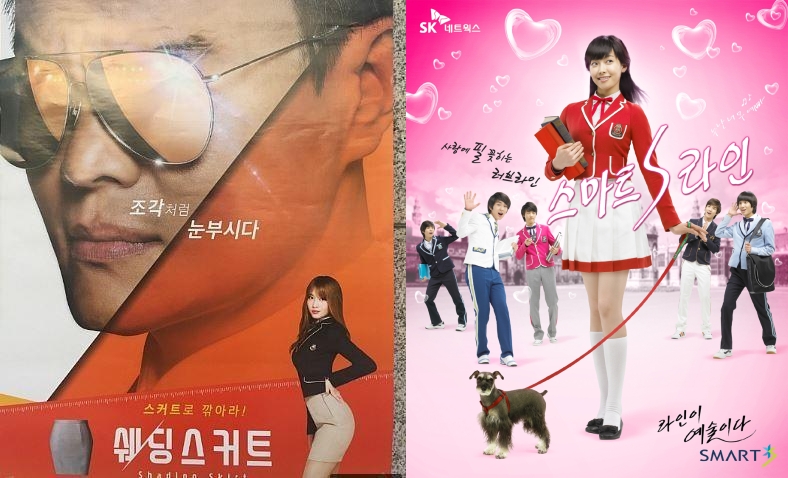


 Source:
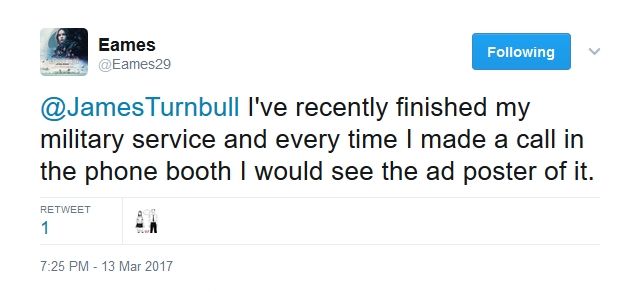
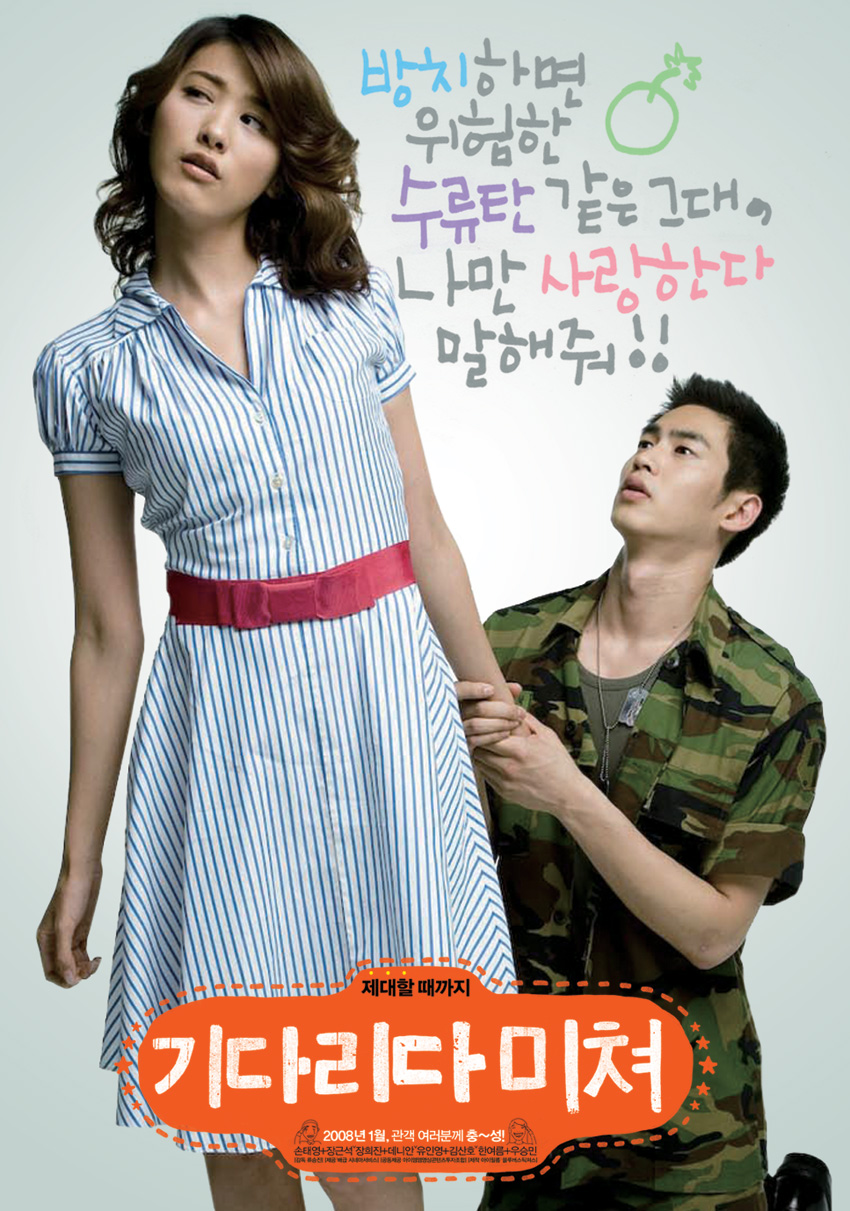
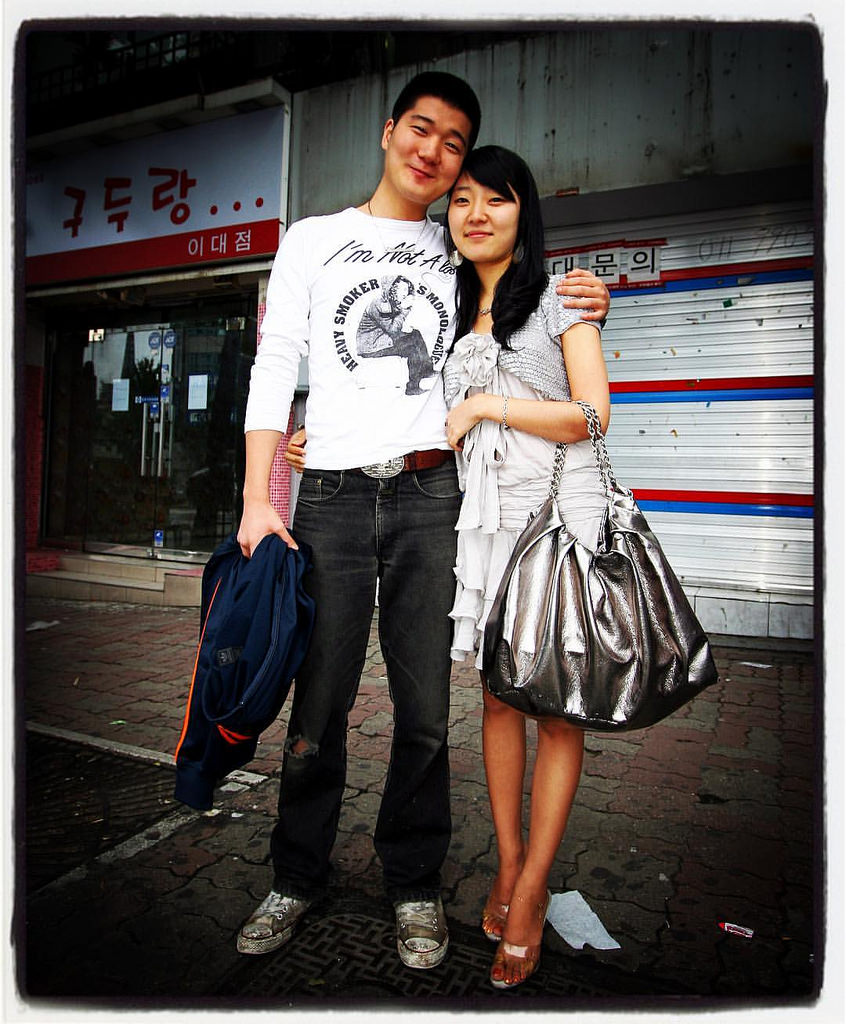

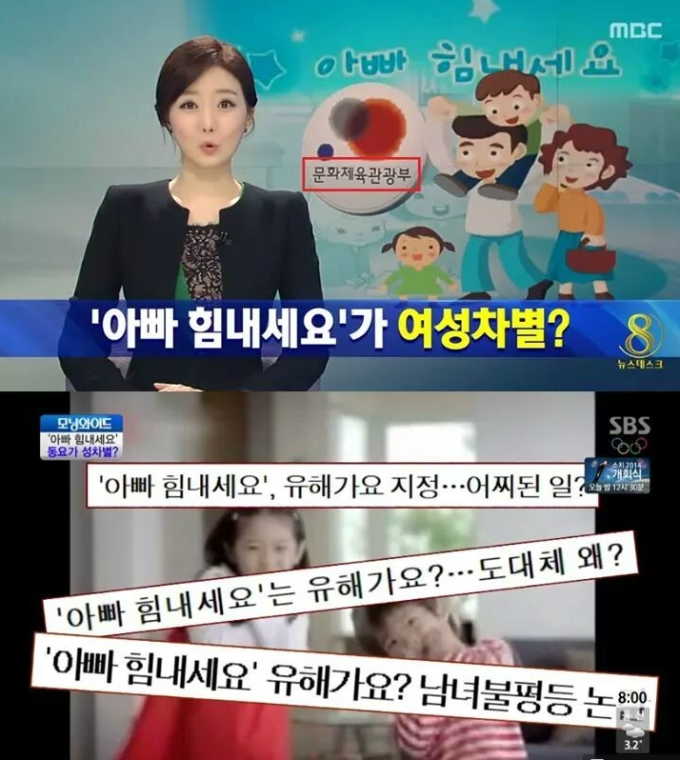
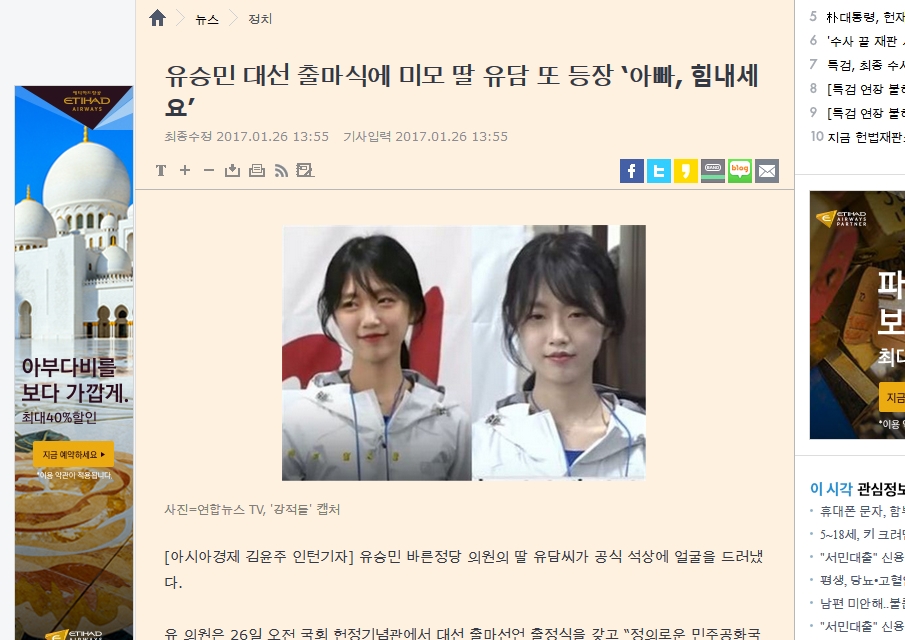
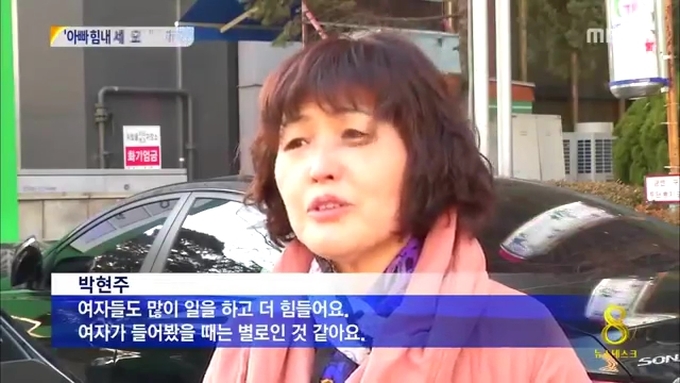
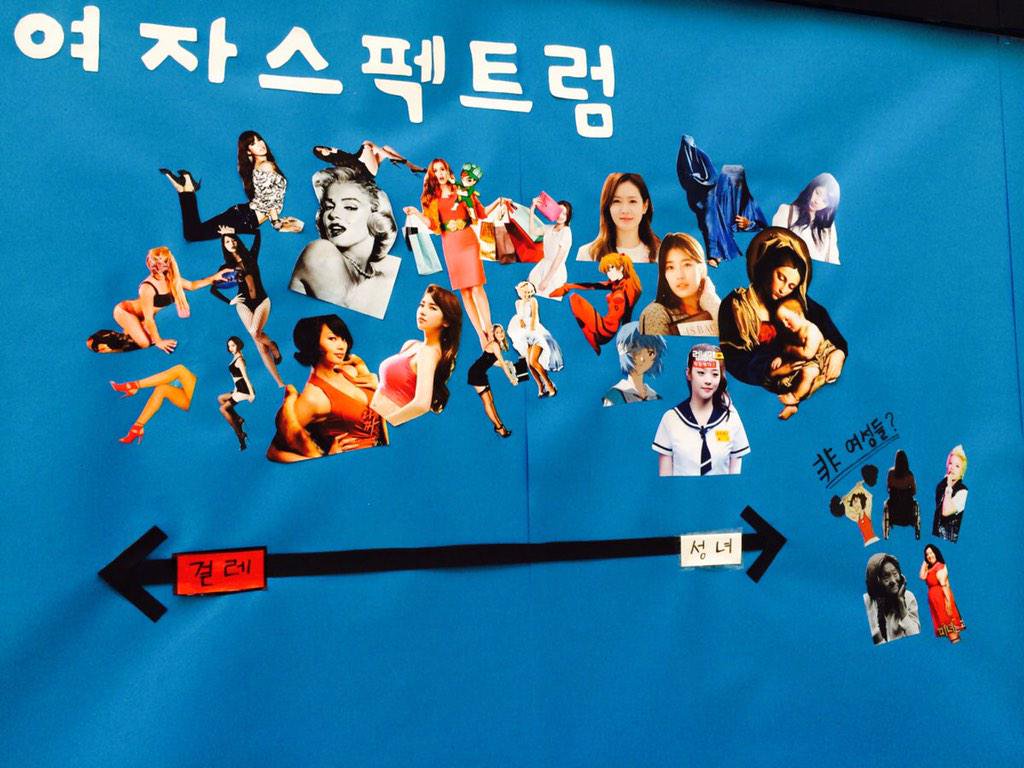

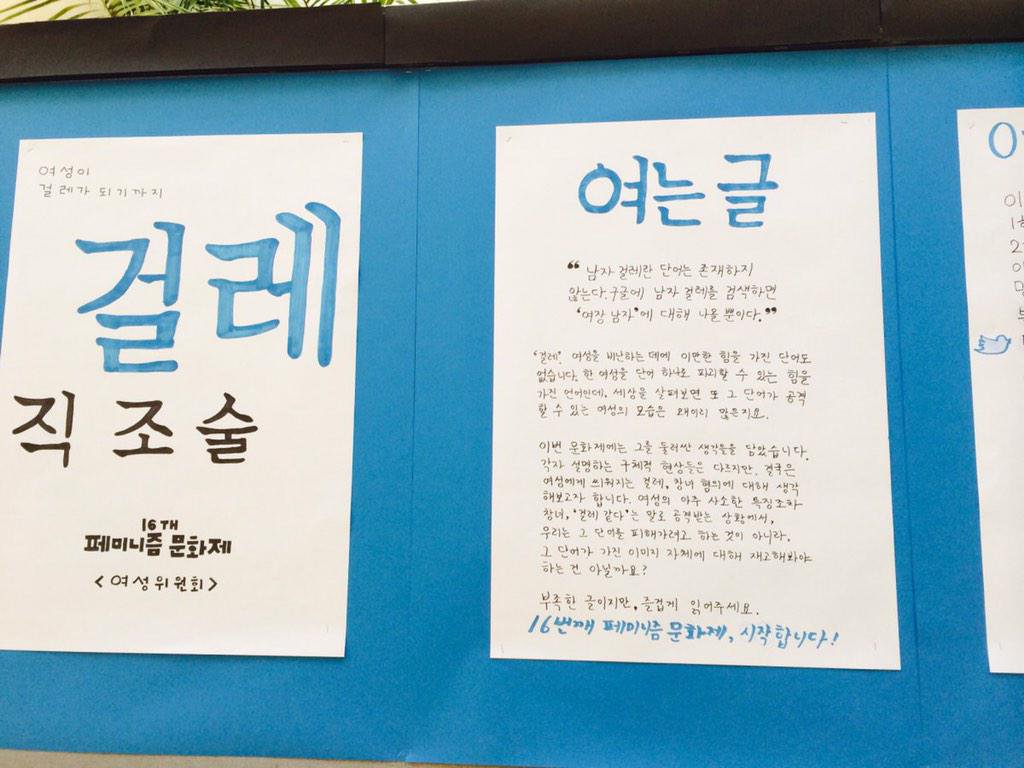

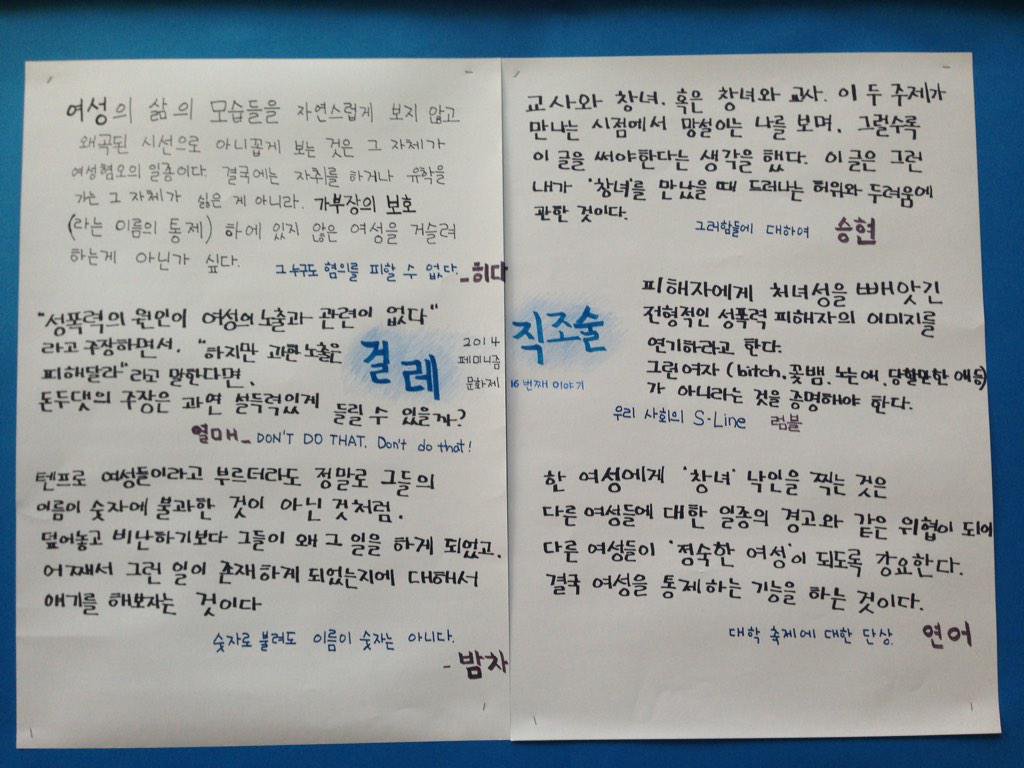


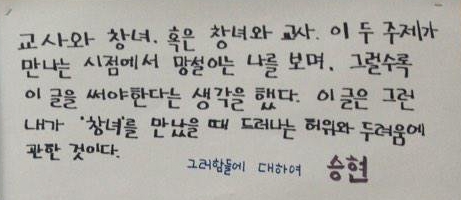
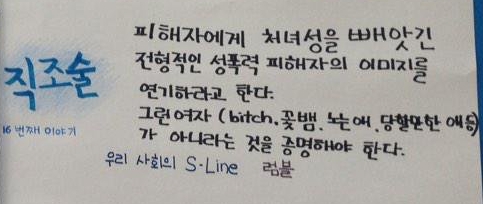
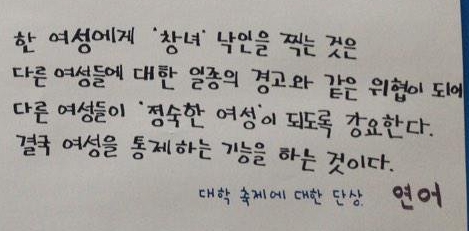

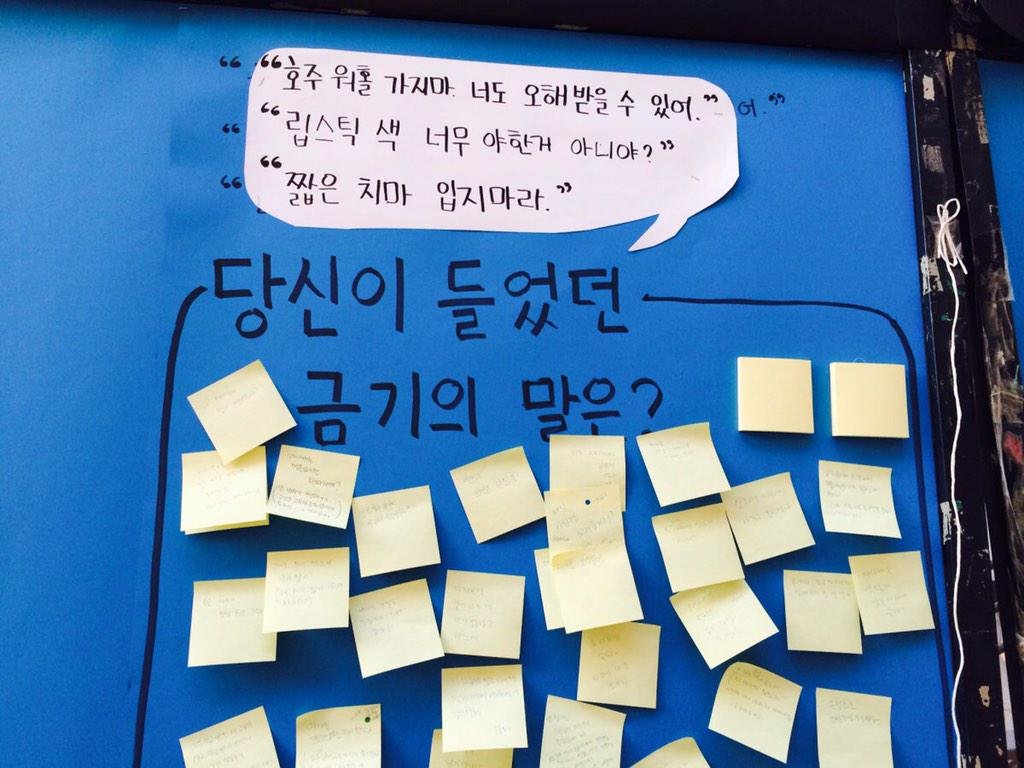
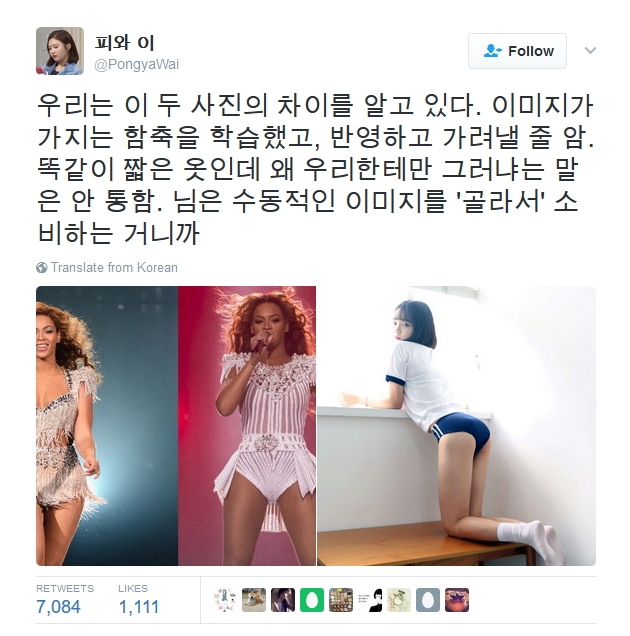





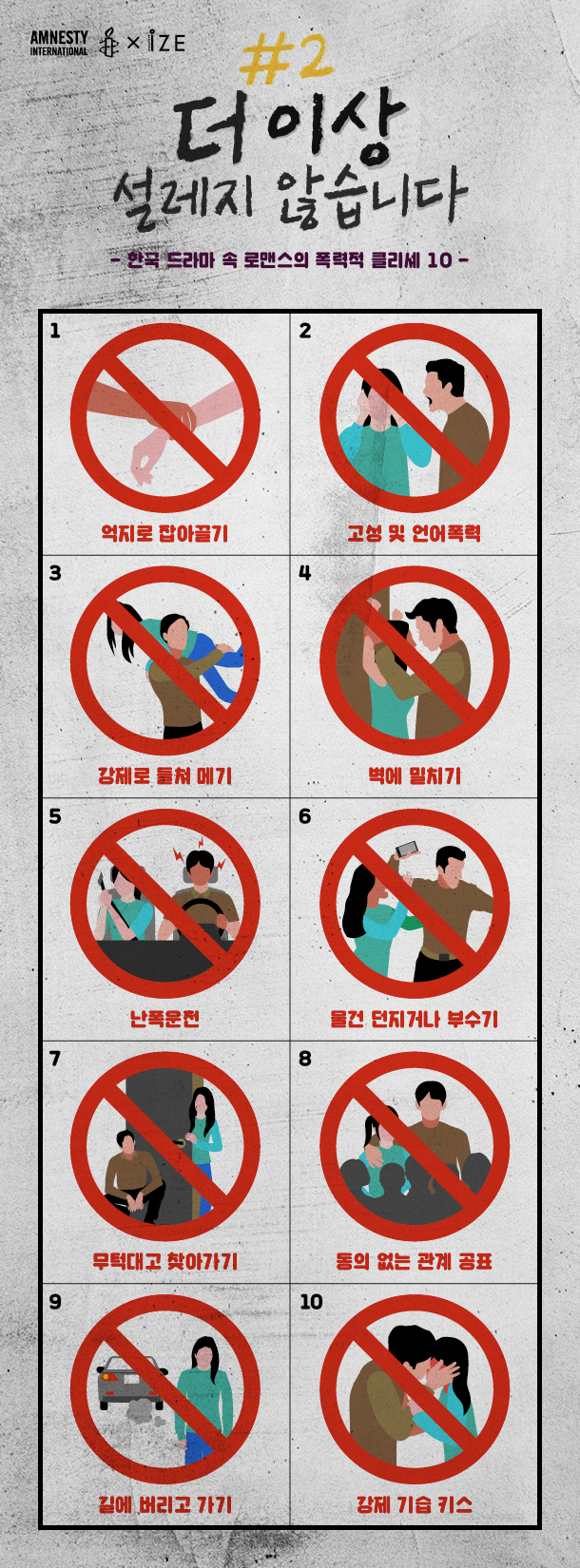
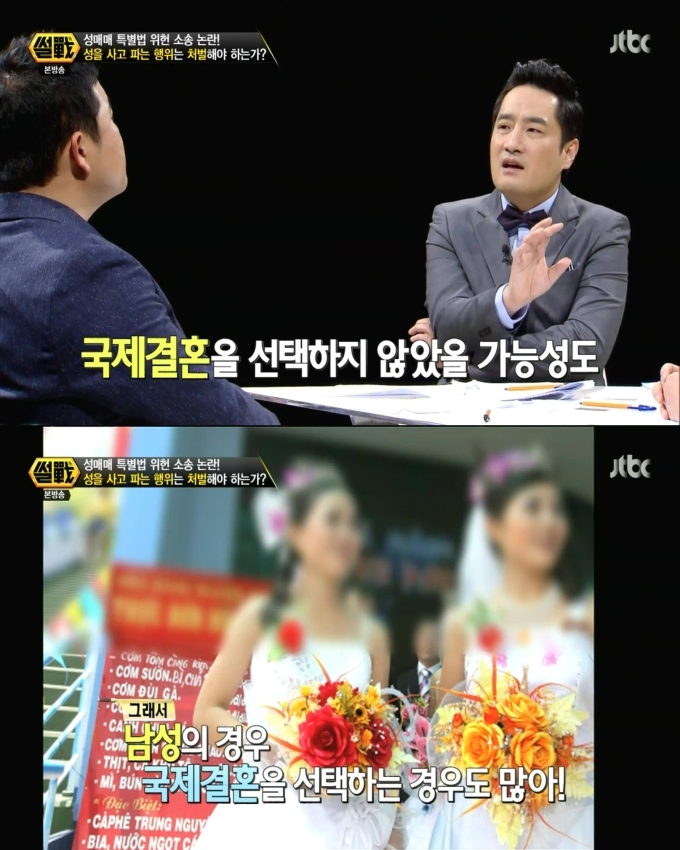
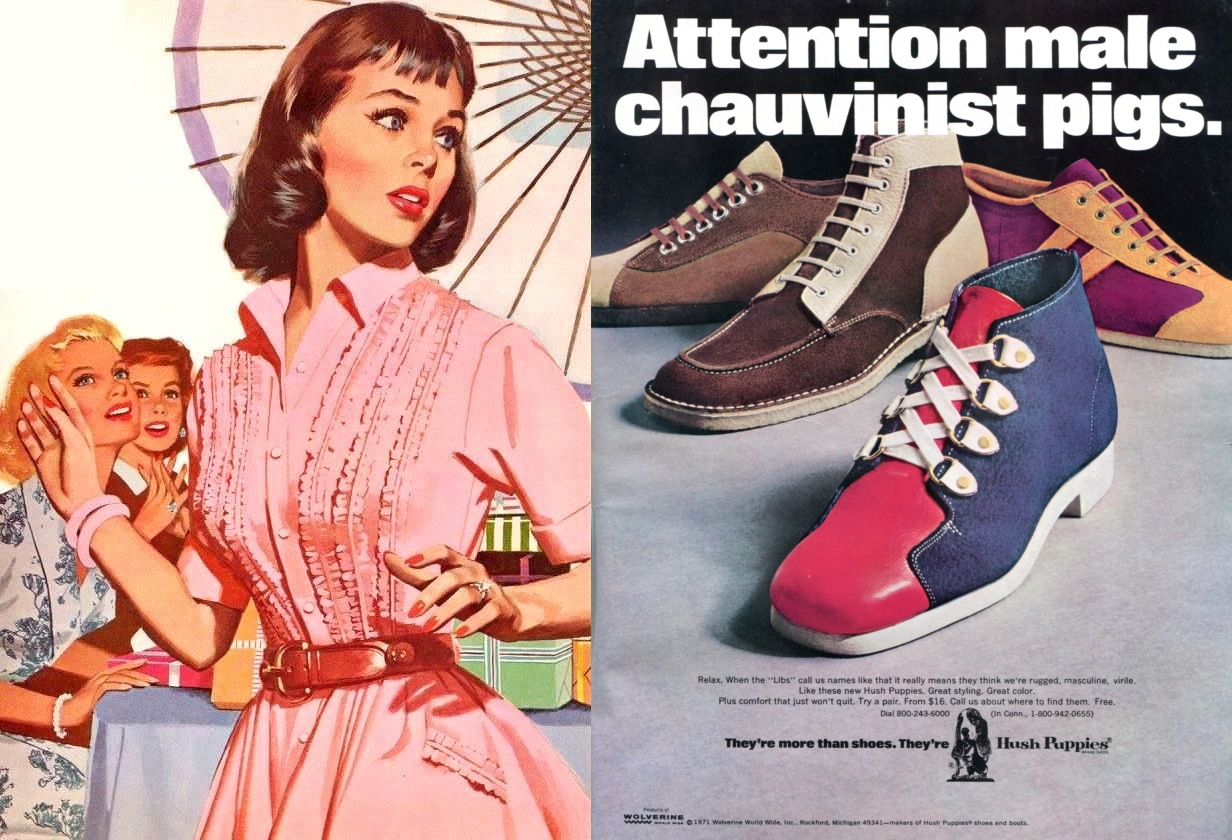

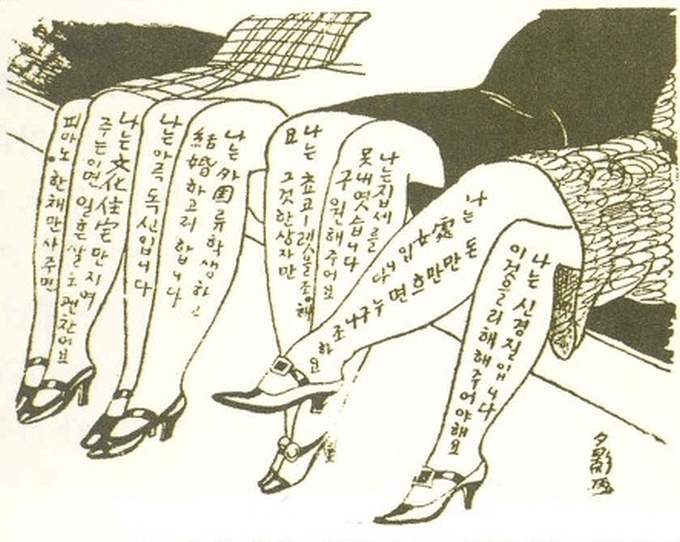
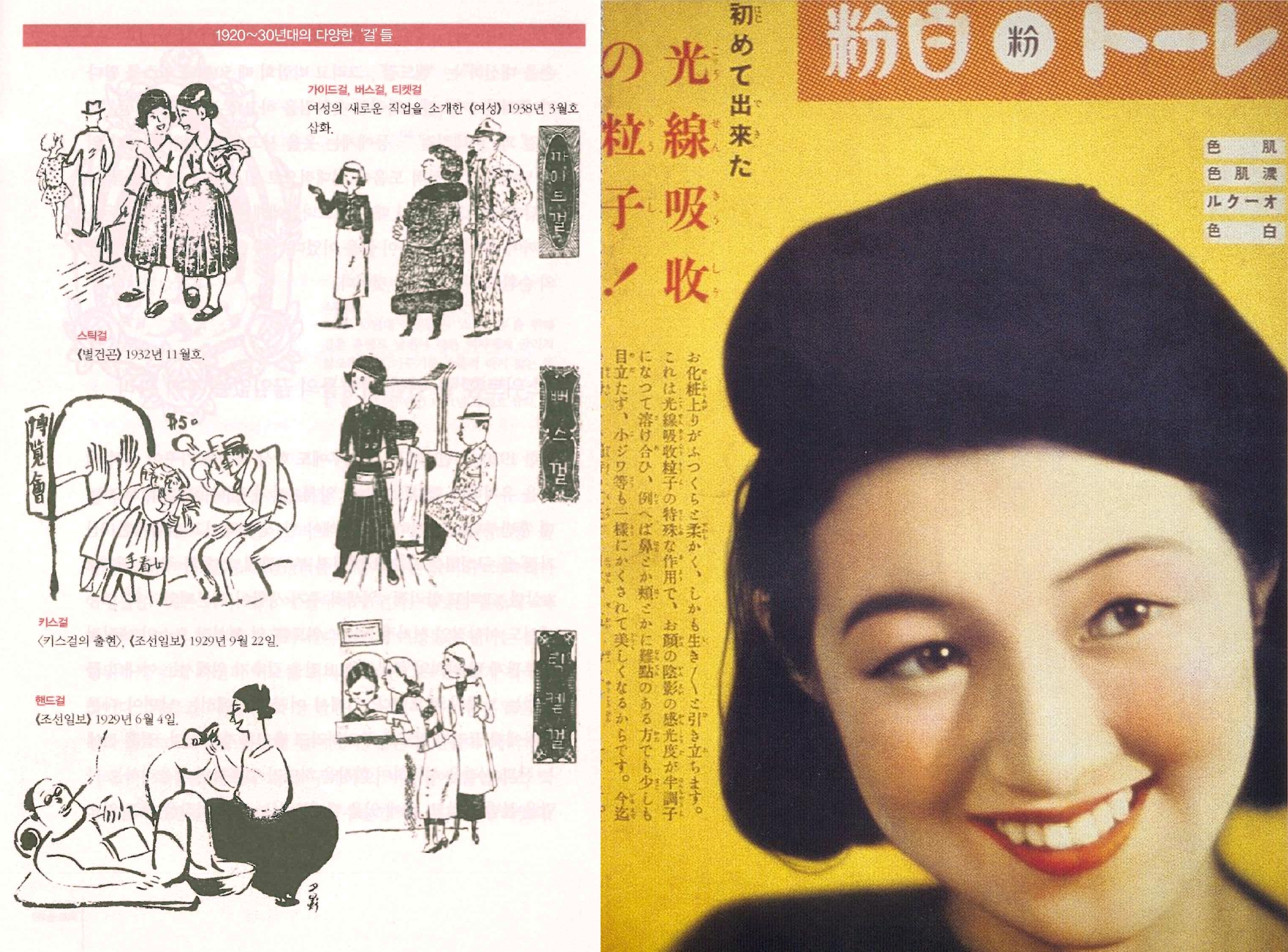

























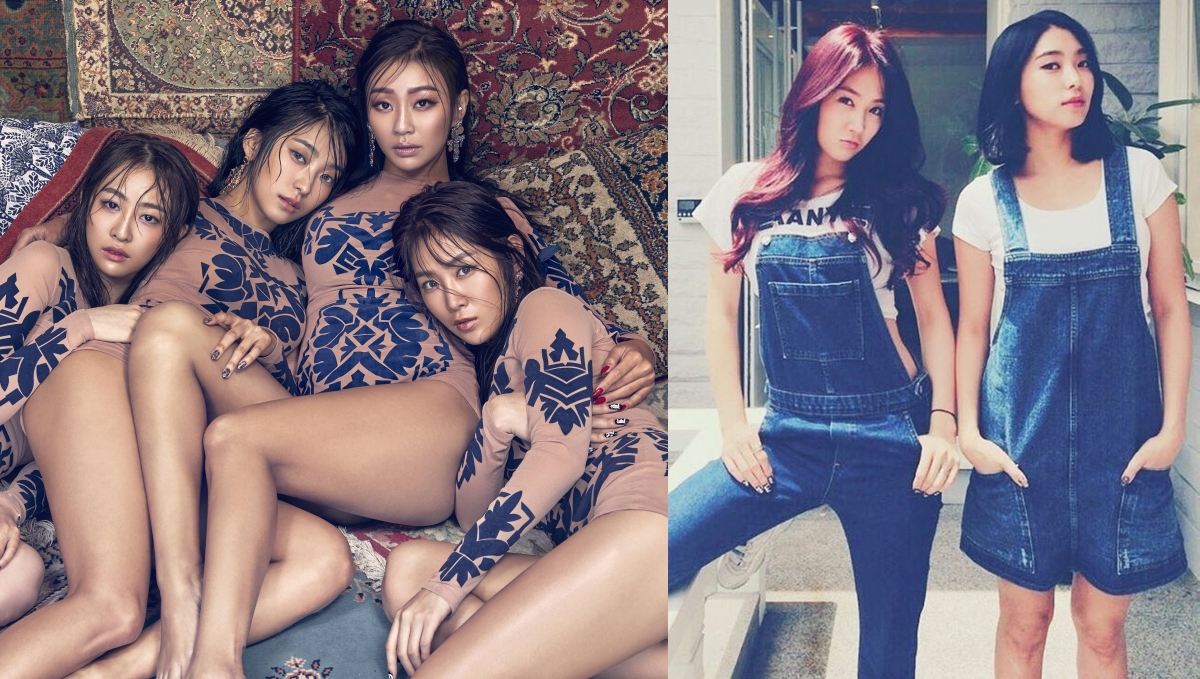

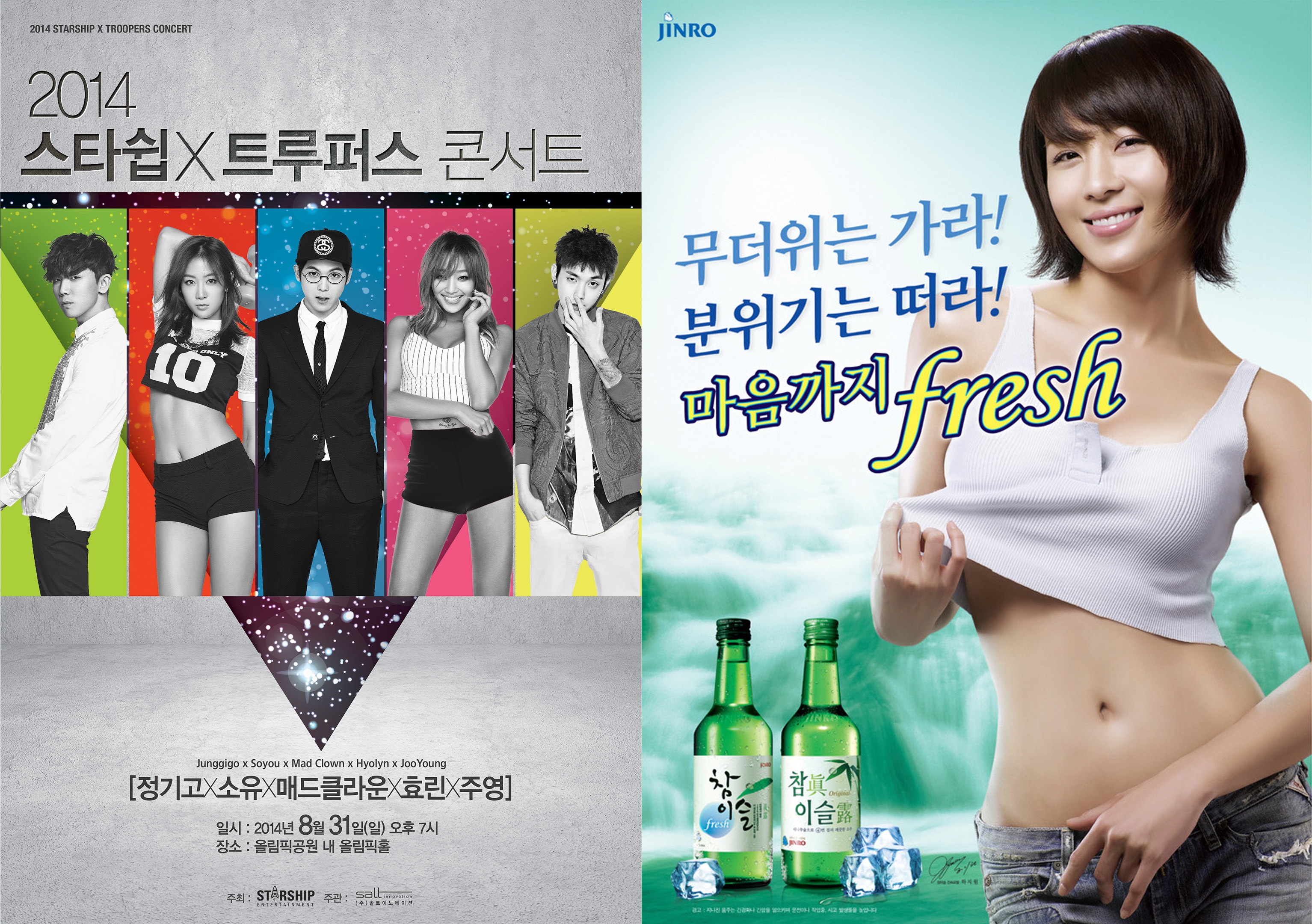
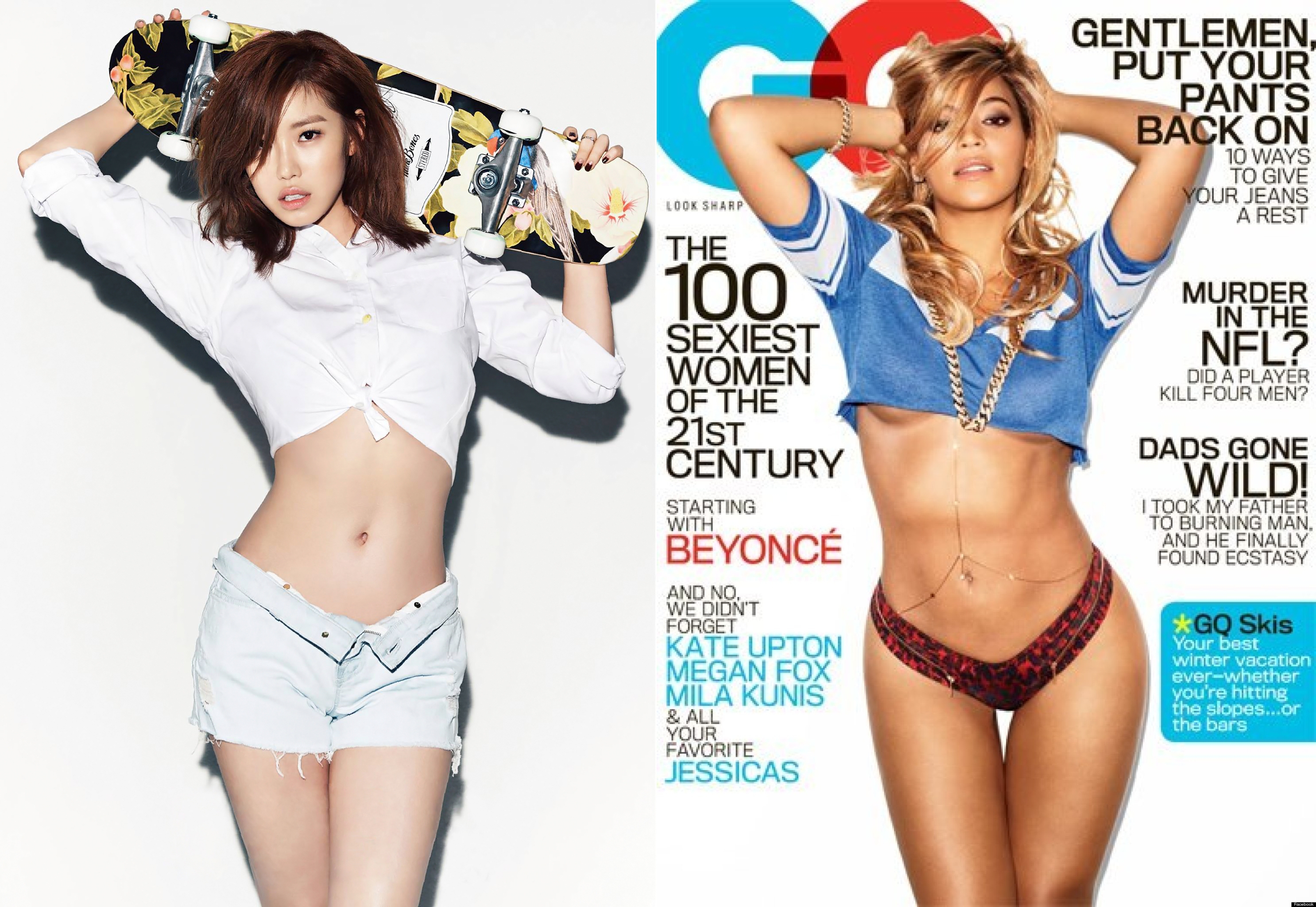
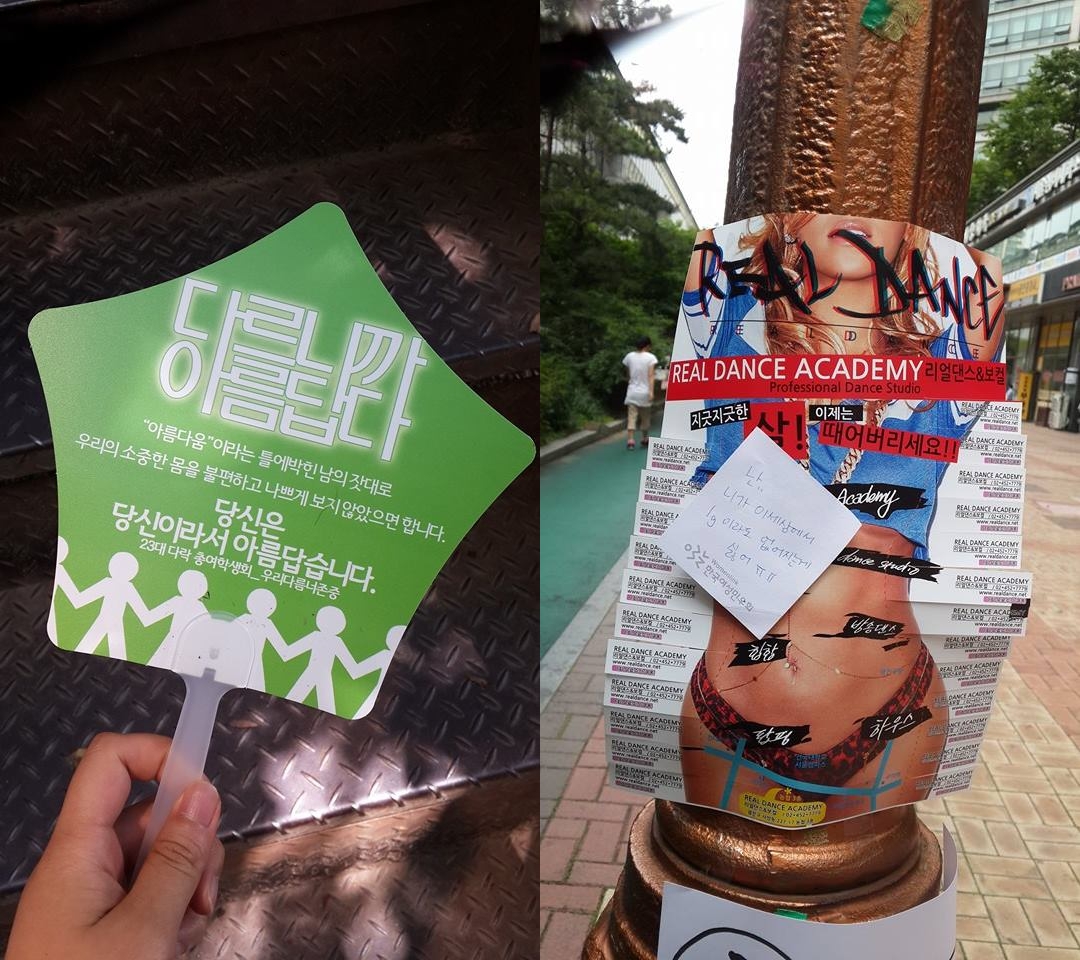

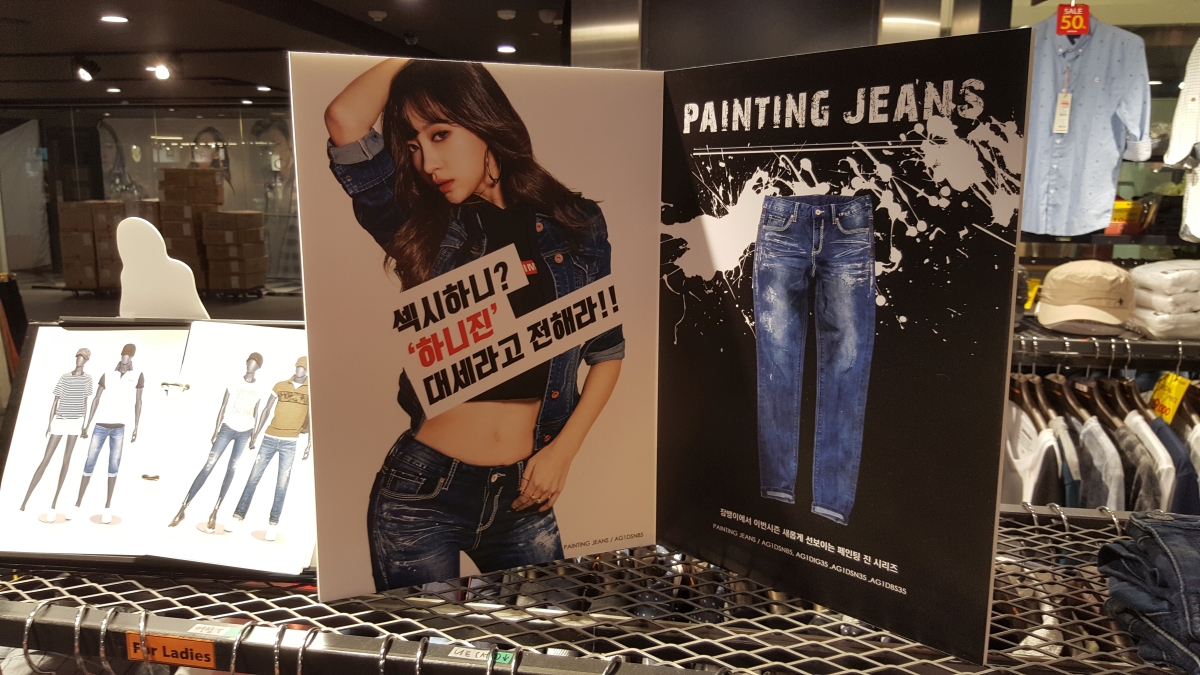


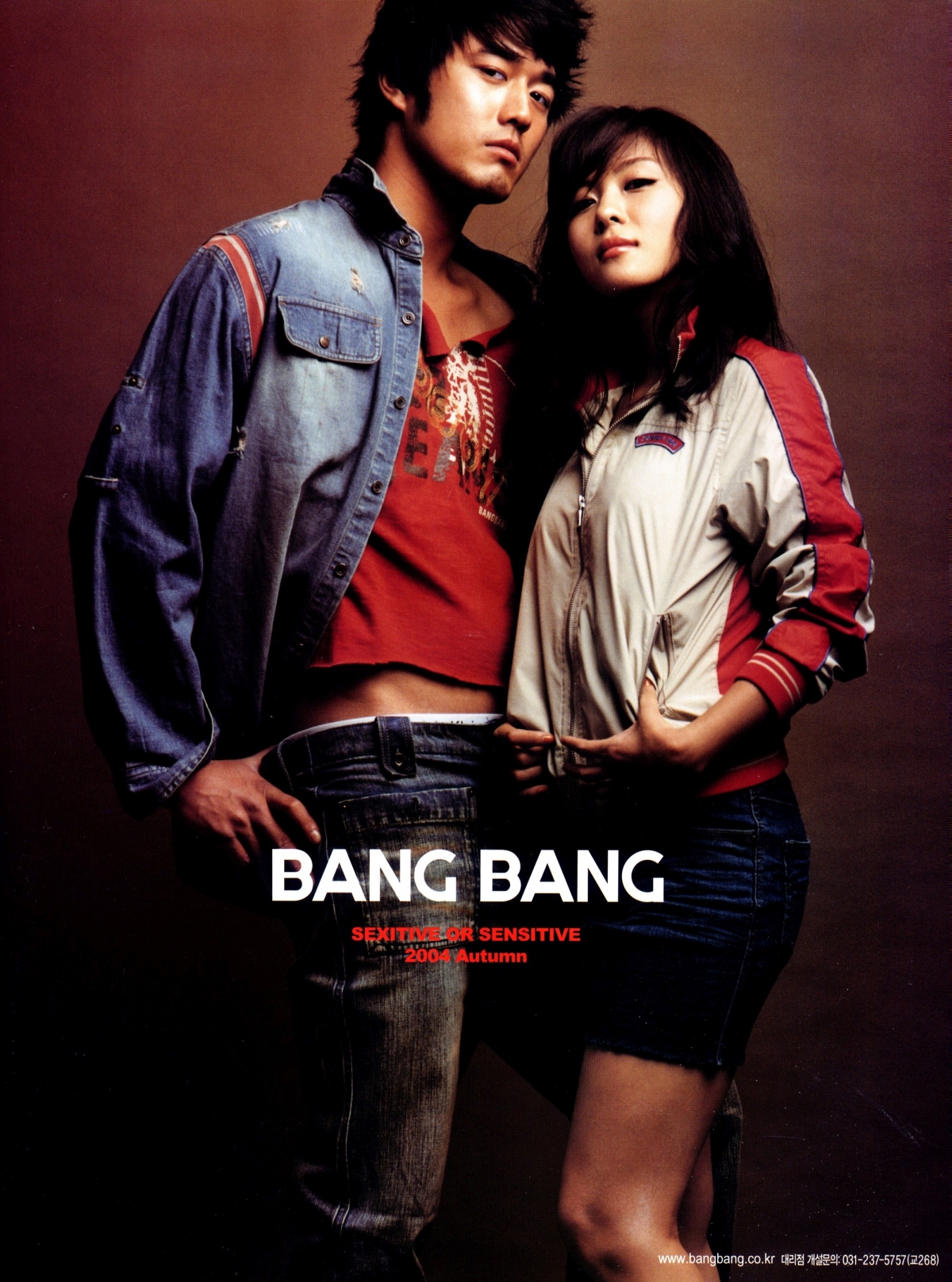

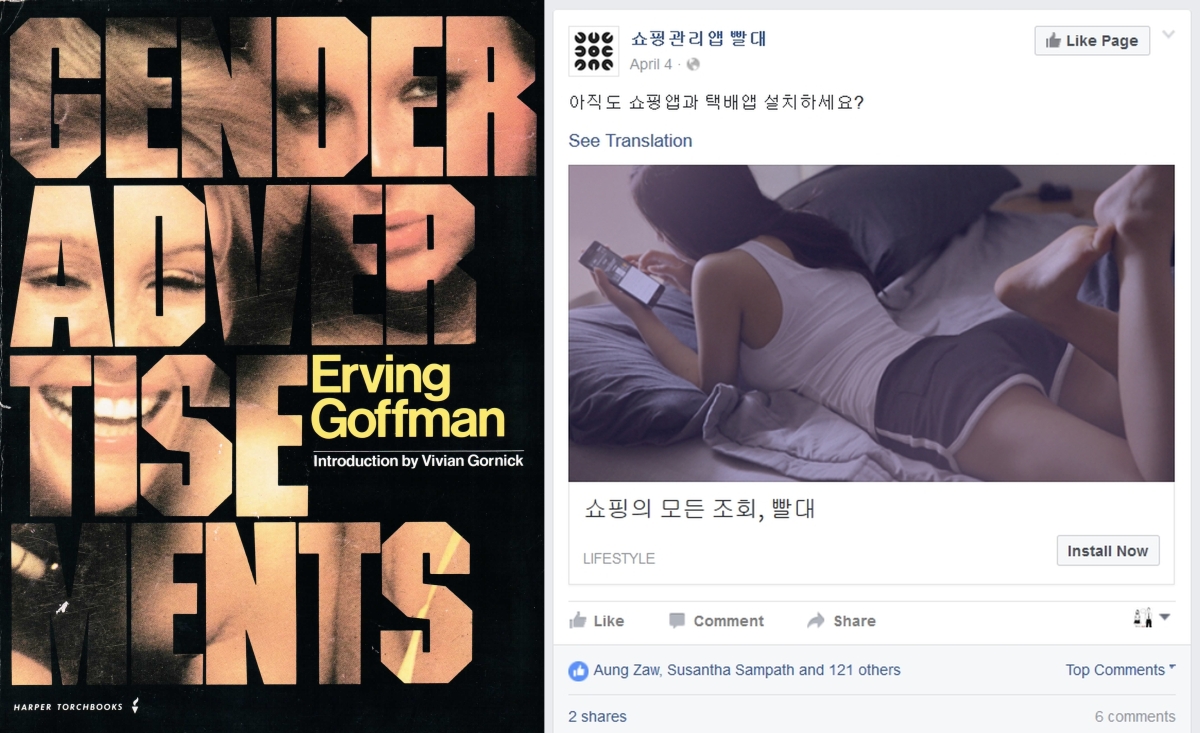





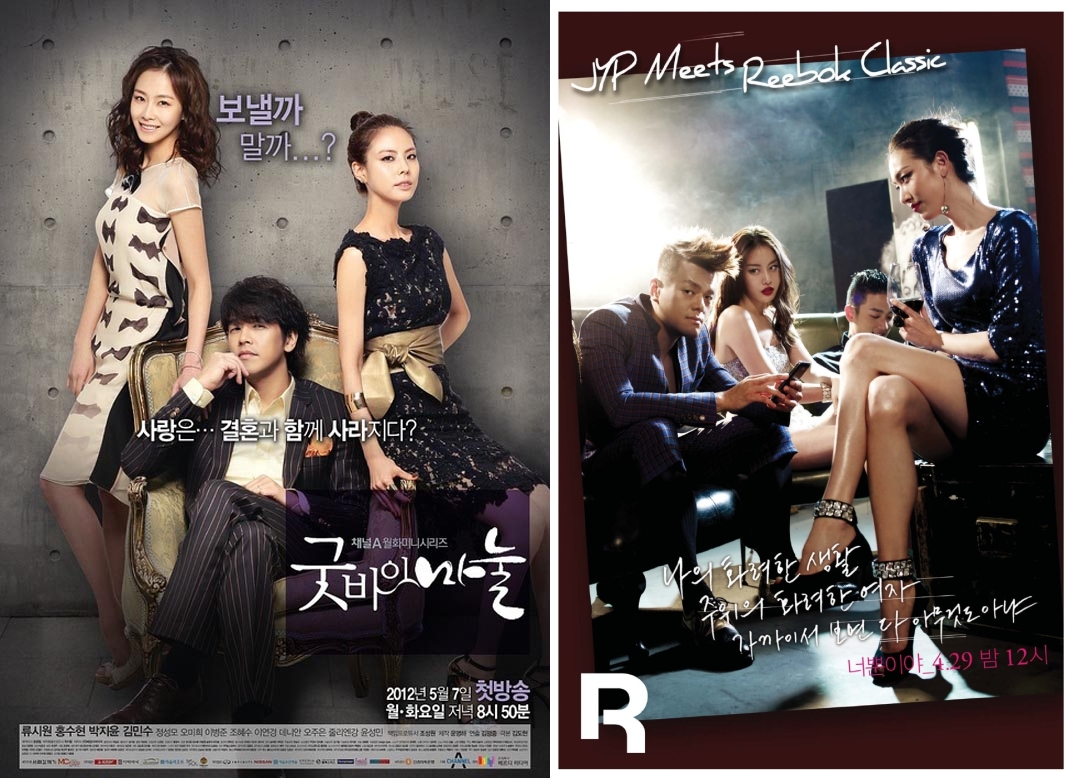


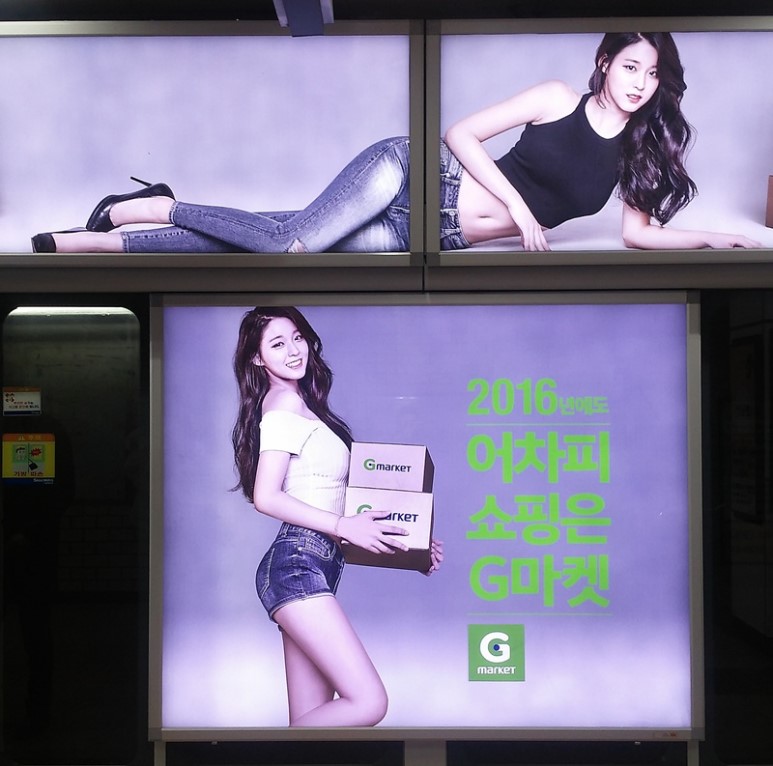




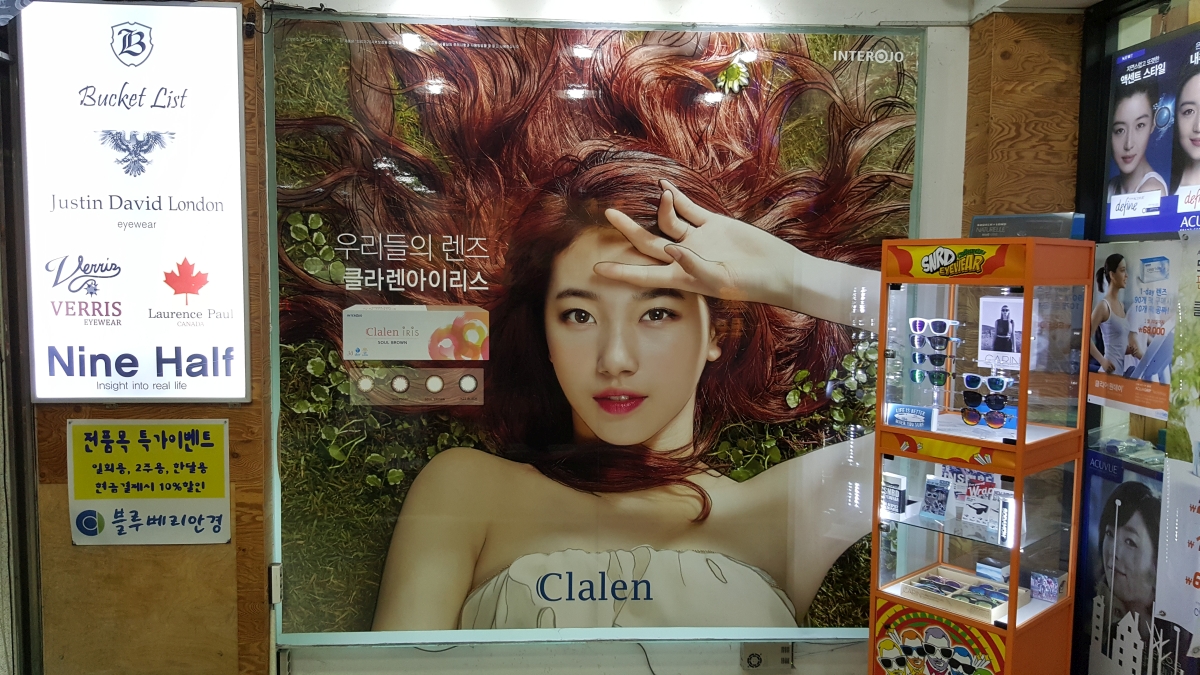



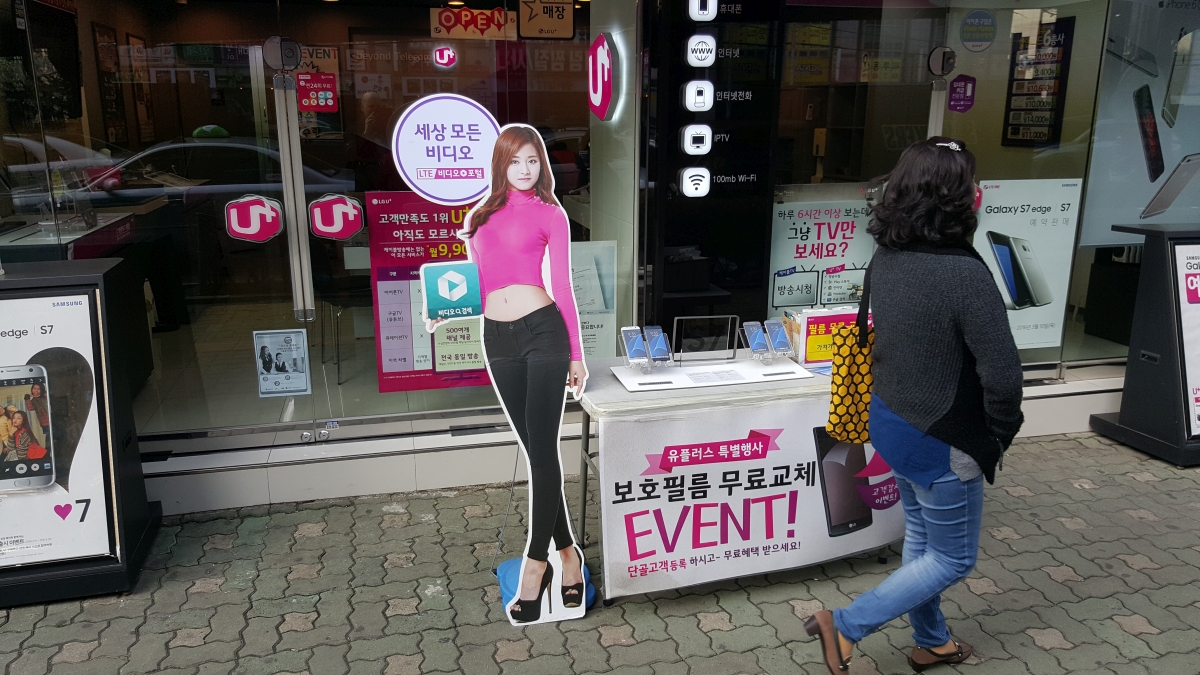








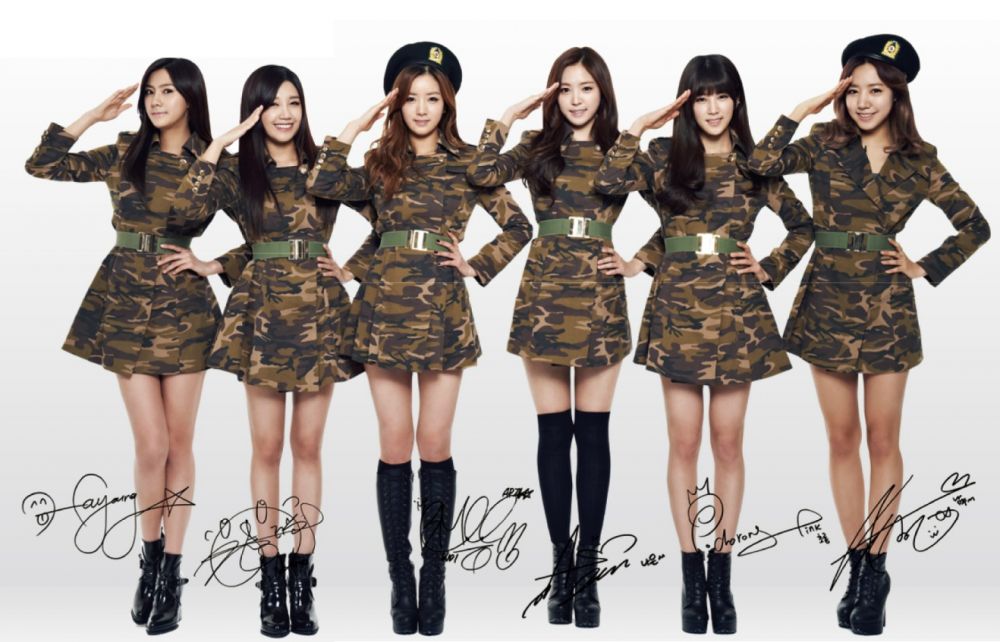
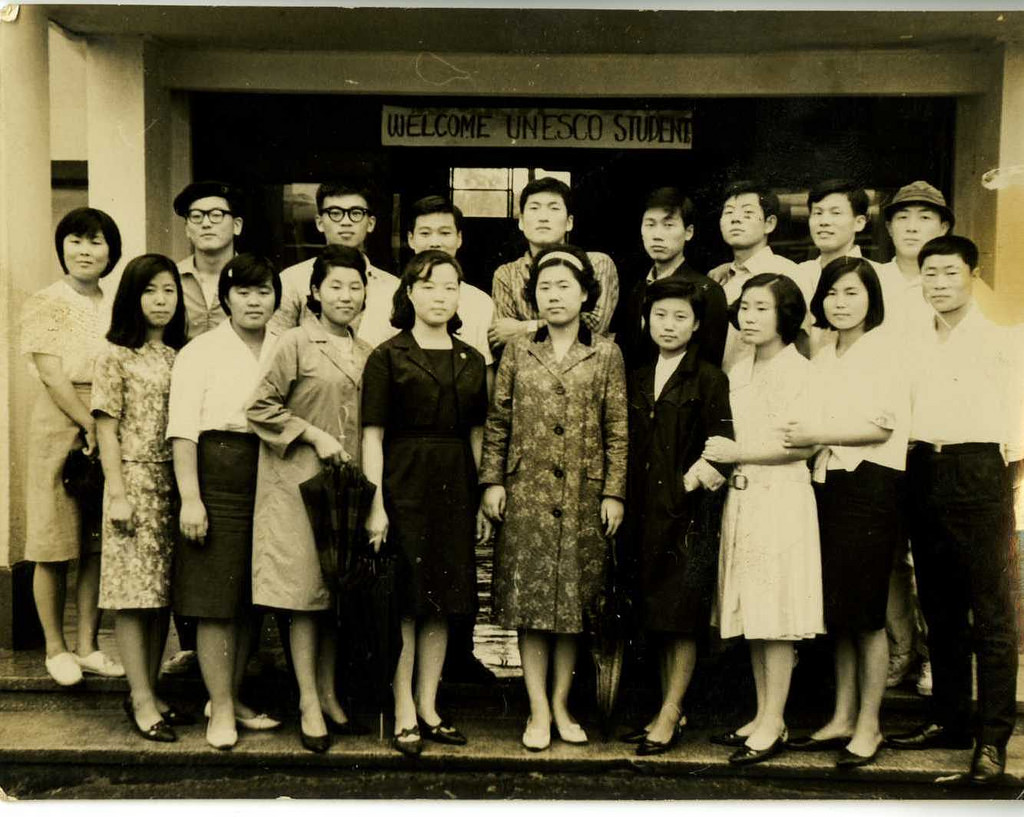
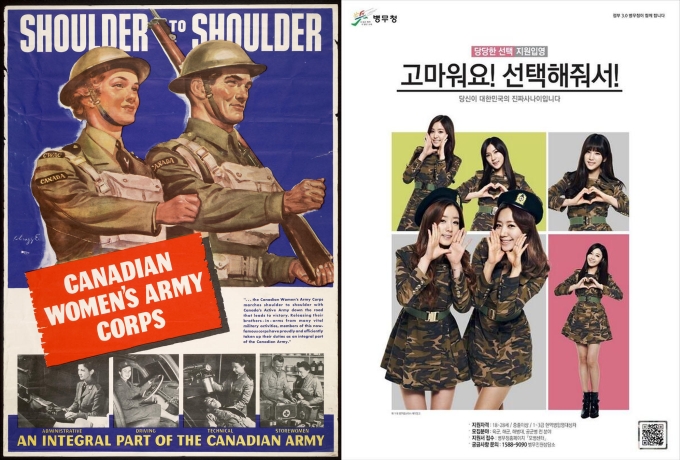
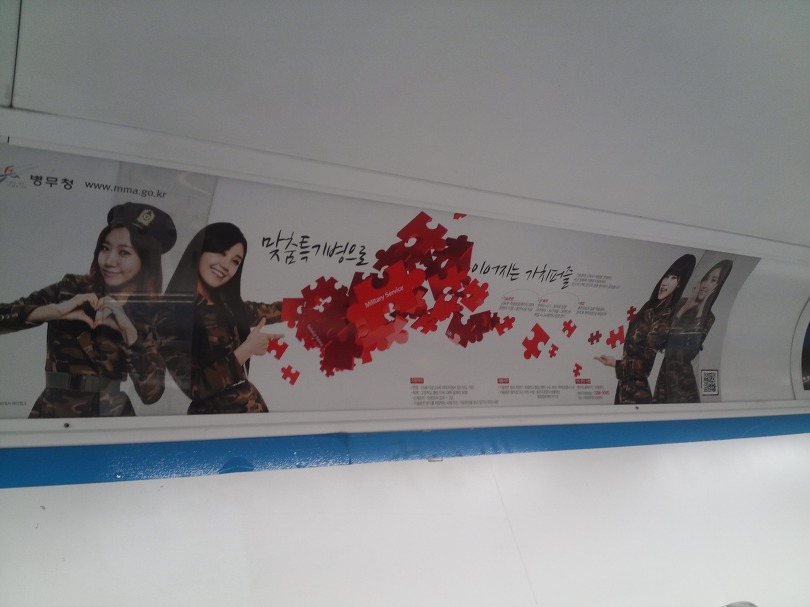
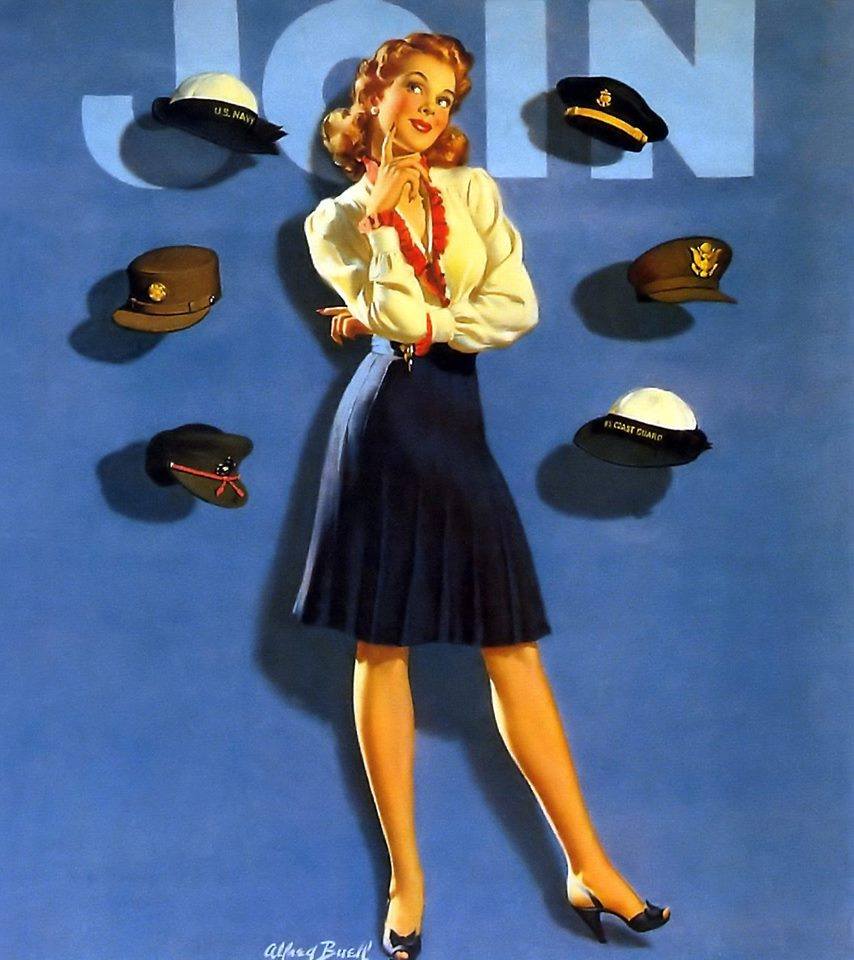
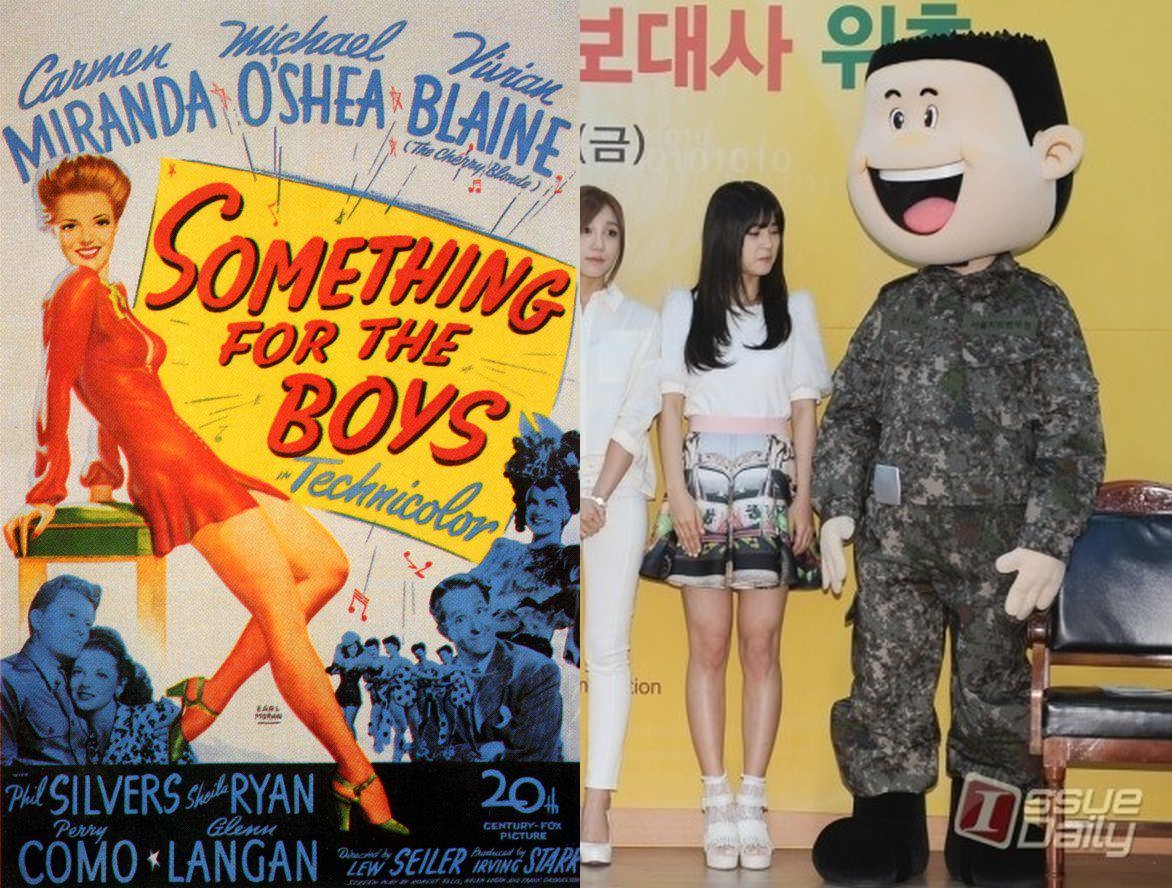








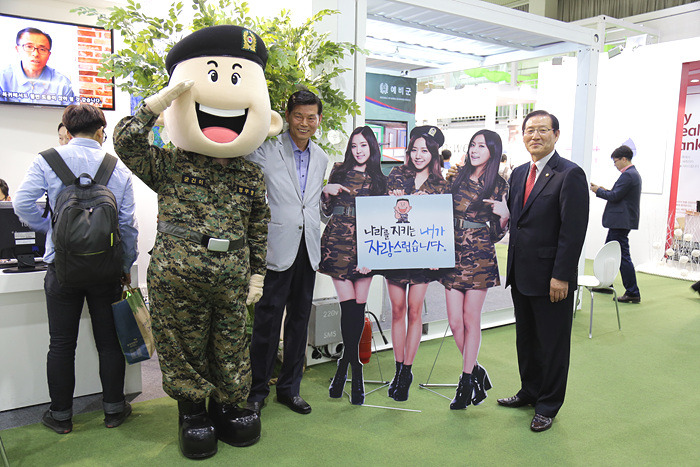







 The Grand Narrative
