Estimated reading time: 9 minutes. Photo by Maria Talks on Unsplash.
So, it’s been a minute.
Why? Believe me, I could list all the reasons. Perhaps sometime in the future, I will. But those of you that have stuck around all this time, you deserve my endless gratitude(!), not my navel-gazing. And besides, I don’t feel much connection to the person and writer I was a year ago, so there’s really no need to go over the transformation process. The new me doesn’t waste your time, and gets straight to the point.
The main point of this post then, is to celebrate the example set by a Korean husband who, wanting to understand his wife and her body and needs better, loudly and proudly bought the Korean translation of The Origin of the World: A History of the Vagina (버자이너 문화사 – 교양과 문화로 읽는 여성 성기의 모든 것) by Jelto Drenth (2004; trans. by Kim Myeong-nam, 2006). And also, to present this six-foot, multicolored glowing uterus below too—the quite literal sign from the universe that inspired me to finally buy the book for myself!
A conversation with Erotic Film Director Erika Lust, Performer & Intimacy Coordinator Maria Riot, and Sex Health Educator Tessy Vanderhaeghe.
Estimated reading time: 4 minutes. “Heldischer Tanz” performed by the Gisa Geert Group. Photo by Dora Kallmus (aka Madam D’Ora), Vienna 1924. “Heldischer Tanz” translates as “more heroic dance.” Source: un regard oblique.
Hey, I totally get why many women and feminists are vehemently opposed to pornography.
If my only exposure to it were mainstream sites like Pornhub, then I would be too. In fact, I’m just as disgusted and horrified as any ‘feminazi’ by the lessons about sex and body image the industry provides, and by its treatment of its workers. Cishet men’s tastes being just as diverse as any other demographic’s too, then I’m not even turned on by most of the content out there either, despite almost all of it supposedly being specifically tailored towards my male gaze.
But.
I also firmly believe that whatever the medium, most human beings will always be drawn to erotic imagery and depictions of sex between consenting adults. That because of that instinctive urge, it would be unrealistic and incredibly naive to ban it. That we shouldn’t ban it anyway, because it’s a good thing. And, in particular, that most if not all of opponents’ problems with it would be solved by actors being paid adequately (i.e., it shouldn’t be free), by intimacy coordinators being required by law, and by concerted efforts to appeal to all sexualities and body types.
In other words, “feminist pornography.” Which very much does exist, and is absolutely not the joke it’s often made out to be.
So much so, that I’ve actually been subscribing to one such site for several years. Make even more jokes about that if you want, but yeah—it really is one hell of a turn-on knowing that the performers are making a decent living, are genuinely enjoying their work, that my financial support goes towards films with a much wider range of body types and sexualities than just those that appeal to me personally, and that they’re all designed for a female partner’s enjoyment just as much as my own.
I know, right? How embarrassing! How could I ever live it down if this peccadillo of mine got out?
Or indeed, that feminist films are still a turn-on even though they tend to be designed much more for women actually? Especially if they’re by or on a site produced or operated by Erika Lust, whose webinar on Thursday night I’ll leave you with the details of now:
Dive into the world of ethical p*rnography with acclaimed adult filmmaker Erika Lust, performer and intimacy coordinator Maria Riot, and sexual health educator Tessy Vanderhaeghe! Join us for an insightful online webinar as we explore the complexities of this genre alongside the release of Erika’s groundbreaking new film, “Kazumi’s Party.”
In celebration of Erika’s 20th anniversary in the industry, this webinar aims to explore the evolution and future trajectory of this genre of adult film and how the boundaries of ethical p*rnography are changing and evolving.
Our speakers will explore the central question: “What is ethical p*rn and where are the boundaries?”, while addressing topics suh as the empowerment of women through the adult cinema.
Join us for a 40-minute discussion followed by a 20-minute Q&A session, where you can engage directly with our speakers. Register now to secure your spot and be part of this thought-provoking conversation!
If you can’t make the webinar, please consider watching her (age-restricted) TED Talk from last year instead.
Ultimately, through efforts like hers, and public support, my hope is that one day there won’t any need to add the prefix “feminist” before “pornography” anymore, just like it already feels so awkward and completely unnecessary to use “female” before “doctor” say.
Either way, supporting that cause with (what is now) US$119.40 on a yearly subscription seems a small price to find out. But, if you think that money is actually harming women, then please do read some more about Erika Lust, peruse some of her work, and let me know why. I mean that genuinely. While, not going to lie, I’m still very skeptical that anyone will be able to come up with any legitimate criticisms, I’m also on an explicit mission to respectfully consider alternative viewpoints in 2024, so I look forward to hearing yours. Cheers!
An ad at my local Busan subway station, which I’d never given a second thought to until today. I had no reason to—with a title and image like that, I’d assumed it was for some kind of beauty app or filter.
Then my aging eyes finally noticed the “딥페이크/Deepfake,” and I did a double-take:
It reads:
당신의 얼굴 괜찮습니까?
딥페이크로 인한 성 범죄가 매년 증가하고 있습니다. 성폭력처벌법 제14조의 2에 의거해 타인의 얼굴이나 신체 등을 허위 영상물로 만들거나 배포하면 5년 이하 징역 또는 5천만 원 인하의 벌금에 처하게 됩니다.
Is Your Face Okay?
Sex crimes caused by deepfakes are increasing every year. Pursuant to Article 14-2 of the Sexual Violence Punishment Act, anyone who creates or distributes a false video of another person’s face or body is subject to imprisonment for up to 5 years or a fine of up to 50 million won.
This text, a bland rehashing of the law, feels like a real missed opportunity.
The issue is who this ad is aimed at. The “Is Your Face Okay?” headline seems aimed addressed to victims, and indeed a Korean friend assures me that it is. However, surely most victims aren’t unaware that deepfakes are illegal? Surely, more of a concern would likely be feelings of embarrassment, shame, that they themselves were to blame for them in some way, and/or worries about the impact on their jobs and livelihoods? So, the priority should be giving victims assurances that these are not at all the case, and that they could receive all the help, support, lack of judgement, and legal aid they needed at the Center.
In their absence, a more creative alternative is that the headline is a double entendre intended to mean “Aren’t You Red-faced/Ashamed?” to potential perpetrators, then letting them know what might happen if they get caught.
Which applies? Unfortunately, there’s no further information about it on the Busan Gender-based Violence Prevention Center’s website, nor does Googling/Navering yield any results.
So, without disputing the Center’s good intentions for a moment, again I’m forced to defer to my friend’s judgement. In which case, I think the poster really misses the mark.
(Also available as an in-person lecture at 6PM, Monday, November 13 at The Institute of Fine Arts, 1 East 78th Street, New York.)
Estimated reading time: 3 minutes. Image source (cropped): NYU The Institute of Fine Arts newsletter. NSFW images follow.
For the sake of shorter, more impactful and easy-to-remember announcements, I’m posting about notices about webinars and virtual lectures (that I’m able to attend) separately from now on.
Sorry that this one comes so last minute, but as far as I know registration for the webinar is available right up until the event itself:
“As part of the Institute of Fine Arts’ (Instagram, Facebook, Linkedin, X/Twitter) ongoing tradition of inviting contemporary artists to speak about their practices in the Duke House Lecture Hall, this year’s Artists at the Institute Lecture Series invites four artists who explore the body as a site of confrontation. The body is continuously subjected to political, social, and aesthetic judgments both within and outside of the art historical canon. Whether it be through the ongoing battle with reproductive rights or the modification of the body in digital and social media, this phenomena proves to be omnipresent. Contemporary artists are constantly grappling with conceptions of corporeality, and each artist brings a diverse approach to what this means to them. This year’s series is committed to uplifting the voices of women working in representational practices across a range of media, styles, and backgrounds. Through feminist, cross-cultural, and art historical methods, these artists challenge the contours of corporeal form, transcending the limitations and restrictions that have bound the female body to the canonical canvas, and imagining how such liberation might transform aesthetics.”
Sources: NYU Institute of Fine Arts Instagram & Newsletter.
“For our second installment of Artists at the Institute, Visions of Corporeality, lecture series we are excited to welcome Misha Japanwala. Misha Japanwala (b. 1995, London, England and raised in Karachi, Pakistan) is a Pakistani artist and fashion designer, whose work is rooted in the rejection and deconstruction of shame attached to one’s body, and discussion of themes such as bodily autonomy, gender based violence, moral policing, sexuality and censorship.” (Instagram, homepage.)
“In our second installment of this series, Misha will touch upon what it means to be a Pakistani woman familiar with the historical objectification, commodification and control exerted on marginalized bodies by societies and systems enveloped in patriarchy.”
And as a reward for those you still reading, please click here to register for the next virtual lecture I’ll be announcing tomorrow: “Remedy, Mobility, and the Feminized Consumption of Beauty in Post-Authoritarian South Korea,” a virtual talk featuring So-Rim Lee from the University of Pennsylvania, and presented by the Korean Studies Research Network. In South Korean time, that event will be on Thursday, November 16, again at 8am.
Less than 20 years ago, Korean women could get assaulted for publicly smoking. Less than 2 days ago, a short-haired woman in Jinju did get assaulted for the same, real reason—openly defying restrictive gender norms.
Estimated reading time: 3 minutes. Image sources (adapted): @TheKpopProf on X/Twitter and @cottonbro at Pexels.
An academic friend has asked for help for her students, who are having trouble finding participants for surveys they need to conduct as part of their coursework.
If you’re eligible, both surveys are completely anonymous, and each should just take just a few minutes to complete.
The first is about how women feel about the way women and young girls are portrayed in anime/hentai. Your nationality is not important, but it is open to women and non-binary participants only.
The second is about smoking habits and perceptions of men and women smoking in Korea, and is open to all Korean smokers, although Korean ability is not required.
Alas, I don’t think I’ve written anything much at all about anime. But back between 2010-2013, I did write the long series below about the gender politics of smoking in Korea, prompted by an incident in the news about a young woman getting physically attacked on the street for openly doing so. So I can certainly understand what prompted the line of questioning in that survey, and am very interested in learning from the students about how much things have changed in the last 10 years.
Fortunately, cases of women getting assaulted in Korea for smoking now seem like ancient history. But then it was never really about smoking, was it? The real reason female smokers were assaulted back then was for openly defying restrictive gender norms and roles. And, sadly, as more and more women are brave enough to do so in other aspects of Korean social life, it seems the rates of assault against them are only increasing in response. Most recently, with a woman in Jinju this week being attacked for having short hair.
I really didn’t intend to sound so cynical. And I’m not—preventing such crimes starts with undermining the attitudes behind them, and determining how prevalent they are helps towards that. So, thanks in advance for your help with the surveys, and please feel free to share them with your networks!
Turning Boys Into Men? The Performance of Gender for South Korean Conscripts, Part 8
Estimated reading time: 4 minutes. Photo (cropped) by Jim Flores on Unsplash.
Am I just projecting when I say Koreans too? Or that it’s mostly Korean and Japanese women, and especially young women, that suffer from this “involuntary consent”?
But first, I want to acknowledge that, of course, everyone has had the experience of being asked by bosses, relatives, and/or professors for unseen, undervalued, and usually unpaid labor, which social pressure prevented them from refusing.
There’s nothing specifically Korean or Japanese about this. Nor is expecting it of women the exclusive purview of Korean or Japanese men.
Korean academia, for instance, remains notorious for all the verbal abuse, sexual harassment, and demands for personal errands professors inflict on their grad students. I want to convey my curious mix of relief and rage too, over learning that it’s not just me that notices it’s mostly female students that have to run those errands. And, as discussed in Part 2 of this series, I’ve already noticed the welcoming of prospective students that my female students are expected to do in the freezing cold every winter.
In Japanese society, where people are conventionally inclined to avoid conflict and prioritize social relationships over their own self-interest, the attitude that can lead to unforced but involuntary consent is ubiquitous. Japanese American anthropologist Dorinne Kondo has captured how Japanese people, especially women—herself included, as she became enmeshed in Japanese society as a “daughter” of her host family over the course of a two-year homestay in the 1980s—avoid saying no in their day-to-day lives. Similarly to the young Japanese women who become involved in AV, Kondo was not overtly coerced but nevertheless pressured to involuntarily agree to do things for others such as teaching English, fulfilling her duty as a filial “daughter,” and taking on the role of a ‘proper’ Japanese citizen. Her frustration grew as she felt herself becoming “trapped by social convention.” Kondo then realized that there was a profoundly different way of thinking about the self in Japan: individuality was valued only insofar as social relationships were not compromised. Under such circumstances, she “had no choice but to comply.” Kondo’s ethnographic moment vividly recaptures why [former AV actress Kozai Saki] could not say no or walk away when she faced her won dilemma. Her resistance would have deeply upset relational others at the filming site. Each time she convinced herself that everything would be fine if she would only yield to their demands.
(page 51; italics in originals)
But really, it released a cascade of thoughts. Next was that the biggest problem for vegetarians and vegans in Korea is not so much finding ingredients or suitable restaurants, but all the pressure bosses, coworkers, and family members will inflict on them to eat meat for the sake of avoiding causing awkwardness and inconvenience for everyone. And then, all the parallels with how to determine consent in the K-pop industry.
But if you’re still reading, I’m guessing it resonated with you too, right? If so, please do take a moment to let me know what it reminded you of, either in the comments or on social media. But I’ll be glad to have just gotten you thinking. And thanks for reading!
p.s. (My bad that the titular quote actually comes from a must-read interview of the author!).
The Turning Boys Into Men? Girl-groups and the Performance of Gender for South Korean Conscripts Series:
Well, we don’t, actually. But for those who want to learn more about why not, and laugh themselves silly in the process, Nipple War 3 (젖꼭지 3차대전) is available for streaming on indieground until July 30!
“Nipple World War 3″ it should really say, otherwise the “3” makes no sense. After appearances in over 30 film festivals though, the misguided English title has stuck, so I’ll roll with it.
It’s very crude and slapstick too. But I’m not complaining about that either.
For there’s nothing subtle about the absurd double standards regarding male and female nipple exposure, in Korea or anywhere else for that matter. But it’s only relatively recently it’s become a real issue here, as explained by Jo Yeong-joon in hercolumn about the 2021 film yesterday at Oh My Star:
2019년쯤이었나. 여성 연예인들의 노브라가 사회적인 이슈가 된 적이 있었다. PD 출신인 백시원 감독도 당시 방송에서 이 문제를 다루는 방식을 놓고 상사와 의견을 나눈 적이 있었다고 한다. 당시에 상사는 두드러지는 여성의 젖꼭지에 모자이크를 처리하라고 했지만 취지에 옳지 않다고 생각한 감독은 극 중 인물처럼 적극적인 행동을 하지는 못했지만 속으로 불편함 감정을 느꼈다고 한다. 이 영화 <젖꼭지 3차 대전>은 그런 사실적 상황 속에서 태어나게 되었다. 코미디적 연출과 다양한 상황을 제시하기 위해 결과적으로 많은 부분이 각색되고 픽션화되기는 했지만 당시에 경험했던 사회에 만연해 있던 은근한 성차별에 대해 들여다보고자 한 것이다.
“Was it around 2019, when female celebrities not wearing bras in public became a social issue? [The ‘no-bra‘ movement?] Director Baek Si-won, a former producer, said that the ‘problem’ of a woman not wearing a bra came up in a program she was working on at the time; after discussing with her boss about how to deal with it, she followed his instructions to use mosaics to cover the women’s prominent nipples. But she was uncomfortable with doing so, and, although she didn’t object quite as actively as the characters do in her short film, it was from that real example that Nipple War 3 came about. Indeed, although much of the film is heavily dramatized and fictionalized for the sake of comedic affect, and for presenting a wider variety of scenes and situations, the intention in doing so was to better highlight the subtle sexism and double standards that were—still are—experienced every day in Korean society.”
영화는 연예인의 젖꼭지가 도드라지는 방송 화면을 모자이크 하라는 마정도 부장(정인기 분)에 맞서 자신의 의견을 피력하는 용 피디(최성은 분)의 모습을 다루고 있다. 영화의 구조도 그리 복잡하지 않다. 서로 다른 의견을 가진 두 사람이 총 세 차례에 걸쳐 부딪히는 것이 뼈대의 전부다. 대신 각각의 지점이 (영화의 표현을 빌리자면 세 번의 대전) 던지는 문제의 화두는 모두 다르다. 갈등의 중심에 놓인 매개는 여성의 젖꼭지 하나이지만, 감독은 이 과정을 통해 여성의 특정한 신체 부위가 드러나는 것에 (실제로는 여성의 자유와 권리, 평등을 보장하는 일에) 반감을 가지는 이들의 주장이 얼마나 차별적이고 비합리적인지를 드러내고자 한다.
“[As can be seen the opening scene above, which has English subtitles], the movie deals with Producer Yong (played by Choi Seong-eun) who disagrees with her manager Ma Jeong-do (played by Jeong In-gi) when he asks her to mosaic out a female celebrity’s prominent nipples under her t-shirt. From then, the film is structured around people with different opinions having an argument (having a ‘battle,’ to borrow the parlance of the film) a total of three times, each on a different aspect of women’s nipples—the central characters if you will. Through this variety of situations and arguments, Director Baek wants to make that it clear that only allowing men to expose certain parts of their body is extremely discriminatory and irrational, and ultimately fundamentally undermines their guarantees of freedom, rights, and equality.” (My emphasis and slight embellishments—James)
I’d just love to translate the full column. But unfortunately copyright is a thing, translation apps and plugins are more than adequate, and the reality is that if you don’t understand the Korean yourself, then you’ll struggle to make much sense of the film dialogue either, which has no Korean or English subtitles. (Sorry—I’m disappointed too.) I would like to highlight just a few more points from her column though, just in the remote case that you’re not already convinced to watch the film whenever and in whatever language you do get the chance:
Part of the the reason for Yong’s clash with her manager is because of the ambiguity of the Korea Communications Commission’s regulations. While they do say male and female genitalia [and pubic hair] are strictly forbidden, the criterion for excluding female nipples—and only female nipples—are far more open to interpretation. In the film, this is highlighting by showing a screenshot of topless African women from a previously-aired documentary, but one of Venus’s nipples in the famous Sandro Botticelli painting being mosaiced in another. Not only are—James here again—these examples probably real, but they also raise the element of racial hypocrisy and double standards, which are by no means confined to Korea.
Amidst all their handwringing about some women not wearing bras for their health and/or comfort, few self-appointed guardians of Korean morals seem to recall that even exposing navels on TV was technically banned when singer Park Ji-yoon‘s song Coming of Age Ceremony (성인식) was released in 2000, resulting in said body part sometimes getting mosaiced (or—James—I’m guessing, covered in a mesh, like in the second video below.) Similarly, singer Kim Wan-seon had the same problems with her ripped jeans in the late-1980s and early-1990s.
The film is absolutely not intended to inflame Korea’s “gender wars.” It’s a comedy. The men are not at all universally portrayed as dogmatic, conservative sexists, nor the women as universally progressive and beyond reproach. In particular, Ma is clearly very much in a bind, Yong is somewhat stubborn and self-righteous, and her male assistant is completely sympathetic and helpful to her cause.
Tired of feminazis pushing their nipples in your face? Don’t understand the big deal? Recall that female newsreaders couldn’t even wear glasses on Korean TV until 2018…
Honestly, with this topic I feel a personal connection to my first few years in Korea, in the early-2000s. Which I realize sounds…let’s generously say “somewhat odd.” But that’s when I was single just like now, but unlike now coming home after midnight a lot. And often when I did, I wouldn’t be sleepy, but would be somewhat at a loss with no computer, no 1500+ books, nor yet to be invented smartphone. So I’d turn on the TV to suddenly find…Las Vegas cabaret shows featuring topless dancers. Naturally, their breasts would be misted over. Only, there was so much dancing involved, so many breasts, and so many cuts between different dancers and different cameras, that the hapless censors (misters?) just couldn’t keep up. So,the misted circles would quite literally be chasing the dancers’ breasts across the TV.
If I’d had a cat, its eyes would have popped out of its head. But it’s probably best I didn’t then—I probably would have injured it, rolling around on the floor laughing too much. And, having just arrived from New Zealand, where I’d rarely had to think about censorship at all, I’ve continued laughing at its hypocrisy and ridiculousness ever since.
Much kudos to director Baek Si-won for continuing that tradition then, while also providing some much needed social commentary that won’t make any viewer feel like they’re being made fun of—or laughing too much to care even if they did.
In response to a former Korean pornography actor’s shame preventing them from dating, I like to think that if they were monogamous with me, and didn’t behave in real life the ways they’d been required to in their videos, then I wouldn’t mind their past at all. But that’s all very easy to say when an opportunity to meet is so unlikely to ever occur. If it did, would I turn out to be a hypocrite? Would you?
In Korea, something pretty big was cut from Boogie Nights, Paul Thomas Anderson’s classicportrait of the 1970s LA porn industry. But it wasn’t what you might think.
Instead, it was the three-minute scene where Julianne Moore, playing pornography actor Maggie/”Amber Waves,” tries and fails to get visitation rights to her son. Not only is it an extraordinary performance by Moore, but it also shows a very human side to the industry, providing a profoundly dark, thoughtful counterpoint to the glamour, sex, drugs, and tension that defines the rest of the movie. It was easily the most memorable scene from when I first watched the movie in New Zealand in 1998, and why I was virtually apoplectic when I suddenly realized it was just not there at all when I watched it again in Korea two years later.
Seeing the headline “Adult actress Seo Ha-hee looks for genuine love through tears” the same day as tributes to 25 years since the release of Boogie Nights then, I felt a duty to highlight her story. Yet it’s not really a news item per se, but rather a few slides from Insight’s Instagram account about her appearance (and lamentation) on a new Disney+ show; as Netizen Buzz has already translated the comments, the least I could do is translate the captions in a moment below.
But if felt insufficient.
Looking ahead then, eventually I’d like to cleave throughthe mass of (contradictory, hypocritical, patronizing, completely ineffectual) censorship laws in an attempt to determine exactly how South Korea remains one of the few developed countries where pornography is largely illegal. In particular, considering just how simple it is to download pornography from overseas, I’m especially intrigued by how the legal domestic Korean pornography industry continues to exist at all, when even pubic hair may not be shown on it (let alone genitalia) and the sex is so obviously simulated. Is the hospitality industry literally its only consumer, given that even in 2022, Korean hotels, motels, and yogwans still invariably have a few cable Korean pornography channels available on their TVs?
Either way, as Kelsey the Korean points out in her recent video above (from 6:08), while there’s a great deal about mainstream pornography that’s objectionable, it’s not like Korean censorship laws are achieving their stated aim of protecting the sexual morals of Koreans from it. If anything, she alleges, they may in fact be no small factor in their utter corruption and distortion. The lack of healthier homegrown options, I tend to agree, may indeed play no small role in channeling manyyoung men to what (illegal) Korean pornography has become notorious for instead—anongoingspy-camepidemic.
Yes, healthyfeministpornographydoes exist—provided you’re prepared to pay for it, to help ensure the working conditions and salaries which make it such. And, seeing how much damage Korean censorship laws seem to have done in promoting unhealthy alternatives, then why not unblock access to other options?
In that sense of changing hearts and minds about pornography, would you say Seo Ha-ni’s “confession” below is a step in the right direction? Or do you think her shame about her former profession, so great that she hadn’t been prepared to date at all in the last five years, merely perpetuates stereotypes? Please let me know in the comments!
“I’m looking for a man who can understand what it’s like [/not worry about] to be [dating] a [former] pornography actor.”
A woman sheds tears in her quest to find true love.
[Insight reporter Gwon Gil-yeo]
Many people claim their loved one’s pasts are not important.
But if it were you, to what extent would that be true?
An interesting new dating reality program tests whether you can really fully understand/[not worry about/forgive] your true love’s past.
Released on Disney+ on 5 October, Pink Lie is a show in which one cast member each episode confesses lies they’ve been living under, in order to find true love from people who accept them for who they are.
In the first episode, Seo Ha-ni (36) drew attention for having formerly worked as a pornography actor.
For the last five years, she has run a candle manufacturing workshop. She describes herself as a candle artist, never revealing her past as a pornography actor.
She has performed at a high level in the industry, appearing in such movies as The Purpose of Reunion 2and Private Tutor: Advanced Course (NSFW). [James—Rather confusedly, the former has no sex or nudity, and indeed is even available on YouTube.]
Seo Ha-ni, who cried while talking about her past, said “[Because of my former job], men [constantly] send me photos of their genitals or nude body shots on social media.”
This has meant she’s never been comfortable in romantic relationships.
“I’m always worried that someone will recognize me in public,’ Seo Ha-ni said. “So, I’ve never held hands with a boyfriend while walking among the cherry blossoms. I’ve never had fun in water with a boyfriend in the summer, never walked together in the Autumn leaves, and never gone skiing with someone in the winter.”
In fact, Seo Ha-ni has [been so nervous she has] avoided men completely, confessing she has not been in a relationship in a whopping six years.
There is a lot of interest in her case, and everyone is anxious for her to find true love with someone without prejudice.
[James: The remaining two slides just explain a little more about the show.]
Meanwhile, three other women and four men appeared in the first episode.
They were: Han Ba-reum (33), a researcher at Samsung Electronics’ Future Technology Research Center; Han Da-on (31), a beauty company marketer; Kang Da-hae (26), an intern at a fashion company; Hong Ha-nu (32), CEO of Hallyu Entertainment; Park Han-gyeol (25), a wedding video company CEO, and Mo Chan-sol (29), an elementary school gym teacher.
Although they disclosed their age and occupation, in fact, just like Seo Ha-ni [at first], they were all lying.
According to the rules of the show, they must not reveal their lies [until their turns in later episodes].
MCs singer Kim Hee-chul, actor Lee Sun-bin, and YotuTuber RalRal all expressed their curiosity about what truths were hidden by the cast.
Episodes 1 and 2 of Pink Lie were released on 5 October, which single episodes to be released once a week on Wednesdays. (END)
Imagine for a moment, there’s a bona fide reason to open a post about Korea’s female sea divers, known as haenyeo, with this image of iconic K-pop group Girls’ Generation promoting Gangnam.
Many of you will immediately recognize its age: Jessica, in the center, left the group in September 2014, two and half years after they were appointed as honorary publicity ambassadors for the district. Yet still their aura of stylishness, cosmopolitanism, and confidence remains so vivid, and district officials’ desire to link that aura to Gangnam so powerful, that this eight year-old advertisement can still be seen in airports even today.
Now imagine if, at the same time it was produced, it was an open secret that the Seoul Metropolitan Government had begun collaborating with a foreign government to set up brothels in Gangnam. Not necessarily K-pop themed, but brothels nonetheless. That by the time Covid-19 struck, the majority of overseas visitors to the district would not be the starry-eyed hallyu fans you’d expect from the sub-heading on the ad, nor medical tourists. Rather, they’d be stressed businessmen from that foreign country, encouraged by both their government and their companies to let off steam by going on sex tours to Gangnam. For some of the more high-ranking among them, their liaisons with Korean sex workers would even be arranged by Seoul government officials themselves, to better facilitate trade and investment deals.
That sexing-up of Gangnam’s image with Girls’ Generation? One hell of a coincidence. Whatever your feelings about sex work, you could ask serious questions about what choices the members had in their image being used to promote it. So too, if they ever made any profit from doing so, rather than all of it going to SM Entertainment.
There, according to Dr. Caroline Norma of RMIT University, prominent Japanese businessmen, private companies, and even the Japanese Ministry of Infrastructure, Transport, and Industry were directly involved in the setting up of tourist facilities and infrastructure in the 1970s—all for the explicit purpose of gambling and sex tourism for Japanese businessmen, and all with the full support of Korean president Park Chung-hee who wanted to develop the island as a tourist resort. Certainly, there was opposition in both countries. Yet by 1986, over 1000 women would be working in the 4 ‘kisaeng houses’ established, and the industry would come to be so integral to the island’s economy that the Jeju prefectural government would ask to be exempted from the anti-prostitution law of 2004—and saddled with swathes of abandoned buildings when that request was refused.
You can also guess that Jeju’s tourist brochures from the 1970s would be replete with glamorous photos of youthful models posing as Jeju’s haenyeo. For example, this one below, which at least features realistic outfits for the time (as I’ll explain in detail later):
Source left, cropped: hansoo7007; the highest quality image I’ve been able to find. Source right: National Folk Museum of Korea via Google Arts and Culture. Unfortunately, the only definitive dating of this image I’ve found is from a 1974 postcard, but it probably dates to at least several years earlier.
But forget about the burgeoning sex tourism industry behind the scenes for a moment. So too, the affected poses. Besides those, what is “off” about about these photos exactly? Which isn’t off about this one below, of genuine haenyeo from the early-1960s?
It’s true the word can have many meanings, including—ironically for our titular subject—“busty” in Korean. But in this particular case, the first two photos are glamorous because their emphasis is on the models as women, not as haenyeo. It’s on their femininity. That’s why they still look like models, despite the authentic outfits and the equipment. Whereas in the last picture, all but one of the haenyeo are too busy to care less about the photographer, which is a good indicator they’re the real deal. If there’s any emphasis in the photograph at all, it’s on the profession.
If stressing femininity was the purpose in the former photos however, this raises the question of why it was necessary to use a haenyeo theme. Even on the added justification that the haenyeo symbolized Jeju, whereas, say, generic bikini models wouldn’t, there were significant numbers of haenyeo on mainland coasts who would have begged to differ.
Source: Dolga Dolga@YouTube. This statue of a Busan haenyeo is located in a popular drinking spot in the summer, and gets a lot of attention (and damage) from drunks.
The answer is that the decision was merely the continuation of a long, preexisting history of marginalization, exploitation, othering, and sexualization of Jeju haenyeo, as I’ll discuss later. But it was indeed from the 1970s when this stress on their femininity began in earnest.
Writing in 2013, Shin-Ock Chang from the Department of Sociology at Sungkyunkwan University described the result of four decades of that:
…femaleness is the most mobilized and utilized aspect of women divers in order to please visitors to the island. Women divers’ femaleness has taken the forefront in the island’s tourism development. The femaleness is pervasive in tourism related materials including magazines, posters, basalt sculptures, FRP (Fiberglass Reinforced Plastics) materialized caricature sculptures, and souvenir items. Indeed, the feminine character of women divers is what one comes across most in traveling on the island, and is particularly pervasive in places where tourists are expected to pass through such as hotels, restaurants, museums, shopping centers, coastline car driving roads, and beaches.
Left: K-pop singer Ivy in 2017, via enews24. Source right (cropped): leesangtaek.
Lest this sound like what some would disqualify as typical feminist overreaction over, say, taking harmless funny pictures in front of a couple of statues (a Jeju vacation ritual), consider that “pervasive” means precisely that. For instance, as of 2010, there were 33 haenyeo statues along the coastal roads of Jeju. Thirty-one of these, Chang notes, were the A to C types in Figure 4 below which emphasize and exaggerate the haenyeo’s “female body lines such as breast, hip, and legs.” Also striking was that 19 were of the A type, which she notes bears a strong resemblance to the 1972 photo of a model in a rather inauthentic and impractical bikini in Figure 5 (but still, as indicated through the picture title and equipment, an ostensible haenyeo):
Source: Chang, p. 24.
Moreover, with ubiquity comes familiarity and normalization, and the Korean public, mainland tourists, and foreign visitors alike tending to regard such objectifying as only natural. For example, also consider that last year, the Jeju Women and Family Research Institute released its 2019 Gender Impact Assessment of Jeju Tourism ContentsReport (2019년 제주특별자치도 관광 콘텐츠에 대한 특정성별영향평가) in which it identified problematic gender and sexual stereotypes in those contents, and made recommendations on how to correct them. Among the many mentions of haenyeo, one example given was the unnecessary use of those sexualized statues of them used in the background of a video for children shown in the Jeju Dialect section of the Jeju Education Museum (pp. 55-56):
시청각 영상물에서 해녀의 이미지 가성적으로 표현됨. 유두, Y존, 섹슈얼한 포즈 등 지나치게 여성의 신체 일부를 드러냄으로써, 해녀의 신체 에대해 성적인 이미지를 강조하고 있음. 아울러 단어와 문장에 맞지않 은이미지를 사용하고 있음. 해녀에 대한 섹슈얼한 이미지 활용에 대한 문제제기는 이미 많이 진행되어 왔고 개선되고 있는 상황임. 이러한 변화에 맞추어 개선 필요. 특히 어린이/청소년 대상 전시물의 경우 미래 세대에 미치는 영향에 대한 고민 필요
☞ 특정성, 특히 여성에 대한 외모를 강조하는 이미지 활용은 지양. 이미지 개선 필요.
My translation:
The video includes likenesses of haenyeo. But those likenesses are in sexual poses and show off female body parts such as nipples and crotches, stressing an overly physical and sexual image of the haenyeo. Moreover, they are completely unrelated to the words and phrases of the Jeju dialect that are the video’s focus.
There have been many improvements made in the use of overly sexual imagery of haenyeo, and [this museum] needs to improve in line with these changes. In particular, in the case of exhibitions aimed at children and teenagers, it is advisable to consider the impact of such imagery on future generations.
☞ Special attention needs to be given to the rejection of imagery that emphasizes women’s bodies. Improvements to this imagery are necessary.
Yes, that is indeed unfortunate shading on the second statue, but it’s no fault of the video. It’s hardly prudish to wonder why the sculptor(s) were instructed to take that particular creative direction with it either, when everyone would balk at them doing the same for other professions.
But in addition to their shared stress on haenyeo’s femininity, there are two more common themes to be aware of.
Let me explain them by posing you a question. Do you think a 30-something haenyeo should have been chosen as the face of a tourism competition last year to win round-trips to Korea? When 9 out of 10 haenyeo are now over 60 years old?
There were good reasons. The Korean Tourism Organization promoted the competition through painfully scripted videos of young influencers in Korea waxing lyrical about literally everything, which automatically excluded all those too old to care less. Also, essentially the same role was envisioned for the eventual winners: a miserly 2 days and 3 nights of hotel accommodation were only provided if they chose to meet with the 1 of 30 Korean “friends” available they’d selected upon entering, of whom Go Ryeo-jin above was one. Realistically, very few young hallyu fans would have opted to spend such a limited time with a more representative haenyeo their grandmother’s age. In fact, in that sense, claiming in her own video that Go was the youngest haenyeo of all may only have further added to her appeal. It’s not like any hopeful competition entrant would have quibbled that it wasn’t actually true.
In fairness, the competition did offer the opportunity to meet elderly “friends” in other professions. But this (mis)representation of haenyeo is all too common. For example, when Go played a similar role the year before:
Source: The Traveller. The Korean subheading at bottom literally says “Jeju Naturalism Travel,” but probably “Travels Among Jeju’s Nature” is closer to the intended meaning. Note the anachronistic rubber flippers.
Hey, no-one’s blaming Go for her side-hustles. But Traveller‘s glamorous representation of haenyeo in particular is problematic. Not because feminists are natural spoilsports, but because, in addition to her relative youth, Go’s wearing one of the much flimsier traditional diving outfits like you saw in those glamorous photos earlier. Which were taken precisely when haenyeo stopped wearing such outfits in favor of wetsuits.
Yes, no working haenyeo has actually worn those for nearly 50 years.
So, unless explicitly set before the 1970s, any modern representation of haenyeo that doesn’t convey the reality that 9 out of 10 of them are elderly women in wetsuits, is misinformed at best and a deliberate misrepresentation at worst. And, again, begs the question of the agendas—or at least stereotypes and cultural baggage—of those choosing the representation.
Left: Her Kyungsuk, Hamo Jeju, 2014. Right: Lee Okyong, Gosan Jeju, 2013. Photos by Hyung S. Kim via BuzzFeed.
The logical outcome of the stress on haeneyo’s femininity is then, a stress on their youth. And the flimsy traditional outfits are best at highlighting both themes, which is why we encounter them far more often than wetsuits.
For example, in this fashion show as part of a haenyeo festival in October 2008, which—make of it what you will—I first found pictures of on the misogynistic, alt-right site Ilbe, where members usually post pictures of women only to ridicule or ogle them:
I would have loved to have continued with more examples here. In particular, of all the instances of haenyeo in Korean pop culture from the last 70 years that I’ve collected these past two months, as all those were surely both strongly influenced by and strong influences on this sexualized positioning of haenyeo. Through their sheer weight of numbers alone, I felt, it would have been obvious to anyone that this combination of femininity, youth, and overabundance of traditional outfits in them has always been a thing.
But that long list would have rapidly snowballed. Better then, to provide you with the tools to judge such representations of haenyeo for yourselves, wherever you may find them.
That’s our cue to discuss the traditional outfit in detail.
Joo-Young Lee and Hyo Hyun Lee, both from the Department of Textiles at Seoul National University, offer a refreshingly simple guide to the traditional outfit in their 2014 examination of the loss of haenyeo’s physiological adaptions to the cold due to adopting wetsuits (p.4.):
Jeju haenyeo wore a bathing suit made of cotton-broadcloth in white or black (100% cotton with 30 counts, about 0.5 mm thick, and 8.5% water absorption at a dry condition) until wetsuits were supplied. Before the broad cotton cloth was imported from Japan [a 99.6 percent monopoly by 1919—James], the bathing suit was originally made of muslin (thin cotton cloth). Haenyeo preferred the broad cotton to the muslin bathing suit because the broad cotton was relatively thicker and stronger in salty water than the muslin cloth.
I’d add that according to the Jeju Weekly, the difference between the white and black outfits is that the former were made from muslin, woven from traditional looms, while the latter were made from broad cotton cloth that was machine-woven, then dyed black. I doubt this difference in material and method of manufacture continued until the 1970s however.
Source: Lee and Lee, p. 4.
From bitter experience, different romanizations can lead to considerable confusion. So, please take note of the original Korean:
The “juck-sam” referred to is “적삼.”
The “so-jung-ee” is “소중이.”
And the “mul-su-gun” is “물수건.”
However, although Lee and Lee only use “mul” in that last name, it simply means water, and every other source I’ve encountered attaches it to the other two names also—i.e., mul-juck-sam/물적삼 and mul-so-jung-ee/물소중이. So I will too.
Also, for your interest, su-gun also means towel, which is what it closely resembles.
Many sources (example) refer to the entire traditional outfit as “murot” or “mul-ot,” but this—”물옷”—simply means “water clothes.”
I’ve only ever seen white muljucksam, but am happy to be shown black ones existed.
And finally so-jung-ee, literally “valuable thing,” is often a euphemism for genitals, and probably no coincidence here.
Next, here’s a more detailed breakdown of the mulsojungee from a (Korean) 2013 article by Kim Hyun-mi and Jang Ae-ran of the Department of Beauty & Art at Cheju Halla University and the Department of Clothing and Textiles at Jeju National University, respectively:
Very confusingly, Kim and Jang mention a jjokiheori/조끼허리 at the top rather than a muljucksam. But that length of it above, indicated by the dotted line extending into the mulsojungee, seems to be mistaken. A jjokiheori is a waistcoat-like covering that is so short it almost looks like a bra (see right), and is most commonly used with hanbok. However, much more commonly used on top of both men’s and women’s hanbok are jeogori (저고리), of which the women’s is usually as short as a jjokiheori, but has large loose sleeves that the jjokiheori lacks; indeed, the muljucksam has been described as a kind of jeogori, albeit with much narrower sleeves to prevent them dragging in the water. As I’ve only been able to find a single additional reference of jjokiheori being used by haenyeo then, and no pictures, there’s no reason to consider it further.
Besides which, it’s the maechin/매친 shoulder strap that’s crucial. This ensured that only the upper chest—but not the breasts—would be exposed if the muljucksam wasn’t also being worn. That, plus the fact that the mulsojungee seems to have come in black just as often as white, sharply distinguishes haenyeo from Japanese ama (海女):
Fixating on breast exposure may seem very childish. Not least, because as you can probably tell from the examples below (and as many readers with breasts will already have been well aware), it is obvious that the thin material would have hidden little, and that the functional side-slits for easy adjusting and removal, plus the practicalities of the job (including infant childcare), would in practice have meant frequent breast exposure. It’s also true that the haenyeo would have been working well away from the prying eyes of most men. And even if men did see them—such as fishermen in passing, handlers of the haeyneo’s boats, or men on their shore unloading the haenyeo’s catches—breast exposure was still routine outside of cities in Korea, even as late as the 1950s.
Caption: “Haenyeo warming themselves up in groups after just leaving the water/공동물질을 마친 해녀들이 삼삼오오 짝을 지어 불을 지펴 언몸을 녹이고 있다 (1968년).” Source: I Love Jeju Magazine.
And yet the mulsojungee would rarely have naturally ridden down below the bust, nor the thick maechin shoulder strap come off, without the wearer quickly fixing them when able. Let alone a haenyeo forgoing wearing a mulsojungee entirely.
In other words, there’s a world of difference between photos like these, taken in passing while the haenyeo were too busy working to care less about the photographers, with photos of haenyeo openly revealing their breasts to them.
Rest assured there are multiple alleged examples from English and Korean google searches to be found of the latter. Armed with this knowledge of the outfits though, now you can instantly tell that a good, say, 95 percent of the nude images are actually of ama, whatever their captions may claim. And it is highly likely that those 5 percent that are indeed of haenyeo were staged.
Knowing this last to be a fact is a good basis on which to investigate why.
When doing so, there’s three potential factors to consider.
The first is the influence of sexualized representations of ama. Frankly, I am unfamiliar with their traditional outfits, and can not speak to how realistic Yoshiyuki’s Iwase’s (influential) depictions of them topless were—while most are clearly glamorized and staged, many others seem to be little different from those we saw of haenyeo working, albeit with much less clothing.
Regardless, given Japan’s much more liberal media environment in the postwar era, ama were much more intensively and rapidly sexualized than their counterparts in Korea. For instance, their fetishization in film goes back at least as far Michiko Maeda’s Revenge of the Pearl Queen (1956), which tellingly also contained Japanese cinema’s first nude scene. By the 1970s, there were numerous soft-porn films centered around ama.
This is important, as it’s plausible to argue that the glamorized depictions of haenyeo from the early 1970s were simply due to timing.
Which is ultimately quite mistaken. But still plausible.
In particular, and somewhat inconveniently for branding Jeju as a cishet man’s sexual paradise, that period saw the beginning of the most authoritarian phase of Korea’s military regime. This included a harsh crackdown on burgeoning youth culture, including on its attendant challenges to conservative standards of dress and restrictions on nudity in art and the media. If that likewise affected advertising, then using models in genuinely skimpy haenyeo outfits would have served the same glamorizing purpose as bikinis. Being authentic, they would have helped deflect potential criticism and charges of hypocrisy that using models in bikinis might have incurred.
Military regimes are not well-known for suffering public opinion however. It’s also unlikely women’s movements would have raised such trifling matters when so many of their members were routinely being brutally beaten by factory-owners and police.
Alternatively, many older readers may recall the very successful James Bond movie You Only Live Twice had been released just a few years earlier. While it was set in Japan, and only featured ama characters, the similarities in tone with the glamorized depictions of haenyeo we saw are obvious, particularly the 1972 example of a model in a white bikini (but the existence of which slightly contradicts the military crackdown rationale). Indeed, at least one former Peace Corps Volunteer admits the movie was very, very much on his mind upon his arrival on the island in 1973.
Mie Hama as Kissy Suzuki in You Only Live Twice (1967). Source, cropped: ScreenMusings. Source above-right: Anastasia Ashman.
But information about the movie’s (unlikely) popularity in Japan itself is hard to find, and regardless, Japanese businessmen traveling to Jeju for sex would undoubtedly have been much more influenced by ama characters in homegrown soft-pornography films. It’s also reasonable to assume that despite the outlawing of pornography in Korea, and despite official restrictions on direct cultural imports from Japan specifically, Japanese sex tourists’ stereotypes and objectification of ama would still have filtered across to the Korean public through various means, and influenced their preexisting notions of haenyeo.
This would have been especially true after Korean films and photos featuring semi-nudity became widely available in Korea, most notably after President Chun Doo-hwan’s “Sex, Screen, Sports” policy began in 1980. These haenyeo-themed examples from the Kyunghyang Shinmun newspaper for instance, which have a very similar feel to Japanese examples from 10 or even 20 years earlier:
Source, left(1987), right(1979; cropped): Moreska@Flickr, used with permission. The red box on the right very helpfully explains that that model is “Film actor Kim Min-jeong symbolizing the haenyeo style. A woman with the sea and sky, radiating a pure warmth”
Meanwhile, Japanese pornography itself had become much more explicit by that stage. I’ll leave interested readers to find ama-themed examples themselves however, confining myself here to passing on the trailer of the (comparatively mild and amusing) Nympho Diver: G-String Festival (1981) instead. Partially, because of its conspicuous Korean subtitles, which title it as Lustful Haenyeo, and partially because it’s quite typical of the sort of adult movies I’d find playing on very late-night Korean television in the 2000s.
Lest I have come across as too critical and prudish in this post, for the record I’m actually a strong supporter of ethical pornography produced in safe environments, by and for consenting adults, and which focuses on women’s pleasure just as much as men’s. Yet I’m hardly ignorant and naive either, and am well aware that most pornography presents women as all too eager to have sex with just about any cishet man who bestows his gaze upon them. So I’m not surprised then, that the aforementioned Jeju Women and Family Research Institute’s 2019 report on tourism materials found numerous cases of voyeurism being normalized as both completely natural for men and just clean harmless fun, which I’m astonished haven’t been torn down yet in the wake of angry protests against Korea’s spycam epidemic. One of these examples (p. 58), from Jeju Loveland, depicts a haenyeo in all but name:
Incongruous Caucasian man in Victorian-era clothing aside (a wholeothertopic), I’ll leave readers to connect the dots to earlier, pre-internet examples.
The next factor to consider is that the 1970s weren’t the first time haenyeo had been used to sex-up the island for the tourism industry. One prior attempt comes from the 1950s:
Source, top-right: KRpia. Source, all others: 유자향내를 따라서.
Clearly, these photos are part of a series, of which more are available at the single source. Frustratingly however, no extra information about them is provided (my bad for not contacting the owner yet). Also, while the one at the top-right is available elsewhere, most notably in the KRPia Database, I lack the institutional access required to see if any additional information is provided there. (I’ll return to this practical issue later.)
An additional source of frustration is that although some of the outfits appear inauthentic, eagle-eyed readers will have noticed that in an earlier picture of genuine working haenyeo from the 1960s I provided, some of them too wore outfits with two shoulder straps.
After spending so much time researching and familiarizing myself with the traditional outfit, I frankly throw my hands up in despair at that observation. (And so miss that they could simply be a kind of tank-top?) Yet the fact remains that those 1950s photos above were obviously completely staged and glamorized, particularly of the bare-breasted woman. But why?
A tantalizing hint can be found through the following photograph in a June 2012 article in the Jemin Ilbo. Not only because it’s very similar to the above (albeit still very uncertain if it’s related at all), but because the caption there claims it was for a tourism shot:
Again frustratingly, that’s the entirety of the information about it. But if true?
Likewise, what to make of the following photo, which is also very staged, but with authentic outfits? Curiously, an authoritative source dates its production to exactly July 21, 1958, but doesn’t say on what that date is based. Nor indeed, any other information about it:
I apologize that the pictures raise more questions than answers. But I’m on much firmer ground with the final factor to consider, to be considered when viewing images 20-30 years earlier from the colonial period: that generally, Japanese colonial representations of Korean women were used to dangle the possibility of sex with locals, to present them as primitive and in need of civilizing, or both.
Alas I can not possibly do justice to the extensive literature on the development of the sexindustryin colonial Korea driving that, let alone dare to publicly take a stance in the politically-charged debate on its links to wartime comfort women. So, I will confine myself to making two points about its scale, as this was a big factor in why postcards and posters of Korean women were so prolific.
First, among colonial empires, the Japanese one stood out for the number of men from the home country working in its colonies. To give a specific example: according to politics and international affairs Professor Atul Kohli of Princeton University, “there were 87,552 government officials in Korea in 1937, 52,270 of whom were Japanese, whereas the French state in Vietnam (relatively large itself compared to British colonies in Africa) only had 3000 French officials. In other words, for geographically-similar sized colonies the Japanese had fifteen officials for every French one.”
I don’t mean to imply that Japanese officials were the bulk of the clients, which wasn’t the case at all. But those numbers do suggest that, per capita, the sex industry catering to such a colonial presence would have been comparatively large. Also, secondly, why regularly visiting sex workers was considered completely normal and unremarkable.
Yet for Japanese living in the Home Islands, why travel to Korea for that?
“The most famous gisaeng during Japanese colonialism, Jang Yeon-hong.” Source: zixundingzhi. Note the accompanying prominent placing of the Japanese General Government Building, completed in 1926.
One reason was the relative ease, both because of the geographical proximity and because a huge industry for Japanese tourists was developed in the interwar years. Another was the persuasiveness of the ensuing extensive advertising. Also, as Hyung Il Pai of the University of California explains (p. 73), there were “millions of train schedules, pamphlets, and guidebooks estimated to have been distributed at major piers, train stations, and department stores throughout the empire.” Unfortunately, being designed to be disposable, very few of those have survived. But it’s unlikely their contents would have differed much from the sturdier pocket-size guidebooks and attractive postcards that do remain, and these had consistent themes. As Okpyo Moon from the Department of Anthropology at the Academy Of Korean Studies explains (p. 151):
While actual places visited by Japanese travelers concentrated on urban centres and newly constructed modern colonial facilities, many of the postcards printed and circulated during the Japanese colonial period emphasized images of pre-modern exoticism. For instance, most of the tourist postcards of the time depicted Korea with images of rural rather than urban, female rather than male, elderly people or children rather than lively young men, passive and static rather than active and moving, traditional and past-oriented rather than progressive and modern. The continuous reproduction and wide distribution of these images helped Japanese travelers to perceive colonial Korea as something to be conquered, enlightened, modernized, desired, and consumed.
In the last two decades, a big online market for these postcards has developed, driving up costs and making access more difficult. Also, most of the universities and museums with digital archives of the postcards, and, presumably, as much verifiable information about them as is available, either require institutional access or visits in person—and most are in the US. Add that such painful, emasculating depictions of Korea may not be a favorite subject of Korean historians, so the vast majority of scholarship on the postcards appears to be Japanese (which I don’t speak), then unfortunately it feels extremely difficult, here in Busan, to pursue the subject in as much depth as I’d like.
The January 1927 cover of Chang Han (長恨 Enduring Bitterness), a veryrare examination of the colonial sex industry written by the sex workers themselves. Source: Adan Mun’go.
An informal survey of what material is publicly available however, demonstrates that the overwhelming majority of glamorous pictures of Korean women in them are of kisaeng. It would be very hypocritical and misleading to perpetuate their own stereotype that they were largely sex workers; however, the colonial (male) tourist gaze didn’t discern their internal distinctions and artistry, stressing their alleged sexual skills and availability instead. This context should be borne in mind when you see examples like thosetwo a moment ago, and Moon (pp. 153-4) notes their obvious similarities with later tourism materials:
An apparent continuity can be observed between the pre-war and the post-war Japanese perception of Korea and in the ways in which tourism was later promoted in Korea. The tourist posters printed and distributed by the Korean government in the 1970s, for instance, invariably depicted women in Korean traditional dress either dancing or playing musical instruments such as [12-stringed Korean harps]. The continuity with kisaeng images in the postcards of the colonial period cannot be missed.
This depiction of Korean women in traditional outfits, accompanied by the tools of their trade, but in which it’s ultimately their femininity that is being highlighted, does sound somewhat familiar.
Meanwhile, of the other colonial postcards featuring women, many of the others were like that of the somewhat wizened-looking rural woman with exposed breasts. In an era when the adoption of Western dress was rendering breast exposure increasingly taboo in the cities, and covering them a signifier of (Japanese-led) modernization and civilizing, then the intention of the photographer was clearly to shame. Forthis reason, many Korean historians and the public have—not unreasonably—refused to accept that breast exposure was nonetheless still routine in the countryside then.
But because of what we know about the traditional outfit, we know that it was indeed for shaming purposes that the haenyeo below was told to pull down her mulsojungee to expose her breasts, in this, the single verifiable postcard featuring a haenyeo I’ve been able to find:
My source, to whom I’m eternally grateful, gave a little more information about its origins in their message to me:
[This] is part of a set of eight postcards which I bought from a Chinese dealer some 15 years ago. As you will know, postcards produced by Japanese businessmen in Korea for sale mainly to Japanese tourists and collectors are an important—and very often the only—source of photographic material of the colonial period. They often came in sets of several cards held together by a colourful printed envelope. The Cheju-do set also includes an explanation sheet (in Japanese, of course). These are the only Cheju-do postcards in my collection, so it seems Cheju-do was not popular with Japanese tourists at that time.
Actual tourists aside, it has been argued that glamorized posters and postcards of young, nude Jeju haenyeo were also produced, but I have yet to find any actual examples. Also, for readers’ interest, another similar, shaming depiction of topless Jeju haenyeo can be found in a Japanese newspaper from 1934 (p.24).
◊
(Update) And then the following appeared. Alas, not from a Japanese postcard, but intriguing nonetheless:
With my considerable thanks to historian JiHoon Suk for passing it on, this topless, alleged Jeju haenyeo comes from the cover of the June 1928 edition of the Korean literary-intellectual magazine Donggwang (동광), with the caption:
“濟州道 海女들이 감(柿)를 드린 바지를 입고 潛水질하는 거슬 海邊에서 볼ᄯᅢ에는 꼭 南洋에 간 感이 잇다. 女子들은 어찌나 健康한지 젖가삼이 쑥쑥 나오고 血氣잇게 다니는 그 女子들은 陸地의 男子보다 몃배의 힘이 잇을 것이다. 市長에는 女子뿐이고 巨里에 낭구(木) 팔러 오는 사람도 女子이고 심할 것은 牛馬의 力으로 回轉시킬 돌방아까지 女子 3, 4人의 힘으로 도는 것을 보앗다. 陸地의 女子들이 濟州島 女子들의 하는 活動을 볼 때에는 참 놀랠것이 만흘 것이다. (寫眞은 濟州에서)”
Suk explains that, basically, “the intention here is to emphasize how strong and healthy the women of Jeju (including haenyeos) are compared to (even) men of the ‘mainland’,” and that specifically “when the caption mentions ‘젖가슴이 쑥쑥 나오고’ (Their breasts are well-built and protruding),” he is “quite positive that this is alluding to the common complaint that the Korean (mostly male but some females as well) intellectuals were talking at that time that Korean women lacked healthy postures and development and [were] thus inferior to more healthy (i.e. ‘Western’) bodies.”
Indeed, this was a common complaint at the time in China, Taiwan, and Japan, too, and I’m looking forward to covering the topic in more detail in the next post in my series on that.
I stress only alleged haenyeo though, as she’s clearly not wearing the traditional haenyeo outfit, and her bottoms closely resemble those of the ama featured in Iwase Yoshiyuki’s photographs taken 30 years later. We also only have the caption writer’s say-so that the woman was a haenyeo (there was no related article), and the editors were probably not all too concerned about accuracy when they were conjuring up a rationale for putting a nude woman on the cover. So, I’d wager that she was indeed an ama—or a least a haenyeo working elsewhere in the Japanese empire, of which there were many. Alternatively, the adoption of the ‘traditional’ outfit in the 1920s may have been much more piecemeal and gradual than I suggested. Either way, it just goes to show haenyeo’s long history of being sexualized, and my thanks again to Suk for passing it on.
◊
But frankly, it’s high time to move on from (over)analyzing tantalizing, but ultimately very frustrating single examples the further back in time we go. Let’s conclude instead, by addressing four elephants (whales?) in the room.
The first is that simple geographical isolation meant that Jeju residents were inevitably marginalized and othered throughout Korean history. And Jeju haenyeo in particular, about whom most mainland Koreans would have known very little beyond that they dived and wore skimpy outfits, would have been very easy to conjure exotic, sexualized narratives about. An internal Orientalism, if you will.
The isolation driving this was significant until surprisingly recently. As the island is just a quick, cheap flight away today, it can be difficult to appreciate how difficult it has been to get to for most of its history, and that what later became the standard practice—flying to Jeju for honeymoons—only really began in the mid-1980s. In stark contrast, when the glamorized pictures of haenyeo were being produced in the early-1970s, the Seoul-Busan highway had only just been completed. Only 1 in 100 Koreans had cars then. Also, consider Koreans’ abject poverty at the time: still less than 1 in 10 had washing machines, refrigerators, phones, or televisions. Not for nothing would the Minister of Education in 1973, in a rare moment of candor, publicly praise sex workers for bringing in so much foreign exchange “with their cunts.” (Which is not to imply the sex workers weren’t still treated appallingly by the government, and aren’t still awaiting compensation even today.)
Next is the stereotype of Jeju women as feminist Amazonians, which does not jibe well with much of what you’ve read so far. By all means, gender relations on Jeju have long been much more complicated and interesting than on the mainland, and today at least Jeju women do indeed generally have more equitable gender relations compared to their mainland counterparts. But I also invite you to read this journal article from 1976 for an academic perspective on those from the time, in which the author Soon Young-yoon bluntly concludes “Jeju martriarchy does not exist.” This assessment has not changed over time, Dr. Norma also noting that Jeju women were not particularly empowered in the 1970s (p. 417):
Even with [the income from tourism]…the island was still significantly poorer than the rest of South Korea. Women living on Jeju were, therefore, even more vulnerable to the demands of the Japanese men who traveled there in large numbers in the early-1970s.
Nor were haenyeo in any more of a position to challenge the sexualized narratives being written about them by the Korean and Japanese governments. Consider that even while celebrating haenyeo history and culture for instance, this short 2016 Arirang video also features the now elderly women themselves describing the realities of their dirty, difficult, and dangerous job. In particular, they point out that it was not at all their choice to do the work, and that they were always looked down upon for doing it:
“Life was so hard that we couldn’t live without harvesting underwater” (2:12), “There was no other way to make a living” (2:20), “It’s hard work, but what can we do…I sent my children to college on the mainland with the money I made doing this” (2:32), “Diving in the sea is such a harsh, low-esteem job” (5:14).
I highly recommend Joey Rositano’s blog about haenyeo for many more in-depth interviews in that vein, and his recently released book Jeju Island’s Haenyeo, A User’s Manual. (And if you’ve just read 6000 words on haenyeo, how can you not buy it?). Full disclosure: I am especially grateful for his giving me time for an interview, and regret that so little of what we talked about made it into this post. But one thing we did talk about, and which was also mentioned to me by my other friends living on Jeju, leads me to my third point: that the image of haenyeo held by most actual Jeju residents is much more folksy than sexualized. Moreover, that haenyeo are far more concerned about increasingly severe pollution and other existential threats to their livelihoods caused by Jeju’s tourism industry, than about nipples on a few statues.
I am happy to defer to his and others’ experience of Jeju, let alone of the voices of haenyeo themselves, and look forward to hearing readers’ own impressions and stories as visitors or residents. I also acknowledge that most of the sources used here are somewhat old, and that there have been important developments in the last decade or so in the preservation of haenyeo history and the amplification of their voices.
And yet, while their modern image may indeed be moving well beyond the sexual stereotypes discussed here, their lack of control and profit from it sounds depressingly familiar. As a young haenyeo explained in an interview on Rositano’s blog in 2017 (my emphases):
Q) Nowadays there are a lot of touristic items such as jewelry, statuettes and other items featuring the women divers’ image. You’ve become a symbol of the island.
A) I think that it is good and realize that it is also due to the push for Unesco designation. It is good that we are recognized and I guess the outside world has the image in their mind that we are tough because we are divers. But we don’t seem to benefit from these touristic items. The people who make them are the ones who benefit. The ama…are more well-known in the world than we are, and in their villages the divers receive money for the touristic items they sell. This is not the case on Jeju Island. They (the local government) could make a certain item particular to each village and give us a cut of their revenue, but they aren’t doing this.
Q) How about when you are photographed?
A) That, too, doesn’t benefit us. It benefits the photographer….
Source: The Jeju Weekly. Caption: “Tamna Sullyeokdo,” painted in the early 1700s by artist Kim Nam-gil at the order of County Magistrate-cum-Navy Deputy Commander Lee Hyeong-sang, depicts haenyeo wearing white clothes as they dive near Yongduam Rock in Jeju-si. Inside the white circle, you can see the haenyeo working under water. (Photo: Korean Maritime Museum Webzine)
Two months ago, I was inspired to start writing this post by readingthatin fact, the haenyeo had been topless over a century ago, our final elephant in the room. Frankly, my choice of title is a little misleading (sorry), but I was just too attached to the double-entendre to give it up.
A century is a long time though, and realizing why the image of topless divers endured nonethless, and who it was for, I couldn’t help but recall Seungsook Moon’s must-read below. For it was from her that I first really grasped how the Korean government, military, and industry has long used, and literally even broken women’s bodies for nationalist and developmentalist ends. All too often, with little to no input or agency from women themselves, and over their desperate opposition.
It’s very difficult now, not to place the sexualization of haenyeo on the same continuum.
Right: From 207, then 17-Year-Old K-pop star Tzuyu being indirectly presented as “A Special Gift for [those] Korean Men” who have completed their military service.
With that, I am absolutely not saying every young, attractive woman in a traditional haenyeo outfit you’ll see will have been placed there with ulterior motives. But the next time you do encounter one in a tourist brochure, webtoon, talkshow, television series, or movie, I urge you to consider who chose to represent haenyeo that way, and ask why exactly.
Or indeed, to always ask who and why about any cultural text. Especially when you’re not entirely sure the people in them are the ones calling the shots.
If queer women say they love the MV to Anda’s Touch, this cishet man is going to listen. Not to self-appointed gatekeepers who insist women are only about the feels.
Estimated reading time: 20 minutes. Source, all screenshots: YouTube
Face-sitting. A woman’s point-of-view shot as Anda kneels in front of her crotch. Women making out in the background. Anda admiring another woman’s vagina, beaming at the viewer in anticipation. The complete absence of any men. Anda lying in bed as another woman appears on top of her. Spinning the bottle. Anda loving all of it, as the MV to Touch relentlessly serves-up its women to its sensual, strikingly objectifying queer female gaze.*
Yet as any lesbian perusing heterosexual porn can attest, simply replacing the sex of an objectifier does not necessarily a queer female anthem make. To many seekers of queer content, authenticity is more important, and in this respect the MV seems lacking. The lyrics are gender-neutral. Live performances lacked any sapphic elements. Before it came out, none of Anda’s other songs or MVs had any queer themes, nor have any since. If she is queer, then she’s yet to come out publicly, nor given any other indication of that beyond this MV.
In short, it may have been nothing more than a gimmick, aimed at drawing attention to a catchy but otherwise lackluster song.
I can appreciate that desire for authenticity. In spite of that, Touch is still for queer women’s gazes.
Why? Because queer women said so.
Touch would be no hit. But the reaction from queer women, of which the above represents just the tip of the iceberg, was overwhelmingly positive. Whereas any haters were remarkably silent for the internet.
That doesn’t mean queer women seeing it for the first time have to like it. It’s sweaty, it’s crude, it’s bush league compared to guaranteed queer female film classics like Carol and A Portrait of a Lady on Fire. But as a cishet man, I don’t need to think twice about prioritizing the feelings and reactions of the queer women who have actually opined on it. So, no matter however shallow it may be, it is still on the same spectrum as those. It’s there.
I wasn’t content with simply relying on fan reactions to determine if any future queer-looking media text spoke to the queer female gaze or not though. I wanted some sort of framework anyone could apply, or a list of questions to ask. So, I googled.
I wasn’t completely naive when I did that. I did expect there to be much less out there than for the heterosexual male gaze (henceforth, “male gaze”).
I definitely didn’t expect that discussions about the heterosexual female gaze (henceforth, “female gaze”) had only really taken off in the lastfew years though, not that on the queer female gaze (or lesbian gaze) still barely at all. That over forty years after Laura Mulvey got the ball rolling with the men, that writer and director Jill Solowaycould plausibly claim that “[M]edia that operates from the nexus of a woman’s desire is still so rare. We’re essentially inventing the female gaze right now” (my emphasis). And especially not that, during that process of invention, Soloway and just about every other commentator on the female gazes would be so concerned about stressing that women are all about the feels, that they would forget that women do also like looking too, whether at men or at women. Let alone that men who look at women can also have feelings too.
If only I was exaggerating. Ultimately, I had to come up with those questions myself. (Skip to the end if you’d like to read them now.)
*Update: It’s been pointed out to me that my notion of the term ‘queer female gaze’ perhaps has some issues. To clarify then, my specific meaning by it is “the gaze of all people who identify as women, who are (not necessarily exclusively) sexually attracted to people who also identify as women.” I hope that clears up those issues, but am happy to be educated as to if any remain, or if my clarification has inadvertently raised new ones.
Extraordinary claims require extraordinary evidence, and I’ll provide truckloads throughout this series. But what am I claiming exactly? So that there’s no confusion, let me devote this opening post to outlining the gist of my arguments, and provide some definitions.
In so doing, I repeatedly accuse commentators on the female gazes for making sweeping generalizations…only to lay myself wide open to the charge that I’m doing exactly the same about them. So, I will provide some examples here as I go along, which may mean some some repetition in later posts. But that’s no biggie: I encourage readers to take absolutely nothing of what I say at face value, and I am happy to provide dozens of links in the comments now for anyone who doesn’t want to wait for them until later posts.
First, it can be a surprise to learn that commentators on the female gazes often devote a lot of time to the male gaze first. But it makes sense: the male gaze is much better known, and it helps in forming a contrast. Unfortunately, that also means there’s already a natural tendency to stress differences rather than similarities.
Next, it turns out there’s actually two male gazes evident in many of those discussions.
First, there’s the literal male gaze, which refers to how cishet men look sexually at women, and the perspective which is prioritized to the exclusion of almost all others in the media. In my experience, this is what the overwhelming majority of people think of as the male gaze, unless they’re educators or writers, and is the definition of male gaze I’ll overwhelmingly be using too.
Next, there’s the abstract, academic male gaze (henceforth, “Male Gaze”). To explain what it means, consider the source: Mulvey’s book chapter “Visual Pleasure and Narrative Cinema” in 1975, which I’m sure you’re all of aware of and many of you may even have read too.
But, if you are one of those who’ve read it, then I’ll wager…only once or twice perhaps? As a freshman, many years ago?
Because even if I’m really only just projecting, please do check out it again now, and admit it—it’s dense. Despite what it’s best known for, it’s mostly devoted to extremely esoteric, psychological topics like ‘phallocentricism’ and ‘fetishistic scopophilia.’ Colleagues of mine, who’ve assigned it as tutorial readings at the beginnings of their careers, have learned the hard way from their student evaluations to avoid it later.
Frankly, most of it is entirely above my head, as is much of the voluminous scholarship it’s given rise to.
That is not necessarily a criticism, or even a problem—we all use many concepts to understand the world without understanding all their nuts and bolts. As Lindsay Ellis diplomatically puts it below (2:44), the chapter really shouldn’t be considered “so much as a holy text as a jumping-off point.”
However, it does mean there’s a very abstract, academic Male Gaze of all that scholarship out there. And in my experience, one that’s frequently used interchangeably with the literal male gaze by non-academic writers. This leads to a lot of confusion, and, given the authority with which the Male Gaze comes, can easily come to dominate our understanding of the former.
Or, in other words, something about the abstract concept that may sound—and indeed be—perfectly reasonable in a Film or Gender Studies journal, but absurd if it was spoken of in a non-academic context about living, breathing, flesh and blood cishet men, nonetheless easily can and often does get done so anyway.
Take queer feminist critic Rowan Ellis‘s very first line on the subject in Bitch Flicks for instance, that it means “(t)he sexual objectification of passive female characters.” She doesn’t follow my m/M convention, so which gaze was she referring to? If her comment is about the Male Gaze, then that sounds very plausible—it sounds very much like something a Gender Studies scholar would say, and which I’m not knowledgeable enough to critique. But was that the type of gaze Ellis was referring to? Only by specifically asking ourselves that question and looking can we determine, indirectly through her saying the concept under discussion “can be seen literally as a gaze,” can we resolve that she was indeed referring to the Male Gaze—and realize just how easy it would be to take away from her original comment that men’s literal sexual gaze is inherently objectifying.
Or take the panel above from M.Slade‘s cartoon in Everyday Feminism entitled “Am I a Queer Woman Looking Through the Male Gaze?”. Again, I think it’s the Male Gaze, but it’s much more unclear this time.
Either way, it’s true that perhaps most readers wouldn’t need reminding of Suzannah Weiss‘s rare caveat, also in Everyday Feminism, that the Male Gaze “is not necessarily the perspective of most men, but rather, society’s notion of a ‘normal’ man’s perspective” (my emphases), and it’s patronizing of me to imply they would. I hope so. Given my professed ignorance, I’m not going to claim that Ellis or Slade are necessarily wrong about the Male Gaze either, or that a hell of a lot of men do indeed negatively objectify women. And yet somehow, a hell of a lot of commentators on the female gazes genuinely do seem to believe that cishet male desire is nothing but that overwhelming urge to objectify. The Male Gaze is the male gaze as it were. And again, because as I’ll demonstrate, I’m only confident in making that accusation because they literally say so. And/or, indirectly by outright denying that women can objectify too.
Perhaps they arrive at that position because, as Alina Cohen explains in The Nation, much like ‘white privilege’ and ‘heteronormative,’ the term ‘male gaze’ is “utilized mostly by those who seek to destroy the phenomenon it identifies.” I’d put it even stronger: absolutely no-one reading this has ever used it in a positive or even neutral sense until now, myself included. Indeed, it comes across as so utterly tainted in my readings, that I completely understand why commentators would feel compelled to distance female desire from it—and to ignore, dismiss, or vilify those women who exhibit the “male” traits they associate with it, as I’ll give an example of a little later below.
Absolutely Everything a Woman Creates is the Female Gaze
À la The Onion’sclassic article about “empowerment,” further adding to all the confusion is that the female gaze has recently become somewhat of a catch-all buzzword. As Cohen puts it, the term “simply functions according to its users’ needs,” to the extent “when women direct films, take photographs, make sculpture, and even write books or articles, they’re often said to be harnessing [it].”
Just about every link in this post leads to many examples of the many fruits of all the discussions now being had about what difference the sex of the person behind the lens makes. Important and overdue questions are being raised about what it means to be a male artist of the female nude in the #MeToo era too. But all these conversations are diminished by numerous touteddefinitive female gazephoto collections sharing no more commonality than having been taken by women, and with few obvious differences with how men would have approached their subjects either.
Even photo collections by men have been exhibited as examples of the female gaze too. Which actually isn’t as absurd as it sounds—another topic to be raised in this series is to what extent men, with sufficient input from women, can create content for the female gaze, as well as cishet people for queer content—but it does go to show how the term can mean just about anything.
On top of that, in the last two years especially, it seems that every other commentator on the female gazes—and almost every reviewer of Lady on Fire(!)—uses the terms not just in a literal sense, but also to describe the movement to challenge the aforementioned erasure of women in general, WOC, queer women, and so on in popular culture, and especially their under-representation in its production. (The “Female Gaze,” I’ll call it.) I’m 100 percent on board with that, but it doesn’t help when that meaning is used interchangeably with its literal one.
To better understand why commentators on the female gazes (and hence male gaze) make the calls they do, I’ve really tried hard to place myself in their shoes. I’ve noticed over 99 out of 100 of them identify as women (prove me wrong). That they’re justifiably outraged about the under-representation of women, their stories, and their ways of seeing the world in popular culture. That they’re sick and tired of the camera encouraging both men and women to look at the latter through an objectifying, domineering, leering lens.
But now, they have a chance to do something about that by writing or talking about the female gazes, or even by making their own media texts themselves.
Sources left and below: unknown. Source right: @maryneelahaye.
They have very limited time or space to do so though. People will surely understand if they make some necessary generalizations about men in the process, who are not even their focus.
Unfortunately, sometimes those generalizations really do go too far. Time and time again, confident, matter-of-fact declarations about all cishet men and male desire get provided that are often no more than caricatures.
To complain about that may seem like I’m just making a typical, unhelpful “not all men” retort. But I’m really not. Its not deflecting the conversation, because the women themselves are already talking about men. Also, it’s not missing the point, because like them, I only talk about men with the aim of better understanding the female gazes. For if those are defined largely in opposition to stereotypes of men, then those of women are surely going to be just as crude and useless, utterly failing to account for the likes of awkward, lascivious Touch fans.
It’s time to start pointing fingers.
The Burden of Proof
Re-enter Soloway, whose keynote address on the female gaze at the 2016 Toronto International Film Festival occupied the top spot in google searches until articles about Lady on Fire recently displaced it. Soloway, who “now identifies as a gender non-conforming queer person,” and is the award-winning creator of the immensely popular Transparent TV series, which has been “a major force in bringing discussions of trans rights to the mainstream,” was clearly a well-liked, very motivating speaker at the festival. This, despite shitting on so many women so quickly into her address (5:15-6:55):
The opposite of the male gaze, if taken literally, would mean visual arts and literature depicting the world and men from a feminine point of view, presenting men as objects of female pleasure.
So, okay, I guess in it’s most simple that would be like, Magic Mike if it were written, directed and produced by a woman.
I remember when they tried to sell us that, thirty years ago culture was all WOMEN! HERE’S PLAYGIRL AND CHIPPENDALES!!!???
And so many women were so happy to have anything, something, that they dutifully bought Playgirl—hairy man laying across the centerfold, soft penis, ooooooh.
Groups of women, going to Chippendales, screaming, laughing hooting….
Anyway okay that’s one version of the female gaze that we have been offered:
“Hey ladies! Here’s your fuckin’ fireman calendar!” But it’s kinda –- naaaahhh. Pass. We don’t want that. NOT BUYING IT.
Unfortunately for Soloway’s breezy narrative, at one point 2 million women were buying Playgirl every month, and readership only dropped in the wake of the conservatism of the 1980s (as did that of men’s adult magazines). If she was so quick to just write them all off as desperate, as well as fans of Magic Mike and the Chippendales, I don’t need to ask what she would make of Touch fans.
Was she unaware? Unlikely, given her expertise. Why then, would she make such insulting claims? Why did no-one in the Q&A call her out on them?
K-pop can be pretty bawdy sometimes, and that’s precisely why some fans like it. But ogling isn’t mutually exclusive with enjoying it for more ‘noble’ reasons, nor does it preclude other fans genuinely only liking it for the music. Source: lalalalyssaa
As a sometime guest lecturer myself (invite me to your campus!), I’m painfully aware of how presentations encourage overgeneralizations and hyperbole that speakers may regret later. Also, with the benefit of hindsight, her talk—much of which actually consists of the reading of a poem—is very much an example of the call to arms-type Female Gaze. So, I can completely understand the emotional reaction of the audience, and normally I’d very much give her the benefit of the doubt.
Not Soloway. Again, there’s her prominence to consider, and her ensuing position as the very first person many people listen to about the subject. There’s her own invitation to scrutinize her, by virtue of how earlier in that keynote address, she wasn’t shy about her hope that it would anchor her name to the female gazes, like Laura Mulvey’s is to the men’s. There’s the stream of consciousness-like feel to her talk that emerges from such scrutiny, so replete is it with bizarre, dubious claims, including such sophistry as “I mean, what is gang rape? It is men wanting to have sex in the same room as one another, but using [a slut] so they don’t have to name and own their own desire for each other.” But most of all, and ultimately the only reason I’m so focused on her instead of ignoring her entirely, there’s the fact that most other commentators on the female gazes generally agree with her that women don’t ogle or objectify—and share the utter bullshit she spouts about men’s gazes and sexuality that’s required to take that position.
I realize that’s quite a statement to leave you hanging on. My apologies. Those commentators will be covered in later posts. For now, I invite you to watch Soloway’s talk for yourself (or even better and quicker, the stark transcript), and ask you what actual evidence she presents for her many confident comments about “chismales.” Or, what proof Ellis provides for this one:
As a queer woman it might seem to any men who are attracted to women, that I would love images of half naked oiled up women, because they do. But while they may just see the object of their desire, I have to also see myself. So when I see sexualized women on screen who are given no agency, plot or power, I don’t get anything positive from that. It feels unbelievably naive and worrying that someone who is for all intents and purposes a pliant sexual object could be genuinely and maturely desirable.
Er…I don’t love images of half-naked oiled-up women. I didn’t when I was still a virgin. Alas, since then I’ve actually never encountered any half-naked, oiled-up women to help change my mind. (Sigh.) But my experience has taught me that a good grip is needed for most positions. That lotions, cosmetics, perfumes, and (within reason!) even showers can be a turn-off too, because they stop women feeling and smelling like women (yes, perish the thought—smell and touch can be important to men too). So, I’m going to take a wild guess that oiling women up wouldn’t help with either.
Image: ‘Effy in Beijing (for American Apparel),’ 2014, by Monika Mogi. Another example of the female gaze from Girl on Girl, but which inexplicably aligns exactly with my own tastes. Source: Maiden Noir.
Nor do I get anything positive from sexualized women on screen who are given no agency, plot, or power—my fetish is for the exact opposite. For sure, if I was single, and encountered a nubile and willing “pliant sexual object,” then I probably wouldn’t kick her out of bed. But I’d much prefer an assertive and confident woman who took some initiative—which is why I married one.
Do all cishet men share my tastes? Absolutely not. But I’d venture I know a hell of lot more about their desires than Ellis does. Because I’m a cishet man? Yes, of course, but absolutely not only. Rather, because I’ve actually asked other men about their tastes too. A lot. Whereas Ellis gives no indication of having asked so much as one.
Can you imagine what social media would do to me if I said something so crude and stereotypical? That fat wallets say, turned absolutely all women on—and without having asked even a single one of them?
I may have said a lot of controversial stuff so far, but nothing remotely as absurd or disingenuous. All I’ve said about women’s tastes specifically is that they like looking too, and even that—which shouldn’t even be controversial—has been based only on what women have said themselves. I’ve been very careful about that.
Why do Ellis and her colleagues not realize their own hypocrisy? Where does their confidence and certainly about what men want come from? Where, for that matter, does yours?
To make the revolutionary claim that women do ogle men and/or each other however, doesn’t necessarily mean they do so in the same ways as cishet men, or to the same degrees. For example, in 2015 Esther Yu, Editor in Chief of the feminist site Arco Collective, wrote in one of the rare more nuanced takes on the female gazes out there, that:
“…there are no ‘tits or ass’ for hetero women—no single feature on the male body that concentrates desire with as much intensity and density as the woman’s breast does for the hetero man. There are, of course, lots of sexually charged zones on men’s bodies, but it’s nearly impossible to point to a part of the anatomy that both excites desire and stands in as a marker of that desire as efficiently as the breast. Its presence means sex, even if any given instance of its image does not itself incite desire. It is culturally iconic—an icon of sex and of male sexual pleasure.
What women find sexy about men’s bodies is more diffuse. The hands, the naked back and chest, the eyes, and the forearm are all usual suspects. But men’s bodies don’t seem to be accessible for female desire in the same way. Even the penis doesn’t signify properly as a locus for female desire because it is at least as iconic of men’s sexual aggression as it is of the possibility for female pleasure.”
Indeed, in this series I’ll also discuss transmen’s and transwomen’s experiences of changing libidos, sexualities, and desires in their new bodies, which strongly suggest that these differences are fundamental. Still, let me say it again for those in the back—that there are differences between women and men, possibly big differences, that still doesn’t mean that women don’t ogle, a lot. Or wouldn’t ogle, were they not socially sanctioned for doing do.
Questions to Ask if Something Qualifies for the Female Gaze(s)
For understanding the female gazes, all these issues raised would seem to present quite the conundrum. They don’t, really. Queer fans of Touch, or other MVs like it, aren’t going to stop loving them simply because gatekeepers think they can’t or shouldn’t. That said, this series is about finding the female gazes. It’s about being proactive, not simply waiting around to hear whatever Twitter has to say about any given media text. Specifically, it’s about formulating a series of questions with which to judge if something is aimed at cishet women, queer women, or neither. By all means, if anyone who is neither a cishet woman or a queer woman makes a determination based on those questions, but members of those groups overwhelmingly decide otherwise, then that person should do a major rethink. But the point remains that anyone can ask those questions.
If that accessibility sounds like the height of cishet male privilege, then, again, I feel that’s more than a little hypocritical: over 99 percent of commenters on something being male-gazey identify as women, and no-one seems to have a problem with that. No, I’m not being defensive, you’re being defensive. And yes, there’s a lot more uncomfortable truths like that to come in this series. All for the sake of challenging what you and I thought we knew about male and female desire.
Did I say “finding” the female gazes though? I lie. I think I’ve already found the necessary questions, which really aren’t that complicated:
Does the text present (wo)men in a sexualized manner?
Does it present an authentic, believable (queer) relationship between characters, and/or “humanize” them?
Is it produced by and/or explicitly for (queer) women?
I know—many of you may be already be ROTFL at the first. So let me clarify:
The brackets are for the queer female gaze; without them they’re for the female gaze.
The questions are in order of importance.
The first question is a necessary condition to qualify for the female gazes. Certainly, as discussed, some commentators argue that the terms can just refer to sorely underrepresented, female ways of seeing the world in general (the Female Gaze) not just of other men or women in a sexual sense, and I greatly respect that. But consider that most people familiar with the term “male gaze” consider it to be nothing but sexual. So, not to also include a sexual component in the equivalent female concepts would be unnecessarily confusing and hypocritical. (And again, it is very telling about their notions of male and female sexuality that so many commentators are just fine with that.)
“Sexualization” is a broad, amorphous term, and its manifestations are hardly confined to tight clothes, sexual poses, shirtless guys, and gratuitous skin. Any situation, body part, or object can be sexualized. This glance at 0:21 is. The reading of this note in Atonement was too. The smell of my wife. (You get the idea.) Touch, meanwhile, is sexualized in a “traditional” sense. But the infamous armpit scene in Lady on Fire is hardly subtle either, no matter how deep and meaningful is the relationship of the characters involved.
But to claim sexualization is a necessary component of the gaze is not to claim that all those texts are equally queer. Nor that—let me nip this asinine notion in the bud immediately—pornography aimed at heterosexual men say, is somehow queer simply by virtue of sexualizing women. (Which is not to say that some lesbians can’t or don’t like some male-gazey heterosexual pornography.)
These questions are only a guide!!
This series is about justifying those questions, exploring their implications, and finally applying them to Touch and other texts in the future. Part Two, which will hopefully up next week (but probably not frankly, considering this one took me two years!), will be about those many more claims that men are all about looks and women are all about feels, and why they’re wrong.
Until then, if I’m wrong about anything above, which is entirely possible for a cishet man writing about these subjects, then please do let me know!
If you reside in South Korea, you can donate via wire transfer: Turnbull James Edward (Kookmin Bank/국민은행, 563401-01-214324)
Smiling faces, and the consent implied therein, are crucial for determining a person’s beauty. But that doesn’t mean body parts can’t still be beautiful in their absence.
Estimated reading time: 14 Minutes. Photo by PixaBay on Unsplash. NSFW art nudes following.
Can body parts, in isolation, be beautiful?
Feminist bugbear Camille Paglia would say so. In a speech at MIT in 1991, she rejected having to apologize for reveling in beauty, as well as the notion that ordinary-looking women only ever lamented their own appearance in reaction to attractive people. In her words, she wanted to bring back to feminism the right to say what they were really thinking: “What a beautiful person, what a beautiful man, what a beautiful woman, what beautiful hair, what beautiful boobs!”
My own answer too, is such an immediate, adamant yes, that it seems absurd to ask. Yet to openly revel in, say, beautiful boobs? Newly-woke male feminists quickly learn to restrain such temptations. Not only because it would simply be boring for most women, but also because it feels disingenuous considering women’s daily, pervasive objectification and body-shaming. Complicit even, when so many are suffering from Korea’s spycam epidemic, and when even male artists are abandoning female nudes in the wake of #MeToo.
Yet whatever our sex or sexuality, we’re all casting admiring glances on our commutes nonetheless—evenasexuals. Complimenting their owners may always be a bit much, let alone leering and catcalls. But we don’t have to put up with being shamed for our internal monologues too.
Recall the queasy feeling that ensues, when—for whatever reason—you suddenly see a body part where, until that moment, an embodied person had been standing. It is as though the body has, in that instant, become opaque. The free being has disappeared behind his own flesh, which is no longer the person himself but an object, an instrument. When this eclipse of the person by his body is deliberately produced, we talk of obscenity. The obscene gesture is one that puts the body on display as pure body, so destroying the experience of embodiment. We are disgusted by obscenity for the same reason that Plato was disgusted by physical lust: it involves, so to speak, the eclipse of the soul by the body. (pp. 40-41.)
I snapped. Already sick and tired of being belittled and patronized most times I read about my male gaze, Scruton seemed to go one further in implying my liking of boobs was immoral as well.
But outrage and exasperation do not an objective response make. Nor does quoting authors without sufficient context, when it’s not so much their arguments as the assumptions they’re based on that are unsound.
So first: note that only two of the book’s nine chapters are about human beauty. Really, it’s more of an introduction to aesthetics, with beauty only as a framing device, and reads like light philosophy. I’m ill-disposed towards and ill-equipped to deal with books like that, frankly, so that’s why I focus on only those two chapters here instead of giving a full review. Much more important than my unlearned personal tastes though, is that this philosophical approach grounds Scruton’s contrarian approach to beauty too. Because whereas in my experience, most commenters take the approach that beauty can be quantified and measured in terms of how closely one’s body parts, features, lengths, and ratios reach various ideals, Scruton believes such an approach is fundamentally flawed (p. 41):
Those [above] thoughts suggest something important about physical beauty. The distinctive beauty of the human body derives from its nature as an embodiment. Its beauty is not the beauty of a doll, and is something more than a matter of shape and proportion. When we find human beauty represented in a statue, such as the Apollo Belvedere or the Daphne of Bernini, what is represented is the beauty of a person—flesh animated by the individual soul, and expressing individuality in all its parts.
…
This has enormous significance, as I shall later show, in the discussion of erotic art [in the second chapter on human beauty, “Art and erōs”]. But it already points us towards an important observation. Whether it attracts contemplation or prompts desire, human beauty is seen in personal terms. It resides especially in those features—the face, the eyes, the lips, the hands—which attract our gaze in the course of personal relations, and through which we relate to each other I to I. Although there may be fashions in human beauty, and although different cultures may embellish the body in different ways, the eyes, mouth and hands have a universal appeal. For they are the features from which the soul of another shines on us, and makes itself known.
For all my (over)concern with what he says about people’s other bits in his book however, actually I heartily agree with the relative importance he attaches to faces here. The comparison he makes with his descriptions of the following paintings later, for instance, really brings to life the profundity of the differences the models’ gazes make between them—and the crucial distinction that consent makes.
“As pointed out, in [Kenneth Clark’s] celebrated study of the nude, the reclining Venus marks a break with antiquity, when the goddess was never shown in a horizontal position. The reclining nude shows the body not as a statue to be worshipped but as a woman to be loved. Even in the Venus of Urbino—the most provocative of Titian’s female nudes—the lady draws our eyes to her face, which tells us that this body is on offer only in the way that the woman herself is on offer, to the lover who can honestly meet her gaze. To all others the body is out of bounds, being the intimate property of the gaze that looks out from it. The face individualizes the body, possesses it in the name of freedom, and condemns all covetous glances as a violation. The Titian nude neither provokes nor excites, but retains a detached serenity—the serenity of a person, whose thoughts and desires are not ours but hers.”
Next, contrast the issues Scruton raises with the model in François Boucher’s The Blonde Odalisque, all of which ring true for anyone who’s ever been dissatisfied with most pornography (i.e., everyone) because of the unrealistic, wholly impractical, often painful-looking, yet somehow supposedly “sexy” positions women are usually presented in. Indeed, Marie-Louise O’Murphy seems so divorced from proceedings here, and so divorced from her own body, that she looks like she’s much more interested in watching Netflix than in whatever the viewer is about to do with her round the back. Or, rather, to her (pp. 134-135):
Does it make any difference that this painting was (possibly) intended only for Louis XV? Or that Marie-Louise, one of his “lesser mistresses,” was only 13 at the time? Source: Wikipedia.
“Turn now to Boucher’s Odalisque, and you will see how very different is the artistic intention. This woman has adopted a pose that she could never adopt when dressed. It is a pose which has little or no place in ordinary life outside the sexual act, and it draws attention to itself, since the woman is looking vacantly away and seems to have no other interest. But there is another way in which Boucher’s painting touches against the bounds of decency, and this is in the complete absence of any reason for the Odalisque’s pose within the picture. She is alone in the picture, looking at nothing in particular, engaged in no other act than the one we see. The place of the lover is absent and waiting to be filled: and you are invited to fill it.”
Yet for all their eloquence, he’s preaching to the converted with those particular passages. They may even buy the book on their basis alone, having secluded themselves in a quiet corner of the bookstore and skipped ahead to those pictures.
The problem is that well before a genuine reader gets to that stage of the book, Scruton’s mere say-so on numerous issues is less than persuasive. By the time you reach its end, you’re not so much unconvinced as infuriated that he wouldn’t make more effort with its readers.
Examples of his arrogant certainty abound. For starters, his opening descriptions of our supposed differences with animals, the science of human desire, and evolutionary-psychology, are trite and shaky at best, and often just plain wrong. There is absolutely no basis to his argument that “Perhaps no sexual experience differentiates human beings from animals more clearly than the experience of jealously,” for instance (p.44). Nor, to his assertion that “Human beings are alone among the animals in revealing their individuality in their faces” (p. 124), which is easily proven false with just 5 minutes of googling. While to his credit, that he discusses science at all is because he acknowledges “it is surely reasonable to believe that there is some connection between beauty and sex” (pp. 32-33), his blithe, continual assertions presented as facts here soon start collapsing under their own weight.
In particular, take his description of kissing (p. 40):
To kiss [the mouth of another person] is not to place one body part against another, but to touch the other person in his very self. Hence the kiss is compromising—it is a move from one self towards another, and a summoning of the other into the surface of his being.
Or, indeed, of sex itself (p. 38):
In the sexual act, there is no single goal that is being sought and achieved, and no satisfaction that completes the process: all goals are provisional, temporary, and leave things fundamentally unchanged. And lovers are always struck by the mismatch between the desire and its fulfilment, which is not a fulfilment at all, but a brief lull in an ever-renewable process.
Both of which, miffed at his disdain at my daily rejoicing at the existence of boobs, originally I looked forward to presenting as eye-rolling demonstrations of his academic, ivory tower absurdness. Which for sure, is a turn-off with Scruton. His overuse of “he” and “his” throughout too, isn’t merely an out of date convention either, but are characteristic of the chapters on “human” beauty that are so overwhelmingly—almost exclusively—focused on female beauty that they read like they’re exclusively, deliberately aimed at cishet men. (The Beautiful Boy this ain’t.)
On a sober second reading though, I had to concede that both passages are fully consistent in the context of the arguments that preceded it, and that they can sound almost sweet too. However reluctantly, I was loath to misrepresent him.
And yet, they bear sooo little resemblance to any of my own experiences, that the very first thing they reminded me of was of this virginal android’s idealized notion of sex (from 1:30):
Hey, I may be a parent in a small apartment who literally has to schedule these things, but it’s not that I can’t appreciate such sentiments, nor that I haven’t even felt them keenly myself on occasion. Scruton’s descriptions do not represent the totality of my kissing and sexual experiences however, nor—and I’d wager good money on this—would they represent Scruton’s either. For him to pretend otherwise is simply disingenuous, and can’t be explained away as a stylistic choice due to space restraints. Rather, he chose to do so because it is his firm belief that beauty is akin to a transcendental, Platonic ideal, and, that if beauty is related to sexual attraction as previously noted, then sex has to be elevated into some transcendental, Platonic ideal too. Hence the absurd descriptions of—lest we forget—fucking, and the setting himself up for the completely unconvincing distinctions between beauty and body parts that got me started on this rant.
Did I mention that he never actually defines “obscenity”?
It was a surprise to learn after finishing the book then, that Scruton’s earlier book on the philosophy of sex, Sexual Desire: A Philosophical Investigation (1986), is actually well-respected, and considered by many a classic in the field. Because in that too, I read, he maintains his duplicitous insistence on eloquent theory trumping sweaty, sticky, lustful practice. And, because in Beauty: A Very Short Introduction, it’s that wilful dogmatism that ineviably, inexorably leads him to shaming anyone associated with pornography and sex work.
Let me confine myself to just one final example, which follows directly on from the quote about Boucher’s Odalisque, and in my view utterly taints it (p. 135, emphasis mine):
Of course there are differences between the Odalisque and the tits and bums on page three of The Sun….The second difference is connected, namely, that we need know nothing of Boucher’s Odalisque in order to appreciate its intended effect, save what the picture tells us. There was a model who posed for this canvas; but we understand the canvas neither as a portrait of her nor as a painting about her. The bum on page three has a name and address. Very often the accompanying text tells you a lot about the girl herself, helps you forward with the fantasy of sexual contact. For many people, with reason I think, this makes a decisive moral difference between the page three image and a painting like Boucher’s. The woman on page three is being packaged in her sexual attributes, and placed in the fantasies of a thousand strangers. She may not mind this—presumably she doesn’t. But in not minding she shows how much she has already lost. No-one is degraded by Boucher’s painting, since no-one real occurs in it. This woman—even though the model who sat for her has a name and address (she was Louise O’Murphy, kept for the King’s pleasure at the Parc aux Cerfs)—is presented as a figment, in no sense identical with any real human being, despite being painted from life.
I wonder too, to close this post with the question that prompted it, what exactly Scruton thinks you have lost when you admire the body parts of other commuters. Whether your focus happens to rest on breasts, butts, biceps, legs, broad shoulders, luscious long hair, or whatever.
Indeed, if you’re on the same crowded subway line as I am, you know that sometimes they’re literally the only part of the owners you can see.
I refuse to believe that those body parts can’t be simply magnificent though, and that I’m immoral for thinking so, merely because their owners may get off my carriage and transfer to another line before I ever get to see their faces.
Nor does—heaven forbid—deliberately seeking out erotic art and pornography, rather than accidentally stumbling upon objects of your affection on your commute, somehow mean the same standards don’t apply to the people in those too. Because whether seen on a Busan subway, or in a video shot in a moodily-lit San Fernando studio? Somehow, inexplicably, I never seem to lose my respect for the owners of those simply magnificent body parts either, nor does admiring their objects mean I ever think or treat them as objects.
I don’t think it’s just me. In fact, I assume the same of everyone else until proven otherwise.
If you do think lesser of them though, and my assumption is proven naive, then please let let me know. Or, if you think many others negatively objectify people, despite you and I respecting them? Then pray, please tell who those “others” are exactly, and please give myself and other readers some actual evidence that they’re really so different. Especially that which comes from actually talking to them, instead of only from what other people with agendas, like Scruton, have written about that heinous group.
No, I didn’t say those others were most cishet men—you thought it! Something to think deeply about on tomorrow’s commute perhaps, if you don’t want to let your eyes wander? ;)
If you reside in South Korea, you can donate via wire transfer: Turnbull James Edward (Kookmin Bank/국민은행, 563401-01-214324)
Spring Girls, by singer-songwriter SunwooJung-a, is literally dripping with sex.
For starters, take the word cheonyeo (처녀) in its Korean title. Many sources do give “young unmarried woman” as one meaning, so “girls” seems fine for the English. (When they’re obvious, Korean usually omits plurals.) But most translate it as “virgin” first.
Why would Sunwoo choose something so loaded? The neutral term agasshi (아가씨) is far more common.
Possibly, she simply hoped to capitalize on the name-recognition, as she acknowledges being inspired by a well-known folk song of the same title. It’s also true that the lyrics are really quite chaste.
Possibly, I just have a dirty mind.
But then there’s the MV. Watch it, and by its end you’ll have a dirty mind too. Add that there’s no connection to the folk-song whatsoever, and it’s difficult not to think that Sunwoo deliberately primed Korean listeners with a blatant double entendre:
In that vein, I’m tempted to describe the MV as a continuation of this cultivated ambiguity. But that would be to underplay its sheer spunk, and to detract from how refreshing that feels compared to the bland, repetitive, profoundly unarousing “sexy concepts” of most K-pop. For suggestive and full of symbolism it is, but “ambiguous” those symbols are not. Add the frequent shots of partially-exposed breasts, the luscious lips, and the hands pulling up skirts and dresses, then I’d be hard-pressed to think of such a striking and shocking depiction of female bodies and sexuality since Bloomby Ga-in (2012).
To pretend otherwise is to willingly ignore the obvious. Like Arirang TV once did for instance, with hilarious results:
But audacity aside, are scenes like that something to celebrate? Perhaps as much as a third of the MV is of headless women (especially if you count scenes that only go up to models’ mouths), the camera by definition focusing on their body parts. Which, you don’t need me to explain, is widelyconsideredone of the most basic and common forms of dehumanizing, sexual objectification.
On the face of it then, shouldn’t it be criticized, rather than applauded?
미국 코미디언 벨스키는 SNS 프로젝트 ‘할리우드의 머리 없는 여성들’을 시작했다. “얼굴이 잘린 채 등장한 여성은 남성의 시선에서 수동적인 대상, 익명의 존재가 돼버리고 남성에 대한 성적 어필만으로 표현된다”https://t.co/JQKrZLibQB
각색각양 다가오는 몸짓 Gestures are coming in all kinds of colors and shapes
가지가지 처치곤란한 밤 Nights are hard in so many ways
뒤죽박죽 도시의 봄이라 This city’s spring is so mixed
(hmm hmm hmm hmm hmm)
(0:49)
볼엔 진달래 An azalea on the cheek
눈은 민들레 A dandelion on the eye
입술은 쭉 철쭉 A rhododendron on the lips
(hmm hmm hmm hmm hmm)
목련 파우더 Magnolia powder
라일락 칙칙 A spray of lilac
마무리는 에이취 Rounding off with “H”~ [I don’t get this part sorry!]
(hmm hmm hmm hmm hmm)
속눈썹 위로 봄바람 A spring wind over eyelashes
머리카락에 봄바람 A spring wind in your hair
옷깃을 펼쳐 봄바람 A spring wind with collars opening
걸음은 좀 더 가볍게 (x3) Our steps become lighter
(3:11)
Chorus (x2)
♥
Next, another crucial part of that context would be some background provided by its songwriter, lyricist, arranger, guitarist, and mixer Sunwoo Jung-a, who very much owns the room in the MV too. But very few interviewers ever ask her about Spring Girls specifically. In fact, surprisingly little about it has been said about it at all, in Korean let alone in English, and much of what does exist only focuses on the fact of Sandara Park’sparticipation inthe MV.
That said, there is one more common theme to what I have found. That is, whenever it is featured or discussed, it seems to gets stripped of all meaning:
For non-Korean speakers, what Sunwoo was actually doing there was promoting Earth Day last spring, as well as an environmentally-themed music event she was to perform in. But the only connection whatsoever was the song title. And, perhaps learning from Arirang’s mistake three weeks earlier, KTV made sure to avoid showing the naughty bits of the MV too.
I don’t bemoan Sunwoo taking advantage of the opportunity for more publicity. Yet even in her very own self-interview, featured on her YouTube channel and Facebook page, she only really discusses the lyrics to the song. Which as you’ve already seen, are quite chaste compared to the MV:
Apologies for lacking the time to provide and translate a transcript, but I find she adds little there to, say, Rachel’s brief description of the song already at Seoulbeats:
Spring Girls is just a cool song, plain and simple. It’s got sass, a little jazz, and a dash of funk thrown in, feeling both old and new at the same time…The lyrics talk about seeing and being seen as the girls of spring come out “dressed in fresh new clothes.” Variety is really emphasized in the lyrics, with four Korean synonyms for “all kinds” being used to describe the flood of different spring girls in the “mixed-up” city. Each girl has her own charm which can light a spark. Like the song, the video also feels old yet new at the same time. It has some different spring girls, each with her own style, personality, and flower.
“BUT WHAT ABOUT ALL THE TITS??” I want to tweet at Sunwoo, but wisely I started by asking her if she has a link to an interview about the MV instead, and I’ll update you if she responds. In the meantime, my eyes briefly lit up at the “instinctive” in the (awkward) title of this Genie article—”Sunwoo Jung-a’s Spring Girls Taps the Beat of Women’s Instinctive Spring” (여자들의 본능적인 봄을 두드리는, 선우정아 ‘봄처녀’)—but it too waxes lyrical about banalities. Desperate, I turned to Sportsworld, a tabloid that is not exactly shy about discussing female body parts, and indeed it did prove to have the most substantial interview of her I’ve found so far. Alas, yet again with no real mention of the MV.
Still, it does give some extra background. She at least hints at the tone of the MV. And frankly, it’s only through this interview at all that I learned there’s a very well-known folk song of the same name:
…현대적이라고 표현하는, 그런 봄의 여자들을 보이고 싶었다. 이 노래는 되게 현대적이다. 비트나 사운드도 일렉의 느낌이 느껴진다. 시종일관 여기 저기서 ‘모던’을 찾았다. 자칫 방심하면 구수해질 수 있어서 회의 때도, 편곡 때도 계속 ‘모던’ 타령을 했다. 정말 세련된 한국팝의 느낌을 보여드리고 싶었다.
…I wanted to show spring women who express modernity. This song is very modern. You can really feel that the beat and sounds are electronic. In every aspect of it, I tried to insert an element of modernity. If we hadn’t taken great care with it, it could have sounded old, so I made sure to mention the “modern” constantly while we were working on it. I really wanted to show a new, very sophisticated version of K-pop.
Q) ‘봄처녀’를 만들게 된 계기가 있나? What was your motive in making the song?
A) 어린 시절부터 좋아하는 곡이었다. 그때부터 클래식 피아노를 쳤는데 악보 보는 걸 좋아했다. 남들이 만화책 볼 때 나는 악보를 보면서 곡을 재생해보는 취미가 있었던 것 같다. 그러던 중 어머니의 가곡집을 보게 됐다. 클래식보다 간단한데 가사가 있어서 재밌었다. 특히 ‘봄처녀’는 가사가 정말 예뻤다. 그러다 어른이 되고 기타치고 놀다가 비트를 만들고 ‘음음’ 까지 붙인 곡이 만들어졌다. 야하기도 하고 귀엽기도 하고 여자의 걸음걸이가 생각나면서 문득 ‘봄처녀’ 가사가 생각이 났다. 다행히 써도 된다고 허락을 해주셔서 ‘봄처녀’가 탄생됐다.
This is an old folk song that I’ve liked ever since my childhood. That’s when I started learning to play the piano and read music. When other children were reading comic books, I read music—that was my hobby. During that time, I once find my mother’s book of folk songs. Compared to learning classic music, the songs in it were much more fun because they had lyrics. In particular, Spring Girls had pretty ones.
Later, when I grew up, one day I just sort of played with the beat of the song on my guitar; as I did, I added some “hmmm”s as I did, and one thing led to another. Later still, I got thinking about women walking in a sexy and cute style, and that’s what led to the lyrics. Fortunately, the composer of the original song said it was okay to use the same title [and a couple of words in the lyrics]
If readers scoff at my perennial struggles with searching for substantive Korean articles about the MV, and can instantly provide a dozen to show just how pathetic my skills are, then nothing could make me happier. Until then though, or until Sunwoo replies to my tweet, we’ll just have to settle for the further context of the rest of the MV.
♥
Let’s start with a collage of the models’ faces and names, to make scenes easier to discuss:
(Women appearing in the MV, clockwise from top-left: Model Lee-seon/이선, Model Su-hyeon/수현, Tattooist Nini/니니, 2NE1 Member Sandara Park/산다라박, Model Ji-eun/지은, Model Jaejae/제제. Not shown: Sonwoo Jung-a. Source of names: By. Yeees.)
But really, most of that context is obvious, and already semi-covered through the numerous screenshots provided above. So I’ll just provide highlights here, as well as point out some things that readers with less dirty minds who haven’t watched the MV 30 times may have missed:
(0.01)
1) First, the identity of this model stumped me for a looong time. I thought it might even be a secret cameo of half African-American Insooni, known for looking much more youthful than her age.
It turns out to be Jaejae, seen wearing that black mesh top and gold earrings for just for a (very easily-missed) split second later:
(0.49)
2) Poor Ji-eun barely appears, literally getting no facetime at all:
(1.58)
3) This flower is a vulva, and gets ejaculated on. What, you didn’t see that? Don’t worry, you will now. Like I said, literally dripping with sex:
(0:45)
4) This flower though, almost seeming to pulse when shown, doesn’t look all that yonic…
(2:01)
Especially in light of all those bowling pins earlier, standing tall and proud…
(1:02)
As well as the phallic-looking, rapidly-engorging shadow of a statue of a (headless!) nude woman, with the breasts conveniently highlighted:
(1:42)
(1:43)
Not to mention that Su-hyeon gets her mouth covered in white icing sugar or flour in between those shots (and don’t forget Nini’s lollipop-sucking either):
(1:42)
5) I’ll address a potential criticism of that in #7. But, not unrelated, a potential criticism of all of the skin-exposure in the MV is qualified by the fact that almost all of it is actually done by just one person:
(One NSFW image appearing after this one.)
(1:30)
Certainly, you could argue that Nini has been brainwashed, and internalized the values of the patriarchy. You could also argue that she wears so little in the MV simply because she has the largest breasts of all the models, just like what happened with Yang Ji-won of Spica in their MV for Tonight.
But you shouldn’t, because Nini is atattoo artist who dresses much the same way in real life, and especially in all her magazine photoshoots. Her tattoo designs tend towards the revealing too:
By all means, her brand may just be a persona, carefully-crafted on Instagram. But it’s a much more consistent, much more convincing one than that of the K-pop stars usually presented as girl-power icons. It’s also very, very difficult to believe that Sunwoo or MV director Lee Sang-deok is forcing her to wear clothes that are more revealing that she’d like, which is something that happens to girl-group members all the time.
6) Yet while Nini stands out, that is not to say that the other models aren’t just as haughty in the MV. Jaejae for example:
(1:05)
7) Finally, whether in defiance, whether they’re caught up in the joy of spring, and/or whether they’re relishing the attention, crucially all the models (but Ji-eun) return the gaze at many points:
(3:18)
Lee-seon in particular, seems determined to confront the viewer (again, there’s many more examples above):
(1:22)
(2:05)
(2:08)
I’m so impressed, I’m tempted to veer into hyperbole and cliches at this point—that these models “own the gaze,” and so on. (Although they totally do.)
But I want to avoid that, because we all bring a lot of baggage to the concept of the male gaze, which can make for a lot of misunderstandings and talking past each other.
Instead, let me be very specific with my praise, and why.
Whenever *I* talk about the male gaze, I simply mean the way heterosexual men tend to look at women. That way is, of course, vastly overrepresented in just about all forms of media, and those representations of the male gaze usually degrade and diminish the sexualities of both the viewer and the viewed—let alone vastly underrepesent people of different body types, ethnicities, sexual orientations, and ages. And, because of those problems, for many commentators the term “male gaze” has become a pejorative for all sexism and objectification in the media.
But the mere act of heterosexual men looking at women is not responsible for those problems—the people in those industries are. Rather, it is a integral feature of human (hetero)sexuality, and one that can be represented while retaining complete respect for the viewed, recognizing them as sexual subjects just as much as objects.
Spring Girls does that.
♥
And, to reinforce that point, but also raise some uncomfortable and inconvenient questions, let me conclude by briefly contrasting the MV with the similar “Double Exposure” series of paintings by Korean artist Horyon Lee (이호련):
Originally, my intention for this post was to give equal attention to Sunwoo and Lee. But Spring Girls rapidly proved to be a more deserving subject, and not just because Lee’s work has had enough written about it to fill volumes, both in English (#1, #2, #3, #4), and in Korean (#1, #2, #3, #4, #5, #6, #7, #8, #9). Rather, it’s because whereas individual paintings of his may strongly resemble some screenshots from the MV, a crucial difference is that Lee has made a whole series (NSFW) of almost nothing but such headless images of women, most of which are much more sexually explicit than the examples given here. Whats more, and very unusually for an artist, Lee provides no titles or descriptions of those paintings either, as if to even further stress the dehumanization and objectification of the women in his work.
Fred McCoy, a rare critic of Lee’s, has written at CF Magazine about the artificial andharmful distinctions the art world maintains between erotica and pornography that he feels Lee exploits, which I recommend reading. Especially damming is his discussion of the similarities between one of Lee’s painting and one of American Apparel’s (many) notorious ads:
What stands out is the purposeful removal of the female’s face in both the advertisements and paintings. If you were to include the face, you would then place the viewer in a precarious spot where they would have to make a conscious decision as to whether or not they wanted to objectify the woman. By removing the face, as well as any emotion it might carry, objectification becomes easy. We are simply looking at a dressed up piece of flesh and bear no responsibility in how we choose to engage it.
Yet without disagreeing with the sentiment, it is more correct to say it is easier. As I discussed at length in my review of Tonight, removing a face does not make negative objectification and disrespect of that person inevitable, nor does including a face automatically ward off both. In Spring Girls, objectification is certainly occurring, but it is not negative objectification because of the context of the rest of the MV. And, because so many screenshots from that MV so closely resemble Lee’s paintings, I can’t prima facie proclaim all the latter to be “disgusting,” as McCoy and his colleague do:
“[His Work] is dirty and uncomfortable [as well as] is grotesque and demeaning. I think what makes it worse than just portraying women as a piece of meat is that he felt the need to make an entire series out of it.”
(Zola Paulse)
“Dirty”? “Grotesque”? “Piece of Meat”? This too is hyperbole. His work is repetitive, certainly. It is baffling that he never paints pictures of women with faces, and he may well do so because he really does think of women as sex objects.
Yet compare that painting of a woman in red above for example, with this (NSFW) photograph of a real woman in a very similar pose. Evidently, the latter is very happy with her sexualization.
I don’t need to ask which one you prefer, whatever your sex or sexuality. You don’t need to hear about why I love it so much either.
But to dismiss the other one as disgusting, because it lacks a face? That feels much too simplistic.
On the other hand, perhaps I’m just creating strawmen here. Also, if I’m arguing that we can judge similar screenshots from Spring Girls by looking at the context of the rest of the MV, then surely we can judge a painting of Lee’s by the context provided by his series as a whole. In which case, he abjectly fails his test.
So far so good. Yet still, somehow I can’t bring myself to outrage.
How about you? If you can, why?
I admit I feel hypocritical. And I do find it troubling that Lee’s received so many accolades, and so many invitations to exhibit. Again, McCoy is a good read on what that implies about the art world.
I’m strongly reminded of my series and lectures on GenderAdvertisements too, in which I’ve often pointed out that it’s the trends towards sexism and gender stereotyping in advertising that are problematic. Those trends should be called out. With individual ads though? Unless they’re really egregious examples, especially of unnecessary (and negative) sexual objectification, often it’s simply incorrect to label them as sexist, and unhelpful to do so.
(It is harmful that men tend to be depicted more actively than women in advertisements, and that Caucasians are given such prominence over POC. But it’s implausible to describe these individual examples as sexist and racist respectively.)
But I’ve spent many years on Gender Advertisements. Perhaps too long, and it’s high time I learned more about other conceptual approaches, especially of different media like music videos and art (I’d appreciate suggestions and recommendations). Alternatively, perhaps I’m untroubled by Lee because it’s “just” esoteric art we’re talking about, so a painting of his would never have the impact that a similar ad would.
What do you think? Of my dilemma, or about any other interesting questions raised by Sunwoo and Lee? Please let me know in the comments!
♥
Song Credits
Songwriter, Lyricist, Arranger: Sunwoo Jung-a; Guitar: Sunwoo Jung-a; Bass: Baek Gyeong-jin; Mixing: Brad Wheeler, Sunwoo Jung-a @ Union studio; Mastering: bk! of Astro Bits @ AB room; Special thanks to: The Barberettes, realmeee, chch.
Music Video Credits
Director: Lee Sang-deok; Assistant Director: Kim Hoon; Director of Cinematography: Lee Han-gyeol; Cinematography Team: Park Chi-hwa, Oh Min-shik, Im Hee-joo; Lighting Director: Lee Jung-ook; Lighting Team: Lee Ji-min, Ji Hyeon-jong; Colorist: Jo Hye-rim; 2D: Lee Sung-hoon; Art Directing/styling: Gu Song-ee; Photography: Rie; Design: Seo-ro; Marketing: Jo Eun-bi, An Seong-moon.
Pornography is art, sometimes harmonious, sometimes dissonant. Its glut and glitter are a Babylonian excess. Modern middle-class women cannot bear the thought that their hard-won professional achievements can be outweighed in an instant by a young hussy flashing a little tits and ass. But the gods have given her power, and we must welcome it. Pornography forces a radical reassessment of sexual value, nature’s bequest of our tarnished treasure.
Camille Paglia, Vamps & Tramps, 1994.
For reasons of space and propriety, an opening quote that didn’t make it to my latest article for Busan Haps. But, without denying for a moment that there’s been a lot of gratuitous T&A in K-pop this summer, withmanymoreexamples in just the few weeks since this article was written, I think Paglia’s quote brings a healthy dose of realism to the discussion, and frames the one on Beyoncé’s Super Bowl halftime show in the conclusion nicely. Please click on the image to see what I mean.
For much more on the concept of sexual objectification, why it can sometimes be positive, and why consent is so important for determining that, please see here. Also, a must-read is Peter Robinson’s “Naked women in pop videos: art, misogyny or downright cynical?” in The Guardian from last week, which raises many of the same issues (and is a reminder that the “pornification” of K-pop still has quite a long way to go).
I make a brief appearance in the Korea Herald today, in an article by John Power on the recent government crackdown on pornography. With his permission, here are all of his original questions and my replies, with some links for further reading:
1. Do you foresee the Korean public becoming increasingly unhappy with the heavy censorship of pornography and other sexual content in the short term? Or do you think a largely conservative Korean public will remain happy with the status quo?
In all my 12 years in Korea, ordinary Koreans have loudly and consistently complained of being treated like children by censors. But the censorship of movies has been considerably relaxed in recent years (recall that the Korean Supreme Court overturned a ban on Shortbus for instance), and even the Ministry of Gender Equality and Family has beguntoacknowledge its own excesses with music videos. So this latest crackdown actually goes against recent trends, and I expect it to face a lot of opposition.
2. Often, censorship is justified to protect young people. Do you think there is a feasible way of protecting youth, while not controlling what adults wish to see?
Frankly I don’t, but this is a dilemma faced by every democracy. Most, however, don’t resort to the draconian restrictions imposed by the Korean government, yet somehow have equal or lower rates of sex crimes by and/or against minors nonetheless.
(“Because I’m a man / 남자기 때문에.” For English subtitles, click on “captions”)
3. A local site pornography site called Soranet had 600,000 subscribers before it was shut down in 2004, showing the widespread nature of its consumption. Do you think the government is fighting a losing battle in trying to ban such material?
If nothing else, banned sites will remain available via proxy servers, but I’m sure young, tech-savy Koreans won’t need to resort to using those. With the proviso that of course the government should continue to monitor the pornography industry as a whole, to prevent exploitation and the use of minors, you have to question the government’s zeal in attacking an otherwise victimless activity, and which there is clearly a huge demand for. Surely the time and resources could be better spent? Perhaps on more up-to-dateandeffective sex-education, so people could better judge the supposed harmful effects of pornography for themselves?
4. What do you think is the true motivation for censorship of adult content in Korea? Or, put another way, do you think there are sometimes hidden agendas at play?
As someone who notoriously devoted Seoul to God as mayor, and who believes that (re)criminalizingabortion is an effective method of raising the birth rate, clearly Lee Myung-bak’s conservative and religious beliefs are playing a big role here. That aside, blaming pornography for sex crimes, and censoring it on that basis, is also an easy way for the ruling party to appear to be doing something to address public concerns during its candidate’s presidential election campaign, yet without doing anything about their real causes whatsoever.
Sorry, but I just can’t help it: I get very excited when I see the words “성 상품화” (sexual objectification) and “걸그룹” (girl-group) together.
That’s because I struggled for years to find critical Korean commentary on either. Whereas now, I’m just inundated with articles to translate, with or without relying on my “성 상품화” Google News Alert. And, if nothing else, this recent column of Jo Woo-yeong’s I’ve translated below is testament to that greatly increased public interest and discussion.
Unfortunately though, frankly it says little that is new either, and provides no evidence for its numerous assertions. But on the plus side, I did learn of popular-music critic Kang Tae-gyu’s twitter and blog through it. What’s more, in the process of figuring out what on Earth Jo Woo-yeong meant when she talks about Gangnam Style in the 6th paragraph, I also learnt what apparently every Korean over 30 already knew: the word “horse” (말/mal) has sexual connotations.
No, I never thought to ask Korean friends their feelings about horses either. And yes, it’s more what the word reminds them of really: the movie Madame Aema (에무 부인; aema buin) to be precise, and/or its numerous sequels. As Andrei Lankov explains in The Korean Times:
In early 1982 Madam Ema, the most explicit of Korean movies ever made, hit the theaters. Not much can be said about its plot which is, for all practical purposes, absent. It was an erotic movie, often bordering on the pornographic….
….To everybody’s surprise, the censors did not ask too many questions. Actually, the only change they demanded was a change in the movie title. The title….was deliberately conceived in a way which hinted at Emmanuelle, the [French] erotic classic which was also a great hit in Korea of the late 1970s….
….Ema was a huge success. In March 1982 the movie was put on at an experimental late night show which attracted a huge crowd. The late night shows were another invention of the military regime which was preparing to lift a decades-old curfew….
….The pioneering Ema had 12 sequels, which were shot until the early 1990s. This makes it the longest series in the history of Korean cinema. It was very successful commercially as well ― the “first” Ema was seen by 310,000 people during the first year, and it became the box office champion of 1982. Some of the copycats were doing almost as well as the original.
(Update: After seven years in Korea, this Emma is a little tired of older Koreans explaining the connotations of her name to her!)
I’m a little confused by the censors’ ultimate title-change though (see the article and/or here for details), and would appreciate it if anybody could clarify. In return, for anyone further interested in sexuality and gender roles in Korean cinema in the period, Yu Gina of Duksung Women’s University mentions that (source, right):
The early 20th century, in the movie, <The Vow Make below the Moon, (1923)> the woman has the role of a good wife that rescues her husband from a gambling addiction. The woman dedicates to her husband, and this women’s character became the origin image of a ‘good wife.’ However, the heroin of <Sweet Dream-Lullaby of Death (1936)> is the opposite of that good wife. She resists her oppressive husband and her desire hits her daughter with a car and poisons herself because of the guilt. The ending contains the message that a woman who refuses to be a ‘good wife’ is going to be punished. This flow is maintained in other movies such as <The Ae-ma Woman and Madame Freedom>. These movies imply that women who pursue their desires are punished and vilified.
I’ve highlighted that last part because of its familiarity: as I explain in depth here, that dominant narrative wouldn’t be challenged until the mid to late-1990s, which proved to be a watershed in Korean cinema history. As might all the radical changes occurring today too, at least in terms of censorship, sexuality, and free speech.
And on that note, here’s the translation. Resolving to be more discerning with my choices in future though (even if this one did result in an interesting tangent), this will be the next one, which sounds very interesting according to Lost in Traffic Lights’ description!
점점 야해지는 걸(girl), 점점 식상해질 걸 / The More Risqué, The More Boring
Jo Woo-yeong, E Daily Star IN, 5 November 2012 (duplicated at Domin.com, 6 November; all images from these 2 sources)
‘란제리룩 의상을 입은 여성이 허벅지에 가터벨트를 착용한 채 봉춤을 춘다.’ 성인용 비디오물에 흔히 등장하는 장면이 아니다. 요즘 섹시 콘셉트를 내세운 일부 걸그룹의 단면을 모아놓으면 이런 모습이라는 얘기다.
Wearing a lingerie-style outfit and a garter belt on the thigh, then pole-dancing, is not a common scene in adult videos. But it has become routine for some girl-groups to do so as part of their “sexy concepts.”
점점 야해지고, 점점 섹시해지고 있다. 속살로 착각을 일으키는 살구색 천이 덧대인 시스루 스타일 의상은 ‘귀여운 꼼수’다. 핫팬츠를 입은 채 다리를 과도하게 벌리는 일명 ‘쩍벌춤’이나 야릇한 상상을 부추기는 교태 섞인 몸짓은 웬만한 걸그룹이 거쳐야 할 필수 코스가 된 지 오래다.
Things are getting sexier and more risqué. Wearing apricot-colored clothing that gives the illusion of skin normally hidden by clothing, faux see-through clothing as it were, is known as a new “cute tactic.” Also, adopting flirty sexual poses that stir up people’s lecherous imaginations, such as dancing with your legs wide open while wearing hot pants (known as the “spread-leg dance”), has long been a requirement of girl-groups.
심지어 남녀간 성 관계 체위를 연상케 하는 커플 댄스도 빼놓을 수 없는 퍼포먼스 아이템이다. 실제 본 무대는 그렇지 않더라도 활동에 앞서 공개하는 뮤직비디오 티저 영상이나 이미지에는 ‘19금’, ‘침대 셀카’, ‘키스’, ‘목욕신’, ‘파격 노출’ 등의 수식어 정도는 붙어줘야 한다.
Worst of all, couple dances with moves that look like sex positions are also performance items. And even if they’re not ultimately done on stage, teaser videos and images beforehand have to have descriptions like “R18,” “photographed in bed,” “kiss,” “bath scene,” “excessive exposure,” and so on attached to them.
애프터스쿨, 카라, 시크릿, 안다미로, 현아, 지나, 걸스데이, NS윤지 등 수많은 여가수가 올 하반기 한 번쯤 선정성 논란에 휘말렸거나 혹은 이를 자처했다. 걸그룹들의 과도한 노출•선정적인 춤에 대한 비판과 이에 맞서 표현의 자유를 부르짖는 목소리는 서로 메아리가 돼 잊을 만하면 돌아온다.
After School, Kara, Secret, Andamiro, Hyuna, G.Na, Girls’ Day, and NS Yoon-G are just some of the female singers and girl-groups that have been embroiled in controversy about their excessive exposure and/or sexual provocation at least once in the second half of this year, or have sought it. But if you criticize either, invariably the rejoinder is that it is merely freedom of expression.
대중은 각박한 현실에서 판타지(Fantasy)적인 이야기와 동경의 대상을 찾기 마련이다. 대중은 일탈하고 싶고, 내가 하지 못하거나 할 수 없는 것들을 해내는 연예인을 보면서 대리만족, 카타르시스를 느끼기 때문이다. 앞서 소녀시대, 씨스타, 나인뮤지스 등은 특정 직업 ‘제복’ 같은 무대 의상으로 일종의 ‘타부(Taboo)’와 로망을 절묘히 배합해 대중의 욕망을 건드리기도 했다.
Wanting to escape from their harsh reality, it is natural that the public yearns for fantasies. So, while watching entertainers doing what they can’t do or won’t do, they gain a vicarious satisfaction and feeling of catharsis. Previously, groups like Girls’ Generation, Sistar, and Nine Muses did this by specializing in a uniform look, provoking the public’s desire with an exquisite combination of taboo [breaking?] and romance.
강태규 대중음악평론가는 “치열한 경쟁 속 대중의 이목을 끌기 위한 방송사나 연예기획사가 결국 대중의 판타지를 쫓고 있다”고 말했다. 스무 살도 안 된 미성년자 연예인을 ‘청순 글래머’, ‘베이글녀’ 등으로 성 상품화 하는 세태가 현실이다. 방송 카메라는 무대 아래서부터 위 방향으로 걸그룹 멤버의 몸을 훑고, 신체 특정 부위를 클로즈업해 촬영한다. 그는 “보다 자극적인 것을 요구하는 사회에서 시청률을 추구하는 방송과 ‘생존의 몸부림’ 치는 연예기획사가 성적 판타지를 쫓는 것은 당연한 수순일지 모른다”고 씁쓸해했다.
Kang Tae-gyu, a popular-music critic said, “In an intense war for the public’s attention, the media and entertainment agencies ultimately provide fantasies.” Yet it’s not just 20-somethings that are sexually-objectified with terms like “Innocent Glamor” and “Bagel Girl,” but even teens. Cameras will go over their bodies from bottom to top while girl-groups are on stage, lingering with close-ups on certain body parts. Kang continued, despairingly, Providing sexual fantasies may be natural with the media and entertainment agencies’ relentless pursuit of higher viewer rates.”
일부 매체 역시 어느덧 가수의 음악을 분석, 무대 전체를 평하기보다 그들의 선정적인 의상•퍼포먼스에 주목한다. 그게 쉽고 편해서다. 수요자(대중)와 공급자(방송•기획사)가 서로에게 원하는 것만을 주고 있는 ‘필요악’인 존재가 되어가고 있다.
But almost before we know it, we have some elements of the media not paying ever paying attention to singers’ music or what’s on stage, but only taking notice of sexually suggestive costumes or performances. This is because it is easy and convenient to do so. Both the public consumers and producers (both in broadcasting and in entertainment agencies) are only giving each other what they want, so in effect this is a necessary evil of the music industry.
역설적으로 코믹한 춤으로 세계적인 인기를 끌고 있는 싸이는 보는 음악뿐 아닌 듣는 즐거움까지 안겼다. 국내 가요계의 큰 수확이다. 하지만 싸이의 ‘말춤’ 역시 그 특유의 유쾌함으로 상쇄됐을 뿐 그 안에 ‘말’이라는 동물이 갖는 묘한 성적 상징성이 담겼다. 사실 ‘섹시한’ 매력은 남녀 누구나 갖고 싶은 본능이라 할 만하다.
Paradoxically though, Psy gained worldwide popularity [not by providing something sexual, but] by providing both a funny dance and listening pleasure, and the Korean music industry in general has benefited greatly from this popularity. Yet while Psy’s comedic “horse dance” is unique, ironically even the word “horse” has sexual connotations. Moreover, man or woman, who doesn’t want to be more sexually attractive?
대중음악 가수에게 순수예술을 바라서도 안 되고 그럴 필요도 없다. 퍼포먼스도 실력이고 잘 생기고 예쁜 외모도 개인이 가진 하나의 능력이다. 문제는 그들이 내세우는 ‘섹시’가 얼마만큼의 당위성과 명분을 갖느냐다. 단순히 눈길을 끌기 위해 속살을 드러내고 몸을 흔드는 것이라면 ‘예술’이 아닌 ‘외설’에 가깝다는 비판을 피하기 어렵다.
We cannot expect singers of popular music to only produce pure art, and not be influenced by commercial imperatives. Also, there is nothing wrong with performing well, and/or being physically attractive. The problem is when sexiness is presented where it is uncalled for, with no justification. Simply showing singers dancing in tight and/or faux nude clothes isn’t art but rather obscenity, and isn’t difficult to criticize.
성시권 대중음악평론가는 “국내 대중의 인식이 많이 변해가고 있으나 마돈나, 레이디 가가 등 유명 팝스타들과 지금 국내 걸그룹들을 비교 대상으로 삼기에는 무리가 있다”고 말했다. 음악과 퍼포먼스, 주객이 바뀐 경우가 많다는 게 그의 주장이다. 그는 “퍼포먼스는 음악에 담긴 메시지를 조금 더 잘 표현하기 위한 수단이어야 하는데 일부 걸그룹이나 여가수의 무대가 과연 그러한지 의문”이라며 “몇몇 그룹이 비슷하게 돌고 도는 섹시 콘셉트는 계속 양산되고 시장서 꾸준히 소모되겠지만, 갈수록 식상함이 더해져 그들 스스로를 가둘 것”이라고 평했다. 그는 “그들은 물론 더 나아가 K팝 발전을 위해 방송•언론•평단과 각 연예 기획사의 각자 역할에 대한 고민이 필요한 시점”이라고 말했다.
Song Shi-kwon, a popular-music critic, said “In Korea, perceptions are changing, but you still can’t really compare them to famous stars like Madonna or Lady Gaga.” But in many cases, girl-groups’ performances are now more important than their music. He continued, “Performance should be a tool to convey the message in the music a little better, but I have to wonder if some girl-groups and female-singers’ stages really do that,” and judged that “by all copying each other in providing a sexy concept, their music and performances will certainly be consumed in the market, but in the process people will becoming bored with it, and so the groups will come to limit each other’s’ development.” Ultimately, “For the further development of K-pop, broadcasters, the media, critics, and entertainment agencies need to seriously think about their own roles in it.”
“Is it true that your hair grows if you have ‘dirty thoughts’?” (2002)
When so many websites struggle to open under the weight of smutty ads, it’s difficult not to think that the Korean internet used to be a much more innocent place.
At the very least, you’d assume exceptions would be made for articles specifically about such ads.
With no apparent sense of irony however, not only does thewebsite today’s article comes from feature camel toes, nude women, and couples in flagrante delicto, but some media companies will even censor photographs in news stories while keeping similar accompanying advertisements intact. Most recently and notoriously perhaps, some websites pixelated the breasts of “Bikini Girl” and her supporters for instance, but not the heaving bosoms used to advertise cosmetic surgery clinics:
Given that, and given how difficult it was to find a news website that didn’t plaster today’s article with such ads, I was very surprised to find that the normally quite alarmist Ministry of Gender Equality and Family found that only 5.5% of registered media companies had them on their websites.
Partially, that low number is explained by the very narrow definitions used, as outlined in the article. But if you take a look at the top of the following table (not — as per usual — mentioned until the final paragraph), which lists total registered media companies, total active sites, total sites with advertisements, and total sites with harmful advertisements respectively, you soon realize that that 5.5% is derived from 176 of 3216 total registered media companies. As a proportion of the 2,158 sites with advertisements however, which is surely a more appropriate measure, it jumps to 8.2% (although that still sounds much too low to me).
Finally, of special interest is how MOGEF calls for (and has recently helped implement) self-regulation by internet companies rather than imposing its own regulation system, which may come as some surprise considering how actively it censors Korean music. But despite its reputation however, in reality MOGEF has very limited powers (and only 0.12% of the total government budget), which I think plays a big role in the zealousness with which it monitors K-pop.
여성가족부 ‘19금광고’ 언론사들고발검토 / Ministry of Gender Equality and Family Affairs Considering Prosecuting Media Companies for “18 and Over Advertisements”
‘유해 광고’ 올해들어 3배 늘어… “자율규제기구 설치 촉구, 광고주 심의 요청” / 3 times more ‘harmful advertisements’ compared to last year…”We strongly recommend advertisers consider establishing a self-regulatory system”
by 최훈길/Choi Hoon-gil
선정적인 내용이 담긴 언론사의 인터넷 광고가 작년에 비해 3배 가량 증가한 것으로 조사됐다. 여성가족부는 언론사의 자율 규제를 우선 촉구하되, 해당 언론사에 대한 고발도 검토하고 해당 광고주에 대한 심의 요청도 추진하기로 했다.
A survey has shown that media companies display 3 times more sexually suggestive internet advertisements compared to last year. The Ministry of Gender Equality and Family (MOGEF) recommends that media companies self-regulate themselves, and is considering prosecuting both offending media companies and advertisers themselves.
여성가족부가 11일 발표한 ‘인터넷 신문의 청소년 유해광고 유통 현황 모니터링 결과’에 따르면, 올해 유해성 광고는 176개(5.5%)로 작년 유해성 광고 62개(2.5%)보다 3배가량 늘었다. 한 인터넷 신문은 성인용품 사이트 등 청소년 유해 매체물 광고를 성인 인증 없이 게재해 정보통신망법을 위반했다. 유해성 광고는 네트워크 광고의 일종으로, 상당수가 의료쪽 광고이며 문구나 이미지가 선정적이어서 ‘혐오 광고’로도 불린다.
On the 11th of June, MOGEF announced the results of their survey “The present situation of the circulation of internet newspapers’ harmful advertisements among teenagers”, according to which there were 176 sites with harmful ads (5.5%) among those surveyed, roughly 3 times more than last years’ 62 (2.5%) [James — considering the different numbers of sites examined, proportionately there were really only 2.2 times as many]. Among other advertisements harmful to teenagers, one internet newspaper had an advertisement for a sex products site that could be accessed without age verification, which violated the Information and Communications Network Law. Harmful advertisements are a kind of internet advertisement called “disgusting advertisements” [James – called that by who?]; the majority have sexually-suggestive images and terms and/or refer to sexually-related medical procedures.
176개 인터넷 신문 중 20개 인터넷 신문이 전체 유해성 광고물(915건)의 50.3%(406건)을 노출하고 있었다. 여성 가족부는 해당 언론사 실명을 공개하지 않았다. 청소년매체환경과 관계자는 “인터넷 점유율이 높은 곳들이 유해성 광고가 많았고 스포츠, 연예 신문들이 많았다”며 “고발을 검토하는 인터넷 언론사는 종이 신문을 발행하지 않는 곳으로 잘 알려진 언론사는 아니다”라고 설명했다.
Out of the 176 internet newspapers that were found to have harmful advertisements, 20 had more than half of their total advertisements, 406 out of 915 (50.3%), taken up by them. MOGEF didn’t reveal the offending media companies’ names. An official in the Division of Youth Media Environment of MOGEF said: “The internet sites which had the highest number of harmful advertisements were sports and entertainment sites, and those with a lot of traffic,” and added that “the news sites which we are considering prosecuting are not well-known and don’t publish physical newspapers.”
해당 유해 광고의 내용은 성행위·성기표현 문구(21.2%)가 가장 많았고, 성적욕구 자극문구(17.7%), 가슴 부위 노출(17.4%), 성행위·성기 관련 묘사(15.8%), 허벅지·둔부 노출(14.5%) 순이었다. 해당 광고주는 성기능 식품(21.%) 관련 업체가 가장 많았고, 비뇨기과(17.3%), 건강보조식품(15.6%), 성기능 개선용품(12.8%), 성형외과(6.8%) 광고주 순이었다.
Of the harmful advertisements, 21.2% — the highest — had expressions related to sex acts or genitalia, 17.7% had expressions designed to arouse sexual desire [James — e.g. “할래/Do you want to do it?], 17.4% exposed the breasts, 15.8% had descriptions of sex acts or genitalia, and 14.5% exposed the thighs or buttocks. Of the advertisers themselves, 21% were selling sexual function products [James — like Viagra?], 17.3% urology services, 15.6% health assistance products, 12.8% products designed to improve sexual performance [James — how are those different to “sexual function products”?], and 6.8% cosmetic surgery procedures.
여성가족부는 작년과 비교해 유해 광고는 늘었지만 법 위반 언론사들이 대폭 감소한 것을 감안해, 언론사에는 우선 자율 규제를 촉구하겠다는 입장이다. 청소년매체환경과 관계자는 “작년에 34개 언론사가 법을 위반했는데 올해에는 다 시정됐다”며 “언론사들을 직접 규제하기 보다는 인터넷신문협회 등에 자율규제기구인 인터넷신문광고심의위원회의 설치를 촉구하겠다”고 밝혔다.
Although MOGEF points out that the numbers of harmful advertisements have increased since last year, the fact that there are actually less media companies breaking the law also needs to be taken into consideration, so first MOGEF is going ask media companies to regulate themselves. The official in the Division of Youth Media Environment continued: “The 34 media companies that broke the the Information and Communications Network Law last year have all since rectified their mistakes,” and so “a self-regulatory system is preferable to direct regulation, and we demand that the Korean Internet Newspaper Association and so on establish an internet newspaper advertisement consideration committee.”
이 관계자는 “이번에 법 위반으로 적발된 언론사에도 시정 조치를 우선 요구하고, 시정이 안 될 경우 형사고발을 할 것”이며 “유해성 광고를 의뢰하는 광고주 사이트에 대해서는 방송통신심의위원회에 유해성 심의 요청을 할 것”이라고 말했다. 언론사에 대한 형사 고발 검토와 광고주에 대한 심의 요청은 올해 처음으로 시행되는 조치다.
Also: “In this case, first we demand that measures are taken to rectify the mistakes of offending media companies, and if this is not done we will consider prosecuting them,” and forward their harmful advertisements to the Korean Communications Standards Commission for consideration. These steps are being enforced this year for the first time.”
한편, 이번 조사는 지난 3월7일부터 5월21일까지 문화체육관광부에 등록된 3216개 인터넷 신문(지난 2월말 기준)의 메인 페이지 및 10개 기사면을 점검한 것이다. 여성가족부는 작년에도 해당 조사를 했으며, 조사 이후 한국인터넷신문협회와 한국온라인신문협회는 ‘인터넷신문광고 자율규제 가이드라인’을 제정한 바 있다. 청소년매체환경과 관계자는 “낙인 효과를 고려해 이번에는 언론사 이름을 비공개로 했다”며 “올해 하반기나 내년에 또 조사를 할 것”이라고 말했다.
The survey, of 3216 sites registered with the Ministry of Culture, Sports, and Tourism (as of February) was conducted the 7th of March to the 21st of May this year, and examined the main pages and 10 [random?] posts of each. Last year’s survey was conducted by MOGEF, after which the “Internet Advertisements Self-regulation Guidelines” were established with the Korean Internet Newspaper Association and the Korean Online Newspaper Association [James — ironically, Firefox blocks the latter as a dangerous site!]. The official in the Division of Youth Media Environment of MOGEF explained that “because of the harm to their reputations that would come with naming the offending media companies, that information shall be kept private”, and that “a similar survey will be completed in the second half of this year.” (end)
Apologies for the irregular posting everyone — I’ve been really busy for the last month or so, and to top it all off I’m recovering from a bad flu as I type this too. But fortunately the end of the semester is close, and I’m eager to get stuck into the two blog series I plan to devote myself to this summer.
One is looking at the evidence for double-standards in Korean censorship, while this one is about examining the public and media’s policing of — and consequent narratives about — “appropriate” displays of nudity and sexual subjectivity, set against a recent potential backlash against changing gender relations. In hindsight just two different elements of the same investigation, the former focuses on K-pop in 2011 and this one on political protests in 2012.
As you’ll recall from Part 1 though, one problem with looking at anything explicitly political is that partisan reporting gets in the way, which means we need to consider as many sources as possible to be objective, and especially not just rely on English-language sources. So, let me start that by presenting my translation of a post by a blogger known as “비춤” (or on Twitter as @RainyDance01), which was originally posted on his or her blog Rainy Dance, then later reposted at Mediaus. About the photo on the right (source) of comedian turned model, singer, and actress Kwak Hyun-hwa (see Part 1 for the details), as you’ll see I think the blogger’s heart is in the right place, but unfortunately some of their reasoning dodgy at best, and evidence seemingly pulled out of thin air:
곽현화식투표독려? 누드가일상이되면식상하다 / Does Kwak Hyun-hwa’s Style Promote Voting? When Nudity Becomes Routine, it Becomes Boring
10 April 2012
국회의원 총선거를 코앞에 두고 투표율을 올리고자 수많은 유명인들이 투표 독려에 나서고 있습니다. 소설가 이외수씨는 투표율 70%가 넘으면 머리카락을 싹둑 자르겠다고 밝혔고, 안철수씨 또한 70%를 넘으면 미니스커트를 입고 율동에 노래를 부르겠다고 밝혔지요. 이렇듯 저마다 자신의 공약을 내세워 투표독려에 나서고 있습니다. 이들의 공약은 대중에게 소소한 재미와 더불어 투표참여의 의미를 되새겨주고 있는데요. 거창하진 않지만 자신만의 방식으로 사회적 메시지를 전달하는 유명인들의 모습은 새로운 문화가 되고 있는 느낌입니다.
Just before the general elections, many famous people are doing various things to encourage more people to vote. For example, novelist Lee Wae-soo has pledged to cut his trademark long hair if the voting rate exceeds 70%, while Ahn Cheol-soo has promised to dance wearing a mini-skirt (see below). While these may sound just trivial and fun, they do remind voters about the meaning and importance of voting. Also, while their ultimate impact may not be all that great, they point to a new trend of famous people spreading social messages.
그런데 같은 목표를 지향하더라도 그 방법 탓에 오히려 대중의 반감이 우려되는 경우도 있는데요, 개그우면 곽현화의 경우가 그렇습니다. 곽현화는 투표독려를 위해 자신의 미투데이에 ‘총선거 D-3, 우리가 대한민국의 주인이다! 투표로 보여줍시다’라는 내용이 적힌 종이를 들고 있는 상반신 누드 사진을 올렸습니다. 그 의도야 건설적이지만 이면에는 새로울 것이 없는, 우리의 식상해진 문화 코드가 선명하지요.
However, while they all have the same target, some celebrities’ methods may actually make voters more apathetic. One such case is that of comedian Kwak Hyun-hwa. In her case, she uploaded a photo on her me2day blog in which she is holding a sign in front of her nude upper body. The sign said “It’s 3 days to go before the elections. We are the owners of Korea! Let’s show this by voting!”. But while the intention was constructive, on the other hand this method is hardly original, and shows the paucity of our culture.
자신의 의사를 표현하는 방법에 옳고 그름을 규정하기는 어렵습니다. 하지만 그녀가 지금까지 보여온 행보를 본다면 아름다운 취지보다는 이면의 가십거리가 더욱 부각될 수밖에 없겠지요. 폭소클럽 출연당시 가슴노출이 심한 드레스를 입고 출연해 노출논란의 불을 지핀 이래로, 그녀는 꾸준히 노출의 길을 걸어왔었지요. 섹시화보가 누출되어 세간에 화제가 되기도 했으며, 지나치게 선정적인 앨범 이미지컷으로 눈총을 받기도 했습니다.
It’s difficult to judge what the best or most “correct” way of expressing oneself is. But looking at Kwak Hyun-hwa’s past history up until now, it’s difficult not to conclude that this stunt of hers was more aimed at creating gossip and attention about herself than anything noble. When she was on the comedy Foxclub for example [James — she quit in 2009], she used to create a lot of controversy by wearing a lot of revealing dresses, and since then has continued on a similar path. For instance, she has done a very sexy photoshoot, and received criticism for her provocative and suggestive images for her album.
(James: I’m not judging — and/or defending — Kwak Hyun-hwa in any sense, but just for the record: while she’s certainly done sexy photoshoots, and you can judge her album pictures for yourselves, I think it’s unlikely that she regularly wore a lot of revealing dresses on Foxclub. If she had, then presumably there’d be far more “노출” videos and photos of her on that show available than just those from one short skit back in 2008)
올 초에는 개그맨 동료들과 선정적인 포즈로 찍은 사진이 이슈가 된 바 있는데요. 비난이 잇따르자 이에 대한 반감으로 자신의 미투데이에 바나나를 먹는 야릇한 표정의 사진을 올려 더 큰 역풍을 일으키기도 했지요. 하지만 그녀는 떳떳하게 말합니다. ‘’성적인 감정을 일으켰다고 해서 지탄하는 것은 마녀사냥이다. 의도를 떠나서 개그맨 전체를 싸잡아 욕하는 성급한 일반화의 오류를 범하지 말아 달라’
Earlier this year, some pictures of Kwak Hyun-hwa in pretend sexual poses with some her comedian colleagues became an issue [James — they can be seen here]. In response to the criticism that followed, on her blog she posted pictures of herself with a perverted expression on her face while eating a banana [James — was the author too embarrassed to be more specific?], which led to even more criticism. But in response to that, she boldly replied, “Just because something is arousing doesn’t mean it should be criticized — to do so is nothing but a witchhunt. And whatever the intention(s), don’t make the mistake of making rash generalizations about all comedians.”
과연 그녀를 바라보는 냉랭한 시선은 성급한 일반화의 오류일까요. 사실 벗는 것은 여자에만 국한된 것은 아닙니다. 남자도 벗습니다. 초콜릿복근이니 식스팩이니 하며 매력을 뽐내는 남성들도 얼마든지 있지요. 하지만 남성의 매력을 규정하는 잣대에서 ‘벗는 것’의 비중은 상대적으로 크지 않습니다. 지적인 남자, 자상한 남자와 같이 이 시대의 여성이 매력을 느끼는 아이콘은 상대적으로 많은 편이지요. 그래서 벗는 것으로 일관하는 남자는 오히려 역풍을 맞기도 합니다. 여담이지만 한때 1박2일에선 이수근이 숱한 노출을 보이며 빈축을 사기도 했습니다.
Well, is looking at her coldly and making a rash generalization really a mistake here? Of course, it’s not just women that take their clothes off — men do too. To show off their attractiveness, they expose their chocolate abs, their six packs [James – actually, those are the same thing], and so on. But relatively speaking, taking clothes off isn’t as important for men as it is for women; because in this day and age, there are many ways in which women can find their male icons attractive — they can be intellectual or kind. It would be bad if men only took their clothes off. When Lee Su-geun showed too much of his body on an episode of 2 Days & 1 Night for instance, people didn’t like it.
(James…)
반면 여성들에겐 유독 섹시미 혹은 백치미가 강조되지요. 5살 유아부터 70대 할머니까지 섹시하다는 말은 일상어처럼 사용되고 있습니다. 드라마에선 홀로 당당한 일어서는 여성의 이야기는 그다지 성공적이지 못합니다. 여전히 신데렐라의 환상이 더 잘 팔리는 시나리오지요
On the other hand, for women being sexy or being stupid but cute is emphasized. From when they are just girls of 5 to when they are grandmothers in their 70s, the word “sexy” is part of daily life for women. In dramas, the strong, confident woman that succeeds through her own efforts is never a popular story, whereas the Cinderella fantasy is a scenario that always sells well.
이 시대의 남성들은 여성의 매력을 이 한 가지로 국한하고 있는 걸까요, 혹은 여성이 자신 있게 내세울 수 있는 매력은 이 한 가지뿐일까요. 양성평등의 가장 큰 위협은 이렇듯 일방적으로 여성의 섹시함을 강요하는 작금의 문화가 아닐까 싶습니다.
Is this because men of this day and age set limits to women’s sexiness [as just showing off their bodies], or because this is the only sexiness which women can show off confidently? I think this culture of emphasizing just this one side to women’s sexiness is today’s biggest threat to sexual equality.
이 시대의 청년들에게 닮고 싶은 사람을 떠올려보라면, 남성 쪽에선 다양한 매력이 쏟아져 나올 수 있겠지요, 안철수, 안성기, 조국, 손석희, 유재석 등 다양한 분야의 사람을 떠올릴 수 있습니다. 헌데 닮고 싶은 여성상을 물었을 때 우리 사회의 한축을 담당하고 있는 여성을 얼마나 떠올릴 수 있을까요. 그 자리에 섹시아이콘만이 남아 있다면 우리사회가 얼마나 건강하지 못한지를 반증하는 것이겠지요.
These days, when teenagers are asked who are their role models, boys mention men who are attractive in many different ways and from many fields of life, such as Ahn Cheol-soo, Ahn Sung-ki, Kuk Cho, Son Seok-hee (above), Yoo Jae-Seok, and so on. In contrast, although there’s many women to choose from, girls just name sexy icons. I think this shows how unhealthy our society is.
(James: Other than their fathers, I don’t believe for a moment that teenage boys mention men in their 50s or older as their role-models, even when they want to impress whoever’s asking)
곽현화는 좋은 취지에서 누드시위를 했습니다. 하지만 그 이면에는 이 땅에서 쉽게 주목받고자 하는 여성의 식상한 방법론이 새삼스럽습니다. 우리 사회의 쓸쓸한 단면이겠지요.
Kwak Hyun-hwa [may have?] had good intentions, but her method was unoriginal and was just a way of getting noticed. This too is a sign of how unhealthy our society is (end).
What do you think? Again, I find the blogger’s logic — and especially notions of male and female desire — flawed, but at the very least I am now very interested in finding out more about Kwak Hyun-hwa. Not because I think she has any musical talent though (frankly, I hated Psycho above), nor because I naively think her “nude” photo was anything but completely self-serving. Rather, because:
• She deserves a lot of credit for reinventing herself as a model, singer, and actress after being best known as a slightly chubby (by Korean entertainment standards) comedian.
• Whatever her musical abilities, it was especially brave of her to even attempt to become a solo singer in her late-20s (old age by K-pop standards).
• She’s a maths graduate of Ehwa Women’s University, and has even published a textbook for middle-schoolers (see below), so she’s probably quite smart. And I’m not being facetious when I say that many men and women may not be able to see past her cleavage to realize that (related, make sure to read the classic With Great Cleavage Comes Great Responsibility).
• What solo celebrity’s public actions and statements aren’t motivated by self-interest? Which is not to say that they’re always cold and calculating of course, but still: it seems a strange criteria to dismiss someone as a person for (after all, heaven forbid that someone use their sex-appeal to advance their career), and is simply an ad-hominem method of devaluing that style of getting a political message across.
As for its effectiveness, for its stated purpose of encouraging people to vote that is? Well, determining things like that is what this whole series is about, but in the meantime let me pass on Tom Megginson’s take on a similar recent political campaign by Mexican politicians (my emphasis):
Jezebel’s Erin Gloria Ryan is a little cynical about the use of “boobies” to get attention, but I applaud any effort in which women take back ownership of their bodies by using our primal fascination to deliver messages of solidarity for social change.
• And finally, remember when Lee Hyori recently publicly admitted that she has sexual feelings and experience? Judging by the reactions of K-pop fans, that was quite exceptional, and indeed I joined in praising her for it in Part 1. But to take a more detached perspective, that this was news at all is really quite an indictment of the sex-only-for-display-nature of Korean entertainment. For remember that we’re not just talking about a 33 year-old woman here, but one who was also Korea’s number one sex-symbol for much of the 2000s. It simply beggars belief that she has ever had to be coy about her sexual subjectivity.
Why do I mention that? Because despite the attention given it, Lee Hyori’s admission pales in comparison to Kwak Hyun-hwa’s stunts with bananas and her comedian friends. And recall that by my own definition, I shouldn’t have to seek-out pin-up grrrls, but rather they should do their darnedest to make me aware of them. In which case, Kwak Hyun-hwa more than qualifies!
And on that definitive note, what is coming in Part 3? Well, frankly a little disappointed with the blog post I translated, next I’ll try make sure to do something more substantial, namely this newspaper report on reasons for the recent “ladygate” phenomenon; i.e., the emerging backlash I mentioned. Thanks to Robert Koehler for the link.
Whenever I give lectures about Korean advertising, I always try to stress how quickly it’s changing. As both a reflection and driver of changes in Korean society itself, it’s one of the reasons why studying it is so interesting.
But this is a familiar topic to most readers, and I do apologize for the repetition. It’s just that, today, it was reported that Core Contents Media (CCM) had turned down a lucrative lingerie-modelling contract for soon to debut girl-group Gangkiz (갱키즈), as such advertisements “wouldn’t fit [their] musical color and image” (“제안은 감사하지만 갱키즈 음악적 색깔, 이미지와 맞지 않다고 판단한 결정이었다”). Ironically though, most of the reports were accompanied by pictures from a recent bedroom photoshoot of theirs, including one which has one member’s shirt nearly falling off, slightly exposing her bra; one with another member lying expectantly on a bed, her shirt only just held together by a single, strategically-chosen button; and then of course the opening picture with Lee Hae-in (이해인) above.
One seriously had to wonder what image CCM felt needed to be protected exactly.
On the other hand, while it’s certainly possible that CCM was just seeking attention for Gangliz, that attention could easily prove counterproductive once CCM’s hypocrisy was exposed. So perhaps they they did genuinely have concerns about the effects of “official” lingerie modelling on Gangkiz’s reputation.In which case, just what is the difference between that and exposing lingerie while modelling something else, and/or as part of a random photoshoot? Do Korean models and consumers really make such artificial distinctions?
I decided to refer back to the original article about pornography actors giving lingerie modelling a stigma to get a clearer picture. Partially because it’s been a couple of years since I last read it, and partially because, frankly, I had concerns that I misunderstood it the first time back in 2008, and have been misinforming readers ever since. In particular, there was the distinct possibility that the main reason there were so few Korean lingerie models was simply because it was just too “sexy” for them, and indeed that is still potentially — nay, probably — a very big influence here (they’re not mutually exclusive).
To my relief though, I hadn’t misunderstood anything, although it did turn out to be nude models rather than pornographic actors. But — with no offense to the translator, who probably normally makes far fewer mistakes than I do — I did notice a big mistranslation of the following paragraph (from this original Korean article):
홈쇼핑 속옷 모델의 원조는 누드 모델이었다. 90년대 말 S씨 등 스타 누드모델 10여명이 속옷 모델로 나와 방송을 타면서 화제를 모았다. 하지만 그녀들은 “얼굴을 가려달라”고 요구하는 등 몸을 사리는 일이 많았다. 그래서 점점 출연 횟수가 줄었고, 2000년 이후 케이블 TV에서는 국내 속옷 모델이 거의 자취를 감췄다.
Which was translated as:
Home shopping underwear models started as nude models. At the end of the 1990s [Miss] S and over 10 other star nude models caused a stir by moving into underwear modelling on home shopping programs. But they were able to get a lot of work when their attractive faces and bodies came into demand. So more and more of them started showing up, and after 2000 almost all underwear models on cable TV were Korean.
But unfortunately the last two sentences, were, well, completely wrong. Here’s my version:
…programs. However, they [not only] demanded that their faces be covered while were on the air, [but] they were also shy and reluctant to show off their bodies. So, gradually they started appearing less and less, until by 2000 there virtually no Korean women modelling home-shopping on cable TV.
In the translator’s defense, the original Korean article was badly written and confusing (e.g., were those 10 nude models the only Korean lingerie models?), and didn’t respond to the obvious question raised of why on Earth the nude models became shy about lingerie modelling, which I speculate was because of the controversy and fame their presence on TV created. Nor does it mention the fact that there have actually been plenty of Korean women on lingerie homeshopping shows since 2000, albeit fully-clothed and holding the lingerie on coat-hangers while their foreign counterparts alongside them wore it (which is really quite surreal to watch).
But still: hiding their faces? That does explain a lot about how, over a decade later, there are online lingerie stores on which not a single Korean model shows her face, or lingerie fashion shows in which the Korean women (but not the Korean men or foreign women) hide themselves under hats and sunglasses (see #3 here). In hindsight, it’s amazing that this still occurs as late as 2012, and especially that celebrity models haven’t had more of an impact on the industry yet, despite what I recently wrote about their surprisingly strong influence in Korea. I guess that the stigma is stronger than I expected then, and hence some of these women much braver than I gave them credit for.
For more on related issues raised by the ensuing disproportionate number of Caucasian models in Korea, see this recent post at Seoulbeats, which also discusses their growing numbers in K-pop music videos. As for me though, it’s back to updating my Powerpoint! :)
No, not pin-up girls, but pin-up grrrls. Let me explain the difference.
First, take another long hard look at Yoon Eun-hye’s (윤은혜) photoshoot for October’s Dazed and Confused, as one does. Because despite appearances, it was probably a tough sell. Would you invest 8000 won (US$7.24) in a magazine for just 7 revealing pictures of a celebrity, out of 255 pages? Even if there are no high-definition versions available on the internet?
Maybe. I did, but as you’ll see, I was looking for an interview of her. You can make jokes about my real motivations later.
I suspect then, that the photoshoot’s main purpose may not have been to sell more copies of that particular edition per se. Rather, it was looking to enhance Dazed and Confused’s brand through the ensuing publicity, thereby selling more magazines and being able to charge more for advertisements in the long-term. If so, then the massive attention the pictures have been getting in the media can be considered a success, in the process Eun-hye literally – if only fleetingly – embodying the Wikipedia definition of a pin-up girl as “a model whose mass-produced pictures see wide appeal as popular culture”. Even, in a hyperreal sense, in the absence of the physical pictures themselves.
Next, consider them in the context of a retrofad that has been sweeping movies and K-pop (or at least the female half of it) since at least Lee Hyori’s (이효리) U Go Girl of 2008. Again, while strict censorship and sexual conservatism likely confined any physical Korean pin-ups to seedy bars until the 1990s (I’ll consider “soju girls” separately shortly), pin-up girl chic is certainly becoming a recognizable part of Korean popular culture. It was no great surprise to see models copying them (source, right) on Korean television last year for instance, and I refuse to believe that it’s a mere coincidence that now there’s even an online clothes store with the pin-up name.
Vivent les femmes?
Well, that’s certainly a possibility, which I’ve very much underplayed in the last five years I’ve been writing about Korean gender issues. And not that I wasn’t correct to do so: knowing that baring breasts in magazines was one notable form of resistance to censorship in Francoist Spain in the 1970s, naively I projected that onto what were increasingly risqué Korea soju ads starting from about 2006, likewise equating more T&A in them with, well, sexual and political liberation (see here for a modern Arab equivalent). Thankfully, many readers soon disabused me of that notion, and I’ve been at pains to point out that the latter doesn’t automatically signify the former ever since.
A brilliant book, alas it is also 444 pages long, but fortunately a roughly 20 times shorter version(!) is available online here, which I strongly encourage you to read in full. Here’s just a taste of why it was so eye-opening:
In the same way that women surely saw their own reflection in the illustrated recruitment pin-ups of WWII, it seems that many similarly saw the Varga Girl not as an unattainable fantasy of the heterosexual male imagination, but an ideal they could both associate with and aspire toward. Contrary to contemporary assumptions that the Varga Girl (and Esquire magazine) were enjoyed by an exclusively male audience, we find her presence in such contexts where she would not only have been highly visible to women, but there as the result of what one can assume was her already existing popularity with a female audience. By the start of the war, women were certainly familiar with her; in the very same issue as the first Varga Girl, an Esquire reader-poll appeared that indicated nearly three-quarters of the “gentlemen’s magazine” subscriptions were in fact read by women, for whom the magazine’s illustrations were the number one attraction…. In fact, if one reads the magazine’s letters section, “The Sound and the Fury,” throughout the ‘40s, women’s letters were frequently published–many written solely to remind the male editors and readers that the magazine had a broad audience that included women, whose presence they should consider in features, cartoons, and advertisements.
Replacing the “iron rice bowl” of job security in urban China in the 1990s is the craze of creating the “rice bowl of youth”. Everywhere attractive young women have been sought to represent the shining image of “modernity”. Booming service, commercial, and entertainment industries post numerous age-, gender-, and, often, height-specific advertisements seeking women under the age of 25 and above 165 centimeters in height. Stylish, elegant, or sexy, young “Misses” are displayed in remodeled or newly built “modern” hotels, restaurants, department stores, travel services, night clubs, dance halls, and so on. As older state industries lay off women workers over 35, these modern young Misses, many with no particular education or technical skills, are entering the rising industries (mostly in the private sector, some with foreign investment) where their youth and beauty provide a ticket to incomes several times higher than those of their older sisters.
And in particular:
The creation of the rice bowl of youth is a “joint venture” of consumerism and capitalism that commodifies and objectifies women. Its contradictory aspects should not, however, be overlooked. Many a Miss Public Relations, Miss Shopping-guide and Miss Travel-guide is far from being a passively constructed “decorative” object for the fulfillment of her bosses’ utility needs and their male clients’ sexual fantasies. Rather, many are active players in the melodrama of modernity, who consciously manage their “profits” by a range of strategies, including frequent job changes to advance their position, and investing in various adult education programs to acquire new qualifications and skills [James – a surprising absence here is mention of cosmetic surgery]. Seizing the rice bowl of youth, many young women catapult themselves into lasting careers. The inherent modern values in this position, such as assertiveness and competitiveness, have been expressed prominently in young Misses’ pursuit of career development in a competitive job market. This gendered employment pattern with its inherent contradictions, in short, provides opportunities for young women’s social and economic advancement, even if it blocks employment access of older laid-off workers, and reinforces gender [James – and sexual] stereotypes.
For an alternative, much more critical view of that development in the Korean context, please read this post of Michael Hurt’s at Scribblings of the Metropolitician, and indeed I do think Whang slightly overstates her case. But the points have been made: dressing and posing sexily in commercial photographs isn’t necessarily exclusively for men, nor does a woman deserve scorn if she does so simply in order to advance her career. Also, that these are not mutually exclusive.
But as something to celebrate in a Feminist sense? That all sounds somewhat hollow, let alone just basic common-sense. Whereas last week I promised you a useful, refreshing perspective with this post.
Enter the pin-up grrrl, who exalts in her sex appeal to both men and women, whether as sexual object, subject, role model, or all three. And above all, she never strays out of character.
By these criteria, merely being featured in Korean pin-up girl chic isn’t quite enough. Just like www.pinupgirl.co.kr doesn’t actually sell anything even remotely pin-up girl themed, simply appropriating the risqué clothing, poses, and terminology of an earlier, quite literally foreign era is meaningless if the same women are infantilizing themselves in their next commercial, talkshow appearance, and/or photoshoot (update: or their Japanese promotions). Yet this is the norm in Korea, where so many female icons loudly touted as confident and independent are actually under the firm control of their management agencies (not even being able to use the internet or have cellphones, let alone go on dates), and where the fact that almost 3 out of 4 commercials feature celebrities means that the same women can be found endorsing just about anything (even competing brands).
Examples abound. At the same time that KARA (카라) were making waves for their “butt dance” (엉덩이 춤) choreography for Mister (미스터) below for instance (and which is a problematic song in itself, placing — for all its supposed female bravado — all romantic initiative in the hands of said “Mister”)…
…you were just as if not more likely to see them on Korean TV doing their childish commercials for Pepero (빼빼로):
More recently, Girls’ Generation’s (소녀시대) purported shift to a more mature, sexual, and empowering image with the release of their latest album The Boys is undermined by familiarnarratives of passivity in the lyrics to the Korean version of the song (but which are tellingly absent from the English one). In particular, while one member (Sunny) did claim that (hat tip to askbask):
“The lyrics’ [meaning] are up to the interpretation [of the listeners’]. Rather than just the simple meaning of girls giving boys support, it can be interpreted in many ways. The girls could be telling the boys that we’ll take the lead, giving off a more tough image. It could also be interpreted as girls telling the boys to get their act together and cheer up. (laughs) The song also aims to give courage to people, whether they’re girls or guys, who are tired out [by life].”
Nevertheless, as someone not just contracted to SM Entertainment, but also the niece of its founder, she is hardly in a position (or have the inclination) to claim otherwise. Moreover, even if for the sake of argument I allow that the lyrics are indeed open to interpretation, most likely the very next thing I’ll see Girls’ Generation in will still be an advertisement for one of the numerous brands they’ve endorsed above, piling on the cutesy aegyo. And even if I further concede that that’s because surely many of those endorsement contracts precede the release of The Boys, and will continue to apply for some time after it, you’d a) assume that if that was a genuine concern, then SM Entertainment could have scheduled things better so as not to undermine Girls’ Generations’ new image, and b) be hard-pressed not to recall that actually they were already supposed to have become “bad girls” with Run Devil Run nearly two years ago.
So again, it’s promoting and maintaining a pin-up grrrl image that is crucial. By which token we can also dismiss most soju girls too, even if they are indeed technically a kind of Korean pin-up. Because with very rare exceptions, such as Kim Yoon-ah’s (김윤아) example discussed here (the singer, not the skater), not only are soju ad formats usually extremely restrictive, but, for all their sexing-up in recent years, the models therein remain firmly ensconced within a virgin/vixen dichotomy, well illustrated by Jeong Ryeo-won (정려원) and Ha Ji-won (하지원) above (only three years apart btw; they changed really quickly!).
Which brings me back to Eun-hye’s pictures, which surprised me because I remember that she endorsed the Korean lingerie brand Vivian (비비안) back in 2008, yet somehow without actually wearing the lingerie at all (as you could see earlier in the post {source}; see here and here for the politics of Korean lingerie modelling behind that). So, I bought the magazine itself assuming that they would include an interview of her, in which, however lame, unreliable, and/or perfunctory, she explained her reasons for the sudden change. Not only was there no interview inside though, but to my chagrin (no, really) I soon discovered that actually she’s been talking her clothes off in public for years now (“have you seen this” indeed!). Which possibly explains why I can’t find any mention of why she did the photoshoot on the internet whatsoever, despite the ubiquity of “news” articles about it as mentioned (source, right).
So, the jury’s still out on Eun-hye at least (although I admit that I’ve yet to look for interviews about her earlier photoshoots), and I acknowledge that my relative lack of knowledge about Korean female celebrities means I may be unfairly and/or prematurely dismissing them, something I’m sure has also gone through many readers’ minds.
So, as you can see below, I’ve been trying to rectify this, looking for reliable interview sources of interviews of Korean singers. But this is harder than you may think, as Korea seems to lack any definitive music magazines. AstaTV, for instance, is literally just 105 pictures of mostly boy-bands for 11,800 won (US$10.44), a magazine format I’ve very surprised to still see around in 2011, while Junior is, well, very much for juniors. Alternatively, the very cheap – but thick – weekly Movieweek and Cine21 magazines are good sources for singers that have also acted, but naturally I’m frustrated not to find something much more music focused.
So, I would very much appreciate recommendations from readers, or if in future you could pass on any decent interviews and articles available on the internet (whether of men or women), in which they elaborate on the themes discussed in this post (I’ve included my translation of one I did find at the end of this post). Indeed, probably in just five minutes some of you will find something about Eun-hye’s Dazed and Confused photoshoot in that I couldn’t in two weeks.But even if so, you’d think that someone earnestly looking would surely have a much easier time of it?
And with that thought, I suddenly realized that I’ve been going about this all the wrong way, and in fact had been quite hypocritical. Because the onus is not on me to find pin-up grrrls by sifting through what, by this stage, looks like an increasingly homogenized, clone-like mass of female celebrities, but rather to highlight those ones who are already doing their darnedest to stand out themselves.
Yes, hereccentricities have put me off in the past too. No, I haven’t heard anything about her in at least a year either. But, just like that picture in that last link demonstrates (well, just about any picture of her really), you’d be hard-pressed to think of a well-known Korean woman quite so brazen (Update – Oops: actually she’s Korean-American, in which case Margaret Cho also instantly comes to mind. But she’s not quite so well-known in Korea itself).
If you personally have never heard of her though, then here is a quick biography of her below. Normally I’d be reluctant to copy and paste an entire article like this, but unfortunately there is increasingly less information about her available in English, and so this (originally from KBS somewhere) needs to be preserved before it’s lost when the long since defunct Pretty Korean Girls blog disappears (hey, beggars can’t be choosers!):
Since her performance of ‘Lost Dream’ in her underwear at the 2003 Venice Biennale, Nancy Lang was introduced to Korea, and she quickly appeared in magazines, on TV and on the Internet. Her showbiz philosophy that she would make money with art shouting “Cutie! Sexy! Kitty!” and “I Love Dollars” has raised controversy among art circles as well as the public.
Unconventional performance
Lang played the violin in the middle of a street wearing Victoria Secret lingerie and red high heels with kabuki style makeup. Her childhood dream was to become a violinist. And she realized the dream through art. Once, at the San Marco Piazza in Venice, she was held by the police for four hours, after which she became popular. Her performances thereafter continued to stand out. The New York born ethnic Korean is a US citizen. She only attended an international high school in Manila but her mannerisms and accent bear the hallmarks of a third generation Korean-American. Her Korean name is Park Hye-ryeong. But eyeing the world as her stage, she strategically changed her last name through help from a lawyer. “Lang” was the final choice among several names as it visually looked nice in typographic terms. Born into a well-to-do family, Lang however went through difficult times when her father died during her college years and her mother fell sick. At times, she couldn’t pay her tuition. But through the trials, she developed a clear sense of life and living.
The evolving Taboo Yogini
Multi-talented Lang’s unconventional character and provocative performances have grabbed the attention of the art, fashion and entertainment circles alike. In her trademark series ‘Taboo Yogini,’ characters such as a woman with a huge courtesan wig or a figure with a body of a robot and a head of a girl, rooster or dog appear. And invariably held in their hand is a powerful gun or a Louis Vuitton bag. In the backdrop is a car, a Chanel lipstick and other luxury brand logos. “Yogini” means an angel or a devil in the dictionary. Taboo Yogini, representing both good and bad, is a ceaselessly resurrecting spiritual being due to its persistent power and life energy. It is the symbol of Lang herself, her dreams, her wounds and her fight. The self-proclaimed ‘walking pop art’ doesn’t hide her love for brand name and elite goods. Last year at the Seoul Arts Center, the bikini clad Lang asked audience members to put oil on her body before going on to sing ‘Purple Scent’ to the tune of a karaoke machine. She pulled off another eccentric performance “Nancy Lang’s autograph session” during which she autographed her posterior as the inaugural artist of the Gwangju Biennale. The Taboo Yogini series is expected to evolve even more. In pursuit of breaking apart and assembling robots, Lang has only yet gathered the parts, and during the process she can let go of past regrets. Her work these days in fact show glimpses of her severing chains with the past and moving toward a fantastic future, portrayed by a wounded yogini and a guardian angel robot. If yogini was Peter Pan to Lang, the robot would be her Tinker Bell. It may be that she is inviting someone she can rely on in the future into her world filled with luxury goods.
Dreaming of Korea’s Takashi Murakami
Her work and lifestyle and her brutally candid and daring speech and actions invite criticism at times. But she doesn’t care. She confidently argues that, like a racehorse, she only runs toward a clear goal. She has firmly established herself as an artist reaching out to the public. Few others see art as showbiz as much as she does. But approaching show business with new ideas and works is a whole different realm. Her role model is Takashi Murakami, who successfully turned his character creations into art based on the animation, comics and games culture. Most of her works sell well and her name once topped the top online search word list. She knows what she wants, “I will become a world renowned artist who can influence the general public, and based on that foundation, I want to gain wealth and fame.” We wonder what she will show us next, as she brings along issues and controversies wherever she goes with her art.
Next, in the unlikely event that you’re not already convinced of her worthiness of the title of pin-up grrrl, then surely Psychedelic Kimchi’sinterview of her in 2006 will be sufficient, which I was very glad to still find five years after first reading it (and apologies for stealing that above image from it!). Especially as, unfortunately, that seems to be the sum total of the only substantive English sources remaining on her, although there is still her (pretty active) official Facebook page (albeit not accepting new Friend requests, or at least not mine; sniff), her (less active) Twitter account, and finally her personal website (but curiously blocked because of phishing attempts the day after I first found it!). And of course I would again be very grateful if readers could pass on anything else, as I would for any suggestions of any other candidates for Korean pin-up grrrls.
But one final thing before I do thank you though, is to draw attention to the origins of the term “grrrl” itself, lest people more familiar with it than I feel that I’m using it too liberally. In short, it comes from the Riot Grrrl underground Feminist Punk movement in the Pacific Northwest in the early-1990s, about which the New York Times wrote the following on the twentieth anniversary of its founding earlier this year:
Ms. Marcus, the author of “Girls to the Front,” agreed that it was part of a 20-year nostalgia cycle. But she added that “people are flocking to these reminiscences because there remains a tremendous hunger” for the kind of liberated, don’t give-a-damn femaleness “that was in full flower in the ’90s,” with nothing quite as potent since.
The fashion pendulum may have inevitably swung back to the ’90s, but riot grrrl, with its snarky cut-and-paste zines and carefully built micro-communities, prefigures a lot of youth culture today: targeted communication and social networking (although they did it with letters and flyers, not e-mails and Facebook messages); the lure of the handmade and the local — the craft marketplace Etsy could have been born in a riot grrrl meeting; and an attitude, evident in blogs like Jezebel and the Hairpin, that feminism can be fun.
And in particular, the original Riot Grrrl Manifesto included the following, in what was I’m sure a deliberate choice of double entendre:
BECAUSE we must take over the means of production in order to create our own moanings.
Why this is important is because of how in her book proper, Maria Buzek contrasts Andre Dworkin’s Beauty Hurts (1974; see it here) and Annie Sprinkle’s Anatomy of a Pin-up Photo (1991) above, then in her conclusion (pages 362-3) discusses Ann Magnuson’s Revenge of the Vargas Girl (1992) below, about which she says:
In “Revenge”, the artist poses in the guise of an elegant World War 2 Varga Girl but turns the artist’s airbrush gun – the medium through which Vargas created his fantasy women – back onto the world. Magnuson has associated her appropriation of the pin-up with the same bait-and-switch subversion as the riot grrrl movement, saying: “Women’s sexuality has been shunned; there’s no shame attached to being sexual. But then, why should frat boys be the only ones who get to appreciate a curvy figure? When the pin-up is allowed to speak (and has something to say), it changes the landscape”. But Mangnuson’s assertion that the tools of the pin-up’s male creator, in the hands of its dangerous spawn, can be easily turned against its creator’s or viewer’s potentially oppressive motives also serves as a metaphor for all of the Feminist pin-up imagery we’ve seen here. In this way, the pin-up’s ultimate “revenge” lies in the fact that, although it may have been created as a tantalizing but unreal object for the delectation of heterosexual men, the pin-up would also find ways to reject this role to reflect and encourage the erotic self-awareness and self-expression of real women.
I’ll leave it up to the reader to determine how and where Nancy Lang fits into that. Or, indeed, how Korean women who wear extremely revealing clothes on the red carpet do, as discussed in the following article from the Sports Chosun, found via Charles Tilly at the Marmot’s Hole. Normally, I’d reject such a tabloidish and vacuous source, but then you recall the difficulty of finding more “serious” sources, and besides which I’ve often pointed out how tabloidish even the mainstream Korean media is. Indeed, considering that such pictures are the newspaper’s unofficial focus, then it might actually be the best source on them(!), and to my surprise its choice of accompanying pictures is not only quite conservative (as Tilly also points out; in particular, it makes no mention of Kim So-yeon’s [김소연] notorious dress below, worn at the opening of the 2007 Busan International Film Festival), but to its credit it also extols the virtues of confident “older” women, usually at best considered completely asexual by most of the Korean media:
[WHY] 여배우들의 레드카펫 과다 노출, 왜 끊이지 않나 / Why is there no end to actresses’ excessive exposure on the red carpet?
김표향 기자 suzak@sportschosun.com / Reporter: Kim Pyo-hyang
이처럼 수위가 높은 ‘파격 노출’은 지금껏 없었다. 뜨거운 ‘노출 논란’의 주인공은 바로 신인배우 오인혜. 6일 부산국제영화제 개막식 레드카펫에 그녀가 등장하자 사람들은 충격으로 벌어진 입을 다물지 못했다. 겨우 가슴의 일부만을 아슬아슬하게 가렸을 뿐, 상반신의 대부분은 훤하게 드러냈다. 곧바로 그녀의 이름 앞에는 ‘노출 종결자’ ‘노출 폭격’이라는 단어가 붙었고, 인터넷과 SNS는 관련 내용으로 도배됐다. 전세계인의 애도 물결 속에 하루종일 검색어 1위였던 스티브 잡스도 이번만큼은 자리를 내줄 수밖에 없었다.
Never has there been exposure like this. In this “exposure controversy”, the leading figure is new actress Oh In-hye. As soon as she stepped out on to the red carpet at the opening ceremony of the Busan International Film Festival (BIFF) on the 6th, everyone was so shocked they couldn’t close their mouths. With a dress that only barely covered just part of her breasts, she was displaying almost her entire upper body. Immediately, prefixes like “Exposure Terminator [Killer/Best]” and “Exposure Bombshell” were attached to her name, and social network services inundated with them. While all day previously the world was in a wave of grief over Steve Job’s death, [in Korea at least?] his position as the most searched item couldn’t help but be replaced by Oh In-hye.
Image caption left – 제16회 부산국제영화제 개막식이 6일 부산 영화의전당에서 열렸다. 개막식에 앞서 거행된 레드카펫 행사에서 배우 오인혜가 등장하고 있다. 최문영 기자 deer@sportschosun.com / The opening ceremony of the 16th BIFF on the 6th at the [new] Busan Cinema Center. Actress Oh In-hye arriving at the red carpet event prior to the ceremony. Photographer: Choi Mun-yeong.
Image caption right – 조선명탐정: 각시투구꽃의 비밀’ 제작발표회에 나선 한지민. 스포츠조선DB / Han Ji-min at the Chosun Dynasty: Detective K production announcement (SportsChosunDB)
(Sources: unknown)
Image caption left – 백상예술대상 시상식을 찾은 민효린 (스포츠조선DB) / Min Hyo-rin at the Paeksang Arts Award Ceremony (SportsChosunDB)
Image caption right – 지난 해 열린 골든디스크 시상식을 찾은 남규리 (스포츠조선DB) / Nam Gyu-ri at the GoldenDisks Award Ceremony last year (SportsChosunDB)
여배우들의 파격 노출, 끊이지 않는 이유는? / What is the reason actresses keep exposing themselves so?
오인혜가 부산의 레드카펫을 휩쓸고 간 후, 개막식 자리에 참석했던 한 중견감독은 이런 말을 했다. “무명일수록 노출이 심하더라.” 여배우들이 레드카펫 노출을 선택하는 이유가 이 말 속에 들어 있다. 화제와 논란을 일으키며 사람들 입에 오르내리는 것. 그러면서 자연스럽게 인지도가 올라가기를 기대하는 것이다. 무명에 가까웠던 오인혜도 강렬한 첫 등장과 함께 사람들 머리에 그녀의 이름을 깊숙이 새겼다. 신인들에게 레드카펫 노출은 자신을 PR하는 가장 효과적인 전략인 셈이다.
After Oh In-hye overwhelmed the red carpet in Busan, an important producer attending the opening ceremony said the following: “The less famous, the more extreme the exposure”. Herein lies the reason so many actresses choose to wear such revealing costumes on the red carpet. As the controversy surrounding them grows, the more they will be on everyone’s lips. At the same time, you can naturally expect them to get a lot of name recognition. [Indeed] Oh In-hye was a virtual unknown, but with her intense first entrance has carved a deep impression on people’s minds. To new actresses, exposing themselves on the red carpet is definitely the most effective PR strategy.
반면에 신인이 아닌 배우들은 이미지 변신과 연기 활동을 위해 과감한 노출을 선택한다. 한지민과 민효린, 남규리는 공식석상에서 선보인 섹시한 드레스로 ‘첫사랑 소녀’ 같은 이미지에서 벗어날 수 있었다. ‘반전 몸매’ ‘베이글녀’라는 수식어와 함께 여성스럽고 고혹적인 매력이 보태졌고, 남성들은 물론 여성들에게도 호감도가 상승했다. 작품 선택의 폭이 넓어졌음은 물론이다.
On the other hand, for established actresses a bold, revealing dress statement can be used to change an image or [assist in some new] acting activity [like a comeback?]. By wearing sexy dresses, Han Ji-min, Min Hyo-rin, and Lam Gyu-ri could get rid of their “First Love” images. Now with the words “electrifying body” or “bagel girl” [James – I disagree: that latter is invariably a term applied by the media rather than deliberately sought, and indeed many women labelled with it actually reject it] they have a charming, feminine attractiveness added to their names, of course increasing their popularity among men and widening the acting roles available to them.
Image caption left – 2008년 청룡영화상 시상식의 김혜수 (스포츠조선DB) / Kim Hye-su at the 2008 Blue Dragon Awards (SportsChosunDB)
Image caption middle – 제16회 부산국제영화제 개막식이 6일 부산 영화의전당에서 열렸다. 개막식에 앞서 거행된 레드카펫 행사에서 배우 송선미가 등장하고 있다. 최문영 기자 deer@sportschosun.com / The opening ceremony of the 16th BIFF on the 6th at the [new] Busan Cinema Center. Actress Song Sun-mi arriving at the red carpet event prior to the ceremony. Photographer: Choi Mun-yeong
Image caption right – 2007년 대종상 시상식에 참석한 김수미 (스포츠조선DB) / Kim Su-mi at the 2007 Daejeong Film Awards (SportsChosunDB)
노출의 고수들은 뭐가 다른가? / What makes the experts different?
레 드카펫을 노리는 여배우들의 ‘워너비’는 단연 김혜수다. 관록과 여유, 고급스러움이 느껴지는 김혜수의 레드카펫 드레스는 여배우들에게 교과서나 다름 없다. ‘김혜수’ 하면 자연스럽게 파격적인 드레스가 떠오를 만큼 노출에 능하지만, 과감한 드레스를 입고 움츠러들거나 옷을 추스리느라 바쁜 여느 여배우들과 달리, 김혜수는 고개 숙여 인사할 때도 좀처럼 손으로 가슴을 가리지 않는다. 그 당당함과 자신감이 김혜수를 지난 10년간 ‘레드카펫의 여왕’으로 만들었다. 매번 베스트드레서로 뽑혀도 드레스 자체보다 김혜수가 더 빛나는 이유이기도 하다.
Of course, the model for red-carpet actresses is Kim Hye-su. She [not only] gives off an aura of dignity, composure, and refinement, [but in] the case of red-carpet outfits, is like a textbook for other actresses. She is very skilled in making her name synonymous with daring fashion statements, [for instance] unlike other actresses wearing revealing clothes, not only not shrugging, laughing, adjusting, and/or rearranging her clothes when she has to lean forward to greet someone [in order to not expose themselves further], but not even covering her chest up with her hand [James – as is the Korean custom]. [Indeed], it is not so much her outfits that have made her the “Red Carpet Queen” for the last 10 years, or why her dresses have been selected as the best at the award shows so many times, but rather it’s the way that she wears them.
올 해 부산국제영화제를 찾은 송선미도 지적인 이미지에 맞는 ‘지능적인’ 노출로 눈길을 끌었다. 가슴 부위가 세로로 깊게 파인 블랙 홀터넥 드레스로 우아함을 잃지 않으면서도 파격 노출에 성공했다. 세련된 포즈와 여유로운 표정도 단연 압도적이었다.
This year at the Busan International Film Festival, Song Sun-mi gave off an eye-catching “intellectual exposure” that suited her intellectual image. Over her breasts was a deep vertical cut in her black halterneck dress, which successfully showed off her body without detracting from her elegance. Of course, the combination of her sophisticated pose and composed expression was overwhelming.
중견배우 김수미도 공식석상에서 노출을 즐겨온 대표적인 여배우다. 김수미는 글래머러 스한 몸매를 강조한 과감한 드레스를 종종 선보였다. 그리고 근래에는 드라마에서 호피무늬 비키니까지 소화했다. 올해 제천국제음악영화제를 찾은 김부선도 상반신과 하반신이 분리된 독특한 드레스로 화제의 중심에 올랐다. 다소 난해한 컨셉트였지만, 사람들을 의식하지 않고 축제의 열기와 팬들의 환호를 마음껏 즐기는 그녀의 모습은 당당하고 아름다웠다. 나이를 무색하게 만드는 두 사람의 노출은 여배우의 자존심이 무엇인지를 몸으로 증명했다.
Kim Su-mi is a middle-aged actress who also enjoys showing off her glamorous [James – busty] body, often wearing daring dresses that emphasize it. In a recent drama for instance, she even wore a tigerskin pattern bikini, and what’s more it fitted her well too.
Also, at this year’s Jecheon International Film and Music Festival , Kim Bu-seon wore a unique dress that separated her upper and lower body into two halves, and which was on everyone’s lips. While its concept was a little difficult to understand, she was unconcerned, and was beautiful and confident reveling in fans’ passion and cheering for her [James – see above; source].
Both actresses showing of their bodies like this is testament to the fact that age is just a number!
(Source. Call me indulgent, but that dress really does have to be seen to be believed!)
때론 노출이 발목을 잡기도 / But sometimes exposure backfires
‘노출’에는 반드시 치밀한 전략과 계산이 필요하다. 자칫 무리수를 둘 경우, 배우 생활에 치명타를 입을 수도 있기 때문이다. 오인혜가 등장하기 전까지 파격 노출의 대명사처럼 인식됐던 한 배우는 그 덕분에 인지도는 올라갔지만 작품 활동에 있어서 보이지 않는 제약이 생겼다. 매번 비슷한 역할만 제안이 들어오고, 노출에 가려져 상대적으로 연기력까지 저평가 받고 있다. 털털하고 액티브한 이미지로 호감도가 높았던 한 배우 또한 레드카펫에서 선보인 파격 드레스가 화제가 되면서 오히려 원래의 건강한 이미지를 잃어버리고 말았다.
“Exposure” requires elaborate strategy and calculation. Even if it just barely excessive, it can permanently affect an actress’s career. Before Oh In-hye appeared on the red carpet for instance, there was one actress who became well-known for her own exposure but found the roles available to her severely restricted from then on – indeed, not only was she offered the same kind of ones again and again, but her exposure detracted from people’s evaluation of her acting ability in them. And in another case, an actress was well-liked for her free and easy and active image, but she lost her original healthy image when she wore a revealing dress on the red carpet.
James – I’m surprised the author doesn’t mention who, as she is so ready to directly comment on everyone else (albeit positively). Also, I’m afraid I don’t know what “healthy” means in this context either!
신 인일 경우, 이같은 노출은 더욱 조심해야 한다. 이미지가 생명과도 같은 연예계에서 ‘노출 전문’이라는 꼬리표가 평생 따라다닐 수도 있기 때문이다. 한 영화 관계자는 “레드카펫은 여배우들을 위한 것이라 해도 과언이 아닐 만큼, 여배우의 아름다움과 숨겨진 매력을 최고치로 보여줄 수 있는 자리다. 그만큼 사람들의 시선도 더 강하게 끌어당기고 이미지를 선명하게 새길 수 있다. 하지만 그것 때문에 오히려 역효과가 날 수도 있다”며 “노출로 논란을 일으킨 배우의 경우, 그 이미지가 워낙 강해서 전혀 새로운 역할에 캐스팅하기는 현실적으로 쉽지 않다”고 조언했다.
Meanwhile, new actresses have to be much more careful about this type of exposure, as they may be labelled an “exposure expert” and be unable to shake it off later, which would be disastrous in an industry where image is everything. Like someone in says, ” the red carpet is mainly for female actresses, and it is the best chance for them to show off their beauty and hidden charm. It’s also a good chance to get people’s attention, and to emphasize their image. However, that can have side effects. If an actress arouses too much controversy because of her exposure, then the reality is that she will be typecast in that corresponding role from then on”. (end)
A possible starting point for discussion: is Lee Hyori (이효리) also a pin-up grrrl, whom I’m sure many of you expected me to mention instead of Nancy Lang? That is, if any of you still have the energy to talk by this stage!^^
Update 1: Or how about the Brown Eyed Girls (브라운아이드걸스) instead? While I was pretty disappointed with them for endorsing “Juvis Diet” back in 2009 (see here and here for why), this recent post on them by Dana in Soko has definitely persuaded me to reconsider.
Update 2: The link to Dana in Soko has been fixed. Sorry!
Update 3: It’s not really worth translating, but for what it’s worth, Oh In-hye doesn’t regret her choice of dress! (Via: The Marmot’s Hole).
After writing about double-standards in the objectification of men’s and women’s bodies in the Korean media last month, this month I was looking forward to wrapping that up. Finally, I thought, I’d be able to remove the prominent “Abs vs. Breasts” folder on my Firefox toolbar.
Alas, I’ve decided some more context is needed first. Which by coincidence, also allows me to get rid of the even more embarrassing “Lingerie” folder in the process.
But while the topic sounds facetious perhaps, having overwhelmingly Caucasian models in lingerie advertisements has definite effects on how Koreans perceive both Caucasians’ and their own bodies and sexuality. If you consider what Michael Hurt wrote in his blog Scribblings of the Metropolitician back in 2005 for instance:
…One thing that I also notice is that in underwear and other commercials that require people to be scantily-clad, only white people seem to be plastered up on walls in the near-buff. Now, it may be the sense that Korean folks – especially women – would be considered too reserved and above that sort of thing (what I call the “cult of Confucian domesticity”). Maybe that’s linked to the stereotyped expectation that white people always be running around all nasty and hanging out already, as is their “way.” Another possibility has to do with the reaction I hear from Korean people when I mention this, which is that white people just “look better” with less clothes, since Koreans have “short leg” syndrome and gams that look like “radishes.” The men are more “manly” and just look more “natural” with their shirts off…
Then I’m sure you’ll appreciate that while that artificial dichotomy between “naturally” nude, more sexual Caucasians (and by extension, all Westerners) and more modest, virginal, pure Koreans is neither new, solely confined to Korea, nor wholly a construct of the Korean media, at the very least this odd feature of Korean lingerie advertisements certainly helps sustain it. And that dichotomy has largelynegative effects on all Westerners here, especiallywomen.
Already having discussed the evidence for and consequences of the sexualization of Caucasian women in great depth last September however, then let me just quickly summarize relevant points from it here:
• Empirical studies have shown that Korean women’s magazines have a disproportionate numbers of Caucasian female models in them, with some even have more Caucasian models than Korean ones overall. Unfortunately though, none of those studies made any distinction between lingerie and non-lingerie advertisements.
• Before laws banning foreign models were lifted in 1994, many Korean female porn stars were also lingerie models, which discouraged female models from lingerie modeling. This fact only really became public in June 2008 however, which explains why those earlier studies didn’t take it into account (or Michael Hurt back in 2005).
• Of course, there have always been exceptions, with the Yes’ company especially having no qualms about using Korean models. But for other companies, they are usually anonymous, with either their heads not being visible or them literally covering themselves up by whatever means available. See the examples below from Korean lingerie company StoryIS’s website for instance, or #3 here, where the Korean female models look simply absurd hiding under large hats and sunglasses.
Update: I forgot to mention lingerie infomercials, on which it’s common to see Caucasian models wearing the lingerie alongside fully-clothed Korean models carrying the lingerie on coathangers.
• Moreover, when female celebrities are used, they are invariably fully-clothed. And so much so in fact, that it’s no exaggeration to say that they may not have been actually wearing the advertised lingerie at all considering that you couldn’t actually see it.
But that was over a year ago. At the end of that post though, I did note a (then) recent advertisement by Shin Min-a that you could see it in, and simply had no idea that it was just the beginning of a veritable flood of celebrity lingerie photoshoots thereafter. Finally noticing by the following summer though, by its end I had: Ivy (in the opening image); Shin Min-a (again); Park Han-byul; Seo-woo; Girls’ Day; Gong Hyo-jin; Song Ji-hyo; LPG; Min Hyo-rin; Lee Si-yeong; Shin Se-Kyeong; and Yoon Eun-hye in that infamous “Lingerie” folder.
Then I discovered a Korean blog on lingerie while researching this post, and from just one post there I learned that I had to add at least Baek Ji-young, Lee Hyori, Seo In-young, Hyuna, Hyo-min, and Yu-jin to that list also…by which point I frankly gave up keeping track. And belatedly realized that, of course, Korean celebrities have actually been modeling lingerie for far longer than just the past year (I’d completely forgotten about this example for instance).
But still, I think it’s no coincidence that I would notice so many photoshoots in such a short space of time. And for that reason, would argue that the most recent ones at least should definitely be seen in the wider context of Korean entertainment companies’ ever-increasing need for the greater exposure (no pun intended) and differentiation of their celebrities in order to maximize profits. Recall what I wrote of the ensuing objectification of male singers for instance:
…whereas it’s mostly young girl-groups that have sprung up in the past year or so (see here for a handy chart), likewise Korean male singers have to adapt to the Korean music industry’s overwhelming reliance on musicians’ product endorsements, appearances on variety shows, and casting in dramas to make profits (as opposed to actually selling music). This encourages their agencies to make them stand out and differentiate themselves from each other by coming up ever more sexual lyrics and/or performances and music videos: namely, more abs from the guys, let alone feigned fellatio, feigned sex on beds, or even virtual rapes of audience members on stage during performances.
Regardless of the motives however, on the positive side surely these photoshoots can not but help to remove the stigma associated with the industry in Korea? And, once that’s been achieved, then that will in turn begin to (at least slightly) challenge that hypersexual Caucasians vs. chaste Koreans dichotomy as mentioned earlier.
But in reality, perhaps things will not be quite as quick or as simple as that. For while I merely bookmarked those photoshoots as they came up in K-pop blogs, in hindsight I should also have been making the following distinctions between them:
Advertisements for lingerie companies in which just the lingerie is worn
Advertisements for lingerie companies in which the lingerie is hidden partially or completely under clothing
Photoshoots for men’s or women’s magazines like Maxim and Cosmopoltian
And from what I can tell now, most of the them seem to be #3, with Ivy’s opening newspaper cover probably being the most prominent exception (and what prompted this post). Hoping to find an authoritative Korean perspective on all that as I begin working on this post then, probably by no coincidence – I guess wasn’t the only person to notice this trend – Yahoo! Korea linked to what appeared to be precisely that the next day, and so I happily translated it that same night.
In the light of the next day though, I was simply stunned at its terrible quality, and after trying to edit it to some level of coherence but abjectly failing, gave up on the post in disgust; regularly complaining about Korean portal sites, then I should have known better really. But 3 weeks later, I realize that it would be a pity to waste all that time spent translating, and that at the very least fans of Hwang Jung-eum (황정음) and High Kick Through the Roof(지붕킥) may still like it. And who knows? You may be able to gain some insights from it that I missed.
But if not, then let me end this post here by apologizing in advance if I have possibly conflated Caucasians with Westerners too often and too readily in this post, but which is frankly difficult to avoid in a post focused on the former, but raising issues that still have large effects on the latter. And to better understand that, at the suggestion of a reader I now have Imperial Citizens: Koreans and Race from Seoul to LA by Nadia Kim (2008) sitting on my desk, which will be my reading for my flight to Boston next week!^^
황정음 속옷화보, 득보다 실이 많은 노출
Hwang Jung-eum Loses More than She Gains by Showing Her Body
황정음이 속옷 화보를 찍었네요. 그동안 깜찍하고 귀여운 얼굴만 보다가 섹시하고 볼륨감 있는 그녀의 노출 사진을 보고 조금 놀랐어요. 노출 정도가 생각보다 파격적이고 아찔하기 때문이에요. 황정음은 이번 노출이 처음이라고 하는데요. 처음치고는 너무 도발적이고 과감한 노출이에요. 그만큼 몸매에 자신 있었기 때문이겠죠. 요즘 속옷 화보는 신세경, 한예슬도 찍었고 TV광고에도 나오고 있는데, 노출이 심한 편이 아니죠. 몸매 노출보다 속옷에 더 비중을 뒀기 때문이에요.
Wow, Hwang Jung-eum has done a lingerie photoshoot. So far, we’ve only ever really seen her small, cute face, so I was a little surprised by her sexy, curvaceous body in these photos. Because she showed so much more than I thought, I’m really a little light-headed too. This is the first time she’s showed so much of her body like this, and it’s much more provocative than I would have expected for her first time; I guess she was confident about her body. These days, Shin Se-kyeong and Han Ye-seul have appeared in lingerie photoshoots and television advertisements, and [yet] in those the amount of exposure tends not to be so serious. In those, the focus is more on the lingerie than their bodies.
속옷 광고 화보는 잘 나가는 여자 톱스타들만 찍는다고 하죠? 고소영, 송혜교, 김남주, 김태희 등 당대 톱스타들도 유명 속옷 광고를 찍었어요. 그런데 이들의 속옷 광고는 S라인만 자랑할 뿐 노출이 거의 없습니다. 말 그대로 속옷을 광고한 화보였고 몸매 자랑을 한 것이 아니었어요. 보통 무명 연예인들이 속옷 광고를 찍을 때는 노출 수위가 높아집니다. 그런데 나중에 유명 배우가 된 뒤 이런 노출 화보로 굴욕을 당하기도 합니다. 모델 시절 속옷만 입고 해맑게 웃고 있는 홍수아의 속옷 화보도 한 때 인터넷에서 화제가 되기도 했어요. 그리고 수애, 오윤아도 데뷔 전 속옷 화보에 출연한 경험이 있고요.
Only women who are already well on the route to becoming top-stars do lingerie advertisement photoshoots, yes? Go So-young, Song Hye-gyo, Kim Nam-joo, Kim Tae-hee, and others [at] that age have all appeared in lingerie advertisements for famous brands. However, in those showing off and exposing their S-lines is almost completely absent. Indeed, there are virtually none that show off the model’s body. Take more common ones featuring unknown models however, and the level of exposure goes up markedly. And if that woman becomes famous later, then this might come back to haunt her. For instance, Hong Soo-ah appeared in one wearing just lingerie and a bright smile, and this become a hot internet topic later. And Soo-ae and Oh Yoon-ah also have the experience of modeling lingerie before becoming famous.
그런데 일부 스타의 경우 지나친 노출 속옷을 찍어 구설수에 오르기도 했죠. 가수 아이비도 얼마 전 속옷 화보를 찍었는데, 노출이 너무 파격적이라 네티즌들의 입방아에 오르내리기도 했어요. 속옷 모델이라 어느 정도의 노출은 당연하지만 플레이보이 잡지를 연상케 하는 놰쇄적인 느낌이 너무 강했기 때문이죠. 속옷보다 아이비의 몸매가 더 시선을 끌었으니 주객이 전도된 경우라 할 수 있어요.
In some stars’ cases, showing far too much in lingerie photoshoots gave rise to them being the subjects of malicious gossip and rumors. For instance, a little while ago Ivy [above] was in one. Because she showed so much of her body, a lot of netizens were gossiping about her. And while of course lingerie models have to show at least little of their bodies, in her case it was so much that it reminded you of Playboy magazine. Even though the photoshoot was supposedly for showing off the underwear, it seemed to be showing off Ivy’s body far far more.
그렇다면 황정음의 경우는 어떨까요? 황정음의 속옷화보도 아이비에 버금갈 정도에요. 한번도 노출을 하지 않다가 왜 이렇게 파격적인 노출을 했는지 모르겠네요. 가슴이 훤히 드러난 사진을 보면 깜찍함은 온데 간데 없고 섹시함이 풍기는데 그리 귀티나는 이미지는 아니에요. 섹시미가 보이긴 보이는데, 인위적인 느낌이 든다고 할까요? 그리고 가슴이 드러난 사진은 뽀샵 흔적이 너무 강하네요.
If so, what to make of the case of Hwang Jung-eum? It’s very similar to Ivy’s. She’s never done anything like this before, so I don’t know why she suddenly appeared in such a revealing photoshoot. Her breasts are very exposed, she’s lost her cuteness, and while she gives off some sexiness she’s not very elegant-looking. Moreover, don’t you feel her sexiness is a little artificial? And there are signs that her breasts have been heavily photoshopped too.
요즘 ‘자이언트’ 촬영하면서 체중이 6kg 늘었다고 하는데, 다리를 보니 ‘말라깽이’ 그 자체네요. 보정작업 흔적이 역력한데 소속사는 촬영 후 보정을 하지 않았다고 합니다. 눈에 빤히 보이는 거짓말이죠. 황정음만 하는 것이 아니라 모든 모델이 뽀샵을 하는데, 왜 굳이 하지 않았다고 하는지 모르겠네요.
These days, while shooting for the drama Giant she gained 6kg, but her legs remain extremely thin. There are obvious signs that this was compensated for in the photos then, but her agency says this didn’t happen. But you can tell this is a lie. And it’s not like Hwang Jung-eum is the only model that gets photoshopped, so I have no idea why her agency would so adamantly deny it.
황정음 속옷 화보는 신세경과 비교해 보면 알 수 있어요. 신세경의 속옷 화보는 드레스에 속옷이 보일듯 말듯한 신비주의 컨셉으로 찍었어요. 이는 신세경의 청순미와 신비주의 컨셉이 딱 맞아 떨어진 절묘한 사진에요. 사실 이런 화보가 여배우에게 좋은 이미지를 남길 수 있어요. 물론 노출이 무조건 나쁘다는 것은 아니지만 황정음의 노출 화보는 그동안 쌓아놓은 깜찍 이미지를 한꺼번에 날릴 수 있는 위험한 화보에요. 지금 황정음은 나름 톱스타기 때문에 굳이 노출 화보를 찍을 이유가 없어요.
If we compare Hwang Jung-eum’s photoshoot with Shin Se-kyeong’s then I think we can learn the reason. The concept of Shin Se-kyeung’s photoshoot is a mysterious and subtle one that has the lingerie under the dress, leaving us always guessing as to whether we can see it or not. This mysterious and innocent-beauty concept is well suited to her image, and in fact it does no harm to any female actor. In contrast, while of course showing off one’s body is not bad per se, Hwang Jung-eum has long cultivated a very cute image and there is a danger that she’s ruined it all at once with this photoshoot. And seeing as she’s sort of a top star already now, then I don’t know the reason why she did it.
황정음은 ‘지붕킥’ 이후 돈과 인기를 한번에 거머쥔 스타인데, 화보촬영으로 돈을 더 벌려한 것은 아니라고 봅니다. 그렇다면 배우로서 깜찍, 엉뚱 이미지를 벗기위한 노출이라고 볼 수 있는데요. 한 번에 너무 파격적인 노출을 하다보니 그녀의 속옷 화보를 보고 당황스러운 사람이 많을 겁니다. 같은 속옷 화보를 찍어도 배우에 따라 그 느낌이 다른데, 황정음은 신세경, 한예슬과는 달리 ‘싼티’가 좀 풍기네요. 소속사는 다양한 모습의 황정음이 있다고 봐달라며 절대 이미지 변신을 위한 파격적인 시도는 아니라고 강조했는데요. 사진은 아찔한데 어떻게 그냥 일반적인 화보로 봐달라는 건지 모르겠네요.
Hwang Jung-eum suddenly gained a lot of money and popularity through appearing in High Kick Through the Roof, so she didn’t do this photoshoot for the sake of money. Perhaps then, it was in order to lose her cute image gained through acting, even though many people will be confused by it because it is so revealing? But different actresses can do the same kind of lingerie photoshoots [James: this contradicts all the above, as they are quite different] and give off quite different impressions, and unlike Shin Se-kyeung or Han Yae-sul, Hwang Jung-eum comes across as very cheap. However, her agency stress that this photoshoot was absolutely not done to change her image, just to show a different side of her. Yet how can anyone claim it is just your average, run-of-the-mill lingerie photoshoot?
‘ 자이언트’에서 황정음은 가수 이미주로 출연하고 있는데, 주상욱과의 키스신으로 얼마전 남친 김용준이 키스장면을 보며 담배를 물고 있는 사진이 화제가 되기도 했지요. 이번 속옷 화보 촬영에 김용준은 쿨하게 응원을 해주었다고 하는데, 황정음의 노출사진이 수많은 남자들에게 공개되는데 쿨한 반응을 보였다니 의외네요. 주상욱과의 키스신보다 속옷 화보가 낫다고 본 건가요?
In Giant, Hwang Jung-eum plays the singer Lee Mee-ju, and in reaction to one scene in which she kisses her partner (actor Ju Sang-wook) her real-life boyfriend (singer Kim Young-jun) posted a spoof picture of himself biting a cigarette in anger at seeing it on the internet. And in reaction to her photoshoot, he was very cool about it, which was surprising: who would be so cool about having his girlfriend exposed to so many other men? Did he really think that that was better than the kiss scene?
여자 연예인들에게 화보촬영은 자신의 가치를 드러낼 수 있는 아주 좋은 기회죠. 해마다 여름만 되면 너도 나도 비키니 몸매를 자랑하는 것도 자신의 상품성을 과시(?)하는 것이라고 볼 수 있어요. 황정음도 자신의 상품적 가치를 더 높이기 위해 이번 속옷 화보를 찍었을 겁니다. 그러나 이번 속옷화보 촬영은 황정음에겐 득보다 실이 많을 것 같네요. ‘지붕킥’으로 대박스타가 된 그녀는 정극 ‘자이언트’에서 연기력 논란을 빚기도 했는데, 배우로서 연기로 승부하는 것보다 노출로 승부한다는 느낌을 줄 수 있기 때문이에요. 그런데 그 노출이 인위적인 뽀샵으로 귀티보다 ‘싼티’가 나는게 더 문제가 아닐까요?
Photoshoots are a good opportunity for female entertainers to demonstrate their worth. Just like every summer we can see women showing off their bodies in bikinis, which also is like demonstrating their product value [James: that’s literally what it says]. But Hwang Jung-eum did the photoshoot to increase her worth. However, through doing so she actually lost more than she gained, because while she became a big star through High Kick Through the Roof, now she is appearing in the much more conventional drama Giant, in which her acting abilities have been questioned. In light of this, then at the very least the photoshoot seems very badly-timed, and surely not appearing elegant but instead literally overexposed and heavily photoshopped is in fact much more of a problem for her than a benefit?
‘지붕킥’에서 깜찍한 춤과 애교 연기로 하루 아침에 벼락스타가 된 것에 대해 황정음을 곱지 않은 시선으로 보는 사람들도 많습니다. ‘잘 나갈 때 조신하게 행동해라’는 말과 달리 황정음은 노출화보를 찍는 등 오히려 더 오버하고 있는 듯 합니다. 벤츠를 타면서도 노출 화보를 찍은 황정음을 곱게 보는 사람은 많지 않아요. ‘자이언트’를 통해 정극 연기 도전을 하는 황정음은 오직 연기력으로 배우 수명을 오래가게 할 수 있는 길을 찾아야 합니다. 노출 화보는 황정음에게 독이 될 수 있으니까요.
Through her cute dancing and aegyo in High Kick Through the Roof, Hwang Jung-eum became famous almost literally overnight, which many people seem to resent. Rather than following the old adage to behave well while one is in the spotlight however, rather this photoshoot of hers is just too much, and there are not many people who would have done while already rich enough to drive a Mercedes Benz. With Giant, Hwang Jung-eum was presented with a challenge that she could have used to increase her acting ability and sustain a long acting career. Unfortunately, she seems to have squandered it with this photoshoot. (end)
p. s. Not related to Korea, but you may also enjoy the post Lingerie as liberating? from Sociological Images on a woman (in an advertisement) feeling “hot” as a result of wearing lingerie, only then to cover it up with a burqa
(For all posts in the Korean Sociological Images series, see here)

 Estimated reading time: 9 minutes. Photo by Maria Talks on Unsplash.



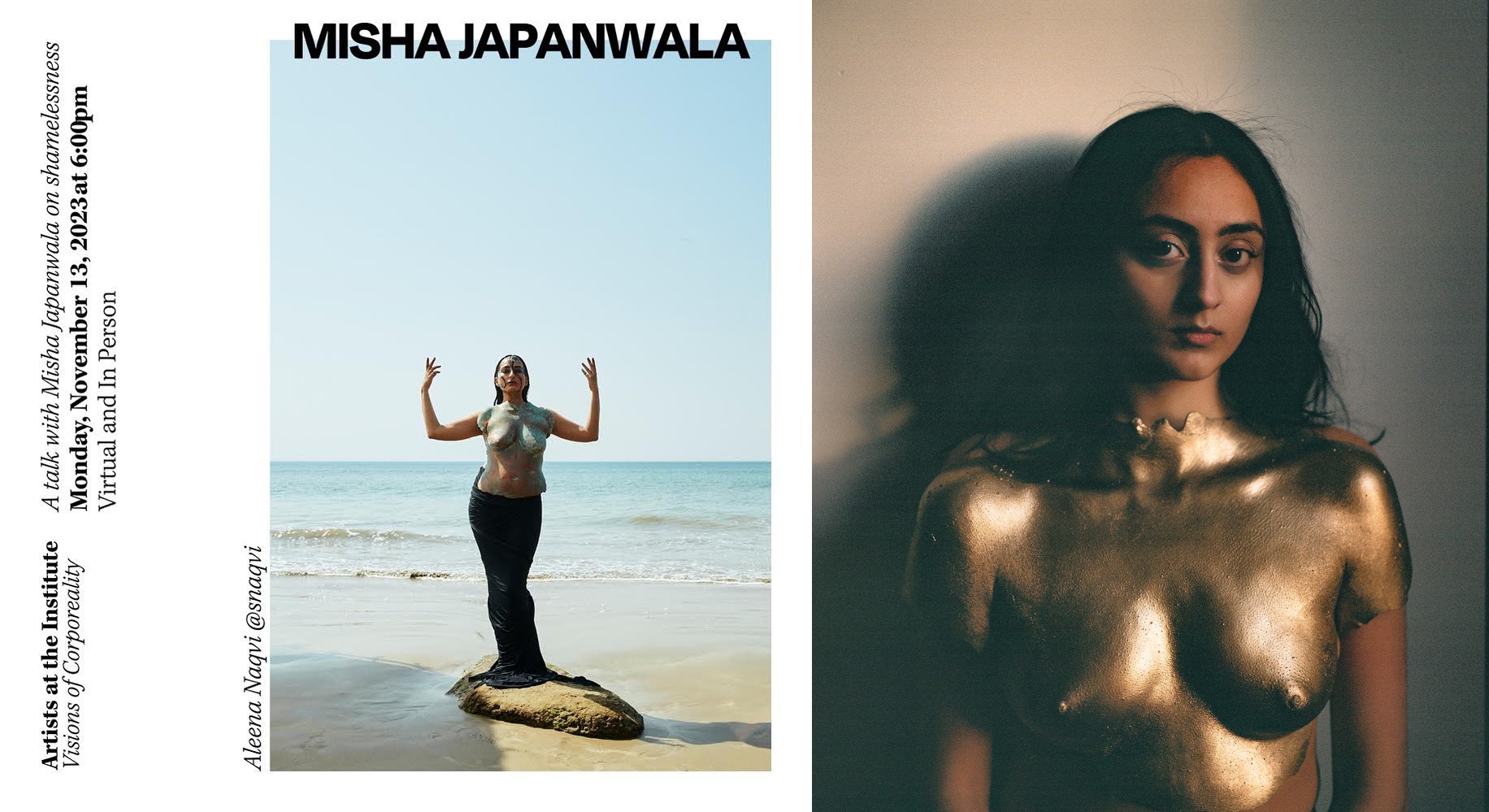

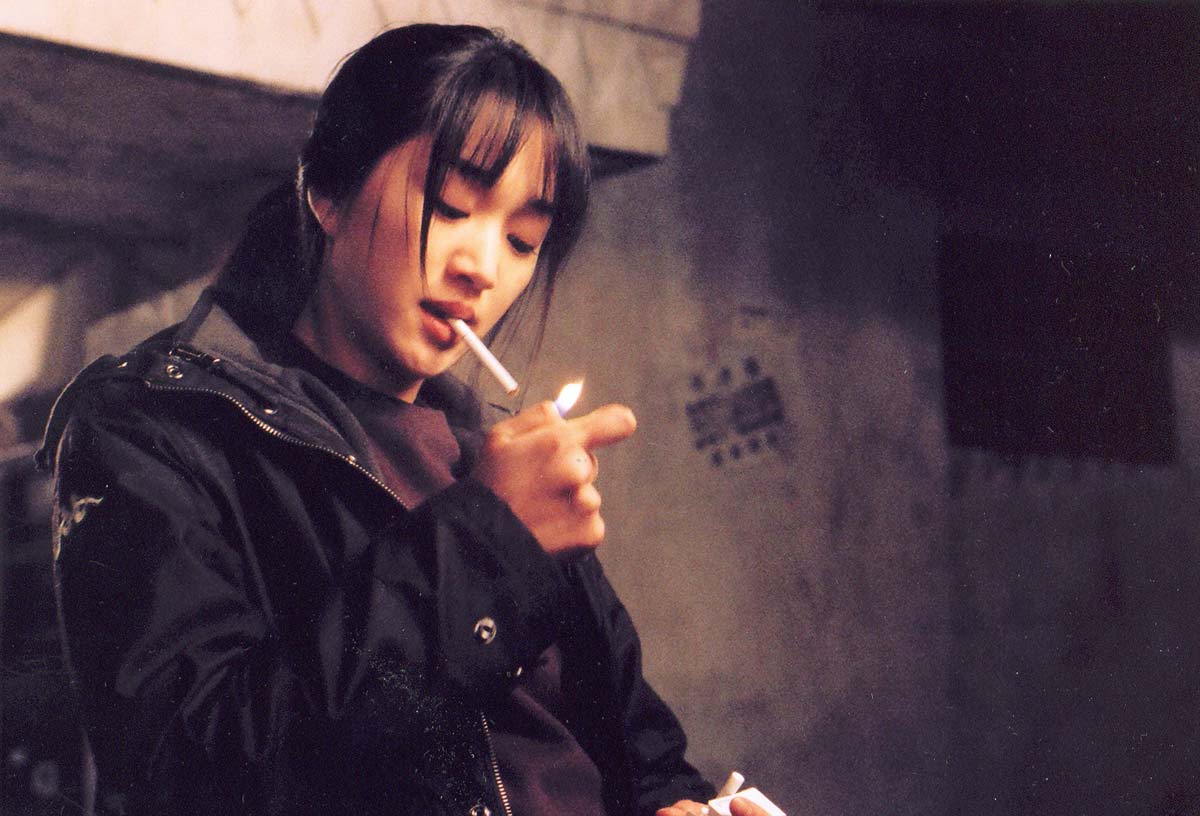


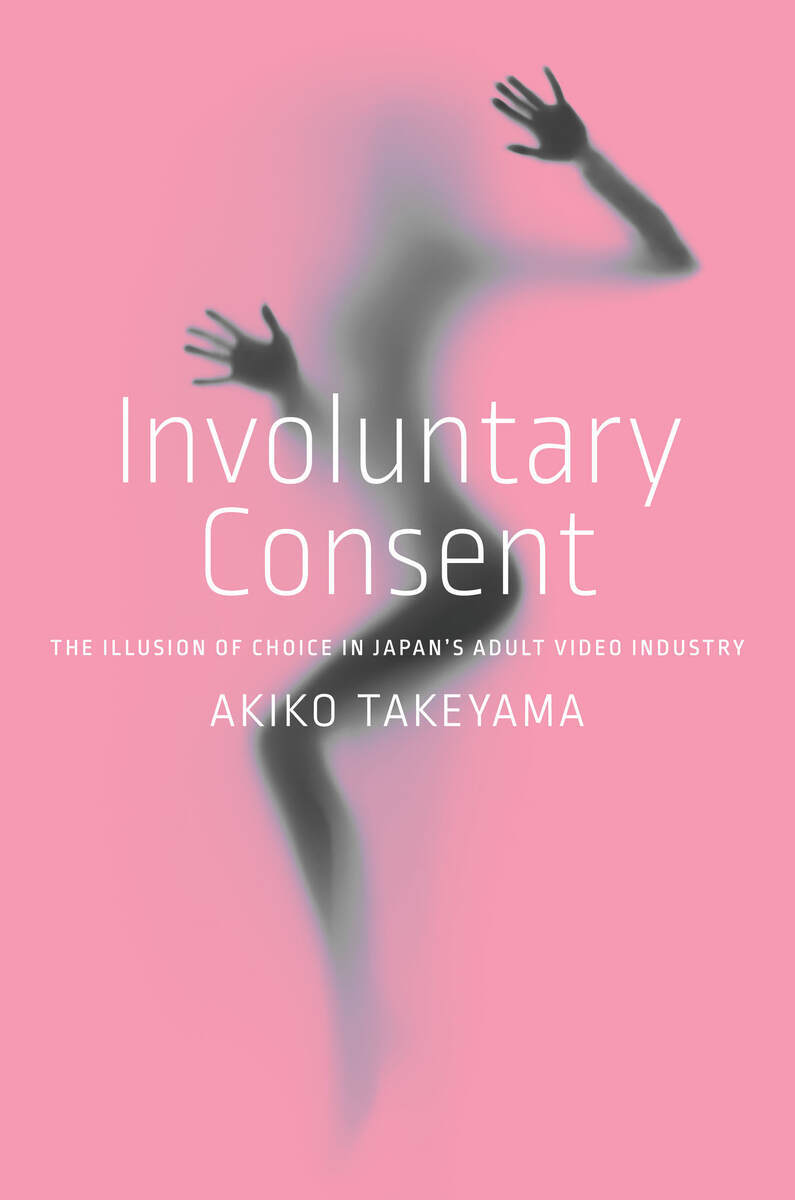



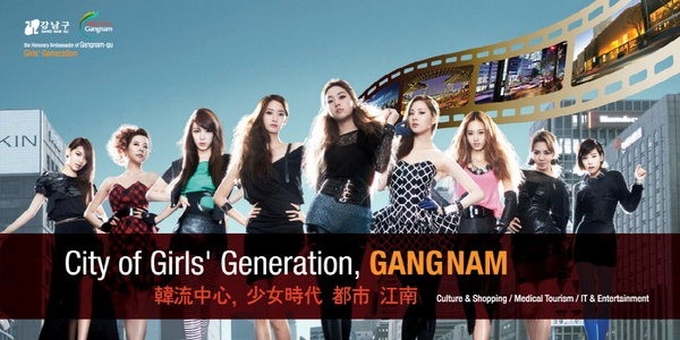


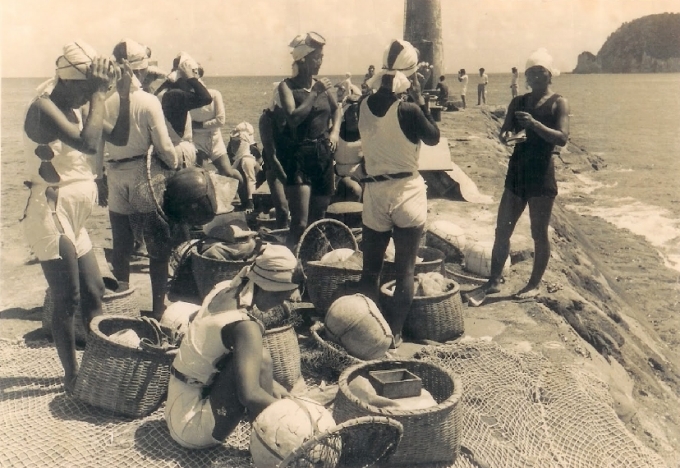
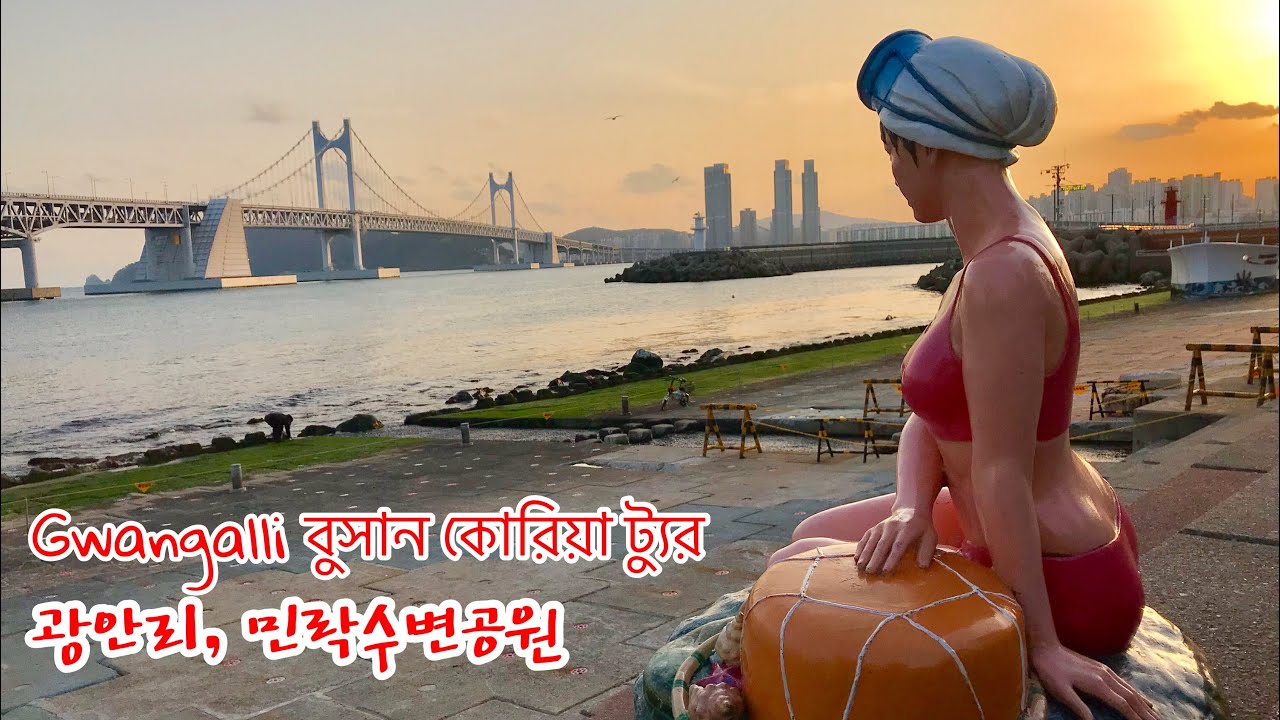
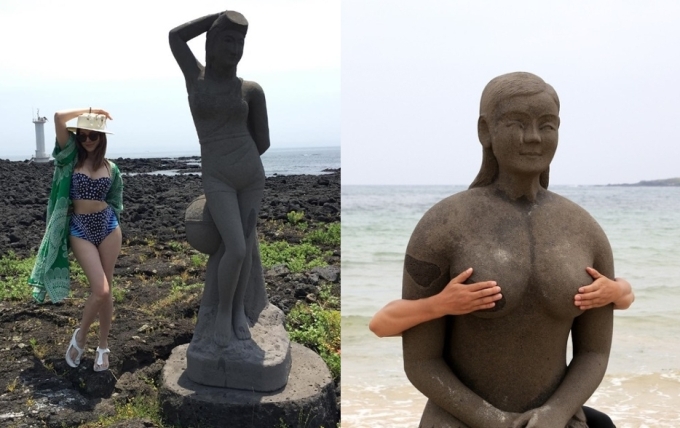

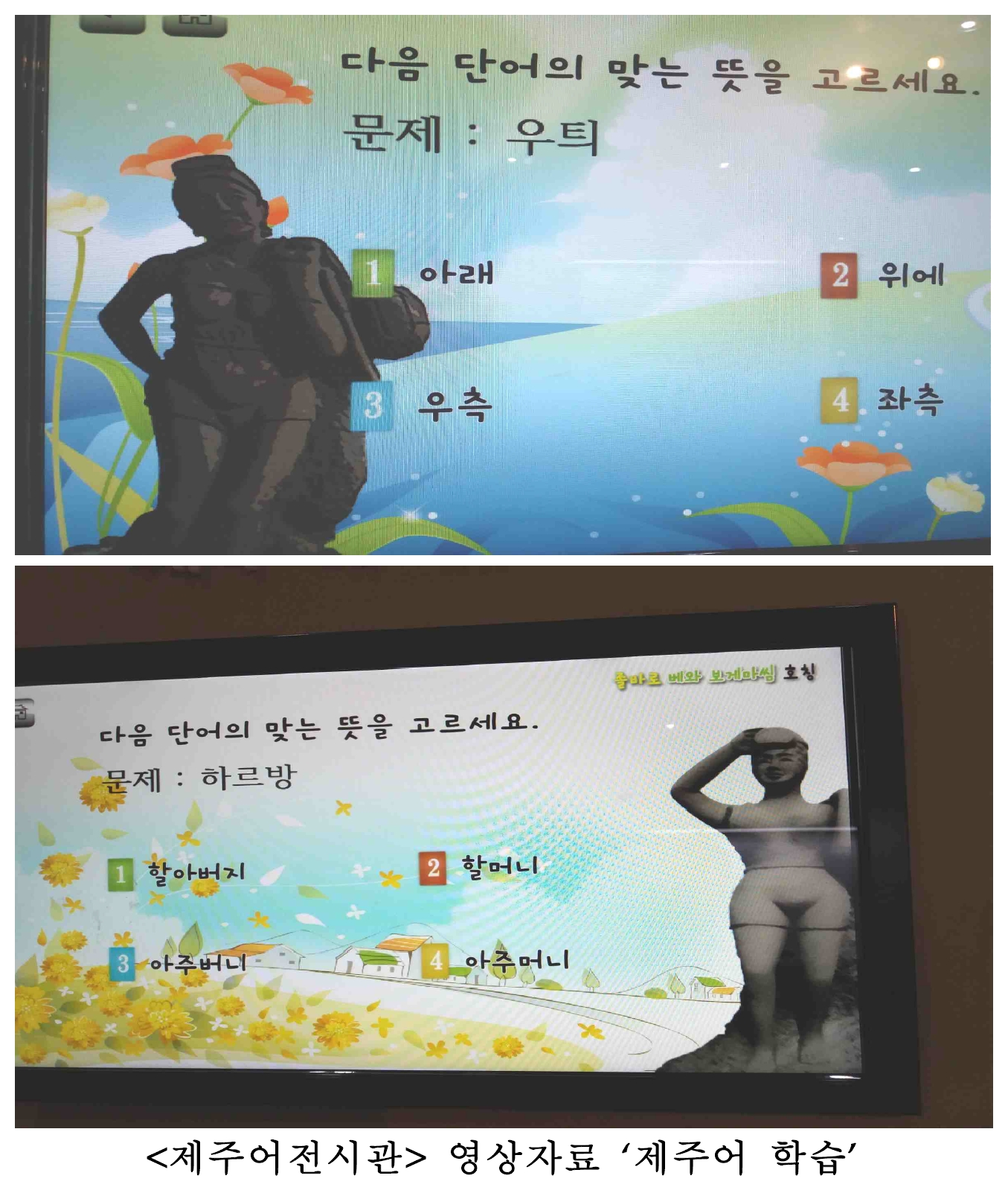

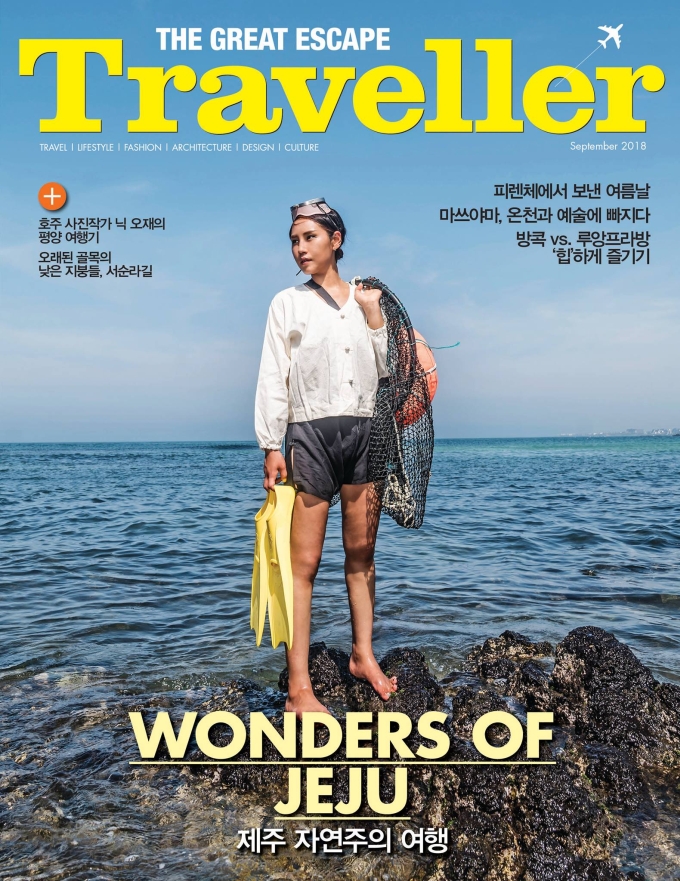
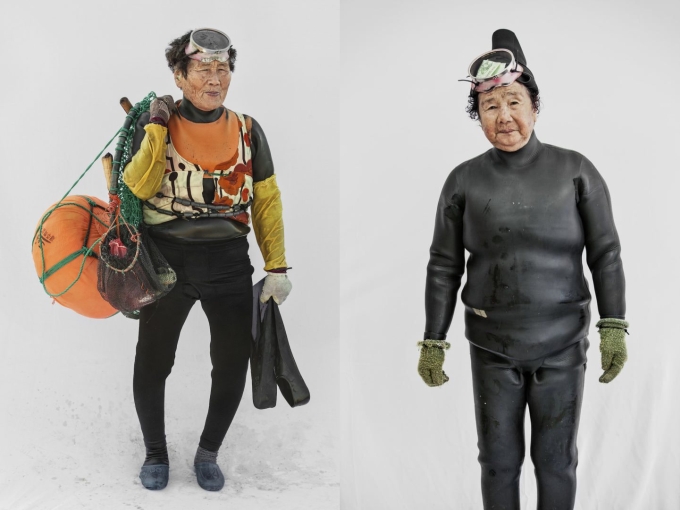
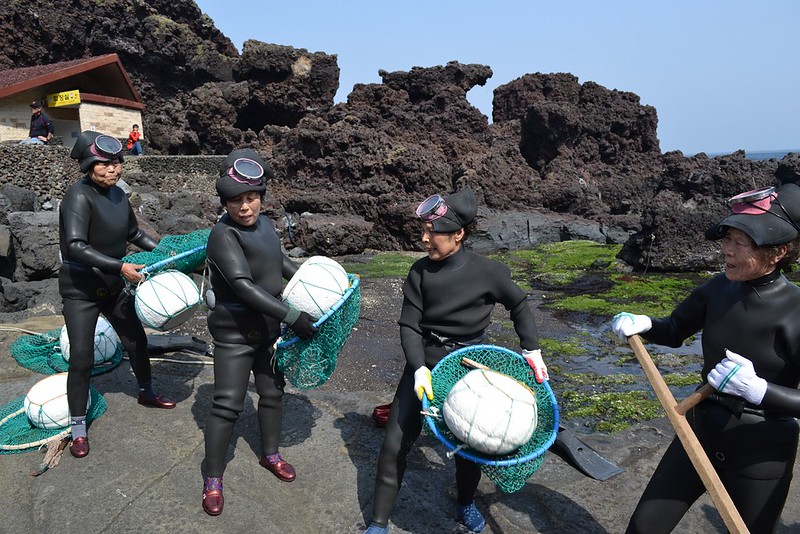
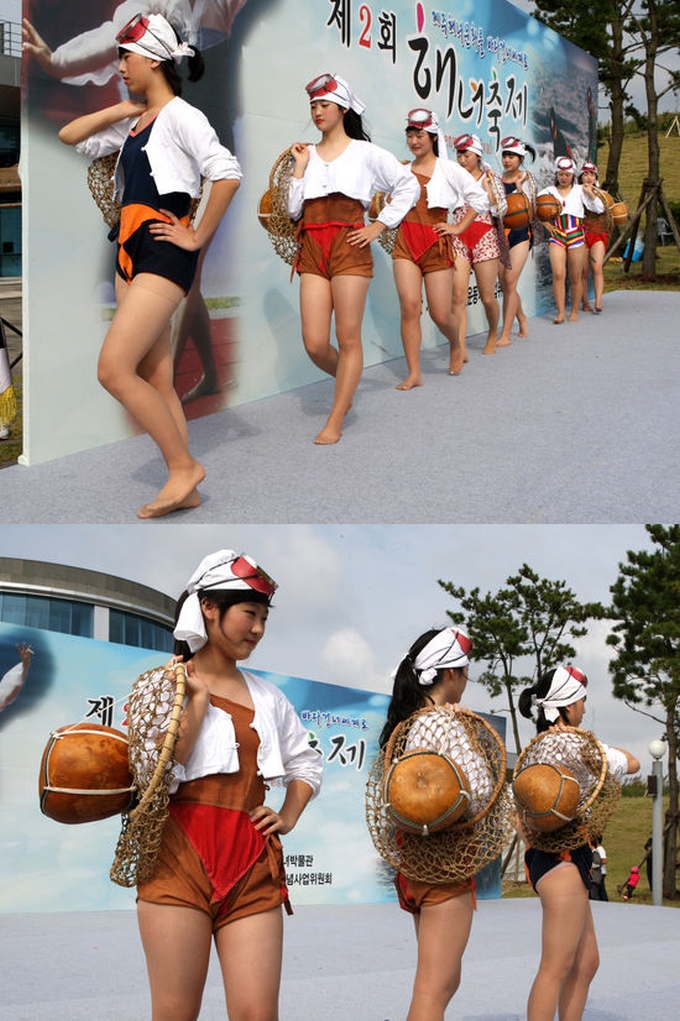
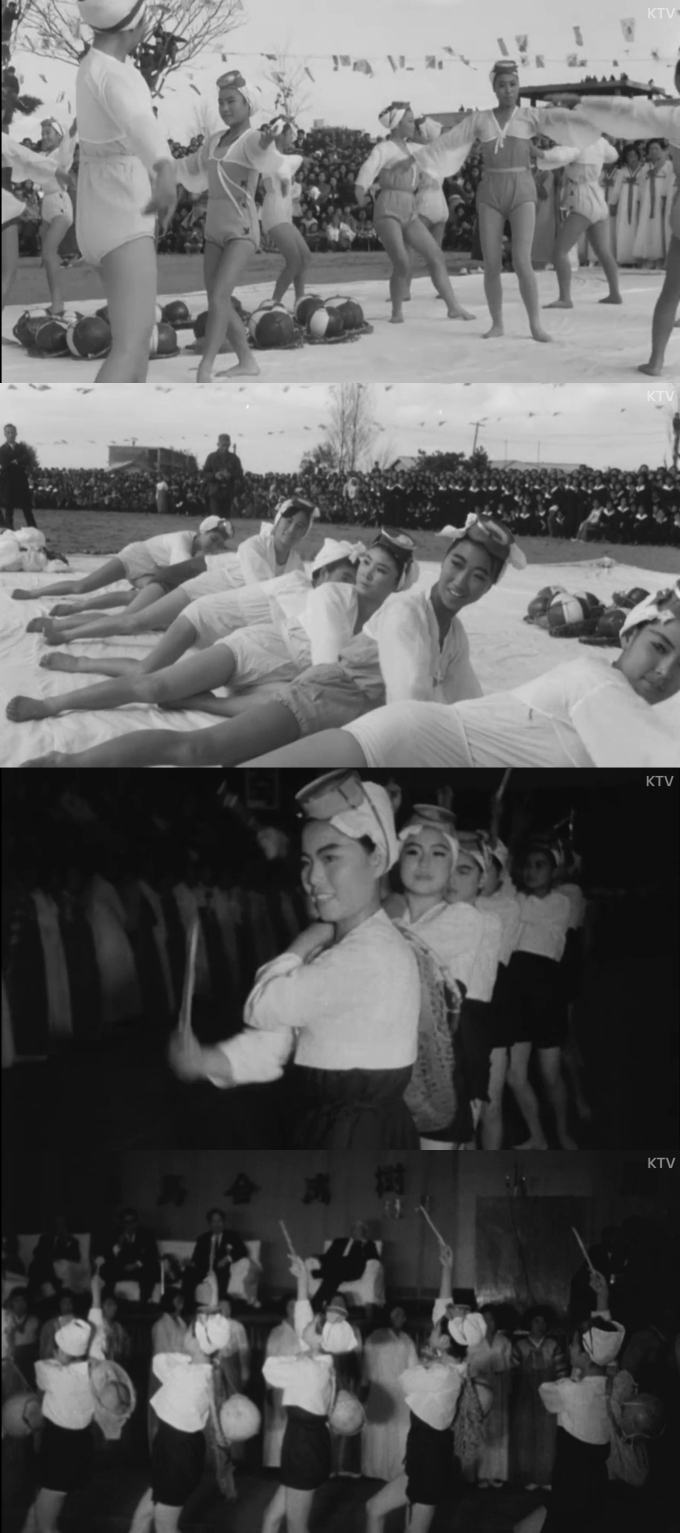
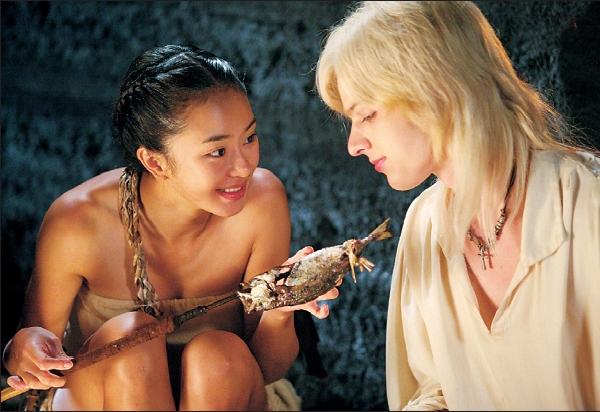
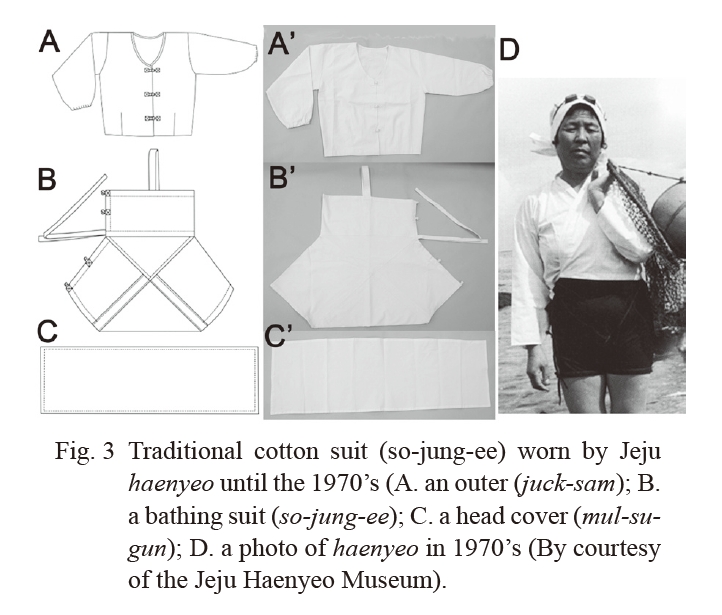
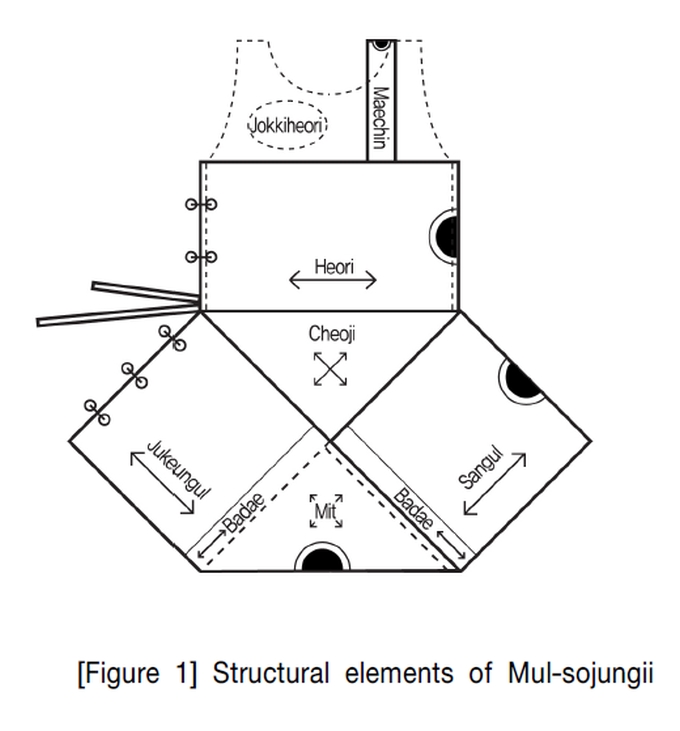
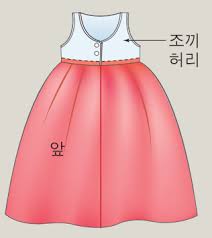
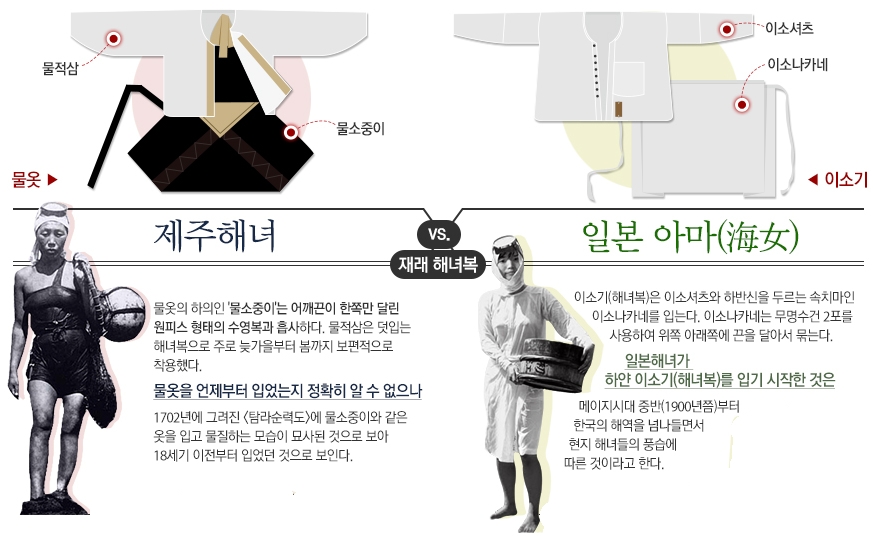
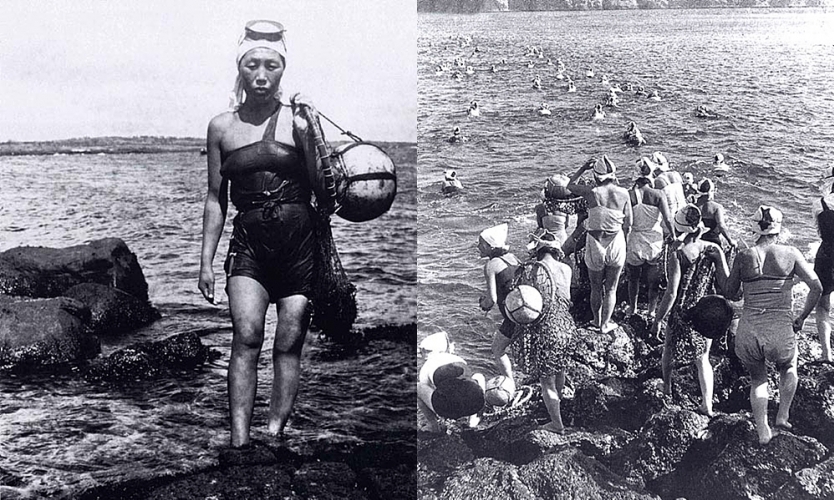
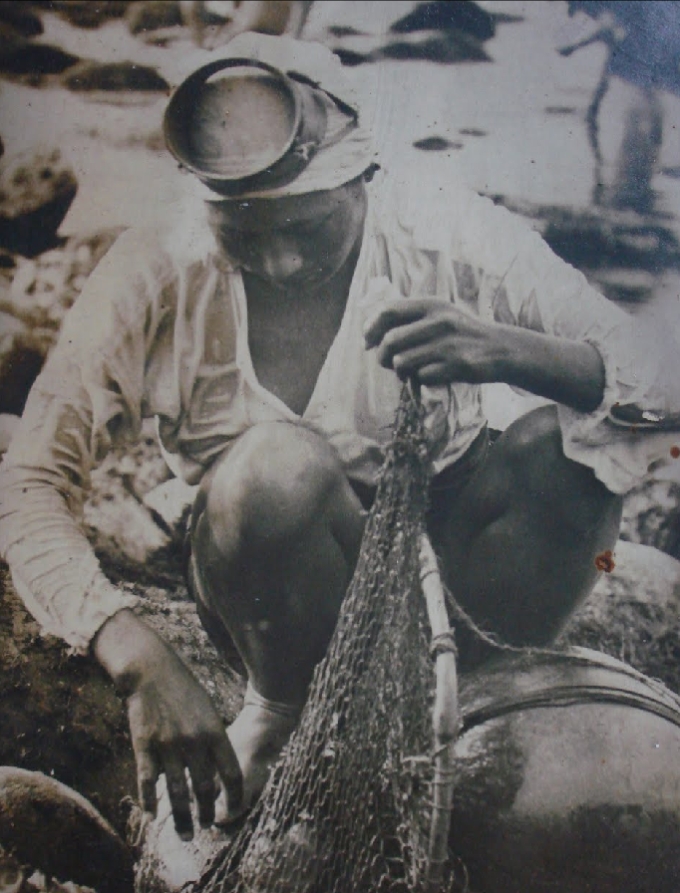
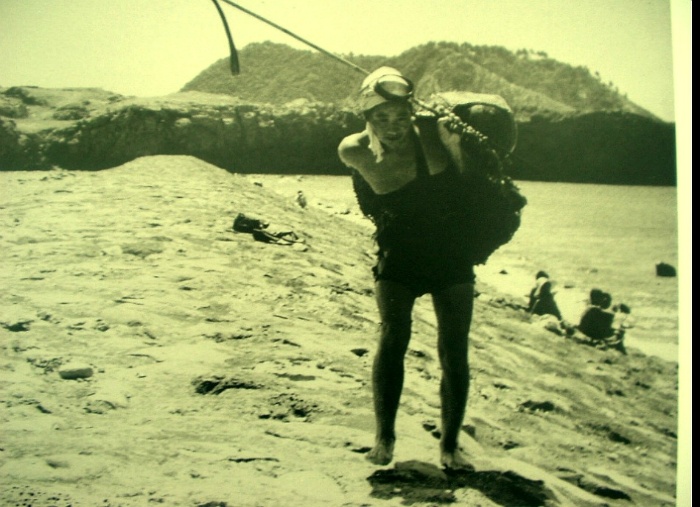
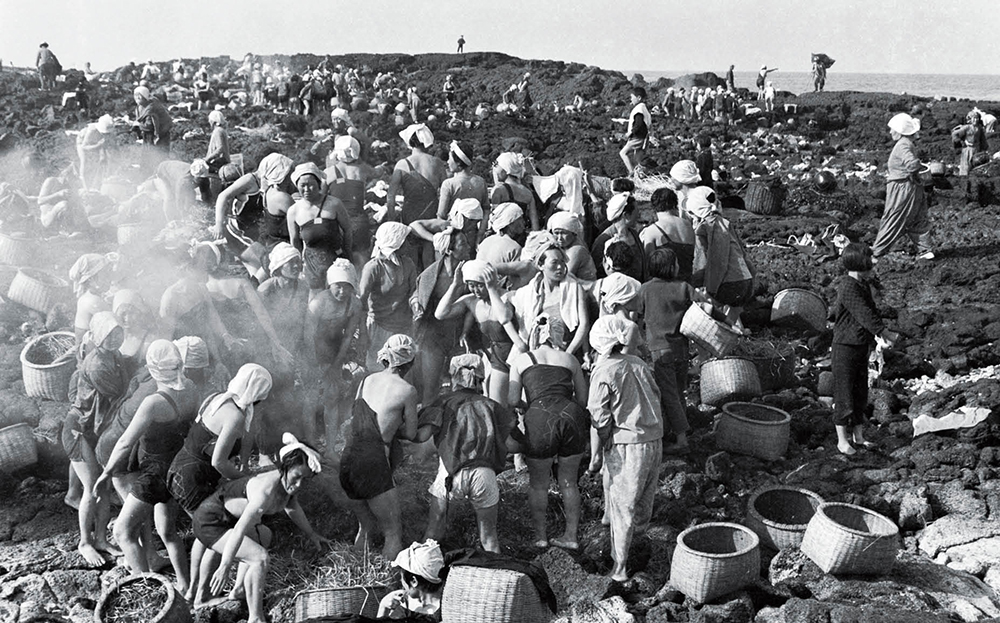
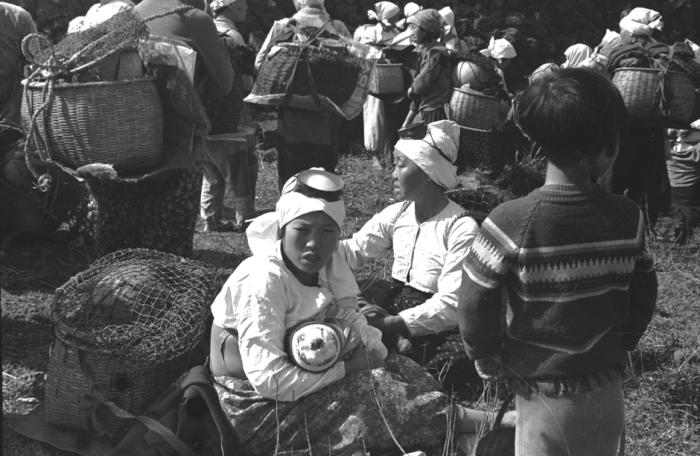
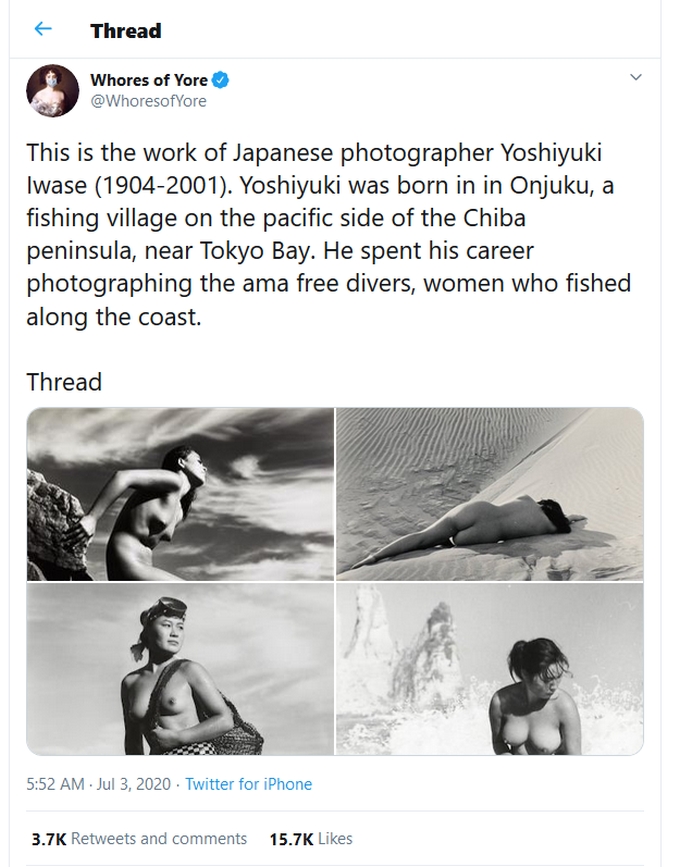
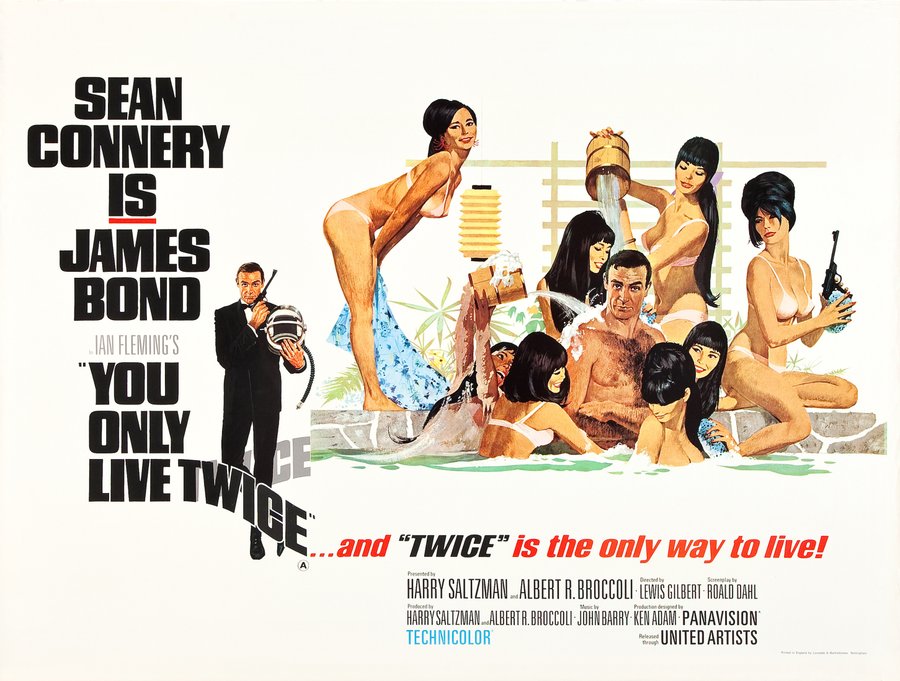
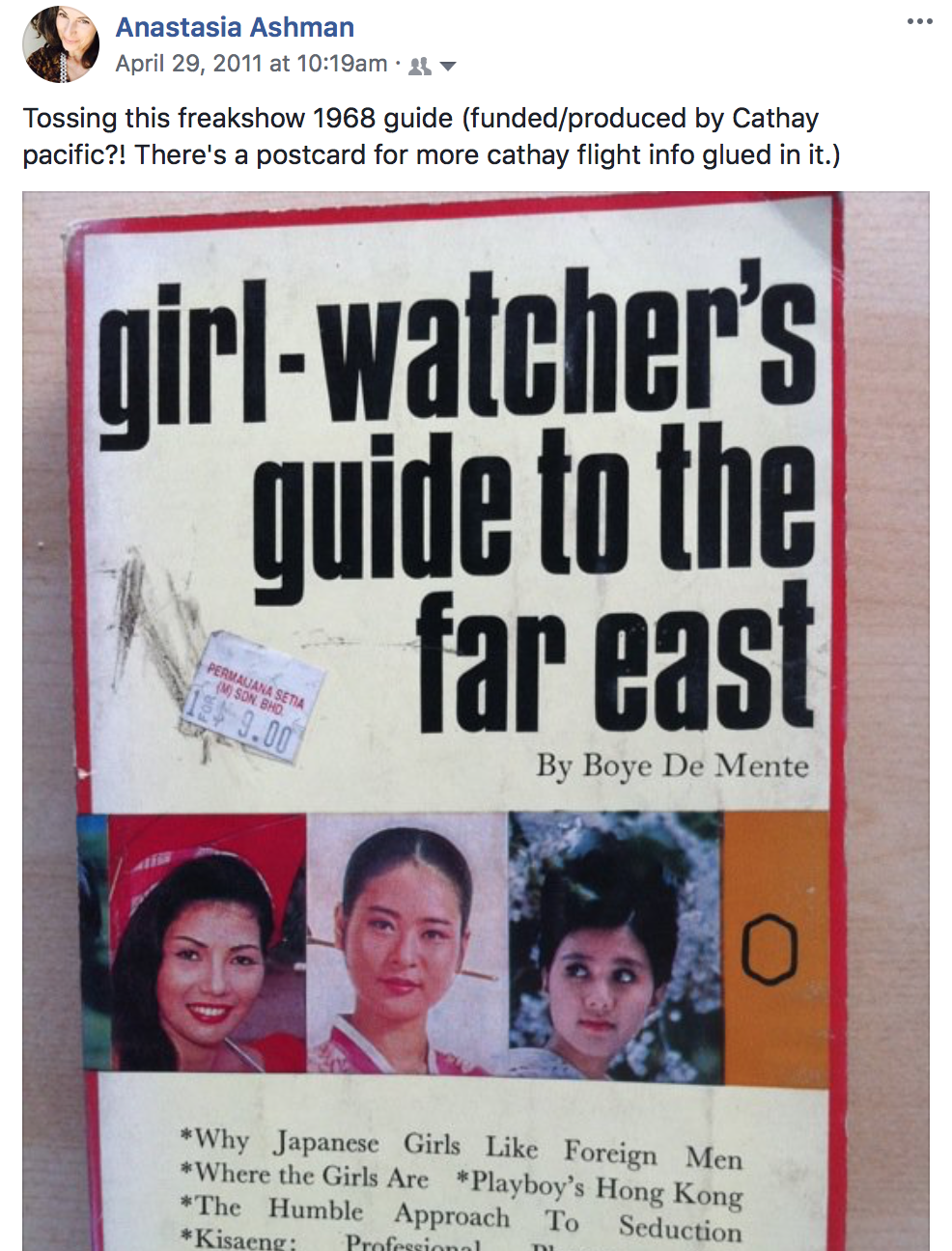

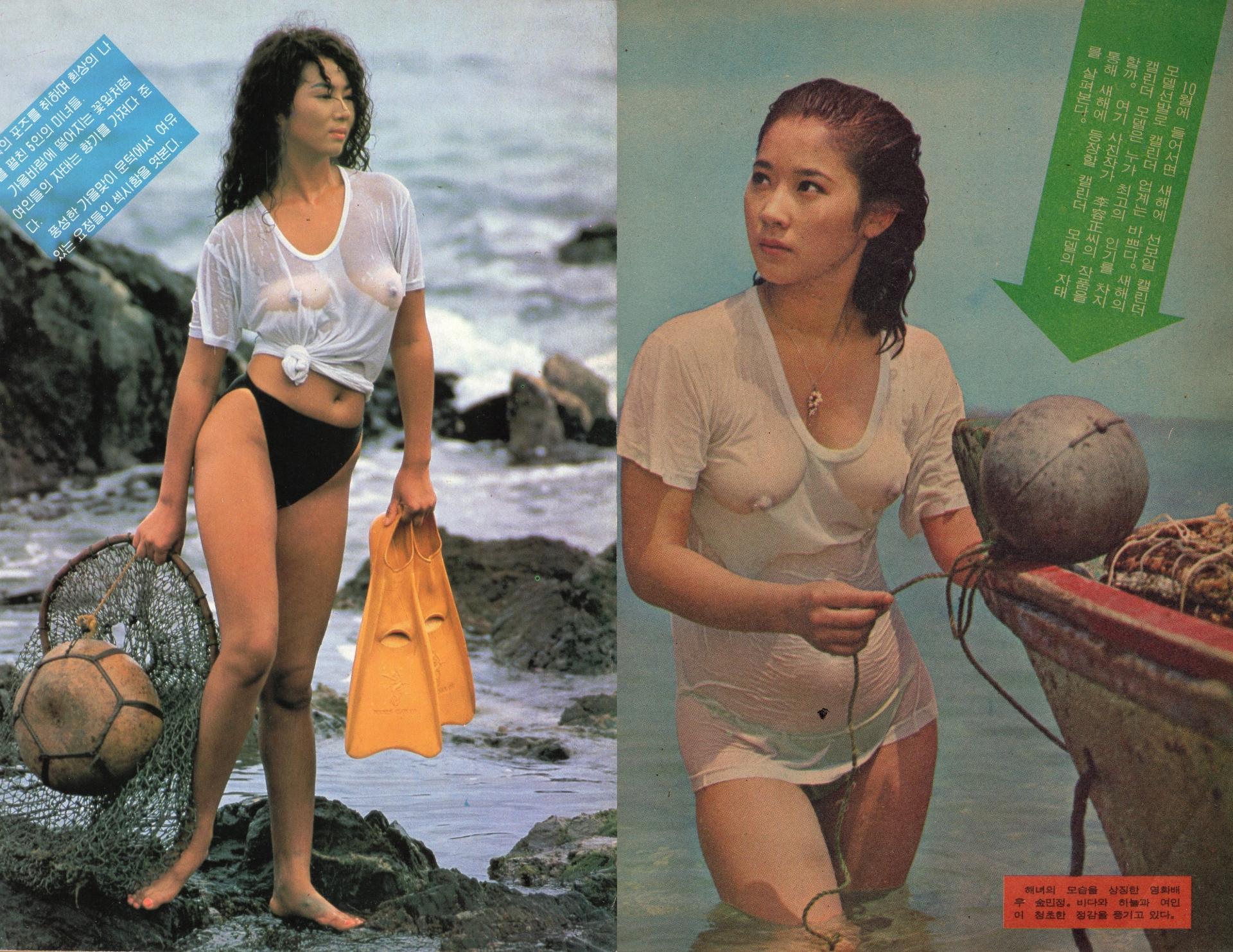
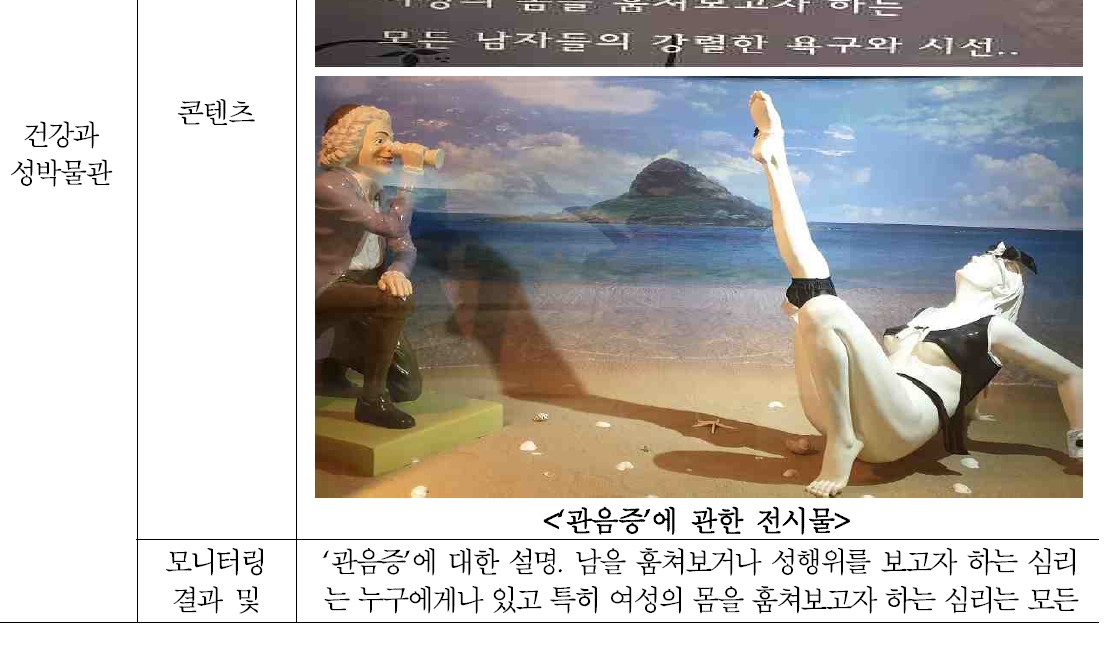
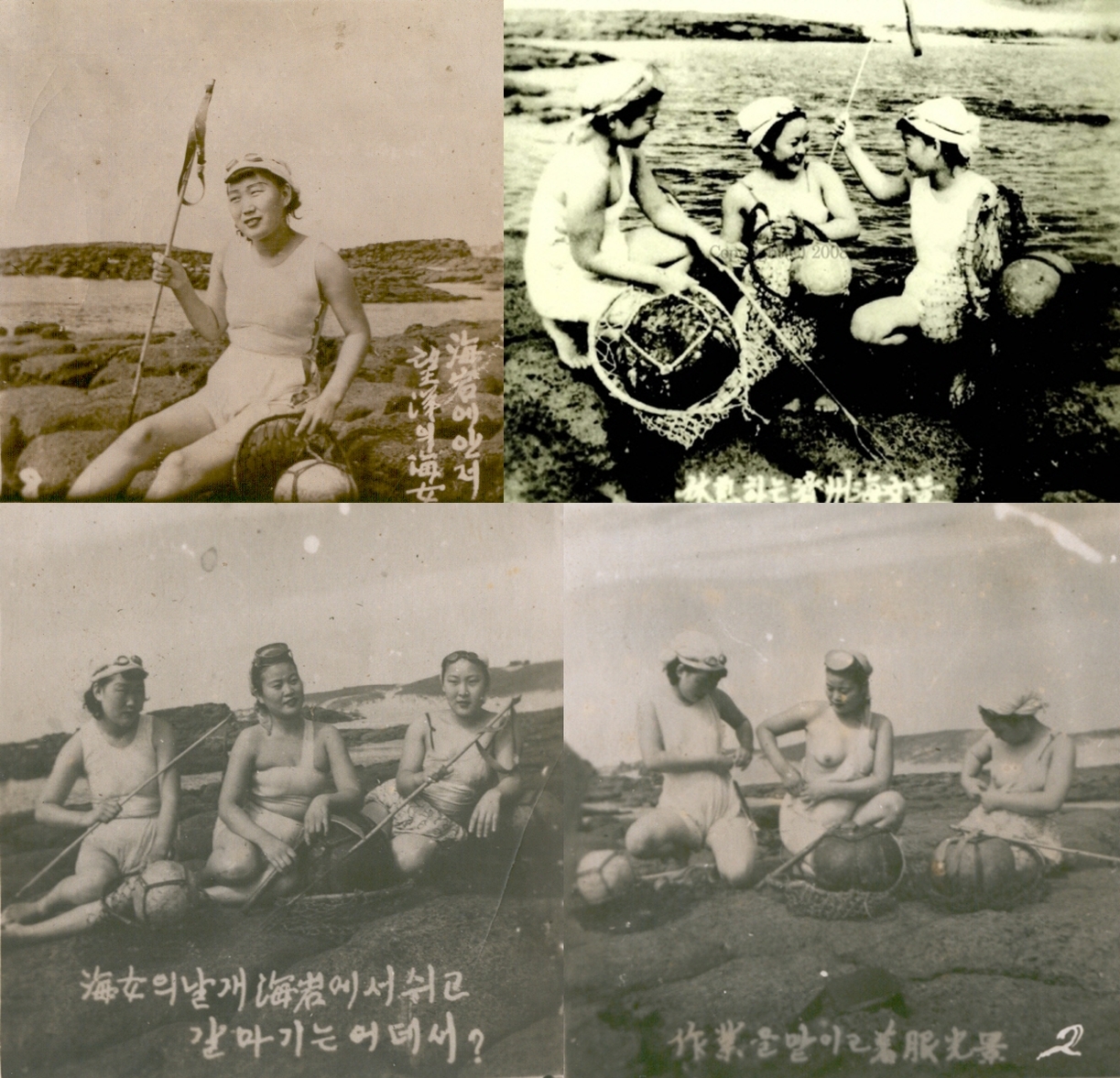
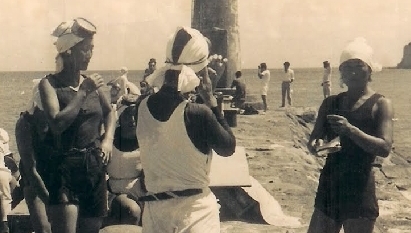
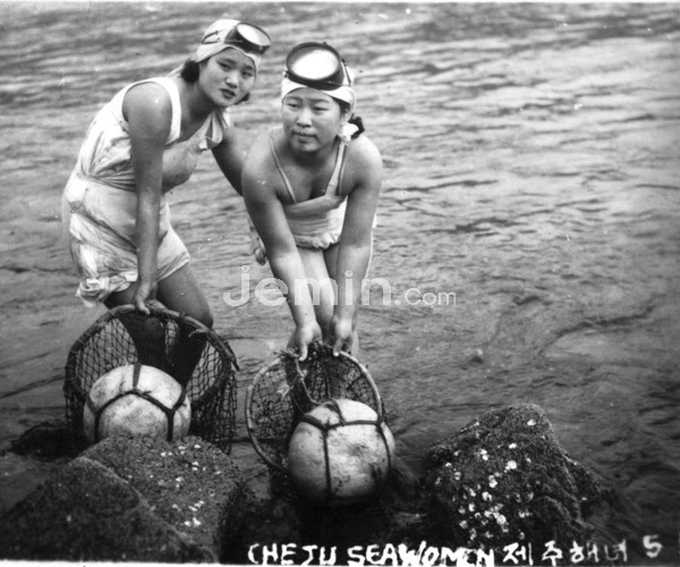
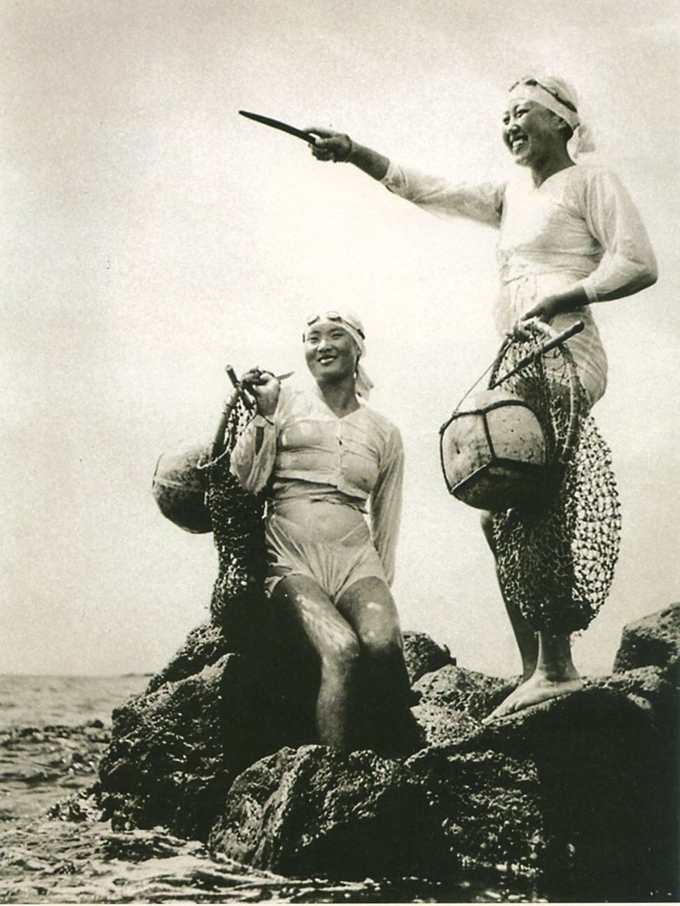
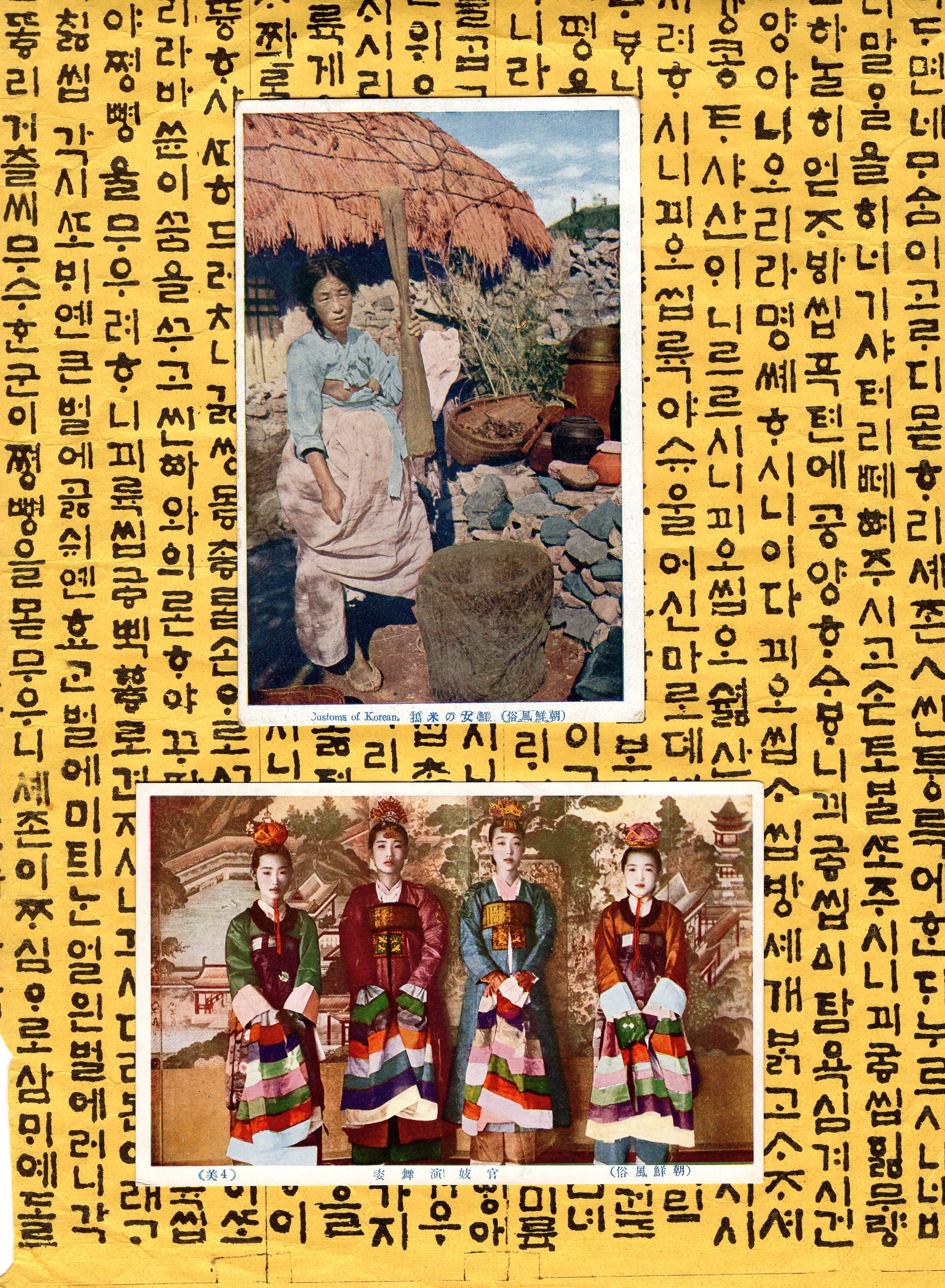
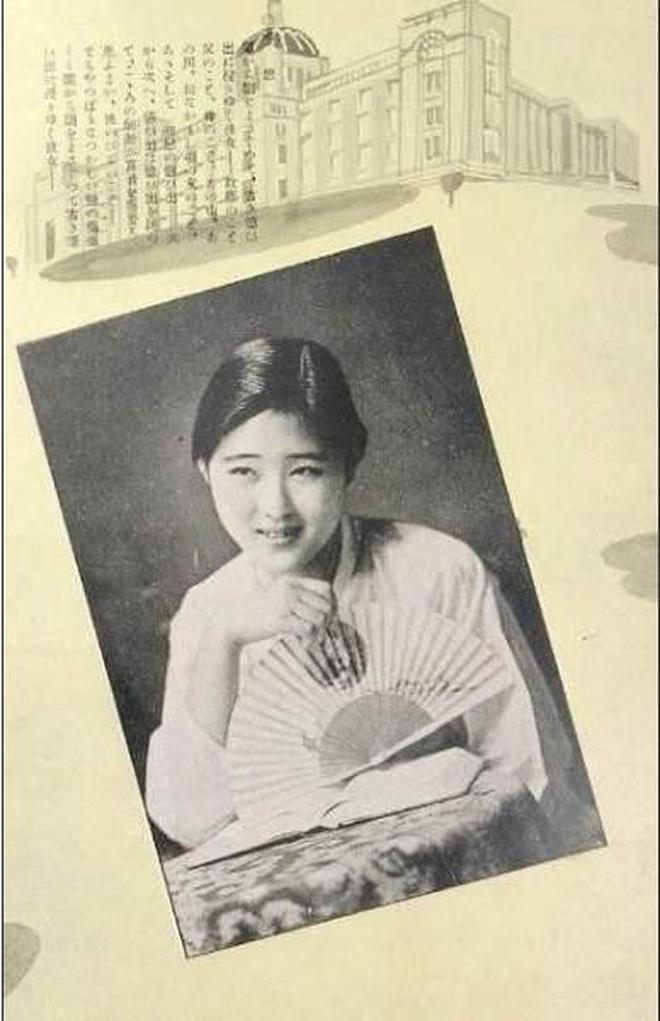
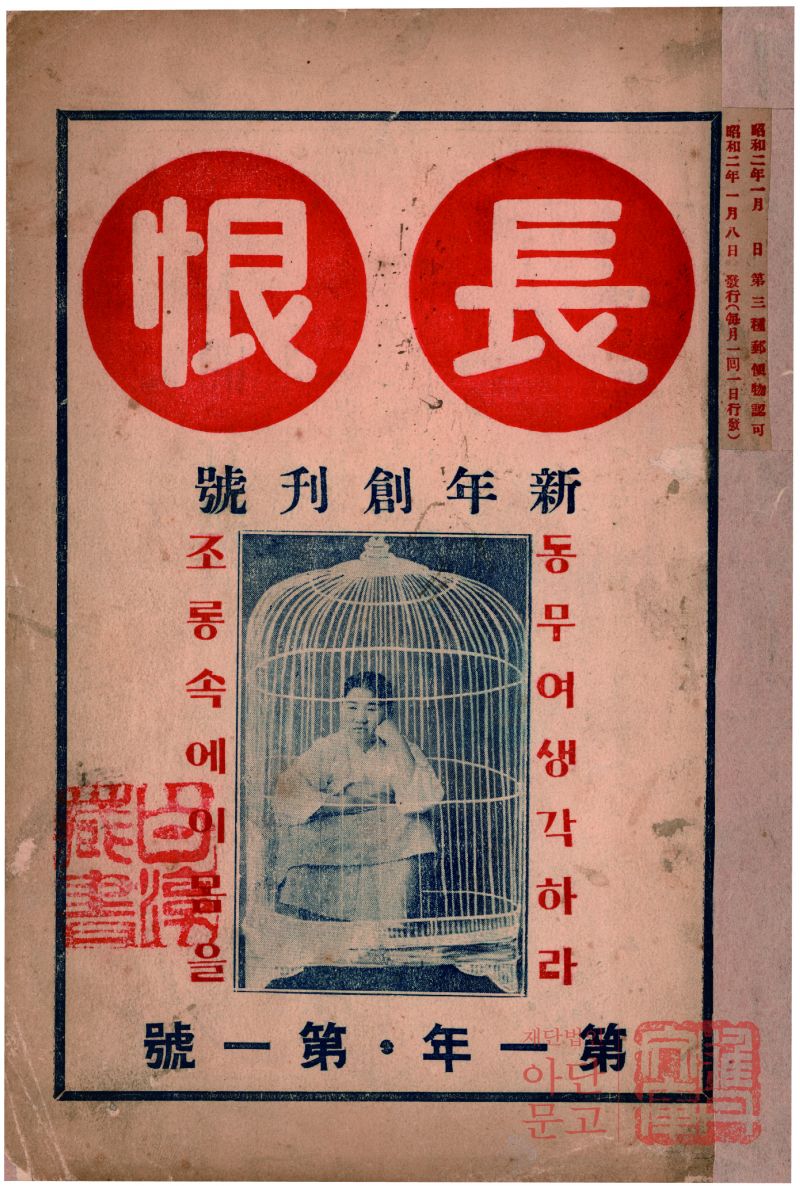
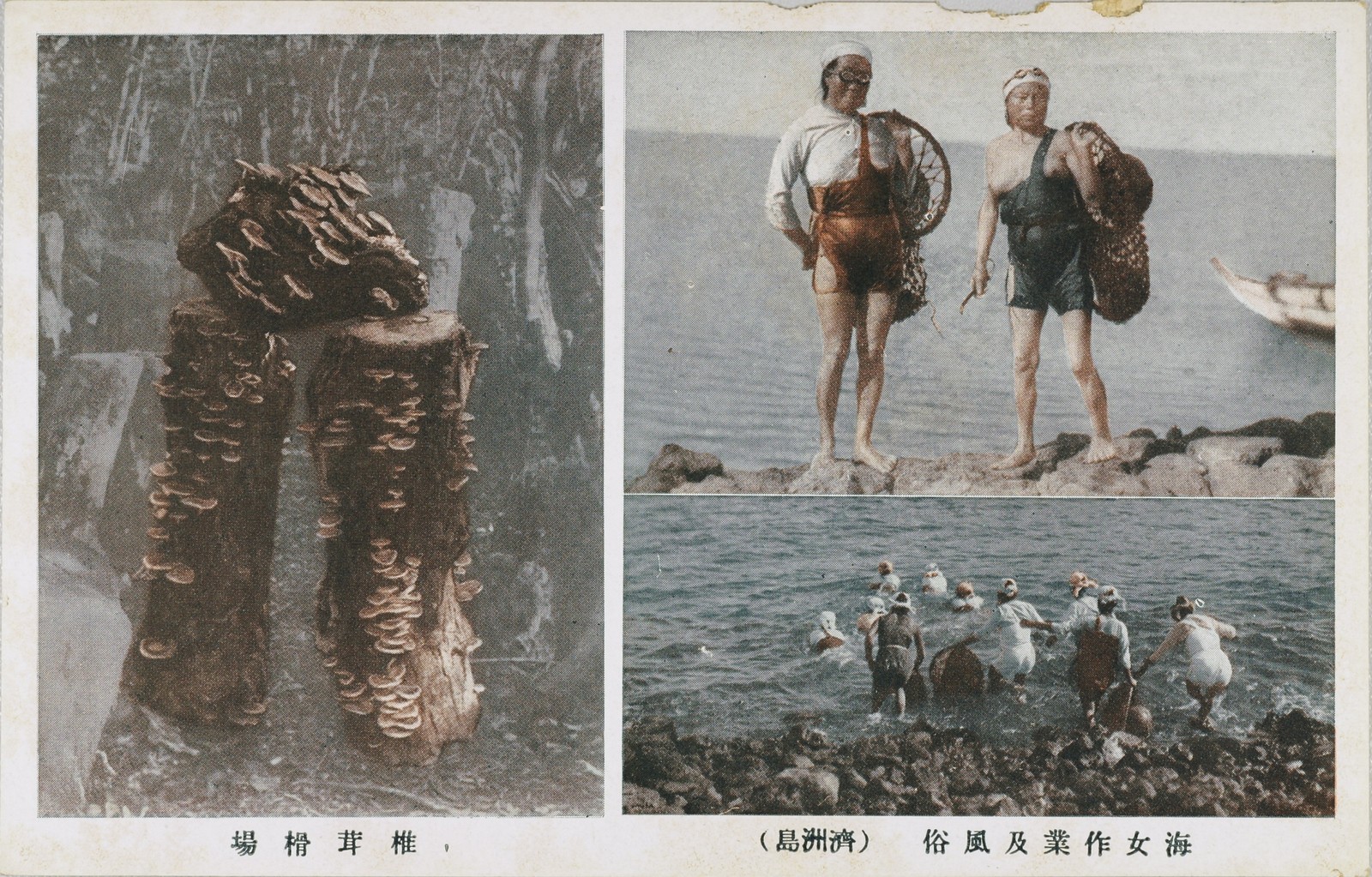


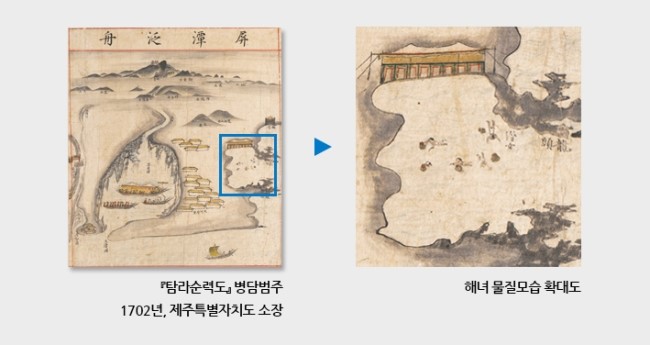

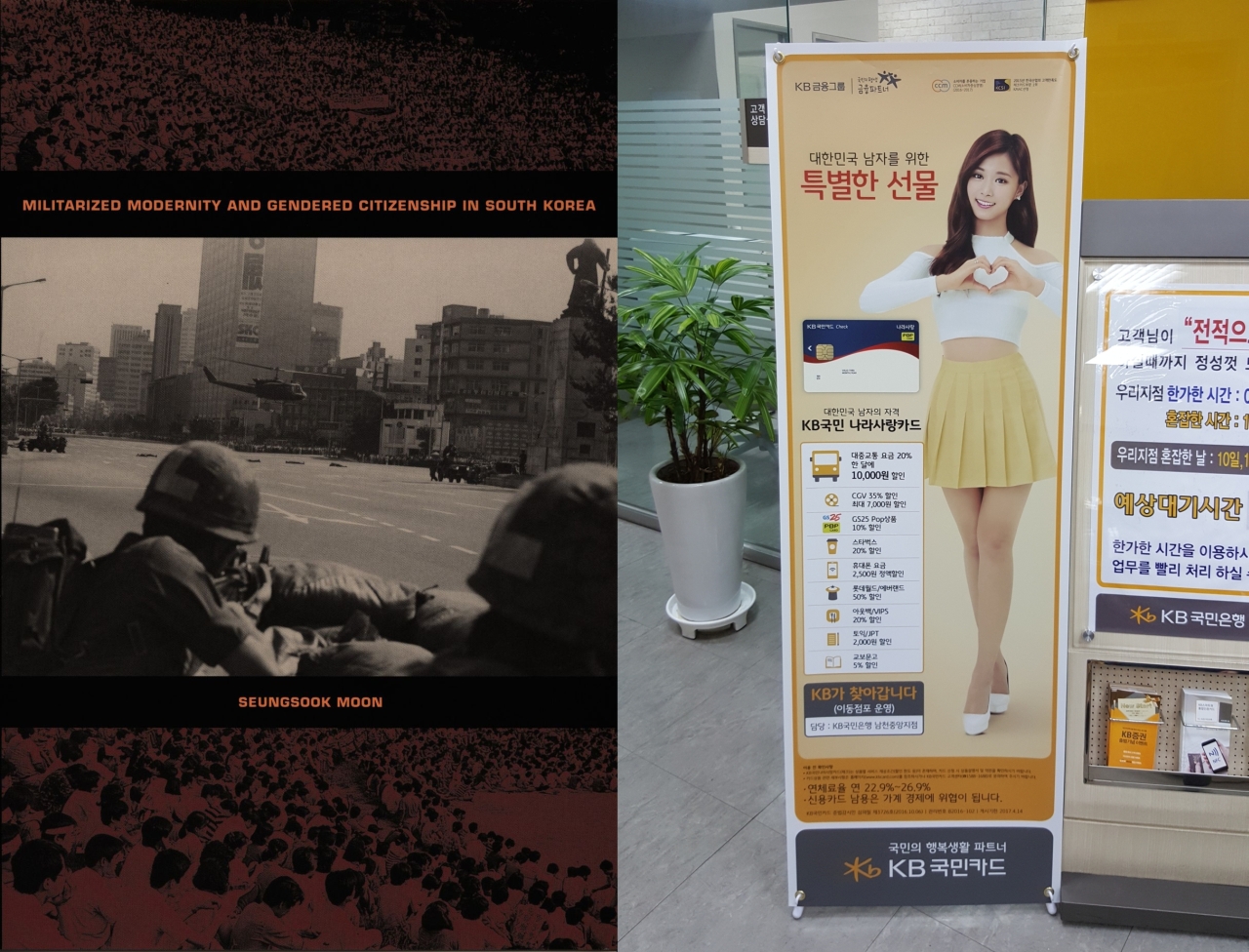
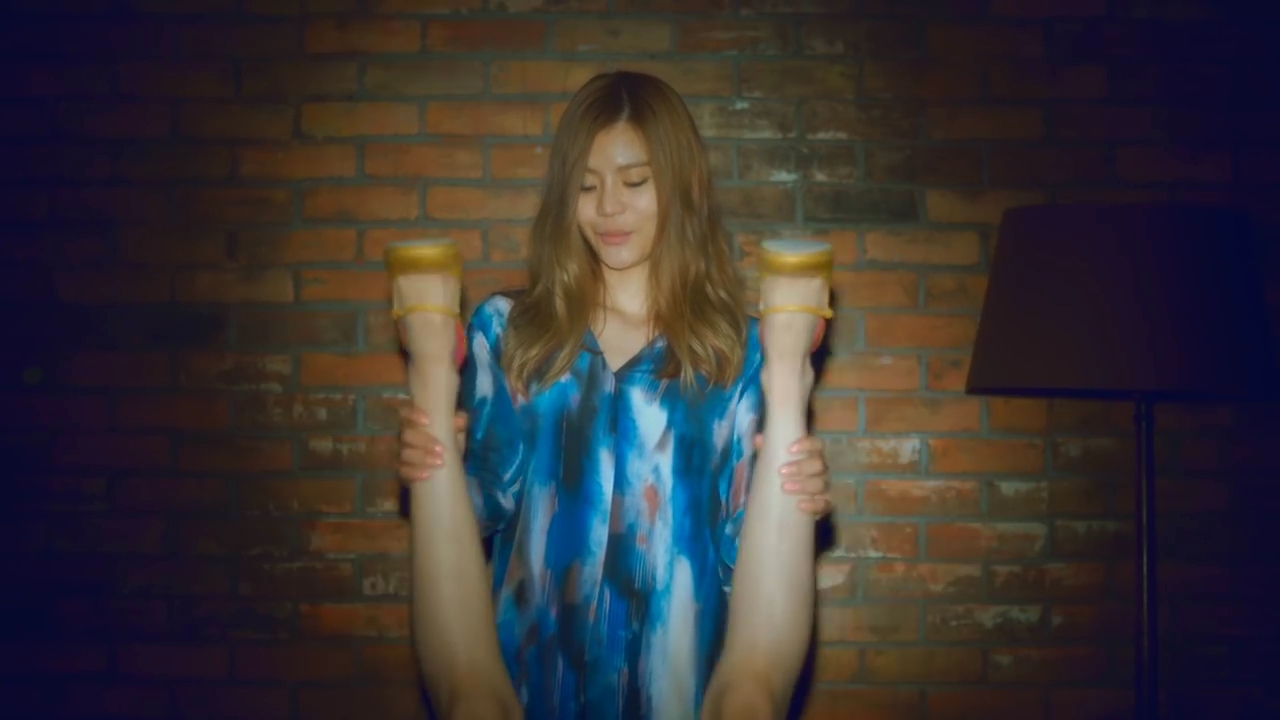
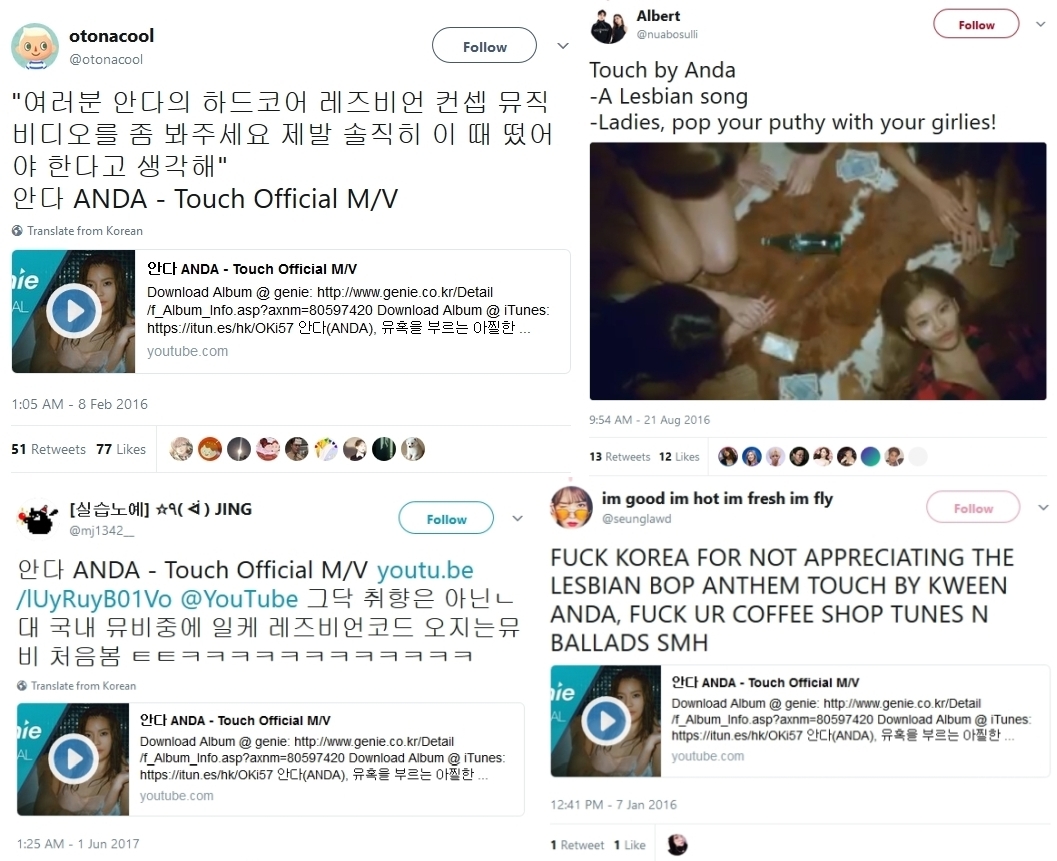
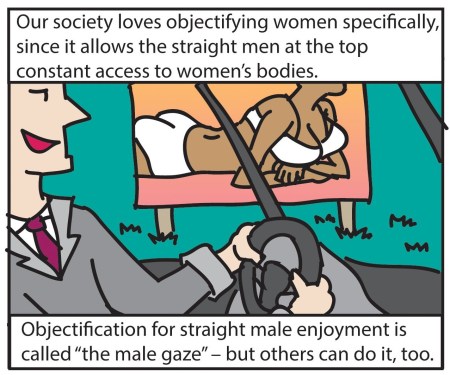

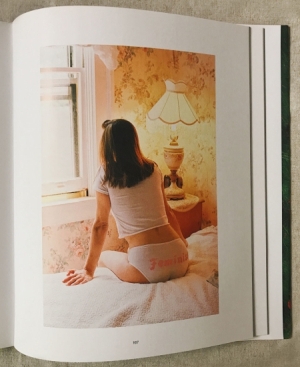 (In
(In 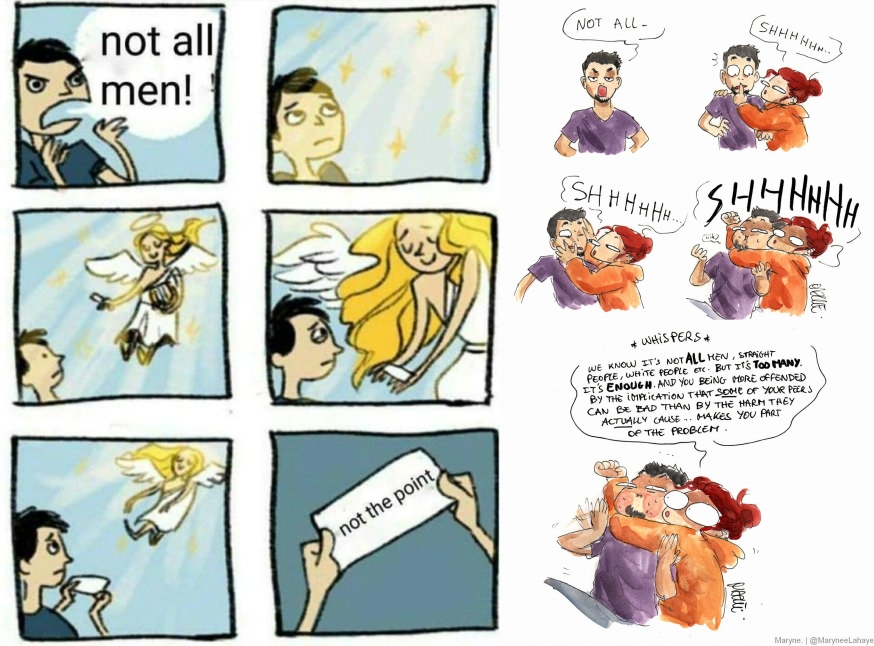

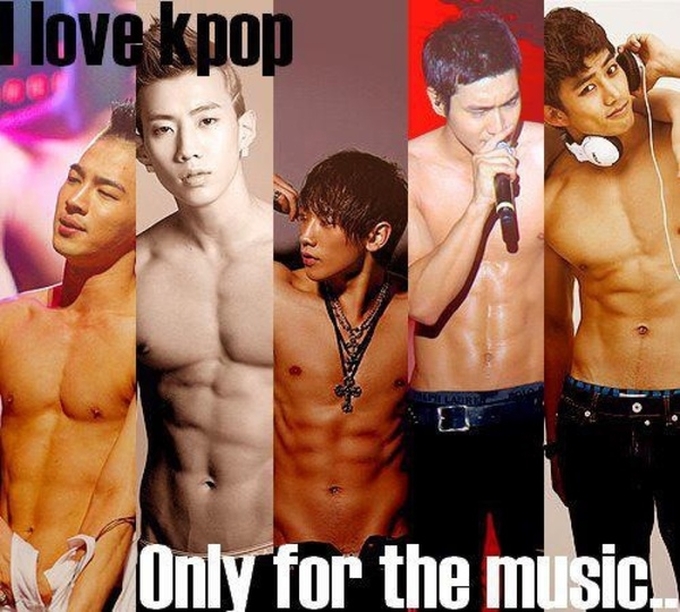

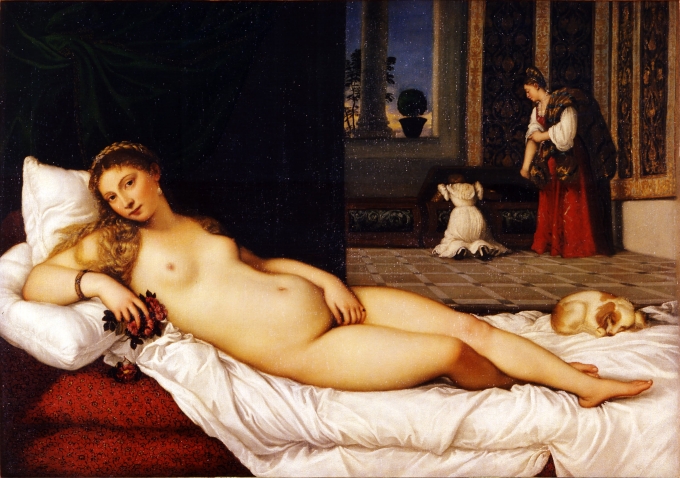
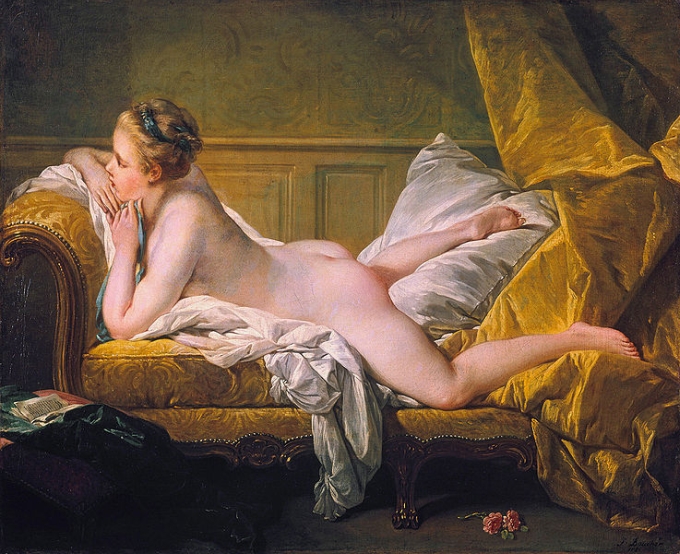

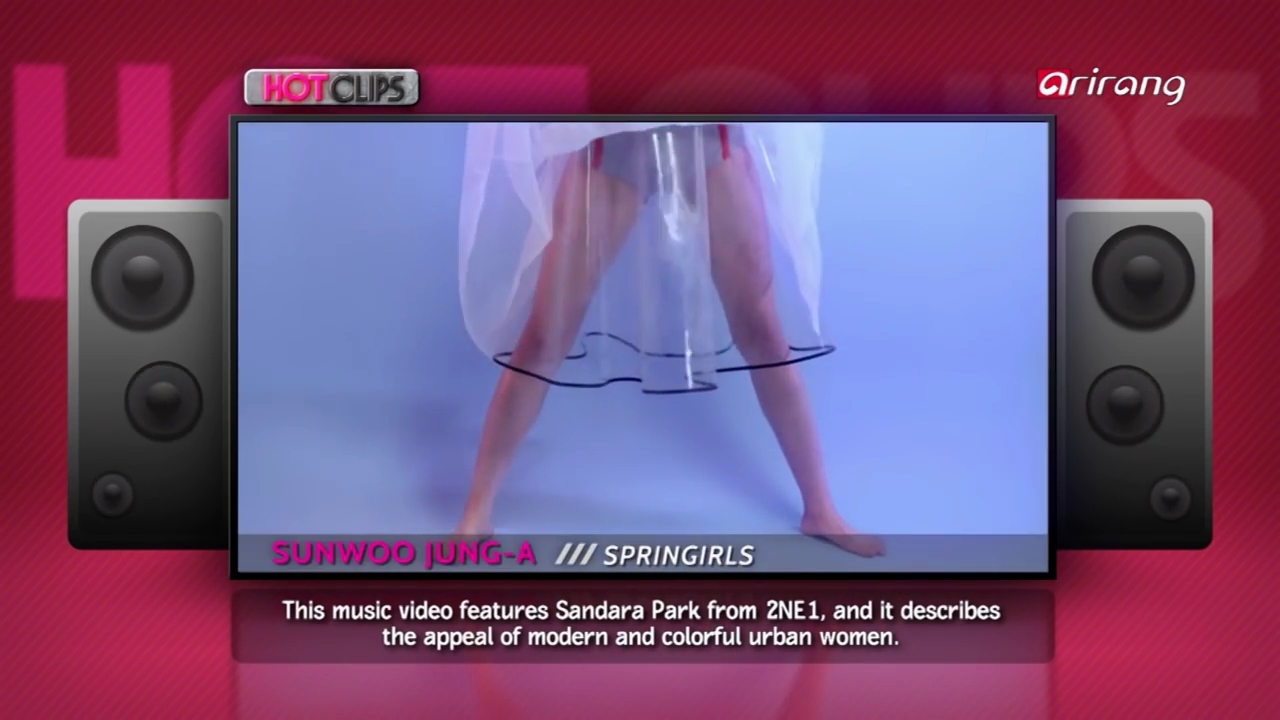
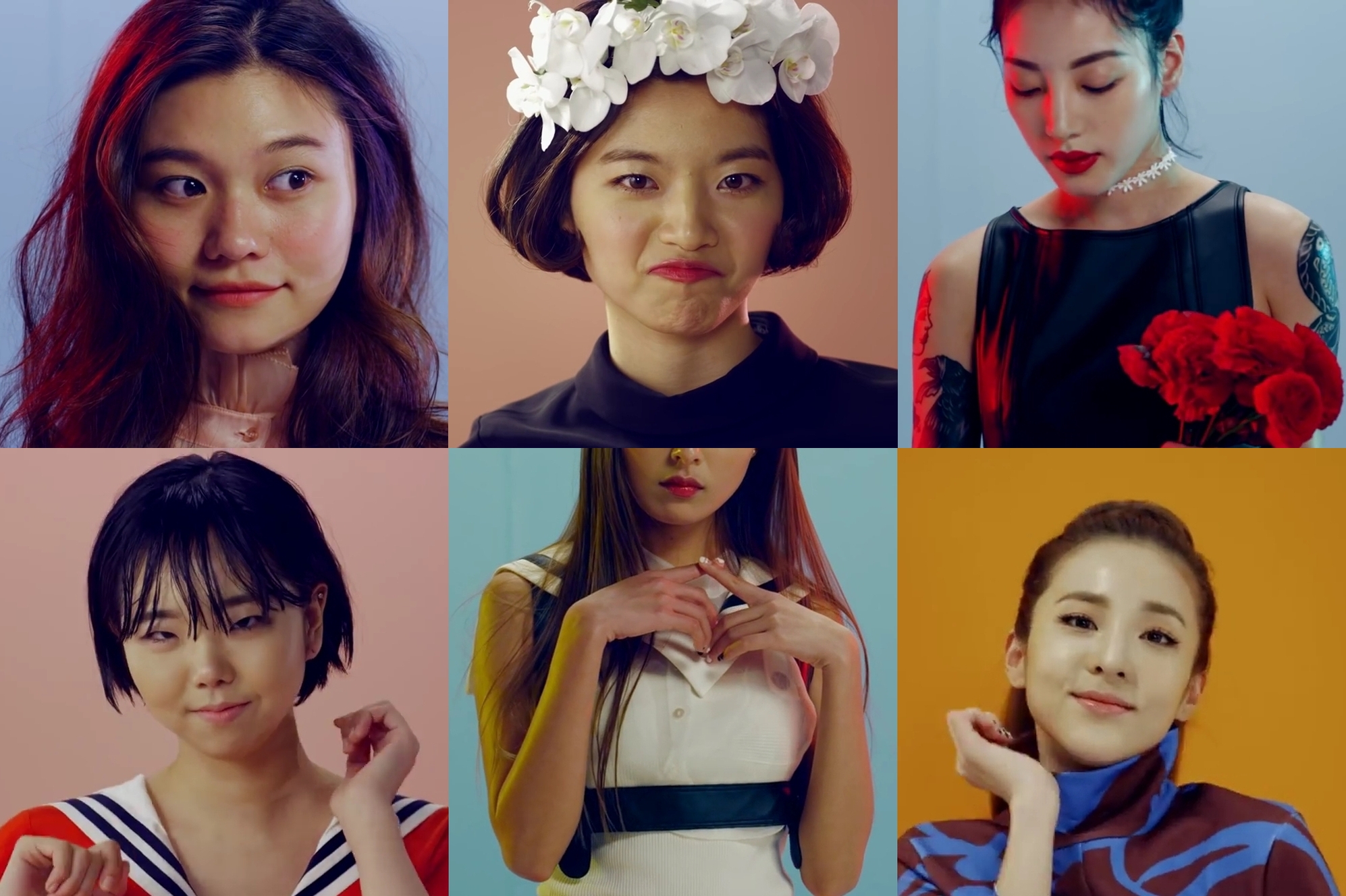


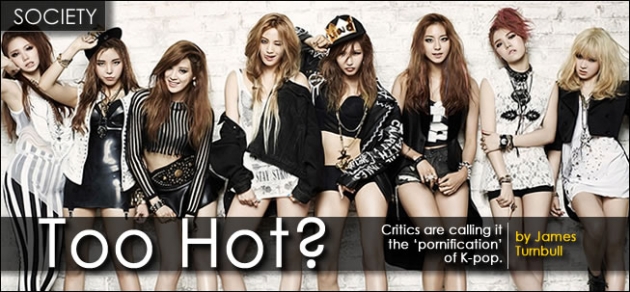










 (Source

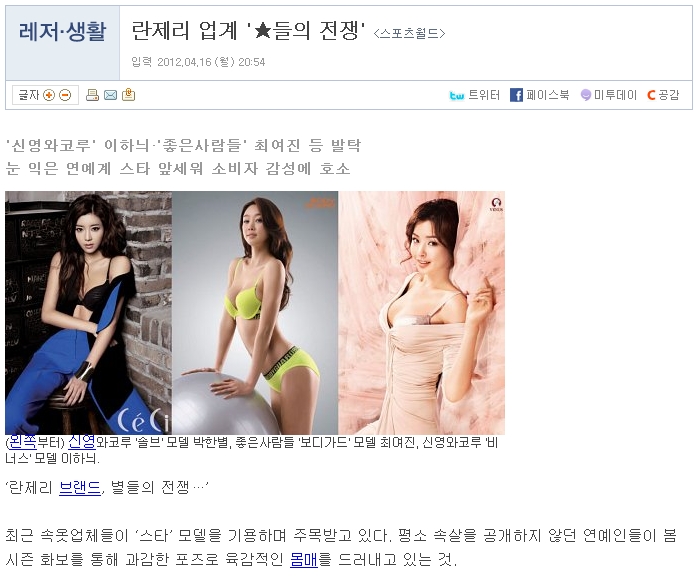

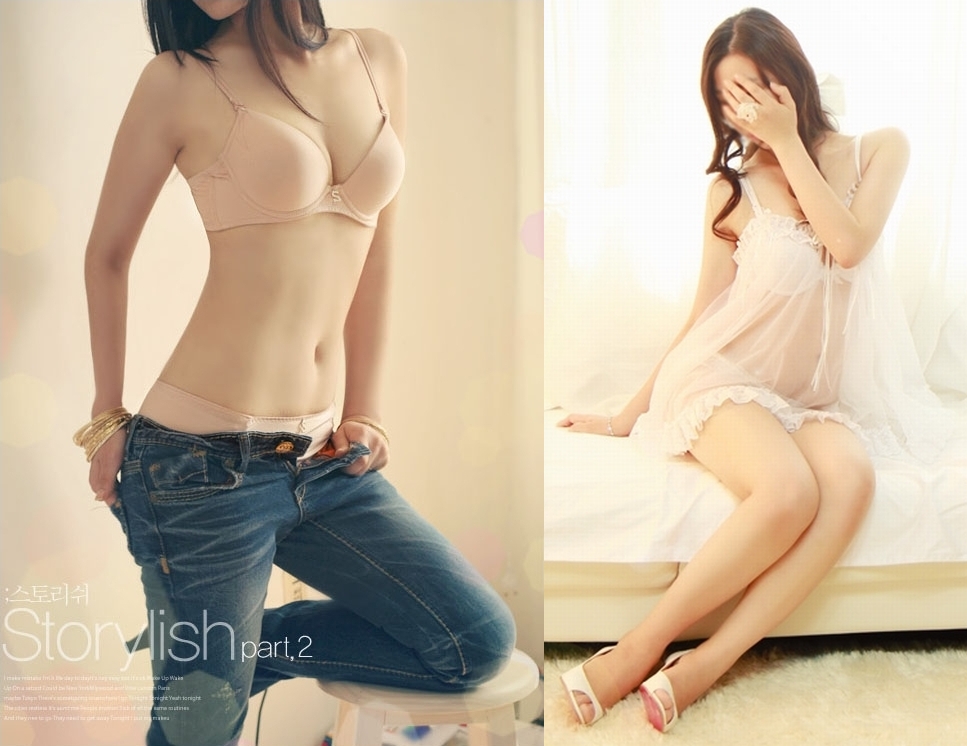

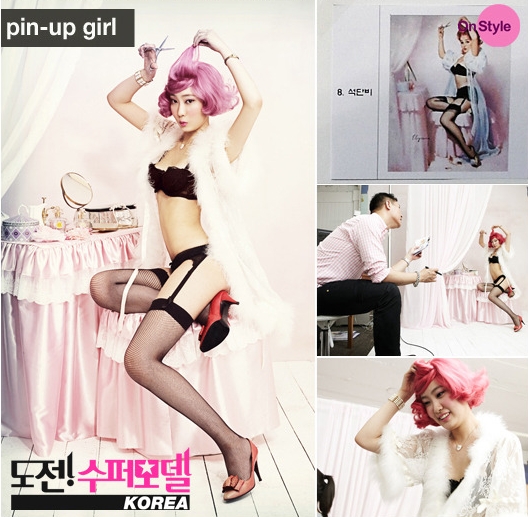
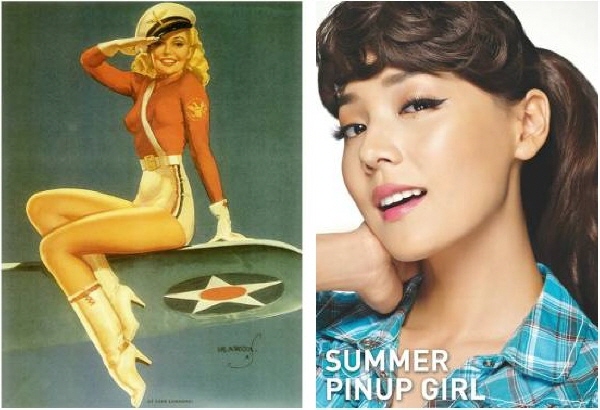






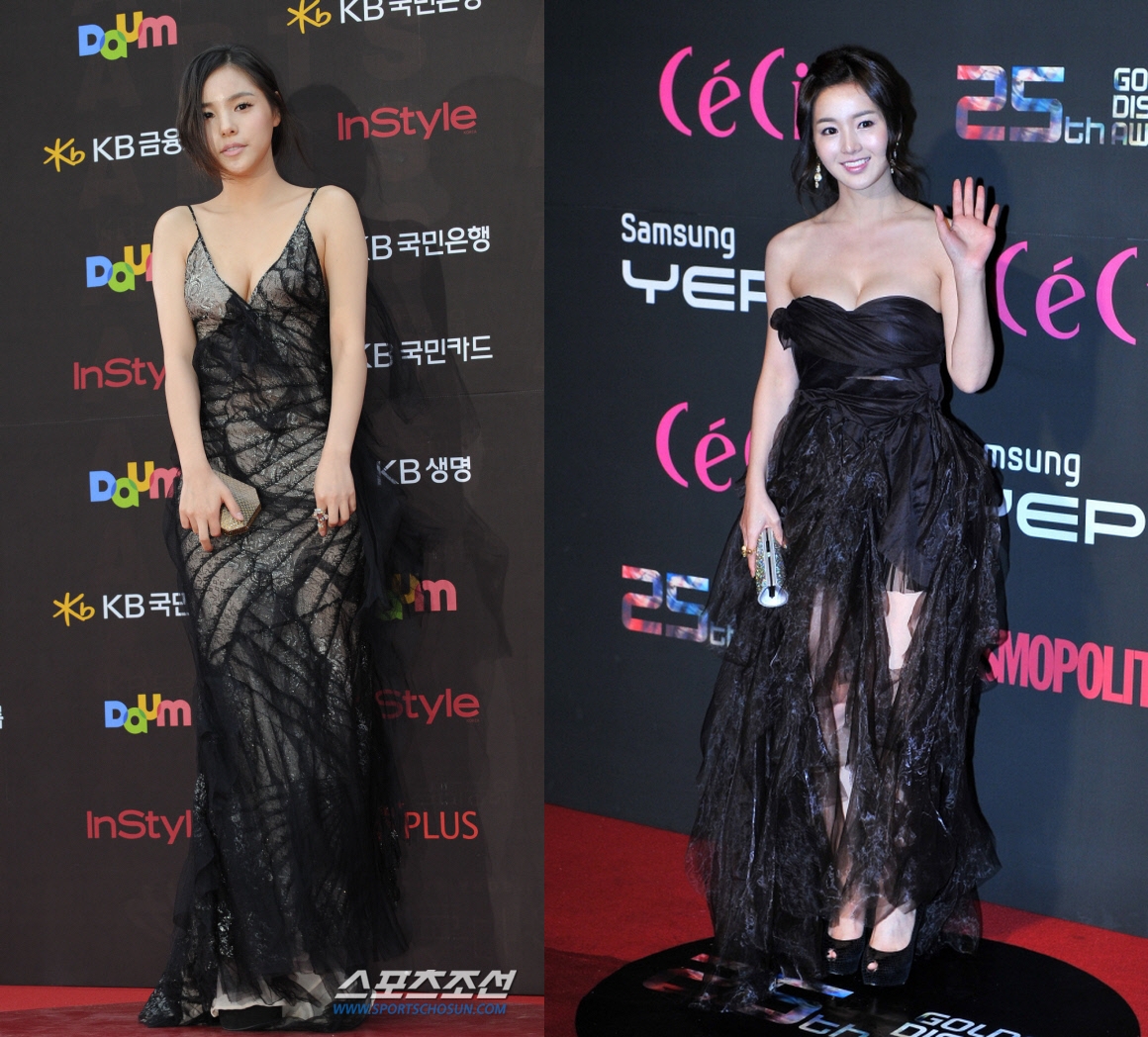

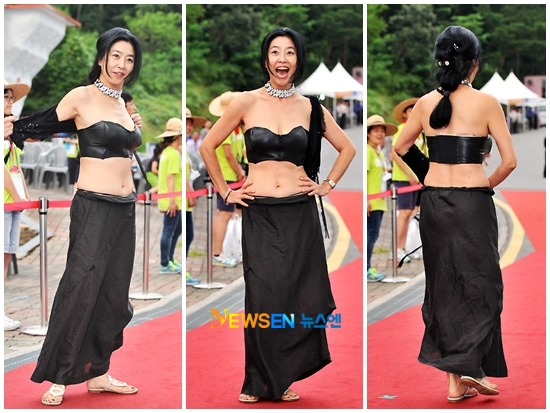




 The Grand Narrative