Apologies for the continued slow posting folks, but I have several good excuses, one of which involves spending a lot of time in doctors’ waiting rooms. Unlike most normal people however, that’s actually something I look forward to(!), as it gives me the opportunity to peruse the hundreds of advertisements in the notoriously thick women’s magazines there.
Like Laedygyeonghyang (레이디경향; Lady Trend) for instance, which at 8200 won (US$7.32) a pop, is normally much too expensive to buy just for the sake of a few pictures. But then I saw the February edition, and was hobbling to the nearest bookstore literally as soon as my bandages were changed (the nurses had to call me back inside for my injection).
You see, February to March being the start of the school year in Korea, then the first 30 pages or so had 6 full page advertisements for children’s schoolbags. And all of those aimed at girls stressed how attractive or pretty they would make them look, whereas all of those aimed at boys stressed how they could help them achieve their dreams, their appropriateness for rough and tumble play, and so on. Perpetuating gender stereotypes in a manner much more reminiscent of the 1960s and ’70s than something you’d expect to see in 2011, this was really quite shocking, and an indictment of how – in terms of socializing children at least – advertising has definitely regressed in recent years.
Unfortunately, the magazine was no longer available, but as you can see above I did manage to find at least the 2 K-SWISS (케이스위스) ones online later (the other 4 were from HEAD {헤드}). Paraphrasing just a little, the Korean on the girl’s ad reads “What style shall I choose today?!”, while that on the boy’s reads “Through [this bag’s] strength/firmness and lightness, achieve children’s dreams!”. Sigh.
Update 1 – Of course, those messages were pretty obvious from just the visuals. And given that, the fact that Caucasian models were used, and that K-SWISS is an American company, then I was curious as to if this was in fact an American ad that had been used in other markets, with just the text translated. A quick check of its main website though, shows that only the Asian branches had kids’ lines, but which still leaves the possibility that they’re generic ads for the East Asian region.
Have any readers based there seen their own local versions? Or – wherever you are – any other children’s ads like these?
Update 2 – With my thanks to the staff of Dr. Lee’s Orthopaedic Clinic, I was allowed to take the magazine home to scan. While my memory had been a little faulty – the advertisements for school bags were in the first 100 pages, not 30; there were also advertorials for them later; and there were 3 advertisements from other companies that were fine – I’d made no mistake about the HEAD ones:
The title on the left reads “Adventurous Children”, and that on the right “Romantic Children”. In the next ones they (literally) say “Imagining Children” and “Dreaming Children”, which technically speaking is fine I suppose, but then just look at what each child is imagining…
(For more posts in the Korean Sociological Images series, see here. Or, for more on the Korean women’s magazine industry specifically, please see here)
See here for the details. Alas, with just 1 hour available then there’ll be little opportunity to do more than summarize what I’ve already written in my “Gender Advertisements in the Korean Context” posts unfortunately (see the right sidebar), but hopefully my very visual presentation will be a much more fun introduction to the topic then reading those tens of thousands of words would be. And it’ll be great to finally meet Seoul-based readers, and to hear your own opinions face to face.
What’s more, it’ll also be my birthday next Tuesday. So you have to come!
Yeah, I eat sitting cross-legged on my kitchen bench all the time too.
Fearing they hadn’t already made things quite awkward enough for Shin Min-a (신민아) in their latest entirely unconvincing “slice of regular life” photoshoot however, Giordano decided to go one better with this next shot. But which I have to admit, did at least get my attention:
Alas, for all her efforts in keeping that smile on her face despite her right leg cramping however, So Ji-sub (소지섭) just doesn’t seem interested. But then probably I wouldn’t be either given how loose she seems to be with her affections: she’s so enraptured with Tiger JK, for instance, that’s she’s content to sit perched on a ladder to listen to him playing his guitar:
Or that she has mixed feelings about appearing in the photoshoot in the first place. Which, in hindsight, is one of the most bizarre I’ve ever seen, as her purpose in it seems not to be so much to model the clothing herself, as to be a validation of the 3 men’s own clothing choices through her sexual interest in them.
Granted, the second shot should have made that obvious, but then the 3 men are widely considered among the sexiest male celebrities in Korea, about whom some female commentators on Omona! They Didn’t, for instance, had few inhibitions describing what they would like to do with them after seeing these pictures.
Lest anyone feel I’m reading too much into the photoshoot though, then I’ll finish here by inviting readers to imagine replacing Shin Min-a with a man in the first, third, and fifth images above (and Tiger JK and Jung Woo-sung with a woman in the third and fifth respectively), and would argue that it’s so difficult to – and even harder to find actual examples – because advertisements are overwhelmingly designed for a male gaze. And which, what with seeing 500-1000 a day of them, can’t help but have socialized even the most media-savvy of us into thinking that eating spaghetti while sitting cross-legged on a kitchen bench, wedged between a gas range and toaster, is a normal and appropriate thing for women to do.
For much more on the male gaze, and many more Korean examples, see the “Erving Goffman’s ‘Gender Advertisements’ in the Korean Context” section in my sidebar, especially the following posts:
Has anyone been paying close attention to teenage girls’ legs recently?
If so, then please answer a question for me, as they’re the darnedest things to find once you actually have a legitimate reason to look: until their recent break, had female school students still been required to wear skirts this winter, while their male classmates got to wear pants? Or did Korean schools show some flexibility because of the unusually cold weather?
Mostly I ask because as my eldest daughter approaches school age, it’s just one of many things to consider as my wife and I decide whether to send our daughters to a Korean school, to homeschool them, or—in our dreams—to send them to an expensive international school. But whatever we ultimately decide, it’s interesting to compare attitudes towards uniforms in the U.K. for instance, where most schools have in practice allowed girls to wear pants for a long time now. On the other hand, they’ve only legally been required to do so as recently as lastyear, and only then because it was judged to violate the rights of transsexual students.
Next, to someone more interested in gender issues and social trends, they could be seen as something that both physically prepares girls for and/or socializes them into wearing skirts simply for the sake of being fashionable later. But considering that young U.S. women for instance, who don’t wear uniforms at school, still freeze to death outside nightclubs every winter just as readily as their U.K. and Korean counterparts, then that may be making too much of it.
I’m on much firmer ground though, when I say that school uniform advertisements at least, epitomize how Korean girls are socialized to be notoriously obsessive about their appearance:
(Source: unknown)
To be precise, it’s the fact that such advertisements exist at all. For unlike in the UK, Australia, and New Zealand where I went to school, and where parents buy—and can only buy—their children’s school uniforms directly from their schools, in Korea there has actually been a free market for them since 1983. Or in other words, for any specific school there’s a range of companies competing to sell their brand of its uniforms to students, complete with their own individual stores and with sometimes marked differences in quality and price.
One obvious problem with this is that it completely works against one of the major purposes of having a school uniform in the first place, which is to minimize the visible differences between wealthy and poor students.
Another is that school uniform advertisers naturally use the same methods as clothes companies do for most any kind of clothes: buy their brand, and you will be successful both among your peers and with the opposite sex.
Granted, that latter hardly sounds heinous. And just like everywhere else, many Korean girls will make their uniforms as revealing as possible if they’re too conservative for their liking. Moreover, in this excellent quick guide to the school uniform industry at An Acorn in the Dog’s Foodhere, Paul Bailey argued in January 2009:
Another thing I noticed from the English-language sites reporting on [this] is that they all feature an advertisement of celebrities promoting a particular line of school uniforms, and this ad always features a girl group. Looking through the first few pages of image results on Naver, it looks like there might actually be more advertisements featuring boy bands — but I guess a group like the Wonder Girls or Girls’ Generation is more recognizable to the average reader. In his write-up, James mentions that it was only by accident that he learned how students buy their uniforms through these retailers instead of through their school. Never having worn a school uniform, that was also my assumption before arriving in Korea, but upon exploring my neighborhood I turned up three school uniform vendors – Ivy Club, Smart and Skoolooks – located within four blocks of my apartment. Between those vendors, one featured posters of only boy bands and the other two advertise with both male and female celebrity models. Interesting, then, to see what images have been used online.
And I’ve no reason to disagree with any of his observations. But with the benefit of hindsight from several years of writing and lecturing about advertisements since, I’ve noticed that the majority of ads featuring boy-bands from back then clearly seemed to be aimed at girls rather than boys, as in the large pink example with boy-band Shinee and an unidentified female model above. Which again, is only natural…but then the ones featuring girl groups seemed to be aimed at girls too.
Take these recent ones with girl-group f(x) for example, in which the group members are almost always the most prominent models in them, even though the ad technically is also selling boys’ uniforms (update: this ad is a good comparison):
Sure, in Korea’s overwhelmingly celebrity-driven advertising culture, then of course they’re going to be the most prominent things in the ads. And I also concede that some of the ads in this post are among the most blatant, deliberately chosen to make a point. But whether the models in a uniform ad are exclusively male, exclusively female, or a mix of both, there seems to be a noticeable lack of comparable ads featuring boys getting the approving looks of female admirers. And which, when you think about it, is just plain bizarre really.
As long term readers will recall though, the practice of celebrities endorsing uniforms was actually banned by the Ministry of Educational Science and Technology (MEST) 2 years ago (see #7 here), and indeed I mentioned that a rare positive step in my recent lecture in Boston. I was very surprised and embarrassed then, to find that they’d started again almost literally the day I got back, which is what ultimately prompted this post. As it turns out, not only were they actually not banned at all, school uniform companies merely being asked to stop in order to decrease the burden on consumers during the economic crisis, but my hope that someone within MEST thinking that middle-school girls had better things than their S-lines to worry about now seems particularly naive.
And on that note, let me leave you with the facts on the original decision to temporarily cease star endorsements back in 2009, courtesy of Marilyn:
Idols stars in school uniform ads, now “take off the uniform”
새 학기가 시작되면서 강력한 호황을 누리는 의류업계가 있다. 바로 교복업계다. 마치 경쟁이라도 하듯 인기 아이돌 가수들을 광고 모델로 쓰며 학생 소비자들의 시선을 잡아 끄는 교복 광고는 그 동안 10대 팬들에겐 ‘오빠, 누나’의 브로마이드를 한 장이라도 더 받을 수 있는 통로였으며, 스타들에겐 아이돌의 이미지를 더욱 견고하게 할 수 있는 ‘꿈의 CF’였다.
As a new semester begins, there is a clothing industry that is thriving powerfully – the school uniform industry. As school uniform ads, which, as if they were competing, grab and lead the attention of student consumers while using popular idol singers as advertising models, have been a way for teenage fans to get even one more poster of their ‘oppa, noona’, to stars they have been “dream TV commercials” that could make an idol’s image even more solid.
그러나 최근 들어 TV 광고에서 교복을 입은 아이돌 스타들의 모습을 보기가 힘들어졌다. 어느 채널을 돌려도 이젠 긴 다리로 뛰어 다니며 십대답지 않은 ‘교복 간지’를 뿜어내는 아이돌들을 찾기는 힘들다.
However, it has recently become rare to see an idol star wearing a school uniform in TV commercials. No matter which channel you turn to, it is difficult to find an idol running around on their long legs while exuding ‘school uniform chic’ that is unlike a teenager.
바로 지난 달 1일 교육과학기술부(이하 교과부)와 교복 업체들 간에 이뤄진 간담회 결과, 교복 업체들은 ‘가격 인하 노력 전개’, ‘디자인 변경 자제’, ‘사회공헌 활동 강화’ 등과 더불어 ‘유명 연예인을 동원한 과도한 광고 및 판촉 활동 자제’의 지침을 지킬 것을 요구 받았기 때문이다.
It is because on the first of last month [Feb. ’09], the result of the discussion between the Ministry of Educational Science and Technology (MEST) and school uniform companies was that the uniform companies were asked to follow the guidelines of ‘a price reduction effort campaign’, ‘abstention from design change’, ‘strengthening of social contribution activities’, etc., along with ‘abstention from advertisements and promotional activities that excessively employ famous entertainers.’
이에 교복업체들은 현재 자율적인 협의를 거치고 향후 ‘스타 모델 기용’을 더 이상 지속하지 않기로 결정한 상황이다. 그렇다면 교과부가 ‘스타 모델 기용’을 반대하는 권고안을 내놓은 이유는 무엇이며, 이러한 권고를 수용한 교복업체들의 ‘스타 모델’에 대한 생각은 무엇일까? 또한 이번 교복업계의 결정에 따라 아이돌 스타들의 전유물로 여겨졌던 교복 광고 시장은 어떻게 변하게 되는 것일까?
Following that, school uniform companies recently underwent an autonomous discussion and decided that, from now, ‘star model employment’ will no longer continue. So, what is the reason that the MEST put forth a recommendation that opposes ‘star model employment’, and what might school uniform companies who accept this recommendation think about ‘star models’? Also, how might the school uniform advertising market, once considered monopolized by idol stars, change according to this decision by the school uniform industry? (Source, right)
교과부 “빅 모델이 교복값 부추긴다.” VS. 교복업계 “1000원 미만 정도”
MEST: “Famous models drive up school uniform prices” vs. school uniform industry: “Less than ₩1,000 or so”
교과부를 비롯해 다수의 고객들이 교복 빅 모델 사용을 반대하는 결정적인 이유는 하나다. 스타 모델 기용으로 인해 발생하게 되는 개런티가 교복값에 그대로 반영돼 교복값 상승을 더욱 부추긴다는 것. 그러나 이러한 일반적인 생각에 대해 교복업체들은 하나같이 ‘No’라고 대답하고 있다.
There is one deciding reason that the MEST and a majority of customers oppose the use of famous models for school uniforms: a star model’s fee is directly reflected in the price of school uniforms so it contributes to their further rise. However, school uniform companies, together as one, have answered “no” to this common thought.
최근 매일경제 스타투데이와의 전화 통화에서 업계관계자들이 주장한 ‘스타모델로 인해 추가되는 교복값’은 한 벌당 300원에서 1000원 정도. 그러나 현재 국내에는 제품원가와 관련해 심의를 담당하는 기관이 없기 때문에 그 정확한 비용적 수치를 알기는 어렵다.
Recently, in a phone call with Maeil Kyungjae Star Today, industry sources claimed that the ‘school uniform price additions caused by star models’ are about ₩300 to ₩1,000 per uniform. However, because there are currently no domestic organizations responsible for the review of the production costs of goods, it is difficult to know the exact figure.
업계 관계자들은 “다른 의류업체들이 스타들을 모델로 기용하는 것과 다를 것이 없고 또 실제로 스타 모델이 교복 가격에 미치는 영향도 미미하다”면서 “오히려 교복 가격을 1000원 정도 깎아주고 빅 모델들을 계속 쓰는 게 우리에게는 더 효과적”이라고 말한다. 브랜드 이미지를 강화하기 위해 스타 모델들을 쓰는 것 보다 더 좋은 방법을 찾기 힘들기 때문이다.
Industry sources said, “It is no different from other clothing industries using stars as models and also, actually, the influence caused by star models on school uniform prices is slight” and, “Instead, it’s more effective for us to discount the school uniform price by ₩1,000 and continue to use famous models.” This is because it is difficult to find a better way to strengthen a brand image than using star models.
Because of monopolies in the school uniform industry, using famous models is an important way of entry for new companies
그러나 스타모델에 대한 보다 구체적인 효과와 관련해선 교복업체들마다 조금 다른 의견을 보이고 있는 것도 사실이다.
It is also true, however, that each school uniform company expresses slightly different opinions concerning the more specific effects of star models.
1995년 송혜교를 시작으로 자사 광고에 스타들을 모델로 기용한 스마트는 “회사 내부적으로 빅 모델들 때문에 특별히 큰 효과를 본다고 생각지는 않는다”는 입장을 가지고 있다. 스마트 마케팅팀의 손정주 대리는 “스타 모델 사용의 목적은 직접적인 수익 창출이라기 보다 우리 브랜드의 이미지 형성을 위한 것”이라며 “또 워낙 스타 모델들을 쓰는 것이 일반화된 교복 광고계에서 타 경쟁 브랜드와의 차별성을 두고 스타와 브랜드 간의 연상작용을 위해 하는 측면이 크다”고 말했다. 예를 들어 샤이니를 보면 스마트를 연상케 하는 이미지적 과정을 중요한 마케팅 수단의 하나로 보는 것이다.
Smart, which started using stars as models in its advertisements with Song Hye-kyo in 1995, believes that, “Within our company, we don’t believe that we see especially big results because of famous models.” Smart marketing deputy section chief Sohn Jeong-joo said, “The goal of using star models, more than the direct creation of profit, is the development of our brand,” and added, “Also, using star models in a school uniform advertisement differentiates us from competitor brands, and the aspect of doing it for the association between the star and the brand is considerable.” For example, the visual process of being reminded of Smart when one sees Shinee is seen as an important marketing tool.
하지만 업계에 처음으로 발을 디디는 신생업체의 생각은 다르다. 교복업계에 진입한 지 4년여 만에 메이저 기업으로 성장한 스쿨룩스 측은 “사용하지 않는 것 보다는 훨씬 낫다”는 입장이다. 스쿨룩스의 한 관계자는 “물론 빅 모델 기용 이외에 다양한 영업, 마케팅 기법들이 혼합되면서 수익이 창출되는 것이므로 스타 모델이 수익적 성과를 결정한다고 단정지을 수는 없다”면서도 “브랜드 인지도를 높이는데 효과적인 것만큼은 사실이다”라는 의견을 밝혔다.
However, the opinion of a new business first entering in the industry is different. The position of School Looks, which has grown into a major business in the four years since it entered the school uniform industry, is that, “It’s a lot better than not using them.” A source from School Looks said, “Of course, because in addition to using famous models, diverse sales and marketing techniques are blended while creating profit, we can’t conclude that star models determine our revenue results,” but, “it’s a fact that it raises brand awareness enough to be effective.”
스쿨룩스는 업계에 처음 진입할 때부터 장근석, 유아인 등의 아이돌 스타들을 광고 모델로 썼고, 2007년부터 현재까지 빅뱅을 전속 모델로 쓰고 있다. 이와 관련해 스쿨룩스의 관계자는 “특히 빅뱅의 경우 대중들에게 잘 알려지지 않았던 데뷔 시절부터 써왔는데, 브랜드 이미지를 강화하려는 교복 광고주와 대중들에게 얼굴을 알려야 하는 아이돌들에게 교복 광고는 특히나 효과가 큰 윈윈전략의 하나로 통한다”고 말했다.
Since it entered the industry, School Looks has used idol stars like Jang Geun-seok and Yoo Ah-in as advertising models, and from 2007 to the present they have had the exclusive use of Big Bang as models. A School Looks source involved with this said, “Especially in Big Bang’s case, we’ve used them as models since their debut when they weren’t well-known to the public; a school uniform ad is known as an especially effective win-win tactic for a school uniform advertiser that wants to strengthen its brand image and idols who need to make their faces known.”
School uniforms companies “will conform to public sentiment”
그러나 결과적으로 교복 광고의 빅 모델들에 대한 국민 정서가 좋지 않고, 나라 경제가 전체적으로 악화되고 있는 상황에서 교복업체들은 교과부의 권고를 수용하고 스타 모델을 더 이상 쓰지 않는 방향으로 가닥을 잡을 예정이다. 실제로 지상파 교복 광고도 지난 달 들어 모두 중단됐으며 팬 사인회 등의 프로모션도 현재 끊겨있는 상태다.
However, in the end public opinion about famous models in school uniform ads is not good, and in a situation in which the country’s economy is worsening on the whole, school uniform companies plan to accommodate the MEST’s recommendation and move in the direction of no longer using star models. School uniform ads have actually ceased since last month, and promotions such as autograph signing parties are currently suspended.
그렇다면 학생들을 소비 계층으로 하는 교복의 특성상 아이돌 스타들이 광고료를 대폭 낮추고 광고를 찍을 수는 없을까? 이와 관련해 소속사들 측은 “아이돌의 이미지 상 교복광고를 긍정적으로 볼 수도 있겠지만, 결과적으로 수익을 창출해내는 한 기업의 광고라는 점에서 가격붕괴를 시키면 다른 광고에서 분명히 문제가 발생할 것”이라는 의견이다. 따라서 추후 광고 방법에 관련된 구체적인 논의는 업체별로 계속될 것으로 보인다.
So, because students are the main consumers of school uniforms can’t idol stars sharply lower their fees and shoot the commercials? About this, star management agencies’ opinion is, “We might have a positive view of school uniform ads as far as the idol’s image goes, but in the end, if we drop our advertising appearance fees for one business that needs to make a profit, there will obviously be a problem with other advertisements.” Thus, in the future we will continue to see detailed discussion in each company about advertisement methods.
이렇게 브랜드 교복 업체들의 주장대로 교복 한 벌에 들어가는 비용이 ‘단 몇 천원’에 불과하다 하더라도 몇 억대에 이르는 광고 모델료와 지상파 광고를 위해 지출되는 10억대에 이르는 거품이 사라질 수 있다면 서민들의 부담을 조금이라도 덜어줄 수 있다는 것만큼은 확실한 것이 아닐까? 교복광고와 관련된 권고안이 실행된 지 한 달 남짓, 시장의 자유 경쟁을 저해하고 교복 광고에만 유난히 날카로운 잣대를 들이댄다는 일부의 불평 속에서 사라질 스타 모델 교복 광고가 광고 시장과 교복 시장에 어떤 바람을 불러 일으킬 지는 더욱 두고 볼 일이다.
Even if the added cost to one uniform is ‘only a few thousand Won,’ as brand school uniform companies claim, if the advertisement model fees that reach a few hundred million and the extra billion spent on TV advertisements disappeared, isn’t it certain that would be enough to lift, in however small a way, the burden on ordinary people? Star model school uniform advertisements will disappear as a result of complaints like facing the hindrance of free market competition and especially strict standards just for school uniform advertisements. At over one month since the recommendations were carried out, it even more remains to be seen how this will affect the advertising market and school uniform market (end).
So, it looks like celebrity endorsements will continue. Do you think they have an influence on what we wear later in life? Was, or is, cost ever an issue to you or your parents? Alas, not having worn one since 1993, then I’ve had a lot of catching up to while writing this article, and so would really appreciate any more recent information!^^
(For more posts in the Korean Sociological Images series, see here)
As we all know, if you’re a real man, then you couldn’t care less about what painkiller to use.
But to be precise, the ad actually says dansoonhan men (단순한남자). Which usually translates as “simple” in English, but probably best would be “straightforward” in this case.
Forgive me though, for still considering myself just as smart (dokdokhae;똑똑해) as the woman in the ad. After all, I too wear glasses sometimes.
How am I supposed to choose a painkiller then? Or – heaven forbid – straightforward women for that matter?
Alas, the ad gives no clue:
Methods of choosing a painkiller – Men vs. Women
Straightforward men [choose] without thinking.
As for smart women…because it’s a liquid, its effects are fast. This is EZN6.
Liquid Form…[They need to] think about if it will decrease the burden on the stomach or not
[They need to] carefully think about if it contains caffeine or not
And at the very least, it certainly doesn’t discourage the notion that looking after one’s body is really something only women should do. Unlike most products that are marketed very differently to each sex though (see here, here, here, here, and here for more Korean examples), the irony here is that there’s now a wealthofevidence to suggest that painkillers that work on one sex can be ineffective or even increase pain on the other. In the near-future, there may well be completely different painkillers developed for men and women.
And when they are, then yes: I’d wager that they’re going to be pink and blue too.
When that day arrives though, do you think Daewoong Pharmaceutical (대웅제약) will simply come up with 2 versions of the ad, each only featuring one sex? Or will ads for men continue to emphasize simplicity, but those for women stressing how they’d have even more things to consider?
Sorry for the lack of posts recently, and the very short notice with this one, but in an hour from now (7:45pm Korean time) I’ll briefly be on 101.3 TBS eFM’s evening show, talking about the title topic. For the details, see here, and note that unfortunately you can only listen live on Internet Explorer sorry.
Update – Well, that was a little embarrassing: because of a miscommunication, technical problem, and/or a last minute editorial decision, I didn’t actually get called in the end!
But for anyone still interested in the subject though, then I was going to mention that while on the one hand the stigma surrounding divorce is certainly disappearing over time, with 1 in 4 marriages now involving a divorcee and in particular both the numbers of women remarrying and their rate of increase outstripping those of men, on the other hand the profoundly gendered effects of the recent economic crisis here have left Korean women more financially reliant on their husbands than ever, as explained at #2 here, here, and #15 here.
Meanwhile, see here for more information on both the high rates and the practicalities of getting a divorce in Korea, and here for more on the hoju or family-registry system (호주), which had a huge role in drawing attention to people’s marital status (or parents’ status) and consequently being able to discriminate against them on that basis. Moreover, although that has recently been abolished, one final point I was going to make was that unfortunately that’s just one of many superfluous things corporations take into account in their hiring practices, as demonstrated here, at #8 here, here, here, and here, and so it’s probably going to take a while before Korean business culture catches up with the social reality.
And using manhwa (만화), or Korean cartoons, is a good place to start. Sadly, my favorite “grown-up” comic-book poptoon (팝툰) sold its last edition back in March, but there’s lot’s more where that came from.
One possibility is Department Head Dal-ma (Dalmagwajang; 달마과장), available in the free Focus newspaper. Although it’s often very basic, requiring no Korean ability to get the gist of, you could do much worse than quickly translating it on your morning commute.
Take these two strips for instance, which kept cropping up in Naver searches while I was preparing a recent post on sexual harassment in Korea. First, number 21:
Dal-ma:Gulp.
Man:Miss Kim, what did you have for lunch?
Miss Kim:I simply had ricecake at the park.
Even from just these first panels, already one thing of interest is that the man uses banmal (반말), or informal speech to speak to Miss Kim, and she replies in nopimmal (높임말), formal speech. No big deal there you might say: he’s probably her superior in the company. And as this recent incident on a subway demonstrated, using the appropriate level of speech to others is considered extremely important in Korea, with even many of my university students using nopimmal to friends just a few months older.
But then the same happens in the second cartoon too, even though the man addresses the woman with the semi-formal shi (씨) at the end of her name. And while a brief survey of other Dalmagwajang cartoons does occasionally show men and women each using nopimmal to each other, I didn’t see any cases of a woman speaking to a man in banmal and he answering in nopimmal. Which is not to say that they don’t exist necessarily, but if there are any then I’d wager there’d be very few.
If so, then is that just a reflection of reality? After all, women do tend to have junior and/or non-advancing positions in Korean workplaces, as even in 2011 it considered perfectly normal for them to resign and/or be fired upon marriage or becoming pregnant (only 50% of Korean women work, the lowest rate in the OECD).
(Source: unknown)
But on the other hand, recall that even subtitles for foreign films and programs have this gender-dichotomy grafted onto them too, despite being absent in the original English:
A women’s group has issued a report on the “sexist” dubbing of foreign films and dramas, reports women’s newspaper Ilda The group took a look at some 27 English-language dramas shown on terrestrial broadcasting in September and October. It found that most of them employed sexist sexist practices when dubbed into Korean. Namely, male characters spoke in banmal, or “low language,” while female characters used jondaenmal, or “high/respectful” language, even though the original English dialogue made no such distinctions.
This tendency was most often seen in dialogue between husbands and wives or lovers. Besides dramas, foreign films showed the same tendency, with 12 of 15 films monitored by the group employing this dubbing practice.
Clearly then, for TV at least there is a compulsion to conform to it. Whether that’s just the industry convention, fear of negative public reaction, and/or the personal choices of the translators themselves, then that remains to be seen, but I’d be surprised if that didn’t apply to some extent to other forms of media. And either way, you’re left with a pretty pervasive socialization agent, and one easy to overlook for English speakers, and/or even easier to get used to for native Korean speakers.
Man: Ah, why didn’t you invite me? I pound ricecakes really well…No, well, I eat them well…
Miss Kim: (Laughing) What do you mean?
Dal-ma: Even acting like that, he won’t get accused of sexual harassment?
Next, despite its curious reputation for conservatism overseas, in fact the Korean media is simplyfull of sexual innuendo, and this cartoon read by millions every weekday is surely a classic case in point: “떡을 치다” is literally “pounding rice cake”, but is really slang for having sex. Which is why a year ago, a cartoonist was sued for sexual harassment by Girls’ Generation’s (소녀시대) management company SM Entertainment for this otherwise innocuous-looking cartoon:
This might sound strange, but personally I find that slang quite endearing. For not only does it seem quintessentially Korean (here’s another example), but with most Koreans living in the countryside until as recently as 1979, then it reminds me of the country’s strong agricultural roots too (no pun intended).
Ahem. Continuing:
Dal-ma: Still, if something is judged sexual harassment or not all depends on your face (how attractive you look)
Woman left: He really said that?
Woman middle: (Laughing) Really?
Dal-ma: Wow! Look at her chest!
Dal-ma: Jeez, how can’t they feel ashamed to wear clothes that emphasize their breasts like that…
Eek, I forgot! Staring is also sexual harassment.
Dal-ma: (Worried) For no reason, because of a misunderstanding I’d be called a bald pervert.
Woman: Eek! It’s sexual harassment!
Having a shaved head myself, then I couldn’t help but chuckle at the unnecessary mention of his baldness here, as if that somehow makes his perversion all the worse. But with shaved heads being best known as a symbol of “prison, protest, or penance” in Korea, then unfortunately those negative connotations aren’t likely to go away any time soon.
Woman: Sexual harassment!
Dal-ma: No, it’s not that…
Women in background: Bald pervert!
Dal-ma’s daughter: What’s wrong with Dad?
Dal-ma’s wife: He’s like that because working at the office is tiring.
Next, number 57 (as I type this, the latest is number 327 by the way). Sorry for the poor image quality:
Woman (Eun-hee): Good morning!
Man: Good morning! Eun-hee, you bought new clothes?
Eun-hee: Yes, because it’s the end of the year I spent a lot on myself
Man: Wow, your back is a killer!
Eun-hee: Really?
Man: Yes, you’ve a perfect Honey-bottom!
Despite what the man says in a moment, that’s the first time I’ve heard the term ggooldongi, a combination of ggol (꿀; honey) and ongdongee (엉덩이; bottom). But I have heard (and written about) ggoolbokji (꿀벅지) that it comes from though, which, as Matt at Gusts of Popular Feeling explained:
…apparently means, according to this article and allkpop, ‘sweet-as-honey thighs’ or “alluring as-if they-were-coated-with-honey thighs”, though a more creative, if incorrect, translation would be ‘alluring thighs that spread like honey.’ Ahem.
And in particular:
…a ‘high school girl living in Cheonan’ posted a petition on the Ministry of Gender Equality’s website claiming that the word ‘honey thighs’ actually means ‘thighs that you want to smear honey all over and lick off’, and represented the sexual commodification of a female body part, was sexual harassment, “induced a feeling of sexual shame” and said its use should be banned. She was also irritated that such a ‘sexually derogatory word’ was used by the media and asked that it stop. According to allkpop, “Even Korean portal site Daum has requested people to refrain from using this controversial term…”
Hence Eun-hee’s justified reaction:
Eun-hee: Honey bottom?
Man: These days it’s popular. It means honey applied to a bottom…
Eun-hee: I’m going to the Human Resources Department to complain about your sexual harassment!
Man: Honestly, it was just a compliment, why…
Man: Well, I was just complimenting her on how well her clothes fit. Why’s she acting like that?
Dal-ma: It doesn’t matter what your intention is, it depends on how the other person receives it. If they feel uncomfortable, then it’s sexual harassment.
Man: In that case, if someone has a good body, how can we give them a compliment?
Dal-ma: If you intend to compliment a certain part of a person’s body, then do it precisely. Then, the other person will take it well.
No, I didn’t find them funny either. What’s more, they give the impression that all it takes to deal with sexual harassment in Korean workplaces is a quick visit to the Human Resources Department, and consequently that male employees are very nervous about being accused of it. Unfortunately though, as this case at Samsung and these recent testimonies by victims demonstrate, the reality is anything but.
Why the discrepancy? That’s a good question, and it’s made me curious to see if its also found in other newspapers, and so on. Which is not bad for a couple of quick cartoons over a morning coffee, yes?^^
With thanks very much to Marilyn for the translation of the following article from Ildaro (일다), I’ll quickly let it speak for itself:
고용불안 속, 직장내 성희롱 위협 커져
In the midst of employment instability, the threat of workplace sexual harassment increases
고용평등상담실 10년, 여성노동의 현실과 미래를 말한다(2)
10th year of the Equal Employment Counseling Office, discussing female employees’ present and future
[편집자 주] 2001년 남녀고용평등법 4차 개정으로 고용평등상담실 지원제도가 도입된 지 10년이 되었습니다. 민간단체들의 고용평등상담실은 그동안 여성노동자들의 실질적 보호장치로 기능해왔으며, 여성노동자들이 처한 현실을 사회에 고발하는 창구역할을 해왔습니다. 일다는 여성노동자회와 함께 고용평등상담실에 접수된 상담사례를 통해 IMF 경제 위기 이후 후퇴 일로를 걷고 있는 여성노동의 현실과 과제를 살펴보고자 합니다. 필자 황현숙님은 현재 서울여성노동자회 회장을 맡고 있습니다.
우 리 사회의 성폭력 문제는 온 국민이 알게 된 끔찍한 아동 성폭행, 유명 정치인의 성희롱 등으로 자주 언론에 오르내리는 이슈가 되었다. 직장내 성희롱으로 고용평등상담실의 문을 두드리는 여성들의 호소 또한 가벼운 성적 농담이나 접촉을 넘어서 심지어는 강간에 이르는 경우조차 발생되고 있다. 직장내 성희롱은 그 자체가 미치는 정신적․신체적 악영향, 노동환경의 악화뿐만 아니라 일자리 자체까지 위협받게 된다는 데에 그 심각성이 있다.
[Editor’s note] It’s been 10 years since the Equal Employment Counseling Office support system was introduced through the 4th Amendment to the 2001 Equal Employment Opportunity Law. During that time, the Equal Employment Counseling Offices of private organizations have been functioning as female workers’ practical safeguards and have acted as liaisons that report to society the realities that female workers encounter.Through the case consultations received in the Equal Employment Counseling Office, Ilda and the Women Workers Association intend to look at the realities and problems of women workers, who are losing ground after the 1997 Asian Financial Crisis. Author Hwang Hyun-sook is the current head of the Seoul Women Workers Association.
Through incidents of horrible child molestation, a famous politician’s sexual harassment, and others of which the entire nation is aware, our society’s problem with sexual violence has become an issue that often comes up in the press. According to the complaints of women workers who’ve knocked on the Equal Employment Counseling Office’s door because of sexual harassment, there are also cases occurring that surpass light sexual jokes or touching to go as far as rape. Workplace sexual harassment itself not only has bad mental and physical effects and worsens work environments, but is even of such a magnitude that jobs themselves [of victims] may be threatened.
“과장이 ‘피곤하지?’라며 손, 팔을 주물러 너무 불쾌하여 늘 가슴을 조이며 지냈어요. 어느 날 허벅지를 만지기도 하여 우울증에 시달리다가 문제제기를 하였더니 그 후 재계약을 하지 않겠다는 통보를 받았어요. 성희롱으로 실직하게 된 것 같아 너무 억울해요.”(2009년 상담사례, 계약직)
“사 장님이 자꾸 만나자고 하면서 ‘옆에 오면 가슴이 떨린다. 만나면 안고 싶고 무릎을 베고 누워 얘기도 하고 싶고 즐기고 싶다. 나를 받아 줄 수 없냐.”고 하더라고요. 남자에 대해 관심이 없다고 거절했더니, 부장을 통해 퇴사하라는 통보를 받았는데……“(2009년 상담사례, 2개월 근무)
성희롱 가해자가 사업주, 상사 인 상담은 매년 75~85% 가량이다. 가해자가 인사권을 직접 가지고 있는 경우가 많아 성희롱을 거부하거나 문제제기했을 경우에는 직. 간접적인 괴롭힘으로 스스로 그만두게 하거나 권고사직, 심지어 다른 사유를 들어 해고하는 사례들도 나타난다. 그래서 성희롱이 발생해도 공론화하기 어렵고 이를 은폐하도록 가해자가 권력을 행사하기도 한다.
Workplace sexual harassment extending to job threats
“My manager would ask, ‘Are you tired?’ and massage my hands and feet; it was so uncomfortable and I always went around feeling anxious. One day he even touched my thigh and so while suffering from depression, I made a complaint; because of that I received notice that my contract wouldn’t be renewed. I became unemployed because of sexual harassment – it’s so unfair.” (2009 counseling case, contract worker)
“The president of the company often asked me out and said ‘When you come near me my heart pounds. If we go out I want to hold you, put my head in your lap and talk, and have fun. Can’t you accept me?’ I refused, telling him I wasn’t interested in men, and through the general manager I received notice that I was to resign…” (2009 case consultation, working for 2 months)
Every year, about 75-85% of the consultations are ones in which the perpetrator of sexual harassment is the business’ owner or victim’s boss. There are many cases in which the perpetrator is directly in charge of the company’s human resources. Because of this, when the victim has rejected the perpetrator’s advances or made an official complaint, there have been cases in which the perpetrator may cause her to quit though direct or indirect harassment, urge her to resign, or even find grounds to fire her. Therefore, even though sexual harassment occurs, making it public is difficult and the perpetrator often exerts his authority to conceal it.
(Source: unknown)
성희롱의 온상, 회식자리 남성중심 문화
“입 사한지 1주일 만에 본사 간부급 직원들과 회식자리가 있었어요. 간부들이 버릇인양 손잡기, 어깨동무하기, 허리 감싸기, 끌어안기, 볼 부비기……. 마치 간부들을 위해 여직원들이 대접하는 자리 같았는데 어렵게 입사하여 그만둘 수도 없고 어찌해야 할지……” (2007년 상담사례, 정규직)
“회 식 2차로 노래방에 끌려가다시피 갔어요. 술 마신 남직원들이 안으려고 해서 피했는데, 갑자기 뒤에서 끌어안더니 들었다놓았다하는데 과장, 계장 모두 묵인하고, 계장은 블루스를 추자고 하더라고요. 그래서 울면서 집에 왔는데 동기들도 다른 구청이나 동사무소 근무하면서 회식자리 성희롱 때문에 너무 힘들어 해요. 블루스를 춘 여직원한테는 잘해주고, 안 추면 욕하고 못살게 군다고 하더라고요.” (2007년 상담사례, 공무원)
회 식문화가 변하는 곳도 생겨나고 있지만, 회식자리에서의 성희롱은 지금도 일상적으로 일어나고 있다. 회식자리는 직장내 위계적 관계의 연속으로 상사의 기호에 맞추어야 하고 그의 요구에 따라야 하는 업무의 연속처럼 진행된다. 우리 사회의 남성 중심적인 문화, 위계질서가 이어지는 회식 문화는 여성들의 고용환경을 악화시키는데 일조하고 있다.
The hotbed of sexual harassment, office dinner male-centric culture
“I was at an office dinner with head office management-level employees only a week after joining the company. The executives had habits of holding my hand, putting their arms around my shoulders and waist, hugging me, pressing their cheeks against mine… It was like a place for the female employees to serve executives; it was hard to get a job here so I can’t quit and [don’t know] what to do…” (2007 case consultation, regular employee)
“I went to the second [drinking-heavy] part of our office dinner like I was being dragged. Male employees who were drinking were trying to hug me so I avoided them; suddenly I was embraced from behind and picked up and put down. The manager and section chief overlooked everything, and the section chief asked me to slow-dance with him. So I came home crying; also my peers who work at other district offices or dong offices have a really hard time because of sexual harassment at office dinners. They say the female employees who slow-danced are treated well, and if you don’t dance they curse and treat you badly.” (2007 case consultation, government employee)
There are places where office dinner culture is changing, but sexual harassment at office dinners happens regularly even now. Office dinners progress similar to the business itself, in which one must adjust to the preferences of a superior ahead of one in the workplace’s hierarchical relationships, and follow his demands. Our society’s male-centric culture and hierarchy-connected office dinner culture lead to the worsening of women’s working conditions.
“5 명도 안 되는 회사에서 근무한지 2개월인데 사장이 아침부터 술을 먹자고 하고, 남자친구랑 몇 번 하냐고 묻고 ‘나랑 애인 같은 거 하자’는 소리를 자꾸 해요. ‘이런 소리 들으려고 일하는 거 아니다’라고 말하면 무릎 꿇고 안한다고 하면서도 술만 마시면 또 그러니 일자리가 아니라 고문받는 자리 같아요.”(2008년 상담사례)
“연 말에 사장이 송년회를 가자고 해서 부담스러웠지만 가게 되었어요. 결국 2차까지 가게 되었는데 노래방에서 강제로 키스를 하고 옷 속으로 손을 넣어 몸을 만졌어요. 거부하면서 강하게 밀쳤더니 “난 사장이고, 넌 경리야”, “너 내일부터 나오지 마.”라는데, 다시 직장을 알아보면서 화도 나고 얼굴 보는 것도 두렵고 생각할수록 화가 나고 억울해요.“(2008년 상담사례, 사업주와 2명 근무)
영세소규모사업장의 성희롱은 가해자가 사업주인 경우가 많아 실질적인 법적 조치가 어려운 점, 성희롱 예방교육 특례조항 적용 사업장이라 예방교육이 실시되지 않는다는 문제점이 있다.
업 무적으로 둘만이 접촉하는 경우가 많아 사업주의 부당한 성적 요구나 사적인 친밀감을 성적 언행으로 표시하는 경우도 잦다. 성희롱을 거부하면 바로 그만두라는 통보를 받는 노동권 위협의 문제도 크지만, 매일 가까운 곳에서 얼굴을 마주쳐야 하니 버티고 싶어도 버티기 어렵다는 어려움이 있다.
Sexual harassment in a small business bound by close relationships
“I’ve been working for 2 months at an office that doesn’t even have 5 people in it; from the morning on the president suggests drinking together, asks me how many times I do it with my boyfriend, and keeps saying ‘Let’s date or something’. When I say, ‘I don’t work in order to listen to this kind of noise’, even though he gets on his knees and says he won’t do it [anymore], when he drinks, he gets like that again, so it’s like a torture chamber, not a workplace.” (2008 case consultation)
“At the end of the year, the president wanted to have an end-of-the-year party, so I went though it was annoying. I ended up going to the second part and at a karaoke room he forcibly kissed me and put his hands under my clothes and touched me. I refused him and pushed him hard so he said ‘I’m the president and you’re the bookkeeper’ and ‘From tomorrow, don’t come in [to work] anymore.’ I’m looking for another job and I feel angry and afraid of seeing his face, and the more I think about it, the angrier I get and the more unfair it feels.” (2008 case consultation, office with company president and two people)
There are many cases in which the perpetrator of sexual harassment in a small business workplace is the business owner, so real legal measures are a challenge, and they are workplaces to which the Sexual Harassment Prevention Education Exception Clause applies, so there is the problem of prevention education not being implemented.
There are many cases in business in which two people only have contact with each other, so cases in which the business’ owner expresses his unjustified sexual demands or personal feelings of intimacy through sexual speech and behavior also frequently occur. If victims rebuff the sexual harassment, the labor rights-threatening problem of immediately receiving notice to quit is serious, but there is also the drawback that because they have to see the other person’s face nearby every day, even though they want to endure it [keep working], enduring it is difficult.
“고객센터에서 근무하고 있는데 외주업체 소속 강사가 메신저로 ‘만나자, 남자친구와 몇 번 했냐는 등의 말과 스킨십을 하는데 법적으로 어떻게 처리할 수 있을까요?” (2009년 상담사례, 텔레마케터)
“노 인돌보미 일을 하고 있는데, 고객이 70세인데 전직 교장이래요. 첫날부터 자꾸 몸을 밀착해오고 ‘젊은 사람이 곁에 있으니 내가 다시 남성이 되는 느낌이다’, 어제는 노골적으로 ‘아랫도리가 되살아난다’며 치근대 괴로워요. 어떻게 해야 할지…….“(2009년 상담사례, 45세)
고 용형태와 업무 방식이 다양해지면서 업무상 맺는 관계의 폭도 다양하고 복잡해졌다. 협력업체나 거래처 직원, 대인서비스직의 성희롱도 다양하게 나타난다. 그리고 간병이나 노인돌봄 같은 사회서비스 일자리가 늘어남에 따라 재가 돌봄서비스에 종사하는 여성들의 성희롱 피해상담도 늘어나고 있다.
Increasing service-industry workers, increasing sexual harassment by customers
“I work in a customer service center. A supervisor [actually she uses the word for “lecturer” but I think that’s a mistake] affiliated with our subcontractor says things on Messenger like ‘Let’s go out’, ‘How many times have you done it with a boyfriend?’ and so on, and does skinship [touching like they’re in a relationship]. How can I deal with this using the law?” (2009 case consultation, telemarketer)
“I work in elder care. My patient is 70 years old and says he used to be a school principal. From the first day he has often pressed up against me and said ‘Because there’s a young person at my side I feel like I’m becoming a man again’ and yesterday, saying bluntly, ‘My lower body is coming back to life”, he made pass at me; I’m really upset. [I don’t know] what to do…” (2009 case consultation, 45-year-old)
As types of employment and ways of conducting business are diversifying, the range of relationships formed through business is also diversifying and becoming complicated. Sexual harassment of employees of subcontractors or clients, and personal service workers also presents itself in various ways. Also, in line with the increase in social service positions like nursing or elder care, sexual harassment victim counseling for women working in in-home care is also increasing.
“남자 동료가 수시로 농담을 하면서 뽀뽀하자, 너도 밤일 할 줄 아냐는 등 수치심을 갖도록 하여 회사에 제기하였는데, 개인의 일이라고 개인적으로 대응하라고만 하는데……”(2009년 상담사례)
직 장내 성희롱은 안전한 환경에서 일할 노동권과 직접 관련이 있다. 그래서 남녀고용평등법에서도 직장내 성희롱을 금지하고 있을 뿐만 아니라, 사업주의 의무로 △직장 내 성희롱의 예방을 위한 교육 실시△성희롱 행위자에 대하여 징계나 이에 준하는 조치를 취할 것△피해자에게 해고나 다른 불이익 조치를 하지 말 것을 규정하고 있다. 그런데도 성희롱이 발생하여 이를 사측에 문제제기하면 위의 상담사례처럼 개인적인 일로 치부해 버리는 문제들이 여전히 일어나고 있다.
Sexual harassment is personal business?
“A male coworker often makes jokes and says, ‘Let’s kiss’, ‘Do you too know how to do night work [sex]?’ and other things to humiliate me so I made a complaint to the company. They said it was personal business and just told me to deal with it privately…” (2009 case consultation)
Workplace sexual harassment is directly related to the employee’s right to work in a safe environment. Therefore, the Equal Employment Opportunity Law not only prohibits workplace sexual harassment, it also stipulates, as the business owner’s duty, 1) implementation of education for the prevention of sexual harassment in the workplace, 2) disciplinary action, or taking steps in accordance with disciplinary action, against the perpetrators of sexual harassment, 3) not firing or taking other disadvantageous action against victims. However, when sexual harassment occurs and is reported to the management, problems with it just being regarded as personal business, as in the case consultation above, are still coming up.
“부 원장님이 간호사들에게 안마를 해달라고 하거나 성적인 얘기도 잦아 힘들었어요. 며칠 전에는 맨발로 제 다리를 쓰다듬었는데 징그럽고 수치스러운 느낌 때문에 정신과 상담까지 받았어요. 그런데 고용평등상담실에서 도와주셔서 부원장은 공개사과와 감봉처분에, 병원 전체에 성희롱예방교육까지 실시하게 되었답니다!”
“과장님 성희롱 때문에 괴로웠는데 상담실에서 도와주셔서 공개사과도 받고 가해자는 다른 근무지로 전출되어 얼굴보지 않고 근무할 수 있게 되었어요!”
직 장내 성희롱 자체가 노동환경을 악화시키고, 이를 문제제기하면 해고나 불이익이 따르기도 한다. 그러나 다른 여직원들을 위해서라도 그냥 있을 수 없다며 이에 맞서 문제를 제기하는 여성들 또한 늘어나고 있다. 이렇듯 권리를 확보하게 되는 사례도 많았지만, 일자리 자체의 불안정이 갈수록 커지면서 적극적인 대응을 주저하는 경우도 많은 안타까움이 있다.
Securing perpetrators’ public apology, disciplinary action, etc., through the Equal Employment Counseling Office
“The vice director frequently asked the nurses to give him massages or talked about sex, so it was difficult. A few days ago he stroked my leg with his left foot; because of the nasty and shameful feeling, I even got psychiatric counseling. But the Equal Employment Counseling Office helped me so the vice director’s public apology and pay docking measure, and even sexual harassment prevention education for the whole hospital were implemented!”
“I suffered because of my manager’s sexual harassment, but the Equal Employment Counseling Office helped me so I received a public apology and the perpetrator was transferred to a different workplace so I don’t see his face and I’ve become able to work!”
Workplace sexual harassment itself has a negative effect on a work environment, and if one reports it, dismissal or disadvantages often follow. However, the number of women saying that, for the sake of other women workers, they can’t just [let it] be and accordingly, making complaints, is rising. In this way there have been many cases that secured rights, but regrettably, as the instability of jobs themselves increases, there are many cases in which [victims] hesitate to take assertive action.
직장내 성희롱을 겪으면 그만두라고 할까봐 참고 견디거나, 문제제기하면 결국 피해자가 그만두게 되는 상황이 더 이상 반복되지 않도록 해야 한다. 지난 해 여성노동자회 고용평등상담실에 접수된 성희롱 발생 사업장의 78%가 성희롱예방교육을 실시하지 않은 것으로 파악되었다. 그러므로 사업장에서는 형식적이지 않은 예방교육 실시해야 하고 사내에서 발생하는 성희롱에 대하여 조사와 조치, 재발방지 대책 등을 마련하여 실시해야 한다.
그 리고 정부는 이런 사항들이 실질적으로 이루어지도록 적극적인 행정지도·감독을 해야 한다. 또한 남성 중심적이 아닌 성인지적 관점의 성희롱 인정, 영세사업장장의 성희롱 예방교육 지원 확대, 돌봄서비스노동의 성희롱 실태조사와 예방교육 및 대책 등을 마련해야 한다. 이를 통해 우리 사회와 직장 전반의 남성 중심적인 문화가 변화될 때 직장내 성희롱에 대한 인식과 대책의 변화 또한 이끌어낼 수 있을 것이다.
Workplace sexual harassment culture? Needs to change now
We need to make it so that situations in which, if one experiences workplace sexual harassment, they hold back and endure it because they’re afraid of being told to quit, or in which if they report it, they end up quitting, are no longer repeated. Last year, 78% of the workplaces reported to the Women Worker’s Association’s Equal Employment Counseling Center for sexual harassment were places where sexual harassment prevention education had not been implemented. Therefore, in the workplace, prevention education that is not cursory needs to be implemented, and for sexual harassment that occurs in-house, research, action, recurrence prevention measures, etc., need to be arranged and implemented.
The government needs to use assertive administrative guidance and supervision to make these remedies become reality. Also, recognition of sexual harassment from a gender-sensitive perspective that is not male-centric, securing support for sexual harassment prevention education for the owners of small businesses, research, prevention education, and measures regarding the sexual harassment of care-industry workers, etc., have to be arranged. When, through these, both our society’s and all workplaces’ male-centric culture changes, they will also be able to lead to changes in the understanding of and countermeasures for workplace sexual harassment.
“Smoking Among Men Drops to Record Low” reads a recentheadline in The Chosunilbo, with only 39.6% of Korean men over 19 now doing so: a drop of 3.5% from a year earlier, and of 17.1% from 2003. Which is something to be celebrated for sure, but, strangely, the even more amazing news that almost half of women smokers also quit last year barely gets a mention. Why not?
Of course, it may just be an oversight. But there is some context to consider: overemphasizing reductions in the male smoking rate is intrinsic to the Ministry of Health and Welfare’s (보건복지부) tobacco control policies for instance, and it also has a long track record of exaggerating its successes. Possibly then, the report just reflects the Ministry’s own emphases in its press release.
Alternatively, readers too may not have been interested in a paltry reduction of 4% to 2.2%. The rate has always been low, they may have said. And with a 2007 Gallup Korea study finding that 83.4% of Koreans thought that women shouldn’t smoke too, with some even slapping them in the street if they do, then apparently the consensus is that so it should be too.
But given that background, then as you’d expect there is chronic under-reporting of smoking by women, best estimates of their real numbers being closer to 20%. Add the absence of any dramatic social or economic changes to prompt women to give up the habit in droves in just the past year too, then it’s difficult not to conclude that these latest figures are essentially meaningless.
Was a line or two to that effect really too much to expect from a newspaper?
But I’ve already discussed both statistical issues and taboos against women smoking in great depth in Parts One, Two, and Three (and in a newsflash), and, with the benefit of *cough* 6 months’ hindsight (sorry), then there’s little more to add on those topics really. Instead, let me continue this series by looking at the ways in which transnational tobacco companies (TTCs) have successfully targeted Korean women ever since the cigarette market was liberalized in the late-1980s, despite legislation specifically designed to prevent that. Fortunately, the journal article I’ll be relying on – Kelley Lee, Carrie Carpenter, Chaitanya Challa, Sungkyu Lee, Gregory N Connolly, and Howard K Koh in “The strategic targeting of females by transnational tobacco companies in South Korea following trade liberalisation”, Globalization and Health 2009, Volume 5, Issue 2 – is freely available for online-viewing or as a PDF download, and is short and very readable, so I’ll just summarize the main points here.
First, some historical context: this is not the first time tobacco companies have encountered strong taboos against women smoking, with attitudes towards it in the U.S. in the 1920s sounding not unlike those of Korea today (in 1922, a woman was even arrested for smoking on the street). The solution was to get women to associate smoking with equality and female emancipation, as ably described in the following segment of The Century of the Self (2009):
If that gives you a taste for watching the full documentary, as I suspect it might, then see here for links to all episodes. If you’d rather just read an explanation though, then let me refer you to towards the end of this short interview of producer, writer, and director Adam Curtis. Or for something even shorter, then this alternative explanation also gives the gist:
Edward Bernays, the man who supposedly invented most modern PR techniques, in the 1920s convinced women to start smoking. Supposedly at the time smoking was considered gross and basically for men only so very few women smoked. The show claims he hired a bunch of women to march in the New York Thanksgiving Day Parade (a big yearly parade) and had them put a pack of cigarettes in their garters. On cue they were all to lift their dresses and light one up. He then told the press to come to the parade because there was going to be a protest for women’s equality. On cue the women light up, the press took photos and reported lighting up a cigarette as the symbol for women’s equality and like over night it was now seen as if you supported equality for women you should be smoking.
And internal TTC documents demonstrate that that same logic has also been applied to emerging markets across Asia since the early-1990s. Focusing more specifically on Korea here though, crucial is the 1989 National Health Promotion Law Enforcement Ordinance, which bans all tobacco advertising, marketing and sponsorship aimed at women and children (yes really, and for more on this enduring paternalistic attitude, see Part 1). This has been circumvented by TTCs in 4 main ways:
First, if not blatantly targeted at them, then advertising of each cigarette brand remains permitted up to 60 times a year in print media, and “tobacco companies are also allowed to sponsor social, cultural, music, and sporting events (other than events for women and children) using company names but not product names” (pp. 4-5). Consequently, sometimes TTCs have simply used ostensibly “gender-neutral” advertisements to target women, in the mid-1990s the former Brown & Williamson promoting the Finesse brand (sold as Capri outside of Korea) by using romantic imagery of couples for instance.
Next, in the 1990s at least there was a focus on retail distribution in venues which tended to be frequented by young women, such as coffee shops, restaurants, event lunches, bars, nightclubs, and so on. Especially the first, and which is worth expanding on here, as it might sound strange in an era of ubiquitous, smoke-free, multinational chain-stores. But then it wasn’t so long ago that they were the place to hang out for young people, a rare oasis from school, work, and/or extended families living under the one, cramped roof. As described in Yogong: Factory Girl for instance (published in 1988, but really about the 1970s):
Often [18 year-old Sun-hi] goes to the home of a friend from her work. Three or four girls, all from the same factory, may walk together, stopping in at a tea room (다방/dabang) for coffee or cola and to listen to music. Or, if they have less money, they may stop to buy a packaged ice cream confection at the local grocer’s. But whether on the street corner or at the tea room, where, for the price of a drink, one may sit without interruption, there is ample opportunity to see and be seen by boys of the same age. (p. 140)
In the 1970s, cafes…became more commercialized, and owners sought to sell an image rather than a drink. “The dabang was a place for socializing. People didn’t care much about the taste of coffee ― and it tasted terrible,” said Mr. Lee.
The hugely popular “music dabangs” were associated with long hair, blue jeans and folk guitarists. Dabang deejays became the idols of teenage girls. When that trend faded, “ticket dabangs” emerged, where sexy hostesses would do more than just pour your coffee.
After half a century of popularity, dabangs started giving way to modern and chic cafes in the 1980s. Specialty cafes such as Jardin and Waltz House ― imitations of Japanese versions of European style cafes ― spread everywhere. This type of cafe, however, had its limits. Despite expensive interiors and espresso machines, the coffee quality was still poor. “Neither cafe owners nor coffee drinkers knew what a cup of good coffee tasted like,” said Mr. Lee.
During my first week in Korea back in 1990, I started going to a small coffeehouse Jardin, just down the street from the language institute where I taught. It was one of these upscale gourmet-type coffeehouses that, according to an article I had read in one of the English-language newspapers, had suddenly started springing up everywhere in the city….Now almost over night, people could choose a variety of coffee concoctions and flocked to these coffeehouses.
This was a big change in the early 90s in Korea. It might have seemed subtle to some people who just wanted to enjoy their coffee, but what was really happening was a break from tradition.
Young Koreans wanted something new and modern. They did not want to hang out in the dank, dark dabangs that were more often than not frequented by middle-aged Korean men and women. Likewise, the tea houses and cafés their parents had gone to in the 70s and 80s were not hip enough for the urban chic beginning to appear.
And as for what happened after 1999, when the first Starbucks opened, then I recommend this recent article in 10 Magazine. But then *cough* this post is actually about gender and smoking rather than coffee per se, so let me just highlight two aspects of that most recent development here.
First, that these new, Western establishments have been more heavily patronized by women than men, as explained by Gord Sellar back in 2008 (and recently expanded upon by him here):
The interesting thing to look at is the emergent young women’s consumer society. I’ve been trawling about online, trying to piece together the story of the Soybean Paste Girl archetype (or, dwenjang nyeo{된장녀}, as she’s called in Korean), and what I’ve found is that almost all of the criticism of this young woman is focused on her female-consumerism. That is: when she buys a coffee from Starbucks for W4,000 (usually about $4, though the won is doing badly these days) coffee, she gets criticized, but when a young man of the same age consumes two bottles of eminently acceptable (read: Korean) soju, nobody thinks to criticize it. The soju, that’s normal, but the Starbucks… that’s all foreign, all “expensive,” and more disturbingly, it’s “girly.” Girls can go there and have fun without men. (Which is doubly threatening to young men who frustratedly already see such women as “out of their league.”) As in, you see women in Starbucks with women, you see women in Starbucks with men. You almost never see men in Starbucks with men. Starbucks, like Gucci and Prada and Luis Vuitton before it, and like Outback and other “Western” restaurants since, are distinctly of appeal to women.
It would be interesting to look into the correlation between the development of coffee shop culture in Korean and that of the growth rate of female smokers. I’ve seen maybe five women smoking on the street in my nearly two years in Korea, and at least three of those were ducked into telephone booths or alleys. However. When I sit in the smoking rooms of cafes (which I do quite often), they are often (particularly in the afternoon, when the coffee shops are full almost exclusively of women, with no male audience around to balk) overflowing with groups of young women smoking. A commenter above mentioned the lack of public space available for such behavior. The coffee shop seems to have become a safe haven for women smoking openly in public. I would say the growth of the popularity of coffee shops have encouraged women to be seen, at least here, smoking in public. Which has probably had an influence on the acceptance of the behavior in general, which has no doubt increased its popularity.
Meanwhile, for cigarette advertising at nightclubs then I highly recommend the 2003 Tokyo Inc. article “The Night is Still Young” about a similar strategy in Japan, and which was quite a shock to someone who used to attend dance parties naively thinking they were more about peace, love, unity, and respect:
Liquor and cigarette companies initially started to push their products to Japan’s club generation about five years ago, when new legislation banned them from advertising to people under 20. Since you have to be over 20 to legally enter a club in Japan, clubs become the perfect forum for legitimate advertising to young people. (Advertisers know, of course, that many people under 20 are habitual clubbers who can easily get into the venues). Ishihara calls it a “closed world,” a guaranteed market of self-selected consumers. Indeed, the rapid rise of tobacco sponsorship in clubs and bars since the 1990s globally has been well documented. Corporate sponsorship started conspicuously in Japan in 1996, notes Ishihara, when Grammy award-winning producer and DJ Little Louis Vega received an unprecedented [yen] 3 million from Gordon’s Gin to spin his magic in a Tokyo club.
And, getting back on track now, then a third strategy to circumvent legislation by TTCs has been “trademark diversification”, also known as “brand stretching”. In short, it means to extend a well-known brand to things with which it isn’t traditionally associated, and the article notes that in 1996, Brown & Williamson took great interest in the fact that leading Korean tobacco company KT&G:
…had advertised its brand Simple in numerous magazines aimed at female readers. Strategies included the coupling of cigarettes with bottles of Chanel perfume, and the placement of advertisements in foreign language women’s magazines available in South Korea. (p. 5)
And which as I explain here, are much more popular among young women than Korean magazines. But finally, and semi-related to the last, TTCs also used—again—ostensibly gender-neutral sports sponsorship to discreetly target females, in 1991 British American Tobacco creating “a Kent Golf Sponsorship program targeted at higher-educated, male and females aged 25 years or older with above average incomes” for instance.
But that was 20 years ago. And indeed, one big criticism of this otherwise excellent journal article (and as far as I know, the only one of its kind), is that despite the authors’ searches of internal TTC document searches being conducted between May 2006 and March 2008, literally all the practical examples of TTC strategies to target Korean women they provide are from the 1990s. Why?
Granted, there may be legal reasons and/or questions of access to consider, but these are not mentioned. But regardless, as I type this I’m suddenly left wondering as to if and/or how much they still apply in 2011, and it seems inopportune to continue as intended with more prosaic matters, like, well, how TTCs determined the appropriate cigarette circumference size for the Korean female market.
Instead then, let me reserve that for a new, final Part 5, and I’ll finish here by opening that above question to the floor: what evidence have you yourself noticed of any of the strategies being used by TTCs described here? Or are they a little passé in 2011? And if so, then what else explains why so many young Korean women and teenagers are taking up the habit these days, as explained in previous posts?
A photoshop disaster, or a deliberate satire of the way models are typically presented on women’s magazine covers?
Alas, given how difficult it is to find this particular version, then unfortunately probably the former. But with that face held fast between the “A” and the “D”, as if prepped for cosmetic surgery? That X-line? And especially that emaciated look of her skin? Then for her at least, Lotteria’s Hanwoo Lady Burger is a “must eat” indeed.
But much more interesting than the bad photoshopping though, or what the ad says about women’s body images in the media, is the explicit gendered marketing contained therein. After all, you can’t call something a “Lady Burger” – and not even allow men to buy it – without explaining what it is exactly that supposedly makes it only appropriate for women.
Yet there are no physiological reasons why men and women can’t and don’t enjoy the same foods and drinks, so branding is the only real reason many are still marketed to only one sex nevertheless. Woe betide the company that actually admits that though, and hence Lotteria’s public rationale for Lady Burgers below comes across as rather artificial.
As indeed, do Lotteria’s products themselves, and not for nothing have I completely avoided the chain for the last 5 years (source, above):
롯데리아, 女心잡는 ‘한우레이디버거’ 출시 Lotteria Launches the ‘Lady Burger’ to Catch Women’s Hearts
한우레이디버거는 100% 한우 패티에 국내산 쌀 떡이 첨가된 떡갈비 형태의 프리미엄 버거로, 여성들이 선호하는 파프리카, 토마토, 양상추 등의 야채로 뒷맛이 상큼하고 깔끔한다는게 회사측 설명이다. 특히 쌀떡의 쫄깃함과 한우의 고소함의 조화도 느낄수 있다고. 가격은 단품 4500원, 세트 6000원.
As the company explains, the Hanwoo Lady Burger is a premium burger made from 100% Korean beef patty with ricecake made from Korean rice added, giving the form of ddokgalbi [ribs with ricecake added]. To that is added what women prefer: paprika, tomato, and lettuce, making the vegetable aftertaste both fresh and clean, and in particular, the ricecake’s chewiness and the Korean beef’s sesame taste harmonize well. The price for one is 4500 won, and for a set 6000 won.
특히, 전국한우협회가 인정하는 100% 한우만을 사용, 매월 1회 DNA 판정 검사를 실시해 인증을 받고 있다.
In particular, only beef that has been approved as 100% Korean beef by the Hanwoo Association is used, and every month its DNA is examined in order to receive that certification.
롯데리아 관계자는 “‘한우레이디버거’는 철저한 고객 세분화 전략으로 여성의 입맛을 고려한 제품”이라며, “기존의 한우불고기와는 제품에서부터 차별화시켜, 여성을 위한 햄버거로 자리잡을 예정이다”라고 설명했다.
According to a Lotteria spokesperson, “after formulating a strategy based on the segmentalization of the market, the Hanwoo Lady Burger was considered a product appropriate for women’s tastes”, and that “this is a means to distinguish the product from existing barbecued Korean beef dishes, and we expect it to dominate the market for burgers aimed towards women”.
롯데리아는 출시기념으로 세트 구매 고객에게는 치즈스틱과 알뜰 디저트 쿠폰을 무료로 증정하는 행사를 11월30일까지 진행한다. 알뜰 디저트 쿠폰은 콜라, 콘샐러드, 포테이토 등 디저트 3종을 1000원에 구입 가능한 것으로, 해당쿠폰은 12월 말까지 사용 가능하다.
To commemorate the launching of this product, until the end of November customers that buy it will receive a free cheesestick and a “Thrifty Desert” coupon, allowing them to buy desserts of either cola, corn salad, or potato for the price of 1000 won. These coupons will be valid until the end of December (James: yes, those don’t sound like “desserts” to me either).
한편, 롯데리아 한우제품은 한우레이디버거와 한우불고기버거 등 총 2가지로, 일반 버거 대비 1.5배 사이즈인 한우 불고기 버거는 폭넓은 남성 선호층을 확보하고 있다.
This is the second Korean beef product sold by Lotteria, the first being the Hanwoo Bulgogi Burger. In order to make sure to appeal to men’s preferences, that is 1.5 times larger than normal burgers. (end)
And with translating that last, I suddenly remembered this segment about the financial rationale to gendered burger marketing from page 91 of Essentials of Contemporary Advertising, by William Arens and David Schaefer (2007 edition):
Sorry for the poor quality: it was difficult to fit into the scanner. By way of compensation then, I’ve managed to find the 2003 ad with model Cameron Richardson referred to:
See here, here, here, and here for more examples of Korean gendered marketing, and here for more posts in the Korean Photoshop Disasters series. Meanwhile, have any readers actually tried one of those Thickburgers of Hardees’? Only 1,410 calories!
Update 1: See here for a much better version of the original Lady Burger ad, taken of a poster in a Lotteria window.
Update 2:The Bobster also has an interesting post on the Lady Burger.
A simply surreal video making the rounds at the moment. As explained by Lisa at Sociological Images, it:
…beautifully illustrates the socialization of children into particular kinds of worship. With hand motions, body movements, and facial expressions, this child is doing a wonderful job learning the culturally-specific rules guiding the performance of devotion.
Which led to a great deal of discussion at that site. But I’ll confine myself here to echoing Jason’s comment that it simply reminds him of his son picking up his own behaviors such as sweeping, and that the young girl:
…certainly isn’t worshiping here, but is just mimicking her parents and the other people around her. I can guarantee she has no concept of a deity.
But what has all that got to do with K-pop, let alone Meenakshi Durham’s The Lolita Effect? Well, because after reading all that, it was very interesting comparing my daughters’ own reactions to KARA’sLupin just half an hour later. First, those of four and a half year-old Alice:
Then with her two and a half year-old sister Elizabeth:
Granted, perhaps you had to be there…and in which case I probably would have removed my dirty laundry from the floor first (sorry). But I didn’t notice it myself, because at the time I was simply transfixed.
You see, along with dozens of other K-pop music videos, Alice and Elizabeth must have watched and “danced” to Lupin at least 20 times before that night. But that was the first time that Alice at least seemed to demonstrate that she not only remembered it, but actually knew it very well, and was performing repetitive actions that were recognizably part of the same dance…which she’d demand to do seven more times before going to bed.
Unfortunately for my paternal pride though, in hindsight she was neither simply copying the music video nor giving her own original interpretation of it: as confirmed by her teacher later, she’s preparing for a Christmas performance at her kindergarten soon, and—yes—she’ll be dancing to Lupin.
So what’s the big deal? After all, while I’m still translating the lyrics myself (or at least I was until my “study” got invaded), they seem harmless enough:
But what if the kindergarten teachers had chosen Mister instead?
Or something by the Wondergirls perhaps? Two weeks from now, might I have looked on in abject horror as my 4 year-old kept thrusting her bottom out at me while singing I’m So Hot?
(See here for the video; the owner has disabled embedding)
No, because first, no matter how much WonderBaby’s appearances on national television could be construed as widespread public acceptance of that sort of thing, my wife confirms that many other Korean parents would also have complained well before then.
But second, and most importantly, actually Alice has already been thrusting her bottom out at me like the Wondergirls, for about three months now.
Seriously: several times a day, she’d suddenly run up to me giggling when I was at my desk, quickly thrust her bottom out at me a few times, then she’d run away in hysterics. Fortunately, she seems to have largely grown out of it now, but not through any discouragement on my part, which just seemed to make doing it all the more amusing for her.
Why did she start in the first place? I’ve no idea, as although she could have seen that dance move virtually anywhere, she wouldn’t have had any idea what it represented, or what adults would think of it. Perhaps one of her teachers overreacted to her or one of her classmates doing it or something, after which it became fun.
But whatever the reason, does that mean that it’s hypocritical to have any misgivings about Wonderbaby then?
Hell no. But to counter the argument that it’s just clean harmless fun, let’s be very specific about what the problems with her dancing to So Hot on national television are exactly. I can identify two main ones.
First, there’s the fact that Wonderbaby quite literally invites the viewer to view her as a sexual person. Of course, she probably has virtually no idea of the meanings of what she’s singing, let alone the consequences. In which case, one might already reasonably ask what she’s doing there in the first place, and in cases like this it is usually this naive, unknowing projection of sexuality that adults tend to be most concerned with. As explained by Durham in The Lolita Effect:
…the signals that girls send out about their sexuality, often naively, in response to the prevailing media and marketing trends, [are] signals that adults fear will attract harmful sexual attention. As the columnist Rosa Brooks lamented in the Los Angeles Times, “old fashioned American capitalism…is busy serving our children up to pedophiles on a corporate platter”….
….These charges open up quite a can of worms. Can marketers in fact “serve” children up to pedophiles? Is there any real danger in young girls wearing low-cut, skimpy, or “trashy” clothes, or is this just a harmless fashion trend designed to raise parental hackles, like so many others in the past? Could it even be seen as a feminist moves towards embracing a femininity or “girliness” scorned by previous generations and linking it to power rather than passivity? (p. 69)
I’ll return to the last point later. But before I do, from the outset I want to put paid to the notion that even children that young are completely neuter and/or are unaffected by sex in the media:
For children to take an interest in sex is not out-of-the-ordinary or scandalous. Even toddlers “play doctor” to explore each others’ bodies and mimic intercourse, though scholars are still debating what constitutes “normal” sexual behavior in young children. Sex is a part of life, so it is bound to surface in different ways at different developmental stages; it is not cause for alarm unless there is harm or abuse involved. Of course, sexuality needs to be dealt with in ways that are appropriate for the age and maturity of the child, the cultural and social context, and above all, the ethical implications of the situation, but sex per se cannot reasonably be viewed as harmful to minors. (p. 68)
And in particular:
The conventional wisdom is that interest in sex escalates as children approach adolescence; this is a biological viewpoint that connects the hormonal shifts and physical maturation of puberty with an increased interest in sex. But now sexuality marks preadolescence and childhood, too, and for many adults, this is justifiable cause for alarm. In today’s world, children as young as eight report worrying about being popular with the opposite sex; first graders describe being sexually-harassed by classmates; and by middle school, kids are steeped in sexual jargon, images, and exploration. Sex educator Deborah Roffman argues that little girls start wanting to look good for others at age four….(p. 65)
Very few—if any—cultures have found ways of adequately and appropriately dealing with the inconvenient fact of child sexuality (let alone the media) but surely Wonderbaby’s example doesn’t help. Nor do the music videos discussed below with slightly older girls either, but which I only realized thanks to Barry Raymond, a friend of mine that used to live in Korea (and now with 3 daughters himself):
No, that’s not them: rather, it’s a screenshot from the music video for Bang! (뱅!) by After School (애프터스쿨), which I translated back in June. One of my favorite Korean songs, I was originally a little miffed when Barry criticized it because the inclusion of the young girls, to which I replied on Facebook:
I’m usually quite wary of that too Barry, especially in Korea, where people are generally very reluctant to admit that things like that can be problematic. But in this particular case I think their presence is fine personally, because they’re gone within the first 20 seconds or so, and don’t perform any dance moves that can be considered remotely sexual. So they’re clearly supposed to be decorations at the beginning, considered quite separate to the grown-up (sexual) women of the group.
His response:
The lyrics and dancing that make up the song and video are all about sex. To place a child at the beginning of that exploits them in a sexual way. How would you feel about a child appearing at the beginning of Bad Romance or some other Lady Gaga song. It’s a girl group exploiting itself on the basis of sexuality, at least in this song. That is their choice, don’t force it upon the clearly underaged girls that appear in the video or try to make it appealing to an underage audience.
Me:
Hmmm, you may well have a point there, which I admit I wouldn’t have considered if you hadn’t brought up imagining the same in Bad Romance; I wonder if that shows just how used to that sort of thing I am here?
(15 year-old f(x) band member Sulli in Oh! Boy Magazine; source)
And finally, albeit admittedly after my asking if I could post it here at some point(!):
According to Wikipedia… See More’s typology of child pornography, the type described as posing involves (allow me to paraphrase) ‘deliberately posed pictures (video) of children fully clothed, partially clothed etc. where the context and/or organization suggests sexual interest’.
The”Bang” video places two clothed girls wearing the exact same attire as the older models at the beginning of the video. The girls dance alongside the older models where the older models are dancing in a sexually provocative manner (the younger girls are not in my opinion dancing in a sexually provocative manner). It should also be noted that while the girls wear the same outfits as the older models the fitting of their outfits is not alarmingly provocative although the same outfit on the older models is certainly sexually provocative. So we have a situation where several sexually provocative models are juxtaposed with what appears to be virtually identical under-aged girls. This to me would constitute a context of sexual interest where the line between the older models and the younger models is intentionally blurred.
Further to this context would be the lyrics….and the title of the song, “After School” along with the school oriented marching parade uniforms. To me this video is unambiguous contextualized sexual exploitation of children.
Is judging the Korean media and Korean music videos with an assessment system developed by the Paedophile Unit of the London Metropolitan Police merely imposing a Western value system on Korea? You decide, although I’d wager that in fact the Korean police have a very similar system.
Either way, not much later one of After School’s subgroups – Orange Caramel – did the same again with their music video for A~ing (아잉):
For the sake of providing sufficient warning of the slightly NSFW image coming up in a moment, let me take the opportunity here to point out that it’s not so much the lyrics and dance moves that are the issue this time (see here for a video with them), but more having a child in a music video “sugar-coated with sexual undertones,” with an “obviously pedobaittastic tone,” and with “kinky cosplay lolita outfits”, all as noted by Johnelle at SeoulBeats. And so much so, that this next screenshot…
…instantly reminded of this next image, which I’ve had on my hard drive for years, from God knows where. Not looking very closely at the small print before then, I’d always assumed that it was the cover of an erotic fiction book, but it actually turns out to be a poster for a pornographic cartoon:
(Source: unknown)
Continuing with A~ing though, just in case you think Johnelle and I are exaggerating:
And in particular, these costumes, which—correct me if I’m wrong—seem to serve no other purpose than to have one’s breasts spill out of them:
All good wholesome stuff. So, like Johnelle notes, what’s with having a little girl dressed up in the same kind of vinyl red riding hood get-up as the women at the end?
So, does all the above mean I’m advocating that girls should never be allowed to appear in sexually-themed music videos (and so on) then? Yes, I guess so.
But how to set a minimum age for that? After all, the upshot of everything I’ve written so far that any age limit would be somewhat arbitrary and artificial.
If I did have to to set an age though (and it would be very unrealistic not to have one), then I’d say that the age of consent would be the most logical choice. Unfortunately however, in Korea that happens to be as low as 13 (see here and here), even though the age at which one can view and perform in sexually-related material and/or have reliable access to contraception is 18.
Yeah, I don’t see the reason for the huge discrepancy in age limits either…which is not quite the same as arguing that any of them should be 13.
But that’s a subject for another post. In the meantime, one argument against any age limit on appearances is that the average age at which girls begin to menstruate has been dropping steadily since 1850, so much so that – in developed countries at least – they now enter puberty between the ages of 8 and 13. It would be a pity to deny girls the right to express their ensuing sexuality in popular culture, especially with female sexuality in general being repressed and/or literally viewed as evil for so much of human history.
Yet the notion that the feminist sexual empowerment of girls and women is what primarily motivated the appearances of Wonderbaby, the girls in the After School videos, the tight pants of 15 year-old Sulli, and 16 year old Bae Su-ji’s pose above is simply absurd, and indeed there is solid evidence that most young female entertainers are in fact pressured to wear their supposedly empowering skimpy clothing (and dance provocatively) rather than doing so out of choice. But although such arguments have still been made in Korea nevertheless, the overwhelming public attitude is to stick one’s head in the sand and deny the existence of teenage sexuality at all (let alone child sexuality), as this Korean commentator complains himself.
And in a sense, this is the official Korean government position too, if the article “Swept up by Girl Groups” by Jeong Deok-hyun is anything to go by. You can find it on pages 44-48 of the March 2010 edition of Korea Magazine, the official magazine of the Korean Culture and Information Service (downloadable here), and about this specific part on page 48…
“The shadow of recession and nostalgia: Some are so surprised by the elder generations’ enthusiasm for girl groups that they cannot help but mention the Lolita complex. Nevertheless, that would be an example of an exaggerated principle that remains from the past authoritarian era. In the course of shifting from a masculine-dominated era to one of feminine equality, the imposing frames of age and gender are being slowly torn down. The time has come in pop culture where a man in his 40s can cheer for teenage girl groups without being looked at suspiciously.”
…my friend Dr. Stephen Epstein, Director of the Asian Studies Institute at Victoria University wrote to me:
The logic here is almost comical: the empowerment present is not that it brings young women to a heightened sense of their own possibilities in the world (which is mentioned nowhere in the piece), but rather that pop culture commodification of sexuality has reached the point that middle-aged men now have the privilege of ogling teenage girls in bands without fear of embarrassment. Now that’s what I call empowerment….
But again—and this bears repeating—its not girls’ sexuality itself that is the problem. Rather it is that:
…the expression of girls’ sexuality seems to be possible only within an extremely restrictive framework. Girls’ sexuality, it seems, has to comply with the markers of sexuality that we recognize, and it cannot be manifested, recognized, or mobilized in other, potentially more empowering and supportive, ways.
This is a form of mythmaking. When a concept as complicated, multilayered, and diverse as sex is reduced to expression through a single channel – the one involving lacy lingerie, skintight clothing, and the rest of what Ariel Levy calls “the caricature of female hotness” – it has to be seen as construction or a fabrication, in which the complexities of the subject are flattened into a single, authoritative dimension, and in which all other possibilities are erased.
So it is important to think about the ways in which girls are being coached to aspire to “hotness” by popular culture, and how the commercialized definitions of “hot” offer beguiling but problematic representations of sex that limit its vast and vital potential. (pp. 70-71, emphasis in original).
And that is the second major problem with WonderBaby’s appearance: how it already sets her on that path, and/or provides an example for others to follow. And while that is by no means a problem confined to Korea – Durham’s book alone is testament to that – it is taken to extremes here. As like I explain in Part 1, it is near impossible for a young aspiring female singer or actress to advance her career without doing “sexy dances” on numerous talk shows and entertainment programs:
And yet strangely, when 30-somethings (and above) do the same it is usually only as part of a big joke, as if they were suddenly neuter. Moreover, whenever a girl group’s music video features sexy dancing and lyrics that aren’t exclusively designed for a male gaze, then they have a very good chance of being banned from television, as anyone with even just a passing familiarity with K-pop can attest to.
But on a final note, one frequent complaint I have about most articles and blog posts on this subject is that they rarely explain why this is the case, nor why younger and younger women and girls are becoming more involved over time. And indeed, for all its popularity, even Durham isn’t as clear about this as I would like either, and I had to read her book several times to figure out what she actually means by “The Lolita Effect” exactly.
In short, it is the natural consequence of various industries’ (fashion, cosmetics, cosmetic surgery, diet-related, food, and so on) need to build, expand, and maintain markets for their products, which obviously they would do best by – with their symbiotic relationship with the media through advertising – creating the impression that one’s appearance and/or ability to perform for the male gaze is the most important criteria that one should be judged on. And the younger that girls learn that lesson and consume their products, the better.
Simplistic? You bet, and I’d be the last person to deny the role of a whole host of other factors, including – for one – the fact that basic biology makes women’s physical attractiveness a muchmore important factor in choosing a mate for men than vice-versa.
But do consider that: there is not a single country that did not also experience “housewifization” as a consequence of development; that in economic terms at least Korea is now officially the most consumerist country in the world, and much more so than the US (no, really); that comsumerism was explicitly conflated with national-security and anti-communism by the Park Chung-hee (박정희) regime of 1961-1979 (and very much still is); and finally that Korean women played a crucial role in that last, as that last link makes clear.
Given all that, then is anyone surprised that Korean women the thinnestin the developed world, yet actually consider themselves the fattest, and act and spend accordingly?
Correlation not always implying causation be dammed. And if nothing else, I hope I have at least persuaded you of that link with this long post!
After writing about double-standards in the objectification of men’s and women’s bodies in the Korean media last month, this month I was looking forward to wrapping that up. Finally, I thought, I’d be able to remove the prominent “Abs vs. Breasts” folder on my Firefox toolbar.
Alas, I’ve decided some more context is needed first. Which by coincidence, also allows me to get rid of the even more embarrassing “Lingerie” folder in the process.
But while the topic sounds facetious perhaps, having overwhelmingly Caucasian models in lingerie advertisements has definite effects on how Koreans perceive both Caucasians’ and their own bodies and sexuality. If you consider what Michael Hurt wrote in his blog Scribblings of the Metropolitician back in 2005 for instance:
…One thing that I also notice is that in underwear and other commercials that require people to be scantily-clad, only white people seem to be plastered up on walls in the near-buff. Now, it may be the sense that Korean folks – especially women – would be considered too reserved and above that sort of thing (what I call the “cult of Confucian domesticity”). Maybe that’s linked to the stereotyped expectation that white people always be running around all nasty and hanging out already, as is their “way.” Another possibility has to do with the reaction I hear from Korean people when I mention this, which is that white people just “look better” with less clothes, since Koreans have “short leg” syndrome and gams that look like “radishes.” The men are more “manly” and just look more “natural” with their shirts off…
Then I’m sure you’ll appreciate that while that artificial dichotomy between “naturally” nude, more sexual Caucasians (and by extension, all Westerners) and more modest, virginal, pure Koreans is neither new, solely confined to Korea, nor wholly a construct of the Korean media, at the very least this odd feature of Korean lingerie advertisements certainly helps sustain it. And that dichotomy has largelynegative effects on all Westerners here, especiallywomen.
Already having discussed the evidence for and consequences of the sexualization of Caucasian women in great depth last September however, then let me just quickly summarize relevant points from it here:
• Empirical studies have shown that Korean women’s magazines have a disproportionate numbers of Caucasian female models in them, with some even have more Caucasian models than Korean ones overall. Unfortunately though, none of those studies made any distinction between lingerie and non-lingerie advertisements.
• Before laws banning foreign models were lifted in 1994, many Korean female porn stars were also lingerie models, which discouraged female models from lingerie modeling. This fact only really became public in June 2008 however, which explains why those earlier studies didn’t take it into account (or Michael Hurt back in 2005).
• Of course, there have always been exceptions, with the Yes’ company especially having no qualms about using Korean models. But for other companies, they are usually anonymous, with either their heads not being visible or them literally covering themselves up by whatever means available. See the examples below from Korean lingerie company StoryIS’s website for instance, or #3 here, where the Korean female models look simply absurd hiding under large hats and sunglasses.
Update: I forgot to mention lingerie infomercials, on which it’s common to see Caucasian models wearing the lingerie alongside fully-clothed Korean models carrying the lingerie on coathangers.
• Moreover, when female celebrities are used, they are invariably fully-clothed. And so much so in fact, that it’s no exaggeration to say that they may not have been actually wearing the advertised lingerie at all considering that you couldn’t actually see it.
But that was over a year ago. At the end of that post though, I did note a (then) recent advertisement by Shin Min-a that you could see it in, and simply had no idea that it was just the beginning of a veritable flood of celebrity lingerie photoshoots thereafter. Finally noticing by the following summer though, by its end I had: Ivy (in the opening image); Shin Min-a (again); Park Han-byul; Seo-woo; Girls’ Day; Gong Hyo-jin; Song Ji-hyo; LPG; Min Hyo-rin; Lee Si-yeong; Shin Se-Kyeong; and Yoon Eun-hye in that infamous “Lingerie” folder.
Then I discovered a Korean blog on lingerie while researching this post, and from just one post there I learned that I had to add at least Baek Ji-young, Lee Hyori, Seo In-young, Hyuna, Hyo-min, and Yu-jin to that list also…by which point I frankly gave up keeping track. And belatedly realized that, of course, Korean celebrities have actually been modeling lingerie for far longer than just the past year (I’d completely forgotten about this example for instance).
But still, I think it’s no coincidence that I would notice so many photoshoots in such a short space of time. And for that reason, would argue that the most recent ones at least should definitely be seen in the wider context of Korean entertainment companies’ ever-increasing need for the greater exposure (no pun intended) and differentiation of their celebrities in order to maximize profits. Recall what I wrote of the ensuing objectification of male singers for instance:
…whereas it’s mostly young girl-groups that have sprung up in the past year or so (see here for a handy chart), likewise Korean male singers have to adapt to the Korean music industry’s overwhelming reliance on musicians’ product endorsements, appearances on variety shows, and casting in dramas to make profits (as opposed to actually selling music). This encourages their agencies to make them stand out and differentiate themselves from each other by coming up ever more sexual lyrics and/or performances and music videos: namely, more abs from the guys, let alone feigned fellatio, feigned sex on beds, or even virtual rapes of audience members on stage during performances.
Regardless of the motives however, on the positive side surely these photoshoots can not but help to remove the stigma associated with the industry in Korea? And, once that’s been achieved, then that will in turn begin to (at least slightly) challenge that hypersexual Caucasians vs. chaste Koreans dichotomy as mentioned earlier.
But in reality, perhaps things will not be quite as quick or as simple as that. For while I merely bookmarked those photoshoots as they came up in K-pop blogs, in hindsight I should also have been making the following distinctions between them:
Advertisements for lingerie companies in which just the lingerie is worn
Advertisements for lingerie companies in which the lingerie is hidden partially or completely under clothing
Photoshoots for men’s or women’s magazines like Maxim and Cosmopoltian
And from what I can tell now, most of the them seem to be #3, with Ivy’s opening newspaper cover probably being the most prominent exception (and what prompted this post). Hoping to find an authoritative Korean perspective on all that as I begin working on this post then, probably by no coincidence – I guess wasn’t the only person to notice this trend – Yahoo! Korea linked to what appeared to be precisely that the next day, and so I happily translated it that same night.
In the light of the next day though, I was simply stunned at its terrible quality, and after trying to edit it to some level of coherence but abjectly failing, gave up on the post in disgust; regularly complaining about Korean portal sites, then I should have known better really. But 3 weeks later, I realize that it would be a pity to waste all that time spent translating, and that at the very least fans of Hwang Jung-eum (황정음) and High Kick Through the Roof(지붕킥) may still like it. And who knows? You may be able to gain some insights from it that I missed.
But if not, then let me end this post here by apologizing in advance if I have possibly conflated Caucasians with Westerners too often and too readily in this post, but which is frankly difficult to avoid in a post focused on the former, but raising issues that still have large effects on the latter. And to better understand that, at the suggestion of a reader I now have Imperial Citizens: Koreans and Race from Seoul to LA by Nadia Kim (2008) sitting on my desk, which will be my reading for my flight to Boston next week!^^
황정음 속옷화보, 득보다 실이 많은 노출
Hwang Jung-eum Loses More than She Gains by Showing Her Body
황정음이 속옷 화보를 찍었네요. 그동안 깜찍하고 귀여운 얼굴만 보다가 섹시하고 볼륨감 있는 그녀의 노출 사진을 보고 조금 놀랐어요. 노출 정도가 생각보다 파격적이고 아찔하기 때문이에요. 황정음은 이번 노출이 처음이라고 하는데요. 처음치고는 너무 도발적이고 과감한 노출이에요. 그만큼 몸매에 자신 있었기 때문이겠죠. 요즘 속옷 화보는 신세경, 한예슬도 찍었고 TV광고에도 나오고 있는데, 노출이 심한 편이 아니죠. 몸매 노출보다 속옷에 더 비중을 뒀기 때문이에요.
Wow, Hwang Jung-eum has done a lingerie photoshoot. So far, we’ve only ever really seen her small, cute face, so I was a little surprised by her sexy, curvaceous body in these photos. Because she showed so much more than I thought, I’m really a little light-headed too. This is the first time she’s showed so much of her body like this, and it’s much more provocative than I would have expected for her first time; I guess she was confident about her body. These days, Shin Se-kyeong and Han Ye-seul have appeared in lingerie photoshoots and television advertisements, and [yet] in those the amount of exposure tends not to be so serious. In those, the focus is more on the lingerie than their bodies.
속옷 광고 화보는 잘 나가는 여자 톱스타들만 찍는다고 하죠? 고소영, 송혜교, 김남주, 김태희 등 당대 톱스타들도 유명 속옷 광고를 찍었어요. 그런데 이들의 속옷 광고는 S라인만 자랑할 뿐 노출이 거의 없습니다. 말 그대로 속옷을 광고한 화보였고 몸매 자랑을 한 것이 아니었어요. 보통 무명 연예인들이 속옷 광고를 찍을 때는 노출 수위가 높아집니다. 그런데 나중에 유명 배우가 된 뒤 이런 노출 화보로 굴욕을 당하기도 합니다. 모델 시절 속옷만 입고 해맑게 웃고 있는 홍수아의 속옷 화보도 한 때 인터넷에서 화제가 되기도 했어요. 그리고 수애, 오윤아도 데뷔 전 속옷 화보에 출연한 경험이 있고요.
Only women who are already well on the route to becoming top-stars do lingerie advertisement photoshoots, yes? Go So-young, Song Hye-gyo, Kim Nam-joo, Kim Tae-hee, and others [at] that age have all appeared in lingerie advertisements for famous brands. However, in those showing off and exposing their S-lines is almost completely absent. Indeed, there are virtually none that show off the model’s body. Take more common ones featuring unknown models however, and the level of exposure goes up markedly. And if that woman becomes famous later, then this might come back to haunt her. For instance, Hong Soo-ah appeared in one wearing just lingerie and a bright smile, and this become a hot internet topic later. And Soo-ae and Oh Yoon-ah also have the experience of modeling lingerie before becoming famous.
그런데 일부 스타의 경우 지나친 노출 속옷을 찍어 구설수에 오르기도 했죠. 가수 아이비도 얼마 전 속옷 화보를 찍었는데, 노출이 너무 파격적이라 네티즌들의 입방아에 오르내리기도 했어요. 속옷 모델이라 어느 정도의 노출은 당연하지만 플레이보이 잡지를 연상케 하는 놰쇄적인 느낌이 너무 강했기 때문이죠. 속옷보다 아이비의 몸매가 더 시선을 끌었으니 주객이 전도된 경우라 할 수 있어요.
In some stars’ cases, showing far too much in lingerie photoshoots gave rise to them being the subjects of malicious gossip and rumors. For instance, a little while ago Ivy [above] was in one. Because she showed so much of her body, a lot of netizens were gossiping about her. And while of course lingerie models have to show at least little of their bodies, in her case it was so much that it reminded you of Playboy magazine. Even though the photoshoot was supposedly for showing off the underwear, it seemed to be showing off Ivy’s body far far more.
그렇다면 황정음의 경우는 어떨까요? 황정음의 속옷화보도 아이비에 버금갈 정도에요. 한번도 노출을 하지 않다가 왜 이렇게 파격적인 노출을 했는지 모르겠네요. 가슴이 훤히 드러난 사진을 보면 깜찍함은 온데 간데 없고 섹시함이 풍기는데 그리 귀티나는 이미지는 아니에요. 섹시미가 보이긴 보이는데, 인위적인 느낌이 든다고 할까요? 그리고 가슴이 드러난 사진은 뽀샵 흔적이 너무 강하네요.
If so, what to make of the case of Hwang Jung-eum? It’s very similar to Ivy’s. She’s never done anything like this before, so I don’t know why she suddenly appeared in such a revealing photoshoot. Her breasts are very exposed, she’s lost her cuteness, and while she gives off some sexiness she’s not very elegant-looking. Moreover, don’t you feel her sexiness is a little artificial? And there are signs that her breasts have been heavily photoshopped too.
요즘 ‘자이언트’ 촬영하면서 체중이 6kg 늘었다고 하는데, 다리를 보니 ‘말라깽이’ 그 자체네요. 보정작업 흔적이 역력한데 소속사는 촬영 후 보정을 하지 않았다고 합니다. 눈에 빤히 보이는 거짓말이죠. 황정음만 하는 것이 아니라 모든 모델이 뽀샵을 하는데, 왜 굳이 하지 않았다고 하는지 모르겠네요.
These days, while shooting for the drama Giant she gained 6kg, but her legs remain extremely thin. There are obvious signs that this was compensated for in the photos then, but her agency says this didn’t happen. But you can tell this is a lie. And it’s not like Hwang Jung-eum is the only model that gets photoshopped, so I have no idea why her agency would so adamantly deny it.
황정음 속옷 화보는 신세경과 비교해 보면 알 수 있어요. 신세경의 속옷 화보는 드레스에 속옷이 보일듯 말듯한 신비주의 컨셉으로 찍었어요. 이는 신세경의 청순미와 신비주의 컨셉이 딱 맞아 떨어진 절묘한 사진에요. 사실 이런 화보가 여배우에게 좋은 이미지를 남길 수 있어요. 물론 노출이 무조건 나쁘다는 것은 아니지만 황정음의 노출 화보는 그동안 쌓아놓은 깜찍 이미지를 한꺼번에 날릴 수 있는 위험한 화보에요. 지금 황정음은 나름 톱스타기 때문에 굳이 노출 화보를 찍을 이유가 없어요.
If we compare Hwang Jung-eum’s photoshoot with Shin Se-kyeong’s then I think we can learn the reason. The concept of Shin Se-kyeung’s photoshoot is a mysterious and subtle one that has the lingerie under the dress, leaving us always guessing as to whether we can see it or not. This mysterious and innocent-beauty concept is well suited to her image, and in fact it does no harm to any female actor. In contrast, while of course showing off one’s body is not bad per se, Hwang Jung-eum has long cultivated a very cute image and there is a danger that she’s ruined it all at once with this photoshoot. And seeing as she’s sort of a top star already now, then I don’t know the reason why she did it.
황정음은 ‘지붕킥’ 이후 돈과 인기를 한번에 거머쥔 스타인데, 화보촬영으로 돈을 더 벌려한 것은 아니라고 봅니다. 그렇다면 배우로서 깜찍, 엉뚱 이미지를 벗기위한 노출이라고 볼 수 있는데요. 한 번에 너무 파격적인 노출을 하다보니 그녀의 속옷 화보를 보고 당황스러운 사람이 많을 겁니다. 같은 속옷 화보를 찍어도 배우에 따라 그 느낌이 다른데, 황정음은 신세경, 한예슬과는 달리 ‘싼티’가 좀 풍기네요. 소속사는 다양한 모습의 황정음이 있다고 봐달라며 절대 이미지 변신을 위한 파격적인 시도는 아니라고 강조했는데요. 사진은 아찔한데 어떻게 그냥 일반적인 화보로 봐달라는 건지 모르겠네요.
Hwang Jung-eum suddenly gained a lot of money and popularity through appearing in High Kick Through the Roof, so she didn’t do this photoshoot for the sake of money. Perhaps then, it was in order to lose her cute image gained through acting, even though many people will be confused by it because it is so revealing? But different actresses can do the same kind of lingerie photoshoots [James: this contradicts all the above, as they are quite different] and give off quite different impressions, and unlike Shin Se-kyeung or Han Yae-sul, Hwang Jung-eum comes across as very cheap. However, her agency stress that this photoshoot was absolutely not done to change her image, just to show a different side of her. Yet how can anyone claim it is just your average, run-of-the-mill lingerie photoshoot?
‘ 자이언트’에서 황정음은 가수 이미주로 출연하고 있는데, 주상욱과의 키스신으로 얼마전 남친 김용준이 키스장면을 보며 담배를 물고 있는 사진이 화제가 되기도 했지요. 이번 속옷 화보 촬영에 김용준은 쿨하게 응원을 해주었다고 하는데, 황정음의 노출사진이 수많은 남자들에게 공개되는데 쿨한 반응을 보였다니 의외네요. 주상욱과의 키스신보다 속옷 화보가 낫다고 본 건가요?
In Giant, Hwang Jung-eum plays the singer Lee Mee-ju, and in reaction to one scene in which she kisses her partner (actor Ju Sang-wook) her real-life boyfriend (singer Kim Young-jun) posted a spoof picture of himself biting a cigarette in anger at seeing it on the internet. And in reaction to her photoshoot, he was very cool about it, which was surprising: who would be so cool about having his girlfriend exposed to so many other men? Did he really think that that was better than the kiss scene?
여자 연예인들에게 화보촬영은 자신의 가치를 드러낼 수 있는 아주 좋은 기회죠. 해마다 여름만 되면 너도 나도 비키니 몸매를 자랑하는 것도 자신의 상품성을 과시(?)하는 것이라고 볼 수 있어요. 황정음도 자신의 상품적 가치를 더 높이기 위해 이번 속옷 화보를 찍었을 겁니다. 그러나 이번 속옷화보 촬영은 황정음에겐 득보다 실이 많을 것 같네요. ‘지붕킥’으로 대박스타가 된 그녀는 정극 ‘자이언트’에서 연기력 논란을 빚기도 했는데, 배우로서 연기로 승부하는 것보다 노출로 승부한다는 느낌을 줄 수 있기 때문이에요. 그런데 그 노출이 인위적인 뽀샵으로 귀티보다 ‘싼티’가 나는게 더 문제가 아닐까요?
Photoshoots are a good opportunity for female entertainers to demonstrate their worth. Just like every summer we can see women showing off their bodies in bikinis, which also is like demonstrating their product value [James: that’s literally what it says]. But Hwang Jung-eum did the photoshoot to increase her worth. However, through doing so she actually lost more than she gained, because while she became a big star through High Kick Through the Roof, now she is appearing in the much more conventional drama Giant, in which her acting abilities have been questioned. In light of this, then at the very least the photoshoot seems very badly-timed, and surely not appearing elegant but instead literally overexposed and heavily photoshopped is in fact much more of a problem for her than a benefit?
‘지붕킥’에서 깜찍한 춤과 애교 연기로 하루 아침에 벼락스타가 된 것에 대해 황정음을 곱지 않은 시선으로 보는 사람들도 많습니다. ‘잘 나갈 때 조신하게 행동해라’는 말과 달리 황정음은 노출화보를 찍는 등 오히려 더 오버하고 있는 듯 합니다. 벤츠를 타면서도 노출 화보를 찍은 황정음을 곱게 보는 사람은 많지 않아요. ‘자이언트’를 통해 정극 연기 도전을 하는 황정음은 오직 연기력으로 배우 수명을 오래가게 할 수 있는 길을 찾아야 합니다. 노출 화보는 황정음에게 독이 될 수 있으니까요.
Through her cute dancing and aegyo in High Kick Through the Roof, Hwang Jung-eum became famous almost literally overnight, which many people seem to resent. Rather than following the old adage to behave well while one is in the spotlight however, rather this photoshoot of hers is just too much, and there are not many people who would have done while already rich enough to drive a Mercedes Benz. With Giant, Hwang Jung-eum was presented with a challenge that she could have used to increase her acting ability and sustain a long acting career. Unfortunately, she seems to have squandered it with this photoshoot. (end)
p. s. Not related to Korea, but you may also enjoy the post Lingerie as liberating? from Sociological Images on a woman (in an advertisement) feeling “hot” as a result of wearing lingerie, only then to cover it up with a burqa
(For all posts in the Korean Sociological Images series, see here)
What was the first thing that went through your mind when you saw the above advertisement?
Me? Why Nazi-occupied Colorado of course.
No, really. Specifically, the end of the following segment from Chapter 6 of Philip K. Dick’s classic alternative-history book, The Man in the High Castle (1962):
…Her shift at the judo parlor did not begin until noon; this was her free time, today. Seating herself on a stool at the counter she put down her shopping bags and began to go over the different magazines.
The new Life, she saw, had a big article called: TELEVISION IN EUROPE: GLIMPSE OF TOMORROW. Turning to it, interested, she saw a picture of a German family watching television in their living room. Already, the article said, there was four hours of image broadcast during the day from Berlin. Someday there would be television stations in all the major European cities. And, by 1970, one would be built in New York.
The article showed Reich electronic engineers at the New York site, helping the local personnel with their problems. It was easy to tell which were the Germans. They had that healthy, clean, energetic, assured look. The Americans, on the other hand — they just looked like people. They could have been anybody.
One of the German technicians could be seen pointing off somewhere, and the Americans were trying to make out what he was pointing at. I guess their eyesight is better than ours, she decided. Better diet over the last twenty years. As we’ve been told; they can see things no one else can. Vitamin A, perhaps? (source, right)
Of course, regardless of hierarchy and relationship, people do need to point things out in the distance to each other sometimes. But in advertisements featuring both sexes in Phil K. Dick’s time however, somehow it always seemed to be the men that were pointing things out to then women, as noted by sociologist Erving Goffman in Gender Advertisements in 1979:
On the positive side though, the second thing the advertisement reminded me of was a social studies textbook that I read in my final year of high school (back in 1993), which noted how rife such imagery was in earlier editions of a science textbook that I also happened to be using. But which had long since been removed, and indeed subsequent studies based on Goffman’s work – Belknap, P., & Leonard, W. M. (1991), “A conceptual replication and extension of Erving Goffman’s study of gender advertisements,” Sex Roles, 25(3/4), 103-118 for instance – confirmed that examples in advertisements were (by then) also so rare that it was not even worth looking for them. And much more recent studies of Korean advertisements (listed here) have come to much the same conclusions of them too.
But still, they do occur occasionally. Anybody remember this commercial I analyzed last September for instance, of which even just the visuals alone convey the message that only men are serious and thoughtful enough to be put in charge of your finances?
Vodpod videos no longer available.
To which now can be added the ad I saw on the subway this morning, which feels like it’s at least 30 years out of date. Or is that just me?
p.s. Yes, I’m aware that, technically speaking, Colorado isn’t occupied by Nazis in the book, but is rather in a buffer zone between the Japanese “Pacific States of America” and the Nazi “United States of America.” Alas, that wouldn’t have had quite the same impact as an opening line however!
Lee Myung-bakmay be able to avoid the issue of abortion in the remaining years of his presidency, but this successor certainly won’t. Like Lindsay Lohan says, some stories do indeed keep on growing.
Not so much because Koreans feel strongly about abortion itself though. Rather, because this is the same president that immediately tried to abolish the (then) Ministry of Gender Equality for instance, despite campaign promises not to. And also, because a year later, he encouraged targeting women for mass layoffs as a solution to the financial crisis. Criminalizing abortion simply in order to increase the birthrate rate then, is really part and parcel of a wider mentality that is fundamentally failing to get to grips with women’s entrenched inequality here. And perhaps could come be the symbol and/or catalyst for later volatile protests about any number of related issues, much like those in 2008 were never really simply about imported beef.
Until then, following on from this earlier post about a video that alerted me to the fact that doctors were getting (suspended) sentences for performing abortions, I’ve translated the following article to give you more information about those. And in the process, I’ve confirmed commenter Matt of Gusts of Popular Feeling’spoint about it that no doctor mentioned actually had to spend any time in jail.
However, as you’ll see, the article does not appear to say that the manager of the gynecology clinic in Suwon also got a suspended sentence, which would presumably mean that in fact he or she at least did go to jail. Which seems just a little unfair and confusing, so if anyone with better Korean skills can please clarify, then that would be much appreciated!^^ (source, right)
“잇따른 ‘낙태죄’ 실형선고부당해” “Continued Sentences for ‘Abortion Crimes’ are Unjust”
<임신․출산 결정권을 위한 네트워크>규탄성명 발표 / A Public Denouncement by The Network for Pregnancy & Birth Decision Rights (NPBDR)
최근 들어 인공임신중절을 시술한 의사에게 실형이 선고되는 사례가 잇따르자 이에 대한 비판의 목소리가 커지고 있다. 이례적인 처벌 강화가 인공임신중절 시술의 위축을 가져와 여성들의 안전과 건강을 위협할 것이라는 우려에서다.
Recently, criticism has been growing of the numbers of doctors receiving sentences for performing abortions. There is a great deal of worry and anxiety that singling out abortion laws for enforcement will reduce the number of abortions and be dangerous for women’s safety and health.
‘임신중절’ 시술 의사에게 실형판결 잇따라 / Doctors are continually being sentenced for performing abortions
지난 9월 3일 울산지방법원은 인공임신중절을 시술한 의사에게 1심에서 징역 6월에 집행유예 1년, 자격정지 1년을 선고했다. 이에 앞서 지난 8월 수원지방법원은 역시 인공임신중절 시술 혐의로 고발된 산부인과 의사와 사무장에게 각각 징역 1년에 집행유예 2년, 징역 2년 6월의 실형을 선고했다.
On the 3rd of September, in the first session of a case at Ulsan District Court, a doctor who performed an abortion was given a 6-month jail sentence suspended for 1 year (i.e. no jail), and was stripped of their doctor’s license for 1 year. And in August at Suwon District Court, a gynecologist who was suspected of performing an abortion and the gynecology clinic manager were given a 1 year sentence suspended for 2 years and a 2 year, 6 month jail sentence respectively.
이는 그동안 인공임신중절에 대한 기소 건수 자체가 적었고, 기소되더라도 선고유예에 그치는 경우가 대부분이었던 것과 비교해 이례적이라는 평가다. (source, right)
Even though the number of cases of doctors that have received sentences for performing abortions is small, and most have received suspended sentences, compared with those the above cases are quite exceptional.
올해 2월 프로라이프의사회가 인공임신중절 시술을 한 의료기관 3곳을 고발했을 때에도 사무장이 구속 기소된 한 곳을 제외하고 각각 벌금 200만원에 약식기소, 무혐의 처리를 받았을 뿐이다.
In February, a pro-life doctor’s association filed suits against 3 clinics where abortions were being performed, but in all but one the managers simply to had to pay fines of 2 million won each in out of court settlements.
또 한 지난 5월에는 부산지방법원에서 임신 7주의 여성에게 인공임신중절을 시술한 혐의로 기소된 의사에 대해서도 선고유예판결을 내렸다. 당시 재판관은 “낙태에 대한 처벌과 관련해 공권력의 처벌의지가 상대적으로 미약했던”사실에 비춰 “의사에 대한 처벌은 형평성에 어긋난다”고 선고유예의 이유를 밝혔다.
In May, at Busan District Court, a doctor who was suspected of performing an abortion on a woman who was 7 weeks pregnant received a suspended sentence. In that case, the judge said in his or her judgment that “the government’s will for punishing abortion-related crimes is relatively weak”, and that the reason for the suspended sentence in that case was that “the [prescribed] punishment ran counter to notions of social equity”.
의사에게 징역형을 선고한 울산지방법원의 김정민 재판관이 “태아의 생명은 사람의 생명과 마찬가지로 형법이 보호하고자 하는 매우 중요한 법익”이라며 “형법의 비추에 피고인의 범행은 그 죄질이 가볍다고 볼 수 없”다고 선고 이유를 밝힌 것과 대조적이다.
In complete contrast, Kim Jeong-min, the judge who gave the jail sentence to the manager in Ulsan, said the reason was that “a fetus’s life is exactly the same a person’s life, and deserves the full benefit and protection of the law”, and hence “the defendant’s crime could not be punished lightly”.
“징역형 선고, 중절수술 위축시킬 것” “With Sentences, the Number of Abortions Will Go Down”
특히 9월 울산지방법원의 판결은 임신 10주의 ‘초기낙태’와 ‘10대여성의 낙태’에 대해 징역형을 선고한 것이어서 판결이 던진 파장이 심상치 않다. ‘의학적으로 시술이 안전한’ 12주 미만의 인공임신중절은 이미 많은 국가에서 합법화되어 있으며, 10대 임신의 경우에도 현실적으로 양육의 어려움이 있어 사실상 임신중절 허용사유로 용인되어 왔기 때문이다.
In particular, the September case in Ulsan has generated a lot of controversy because the doctor’s sentence was for an abortion performed on a teenage girl who was 10 weeks pregnant. After all, not only is abortion in the first trimester completely safe and legal in many countries, but the general consensus is that such young girls have special difficulties in raising a child.
이 판결에 대해 <임신․출산 결정권을 위한 네트워크>는 29일 “여성의 결정권을 원천적으로 부정하는” 판결이라며 규탄성명을 내고, 항소심에 적극 대응할 것을 천명하고 나섰다. 임신․출산 결정권을 위한 네트워크는 인공임신중절을 범죄화하는 움직임에 대응하기 위해 결성된 단체로서, 여성·노동·진보 단체들과 진보신당, 민주노동당이 함께 참여하고 있다.
< 임신․출산 결정권을 위한 네트워크>는 잇따른 “징역형 선고가 선례가 돼 올해 2~3월처럼 낙태 수술이 위축돼 낙태 수술비가 치솟고, 낙태를 필요로 하는 여성들이 심각한 어려움에 처하게 될 것”이라고 심각한 우려를 표했다.
On the 29th of September, the NPBDR denounced that judgment as “fundamentally denying women’s rights” and that the group would actively appeal it. The NPBDR is an organization that was established to fight against the criminalization of abortion in conjunction with women’s groups, worker’s groups, progressive groups and the New Progressive and Democratic Labor Party. In addition, the NPBDR expressed serious worry about the “continuing cases of sentencing for abortions, which like those cases in February and March set precedents, and were accompanied by decreases in the numbers of abortions and a sudden rise in their expenses, which became a serious concern for women seeking abortions.”
실제로 올해 2월 프로라이프 의사회의 산부인과 고발 후, 산부인과의 임신중절 시술 기피로 인해 고통을 호소하는 상담전화가 여성단체에 빗발쳤다. 시술비용이 치솟았고, 비싼 수술비와 처벌에 대한 두려움 때문에 ‘원정낙태’를 알아보는 여성들까지 나타났었다.
After a pro-life doctor’s group filed suit against gynecologists in February, the reality was that they started avoiding providing abortion services, leading to a torrent of pleads for help from women to women’s groups’ hotlines. Because of the sudden increase in their expenses, and the fear of being punished, many women are now considering getting abortions overseas.
‘임신중절 허용’ 법 개정 움직임에 역행 Such Judgments Work Against Abortion Law Reform
< 임신․출산 결정권을 위한 네트워크>는 특히 “여성운동이 여성의 요청에 의한 낙태를 허용하라는 목소리를 높이고 있고, 한나라당 홍일표 의원, 산부인과의사회, 법무부 형사법개정특별심의위원회 등도 제한적이나마 낙태를 허용하는 방향의 법 개정을 주장”하고 있는 상황에서 이런 판결이 나온 것에 대해 깊은 유감을 나타냈다.
The NPBDR, deeply saddened by the above cases, says “women’s movements and women in general are raising their voices high in their demands for legalizing abortion, and have the support of National Assemblyman Hong Il-pyeo of the ruling Grand National Party, gynecologists’ groups, and the Special Committee for the Reform of Criminal Law under the Ministry of Justice, and so on, that, although they only have limited political power, are also insisting on the legalization of abortion.”
“낙태가 불법화된 나라들이 합법화된 나라들보다 낙태율이 오히려 더 높”은 것에서도 드러나듯, “처벌이 결코 낙태를 줄일 수 없다”는 사실에 대해 이미 국제사회뿐만 아니라 우리나라에서도 공감대가 확산되고 있는 시점에서 시대착오적인 판결이라는 것이다. 현재 국제사회에서는 유엔 여성차별철폐협약(CEDAW)에 근거해 인공임신중절한 여성을 처벌하는 ‘낙태죄’ 폐지를 각국에 권고하고 있다.
Also, “compared to countries where abortion is legal, in fact abortion rates are higher in countries that have criminalized it,” and this means that “criminalizing abortions can never bring abortion rates down,” a fact that at this point in time not just international society, but Koreans also agree on, and so find the above judgments an anachronism. Presently, on the basis of the Convention on the U.N. Elimination of All Forms of Discrimination Against Women (CEDAW), international society is recommending each country to abolish laws defining abortion as a crime and not punishing women who have abortions. (source, right)
< 임신․출산 결정권을 위한 네트워크>는 “출산은 여성의 삶 전체에 지대한 영향”을 미치고 “출산에 뒤따르는 책임을 감당할 당사자도 여성”이라는 점을 환기시키며 “자신의 삶에 대해 신중하게 고민하고 낙태를 결정한 여성을 범죄자 취급해서는 안 된다”고 못 박았다. 또한 앞으로 있을 항소심에 대한 구체적 대응을 준비 중에 있다고 덧붙였다.
Finally, the NPBDR wants to remind everyone that “giving birth is the single most influential thing in a woman’s whole life,” and is accompanied by a great deal of anxiety about how and if she will be able to cope with her new role as a mother. The group firmly insisted that “accordingly women who have agonized over this and come to the final decision to have an abortion should not be treated like criminals,” and added that they were making strenuous efforts to prepare to fight for their appeal against the Suwon judgment (end).
And on that note, apologies for not finding any information about the woman fined for simply planning an abortion, as mentioned in the earlier post, and I’ll keep looking. But in the meantime, I was very happy to read about the palpable resistance to Lee Myung-bak’s anti-abortion drive that is already emerging!
Despite its title, this is simply a classic rendition of the way young women typically behave in Korean dramas.
The flip-side of the aegyo (애교) phenomenon, that behavior is precisely why I don’t watch them too, and have a real concern about the effects on my 2 daughters as they grow up seeing it every time they turn on the TV.
But don’t get me wrong: the video’s hilarious, and thanks very much to @Mentalpoo for passing it on!^^
Once again, Korea has gotten the lowest score of all high-income countries in a recent survey of gender-equality worldwide. And, at 104th out of 131 countries surveyed, it was bested by numerous much poorer countries at that.
Given that record, then it’s very easy to focus on Korea’s shortcomings when talking about gender issues. But that can mean that we can easily miss the positive developments that are occurring though, and sometimes right in front of our very noses.
Take what this humble-looking subway ad for instance, and what it ultimately represents. First, a translation:
부산 해바라기 여성 • 아동센터
Busan Sunflower Women & Children’s Center
여성 성폭력 피해자와 가정폭력 피해자, 학교폭력 피해자들을 돕고 있는 부산 원스톱 지원센터와 아동과 지적장애인 성폭력 피해자 전담센터인 부산 해바라기 아동센터가 2010년 1월 1일부터 부산 해바라기 여성 • 아동센터로 통합되었습니다.
From January 1, the Busan One-Stop Support Center, which helps female victims of sexual abuse, victims of family abuse, and victims of physical abuse at schools, and the Busan Sunflower Children’s Center, which helps children and mentally handicapped victims of sexual abuse, have joined together and become the Busan Sunflower Women & Children’s Center.
여성부, 부산광역시, 부산지방경찰청에서 지원하고 동아대학교병원에서 수탁운영하는 여성 • 아동 폭력피해자 전담센터입니다.
With support from the Ministry of Gender Equality, the Busan Metropolitan City Council, and the Busan Metropolitan Police Agency, Dong-a University Hospital has been given the responsibility of operating the center, which provides consultations for female and child victims of abuse.
가족폭력, 성매매, 학교폭력, 성폭력 피해를 입은 여성과 아동을 보호하고 지원하고 치료합니다.
Women and children who are the victims of family violence, sex trafficking, school violence, and sexual abuse can receive protection and treatment at the center.
의사, 간호사, 임상심리사, 심리치료사, 성폭력 • 가정폭력 전문상담원, 여성 경찰관 등 각 분야 전문가들이 상주하고 있어 위기상황에서 가장 전문적이고 질 높은 상담, 의료, 심리치료, 수사, 법률 서비스를 무상으로 제공합니다.
Experts in many fields such as doctors, nurses, clinical psychologists, psychological therapists, family and sexual violence consultants, and female police officers and so on will be permanently stationed at the center, and when you are in a crisis you can receive the best professional and highest quality consultations, medical treatment, psychological counseling, legal advice, and assistance with launching criminal investigations. All these services are provided free of charge. (end)
In my experience, usually the amalgamation of two government institutions in any country is in response to cost-cutting. Fortunately however, there’s a great deal of indirect evidence to suggest that that isn’t the case here.
First, note that the ad is actually quite dated, mentioning that the amalgamation was effective from January the 1st for instance (although the center didn’t officially open until February the 9th), and in particular that the Ministry of Gender Equality has a supporting role in it, whereas the Ministry actually reconverted back to the Ministry of Gender Equality and Family Affairs (여성가족부/MOGEF) back in March. Presumably then, the ad has already been posted on Busan subway trains once before, probably late last year or early this one.
Why suddenly post the same ones again in late September then? What has changed to prompt that?
As Matt at Gusts of Popular Feeling has well-documented, what has changed is the public perception that there has been a sudden and dramatic increase in the numbers of sex crimes against children, whereas in fact they have remained steady (but appallingly high) for years:
There is not a “recent series” of such sexual crimes – this is always happening. It’s just that the media has decided – as it does whenever a particular case angers people – to highlight these cases, which would usually either not be covered or covered by perhaps only one or two media outlets, and which are now linked together in articles in order to point to a great problem that exists. To be sure, there have been several laws passed since the murder of Lee Yu-ri in March (and the Yeongdeungpo case in June), and it’s great that the issue has finally gotten enough attention to get things moving (see here for a brief history of the slow pace of change since 2006). I’m not entirely sure that the solutions being offered are always the best ideas, however, and public fury (and worry) whipped up by this media coverage may be putting pressure on politicians to act first and think later.
And see past Korean Gender Reader posts for more details of those and other sexual crimes. By coincidence, one of the most notorious of those – the murder of Lee Yu-ri – also occurred in Busan, and several of my coworkers here have reported seeing rooms like that on the right pop up in Busan public schools they teach at in the months since, although unfortunately they have no information on the quality of their staffing or how often they are utilized. Have any readers also noticed them, in Busan or elsewhere?
(Note that the English translation on it may be a little misleading though: a better one would be “Consultation Room [for] Mental Anguish [caused by] Sexual Harassment or Sexual Violence”)
Regardless, the point is that given the current climate then it would be wise for the government to highlight all it is doing to prevent sexual violence, let alone to continue or even increase funding to women and children’s centers. And however cynical and reactionary the motives, this is to be applauded.
Granted, the amalgamation was decided and instituted well before the public outcry over the supposed recent spate of sexual crimes against children. But that doesn’t necessarily imply it was the result of a reduction of funding: although it may receive little if any funding from MOGEF for instance, I find it significant that the Ministry’s assumption of old responsibilities came with a big increase in staff and 4 times larger budget (albeit from a base of 0.03% of the government total), so when the plans for the change were announced late last year there was already a political climate conducive to more funding for feminist causes. Signs of a change of heart from President Lee Myung-bak also perhaps, who originally promised to abolish it before his election, only to back down and merely considerably downsize it in response to protests afterwards?
Alas, quite the opposite: in fact, he is using MOGEF to raise the dire birth rate by – wait for it – criminalizing abortion, as I explain in detail here. But to play devils’ advocate however, perhaps this blinds us to some of the positives that it has achieved?
One is its survey of teenage entertainers in August, which – among other things – revealed that many were pressured by their managers to wear revealing costumes, and which ultimately resulted in the National Assembly’s setting up of a committee (albeit under a different ministry) to further investigate MOGEF’s findings. And which after hearing evidence from entertainment company CEOs has just laid down new regulations for the treatment of minors in the entertainment industry (see here and here also for more background).
And finally, take the recent video produced by MOGEF below, which encourages people to pay more attention to the needs of immigrant women. Granted, it’s just a video, and again it may be just be in response to the recent murder of a Vietnamese bride by her husband after only 8 days in the country (see #13 here), but then it’s not like such efforts started only recently. One thing that instantly comes to mind for instance, is the above survey that was sent to all foreign spouses in Korea in August last year (see #3 here), in an attempt to better find out their specific needs.
Vodpod videos no longer available.
Any other positives readers can think of, however minor, then please pass them on!^^
Update: As per request, here is what the voiceover in the video is saying (and I’ve put the additional text in brackets as it came up):
이주여성들을 힘들게 하는건 (부부갈등 상담 8, 452건)
The things that make it difficult for migrant women… (8, 452 consultations for married couples having difficulties)
어려운 한국어와 (가정폭력 상담 4205 건 [2009년 이주여성 긴급지원센터 상담통계)
…are difficult Korean… (4205 consultations over family violence/abuse [2009 Statistics from Migrant Urgent Help & Consultation Centers])
낯선 환경, 다른 문화
…the strange environment, the different culture…
그리고 우리의 무관심입니다. (국제결혼 이주여성 16만여명)
…and our indifference. (lit. international marriage migrant women 160,000 women [James: just in 2009?])
이주여성들에게 작은 관심은 큰 힘이 됩니다.
Just a little help and support helps migrant women a great deal (same in the text)
이주여성들의 힘이 되어주세요.
Please be strong and supportive to them.
이캠폐인은 여성가족부와 복권위원회가 함께 합니다. (이주여성긴급지원센터, 1577-1336)
This campaign is brought to you by MOGEF and The Lottery Commission. (Migrant Women’s Urgent Help & Consultation Centers: 1577-1366)
And by coincidence, something else positive that MOGEF has some role in: a seminar about women’s career development at my university tomorrow (stalkers, take note of which one). Things like this seem to go on there at least once a month or so.
Maybe this has something to do with that, which I only just noticed today:
Please let me know if anyone would like a translation of the first poster. Meanwhile, do any other Korea-based readers have anything similar at their own universities?
What would be your reaction if this flashed on your TV screen?
Mine was that hard abs aren’t the best analogy for airbags. But my mistake: they’re not supposed to be. Rather, Hyundai needed something to signify the number of airbags as the voiceover went through various specs of the car.
If you found that objectification distasteful however, then consider the following from Renault/Samsung in 2008 below also:
Which uses the same analogy, but is clearly quite a contrast to BMW’s puerile effort. Nevertheless, some commenters on an earlier post (update: since deleted sorry!) did still have some issues with it, whereas nobody on this blog at least has had any with all of the men’s 6-packs that suddenly started appearing in Korean commercials from last year.
But I’m sure you’re already well-aware of that double-standard, so the purpose of this post is not just to draw your attention to it. Nor to simply pass on that juxtaposition of advertisements, however interesting. In combination with a recent development in the Korean media though, what that juxtaposition did serve to do was make me realize both the rapid mainstreaming and dogmatic nature of that double-standard here, and which is a combination that I think is pretty unique to Korea too.
Let me explain.
Actually, the first I already have: consider how popular the new buzzword “chocolate abs” (초콜릿복근) is in the Korean media now as a result of all the recent ads featuring them for instance (see here, here, here, #8 here, and this new one below for examples and/or discussion), whereas it didn’t even make a list of buzzwords at the end of last year.
Against that sudden popularity however, you could argue that they’ve actually already been around for a long time in music videos. As Hoon-Soon Kim explains of some from 2000 in “Korean Music Videos, Postmodernism, and Gender Politics” in Jung-Hwa Oh (ed.), Feminist Cultural Politics in Korea (2005) for instance, albeit with more of a focus on the emergence of the “Flower Men” or kkotminam (꽃미남) phenomenon than male objectification per se:
…we see that there is a new type of male image emerging albeit in a small number of music videos. It is a de-gendered image of men which is a contrast to the macho image. Male groups such as Y2K, H.O.T., ITYM, and Sinwha, whose fans are mostly teenage girls, portray this image. They wear make-up and a lot of jewelry and ornaments – which are all considered feminine – and take off their shirts to show off their bodies. This indicates that the male body is also sexually objectified as the female body….The style of the video is similar to that used to show female images with extreme close-ups to fill the screen with a face, and medium-range or full body shots for dances. Although there is a risk of overstating the phenomenon, this image could be interpreted as a signal indicating the possibility of breaking the binary boundaries of men and women that have been formed in a patriarchal culture. (p. 207)
And yet just like in ads, the amount of male objectification in music videos—or to be specific, ab exposure—does also seem to have picked up markedly in the past year or so. Like Multi explained back in March:
…in the past month the internet has been flooded with pictures of Korean celebrities and their abs (as well as some other shots that are not entirely SFW – you’re over 18 you can check them out here, and here). Our favorite controversial band 2PM just did an extensive photoshoot and were topless for most of it (parts 1, 2, 3, 4). Lee Joon of the new boy group MBLAQ flashes his abs a whole lot, because the king of ab-flashing, and Korean superstar extraordinaire, Rain, who happens to be his boss, tells him to because the fans like it, (yup, we sure do ;) and everyone wants to get pictures of them (exhibit A, B, C, among countless others). Then there’s these guys, this guy and this guy, and like 50 others. And then countless polls as to whose abs are better.
To be precise, Rain told Lee Joon that taking off his shirt has far more effect on his audiences than his dancing. And as “the king of ab-flashing”, then of course he could have been talking about himself instead (actually, I thought he was originally), so I can hardly fault him for showing off his own abs so frequently in his own music videos and performances. But rarely in harmony with his song’s lyrics and/or even his choreography however, and so for me personally he more epitomizes just how cynical and commercially-driven the trend has become, with obvious parallels to more familiar ones for female performers. Check out from 2:55 here for instance:
And my critique of the trend as “commercially-driven” is no mere cliche, because whereas it’s mostly young girl-groups that have sprung up in the past year or so (see here for a handy chart), likewise Korean male singers have to adapt to the Korean music industry’s overwhelming reliance on musicians’ product endorsements, appearances on variety shows, and casting in dramas to make profits (as opposed to actually selling music). This encourages their agencies to make them stand out and differentiate themselves from each other by coming up ever more sexual lyrics and/or performances and music videos: namely, more abs from the guys, let alone feigned fellatio, feigned sex on beds, or even virtual rapes of audience members on stage during performances.
Allkpop argues that it’s consumers that are driving this trend however, and that this explains the imbalance between new girl and boy groups:
It looks like girl groups don’t seem to have as high of a failure rate as boy groups or solo singers. These new girl groups have already been gaining so much attention. The reason why you can rely on girl groups to bring in the income is because there’s always teenage boys and ahjusshi (old men) fans to trust. They can also go perform at various events which always require a pay day. Supposedly, Secret gets paid around $8000 per event performance while a group like 4minute gets paid around $12,000 per event.
And yet while that is not incorrect per se, Multi goes on to explain in her post that it is largely female fan club members in their 30s and 40s that are driving this trend, not unlike how I’ve demonstrated that the same demographic (and often exactly the same women) were the driving force behind the full emergence of the kkotminam phenomenon back around the time of the 2002 World Cup. Hence I’d argue that the imbalance is more the result of top-down imperatives then, with many similarities to the American media ideal of female sexuality getting progressively younger over the last 3 decades…and for the same profit-driven motives.
But I digress: for more on that, see a forthcoming Part 2 of my “Reading the Lolita Effect in South Korea” series, which I’ll link to here once it’s up (update: and here it is!). In the meantime, hopefully by this stage you can see why celebrities so dominate advertising here, and which is already an industry not exactly averse to perpetuating celebrities’ agencies’ inherent needs to use sex to sell. Moreover, whereas it’s true that the content of ads worldwide does tend to lag behind social trends, as even just the title of Kwangok Kim and Dennis Lowry’s journal article “Television Commercials as a Lagging Social Indicator: Gender Role Stereotypes in Korean Television Advertising” in Sex Roles, Vol. 53, Nos. 11/12 December 2005 suggests, once they do start appearing in ads then that wider exposure (no pun intended) can have a profound effect in mainstreaming them:
According to cultivation theory, the media play an important role in creating distorted views. This theory suggests that exposure to media content creates a worldview, or a consistent image of social behavior, norms, values, and structures, based on the stable view of society provided by the media. In other words, cultivation theory posits that consistent images and portrayals construct a specific portrait of reality, and as viewers see more and more images, they gradually come to cultivate or adopt attitudes and expectations about the world that coincide with the images they see. Although this model has typically been employed to explain the impact of of television violence, it also has been applied successfully to the cultivation of attitudes towards gender roles. (p. 902, references removed)
Although television viewers often claim that commercials do not affect them in negative ways, repeated images in television advertising may already have created a “mainstreaming effect,” as suggested by cultivation theory. Television has the power to cultivate people to have the same views of the world, for example, stereotypical views of gender roles in our society. In other words, the mainstreaming effect reduces cultural and political differences among television viewers. Studies have shown that heavy television viewing may influence children’s perceptions of behaviors and psychological characteristics associated with gender…and [one other] found that heavy viewers of television commercials among the elderly were more likely than light viewers to perceive characters (e.g., the elderly) in commercials as realistic (i.e., mainstreaming effect). It may not be advertisers’ full responsibility to reflect statistically accurate images of society. However, the burden of responsibility is on the advertisers when they fail to reflect the rapid changes in such stereotypes in our society. (p. 908, references removed)
But still, how exactly does simple exposure to those ads necessarily result in us adopting the attitudes and worldviews contained therein, as if by osmosis or something?
Well first, consider their sheer number: “In the United States alone, the average person may be exposed to 500 and 1000 commercial messages a day”, according to p.34 of Essentials of Contemporary Advertising by William Arens and David Schaefer (2007). And like Stuart and Elizabeth Ewen explain in their prologue to Channels of Desire: Mass Images and the Shaping of American Consciousness (1992), it’s amazing how subtly, profoundly, and almost entirely unconsciously this daily barrage affects us. Quite a charming narrative, which no-one can fail to be more interested in advertising after reading, I’ve scanned it for you below:
But regardless of whatever is ultimately responsible for the timing and/or mainstreaming of men exposing their abs in the Korean media, I’m sure we can all agree that they are now here to stay (and there was much rejoicing). And in a sense, this was indirectlyconfirmed by SBS recently when it decided to ban female performers from exposing their navels and/or abs on its popular Inkigayo (인기가요) show, whereas male performers remain free to rip off their own shirts: the “recent development in the Korean media” that I referred to in the introduction.
Why is that ban more significant than the plethora of others however? And why is it not exceptional, but in fact genuinely reflects deeply ambivalent and dogmatic societal attitudes to—for want of a better term—women’s top halves? Alas, it was my original intention to jump straight into that second part here, but with this post already at 2000 words (and well overdue), then I’ll wisely defer those 1500 extra ones to a separate post later in the week.
Until then, a request, lest anyone feel I’ve been too critical of Rain here: does anybody know the name of a recent music video that features 2 young male singers vying for the affections of a woman, taking off their tops repeatedly (perhaps 10 times) and walking around half-naked for most of the video as they sing…before finally noticing that the woman has taken advantage of their distracted state by stealing their jeep?
Please do pass it on if you do, as I feel it actually much better epitomizes just “how cynical and commercially-driven the [ab-exposure] trend has become” than Rain does, and which even heterosexual women and gay men that see it will probably agree is a little excessive, let alone extremely lame. Moreover, while I don’t claim to have suddenly seen the light as a result, and can now completely empathize with women’s feelings about their own pervasive objectification in the media…I do think the eye-rolling, sense-of-exasperation, and literal gagging I experienced is at least a start towards doing so!^^
Update: With thanks to Katarina, the video is I was Able to Eat Well by 2AM’s Changmin & 8eight’s Lee Hyun:
Clearly, I exaggerated it in my memory. But understandably, as with them so so eager to shed their clothes together in the garage parking lot from roughly 0:59 for instance (for the sake of showing off their abs), that segment at least seriously resembles a gay porn video.
Probably actually objectifying the woman even more than the men though, then I take it all back: Rain’s performances do best epitomize the ab craze!
(For more posts in the Korean Sociological Images series, see here)
A provocative article title from Yahoo! Korea yesterday, yes?
Alas, actually it’s only about one lawmaker’s concern over the growing number of “lewd” internet advertisements these days, among which presumably that’s a common slogan. But that does underlie some of the street harassment and groping that many foreign women experience here, so it’s interesting in its own right.
As is the irony and hypocrisy of Yahoo! Korea posting such an article in the first place too. For Korean portal sites are virtually like The Sun newspaper in their content, tone, and adherence to journalistic ethics, like I said of them last year:
Unlike their English-language counterparts, you have roughly a 50% chance of opening Naver, Daum,Nate, Yahoo!Korea, and kr.msn.com to be greeted with headlines and thumbnail pictures about sex scandals, accidental exposures (no-chool;노출) of female celebrities, and/or crazed nude Westerners.
And indeed, scroll to the bottom of Yahoo! Korea as I type this, and just today’s “image galleries” below include lingerie photoshoots and “beautiful Russian news anchors”, let alone the links on the rest of the site.
Not that I mind those in themselves of course. But if they’re the standard for Korean portal sites, then you can just imagine what it’s like for the rest of the Korean internet.
Take those of “serious” newspaper websites for instance, the main focus of the orginal article, and which are already notorious for posting pictures of womenin bikinis or even middle-school girls in short skirts:
‘외국인 여친과 잠자리?’ “인터넷 음란광고 강제 퇴출해야”
‘Want to Sleep With a Foreign Woman?’ “Lewd Internet Advertisements Should be Forced to be Withdrawn”
[아시아경제 김성곤 기자]인터넷 광고시장이 급성장하고 있지만 법적 장치의 미비로 선정적인 내용의 음란광고로 홍수를 이루는 등 부작용이 심각한 것으로 나타났다.
While the internet advertising market is experiencing rapid growth, its legal oversight is imperfect, and there has been a flood of lewd advertisements with suggestive contents, with serious side effects.
김성동 한나라당 의원은 27일 방송통신심의위원회로부터 제출받은 자료를 분석한 결과, 인터넷 광고시장은 2004년 4800억원 규모에서, 2005년에는 6600억원, 2009년에는 1조2978억원 등으로 매년 크게 늘고 있지만 성적 호기심을 자극하는 광고가 난무하고 있다고 지적했다.
On the 27th, after analyzing data submitted by the Korean Communication Standards Commission, Kim Seong-dong, an assemblyman from the [ruling] Grand National Party, concluded that the Korean internet advertising market was worth [at today’s exchange rate] US$419 million in 2004, US$576 million in 2005, and US$1.132 billion in 2009, rapidly expanding every year. However, he pointed out that this is also true of advertisements stimulating sexual curiosity.
이 자료에 따르면 국내 종합 일간지의 인터넷판 광고에는 ▲ 외국인 여친과의 술자리에서 헉 ▲ 그녀가 원하는 건 크기·힘! ▲ 보통여자 명기 만들기 등 선정적 광고가 전체 광고의 11.8% 수준에 이르렀다. 특히 스포츠 연예지는 선정적 광고의 비율이 20.6%에 달해 전체광고 5개 중 1개는 음란 광고였다.
According to the data, if you look at all the internet advertisements of national newspapers, sexual advertisements with lines like “At a bar with a foreign girlfriend…Wow!”, “She wants size and power!”, “Make a normal woman a famous kisaeng (Korean geisha)”, and so on make up 11.8% of the total. In particular, the rate is 20.6% in sports newspapers, or 1 in 5.
문제는 이러한 인터넷 광고는 다른 광고에 비해 소비자 피해가 즉각적으로 발생하고, 피해 범위도 광범위하다는 것. 특히 피해가 발생해도 광고주의 이동과 은닉 등으로 피해구제가 어려운 것이 특징이다. 아울러 판별능력이 부족한 어린이, 청소년에 대한 무분별한 광고의 노출은 부작용이 심대하기 때문에 규제의 필요성이 절실한 형편이다.
The problem is that compared with other advertisements, consumers instantly suffer a wide range of damages from them. In particular, the producers of the ads can move and conceal themselves easily, making relief and help for the damages difficult (James – I think what these “damages” are exactly should have been made more specific). Accordingly, because the side effects of children and teenagers seeing sexual advertisements is serious, as their ability to understand them properly is lacking, then there is an urgent need for their regulation.
김 의원은 “이러한 현실이 인터넷 광고에 대한 내용 규제가 제도적 미비로 인해 제대로 작동하지 않은 것에서 기인하고 있다”며 “정부, 인터넷 사업자, 민간단체 등 모든 주체가 참여하는 공동자율규제 도입을 고려해야 할 때”라고 주장했다.
Assemblyman Kim claims that “This problem is caused by a lack of and/or poorly-functioning regulation of internet advertising at present,” and that “this issue of regulation needs to be considered by all participating and/or concerned parties, including the government, internet businesses, NGOs, and so on.”
한편, 현재 인터넷광고는 2007년 발족한 한국인터넷광고심의기구가 자율규제를 하고 있지만, 법적 구속력도 없고 비회원사의 참여를 강제할 수도 없는 구조적 모순 아래 놓여있는 형편이다.
There has actually been an organization to regulate Korean internet advertising since 2007, the Korean Internet Advertising Deliberation Organization, but its authority is insufficient as its decisions have no legal binding, nor can it force non-members to participate. This undermines its role as an advertising relief(?) organization. (end)
Meanwhile, observant readers will have noticed two other links in the original screenshot: the first, a Korean blogger’s opinion piece saying that if you’re a Korean woman and want a foreign [male] friend, then you’ll have to get over everyone’s suspicions that you’re with them just for the sake of English and/or sex.
Which may well be true, but unfortunately my wife says it reads like it was written by a 16 year-old.
The second however, another blogger’s advice about getting a foreign girlfriend, actually looks rather interesting, but unfortunately is several thousand words long. I’d still consider translating it though, probably as a 9-part series, but only if readers are interested. If so, please let me know!
I never did think that women should consider street harassment as flattering of course. But still, this cartoon is eerily effective in getting that message across. It’s no wonder that’s it’s received nearly 300 comments over at Sociological Images.
Most of those dealing with the US though, now I’m curious as to how bad street harassment is in Korea in comparison. And in hindsight I realize that I’ve largely overlooked that in favor of covering workplace discrimination previously, most recently the landmark sexual harassment lawsuit against Samsung.
But groping? I’d never really thought about it, except in passing. After all, what guy does?
Hence my surprise and naivety at discovering that it’s not a problem confined to subways, and in fact was a pervasive problem among crowds during the World Cup, as the following report I’ve translated makes clear. And, even in broad daylight today too, as Krista of Salt City Girl wrote in her email to me that I’ve posted after that.
서울의 한 고교 2학년 최모(17)양은 지난 17일 강남구 삼성동 코엑스 앞 영동대로에 월드컵 길거리 응원을 나갔다가 봉변을 당했다. 아르헨티나 에 0 대 2로 뒤지던 전반 막판 이청용의 만회골이 터지자 시민들은 일제히 소리를 지르며 서로를 부둥켜 안았다. 최양도 친구와 손을 붙잡고 팔짝팔짝 뛰었다. 소리를 지르며 정신없이 뛰고 있던 중 갑자기 뒤에서 한 남자가 어깨동무를 하며 다른 손으로 가슴과 엉덩이를 더듬었다. 놀란 최양이 뒤를 돌아보자 20대로 보이는 남자 1명이 순식간에 군중 속으로 사라졌다. 최양은 “남자 얼굴을 제대로 보지 못했고 사람들 속으로 숨어 버려 경찰에 신고도 못했다”면서 “월드컵이라 부모님이 특별히 밤 외출을 허락했는데, 완전히 기분을 망쳤다. 앞으론 절대 길거리 응원은 안 나갈 것”이라고 했다.
Choi Mo-XXX, a 16 year-old (western age) second year high school student in Seoul, had a bad experience on the 17th after she arrived at Yeongdong Road in front of COEX in Samseong-dong, Gangnam-gu to cheer [the Korean team] during the World Cup.
Korea was losing 2-nil, but then at the end of the first half Lee Cheong-yong suddenly exploded back into the game with a goal, and everyone in the crowd cheered in unison and hugged each other, with Choi Mo-XXX too holding tight onto her friend’s hand and jumping up and down. But while she was doing this and not thinking about anything else, a man who was behind her placed one hand on her shoulders and with the other groped her breasts and buttocks.
She turned around, and saw a man who appeared to be in his 20s, who disappeared into the crowd in an instant. She said “I didn’t really see his face, and he disappeared into the crowd so quickly, that there’s really no point in telling the police,” and added that “because this was the World Cup, my parents gave me special permission to come out and cheer with everyone, but now my feelings have been completely ruined. From now on, I’m never going to attend any cheering events like this again.” (Source, right)
월드컵 기간 길거리 응원을 나가는 여성들에게 ‘성추행 경보’가 켜졌다. 남아공 월드컵은 시차 때문에 저녁 8시나 11시, 새벽 3시 30분 등 어두울 때 경기가 열려 성추행 범죄가 일어나기 쉬운 상황이다. 특히 위기대처 능력이 부족한 여자 중·고생들은 성추행을 당하고도 무서워서 가만히 있거나 수치심 때문에 주위에 도움을 청하지도 못하고 있다.
A big “Groping Alert” to women has been issued to women going to the streets to cheer during the World Cup period. Because of the time difference with South Africa, games are played at 8pm, 11pm, 3:30 in the morning, and so on, providing easy opportunities for gropers to strike. Especially women least able to deal with such a situation, such as middle or high school students, may be so scared as to quietly accept the groping and/or through a feeling of shame or disgrace be unable to ask for help.
인터넷 게시판에는 길거리 응원전에 나갔다가 성추행을 당했다는 제보가 끊이지 않고 있다. 네이버 한 카페에서 ID ‘바람’은 “사촌동생이 거리응원 나갔다가 성추행당했다고 그러더라. (이겨서) 너무 좋고 정신없어서 당시엔 잘 몰랐는데 가슴을 대놓고 만졌다고 했다”고 썼다. ID ‘단탈리안’도 “친구가 길거리 응원 나갔는데 계속 가슴에 어떤 남자의 손이 부딪혔다고 했다”는 글을 올렸다.
On internet cafes, there is an unceasing stream of information from women who have been groped during World Cup cheering events. On one Naver cafe, a commenter with the ID “Baram” wrote “My younger cousin said she was groped at a cheering event. Without her realizing at first, while she was concentrating on cheering her breasts were roughly grabbed, with no attempt by the groper to conceal what he was doing”. Another with the ID “Dantallian” posted the message that “When my friend went to a cheering event, a man kept feeling her breasts when she was crushed up against him.”
한 인터넷 커뮤니티에는 “거리응원 가서 생각지도 못하게 여자 가슴 만져서 레알(진짜) 기분좋음 ㅋㅋ” 등 성추행을 한 사실을 밝히는 글도 올라 있다.
[But] On another internet community site, there have been messages like “At a cheering event I touched accidentally touched a women’s breasts. But it (really) felt good LOL”, clearly stating that the writers have groped women.
인터넷에는 16강 진출이 확정된 24일 아침 서울의 한 거리에서 남성 5~6명이 핫팬츠를 입은 여성을 자동차 보닛 위에 올려놓고 성추행을 하는 사진이 떠돌고 있다. 지난 21일 경기도 파주에서는 한국과 아르헨티나전 경기 응원 현장에서 여중생 김모(16)양을 성추행한 40대가 경찰에 입건되기도 했다.
And on the 24th, when it was confirmed that the Korea team had made it through to the first round, a picture of 5 or 6 men lifting a woman in hot pants onto the bonnet of car and groping her was posted around on the internet. Also, on the 21st, when Korea was playing against Argentina, a 40 year-old man was booked in the town of Paju for groping 15 year-old Kim Mo-XXX at a cheering event.
26일 열리는 우루과이 전 길거리 응원에서도 여성들의 각별한 주의가 필요하다. 경찰은 우루과이전에 서울광장 15만명, 영동대로에 12만명, 한강공원 반포지구에 12만명 등 전국에서 182만여명이 응원에 참가할 것이라고 예상했다. 서울경찰청 고평기 여성청소년계장은 “월드컵 길거리 응원을 나갈 때는 혼자 가지 말고 어른들이나 여러 일행과 함께 가는 게 좋다”며 “성추행을 당하면 큰 소리로 ‘싫다’고 소리치고 주변 응원객들에게 알려 붙잡도록 하는 것도 방법”이라고 조언했다.
Women need to take special care on the 26th, when Korea plays Uruguay. The police expect 150,000 people to participate in the cheering event at Seoul Plaza, 120,000 at Yeongdong Road, 120,000 at the Han River Banpo Baseball Stadium, and roughly 1.82 million people nationwide. Seoul City Police Women & Adolescent Crime Division Chief Go Pyeong-gi said that “it is better if you don’t go to the cheering events with older people or in groups rather than going alone,” and recommended that “if you get groped, the best method to deal with it is to scream “I hate this!” to the surrounding crowd to make sure they know what is going on and can help catch the groper.”
And now Krista’s experience, whom I’ll let speak for herself. And thanks again to her for giving me permission to print this part of her email (Source, right):
It seems to me that sex, sexuality, gender and race are somehow at more extremes in Korea.
I have never been as groped or inappropriately grabbed at in my life until coming to South Korea. Just a few days ago, I was assaulted by a man in the rainy streets of Chungju in the middle of the day in front of other men. He had no problem at all with putting his hand in my shirt and grabbing my breast. I have resorted to wearing high-necked tops at all times because of the experience. When I shared this experience with a Korean man, he seemed to suggest this was surprising and unlikely to happen because I am “foreign” but then went on to suggest I may be to blame for wearing a low-cut top. I cannot believe either of these instances happened. I did not make that man grab my breast and my low-cut shirt more than covered my breasts. And I certainly expected a more sympathetic ear. But the fact that anyone anywhere thinks it’s okay to grope anyone else is absurd. (I wish I could also explain how demeaning the blatant staring, pointing and discussing of any waygukin woman in the area is.) This hypersexualization of Caucasian women allows an attitude which makes it easier to discriminate against Caucasian women and the people who are willing to help them, work with them, talk to them or have anything to do with them. Obviously the objectification of women everywhere has lead to and continues to allow for misogyny, albeit often in a more subtle form in the US.
It would be a lie to say I haven’t been groped or otherwise harassed in America, but again, it does not compare to South Korea. The behavior is more extreme, bizarre and accepted. Quite frankly I do not even begin to understand how Korean women tolerate it and I believe it goes a long way towards explaining why it is so rare to find a Caucasian woman who has been in Korea for more than five years. It is something that gives me pause when considering whether or not Korea is a place worth living.
I hope that gives you some insight into how at least one Caucasian woman sees hypersexualization in Korea.
Not to downplay Krista’s experiences in any way, but I had no idea that things were so bad here that many foreign women were persuaded to leave. Do readers agree that it is a big problem here, or has Krista merely been extremely unlucky?
Update: Read about a slightly bizarre 2-hour long case of groping on a train here and here.
Over at a recent post on Noona Blog: Seoul, an excellent blog written by a Swedish woman in a relationship with a Korean man, currently there’s several interesting comments about the sources of racism often directed against Korean female – Caucasian male (KF-CM) couples in Korea.
Many of which were written by Jake of Asian Male Revolutions, who has the admirable and very necessary goal of challenging the racist and emasculating images of Asian men in the US media through that website.
But in the process of – in my view – very much contriving to paint racism against KF-CM couples in Korea in those terms, as well as global racial power relations, I found he made many extremely sexist assumptions about Korean women, which I’d like to challenge. As technical issues prevent me from doing so at Noona Blog directly however,* then – assuming that you’ve already read his comments – I’ll post my original response here instead:
Dear Jake,
it’s difficult not to sound offensive when critiquing someone’s opinions so harshly. But still, however legitimate your concerns about representations of Asian men in the US media are, it’s incredibly naive of you to assume that that these would exist in the same form and degree in the Korean media, or indeed at all.
Argue that they still have a role in expressions of racism against KF-CM couples in Korea nevertheless though, and you end up simply sounding like an apologist.
Much more seriously however, in so doing you also rely heavily on some extremely patronizing and sexist assumptions about Korean women, let alone racist ones against Caucasian men. Let me explain.
I’ll start with your acknowledgment that “there’s no denying that simple male jealousy plays a role in the bellyaching white men…encounter as one part of an interracial couple in Korea.” Naturally I fully agree, and while I consider it a little harsh to dismiss treating that “as simple jealousy from a bunch of Korean/Asian losers” as a “pretty foolish assumption” – after all, you get jerks like that the world over – I also agree that it is wise “to consider the historical and political implications and undertones of various types and permutations of interracial dating” to understand that bellyaching more fully (source, bellyaching pun above).
But what is that historical and political context you identify?
The Western media has a much longer reach than Korean media; in fact all Asian media is to an extent influenced strongly by Euro-centric beauty standards. This has been well-documented by all the plastic surgery, and by the glorification of media figures (singers, actresses) who are selected first and foremost for their vaguely euro-Asian looks (as opposed to supposedly ‘ugly’ Korean features) and then groomed by a team of trainers and managers to become media superstars like Girls Generation, Son Dam-Bi, and all the ‘flavors du jour’ pop-tarts you see on Korean TV shows.
And again I largely agree, having written many posts saying pretty much the same thing myself. But crucially not the “The Western media has a much longer reach than Korean media” part; and as we’ll see in a moment, I feel you have an extremely inflated view of the Western media’s power in Korea.
So given the fact that an embedded system of euro/white-worship permeates South Korean pop-culture, white males have more elbow room to work with in the global dating scene. Many come to the shores of Korea and Asia and have relatively little trouble finding willing women who having seen and internalized images of white beauty standards, would like nothing more than to experience the thrill of dating the mythic “white boy”. And white men who come to Korea are only too happy to take advantage of this fact.
Okaaay…I’ll deal with your warped view of the interracial dating scene in Korea in a moment too (source above: Gusts of Popular Feeling). But first, let’s focus on your views of Korean women which it relies on, which you expand upon in your next comment:
Asian female/white male relationships cannot happen unless both parties are willing to participate in it.
This can only mean one thing – that Korean women, having internalized media messages glorifying white men, are also actively seeking them out to satisfy their own ‘white fetish’. Therefore, we cannot simply categorize white men as “predators” for Asian flesh: instead, a significant number of Asian women are willing collaborators.
Interesting choices of terms you’re using, especially that last. Continuing:
Or at the very least, they are passively open to it – that is, they might not go out of their way to seek white men, but if one does hit on them they are psychologically “primed” to be much more open to their sexual and romantic advances, as opposed to a black or even Korean man.
This is just more evidence of the pervasive white worship in Korean society, and it illustrates just how thoroughly and totally many Korean women internalize this message.
You’ve seen them in the bars and clubs and lounges of Seoul. To them, white boys on their arm are the ultimate accessory to their personal crusade to be the “coolest” chick on the block.
They’re commodifying race – and according to their rather twisted logic, being seen with a white guy the equivalent of having the latest handbag or shoes.
They ought to stop and think about the implications of their choices. To them it’s a confirmation of their own belief that “being with a white man = COOL + URBANE + COSMOPOLITAN + TRENDY”… but it’s actually an expression of a colonial mindset – they are psychologically and mentally colonized, dominated, and enslaved.
They’re not setting the tone on what is cool – they’re doing the exact opposite: setting the tone on what is sick, twisted, and unwholesome.
Disclaimer: I am in no way claiming that ALL Korean women with white men are like this. But there is also no denying that a significant number of these women do exist. So please take my comments for what they are, and don’t take them out of context. Thanks.
Hey, no-one is denying that there are some Korean women who seek a White boyfriend for much the same reasons they would a Gucci handbag (or various types of Korean men either for that matter). But a “significant” number of Korean women with White men are like this you say? What percentage of them do you mean by that term roughly? 10? 25? And do you actually have any evidence whatsoever that they represent anything but the tiniest fraction of all KF-CM relationships?
Also, I’m rather confused: what percentage don’t want a White boyfriend as an accessory, but like you say just want to experience the thrill of dating one instead (which apparently is bad, even though we’re all attracted to the exotic)? What percentage are simply psychologically “primed” to spread their legs more readily for a White man “as opposed to a Black or even Korean” one? And finally, presuming you even allow for the possibility, what percentage of Korean women would you say aren’t passive, unthinking dupes of media messages of White male supremacy and are thus able to have genuine loving relationships with White men?
More to the point, have you asked so much as a single Korean woman of what she thinks of your characterization of them above?
I have asked one myself actually, my wife, and I’d wager that her reaction to you on the right is pretty representative. But I’ve asked many many more about interracial dating (including many who only speak Korean), and I think you’d be rather surprised at the far greater numbers of Korean women who have little interest, even a positive distaste at the possibility of dating White men.
Moreover, while global racial patterns of hegemony and privilege certainly ensure that more White guys end up in South Korea than, say, Indian guys, and that stereotypes of both exist that encourage and discourage Korean women to form relationships with them respectively, it doesn’t automatically follow that Korean women assessing them as potential partners don’t do so by pretty much the same criteria that they do for any men, including Koreans.
Most South Asian men in Korea, for instance, are laborers, which obviously puts them at a big disadvantage to middle-class White teachers. Also, as one Korean female friend put it to me, while White guys tending to be taller has a great deal to do with their attraction to some Korean women (albeit a disparity that is rapidly disappearing), that still isn’t enough to overcome the anticipated language and/or cultural difficulties for most others. And another acknowledged that while White men in Korean tended to have more money (and freedom) than Korean guys in their early-20s, with the ESL industry in Korea being the joke that is, then, financially-speaking, in fact Koreans make much better partners by their late-20s and early-30s.
In short, while the specific mixture of the fish in the sea may well be determined by forces beyond their control, women are very much the arbiters of which ones they reel in so to speak.
To be fair, you do somewhat acknowledge this in your next comment, and which I admit I misinterpreted in the first draft of this post. But still, it is interesting how you force that into a narrative of Korean female submissiveness and White men’s sexual colonialism nevertheless. You say of the relationship between one commenter’s German father and Korean mother’s relationship, for instance:
…until Korean male/German female relationships become just as commonplace as what’s already out there (that is, WM/AF relationships), you can’t exactly hold that up as a ’shining example’ of “colorblindness”. It’s not — it’s more of an expression of racialized power structures and a neo-colonial history.
No, actually it can be colorblind, and both relationships and the people behind them are more then mere expressions of vast, impersonal forces. But if you’d like a more specific critique of your twisting facts to suit your narrative however:
It’s the German man’s knowledge when he goes abroad that his country is wealthier and more powerful, compounded with the Korean woman’s knowledge that her’s is less wealthy (particularly back in those days), that makes the Western-male/Asian female (WM-AF) relationship so numerous.
And since women generally look to marry “up” while men look to marry “down” (socially and economically), you can see why the inequality between the white and Asian races makes the WM-AF relationship so easy to forge.
Put simply, I call bullshit on women marrying up and men marrying down: in virtually every society, both historically and today, the vast majority of men and women marry someone within the same socioeconomic group as themselves. Earning much more money than women however, then men are certainly freer to marry down, but that doesn’t at all mean that they aim to do so, or that they don’t aim to marry up any less than women.
If you take some time to analyze our message instead of reacting emotionally, you’ll see just how out of line your thinking is, and how little time and effort you put into trying to understand something that is admittedly *highly, highly* complex. It’s a difficult concept for anyone to wrap his or her head around, so I guess I can’t blame you for taking the lazy way out with convenient and disjointed logic.
But then I said I’d talk about the Western media’s influence in Korea, and so I’ll do so now by contrasting the different impacts you feel it has on Korean men and women (my emphasis):
But the rub for Korean men (in general) is that men in places like Madison Avenue in New York City and Hollywood who control the images that go up on billboards and on TV and movie-screens are white – and they invariably make those images in their own image: White, Male, and BLOWN WAY OUT OF PROPORTION. In short: welcome to the world of Hollywood and the White Male Action Hero.
Keep in mind that while this is happening, Asian males are either completely excluded or used as a foil to make the white male look better in comparison. So Asian males in America or Korean males living in Korea internalize this subliminal message in the media and think that they can’t possibly step up to a blonde girl (or whatever white chick). They live their entire lives being psychologically castrated, in sharp contrast to a white male from where ever, who is emboldened or even arrogantly empowered by the jumbo-sized images made in his likeness, in the embrace of gorgeous white, black, latin, and of course Asian women in movie theatres all over the world.
Hey, again I completely agree about the representations of Korean and Asian men in the US media. But I’m curious as to how you think this affects Korean males in Korea exactly, and what’s more upon whom you – very tellingly – imply that there is an equal effect as on Asian males in America. Pray, have you actually watched or read any Korean television, movies, magazines, or websites recently? It’s not like they’re lacking for strong, macho images of Korean men getting the Korean girl; or indeed, frequently getting the White girl these days, creating hypersexual stereotypes of them in the process.
Am I also “emotionally reacting” in pointing that out?
And simultaneously (being human and all) many white women are conditioned to shoot for white men as the “gold standard”, since all the glorified images of ‘male sex appeal’ feature only white males. Some even view Asian males with contempt or pity, and this of course spills over when white chicks go abroad – though to be fair, I’ve noticed this racist bias more in North American white females than European ones. So it is any wonder we see a “global sexual marketplace” that is DOMINATED by white males (figuratively) ‘raping’ and exploiting these loopholes to their sexual advantage?
Given the above dynamics of a GLOBAL system of media brainwashing that favors white males, is it any wonder that some people in Korea or elsewhere might secretly (or openly, in some cases) resent a white male for doing what he does? It’s not unreasonable, or completely out of the realm of possibility.
Ah. So while Korean women are mere passive dupes of the Western media, in contrast Korean men are savvy, knowledgeable consumers of it, and for whom calling a Korean woman walking down the street with Caucasian male a whore, say, is hence a justified response to their symbolic castrations and emasculation therein? As is the way the Korean media treats Western men?
To put it mildly, that sounds rather apologist to me. But then considering what you write about White guys in Korea, then what would I know, right?
But here’s the funny thing: to him, he’s just ‘innocently’ going about his personal life – but of course he also doesn’t see (well, probably chooses not to see, that is, ignore) that the entire System is built for HIS personal advantage. It’s custom-built for his white male needs – and that is very racist, no doubt.
And on that note, I’ll put this response to rest. Regular readers may well wonder why I devoted so much time to it: after all, its flaws speak for themselves. But then I’m only human, and I reacted partially because it reminded me of how a commentator on this blog also conflated the 2 issues in an earlier post for instance, and whom I simply gave up reasoning with. Much more though, because it was annoying to spend 60 minutes on a comment only to have it disappear (see below), and finally especially because I was angered by comments on a similar post on Noona Blog not only gushing with enthusiasm for Jake’s comments but also implying that he had “a fact-based academic writing style”, when if anything it’s marked by their complete absence.
Combine that with being a White man married to a Korean woman blogging about gender issues in Korea too, who as a result has had trolls insulting the both of us incessantly for 3 years, or even being sent 3000 word emails patiently explaining that the vast majority of White men in Korea (but always excluding myself of course) have yellow fever, and that I’m just being emotional in not acknowledging that…then hopefully you can see why I get very tired and angry at hearing that sort of thing sometimes!^^
Update: See I’m No Picasso and Roboseyo for two excellent posts written in response to this one.
You’ve seen them in the bars and clubs and lounges of Seoul. To them, white boys on their arm are the ultimate accessory to their personal crusade to be the “coolest” chick on the block.
They’re commodifying race – and according to their rather twisted logic, being seen with a white guy the equivalent of having the latest handbag or shoes.
They ought to stop and think about the implications of their choices. To them it’s a confirmation of their own belief that “being with a white man = COOL + URBANE + COSMOPOLITAN + TRENDY”… but it’s actually an expression of a colonial mindset – they are psychologically and mentally colonized, dominated, and enslaved.
They’re not setting the tone on what is cool – they’re doing the exact opposite: setting the tone on what is sick, twisted, and unwholesome.
Disclaimer: I am in no way claiming that ALL Korean women with white men are like this. But there is also no denying that a significant number of these women do exist. So please take my comments for what they are, and don’t take them out of context. Thanks.
*Actually, my original intention was just to leave a comment at Noona Blog, but as soon as I hit “submit reply” then it disappeared into the ether. As the same thing happened on a different post last week however (my first there), then wisely I’d saved it first. Of course, it’s annoying that I can’t seem to comment at all there then, but normally I’d just chalk that up to the idiosyncrasies of the individual website. Yet then the same thing happened on Seoul Beats yesterday too (thanks for the link guys!), which I have successfully commented on before. Do any technically-minded readers have any possible explanations? A plugin issue perhaps, or something to do with the most recent version of WordPress? (Switching from Firefox to I.E. didn’t help) Thanks in advance!

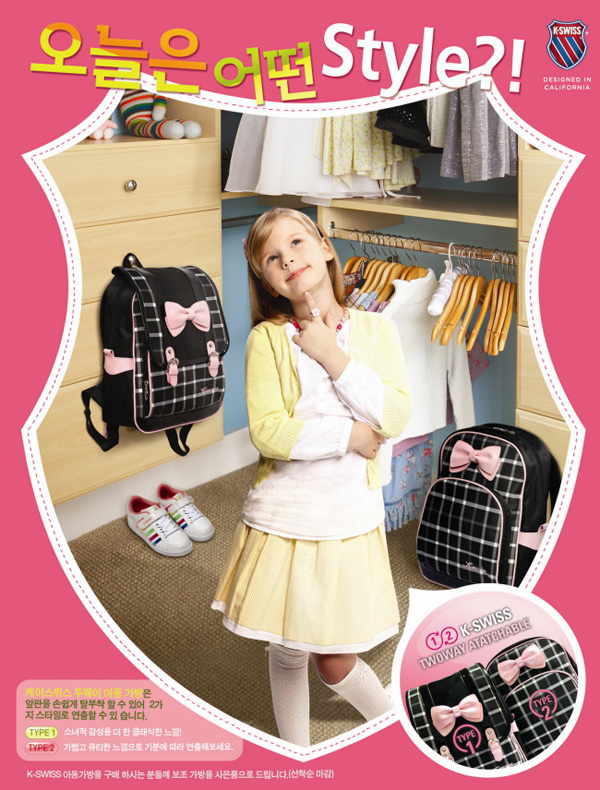 (Source)
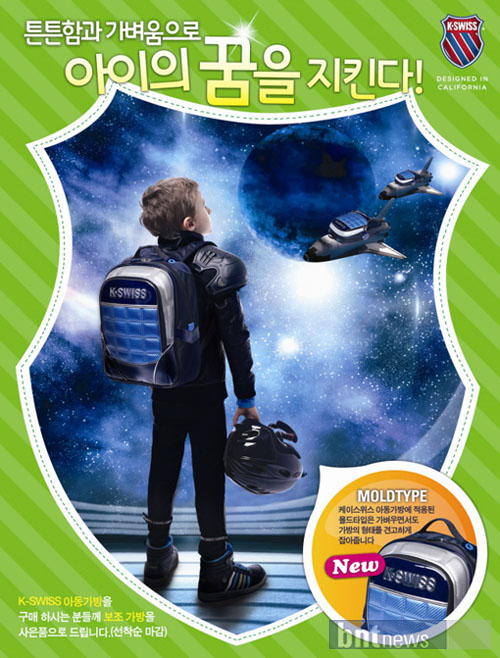 (Source)
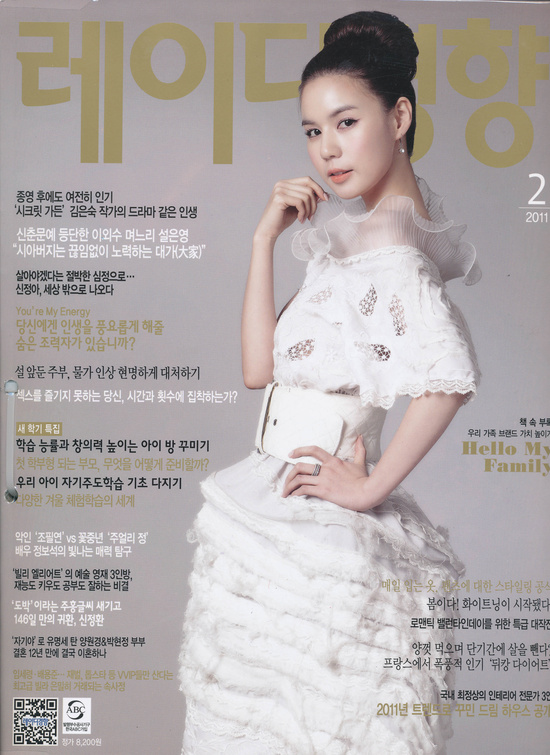 (Source)
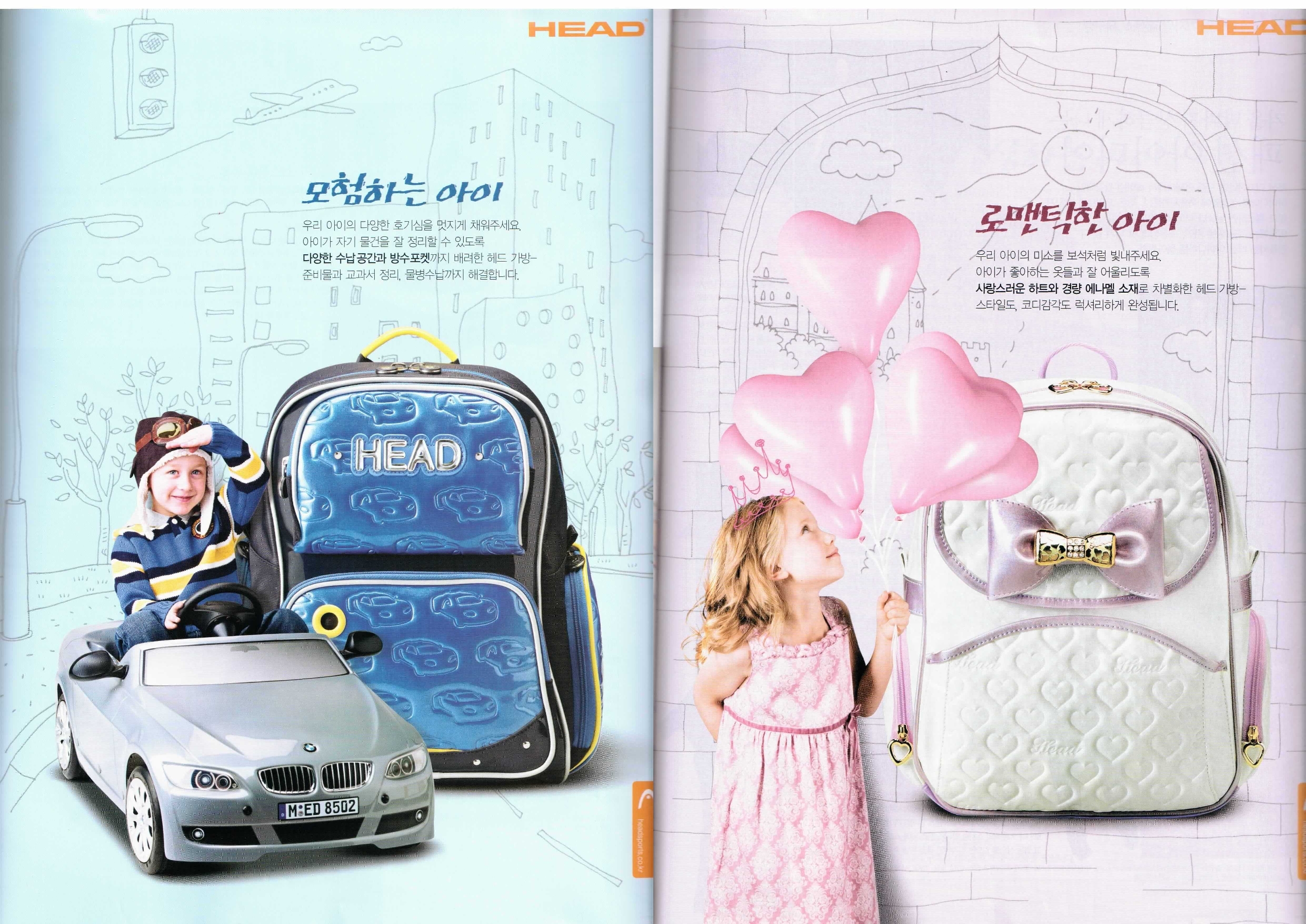
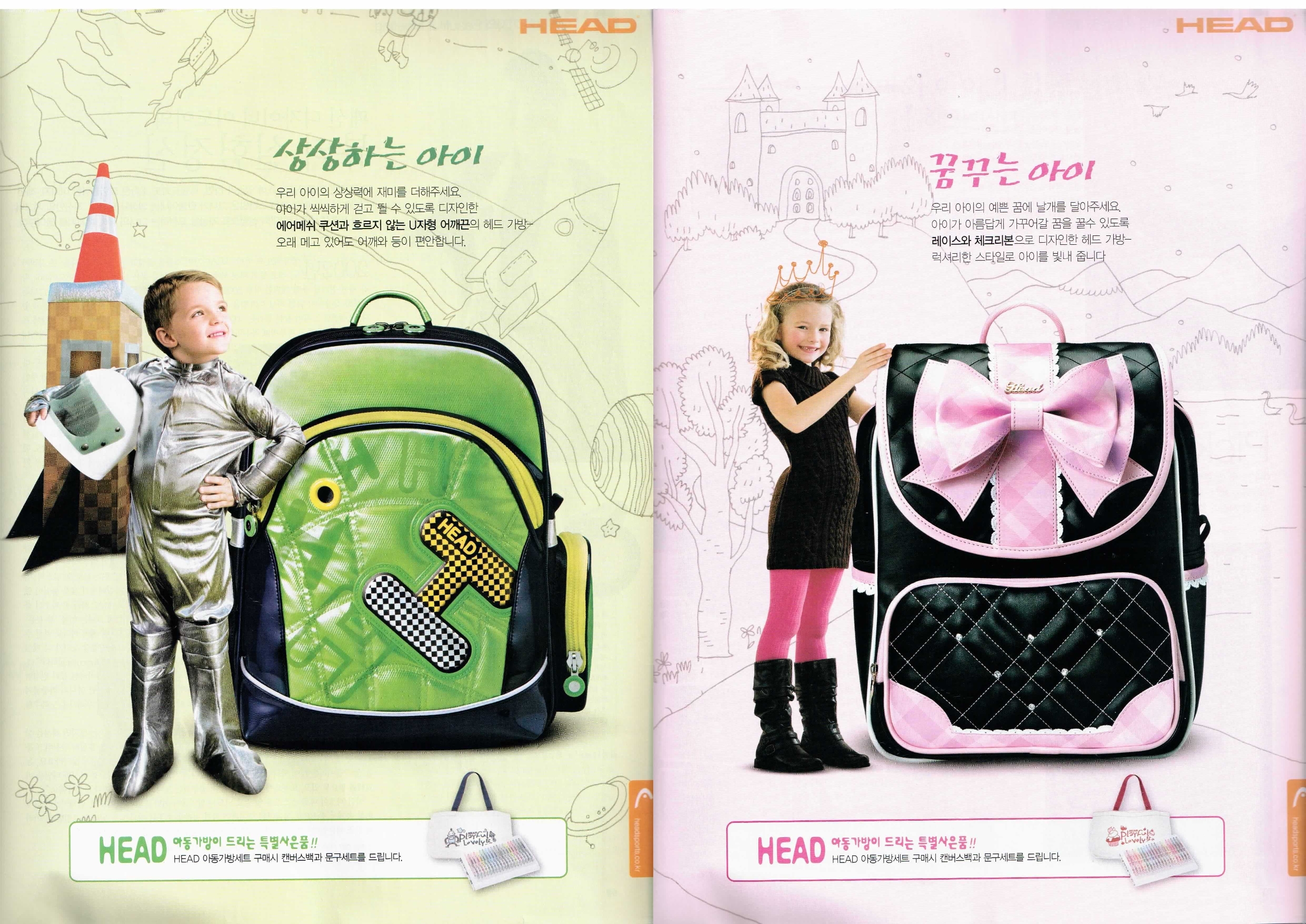

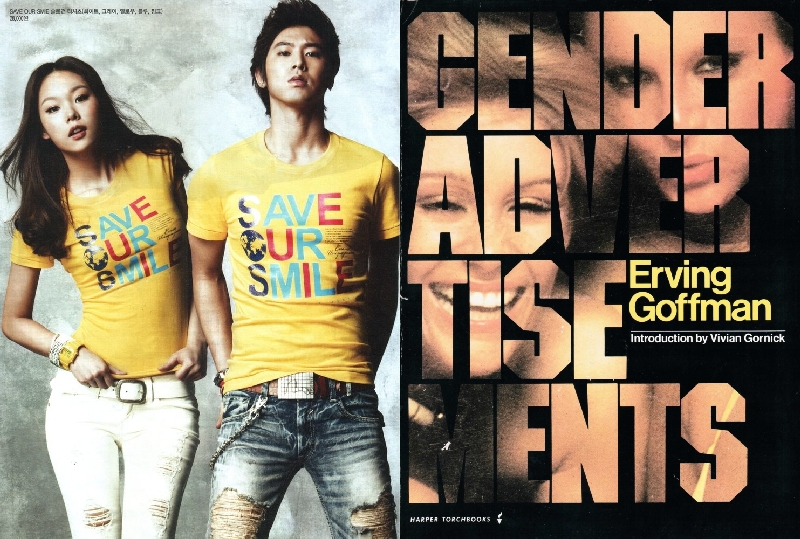


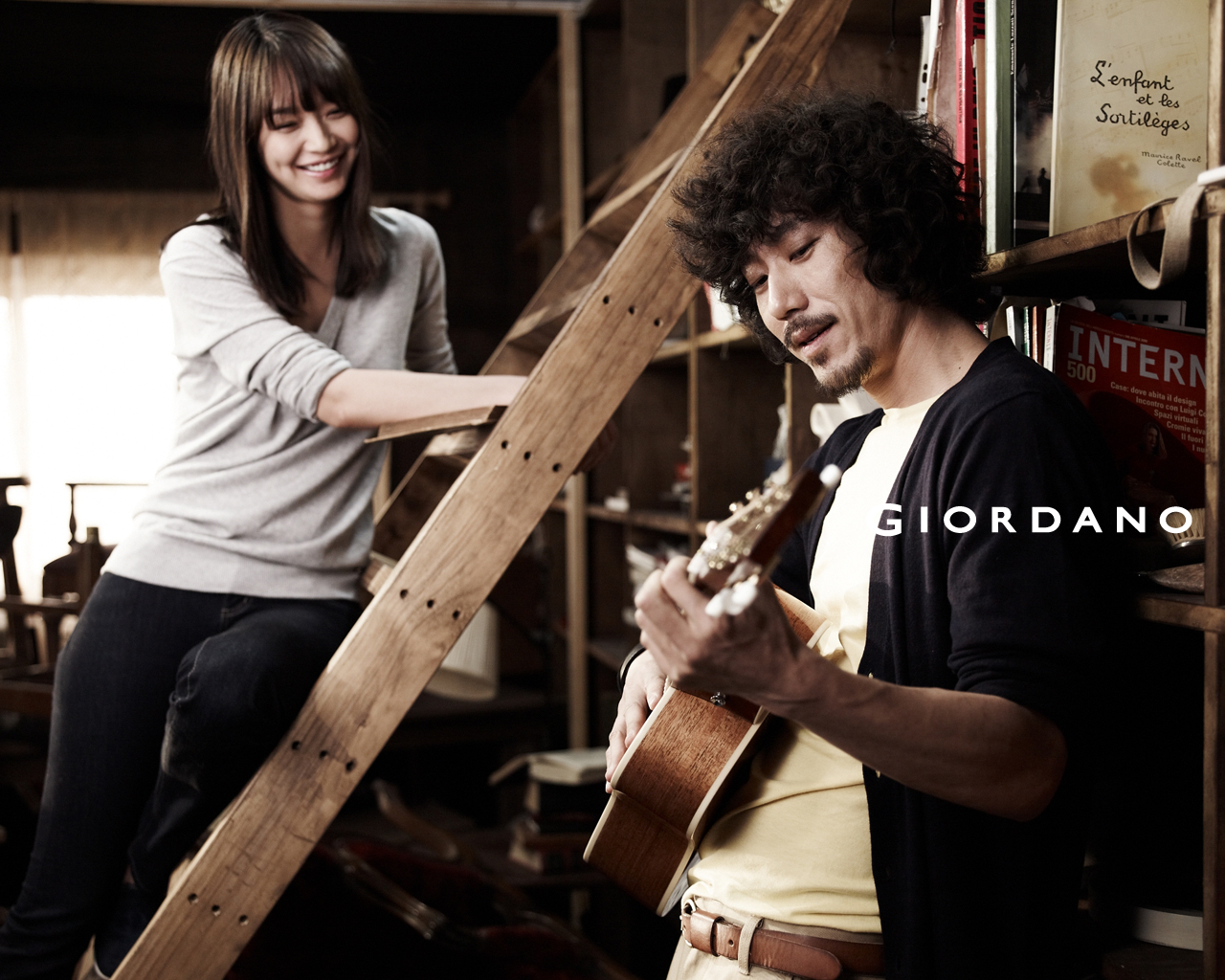



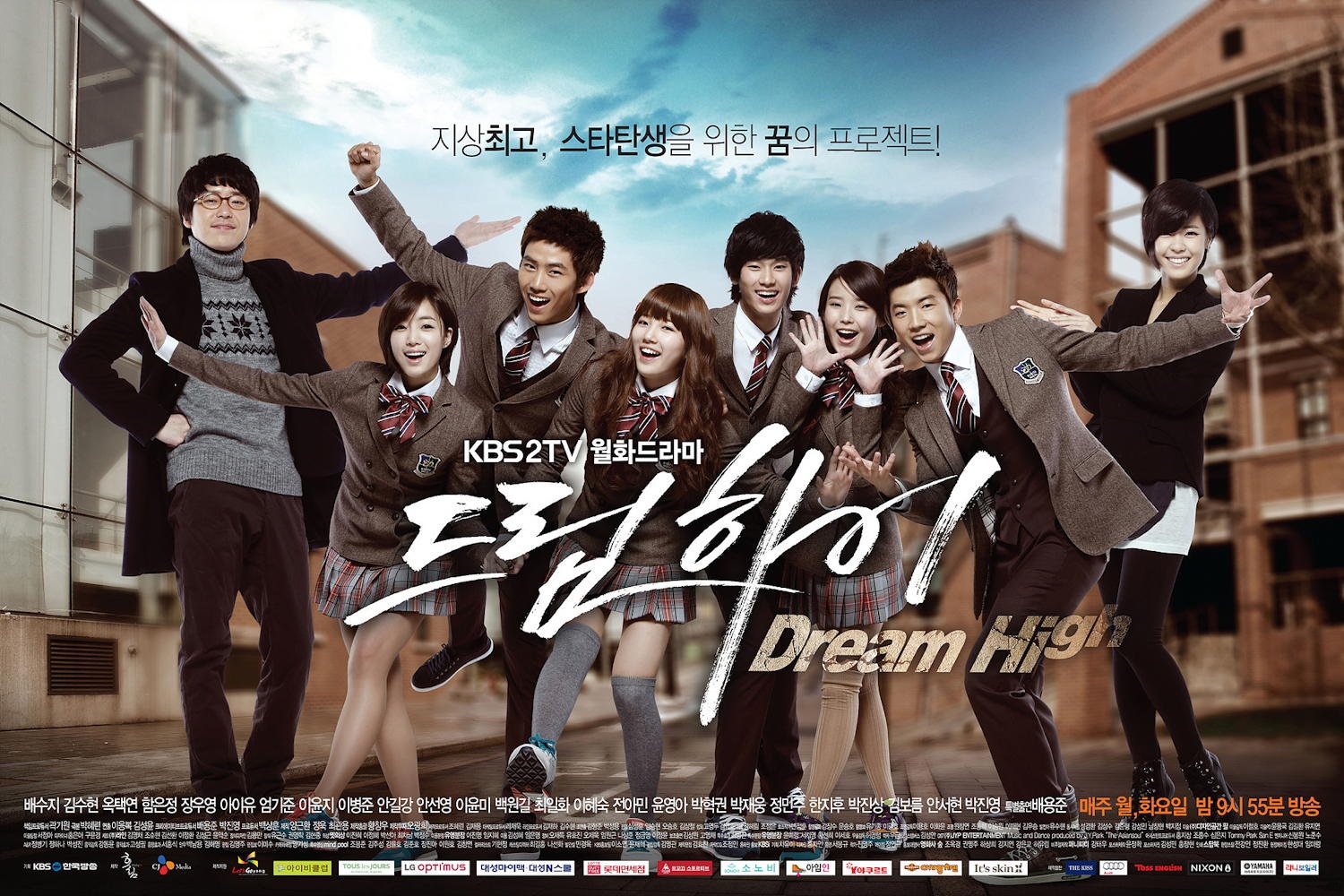
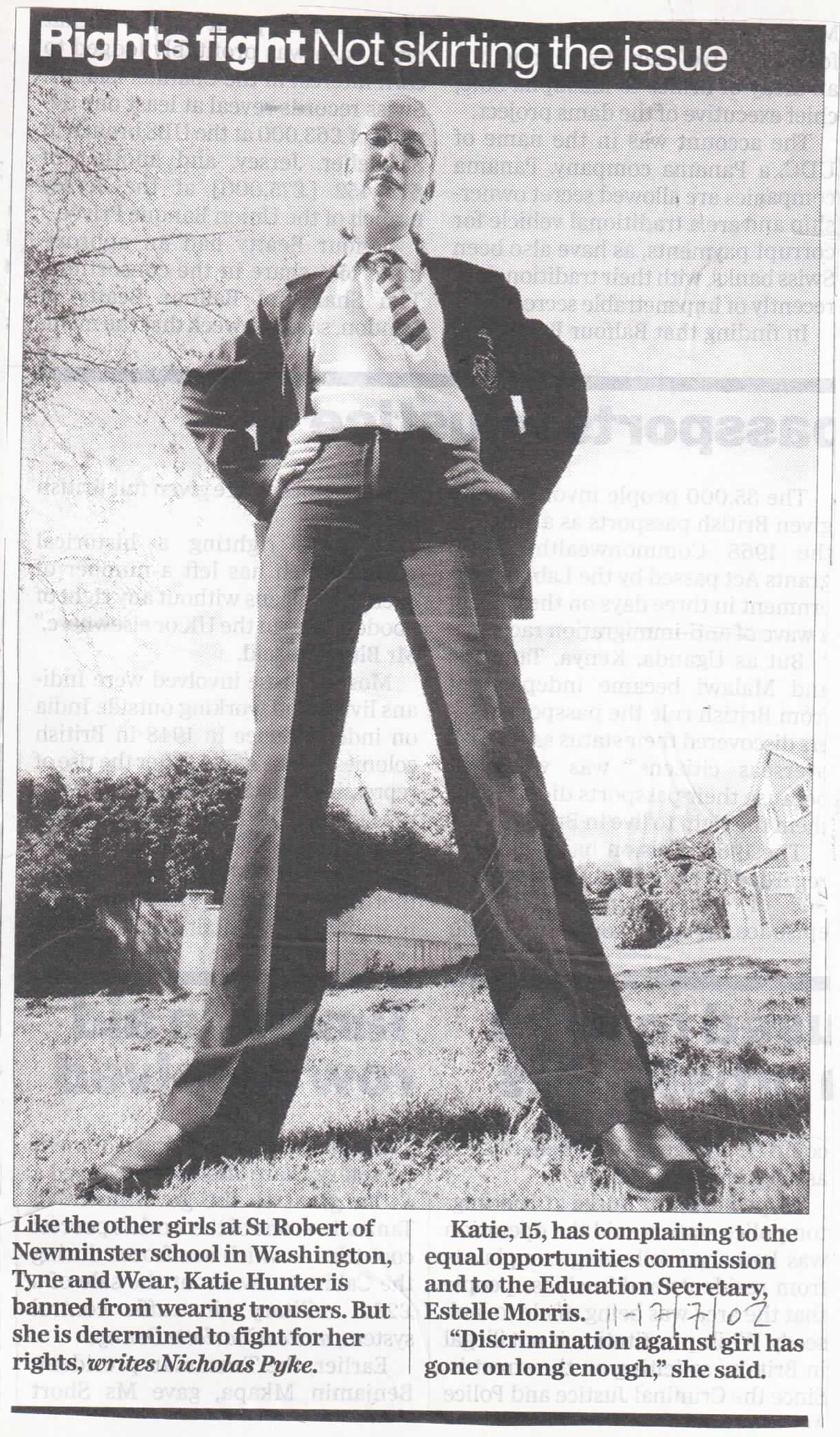

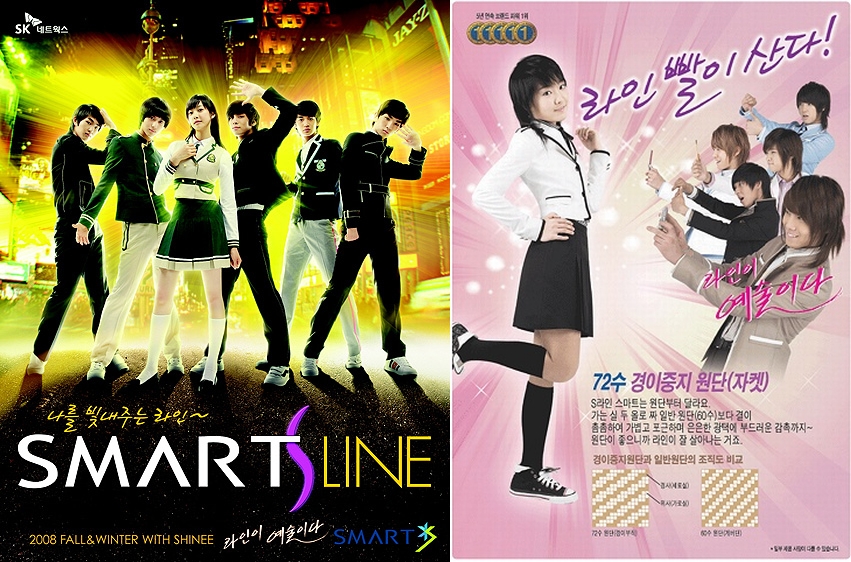
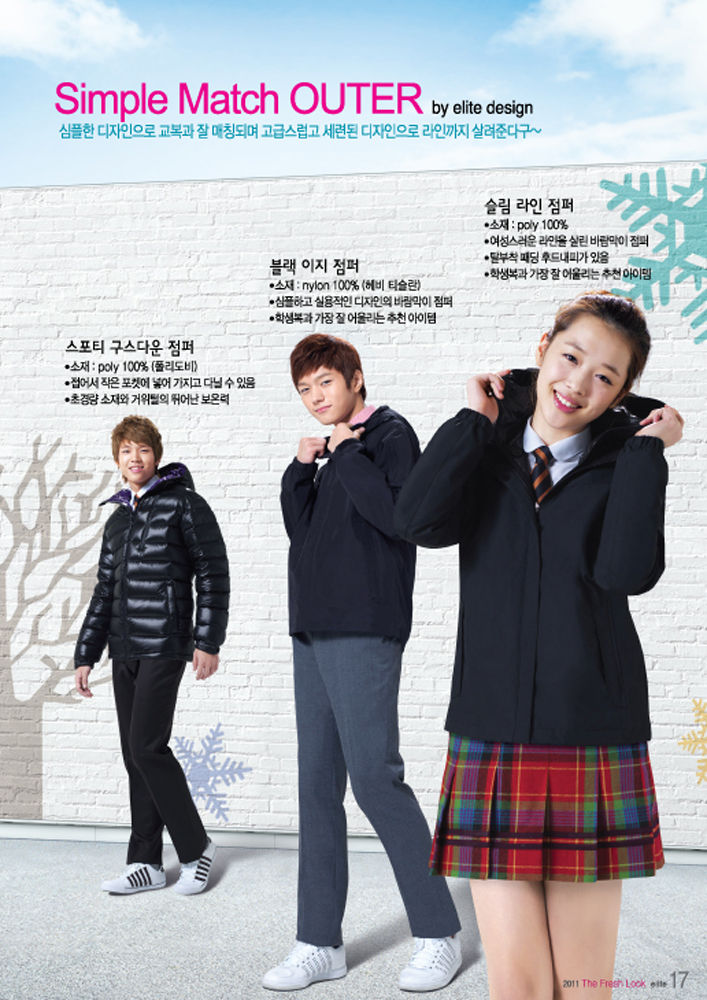


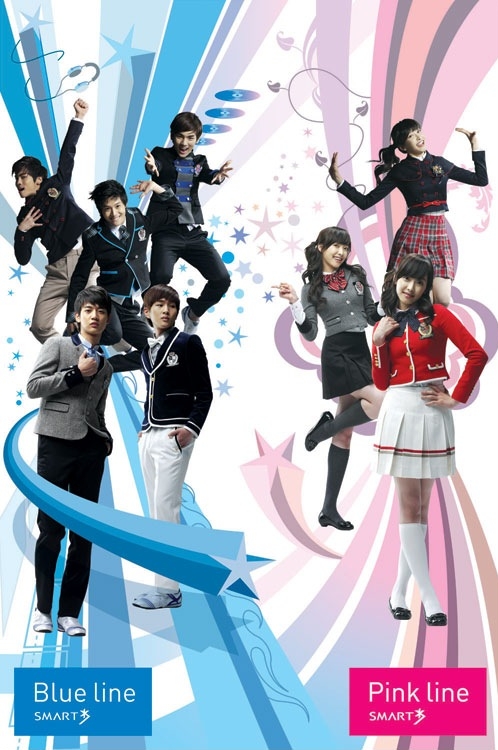


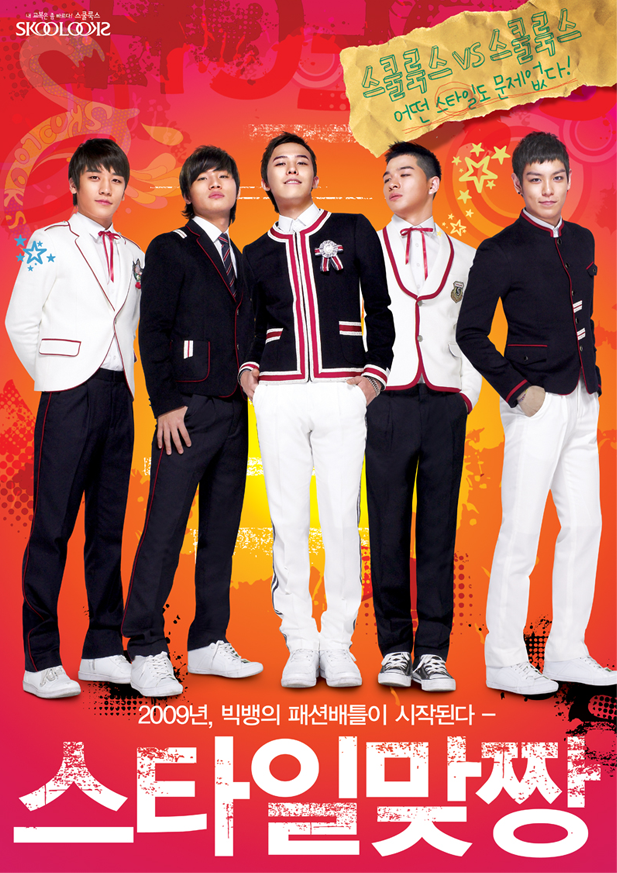


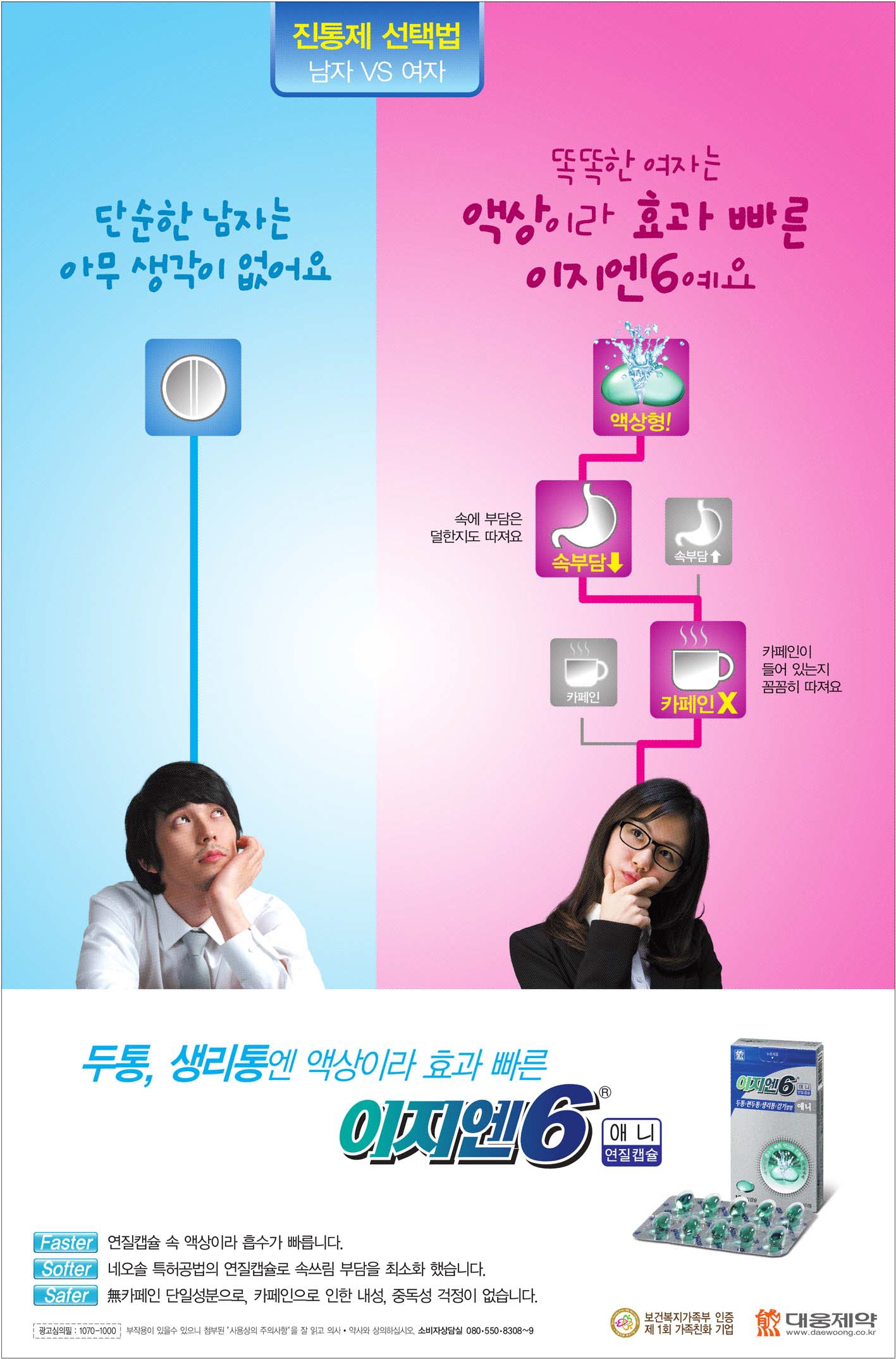

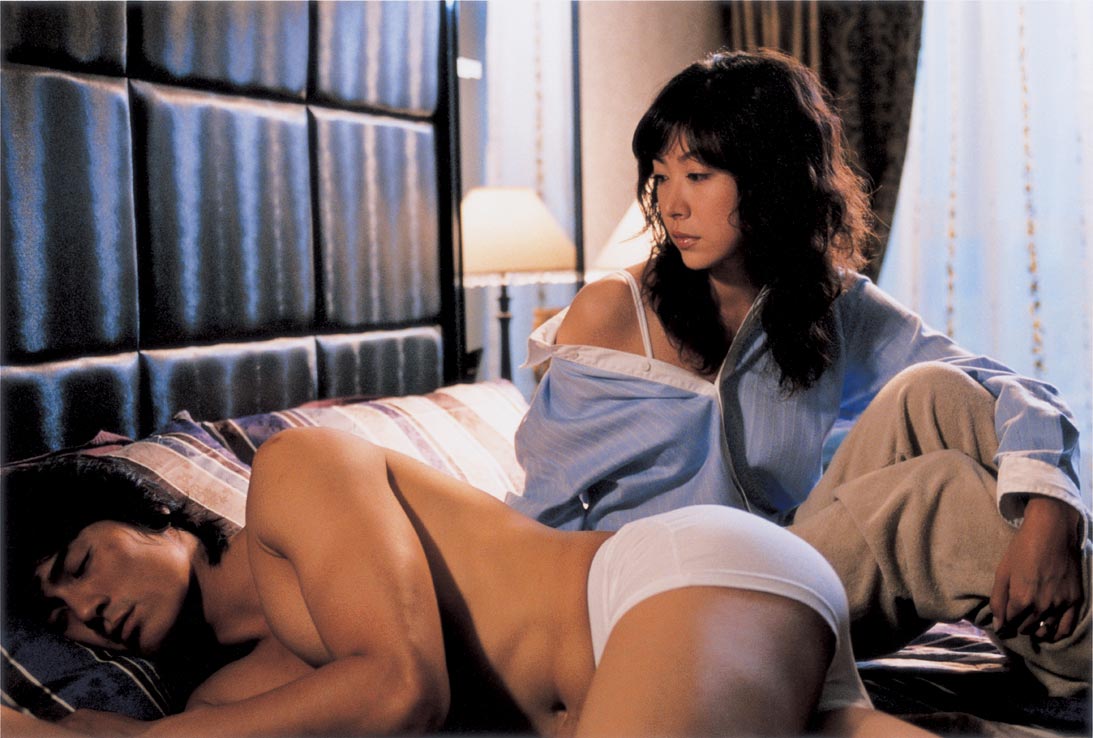
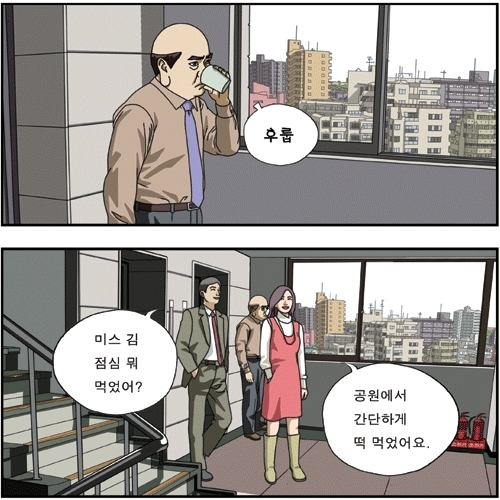

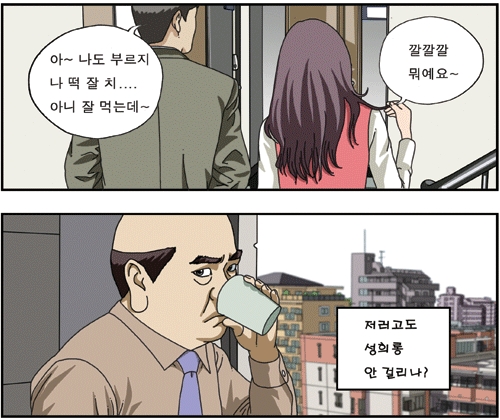
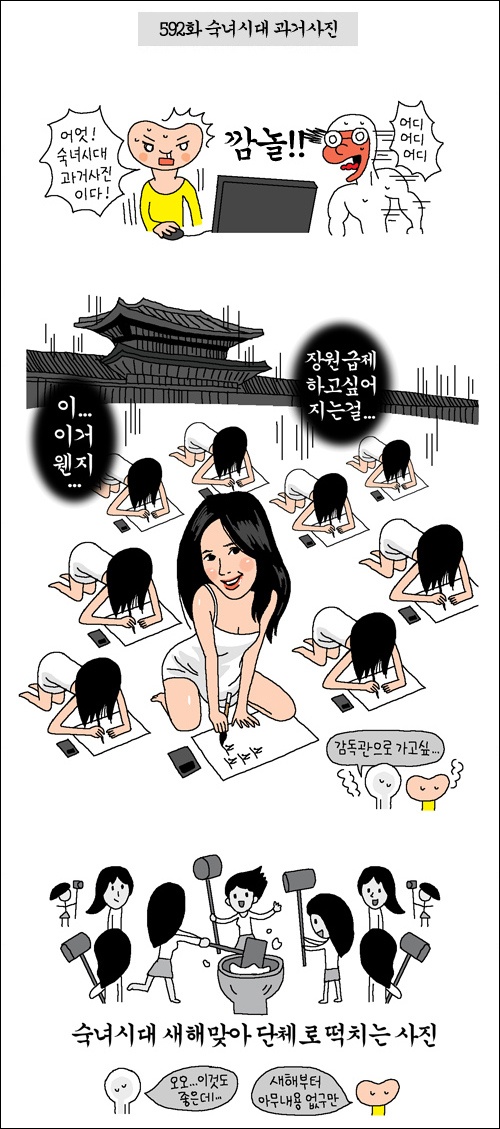


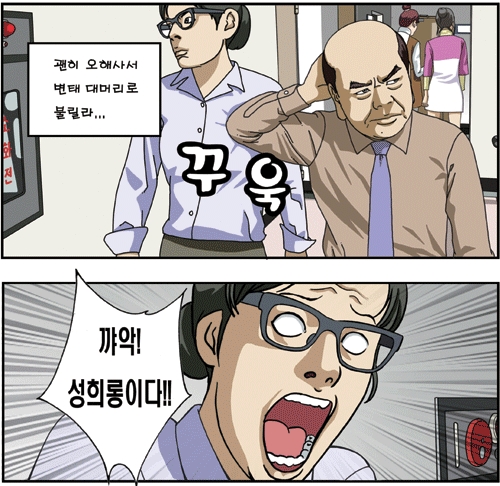
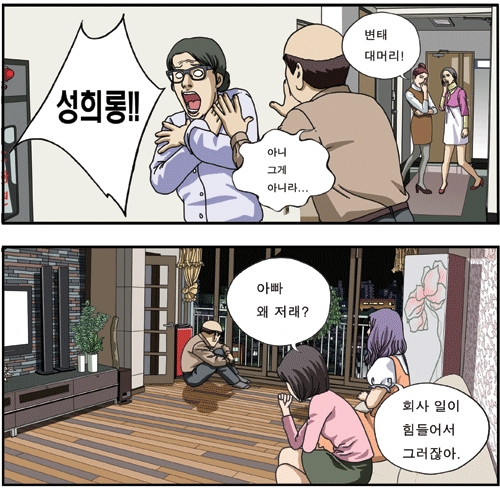
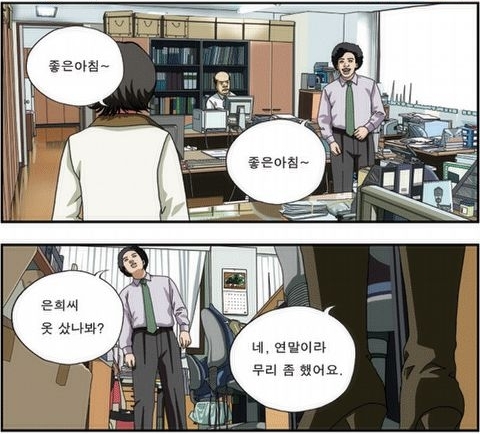

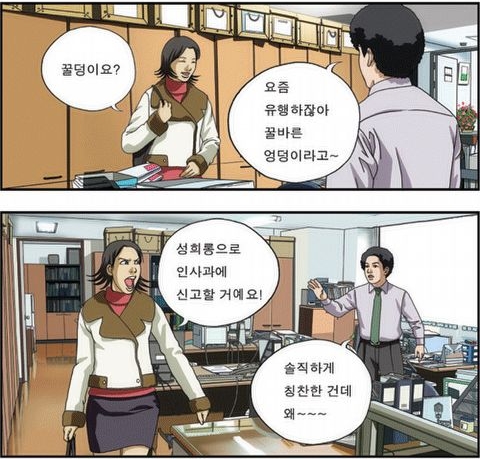
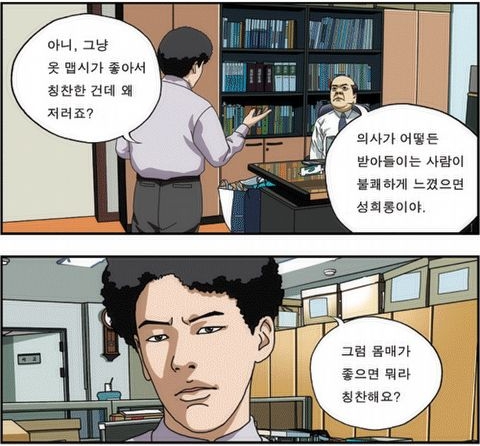
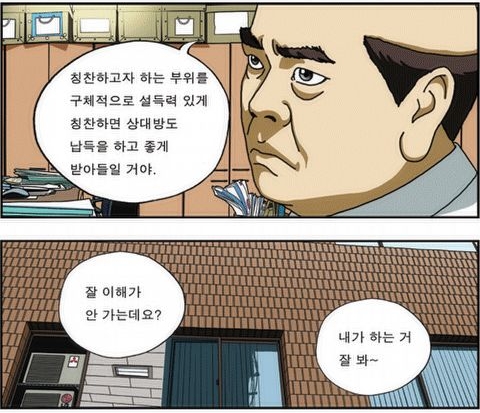

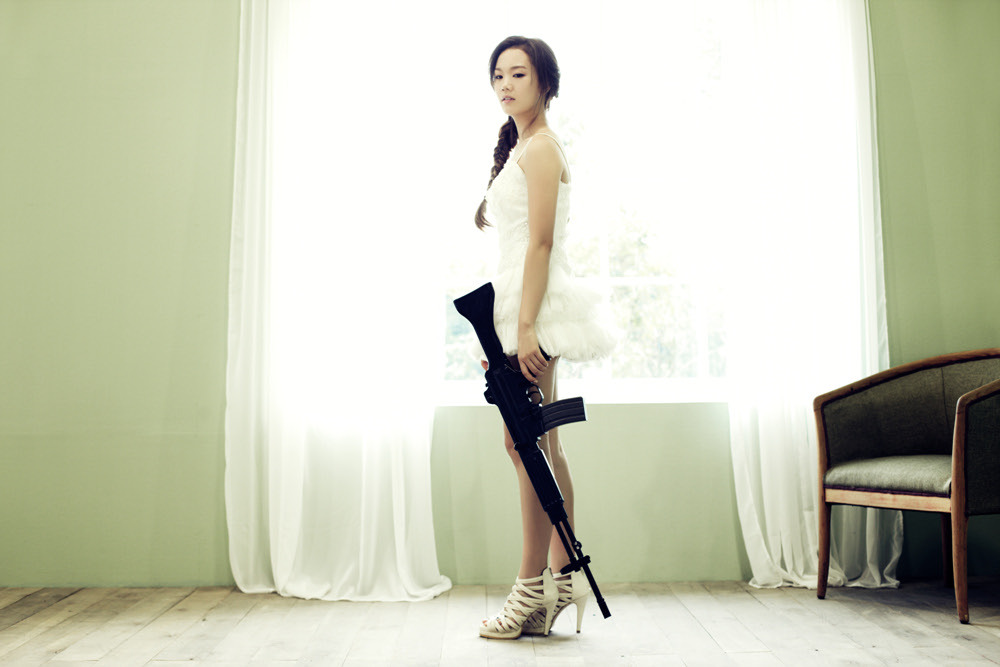



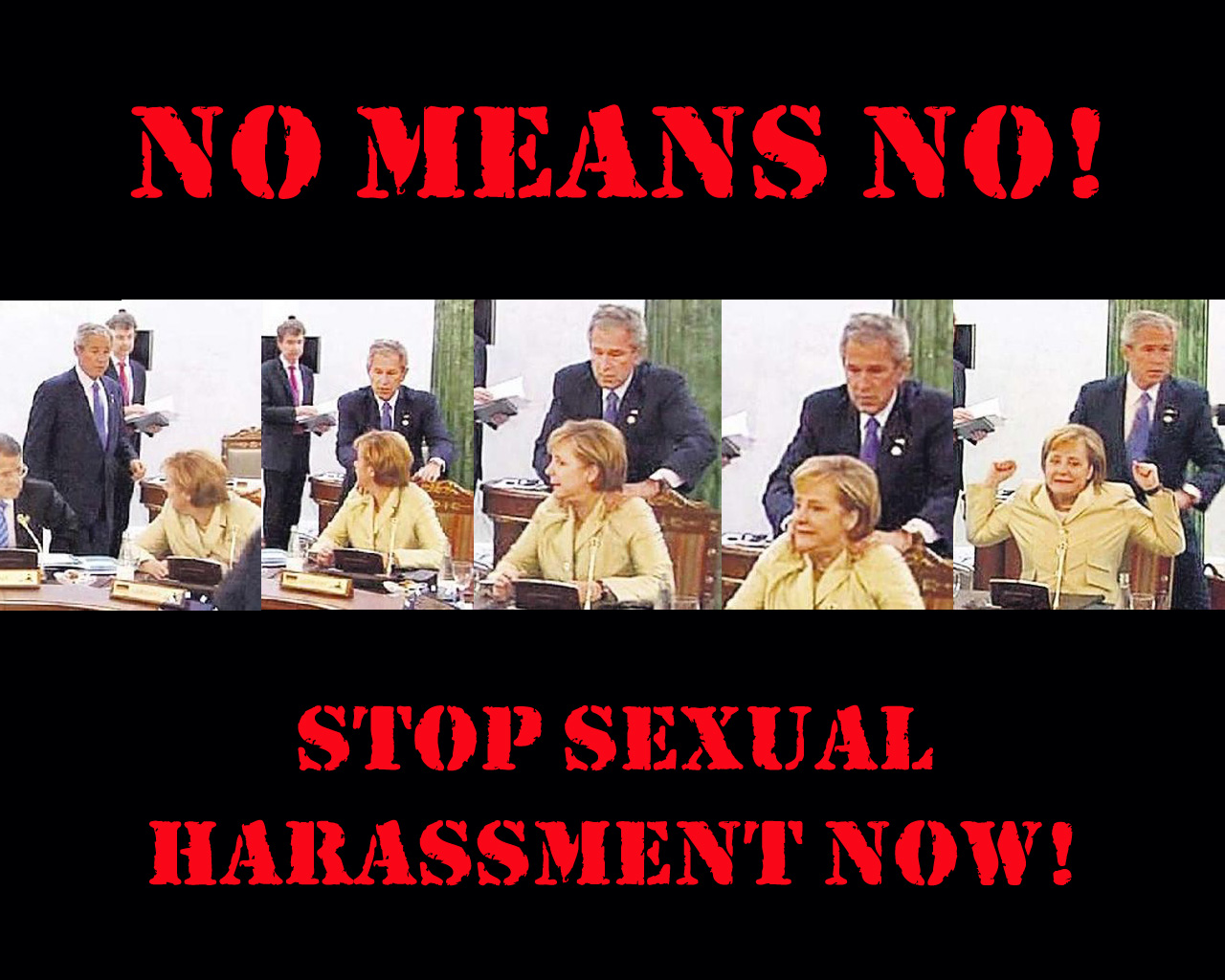


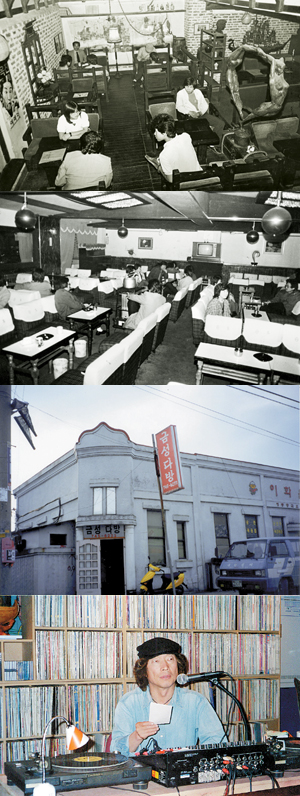
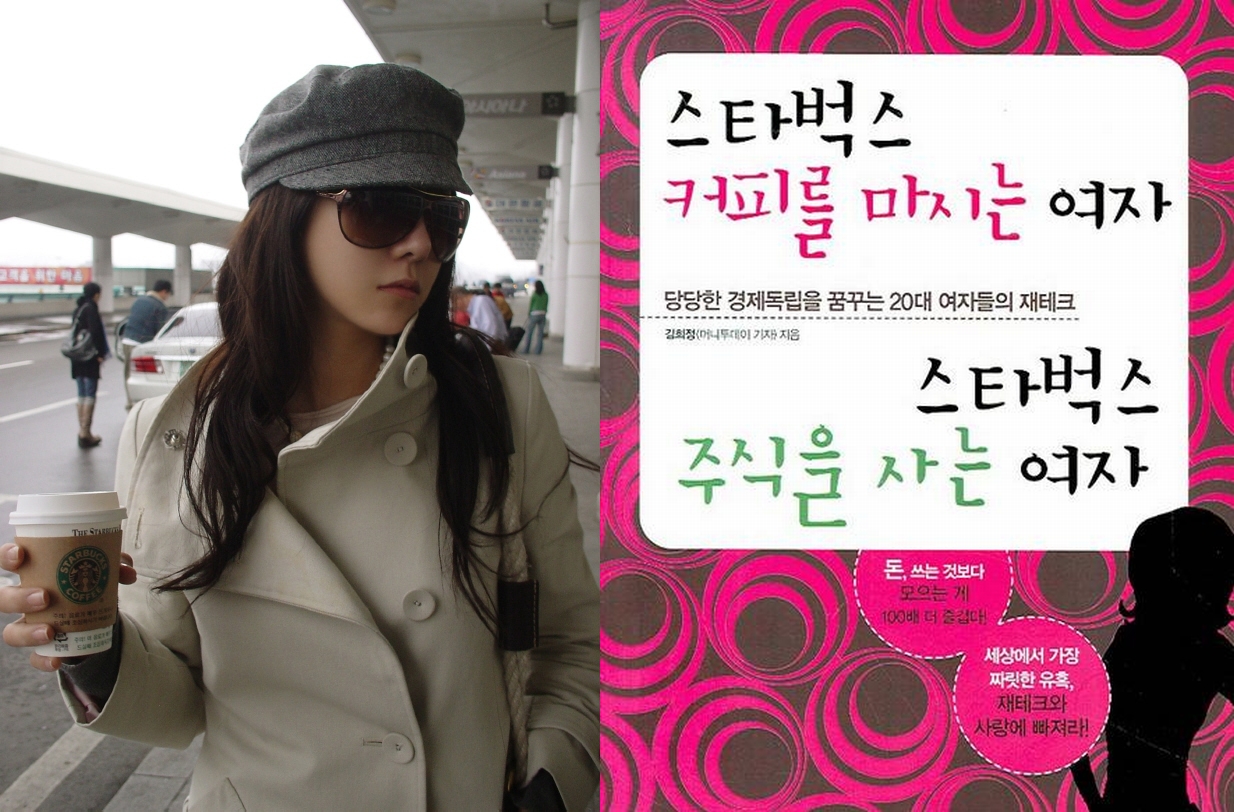
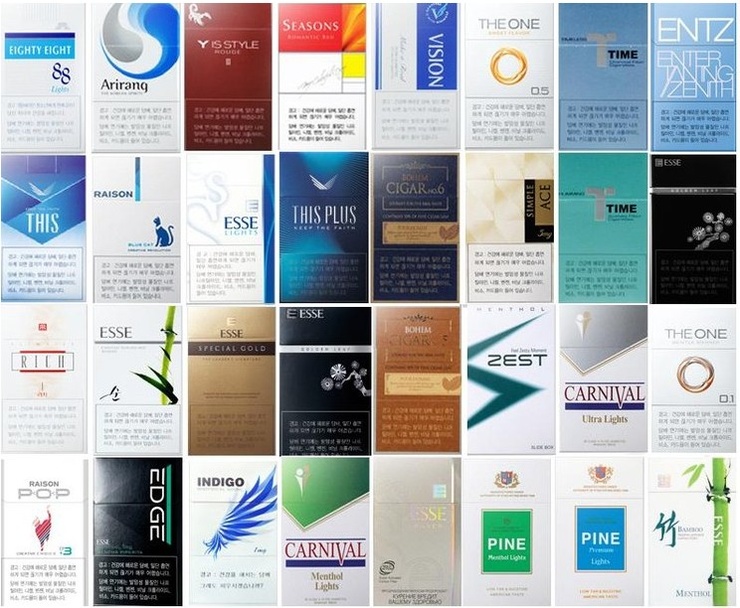
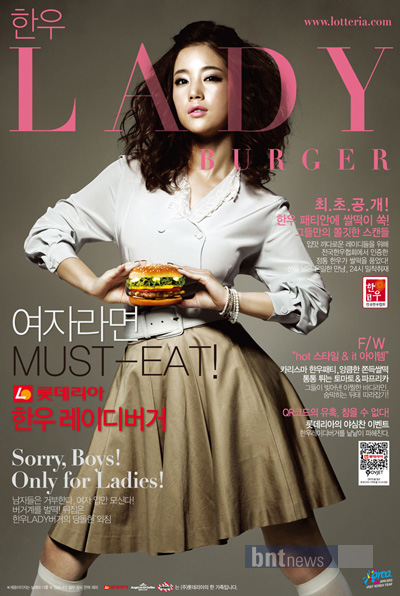
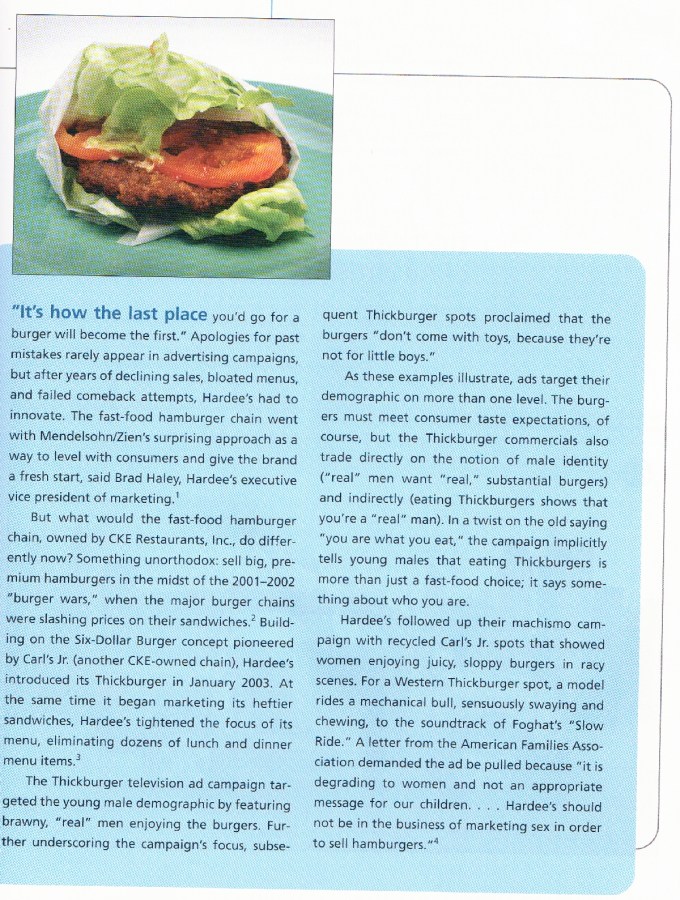






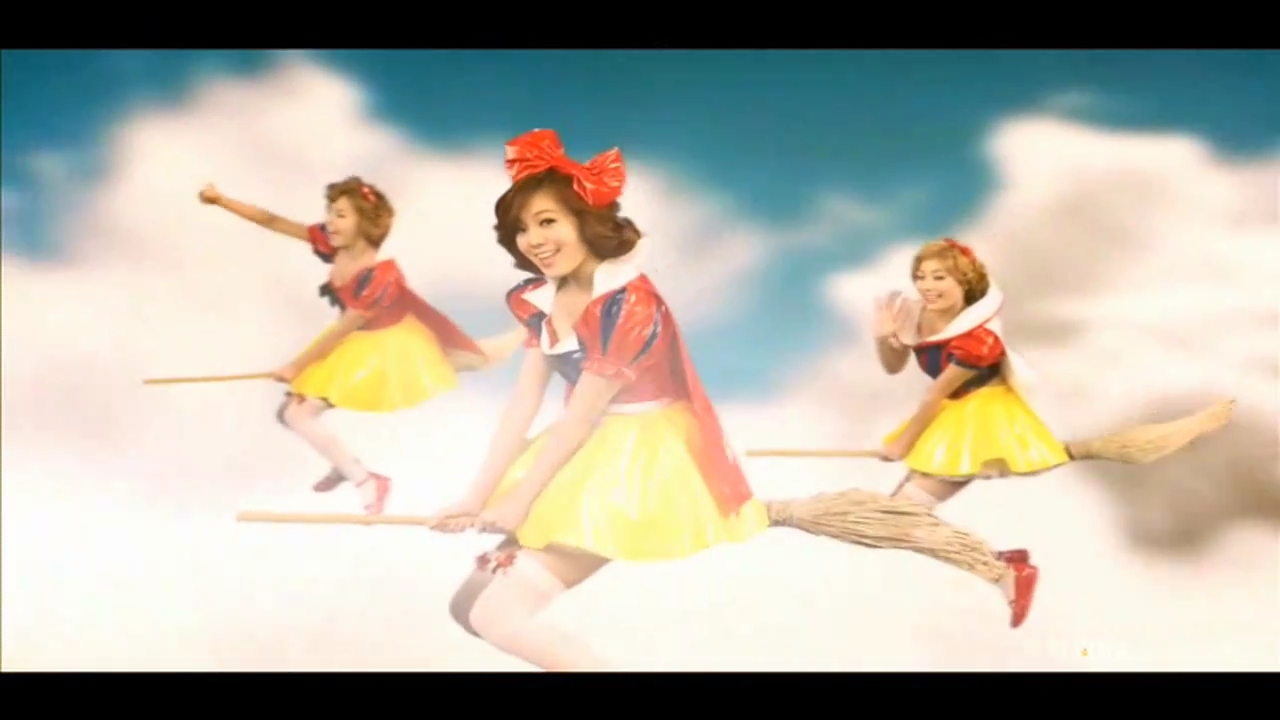








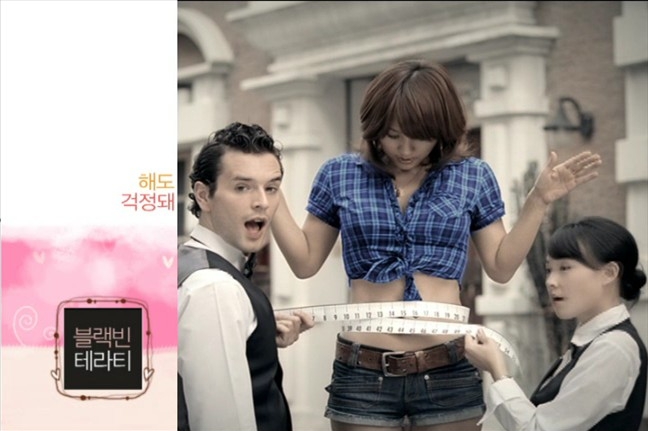

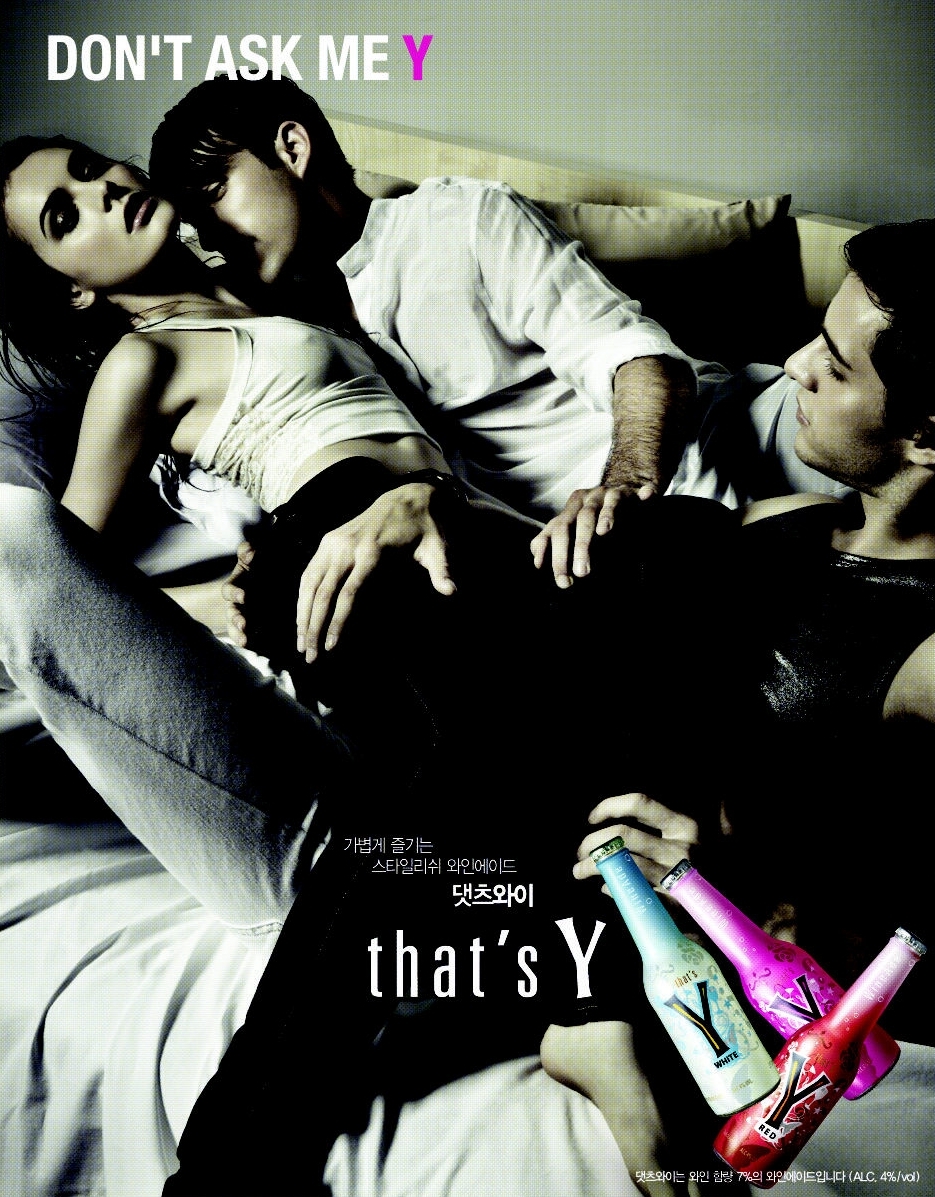

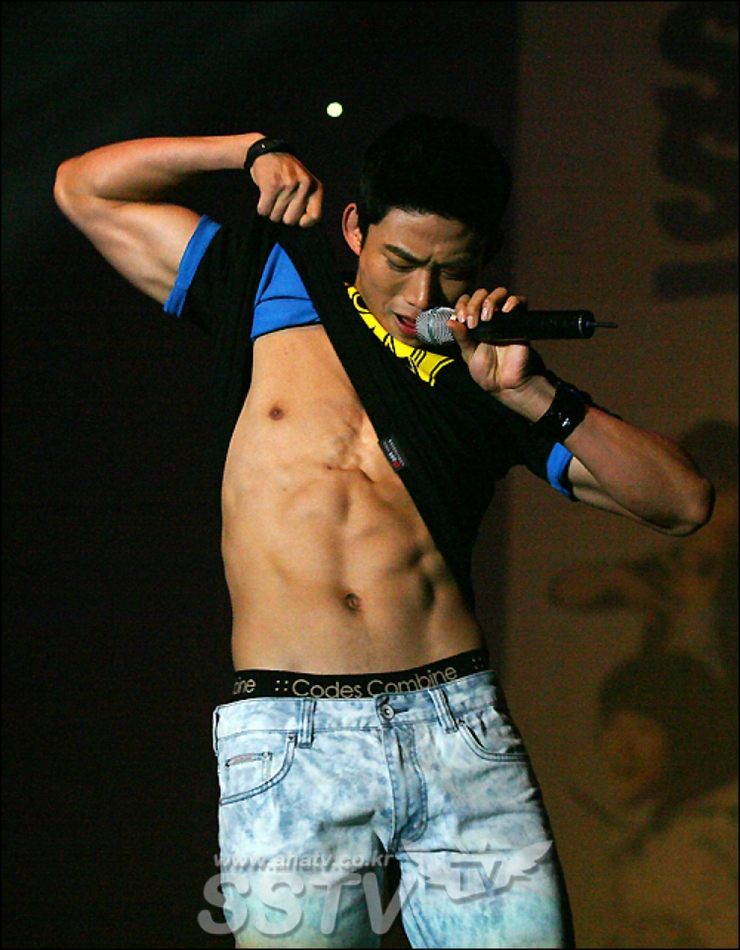

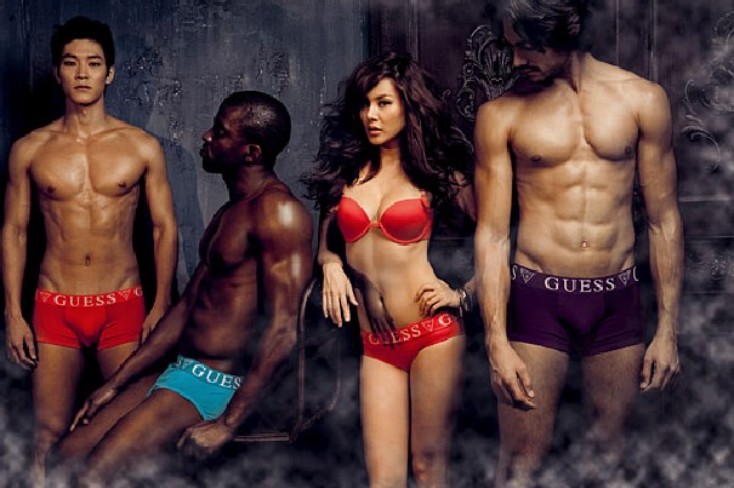
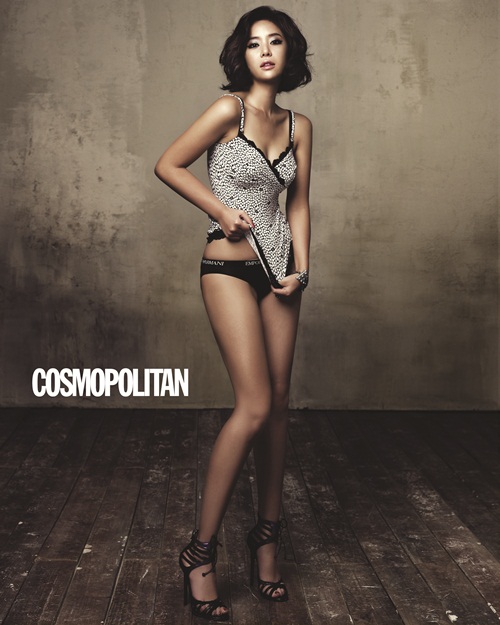
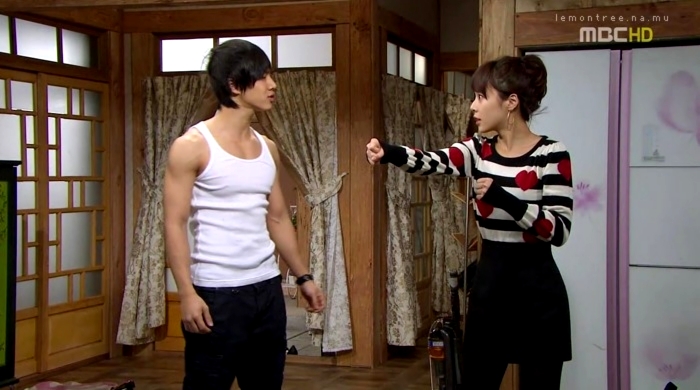


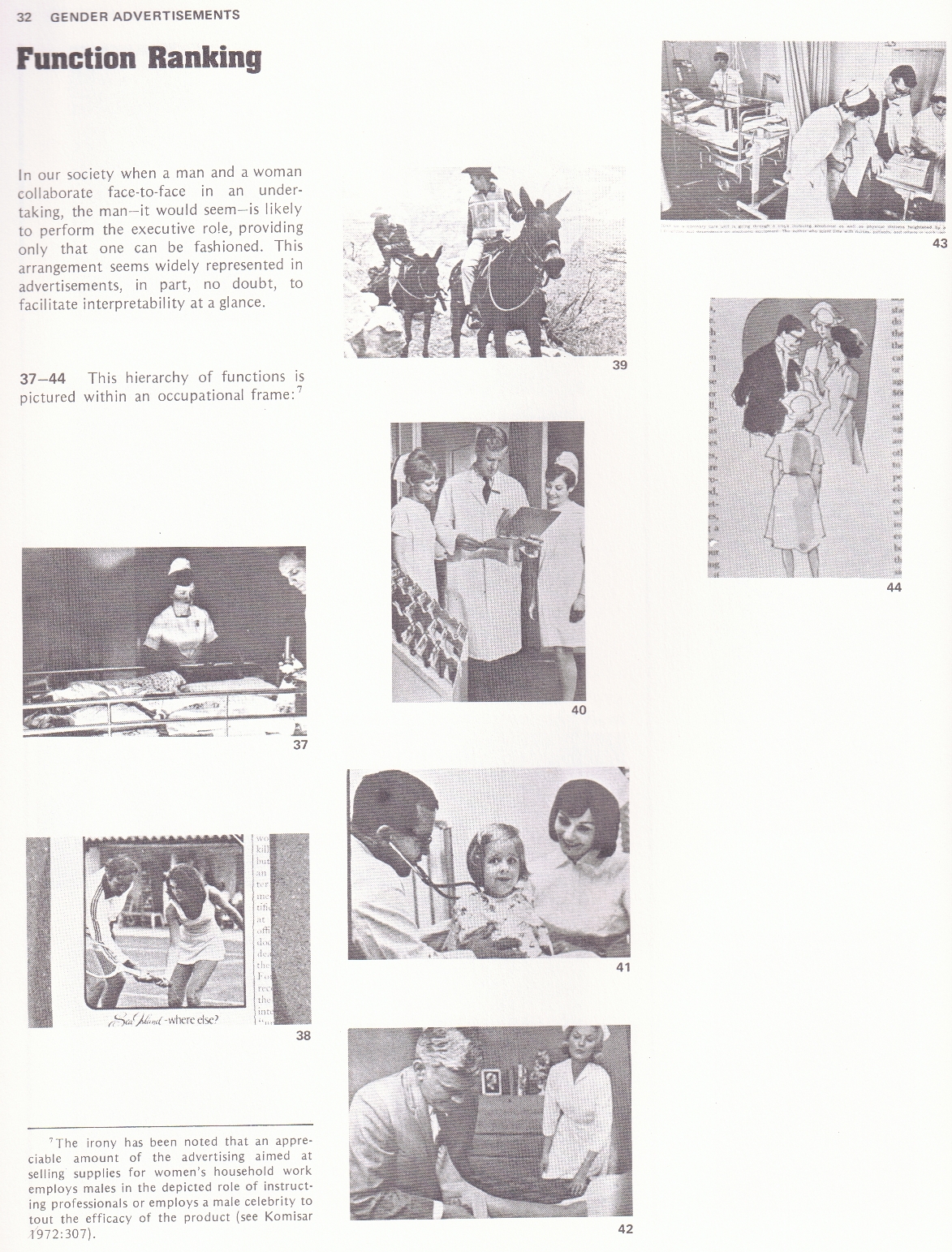






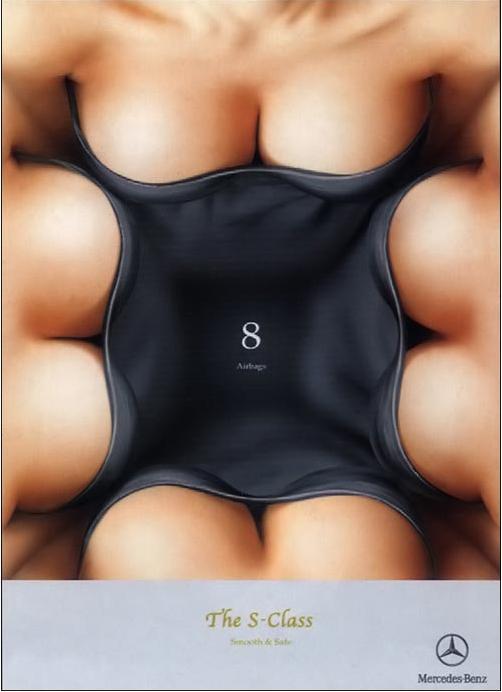

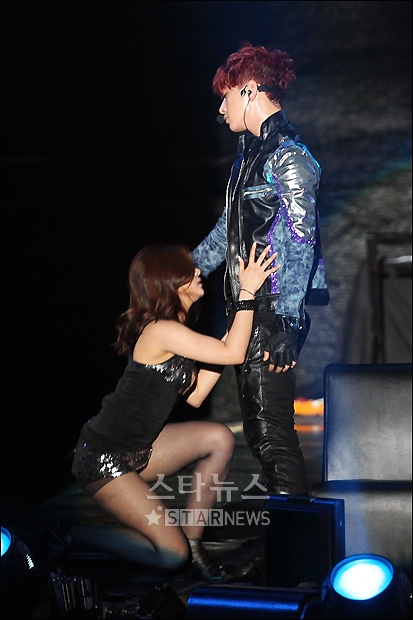






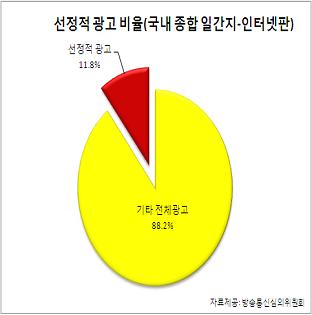




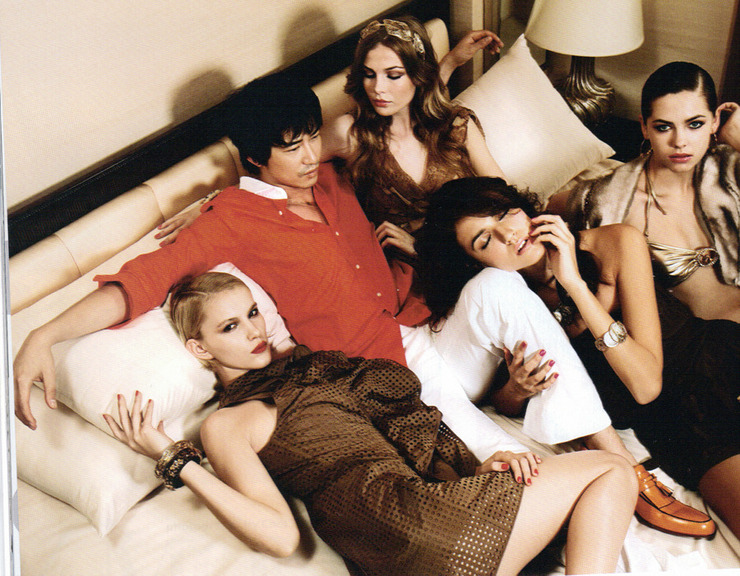

 The Grand Narrative


